
| Imperagen
| Silvia Bio
| Apini
| Phovir
the teams backed by Northern Gritstone
| Pragmatic
Northern Gritstone is seizing the North of England's innovation opportunity by investing in science and technology startups solving global problems with the potential and ambition to scale worldwide.
Prior to Northern Gritstone launching, in 2019 only £28 million of venture capital funding was invested in university spinouts in the North of England.* This figure represented 2% of all venture capital funding into UK university spinouts. Since Northern Gritstone first raised capital in 2022, the company and its co-investors have invested £450m, a figure which continues to rise as we overcome the historical lack of essential infrastructure in the region. As at September 2025, 8% of all venture capital funding into UK university spinouts, for the nine months of 2025, went to universities in the North of England.**
Our goal, alongside generating high returns for our shareholders, is to create the ecosystem and talent pool
needed to support world-class venture capital across the Northern Arc – an economic region spanning the North West of England and connecting into West and South Yorkshire. At the core of our investment philosophy is ‘Profit with Purpose’; creating an ecosystem that can support groundbreaking inventions which, over time, will flow back to have a positive societal and economic impact. Profit means delivering attractive returns to our shareholders, who have the patient capital to invest into and benefit from the returns of the world-class companies of tomorrow.
High-paid job creation

Skilled workers & companies relocate to the region
Investee companies launch
The Northern Arc A pillar of the UK Technology Diamond
Region recognised as an innovation leader
Northern Gritstone invests and supports

New funders enter the region

Invested & Committed Co-investment into the North of England
Number of people employed by investee companies
Northern Gritstone and co-investor funding by location
Number of outreach programme attendees
It is with great pride that I present Northern Gritstone’s Annual Report and Accounts for the financial year ending March 2026, a year I believe will be looked back upon as genuinely pivotal in the Group’s history.
Now at the five-year mark, Northern Gritstone’s portfolio has delivered a positive financial return. This is an important milestone, and one that validates the patient, conviction-led approach we have taken to building a world-class deeptech and life sciences investment platform dedicated to the North of England.
The wider economic context in which we operate continues to underscore the importance of what Northern Gritstone is trying to achieve. Our portfolio companies have the potential to do much good in the world and despite global uncertainty our shareholders remain ‘long’ on innovation.
The productivity gap between the North and other parts of the United Kingdom remains one of the most significant structural challenges facing the national economy. Growth is however coming from the North at varying degrees across its constituent parts, led by Greater
Manchester, which is narrowing the gap. It is a UK economic game changer when the regions act and grow together. We believe that the commercialisation of world-leading research from our ‘Northern Arc’ university partners: the Universities of Leeds, Liverpool, Manchester, and Sheffield, represents one of the most powerful levers available to regional growth.
During the year, we were pleased to conclude a further capital raise, strengthening our capacity to support the region’s most promising spinout companies and groundbreaking earlystage companies based in the North. We are very grateful for this further commitment from a number of our existing shareholders. In this way, our investors are contributing directly to future higher value-added activity and to the North’s long-term productivity, an alignment of commercial and public interest that lies at the very heart of Northern Gritstone’s mission.
At a governance level, the Board has continued to strengthen and evolve. I wish to express my sincere gratitude to Professor Luke Georghiou, who stepped down during the year as Non-Executive Director representing the University of Manchester. The Board is grateful for his considerable contribution. I am delighted to welcome Professor John Holden as his successor. John brings deep experience in academic innovation and a strong understanding of the University of Manchester’s research and commercialisation goals and ecosystem During the year we have also welcomed Paddy Dowdall to the Board. Paddy brings a deep experience of local investment from his time at GMPF and now at Central LGPS.
During the year, the Board reviewed and updated Northern Gritstone’s Purpose and Impact Policy to reflect the evolving landscape in which we operate. Following careful deliberation and shareholder discussion, we broadened our investment mandate to enable participation in the dual-use defence sector. This is a considered and principled decision; we remain committed to responsible investment and will apply the same rigorous ethical framework to this sector as we do across our entire portfolio. Further details on our approach is set out in the Purpose and Impact Report.
Our Profit with Purpose strategy continues to guide everything we do. The pursuit of strong financial returns and the creation of broader societal benefits are, in our view, entirely complementary objectives. The portfolio now comprises some 50 investee companies – I am constantly encouraged by the quality and resilience of the companies we have helped to create and build. The Chief Executive’s Report that follows provides a more detailed account of portfolio performance and operational progress during the year.
" WE BELIEVE THAT THE COMMERCIALISATION OF WORLD-LEADING RESEARCH FROM OUR ‘NORTHERN ARC’ UNIVERSITY PARTNERS ...REPRESENTS ONE OF THE MOST POWERFUL LEVERS AVAILABLE TO REGIONAL GROWTH."
I would like to close by expressing my gratitude to my fellow directors, to the leadership team, and to every member of the Northern Gritstone staff. The results we are reporting this year are the product of sustained hard work and a genuine commitment to the long-term mission of this organisation. I look forward to the year ahead with confidence.
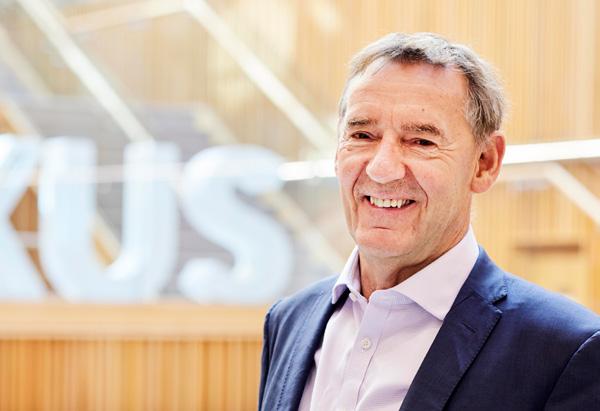
Lord Jim O’Neill CHAIRPERSON
11 June 2026
Against a backdrop of another war, the prospect of both a global slowdown and rising inflation, it is a pleasure to record that Northern Gritstone has continued to make strong progress throughout the last financial year. Our Chairperson, Lord O’Neill, often comments on just how much he enjoys his involvement with Northern Gritstone and it’s a view I share as I note down what’s been achieved by our fabulous team over the past 12 months.
I often comment on our portfolio strategy which is to smooth the often bumpy early-stage venture journey for our shareholders. Our portfolio now stands at some 50 investments in total of which 33 are at seed stage or beyond. As we sign-posted at the interims, the portfolio recorded a positive return in the year as we saw a number of our investments building commercial traction and their respective valuations start to compound. We are
reporting a NAV & UOS per ordinary share of 93p at 31st March 2026.
One of our approaches to building Northern Gritstone is to create a platform which has the skills and capability to help our investees have the best possible chance of success. In formulating our strategy, we have been diligent in looking across the venture space not just in the UK but in other geographies, including the United States.
Three years ago, we visited Kendall Square, home of MIT, which was an inspirational trip. This year a team of us visited The Bay Area. Again, it was an inspirational visit but more importantly I came away thinking that our business is in good shape and that Northern Gritstone is heading in the right direction.
The skills we have brought together (and continue to build) in NG Innovation Services help our investees to hit the demands placed on them to grow at pace from inception. Each NGIS offering is underpinned by performance data which we have gathered and by combining these marginal gains, we hope that our portfolio, as a whole, has a greater chance of success than the market or that of non-platform VC investors. This year we will add in an international capability helping to connect our investees into high growth, tech hungry markets.
We have continued to build the Group’s capital base having received agreement from our shareholders in Q4 last year to do so. Three current shareholders increased their respective ordinary share commitments to Northern Gritstone in March, 2026 subscribing at £1.00. We expect to raise further funding as part of this close during the year.
"THE PORTFOLIO RECORDED A POSITIVE RETURN IN THE YEAR AS WE SAW A NUMBER OF OUR INVESTMENTS BUILDING COMMERCIAL TRACTION"
I hope that the next 12 months will be a more gentle ride but I expect that may be a forlorn hope given the shifting tectonic plates of global geopolitics and the domestic political upheaval we have witnessed since the Brexit vote in 2016. Against this backdrop though, I am confident that our business is well set and we will have much to applaud in a year’s time. Many thanks, once again, to all our stakeholders for your support and to our NG team and all that it has accomplished this year.
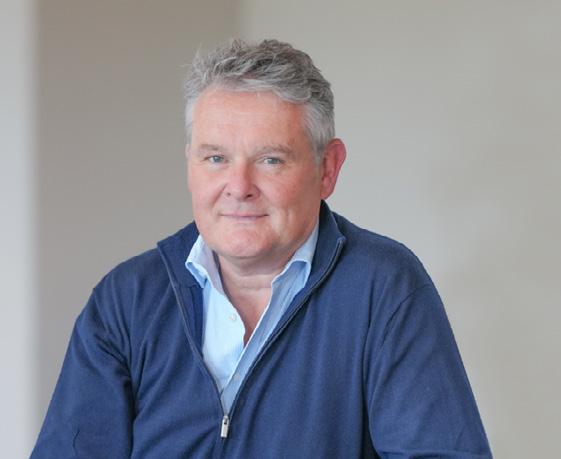
Duncan Johnson CHIEF EXECUTIVE OFFICER
11 June 2026
The Company made 7 new investments and 7 follow-on investments in the period, deploying a total of:
£33.4 m
The fair value of the portfolio at 31 March 2026 was:
£92.5m +£2.3m
During the period there was a change in the fair value of investments of:
This change was driven by a combination of:
• Positive performance within the portfolio, particularly Optalysys, Literal Labs and MicroLub;
• The impact of recognising the value of the shares received by Northern Gritstone at nil cost under the Framework Agreement; partially offset by
• Negative fair value movements in businesses with poor performance and / or shortening funding horizons, which is a feature of any venture capital portfolio.
Overall, we are delighted that the business has generated an in-year positive return, underpinning our belief that our strategy to mitigate the typical J-curve experienced by our type of business has been successful. We remain pleased with the companies in which we have invested and their potential to deliver both profit and purpose.
In the past year we expanded our portfolio of IPrich knowledge-intensive companies, including graduates from our accelerator program NG Studios, and supported existing portfolio companies with their growth ambitions. Highlights from this activity include:
Based in Leeds, Optalysys is a phototonic computing company, integrating data movement and processing on a single chip. The company is developing a programmable, high-density photonic computing layer designed to run compute-intensive workloads, including GenAI and post-quantum algorithms, forming a foundation for next-generation cloud infrastructure.
In January 2026, we led Optalysys’ Series A extension round at an uplifted valuation that included imec. xpand, Lingotto, and the UK government’s National Security Strategic Investment Fund (NSSIF). The investment will be used to accelerate the commercialisation of Optalysys’ proprietary photonic chips and support expansion into the US.
Widescale deployment of AI and high-performance computing brings the thermal challenge of cooling the hardware. Based in Sheffield, Iceotope’s precision liquid cooling technology enables systems to operate at maximum efficiency, while reducing the energy required for cooling by over 80%. Its technology eliminates contaminants and vibration that cause component failure and reduces water consumption by 96%. Its patented IP makes it the only liquid cooling provider that can cool all heat-producing components in the stack – including CPUs, GPUs, storage, power and networking equipment.
During the period Iceotope closed a $30 million series B funding round with investment led by Two Seas Capital, Barclays Climate Ventures and BRV Capital along with participation by existing investors GPG, British Business Bank, Northern Gritstone, and ABC Impact. Iceotope will use the funding to scale product and engineering to support demand for their technology.
Imperagen, a bio-tech company based in Manchester, is developing the world’s fastest enzyme discovery and engineering platform using a proprietary AIdriven enzyme database. Bringing together cuttingedge computational design with experimental molecular biology, Imperagen can accelerate the design, optimisation and validation of novel enzymes.
Following positive proof-of-concept data, Northern Gritstone, IQ Capital and PXN funded a £4.5 million follow-on round at an uplifted valuation, which included a grant from Innovate UK, to capitalise on the promising early commercial traction. Guy LevyYurista took over as CEO in the period, bringing with him significant experience of rapidly scaling similar businesses.
In August 2025, we led a £4 million Seed round investment into pioneering deep-tech optical sensor startup PhovIR. The company is a spinout from the University of Manchester, founded by Dr Tim Echermeyer and joined by Dr Steve Turley as executive-Chair, who has a track record of scaling complex deep-tech businesses into high-growth companies and over 25 years’ experience in similar companies. PhovIR uses its breakthrough Near InfraRed (NIR) optical sensor technology to identify the ‘optical fingerprint’ of constituents of solids, liquids and gases. The technology is targeted to be used in a portable device, such as a smart phone or a smart watch.
In December 2025, we led a £3.5 million pre-seed investment into a University of Leeds spinout targeting to improve the success rate of IVF treatment. The investment included an award from the Innovate UK Investor Partnerships Programme.
IVFmicro provides the first microfluidic device that can be used in any IVF treatment cycle. This precision-engineered solution improves both the number of viable embryos available for transfer and the likelihood that an embryo will implant and result in a pregnancy. IVFmicro doubles the rate of fertilised embryos developing to high quality blastocysts, a significant leap that increases the potential to fall pregnant.
The company was founded by Virginia Pensabene, Ph.D, and Helen Picton, Bsc, Ph.D. CEO Helen Parris joined in February 2026 bringing over 25 years’ commercial industry experience.
In March 2026, we led a £2 million pre-seed investment into AmpliSi joined by Clean Growth Fund. AmpliSi, a University of Sheffield spinout, is unlocking silicon’s potential by developing a novel process to create high-performance anode material for lithium-ion batteries. Its proprietary porous silicon anode material is designed to replace
graphite, enabling lighter, longer-lasting batteries for applications ranging from electric vehicles to energy storage systems. The company was founded by Dr Gwen Chimonides and Professor Sid Patwardhan, alongside CEO Ruth Sayers.
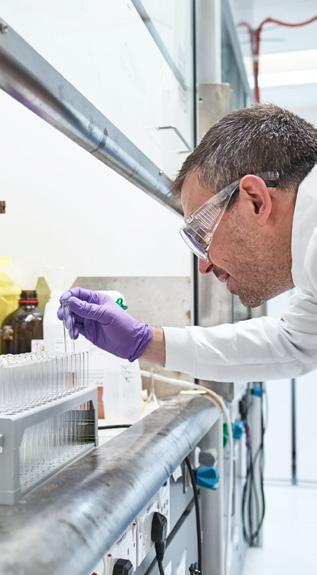
In March 2026, we completed a £2 million Seed investment into SilviaBio which included grant funding from Innovate UK. SilviaBio, a University of Sheffield life sciences spinout, accelerates biomanufacturing by pinpointing bottlenecks in mammalian cells, and delivering precision media solutions that bring predictability to a bioprocess.
In March 2026, we led a £5 million Seed round into Pixel-Flo – a spinout from the University of Sheffield’s School of Electrical and Electronic Engineering. The round was joined by SCVC, Parkwalk and High-Tech Gründerfonds.
Liquid-crystal displays currently dominate the display industry, however, MicroLED technology has an opportunity to disrupt this market. PixelFlo is building a scalable alternative approach to MicroLED assembly using industry-standard coating processes to improve manufacturing economics even for the largest panel sizes.
In March 2026, we led a £3 million Seed funding round into a biotech spinout from the University of Manchester focussed on the development of novel traits for food and agriculture. Co-investors included the UK Innovation & Science Seed Fund and Parkwalk. Cytotrait’s seed funding will enable the company to build on strong early data from its proprietary Mutant Organelle Selection System (MOSS) technology, initiating new development programmes to explore enhanced traits in major crop species.
In September 2025, Northern Gritstone led a £7.5m Seed round into Sitehop, joined by Amadeus Capital, the British Business Bank and MantaRay. The company, which has been granted unique access to
BT’s Gemini network test facility, is developing its SAFE series system to encrypt data-in-motion across networks. Its reprogrammable chip solution cuts latency by up to 10,000x and uses 90% less power versus software alternatives.
AI algorithms are creating major bottlenecks limiting the speed and efficiency of technological progress. Literal Labs is deploying revolutionary Logic-Based Networks software models and tools that are faster and more energy efficient than neural networks and work on existing hardware at the edge, enabling the company to put their game-changing ability directly into the hands of customers. Since our 2024 investment the company has progressed ahead of expectations, with very strong initial commercial traction. In April 2026, the company won GP Bullhound’s Northern Star Innovation Award. Cofounded by Noel Hurley, who previously led ARM’s CPU group, he was recently joined by serial software entrepreneur Jim Darragh as Chair.
Based in Leeds, MicroLub is a deep-tech ingredient solutions company that develops protein-based technologies to replace a significant proportion of fats and oils in food and personal care products, while retaining the texture and mouthfeel.
Since our 2024 investment, MicroLub has signed collaboration agreements with a number of major multinational food companies and food ingredients companies. Led by David Peters, former Head of Oatly UK, there is good potential for a large Series A raise.
Based in Manchester, Phagenesis is a med-tech company transforming the treatment of neurogenic dysphagia with targeted pharyngeal electrical stimulation (PES). Its Phagenyx System is a clinically validated neuromodulation therapy that helps restore safe, efficient swallowing in patients impacted by stroke or other neurological injury.
Since our investment in 2024, the company has made excellent progress against sales targets in Europe and the US and in January 2026, the American Stroke
Association issued guidelines recognising PES for its role in restoring swallowing control in patients recovering from a stroke.
Pencil Biosciences is a biotech company reimagining gene editing by building novel editors from the ground up.
One of its lead prototypes is "Break-Free" – an approach that allows DNA editing without creating a nick or double-strand break. Avoiding any physical cut in the genome reduces the risk of DNA damage and the associated mutations that arise when cells attempt to repair that damage.
Since Northern Gritstone’s initial investment Pencil has outperformed expectations with promising preliminary data, which, if validated, would be a world first with material benefits vs other ‘snipping’ gene editing methods.
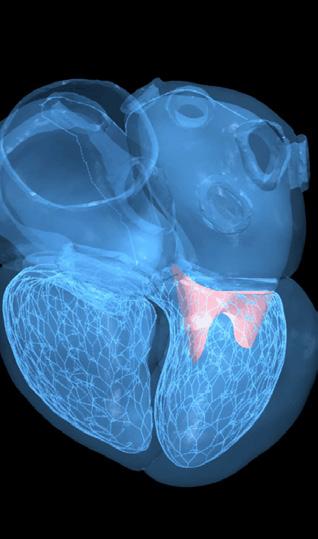
adsilico
Based in Leeds, adsilico is a tech-bio company that combines access to patient scan records with AI generated virtual organ populations with computational modelling to simulate medical device performance in diverse patient populations. The scale of its in-silico testing is impossible to replicate through conventional methods.
The company has published its first commercial case study – using a synthetic population of 1,700+ virtual heart mitral regurgitation patients – demonstrating compelling results through its proprietary Virtual Chimera technology. There is good potential for a large Series A raise.
Industrial X-ray inspection is critical across multiple sectors – yet traditional systems can be bulky, costly and inflexible. Based in Manchester, Silveray is transforming industrial X-ray inspection with Digital X-Ray Film (DXF), an ultra-thin, flexible detector that makes digital imaging accessible wherever it's needed.
The company worked closely with NG Growth on commercial traction, implementing advanced commercialisation processes ahead of its DXF product launch, securing its first customer orders scheduled for delivery in Q2 2026.
During the period investments were also made in 17 participants in NG Studios. Profiles of Northern Gritstone’s top 10 holdings by carrying value appear on pages 16 to 25.
• Optalysys is pioneering silicon photonics to enable high-performance compute beyond the limits of conventional electronic systems. As we reach the limits of current compute technology, photonic systems are already being implemented to speed up data movement. Optalysys takes this one step further, performing actual computations at the speed of light.
• The market-creating technology is based on Optical Fourier Transforms in which founder Dr Nick New and Robert Todd have >20 years’ commercial experience.
• The business model is to work in partnership with major tech companies to develop high-performance photonic chips which can be integrated into existing technology stacks to address key bottlenecks in existing workflows such as AI inference.
optalysys.com
Marketing & scaling opportunity
• Advanced compute is a multi-billion-dollar market and silicon photonics is a fast-growing segment.
• Optalysys is working with major tech companies to fully enable the market.
IP & barriers to entry
• Optalysys’ optical solution is the only method that delivers performance and low-power consumption.
• 10 relevant patent families registered, with the 4 core patent areas at late patent approval stage.
Productisation & pipeline
• Revenue model will be a blend of development contracts, hardware sales and license models.
Management team
• Dr Nick New (CEO) – PhD from Cambridge University in Optical Pattern Recognition.
• Robert Todd (CTO) – 30 years experience in the optical industry. Previous company supplied precision optical systems to CERN.
• Dipesh Patel (Chair) – former CTO of Arm.
Good Health & Wellbeing
Potential in the healthcare industry to improve diagnostics and treatment.
Peace, Justice & Strong Institutions
Protecting sensitive intelligence data preserves peace. Technology can be used to prevent financial fraud and identity theft.
Decent Work & Economic Growth
A high number of new skilled jobs based in the North of England to be generated through this investment.
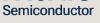
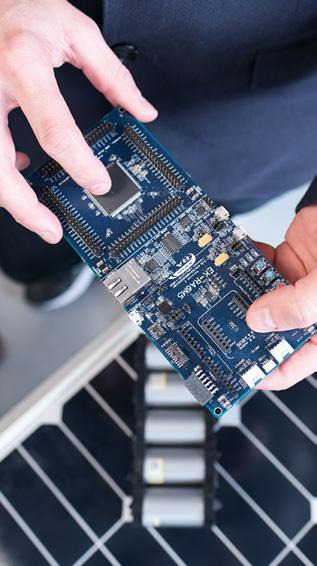
• Pragmatic was founded in 2010, and at inception, acquired IP from Manchester University.
• The company has developed a process for making flexible thin-film semiconductors. This enables the production of ultra low-cost integrated circuits that are faster to produce than silicon chips with a significantly lower carbon footprint.
• Current applications include radio frequency identification (RFID) and nearfield communications (NFC), high-density interconnectors and controllers.
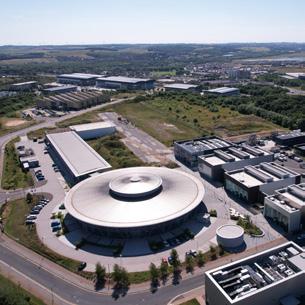
• Pragmatic is using investment to build a semiconductor manufacturing plant in North-East England and further develop its technlogy. Pragmatic Park, the UK’s first and only 300mm semiconductor fabrication site, will have capacity to produce billions of chips per year.

Marketing & scaling opportunity
• Pragmatic is initially disrupting the radio frequency identification (‘RFID’) market – its low-cost chips are predicted to expand the market 5x to $50bn per annum.
IP & barriers to entry
• Pragmatic has over 200 patents and extensive know-how and trade secrets around the manufacturing process of flexible thin-film transistors.
Productisation & pipeline
• The company is currently selling its first product (an RFID barcode) and has a technical roadmap to launch soon 2 additional smart-RFID products.
• The company also supplies foundry services to tier 1 & 2 customers outside the RFID market in healthcare, wearables and defense.
Management team
• David Moore, CEO, 20+ experience in the semiconductor industry, ex-Micron, ex-Intel.
• Board Includes Non-Executive Directors from Cambridge Innovation Capital, M&G, Avery Dennison and NWF. pragmaticsemi.com
INVESTMENT DETAILS
£7.5 m n/a 2%
Industry, Innovation & Infrastructure
RFID tags can digitise the supply chain, improve quality control and authentication of products.
Responsible Consumption & Production
1.0 x
The company has dramatically reduced the amount of energy and water needed to manufacture semiconductor chips.
Decent Work & Economic Growth
A high number of new skilled jobs based in the North of England to be generated through this investment.
• Phagenesis spun out of the University of Manchester in 2007, following 18 years of research carried out by Shaheen Hamdy (CSO) during his time there.
• The company has developed a medical technology – Phagenyx – to treat dysphagia (difficulty swallowing). Phagenyx is a temporary therapy (i.e. no implant or surgery) which permanently restores swallowing and airway safety with minutes of treatment, improving patient outcomes and reducing hospital length of stay by as much as 13 days.
• The device is CE-marked and FDA-approved. 15 clinical studies on 800+ patients have been completed, as well as the treatment of thousands of patients per year.
phagenesis.com

Marketing & scaling opportunity
• Phagenyx is approved for use in the treatment of post-stroke dysphagia, a large market with significant unmet need. Beyond this, the same product can be used in additional large markets such as post-ventilation dysphagia therapy.
IP & barriers to entry
• Phagenesis has a substantial portfolio of patents which sit alongside know-how, clinical evidence, and regulatory approvals which act as a ‘moat’ of protection around the market opportunity.
Productisation & pipeline
• Strong sales in Europe and US are demonstrative of market pull and adoption. Sales pipelines are growing and expansion into new medical indications is planned.
Management team
• Phagenesis is Chaired by veteran medtech entrepreneur Oern Stuge, who has overseen multiple, large exits as Chair.
• CEO Chad Hoskins is an experienced medtech startup CEO with expertise in scaling companies and US sales and marketing.
Good Health & Wellbeing
Patient outcomes are improved as the technology enables faster recovery and treats the cause of dysphagia – not just the symptoms.
Climate Action
Phagenyx eliminates the need for assisted feeding, and by association the use of single-use plastics.
Decent Work & Economic Growth
New skilled jobs based in the North of England will be generated through this investment.
KEY INFORMATION
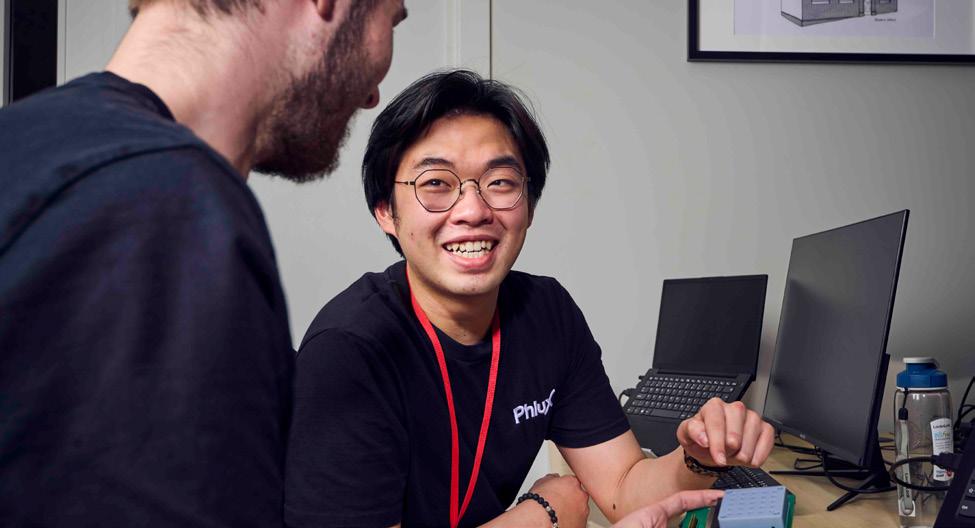
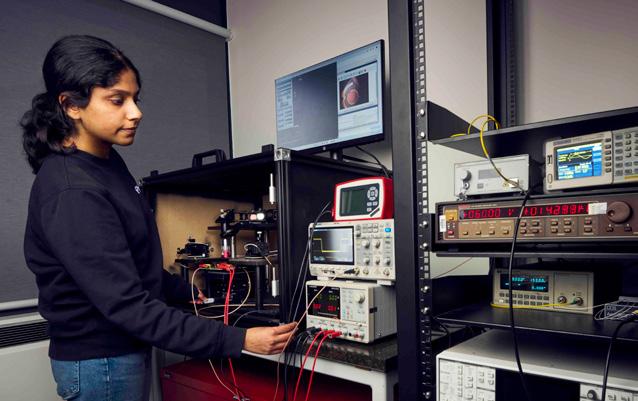
• Founded in 2020, Phlux has developed a patented, highly sensitive semiconductor material with best-in-class performance for sensing and communication systems.
• Phlux is a spinout company from the University of Sheffield and is based in Sheffield.
• Since the seed investment, the company has launched its first product – Aura – a drop-in replacement for Lidar systems, secured its first design win and delivered its first revenues.
Marketing & scaling opportunity
• Phlux’s novel semiconductor material has many end markets such as LIDAR and Optical Communications, combined offer a TAM of $8.1bn.
IP & barriers to entry
• The core of Phlux’s IP lies in the formulation and application of its novel material, protected by multiple patent families.
Productisation & pipeline
• The company has secured its first design win and has a strong sales pipeline of high value applications across multiple end markets.
Management team
• CEO Dr Ben White, technical founder with 3 patents filed on Phlux’s technology.
• Chair, David Crisp, an experienced chair who has raised VC funding.
• VP BD, Christian Rookes, 25 years' experience & set up product lines with >1bn capacity.
PURPOSE AND IMPACT
Climate Action
Phlux’s products can reduce processing power from 0.8 Watts to 0.3 Watts. Other climate applications include measuring methane gas.
Industry, Innovation & Infrastructure
Improving value proposition of high-value sensing devices and high-speed communications.
Decent Work & Economic Growth
Bringing high-skilled jobs to the North of England, both retaining talent within region and attracting talent to the region from elsewhere.
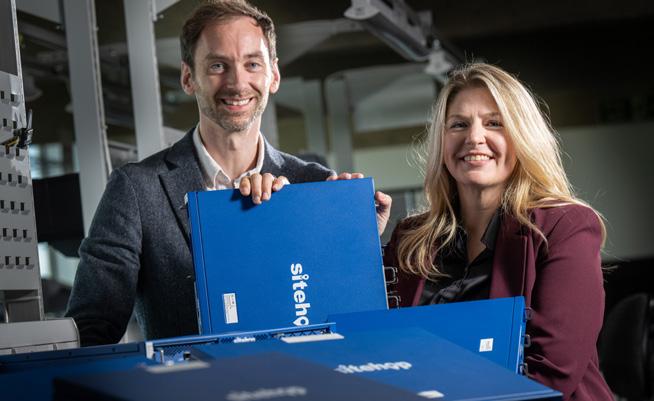
• Founded by Melissa Chambers (CEO) and Ben Harper (CTO) in 2020 to tackle the increasing challenge of encrypting data in motion.
• As data moves across networks it is vulnerable to interception, tampering, and espionage. AI has driven a massive expansion of data in motion, however existing encryption solutions consume too much energy and add significant latency.
• Sitehop’s solution encrypts and decrypts data packets, delivering ultra-low latency (835 nanoseconds vs average of microseconds), which is suitable for real-time financial transactions and to deliver 5G networks.
• Its solution is based on FPGA (Field Programmable Gate Array) hardware and includes post-quantum cryptography (PQC) in a software-reconfigurable format.
Marketing & scaling opportunity
• The overall cybersecurity market is worth $2 trillion and accelerating, with specific spending relevant to Sitehop worth $200bn.
IP & barriers to entry
• Sitehop’s core technology is protected by a patent.
• Sitehop’s expert FPGA engineers have developed key implementation knowledge that is protected as trade secret.
Productisation & pipeline
• Sitehop is selling its solution to Telcos, Governments and Critical National infrastructure where low latency and security are paramount.
Management team
• CEO and CTO have worked in several startups and sold into large enterprises and governments. The management team also includes Head of Operations and Head of People, who have experience working at a scale-up stage and possess relevant experience for this stage of the business.
PURPOSE AND IMPACT
Decent Work & Economic Growth
New skilled jobs based in the North of England will be generated through this investment.
Industry, Innovation & Infrastructure
Developed an ultra-low latency encryption solution offering a PQC solution and is compatible with any 3rd party infrastructure.
Responsible Consumption & Production
Enables ultra-low encryption at 10x lower power usage.
• Spun out of the University of Newcastle, Literal Labs is developing a solution that offers a fundamental alternative to Neural Networks, which are the leading approach in Machine Learning and are described as a ‘black box’ due to the lack of transparency.
• Literal Lab’s software-only solution is not only explainable but is also 53x quicker and uses 48x less energy vs the industry standard. Its future hardware solution offers potential orders of magnitude improvements to this.
• The current bottleneck to the wide adoption of Edge AI is the amount of power required to run the models and the lack of transparency – this is an opportunity that Literal Labs can exploit.
Marketing & scaling opportunity
• The initial market focus is Edge AI, which is currently valued at $19bn and will grow exponentially to $143bn by 2032. Use cases include automotive, manufacturing, healthcare and energy.
IP & barriers to entry
• The company is based on decades of research spun out of the MicroSystems Research Group at the University of Newcastle. The company has know-how and industry secrets for productising Tsetlin Machine technology.
Productisation & pipeline
• The company’s software-first approach and quicker time to market de-risks the opportunity and capital requirement. Its first applications will be in Predictive Maintenance, and it has recently launched its first zero-touch product – Model Mill.
Management team
• CEO Noel Hurley led the microprocessor group at ARM and headed up the ARM Product Marketing team that created the ARM Cortex processor family cementing ARM’s #1 position.
• CTO Leon Fedden joined from AstraZeneca where he was AI and Deep Learning lead.
DETAILS
PURPOSE AND IMPACT
Industry, Innovation & Infrastructure
The company facilitates advancements in industry and infrastructure by reducing the time, energy needed and cost to build and operate AI models.
Decent Work & Economic Growth
A high number of new skilled jobs based in the North of England to be generated through this investment.
Climate Action
Literal Labs models use significantly less energy than standard models, reducing the carbon footprint of implementing AI.
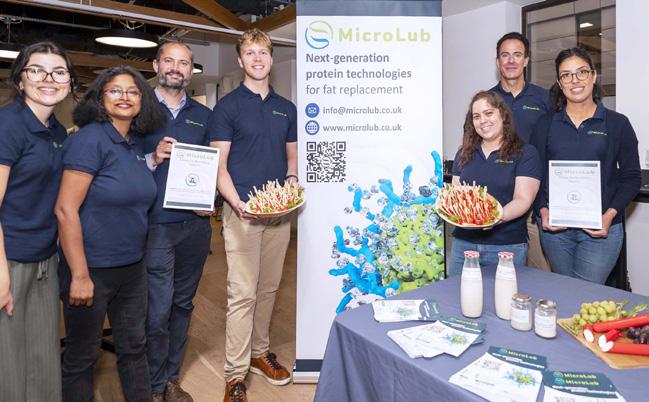
• MicroLub is a spinout from the School of Food Science and Nutrition at the University of Leeds. The company is founded on 10+ years of research led by Professor Anwesha Sarkar, Head of the UK’s National Alternative Protein Innovation Centre.
• MicroLub is developing a unique patented platform technology to create lubricants from protein and water to replace unhealthy and unsustainable fats, oils and additives, addressing key consumer demands for healthier, lower calorie, and more sustainable food options.
• The demand for free-from foods and drinks is expanding rapidly due to rising consumer awareness around health and sustainability.
Marketing & scaling opportunity
• MicroLub’s platform technology is positioned to meet the rising consumer demand for healthier, low-fat, and clean-label food products.
IP & barriers to entry
• MicroLub has a robust intellectual property portfolio, including 4 patents, alongside proprietary trade secrets, making it highly defensible against competitors.
Productisation & pipeline
• MicroLub’s technology, which reduces molecular friction through use of proteins, is adaptable across a wide range of food products as well as personal care and medical applications.
Management team
• MicroLub is led by a highly experienced team with a track record of success in the food industry, including a successful exit to Tate and Lyle by the CEO.
• The CTO/Founder is a world leader in her scientific field with previous commercial experience at Nestle.
microlub.com
PURPOSE AND IMPACT
Good Health & Wellbeing
The focus of MicroLub on reducing unhealthy fats in food products addresses significant health challenges such as obesity, cardiovascular diseases and diabetes.
Industry, Innovation & Infrastructure
MicroLub's proprietary protein microgel technology exemplifies innovation in the food industry.
Decent Work & Economic Growth
A number of new skilled jobs based in the North of England to be generated through this investment
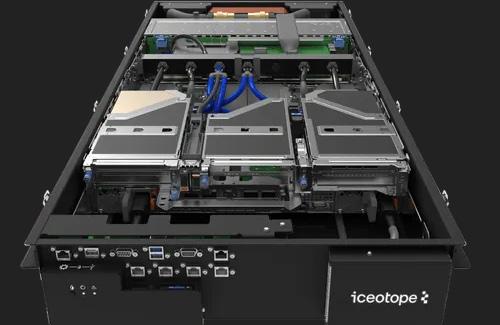
• Founded in 2013, Iceotope has developed a precision liquid cooling system for data processing IT equipment from edge to central data centre infrastructure.
• Iceotope is based at the Advanced Manufacturing Park in Sheffield.
• Its patented IP makes it the only liquid cooling provider that can cool all heatproducing components in the stack –including CPUs, GPUs, storage, power and networking equipment.
• During the period Iceotope closed a $30 million series B funding round and will use the funding to scale product and engineering to support demand for their technology.
Marketing & scaling opportunity
• Iceotope’s technology can be applied to AI servers, edge computing and power supply units. Which gives it a TAM of $40bn+.
IP & barriers to entry
• Iceotope has 200 patents granted and pending covering the full stack for precision liquid cooling methods, including its critical components.
Productisation & pipeline
• The company is progressing joint development agreements for its Telco product with OEMs including HPE and has a strong pipeline.
Management team
• Iceotope has an experienced management team.
• Exec chair Alain Andreoli (ex-HPE, Sun Microsystems, Oracle) leads the board which includes other investor directors and NED Neil Yule.
iceotope.com
Decent Work & Economic Growth
Iceotope’s precision liquid cooling technology enables systems to operate at maximum efficiency, while reducing the energy required for cooling by over 80%. Its technology eliminates contaminants and vibration that cause component failure and reduces water consumption by 96%. PURPOSE
Bringing high-skilled jobs to the North of England, both retaining talent within region and attracting talent to the region from elsewhere.
Climate Action

• adsilico is a University of Leeds spinout, built on 15+ years of research and £10m+ of non-dilutive funding.
• The company is building an end-to-end solution for medtech companies to run insilico trials (‘ISTs’). ISTs use computational models and simulations to assess safety, efficacy and performance of medical devices ahead of real world human clinical trials. They also reduce the need for animal experimentation.
• adsilico uses generative AI to create diverse synthetic virtual populations from real population data at a scale not feasible with any other approach.
Marketing & scaling opportunity
• In silico methods are rapidly transitioning from optional tools to core capabilities driven by increased data availability, advances in AI, cost pressures, and regulatory drivers. This underpins a market predicted to reach $9.2Bn by 2030.
IP & barriers to entry
• adsilico has three patent application familiies. Their access to data is an additional barrier to competition.
Productisation & pipeline
• The medical devices industry is demanding solutions to improve the efficiency of medical device development. adsilico is well positioned to deliver this at scale with a strong commercial exemplar and commercial engagement.
Management team
• CEO and Co-founder Sheena Macpherson is an entrepreneur specialising in digital health and software.
• Chris Richardson (Chair) – a veteran in medical device start-ups with experience of multiple exits.
Good Health & Wellbeing
The platform will enable more cost efficient and safer development of medical devices.
Decent Work & Economic Growth
New skilled jobs based in the North of England will be generated through this Investment.

• Founded in 2024, Pixel-Flo is developing a revolutionary approach to the assembly of MicroLED displays, which is scalable, offers superior brightness and added efficiencies.
• Pixel-Flo is developing a modified slotdie fluidic assembly process to enable high-throughput, micron-accuracy transfer of MicroLEDs. The technology aims to overcome fundamental cost and scalability limitations of laser and stamp-based transfer methods.
• Pixel-Flo is a spinout company from the University of Sheffield’s School of Electrical and Electronic Engineering, founded by Dr Rick Smith, Dr Suneal Ghataora and Simon Jones. Pixel-Flo is a graduate of NG Studios.

Marketing & scaling opportunity
• The MicroLED market is expected to reach $5bn by 2032, mainly driven by AR, automotive, and large displays. In a full adoption scenario – including smartphones, tablets, and laptops – the market could grow to $12bn by 2030.
IP & barriers to entry
• Pixel-Flo is developing a fundamentally different approach to assembling MicroLEDs – which it has patented.
Productisation & pipeline
• Pixel-Flo’s mass transfer process enables the mass adoption of MicroLED displays. MicroLEDs are the next generation of display technology, offering up to 5x superior brightness, faster response times, 2-4x energy efficiency and extended lifespans.
Management team
• Rick Smith (CEO) and Suneal Ghatora (CTO) are experts in microelectronics mass transfer and bring deep academic insight & technical expertise. They are the inventors of the core technology underpinning the platform.
pixel-flo.com
DETAILS
Return to date:
Multiple of money invested
Key co-investors include: Science Creates Ventures and Parkwalk.
• Chair, Simon Jones has 20 years of experience in developing and selling in the display industry.
Responsible Consumption & Production
Company’s process produces displays that are 2-4x more energy efficient.
Industry, Innovation & Infrastructure
The company has developed a process which produces up to 5x brighter displays.
Decent Work & Economic Growth
New skilled jobs based in the North of England will be generated through this Investment.
Our investment strategy focuses on value creation with companies hitting milestones to meet crucial inflexion points. Although capital is vital, we know that the ecosystem is critical for early-stage companies to thrive, which is the role of NG Innovation Services.
The five functions of NG Innovation Services across talent, sales, fund-raising and venture building, are helping our portfolio companies grow into world-class businesses.
These functions provide the critical infrastructure and connections needed by ambitious leadership teams.

NG Co-Investment
building syndicates that align investors and founders to support scalable growth
NG Growth hands on coaching and a proven growth model to drive sales
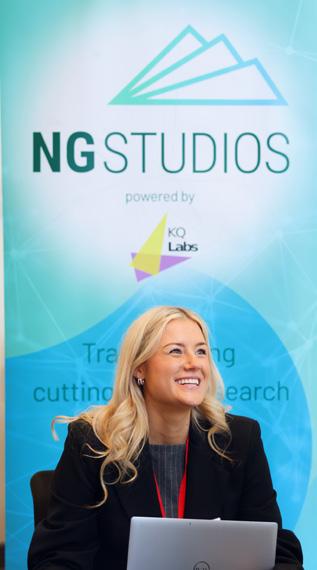
NG Studios
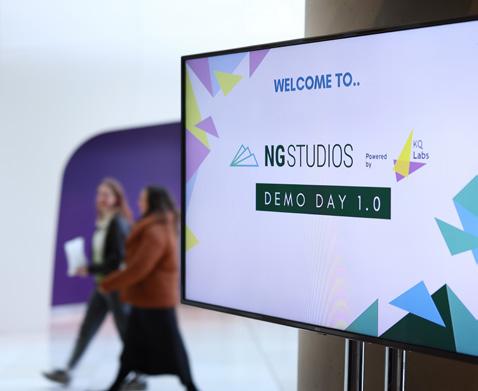
bespoke pre-seed programs transforming deep tech and life sciences research into scalable, investment-ready businesses
Together and individually, the four Northern Arc universities have an impressive research footprint, history, and funding record. Their research quality is ranked equivalent to Oxford and Cambridge universities.* On a combined basis:
#1 #1 70 + 57,000
UK spinout volume UK research income ranking academic institutes talent pool
They produce the highest annual volume of spinouts with Higher Education ownership in the UK2.
They have more research income than any Higher Education institute in the UK1
Leading research institutes at the Partner Universities include:
They comprise over 70 leading academic institutes.
They have a talent pool of almost 17,000 research & academic staff 2 and almost 40,000 postgraduate students2.



This is summarised in the table below:
* Average of 92% of research rated as 'world leading / internationally excellent' by the Research Excellence Framework, which compares against 91% for Oxford University and 93% for Cambridge University.
Sources: 1. Universities 2. HESA 3. Research Excellence Framework. All data from 2024/25 except 3 which relates to 2021 and is the latest data available.



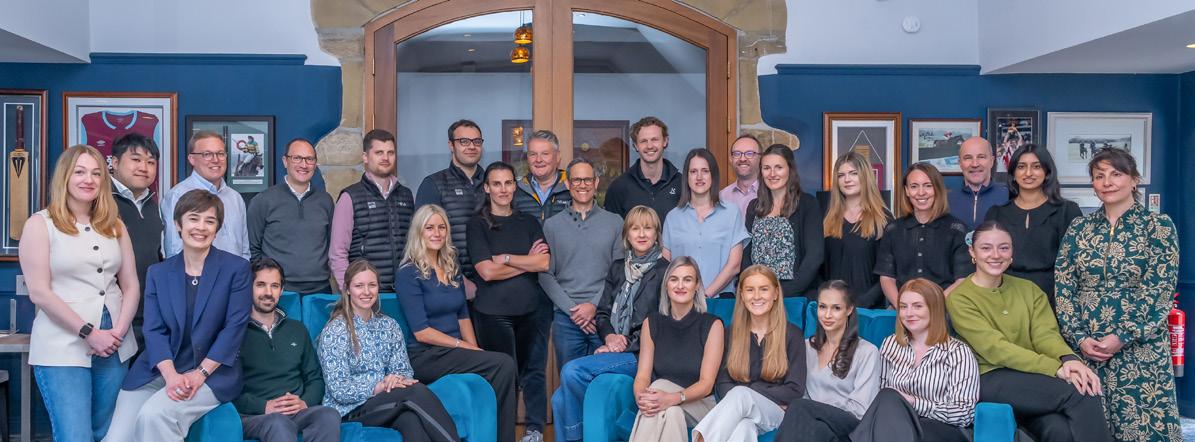
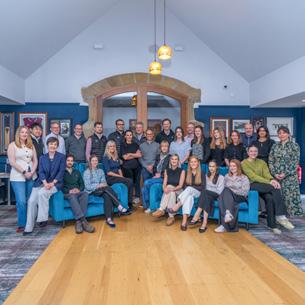
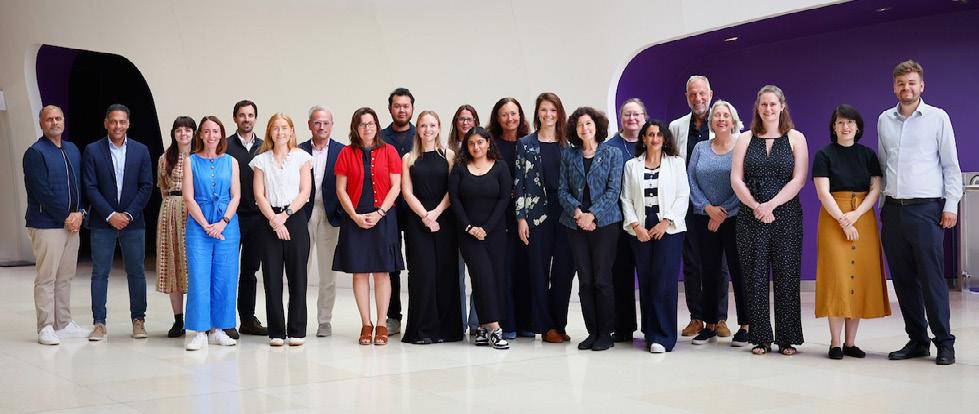
The Northern Gritstone team of ‘Gritstoners’ turn the wheel of Profit with Purpose by supporting ambitious companies in the North of England and by being active members of the North’s innovation hub.
We care deeply about regional growth through the creation of world-class companies. We know that building these businesses is hard work for our portfolio company founders, which is why we bring our support and empathy.
Our combined ‘Gritstoner’ skills are how we best support amazing founders and their teams. In the past year, our team has grown in our investment management business and in NG Innovation Services (the Capital+++).
Some of the Gritstoners turning the wheel of profit with purpose are shown opposite.
Simon Braham HEAD OF PORTFOLIO
Simon is an experienced private equity, growth and impact investor. He joined Northern Gritstone from Bridges where he led its Sustainable Growth Funds in the North. He has a strong track record built over the past 15 years at both Bridges and prior to that LDC, including investing in and exiting early-stage businesses.
Having started his career at KPMG in accounting and private equity advisory, he became an equity analyst at JP Morgan Cazenove before moving into leveraged finance and restructuring/workout at Lloyds Banking Group.
James Gibbons INVESTMENT DIRECTOR
James is an Investment Director specialising in Life Sciences, including Biotech and Therapeutics. James leads the NG Studios Therapeutics accelerator program working with our delivery partner KQ Labs. He previously worked in commercialisation at the University of Leeds leading a team responsible for IP licensing. James has a Masters degree in Pharmacology from the University of Bristol.

With over two decades of expertise in university spinout ventures, Cassie joined from Parkwalk Advisors. Cassie specialises in transformative life sciences companies – spanning therapeutics, agtech, medical devices and enabling technologies.
Cassie holds a PhD in Biochemistry from the University of Leeds and remains passionate about bridging the gap between groundbreaking academic research and marketready innovations that address real-world challenges. Cassie is also a Trustee of Leeds Hospitals
Charity and Chair of the charity’s Research & Innovation Committee.

Khadija Ashfaq
INVESTMENT DIRECTOR
Khadija is an Investment Director specialising in physical technology including Cybersecurity, Semiconductors and novel AI. Prior to joining Northern Gritstone, Khadija worked in venture capital for Northstar Ventures where she covered AI. She holds a BSc in Economics from the University of York and the CFA Investment Management Certificate.
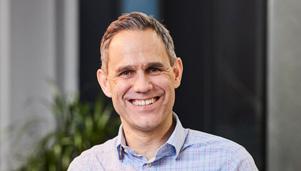
Andy Naylor DIRECTOR
Andy is an investor with more than 20 years’ experience growing technology businesses. He was previously CEO of Nottingham Technology Ventures, a company that manages the University of Nottingham’s spinout portfolio and associated investment funds. Andy has been an investor, advisor, CEO and Non-Executive Director of technology companies. He holds a first-class honours degree and PhD in Physics from the University of Nottingham. Andy manages the relationship with the University of Sheffield for Northern Gritstone.
31
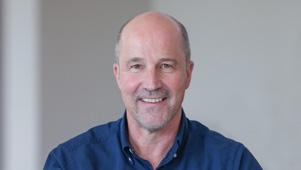
GROWTH DIRECTOR, NG INNOVATION SERVICES
Gordon brings over 30 years of entrepreneurial and leadership experience to the role, including 25 years of scaling tech businesses and multiple successful exits. He co-founded BigHand, a legal tech company and played a pivotal role in its global expansion. As a Non-Executive Director, coach, and Amazon #1 bestselling author of Scale Up Millionaire, Gordon has advised numerous founders on achieving rapid growth and successful exits.
Effective management of risk is necessary for Northern Gritstone to achieve its strategic objectives and is part of good management and effective governance.
The Group has a holistic approach to risk management embedded into its structures and processes through governance and risk appetite frameworks, and an underlying policy and control environment that integrates risk management into planning and decision-making.
The Group operates a systematic process of risk identification which is both bottomup and top-down, as well as aligned to its strategic aims. The approach is deliberately multi-faceted, to maximise the chances of successfully identifying risks and to ensure so far as possible that risks feature at the front of management thinking at all levels within the Group.
Overall responsibility for risk management rests with the Board, but Northern Gritstone recognises that it is important for all stakeholders across the Group to engage actively in risk management in order to ensure
that a positive risk management culture is developed and maintained.
Northern Gritstone’s Risk Management Methodology and Framework and its implementation is led by the Chief Financial Officer, with oversight from the Investment Committee, Audit and Risk Committee and the Board.
The Investment Committee oversees risks associated with the investment strategy and that the investee portfolio is managed appropriately.
The Audit and Risk Committee overseesthe overall risk management framework. It reviews the Group’s risk appetite, reviews the principal risks affecting the business, and on-going mitigating actions. The Audit and Risk Committee also liaises with the external auditor regarding their assessment of the risks facing the business. The Audit and Risk Committee reports its findings to the Board.
Northern Gritstone operates an on-going risk management cycle in accordance with its Risk Management Methodology and Framework. This includes: identifying and evaluating the material risks affecting the business; reviewing the Group’s risk appetite; determining mitigating actions then monitoring their implementation.
Northern Gritstone’s risk appetite is reviewed annually as part of the Group’s governance cycle, with oversight and input from both the Audit and Risk Committee and the Board.
Northern Gritstone has a high appetite for investment risk, which is inherent to investing at an early stage in innovative technology and life-science businesses. It intends to mitigate this risk by ensuring that the portfolio is diverse and that exposure is spread across
a large number of investments. This risk is further mitigated by active engagement with investee Boards, investee access to Northern Gritstone support and a focus on future funding options.
Northern Gritstone has a low appetite for risks relating to its: reputation; legal and regulatory compliance; ethics; and financial integrity. The Group operates governance and control systems to ensure that risks across these areas are appropriately managed.
The Group’s Risk Register is formally reviewed and updated semi-annually by the Audit and Risk Committee and approved by the Board. Highlighted overleaf are significant risks that are monitored, and the Group’s responses to them.
Early-stage companies typically face a range of risks. A significant number of investee companies could perform poorly, leading to material losses for the Group.
The inability of Northern Gritstone’s investee companies to access sufficient capital at the right time could lead otherwise successful companies to fail.
The Group has a high level of dependence upon key members of the executive team.
Insufficient volume or quality of spinout companies emerging from the Partner Universities may limit Northern Gritstone’s long-term growth prospects.
• Northern Gritstone’s employees have significant experience in sourcing, developing, and growing early-stage companies to significant value.
• Support is offered to all investee companies and members of Northern Gritstone’s investment team engage with investee company Boards to help identify and remedy critical issues promptly.
• Capital is deployed gradually across a large range of companies, at different stages of growth and across different sectors.
• Northern Gritstone seeks to employ a capital efficient process deploying low levels of initial capital to enable identification and mitigation of potential failures at the earliest possible stage.
• Northern Gritstone’s investee portfolio is young and will not have a significant cash need in the short-term. The Group regularly forecasts the cash requirements of investee companies along with identifying additional potential funding sources for future fundraising rounds.
• A strategy of working with co-investors is being pursued to reduce forward funding risk.
• Short-term succession plans have been developed for all executive team members.
• The Group offers a balanced incentive package which is designed to reward loyalty and retain key members of the executive team.
• The strong reputation and long history of the Partner Universities supports a healthy research funding environment.
• Current government policies are supportive of innovation and should drive innovation funding to the region in which Northern Gritstone operates.
• The Group engages with government and policy makers to support the funding environment for universities and early-stage innovation.
• Northern Gritstone has developed a good working relationship across the Partner Universities particularly focused on disciplines from which spinouts are likely to emerge, in addition to running a range of incubation and accelerator programmes.
Failure to attract or retain suitable staff (who are largely highly skilled and specialist) would have a significant impact on the ability to execute Northern Gritstone’s strategy.
The Group is at an early stage of development and the culture adopted will have a significant impact on future performance.
The Group may be subjected to phishing and ransomware attacks, data leakage and hacking.
The Group has committed to be an example for other businesses to follow. Failure to do so could cause significant reputational damage.
• The Group carries out regular market comparisons for staff and executive remuneration and seeks to offer a balanced incentive package comprising a mix of salary, benefits, short-term and longterm incentives which are designed to reward loyalty and attract and retain key talent.
• The Group operates a rigorous hiring process and encourages employee development and inclusion through training and carries out annual objective setting and appraisals.
• The Group retains specialist recruitment firms to help fill open roles.
• The Group aims to create an open and inclusive culture which embraces challenge and value-add feedback.
• Diversity of thought and experience is actively encouraged and the Group has made available publicly its commitment to Equality, Diversity and Inclusion.
• The Group places strong emphasis on developing the right culture and operates a zero-tolerance approach to inappropriate behaviours.
• Northern Gritstone has in place a cyber & IT security policy and reviews its data and cyber-security processes with its external outsourced IT provider.
• The Group has a regular IT management reporting framework in place.
• There is an ongoing focus on IT security and staff training, including simulated cyber attacks and maintenance of a business continuity plan.
• The Group’s governance is of a high standard and the strong ethical values the Group embraces guide how we do business in every aspect.
Continued...
The Group must comply with a broad range of regulatory and legal requirements. Failure to comply with these rules could result in a fine, legal proceedings against Directors or the failure of the Group to continue to operate.
Northern Gritstone is reliant on the Founding Universities for a large volume of its potential investments. Were the Framework Agreement to be terminated it would have a significant impact on the strategy of the Group.
Failure of key third-party suppliers or service level agreement failure affecting Northern Gritstone’s ability to maintain operational viability. In addition, failure in internal controls and procedures could have the same impact.
One-off climate events may disrupt operations.
• The Group maintains a continual review of its compliance in key areas, including commissioning third-party reviews where required. No material issues have been identified to date.
• The Group maintains D&O and professional indemnity insurance policies.
• The Founding Universities are shareholders in Northern Gritstone, which creates a mutually beneficial partnership. In addition, each Founding University appoints a Non-Executive Director to the Group’s Board and is an active member of at least one subcommittee of the Board.
• Northern Gritstone is collaborating well with the Founding Universities and the relationships with the Technology Transfer Offices are strong. Should an issue arise, the Framework Agreement contains mechanisms for managing these.
• The Group has the ability to invest in the North of England beyond spinouts from the Founding Universities.
• The Group is in regular contact with third-party suppliers and monitors for any impending issues.
• All third-party suppliers provide functions which could be switched to another supplier if required.
• The Group has established internal controls and procedures appropriate for its stage of development.
• The Group’s employees have the ability to work in multiple offices or from home if there is a climate event in their location.
• A prolonged climate event across the region is possible, but is likely to be temporary in nature.
During the period reported Northern Gritstone has continued to develop its Purpose & Impact (‘P&I’) strategy.

Northern Gritstone was established with a deliberate place-based purpose: to direct patient, longterm capital into the North of England’s worldclass science and innovation base, addressing a structural gap in early-stage funding that has historically caused talent, intellectual property and high-growth companies to leave the region. The Group’s impact is therefore not only financial but systemic, contributing to a rebalancing of opportunity and economic activity across the UK.
Northern Gritstone’s impact arises from a clear and deliberate chain of activities, outputs and outcomes. The Group raises long-term, patient capital from purpose-aligned investors and, working in partnership with the leading universities of the North of England, identifies high-potential science and technology spinouts at the earliest stages of their development. By investing at this critical pre-commercial stage, bridging the gap between research and commercialisation, and by providing strategic support through the Group’s investment team and NG Innovation Services, Northern Gritstone enables companies to grow, retain their intellectual property within the region and catalyse additional private investment alongside the Group’s own capital.
The intended outcomes of this approach are the creation of high-value, knowledge-intensive
jobs in the North of England; enhanced regional productivity and economic growth; the development of stronger, globally competitive innovation clusters; and a meaningful contribution to reducing regional inequality across the UK through sustained placebased investment. The Group tracks its progress against these intended outcomes through a combination of portfolio-level metrics and the annual P&I survey of investee companies, the results of which are incorporated into this report.
During the period Northern Gritstone invested in an additional 18 companies. In total, the Group has now backed 50 science and innovation-based businesses in the North of England, all enjoying strong intellectual property underpinned by world-class science and an ability if successful to become world-leading businesses.
Since inception, an additional £347m of coinvestment has been invested or committed by a series of local, European and other international investors into the North of England alongside the Group’s £103m of committed and invested capital. This represents c.3x the value that Northern Gritstone has invested. Total

funding to date made by Northern Gritstone and co-investors now stands at £450m.
The 50 investments Northern Gritstone has made to date funded 315 additional jobs, with
significantly more to follow as the monies invested are fully deployed by the investee companies. At 31 March 2026 Northern Gritstone’s investee companies employed 865 people in total.
Note: Numbers refer to the UN classification of the Sustainable Development Goals.
EXAMPLES OF INVESTEE COMPANIES WITH HIGH IMPACT TOWARDS SPECIFIC UN SDGS INCLUDE:
Climate Action
Currently data centres emit c.1 billion tonnes of CO2e emissions each year globally (3% of total global CO2e emissions). Iceotope’s precision liquid cooling products can reduce energy usage in data centres by up to 40% and water usage by up to 96%. Their technology has already helped their customers avoid c.1,450 tonnes of CO2e emissions.
Good Health and Wellbeing
Crucible significantly improve the quality and duration of lives in those that would otherwise die from conditions for which no efficacious treatments exist. The company is initially focused on developing treatments for Amyotrophic Lateral Sclerosis and Frontotemporal Dementia, of which there are a combined 2,500 cases diagnosed annually but with no effective treatments available.
OLO is developing a toolkit to democratise robotics software development. Its cross-platform, cross-robot solution opens robotics programming to all software developers by making it possible to code in any programming language and to deploy that code on any robot, making the development of robotic applications quicker, easier and more cost effective. By reducing the complexity and cost of robotic development, OLO supports increased innovation and the development of scalable infrastructures within the robotics sector with the potential for positive impact on a global scale.
The total level of carbon emissions increased in the period driven by scope 3 emissions as a result of an increase in both the average number of employees, which rose to 33 during the period ended 31 March 2026 (2025: 27), and the Group’s average invested capital, which rose to £75.5m during the period ended 31 March 2026 (2025: £48.9m).
The Group’s two key measures of annualised tCO2e per average invested capital and per average employee both remained broadly in-line with prior year.
The Group aims to minimise its carbon footprint in the first instance and then to offset any excess carbon emissions. The Group fully offset carbon emissions from its own operations for the period ended 31 March 2026 and for the period ended 31 March 2025. The carbon offset for both periods was performed through Carbon Footprint Limited, which runs a unique tree buddying scheme. As part of this scheme, Northern Gritstone funded the planting of trees in schools in the North of England and also supported projects reducing deforestation in the Amazon and Africa. These projects have been validated and verified against the Verified Carbon Standard.
The Group is a signatory to the Net Zero Asset Manager’s initiative. The Group has defined interim targets to achieve net zero across the Group and all
of our investments by 2050 or sooner. The interim targets set, under the Paris Aligned Asset Owners Net Zero Investment Framework, are:
• 50% of invested capital actively engaged in carbon reduction conversations at Board level by 2030, increasing to 100% by 2040. At 31 March 2026, 21% of invested capital is actively engaged in carbon reduction conversations at Board level (2025: 22%).
• 30% of invested capital aligning or aligned with a net zero goal by 2030, increasing to 80% by 2040 and 100% by 2050. At 31 March 2026, 17% of invested capital is aligning or aligned with a net zero goal (2025: 15%)
• 100% of invested capital to have achieved net zero by 2050, with interim absolute carbon emission reduction targets to be set once Northern Gritstone’s portfolio has been fully established (expected by 2027). At 31 March 2026, no invested capital has achieved net zero (2025: nil).

THE GENDER AND DIVERSITY MEASURES REPORTED BY THE GROUP ARE:
In the long-term, the Group aims to reflect the communities in which it operates across all levels of the business and will continue to focus on developing a diverse and inclusive team as it builds out its operations. We are committed to removing barriers that may hold people back because we know that when people come together with different views, approaches and insights it can lead to a richer, more creative and innovative environment for creating the world-leading businesses of tomorrow. The Group ultimately aims, across all levels of the business, for a 50:50 gender balance and for at least 14% of people to come from an ethnic minority background. These percentages are consistent with the demographics of Leeds, Greater Manchester, Merseyside and Sheffield.
Northern Gritstone’s focus on Purpose & Impact and doing business in the right way underpins the business’ culture. Good businesses are diverse businesses by thought, experience, background and outlook as well as by gender, race, sexuality and other characteristics. The Group recognises that true diversity is 3D and incorporates a broad range of measures including socio-economic background, neurodiversity and education. Creating a diverse and inclusive working environment is central to our culture at Northern Gritstone and the Group has adopted and published on the Group’s website a statement on its commitment to equality, diversity and inclusion.
The portfolio P&I survey provides an insight into the backgrounds of those leading and employed by our investee companies. 25% of all people employed by Northern Gritstone portfolio companies come from an ethnic minority background, which is above the average of 14% of the populations of Leeds, Greater Manchester, Merseyside and Sheffield. However, only 29% of people employed by portfolio companies identified as female. This level is consistent with UKwide surveys of people employed in STEM (‘Science, Technology, Engineering and Maths’) industries, but is an area on which the Group will continue to engage with investee companies as they build out their operations. More positively, over 60% of investees have a mixed-gender Board, which compares against 23% across the UK venture-capital market 2 .
The Group is a signatory to the Investing in Women Code, with a commitment to improve the potential for female entrepreneurs to access successfully the tools, resources, investment and finance they need to build and grow their businesses. This reflects the Group’s commitment to gender equality across both Northern Gritstone itself and its existing and future investee companies. During the period reported, the Group has taken the following specific actions to promote female entrepreneurship:
• Operate an investment committee that is 60:40 male / female;
• Established an investment team which is 55:45 male / female;
• Attended and presented at events focused on promoting female entrepreneurs and females pursuing careers in finance or venture capital;
• Held an Equality, Diversity and Inclusion Day, which celebrated the diversity of our workforce;
• Engaged positively on diversity matters with investee companies (including through talent support services provided by NG Innovation Services);
• Backed female led companies (e.g. Pencil Biosciences, Floreon, adsilico, IVF Micro and Sitehop) and companies with leading female academic founders (e.g. Phlux, Auxetec, MicroLub, Crucible, Cavero and Mimetrik); and
• Analysed diversity and inclusion data for the Group and the portfolio at Executive and Board level.
Governance
NO GOVERNANCE OR LEGAL ISSUES AROSE DURING THE PERIOD. THE BOARD AND GOVERNANCE COMMITTEES MET PER THE TABLE BELOW:
Jim O’Neill
Duncan Johnson
James Hadley
Andrew Graham
Alex Macpherson
Jane Madeley
Luke Georghiou
Sue Hartley
Niranjan Sirdeshpande
Paddy Dowdall
John Holden
Keith Breslauer
Tim Lewis
Darren Ward
Marion Bernard
Simon Braham
The Group focuses on working closely with its investee companies and their Boards, through direct engagement by Northern Gritstone’s investment team, through the support offered by NG Innovation Services and through sharing best practice. Through this involvement, the Group takes an active role in developing, assisting, supporting and monitoring the strategic development of our investee companies. It is Northern Gritstone’s belief that if investee
The Group is focused on ensuring that it works closely with other businesses in the North of England along with supporting the local communities in which we operate. This is alongside being a strong advocate for the Northern innovation economy and supporting this with commercial initiatives wherever possible.
In June 2025 Northern Gritstone hosted a senior delegation from the Kingdom of Bahrain, which included two days visiting innovation hubs in Leeds, Manchester and Sheffield. The visit culminated in the announcement of a £2bn investment partnership between the Kingdom of Bahrain and the UK. During the period the Group also engaged with multiple external stakeholders to advocate for the Northern innovation economy, including representing the region at an entrepreneurship focused roundtable at HM Treasury and contributing to the Science and Innovation Audit for Greater Manchester.
The Group actively seeks to partner with suppliers which have a presence in the North of England. At 31 March 2026 over 50% of the Group’s suppliers were either headquartered in the North of England or service the Group from a team based in the North of England.
We were pleased to host two undergraduate interns from the University of Leeds over the summer and the Group continued its outreach programme, which has now been delivered to over 200 students.
The Group also engaged with Young Enterprise, with members of Northern Gritstone’s investment
companies adopt a strong approach to governance, which is appropriate for their stage of development, they are more likely to progress well in other areas of P&I and as a business more generally. Given this focus it was pleasing that, of the topics covered in the portfolio P&I survey undertaken in the period, investee companies scored highest in those related to governance.
team volunteering to sit on panels judging student enterprises, and participated in the Bright Futures: Young Investors event, which is an initiative that brings together secondary school students, investors, and entrepreneurs to engage in real-world experiences and feedback opportunities. Northern Gritstone employees also provided business mentoring to the educational charity SHINE, Chaired the Research & Innovation Committee at Leeds Hospitals Charity and volunteered to assist South Yorkshire Community Foundation with its grant allocation process, with the aim of maximising local impact.
Northern Gritstone is a signatory to the United Nations Principles for Responsible Investment. The Group utilises the Sustainability Accounting Standards Board (‘SASB’) materiality guidelines when assessing the Purpose & Impact factors most likely to impact materially the financial condition or operating performance of both the Group and its investee companies.
As part of the investment appraisal process for potential investee companies, Northern Gritstone maps each company’s impact against the UN’s Sustainable Development Goals and utilises the Impact Management Project framework for measuring and assessing impacts. The Group tracks and reports on progress against the impacts identified.
The Group’s approach to impact management is integrated across the full investment lifecycle. At screening and due diligence stage, potential investee companies are assessed against both financial return expectations and their expected contribution to the Group’s regional impact objectives. Consistent metrics, including jobs created, capital leveraged, intellectual property commercialised and regional economic contribution are tracked across the portfolio to enable comparison and analysis over time. Post-investment, the Group works actively with portfolio companies to strengthen their impact
performance through governance engagement, strategic support and the services provided by NG Innovation Services. Portfolio data is reviewed regularly to track progress against intended outcomes, with insights from the portfolio used to refine the Group’s investment strategy on an ongoing basis.
The Group has in place an investment exclusion list, detailing businesses or activities in which it does not and will not invest. This covers a broad range of activities which are harmful to people or the planet. During the period the Group updated its exclusion list with regards to defence investment, aligning its exclusion policy with internationally recognised treaty frameworks to which the United Kingdom is a signatory. Northern Gritstone recognises that responsible investment in certain defence and dual-use technologies can be compatible with sustainability objectives where strong governance and regulatory compliance frameworks are in place. A full copy of Northern Gritstone’s investment exclusion list is available to download from the Group’s website.
Signatory of:
We recognise the importance of combating climate change and are committed to assessing and integrating the impact of climate change into our business strategy, operations and risk management processes. Northern Gritstone is not required to report against the recommendations of the Task Force on Climate-related Financial Disclosures (‘TCFD’), but has chosen to do so on a voluntary basis as part of its commitment to the Net Zero Asset Manager’s initiative.
We are in the early stages of aligning with the recommendations of the TCFD and our focus in the period reported was on assessing, qualitatively, the associated impact and management of climaterelated risks and opportunities on Northern Gritstone and our portfolio. Our approach has been guided by the ‘TCFD Implementation Considerations for Private Equity’ report published by TCFD, which recommends an approach to implementing TCFD recommendations that is appropriate to an
organisation’s size, the geographic coverage of its investments and its exposure to high-risk climate sectors. Northern Gritstone is a small business by asset management standards, invests in businesses based in the North of England and has no exposure to high-risk climate sectors. Consequently, our approach to reporting under TCFD has been informed by these considerations. Going forward, we will continue to evolve and enhance our climate governance and reporting as appropriate.
Disclose the organisation’s governance around climate-related risks and opportunities.
a. Describe the Board’s oversight of climaterelated risks and opportunities.
b. Describe management’s role in assessing and managing climaterelated risks and opportunities.
The Board actively identifies and evaluates the risks inherent in the business, formally reviews these on at least an annual basis, and ensures that appropriate controls and procedures are in place to monitor and, where possible, mitigate these risks (see Risk Management on pages 32 to 36 of this Annual Report for further information).
This process includes climate-related risks and opportunities, which are discussed and approved by the Board, having been considered by the Purpose & Impact committee. Climate change targets have been set by the Board, with metrics updated and tracked at least annually (see Metrics and Targets within this TCFD section for further information).
The Chief Financial Officer is responsible for leading on Purpose & Impact matters throughout the Group and is a member of the Purpose & Impact committee, Executive committee and the Board (see Governance on pages 52 to 60 of this Annual Report for further information on the Governance structure of the Group).
The investment team engage with portfolio companies on climate risks and opportunities. Processes are in place so that management and the Board are appropriately informed of climate-related issues and that they are escalated where applicable (see Risk Management within this TCFD section for further information).
Purpose & Impact goals form part of the annual performance objectives of all employees of the Group and the Board are informed by climate-related issues when reviewing and guiding the Group’s strategy.
Disclose the actual and potential impacts of climate-related risks and opportunities on the organisation’s businesses, strategy, and financial planning where such information is material.
a. Describe the climate-related risks and opportunities the organisation has identified over the short, medium, and long term.
b. Describe the impact of climate-related risks and opportunities on the organisation’s business, strategy and financial planning.
c. Describe the resilience of the organisation’s strategy, taking into consideration different climate-related scenarios, including a 2°C or lower scenario.
The information on the following pages highlight the actual and potential climate-related risks and opportunities that Northern Gritstone is exposed to and describe, qualitatively, the impact these may have on the organisation, and how we aim to mitigate climate risks and harness climate opportunities. Our financial planning informs our business and strategy, and is reactive to the environment in an iterative manner. We will continue to assess these climate-related risks and opportunities as part of our risk management process and aim to advance our analysis in the coming years.
We have considered Northern Gritstone Limited and its subsidiaries, as well as Northern Gritstone’s portfolio in aggregate. We recognise that the associated impact resulting from each risk and opportunity will vary across different portfolio companies. Moreover, while the identified risks and opportunities are those that we deem to be most material across Northern Gritstone and the portfolio as a whole, there are risks and opportunities not included below which may be more relevant for specific portfolio companies.
We have qualitatively assessed these risks over the short-term (0-5 years), medium-term (6-15 years), and long-term (16-30 years), considering transition risks, physical risks (both acute and chronic) and opportunities. The analysis was performed
using two scenarios developed by the Network for Greening the Financial System. These are:
Net Zero 2050 — Assumes that ambitious climate policies are introduced immediately. CO₂ removal is used to accelerate decarbonisation but kept to the minimum possible and broadly in line with sustainable levels of bioenergy production. Net CO₂ emissions reach zero around 2050, giving at least a 50% chance of limiting global warming to below 1.5°C by the end of the century. Physical risks are relatively low but transition risks are high.
Current Policies — Assumes that only currently implemented policies are preserved, leading to high physical risks. Emissions grow until 2080 leading
to about 3°C of warming and severe physical risks. This includes irreversible changes, such as higher sea levels, and results in a hot house world.
Based on this initial assessment, we believe Northern Gritstone’s strategy is resilient to the identified climate risks, as we continue to evolve and put resources towards climate risk assessment, mitigation, and reporting. Given Northern Gritstone invests in multiple companies providing climate solutions, at a high level the opportunities out-weigh the risks in the Net Zero 2050 scenario, whilst the opposite is true in the Current Policies scenario.
Increased energy and raw material costs
Enhanced reporting obligations
Increased pricing of energy and raw materials, including increased pricing of greenhouse gas emissions, is primarily a risk for later-stage energy-intensive companies. Given most of Northern Gritstone’s portfolio are early-stage, we believe this risk will have a low level of impact in the shortterm. However, this risk may increase in the medium- to long-term as companies scale. We aim to reduce exposure to this risk by engaging with new investments and portfolio companies on energy intensity, emissions measurement and emissions reduction.
Enhanced reporting obligations will require both Northern Gritstone and our portfolio companies to commit time and resources to comply with emissions- and climate-related reporting requirements. This is more of a risk to Northern Gritstone itself in the short-term, given the early-stage nature of our portfolio, though we expect this to have a higher level of impact on portfolio companies, given the time and resource constraints start-ups experience in times of expansion. This year, the Purpose & Impact committee began an annual review of the emissions- and climaterelated reporting requirements impacting Northern Gritstone and its portfolio. We also collect Purpose & Impact, including climate, data from our portfolio companies, and aim to highlight Purpose & Impact and climate reporting requirements to our new investments.
Supply chain instability
Risk of supply chain disruption which limits the availability of component parts required for manufacturing for certain companies. We support portfolio companies to review supplier sourcing strategies; encourage companies to develop contingency plans for when one supplier is affected; and encourage companies to avoid overconcentration of risk with key suppliers.
Risks Potential Impact & Mitigant
Political instability Risk of political instability resulting from widespread climate crises globally. The impact could lead to social breakdown and increased conflict, with the effects being difficult to predict and potentially fast-moving. We support portfolio companies to develop business models and strategies that are flexible; encourage companies to avoid over-concentration of risk with key customers; and review the political landscape when considering future suppliers, customers and investors.
Extreme weather events
Business interruption because of extreme weather events taking electricity offline, flooding lab space and disrupting supply chains. As the physical effects of climate change worsen over time, we expect the level of impact to also increase. We aim to identify whether new investments are exposed to physical risks resulting from climate change, including exposure to supply chain risks, and engage with the company to develop back-up and resilience plans.
Opportunities Potential Impact & Mitigant
Climate and Cleantech investment opportunities
Shift in consumer preferences
Given our access to world-leading science and talent we believe we have a significant opportunity to invest in companies accelerating decarbonisation (e.g. CCUI). We see the potential impact of this opportunity as particularly high in the short-term, though believe it will continue to be an opportunity over time as these companies scale, and as we uncover new climate science and technology in the Partner Universities. Inherently, our business model enables us to harness this opportunity, both to uncover these opportunities — through early access to leading science, engagement with academics, and landscaping to identify areas of market need — and to scale the impact these companies can have, including by bringing in specialist talent and investors.
We believe that the shift in consumer preferences is an opportunity for technologies which mirror existing processes but with significantly less climate impact (e.g. Iceotope). Such companies are, and will continue to, benefit from increased demand from consumers requiring more efficient, low-carbon processes. To ensure our companies continue to benefit from the increased demand for climate solutions, where possible, our investment team may support the company to identify business development opportunities, and introduce the company to potential corporate partners. Moreover, the team may engage with these partners to understand areas of market need.
Opportunities
Technological innovation
Talent and capital expansion
There will be a growing need for technological innovation to support the energy transition (e.g. storing various forms of renewable energy) and to assist communities adapting to climate change (e.g. technologies that help in the conservation, cleaning and filtering of water in regions that become waterscarce). We aim to work with the Partner Universities to help identify early-stage technologies which can solve such issues and be developed into strong commercial propositions.
By investing in companies developing climate-tech, and by integrating Purpose & Impact considerations through the investment process, both Northern Gritstone and our portfolio companies have the opportunity to access new pools of talent and capital. We see this opportunity as especially high in the short-term, as sustainable finance and climate-related regulation is rolled out across the UK and EU. We aim to harness this opportunity by continuing to expand the scope of our Purpose & Impact, including climate initiatives and reporting, and support our portfolio companies to do the same. Moreover, through NG Innovation Services, we support our companies in sourcing specialist talent.
Disclose how the organisation identifies, assesses, and manages climate-related risks.
a. Describe the organisation’s processes for identifying and assessing climate-related risks.
b. Describe the organisation’s processes for managing climate-related risks.
c. Describe how processes for identifying, assessing, and managing climaterelated risks are integrated into the organisation’s overall risk management.
In relation to new investments, the investment team assess the Purpose & Impact factors most likely to impact materially the financial condition or operating performance of a potential investment, including
climate-related risks and opportunities. Material risks are presented to the Investment Committee prior to approval and, if a company receives investment from Northern Gritstone, are considered as part of the semi-annual investment valuations exercise.
Where a climate-related risk relating to a new investment opportunity is considered materially significant to the strategy or reputation of the Group, the Investment Committee will seek Board approval prior to making an investment decision. The Group also has in place an investment exclusion list, detailing businesses or activities in which it does not and will not invest. This covers a broad range of activities which are harmful to people or the planet. Northern Gritstone’s investment exclusion list is contained within its Purpose & Impact policy, which is available to download from the Group’s website.
The climate risks and opportunities outlined on the previous pages were identified and assessed based on work performed by the investment team prior to investment, consolidated by the Chief Financial Officer and reviewed by the Purpose & Impact committee and the Board. Northern Gritstone also asks its portfolio companies to selfassess the climate-related risks and opportunities they face and integrates this analysis into its reporting, which also serves as a tool to engage portfolio companies on climate-related issues. This is an annual exercise which feeds into Northern Gritstone’s existing risk management process, with significant investment-related risks being raised to the Investment Committee as part of the investment performance review process and
Disclose the metrics and targets used to assess and manage relevant climate-related risks and opportunities where such information is material.
a. Disclose the metrics used by the organisation to assess climate-related risks and opportunities in line with its strategy and risk management process.
b. Disclose Scope 1, Scope 2, and, if appropriate, Scope 3 greenhouse gas (GHG) emissions and the related risks.
c. Describe the targets used by the organisation to manage climate-related risks and opportunities and performance against targets.
The climate-related metrics monitored are compliant with TCFD recommendations; namely absolute emissions, average emissions per employee and average emissions per invested capital. The emissions data reported includes scopes 1, 2 and 3 relating to the Group’s own operations and scopes 1 and 2 relating to the operations of Northern Gritstone’s portfolio companies (see Carbon Emissions on page 40 of this Annual Report for additional information).
escalated to the Board as appropriate. Climate risk is also considered as a strategic risk, with links to other business risks made in material circumstances (see Risk Management on pages 32 to 36 of this Annual Report for further information).
We are working to evolve our approach to measuring, monitoring, and supporting our portfolio companies as it relates to climate-related risks. As part of this effort, during the year we included additional Purpose & Impact clauses in transaction documents and provided climate-related training to the investment team so that they are well placed to identify early climate risks and opportunities.
The Group is a signatory to the Net Zero Asset Manager’s initiative and has committed to achieve net zero carbon emissions across the Group and all our investments by 2050 or sooner. For details of the interim targets set and performance against these to date see the Carbon Emissions section on page 40 of this Annual Report.

The Group recognises the importance of sound corporate governance and takes into consideration the main provisions of the UK Corporate Governance Code 2018 as published insofar as they are appropriate given the Group’s size and stage of development.
The Board of Northern Gritstone Limited (the ‘Board’) is responsible for formulating, reviewing, and approving the Group’s strategy, budget, and corporate actions. The Board meets regularly as required and not less than quarterly.
Northern Gritstone Limited controls two wholly owned subsidiary companies; Northern Gritstone
Investment Manager Limited and Northern Gritstone Innovation Services Limited. Northern Gritstone Investment Manager Limited is authorised and regulated by the Financial Conduct Authority.
The governance structure under which the Group operates is set out below:
Committees
Duncan Johnson Chair Chair Chair Member
James Hadley Member Member Chair
Andrew Graham Chair Member
Alex Macpherson Member* Member*
Jane Madeley Chair
John Holden Member
Sue Hartley Member
Niranjan Sirdeshpande Member
Paddy Dowdall Member
Marion Bernard Member Member Member
Joanne Hosker Member
Keith Breslauer Member*
Darran Ward Member
Fiona Marston Member*
Timothy Lewis Member*
* Independent Member
Key responsibilities: determining, within the agreed terms of reference, the Group’s policy on the remuneration packages (including share schemes and other long-term incentive plans) of the Group’s Chairperson, Executive Directors and such other members of the executive management as it is designated to consider.
Key responsibilities: ensuring that the financial performance of the Group is appropriately reported and reviewed; reviewing internal control and risk management systems, including reporting to the Board on the Group’s risk appetite and risk measurement; reviewing the Group’s cyber security and data protection arrangements; oversight of policies related to the items above and reviews of such; and advising on the appointment of external auditors.
Responsible for the day-to-day running of the Group and the execution of its strategy.
The Board has delegated authority for making all normal course investment, divestment and follow-on investment decisions in companies on behalf of Northern Gritstone Limited to Northern Gritstone Investment Manager Limited, which performs this function through its Investment Committee. Investment decisions which are outside the normal course require Board approval.
Key Responsibilities: to design and provide oversight of the Group’s Purpose & Impact strategy, providing specialist input and review as required. The Committee is both an Executive and Governance Committee and reports at each Board meeting.
Key responsibility: to review the valuations of all investments managed by Northern Gritstone Investment Manager Limited. The Committee performs this review on a quarterly basis.
The Group has adopted policies and procedures designed to help and guide Directors and employees in the performance of their duties, their conduct and their business relationships. These are reviewed annually to ensure that the Group’s governance remains both appropriate and effective. Key policies adopted include:
• Board Governance Policy
• Capital Allocation Policy
• Purpose & Impact Policy
• Whistleblowing Policy
• Anti-bribery Policy
• Equal Opportunities Policy
• IT and Cyber Security Policy
• Conflicts of Interest Policy
• Valuation Policy
• Privacy Policy
• Data Protection Policy
• Commitment to Equality, Diversity & Inclusion
• Compliance Manual
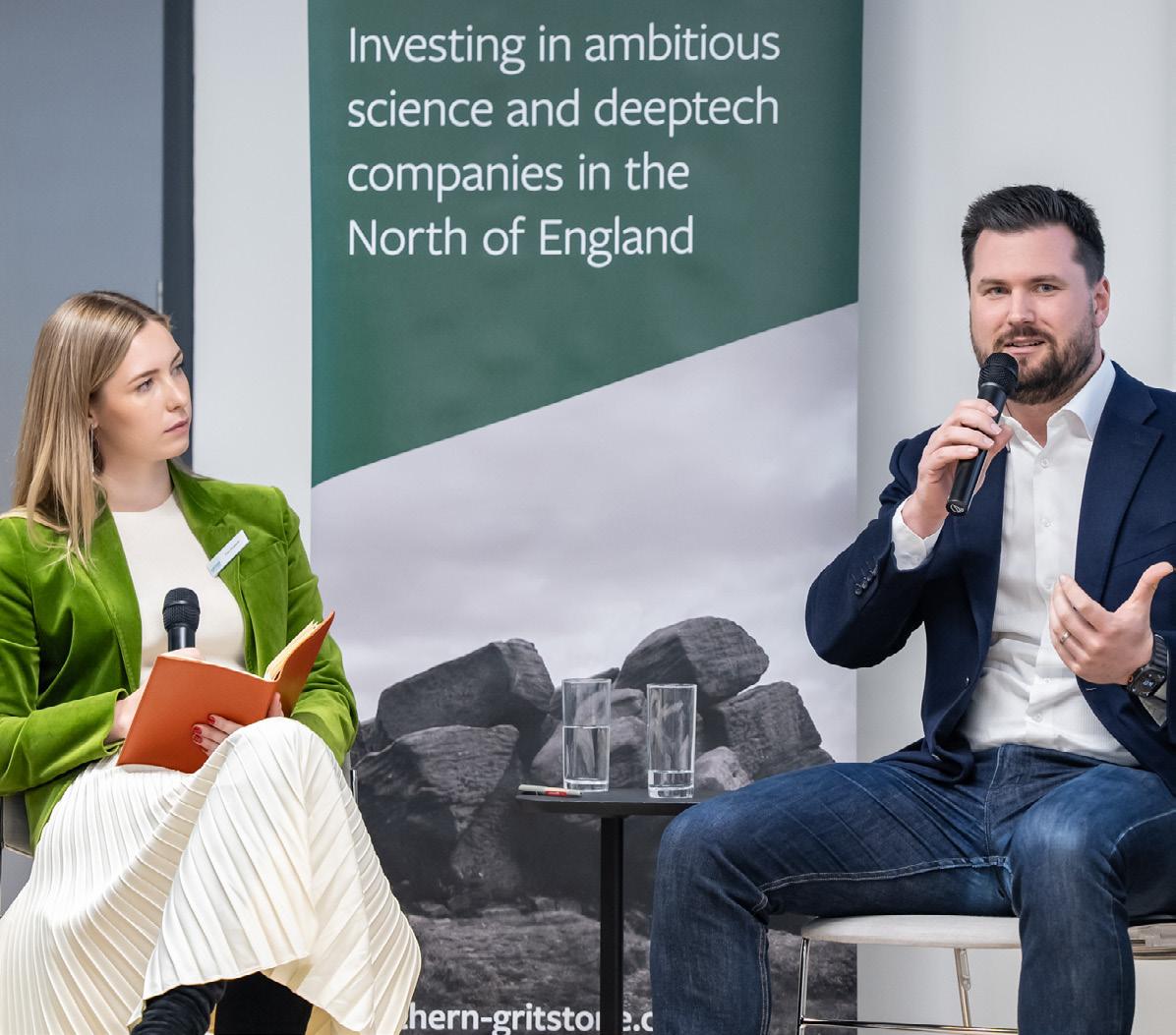
Since 31 March 2025, the activities of
the committees shown on the previous pages
have focused on:
The Committee fulfilled its duties under its terms of reference, with the main areas covered being review and approval of the Group’s shortterm and long-term incentive plans (including assessing performance against the targets set for each), as well as review and approval of the remuneration packages of the Executive directors, Board Chair, and senior managers.
The Committee fulfilled its duties under its terms of reference, with the main areas covered being review of the interim and full year accounts (including review of investment valuations in each), review of the Group’s IT and cyber security arrangements, review of the Group’s internal control environment and risk methodology and processes, and an assessment of the performance of the external auditor.
The Committee met on a monthly basis with topics addressed covering the full range of areas required to support the day-to-day running of the business, including an ongoing assessment of financial plans, recruitment, risk
assessment, internal controls review, health & safety and equality, diversity & inclusion.
The Committee met 26 times during the year, with the principal business being the assessment of potential investment opportunities and evaluating the performance of investee companies.
The Committee continued to provide valuable insight and review of the Group’s Purpose & Impact (‘P&I’) strategy. Particular areas of focus were reviewing the portfolio P&I survey responses, advising on the Group’s outreach program, reviewing the Group’s reporting to external bodies, reviewing an assessment of climate related risks and opportunities, and reaffirming the Group’s continued commitment to the Net Zero Asset Managers Initiative.
The Committee fulfilled its duties under its terms of reference, which principally focus on a detailed review of investment valuations performed quarterly.
Lord Jim O’Neill CHAIRPERSON
Lord O’Neill is a crossbench peer in the House of Lords. He is a Distinguished Fellow at Cornell University, a Visiting Fellow at the Chicago School of Global Affairs, a member of the South Yorkshire Mayoral Economic Advisory Council and Chair of the NeoTest Advance Market Commitment working group. He was previously, inter alia: Chair of the Northern Powerhouse Partnership; joint head of research at Goldman Sachs, its chief economist and Chair of its asset management division, Chair of the City Growth Commission, Chair of the Review on Antimicrobial Resistance, commercial secretary to the Treasury and Chair of Chatham House.

Duncan Johnson CHIEF EXECUTIVE OFFICER
Duncan has been investing in UK private companies for over 30 years and has founded three private market investment businesses during his career. From 2011-2021 Duncan was the Head of Caledonia Private Capital, the private capital arm of Caledonia Investments plc, a FTSE 250 listed investment trust. Prior to leading Caledonia Private Capital, Duncan was a founding partner at RJD Partners having started his investment career at Royal Bank Development Capital. He initially trained as a chartered accountant with the insolvency arm of PwC.
James Hadley CHIEF FINANCIAL OFFICER
James is a Fellow of the Institute of Chartered Accountants in England & Wales and trained with KPMG. He has c.20 years’ experience in the financial services sector gained working for a variety of companies, including Santander and RSA. Most recently he served as Chief Financial & Operating Officer at Savannah, a tech focused VC fund manager.
Andrew Graham
INDEPENDENT NON-EXECUTIVE DIRECTOR
Andrew has over 30 years experience in senior management roles across financial services and technology businesses. Andrew was previously COO of Blippar, having developed the business from a start-up to a global business of over 300 people with offices in New York, Chicago, Los Angeles, and San Francisco. Andrew is currently chairperson and nonexecutive director of a number of fastgrowing businesses in the financial services, gaming, technology and healthcare sectors.

Alex Macpherson
INDEPENDENT NON-EXECUTIVE DIRECTOR
Alex is a venture capitalist with over 25 years experience of investing in technology businesses. He is a member of the investment committee at DeepTech Labs, a deep tech accelerator based in Cambridge. Previously, Alex was a venture partner at Isomer Capital accessing European technology investments through limited partner investments in funds as well as direct company investments. He also co-founded the venture capital business that became Octopus Ventures in 2007. He led the business as CEO until 2017 and subsequently as chairperson until 2019.

Sue Hartley
UNIVERSITY APPOINTED NON-EXECUTIVE DIRECTOR
Sue joined the University of Sheffield in January 2020. She is the Vice President for Research and Innovation and leads on the University’s research activity, including research excellence, the University Research Centres, the Research Excellence Framework, research income and impact, and she oversees the University’s innovation, partnerships, and commercialisation activities.

UNIVERSITY APPOINTED NON-EXECUTIVE DIRECTOR
Jane is the CFO of the University of Leeds, having joined as Finance Director in 2009. Prior to joining the University, Jane worked for 15 years in senior finance roles within international retail and consumer goods businesses, including: ASDA Walmart; Campbell Soup Company; and PPR. Jane also holds the following non-executive roles: Non Executive board member and chair of the Audit and Risk Committee of NHS West Yorkshire Integrated Care Board; trustee of the National Poetry Centre.

John Holden
UNIVERSITY APPOINTED NON-EXECUTIVE DIRECTOR
Professor John Holden has a distinguished career in strategic leadership and innovation. He joined The University of Manchester in 2020 as Associate Vice-President for Major Special Projects and has since led several significant initiatives. His work includes establishing the UK’s Productivity Institute, relocating the UK Biobank to the Oxford Road Corridor, and creating Unit M. Holden has also been instrumental in the development of the CambridgeManchester Innovation Partnership and Sister, Manchester’s new innovation district.

Niranjan Sirdeshpande
NON-EXECUTIVE DIRECTOR
Niranjan is Global Head of M&G’s Catalyst team and sits on the Investment Committee. Previously he led the European team at Catalyst responsible for originating and executing early-stage equity and private debt transactions. Niranjan has led transactions in diverse sectors including biotech, fintech, clean energy and micro finance, and sits on the board of several of Catalyst’s portfolio companies. Prior to joining Catalyst, Niranjan served in a number of varied roles at M&G and Prudential, including Associate Director at PruCap and executive business manager to the CEO of Prudential plc.
Paddy Dowdall
INDEPENDENT NON-EXECUTIVE DIRECTOR
Paddy has recently joined LGPS Central as Investment Director for Local Investments, his focus is to support Partner Funds to develop and meet their local investment objectives. Paddy’s career spans a wide range of investment and governance roles, giving him a deep understanding of local authority pension funds and productive investment. At GMPF he led on pioneering work setting up partnerships with Greater Manchester Combined Authority to deliver investments in housing and regeneration.
The Directors present the Annual Report and audited financial statements for Northern Gritstone Limited (the ‘Company’) and its subsidiaries (together, the ‘Group’) for the year ended 31 March 2026.
The information provided in the previous sections is taken to constitute part of the Directors’ report.
The Group made an overall loss after taxation for the year ended 31 March 2026 of £7,635,000 (2025: £10,373,000 loss after taxation). The Directors do not recommend the payment of a dividend (2025: nil).
The names of Directors who currently hold office or did so during the reported period are as follows:
• P Dowdall
• A Graham
• G Georghiou (resigned 24 February 2026)
• J Hadley
• S Hartley
• J Holden (appointed 24 February 2026)
• D Johnson
• A Macpherson
• J Madeley
• T O’Neill
• N Sirdeshpande
Since 1 April 2025, the activities of the Board have focused on supporting the continued enhancement of the business. This has included reviewing and monitoring the implementation of the Group’s investment and corporate strategy (encompassing a detailed assessment of progress-to-date and future plans), monitoring the operating partnerships with the Partner Universities, reviewing the strategic risk register and risk appetite statement, reviewing key policies and the reports of sub-committees, reviewing the Group’s Purpose & Impact targets
and progress against these, reviewing Executive succession plans, reviewing the Group’s Net Zero goals as well as climate-related risks and opportunities, reviewing the performance of the CEO and approving the interim and full year accounts.
Directors’ remuneration and beneficial interests in the Group are disclosed in note 8 to the financial statements.
As detailed in the Company’s Articles of Association, indemnities were in force during the financial year and also at the date of approval of the financial statements between the Company and each of its Directors, under which the Company has agreed to indemnify each Director, to the extent permitted by law, in respect of certain liabilities incurred as a result of carrying out their duties as a Director of the Company. The Company has Directors’ and Officers’ Liability Insurance and it is the intention to maintain such a policy in the future.
The Board takes into consideration the main provisions of the UK Corporate Governance Code 2018 as published insofar as they are appropriate given the Group’s size and stage of development. The Group will continue to evolve internal controls as the business develops.
The Board is responsible for establishing and monitoring internal control systems and for reviewing the effectiveness of these systems. The Board views the effective operation of a rigorous system of internal controls as critical to the success of the Group. It recognises that such systems can provide only reasonable and not absolute assurance against
material misstatement or loss. The key elements of the Group’s internal control system, all of which have been in place during the financial year and up to the date these financial statements were approved, are as follows:
The Group has a clear organisational structure with defined responsibilities and accountabilities. It adopts the highest values surrounding quality, integrity, and ethics. These values are documented and communicated clearly throughout the Group. The Board considers that the controls have been effective for the period ended 31 March 2026.
There is a formal whistleblowing policy which has been communicated to employees. This policy provides information on the process to follow in the event that any employee feels it is appropriate to make a disclosure.
The operations of the Group and the implementation of its objectives and strategy are subject to a number of key risks and uncertainties. Appropriate controls and procedures were in place during the reported period to monitor and, where possible, mitigate these risks. The key risks and uncertainties faced by the Group are set out on pages 32 to 36.
The Group has systems and controls in place to ensure adequate accounting records are maintained and transactions are recorded accurately and fairly to permit the preparation of financial statements in accordance with UK-adopted international accounting standards. The Board approves the annual operating budget and receives regular details of actual performance measured against the budget.
The Group did not make any political donations during the reported period.
Material events occurring since the balance sheet date are disclosed in Note 22 to the consolidated financial statements.
The Directors who held office at the date of approval of this Annual Report confirm that:
• so far as they are aware, there is no relevant audit information of which the Group’s auditors are unaware; and
• they have taken all the steps that they ought to have taken as Directors in order to make themselves aware of any relevant audit information and to establish that the Group’s auditors are aware of that information.
The financial statements have been prepared on a going concern basis which the Directors consider to be appropriate for the following reasons. The Directors have prepared a medium-term financial plan, including cash flow forecasts for a period of 12 months from the date of approval of these financial statements which indicate that, taking account of severe but plausible downsides, the Group will have sufficient funds to meet its liabilities as they fall due for a period of 12 months from the date of approval of the financial statements.
The Directors therefore continue to adopt the going concern basis in preparing the annual financial statements.
This report has been prepared in accordance with the special provisions relating to companies subject to the small companies regime within Part 15 of the Companies Act 2006.
On behalf of the Board
Lord Jim O’Neill CHAIRPERSON
The Directors are responsible for preparing the Directors’ Report and the Group and Company financial statements in accordance with applicable law and regulations.
Company law requires the Directors to prepare Group and Company financial statements for each financial year. Under that law they have elected to prepare the Group financial statements in accordance with UK-adopted international accounting standards (‘UKadopted IAS’). The Company financial statements are prepared in accordance with the Financial Reporting Standard 101 Reduced Disclosure Framework under United Kingdom Generally Accepted Accounting Practice.
Under Company law the Directors must not approve the financial statements unless they are satisfied that they give a true and fair view of the state of affairs of the Group and Company and of the Group’s profit or loss for that period. In preparing each of the Group and Company financial statements the Directors are required to:
• select suitable accounting policies and apply them consistently;
• make judgements and accounting estimates that are reasonable and prudent; and
• prepare the financial statements on the going concern basis unless it is inappropriate to presume that the Group or the Company will continue in business.
The Directors are responsible for keeping adequate accounting records that are sufficient to show and explain the Group and Company’s transactions and disclose with reasonable accuracy at any time the financial position of the Group and Company and enable them to ensure that the financial statements comply with the Companies Act 2006. They are also responsible for safeguarding the assets of the Group and Company and hence for taking reasonable steps for the prevention and detection of fraud and other irregularities.
On
behalf of the Board
Lord Jim O’Neill CHAIRPERSON

In our opinion:
• the financial statements give a true and fair view of the state of the Group’s and of the Parent Company’s affairs as at 31 March 2026 and of the Group’s loss and the Group’s cash flows for the year then ended;
• the financial statements have been properly prepared in accordance with United Kingdom Generally Accepted Accounting Practice; and
• the financial statements have been prepared in accordance with the requirements of the Companies Act 2006.
We have audited the financial statements of Northern Gritstone Limited (‘the Parent Company’) and its subsidiaries (‘the Group’) for the year ended 31 March 2026 which comprise Consolidated Statement of Comprehensive Income, Consolidated Statement of Financial Position, Consolidated Statement of Cashflows, Consolidated Statement of Changes in Equity, Company Balance Sheet, Company Statement of Changes in Equity and notes to the financial statements, including a summary of significant accounting policies.
The financial reporting framework that has been applied in their preparation is applicable law and United Kingdom Accounting Standards, including Financial Reporting Standard 101 Reduced Disclosure Framework (United Kingdom Generally Accepted Accounting Practice).
We conducted our audit in accordance with International Standards on Auditing (UK) (ISAs (UK)) and applicable law. Our responsibilities under those standards are further described in the Auditor’s responsibilities for the audit of the financial statements section of our report. We believe that the audit evidence we have obtained is sufficient and appropriate to provide a basis for our opinion.
We are independent of the Group and the Parent Company in accordance with the ethical requirements that are relevant to our audit of the financial statements in the UK, including the FRC’s Ethical Standard, and we have fulfilled our other ethical responsibilities in accordance with these requirements.
In auditing the financial statements, we have concluded that the Directors’ use of the going concern basis of accounting in the preparation of the financial statements is appropriate.
Based on the work we have performed, we have not identified any material uncertainties relating to events or conditions that, individually or collectively, may cast significant doubt on the Group or Parent Company's ability to continue as a going concern for a period of at least twelve months from when the financial statements are authorised for issue. However, because not all future events or conditions can be predicted, this statement is not a guarantee as to the Group and the Parent Company's ability to continue as a going concern.
Our responsibilities and the responsibilities of the Directors with respect to going concern are described in the relevant sections of this report.
The Directors are responsible for the other information. The other information comprises the information included in the Annual Report, other than the financial statements and our auditor’s report thereon. Our opinion on the financial statements does not cover the other information and, except to the extent otherwise explicitly stated in our report, we do not express any form of assurance conclusion thereon.
Our responsibility is to read the other information and, in doing so, consider whether the other information is materially inconsistent with the financial statements or our knowledge obtained in the course of the audit or otherwise appears to be materially misstated. If we identify such material inconsistencies or apparent material misstatements, we are required to determine whether this gives rise to a material misstatement in the financial statements themselves. If, based on the work we have performed, we conclude that there is a material misstatement of this other information, we are required to report that fact.
We have nothing to report in this regard.
In our opinion, based on the work undertaken in the course of the audit:
• the information given in the Strategic report and the Directors’ report for the financial year for which the financial statements are prepared is consistent with the financial statements; and
• the Strategic report and the Directors’ report have been prepared in accordance with applicable legal requirements.
In the light of the knowledge and understanding of the Group and the Parent Company and its environment obtained in the course of the audit, we have not identified material misstatements in the Strategic report or the Directors’ report.
We have nothing to report in respect of the following matters in relation to which the Companies Act 2006 requires us to report to you if, in our opinion:
• adequate accounting records have not been kept by the Parent Company, or returns adequate for our audit have not been received from branches not visited by us; or
• the Parent Company financial statements are not in agreement with the accounting records and returns; or
• certain disclosures of Directors’ remuneration specified by law are not made; or
• we have not received all the information and explanations we require for our audit.
As explained more fully in the Statement of Directors Responsibilities, the Directors are responsible for the preparation of the financial statements and for being satisfied that they give a true and fair view, and for such internal control as the Directors determine is necessary to enable the preparation of financial statements that are free from material misstatement, whether due to fraud or error.
In preparing the financial statements, the Directors are responsible for assessing the Group’s and the Parent Company’s ability to continue as a going concern, disclosing, as applicable, matters related to going concern and using the going concern basis of accounting unless the Directors either intend to liquidate the Group or the Parent Company or to cease operations, or have no realistic alternative but to do so.
Our objectives are to obtain reasonable assurance about whether the financial statements as a whole are free from material misstatement, whether due to fraud or error, and to issue an auditor’s report that includes our opinion. Reasonable assurance is a high level of assurance, but is not a guarantee that an audit conducted in accordance with ISAs (UK) will always detect a material misstatement when it exists. Misstatements can arise from fraud or error and are considered material if, individually or in the aggregate, they could reasonably be expected to influence the economic decisions of users taken on the basis of these financial statements. However, the primary responsibility for the prevention and detection of fraud rests with both those charged with governance of the Parent Company and management.
Extent to which the audit was capable of detecting irregularities, including fraud
Irregularities, including fraud, are instances of non-compliance with laws and regulations. We design procedures in line with our responsibilities, outlined above, to detect material misstatements in respect of irregularities, including fraud. The extent to which our procedures are capable of detecting irregularities, including fraud is detailed below:
Based on:
• Our understanding of the Group and the industry in which it operates;
• Discussion with management and those charged with governance;
• Obtaining an understanding of the Group’s policies and procedures regarding compliance with laws and regulations; and
we considered the significant laws and regulations to be the applicable accounting framework, FCA regulations and UK tax legislation.
The Group is also subject to laws and regulations where the consequence of non-compliance could have a material effect on the amount or disclosures in the financial statements, for example through the imposition of fines or litigations.
Our procedures in respect of the above included:
• Enquires of management whether there were any litigations and claims;
• Review of minutes of meetings of those charged with governance for any instances of noncompliance with laws and regulations;
• Review of correspondences with regulatory and tax authorities for any instances of noncompliance with laws and regulations; and
• Review of financial statement disclosures and agreeing to supporting documentation;
We assessed the susceptibility of the financial statements to material misstatement, including fraud. Our risk assessment procedures included:
• Enquiry with management and those charged with governance regarding any known or suspected instances of fraud;
• Obtaining an understanding of the Group’s policies and procedures relating to:
- Detecting and responding to the risks of fraud; and
- Internal controls established to mitigate risks related to fraud.
• Review of minutes of meetings of those charged with governance for any known or suspected instances of fraud;
• Discussion amongst the engagement team as to how and where fraud might occur in the financial statements;
• Performing analytical procedures to

identify any unusual or unexpected relationships that may indicate risks of material misstatement due to fraud; and
• Considering remuneration incentive schemes and performance targets and the related financial statement areas impacted by these.
Based on our risk assessment, we considered the areas most susceptible to fraud to be management override of controls, equity rights valuations and fair value of investment balances.
Our procedures in respect of the above included:
• Testing of journal entries throughout the year, which met certain risk criteria, by agreeing to supporting documentation as well as testing a sample of journal entries which didn’t meet the risk criteria;
• Performing sensitivity analysis in respect of the key assumptions within the equity rights model and challenging the judgements made and;
• Evaluating the valuation methodology in respect of the valuation of the fair value of level 3 investment balances to support management judgements made.
We also communicated relevant identified laws and regulations and potential fraud risks to all engagement team members who were all deemed to have appropriate competence and capabilities and remained alert to any indications of fraud or non-compliance with laws and regulations throughout the audit.
Our audit procedures were designed to respond to risks of material misstatement in the financial statements, recognising that the risk of not detecting a material misstatement due
to fraud is higher than the risk of not detecting one resulting from error, as fraud may involve deliberate concealment by, for example, forgery, misrepresentations or through collusion. There are inherent limitations in the audit procedures performed and the further removed non-compliance with laws and regulations is from the events and transactions reflected in the financial statements, the less likely we are to become aware of it.
A further description of our responsibilities is available on the Financial Reporting Council’s website at: www.frc.org.uk/auditorsresponsibilities. This description forms part of our auditor’s report.
This report is made solely to the Parent Company’s members, as a body, in accordance with Chapter 3 of Part 16 of the Companies Act 2006. Our audit work has been undertaken so that we might state to the Parent Company’s members those matters we are required to state to them in an auditor’s report and for no other purpose. To the fullest extent permitted by law, we do not accept or assume responsibility to anyone other than the Parent Company and the Parent Company’s members as a body, for our audit work, for this report, or for the opinions we have formed.

James Barber SENIOR STATUTORY AUDITOR
11 June 2026
For and on behalf of BDO LLP, Statutory Auditor London, UK
The consolidated financial statements on pages 66 to 89 were approved by the Board of Directors of Northern Gritstone Limited (registered number: 12982592) and were signed on its behalf by
James Hadley CHIEF FINANCIAL OFFICER
11 June 2026
i) Called up share capital — The nominal value of subscribed capital which has been called by the Group. See note 19 for additional information.
ii) Share premium — The amount of subscribed share capital which has been called in excess of nominal value net of directly attributable issue costs.
iii) Accumulated deficit — Cumulative net gains and losses recognised in the statement of comprehensive income.
The financial statements of Northern Gritstone Limited (the ‘Company’) and its subsidiary companies (together, the ‘Group’) are for the year ended 31 March 2026. The principal accounting policies adopted in the preparation of the financial statements are set out below. The policies have been consistently applied to all the periods presented. The Group financial statements have been prepared and approved by the Directors in accordance with UK-adopted international accounting standards (‘UK–adopted IAS’). The preparation of financial statements in compliance with UKadopted IAS requires the use of certain critical accounting estimates. It also requires Group management to exercise judgement in the most appropriate selection of the Group’s accounting policies. The areas where significant judgements and estimates have been made in preparing the financial statements and their effect are disclosed in note 2.
The financial statements are prepared on a going concern basis. The Directors have prepared a medium-term financial plan, including cash flow forecasts for a period of 12 months from the date of approval of these financial statements which indicate that, taking account of severe but plausible downsides, the Group will have sufficient funds to meet its liabilities as they fall due for a period of 12 months from the date of approval of the financial statements.
(i) New standards, interpretations and amendments effective from 1 April 2025.
No new standards, interpretations and amendments effective in the period have had a material effect on the Group’s financial statements.
(ii) At the date of authorisation of the financial statements the Group has not applied IFRS 18 Presentation and Disclosure in Financial Statements, which has been issued, but is not yet effective. The impact of applying the new standard is not expected to have a significant impact on the financial statements.
Where the Company has control over an entity, it is classified as a subsidiary. The consolidated financial statements present the results of the Company and its subsidiaries as if they formed a single entity. Intercompany transactions and balances between Group companies are therefore eliminated in full. The Company controls two wholly-owned subsidiaries: Northern Gritstone Investment Manager Limited and Northern Gritstone Innovation Services Limited. These subsidiaries are consolidated in the financial statements.
The majority of the Group’s equity investments are deemed to be associates, as the Group has significant influence but not control over these entities.
The Group holds equity investments in associates and equity investments which are not associates (together ‘equity investments’) at fair value through profit or loss in accordance with IFRS 9. Changes in the fair value of equity investments are presented in profit or loss in the statement of comprehensive income in the period in which they arise.
1.5
Revenue from services and other income is earned from the provision of business support services. All revenue from services is generated within the United Kingdom and is stated exclusive of value added tax. Revenue is recognised when the Group satisfies its performance obligations, in line with IFRS 15.
All property, plant and equipment are shown at cost less subsequent depreciation and impairment. Cost includes expenditure that is attributable to the acquisition of the items. Depreciation on assets is calculated using the straightline method to allocate the cost of each asset to its residual value over its estimated useful life, as follows:
Computer equipment
Office furniture
Over 3 years
Over 3 years
The Group recognises or derecognises financial assets based on trade date accounting, being the date on which the Group becomes legally bound by the transaction.
The Group classifies its financial assets into one of the categories listed below, depending on the purpose for which the asset was acquired.
(i) At fair value through profit or loss
Financial assets are recognised at fair value through profit or loss. This category includes equity investments and equity rights. None of the Group’s financial assets are categorised as held for trading.
Financial assets at fair value through profit or loss are initially recognised at fair value and any gains or losses arising from subsequent changes in fair value are presented in profit or loss in the statement of comprehensive income in the period in which they arise.
The Group classifies financial assets using a fair value hierarchy that reflects the significance of the inputs used in making the related fair value measurements. The level in the fair value hierarchy within which a financial asset is classified is determined on the basis of the lowest level input that is significant to that asset’s fair value measurement.
The fair value hierarchy has the following levels:
Level 1 Quoted prices in active markets.
Level 2 Inputs other than quoted prices that are observable, such as prices from market transactions.
Level 3 One or more inputs that are not based on observable market data.
Transfers between levels of the fair value hierarchy are deemed to have occurred on the date of the event or change in circumstances that caused the transfer.
Fair value is the underlying principle and is defined as ‘the price that would be received to sell an asset or paid to transfer a liability in an orderly transaction between market participants at the measurement date’ (IFRS 13.9).
Where the equity structure of an investment involves different class rights in a sale or liquidity event, the Group takes these different rights into account when forming a view on the value of its investment.
Valuation techniques used
The fair value of unlisted securities is established using appropriate valuation techniques in line with International Private Equity and Venture Capital Valuation guidelines. The selection of appropriate valuation techniques is considered on an individual basis in light of the nature, facts and circumstances of the investment and in the expected view of market participants. The Group selects valuation techniques which make maximum use of market-based inputs. Techniques are applied consistently from period to period, except where a change would result in better estimates of fair value. Several valuation techniques may be used so that the results of one technique may be used as a cross check / corroboration of an alternative technique.
Valuation techniques used include:
• Quoted investments: the fair values of quoted investments are based on bid prices in an active market at the reporting date.
• Milestone approach: an assessment is made as to whether there is an indication of change in fair value based on a consideration of the relevant milestones typically agreed at the time of making the investment decision.
• Scenario analysis: a forward-looking method that considers one or more possible future scenarios. These methods include simplified scenario analysis and relative value scenario analysis, which tie to the fully diluted equity value, as well as full scenario analysis via the use of the probability-weighted expected return method.
• Discounted cash flows: deriving the value of a business by calculating the present value of expected future cash flows.
• Multiples: the application of an appropriate multiple to a performance measure (such as earnings or revenue) of the investee company in order to derive a value for the business.
The fair value indicated by a recent transaction is used to calibrate inputs used with valuation techniques including those noted above. At each measurement date, an assessment is made as to whether changes or events subsequent to the relevant transaction would imply a change in the investment’s fair value. The price of a recent investment is not considered a standalone valuation technique (see further considerations below).
Price of recent investment as an input in assessing fair value
The Group considers that fair value estimates which are based primarily on observable market data will be of greater reliability than those based on assumptions. Given the nature of the Group’s investments in seed, start-up and earlystage companies, where there are often no current and no short-term future earnings or positive cash flows, it can be difficult to gauge the probability and financial impact of the success or failure of development or research activities and to make reliable cash flow forecasts. Consequently, in many cases the most appropriate approach to fair value is a valuation technique which is based on market data such as the price of a recent investment, and market participant assumptions as to potential outcomes.
Calibrating such scenarios or milestones may result in a fair value equal to price of recent investment for a limited period of time. Often qualitative milestones provide a directional indication of the movement of fair value.
In applying a calibrated scenario or milestone approach to determine fair value, consideration is given to performance against milestones that were set at the time of the original investment decision, as well as taking into consideration the key market drivers of the investee company and the overall economic environment. Factors that the Group considers include: technical measures such as product development phases and patent approvals, financial measures such as cash burn rate and profitability expectations, and market and sales measures such as testing phases, product launches and market introduction.
Where the Group considers that there is an indication that the fair value has changed, an estimation is made of the required amount of any adjustment from the last price of recent investment.
Where a deterioration in value has occurred, the Group reduces the carrying value of the investment to reflect the estimated decrease. If there is evidence of value creation the Group may consider increasing the carrying value of the investment.
The equity rights asset represents the present value of the founders’ equity of spinout companies that the Group will receive, at no cost, from the Universities of Leeds, Manchester and Sheffield, under the Framework Agreement signed with these universities on 20 April 2021. The Group has received these rights for the period to 20 April 2036 in return for the Universities of Leeds, Manchester and Sheffield receiving a shareholding in Northern Gritstone Limited. The equity rights asset is considered to be a derivative financial asset and is designated as at fair value through profit or loss. Further details on the treatment of this asset are included in note 13.
(ii) At amortised cost
These assets are non-derivative financial assets with fixed and determinable payments that are not quoted in an active market. They arise principally through the provision of services to customers (trade receivables) and are carried at cost less provision for impairment.
Cash and cash equivalents include cash in hand and short-term deposits held with financial institutions with an original maturity of three months or less.
Current financial liabilities are composed of trade payables and other short-term monetary liabilities, which are recognised at amortised cost.
The Group employed the services of a placement agent to assist with the raising of capital. Fees are payable to this agent as ordinary share capital is paid up. The Group estimates that all of the ordinary share capital will be paid up in the future and recognises a provision for the fees payable to the placement agent in relation to the uncalled share capital.
Financial instruments issued by the Group are treated as equity to the extent they have been called up. Where shares are nil paid and there are no arrangements for any future payments such shares are not reflected in the Group’s accounts as called-up share capital until such time as the company makes calls on the shares or there is subsequently an agreed date for payment.
(i) Pension obligations
The Group operates a defined contribution pension scheme for which all employees are eligible. The assets of the scheme are held separately from those of the Group in independently administered funds. The Group currently makes contributions on behalf of employees to this scheme. The Group has no further payment obligations once the contributions have been paid. The contributions are recognised as employee benefit expenses when they are due.
(ii) Share-based payments
The Group engages in equity-settled share-based payment transactions in respect of services receivable from employees, by granting employees conditional awards of ordinary shares subject to certain vesting conditions. The fair value of the shares is estimated at the date of grant, taking into account the terms and conditions of the award, including market-based performance conditions.
The fair value at the date of grant is recognised as an expense over the period that the employee provides services, generally the period between the start of the performance period and the vesting date of the shares. Where the performance conditions of an award are deemed to have been substantially met at the date of grant, an expense is recognised in full. The corresponding credit is recognised in the share-based payments reserve within total equity. The fair value of services is calculated using the market value on the date of award and is adjusted for expected and actual levels of vesting.
Where conditional awards of shares lapse, the expense recognised to date is credited to the statement of comprehensive income in the year in which they lapse. Where the terms for an equity-settled award are modified, and the modification increases the total fair value of the share-based payment, or is otherwise beneficial to the employee at the date of modification, the incremental fair value is amortised over the vesting period.
The Group operates a cash based long-term incentive plan (‘LTIP’) for certain employees. Before any payment to a participant becomes due, the Group’s investments made within a specific time period (currently 01 April 2022 to 31 March 2024 for the first vintage and 01 April 2024 to 31 March 2026 for the second vintage) must have achieved a compounded hurdle rate of 7% per annum based on both realised and unrealised returns. Each vintage vests seven years after its start date and no amounts are payable to participants before this date. At the point at which the hurdle rate has been exceeded, a provision is included for the unrealised gain potentially due to participants. The provision is measured by reference to the fair value estimates for the relevant portfolio investments, with movements in the provision charged / credited to the statement of comprehensive income.
Assets and liabilities arising from a lease are initially measured on a present value basis. Lease payments are discounted using the interest rate implicit in the lease. If that rate cannot be readily determined, which is generally the case, the Group uses its estimated incremental borrowing rate. This is the rate that the Group would have to pay to borrow, over a similar term and with similar security, the funds necessary to obtain an asset of similar value to the right-of-use asset in a similar economic environment.
Lease payments are allocated between the lease liability and finance costs. The finance cost is charged to profit or loss over the lease term so as to produce a constant periodic rate of interest on the remaining balance of the lease liability for each period. Right-of-use assets are measured at cost, comprising the amount of the initial measurement of the lease liability, adjusted for any lease payments made at or before the commencement date, any initial direct costs, and any restoration or dismantling obligations, less any lease incentives received. Right-of-use assets are depreciated on a straight-line basis over the shorter of the asset’s useful life and the lease term.
All leases are accounted for by recognising a right-of-use asset and a lease liability except for:
• Leases of low value assets; and
• Leases with a duration of 12 months or less.
Contingent liabilities are not recognised, except those acquired in a business combination. Contingent liabilities arise as a result of past events when (i) it is not probable that there will be an outflow of resources or that the amount cannot be reliably measured at the reporting date or (ii) when the existence will be confirmed by the occurrence or non-occurrence of uncertain future events not wholly within the Group’s control. Contingent liabilities are disclosed in the financial statements unless the probability of an outflow of resources is remote.
The Directors make judgements and estimates concerning the future. Estimates and judgements are continually evaluated and are based on historical experience and other factors, such as expectations of future events, and are believed to be reasonable under the circumstances. Actual results may differ from these estimates. The estimates and assumptions, which have a significant effect on the carrying amounts of the assets and liabilities in the financial statements, are in respect of:
The Group’s accounting policy in respect of the valuation of unquoted equity investments is set out in note 1. In applying this policy, the key areas over which judgement is exercised include:
• Consideration of whether a funding round is at arm’s length and therefore representative of fair value.
• The relevance of the price of recent investment as an input to fair value, which typically becomes more subjective as the time elapsed between the recent investment date and the balance sheet date increases.
• In the case of companies with complex capital structures, the appropriate methodology for assigning value to different classes of equity based on their differing economic rights.
• Where using valuation methods such as discounted cash flows or revenue multiples, the assumptions around inputs including the probability of achieving milestones and the discount rate used, and the choice of comparable companies used within revenue multiple analysis.
• When determining the fair value of founder equity received, consideration is given to the presence of sophisticated third-party co-investors investing on similar terms.
Valuations are based on management’s judgement after consideration of the above and upon available information believed to be reliable, which may be affected by conditions in the financial markets. Due to the inherent uncertainty
of the investment valuations, the estimated values may differ significantly from the values that would have been used had a ready market for the investments existed, and the differences could be material. Sensitivity analysis around these estimates is included in note 12.
(ii) Valuation of Equity Rights
The judgements required to determine the valuation of Equity Rights have a significant risk of causing a material adjustment to the carrying amounts of the assets. The judgements include assessing the likelihood of exit methods and proceeds of investments sold, the failure rate, the discount rate and the number of spinouts invested in per year. Sensitivity analysis around these estimates is included in note 13.
(iii) Equity-settled share-based payments
Determining the fair value of equity-settled share-based payments at the measurement date represents a significant accounting estimate. There is inherent judgement in the key inputs into the valuation.
As set out in the principal risks and uncertainties section on pages 32 to 36, the Group is exposed, through its normal operations, to a number of financial risks, the most significant of which are market, liquidity and credit risks.
Risk management is carried out under policies approved by the Board of Directors.
(a) Market risk
(i) Price risk
The Group is exposed to equity securities price risk as a result of its investments, categorised as at fair value through profit or loss. The Group mitigates this risk by having established investment appraisal processes and asset monitoring procedures which are subject to overall review by the Board. The Group holds investments which are not traded on an active market.
(ii) Interest rate risk
As the Group has no borrowings, it has only a limited interest rate risk. The primary impact to the Group is the impact on income and operating cash flow as a result of the interest-bearing deposits and cash and cash equivalents held by the Group.
(b) Liquidity risk
The Group seeks to manage liquidity risk, to ensure sufficient liquidity is available to meet foreseeable needs and to invest cash assets safely and profitably. Accordingly, the Group only invests working capital in instruments issued by highly rated counterparties. The Group continually monitors rolling cash flow forecasts to ensure sufficient cash is available for anticipated cash requirements.
(c) Credit risk
The Group’s credit risk is primarily attributable to its deposits, cash and cash equivalents. The Group seeks to mitigate its credit risk on cash and cash equivalents by making deposits with highly rated institutions.
Revenue represents the invoiced value of services supplied to investee companies excluding value added tax. Revenues are recognised as performance obligations are delivered.
The Group’s operations are wholly within the UK. For management reporting the Group is organised into one operating segment being the commercialisation of intellectual property developed by businesses based in the North of England.
Details of the auditor’s remuneration are set out below:
Employee costs (including Directors) comprise:
The average number of persons (including the Executive Directors and Non-Executive Directors) employed by the Group during the twelve months ended 31 March 2026 was 33 (2025: 27).
The total emoluments paid to Directors in the twelve months ended 31 March 2026 were £2,614,000 (2025: £2,263,000) and the highest-paid Director received emoluments of £1,414,000 (2025: £1,313,000). The Group has made no pension scheme contributions in relation to this Director (2005: nil).
At 31 March 2026 one Director (2025: one) was a member of a defined contribution pension scheme to which the Group contributed.
The Directors who held office during the period ended 31 March 2026 had the following beneficial interests in the shares of the Company: 77
The Directors who held office during the period ended 31 March 2026 had the following beneficial interests in options over the ordinary shares of the Company (overleaf):
There are two Directors who participate in the LTIP scheme. Amounts in relation to the LTIP become payable once certain performance criteria and the vesting period conditions have been met. No amounts have been paid or have become payable during the twelve months ended 31 March 2026 as these criteria have not yet been met. See note 16 for details of amounts provided in relation to the LTIP.
There were no deferred tax assets or liabilities recognised by the Group during the period reported (2025: £nil). A deferred tax asset would be recognised only when sufficient taxable profits are expected to be generated to relieve the trading losses. An analysis is shown below:
The UK corporation tax rate was 25% in the period to 31 March 2026. This rate has been used for the purposes of preparing the tax charge disclosures and the deferred tax disclosures.
During the period the Directors reviewed the hierarchy levelling and concluded those assets previously classified as level 2, would be more appropriately classified as level 3. All comparatives have been updated accordingly.
The fair value of all investments is established using appropriate valuation techniques in line with International Private Equity and Venture Capital Valuation guidelines and the Group's policy on financial asset valuation detailed in note 1 to the financial statements.
The founder equity received during the period relates to the receipt of university equity in AmpliSi Limited, Cytotrait Limited, IVF Micro Limited, PhovIR Technologies Limited, Pixel-Flo Limited and Silvia Bio Limited under the Framework agreement at nil cost.
The reasons for the change in fair value during the period are detailed in the portfolio update which appears on pages 12-25 of this Annual Report.
At 31 March 2026 the Group had committed, subject to certain milestone provisions contained in the relevant legal documentation, to make further investments of £7,010,000 (2025: £3,040,000) in investee companies. As these relate to future investments, they have not been included in the financial statements.
Investment valuations require management judgement, with the key areas over which judgement is exercised described in note 2. Illustrative sensitivities around the judgements applied to investment fair values at 31 March 2026 are:
%
4-Xtra Technologies Limited*
adsilico Limited
AmpliSi Limited
Apini Therapeutics Limited
Assemblify Limited*
Auxetec Limited
Cable Coatings Limited (t/a Asset Cool) 6%
Cavero Quantum Limited
C-Capture Limited 1%
CCU International Limited*
Coretech Sciences Limited*
Crucible Therapeutics Limited 38%
CybPass Limited*
Cytotrait Limited
Evolutor Limited*
Exciting Instruments Limited
Extentus Pharma Limited*
Nexus, Discovery Way, Leeds, England, LS2 3AA, UK
Nexus, Discovery Way, University of Leeds, Leeds, LS2 3AA, UK
The Innovation Centre, 217 Portobello, Sheffield, S1 4DP, UK
Burnham House, Splash Lane, Wyton, Huntingdon, PE28 2AF, UK
Nexus, Discovery Way, Leeds, England, LS2 3AA, UK
Nexus, Discovery Way, University of Leeds, Leeds, LS2 3AA, UK
Leeds Innovation Centre, 103 Clarendon Road, Leeds, LS2 9DF, UK
Nexus, Discovery Way, Leeds, England, LS2 3AA, UK
Windsor House, Cornwall Road, Harrogate, England, HG1 2PW, UK
5 South Charlotte Street, Edinburgh, Scotland, EH2 4AN, UK
Nexus, Discovery Way, Leeds, England, LS2 3AA, UK
The Innovation Centre, 217 Portobello, Sheffield, S1 4DP, UK
The Innovation Centre, 217 Portobello, Sheffield, S1 4DP, UK
C/O Umif Core Technology Facility, 46 Grafton Street, Manchester, England, M13 9NT, UK
The Innovation Centre, 217 Portobello, Sheffield, S1 4DP, UK
The Innovation Centre, 217 Portobello, Sheffield, S1 4DP, UK
11b Liverpool Science Park Ic1, Mount Pleasant, Liverpool, England, L3 5TF, UK
Sheffield Technology Parks, Cooper Buildings, Arundel Street, Sheffield, S1 2NS, UK
Iceotope Group Limited 6% Amp Technology Centre, Brunel Way, Rotherham, S60 5WG, UK
Imperagen
Unit 11, Williams House Lloyd Street North, Manchester Science Park, Manchester, M15 6SE, UK
Instruct3d Limited* - The Innovation Centre, 217 Portobello, Sheffield, S1 4DP, UK
IVF
Mimetrik Solutions Limited
Nexus, Discovery Way, University of Leeds, Leeds, LS2 3AA, UK
3rd Floor Maybrook House, 27-35 Grainger Street, Newcastle Upon Tyne, NE1 5JE, UK
Nexus, Discovery Way, Leeds, West Yorkshire, LS2 3AA, UK
Nexus, Discovery Way, Leeds, West Yorkshire, LS2 3AA, UK
Nanoncolytics Limited* - The Innovation Centre, 217 Portobello, Sheffield, S1 4DP, UK
NIQS TECH (Leeds) Limited* - Suite 1, 5th Floor 31-32 Park Row, Leeds, West Yorkshire, LS1 5JD, UK
Ocuwell Limited* - 54 St. James Street, Liverpool, England, L1 0AB, UK
OLO Robotics Limited
Optalysys Limited
Bow Sheffield Science Park, Cooper Buildings, Arundel Street, Sheffield, England, S1 2NS, UK
7d Platform New Street, Leeds, West Yorkshire, LS1 4JB, UK
Opteran Technologies Limited 12% The Innovation Centre, 217 Portobello, Sheffield, South Yorkshire, S1 4DP, UK
Pencil Biosciences Limited 15% 3f38, Mereside Alderley Park, Macclesfield, Cheshire, SK10 4TG, UK
NAME OF INVESTEE
Phagenesis Limited
Phlux
The Elms Courtyard, Bromsberrow, Ledbury, HR8 1RZ, UK
The
Centre, 217 Portobello, Sheffield, S1 4DP, UK
46 Grafton Street, Manchester, M13 9NT, UK
The Innovation Centre, 217 Portobello, Sheffield, S1 4DP, UK
Plasma Fresh Limited*Daresbury Laboratory, Keckwick Lane, Warrington, England WA4 4AD, UK
Pragmatic Semiconductor Ltd 2%
Neville Hamlin Building, Thomas Wright Way, NET Park, Sedgefield, Co. Durham TS21 3FG, UK
Mereside, Alderley Park, Nether Alderley, Cheshire, SK10 4TG, UK Recourse AI Limited
Renewfood Limited*
RNA Forge Limited*
Samson VTI UK Ltd (t/a Partful)
Silverray Limited
Silvia Bio Limited
Simanalytica Limited
Synaisis Limited*
Sitehop Limited
Ultracell Networks Limited*
Veribee Labs Limited*
8 Hewitt Street, Manchester, M15 4GB, UK
The Innovation Centre, 217 Portobello, Sheffield, S1 4DP, UK
The Innovation Centre, 217 Portobello, Sheffield, S1 4DP, UK
3rd Floor 24 Lever St, Manchester, M1 1DZ, UK
New Cambridge House, Bassingbourn Road, Litlington, Royston, SG8 0SS, UK
The Innovation Centre, 217 Portobello, Sheffield, S1 4DP, UK
Nexus, Discovery Way, Leeds, England, LS2 3AA, UK
Nexus, Discovery Way, Leeds, England, LS2 3AA, UK
10 John Street, London, WC1N 2EB, UK
Nexus, Discovery Way, Leeds, England, LS2 3AA, UK
C/O Umif Core Technology Facility, 46 Grafton Street, Manchester, United Kingdom, M13 9NT, UK
Equity rights represent the present value of the founders’ equity of spinout companies that the Group will receive, at no cost, from the Universities of Leeds, Manchester and Sheffield, under the Framework Agreement signed with these universities on 20 April 2021 subject to the Group investing a minimum of £200,000. The Group has received these rights for the period to 20 April 2036 in return for each of the Universities of Leeds, Manchester and Sheffield receiving a 2% non-dilutable shareholding in Northern Gritstone Limited.
The founder equity received during the period is recognised within equity investments.
The change in fair value during the period relates to the need to assess the present value as at 31 March 2026 of the founders’ equity of spinout companies that the Group will receive. This assessment of fair value includes updating assumptions for the latest market data.
The key variables which the Directors consider are relevant in determining a fair value for this financial asset are set out below. These variables are informed by market data.
Number of years until exit event Proportion of spinout companies which exit
The fair value of this financial asset is sensitive to a range of variables, the most significant of which are:
• A change in the discount rate. Were this reduced to 15%, the fair value of the financial asset at 31 March 2026 would be £32.2m. Were the discount rate increased to 25%, the fair value of the financial asset at 31 March 2026 would be £16.9m.
• The long-term number of spinout companies financed per annum. Were this reduced to 8, the fair value of the financial asset at 31 March 2026 would be £20.8m. Were this increased to 10, the fair value of the financial asset at 31 March 2026 would be £25.0m.
• The average equity stake acquired by the Group. Were this reduced to 10%, the fair value of the financial asset at 31 March 2026 would be £15.3m. Were this increased to 20%, the fair value of the financial asset at 31 March 2026 would be £30.5m.
• The proportion of spin-out companies failing. Were this reduced to 60%, the fair value of the financial asset at 31 March 2026 would be £30.5m. Were this increased to 80%, the
of the
at 31 March 2026 would be £15.3m. At 31 Mar 2026 At 31
All receivables are interest-free and unsecured. None of the trade debtors balance is overdue and the Directors have not recognised a provision for impairment (2025: nil).
are
Note 16 Provision for liabilities and charges All
and unsecured. None of the trade creditors balance is
An overview of the long-term incentive plan scheme is given in note 1.11. There are two long-term incentive plan vintages in operation at 31 March 2026. These vest on 31 March 2029 and 31 March 2031. Based on the current fair value estimates for the relevant portfolio investments, the hurdle rate has been exceeded in one of these vintages as at 31 March 2026. Consequently, the potential unrealised gain due to participants has been discounted to its present value and recognised as a liability. Upon maturity, the LTIP will be wholly cash settled.
The Group employed the services of a placement agent to assist with the raising of capital. Fees are payable to this agent as ordinary share capital is paid up. The Group estimates that all of the ordinary share capital will be paid up in the future and recognises a provision for the fees payable to the placement agent in relation to the uncalled share capital.
During the current accounting period, the Group entered into two vehicle lease agreements under an electric vehicle salary sacrifice scheme. The leases have contractual terms of three years and four years, respectively. The lease agreements contain termination provisions that may be triggered by specified employee-related events.
Aggregate lease payments under these arrangements are £19,000 per annum, payable in monthly instalments.
At the commencement date, the Group initially recognised aggregate right-of-use assets and lease liabilities of £55,000, measured at the present value of the lease payments over the lease term and discounted at 8%, being the Group’s estimated incremental borrowing rate. The right-of-use assets are depreciated over the lease term on a straight line basis and interest expense on the lease liabilities is recognised using the effective interest method.
During the year, the Group made cash payments of £7,000 in respect of these leases (2025: £nil).
All leases are accounted for by recognising a right-of-use asset and a lease liability except for:
• Leases of low value assets; and
• Leases with a duration of 12 months or less.
The following amounts in respect of leases which meet these criteria have been recognised in the profit or loss:
Share-based payments
The Group operates equity-settled share option plans for certain employees. The terms of the plans provide that shares may be acquired at a fixed price once vested. The plans are subject to good leaver / bad leaver provisions.
The fair value of the options over shares held by participants in the share option plans has been calculated based on the fair value of the shares at the date of grant less the nominal exercise price. During the twelve months ended 31 March 2026 a charge of £1,440,000 (2025: £834,000) has been recorded in relation to options over shares held by participants in the share option plans.
Certain employees have subscribed for ordinary shares at a discount ('management shares'). The management shares vest over a five year period from the date of issue and are subject to good leaver / bad leaver provisions. The difference between the fair value of the management shares issued and the price payable has been recorded as a charge in the income statement, spread over the vesting period. During the twelve months ended 31 March 2026 this charge totalled £188,000 (2025: £193,000).
CALLED UP BUT NOT PAID
The Company is limited by shares. The ordinary shares carry equal voting rights, equal rights to income and distributions of assets on liquidation, or otherwise, and no right to fixed income.
The special shares are held by the Universities of Leeds, Manchester and Sheffield. These special shares:
• Entitle each of the Universities of Leeds, Manchester and Sheffield to be issued ordinary shares for no consideration if, on the issue of ordinary shares to third parties, their individual shareholding falls below 2.0% of the then in issue ordinary shares;
• Carry no right to participate in the income of the Company;
• Carry no right to attend, speak or vote at, any general meeting of the Company;
• Entitle the holder to the nominal value of the special shares on a return of capital on liquidation or otherwise; and
• Are not transferable.
During the twelve months ended 31 March 2026 the Company:
• Issued 20,500,000 ordinary shares at a subscription price of £1.00. Of these ordinary shares, 10,250,000 had been called up but not paid as at 31 March 2026;
• Called up an additional 15% of share capital from all other ordinary shareholders. Of the ordinary shares called up in the period, all had been fully paid as at 31 March 2026; and
• Converted 1,308,513 special shares into ordinary shares at nil cost.
In the period ended 31 March 2023 the Company received a commitment to subscribe for up to 100,000,000 preference shares of £1.00 each at a subscription price of £1.00. As at 31 March 2026 these preference shares were not allotted.
The Group discloses transactions with related parties that are not subsidiaries. The Group provided business support services to its associates in the period, chargeable on an arm’s length basis. The following amounts have been included in respect of these fees:
The Group makes investments in the equity of unquoted investments in which it is possible to exert significant
The Group holds investments in associates at fair value through profit or loss in accordance with IFRS 9, but they are related parties. The total amounts included for investments where the Group has significant influence are as follows:
Vero HR Limited, where Andrew Graham served as Chairperson until 15 July 2025, charged the Group with fees of £8.6k during the twelve months ended 31 March 2026 in relation to HR services, all at arm’s length (2025: £7.7k). As at 31 March 2026 £0.6k was outstanding, but not overdue.
Bruntwood Circle Square 4 Limited, which is a wholly owned subsidiary of the Bruntwood Group Limited (a shareholder of the Company), charged the Group with fees of £100.6k during the twelve months ended 31 March 2026 in relation to property services, all at arm’s length (2025: £82.0k). As at 31 March 2026 no amounts were outstanding or overdue.
Nexus Limited, which is a wholly-owned subsidiary of the University of Leeds, charged the Group with fees of £84.4k during the twelve months ended 31 March 2026 in relation to property services, all at arm’s length (2025: £52.6k). As at 31 March 2026 £7.3k was outstanding, but not overdue.
Accelerator Advisory Limited (trading as Deeptech Labs), where Alex Macpherson serves as an advisor and is a participant in a group carry scheme, provided consulting services to the Group during the twelve months ended 31 March 2026. In relation to these services, in the twelve months ended 31 March 2026 the Company transferred the following number of ordinary shares in investees to Accelerator Advisory Limited: 2,214 in Pixel-flo Limited, 38,940 in AmpliSi Limited, 284 in Cytortrait Limited and 3,485 in PhovIR Limited (2025: 3,290 in MicroLub Limited, 744 in Exciting Instruments Limited and 848 in OLO Robotics Limited).
Compensation to key management comprises costs relating to Executive Directors, Non-Executive Directors and the Senior Leadership Team of the Group that held positions during the period. Compensation to key management comprise:
The only material post balance sheet event to disclose is a £4,000,000 investment made by the Group in Pragmatic Semiconductor Ltd in June 2026.
i) Called up share capital — The nominal value of subscribed capital which has been called by the Company.
ii) Share premium — The amount of subscribed share capital which has been called in excess of nominal value net of directly attributable issue costs.
iii) Accumulated deficit — Cumulative net gains and losses recognised in the statement of comprehensive income.
The financial statements on pages 90-96 were approved by the Board of Directors of Northern Gritstone Limited (registered number: 12982592) and were signed on its behalf by
James Hadley CHIEF FINANCIAL OFFICER
11 June 2026
The financial statements of Northern Gritstone Limited (the ‘Company’) are for the year ended 31 March 2026. These financial statements are prepared in accordance with the Financial Reporting Standard 101 Reduced Disclosure Framework (‘FRS 101’). In preparing these financial statements, the Company applies the recognition, measurement and disclosure requirements of UK-adopted international accounting standards (‘UK-adopted IFRS’) but makes amendments where necessary in order to comply with the Companies Act 2006 and has set out below where advantage of the FRS 101 disclosure exemptions has been taken.
Under section s408 of the Companies Act 2006 the Company is exempt from the requirement to present its own profit and loss account. In these financial statements, the Company has applied the exemptions available under FRS 101 in respect of the following disclosures: a cash flow statement and related notes; disclosures in respect of transactions with wholly owned subsidiaries; from presenting a comparative period reconciliation for share capital, the effects of new but not yet effective IFRSs; and disclosures of compensation of key management personnel. As the consolidated financial statements include the equivalent disclosures, the Company has also taken the exemptions under FRS 101 available in respect of the following disclosures: IFRS 2 Share-Based Payments in respect of Group-settled share-based payments; certain disclosures required by IFRS 13 Fair Value Measurement; the disclosures required by IFRS 16 Leases; and the disclosures required by IFRS 7 Financial Instrument Disclosures. The Company proposes to continue to adopt the reduced disclosure framework of FRS 101 in its next financial statements.
These financial statements are prepared on a going concern basis. The accounting policies set out below have, unless otherwise stated, been applied consistently to all periods presented in these financial statements. The accounting policies adopted by the Company and the significant accounting estimates and judgements made by the Company are the same as those disclosed in notes 1 and 2 of the consolidated financial statements with the addition of those items noted below.
Investments in subsidiaries are stated at cost. The Company tests the investment balances for impairment annually or whenever there is an indication that the value of carrying amounts may not be recoverable.
All intercompany loans are initially recognised at fair value and subsequently measured at amortised cost. Where intercompany loans are intended for use on a continuing basis in a subsidiary company’s activities, and there is no intention of their settlement in the foreseeable future, they are presented as non-current assets.
Note B
The Company has taken advantage of the exemption granted by Section 408 of the Companies Act 2006 whereby no individual income statement of the Company is disclosed. The Company’s loss for the financial year after tax was £8,473,000 (2025: £10,670,000 loss).
The remuneration of the Directors is borne by the Company and Group subsidiary undertakings. Details of their remuneration can be found in note 8 to the consolidated financial statements.
The number of persons (including the Executive Directors and Non-Executive Directors) employed by the Company at 31 March 2026 was 3 (31 March 2025: 3).
The following disclosures are presented in the consolidated financial statements:
Share based payment additions relate to employees of subsidiaries. Details of the Company's subsidiary undertakings as at 31 March 2026 are:
All subsidiary companies are incorporated in England and their registered office is No.1 Circle Square, 3 Symphony Park, Manchester, M1 7FS.
The Directors consider the carrying amount of loans to subsidiary undertakings at amortised cost to approximate their fair value. The amounts due from subsidiary undertakings are interest free, repayable on demand and unsecured. All loans are classified as non-current as they are not expected to be recalled within one year. There are no indications of impairment at the period end.
All receivables are interest-free and unsecured. None of the trade debtors balance is overdue and the Directors have not recognised a provision for impairment (2025: nil).
All payables are interest free and unsecured. None of the trade creditors balance is overdue.
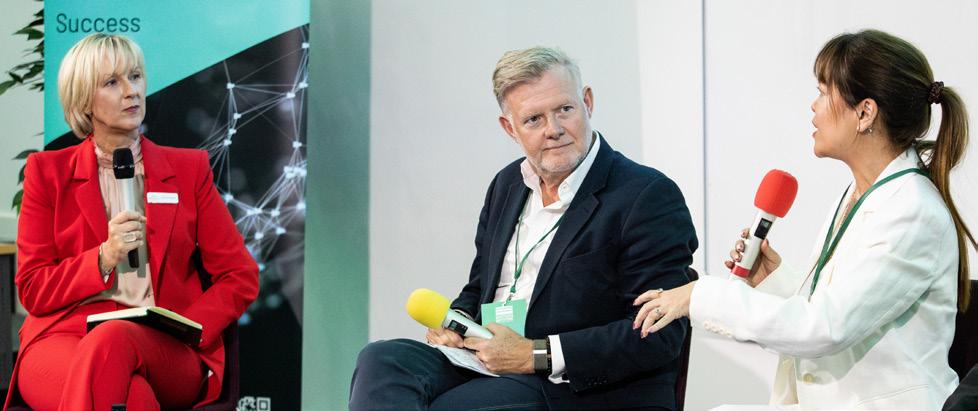
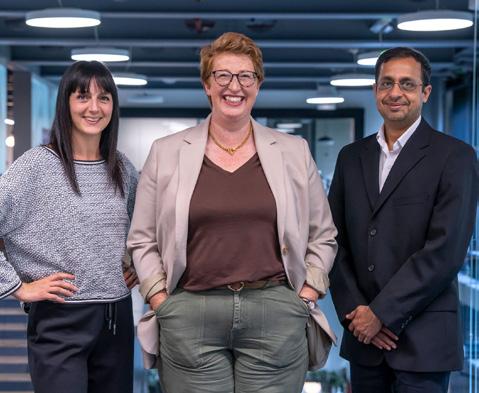
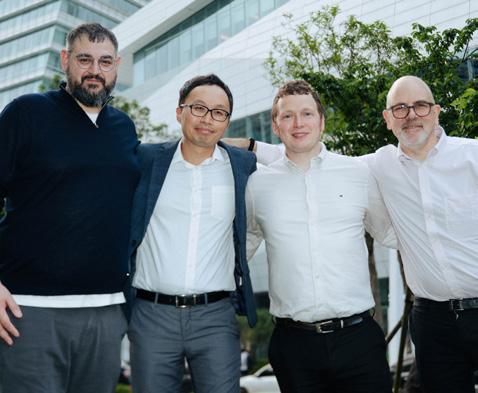
The Group assesses performance using Alternative Performance Measures (‘APMs’) which are not defined under IFRS. The Directors believe that these APMs assist in providing additional useful information on the underlying trends, performance and position of the Group. Consequently, APMs are used by the Directors and management for performance analysis, planning, reporting and incentive-setting purposes.
Definitions of the measures presented in the annual report and accounts are set out below:
&
& Committed Co-investment
The value of capital invested by Northern Gritstone in equity investments since the inception of the Group
The value of capital invested and committed by Northern Gritstone in equity investments since the inception of the Group
Since the inception of Northern Gritstone to the reporting date, the value of capital invested and committed by third party investors in funding rounds in which Northern Gritstone has participated and subsequently
The internal rate of return calculated using total equity investment valuations and realisations compared to the total capital invested into the portfolio companies, over the period from inception to reporting date
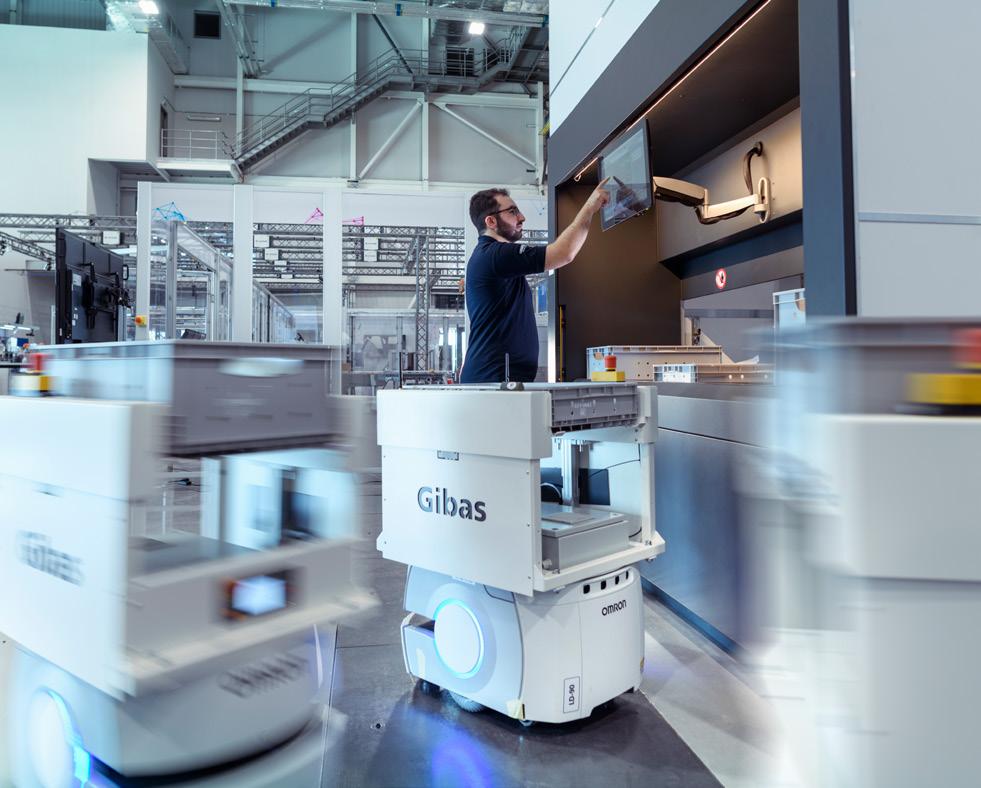
| University of Sheffield
Company information and advisers
Northern Gritstone offices
LEEDS
Nexus
Discovery Way
Leeds LS2 3AA
Bankers
HSBC UK Bank plc
1 Centenary Square Birmingham B1 1HQ
National Westminster
Bank plc
250 Bishopsgate
London EC2M 4AA
LONDON 12 Caxton Street
London SW1H 9EU
Legal Adviser
Macfarlanes LLP
20 Cursitor Street
London EC4A 1LT
Addleshaw Goddard LLP
41 Lothbury
London EC2R 7HG
Company Registration Number 12982592
MANCHESTER
No.1 Circle Square
3 Symphony Park Manchester M1 7FS
Independent Auditor
BDO LLP 55 Baker Street
London W1U 7EU
SHEFFIELD
The Innovation Centre 217 Portobello Sheffield S1 4DP