• Your roll choice can also influence the number of Māori and general seats in Parliament.
Your roll choice does not affect your party vote. You vote for the same list of political parties whichever roll you’re on.
What you need to do:
If you’re happy with the roll you’re on, you don’t need to do anything. If you want to change the roll you’re on, you can make the change online, by email, or by mail.
If you’re already enrolled to vote, check your roll type and update it at vote.nz or call 0800 36 76 56.
If you’re not currently enrolled, you can enrol now and choose your roll at the same time by:
• Enrolling online at vote.nz using your NZ driver licence, NZ passport, or RealMe verified identity
• Calling 0800 36 76 56 and asking for an enrolment form to be emailed or posted to you.
“You cannot change rolls in the 3 months before the election.”
Don’t miss the cut-off date!
If you would like to change the roll you are on before the election, you need to do it by midnight, Thursday 6 August 2026.
The 2026 General Election will be held on Saturday 7 November. You cannot change rolls in the 3 months before the election.
If you miss the deadline, you’ll stay on your current roll until after the election.
Nā te Kaiwhakahaere
Ko Kahuru-Kai-Paeka e huri nei te mata, ko te araka mai o Kai-te-haere, koia tou te huanui arataki i a tātau, Mātahi-ā-te-tau, e ara e.
Nau mai, haere e kā mate tāruru nui, ko riro nei koutou ki te pō. He rā ka tō, he rā ka ara mai anō, e mahue mai nei ko taki, ko hae, ko mātau, e tū tahaka nei. Auē, taukiri e!
Kai ōku huāka, huri noa i tēnā whaitua, i tēnā pākaiahi, tēnā tātau i kā tini āhuataka o te wā, ahakoa kā pēhitaka, kia ohiti, kia mataara tātau katoa.
Across the country, many whānau, communities, businesses, and organisations are continuing to feel the effects of sustained economic pressure. Our recovery from the Covid pandemic has been slower than anticipated, and more recently that recovery has been compounded by global instability, including the impacts of conflict in the Middle East on energy markets, supply chains and inflation. These pressures are being felt most strongly by those already facing cost‑of‑living challenges, and by communities spread across wide geographic areas, including much of the Ngāi Tahu takiwā.
We are very conscious that Kāi Tahu whānau and Papatipu Rūnaka experience these pressures in particular ways, and that these challenges are
felt unevenly across the iwi. For now, the focus of Te Rūnanga o Ngāi Tahu is on ensuring we are efficient, resilient and sustainable, and that tribal pūtea is managed responsibly for the benefit of both current and future generations. In times of uncertainty, careful planning and diligent stewardship of our resources become essential.
With that overarching responsibility in mind, Te Rūnanga o Ngāi Tahu recently made the decision to reset its Distribution Policy, a key component of the Investments Charter. Since at least 2019, it had been clear that the level of distributions flowing from Ngāi Tahu Holdings Corporation to fund the operations of Te Rūnanga was too high in relation to our long‑term responsibilities. Continuing on that path would have meant drawing on the inheritance of future generations, and this simply could not continue.
Te Rūnanga needs to grow its asset base to keep pace with iwi membership growth, which continues to exceed the Ngāi Tahu birth rate. We also need to take into account the effects of long‑term inflation, the nature of the assets we hold, and the fact that many of those assets cannot be sold and therefore do not generate distributable cash returns.
Having carefully considered these factors against our existing settings, the conclusion was clear: we need to retain and reinvest more of our earnings and spend less than we have in recent years.
On that basis, Te Rūnanga agreed to reduce the Distribution Rate from 4 percent to 2.5 percent and adopt a Baseline Distribution of $55 million. As part of a transitional arrangement, the baseline will be adjusted for inflation over the next five or so years, after which distributions are forecast to grow sustainably. We also amended the Distribution Rule to remove a mechanism that had served to protect and increase distributions at the expense of the underlying portfolio. The transitional arrangement will be reviewed each year, and the Distribution Rate will be reviewed every three years, or earlier if key assumptions change.
While this is quite a technical matter, it is difficult to overstate how important our distribution settings are to the long‑term sustainability and credibility of Te Rūnanga o Ngāi Tahu as a tribal institution. Awarua Representative and Te Rūnanga Audit and Risk Committee Chair, Michael Stevens, who led the comprehensive review, has described this kaupapa as “Our Big Balancing Act”. Having now completed the review, I am confident that we have contended meaningfully with that challenge and have arrived at a better balance.
Alongside these financial decisions, Te Rūnanga Group has been working intensively to respond to Mō Kā Uri – Kāi Tahu 2050, our next 25 year iwi vision. The responsibility of the Te Rūnanga Board is to ensure there is a clear, disciplined, and accountable organisational response to that vision by Te Rūnanga Group. Through the development of Kai te Haere, Te Rūnanga Group’s five‑year strategy document, the Board has been overseeing the translation of that long‑term vision into defined strategic choices, clear priorities, and agreed areas of focus for the period ahead.
With all that is going on in the world at the moment, it is timely for Te Rūnanga strengthen our foundations and execute our next evolution. Having clarity of purpose and strong organisational readiness will also be important as we approach the general election this year. Political rhetoric is already beginning to sharpen, and again we are seeing signs that kaupapa Māori will be drawn into unproductive, shallow, and partisan debate, rather than being engaged thoughtfully and with real outcomes in mind.
Against that backdrop, ensuring our people can participate meaningfully in the democratic process is
more important than ever, particularly in light of recent changes to New Zealand’s electoral system.
Advance voting is scheduled to begin in late October, and under the recent changes, enrolment will close earlier than in previous elections. Eligible voters will need to be enrolled, or have updated their details, by midnight on 25 October. This is a significant change. I encourage everyone to enrol or check that their enrolment details are up to date and to participate in the election.
The year is now well and truly underway, and Te Rūnanga Group is progressing a programme of transformation amid a period of global conflict, economic volatility, and political uncertainty. We will continue to monitor developments in the external political and economic environment, and to consider carefully where Te Rūnanga might most appropriately contribute to supporting whānau and Papatipu Rūnaka through the economic headwinds we are facing. I encourage everyone to stay engaged, informed, and connected as the year unfolds.
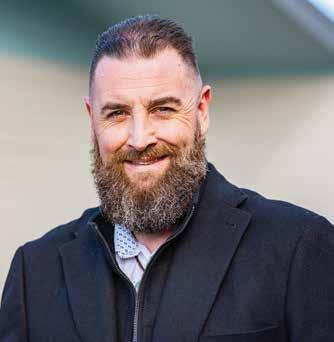
Justin Tipa Kaiwhakahaere, Te Rūnanga
o Ngāi
Tahu
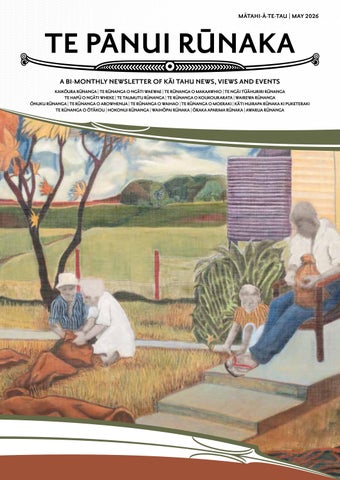
CALL FOR COVER ART SUBMISSIONS
Kia ora e te whānau, if you would like your artwork to be featured on the cover of Te Pānui Rūnaka, please submit it via email to: tpr@ngaitahu.iwi.nz
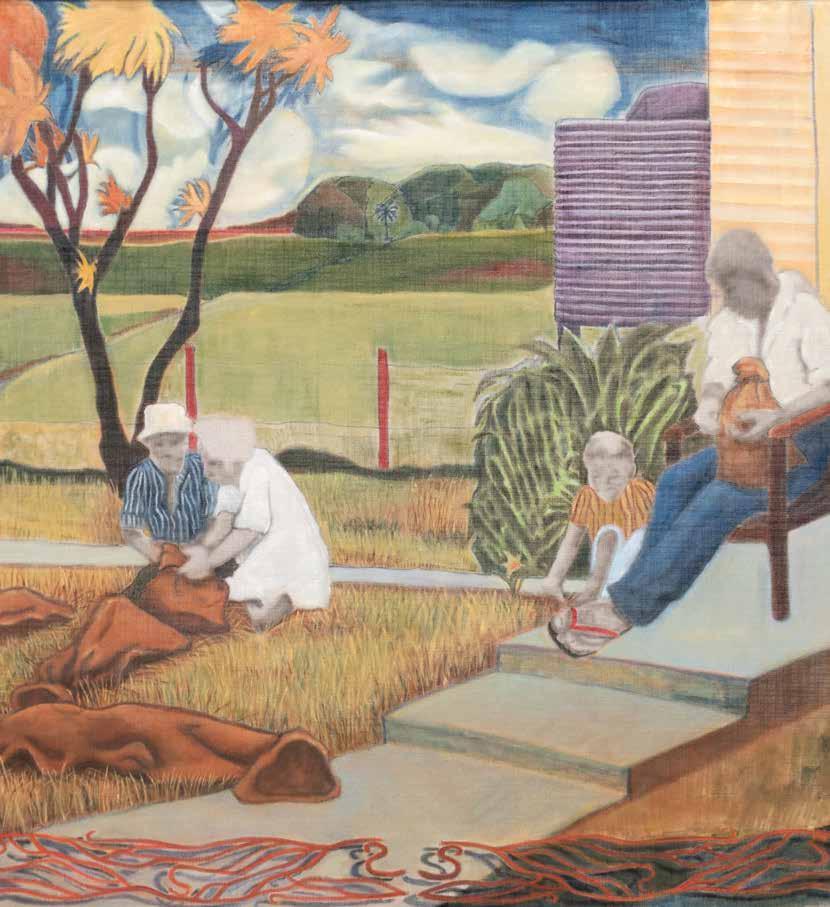
To entire lives suspended
Oil on linen, waxed cord, wood, Oāmaru stone, 2025. Commissioned by Play_Station Artist Run Space for the solo show “Daffodils for Taua,” November 2025. Held by Christchurch Art Gallery.
nā A.J. Manaaki Hope
A.J. Manaaki Hope (Waitaha, Kāti Māmoe, Kāi Tahu; Ngāpuhi, Ngāti Kahu, Ngāti Te Ata; Pākehā, b. Ōtepoti, 1999) is an interdisciplinary artist based in Ōtaki whose work moves between painting, whakairo, and sound. Sourced imagery from family and museum archives are collapsed in time and composition, set against supports with their own past lives. The works hold close to whenua and whānau while addressing the ongoing weight of colonial histories on the ecological and cultural landscape.
Te Pānui Rūnaka uses vegetable based inks and environmentally responsible paper produced from Forest Stewardship Council® (FSC®) certified, Mixed Source pulp from Responsible Sources.
Printed by Blue Star NZ who are Toitū enviromark gold and a Toitū carbon reduce certified organisation, actively managing their impact on the environment.
Whakahaerehia e Ruruku Ltd (Ngāi Tahu Pakihi Whānau).
Kaikōura Rūnanga
Milestone Harvest at Puro
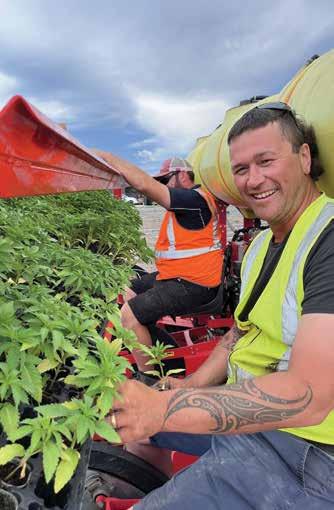
Te Rūnanga o Kaikōura Ltd acknowledges the exciting progress at Puro NZ as the company prepares for its largest ever medicinal cannabis harvest at Kēkerengu, with around 65,000 plants across 15 hectares soon ready for processing. Our strategic partnership with Puro, first established two years ago through investment and shared aspirations for industry growth, continues to deepen.
Recently, we hosted the full Puro team in Kaikōura for a day of whakawhanaungatanga. This was an important opportunity to align our visions as we advance the development of a contract growing model. This model, inspired by the wine industry approach, would enable iwi to grow product on their own whenua for supply into Puro’s processing pipeline.
Our hope is that this model will become replicable and scalable for other papatipu rūnanga across the motu. We see enormous potential for this framework to support regional productivity, high skill job creation, and sustainable economic development, while making meaningful use of whenua in ways that align with iwi values and aspirations.
As Puro’s operation continues to grow, including plans to expand production in Kaikōura, we look forward to shaping an industry that uplifts whānau, strengthens capability, and creates long term opportunities grounded in Ngāti Kurī knowledge, leadership, and kaitiakitanga.
Te Ora Haumanu Restoration Contracting
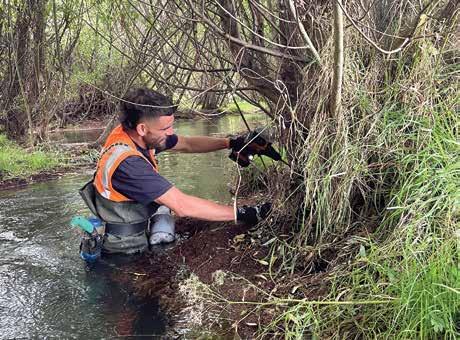
After a tough year with government contracts largely being frozen, things are looking up for Te Ora Haumanu with a solid set of confirmed contracts off the back of strong partnerships in our takiwā. We continue to work on wetland restoration contracts with ECan and private clients, along with weeding, planting, and maintenance of tribal properties. We have an awesome team of kaimahi prepared to go to great lengths, and depths, to restore the whenua and the awa.
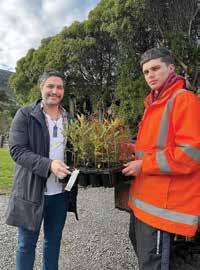
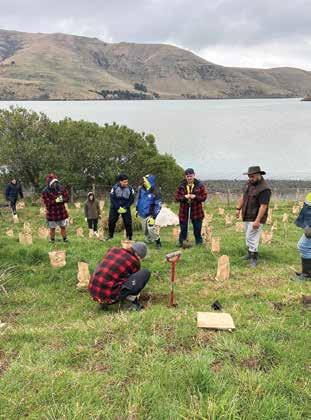
Right: Kaimahi Tamati performs drill and fill control of crack willow, part of a new wetland restoration project on a Culverden farm.
Moana Whenua Commercial Fishing
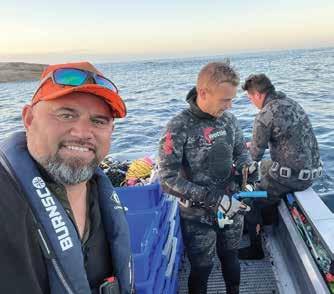
It has been a challenging season for diving, but our Moana Whenua team have enjoyed the more settled March weather and are progressing well toward fishing our kina quota.
In this pilot season we are starting small and learning the ropes so we can ensure high quality operations going forward.
Sadly, our Moana Whenua Kairuruku Savannah Manawatu is heading across the ditch for a new adventure, but we are sure she will be back someday.
We poached Sav from the Takahanga Marae office a few years back to lead our Te Tau Wairehu o Marokura predator control project. She quickly became our start up queen, jumping across to establish Te Ara Pūkenga Skills Hub. After a brief break to have her first pēpi Erena, Sav came back on board last year to get Moana Whenua, our commercial fishing project, launched into its pilot season.
It has been very smooth sailing transferring the management of this kaupapa across to Che Pauro, our Kaihautū Pakihi, who recently gained his Skipper’s Licence.
As they say, tough job, but someone has to do it.
Left: Savannah Manawatu is leaving for the warmer waters of Australia.
Māori Tours Kaikōura
As the warmth of summer fades, Māori Tours enters a new and exciting phase.
Our Māui’s Footprint tour and the evening Taonga Experience at Sudima Hotel have been embraced by manuhiri, and this pilot season has taught us a great deal. One message has come through clearly. Authentic Māori cultural experiences are something the local tourism scene has been waiting for.
We are pausing our regular tours and instead opening the door to unique, one of a kind experiences. These intimate journeys will be led by our most knowledgeable guides, people steeped in Ngāti Kurī history, stories, and mātauranga. These are none other than Rawiri Manawatu, Maurice Manawatu, and Rocky Roberts, the best of the best.
We are proud to be working alongside a small group of local operators who share our passion for exceptional, personalised adventures and true manaakitanga. Every tour will be different, shaped by the land, the season, and the people who walk with us.
Left: Our Kaitohu Ruruku Rawiri Manawatu is one of our team of expert guides.
Te Hapū o Ngāti Waewae
Birthdays
A big mihi to everyone celebrating their birthdays in the months below. If your birthday is not listed, we wish you a wonderful birthday. Please reach out to the office and we will make sure to add you to the list.
March
Nikita Lang, Amber Trevathan, Riley Burke, Alan Russell, Jackie Lang, Gary Lang, Aaron Tainui, Hamiria Hutana, Annabelle Lee Harris, Rititia Read, Nora McQuarrie, Mahana Coulston, Tyson Hutana, Nadia Tainui, Jackie Curtain, Te Amo Tamainu, Teressa Buckeridge, Judith Stokes, Suzie Gibbs, Nei Meihana, Kaiynah Mason, David Mason, Ayla Marie Meihana, Emily Duff, Elly Mulholland.
April
Tanya Weepu, Joe Mason, Julie Campbell, Blossom Meihana Eiffie, Karley Tauwhare, Sue Meihana, Tiare Mason Couston, Tui Tauwhare, Quentin Johansson, Tamia Osikai, Ngariki Tamainu, Benjamin Price, Awatea Tamainu, Flynn Sargeant, Teena Henderson, Matthew Sollis, Luke Jones, Hektor Simpson, Lucretia Treadgold.
He Āitua – James (Jimmy) Mason Russell
It is with heavy hearts that we acknowledge the passing of James Mason Russell, Uncle Jimmy, who passed away early Wednesday morning at the age of 86.
Born in Hokitika in 1939, Jimmy was raised at the Tāpuwai kāika on the Arahura River, a place he always spoke of with deep aroha. The river and the kāika shaped who he was. After attending Kaihinu Primary, Te Aute College, and Hokitika District High School, Jimmy spent 28 years in the Merchant Navy travelling the world.
When he returned home in the 1970s, Jimmy turned his focus to serving his people and his whenua. He played an important role in the re establishment of the Arahura Māori Committee and supported the early work that led to the creation of the Waitangi Tribunal. He later worked alongside the Ngāi Tahu Māori Trust Board on matters relating to Māori Reserved Land, work that helped lead to the establishment of Māwhera Incorporation and the vesting of the Arahura River in 1976. Jimmy served on the incorporation for many years and was appointed Chair in 2016.
Following his retirement from the Merchant Navy, Jimmy dedicated himself to Te Kerēme. During the Wai 27 hearings he shared important knowledge about the traditions, place names, and mahika kai of Te Tai Poutini. His careful record keeping and deep knowledge of the whenua also supported the Kāi Tahu Land Bank work and later the Kāi Tahu Cultural Mapping Project, helping ensure our histories and place names were preserved for future generations.
Right through to recent years Jimmy continued to stand for our people, giving evidence in the High Court in 2025 in support of Kāi Tahu rakatirataka over freshwater and the enduring relationship our people have with the Arahura River.
Uncle Jimmy carried a lifetime of knowledge, service, and commitment to his people. His contribution to Ngāti Waewae, Kāi Tahu, and Te Tai Poutini will not be forgotten.
Waitangi and Hinemoana Halo
This Waitangi, the Ngāti Waewae Executive made the haerenga to Waitangi to experience first hand the commemorations and festivities held across four days at the Waitangi Treaty Grounds. We also supported the Ngāi Tahu Ōtākou delegation and shared in very special gifting by Ōtākou whānau to Te Tiriti o Waitangi Marae. Being present in this national space provided an opportunity to deepen our connection to the significance of Te Tiriti o Waitangi and its enduring relevance today.
A second key kaupapa during this haerenga was the Hinemoana Halo Ocean Initiative.
Hinemoana Halo Partnership Fund is an Indigenous led conservation and environmental sustainability organisation committed to combining traditional Indigenous practices with modern science to safeguard and restore our precious environment. Their mission is to protect the life essence, or mauri, of our natural world through innovative, community led initiatives.
Hinemoana Halo was conceived in partnership with Conservation International at the Hinemoana Halo Oceans Summit gathering of traditional Indigenous leaders in 2023. Our whakapapa binds us as Polynesian people and our moana connects us. Four iwi of Ngāti Wai, Te Rarawa, Whānau ā Apanui, Ngāti Waewae, and the House of Ariki of the Cook Islands signed the historic Hinemoana Halo Agreement at the inaugural Hinemoana Halo Ocean Summit in Gisborne, Aotearoa New Zealand.
Hinemoana Halo Indigenous led initiatives focus on land and ocean resilience, driven by the wisdom of Māori and Pacific leaders. The kaupapa empowers Indigenous communities to take charge of managing and restoring their coastlines and high seas.
We are dedicated to revitalising vital ecosystems, including seagrass beds, wetlands, mangroves, and coastal forests. By harnessing both traditional knowledge and scientific research, the aim is to create high impact solutions for the planet.
The strategy includes recovering and protecting populations of essential marine species such as whales, sharks, dolphins, and seabirds. These efforts are crucial for maintaining the balance of ocean ecosystems. Hinemoana Halo is developing innovative projects to enhance carbon sequestration while promoting biodiversity, ensuring a healthier planet for future generations.
With projects across various locations in Aotearoa New Zealand and the Cook Islands, Hinemoana Halo supports whānau, hapū, and iwi to build nature based solutions projects that are owned and governed locally by Indigenous communities.
Ngāti Waewae representatives at Waitangi and Hinemoana Halo kaupapa.
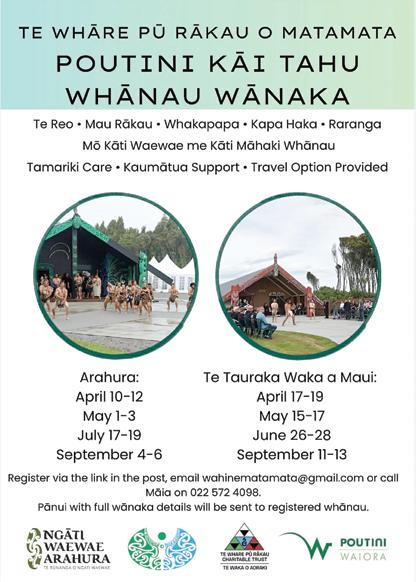
Te Whare Pū Rākau o Matamata Whānau Wānaka 2026
We are excited to invite Kāti Waewae and Kāti Māhaki whānau to come together for a series of whānau wānaka across the year.
Together we will explore Te Reo Māori, mau rākau, pūrākau, and other taonga tuku iho of our people.
These wānaka are about reconnecting with our stories, strengthening our reo, and spending time together as whānau.
Tamariki care, kaumātua support, kai, and some travel assistance will be available.
Keen to register? Follow the registration links below, email wahinematamata@gmail.com, or contact Māia on 022 572 4098.
A full pānui with details about each wānaka will be sent to all registered whānau. Spaces are limited and registrations are already filling quickly.
TE TAURAKA WAKA A MĀUI REGISTRATION: https://gforms.app/0gFv18C
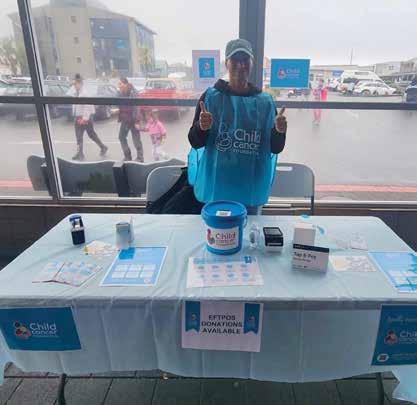
Child Cancer Foundation Nationwide Street Appeal 2026
As part of the ongoing partnership between Child Cancer Foundation and Ngāi Tahu Pounamu, the team adopted the collection site at Hokitika New World to help raise pūtea and awareness for Child Cancer as part of the Nationwide Street Appeal.
The team helped raise close to $1,000, contributing to the nationwide goal of $225,000.
All pūtea raised goes towards supporting tamariki and their whānau on their cancer journey. Each whānau experience is different, and thanks to the hard mahi of Child Cancer Foundation, support is provided every step of the way.
If you would like to make a small koha to help tamariki and their whānau, you can do so via their website: https://childcancer.org.nz/donate/
Te Rūnanga o Makaawhio
Kāi Tahu whānui, tēnā koutou katoa!
Nei anō te miroha o Kāti Māhaki ki a koutou katoa.
He mihi aroha
We would like to acknowledge the passing of James Mason Russell, who passed away peacefully at home on Wednesday, March 4, 2026, after a short illness, surrounded by his loving whānau, aged 86.
We acknowledge the significance of the role James played supporting Poutini Ngāi Tahu, particularly as part of the Ngāi Tahu claims team, the Ngāi Tahu cultural mapping kaupapa, as well as the establishment of Ngāi Tahu archives.
We offer our sincere condolences to Diane and whānau.
Nei rā hoki te mihi aroha, te mihi poroporoaki ki kā mate huhua kua hika mai, kua hika atu. Ki a rātou katoa kua hika, haere, haere, haere atu rā. Moe mai koutou i te rakimārie.
Rātou ki ā rātou, tātou anō ki a tātou. Tēnā anō tātou katoa!
Pepi Hou
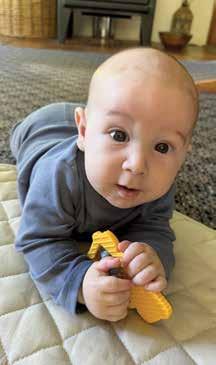
I whānau a Arthur Jolly ki a Olivia Van Diesel rāua ko Craig i te 25 o Oketopa i Māwhera, 7.9 pauna te taumaha.
Arthur Jolly was born to Olivia Van Diesel and Craig on 25 October in Māwhera, weighing 7.9 pounds.
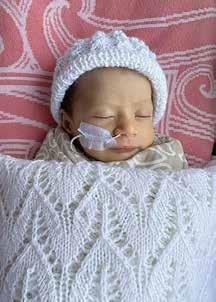
Ko Kohine Ariki Kiriana Marie nō Te Tai Poutini, Mahuika Watson, was born to Lyndal Watson and Nikora Mahuika on 31 January.
Ko Makaawhio, ko Leo, ko Noa, ko Ambrose, ko Aubrey me Pou kua pā katoa ki a ia ko te teina pēpi.
Makaawhio, Leo, Noah, Ambrose, Aubrey and Pou are all smitten with their baby brother.
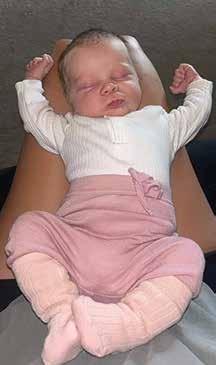
I whānau mai a Annie Manera i te 14 o Hakihea, 25, i Māwhera, ko tōna taumaha he 7.14 pauna.
Annie Manera was born to Grace and Braden Manera on 14 December 25, in Māwhera, weighing 7.14 pounds.
Arthur Jolly.
Kohine-Ariki Kiriana Marie.
Annie Manera.
Up and Coming Wānanga
Te Whare Pū Rākau o Matamata: Whānau Wānaka 2026
We are excited to invite Kāti Waewae and Kāti Māhaki whānau to come together for a series of whānau wānaka across the year.
Together we will explore:
• Te Reo Māori
• Mau rākau
• Pūrākau
• Other taonga tuku iho of our people
These wānaka are about reconnecting with our stories, strengthening our reo, and spending time together as whānau.
Tamariki care, kaumātua support, kai and some travel assistance will be available.
Keen to register?
Follow the registration link below, email wahinematamata@gmail.com, or contact Māia on 022 572 4098.
A full pānui with details about each wānaka will be sent to all registered whānau.
Spaces are limited and registrations are already filling quickly.
TE TAURAKA WAKA A MAUI REGISTRATION: https://gforms.app/0gFv18C
Rowi Return
Sixteen beautifully healthy rowi chicks from a kōhanga site on Mana Island, having reached 1kg in weight, were brought back by DoC staff for release in the Omoeroa ranges a couple of weeks ago. En route, they made a quick pit stop to Māwhera to enable whānau to mihi to the manu and staff, and offer karakia to support their haerenga.
A highlight was having whānaunga and ex Te Wai Pounamu kōtiro, Ngāti Waewae, Janyne Morrison and Waihao Leisa Aumua present to share the experience, along with three generations of Mahuika and Edwards whānau from Ngāti Māhaki.
We acknowledge the mahi in partnership with the Department of Conservation to support our manu to thrive. If any whānau are interested in supporting the mahi we do with DoC, please reach out to the office. We will have further opportunities to participate in releases.
Secondary School Grants
We’re thrilled to have received over 70 applications for the Secondary School Grant. These will now move forward to the Executive Board for consideration and approval, with payments expected to be distributed to whānau by mid to late April.
Whio Return: Whakapohai
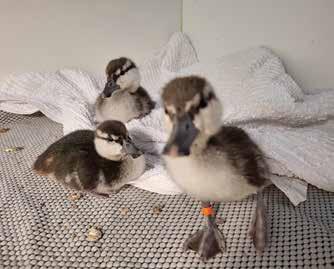
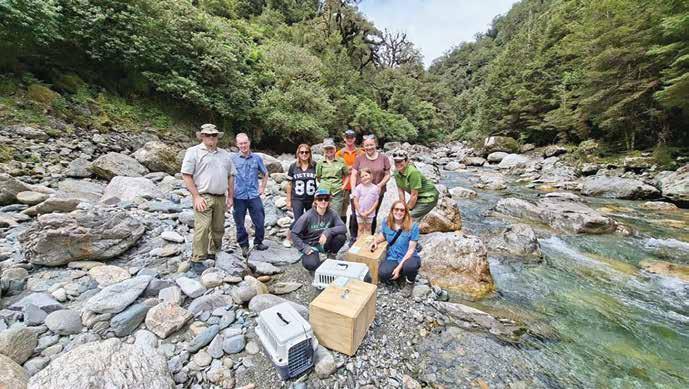
In February, Ngāti Māhaki whānau had the opportunity to participate in a whio release back into South Westland, in the Whakapohai valley. This awa provides perfect habitat, being clean, clear and fast flowing, and it sits within a large protected site where predator work is ongoing.
Six juvenile whio were released. They were the offspring of a captive pair held at Kiwi Park Queenstown. Their successful release is a testament to the mahi of the many partners involved. The ducklings were reared and prepared for their life in the wild at Peacock Springs in Christchurch, run by the Isaac Conservation and Wildlife Trust, while the strategy for whio conservation in South Westland is overseen by DOC and Ngāti Māhaki.
Whio, the iconic duck featured on the $10 note, were once widespread on New Zealand rivers. Habitat loss and introduced predators, particularly stoats, have seen their numbers decline to fewer than 3000 individuals. The breed for release programme has been critical to kick starting whio population recovery in areas with effective predator control.
The recent release marks the second into South Westland and follows many years of repopulating the whio population in the Hokitika backcountry, with the support of the Genesis Energy Whio Forever programme. The whio population in these valleys has grown to over 50 pairs, due to both releases of captive bred whio and regular predator control suppressing predator numbers.
With this area now well represented with the captive breeding pairs’ genetics, young whio are now being released into South Westland valleys.
We felt incredibly grateful for the opportunity that Kahlo and I had. With our whakapapa back in South Westland, it was an honour to stand as representatives connected to Ngāti Māhaki and Ngāi Tahu, and to be part of releasing whio back into their natural range.
A special moment for our whānau, our whenua and future generations.
Aubyn Wilson-Russ.
Te Ngāi Tūāhuriri Rūnanga
Tuahuriri Pakeke Roopu
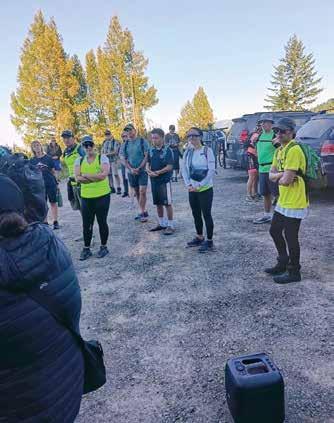
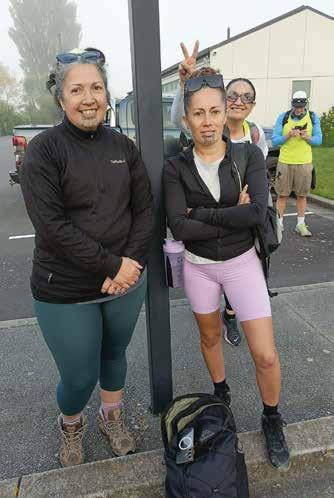
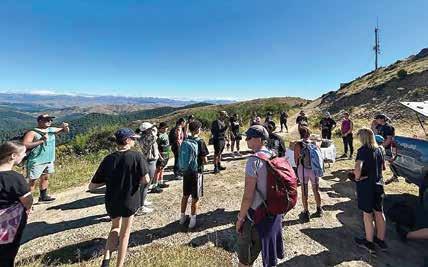
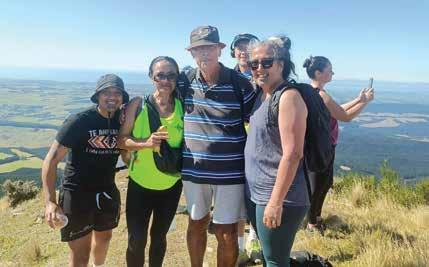
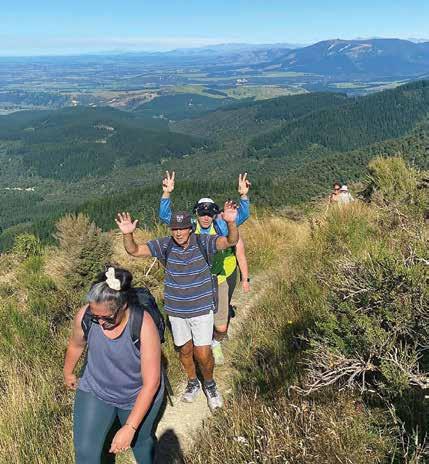
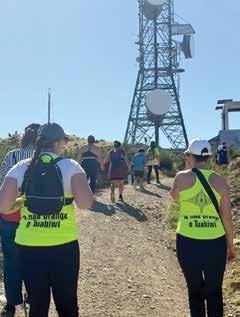
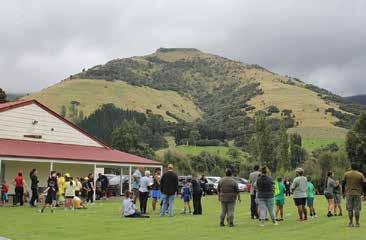
What a fantastic day it was for our Tuahuriri Pakeke Maukatere Hikoi 2026. 5 Maunga 5 Weeks joined in with our hikoi as they had commenced their challenge for 2026. The day was a wonderful opportunity to come together in the spirit of hauora, whakawhanaungatanga, and connection to our whenua and mauka.
Our Te Haa Oranga o Tuahiwi rōpū provided support throughout the hikoi, ensuring the health, safety, and wellbeing of everyone involved. Their awhi helped make the day enjoyable and accessible for all participants, allowing whānau to take part at their own pace while feeling supported along the way.
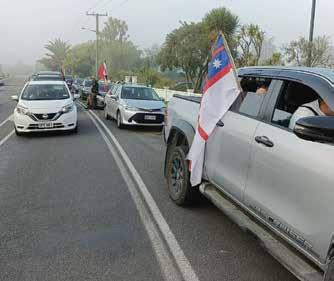
We departed from our marae in a convoy of vehicles, travelling together to the halfway point of Maukatere. This approach ensured everyone arrived safely and together, reinforcing the collective nature of the kaupapa and the importance of moving as one whānau.
Top and above: The Beginning of the Maukatere Hikoi. Sarah-Jane Paki, Jacinta Topia, Crete Cox.
A special thank you to Eru Tarena for opening the day with karakia and sharing kōrero about Maukatere, enriching the experience and strengthening our connection to the mauka and its significance. Your guidance and leadership were greatly appreciated.
Finally, congratulations and well done to all the whānau who took part in the hikoi. Your enthusiasm, participation, and support for one another truly embodied the values of the day and made the occasion both memorable and meaningful for everyone involved.
Below: Te Haa Oranga
Wiremu Hopkinson.
Left, from top: The history talk; Tawhai Te Karu, Crete Coz, Uncle Hippi Rueben, Lee Coz, Sarah Jane Paki; Maukatere views.
o Tuahiwi.
Te Kaha Opening
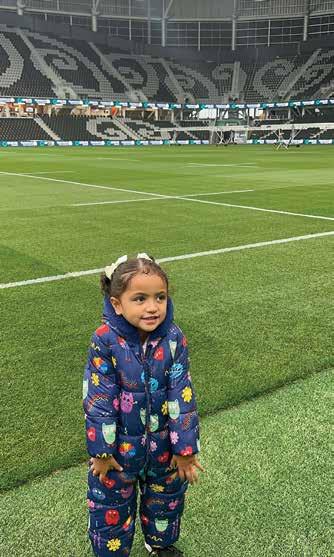
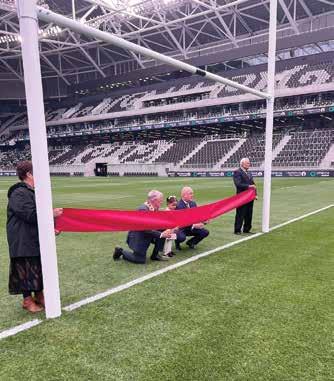
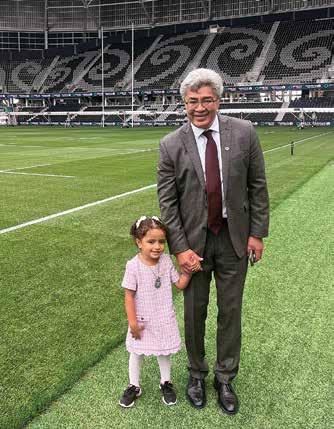
Our mokopuna Arahura Araitia Tau, aged 3 years old, had the special honour of taking part in the official ribbon cutting for the new One New Zealand Stadium at Te Kaha precinct in Ōtautahi on 26 March 2026. This unexpected invitation made the moment even more special.
With courage and excitement, Arahura stepped forward beneath the goal posts and, with a very cute pair of pink scissors, helped to mark this significant milestone alongside Prime Minister Christopher Luxon and Christchurch City Mayor Phil Mauger. Ngā mihi to her kaiako at Ta’i Tamaiti for teaching her how to use kutikuti.
It was a proud moment for our whānau as her Kāhui Tīpuna, Metapere Crofts, Hoana Burgman, and Pauline Crofts were in attendance, alongside her very proud poua and his brothers, her taua Lizzy, and our whanaunga of Te Taumata who stood close by to tautoko and manaaki all in attendance.
Following the ribbon cutting, former All Black and Crusaders legend Dan Carter kicked the first ceremonial goal, bringing the occasion to life. Despite the horrendous weather, the day served as a timely reminder of the importance of a covered stadium for our city.
We also acknowledge the phenomenal artwork by Morgan Darlison, which beautifully captures the native flora of Waitaha, bringing it to life while placing toi Māori at the forefront with her own unique flair. We extend our heartfelt congratulations to all those who have contributed to bringing this vision to life, especially Barry Bragg and the wider team. It is truly marvellous.
Arahura Ariata-Tau.
Right: Te Maire Tau and his mokopuna Arahura Araitia-Tau.
Below: Christchurch Mayor Phil Mauger, Arahura Araitia-Tau and Prime Minister Christopher Luxon cutting the ribbon.
Kaumatua Hamner Trip
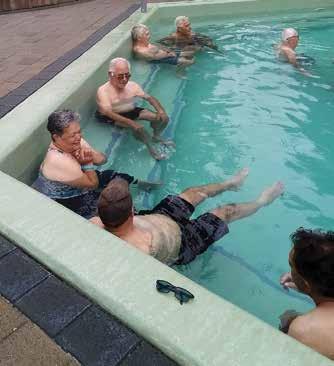
Our kaumātua had a nice, relaxing time at Hanmer Springs for their big day out. Rugged up nice and warm, they travelled safely to their destination, enjoyed relaxing in the hot pools, and finished the day off with a lovely kai together. There was plenty of chit chat, laughs, and relaxation throughout the day. Our kaumātua truly deserved this special trip together.
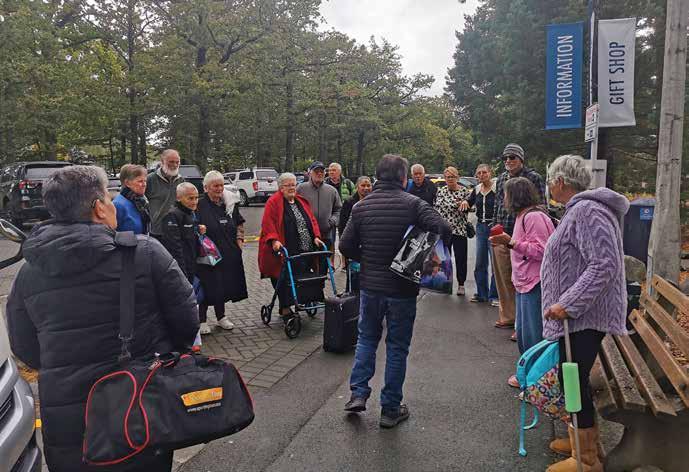
Top: Hamner gathering before the pools.
Left: Nice relaxing time in Hamner.
Above: Chit Chats in the pool.
Kaumatua Swimming
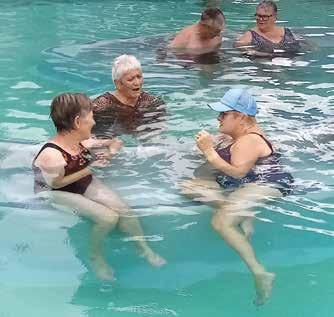
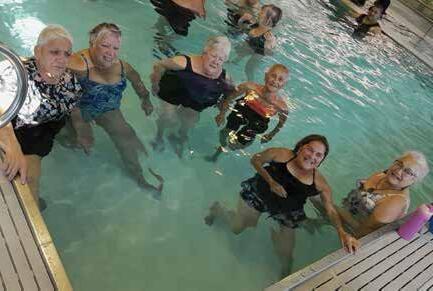
Every Monday our beautiful kaumātua meet up at QE2 to go swimming together. They enjoy a hui catch up filled with lots of laughs and finish the day with kai together. If you would like to join, please contact the office and I will put you in touch with the right person who helps organise this beautiful kaupapa.
Kaumatua Ngāi Tahu Farm Visit
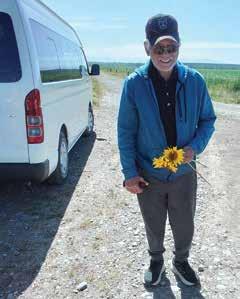
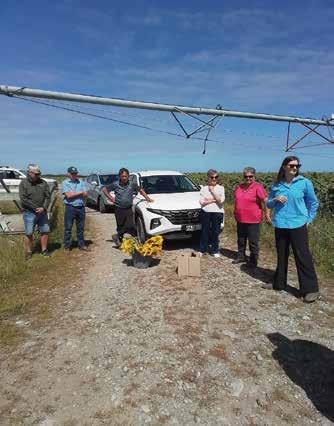
Our kaumātua ventured out together on a beautiful sunny day, enjoying a very informative and engaging visit to the Ngāi Tahu Farm. Seeing the sunflowers and learning about what they do with the seeds was a highlight, sparking plenty of interest among the group.
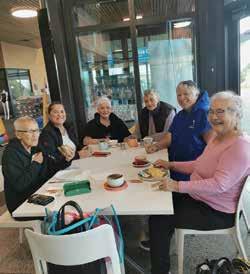
Kaumātua lunch after swimming.
Kaumatua Poi Making
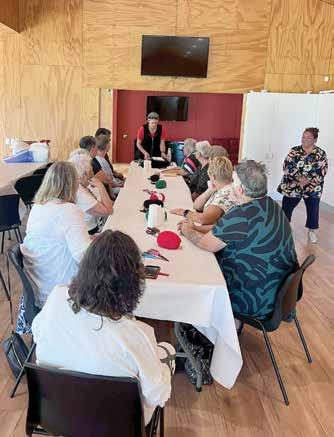
We had Tania Cottle come in to work with our kaumātua on poi making. We were also joined by our beautiful kaumātua from Rāpaki, coming together for a shared activity. It was a wonderful time filled with fun, laughter, kai, and meaningful connection enjoyed by all.
Poi making with the aunties.
Rāpaki in the house for poi making.
Te Hapū o Ngāti Wheke
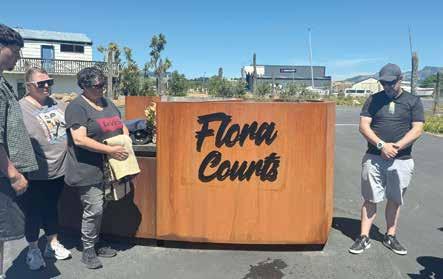
Flora Courts Opening
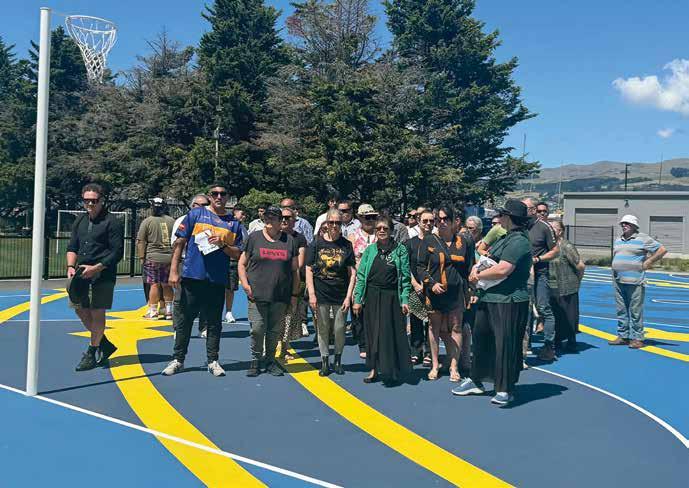
Thanks to our kaikarakia, kaumātua, whānau, and all the locals who attended the opening of Flora Courts on Saturday 7 February to remember Flora McGregor and all her work over decades across a wide range of initiatives that benefited the Lyttelton community and Rāpaki.
One of Flora’s major projects in recent years was to ensure there were quality netball courts and facilities in Lyttelton, so the opening of Flora Courts and the memories of ‘Aunty Flo’ that were shared made for a memorable afternoon that would have made Flora proud.
Ngā mihi nui also to Caine Tauwhare for his inspired design mahi on the site.
Ngahiraka mai Tawhiti at Rāpaki
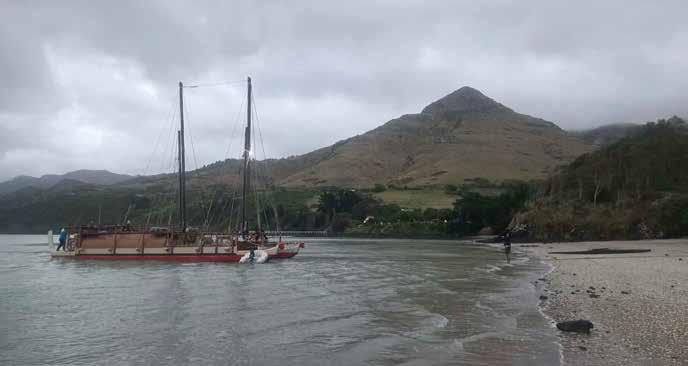
Ngahiraka mai Tawhiti came to Rāpaki in late March for a few days, with her crew staying with us and inspiring whānau and manuhiri at the marae.
A highlight of the visit was the Saturday night celestial navigation wānanga led by Jack Thatcher, Ngahiraka mai Tawhiti kaitiaki and PWO Navigator. The sharing of mātauranga about traditional Polynesian navigation, voyaging and waka hourua was inspiring. It was amazing to hear about his time on the original Te Aurere voyage to Rarotonga in 1992, and his time learning from the great Micronesian navigator Mau Piailug.
We also gained insight into what it takes to become a navigator, including star knowledge, dedication and perseverance, as well as knowing how to remain calm, be the light and make good decisions.
The story of the revival of modern Polynesian voyaging is truly phenomenal, as are the feats of our Polynesian tūpuna in exploring and populating Te Moananui a Kiwa.
Ngahiraka mai Tawhiti and navigation wānanga.
Waka Ama
21 March saw a stunning morning for the 2026 Whakaraupō Chase. Our Rāpaki Te Hapū o Ngāti Wheke whanaunga had a team taking on the challenge for the first time. It was a 10km waka ama race and we took out the mixed novice section.
New Executive
The new Executive elected in December 2025 were joined in February by Maata Smith as kaumātua representative. They are working hard to progress the many important kaupapa that contribute to hapū aspirations.
Urupā Designation Confirmed for Pūrau Reserve
Te Kooti Whenua Māori recently approved an application confirming the recently returned reserve at Pūrau as an urupā, under the ownership and control of the Rāpaki Reservation Trustees.
The trustees recently met on site to look at how best to protect and acknowledge our tīpuna buried here.
Pictured: Maata Smith, Mana Parata (Deputy), Catherine Stuart, Cassie Lee, Joe Tyro (Chair), Nuk Korako, Brett Lee.
Te Taumutu Rūnanga
Tuia Representative 2026: Khan McKay
Khan was interested in the Tuia Rangatahi Leadership Programme to grow as a rangatahi leader in political and governance environments. His contribution is grounded in service to whānau and community. He is currently in his third year of a Bachelor of Arts degree, majoring in Political Science and Philosophy. Khan’s studies have strengthened his thinking about leadership, decision making and public responsibility.
Khan is particularly interested in how governance structures shape outcomes for people and place, and how leadership can be exercised in ways that protect long term wellbeing. He is eager to apply this to real world settings where decisions directly impact people and communities.
The first Tuia Wānanga was held at the end of March at Te Kotahitanga Marae, offering a strong reflection of community and collective spirit. The kaupapa centred on sharing knowledge of the past, and included a visit to the University of Waikato, which has a rich history founded on longstanding ties with Kīngitanga and Waikato Tainui. It was delivered in a way that deeply resonated with the current generation of rangatahi.
While Khan was unable to spend time with each of his fellow Tuia participants, the connections he did make were special. Khan expressed his gratitude for those interactions and is looking forward to seeing everyone again.
Biological Husbandry Unit Organics Trust (BHU) Harvest
The Biological Husbandry Unit Organics Trust (BHU) delivers education, training and research in organic, ecological and sustainable agriculture and horticulture within the Lincoln takiwā.
In recent years, Taumutu whānau have supported seasonal harvesting activities, contributed labour and participated in practical learning on the whenua. BHU has reciprocated by generously sharing produce with Taumutu whānau.
Stay Connected
E pānui is circulated bi monthly, and other important communications are sent to whānau via our whānau emailing list. If you would like to be added to the list, please email us at Taumutu@ngaitahu.iwi.nz
This arrangement reflects a mutually beneficial relationship that supports knowledge exchange, community connection and ongoing engagement with the whenua.
The pā at the University of Waikato in Hamilton.
Whānau doing the mahi for the māra kai harvest.
Whakaora Te Waikēkēwai: End of Project Celebration
Taumutu whānau, participating landowners, project partners and community members gathered at Te Pā o Moki in March to celebrate the achievements of Whakaora Te Waikēkēwai. The event recognised not only the significant restoration work undertaken, but also the strong relationships and partnerships that have driven this kaupapa forward.
Led by Te Taumutu Rūnanga and delivered in partnership with Environment Canterbury through the Whakaora Te Waihora programme, this five year project focuses on restoring the lower to mid catchment of Te Waikēkēwai Stream. With support from the Freshwater Improvement Fund, the project aims to enhance mahinga kai, improve water quality and increase indigenous biodiversity.
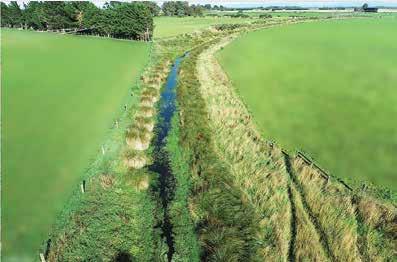
So far, more than 50,000 native plants have been established across two hectares, including nearly two kilometres of fenced riparian planting along Te Waikēkēwai Stream. Nine springheads have been protected and planted, and pest plant control has been carried out across seventeen hectares.
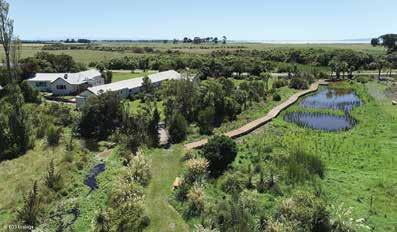
Te Repo o Papatahora has been developed in line with whānau aspirations, including deeper pools and a viewing platform to support engagement.
Monitoring since 2023 shows encouraging signs, with healthier habitats, strong plant establishment and the return of species such as tuna and īnanga. The awa is steadily recovering, both ecologically and culturally.
As this phase concludes in June 2026, the project leaves a lasting legacy, not only in the landscape, but in the strength of its partnerships. The journey continues, with a shared commitment to restoring and protecting Te Waihora for future generations.
Aerial view of Te Pā o Moki. Below: Aerial view of the new fence line.
Whānau at the Whakaora Te Waikēkēwai celebration.
Te Rūnanga o Koukourarata
Farewell
to Our Kaimahi Taiao
We started 2026 by formally farewelling our youngest staff member, who has served as our Kaimahi Taiao.
Ricco commenced his time with us as a volunteer, spending nearly one month supporting our Project Manager across a range of tasks. Following this, he delivered a successful proposal identifying opportunities to support the development of Te Taiao initiatives. This led to the establishment of a 25 hour contract, which subsequently progressed to full time fixed term employment due to external investment. Ricco has continued in this full time capacity since June 2024.
Throughout his tenure, Ricco was a primary advocate and key kaimahi in securing investment and future opportunities with Environment Canterbury. His contributions included work on the poplar pole nursery, the community trap library, pest control initiatives, the planting of over 4,000 native plants, and the development of promotional videos. He also played a significant role in fostering supportive relationships with partners involved in water testing, the Coastguard, the Department of Conservation, Banks Peninsula Pest Control, and our other Te Pātaka Rūnanga, to name a few.
Ricco’s enthusiasm, pride in his work, youthful energy, promotion to his age group, and physical work ethic will be greatly missed within our operations. He leaves a gap of influence, and we sincerely wish Ricco every success as he pursues his future endeavours.
Tā te Tamariki tāna mahi wāwāhi taha.
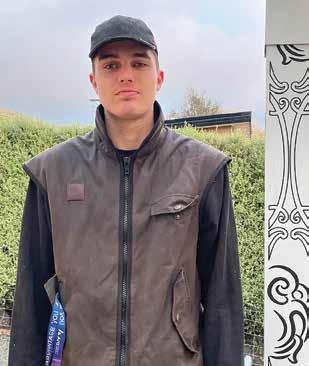
Ricco Robertson.
Planning 500 Years Ahead: An Update from Koukourarata
Te Rūnanga o Koukourarata is making sure we are best set up for the future. Right now, we are looking closely at how we can be strongly positioned to deliver Te Mahi Tamariki, our 500 year vision for the future of Koukourarata. It is significant work, and we are proud to do it. We all need to be on the waka, heading in the same direction, to uphold our responsibilities to our tīpuna and to our mokopuna yet to be born.
We also want to mihi to Gina Lee Duncan, who has been our General Manager for the past two years. During this time she has shown true dedication, particularly in community development and kai security. While she will always remain whānau, we thank Gina Lee for her many professional contributions and wish her all the very best.
For the next three months, Holly Cunningham will support the day to day work of the rūnanga, alongside
Te Rūnanga o Koukourarata Grants
Did you know we have grants available for whānau who are registered members of Te Rūnanga o Koukourarata? The following grants are available, and applications are reviewed each month by our Grants Committee.
Education Grant, to support whānau with school and study fees, school uniforms and stationery items. Sports Grant, to provide support to whānau who are representing a sport at a regional or national level. Health Grant, to provide support to whānau with health related expenses.
For more information, please email koukourarata@ngaitahu.iwi.nz
our awesome kaimahi. Holly is the main contact for rūnanga business and can be reached at holly.cunningham@ngaitahu.iwi.nz. Nau mai e Holly.
E te whānau, we look forward to sharing more updates as our 500 year focused scaffolding gets underway.
Ngā mihi nui, Arpo Deer
Upcoming Hui
General Rūnanga Hui: May Sunday 24 May, 10am Tūtehuarewa Marae
General Rūnanga Hui: July Sunday 26 July, 10am Tūtehuarewa Marae
Annual and General Rūnanga Hui: September Sunday 27 September, 10am Tūtehuarewa Marae
Nau Mai e Tama
On 15 October 2025, Shira Crofts (Ngāi Tahu, Waikato Tainui) and Mark Stewart (Te Arawa, Ngāti Porou) welcomed their first pēpi, Hikurangi Te Manemoeroa Waaka Crofts Stewart. He is the first moko for Carl and Marion Crofts, and the great moko of Charles and Meri Crofts.
Hikurangi Te Manemoeroa Waaka Crofts-Stewart.
Wairewa Rūnanga
Wairewa Games Day 2026
Wairewa Marae was full of energy, laughter and friendly competition as whānau came together for Games Day on 1 March 2026.
With mixed age teams taking part, the day was all about connection, teamwork and having a bit of fun together. With a mix of physical and mental challenges, there was something for everyone to get involved in. Tamariki, rangatahi, pakeke and kaumātua all joined in, creating an intergenerational day at the marae.
While the activities brought plenty of laughs and a little bit of competition, the real highlight was seeing whānau connecting. Events like this help create space for our whānau to come together in a relaxed and welcoming way.
A huge thank you to all the whānau who came along and made the day what it was, despite the weather. Mihi to Christchurch City Council for their funding support, Team Mana Supplies for the prizes and merch, and to Cheshire Cat Company for providing some of the games hire that helped make the day one to remember.
We are already looking forward to the next opportunity to bring our Wairewa whānau together.
You can see more photos on our website: https://www.wairewamarae.co.nz/panui
Mahinga Kai Wānanga
Our Manawhenua Manamoana Pou held a Mahinga Kai Wānanga from 6 to 8 March, bringing together whānau for a weekend of learning and sharing knowledge. The wānanga created space for whānau to engage in traditional practices, strengthen their understanding of mahinga kai, and deepen their connection to whenua and wai.
It was a valuable opportunity for collective learning and reflected Wairewa’s ongoing commitment to revitalising mahinga kai practices for current and future generations.
Whānau at the Mahinga Kai Wānanga.
Wairewa Games Day 2026.
Below: Whānau enjoying Games Day at Wairewa Marae.
City2Surf
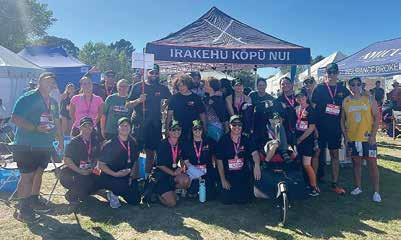
We were proud to take part in this year’s City2Surf. It was awesome to see our whānau stepping up to the challenge, getting active and moving their tinana, and finishing it off with a kai at the end.
Nui te mihi to Te Mātāpuna Hauora for their tautoko, and to Rāpaki for joining alongside us. These moments are what it is all about, bringing people together, strengthening connections, and showing up for each other.
Kaumātua Reconnection Wānanga
Our second Kaumātua Reconnection Wānanga, held from 20 to 22 March at Wairewa Marae, was another beautiful weekend for our kaumātua to come together to reconnect and create more memories. Across the weekend there was a strong sense of whakawhanaungatanga, with space for kōrero, reflection and connection.
A highlight of the weekend was the haerenga on the Saturday, where we welcomed kaumātua from other rūnanga to visit our significant sites, finishing off with a kai and cuppa.
Weekends like this remind us of the importance of creating space for our kaumātua, to connect, to be uplifted, and to continue sharing their knowledge and presence with our wider whānau.
5 Maunga 5 Weeks: Te Ukura
We were grateful to welcome whānau to Wairewa to walk Te Ukura as part of the 5 Maunga 5 Weeks kaupapa. It was awesome to show everyone part of our paradise, right in the centre of Te Pātaka o Rākaihautū, sharing our stories and kōrero along the way.
It was so good having whānau come through, bringing the energy and making the day one to remember.
Whakapā Mai
0800 WAIREWA (924 7392) PO Box 10020, Christchurch 8145 wairewa@ngaitahu.iwi.nz Email Wairewa.comms@ngaitahu.iwi.nz to sign up to our monthly newsletter. Like and follow us on Facebook to keep up to date with Wairewa. Facebook.com/Wairewa
Scan the QR code to visit the Wairewa Facebook page.
Wairewa whānau at City2Surf 2026.
Te Ukura in the centre of Te Pātaka o Rākaihautū.
Kaumātua at Birdlings Flat.
Ōnuku Rūnanga
Far from Ōnuku, Tahu Forged in Fire
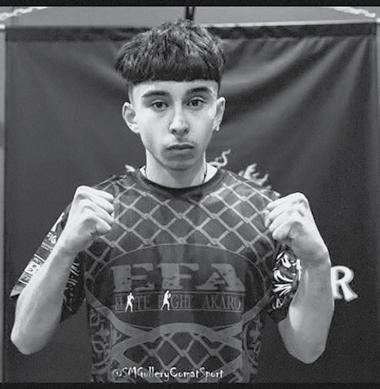
A 16-year-old’s training at Soma Fight Club
January 20, 2026, Changuu, Bali
On 20 January, 16-year-old Tahu Rhodes-Hood, mokopuna of Bruce Rhodes, boarded a plane bound for Bali, Indonesia, with no whānau alongside him, no familiar faces waiting at the other end. Just a kit bag, a hunger to improve, and a destination that was about to reshape the way he sees the world.
The Camp
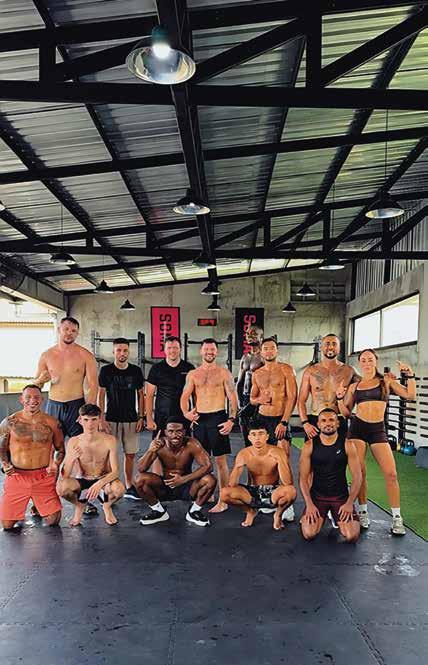
Soma Fight Club is one of Southeast Asia’s most respected kickboxing training camps. For four weeks, two sessions a day, no shortcuts. The daily structure is unrelenting: morning sessions, recovery, afternoon sessions, repeat. The pads are honest. They show you exactly who you are and who you are not.
In the beginning, the heat, the jet lag, and the adjustment to a completely new way of life hit like a sucker punch. But Tahu didn’t fold. Day after day, session after session, he showed up, took the corrections, and pushed through when his body screamed at him to stop. Not in the showy kind of way, but the quiet, consistent kind that coaches notice and appreciate.
The Community
One of the unexpected gifts of Soma Fight Club was the community inside its walls. Athletes from all corners of the globe train there, the seasoned pro athletes, the fitness influencers, the young guns, and the odd backpacker who found the gym and never left. For a young fighter like Tahu, it was the kind of eye-opening moment money cannot buy.
Tahu trained alongside people he would never have met at home, heard stories from lives he had never imagined, and began to understand how interconnected the world really is.
The Growth
Somewhere between the early morning sessions and quiet evenings, something shifted. The distance from Ōnuku gave him perspective on where Tahu came from, his whānau, his culture, his community, and the people who shaped him. What you take for granted becomes precious the moment it is on the other side of the world. Gratitude is something no training camp can teach you. Life has to hand it to you itself.
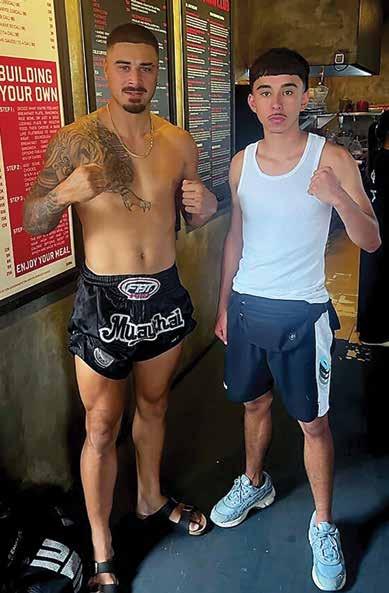
Oscar Remihana Pro MMA with Tahu Rhodes-Hood.
Four weeks later, Tahu arrived back home craving his poupou’s boil up. He was the same young lad in the ways that matter, same heart, same dream, and same commitment. But something shifted in his mindset, his understanding of the sport, the world, of other people, of himself.
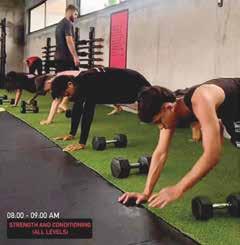
Back home, Tahu packed out a strength and cardio class at Elite Fight Akaroa, keeping his own gains up while giving back just as much. It is clear that the biggest growth happened outside the ropes, in the conversations, the quiet recovery moments, the homesickness, and the slow realisation of just how wide, wild and wonderful this world really is.
As Bruce Rhodes says, “He didn’t just come home a better fighter; he came home a better human and at 16 years old, that’s everything.”
Amiria Tikao, who has been studying Law (Hons) and Māori Resource Management at Victoria University, has just received the LIM Richardson Prize in Private Law. The prize included a $3,000 scholarship and was awarded to the student with the highest aggregate marks in the four compulsory private law subjects at the Law School.
Amiria is in her final year of study, and we are enormously proud of Amiria’s achievements. Congratulations Amiria on this significant achievement!
Tahu front row and center in final week of conditioning class. Right: Tahu left Week 1 at Soma Fight Club.
Amiria Tikao
Te Rūnanga o Arowhenua
Nelson
Junior Makes National Tennis Strides
Indiana Wincer is the eldest daughter of Melissa and Tim Wincer from Nelson. Indiana’s whakapapa traces through Arowhenua and multiple other Papatipu Rūnanga. Her Taua is Pamela Manning.
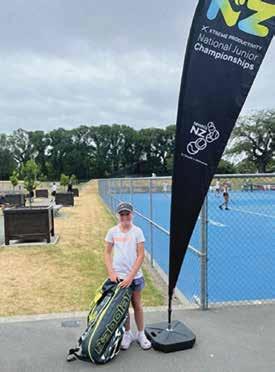
Indiana has established herself as one of the most talented and promising tennis players to come out of Nelson and is now also recognised as an up and coming player in Canterbury. She has been selected to represent Canterbury at the upcoming twelve and under national teams championships in Christchurch and is the only player chosen from outside the region.
Indiana first picked up a racket when she was three and her love for the game has continued to grow. Her determination to improve sees her training at Wakapuaka Tennis Club up to nine times a week, with her dedication and natural ability placing her among the country’s top young players.
Last December, she qualified for direct entry into her first twelve and under National Junior Championships just after turning eleven. Competing against the nation’s best, she finished a credible tenth in a draw of thirty two players.
This year also marked her first season competing in the local senior interclub tennis competition. Despite her age, Indiana impressed older and more experienced opponents, earning praise for both her ability and her calm on court demeanour. Asked whether playing against adults is harder for someone so young, Indiana’s response belies her years.
“A little bit, I don’t worry that they are older at all, but because they have played a lot, they know how to make me run around a lot more, so they play slices and volleys a lot.”
As Indiana continues to climb the national rankings, opportunities are increasing, but so too are the challenges of being a self funded athlete. She currently receives no local support, a situation that, while not uncommon in minority sports, has been difficult for both Indiana and her coach and father, Tim.
“I took on the role as her full time coach a few years ago to reduce costs, despite my limited tennis experience,” Tim says.
“She receives no financial support, coaching support, equipment or promotion from the local tennis clubs. We’re on the lookout for any businesses in the community that are keen to sponsor her journey.”
Tim says the financial pressures have already forced tough decisions.
“This year, she was invited to play in the national clay court championships in Martinborough, which is a closed, invite only event. Although she would have loved to have competed, she had to decline due to travel costs.”
“From reading, watching and gathering as many insights into tennis as we could together, we have got to a point where she is nationally ranked inside the top ten in the country for her age.”
This article was taken from Top South Media and written by Jon Routhan.
We invite any whānau with businesses or Papatipu Rūnanga who are interested in discussing sponsorship opportunities or providing assistance in any capacity to contact the Wincer whānau at melissawincer@gmail.com
Ka mihi mātou ki a koe mō tō tautoko.
Indiana Wincer at the National Junior Championships.
Te Rūnanga o Waihao
Tēnā tātou e te whānau, Te Rūnanga o Waihao TRoNT
Representatives 2026
At our Whānau Hui on 15 Hui tanguru, the TRoNT Representative Appointment Komiti was pleased to advise that we have completed our interviews and selection process for our Te Rūnanga o Ngāi Tahu Waihao Representative and Alternate.
On behalf of our Waihao whānau, the Komiti confirmed Juliette Stevenson as our Representative and Brenden Reid as our Alternate for the next three years. Juliette has previously served as our Alternate Representative for three terms. Congratulations to you both. We look forward to supporting you in these roles throughout this term.
He rau aroha.
We would like to take this opportunity to thank Jo McLean, our outgoing Representative of seventeen years, for her dedicated and unwavering service to Waihao Rūnanga. Our thanks also go to Jo’s whānau for supporting her to undertake this mahi, not only in her time as Representative, but also during the years she served as Alternate and across her many other iwi leadership roles on behalf of Waihao.
Te Komiti Mātauraka o Waihao, Hui-ā-Kura
Te Komiti Mātauraka o Waihao hosted Hui ā Kura, facilitated by Kōia Te Mātauraka, at Waihao Marae on Tuesday 10 Poutūterangi 2026.
Hui ā Kura is held three times a year with the purpose of developing and fostering relationships with educators who teach or deliver programmes in the Waihao takiwā.
Through these relationships, we seek to advocate for and create opportunities that provide positive outcomes for TRoW whānau, while empowering best practice in education. This hui saw our largest attendance to date, including staff from early childhood education services, primary schools, Waimate High School, Te Ana, Te Tūhana, attendance services from Kōia Te Mātauraka, and the Ministry of Education.
Lana Williams, Waihao, discussing tikanga at the Hui-ā-Kura wānanga.
This term’s hui focused on unpacking the concepts of manaakitaka and kaitiakitaka as we work towards establishing a Memorandum of Partnership. We are very excited about the relationships that have been built and the doors that continue to open in education for Waihao.
There was beautiful weather at Waihao on the day, and the kaikaranga were able to use the depth of the new deck to welcome our manuhiri. Waihao manaakitaka was in full force, including a beautiful kai prepared by the capable hands of Brenden and Shyra. Many thanks to Te Wera and Whaea Wendy for leading the pōhiri.
Whānau Hui at Waihao: 2026 Dates and Kaupapa
Left,
Hui start at 10.30am and conclude at 1pm for kai. E pānui reminders will be sent two weeks prior to each hui, including Microsoft Teams links for online attendance.
21 June
Local Plan. Marae Kōmiti annual report. Spatial plan for the marae and wider area. Final budget approved with whānau endorsement.
15 August
Implementation. How to implement the master and spatial plans. Taiao kaupapa annual report, including the ranger programme.
18 October
AGM. Annual report, elections and statutory reporting.
6 December
Whānau Christmas Hui. Celebration, whānau engagement and optional hui if required.
Left: Ka tika ā muri, ka tika ā mua. Lana Williams with Aunty Marlene McDonald at kai.
below: Manuhiri at the tēpu kai with Whaea Wendy. Below: Madi Heurea, Rachel Solomon and Rynee De Garnham from Te Ana, Timaru, after kai.
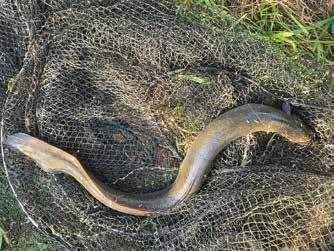
Ko te hao te kai a te aitaka a Tapuiti. Eel is the delicacy that belongs to the descendants of Tapuiti.
NZQA First Aid Training at Waihao Marae
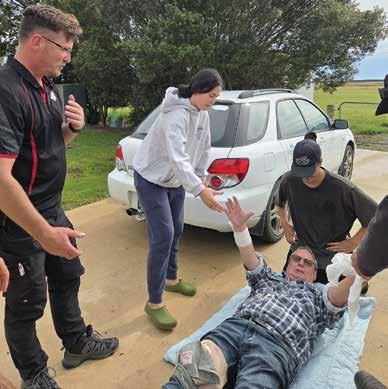
Jeremy Boyd from ProMed came to Waihao to deliver the NZQA Unit Standard 6400 training to our Tuna Mitigation Rangers and TRoW kaimahi, Brenden and Shyra, as part of the NZ First Aid Certificate course completed at the end of 2025.
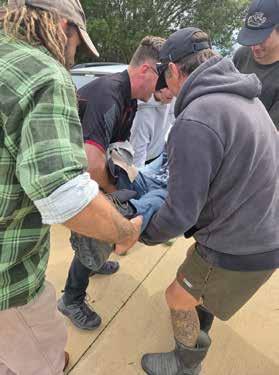
Jeremy explained the types of accidents we may experience at work and while travelling, including car accidents, building sites and marae settings. Participants also had the experience of acting as patients in simulated workplace incidents involving fractures, cuts, bruising and possible anaphylactic shock.
We then went outside where our first aiders were able to apply their knowledge in a practical situation, delivered in our Waihao manaaki way.
Many thanks again to Jeremy Boyd from ProMed for sharing your knowledge and training our first aiders.
Above: Removing Uncle Les from his ute after the accident.
Left: Jeremy from ProMed with Shyra of Waihao Marae and Tutemakohu Tau of the Tuna Mitigation Team, supporting Uncle Les in his recovery.
Te Rūnanga o Moeraki
Ka tuhi ki te raki he kanapu kai ruka
Karue te whenua
Karue te whenua me he tai tuki e
He tohu o te mate
He tohu o te mate
Auē hā
Auē hā
Tērā te pōkēao kua tau ki ruka o Poutaiki
Hukahuka ana te tai o Āraiteuru ki te pā o Moeraki
Ko te tewe e muri nei te taki nei, te auē nei
He Mihi Aroha
Te Rūnanga o Moeraki acknowledges with deep sadness the passing of several Moeraki whānau over the past few months, Aunty Pamela Hinerangi Henderson (née Belsham), Mark Ethan (Mark Anthony Huria), Cassandra Thomas and Mason Russell.
We extend our heartfelt condolences and aroha to the whānau pani.
Commemorating Te Tiriti o Waitangi Day with the Waitaki Community
This year, Te Rūnanga o Moeraki partnered with the Waitaki District Council to commemorate Te Tiriti o Waitangi alongside the wider Waitaki community.
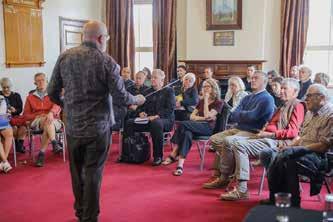
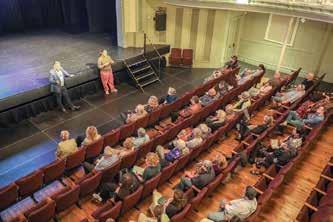
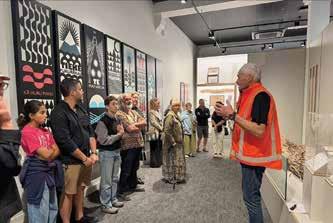
Members of our Moeraki whānau led a series of seminars, a guided tour of the Willets Collection at Te Whare Taoka o Waitaki, and provided access to a GP clinic throughout the day, delivered by Te Hā o Maru. The day was well attended by the community, highlighting the continued need for such events.
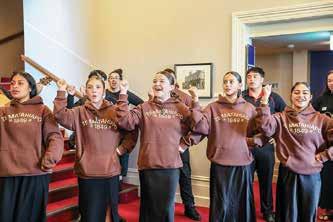
We would like to sincerely thank our whānau, the team at Te Hā o Maru, and Te Matahīapo, the combined kapa haka rōpū of Waitaki Boys’ High School, Waitaki Girls’ High School, and St Kevin’s College, led by our whanaunga Ana Faau.
Moeraki whānau at the mihi whakatau to open the day, with WGHS, WBHS and St Kevin’s College kapa haka rōpū, Te Matahīapo.
Above left: WGHS, WBHS and St Kevin’s College kapa haka rōpū, Te Matahīapo.
Trevor McGlinchey presenting on the Ngāi Tahu Claim. Above left: Justin Tipa and Awhina McGlinchey sharing kōrero about Te Rūnanga o Moeraki.
David Higgins guiding tours through the Willets Collection at Te Whare Taoka o Waitaki.
Above left: Dr Gerard O’Regan presenting on rock art in the Waitaki.
It was the first event of its kind in many years, and we were overwhelmed by the response from the wider community, showing both a need and a strong desire for these events to continue.
Haereka to
Te
Puna a Maru
In early March, Moeraki whānau enjoyed a whānau day at Te Puna a Maru, a significant site to Moeraki whānau. It was an opportunity to see the great work undertaken by our Whiria te Waitaki team, who have carried out extensive restoration and planting of the area.
Alongside viewing the mahi, whānau enjoyed a barbeque and swimming.
Below: Moeraki whānau listening to kōrero from Trevor McGlinchey.
Moeraki Kaumātua Day with Arowhenua Kaumātua
Moeraki kaumātua were delighted to welcome Arowhenua kaumātua to our marae in March. As part of their time together, Moeraki Upoko David Higgins led a kōrero, followed by lunch at the Moeraki Boulders Restaurant.
Below: Arowhenua kaumātua departing following lunch at the Moeraki Boulders Restaurant.
A New but Familiar Staff Member Joins Te Rūnanga o Moeraki Office
Viv will be well known to many of our whānau through her many years of involvement at Moeraki Marae and as the partner of Gerard O’Regan. For whānau connecting with our office, Viv will often be the friendly voice at the end of the phone, or there to welcome you when you visit in person.
Viv has previously worked for Ngāi Tahu and brings with her a strong background in operations, management and project management. Her experience, alongside her longstanding connections within our community, will be a valuable asset to our team.
Welcome to the team, Viv. It is great to have you with us.
Kare Tipa speaking on place names in the Waitaki. Above left: Lisa Cameron and Jenna Ashby assisting with the GP clinic at Haereka to Te Puna a Maru.
The Return of a Carving to Moeraki
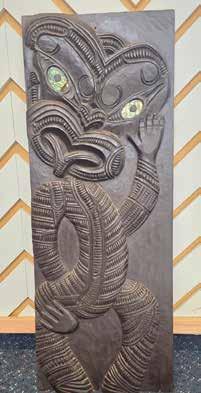
The Parker family returned to Aotearoa from America with a carving that was completed as part of the Moeraki 1936 Centennial.
Welcomed by the Upoko David Higgins and office staff, the Parker family shared how the carving accompanied them around the world before they decided it was time to return it to its original home in Moeraki. Moeraki whānau were delighted to see the carving returned.
Kāti Huirapa Rūnaka ki Puketeraki
Whakapapa and Hauora: Autism Acceptance Month
Nā Sakura Stirling Boyles
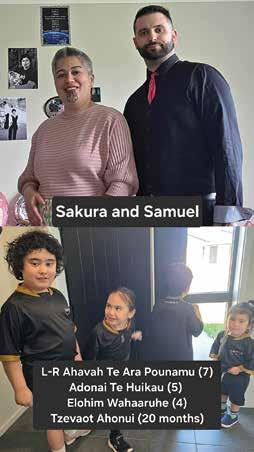
This April, Samuel Boyles (Kāti Hinekura, Kāti Kuri, Ngāti Irakehu) and Sakura Stirling Boyles (Kāi Atawhiua, Kāti Huirapa, Ngāi Tūāhuriri) are reframing takiwātanga (autism) through an Indigenous lens.
“Raising our four tamariki, including one that is takiwātanga, we draw strength from the traditional view of whānau hauā, where disability is seen as human diversity and a collective responsibility,” says Sakura.
Samuel adds, “Our identity is anchored in tūrangawaewae, tracing our deep whakapapa to Te Rapuwai, Waitaha, Kāti Mamoe, and Kāi Tahu. This connection provides the holistic hauora essential for our wellbeing as caregivers and advocates.”
Sakura concludes, “By identifying with these specific hapū and iwi, our whānau moves away from ‘individual burden’ toward a collective history where every member has a place and a purpose.”
Sakura and Samuel encourage us to move beyond awareness toward true acceptance, ensuring our takiwātanga members are celebrated contributors to our iwi.
Left: Moeraki Centennial 1936.
Far left: Carving from the 1936 Centennial.
Te Ahikāroa Launch
Nā Claire White
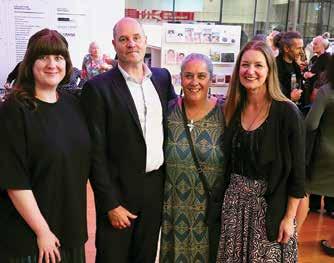
On Friday 27 March, representatives from Puketeraki and Ōtākou rūnaka gathered at the Dunedin Public Art Gallery for the opening of their new collections exhibition, Te Ahikāroa.
Led by Paulette Tamati Elliffe and her sons Tumai and Kiringāua Cassidy from Ōtākou, the group also included Matapura Ellison, Claire Kaahu and Paul White from Puketeraki, as well as members of Paemanu, a collective of Kāi Tahu kaimahitoi.
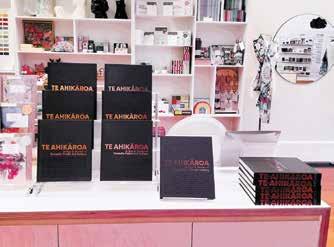
Over recent years, under the directorship of Cam McCracken, senior curators Lucy Hammonds and Lauren Gutsell have worked closely with rūnaka representatives Paulette Tamati Elliffe, Claire Kaahu White and Robert Sullivan on the curation of the exhibition Huikaau and the book Te Ahikāroa, which was officially launched on the evening.
Below: Te Ahikāroa
the Dunedin Public Art
Claire Kaahu White noted, “It was a very special occasion. It marks another important milestone in the relationship we have with the Dunedin Public Art Gallery, which is incredibly receptive to input and collaboration with mana whenua. We acknowledge and cherish this relationship. Kā mihi aroha ki a koutou.”
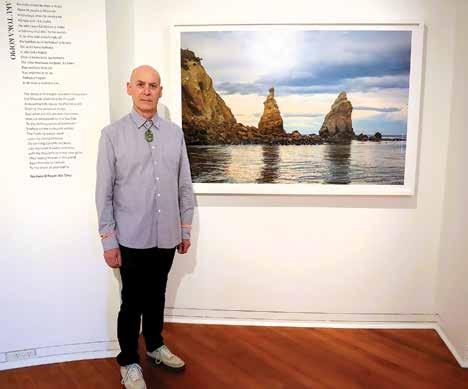
Neil Pardington (Kāi Tahu, Kāti Māmoe, Ngāti Kahungunu, Pākehā) standing beside his photograph ‘Ara ki te araroa, Marama i te whata, Huriawa.’ During his artist talk on Saturday 28 March, Neil acknowledged the support he has received from Puketeraki, particularly Suzanne Ellison.
books on display at
Gallery launch.
Left: Lauren Gutsell, Cam McCracken, Claire Kaahu White and Lucy Hammonds at the launch of the Dunedin Public Art Gallery collections book, ‘Te Ahikāroa.’
Waitangi Day Celebrations
Nā Amy Parata
On 6 February 2026, Kāti Huirapa Rūnaka ki Puketeraki collaborated with the Dunedin City Council to acknowledge Waitangi Day.
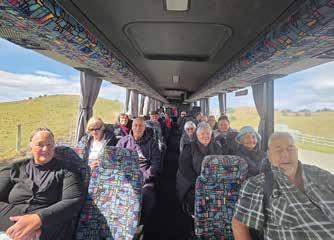
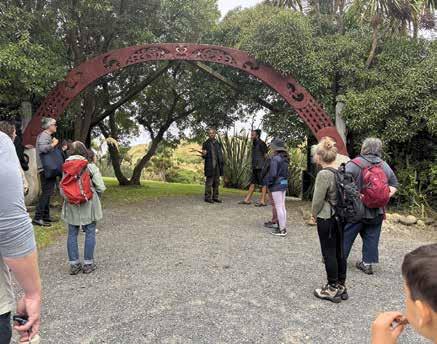
We welcomed a group of 60 people who were bused into our rohe to experience a hīkoi around the Huriawa Peninsula, learning about our history and the stories of our past. Manuhiri also enjoyed time on our waka ama, paddling down the Waikouaiti awa and gaining a deeper sense of place through being on the water.
Between tours, we offered Aroha Ellison’s famous tuaki fritters and provided an opportunity for visitors to pot up native seedlings to take home. Nikki Crossan brought along her taonga pūoro collection to showcase and guided participants in making their own instruments using clay.
It was a wonderful day to share our slice of paradise here in Karitāne and to celebrate Waitangi Day in a way that reflected our whenua, our stories and our manaaki.
Te Rūnanga o Ōtākou
Nei Mātou Mihi
Nei mātou mihi kia a koutou katoa i tēnei wā o Kahuru.
Chief Executive Officer: Nadia Wesley-Smith
Nadia Wesley Smith (Kāti Taoka, Kāi Te Pahi, Kāi Te Ruahikihiki) grew up on the kāik at Ōtākou, grounded in her Ōtākou taka and raised amongst generations of whānau.
After building a management career in tourism and hospitality across Australia and Scotland, and later living between Tāhuna and Te Ana au, Nadia returned home in 2021 with her partner and tamariki. She served as Rūnaka Manager from 2021 to November 2023, leading organisational development and key community initiatives.
Elected Rūnaka Chair for the 2023 to 2026 term, she most recently worked at the Dunedin City Council as Manager, Corporate Policy, and is a Ngāi Tahu representative on the Sustainable Destinations Piopiotahi Programme Board.
Now as CEO, Nadia returns to serve her hapū and whānau, bringing business analysis, governance, strategy and partnership experience to lead Te Rūnanga o Ōtākou into its next chapter.
Justin Hanning welcoming manuhiri onto the Huriawa Peninsula and Pā walk.
Achievements
Celebrating Success at Waka Ama Nationals 2026
Kia ora e te whānau,
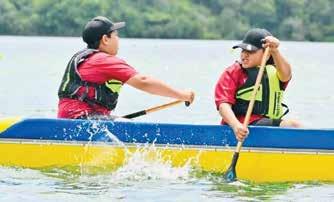
We are proud to share some incredible achievements from this year’s Waka Ama Nationals, held at Lake Karapiro from 11 to 14 January 2026.
J’Kobe and Jhene were both selected to compete at this prestigious event, representing their teams with dedication and determination.
J’Kobe competed in:
• W6 500m Sprint
• W6 500m Turns
Jhene competed in:
• W6 250m Sprint
• W12 250m Sprint
Both paddlers performed exceptionally well, progressing through to the semi finals, an outstanding achievement at a national level.
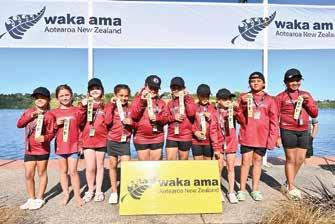
A special highlight was Jhene’s W12 team, who made history as the first Taitamāhine W12 team from Te Waipounamu to compete at the Waka Ama Nationals. Not only did they represent with pride, but they also brought home gold, finishing an incredible ten seconds ahead.
We are beyond proud of Jhene and her team, as well as J’Kobe and his team. Their hard work, commitment and passion truly shone on the national stage.
Gold for Katrina Pōtiki Bryant at the 2026 Masters Games
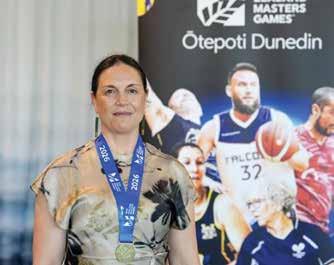
Our hapū celebrates Katrina Pōtiki Bryant following her gold medal win in the 50 plus springboard diving event at Moana Pool during the 2026 New Zealand Masters Games.
Alongside her role as a board member, Katrina continues to lead by example. Having previously represented New Zealand as a teenager, she has competed in three Masters Games, including the 2024 Dunedin event where she earned gold in both the 50 plus and 30 plus synchronised diving categories.
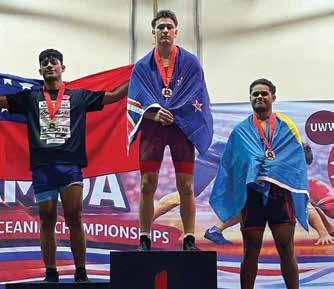
Two Gold Medals for Jacob Te Rua Paora Parkinson
We are proud to share that Jacob Te Rua Paora Parkinson has recently represented Aotearoa as part of the New Zealand Wrestling team.
Competing at the United World Wrestling Oceania Championships in Samoa, Jacob achieved an outstanding result, taking home gold in the under 20 74kg division.
To top off an incredible campaign, he also secured gold in the under 20 80kg beach wrestling competition. Awesome mahi, Jacob.
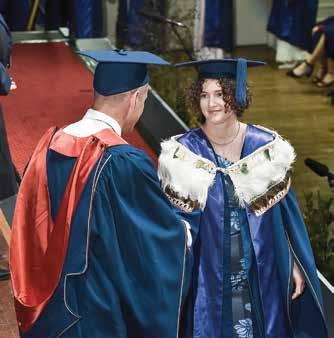
Sarah Langsbury: Bachelor of Nursing Degree at Otago Polytechnic
Ōtākou proudly acknowledges and congratulates Sarah Langsbury on completing her Bachelor of Nursing at Otago Polytechnic. We wish you all the best for a fulfilling and rewarding next chapter.
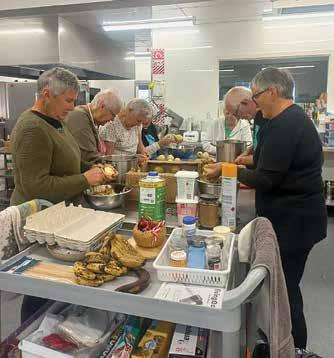
Kaumātua Turning Harvest into Kai
Following Taurite Tū, our kaumātua set up a stewing station using pears harvested from the marae. Around 30 litres of stewed pears were made and shared with whānau to take home and enjoy.
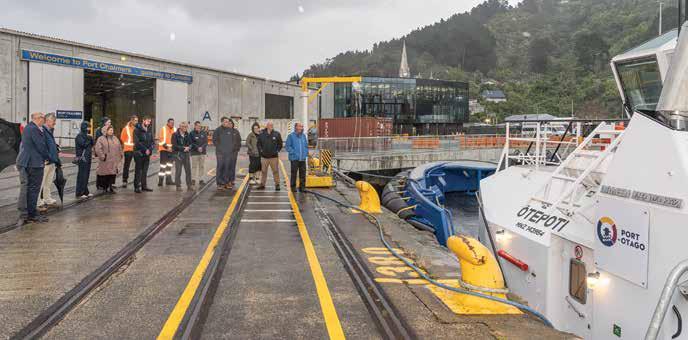
New Tugboat Ōtepoti Whakatau
Recently, whānau came together to mihi to the new tugboat, Ōtepoti. A taoka was also placed on the boat.
Whānau welcoming the new tugboat Ōtepoti.
Waitangi Heke Reflection: Rakatahi
From 2 to 7 February, my hapū and I went on a heke to Waitangi for Waitangi Day. Our main kaupapa was to represent Ngāi Tahu in Waitangi, and while we were there we also attended part of the National Chairs Forum to receive the mauri to bring back home with us.
I felt really honoured to be part of this. We had a pōwhiri onto Te Tii Marae, which was a really proud moment for me, standing with my hapū and representing our iwi. At the start I felt a bit nervous, but as the days went on I felt more comfortable and connected.
Being surrounded by whānau and seeing different iwi come together was really powerful. Receiving the mauri was one of the most meaningful parts for me. It made me think about the responsibility we carry to uphold our tikanga and look after our people.
Overall, my heke to Waitangi was a powerful and meaningful journey. It strengthened my connection to my hapū, my iwi and my identity. I feel grateful to have been part of it, and I will carry what I learned with me into the future.
Written by Mihi Wesley.
Whānau at Waitangi Wahine Moe; below: Poua Edward Ellison.
Powhiri.
Pānui for Uri of Tāre Te Kāhu
Tau ana te kāhu i ruka i tēnei whenua taurikura e.
At Labour Weekend 2026, uri of Tāre Te Kāhu, Pirihira Kuku, Teone Te Ururaki and Pani Wera (Weller) will be gathering at Ōtākou Marae for whakapapa and whanaungatanga.
We invite all uri of these tīpuna to register for this upcoming whānau wānanga. Please contact Nadia at weteretekaahu@gmail.com for more information.
Whānau and Hapū Pānui
Ōtākou hapū members are welcome to submit whānau and personal pānui for inclusion in Te Pānui Rūnaka or the Ōtākou e pānui.
Please send your pepi hou, kā mate or memorials, and achievements in sports, education or other activities that build on the traditions or customary practices of your whānau or hapū. Attach photos and include captions and names of those pictured.
Email submissions to office@tro.org.nz. Kā mihi.
Ōtākou Marae Website and Contact Information
Feel free to browse our Facebook page and the Ōtākou Rūnaka website. Information on registering as a hapū member or booking the marae for functions can be completed online.
Bookings are subject to any health and safety restrictions in place at the time. Tangi take precedence over all booked hui.
Kā mihi o te wā o Kahuru ki a koutou katoa. Nā, Kahana.
Murihiku Marae Community Day
Waihōpai Rūnaka successfully hosted the Murihiku Marae Community Day on 12 April 2026, building on the strong community interest and engagement from previous years. The kaupapa focused on creating a welcoming space where whānau and the wider Invercargill community could come together, connect, and enjoy a day grounded in Te Ao Māori.
The free event removed barriers to participation and encouraged people of all ages, cultures, and backgrounds to engage with the marae through activities such as weaving, poi making, games, kai, and entertainment. It provided an opportunity for many to experience the marae environment in a safe, inclusive, and positive way.
Delivered through a community led approach, the day was supported by volunteers including rangatahi, pakeke, and kaumātua, alongside local businesses and organisations. The event created a vibrant and engaging atmosphere while strengthening relationships across the community.
Waihōpai Rūnanga
Te Unua –Museum of Southland
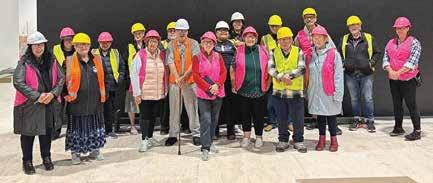
On 17 February, kaumātua from Waihōpai Rūnaka were invited to tour Te Unua – Museum of Southland.
Te Unua aims to be a space that celebrates storytelling, bringing together the voices and taoka that shape who we are and where we are going. Grounded in the stories, people, and places of Murihiku, the museum will be a place for connection, discovery, and community.
Mike Bain –Invercargill City Council
Mike Bain (Kāi Tahu, Kāti Māmoe and Waitaha) has been officially sworn in as the new mana whenua representative for Waihōpai on Invercargill City Council. As Pou Manawhenua, he will sit on the Water, Infrastructure and Growth, and Community and Regulatory committees, with speaking rights at full Council meetings.
This kaupapa is a collective effort, with dedicated kaimahi working to bring the vision to life and ensure our stories are shared for generations to come. Te Unua will honour the past, reflect the present, and inspire the future through immersive experiences.
The journey to bring Te Unua to life continues, and the community is encouraged to be part of it.
ICC – Social Wellbeing Wānanga
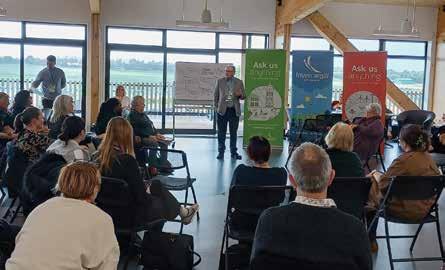
On Thursday 16 April, Invercargill City Council held a Social Wellbeing Wānanga in the wharekai. Attendees were invited to participate in an unconference, prioritising participant led discussion, shared learning, and collective problem solving over formal presentations. Council brought together organisations working in the social space, community members with lived experience, as well as elected members and staff.
The event was MC’d by Councillor Steve Broad, who challenged attendees to pitch topics or pātai to build the agenda for the session. Throughout the morning, participants had the opportunity to attend 10 different kōrero across three breakout sessions. The most important takeaway from the event was whanaungatanga, with many participants sharing that they had made important connections with like minded people at the event to further their own mahi in the community, as well as offering suggestions for what role Council can play to support the community.
The session was one of a series of workshops to feed into Council’s 2027–2037 Long Term Plan. Council is undertaking early engagement on the next LTP throughout this year and will formally consult on the plan in early 2027. You can stay up to date on the plan and get involved in the conversation at letstalk.icc.govt.nz
Ōraka-Aparima Rūnaka
Kiwi Chicks Released on Rona Island
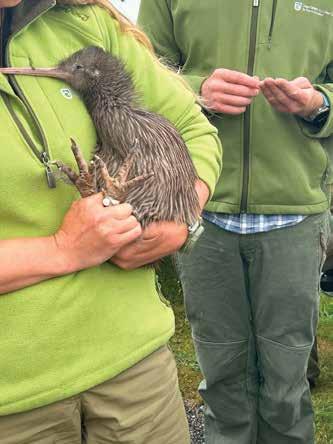
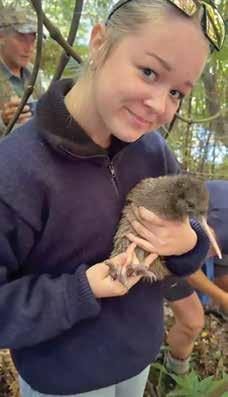
Michael Bates and his mokopuna, Kyra and Quinn, had a humbling experience relocating three kiwi chicks from Orokonui Ecosanctuary in Dunedin to pest free Rona Island on Lake Manapōuri in early March.
Rona Island has been used for many years as a crèche for Haast tokoeka chicks raised in captivity until they are large enough to be safely released back into their natural habitats..
Kiwi chick prior to release.
Left: Whānau gathered for the new marae wānaka.
Below left: Site visit to Taramea as part of the wānaka.
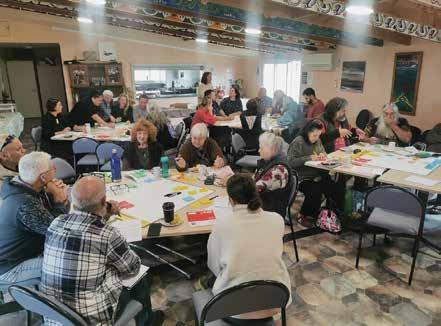
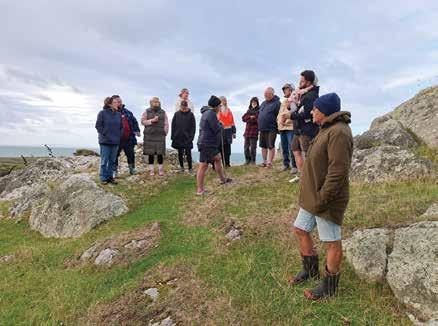
A wānaka bringing whānau together to help shape the next stages of our new marae project was held at Takutai o te Tītī on 14 and 15 March.
Facilitator Ailsa Cain guided the discussions, drawing on reflections from previous kōrero and helping the group explore themes important to our rūnaka identity, including a site visit to Taramea.
It was heartening to see so many whānau participate. The strong turnout and enthusiastic involvement have added real momentum to the project, signalling a shared commitment to bringing our new marae to life.
New Marae Wānaka
Whaikōrero and Karanga Wānaka
A Whaikōrero and Karanga Wānaka was held at Takutai o te Tītī on 21 and 22 March, with funding support from Te Mātāwai.
This wānaka was for whānau who are already participating in whaikōrero and karanga roles on our marae, as well as those who have expressed interest in stepping into these roles.
Our kaiako for the weekend were Komene Cassidy and Hana O’Regan, with Paulette Tamati Elliffe of Kotahi Mano Kāika providing additional support.
It was wonderful to see new faces and whānau eager to contribute to the paepae. We hope to offer more wānaka like this in the future as we continue to nurture these vital roles.
Stewart Bull: Senior New Zealander of the Year Finalist
Ōraka Aparima kāhui kaumātua Stewart Bull was named a finalist in the Ryman Healthcare Senior New Zealander of the Year, Te Mātāpuputu o te Tau, as part of the Kiwibank New Zealander of the Year Awards. Stewart and his whānau travelled to Auckland in March to attend the ceremony.
This recognition celebrates Stewart’s lifelong dedication to conservation and his unwavering commitment to protecting the natural taoka of Murihiku. A respected authority in kaitiakitanga, he has spent decades championing environmental guardianship, promoting sustainable practices and strengthening the cultural connections that guide how we care for our whenua.
Whānau participating in whaikōrero and karanga wānaka.
Stewart Bull at New Zealander of the Year awards.
Fish Futures Hīkoi to Vancouver
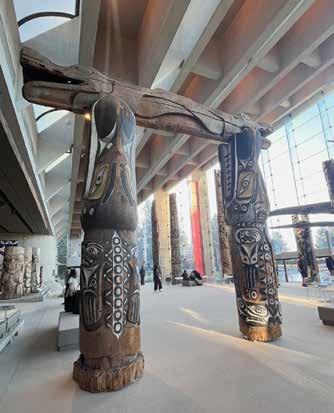
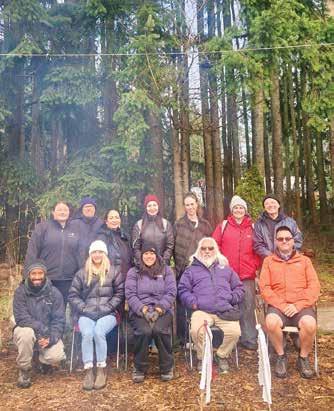
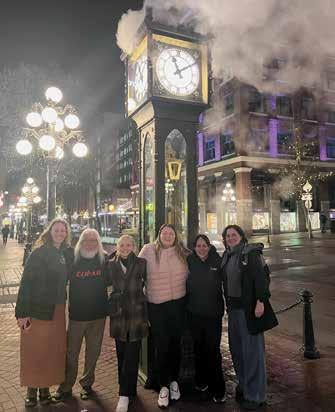
Murihiku representatives Dr Jane Kitson and Kasmira Peterson, both of Ōraka Aparima Rūnaka, joined whānau from Arowhenua and Te Arawa, alongside the Fish Futures programme team, on a ten day hīkoi to Vancouver in January.
The hīkoi aimed to deepen Indigenous to Indigenous connections and explore global relationships with freshwater species and introduced species. It began with a formal welcome onto Musqueam territory, where kōrero around identity, whakapapa and fisheries governance provided insight into the struggles and resilience of First Nations communities.
Across visits to the University of British Columbia, Simon Fraser University and community gatherings such as Musqueam 101, the rōpū shared kaupapa Māori perspectives while learning from local leaders, researchers and knowledge holders. Topics included salmon decline, environmental justice, Indigenous conservation models and the ongoing impacts of colonisation on waterways and species.
Highlights included kōrero with Indigenous scholars and poets, discussions on mahika kai analogues such as morihana and kiore, and guided experiences on the land and river with Tsleil Waututh hosts.
The hīkoi reinforced the shared values, challenges and aspirations of Indigenous peoples globally, and strengthened collective commitment to protecting freshwater species, revitalising mātauraka and shaping future focused, culturally grounded environmental relationships.
Fish Futures hīkoi participants in Vancouver.
Back row: Soweeta Fort-D’ath (Te Arawa), Nic Reo (Anishinaabe, Simon Fraser University), Alannah Young (Host at British Columbia University Indigenous Garden), Ashley Nicole Lewis (Quinault Nation, PhD candidate at UC Davis); Aisling Rayne (Fish Futures Social Scientist/Cawthron), Dr Jane Kitson (Fish Futures Co-Lead/Ōraka-Aparima), Eduardo Jovel (Host at British Columbia University Indigenous Garden).
Front row: Fagra (Host at British Columbia University Indigenous Garden), Keeley Grantham (Te Arawa), Kasmira Peterson (Ōraka-Aparima), Matua Karl Russell (Arowhenua), Marc Tadaki (Fish Futures Programme Co-Lead).
Awarua Rūnanga
Tēnā koutou katoa e te iwi, e ngā mana, e ngā reo, e ngā karangatanga maha o te motu.
Kā mihi mahana ki a koutou katoa mai i Awarua.
It is with humility and optimism that we share this contribution. Over recent months, Awarua has made important structural changes to strengthen governance, clarify roles and position us for the future. Change brings challenges, but also opportunity, to grow, lead and act in ways that are inclusive, transparent and grounded in our values.
Seeking Registered Owners
Māori Land Block
Section 2, Block VII, Alton Survey District
We hope the year has started positively for you and your whānau, and that Easter provided a time of rest and connection.
In this edition, we are pleased to share updates on the work and initiatives of Awarua that support and uplift our whānau and hapū. We look forward to continuing this journey with you throughout the year.
Nā mātou o Awarua, Me ngā mihi nui ki a koutou katoa.
Whānau contribution
Luca Pudda
Congratulations to Luca Pudda, he uri nō te whānau Spencer ki Mōtupōhue, who was recently named Head Boy of Verdon College for 2026.
Luca performed at Te Matatini in 2025 with his rōpū, Ngā Hau e Whā ki Murihiku. He has also graded at Pou Toru level in Mau Rākau at Takapau. Karawhiua mai.
Kei Awarua Rūnaka te whakamihi nui ki a koe mō tēnei whakatutukitanga. Haere whakamua e Luca.
The Trustees of the Ahu Whenua Trust, who administer this Māori land block, are seeking to make contact with all registered owners.
Once all, or most, owners have been identified, the Trustees will consider opportunities for the whenua to be utilised productively, in a manner that may generate income and benefits for the whānau, as was originally intended.
If you believe that you, your parents, or another whānau member may be an owner, please contact Barry Stewart at bj.stewart@xtra.co.nz
This is an opportunity to assist in reconnecting with and developing a significant Māori land block, which has remained idle for many decades, into a productive asset for our whānau and future generations.
Kā mihi nui, The Trustees Ahu Whenua Trust
He Tūtakitanga Whenua, He Tūtakitanga Ngākau (A meeting of lands, a meeting of hearts)
Recently, Awarua Rūnaka had the privilege of hosting a distinguished group of manuhiri from Rirratjingu Aboriginal Corporation in Gove, East Arnhem Land. The nineteen strong rōpū, which included representatives from Rio Tinto, was led by their Chairperson, Wanyubi Marika. Their pōwhiri at Te Rau Aroha Marae was both powerful and deeply moving for all in attendance.
During the karanga and whaikōrero, the depth of connection between our peoples was strongly felt. Rirratjingu Aboriginal Corporation spoke of the ties that bind us as Indigenous peoples, including our shared commitment to whenua, manaakitanga and the collective mamae and pōuri we carry for the state of our taiao. These kōrero resonated deeply, moving mana whenua to tears.
They also reflected on the unique connection to Bluff, acknowledging the millions of tonnes of their whenua, bauxite, that have been transported here to sustain the aluminium smelting industry at Tiwai Point. This connection serves as a reminder of the enduring economic and environmental links between our regions, despite the distance between us.
As part of the tikanga shared, the visiting rōpū conducted a traditional cleansing ceremony within the wharenui, Tahu Pōtiki. This was a sacred and beautiful moment, bringing together cultural practices from both peoples. The didgeridoo used during the ceremony was later gifted as a koha to Awarua Rūnaka.
This hui was a powerful expression of connection, strengthening relationships between Indigenous peoples across Te Moana nui a Kiwa and Australia. The shared
Catlins pest management
We are working with local rūnaka and mana whenua in the Otago Catlins to develop long term recommendations for mammalian pest control, including possums, rats, stoats and deer. Your input will help shape advice on where and how pest control could be focused in the future.
While every response will contribute meaningfully to the bigger picture, it is important to recognise that the results will reflect collective priorities rather than any single individual’s perspective. Even if an individual’s priorities are not dominant in the survey results, their input is still essential in shaping a comprehensive understanding of pest control in the Catlins. A summary of the survey results will be available to the public in mid 2026.
If you have any questions about the survey or experience any technical issues, please email vincent@catlinspestmanagement.co.nz and the team will be in touch the next working day.
Thank you for participating in this survey. Kā nui te mihi, Vincent and the team at Catlins Pest Management.
Whānau are invited to complete the Mana Whenua Questionnaire by following the link below: https://forms.office.com/r/feKFCXBWqX
kōrero, experiences and taonga exchanged will continue to bind us together into the future.
We also acknowledge our hau kāinga who organised and supported the visit, and who stood in support and showed true manaakitanga to the manuhiri throughout the pōwhiri.
Rirratjingu Aboriginal Corporation manuhiri and Awarua whānau at Te Rau Aroha Marae.
Rakatahi Pānui
Cheyenne Laugesen
He uri o Kāi Tahu, Ngāti Toa, Ngāti Rārua, Ngāti Apa ki te rā tō, Ngāti Tūmatakōkiri me Rangitāne hoki.
Ko Ngāti Kurī me Ngāi Tūāhuriri ōku hapū.
Ko Cheyenne Laugesen tōku ingoa. Nō Kaikōura ahau.
Kia ora, my name is Cheyenne Laugesen, and I grew up in Kaikōura. I am fortunate to hold whakapapa across Kāi Tahu with connections to Te Taumutu, Ōraka Aparima, Ngāi Tūāhuriri, Ōnuku, Ōtākou, and Wairewa through both my māmā and pāpā. My grandparents are Major and Angela Timms, and Kelly Laugesen.
I am currently studying at Te Whare Wānaka o Aoraki | Lincoln University, completing a Bachelor of Environmental Policy and Planning with Honours. I have six months remaining in my degree. Throughout my studies, I have had the privilege of completing a number of internships, including one with my whānaunga at Ngāti Kurī, which was especially meaningful.
This summer, I am interning as part of the Te Puāwaitanga Internship at the Bioscience Economy Institute – Maiangi Taiao. I am working alongside Dr Warren King in partnership with Ngāti Rārua on a project focused on land use optimisation for some of their whenua. My mahi has included undertaking a desktop analysis to understand the physical and environmental characteristics of the land, conducting soil sampling, and working with some fantastic scientists at BSI. Together, we produced a document outlining a range of potential land use options for the iwi to support decision making around future crop transitions.
Maddie Barber Kia ora,
Ko Hikiroaroa tōku maunga,
Ko Waikouaiti tōku awa,
Ko Takitimu tōku waka,
Ko Kāti Huirapa tōku hapū, Ko Puketeraki tōku marae, Ko Ngāi Tahu tōku iwi.
Ko Maddie Barber tōku ingoa.
I whakapapa Ngāi Tahu and Te Ātiawa on my māmā’s side, and Ngā Puhi on my pāpā’s side. My parents are Melissa Scarlett and Norman Barber. I was raised in Ōtautahi, Christchurch, and attended Villa Maria College before studying at the University of Canterbury, Te Whare Wānanga o Waitaha. There, I completed a Bachelor of Arts majoring in Māori and Indigenous Studies, and Political Science and International Relations. I recently completed my postgraduate degree, receiving First Class Honours in Political Science and International Relations.
This summer I was fortunate to be a Te Puāwaitanga intern with the Bioeconomy Science Institute, Maiangi Taiao in Lincoln. My mahi has focused on Māori data governance for taonga species. Taonga species encompass a broad range of flora and fauna that are culturally and spiritually significant to Māori. Taonga species encompass a range of native indigenous flora and fauna that are of significant value to Māori.
I have been working on creating guidelines for the physical process of storing genetic samples of taonga species. This includes DNA of living and dead species, tissue, microbiomes, and blood samples. Specifically, identifying important tikanga that needs to be included when physically handling taonga species. The purpose of this project is to enable Māori data governance and acknowledge Māori as the kaitiaki of taonga species. This will have an impact on data being accessible, findable, and ethically managed. The purpose of this guideline is to embed Māori sovereignty, whakapapa, and tikanga directly into physical handling and data systems.
Corbin Tūwairua
He uri tēnei nō Ngāi Tahu, Waitaha, Ngāti Māmoe, Ngāti Kahungunu, Ngāi Tūhoe hōki.
Ko Ngāi Tūāhuriri tōku hapū.
Ko Corbin Tūwairua tōku ingoa
I am entering my third year of study toward a Bachelor of Environmental Policy and Planning (Honours) at Te Whare Wānaka o Aoraki, Lincoln University. Over the summer, I have been undertaking an internship with Maiangi Taiao (Bioeconomy Science Institute) in conjunction with Tāwhaki through Te Puāwaitanga, a programme delivered by Maiangi Taiao. As part of this internship, participants attended a noho marae at Maungatautari Marae, where we presented our project work through posters and oral presentations to representatives from Maiangi Taiao, DairyNZ, Fonterra, and the local mana whenua.
My internship project focused on supporting Tāwhaki in developing more effective methods for monitoring biodiversity changes resulting from their whenua rejuvenation efforts on the unique landscape of Kaitorete.
The aim of my work was to provide recommendations for assessing progress in regenerating the ecological health of Kaitorete Spit, including monitoring changes in native and invasive plant species and improving surveillance of pest populations.
To do this, I reviewed and evaluated established field based monitoring techniques such as quadrats and transects while also exploring emerging remote sensing technologies that could offer scalable and time efficient solutions for large area environmental monitoring. My findings highlighted the potential of several monitoring approaches, including hyperspectral and satellite imagery, LiDAR technology, and a range of terrestrial survey methods. Together, these tools offer complementary perspectives on ecological change across Kaitorete. From this work, I have developed a proposed framework intended to support Tāwhaki in making informed decisions about monitoring their whenua rejuvenation project. The framework is designed to guide the selection of appropriate methods for tracking biodiversity, measuring environmental progress, and ensuring long term, effective stewardship of the whenua.
Waitutu Incorporation has 2.4 million in unclaimed dividends owing to their unfound shareholders.
Are you an unfound shareholder?
Does some of this belong to you or your whanau?
We are trying to locate the shareholders who are owed these dividends. To check if you, or someone you know, is on the list please go to our website: www.waitutu.co.nz
What to do next:
If someone you know is on the unfound shareholders list, and you know their address, please contact Oxana at Ashton Wheelans on 03 366 7154.
Ngā mihi nui, Sue McKenna
Waitutu Incorporation Committee of Management
Attention owners:
Maranuku A, Te Karoro A Glenomaru
Block IV Pt Sec 48
Block ID: 22359, Clutha District, Te Wai Pounamu
Interest is sought from owners of this block near Kaka Point to update the Trust and elect Trustees.
To register interest, email MaranukuA2026@gmail.com with your name, contact details, and ownership status. If you are representing an owner, please include their contact information too.
Contact information is particularly sought for:
• Te Aomarama Tekaumarua Kemara Whanau Trust
• Herbert Benjamin Clifford Whanau Trust
• William Charles Clifford Whanau Trust
A hui will be scheduled late June / early July 2026 at Kaka Point (in person only)
Whānau rōpū seeking descendants of John Edwin Palmer
Kia ora, e te whānau,
We are descendants of Ann Parera Holmes and William Palmer, and over recent years we have been working together to reconnect and unite our whānau.
Since August 2021, we have shared a monthly whānau newsletter—beginning with 76 subscribers and now currently 264 whānau members who receive regular updates and kōrero.
There is a growing interest in our shared whenua, and we have already completed several meaningful whānau visits. In 2022, a group of 20 travelled to our Rowallan Block, and in 2024, 31 whānau members visited our lands on Rakiura. These haerenga have been incredibly special, strengthening connections and deepening our sense of whanaungatanga.
Many of our whānau have also come together to attend Hui-ā-Iwi, Hui-ā-Tau, and Waitangi celebrations in recent years.
We meet monthly via Zoom and face-to-face in Christchurch, where we discuss matters important to our whānau. Our group represents almost all family lines descending from Ann and William, including:
• William Junior Palmer
• Harriet Bishop
• James Palmer
• George Palmer
• Beatrice Johnson
• Frederick Palme
We would be happy to hear from anyone who belongs to the above families. There were more than the family members above, but they had no issue.
However, we currently do not have representation from the John Edwin Palmer line, and one of our key goals is to ensure every family line is represented
John Edwin Palmer was married twice:
1. Margaret Menzies
2. Cora Emily Beatson
We understand he had one daughter with Margaret Menzies—Mary Anne (Annie) Flutey (née Palmer)
If you descend from any of the above family lines of William and Ann Palmer, we encourage you to get in touch and become part of our growing extended whānau network.
We are on a journey together, all at different ages and stages. By coming together, we can become strong as a whānau, to share our knowledge and pass on our dreams to future generations!
Ehara tāku toa I te toa takitahi, engari he toa takitini –My strength is not as an individual, but as a collective.
We look forward to reconnecting with you and growing stronger as whānau.
Limited
Closes
spots apply now!
1st Aug 2026
Ngāi Tahu Tourism Placement Programme
Grow your skills. Strengthen your whakapapa. Shape the future of tourism.
Ready to gain real‑world experience across some of Aotearoa’s most iconic tourism businesses?
The Ngāi Tahu Tourism Placement Programme offers hands‑on, full‑time placements across our iconic tourism businesses supporting you to build skills, confidence and future career pathways while representing your iwi with pride.
What to expect:
• Paid placement (Living Wage)
• Typically 12 weeks, minimum 32 hours per week
• Real work in busy, commercial tourism environments
• Ongoing support in a safe, values‑led workplace
• Placement across nine Ngāi Tahu Tourism businesses
Who can apply?
• Ngāi Tahu whānui (Year 13 or above)
• Ready for a full‑time, hands‑on workplace experience
• Keen to learn, grow and be part of a team
• Have an interest in a career in tourism and/or hospitality
Scan to learn more & apply
Rūnaka Directory
Te Taumutu Rūnanga
Ph: 03 371 2660
E: taumutu@ngaitahu.iwi.nz
Te Hapū o Ngāti Wheke
Ph: 03 328 9415
E: rapaki@ngaitahu.iwi.nz
Te Rūnanga o Koukourarata
Ph: 03 339 8308
E: koukourarata@ngaitahu.iwi.nz
Wairewa Rūnanga
Ph: 03 377 1513
E: wairewa@ngaitahu.iwi.nz
Ōnuku Rūnanga
Ph: 03 381 2082
E: onuku@ngaitahu.iwi.nz
Te Rūnanga o Makaawhio Ph: 03 755 7885 E: makaawhio.admin@ngaitahu.iwi.nz
For photographs and graphics please send to: Te Rūnanga o Ngāi Tahu PO Box 13 046, CHRISTCHURCH ISSN 1175 2483 (Online: ISSN 2357 2051) Opinions expressed in Te Pānui Rūnaka are those of the writers and not necessarily endorsed by Te Rūnanga o Ngāi Tahu.
This image was taken at a District Health Board consultation hui at Invercargill in December 2000. The people recorded are – Front row: Jane Davis (far left), Shona Fordyce (fifth from left).
Back row: Janice Donaldson (third from left), Marcia Te Au-Thompson (fourth from left), Dion Williams (sixth from left).
If you can help identify anyone in this image, please contact Robyn Walsh in the Ngāi Tahu Archive on 0800 Kai Tahu (0800 524 8248).