Client Handbook
"A journey of a thousand miles begins with a single step"

SANCTUARY 1
OASIS

Table of Contents
03
Treatment & Group Hours
07-15 Program Services
19-24
Our Expectations
Client responsibilities
Program Policies
04-06
Welcome to the Oasis
Our welcome message
Important Facts
Your team is your family
16-17
Settling In
What to work on
How to pick your projects
26-32
Health & Safety Information
2

Treatment & Group Hours
OP SUD
Monday-9:00am-11:00am
Tuesday- 9:00am-11:00am
Wednesday- 9:00am-11:00am
Thursday-9:00am- 10:30am
Friday- 9:00am-10:30am
PRP
Monday- 9:00am-5:00pm
Tuesday- 9:00am-5:00pm
Wednesday- 9:00am-5:00pm
Thursday-9:00am-5:00pm
Friday-9:00am-5:00pm
OMHC
Monday- 9:00am-5:00pm
Tuesday- 9:00am-5:00pm
Wednesday- 9:00am-5:00pm
Thursday-9:00am-5:00pm
Friday-9:00am-5:00pm
IOP SUD
Monday-12:00pm-3:00pm
Tuesday-12:00pm-3:00pm
Wednesday-12:00pm-3:00pm
Thursday-12:00pm-3:00pm
Friday- 12:00pm-3:00pm
PRP GROUPS
Adults 2nd Wednesday of the month at 6:30pm
Minors the 1st Saturday of the month from 10:00am-2:00pm
SUPPORTED EMPLOYMENT
Monday- 9:00am-5:00pm
Tuesday- 9:00am-5:00pm
Wednesday- 9:00am-5:00pm
Thursday-9:00am-5:00pm
Friday-9:00am-5:00pm
3

WELCOME
Oasis is another way to describe a paradise or a getaway or a retreat to be relieved of all your stressors
Sanctuary is another way to describe a sacred place where you are protected. A paradise of retreat where you are protected from your stressors.
Oasis Sanctuary is where we hope you find the space to focus on your recovery and well-being
Oasis is more than a behavioral health program, our model is based on engaging the entire community.
Our Community Mental Health Center Model:
Community Mental Health Centers (CMHC) provide services ranging from short-term counseling to intensive services for persons with serious, persistent mental illness, substance use disorders and co-occurring disorders The CMHC assists in finding appropriate mental health treatment based on the needs of the individual. CMHC services are offered on a sliding fee scale based on client income. We also provide a range of social service programs through case management and access to our extensive resource netowrk. Our Executive Director Lamar Blue understands that communities need to provide a continuum of care including:
Crisis Intervention
Assessment
Short Term Counseling
Referral Services
Long Term Outpatient Clinical Services
Linkage and community supports
After hours psychiatric consultation
Community outreach
Critical Incident Stress Debriefing
Community networking
Access to community integration activities such as employment and education Services are offered on a continuum, determined by your needs--from weekly, twice per month, monthly, and every three months
Our team is ready to answer any questions! 4
WELCOME
This Client Handbook contains important information about Oasis Behavioral Health Sanctuary (OBHS) and the programs/services that we provide. This handbook will also review the expectations of clients, client rights, the services we offer, and other important information.
If there are ever any questions or concerns, please feel free to ask a OBHS staff member. This handbook is designed to help you learn more about the services that are available to you and how we can help you.
Learn more about your rights, appointments, and payment options, as well as our values, policies, and mission Most importantly, find out how we will be there for you when you need it most Count on us to be confidential, supportive, and solution-oriented Thank you for choosing OBHS to support your journey to well-being
We have designed a simple process to orient our clients to the services we offer This orientation is conducted by a counselor, case manager, or other staff member and includes the following:
An explanation of programs and services offered by Oasis Behavioral Health hours of operation, and how to access emergency services after hours
An explanation of our fees, your financial obligations, and financial arrangements available to you
An explanation of what the program expects of you as a client including participating in your treatment, keeping appointments, and paying your portion of the cost of treatment
The name of the staff member who is responsible for coordinating your treatment and explaining your rights, responsibilities, and any applicable program rules
Our outcomes process, how you can give input about the quality of care you receive, and your satisfaction with programming and services
A copy of all applicable rules for programs in which you participate
An explanation of our Code of Ethics
A discussion of confidentiality and the limits of confidentiality
An explanation of the process for filing a complaint (grievance) or an appeal of any decision made by the organization.
A description of our method for developing treatment plans, including your role in that process
Familiarization with our offices, including emergency exits, fire suppression equipment, first aid equipment, and alternative shelter.
Our policies regarding the use of seclusion and restraint, smoking, the use of vapor cigarettes, the possession or use of illicit and licit substances on premises and weapons brought into our facility.
Education regarding advance directives.
Identification of the purpose and process of the assessment.
Information regarding transition/discharge criteria and the discharge progress. How we collect and use your input to improve services.
Our team is ready to answer any questions! 5
WELCOME
Recovery is no longer a term used only for alcohol and drug treatment It is also a term used to address recovery from a mental illness. Recovery is a self-directed process of change. It includes a return to one’s strengths, values and beliefs and the development of a new purpose and meaning in your life, beyond mental illness and substance abuse issues. Recovery is a journey of hope
You are the most important member of the treatment team in recovery-oriented care. Through your participation you will demonstrate and share your focus on personal recovery. The treatment team will assist you in managing your symptoms, developing strategies to resolve or cope with your problems and learning new skills and approaches to reach the life goals you decide are important for your recovery.
Oasis Behavioral Health Sanctuary provides mental health and substance abuse services to Maryland residents from Baltimore City, County, Anne Arundel County, Harford County and Howard County regardless of age, gender, sexual orientation, social preferences, cultural orientation, race, color, physical status/disability, spiritual beliefs/religion, ability to pay for services, nation of origin, psychological characteristics, or involvement in the adult or juvenile criminal justice system. We currently only provide Psychiatric Rehabilitation Services. It is us to provide services to clients in a way that protects their rights and respects their dignity.
You are the most important member of the treatment team in recovery-oriented care. Through your participation you will demonstrate and share your focus on personal recovery. The treatment team will assist you in managing your symptoms, developing strategies to resolve or cope with your problems and learning new skills and approaches to reach the life goals you decide are important for your recovery.
Our team is ready to answer any questions! 6
GETTING STARTED
ADMISSIONS:
As part of the admissions process, we want to inform you about:
Your responsibility to provide us with information as a condition of your admission into the program and your ongoing treatment.
Reasonable treatment choices, discussed at the time when you consented for treatment.
Risks, benefits, and side effects related to your treatment, including the possible results of not receiving care, treatment, and services.
EXCLUSION CRITERIA:
All persons applying for admission will be individually assessed by the intake coordinator upon admission If during the assessment process, the staff member determines that a higher level of care is recommended, you will be referred to an appropriate service, agency, or provider, with the option to re-apply to the program when treatment is appropriate
INTAKE & ORIENTATION:
Clerical and clinical staff will gather information from you regarding your concerns, health information and billing information You will also receive an orientation on our services and premises as part of this handbook A licensed clinician or certified staff member will ask you and will ask family members and other supportive people (with your permission) about your concerns, health information and will help you choose the services to best meet your needs You will be asked about your strengths, needs, abilities and preferences for treatment If staff identify any potential risks that may be a threat to you, we will provide additional information or services based on the identified risk This could include calling local crisis services or conducting an emergency services assessment
TREATMENT/REHAB PLANS:
Your Treatment Plan is where your goals, strengths and preferences are documented This document helps you and your treatment team stay focused on the important things for your recovery
We use the SNAP process to develop your treatment goals
S – Strengths N– Needs A – Abilities P – Preferences
The SNAP process helps us to align your treatment to your Strengths, Needs, Abilities and Preferences throughout the treatment process
Our team is ready to answer any questions! 7
SUD TREATMENT
SUD Treatment includes a range of interventions. The outpatient setting allows the program to address a variety of needs, including, but not limited to, situational stressors, family relations, interpersonal relationships, mental health issues, life span issues, psychiatric illnesses, and substance use disorders and other addictive behaviors. Individuals assessed through the program are placed in either level of care based on the ASAM Criteria.
Outpatient clients receive up to 9 hours of treatment per week. IOP clients receive up to 9-19 hours of clinical services per week.
Group Counseling:
Group counseling means assisting two or more individuals in achieving treatment objectives. This occurs through the exploration of alcohol and other drug problems or addiction and Their ramifications. Group counseling involves an examination of attitudes and feelings, consideration of alternative solutions and decision making, and use of harm reduction strategies
Individual Counseling:
Individual counseling involves a face-to-face encounter between a client and a counselor Individual counseling focuses on assisting an individual to achieve treatment objectives through the exploration of alcohol and other drug problems or addiction and their ramifications Client education about alcohol and other drug addiction is included as a routine component of the group counseling services provided
Problem Gambling Treatment:
Gambling has been described as one of the most deniable and hidden addictions Oasis understands the insidious nature of the disease and has trained professional counselors who understand the pain it causes Symptoms of this illness are financial ruin, physical problems, mental losses, and emotional devastation Various services for problem gamblers are available ranging from one hour per month to 30 plus hours a week depending on need. Clients attending the Gambling Treatment Program will attend all basic components of the program, as well as a number of specialized sessions specific to gambling.
Opioid Overdose Prevention and Education:
As part of our Early Intervention Program Oasis's Opioid Overdose Prevention and Education Program as part of speaks with young people and adults to educate people on the effects of opioids on the body, how overdoses occur, and how to reverse an opioid overdose by using naloxone. After they are trained, they will also receive a naloxone kit.
Our team is ready to answer any questions! 8
PSYCHIATRIC REHABILITATION
A key service under our PRP program is skill building. This involves both you and your assigned counselor assessing your skills and providing chances for you to practice those skills in a safe environment During that time your assigned counselor will:
Role play with you as you learn new skills
Provide feedback.
Assist with connecting
Mental Health Recovery Supports
Social supports to improve daily functioning/manage symptoms.
Daily living skills and social skills training group to assist client with reduction of symptoms. Skill groups to develop coping skills.
Resource Coordination to navigate entitlement access and other community resources
Psychoeducation on a variety of topics including education on diagnosis and education for client support network. Supportive Education Services.
Hands-on modeling for development of activity of daily living skills.
Vocational supports.
Crisis intervention services within the scope of our practice license
Assistance in improving, maintaining, or restoring functional skills in social
Training on personal hygiene skills
Training on meal preparation skills
Coaching and modeling support for safe community integration
Case Management
Case management services are provided by your counselor or a case manager and are designed to offer assist you with identifying and accessing community resources. Case management can help with referrals and linkages to community resources, such as medical care, mental health treatment and employment services Case managers provide one-on-one contact and offer support as you rebuild your life during treatment
Our team is ready to answer any questions! 9
SKILLS GROUPS OFFERED
Groups/Classes rotate quarterly. This list includes examples of groups that may be offered. If you are interested in a group listed here, but it is not currently offered, please let us know.
Catch It, Check It, Change It:
This is a Cognitive Behavioral Therapy group which teaches you awareness of automatic thoughts and how they impact feelings and behaviors Group members learn to catch their thoughts, check them for accuracy and change them as needed
Anger Management:
Provides a combination of cognitive behavioral and psychoeducation therapy in a group setting to assist you in learning anger management skills to decrease levels of irritability and increase respectful communication while still getting your needs met.
Social Smarts:
Social skills training provides opportunities to practice and improve everyday social skills. Because it is so easy to feel awkward at times in social situations, this class can be helpful for nearly everyone to improve their social skills and communication.
Getting Off the Emotional Roller Coaster:
Emotional intensity can cause us distress and contributes to us losing control of our lives This group teaches skills for recognizing our emotions, accepting our emotions, and managing our emotions
Get Motivated:
This group is designed to help you pinpoint areas of your life where you need to be more productive, ask your questions to help you figure out WHY you put certain tasks off, and most importantly, help you choose the right approach to getting the ball rolling
Healthy Habits:
This group addresses various topics such as money management and sleep hygiene assist with developing or enhancing life skills that will help you achieve your recovery goal
Illness Management & Recovery:
The focus of this group is to learn about mental illnesses and strategies for treatment, decrease symptoms, reduce relapses and re-hospitalizations and make progress toward recovery goals
Our team is ready to answer any questions! 10
REFERRAL& COORDINATION OF CARE
If you could benefit from a treatment we cannot provide, we will help provide you with referrals to any treatment you may need. You have a right to ask your clinician about such other treatments, their risks, and their benefits.
Based on what your clinician learns about you, he/she may recommend a medical exam or psychiatric evaluation If your clinician does this, he/she will fully discuss his/her reasons with you, so that you can decide what is best.
If you are treated by another professional, we will coordinate our services with them and with your own medical doctor after obtaining a Release of Information If you need a higher level of care our counselors will work with you to find the appropriate level of treatment
Our staff are well trained in the area of psychosocial support and have many years of experience in the field and/or a combination of personal and professional experience which enables them to provide a high quality of service to clients.
APPLYING FOR BENEFITS
As part of the services, we will assist decide whether you should apply for benefits/entitlements. Benefits can provide needed financial support and access to medical care, but they can be psychologically discouraging and can reduce interest in pursuing educational and vocational goals Clients and family members should consider both the benefits and risks before taking this step
We believe that all individuals with behavioral health issues can recover. An important aspect of recovery involves not only getting better, but also achieving a full and satisfying life. Education and employment can accelerate your recovery. Education creates more opportunities and studies show that employment increases income, self-esteem, and quality of life and reduces symptoms
Our team is ready to answer any questions! 11
Connection to Resources
During the first weeks after admission your assigned counselor will assess your needs. You should ensure that you are communicating what services are needed and what you want to address first.

Immediate/Crisis Needs
Accommodations
Security
Clothing
Housing
Medical
Legal
Financial/Income support
Transportation
Entitlements:
SSDI
SSI
Active Medicaid
TANF
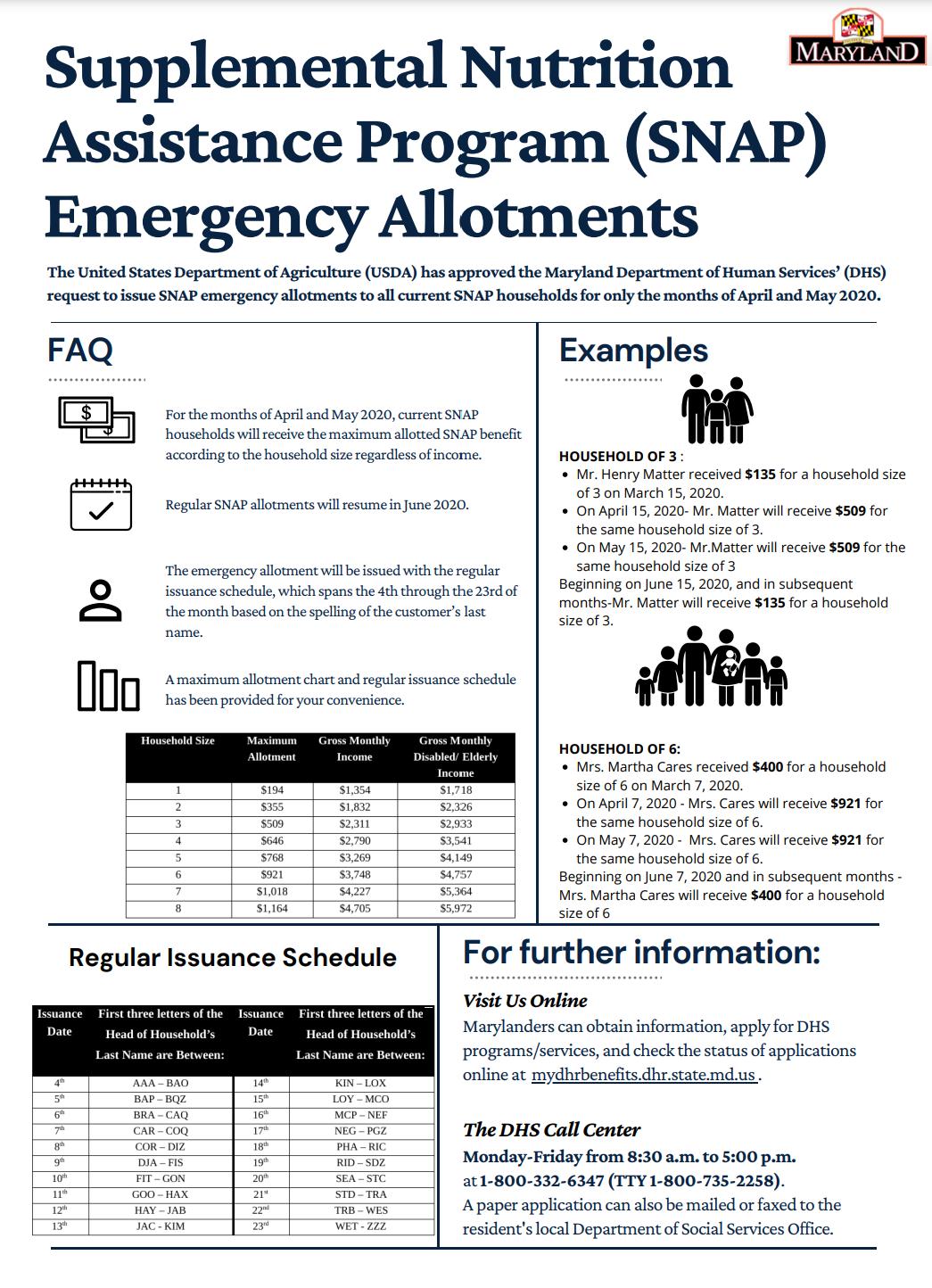
SNAP/Food stamps.
Energy Assistance
FAFSA Assistance
Living Skills:
Parenting skills
Childcare issues
Familial issues
Budget/income
Employment Skills
Activities of daily living Support groups Our team
answer any
12
is ready to
questions!
Supported Employment

Oasis Behavioral Health has a dynamic supported employment program that can help you reach your employment goals. Your employment experience is based upon your interests and abilities Our center can assist you with:
On the job training and work experience
Finding out what your strengths and weaknesses are.
Learning how to be a good and valued employee
Finding a job
Earning a paycheck
Understanding how employment may impact your current benefits package
Becoming independent
Qualifying for Services:
To access our services for Individual Supported Employment, Group Supported Employment or Community Access, clients must be eligible for funding support through the Division of Rehabilitation (DORS) or the Developmental Disability Administration (DDA). If a person does not qualify for funding from either source, private pay options may be available
ELIGIBILITY
A person who is receiving funding through DORS AND the Behavioral Health Administration (BHA) MUST meet ALL of the following criteria to be eligible for Individual Supported Employment, Group Supported Employment or Community Access:
Must be 21 years of age or older (Unless a School Referral)
Has been diagnosed with a physical or mental disability before the age of 18
Has gone through the DORS process and has been deemed ineligible due to long term support being needed
Cannot get or keep employment without help.
Be independently self-ambulatory (which can include canes, walkers and wheel chairs).
Possess self-help skills; i.e. independently transport themselves to the restroom (unless qualified for Personal Attendant Services).
Provide their own medication needs.
Be provided with transportation by either a privately contracted agency, public transportation, by their family, or by their own means.
Show appropriate documentation to verify eligibility to be employed (i e valid social security number, valid picture identification, etc )
Be evaluated by Oasis Behavioral Health Sanctuary rehabilitation staff for admission to the appropriate services program
Be an active participant in the process
Our team is ready to answer any questions! 13
Supported Employment
Oasis's Supported Employment Program is there to assist cand provide vocational services for individuals who may not be able to work competitively in the community, or who may need assistance in obtaining and maintaining competitive employment
Supported Employment
Individuals work in community-based employment settings in small groups and each individual earns an hourly wage based on his or her productivity Staff members provide training, job development and the supervision necessary to create a constructive work environment for each individual.
Individual Employment
This program offers clients a variety of services and support throughout the entire employment process including resume building, interview skill building, job development, training, etc Our staff members work diligently to offer job placements in the community and provide personalized support for each individual
Community Access:
Participants enrolled in this program will receive services focused on activities and goals related to community engagement and integration.
Career Exploration Workshop / Employment
Preparation:
This is a preparation course taught by an Oasis Job Developer. The workshop provides life-long job skills training. Individuals referred are taught how to determine the right type of job match, how to complete an application, and will learn important interview skills
Each person will also be assisted in developing a resume The dress for this workshop is business casual and punctuality is crucial. You may learn:
Interview Skills
Help Making a Resume
Presentation and Hygiene
Expectations at Work
Social Skills at Work
Clients enrolled in our supported employment program will recieve a separate handbook
Our team is ready to answer any questions! 14
Outpatient Mental Health
Psychiatry:
Physicians/Nurse Practitioners specializing in the treatment and prevention of mental health conditions are available for consultation and medication management Taking all medications as prescribed is important for your health and success. Make sure you keep all appointments so refills that stay current.
Clients who have opted for medication management services will meet with our Psychiatric Nurse Practitioner. The role of the Psychiatric Nurse Practitioner (PMHNP) is to assess, diagnose and treat mental health needs of clients.
PMHNPs provide psychotherapy and prescribe medications for clients who have mental health disorders or substance use issues PMHNPs may also provide physical and psychosocial assessments and treatment effectiveness evaluations.
Our providers only:
Prescribe and Monitor Medication
Upon your request and/or the clinical recommendation of your Primary Counselor, our Advanced Practice Nurses or psychiatrist will complete an initial assessment reviewing your history, medical and mental health conditions.
When there is a recommendation for psychotropic medication, the NP will work with you to prescribe medication to address your mental health symptoms
The NP will follow you throughout treatment for reevaluation and/or maintenance of psychotropic medications and evaluations occur monthly, every sixty days and/or every ninety days. The NP will meet with you during psychiatric visits to evaluate for medication or address any concerns
The NP will review any medications you have been taking. It is important to alert the NPnof any prescribed medications, supplements or over the counter medications you have been taking, any allergies to foods, medications or the environment (bee stings) you are aware of and any dietary restrictions you have
Our team is ready to answer any questions! 15
Medication Management
You may be asked to provide lab specimens that include blood work, tuberculosis screening, urine drug screen and a urinalysis to establish a baseline for your health status and rule out any conditions or diseases that may require additional treatment.
Additional testing through blood work or other means may be recommended, especially if you are taking any medication that requires ongoing monitoring or you have unresolved medical symptoms.
The NP will discuss the findings of the examination and any treatment recommendations with you. The examination consists of a review of your medical history, any information provided from other services or practitioners, your substance use history, mental health history and the effectiveness of your medications
Common medications that you should not take while in treatment and if working toward recovery: All cough medicine with codeine, alcohol or Dextromethorphan (DXM).
All Narcotic Analgesics painkillers including the following:
Percocet or Percodan (Oxycodone)
Tylenol with Codeine
Vicodin (APAP –Hydrocodone)
All Benzodiazepines (anti-anxiety drugs) including the following:
Ativan (Lorazepam)
Librium (Chlordiazepoxide)
Valium (Diazepam)
Xanax (Alprazolam)
Serax (Oxazepam)
Allergy/Cold Medication containing the following:
Pseudoephedrine
Phenylpropanolamine
Diphenhydramine
Dextromethorphan
Doxylamine (Unisom)
Examples include the following: Actifed, Benadryl, Benylin, Comtrex, Contac, Coricidin D, DayQuil, Dimetapp, Neo-Synephrine, NyQuil, Robitussin Sinus, Sine-Off, Sinutab, Sudafed, Tylenol Cold, Vicks 44D, Vicks 44M, Zyrtec-D.
Our team is ready to answer any questions! 16
MEDICATION AGREEMENTS
Benzodiazepine Policy
Benzodiazepines (medications such as Xanax, Ativan, and Klonopin) will rarely be prescribed. When they are prescribed, it will be done on limia ted basis and in restricted amounts. This reflects the current understanding that benzodiazepines can worsen anxiety and contribute to cognitive decline over the long term. In addition, benzodiazepines carry the risk of tolerance, dependence and abuse and are potentially lethal in overdoses, particularly when mixed with alcohol and/or opioid pain medications.
Stimulant Policy
Stimulant medications are a first line treatment for the symptoms of ADHD, however, they carry the risk of tolerance, dependence and abuse For this reason, their use is tightly regulated In order to continue to be able to prescribe these medications to our clients, we require a stimulant agreement to be fully discussed and agreed upon by you and the Nurse Practitioner
Refill Policy
Our policy is to write a prescription to cover your medication needs until your next appointment If you keep scheduled appointments or reschedule promptly, there should be no need for additional refills If an exception occurs, please call the office to request a refill at least 5 working days before you will run out of medication Refills will be considered on a case by case basis Please note, we do not process refill requests after hours, on weekends or on holidays Dose changes will NOT be made outside of scheduled appointments
Please OPT OUT of automatic refill requests if offered this service by your pharmacy. We will not respond to pharmacy initiated refill requests due to the significant administrative burden this entails.
Please remember that it is your responsibility to schedule a follow-up appointment before you run out of medication and within the return time frame determined in your treatment plan. Controlled substances cannot be refilled by phone and will only be written during office visits if appropriate. There will be no early refills for controlled substances regardless for the reason for the request.
It is important that we maintain contact with our clients to assure best practice, safety, and meet treatment goals. Oasis requires individuals who are receiving medication services to have routine in-office checks with their provider at least every three months
Our team is ready to answer any questions! 17
QUESTIONS TO ASK ABOUT MEDICATION
Questions You May Want to Ask About Your Medication:
If you are given medication by your doctor or appropriate medical professional you will need to take it according to his/her instructions Listed below are some questions you may want to ask of the doctor or nurse so that you can have the information you need to make it as effective as possible
Why do I have to take this medicine?
What will happen if I do not take it?
Can I be treated without medication?
Before I begin taking any medicine or even if I am not taking medicine, can I have a second opinion?
What is the name of the medicine prescribed for me?
How is it supposed to make me feel? What are the side effects of the medicine? Will it affect any other medical or physical problems I have?
Are there side effects I should report immediately?
Is it similar to or different from the medicine I was taking before this?
How much should I take? How many times a day? What time of day? Before or after meals?
What would happen if I took too much?
Is it all right if I drink alcohol or beer when taking this medicine? Is there any food or other drink I should avoid?
Are there other medicines I should avoid when taking this medicine?
Will this medicine affect my interest and/or my ability to participate in sex?
For women in child bearing years: Will this affect my menstrual periods? Should I take birth control pills while taking this medicine? If I get pregnant while taking this medicine, could it have any effect on my baby? Should I take it while nursing?
Should I drive or operate machinery while taking this medicine?
Is there anything else I should know about this medicine?
How often will you review with me what the medicine is doing?
How long will I need to take this medicine? .How soon will I need to take this medicine?
If I take this medicine for a long time, what can it do to me?
What is tardive dyskinesia (TD)? Can I get TD from taking this medicine? Can something be done to avoid this?
Our team is ready to answer any questions! 18
IMPORTANT PROGRAM POLICIES
Refusal of Treatment:
Although treatment is voluntary, you are expected to attend and participate in all treatment programming. You will be provided with information about the likely impact of accepting or declining recommended treatment, or medications based on your individual circumstances.
Reasons for Discharge:
Staff will take the necessary action to maintain a safe and therapeutic environment for all clients Most often, these actions involve making adjustments to treatment plans, privileges, and/or relapse prevention plans.
You may be discharged from the program for the following reasons:
You have completed treatment successfully.
Physical, verbal assaults or threats to clients or staff that interfere with the safety of others.
You need a higher or lower level of care due to inability to meet or exceed program requirements.
Possession of weapon or firearm
Violating privacy or confidentiality of other client
Lack of progress towards treatment goals or objectives
Alcohol/Drug Use that interferes with other client’s treatment (When Substance Abuse Issues should be a priority for treatment)
Sharing, selling, or providing alcohol or drugs to other clients.
Possessing or using alcohol or drugs on property.
You no longer have active insurance coverage.
You are expected to meet with staff as needed to practice skills needed and to discuss treatment goals and needs This will include both group services and individual skill building meetings
Clients are expected to meet with staff as needed to check in and discuss treatment goals and needs This is to be completed in between group programming and during free time
Urinalysis (UA) / Breathalyzer:
We do not conduct urinalysis We do however provide community referrals to substance abuse programs in the Baltimore metropolitan area. If you are mandated for treatment you will be required to sign a Release of Information Form to allow the legal entity to have access to your attendance information.
Our team is ready to answer any questions! 19
IMPORTANT PROGRAM POLICIES
Overall Safety:
The safety of our clients, families, communities, and staff are very important We ask that our clients/families make our staff aware of any dangerous or potentially dangers situations in your home or neighborhood We also ask that any weapons be unloaded and locked up during home visits We ask that no one participating in sessions or in the presence of the session be under the influence of illegal drugs and alcohol. Our staff are mandated by law to report any behaviors that abusive or neglectful to local authorities. We are also mandated to warn others if they are considered to be at risk for any serious harm.
Tobacco Use:
Cigarette smoking INLCUDING the use of vaping devices, spit tobacco and other forms of nicotine E Rnot allowed anywhere in the Facility Tobacco products are not permitted inside the building and may be confiscated There is a designated area for clients to smoke You must clean up all cigarette products You must smoke 25ft away from the building.
Parking:
You may park your vehicle in the designated areas Please pay attention to signs instructing you of private parking spaces Parking in the neighboring business parking lot is not allowed, and you will be solely responsible for any violations or consequences for trespassing You may also request transportation services If you opt for transportation services, you must abide by conduct rules
Drug and Alcohol Policy:
Possession and/or use of alcohol or other drugs (including over-the-counter medications and non-alcoholic beverages such as near beer) or drug paraphernalia is not permitted on grounds.
If you appear under the influence of drugs and/or alcohol, a conversation with your provider will occur Upon the discretion of your provider and/or the clinical team, you may be asked to leave the facility You will be expected to find transportation and will not be allowed to drive yourself while under the influence If you choose to drive your vehicle while under the influence, we will notify law enforcement.
Our team is ready to answer any questions! 20
IMPORTANT PROGRAM POLICIES
Visitors:
Companions, drivers, friends, etc. are not allowed to stay on the property during your program services As a consideration of all clients’ right to confidentiality, your companions are expected to leave the property and return at the time of your completion of each session or service unless you are a minor.
Appointments:
Your appointment time has been reserved specifically for you, and it is important that you keep all scheduled appointments. If you become ill or find you cannot come to your appointment, please call the office. Monday-Friday, between 8 a.m. and 5 p.m. as far in advance as possible to cancel or reschedule your appointment. It is very important to call us at least 24 hours in advance of your scheduled appointment. In an effort to maintain the medical providers’ schedules to the best of our ability
The program will be closed in observance of the following holidays:
New Years Day
Juneteenth
Memorial Day
4th of July
Labor Day
Thanksgiving Day
Christmas Eve
Christmas Day
If you must cancel due to illness or emergency, please call your counselor before you are scheduled to meet with staff or counselor. Please allow extra time to check-in before the group. Any employee that meets with you in the community will call to schedule with you if you are over 18 or your parents if you are a minor. Groups and other services should begin and end on time.
Our team is ready to answer any questions! 21
IMPORTANT PROGRAM POLICIES
Child Care
If you have children, you will be expected to find appropriate childcare during your scheduled group and individual sessions Typically, children are not allowed in the group setting If you are unable to find childcare, please discuss with your primary counselor about an appropriate plan.
Boundaries with other Group Members
Clients are encouraged to develop lasting and healthy connections with other members of the group in order to grow their sober support network. In order to keep a strong sober support network, clients are encouraged to practice good boundaries and keep the nature of the relationship with one another as sober support. Therefore, clients are encouraged not to engage in romantic or sexual relationships with other group members.
Group members who are in relationships (familial, employment, romantic, sexual) should disclose the nature of their relationship to the group facilitator, and the facilitator will schedule both clients into separate groups and different counselors as available
Photography
Any photographs, videotapes, digital images, or motion pictures of clients will be acquired through a release form for its use Use will be limited to the purpose of enhancing therapy or staff supervision as a means of communication within the program. Upon intake, admission staff will take your photo to include in your medical record. There are also cameras throughout the facility and within groups rooms.
Clients are not allowed to take photos of each other for any reason and are not given permission to post photos of Oasis Behavioral Health Sanctuary, LLC or other clients on social media
Pets
Service pets are allowed on program property You must provide information to your counselor and understand that you are solely responsible for the pet at all time
Our team is ready to answer any questions! 22
IMPORTANT PROGRAM POLICIES
Confidentiality:
Oasis Behavioral Health Sanctuary, LLC adheres with all applicable confidentiality regulations, including Federal T H 42, Chapter 1, Part 2, “Confidentiality of Alcohol and Drug Abuse Patient Records” and any applicable sections of M.S. 15-1642, “Data Privacy Act”.
You have a right by law to privacy and anonymity during and after your time in the program We honor this right by not informing anyone before, during or after your program completion at Oasis Behavioral Health Sanctuary, LLC without your written consent, or exceptions permitted by law.
We also expect you to also honor the rights of your peers in the program to remain anonymous This includes not communicating in any way “client identifying information” to people outside Oasis Behavioral Health Sanctuary, LLC Please do not disclose anything that is said in group to anyone who is not in your group.
The community is small, you may see other clients or staff out in the community Be mindful of confidentiality in the community and be aware that staff will not approach you unless you acknowledge them
All staff are mandated reporters and by law are required to report potential of abuse of vulnerable adults and child abuse. If a mandated report is made, staff will inform you that a report was made.
Family Participation:
All clients are encouraged to request family participation in their treatment This is not mandatory, but has been found to be quite helpful for certain concerns It is especially important for parents to be involved in their children’s treatment
Least Restrictive Environment of Care:
It is our policy to provide services in the least restrictive environment of care. This means that we will work with you at assuring that the services you need are appropriate to your needs, and that we will work with you at transitioning from one program to another within our agency, or to another community program, as needed (example: from IOP to individual outpatient care ) This transition plan will be completed as a part of your treatment planning
Our team is ready to answer any questions! 23
IMPORTANT PROGRAM POLICIES
Overall Safety:
The safety of our clients, families, communities, and staff are very important. We ask that our clients/families make our staff aware of any dangerous or potentially dangers situations in your home or neighborhood. We also ask that any weapons be unloaded and locked up during home visits. We ask that no one participating in sessions or in the presence of the session be under the influence of illegal drugs and alcohol Our staff are mandated by law to report any behaviors that abusive or neglectful to local authorities We are also mandated to warn others if they are considered to be at risk for any serious harm
Tobacco Use:
Cigarette smoking INLCUDING the use of vaping devices, spit tobacco and other forms of nicotine E Rnot allowed anywhere in the Facility. Tobacco products are not permitted inside the building and may be confiscated There is a designated area for clients to smoke You must clean up all cigarette products You must smoke 25ft away from the building
Parking:
You may park your vehicle in the designated areas. Please pay attention to signs instructing you of private parking spaces. Parking in the neighboring business parking lot is not allowed, and you will be solely responsible for any violations or consequences for trespassing. You may also request transportation services. If you opt for transportation services, you must abide by conduct rules.
Drug and Alcohol Policy:
Possession and/or use of alcohol or other drugs (including over-the-counter medications and non-alcoholic beverages such as near beer) or drug paraphernalia is not permitted on grounds.
If you appear under the influence of drugs and/or alcohol, a conversation with your provider will occur. Upon the discretion of your provider and/or the clinical team, you may be asked to leave the facility. You will be expected to find transportation and will not be allowed to drive yourself while under the influence. If you choose to drive your vehicle while under the influence, we will notify law enforcement
Our team is ready to answer any questions! 24
HEALTH & SAFETY
Health & Safety Information
A healthy and safe environment is promoted in all facilities and places where services are provided on behalf of Oasis Behavioral Health Sanctuary, LLC. Appropriate housekeeping, use of protective equipment, safe work practices, and regular inspections are used to protect the health and well-being of persons served, visitors, and staff.
Staff are trained to provide first aid or basic life support, respond to emergency situations, and to take appropriate actions necessary to promote safety. Our staff will review your physical health needs and will make referrals to community resources when indicated.
Be sure to let staff know if you have any symptoms of illness such as cough, rash, fever, night sweats, or other symptoms or if you need to request accommodations while receiving services. Proper hand washing and covering the mouth when sneezing or coughing are the best ways to prevent the spread of infection.
Tips for Safety:
Avoid close contact with people who are sick
If you are sick, keep your distance from others to keep them from getting sick too. If possible, stay home if you are sick. This will help keep you from spreading your illness to others.
Cover your mouth and nose with a tissue when you cough or sneeze.
Avoid touching your eyes, nose or mouth. This will help keep you from spreading the germs from something you have touched to yourself
PLEASE Stay home OR reschedule your appointment if you feel sick.
Our team is ready to answer any questions! 25
Crisis Intervention Info
Our primary concern is your physical and mental well-being. If you feel you are in a crisis situation we are here to assist
Definition- A mental health crisis is any situation in which a person’s behavior puts them at risk of hurting themselves or others and/or prevents them from being able to care for themselves or function effectively in the community Many things can lead to a mental health crisis. Some examples of situations that can lead or contribute to a crisis include:
Home or Environmental Stressor
Changes in relationship with others (example: loss of boyfriend, girlfriend)
Losses of any kind due to death, estrangement or relocation
Conflicts or arguments with loved ones or friends
Trauma or exposure to violence
If you feel like you are in crisis You can contact or warm line at or any of these resources to help.
Maryland Crisis Hotline: 1-800-422-0009
The Trevor Project Crisis Line: 1-866488-7386 ***LGBTQIA Specific
Family Crisis Resource Center: 301-7599244
Mobile Crisis (Baltimore City) 410-4335175
Mobile Crisis (Baltimore County): 410931-2214
Anne Arundel Crisis Response: (410) 768-5522
Grassroots Crisis Intervention Services: 410.531.6677
Maryland Crisis Hotline: 1-800-422-0009
NAMI Hotline: (410) 435 – 2600
Human Traffic Collaborative: 1-888-3737888 SMS: 233733 (HELP or INFO)
Grassroots Crisis Intervention: 410-5316677 or 1-800-422-0009
Trans Life Line: Lifeline: 877-565-8860
Turnaround Family Violence Unit of Baltimore County: 410-828-6390
Our team is ready to answer any questions! 26
Program Policies
Duty to Warn:
We will use your health information for treatment purposes. However, state and federal law limits the organization to disclose certain information such as substance abuse and other health related information without proper authorization. For example: We may use or disclose your protected health information to provide, coordinate, or manage your healthcare and any related services.
Notice of Privacy Practices:
We will use your health information for the purpose of Coordinating your Care. For example: We may use or disclose your protected health information, as necessary for our own healthcare operations to facilitate the function of the practice and to provide quality care to clients In certain situations, we may also disclose protected health information to another provider or health plan for their healthcare operations
We will break confidentiality when:
You are a danger to yourself or others
You have disclosed information related to the abuse, neglect or exploitation of a child or vulnerable adult
To address any public health issue/crisis
When you begin treatment, you will meet with intake staff and together you will determine your financial responsibility If you are currently uninsured, we can assist you in the application process to determine eligibility for your coverage If you believe your fee is beyond your means, please feel free to discuss your situation with your assigned counselor
You have the right to know your behavioral health care costs Our Enrollment Team will have a rate sheet should you wish to review it
You have the right to request a review of your fee when your income situation changes
We will provide information on Maryland's Uninsured Fund
Your Financial Responsibilities:
Attend all scheduled appointments or call at least 24 hours in advance to cancel
Inform us when there is a change in your finances
Inform us when there is a change in insurance and/or Medicare /Medicaid benefits.
Inform us when there is a change in address, phone numbers, or other demographic information.
You may be asked to update all financial information.
As Medicaid recipients Oasis Behavioral Health Sanctuary, LLC Healthcare is not allowed to collect payment directly from you. We charge Maryland Medicaid for the following: Assessment
Interventions (e.g., skill building)
Our team is ready to answer any questions! 27
TELEHEALTH
Remote counseling or telecounseling refers to a service in which counselor and client are connected remotely using technology. Oasis uses videoconferencing. Telecounseling is a convenient way to access our services. Not only is it convenient, but it is also a huge time saver as there’s no need to drive to and from traditional counseling/group appointments. Our clients are now able to meet with their provider from the comfort of their own home, office, or other private location. All you need to have virtual therapy or group session is a reliable internet connection and a device with video capability.
What is Telecounseling?
As a participant in the telecounseling program you will have the ability to schedule your counseling sessions from the privacy and convenience of your own home In your initial session you will meet your telecounselor, become comfortable with the technology, and discuss YOUR treatment goals and schedule You will also schedule your next meeting during this time
Each session you have the option to connect with your telecounselor from your own mobile device or computer You may still have to come into the clinics for routine urine drug screen, signatures, and other appointments; but the counseling sessions will be accessed on your time and your location
Oasis Behavioral Health Sancturary is dedicated to confidentiality and abides by all HIPAA requirements in telecounseling
The program that will be used to communicate with your telecounselor is HIPAA approved, encrypted end to end, and fully complies with ethical and legal standards of privacy
What to Expect:
Look for your invite for your session at the day and time scheduled
Hit Join Meeting Now
You will be connected to the secure waiting room and your counselor will be notified of your arrival
Your counselor will connect with you through the Google Meets link
When the session is complete you will simply close your browser to disconnect from the program At any time during your visit to the website, you will have the ability to live chat with your counselor as well as to answer any questions needed if you have a wait time
Cannot connect via the link sent?
Ensure you are connected to the internet and have adequate bandwidth.
Double check the link sent and try again.
Check text messages/email to find the link. Links are sent one hour before your appointment.
Still cannot find the visit link, call the assigned counselor.
My microphone or camera isn’t working:
Go to Settings and allow access to your microphone and camera.
Refresh the page and start the video visit again.
Quit the web browser and follow the link to check back into the video visit
Bad network connectivity
You may see a notification if there have poor internet connectivity At this time no one will be able to see notifications for other attendees experiencing internet issues Notification for ok network quality: "Your internet is struggling This could cause issues with your call quality" Notification for bad network quality: "Your internet speed has dropped below the minimum required for a video session You may experience issues in the call quality Our
team is ready to answer any questions! 28
HEALTH & SAFETY
Exits
Exit signs are located above each exterior door and throughout the building. The emergency evacuation routes are posted in each hallway. Please take a moment to review the exit routes when you are here
Fire
Fire extinguishers are located throughout the building on the interior walls. If you see a fire, report it immediately to the closest staff member. An alarm will sound and you will leave the building and go to a designated area
Bomb Threat
In the event of a bomb threat, we will evacuate the building in the same manner as if there is a fire. Proceed to the designated area and wait for further instruction from the staff.
Severe Weather
If the area is under a severe weather watch, staff will monitor the weather alerts
If a warning is issued for the area, the warning will be announced. Please follow the instructions of staff to the designated safety areas. Staff will inform you when conditions are safe to return to the offices or leave the building.
Injury or Illness
If there is a threat or act of violence in the building, Our staff does not use seclusion or restraint. Law Enforcement authorities may be called immediately. Oasis Behavioral Health Sanctuary, LLC may use emergency interventions until law enforcement authorities arrive
During your initial office appointment, your clinician or case manager will be responsible for showing you the location of the bathrooms as well as reviewing the evacuation route should there be an emergency during your visit, location of first aid kits and fire suppression equipment.
Our team is ready to answer any questions! 29
Our Staff
An essential part of your treatment and recovery is participating actively in your counseling sessions. We understand that many times it is difficult to find time or transportation in addition to other costs that allow you the time and space to focus on your own growth and goals for that hour in the office In this light, we have begun offering remote counseling services!
Staff members are for support, problem solving, and crisis intervention services. Each staff person is required to adhere to the Oasis Behavioral Health Code of Ethics which is posted in the facility.

Our team is ready to answer any questions!
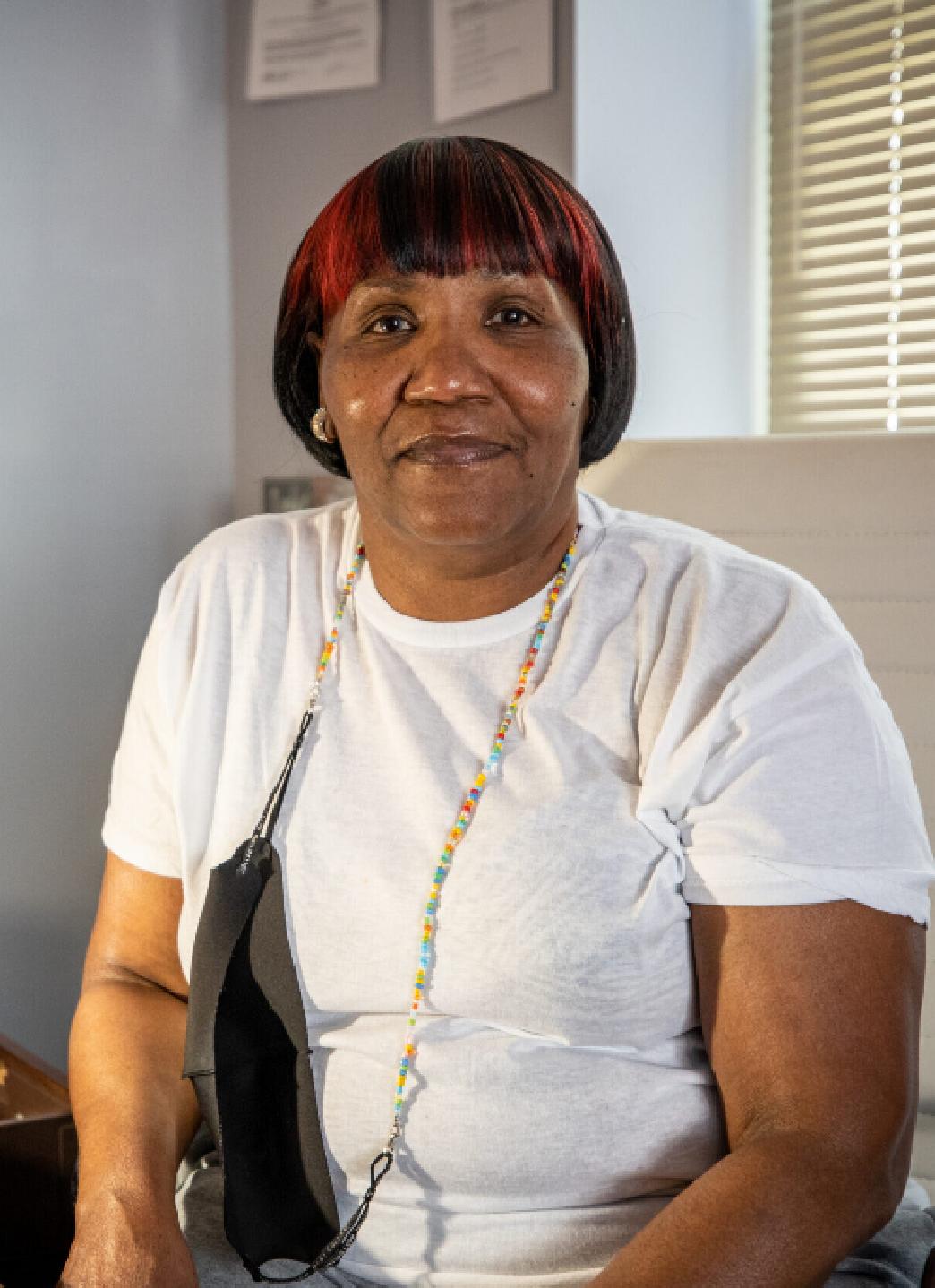
Oasis Staff:
Oasis staff are here to provide support and self-care opportunities to learn and master new skills We believe that you have a right to considerate and respectful care and to be dealt with as individuals rather than as a case, type or category. Staff are non-judgmental and respect the dignity and worth of all clients regardless of their situation. Staff Include clinicians that specialize in addiction treatment that include
Medical Providers
Licensed Social Workers
Licensed Professional Counselors
Vocational Specialist
Paraprofessionals
Administrative Staff
30
Your Rights
As a client of our program, clients have the right to:
Privacy and dignity
To be free from:
Abuse
Financial or other exploitation
Retaliation
Humiliation
Neglect
Access to:
Information pertinent in sufficient tome to assist clients with making informed decisions.
Your clinical case records.
An interpreter if language is a problem
Informed Consent, refusal, or expression of choice and/or withdrawal of consent regarding:
Service delivery
Release of information
Concurrent Services:
The composition of the treatment team
The organizations involvement in any research and adherence to research guidelines and ethics (not applicable, the organization is not involved in research)
Photographs by an employee, visitor, or other client.
Access or Referral to:
Legal entities for appropriate representation. Self-help support services.
Advocacy support services.
Other Rights:
Investigation and resolution of alleged infringements of rights
Other legal rights:
To have these rights explained to them in a way that is understandable
To receive impartial access to medical treatment or accommodations regardless of race, sex, creed, sexual orientation, national origin, religion, physical handicap, or sources of payment. (Maryland)
To exercise cultural values and spiritual beliefs as long as they do not interfere with the well-being of others (Maryland)
Our team is ready to answer any questions!
31
Your Responsibilities
During the intake process clients receive information on their responsibilities as clients. These include the following:
Participate in treatment planning.
Come to sessions in an alcohol and drug free condition.
Pay copays and any fees per the client’s signature on the Fee Agreement.
Respect the privacy of other clients seeking treatment.
Attend all appointments or give adequate prior notice of cancellation.
Be familiar with persons served rights, responsibilities, and treatment.
Provide accurate information about their condition that is relevant to treatment.
Comply with the rules of the specific program rules.
Treat other clients and staff respectfully
Not to bring weapons into any program
Not to use tobacco products while on program grounds
If a client does not comply with above outlined responsibilities or if a significant unresolvable conflict or barrier develops between a provider/employee and the client, it may become necessary to terminate services Most commonly, such situations follow an episode or repeated episodes of abusive or threatening language/behavior, abuse of prescribed medications, or extreme non-compliance with the treatment plan, an emotional or physical threat to any staff member or another Oasis client, harassment, intolerable family interference with the providerclient relationship, or involvement in any illegal activity involving the organization
Advance Directives:
During the Intake/Evaluation process, the clinician will inform all participants of their opportunity to be educated on Advanced Directives.
Once educated, participants may be provided with forms on Advanced Directives. While staff can educate or assist with Advanced Directives, it is the responsibility of the client to complete and submit any Advanced Directives as appropriate. A standard form for a mental health advance directive is provided by The Maryland Department of Health.
Being informed will empower and prepare you to make decisions Remember, there are many ways to be involved You can choose how much or how little you want to be involved!
Decision Aids Can Help:
Some decisions do not have an easy or clear answer Decision aids are tools that can help you work through treatment and recovery decisions
To learn more about Mental Health Advance Directives in Maryland, please visit: https://www mhamd org/information-and-help/adults/advance-directives/
Our team is ready to answer any questions!
32
FILING A GRIEVANCE
If you wish to file a complaint about the treatment services you received at Oasis ,you will continue to be treated with respect and will not be retaliated against, nor have it be a barrier to your services Please follow this procedure:
1. Discuss your complaint with the Oasis employee.
2. If you have done this and the complaint is not resolved, make a formal complaint in writing (which is a complaint against an employee, another client, or about the environment) requesting to speak with the supervisor of the employee.
3. Once the request is made the supervisor will speak with you within 3 working days of receiving the written request, unless your schedule does not permit it. If the supervisor is not available another supervisor will speak with you
4. Grievance forms are available at the front office and online
5. If you still feel your complaint has not been addressed, put your complaint in writing and direct it to the Clinical or Executive Director of Oasis Behavioral Health Sanctuary; within 5-7 days of receiving your written request, the Clinical Director will investigate the incident, speak with you about the complaint, follow up in writing at the conclusion of the investigation, and send you a written response.
You can also complete a grievance by scanning the QR Code Below:

Our team is ready to answer any questions! 33
REQUESTING ACCOMODATIONS
You may also request information on our sliding fee scale program.
Please be advised that all PRP clients MUST have ACTIVE Medicaid to receive services.
Oasis Behavioral Health Sanctuary, LLC will follow requirements of the Americans with Disabilities Act (ADA) and provide reasonable accommodations when requested to assure that everyone who needs (and is eligible for) services can access them. If you require accommodations you can find the forms in the front office.
Limited English Proficiency
Oasis Behavioral Health Sanctuary, LLC will assist in securing interpretation and translation services for individuals who are limited in their ability to speak, read, write, or understand the English language at a level that permits them to interact effectively with the provider. Oasis Behavioral Health Sanctuary, LLC works to follow the National Standards for Culturally and Linguistically Appropriate Services (CLAS) in health and healthcare. This allows the organization to respect the whole individual and respond to the individual’s unique needs and preferences This service will be provided at no cost to the client
Sensory-Impaired Persons
It is the policy of Oasis Behavioral Health Sanctuary, LLC to provide communication assistance to sensory-impaired persons (hearing and visually impaired), including current and prospective clients, family, other interested persons, etc Interpreters, readers, and other auxiliary aids to sensoryimpaired persons will be provided where necessary to afford such persons an equal opportunity to benefit from the services we provide. Such Interpreters, readers, and auxiliary aides will be provided at no cost to the client.
Mobility Impairment
Oasis Behavioral Health Sanctuary, LLC treatment buildings are handicapped accessible. If you require a particular kind of assistance, please notify us when you call for services or arrive for your first appointment.
Our team is ready to answer any questions! 34
FINANICAL AGREEMENT
It is your responsibility to understand the benefits and limitations under his/her health insurance plan As a courtesy to our clients, Oasis Behavioral Health Sanctuary, LLC will seek initial benefit eligibility and verification information, however it is your responsibility to ensure that the benefit information communicated to Oasis Behavioral Health Sanctuary, LLC is accurate, providing updates to Oasis Behavioral Health Sanctuary, LLC with any health plan changes or as insurance deductibles are met.
Our service rates and corresponding health insurance billing codes is used to determine fees for services. This is not a comprehensive list and reflects the most common services provided by our staff. Additional codes may be used by your provider as deemed appropriate.
$178-$200 for bio-psycho-assessment
$231.00 for a medication or psychiatric evaluation
$83.04 for individual sessions
$75.00 for group sessions
FOR MEDICAID ONLY:
Medicaid clients cannot be charged for services. However, you are responsible for ensuring that your Medicaid is active.
Our team is ready to answer any questions! 35
WE WANT YOUR FEED BACK
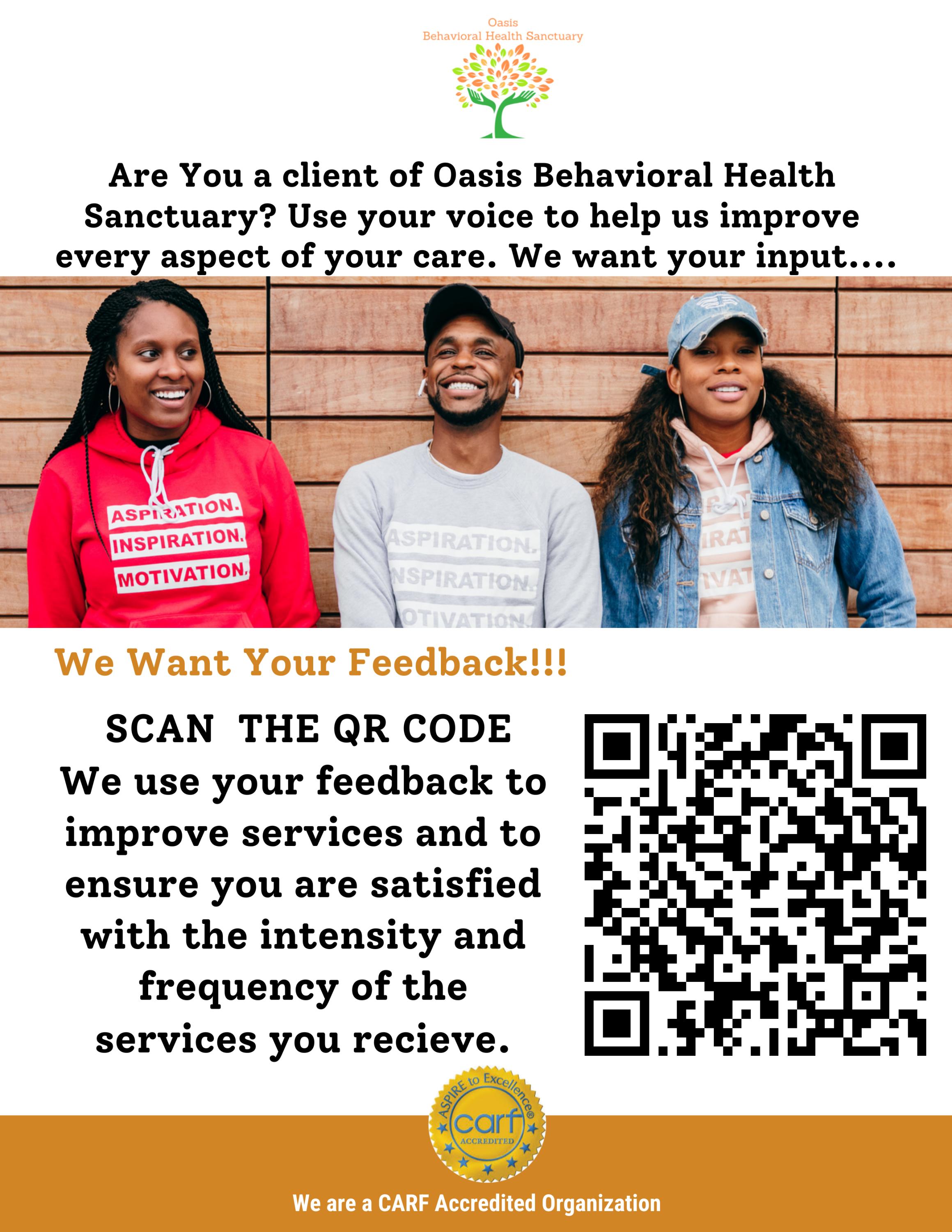
Our team is ready to answer any questions! 36
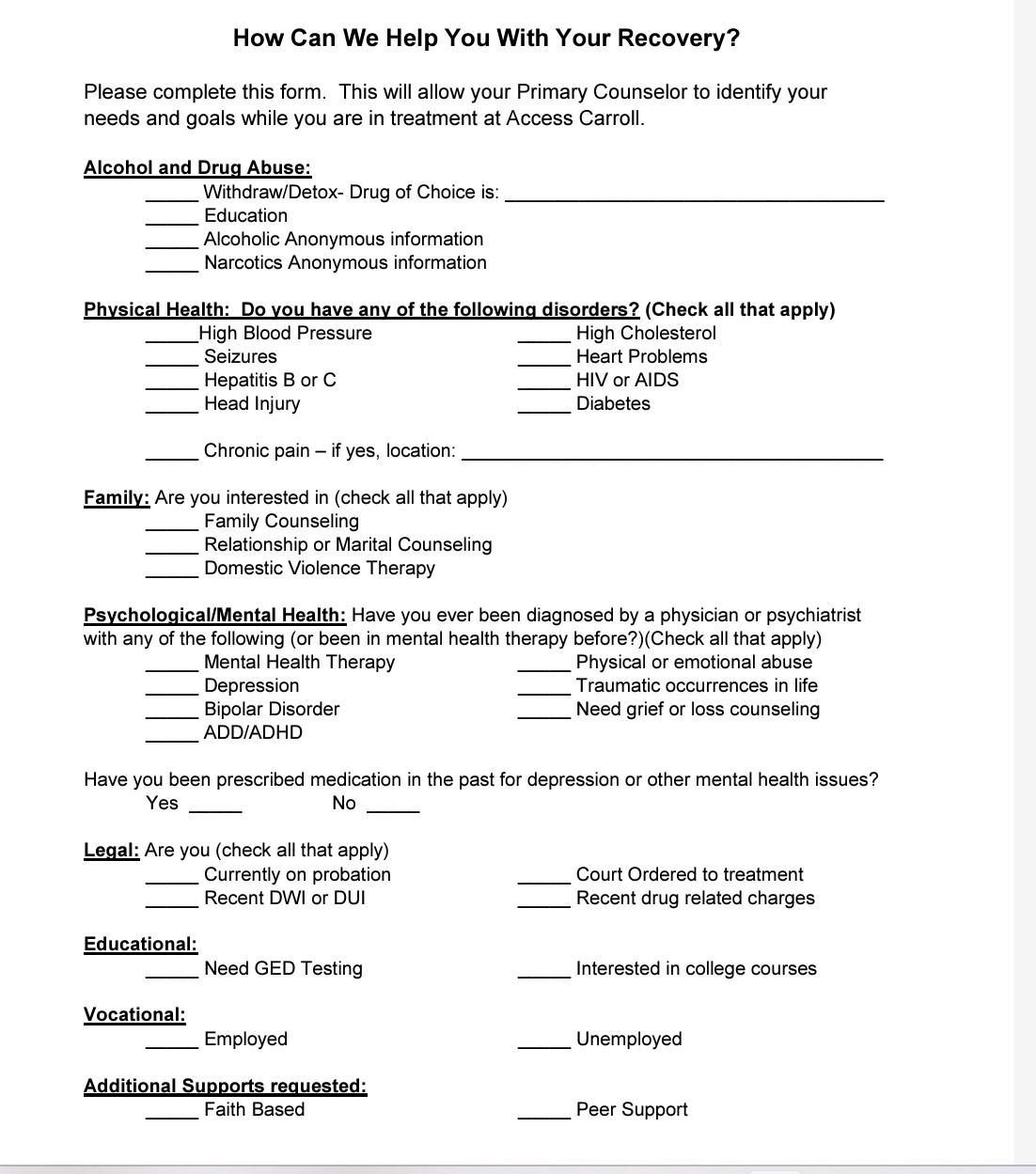
WE'RE LISTENING
Our team is ready to answer any questions! 37

Our team is ready to answer any questions! 38
Our team is ready to answer any questions! 39
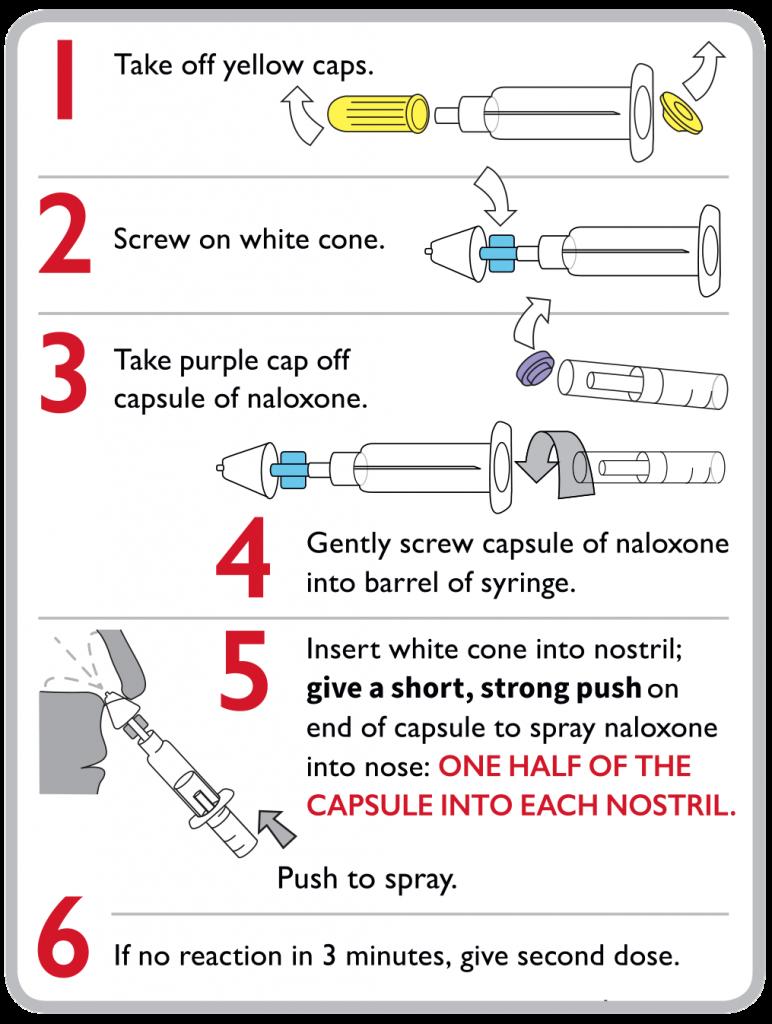
NARCAN RESCUE DOSE
Our team is ready to answer any questions!
40