



Find out what’s going on throughout Cobb County with our news updates.
Our debut City Spotlight features Smyrna, one of the metro Atlanta’s most desirable locations for homeowners and business owners alike.
When a workplace feels welcoming, supportive, and energizing, the benefits show up in attendance, customer service, referrals, and profitability.
The Summer Paradox: Why slowing down is the fastest way forward.
Pickleball tournaments are popping up across Cobb County as a fun, social way to support local charities. What could go wrong?
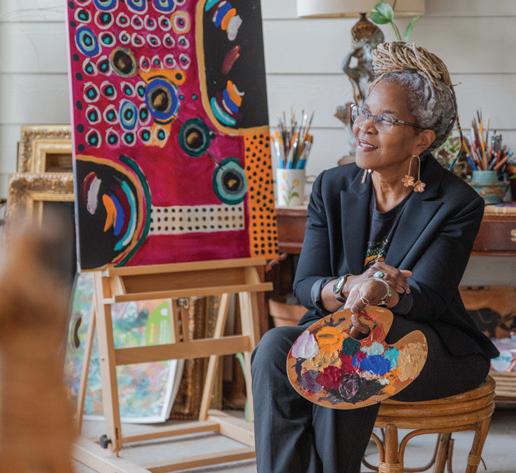
Meet Monek Harris, Founder of Strange Fruit Arts Center.
There are many services provided by the Cobb County Public Library System of which you likely aren’t taking advantage.
Employment Practices Liability Insurance is designed to help protect a business when an employee, former employee, or job applicant claims they were treated unfairly.
Check out this section with important facts and figures about Cobb, as well as services available to homeowners and business owners.
Summer has always equaled down time, but these days, it’s not just long bike rides and baseball games.
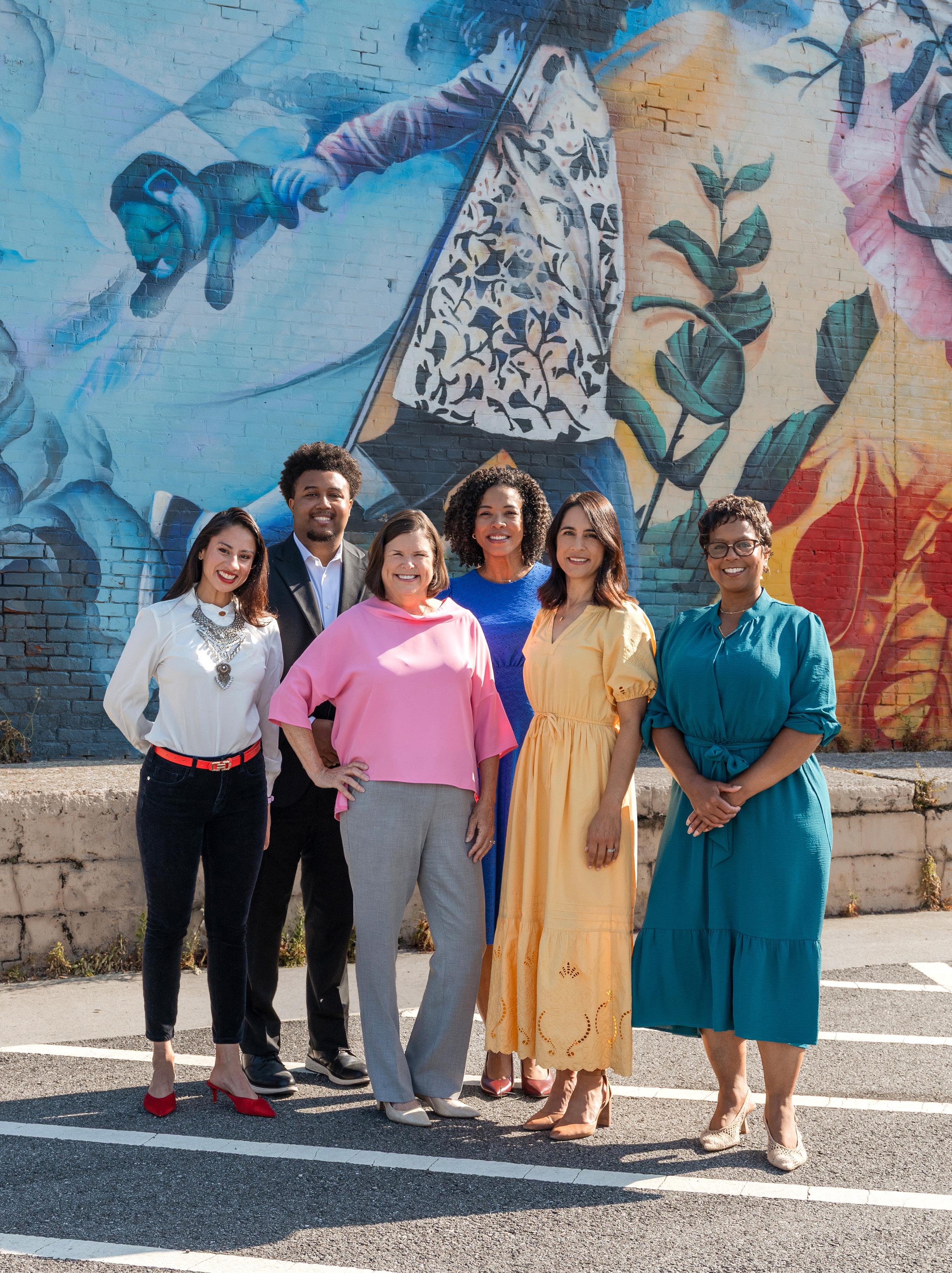
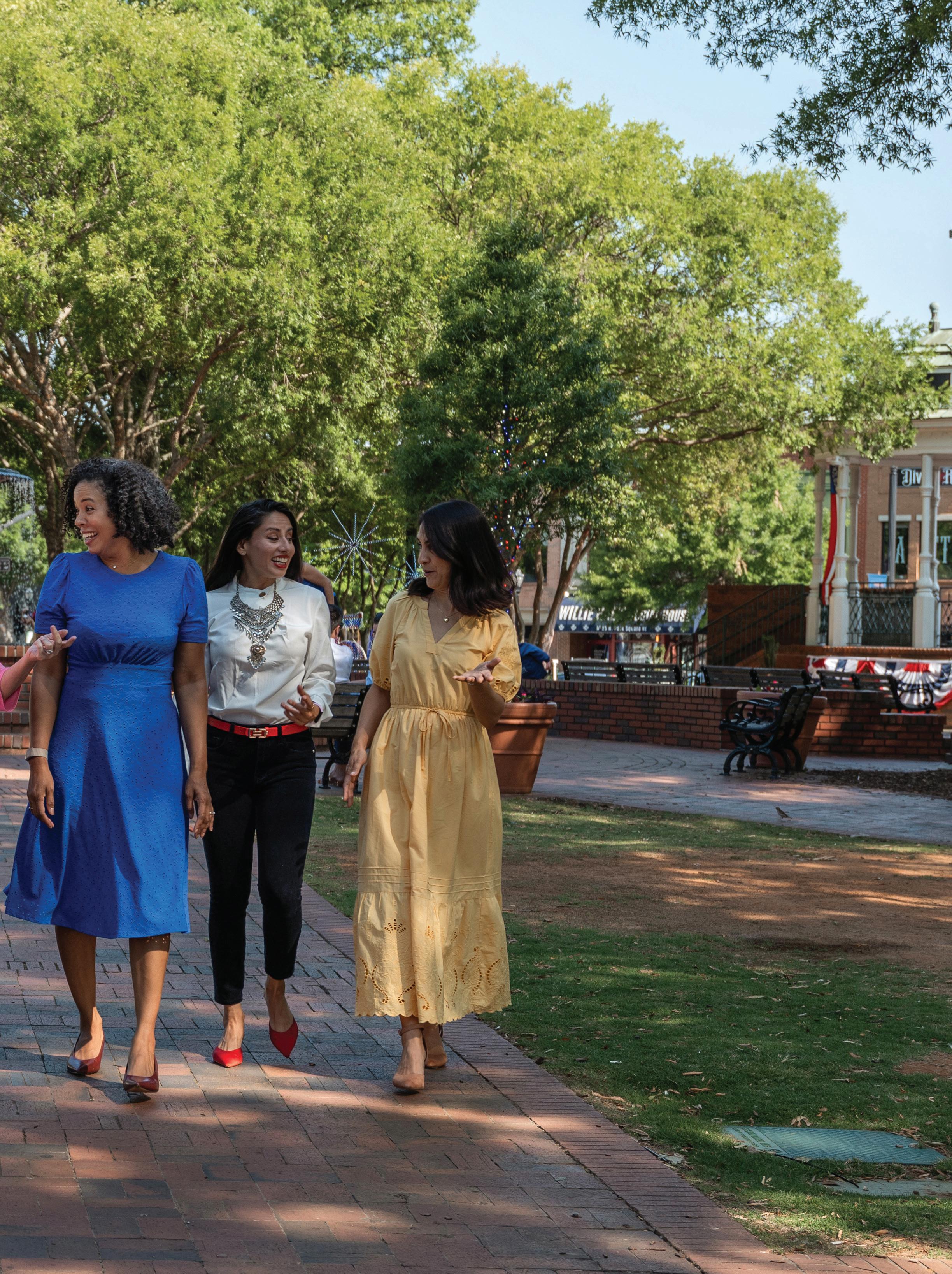
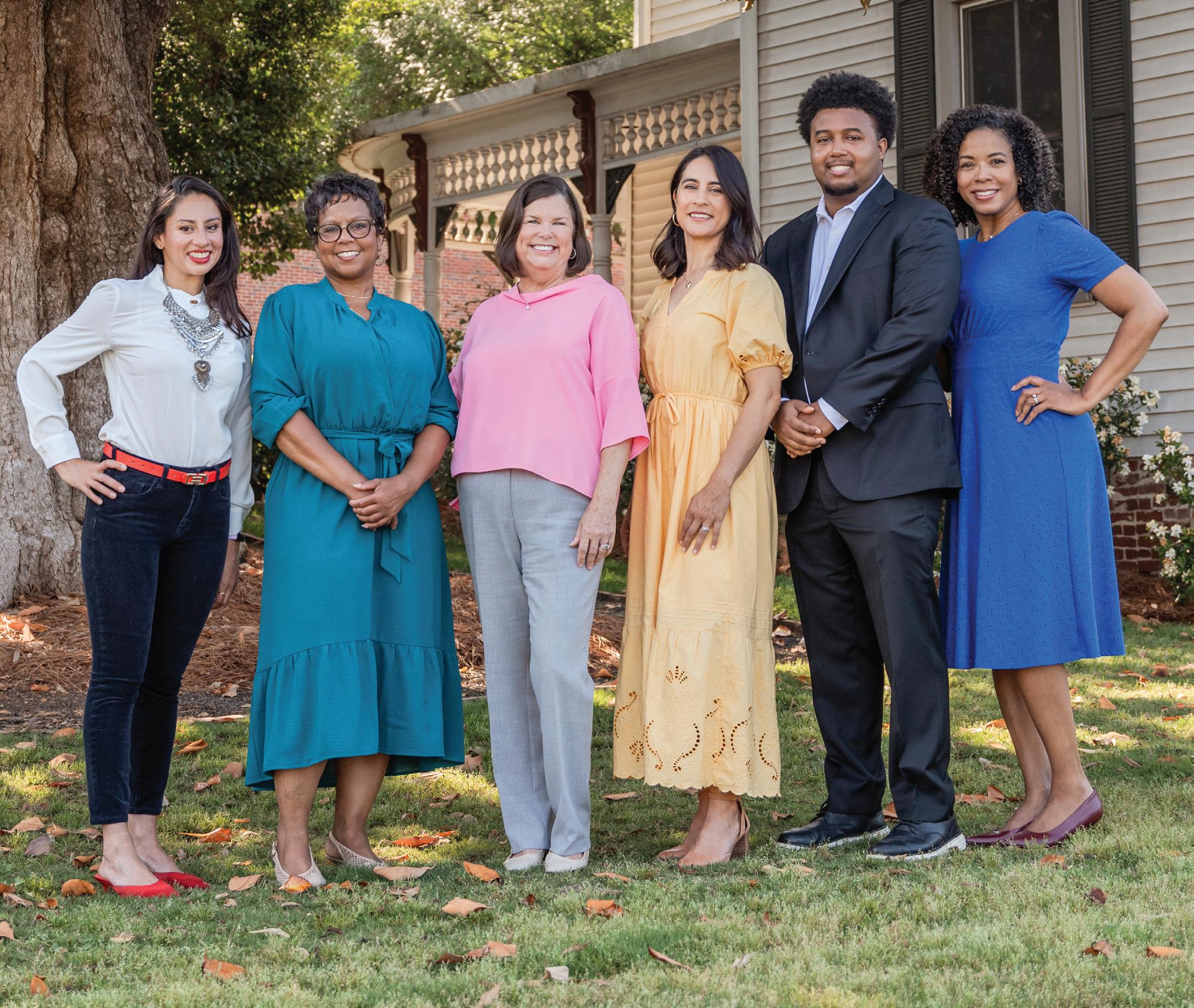
ON THE COVER: Cobb Community Foundation team. Pictured L-R: Communications & Marketing Manager, Gitanjali Bakshi; Operations and Support Specialist, Richard Parham; President and CEO, Shari Martin; Director of Fundholder Engagement, Keisha Myco-Tant; Director of Programs, LisaRuth Karnes; and Client Services and Office Manager, Nakeia Gray-Smith. PHOTO: LARUCHE PHOTO

If you’re reading this, chances are you are a local business owner, industry executive, nonprofit leader, civic/government official, a leader in education, or community organizer. You’re an individual who is among Cobb County’s premier influencers.
We offer you an opportunity to share your entrepreneurial insights, your business acumen, and your thought leadership with a Leader Profile in Cobb In Focus. To learn more about our Leader Profile and other advertising possibilities, please contact info@nsmpag.com.
BY CORY SEKINE-PETTITE
As you read this, the heat and humidity are on the rise, metro Atlanta is in the final days of hosting world-class, international soccer (And doing a fine job.); festival season has kicked off; and the nation has celebrated its 250th anniversary of independence. In other words, it’s July and we have a great deal to celebrate! OK, maybe not the heat.

At Cobb In Focus, we are celebrating the work of Cobb Community Foundation (CCF), which was founded in 1993 as a vehicle to bring together people and organizations in need with those who want to make a difference in Cobb. Shari Martin, CCF’s President and CEO, shares with us CCF’s larger purpose and its roadmap for continued success under its maxim, Activate Good. Readers are sure to be inspired. Also in this issue, we debut a new department, City Spotlight. Our inaugural article features Smyrna, the “Jonquil City,” and the town I’ve called home since 1997. The idea behind the new section is to highlight the many municipalities that make living in Cobb County exceptional. I’ve witnessed a great deal of change in Smyrna over the last 30 years. The city’s growth and development have been steady and well-planned. I want to thank Andrea Worthy, Smyrna’s Director of Economic Development, for answering our questions and sharing the city’s plans for the future.
Lastly, our Leaders of Cobb series returns with a profile of Monek Harris, whose Strange Fruit Arts Center brings together artists of color for greater visibility, support, and opportunities to connect with collectors and one another. I trust you will find her as interesting and compelling as I do. And if you are inclined, join Harris on July 25 to help celebrate Strange Fruit’s fifth anniversary. •
We want to hear from you! Share your story ideas and comments with our editor. Visit cobbinfocus.com or send your suggestions to: cspettite@nspmag.com or New South Publishing, Attn: Cory Sekine-Pettite 9040 Roswell Road, Suite 210 Atlanta, GA 30350
PUBLISHER/MANAGING DIRECTOR
Robyn Sobelson, PhD
VICE PRESIDENT John Hanna
ACCOUNT EXECUTIVES
Sherry Gasaway
Pete Fenlon
MANAGING EDITOR Cory Sekine-Pettite
EDITOR-AT-LARGE
Denise K. James
EDITORIAL INTERN Emily Guettler
GRAPHIC DESIGNER Garon Hart
CONTRIBUTORS
LaRuche Photo, Photography
Meghan Ritchie, Contributor
Vicki Abelson, Contributor
Kevin DiPetrillo, Contributor
Corrie Thrasher, Contributor
PRODUCTION COORDINATOR Megan Willis
CIRCULATION Amy Fine
PRESIDENT EMERITUS Larry Lebovitz
cobbinfocus.com @cobbinfocus facebook.com/cobbinfocus @cobb-in-focus-magazine

Cobb in Focus™ is published six times a year by New South Publishing Inc., 9040 Roswell Road, Suite 210, Atlanta, GA, 30350. Direct all editorial queries to (770) 650-1102. Direct all circulation queries to (770) 650-1102, ext. 130. Direct all advertising queries to the email addresses listed below. All information herein has been checked for accuracy to the best of the publisher’s ability. No responsibility is accepted for deletions, omissions, errors and/or inaccuracies. Material in this publication may not be reprinted without written permission from the publisher. Copyright 2026 by New South Publishing Inc. All rights reserved. Printed in the U.S.A.
For advertising inquiries, email pfenlon@nspmag.com or sherry@knowatlanta.com.
For over 20 years, Cobb in Focus has informed, inspired, and connected Cobb County’s most influential business and civic leaders through high-impact content that supports local growth, leadership, and innovation.

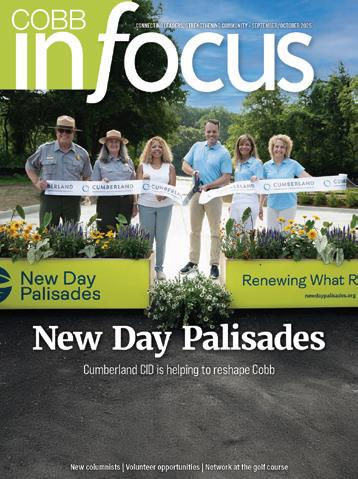
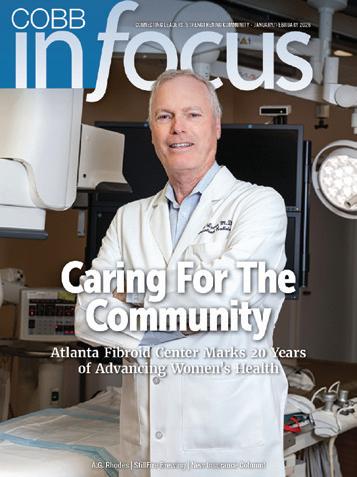
Cobb in Focus is the premier publication offering exclusive information, insights, advice, and analysis across the business, government, and nonprofit sectors. Each issue dives into the topics that matter most, including leadership, technology, and community.
To advertise, or learn more about how Cobb in Focus can help your business or organization, contact info@nspmag.com
Share your stories, ideas, and comments with our editor, Cory Sekine-Pettite at cspettite@nspmag.com.
Here’s a snapshot of what’s going on in your community.
Cobb Travel & Tourism’s annual Bubbles & Brews celebration (held in March) recently recognized the county’s local craft beverage makers with awards based on attendee votes. The event invites locals and tourists to participate in trying craft beverages from local breweries, distilleries, and wineries while collecting stamps with their “BrewPass” passport to earn prizes. Following the festivities, Cobb Travel & Tourism presented awards to 10 “Hop Spots,” placing them in categories such as “Sweetest Brew Team,” “Best Bubbles & Brews Beverage,” “Most Kid-Friendly,” and more. This event hosted more than 2,500 participants and 16 local brewers, increasing activity and visitation around the county. Learn more at bubblesandbrews.com.


The Cumberland CID is debuting its Cumberland Art Festival this fall, taking place at Galleria on the Park from October 17-18. This celebration invites visitors to enjoy the work of more than 125 artists from around the country. Attendees can visit artists’ booths, talk with creatives, and enjoy a collaborative and cultural day. Families will enjoy a kid-friendly zone with hands-on activities, as well as food and drink vendors throughout the event. Cumberland Art Festival is becoming an annual event for the community and will continue bringing people together to enjoy this district’s artistic creativity. Learn more at cumberlanddistrict.com/events.
The Chattahoochee Tech Foundation invites businesses, community leaders, and supporters to join them at their upcoming Dueling Pianos fundraising event on Oct. 15, 2026, at the Chattahoochee Technical College North Metro Campus. This fundraising event has sponsorship opportunities to help raise support for Chattahoochee Tech students who are experiencing financial obstacles.
Proceeds will help fund scholarships for those students to continue their path to graduation. This occasion will showcase performances by The Andrew Brothers, and will feature a silent auction. “This lively and entertaining event is not only a wonderful evening of fun, but also a meaningful opportunity to give back to Chattahoochee Tech students,” said Cassy Ferrell, chair of this year’s event.
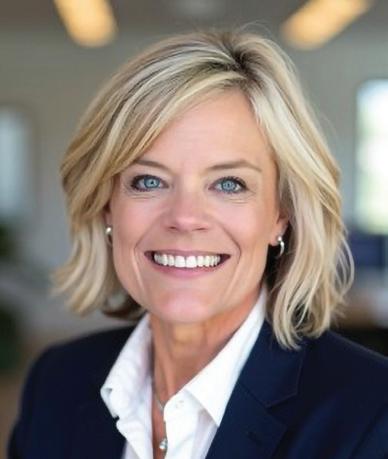
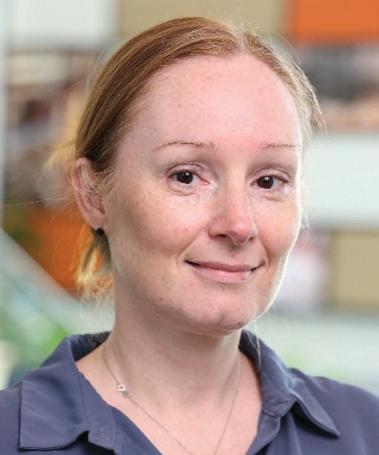
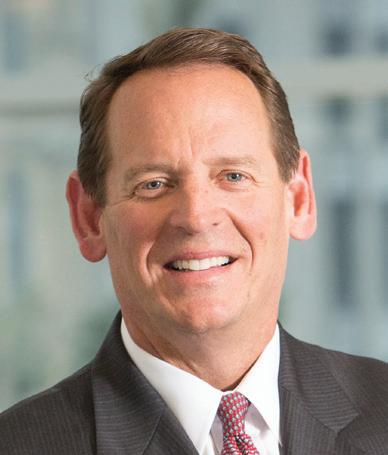
The Town Center Community Improvement District (CID) recently welcomed three newly appointed members to its board of directors: Christina Martin, Maria Ravn Huusom, and Randy Koporc.
The CID is a group of eight elected commercial property owners in Cobb County who work with a nonprofit partner, the Town Center Community Alliance, focusing on funding community improvement projects. The CID says it is excited to see what their new members will bring to the board of directors and Cobb County’s community.
Martin is well-rounded in business and community improvement. She has over 20 years of experience in sales and marketing and works to improve performance and patient experience in her position as Director of Consumer Experience Strategy at Kaiser Permanente.
Huusom has a background in leadership at material handling company Vanderlande, where she oversees the operations, logistics, and execution of large-scale delivery across the U.S. and Canada. In addition, as interim president of North America Airports, Huusom provides insight on operations and tactical guidance for North America’s largest airports while working with leaders, stakeholders, and customers to provide optimal solutions in advancing their efforts in growth.
Koporc will prove an asset with his extensive history in financial services as he takes his position as secretary of CID’s board. Koporc is the regional president of Fifth Third Bank and leads the development efforts of the bank’s wealth and asset management and consumer business. He has served on many boards, including the Buckhead Coalition the Metro Atlanta Chamber, the Kennesaw State University Foundation, and more.
These new members join current board members, Chairwoman Britt Fleck, Vice Chairman Michael Davis, Treasurer Darin Mitchell, Dan Buyers, and Steven Cadranel to improve Cobb County’s infrastructure while continuing to monitor and help grow the county’s economy.
ENTERTAINMENT IN COBB. In June, the Cobb-Marietta Coliseum & Exhibit Hall Authority, which operates the Cobb Convention Center Atlanta and the Cobb Energy Centre, reported combined 2025 revenues of $178.7 million, up more than $20 million from 2024 and near the combined record set in 2018.
BUSINESSES RELOCATING TO COBB. The County continues to attract major employers, as yet another company is moving its headquarters to Cobb. Authority Brands, which operates 15 home service franchise brands, is moving to Galleria Parkway and bringing nearly 400 jobs with them. “Georgia is where Authority Brands’ next chapter begins,” said Jay Caiafa, CEO of Authority Brands. “Metro Atlanta gives us access to exceptional talent, a business environment built for growth, and a community that understands what it means to build something.”
READING IN COBB. Cobb County Public Library, in partnership with the Cobb Library Foundation, announced the launch of its 2026 Summer Reading Program. Embracing this year’s adventurous theme, “Unearth a Story,” the library challenges residents of all ages to pick up a book, engage their curiosity, and celebrate community literacy through July 31. Learn more at cobbcounty.gov.
LESS LITTER IN THE STREETS. A new study from Keep America Beautiful shows that litter is declining across America — down 34 percent since 2020. The study is the most extensive research conducted in U.S. history to estimate the scope, scale, causes and impacts of litter. The findings reveal that declines are being driven by a combination of factors: education, strong local programs and enforcement, better infrastructure and access to waste systems, and increased public engagement. Keep Smyrna Beautiful has been a part of this national progress for more than 40 years. In 2025, its volunteers collected more than 23,000 pounds of litter across the city’s roadways. These efforts include the work of more than three dozen Adopta-Mile groups that commit to picking up litter on their “adopted” mile quarterly.
Kris Delaney will serve as the new executive director of the Marietta Arts Council (MAC), a nonprofit that partners with private, pub lic, and civic groups to expand their reach across the City of Marietta. MAC projects include public murals, sculpture gardens, performances, and more. Delaney’s previous experience includes senior leadership roles with The Woodruff Arts Center and Fox Theatre, as well as an executive marketing role with Cobb EMC. Delaney is eager to build on the work MAC has accomplished and is excited to thrive in her position, stating, “Together, we can continue to make Marietta a vibrant destination where creativity flourishes, residents feel connected and inspired, and visitors experience the unique character and energy of our community.”
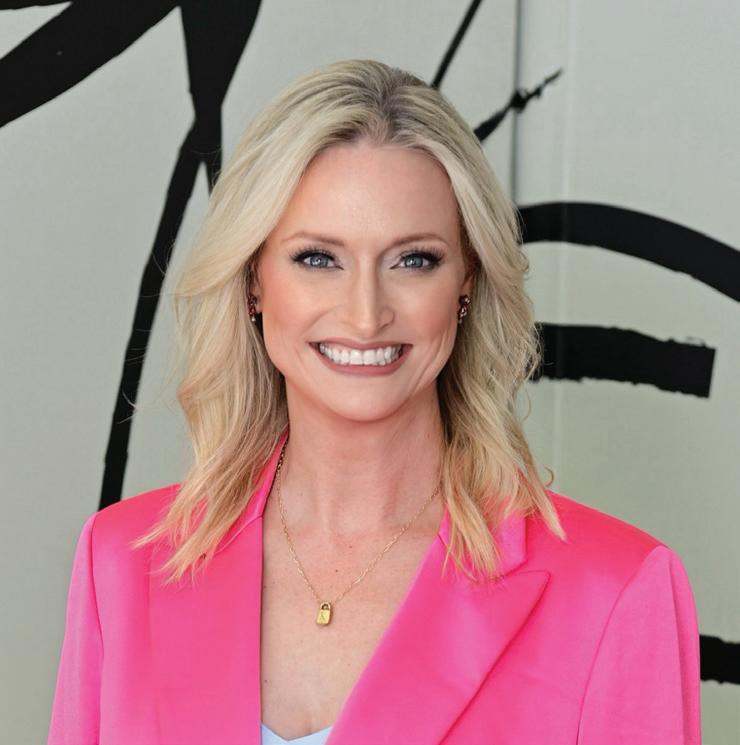
The Cobb-Marietta Coliseum and Exhibit Hall Authority has promoted 20-year veteran Tom Rowland to the position of Managing Director for Cobb Energy Performing Arts Centre. Rowland joined the team in 2006 and will be moving from his position as the Director of Marketing, Sponsorships and Programming.
“He has tirelessly supported not only his departmental colleagues but also all members of the Authority’s staff, embodying our ‘One Team, One Company’ philosophy,” said Charlie Beirne, General Manager & CEO of the Cobb-Marietta Coliseum & Exhibit Hall Authority. Rowland will oversee all the operations, front of house, marketing, booking, and box office while working closely with other departments to ensure the success of this center.
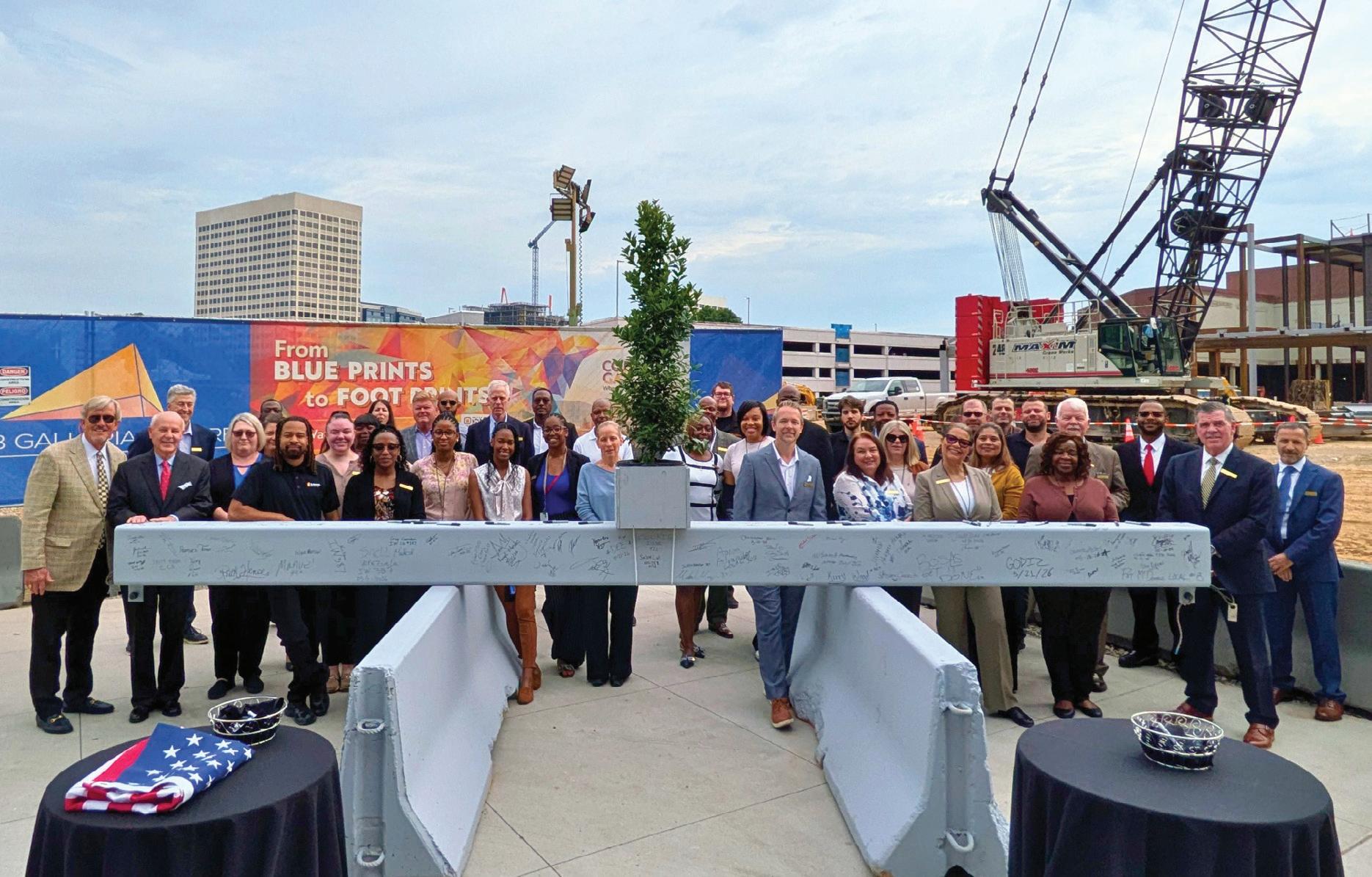
Cobb Convention Center Atlanta stakeholders recently attended the “topping out” of the building, which currently is underway at the site formerly known as the Galleria Convention Center.
On May 21, members of the Cobb-Marietta Coliseum & Exhibit Hall Authority, staff, and the construction team celebrated a milestone in the $190-million expansion and renovation of the center. The final steel support beam for the project was signed by the entire construction team and staff before being placed within the structure, while also being accompanied by an American Flag hanging from the beam and a tree ceremonially placed on top.
“Now that the bones of our convention center expansion are nearly complete, our partners at Holder Construction will now shift from steel to concrete, walls, and systems,” said Charlie Beirne, General Manager and CEO of the
Cobb-Marietta Coliseum & Exhibit Hall Authority.
The expansion is expected to be finished in 2027. Visitors will enjoy the grand, new entry way, an addition of 13,000 square feet of indoor event space, a 24,000-square-foot addition of multiple meeting rooms, a new parking area that is covered and connected to the building, and an outdoor courtyard and garden.
Guests are already enjoying the center’s renovations from its previous closure in 2025, including improved lighting in the exhibit halls, renovated restrooms and food outlets, improved cosmetics in the ballroom, and more. The center will stay open throughout the remainder of the expansion as the team of Rule Joy Trammell and Rubio, Holder Construction, and Impact Development Management work to solidify this center as a pillar in our community. •
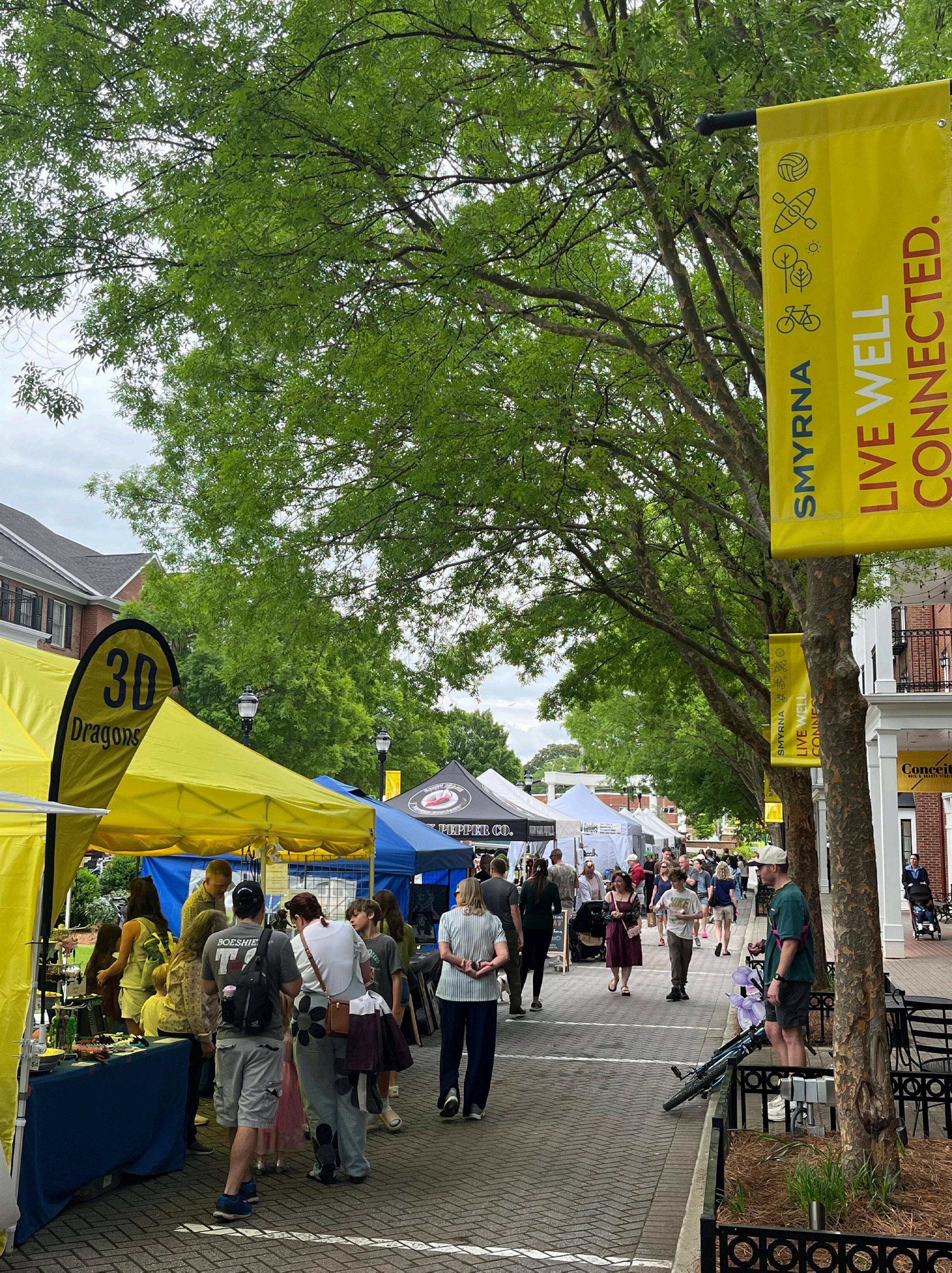
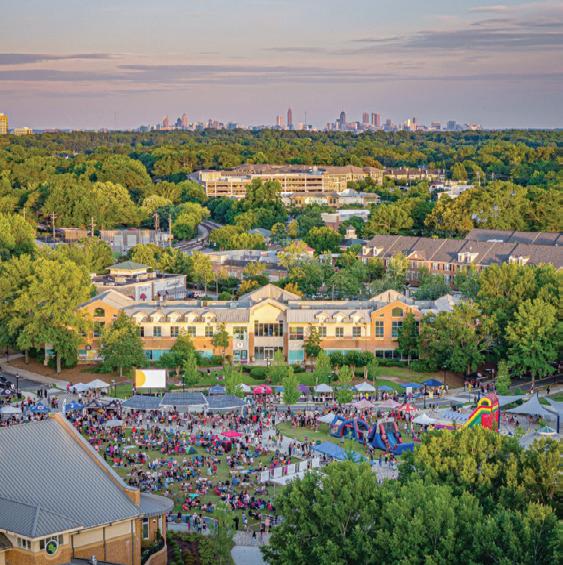
Smyrna is one of the metro Atlanta’s most desirable locations, thanks to plenty of outdoor living opportunities, a number of local businesses, proximity to Truist Park and Smyrna Market Village, the city’s “downtown.” Read on to find out more about what makes Smyrna special, as told by Andrea Worthy, Smyrna’s Director of Economic Development.
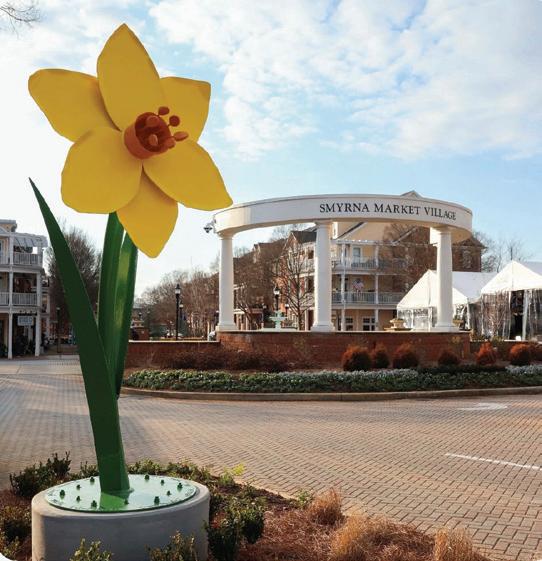
What is your town known for?
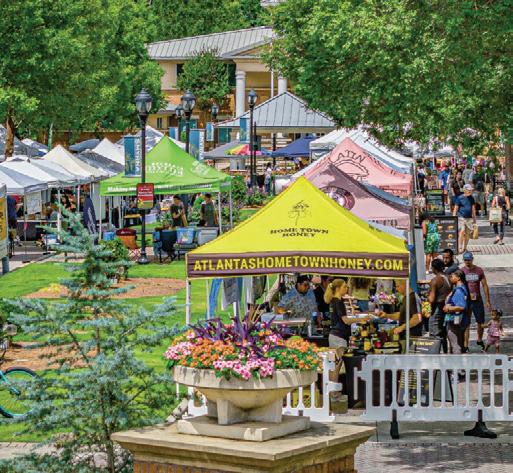
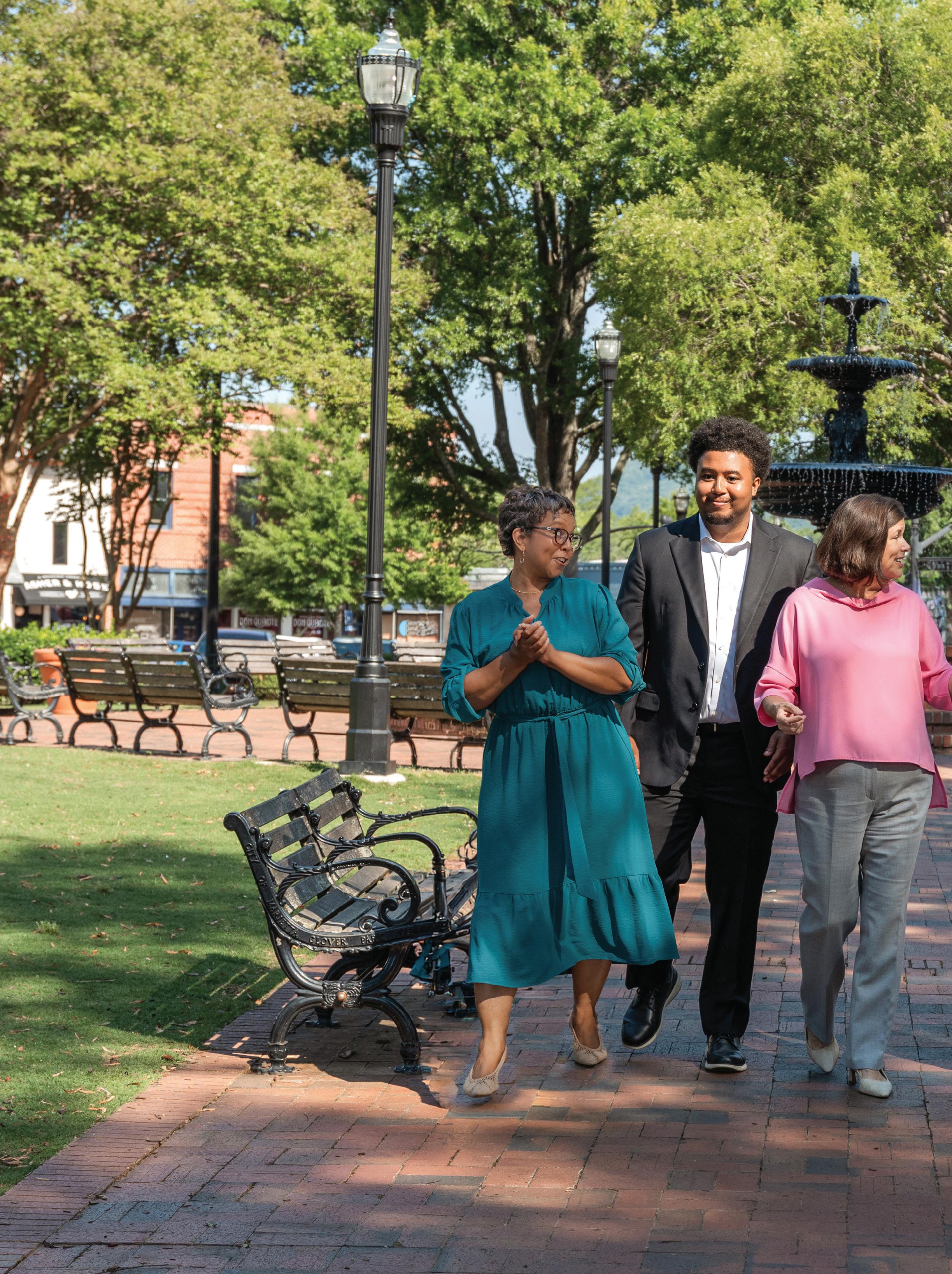
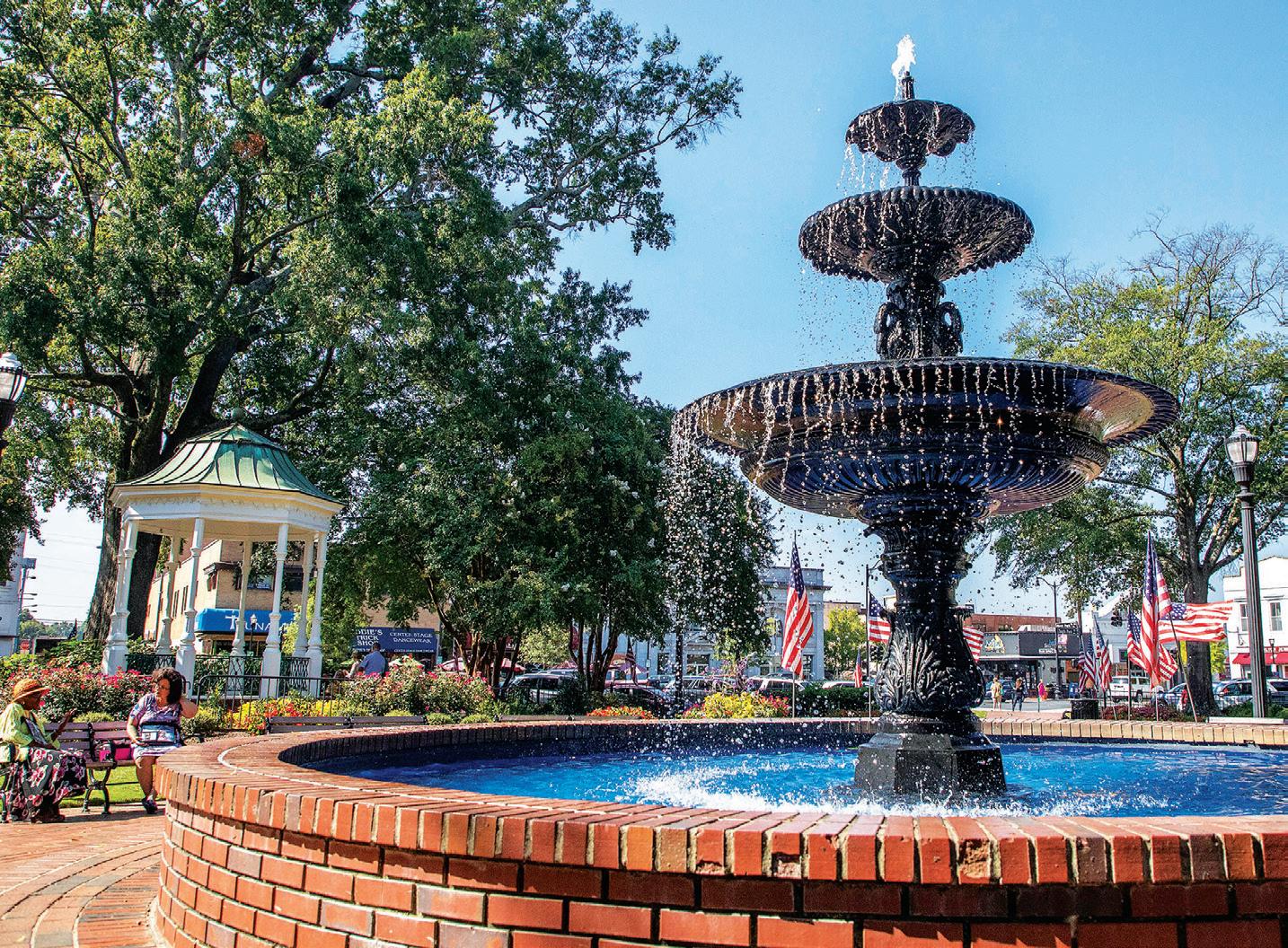
Smyrna Market Village. Whether it’s the fountain, the colonnade, or one of the local restaurants which have welcomed generations of birthday celebrations, first dates, and out-of-town visitors — Smyrna Market Village is what people mean when they say “downtown.” It’s not a town square and it’s not a main street; it is uniquely Smyrna. Here, a park green is steps from dining, celebrations are part of everyday life, and you’re guaranteed to see a neighbor when you go “downtown.” And even as Smyrna has grown, the pace and our small-town spirit is all the same.
What is a new/exciting destination people will want to visit?
Smyrna is quickly becoming one of metro Atlanta’s most connected outdoor destinations. At the crossroads of the Silver Comet Trail, the Mountain to River Trail, regional access to the Chattahoochee River, and future trail connections extending toward the Atlanta Beltline, Smyrna Market Village is evolving into a regional trailhead experience — a place where rides begin, afternoons slow down, and visitors gather before or after exploring the region.
From downtown Smyrna, visitors can bike to a Braves game at Truist Park, connect to neighboring downtowns, spend the afternoon exploring trails and parks, or make an all-day adventure out of the Silver Comet Trail. But what makes Smyrna unique is the experience between the rides: local restaurants, shaded greenspaces, community events,
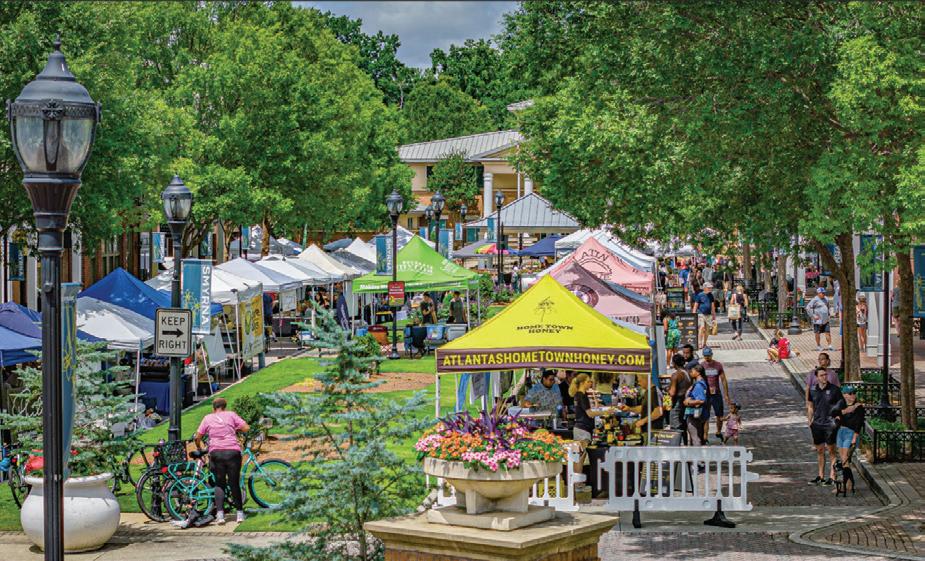
and the small-town energy that encourages people to stay awhile. Smyrna offers something increasingly rare — the ability to move seamlessly from trail to downtown, from nature to neighborhood, and from regional adventure to local connection.
What is the first thing about your town that a visitor or new resident should know?
Live Well Connected. This is our city’s tagline, and it’s real. Smyrna is a city where people find their regular place — the coffee shop barista that knows their order, the restaurant patio where neighbors gather every Friday night, the trail they return to every weekend. Around our city, business owners often say “we’re loyal” because connection here extends beyond places to the people who shape them.
What makes your city the best place to have a business or start a nonprofit?
From locally owned storefronts to major employers, Smyrna is home to 1,500 commercial businesses generating over 20,000 jobs and $4.8 billion in annual revenue — offering opportunity and networking at every scale. What makes Smyrna especially strong for businesses and nonprofits is connection. The city is supported by a highly educated workforce, strong household incomes, and immediate access to major employment centers across Metro Atlanta. Through partnerships with the Smyrna Business Association, Cobb Chamber, Metro Atlanta Chamber, and Cobb Travel &
Tourism, organizations gain access to regional relationships, visibility, and support systems that help accelerate growth. When you choose Smyrna, you’re not simply selecting a location — you’re joining a coordinated network designed to open doors and strengthen long-term success.
What aspects of living in your city have changed the most over the past decade?
Over the past decade, Smyrna’s identity has evolved from a suburban community into a fully realized destination city with a regional presence. Investments in parks, trails, hospitality, mixed-use development, and downtown placemaking have elevated both the visitor experience and quality of life for residents. And — with our new, downtown redevelopment project on its way — we’re just getting started. The future is bright for residents and business owners in Smyrna.
Where do you see your city in the next 10 years?
Smyrna will be one of metro Atlanta’s clearest examples of how a suburban community can evolve into a connected, walkable small city. It is part of our history — and continues to shape our future through intentional investments that strengthen the city’s character, where residents move seamlessly from their neighborhoods to downtown and from local connection to regional adventure. The result is a premier small-city model: connected, walkable, economically vibrant, and unmistakably itself. •
BY MEGHAN RITCHIE, OWNER – TRUSTAL RECRUITING
When a workplace feels welcoming, supportive, and energizing, the benefits show up in attendance, customer service, referrals, and profitability. Work can — and should — feel that way. The quickest path to building real workplace community begins with how new hires are supported. Most early departures are not mysterious; they stem from fixable issues you can address before workplace culture is compromised.
According to the Society for Human Resource Management and other workforce studies, a large share of employees who leave do so within the first 90 days, and culture often outranks pay as the top reason. The good news for owners is that these are mostly within their control and usually easier to fix than expensive quick-fix tactics. Typically, employees leave for the following three reasons:
1. Managers and culture. An ineffective manager can create turnover costs that far exceed what it would take to coach or replace them.
2. Onboarding and training. Without a path to competence, people get frustrated and quit.
3. Pay and promises. Competitive compensation matters; broken promises regarding raises erodes trust.
First, over-investing in flashy perks (snack bars, game rooms, party budgets) does not solve daily frustration. A portion of that money can go further in pay transparency, opportunities to learn additional skills, and frontline manager training. Second, using sign-on or retention bonuses as a substitute for community is a flawed plan. Bonuses can help, but on their own they do not build belonging or growth. If used, they should be paired with onboarding milestones and clear development. Lastly, treating team-building as a once-a-year event is asking for failure. One offsite event or holiday party cannot compensate for weak day-to-day management.
Long-term community is built through consistent, low-cost habits. The biggest early-turnover failure is not being ready on day one. That first impression has an outsized effect, and it is fully preventable. Be prepared with a training schedule and manual.
Onboarding should be treated as more than paperwork; it should be a manager-owned process that blends culture, company history and vision, coaching, and measurable checkpoints. Consider this five-stage ramp to long-term tenure:
• Day 1 - Welcome and belonging. A manager-led welcome, explanation of values and expectations, introductions to
team members, and a schedule for the week. Consider providing a welcome lunch. End the day by asking how things went for them.
• Week 1 - Core skills and connection. Training led by the manager, not just videos. Thorough expectations on what success looks like in the role. Shadowing, practice on common scenarios, role plays, and end-of-day daily check-ins. By the first week, the employee should have clear sign-off on the basics.
• 30 days - Supported independence. Independent task completion with review by a manager or mentor. Weekly one-on-ones. Metrics tied to quality and customer feedback. This is where confidence grows if support is present.
• 60 days - Increased autonomy and contribution. Reduced check-in frequency, targeted skill workshops, feedback from mentors, and a small improvement project that allows the employee to contribute to the team.
• 90 days - Proficiency and commitment. Formal review, discussion of career path, cross-training options, confirmation of performance expectations (KPIs), and a clear statement of next steps.
Retention begins before day one. Clear job descriptions, real success metrics, and visible training plans build trust. Long-term community also depends upon respectful managers, honest communication, regular performance conversations, and visible growth paths. Owners also should ask employees directly what would make them want to stay long-term. The outcome is not only lower turnover, but a business that becomes known as a place people want to work.
Building community does not require a giant budget. It requires preparation before the hire arrives, manager training, a written 90-day ramp, and replacing one-off perks with predictable investments in pay, coaching, and simple team rituals. That is how you can turn new hires into long-term contributors who strengthen your business over time. •
MEGHAN RITCHIE is the founder of Trustal Recruiting, a firm specializing in recruiting services for home services companies like electrical, HVAC, roofing, plumbing, and other trades. The company collaborates with its clients to develop their teams over time. Learn more at trustalrecruiting.com.
VICKI ABELSON, MBA PCC
My neighbor spent three consecutive summers wondering why her vegetable garden never quite worked out. She planted. She watered. She waited. And every August, she’d walk away with a handful of tomatoes that didn’t justify the effort.
The fourth summer, she did something different. She stopped obsessing over the plants and started paying attention to the conditions. The soil pH. The drainage pattern after rain. The way the afternoon sun hit the south corner differently. She didn’t plant more. She planted smarter — into an ecosystem she began to understand.
That summer, she couldn’t keep up with the harvest. There’s a version of this story playing out in businesses every single year, and summer is exactly when it tends to surface.
The summer arrives, and the calendar suddenly breathes. Key clients are on vacation. Decisions get delayed. The pace that felt relentless in Q1 softens just enough that most leaders quietly coast, floating on the current of activity from the months before, letting one day blur into the next. Before they know it, September arrives, Q4 is knocking, and they’re scrambling to make up ground they didn’t realize they’d lost.
But here’s the thing: Coasting and slowing down are not the same thing. One is passive. The other is a strategy. The leaders I’ve seen build the most momentum don’t use summer to slow their output. They use it to examine their ecosystem.
people around you actually need to do their best work?
These aren’t soft questions. They are the structural questions that determine whether everything you build in Q4 holds. The trap most leaders fall into is believing that progress only counts if it’s visible.
A signed contract. A launched product. A completed project. These are the tomatoes — and they matter. But the conditions that produce them? Those are invisible until suddenly they’re not, and you’re either flush with results you can barely keep up with, or you’re standing in a garden wondering what went wrong.
Momentum that looks like acceleration often starts with a season of apparent stillness. The most important work you can do this summer might not show up in any report. It might be the honest conversation with a team member who’s been quietly disengaging. It might be clearing out a structural confusion about who owns what. It might be getting genuinely clear — not performatively clear, but actually clear — on what your business is trying to become and who you need to be to lead it there.
The leaders I’ve seen build the most momentum don’t use summer to slow their output. They use it to examine their ecosystem.
The uncomfortable truth is that most of us spend the busiest months of the year producing, executing against plans, hitting deliverables, and moving from meeting to meeting, without ever stepping back to ask whether the conditions we’re operating in actually support what we’re trying to grow. We’re planting seeds in soil we’ve never really examined.
Summer offers a slightly lower tide that reveals the rocks beneath the surface. This is the time to ask the questions that get buried under urgency the rest of the year. What’s the actual culture of your team right now — not the culture on the website, but the one that shows up on a Tuesday afternoon? Where is energy being spent that isn’t generating return? Which relationships need tending that have been running on autopilot? What do the
None of that is drifting. It’s deliberate movement. There’s a meaningful difference between reacting to the future as it arrives and building it before it does. Most of us live in the first mode more than we’d like to admit, moving from yesterday to today as passengers who are responsive rather than intentional, carried by the current of circumstance rather than steering through it.
Summer is an invitation to step out of that current for a moment and look at where it’s actually taking you. The seeds you plant now, the trust you build, the clarity you create, the ecosystem you tend, will determine the harvest you bring in come fall.
So slow down. Not because it feels good. Because it’s the fastest way forward. •
VICKI ABELSON, MBA PCC, is a Certified Professional Coach with over 20 years of health care administration experience and the founder of The Defined Leader. She offers executive coaching and workshops. If you’re ready to see if leadership coaching is for you, visit thedefinedleader.com.
BY CORRIE THRASHER, FOUNDER OF THRASHER LAW
Pickleball tournaments are popping up across Cobb County as a fun, social way to support local charities. What could go wrong? As it turns out, a few things. Behind the paddles and friendly competition, these events raise legal and financial questions that many organizers overlook.
The good news is that a well-structured tournament is not complicated. It just requires a few clear decisions early on
and some discipline around how money and responsibilities are handled.
Start with the most important question. Who’s the host? Getting that right early keeps you, in pickleball terms, from inadvertently stepping into the kitchen. The cleanest approach is to have the charity act as the event host. In that structure, the charity owns the event,
collects the registration fees, and handles any donor communications or receipts. Your business still can manage marketing, registration logistics, venue provision, or day-of coordination, but you are doing so as a service provider to the charity, not as the fundraiser itself.
This distinction is more than technical; it affects legal compliance. Once a business starts both promoting the event and handling the money, it can drift into a

One of the most common mistakes is vague or overly optimistic language about where the money goes. If participants are paying a registration fee, they should understand whether that fee is going entirely to the charity or whether a portion is being used to cover costs or administrative services.
different set of rules, usually not on purpose and usually not worth it. Most small events do not need that extra layer of complexity.
Once you decide who is leading the event, put the relationship in writing. Even if you are working with friends or longtime partners, a short agreement goes a long way. It should spell out who is responsible for what, how any fees are handled, how and when funds move, and how the charity’s name and branding can be used. If your company is charging an administrative fee, even something modest like 3 percent, it should be clearly documented and agreed upon upfront. Otherwise, this can trigger unintended tax rules.
The same goes for your venue. It’s generous for a facility to donate court time, but it still needs to be documented. You want transparency around scheduling, expectations for setup and cleanup, and most importantly, liability. A simple written agreement helps ensure everyone is on the same page before people start showing up with paddles.
The most common source of problems is how the money flows. The safest and simplest approach is to have all registration fees paid directly to the charity. That usually means using the charity’s existing payment system or an event platform tied to its account. That keeps things clean and avoids any post-event detective work or tax, accounting, and legal issues no one intended. Your business can then invoice separately for agreed-upon services. If you do collect fees, be careful. Don’t run them through your general account “just temporarily.” Use a separate account so the funds stay clearly identifiable, then transfer them promptly and keep solid records. At the end of the day, you want a

simple, credible answer to one question: Where did the money go?
Written marketing materials have a way of becoming exhibits, so make sure they tell the same story as your actual structure. One of the most common mistakes is vague or overly optimistic language about where the money goes. If participants are paying a registration fee, they should understand whether that fee is going entirely to the charity or whether a portion is being used to cover costs or administrative services.
Pickleball scoring seems simple until someone has to explain it out loud. Receipts are another area of confusion, especially once people start asking what part of their registration, if any, is tax-deductible. In most cases, the answer is none. Registration fees are typically treated as payment for participation, not a charitable contribution, and only the charity can issue a receipt when the structure supports it. Talk to your counsel about your goals and consider disclaimers: “Your registration secures
your spot in the event; contributions may not be tax-deductible.”
Insurance may not be the fun part, but it’s part of the game. Even a friendly local tournament involves some level of risk, especially when it is an athletic event. The charity, as the host, should carry general liability coverage, either through its existing policy or a short-term event rider. The venue will usually have its own coverage and will expect to be named as an additional insured. Your business also should make sure it is covered, either under the charity’s policy or through its own insurance, depending on your role. Participant waivers also are a practical step that should not be skipped.
Not every charity tournament director has the time or resources for a perfect legal setup, and that’s okay. If everyone can clearly explain who is running the event, where the money goes, and what participants are paying for, you’re in a strong position. A short agreement, aligned messaging, and a clean flow of funds usually get you most of the way there.
When questions come up, it’s always worth checking in with your counsel to make sure your structure matches your goals. The rest is just getting people to show up and enjoy the day. •
Legal disclaimer: This article is for general informational purposes only and does not constitute legal advice. Readers should consult with a qualified attorney regarding their specific circumstances.
CORRIE THRASHER is the founder of Thrasher Law and provides ongoing legal counsel to business owners and executive teams who value consistent, seniorlevel judgment in business operations, growth, and complex transactions. Visit thrasherlegal.com.



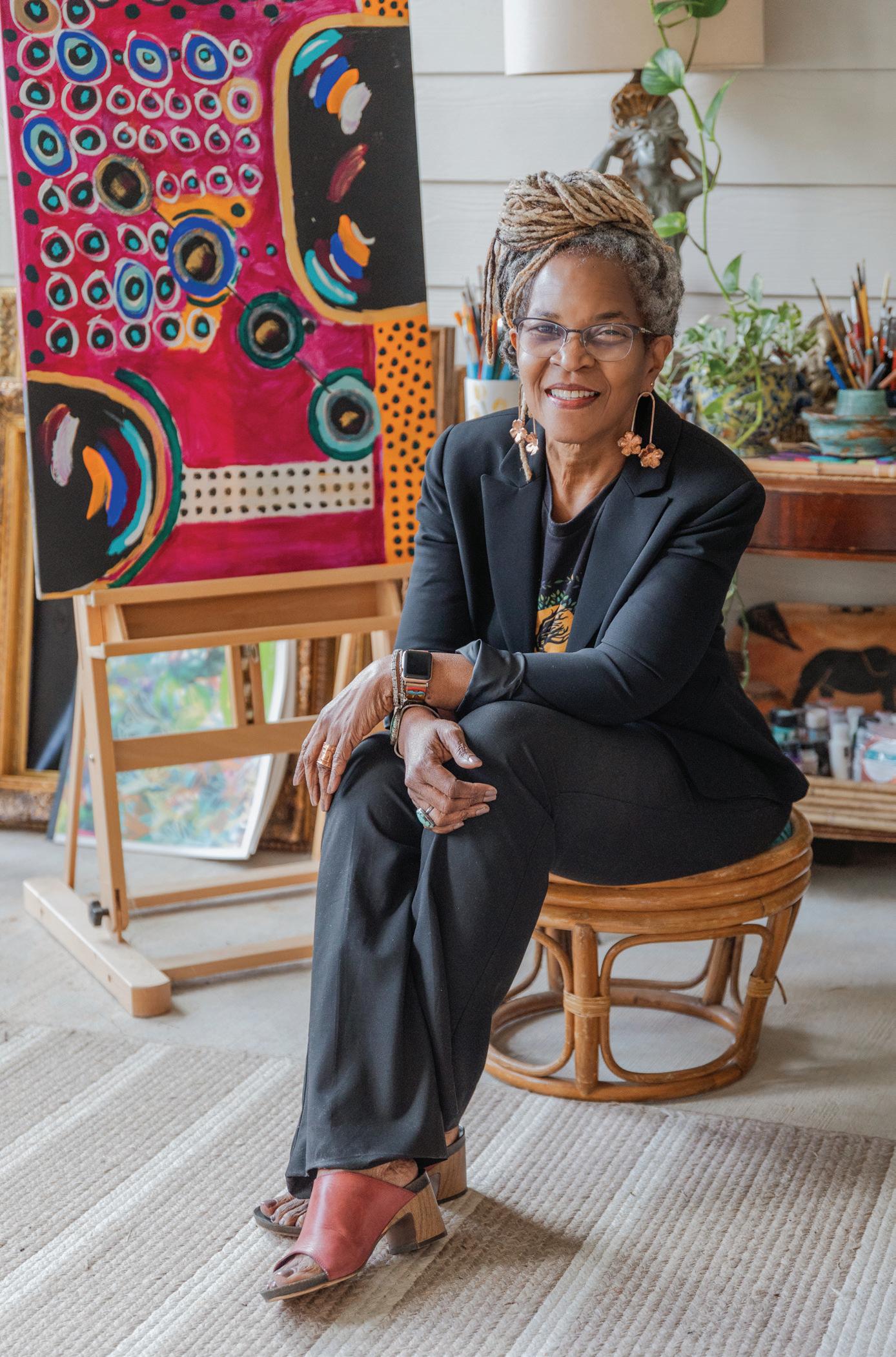
The Story: Originally from Peoria, Illinois, I am a lifelong creative, metalsmith artist, and founder of Strange Fruit Arts Center, a 501 (c)(3) nonprofit organization dedicated to uplifting Black artists and bringing the community together through art. I attended Rasmussen College after high school and returned years later to obtain my bachelor’s in business administration. Professionally, I have built a successful career in corporate leadership, but art has always been my passion and my outlet. In 2021, I launched Strange Fruit Arts Center after recognizing how many talented artists of color needed greater visibility, support, and opportunities to connect with collectors and one another. What began with one artist member has grown into a vibrant community of more than 30 artists working across a wide range of mediums.
What do you love most about your job? The most rewarding part of my work at Strange Fruit is creating opportunities for artists to be seen, valued, and celebrated. There is nothing more fulfilling than watching an artist make meaningful connections, sell their work, and gain confidence in their creative journey. I also love seeing how art brings people together across generations and backgrounds. Art has the power to inspire conversation, healing, and community.
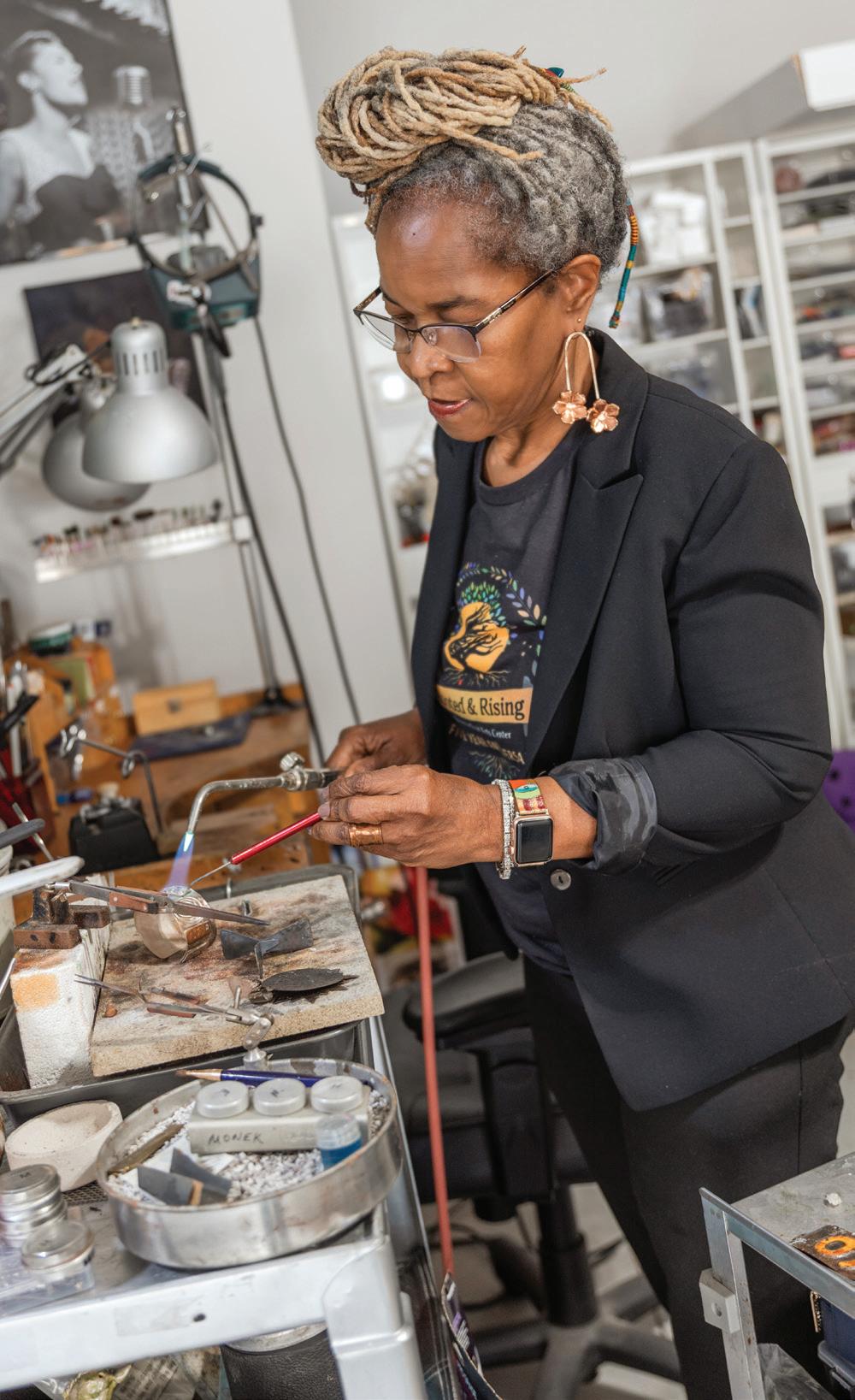
Leisure time. It is important to me that we build a strong foundation before we build a permanent home. In my free time, I work on administrative tasks for Strange Fruit, plan senior painting parties, focus on growing our membership, and plan our annual event with our dedicated board members. I also create jewelry through my metalsmithing business, Black Girl On Fire, where I hand-fabricate one-of-a-kind pieces in silver and mixed metals. I also enjoy art festivals; traveling; and spending time with my dog, Zorah; my family; and my friends. Much of my leisure time naturally circles back to creativity and supporting fellow artists.
What’s your best advice? Start where you are and trust your vision, even if you cannot yet see the full path ahead. Strange Fruit Arts Center began with one artist and one idea. Do not compare your journey to others. Small beginnings, combined with passion, purpose, and perseverance, can lead to extraordinary impact.
What’s next? This year, Strange Fruit Arts Center is celebrating its fifth-year anniversary with our annual Artist Meet & Greet, Rooted & Rising: A Five-Year Celebration of Art & Community, on July 25, 2026, at the Emma Darnell Aviation Museum & Conference Center. It’s an opportunity for the community to get to know the artists, shop, collect, and celebrate with us. Looking ahead, my long-term vision is to establish a permanent arts center where artists can exhibit their work, teach classes, and connect with the community year-round. We are just getting started; we are rooted and rising. •
BY MEGAN WILLIS
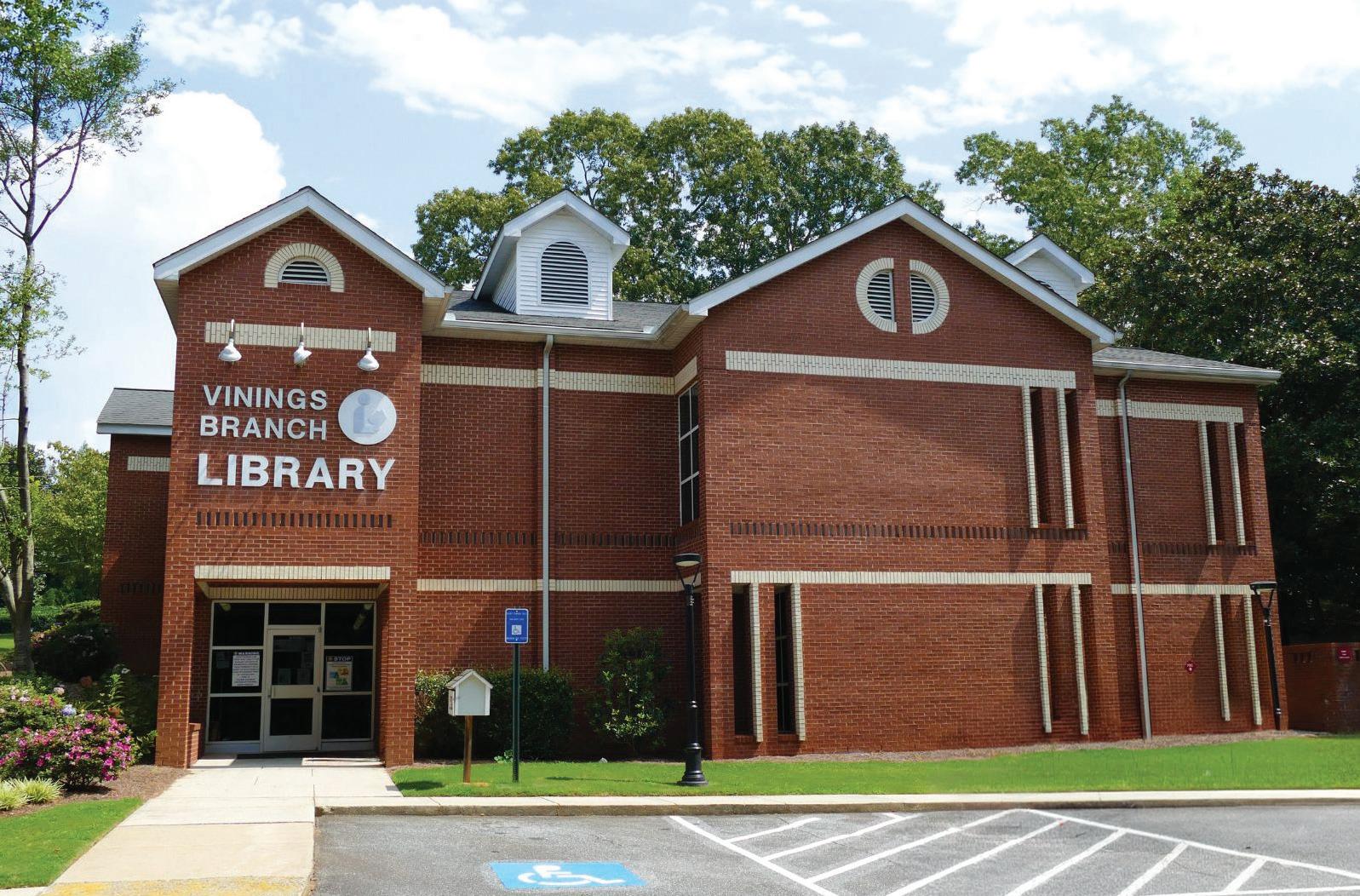
When I was a young girl, I practically grew up at the library. My mother was an avid reader and would finish a 300+ page novel in two to three days, prompting a return to the library. It felt like we were always there. Inevitably, she passed down her love of reading and books to me. Yes, I love to buy books for my home library, but I also still really enjoy going to the library. It seems I may be in the minority, though. I took a quick tally amongst the people in my life and was in shock to learn I was the only one with a library card. How can this be?
Our libraries are extremely under-utilized and under-valued resources for the community. In addition to the many, monthly events they organize at each of their locations — from songwriting workshops to Dungeons & Dragons gatherings to yoga for seniors — the Cobb County Public Library System offers so many free amenities for residents of any age. Along with way too many events to list here, they also provide several services, resources, and discounts of which you may not be aware.
Here are some of the services offered if you own a Cobb County library card:
» Free or discounted entry to several parks and museums in Georgia
• Chattahoochee Nature Center, Alliance Theatre, Atlanta History Museum, GA State Parks and Historic Sites, and Zoo Atlanta, to name a few.
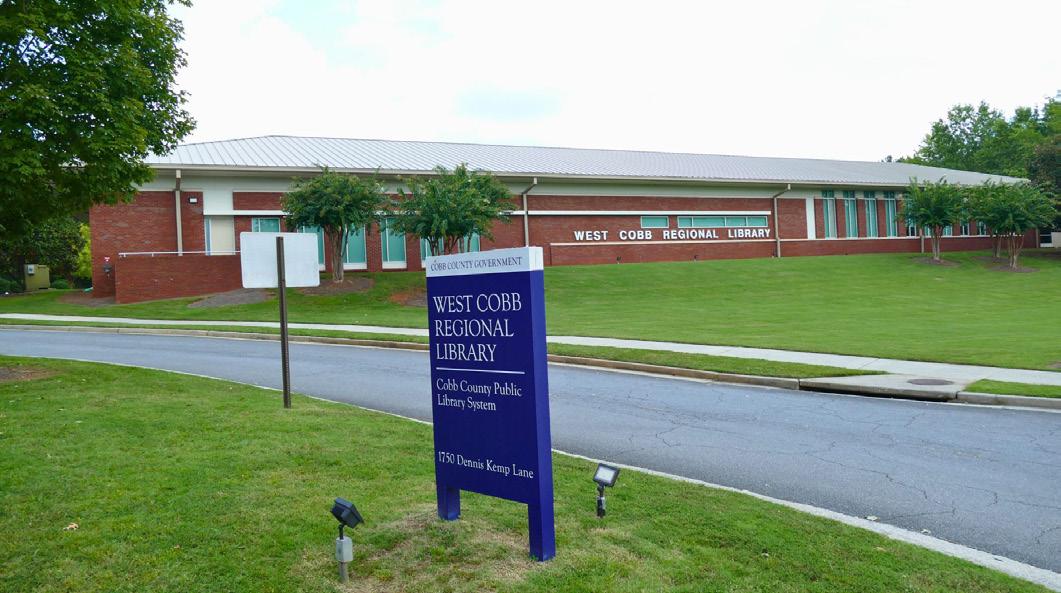
» Passport Services — available at the Mountain View and West Cobb Regional locations.
» Cobb Connections — a one-stop resource page for valuable community resources like help with Medicare, emergency assistance, job searching or housing.
• Partnered with FindHelp (findhelp.cobbcounty.gov)
» Craftsy — an online resource for creatives with over 1,400 instructional videos spanning 20 different creative passions like yoga, gardening. and more.
» Perks Programs — offering 10-percent discounts at local businesses
• 28 current participating business, such as Hamp and Harry’s, The Georgia Ballet, and The Local Exchange.
» Wi-Fi and Hotspots
• Checkout a Chromebook for up to three weeks or a Hotspot for seven days to help you with business and personal needs.
» Books by mail for those with physical disabilities, long-term illness, or residing in a care facility.
For more information, visit cobbcounty.gov/library and checkout more than just books. •
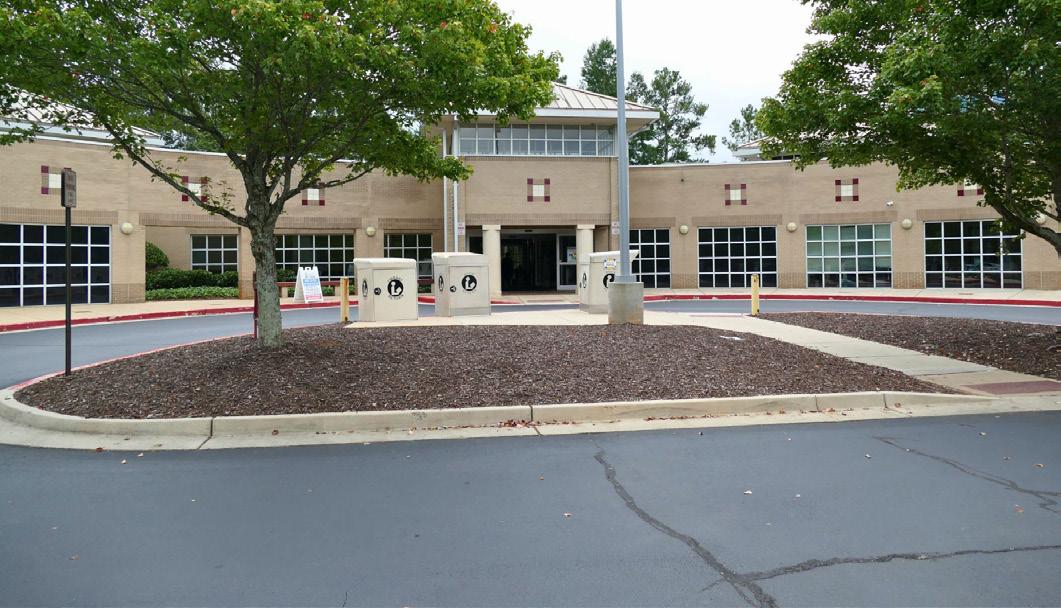
» East Cobb Library (Marietta)
» Gritters Library (Marietta)
» Kemp Memorial Library (Marietta)
» Lewis A. Ray Library (Smyrna)
» Mountain View Regional Library (Marietta)
» North Cobb Regional Library (Kennesaw)
» Powder Springs Library (Powder Springs)
» Sewel Mill Library (Marietta)
» Sibley Library (Marietta)
» South Cobb Regional Library (Mableton)
» Stratton Library (Marietta)
» Sweetwater Valley Library (Austell)
» Switzer Library (Marietta)
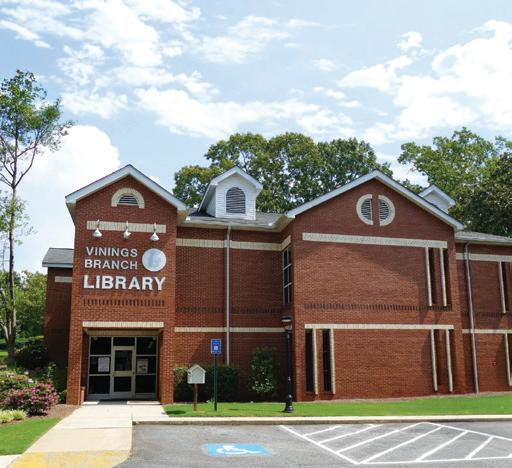
» Vinings Library (Atlanta/Smyrna)
» West Cobb Regional Library (Kennesaw)
BY CORY SEKINE-PETTITE
As this publication conveyed in our May/June 2026 issue, Cobb Community Foundation (CCF) reported a record year in 2025 with charitable assets of $39 million and $6.5 million awarded in grants and scholarships for that year alone.
At the time, CCF President and CEO, Shari Martin, told Cobb In Focus: “At Cobb Community Foundation, we simply have the privilege of connecting the dots — mobilizing people, ideas, and resources so generosity can go further.”
Frankly, that’s a modest assessment of the impact generated by CCF and its fundholders, donors, and other numerous stakeholders, so this publication dug a little deeper into the organization to bring readers a better understanding of CCF’s larger purpose and its continuing evolution in maintaining its commitment to “Activate Good.” To that end, Martin agreed to answer a series of questions for us. The key takeaways are that generosity, kindness, philanthropy, optimism, and purity of spirit are thriving in Cobb — and Cobb Community Foundation reflects it all.
Cobb In Focus (CIF): Give us an overview of where CCF is today, and how you see the organization evolving over the next several years.
Shari Martin: Cobb Community Foundation now stewards over $40 million in charitable assets. Last year, we distributed about $6.5 million to charitable causes, the vast majority of it coming from individual and corporate donor advised funds and scholarship funds. We’re particularly proud that even though these fundholders can grant to any 501(c)(3) charitable organization anywhere, in 2025, they kept 73 percent of their grantmaking right here in Cobb.
Managing charitable funds and making grants is how we got started. What has changed, though, is the impact those dollars are making right here in Cobb County. Years ago, it wasn’t unusual for two-thirds of our grantmaking dollars to go outside of Cobb. Now, nearly three-fourths stay inside of Cobb.
Why is that? We’ve not just gotten bigger, we’ve gotten better.
Many people don’t realize that when they choose CCF to manage their charitable assets, they are doing more than establishing a charitable fund. The fees they pay help fund the work we do throughout the community. That growth has allowed us to build a team with expertise in charitable giving, nonprofit effectiveness, community engagement, and research. As a result, we’re better at identifying needs, understanding what’s standing in the way of progress, and helping connect people and resources to solutions. That, in turn, has helped more people discover opportunities to make a difference right here in Cobb County.
Over the next several years, I see CCF becoming an increasingly important community resource — not because we will be doing more ourselves, but because we will help more people work together more effectively. Our future is not about becoming bigger. It’s about helping our community become stronger.
This is what we mean when we talk about “mobilizing people, ideas, and resources.” We bring together the relationships, knowledge, charitable resources, and community leadership needed to help our community address challenges and seize opportunities.
CIF: So, CCF’s strategic plan is to become a “Community Catalyst.” Please describe what this term means and how it differs from your previous operational perspective.
Martin: To me, a Community Catalyst is an organization that helps good things happen by bringing together what’s needed to move ideas into action. It doesn’t mean we’re the ones coming up with all the ideas or doing all the work. It means we’re helping create the conditions for good work to happen.
We’re always going to manage charitable funds and make grants. But as a community foundation, we are positioned to be able to do so much more. Whether we’re talking about economic mobility, mental health, childcare, workforce development or other issues affecting quality of life, moving the needle requires more than just money.
I go back to our mission statement; it means mobilizing people, ideas, and resources. It’s about bringing together the right people, organizations, knowledge, and lived experiences, so that real solutions can emerge. It means serving as a trusted community partner that helps others succeed while building the relationships, trust, and infrastructure that allow communities to solve problems together.
Early in my tenure, much of our focus was on growing charitable assets. That’s still important because those assets allow us to do our work. But over time, we’ve become much more focused on the purpose behind that growth. The funds we manage, the grants we make — those are tools. But the ultimate goal is a thriving community where everyone can access opportunities and reach their potential.
CIF: You have said that you want CCF to evolve more into an organization that helps to strengthen the quality of life in Cobb County and beyond. How does your new strategic plan fit into this goal?
Martin: Our strategic plan is built entirely around that goal. Quality of life is influenced by many factors, none of which exist in isolation.
We know, for example, that a child’s future opportunities are influenced by far more than what happens in the classroom. Housing, transportation, childcare, mental health, financial stability, and community support systems all matter. If we want to improve quality of life and expand opportunity, we have to understand how those pieces fit together and work across sectors to address them. Our role is not to become experts in every issue. Our role is to help the people who are working on those issues be more effective. That’s why our strategic plan focuses on four key areas: our own organizational effectiveness (we have to put on our own oxygen
mask before we can help others), expanded nonprofit capacity, community problem solving, and collective giving.
If we can help the community better understand where needs exist, connect generous people and businesses with opportunities to make a difference, and help organizations work together more effectively, we can create lasting change that improves quality of life for everyone who calls Cobb home. Every member of CCF’s board plays a vital role in creating change. For the complete list, visit http://bit.ly/3SnebmP.
CIF: In what ways do you plan to build out CCF’s legacy, and how will this assist your community partners in continuing to build their legacies?
Martin: When people hear the word legacy, they typically think about what happens after they’re gone. We take a cue from one of our fundholders, Bernie Brown. Bernie doesn’t want just to leave a legacy; he wants to live his legacy.

“Over the next several years, I see CCF becoming an increasingly important community resource — not because we will be doing more ourselves, but because we will help more people work together more effectively.”
—Shari Martin, CCF President and CEO
“Many of the issues affecting quality of life — from economic mobility to childcare to mental health — are interconnected. If we rely on only one perspective, we risk missing what really matters.”
—Shari Martin, CCF President and CEO
It’s the same thing with CCF. Every day, we’re helping shape our legacy. To us, legacy isn’t primarily about what happens after you’re gone. It’s about the values you choose to put into action today.
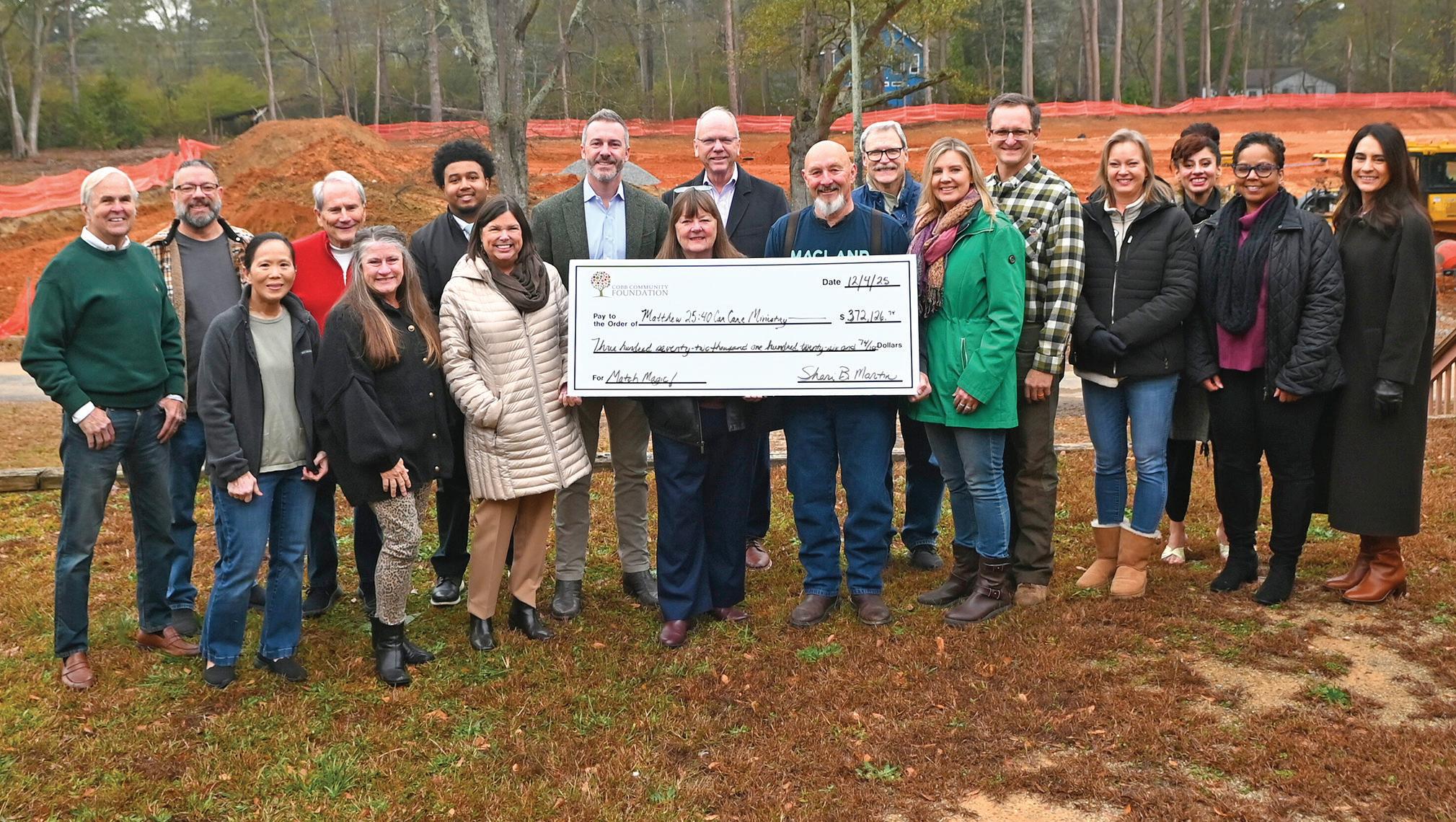
Every time we help a nonprofit overcome a barrier, we’re building our legacy. When we help Matthew 25:40 Car Care Ministry raise funds and navigate challenges so it can serve more families, that becomes part of our legacy. When we help bring proven models like Circles Cobb to our community so families can move from merely getting by to getting ahead, that becomes part of our legacy.
We help individuals and companies create their own legacies as well. You can’t attend a gala in Cobb County without seeing Cumberland Diamond Exchange’s generous donations for auctions or raffles. Owners Mark and Rhonda Jacobson want to ensure that the name “Cumberland Diamond” will always be associated with community. Accordingly, they created the Cumberland Diamond Exchange Community Legacy Fund. This charitable fund supports our community today, and it will continue to do so long after Mark and Rhonda are gone.
One of the most rewarding parts of our work is helping individuals and families translate their generosity into something enduring. We ask them: “What do you want your money to do?” This is much different than “Who do you want to receive your money?” because the person or organization you first think of may not be the one best equipped to accomplish what you want accomplished.
The same is true for nonprofits, businesses, and community leaders. Strong organizations create lasting change, and we want to help ensure they have the relationships, resources, and support they need to thrive for years to come. Ultimately, legacy isn’t about any one organization, donor, or gift. It’s about creating the kind of community we want future generations to inherit.
CIF: How do you determine what Cobb County needs in terms of assistance and support?
Martin: One of the lessons we’ve learned is that no single person or organization has a complete picture of community needs. We need data. We need raw numbers. But we also need to hear from people, and we need to ask the right questions in the right way. Different groups see different parts of the picture. Nonprofits see service gaps. Government sees trends. Businesses see workforce challenges. Residents experience barriers firsthand. Many of the issues affecting quality of life — from economic mobility to childcare to mental health — are interconnected. If we rely on only one perspective, we risk missing what really matters. That’s one of the reasons we launched Vital Signs, a long-term initiative in partnership with KSU and Neighborhood Nexus designed to combine data, community voice, and local expertise to better understand the factors affecting quality of life in Cobb County. Before we ever started collecting information, we asked nonprofits, government agencies, and community leaders what
they needed to know, who we should be talking to, and what questions we should be asking. The people experiencing challenges often have the clearest understanding of what is and isn’t working, so their voices are especially important.
Our goal is not to tell the community what its priorities should be. Our goal is to help the community develop a shared understanding of those priorities so we can work together more effectively. When people are working from the same information and understanding, it becomes much easier to align resources, coordinate efforts, and ultimately improve quality of life.
CIF: Can you share stories from your partners that have changed lives?
Martin: One example is Circles Cobb. We typically don’t help start new nonprofits, but we saw a gap in services that we and others believed needed to be filled. We also had a roadmap to follow.
Circles USA is a 25-year-old organization with chapters across the country and a proven track record of helping families who are stable but stuck achieve economic mobility. Participants (called “Circle Leaders”) work alongside volunteer “Allies” who
provide encouragement, accountability, and support as families pursue their goals. Our first Circles Cobb cohort increased its average income by 93 percent.
What began as a program to help individual families improve financial stability has evolved into a broader community effort focused on understanding and addressing barriers to economic opportunity, and it’s been amazing to watch.
Another example is our Match Magic initiative. It started as a way to help nonprofits raise more money during the holiday season. What we discovered was that the real impact extended beyond fundraising. Participating organizations received marketing support, storytelling training, templates, and communications calendars — tools they could use all year long. In just three weeks, we helped 27 organizations raise more than $1.7 million, increase their visibility, gain new donors, and receive larger gifts from existing supporters.
What’s been just as amazing is watching the community response. We had more than 1,000 unique donors participate. The nonprofits followed our lead and went big on social media, encouraging their board members and followers to do the same. And they did.
Perhaps the most dramatic example happened during COVID. As supply chains broke down, farmers were struggling, food distributors were hurting, and families throughout our community needed help. At the same time, the Atlanta Braves found themselves with an available loading dock, a recently emptied stadium refrigerator, and a delayed baseball season. We worked with the Braves, Delaware North, USDA food distributors, nonprofit organizations, churches, and community partners to turn Truist Park and a few other locations into temporary food distribution hubs for Cobb County.
What emerged became the Cobb Community Food Fleet. Over 15 months, more than 60 nonprofits and churches worked together to distribute over 4.4 million pounds of food. We didn’t distribute the food ourselves. We helped bring together the organizations, resources, and logistics needed to make it happen.
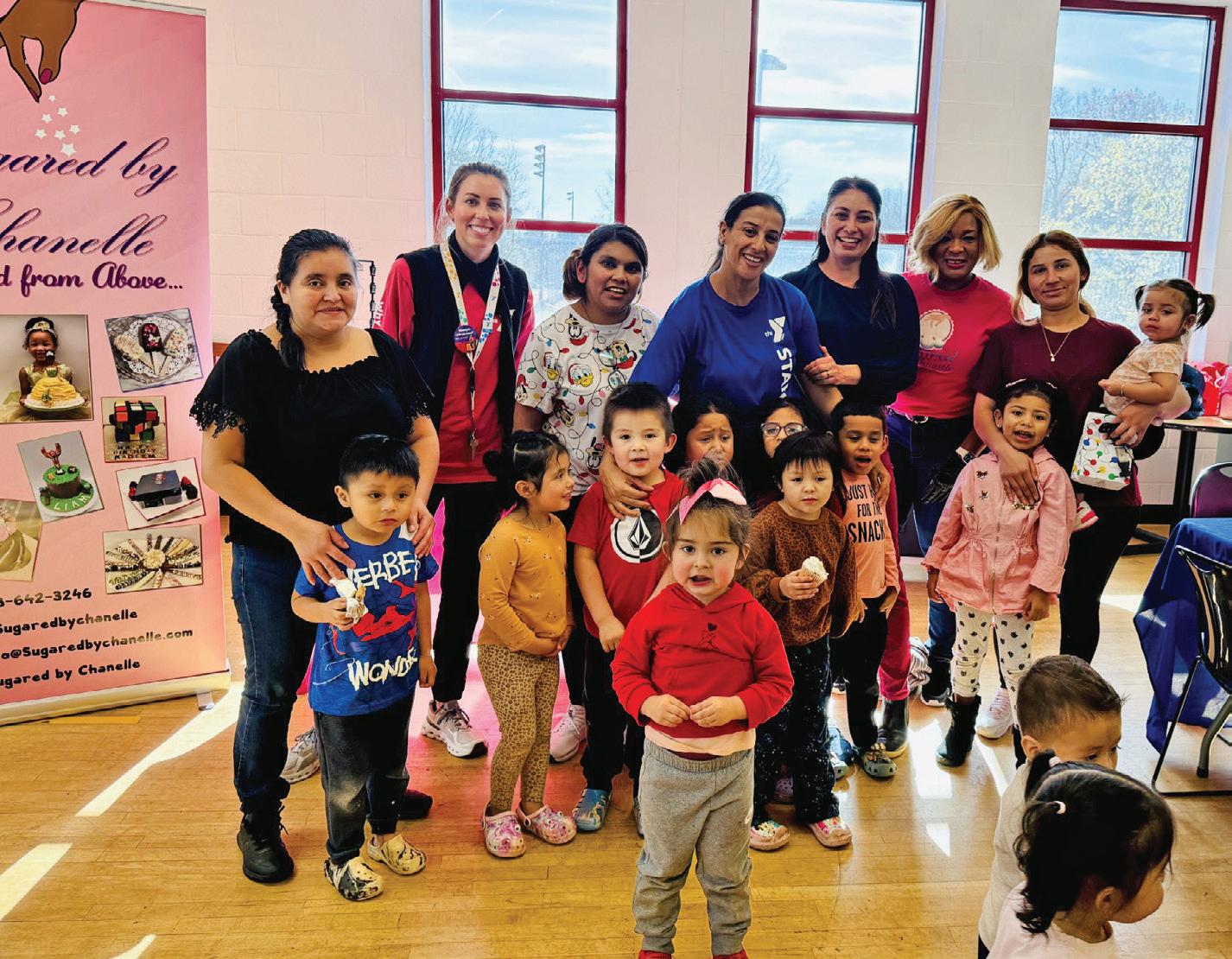
What I’m most proud of isn’t the food distribution itself. It’s the collaboration that resulted. Organizations that had never worked together before began sharing resources, coordinating efforts, and solving problems together. While that program ended in 2021, the relationships remain.
What all three examples have in common is that they started as efforts to address a specific need. But when the right people, organizations, and resources came together, they became something much larger.
That’s one of the things I’ve learned over the years: Sometimes the greatest impact isn’t the program itself — it’s the relationships, partnerships, and momentum that continue long after the original need has been met.
Martin: That’s easy. Let’s have a conversation.
Let us get to know you. Let us learn what’s important to you. When you look around our community, is there something that particularly excites you? Alternatively, is there anything you see that breaks your heart?
Sometimes, people discover a passion they never knew they had simply because they were exposed to a story, an organization, or an opportunity they didn’t know existed. That’s where we come in. My advice is not to wait until “someday.” Opportunities to make a difference are all around us, but we often miss them because no one has connected us to them.
You don’t need to be wealthy, and you certainly don’t need to have all the answers. If you’re interested in volunteering, we can help connect you with organizations doing important work in areas you care about. If you’re interested in charitable giving, we can help you explore opportunities that align with your interests and
values. If you’re a business owner, we can help you think about how your company can make a difference in the community. And if you’re simply curious about what’s happening in Cobb County, we’d love to share what we’re learning.
At the end of the day, meaningful change starts with people who care enough to get involved. Our job is helping them find the place where their passions, talents, and resources can make the greatest difference.
Sometimes the most important thing we do isn’t help someone make a gift; it’s helping them discover the difference they want to make.
CIF: Is there anything else you would like to share with our readers?
Martin: Cobb County is an amazing community. Every day, we meet people who are giving their time, talent, and resources to help others. We meet nonprofits doing remarkable work. We meet businesses that care deeply about the communities they serve.
The challenges we face are real, but so are the opportunities. That’s what excites me most about the future — not what Cobb Community Foundation can do, but what we can all do together. We’ve seen time and again what happens when generous people, strong nonprofits, engaged businesses, and community leaders come together around a common purpose. Incredible things happen.
That’s why I’m so optimistic about Cobb County. We have the people, the generosity and the willingness to work together. When those things align, there’s no limit to what our community can achieve. •
Editor’s note: Some responses were edited for style, clarity, or brevity.

Why your company needs EPLI
BY KEVIN DIPETRILLO, PARTNER, POINTENORTH INSURANCE GROUP
We’re about 30 years into insurance companies offering Employment Practices Liability Insurance (EPLI), and I still frequently walk into established companies who have never heard of it and are completely exposed. It shouldn’t surprise me anymore, but it happened several times recently, and it still drops my jaw every time.
Very few company founders or executives started their pursuit realizing how much time they would spend on managing people and legal responsibilities in their business. Even fewer received any kind of formal training to prepare them for the role. As a result, even those companies with strong values and thoughtful managers can make mistakes and face allegations around employment practices like wrongful or discriminatory hiring, discipline, promotion, pay, or termination along with other violations of labor law. Sometimes, when I’m meeting with a business that falls under the 50-employee threshold, the business owner believes they’re not subject to employment law, but they’re wrong. It doesn’t matter if you have two employees or 2,000: your business has an exposure. Employment Practices Liability Insurance is designed to help protect a business when an employee, former employee, or job applicant claims they were treated unfairly.
employees harass or discriminate against people outside of the organization too. One of the worst claims I’ve seen came from an employee who gathered the cell phone numbers of attractive customers, then sexually harassed them.
Common claims EPLI can help address:
» Wrongful termination or wrongful discipline
» Discrimination based on protected characteristics
» Harassment, including sexual harassment
» Retaliation after an employee raises a concern or complaint
» Failure to hire, promote, or fairly evaluate an employee
» Defamation, invasion of privacy, or certain employmentrelated misrepresentation claims
These allegations can disrupt more than a balance sheet. They can pull owners and managers away from running the business, hurt morale, create reputational risk, and lead to long stretches of uncertainty. EPLI helps businesses respond with resources and financial support at a time when pressure is usually high.
Sometimes, when I’m meeting with a business that falls under the 50-employee threshold, the business owner believes they’re not subject to employment law, but they’re wrong.
One of the biggest misconceptions in business insurance is that general liability or workers’ compensation will cover employee lawsuits. Usually, they do not. EPLI fills that gap by helping with the cost of defending and resolving employment-related claims. For many businesses, the value of EPLI starts with legal defense alone, which can average $75,000 for pre-trial cases and $150,000 or more for cases that go to trial. That’s before you get to the $75,000 of average settlement costs for discrimination or $250,000 for harassment.
That’s okay. It won’t happen to you, right? Certainly not under the current business-friendly administration. The Equal Opportunity Employment Council (EEOC) recently reported a record-breaking $528 million in pre-litigation recoveries in 2025. Both the quantity and severity of EEOC actions increased year over year. This is just the Federal watchdog and doesn’t even account for private legal action against employers. In practice, that means businesses of all sizes face a real possibility of being pulled into a dispute, even when leadership believes it acted appropriately
It’s not just employee on employee behavior that business owners need to worry about. Employers can be sued when
While policy terms vary by insurer, EPLI often helps cover attorney fees, court costs, settlements, and judgments tied to covered employmentrelated claims. Some policies can add coverage for third-party claims and Wage-and-Hour disputes. Many policies also include access to HR resources through an online portal, such as employee handbook support and training tools. Some also include Employment Law hotlines that can help employers discuss a situation and reduce risk before a dispute grows into a claim. Some General Liability policies include a nominal amount of EPLI, but the breadth of that coverage is usually limited, and the coverage limit is far too low to be effective.
Employment Practices Liability Insurance policies are not uniform in the marketplace. You should work with an informed insurance broker and review definitions, exclusions, deductibles, and third-party coverage carefully.
No employer expects to face an employment claim, but every employer faces the possibility. That is why EPLI has become an important part of a sound business insurance strategy. It helps protect finances, supports a faster response when allegations arise, and gives business owners a set of tools to use as they build and manage their teams. In short, if a business has employees, EPLI deserves serious consideration. •
KEVIN DIPETRILLO is a Partner at PointeNorth Insurance Group. With a degree in Risk Management from The University of Georgia, he has been helping businesses and High Net Worth households with their insurance needs for 25 years. Visit pointenorthins.com to see how the company can serve your needs.
Distance from Marietta to Downtown Atlanta: 20 mi
Distance from Marietta to Hartsfield-Jackson Atlanta International Airport: 30 mi
POPULATION: 776,743
MEDIAN HOME PRICE: $503,580
COMBINED SALES TAX RATE: 7%
ONLINE: cobbcounty.org
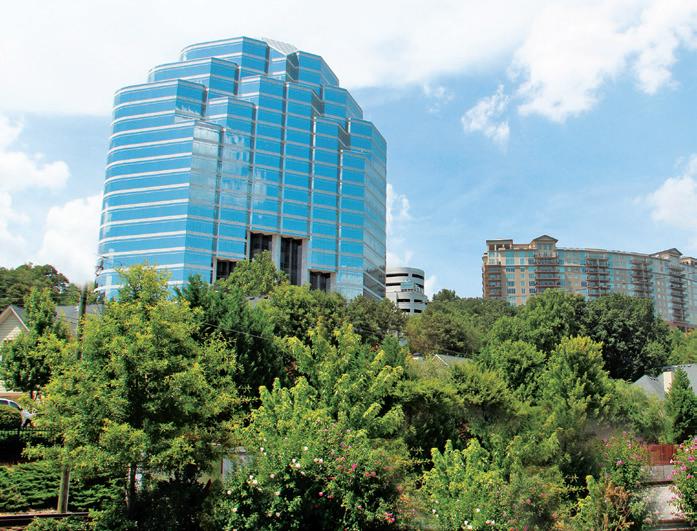
Long regarded as one of the best places to live in metro Atlanta, Cobb County captures the best of all worlds with growing businesses, neighborhoods and more just beyond the I-285 Perimeter. It provides easy access to recreation and entertainment opportunities, as well as a thriving commercial center.
• Amazon.com Services, Inc.
• The Home Depot
• Lockheed Martin Corp.
• Kennesaw State University
• Fed Ex Ground Package System
• Publix Supermarkets
• Walmart
• Wellstar Health System
• Piedmont Healthcare
• Truist Park/The Battery Atlanta
• Six Flags Over Georgia/White Water
• Kennesaw Mountain National Battlefield Park
• Southern Museum of Civil War and Locomotive History
• Silver Comet Trail
• Chattahoochee River National Recreation Area
CITIES OF COBB:
ACWORTH acworth-ga.gov
Known as “The Lake City,” Acworth makes good use of its prime location on the banks of Lake Acworth with a full calendar of events centered around the water and abundant recreational activities.
AUSTELL austellga.gov
Although Austell is located just 18 miles from downtown Atlanta, Its revitalized downtown gives it a small-town feel. The town is known for railfanning and the colorful train engines of the Atlanta rail lines.
KENNESAW kennesaw-ga.gov
Kennesaw is a bustling business center in Cobb County known as a great place to raise a family, while also being home to first-rate parks, the Southern Museum of Civil War and Locomotive History and Kennesaw State University.
MABLETON mableton.gov
Incorporated in 2022 and becoming Cobb County’s largest city with more than 78,000 residents, Mableton is home to Six Flags, the Historic Mable House and Mable House Amphitheater and access to the Silver Comet Trail.
MARIETTA mariettaga.gov
Historic Marietta Square serves as the city center for this vibrant and ever-growing community, boasting quaint shops, renowned restaurants, numerous museums, celebrated theatres and great hiking at Kennesaw Mountain.
POWDER SPRINGS cityofpowdersprings.org
Once a gold mining town, the city boasts a historic downtown, Thurman Springs Park, the Cobb County BMX Park and integrated bike and pedestrian trails.
SMYRNA smyrnaga.gov
Just a 15-minute drive from downtown Atlanta and winner of the Urban Land Institute’s Award of Excellence, the “Jonquil City” is home to a wealth of family-friendly, diverse neighborhoods, upscale dining establishments, pristine public parks and a vibrant Village Green.
NEIGHBORHOODS OF COBB: CUMBERLAND
Situated 10 miles northwest of downtown Atlanta, this unincorporated community serves as the region’s fifth largest business district and is home to the Atlanta Braves’ Truist Park.
VININGS
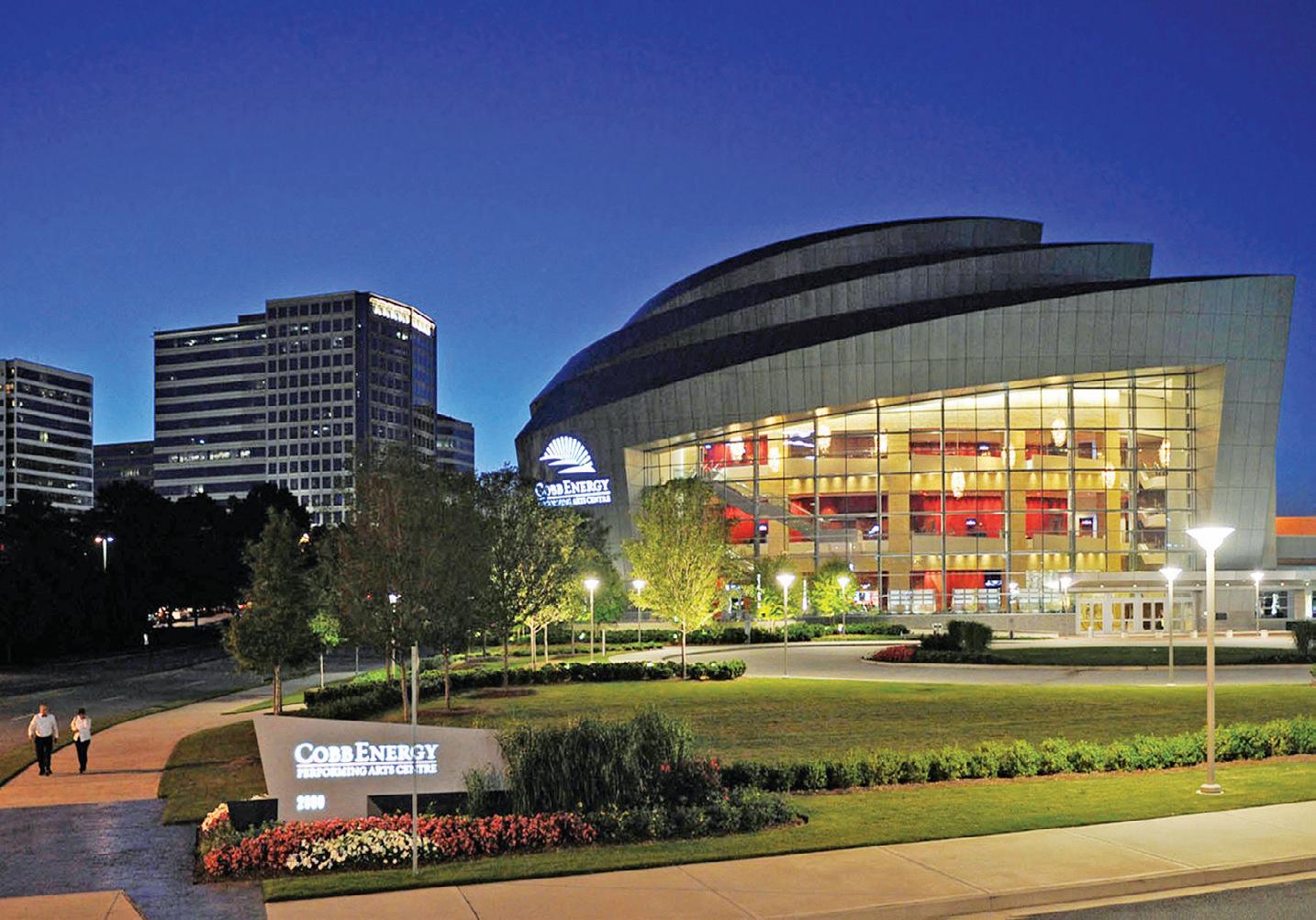
Unincorporated Vinings has become a go-to spot for a city-meets-the-suburbs experience, with upscale boutiques, exceptional restaurants and the Cobb Energy Performing Arts Centre.
PUBLIC SCHOOLS
Cobb County Schools cobb.k12.org
Marietta City Schools marietta-city.org
FIVE PRIVATE SCHOOLS
Mount Paran Christian School mtparanschool.org
North Cobb Christian School ncchrisitan.org
The Walker School thewalkerschool.org
Whitefield Academy whitefieldacademy.com
Mt. Bethel Christian Academy mtbethelchristian.org
(source: Niche)
To view annual SAT scores by district and school, as well as Georgia Milestones scores, visit the Georgia Department of Education at gadoe.org.
MAJOR COLLEGES AND UNIVERSITIES
Chattahoochee Technical College chattahoocheetech.edu
Kennesaw State University kennesaw.edu
Life University life.edu
NATURAL GAS
SCANA Energy scanaenergy.com
PHONE/CABLE/INTERNET
Xfinity/Comcast xfinity.com
AT&T att.com
Spectrum spectrum.com
Georgia Power georgiapower.com
Acworth Power acworth.org
Cobb EMC cobbemc.com H
GreyStone Power Corp. greystonepower.com
Marietta Power mariettaga.gov
Cobb County Water System cobbcounty.org
Marietta Water marietta.gov
H Select provider

BY DENISE K. JAMES

Summer has always equaled down time, but these days, it’s not just long bike rides and baseball games. Social media takes up a lot of time for both kids and adults.
Whether you’re reaching out to a friend for whom you have a little more time, indulging your kids in creating an Instagram reel, or using Facebook Marketplace to score some new patio furniture, certain safety tips can mean the difference between using technology to your advantage and, well, pining for the days of analog. Here are a few guidelines to keep in mind.
It’s no secret that the main purpose of social media has shifted from socializing to collecting market data. That said, summer is a great time to sit down and figure out your “ad preferences” (typically listed under settings), so your feeds aren’t crowded with irrelevant advertising clutter.
Privacy is precious, and even more so in 2026. Steer clear of posting on social media when your family is going on a summer vacation, what your new address is, or anything else that hackers and scammers could use against you.
Need a service or product, or just want to meet new friends? Facebook groups built around communities, such as towns and even neighborhoods, are a great place to start and are far less likely to result in a scam. As a bonus, check for mutual friends.
When friends and colleagues drift, it’s all too tempting to send a friendly “How are you!” — particularly during the summer months when you might have more time. But doing so can set you up for disappointment if that person is overstretched or simply not interested. Not every lost connection needs to be restored. •