
HAVING A WONDERFUL TIME
HAVING A WONDERFUL TIME
postcardsthattellastory
edited by julian rothenstein
consultant: aaron hicklin
CONTENTS
Introduction 11
J. G. Ballard: Having a Wonderful Time 13
Nicci French: Crazy for You 37
Andrey Kurkov: The Pleasure of Slowness 51
Ali Smith: Five Card Trick 63
Single cards:
Jan Carson 77 • Ian Sansom 79 • Ardashir Vakil 81
Natalie Hume 83 • Adam Phillips 85 • Sarah Waters 87
Will Eaves 89 • Sophie Elmhirst 91 • Francis Gooding 93
Mark Haddon 95 • Susannah Clapp 97 • Chris Power 99
Ruth Fainlight 101 • Geoff Dyer 103 • Madeleine Thien 105
William Boyd 107 • Hannah Lowe 109 • Michèle Roberts 111
Max Porter 113 • Alison MacLeod 115 • Alan Jenkins 117
Claire Messud 119 • Sam Miller 121 • Akshi Singh 123
Iain Sinclair 125 • Rob Franklin 127 • A.M.Homes 129
Charles Boyle: Brussels 131
Lucien Kee: Hit and Mess 145
Will Self: Billy’s Lament 151
Julian Barnes: Oranges 169
Chloe Aridjis: Strange Circumstance 175
INTRODUCTION
When I first started going abroad in the early 1960s, postcard-buying was a key pleasure of the experience. You disappeared from your parents’ view – there was no phoning home in those days except for violent emergency – and your return often preceded the arrival of the cards you had sent. There were also cards you bought to keep, for the promotion of future memories. In those days, museum shops (if they existed) were primitive; in Italy, very few museums or galleries sold their own cards. You had to go back out into the street and twirl the metal carousels of dusty cartolini, then look for a café or post office to buy stamps.
All this has now more or less disappeared. Friends of my generation occasionally send postcards, but more often it will be a picture from a gallery on an iPhone. (The only major museum I know that doesn’t allow photography is the Prado). Today, few young tourists travel without a mobile phone, so those incommunicado treks of my youth have largely ceased. Children call home from Cambodia and Colombia at the slightest impulse; while the anxious parent inserts a tracker into the young person’s device to find exactly where they are, down to the nearest building, anywhere on earth. As with all technological developments, this has a down- as well as an up-side.
Over the years I have assembled a massive collection of postcards, all filed by subject matter and century of image: from old black-and-white deckle-edged views of provincial France, to Sixties postcard-packs with dubious colour from Moscow and Leningrad, to portraits of cultural heroes and heroines, to art cards from everywhere I’ve been. Stamps are now less easy to find, so you often give the completed cards in to hotels (some of whom seem to have a policy of just throwing them away). But now there is another use for them: as the basis for your own illustrated stories, either with speech-bubbles attached to the picture side or, as this book illustrates, by a single or series of messages, on the back. It is, as you will see, a very flexible way of telling a story: sometimes direct, sometimes oblique; sometimes a soliloquy, sometimes multi-voiced; sometimes down-to-earth, sometimes metaphoric. The writers here offer many different and fruitful approaches to the form. And perhaps, in the future, when newer forms of communication will have displaced current ones, some human or machine will have the bright idea of linking together a series of antique iPhone pictures with fictional captions, to make a narrative. (Just don’t tell me that this has already been done.)
JULIAN BARNES

J. G. Ballard
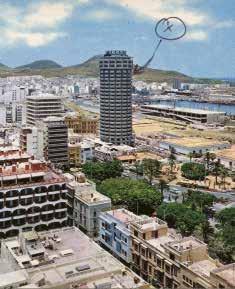

3 July, 1979, Hotel Imperial, Playa Inlaterra, Las Palmas
We arrived an hour ago after an amazing flight. For some reason of its own the Gatwick computer assigned us to 1st class seats, along with a startled dentist from Bristol, her husband and three children. Richard, as ever fearful of flying, took ull advantage of the free champagne and was five miles high before the wheels left the ground. I’ve marked our balcony on the 27th floor. It’s an extraordinary place, about 20 miles down the coast from Las Palmas, a brand-new resort complex with every entertainment conceivable, all arranged by bedside pushbutton. I’m just about to dial an hour’s water-skiing, followed by Swedish massage and the hairdresser! Diana
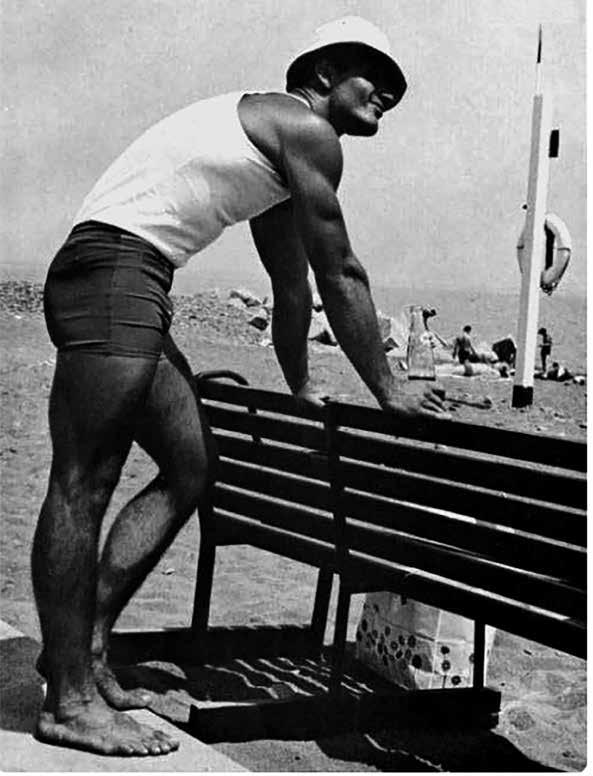
10 July, Hotel Imperial
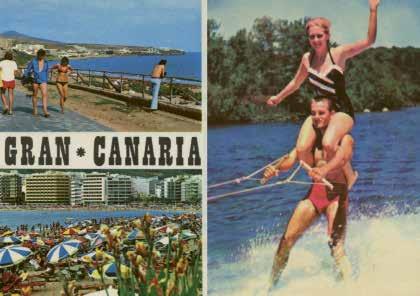
An unbelievable week! I’ve never crammed so much excitement into a few days – tennis, scuba-diving, water-skiing, rounds of cocktail parties. Every evening a group of us head for the bôites and cabarets along the beach, ending up at one or more of the five nightclubs in the hotel. I’ve hardly seen Richard. The handsome cavalier in the picture is the so-called Beach Counsellor, a highly intelligent ex-public relations man who threw it all in two years ago and has been here ever since. This afternoon he’s teaching me to hang-glide. Wish me happy landings! Diana
17 July, Hotel Imperial
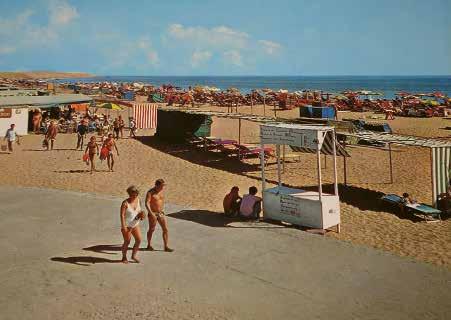
The times of sand are running out. Sitting here on the balcony, watching Richard ski-chute across the bay, it’s hard to believe we’ll be in Exeter tomorrow. Richard swears the first thing he’ll do is book next year’s holiday. It really has been an amazing success – heaven knows how they do it at the price, there’s talk of a Spanish government subsidy. In part it’s the unobtrusive but highly sophisticated organisation – not a hint of Butlins, though it’s British-run and we’re all, curiously, from the West Country. Do you realise that Richard and I have been so busy we haven’t once bothered to visit Las Palmas? (Late news-flash: Mark Hastings, the Beach Counsellor, has just sent orchids to the room) I’ll tell you all about him tomorrow. Diana
18 July, Hotel Imperial
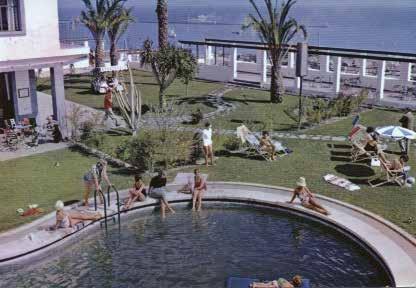
Surprise! That computer again. Apparently there’s been some muddle at the Gatwick end, our aircraft won’t be here until tomorrow at the earliest. Richard is rather worried about not getting to the office today. We blew the last of our traveller’s cheques, but luckily the hotel have been marvellous, thanks largely to Mark. Not only will there be no surcharge, but the desk clerk said they would happily advance us any cash we need. Hey-ho . . . A slight let-down, all the same. We walked along the beach this afternoon, together for the first time. I hadn’t realised how vast this.resort complex actually is – it stretches for miles along the coast, and half of it’s still being built. Everywhere people were coming in on the airport buses from Sheffield and Manchester and Birmingham, within half an hour they’re swimming and water-skiing, lounging around the hundreds of pools with their duty-free Camparis. Seeing them from the outside, as it were, it’s all rather strange. Diana

Click here to learn more about the book.