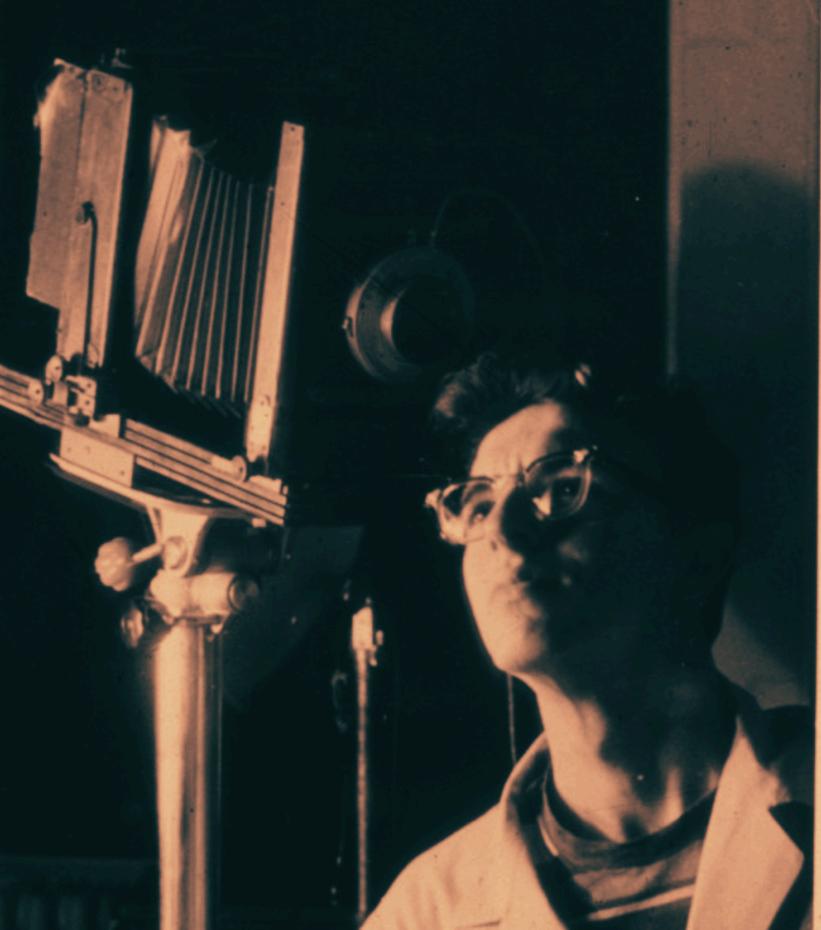
Johnny Justice Jr (1958)
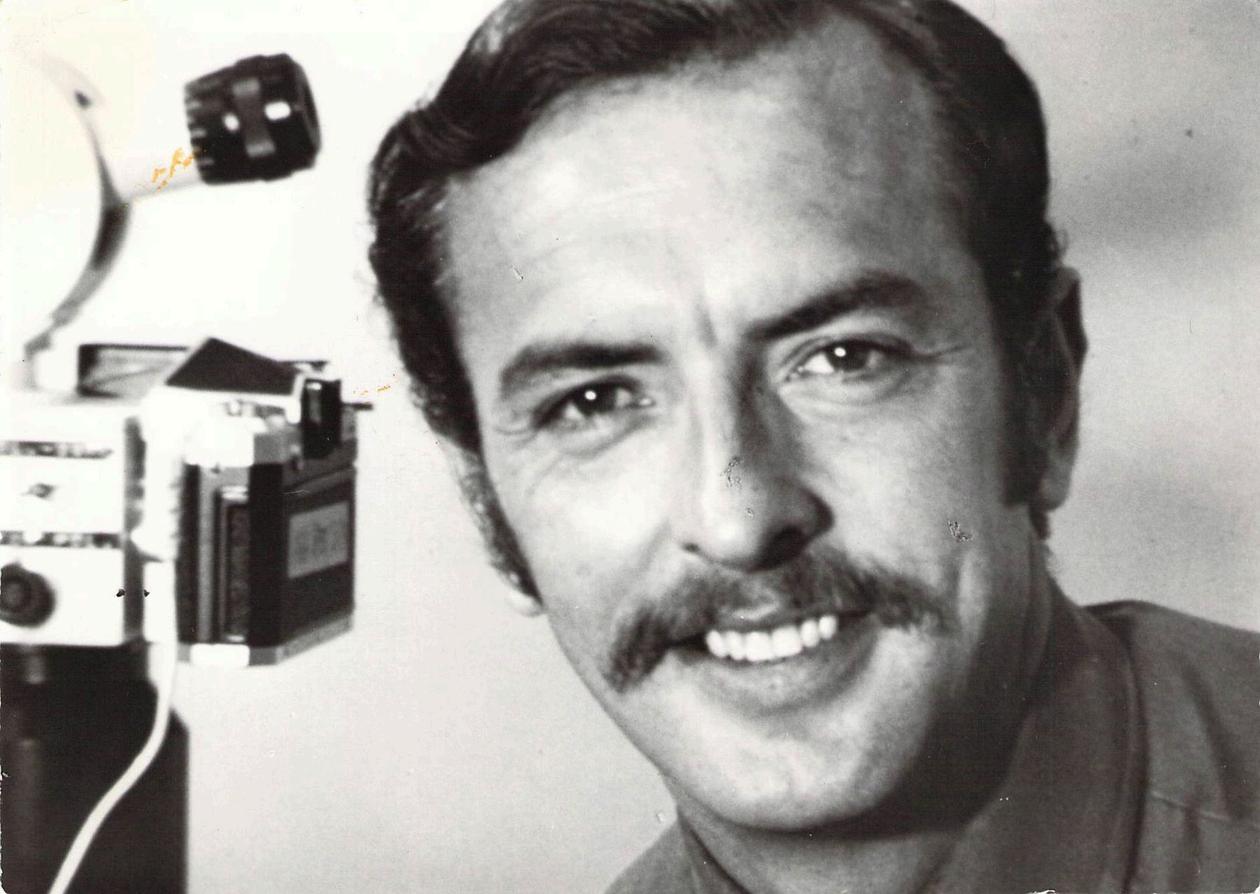
MARCH 1, 1939 – DECEMBER 15, 2024


MARCH 1, 1939 – DECEMBER 15, 2024
DearReaders,
Itisbothanhonorandadeeplypersonal privilegetointroducethisveryspecialissue, “BehindtheLens:AMan,HisVision,andHis Legacy-ATributetoJohnnyJustice,Jr.”aswe celebratethelife,legacy,andlastingcontributions ofJohnnyJustice,Jr.atruepioneerinthefieldof ophthalmicphotography.Johnnywasn’tjusta foundingfatherofourprofessionhewasits heartbeat.Withacamerainhandandavisionfar beyondthelens,heelevatedophthalmicimaging fromatechnicalsupportroletoarecognized clinicalspecialty.Hebelievedthatanimagecould domorethandocumentdiseaseitcouldteach, inspire,andadvocate.Andthat’sexactlywhathe didfordecades.
Thisissuebringstogetherreflections,stories, andscholarlycontributionsthatcelebrateJohnny’s indelible impact. You’ll find historical retrospectives,personaltributesfromcolleagues andmentees,andacuratedselectionofhismost iconicimages,manyofwhichchangedhowwesee oculardisease,andhowweseetheroleof photographyineyecare.Forme,thisissuecarries anespeciallydeepsignificance.Asaproud recipientoftheJohnnyJustice,Jr.Scholarship,I havefeltthepersonalimpactofhislegacyina tangibleway.
That recognition was more than a career milestone it was a reminder that our contributions matter, and that excellence, passion, and commitment to our craft will always have a place in this field. I carry that encouragement with me every day in my work, and I know I’m not alone. Many of us who work behind the camera today stand on his shoulders. His influence can be seen in the standards we follow, the professional certifications we pursue, and the pride we take in calling ourselves ophthalmic photographers. For those of us who had the great fortune to know him personally, Johnny was also a generous mentor, a brilliant educator, and an unshakable kind of presence. As we reflect on Johnny’s legacy, let us also look forward with renewed commitment. He challenged us to keep learning, to remain curious, and to never underestimate the power of an image. Let this issue serve as a reminder that our work matters and that, like Johnny, we too can leave the profession better than we found it.
Withheartfeltappreciation,
Kathleen Warren-G, Editor in Chief

June 4, 2025
To follow in one ’ s footsteps not have imagined. I feel I am b known Johnny Justice Junior in m I had the kind of vision that he h have created such a critically imp saving tool for detecting leaka vessels in the human eye using t and film.
Always with a positive attitude towards his fellow imagers, I met Johnny Justice Jr. during an OPS Program in the fall of 2009 at the Parc 55 in San Francisco, CA during an OPS Annual Educational Program. Though memorable indeed, I also had the pleasure of meeting several distinct people of the OPS: Harry Kachadorian CRA (dec.), also Barb McCalley-OPS Executive Director, Stephanie Attebery-Education Chair, Alan Frohlichstein, CRA, FOPS, OPS Historian/Photographer, and the first time I was an Instructor for OCT, with Kirsten Locke, RN, CRA.
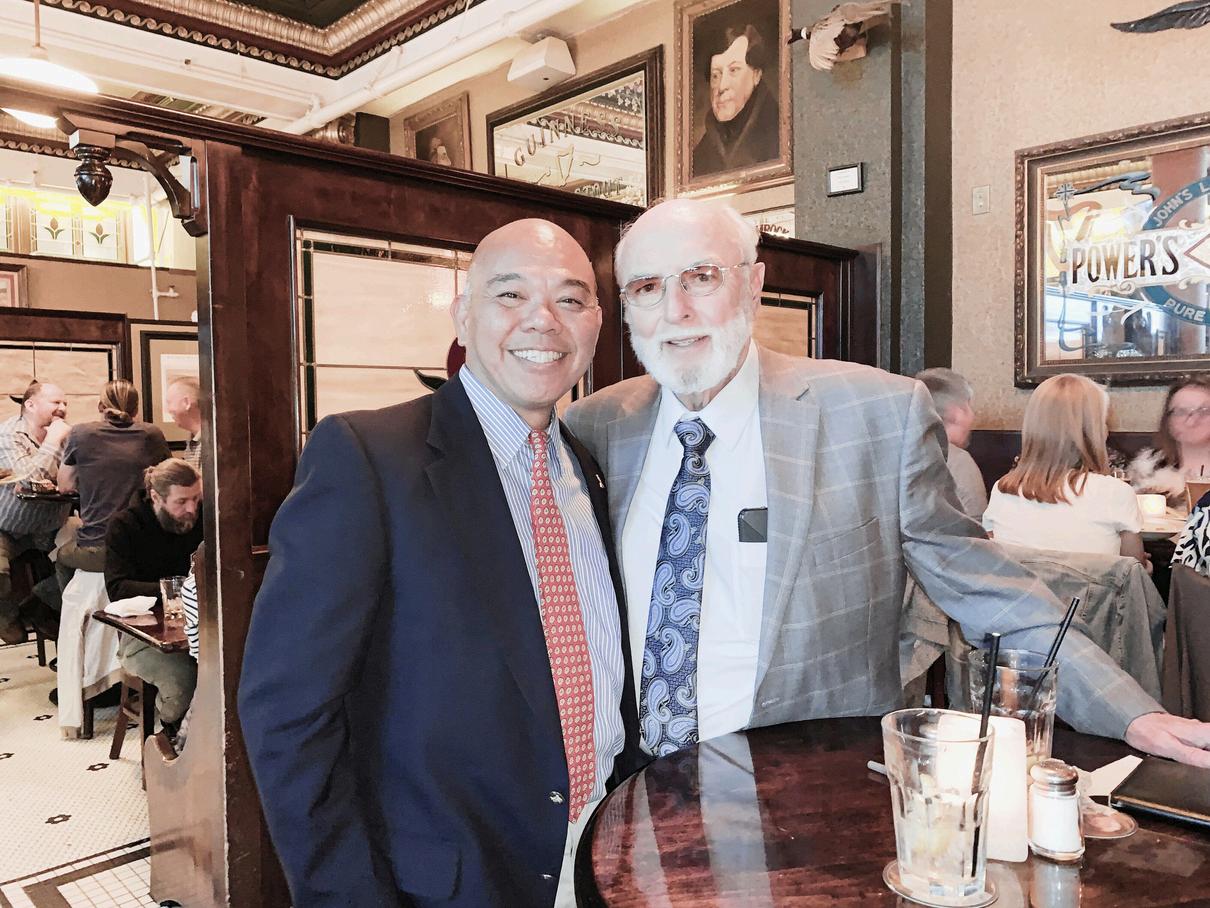
I heard him conversing with many imaging experts, discussing the facets of film vs. digital photography, as it was just taking foothold in the US and abroad. He was still an advocate of the detail of film photography and angiography, and it was mesmerizing to hear him speak. I was also introduced to Madam Paula Morris, CRA, FOPS, which I did not know at the time, but would be a life changing moment. To devote so much of your self to the enhancement of the diagnosis and treatment of eye diseases, and for training those ophthalmologist physicians, attending fellows, and residents to be able to see the microscopic detail, and ultimately establish The Ophthalmic Photographers’ Society is just astounding!
When I was nominated to Fellow in 2017, it was Johnny who was given permission to ring me up in New York to share the good news. I remember the moment like it was yesterday and was so astonished that Johnny would call me and he ended our conversation by saying, ‘Just remember to keep making a difference Jim, and always keep your eye on the prize!”
Johnny and I shared a few good stories together during OPS Annual Program and Mid-Year meetings in Miami 2019, San Francisco, 2019, and in San Francisco, 2023. I will miss his tender laugh, I will miss how he could command a room, and I will miss his smooth Southern Gentlemanly accent of his. My only regret as the President of the OPS, 2024, Elect., is that I did not get a chance to tell him of this achievement in person when I was sworn in during the Annual Program in Chicago in October 2024. This was about the time he became increasingly ill with his health, and so many of my email inquiries went unanswered.
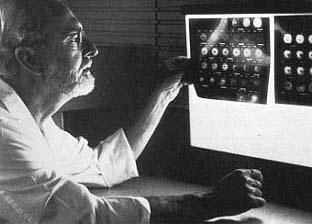
Though....
If I could say one thing to him, it would sound something like this...
“Iwillalwayscarryapartofyouinmy heart, Johnny. Thank you for creating the Ophthalmic Photographers’ Society, a center for learning and maintaining the highest standards of ophthalmicphotographyintheworld. This society has enhanced the lives of so many people, and has helped diagnose innumerable eye diseases worldwide.“
Jim Soque

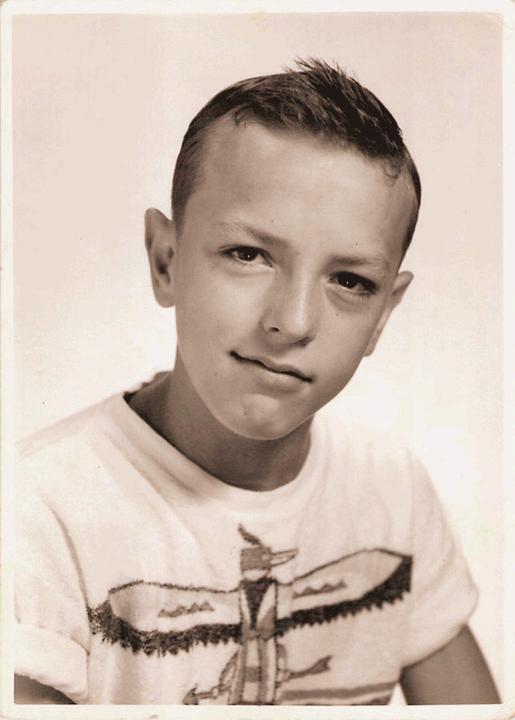
Written by Johnny Justice Jr, FOPS
Edited by Chris Barry, FOPS
Paula
Morris, FOPS
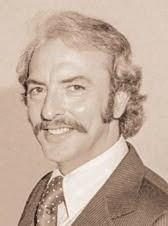
I was born on March 1, 1939, the seventh and only boy of seven children, to parents who, for reasons never explained to me, ended their education around the third grade. It is safe to say that I was very lucky just to be born. Except for some hard-to-believe stories my sisters shared many years later, I don’t remember much about my early days. At the age of four, I was placed in the Fannie Y. Bickett Home, an orphanage near Raleigh, North Carolina, along with three of my six sisters Jeanette, Kathleen, and Jane. I do not have any fond memories of that less-thanmemorable place; we simply existed there for around two years, with a few other rescued souls. During that time, my mother married a soldier from Monessen, Pennsylvania, a small town southwest of Pittsburgh.
(next page)
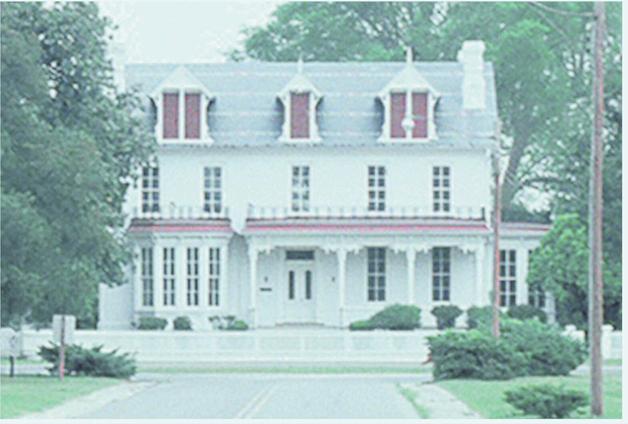
In 1945, the Fates were kind to me when my sisters and I were unexpectedly sent to the Kennedy Memorial Home, about five miles from Kinston, NC (Figure 1). This orphanage occupied a 1,200acre tract of fertile farmland and had been converted from a working plantation, complete with a beautiful antebellum mansion at the end of a pecan tree-lined driveway. The property had been donated by Captain and Mrs. William Kennedy in 1912, and the trustees developed a full campus along the historic avenue leading to the main house to care for orphans, whose numbers peaked in the mid-twentieth century and gradually declined thereafter. Over time, the campus expanded to include dormitories, a church, and, most importantly to me, a football and baseball field and a basketball gymnasium. In the late 1940s, the main dirt road was paved, and a swimming pool and tennis courts were added.
From the outset we were given duties to perform which were rotated on a regular basis. We made up our own beds, cleaned the bathrooms, and swept and mopped the floors. Other duties included setting the table in the dining room and then washing, drying, and putting away the dishes after the meal. One of my favorite memories is of raking leaves all by myself on one side of the Hardee building where I lived. When I was finished with raking, without being asked, I just continued on and raked the leaves all the way over to the Canady building where the lazy older boys lived. The matron came out and asked why I was raking their leaves and I told her that it just looked like it needed to be done. She told me to come inside and then surprised me with a huge slice of chocolate cake and a big cold glass of milk! To this day I can still remember how proud I was of myself and how good that cake and milk tasted. Years later I appreciated the lesson I learned in that one afternoon of hard work. The unexpected reward I received was truly a seminal event in my life: I learned that outworking and out-smiling everyone pays big dividends.
...(next page)
In the spring we planted seeds and young plants by hand to grow crops of corn, potatoes, tomatoes, okra, squash, watermelons, cantaloupes, and more. We frequently had contests to see who was the fastest when we hand-picked the vegetables, and being very competitive, I was always among the fastest. We had three square meals a day with plenty to be had by all. The fresh foods we ate were nutritious and well prepared by the chefs, and the fresh frozen and canned vegetables prepared by the older girls were surprisingly good. We also participated in raising and slaughtering our own poultry and hogs, and yes, we hand-milked the cows at our dairy until those amazing milking machines were installed at the Home, way before most of the dairy farmers in the area could afford them. We were bussed to elementary, junior, and senior high schools in LaGrange, NC, a small farming community about seven miles north on Highway 70. I felt sorry for some of the kids in rural NC in the 1940s and beyond because many of them were living in sharecropper shacks, which were usually not well insulated and did not have electricity or running water. They had to go outside to pump the water and then
bring it in for drinking and cooking purposes, as well as heating the water for bathing on woodburning stoves, and of course, they had to go outside to use outhouses to relieve themselves.
We at the orphanage were lucky because we had electricity, steam heat, and modern plumbing in our dormitories along with indoor showers and toilets. During a very cold winter in the late 1940s, I spent the weekend with my friend, Jim Wiggins, who lived on one of the tenant farms located about three miles from the orphanage, and I really thought I was going to freeze to death that weekend I don’t remember ever being that cold again! Life was good at the orphanage and at school. Sure, there were the occasional ups and downs, including arguments and fistfights, but all in all most of the kids were friendly with each other, and these friendships are still evident when many of us get together for the annual July homecoming at the Kennedy Home, whose 100th anniversary was celebrated in 2012. In the spring of 1953, I was shocked to be asked by the principal if I would like to go live with my mother, Josie Moore Luoma, in Monessen, Pennsylvania (PA), a steel town of about twenty thousand people ...(next page)
I had not seen my mother for ten years and did not know much, if anything, about her because she had never visited us at either of the two orphanages. I only remember receiving a couple of barely legible letters from her during those years.
My three sisters had run away in their teens without telling me their plans or saying goodbye. Nevertheless, I thought that it would be interesting to travel to a distant state, not knowing what it would be like to live with my mother and my stepfather, Eugene Luoma, a southwest Pennsylvania native. They had met when he was a soldier stationed at Camp Butner near Durham, NC. When I arrived in Monessen, there was a strange off-putting odor in the air, and later I learned that odor came from the U.S. Steel coke plant which is a critical part of the steel-making process. In no time at all I adapted to the odor and begantoenjoythebeautyofthehills(mountainsto me) in the Mon-Valley region. Sadly, the steel mill closed down in 1995. My mother seemed genuinely happy to see me, and my stepfather accepted the fact that I was there. Quickly I found that he enjoyed sports as much as I did, so we got along verywellindeed.
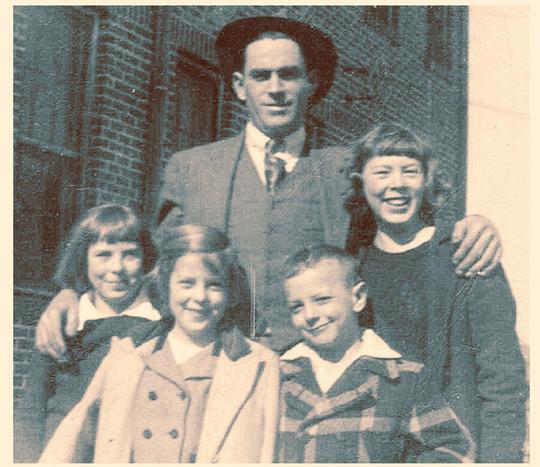
He was a nice man of Finnish descent who toiled hard as a construction worker after his years as a soldier. Still, during the four years that I lived with them I sometimes felt as though I was living with strangers as they must have felt with me (Figure 2)
When I arrived in Monessen I wanted to play organized baseball and learned that the Pony League had several teams. I went to the 9th Street Hill baseball field to sign up but discovered that all but one of the teams had full rosters of players. The Carver Aces, an all African-American team, needed players and readily accepted me, and I was happy to be on their team (remember that this was the early 1950s and desegregated schools had not yet happened in NC). It was a fun summer for me, even if we did not win a lot of games. Later that year I became a student at Monessen Junior High School and, as in the orphanage, I did well with my studies...
...(next page)
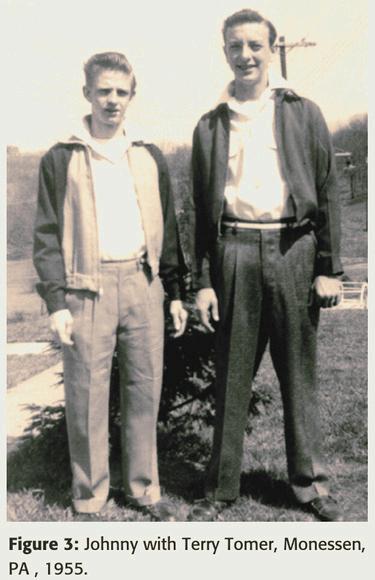
Then one afternoon when I was exploring downtown, I noticed some kids going down the steps into the Grand Parlor, better known as “The Hole,” a basement business on Schoonmaker Avenue, followed them down and was amazed to see a three-lane bowling alley and a billiards/pool parlor with about eight tables. I later learned that there was a nightly poker game that went on in a back room. I was standing there watching the kids shoot pool when the owner, Peter Druash, asked if anyone wanted to earn some money setting up pins for the afternoon bowlers. I didn’t mind taking it on, since work had been routine in the orphanage. I was told that I would be paid eight cents a line (game). So I went to the pin setting area where I met a kid by the name of Terry Tomer who was working in the adjacent lane. Much later Terry was to become a founding member of the Ophthalmic Photographers’ Society (OPS ) (Figure 3). Pete, the owner, was a considerate person, piping in music mostly from the 1940s on a speaker back where we worked. My shift was from three o ’clock in the afternoon until midnight. After working about six months, I was asked if I could hang around and go out for food and drinks for the poker players. It was not too long before I was working as late as two o ’clock in the morning. My grades at school suffered, but I enjoyed working and the “free” bowling and shooting pool, and I especially enjoyed making money! Pete took me under his wing and taught me the finer points of bowling and shooting pool, and before long I was winning quarters off the kids that came down to play.
During this time Terry and I became best friends and it seemed as if I spent as much time at his house with his family as I did with mine. Terry was a terrific skater and over time taught me the finer points of roller skating at the Piggly Wiggly Skating Rink. Terry’s parents were good to me. His mother Ruth, who was a beautiful woman, convinced me to stay in school instead of joining the Navy.
When, at age sixteen, I had saved enough money to buy a car, Terry’s father, Bill, helped mefindone.Itwasa1948Fordcoupe,forwhich I happily paid $75.00. After three minor accidentsIhadtosellthecarsothatIcouldpay for the repairs on the one that was really damaged. Since I did not have a driver’s license, I took driving lessons offered by our high school. They really worked because my driving record over the course of the next 60 years has beenverygood.
In late 1956, my mother learned of her brother’s death in North Carolina, and she traveled to Durham for his funeral. During her stay with my eldest sister, Ethel, she became acquainted with Carol Jean Parker, a pretty teenagerwholivednextdoor.Uponmymother’s returntoMonessen,shetoldmeaboutCaroland suggested that I write her a letter. After a few weeks of letter writing and photo swapping we discoveredwehadfalleninlovewitheachother. For my 18th birthday, I traveled to Durham to meet Carol in person. It became of the utmost importance to us that I leave Monessen as soon as possible so that we could be together. In May of 1957, I somehow managed to graduate from highschool.IleftMonessenonaGreyhoundbus headed for Durham, NC the same day that I graduated. I still love Monessen and the kids I knew at school and have returned to visit with themregularlyforourclassreunions.

After spending lots of time with Carol and freeloading off my sister for a couple of weeks, we all agreed that I should seek employment. That is when the “fickle finger of fate” struck again for me. I was told by the State Employment Agency in Durham that a full-time position as a darkroom technician trainee at Duke University Hospital had just become available. I was the only one of the twelve applicants who would agree to work as an intern for one month without pay. At the end of the month I was happy because I was accepted as the new darkroom technician. My starting salary was a meager $170 per month before taxes, but it was a job that appeared to present a good future, and I was anxious to go to work and prove to the hospital, and especially to Carol, what a smart decision they had made in choosing me. Within two weeks, I learned to mix the darkroom chemicals from scratch, and how to develop film and make paper prints, which il f I f I conquered their huge backlog in a very short period of time.
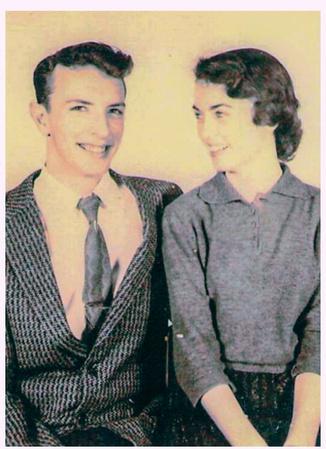
Carol’s mother and stepfather were alcoholics, so it made good sense, at least to us, to get her out of there and go ahead and get married. January 3, 1958 (Figure 4) was our wedding day, and we happily moved into our own apartment. I was almost nineteen and Carol had just turned seventeen. She continued with her studies to finish high school in 1959, easily finishing in the top of her class. We started our family with 1960, followed by Jay Dou
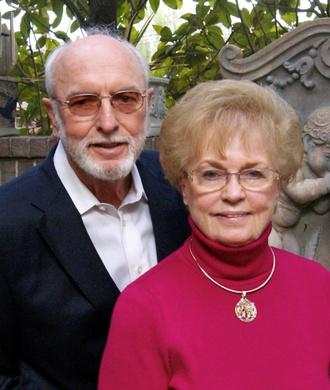
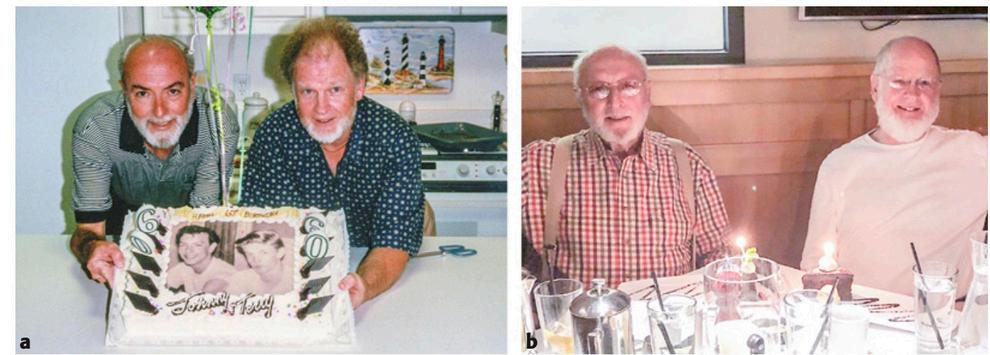
During my “middle-aged crazy ” period in the late 1970’s, Carol and I divorced. Happily, one year later she took me back. We remarried, and we have been together for 34 more years and counting - 60 total (Figure 5/6). ...(next page)
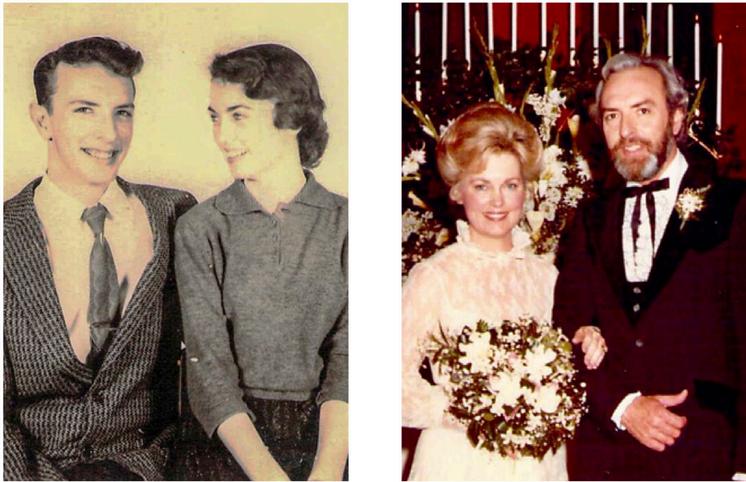
That trip to the employment office turned out to be a real game changer for me, and I resolved to start building my future. It did not take long for me to determine that the photographers at the hospital had little interest in training me in photography, so I decided to take a correspondence course from the School of Modern Photography in New York City. Then, with the permission of the head of the department, Professor Elon H. Clark, I began using the Duke cameras to complete course assignments during the evenings and on the weekends. It was lots of fun because Carol, still a junior in high school, would join me and do her homework while I studied and practiced photography. During my time at Duke, I witnessed the use of an unusual camera designed to take photos of the retina in the back of the eye. I was not allowed to practice with that Zeiss Nordenson carbon-arc fundus camera (Figure 6) but the chief photographer, Raymond Howard, RBP, did allow me to look over his shoulder and peer through a dilated pupil to see an incredible view of the optic nerve and retina. I never expected that one day I would be working as a full-time specialist in diagnostic photography of the eye and without a college degree. After a full year as a darkroom technician, I was invited to interview with the famed pathologist Dr. Wiley D. Forbus and his master medical photographer, Carl M. Bishop, RBP, FBPA, in the Pathology Department at Duke Hospital. They needed a replacement for their assistant chief photographer who had accepted a position at the University of Florida. Although it was unsettling to know I would be doing photography in the autopsy room of gross specimens removed from dead bodies, it was an immediate opportunity to work full time in photography. Even though I was leery of the prospect of specializing in this type of medical photography alone, it was an immediate opportunity to do fulltime photography in a shorter time frame than I had imagined. Within a week, I realized that I had made a smart decision because Mr. Bishop set about training me in a very organized fashion and over the next two years I became quite expert in photographing gross specimens, using techniques like a water-filled tank to eliminate reflections and photomicrography of histological tissue through a microscope.
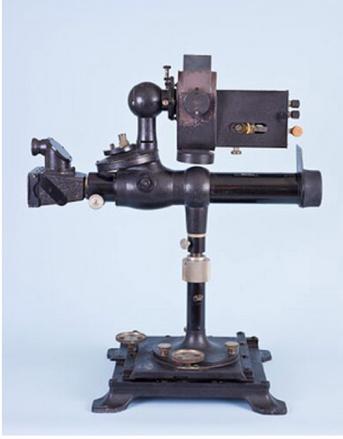
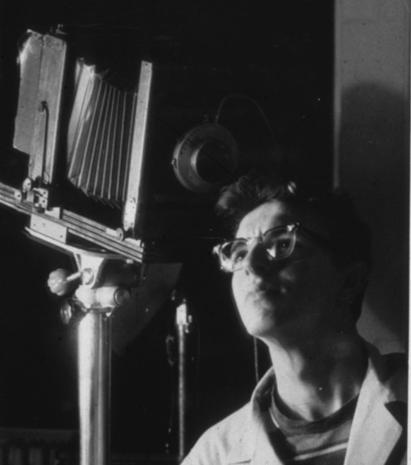
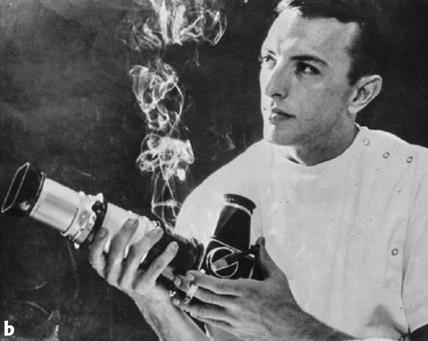
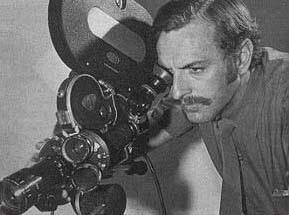
Things went well for Carol and me she was working at a local insurance company, and I was happy at Duke until one day in mid-summer 1960 when Leonard M. Hart, RBP, FBPA of the Durham Veterans Administration Hospital walked into the room. He was looking to hire an assistant chief photographer, and I was blown away when he offered me a GS-7 federal government position with a $5,000 annual salary, more than double my current income. This meant that Carol could stop working before the birth of our first baby and be a stay-at-home mom, I accepted, and was pleased to find that the photography equipment at the VAH included two Hasselblad C cameras complete with accessories, and an impressive Arriflex 16mm movie camera with several lenses. There were large darkrooms outfitted with modern enlargers, a contact printing machine, and E-3 Ektachrome color processing equipment. The cameras at the Duke Hospital were old 5X7 view cameras (Figure 7a,b), and the darkrooms were functional but had not been updated in years, so I was excited at the prospect of using modern equipment. Within two or three months, Mr. Hart felt comfortable turning most of the clinical and surgical photography over to me and began teaching me complicated cinematography and editing techniques (Figure 7c). I was thrilled to be working with him because he was an excellent, patient teacher.
...(next
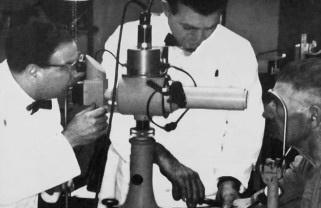
Around the middle of 1961, Noble J. David, MD, (Figure 8), a neurologist affiliated with both Duke and the VAH, met with Mr. Hart to discuss attempting to copy a new technique, fluorescein angiography, pioneered by Drs. David Alvis, and Harold Novotny. Dr. John Hickam, their boss at the Indiana University School of Medicine, came down to Duke to meet with anyone who would listen about their recent success with the first ever fluorescein angiogram performed on a human, and their subsequent studies on diabetic and hypertensivepatients. Unfortunately, only a few physicians showed up for his presentation. Dr. J. Lawton Smith, a Neuro-ophthalmologist on the rise and a medical school classmate of Dr. David was very much interested in this new angiographic technique.
Hart had a Bausch and Lomb (B&L) fundus camera that he had modified by removing the carbon arc illumination system, replacing it with an electronic flash tube (Figure 9). Leonard went about ordering the filters that they had used in Indiana and installed them into the B&L fundus camera. He shot a few angiograms, which were very good, but he tired of it quickly and turned it over to me. My first angiogram was in perfect focus, so I was off to a good start. I can still recall the excitement I felt as I anticipated the dye arriving in the central retinal artery. The recycling of the power was very slow back then, so timing the flash with the appearance of the dye was very important.
Figure8: DrNobleJ David,OPS, HonoraryLife Member
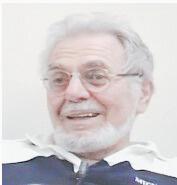
Although Dr. Smith was interested in FA, it did not catch on at Duke Ophthalmology because of internal politics. The Dean would not grant his request for Ophthalmology to be separated from Surgery and become a stand-alone department. That was ultimately a terrible decision, because at that time, future top ten ophthalmologist of the 20th Century, Dr. J. Donald M. Gass, and his wife, Margy Ann, were in town to be interviewed for a possible faculty appointment with Dr. Smith and were looking at homesites as well. As it happened, Dr. Edward W.D. Norton, Chairman of the new Bascom Palmer Eye Institute (BPEI) at the University of Miami Medical School, had been trying to entice Dr. Smith to join their faculty and set up a world class Neuro-Ophthalmology service at the BPEI. He was very interested in Dr. Gass joining he and Dr. Smith at the BPEI. Smith and Gass had been fellow residents at the Wilmer Eye Institute, Johns Hopkins University in Baltimore, Maryland.
While all of this was going on, I was across the street at the VAH, happily working with Mr. Hart. But in late 1962, I received a long-distance call from Dr. Smith telling me that I needed to be on the next “Whisper Jet” Eastern Airline 727 to Miami because Dr. Norton wanted to interview me regarding setting up an FA laboratory at the BPEI. And I was indeed on the next “Whisper Jet” headed to Miami. During the interview I learned that Dr. Norton also wanted to design a photography studio for cinematography using a 16 mm Arriflex camera. He was personal friends with 3D expert Dr. David D. Donaldson, so he already had a Donaldson Stereo anterior segment camera. ...(next page)

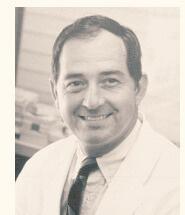
My boss, Leonard Hart, and Raymond Howard of Duke Medical Photography had both turned down Dr. Norton’s offer to work at the BPEI. I was 23 years old and was his third choice, but was delighted t have the opportunity to co-establish FA with Dr. David at the BPEI. I started on our wedding anniversary, January 3, 1963. Drs. Norton, Smith and Victor Curtin began referring every case that had some retinal or choroidal pathology for FA. Dr. Norton notified the opht ami area that this exciting new test was available for their patients and that there would be no fee for the service. FA rapidly gained success. Six months later, Dr. J. Donald Gass arrived at BPEI and immediately was interested in FA (Figure 10). He was very excited to review the first two cases I had on file, post cataract CME, now called Irvine-Gass Syndrome, and “central serous ” , now called ICSC, idiopathic central serous chorioretinopathy (Figure 11).
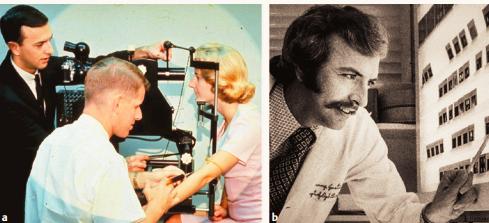
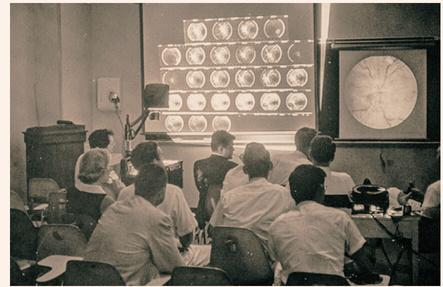
Later, he and I set up the first weekly Tuesday night fluorescein conference (Figure 12), which is still on-going. On several occasions, Dr. Norton spoke of Lee Allen, an artist/ocularist who also enjoyed a wonderful reputation for his eye photography. I contacted him about getting a copy of his not yet published manuscript, the now classic article, “Ocular Fundus Photography” which included a description of his technique of stereo photography. I was delighted to learn that there were others who specialized in eye photography. Years later, I found out that John Goeller and Don Wong of New York, not yet involved in fluorescein angiography, had been taking fundus photos and external photos for academic eye departments for quite some time.
the
As time went by, more and more talented photographers began to come out of the woodwork. Sergeant Terry Tomer, fresh out of photography training in the U.S. Army, came to Miami to train in this new field, a different person from his Piggly Wiggly Skating Rink days. I had pre-arranged a position at the University of Indiana for him. At that time, the Biological Photographic Association (BPA) was the only society that was oriented toward Figure 10: Dr. J. Donald M. Gass, 1968, Bascom Palmer Eye Institute. The Fates were Kind and the Stars Aligned for Johnny Justice, Jr. 43 medical photography. I was already a member of the BPA, so I went to one of their meetings, but unfortunately there was little information on eye photography. Although I did not realize it at the time, the idea of an alternative society was beginning to germinate in my mind. In the meantime, I was totally enthralled with FA and what I was learning at our weekly FA conferences. In 1966, I became friends with a wealthy entrepreneur from Philadelphia, and as a result of his offer to become my benefactor, I decided to leave Miami to attend pre-medical school near Philadelphia.

I dreamed of becoming a retina specialist like my heroes at BPEI. Before leaving for school, I trained Dixie Sparks to do FAs, and Joseph Goren to take over doing movies in addition to his darkroom work. Three months after I began school, my benefactor was killed in a tragic automobile accident and the financial support ended. Frankly, I was not enjoying college, and without the necessaryfinancialsupport,Idroppedoutandsoughtemploymentagainasamedicalphotographer. Thetermophthalmicphotographerstilldidnotexist.
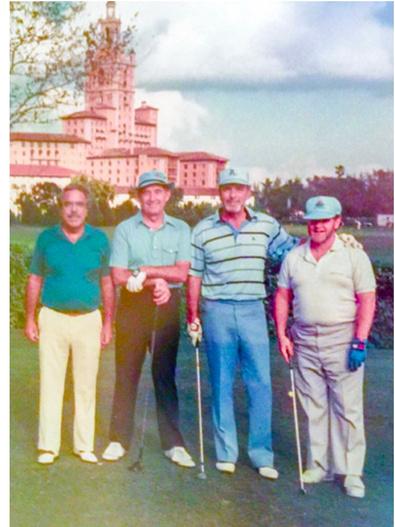
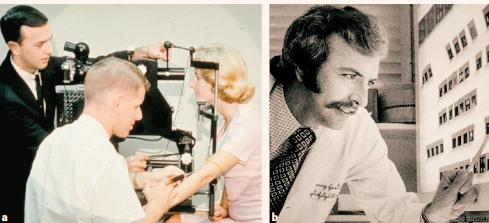
In1966,FAhadnotbeenattemptedattheWillsEye HospitalinPhiladelphia,soIwenttovisitDr.Arthur Keeney,Ophthalmologist-in-Chief,toseeifhewouldbe interestedinestablishingangiographyat“theWills.” AfterapprovalbyDr.P.RobbMcDonaldandother membersoftheretinaservice,Iwashiredtosetupthe service.ItwasgreattobebackdoingFA,andtherewere manymoreunusualcasesbeingseenatthemuchlonger established“Wills”.Twoyearslater,afterDixieSparks married Dr. Walter Gilbert, Dr. Norton came to Phil p ed in returning to Miami. I happily agreed because I really missed the BPEI and preferred a warmer climate. Shortly after my return to Miami in 1968, I met Earl Choromokos, a research photographer with Dr. Noble J. David, who had been trained by Dixie. About that time, Don Wong called from New York to introduce himself. His professor, Dr. Irving Leopold, was really upset that he was going to the annual BPA meeting. He told me that Dr. Leopold said, “Go to Miami to learn from Johnny Justice, and then attend the annual American Academy of Ophthalmology meetings instead of wasting your time and our money at the BPA”. So Don came to Miami to observe our techniques. His visittoMiamibeganalongandcompetitivefriendshipthatsetthestageformydiscussionswithhim, TerryTomer,andEarlChoromokosaboutstartingourownprofessionalsociety(Figure13).
The Fates were Kind and the Stars Aligned for Johnny Justice,
InAprilof1969,wemetwithLeeAllenattheAssociationforResearchInVisionand Ophthalmology(ARVO)meetinginSarasota,Floridaandweagreedtohaveourfirstophthalmic photographymeetingatthePalmerHouseinChicagoonOctober15,1969.Inattendanceatthis meetingwereLeeAllen(Figure14),EarlChoromokos,OgdenFrazier,JohnnyJustice,YvonneMagli, MaryManella,RogerLancaster,TerryTomer,AnnaWileyandDonWong.Thisisthegroupthat TerryTomerlatersuggestedbedesignatedasFellowsoftheOPS.Followinginputfromothers attendingthatmeeting,InominatedLeeAllenandhewasunanimouslyelectedInterimPresidentof theOPS.LeethenappointedmetoactasInterim-Secretary-TreasurerandProgramChairmanuntil theSocietyhaditsfirstformalelectionofofficers.Wedecidedatthatmeetingthatwewouldreferto ourselvesasophthalmicphotographers,andthattheorganizationwouldbecalledtheOphthalmic Photographers’Society.
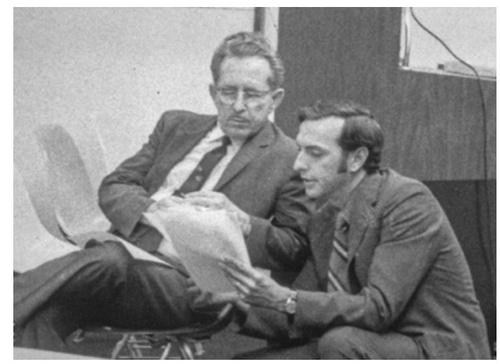
OnJuly13,1970,theOPSbecameareality. Withouttheextraordinaryhelpandenthusiasm ofmysecretary,Jessica(Pixie)Eichrodt,the understandingandsupportofDrs.Norton andGass,andespeciallywithouttheconstant proddingofDonWong,thissocietymaynever havebecomeareality.Later,Pixiewaselected anHonoraryLifeMemberforherherculeaneffortstowardsestablishingtheOPS.
In1971,IacceptedDr.DavidPaton’soffertoestablishanFAandultrasonographylaboratoryinthe DepartmentofOphthalmology,BaylorCollegeofMedicine(BCM)inHouston,TX.Myproudest achievementsduringmytenyearsatBaylorwerethatmyoriginalandrevisedissuesofthebook, OphthalmicPhotography,werepublishedbyLittle,Brown,andCompany,andthatIwaspromoted toAssistantProfessorin1976. ...(nextpage)
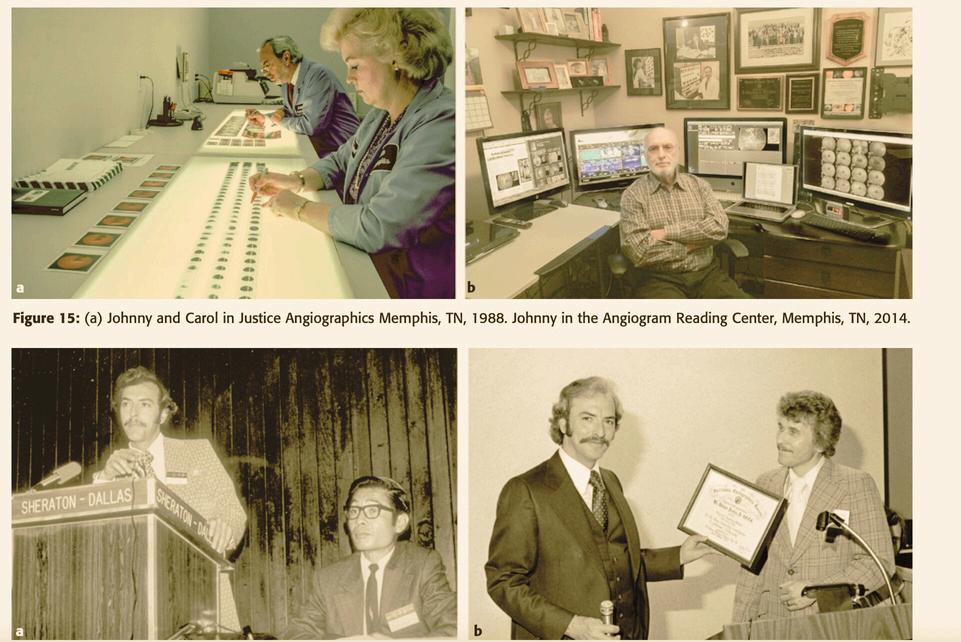
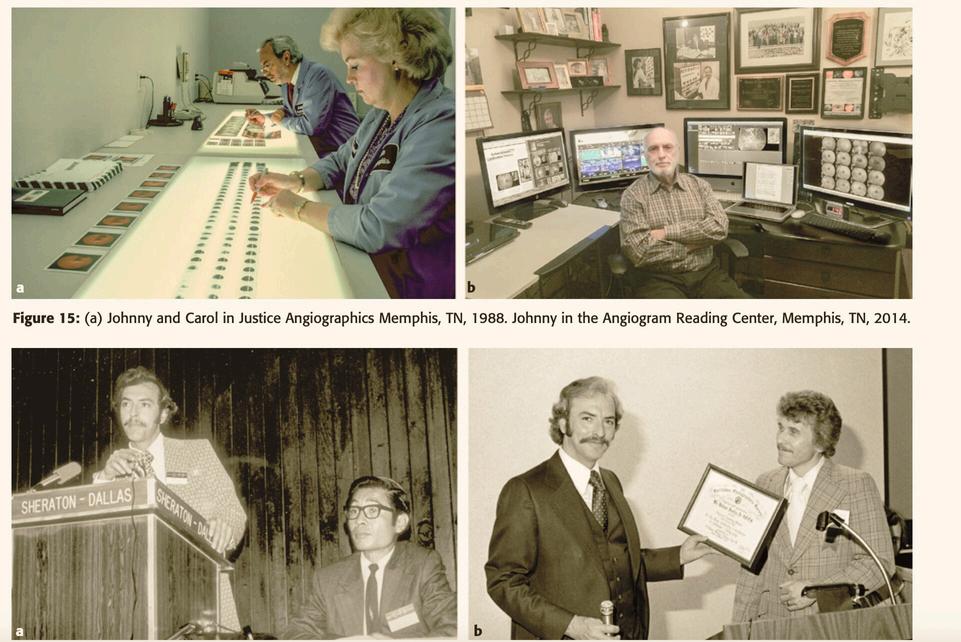
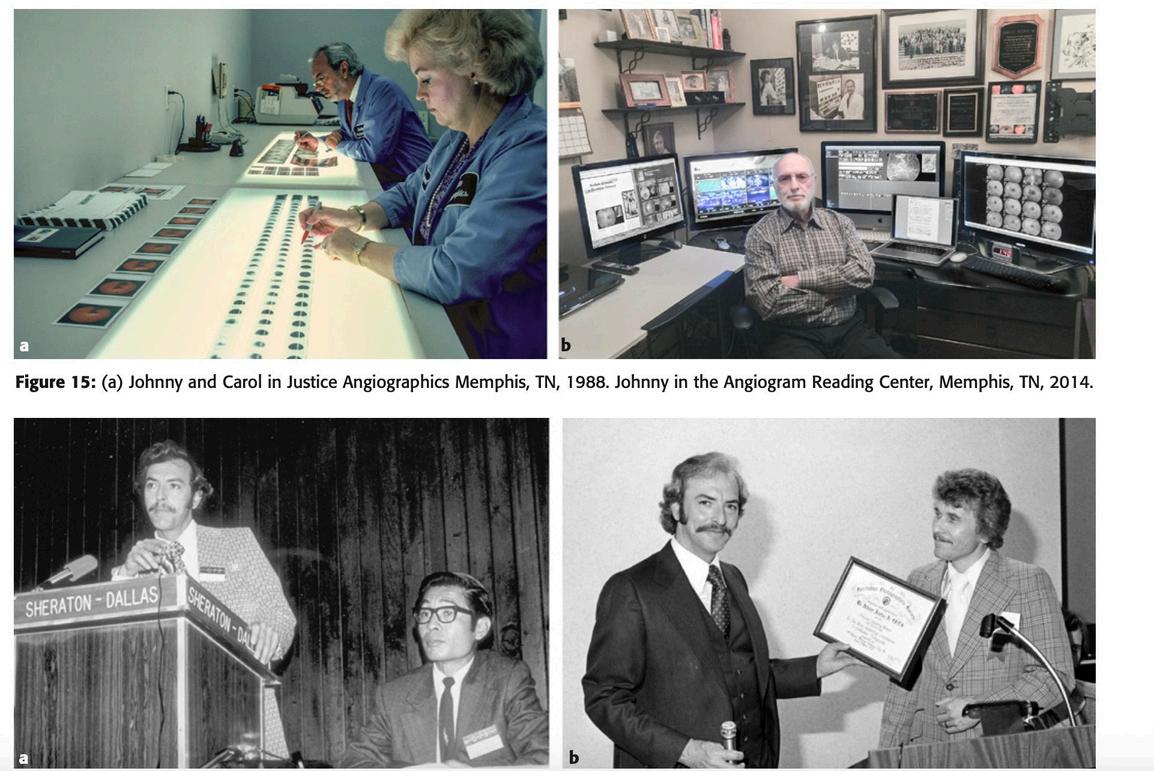
Later, in 1981, I resigned my professorship to establish JusticeAngiographics(JA)andtheAngiogramReadingCenter (ARC)inHouston,TX.In1986Imovedmyextendedfamilyand JA and the ARC from Houston to the more centrally located Memphis, Tennessee (TN) and continued the business there. Carol and I remain active to a much lesser degree in their operationtoday.Withtheadventofdigitalimaging,film-based FA has slowly faded aw allowsreportsto be ava virtualprivatenetwork jpegFAimages.Nowada Ophthalmics(foundedin theday-to-dayoperation
Certified Retinal Angiog involvingbothwrittenan SincemydaysatBC not been as active in th remainedinacademia.I the many photographers, too numerous to mention individually,whohavecometotheforefronttotakeoverthe reinsandkeepthesocietymovingupward.Iamhappytosay they are succeeding! If we continue in this pattern of quality growthandexpansionineducationandcertification,Iforesee nothingbut continuingimprovementoftheprofessionalimage ofourmembersandfortheOphthalmicPhotographers’Society.
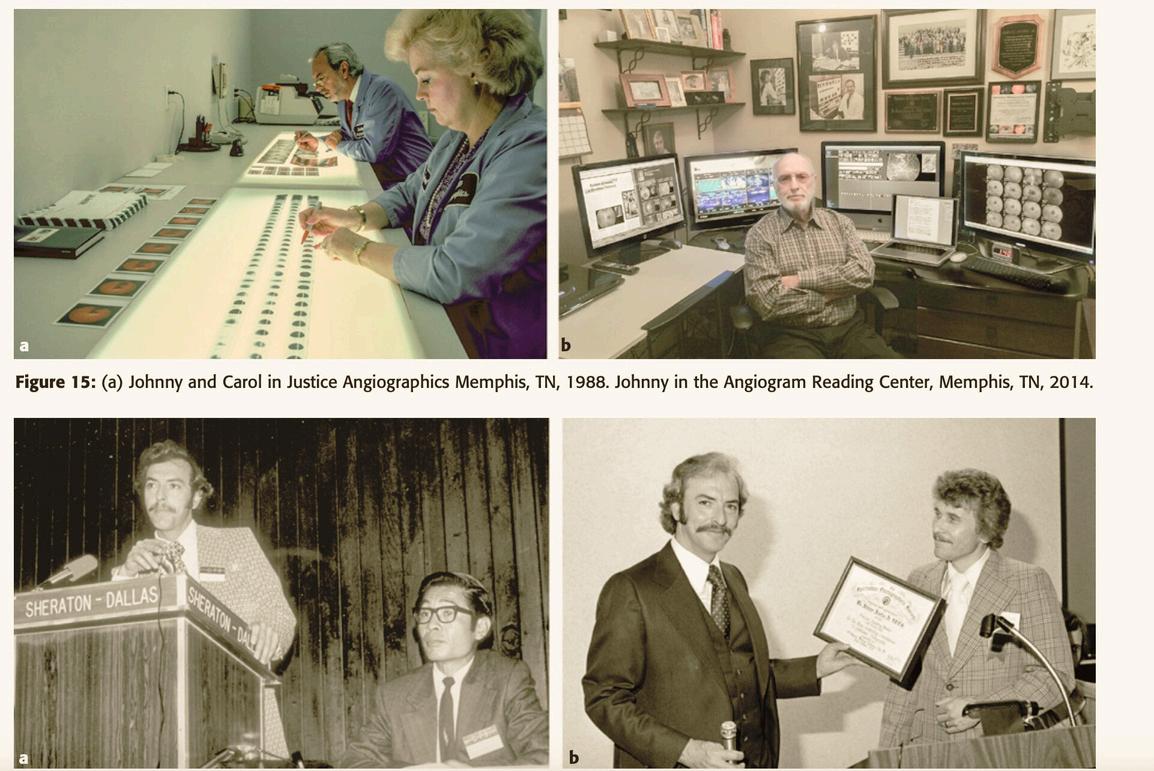
I met Johnny in 1980 at my first AAO.OPS meeting in San F He was dashing, charismatic and as they say in Texas, a big tal of water in a cowboy hat. I remember thinking who is this person who commands the room? (I believe he was standing with Csaba Martonyi, Don Wong and Terry Tomer near the bar) Johnny noted my awkwardness at being an outsider and greeted me with a big smile as if we had been lifelong friends. Who knew we would become so?
Johnny was a feminist before such a label was in the common lexicon. He authentically believed that women should have a greater role in the society as well as in the world of ophthalmic imaging. He believed in us and pushed us to the forefront. His legacy is not merely etched in the advancements of ophthalmic imaging but is woven into the fabric of every woman in the society who now has greater opportunities and aspires higher because he dared to believe in our potential. He was a true champion for women in ophthalmic imaging and a steadfast advocate for equity in what was at that time a predominantly maledominated field.
Johnny, your unwavering support and friendship inspired me to do more, be more. I owe my position as the first female president of the OPS (after 25 years!) to your encouragement and mentorship. Thank you for being the guiding light that illuminated our paths. Your kindness and friendship were genuine and reshaped my professional world. I am surely not alone in these sentiments.


I first met Johnny Justice Jr. at the 1980 OPS Annual Program in Chicago. Most of my contact with the OPS was through a very active Chicago Chapter, which I led at that time. Johnny was a warm, welcoming Southern Gentleman with a raffish streak. He was always willing to share his extensive knowledge helping us “newbies” move forward with our craft and bringing us into the fold of the OPS.

In 1981, at the OPS Annual Program is Atlanta, I was speaking with Johnny at our reception, when Diane Willett, a technician at the Scheie Eye Institute in Philadelphia joined our conversation. Johnny put his Stetson hat on me. Diane and I were married in 1984 and will celebrate our 41st anniversary this year. I don’t think it was the hat. Johnny’s entrepreneurial skills helped me realize my potential as a contract Ophthalmic Photographer in the Chicago area; a service I provided for over 40 years. Johnny paved the way for me, and so many others, to a rewarding, fulfilling and engaging career.
I am forever grateful to Johnny for this.
AlanFrlichein
Johnny Justice, Jr. He was a legend who became real, then a confidant who showed me the way, then my mentor who became a great friend; always so effortlessly, elegantly, ‘southernly’ in his way, but always so directly. Johnny knew that the profession he created could only progress if the OPS progressed, changed, grew, and adapted to the needs of the ophthalmologists we worked with for the patients who needed us. Johnny gave me a piece of advice long ago, and it has served me well all these years: “Out-work and out-smile everybody.”
I posted this on my bulletin board at Duke so I would see it every day.
“Salute to a great friend, confidant, mentor, and legend.”
Thank you, Johnny. M i c h a e l P . K e l l y , F
This is what I wanted to share about Johnny:
Johnny, you were truly larger than life. You had a remarkable gift for lifting others up always encouraging, always inspiring. Thank you for founding the Ophthalmic Photographers’ Society and creating a community where imagers like me could grow, connect, and find purpose.
Because of you, many of us didn’t just find a profession we found a calling. Thank you for taking the time to answer my endless questions and for patiently teaching me about the world of ophthalmic imaging. You shared your knowledge with generosity and passion. It was an honor to know you and to call you my friend
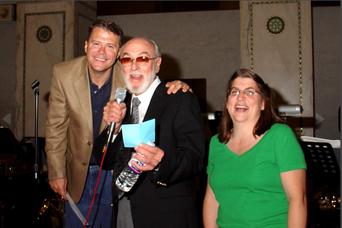
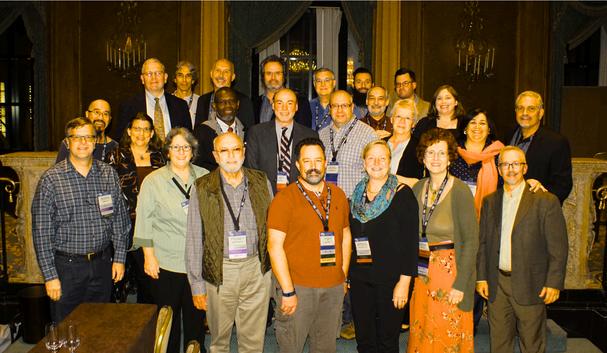
Johnny Justice Jr. was honored during the Welcome Reception at the 56th Annual OPS Program. As the founding father of the Ophthalmic Photographers’ Society, Johnny was instrumental in shaping the field of ophthalmic imaging and inspiring a deep passion for the profession in so many of us. We joined together to celebrate the life and legacy of a man who encouraged, mentored, and uplifted countless members of our community.



I didn't know Johnny Justice very well, but whenever I saw him at OPS meetings he was always engaging and thoughtful, and in how I was doing. We shared a common ju our start in ophthalmic photography by wo Photography's darkroom at Duke Medical C early years. I was a kid in high school worki job from 1970-74, and he had been there jus school in 1957, also starting in the darkroom he moved on quickly to become a pioneer in ophthalmic photography, I didn't get aroun entering the field until years later in 1985. B then the OPS was a successful, well-recogn organization, and he was the towering figur often heard about. In 1996, I got to interview for the Journal of Ophthalmic Photography had a very enjoyable conversation about a w of topics, which happened to include his sto being a pioneer in ophthalmic photography of the OPS. I was most impressed with his g enthusiasm that helped to define his succes
Hackel,
By Tim Bennett
In the 1960’s, a number of technological advances in photography helped to usher in a new era of diagnostic testing in ophthalmology, and with it a new profession was born. Ophthalmic photography is a diagnostic discipline that utilizes a number of photographic techniques to help document and diagnose various diseases of the eye.
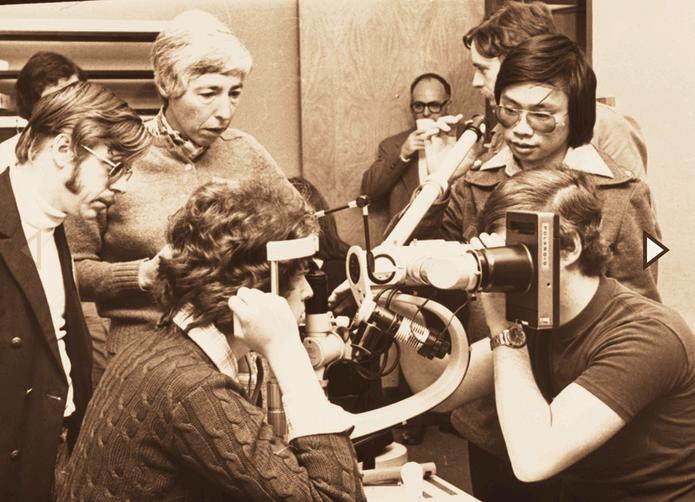
Thephotographersthatformedthevanguardofthisnewprofessionfoundasharedneedtoexchange information,collaborateonnewtechniques,andsetstandardsofpracticeintheprofession.They formedtheOphthalmicPhotographers’Society,Inc(OPS)tofilltheseneeds.Throughthe collaborativeeffortsofOPSmembers,theprofessionhasgrownandflourished.Today,OPSmembers continuetopromoteandelevatetheprofessionthroughpublication,education,andcertification.
Changinghealthcaredeliverymodelsandnewtechnologicaldevelopmentshavealteredtheshapeof theprofessioninrecentyears.Manyphotographershaveexpandedtheirjobresponsibilitiesand developednewskillsinrelatedfields.Asnewdiagnosticimagingandtreatmentmodalitiesare developed,theroleoftheophthalmicimagerwillevolveandcontinuetoplayanimportantroleinthe preservationofsight.
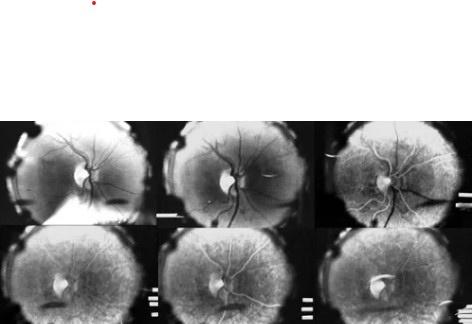
Althoughtherearepublishedaccountsofophthalmicphotographictechniquesgoingbacktothelate 1800s,ophthalmicphotographyasaprofessiondidn’tevolveuntilthe1960’s.Anumberofhistorical eventscoincidedtoprovidethefoundationforpracticalretinalphotography.KodakTri-Xfilmwas introducedin1954.Thefollowingyear,theZeiss-Littmanmodernfunduscamerawasintroduced.It wasthefirstcommerciallyproducedfunduscameratoincorporateelectronicflashillumination (Figure1).In1959,twomedicalstudents,HaroldNovotnyandDavidAlvisstartedaresearchproject to develop a photographic technique to estimate blood oxygen concentrations in the retinal vasculatureasavisiblesegmentofthecerebralcirculation.Indoingso,theyworkedoutthebasic techniquesoffluoresceinangiographyand retina(Figure1).Theyreportedtheirresultsi
Following their report, popularity of the technique exploded, as several investigators studied various clinical applications of angiography, quickly establishing the intrinsic value of the technique (Figure 3).
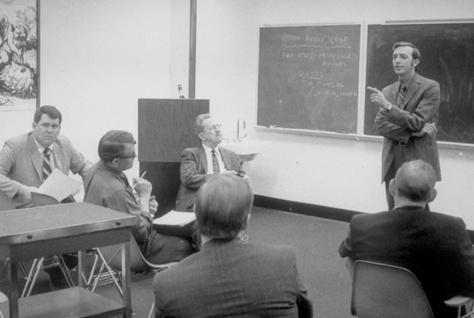
Up until this point, most ophthalmic photography had been performed by physicians, researchers, assistants, and in some cases, medical photographers. The sudden enthusiasm for fluorescein angiography created an immediate need for skilled full-time retinal angiographers, providing the foundation for the profession as we know it today.
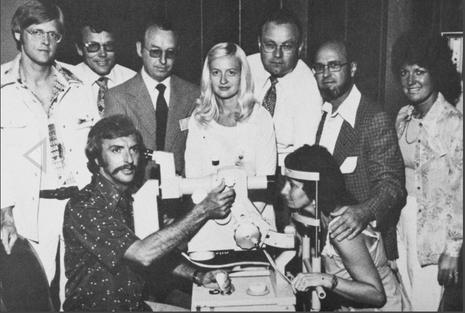
The first generation of “ophthalmic photographers” to enter the field were mostly medical photographers who already had some experience in fundus photography and were able to make a quick transition to this new subspecialty (Figure 4).
These early practitioners worked side-by-side with ophthalmologists and retinal specialists in exploring the diagnostic uses of fluorescein angiography and learning together as they unraveled the complexities of interpreting the fascinatingimagestheywerecapturing.Thisclose clinical collaboration with physicians quickly elevated the profession. Many ophthalmic photographers contributed significantly to the ophthalmicliteratureofthetimeandwereheldin high regard as professional colleagues in ophthalmology. This spirit of scholarly collaboration between photographer and physician continues today in many academic practicesettings.
Over time, there were gradual shifts in the professional experience of individuals entering thefield. Asecondgeneration...
of fluorescein angiographers came from a crosssection of commercial, industrial, and scientific photography backgrounds, adapting their existing photographic skills to ophthalmic subjects. This was followed by another group of personnel that had experience in ophthalmology as ophthalmic technicians, but with no technical photographic training. The diversity of professional backgrounds of individuals entering the field created a universal need for education and sharing of information. With no real formal training available in ophthalmicphotography,practitionershadtolearn many necessary skills on the job. Although at least one current biomedical photography degree program offers elective courses in ophthalmic photography, the vast majority of practitioners in the field have no formal training in ophthalmic photography.
Intheabsenceofformaleducationinophthalmic photography,itmayseemincongruousthatthe professionprovidesahighlevelofacademicpursuitand achievementformanymembers.Anumberof ophthalmicphotographerscontributetotheprofession ofophthalmologyasauthorsofophthalmictextbooks andscientificarticles,someparticipateasinvestigators orsub-investigatorsinclinicalresearch,andmanyplay anintegralroleasinstructorsinophthalmology residency training programs. Through these contributionsandacademicachievements,some ophthalmicphotographershaveevenreceivedacademic appointmentsasprofessorsofophthalmology.
Inthedecadethatfollowedtheintroductionof fluoresceinangiography,someofthepioneersinthe fieldoccasionallycrossedpathswhileattending ophthalmologymeetings.Insuchayoungprofession, workersinthefieldfoundagreatdesireforinteraction withfellowprofessionalstoshareexperiencesand techniques.InAprilof1969,agroupofphotographers hadaninformalgatheringduringtheAssociationfor ResearchinVisionandOphthalmologymeetingin Sarasota,Floridatodiscussformingaprofessional society(Figure5).
Lee Allen
Yvonne L. Magli
Earl A. Choromokos
Mary T. Mannella
Ogden Frazier
Terrance L. Tomer
Johnny Justice, Jr.
Anna Wiley
Roger Lancaster
Don Wong
They agreed to have their first formal meeting in Chicago during the American Academy of Ophthalmology meeting later that year. Attending the first meeting were ten ophthalmic photographers, who set organizational goals, selected interim officers and chose a name (Figure 2). The Ophthalmic Photographers Society, Inc (OPS) was incorporated in July of 1970.
The OPS is a non-profit organization that today counts over 1000 members from 27 countries. Membership is open to anyone with an interest in ophthalmic photography and is made up of photographers, technicians, physicians, scientists, vendors and students. The main objectives of the Society are to provide primary and continuing education in the field of ophthalmic photography, to set and maintain professional standards through certification, and to promote scientific advancement in imaging technology and techniques.
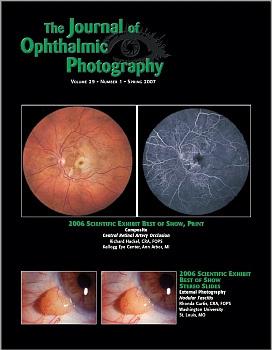
Since inception, the OPS has provided a central forum for the exchange of information through a number of programs and publications. The Ophthalmic Photographers’ Society sponsors national and regional educational meetings, offers educational scholarships, publishes the peer-reviewed Journal of Ophthalmic Photography (Figure 3), as well as a member newsletter, maintains a website filled with important news and technical information, and offers certification in ophthalmic photography.
All of these programs and member benefits are accomplished almost entirely through the efforts of dedicated volunteers from the OPS ranks. In 2024, the JOP went entirely toadigitalformat.
Despite the highly specialized nature of the profession, the OPS has found shared interests and collaborative opportunities with other organizations, such as ICE, JCAHPO, ICOP, and others. The OPS has been a member of the Institute for Credentialing Excellence (ICE – formerly NOCA ) since 1989. ICE establishes standards for accreditation of certification programs and provides a forum for organizations interested in competency assurance and certification. The OPS is one of seventeen member organizations of the Joint Commission for Allied Health Personnel in Ophthalmology (JCAHPO), which provides education and certification for related allied health professions in eye care.
The International Conference on Ophthalmic Photography (ICOP) is a joint venture of the Australian Institute of Medical and Biological Illustration (AIMBI), the Japanese Ophthalmic Photographers’ Society (JOPS), the Ophthalmic Imaging Association (OIA) from the United Kingdom, the Ophthalmic Photographers of the Netherlands (OFN) and the Ophthalmic Photographers’ Society. Since 1986, this quadrennial scientific symposium has been held in different venues around the world.
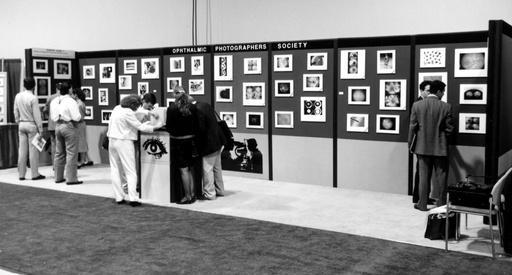
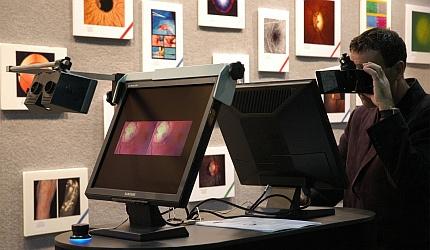
The OPS also participates in the annual meetings of the American Academy of Ophthalmology, and American Society of Cataract and Refractive Surgeons by sponsoring photographic competitions that showcase award-winning photographs in scientific exhibits at the annual meetings of these physician organizations. The stunning exhibits are a “must-see” highlight for both photographers and ophthalmologists attending these meetings (Figure 4).
The diverse makeup of the OPS membership underscores the continuing need for education in the field. The OPS sponsors national, regional, and international education programs that provide comprehensive training opportunities for ophthalmic imagers. (next page...)
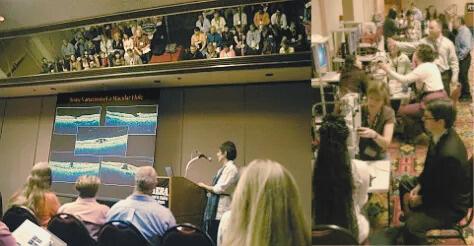
The OPS Annual Educational Program, held in conjunction with the Annual Meeting of the American Academy of Ophthalmology, is the premier educational opportunity in the field (Figure 5). The diverse curriculum includes offerings in entry-level techniques and patient care, to updates on the latest technology, advanced techniques, image interpretation, and electronic communication. In addition to the didactic and hands-on educational opportunities, a hallmark of all OPS programs are the social events that provide invaluable networking opportunities reminiscent of the initial gatherings of the founding members of the Society.
Education and certification go hand-in-hand in ophthalmic photography. OPS sponsored educational programs, when combined with certification, form a diverse curriculum for professional growth and education that extends well beyond “on-the-job training”. The Certified Retinal Angiographer (CRA) program was established by the OPS Board of Certification in 1979. To date, nearly 800 individuals have successfully achieved recognition as a CRA. This credential is recognized in the ophthalmic community as an objective measure of competence in fundus photography and fluorescein angiography and is meant to assure employers and the public that an individual has demonstrated a high level of proficiency in the field. Accreditation of the CRA program reinforces the value of the credential, and the respect associated with those who hold it.
Continuing education is important in maintaining one ’ s skills and is a requirement for recertification as a CRA. To promote access to educational opportunities, the OPS has established a scholarship fund to help offset the costs for selected recipients to attend educational meetings in ophthalmic photography. Looking to the future, the OPS plans to expand continuing education programs through the development of new distance-learning opportunities including online tutorials, podcasts, and “webinars”. In response to changes in job responsibilities identified by surveys, the OPS Board of Certification recently developed a certification program in optical coherence tomography (OCT), a relatively new technology that has revolutionized diagnostic imaging over the last several years.
As diagnostic imaging has become ubiquitous in most ophthalmic practice settings, the roles and backgrounds of those performing photography has slowly shifted. More and more ophthalmic technicians and assistants have cross-trained to do some imaging procedures. Conversely, many ophthalmic photographers have gone on to obtain training in some of the skills required of ophthalmic technicians, further blurring the line between these two allied health professions. Crosstrained professionals who can perform patient screening workups as well as photography are highly valued in many practice settings. There is however, still a place for dedicated ophthalmic photographers in academic medical centers and large retina or multi-specialty practices. One of the more controversial job responsibilities for many ophthalmic photographers is performing intravenous injections for fluorescein and ICG angiography. In some practice settings it is logistically advantageous for photographers to do injections themselves, as long as they have received documented training in venipuncture, IV administration of dyes, and universal precautions.6 There can however, be legal issues associated with unlicensed personnel performing fluorescein injections in some states. It is recommended that imaging personnel check their current state or local laws regarding the credentialing requirements of personnel performing intravenous injections.
(next page ....)
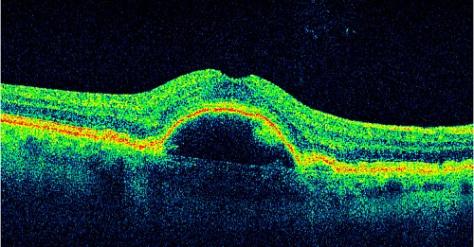
Thefutureofophthalmicimagingispromisingbut unclear.Newtechnologybringsnewchallengesas wellasopportunitiestoadvancehealthcareand improvethequalityoflifeforourpatients.The fieldhaswitnessedtechnologydrivenshiftsin utilizationofdiagnosticimagingproceduresas newinstrumentshavebecomeavailable.For example,opticalcoherencetomography(OCT),a relativelynewtechnology,isnowoneofthemost commonlyuseddiagnosticproceduresin ophthalmologyandhasreducedtheneedfor angiographyforsomeconditions(Figure6).
Treatments in ophthalmology are also changing; and new or different diagnostic tools and strategies may be necessary to monitor these treatments. The movement is likely to continue as treatment of diabetic retinopathy and macular degeneration shift from traditional laser treatment to management with novel medications. New diagnostic instruments that offer automated -
image capture are currently being developed, with an emphasis on quantitative measurement and analysis rather than subjective image interpretation. There are some concerns about the future of the profession of ophthalmic photography as more automated instruments come to market. So far, imaging-based quantitative measurements have proven to be very dependent on image quality; and cutting edge technology may require highly skilled operators to obtain consistent results. Another likely trend is the development of combination devices incorporating multiple imaging technologies in a single instrument. It remains to be seen whether these new technologies will require more, or less skill to operate, and how thatwilleffecttheprofession.
Ophthalmic photography continues to be a rewarding career with many potential employment opportunities in the coming decades. Over the past several years, the OPS has conducted a number of member surveys designed to identify job tasks and gather demographic data for establishing continued job relevance of our certification programs in compliance with NCCA recommendations.
These data have been instrumental in shaping the evolution of our education and certification programs. Each of these surveys was designed to provide a look at the tasks required in our profession from a particular vantage point in time. When viewed together, additional information becomes apparent when comparing demographic information that was captured with each survey. For example, the reported years of experience has steadily increased in direct proportion to the time elapsed between surveys. This indicates a stable number of very experienced professionals in the field. In 2004, one third of the respondents reported seven or more years of experience and nearly half reported more than 15 years of experience in the field. As a profession we don’t experience a high turnover rate that may effect other allied health professions. The data suggests that ophthalmic photography can be a rewarding, life-long career choice, but also suggests a cause for future concern. This experienced group is also getting older, and a large percentage will reach retirement age at a time that is likely to coincide with a widely predicted increase in demand for healthcare services. It is incumbent on the profession to look to the future to attract new recruits to the field, share the knowledge gained through experience, and provide both education and certification to the next generation of “Eye Imaging Experts”.
The OPS remains a strong and vital professional organization despite many changes that have affected health care professions in recent times. Our membership numbers and resources remain stable, our educational programs are exceptional in quality and diversity, the CRA program is accredited, and the Journal of Ophthalmic Photography has never looked better. These successes are a testament to the commitment of time, talent and energy of our members.
DonWong,RBP,FOPS-DepartmentofOphthalmology- CabriniMedicalCenter,NY,USA ofDirectorsapprovedaproposaltocreateaspecialawardthatwouldhonortheprincipalcreator oftheOphthalmicPhotographers'Society,Mr.JohnnyJustice,Jr. Intheautumnof1969,duringthe earlydaysofocularfluorescence photography,JohnnywastheDirector oftheOphthalmicPhotographySection oftheBascomPalmerEyeInstitute, wherehebecamerenownedforhis superiorcameraworkinfundus photography,fluoresceinangiography, andslit-lampbiomicrography.Thisexp eers suchasDrs.EdNorton,DonaldGass,andothers,whosoughttounravelthemysteriesofretinal circulationanditsinfluenceonretinaldiseases.
In 1988, anticipating the society's 20th anniversary the following year, the Board
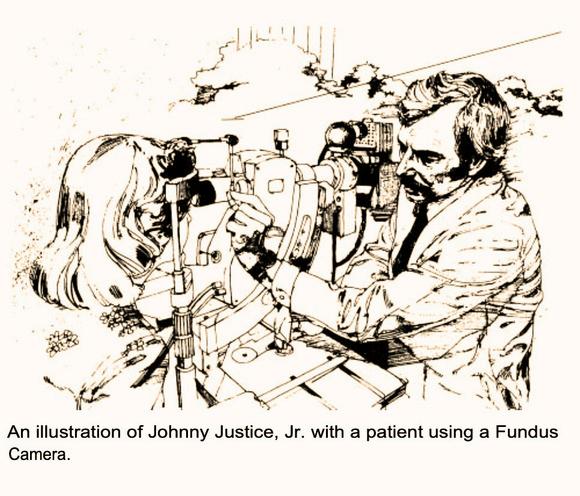
HiscloseassociationandcollaborationwiththeseresearchersignitedJohnny'sinterestin angiopathology,propellinghimintoauniqueareaofexpertise:theabilitytoevaluateandinterpret thefindingsdemonstratedontheangiogram.Thiscombinationofskillsproduced,inoneindividual, abridgebetweenthephysicianandtheparaprofessionalperformingtheprocedureabridgethat becameacatalystfortherapiddevelopmentoftheprofessionofophthalmicphotography.

ItseemslikejustyesterdaythatJohnny,electric withenergyandenthusiasmforhiswork,met otherphotographersattheAmericanAcademy ofOphthalmologyandOtolaryngologyheldin Chicago in 1969. His intense interest in fluorescein angiography, combined with his appreciationfororganizedscientificsocietiesas forums for education and information dissemination, prompted him to ask each person,“Whatdoyouthinkofasocietyofeye photographers?” The question was met with great enthusiasm, and an informal gathering washeld thus,thesocietywasborn.
It was inevitable that Johnny, because of his interest,energy,andprofessionalstaturewithin theophthalmologiccommunity,wouldbecome the primary driving force behind the germinationandrapidgrowthoftheOphthalmic Photographers'Societyduringitsfirstyear.He waselectedSecretaryand,uponreturninghome, embarked on an incredible campaign of worldwide correspondence to introduce the societyandsolicitmembership.Withintwelve shortmonths,thesocietyhadamembershipof fifty-two people and held its First Annual Meeting atthe SandsHotelin LasVegas, all thankstoJohnny’ssingle-handedefforts.
Two years later, Dr. Koichi Shimizu, General Chairman of the First International Symposium on Fluorescein Angiography held in Tokyo in February 1972, invited Johnny to remain at the podium after his presentation on Techniques of Fundus Photography to say a few words about the new society. In this unprecedented gesture giving extra time during the regular program at an international meeting to a member of an ancillary profession Dr. Shimizu demonstrated the high esteem in which Johnny Justice, Jr. was held by the international ophthalmologic community, as well as the significance of the Ophthalmic Photographers’ Society within their own profession.
For the next few years, Johnny's influence and involvement were the core of the organization’s progress and growth. His popularity is evident in the fact that he is the only person twice elected, on separate occasions, to the office of President. The entire profession of ophthalmic photography owes a great deal to this energetic and farsighted man.
(next page...)
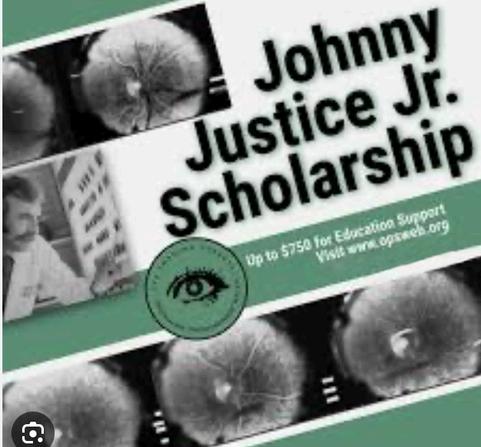
Thus, in 1988, the Johnny Justice Jr. Scholarship Award was created to honor the founding fathe of the Ophthalmic Photographers' Society. Thi award is granted to eligible members of the society who would otherwise be unable to attend OPS training courses or meetings and gain the benefits of these activities to improve their craft Out of his own effort and desire, Johnny created a professional organization that continues to represent the field and remains at the core of educating new personnel. The first Johnny Justice Jr. Scholarship was awarded in 1996 at the 27th Annual Education Program of the Ophthalmic Photographers’ Society.
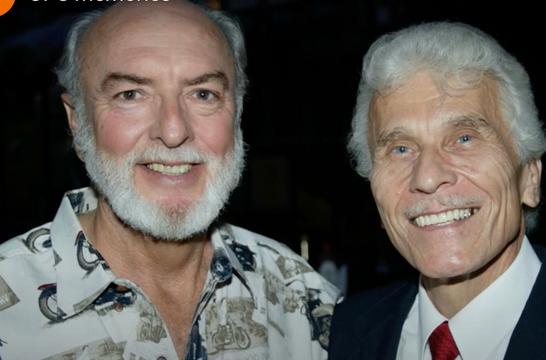
A heartfelt thanks, Johnny, for enhancing and enriching my life. Author's Note:
I am privileged to write this piece for a beloved friend and colleague. Johnny and I, along with many others, traveled life’s path together for over twenty years From the very beginning, I witnessed the incredible work performed by this man and understood the frustrations, agonies, and gratifications he encountered during the early years of the society’s growth. Even now, twenty-three years later, I relive those frustrations and feel the same admiration for Johnny, who single-handedly pushed this society from concept to reality. I have gained enormous benefit and gratification from the Ophthalmic Photographers’ Society, and if I had to thank only one person for it all, it would be Mr. Johnny Justice, Jr.
Don Wong, RBP, FOPS Department of Ophthlamology, Cabrini Medical Center, NY, NY

S c h o l a r s h i p R e c i p i e n t s
1 9 9 6 G a r y M i c h a l e c , C R A , C O A
1 9 9 7 E l l e n B u r n s i d e , C R A
1 9 9 8 E l l e n S t e w a r t , C R A
2 0 0 0 L a u r e n C e d o z , C R A
2 0 0 1 J o a n n e M P l e s k o v i c h
2 0 0 2 A l l e n K a t z , C R A
2 0 0 3 K a r e n C o n n e r , C R A
2 0 0 4 T r a c y U t l e y , C R A
2 0 0 5 J e n n i f e r B r y s k i e w i c z , C R A , C O A
2 0 0 6 L e s l i e B u l l , C R A , O C T - C
2 0 0 7 R i c h a r d C o r n w e l l , C O A , R O U B , C R A , O C T - C
2 0 0 7 R o n a L y n E s q u e j o - L e o n , C R A
2 0 0 8 J o h n H e a d , C R A , O C T - C
2 0 0 9 D i V i c k e r s
2 0 1 0 M a r r i n e r S k e l l y , C R A
2 0 1 0 M a r t i n a G r o b l a c h e r
2 0 1 1 M a r k B a r t l e t t
2 0 1 1 D a w n G u t h r i e
2 0 1 2 A d e l i n e S t o n e , C O T , C R A
2 0 1 2 A m y G o l d s t e i n
2 0 1 3 N e l y a Wi e b e
2 0 1 3 D i n a Y a n g
2 0 1 4 B r e n d a K . Wa l d e n , C O T , C O S A
2 0 1 5 R y a n I m p e r i o , C R A , O C T - C 2 0 1 6 K a t h l e e n Wa r r e n
2 0 1 7 N o l b e r t i n e ( B e t i ) D e l e o n
2 0 1 8 M a r i a G o m e z
2 0 1 8 H e a t h e r M c L a u g h l i n
2 0 1 9 R o n a l d H a l l , C R A , O C T - C
2 0 2 3 C o r y S u t p h i n , C R A
2 0 2 3 N i c h o l a s V i g o
2 0 2 5 I s a b e l l e H u g a r , C R A , O C T - C E v a T o v
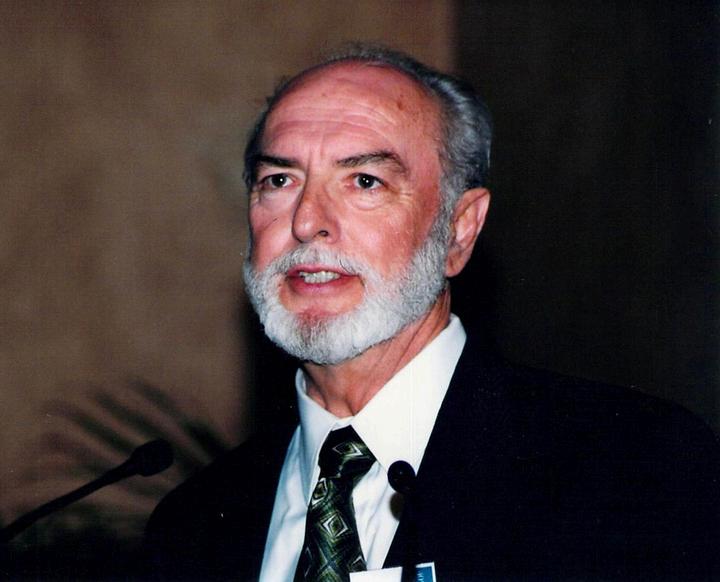
I had long admired his name on textbook chapters and iconic images, yet what struck me most was his humility. Johnny didn’t carry himself with the airs of a legend. Instead, he engaged everyone rookie or veteran with a genuine warmth and a keen interest in what the next generation was working on. Even after his retirement, his dedication to the Ophthalmic Photographers’ Society and to our shared craft had only deepened. In conversation, his passion for advancing imaging, patient care, and embracing new technology was unmistakable. It became clear that his commitment wasn’t about collecting accolades, but about serving people and elevating the field itself.
“The first time I met Johnny Justice Jr. was at an OPS annual meetinga gathering full of anticipation and professional energy.”
Johnny Justice Jr. has always represented more than technical mastery. He stands as the embodiment of what ophthalmic photography can and should be a blend of science, artistry, and, above all, service. His images didn’t just capture pathology; they told the story of each patient, often influencing care, research, and the future of the profession itself. Johnny’s approach was defined by both excellence and generosity, and it’s that unique combination that helped transform the culture of ophthalmic imaging. He paved a path forward not by keeping knowledge to himself, but by opening doors for others and ensuring that learning was accessible to all. I often heard him say that a photograph wasn’t great because it was sharp or perfectly composed, but because it was meaningful. This lesson still drives my work every day.
My motivation for striving in this field is rooted in stewardship. To me, excellence is both a professional expectation and a personal calling. The images we create do more than record they influence diagnoses, inform research, and, often, help preserve or restore vision. There’s a sacred trust in that responsibility, and it calls for diligence, humility, and a relentless commitment to growth. Johnny’s example taught me that purpose drives performance. When the mission is clear when we recognize the realworld impact of our work every image, every study, and every act of mentorship takes on a deeper meaning.
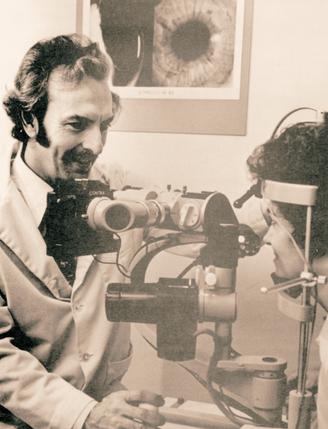
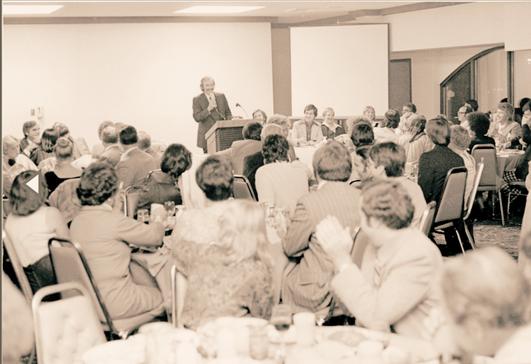
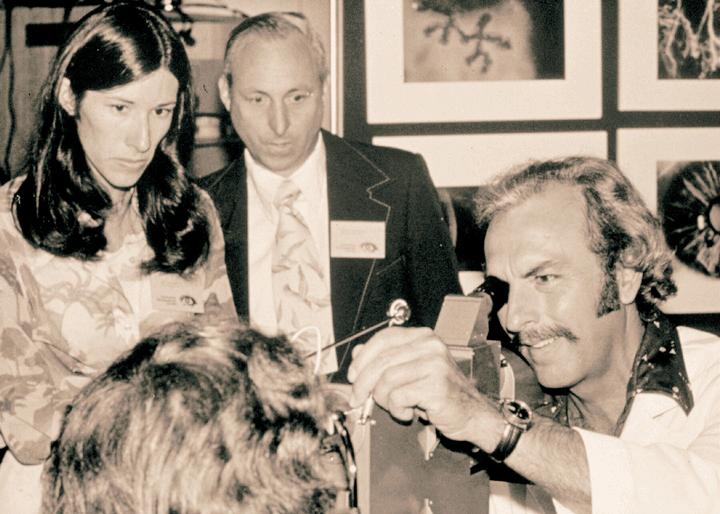
ong He ead, s a and ood ging olve. ways e lift ach day. eing plex our
As the field continues to evolve with new technology, advanced imaging modalities, and increasingly complex research protocols, it is tempting to think that success is about keeping pace with innovation alone. But time and again, it is the human element the willingness to learn, to adapt, and to serve that defines true progress. I hope to see a profession where excellence, compassion, and curiosity are not just aspirations but norms. That future will only come to pass if we continue the work Johnny started: questioning old boundaries, sharing new ideas, and investing in each other. The real legacy of Johnny Justice Jr. is not only in his images, but in the culture he helped build one where the best is always yet to come, and everyone ’ s invited to reach for it.
Standing on the foundation he laid, I find myself returning to the same challenge: How will we raise the bar for those who come after us? The answer, I believe, is found in living out the values he exemplified generosity, integrity, curiosity, and an unwavering pursuit of excellence. Johnny set the standard. Now, it’s our turn to excel.
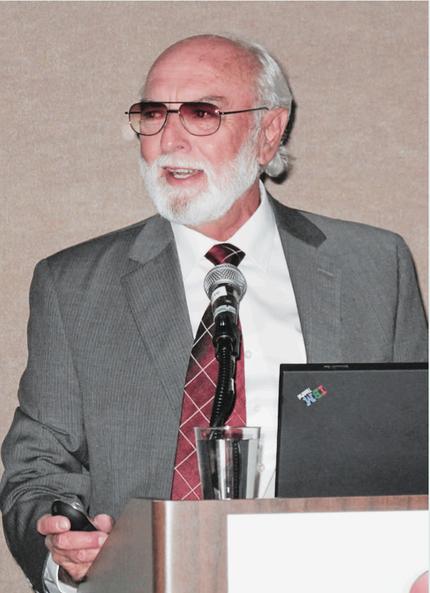
clearer for those who follow.”
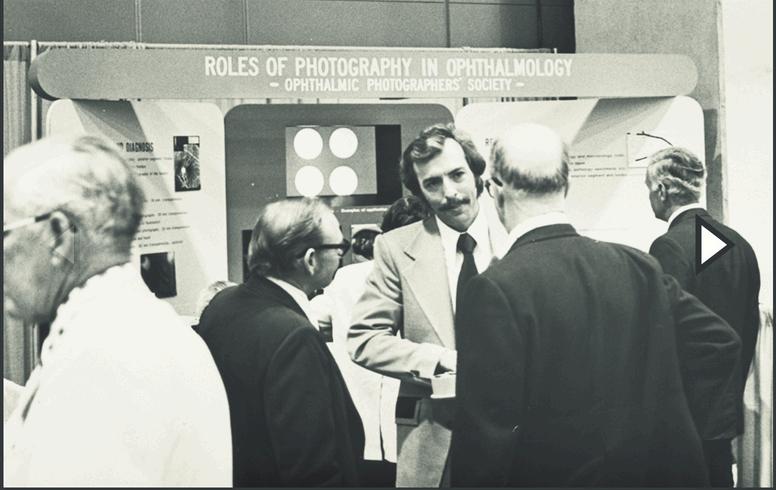
Writtenby: DonWong,RBP,FOPS
In the Autumn of 1969, during the days of infancy of ocular fluorescence photography, Johnny was the Director of the Ophthalmic Photography Section of the Bascom Palmer Eye Institute, where he became renowned for his superior camera work in fundus photography and fluorescein angiography and other medical photography techniques. This expertise lent invaluable technical support to the genius of such pioneers as Drs. Edward Norton, J. Donald Gass and others seeking to unravel the mysteries of the retinal circulation and its impact and influence upon retinal diseases itself.”
“His close association and collaboration with these researchers ignited Johnny’s interest in angio-pathology which propelled him into yet another unique area of expertise, the ability to evaluate and interpret the findings demonstrated on the angiogram. The effect of these combined factors was to produce, in one individual, a bridge between the physician and the paraprofessional performing the procedure. This bridge was destined to become a catalyst in the rapid development of the profession of ophthalmic photography itself. It seems like just yesterday that Johnny, electric with energy and enthusiasm for his work, met other photographers at the American Academy of Ophthalmology and Otolaryngology that was held in Chicago in 1969. His intense interest in fluorescein angiography, combined with his appreciation of the value of organized scientific societies which could serve as a forum for the dissemination of education and information, moved him to ask the rhetorical question of each person, ‘what do you think of a society of eye photographers?’”
Csaba L. Mártonyi, FOPS
December 10, 2007 (Inside cover of his book, Slit Lamp Examination & Photography). With many thanks for all you have done for the Society (OPS) and for me, personally. You were always my hero as you were at the forefront of activity in the Society and made things happen. You always took time to recognize the potential of the newcomers and provide unselfish praise and encouragement. You have contributed greatly to the careers of many and the overall development of our profession and the OPS.
Edward Maumenee, MD
In the early 1970’s Dr. Reginal Stambaugh, a Palm Beach, FL ophthalmologist, arranged a special one day program at the famous Breakers Hotel in Palm Beach that was entitled “A Day of Fluorescein Angiography”. The faculty included Dr. Edward Maumenee of the Wilmer Institute, Drs. E. Norton and D. Gass of the BPEI, Miami, FL and Johnny Justice, Jr. of Baylor College of Medicine, Houston, TX. During the meeting Dr. Maumenee said: “It is truly unique that Johnny Justice, a non-physician, could play such an important role in the development and success of this very important sub-specialty of ophthalmology.”
EdwardWNorton,MD,Professor BascomPalmerEyeInstitute,Miami,FL Inthelate1960s,Dr.EdwardW.Nortonfondlyknownas “theChief”oftheBascomPalmerEyeInstitutesaidof JohnnyJusticeataNeuro-Ophthalmologyprogramatthe FontainebleauHotel,MiamiBeach,“Wefirsttriedtohire angiographypioneer,LeonardM.HartandDukemedical photographerRaymondHoward,butneitherwould acceptandthatleftuswithJohnny,averyyoung23-yearoldDuketrainedmedicalphotographer,whohadworked withHartattheVeteransHospital,Durham,NC.Dr. Norton,arabidBostonRedSoxfanusedabaseball analogysaying,“Itwaslikehiringautilityoutfielderand windingupwithTedWilliams.”Later,Norton autographedanowfamousphotoofhimselfthatwas takenbyJusticebywriting,“ToJohnny,Withgrateful appreciationforhiscontributiontothedevelopmentof theBPEI-aphotographer“par-excellence”.10/12/1971
RonaldFrenkel,MD,FACS,FICS ProfessorofOphthalmology(Voluntary) BascomPalmerEyeInstitute
Johnny has taught me far more about FA than anyone elseinmyformaltraining.Ihavesharednumerouscases withhimduringthepast25years,andtothisdayIstill continue to seek his expert opinion and insight. He has been a wonderful resource for me and my patients. Johnnyhasservednotonlyasaasmentorbutalsoasa trustedandcaringfriend.”
Jerry Shields, M.D.
On 10/22/2011, Jerry Shields, MD, the renowned ocular oncologist said, “that what he learned at Johnny Justice’s fluorescein conferences at Wills Eye Hospital was very important in his decision to pursue Oncology as his specialty in Ophthalmology.”
J.P. Gilman, CRA, FOPS, J. Donald M. Gass, M.D.
I think Johnny played a very important role in the whole development of fundus photography and fluorescein. The Journal of Ophthalmic Photography angiography around the country because Johnny was an extremely enthusiastic individual who was more than just a fundus photographer. He had a real interest in what was going on in the patient’s eyes and was forever coming down to the clinic to get us to come up to photography to get us to look at some new observation he had made in a patient sent over by one of the local ophthalmologists”
Terrance L. Tomer FOPS
I met Johnny over 60 years ago and we quickly became best friends. He became a member of the Tomer family and a big brother to me. I have always been impressed with the international recognition of him by ophthalmologists and especially by retina specialists. Lastly, thank you for your guidance in my career choices, the US Army and my training by you at the BPEI that led to my own success in photography and the Ophthalmic Photographers’ Society. You set high standards for me and many others that followed. I hope that you are as proud of me as I am of my “Big Brother”.
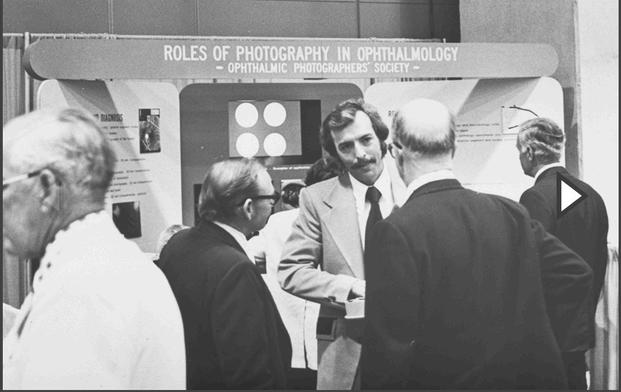
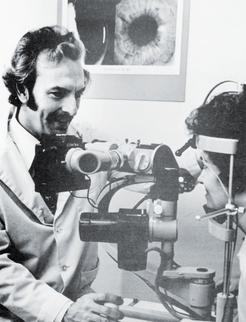
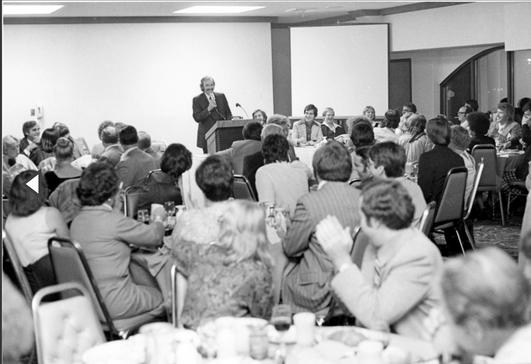
We met Barbara Klemenc from Slovenia at the International Congress on Ophthalmic Photography at Oxford, England in 2011. Barbara gave a wonderful talk on comparing images of natural items with ophthalmic photographs. We contacted Johnny about this wonderful new talent and Johnny took up the cause enthusiastically. Johnny helped Barbara to attend the 2013 Annual OPS meeting in New Orleans (Figure 18). Barbara was very excited, but Johnny helped calm her nerves and she presented professionally in the Scientific Session and later wrote an article for the Journal of Ophthalmic Photography. Barbara was overwhelmed, especially as the term ophthalmic photography did not even exist in Slovenia. I recently contacted Barbara and she has been nominated for the Slovenian woman of the year and is currently involved with writing outline courses for Ophthalmic Photography for the government. I think that this one instance encapsulates the Johnny “factor”.
“How many others has he inspired with his status, knowledge, teaching ability and sheer force of personality to become better photographers and achieve the highest levels in our field?”
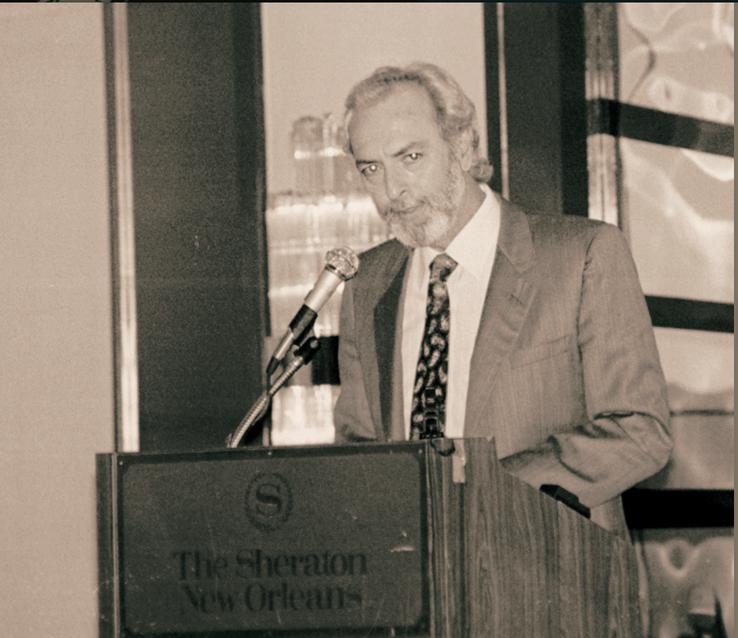
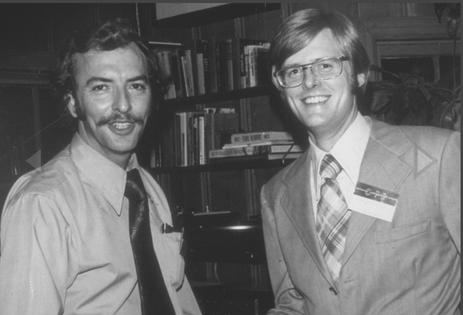
Johnny has had an outstanding and stellar career in photography and ophthalmology. He was the principal founding member of the OPS at its inception, recognized by his peers in the field of photography and ophthalmology. He has published prolifically and taught at multiple high ranking international ophthalmic meetings. His friendship with Terry Tomer has lasted for more than 60 years and the bond they forged back in the 1950s is even stronger today (Figure 17). Finally, Johnny and Jim Gilman gave the 15th Donald Gass Lecture at the Annual OPS Meeting in San Francisco outlining the huge achievements that Johnny has accomplished in his lifetime, where he received a standing ovation of appreciation on this most auspicious of occasions: the 50th anniversary of the OPS.