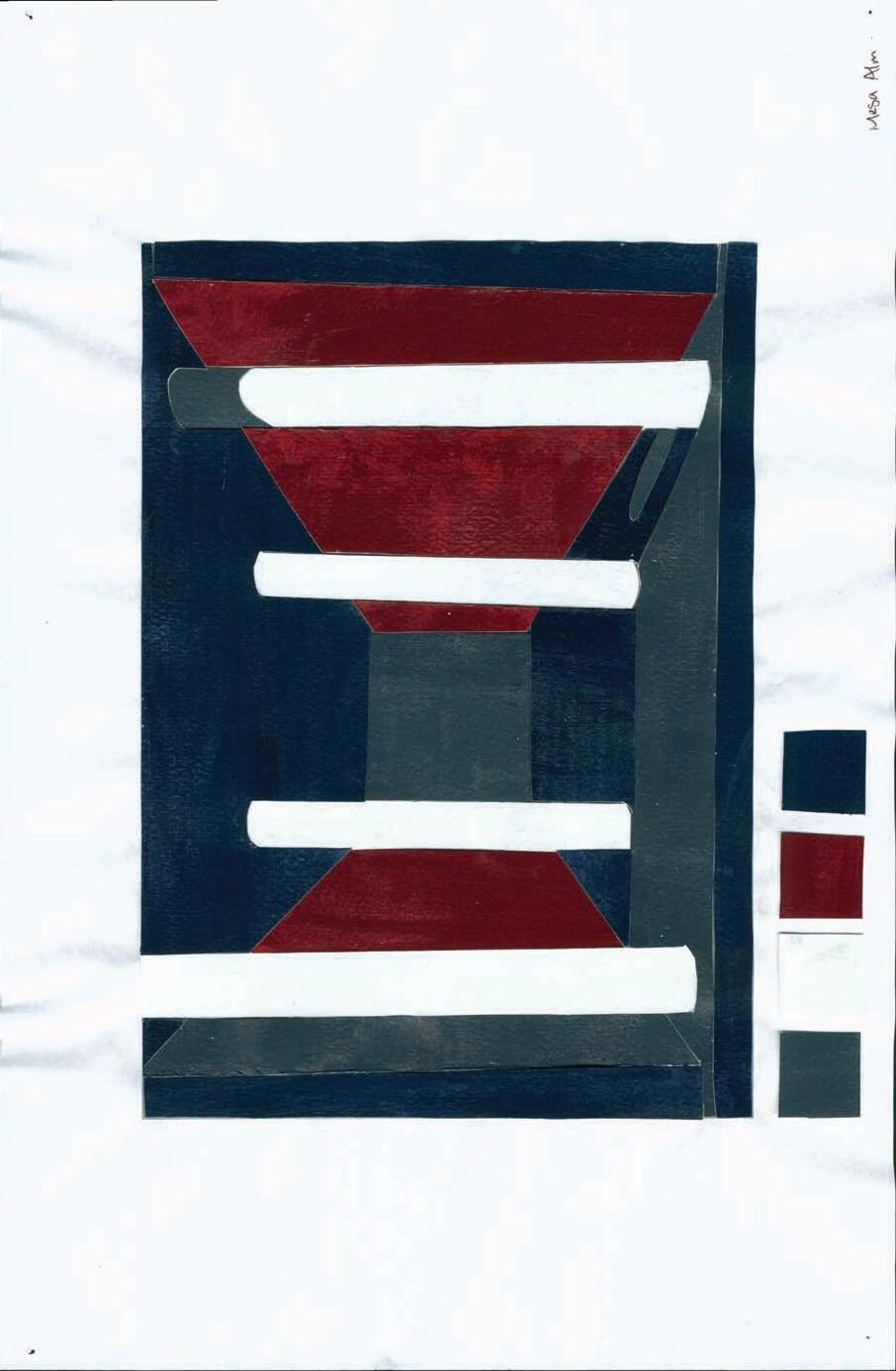
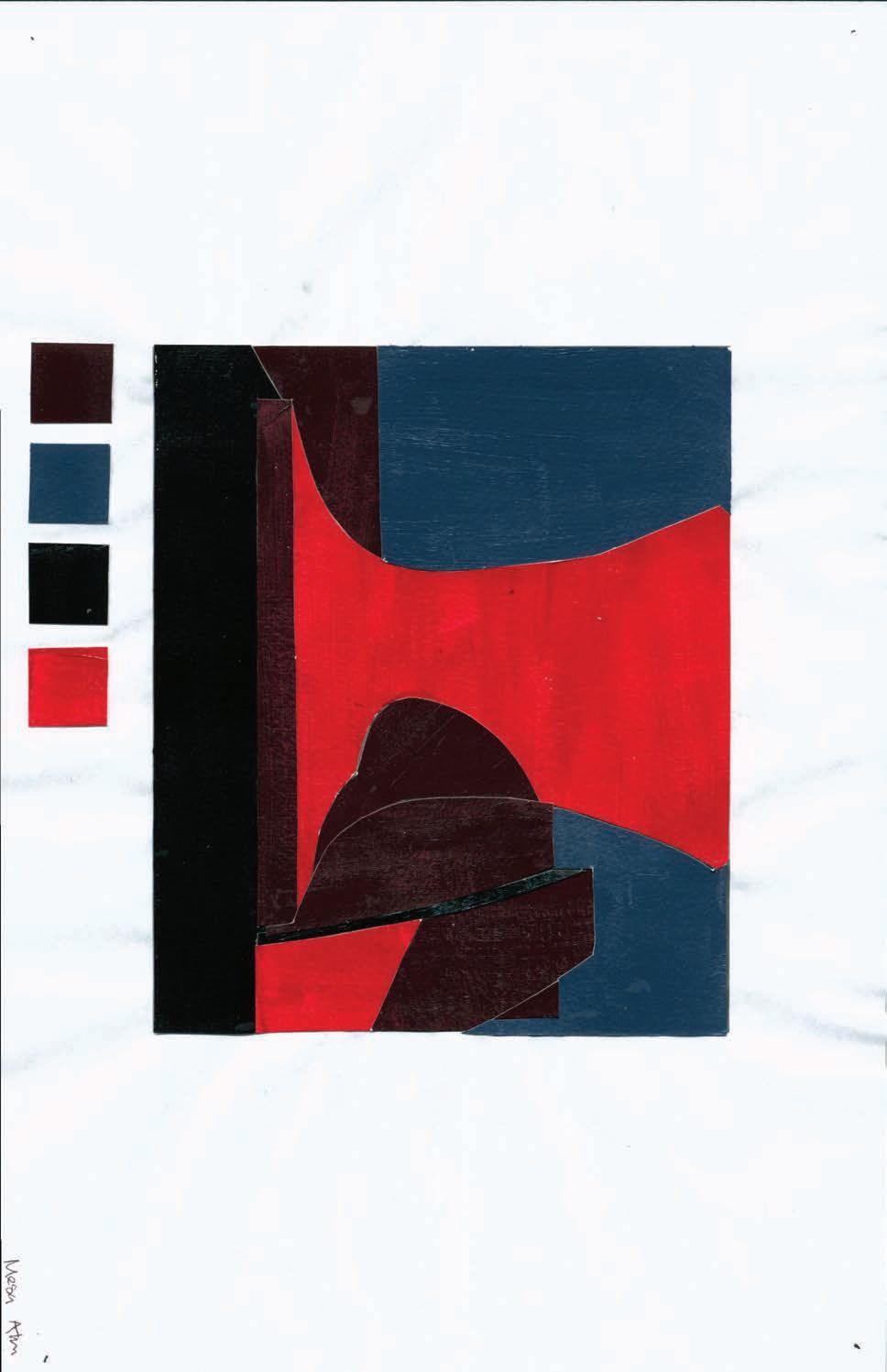
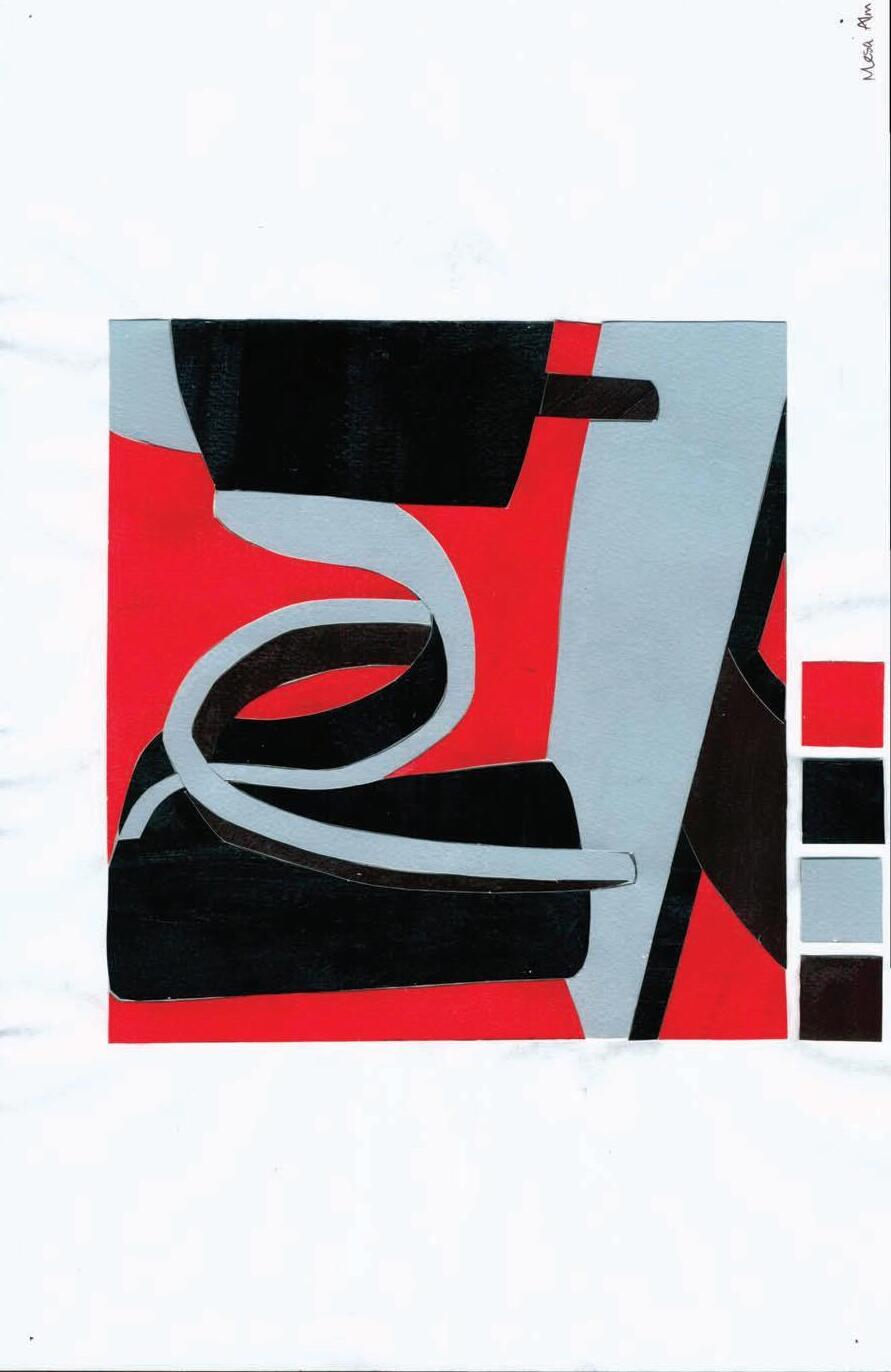
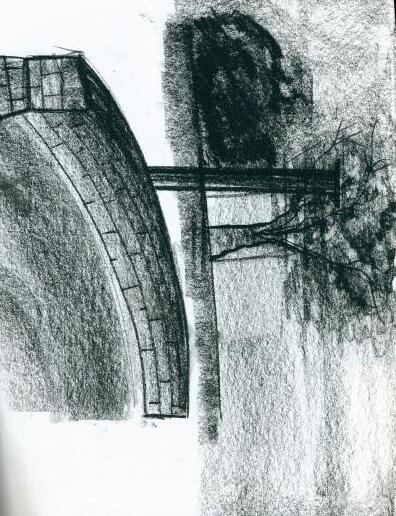
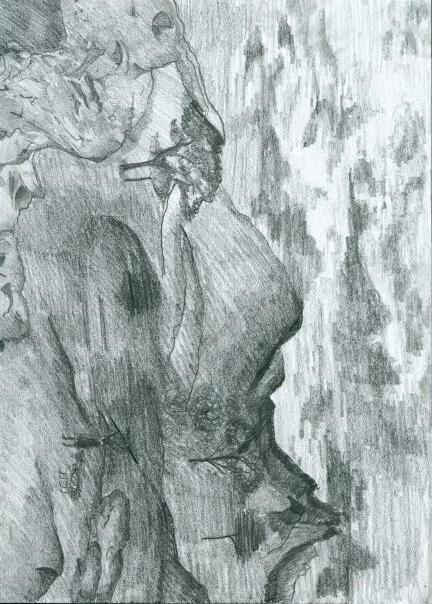
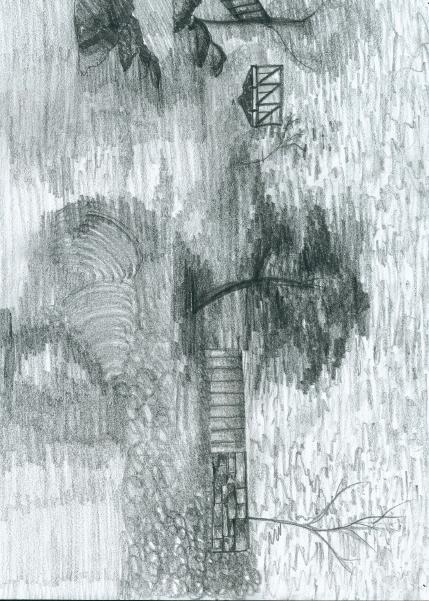
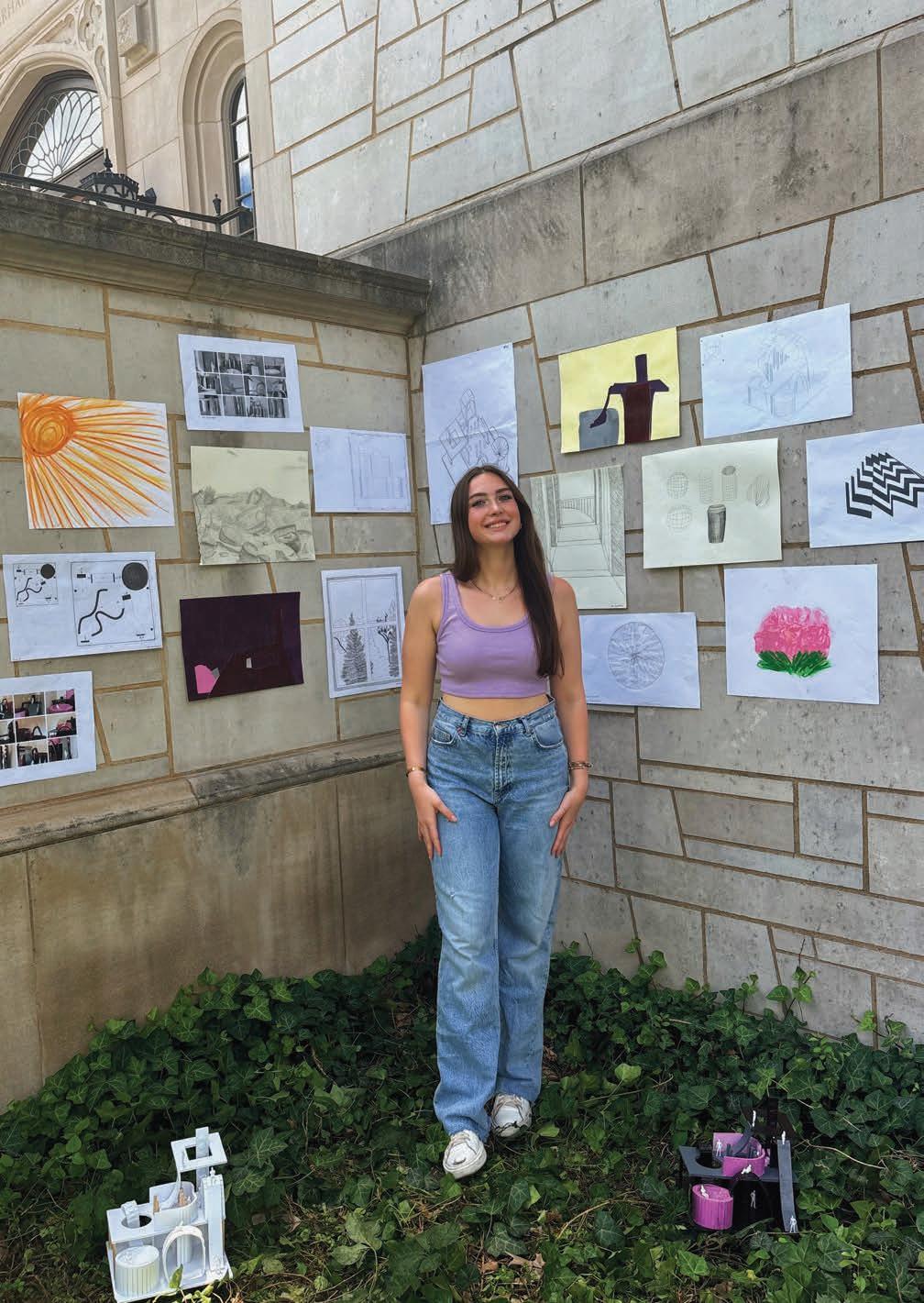
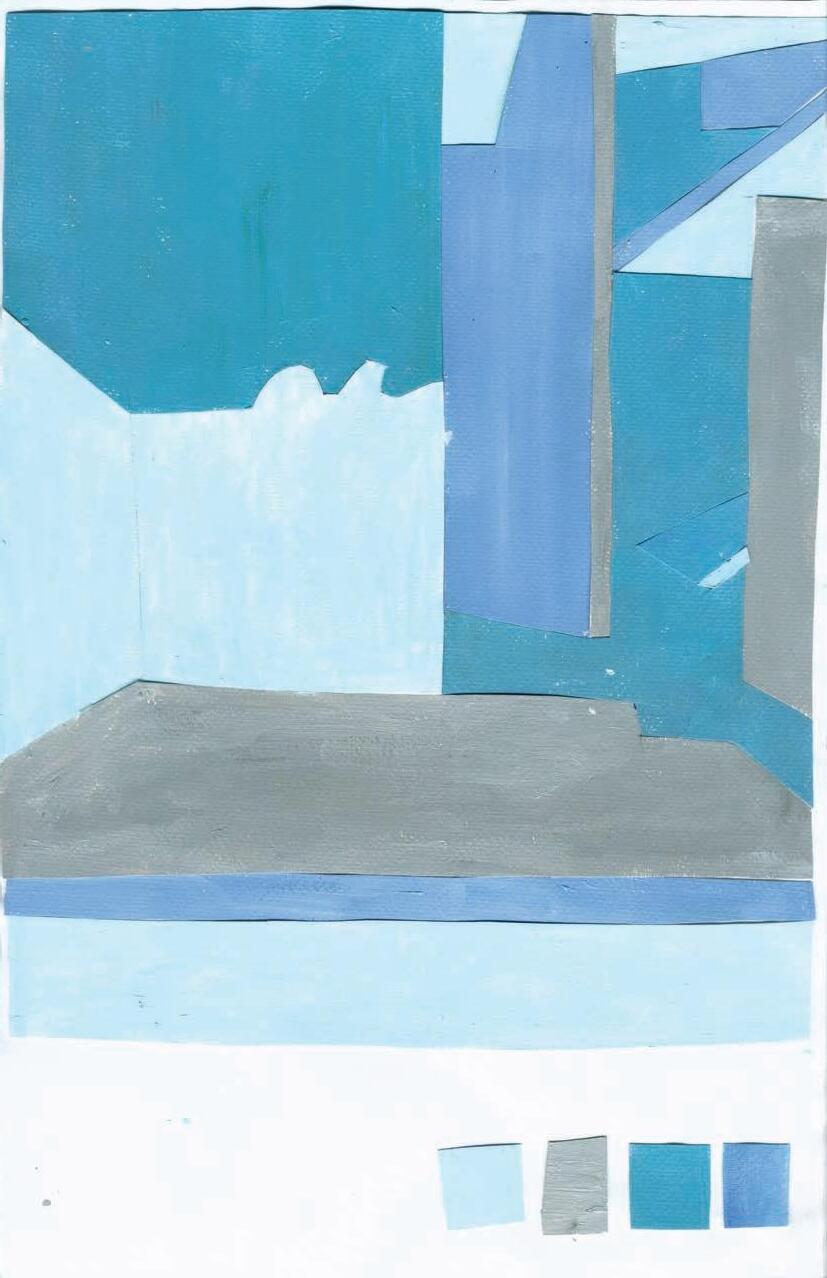
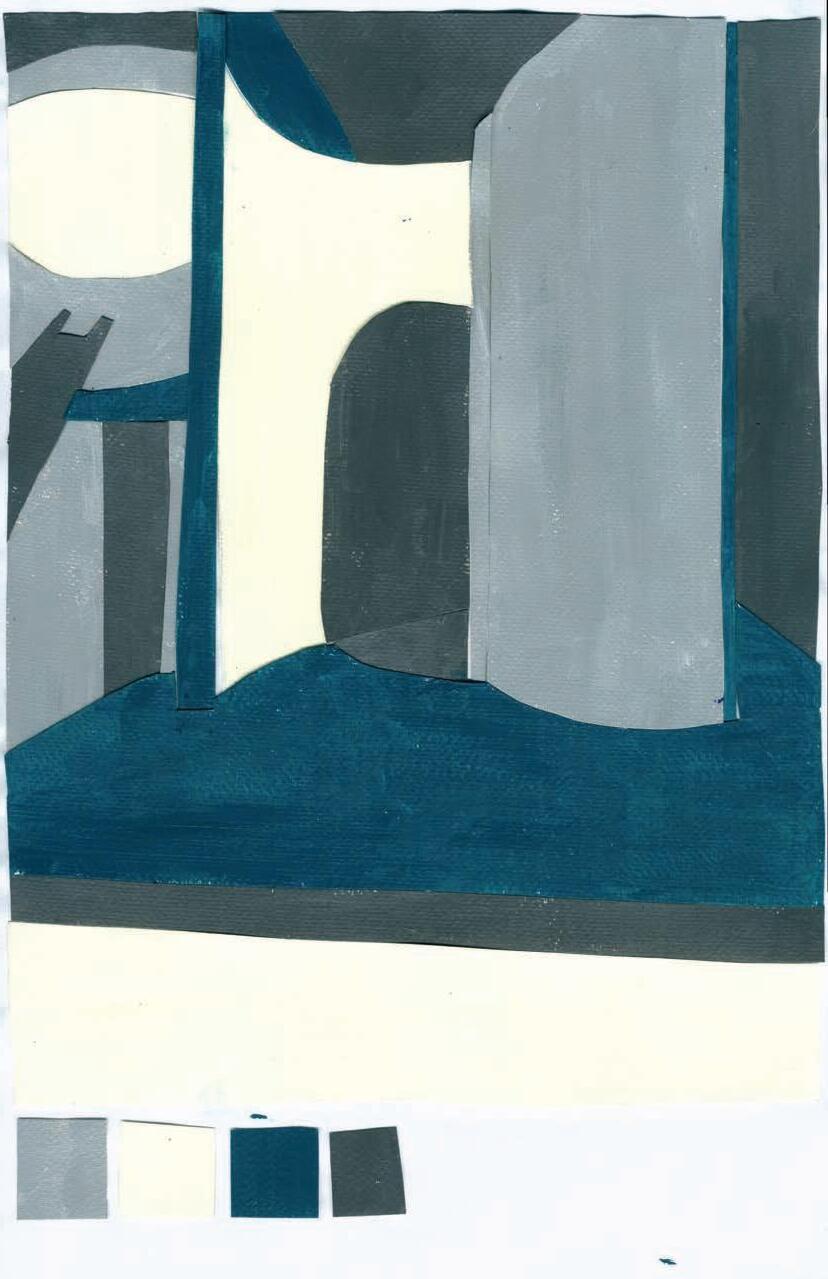
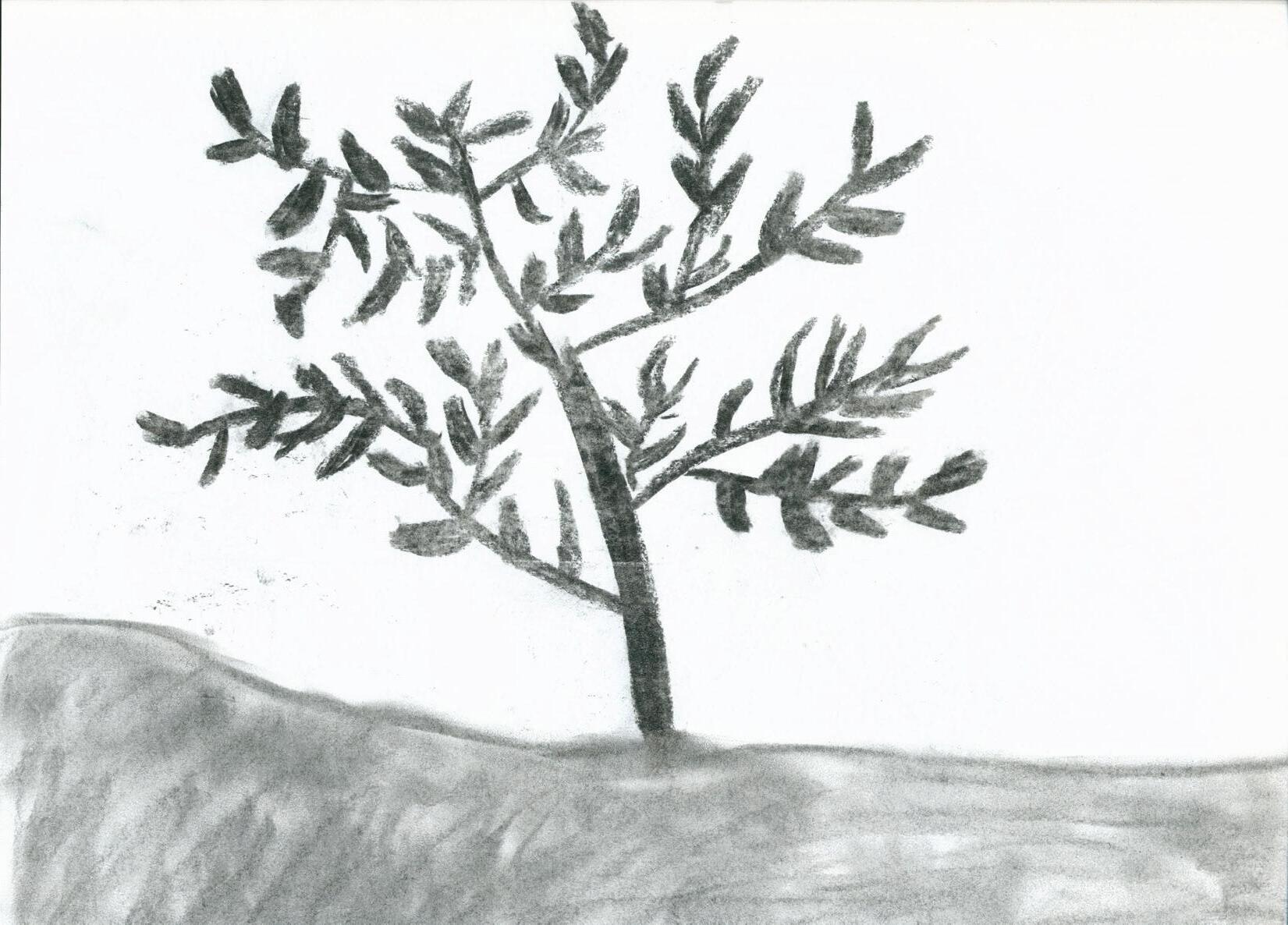
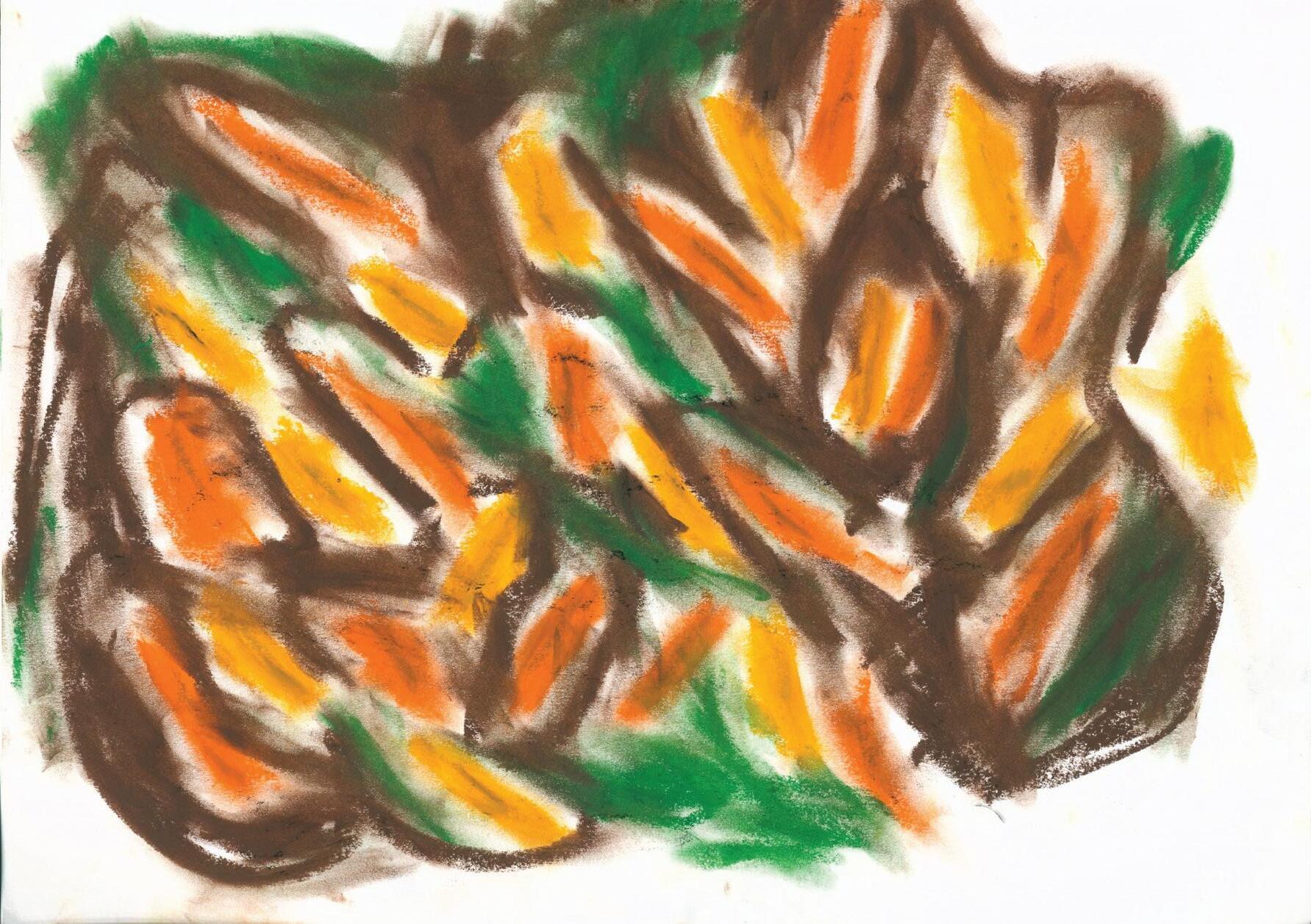
*. There is no restriction on academic use of the contents of this book.
*. The copyright of all design results contained in this book belongs to each (student) designer.
PUBLISHER’S NOTE
Since the beginning of my teaching career in Korea, I have always wished that I had a book such as this one. This wish may have originated from my 6th grade teacher, who made a graduation workbook containing students’ writings, drawings, and photographs. After my graduation and before my undergraduate years, I was able to see my growth in ways of thinking and understanding as a result of reading the book. With my colleagues, I made a school book including all the graduate projects completed at Hanyang University in 2006. By reading the book, I had been able to cheer up and reenergize myself whenever I was exhausted and burnt out in practice. With these memories, it has been four years since I made the course books for the subjects I taught.
During the process of creating this book, I learned something that I had never known before. I am gradually improving my skills as an instructor, learning what I have missed as an instructor, what I should remember when teaching next semester, which assignments to emphasize more, and what to emphasize less. Seeing the efforts and thoughts of the students that I had not yet discovered, I smiled at them and regretted that I had not been able to encourage them more.
After receiving this book, each recipient may have a different reaction to it. In the past four years, it has been observed that it serves as a tangible teaching portfolio for instructors, a data bank for students in the event of unexpected laptop failures, and an educational experience that motivates students to create their own portfolios. What will be your reaction when you receive this book? In the future, when you are about to graduate, what will you think after reading this book? In keeping with this thought, I completed the process of making the book.
In my opinion, the curriculum in the first two years is typically more focused on visualizing ideas by converting them into visualized outputs that can be shared with others. In the second half, the focus is more on materialization aligned with the realities, such as building codes, social issues, etc. It is my hope that you will be able to improve your ability to visualize and sense scale before the second half.
As a final note, I would like to thank you for all the time I spent with you. Despite the fact that this design studio with you has ended, please feel free to contact me at any time. I will be glad to respond to your contact. It has been a pleasure having you with me this semester.
I congratulate them on their successful completion.
-
Jinoh Park, Instructor and Publisher
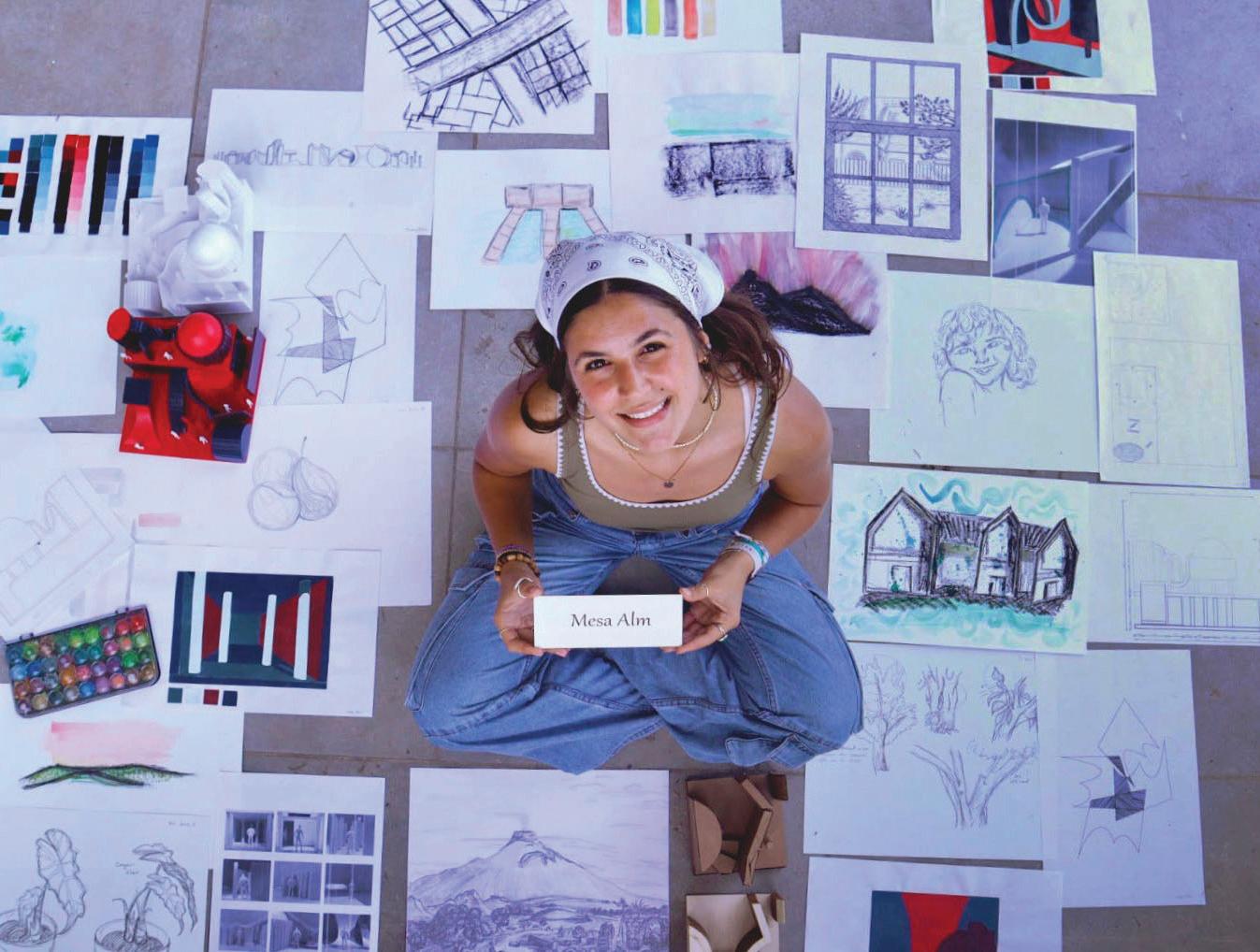
Alm,Mesa Faith
114 Callahan,Rachel
Harrington,Ava
264 Penfield,Marilynn Mae
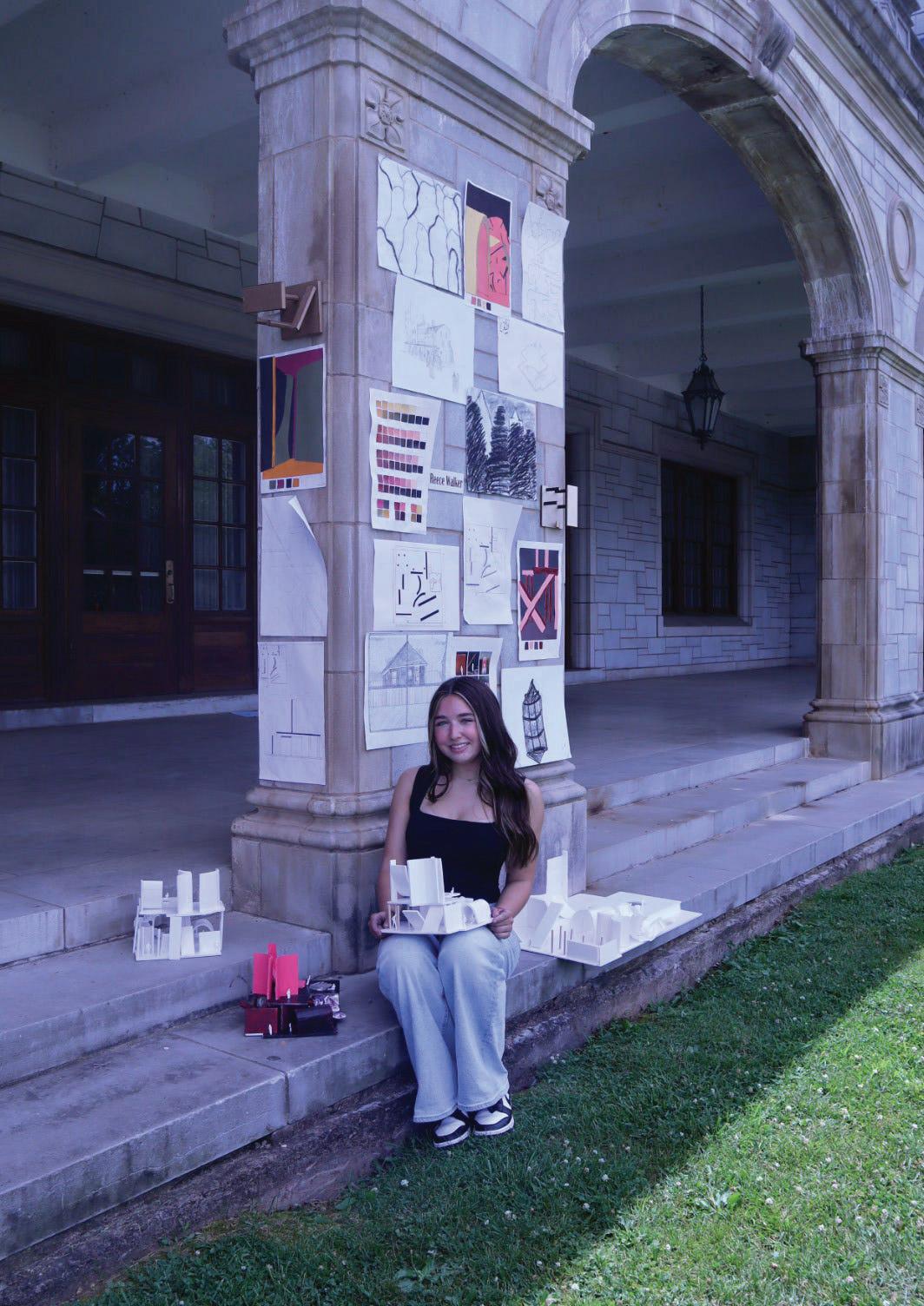
304 Walker,Reece Elaine 324 Overall, what I have learned...
If I could talk to me before these five weeks, what would I like to share with me?
Main Themes
1. Self-Discovery and Personal Growth
- Self-Confidence and Potential
- Students expressed surprise at their ability to push beyond their perceived limits and achieve more than expected.
- Realization of inner strength and capabilities.
- Resilience and Adaptability
- Overcoming challenges, managing stress, and coping with unexpected difficulties.
- Emphasis on the importance of perseverance and trust in the process.
2. Importance of Time Management
- Managing heavy workloads through effective time management.
- Balancing productivity with good craftsmanship and attention to detail.
- Recognizing the value of taking breaks to maintain mental health.
3. Significance of Relationships and Support
- Importance of building friendships and collaborating with peers.
- Relying on classmates for support and encouragement during challenging times.
- Instructors as valuable resources for guidance and learning.
4. Embracing Challenges and Learning Opportunities
- Understanding that difficult experiences are integral to growth and learning.
- Emphasis on the rewarding nature of overcoming obstacles.
- Appreciation for the lessons learned and the skills acquired during the course.
5. Reflection on Stress and Workload
- Acknowledgment of the initial overwhelming nature of the course.
- Learning to manage stress and not overthink or complain excessively.
- The importance of maintaining a positive mindset despite challenges.
6. Enjoyment and Fulfillment
- Despite the challenges, students found joy and fulfillment in their work.
- The sense of accomplishment and pride in completed projects.
- The positive impact of enjoying the process and the work itself.
Sentiments and
Emotions
1. Positive Emotions
- Pride and Satisfaction: Many students felt proud of their
accomplishments and the progress they made.
- Joy and Enjoyment: Despite the hard work, students found enjoyment in the creative process and the outcomes.
- Gratitude: Appreciation for the opportunity to learn and grow, as well as for the support received from peers and instructors.
2. Negative Emotions
- Stress and Overwhelm: Initial feelings of being overwhelmed by the workload and the intensity of the course.
- Doubt and Anxiety: Moments of doubt about their abilities and the feasibility of completing the tasks.
3. Mixed Emotions
- Relief and Accomplishment: Relief at having completed the course and a sense of accomplishment.
- Reflection and Insight: Mixed feelings about the difficulty of the course, balanced by the recognition of its value and impact.
Key Takeaways and Advice
1. Trust in the Process
- Emphasizing the importance of trusting the process and believing in one’s abilities.
- Encouragement to embrace challenges and learn from them.
2. Importance of Community
- Highlighting the value of building relationships and seeking support from peers.
- Advice to engage with classmates and instructors for a richer learning experience.
3. Balanced Approach
- Advocating for a balance between hard work and self-care.
- Importance of managing time effectively and taking breaks when needed.
4. Embrace Creativity and Risk
- Encouragement to think outside the box and take creative risks.
- Recognition that mistakes and messes are part of the learning process.
5. Positive Mindset
- Advice to maintain a positive mindset and avoid unnecessary stress.
- Encouragement to focus on the rewarding aspects of the work and the progress made.
Overall, the reflections indicate a transformative experience for the students, characterized by personal growth, the development of resilience, and the acquisition of valuable skills. The recurring themes of self-discovery, the importance of time management, and the value of relationships underscore the holistic nature of their learning journey.
Mesa Alm
Portfolio
What I learned...
Project #1 “Wall, Column, and Space”
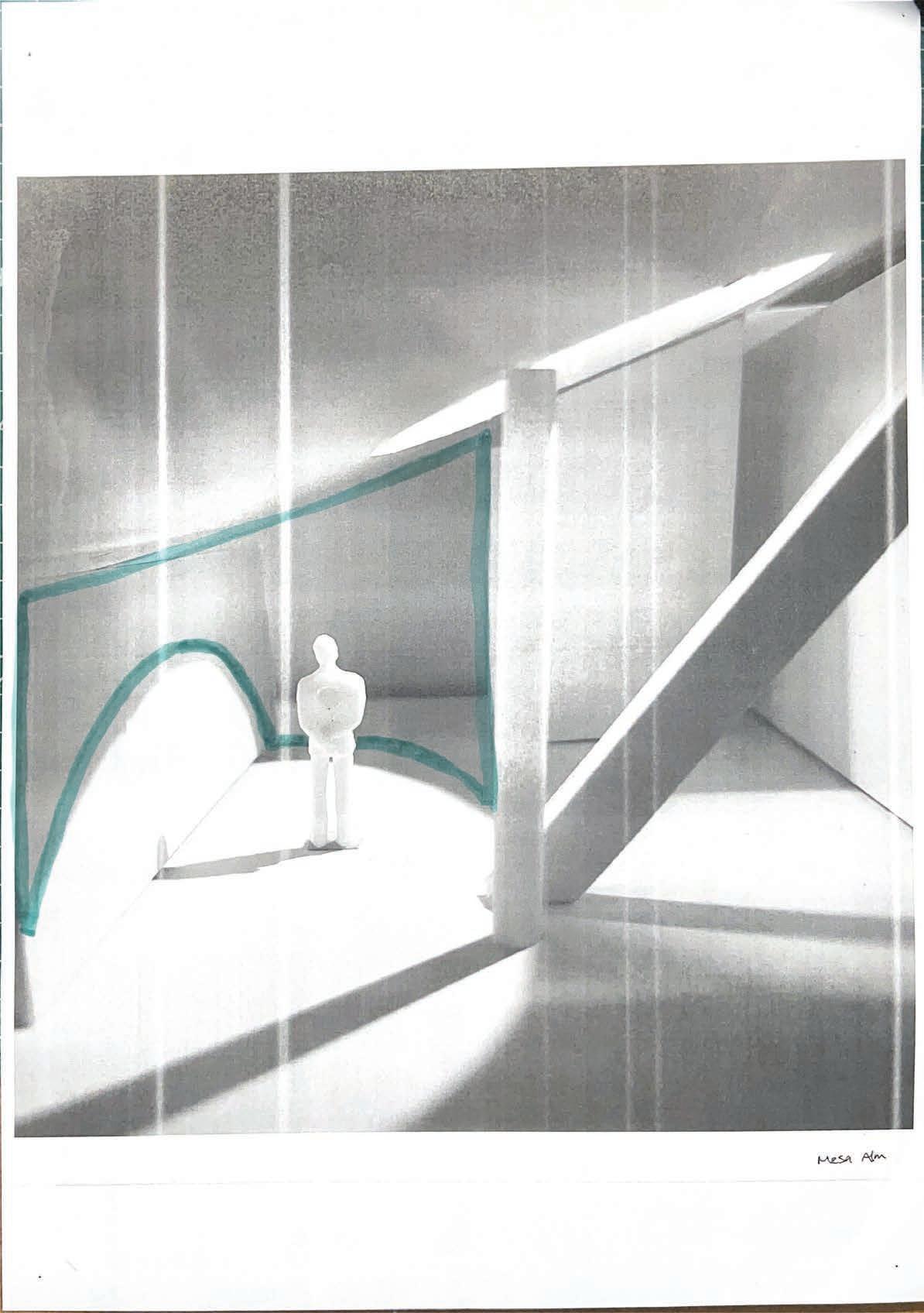
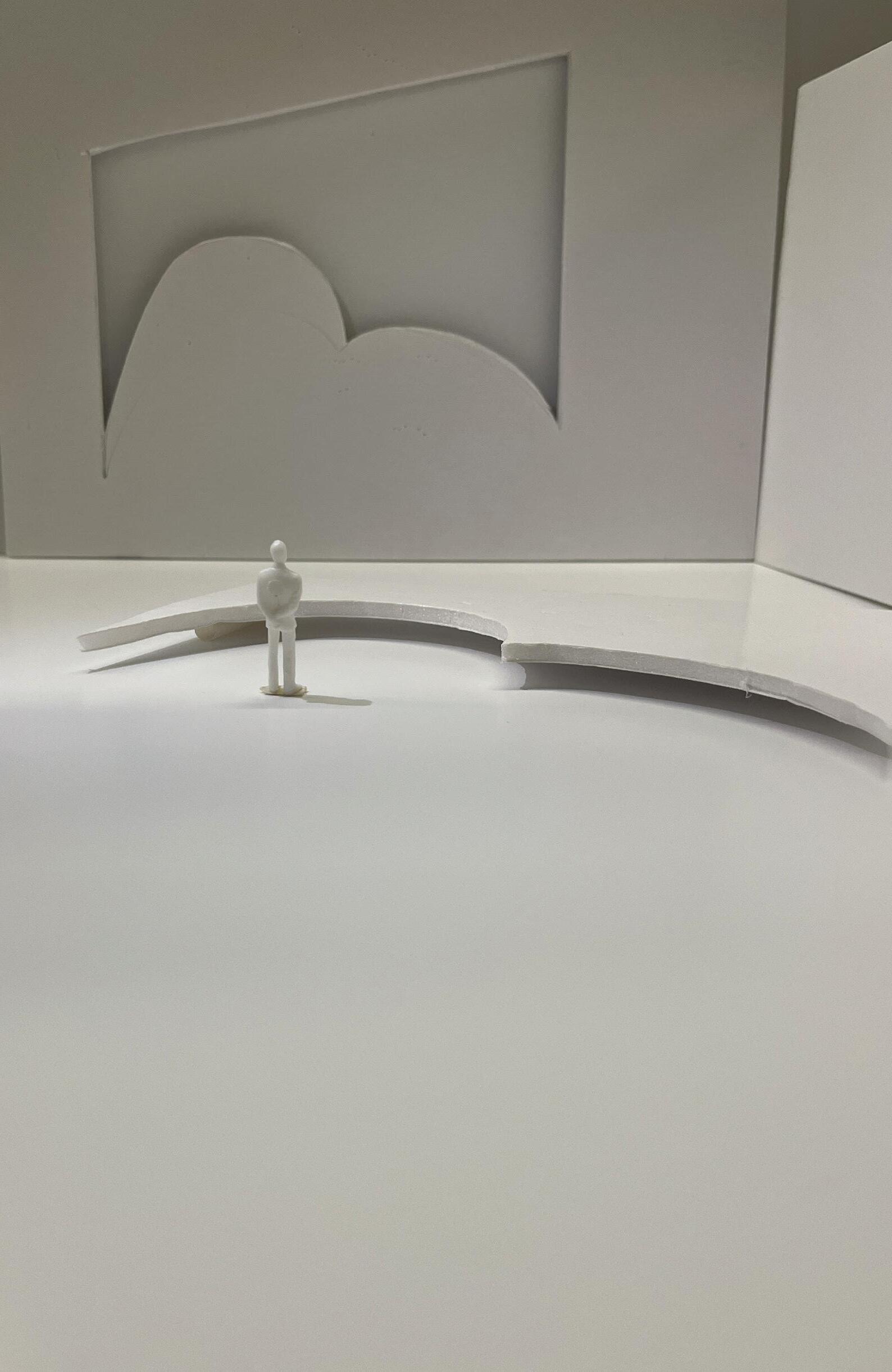
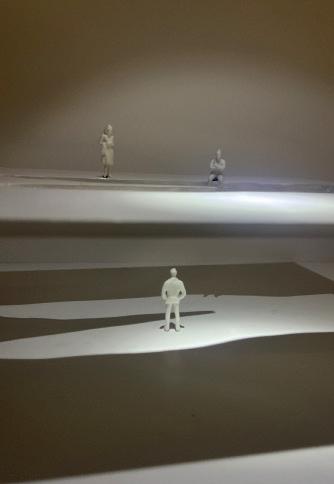
- This project provided a valuable opportunity to explore the fundamental elements that shape an interior environment. Through hands-on experimentation with light, spatial relationships, and scale, I began to understand how each of these components contributes to the overall atmosphere and functionality of a space. It challenged me to think critically about how walls, columns, and voids interact, not just as structural elements, but as tools for guiding movement, framing views, and creating emotional responses within a designed interior.
Project #2 “Hand Drawing”
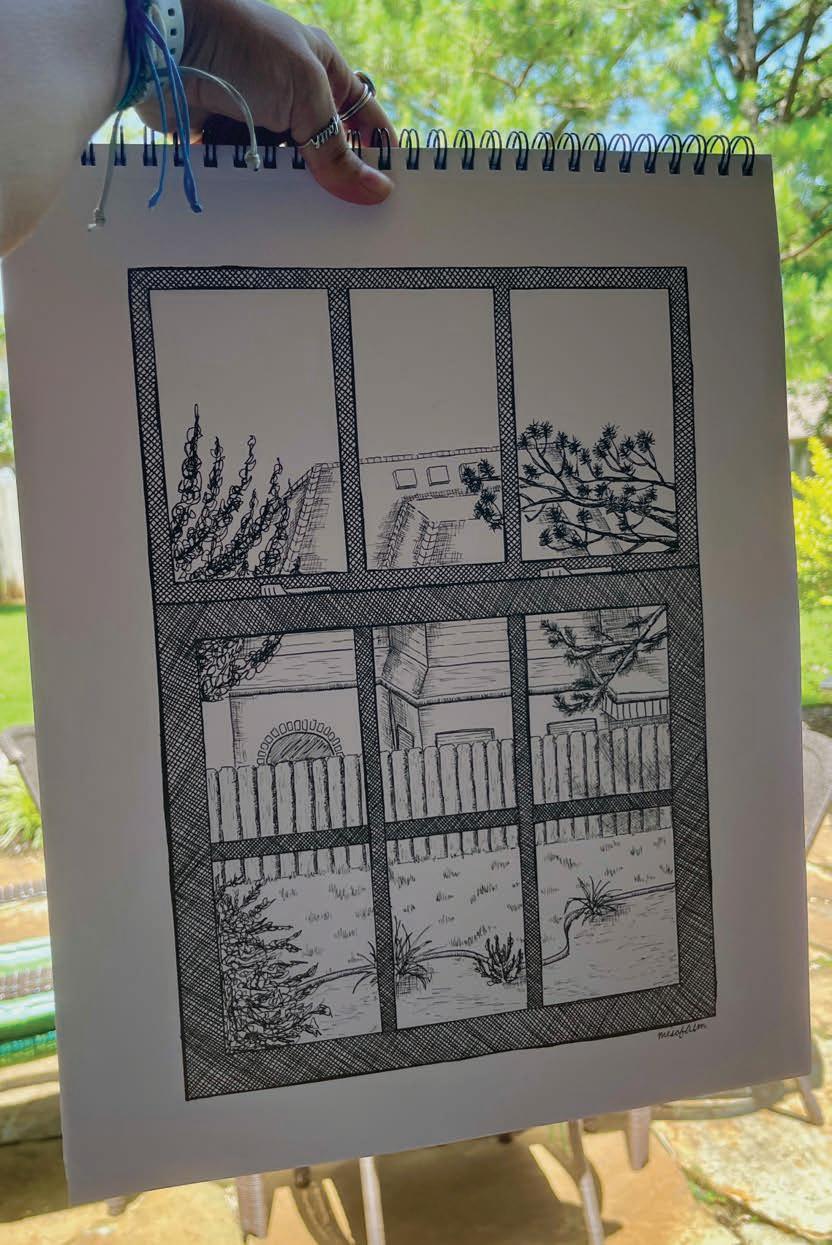
- Through the hand drawing projects, I developed a stronger sense of control and intention in my freehand work while also learning how to use rules and geometry to create expressive patterns. Drawing my window view helped me connect personal memories with everyday observations, showing me how storytelling and emotion can be translated through visual media. I also gained a deeper understanding of how color can influence perception and atmosphere in a space. Sketching outdoor further sharpened my ability to analyze and capture real-world environments, encouraging me to recognize design principles in natural and built landscapes. These exercises collectively taught me how drawing can be both a tool for design and a means of personal reflection.
Project #3 “Drawing What you See, Drawing What you Feel”
- Through this project, I learned how to look beyond the surface of both art and space—to not just observe the details, but to understand how they make me feel and why. By analyzing both a historical painting and a real-life architectural space, I began to see how emotion, memory, and personal experience can shape interpretation. I learned how to connect factual elements, like size, material, and composition, with personal responses such as comfort, nostalgia, or peace. This process taught me how powerful it is when design and art resonate emotionally, and how meaningful connections can form when we draw not just what we see, but what we feel.
Project #4 “Space Cube”
- Through the Space Cube project, I learned how to create intentional and meaningful spatial experiences within a confined volume. Working within the 9”x9”x9” cube pushed me to think critically about transitions, boundaries, and the emotional responses that different spatial arrangements could evoke. I explored how to define space explicitly and implicitly, and how subtle shifts in form or placement can completely alter the experience of moving through a space. This project also taught me the importance of iteration, developing multiple ideas and refining one to its full potential, while balancing creative vision with constraints. Overall, I gained a deeper understanding of how to design spatial sequences that communicate a clear intention through both physical models and digital tools like Rhino.
Project #5 “First Portfolio”
- Through this project, I learned how to reflect on my design process as both a creative and professional journey. Using AI tools like Fabrie helped me see how technology can enhance and inspire new directions in design, while also challenging me to think critically about how to maintain my own creative voice. Creating a personal portrait gave me a moment to celebrate my growth and recognize the effort behind each project. Compiling my work into a portfolio taught me that design isn’t just about individual outcomes, it’s about the process, the decisions made along the way, and how everything comes together to tell a cohesive story.
Overall
- Over these five weeks I moved from sketching dancing lines to curating a finished portfolio, and every step taught me to see design as a layered conversation between craft, concept, and technology. Free-hand drawing sharpened my eye for nuance; building the Space Cube deepened my grasp of spatial sequencing and emotional intent; architectural drawings and Rhino modeling translated ideas into precise, communicable form; and experimenting with AI tools pushed me to blend innovation with personal voice. Pulling everything together in a portfolio showed me that good design isn’t a series of isolated tasks, it’s an integrated narrative of exploration, iteration, and reflection.
If you could talk to you before these five weeks, what would you like to share with you?
- Hey, future-you here—relax and dive in. The next five weeks will feel fast and super challenging, but every experiment matters, even the messy ones. Trust your instincts when a line “feels” right, and don’t over-polish the first idea; iterate, then iterate again. Let the Space Cube teach you how tiny shifts can change an experience, and let Rhino’s precision sharpen (not replace) your intuition, you WILL learn how to use it all eventually. Use AI as a springboard, not a shortcut, and remember the portfolio isn’t just a showcase, it’s a story of growth. Celebrate small wins, document everything, and keep your sense of wonder; it’ll carry you through late nights and laser-cut mishaps. Most of all, enjoy the process, you’re about to surprise yourself.
Hand Drawing
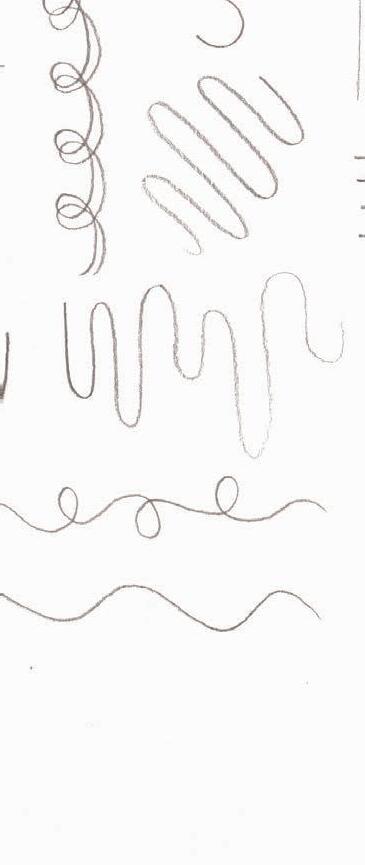
Learning Objectives for Work #1. Dancing Lines
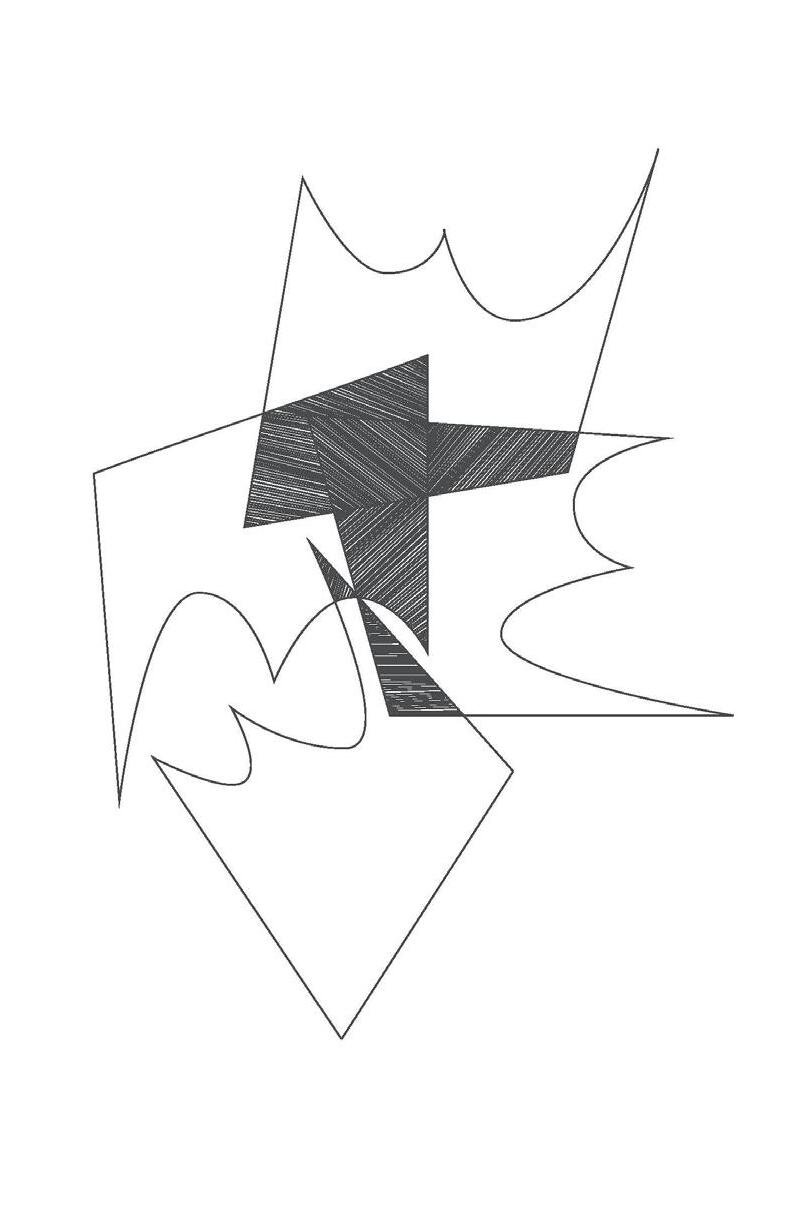
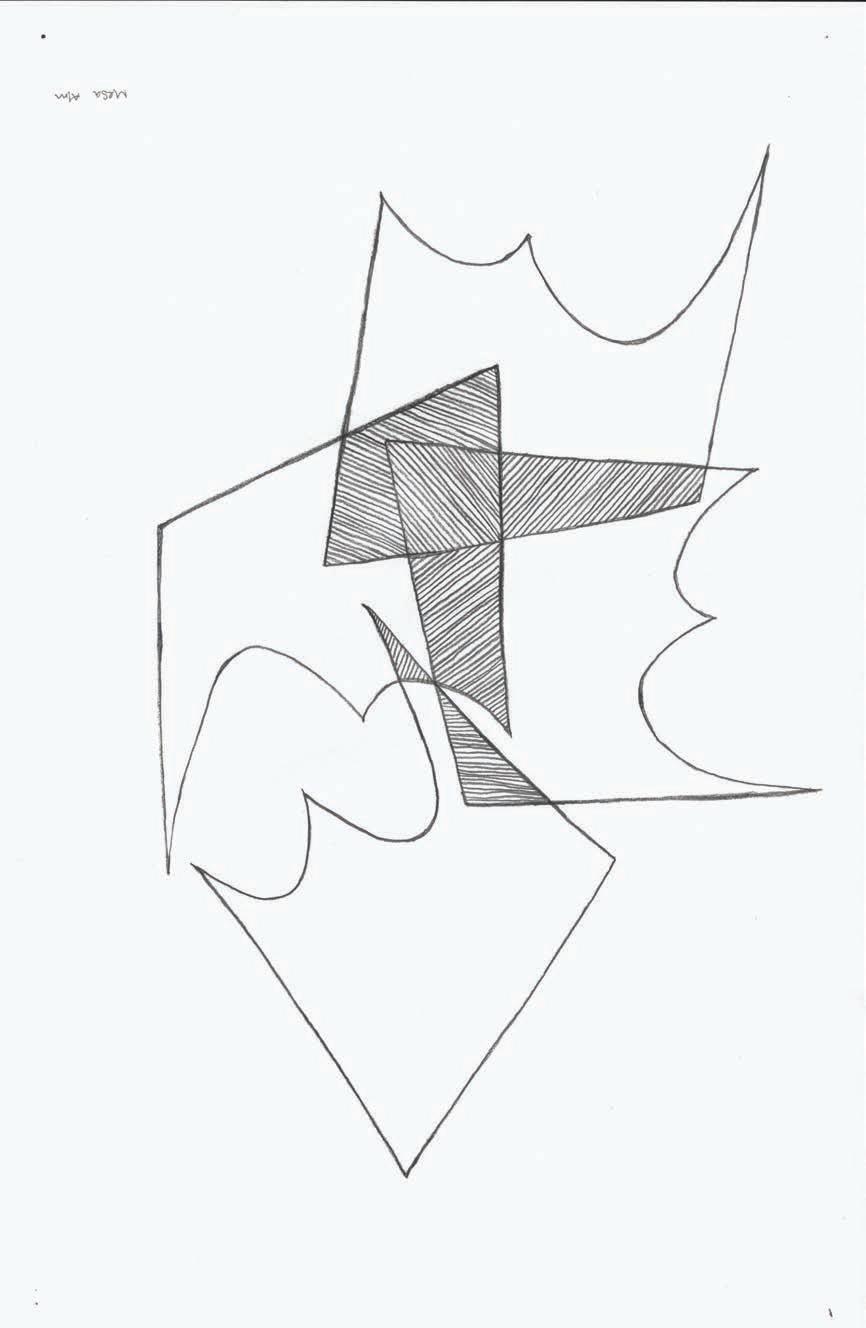
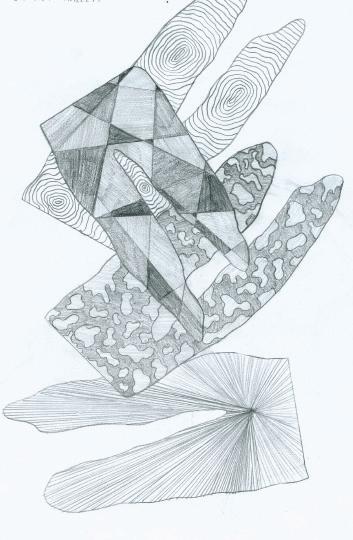
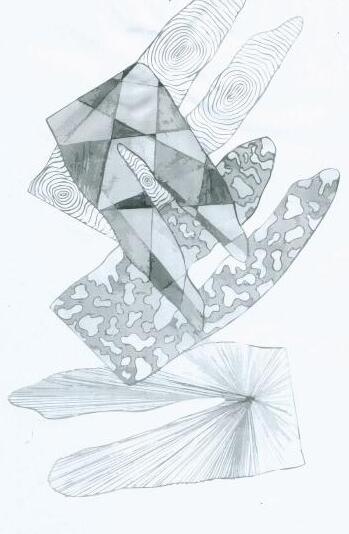
This exercise is designed to improve your manual dexterity in freehand drawing, and it introduces the opportunities for expressive pattern making that can result from precise and rule based geometric drawing strategies.
Learning Objectives for Work #2. My Window View
This exercise is designed to discover everyday life by recalling memories, writing, and drawing. Through the discovering process, students will gain an understanding of how various media can be converted to enhance depth of understanding.
Learning Objectives for Work #3. Color Relationship
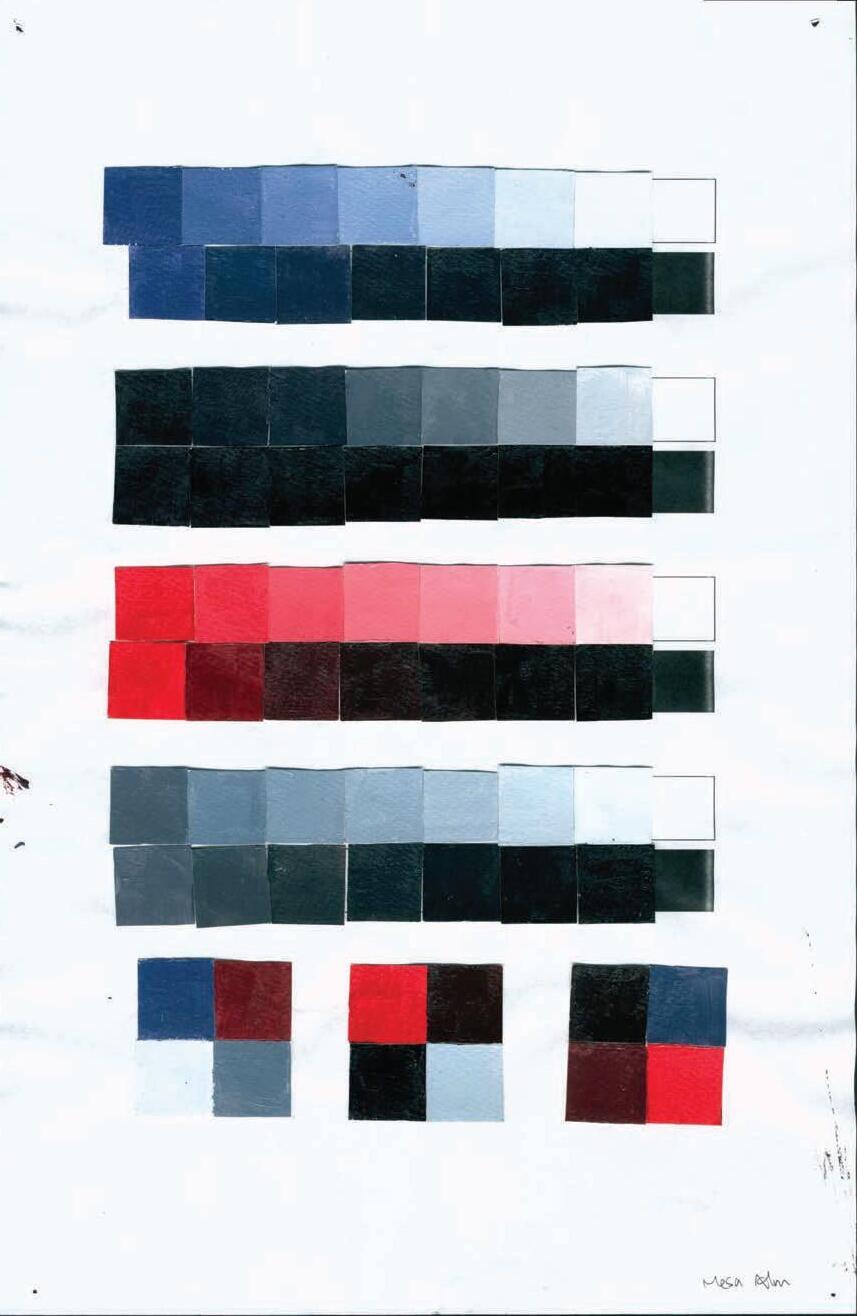
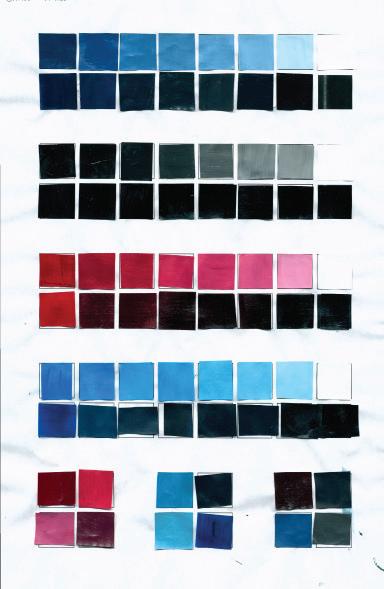
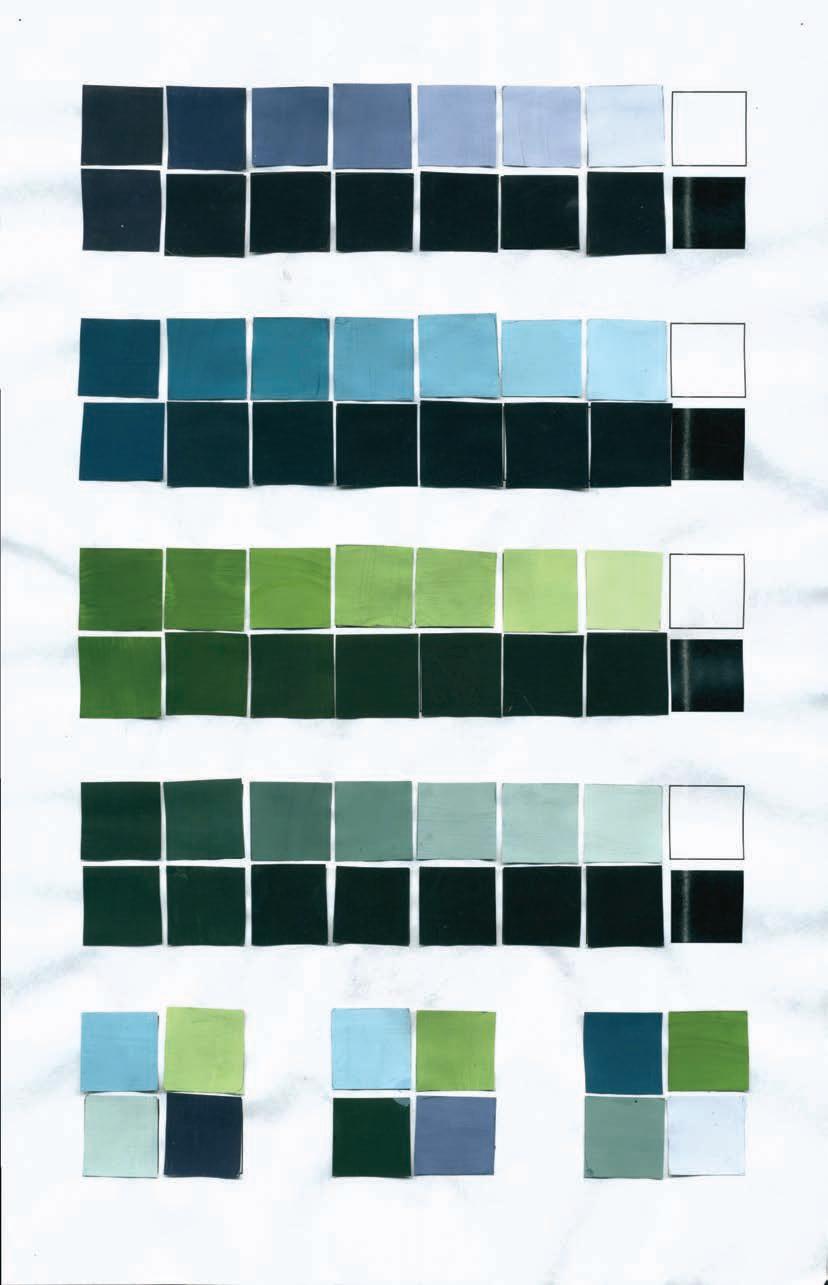
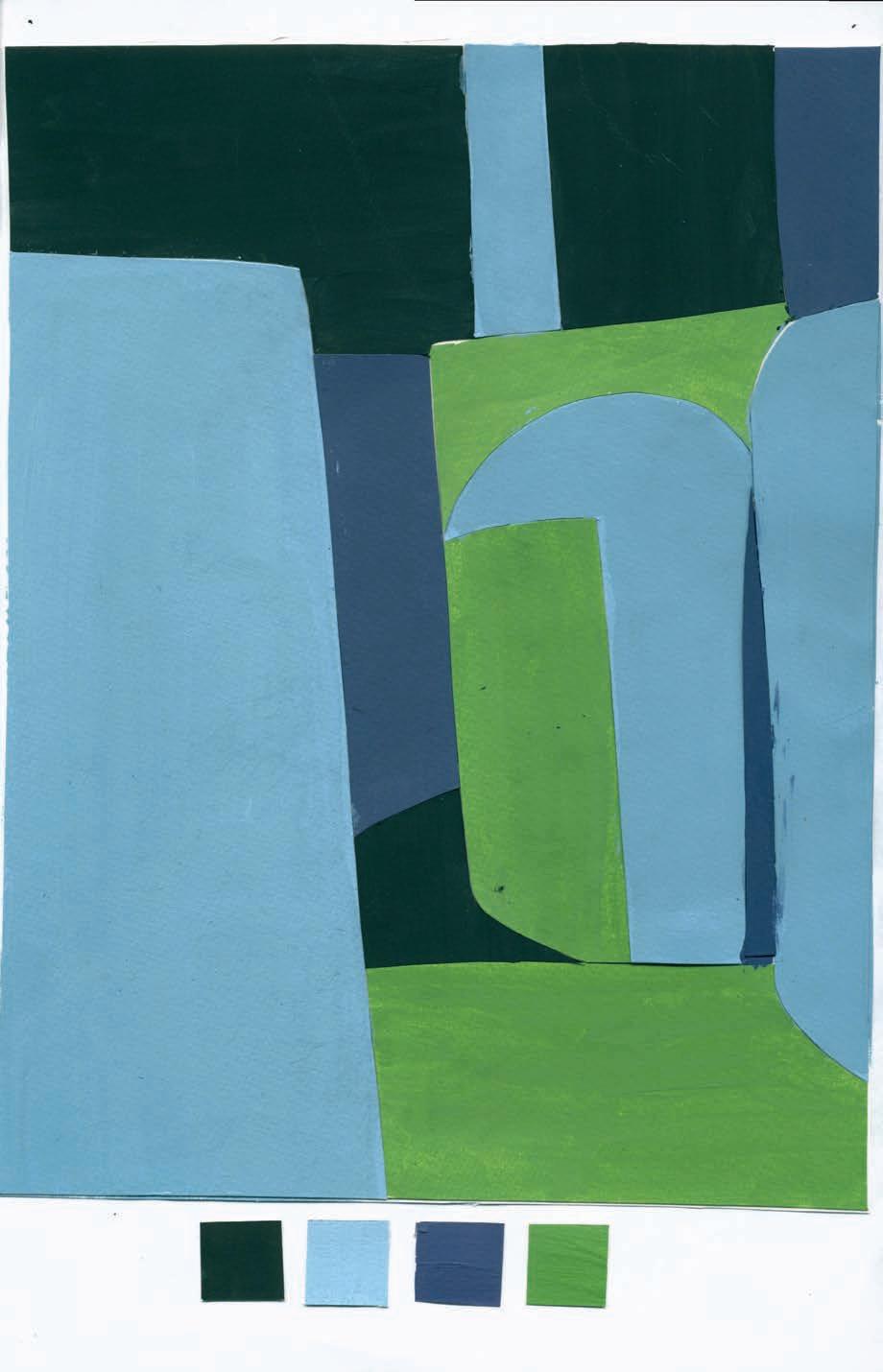
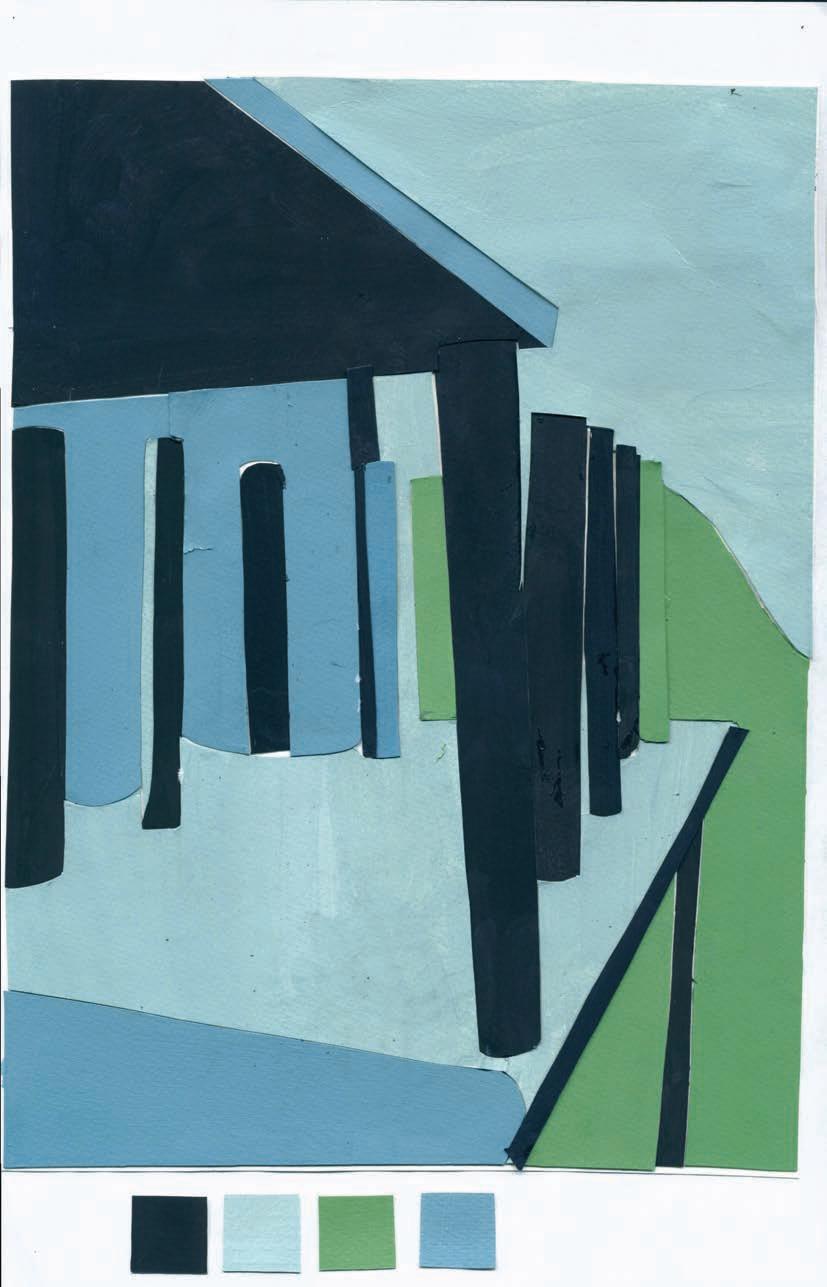
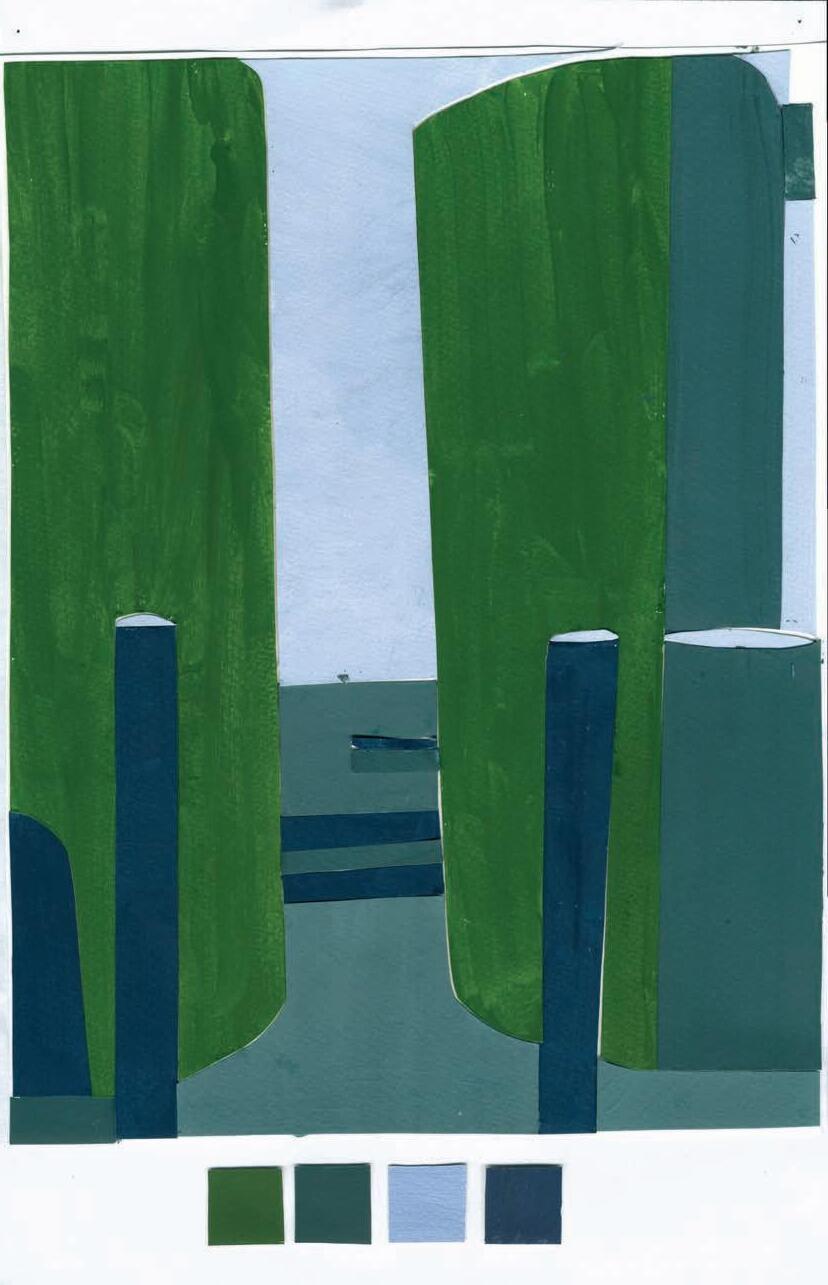
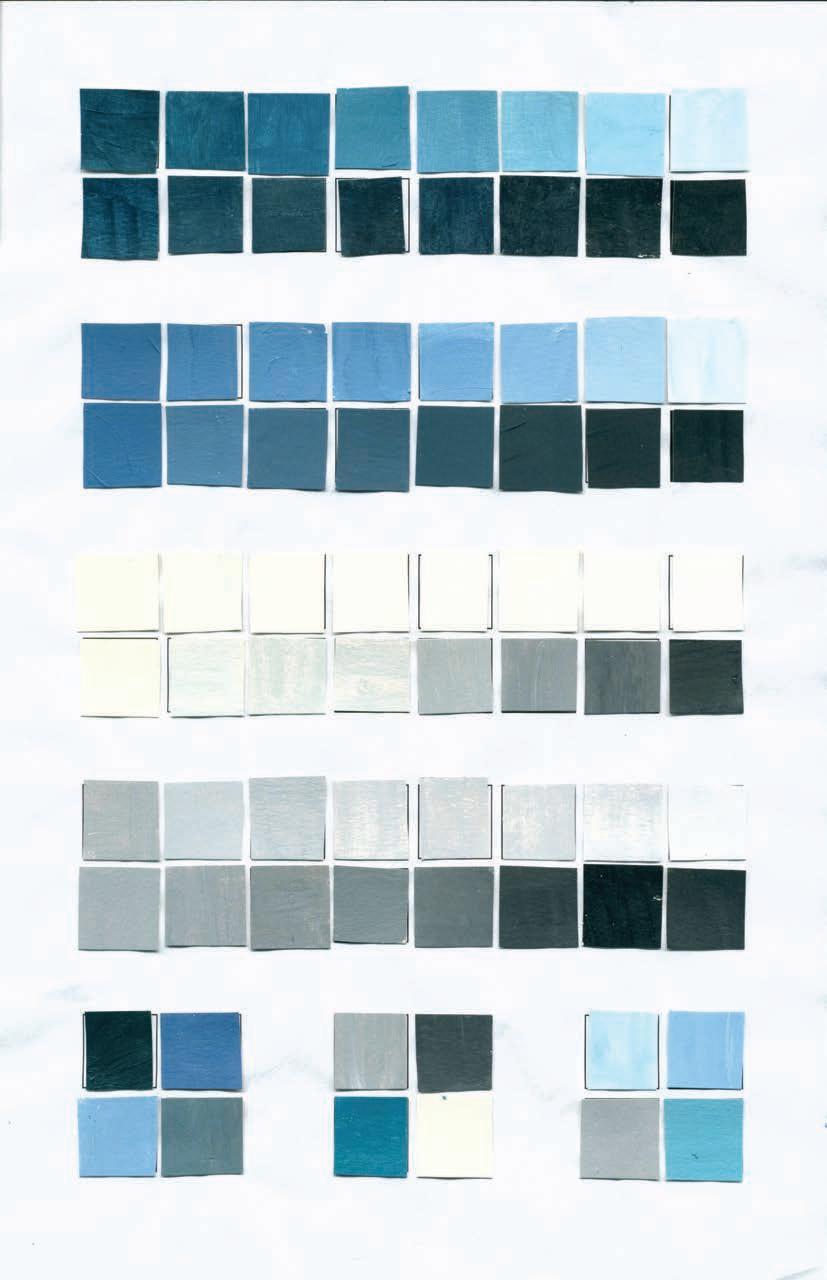
The use of color in visual culture and design can achieve so many wonderful results. When color is used thoughtfully, it can alter our perception of spaces, instill emotion, direct attention, and even hide mistakes. Hue, Chroma (Saturation), and Value (Lightness) are the three components that define color.
Learning Objectives for Work #4. Outdoor Sketch
It is our objective that you become more familiar with a significant resource in Northwest Arkansas, be inspired by its contents and spatial elements, and devote energy to formally understanding, identifying, and applying Art Elements and Design Principles as a result of your visit to Illinois River Watershed Partnership.
Work #1. Dancing Lines (2/2)
Dancing Line Pattern (Hand)
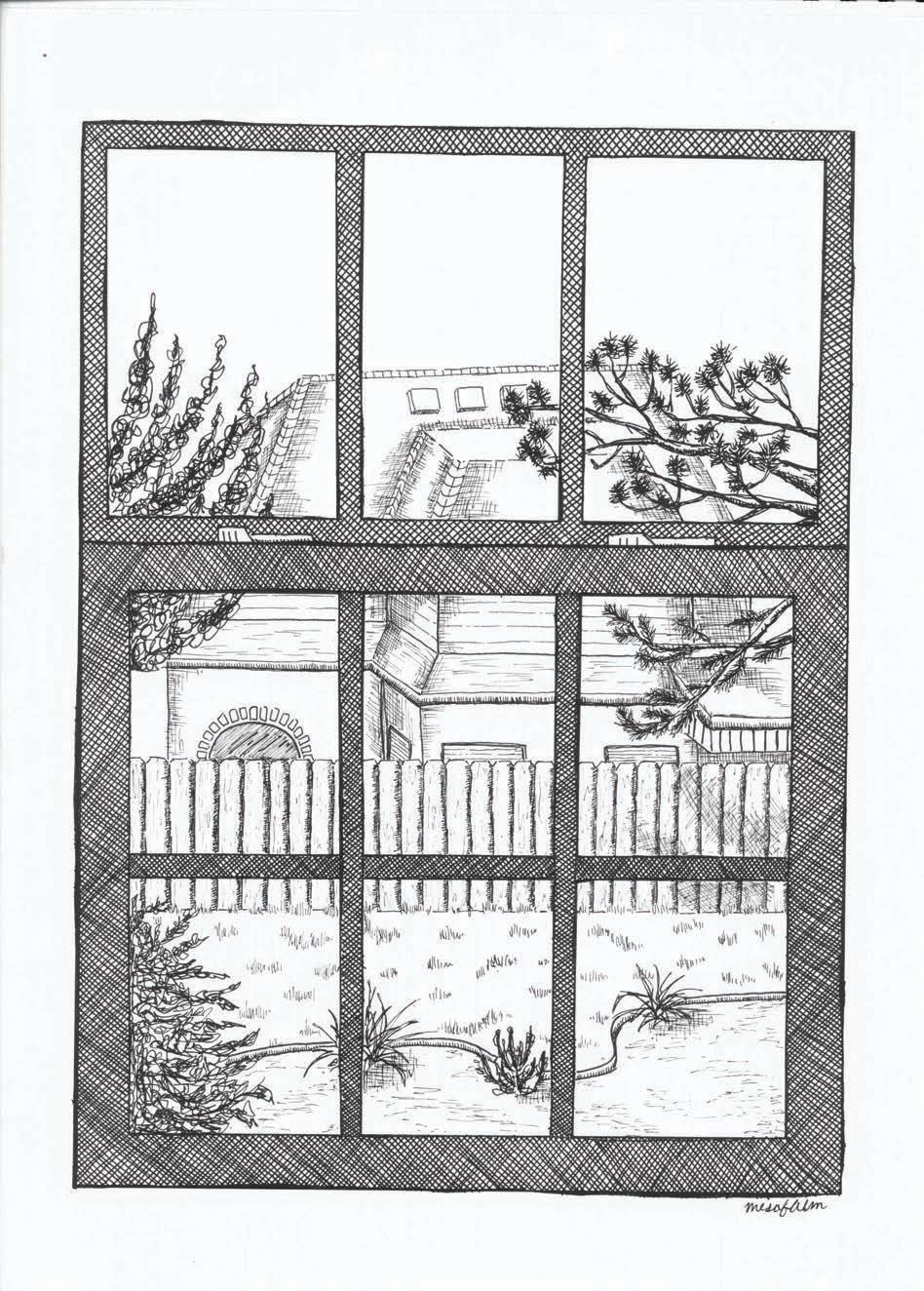
My Window View is...
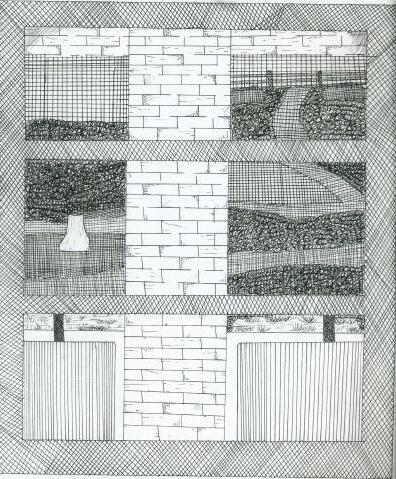
As I look out my window, I see the wind rustle the trees, watch the birds fly around, and hear the dog barking in the neighbor’s yard. The space is open and quiet. Memories of sitting by the campfire, jumping on the trampoline, and swinging on the playset flood my mind. These things from my memory no longer decorate the yard. As I grew up, so did this space; it no longer houses a child.
What I noticed the following after I drew my window view...
I never noticed the perfectly placed trees; how they line the fence and provide shade to part of the yard. Or the rounded window on the back of the neighbor’s house. I hadn’t realized how the plants created a curving path along the edge of the landscaping trim.
My Window View is...
Now, as I look out my window, I see my neighbor’s beautiful rounded window. I see the straight fence and the intentional placement of the trees and plants. I hear the birds and think of the memories that fill my mind; memories of a place I will always cherish: my backyard, a place I can still see from this window
Writing what you feel (see, smell, hear, etc.) before, during, and following your drawing completion...
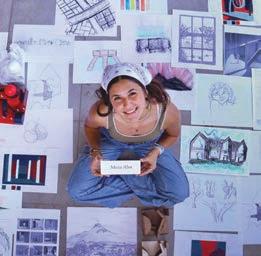
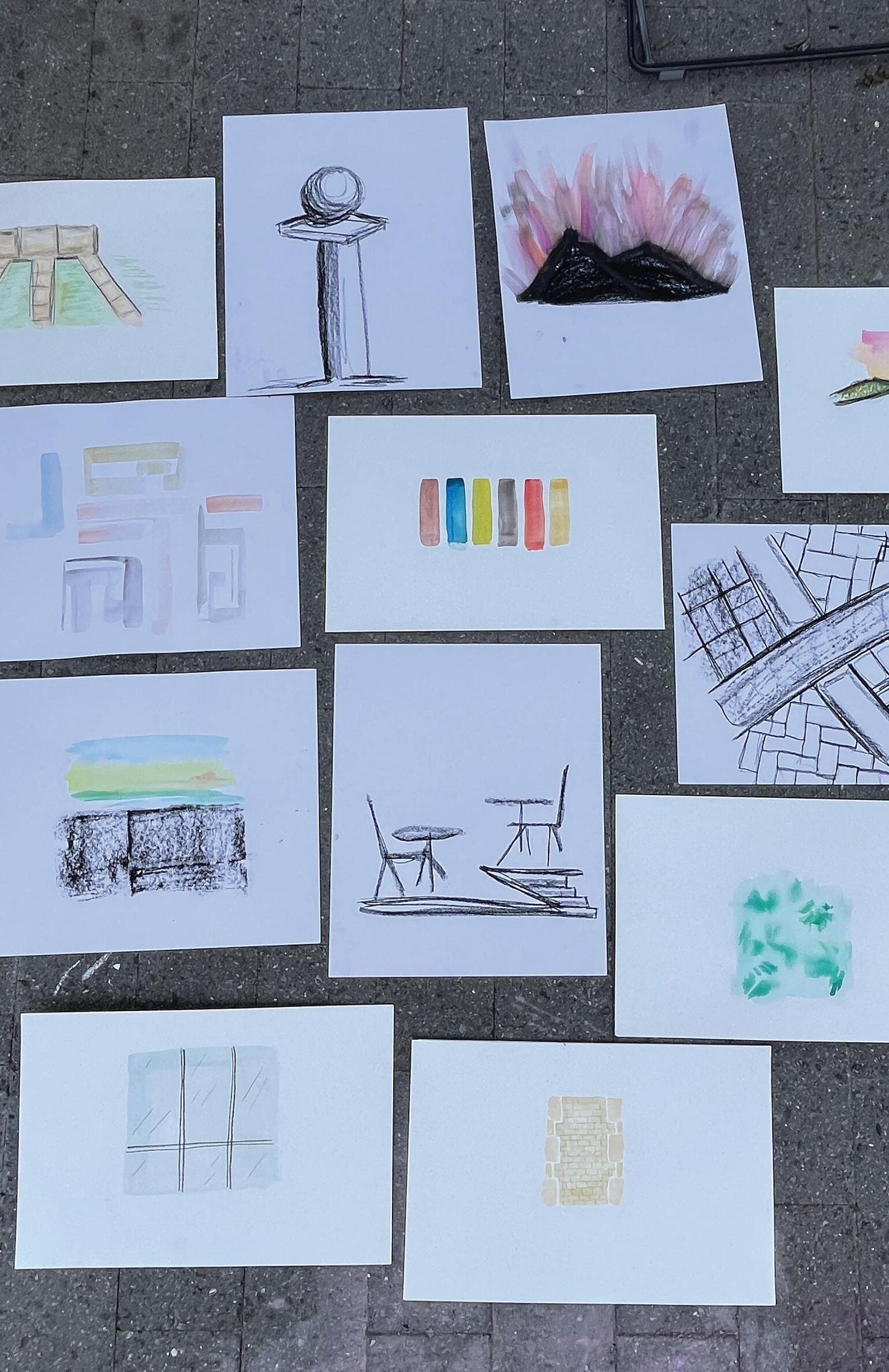
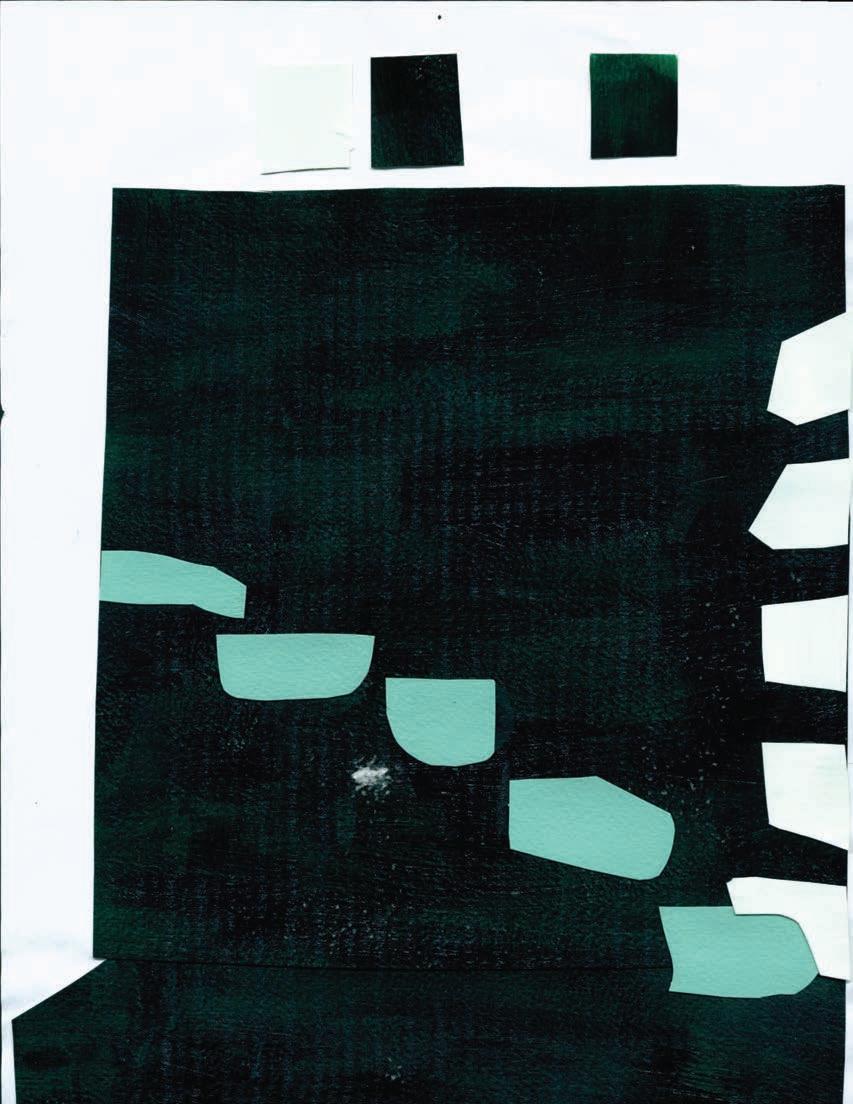
The space I chose to convey in my drawings is the area where you can see Gregson Dorm, Gibson Dorm, 1021 Cafeteria, and the lookout all from one spot. This intersection of familiar buildings and natural surroundings holds deep meaning for me, as it served as a central hub throughout my freshman year at the University of Arkansas. From this single viewpoint, so many memories, feelings, and moments intersect, just like the paths that physically converge there. To express the significance of this space, I used both watercolor and charcoal to create a series of abstract art pieces. The mixed media allowed me to blend fluidity with structure, freedom with intention.
As I created each piece, I found myself reflecting on the many memories tied to that specific area. It’s where I walked nearly every day, where I caught up with friends, where I paused to take in the view during stressful weeks. The lookout, in particular, offered me a quiet place to decompress and reflect, especially during the spring when the wind would whip through the trees, creating a peaceful white noise. Each brushstroke and charcoal line became more than just a visual element; they became echoes of laughter, quiet thoughts, and late-night walks under campus lights. I put intentionality into all of the pieces to create a collage of bright, happy colors and rich textures that represent both the physical characteristics of the space and the emotional resonance it holds for me. From each drawing I’ve completed, I can recall multiple memories or distinct feelings I had in that space. Whether it was walking to class on a chilly morning, sitting in the grass with friends, or watching the sun set over the campus buildings, these moments are etched into my memory and now represented in my art. One of the first pieces I created began with an abstract bird’s-eye view of the three main paths leading out of Gregson Dorm. This dorm was my home base during freshman year, and every day I would face the choice of which path to take, toward the classrooms, the dining hall, or toward time with friends. It’s a simple decision, but it became symbolic of the rhythm and structure of my daily life. Some of the pieces in this series are more easily recognizable. You can see the outline of a building, the suggestion of a pathway, or the form of a mountain. Others are intentionally more abstract and personal, meant to be understood primarily by me. They hold deeper emotional meanings, shapes and colors tied to particular memories or moods that I experienced in that space. What’s interesting and beautiful, though, is that these abstract pieces also allow for interpretation. Anyone viewing them can bring their own meaning and perspective, creating a personal connection to the artwork based on their own experiences and emotions.
In terms of technique and materials, I explored different combinations of watercolor and charcoal. Some pieces rely heavily on one medium, either the soft fluidity of watercolor or the strong contrast of charcoal, while others are a blend of both. I used a color palette that evokes both nature and campus life. Greens and blues dominate, representing the trees and sky, while warm tones like orange and gold recall sunsets and early fall mornings. Earthy tones reflect the architecture of the dorms and the well-worn paths I traveled.
Certain pieces took on a more literal shape. For instance, in one painting, I used sweeping horizontal strokes to mimic the horizon line of the mountains visible from the lookout. In another, I created layered textures with watercolor to represent the soft grass I often sat on. At the same time, other pieces are pure representations of emotion. There are swirling shapes that capture the intense spring winds that often danced around the hilltop, and irregular blotches of watercolor that suggest the rainy puddles I’ve tiptoed through on my way back from class. The charcoal plays a unique role throughout, used to create definition, contrast, and depth within each composition. It helps ground the dreamlike quality of the watercolor and adds a tactile sharpness that mirrors the architecture and structure of the campus environment. My final piece in this collection is a sort of summary of the whole experience. I took all the colors I had used throughout the series and created six individual watercolor swatches. These swatches are more than just a visual reference; they represent the culmination of emotion, environment, and memory. They mix the natural and unnatural aspects of my space into a unified palette. When I look at them, I see more than color. I see moments, feelings, and growth. They serve as a visual conclusion, tying all the pieces together in a collective harmony. This project has allowed me to revisit and reframe my first year in a deeply creative and personal way. Through abstract expression, I’ve found a way to represent not just a physical place, but an emotional landscape full of growth, friendship, change, and reflection. These pieces are not only artworks, they are visual journals, intimate portraits of a space that helped shape my freshman experience.
Drawing What you See, Drawing What you Feel
A short description of the association and emotion that twins these two together (nominally 500 words) to include:
e “factual facts” such as the name, date, title, and summary of the art-piece, and the content and basic-character of the indoor or outdoor space (rough size, materials, uses, de ning objects, etc.)
e “actual facts” of your interpretations of the artwork and the space, and what it is about these two things that give you a similar sense, emotion, or association.
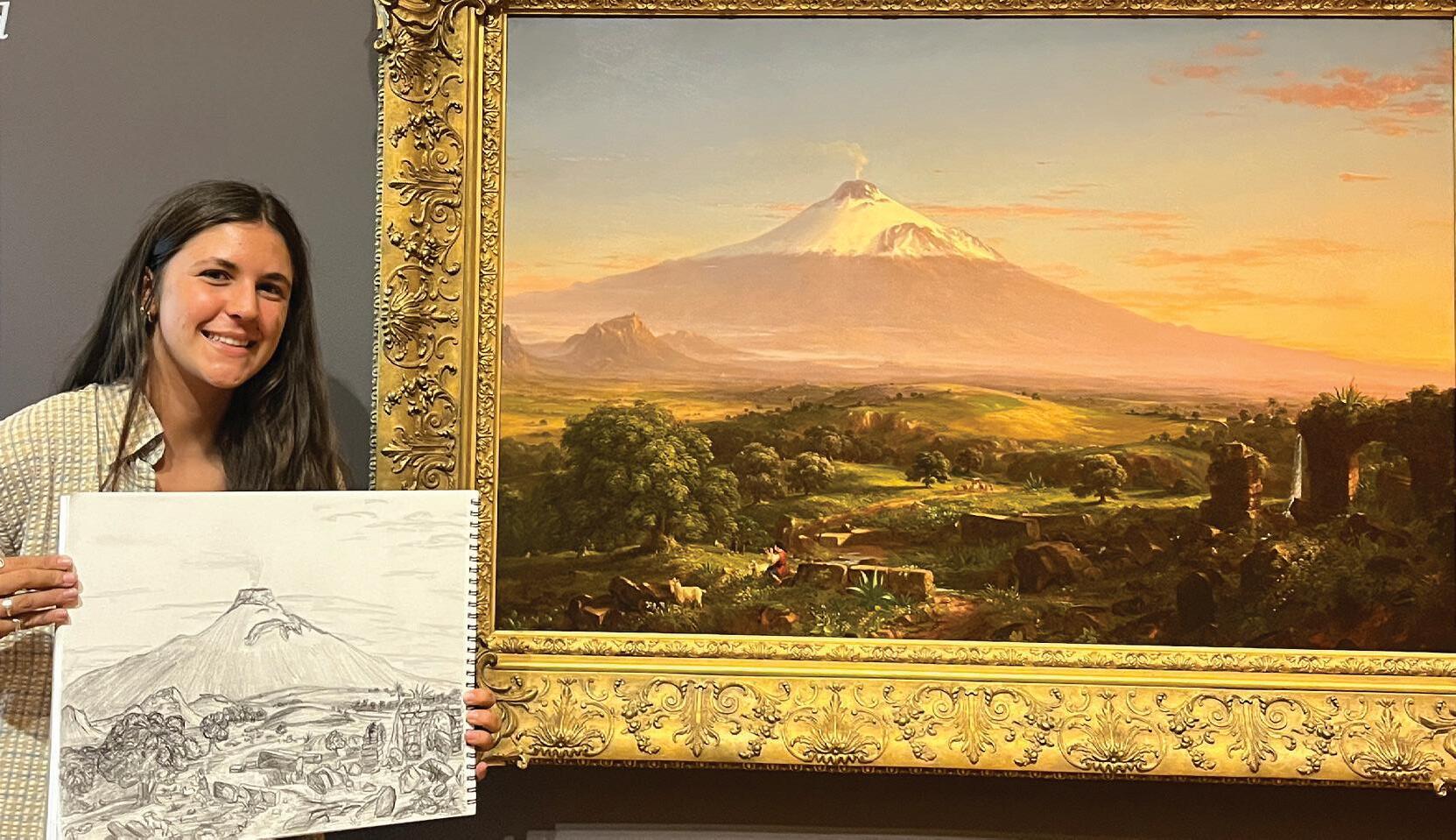
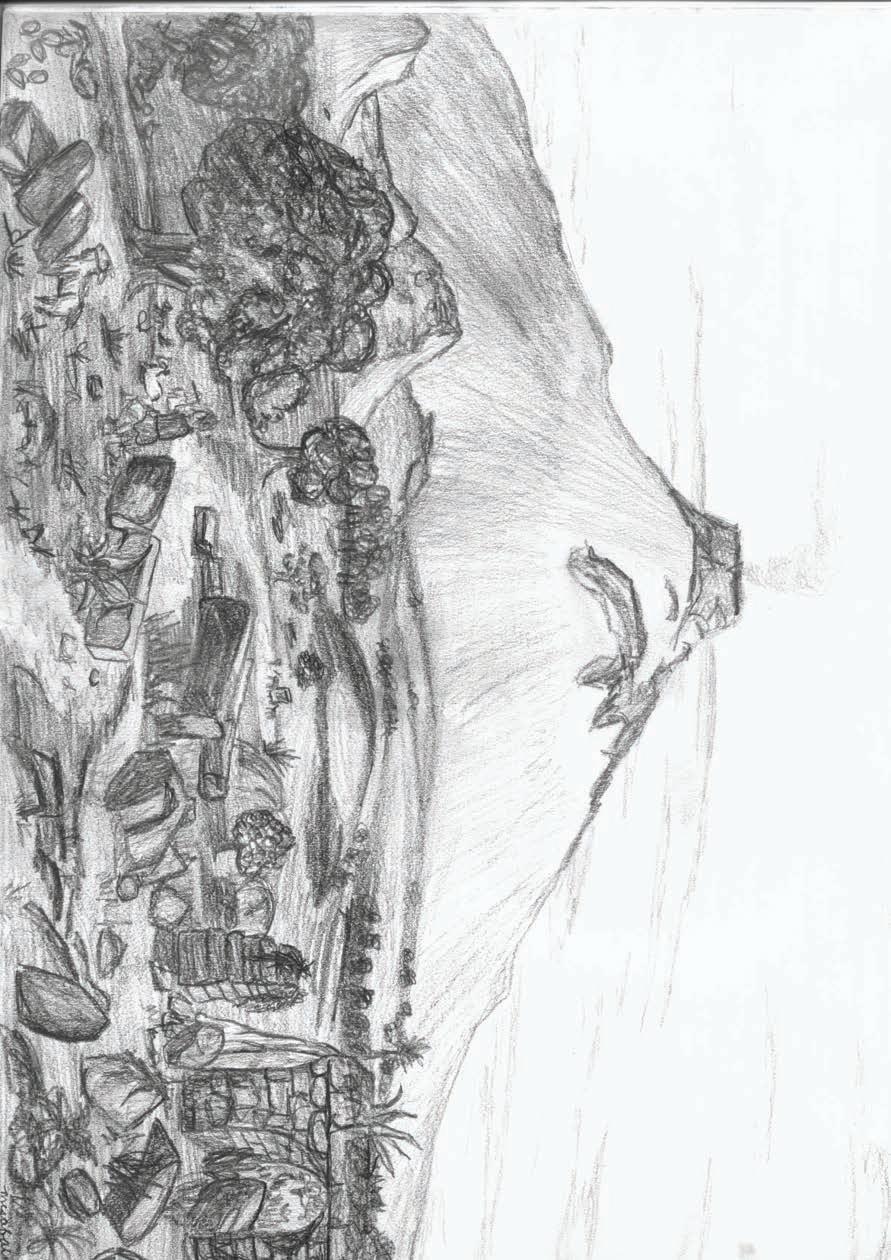
e word that comes to mind to describe the emotion and feelings I have about both of these scenes is nostalgia. “View of Mount Etna” is an 23x16 inch oil painting done by omas Cole in 1842, and it portrays the volcano as a symbol of the eternal and unchanging aspects of nature. e foreground of the image depicts ancient civilization ruins, overgrown with vegetation. ere is a sense of harmony between humanity and nature, as a shepherd plays a ute for his ock, and farms nestle in a valley in the middle ground. In the background, Mount Etna rises high above the land, its snow capped peak and smoke billowing from its crater. e piece carries a deep sense of timelessness, beauty, and peace; blending decay and growth, history and life, in one uni ed landscape.
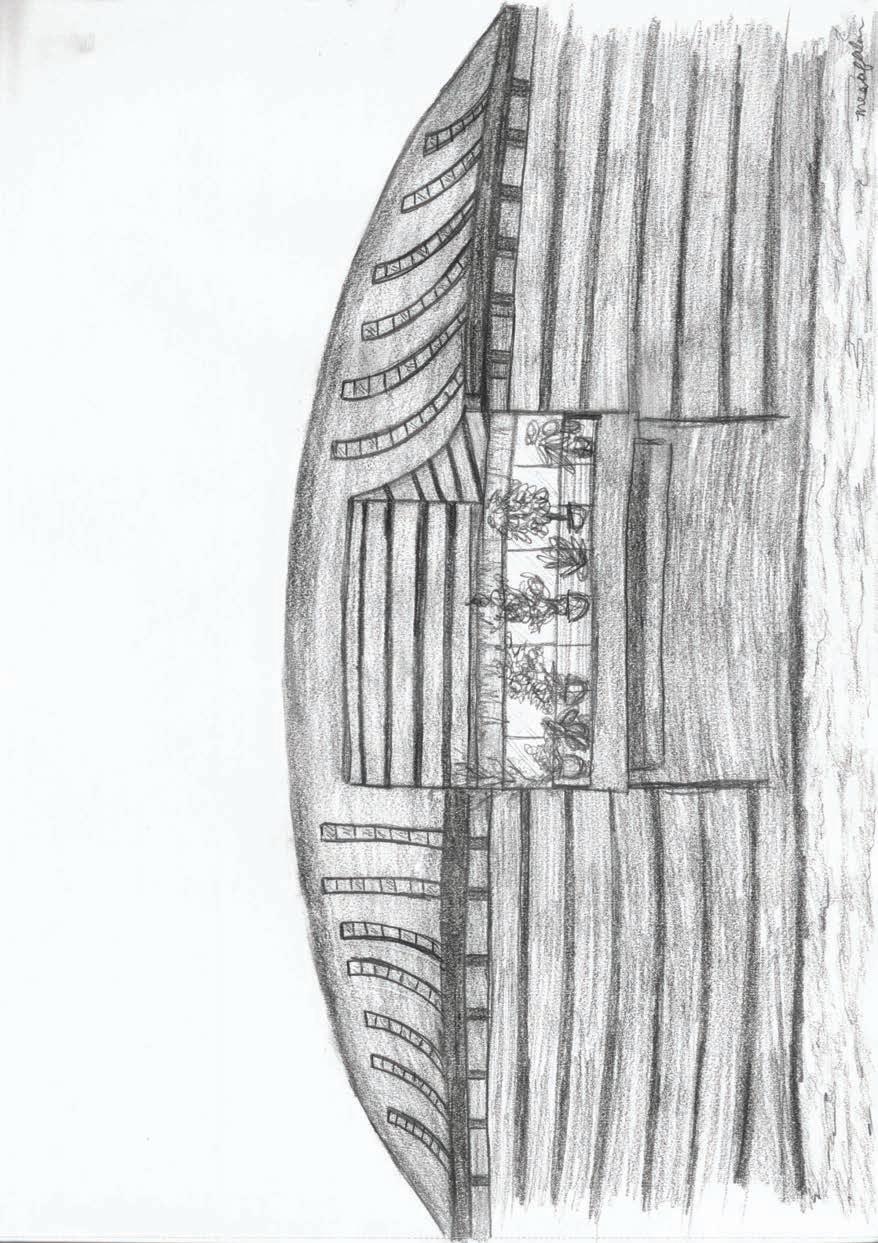
e space I chose that made me feel similar to the painting, was an outdoor area overlooking water, a large domed building ranging over it, containing plants nestled on a ledge nearby. e top of the dome has skylight windows that curve down the roof in long strips, with the side of the building being made up completely of cement with horizontal strips of wood running through it. e ledge over the water has a small metal railing with about ten young trees protruding from the space. Below is the quiet, still water, being contained by the artistic geometry of the architecture all around. I stand in a busy central area, but this space I see is tucked away, unable to be accessed by the public, preserving its calm atmosphere and natural charm.
Both the artwork and space evoke a feeling of comfort and nostalgia for me. e volcano reminds me of my life overseas. Every morning of high school I walked to class, looking at the volcano in the distance. e volcano in Cole’s painting immediately reminded me of the one I used to see daily in Southeast Asia. e lush landscape reminded me of the abundance of plants and foliage that lled every roadside, empty lot, and yard I lived by. e shepherd playing the ute for the sheep plants in my mind the concept of how we have a God who wants to hear our worship and cares for us deeply, like a shepherd looks a er his sheep.
e space gives me the same sense of nostalgia and emotion because in my little lush corner of Asia, I felt like those plants on the ledge, protected, cared for, and somehow resilient amid all the cement surrounding them. e speckle of green in all the cement gives the sense of quiet hope, like nding a way even in a harsh, industrial world. e water below is still and calm, a contrast to the ocean that surrounds the Island I lived on, but both just as peaceful and enjoyable in my eyes.
Both the painting and the space evoke a sense of comfort and familiarity. ey reminded me of the quiet, natural beauty I experienced daily growing up. Moments where nature and memory intertwine to create something lasting. It is this deeply personal connection that links them together in my eyes and heart.
Mesa Alm Drawing Book
What I learned...
1. Which drawing activity was the most memorable for you, and why?
(e.g., “Drawing while listening to music,” “Blind self-portrait,” etc.)
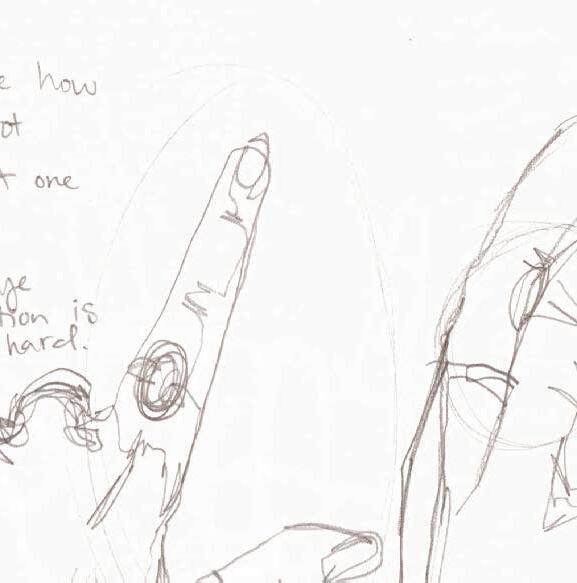
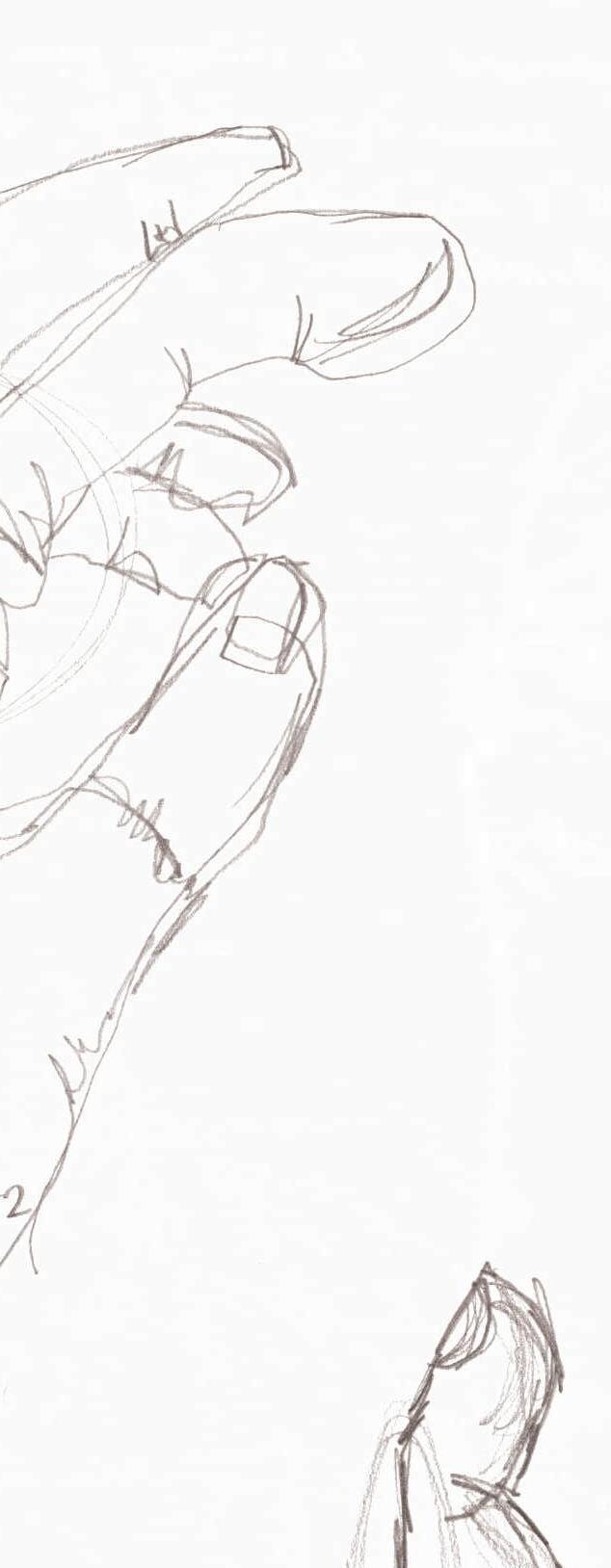
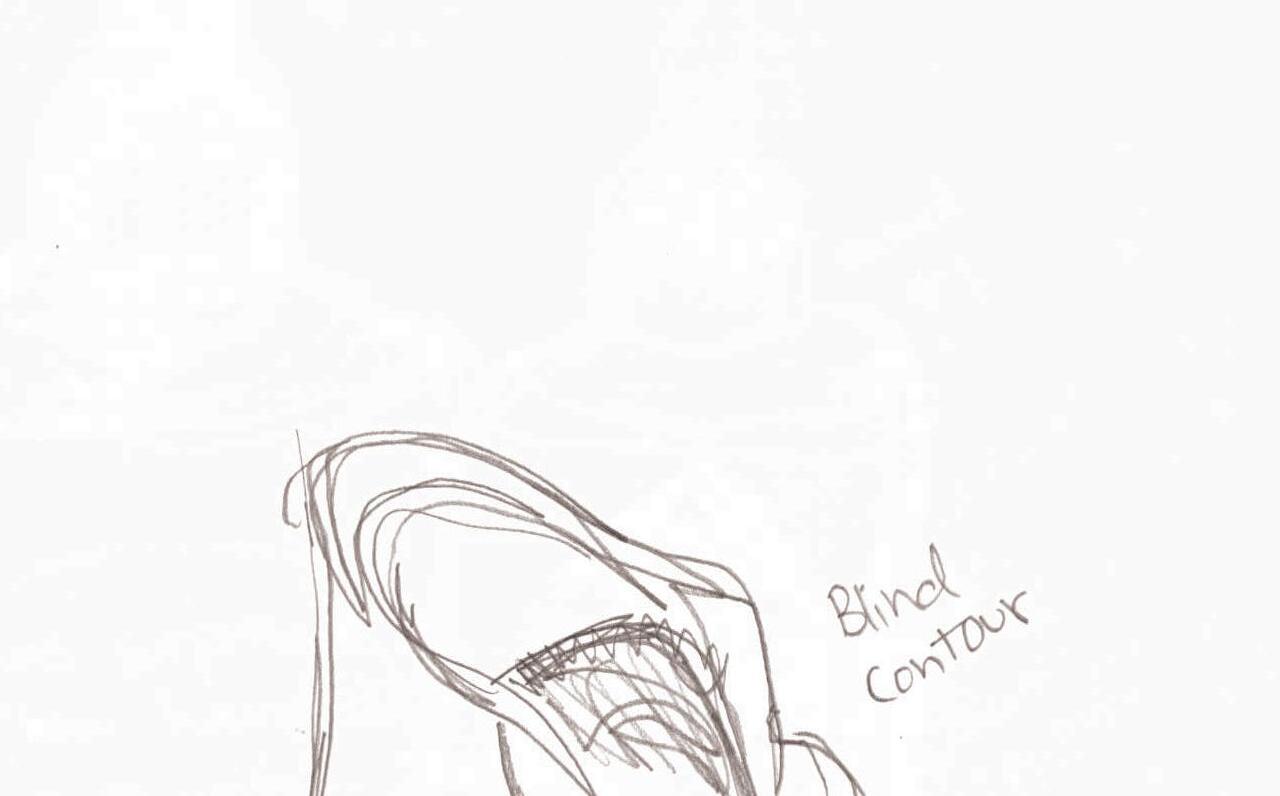
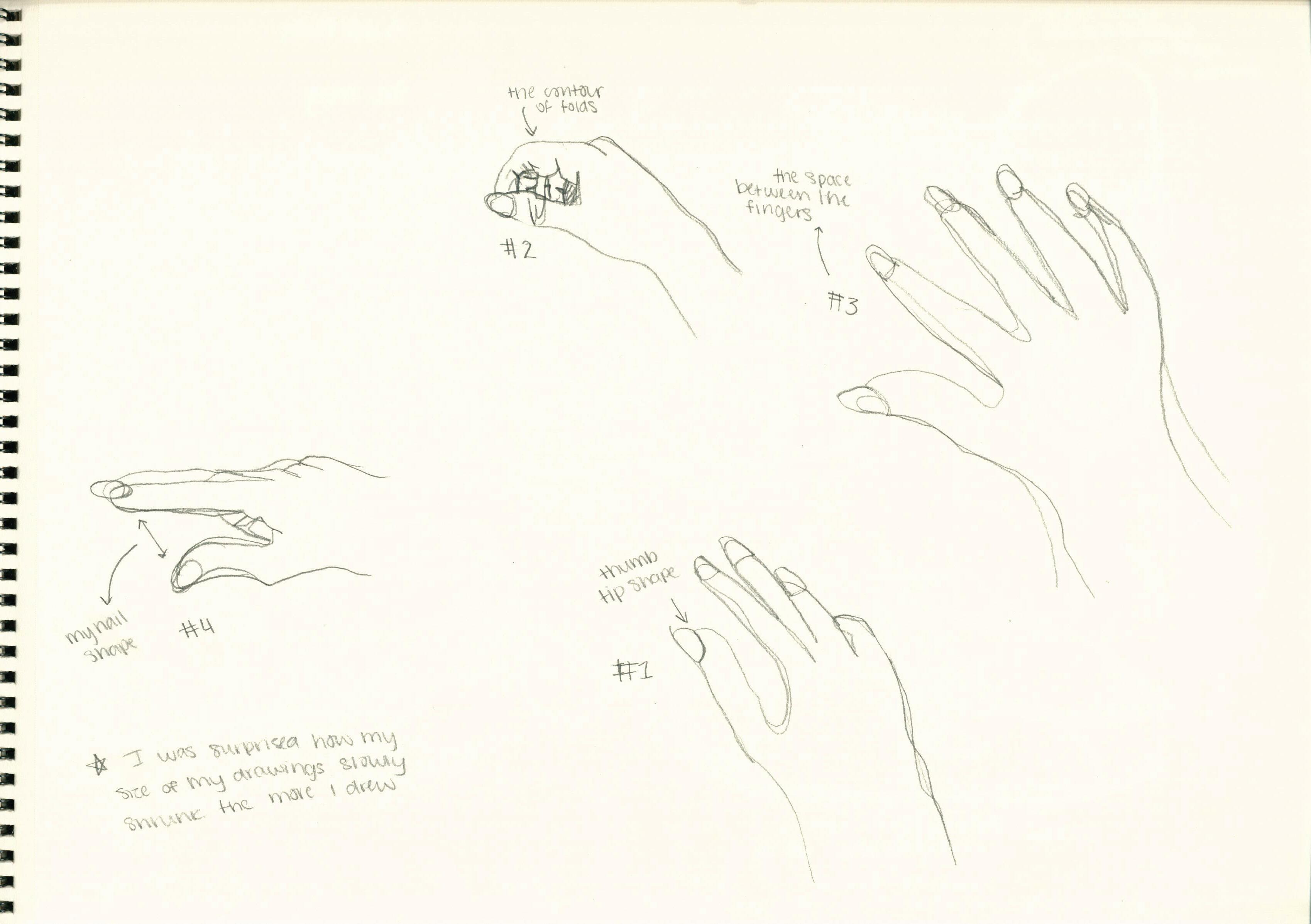
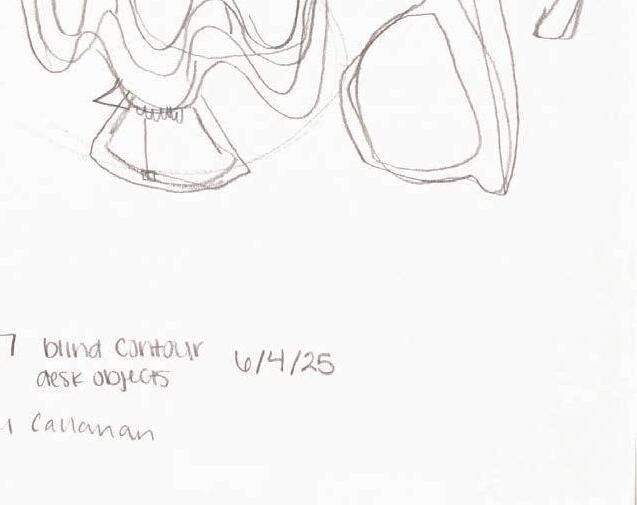
Blind Contour: Hand was the most memorable drawing activity for me. This is because hands have always been really hard for me to draw, but by taking away my ability to see what I was drawing, it also took away my pre-existing ideas of “what a hand should look like” and helped me create much more authentic hand drawings.
2. During which activity did your hand feel the most natural or free, and what do you think contributed to that feeling?
(Focus on rhythm, emotional state, or physical flow.)
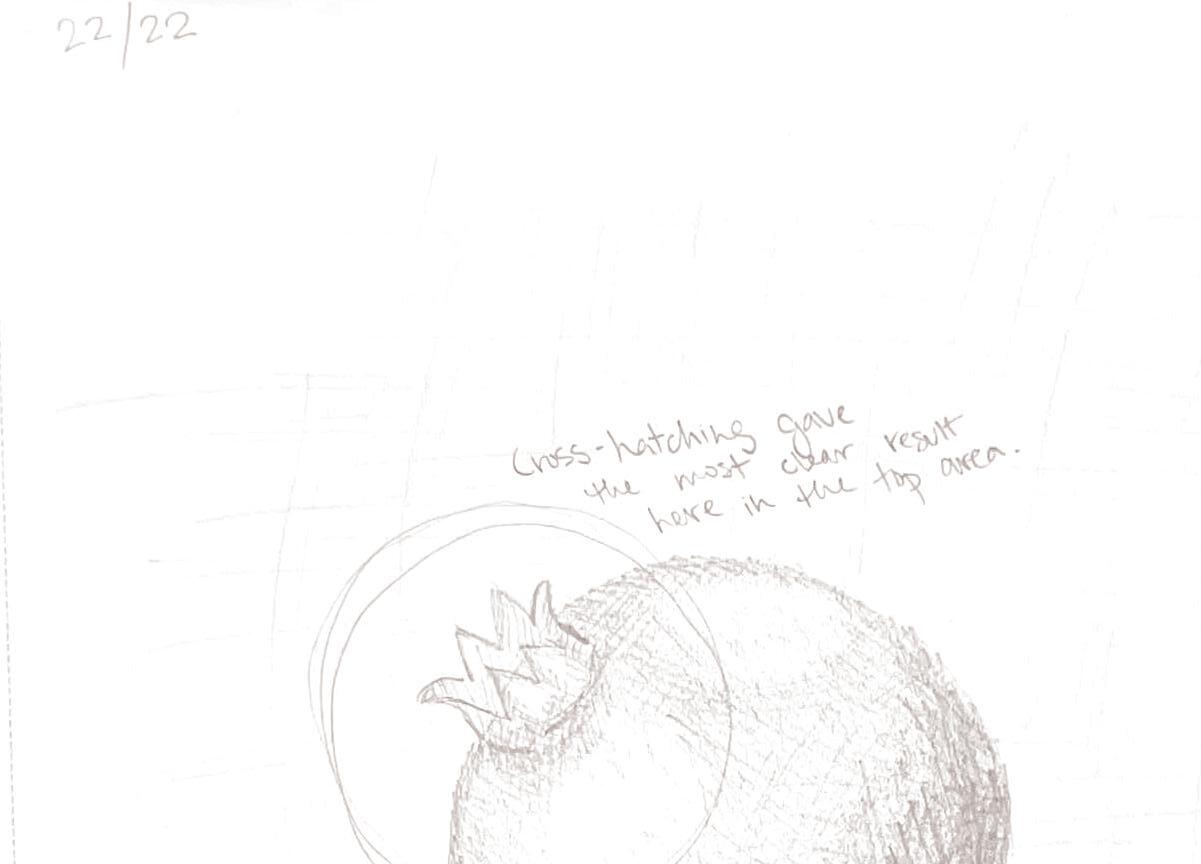
My hand felt most free while doing Cross Contour: Fruit. Being able follow the natural curve of an organic object gave me the ability to focus on rhythm and physical flow while contouring.
3. Describe a surprising, unfamiliar, or emotional moment you experienced while drawing. (Moments of discomfort, breakthrough, or delight.)
During one of the hatching exercises, I drew an object and was trying to make the hatching look natural but I was thinking too hard about it. I decided to draw it again, which I typically don’t do during drawing exercises and just let my hand flow. It was a small breakthrough but made the sketch come to life and make so much more sense.
4. How did your way of seeing or expressing change during this drawing process?
(e.g., shifting from drawing what you think to drawing what you observe.)
I learned to be a lot more free flowing and do less thinking while I drew. This ensured that I began to draw what I saw rather than what I thought to create a more authentic and accurate drawing.
5. In what way did this drawing experience connect to or support your learning in your design (IARD) or landscape (LARC) major?
(Observation, spatial awareness, material sensitivity, etc.)
This drawing experience strengthened my spatial awareness and ability to observe form, light, and proportion more intentionally; skills that directly support my design thinking in IARD. It also increased my sensitivity to materials and textures, which helps me make more thoughtful decisions in both digital and physical models.
6. At the beginning of this course, what emotions or expectations did you have about drawing?
(e.g., “I was nervous,” “I looked forward to drawing,” etc.)
I looked forward to drawing each day because it’s therapeutic for me and I knew I was going to grow and strengthen my drawing abilities.
7. How did your thoughts and feelings about drawing change over the course of the 22 sessions?
(Describe any emotional, cognitive, or confidence shifts.)
I grew to appreciate the ability to sketch quickly and accurately throughout this exercise. I became more confident in my abilities and it became much more natural for me to sketch.
8. How would you define “drawing” now? How has that definition changed from when you started?
(e.g., from “drawing well” to “drawing to observe” or “drawing as expression.”)
I now see drawing less as just “drawing well” and more as a tool for observing, exploring, and expressing ideas. It’s become a way to think through design, not just represent it.
9. What did you discover about yourself through these drawing experiences?
(New habits, sensitivities, or realizations about perception or patience.)
I discovered that I’m more patient and observant than I expected, slowing down to truly see details helped me develop a deeper sensitivity to space and form. I also realized that drawing can shift my mindset into a more focused and reflective state, which supports my overall design process.
10. How do you imagine drawing playing a role in your future work or personal growth?
(As a design process tool, expressive outlet, or reflective method.)
I imagine drawing will continue to be a vital part of my design process, helping me explore ideas, communicate concepts clearly, and work through spatial challenges. It will also remain a personal outlet for expression and reflection, allowing me to stay connected to the creative side of design.
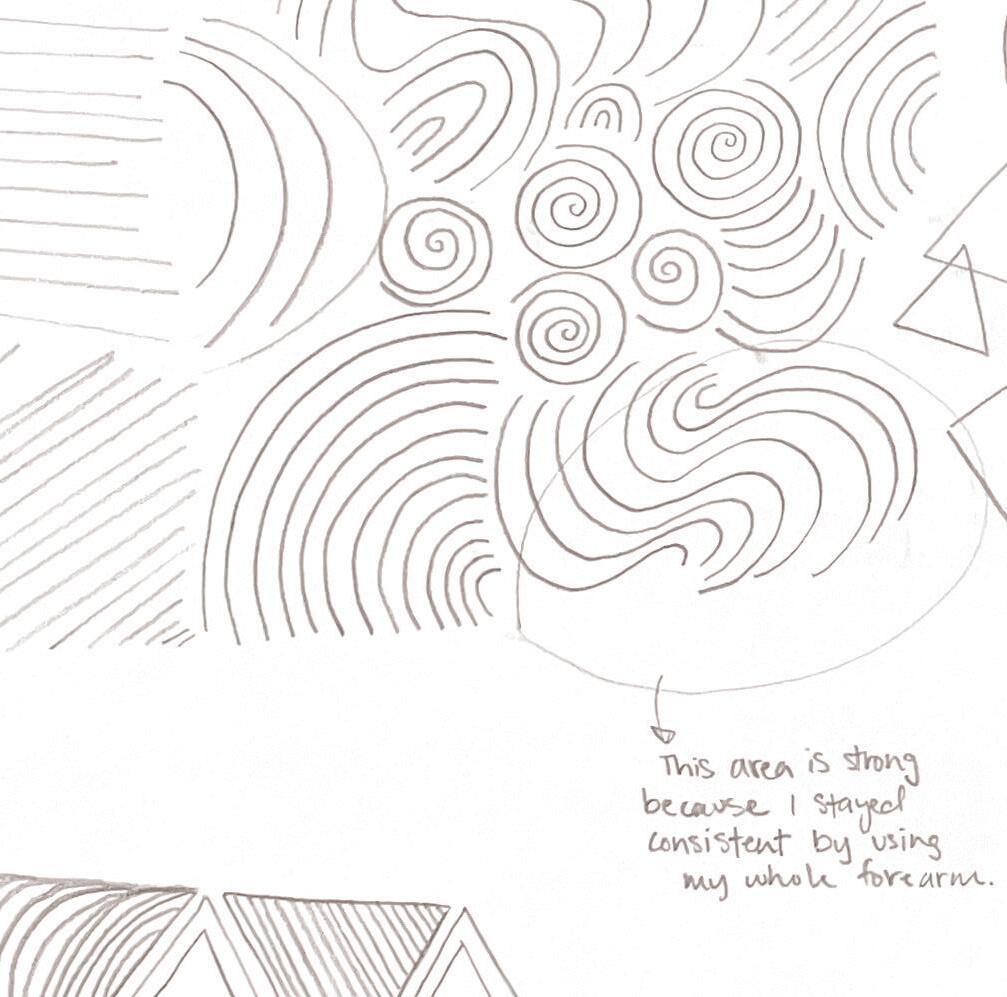
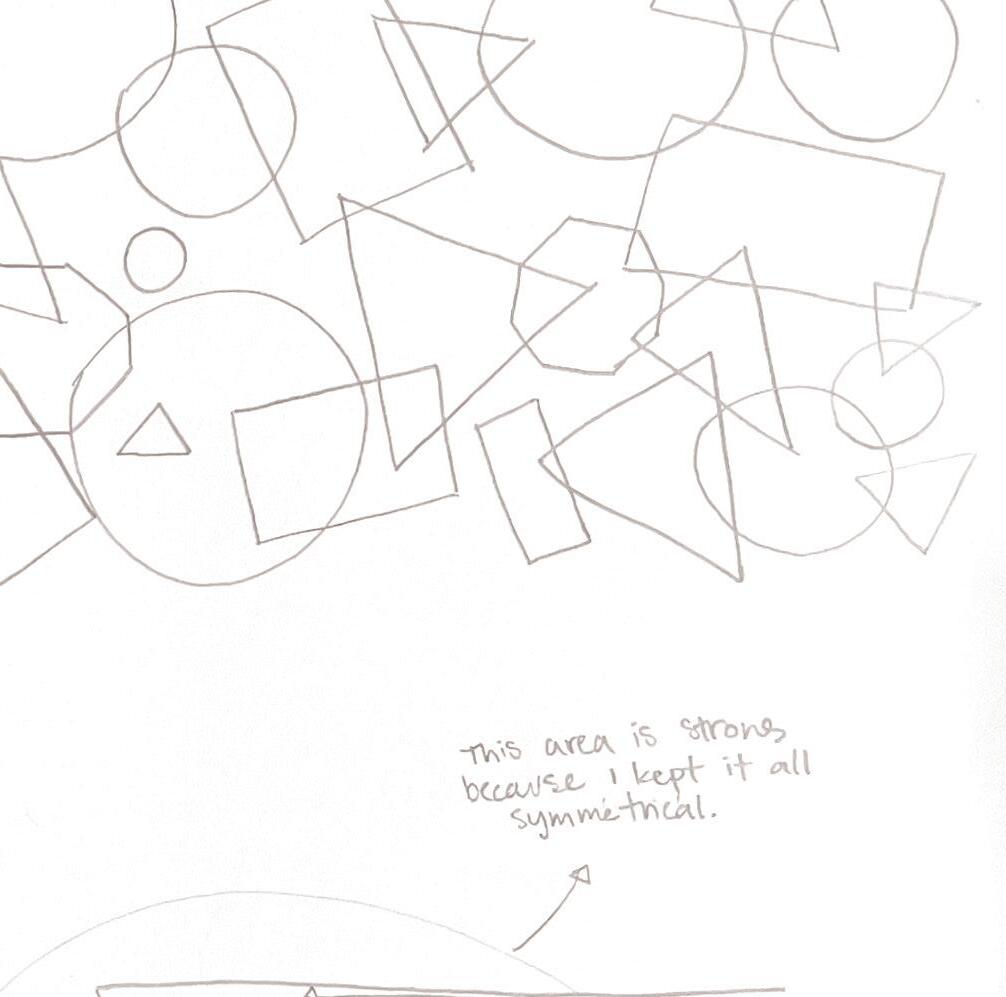
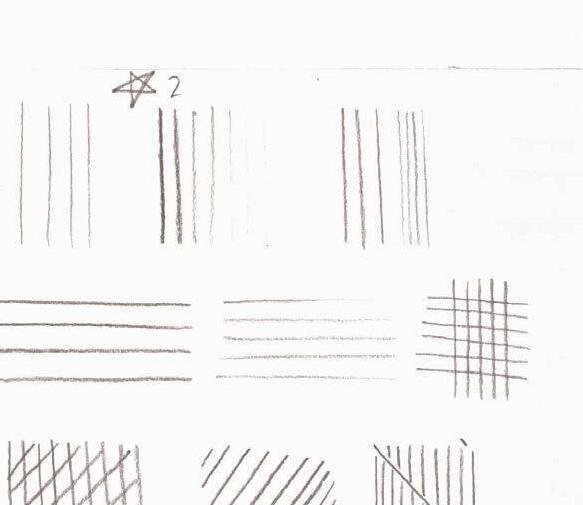
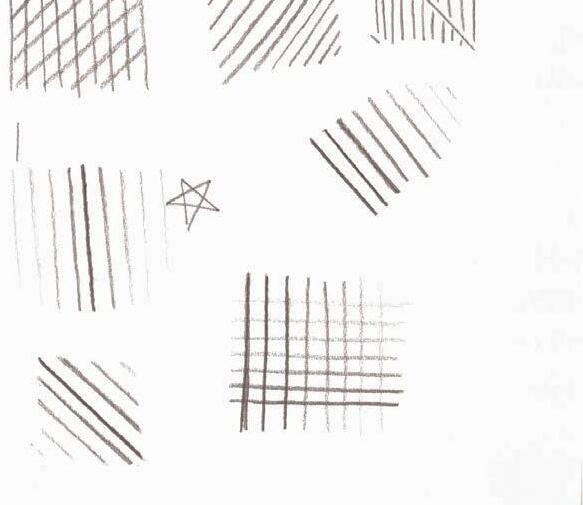
- Circle or mark 2 areas on the page where you think the line quality is strong. - Write 1 short sentence explaining why.
- Circle or mark 2 areas on the page where you think the line quality is strong. - Write 1 short sentence explaining why.
- Write 1–2 sentences: “Which music made your hand move best, and why?” - Optional: give the drawing a title.
- Write 1–2 sentences: “Which music made your hand move best, and why?” - Optional: give the drawing a title.
- CCompare both drawings. Mark areas where the proportion improved or stayed strong.
- CCompare both drawings. Mark areas where the proportion improved or stayed strong.
#4: Outline Drawing: Still Life Setup_In Class
- Compare first and second compositions.
- Circle the strongest part of each drawing and write one reason why it worked.
- Compare first and second compositions. - Circle the strongest part of each drawing and write one reason why it worked.
- Remove hand cover and examine results.
- Mark one part of each drawing where line flow felt strongest.
- Reflect on what surprised you.
- Remove hand cover and examine results.
- Mark one part of each drawing where line flow felt strongest.
- Reflect on what surprised you.
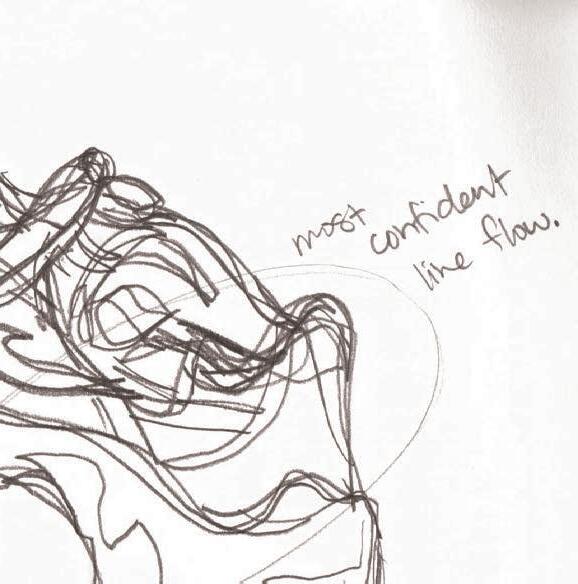
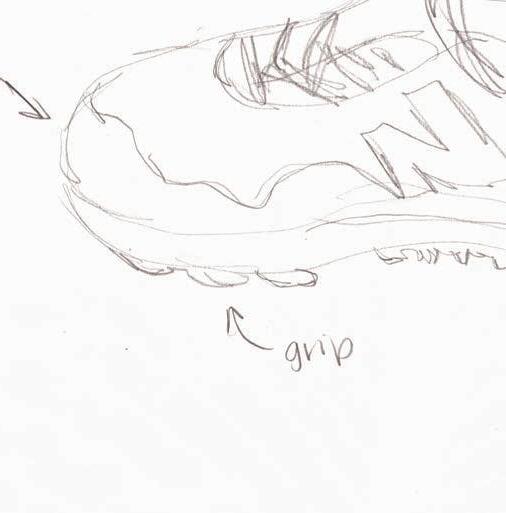
- Look over your drawings—mark one area that shows most confident line flow.
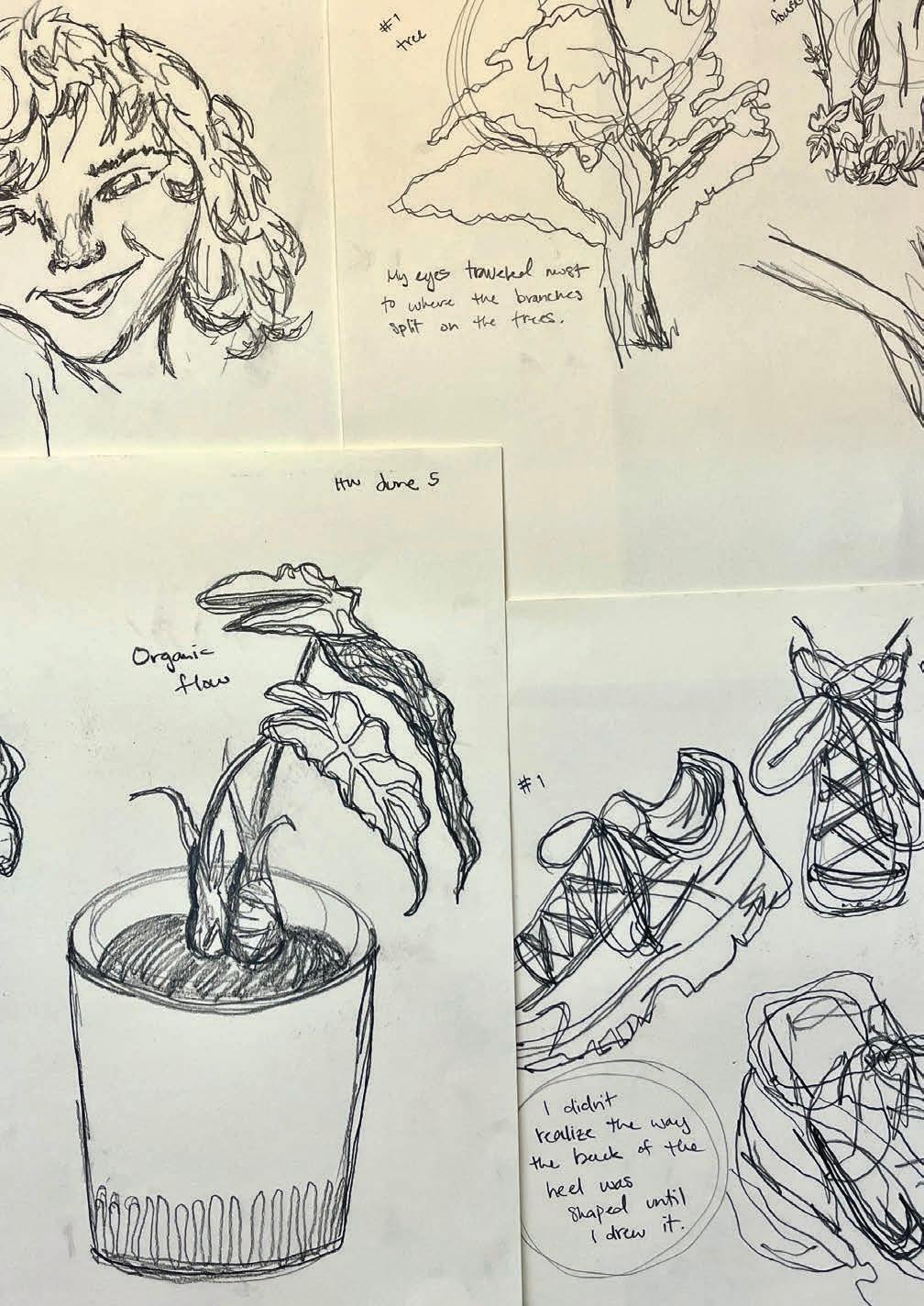
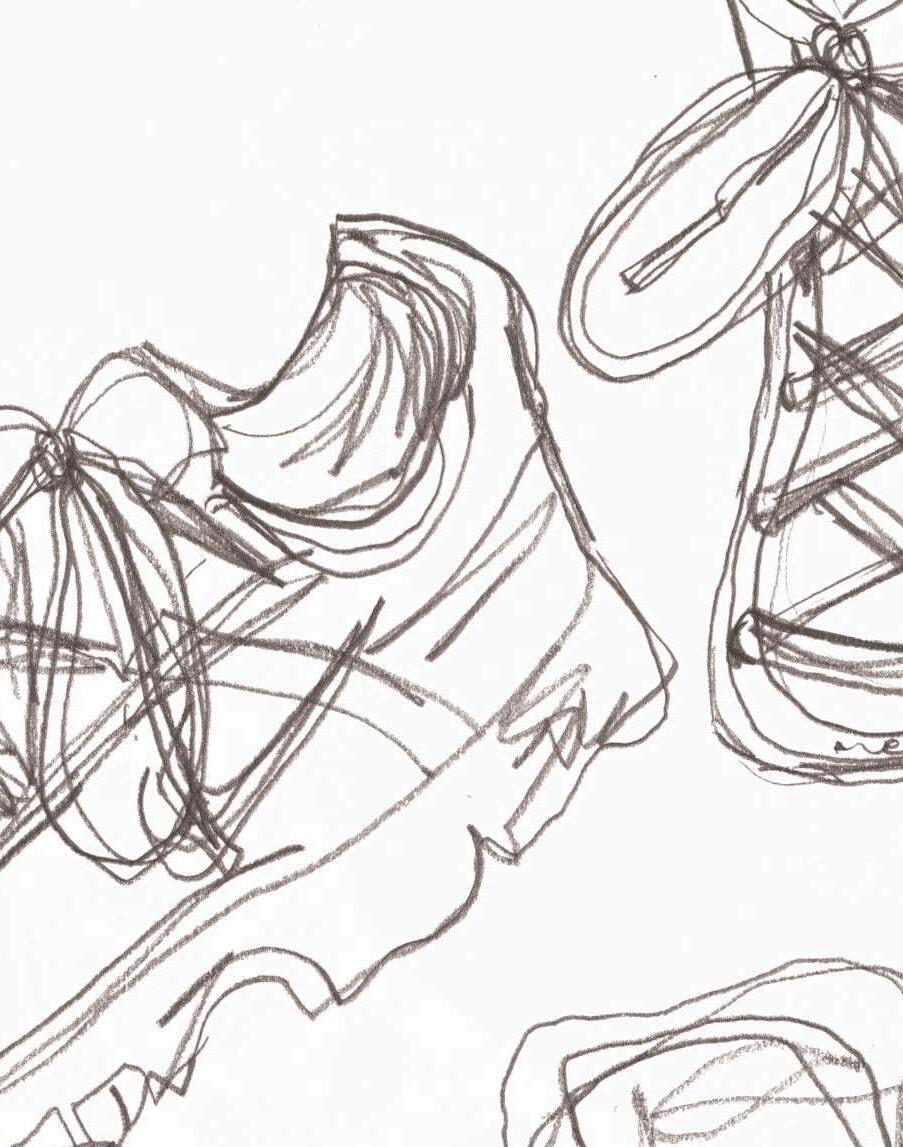
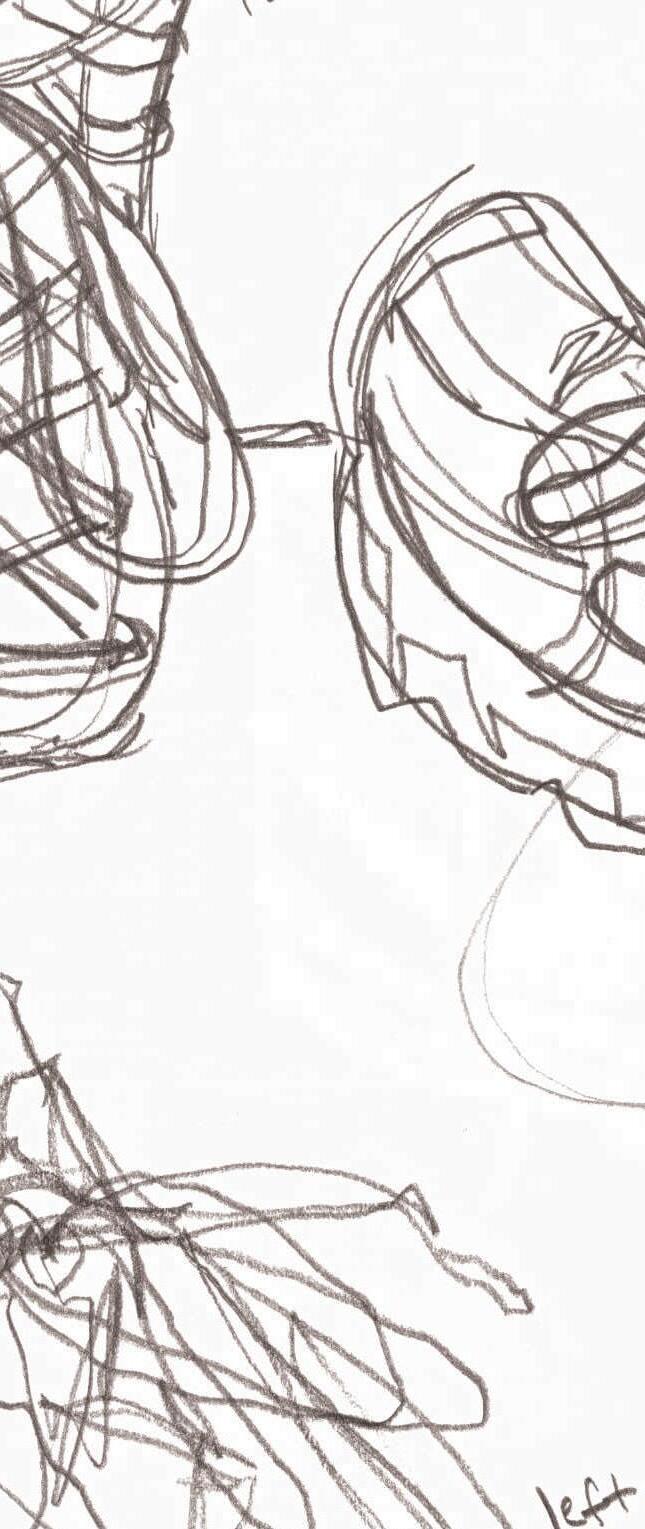
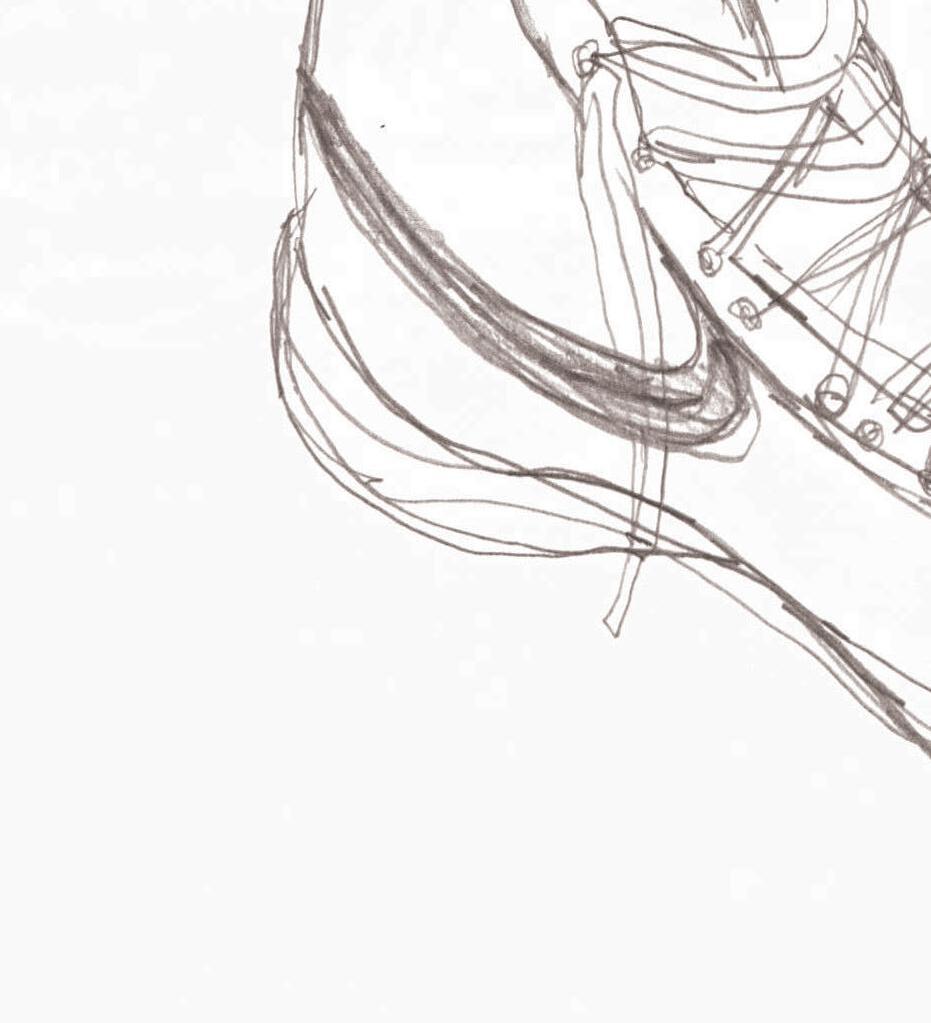
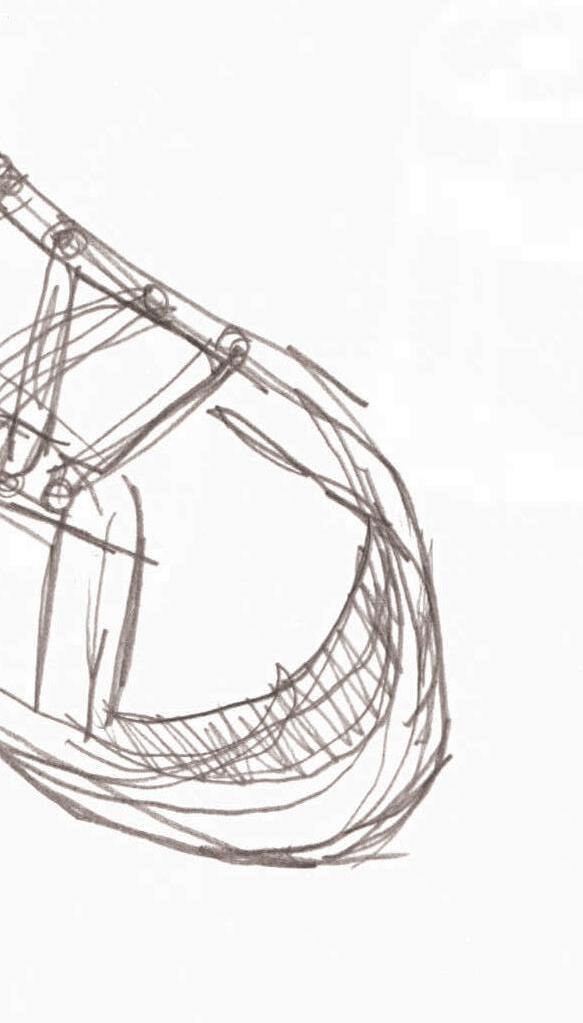
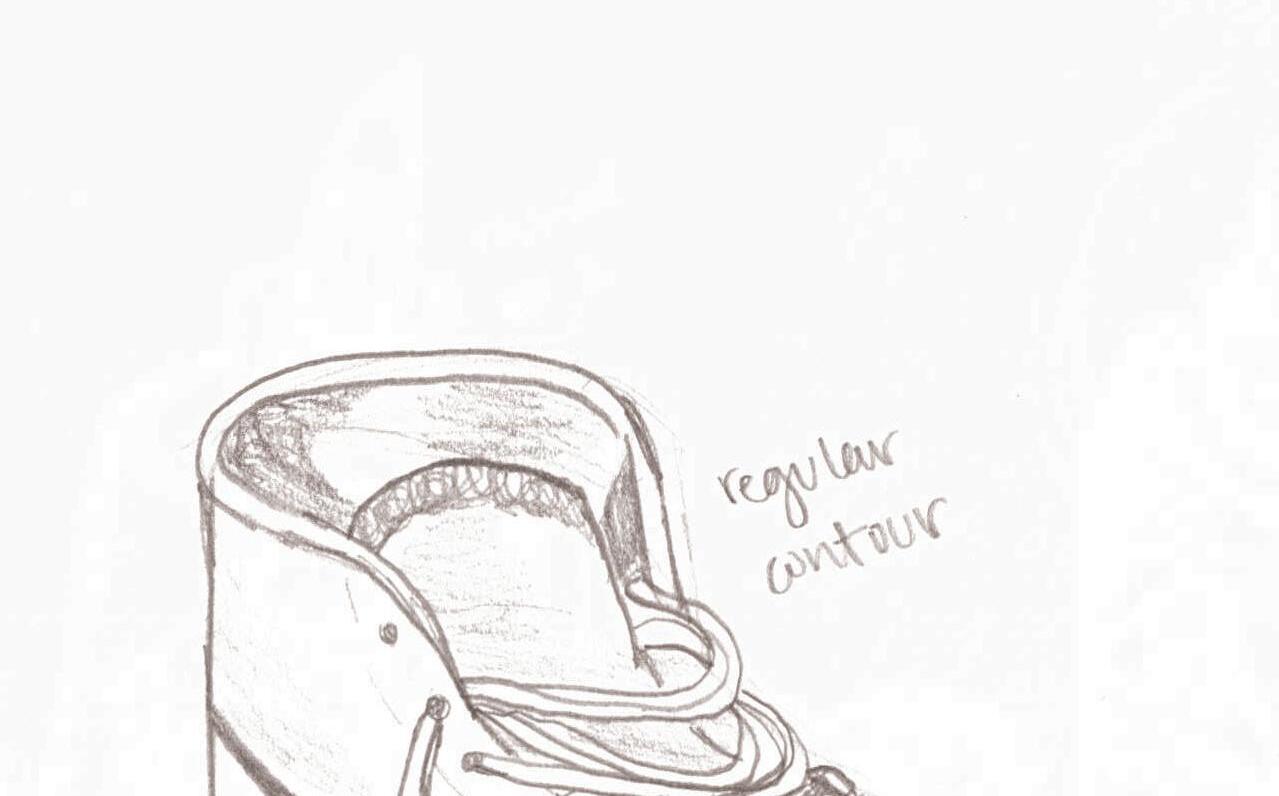
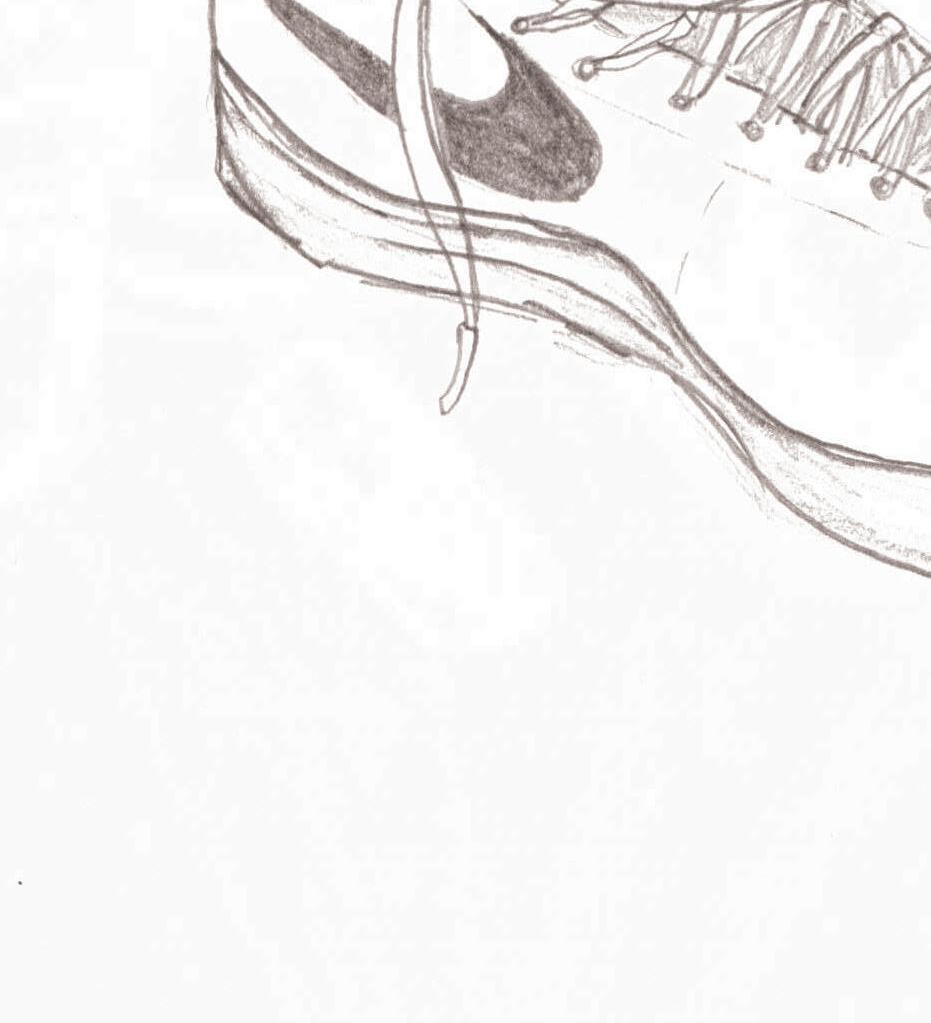
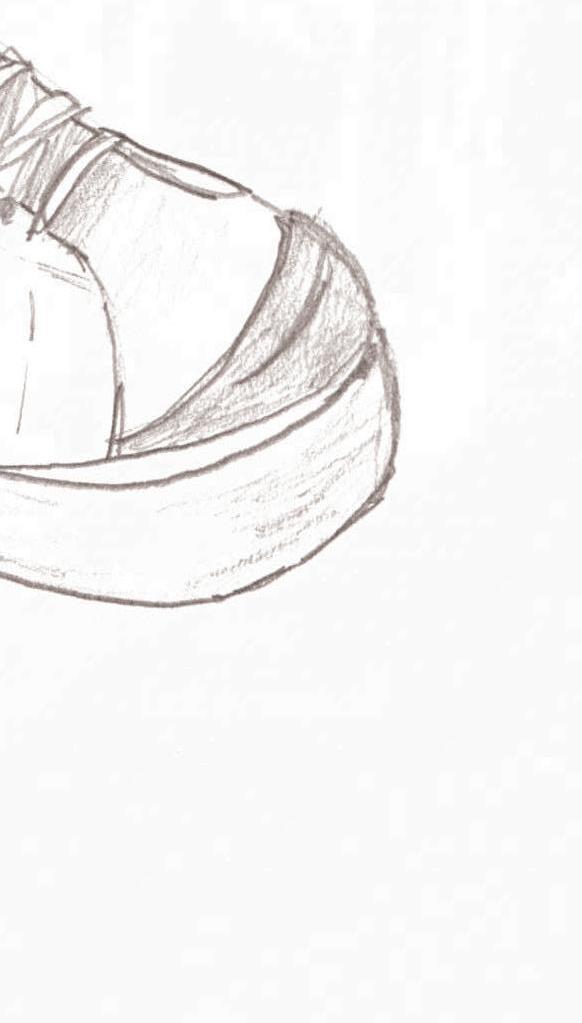
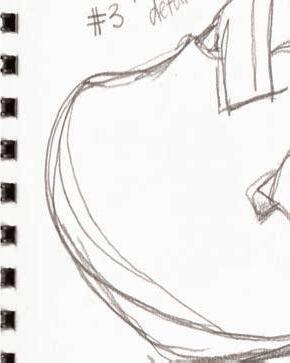
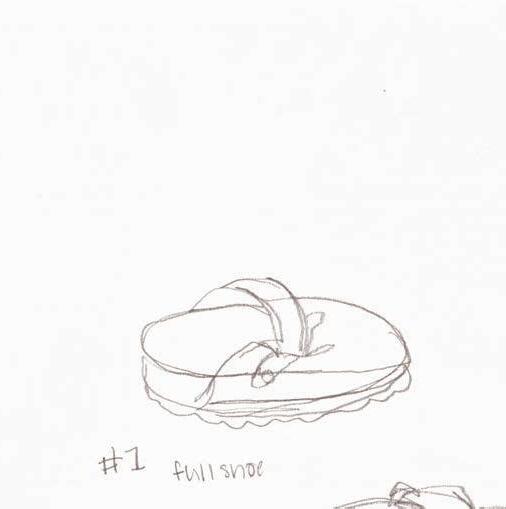
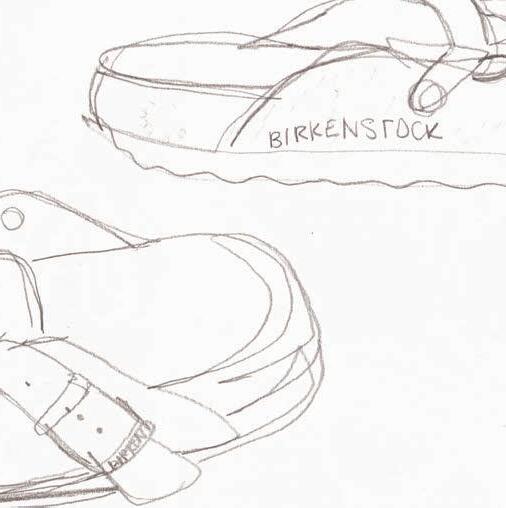
- Note one thing you didn’t realize about the shoe until you drew it.
- Look over your drawings—mark one area that shows most confident line flow.
- Note one thing you didn’t realize about the shoe until you drew it.
- Compare the 3 drawings. Circle areas where line flow or form felt strongest.
- Write: “What object surprised you the most while drawing?”
- Compare the 3 drawings. Circle areas where line flow or form felt strongest.
- Write: “What object surprised you the most while drawing?”
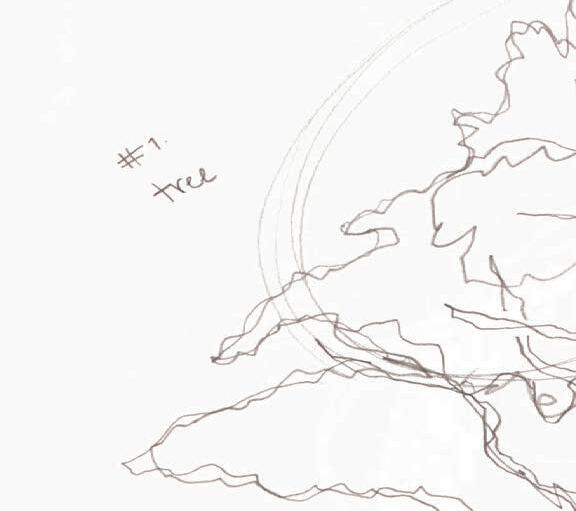
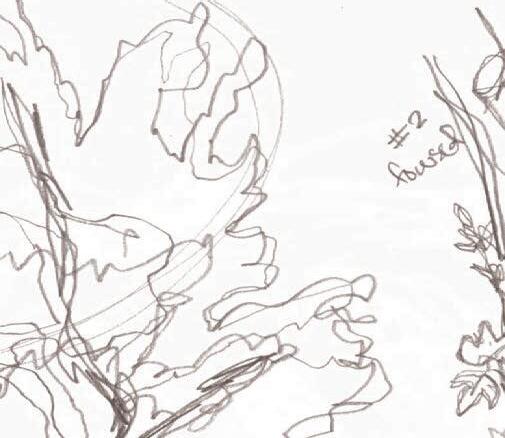
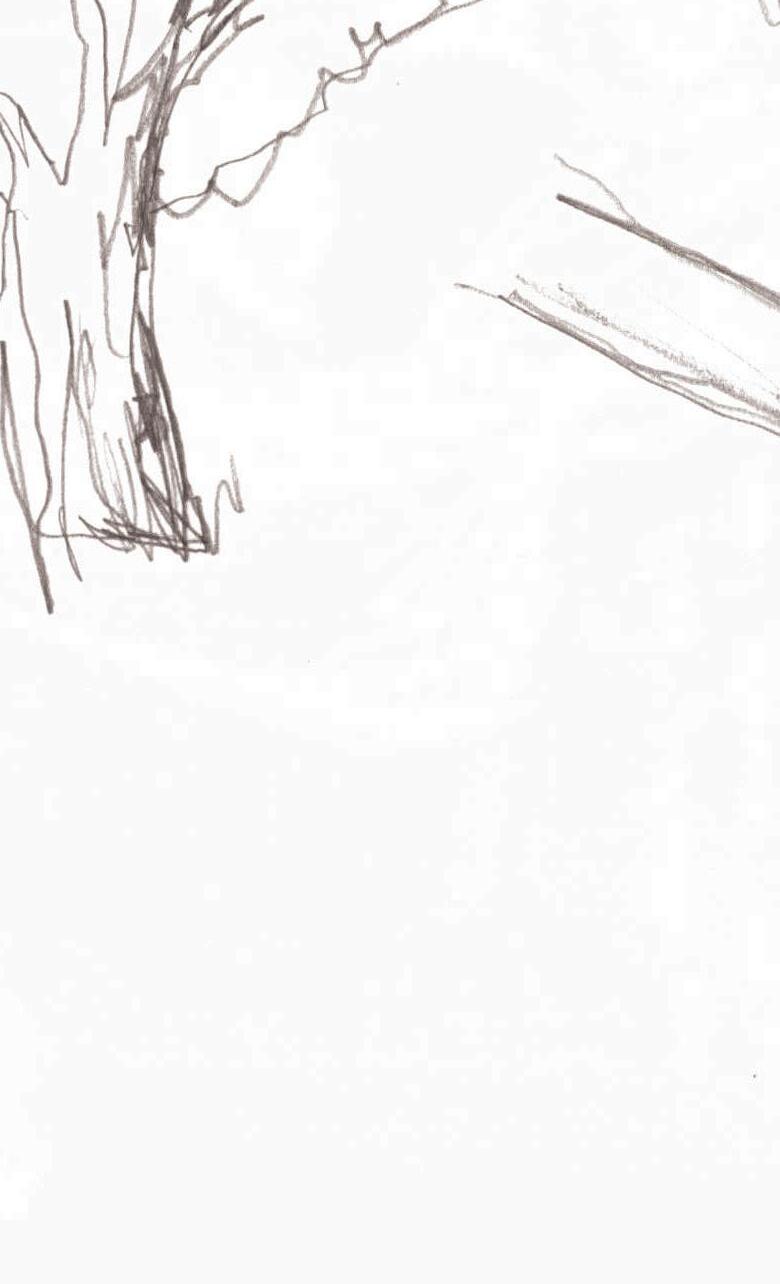
- Review all 3 sketches. Circle the area that best captured the “feeling” of the plant.
- Quick writing prompt: “Where did your eyes travel most?”
- Review all 3 sketches. Circle the area that best captured the “feeling” of the plant.
- Quick writing prompt: “Where did your eyes travel most?”
#9: Blind Contour: Self-Portrait_In Class
- Look at all versions together. Circle the one that feels most expressive. - Write: “This drawing feels like me because…”
- Look at all versions together. Circle the one that feels most expressive. - Write: “This drawing feels like me because…”
#10: Basic Contour Drawing: Fruit_In Class
- Compare both rounds—circle the most expressive line. - Write 1–2 words that describe the “attitude” or “mood” of your fruit
Day #10: Basic Contour Drawing: Fruit_Homework
- Compare both rounds—circle the most expressive line. - Write 1–2 words that describe the “attitude” or “mood” of your fruit
- Mark the line or area that best shows depth or dimensionality
- Write: “Which part of the object surprised you the most?”
- Mark the line or area that best shows depth or dimensionality
- Write: “Which part of the object surprised you the most?”
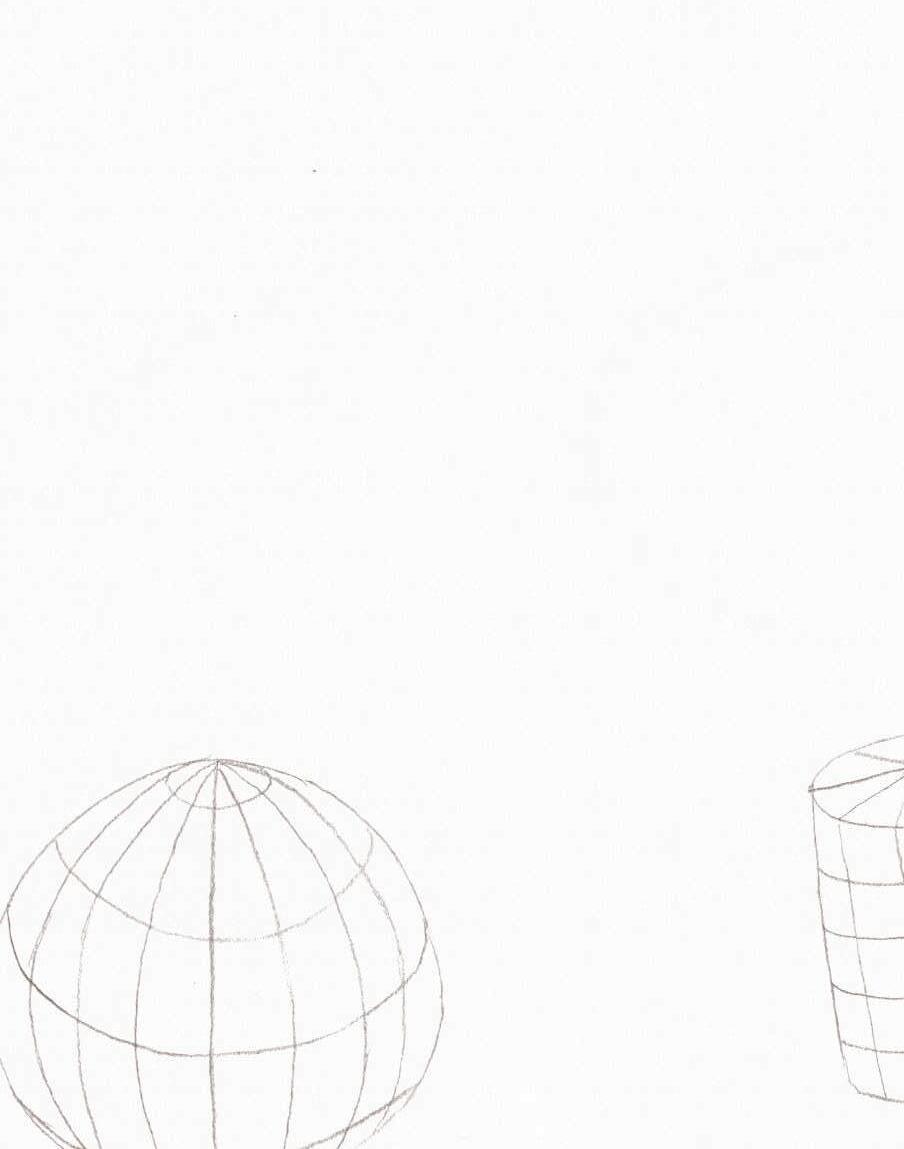
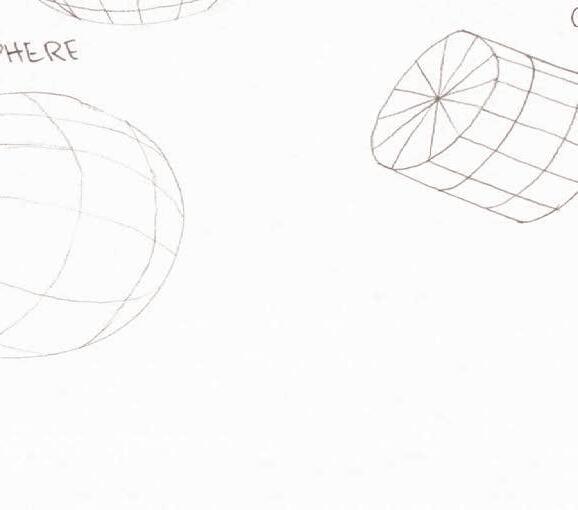
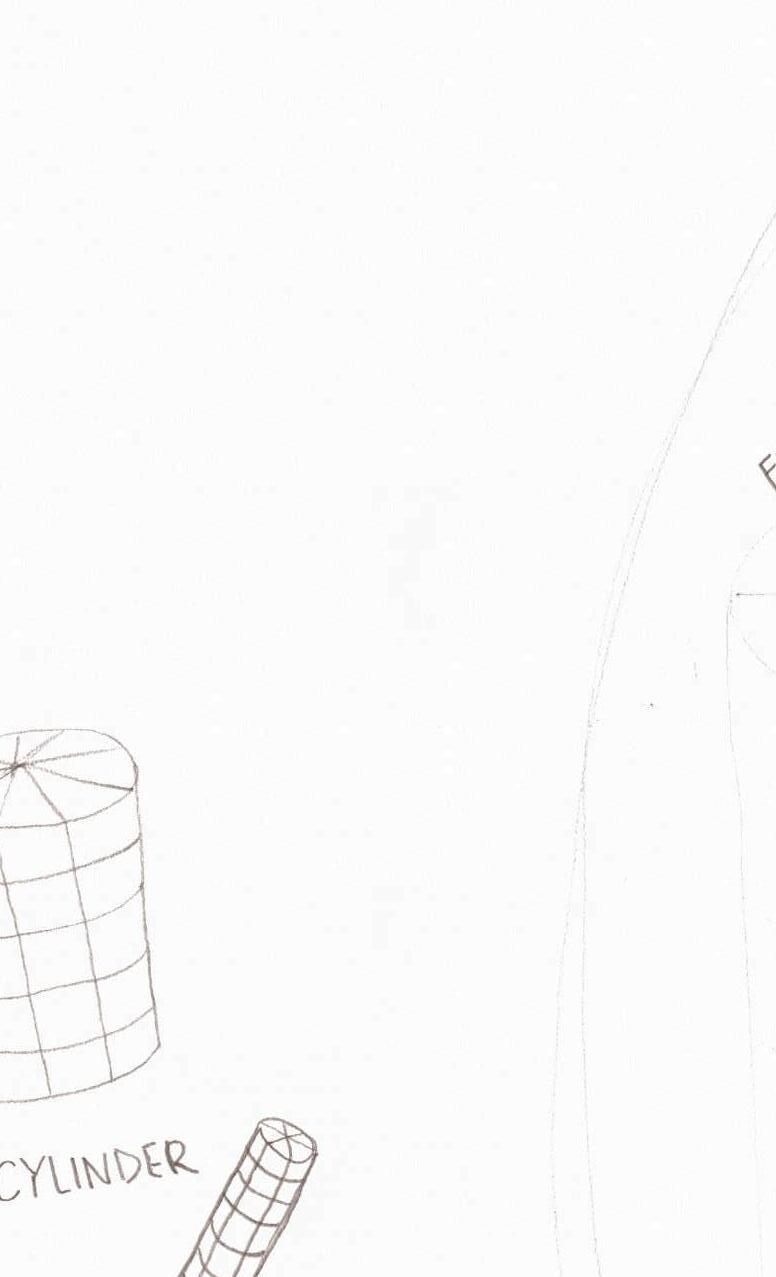
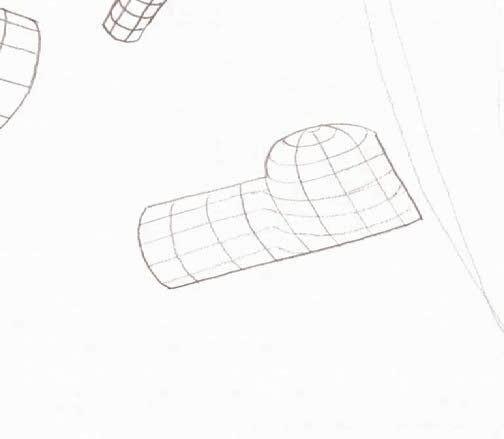
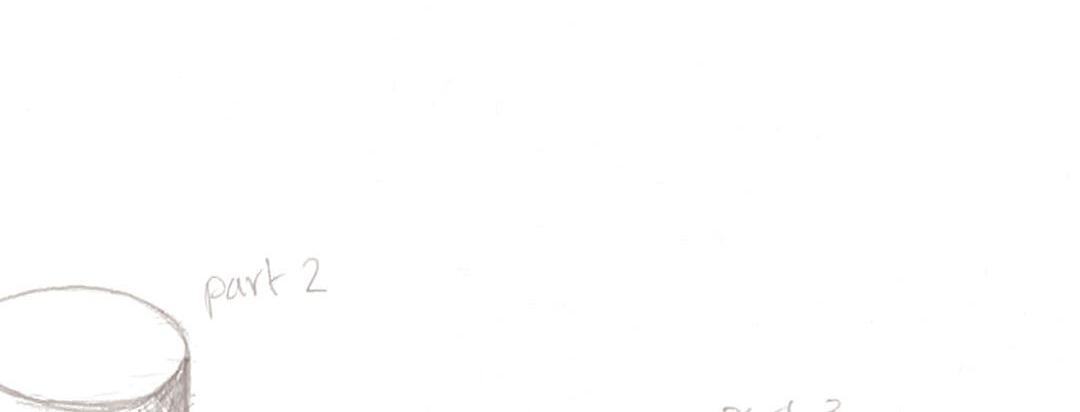
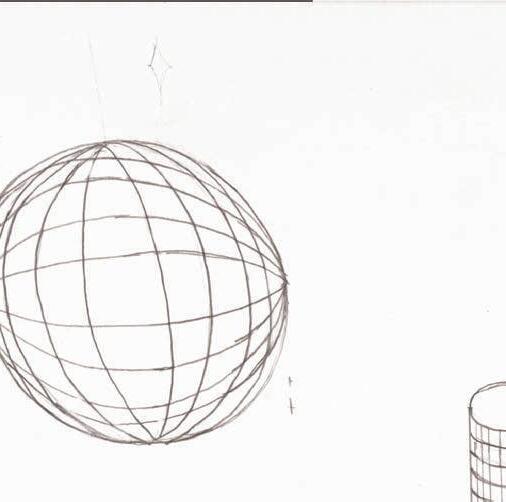
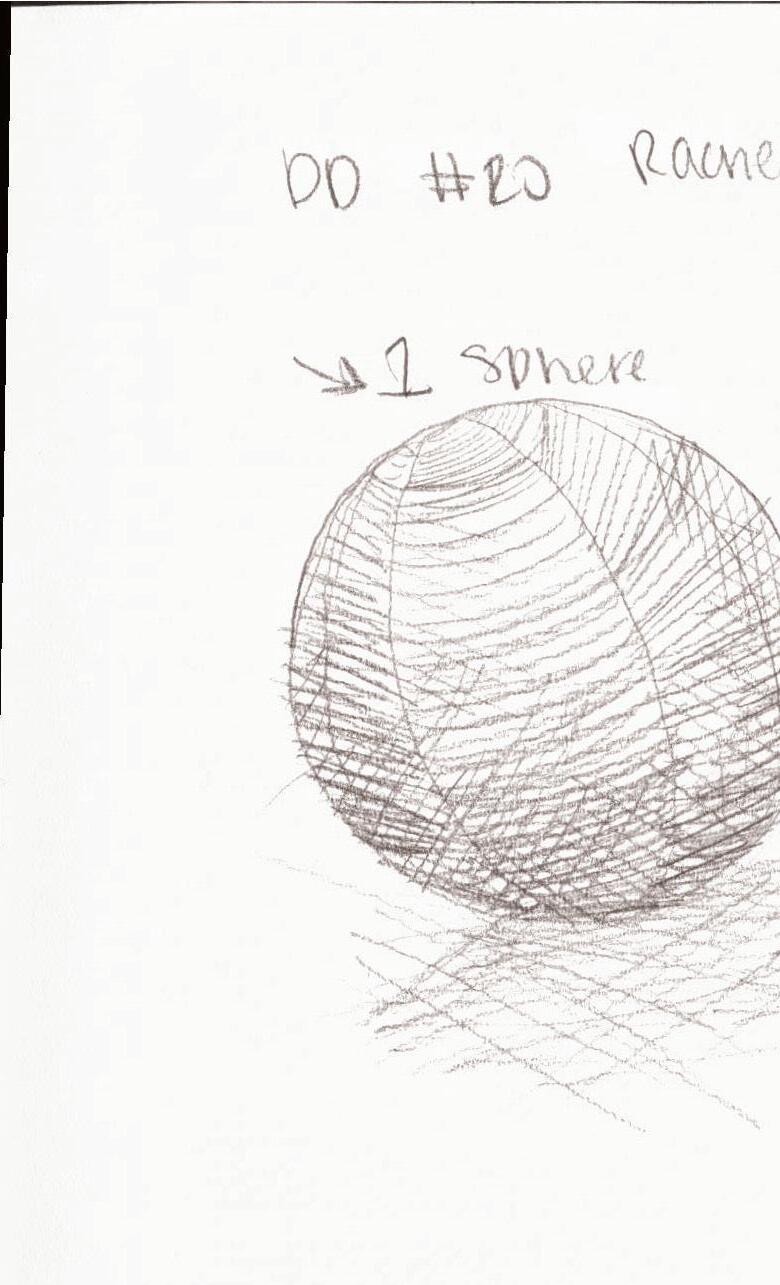
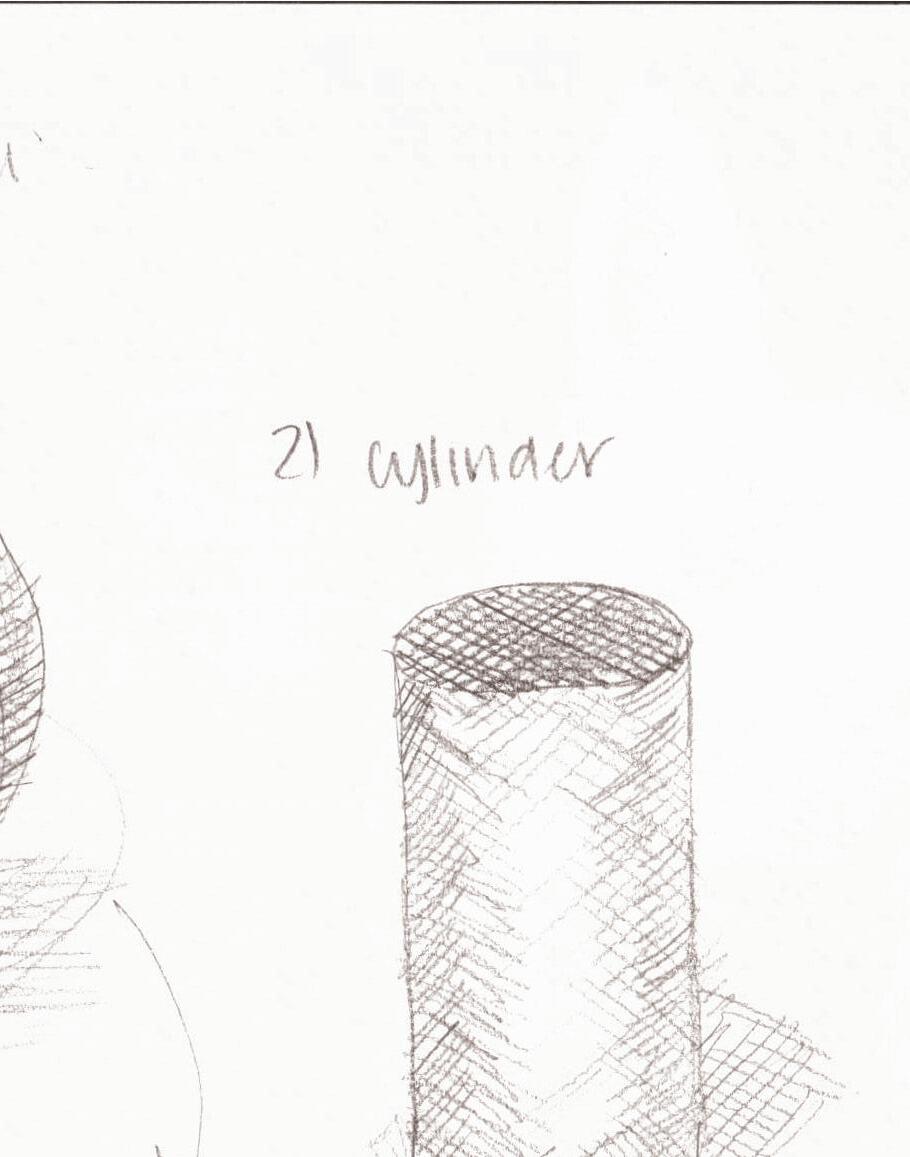
Day #12: Intro to Cross-Contour: Sphere & Cylinder_In Class
- Pick your most convincing form.
- Write 1 word to describe the “surface movement” of your drawing (e.g., wrapped, twisted, flowing, stacked).
Day #12: Intro to Cross-Contour: Sphere & Cylinder_Homework
- Pick your most convincing form.
- Write 1 word to describe the “surface movement” of your drawing (e.g., wrapped, twisted, flowing, stacked).
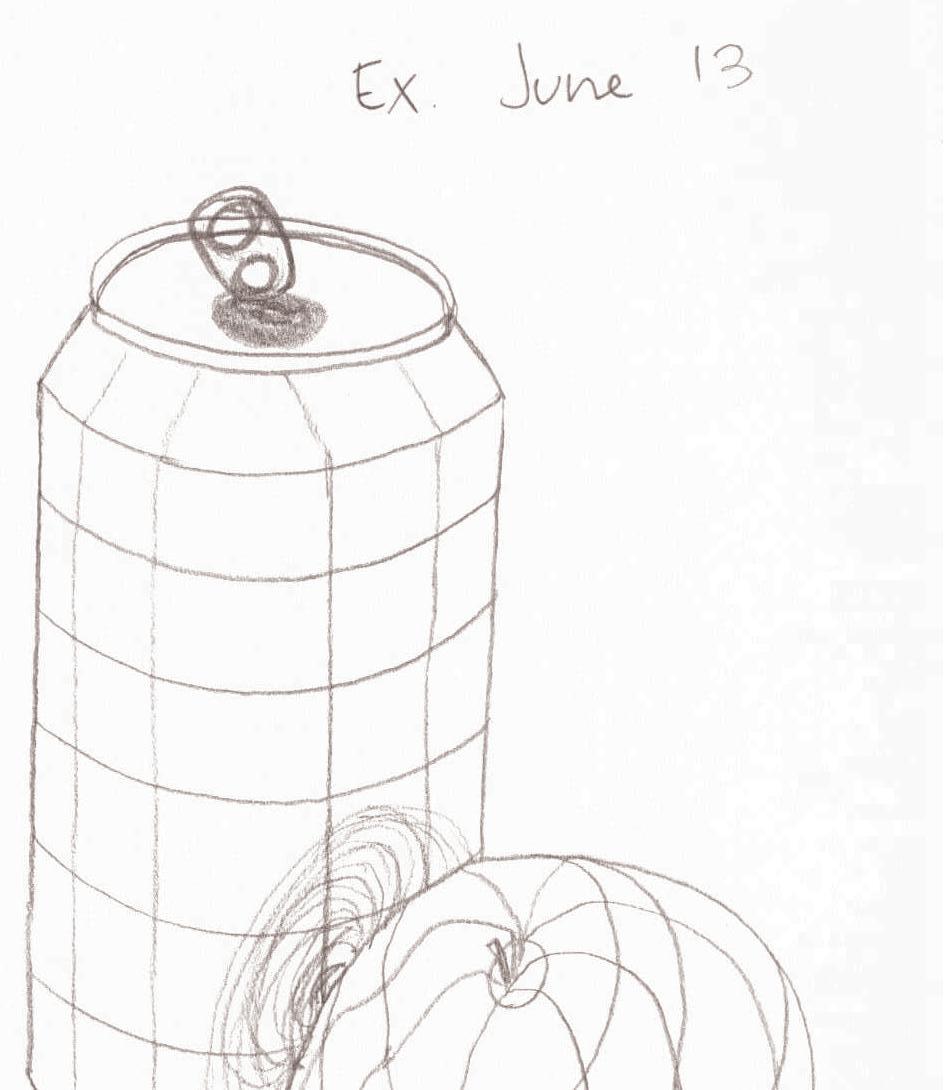
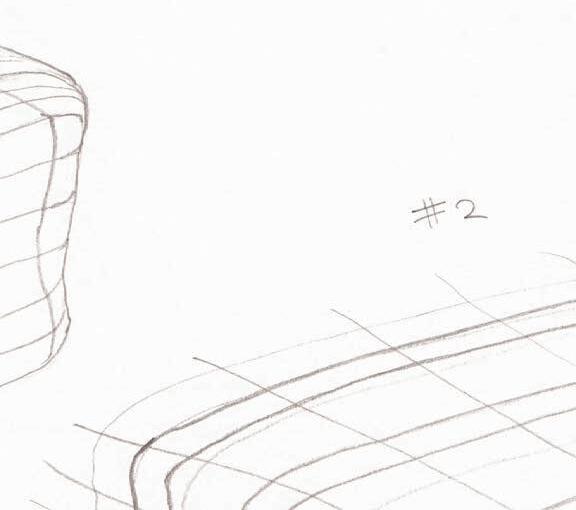
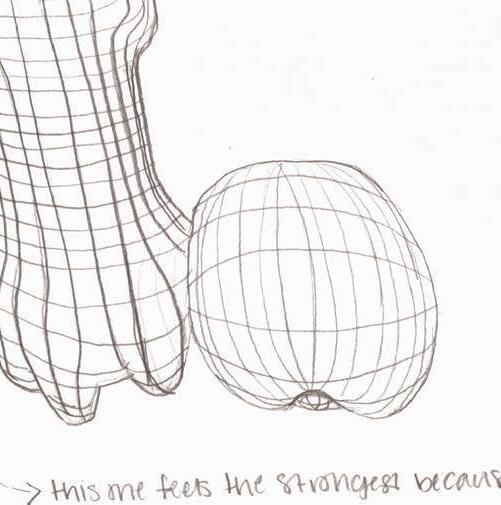
Day #13: Cross-Contour: Apple & Bottle_In Class
- Choose one object where volume feels strongest. - Write a quick note: “Which part of the contour helped most with making it feel
- Choose one object where volume feels strongest.
- Write a quick note: “Which part of the contour helped most with making it feel
Day #14: Surface Flow: Cross-Contour on Drapery_In Class
- Circle or underline a section where surface depth feels most believable
- Write: “This part works because…” or “This line felt most natural because…”
- Circle or underline a section where surface depth feels most believable
- Write: “This part works because…” or “This line felt most natural because…”
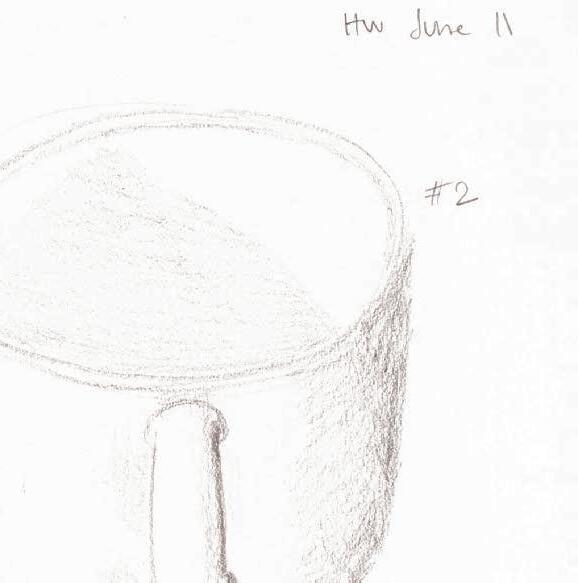
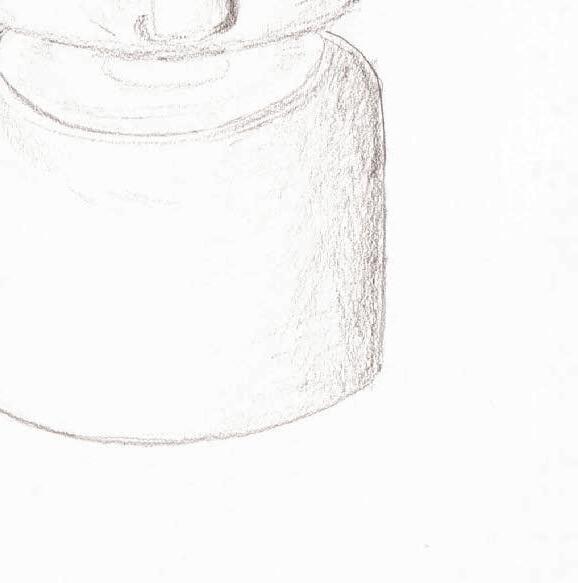
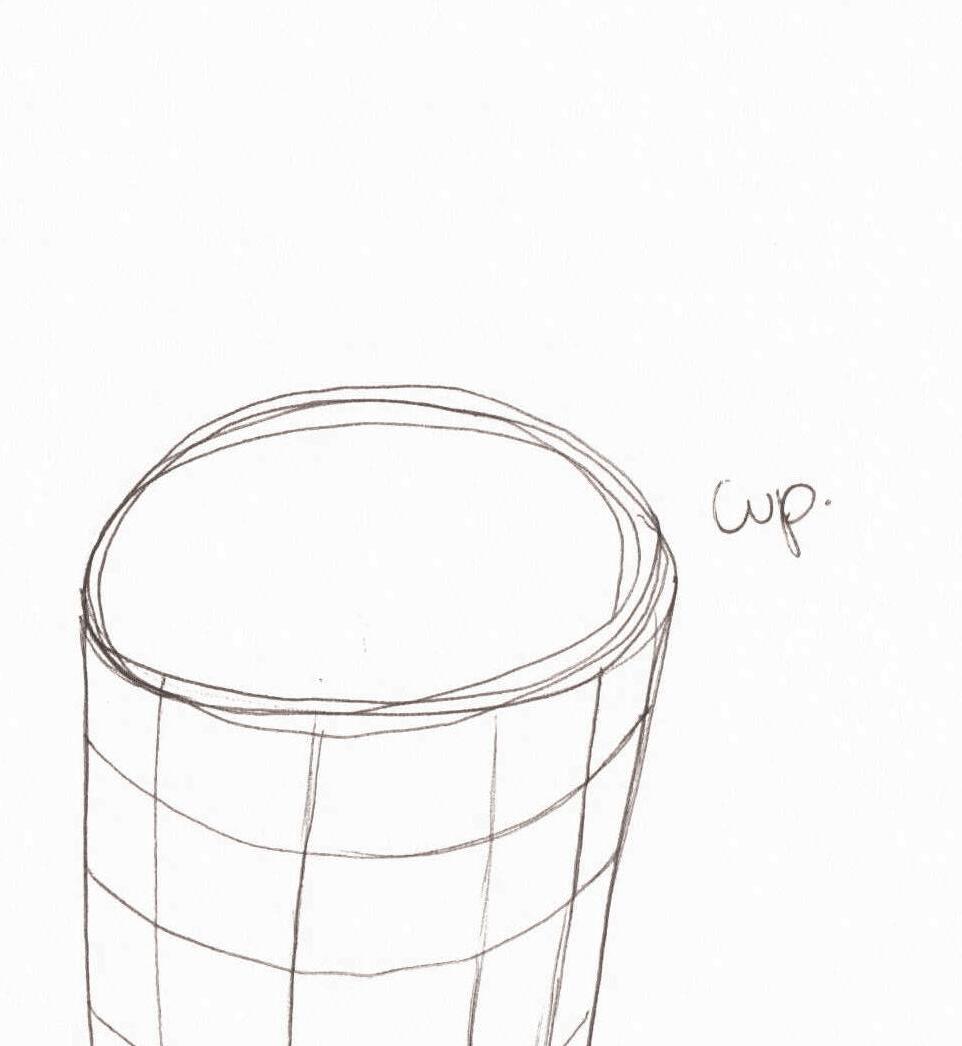
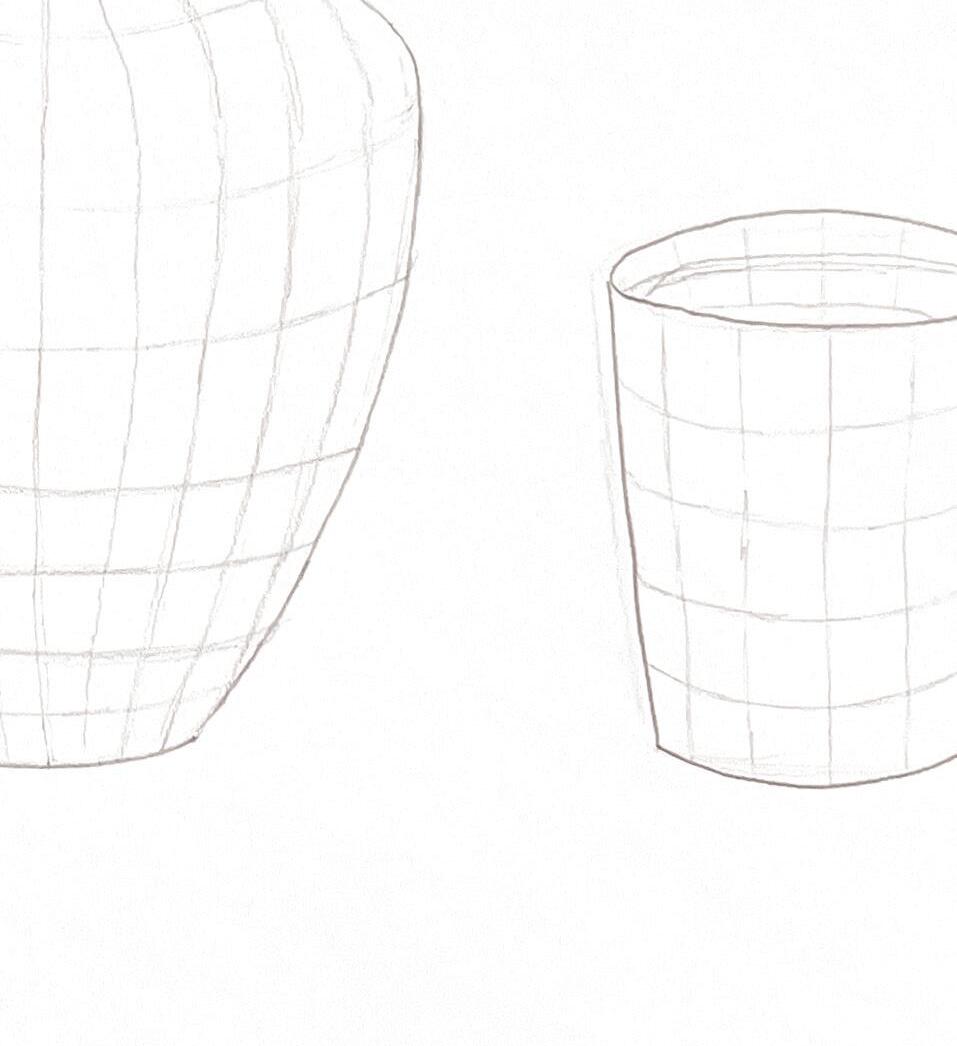
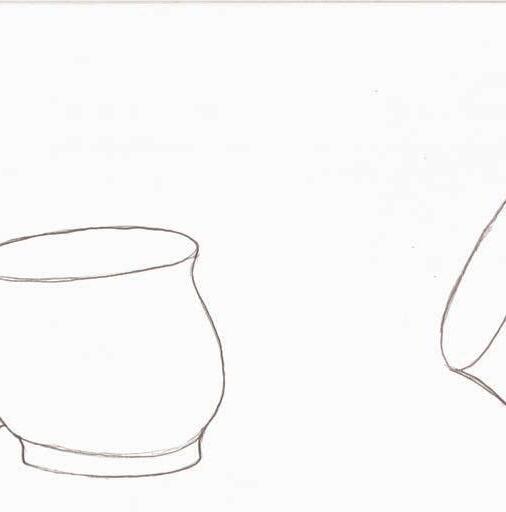
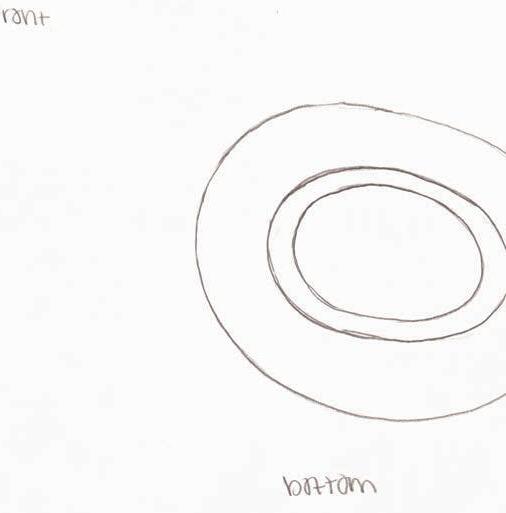
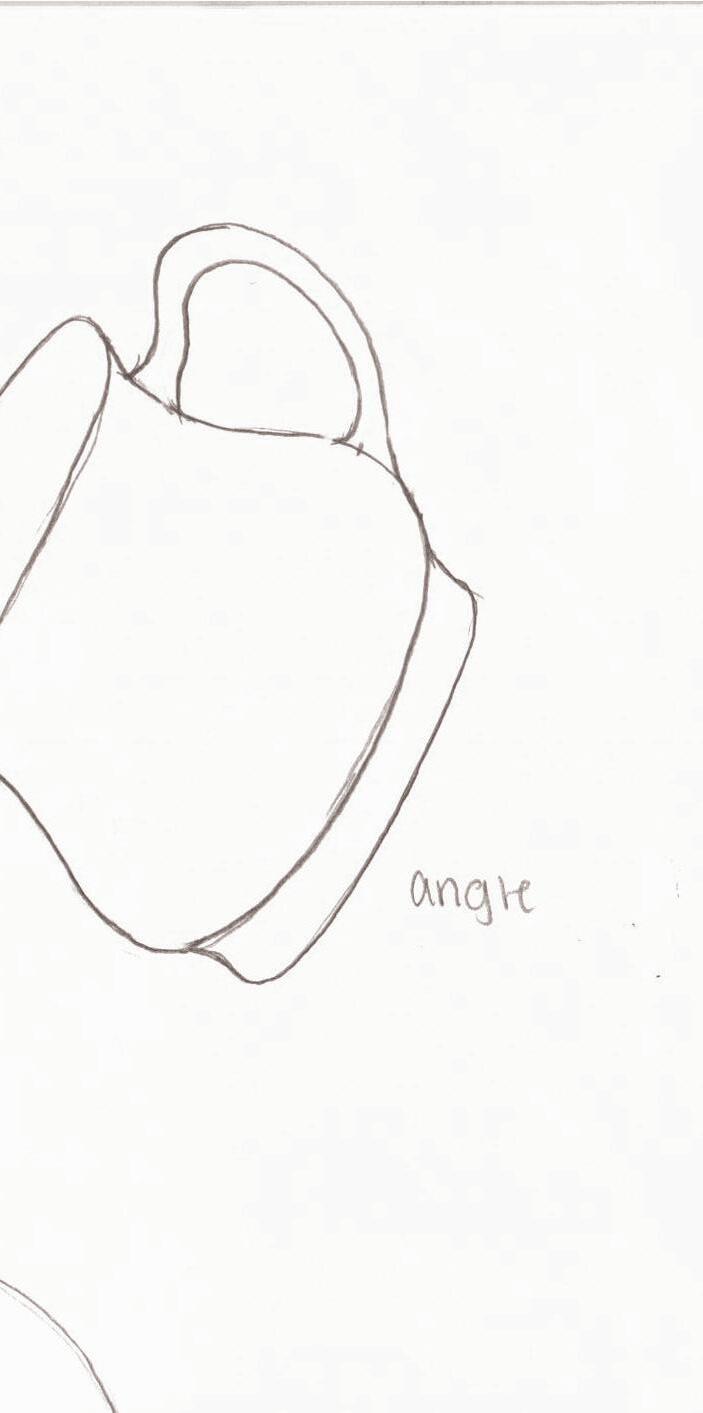
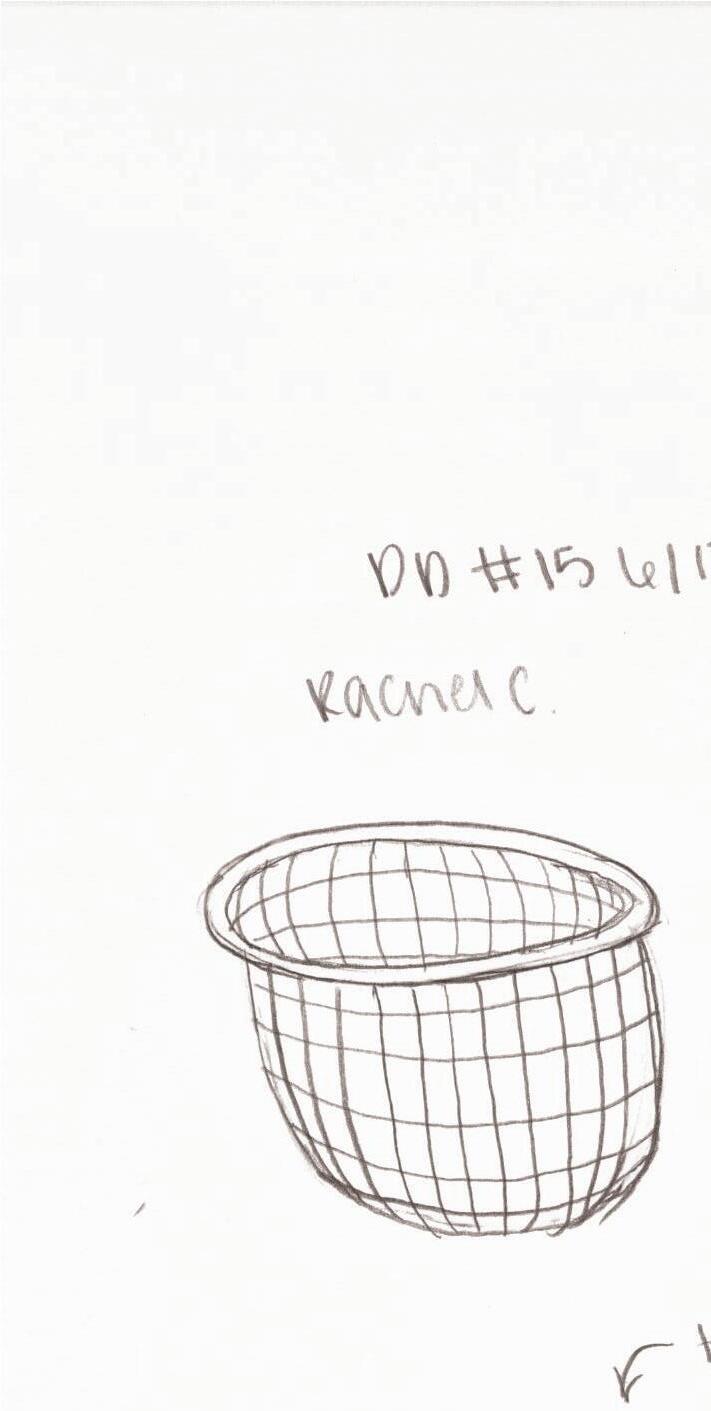
Day #15: Volume Study: Cups, Jugs, Vases_In Class
- Circle the ellipse or contour that most clearly shows volume
- Write: “Which part of the object felt most challenging to observe?”
Day #15: Volume Study: Cups, Jugs, Vases_Homework
- Circle the ellipse or contour that most clearly shows volume
- Write: “Which part of the object felt most challenging to observe?”
Day #16: Volume Study: Cups, Jugs, Vases (Part 2)_In Class
- Highlight one section that best shows volume through line - Write a sentence: “I think this works because…”
Day #16: Volume Study: Cups, Jugs, Vases (Part 2)_Homework
- Highlight one section that best shows volume through line - Write a sentence: “I think this works because…”
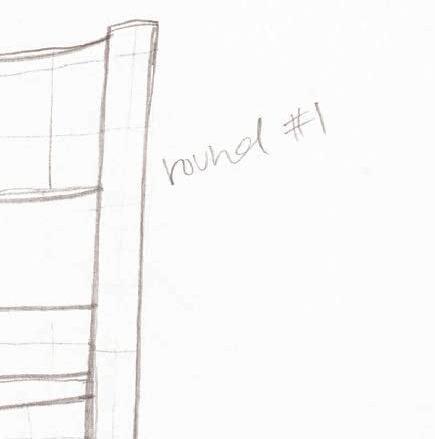
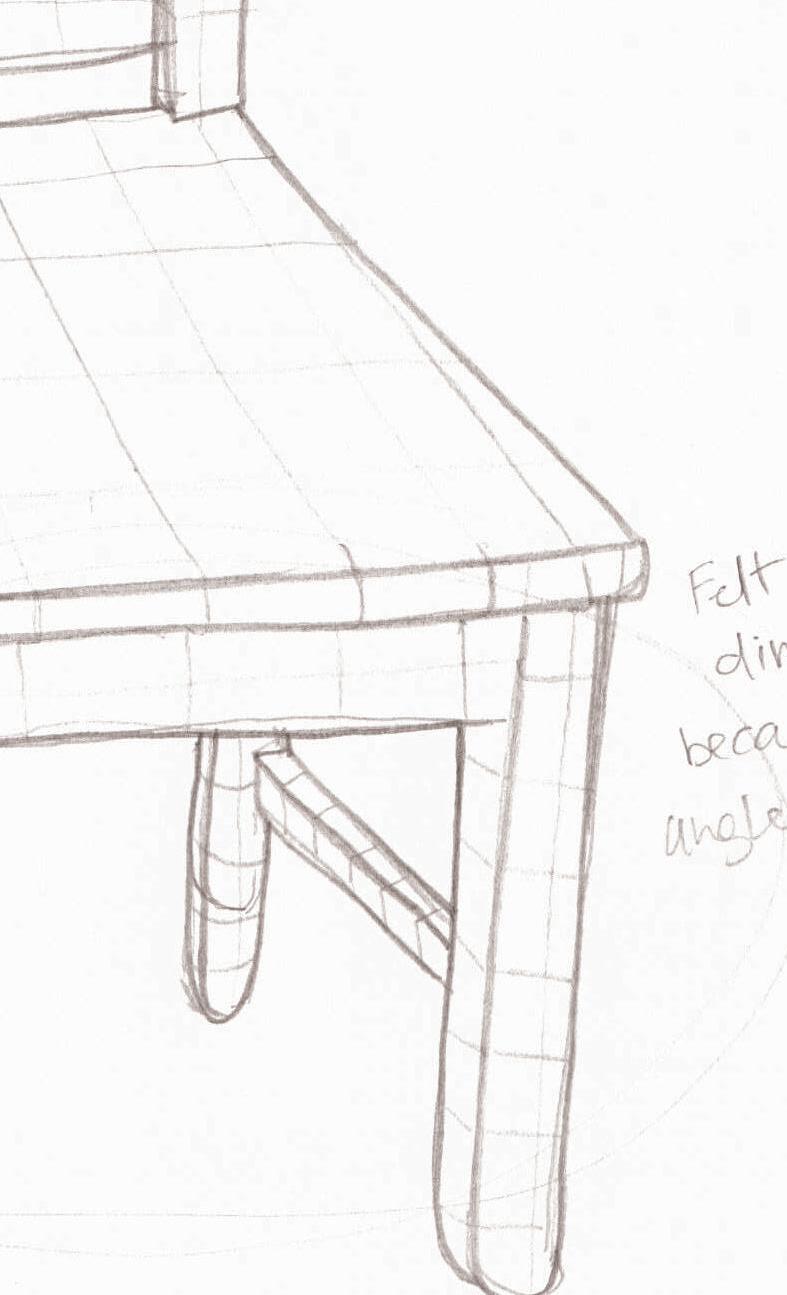
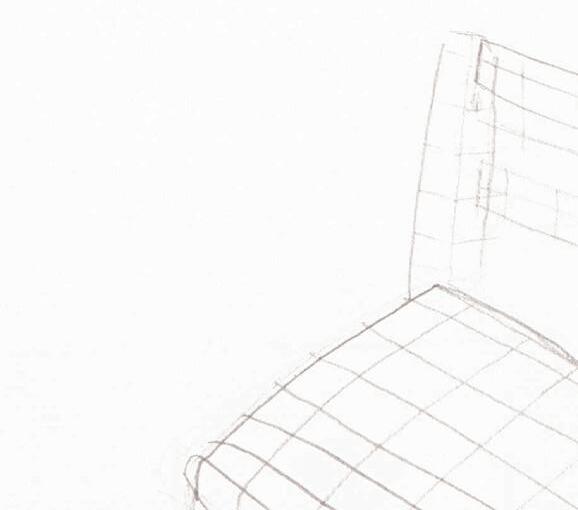
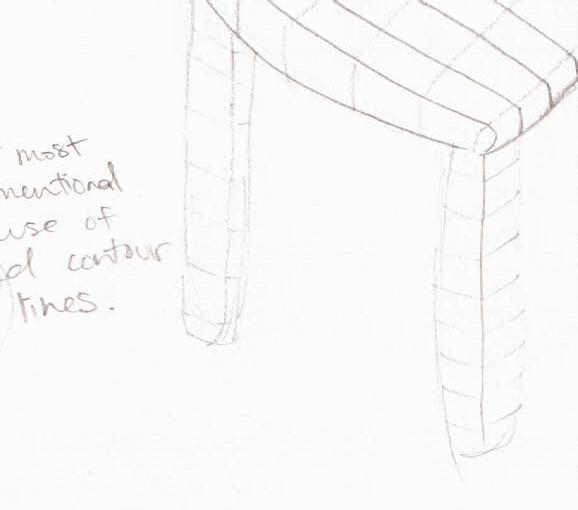
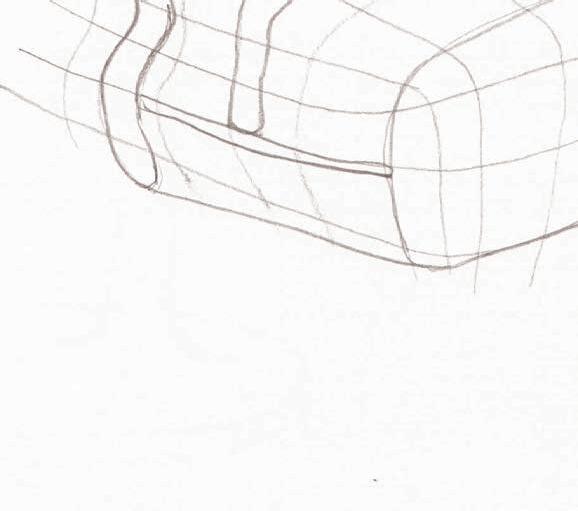
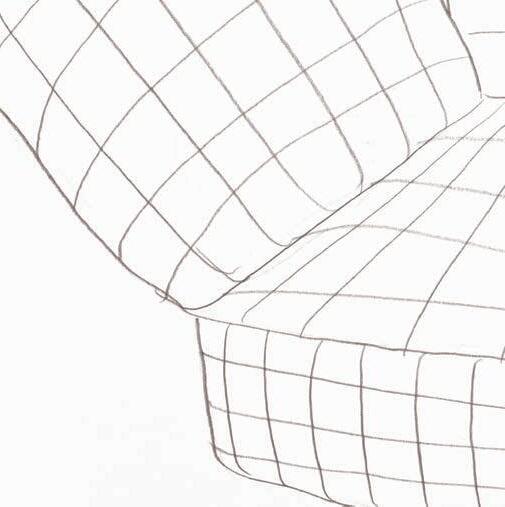
Day #17: Cross-Contour on Chair or Furniture_In Class
- Mark an area where contour lines describe surface most clearly.
- Write: “Which part of the chair felt most dimensional? Why?”
Day #17: Cross-Contour on Chair or Furniture_Homework
- Mark an area where contour lines describe surface most clearly.
- Write: “Which part of the chair felt most dimensional? Why?”
Day #18: Free Object Study with Surface Lines_In Class
- Mark an area where surface flow worked best.
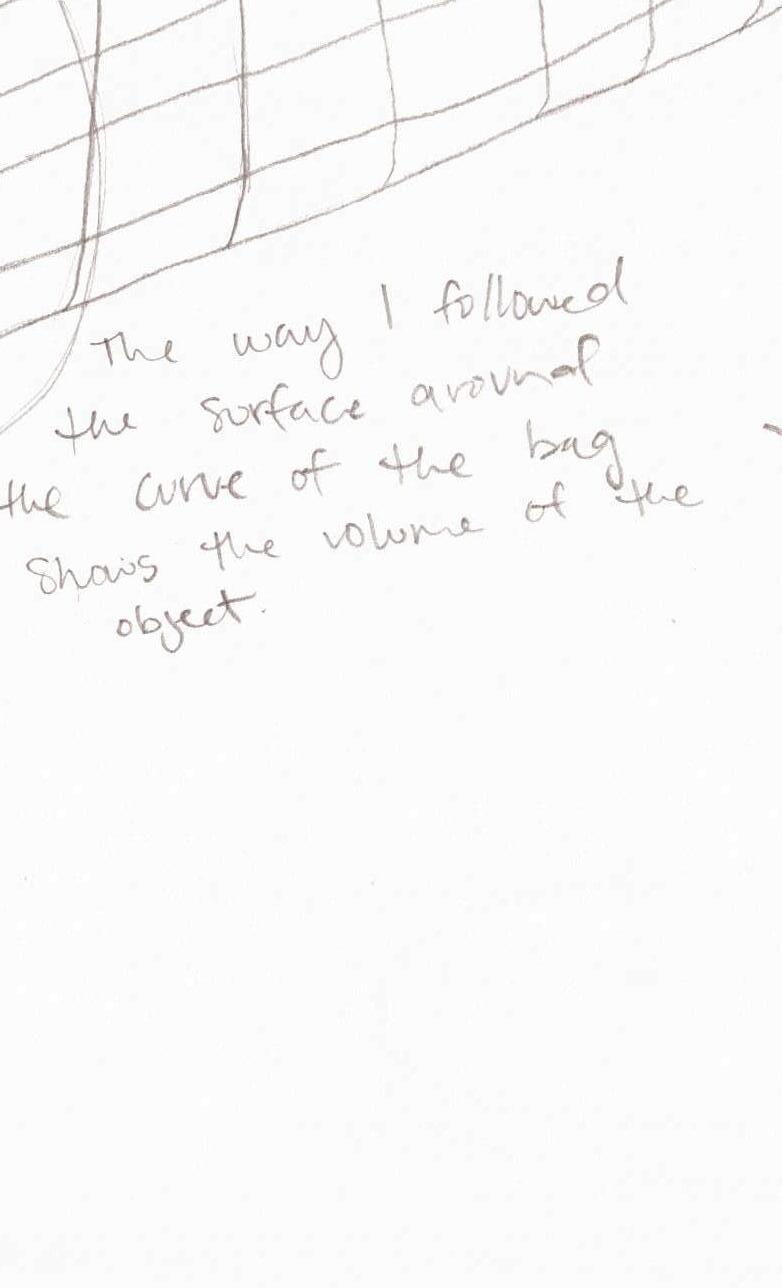
- Write: “This part shows volume because…” or “I followed the surface like this…”
- Mark an area where surface flow worked best.
- Write: “This part shows volume because…” or “I followed the surface like this…”
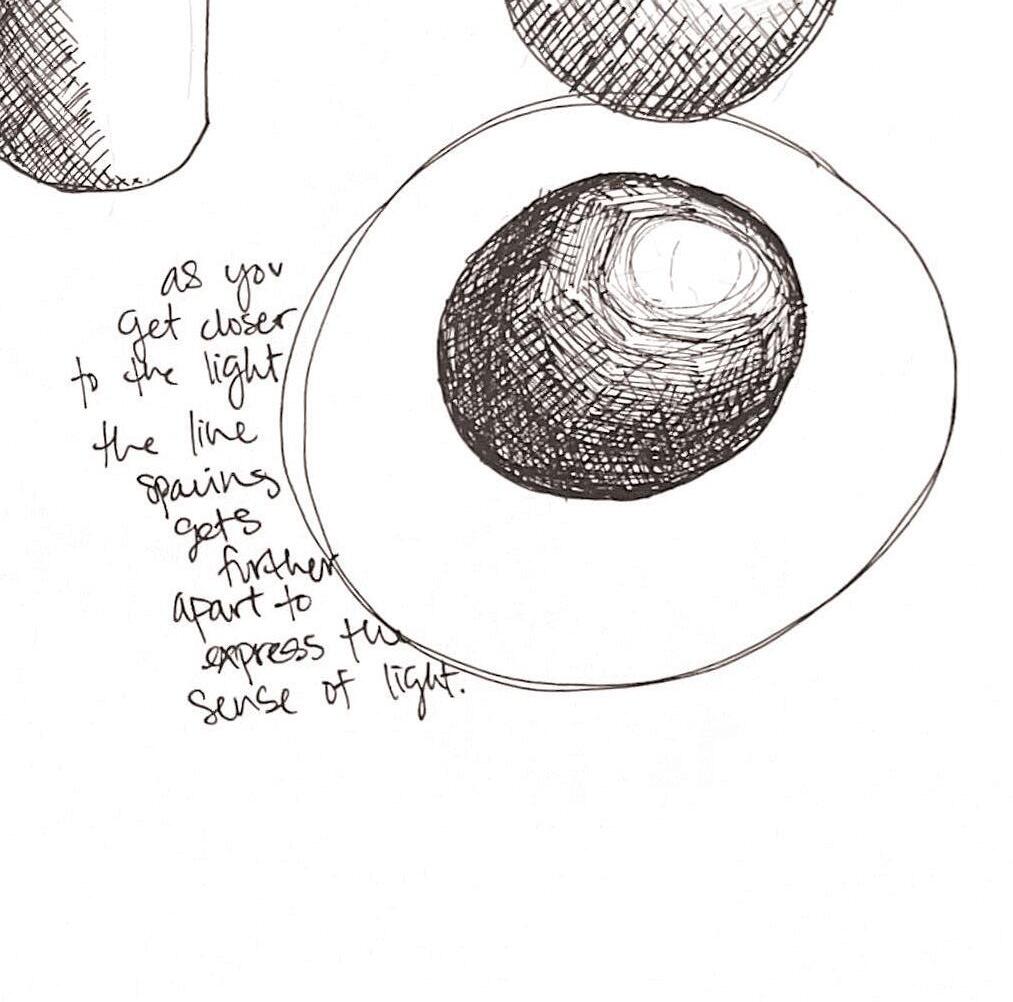
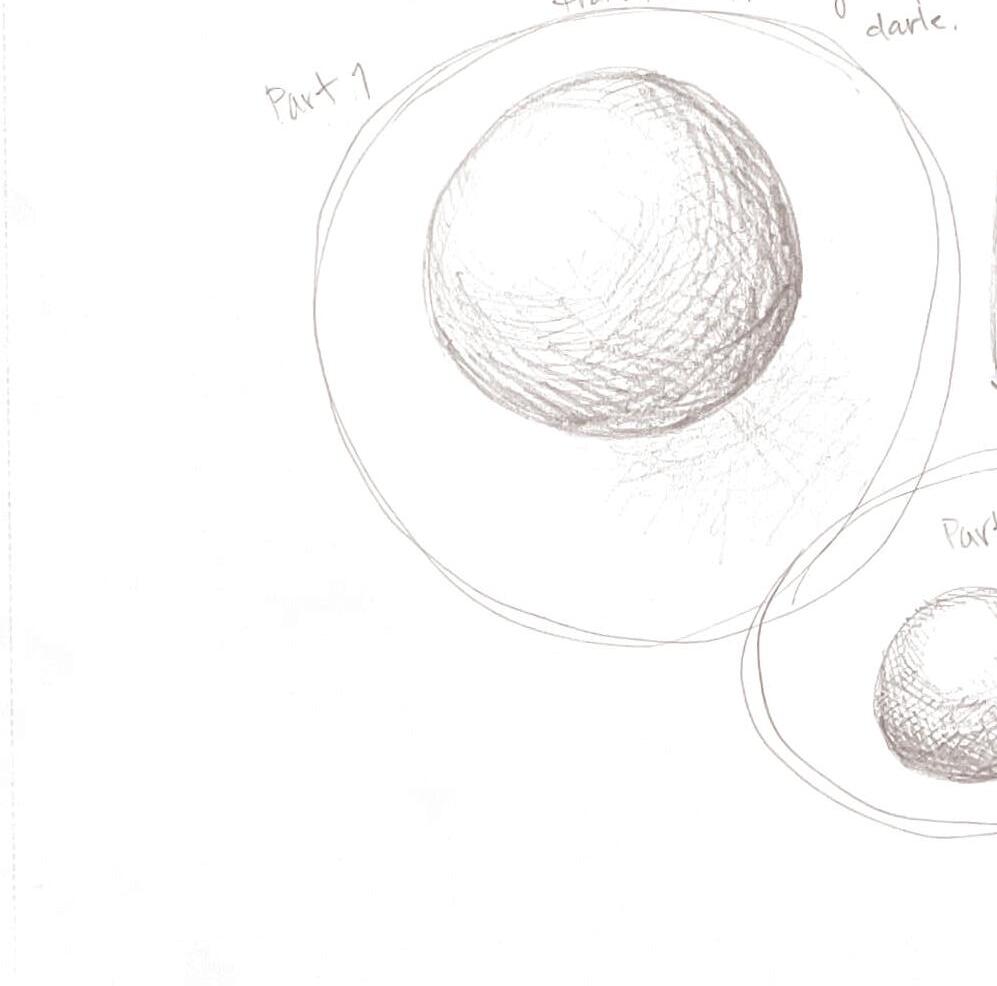
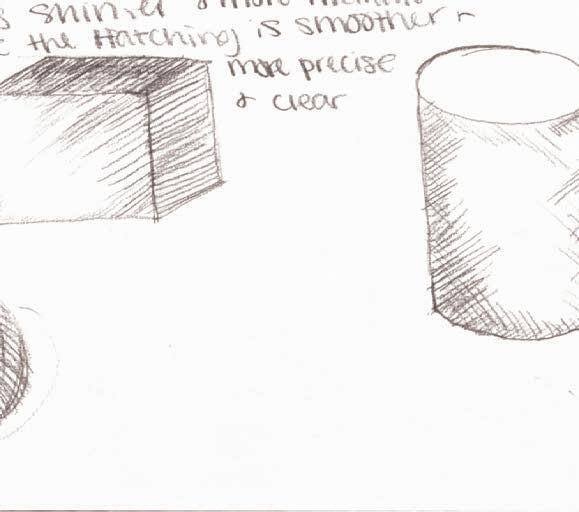
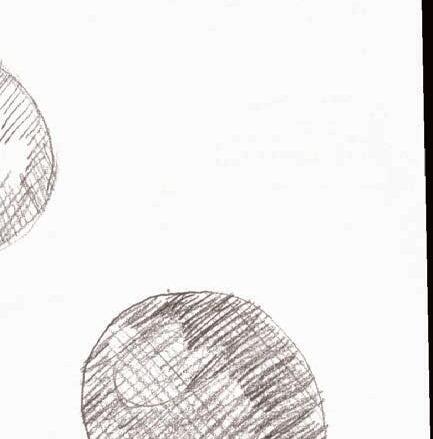
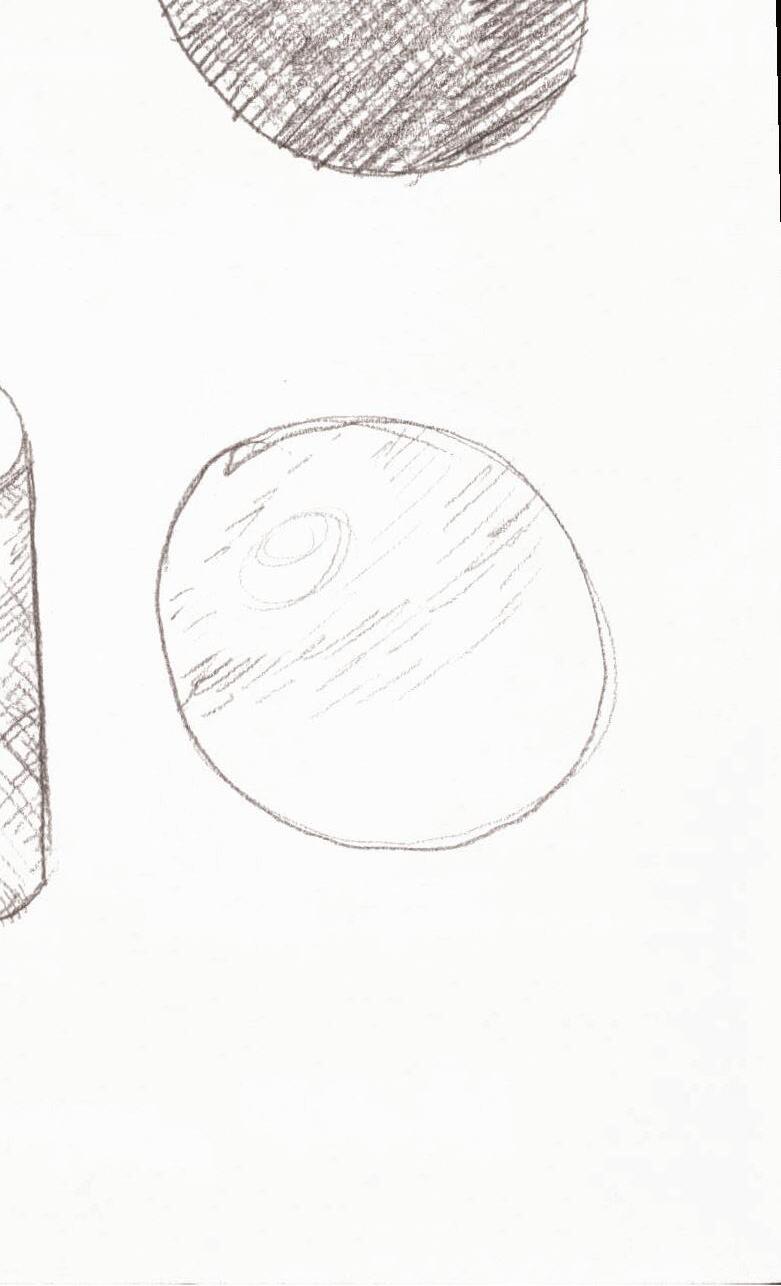
Day #19: Intro to Hatching: Light & Tonal Value_In Class
- Circle one section where light/shadow contrast is strongest
- Write: “How did line spacing affect the sense of light?”
- Circle one section where light/shadow contrast is strongest
- Write: “How did line spacing affect the sense of light?”
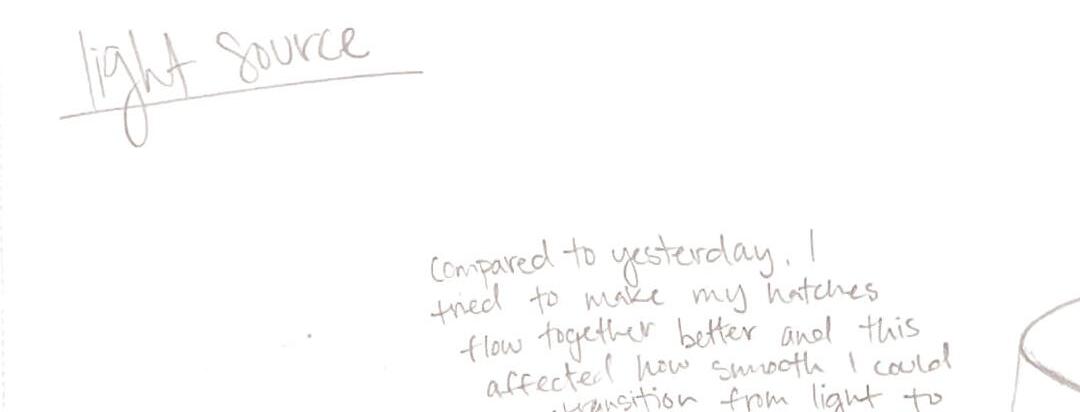
- Circle the area with best transition from light to dark.
- Write: “What changed in your technique compared to yesterday?”
- Circle the area with best transition from light to dark.
- Write: “What changed in your technique compared to yesterday?”
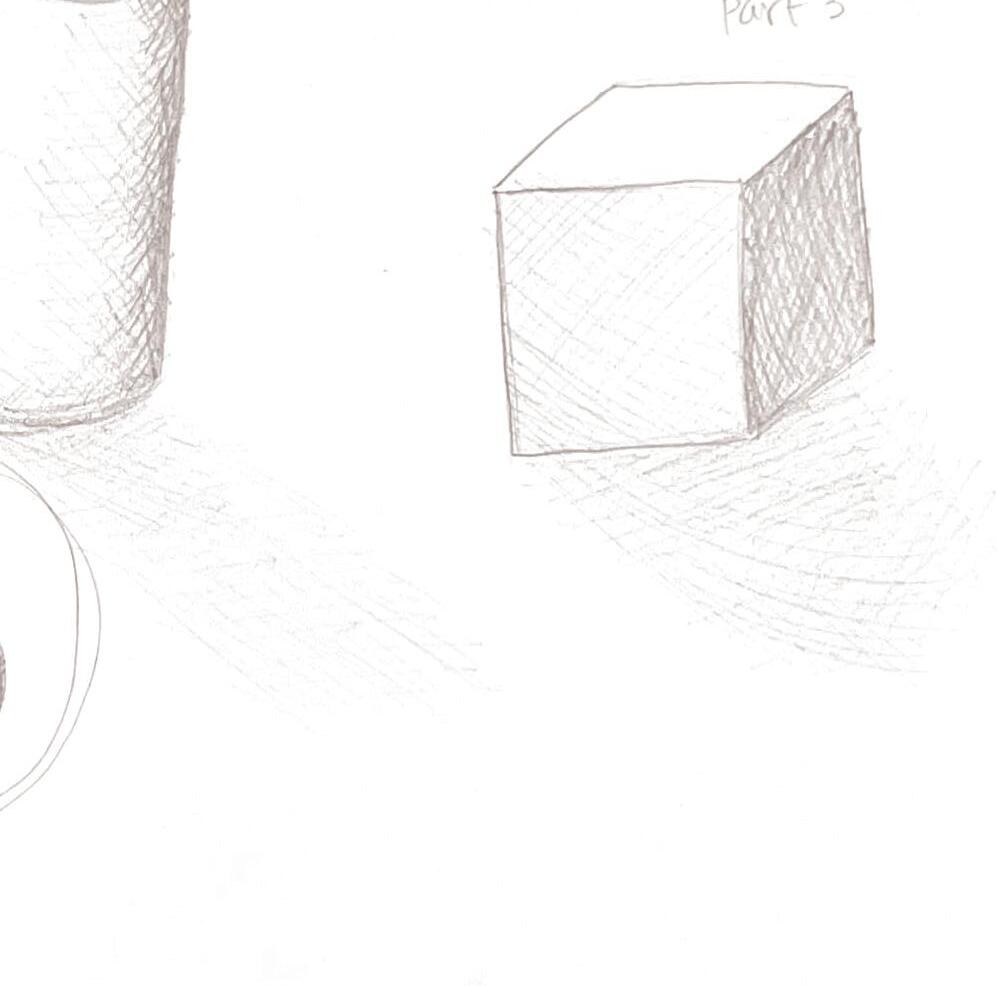
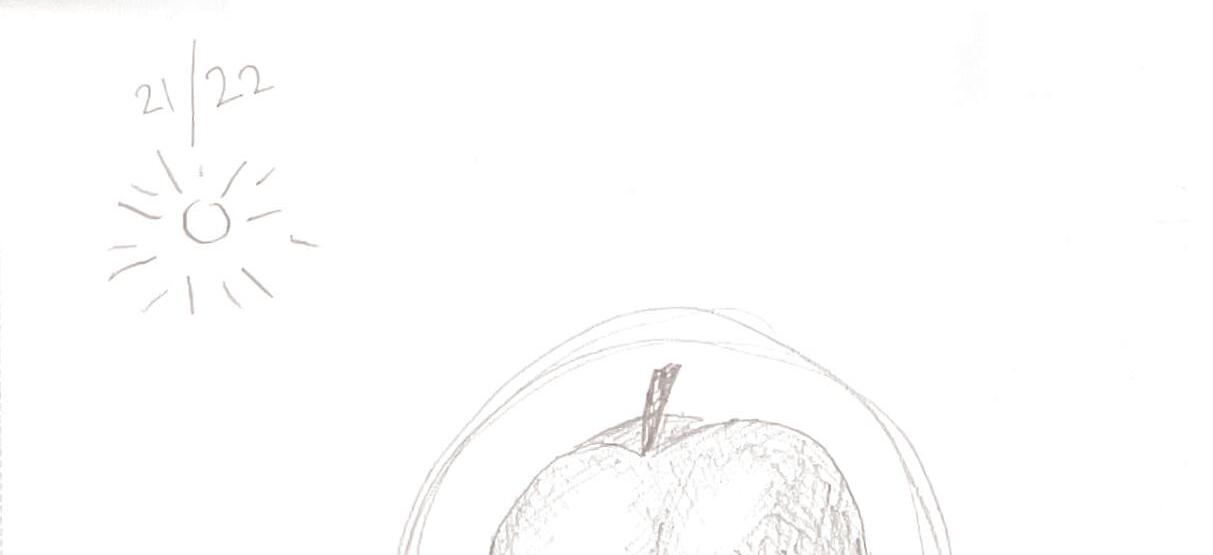
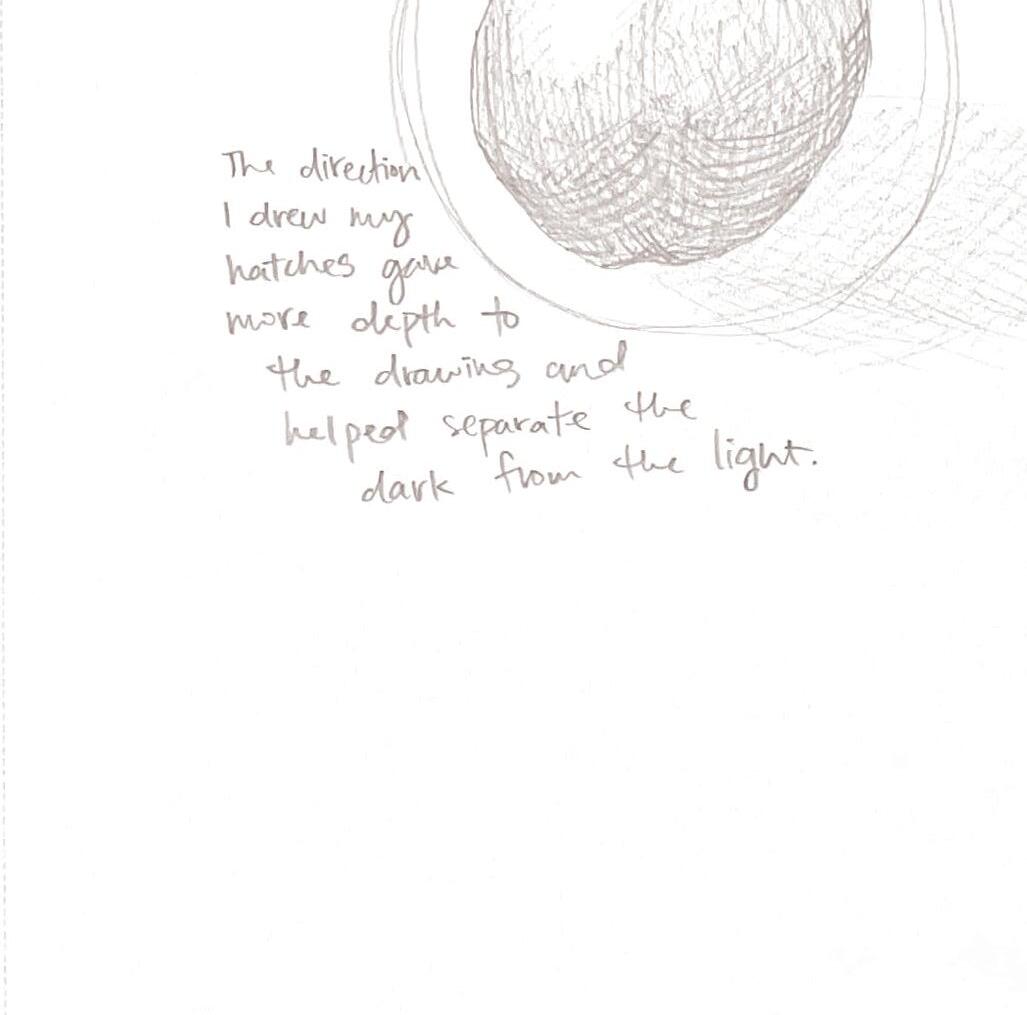
Day #21: Directional Hatching: Light Logic_In Class
Circle the area where light-to-dark transition feels most convincing
- Write: “How did direction affect the light feeling in this drawing?”
Circle the area where light-to-dark transition feels most convincing
- Write: “How did direction affect the light feeling in this drawing?”
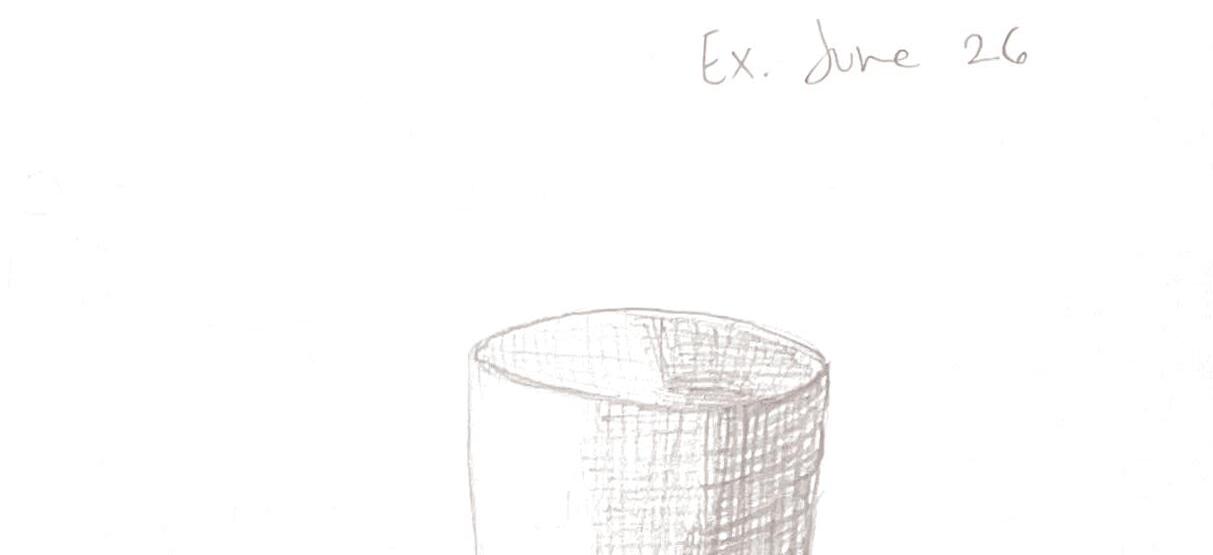
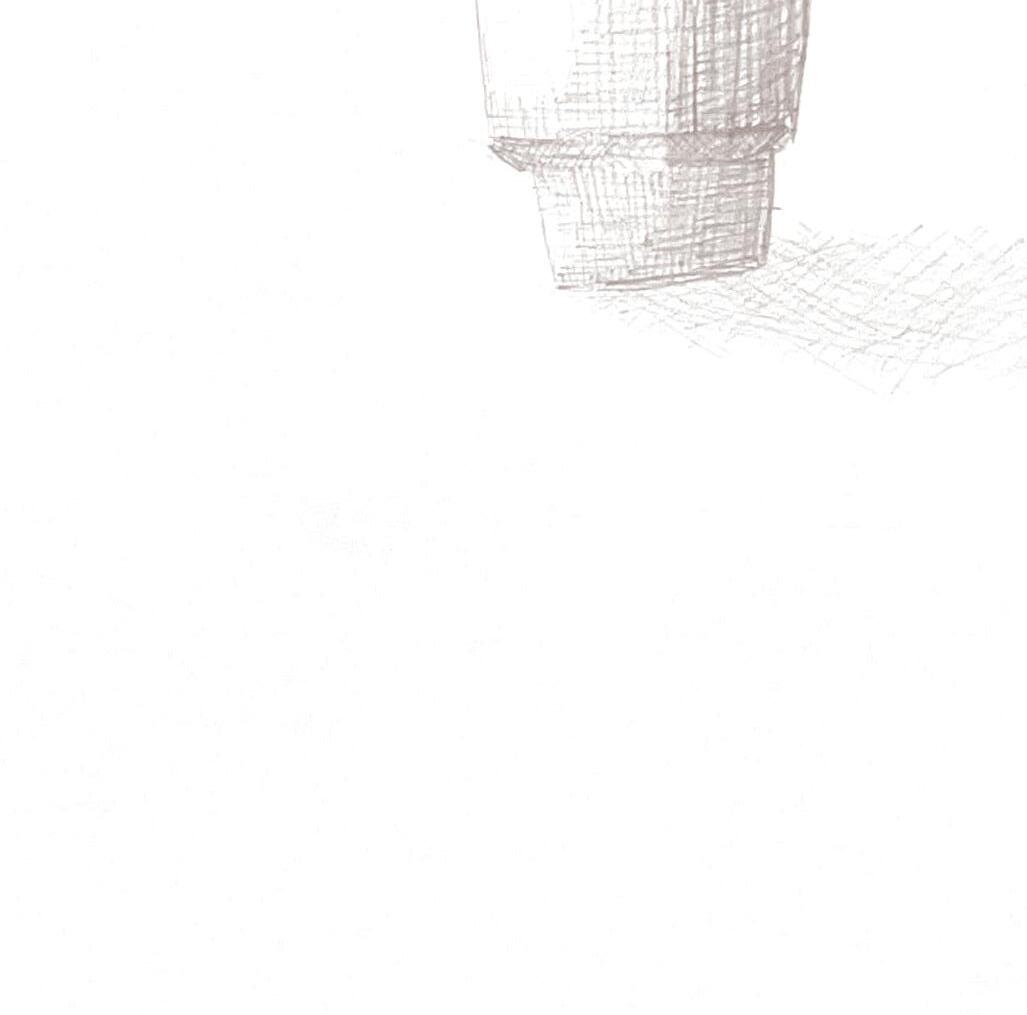
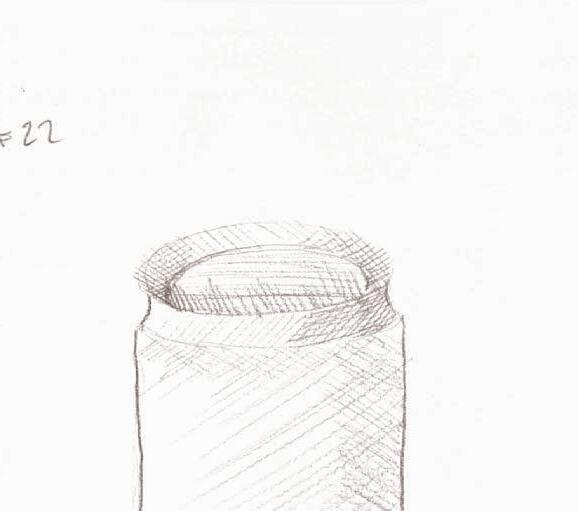
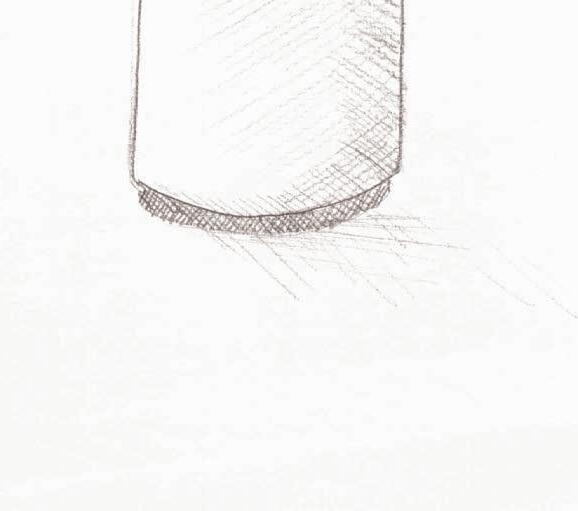
#22: Cross-Hatching & Combined Techniques_In Class
- Circle the zone that shows most control of tone + texture
- Write: “What hatching type was most effective for this object?”
- Circle the zone that shows most control of tone + texture
- Write: “What hatching type was most effective for this object?”
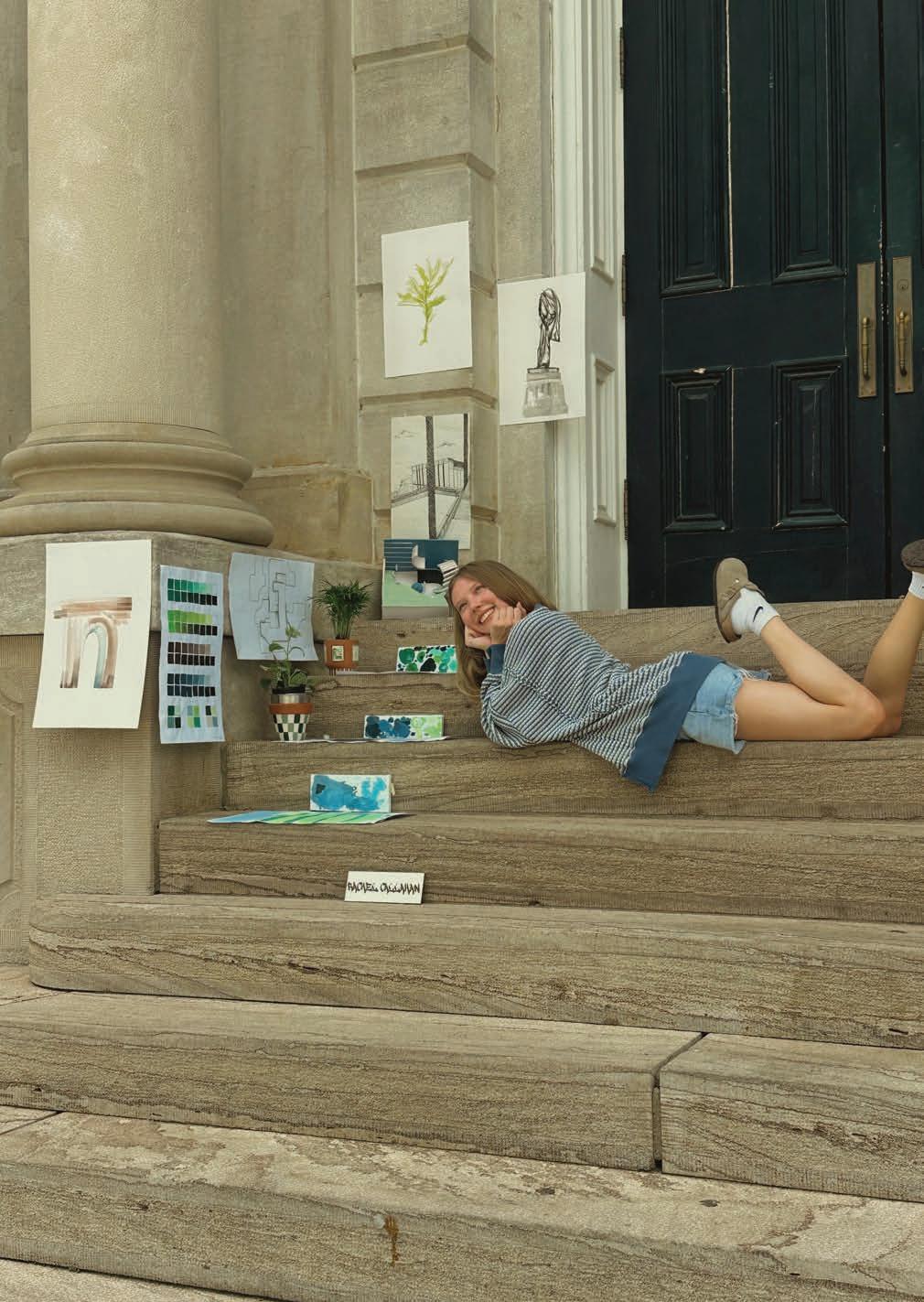
Rachel Callahan Portfolio
Project #1 “Wall, Column, and Space”
Project #2 “Hand Drawing”Project #3 “Drawing What you See, Drawing What you Feel”
Project #4 “Space Cube”
Project #5 “First Portfolio”
OverallIf you could talk to you before these five weeks, what would you like to share with you? - Its all okay, just make the to-do list and get after it.
Hand Drawing
Learning Objectives for Work #1. Dancing Lines
This exercise is designed to improve your manual dexterity in freehand drawing, and it introduces the opportunities for expressive pattern making that can result from precise and rule based geometric drawing strategies.
Learning Objectives for Work #2. My Window View
This exercise is designed to discover everyday life by recalling memories, writing, and drawing. Through the discovering process, students will gain an understanding of how various media can be converted to enhance depth of understanding.
Learning Objectives for Work #3. Color Relationship
The use of color in visual culture and design can achieve so many wonderful results. When color is used thoughtfully, it can alter our perception of spaces, instill emotion, direct attention, and even hide mistakes. Hue, Chroma (Saturation), and Value (Lightness) are the three components that define color.
Learning Objectives for Work #4. Outdoor Sketch
It is our objective that you become more familiar with a significant resource in Northwest Arkansas, be inspired by its contents and spatial elements, and devote energy to formally understanding, identifying, and applying Art Elements and Design Principles as a result of your visit to Illinois River Watershed Partnership.
Work #1. Dancing Lines (2/2)
Dancing Line Pattern (Hand)
From where I decided to land in front of the wall of windows, you can see almost the entire hill of the interstate. All of the many dorm rooms and classroom buildings full of learning and fun experiences. The smell is pretty industrial, a dusty studio room that is not in very much use at the moment. I can see the rest of the newer side of the Fay Jones building. Seeing as its an almost abandoned room, the only sound in this room is me. The more I started to draw the more I noticed the aging and weathering on the building that is perceived as brand new. There are streaks of dark aging from the rain. As well as debris from wind and trees on the tops of the buildings. However it still stands strong and beautiful of a landscape. Now I feel more of my environment because the silence has really set into the room. The fourth floor is not of much use that I am aware of. So all I hear see and smell now is stillness. v
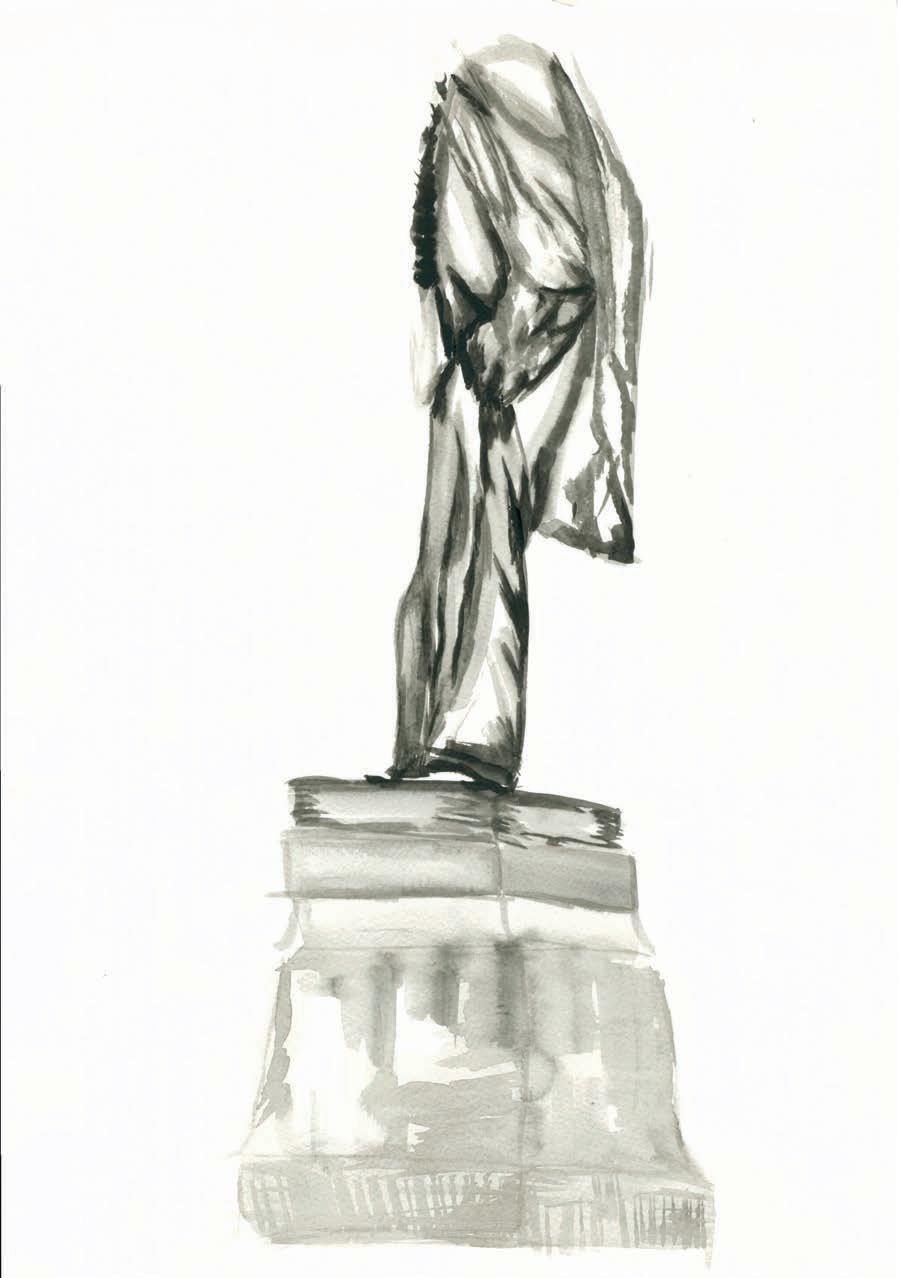
The place I chose for this project was the courtyard behind old main. While typically the face of the school is the front of old main, I have learned the appreciate the back of the building. It is not to be forgotten or brushed past. The scene is a beautiful enclosed feeling with fun elements everywhere you look. Once you have an eye to appreciate it you only find more reasons to do so. I didn’t think I could appreciate it more than when I started painting different elements that showed the most emotion to me. I thought I had already spent more than enough time appreciating the little things until I had to express it in a different form. I hold this place so dear because it holds everything I need when I just need to sit by myself. Old main symbolizes the very heart of this charming landscape and the school I hold so dear. It is such a classic and important part of this campus and it feels natural as though it sprouted from the ground up right on the front lawn. It feels like an extension of the earth like it was made to stand strong and tall. It provides such a nostalgic feeling and its been so well taken care of to keep and enhance the ever growing charm. The flowers and trees are what stands out to me the most. The leaves provide refreshing green light through them and even a picture-Esque scene when it rains as well. The flowers are so compact and natural you would think the grew thereon their own. Nothing looks too built it looks like it made its own purpose. Apart from the natural aspect there’s another factor to this buildings charm and it’s a different form of natural. People alone. Both single and joined. Multiple and many. Some people are just meeting for the first time and some are ages into their friendship. This courtyard is a huge witness to arguments and apologies alike. It holds so much more than is physically available to see. For some of the pieces I chose it started off very misguided. For my first abstract piece I did the wall of Old main that I was facing in the courtyard. I just did a basic landscape of what I saw. The wall, the branches, the light post. It wasn’t the most abstract of all abstracts but I find when doing abstract pieces you need one to just get a start. I was a little more careless with my brush strokes and focused on not looking too into what I was doing. After I got the first piece out of the way it was easier to take bits and pieces of what I was observing and what was sticking out to me. I found myself picking out a bench I was sitting on as well as a light post, a walkway arch under the stairs, the trees, and the Fulbright statue. In particular these things stood out to me the most. The way the lighting caught my eye or maybe just a particular artistic element I saw in them. This is harder to explain because I still don’t know why these things were sticking out to me. They just brushed my eyes in the right way. I was particularly drawn to the arch under the stairs because it was so secretive and hidden for such a popular area. The whole courtyard feels secluded given it is in the middle of a busy pathway. So the archway just hit me in the right direction and paved the way to the other abstract pieces. I almost considered switching halfway through to charcoal but given how these pieces were flowing with the watercolor, I didn’t feel as though I could portray what I wanted to with a different medium. So sticking with the watercolor I eventually got around the courtyard to the statue. This piece was my absolute favorite abstract piece I did. I made the choice to leave out the head and just do the body because the way the clothes folded and fell. The way the statue stands so tall but Is tucked so far back and hardly seen. I was drawn to so much of this statue and the more I painted the more I liked not being able to identify who it really was. No shade to Fulbright he is obviously a statue for a reason but being able to see whatever you wanted or whatever you felt was so freeing. It didn’t give the piece any unnecessary boundaries. This piece just really hit me more than the statue itself did. I found it hard to stop painting and adding to it but I needed to move on and finish my assignment and I fear for ever over-doing an art piece. I didn’t want to overstate anything because most of the beauty of an abstract piece is not being told and feeling on your own. I really liked all of my pieces but the statue in particular really highlighted the purpose for me as well as displaying my beloved courtyard as well.
Drawing What you See, Drawing What you Feel
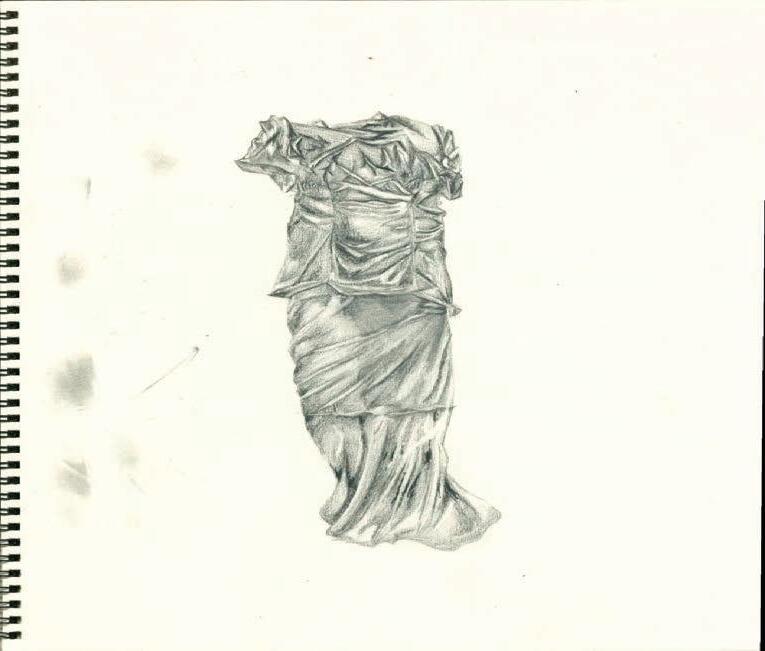
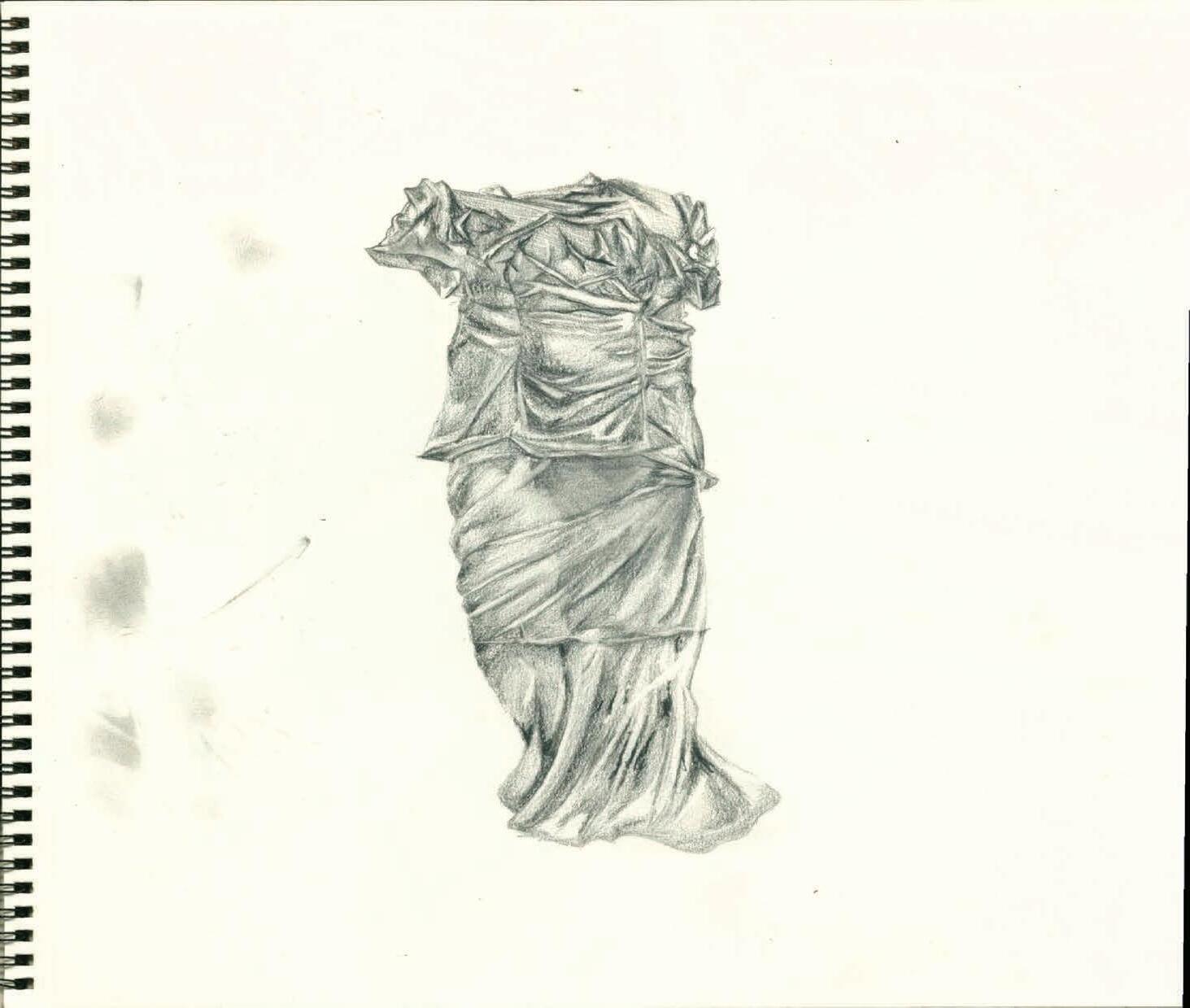
The first piece I chose was “Dress Impression with Wrinkled Cowl” by Karen LaMonte. This piece is a beautiful crystal dress with stark wrinkles and drapes. The piece is only the dress though. There is no person wearing the dress however the dress looks to be molded around someone. The piece gives the feeling of missing something. The dress is molded around a form but there is no one there. This resonates with me because of the constant feeling of missing someone but their traits are still there. There is traces everywhere of someone but the actual person is missing. For this reason I picked this piece but also the art alone is enough. The crystal is almost clear enough to see legs under the skirt part of the dress but still there is no one there. The top of the dress is where it changes from drapes to a more wrinkled up fabric type. It almost looks as though it had gotten wet and then wadded up and left to dry. The detail is to such a high degree and I appreciated it greatly represented in this piece.
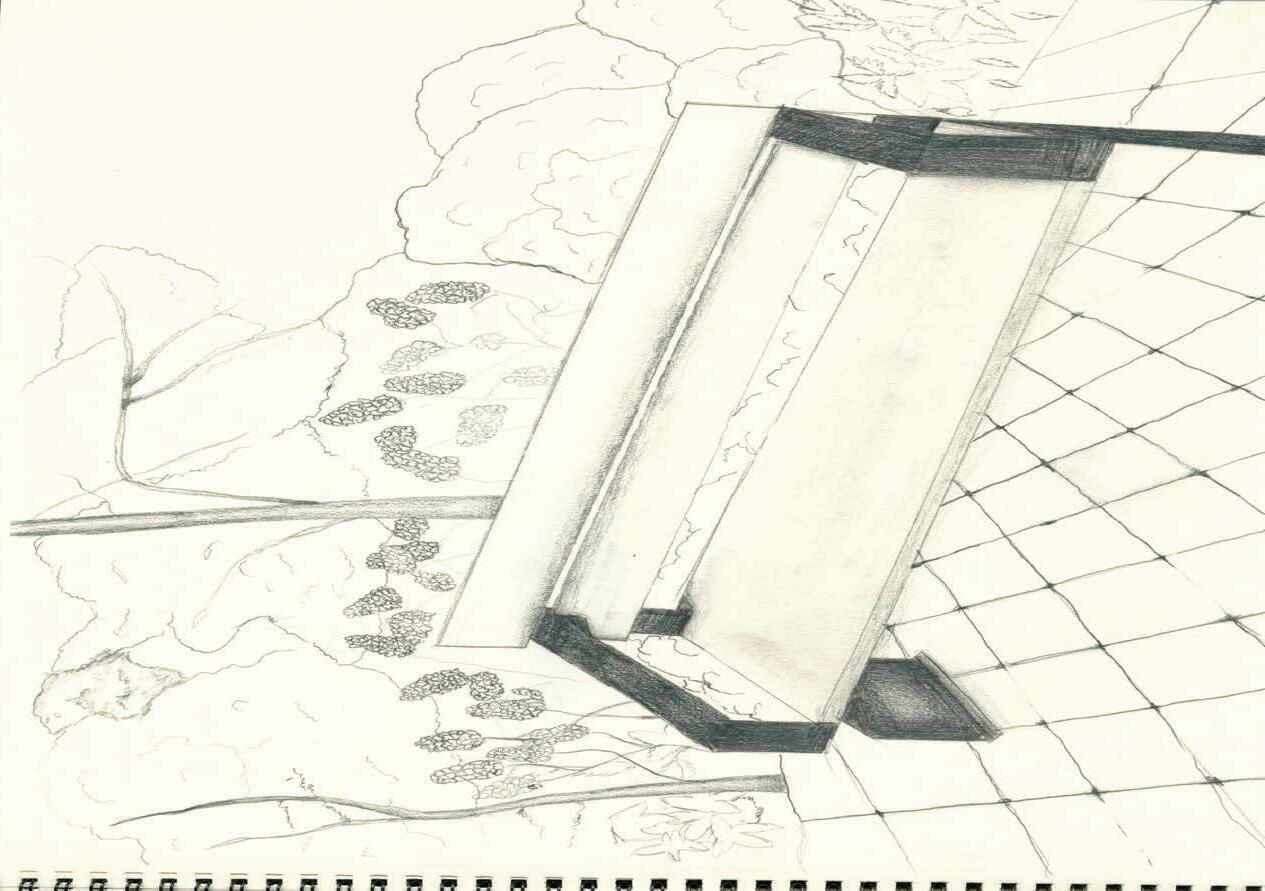
The scenery I chose was a bench on the Crystal Bridges Art Trail. This trail goes right by the Frank Llyod Wright house and has a lot of statues and structures along the trail. The trail is full of art however, I did not choose one of the art pieces on the trial. I chose one of the benches on the path used for sitting. The bench is surrounded by dainty oak leaf hydrangeas (a beautiful flower in my opinion). The bench is just a normal bench but is surrounded by such green scenery enveloping the little dip off the path. The place is so pretty but so empty. Almost everything is perfect except for the absence of someone sitting on the bench. The bench was made to be sat on and is almost perfect with the nature surrounding it yet its purpose is not yet fulfilled. There is a person missing.
The correlation between these two statues and places was not what I was exactly looking for. I thought there would be something else that would stick out to me, and I also had things I tried to force the art statue I had chosen. At the end of the trail though, I had realized there was only one thing that continued to speak what my statue was saying. The almost perfect bench. Both of these places were perfect and beautiful but were missing their purpose. They were missing someone. It appears to be perfect but there is a feeling of loss. You have more than enough but yet there is one thing you want and long for, like someone to be on the bench. As well as the dress it was made for someone to wear it. It was specifically molded around a specific persons body, but still there is no person. And you won’t always find what you think you are looking for when you’re actively being told something else. The bench was saying exactly what the dress was, even though I originally passed it up because it wasn’t what I was looking for.
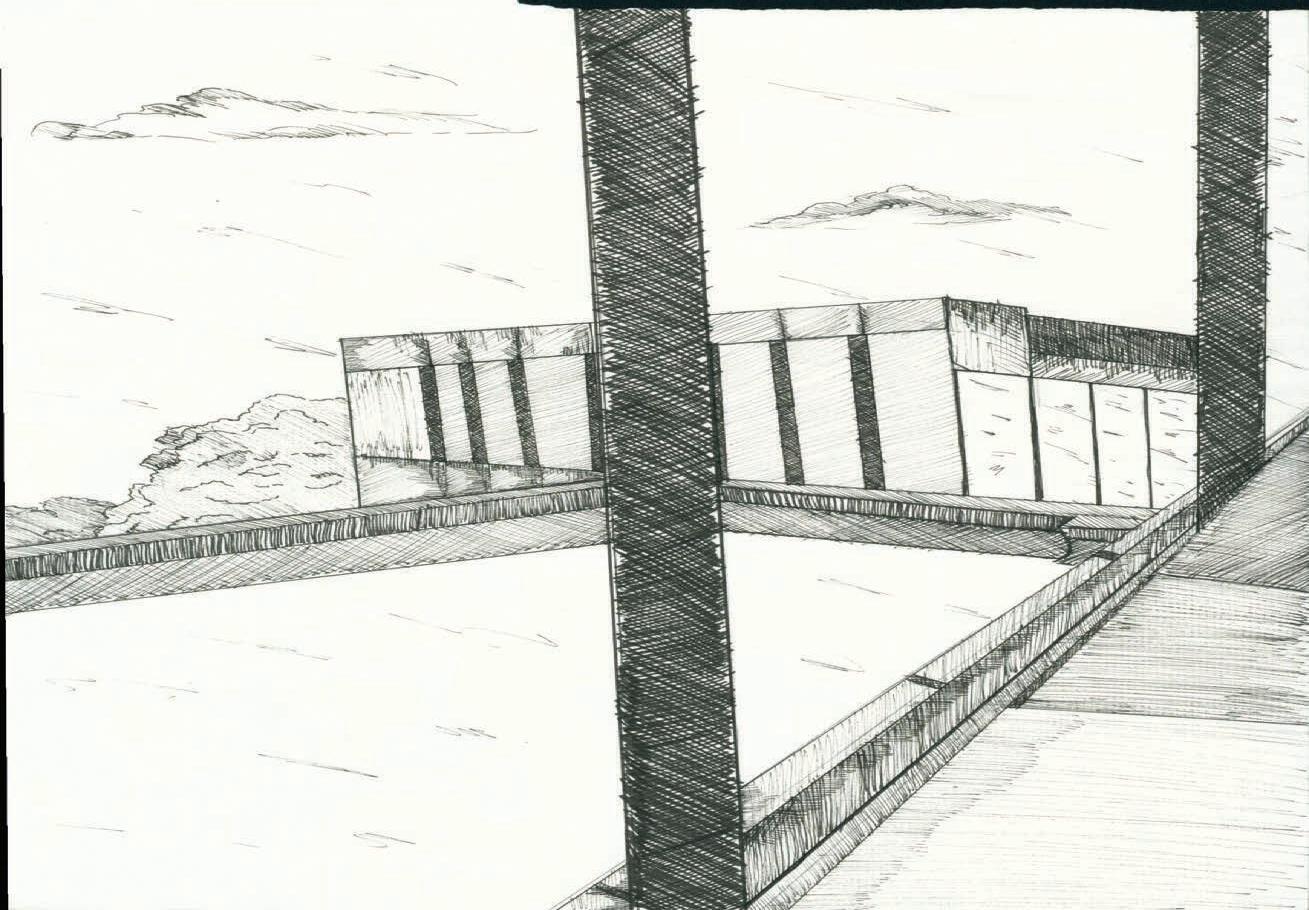
Careful drawing of the space : A “traditional” perspectival, eye-level drawing of a space (indoors or outdoors*) that you encounter at the museum, and that provokes
Rachel Callahan Portfolio
What I learned...
1. Which drawing activity was the most memorable for you, and why?
(e.g., “Drawing while listening to music,” “Blind self-portrait,” etc.)
I prefered doing the blind contour of our own faces because I really improved through the challenge and loved my final result. It was also a fun day for everyone and we all enjoyed drawing ourselves in that way.
2. During which activity did your hand feel the most natural or free, and what do you think contributed to that feeling?
(Focus on rhythm, emotional state, or physical flow.)
When we started doing the hatching because I was already confidentin hatching and shading was easier to do without going back a few levels and having to ignore what I alrady knew how to do.
3. Describe a surprising, unfamiliar, or emotional moment you experienced while drawing. (Moments of discomfort, breakthrough, or delight.)
I had a lot of moments of overhwleming feelings when I didn’t want to be drawing because I thought I had more important things to do.I still feel that way but sometimes a forced break was a ppreciated to change paths for a second.
4. How did your way of seeing or expressing change during this drawing process?
(e.g., shifting from drawing what you think to drawing what you observe.)
It definiltey got btetter at trusting the process. Instead of trying to redo what I was doing in the moment if I didn’t think it was good, I kept doing the whole drawing until it was complete and it would typically all come together.
5. In what way did this drawing experience connect to or support your learning in your design (IARD) or landscape (LARC) major?
(Observation, spatial awareness, material sensitivity, etc.)
It helped to be able to translate what I was thinking to someone when I couldn’t exactly say or describe with my words.
6. At the beginning of this course, what emotions or expectations did you have about drawing?
(e.g., “I was nervous,” “I looked forward to drawing,” etc.)
I looked forward to drawing because it was the one thing I was confident in, while being in the middle of a mess of things I was so unsure about.
7. How did your thoughts and feelings about drawing change over the course of the 22 sessions?
(Describe any emotional, cognitive, or confidence shifts.)
I definitley got faster at doing things and found it more difficult to draw slow.
8. How would you define “drawing” now? How has that definition changed from when you started?
(e.g., from “drawing well” to “drawing to observe” or “drawing as expression.”)
Drawing is a representation of any of the 5 sense on an intende medium.
9. What did you discover about yourself through these drawing experiences?
(New habits, sensitivities, or realizations about perception or patience.)
I discovered that I have a style of drawing I definitley prefer and objects I was inclined to draw more often than other objects.
10. How do you imagine drawing playing a role in your future work or personal growth?
(As a design process tool, expressive outlet, or reflective method.)
For me drawing will always be something I use as a getaway tool. It is comofrting to have something I can do in times of stress. So I hope I can always use it as a stress tool.
- Circle or mark 2 areas on the page where you think the line quality is strong. I think my parallel lines looked the ebst because they are the cleanest and straightesst.
- Circle or mark 2 areas on the page where you think the line quality is strong. I think the changein my lineweights are very strong and look really clean and good.
Day #2: Free Line Exercise with Music_In Class
- Write 1–2 sentences: “Which music made your hand move best, and why?” I think the top right sequence is the strongest because it has the ebst flow.
- Write 1–2 sentences: “Which music made your hand move best, and why?” I think having a song I really liked helped move the pencil along the paper itself.
I feel like from the first drawing to the second I fixed the accuracey of the
Day #4: Outline Drawing: Still Life Setup_In Class
- Compare first and second compositions. When the angle changed I feel like the shape of the tape despenser improved.
- Compare first and second compositions. My general shapes improved from the first drawing to the second. The objects are more sturdy and realistic.
- drawing number two had the best shape and
The shape of the scissors surprised mebecause I expected it to be a haarder shape to draw.
Drawing number two has a different view that I think made a better drawing than the ohter ones.
I like the way I drew the shoelaces I think it was really accurate.
None of these to me were very accurate but the galsses shape did improve the more taht I drew.
The pencil sharpener was actually the hardest to draw which surprised me.
- My eyes went to the leaves more so I tried to draw branches first so I could then fill in with leaves.
I really was looking at the shape of the pot the most when drawing
#9: Blind Contour: Self-Portrait_In Class
The drawing that most impressed me was drawing number two and three. YOu can really see the growth from the first drawing.
This drawing did not reflect what I saw because I feel like I had a hard time drawing what I was looking
#10: Basic Contour Drawing: Fruit_In Class
The mood hoenstly seems a little dark because the shadows I drew were darker than the secind drawing.
The most impresssive one to me was the pear, the shading is the most accurate.
The underside angle surprised me the most with how difficult it was.
Day #12: Intro to Cross-Contour: Sphere & Cylinder_In Class
- The vase/pot was the most impressive
Day #12: Intro to Cross-Contour: Sphere & Cylinder_Homework
The second form was the best outline but the lime had the ebst cross contour drawing lines.
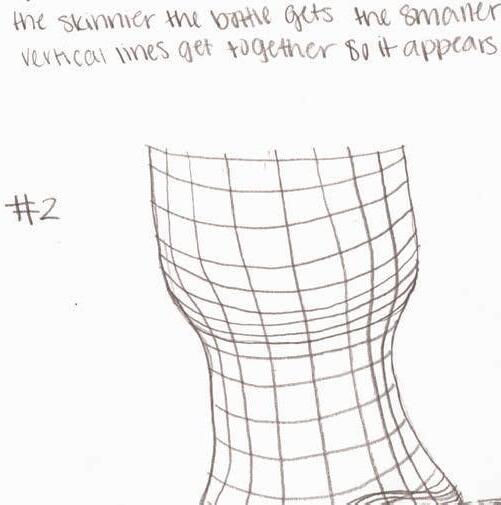
#13: Cross-Contour: Apple & Bottle_In Class
The closer together the lines are makes th ebottle shape more
- Choose one object where volume feels strongest. The shape of the contour liens helped form the shape of the objet.
Day #14: Surface Flow: Cross-Contour on Drapery_In Class
- Circle or underline a section where surface depth feels most believable
Drawing three looks the most like fabric inmy opinion.
- Circle or underline a section where surface depth feels most believable The msaller lines help the fabric look wrinkled.
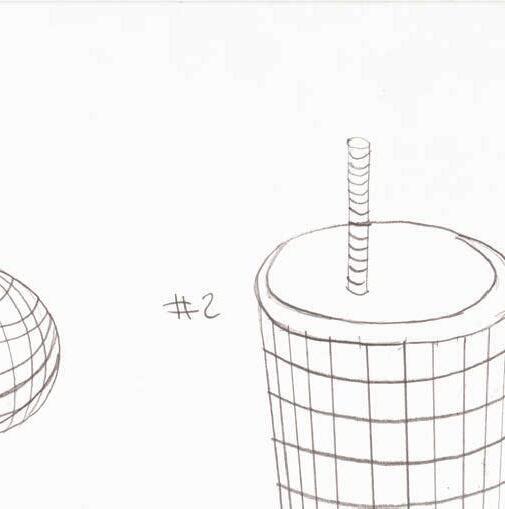
Day #15: Volume Study: Cups, Jugs, Vases_In Class
- Circle the ellipse or contour that most clearly shows volume
- Write: “Which part of the object felt most challenging to observe?”
Day #15: Volume Study: Cups, Jugs, Vases_Homework
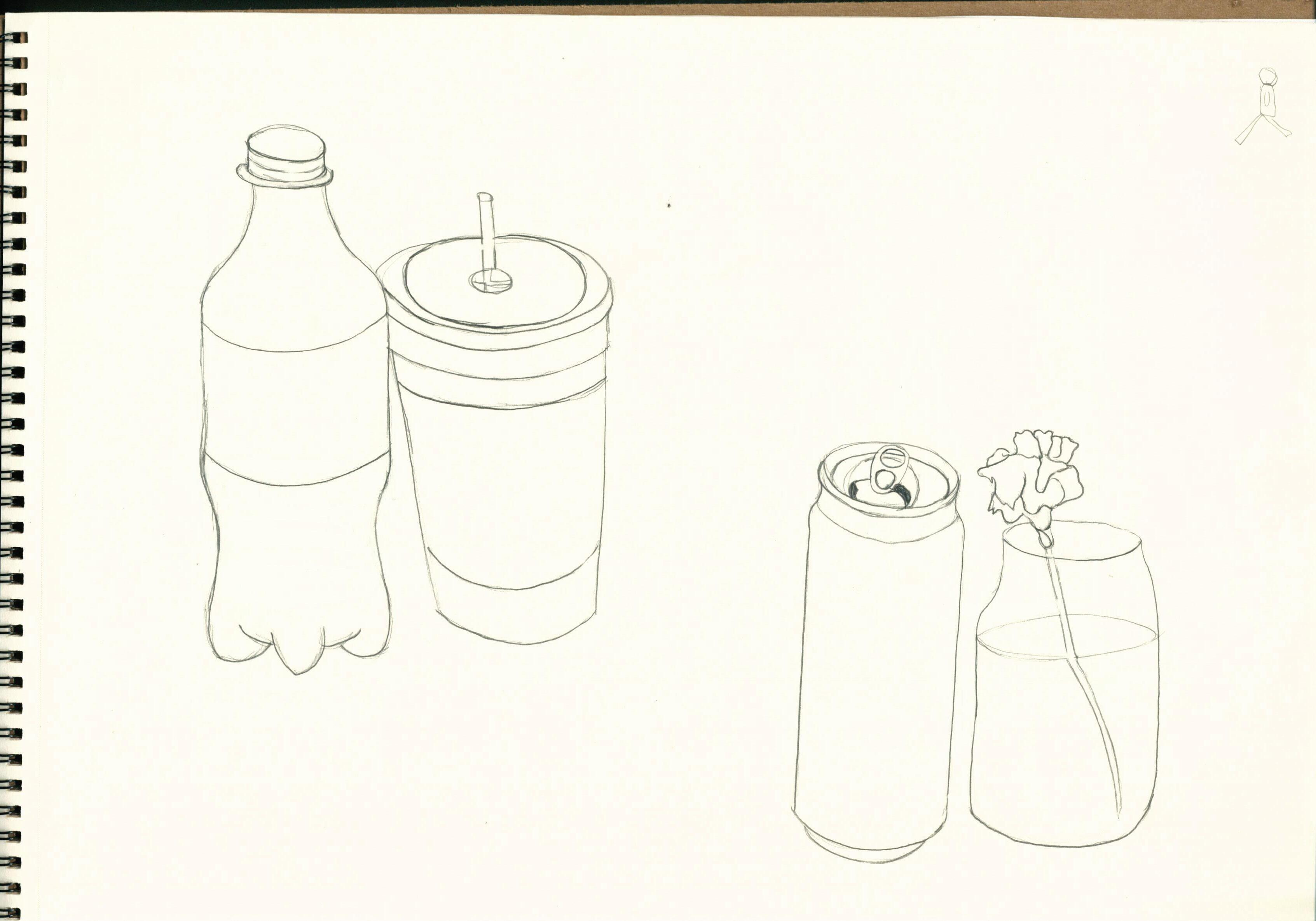
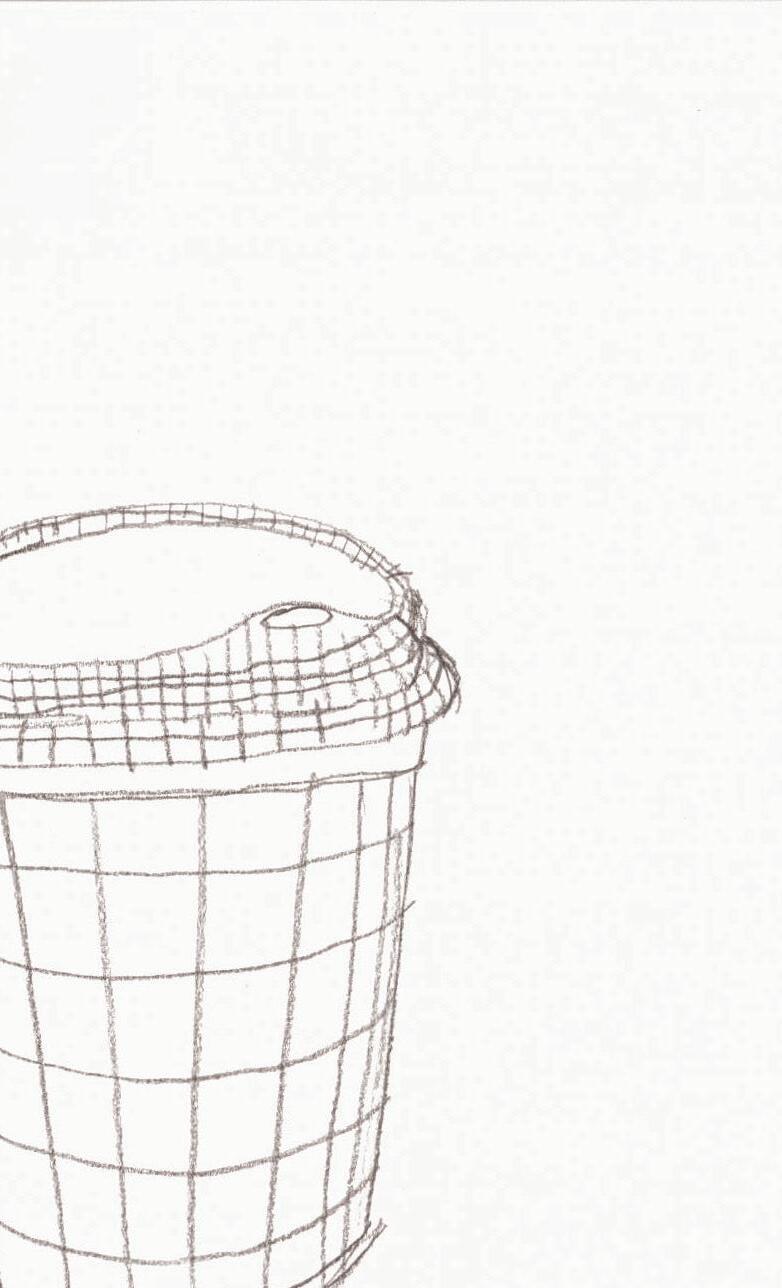
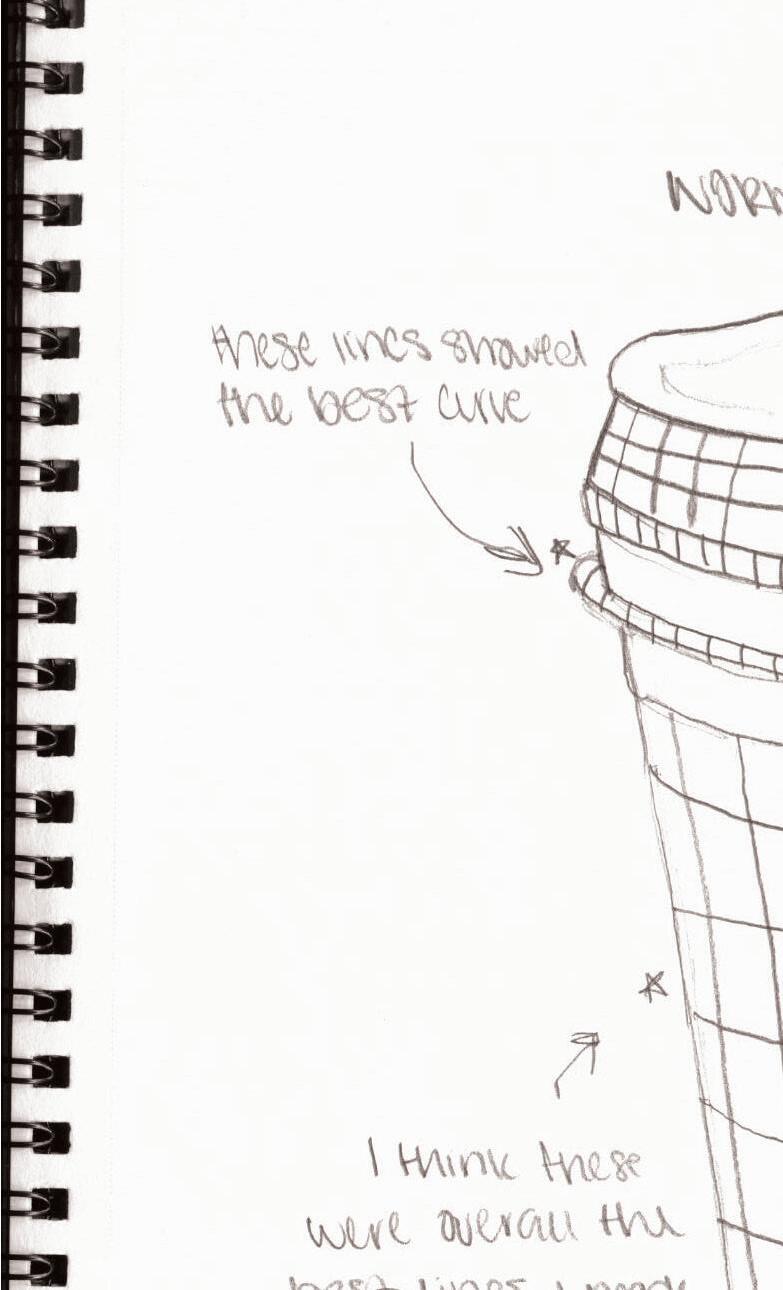
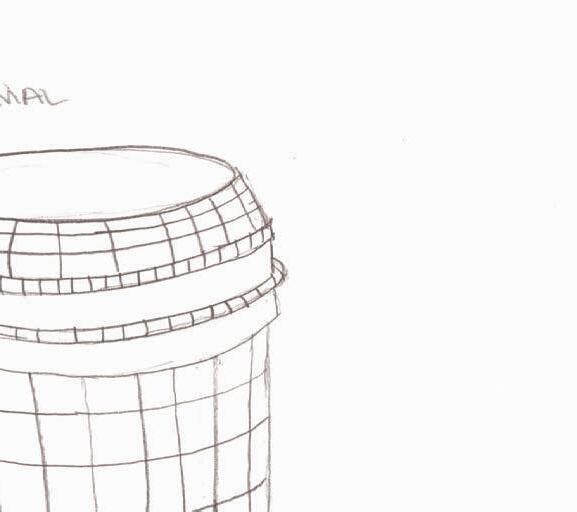
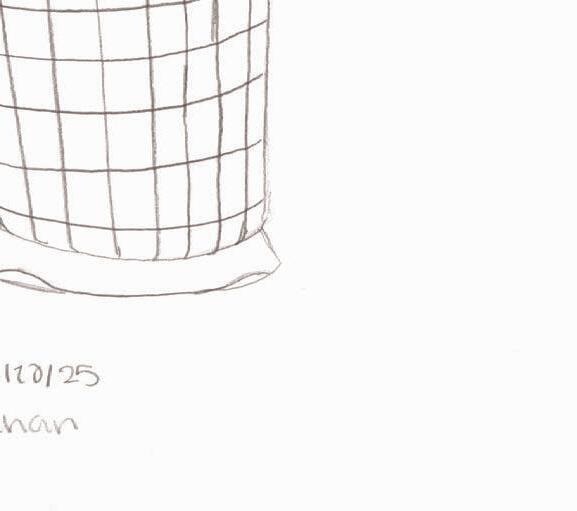
- Circle the ellipse or contour that most clearly shows volume The starbucks cup was the hardest shape to navigate.
Day #16: Volume Study: Cups, Jugs, Vases (Part 2)_In Class
- Highlight one section that best shows volume through line I think doing the fainter cross contour linesin the back of the drawing shows the general shape very well.
Day #16: Volume Study: Cups, Jugs, Vases (Part 2)_Homework
Day #17: Cross-Contour on Chair or Furniture_In Class
The bar in the back that is holding the back of the chair is the most accurate to me.
The seat part of the cushion felt the most accurate
The first drawing was the best because I drew the outline before the cross contour lines.
I made the surface rounder with more curved cross contour lines.
Day #19: Intro to Hatching: Light & Tonal Value_In Class
In the sphere at the bottom I did the best withhatching to portray lighting.
The hatching showed the empty containers the
Day #20: Hatching Exercise on Basic Forms_In Class
Day #21: Directional Hatching: Light Logic_In Class
Circle the area where light-to-dark transition feels most convincing
The light is coming from middle bottom of the page.
Circle the area where light-to-dark transition feels most convincing
The lighting was hitting front facing in this drawing.
The bottom of the can and where the can tapers down is most accurate because it defines the shape.
The corner of the room is shown very well because of the hatching being darker.
Carissa Hallett
Portfolio
What I learned...
Project #1 “Wall, Column, and Space”
- Working through walls, columns, and space in studio, I started seeing things differently. Walls weren’t just barriers, but shapers of the room, changing how you move and feel. Learning proportions was a big change, and using the 1/4 scale helped a ton. It made big ideas fit into my hands, so I could really get how everything sized up and fit together. I learned from this project how space and shapes really work and create a sense of space.
Project #2 “Hand Drawing”
- Through daily hand drawings, Ive learned so much by dividing into different techniques. Sketching taught me to quickly capture the essence of a subject, while cross contour exercises helped me understand form and volume. Blind contour forced me to really look and connect with what I was drawing, and hatching gave me control over shading and texture. Paying attention to proportions was also a big part in these daily drawings. It became second nature throughout these 5 weeks, ensuring my drawings felt balanced and accurate. Each method built upon the others, enhanced my observational skills and deepening my understanding of how to translate simple daily objects onto paper.
Project #3 “Drawing What you See, Drawing What you Feel”
- During this third project, has taught me the importance of observation and attention to detail. On the other hand, drawing what I feel has been about expressing emotions, letting go of realism. While doing this I was able to convey a deeper meaning. It has shown me that art can be powerful in different forms and its not all about perfection.
Project #4 “Space Cube”
- During this fourth project I learned a lot about not only about proportions but how to go simply from a series of photos to a structure. During this project I was able to express and step out of my comfort zone and using my imagination to build this series into a building itself. I was able to learn the importance of scaling everything correctly as well as making sure its functional. During this project I was also opened to how to do architectural drawings not only by hand, but through rhino digitally as well. Overall through this project I was able to learn how to take a series of photos and make them into a working construction, understanding perspective and space and making it go from just an idea to a 3D model.
Project #5 “First Portfolio”
- Creating my first architecture and interior design portfolio was journey of blending traditional skills as well as modern. I was able to explore AI’s potential by applying it our space cube models, pushing the boundaries of whats possible in design visualization. “Dancing Lines”, an abstract interpretation of our chosen model’s shadow, showcased my ability to see and represent designs. I also learned a lot of different softwares through linked in completing different certificates of different softwares such as rhino. These allowed me to open up to different technical skills and learning how to make my work and projects come together in the end.
If you could talk to you before these five weeks, what would you like to share with you?
- If I could talk to myself before these five weeks, I would tell myself that its worth it in the end. I would reassure that all the hard work and late nights staying up doing your work is worth it. I would also tell myself to not listen to the negativity and anyone telling you to take the easy way out; keep persevering. In the end I would like to share with myself is that I’m proud of her and the dedication she is to make her dream come true in this major, that not matter what she will be loved and have many supporters rooting for her.
Hand Drawing
Learning Objectives for Work #1. Dancing Lines
This exercise is designed to improve your manual dexterity in freehand drawing, and it introduces the opportunities for expressive pattern making that can result from precise and rule based geometric drawing strategies.
Learning Objectives for Work #2. My Window View
This exercise is designed to discover everyday life by recalling memories, writing, and drawing. Through the discovering process, students will gain an understanding of how various media can be converted to enhance depth of understanding.
Learning Objectives for Work #3. Color Relationship
The use of color in visual culture and design can achieve so many wonderful results. When color is used thoughtfully, it can alter our perception of spaces, instill emotion, direct attention, and even hide mistakes. Hue, Chroma (Saturation), and Value (Lightness) are the three components that define color.
Learning Objectives for Work #4. Outdoor Sketch
It is our objective that you become more familiar with a significant resource in Northwest Arkansas, be inspired by its contents and spatial elements, and devote energy to formally understanding, identifying, and applying Art Elements and Design Principles as a result of your visit to Illinois River Watershed Partnership.
Work #1. Dancing Lines (1/2)
Work #1. Dancing Lines (2/2)
Dancing Line Pattern (Hand)
Work #2. My Window View
My Window View is...
When looking out my window the first thing I can see is the outer frame of my window. The black dorm window frame felt cool and smooth to the touch, a solid barrier against the warm burning heat from the outside. The faint scent of old paint lingered near and a subtle reminder of years of students laughing and passing through the hall. Peering out the frame, making a distinct sound of kids walking around the dormitory, and cars passing by. As I look beyond my dorm frame, I can see a brick wall surprisingly close, its rough texture almost tangible. A faint, earthy smell drifted in, mingling with the perfumed air of the room. The distinct sound of cars bouncing off the wall. Each brick, a slightly different shade of beige, with chipped edges, and cracked surfaces. When looking beside the brick wall I see a white foundation surrounded by the wall with a railing, making its appearance as a balcony. The rough smell of old concrete passes through the dorm as I hear the silence of the dorm hallway. Looking through the dorm window, the grass field stretched out, a vibrant green canvas spread across the field. The sweet scent of freshly cut grass mingled with the earthy smell surrounding the nearby tree. The gentle rustling of leaves and distant chatter of students. A warm breeze swayed through the crevice of the window. The concrete pathway cut through the scene with its rough texture shaded with dark shades of gray.
What I noticed the following after I drew my window view...
After meticulously drawing my window view, I noticed details I had previously overlooked. The subtle variations in the bricks wall and different shades of color. I also noticed that after drawing my window I realized the subtle detail of how the light played differently casting long shadows. When drawing I’ve noticed how intricate I am with each feature, something I realized is how I don’t notice these little details when I go on in my everyday life. I also realized how the concrete path which is usually a blur from the dorm served as a critical part in my drawing. The act of drawing forced me to slow down and truly see, allowing me to become actively engaged and be aware of my surroundings. I really enjoyed this exercise, I was able to be a little more appreciated with what surrounds me, to enjoy the little things in life. I also learned about life experiences of knowing that no matter what I’m always going to be engaging with my sensory senses.
My Window View is...
Looking out my window allowed me to experience my sensory experiences, including feeling a warm breeze seeping through my window, to the scent of freshly cut grass, and gentle sounds. Paying closer attention allowed me to see the subtle details like variations in the brick, the rough texture in the grass, and changing in light shadows. In conclusion, as I completed this project I was able to look from a one-point perspective and take the subtle details and draw through the media of hatching. I got to learn that not everything has to be drawn specifically as it appears, it can be subtle lines that can create a piece of art.
Writing what you feel (see, smell, hear, etc.) Before, during, and following your drawing completion.
During the studio we were assigned to go on our own, choosing a place that resonated with us on a personal level. Whether that was a building or scenic area, however a place that we had memories and felt connected to. I went ahead and chose the architecture building and the surrounding environment around the architecture building. The reason I chose this building was because I was unfamiliar with any other area. I am currently a transfer at the architecture and interior design program in Arkansas. I chose the architecture building because I have the most memories here from my first day at studio, to now. I was able to make all my friends here and made very strong connections. I overall chose this studio building due to my endless nights here working to make amazing pieces.
I wanted to do abstract drawings of the building and the environment surrounding it. The initial approach involved capturing the strong lines and geometric forms of the building, focusing on angles, textures, and the change in light and shadow. However, the true challenge for me personally was to transform these concrete representations into something abstract. The process involved a series of just letting my hand flow and draw using my sensory experience such as touch, smell, hear, etc.
During this assignment we were told to choose a medium that we enjoyed or haven’t tried. I decided to go with charcoal as it seemed to be a messy medium that I haven’t experienced very well. I wanted to try something new, so I continued to use charcoal. I chose this specific medium to give that abstract representation allowing my hand to flow better compared to having colored pencils which are considered to have more control.
Before even setting my charcoal to the paper, the warm air wrapped around me. As I sat down on the warm concrete pathway with the smell of fresh air. The only sound was the whisper of wind through the trees. The architecture building stood there with its stone and wood blending seamlessly with the landscape. As the drawings began, the texture of the paper became tactile of the rough charcoal strokes which were deliberate, capturing the different shapes across the paper. The sound of scratching the charcoal filled the air as time seemed to dissolve as the building slowly emerged on the page.
While I was in the process of doing these 15 drawings, I realized how difficult it was to draw these abstract drawings of specific representations. I decided to use my sensory experiences for example when I would hear the bell ring on campus, I would make my strokes be darker and more of a rough texture. As I continued my drawings, I re-located myself multiple times to have a variety of different landscapes and perspectives of the architecture building. As I moved to my next spot I sat down in front of the chemistry building, as I felt the soft smooth surface of the footsteps placed in front of the building. As the wind blows through the air, I could feel the nice breeze flowing through my hair. I could smell the wood-like smell of charcoal brushing up as the dust on my page. As I see the view of the architecture building, I draw simple shapes like squares, rectangles, and triangles to add dimension to my sketches. I simply brush across my sketchpad shading, letting my hand flow with the page. I continue to draw as I hear orientation kids as well as students walking by talking and laughing.
My sketches at first weren’t as abstract as they simply were a little representation of the building, however as I continued doing these sketches, I began to let charcoal flow with no exact direction. This resulted in my work flowing better in the media of abstract.
I continued moving around switching my different perspectives, one of my spots was sitting on the fountain at the Fay Jones Architecture building. I glance around as I hear interior kids walking around with their sketch pads. I place myself onto a slab around the fountain. As I feel the sun torch me with the heat, as I sit down on the brick wall crisscrossed. I feel the refreshing water coming from the pond and freshly cut grass, as I sit next to a garden patch.
As the drawings progressed, the focus shifted to highlighting specific elements that resonated most deeply: the soaring lines of the beams, the interplay of light filtering through, and the rugged texture of the stone. The charcoal was smudged and layered, creating a sense of depth to invite the viewer to engage. Over time, the abstract representation transformed from a chaotic jumble of marks into an expression and abstraction of the building. The final touches involved subtle refinement, adding hints of detail. I continued to my final spot behind the architecture building in a patch of mulch and grass beside a tree. I could feel the rough a sharp piece of bark and mulch as they rubbed against my legs and the strong smell of dirt and earthly smells surrounding me. I could hear the quiet chatter coming from kids with their families and students as they walked back and forth down the rough concrete. I gather myself drawing the architecture building pressing hard into my paper to add texture.
In conclusion, the abstract charcoal drawing of Fay Jones’ Architecture building was more than just a visual exercise. By embracing abstraction, the artwork took a new transformation offering a unique representation of the building. I enjoyed the freeness of the project, allowing us to freely draw without having to follow guidelines and making it look exactly like the representation. However, I struggled as I am someone who likes to follow a representation exactly, and getting comfort being free with your artwork. Driving into abstract art every now and then is like giving my brain a break. Instead of always trying to make things look exactly “right” I can be a little freer. I get to mess around with colors, shapes, and textures, and just let whatever inside me come out without stressing about perfection. It’s super freeing and helps me see things differently from a different perspective.
Drawing What you See, Drawing What you Feel
Crystal Bridges
In my Interior Architecture class, we visited Crystal Bridges on June 9th, 2025. While we were at Crystal Bridges are assignment was to walk around the museum looking at the different pieces of art. While roaming around, we were supposed to choose a piece of artwork that spoke to us on a personal level and replicate it into our sketchbooks. While walking around Crystal Bridges, I sought a piece of art that truly resonated with me, leading me to Thomas Cole’s “The Good Shepherd.” This 1848 painting not only captivated me with its elegant and beauty but also evoked a profound sense of piece and guidance resonating with me religiously. This painting was oil on canvas medium which captivated my attention with its delicate brush strokes and intricate details. Thomas Cole’s painting shows a peaceful scene of a shepherd caring for his sheep in a beautiful field, the shift in lighting adds to the serene mood. The shepherd is like a kind protector, watching over his sheep. With green hills and a clear stream, the scene feels like a perfect place. I picked “The Good Shepherd” because it reminded me of my faith. The shepherd caring for his sheep is like a symbol of faith, love and guidance. The scene makes me feel calm and reminds me of the comfort I get from my own personal beliefs. The painting’s message of kindness and connection to nature fits with what I believe, making it a special piece that connects with me personally. The real reason overall, for the choice in this painting was when I viewed it I felt a sense of freedom. The gentle guidance of the shepherd and the serene landscape captivated me creating an atmosphere of safety and peace. Compared to how our lives are today, which are considered stressful and chaotic, looking at this artwork almost lifted a burden off, and allowing me to just wonder when visualizing this painting.
In my next piece of art I was supposed to choose a landscape that resonated with me in the same way as the painting. I chose to capture a scene in Crystal Bridges cafeteria that featured a pond surrounded by tress and a small bridge in the background because it evoked similar emotions and associations as “The Good Shepherd” painting. When I was viewing this landscape, I felt a sense of peace and calmness just enjoying the breathtaking view of nature. Like the painting, the scene exudes a sense of harmony with nature. The pond, reflecting the surrounding trees, creates a peaceful atmosphere. The little bridge in the background adds a touch of human presence within the natural setting, like the shepherd painting. Both the painting and the captured landscape connected with me in the feelings of calmness, protection, and a gentle connection between humanity and nature, providing a comforting and uplifting experience. I incorporated the singular piece of artwork and the landscape into my sketch. My senses-smell, hearing, sight, and touch helped me sketch “The Good Shepherd” and the landscape. Smells grounded me, sounds filled the silence, visuals shaped the scene, and touch connected me to the earth and that specific moment in time. Altogether, they helped me capture the feeling of the place on paper.
Careful drawing of the space : A “traditional” perspectival, eye-level drawing of a space (indoors or outdoors*) that you encounter at the museum, and that provokes a strong emotion and association (scan your 11x17 and upload as a JPEG, TIFF, or PNG file).
Ava Harrington Portfolio
What I learned...
Project #1 “Wall, Column, and Space”
- During our first project, “Wall, Column, and Space”, I learned the importance of patience as well as the importance of speed and time management. We had a week to make 59 scenes cut and assembled out of foam core. This was definitely a shell shock for me going into this project the first week, but I believe it set me up for success for the rest of the projects moving forward.
Project #2 “Hand Drawing”
- “Hand Drawing” taught me to be tedious and technical when sketching. It can sometimes feel passive and simple while drawing, although through this project I learned that it is quit the opposite. Sketching is intricate and detailed, when simply one wrong angle can throw off the entire piece. While it can be relaxing and passive at certain times, it also requires great concentration when drawing from pure observation in front of you.
Project #3 “Drawing What you See, Drawing What you Feel”
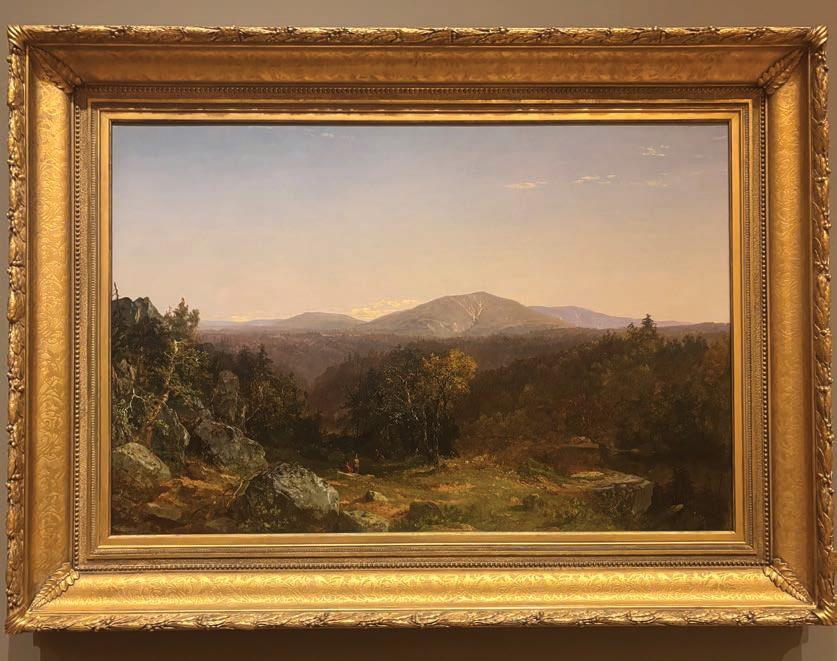
- This project took place on location at Crystal Bridges Museum of American Art in Bentonville, Arkansas. We were assigned to find a painting in the musem that we resonated with and sit in front of it to observe and sketch it. I chose the landscape “View of Mount Washington” by John Fredrick Kensett. As I sat in front of the painting to sketch, I learned how to blend in within a setting and be connected with the piece. For a few short hours I was in that painting, seeing the land in front of me, feeling the air around me, and understanding the intentions of the piece. This I have learned is an extremely critical piece for success while drawing from observation.
Project #4 “Space Cube”
- During the “Space Cube” project I learned that it is important to explore all options and ideas during the design process. I also learned that it is important to review and assess your own work in order to make revisions. Throughout the project we made many new iterations of our space cubes, changing different aspects of the cube each time in order to get the final product to perfection. While of course an artists job is never done and there will ways be more changes to be made, this process of revision and experimentation is extremely important as a designer. We must remember to never settle with our first ideas as the process of designing is trial and error, observation of our work, gaining inspiration, and making revisions.
Project #5 “First Portfolio”
- The “First Portfolio” project was an entirely new experience to me. I found it really fun and exciting making a collection of all the work I have completed and accomplished in just five weeks. Although, this project taught me that time is your most frugal resources. Time is not something that can be gained when you are on a deadline. To be organized in managing the completion of projects and your own personal timeline can be one of the most important skills a designer can have.
Overall
- Overall, I have learned the importance of teamwork, hardwork, perserverance, time management, organization, and much more. While my journey over the five weeks of this program wasn’t easy, it was definitely worth it because of the immense amount of design and life skills I learned. The things I learned over this course could never be replicated in any other way, in both the projects we are assigned and the completion of them, as well as the conditions we work in. I can confidently say I have gained extremely positive personal growth over the 5 weeks of this program and know I am even closer to reaching my goals in the future.
If you could talk to you before these five weeks, what would you like to share with you?
- If I could talk to myself before the five week course I would tell her that she has no idea what is heading her way. It is going to be a lot of hard work, dedication, and long days. Although, I would also tell her that she is exactly where she is meant to be. She is going to step foot through the doors of The Fay Jones School on day one and feel reasurrance in knowing that she absolutely made the right decision in being here.
Hand Drawing
Learning Objectives for Work #1. Dancing Lines
This exercise is designed to improve your manual dexterity in freehand drawing, and it introduces the opportunities for expressive pattern making that can result from precise and rule based geometric drawing strategies.
Learning Objectives for Work #2. My Window View
This exercise is designed to discover everyday life by recalling memories, writing, and drawing. Through the discovering process, students will gain an understanding of how various media can be converted to enhance depth of understanding.
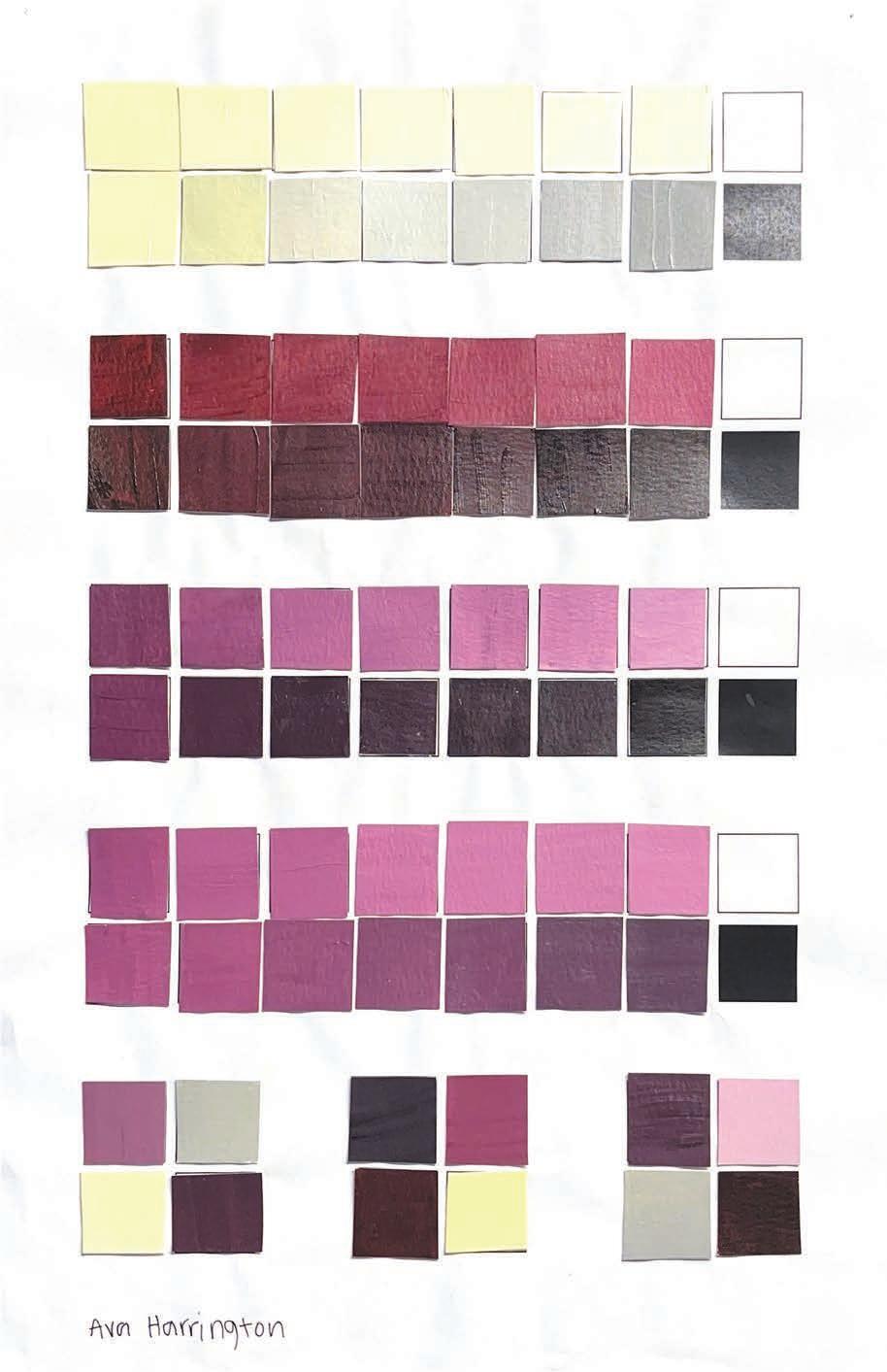
Learning Objectives for Work #3. Color Relationship
The use of color in visual culture and design can achieve so many wonderful results. When color is used thoughtfully, it can alter our perception of spaces, instill emotion, direct attention, and even hide mistakes. Hue, Chroma (Saturation), and Value (Lightness) are the three components that define color.
Learning Objectives for Work #4. Outdoor Sketch
It is our objective that you become more familiar with a significant resource in Northwest Arkansas, be inspired by its contents and spatial elements, and devote energy to formally understanding, identifying, and applying Art Elements and Design Principles as a result of your visit to Illinois River Watershed Partnership.
Work
My Window View
My Window View is...
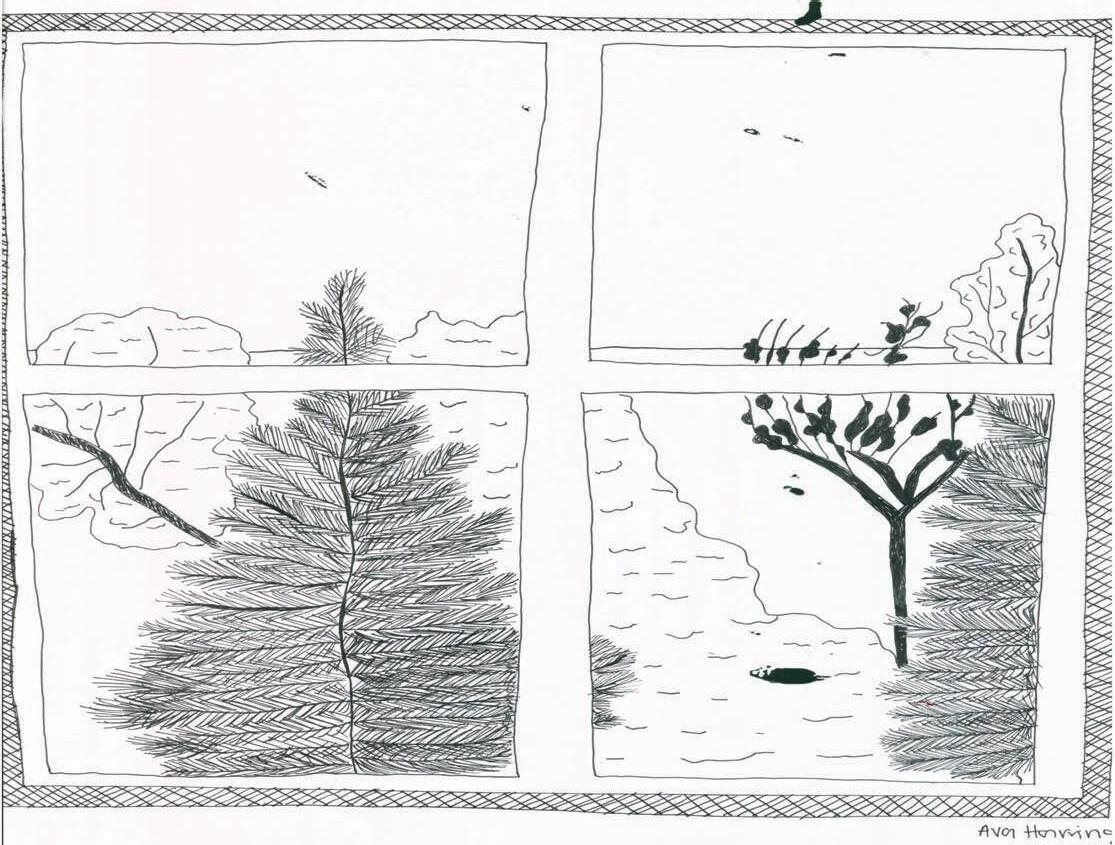
The window in my room is the first thin you see when you walk in. It is directly in front of the door, and my bed, showing a large beautiful view. My apartment sits on top of a large hill, so my view includes lots of trees and skyline. I feel peace looking outside my window. Nature for me has always done this and the view makes me feel like I am sitting directly in it. I hear birds chirping and wind rustling leaves on the trees. I smell fresh mountain air and feel the sun beating down on me.
What I noticed the following after I drew my window view...
After drawing, I am more aware of my surroundings. I get caught up in life sometimes I forget to “stop and smell the roses”. In other words, I forget that I am living in a beautiful avenue for natural adventures. Arkansas alone is a wonderful place to get outside and enjoy nature, while even just right outside my window I can experience it. I now see more clearly the beautiful trees that inhabit my backyard, as well as the beautiful sky view above them.
My Window View is...
I now feel at peace in my room. I often come home and get right to work on remaining homework, not even allowing my bed to be a pure state of relaxation. Through my window, I gain that sense of peace and relaxation. It feels pure and fruitful outside it, motivating me to be productive and calm.
Work #4. Outdoor Sketch
Writing what you feel (see, smell, hear, etc.) before, during, and following your drawing completion... The scene I chose to sit in to draw today was the Union Square. Specifically, I was intrigued by Mullins library which sits on the opposite side of the square from the Union. What drew me to the library initially were the beautiful flowers and greenery lining the outside of the building. Not only do I think Mullins and the square is a pretty space, but I also resonate with it as I have many fond memories in the library. While one may overlook the library as being anything other than a space for studying, I absolutely love our library. Even before the recent renovations, I went to the library almost everyday with my friends. We not only were able to motivate each other to study and get work done but also able to share times of laughter and lightheartedness. I think there can be so much beauty in a space as such. While a space will always have its intended purpose, there is beauty and magic in rerouting a space to be one that suits your needs and joy. The library of course was not built for the purpose of laughing and chatting with friends, although I think in times of stress and studying in a space this comfortable aspect of joy is absolutely crucial. The square also has a joyous significance for me as well. While it may not have a lot going on objectively, it is a symbol of greeting and seeing friends, connecting with others on campus, it is a central hub for the hustle and bustle of campus life. When walking to class throughout the school day, you are most likely to walk through the square at least once on your way. It shows beauty in the many directions it can take you. From the square, you can be led in any direction of campus through its many different paths. I find joy in the curiosity of seeing everyone walking to class on their own path, their own mission. The square, to me, is what is able to provide the excitement in that.
In each drawing, I captured a different view and feeling of the space. While some are more direct in showing the actual building or landscape in front of me, others are more representational of an emotion or feeling I had in the moment of sitting there. The media I chose to use was charcoal pastels. I have used these many times in my life so it wasn’t a new media for me. Although, the heat of the day certainly made it a new experience with them. It was so hot that the pastels were melting and becoming extremely soft, making it difficult to accurately draw with them. Nevertheless, the first drawing I did was inspired by Mullins, a simple outline of the greenery and trees surrounding the building. This is what drew me to work in this space originally so it only felt right to start there. I then zoomed in closer on my point of view and focused on the individual aspects of the flower bed by taking a few drawings to highlight the individual types of flowers included. After recognizing the visual objects I could see, I focused in on what I was personally feeling in the space. The heat was really starting to get to me at this point and make me uncomfortable. I was sweating a lot and could feel myself burning. I translated that into my art pieces as I drew a few that symbolized the sun, heat, and my unfortunate sweating. While sitting in the strong heat, my phone overheated and stopped the music I was listening to. This was a blessing in disguise as then I was able to hear the beautiful fountain flowing behind me. I drew a picture of the fountain to symbolize what I was hearing in that moment. I then felt a nice breeze come through, settling my discomfort from the heat for a few moments. I made another drawing to symbolize the wind I was feeling, a moment of ease and joy for me.
Overall, I truly was inspired by taking time to recognize the beauty of the nature and landscapes “right in our backyard”. Despite the unbearable heat of the day, I still always enjoy spending time in nature and appreciating the pureness it has to offer. I did also find it extremely important to spending this time drawing independently, in an effort to capture my true and raw emotions evoked from the space. Each and every piece I created was intentional and truly a work spawned from independent decisions. While I believe I unintentionally took this project in a different direction than my peers, I can confidently say I am happy with the journey this project took me on. I explored nature independently, found what spoke to me, and went on a mental journey within the space of what I was seeing, feeling, hearing, and experiencing. While the heat and blinding sun were both obstacles during the process of my experience drawing, it allowed me to draw inspiration from those aspects which were making me uncomfortable. I think that is something worth recognizing, why a space may be making you feel uncomfortable and how might you feel in that space if the aspects of discomfort weren’t present? It goes to show there was great intention in picking that space to draw in, if those uncomfortable aspects were worth working through in order to capture that particular space. Our large campus has so much nature to offer, yet despite the blinding sun shining directly down on me, I still felt extremely compelled to spend time in the Union Square appreciating our beautiful Mullins library.
Drawing What you See, Drawing What you Feel
The painting I sketched, “View of Mount Washington”, depicts a landscape view of untouched land. This represents the myth of America being a land of pure rugged wilderness. It takes place during a time of European settlement and shows the beauty of the land as a pre-settlement scene, representing Indigenous figures in the foreground. This piece gave me feelings of openness and opportunity. It shows so much land and grounds for roaming, so many possibilities and so much to discover. It brings out a sense of hope and motivation in me. I have a deep love for nature and exploring the outside world we are blessed with, it is inspiring to see a piece of this nature depicted so purely and beautiful. It provides a sense of clarity and hope that we will forever be able to appreciate and experience our pure land. One of my favorite activities is visiting national parks. While we no longer have unclaimed land in America necessarily, National Parks provide this vision of pure, unclaimed land that we must forever cherish. Other than the nature aspect of the piece, it can also be a representation of option and opportunity. The open concept of the mountains, trees, and grassland stirs a certain element of exploration. Just from observing the painting for a few short hours I have an urge to explore all the options and possibilities my life has to offer. This painting serves a deeper purpose than a beautiful landscape, it is a representation of freedom, choice, and curiosity. It shows that our wonderful land and world have so much to offer, no one should ever feel stuck or put in a box.
The space that resonated with me in having similar feelings and qualities of the painting was a hallway in the lobby of Crystal Bridges Art Museum. From simply standing in the lobby thinking about my next move, this space stood out to me. Its long winding hallway screams exploration and opportunity. From this photo and sketch, you can’t see what is on the other side of the hallway, while it strongly evokes a feeling of wanting to explore and find out. This is also representative of life. Sometimes you don’t know where a path in life is going to take you, and in that is extreme beauty. It is certainly acceptable to not know your next move or choice, I would even go as far as to say it is a positive thing in being curious and uncertain of this. Without exploration and experimentation in life, you will never experience change. Change is essential to living life and encouraged amongst many. Without ever stepping outside your comfort zone and finding new spaces to explore or choices to be made, there can be no room for growth.
Through these two depictions and points of view I found the beauty in exploration and uncertainty. Life can be scary when you don’t know what is out there or coming next for you, although there can also be great excitement in this and all the possibilities our world has to offer. It is up to the viewer to dig deep and find feelings of acceptance and security in the vast land in front of them.
Marilynn Penfield Portfolio
Project #1 “Wall, Column, and Space”
- “Wall, Column, and Space” introduced me to the concept of surface movement and the impact the mvoement has on the viewer. Throughout the 59 categories, I was able to understand the effect shadows, obstructions, and angles had on the space and on the user. The paragraphs after each category also helped me to learn how to express these findings in word form. For this project, I also learned a lot about patience with myself and with the material I was using. This was my first experience with building since the sixth grade so the learning curve was very steep for me.
Project #2 “Hand Drawing”
- This project was by far the most difficult for me because I did not really know how to draw in the way I was being asked to. I have always been a doodler but never a sketcher so this exercise was very daunting to me. Looking back on my first sketches, I can see how much I have improved. I think that the biggest improvement is that I am more confident in myself and it translates to cleaner lines. I have learned the effects of contour, hatching, line weight, and singular lines versus multiple lines. All of these learnings have made me a better and more confident sketcher.
Project #3 “Drawing What you See, Drawing What you Feel”
- This project gave me some challenges because I really wanted to make my work as similar to the reference as possible. In the “Outdoor Sketches” assignment, this perfectionist barrier was finally broken and I was able to draw what I felt. I realized that I was much better at sketching what I saw and explaining in words how I felt rather than sketching what I felt from the start. While I still have a long way to go with this concept, I know that I am capable of drawing my feelings and experiences.
Project #4 “Space Cube”
- The project helped me to understand movement through a space as well as how to arrange surfaces in a space to make the most sense to the viewer. After several iterations, I came up with a sequence that I am happy to say I am proud of. The project also taught me that thinking before acting is so important when designing. Before glueing anything down, I always arranged it first, and edited as I needed. It was not until the entire sequence was laid out that I finally started making things permanent.
Project #5 “First Portfolio”
- For this project, I practiced and mastered using the InDesign Program. I was able to learn how to arrange different projects together in order to make it flow nicely. I was also able to learn how to edit images and rearrange textboxes in order to fully display my work.
Overall
- Overall, I feel as though I am in a completely different place than I was before summer studio started. Not only am I more confident in myself and my work, but I also feel more caught up to the fall and spring studio students. I know so much more about spaces, what effects a space, colors, and drawing. While my work is not perfect, I feel as though the process has taught me so much that I will be able to use to create near-perfect projects in the future.
If you could talk to you before these five weeks, what would you like to share with you?
- I would probably tell myself that perfection is impossible but effort is everything. So far, summer studio has taught me that the outcome is not everything and that the real value comes with the learning process. I would tell pre-studio, perfectionist self to relax and give myself some grace. This is a steep learning process and you are doing your best! You best is all that matters!
Hand Drawing
Learning Objectives for Work #1. Dancing Lines
This exercise is designed to improve your manual dexterity in freehand drawing, and it introduces the opportunities for expressive pattern making that can result from precise and rule based geometric drawing strategies.
Learning Objectives for Work #2. My Window View
This exercise is designed to discover everyday life by recalling memories, writing, and drawing. Through the discovering process, students will gain an understanding of how various media can be converted to enhance depth of understanding.
Learning Objectives for Work #3. Color Relationship
The use of color in visual culture and design can achieve so many wonderful results. When color is used thoughtfully, it can alter our perception of spaces, instill emotion, direct attention, and even hide mistakes. Hue, Chroma (Saturation), and Value (Lightness) are the three components that define color.
Learning Objectives for Work #4. Outdoor Sketch
It is our objective that you become more familiar with a significant resource in Northwest Arkansas, be inspired by its contents and spatial elements, and devote energy to formally understanding, identifying, and applying Art Elements and Design Principles as a result of your visit to Illinois River Watershed Partnership.
Dancing Line Pattern (Hand)
My Window View is...
My window overlooks the property of City Park, a popular outdoor restaurant where people of all ages attend. I can see cars pulling into spots and people walking in and out of the restaurant, many of them have a dog merrily leading the way. Depending on the night, I hear the movie being played for Movie Night or I can see young baseball players running around on the gravel area. I can also hear people talking with friends and family in the parking lot. When the window is open, I can smell Mexican-inspired food and on Fridays and Saturdays I can smell the barbeque they smoke.
What I noticed the following after I drew my window view...
While drawing my view, I noticed the colors of the building more than I had before. I realized how well the building colors went with the greenery around the property and how the contrast between the colors and the mulch made the building look cleaner than it probably was. I would say the biggest detail that stood out to me was the support beams holding the roof up. I was completely unaware these existed before drawing this scene even though they were in plain sight.
My Window View is...
As I write this last observation paragraph, I am sitting down, looking out the window. I see people getting out of their cars and greeting friends they have not seen in a long time. These same people stand in a circle and catch up before walking into the covered restaurant area. I see a child walking hand-in-hand with her mom across the parking lot towards the entrance. I hear laughs and exclamations as people enjoy their Sunday night, and I smell Tex-Mex, specifically freshly fried tortilla chips.
Work #4. Outdoor Sketch
Writing what you feel (see, smell, hear, etc.) before, during, and following your drawing completion... For these sketches, I primarily used charcoal, a medium I had never used before, and I completed one sketch using acrylic brush markers. At first, I was seated out in front of the CORD, trying to sketch what I felt but realized the feelings I had there did not compare to the feelings I had at another location on campus. Ultimately, the Delta Delta Delta sorority house was my place of choice for this assignment. I placed my towel on the front lawn and sat down to really observe my surroundings.
My first two sketches were based off of observations rather than my feelings, however these observations evoked emotion in me. My first sketch with the charcoal was of the entrance to the Tri Delta house from the first angle I was positioned at. At this point in the activity, it was my first instinct to replicate the concepts from the daily drawing lessons. I made sure to focus on the shadows of the space rather than make it an abstraction. My second sketch was similar to the first in the fact that it depicted the entrance of the house. For this drawing, I focused more on individual details rather than shadows and expanded the area in which I drew. While the entrance to the house is an observation, it reminds me of the times I went through that entrance during recruitment week. I also drew an image of the flowers I saw in the front flowerbeds that had bees buzzing from flower to flower. While, again, this is an observation, it was symbolic to me. I saw the interaction between the bees and the flowers as something authentic and peaceful, something I have found in the Delta Delta Delta sisterhood.
As I got more comfortable with using charcoal, I began to experiment with my sketches. My first sketch that conveyed my feelings and emotions was a drawing of a bunch of squiggly lines that eventually even out into a mostly straight line. I had another sketch that shows an abrupt start of a height gradient that eventually evens out but never completely goes away. Both of these sketches relate back to recruitment week when everything was busy and confusing until Bid Day when I found out I was officially a Tri Delt. While it is not the same idea exactly, the fourteenth outdoor sketch I did was similar to the other sketches I just mentioned. There is a circle completely open and untouched in the center of a messy array of lines and squiggles. While I drew this, I thought about the escape my sorority and sorority house give me from the harsh realities college sometimes throws at me. When I walk into the house, everything becomes much quieter, and I am able to find peace in my chaotic life.
The huge tree I drew symbolizes the age and strength of this sorority, and the roots below the ground symbolize the connections between people that go back to one central source. Similarly, the sketch of circles covering the page, with two circles colored on opposite sides of the page symbolize this connection I have with others. I wanted to show that no matter who you know or in what area of the sorority you are connected to, somehow you have a connection to everyone.
As I continued to sketch, I started to think about the philanthropic side of sorority life. I was heavily involved in raising money to donate to St. Jude’s Children’s Hospital and wanted to be able to portray that on paper. This is what helped me develop my idea for the huge fire that takes up the majority of my page. I wanted it to resemble a burning passion to help those in need.
After this point, I can really see a change in the sketches, specifically in the area of abstraction. This is around the time when I started drawing with a stick I found nearby. For some reason I keep going back to drawing flowers when I think of Tri Delt which is exactly what I drew with the stick. This was a more difficult sketch because I felt limited in my abilities, and the stick was less saturated with color than anything else I have ever used.
For the first time, I tried sketching a sound, specifically one that I hear frequently when I am in the sorority house. I tried to draw laughter and excitement in the form of exclamation points. I did varying sizes of these exclamations to stand for the different reasons to be happy and excited in Tri Delta.
The sketch I was most proud of was the sketch of the pansies weathering a storm. It symbolized the sisterhood I take part in at Tri Delta – while the pansey is a small and delicate flower, it can withstand any storm when it is with other pansies. I think of myself as the pansey standing tall and strong together with my sorority sisters, able to take on whatever hardship comes my way. I also felt like I correctly used the charcoal in this sketch.
My final sketch was the sketch where I tried experimenting with the acrylic brush markers. When I was finally becoming comfortable with the charcoal, I decided it was time to move on to another medium. For this sketch, I wanted to depict the diversity we have within the sorority house. There are so many different types of girls in the sisterhood, coming from all different types of backgrounds, experiences, and families. However, despite all of these differences, we are connected. By using all different shades of blue in all different types of lines, I wanted to show that while there were differences, they are all connected by being blue.
While this assignment was more difficult for me than I originally anticipated, I appreciated that it encouraged me to step out of my comfort zone. I am not pleased with all of my drawings because they do not look like anything I have ever done before, but I am very proud of my progress and immersion in the abstract process.
Drawing What you See, Drawing What you Feel
After walking around the available galleries several times, I decided that Airborn, created by Morris Louis in 1959, was the artwork that spoke to me the most. Somehow, I had missed it during my first pursual, but when the painting caught my eye, I had a physical reaction. Not only did my curiosity pique, but I did a double-take and then backed up to get a better view of the large ten-foot by ten-foot canvas. This acrylic paint-based artwork stood out perfectly against the dark blue wall behind it. The dark blue wall seemed to have more of an impact on the colors in the painting due to the white canvas surrounding the drawing. Rather than overpowering the colors and shapes, the dark blue background wall added to the vibrancy. The acrylic paint was done in broad sweeping motions that overlapped onto other strokes, creating more colors than originally used. Around the exterior of each stroke of paint was a pale ring, almost as though the colors bled through. The painting itself is up to interpretation, but I immediately saw a bird. The image took me back to when I studied birds in Virginia with my aunt, who is an ornithology professor at Virginia Commonwealth University. The summer I studied these beautiful creatures was the same summer I got my driver’s license and flew on an airplane for the first time by myself. After sitting with the painting and my memories, I realized that the strokes symbolize growth accomplished, and the faded area encircling each stroke symbolizes growth to come. The summer I studied birds was the summer I really began to grow up, and this painting perfectly portrays this. After finishing my drawing of the painting, I walked through the rest of the museum to go outside. I took my time walking through the paths and along the waterways, searching for a scene that spoke to me. Eventually, I found a space that reminded me of the hikes I took in Virginia while looking for and banding birds. While the hikes were difficult, they were so rewarding, just like gaining independence and confidence. The scene depicts an abundance of flowers and trees growing along a small body of water. Just like the painting, there is a constant overlapping of leaves, petals, and branches to make an assortment of different combinations and colors. There are rocks lining the water’s edge, and different types of grasses spring up randomly amongst the foliage. Everything is a vibrant green and full of life. I felt similar while on my trip to Virginia, full of enthusiasm and curiosity. Overall, however, the metaphor that stood out to me most was the scene as a whole. Around me, there are all of these mature plants, while I am just getting started on my journey. I think of it as I am entering into this grown and mature world as someone who has little experience. Similar to the painting, this nature scene shows me that I have so much room to grow and develop into the person I want to become.
A short description of the association and emotion that twins these two together (nominally 500 words) to include:
The “factual facts” such as the name, date, title, and summary of the art-piece, and the content and basic-character of the indoor or outdoor space (rough size, materials, uses, defining objects, etc.)
The “actual facts” of your interpretations of the artwork and the space, and what it is about these two things that give you a similar sense, emotion, or association.
Jasmine Sukhija Portfolio
What I learned...
Project #1 “Wall, Column, and Space”
- These 59 categories gave a glance at how the space relative to the human figure had an impact on their perspective in the space. It also gave an idea of spacial awareness, how certain walls and collumns can change the space. Also, how these are placed can open or close off parts of the room.
Project #2 “Hand Drawing”
- Hand drawing brought out much more creativity with the way we can draw everyday items. From cross-contouring to blind contour, these effectively allowed me to learn more detailed characteristics about drawing and improved my skills to sketch easier.
Project #3 “Drawing What you See, Drawing What you Feel”
- Taking a day trip to crystal bridges allowed me to see a new space and what all there is to draw. After picking two places that felt the most emotional to me, I was able to slowly and carefully sketch the surroundings using my hand to eye coordnation. The outcome was amazing and truly revealed my vision through the careful drawings.
Project #4 “Space Cube”
- The space cube was a new design perspective that allowed me to build up my previous work to a final product. After carefully figuring out the best layout, I was able to build a 9X9 cube of my sequences, which brought a lot of careful planning. This project opened my eyes to many possibilites from a sequence, and improved my design skills in a new area I had never previously worked in.
Project #5 “First Portfolio”
- This project allowed the use of AI to transform our spaces in the space cube model to an almost life-like view. The outcomes were helpful because it gave new perspectives to how our spaces can be used in real life. Also, this gave ideas that may have never been thought of previously, regarding how we put every room characteristic in a new space.
Overall
- All 5 projects expanded my horizons in the design world, beginning to work on new projects in ways I never previously had. Also, there were obstacles I learned to overcome myself, and even more work I had ever done in a short time. I enjoyed how all projects corrolated with one another to give the best outcome. After the 5 weeks of hard work, I was able to use my skills to create this portfolio that not only shows my growth but the dedication, experimentation, and the final vision formulated along the way.
If you could talk to you before these five weeks, what would you like to share with you?
- There are so much more possibilities in the design world than ever imagined. Using new techniques such as cutting, building, color thinking, and so many digital skills, I have many new ways of showcasing my work. There is so much learning you will do, but keep pushing because displaying your work at the end is rewarding. Especially being able to see all you have done from the beginning to now, there is a deep sense of accomplishment. Every challenge, late night, and creative risk is all worth it when you look back and realize how far you’ve come. So don’t be afraid to try new things out of your comfort zone and skill set, take the harder path, and trust your creative insticts.
Hand Drawing
Learning Objectives for Work #1. Dancing Lines
This exercise is designed to improve your manual dexterity in freehand drawing, and it introduces the opportunities for expressive pattern making that can result from precise and rule based geometric drawing strategies.
Learning Objectives for Work #2. My Window View
This exercise is designed to discover everyday life by recalling memories, writing, and drawing. Through the discovering process, students will gain an understanding of how various media can be converted to enhance depth of understanding.
Learning Objectives for Work #3. Color Relationship
The use of color in visual culture and design can achieve so many wonderful results. When color is used thoughtfully, it can alter our perception of spaces, instill emotion, direct attention, and even hide mistakes. Hue, Chroma (Saturation), and Value (Lightness) are the three components that define color.
Learning Objectives for Work #4. Outdoor Sketch
It is our objective that you become more familiar with a significant resource in Northwest Arkansas, be inspired by its contents and spatial elements, and devote energy to formally understanding, identifying, and applying Art Elements and Design Principles as a result of your visit to Illinois River Watershed Partnership.
Work #1. Dancing Lines (2/2)
Dancing Line Pattern (Hand)
Dancing Line Pattern (Digital)
My Window View is...
My window view includes the pool and the reminder of the sound of rain splashing in, even with the people jumping in. The outside always has certain sounds that reflect the water. The smell of my room seems plain, as I am never sensing anything because I am so used to the smell. I see sunlight from my room or the lights from the pool shining through the blinds at nighttime.
What I noticed the following after I drew my window view...
I noticed many elements that make up the walls across the way from my window and how they are uniquely sectioned depending on where the room is. The fences are simple and are easier to see in detail compared to when I saw them for the first time. There is tiling in the pool that I never noticed the colors and size of, with the lounge chairs that are all fixed to the height the last person left it on. The apartment background is a completely different appearance than being at home, so you can start to see how different the views are. Furthermore, this assignment opened my eyes to the different architectural details in different spaces.
My Window View is...
When I look through my window, I notice how much more there is to my view. The smell of the chlorine as someone jumps into the pool, the loud drips of rain splashing on the pool surface, and the mumbles of the voices of others as they hang out by the pool. There are so many characteristics of my view that stood out to me after the drawing, and truly makes this new perspective feel more like home.
Nature is beautiful to be around, and sketching abstractions outside can truly bring a new view of the scenery. Being around the hall for a long period made me realize how it stops in time and allows the hustling to be non-existent for a moment. Looking into the tiny details allows you to notice more closely what all nature has to offer but also has many small details that are usually just brushed by on a normal basis. Furthermore, this assignment gave so much insight into a new interpretation of the area when making it more abstract.
I sketched around the geology building which speaks to me personally because of the memories I built up there the first semester. The walk was gorgeous, and I always stopped to notice how much the building felt to me compared to the rest. The rocks up front are truly unique, and the use of the pathways is perfectly put together, which shows a simple but sensible set up. Also, the memory of identifying the rocks out there first semester gave a sense of comfort and knowledge of what I am abstractly sketching across the fifteen pages. There was also a different feeling about this building when I went in the fall, the leaves were almost perfectly placed and the colors blended in with the building so well. This area has so many trees and different plants surrounding it, which gave me many ideas when starting my sketches. I started on the bench and then slowly moved around to the other side, noticing many more details as I went along.
The sketches were very diverse when beginning, I brought different supplies so I knew this could give me many ways to start my abstractions. This already felt very different to me, especially with the new idea of doing abstract art off of the area. Right off the bat I noticed the leaves on the trees and how they were different colors based on the tree and if the sun was hitting half of them, it would give a different shade of green. The grass was spotty as the trees’ shades were covering the growth of it. Also, attention to the different details of the gravel and leaves scattered across the floor helped give ideas on the abstractions. The use of charcoal gave a bold meaning to the pieces and truly darkened the way the art looked from before. The charcoal also came in handy when it was a area I wanted to keep much muter, blending with my hands for the best result. The oil pastels also worked similarly when it came to blending; this helped with new techniques as I went along. These pieces of art had more differences with the use of the tools I brought along.
This area connects to me emotionally because it has always felt calm and a place to put all my thoughts away and enjoy the natural beauty. The beam of the sun is relaxing as I rest on the bench, feeling like I could soak up the sun all day long. The sounds of the birds in the tree feel like I am in a forest. I was able to connect with the peace this brought, which inspired more of my drawings to smoothly happen. This also allowed me to be even more expressive when understanding the deeper meaning behind what I was drawing. This hall now stood out to me in a new way that still felt as personal as the first one.
The abstractions allowed my mind to float from the real world onto my sketchpad, with no limitations on what I could create. I was also able to see how much I could create with the space I had, but there were so many new things that I had never seen so clearly also, so this helped me have so much more inspiration. With all the bugs and nature around me, it felt a bit out of my comfort zone, especially not being so close to the natural world this long normally, I heard a lot of the birds communicate. I thought about all the people who have been around this place and how meaningful it was to many other people as well. I learned to be more patient when doing this project, because it felt like there was no need for a rush.
I learned that the abstractions mean more than just how they look, but how the artist felt during the work. This has given me a new perspective on abstractions, and to understand the space fully instead of passing over. The work reminds me of the peace, joy, and nature I was able to soak up for the four hours I spent out there. The slow motion of the sun shadow, and the ways the animals were interacting truly affected the way my abstractions came out. This awakening gave me more reasons to love the nature surrounding the hall, and to know I will be able to cherish it every time I pass by in the future.
Drawing What you See, Drawing What you Feel
While walking through Crystal Bridges, I was able to see many different pieces of art that were truly unique in their own way. There was a painting by Georgia O’Keeffe in 1932, Jimson Weed/ White Flower, that brought a feeling of freedom and the sprout of something new in life. She scaled the image much larger to show the rhythm in the shadows of the petals. The Jimson Weed/ White Flower gives a since of new beginnings with the equal bright petals on all sides. Also, the way the flower is sprouted represents it has bloomed into something beautiful. The detail in the green surroundings gives so much dimension to the painting along with contrast to truly have the white flower stand out over the leaves. She also incorporated a darker blue in the back that has white spots around the back. This also shows renewal as something that started so small can change for the better into something colorful and restored. The flower is important because it represents something that is poisonous on the outside but also shows how strong it can be. Even comparing it to a person that has a strong outer edge that can protect anything that comes their way. Another piece of art that stood out to me was outside along the trail that has a huge flower that stands in nature with detail and color. The colors change between the layers to emphasize the amount of texture moving along with the polka dots that vary between them. This also sticks out because the colors are much brighter than the nature behind it, representing the contrast between the two. The first circle inside is blue and white with a red and black pattern to easily see the differences. The next layer is yellow to pink that budges out into an oval-like shape. The surrounding blue dots in the star-like shape are bigger and bolder than the rest of it. There are also three support collum that are painted abstractly like the rest to hide the fact they are holding the big flower up. The pink brick in the back left ties well with the colors used inside and brings a bold look. The other two are multiple shades of green that are dotted in their multiple shades. This huge flower is placed in a flower garden which I think is a great and interesting spot, surrounded by plants across the mulch. The trees behind the art help show the clear angles of the art with the colors contrasting in the background. Both flowers reveal the sprout of something wonderful, allowing the colors and shades to portray the light in the peak sprout and how it is so much more than a person could ever imagine. From the first bloom to the full sprout unfolds the hope and the bringing together as a whole. Enlightenment truly gives the sense of nature in its full but also shows the inner strength of these flowers and how they are more than just a pretty picture.
Reece Walker Portfolio
Project #1 “Wall, Column, and Space”
- You can create different feelings and emotions in a space just by changing a wall facing, where a column is or how something is angled.
Project #2 “Hand Drawing”
- Drawing is not about being perfect. Drawing is meant to be something you feel, something you want to express, not how well you can replicate something exactly.
Project #3 “Drawing What you See, Drawing What you Feel”
- It can be easy to get caught up in the small things when trying to draw something, but it is important to focus on how that image makes you feel over what you physically see in the image.
Project #4 “Space Cube”
- You can inhibit a certain emotion in a space by combining different walls, columns, floating surfaces and color.
Project #5 “First Portfolio”
- Both physical and digital tools can be useful in generating AI images that take your model to a new level of realistic and accurate spaces.
Overall
- Everything has meaning. There is never a wall that is just randomly placed or a color that was randomly used. Everything in design evokes an emotion and a feeling and it is important to choose things that get your message and intent across.
If you could talk to you before these five weeks, what would you like to share with you?
- I would tell myself to breathe and not to rush things. It’s okay to have to stay after 5 p.m. in order to produce quality work. I would want myself to know that I will get through it and that you need to lean on your instructors and ask them for help when you need it.
Hand Drawing
Learning Objectives for Work #1. Dancing Lines
This exercise is designed to improve your manual dexterity in freehand drawing, and it introduces the opportunities for expressive pattern making that can result from precise and rule based geometric drawing strategies.
Learning Objectives for Work #2. My Window View
This exercise is designed to discover everyday life by recalling memories, writing, and drawing. Through the discovering process, students will gain an understanding of how various media can be converted to enhance depth of understanding.
Learning Objectives for Work #3. Color Relationship
The use of color in visual culture and design can achieve so many wonderful results. When color is used thoughtfully, it can alter our perception of spaces, instill emotion, direct attention, and even hide mistakes. Hue, Chroma (Saturation), and Value (Lightness) are the three components that define color.
Learning Objectives for Work #4. Outdoor Sketch
It is our objective that you become more familiar with a significant resource in Northwest Arkansas, be inspired by its contents and spatial elements, and devote energy to formally understanding, identifying, and applying Art Elements and Design Principles as a result of your visit to Illinois River Watershed Partnership.
Dancing Line Pattern (Hand)
My Window View is...
From the window of my room I hear cars driving down the street. I hear kids running around outside, walking their dogs in the grass. I see a fence lining houses and one house, standing out above them all, facing towards mine. Behind the houses I see the beautiful landscape of the mountains, with trees covering the surface completely.
What I noticed the following after I drew my window view... I noticed the smaller details after drawing my window view. I never realized how many trees and leaves really covered the mountain outside of my window, as well as how large that mountain actually was. Towering over the house, I noticed each individual plank of wood that formed the fence, as well as how the fence curved up and towards the front of the house.
My Window View is...
From the window of my room, I still hear the dogs running around in the grassy field behind my house. I still see people going for runs and kids playing in the yard. I see the blue house and the fence with each individual plank lining the perimeters of the yard. I also see the beauty of the mountains towering high in the sky and all the leaves that cover its surface.
Writing what you feel (see, smell, hear, etc.) before, during, and following your drawing completion...
Founder’s Hall is the space on campus that I picked. I chose this part of campus particularly because of the fond memory that I had from it. When searching for the school I wanted to attend after graduating high school, I had finally come across the University of Arkansas. Founder’s Hall was the first impression I had of Arkansas and is what made me drawn to come visit Fayetteville. The architecture was so beautiful and different from what most colleges I had looked at before and it is always the place that has spoken to me the most.
The feeling I wanted to portray in my drawings was a feeling of growth and starting a new chapter because that is how I felt when I first laid eyes on this part of the campus. I decided to challenge myself by using charcoal, as I had never used charcoal ever before. I found it a little difficult to be able to keep my lines straight and clean while using charcoal but I also enjoyed the fact that I was not able to make my drawings as perfect as I wanted to.
When starting to draw out my choice of space on campus, I noticed that I was heavily focusing on trying to get every single detail on my page, instead of trying to draw what I was feeling. My first few drawings ended up looking like I was just trying to replicate exactly what I was seeing and not giving any thought to how I was feeling. They were very structured and it was clear I was really trying not to make any mistakes. After completing the first few drawings, I decided to start changing up my drawing style.
I chose to zoom in on certain parts of the building and the landscape instead of trying so hard to capture everything in one page. I decided to zoom in on the brick of the building, the bark of a tree and the light attached above the doorway to make some images that were more personal feeling. The bark really spoke to me as a point that stood out among all the hustle and bustle behind it. It was very intricate and intriguing to me as there was a very unique pattern on it. I really enjoyed how some parts of the bark were darker and deeper in certain areas while other parts were much lighter and risen. Having this dimension made my drawing feel very organic and natural showing how not everything is exactly perfect, but can still be beautiful.
When zooming in on the brick of the building, I also noticed there were some differences in dimensions just as the bark had. The brick was mostly the same shade of a light yellow but every so often, there was a darker yellow brick put into the building. This was a moment that I wanted to focus on in order to capture the beauty of the building from such a zoomed in view. I tried not so hard to make all my lines straight and really just tried capturing the difference in shading of the spread around darker colored brick. When using charcoal, it was much easier to blend and smoothen out with my fingers as opposed to using tools like pencils. While it was very easy to spread, it was also very easy to get messy.
I actually enjoyed some of the mess that the charcoal brought with it because I feel as though it added to my drawings rather than took away from. When I drew a zoomed in view of one of the windows on the hall, I first started out trying to hand shade each window pane. After messing around a little longer, I realized it was easier to use my hands and smoothen out the charcoal all around the window. While it was a messier approach, I felt that my final product was more abstract and felt very raw and real instead of a more buttoned up type of sketch.
I also wanted to hone in on the greenery that was spread around that portion of the campus and make them a focal point in my drawings. When I drew the main building, Founder’s Hall, I made the trees very dark on the page in order to make them a focal point of the whole sketch. I also zoomed in on a different grouping of trees in another part of the area and made the building behind them lighter to keep focus on the trees. Using the charcoal to form the trees made them very dark and made them stand out among the rest of the world behind them.
I wanted this to replicate the feeling I felt when first seeing Arkansas. How it stood out among the rest and was really the place I could actually see myself belonging at. When I first chose the place, Founder’s Hall, I chose it because of the building and the memory I had from it. After spending time in the space and sketching everything I was feeling there, I realized that the reason I felt drawn to it was because of the beauty in not only the architecture, but also the landscape and environment around it. Everywhere I looked there was somewhere that felt almost home-like and comforting to me.
Drawing What you See, Drawing What you Feel
Bleecker Street, Saturday Night by John Sloan made in 1918 is an artwork that captures the vibrant nighttime activity of Greenwich Village in New York where John Sloan lived and worked. When he painted this scene, the city was rapidly transitioning from what once was into industrial development, sparking interest for his painting. Residents navigated the streets and shops late into the evening hours thanks to the recent introduction of electric lighting. It also displays new construction projects, like the white building, that was getting partially or fully demolished. It represents both what once was and what will become with industrialization. The outdoor space that I selected was a small section in the building where the walls are separated and connected by a fence, allowing a small portion of the water and a large, beautiful tree to peek through. The walls are made out of a cement material mixed with slats of wood lining the sides. The trees are able to find the light of the sun through the center of the opening where both the walls end. There is a part of the building back with the trees but, it is kept underneath, allowing them to still be more of a focal point of the architectural structure.
What caught my eye with the painting was when I first spotted it, and the sense of nostalgia that it brought me. As soon as I looked its direction, I immediately felt drawn to it for some reason. After looking at it for a while longer it started to remind me of a specific moment from my childhood. Whenever I was younger, my brother and I would go stay with our grandparents who lived in Royse City, TX. Every morning after we spent the night, my grandpa would take my brother and I to go get donuts in downtown Royse City which reminded me closely of what the painting’s scene looked like. After reading more into the story behind the painting, I also connected with the fact that like the painting, Royse City has rapidly grown and been shaped into a more industrialized town, but the city still keeps its downtown center the same, preserving the older architecture and design. When I walked into the space where there was a gap between the two cement buildings and the trees and water were highlighted in the center of the opening, I had the same feeling that the painting gave me. Representing both what once was and what will inevitably change. The cement walls being on the sides of nature really represented to me how the landscape of our world is constantly changing and becoming industrialized, just how the painting was displaying. The nature shining through the middle showed me how glimpses of what once was will still remain, even through immense amounts of changes. Both the painting and the scene made me have a feeling of hope, nostalgia and comforted me with the thought of change becoming bigger than I could have ever imagined.
Overall, what I have learned...
Main Themes
1. Self-Discovery and Personal Growth
- Self-Confidence and Potential
- Students expressed surprise at their ability to push beyond their perceived limits and achieve more than expected.
- Realization of inner strength and capabilities.
- Resilience and Adaptability
- Overcoming challenges, managing stress, and coping with unexpected difficulties.
- Emphasis on the importance of perseverance and trust in the process.
2. Importance of Time Management
- Managing heavy workloads through effective time management.
- Balancing productivity with good craftsmanship and attention to detail.
- Recognizing the value of taking breaks to maintain mental health.
3. Significance of Relationships and Support
- Importance of building friendships and collaborating with peers.
- Relying on classmates for support and encouragement during challenging times.
- Instructors as valuable resources for guidance and learning.
4. Embracing Challenges and Learning Opportunities
- Understanding that difficult experiences are integral to growth and learning.
- Emphasis on the rewarding nature of overcoming obstacles.
- Appreciation for the lessons learned and the skills acquired during the course.
5. Reflection on Stress and Workload
- Acknowledgment of the initial overwhelming nature of the course.
- Learning to manage stress and not overthink or complain excessively.
- The importance of maintaining a positive mindset despite challenges.
6. Enjoyment and Fulfillment
- Despite the challenges, students found joy and fulfillment in their work.
- The sense of accomplishment and pride in completed projects.
- The positive impact of enjoying the process and the work itself.
Sentiments and Emotions
1. Positive Emotions
- Pride and Satisfaction: Many students felt proud of their accomplishments and the progress they made.
- Joy and Enjoyment: Despite the hard work, students found enjoyment in the creative process and the outcomes.
- Gratitude: Appreciation for the opportunity to learn and grow, as well as for the support received from peers and instructors.
2. Negative Emotions
- Stress and Overwhelm: Initial feelings of being overwhelmed by the workload and the intensity of the course.
- Doubt and Anxiety: Moments of doubt about their abilities and the feasibility of completing the tasks.
3. Mixed Emotions
- Relief and Accomplishment: Relief at having completed the course and a sense of accomplishment.
- Reflection and Insight: Mixed feelings about the difficulty of the course, balanced by the recognition of its value and impact.
Key Takeaways and Advice
1. Trust in the Process
- Emphasizing the importance of trusting the process and believing in one’s abilities.
- Encouragement to embrace challenges and learn from them.
2. Importance of Community
- Highlighting the value of building relationships and seeking support from peers.
- Advice to engage with classmates and instructors for a richer learning experience.
3. Balanced Approach
- Advocating for a balance between hard work and self-care.
- Importance of managing time effectively and taking breaks when needed.
4. Embrace Creativity and Risk
- Encouragement to think outside the box and take creative risks.
- Recognition that mistakes and messes are part of the learning process.
5. Positive Mindset
- Advice to maintain a positive mindset and avoid unnecessary stress.
- Encouragement to focus on the rewarding aspects of the work and the progress made.
Overall, the reflections indicate a transformative experience for the students, characterized by personal growth, the development of resilience, and the acquisition of valuable skills. The recurring themes of self-discovery, the importance of time management, and the value of relationships underscore the holistic nature of their learning journey.