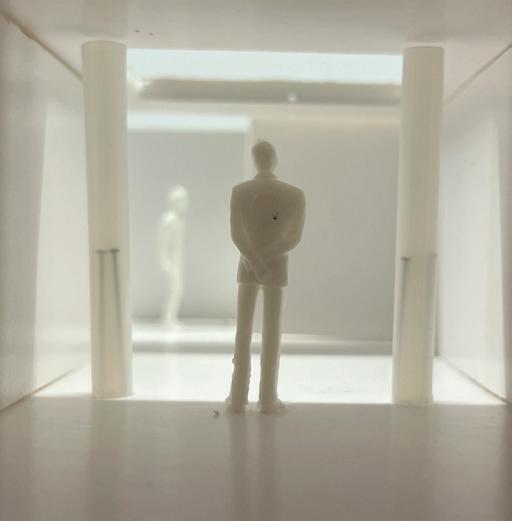
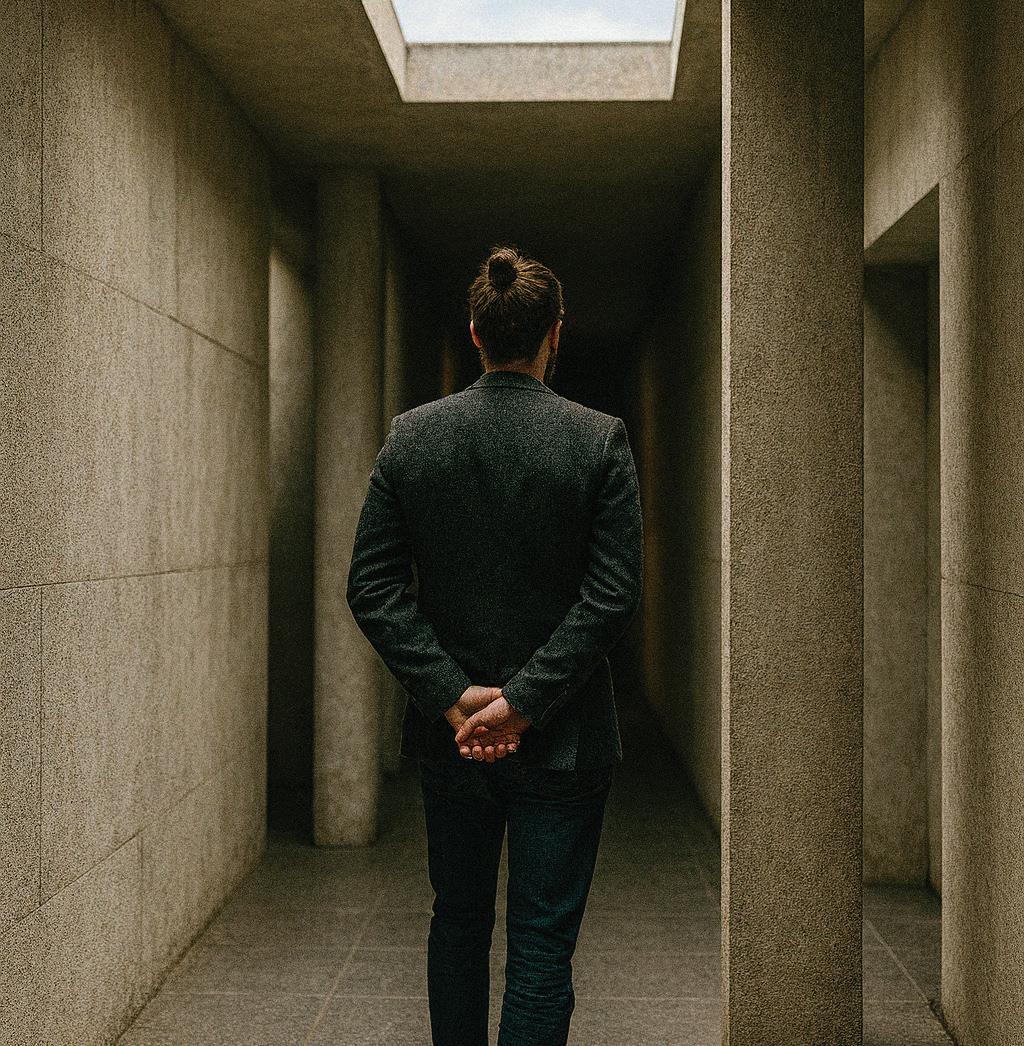
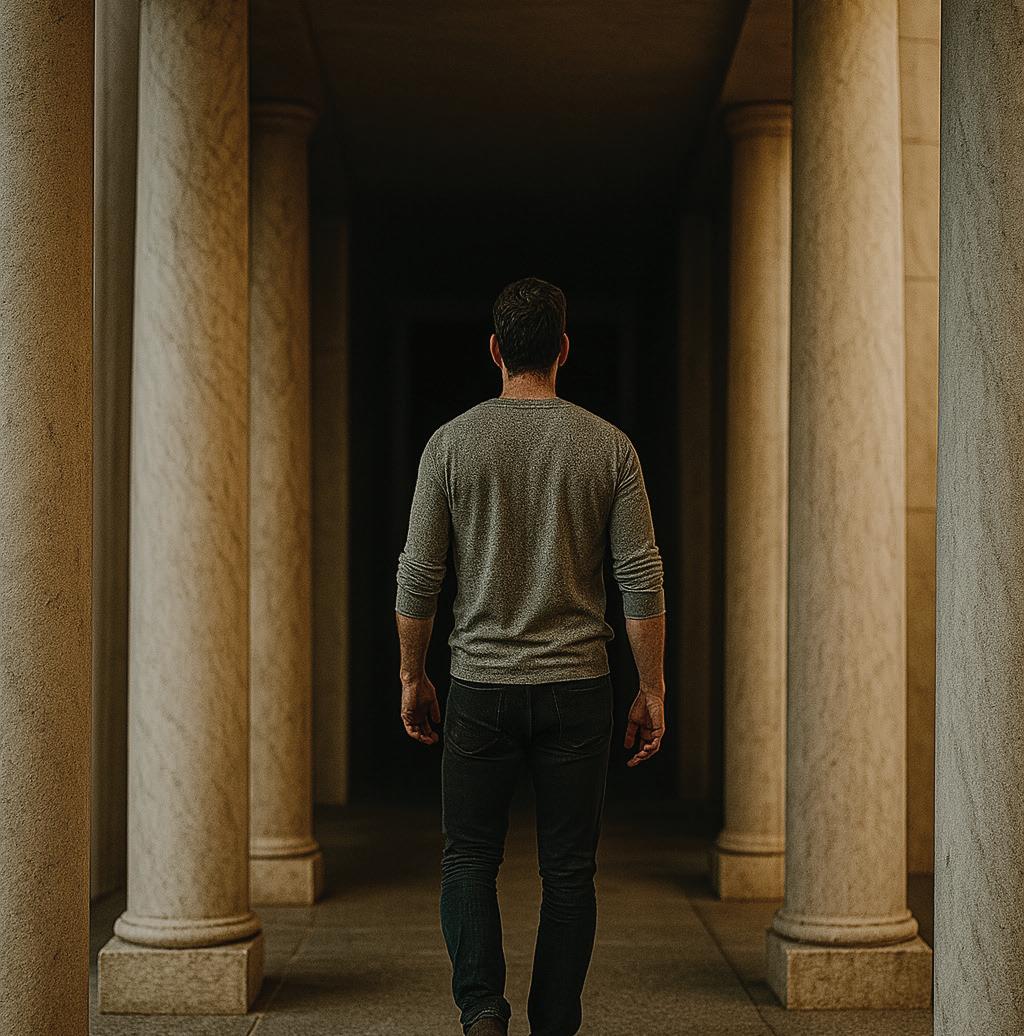
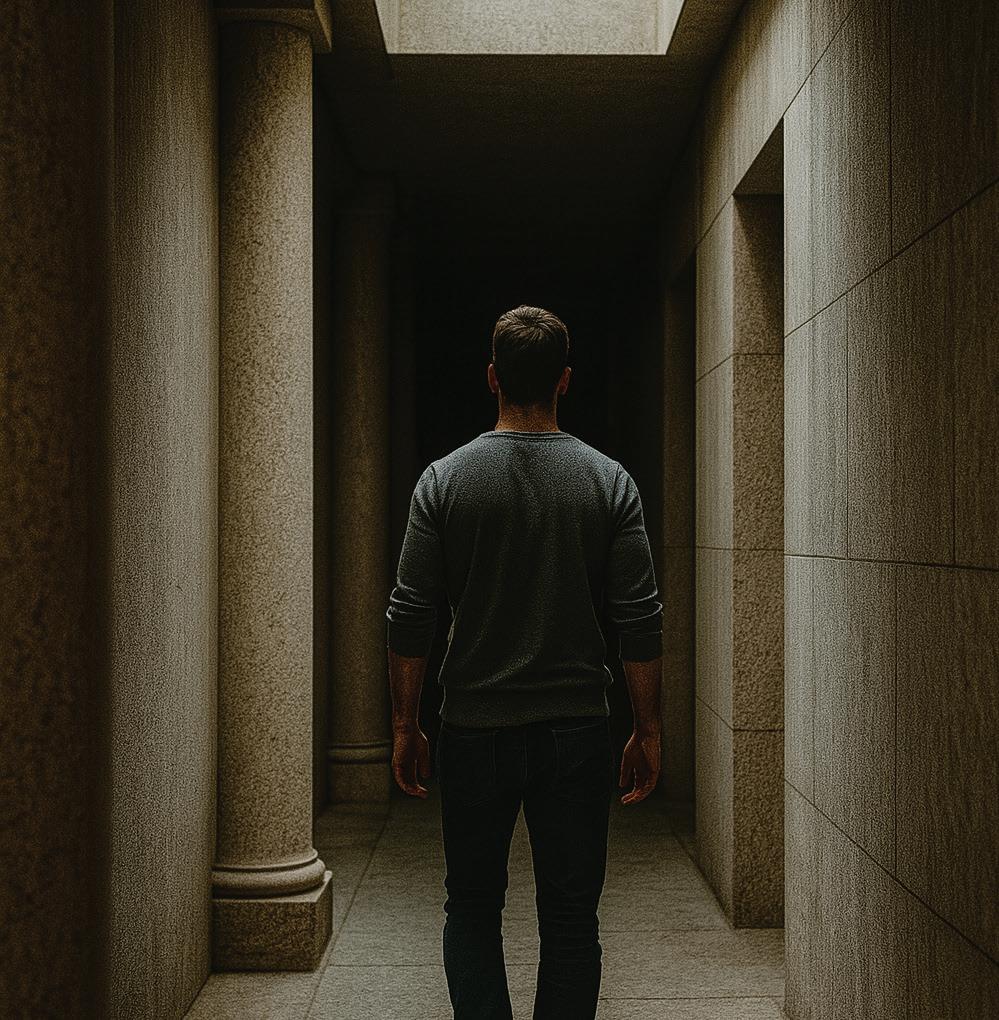
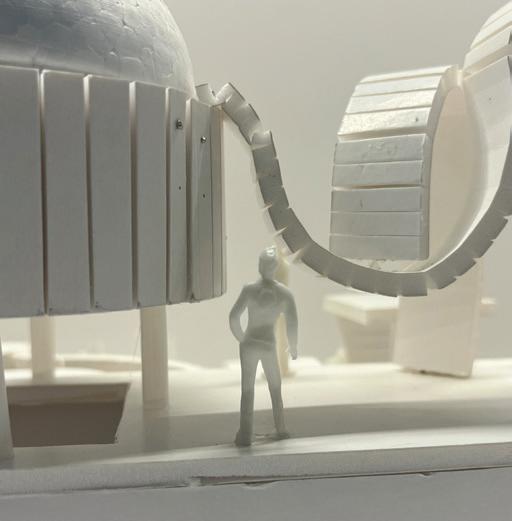
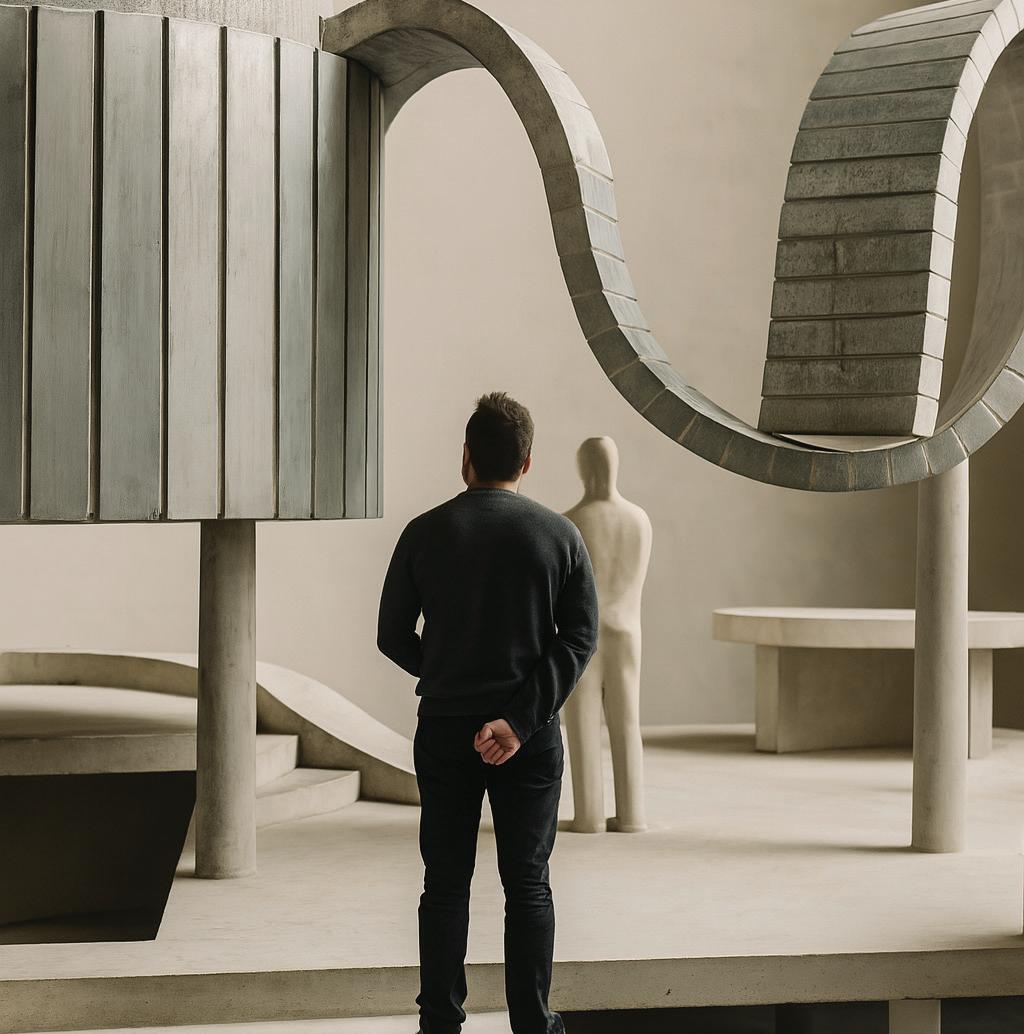
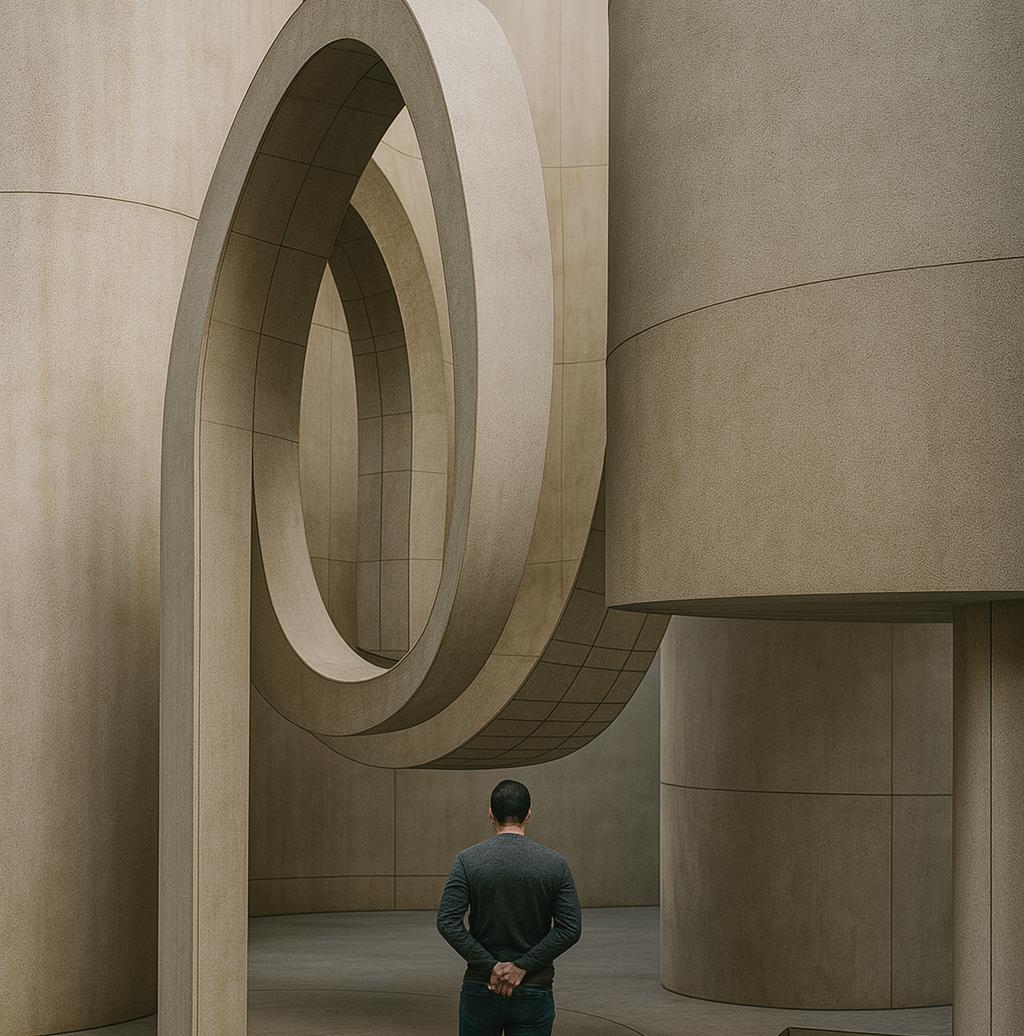
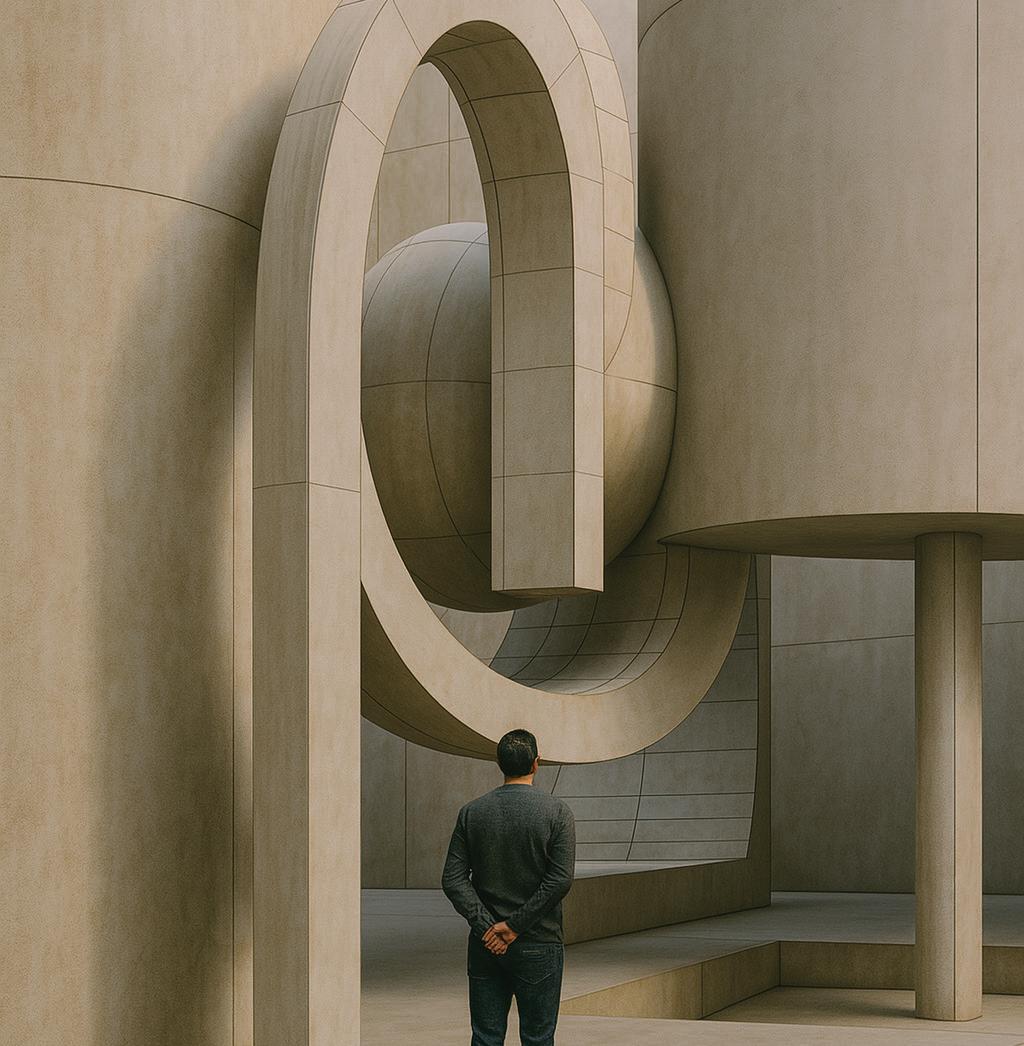
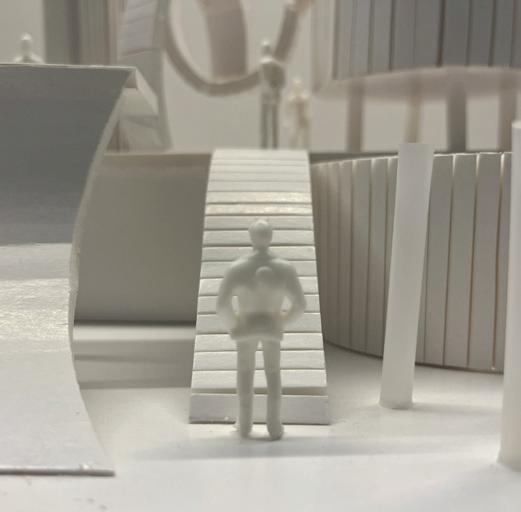
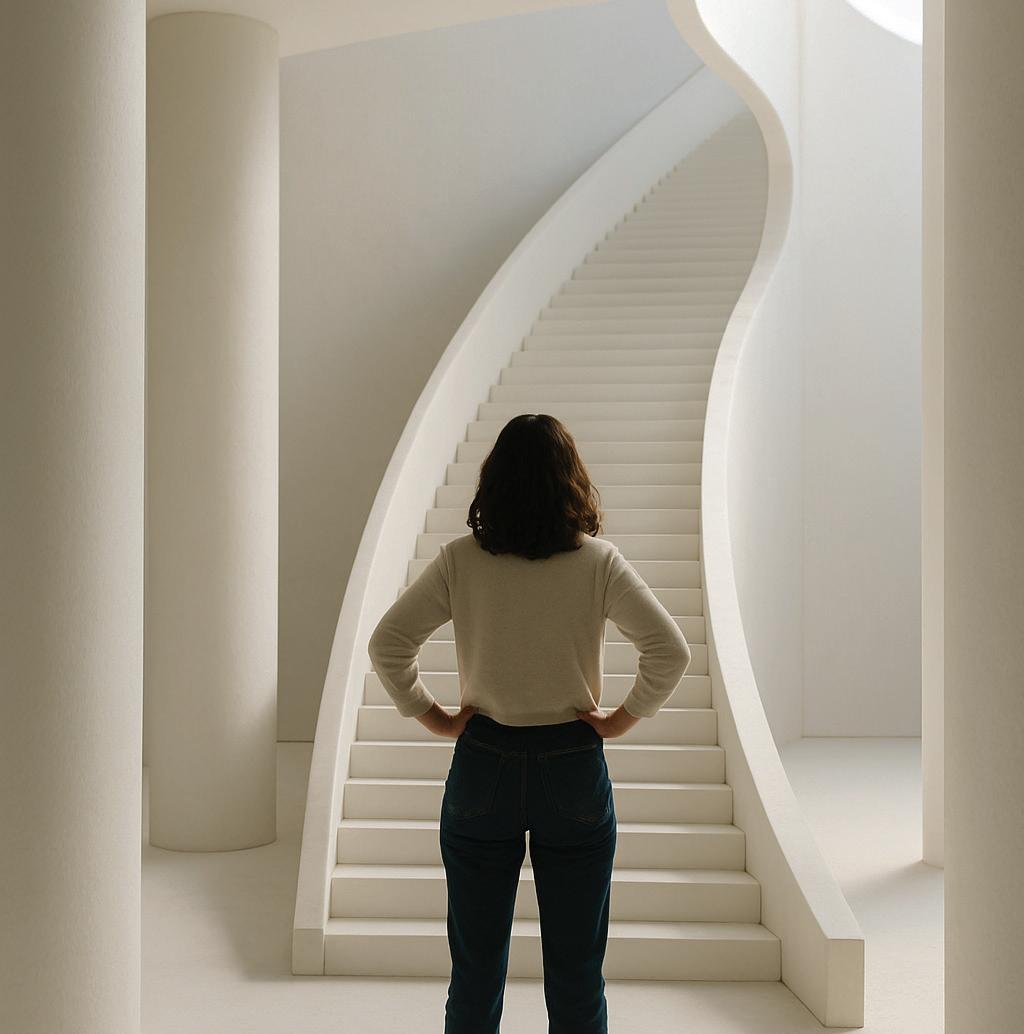
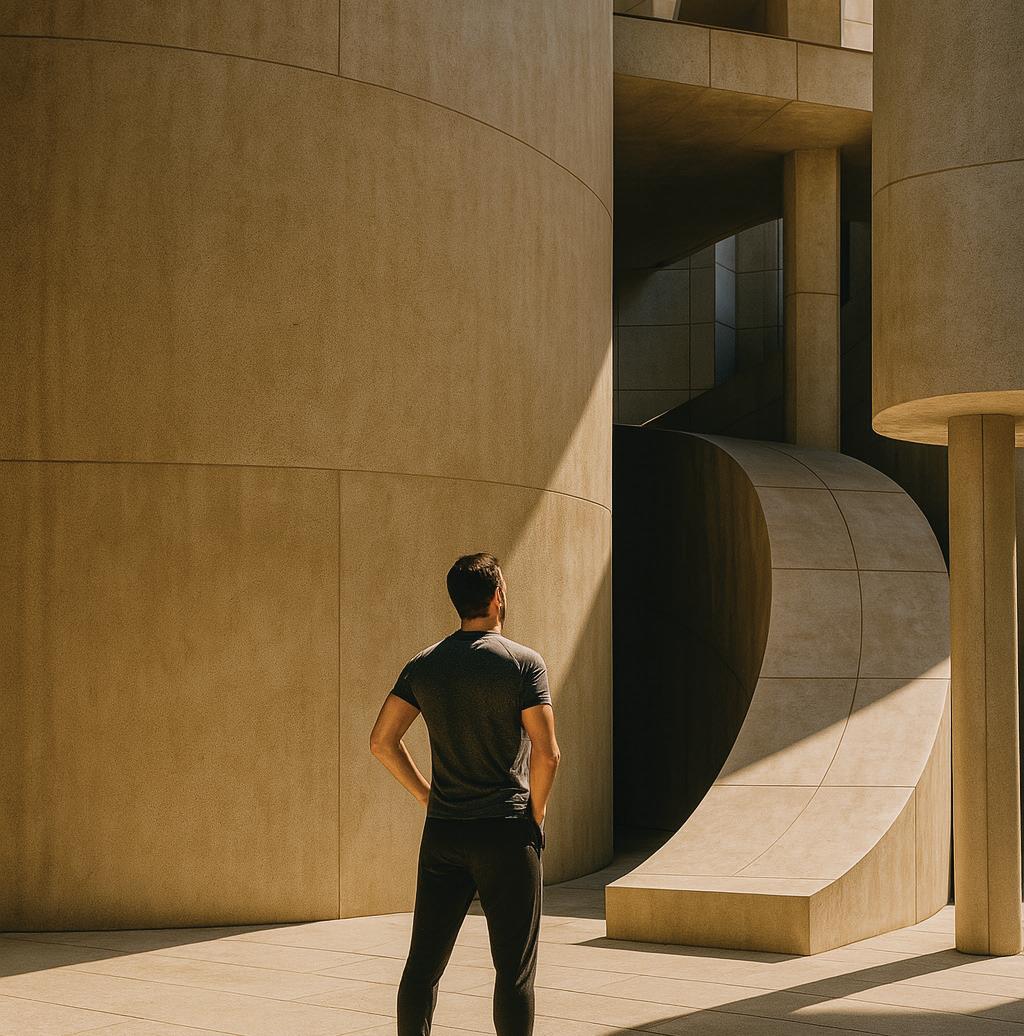
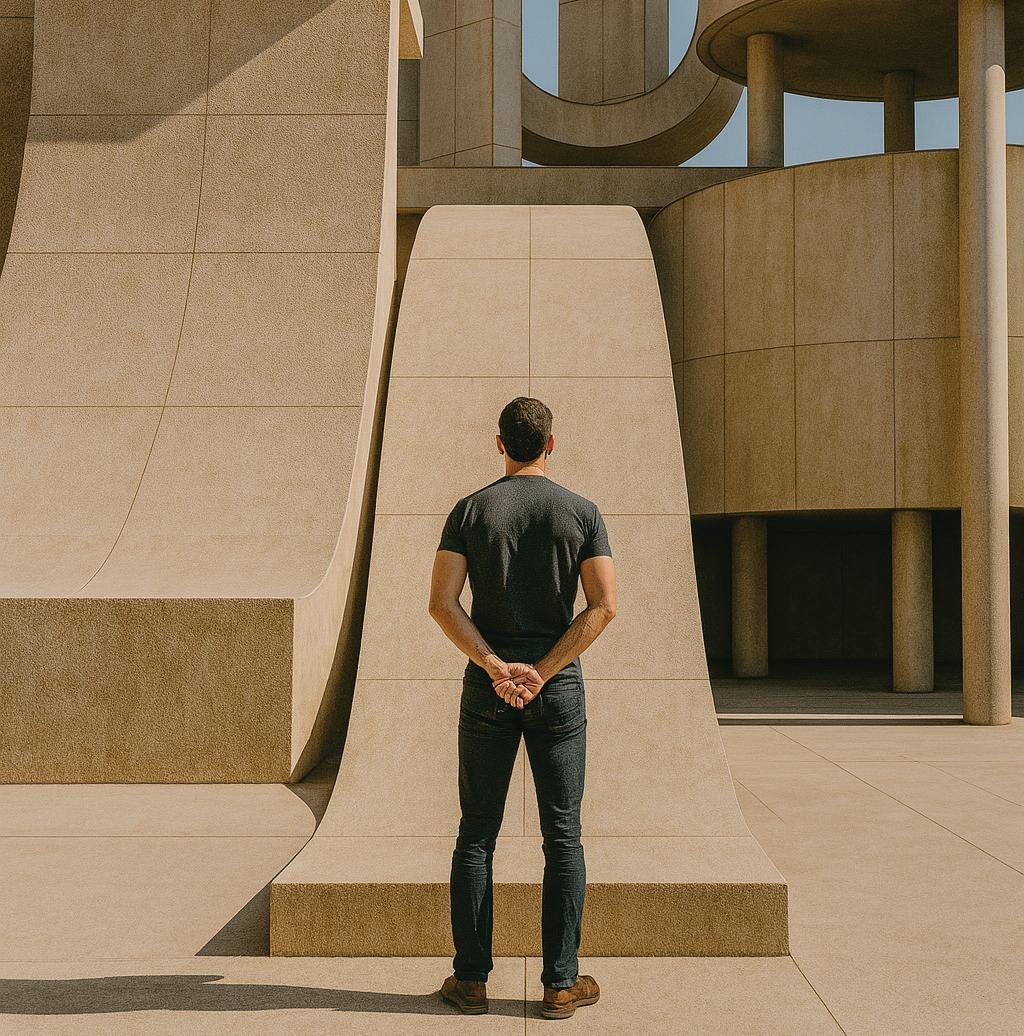
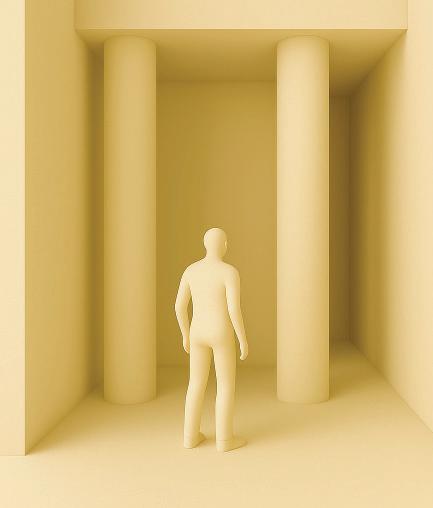
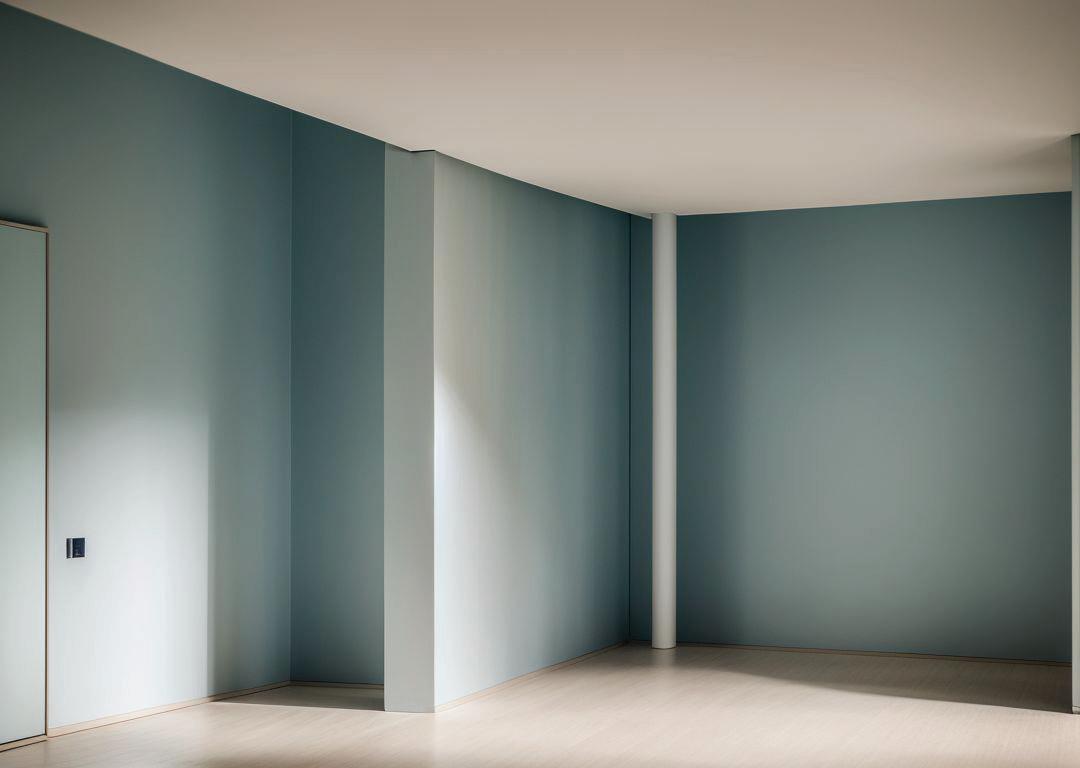
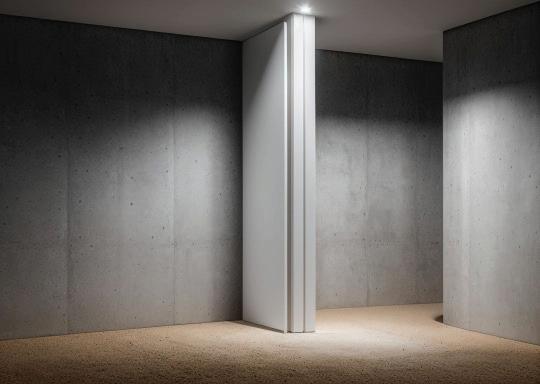
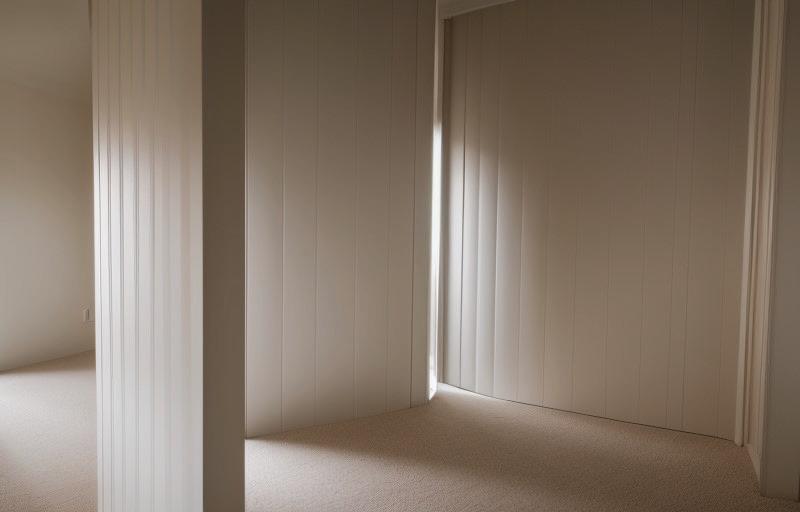
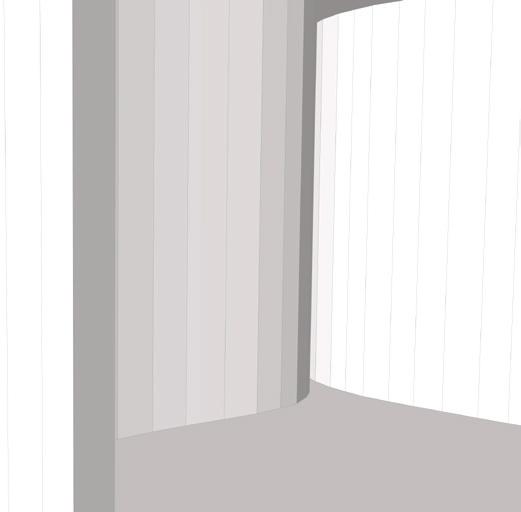
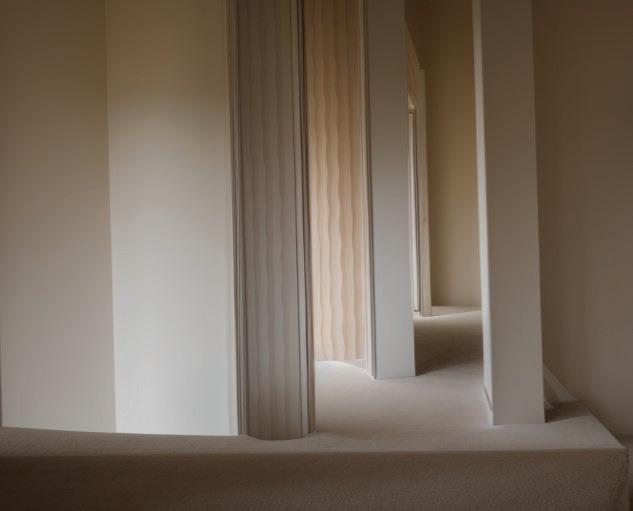
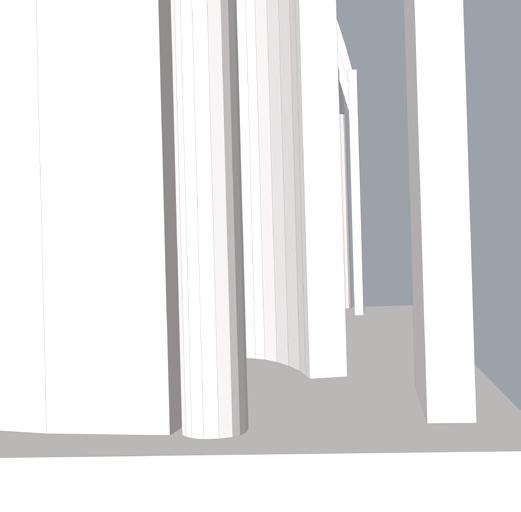
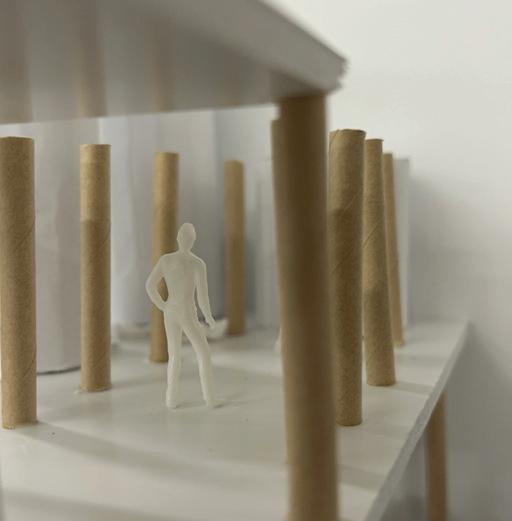
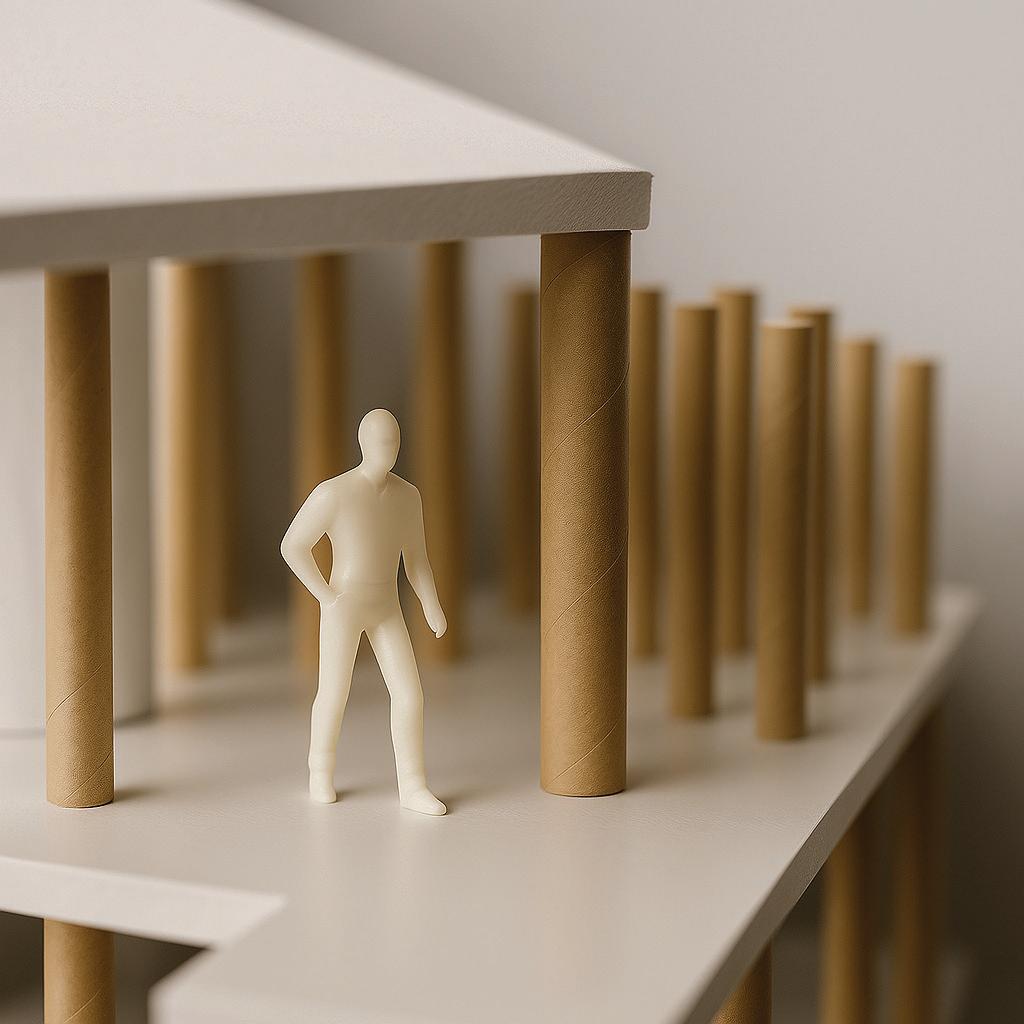
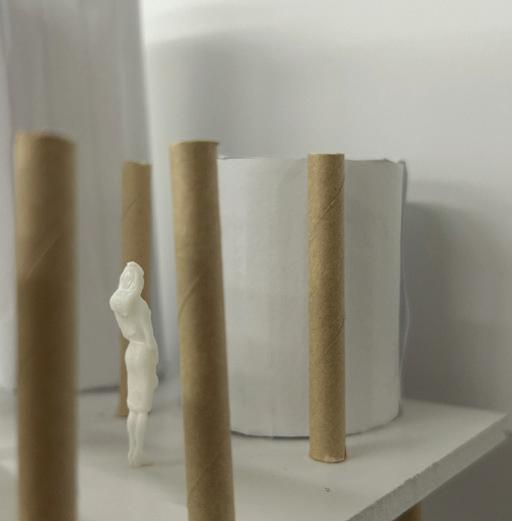
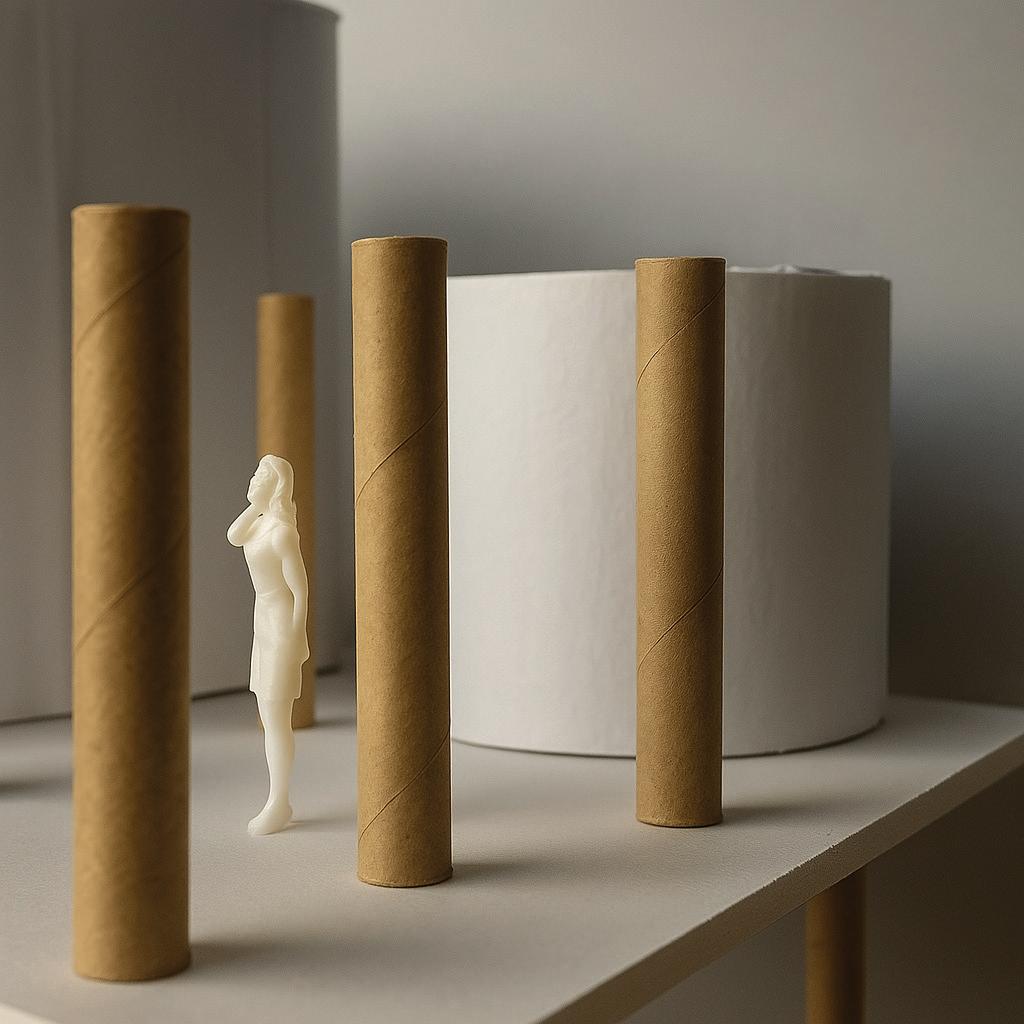
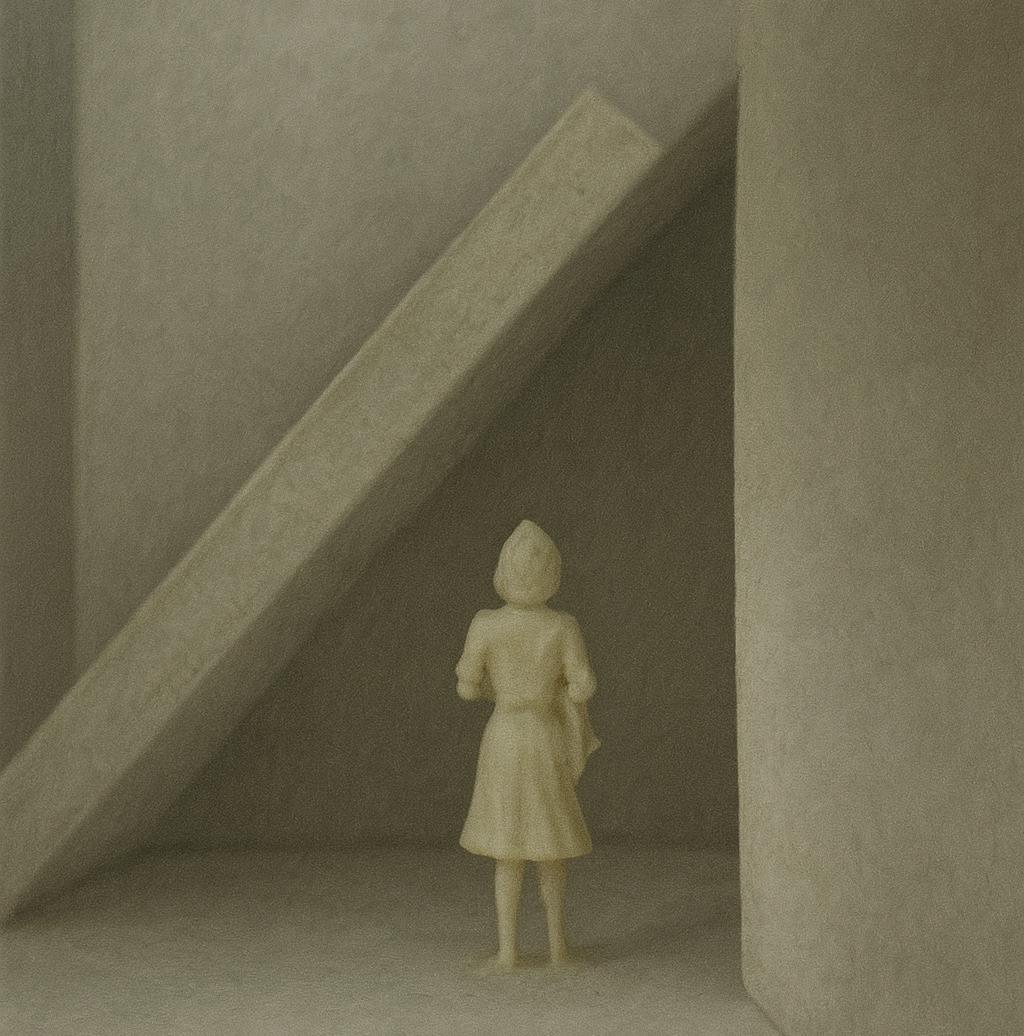
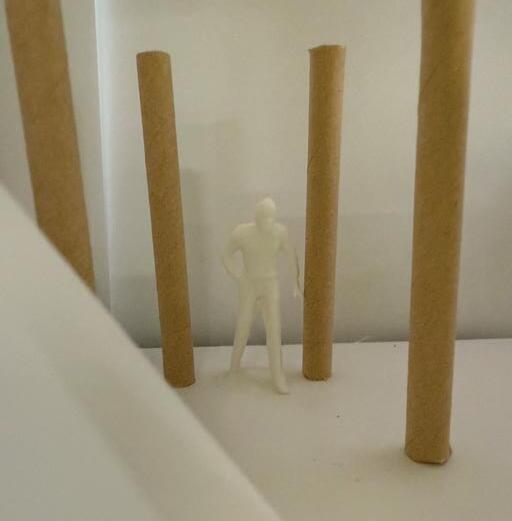
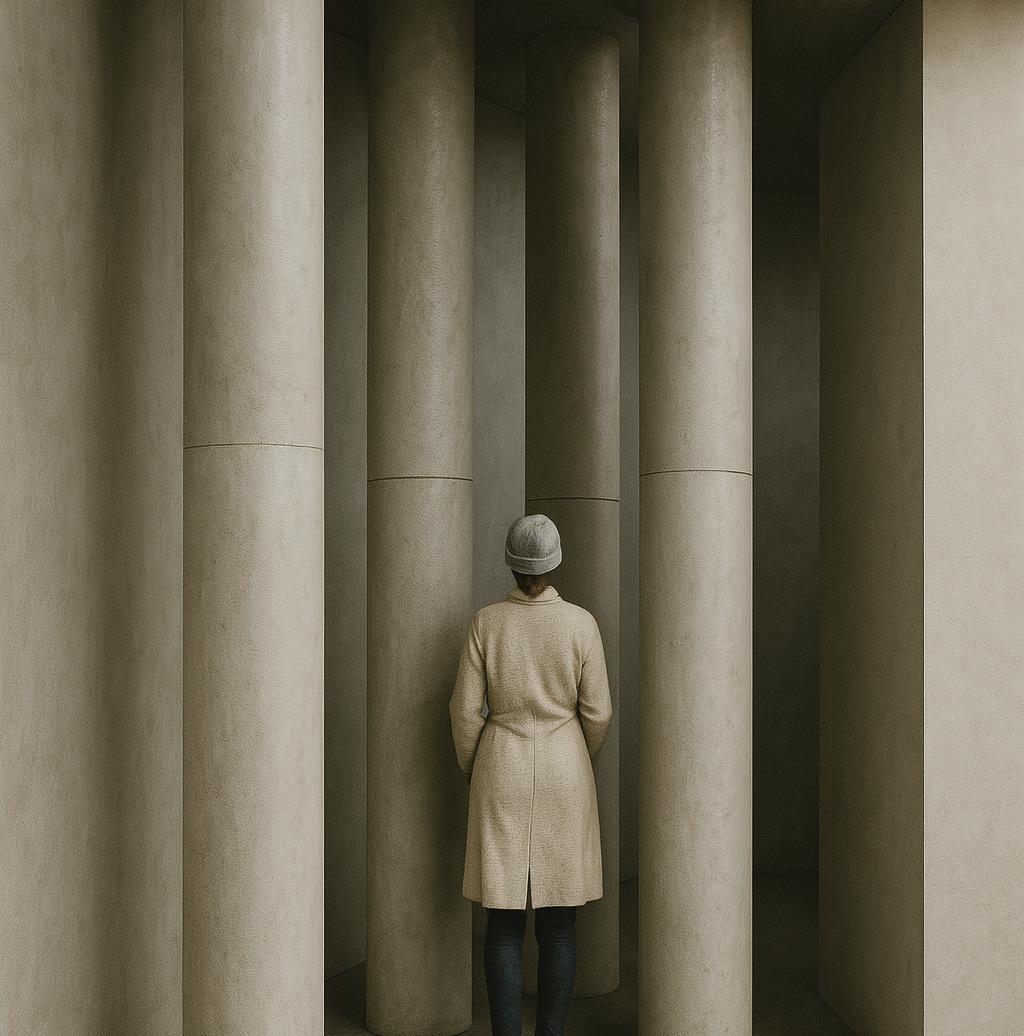
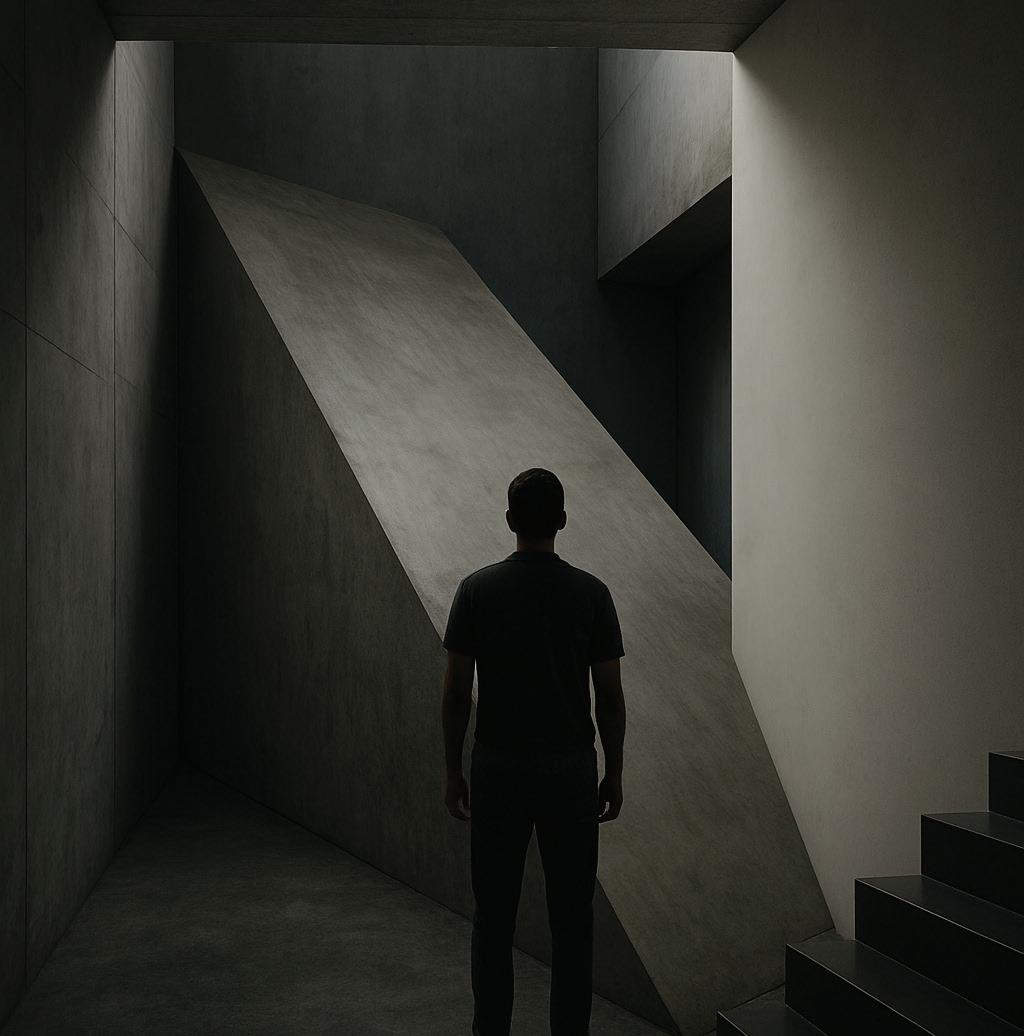
*. There is no restriction on academic use of the contents of this book.
*. The copyright of all design results contained in this book belongs to each (student) designer.
PUBLISHER’S NOTE
Since the beginning of my teaching career in Korea, I have always wished that I had a book such as this one. This wish may have originated from my 6th grade teacher, who made a graduation workbook containing students’ writings, drawings, and photographs. After my graduation and before my undergraduate years, I was able to see my growth in ways of thinking and understanding as a result of reading the book. With my colleagues, I made a school book including all the graduate projects completed at Hanyang University in 2006. By reading the book, I had been able to cheer up and reenergize myself whenever I was exhausted and burnt out in practice. With these memories, it has been four years since I made the course books for the subjects I taught.
During the process of creating this book, I learned something that I had never known before. I am gradually improving my skills as an instructor, learning what I have missed as an instructor, what I should remember when teaching next semester, which assignments to emphasize more, and what to emphasize less. Seeing the efforts and thoughts of the students that I had not yet discovered, I smiled at them and regretted that I had not been able to encourage them more.
After receiving this book, each recipient may have a different reaction to it. In the past four years, it has been observed that it serves as a tangible teaching portfolio for instructors, a data bank for students in the event of unexpected laptop failures, and an educational experience that motivates students to create their own portfolios. What will be your reaction when you receive this book? In the future, when you are about to graduate, what will you think after reading this book? In keeping with this thought, I completed the process of making the book.
In my opinion, the curriculum in the first two years is typically more focused on visualizing ideas by converting them into visualized outputs that can be shared with others. In the second half, the focus is more on materialization aligned with the realities, such as building codes, social issues, etc. It is my hope that you will be able to improve your ability to visualize and sense scale before the second half.
As a final note, I would like to thank you for all the time I spent with you. Despite the fact that this design studio with you has ended, please feel free to contact me at any time. I will be glad to respond to your contact. It has been a pleasure having you with me this semester.
I congratulate them on their successful completion.
-
Jinoh Park, Instructor and Publisher
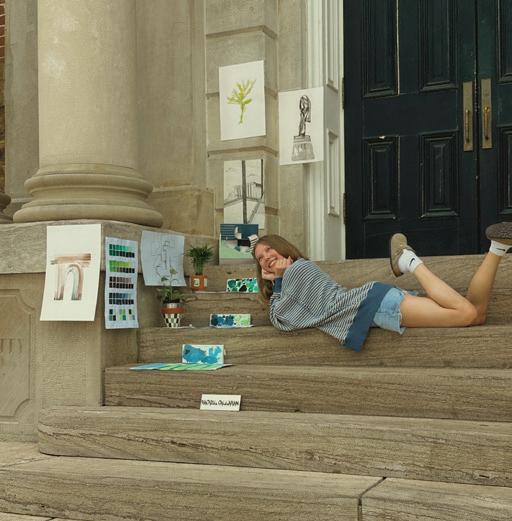
Callahan,Rachel
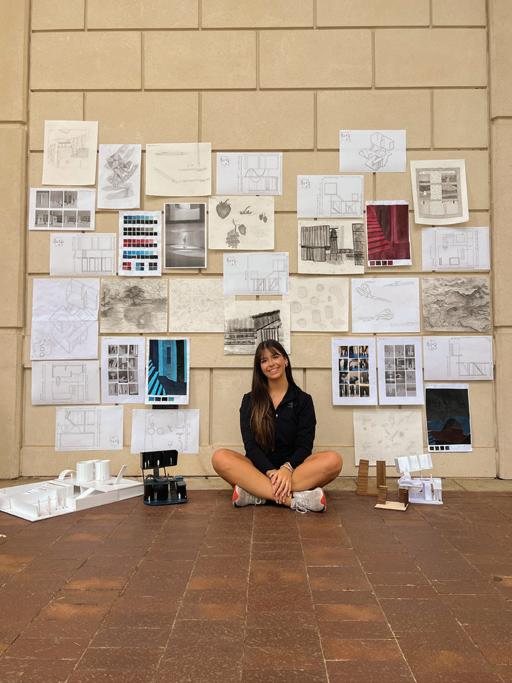
Harrington,Ava
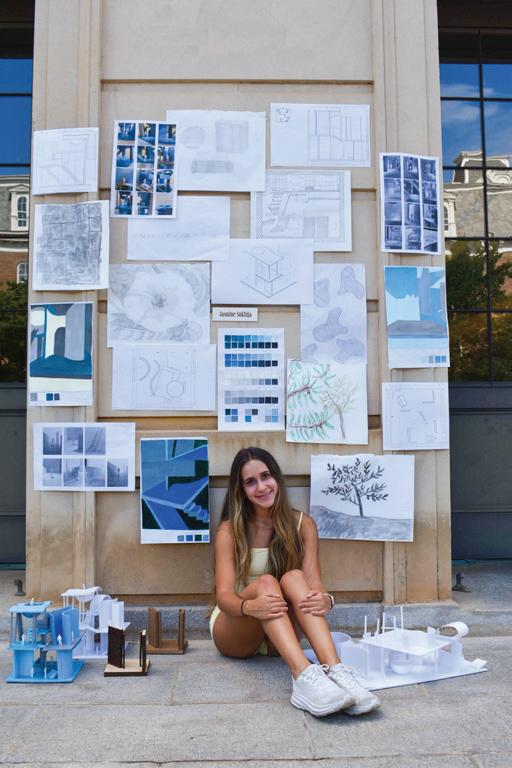
Penfield,Marilynn Mae
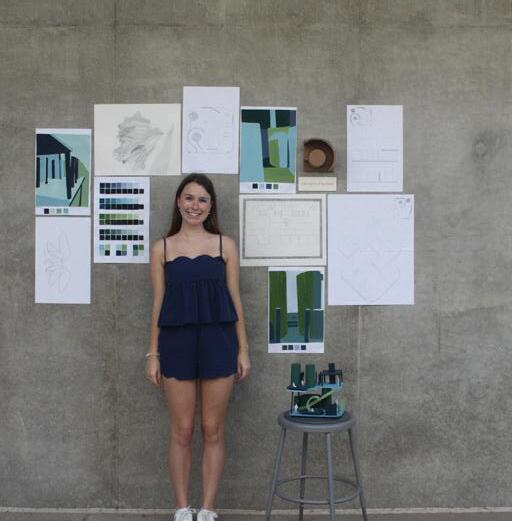
Walker,Reece Elaine
Overall, what I have learned...
If I could talk to me before these five weeks, what would I like to share with me?
Main Themes
1. Self-Discovery and Personal Growth
- Self-Confidence and Potential
- Students expressed surprise at their ability to push beyond their perceived limits and achieve more than expected.
- Realization of inner strength and capabilities.
- Resilience and Adaptability
- Overcoming challenges, managing stress, and coping with unexpected difficulties.
- Emphasis on the importance of perseverance and trust in the process.
2. Importance of Time Management
- Managing heavy workloads through effective time management.
- Balancing productivity with good craftsmanship and attention to detail.
- Recognizing the value of taking breaks to maintain mental health.
3. Significance of Relationships and Support
- Importance of building friendships and collaborating with peers.
- Relying on classmates for support and encouragement during challenging times.
- Instructors as valuable resources for guidance and learning.
4. Embracing Challenges and Learning Opportunities
- Understanding that difficult experiences are integral to growth and learning.
- Emphasis on the rewarding nature of overcoming obstacles.
- Appreciation for the lessons learned and the skills acquired during the course.
5. Reflection on Stress and Workload
- Acknowledgment of the initial overwhelming nature of the course.
- Learning to manage stress and not overthink or complain excessively.
- The importance of maintaining a positive mindset despite challenges.
6. Enjoyment and Fulfillment
- Despite the challenges, students found joy and fulfillment in their work.
- The sense of accomplishment and pride in completed projects.
- The positive impact of enjoying the process and the work itself.
Sentiments and
Emotions
1. Positive Emotions
- Pride and Satisfaction: Many students felt proud of their
accomplishments and the progress they made.
- Joy and Enjoyment: Despite the hard work, students found enjoyment in the creative process and the outcomes.
- Gratitude: Appreciation for the opportunity to learn and grow, as well as for the support received from peers and instructors.
2. Negative Emotions
- Stress and Overwhelm: Initial feelings of being overwhelmed by the workload and the intensity of the course.
- Doubt and Anxiety: Moments of doubt about their abilities and the feasibility of completing the tasks.
3. Mixed Emotions
- Relief and Accomplishment: Relief at having completed the course and a sense of accomplishment.
- Reflection and Insight: Mixed feelings about the difficulty of the course, balanced by the recognition of its value and impact.
Key Takeaways and Advice
1. Trust in the Process
- Emphasizing the importance of trusting the process and believing in one’s abilities.
- Encouragement to embrace challenges and learn from them.
2. Importance of Community
- Highlighting the value of building relationships and seeking support from peers.
- Advice to engage with classmates and instructors for a richer learning experience.
3. Balanced Approach
- Advocating for a balance between hard work and self-care.
- Importance of managing time effectively and taking breaks when needed.
4. Embrace Creativity and Risk
- Encouragement to think outside the box and take creative risks.
- Recognition that mistakes and messes are part of the learning process.
5. Positive Mindset
- Advice to maintain a positive mindset and avoid unnecessary stress.
- Encouragement to focus on the rewarding aspects of the work and the progress made.
Overall, the reflections indicate a transformative experience for the students, characterized by personal growth, the development of resilience, and the acquisition of valuable skills. The recurring themes of self-discovery, the importance of time management, and the value of relationships underscore the holistic nature of their learning journey.
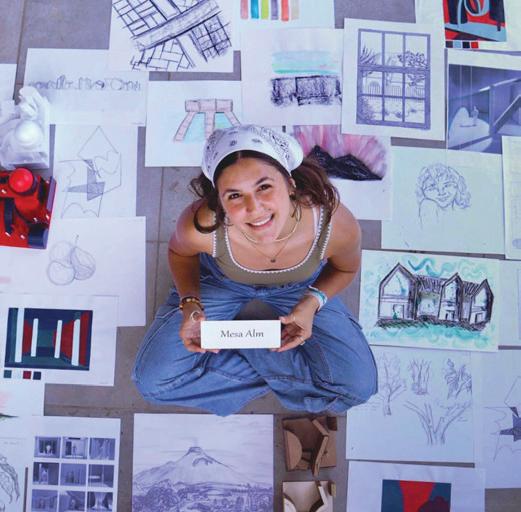
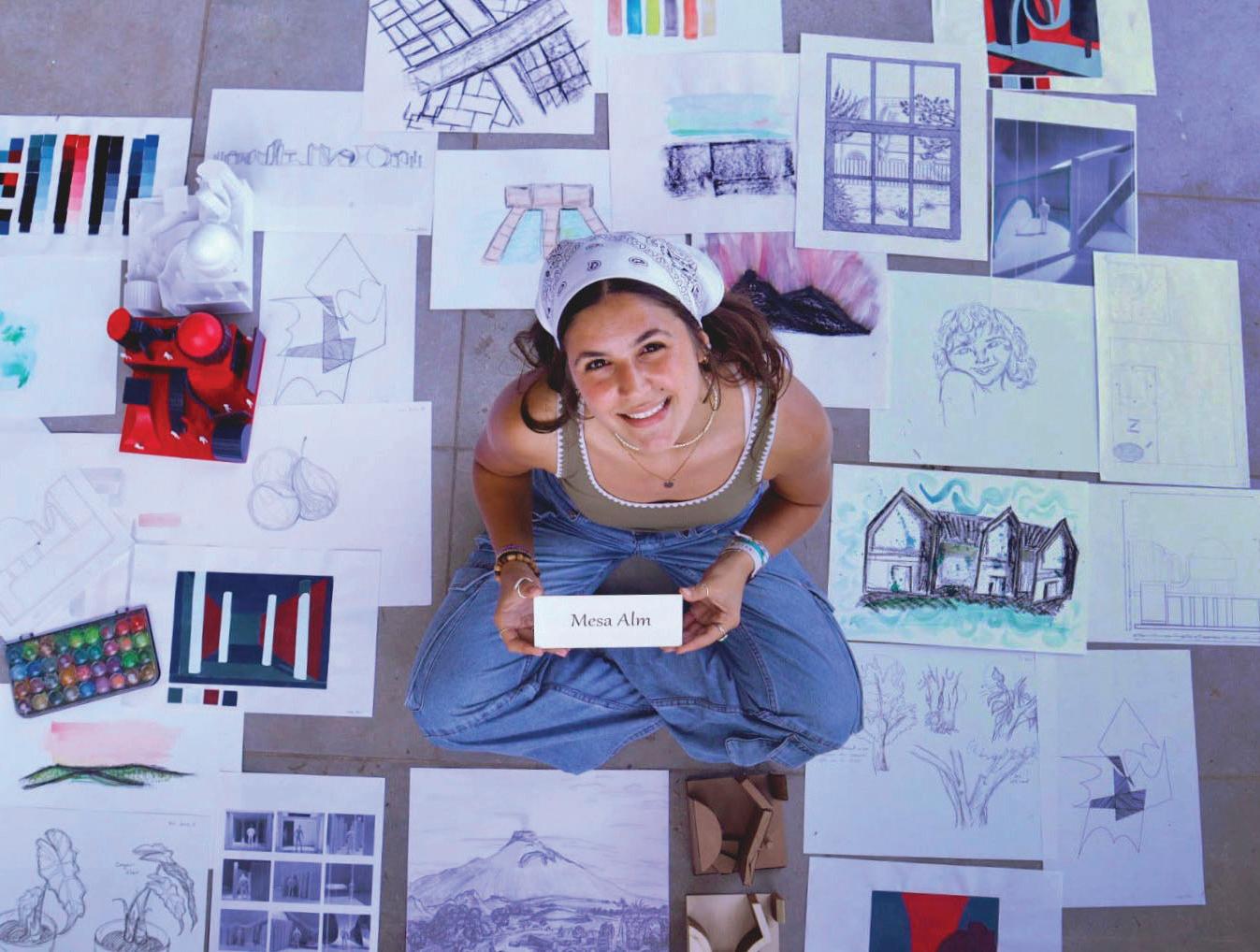
Mesa Alm
Portfolio
What I learned...
Project #1 “Wall, Column, and Space”
- This project provided a valuable opportunity to explore the fundamental elements that shape an interior environment. Through hands-on experimentation with light, spatial relationships, and scale, I began to understand how each of these components contributes to the overall atmosphere and functionality of a space. It challenged me to think critically about how walls, columns, and voids interact, not just as structural elements, but as tools for guiding movement, framing views, and creating emotional responses within a designed interior.
Project #2 “Hand Drawing”
- Through the hand drawing projects, I developed a stronger sense of control and intention in my freehand work while also learning how to use rules and geometry to create expressive patterns. Drawing my window view helped me connect personal memories with everyday observations, showing me how storytelling and emotion can be translated through visual media. I also gained a deeper understanding of how color can influence perception and atmosphere in a space. Sketching outdoor further sharpened my ability to analyze and capture real-world environments, encouraging me to recognize design principles in natural and built landscapes. These exercises collectively taught me how drawing can be both a tool for design and a means of personal reflection.
Project #3 “Drawing What you See, Drawing What you Feel”
- Through this project, I learned how to look beyond the surface of both art and space—to not just observe the details, but to understand how they make me feel and why. By analyzing both a historical painting and a real-life architectural space, I began to see how emotion, memory, and personal experience can shape interpretation. I learned how to connect factual elements, like size, material, and composition, with personal responses such as comfort, nostalgia, or peace. This process taught me how powerful it is when design and art resonate emotionally, and how meaningful connections can form when we draw not just what we see, but what we feel.
Project #4 “Space Cube”
- Through the Space Cube project, I learned how to create intentional and meaningful spatial experiences within a confined volume. Working within the 9”x9”x9” cube pushed me to think critically about transitions, boundaries, and the emotional responses that different spatial arrangements could evoke. I explored how to define space explicitly and implicitly, and how subtle shifts in form or placement can completely alter the experience of moving through a space. This project also taught me the importance of iteration, developing multiple ideas and refining one to its full potential, while balancing creative vision with constraints. Overall, I gained a deeper understanding of how to design spatial sequences that communicate a clear intention through both physical models and digital tools like Rhino.
Project #5 “First Portfolio”
- Through this project, I learned how to reflect on my design process as both a creative and professional journey. Using AI tools like Fabrie helped me see how technology can enhance and inspire new directions in design, while also challenging me to think critically about how to maintain my own creative voice. Creating a personal portrait gave me a moment to celebrate my growth and recognize the effort behind each project. Compiling my work into a portfolio taught me that design isn’t just about individual outcomes, it’s about the process, the decisions made along the way, and how everything comes together to tell a cohesive story.
Overall
- Over these five weeks I moved from sketching dancing lines to curating a finished portfolio, and every step taught me to see design as a layered conversation between craft, concept, and technology. Free-hand drawing sharpened my eye for nuance; building the Space Cube deepened my grasp of spatial sequencing and emotional intent; architectural drawings and Rhino modeling translated ideas into precise, communicable form; and experimenting with AI tools pushed me to blend innovation with personal voice. Pulling everything together in a portfolio showed me that good design isn’t a series of isolated tasks, it’s an integrated narrative of exploration, iteration, and reflection.
If you could talk to you before these five weeks, what would you like to share with you?
- Hey, future-you here—relax and dive in. The next five weeks will feel fast and super challenging, but every experiment matters, even the messy ones. Trust your instincts when a line “feels” right, and don’t over-polish the first idea; iterate, then iterate again. Let the Space Cube teach you how tiny shifts can change an experience, and let Rhino’s precision sharpen (not replace) your intuition, you WILL learn how to use it all eventually. Use AI as a springboard, not a shortcut, and remember the portfolio isn’t just a showcase, it’s a story of growth. Celebrate small wins, document everything, and keep your sense of wonder; it’ll carry you through late nights and laser-cut mishaps. Most of all, enjoy the process, you’re about to surprise yourself.
First Portfolio
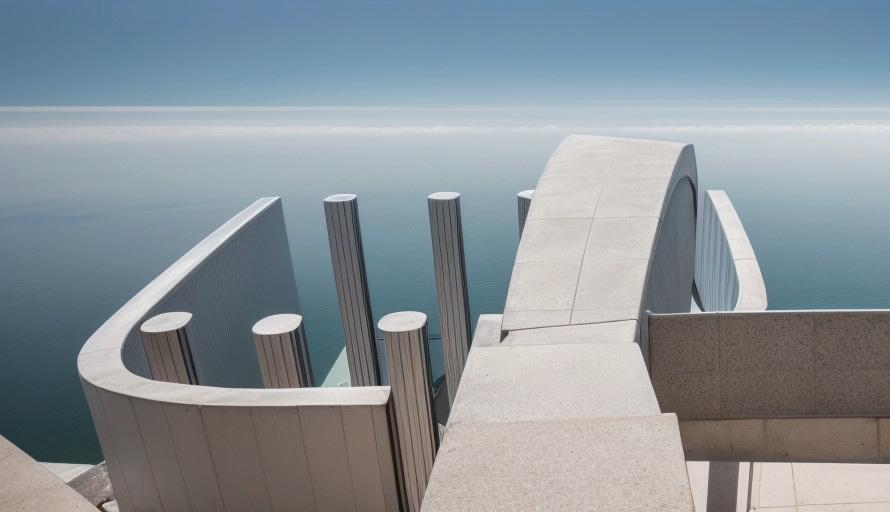
Learning Objectives for Work #1. AI Exploration Students will experience an advanced technology: AI Image Generator “Fabrie.” Through the process, students will be able to start considering how to integrate the technology in their design process.
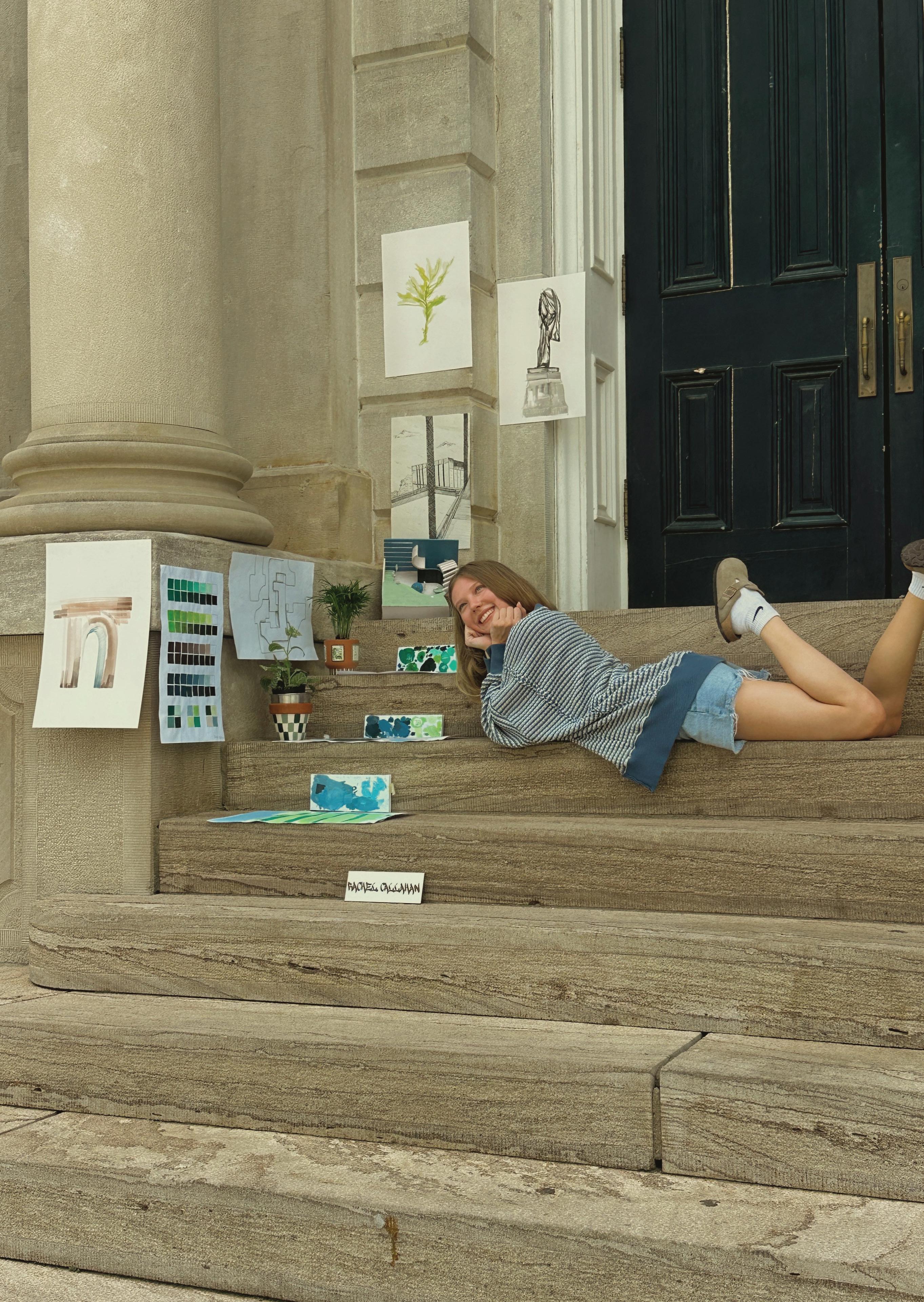
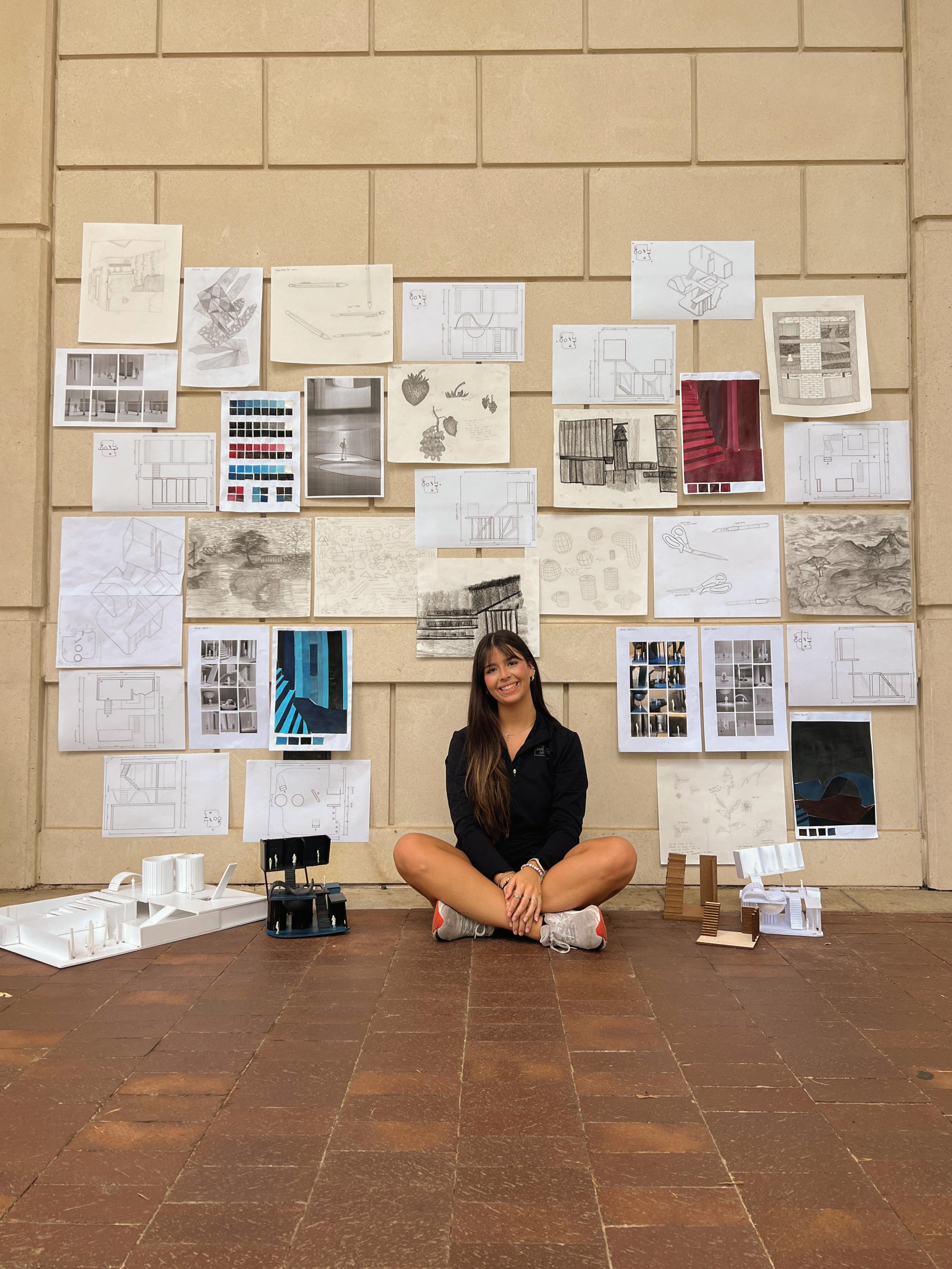
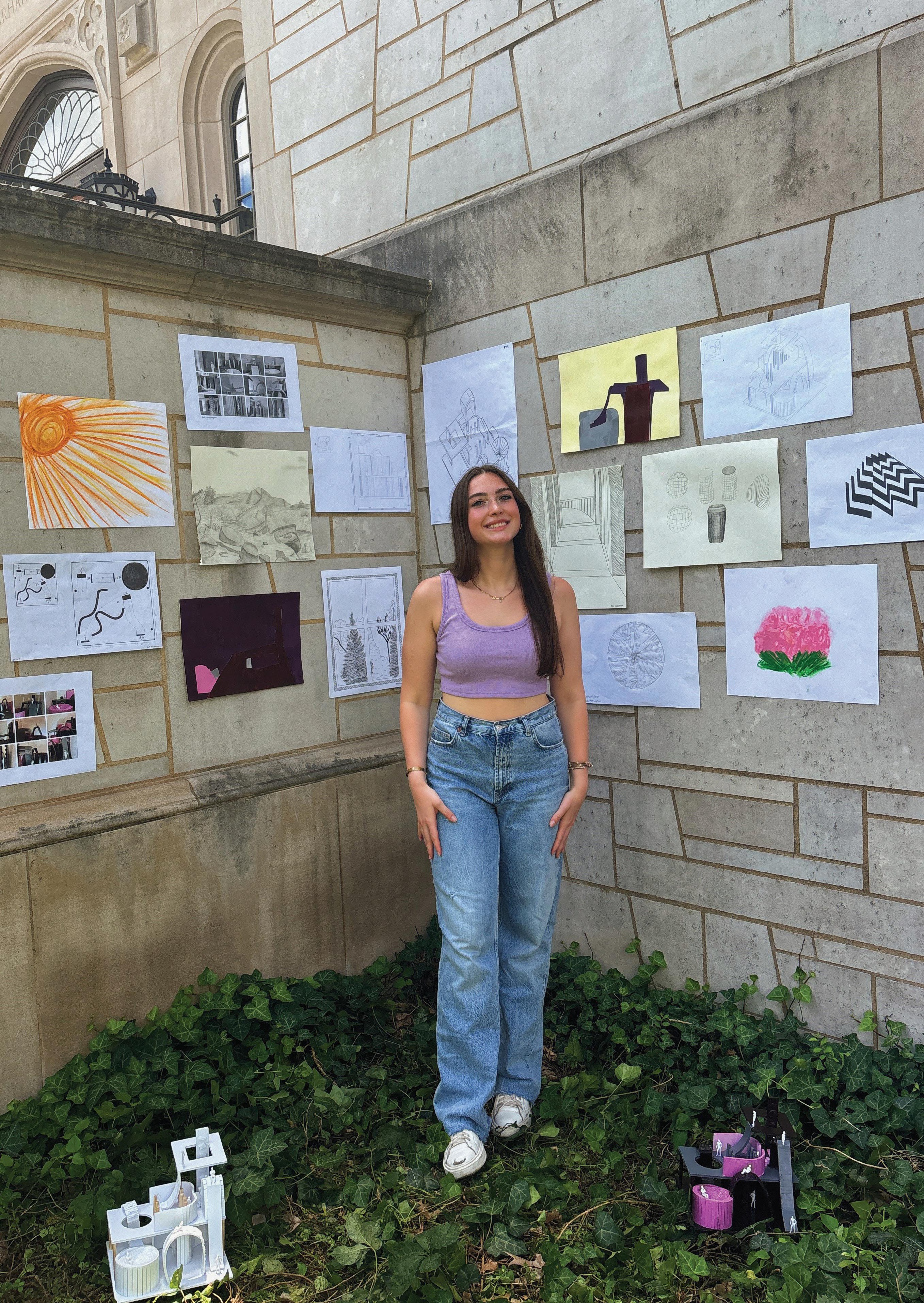
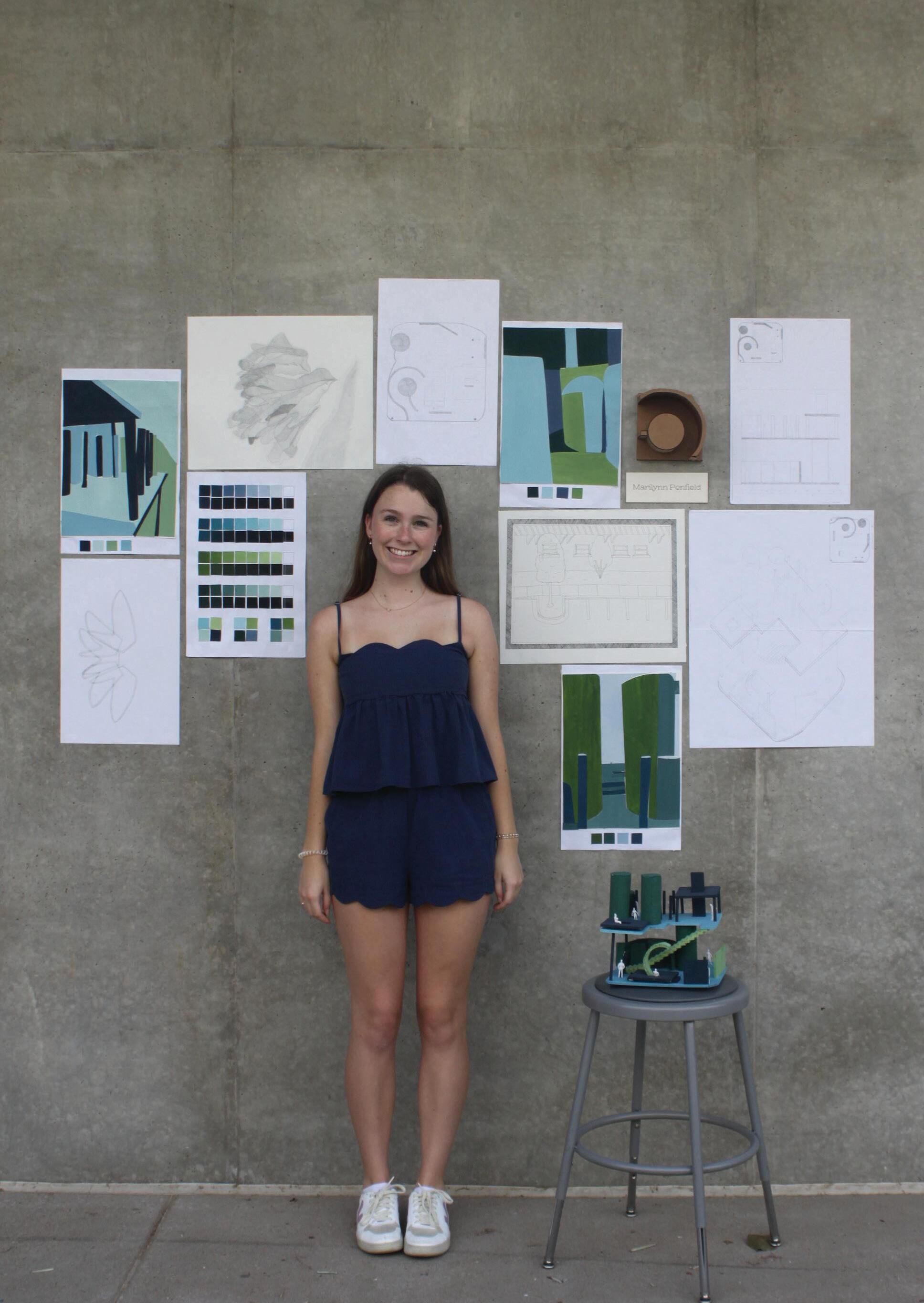
Learning Objectives for Work #2. Portrait Students will take a portrait picture of themselves with their achievements over the past four weeks. This will help them celebrate their time and effort.
Learning Objectives for Work #3. Portfolio Students will make a portfolio with a template and their achievements over the past five weeks. This will help them understand what the end of design is. The goal is not just to complete each individual visualization, but to compile the deliverables and results resulting from the process.
AI Generated Image
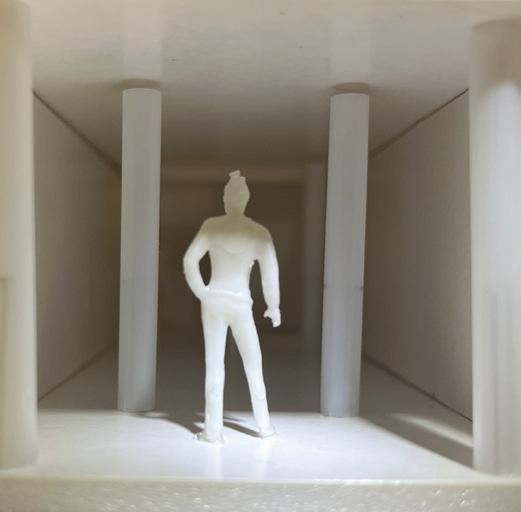
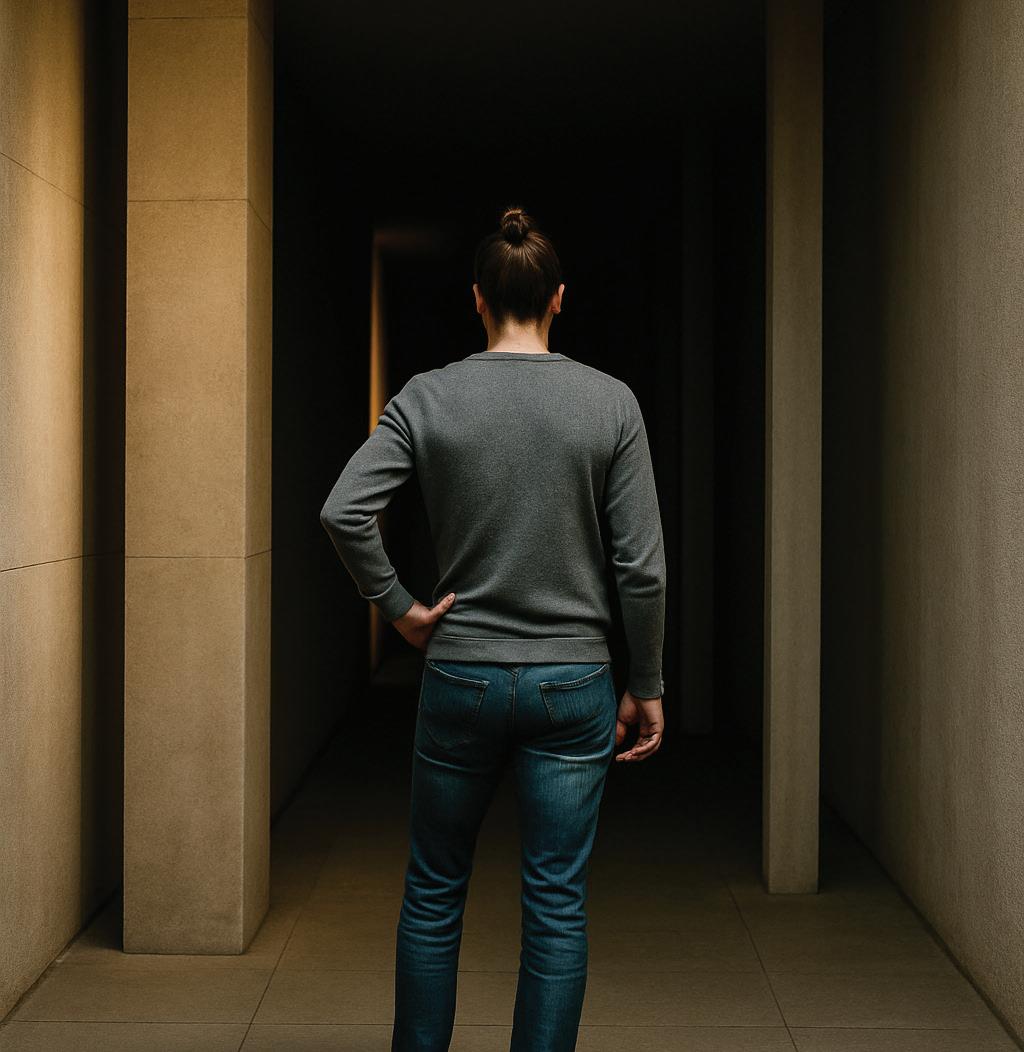
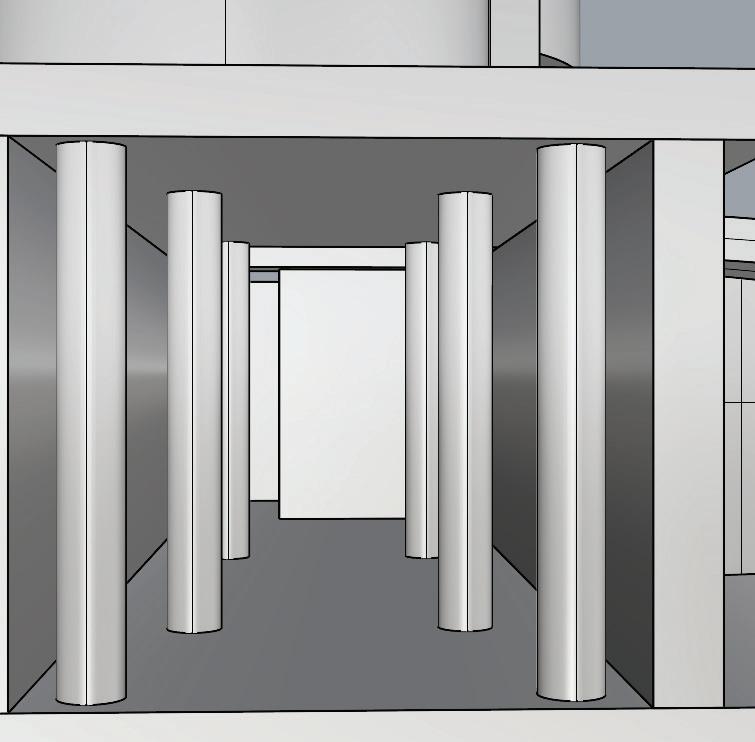
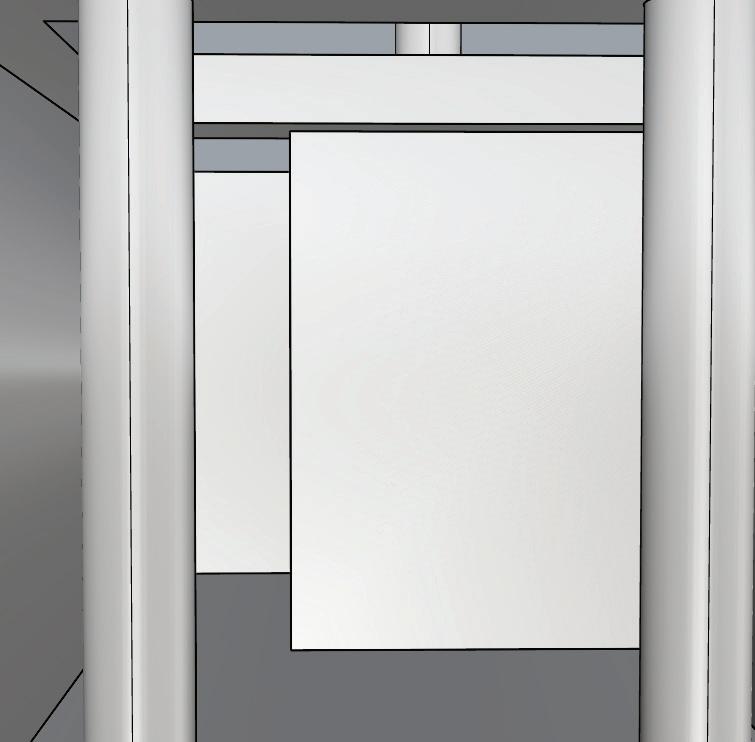
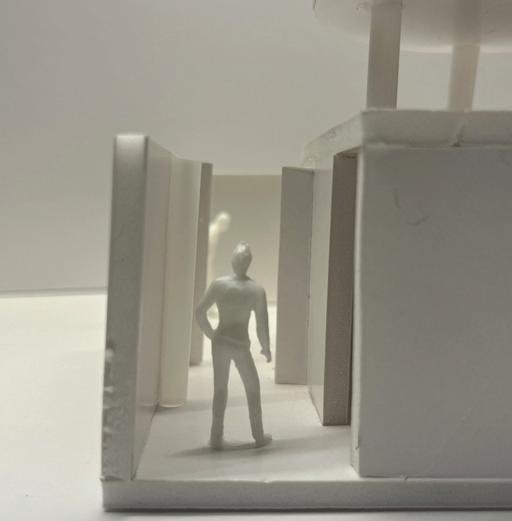
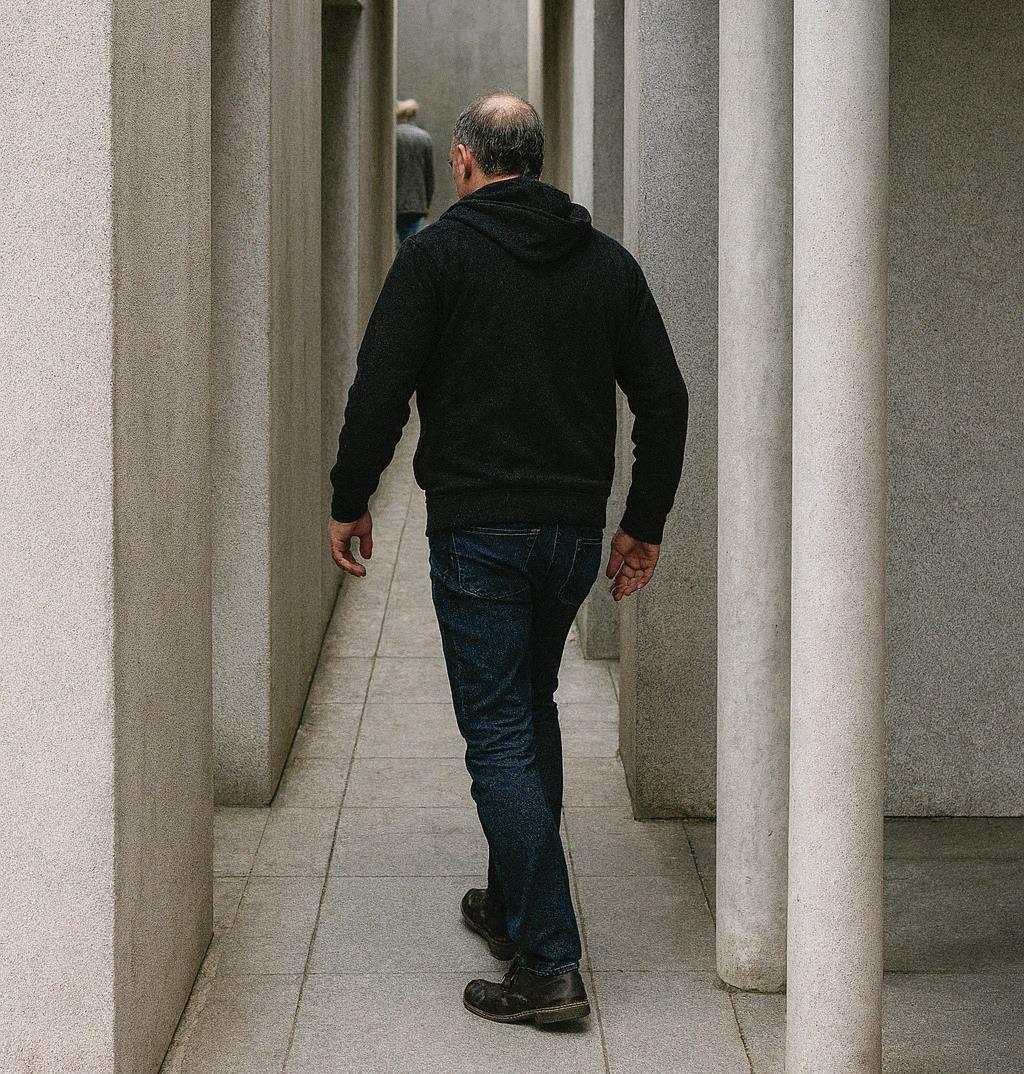
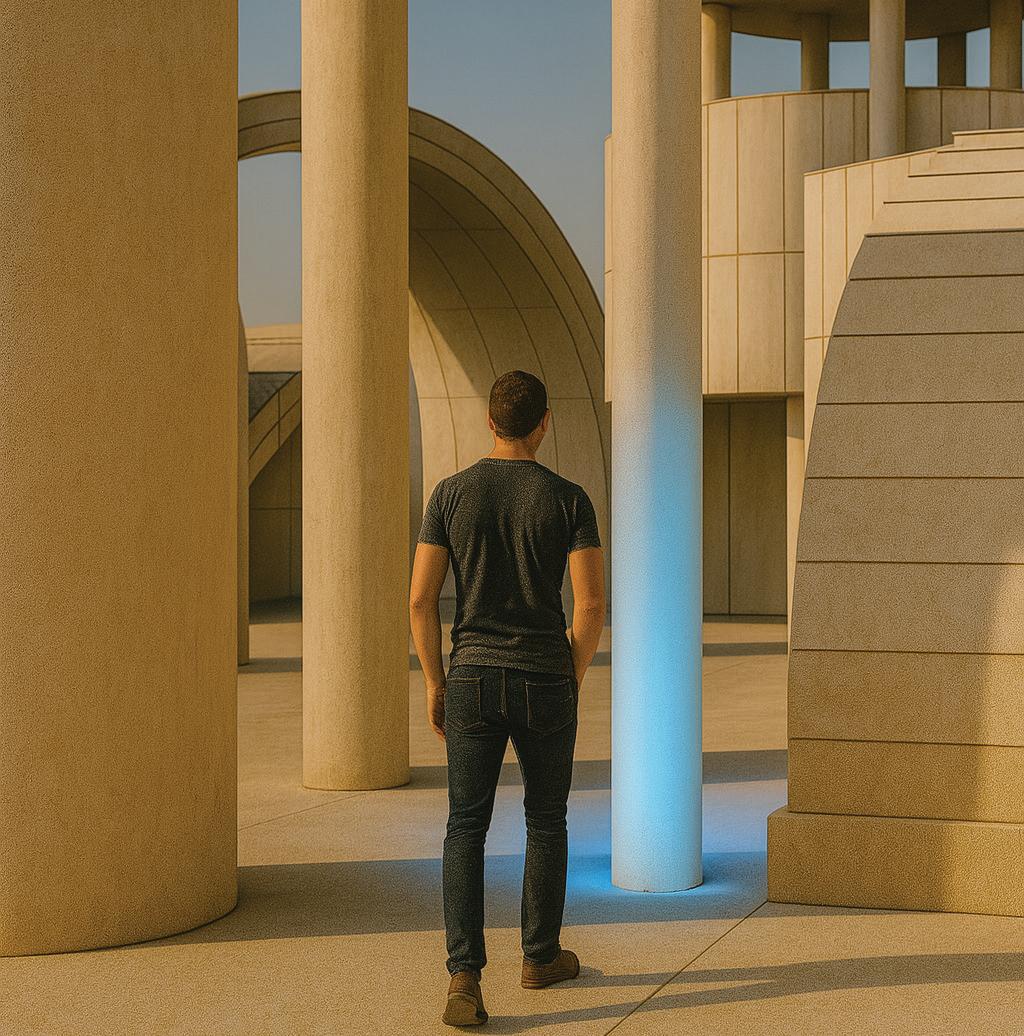
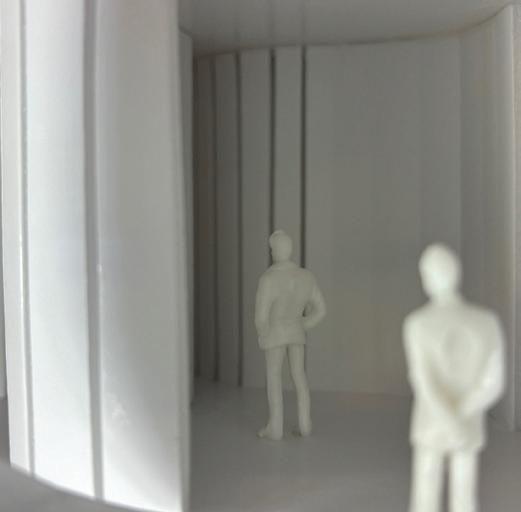
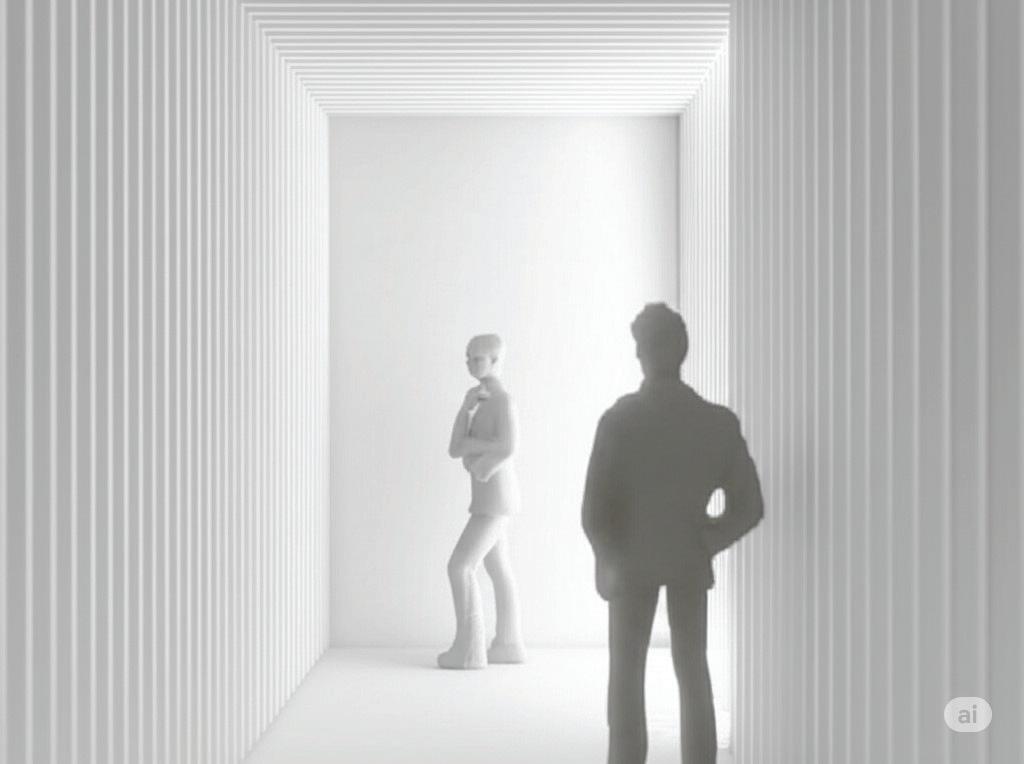
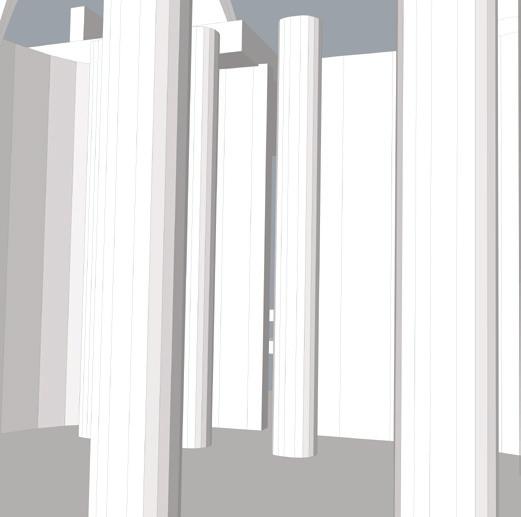
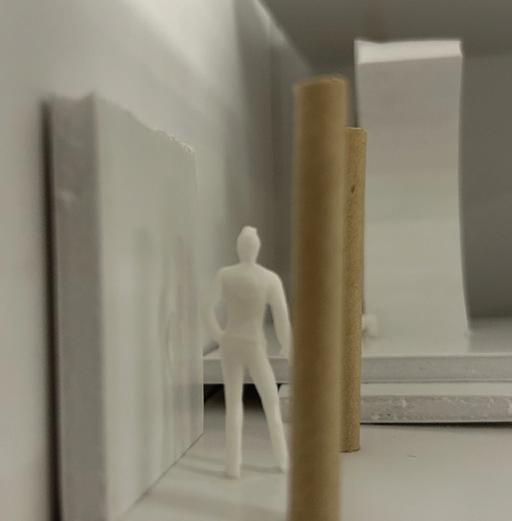
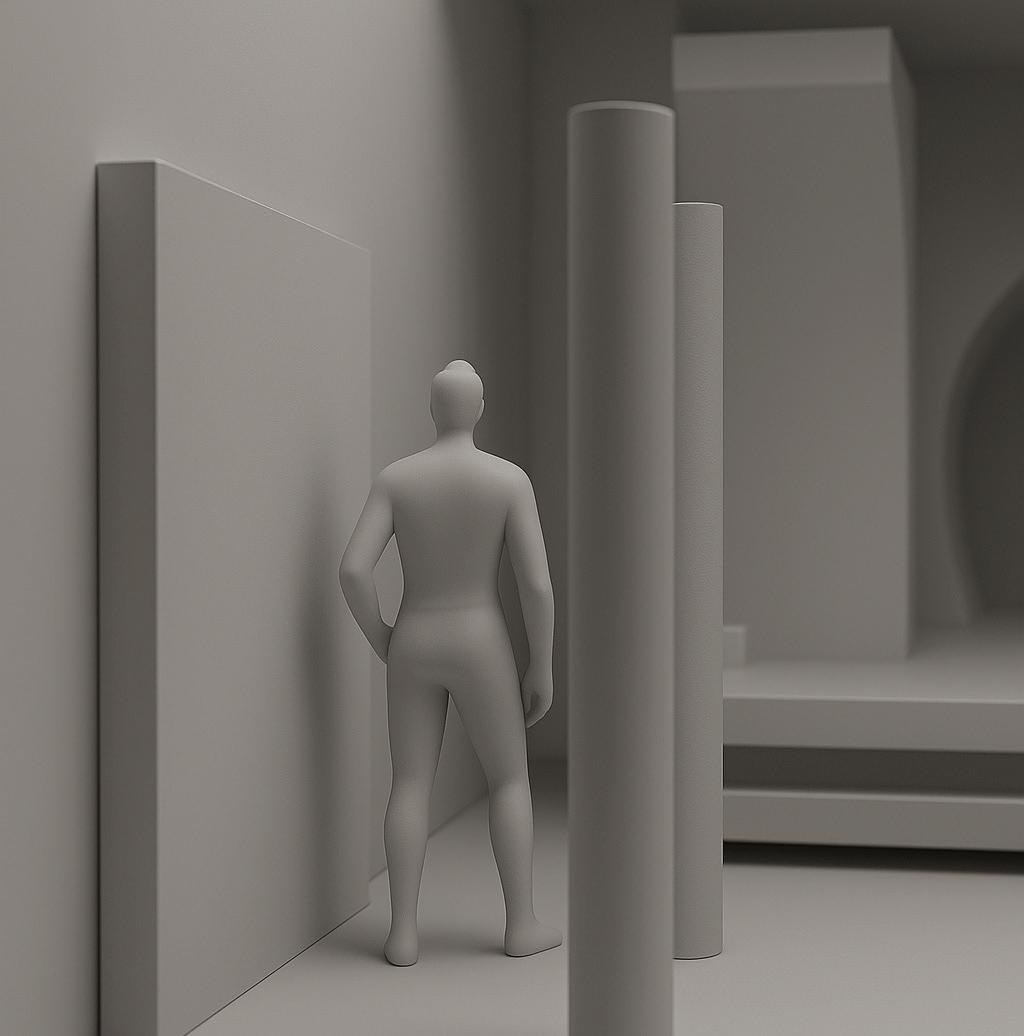
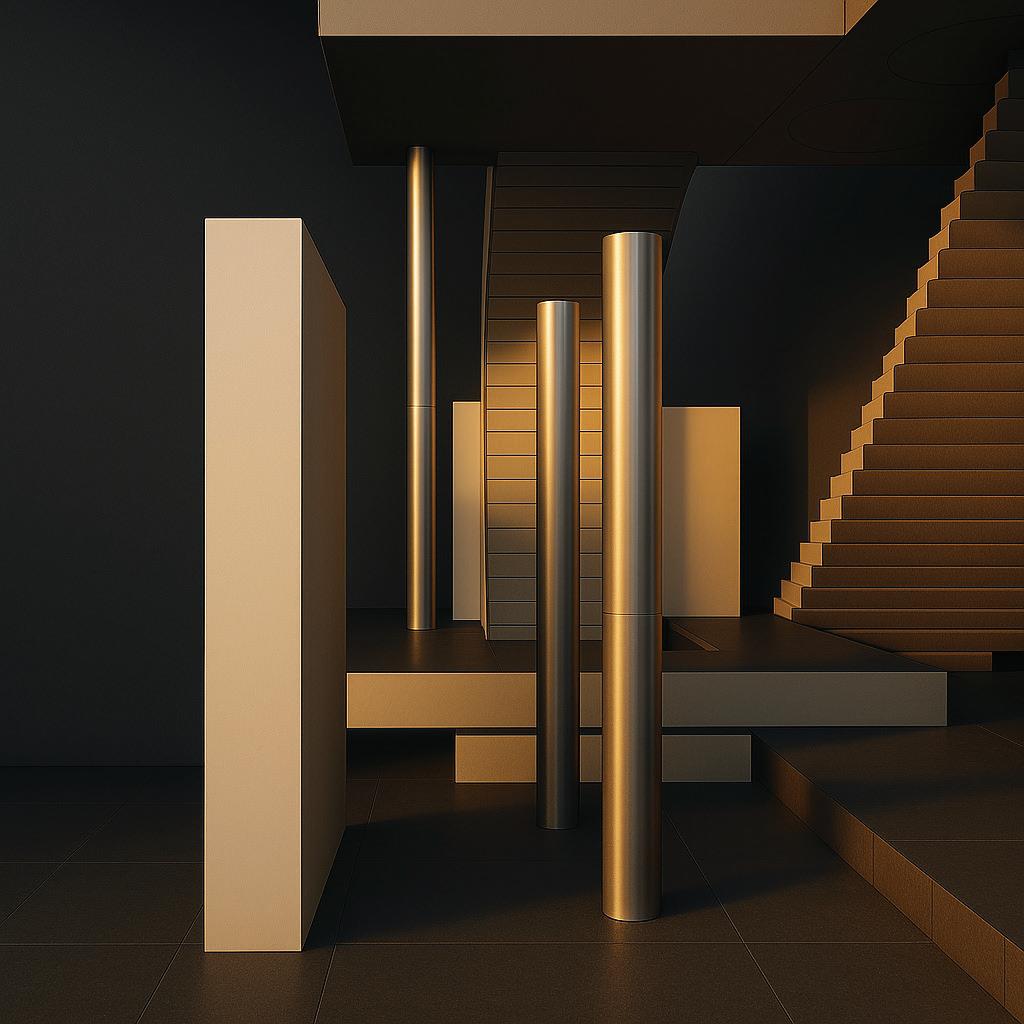
- This photo depicts four columns going from wide to narrow. The human figure is in the middle of the four columns in both images, as if he’s boxed in and there’s a spotlight on him.
- The wide pillars make the area feel more open and inviting, while the narrow pillars feel like I’m being closed in on, and this shows that the human figure is entering into a state of anxiety.
AI Generated Image
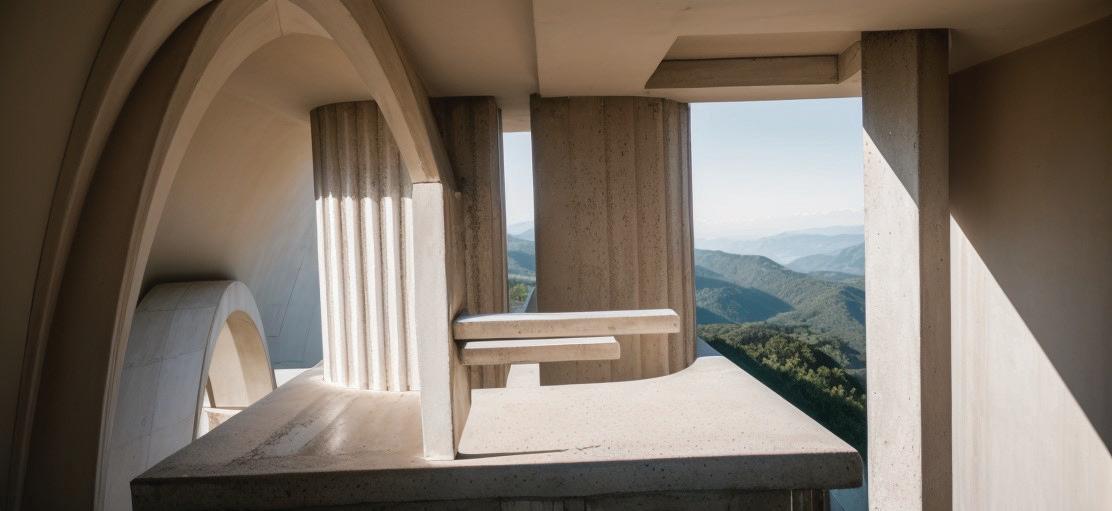
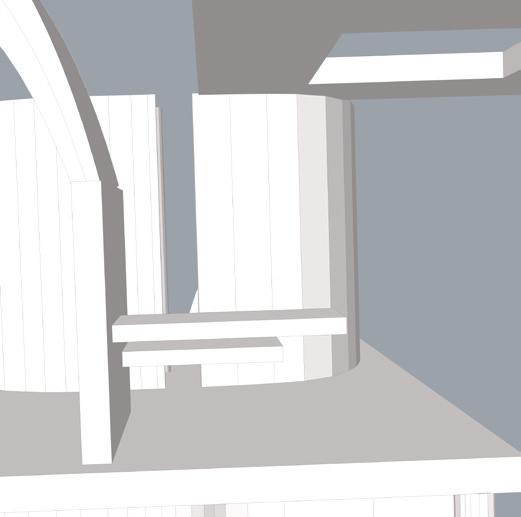
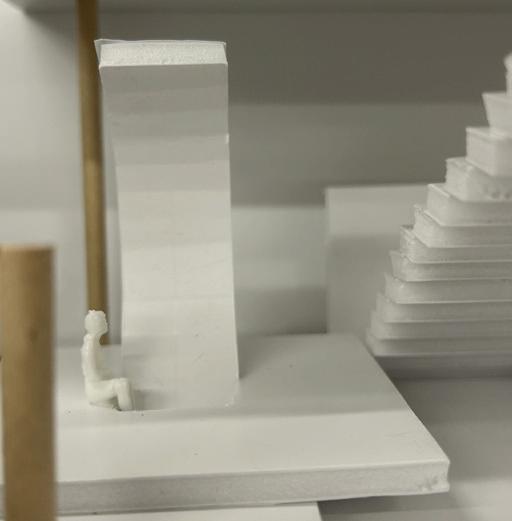
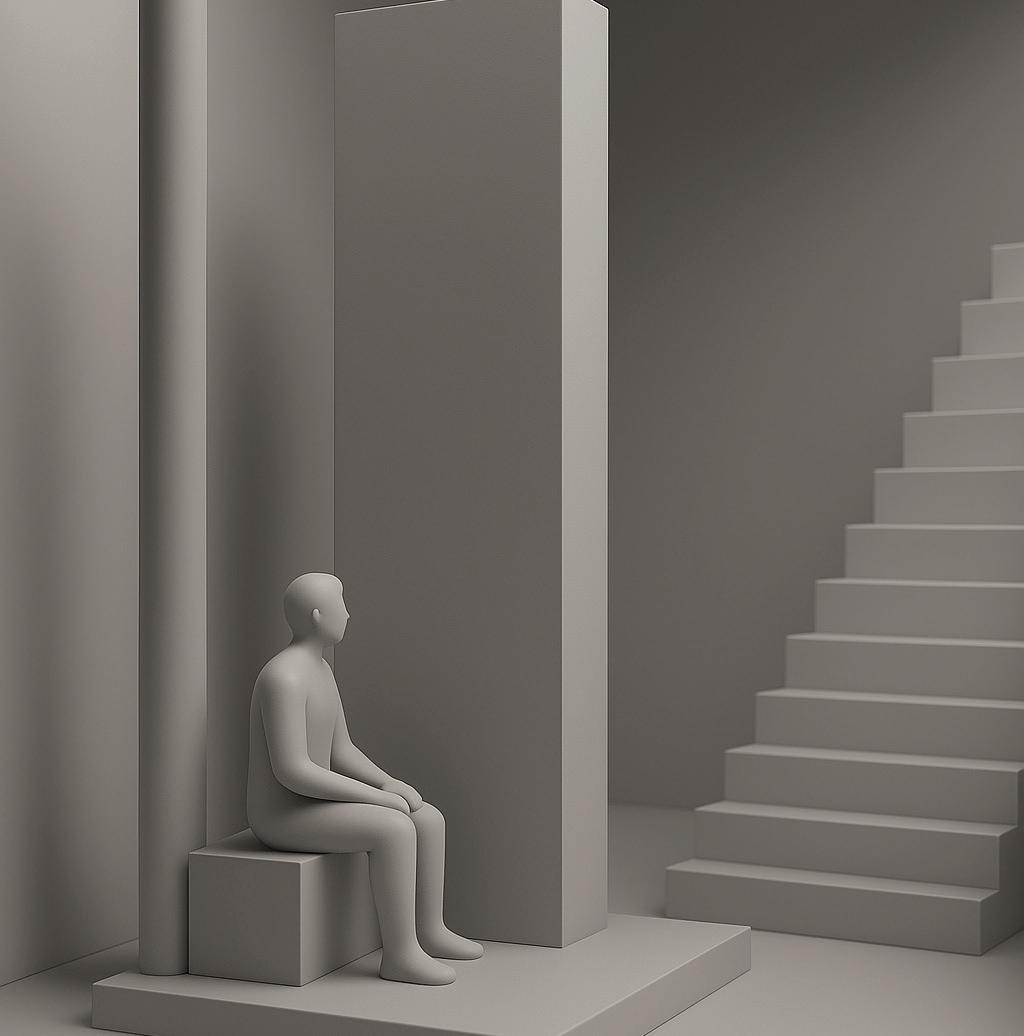
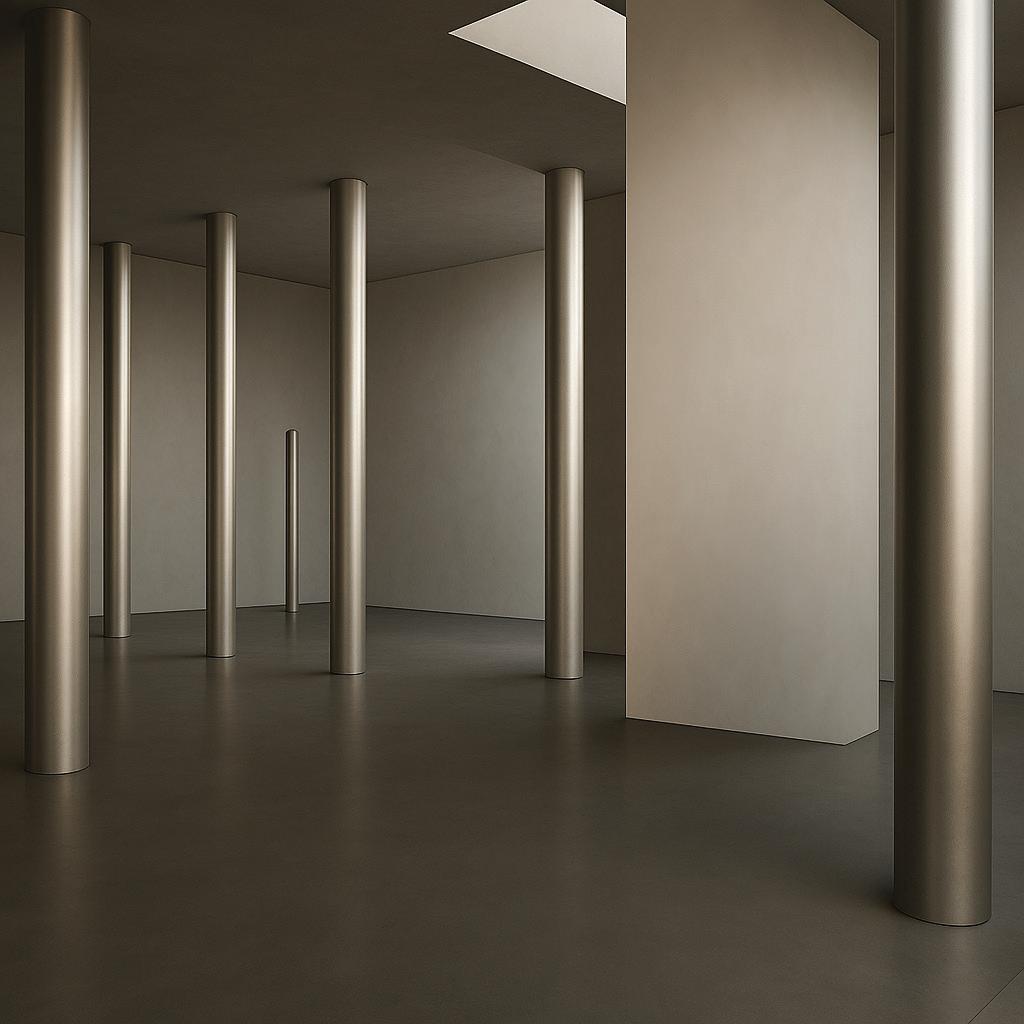
-This images shows a space with a low ceiling that has a void in it, and there are also pillars and walls. The human figure can be seen facing the void angled down the hallway. Then he walks between two pillars and a wall before turning right.
- The space could feel cramped, but the sky lights in two areas help the area feel more open and less confining. This shows that the human figure has the option to leave the space of anxiety before he enters into a state of fear, but he’s spiraling and continues on in fear.
Phase #1: Category #21_by hand
Phase #2: Category # 48_by hand
AI Generated Image
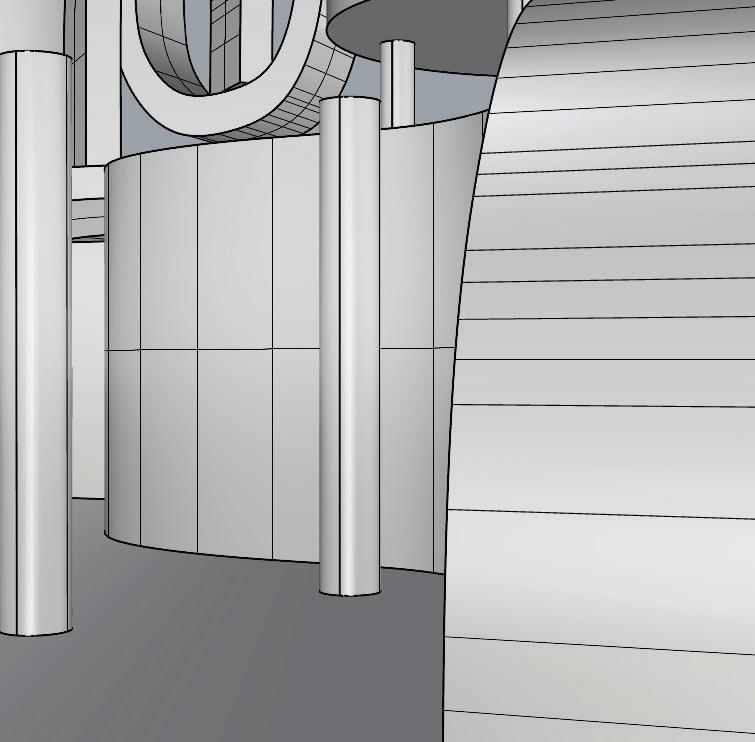
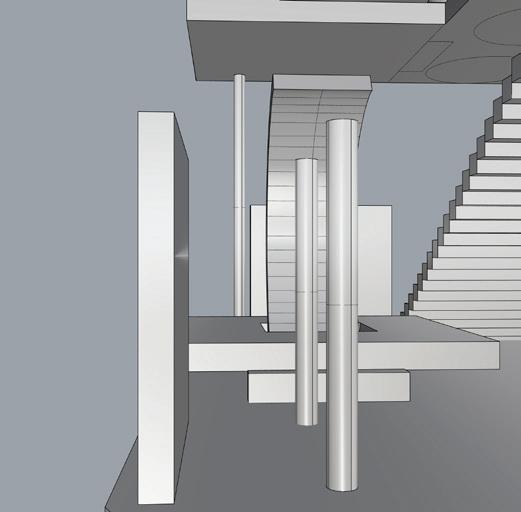
- This photo depicts four columns going from wide to narrow. The human figure is in the middle of the four columns in both images, as if he’s boxed in.
- The wide pillars make the area feel more open and inviting, while the narrow pillars feel like I’m being closed in on, and this shows that the human figure is entering into a state of anxiety.
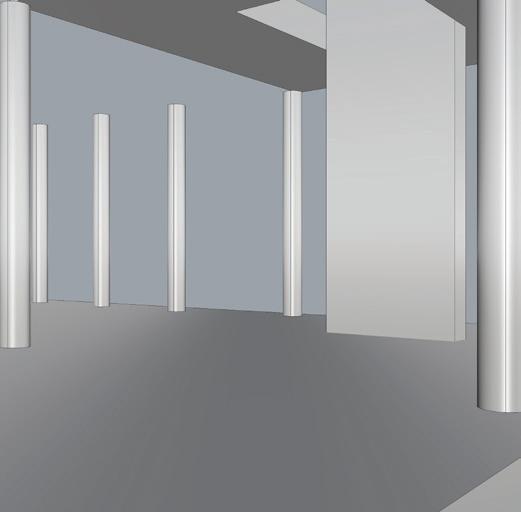
-This images shows a space with a low ceiling that has a void in it, and there are also pillars and walls. The human figure can be seen facing the void angled down the hallway. Then he walks between two pillars and a wall before turning right.
- The space could feel cramped, but the sky light helps the area feel more open and less confining. This shows that the human figure has the option to leave the space of anxiety before he enters into a state of fear, but he’s spiraling and continues on in fear.
Phase #1: Category #21_by Rhino
Phase #2: Category #48 _by Rhino
AI Generated Image
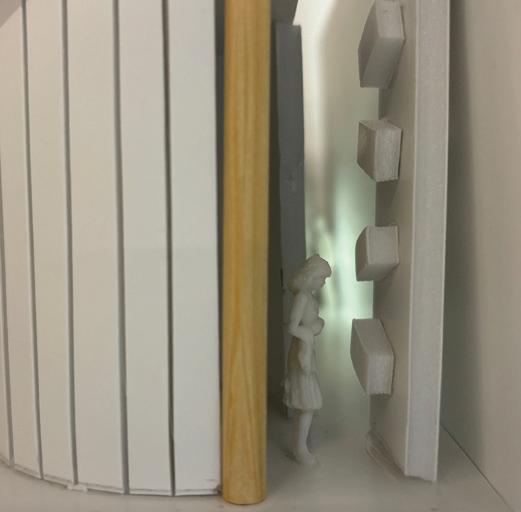
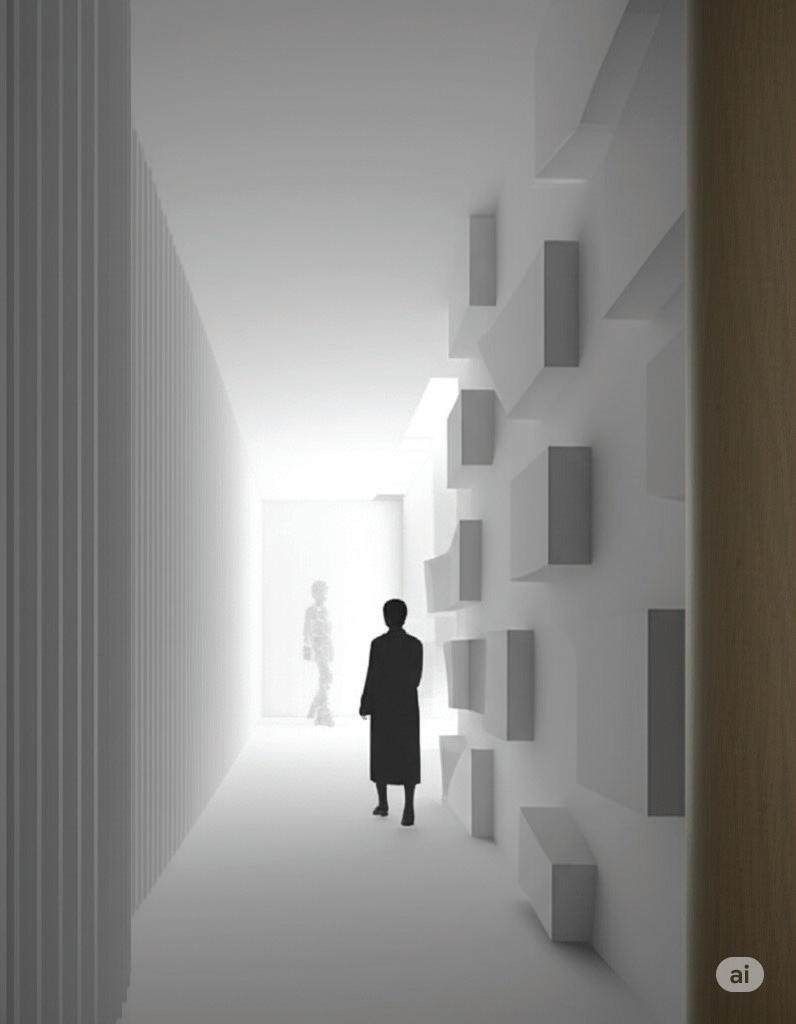
- This image depicts two walls staggered and parallel, two columns, and lighting from behind and then inside. The human figure is walking in a kind of pathway near both pillars and walls but it’s narrow and hard to pass through.
- The light from behind and the vertical pillars make me feel closed in and make it hard to see down the hall.
AI Generated Image
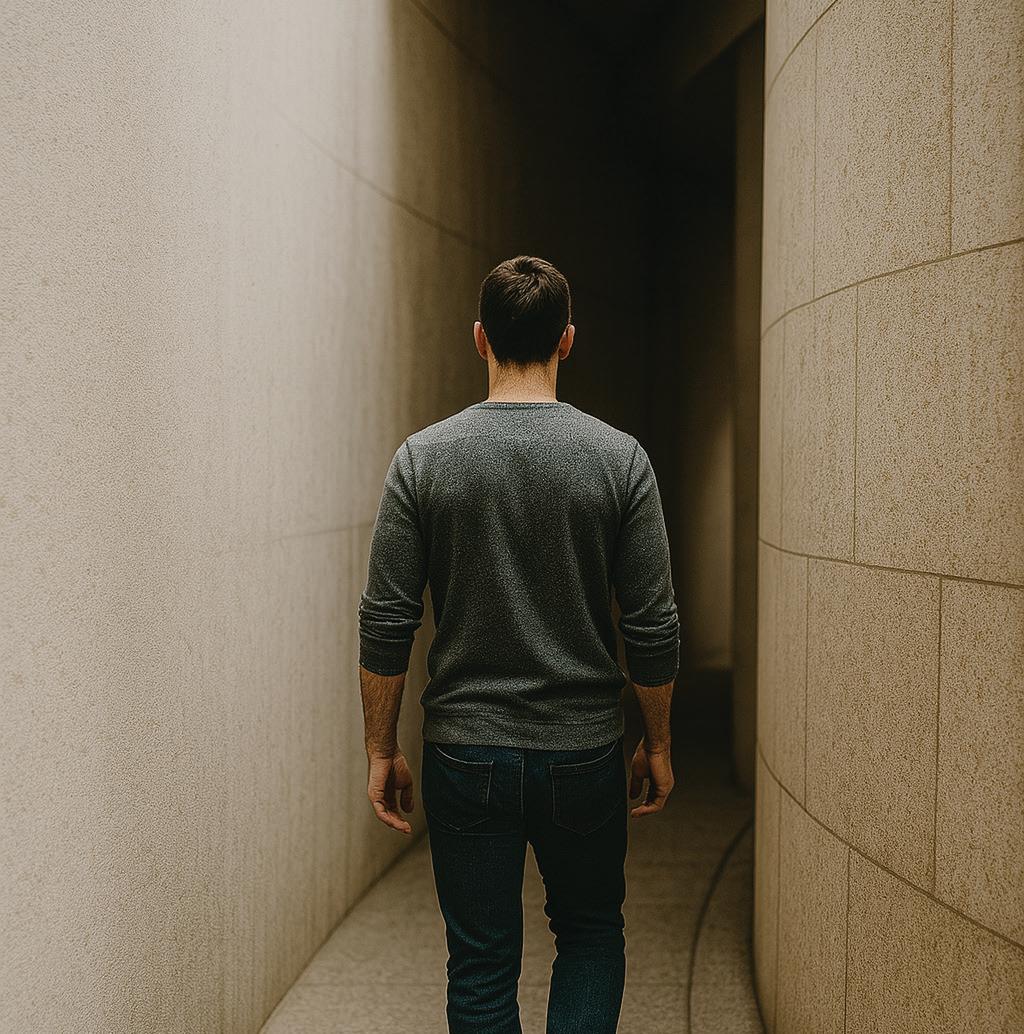
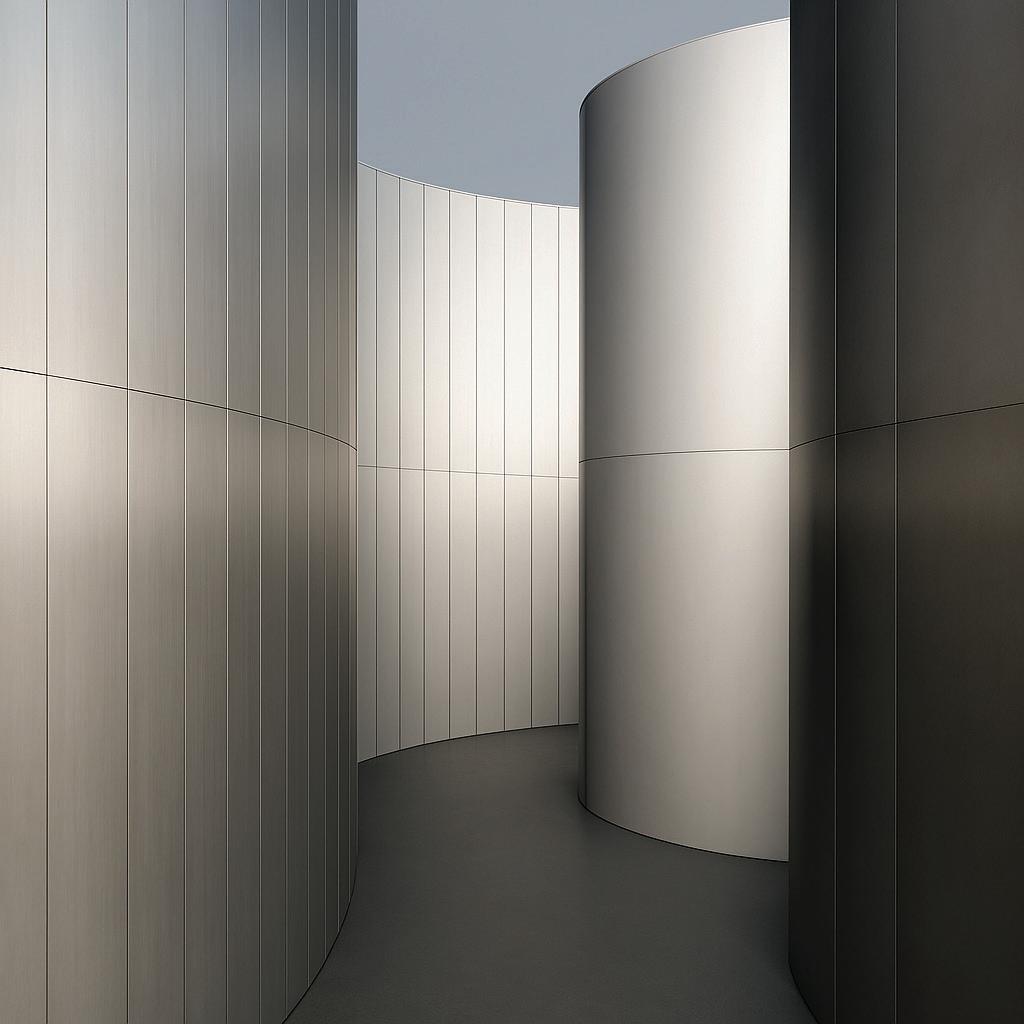
- This image shows a curved and flat wall creating a pathway. The human figure walks between the walls and the path starts to curve.
- It feels like I’m walking through a curved hallway that I can’t see the end of, and it makes me feel nervous.
Phase #3: Category # 27_by hand
Phase #4: Category # 36_by hand
AI Generated Image
- This image depicts two parallel walls, two columns, and two squared pillars. The human figure is walking in a kind of pathway near both pillars and walls but it’s narrow and hard to pass through.
- The narrow path makes me feel closed in and it’s hard to see down the hall because of the columns.
AI Generated Image
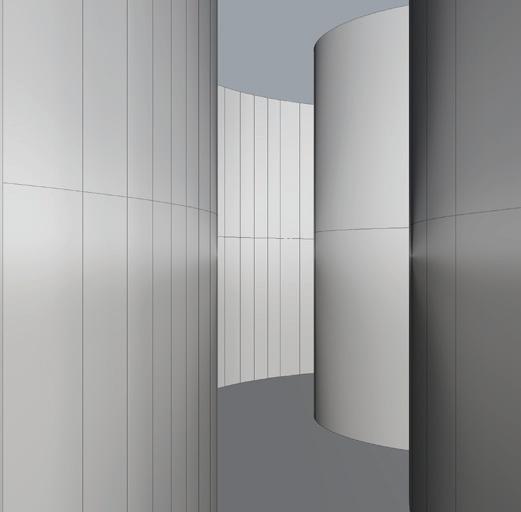
- This image shows a curved and flat wall creating a pathway. The human figure walks between the walls and the path starts to curve.
- It feels like I’m walking through a curved hallway that I can’t see the end of, and it makes me feel nervous.
Phase #3: Category # 27_by Rhino
Phase #4: Category # 36_by Rhino
AI Generated Image
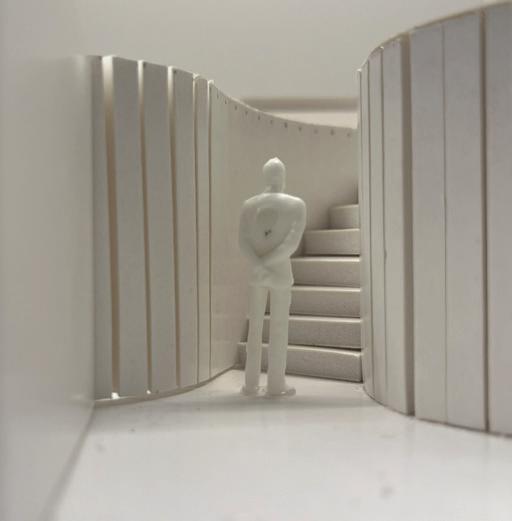
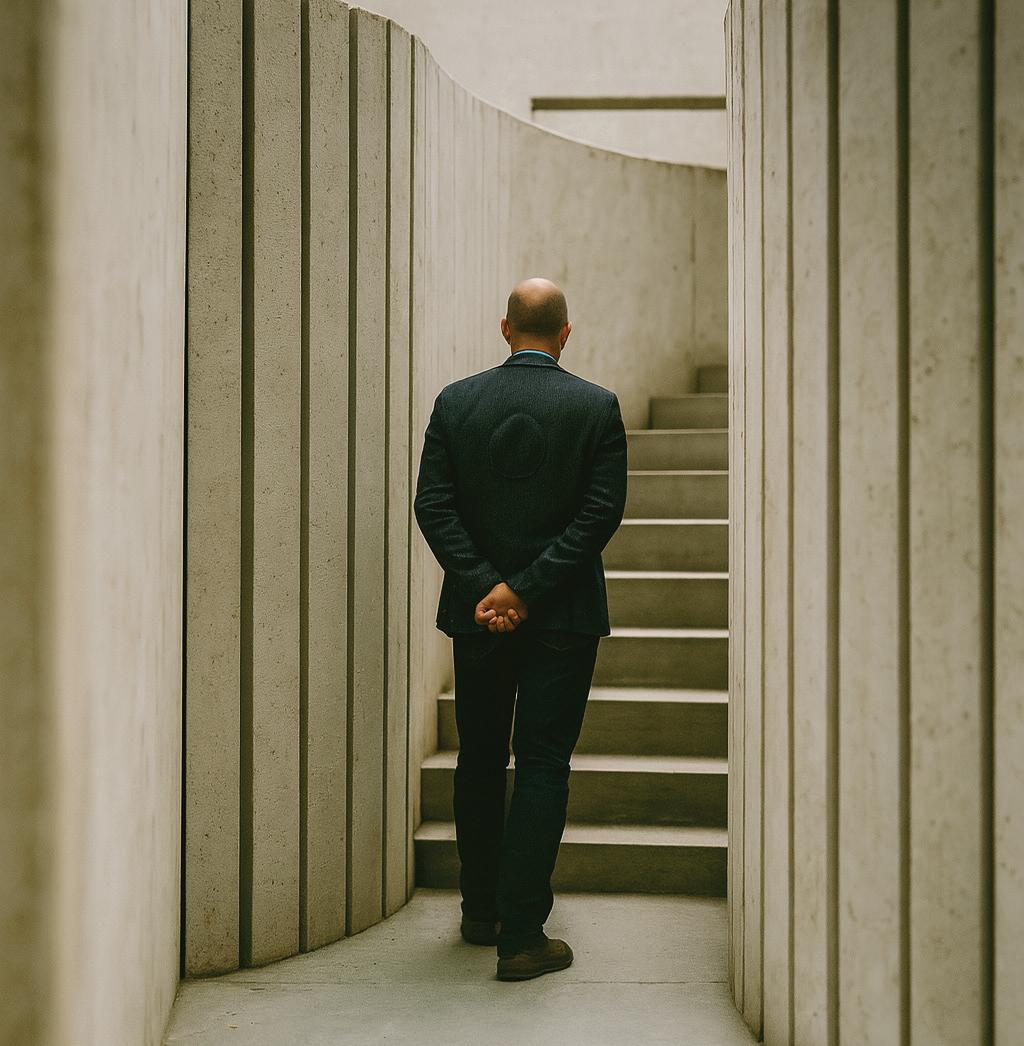
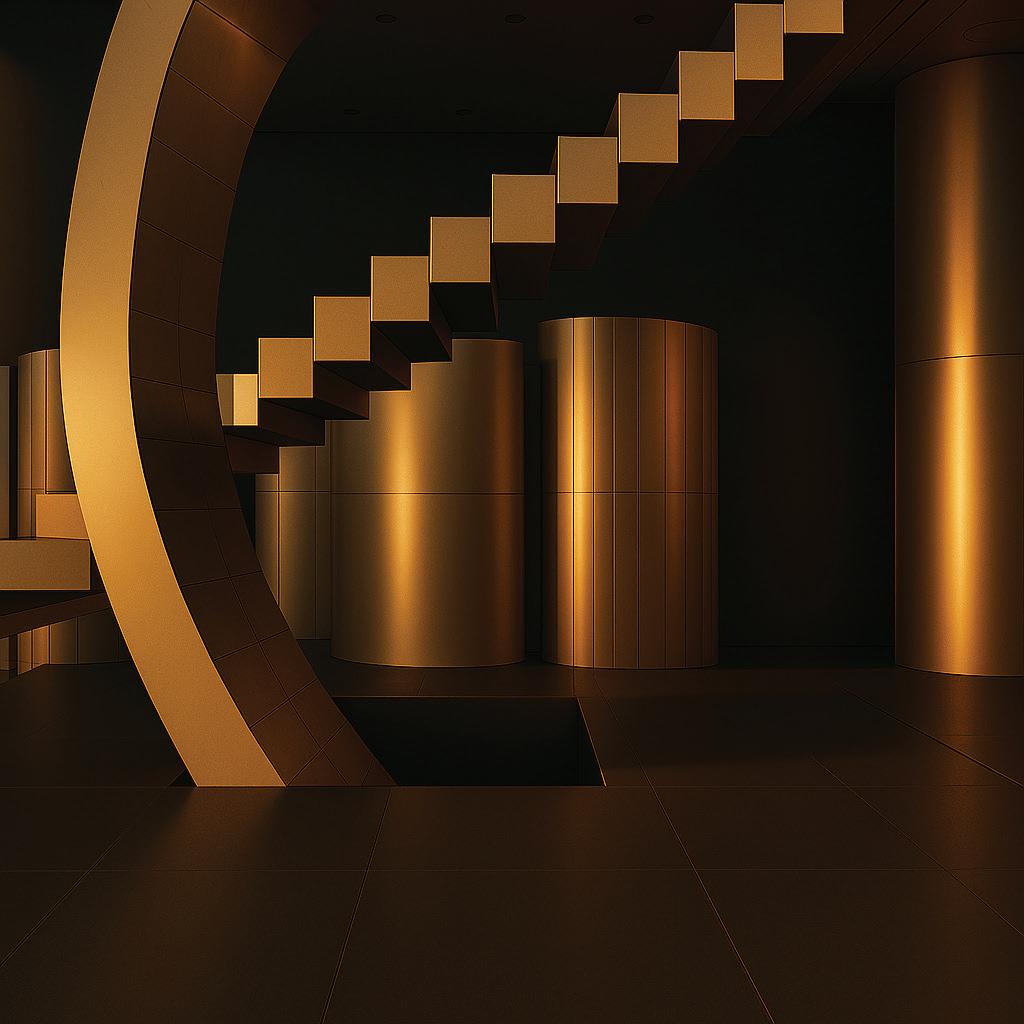
- This image shows a curved wall and a s-curved wall. The human figure is walking between the walls as they create a winding pathway upstairs.
- The walls make the path feel daunting, because it could be fun, but the human figure chooses to be afraid because of the past narrow halls he’s gone through in the structure, and he can’t see the end of this path.
AI Generated Image
- This illustration shows a void space that has two floating surfaces. The human figure is one surface, unable to get to the other surface.
- The space feels very open and futuristic, though the floating surface feels unusable because there’s no way to get up or down from them. The human figure is missing out on what is happening on the other surface because he is too scared to jump.
Phase #5: Category #44 _by hand
Phase #6: Category #49 _by hand
AI Generated Image
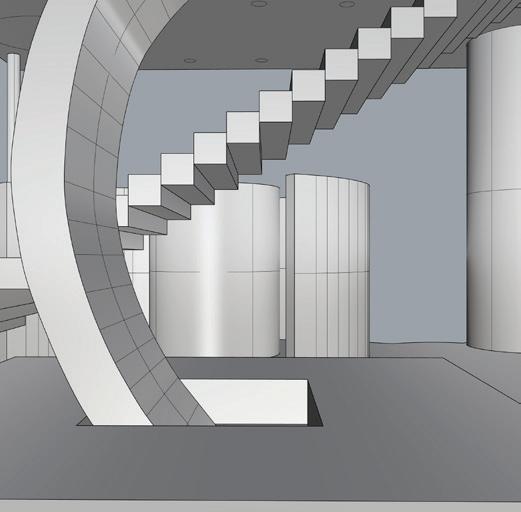
- This image shows a curved wall and a s-curved wall. The human figure is walking between the walls as they create a winding pathway upstairs.
- The walls make the path feel daunting, because it could be fun, but the human figure chooses to be afraid because of the past narrow halls he’s gone through in the structure, and he can’t see the end of this path.
- This illustration shows a void space that has two floating surfaces. The human figure is one surface, unable to get to the other surface.
- The space feels very open and futuristic, though the floating surface feels unusable because there’s no way to get up or down from them. The human figure is missing out on what is happening on the other surface because he is too scared to jump.
Phase #5: Category # 44_by Rhino
Phase #6: Category #49 _by Rhino
AI Generated Image
- This photo shows two low hanging curved surfaces, curving off of two tall, curved walls. The human figure stands directly under the curved surfaces, between the curved walls.
- The space feels very abstract and creative, it makes me feel adventurous, but as the human figure struggles with fear and anxiety, he stays under it rather than climbing up the exciting curved surfaces.
AI Generated Image
- This image depicts a curved wall with a sphere inside, and a curved vertical wall resting on the sphere. The human figure explores all around the space, walking under the curving vertical wall.
- The space feels less like a confining structure and more like a centerpiece of art in a room. The human figure can’t see its beauty and creative structure because of his fear. He only stands below it and doesn’t climb up it like it’s meant to be.
Phase #7: Category # 56_by hand
Phase #8: Category # 59_by hand
AI Generated Image
- This photo shows two low hanging curved surfaces, curving off of two tall, curved walls. The human figure stands directly under the curved surfaces, between the curved walls.
- The space feels very abstract and creative, it makes me feel adventurous, but as the human figure struggles with fear and anxiety, he stays under it rather than climbing up the exciting curved surfaces.
AI Generated Image
- This image depicts a curved wall with a sphere inside, and a curved vertical surface resting on the sphere. The human figure explores all around the space, walking under the curving vertical wall.
- The space feels less like a confining structure and more like a centerpiece of art in a room. The human figure can’t see its beauty and creative structure because of his fear. He only stands below it and doesn’t climb up it like it’s meant to be.
Phase #7: Category # 56_by Rhino
Phase #8: Category # 59_by Rhino
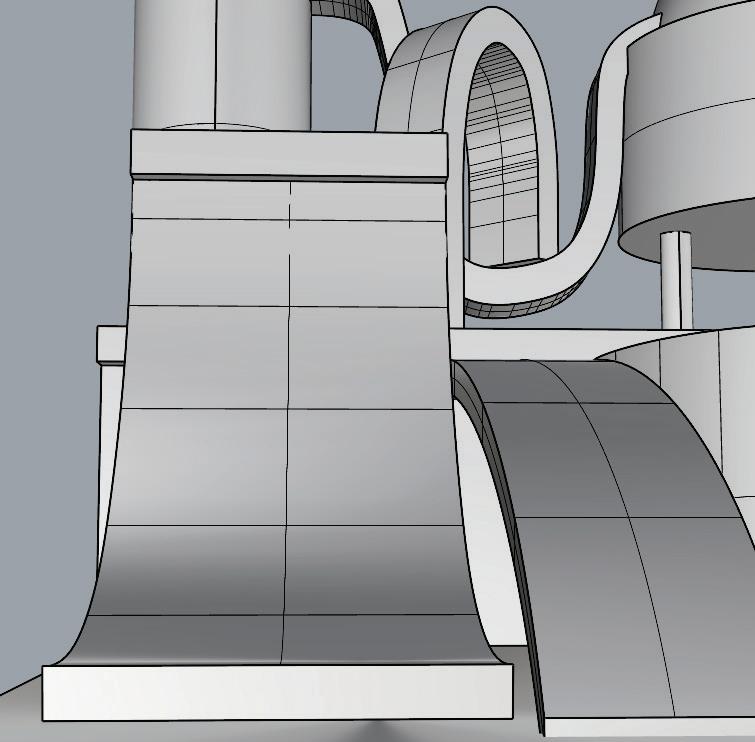
AI Generated Image
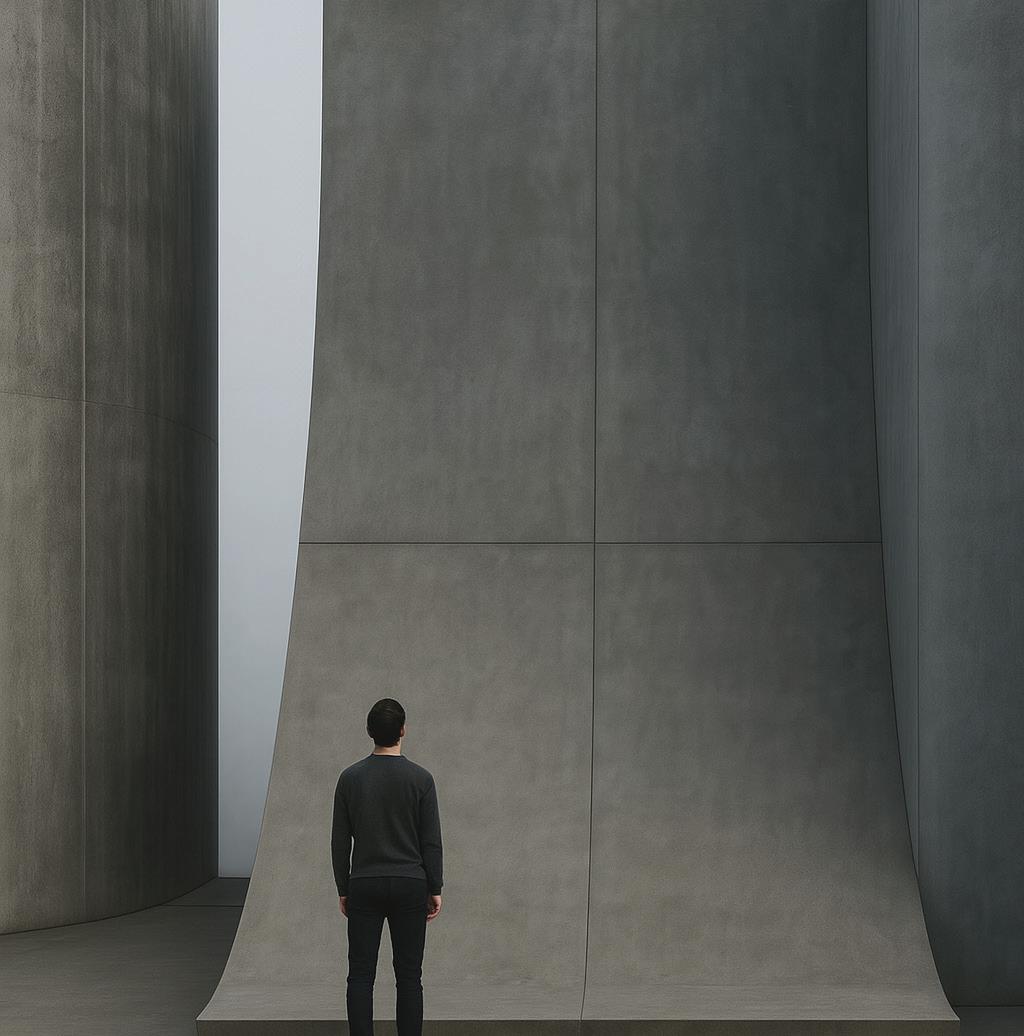
- This image shows a curved vertical surface with a raised floor facing it. The human figure stands in front of the curved surface.
- The space makes me feel unable to continue forward. The human figure is too worried about not being able to get up the wall to be able to see the potential fun and adventure of getting to the top.
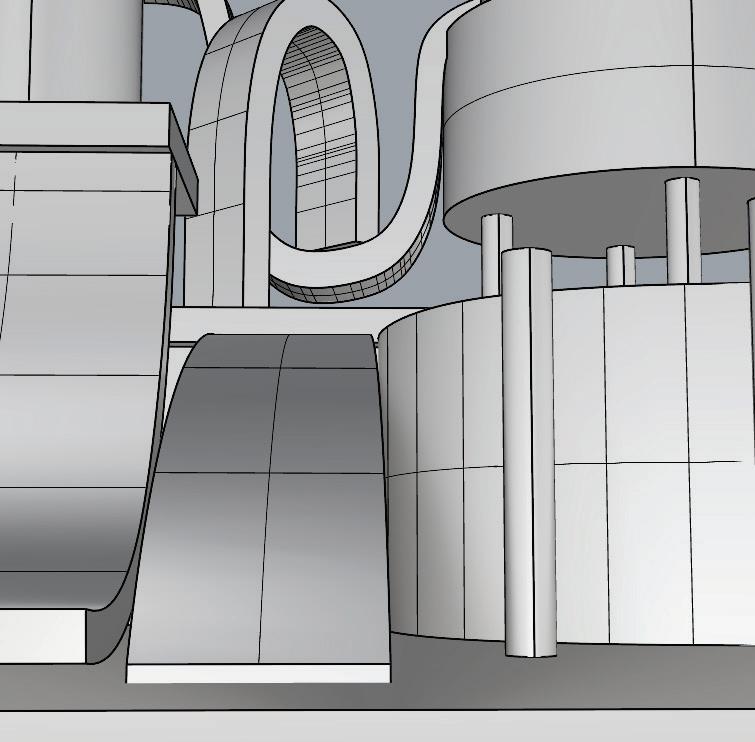
AI Generated Image
- This image shows a single vertical curved surface, curving away from the human figure that forms a tunnel-like form. The human figure faces the outside of the curve, standing a few feet away.
- The curved pat represents a good path, exciting and fun, but the human figure is too anxious to take it. Standing on the outside, I feel like I’m missing out, but at least I’m “safe”, I’m letting my fear hold me back from all kinds of things.
Phase #9: Category # 53_by hand
Phase #10: Category # 55_by hand
- This image shows a curved vertical surface with a raised floor on top. The human figure stands in front of the curved surface facing it.
- The space makes me feel unable to continue forward. The human figure is too worried about not being able to get up the wall to be able to see the potential fun and adventure of getting to the top.
- This image shows a single vertical curved surface, curving away from the human figure that forms a ramp-like form. The human figure faces the outside of the curve, standing a few feet away.
- The curved path represents a good path, exciting and fun, but the human figure is too anxious to take it. Standing on the outside, I feel like I’m missing out, but at least I’m “safe”, I’m letting my fear hold me back from all kinds of things.
Phase #9: Category # 53_by Rhino
Phase #10: Category # 55_by Rhino
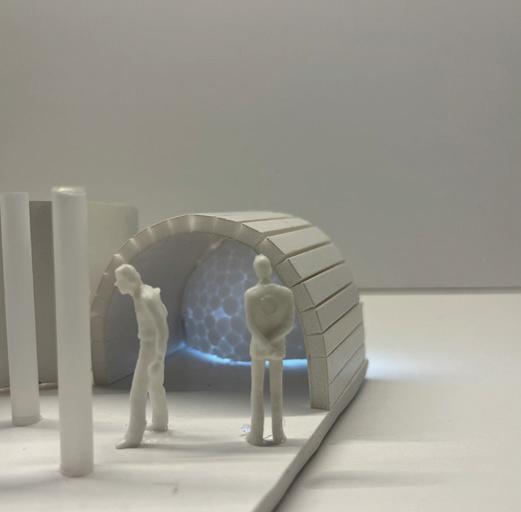
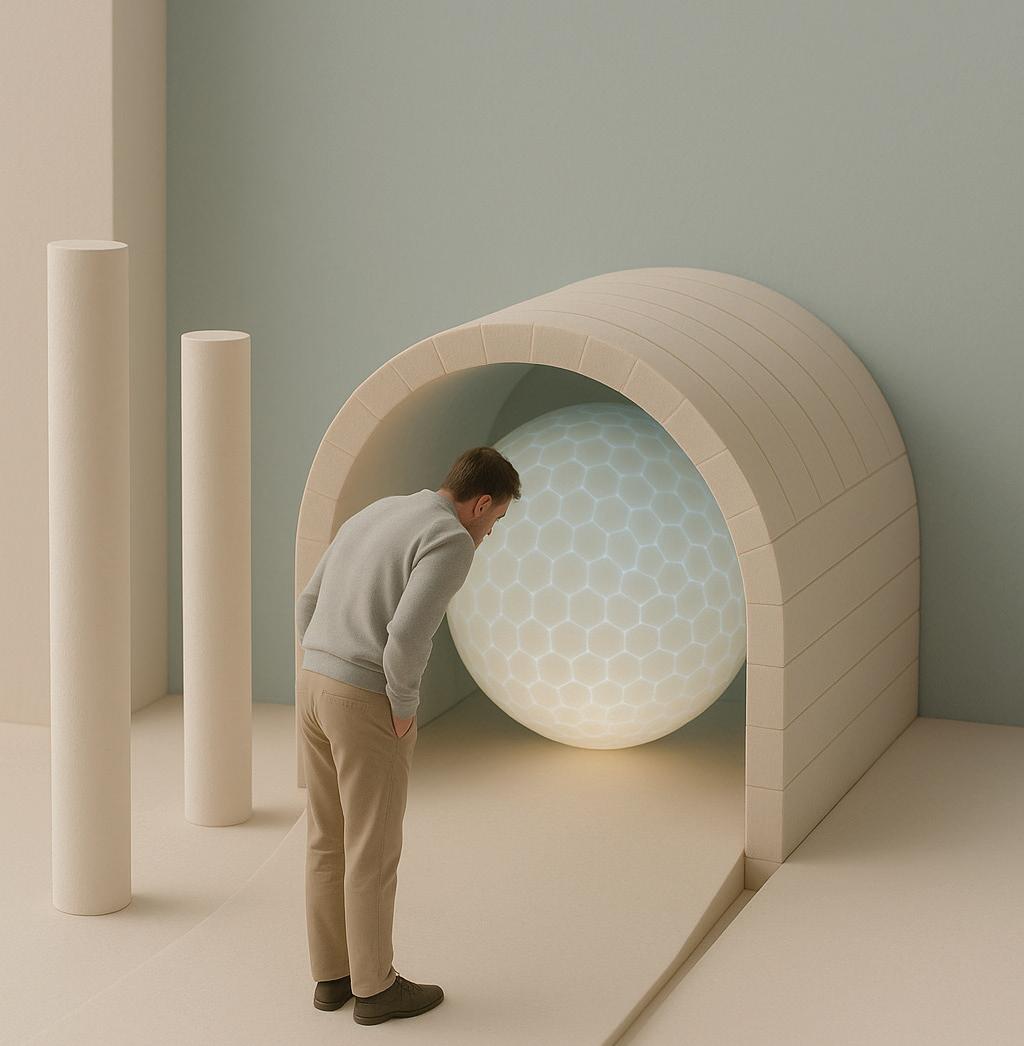
AI Generated Image
- This photo shows a tunnel that contains a sphere surface, slightly protruding from it, with light coming in from the back. The human figure stands at the sphere peeking slightly through the tunnel.
- The sphere bulging out of the tunnel feels like tied up anxiety and fears that are being held on to and need to be released and let go of.
AI Generated Image
- This illustration depicts three pillars staggered. The human figure is walking between the pillars, two on one side and one on the other.
- Emotionally, the vertical view gives a sense of direction and a pathway, representing hardship that the human figure will go through, but he’s finally ready for it and wants to live in boldness and not fear and anxiety anymore.
Phase #11: Category # 58_by hand
Phase #12: Category # 20_by hand
AI Generated Image
- This photo shows a tunnel that is blocked at one end. The human figure stands at the sphere peeking slightly through the tunnel to the blocked side.
- The blocked path l feels like tied up anxiety and fears that are being held on to and need to be released and let go of.
AI Generated Image
- This illustration depicts three pillars staggered. The human figure is walking between the pillars, two on one side and one on the other.
- Emotionally, the vertical view gives a sense of direction and a pathway, representing hardship that the human figure will go through, but he’s finally ready for it and wants to live in boldness and not fear and anxiety anymore.
Phase #11: Category # 58_by Rhino
Phase #12: Category # 20_by Rhino
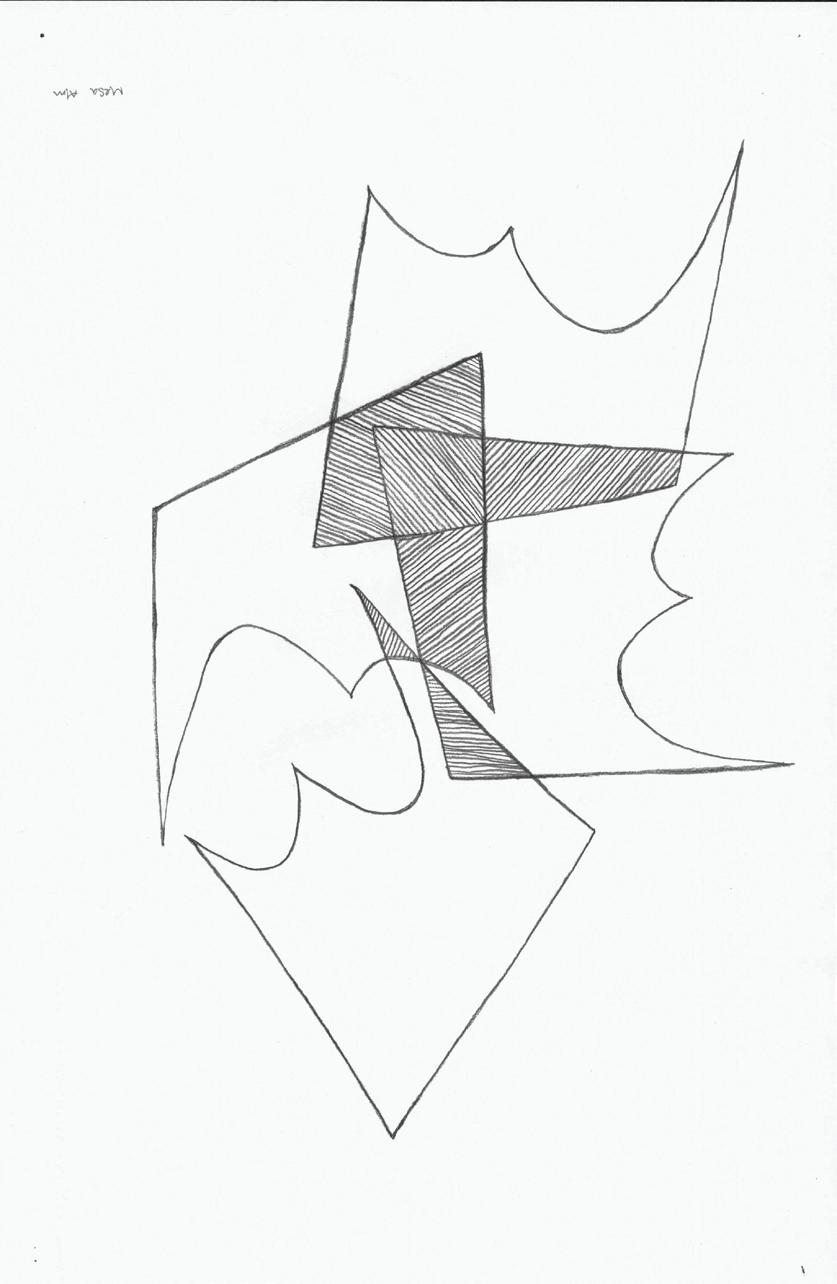
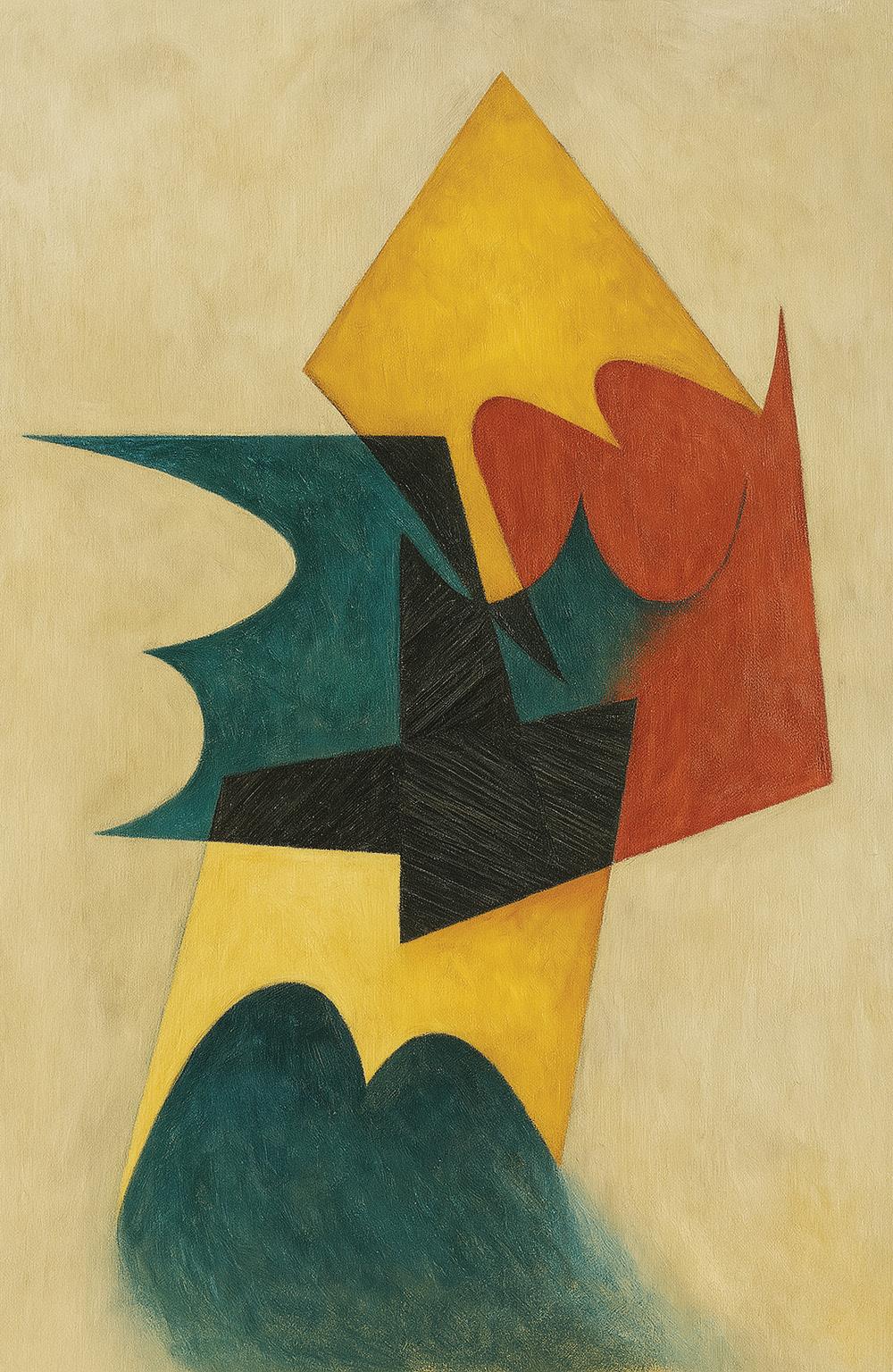
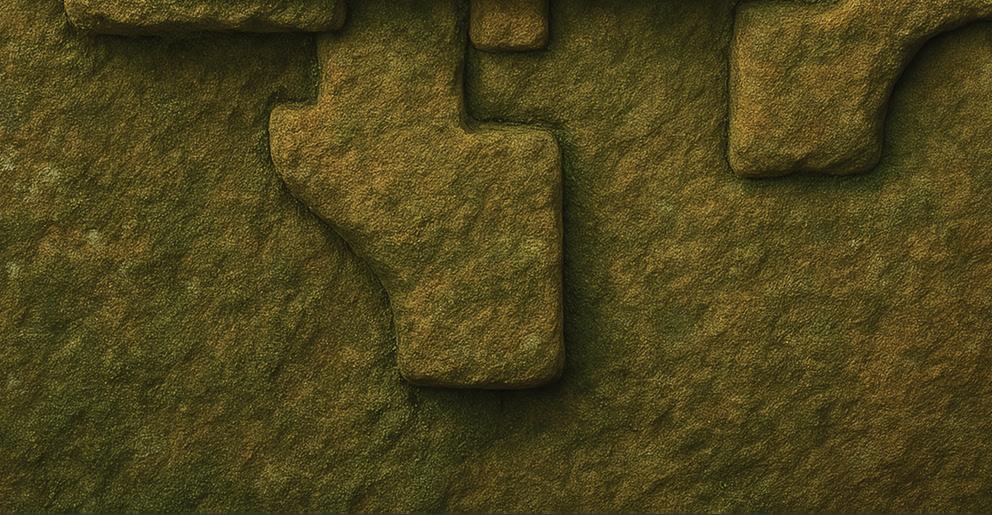
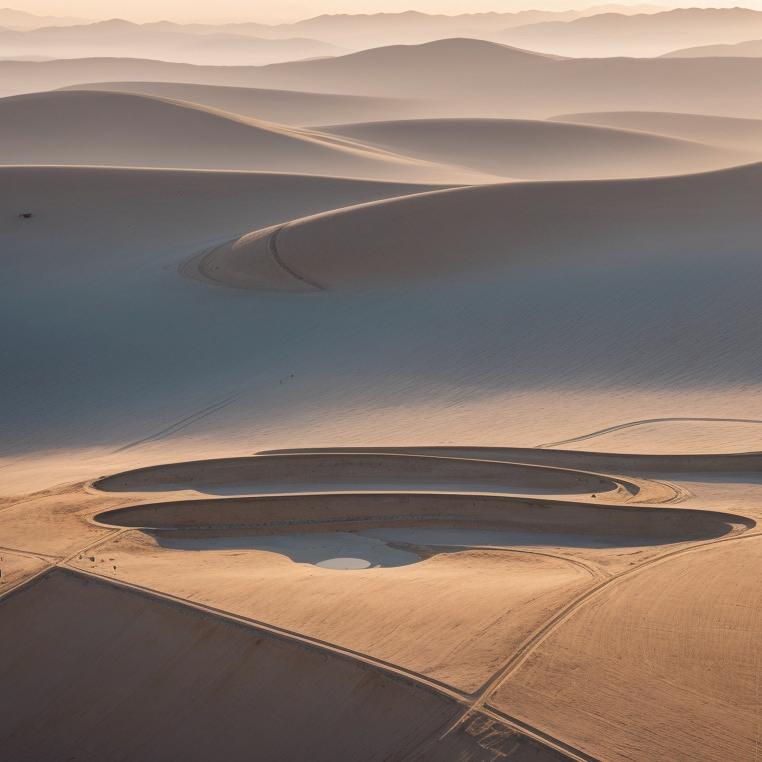
I wanted Ai to generate a colorful image that looked like a piece of art. Ai took my drawing and added depth, strokes, and colors to create a more interesting piece.
AI Generated Image
AI Generated Image
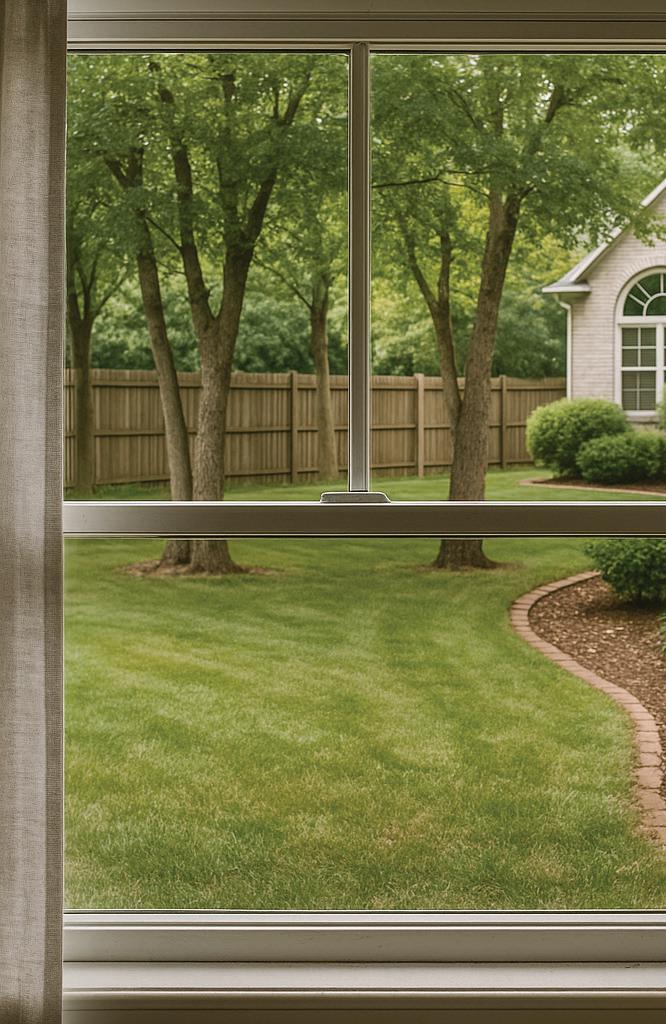
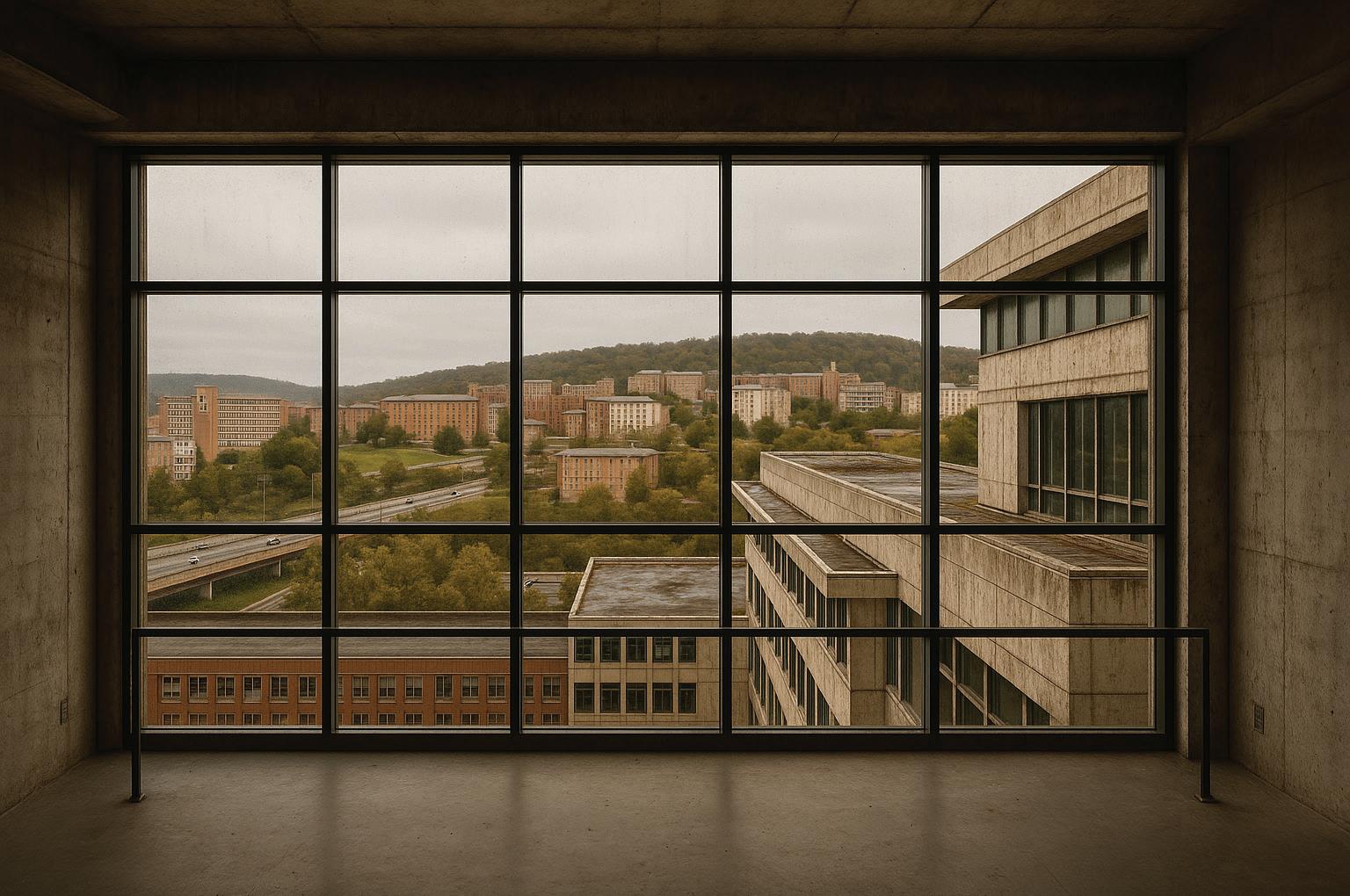
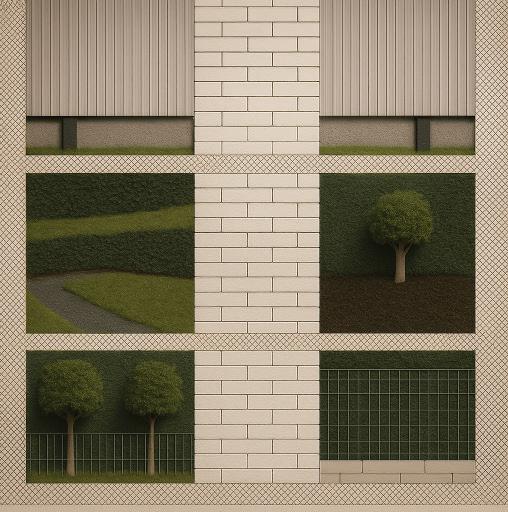
As I look out my window, I see the wind rustle the trees, watch the birds fly around, and hear the dog barking in the neighbor’s yard. The space is open and quiet. Memories of sitting by the campfire, jumping on the trampoline, and swinging on the playset flood my mind. These things from my memory no longer decorate the yard. As I grew up, so did this space; it no longer houses a child. I never noticed the perfectly placed trees; how they line the fence and provide shade to part of the yard. Or the rounded window on the back of the neighbor’s house. I hadn’t realized how the plants created a curving path along the edge of the landscaping trim.
Now, as I look out my window, I see my neighbor’s beautiful rounded window. I see the straight fence and the intentional placement of the trees and plants. I hear the birds and think of the memories that fill my mind—memories of a place I will always cherish: my backyard, a place I can still see from this window.
This is the prompt I used to create this detailed and realistic Ai generated image.
LinkedIn Certificates
Illustrator 2025 Essential Training
Course
InDesign
Training
Training
Photoshop 2025 Essential Training
Course completed by Mesa Alm
May 22, 2025 at 12:31AM UTC 12 hours 38 minutes
Top skills covered Adobe Photoshop
Rhino: From Curves to Surfaces
Course completed by Mesa Alm May 22, 2025 at 08:46PM UTC 3 hours 33 minutes
Top skills
Rachel Callahan Portfolio
Project #1 “Wall, Column, and Space”
Project #2 “Hand Drawing”Project #3 “Drawing What you See, Drawing What you Feel”
Project #4 “Space Cube”
Project #5 “First Portfolio”
OverallIf you could talk to you before these five weeks, what would you like to share with you? - Its all okay, just make the to-do list and get after it.
First Portfolio
Learning Objectives for Work #1. AI Exploration Students will experience an advanced technology: AI Image Generator “Fabrie.” Through the process, students will be able to start considering how to integrate the technology in their design process.
Learning Objectives for Work #2. Portrait Students will take a portrait picture of themselves with their achievements over the past four weeks. This will help them celebrate their time and effort.
Learning Objectives for Work #3. Portfolio Students will make a portfolio with a template and their achievements over the past five weeks. This will help them understand what the end of design is. The goal is not just to complete each individual visualization, but to compile the deliverables and results resulting from the process.
This sequence is a front facing wall with a diagonal wall and lighting coming from the right. The human figure is at the end of the hall mad by the horizontal walls and is looking at the lighting. This shows the feeling of exploration to see what’s coming from the light.
This sequence is a right aligned wall with slats above the wall and upper lighting. The human figure is positioned next to the wall with the shadow of the light coming through the slats above being show on the human figure. This shows the first element of joy which plays with the lighting and feels fun and new to experience.
Phase #1: Category #_by hand
Phase #2: Category # _by hand
This sequence is a left angled wall and a horizontal front facing wall. The view is standing in the beginning of the hallway. This feels like a place for opportunity with the unknown hallway representing opportunity and optimism.
This sequence is two walls creating a hallway with horizontal slats on top of the hallway. The view is under the slats with the view of the curve ahead. This shows the first element of joy along the journey.
Phase #1: Category #_by Rhino
Phase #2: Category # _by Rhino
This sequence is 2 parallel curved walls. The human figure is between the 2 walls with a curved surface from above. This conveys the guided feeling to finding your joy with another added element in to represent another thing that brings you joy.
This sequence is 2 parallel walls with a curved surface from above and a slight view of a bigger room at the end of the hallway. The human figure is between the walls below the surface with a view of the bigger room partially blocked by the wall. This shows almost finding your joy and catching a glimpse of what is to come with your true joy and knowing you are almost there.
Phase #3: Category # _by hand
Phase #4: Category # _by hand
This sequence is standing in the curve and being blocked by the other hallway. The view is of the curve. This sequence shows experiencing one of the first elements of joy.
This sequence is two curved walls a curved floating surface coming down from the ceiling. The view is between in the hallway. This shows another element of joy with the two curved surfaces.
Phase #3: Category # _by Rhino
Phase #4: Category # _by Rhino
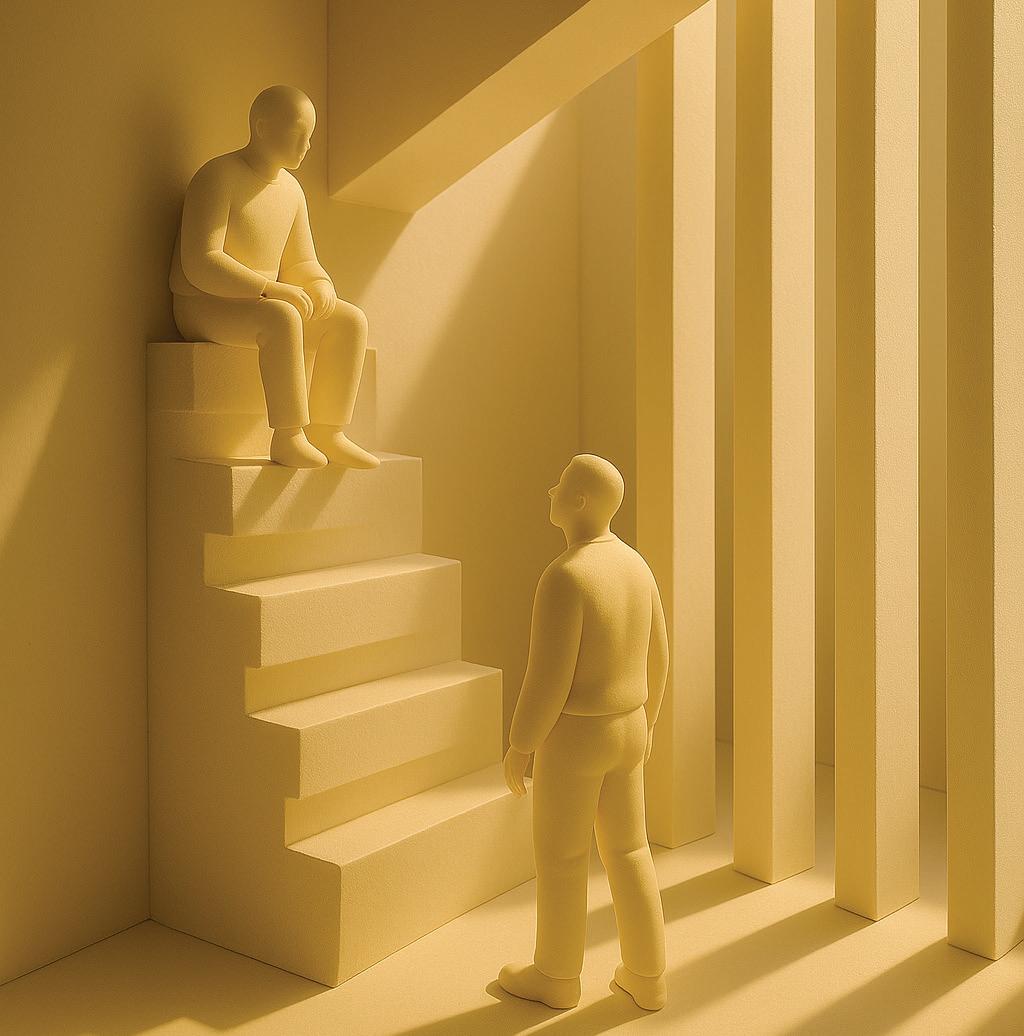
Prompt_Paragraph A left vertical wall with stairs going down the wall and a horizontal wall at an angle with slats in the wall and right lighting coming through the slats. The human figures are positioned with one sitting on the middle stair and one is standing at the bottom of the stairs next to the slats. This sequence feels like you are climbing up I your joy and getting further in you journey with the elements of lighting representing an element of joy you already found along the way.
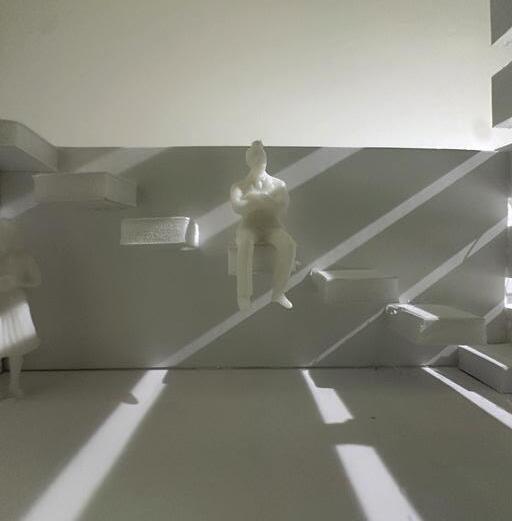
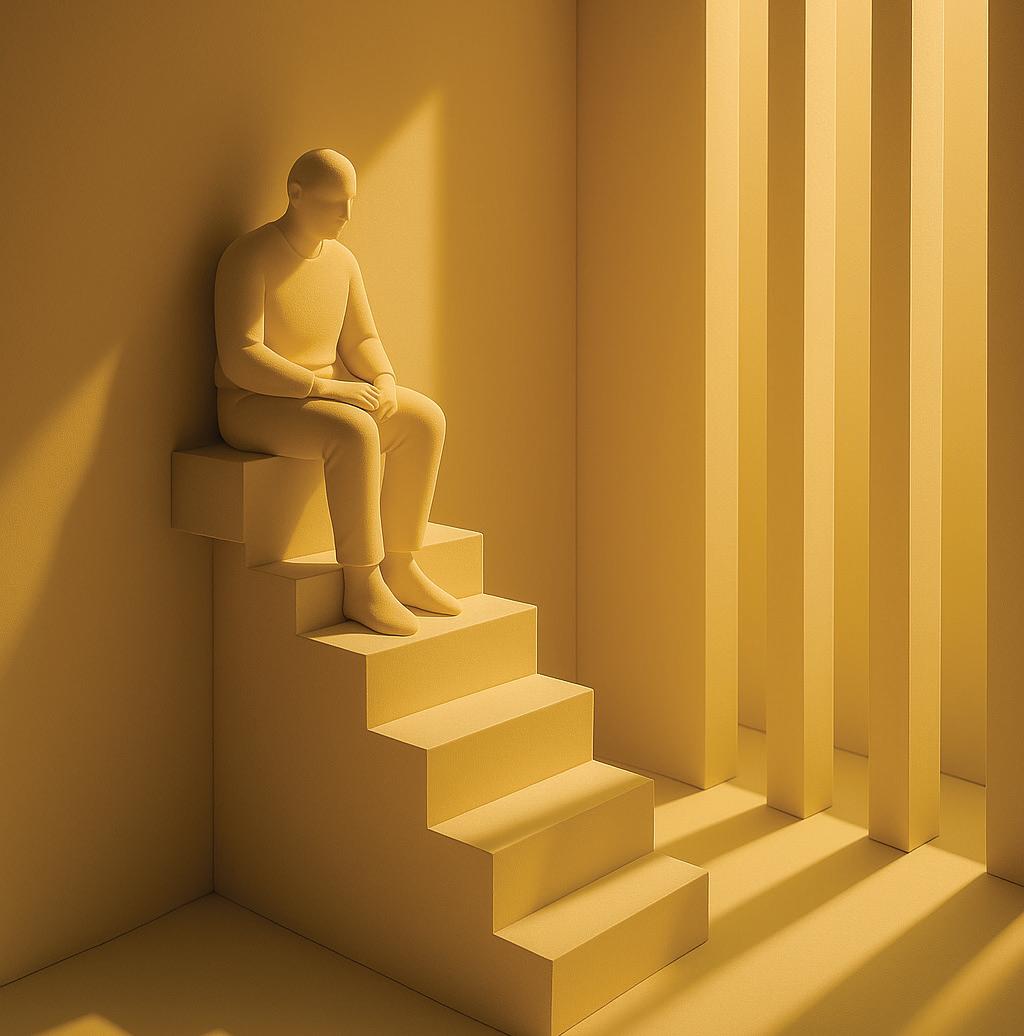
This sequence is a horizontal wall with stairs descending down the wall. The human figure is positioned to be sitting on the middle stair. This conveys again going upwards in your joy and learning more and more about your joy.
Phase #5: Category # _by hand
Phase #6: Category # _by hand
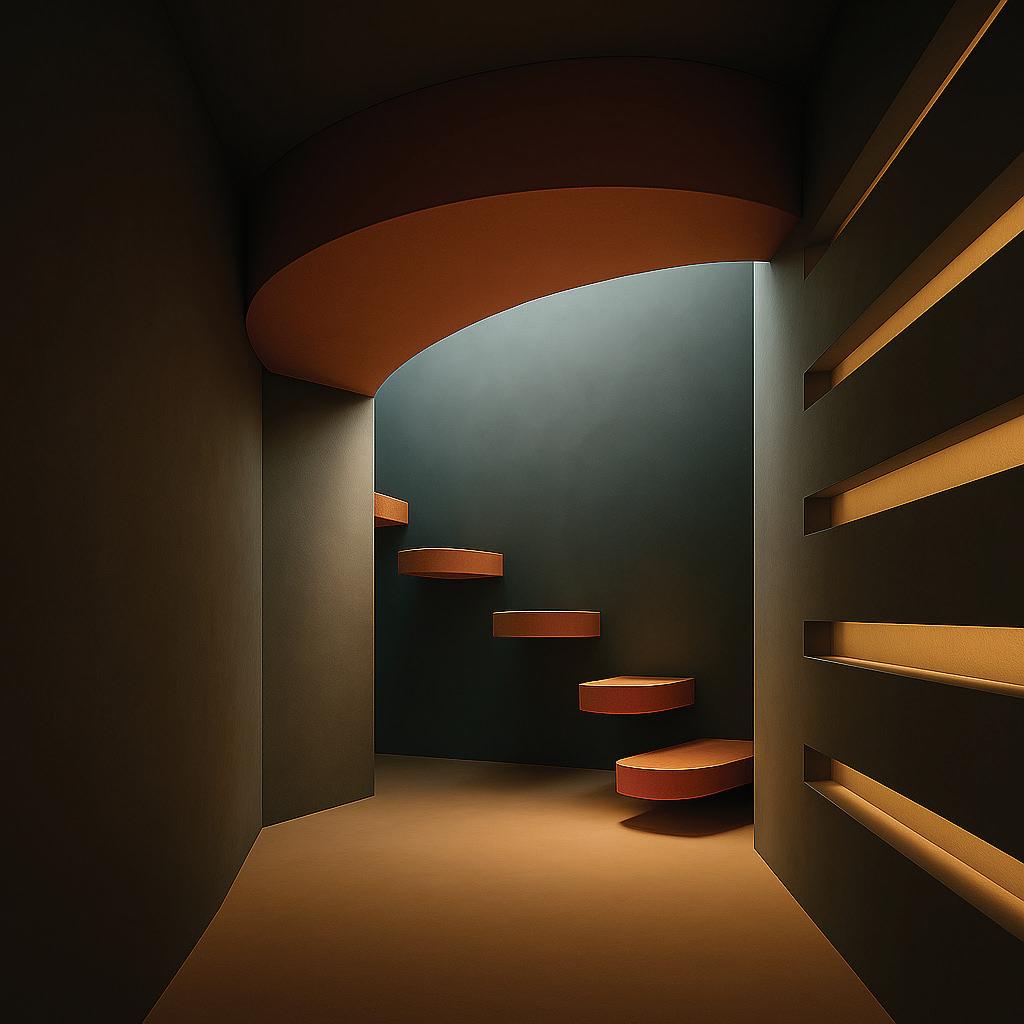
This sequence is two walls with a curved floating surface above the hallway. The view is underneath the curved surface between two walls still. This shows the last view before fully seeing your joy.
This sequence is a left wall with stairs going up the wall and a right horizontal wall with slats. The view is at the bottom of the stairs in the corner. This feels like you are about to go up to a different level in your joy while experiencing one of the previous elements discovered on the journey to finding true joy.
Phase #5: Category # _by Rhino
Phase #6: Category # _by Rhino
This sequence is a horizontal wall with slats and a curved elevated surface. The huma figure is sitting on the edge of the elevate surface viewing the slats from above. This shows when you are reflecting on what has or has not brought you joy along the way.
This sequence is a curved elevated surface with another curved floating surface on the right connected to the slatted wall to the right. The human figure is sitting on the top of the elevated curved surface viewing the whole room from above. This shows seeing all fo your progress and viewing your whole full joy.
Phase #7: Category # _by hand
Phase #8: Category # _by hand
This sequence is a elevated curved surface and a front facing horizontal wall with slats. The
from different perspectives your favorite elements of
This sequence is a front facing horizontal wall with stairs going up the wall. The view is focused on the middle stair. This feels like you are actively climbing up in your joy.
view is sitting on the elevated curved surface facing the slats. This feels like you are viewing
joy.
Phase #7: Category # _by Rhino
Phase #8: Category # _by Rhino
This sequence is a horizontal wall with stairs descending down and a curved wall on the left. The human figure is sitting on the middle stair. This shows descending down into your joy and utilizing it in your life.
This sequence is a left angled wall with stairs descending down and a right curved wall. The human figures are standing on top of the ledge and a human figure standing along the curve under the stairs. This sequence shows the different levels of your joy and how you can still have joy even if it is on different levels sometimes.
Phase #9: Category # _by hand
Phase #10: Category # _by hand
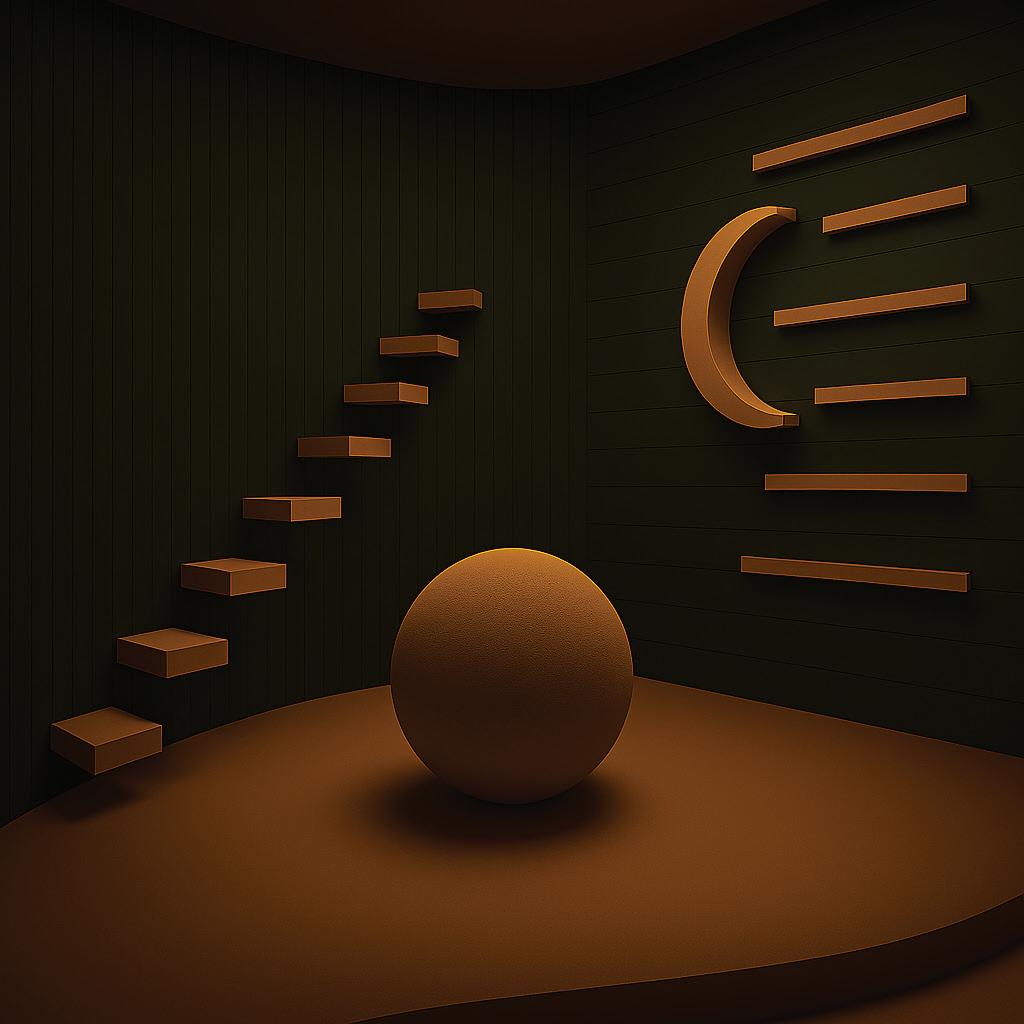
An elevated curved surface with a left vertical wall and a right wall with horizontal slats and a floating curved element on the right wall as well as a foam ball in the middle down below on the floor. The view is standing on the elevated curved surface and is viewing the room above. This feels like looking back on your own joy and progress from an objective perspective.
This sequence is a front facing curved wall with stairs descending down the wall. The view is sitting on the middle stair. This feels like going down to actually experience your joy and going down into different levels.
Phase #9: Category # _by Rhino
Phase #10: Category # _by Rhino
This sequence shows a curved wall on the left with a foam ball in the middle with a left aligned wall with slats in them and upper lighting on the foam balls. The human figure is to the right of the foam ball. This shows the source of your joy and you being in the middle of the source of your joy.
This last sequence is a left wall and a horizontal angled wall on the right with stairs going down the wall. The human figure is underneath the top stair. This sequence depicts the feeling of different angles of viewing your own joy. There isn’t always one perspective only of your joy or all feelings.
Phase #11: Category # _by hand
Phase #12: Category # _by hand
This sequence is a left curved wall with a front angled wall with stairs going up, and a right wall with horizontal slats and a curved floating element and a foam ball in the middle of the room. The view is standing next to the foam ball in the center of the room. This feels like standing next to your ultimate source of true joy with your joy surrounding you.
This sequence is a wider view of the room. You are able to view the entire room of joy. This shows being in different levels and perspectives of experiencing your own joy as well as reflection of what all has brought you joy.
Phase #11: Category # _by Rhino
Phase #12: Category # _by Rhino
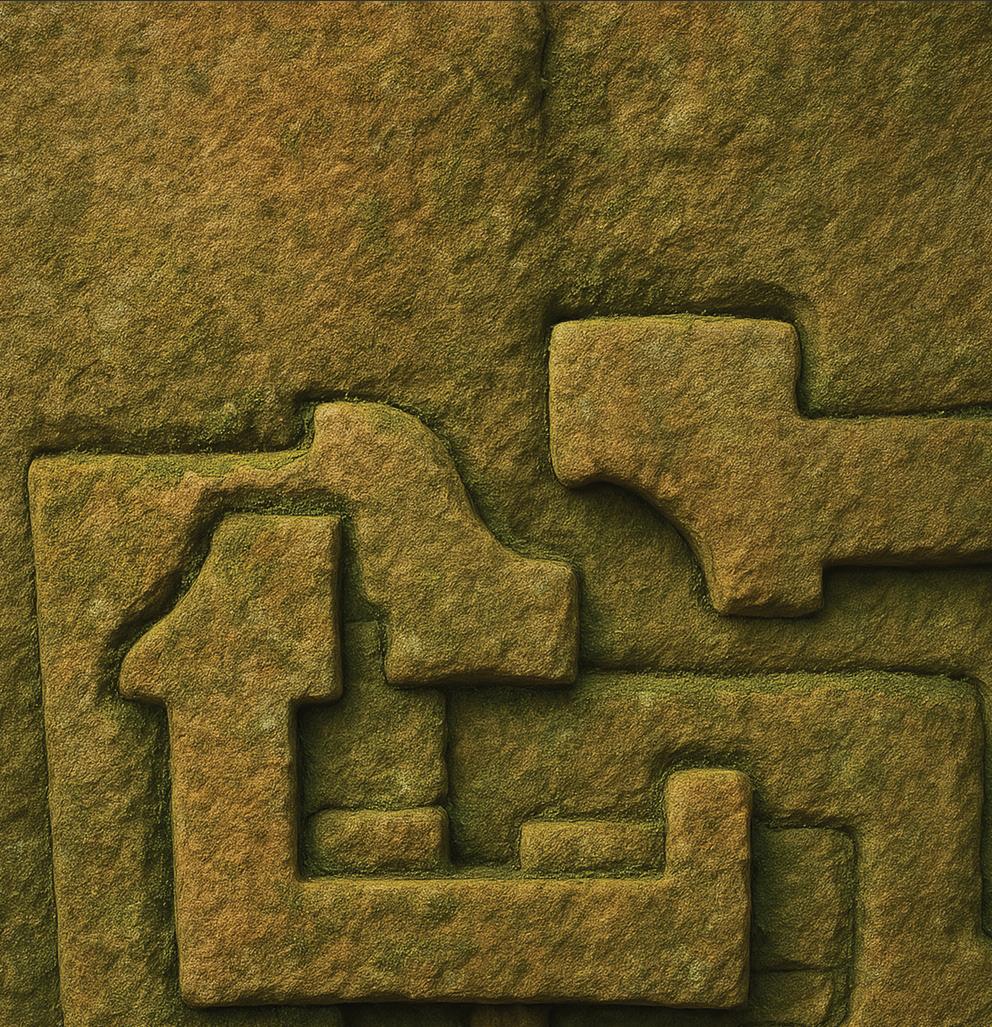
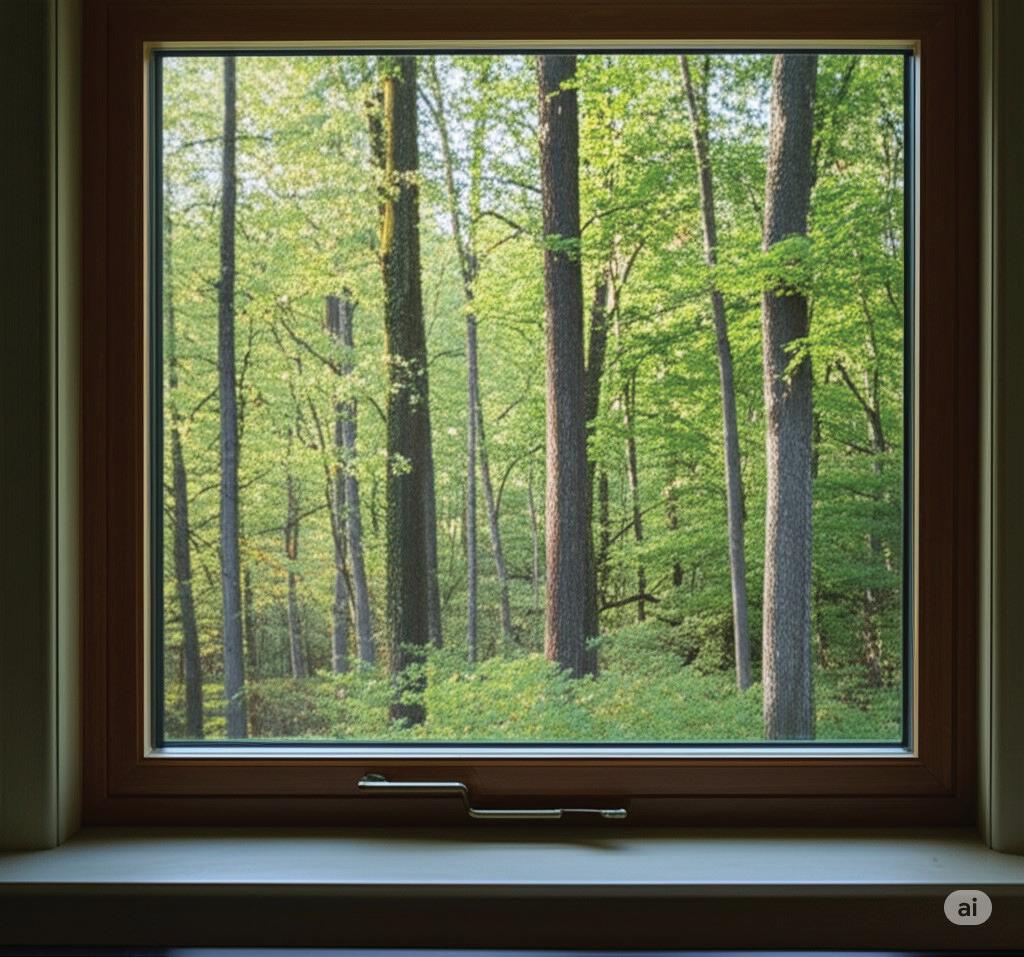
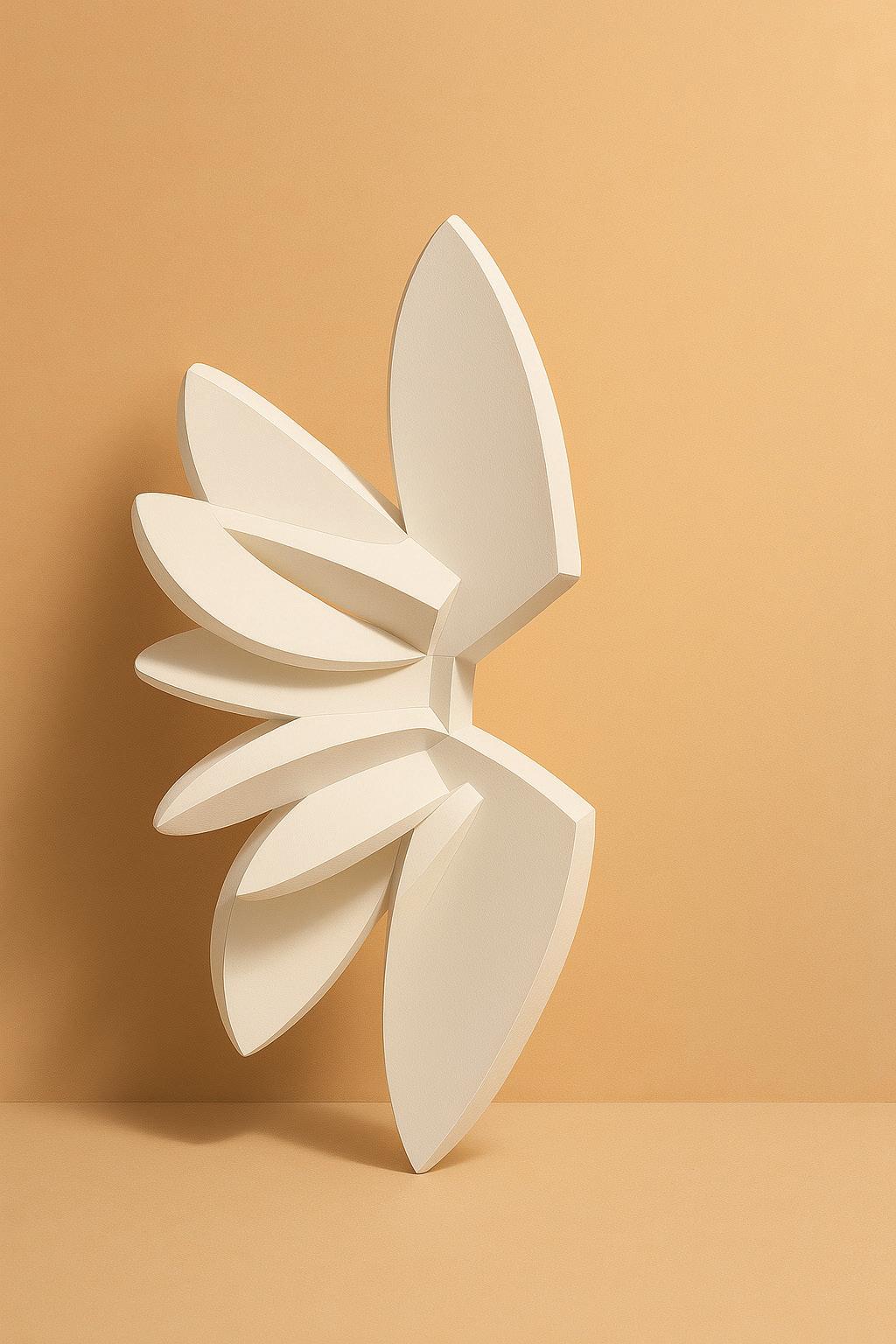
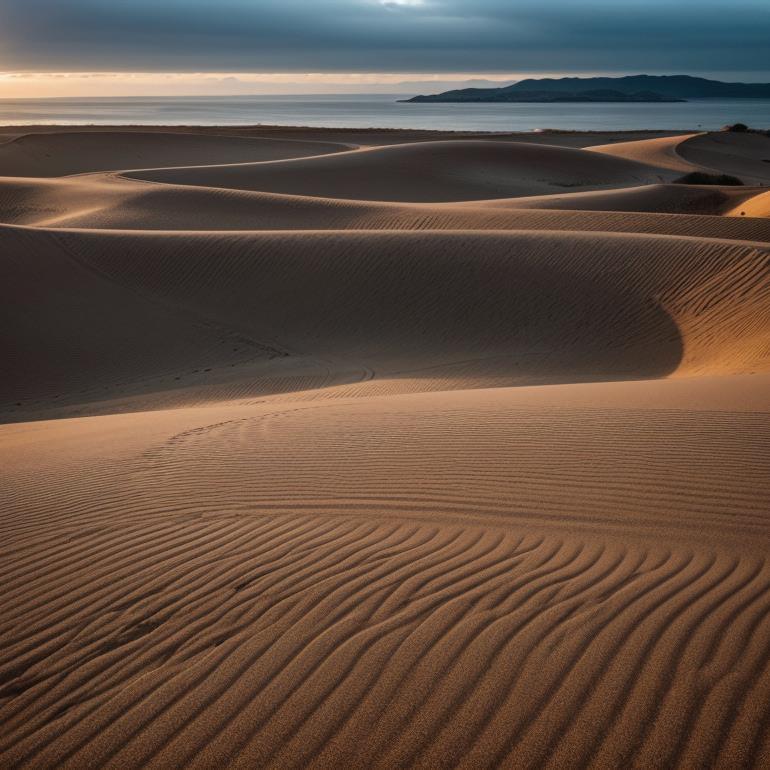
The prompt was to make this organic as if it had come from nature.
To show the stillness and calmness inside of the window no matter whats going on the outside of the window.
LinkedIn Certificates
Illustrator 2025 Essential Training
Course
Jun
Course
Curves to Surfaces
Course
InDesign 2025 Essential
Training
by Rachel Callahan
Photoshop 2025 Essential Training
Course completed by Rachel Callahan
Jun 26, 2025 at 08:49PM UTC 12 hours 38 minutes
Top skills covered Adobe Photoshop
by Rachel Callahan
Rhino 7 Essential Training
Course completed by Rachel Callahan
Jun 21, 2025 at 06:37PM UTC 2 hours 9 minutes
Top skills covered
Carissa Hallett
Portfolio
What I learned...
Project #1 “Wall, Column, and Space”
- Working through walls, columns, and space in studio, I started seeing things differently. Walls weren’t just barriers, but shapers of the room, changing how you move and feel. Learning proportions was a big change, and using the 1/4 scale helped a ton. It made big ideas fit into my hands, so I could really get how everything sized up and fit together. I learned from this project how space and shapes really work and create a sense of space.
Project #2 “Hand Drawing”
- Through daily hand drawings, Ive learned so much by dividing into different techniques. Sketching taught me to quickly capture the essence of a subject, while cross contour exercises helped me understand form and volume. Blind contour forced me to really look and connect with what I was drawing, and hatching gave me control over shading and texture. Paying attention to proportions was also a big part in these daily drawings. It became second nature throughout these 5 weeks, ensuring my drawings felt balanced and accurate. Each method built upon the others, enhanced my observational skills and deepening my understanding of how to translate simple daily objects onto paper.
Project #3 “Drawing What you See, Drawing What you Feel”
- During this third project, has taught me the importance of observation and attention to detail. On the other hand, drawing what I feel has been about expressing emotions, letting go of realism. While doing this I was able to convey a deeper meaning. It has shown me that art can be powerful in different forms and its not all about perfection.
Project #4 “Space Cube”
- During this fourth project I learned a lot about not only about proportions but how to go simply from a series of photos to a structure. During this project I was able to express and step out of my comfort zone and using my imagination to build this series into a building itself. I was able to learn the importance of scaling everything correctly as well as making sure its functional. During this project I was also opened to how to do architectural drawings not only by hand, but through rhino digitally as well. Overall through this project I was able to learn how to take a series of photos and make them into a working construction, understanding perspective and space and making it go from just an idea to a 3D model.
Project #5 “First Portfolio”
- Creating my first architecture and interior design portfolio was journey of blending traditional skills as well as modern. I was able to explore AI’s potential by applying it our space cube models, pushing the boundaries of whats possible in design visualization. “Dancing Lines”, an abstract interpretation of our chosen model’s shadow, showcased my ability to see and represent designs. I also learned a lot of different softwares through linked in completing different certificates of different softwares such as rhino. These allowed me to open up to different technical skills and learning how to make my work and projects come together in the end.
If you could talk to you before these five weeks, what would you like to share with you?
- If I could talk to myself before these five weeks, I would tell myself that its worth it in the end. I would reassure that all the hard work and late nights staying up doing your work is worth it. I would also tell myself to not listen to the negativity and anyone telling you to take the easy way out; keep persevering. In the end I would like to share with myself is that I’m proud of her and the dedication she is to make her dream come true in this major, that not matter what she will be loved and have many supporters rooting for her.
First Portfolio
Learning Objectives for Work #1. AI Exploration Students will experience an advanced technology: AI Image Generator “Fabrie.” Through the process, students will be able to start considering how to integrate the technology in their design process.
Learning Objectives for Work #2. Portrait Students will take a portrait picture of themselves with their achievements over the past four weeks. This will help them celebrate their time and effort.
Learning Objectives for Work #3. Portfolio Students will make a portfolio with a template and their achievements over the past five weeks. This will help them understand what the end of design is. The goal is not just to complete each individual visualization, but to compile the deliverables and results resulting from the process.
Work #1. AI Exploration_Space Cube
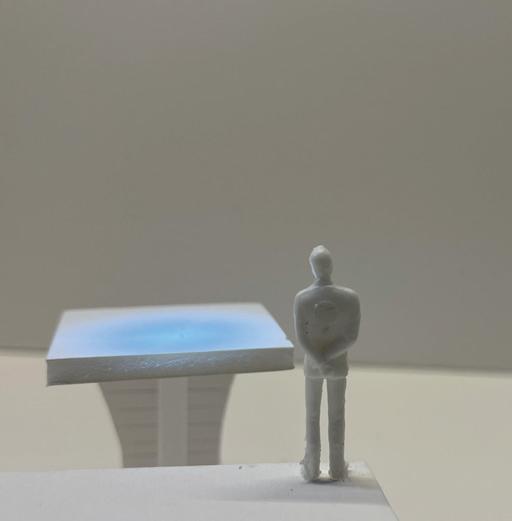
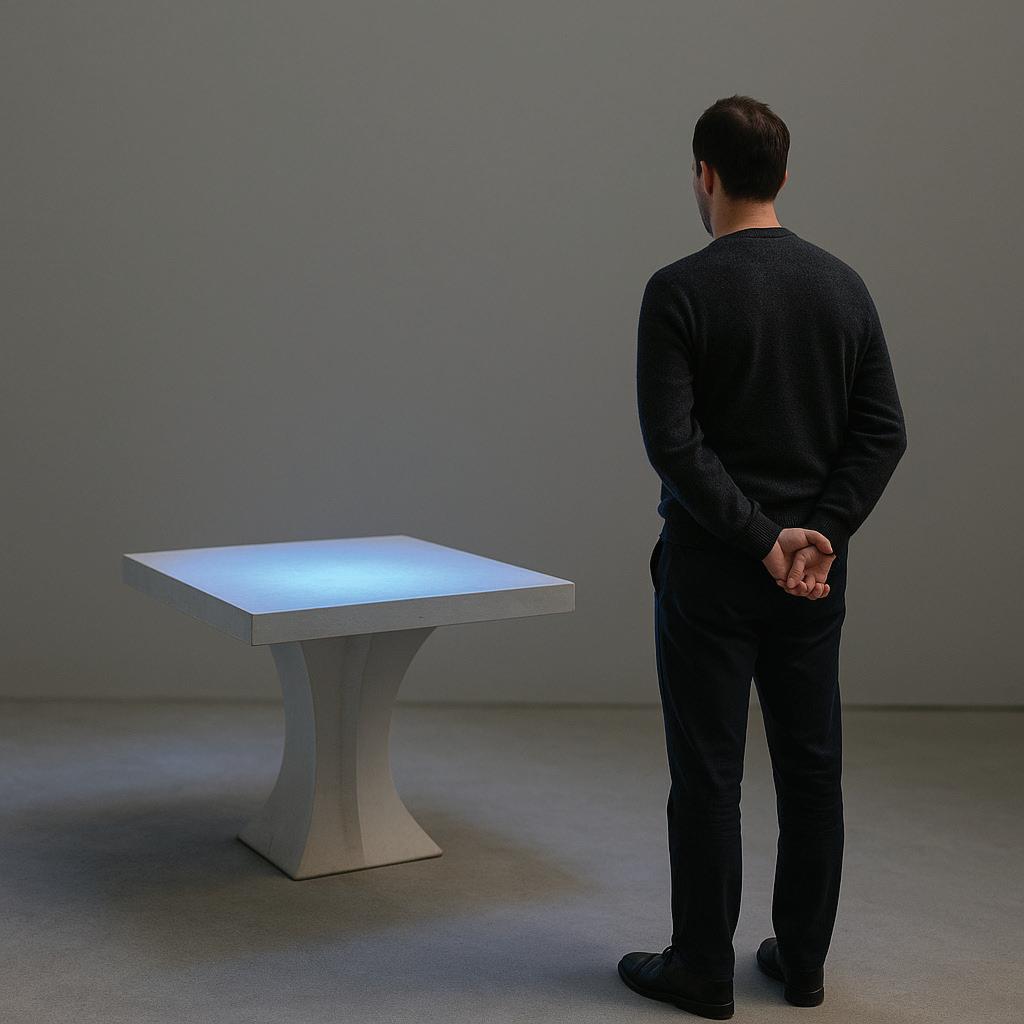
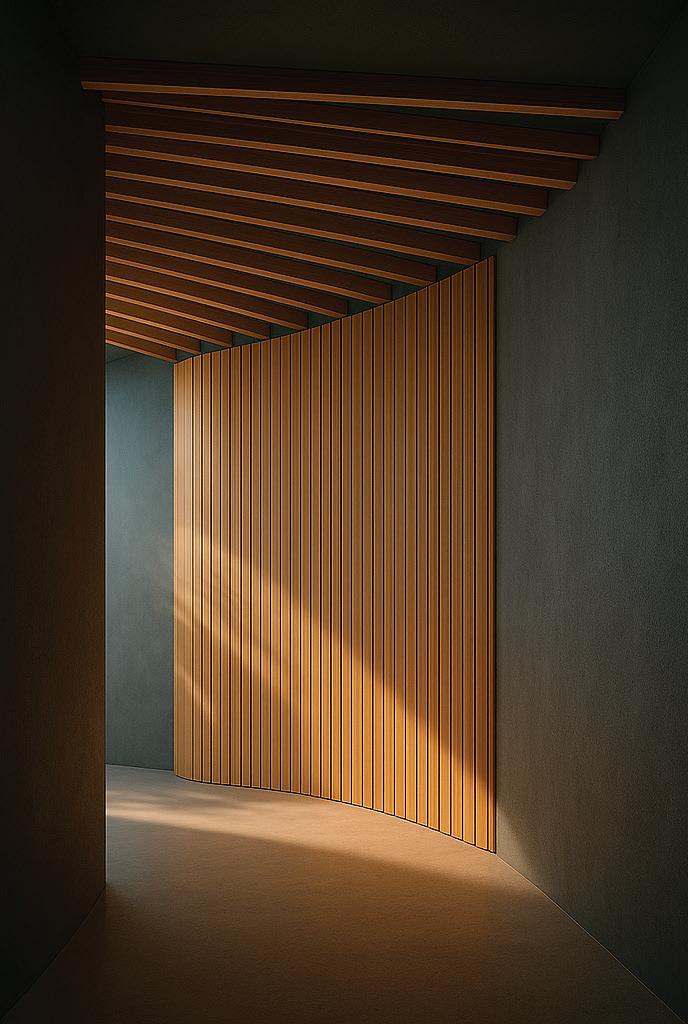
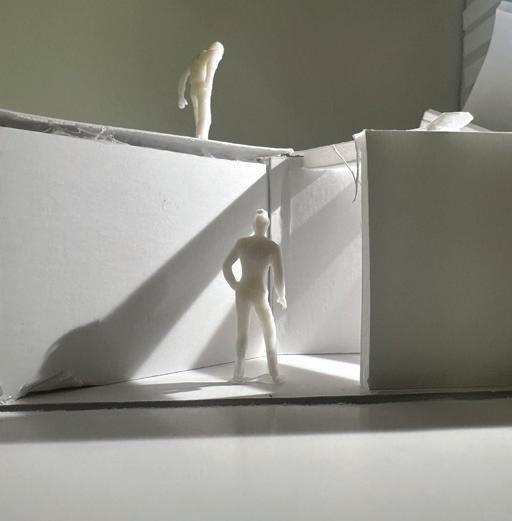
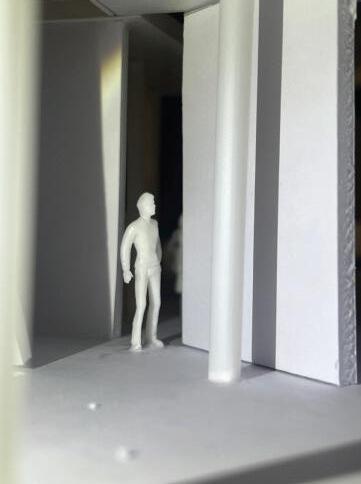
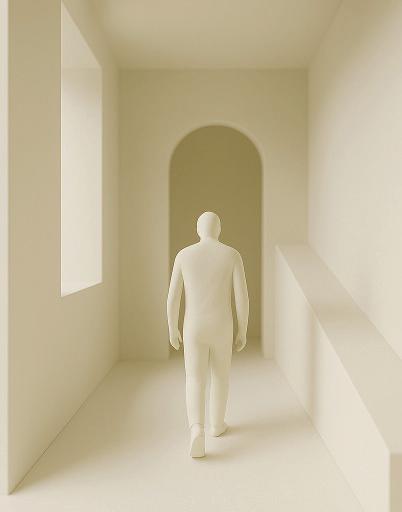
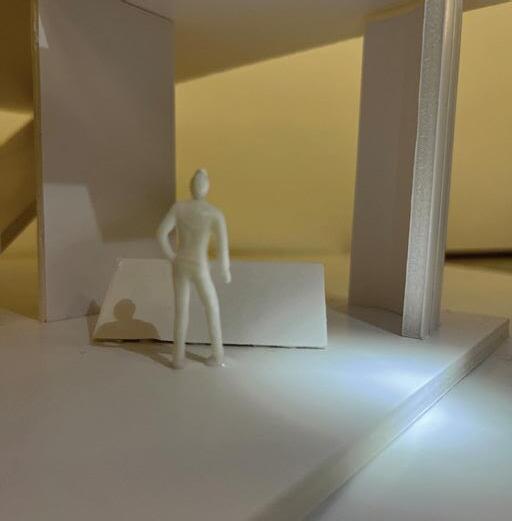
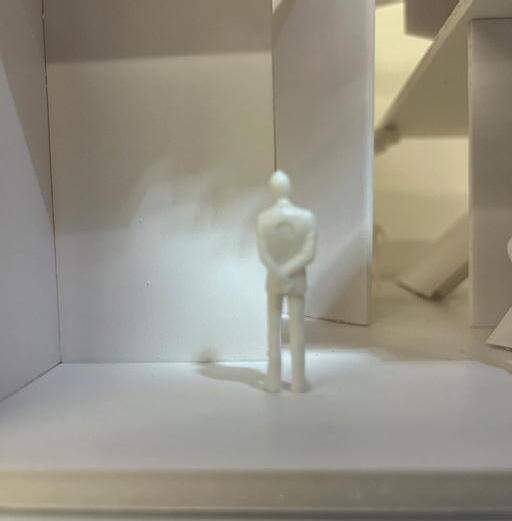
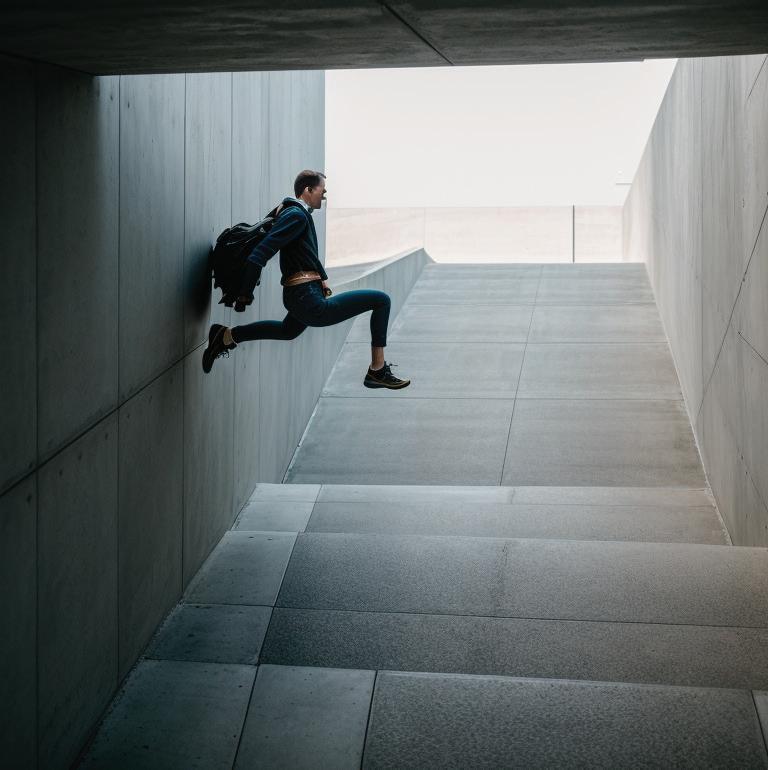
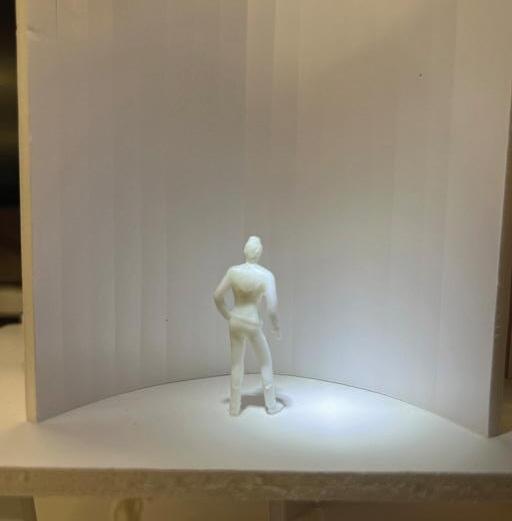
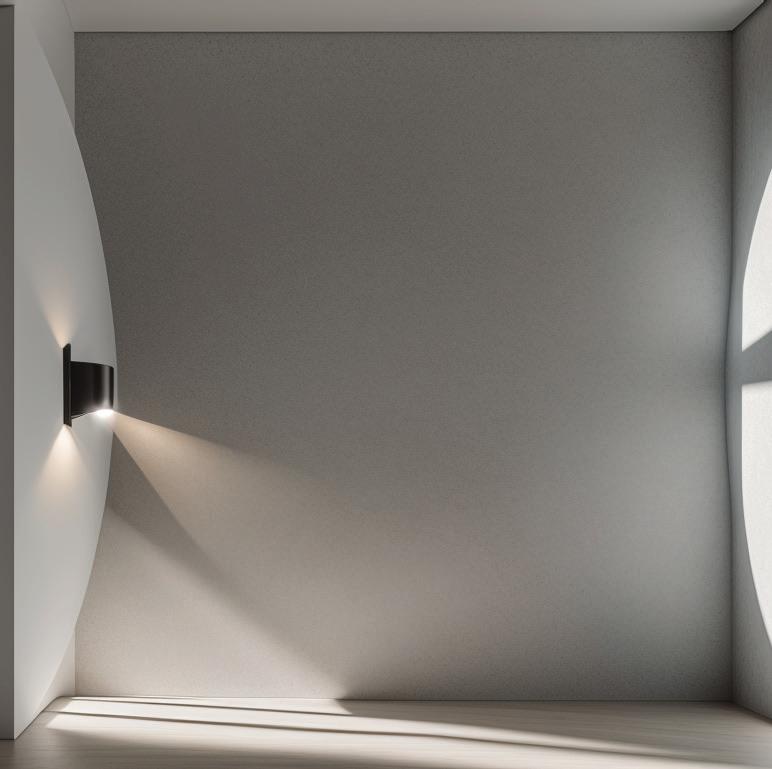
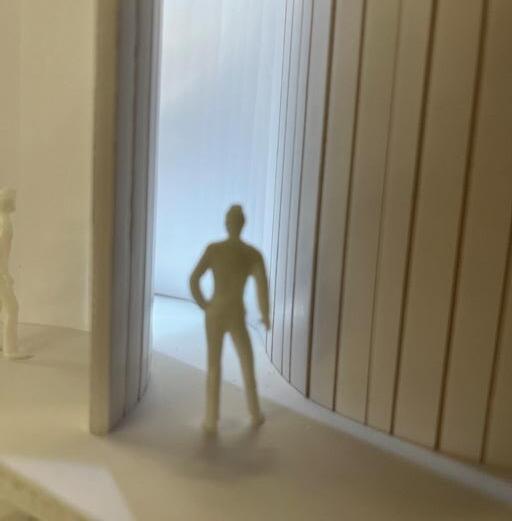
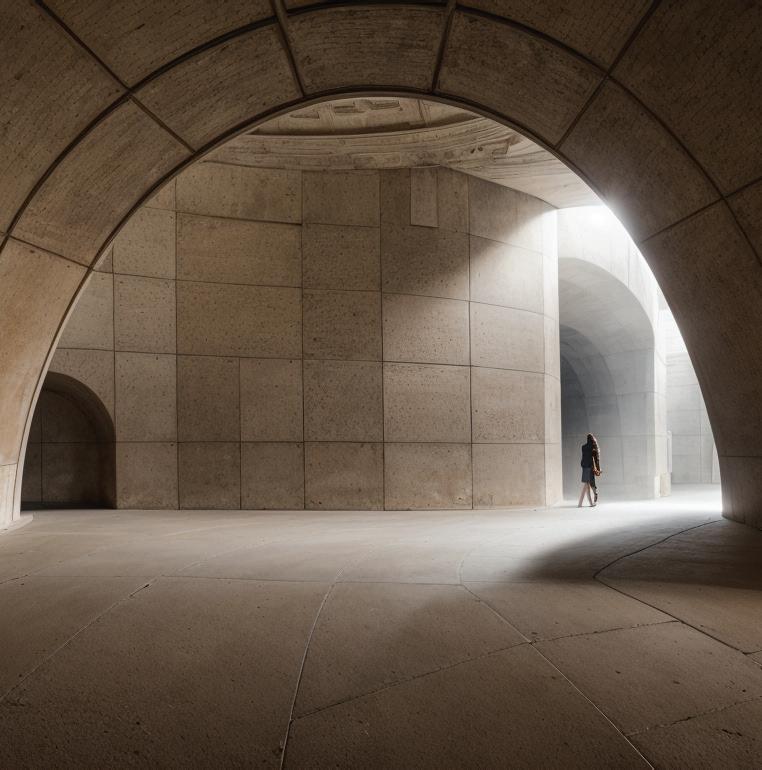
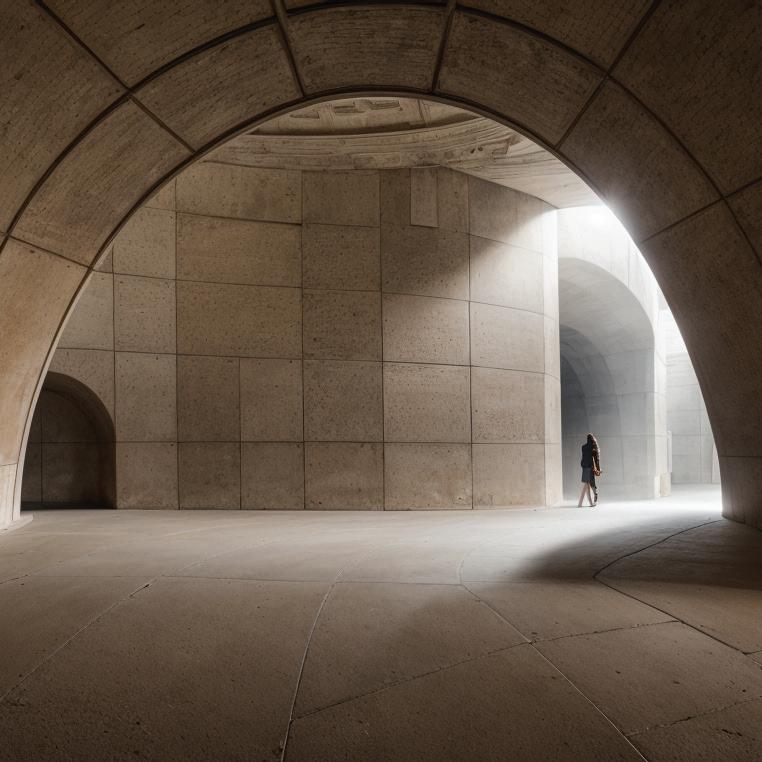
Between these two photos, my generated AI image resulted in a more meaningful picture. This is due to the crisp and straightforward look of this photo, being able to illustrate the movement of the human figure and what is going on around. I think this image was most effective considering the lighting, and space. The AI photo was able to capture the photo with no distractions being presented in the background. I believe when using AI generator it is most convenient and appropriate to use during the process of atmosphere exploration to get a sense of what the space is going to look like, and if adjustments are needed they can be made. During this project I was able to learn a lot based on these perspectives and overall design structure. This allowed me to visualize two different representation methods and what I can do to improve my hand-made model. What I learned specifically was a sense of depth and space overall.
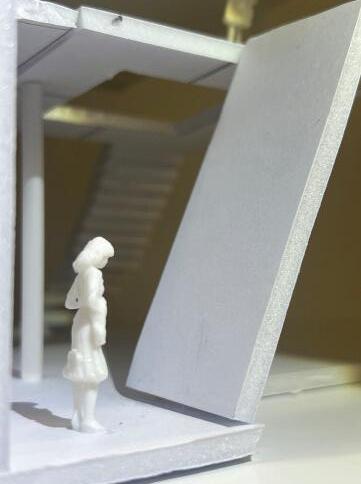
In these two photos the AI created a more meaningful image result. I believe the AI image is more effective considering the lighting and space being presented. This helps make the models seem more appealing and clear in what is being illustrated. These little details allowed the photo to look more appealing and to see the whole picture. At the early stage of the design process, I believe the hand model would be more of use and appropriate when discussing the atmosphere exploration, in terms of understanding space and where everything should be placed. This experiment allowed me to understand visual representation and the key components that should be included in a photograph to allow the clients or workers to understand what is be illustrated.
Phase #1: Category #19_by hand
Phase #2: Category # 20_by hand
AI Generated Image
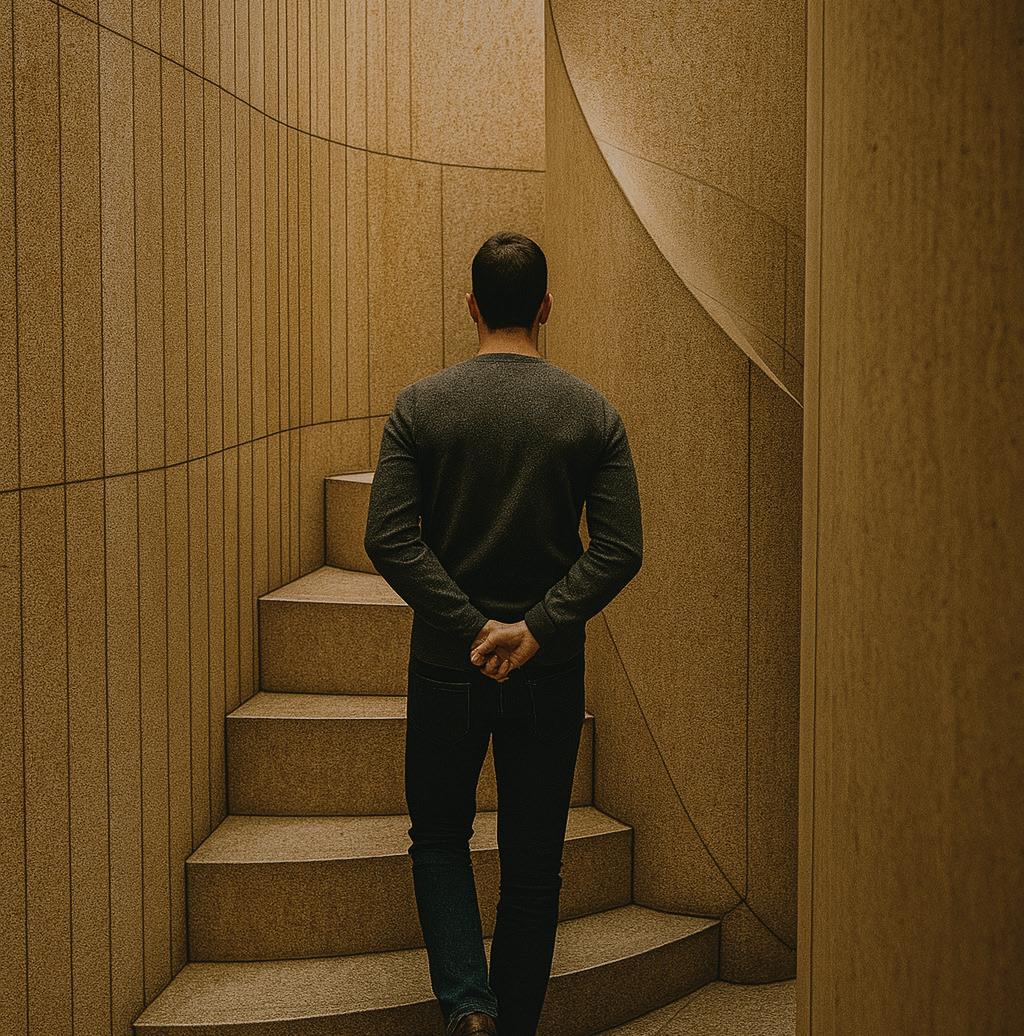
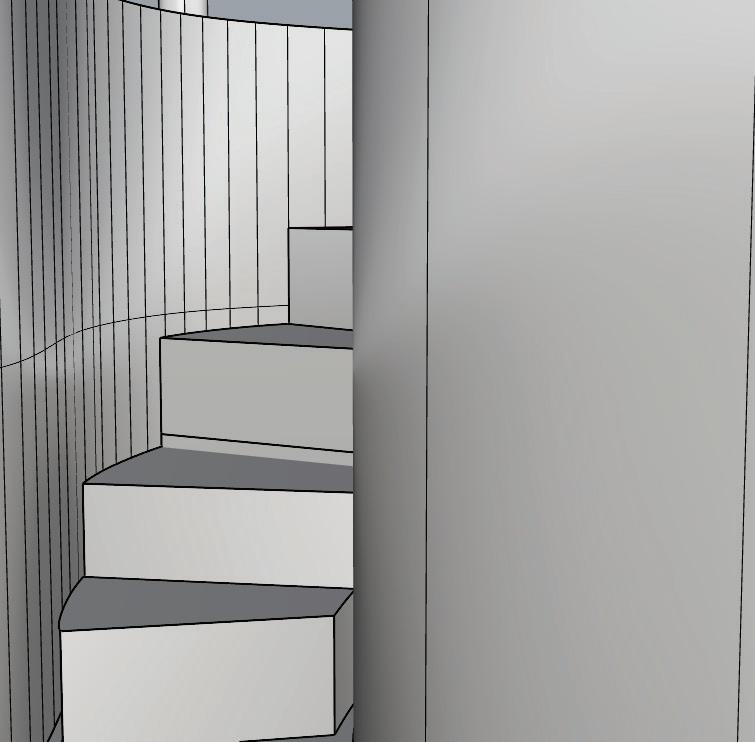
Between these two models, I believe the Rhino model was able to generate a more meaningful AI image result. I believe that image was more effective due to the layout and cleanliness of it. The Rhino model is able to captivate what is going on in the one point perspective. The texture, lighting and overall form of the model inst too much to distract the client from what is being laid out. I believe the AI image generator is more appropriate in the sense of the final form development. This AI generator allowed the clients to see a 3D form of what the project is going to illustrate. The new perspectives in this experiment allowed me to think outside the box and see more of the model in a construction perspective. I believe this allowed to see the final product in the representation method.
AI Generated Image
The two photos being illustrated I believe the rhino model-based generated a more meaningful AI image result. This AI generated photo is more effective in terms of lighting, space, proportion, and form recognition. The way this photo overall laid out everything very well, the main key that made this product to be more effective was the scaling of everything making people to understand the proportions. When performing this experiment I was given a new perspective in the importance in scaling and proportions in a miniature model for architecture. I overall was informed how key every little detail is when creating a model.
Phase #1: Category #19_by Rhino
Phase #2: Category # 20_by Rhino
AI Generated Image
In these two photos that are being illustrated the AI generated a more meaningful AI image result. I believe the AI was able to capture the space and what is being surrounded by the human figure. The lighting and texture being simplistic allows the photo to pop more. At the early stage of the design process, in which using AI image generator I believe the model is most appropriate when idea sketching. This allows to lay out a plan of what is being modeled allowing for iterations to occur to make the final product. When doing this project I was able to experience the idea of composition and how each singular piece comes together to create a whole image. I learned during this experiment that importance of perspective. The way of looking at a model and where your eyes are being drawn to are very important.
In these two photos that are being illustrated I believe the hand model generates a more meaningful image result. I believe this photo was more effective considering the composition, and the overall form placement, At the early stage of the design process I believe the physical image is more appropriate when using a AI generator. For example when idea sketching the hand model is able to express more of the form placement and what we are trying to capture in the model. The new perspectives I was able to capture in this experiment regarding my visual representation methods is the importance of environment and hierarchy when creating a model. When doing this project I understood the importance of scaling as well; it is a key feature as it helps turn your model into real life and being able to picture it.
Phase #3: Category # 29_by hand
Phase #4: Category # 17_by hand
AI Generated Image
The two photos illustrated , the rhino model-based is a more meaningful result . I believe the rhino photo is more effective in terms of what is being included in the model. However the AI generated photo distracts what the key points you are showing . At the early stage of design process, I believe the rhino based process and physical is more appropriate when using an AI image generator, this is due to capturing the key components of the model. When doing this experiment I gained a new sense of spacing and proportions. When doing my representational models, it is key to understand interior based on structure and foundation as well to understanding the behind the scenes of building a model.
AI Generated Image
Looking at these two photos that are being illustrated I believe the Rhino-based photo was able to generate a more meaningful image result. When looking at the model it gives it a creative space allowing the client or business to be able to step into the room and picture the model. I believe this model is more effective due to the lighting, proportions, scaling, as well as the form placement. These key features allow the model to be appealing when looking at it. At the early stage of the design process, I believe the digital is more appropriate when using the generator in terms of official plans and overall form development. This AI image is very detailed and constructed for the client or whoever to visually see what the plans and final result are going to look like.
Phase #3: Category #29 _by Rhino
Phase #4: Category # 17_by Rhino
Work #1. AI Exploration_Space Cube
Between these two photos, the photo on the left, hand built model is more meaningful as it displays the model better. I think this model is more effective in terms of texture, and form placement. This allows the client to visually see where everything is placed. At the early stage of the design process, I think the physical is more appropriate when using an AI image generator. I stated that, especially for idea sketching and form development the physical model is a more reliable source. I learned during this experiment that importance of perspective. The way of looking at a model and where your eyes are being drawn to are very important.
The two photos being presented I believe the AI image generator is more meaningful. I state that this image is more effective in terms of lighting, and proportion. Looking at this image helps you to visually see what is taken place and the difference in space between the human figure and the environment. At the early stage of the design process, I believe the digital image is more appropriate when using an AI image generator due to the guidance in form development. I believe the digital model allows the architects see what is being presented.
Phase #5: Category #47 _by hand
Phase #6: Category # 38_by hand
AI Generated Image
Looking at these two photos being illustrated I believe the generated AI image result is more meaningful. I think the image is more effective in terms of the materials aspect. The texture, lighting, atmosphere, and overall form recognition allows you to set yourself in that photo resulting in you being able to visually imagine this model in a first perspective. I learned through this experiment was scaling and proportions as the photo allows you to visually see what is taken place.
AI Generated Image
Between these two photos that are being illustrated I believe the physical model-based generated a more meaningful AI image result as it captured what was being taken place and the form development of each key feature. I think this image is more effective because of the texture and proportion as well. The overall image allows the model to come to life. At the early design process, the digital model is more appropriate when using AI image generator due to the clear and concise forms of the features. I learned during this experiment the importance of the visual settings and how a little detail can make a model come to life and be more appealing.
Phase #5: Category # 47_by Rhino
Phase #6: Category # 38_by Rhino
AI Generated Image
The image that created a more meaningful AI image result was my Rhino-model. The image was more effective as it had more details concerning what was around in the environment. The proportions were also more clear. The lighting overall and form position allowed the Rhino image to be more clear and detail. At the early stage of the design process, the digital model is more appropriate when using an AI image generator. I believe it is best for the form development as it is clear and concise. When looking at the digital model you are able to develop a scene with the environment given.
Based on the physical and rhino model I believe the generated rhino models created a more meaningful AI image. I think the digital model is a more effective image due to the details and lighting, making the image come to life. As well as the accurate proportions. At the early stage of the design process, I believe the digital image is more appropriate when using AI image generator making the image more accurate. This image could be used for form development as the scaling and overall proportions of the features are close to accurate and concise. I learned during this experiment that importance of perspective. The way of looking at a model and where your eyes are being drawn to are very important.
Phase #7: Category # 56_by hand
Phase #8: Category # 59_by hand
AI Generated Image
Between the two models I believe the Rhino model is a better depiction of a clear and concise model. This model resulted in being the more meaningful AI image result. I think this image is more effective due to the lighting and proportions as well as the overall form development. I learned during this experiment the true value of creating an environment and key features need in a model to make it come to life. I also learned color theory is important in digital models as it helps contrast the model overall.
AI Generated Image
The rhino model is generated a more meaningful AI image result. I think the image was more effective as it was able to create a clear and concise image of the model. At the early stage of the design process, I believe the digital image is more appropriate when using AI image generator. It was able to create a very clear replica making it concise to understand. This digital image can help with form development as well as understanding space. I learned doing this experiment the understanding of visual representation and the importance of final product and how it looks. Iterations are also important due to the result of the final product.
Phase #7: Category # 56_by Rhino
Phase #8: Category # 59_by Rhino
Looking at these two photos illustrated my model and rhino are generated very well and both state a meaningful result. I believe both were very effective in capturing every detail in the models, due to their simplicity. I also believe considering the material, lighting, and form recognition allowed both generations to turn out very well. At the early stage of the design process, the digital resulted in being more appropriate as it is more effective in terms of form development. I learned during this experiment the key understanding of space and proportion.
Based on these two photos being presented I believe the rhino models are more meaningful AI image result. I think that the image was more effective due the aspects of lighting, texture, proportion, and overall representation. Looking at these key features really made the models come to life making the design more reliable. At the early stage of the design process I believe the digital is more appropriate due to the details. I believe this image is more key to working in a idea sketch. I learned a vary of new perspectives due to this experiment including the sense of depth and space in a model and the key feature of proportions.
Phase #9: Category # 22_by hand
Phase #10: Category # 26_by hand
AI Generated Image
Looking at these two photos illustrated my model and rhino are both generated a meaningful AI image result. I think that the image was more effective considering the aspects such as material, texture, lighting, as well the scaling and proportion. At the early stage of the design process, the digital and physical were almost similar resulting in both being appropriate when using the AI image generator. These image would be great for idea sketching and coming up with a little plan based off these rough drafts. I learned the importance of iterations and how it results in the final outcome. I also learned how the representation of the model is super important in how it perceives to other people.
AI Generated Image
Looking at these photos I believe both the photos being illustrated are meaningful AI image result. I think that the images are very effective considering their materials such as lighting, texture, and proportions. At the early stage of the design process, both physical and digital are appropriate when using the AI image generator. I learned during these experiments that composition is very key as well as representation of the model.
Phase #9: Category # 22_by Rhino
Phase #10: Category # 26_by Rhino
Looking at these images I believe that the rhino model based generated a more meaningful AI image result. I think that the rhino model based a more meaningful and was most effective due to the lighting, and scaling. These key features make the model feel more complete. I learned during this experiment the importance of the visual settings and how a little detail can make a model come to life and be more appealing.
When looking at these images I believe that the physical model created a more meaningful generated AI image due to the accuracy. I think that the image was more effective due to the aspects of texture and lighting as well as accuracy in representing what the model was represented. At the early stage of the design process, I think the physical is more appropriate for creating a idea sketching and is more suitable for a AI image generator in terms of accuracy. During this project I was able to learn a lot based on these perspectives and overall design structure. This allowed me to visualize two different representation methods and what I can do to improve my hand-made model. What I learned specifically was a sense of depth and space overall.
Phase #11: Category # 5_by hand
Phase #12: Category # 3_by hand
Looking at these images I believe that the rhino model based generated a more meaningful AI image result. I think that the rhino model based a more meaningful and was most effective due to the lighting, and scaling. Looking at the generated photo it created a better atmosphere making it more visually appealing. I learned during this experiment the importance of the visual settings and how a little detail can make a model come to life and be more appealing. When doing my representational models, it is key to understand interior based on structure and foundation as well to understanding the behind the scenes of building a model.
When looking at these images I believe the rhino based image result was more meaningful. I believe this is more effective due to the detail being represented in the photo. At the early stage of the design process, I think the digital is more appropriate when using AI generators due to a better outcome when it comes to idea sketching as well as the form development. I learned during this experiment the key of texture and choice of material. This results in the model coming to life and showing a better representation of the model.
Phase #11: Category # 5_by Rhino
Phase #12: Category # 3_by Rhino
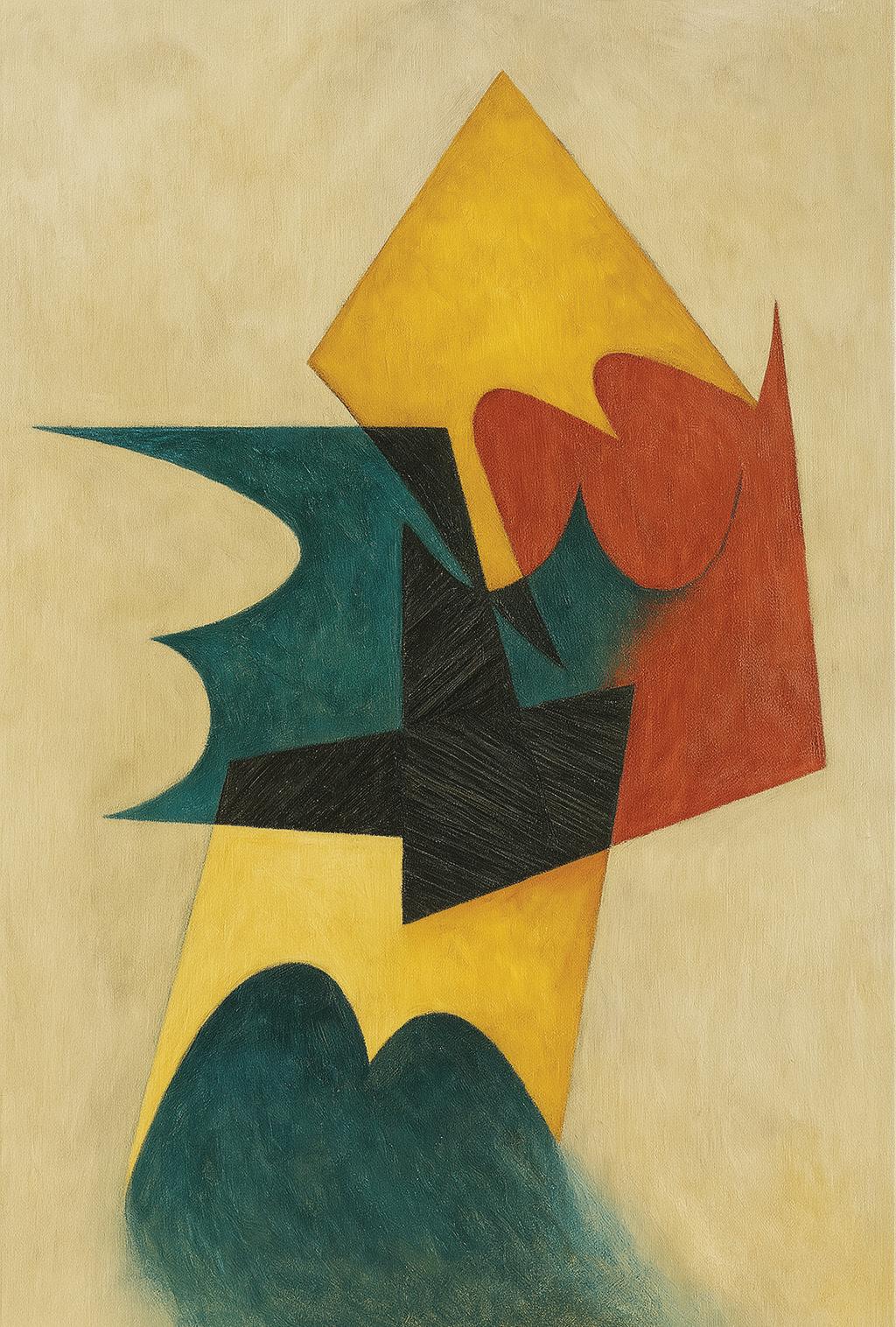
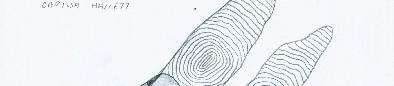
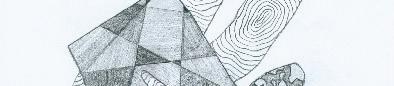
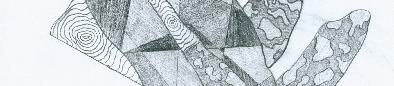
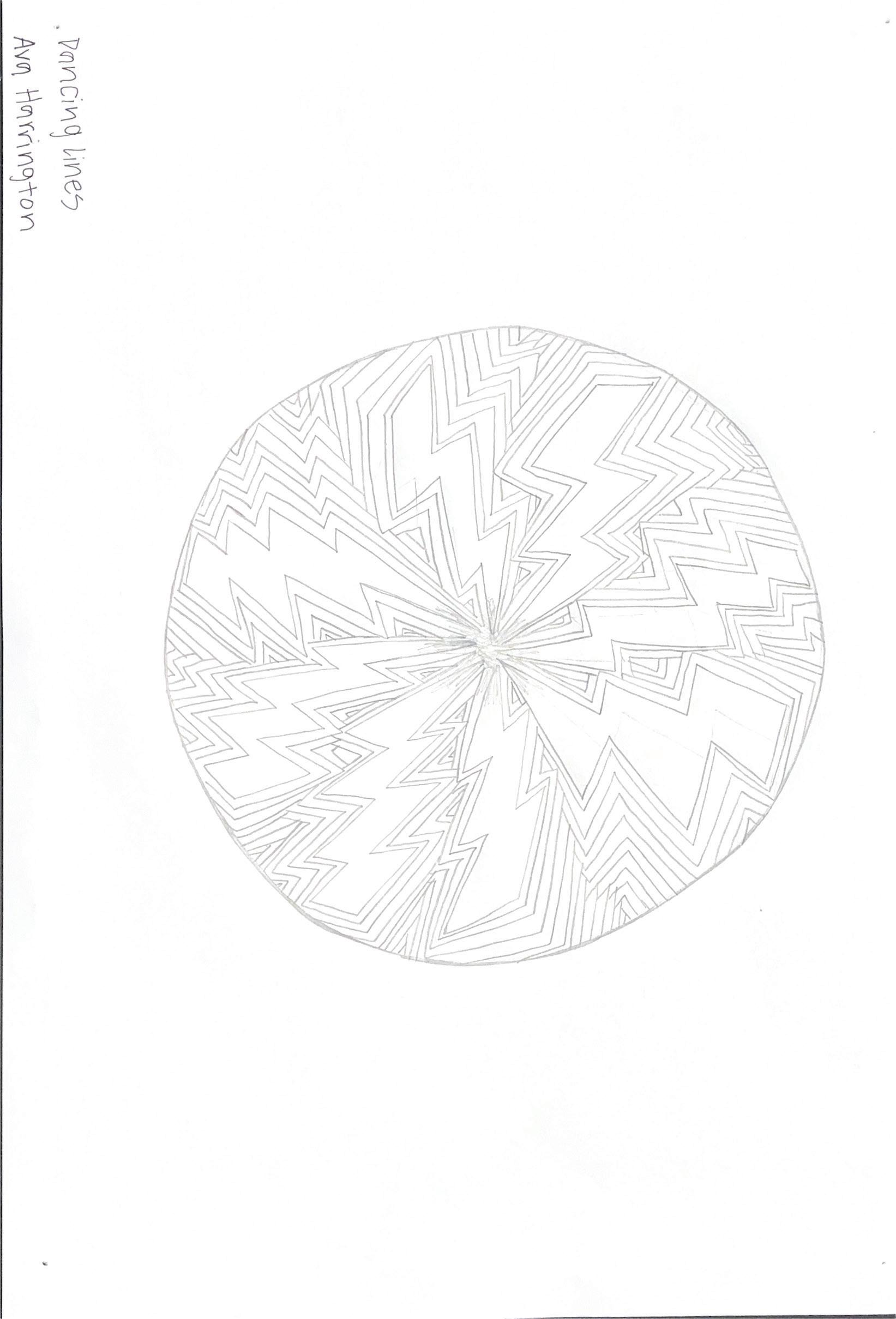
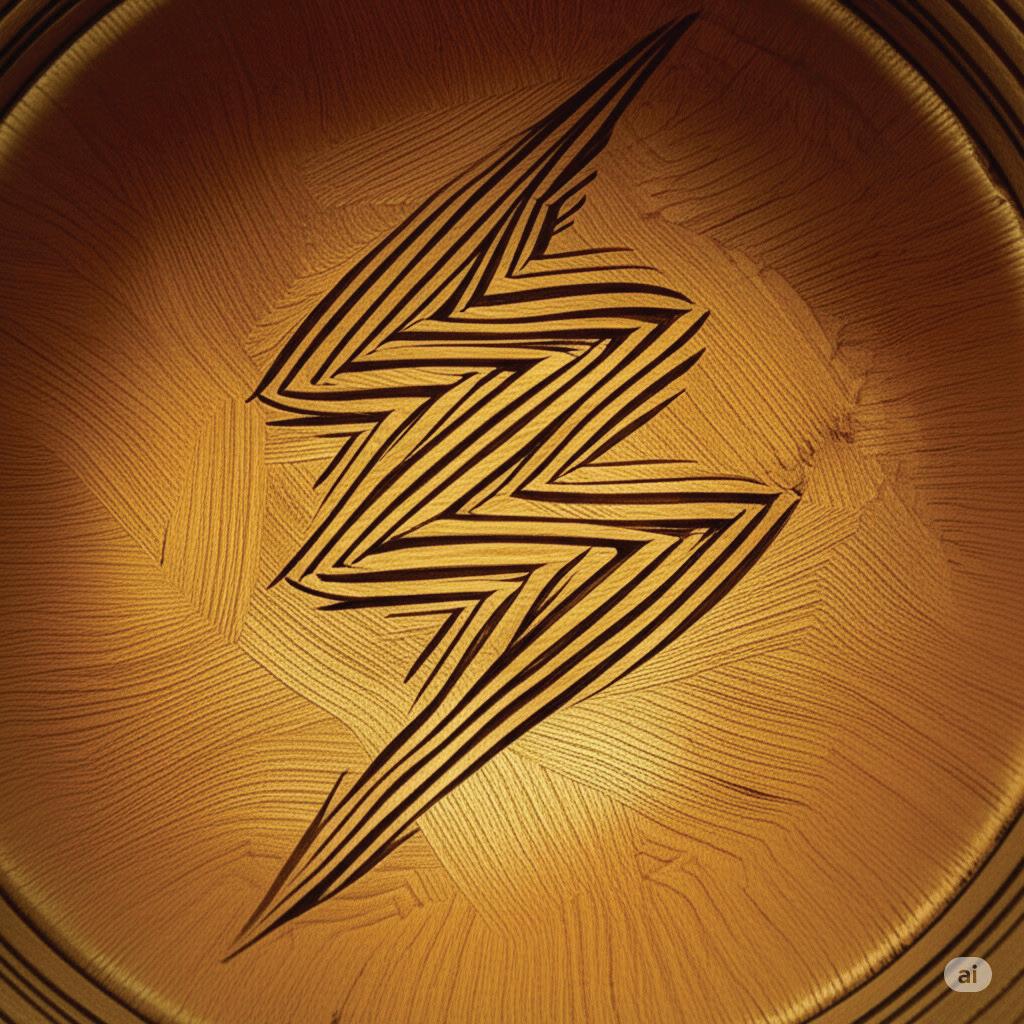
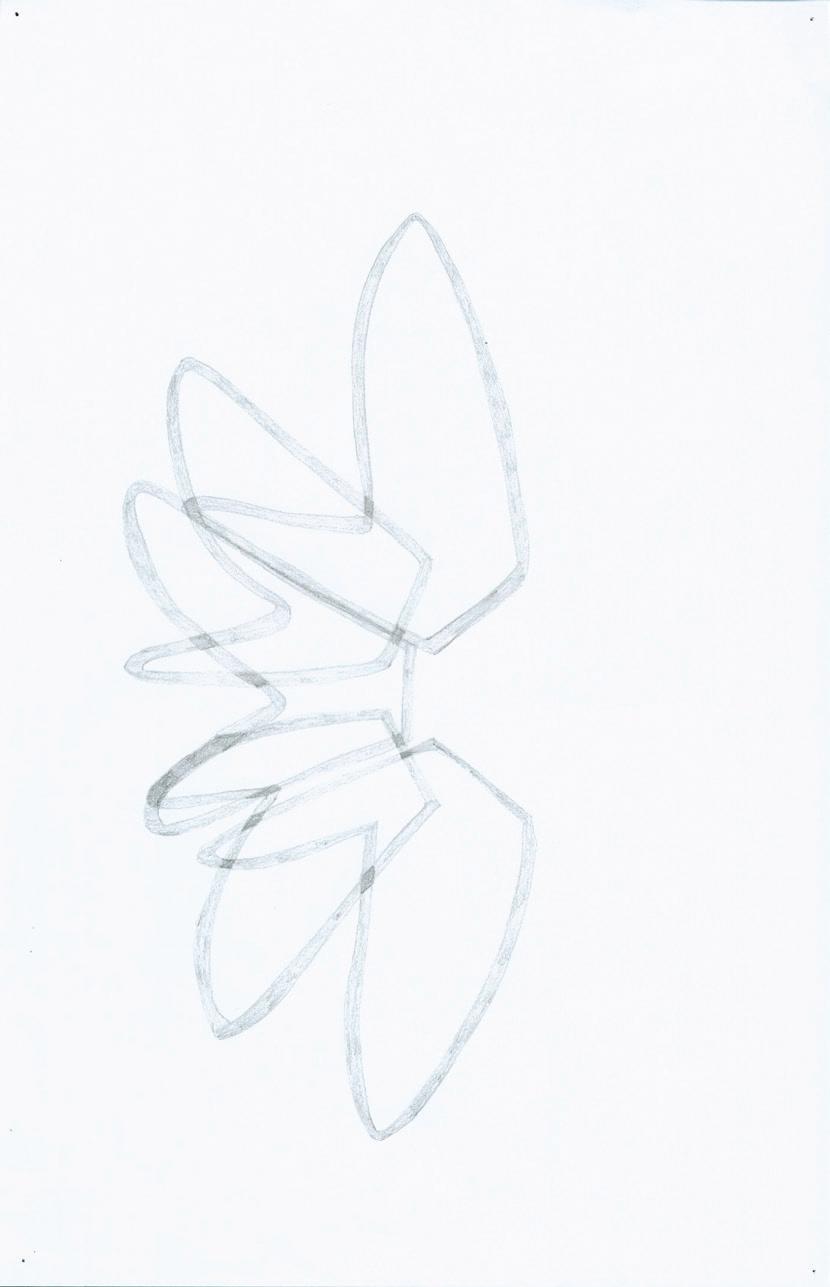
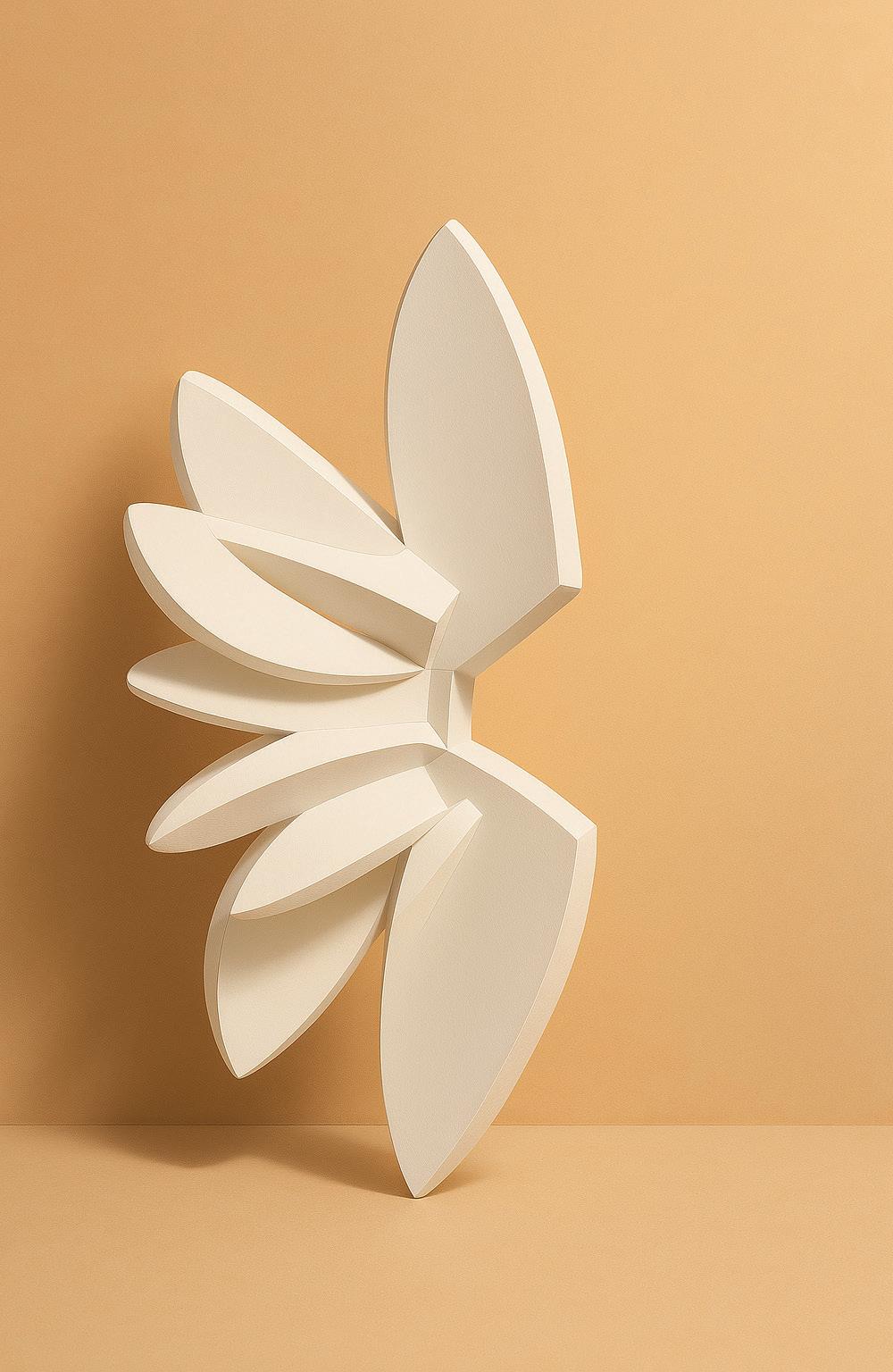
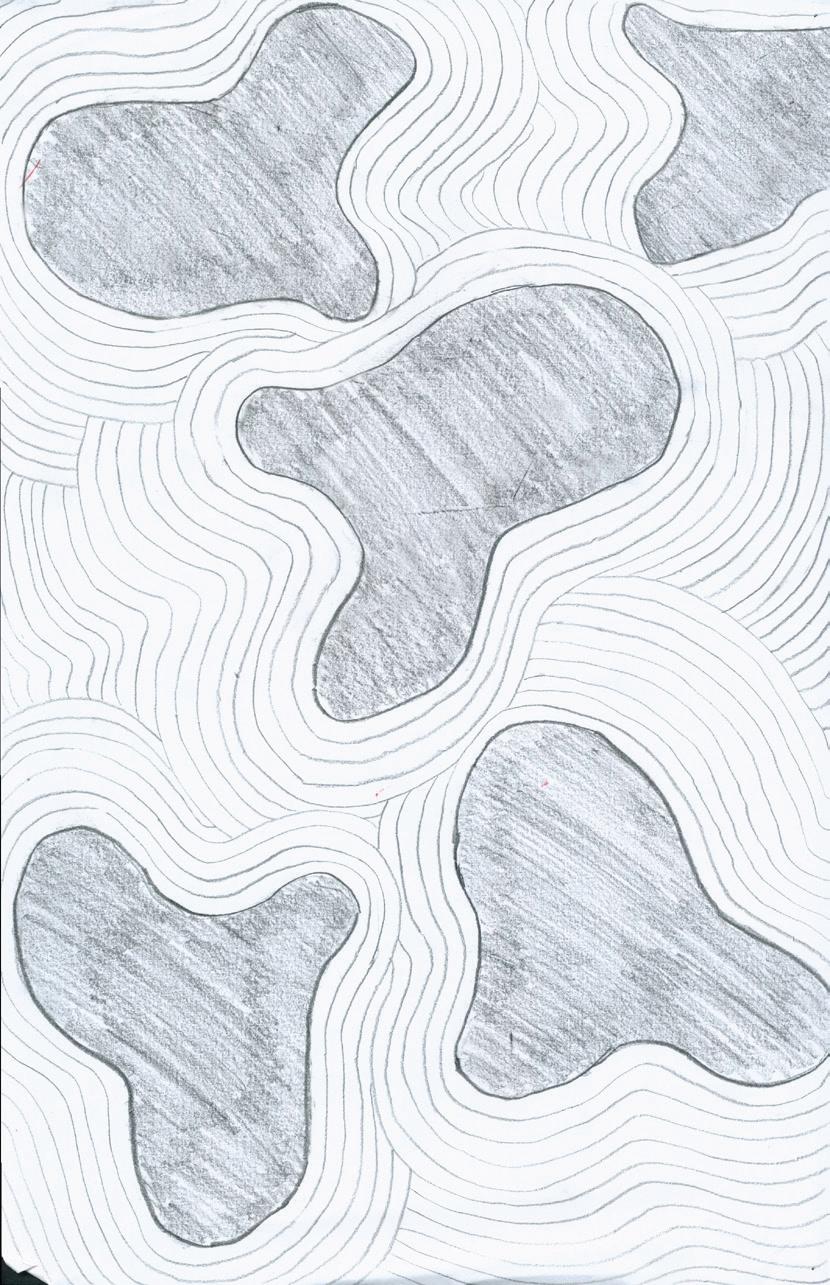
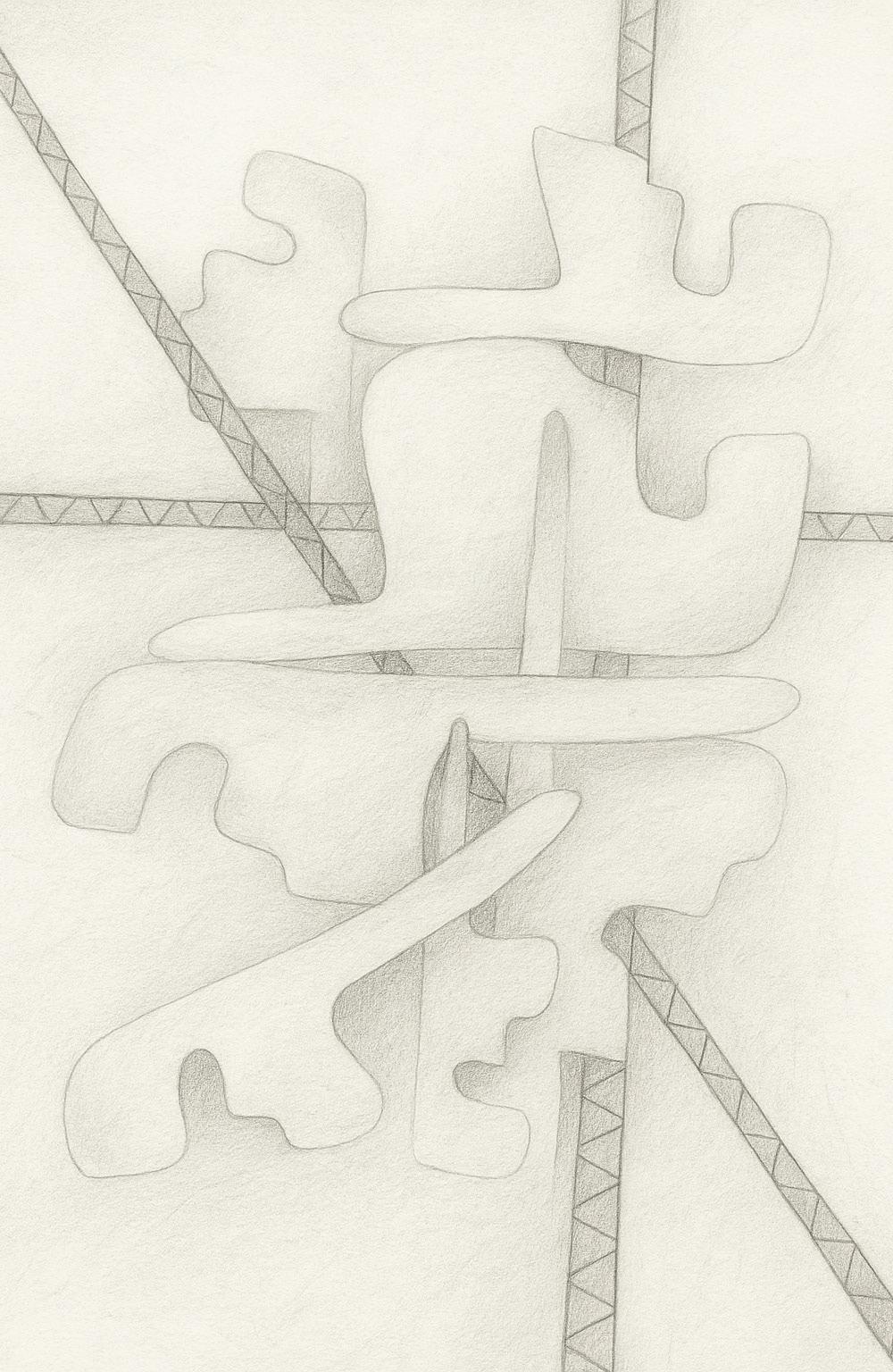
In this photo, I had represented an abstract shape from my human figure model photos. I decided to go with this shape with represented a shadow in my model. I chose it due to its abstract look, and went ahead and drew multiple on a tabloid piece of paper. I went to on continue by drawing them in with different shapes, lines and color. For the first one I did circles almost like an illusion and for my second one I did a puzzle piece with different shades. Third one I decided to go with a cow kind of look with different size blobs. Lastly, for my final one I went ahead and did lines connecting from one point in the middle. My intention for all of these was to make them look all different in their unique ways as well as make them look abstract. During this design process I wanted to incorporate a lot to help emphasize them.
AI Generated Image
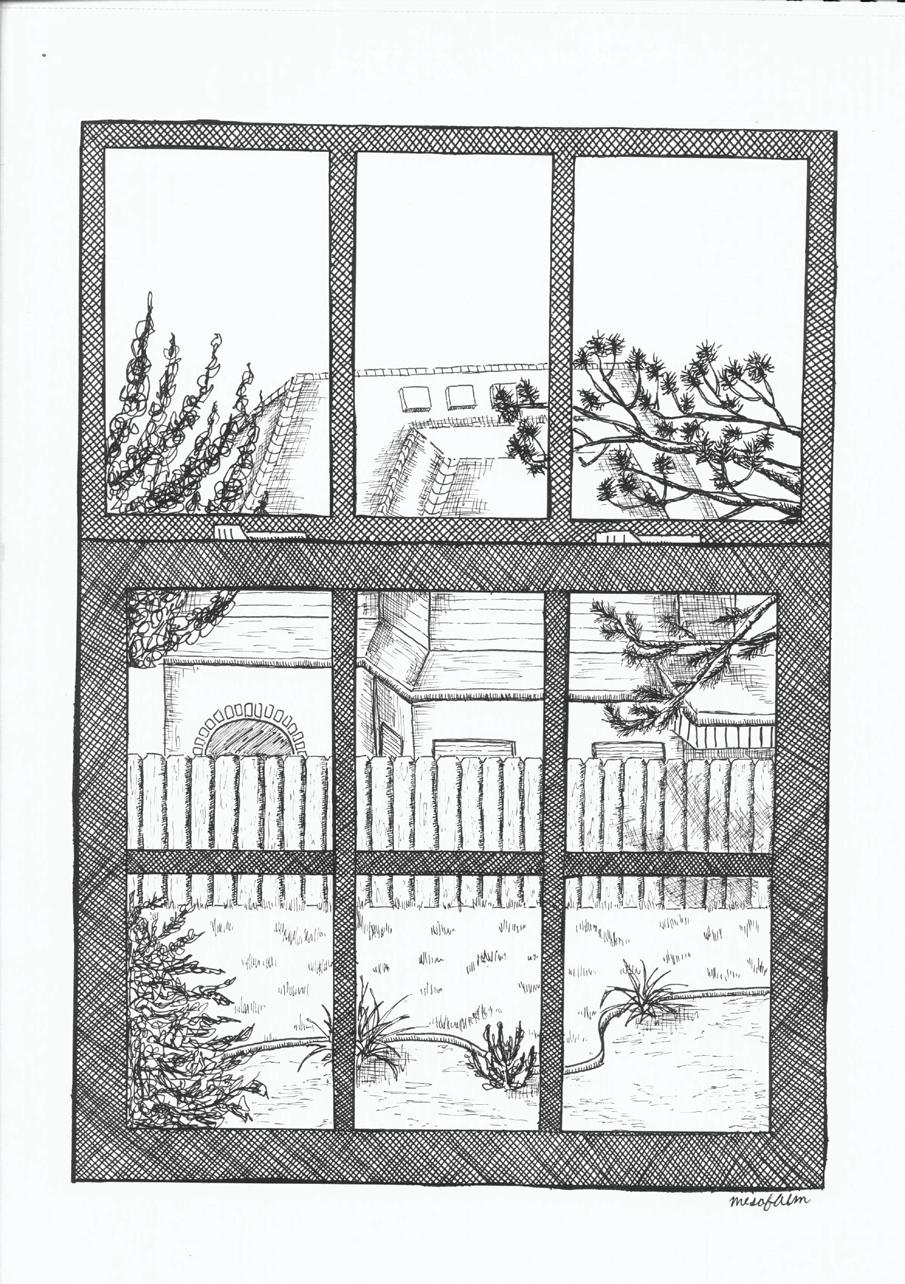
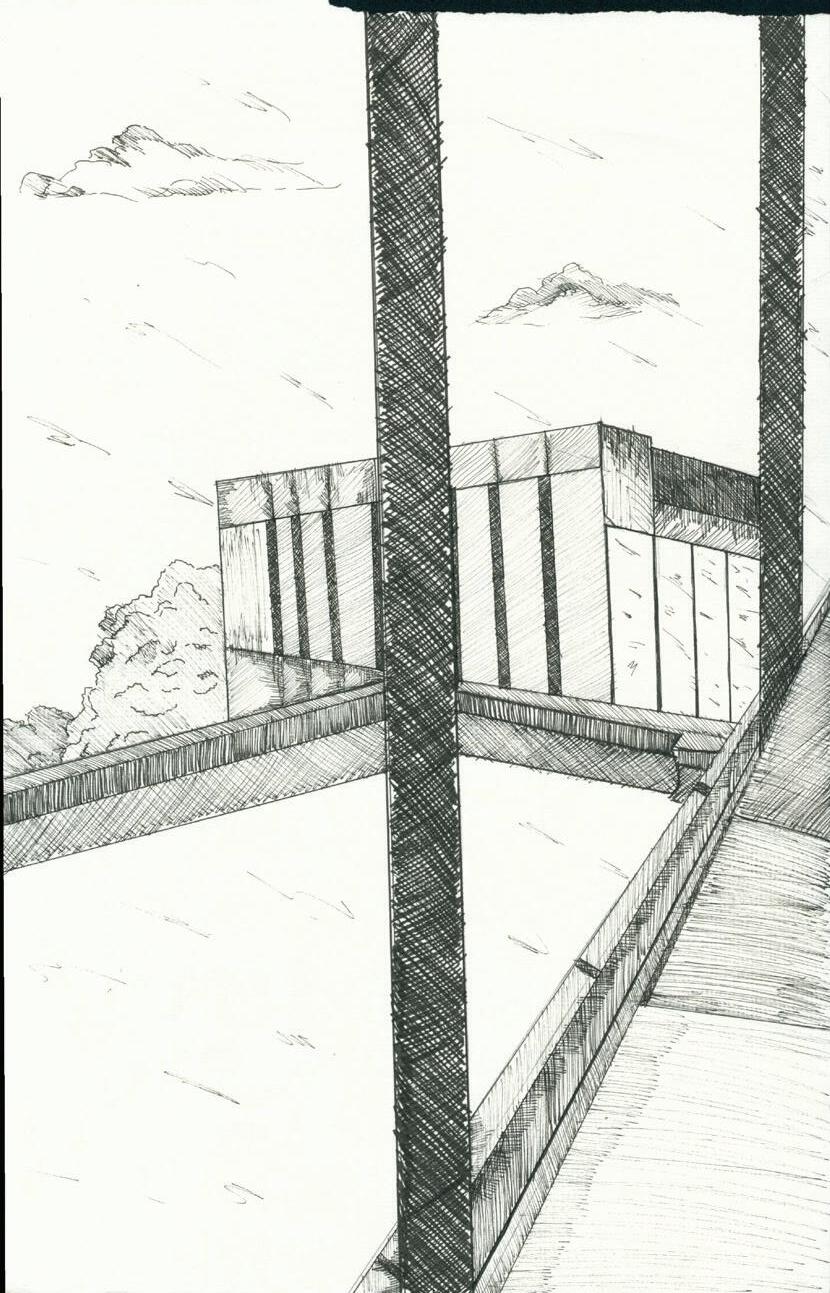
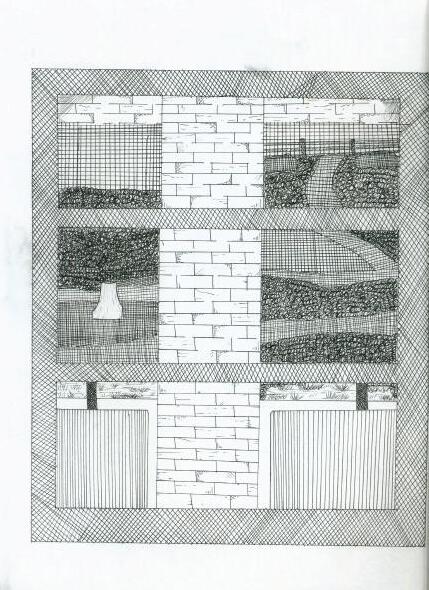
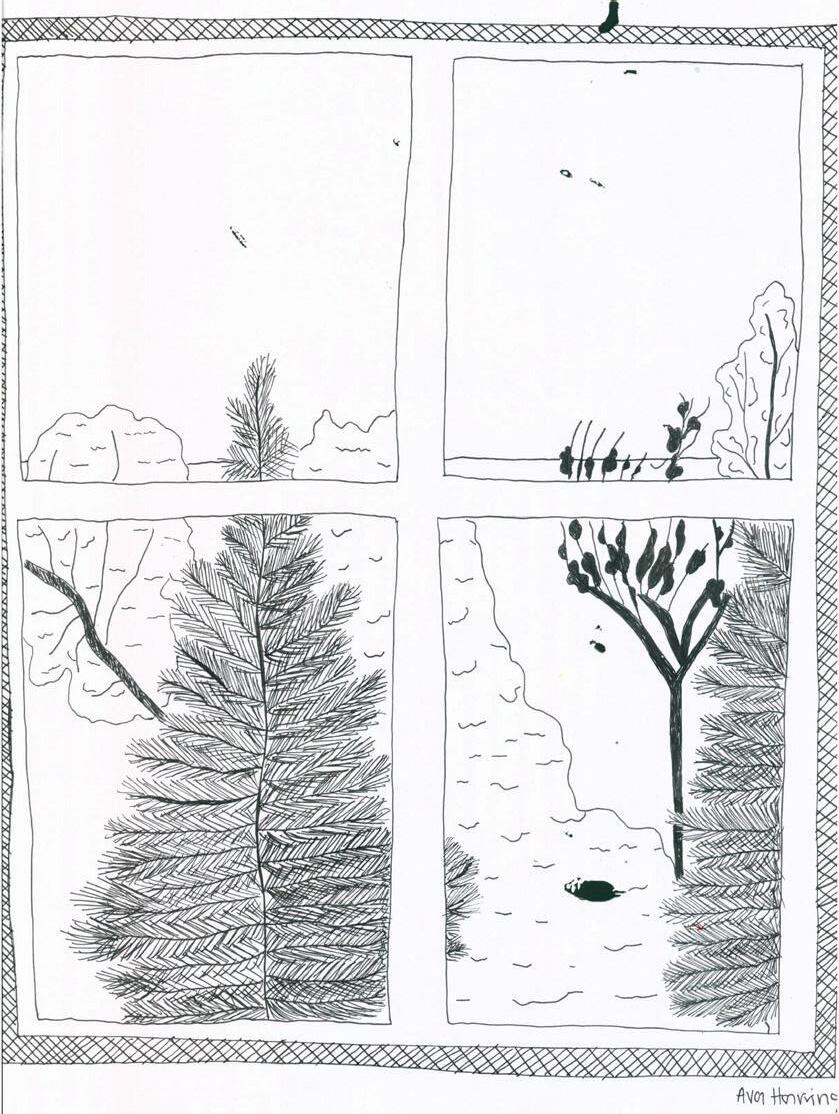
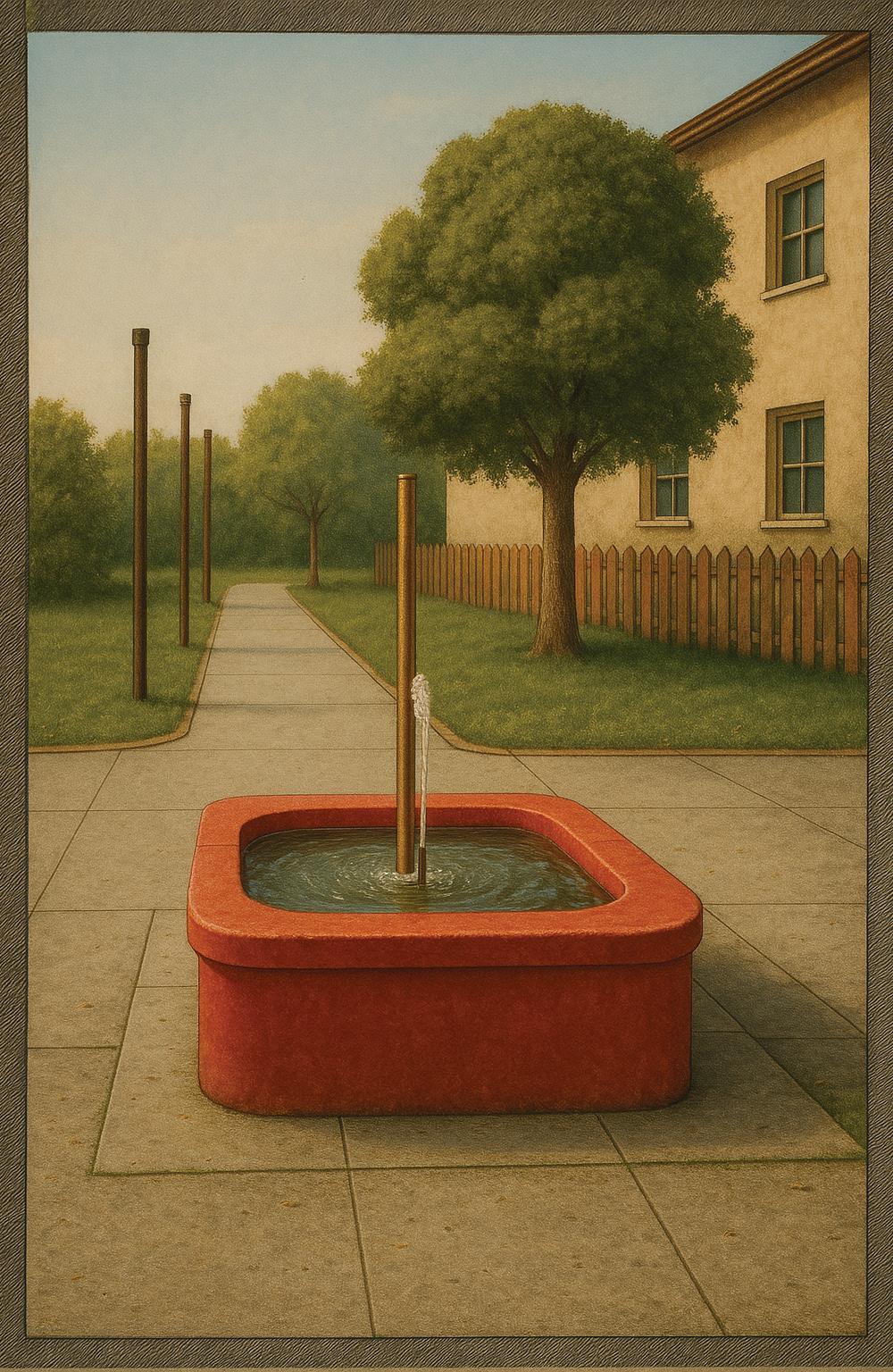
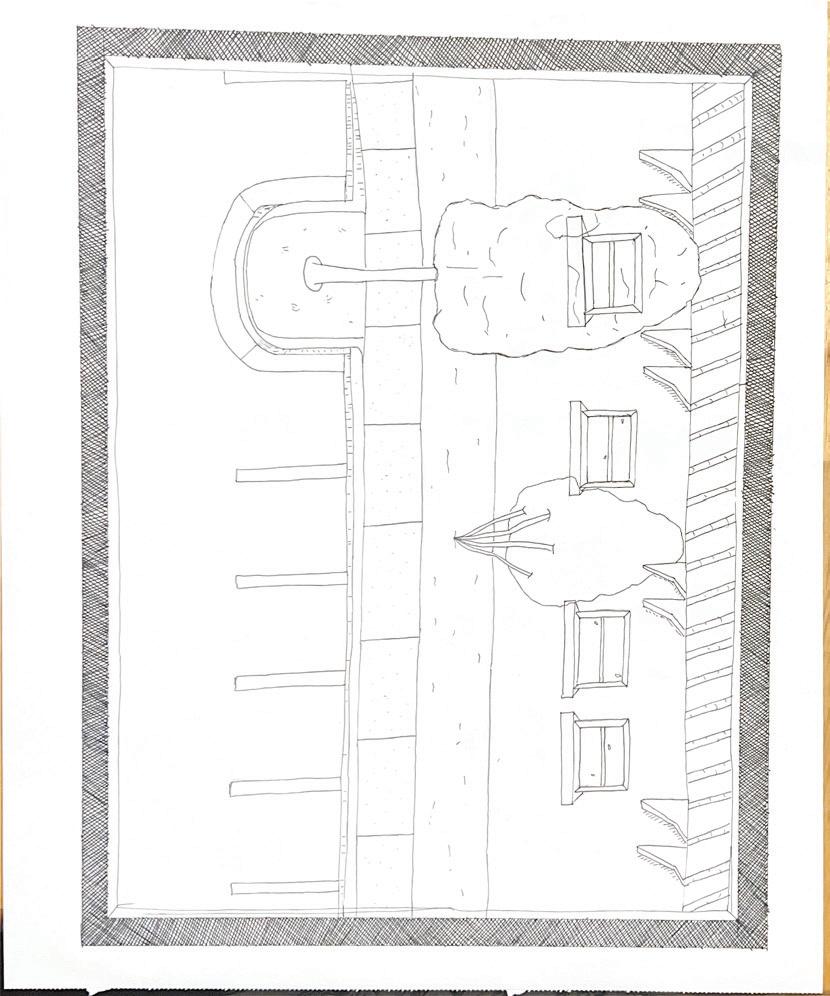
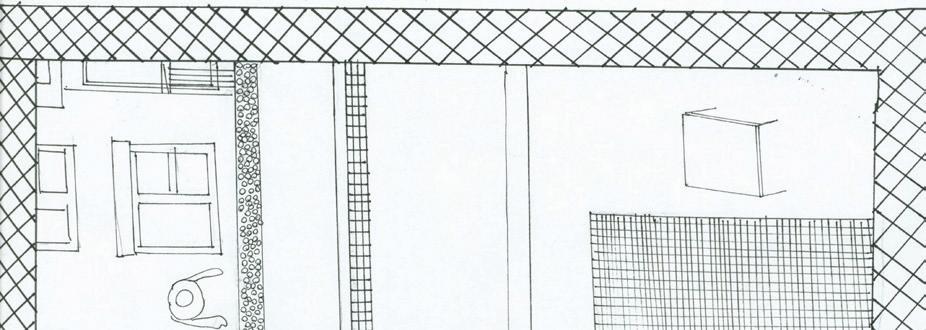
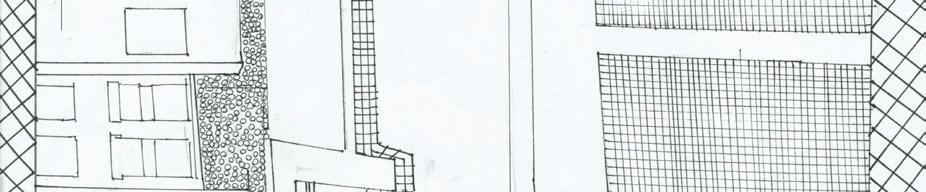
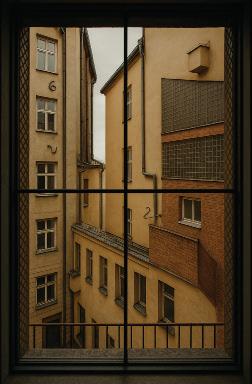
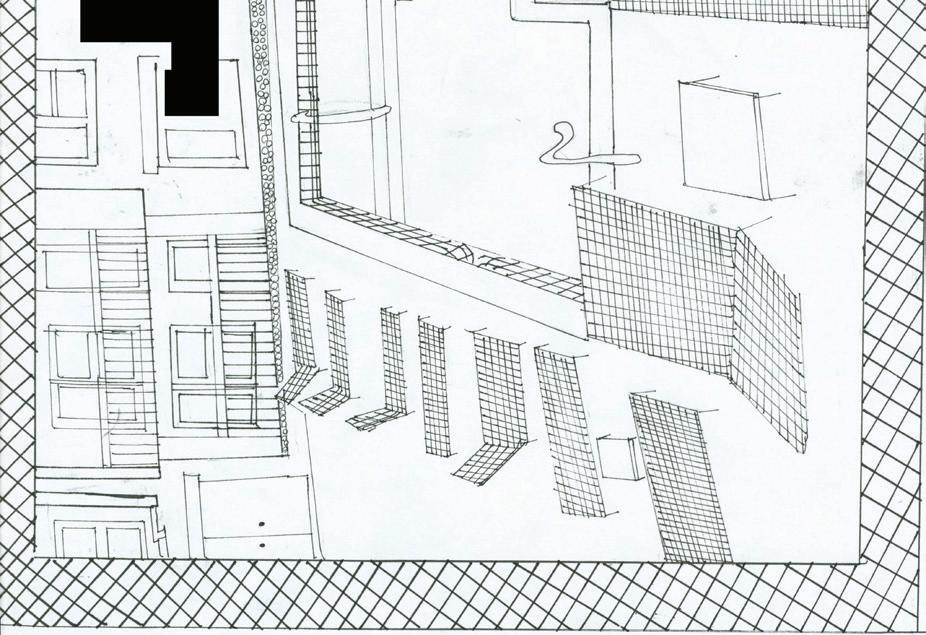
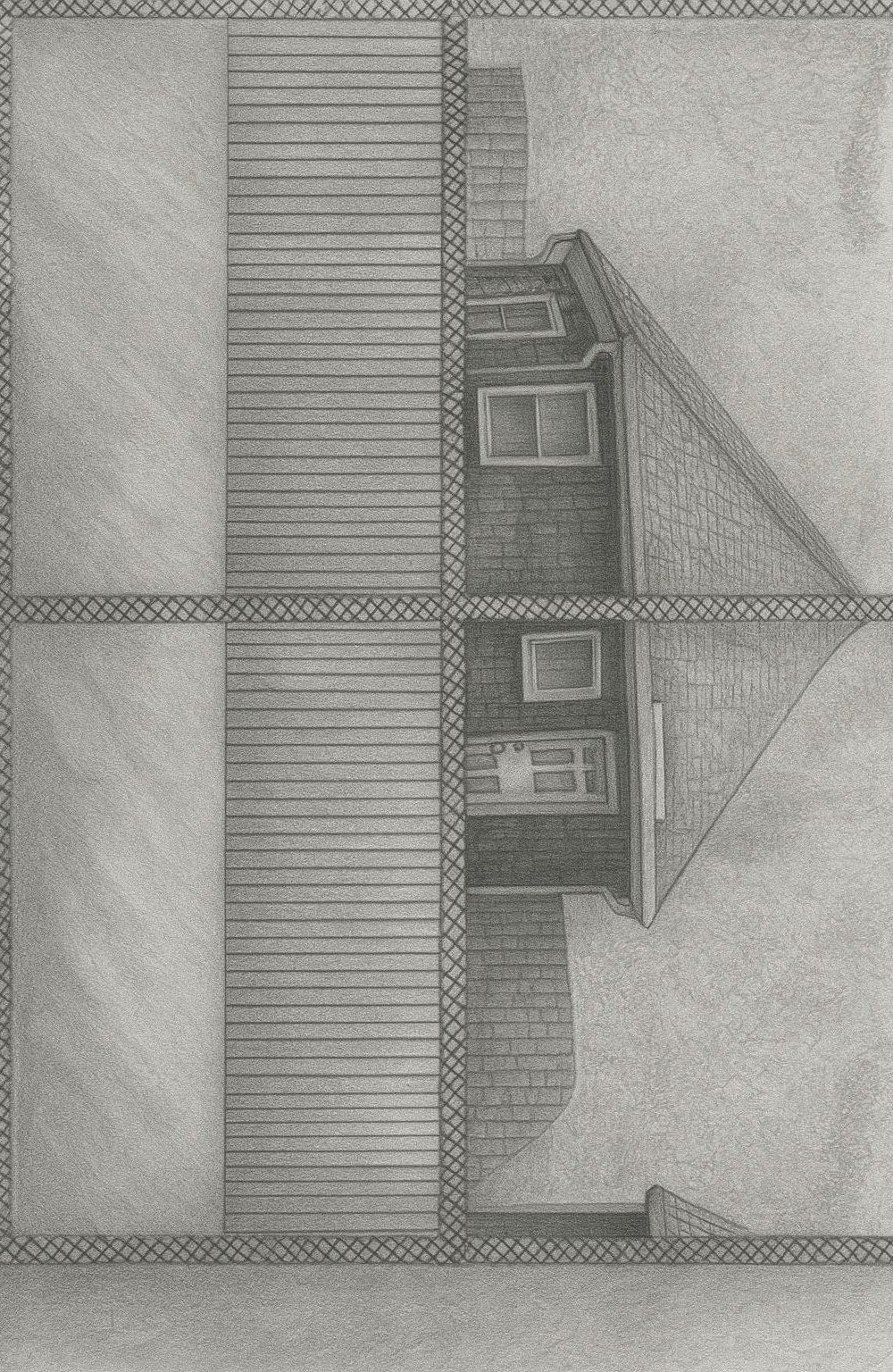
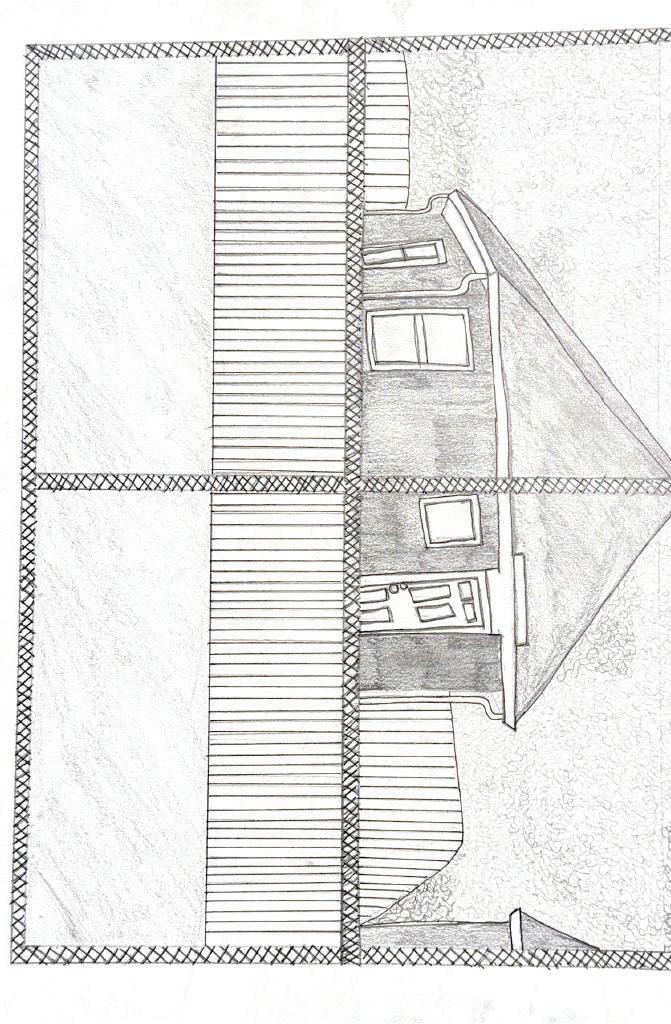
In this photo I drew my window from a one point perspective from my dorm. I went ahead and drew the frame with hatching to make it stand out and be really noticeable compared to the landscape in the back. In the middle is a brick wall showing the foundation of my dormitory. Continuing through the photo the landscape is represented my scribbles and different line weights of hatching and straight lines to distinguish the difference between each object. When drawing this my intention was to get the window to look exactly like I viewed it. I wanted to give it a realistic look incorporating specific details for example the brick walls. I wanted to incorporate the ridges and cracks. I overall wanted to show the one point perspective by having everything meet to the center .
Ava Harrington Portfolio
What I learned...
Project #1 “Wall, Column, and Space”
- During our first project, “Wall, Column, and Space”, I learned the importance of patience as well as the importance of speed and time management. We had a week to make 59 scenes cut and assembled out of foam core. This was definitely a shell shock for me going into this project the first week, but I believe it set me up for success for the rest of the projects moving forward.
Project #2 “Hand Drawing”
- “Hand Drawing” taught me to be tedious and technical when sketching. It can sometimes feel passive and simple while drawing, although through this project I learned that it is quit the opposite. Sketching is intricate and detailed, when simply one wrong angle can throw off the entire piece. While it can be relaxing and passive at certain times, it also requires great concentration when drawing from pure observation in front of you.
Project #3 “Drawing What you See, Drawing What you Feel”
- This project took place on location at Crystal Bridges Museum of American Art in Bentonville, Arkansas. We were assigned to find a painting in the musem that we resonated with and sit in front of it to observe and sketch it. I chose the landscape “View of Mount Washington” by John Fredrick Kensett. As I sat in front of the painting to sketch, I learned how to blend in within a setting and be connected with the piece. For a few short hours I was in that painting, seeing the land in front of me, feeling the air around me, and understanding the intentions of the piece. This I have learned is an extremely critical piece for success while drawing from observation.
Project #4 “Space Cube”
- During the “Space Cube” project I learned that it is important to explore all options and ideas during the design process. I also learned that it is important to review and assess your own work in order to make revisions. Throughout the project we made many new iterations of our space cubes, changing different aspects of the cube each time in order to get the final product to perfection. While of course an artists job is never done and there will ways be more changes to be made, this process of revision and experimentation is extremely important as a designer. We must remember to never settle with our first ideas as the process of designing is trial and error, observation of our work, gaining inspiration, and making revisions.
Project #5 “First Portfolio”
- The “First Portfolio” project was an entirely new experience to me. I found it really fun and exciting making a collection of all the work I have completed and accomplished in just five weeks. Although, this project taught me that time is your most frugal resources. Time is not something that can be gained when you are on a deadline. To be organized in managing the completion of projects and your own personal timeline can be one of the most important skills a designer can have.
Overall
- Overall, I have learned the importance of teamwork, hardwork, perserverance, time management, organization, and much more. While my journey over the five weeks of this program wasn’t easy, it was definitely worth it because of the immense amount of design and life skills I learned. The things I learned over this course could never be replicated in any other way, in both the projects we are assigned and the completion of them, as well as the conditions we work in. I can confidently say I have gained extremely positive personal growth over the 5 weeks of this program and know I am even closer to reaching my goals in the future.
If you could talk to you before these five weeks, what would you like to share with you?
- If I could talk to myself before the five week course I would tell her that she has no idea what is heading her way. It is going to be a lot of hard work, dedication, and long days. Although, I would also tell her that she is exactly where she is meant to be. She is going to step foot through the doors of The Fay Jones School on day one and feel reasurrance in knowing that she absolutely made the right decision in being here.
First Portfolio
Learning Objectives for Work #1. AI Exploration Students will experience an advanced technology: AI Image Generator “Fabrie.” Through the process, students will be able to start considering how to integrate the technology in their design process.
Learning Objectives for Work #2. Portrait Students will take a portrait picture of themselves with their achievements over the past four weeks. This will help them celebrate their time and effort.
Learning Objectives for Work #3. Portfolio Students will make a portfolio with a template and their achievements over the past five weeks. This will help them understand what the end of design is. The goal is not just to complete each individual visualization, but to compile the deliverables and results resulting from the process.
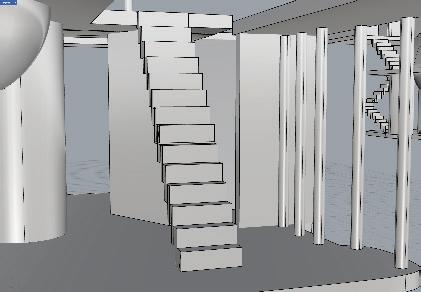
This photo depicts an upward sloping incline wall that wraps over a platform. The wall is an incredibly steep slope, so there are pegs for the figure to climb up on to get over the wall. The figure is seen standing at the base of the incline wall. This represents the beginning of his journey, and he is feeling fearful. From the looks of even just the beginning of this space, he knows it will be a scary one. The pegs are scary to him because of their unstable and small nature. He must scale this steep wall and head downwards to where he can’t see, therefore this causes him great fear. He feels uncertainty about what will be presented to him after scaling the wall.
This photo shows the almost vertically curved wall coming down on the other side of the platform through a circle void. The figure is seen standing at the base of the vertical wall, surrounded by two curving horizontal walls which act as a barrier in a way. The figure continues to feel fearful as he has just gone down a very steep slope and is now headed into a mysterious curved hallway. He feels constrained and forced to keep moving forward as the space is very cramped. The walls are reach all the way to the ceiling and are long and wavy, making him feel uneasy about what’s on the other side.
Phase #1
Phase #2
This view shows the beginning of a mysterious structure. Pictured, is a steep incline wall going up and over a platform. Other spaces of the journey are seen as well but provoke a factor of fear as they are eerie and confusing. The piercing white color of the space also give an eerie and uncomfortable feeling.
Next, the other side of the incline wall is seen. Coming down through a void in the platform the wall creates a dramatic drop down. It is seen encased by two long curved wall, indicating that the hallway they make up is the next intended direction for the journey. The walls start in a wide orientation, then curving together to an extremely narrow point, thus creating mystery and fear as the subject cannot see past the hallway to what is next in the journey.
Phase
Phase #2
This photo shows the two curved horizontal walls leading the figure further into the spooky space. The figure is seen standing towards the narrowest part of the walls, with another figure watching him. The figure finds the shape of the curved walls to be unsettling in the sense that you can’t necessarily tell what is to come once you walk past them. He is again scared to see what will come next in his journey through this space. More fear festers as he heads down the extremely dark and narrow hallway the walls present.
Shown in this picture is the end of the curved walls and the bottom of a vertical wall, with crooked pegs the figure must climb up. He is seen standing right in front of the vertical wall, before he must attempt to scale it. The pegs on the wall feel unstable to the figure and this worries him to climb up it, let alone that he doesn’t know where the wall leads him to. It is the only way out so he must climb up it, despite his growing fear of what is to come. He is excited to get out of the dark hallway, but scared to see what is next.
Phase #3
Phase #4
The narrowest part of the hallways is seen here. They get so close, almost touching, making it hard for the subject to even squeeze through past them. The walls are long and tall, it is impossible to observe any other aspects of the space when in the hallway, as if the subject is being trapped.
The end of the hallway is shown here, leading to the bottom of another incline wall, this one steeper than before. The wall is all that is in sight, ultimately showing that the only way out is up. Fear continuing to fester another dangerous obstacle is provided in the journey.
Phase
Phase
This photo shows a square void, with a curved surface heading downwards, this is the top of where the vertical wall leads to. The figure is seen standing right in front of the wall sloping downwards. Fear continues to fester as he realizes that this whole space is causing him fear as he continues forward. The slopes are incredibly steep, and he feels unsafe. Specifically, this platform he has found himself on creates a lot of safety concerns for him, one wrong move and he falls all the way to the ground. The platform is also slanted which worries him, but he must be tedious and careful to get down safely.
Shown is the bottom of the downward sloping wall, surrounded by rows of columns. The figure is standing at the bottom of the sloped wall, in between the mysterious columns. He feels uneasy with the sight of the columns, they lack a sense of structure and comfort, as if he is heading towards something spooky and unfriendly. The only way out is through the camped line of columns so he must continue forward. The precise orientation of the columns, both thick and thin, feels eerie to him, as if they are properly leading him into danger, the calm before the storm.
Phase #5
Phase #6
Seen here is what the incline wall leads to, another smaller platform. The wall jets through a small void in the platform and leads to a steep slope downwards. The view is so fast that the whole space can be seen when looking down, yet also at such a tall height the subject is too fearful to look downwards.
Shown next is the bottom of the steep slope downwards. It is practically vertical and stands alone. Nearby are some rows of columns that must be explored next. The subject is led there next, despite even more fear possessing him at this point.
Phase
Phase
The space past the row of columns is shown, capped by two curved walls which reveal a narrow walkway for the figure to continue through. The figure is seen standing right before the walkway, past the columns. He feels nervous about what is on the other side of the walkway and what more he must endure. From his point of view, he can see more steep surfaces which continue to scare him, but he feels happy that he has made it down from the steep slope and past the eerie columns. The walkway is narrow and cramped, leading him up a small staircase to another platform, fear rises again with the sight of another platform.
Two platforms are seen, directing the figure over a curved wall, upwards yet again. The figure is seen standing on the lowest platform, about to make a journey upwards again. He feels as if he is nearing the end of the space, which excites him. Although, the thought of going down a steep surface again makes him uneasy and continues to fester his nerves. He sees another figure, nervously waiting to head down another slope, he grows more anxious. The platforms feel partially like a safe space for him before he must face his fears going down a slope again.
Phase #7
Phase #8
The rows of columns are cautiously straight, serving a purpose of order and seriousness. Encased by two walls curving inwards on them, the columns stand tall and powerful.
Once passed through the column’s walls, there is another steep slope. The figure must scale two uneasy platforms in order to make it onto this upside-down U-shaped wall. As the subject is almost done with the journey now, it is expected that there will be another scary drop down of some sort.
Phase
Phase #8
This photo shows the top of the curved wall, which the levels lead up to, with a steep downward slope on the other side. The figure is seen sitting at the top of the slope, waiting to go down it. He feels nervous as to how steep the slope is, and also how little room there is for landing. He must be extremely careful going down this surface or else he may get hurt. The only way is down, so he must carefully slide down it. He can see the end of the space now and his nerves begin to ease up.
Shown is the bottom of the downward slope. The figure is shown standing at the bottom of it, after successfully scaling its extremely steep manner. He feels grateful that he was able to make it to the bottom without acquiring any injuries, although also nervous for what else the space will bring him to. The next obstacle is another curve, with more unstable pegs for him to climb up on. His nerves are still high with the thought of scaling more steep slopes and the potential of becoming injured. Luckily for him, he sees the end and this appears to be the last obstacle, causing him to feel grateful for a moment.
Phase #9
Phase #10
As predicted, the get down from the platform is another extremely steep slope. All that can be seen from this point of view are the tall curved slopes and the view of the background, which expresses the terrifying height most of this journey took place in.
Shown next is the bottom of the slope downwards. The journey down was dangerous and scary, although the end of the journey is approaching closer and closer. The subject is then being led upwards on another sloped wall.
Phase #9
Phase #10
A curved circular surface is shown protruding from the ground. The figure is seen sitting on the curve, anticipating for this journey to be over. He is feeling relaxed in this space, for a quick moment to collect his thoughts and nerves and continue moving forward. His next fearful feat will be getting down from this mysterious curved structure. He sees another figure ahead, enjoying the end of his journey which excites him to continue forward. Once he can get down from this teetering curved wall, his journey will be over.
Lastly, an inward curving sphere is seen waiting for him on the other side. The figure is sitting in the bowl-shaped sphere relaxing from the nerve-racking journey endured. The figure feels relief as he has made it to the end of his journey through this terrifying space. He also feels beauty in the end of it, as he was so scared the whole way through, and now he gets to see light at the end of the tunnel and breathe, with this nice space to relax in.
Phase #11
Phase #12
Seen is the peak of the journey’s last upward slope, which provides a sense of clarity and safety. Despite the immense fear the journey caused, in this moment it was all worth it.
The end of the journey has arrived and in that there is great comfort. The subject is greeted with a safe, comfortable, and relaxing reward. A space which is meant to be utilized to offload and think about the long journey which just occurred and the emotions and values it sparked.
Phase #11
Phase #12
Initial Window Impression:
The window in my room is the first thin you see when you walk in. It is directly in front of the door, and my bed, showing a large beautiful view. My apartment sits on top of a large hill, so my view includes lots of trees and skyline. I feel peace looking outside my window. Nature for me has always done this and the view makes me feel like I am sitting directly in it. I hear birds chirping and wind rustling leaves on the trees. I smell fresh mountain air and feel the sun beating down on me.
Observations After Drawing:
After drawing, I am more aware of my surroundings. I get caught up in life sometimes I forget to “stop and smell the roses”. In other words, I forget that I am living in a beautiful avenue for natural adventures. Arkansas alone is a wonderful place to get outside and enjoy nature, while even just right outside my window I can experience it. I now see more clearly the beautiful trees that inhabit my backyard, as well as the beautiful sky view above them.
Final Window Impression:
I now feel at peace in my room. I often come home and get right to work on remaining homework, not even allowing my bed to be a pure state of relaxation. Through my window, I gain that sense of peace and relaxation. It feels pure and fruitful outside it, motivating me to be productive and calm.
LinkedIn Certificates
Illustrator 2025 Essential Training
Course completed by Ava Harrington
Jun
Top
InDesign 2025 Essential Training
Course
Introducing
Course completed
Rhino: From Curves to Surfaces
Course completed by Ava Harrington Jun 16, 2025 at 04:35AM UTC 3 hours 33 minutes
Top skills covered Rhino 3D
Photoshop 2025 Essential Training
Course completed by Ava Harrington Jun 22, 2025 at 05:50AM UTC 12 hours 38 minutes
Top skills covered
Marilynn Penfield Portfolio
What I learned...
Project #1 “Wall, Column, and Space”
- “Wall, Column, and Space” introduced me to the concept of surface movement and the impact the mvoement has on the viewer. Throughout the 59 categories, I was able to understand the effect shadows, obstructions, and angles had on the space and on the user. The paragraphs after each category also helped me to learn how to express these findings in word form. For this project, I also learned a lot about patience with myself and with the material I was using. This was my first experience with building since the sixth grade so the learning curve was very steep for me.
Project #2 “Hand Drawing”
- This project was by far the most difficult for me because I did not really know how to draw in the way I was being asked to. I have always been a doodler but never a sketcher so this exercise was very daunting to me. Looking back on my first sketches, I can see how much I have improved. I think that the biggest improvement is that I am more confident in myself and it translates to cleaner lines. I have learned the effects of contour, hatching, line weight, and singular lines versus multiple lines. All of these learnings have made me a better and more confident sketcher.
Project #3 “Drawing What you See, Drawing What you Feel”
- This project gave me some challenges because I really wanted to make my work as similar to the reference as possible. In the “Outdoor Sketches” assignment, this perfectionist barrier was finally broken and I was able to draw what I felt. I realized that I was much better at sketching what I saw and explaining in words how I felt rather than sketching what I felt from the start. While I still have a long way to go with this concept, I know that I am capable of drawing my feelings and experiences.
Project #4 “Space Cube”
- The project helped me to understand movement through a space as well as how to arrange surfaces in a space to make the most sense to the viewer. After several iterations, I came up with a sequence that I am happy to say I am proud of. The project also taught me that thinking before acting is so important when designing. Before glueing anything down, I always arranged it first, and edited as I needed. It was not until the entire sequence was laid out that I finally started making things permanent.
Project #5 “First Portfolio”
- For this project, I practiced and mastered using the InDesign Program. I was able to learn how to arrange different projects together in order to make it flow nicely. I was also able to learn how to edit images and rearrange textboxes in order to fully display my work.
Overall
- Overall, I feel as though I am in a completely different place than I was before summer studio started. Not only am I more confident in myself and my work, but I also feel more caught up to the fall and spring studio students. I know so much more about spaces, what effects a space, colors, and drawing. While my work is not perfect, I feel as though the process has taught me so much that I will be able to use to create near-perfect projects in the future.
If you could talk to you before these five weeks, what would you like to share with you?
- I would probably tell myself that perfection is impossible but effort is everything. So far, summer studio has taught me that the outcome is not everything and that the real value comes with the learning process. I would tell pre-studio, perfectionist self to relax and give myself some grace. This is a steep learning process and you are doing your best! You best is all that matters!
First Portfolio
Learning Objectives for Work #1. AI Exploration Students will experience an advanced technology: AI Image Generator “Fabrie.” Through the process, students will be able to start considering how to integrate the technology in their design process.
Learning Objectives for Work #2. Portrait Students will take a portrait picture of themselves with their achievements over the past four weeks. This will help them celebrate their time and effort.
Learning Objectives for Work #3. Portfolio Students will make a portfolio with a template and their achievements over the past five weeks. This will help them understand what the end of design is. The goal is not just to complete each individual visualization, but to compile the deliverables and results resulting from the process.
Prompt_Paragraph: One sixteen-foot, tall, curved wall presses the viewer against the edge of the ground surface. The human figure is forced to walk past this tall wall in order to continue down the path. Already, I feel anxiety as I am forced to make a tight squeeze through the path between the column and the edge of the ground-level surface.
Prompt_Paragraph: One eight-foot wall is connected to another eight-foot wall to create a 170-degree angle. The human figure is able to walk along this first wall until the degree change occurs, and then the human figure must walk at an angle instead of the straight path. I felt a lack of control as I had to edit my path to accommodate this angle change.
Phase #1: Category #35_by hand
Phase #2: Category #31 _by hand
Prompt_Paragraph: The Rhino model-based image generated a more meaningful AI image result because the lighting was moodier and the surfaces smoother, which put most of the attention on the feeling of the space. At the earlier stages of the design process, I think that the physical model-based image would be more beneficial when coming up with an idea for sketching. I think that Rhino based images would be more beneficial when exploring the atmosphere options. This made me understand that the quality of a physical model means more than just aesthetics but rather can distract the viewer from the space worth looking at
Prompt_Paragraph: Again, the image from Rhino created a more effective AI photo because every surface was accentuated. The shadows were more intense and added more to the concept of fear. I think that physical images would be more useful when coming up with material usage because Rhino images promote unnatural material usage in the AI outcome. This made me realize that when I am creating a space, I need to start considering the effects of light.
Phase #1: Category #35_by Rhino
Phase #2: Category #31_by Rhino
Prompt_Paragraph: Two columns stand in a line, parallel to an eight-foot wall. The columns make the space in between them feel solid, so the human figure walks between the columns and the wall. I feel as though I am being guided through this space, not at my own will, but at the will of someone else.
Prompt_Paragraph: A step leads up to a raised platform with a square void in the center. Out of the center protrudes a curved surface. The human figure is able to observe this covering that the curve creates but is unable to fully use the curved covering due to the void directly underneath. I feel upset that I am unable to use this curve, but I am too afraid of falling into the void to try to utilize more coverage.
Phase #3: Category #25_by hand
Phase #4: Category #54 _by hand
Prompt_Paragraph: The Rhino image was most effective when creating the Ai image because the darker background translated well to the Ai tool. This proves that Rhino images of the model can be more effective when understanding atmosphere. The darker background in the Rhino image created a darker background in the Ai produced image. This part of the exploration made me understand that the background in the image matters when taking photographs of the space.
Prompt_Paragraph: The physical model made for a better image to give to the Ai tool to generate an image because the materials remained neutral. The Rhino image generated a gold photo that took away from the actual surfaces being displayed. This reiterates my point that the physical model-based image is more reasonable to put into the Ai image generator because it produces more natural results. This made me realize that in some cases, a simple, more natural image is more beneficial than an elaborate image.
Phase #3: Category #25 _by Rhino
Phase #4: Category #54 _by Rhino
Prompt_Paragraph: After exiting the stairs after the void, a wall stands directly in the center of the space, leading to the next part of the sequence. The human figure is blocked by this wall and must choose a side of the path the wall creates. This feels like the first choice I am able to make independently in this sequence, but the choice frightens me because I do not know what each path consists of.
Prompt_Paragraph: A curved wall and an S-curved wall are positioned in a way that creates a funnel shape at the entrance. The human figure must take the path, but there is not enough light for the figure to see what is further down this pathway. I am afraid of what lies in the darkness of the S-shaped pathway and do not feel comfortable taking the path.
Phase #5: Category #02_by hand
Phase #6: Category #44 _by hand
Prompt_Paragraph: Again, the physical model generated a better Ai image because the tones were much easier on the eye. While the shadows and fear factor were less present in the physical model image, the surfaces were much more understandable, making it the better image to use in earlier stages of the design process. I now understand that you want to view and understand different characteristics rather than just focusing on one component.
Prompt_Paragraph: The physical model made for a better generated Ai image again due to the natural outcome compared to the bright gold outcome generated by the Rhino model-based image. The physical model keeps proving to be the best option when wanting to observe effects of different surfaces and material usage. I learned that I want to focus on the flow of objects in addition to their effect on the overall mood of the sequence rather than just focusing on one design aspect at a time.
Phase #5: Category #02 _by Rhino
Phase #6: Category #44 _by Rhino
Prompt_Paragraph: Another curved path continues at the end of the S-curve; this time, the path is more extreme with the curves. The human figure must make sharper movements along this path in order not to run into any walls. Again, I cannot see down the path, so I do not know what to expect, which makes me uneasy.
Prompt_Paragraph: A flat surface, elevated with four columns, holds a void in the center with a facing wall. The facing wall acts as an obstruction and ushers the human figure to take a left. The void above me feels like a spotlight, and I feel like all eyes are on me, making me uncomfortable.
Phase #7: Category #37 _by hand
Phase #8: Category #46 _by hand
Prompt_Paragraph: The Rhino model-based image generated a better Ai image than the physical model-based image because the material was smoother and more natural. I think that the Rhino image would be more useful for the earlier stages of the design process so that you are able to see what the final model would look like. This image made me realize that angles and curves are important to get perfected.
Prompt_Paragraph: The physical model-based image was more successful in generating an Ai image that went with my fear factor due to the shadows cast across the surfaces. I think that the physical model image is more useful in the early stages to help understand the movement of shadows within the space. I learned that a cluttered space could distract from the other parts of a structure.
Phase #7: Category #37 _by Rhino
Phase #8: Category #46 _by Rhino
Prompt_Paragraph: Six columns, with three columns running parallel on each side, like the pathway. The columns create a feeling of a solid space, and the human figure must walk directly down the center. I feel as though my choice of path is not my own, making me feel uncertain of the outcome.
Prompt_Paragraph: Two columns stand on either side, towards the front, of an eight-foot column. The human figure is unable to walk through the space between the column and the curved surface because the space is too small, so the figure must turn to the left. I wanted to enter the space between the column and the curved surface
Phase #9: Category #21 _by hand
Phase #10: Category #41 _by hand
Prompt_Paragraph: The Rhino model was more useful than the physical model because the physical model generated too many poles and it blocked the other parts of the sequence. In this case, I think that the Rhino model image would generate a better image in the early stages of the design process because it is more accurate with materials and surfaces used.
Prompt_Paragraph: The physical model-based image generated a more accurate Ai image, which made it more effective. I think that the physical model would be better to use at the early stages of the design process because it shows a more natural and accurate image. I learned that a simpler perspective can be more effective.
Phase #9: Category #21 _by Rhino
Phase #10: Category #41 _by Rhino
Prompt_Paragraph: Two sixteen-foot columns made from a curved surface stand together with just enough space between them to act as a pathway. The human figure must walk between the two columns in order to arrive at the last part of the sequence. I feel small in comparison to these large structures around me, and I feel the need to hurry through the space to get to more open areas.
Prompt_Paragraph: A small surface, elevated by one six-inch stair, contains a square void in the center. The human figure is able to walk straight up the stairs but must avoid the center, or else they will fall into the void. In my mind, this feels as though two choices are presented: stay on the platform with a world you know, or take a leap of faith and go out into the unknown.
Phase #11: Category #38 _by hand
Phase #12: Category #12 _by hand
Prompt_Paragraph: I think that the Rhino image generated a better Ai picture because, while the colors were distracting, the atmosphere contibuted more to the Fear factor. I think that the Rhino image is better to use in the early stages so that the creator is able to see how to alter different aspect to enhance atmosphere and shadows. I learned that shadows and other factors are more important at times than the color of the material from which it was made.
Prompt_Paragraph: The physical model-based image generated a better Ai composition because it accentuated the fear factor of falling into the unknown. I think that the physical model images would be better for the beginning of a design process because the Ai is able to more easily edit the image into something more abstract. This made me realize that making an image more abstract can generate more design ideas.
Phase #11: Category # 38_by Rhino
Phase #12: Category # 12_by Rhino
Your Intention: I wanted the Ai generator to generate my image with color while also keeping the general shape. I also asked for the generator to make the sketch look more like a flower, which was my original intention when creating my pattern. I think that the colors added only enhanced the shape rather than take away from it.
Your Intention: For this Ai generation, I wanted the sketch to look as life like as possible. While the Ai took a different approach to the sketch, it was able to decipher the key factors such as the trees and gress.
LinkedIn Certificates
Illustrator 2025 Essential Training
Course
Rhino 7 Essential Training
InDesign 2025 Essential
Training
by Marilynn Penfield
5 hours 22 minutes
to Surfaces
by Marilynn Penfield
Introducing Rhino 7
Course completed by Marilynn Penfield
Jun 16, 2025 at 03:09PM UTC 1 hour 2 minutes
Top skills covered 3D Modeling Rhino 3D
Photoshop 2025 Essential Training
Course completed by Marilynn Penfield
Jun 23, 2025 at 11:06AM UTC 12 hours 38 minutes •
Top skills covered Adobe Photoshop
Jasmine Sukhija Portfolio
What I learned...
Project #1 “Wall, Column, and Space”
- These 59 categories gave a glance at how the space relative to the human figure had an impact on their perspective in the space. It also gave an idea of spacial awareness, how certain walls and collumns can change the space. Also, how these are placed can open or close off parts of the room.
Project #2 “Hand Drawing”
- Hand drawing brought out much more creativity with the way we can draw everyday items. From cross-contouring to blind contour, these effectively allowed me to learn more detailed characteristics about drawing and improved my skills to sketch easier.
Project #3 “Drawing What you See, Drawing What you Feel”
- Taking a day trip to crystal bridges allowed me to see a new space and what all there is to draw. After picking two places that felt the most emotional to me, I was able to slowly and carefully sketch the surroundings using my hand to eye coordnation. The outcome was amazing and truly revealed my vision through the careful drawings.
Project #4 “Space Cube”
- The space cube was a new design perspective that allowed me to build up my previous work to a final product. After carefully figuring out the best layout, I was able to build a 9X9 cube of my sequences, which brought a lot of careful planning. This project opened my eyes to many possibilites from a sequence, and improved my design skills in a new area I had never previously worked in.
Project #5 “First Portfolio”
- This project allowed the use of AI to transform our spaces in the space cube model to an almost life-like view. The outcomes were helpful because it gave new perspectives to how our spaces can be used in real life. Also, this gave ideas that may have never been thought of previously, regarding how we put every room characteristic in a new space.
Overall
- All 5 projects expanded my horizons in the design world, beginning to work on new projects in ways I never previously had. Also, there were obstacles I learned to overcome myself, and even more work I had ever done in a short time. I enjoyed how all projects corrolated with one another to give the best outcome. After the 5 weeks of hard work, I was able to use my skills to create this portfolio that not only shows my growth but the dedication, experimentation, and the final vision formulated along the way.
If you could talk to you before these five weeks, what would you like to share with you?
- There are so much more possibilities in the design world than ever imagined. Using new techniques such as cutting, building, color thinking, and so many digital skills, I have many new ways of showcasing my work. There is so much learning you will do, but keep pushing because displaying your work at the end is rewarding. Especially being able to see all you have done from the beginning to now, there is a deep sense of accomplishment. Every challenge, late night, and creative risk is all worth it when you look back and realize how far you’ve come. So don’t be afraid to try new things out of your comfort zone and skill set, take the harder path, and trust your creative insticts.
First Portfolio
Learning Objectives for Work #1. AI Exploration Students will experience an advanced technology: AI Image Generator “Fabrie.” Through the process, students will be able to start considering how to integrate the technology in their design process.
Learning Objectives for Work #2. Portrait Students will take a portrait picture of themselves with their achievements over the past four weeks. This will help them celebrate their time and effort.
Learning Objectives for Work #3. Portfolio Students will make a portfolio with a template and their achievements over the past five weeks. This will help them understand what the end of design is. The goal is not just to complete each individual visualization, but to compile the deliverables and results resulting from the process.
The difference between the hand and AI was super interesting because the settings are completely different. A desert had shown up and brought a new perspective to the way the original can look. It also brought a much more open background leading to a body of water. The new colors were nice and the wall still being included really helped the interpretation seem the most realistic.
This phase had a successful outcome because the angle was new and showed a higher perspective. The clouds felt more open, bringing new colors to the sky. The human featured brought a nice touch to show the proportions in relation to the average person. Finally, the concrete had a clean look into the space, angling upward to show the stairs and wall ahead.
Phase #1: Category #6_by hand
Phase #2: Category #28 _by hand
The comparison between these two images shows almost the same when it comes to the walls and textures. This is a great way of showing how it may look in a space realistically, depending on the colors chosen and the way the lighting is. This is a great way of showing how AI can show space in a way that someone may not have thought of previously but now can be an idea for future projects.
This view is super similar and assists the emotion of sadness by having plain contrete walls surrounding the space. The lighting is super beneficial because you can picture how the sun entering space can be effective and helps determine which side is the best option. The AI thoroughly understood how space could look in the real world, and also how the pillars can make the space feel taller.
Phase #1: Category #6_by Rhino
Phase #2: Category #28 _by Rhino
The angled wall was shown in the AI in detail, demonstrating in concrete how the wall slowly moves upward and away from the camera. The wall looks like a closed alley that goes straight up along the path into the light. These images correlate well and have a great outcome from the AI version.
AI Generated Image
The blocking wall starts at the camera and goes all the way down the mountainous range. There is a narrow path which ties to the emotion of sadness, feeling closed off from the rest of the area. The nature around the AI image shows the perspective successfully.
Phase #3: Category #17 _by hand
Phase #4: Category #24 _by hand
This phase included a slanted wall in front of the figure and the AI successfully captured this. The concrete and orange lines are unique but show the details of space. The lines also show where the ramp is and the lines that were originally behind it. This was a great comparison to the original and showed a new perspective.
This comparison allowed the ramp and walls in the back to be included in the new AI. The background brought out new textures in the AI and has new shades along the wall. The blocking wall is still prominent, with a wood floor in front that adds more color in the space.
Phase #3: Category # 17_by Rhino
Phase #4: Category # 24_by Rhino
The angled wall is shown through the glass in front of the human. It feels angled from the reflection of the glass and gives a long view range. It almost gives a feeling of an airport with a big view around the space, and the feeling of being inside a room is comforting and gives a new perspective compared to the original photo.
This AI image was much different compared to the original photo. The windows shine light down that is sort of like the S shape in the reflection but mainly a normal room with some small details added. The original photo is clearer, but the new one still has a nice look and is different than expected.
Phase #5: Category #3_by hand
Phase #6: Category #44_by hand
This view involves the slanted wall and staircase above. The angles of space now have a light from the sun reflecting in and the blue sky incorporated as well. The features are still visible in the AI version and show an outside feeling instead of the plain background in the rhino.
The S-curve in this phase is shown clearly in the AI image, giving an exact example of how the wall height affects the individual. The emotion of sadness is shown in the image, showing how the curves feel closed off. The light shining also shows the limitations of space, and how something is blocking the light. This AI image has a great impact on the stages of sadness.
Phase #5: Category #3 _by Rhino
Phase #6: Category #44 _by Rhino
AI Generated Image
The outcome of this was very interesting as the curve flipped sideways and was a part of the wall. This could be a space in the real world that is very unique and the light on the side was a nice touch. The original and new pictures look very similar and was a great way to incorporate the curve in both images.
The outcome of this AI generation was a sort of desert area which was super interesting because it still showed curves through the sand. The image looks relaxing and a new interpretation that I wouldn’t have thought of previously. There are also many lines that were added by the AI that brought texture to the space.
Phase #7: Category #34 _by hand
Phase #8: Category #8 _by hand
The closing curve is reflected in these images, revealing the feeling of isolation. The AI shows a concrete plain wall that wraps around a person, feeling enclosed in space. This is a great example because there is a ceiling incorporated in the space also. Overall, the comparison is very similar and brings the idea to life.
AI Generated Image
These two closing curves are shown but in very similar ways. The AI has made these walls look more like a road winding down into an unknown area and starts to get darker as it goes through. This has a feeling of uncertainty, not knowing if it is best to follow the path of the unknown compared to familiarity.
Phase #7: Category #34 _by Rhino
Phase #8: Category #8_by Rhino
AI Generated Image
This image has a unique beach behind the image and a concrete wall in front. The picture is horizontal and shows almost the exact original in a new way. The beach and concrete add a new color combination, brightening up the space, and a human to put the scale into a realistic perspective.
AI Generated Image
The AI vs hand was super similar in the way of the collum, but the AI added a full scene to incorporate both the human and the collum. The AI picture displayed a much clearer picture of the space in a new view and added paneling across the ceiling. Overall, the new picture is very clear and simple but still has so many dimensions added to the back.
Phase #9: Category #38 _by hand
Phase #10: Category # 21_by hand
AI Generated Image
This phase is a blocking wall, that the AI took and made into a scene. This includes the collum above with railing, making the space taller. The stairs and curved walls are still in the background, with a clear fence beginning towards the camera and moving away. Both these images are very similar and have the same features but used differently when it comes to the walls and floors.
This phase involves four collums around the human, feeling isolated from the outside. The AI successfully gave an example of how the room feels dark with a light barely visible, and a space in the background. The collum’s also have detailed engravings and a brick floor. The sphere and curve in the background are not included in the AI one but still show a great setting without them.
Phase #9: Category #38_by Rhino
Phase #10: Category #21 _by Rhino
AI Generated Image
This phase has an arch involved, which the AI has a great interpretation of the arch in space instead. There is also a balcony on top of the arch and walls on the side which shows possible options of how the arch can be used in different spaces. The AI also but more stairs and curves along the side, which fills up the space more.
AI Generated Image
There is a hole in the ceiling of the original one that has a way of reaching the light. The AI looks like it has a hole in the wall instead but still has a light on the other side. This AI version was clean and white, with tile put along the bottom. These both have similar characteristics but are used differently from one another.
Phase #11: Category #56_by hand
Phase #12: Category # 58_by hand
The arches are super similar in shape and angle; the lining is the same on the inside and the backgrounds are slightly different. The AI has more in the background, including humans and arches. It also is concrete and has a partial ceiling further on. Overall, this is a great representation of the rhino rendering with more life-like features.
This phase is the ceiling of the structure, which is shown in the desert with the holes prominent. There are more hills in the background, giving more texture, including the shadows. The desert still has some of the lines from the rhino image, but they are clearly different interpretations of the image.
Phase #11: Category #56 _by Rhino
Phase #12: Category #58_by Rhino
This abstraction was a new way of viewing the void from category #52, but the AI gave a new view of almost city-like view. The boxes look like many buildings lined up, and the sun is shining from the left side. The AI took an interesting approach to the original dancing lines but now has a new city interpretation using shades and lines.
AI Generated Image
AI Generated Image
These two images were different from each other since the first was a view of the pool behind my apartment while the AI was just apartments. The AI version feels more like it was brought to life with the colors in the back, also the brick and tiles on the side are interesting which are different from the way the other buildings look. Overall, the windows and view are nice and have a new interpretation from my original window view.
LinkedIn Certificates
Introducing Rhino 7
Course
Rhino 7 Essential Training
Course
Course
InDesign 2025 Essential
Training
by Jasmine Sukhija
to Surfaces
by Jasmine Sukhija
Photoshop 2025 Essential Training
Course completed by Jasmine Sukhija
Jun 23, 2025 at 03:45PM UTC 12 hours 38 minutes
Top skills covered Adobe Photoshop
Illustrator 2025 Essential Training
Course completed by Jasmine Sukhija
Jun 03, 2025 at 12:51PM UTC 7 hours 2 minutes •
Top skills covered
Reece Walker Portfolio
What I learned...
Project #1 “Wall, Column, and Space”
- You can create different feelings and emotions in a space just by changing a wall facing, where a column is or how something is angled.
Project #2 “Hand Drawing”
- Drawing is not about being perfect. Drawing is meant to be something you feel, something you want to express, not how well you can replicate something exactly.
Project #3 “Drawing What you See, Drawing What you Feel”
- It can be easy to get caught up in the small things when trying to draw something, but it is important to focus on how that image makes you feel over what you physically see in the image.
Project #4 “Space Cube”
- You can inhibit a certain emotion in a space by combining different walls, columns, floating surfaces and color.
Project #5 “First Portfolio”
- Both physical and digital tools can be useful in generating AI images that take your model to a new level of realistic and accurate spaces.
Overall
- Everything has meaning. There is never a wall that is just randomly placed or a color that was randomly used. Everything in design evokes an emotion and a feeling and it is important to choose things that get your message and intent across.
If you could talk to you before these five weeks, what would you like to share with you?
- I would tell myself to breathe and not to rush things. It’s okay to have to stay after 5 p.m. in order to produce quality work. I would want myself to know that I will get through it and that you need to lean on your instructors and ask them for help when you need it.
First Portfolio
Learning Objectives for Work #1. AI Exploration Students will experience an advanced technology: AI Image Generator “Fabrie.” Through the process, students will be able to start considering how to integrate the technology in their design process.
Learning Objectives for Work #2. Portrait Students will take a portrait picture of themselves with their achievements over the past four weeks. This will help them celebrate their time and effort.
Learning Objectives for Work #3. Portfolio Students will make a portfolio with a template and their achievements over the past five weeks. This will help them understand what the end of design is. The goal is not just to complete each individual visualization, but to compile the deliverables and results resulting from the process.
. A wall slides directly in front of the human figure, cutting off its path completely. The human figure is forced to walk around it. The wall felt intrusive, as though the space was intentionally rejecting me and making me feel small, like I wasn’t worthy of being seen or cared for.
The wall rises at an angle in front of the figure, yet the path continues beneath it to the right. The human figure was able to still complete its path as the inclined wall went up and over it. The closeness of the wall to my head induced a claustrophobic feeling, making me afraid to keep moving forward, yet also afraid to stop.
Phase #1: Category #3_by hand
Phase #2: Category # 13_by hand
I found that the Rhino model generated a more meaningful AI Image result. When plugging in the image, the AI generated a more realistic looking scene when compared to the physical model which was more accurate which is most likely because the Rhino model was cleaner and had less details when compared to a real life model. I think that image was more effective because the Rhino model was online compared to something already made in real life which made it more difficult for the AI to create another version of a real life model but even more realistically. At the early stage of the design process, I believe that when you are trying to focus on atmosphere exploration, the digital type of image is more effective when using an AI image generator. On the contrary, when you are working with form development, you could be more likely to use the physical model because it works better when getting the exact shapes and forms that you had created in AI. This gave me a new perspective on which type of mode (physical vs. digital) is more effective based on the situation. There are times when a physical model is more useful than a digital model, but I found when transforming my model through AI, a digital model seemed to get me the best output.
The Rhino model again generated a more compelling AI image. The lack of distracting details made the image cleaner and more focused on architectural form, allowing the AI to produce a visually realistic and spatially rich scene. The simplicity of the Rhino model helped enhance recognition and form translation. Digital models are more appropriate for mood and atmospheric studies in AI, while physical models better serve specific form development. This comparison taught me to lean toward digital models when realism and mood are key, and physical ones when form development is needed.
Phase #1: Category #3_by Rhino
Phase #2: Category #13 _by Rhino
A ramp steepens until it transforms into a wall, intersecting with another ramp to form an X-shape. The human figure cannot continue up the ramp as it becomes too steep, and the intersecting walls offer no clear direction. As I stood in front of it, I felt trapped and uncertain of where I was supposed to go, like I had wandered into something that I wasn’t supposed to be in and felt unwelcomed.
There are four columns, two in the back closer together while the two in the front are on the outside, farther apart. The human figure fits tightly between them, their body nearly touching the columns. The space was restrictive and felt suffocating, making me feel trapped by my own emotions and closed off from the world.
Phase #3: Category #17 _by hand
Phase #4: Category #21 _by hand
I found that the physical model created a more meaningful AI Image result. the physical model was more effective in generating a meaningful AI image. The AI translated the ramp more accurately from the physical model than from Rhino, which struggled to produce the intended geometry even with detailed prompts. This suggests physical models are better when form clarity is needed. Digital models, meanwhile, excel in mood rendering. This experiment gave me a new perspective on how to use AI in order to create more realistic spaces and accurately portray my model. I realized that when you are working with more difficult spaces and shapes, using a physical model in the AI generator makes it more accurate then compared to a digital model.
I found that the Rhino model generated a more meaningful AI Image result. The Rhino model produced the stronger AI result. Its clean geometry helped generate a more believable scene that emphasized proportion and spatial clarity. Compared to the physical model, the digital version communicated the structure with fewer visual distractions. Rhino models support atmospheric design goals in AI tools, while physical models are best for validating scale and form. This reinforced my understanding of how digital clarity can elevate design presentation.
Phase #3: Category #17 _by Rhino
Phase #4: Category #21 _by Rhino
The photograph displays how two columns and two walls frame a narrow hallway space, with the lighting adding an intriguing desire. The human figure stands in the shadows while the light source remains hidden behind the walls, forcing it to move through the opening in order to continue on. Standing here made me feel uneasy, like I was lingering in a place where I wasn’t meant to be or wanted.
The picture shows the moment of moving between two curved mirror walls that form a narrow winding path. The path is tight, and though the human figure can navigate through, it feels more like a squeeze than a passage. It felt like walking through my own hesitation and uncertainty, compressed by the fear of being emotionally exposed.
Phase #5: Category #25 _by hand
Phase #6: Category #39 _by hand
I found that the Rhino model generated a more meaningful AI Image result. the Rhino model again delivered the more effective AI image. The lighting conditions rendered in the Rhino model enhanced the AI’s interpretation of atmosphere and depth. The digital clarity and minimal noise supported stronger visual storytelling. In early design, Rhino images work better for lighting and atmosphere experimentation. This exercise reaffirmed the usefulness of Rhino models in the early design phases.
I found that the physical model created a more meaningful AI Image result. The physical model resulted in a more accurate AI image. The lighting and material imperfections from the real-life model gave the AI more data to interpret the space authentically. This accuracy helped the AI capture the emotion, fear, that I had chosen. Physical models are thus preferable when detail accuracy are essential. I learned that the real-world imperfections often help aid the AI interpretation.
Phase #5: Category #25 _by Rhino
Phase #6: Category # 39_by Rhino
A massive curved surface forms a tunnel just above the figure as it walks through. The figure walks beneath the curve, close enough to almost touch the top of it. I hurried through the tunnel, feeling like the weight of something was pressing down and all my emotions and feelings were finally being bottled up and pushed together.
The picture displays different spaces with twisted and free types of elements in them. The human figure was very small compared to the large, crumbled structure in front of it. This part of the scene felt very loud and expressive, as if all of my fear and anxiety of love bundled up was finally exploding out into the world, releasing me what was holding me back for so long.
Phase #7: Category #56 _by hand
Phase #8: Category #59 _by hand
I found that the Rhino model generated a more meaningful AI Image result. The Rhino model worked better here, generating a clean, realistic representation of the spatial effect. The AI could interpret the simple forms easily, making the final image feel more architectural and resolved. Digital models aid in creating very dramatic and different forms as well as creating a more realistic type of space while physical models offer a more accuracy based approach. This helped me understand the trade-off between accuracy and interpretation in AI generated designs.
I found that the Rhino model generated a more meaningful AI Image result. The clean, flowing surfaces allowed the AI to generate a more expressive and dynamic scene. The AI was able to use the Rhino model to take what used to be a piece of paper and turn it into something sharp and scary, evoking my emotion of fear. This taught me that digital tools better support conceptual exploration, especially when working with abstract design ideas.
Phase #7: Category #56 _by Rhino
Phase #8: Category # 59_by Rhino
In this image, a deep void opens up in the floor with light shining from down underneath. The human figure sits at the edge, legs dangling over the gap. I sat there with nothing visible, afraid of what would happen if I leaned in as the void below displayed my fear itself, love making me unsure of what would happen if I finally gave in a let go.
. A tall, curved wall rises up before the figure, towering over it. The human figure stands small beneath the wide curve opening up in front of it. This space felt deceptive, something that appeared gentle but actually created a clear barrier between me and what I wanted.
Phase #9: Category # 49_by hand
Phase #10: Category #52 _by hand
I found that the Rhino model generated a more meaningful AI Image result. When plugging in the image, the AI generated a more realistic looking scene when compared to the physical model which was more accurate which is most likely because the Rhino model was cleaner and had less details when compared to a real life model. I think that image was more effective because the Rhino model was online compared to something already made in real life which made it more difficult for the AI to create another version of a real life model but even more realistically. At the early stage of the design process, I believe that when you are trying to focus on atmosphere exploration, the digital type of image is more effective when using an AI image generator. On the contrary, when you are working with form development, you could be more likely to use the physical model because it works better when getting the exact shapes and forms that you had created in AI. This gave me a new perspective on which type of mode (physical vs. digital) is more effective based on the situation. There are times when a physical model is more useful than a digital model, but I found when transforming my model through AI, a digital model seemed to get me the best output.
The physical model was more effective here. The AI image captured subtle light and shadow details that were unique to the physical model. By having the real material and shape, it allowed the AI generator to create something that was still correct while also making it seem more realistic. This case showed that physical models are valuable when realism and accuracy are critical to design representation.
Phase #9: Category #49 _by Rhino
Phase #10: Category #52 _by Rhino
Two winding curved walls nearly envelops the human figure, only leaving a small path between them. The human figure moves through, nearly consumed by the height of the curve. Each step forward through the curve felt more isolating, like walking deeper into my own guarded self and it became clear that as the space narrowed, the intriguing feeling was an illusion.
The photo captures the overwhelming height and depth of a curved interior wall behind the human figure. The human figure appears distant and diminished, swallowed by the height of the curve. I stood inside the arch and waited for something to happen, but soon I realized, this was the ending and I was all alone because of my fear of opening up and letting others in. I was surround by love, but it was not with me.
Phase #11: Category # 44_by hand
Phase #12: Category #34 _by hand
The Rhino model produced a more emotionally expressive and dramatic image. The AI captured curve of the arches and made the space between more dramatic and fitting to my emotion, fear. The freedom of the Rhino model allowed more interpretive storytelling. I realized that digital models offer enhanced narrative flexibility and mood exploration in design workflows.
The physical model created a more accurate AI image. The AI was able to render the scene without adding unnecessary elements, maintaining the original composition. This example highlighted how real-world references improve AI’s ability to reproduce specific design intentions. It reinforced the strength of physical models in developing and representing authentic spatial ideas.
Phase #11: Category # 44_by Rhino
Phase #12: Category #34 _by Rhino
My intention was to create something that exhibited the qualities of my emotion, fear, while also adhereing to the guidelines of being curved. Usually when you think of the emotion fear, you think of sharp, pointy objects that are gigantic and tower over you. The guidelines for this assignment was to find a shape in your photograph that was curved. By making this shape long but rounded at the end, I tried to make it something uncomfortable and odd. When drawing my shape all together, I wanted to add these lines in the back with a pattern to show that even amongst all the craziness of the shapes, there are still some aspects that are still and whole. This describes my storyline for my space cube, centered around the fear of love and showing how even though life may get crazy and scary at times, there are still times to be still and have structure in your life.
My intention for drawing my window view was to try and capture how I felt from looking out my window every day. I wanted to capture the cozy feeling of seeing the houses in my neighborhood, right outside my window in front of the beautiful and calming landscape of the mountains behind them.I wanted to make my drawing very calming and relaxing in order to exhibit how I feel when sitting in my room and looking outside my window.
LinkedIn Certificates
Photoshop 2025 Essential Training
Course
Introducing
Course
Training
by Reece Walker
Training
by Reece Walker
InDesign 2025 Essential Training
Course completed by Reece Walker Jun 08, 2025 at 06:42PM UTC 5 hours 22 minutes
Top skills covered Adobe InDesign
Rhino: From Curves to Surfaces
Course completed by Reece Walker Jun 16, 2025 at 05:18AM UTC 3 hours
Top skills covered
Overall, what I have learned...
Main Themes
1. Self-Discovery and Personal Growth
- Self-Confidence and Potential
- Students expressed surprise at their ability to push beyond their perceived limits and achieve more than expected.
- Realization of inner strength and capabilities.
- Resilience and Adaptability
- Overcoming challenges, managing stress, and coping with unexpected difficulties.
- Emphasis on the importance of perseverance and trust in the process.
2. Importance of Time Management
- Managing heavy workloads through effective time management.
- Balancing productivity with good craftsmanship and attention to detail.
- Recognizing the value of taking breaks to maintain mental health.
3. Significance of Relationships and Support
- Importance of building friendships and collaborating with peers.
- Relying on classmates for support and encouragement during challenging times.
- Instructors as valuable resources for guidance and learning.
4. Embracing Challenges and Learning Opportunities
- Understanding that difficult experiences are integral to growth and learning.
- Emphasis on the rewarding nature of overcoming obstacles.
- Appreciation for the lessons learned and the skills acquired during the course.
5. Reflection on Stress and Workload
- Acknowledgment of the initial overwhelming nature of the course.
- Learning to manage stress and not overthink or complain excessively.
- The importance of maintaining a positive mindset despite challenges.
6. Enjoyment and Fulfillment
- Despite the challenges, students found joy and fulfillment in their work.
- The sense of accomplishment and pride in completed projects.
- The positive impact of enjoying the process and the work itself.
Sentiments and Emotions
1. Positive Emotions
- Pride and Satisfaction: Many students felt proud of their accomplishments and the progress they made.
- Joy and Enjoyment: Despite the hard work, students found enjoyment in the creative process and the outcomes.
- Gratitude: Appreciation for the opportunity to learn and grow, as well as for the support received from peers and instructors.
2. Negative Emotions
- Stress and Overwhelm: Initial feelings of being overwhelmed by the workload and the intensity of the course.
- Doubt and Anxiety: Moments of doubt about their abilities and the feasibility of completing the tasks.
3. Mixed Emotions
- Relief and Accomplishment: Relief at having completed the course and a sense of accomplishment.
- Reflection and Insight: Mixed feelings about the difficulty of the course, balanced by the recognition of its value and impact.
Key Takeaways and Advice
1. Trust in the Process
- Emphasizing the importance of trusting the process and believing in one’s abilities.
- Encouragement to embrace challenges and learn from them.
2. Importance of Community
- Highlighting the value of building relationships and seeking support from peers.
- Advice to engage with classmates and instructors for a richer learning experience.
3. Balanced Approach
- Advocating for a balance between hard work and self-care.
- Importance of managing time effectively and taking breaks when needed.
4. Embrace Creativity and Risk
- Encouragement to think outside the box and take creative risks.
- Recognition that mistakes and messes are part of the learning process.
5. Positive Mindset
- Advice to maintain a positive mindset and avoid unnecessary stress.
- Encouragement to focus on the rewarding aspects of the work and the progress made.
Overall, the reflections indicate a transformative experience for the students, characterized by personal growth, the development of resilience, and the acquisition of valuable skills. The recurring themes of self-discovery, the importance of time management, and the value of relationships underscore the holistic nature of their learning journey.