Evonik invests €80 million in its biotechnology expansion
Scalp serum targets anagen-telogen imbalance
New label solutions designed for packaging recyclability
8
Events
Trend takeaways from Takealot House of Beauty
Home Care
How
16
Personal Care
New functional bio-based raw materials from Wacker
Düllberg launches in SA with a scent-led sensory journey
Croda Beauty explores the dawn of neurocosmetics
22 Skincare/Well-ageing/Anti-ageing
The shift from anti-ageing to skin longevity
Intensilk™ – dermohacking cellulite through circular bio-energy
Strengthen the barrier and restore balance with mineral salts
Science, sustainability and a global spotlight
South Africa's cosmetics, personal care and pharma industries are never short of a good story – and this May edition of P&C Review delivers on all fronts.
Nouryon's latest sustainability report makes for impressive reading, with 36% of revenue now derived from ecopremium solutions and a 22% reduction in Scope 1 and 2 emissions. UPM's ProCycle label portfolio offers practical recyclability solutions for the packaging sector, while Evonik's €80-million biotech expansion in Slovakia signals strong long-term investment in fermentationbased ingredients.
The coverage of Takealot House of Beauty in our events section offers a fascinating snapshot of where South African consumers are headed: ingredient-literate, experience-driven,
and firmly in the grip of the ‘skinification of hair’ trend.
Our skincare and personal care features are a must-read, exploring the rise of neurocosmetics, the shift from anti-ageing to skin longevity, and the science behind high-performance actives. Meanwhile, Coschem’s Johannesburg Supplier Day and IFSCC Seminar brought international-calibre speakers and delegates from across the globe to our shores. This was a significant milestone for the cosmetics industry as South Africa builds momentum toward hosting the IFSCC Scientific Congress in Cape Town in 2029.
Sydney Lai +886 4 2329 7318 sydneylai@ringier.com.hk
CIRCULATION
CIRCULATION MANAGER: Rae Morrison Rae.Morrison@media24.com
PUBLISHING TEAM
GENERAL MANAGER: Dev Naidoo HEAD OF CONTENT & DIGITAL STRATEGY: Varushka Padayachi
PRODUCTION MANAGER: Angela Silver
GROUP ART DIRECTOR: David Kyslinger
MEDIA24 MEDIA
CEO: Minette Ferreira CFO: Lana Goliath
MEDIA24 CORPORATE
CEO MEDIA24: Raj Lalbahadur CFO MEDIA24: Nelmarie Beyers
JOHANNESBURG OFFICE
Building 13, The Woodlands Office Park, 20 Woodlands Drive, Woodmead, Sandton PO Box 784698, Sandton 2146 Tel: +27 (0)11 713 9000
POSTAL ADDRESS PO Box 784698, Sandton, Johannesburg, 2146
Evonik invests €80 million in its biotechnology expansion
Evonik’s biotechnology expansion in Slovakia will see a significant investment of approximately €80 million in its Fermas site in Slovenská Ľupča.
The company will introduce advanced downstream fermentation technology, enhancing the group’s drug-substance contract manufacturing capabilities. The project is expected to create around 50 new jobs, further boosting the local economy.
This marks the second major investment at the Fermas site, following the establishment of a rhamnolipids plant in 2022. Fermas, originally founded in 1992 and fully acquired by Evonik in 1998, has evolved from amino-acid production into a leading biotechnology hub. The site now produces fermentation-based ingredients for various industries, including pharmaceuticals, cosmetics, personal care, and animal nutrition.
Evonik’s biotechnology expansion in Slovakia aligns with its commitment to scalable, reliable and sustainable production, known as Next Generation Solutions. It also strengthens the company’s biotechnology capabilities, supports regional employment, and caters to the needs of major life-science customers.
Scalp serum targets anagen-telogen imbalance
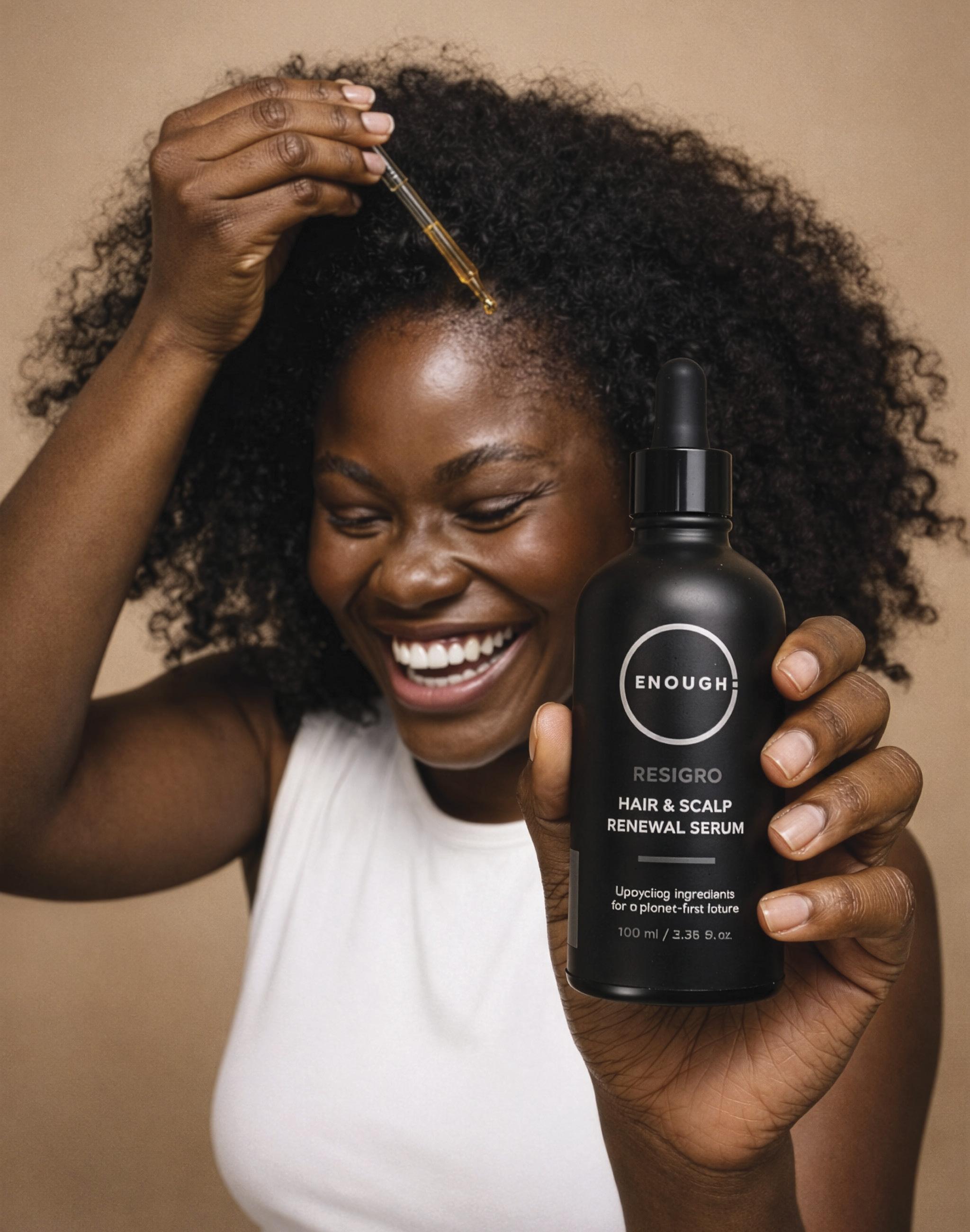
Hair thinning and excessive shedding affect millions of people, yet most treatments target the strand rather than the source. ENOUGH. – a pioneering upcycled beauty brand – is changing this with the launch of ResiGro Hair & Scalp Renewal Serum – a daily, water-based serum that works directly at scalp level to optimise the hair growth cycle, reduce shedding, and support visibly fuller, more resilient hair.
Hair loss rarely has a single cause. Hormonal shifts (menopause, post-partum changes), chronic stress, nutritional deficiencies, tight styling, product build-up, sudden weight loss, certain medications, and even a bout of flu can ‘shock’ follicles into the shedding phase simultaneously. Most consumers reach for volumising shampoos or thickening sprays, which are products that treat the symptom and can inadvertently worsen the problem by clogging follicles or adding weight. ResiGro takes a fundamentally different approach: it treats the scalp itself.
At the core of ResiGro is Resvinia, a COSMOS-approved, 100% natural active upcycled from French vineyard shoots –a sustainable by-product of viticulture. Resvinia® works at a cellular level to increase IGF-1, a key biological signal that helps retain hair in the anagen phase while reducing the proportion entering the telogen phase. In a healthy scalp, 85% to 90% of hairs are in the growth phase at any one time. ResiGro is formulated to help restore and maintain this balance.
Visit www.its-enough.com for more information.
Evonik is investing in its Fermas site in Slovenská Ľupča, Slovakia
ResiGro Hair & Scalp Renewal Serum is formulated to optimise the hair growth cycle
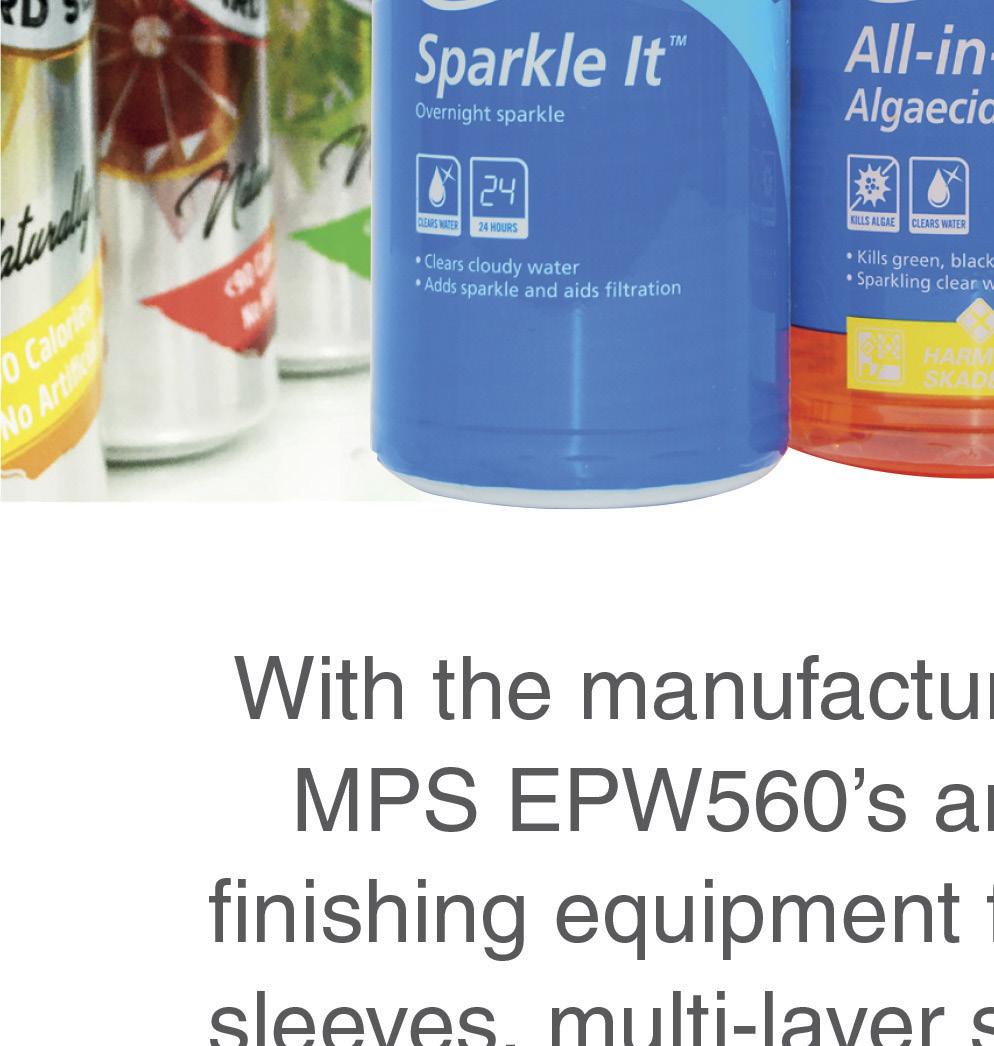
New label solutions designed for packaging recyclability
UPM Adhesive Materials, a global supplier of high-performance selfadhesive products, introduces the new UPM ProCycle™ portfolio of recycling compatible label solutions. The portfolio brings together advanced adhesive technologies and circular products in a coherent offer, to help converters and packaging brand owners select solutions that deliver recognised recyclability performance.
The label materials currently included in the portfolio are suited for rigid PET and HDPE packaging in home and personal care applications, as well as food and beverage. The adhesive technologies, such as wash-off, ensure that materials separate cleanly during mechanical plastic recycling, including washing and grinding, supporting high-quality recyclate.
UPM ProCycle solutions are designed to deliver consistent
adhesion, efficient converting and high print quality for plastics, fibre and glass packaging. All products in the portfolio are externally recognised as recycling compatible* across packaging types and markets, and independent testing assures specific label functionalities, such as clean release.
“As packaging recyclability requirements and regulations evolve, UPM ProCycle helps converters and brands navigate the changes and stay compliant. Backed by UPM’s adhesive and sustainability expertise, the portfolio makes it easy to select label solutions for recyclability performance,” states
Suvi Rasa, manager of circularity and sustainable product design at UPM Adhesive Materials.
The portfolio will continue to expand with adhesive technologies and label products, addressing evolving circular packaging needs.
Nouryon publishes new sustainability report
Global specialty chemicals business, Nouryon recently published its 2025 sustainability report, highlighting progress across environmental performance, workplace standards and sustainable innovation. The results showcase continuing efforts to reduce emissions, improve safety, expand living wage analysis and develop solutions to enable more sustainable products and processes across consumer and industrial markets.
“We grow by innovating safer, more efficient and more sustainable chemistry for our customers,” said Charlie Shaver, Nouryon chairman and CEO. “We strengthen performance through disciplined operations and environmental integrity – lowering costs, reducing risk and earning trust. And by investing in our people and communities, we build resilience that compounds over time. Sustainability isn’t a box to check at Nouryon. It’s how we win.”
Some of the key highlights of the company’s sustainability progress include:
• Innovation, with 36% of 2025 revenue coming from eco-premium solutions and 76% of the R&D product pipeline targeted solutions with benefits including bio-
based feedstocks, biodegradability or an improved environmental footprint.1
• Renewable electricity with 54% of total electricity consumption from renewable sources (up 6%), with 37 sites (up from 28 last year) running fully on renewable and/or low-carbon electricity.
• Greenhouse gas emissions, with absolute scope 1 and 2 greenhouse gas emissions improved to 22% against the 2019 baseline (from 19% in 2024).
• Health and safety saw a 78% reduction in process safety incident rate since 2019 and another 3% drop in 2025 in total OSHA incident rate versus 2024.
• People – 97.5% of staff across 16 countries were assessed and are paid a living wage. Employee turnover continued its multi-year decline, and Nouryon earned Great Place To Work® certification in India.
• Recognition – the company earned an EcoVadis Gold rating (top 3% overall, top 2% in its industry), a CDP Climate Change score of B, and a CDP Supplier Engagement score of A-, earning a place on CDP's supplier engagement leaderboard.
The full 2025 sustainability report, including comprehensive data, case studies and methodology, is available at www.nouryon.com/sustainability
Reference:
1. Eco-premium solutions demonstrate at least a 10% lower environmental impact on a given criterion across the full product life cycle (cradle to grave) versus the relevant baseline, without significant adverse effects in other categories. For methodology, see the 2025 Sustainability Report, page 13.
The UPM ProCycle portfolio puts recyclability performance within easy reach
Beauty redefined: Trend takeaways from Takealot House of Beauty 2026
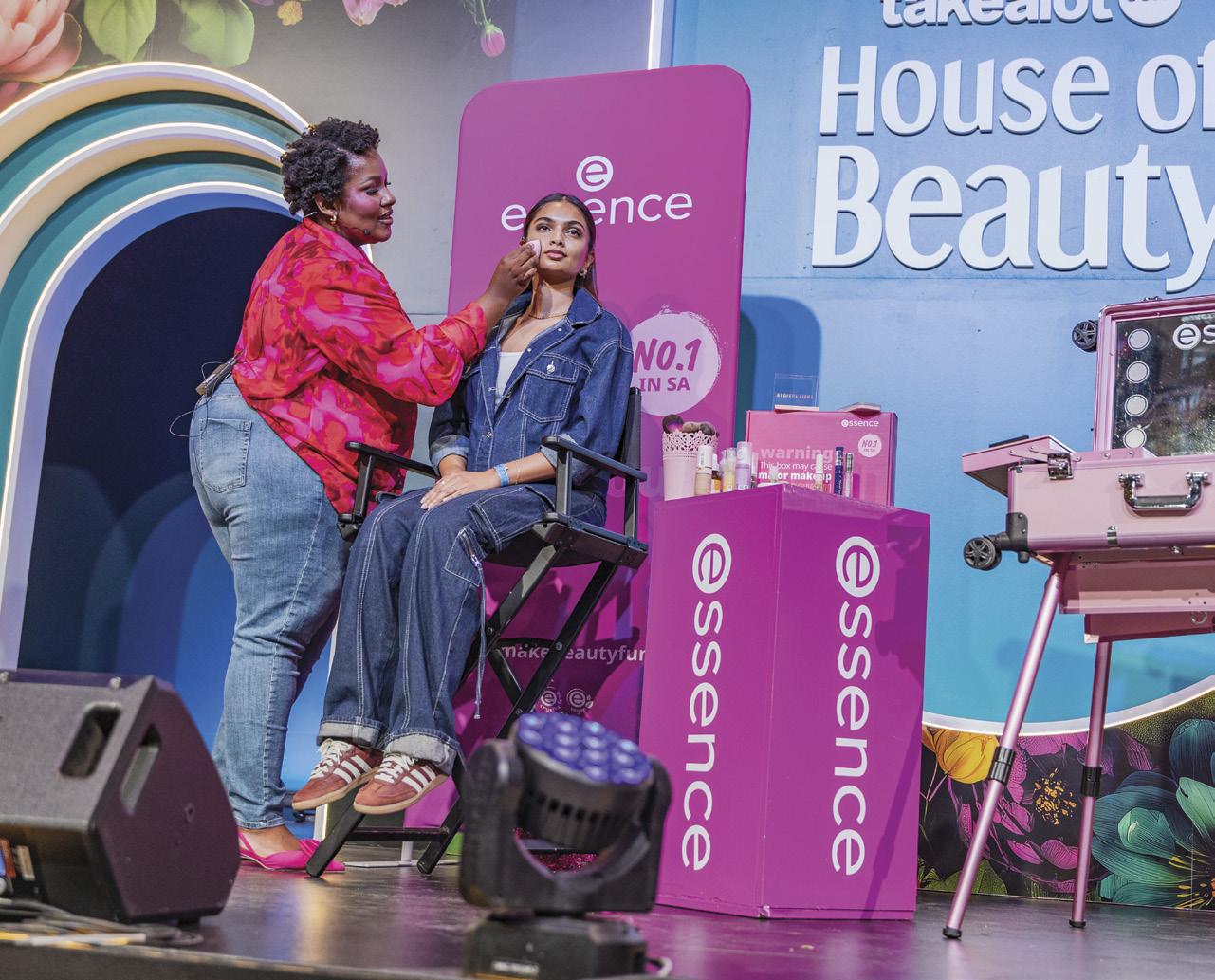
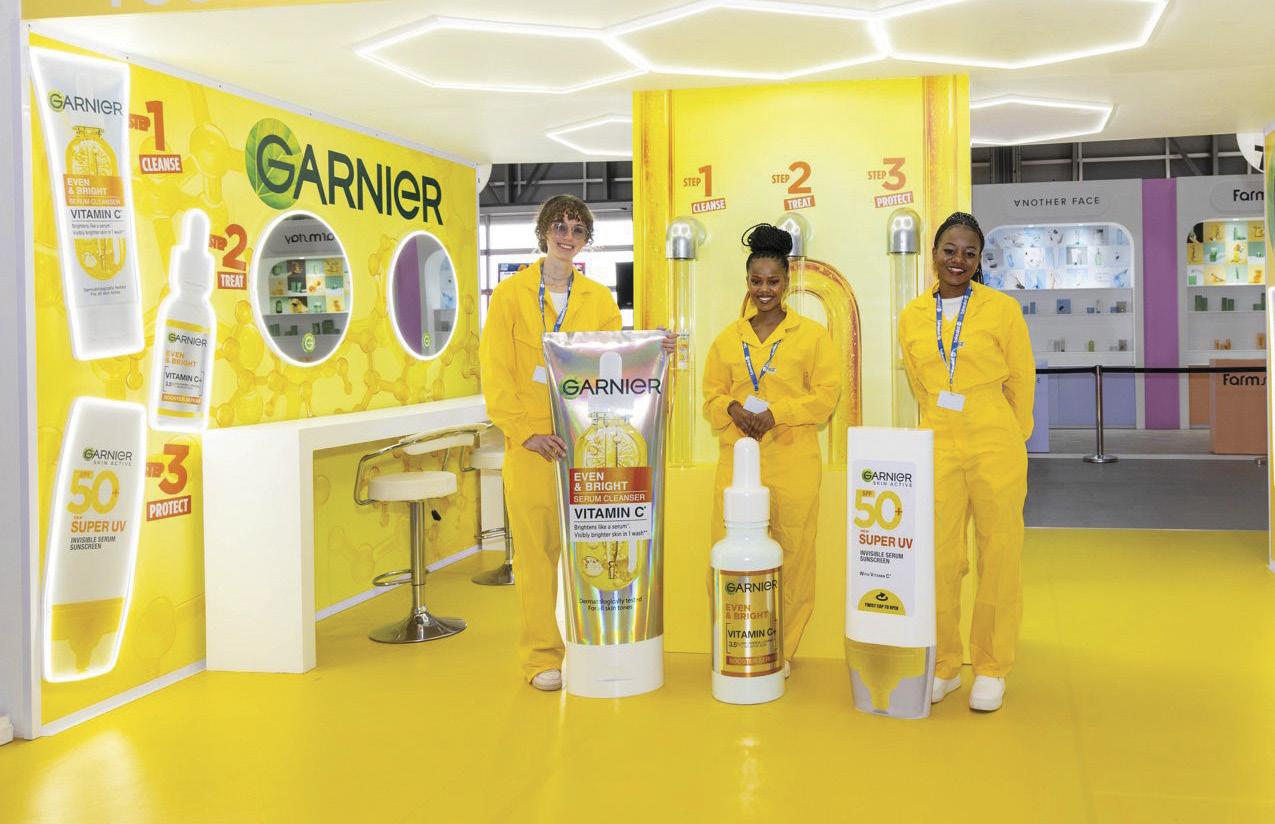
Takealot House of Beauty returned to the Kyalami Grand Prix Circuit in Johannesburg from 24 to 26 April, and it did not disappoint. Part beauty playground, part brand showcase, part live-shopping experience, the event brought together an impressive line-up of local and international brands across skincare, hair care, fragrance, colour cosmetics and wellness –all under one roof and all available for immediate purchase via TakealotNow.
For those of watching category trends in the cosmetics and personal care manufacturing space, the show offered a valuable snapshot of where the South African consumer beauty market is heading in 2026. Here are the key trends that stood out.
SKINCARE: THE AGE OF THE ACTIVE INGREDIENT
If there was one dominant message across the skincare floor, it was this: South African consumers are increasingly ingredientliterate, and brands are responding in kind. Treatment serums are no longer a niche offering – most brands at the show presented a minimum of three to five serum SKUs, each targeting a specific concern.
Ceramides remain the backbone of barrier-repair formulations, appearing across both facial and body care categories from stalwarts like CeraVe, Cetaphil and The Ordinary. Hyaluronic acid and niacinamide –commonly positioned at concentrations of 2% to 5% on pack – continued their reign as must-have hydration and brightening actives, while retinol and vitamin C maintained strong shelf presence.
The language of hair care has shifted decisively toward skincare territory
Notably, the body care category is undergoing a meaningful repositioning. Products making face-care claims – antiblemish, anti-dark spots, brightening – are becoming increasingly common, reflecting a growing consumer expectation that body skin deserves the same level of targeted treatment as facial skin. This presents clear formulation and marketing opportunities for manufacturers looking to differentiate in a crowded body care market.
HAIR CARE: SKINIFICATION
GOES SCALP-DEEP
The ‘skinification’ of hair – a trend that has been building globally for several years –showed clear evidence of having taken root locally. Across multiple brands, the language of hair care has shifted decisively toward skincare territory: scalp microbiome balance, barrier support, hydration, and comfort were recurring positioning claims.
Salicylic acid and glycolic acid, long associated with facial exfoliation, are now appearing in scalp-care formulations. L’Oréal Elvive’s Oil Erasing Scalp Serum combines salicylic acid with hyaluronic acid to purify the scalp, minimise excess oil and deliver 72-hour hydration claims – a formulation approach that would not have seemed out of place in a facial serum range just a few years ago.
Local brand Masodi Organics drew attention with its active hair care range, which includes a Shea Butter Balm, Anti-Itch Tea Tree Mist, Concentrated Oil Drops, Hairline Fortifying Serum and Root Stimulating Serum. This is a sophisticated, performance-driven line-up that speaks to the growing demand for hair wellness products formulated with
actives and is tailored to African hair textures and concerns.
Across the category, shea butter, keratin and botanicals remain dominant on INCI lists. At this stage, local hair care brands are yet to adopt vegan protein in their formulations showing the trend is still very much in its infancy in the South African market.
FRAGRANCE: SENSORY INNOVATION
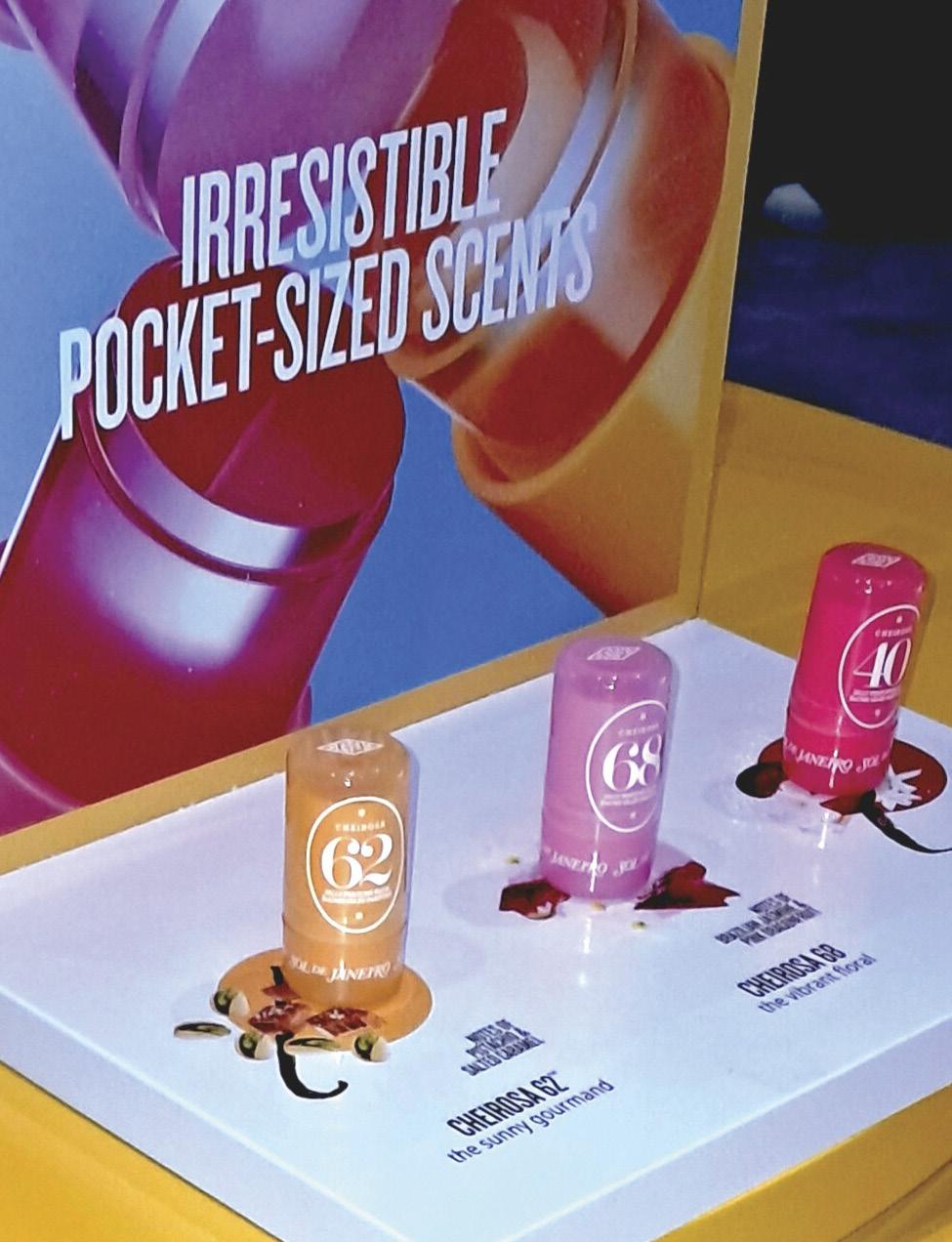
Sol de Janeiro commanded a strong brand presence at the event, and for good reason. The range of numbered fragrances and body mists – built around evocative, colourful scent stories –speaks directly to a consumer appetite for fragrance as an experience rather than simply a functional product. Key fragrance profiles include pistachio and salted caramel, guava nectar and sunlit orchard, vanilla orchid and sheer sandalwood, Brazilian jasmine and pink dragon fruit, and black amber plum and vanilla woods.
The brand’s most notable innovation is its range of jelly balm solid fragrances – available in variants 40, 62 and 68. These solid fragrances are presented in a twist-and-swipe on-the-go format designed for fragrance touch-ups throughout the day. The innovation reflects a global trend toward portable, mess-
free fragrance application, and is worth watching from a development perspective when targeting Gen Z and Millenials.
On the men’s fragrance front, the 2025 Aramis Intuition launch made its presence felt. Positioned as a woody, green neofougère, the scent opens with grapefruit and ozone, moves to a heart of lavender and orris, and settles into a base of vetiver, patchouli and Cuirissima LXR leather essence. This energising fragrance offering signals continued premiumisation in the men’s personal care category.
COLOUR COSMETICS: LIP INNOVATION AND MEN’S MAKEUP
Personalisation is a clear theme in the makeup category. Both Clarins and Estée Lauder offered live foundation shadematching and lip touch-up services, reinforcing the experiential dimension of modern beauty retail and the growing consumer demand for personalised product recommendations.
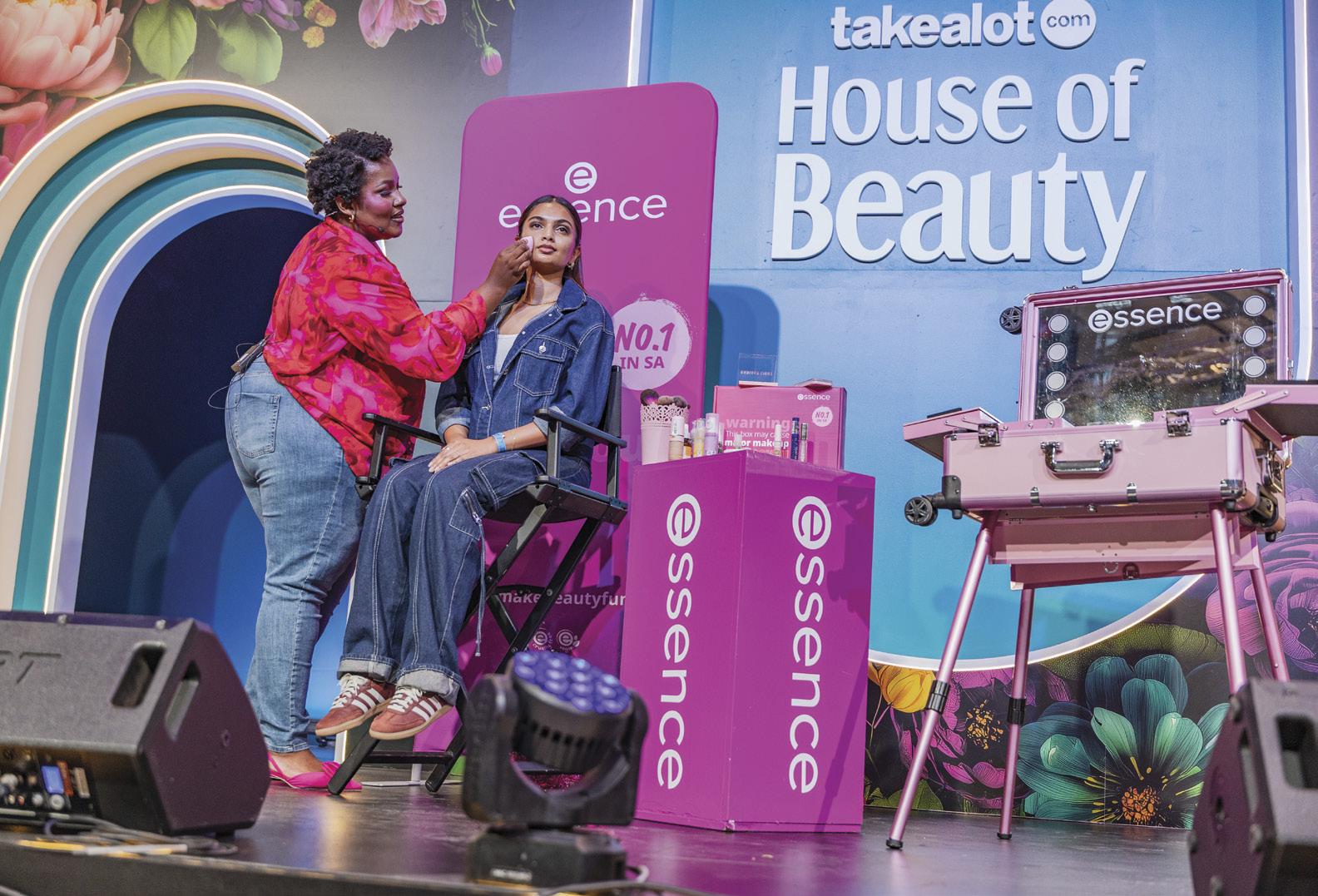
a sheer, subtly shimmery formula in Pabi’s signature shade ‘Cooper Mallow’. Influencer-brand partnerships of this nature are increasingly driving product launches in the South African colour market, and this collaboration exemplifies how locally relevant cultural endorsement can create strong consumer pull.
Lip care has emerged as a category with notable momentum. Catrice has done an extensive amount of innovation in this category. Think Peptide Bliss Glossy Lip Balm, Tinted Lip Oils and Peptide Lip Mask – these products bridge the gap between treatment and colour in an accessible price bracket. Novel applicator formats and premium ingredient positioning (peptides in mass-market lip care being particularly noteworthy) signal a category trading up.
A highlight was the Essence x Pabi Cooper collaboration – the PABI’S BOMB Shiny Lipgloss –which boasts
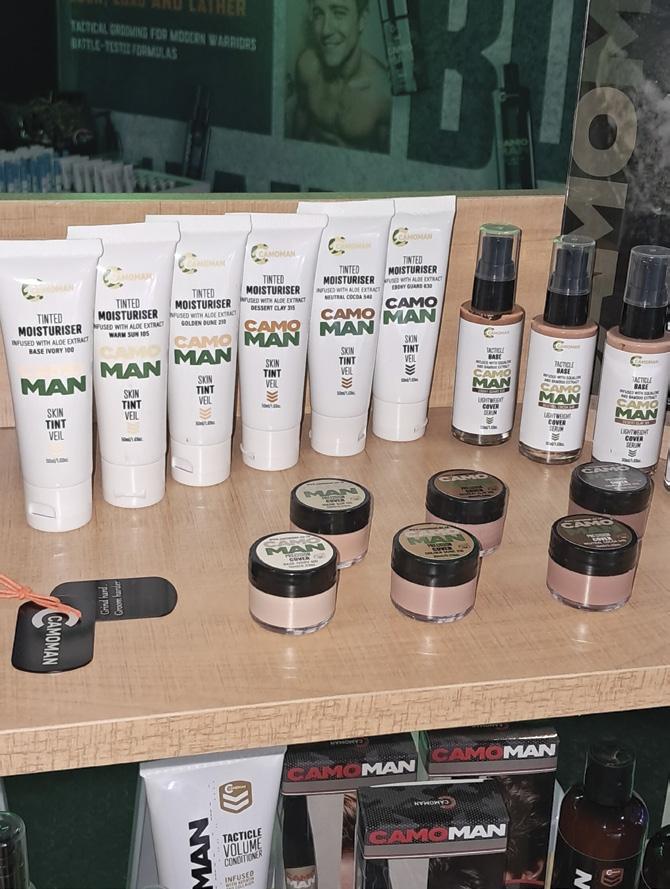
Men’s makeup is no longer a fringe conversation. Several global brands have already acknowledged the need for men’s colour cosmetics, while local brand CamoMan – recently launched a range of men’s camouflage products. These makeup products are specifically formulated for men and manufactured in South Africa. The range includes a precision cover concealer, tinted moisturiser, setting spray and anti-shine powder. The brand’s approach – subtle, corrective and practical – reflects where the men’s makeup conversation is most effectively positioned for mainstream SA consumer adoption.
K-BEAUTY LANDS IN SA
Takealot’s dedicated Korean Beauty Store gave K-beauty products a strong presence at the event. Plus, the category’s influence on
South African skincare formulation trends is increasingly difficult to ignore.
Several overarching K-beauty trends were evident:
1. Barrier-first care is an approach centred on supporting and restoring the skin barrier before addressing secondary concerns. Round Lab exemplifies this with its Birch Juice Moisturising Sun Cream and the popular 1025 Dokdo Toner, alongside a growing collagen focus through its Camellia Deep Collagen Firming Cream.
2. Cloudglow is a soft-focus, natural radiance aesthetic that has been gaining momentum in Korean beauty circles and is beginning to translate into product positioning and consumer aspiration locally.
3. Intentional maximalism, rather than the celebrated 10-step routine of years past, consumers are now gravitating toward fewer, more potent, multi-benefit products. Brands like Celimax embody this approach with their Real Noni Energy Ampoule, Retinal Shot Tightening Booster Serum and Pore and Dark Spot Brightening Serum – high-performance actives in a streamlined routine framework. Naisture, meanwhile, has built its entire positioning around targeted sheet masks as standalone treatment tools rather than routine components.
Farmstay rounds out the K-beauty showcase with an affordable natural ingredient range – snail mucin, collagen, plant-based PDRN exosomes – that makes barrier repair and rejuvenation accessible at lower price points. One concern worth flagging is that some of K-beauty products have INCI lists and packaging claims printed exclusively in Korean. For South African consumers
navigating ingredient-first purchasing decisions, this represents a meaningful information barrier. As Korean beauty brands scale their local distribution, there is an opportunity – and arguably a responsibility – for local retailers and distributors to ensure compliance with labelling best practice and to support informed consumer choice.
BEAUTY FROM WITHIN
The ingestible beauty segment is establishing a foothold in the South African market, with two brands offering compelling product narratives.
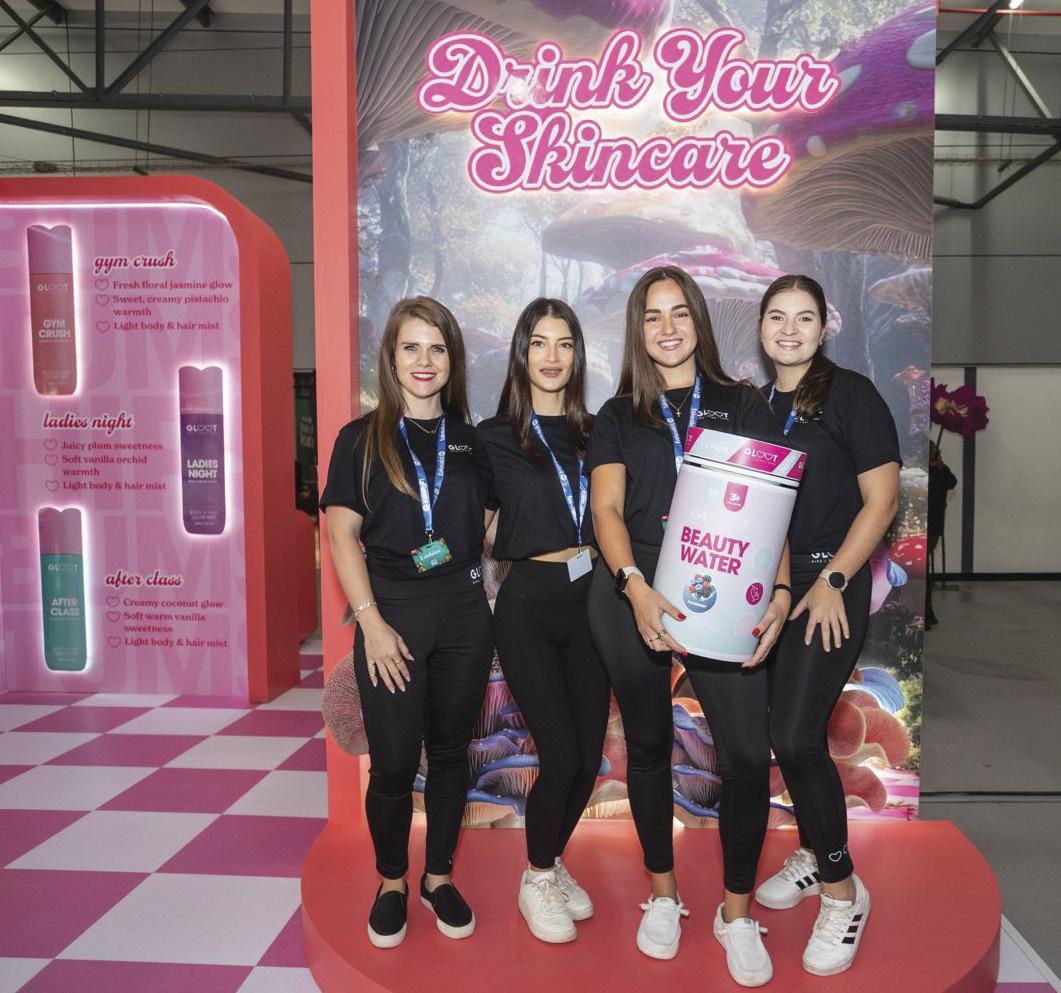
New to market, Gloot Beauty Water is a nightly collagen-boosting drink formulated with Tremella Snow Mushroom – marketed as ‘nature’s hyaluronic acid’ for its remarkable water-retention capacity. The formula also includes magnesium and calming botanicals. Designed to be taken before bed, the product supports overnight skin hydration, barrier repair and elasticity, with the added
positioning of improving sleep quality. As a South African-formulated product, it speaks directly to local consumer wellness values.
Motherkind’s Glow From Within is an unflavoured, hydrolysed bovine collagen peptide powder delivering 10g of collagen peptides per serving, with claims spanning skin hydration, elasticity, hair, nail, gut and joint support. As one of the earlier local entrants into the ingestible collagen category, Motherkind has established credible positioning in what remains a highgrowth segment globally.
For manufacturers, the beauty-from-within category represents a genuine white space in South Africa – one that bridges nutritional supplement formulation with cosmetic marketing language and consumer expectation.
THE EXPERIENCE ECONOMY IN BEAUTY RETAIL
Beyond the product and ingredient trends, the Takealot House of Beauty event itself was a powerful demonstration of where beauty retail is heading. Goodie bags valued at over R3 000, live masterclasses, influencer activations and the seamless integration of TakealotNow for onsite shopping combined to create a fully immersive brand experience that no
Takealot
House of Beauty 2026 offered a rich
cross-section of where the South African consumer beauty market is right now
purely digital or bricks-and-mortar retail environment can easily replicate.
The show’s popularity – with tickets selling out in a few hours – reflects the enduring consumer desire for tactile, sensory and social engagement with beauty brands. For brand owners and manufacturers targeting the South African market, investment in experiential consumer touchpoints is no longer optional; it is a competitive necessity.
Takealot House of Beauty 2026 offered a rich cross-section of where the South African consumer beauty market is right now: ingredient-savvy, experience-hungry, open to K-beauty innovation, and increasingly interested in wellness-led beauty categories. The blurring of boundaries between hair, skin, body and ingestible beauty, and between functional and experiential retail, is only going to accelerate.
For cosmetics and personal care manufacturers, the signals from the show floor are clear: performance-driven formulation, transparent ingredient communication, category crossover, and meaningful consumer engagement are the hallmarks of brands gaining traction in this market. •
Transform your cosmetic concepts into marketwinning products
2026 SUBSCRIPTION FORM
Full Name: ...........................................................................................
Name of card: .............................................................................
Propak China 15 to 17 June Shanghai, China www.propakchina.com/en
Coschem Online Seminar: Analytical Testing 24 June Virtual www.coschem.co.za
Cosmoprof CBE ASEAN 25 to 27 June Bangkok, Thailand www.cosmoprofcbeasean.com
JULY
Note: The above prices are applicable to South Africa only. International rates available on request.
How can you unlock better performance in your cleaning formulations?
By partnering with experts who understand your challenges.
We offer:
▪ Specialist Home Care, I&I market knowledge and application know-how
▪ Extensive portfolio of high-quality, environmentally friendly ingredients
▪ Expert R&D support via our unique network of Innovation & Application Centers
▪ Cleaning solutions tailored to meet your specific challenges
How to balance sustainability and performance
South African manufacturers are transforming cleaning products to meet growing sustainability demands whilst tackling water and energy constraints. Discover how biosurfactants, concentrated formats and mass-balance certification are reshaping the industry for eco-conscious consumers.
In a world where home cleaning and hygiene have become important, South African consumers are faced with water and energy challenges, making the task of keeping homes clean and germfree more daunting that ever.
Simultaneously, today's consumers are on the lookout for effective cleaning solutions while being increasingly conscious of their environmental footprint. In this landscape, the home care industry must adapt to meet the demands of sustainability and price competitiveness.
SUSTAINABILITY AT THE CORE OF HOME CARE
Sustainability remains a pivotal trend in the industry. With a growing awareness
of the environmental impact of daily choices, consumers opt for products that align with their eco-conscious values. Sustainable practices have transitioned from niche to mainstream, sustainability claims are beginning to overshadow brand loyalty in the world of cleaning products.
Sustainability claims are beginning to overshadow brand loyalty
Exploring eco-friendly alternatives in home care formulations is becoming a norm where staple products form the cornerstone of these changes. Raw materials such as surfactants, solvents, chelating agents, dispersants, opacifiers, rheology modifiers, biocides and preservatives feature a sustainable and eco-friendly counterpart.
For example, sustainable surfactants like biosurfactants and fully biodegradable options provide eco-friendly alternatives. Similarly, solvents with a biobased origin and chelating agents derived predominantly from natural sources contribute to a more sustainable formulation. The array of sustainable alternatives is extensive, allowing for the development of products eligible for eco labels.
Home care product manufacturers have access to a diverse portfolio of ingredients. This allows them to select materials for formulating products that are aligned with the sustainability goals of a brand or business.
Even traditional materials can undergo a significant sustainability transformation through standards like ISCC+**. This gives producers access to mass balance surfactants, solvents and preservatives like potassium sorbate, maintaining recognisable chemistry with identical molecules. The approach also minimises the need for extensive re-formulation and additional efficacy studies before introducing a more sustainable alternative to the market.
Notably, probiotics and enzymes stand out as excellent alternatives, emphasising a reduction in the reliance on traditional chemical processes to achieve desired effects.
DRIVING INNOVATION FOR HIGHPERFORMING SOLUTIONS
It is crucial to keep cost and performance parameters in mind. Striking a balance is key, where sustainability takes centre stage while ensuring high performance. This equilibrium aims to minimise the end user's reliance on excessive chemicals for desired effects, while keeping the formulation economically viable.
Consumers are opting for products that run on lower temperatures and use
HOME CARE
less water, aligning with a conscious effort towards sustainability and cost-effectiveness. Similarly, this mindset extends to laundry practices, with consumers preferring lower temperatures and shorter washing programmes, which not only conserve water but also contribute to reduced energy consumption.
In essence, this evolving consumer behaviour reflects a dual commitment – to financial prudence and sustainable living. In the same way, the home care industry is faced with the challenge of creating sustainable products that are also affordable. These efforts are seen in the emergence of concentrated cleaning solutions such as tablets, powders and sheets that minimise water usage and packaging waste.
MILD PRODUCTS, ATTRACTIVE FORMATS AND PACKAGING TRENDS
Mild formulations are a must as consumers prefer cleaning products that are safe for pets, children and sensitive environments. Coupled with safety, consumers are keen on products that are appealing and can be openly displayed instead of being hidden in cupboards. Multi coloured laundry tablets and diffusers for air care that match with their fine fragrance preference are just a few examples of this trend.
Mild formulations are a must as consumers prefer cleaning products that are safe for pets, children and sensitive environments
These strategies encapsulate a nuanced and thoughtful response to the dual challenge. By adeptly navigating the delicate balance between sustainability and affordability, the home care industry charts a course towards a future where environmentally conscious consumers can readily access highperforming and affordable products, transforming sustainable living into an achievable reality. This comprehensive approach underscores the industry's commitment to meeting evolving consumer expectations while simultaneously addressing pressing environmental challenges. •
*The International Sustainability and Carbon Certification (ISCC) is an independent multi-stakeholder initiative and leading certification system supporting sustainable, fully traceable, deforestation-free and climate-friendly supply chains.
Brenntag SA – www.brenntag.com/en-za/
Fermentation-based silicone alternatives
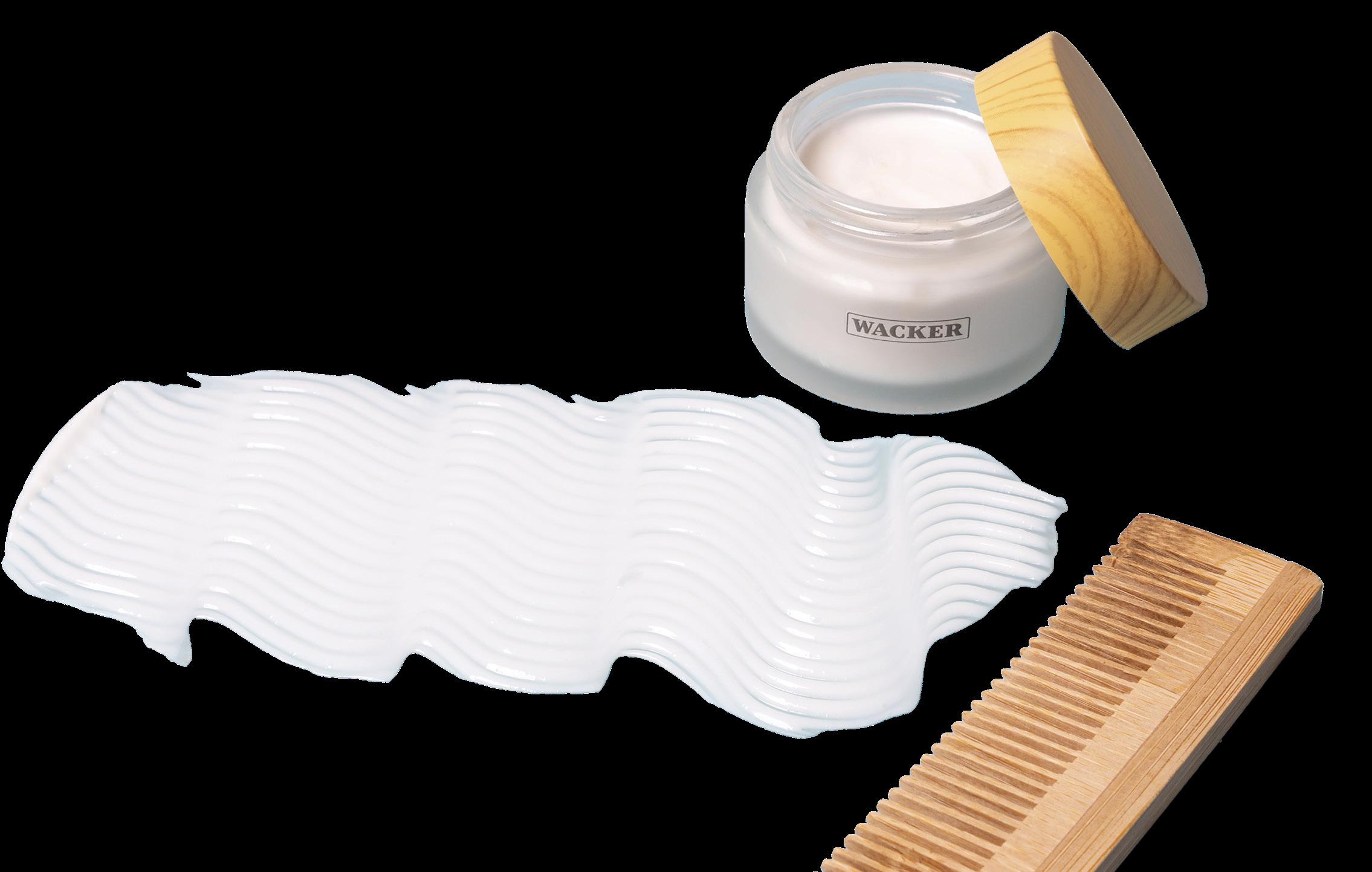
For decades, formulators of decorative cosmetics, body and hair care products have trusted BELSIL® silicones from Wacker. Now, this signature brand has been revived with the launch of two bio-based raw materials. Established under a new name BELNEXT®, Wacker introduced the cationic emulsifier BELNEXT® TAL 1840 M and the versatile emollient BELNEXT® EMO FH2 at in-cosmetics Global.
Natural, bio-based raw materials and environmentally conscious manufacturing processes are an important subject in the beauty industry today – for manufacturers and consumers alike.
WACKER is also responding to this trend and expanding its extensive portfolio of silicone-based active ingredients to include functional bio-based raw materials. With BELNEXT®, the company is offering products developed around the following pillars: biodegradability, natural raw materials and sustainable production processes with a low carbon footprint. This will give formulators the opportunity to break new ground when developing their products.
BELNEX T ® TAL 1840 M
This next generation aminolipid is particularly suitable as a cationic emulsifier for formulating hair care products. BELNEXT® TAL 1840 M is based on theanine, an amino acid, which is also found in green tea and used in food supplements for its calming and concentration-enhancing effects.
To maintain high quality standards and ensure virtually unlimited scalability, only fermentation-based theanine is used in the manufacturing process.
BELNEXT® TAL 1840 M forms a highly stable liquid crystalline phase, whose
lamellar structure enhances the stability of the emulsion. This allows natural and silicone-based care substances to be even more effective and to reach the hair surface in even greater quantities. The emulsifier is equally suitable for rinse-off and leave-on products and demonstrates a very good performance profile in these formulations, in terms of efficiency and conditioning properties. For example, wet hair is easier to comb, even at low active ingredient concentrations. These factors improve conditioning performance and reduce the risk of hair damage during combing.
BELNEXT® TAL 1840 M offers an environmentally compatible alternative to quaternary ammonium compounds (quats). It is also plant-based and readily biodegradable.
BELNEX T ® EMO FH 2
This non-polar emollient is based on a monomer produced via fermentation. Thanks to its optimised molecular structure, it can be easily incorporated into complex formulations,
which is not always the case with nonpolar emollients. In particular, the product is highly stable in emulsions. Tests show that lipsticks formulated with the additive remain in perfect condition even under large temperature fluctuations and temperatures up to 50°C.
BELNEXT® EMO FH 2 is quite versatile. It can be used in skin care and sunscreen products as well as shampoos, conditioners and makeup products. The product permits combinations with several ester-based raw materials as well as natural and synthetic oils. In skin care and makeup products, the emollient gives skin a velvety-silky surface akin to the typical feel of non-polar oils. It also enhances pigment dispersion and the colour intensity of makeup and lipstick formulations. The additive can be combined with mineral UV filters in sunscreens with a high sun protection factor. Its favourable spreading properties allow viscous formulations to be spread easily on skin.
The new emollient can be used to formulate shampoos and conditioners. In hair treatment products, BELNEXT® EMO FH 2 forms a water-resistant shield on the surface that protects the hair from moisture. This protection benefit and its gloss effect also make combing easier.
The moisture shield provided by BELNEXT® EMO FH 2 is also evident in highly humid conditions, which leads to less frizz, better hold and hair that stays in shape over a longer period. In this respect, BELNEXT® EMO FH 2 is one of the most effective active ingredients in its class. •
IMCD South Africa is the local agent for Wacker. BELNEXT
Düllberg Konzentra launches in South Africa with a scent-led sensory journey
Going
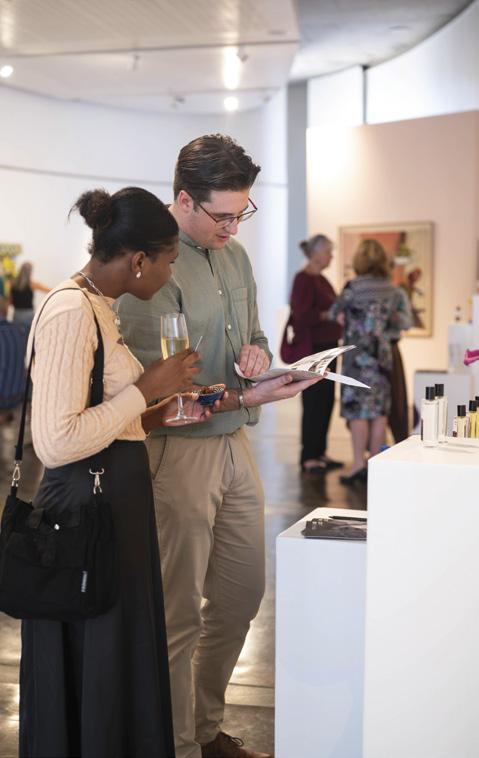
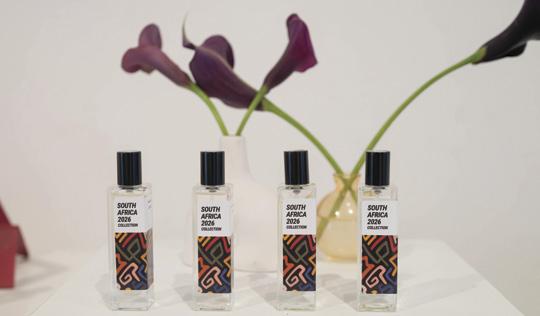
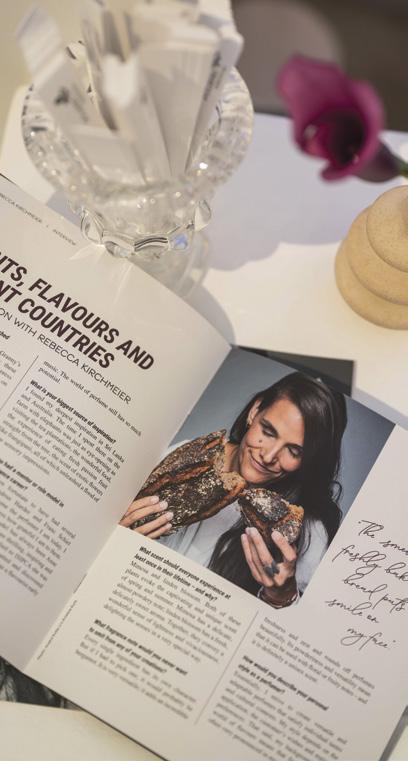
beyond perfumery, Düllberg Konzentra recently hosted unforgettable experiences in Johannesburg and Cape Town. Both events, led by perfumer Rebecca Kirckmaier, created a dialogue between scent, art and location.
ART by SCENT in Joburg
Kicking off in Johannesburg, the first event unfolded within the striking architectural space of at CIRCA Gallery. At the time, the gallery was presenting a collection titled Words, Words, Words. This group exhibition by Barbara Wildenboer, Brett Murray, Jenna Burchell and Talia Ramkilawan explored the power, fragility and transformation of language.
Borrowing its title from Hamlet’s weary refrain in William Shakespeare’s Hamlet, Words, Words, Words asks an essential question: When does language carry meaning and when does it dissolve into noise?
Through painting, printmaking, sculpture and conceptual forms, the exhibition examined language as material – bent, fragmented, repeated, and reassembled – transforming words from vessels of information into living artistic forms. It was within this charged creative environment that Düllberg Konzentra introduced its fragrances.
Rather than simply presenting a perfume collection, the house created an experience deeply connected to the surroundings, bridging German precision and South
African artistic expression. Inspired by Johannesburg’s vibrant visual culture from its gallery spaces to its graffiti-lined streets and urban textures, Düllberg perfumers developed a collection that responds directly to artists’ works.
Each fragrance was an olfactive interpretation of an artwork – an invisible medium placed beside the visible – inviting guests to experience art not only through sight, but also scent.
Throughout the day, Rebecca guided guests on a series of intimate fragrance sessions, revealing the creative process behind each composition and how scent becomes a language of artistic translation.
Barbara Wildenboer’s art draws heavily from raw, natural materials such as paper, linen and tactile surfaces. Rebecca created a fragrance that reflects the purity, openness and quiet elegance of this art.
“When I look at Barbara Wildenboer’s works,” Rebecca explains, “I imagine a calm, open room, where a soft breeze moves through linen curtains carrying a clean cotton freshness. There is a sense of clarity and
lightness, so I created a fragrance that feels airy, delicate and quietly powerful.”
Rebecca was also inspired by Jenna Burchell, whose sculptures explored the interplay between wood, metal, warmth and industrial coolness. Here Rebecca responded with darker, more textured compositions. She created a fragrance that captures the rawness of natural wood untouched by perfection giving earthy, deep smell highlighting the notes of saffron, pepper, cedarwood, leather, patchouli and moss.
The day at CIRCA Gallery became more than a launch event. It was an immersive exploration of how fragrance can interpret visual language and how scent and art can provoke emotion, memory and meaning beyond words. •
Each fragrance was an olfactive interpretation of an artwork –an invisible medium placed beside the visible
SIP by SCENT in Cape Town
Düllberg Konzentra continued its South African launch journey in Cape Town with an experience that celebrated another craft, winemaking, deeply rooted in sensory storytelling.
Sip by Scent was an exclusive event hosted at Hidden Valley Wines, a wine farm nestled in rolling vineyards with a dramatic mountain backdrop and the golden warmth of a Cape sunset. It was the perfect setting for a day dedicated to exploring the shared artistry of pairing fine fragrance with fine wine.
The Western Cape’s winelands are wellknown for its breathtaking vineyards, celebrated wine estates and culinary richness. It is a region where craftsmanship, patience and terroir shape every bottle. For Düllberg Konzentra, the region offered the ideal canvas to explore the parallels between the perfumer’s palette and a winemaker’s craft.
Düllberg created an intimate pairing experience: five wines matched with five fragrances, each selected to reveal the remarkable sensory connections between aroma, flavour, texture, maturation and emotion.
Rebecca explains: “The work of a sommelier – the making of wine, fermenting, maturing over time, building flavour – is so close to fragrance creation. Both are deeply emotional crafts. They rely on patience, complexity and balance. We wanted our guests to experience
fragrance on a deeper level by connecting it to something equally sensory, while enjoying this extraordinary setting.”
One of the standout pairings brought together a fragrance with a sparkling Sauvignon Blanc, fermented in the style of champagne. It opened with bright tropical fruits, sparkling citrus facets, and delicate white wine nuances, capturing the crisp liveliness of the first sip. Its heart softened into a smooth, almost caramellike warmth, before settling into a rich base of tonka bean and oakwood, echoing the rounded woody finish of the wine itself.
“When you tasted the wine and then smelled the fragrance, the similarities were remarkable,” Rebecca notes. “The freshness, the gentle sweetness, and especially the oaky, woody aftertaste was mirrored beautifully in the scent.”
Another memorable pairing was inspired by Hidden Treasure 2024, a delicate rosé glowing rose-gold in the evening light, bursting
with notes of sweet strawberry, raspberry, blackcurrant, citrus zest and grapefruit.
Rebecca paired this with a fragrance built around those same vibrant red fruit notes – raspberry, cassis, buchu and strawberry – softened by a floral heart of velvety rose petals. The dry-down became creamy, smooth and subtly indulgent, layered with champagne nuances, soft lactonic accords and warm vanilla sweetness. The result was playful yet elegant scent that moved in harmony with the wine’s brightness and softness, translating flavour into fragrance.
When you tasted the wine and then smelled the fragrance, the similarities were remarkable
“When you think about wine, every stage matters: the soil, grapes, fermentation, ageing, the barrels and the cellar. Fragrance is the same. Every ingredient, every stage of maturation and every note contribute to something much bigger,” comments Rebecca.
As the sun set over the vineyards and guests moved between glasses and scent strips, Sip by Scent became more than a launch event, it offered a reflective experience built around craftsmanship, patience and the emotional power of the senses. It was a reminder that whether crafted in a bottle of wine or composed in a perfume vial, true artistry lies in complexity, balance and the ability to move people deeply. •
The dawn of neurocosmetics: How science is transforming beauty from the inside out
What if skincare could boost your mental health? The science of neurocosmetics is making this a reality.
The beauty industry stands at the threshold of a revolutionary shift. As consumers increasingly prioritise mental wellbeing alongside physical appearance, a new category has emerged that bridges the gap between skincare and emotional health: neurocosmetics.
Skincare treatments can genuinely influence our psychological wellbeing
This innovative field recognises what science has long understood – our skin and nervous system share a profound connection that influences not just how we look, but how we feel.
THE SCIENCE BEHIND THE CONNECTION
The relationship between the skin and brain begins at the very foundation of life. During embryonic development, both our skin and nervous system arise from the same tissue layer, creating an intricate network of communication pathways that persist throughout life. This biological reality means that what affects our emotional state can
manifest visibly on our skin, while skincare treatments can genuinely influence our psychological wellbeing.
Within our epidermis lies a complex network of approximately 230 000 sensory nerve fibres, working in constant dialogue with keratinocytes through various signalling molecules including neuropeptides like CGRP and substance P. This communication system can become disrupted by chronic stress, leading to visible signs of premature ageing, inflammation and compromised barrier function.
The numbers tell a compelling story: global stress levels have reached 37% since the pandemic, with consumers actively seeking
solutions that address their skin concerns as well as their emotional wellbeing. This convergence has created unprecedented demand for beauty products that deliver measurable emotional benefits alongside traditional cosmetic outcomes.
MEASURING THE UNMEASURABLE
One of the most exciting developments in neurocosmetics is our ability to quantify emotional responses using advanced measurement techniques. Technologies like electroencephalography (EEG) and galvanic skin response (GSR) allow researchers to map how cosmetic applications influence brain activity and emotional states in real-time.
These objective measurement tools have revealed fascinating insights: consumers can differentiate between products that offer genuine emotional benefits and those that don't, even when the textures and sensory experiences are identical. This scientific rigor is transforming claims substantiation, moving beyond traditional efficacy testing to encompass holistic wellbeing outcomes.
A PORTFOLIO OF SOLUTIONS
At Croda, we've developed a comprehensive range of neurocosmetic actives that address different aspects of the skin-brain connection:
• Zenakine™ represents perhaps our most sophisticated approach to neurocosmetics. This postbiotic extract from Lactobacillus rhamnosus GG works by resynchronising skin’s biological clock, which becomes disrupted by chronic stress and poor sleep patterns. Clinical studies demonstrate its ability to improve sleep quality, reduce stress-induced ageing, and enhance emotional wellbeing. Volunteers using Zenakine™ showed measurable improvements in self-esteem and happiness while experiencing reduced expression wrinkles and enhanced skin resilience.
• Zanthocare™, derived from Sichuan pepper, offers immediate emotional benefits through its interaction with skin’s sensory network. EEG studies reveal that this plant extract significantly increases positive emotions like happiness and delight, even when volunteers cannot distinguish it from placebo treatments based on texture alone.
• Synchrolife™ addresses the growing concern of digital fatigue, counteracting the harmful effects of blue light exposure that disrupts our natural circadian rhythms. Consumer studies show that users feel more confident and energised,
with measurable improvements in selfperceived physical appearance and vocal indicators of reduced stress.
• Calmosensine™ focuses on physical and sensorial relaxation by modulating the skinmuscle connection. Through its influence on neuropeptide production, particularly met-enkephalin pathways, it helps prevent expression wrinkles by reducing involuntary muscle contractions caused by daily stress.
• DS-CERAmix-V™ and Phytessence™ Green Coffee EC round out the portfolio by addressing barrier function and energising effects respectively, both showing measurable positive emotional responses in clinical trials.
Product launches featuring emotional benefits have increased by 47.9% between 2019 and 2023
THE MARKET OPPORTUNITY
The commercial implications are significant. Product launches featuring emotional benefits have increased by 47.9% between 2019 and 2023, with 74% of UK consumers prioritising wellness in their daily lives. Western Europe is projected to experience the largest increase in wellness-related spending by 2027.
Major brands are taking notice. Chanel has dedicated an entire neurosciences department to understanding the role
of sensoriality in beauty, while emerging brands like Neurâé in France and Arkana in Poland have built their entire positioning around neurocosmetic principles.
BEAUTY EXPERIENCES OF THE FUTURE
The future of neurocosmetics extends beyond individual product efficacy to encompass holistic lifestyle integration. We’re seeing the emergence of multi-sensory beauty experiences that combine active ingredients with complementary elements like neuro-substantiated fragrances and even curated playlists designed to enhance the emotional journey.
As the industry evolves, the challenge will be maintaining scientific rigor while scaling these innovations for mainstream adoption. The key lies in continued investment in both measurement technologies and consumer education, helping people understand that the connection between how we feel and how we look isn’t just marketing, it’s fundamental biology.
Neurocosmetics represents more than a trend – it’s the evolution of beauty towards a more complete understanding of human wellbeing.
As we continue to unravel the mysteries of the skin-brain connection, we’re not just creating better cosmetics, we’re pioneering a new paradigm where beauty and emotional health are inseparably linked. •
Send an email to rendani.nemaungani@croda.com for more information.
www.crodabeauty.com/en-gb
The shift from anti-ageing to skin longevity
Naomi Dele-Tunji, marketing director of Grant Industries, explores what matters most in the paradigm shift from anti-ageing to skin longevity.
For years, the skincare industry has treated ageing as something to correct and manage once visible signs appear. This paradigm is shifting. What’s gaining ground in 2026 is less about reversing time and more about extending skin health. ‘Anti-ageing’ is being reframed as skin longevity, and the distinction matters more than it might first appear. This isn’t just semantics. It reflects a deeper understanding of how skin ages and, more importantly, how we might intervene earlier and more intelligently. Traditional approaches have largely been compensatory: stimulate collagen, replenish hydration, accelerate turnover. Effective, yes but also reactive. The longevity conversation asks a different question: what if we address the drivers of decline and not just the outcomes?
THE NEW SKIN HEALTH AGENDA
Central to this shift is inflammaging –chronic, low-grade inflammation that gradually degrades skin function. Alongside it, attention is sharpening around cellular energy and NAD+ pathways, DNA damage and repair, barrier integrity, and
microbiome resilience. In this framework, visible ageing is the downstream effect of deeper biological disruption rather than the primary target of intervention.
Culturally, this is resonating. Ageing is increasingly framed as something to support, not suppress. Resilient, radiant, functional skin is taking precedence over the idea of freezing time, and consumers are responding. Skin health and natural radiance are becoming the aspirational outcomes, with long-term performance displacing the promise of the instant fix.
PROVEN ACTIVES ARE EVOLVING
The rise of longevity science hasn’t displaced traditional actives – it has repositioned them. Grant Industries pioneered the launch of the new retinoid, Hydroxypinacolone Retinoate (HPR) in 2008 with Granactive Retinoid. Along with the more recent Granactive Retinoid Pro+, it continues to anchor routines because they work, and because consumers trust them. These technologies deliver well-documented efficacy through retinoid receptor pathways, with improved tolerability
that makes them accessible across skin types.
Bakuchiol has also gained meaningful traction as a gentler, plant-derived alternative, particularly within sensitive skin and skinimalist positioning. Its appeal lies in the combination of recognisable botanical origin and genuine functional performance – a pairing that has become increasingly important to ingredientaware consumers.
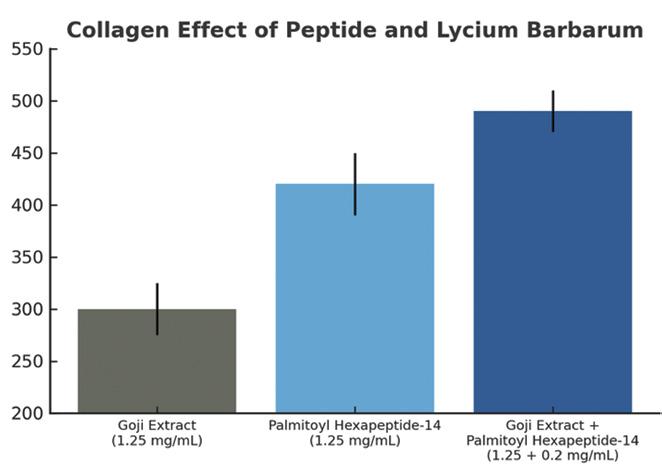
Meanwhile, peptide technology is evolving rapidly. Newer generations are moving beyond surface-level benefits toward targeted signaling, collagen support and neurocosmetic pathways. Goji PeptiBoost BCR – a BCR active derived from Lycium barbarum (goji berry) – is a strong example of this direction. Naturally rich in peptides, polysaccharides and polyphenols, it combines antioxidant protection with meaningful collagenstimulating activity. In vitro results demonstrate a 41% induction in collagen IV synthesis and a 13% induction of collagen I in human fibroblasts, alongside the inhibition of MMP-1 and MMP-9. It also supports mitochondrial health and
On Behalf Of:
the delivery and stability of companion actives, making it a well-suited fit for multi-functional formulations, which are increasing in market demand.
Another ingredient worth noting in the longevity context is Gransome Heptapeptide-7, which targets the specific concerns of sagging and crepe-like skin texture. This sub-category of skincare is gaining prominence as consumers prioritise structural resilience alongside surface smoothness.
HYBRID AND MULTI-PATHWAY ACTIVES
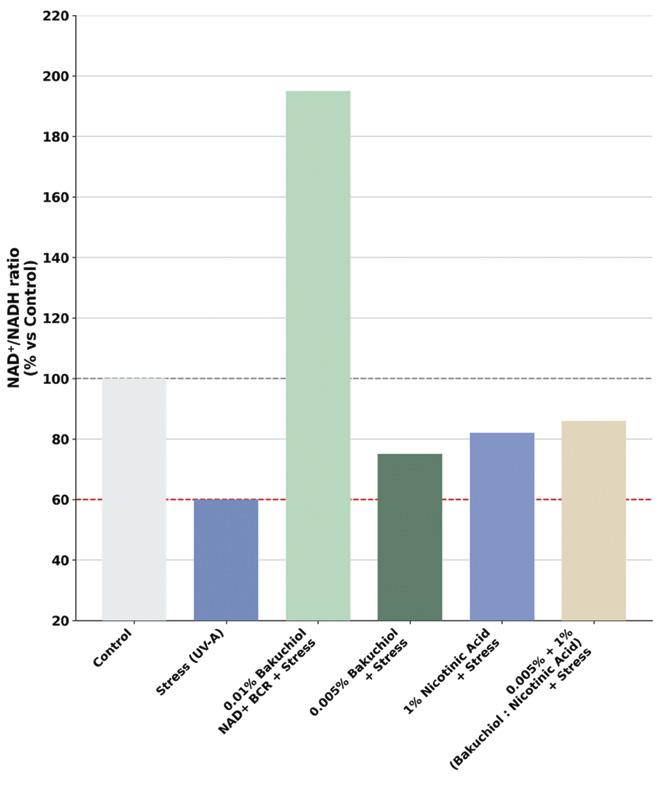
The most interesting formulation work today sits at the intersection of traditional efficacy and longevity science. Newly launched Bakuchiol NAD+ BCR (Bakuchiyl nicotinate) is a compelling example – this hybrid molecule is designed to bridge both worlds. By combining a well-established antiageing active with a NAD+ precursor,
The shift toward skin longevity is not about abandoning the past; it is about building on it
it targets collagen and elastin support, anti-inflammatory pathways and cellular energy mechanisms simultaneously. What makes this particularly compelling is the demonstrated synergy at lower use levels, where the ester form outperforms its individual components in NAD+ production and DNA damage protection. This reinforces a broader shift toward efficiency-driven formulation – doing more with less and reducing the routine complexity that consumers increasingly resist.
Similar multi-functional thinking is visible across delivery and sensorial systems. Think of bio-based elastomers that improve compliance and texture, microplastic-free soft-focus solutions and
barrier-supportive lipid systems that treat skin resilience as a foundational goal rather than an afterthought.
NEW CONSUMER PRESSURES
Consumer needs are evolving as quickly as the science itself. Post-GLP-1 skincare is emerging as a genuine formulation category, with rapid weight loss raising concerns around volume loss, skin laxity and barrier fragility. Addressing this effectively requires firming peptides, extracellular matrix support and longevitydriven repair mechanisms. This trend once again reinforces the case for multi-pathway approaches over single-claim solutions.
Skinimalism continues to grow steadily, with consumers wanting fewer products and higher performance per step. This places real pressure on formulators to deliver complexity within simplicity with products that can justify their place in a reduced routine through demonstrable multi-benefit efficacy.
At the same time, the integration of ingestibles, such as oral collagen peptides, marine-based nutrients, antioxidants, is moving from niche wellness into a mainstream skincare expectation. Insideout beauty is no longer a subcategory; it is becoming part of how a growing segment of consumers think about their skin comprehensively. Microbiome-aware formulations, targeting dysbiosis while maintaining resilience, are part of the same broader systems thinking.
A MORE INTELLIGENT FUTURE FOR AGEING SKIN
The shift toward skin longevity is not about abandoning the past; it is about building on it. The formulations making the most impact today combine proven actives with longevity pathways. They leverage hybrid technologies to reduce routine complexity without sacrificing performance and treat long-term skin function as the real goal.
The direction of travel is clear: from correction to prevention to optimisation; from single claims to multi-pathway efficacy; from short-term results to skin that performs better, for longer. The future of skincare isn’t about looking younger. It’s about skin that’s genuinely built to last.
The ingredients mentioned in this article are available locally from IMCD South Africa. •
Figure 1: Collagen effect of peptide and Lycium barbarum – Goji PeptiBoost BCR in vitro data
Figure 2: Effect on NAD+/NADH ratio under stress conditions – Bakuchiol NAD+ BCR ex vivo data
Dermohacking cellulite through circular bio-energy
• A multi-omic active ingredient delivering an intensive cellulite treatment with a comprehensive remodeling action on both adipocyte metabolism and tissue architecture.
• A botanical premium solution coming from locally sourced apple ower.
• A groundbreaking longevity-driven approach to body sculpting that is visibly e ective against cellulite bumps, rmness and skin texture for a smoother, tightened and healthier sculpture.
CareActives™
Body Sculpture
100% NATURAL ORIGIN (ISO16128)
100% NATURAL ORIGIN (ISO16128)
Intensilk™ – dermohacking cellulite through circular bio-energy
Longevity has evolved into a science-backed philosophy where vitality, energy and appearance are preserved. Biohacking practices like intermittent fasting and metabolic optimisation have made caloric restriction central to longevity. Meanwhile, GLP-1 agonists offer rapid weight loss but raise aesthetic concerns like skin elasticity loss and premature facial ageing.
As longevity-driven lifestyles reshape beauty, consumers are turning to expert-led, clinically anchored body treatments that combine wellness experiences with measurable efficacy. The rise of non-invasive and more targeted in-clinic aesthetic procedures is accelerating this shift toward specialised, result-driven body care solutions. Within this evolving landscape, the anti-cellulite category is the best representation of this shift, as it is one of the biggest concerns within body sculpting.
Provital, a pioneer in cosmetic dermohacking, now harnesses this disruptive vision with Intensilk™. This is the first cosmetic active to mimic caloric restriction in adipocytes, dermohacking lipid metabolism for an intensive cellulite treatment with comprehensive remodelling action on both fat reduction and tissue architecture. By addressing cellulite with a new approach – Intensilk™ redefines well-ageing at the body level, bridging longevity science and nature for specialised highend beauty developments.
DERMOHACKING MECHANISM ANALYSIS
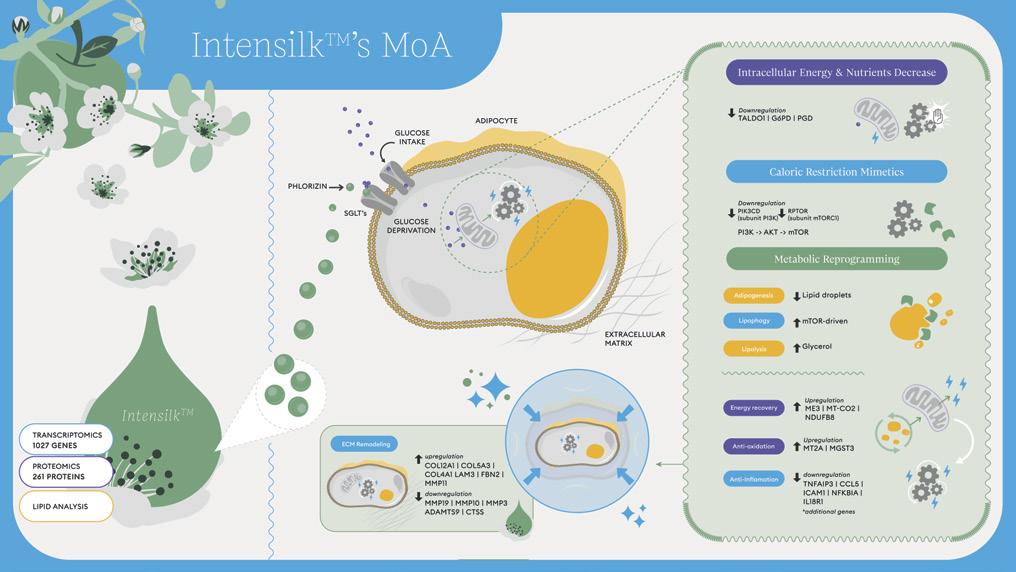
Intensilk™ is derived from locally sourced apple flowers, harvested from a family owned fruit farmer located just 150km from Provital’s facility in Barcelona, Spain. Antioxidant flavonoids naturally present in apple flowers, such as phlorizin – in which Intensilk™ is standardised – trigger caloric restriction in adipocytes by competing with glucose for binding to glucose-transporters. As stored lipids are mobilised to create new energy and sustain cellular functions, what was once a simple apple blossom becomes the key to unlocking the body’s own resources, creating circular bio-energy and a continuous metabolic loop that recycles energy back to the skin.
To unravel the dermohacking mechanism behind Intensilk™, a multiomic analysis was conducted combining transcriptomics, proteomics and lipid analysis. The results revealed a clear downregulation of the PI3K–Akt–mTORC1 axis, which is a pathway commonly linked to caloric restriction and autophagy. Thus, promoting lipophagy to recycle lipid droplets into energy.
This innovative ingredient offers a longevity-driven approach against cellulite appearance for a healthier, more youthful skin texture. Backed by advanced in vitro and in vivo research, Intensilk™ targets all key physiological factors in cellulite development. The transcriptomic profile revealed the modulation of more than a thousand genes associated with the mechanism of caloric restriction, inflammation and extracellular matrix remodelling: 1. 44 genes related to the well described PI3K-Akt pathway, associated with caloric restriction. The down-modulation of PI3K–Akt–mTORC1
signalling confirms that 0.125% Intensilk™ triggers a metabolic shift from an anabolic to a catabolic state, meaning from lipid storage to lipid degradation.
2. 11 ECM-related genes were identified, six structural protein genes were upregulated and five matrix-degrading enzyme genes were downregulated, enhancing hypodermal support and promoting skin firmness and elasticity.
3. 23 genes related to the TNF-signalling pathway were down-regulated (out of 26 modulated). These genes, along with other modulated pathways, are involved in chronic inflammation and reactive oxygen species formation, meaning Intensilk™ supports a healthier, more resilient adipose tissue environment with less inflammation.
Proteomic analysis identified over 5k proteins, with 261 significantly modulated. At 0.125%, Intensilk™ regulated proteins involved in cellular stress and antioxidant responses. Functional clustering and pathway enrichment analyses linked its activity to adipocyte metabolism and starvation response, as it:
• Reduces the expression of three enzymes of the pentose phosphate pathway (TALDO1, G6PD, PGD), reflecting a marked reduction in NADPH generation, which in turn limits lipid synthesis and redirects the cell’s metabolic focus away from storage.
• Increases malic enzyme expression (ME3), connecting Krebs cycle with glycolysis. This indicates an intensified mitochondrial turnover that enhances lipid oxidation, converting stored triglycerides into usable energy.
• Elevates the expression of two other key enzymes in mitochondrial function and ATP production (MT-CO2 and NDUFB8), confirming a shift toward oxidative metabolism and improved energy efficiency.
• Up-regulates two redox protection proteins (MT2A, MGST3)
Figure 1: Mechanism of action of Intensilk™
reinforcing the cell’s antioxidant defenses and protecting against oxidative stress generated during enhanced mitochondrial activity, maintaining homeostasis under intensified energydemanding conditions.
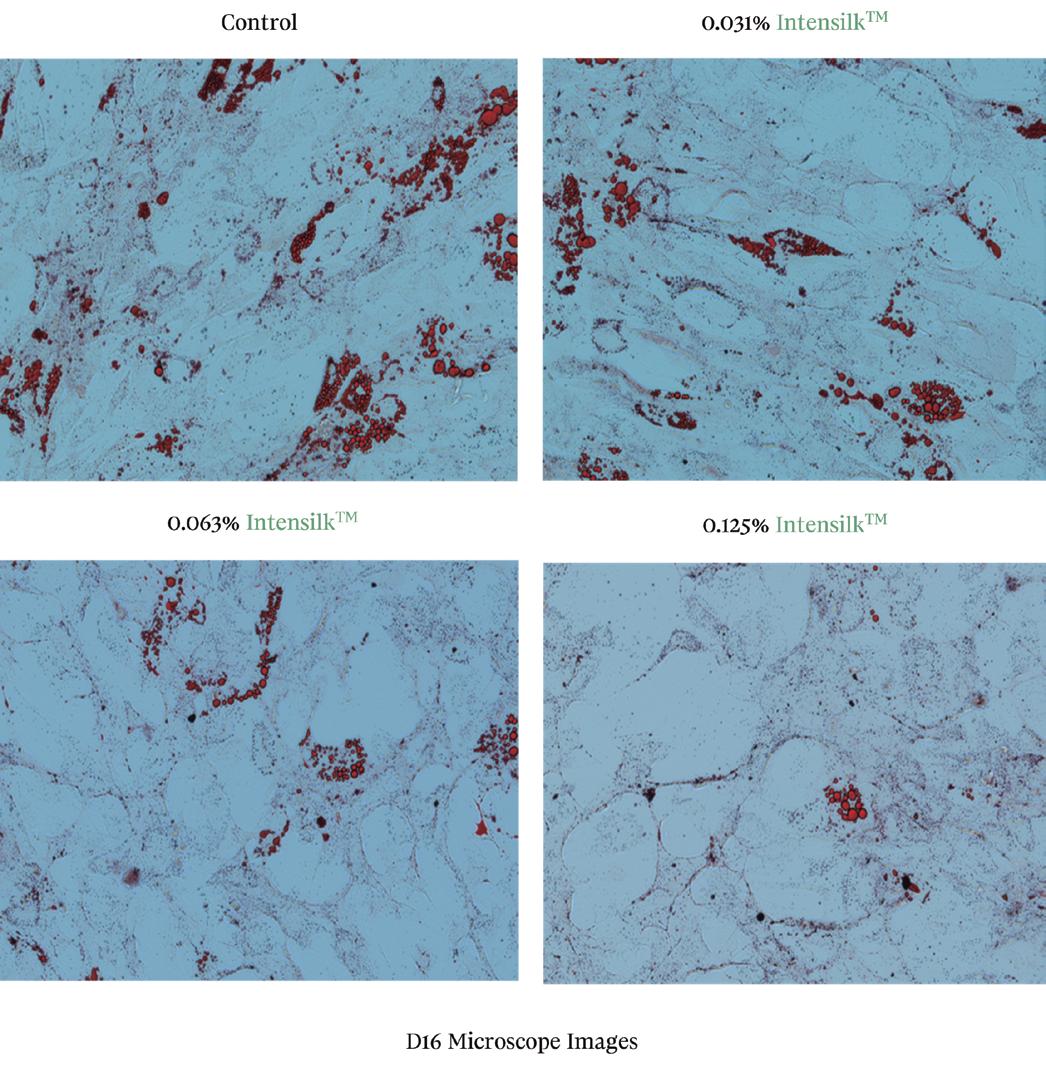
Advanced imaging and quantitative analysis measured lipid droplet number, distribution and adipogenesis in treated cells. Dose- and time-dependent treatment with Intensilk™ revealed a reduction in intracellular lipid accumulation compared to the control, by:
• Reducing adipogenesis by 56% at 0.125% Intensilk™
• Showing significant lipolytic activity, with glycerol release increasing by 173% and 194% in mature adipocytes at 0.031% and 0.063% Intensilk™, respectively.
By coupling this biochemical evidence with transcriptomic and proteomic data, Intensilk™ establishes its unique position as the first cosmetic active to mimic caloric restriction in adipocytes.
To further confirm its structural benefits beyond the hypodermis, Intensilk™ was tested on human dermal fibroblasts, at 0.25% versus a control. An increase of collagen I (30%**) and elastin (27%****) confirmed its role in restoring dermal firmness and elasticity.
Moreover, gene expression analysis showed the powerful activation of anti-ageing and restructuring genes, with COL1A2 and PCOLCE showing the highest increases reaching 200% compared to the control. In contrast, genes such as G-CSF showed the most pronounced downregulation dropping below 20% versus the control, demonstrating a balanced remodelling of the dermal ECM.
ANTI-CELLULITE BENEFITS ON VOLUNTEERS
To validate the anti-cellulite efficacy in a real-world context, a doubleblind, placebo-controlled, hemi-body in vivo study was conducted on 56 female volunteers, aged 18 to 55, with visible cellulite (grades II to III per the Nürnberger & Müller scale) on the thighs and buttocks. Skin phototypes ranged from II to IV.
Each volunteer applied a formulation with 2% Intensilk™ or a placebo (no active) twice daily for 56 days. Application was either manually or with a
roller device, to explore both conventional and mechanically enhanced application effects.
Measurements were conducted at D0, D28 and D56, encompassing five key efficacy pillars:
1. Slimming action – A measurable centimetric reduction (anthropometric) (67cm** in thigh circumference D56) was observed after treatment, accompanied by a notable decrease in the hypodermal fat layer thickness (12%*** D56) detected via ultrasound.
2. Smoother surface – Intensilk™ significantly decreases the dermohypodermal (DH) junction length (7%*** D56), indicating a reduction in the appearance of cellulite bumps on skin’s surface.
3. Silky tightening – Cutometer® data demonstrated a significant increase in skin firmness (18%* D56) and elasticity (4.5%**** D56), while Corneometer® readings confirmed improved hydration (8.7%* D56) and surface comfort.
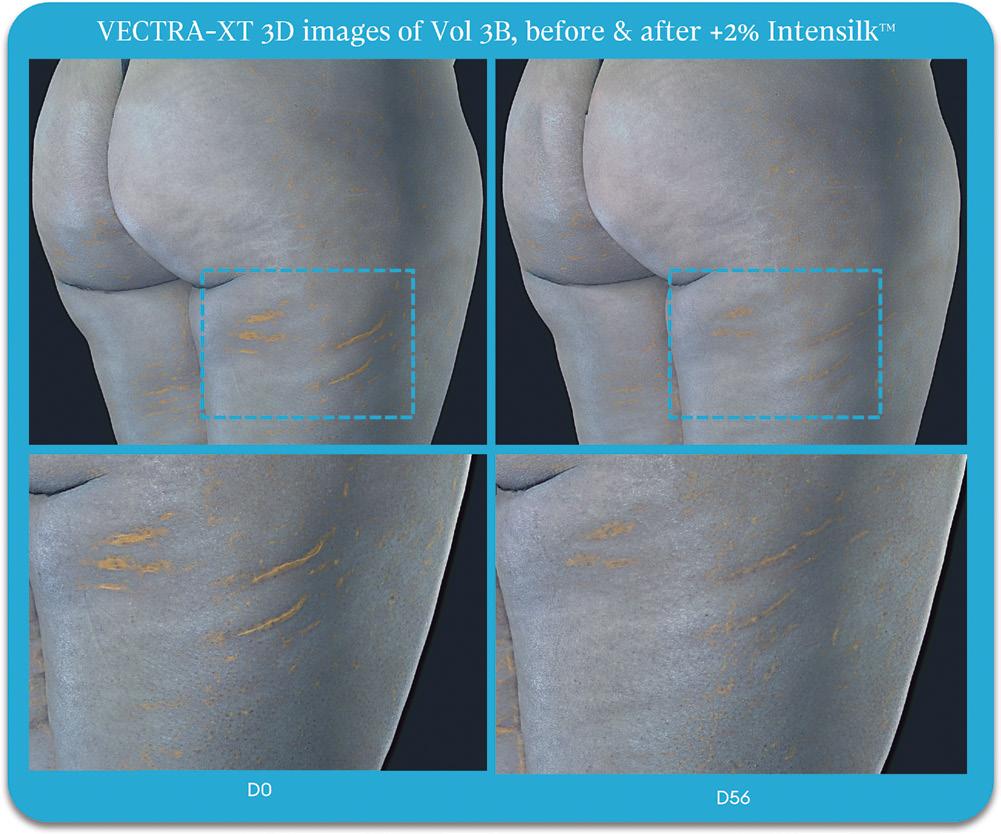
4. Smoothing effect on cellulite dimples – An AEVA-HE 3D topography analysis revealed a visible reduction in skin microrelief irregularities (average roughness decreased by 8.1%**** and average ‘orange peel’ appearance by 2.4%* compared to the placebo D56). VECTRA-XT imaging also showed how Intensilk™ reduced roughness and the depression volume of dimples.
5. Firming effect for enhanced leg tone – Slow-motion analysis showed improved tissue tone and skin responsiveness, with thighs treated with Intensilk™ moving 47 milliseconds less than placebo.
Mechanical treatments, such as massage devices and vacuum or vibrational rollers, are clinically proven to improve cellulite nodules. By targeting adipocyte metabolism and tissue structure, Intensilk™ amplifies these effects, creating a perfect synergy for intensive anticellulite and body-sculpting protocols in professional settings.
Available in South Africa from Savannah Fine Chemicals, Intensilk™ is a 100% natural origin (ISO 16128), COSMOS-approved ingredient. It enables the development of premium medi-spa inspired body care products, aligned with the rise of in-spa and medical-aesthetic treatments. •
Provital – www.weareprovital.com/en Savannah Fine Chemicals – www.savannah.co.za
Figure 2: A significant reduction in lipid droplet number was quantified from microscope images and visualised after oil red staining in adipocytes treated with 0.031%, 0.063%, and 0.125% Intensilk™ compared to untreated controls at day 16
Figure 3: VECTRA-XT 3D images of Volunteer nº 3B o Day 0 vs. Day 56 of treatment with 2% of Intensilk™
Strengthen the barrier and restore balance with mineral salts
Calamine, zinc sulfate and sodium lactate each address distinct skin stress pathways, making mineral salts a quietly powerful tool in formulating for sensitive skin.
Sensitive skin has become a common concern. Tightness, redness, burning sensations, heightened reactivity, impaired sebum balance, reduced resilience to environmental stress and visible micro-inflammation affect many people daily. Pollution, UV exposure, stress and overly aggressive skincare routines weaken the barrier and accelerate inflammatory signaling. Transepidermal water loss increases, irritants penetrate more easily, and skin stability declines. Modern skin care no longer focuses solely on doing less. It focuses on stabilising, rebalancing and fortifying. Mineral salts have emerged as intelligent allies in skincare –particularly zinc compounds and sodium lactate – offering precise, skin-aligned solutions for sensitive and reactive skin. With over 135 years of experience in development and manufacturing, Dr. Paul Lohmann offers DPL cosmetic grade minerals made in Germany. These mineral salts meet strict microbiological limits (ISO 17516), including full
documentation such as NOI statements (ISO 16128), a cosmetic allergen statement and general cosmetic compliance. Registration support extends to China (Annex 14) and supports Ecocert/COSMOS-certification for final cosmetics.
GENTLE STRENGTH FROM MINERALS
Sensitive skin gains calm instead of irritation. Mature or stressed skin preserves elasticity and tone. Calamine integrates seamlessly into masks, spot treatments, daily moisturisers, and post-procedure balms, offering versatile, gentle support.
Calamine USP – a natural blend of zinc oxide and ferric oxide – has regained attention in modern skincare. Once a traditional soothing suspension, it now serves as a multifunctional mineral ally for reactive, blemish-prone and stressed skin.
Calamine delivers the following benefits:
• Anti-inflammatory action – it reduces redness, irritation and the visible signs of reactivity
• Sebum regulation – it gently absorbs excess oil without drying the skin, making it ideal for combination and sensitive complexions.
• Barrier reinforcement – zinc oxide protects and supports regeneration, improving resilience and long-term skin health.
TARGETED CLARITY AND SUPPORT
Zinc sulfate provides antibacterial, astringent and anti-inflammatory benefits. It is particularly valuable for skin that is both sensitive and prone to blemishes, in terms of:
• Sebum balance as it reduces excess oil production.
• Bacterial control by limiting microorganisms associated with breakouts.
• Wound support by promoting regeneration and healing of irritated areas.
• Redness relief as it calms visible inflammation and discomfort.
Zinc sulfate works in serums, lightweight creams, cleansers, toners and even scalp care products, offering precision and clarity without harsh effects.
MOISTURE AS A STRUCTURAL ASSET
Hydration forms the backbone of barrier health. Sodium lactate, a natural component of skin’s moisturising factor, enhances water retention, supports pH balance and strengthens structural integrity.
Zinc sulfate works in serums, lightweight creams, cleansers, toners and even scalp care products
Sodium lactate offers:
• Deep hydration as it attracts and binds water within the stratum corneum.
• pH stabilisation by supporting skin’s microbiome and enzymatic processes for barrier maintenance.
• Structural support as it improves lipid organisation, enhancing cohesion and resilience.
This mineral ensures comfort, stability and long-term skin function without irritation.
MINERAL SALTS AND SKIN LONGEVITY
Skin longevity goes beyond immediate relief. It emphasises protection, the reduction of chronic micro-inflammation and barrier reinforcement – all critical to slowing the visible and functional signs of premature ageing.
Minerals like calamine and zinc sulfate modulate inflammation. Sodium lactate secures hydration architecture and barrier cohesion. Together, they form a multi-dimensional support system addressing:
• inflammatory balance
• sebum regulation
Mineral salts offer a subtle yet potent path to calm, balanced and visibly healthy skin
• hydration and barrier stability
• visible calm and resilience.
MINERAL INTELLIGENCE FOR SENSITIVE SKIN
Sensitive skin demands no radical measures, only precise balance. Mineral salts deliver quiet, powerful and physiologically intelligent support.
Soothing calamine, clarifying zinc sulfate and moisture-binding sodium lactate –together these mineral salts relieve microinflammation, reinforce the barrier and promote long-term resilience.
By providing less overload and more functional clarity, mineral salts offer a subtle
yet potent path to calm, balanced and visibly healthy skin. Trust in DPL cosmetic grade minerals by Dr. Paul Lohmann which combine efficacy, safety and regulatory confidence. Are you interested in more information about these minerals for sensitive skin? Contact the local sales partner, Nautilus Chemicals. •
Dr. Paul Lohmann – www.lohmann-minerals.com Nautilus Chemicals – www.nautiluschemicals.co.za
Mineral Salts for Sensitive Skin
◆ Calamine – Pure calm for irritated skin
◆ Zinc Sulfate – Clear skin, calm confidence
◆ Zinc Gluconate – Balances and restores sensitive skin
◆ Sodium Lactate – Deep hydration for sensitive skin
Shaping the future of controlled environments
As industries across the globe demand more precise, controlled environments, the cleanroom sector is evolving at an impressive pace. At the centre of this transformation is AFMS, now celebrating 40 years in the industry.
Based in Midrand, South Africa, the company has grown from humble beginnings in a small garage into a trusted, full-service provider of cleanroom and containment solutions, supporting clients across Africa and beyond.
What sets AFMS apart is not only its longevity, but also its ability to adapt. Today, the company offers a complete turnkey service designing, manufacturing, installing, commissioning (validating and verification), and maintaining modular and mobile labs and traditional brick-and-mortar facilities. These services are tailored to what best suits each client’s needs while ensuring regulatory compliance.
THE BACKBONE OF EVERY CLEANROOM
Behind every effective cleanroom is a highly engineered HVAC system. These systems don’t just manage temperature, they control airflow, air filtration efficiency, humidity and pressure cascades to maintain strict cleanliness standards.
The flexibility of mobile labs is particularly valuable in Africa
In pharmaceutical environments, for example, air must be replaced multiple times per hour, sometimes exceeding 90 air changes per hour, depending on the required classification. Combined with multi-stage filtration (G4, F9 and HEPA filters as well a carbon filters to eliminate smells/gases), this makes HVAC systems highly critical and energy intensive.
AFMS approaches each project individually, designing HVAC systems that meet regulatory requirements while carefully balancing performance, efficiency and long-term operating costs.
AI-DRIVEN HVAC FOR BETTER OUTCOMES
A key advancement in recent years has been the integration of AI into HVAC systems. AFMS incorporates environmental monitoring systems (EMS) with intelligent controls to create environments that are not only compliant, but also responsive and efficient.
These systems continuously track temperature, humidity, particle counts and differential pressure, allowing for:
• Real-time adjustments to airflow based on usage.
• Reduced energy consumption during quieter periods, especially at night.
• Early detection of issues like filter loading or system strain.
• Predictive maintenance that helps avoid costly downtime. With remote access capabilities, AFMS can monitor facilities from virtually anywhere and provide remote technical support. AFMS plans to centralise oversight into dedicated control hubs. This proactive approach keeps systems running smoothly and clients one step ahead, ensuring system uptime through predictive maintenance.
MOBILE AND MODULAR LABS
One of the most exciting developments in the industry is the rise of mobile and modular laboratories, which offer flexibility where it matters most. AFMS has embraced this shift, offering containerised cleanrooms that can be deployed quickly and adapted over time.
AFMS is also exploring advanced pod systems that go beyond standard shipping containers. These structures offer improved insulation, customisable sizes and enhanced energy efficiency, making them ideal for modern cleanroom applications.
These modular solutions are ideal for clients who need:
• Faster turnaround times (often operational within six months)
• Scalable facilities that grow with demand
• The ability to relocate if business needs change
• Flexibility or to overcome constraints
Newly built cytotoxic facility in Sandton, Gauteng
Container lab in Chad
– as is the case with general buildings and their regulatory compliance applications with authorities.
The flexibility of mobile labs is particularly valuable in Africa, where companies may be operating in leased spaces or expanding into new regions. They also open the door to rural or remote applications, especially when combined with solar power and backup systems (such as UPS, generator and AVR integrations).
That said, AFMS continues to design and build permanent brick-and-mortar facilities for clients who require long-term, fixed infrastructure. The strength lies in offering both options, and guiding clients toward the right solution.
SUSTAINABILITY AND POWER STABILITY
Sustainability is no longer optional but a necessity – it’s a key part of modern cleanroom design. AFMS has taken steps to help reduce environmental impact by shifting toward chilled water systems and heat pumps, and by using intelligent controls to optimise energy use.
While filtration technology itself hasn’t changed dramatically, the way systems are
CLEANROOMS VS. CONTAINMENT: A SIMPLE BUT IMPORTANT DISTINCTION
AFMS works across cleanroom and containment environments, which serve opposite purposes:
• Cleanrooms use positive pressure to keep contaminants out and protect products.
• Containment labs use negative pressure to keep hazardous materials in and protect people as well as environment. Each requires a different HVAC and air filtration strategy, and in some cases, both systems are needed within a single facility. This is where AFMS’s design expertise becomes especially valuable.
managed has changed. By adjusting airflow and system performance dynamically, energy savings can be significant.
In South Africa, sustainability is closely linked to power reliability. Cleanrooms cannot afford interruptions, so AFMS integrates solar solutions, generators and clean power systems into its designs.
One particularly important feature is phase rotation detection. When switching from grid power to generator power, mismatched electrical phases can cause motors to run incorrectly, even backwards, leading to damage. AFMS systems detect this early, triggering alerts so the issue can be corrected before it becomes costly.
THE LOCAL AND GLOBAL LANDSCAPE
While Africa’s cleanroom market is still developing compared to Europe or the US, it is growing quickly, particularly in pharmaceuticals, vaccine production, medical cannabis, microelectronics, biotechnology, healthcare/hospitals, optics/laser technology, food/beverage, the automotive industry and research institutions (universities).
Key differences between the local and global landscape include:
• A stronger need for modular and mobile solutions.
• Greater focus on energy efficiency, clean reliable power and backup power.
• Increasing alignment with international standards like ISO 14644 and GMP, especially for export-driven facilities which require EU-GMP compliance. As more global investment flows into Africa, local facilities are rapidly catching up to international benchmarks – creating exciting opportunities for innovation.
A TURNKEY PARTNER YOU CAN TRUST
At its core, AFMS is about delivering complete turnkey solutions that meet clients’ needs while ensuring regulatory compliance. From initial consultation and
design to manufacturing, installation, commissioning, maintenance through service level agreements and ongoing support, the company offers a true end-toend service.
Whether it’s a mobile lab in a remote location, a modular facility requiring future expansion/growth or a fully integrated permanent facility, every project is tailored to the client’s exact operational needs and specifications as well as ensuring regulatory compliance – there’s no one-size-fitsall approach.
LOOKING AHEAD
Forty years on, AFMS continues to evolve, combining experience with forward-thinking innovation. By embracing AI-driven HVAC systems, modular design and sustainable practices, the company is helping clients navigate an increasingly complex landscape with confidence.
From a small garage in Midrand to a leader in cleanroom and containment solutions, AFMS’s journey reflects its commitment to quality, adaptability and long-term partnerships. As the demand for controlled environments grows, its approach is more relevant than ever. •
AFMS – www.afms.bz
Modular lab plantroom in Benin
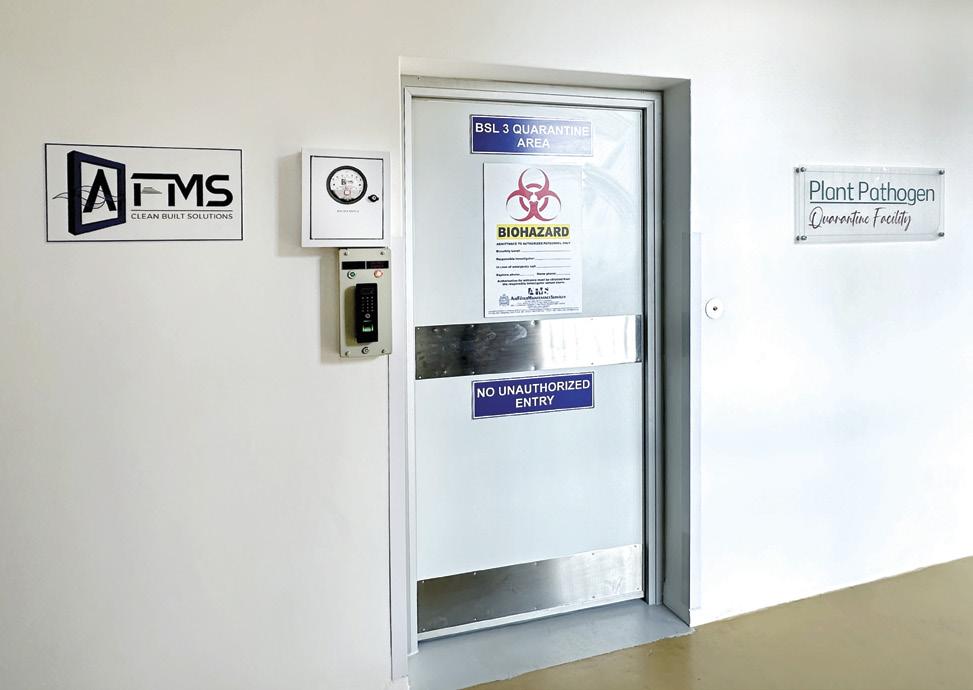
Plant pathogen facility in Roodeplaat, Gauteng
OCoschem steps onto the global stage
From Johannesburg to Cape Town, April 2026 marked a defining moment for Coschem and the South African cosmetics and personal care industry. It was one that combined world-class science, raw material innovation and a bold vision for 2029.
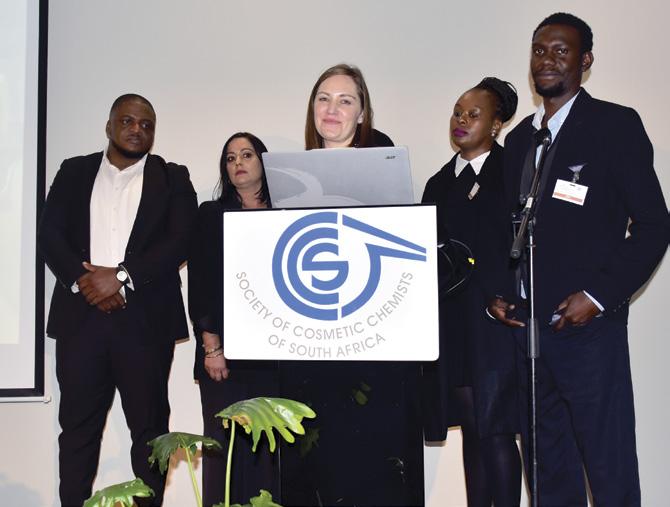
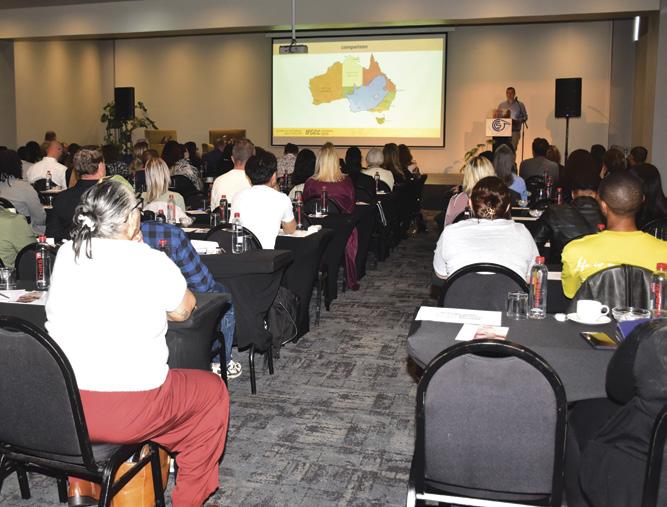
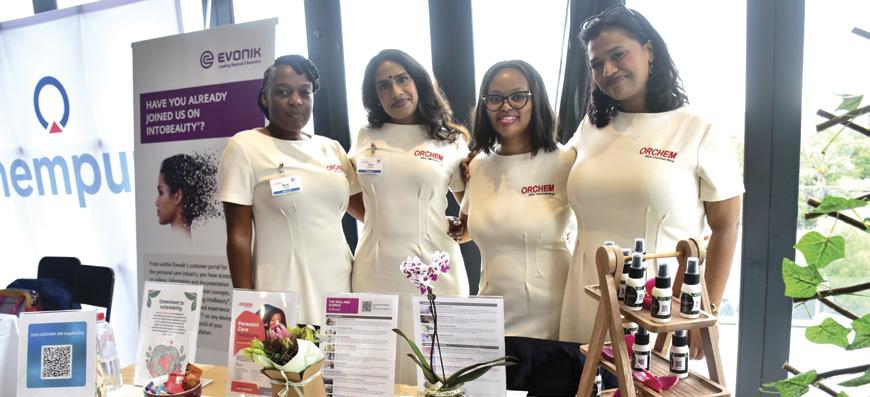
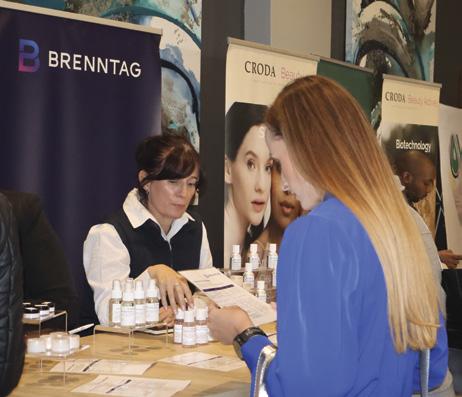
n 23 April, the Society of Cosmetic Chemists (Coschem) hosted an event that was truly impressive. In a single day in Johannesburg, the organisation brought together a seminar with international-calibre speakers on behalf of the International Federation of Societies of Cosmetic Chemists (IFSCC), as well as the biggest tabletop supplier exhibition it has ever hosted, and a Shark Tank-style innovation showcase in partnership with CHIETA/CEIBS. The day featured a bold and ambitious programme –and it delivered on every front.
More than just a flagship event, the Coschem JHB Supplier Day and IFSCC Seminar represented a meaningful step on the road to hosting the IFSCC Congress in Cape Town in 2029. This upcoming milestone is set to place South Africa at the very centre of global cosmetic science.
SCIENCE, INNOVATION AND EVERYTHING IN BETWEEN
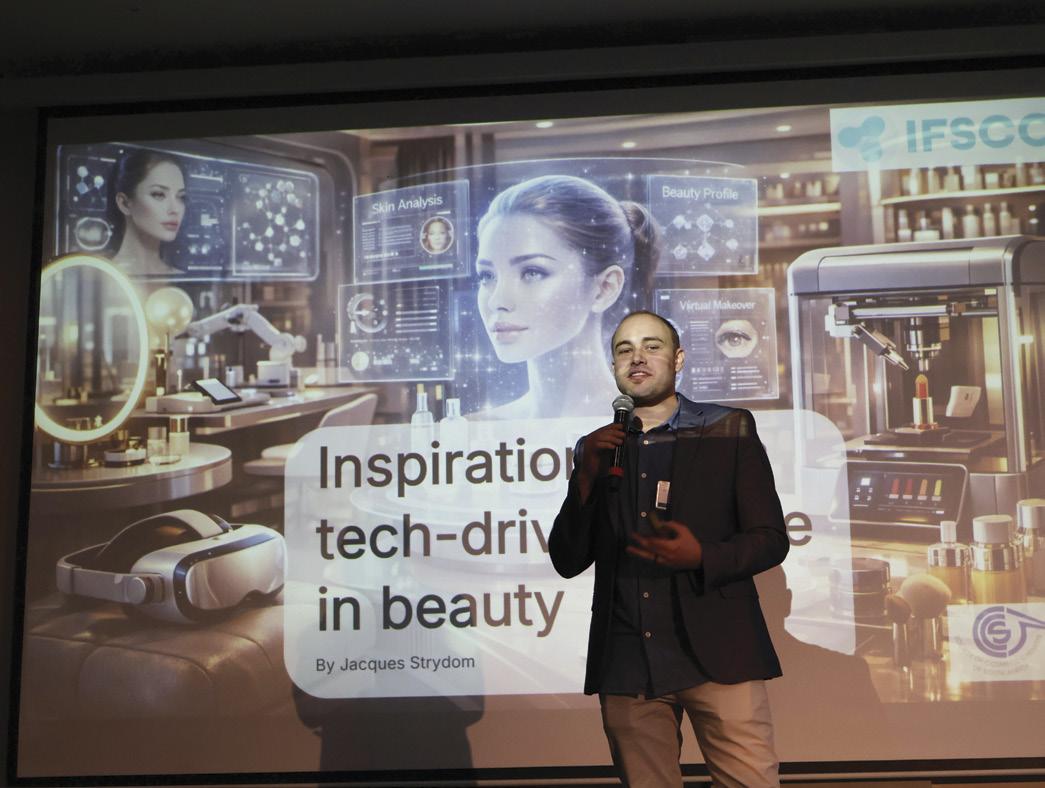
During the IFSCC Seminar, speakers tackled a broad range of forward-looking topics, including regenerative skin science, emerging trends from the Australian beauty market, the growing role of technology in cosmetics, and inclusive hair science, which is a field of great relevance in the broader African context.
Coschem president, Stephanie Gompel
Ratsiane highlighted the importance of the occasion: “The seminar was truly significant as it positioned South Africa as a global player in cosmetic science, not just adopting trends but also starting to shape them – specifically when it comes to African hair and skin science. It was also a strategic milestone in building momentum towards the 2029 IFSCC Congress in Cape Town.”
Her words reflect a shift that is increasingly visible across the industry. From cutting-edge ceramide research to the future of African beauty, South African cosmetic science is no longer simply following the global conversation – it is contributing to it.
DID YOU KNOW?
The IFSCC is dedicated to advancing cosmetic science through international cooperation, providing a platform for learning, recognition and inspiration. All fully paid-up Coschem members are automatically members of the IFSCC, giving them access to the resources and benefits offered by the international federation.
The supplier exhibition that ran alongside the seminar was equally noteworthy. It brought together suppliers showcasing raw materials and formulation innovations, giving delegates a hands-on opportunity to engage with suppliers and explore the ingredients and technologies driving product development.
The CHIETA Shark Tank showcase, in which teams pitched novel concepts to an engaged audience, was a timely reminder that innovation in this industry takes many forms.
The day wrapped up with networking at the industry mixer, which brought together some of the sharpest minds in the industry, offering the kind of informal, high-value interaction that often proves as productive as any formal session.
IFSCC PRAESIDIUM COMES TO SA
The energy generated in Johannesburg carried through to Cape Town, where the IFSCC Praesidium held its spring meeting across three days in Century City. The Praesidium, which spans Zones 1, 2, and 3 of the IFSCC, convenes twice yearly – once during the congress and once during the northern hemisphere’s spring. This year, South Africa had the honour of hosting the latter.
The decision was made by IFSCC president Dr Isabelle Castiel, with two clear goals: to
The IFSCC Scientific Congress 2029 takes place in South Africa. Coschem revealed the congress logo at the Coschem JHB Supplier Day and IFSCC Seminar.
build momentum for Cape Town 2029, and to support the formation and growth of African cosmetic chemistry societies in collaboration with the IFSCC and its established national member societies.
Representatives travelled from Japan, China, South Korea, Australia, Germany, France, Spain, Brazil, the USA and Switzerland – making it a truly global gathering and sending a strong signal of the federation’s commitment to the African chapter.
Discussions covered lessons from past congresses, planning for 2029, expanding the IFSCC’s global network, and strengthening scientific communication through webinars, congresses, and research archives. Several task forces were established to drive each of these priorities forward.
On Sunday, delegates toured the Century City Convention Centre to map out the layout for the 2029 congress. The walkthrough gave the Praesidium a tangible sense of the venue’s scale and potential.
At the end of April, the Praesidium departed from South Africa with the confidence that Cape Town will be an outstanding host for 2029. For the South African cosmetics and personal care industry, this confidence is well-earned.
The countdown has begun! •
SEMINAR
SUPPLIER DAY Background
AI takes centre stage at 24th SAAFFI Seminar
The flavours and fragrances industry gathered in Johannesburg for the 24th SAAFFI Seminar, which placed AI firmly at the heart of the industry’s future.
The 24th annual SAAFFI Seminar, held on 19 March 2026 at the prestigious Gordon Institute of Business Science, drew approximately 200 industry professionals for a day of insightful dialogue, hands-on learning and forward-looking conversation. Themed Toolkit for the Future – Today's Innovators Shaping Tomorrow's Flavours & Fragrances, the seminar reinforced the SAAFFI seminar’s role as the essential gathering point for South Africa’s flavours and fragrances industry.
AI dominated much of the day’s agenda, and for good reason. Research increasingly confirms that AI is transforming the fragrance and flavours industry from a purely artisanal, subjective craft into a data-driven, precise and hyper-personalised science. By analysing vast databases of raw materials, consumer preferences and market trends, AI allows fragrance and flavour houses to create, test and bring new scents and flavours to market faster than ever before. Crucially, the consensus at the seminar was that AI does not replace the human perfumer or flavourist – rather, it serves as an augmented tool that combines human artistic expertise with datadriven insights.
AFRICA'S AI IMPERATIVE
The AI theme was powerfully articulated by speaker James Maisiri, whose thought-provoking address, If Africa Does Not Shape AI, AI Will Shape Africa, challenged delegates to take an active role in how the technology is developed and applied on the continent. Maisiri’s message was clear: African industries must engage with AI on their own terms, bringing local knowledge, culture and values to the table.
A highlight of the day was the hands-on AI workshop, Embrace AI Without Losing the Human Connection, which saw delegates working in teams to explore practical AI applications within the industry. This experiential element of the seminar was a fitting complement to the ‘toolkit’ theme. The workshop underscored that AI literacy is no longer optional for industry professionals.
GLOBAL INSIGHTS, LOCAL ROOTS
Beyond AI, the programme covered a broad spectrum of critical topics. Dr Matthias Vey of IFRA addressed the 52 nd Amendment and its implications for fragrance safety, while Dr Emmanuel Tetteh explored the intersection of green chemistry and AI in formulation.
Sessions on sensory and consumer insights, flavour and fragrance trends for 2026, and South Africa's economic landscape – presented by Absa economist Sello Sekele – rounded out the rich and varied programme. Particularly compelling were contributions from local farmers and entrepreneurs highlighting opportunities in castor oil, essential oils and baobab, spotlighting the exciting potential of Africangrown ingredients.
The 24th SAAFFI Seminar proved once again that the industry's future lies at the intersection of innovation and tradition –where cutting-edge technology meets the irreplaceable artistry of the human nose. •
SAAFFI – saaffi.co.za
There are so many benefits to registering on the P&C Review website. You’ll gain free and instant access to every digital edition of the magazine, which you can download in PDF format and save. You’ll also gain access to loads of industry news and other relevant and useful content.