From product innovation to the pressures of affordability, the insurance industry is undergoing meaningful transformation. These shifts have significant implications for advisers.
Pg5-10
INVESTING IN AFRICA
With resilient markets and untapped potential, Africa presents a compelling yet complex investment frontier. These are some of the trends and strategies shaping this investment sector.
Pg16-17
DFMs
As adviser businesses become more complex, DFMs are stepping in to provide deeper investment expertise and scalable support. We unpack how DFMs are adapting and where they add the most value.
Pg18-19
UNIT TRUSTS
With thousands of unit trusts available, choosing the right blend for clients has never been more important. We explore fund flows, manager strategies and how advisers can navigate an increasingly competitive landscape.
Pg22-23
WANT MORE VALUE FROM YOUR INBOX?
Scan to subscribe to our weekly newsletters.
Why Futuregrowth’s property fund has outperformed for three decades
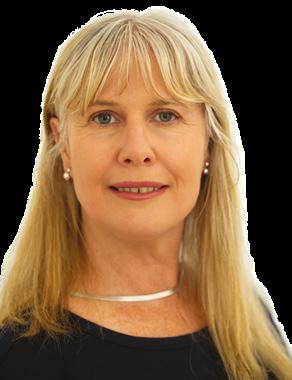
By Sandy Welch Editor MoneyMarketing
In a sector often characterised by short investment cycles and 'quick-turn' strategies, the longevity and consistency of Futuregrowth’s Community Property Fund (CPF) stands out. As the fund approaches the 30-year mark, its track record places it in rare company. “I’ll be honest,” says Smital Rambhai, Portfolio Manager of Comprop, “I don’t know of any fund in the direct property space that’s been around this long – and delivered a total return of 12.8% per annum for nearly three decades.”
That performance wasn’t created through opportunism or short-term bets. It has been shaped by the opposite: patience, reinvestment discipline and a willingness to forgo shortcuts. “We’ve seen other funds run as closed-ended vehicles where they take a seven- or 10-year view and then have to sell the assets,” Rambhai explains. “That drives shortterm optimisation and a reliance on the market cycle being in your favour. We reinvest into the properties continuously, because the whole point is long-term sustainability.”
A fund with heart
While investment narratives often gravitate toward global markets, premium assets and concentrated urban hubs, the history of Futuregrowth’s CPF is different. It’s a story rooted in South Africa’s social and economic transition, built on the simple but powerful idea that well-run retail infrastructure in underserved areas can deliver both commercial returns and community upliftment.
The fund’s origins stretch back three decades, to a moment of national optimism and structural reinvention. “If you look at when the fund was started in 1996, it was actually based on someone’s master’s thesis,” recalls Rambhai. “South Africa had just entered a new era. There was euphoria after apartheid ended, but also a realisation that there had been years of underinvestment in township and rural areas.”
At the time, the opportunity was clear: millions of South Africans lived far from reliable access to essential goods and services. Simple errands such as buying groceries, securing banking services and paying bills required expensive travel. In many rural areas, even accessing SASSA pension payments
meant travelling more than 100 kilometres, eroding a significant portion of already modest grants. The CPF thesis was elegant: bring essential retail infrastructure closer to where people actually live.
But these were not envisioned as glossy mall developments; rather, as practical community anchors designed to reduce household costs and strengthen local economies.
Closing structural gaps
While the social premise was strong, the fund was never built as a charity initiative. “Our responsibility to pension funds is that we always put commercial returns at the forefront,” Rambhai emphasises. “That’s our first assessment. Does the property generate sufficient income, is the yield sustainable and will it deliver returns over the next 20 years?”
What often gets lost is how deeply commercial outcomes and social outcomes intersect in this segment of the market. Job creation is a prime example. Construction creates immediate employment, but once a centre opens, retailers, service providers and centre management also employ long-term staff.
Over time, Futuregrowth realised that local employment was socially desirable and financially necessary. “When I took over the fund 13 years ago, only about 50% of staff in our centres came from the local community,” Rambhai notes. “The result was weekly shutdowns by residents who didn’t feel represented. That obviously affects rentals and operations.”
The solution was structural, deliberate and consistent. Today, more than 84% of all staff employed in CPF centres come from the immediate community. “If you support the local community, they support the shopping centre,” he says.
Image: Supplied
Continued from previous page
Liquidity in an illiquid segment
One of CPF’s strongest and most competitive advantages has been liquidity. Unlisted property is traditionally associated with limited exit opportunities, yet CPF’s size, scale and structure have allowed it to achieve a level of liquidity unusually high for its asset class. “We did some research recently,” says Rambhai. “At R9.3bn in assets, we can offer investors better liquidity than listed property stocks outside the top 10 by market capitalisation on the JSE.” In other words, CPF’s units can regularly be traded more efficiently at net asset value than many listed property shares, due to its scale and liquid cash it generates which is an important consideration for institutional investors balancing long-term allocations with short-term liabilities.
A track record of industry-leading performance
For three consecutive years – 2017, 2018 and 2019 – the fund was recognised as South Africa’s bestperforming specialist property fund, based on MSCI’s direct property returns. The awards were discontinued during Covid, much to the team’s disappointment. “It gave us a unique benchmark that would enable us to gauge if we were better than our competitors or how far behind we were,” Rambhai says. Beyond the numbers, CPF has helped reshape the township retail market itself. Early developments were often basic strip malls with minimal finishes. Over the past decade, the fund has deliberately upgraded design standards across its portfolio. “Our shoppers shouldn’t have a different experience depending on where they live,” Rambhai notes.
Navigating crisis through deep market understanding
The unrest in KwaZulu-Natal in July 2021 saw one of CPF’s flagship centres in KwaMashu, Bridge City Shopping Centre, valued at approximately R800m, completely destroyed during the riots. “We were left with a shell,” Rambhai recalls. “Just a roof and walls.”
But the fund’s response revealed both its resilience and its understanding of township dynamics. Well before the riots, CPF’s audit and risk committee had already flagged civil unrest as a key exposure, especially following the economic shocks of Covid-19. Unlike many property owners, they fully insured the entire portfolio for riot-related damage and loss of income. “Our risk assessment process informed us that the communities in which we operate were most vulnerable. People living hand-to-mouth can’t simply stop working and still get paid. When desperation rises, unrest becomes more likely.”
The decision – costing about R260 000 in premiums at the time – proved transformative. When the centre was destroyed, CPF recovered both the physical damage which amounted to R650m and R194m in lost rental income from the insurers. “Our financials weren’t hit. We carried on as if nothing had happened financially due to the cover we had in place,” he says. But what truly defined the moment was the
decision to rebuild. “Investors asked whether we were serious about returning,” Rambhai says. “My answer was simple: this community needs the mall. Thousands of innocent people just want to work and support their families, as well as have access to affordable goods and services. Getting the retailer trading again was critical and we could not have done this without our partners, Capital Land, who provide the fund with property management services.”
“CPF offers a level of liquidity that is unusually high for an unlisted property fund”
The partner behind Comprop’s success
Behind every successful shopping centre is a property manager who knows the business inside out, and for Futuregrowth that partner has been Capital Land for just over the past decade. Running township and rural shopping centres takes local knowledge, strong relationships with both national retailers and small traders, and a real commitment to the communities these centres serve. Capital Land’s hands-on approach on the ground has kept the centres well-tenanted, and well-maintained, which has supported the strong returns Comprop has delivered to its pension fund investors. Their highly skilled team has ensured the delivery of solar, battery and sustainable water solutions to the centres in the fund.
Opportunities and new markets
As township retail becomes more competitive, new entrants are driving up prices. “Everyone has seen the returns and now they’re flocking into the market,” Rambhai says. “But some are overpaying for assets. If you overpay, you risk capital loss and recovering that in property is extremely difficult.” CPF is responding with two strategic pivots:
1. Development partnerships
Rather than competing for overpriced existing centres, CPF is increasingly working with development partners who manage on-theground construction risk.
2. Launching a new fund
Futuregrowth is preparing to introduce another property strategy focused on emerging realasset themes: data centres, fibre networks, urbanisation-driven storage solutions and more.
The push for regulatory reform
Rambhai has also spent the last two years advocating for tax neutrality with National Treasury for unlisted property funds, which would mean parity with listed REITs. “We currently pay capital gains tax when we sell properties,” he explains. “If we had the same treatment as listed REITs, we could unlock a whole new pool of pension fund capital.” Even under the current rules, CPF has outperformed
ED'S LETTER
Welcome to the May edition of MoneyMarketing. Once again, we’re looking at some of the most important conversations shaping the advice profession right now, and our goal is to equip you with insight that helps you navigate this complex financial landscape while staying focused on what matters most – your clients.
In this issue, the main themes we’re looking at are investing opportunities in Africa, insurance, DFMs and unit trusts. Each carries its own set of challenges, but also meaningful opportunities for advisers who are prepared to look deeper.
Africa’s investment story is driven by demographic growth, improving infrastructure and innovation across multiple sectors. For advisers, understanding these trends is becoming essential, for diversification and for capturing long-term structural growth that global markets can’t replicate.
We also explore the shifting insurance landscape, where clients are demanding greater transparency, personalised cover and more supportive claims experiences. As risk needs change, particularly for businesses in this economic climate, advisers remain central to helping clients make smarter, more resilient choices.
Our features on DFMs and unit trusts examine the tools and partnerships that are helping advisers scale their businesses, streamline compliance and deliver stronger, more consistent investment outcomes. With time pressures growing and client expectations rising, many practices are reassessing how they manage their investment processes and where external expertise can amplify their value.
As always, we hope this issue informs, challenges and inspires you.
Stay financially savvy,
Sandy Welch Editor, MoneyMarketing
Note: If you subscribe to our MoneyMarketing newsletter, see QR code on the cover, you will receive a special discount off a News24 or Netwerk24 subscription*.
*Offer available to new subscribers only.
FOLLOW US:
TikTok @moneymarketing_sa
@MoneyMarketingSA www.moneymarketing.co.za
many listed peers over the past decade. “If not for capital gains tax, our long-term returns could be closer to 14% or 15%,” he says. “And we’ve still outperformed the listed property sector despite paying tax they don’t.”
Futuregrowth Asset Management is a registered FSP.
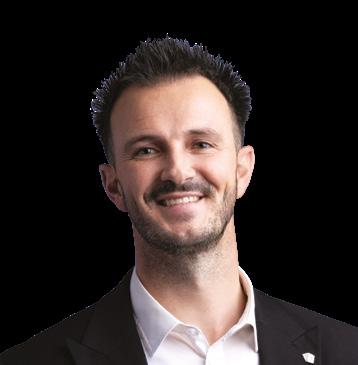
Prescient Securities CEO
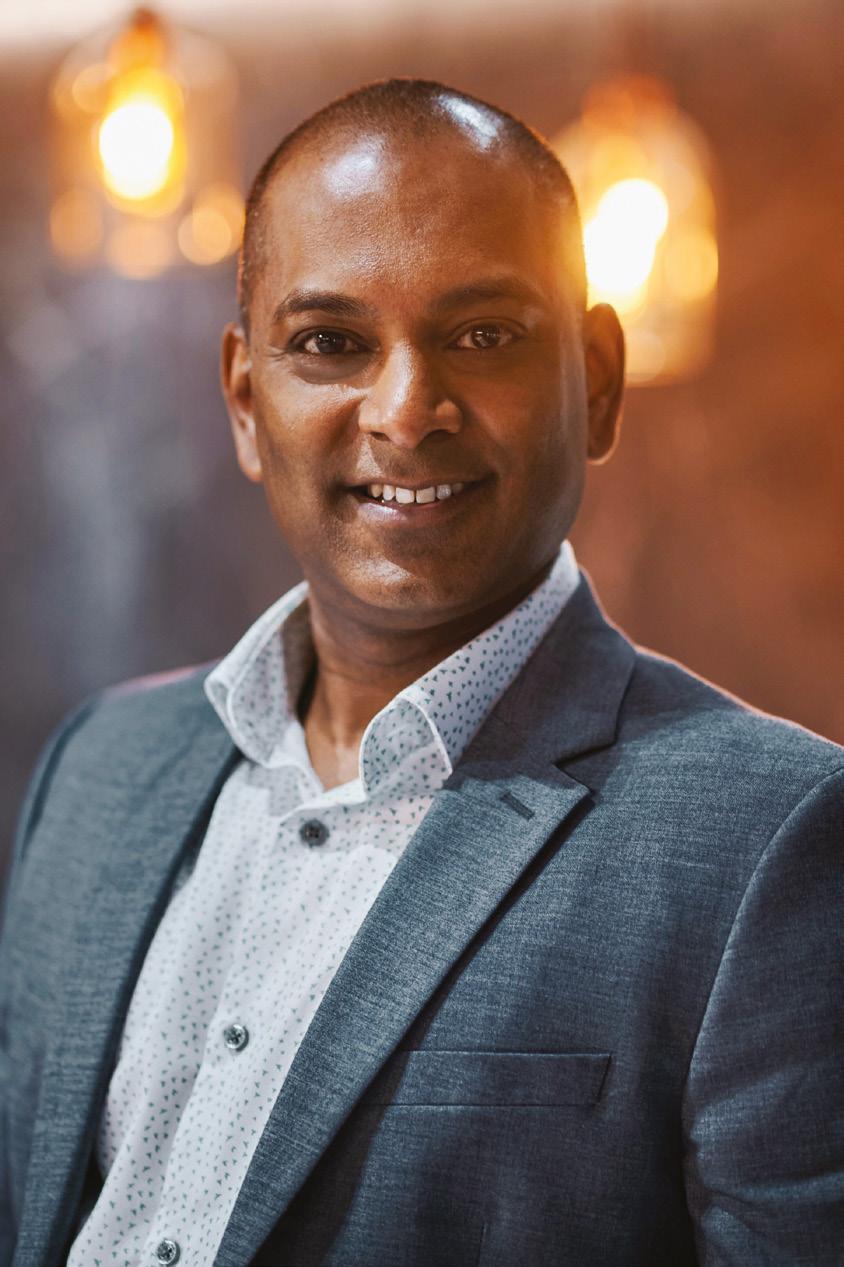
Stephen Heath has built a reputation as a leader who values preparation, discipline and execution.
Stephen Heath Prescient Securities CEO
and spare room. There is something very satisfying about doing practical work with your hands. It is a good counterbalance to the intensity of business.
What is something you would go back and tell your younger self that would impress them?
What was your first job?
From a young age, I was always looking for ways to earn money. My first formal job was at Run/Walk for Life when I was in Grade 10. Each week I helped guide members on their routes and made sure everyone returned safely to the club. I earned R15 an hour. When I was 16, the owner had to travel and asked me to manage the franchise for two weeks, which was an early lesson in responsibility.
What’s your one top tip for doing a deal?
Preparation. I am a doer and I enjoy the execution phase of any project, deal or trade. But experience has taught me that taking a little extra time to get the prep work and details organised before execution is crucial. My team will often hear me say: “Measure twice, cut once.”
What’s the one thing you wish somebody had told you when you were starting out?
The importance of networks. Build your network early and keep building it. It sounds intuitive but being intentional about meeting people across industries and networking is so powerful.
What’s the most interesting thing about you that people don’t know?
I am not sure it qualifies as interesting, but I really enjoy DIY and building things. I like the discipline of taking an idea, planning it properly, working through the detail, and then seeing a tangible finished product. I recently finished building a full bank of bedroom cupboards in our main bedroom
I would tell him that, over time, I have invested a lot of effort in understanding how I think, lead and perform. I have worked with coaches and other professionals to build greater selfawareness and to keep improving. I believe strongly in holding a mirror up to yourself. Not because something is wrong, but because every person has blind spots, patterns and untapped potential. The better you understand yourself, the better you can lead yourself and others. But you have to be open to looking inward and genuinely want to improve. It is not a once-off exercise. It’s a lifelong journey.
What’s the worst investment mistake you’ve made?
Early in my career, I experimented with derivatives and traded a structured option with a barrier feature. The payoff profile looked attractive at the time, particularly because of the asymmetry. The underlying moved up through the barrier, which knocked the option out, and I lost the full premium. It was expensive school fees. It certainly taught me that complexity can make a trade look attractive, but it does not make it better.
What’s the best investment you’ve ever made?
And how much of it was due to luck?
I would say property, largely because of the gearing it gives you if the market moves in your favour and you are able to add value over time. That has probably created the most obvious tangible gains for me. There was also a meaningful amount of luck, because the Cape Town property market has performed very well. I would also say that what you choose not to spend money on is often just as important.
EARN YOUR CPD POINTS
Vehicles are a good example. My car is 18 years old, and I have owned it for 13 years. Where some people have had three or more cars over this period, I have rather used the money I saved to invest elsewhere or put into my bond. It is nice to have nice things, but it is even better not to carry unnecessary debt. The negative compounding effect of debt can be massive, and avoiding that has probably been one of the better financial decisions I have made. There is always some luck in investing, particularly with timing. But I feel that discipline, patience and not overextending yourself matter just as much.
What’s the hardest life lesson you’ve learnt?
Learning how to delegate properly. As a leader, you need to set the outcome clearly, coach where needed, and then give people enough space to deliver. That balance between trust, accountability and not compressing people is difficult, but it is critical if you want people and businesses to grow. It is easy to stay too close to the detail, especially when you care deeply about the outcome. But leadership requires you to build capability in others, not just personally drive every result yourself.
What’s the best book you’ve read recently and why did you like it?
The AI-Driven Leader by Geoff Woods. It was recommended to me by a coach at a time when I was thinking quite deeply about what AI practically means for our business. I do not think anyone can say definitively what AI is going to become, or exactly how it will change the workplace and the world around us. What I do believe is that the next five years will look materially different in almost every industry. Leaders need to engage with that reality now. What I liked about the book is that it gives leaders a practical way in. It does not treat AI as a buzzword. It connects it to real business decisions, productivity, leadership and how we think about the future of work.
The FPI recognises the quality of the content of MoneyMarketing’s May 2026 issue and would like to reward its professional members with 2 verifiable CPD points/hours for reading the publication and gaining knowledge on relevant topics. For more information, visit our website at www.moneymarketing.co.za
Building resilient short-term insurance portfolios
By Sandy Welch Editor MoneyMarketing
South African households are navigating one of the most challenging short-term insurance environments in decades.
Climate volatility, rising claims costs, inflationary pressure and tightening household budgets have converged to create a perfect storm – one where affordability is strained just as risk is escalating. For advisers, this moment demands a more strategic, more educational and more transparent form of engagement with clients.
According to Ryno de Kock, Head of Distribution at PSG Insure, “We are operating in a fundamentally different risk environment to five years ago. Advisers need to help clients structure portfolios that are both financially realistic and genuinely protective. The job now is balancing resilience with affordability but without leaving clients dangerously exposed.”
Structuring affordable, comprehensive portfolios in an age of volatility
The foundation of sustainability in shortterm insurance is intelligent portfolio design. Advisers should begin every review with a structured risk-tiering exercise, which reframes the conversation away from cost and toward consequence:
• Non-negotiable covers
These are the risks where a single event could result in financial devastation: home structure, vehicles, and personal liability. These should never be trimmed simply to reduce premiums.
• Scalable covers
Contents, portable possessions and noncritical assets can often be right-sized by adjusting sums insured, limits or excess structures.
• Deferrable or removable covers
Low-value electronics or optional addons can be deferred temporarily if budget pressures require it but only with careful explanation of the trade-offs.
This tiered framework gives clients a sense of control while maintaining the structural integrity of their protection.
How climate volatility is changing insurance pricing
Extreme weather events, from floods and hailstorms to runaway wildfires, have intensified across South Africa in both frequency and severity. This has fundamentally reshaped how insurers price risk. The industry is shifting away from retrospective pricing based on claims
history and towards predictive catastrophe (CAT) modelling, incorporating:
The consequence is that a client can experience a significant premium increase even without making a single claim, simply because their property is now rated as being in a higherrisk zone.
“Clients often feel blindsided when their premiums rise despite a clean claims record,” says de Kock. “Advisers need to explain that the industry is moving from backward-looking models to forward-looking science. This is about future risk, not just historical loss.”
Proactive communication is essential. Clients should understand why their pricing is changing and how their adviser can still help them navigate adjustments without compromising core protection.
Preventing underinsurance in a budgetconstrained market
Underinsurance is one of the most financially damaging – yet entirely preventable –outcomes in personal insurance. With household budgets under strain, clients often reduce sums insured or remove cover, believing they are making smart cost decisions. In reality, they may be absorbing catastrophic risk.
Advisers must help clients understand the average clause, a defining principle in South African policies. If a home worth R3m is insured for R2m, it is underinsured by 33%. If a storm causes R500 000 in damage, the insurer will pay only R333 000, leaving the client to fund the remaining R167 000.
Most clients assume underinsurance only affects total losses. Demonstrating its impact on partial claims is one of the most powerful education moments an adviser can offer.
Technology’s growing influence – and how advisers can use it to add value
Telematics, AI-driven underwriting, and digital claims processing are transforming the shortterm insurance landscape. Advisers can turn these tools into tangible client value by:
• Identifying clients who are ideal candidates for telematics-based motor policies
Using driving-behaviour data to negotiate renewals more effectively
• Helping clients understand which behaviours
“Advisers need to help clients structure portfolios that are both financially realistic and genuinely protective”
influence their risk score
• Monitoring deteriorating telematics profiles before they impact future pricing.
Telematics principles are also moving into home insurance, where smart waterleak detectors, security sensors and firemonitoring devices increasingly influence pricing and claims outcomes. Advisers who stay ahead of these shifts can guide clients toward technologies that reduce both risk and premiums.
Advisers’ role in reducing fraud and claims inflation
Fraud and unnecessary claims are significant contributors to rising premiums. But advisers need to be educators. “The adviser’s duty is to the client’s long-term financial wellbeing,” says de Kock. “Explaining the consequences of misrepresentation or inflated claims is protecting the client.” Transparent conversations about risk behaviour preserve both integrity and trust.
Regulatory shifts and what advisers should prepare for
As COFI embeds Retail Distribution Review (RDR) principles, remuneration transparency will become more explicit and enforceable. Advisers who already practise clear, upfront disclosure are ahead of the curve; others need to align now.
In this environment, advisers who combine rigorous technical insight with empathetic guidance will stand apart. As de Kock notes, “Our role is not just helping clients buy insurance. It’s helping them stay protected in a world where risks – and costs – are increasing. That requires skill, honesty and the courage to have the difficult conversations. That’s where advisers add real value.”
Santam migrates entire insurance platform to the Cloud
Santam has become the first-ever company on the continent to officially move its core insurance platform to the Cloud, making the business, the first in Africa to complete a full digital migration. The move marks a significant milestone in Santam’s digital transformation, after two and a half years of planning and extensive testing of its Guidewire insurance platform.
According to Sam Nkosi, Santam’s Chief Information Officer, the move is fundamentally about future-proofing the business. “On-premises infrastructure naturally becomes more expensive, less flexible and harder to scale over time. Cloud environments, by contrast, provide significantly higher resilience and recovery capabilities, while innovation cycles are much faster, providing a stronger foundation for digital, data and AI-driven capabilities.”
What you need to know about Guidewire
In simple terms, Guidewire is the core policy and claims administration system that runs Santam’s insurance business. It is the platform used to create and manage insurance policies, calculate premiums, process claims, and manage renewals, endorsements, cancellations, billing and invoices across both policy and claims.
Santam originally selected Guidewire in 2012 as part of a strategic decision to move away from highly customised legacy systems. At the time, the objective was to standardise and modernise core insurance operations, gain flexibility to launch new products faster, and reduce long-term technology risk associated with ageing systems. Guidewire, which is widely used by leading insurers globally, provided Santam with a strong and scalable foundation for growth.
The migration to the Cloud has involved moving Santam’s full Guidewire production environment onto the Guidewire Cloud Platform, securely transferring large and sensitive policy and claims databases, re architecting integrations with downstream systems, and establishing modern Cloud-based security, monitoring and recovery processes.
Why migrate to the Cloud
From a capability perspective, running Guidewire in the Cloud unlocks functionality that is difficult and costly to achieve consistently in traditional on-premises environments. These include rapid scalability during peak periods, advanced monitoring and predictive alerting, faster deployment of new features, and easier integration with modern data, analytics and digital platforms. Operationally, the shift radically changes how Santam’s teams work day-today. “Our teams now spend far less time managing hardware and infrastructure, and more time focusing on business improvements and customer value,” says Nkosi. “Updates, maintenance and scaling are handled in a far more automated and predictable way, removing the need for costly, cumbersome and business impacting upgrades, and allowing teams to collaborate more closely and respond faster to change.”
While the migration represents a major technological shift behind the scenes, the real impact is expected to be felt by policyholders over time. “For customers, this change is not about a new interface, but about better outcomes,” Nkosi says. “Policyholders can expect more reliable systems with fewer disruptions, faster processing of policies, changes and claims, quicker rollout of digital features, and improved consistency across channels such as brokers, call centres and online platforms. “In other words, insurance that ‘just works’ more reliably and responsively,” he adds.
Faster, better, simpler
Nkosi notes that cloud infrastructure also fundamentally changes how resilience and system downtime are managed. “Instead of relying on a single physical location, systems now run across multiple availability zones, with automated backups, built-in recovery processes and failover mechanisms. This significantly reduces the risk of downtime and allows Santam to recover faster from unexpected events without impacting clients.”
Completing the migration, he says, reinforces Santam’s long-term vision as a modern, digitally-enabled insurer. “This investment signals that Santam is focused on resilience and customer experience, not just short-term efficiency,” Nkosi concludes. “It reflects our intent to serve customers better in an increasingly digital, always-on world, while remaining a stable and trusted insurer.”
Economic shocks do not break businesses, bad responses do
By Rudolf Britz Chief Actuary at Momentum Insure
The South African business landscape is no stranger to volatility. From fluctuating interest rates and inflation to the ripple effects of global geopolitical uncertainty, macroeconomic shocks are a constant reality. However, the true measure of a business is not found in the presence of these pressures, but in its response to them.
Macroeconomic factors act as the invisible hand guiding business operations. When inflation climbs, input costs soar; when interest rates rise, the cost of debt service can stifle cashflow. In these times, the inclination is to become defensive. How a business chooses to navigate these shocks determines whether it merely survives the cycle or emerges strategically positioned for growth.
The pitfalls of short-termism
Under intense economic pressure, the instinct is to cut costs rapidly. While fiscal discipline is important, there is a risk in short-term decision-making that compromises long-term viability. We often see businesses delaying critical infrastructure investments or, more concerningly, reducing their insurance cover to save on monthly premiums. Underinsuring assets or letting policies lapse might provide immediate liquidity, but it creates what the industry calls a protection gap. In an environment where weather events are becoming more severe and infrastructure disruptions more frequent, an uninsured loss during an economic downturn can be the final blow for an SME.
Lessons from the pandemic
The Covid-19 pandemic remains the ultimate case study in macroeconomic shock. It highlighted the distinction between organisations that treated risk management as a mere compliance checkbox and those that saw it as a strategic pillar.
Insurance helped absorb part of the financial impact for those with cover. The businesses that recovered fastest were not just those with insurance cover, but also those who were proactive. They didn’t just cut costs; they pivoted their delivery models and ensured their risk portfolios were aligned with their new operating realities. Those who abandoned their risk management frameworks found themselves unable to secure the capital or the confidence needed to restart when the economy reopened.
Insurance as a strategic enabler
In a changing risk landscape, we must move away from viewing business insurance as a grudge purchase. Instead, it should be recognised as a critical tool for business continuity.
True resilience is built when insurance is used to transfer the risks that a balance sheet cannot – and should not – absorb. By protecting assets and cashflow against unforeseen disruptions, insurance provides the stability required to take calculated risks elsewhere. It is, in essence, a strategic enabler of growth. When a business knows its foundation is protected, it can focus on innovation and market expansion rather than constant crisis management.
The proactive path forward
Both insurers and business owners can play a proactive role in reducing risk. This begins with a shift toward comprehensive risk planning. Rather than reacting to a crisis after it occurs, businesses should work closely with brokers and advisers to stress-test their operations against potential shocks.
Financial advisers play an important role in this ecosystem, helping businesses navigate complex risk landscapes and ensuring that cover remains relevant as the business evolves. They provide the technical expertise to identify where a business is most vulnerable and how to structure a portfolio that balances cost-efficiency with robust protection.
As macroeconomic volatility continues to test the South African market, the divide between those who succumb to pressure and those who thrive will be defined by their preparation. By prioritising risk management and maintaining adequate protection, businesses don’t just survive the storm, they build the resilience necessary to lead the recovery.
By Nic Smit Product and Pricing Executive at Bidvest Life
Rethinking income protection for a complex workforce
Income protection remains an essential component of financial planning for working South Africans. However, while the need for comprehensive cover is constant, the nature of the workforce it serves has become increasingly fragmented and complex.
The shift to non-traditional employment
South Africa is seeing a definitive shift away from formal sector dominance. Roughly 3.7 million people now operate in the informal economy¹, and 16% of income-earning South Africans are self-employed². With the gig economy growing at 10% per year³, traditional employment is no longer the primary lens through which to view the workforce.
This shift has significant implications for income protection, which was historically designed for individuals with stable monthly earnings. Today, it is common for a client’s income to fluctuate from month to month, and the risk of losing their monthly income as a result of being unable to work due to injury or illness is increasingly borne by the individual rather than the institution. With many of these income earners operating outside of employer
By Etienne Fourie Chief Sales Officer at BrightRock
safety nets, sick leave, group risk benefits and disability cover are no longer guaranteed, making even short-term disruptions a threat to both personal liquidity and business viability.
Adapting to new realities
For advisers, this requires a more granular understanding of how clients earn, not just what they earn. Traditional life insurance models may exclude high-risk roles (such as oil rig workers) or fail to recognise the risks that temporary disability presents to homemakers and students. And some roles simply didn’t exist a few years ago – online fitness instructors and social media influencers, for example, are a new, yet thriving, addition to the workforce.
Insights from Bidvest Life’s 2024 Claims Report indicate that injury and illness do not discriminate by occupation:
Business owners were the top claimants for Comprehensive cover
• Fitness professionals led claims for EventBased cover4
Whether a client is a salaried executive or a sports coach, the risk of cancer, heart attack, or infection remains an unfortunate possibility.
Providing income protection based solely on traditional employment models could deny millions of South Africans the ability to secure their livelihoods.
A growing opportunity for advisers
There is a clear opportunity here. Bidvest Life’s data shows that claims on Event-Based Cover as a share of all temporary disability benefits exceeded 10% for the first time in 2024. This confirms that more people in non-traditional occupations are successfully accessing the benefits of income protection.
The changing workforce does not reduce the need for income protection; it reshapes the strategy required to implement it. For a workforce defined by flexibility, having the right cover in place could transform a potential catastrophe into a more manageable event. Personally tailored advice ensures that, while the possibility of injury or illness cannot be removed, the financial impact of these conditions can be mitigated against. The more an adviser understands the nuances of nontraditional work, the better equipped they are to guide clients through this complexity.
Four essential insurance solutions every SME should have
For South Africa’s small and medium enterprises (SMEs), sustainable growth depends on more than sales and cashflow. Strategic risk management – especially business insurance – is often overlooked, yet it’s one of the most powerful tools for protecting a growing company.
According to the FinScope MSME Survey, only 18% of SMEs have any form of business insurance. This leaves over 80% of small businesses exposed to risks that could wipe out years of progress. Despite contributing an estimated R5tn to the economy, most SMEs remain uninsured or underinsured – a major vulnerability for a sector critical to job creation and economic stability.
To close this gap, SMEs should focus on the types of insurance that directly support business continuity and long-term resilience. Here are four essential solutions every SME should consider:
1. Business overheads insurance: Keeping operations running
One major risk SMEs face is the sudden interruption of cashflow when the owner or main income generator becomes ill or injured.
Business overheads insurance covers ongoing fixed expenses such as:
• Rent
• Staff salaries
• Utilities
• Loan repayments.
Without this protection, even a short-term disruption can force difficult decisions – from cutting staff to closing the business altogether. Overheads insurance helps SMEs survive these shocks without derailing long-term growth plans.
2. Contingent liability insurance: Protecting personal guarantees
Many business owners or partners sign surety for loans or provide personal security to unlock funding. If something happens to that individual, the business could be left with a major debt exposure.
Contingent liability insurance covers the value of the loan in the event of the insured partner’s disability or death. It typically applies to:
• Personal guarantees
• Mortgage bonds
• Security loan agreements.
This ensures the business isn’t forced into financial distress if a key signatory can no longer meet their obligations.
3. Key person insurance: Safeguarding critical talent
SMEs often rely on a few individuals whose skills, relationships, or leadership drive the business. Losing one of them unexpectedly, through illness, disability or death, can cause immediate revenue loss and operational instability. Key person insurance provides funding to:
• Offset lost income
• Cover recruitment or temporary staffing
• Support organisational transitions.
It gives the business breathing room to adapt without compromising stability.
If a business partner dies or becomes permanently disabled, the remaining owners may not have the capital to buy out their share – potentially causing conflict, delays, or even business collapse. Buy-and-sell insurance ensures:
• A smooth transfer of ownership
• Fair compensation for the exiting partner’s estate
• Stability during a difficult transition.
It’s especially vital for SMEs with informal or evolving governance structures.
A strategic priority for 2026
This year, SMEs should take a proactive approach: identify critical functions, assess vulnerabilities, and secure the insurance cover needed to protect their business. With the right solutions in place, owners can focus on growth, knowing that their hard work is backed by a resilient risk management foundation.
Removing the trade-off between affordability and comprehensive life insurance life insurance
In today’s challenging economic environment, financial advisers are increasingly tasked with helping clients balance affordability with meaningful protection. Rising living costs mean many households are scrutinising their financial commitments more carefully, often placing pressure on insurance budgets.
Yet the need for comprehensive risk cover has not diminished. For financial advisers, the challenge is clear: how do you help clients maintain adequate protection without sacrificing affordability or claims certainty?
According to Stephen van Niekerk, Executive Head of Momentum Life Insurance, the answer lies in combining thoughtful comprehensive product design with technology-enabled pricing.
“Financial advisers are navigating an environment where clients want certainty and value from every financial decision,” he says. “Our focus has been on designing solutions that help remove the traditional trade-off between affordability and comprehensive cover.”
Evidence-based discounts that reward healthier clients
Momentum Life Insurance’s Myriad life insurance product range was designed with this challenge in mind. Instead of reducing benefits to lower premiums, the product leverages LifeReturns® to enable evidence-based discounts that reward healthier lifestyles
LifeReturns® incorporates digital health screening that allows clients to complete a quick health assessment, and an optional fitness assessment, using a smartphone. Screening measures key health indicators and provides data that supports sustainable premium discounts, while also offering insights into a client’s current health and fitness status.
To date, 118 000 LifeReturns® screenings have been completed, with clients receiving an average premium discount of 20.6%.
These outcomes demonstrate how data-driven underwriting can make life insurance more affordable without reducing the breadth of cover. Importantly, LifeReturns® extends beyond pricing — the digital health screening can help identify early health risk indicators, creating opportunities for more informed conversations between financial advisers and their clients.
More than pricing: enabling ongoing client value
While LifeReturns® enables more accurate pricing at the start of a policy, its value extends far beyond initial underwriting.
By encouraging clients to complete a free annual LifeReturns® health assessment, they gain ongoing, personalised insights into their health. This not only provides an early warning of potential health concerns but also creates a natural opportunity for financial advisers to engage with clients based on changes in their overall risk profile.
The annual assessment empowers clients to:
• Access personal health insights at no cost
• Keep premiums aligned with their current risk profile
• Earn the best possible discounts over time
For financial advisers, this shifts annual reviews into more relevant, value-driven conversations. For qualifying clients, the annual review gives access to additional cover to address insurance gaps, without the need for traditional medical tests.
The result is stronger client relationships and a clearer demonstration of the ongoing value of advice.
Technology enhancing the advice journey
The LifeReturns® digital health screening also demonstrates how technology can streamline underwriting and support personalised premium outcomes. By allowing health indicators to be assessed remotely, the screening helps simplify the advice process, making underwriting and policy implementation more efficient for financial advisers and qualifying clients.
Delivering certainty in uncertain times
A strong claims track record remains one of the most important measures of trust in life insurance. According to Momentum Life Insurance, it pays claims averaging around R25 million per day. As an
intermediated business, this reinforces the important role financial advisers play in helping clients secure financial protection when it matters most.
Ultimately, innovation in life insurance is not only about technology; it is about helping financial advisers deliver on the promises they make to their clients.
“Innovation should empower financial advisers to provide greater certainty and better outcomes for their clients,” concludes Van Niekerk. “By combining comprehensive cover, data-driven discounts and digital innovation, we can help advisers protect their clients’ financial futures while keeping cover affordable.”
By Clayton Ellary Executive Head: MidMarket Clients & Broking at Aon South Africa
AFuel stockpiling: The hidden risk South Africans are overlooking
s uncertainty in the Middle East continues, South Africa is facing soaring fuel costs and potential supply disruptions. In response, businesses, farms and even households are increasingly storing petrol and diesel on-site in larger quantities than usual. This is happening despite the country’s fuel supply remaining fundamentally stable for now. How this plays out over the coming weeks and months depends heavily on what happens in the Middle East, and the impact on global logistics and oil supply.
While stockpiling may seem like a practical short-term solution to navigate the uncertainty of fuel supply and pricing, it introduces a range of unintended consequences. Increased fuel storage can significantly alter both risk exposure and insurance implications.
The moment materially larger volumes of fuel are stored on site, the risk exposure fundamentally changes. Fire load increases dramatically. Vapour and handling risks increase. The potential for injury, third-party harm and environmental damage increases. Critically, the insurance assumptions that were valid before the stockpiling will no longer apply.
A highly regulated risk
Fuel is not ordinary stock. It is a hazardous, highly flammable substance that requires strict control, appropriate containment and careful handling. Municipal petroleum by-laws typically require registration or approval once flammable liquids exceed certain thresholds and may mandate purpose-built storage facilities beyond specific volumes.
In South Africa, fuel storage is governed by a robust regulatory framework. This includes municipal fire safety by-laws, the Occupational Health and Safety Act (OHSA) 85 of 1993, the National Environmental Management Act (NEMA), and Hazardous Chemical Agents Regulations In addition, the South African Bureau of Standards (SABS) sets out technical requirements through various SANS codes covering storage, handling, transportation and building compliance.
This means the issue is not simply whether fuel is stored on site, but whether it is stored lawfully, safely, and in compliance with all applicable requirements. From an insurance perspective, undeclared or non-compliant storage can have serious repercussions.
The insurance implications of non-disclosure
Insurance is structured around disclosed risk. When a property that is typically used for light commercial activity or general warehousing begins storing significantly larger quantities of
fuel, this may constitute a material change in risk. Insurers are likely to ask three key questions: Was the increased exposure disclosed? Are the premises compliant with applicable regulations and by-laws?
• Are appropriate risk controls and precautions in place?
While the potential for property damage is clear, the broader liability exposure is often underestimated.
The consequences of a fire or explosion extend far beyond the insured premises. Damage can spread to neighbouring buildings, vehicles and infrastructure. If individuals –whether employees, contractors, tenants or members of the public – are injured due to unsafe storage or handling, the legal and financial implications can be dire. These risks may include bodily injury claims, damage to adjacent properties, environmental harm, and regulatory scrutiny regarding the management of hazardous substances.
Operational and health risks
Once fuel storage becomes part of daily operations, it must be treated as a formal risk exposure. Employers are required to provide appropriate training, information and safety protocols before any exposure occurs. Petrol and diesel present not only fire hazards, but also health risks. Fumes can accumulate in poorly ventilated areas, while improper handling can lead to vapour ignition, skin exposure, inhalation-related illness and dangerous spill events. Regulations may also require exposure assessments, record-keeping and, in some cases, medical surveillance. Some of the risks associated with fuel storage:
• Safety and fire/explosion risk: Large fuel volumes are highly combustible; leaks or vapour buildup can ignite from sparks, static, hot work, or faulty equipment. Inadequate separation distances from buildings, parking areas, or public roads can magnify the impact of an incident.
• Environmental and pollution risk: Spills or slow leaks can contaminate soil and groundwater, sometimes going unnoticed for long periods. Inadequate bunding/secondary containment, poor drainage control, or damaged tanks make spills more likely and harder to contain. Cleanup and remediation costs can be very high and may trigger regulatory investigations or penalties.
• Operational and business interruption risk: A serious fuel-related incident can shut down
operations, disrupt logistics and supply chains, damage critical equipment and infrastructure. Even a smaller event can tie up resources in remediation and investigations, delaying normal business.
• Quality, contamination, and equipment damage: Longterm storage can degrade fuel quality (e.g. water ingress, microbial growth, sediment). Contaminated or degraded fuel can damage engines and generators, leading to equipment failure, increased maintenance and replacement costs, and loss of critical services (e.g. backup power in hospitals or data centres).
• Security and theft risk: Large, visible fuel stores can be a target for theft, vandalism, or even intentional damage. Poor access controls, lighting, or monitoring increase the probability and severity of these events.
Fuel stockpiling raises safety, environmental, regulatory, liability, operational, quality, and security risks. The more fuel stored (and the longer it is kept), the more important proper design, maintenance, monitoring, and emergency planning become.
A risk that requires deliberate management
Stockpiling fuel is not simply a logistical decision – it is a governance issue that should be addressed at both management and board level. Stockpiling fuel is a risk decision. If something goes wrong, it quickly becomes an insurance, liability, regulatory and reputational issue all at once.
Any organisation considering increased onsite fuel storage should first review its insurance programme, policy conditions, property protections and compliance obligations. Importantly, any material changes in fuel volumes or storage arrangements should be disclosed to brokers and insurers. Insurers may impose special conditions or higher deductibles for large fuel storage, reduce or deny coverage if risk controls or regulations are not followed, and will require engineering surveys, tank testing, and emergency response plans.
In volatile conditions, resilience matters. But resilience should not come at the cost of creating new, unmanaged hazards. The better approach is to plan carefully, disclose early, store safely, and treat fuel for what it is: a high-risk exposure that demands proper risk management and control.
can buy you
Time is the greatest gift of all. And we all want more time to spend on the things that are important to us. Whatever those things may be, the good news is that if you invest early, time gives you money. And then, money gives you more time to spend on the things you love. Speak to us to make the most of your time. Call Allan Gray on 0860 000 654, or your financial adviser, or visit www.allangray.co.za.
Gray is an authorised FSP.
Strong partnerships create value that compounds
Partnerships that stand the test of time tend to share a few common characteristics: deep trust, a commitment to excellence, and a willingness to adapt as circumstances change. These qualities matter, especially in financial advice where professional relationships often extend across decades of client decisions, market cycles and regulatory change.
This is the kind of partnership that Old Mutual has sought to build with independent financial advisers in South Africa. Over the past five decades, the profession has been constantly reshaped by new regulation, rising client expectations, and ever more sophisticated advice practices. Crucially, this partnership is designed to support independent financial advisers without compromising the independence that defines their role in the industry. And through these shifts, our role of supporting advisers has also had to evolve.
Old Mutual has been at the forefront of this change since we established our Independent Distribution business in 1976, with the simple aim of providing financial solutions that independent advisers could offer to their customers. Since then, we’ve evolved to offer broader structures that are designed to help advice practices operate more sustainably and grow over time.
“The strength of our business has never been about product features or distribution channels. It’s always been about relationships,” says Prabashini Moodley, CEO of Old Mutual Life and Savings. “Which is why we value the IFA community so highly, and have invested in forging strong links, which creates value that compounds over time.” The depth of these relationships is also reflected in independent industry research. In the 2025 NMG Risk Report, for instance, Old Mutual was ranked number one for relationship management.
This recognition highlights the quality of engagement between Old Mutual and independent financial advisers. Importantly, it reflects respect for the adviser’s independence, rather than control over it. For independent financial advisers, that relationship often becomes the practical bridge between strategic guidance, operational support and access to broader expertise.
Infrastructure that evolves with the profession
As the profession has become more sophisticated, independent financial advisers have needed more than just product access. Today’s advice practice is a true partnership where Old Mutual respects advisers' independence and autonomy in running their businesses and serving their clients.
Today, advice practices rely on operational systems that scale, digital tools that streamline workflows, and guidance that helps them
navigate increasing regulatory and business complexity. Old Mutual’s Independent Distribution business supports independent financial advisers through a national network of Business Consultants who work alongside advice practices on business development, operational efficiency and strategic growth.
This team is at the core of the Old Mutual Independent Distribution value proposition. Every Independent Financial Adviser (IFA) is paired with a highly skilled Business Consultant to ensure they derive maximum value from the partnership and plays a hands-on role in helping IFAs strengthen and grow their practices. The choice of the term ‘Business Consultants’ reflects a deliberate focus on supporting the long-term development of an advice practice, instead of viewing it only as a sales channel.
“Advice is being rapidly reshaped by regulation, rising customer expectations, and technology,” says Marwan Abrahams, Executive General Manager of Old Mutual Independent Distribution and Chairperson of the Old Mutual Black Distributors Trust (OMBDT).
“The IFAs who win won’t just survive; they’ll adapt, innovate and thrive in the age of AI without losing the human touch. That’s exactly why Old Mutual Independent Distribution exists: to be your business partner that combines digital capability with human support, so your practice stays relevant, grows, and scales for the long term.”
This support has been critical during periods of regulatory change. When the Financial Advisory and Intermediary Services (FAIS) Act introduced new licensing and compliance requirements in the early 2000s, Old Mutual helped establish Masthead (Pty) Ltd to support advisers navigating the evolving regulatory environment.
Later reforms, like the Fit and Proper requirements in 2012, again required independent financial advisers to strengthen qualifications and operational standards, with structured guidance available through adviser support networks. As the regulatory environment continues to evolve – including the anticipated implementation of the Conduct of Financial Institutions (COFI) Bill – advice practices will again need strong operational foundations and trusted partners to navigate change confidently.
Professional networks that strengthen the profession Infrastructure alone doesn’t build strong advice practices. Professional communities and peer networks also play an important role in strengthening the profession. One example is the Old Mutual IFA Association, a community of independent advisers who collaborate through shared learning, industry
discussions and continuing professional development opportunities.
Through practical guidance and programmes designed to strengthen business practices, the association helps advisers refine their operating models and respond to changes in the advice environment. Initiatives such as the Supporting Excellence in Practices (SEP) programme allow for continuous improvement by focusing on developing support staff within advice practices, strengthening the teams that enable advisers to deliver consistent client service.
Investing in the future of advice
Old Mutual also recognises that the long-term sustainability of the advice profession depends on who enters it and how emerging advice practices are supported as they grow. “We believe the future of financial advice depends on building stronger advice practices and supporting the next generation of advisers,” says Abrahams.
The Trust was established to accelerate the growth of black-owned advice practices through funding, mentorship and operational support. These initiatives help firms expand their teams, strengthen infrastructure and scale their businesses more sustainably. The results demonstrate what is possible when targeted support meets entrepreneurial capability. In 2024, four OMBDT beneficiaries were named in the Citywire Top 50 Independent Financial Advisers in South Africa – recognition that reflects the growing strength of these advice practices.
Support that compounds over time
“The independent financial advisers who succeed over time are rarely those who work in isolation,” Abrahams says. “They are the ones who build strong networks, invest in their teams, and work with partners who help them grow their businesses sustainably.”
Experience across decades of industry change points to a consistent lesson: advice practices thrive when they combine strong client relationships with operational discipline and reliable support structures. In that environment, partnerships between providers and advisers become less about distribution and more about sustaining long-term client outcomes.
Whether you are reconnecting with Old Mutual or exploring the Independent Distribution channel for the first time, you can speak to your Business Consultant or visit: oldmutual.profileme. app/independentdistribution?r=w
Marwan Abrahams
WHEREVER YOU’RE AT, GET ADVICE THAT MATTERS
It’s about the confidence you build, the trust you uphold, and the impact your advice has on the people you serve. Old Mutual stands beside you with guidance, tools and a commitment to responsible, customer‑focused standards that help you deliver meaningful outcomes.
DO
By Francois du Toit Founder and Director, PROpulsion
Aclient books a review meeting, and she arrives with a printed retirement plan she generated herself the night before using ChatGPT. The numbers look reasonable, the structure is sensible, and she is not combative in any way. She is curious, prepared, and rather proud of what she has put together as she slides the document across the table and asks what you think.
This is the meeting many advisers have already had, and for those who have not, it is coming. The adviser’s first move in that moment will shape the next ten years of the client relationship, so it is worth thinking about in advance. Let’s see why clients are arriving with AI-generated plans, decide how you should respond, and look at what that means for the way you run your meetings from now on.
Understand what is happening in the room
Clients who arrive with an AI plan are not trying to replace you. They are arriving prepared, in much the same way most of us now research symptoms before seeing a doctor, because we want to ask better questions and feel less exposed in the conversation.
According to the Old Mutual Savings and Investment Monitor, South African consumers are increasingly turning to online sources to research financial decisions before engaging a professional. Layer AI on top of that shift and the behaviour accelerates quickly, so the client who used to arrive with a spreadsheet now arrives with a full plan that reads like the real thing.
The important part to grasp is that every client you serve is being trained on AI right now – whether through their work, their children’s schooling, or the search engines they already use every day. This is going to increase rather
than fade, which means the meeting described above is a preview of how most review meetings will begin within the next two years.
Decide how you will respond
You have three options when a client opens that AI-generated plan in front of you, and only one of them works. You can fight it, defend against it, or collaborate with it. Fighting it sounds like “these tools get things wrong all the time”, and while you may be correct on the technical point, you will still damage trust because the client hears you dismissing both her effort and her judgement. Defending against it sounds like a long explanation of why your process is better and why she should have come to you first; but she did come to you.
Collaboration is the only response that protects the relationship, and it sounds like “this is great, I love that you have engaged with this, so let us go through it together and see what it got right, what it missed, and what it could not have known about your situation”. In that moment you become a partner rather than a gatekeeper, and your value shows up in the judgement, context, and accountability you bring to the plan she has already drafted. Remember that AI cannot carry fiduciary duty, but you can, and your client still needs you for the decisions the machine is not allowed to make on her behalf.
Do the work to be ready for this meeting
The collaboration response sounds easy on paper, but in the room, under pressure, it is considerably harder, so it pays to prepare for it before the meeting happens rather than during it. Start by adding a question to your meeting agenda template that invites the client to
share anything she has already researched or modelled, because this simple change turns the AI plan from a surprise into an expected input. Role-play the scenario with your team as well, so that the first time someone on your side collaborates with an AI-generated plan is not in front of a paying client.
Then look honestly at your own data, because the reason a generic AI plan can feel convincing is that the client does not yet know what the personalised version looks like. Your advice should be visibly more tailored and more aware of the client’s full situation than anything a public chatbot can produce, and if it is not, the tool is not the problem. Your data and your processes are.
“Your advice should be visibly more tailored and more aware of the client’s full situation than anything a public chatbot can produce”
The client who arrives with an AI plan is a gift, because she has done the hard part by showing up prepared and engaged with her own financial future. Meet her there, collaborate with what she has brought, and add the judgement, context, and accountability that the machine cannot. That is the work, and that has always been the work.
Stay curious!
Du Toit believes that when financial planners build great practices, they change lives at scale. He also believes we must grow the entire profession so that everyone benefits. That's why he founded PROpulsion, where he helps planners grow through community, events, and expert resources. He hosts the weekly PROpulsion LIVE show on YouTube with over 325 episodes. Visit www.propulsion.co.za
Building an advice business that can outlast the founder
Compiled by Sandy Welch Editor MoneyMarketing
For financial advisers, building a successful practice needs resilient revenue, documented processes, strong compliance discipline, client trust across generations and a clear plan for what happens when the founder is no longer at the centre.
The most important shift is from personalityled advice businesses to enterprise-led practices. Advisers should be asking whether the business can operate consistently without them in every meeting, decision or client relationship. That means recurring fee income, diversified client segments, clear service propositions, professional management information and a technology stack that supports delivery rather than merely store data.
Resilience also requires flexibility. Markets, regulation, client expectations and margins will keep changing. Practices that cope best are those that understand their profitability by client segment, regularly review pricing and can demonstrate the value they deliver. A client service model should be intentional: who receives what level of service, how often, at what cost and through which channel.
Succession planning
Succession planning is central to that resilience. The right successor or merger partner should not be selected only on price. Advisers should look for alignment in values, advice philosophy, client treatment, investment approach, regulatory standing, operational capability and cultural fit. The successor must also have the appropriate licences, accreditations and capacity to service the client base. As Ryno Volschenk of Masthead has noted: “If your successor doesn’t have the same accreditations, they cannot service your clients as you did.”
Preparation should start years before a planned exit, not when retirement is imminent. Five to 10 years is sensible where an internal successor must be developed. Even a sale or merger needs time to prepare client data, clean up compliance records, document processes, review contracts and introduce key clients. Daniel van Andel of Allan Gray has warned that “a succession plan is incomplete in the absence of a hard exit date”, adding that advisers must detail how the plan is triggered at retirement, disability or death.
The impact of COFI
The Conduct of
Financial Institutions
Bill will add further pressure. COFI is expected to shift South African financial services regulation towards a more outcomes-based framework, with activity-based licensing, stronger conduct standards and closer scrutiny of how products are designed, distributed and explained. Practices should not wait for final implementation. They should map their regulated activities, review advice records, test disclosure quality, document conflicts of interest, strengthen complaints processes and ensure remuneration is clearly explained. Firms that already live Treating Customers Fairly principles should be better placed, but COFI will raise the bar on proving good outcomes.
Growing the business
Technology first
Technology should support this model, not complicate it. A modern practice needs an integrated CRM, workflow automation, digital fact-finds, secure document storage, client segmentation tools and management dashboards. Technology should reduce administrative drag, highlight service gaps and make compliance easier to evidence. Artificial intelligence can help with meeting notes, content, workflow prompts and data analysis, but firms must apply controls around accuracy, confidentiality and record keeping.
Why management matters
Acquisition can be a powerful growth strategy, but the highest success rates tend to come from disciplined deals rather than opportunistic buying. The best acquirers know exactly what type of book they want, carry out detailed due diligence, test cultural compatibility and structure payments around client retention. Clean data, transparent revenue, low lapse rates and properly segmented clients make integration easier. Staged handovers also work better than abrupt transfers, especially where the selling adviser remains involved for introductions and reassurance.
The best way to keep clients
“A succession plan is incomplete in the absence of a hard exit date”
Client retention is now a strategic discipline. Advisers who retain families over decades usually do three things well: they communicate consistently, they involve the next generation early, and they make advice feel relevant beyond investments. Practical steps include annual family wealth meetings, beneficiary reviews, estate planning conversations, education sessions for adult children, client portals for easy access to documents, and tailored communication during volatile markets. A strong relationship with the spouse or partner is also vital, as many firms lose assets when the primary client dies.
Top-performing advice businesses are also better managed. They define their culture, recruit for it and measure performance against it. They develop younger advisers through structured mentoring, not informal shadowing. They make operational decisions using data, including capacity, turnaround times, client profitability, referral sources and service delivery. They also separate governance from day-to-day activity, with regular strategy sessions that look beyond this month’s pipeline. Legacy planning requires advisers to protect time for long-term work. That means annual valuations, shareholder agreements, key-person cover, documented governance, leadership development and a written continuity plan. Advisers should also decide whether they are building to sell, merge or transfer internally, because each route requires different preparation.
Ultimately, the strongest practices will be those that can answer three questions clearly: who do we serve, how do we prove value, and what happens when today’s leaders step back? Firms that can answer those questions will be better positioned to protect clients, attract talent and secure their legacy.
Sources: Persfin, “How the COFI Bill will transform financial advice practices in South Africa”; Masthead: Succession Planning Guidance; Allan Gray: Developing a succession strategy; 1Life, Financial Adviser Succession Planning Checklist; Warwick Wealth: Succession Planning Commentary.
Benchmark built for investing in Africa
Nigeria’s recent equity market rebound pre-Middle East crisis is highlighting a structural problem in how African markets are measured by global benchmark providers. According to global investment advisory firm RisCura, the way many global indices are constructed can cause benchmarks to disengage from African markets during periods of currency stress, even while institutional investors remain actively invested. This creates a growing disconnect between benchmark returns and the real-world portfolios they are supposed to measure. “Global indices are designed around standardised rules such as free float criteria, capital mobility, liquidity thresholds and exchange rate assumptions,” says George Tsinonis, Head of Investment Analytics at RisCura. “In African markets, particularly during periods of currency volatility or repatriation constraints, those rules can produce outcomes that no real investor portfolio actually experiences.”
“RARI maintains and monitors market exposure while adjusting for liquidity conditions”
Nigeria provides a recent example. During 2023 and 2024, foreign exchange repatriation challenges led major index providers to remove Nigerian equities from African indices in line with global index construction rules. Yet Nigeria remains one of the continent’s largest equity markets and continues to feature in longterm institutional and retail portfolios. When the Nigerian equity market later rebounded, investors still holding positions captured those gains, but the rebound was absent from benchmark returns.
How currency volatility distorts benchmark returns
“In practice, pension funds and asset managers cannot simply exit a market overnight,” explains Tsinonis. “They continue managing portfolios through currency cycles, regulatory changes and liquidity constraints. When a benchmark removes a market entirely, the measurement framework stops reflecting how portfolios are actually invested.” Currency dynamics can further distort how African market performance
is measured. In many frontier markets, official exchange rates used by global benchmarks can differ materially from the rates investors can actually access when repatriating capital.
Lessons from currency and accessibility challenges
Egypt illustrated this challenge in 2024 when the Central Bank allowed the Egyptian pound to float more freely against the US dollar, triggering a depreciation of more than 60% in a single day – a very significant devaluation in the country’s modern financial history. At the same time, investors faced delays accessing foreign currency for repatriation, prompting global index providers to flag the market for accessibility concerns.
Similar distortions were evident in Nigeria, where a widening gap between official and parallel exchange rates created significant differences between benchmark returns and the returns investors could realise. “When benchmarks rely exclusively on official exchange rates, the resulting performance can diverge significantly from the real economic experience of investors,” says Tsinonis.
A benchmark built for Africa
To address these structural challenges, RisCura Analytics developed for the industry the RisCura Africa RealView Index (RARI) – a benchmark framework designed for Africa ex-South Africa equity markets built on empirical institutional investment data.
Unlike traditional global indices that may remove markets entirely during periods of stress, RARI maintains and monitors market exposure while adjusting for liquidity conditions, trading depth and realistic currency accessibility. Typically, RARI follows ground rules that would phase a country out over time if it does not meet its eligibility criteria, instead of removing it overnight. This phase process also applies to an inclusion of a new country into RARI.
The framework also incorporates different approaches to currency measurement, including both official exchange rates and realisable
exchange rate methodologies that better reflect how investors access foreign currency. “Our objective was not to design a theoretical index,” says Tsinonis. “It was to build a benchmark that reflects how institutional portfolios actually behave across African markets.”
RisCura’s work draws on years of extensive empirical portfolio data across African equity markets, capturing how institutional investors genuinely construct and manage portfolios in the region.
Comparisons between RARI and traditional global indices show meaningful differences in return profiles, volatility and risk-adjusted performance once real-world investment conditions are taken into account.
For asset owners and investment committees allocating capital across Africa’s diverse frontier markets, these differences can have significant implications. Benchmarks play a central role in institutional investing. They provide the reference point for evaluating manager performance and guiding capital allocation decisions. However, when benchmark construction diverges from how portfolios are invested, performance interpretation becomes far more complex.
Why accurate benchmarks matter
“Benchmarks are meant to help investors understand what is happening inside their portfolios,” says Tsinonis. “If the benchmark no longer reflects the markets investors are actually exposed to, it becomes much harder to distinguish between investment skill and structural distortions.”
As African capital markets continue to evolve and currency cycles remain a recurring feature of frontier markets, the way those markets are measured is becoming increasingly important.
“For global investors allocating capital to Africa, understanding the difference between theoretical benchmarks and real investment experience is critical,” says Tsinonis. “Ultimately, measurement frameworks need to reflect the realities of investing in these markets, not just the rules used to construct global indices.”
By Sam Dahya Head of Investor Services, Custody and Investment Administration, Standard Bank CIB
Financial settlement, T+1 is not a race: Africa must prioritise readiness
The global move from a fluid trade settlement timeline (Time trade execution to settlement T+3) to a tighter timeline (T+1), is reshaping how markets think about post-trade risk, capital efficiency and competitiveness. A growing share of global activity is now operating on T+1, led by North America and India, with Europe committed to an October 2027 transition.
Why settlement compression matters
The value of settlement compression is proven. Shorter cycles reduce the window of counterparty exposure, improve capital efficiency, and allow liquidity to recycle faster through the system. They also help local markets align more closely with the expectations of international investors, who increasingly operate across a predominantly T+1 environment. In that sense, T+1 can enhance competitiveness.
From an African market perspective, settlement compression is fundamentally about reducing risk, improving capital efficiency, and positioning markets to remain relevant in a global environment that is rapidly standardising on T+1.
The gains of T+1 can be conditional
They accrue most clearly where participants have strong straight-through processing, disciplined trade affirmation, credible FX funding solutions, and coordinated market governance. Where those foundations are weak, T+1 is more likely to expose operating immaturity than to create competitive advantage.
Why Africa’s T+1 question Is about readiness
The question that markets in Africa need to
be asking is not how quickly they can achieve T+1, but rather whether they are operationally ready to move to shorter settlement cycles without creating new friction for investors or new risk across the post-trade chain. Moving too quickly can compress existing weaknesses into a narrower window. Understanding this is especially important in Africa, where readiness is uneven. Some markets have already shortened their cycles and are continuing to modernise. Others are still bedding down earlier changes. So, this is not a simple question of whether Africa as a continent is ready. It is a more practical question of which markets are ready, what gaps remain, and how transition plans can be structured around operational reality rather than mere aspiration.
What global experience tells us about risk
The good news is that this discussion does not have to be an abstract one. Markets that have already moved to T+1 have given the rest of the world a useful body of evidence. Official post implementation reporting shows fail rates remained broadly consistent with prior T+2 levels after the transition. India completed a phased transition from February 2022 to January 2023, demonstrating that staged migration can reduce ‘big bang’ change risk –though it does require managing dual-cycle operational complexity during transition.
“Markets in Africa need to be asking not how quickly they can achieve T+1, but rather whether they are operationally ready”
So, one of the most valuable lessons is clearly that T+1 itself does not create instability, but weak preparation may. The global experience is also useful because it shows exactly where pressure tends to surface. The biggest strains often sit in client onboarding, static data, pre-trade matching, funding, foreign exchange (FX) execution, securities lending, exception management and testing. Citi and Value Exchange found that Tier 1 firms typically increased automation by 51% as part of their T+1 preparations,
while firms that failed to invest ahead of transition saw trade fails rise by 11%. Nearly half of research respondents said automating allocations and confirmations was the single biggest driver of success.
Research also shows that one of the most significant strains under T+1 is FX execution and funding. Where investors were straddling T+1 and T+2 markets, funding costs increased. In some cases, participants had to move from a single net FX execution to pre-funding or gross execution, with higher margin and liquidity pressures as a result. This is very important insight for African markets, considering that FX is one of the central operational realities across the continent.
Time zones add another layer of complexity. Value Exchange found that North America’s move to T+1 shifted much of the burden for European firms into overnight processing, requiring 14% to 16% more overnight resources, while some Asian firms introduced Saturday processing. For African markets, these realities will shape the real investor experience and must be a core consideration in the preparations for settlement compression.
This experience signals that African markets can benefit from lessons that are aligned with global post-trade norms, reinforcing credibility with international asset managers, custodians, and index providers who increasingly operate in a T+1 default environment.
The case for disciplined modernisation
The bottom line is that harmonising settlement cycles in Africa should not be treated as a race to the finish. The objective is not to move first; it is to move well. That means ensuring that market infrastructures, custodians, brokers, banks and investors are connected across an end-to-end model that can support shorter deadlines without creating instability. It means making sure allocations and trade confirmations are matched on trade date, so that funding, FX and settlement can happen within the tighter T+1 window. And it requires a concerted focus on data discipline, credible funding arrangements, coordinated testing, and value-chain readiness.
It also means recognising that transition is a multi-year exercise. The global material points repeatedly to phased implementation, early investment, and extensive industry testing as the foundations of a successful move.
Why DFMs are essential partners for advisers in a today’s investment landscape
Discretionary Fund Managers (DFMs) have become firmly embedded in South Africa’s investment ecosystem. Research from NMG shows that 67% of advisers operating outside networks already use a DFM, and 80% of independent advisers under the age of 40 expect to do so within the next three years. As one of South Africa’s leading DFMs, INN8 offers valuable insights into how the role of DFMs is set to shift alongside changing adviser businesses and client expectations.
A new generation of clients, a new set of expectations
The biggest shift facing advisers is not product complexity or market volatility, but generational change. Millennials – and increasingly, older Gen Z investors – are starting to dominate the client base. Their expectations for speed, accessibility and transparency are shaped not by financial services but by lifestyle and travel industries that have spent a decade optimising convenience.
These younger clients transact seamlessly on smartphones, expect real-time updates and want service that feels always-on. Travel data illustrates this well: 74% of millennials book holidays on their phones, and their daily screen time has soared from just over two hours a decade ago to more than five hours today. The smartphone is no longer a communication tool, it is the gateway to all services.
For advisers, this signals a dramatic shift. Millennials expect:
• Accessibility – the ability to interact with their adviser from anywhere, with the same immediacy they experience when ordering food or booking accommodation.
• Rich information – akin to Booking.com’s evolution from hotel aggregator to full-service travel resource, clients expect their adviser to offer extensive research, comparisons, and guidance that goes far beyond traditional portfolio reviews.
• Responsiveness – 80% of millennials expect a substantive response to a query within four hours.
• Frequent engagement – a State Street study shows one in four millennials want to speak with their adviser daily or weekly.
This level of demand would overwhelm any adviser trying to meet it alone. Yet it is precisely this new client paradigm that creates space for DFMs to demonstrate their full value.
The DFM as a strategic partner
The core function of a DFM which is researching markets, analysing funds and constructing portfolios, has always mattered. But in a world
where advisers must scale personal interactions and deliver sophisticated investment insight, DFMs become far more than portfolio builders. A strong DFM partnership offers:
1. Expanded capacity and time savings Investment research, due diligence, portfolio construction and ongoing monitoring are increasingly resource-intensive. By outsourcing these to experts, advisers free up time to focus on financial planning, coaching, behavioural guidance and building deeper client relationships.
2. A broader knowledge base
The future of investing is being reshaped by 'super themes': technological disruption, climate adaptation, demographic shifts and geopolitical realignment. No single adviser can fully track the impacts of these themes across global markets. DFMs, who sit close to asset managers and analyse their positioning, are equipped to interpret these shifts and translate them into actionable portfolio decisions.
3. Better client outcomes at scale
DFMs can construct diversified, wellresearched portfolios using large investment teams, economies of scale and access to a wider range of managers. For advisers, this improves risk management and creates more robust, repeatable client outcomes.
4. Shared responsibility
In a volatile and complex world, sharing investment decision-making with a DFM brings comfort to both advisers and clients. It reduces the key-person risk within an advice practice and creates a partnership-based approach to portfolio governance.
COFI puts DFMs even closer to the centre
As the Conduct of Financial Institutions (COFI)
Bill approaches implementation, advisers face another significant shift. COFI replaces FAIS and several related regulatory frameworks, introducing a principles-based approach that prioritises customer outcomes over tick-box compliance. This will require advisers to reassess their business culture, documentation, processes and governance standards. The Financial Sector Conduct Authority will issue additional conduct standards, adding complexity to an already demanding regulatory landscape. Here, too, a reputable DFM becomes a critical partner.
How DFMs help advisers navigate COFI
• Established Treating Customers Fairly (TCF) frameworks
DFMs already operate under rigorous governance and can extend their model portfolio frameworks, rebalancing discipline, and decision-making audit trails to
advisers, supporting fairness, consistency and compliance.
• Specialised legal and regulatory expertise
Especially for DFMs backed by large financial institutions, access to compliance, legal and risk teams can help advisers interpret COFI requirements and avoid costly missteps.
• Reduced operational load and practice-level alpha
By handling portfolio construction, trading, research and documentation, DFMs reduce operational overheads and free advisers to allocate more time to client engagement and business development.
• Technology and reporting tools
Many DFMs offer advanced simulation tools, digital reporting dashboards and consolidated investment views – capabilities that would be expensive or impossible for smaller practices to build themselves.
• Support for transformation requirements
As transformation becomes more embedded in regulatory mandates, the right DFM can help advisers meet B-BBEE expectations through established industry initiatives.
Choosing the right DFM partner
Despite the benefits, advisers must choose partners carefully. The key considerations remain: A strong track record
• A compatible investment philosophy
• Robust operational and regulatory foundations
• A commitment to service and responsiveness
The ability to integrate with the adviser’s client-experience model.
The next decade will reshape financial advice through demographic change, regulatory reform and accelerated client expectations. Advisers will need to be more responsive, more technologically enabled and more knowledgeable about global investment trends, while still delivering the empathetic, humancentred advice that clients value.
A strong partnership with a high-quality DFM is the most effective way for advisers remain compliant and focus guiding clients through life’s financial decisions.
Sources: Inn8 Connect articles
How DFMS make advisers’ lives easier
MoneyMarketing spoke to Roné Swanepoel, Morningstar’s local Head of Distribution about their DFM offering, and why it’s so important for financial advisers right now.
Why should financial advisers work with DFMs, and how does Morningstar support them?
Advisers are being pulled in multiple directions. Markets are more uncertain, regulation is getting more complex, and behavioural challenges for end investors when it comes to investment decision making remain front and centre. At the same time, advisers are expected to deliver better outcomes, communicate more, and run more efficient businesses. That combination is exactly why outsourcing investment management has moved from 'nice to have' to essential. A good DFM allows an adviser to spend more time on what actually drives client outcomes: building and maintaining high-quality financial plans, managing relationships, and coaching clients through difficult periods. It takes away the complexity of day-to-day investment decisions and replaces them with a structured, governed process. At Morningstar, we are there to help advisers execute on the plans they’ve built. That means professionally managed portfolios, but also consistent communication, behavioural insights, and tools that help keep clients invested when it matters most.
What is your investment philosophy and how is it applied across portfolios?
Our philosophy is simple: long-term outcomes are driven by asset allocation, not short-term market calls. We are long-term, multi-asset investors guided by a disciplined, researchled framework. Rather than chasing market narratives, we focus on setting the right strategic asset allocation for each client objective and implementing it consistently. This results in clearly defined allocations aligned to risk profiles, supported by carefully selected managers and strategies with specific roles. Everything is built with a long-term lens and governed by a structured process, so advisers and clients always know what they own and why.
How does Morningstar differentiate itself from others in the market?
There are many DFMs in the market, often offering similar building blocks. Our difference lies in combining global scale, a disciplined process and meaningful local value for advisers. As a truly global business with proven success across multiple markets, we never build portfolios in isolation. We draw on global research, portfolio construction expertise, and
insights from advisers worldwide, adapting these for South Africa. This makes us a genuinely global partner rather than a local provider with offshore products.
How do you construct and manage portfolios for different client risk profiles?
Everything starts with the client outcome we are trying to achieve. Each portfolio is built around a specific objective and time horizon, and the risk profile is primarily expressed through asset allocation. That’s the biggest driver of both risk and return, so we are very deliberate about getting that right. From there, we build diversified portfolios across asset classes, regions and styles. Manager selection supports that structure rather than driving it. Portfolios are monitored continuously. The focus is not on reacting to every market move, but on making sure the portfolio remains aligned to its objective.
What level of transparency do you provide on fees, performance and underlying holdings?
Transparency is non-negotiable. We provide full visibility on fees, asset allocation, underlying holdings and performance across all portfolios. But more importantly, we focus on making that information usable. Reporting and commentary are designed to support real adviser-client conversations.
How do you approach periods of market volatility?
Volatility is where the real value of advice shows up, and it’s also where the biggest mistakes tend to happen. Our approach is grounded in discipline. We stay anchored to the long-term asset allocation and avoid reacting to shortterm noise. Trying to time markets in these periods is often where value is destroyed.
What is your approach to asset allocation and manager selection?
Asset allocation is the foundation of everything we do. It’s the primary driver of long-term outcomes. Manager selection then supports that allocation. We are looking for managers and strategies that fulfil a specific role in the portfolio, whether that’s delivering a particular return profile, managing risk, or providing diversification. The emphasis is on consistency, diversification, cost awareness and strong governance. We are less concerned with short term outperformance and more focused on how each component contributes to the portfolio over time.
How do you incorporate global investment opportunities into portfolios?
We take a genuinely global approach to investing. South African investors need exposure beyond the local market to access a broader opportunity set and improve diversification. Our global research platform allows us to identify opportunities across regions, asset classes and managers in a very deliberate way. Global exposure is incorporated in line with each portfolio’s objective and risk profile, ensuring it strengthens the overall portfolio rather than introducing unnecessary complexity. The result is portfolios that are more diversified and more resilient over the long term.
What reporting tools and technology do you offer?
One of the biggest pressures advisers face is time, especially around reporting, client communication and compliance demands. We support advisers with a structured set of tools including portfolio commentaries, factsheets, performance updates and market insights that can be used directly with clients. We also leverage globally recognised technology and specialist teams to provide performance comparisons, portfolio X-rays and exposure analysis, giving clear visibility into what clients own and how portfolios behave. Our broader platform capabilities integrate into an adviser’s business, offering Morningstar hubs, global research and market content. The result is a connected ecosystem that saves time, enhances engagement and supports scalable growth.
How do you ensure regulatory compliance and governance?
Governance is built into everything we do. Portfolios operate within clearly defined mandates, supported by documented processes, independent research and structured oversight. This creates consistency in how decisions are made and implemented. From an adviser perspective, that’s critical. It provides confidence that portfolios are being managed in a robust and repeatable way, and it supports their own regulatory and compliance requirements. Ultimately, strong governance is about protecting client outcomes and ensuring the process holds up over time.
Dani van Vuuren Alumnus, School of Financial Planning Law Business Development Manager, Trident Trust. United Arab Emirates.
By Nkosana Nzima Fund Specialist at Curate Investments
Aligning unit trusts with client outcomes
Constructing resilient investment portfolios has become increasingly complex. Over the past decade, advisers have had to contend with shifting interest rate cycles and persistent geopolitical uncertainty, with the ongoing conflict in the Middle East being the latest to add to the complexity. Selecting the right combination of funds and understanding the role each one plays has become more important than ever.
At the same time, the regulatory landscape in South Africa is evolving. The proposed Conduct of Financial Institutions (COFI) Bill places greater emphasis on client outcomes, product suitability, and clearly defined target markets. For advisers, this means moving beyond simply selecting high-performing funds. Instead, there is a stronger expectation that each fund must serve a specific purpose within a client’s portfolio and align with their long-term objectives, as well as their needs and risk tolerance.
Different funds serve distinct roles in meeting client needs. Income funds provide stability and liquidity, while equity funds drive long-term growth, with diversification across equity styles enhancing outcomes. Listed property adds income and diversification, while global funds
provide exposure to broader economic drivers and companies beyond South African shores, and are useful for an increasing number of clients becoming global citizens. Multi-asset funds balance capital preservation and growth, making them well suited for pre-retirement planning.
Client suitability is therefore not simply about choosing funds with the strongest recent performance, as past performance is not indicative of future returns. It means carefully matching funds to a client’s needs, time horizon, and tolerance for risk. A young investor saving for retirement may prioritise long-term growth, while a client drawing an income requires greater stability and liquidity. The challenge for advisers is ensuring that the selected funds all contribute towards achieving those client needs and outcomes.
This is where asset managers can make a real difference. In a market saturated with unit trust options and increasing demands on advisers’ time, clarity of purpose, consistency of philosophy, and transparency of process have become essential. Rather than simply offering another product, asset managers can support advisers by clearly articulating the role each fund is intended to play within a portfolio, and how it aligns with specific client needs and outcomes.
Curate’s approach is designed with this in
mind. Unlike most asset managers, we do not manage any of the funds ourselves. Instead, we have searched around the world to find the best people to look after clients’ money. This is because we do not believe one manager can do everything equally well. We want specialists who offer something unique for each of our strategies. The result is a focused range of unit trusts, each designed to solve a specific client need – whether to provide an income, wealth preservation, capital growth or global diversification.
Using decades of experience and extensive knowledge within our fund research team, Curate aims to simplify the process of choosing funds for advisers by removing the burden of asset manager research and due diligence.
Ultimately, unit trusts are tools. Their value lies not only in their performance, but in how well they align with a client’s desired outcomes, helping to smooth the investment journey and ensuring the client remains fully invested.
This philosophy is embedded in the way our fund range is designed. The range allows investors and advisers to blend across asset classes, investment styles and geographies, and to construct portfolios that align with different risk profiles.
For more information on Curate, go to curateinvestments.com/sa
Curate Investments (Pty) Ltd is an authorised financial services provider (FSP No. 53549). Registration number 2023/747232/07. The local and rand-denominated feeder funds are co-named portfolios administered by Momentum Collective Investments (RF) (Pty) Ltd, authorised in terms of the Collective Investment Schemes Control Act, 45 of 2002. Registration number 1987/004287/07. The dollar- and pound-denominated funds are sub-funds of the MGF SICAV, which is domiciled in Luxembourg and regulated by the Commission de Surveillance du Secteur Financier. Momentum Global Investment Management Limited (MGIM) is the Investment Manager, Promoter and Distributor for the MGF SICAV. This document is not an offer to purchase any specific investment fund and should not to be construed as financial advice from Curate. Investors are encouraged to obtain independent professional investment advice before making investment decisions. The terms and conditions, frequently asked questions, as well as the minimum disclosure document (MDD) and quarterly investor report (QIR) for each investment fund are all available on curateinvestments.com/sa.
The right saving at the right time
Unit trusts can fit perfectly into your clients’ investment needs at different stages in their lives. Sisandile Nkatu, Head of Retail Investments, Nedbank, offers some useful guidelines in terms of saving vehicles over a lifetime.
Just starting out (20s to early 30s)
“A simple savings account with a small monthly debit order for a young a child or teenager builds the saving and investment habit before it builds the balance,” Nkatu says. “From there, a tax-free savings solution – whether it’s a tax-free savings account, tax-free fixed deposit, or tax-free unit trust – is arguably the single best long-term investment a young South African can open.”
She also emphasises the importance of starting to build towards retirement at this stage. “The earlier they invest, the harder compounding works in their favour, turning even modest contributions into meaningful wealth by retirement.”
The middle years (30s to 40s)
While life can get expensive at this point, it is also the
time when earning power peaks for a lot of people. Nkatu points to a retirement annuity as a great, taxefficient way to get a retirement plan off to a good start. “Contributions to an RA are tax deductible up to 27.5% yearly taxable income (capped at R430 000 per year from March 2026), and growth inside the fund is tax-free,” she explains.
She recommends running a TFSA alongside an RA as a smart combination because the RA locks away retirement savings while the TFSA offers flexible, tax-free growth to cover your other expenses if you absolutely have to – although the golden rule is leave it to grow for as long as possible.
For medium-term goals like education or a home upgrade, unit trusts are once again a great option, offering good growth potential with more flexibility than an RA.
“I think I’ve left it too late” (50s to 60s) South Africans are living longer than they used to, with retirement years easily lasting 20 to 30 years, which means a TFSA opened at 55 still has decades
of tax-free growth ahead of it. What does change at this stage, though, is risk appetite. Clients can’t afford to lose money to market short-term downturns, so capital-protected options like fixed deposits that guarantee the initial investment while earning competitive interest are a good choice. “Nedbank’s Electronic Optimum Plus is designed specifically for clients 55 and over, with preferential digital rates and fully guaranteed capital,” Nkatu points out.
Retirement and beyond
Most retirees draw income from a living or life annuity, each with different trade-offs around flexibility and income certainty. What many overlook is that they don’t have to stop investing and growing their money just because they have retired. A TFSA can continue growing tax-free alongside your retirement income and even modest contributions made in the early retirement years will keep working and growing for you. Fixed deposits also remain useful for protecting savings from market swings while still outpacing a transactional bank account.
By Siba Njoba Co-founder of Imvelo Wealth
TToo many investment choices? Here’s why that’s actually good news
he investment landscape keeps changing significantly. Today, there are more unit trust funds available than individual shares on the stock exchange, a trend that is attributed to several company’s delisting from the JSE, which has become a noticeable trend over the past decade. It’s not driven by one single issue, but rather a combination of structural, economic and strategic factors such as high cost of listing, regulatory and governance pressure, and tight competition from private equity firms.
Understanding unit trust options can feel overwhelming due to the vast universe. But with the right guidance, this abundance of choice is an opportunity to put emphasis on the value of financial advice and to build an investment strategy that is aligned to a client’s financial plan. At Imvelo Wealth, we believe investing should not be about chasing products. It should be about building a financial plan that is aligned to a client’s financial goals and objective. We help clients cut through the noise by: Filtering funds based on investment philosophy, consistency, and track record
• Aligning fund selection with client goals rather than trends
• Using fund screening tools and research houses to identify quality managers.
In a landscape where choice is abundant, your financial planner becomes a strategic curator of the clients’ investment portfolio.
From product overload to personalised strategy
The ease of access to an abundance of unit trusts investment options gives financial planners the ability to create investment portfolios with greater precision.
Instead of a one-size-fits-all portfolio, advisers can blend funds across asset classes, geographies, and styles as well as match portfolios to specific client objectives (income, growth, capital
“Unit trusts offer both cost-efficiency and taxefficiency, making them a compelling choice”
preservation). There is also the option to incorporate values-based investing such as ESG and Shari’ah-compliant funds.
This allows for goal-based tailored portfolios, which strengthens client outcomes and engagement, and is where advice matters most – not in picking 'the best fund', but in selecting funds that will meet the client's risk tolerance and expected long-term returns.
Diversification
means smart investing
Unit trusts make diversification simple and accessible, as investment is spread across multiple assets, sectors and even global markets. This reduces risk and creates a more stable investment experience over time. Diversification allows investors to benefit from sustainable long term returns; access to single and multi-manager strategies, access to active and passive management strategies and greater resilience in uncertain markets.
Expert management, without the complexity
I encourage clients to consider consulting with a certified financial planner who can provide comprehensive financial advice and guidance when constructing investment portfolios to ensure that they are correctly invested.
Unit trusts give you access to professional fund managers who:
Analyse markets daily
Have the skill and experience to make informed investment decisions
• Adjust portfolios as conditions change.
Professionals allow clients to stay focused on their lives and have the peace of mind of
knowing they have someone who will assist them reach their financial goals, and that their investments are being managed with expertise and care.
Cost-efficiency and tax-efficiency
Unit trusts offer both cost-efficiency and tax-efficiency, making them a compelling choice for long-term investors. Their ability to pool money from many investors creates economies of scale, resulting in lower trading costs than an individual would typically incur when managing their own portfolio. This also provides access to diversified investments without requiring significant upfront capital. On the tax side, investors are taxed only on the distributions they receive, whether income, dividends or capital gains. When unit trusts are housed within vehicles such as TaxFree Savings Accounts (TFSAs), endowments or Retirement Annuities (RAs), their tax benefits are further enhanced, supporting more efficient wealth accumulation over the long term.
Supporting goal-based and long-term investing
One of the most powerful drivers of investment success is consistency. When clients invest on a monthly basis, they benefit from the principle of compounding interest, which ultimately increases the investment value through the reinvested interest. Unit trusts are well-suited for goal-based investing because they enable regular contributions (debit orders); benefit from compounding over time and offer different risk-return profiles aligned to time horizons.
For long-term goals like retirement, education, or wealth building they encourage discipline and consistency, reduce the temptation to time the market, and allow advisers to track progress against defined financial goals.
By Michael Temple Quantitative Analyst at Prescient Investment Management
The oxymoron that can be quantamental investing
The investment industry loves hybrid terminology, phrases that promise the best of both worlds. ‘Quantamental investing’ is one of them: a blend of ‘quantitative’ and ‘fundamental’, suggesting a fusion of datadriven objectivity and traditional companylevel insight. The term sounds progressive and even inevitable in an age of abundant data and computational power. But while the idea holds merit, it carries an inherent tension. Quantamental investing can be an oxymoron, not because quantitative and fundamental analysis cannot coexist, but because the way they are often combined undermines the discipline that creates true investment edge.
When fundamental means process
The confusion begins with what is meant by fundamental investing. Too often, it is equated with human judgment: analysts debating management intent, forecasting macro shifts, or assigning value based on intuition. That version of fundamental investing is, by nature, discretionary. It relies on experience, conviction, and narrative. It may at times be insightful, but it is difficult to repeat, measure, or scale. However, fundamental analysis does not have to be discretionary. At its best, it can be systematic, applying structured, repeatable methods to evaluate financial statements, capital efficiency, or competitive positioning. In this form, fundamental data becomes another quantitative input. The distinction is not between ‘quant’ and ‘fundamental’, but between systematic and discretionary.
Systematic fundamental analysis has clear rules for what defines value, quality, or growth. It converts corporate information into measurable signals such as price-tobook, return on capital, or earnings revisions, and uses these signals consistently across a universe of securities. The result is an evidencebased approach that retains the insight of fundamental research while removing the subjectivity that leads to bias.
When quantamental becomes contradictory
The problem arises when discretion is layered on top of that systematic foundation. A process designed to be objective becomes vulnerable to human interpretation. The moment a model’s signal can be overridden by ‘judgment’, its statistical integrity weakens. Each override, however well-intentioned, introduces bias, inconsistency, and emotional noise. In this sense, quantamental investing becomes an oxymoron when it tries to merge the
unemotional rigour of quantitative analysis with the inherently emotional nature of discretionary decision-making. The quantitative process seeks to remove bias, while the discretionary overlay reintroduces it. The result is neither fully systematic nor fully human – a process that can no longer be trusted to behave as tested.
The discipline of objectivity
Quantitative investing begins with a simple belief: that markets can be understood through data, probability, and disciplined repetition. It does not claim omniscience, only consistency. It acknowledges uncertainty and builds robustness around it. Models are tested, refined, and held accountable. Their strength lies not in prediction but in process.
Discretionary fundamental investing takes the opposite stance. It assumes that markets can be out-thought, that intuition, experience, or interpretation can identify mispricing others miss. Sometimes that works, but more often it introduces behavioural traps such as overconfidence, confirmation bias, or attachment to a narrative.
The hybrid approach can work, but only if it respects the hierarchy of process. Human insight should inform model design, not model execution. Quantitative systems are excellent at enforcing discipline, while humans are excellent at defining what discipline should mean. The two can be complementary, but only when each stays in its lane.
Clarity over compromise
The appeal of quantamental investing lies in its promise of balance: art and science, intuition and evidence. But balance is not the same as compromise. The pursuit of certainty in investing requires clarity, a well-defined process that behaves consistently under pressure. Blurring that process with discretion may feel adaptive, but it often erodes reliability.
Creating certainty
In investing, uncertainty is unavoidable. But how uncertainty is handled defines the difference between conviction and clarity. Quantitative processes manage uncertainty by measuring it; discretionary ones often try to interpret it away. Certainty is not achieved by merging these philosophies, but by knowing which one governs your decisions.
At Prescient Investment Management, we believe certainty is engineered through discipline. Data integrity, empirical research, and systematic process form the foundation of our investment philosophy. Human insight plays a vital role – not as a source of discretionary override, but as the architect of better models, better signals, and better structure.
Quantamental investing, then, is not inherently flawed, but it can easily become so. When it devolves into the selective application of data to justify subjective conviction, it loses its edge. When it aligns fundamental understanding with quantitative discipline, it strengthens it.
Certainty is not found in compromise between art and science. It is found in clarity, in knowing that every decision, every model, and every process is governed by the same principle: disciplined consistency in the pursuit of measurable outcomes.
“The appeal of quantamental investing lies in its promise of balance: art and science, intuition and evidence”
A truly effective quantamental process is one where the ‘fundamental’ component is systematic, grounded in measurable variables rather than subjective opinions. It treats financial and economic information as structured data, not as stories. It transforms qualitative insight into quantitative rules so that decisions remain consistent and repeatable.
By Jithen Pillay portfolio manager of the Allan Gray Equity Fund
Markets retreat as sentiment cools and volatility rises
Geopolitical tension in the Middle East dominated market returns for the quarter ending 31 March 2026. Both the MSCI World Index (World Index) and the FTSE/ JSE All Share Index (ALSI) suffered negative returns in the first quarter of 2026, with the World Index down 3.6% in US dollars and the ALSI down 0.6% in rands. Even more pronounced was the volatility. Within the threemonth period, the ALSI recorded 12 days with daily returns below -1% and another 14 days with daily returns above 1%. Given the heightened uncertainty, sentiment changed rapidly, at times on an intraday basis, in response to real-time statements from parties on the Middle East conflict. It is difficult to predict with confidence the end state of the war or whether the ceasefire will hold. What we do know is that Iran, Saudi Arabia, Iraq, the United Arab Emirates, Kuwait and Qatar feature among the largest producers of oil and gas globally. The Strait of Hormuz is a critical chokepoint for these commodities, with approximately 20% of global oil volumes sailing through it. As these flows were disrupted, the oil price rose from around US$60 per barrel at the start of the year to more than US$100 per barrel at quarter-end. A 25% increase in the rand oil price, in the absence of lasting government relief, will add almost 2% to South Africa’s headline inflation rate, based solely on the official consumer price index weights of petrol and public transport fares in Statistics South Africa’s inflation basket. The eventual impact is likely to be higher as the oil price spike permeates through the broader economy, particularly if fuel availability becomes constrained.
The war is also not positive for South Africa’s terms of trade. We rely on
By Reza Hendrickse Portfolio Manager at PPS Investments
imports to fulfil 80% of the country’s fuel needs (i.e. everything outside of Sasol Synfuels), which is reflected in the rand depreciating close to the R17-per-US-dollar barrier during the quarter. None of this is good news for South African consumers, and particularly for lower-income households whose disposable income was already constrained. At the other extreme, a swift end to the conflict could see trade flows resume quickly, with on-hand stockpiles cushioning any prolonged impact on inflation. This would likely see a strong recovery in asset prices.
Given this volatility outlined, we remain concerned about the outlook for global and local growth, as well as deteriorating inflation forecasts. This would be less problematic if valuations were very low, but broadly this is not the case in the US and in some sectors of the ALSI. As such, the Allan Gray Equity Fund maintains its offshore positioning close to the maximum limit, with an underweight to the US. Within the local component, our largest equity positions are rand hedges and select domestically focused companies that we believe can grow earnings, even in a tougher macroeconomic environment.
We define risk as the probability of permanent capital loss, which often leads us to be more conservatively positioned. As a result, we do well to keep up when overall markets are strong. However, most of the Equity Fund’s outperformance is derived when markets are weak, leading to superior risk-adjusted returns through the cycle. A strong recovery in equity prices from here should see strong absolute returns. However, a further sell-off in markets should see capital better protected, with strong relative returns as an added benefit. We believe such positioning is prudent given the heightened uncertainty.
A volatile first quarter
The first quarter of 2026 started constructively, but that optimism did not survive the quarter intact. In late February, the US and Israel launched strikes on Iran resulting in retaliatory attacks across the Gulf, the near-total closure of the Strait of Hormuz (a chokepoint through which roughly 20% of global oil supply normally flows) and an oil price shock – described by IEA as the largest supply disruption in the history of the global oil market.
Importantly, the shift in sentiment did not coincide with an immediate collapse in economic fundamentals. Growth remained positive through the quarter and inflation outside of energy had been moderating. While the situation remains fluid, the range of possible outcomes has widened considerably, and the risks that policymakers and investors now face have increased compared to the start of the year.
Global economy more sombre
The global economy had entered 2026 in reasonable health. The IMF’s January update projected growth of 3.3% for the year, supported by healthy labour markets and ongoing
investment. That baseline now looks optimistic.
The April 2026 World Economic Outlook pointed to a more sombre picture, with downside risks from higher energy prices, persistent geopolitical uncertainty and supply chain disruption becoming harder to dismiss. Some market participants have raised their probability of a US downturn over the next 12 months, driven by the surge in oil prices, and expect unemployment to rise as hiring slows. The European Central Bank has warned that a prolonged conflict has the potential to push major energy-dependent economies, such as Germany, into technical recession by year-end.
Stagflation (the uncomfortable combination of weak growth and persistent inflation) is a concern on some investors’ minds. Our base case remains that this is a supply shock that interrupts rather than permanently derails the global economy, but that distinction offers limited comfort when households are facing sharply higher energy and food costs and when central banks have lost the room to respond with meaningful rate cuts. Central banks in South Africa and several other emerging markets have suspended anticipated rate reductions, citing imported inflation risks from the energy shock.
The US Federal Reserve left rates unchanged
in March, noting solid economic activity but elevated inflation, and acknowledged openly that the outlook had become difficult to read. The key takeaway was markets should not count on near-term cuts.
South African economy feels the impact
South Africa had been on an encouraging trajectory coming into the quarter. Inflation had slowed to 3.0% in February, aligning with the SARB’s target. Real GDP had expanded for a fifth consecutive quarter. The February Budget struck a constructive tone, with the fiscal deficit projected to narrow, gross debt expected to stabilise at 78.9% of GDP, and the primary surplus continuing to improve.
That positive domestic story has been complicated by the external shock. Fuel costs are now driving inflation higher, making the interest rate cuts that had been expected in mid-2026 unlikely. Analysts suggest fuel prices may remain elevated if supply tensions persist and the rand does not recover.
South Africa’s structural story remains more credible than it has been for some time, but the global backdrop has made the near-term path more difficult. The energy shock could prove more persistent while supply chains and monetary policy will take time to work through.
Navigating offshore markets in uncertain times
By
Sandy Welch Editor MoneyMarketing
Global markets are navigating a period of heightened uncertainty, driven by geopolitical tensions, shifting economic cycles, and maturing investor behaviour.
Speaking at this year’s Glacier by Sanlam’s International Roadshow, Richard Garland, Managing Director, Global Advisor at Ninety One, explained that understanding these dynamics is essential for positioning portfolios effectively in the months ahead.
Recent volatility has been front of mind for investors, particularly following escalating tensions in Iran. Market reactions have been swift and, at times, counterintuitive. Oil prices have surged amid supply concerns, while gold – traditionally viewed as a safe haven – has declined, reflecting its inverse relationship with a strengthening US dollar. This environment has left many investors questioning what comes next and whether instability will persist.
Politics and pressure points
Garland notes that political developments, particularly those involving Donald Trump, remain a central driver of uncertainty. However, he suggests that market fears may be overstating the long-term impact. With US midterm elections looming and rising inflation placing pressure on consumers, there is a strong incentive for policymakers to stabilise conditions. “There are reasons to believe that current geopolitical tensions may not be as prolonged as markets fear,” he explains, pointing to political and economic pressures that could encourage de-escalation.
Beyond geopolitics, structural concerns within equity markets are becoming increasingly evident. One of the most significant is concentration risk. The top 10 companies in the S&P 500 now account for roughly 41% of the index, highlighting the dominance of a small group of large-cap technology stocks. A similar pattern can be observed in global indices such as the MSCI All Country World Index. This concentration raises questions about diversification and the resilience of portfolios in the event of sector-specific downturns. Valuations also remain elevated, adding another layer of complexity. Sustained market performance will depend heavily on earnings growth, yet rising oil prices and the potential for economic slowdown pose risks to corporate profitability. In this environment, Garland emphasises the importance of careful portfolio construction, particularly as traditional investment styles – such as growth and value –have become increasingly volatile.
Concentration risk and elevated valuations
Institutional investors, he notes, are responding by shifting away from style-based strategies. “Clients are increasingly saying they are tired of style rotation risk,” Garland explains. The frequent and often unpredictable swings between growth and value investing have made it difficult to maintain consistent performance. As a result, many are moving towards core equity strategies that provide more balanced exposure across multiple factors.
This trend is reflected in significant capital flows. Large institutional mandates have been redirected from pure growth or value strategies into more diversified approaches, such as multifactor investing. The aim is to reduce reliance on any single market style and improve longterm stability. At the same time, global capital is beginning to shift geographically. For more than a decade, the United States has dominated equity market performance, supported by strong earnings growth and the rise of technologydriven sectors, including artificial intelligence. However, signs are emerging that this trend may be turning.
“Many are moving towards core equity strategies that provide more balanced exposure across multiple factors”
Foreign investors now hold a historically high share of US equities, but recent data indicates increasing interest in opportunities outside the US. International markets – including Europe, Asia and emerging economies – have started to outperform, supported in part by currency movements. A weaker dollar typically benefits commodities and emerging markets, making these regions more attractive to global investors.
“Follow the money,” Garland advises, highlighting the growing flows into commodities, emerging markets and European equities. Commodities are gaining renewed attention, not only due to traditional supply-demand dynamics but also because of their role in supporting the global transition towards digital infrastructure. The expansion of artificial intelligence and data centres requires significant investment in energy, electrification and raw materials, creating longterm demand for natural resources.
Global capital begins to rotate
This structural shift is influencing investment strategies worldwide. Surveys of global fund
managers indicate a clear trend: reducing exposure to US equities while increasing allocations to commodities and emerging markets. Although US investors themselves remain heavily invested domestically, international diversification is becoming a more prominent theme.
Another notable change is taking place in the structure of investment vehicles, particularly in the United States. Traditional mutual funds are gradually losing favour, largely due to tax inefficiencies and higher costs. In contrast, exchange-traded funds (ETFs) are experiencing rapid growth, offering lower fees, greater flexibility and improved tax treatment. Passive investing now represents a significant portion of portfolios, with active ETFs also gaining traction.
Staying cautious while seeking opportunity
Garland points out that this shift reflects a broader focus on cost efficiency and transparency. “The power of pricing cannot be underestimated,” he notes, as investors increasingly prioritise value for money alongside performance. Despite these changes, caution remains warranted, especially in areas such as private markets. While alternatives like private equity and private debt have grown in popularity, liquidity constraints and valuation concerns have prompted some investors to reassess their exposure.
Ultimately, the current environment underscores the importance of adaptability. Markets are being shaped by a complex interplay of geopolitical events, economic forces, and structural changes within the investment landscape. For investors, the challenge lies in balancing risk and opportunity while maintaining a long-term perspective.
Garland’s overarching message is clear: while volatility may persist in the short term, it also creates opportunities. By focusing on diversified core strategies, monitoring global capital flows, and remaining responsive to changing conditions, investors can position themselves to navigate uncertainty and capture future growth. As global dynamics continue to change, those who remain informed and flexible will be best placed to succeed in an increasingly complex investment world.
By Tanya Tosen Tax and Remuneration Specialist at Tax Consulting SA
Almost 19 months after the introduction of South Africa’s two-pot retirement system in September 2024, a troubling pattern is emerging – one that should concern employers, policymakers, and employees alike.
The vicious cycle: contribute, withdraw, tax, repeat Tax Withdraw
In just over a year since two-pot was implemented to give employees early access to a portion of their retirement savings, more than R57bn had been withdrawn under the two-pot system, while the South African Revenue Service (SARS) has already collected approximately R15 bn in tax from these transactions alone. In addition, debt retained from those withdrawals was just short of R1bn.
This means that roughly one quarter of every withdrawal never reaches employees, reinforcing the cycle of 'contribute, withdraw, tax, repeat'. What was intended as a balanced solution to preserve long-term savings while allowing limited short-term access, may, in practice, be creating a self-defeating cycle. What was designed to protect retirement is quietly becoming a mechanism that erodes it through contributing, withdrawing, getting taxed, starting again worse off than before.
A system under pressure
South Africa has never been a strong savings economy. The reality is visible every month in the long queues for social grants, where millions rely on state support due to insufficient retirement provision. But the current withdrawal patterns under the two-pot system are not simply a reflection of poor financial discipline. They are something far more concerning: a signal of financial distress.
• Too many employees are not accessing their savings because they want to, but because they have to
Fuel prices continue to surge, driven by global instability
• Medical aid contributions are increasing above inflation
Electricity and basic living costs are rising relentlessly
Tax bracket creep has quietly reduced real take-home pay.
For many employees, disposable income has all but disappeared. And so, the 'savings pot' has become something it was never meant to be: a pressure valve for inadequate net pay.
You cannot solve a cashflow problem with a retirement solution
This is the fundamental flaw. Retirement savings are used to solve short-term liquidity issues – an approach that is economically inefficient and personally destructive. When an employee withdraws, the funds previously tax deductible now become fully taxable and often at a higher marginal tax rate due to bracket creep. In addition, administration fees are deducted reducing the net benefit further and SARS taking the 'first slice' should the employee have any outstanding tax liabilities.
The result? In some cases, employees receive little, if anything, after deductions. At the same time, the long-term consequences are severe: Retirement capital is permanently reduced, not to mention the lost growth and compounding that cannot be recovered whilst future financial security is compromised. This is not just leakage, but structural erosion of wealth.
The hidden cost to employers
This cycle does not only impact employees. It also has direct consequences for employers: Increased financial stress experienced by employees leads to reduced productivity • Higher withdrawal behaviour signals deeper remuneration misalignment to the employees’ day-to-day reality; and Retention risks escalate in an already competitive talent market.
In a 'war for talent', organisations cannot afford to ignore the financial reality their employees face daily. Financial distress is no longer a personal issue, but a business risk.
A call to action: Rethink remuneration
Employers now face a critical question of whether their current remuneration structure actually works in today’s economy. Rigid, benefit-heavy and inflexible traditional models may no longer be fit for purpose. There is a growing case for a fundamental shift to move toward Cost-to-Company (CTC) with flexibility. A well-designed CTC model with flexible benefits can empower employees to tailor their retirement contributions to their reality. In addition, they will be able to optimise their net pay without compromising their savings for their retirement and thereby reducing their reliance on these emergency withdrawals, by aligning to what the employee actually needs. Instead of forcing contributions that are later withdrawn (and heavily taxed), employers can create intentional, sustainable structures that balance the employee’s immediate financial wellbeing as well as supporting their long-term financial security.
The real cost of standing still
If nothing changes, the cycle will continue. Employees will keep contributing, withdrawing, being taxed, and falling further behind. And in this process, SARS benefits, administrators benefit and ultimately the employees lose. It is tempting to blame the two-pot system. But that would be missing the point. The twopot system is not the problem. It is exposing the problem. Employees are not failing to save. They are struggling to make ends meet. In trying to survive today, employees are unintentionally funding SARS and eroding their own future wealth. Until remuneration structures evolve to reflect economic reality, retirement outcomes will continue to fall short –no matter how well-designed the system is.
Key retirement insights from Alexforbes
In an environment defined by rapid shifts in global markets, policy uncertainty and increased investor expectations, the Alexforbes 2025 ManagerWatchTM Annual Survey of Retirement Fund Investment Managers offers a timely and comprehensive snapshot of South Africa’s investment landscape. Now in its fourth decade, the survey has become a cornerstone resource for financial advisers, institutional investors and asset managers alike.
Speaking at the survey presentation, Head of Investment Consulting Janina Slawski highlighted the overarching theme: ‘The next 30 years: Strategies for a changing world’. It’s a theme that feels particularly apt given the volatility of recent months. “If you think about the last six months,” she noted, “we saw a dramatically positive shift at the end of last year because of lower inflation expectations, improved fiscal discipline and market optimism – only for that sentiment to reverse very quickly in early 2026.”
A barometer for industry change
First launched in 1994, the survey has grown significantly in both scale and influence. The latest edition tracks 94 asset managers and 875 investment strategies, reflecting not just industry growth, but also increasing complexity. While offering a static dataset, the survey also functions as a barometer of structural trends, from asset allocation shifts to transformation imperatives and evolving client demands.
“The survey is not just a collection of statistics,” Slawski explained. “It tells the story of what’s happening in the industry, such as who is growing, where allocations are moving, and how the investment landscape is changing.”
One of the most striking developments is the continued rise of black economic empowerment (BEE) strategies. With 193 strategies now focused on transformation, this growth underscores both regulatory pressure and client demand. Increasingly, institutional investors are prioritising allocations to majority black-owned and transformed asset managers, which signals a meaningful shift in capital flows.
Transformation gains momentum
Transformation is central to the industry’s evolution. The survey shows that 100% of the top 20 asset managers now hold Level 1 BEE ratings, with strong progress across the broader market.
This reflects not only ownership changes, but deeper structural transformation across governance, leadership, and investment teams. “To achieve a Level 1 rating, firms need to pull every lever, including ownership, management, procurement and enterprise development,” Slawski noted. “It’s a comprehensive commitment.”
For financial advisers, this trend has direct implications. Client mandates increasingly incorporate transformation criteria, making manager selection a more nuanced and multidimensional process.
Shifting asset allocation dynamics
From an investment perspective, the survey captures a year of notable divergence. South African equities delivered exceptionally strong returns in 2025, outperforming global markets and driving a relative increase in local allocations. At the same time, global assets, particularly those exposed to currency fluctuations, faced headwinds. A stronger rand dampened offshore returns, illustrating how currency dynamics can significantly influence portfolio outcomes.
“We didn’t necessarily see large shifts in asset allocation decisions,” Slawski explained. “What we saw instead was the impact of relative performance. Local equities outperformed, which naturally increased their weighting in portfolios.”
Local bonds also benefited from declining yield curves, driven by improved macroeconomic conditions in late 2025. However, Slawski cautioned that such gains may not be sustained: “Bond returns are likely to normalise. The one-year performance reflected a shift in the environment rather than a longterm trend.”
The reality of a lower return world
A recurring theme in the survey is the persistence of a lower return environment. While short-term performance has improved, long-term returns, particularly over 10 years, remain subdued. “We’ve been talking about this for some time,” said Slawski. “The reality is that the kind of returns investors experienced historically are unlikely to be repeated.”
Several structural factors underpin this shift. As South Africa moves towards a lower inflation regime and becomes more aligned with developed markets, nominal returns are expected to decline. Reduced inflation differentials also imply less currency depreciation, further moderating returns. For retirement fund members, this presents a significant challenge. “It’s not easy to explain to members that their long-term returns have been relatively pedestrian,” Slawski admitted. “But it does mean we need to rethink strategies – whether that’s taking on more risk or adjusting expectations.”
Active management under pressure
The survey also highlights the increasing importance and difficulty of active
management. In a market characterised by high dispersion in stock performance, the gap between top- and bottom-performing assets has widened significantly. “This is an environment where stock picking really matters,” Slawski said. “The difference between the best and worst performers is dramatic.”
However, this also creates challenges. Concentrated sector performance can favour passive strategies, while active managers may struggle to justify the risk required to outperform benchmarks.
Emerging black managers
While the largest asset managers continue to dominate, there are signs of gradual diversification. Emerging black managers are gaining traction, particularly those offering nimble strategies and strong transformation credentials. Clients are seeking diversification across managers as well as asset classes. This trend is expected to continue, driven by a desire for flexibility, innovation, and alignment with transformation goals.
ESG and governance
Environmental, social and governance (ESG) considerations remain firmly on the agenda. Most South African asset managers now subscribe to CRISA (Code for Responsible Investing in South Africa), though fewer have adopted the more resource-intensive global PRI (Principles for Responsible Investment) framework. “ESG is not optional,” Slawski emphasised. “But the level of adoption varies, particularly for smaller managers who may not have the resources for full PRI compliance.”
Strategy in an uncertain world
If there is one clear takeaway from this year’s survey, it is that uncertainty is the new constant. From geopolitical tensions to shifting economic cycles, the investment landscape continues to mature at pace. As Slawski succinctly puts it: “Investing is simple, but it isn’t easy.” For financial advisers, the message is clear. Success in this environment will depend on adaptability, informed decision-making, and a deep understanding of both structural trends and short-term market dynamics. The Alexforbes Retirement Fund Survey provides a vital roadmap but navigating the journey will require skill, discipline and a forward-looking mindset.
How to thrive in a COFI world
For many South African financial advisers, the Conduct of Financial Institutions (COFI) Bill has long hovered on the horizon –anticipated, debated, and at times even feared. Yet as the bill moves closer to implementation, a refreshing realisation is taking shape: for quality advisers already committed to professionalism and customer-centricity, COFI is not a threat. It is, in fact, an enormous opportunity.
Across the industry, a common sentiment has emerged: advisers are far more COFIready than they realise. After years of operating under FAIS, embedding the General Code of Conduct, and refining robust advice processes, most practices have already done 80–90% of the work that COFI will require. FAIS, as Keith Peter, Advice Manager for Old Mutual Personal Finance put it, was the 'dress rehearsal' – and advisers have already performed it successfully.
Why COFI rewards quality advisers
One of the most important perspectives to embrace is that COFI is not punitive legislation. It is not designed to catch out good advisers or impose unnecessary burdens. Instead, it aims to elevate the industry by rewarding those who consistently prioritise good, measurable client outcomes.
For years, high-quality advisers have found themselves competing against peers who cut corners, prioritised commission over client needs, or relied on sales-driven strategies instead of sound advice. These practices have eroded trust and contributed to industry-wide penalties that honest advisers have often felt unfairly implicated.
But COFI represents a new level of maturity in SA’s regulatory landscape. Penalties for non-compliance have already increased dramatically – by as much as 800% in the last year – reflecting a stronger stance against poor or unethical conduct. Rather than a negative, this signals progress: COFI will help weed out wayward conduct and support the creation of a genuinely professional industry where quality advice stands out clearly.
A shift from rules to outcomes
While FAIS has been largely rules-based in that it dictates what advisers must do and how they must do it, COFI takes a principles-based approach. It is less interested in prescribing the route and more concerned with ensuring clients arrive safely at their financial destination. Under FAIS, the regulator told you which road to take, how many stops to make, and what time to arrive. Under COFI, you choose the route, the pace and the process; as long as the outcome is demonstrably in your client’s best interest.
This shift empowers advisers. It acknowledges professional judgement, encourages innovation, and embraces unique business models, without compromising on client protection.
Not one-size-fits-all
A major early concern was that every institution, from the largest insurer to the smallest independent FSP, would face identical regulatory demands. COFI explicitly rejects this notion. Instead, oversight will be proportionate, based on:
• Business size
Complexity
Nature of licensed activities
Risk profile
Quality and completeness of data submitted.
This is where COFI becomes particularly empowering. Smaller practices will not be overburdened simply because large institutions operate differently. The better your data, the clearer your risk profile and the lighter your regulatory load.
“It aims to elevate the industry by rewarding those who consistently prioritise good, measurable client outcomes”
The new currency of quality data
Traditionally, advisers have demonstrated quality through qualifications, experience, and tenure. Going forward, COFI shifts the emphasis to measurable performance indicators including client retention rates; number and nature of complaints; client goal-achievement metrics; and satisfaction levels. Data becomes your new differentiator. It’s hard evidence that you provide outcomes in the best interests of your customers.
Four steps to COFI-readiness
Although most practices are already a long way toward compliance, the remaining work requires intention and structure. A simple fourstep action plan can help advisers prepare:
• Foundation: Conduct a COFI-readiness assessment. Map your business activities to COFI’s new licensing framework and identify strategic considerations, whether remaining independent, joining a network, merging or partnering with a platform.
• Implementation: Upgrade or refine your CRM systems, improve data collection processes and deploy any compliance infrastructure not already in place.
• Optimisation: Review your first year of COFI-aligned data. Identify gaps and embed enhancements and continuous improvements.
• Positioning: Market your quality by highlighting measurable outcomes such as customer retention, satisfaction, and goal achievement.
A future built on professionalism and partnership
In response to the complexity of the COFI framework, Old Mutual Independent Distribution has developed a practical, adviserfocused platform designed to simplify the journey to compliance. Recognising that the legislation spans hundreds of pages, the platform distils COFI into a user-friendly, actionable guide, enabling advisers to move from theory to implementation with confidence. It provides a comprehensive overview of the regulatory environment, including activitybased licensing, the broader Twin Peaks framework and real-time updates on COFI’s rollout, ensuring advisers remain informed and prepared at every stage.
More importantly, the platform moves beyond information into execution. It equips advisers with templates for Omni Risk Return, readiness assessments, audit checklists, and business profiling capabilities, all of which are aligned to COFI requirements. By guiding users through structured data collection and flagging potential gaps, the platform enables practices to proactively manage compliance while strengthening operational efficiency. Built with integrated AI functionality, including a COFI assistant for real-time queries, the platform reflects a broader commitment by Old Mutual to partner with advisers, not only to meet regulatory demands, but to thrive within them.
Keith Peter, Advice Manager for Old Mutual Personal Finance
By Shanal Boodiram Masthead Compliance Manager
SFinfluencers in the spotlight
ocial media has changed how South Africans engage with financial information. Increasingly, consumers are turning to ‘finfluencers’ to learn more about and educate themselves on financial matters. This shift has not gone unnoticed by the FSCA.
While regulators believe that finfluencers can play a valuable role in improving financial literacy, they are also becoming increasingly concerned about the risks.
What is a finfluencer?
A finfluencer is a social media content creator who focuses on financial topics. They share tips, opinions or insights on platforms such as TikTok, Instagram, YouTube or X, often presenting complex financial concepts in a way that is easy to understand. This accessibility is part of their appeal. Many finfluencers can reach audiences that traditional financial institutions have historically struggled to engage – particularly younger consumers. However, unlike authorised FSPs, who are subject to strict regulation and training requirements, these individuals are often not licensed, trained or subject to the same regulatory oversight.
Why the FSCA is paying attention
The FSCA has made it clear that finfluencers are on its radar because they can spread misinformation, promote unsuitable or highrisk products, encourage impulsive financial decisions, and expose consumers to scams.
The FSCA no longer treats social media as a regulatory grey area and actively monitors platforms for potentially harmful financial content, with finfluencers forming part of its investigative focus. In practice, this means that any influencer speaking about financial products must be cautious – or properly licensed. This aligns with broader regulatory developments, including Conduct Standard 1 of 2025 on Financial Education, which came into effect in March 2026 and emphasises that educational content must be objective,
free from product promotion, and clearly distinguishable from marketing.
The fine line: Education vs advice
While educational content on financial topics is permitted, it can be difficult to determine when it crosses the line into financial advice. As a general principle, financial education is objective and general in nature, focused on improving understanding, and not linked to a specific product or transaction. By contrast, content may be considered financial advice (and therefore subject to the Financial Advice and Intermediary Services [FAIS] Act) if it recommends a specific financial product, encourages a particular transaction, or guides consumers toward a specific course of action
This is where many finfluencers – and even institutions – run into difficulty. The moment content shifts from general education to influencing a consumer’s decision about a specific product, it may constitute a financial service – either advice or an intermediary service – under the FAIS Act. At that point, the person providing it must be authorised.
For example, explaining general retirement planning principles – such as high-level recommendations on how much to save – is financial education. Recommending a specific retirement product, sharing a sign-up link or encouraging followers to invest may be regarded as financial advice or intermediary services. This would require authorisation.
A more nuanced scenario arises with sponsorship. For instance, a finfluencer may explain how crypto or wallets work without mentioning specific products. While this can still be educational if it remains general and product-neutral, sponsorship introduces risk. It may be viewed as disguised marketing or even financial advice.
Red flags to watch
There are several warning signs that content may have crossed into regulated territory:
• Specific product recommendations
‘Top picks’ or ‘Best investment’ lists
Encouraging followers to act (e.g. ‘Sign up now’)
• Directing users to onboarding links or platforms
Lack of licensing disclosures (e.g. no FSP number).
These behaviours may indicate that the content is no longer purely educational and could trigger regulatory consequences.
The
risks of getting it wrong
Providing financial advice without authorisation is a contravention of the FAIS Act that can result in regulatory investigations, financial penalties, public warnings, and reputational damage. Where an FSP or product provider is linked to a finfluencer, the regulator may view any misconduct as a failure of governance, oversight or control. In serious cases, this could lead to administrative penalties.
What this means for FSPs
FSPs should ensure that appropriate governance frameworks are in place. This includes:
• Due diligence and oversight
• Verifying licensing, qualifications and track record
Screening for past misconduct or high-risk content
• Content controls
• Pre-approval of all content
• Ongoing monitoring of posts and engagement
Clear boundaries to prevent unauthorised advice.
• Recordkeeping
• Maintaining records of scripts, approvals and communications
Consumer protection
Ensuring content is balanced, accurate and not misleading
• Avoiding exaggerated or unrealistic claims
• Ongoing monitoring of behaviour, content use and interactions.