Advisers who don’t have a clear ESG philosophy risk losing relevance with a generation of clients. We explore where the sustainable investing debate stands.
Pg9-11
FAMILY OFFICES
Family offices have grown into a significant force in wealth management — and for many advisers, they represent both competition and opportunity.
Pg12-14
LEAVING A LEGACY
Wealth transfer is one of the most consequential conversations an adviser can have with a client. Those who engage their clients here build the most enduring relationships of their careers.
Pg15-18
OFFSHORE INVESTING
For SA investors, offshore investing requires a disciplined, long-term strategy that consistently outperforms reactive, opportunistic investing.
As rand fluctuations, concentrated domestic exposure and the breadth of global opportunity have pushed international diversification up the advice agenda, offshore investing is now central to any South African portfolio. While the strategy behind this rationale may be familiar, the practical decisions around allocation, structure, tax, estate planning and platform choice remain complex. That complexity is precisely where financial advisers have a critical role to play.
Why choose offshore?
Beyond providing a buffer against South Africa’s political and economic uncertainty, offshore exposure offers investors access to a broader universe of opportunities, helping to preserve and grow wealth over the long term. Global markets open the door to leading sectors such as technology, healthcare and renewable energy, as well as many of the world’s most innovative and high-growth companies that are simply not available on the local market. By diversifying across geographies, currencies and industries, investors can reduce concentration risk while positioning themselves to benefit from global economic trends and opportunities.
But, as Robert Rhodes, Managing Director of Momentum Wealth International, explains, offshore investing should never be reduced to a simple percentage allocation or a generic recommendation. “It needs a very clear strategy that is closely aligned with the investor’s goals and objectives,” he says.
Singular personalisation
A dedicated international platform
Momentum Wealth International was launched in 1999, originally as an internationalised version of Momentum’s local platform. First set up in London, it was largely to support international distribution through private wealth channels in jurisdictions such as the Bahamas, Monaco and Jersey. Over time, however, the business identified a growing need among South African investors for access to international products. As the business evolved, the platform moved to Guernsey. “We started with a discretionary investment product, but we extended our product set to include discretionary investment and endowmenttype products for South African investors, as well as products targeted to investors outside South Africa, which we distribute through adviser firms in Asia and the Middle East,” Rhodes explains. “Momentum Wealth International also operates a fund structure in Guernsey through which we establish Momentumbranded and adviser or third-party investment manager-branded funds, which are obviously available on the Momentum Wealth International platforms, but also through other platforms in South Africa.”
Guernsey is an attractive jurisdiction for offshore investing because, as a British crown dependency, it allows free flow of capital, with no restrictions on money movement, making exits and money transfers simple. It also offers a stable, well-regulated financial environment, complemented by tax efficiency and political and economic stability.
Continued on next page
Singular personalisation
Continued from previous page
Momentum Wealth International offers two distinct investment options for South African investors. Firstly, its Global Wealth Endowment, a structured five-year endowment, that offers a tax-efficient way to invest. This option is ideal for South African tax residents seeking pure offshore exposure while benefiting from comprehensive succession planning opportunities. The second option is the Global Wealth Investment, a flexible, open-ended investment structure ideal for clients who require liquidity and simplicity, who want to manage their own tax affairs or live in tax-neutral jurisdictions. The Global Wealth Investment is particularly wellsuited for clients who have emigrated or are considering emigration.
Regulations and choices
Once money moves offshore, the planning conversation becomes more technical. Exchange control, tax, product wrappers, estate administration and foreign jurisdiction rules all need to be understood before a recommendation is made. Rhodes says offshore jurisdictions have their own rules, and advisers need either to understand those rules or know when to bring in specialist support.
Another challenge is the sheer scale of the global fund universe. Advisers are faced with thousands of offshore funds, strategies, managers, benchmarks and wrappers. This is where discretionary fund managers (DFMs) can help. An adviser can appoint a DFM to run a bespoke mandate for a client or a model portfolio.
“The DFM then has the resources and capability to look across the world of funds and identify funds that meet the mandate.”
To support advisers, Momentum Wealth International partners with Morningstar and makes data available on performance, peer comparisons, benchmarks and ratings. Even so, Rhodes says the volume of information can be difficult to absorb.
Managing tax effectively
One of the advantages of the Global Wealth Endowment is simplified tax administration. Momentum Wealth International applies the five-fund tax approach, which offers a way to manage tax within an investment-based insurance policy. “Rather than each underlying investment being taxed individually in the hands of the investor, the endowment structure pools assets into broad categories, typically interest, dividends, income and capital gains, within the five internal tax ‘buckets’,” Rhodes explains. “The insurer then applies a flat tax rate to these categories on behalf of the investor, removing the need for complex tax reporting.”
This creates certainty and administrative ease, particularly for higher-rate taxpayers, as the effective tax rates within the endowment are often lower than their marginal rates. For advisers and clients alike, this structure not only streamlines compliance, but also allows
for a more focused investment approach, where portfolio decisions can be made with clarity around tax implications and long-term outcomes.
Volatility and the adviser’s behavioural role
Offshore investing often brings behavioural challenges. Clients may expect smoother returns or may become more anxious when global markets fall. In practice, offshore exposure can introduce new sources of volatility, including currency movements, global equity drawdowns and geopolitical uncertainty. Rhodes believes advisers are essential in preventing clients from making emotional decisions during periods of market stress. "Clients are understanably very jittery about volatility and the impact on their goals. Advisers are there to steady that ship."
The key message, he says, is that offshore investing is still for the long term. Advisers can help clients distinguish between a change in market conditions and a change in their personal financial plan.
Remedying common errors
One of the mistakes Rhodes often sees relates to succession planning, particularly in endowment products. Momentum Wealth International’s endowment structure offers several options that can help with estate planning, including beneficiary nominations and successor contract owners. Used properly, these features can help avoid unnecessary offshore probate processes, executor fees and delays. However, Rhodes says the advantages depend on proper structuring. “Using those succession planning options can really optimise your estate planning process and can avoid the need to go through probate,” he says. “Not understanding how the succession planning options can play out in real life is often a real problem.”
A second common mistake arises when clients emigrate. A South African endowment may be tax-efficient while the client is resident in South Africa, but it can become problematic if the client moves to another jurisdiction. Rhodes gives the example of a client relocating to the UK. “Often there is not an appreciation that by holding an endowment, bringing it into the UK makes that endowment product subject to UK tax through HMRC,” he says. “If an investor was to immigrate, they really shouldn’t be immigrating with that endowment product.” For advisers, this means that offshore product suitability should be revisited when a client’s residency, tax status or life plans change.
Technology, integration and cyber risk
Technology is also reshaping offshore investing. Clients increasingly expect the same convenience from investment platforms that they receive from banks and digital service providers. While platform products are more complex than banking products, Rhodes says online transacting is becoming increasingly important. Momentum Wealth International offers integration capabilities to
link its platform data with advisers’ financial planning software. Advisers and clients are able to make certain transactions digitally, including portfolio switches and additional investments, and the firm is preparing to launch an online new business journey that will allow accounts to be opened without manual application forms and physical copies of documents. Rhodes explains that this has recently been launched for the Momentum Wealth platform and has been very positively received by the adviser community.
Rhodes says the platform is also upgrading its reporting capability, to make them easier for clients to understand and easier for advisers to tailor to the specific needs of their clients. The business is also aligning the experience between Momentum Wealth and Momentum Wealth International so that South African advisers have a more consistent journey across local and international platforms.
Structuring for allowances and ownership
For clients approaching the R10m foreign investment allowance, exchange control structuring becomes another important consideration. Rhodes says Momentum Wealth International doesn’t itself provide exchange control structuring, but it does support investments through prudential limit capacity, commonly known as asset swap capacity. This allows a client to access the offshore capacity of an institutional investor rather than using their personal offshore allowance. The client doesn’t need tax clearance for that investment, and the amount is determined by the asset swap provider’s available capacity. However, there are trade-offs. “All the flows need to go through that asset swap provider,” Rhodes says. “When you are redeeming or encashing your investments, it goes to the asset swap provider and gets paid out to you in rands.” For clients who want to externalise assets and keep them offshore, an asset swap may not be the right route. Advisers also need to consider whether the investment is held by an individual, trust or company, as the tax implications may differ.
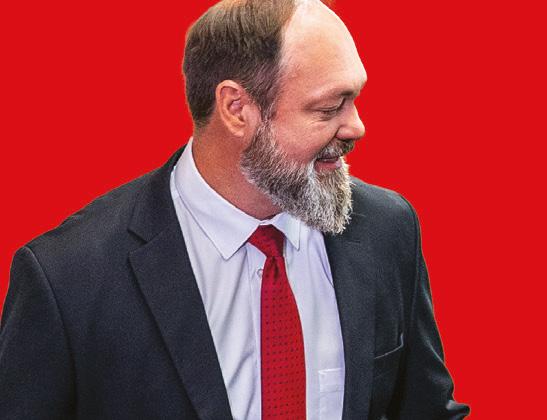
Ultimately, offshore investing requires a joined-up advice process that creates both responsibility and opportunity. The clients who benefit most are likely to be those whose advisers treat it as a core part of longterm financial planning, and not merely as a product sale. Robert Rhodes
July is National Savings Month in South Africa, making it an appropriate time to reflect on the important role financial advisers play in helping clients look beyond today’s uncertainty and focus on long-term financial wellbeing. While economic headwinds, market volatility and shifting regulation continue to dominate headlines, the conversations that matter most are often those centred on discipline, planning and the opportunities that emerge from taking a longer-term view.
ESG investing continues to move well beyond compliance and exclusions to become a valuable framework for assessing resilience, governance and long-term value creation. As investor expectations mature, advisers are increasingly tasked with helping clients distinguish genuine sustainable investment opportunities from marketing spin.
Planning for the future also extends far beyond investment returns. Our features on legacy planning and family offices examine how wealthy families are redefining intergenerational wealth transfer, with a growing emphasis on governance, education and preserving family values alongside financial capital.
For many South African investors, diversification remains front of mind. Our offshore investing feature explores the opportunities available beyond our borders, as well as the importance of balancing global exposure with local investment needs. At the same time, we unpack the growing interest in hybrid annuities – a retirement solution that offers greater flexibility for clients.
As always, we hope this edition provides valuable insights, fresh perspectives and practical ideas that support you in these conversations. Stay financially savvy,
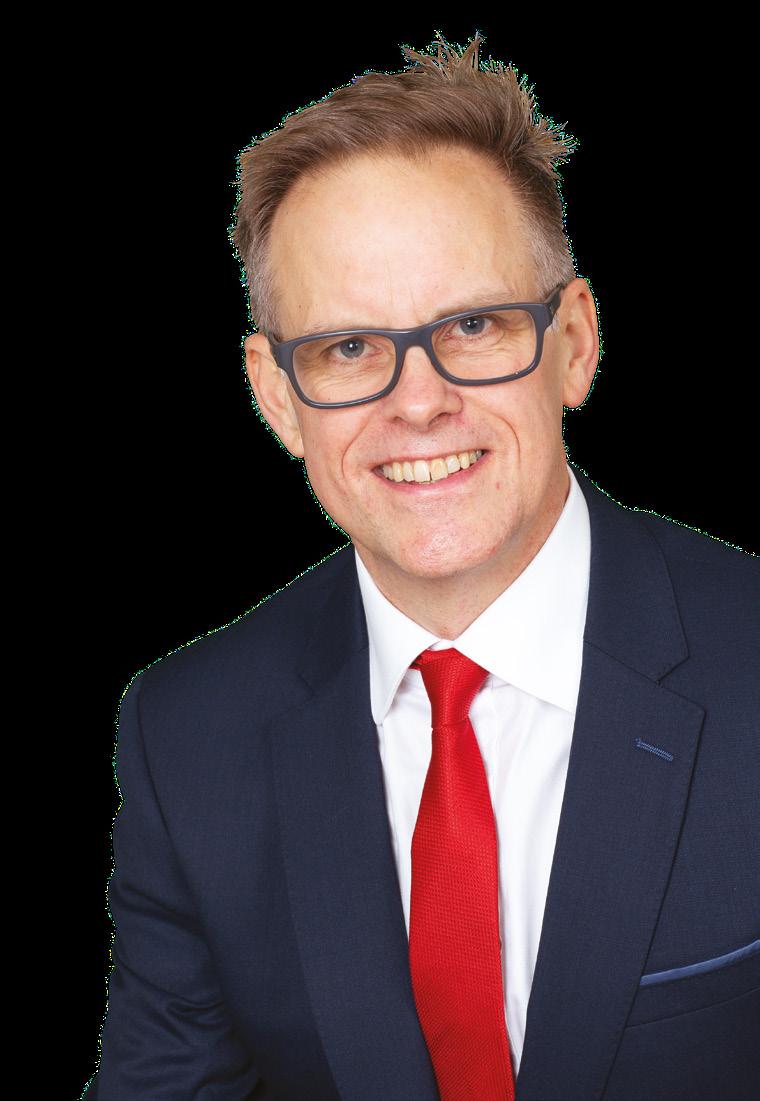
Sandy Welch Editor, MoneyMarketing
Note: If you subscribe to our MoneyMarketing newsletter, you will receive a special discount off a News24 or Netwerk24 subscription*. Scan the QR code to subscribe now. *Offer available to new subscribers only.
Old Mutual’s new chapter shows a clear path to unlocking value
When Jurie Strydom (pictured) stepped into the role of CEO at Old Mutual, he expected to lead one of South Africa’s most recognised financial institutions. What he didn’t expect – what genuinely surprised him – was the scale. “A journalist asked me recently what had surprised me most,” he recalls. “What has surprised me is the depth and breadth of the organisation – where it reaches, across distribution, customers, markets and particularly, the brand.”
Old Mutual is, undeniably, part of the fabric of Southern African life. With 180 years of history, its roots run deep, not only in South Africa but across the region. "We’ve been in Southern African markets for more than a century,” says Strydom. “It’s extraordinary when you stop and think about what the world looked like over a 100 years ago – and yet Old Mutual was already there, moving into those markets.”
From high-net-worth clients to the mass market, from sophisticated investment solutions to 350 physical branches serving everyday South Africans, the organisation’s reach is vast. It engages with 12 000 advisers and 27 000 independent intermediaries – a distribution footprint unmatched on the continent. But scale alone does not guarantee performance. “We have to recognise the underperformance and the gap between our share price and the group equity value,” he says. “Unlocking that discount is essential.” With a group equity value of R92.5bn, Old Mutual’s four major pillars – life and savings, property and casualty insurance, asset management, and banking/ lending – represent significant embedded value. Yet the share price has long lagged the intrinsic value. This disconnect has become the catalyst for a refreshed strategy built on two parallel priorities: unlocking value and generating growth. “We have to do both: deliver growth in our businesses, while ensuring the market recognises the value already there,” Strydom explains.
Sharpening competitiveness at the core
At the centre of Old Mutual’s renewed focus is a drive to improve competitiveness in its South African operations. “We have great businesses,” Strydom says, “but over time, we got caught in slower decision-making and unclear accountability.” Historically, the group’s matrix structure and committee-heavy processes led to delays that hindered execution.
The solution has been decisive restructuring. Business units now have clear end-to-end accountability, with product, operations and distribution aligned under single leadership structures. “This is where the real action happens,” says Strydom. “Competitiveness comes from being able to make decisions closest to the market, and that means from the customer’s perspective, often via the intermediary.”
A clear view on capital and growth markets
Outside South Africa, Old Mutual’s footprint spans East and West Africa, which are regions that offer opportunity but require discipline. “If you’ve operated in those markets, you know how critical capital allocation and margin discipline are,” Strydom notes. “We have to earn the right to deploy more capital there.” This measured approach is part of Old Mutual’s ambition to build a reputation for smart capital allocation; we will earn the right to deploy more capital and investing only where it makes sense.
A
bank with a right to win
One of the group’s most ambitious undertakings is the development of its own bank in South Africa. Strydom is clear: this is not about entering the market naively. “There’s no new entrant to banking in South Africa who brings the assets that Old Mutual brings,” he says. With a sizable lending book, a national branch network and a well-established brand, Old Mutual believes it has a strong foundation for building a meaningful banking offering. The move is also a strategic response to trends in financial services. “Banks have moved into insurance, and insurers have moved into banking,” Strydom observes. “It’s a natural evolution.” Execution, however, will be everything.
Creating a culture that wins
Beyond strategy and structure lies a factor
Strydom views as decisive: leadership culture. “The ultimate test of what we do must be the experience advisers and IFAs have with Old Mutual,” he says. This requires a culture built on ownership, empowerment, collaboration, and “candour with kindness. You need both,” Strydom adds. “You need to tell the truth, but do it respectfully.” Supporting this cultural shift are Old Mutual’s ‘tight versus loose’ principles – tight in areas like capital, governance and brand, but loose where businesses need autonomy to deliver.
Becoming famous for doing what it says
As Old Mutual embarks on its next chapter, Strydom describes the organisation’s ambition succinctly: “Internally, we say we want to be famous for doing what we say we’re going to do.” If the group delivers on its sharpened strategy, clearer accountability, cultural renewal and strengthened capital framework, it may well close the value gap that has persisted for years. More importantly, it aims to deliver what customers, advisers and investors expect from one of Africa’s most enduring and trusted financial institutions: clarity, responsiveness and long-term value.
Pedri Reyneke, CEO and Fund Manager at Findotec
How did you get involved in the finance industry?
I grew up in the advice environment. My father was an Independent Financial Adviser (IFA), so I saw from a young age how proper financial planning changes lives. My own path really started when I became a Business Development Consultant. That was my school of hard knocks. I spent my days watching how hundreds of different advisers operated. I saw what worked, but more importantly, I saw what was broken. I realised that finance is a space where everyone thinks they are a guru.
What led you to start your own company?
When I became an IFA myself, I followed the traditional path by attending fund manager presentations and training. But I noticed a troubling trend: investing was becoming a marketing game, not a client-centred one. Institutions were selling products based on stories, not the bottom line. I wanted to get back to the truth, which led me to the maths, specifically the bell curve and momentum strategies. I wanted a system that was objective.
It was not easy. When we started building our own models, the traditional investment world didn't like our outlook. We were essentially blocked by the old guard. Fortunately, we found a like-minded team who saw the value in our fresh approach. They helped us prove that our philosophy was a viable, professional way to manage wealth.
What was your biggest challenge in the early days?
We hit two big hurdles: transparency and cost. Clients could not just Google our models to see how they were performing, and the underlying costs were still too high. We fought for our own Collective Investment Scheme (CIS) licence to fix that. We spent years converting Nobel Prize-winning formulas into a practical system that works on actual funds. We hit a massive roadblock when we realised we were
not registered as a Fund of Funds, but that became our biggest opportunity. We pivoted to what I call a Virtual Fund of Funds structure. Through a partnership with Ironclad, we now use regression analysis to look inside the funds, and we buy the underlying assets directly.
How did you solve this?
We cut out the middleman fees. If it is more cost-effective to buy an ETF than a fund manager’s fee-heavy product, we do it. I like to think of us as the Escalator of Funds. We have engineered a way to move our clients in the right direction, with total transparency and the lowest possible friction. It is one of the few virtual Fund of Funds structures in South Africa, and it all started because we refused to accept marketing as a substitute for maths.
What was your first meaningful successful investment?
People usually expect an investment manager to tell a story about a lucky stock pick, but mine is more boring. My first real success was an RA I started with my very first pay cheque. It taught me that discipline and time are far more powerful than being clever.
What makes a good investment in today’s environment?
People often confuse a busy market with a good environment. For me, a good investment environment is not about everything going up at once; it is about clarity, consistency and a lack of nasty surprises. You need three specific pillars in place:
1. An anchored inflation target (The 3% factor)
A good environment is one where you are not constantly guessing what your money will be worth tomorrow. The Reserve Bank’s move to anchor inflation at 3% is the single most important factor right now. It provides a north star for the whole economy. When inflation is predictable, businesses can plan, and as an investor, you can finally set a target (like
our CPI+5%) with confidence that you are achieving real growth, not simply chasing a moving target.
2. Structural stability (The lights-on factor) You cannot have a good investment environment if the basic plumbing of the country is not working. We are seeing a much more stable utility and logistics landscape in 2026. When the ports are moving and the electricity supply is consistent, SA Inc. companies can focus on being CEOs and growing their share prices rather than simply surviving the week. That stability creates the momentum that our systems look for.
3. Cutting costs and keeping it simple
To make this work, we built a system that actively mimics the underlying fund holdings. We bypass the heavy layers of fees you usually see in traditional Fund of Funds and cut costs significantly. We then took this highly sophisticated, institutional-grade engine and packaged it into something simple: our CPI+ range. A client chooses a target, like beating inflation by 5% (CPI+5%), and our system relentlessly manages the risk and the rotation to achieve that real return. It behaves like a savvy investor, so the client doesn’t have to.
Please explain a bit about Findotec’s Quantitative Momentum Strategy
We built our Quantitative Momentum Strategy to be a ruthless, objective board of directors for our clients’ money. Instead of relying on a fund manager’s gut feel or hoping a losing streak will end, we use a strictly rulesbased, mathematical system. Think of it as a financial GPS. It actively tracks performance and statistical probability. If an asset is losing momentum, the system doesn’t wait around hoping for a miracle. It automatically course corrects and rotates the capital into what is growing. We remove the human emotion, the panic and the stubbornness from the investment process.
EARN YOUR CPD POINTS
The FPI recognises the quality of the content of MoneyMarketing’s July 2026 issue and would like to reward its professional members with 2 verifiable CPD points/hours for reading the publication and gaining knowledge on relevant topics. For more information, visit our website at www.moneymarketing.co.za
How advisers can scale without losing their human touch
By Sandy Welch Editor MoneyMarketing
For many financial advisers, growth brings a paradox. The more successful a practice becomes, the more complex it gets. New clients, regulatory requirements, technology decisions, investment oversight, succession planning and operational demands all compete for attention. Yet, the one thing clients value most – meaningful advice and trusted relationships – requires time.
According to Edden Kift of PortfolioMetrix, one of the biggest obstacles preventing advisory firms from reaching their full potential is not a lack of clients or expertise, but the growing number of distractions pulling advisers away from their core purpose. “Ultimately, advisers should be able to focus on the conversations that matter most – conversations with clients and strategic conversations about the future of their businesses,” he says.
Levelling the playing field
Since its establishment in 2010, PortfolioMetrix has focused exclusively on supporting independent financial advisers. While often classified as a discretionary fund manager (DFM), Kift argues that the firm’s role extends far beyond investment management. “At our core we’re an asset manager, but what we’ve always tried to do is help advisers absorb complexity so they can spend more time where they add the greatest value.”
That philosophy emerged from a recognition that many independent advisers faced a structural disadvantage compared with large financial institutions. While these corporates could rely on substantial resources, extensive product teams and large support structures, smaller independent firms often had to manage every aspect of their businesses themselves.
The founders of PortfolioMetrix saw an opportunity to level the playing field. “They wanted to put the same capability and resourcing into the hands of independent financial advisers who don’t necessarily have large balance sheets behind them,” explains Kift. “The goal was to allow advisers to offer world-class advice supported by a strong investment and technology capability.”
Flexibility without complexity
Central to that approach is the concept of a centralised investment proposition (CIP). Many advisers still manage multiple investment solutions, platforms and fund combinations across their client bases. While this may provide flexibility, it can also create complexity that becomes increasingly difficult
to manage as firms grow. Kift believes advisers benefit from creating consistency across their investment offerings.
“If you have hundreds of clients and every one of them has a different investment implementation, you need to maintain a very broad awareness of everything happening across the entire client base,” he says. A centralised investment proposition creates a structured framework where clients are placed into solutions aligned with their risk profiles while maintaining consistency in the underlying investment philosophy.
“The adviser can feel comfortable knowing that whether a client requires a conservative or an aggressive approach, all the necessary parameters have been taken care of,” says Kift. “The focus then becomes determining where that client fits within the overall proposition.” The result is greater efficiency, stronger governance and a more scalable business model.
Importantly, Kift notes that many advisers who outsource investment management are fully capable of managing portfolios themselves. “We work with exceptionally talented advisers who absolutely have the technical skills to do this work. The reality is that they often recognise that specialists can perform certain functions more efficiently and with greater depth.”
“For advisers looking to grow without sacrificing service quality, the challenge is more about creating the capacity to serve clients”
Taking technology seriously
Technology has also played a critical role in PortfolioMetrix’s business. Unlike many firms that added technology later, digital tools formed part of the company from inception. Today, the firm’s in-house broader technology focused team is almost as large as its investment team. One of its most distinctive tools is the PMX Financial Personality Assessment designed to help advisers understand how clients think and feel about money. Rather than serving as a traditional risk-profiling questionnaire, it measures behavioural characteristics that can influence investment decision-making. It’s been voted the UK’s best risk-profiling service.
The broader technology ecosystem supports proposal generation, implementation, reporting and ongoing client engagement. However, Kift
emphasises that technology should enhance an adviser’s process rather than dictate it. “We don’t say to advisers, ‘Here’s the technology, now fit your business into it.’ The technology exists to support the way they already work.”
While artificial intelligence is undoubtedly transforming financial services, Kift believes its role should be to enhance adviser capacity rather than replace meaningful client engagement. He argues that technology should be used to do administrative work, streamline processes, and eliminate repetitive tasks that don’t require human judgement. “Where AI has real value is when it can absorb work that doesn’t necessarily require humans,” says Kift. “If technology can remove repetitive tasks from someone’s day, that person can spend more time focusing on the things that require proper attention.”
Seeing your business as a whole
Beyond investments and technology, PortfolioMetrix increasingly engages with advisers on broader business challenges. These include succession planning, staff retention, operational scalability and strategic growth.
South Africa’s adviser landscape faces a significant demographic challenge, with many practice owners approaching retirement age. Yet, succession planning often receives attention only when retirement is imminent. “The most successful firms are thinking about succession as much as 10 years before a founder or owner exits,” says Kift. “They’re identifying younger advisers, developing talent, and creating transition pathways for the next generation.”
For advisers looking to grow without sacrificing service quality, the challenge is more about creating the capacity to serve clients than simply finding new clients. And that, says Kift, begins with identifying which activities truly require an adviser’s expertise, and which can be entrusted to specialist partners. “We want advisers to focus on what they do best: helping clients make better financial decisions.”
Edden Kift, PortfolioMetrix
By Francois du Toit Founder and Director, PROpulsion
AI: Moving from tool to operating system
Many advice firms in South Africa have spent the past two years collecting AI tools. A meeting note-taker here, a marketing assistant there, a transcription app for client calls, a chatbot for research. Each one helps a little. Together they create their own problem: data gets re-entered, governance varies tool by tool, and the adviser becomes the glue between systems that were never designed to talk to each other.
According to KPMG, AI is becoming “the overall operating system for finance, the orchestration layer that unifies data, workflows, and decisions across the enterprise”. Jump raised $80m in early 2026 and rebranded as an “AI Operating System for Advisors”. Tiffin Group has consolidated its AI products under a single agentic layer. CRMs such as AdviceTech and Clidash are embedding AI directly into their platforms.
What is an AI operating system?
The phrase borrows from computing, where the operating system is the layer that lets everything else work together. In advice, an AI operating system is a single intelligence layer that sits across the tools a firm already uses: its CRM, its financial planning software, its risk profiler, its document management. The AI layer connects them, shares context, applies the same governance rules, and saves every output to the firm’s system of record. It is an upgrade layered on top of what already works.
A useful way to picture this is a three-layer model. Layer 1 is the foundation: your business context, voice, rules and standards. Layer 2 is the agents themselves, the role cards and skills that get specific tasks done. Layer 3 is the system: agents that share memory, follow
firm-wide governance, and connect to one another. Most advisers are stuck at Layer 2, with downloaded prompts that feel impressive for a day and then gather dust. Without Layer 1 underneath and Layer 3 connecting it all, AI stays an extra task rather than infrastructure.
What about regulation?
According to the FSCA and Prudential Authority’s first joint report on Artificial Intelligence in the South African Financial Sector, published on 24 November 2025, only 10.6 per cent of around 2 100 industry respondents were using AI at the time of the survey, with advice businesses at the low end. The same report names data privacy under POPIA as the single most critical AI risk, followed by cybersecurity.
“About 53 per cent of staff in financial institutions still feel insufficiently trained to use AI effectively”
FAIS Section 8(1)(c) requires advice appropriate to the client’s needs and circumstances. Section 11 requires every FSP to use appropriate technological systems and procedures to reduce the risk of client loss. Read together, these create a clear architectural test. Every AI-generated output that touches advice should pass through a human review gate before reaching the client, and the firm’s system of record should capture both the AI output and the review. A loose collection of consumergrade tools cannot meet that test consistently. An AI layer designed around it can.
Furthermore, Joint Standard 1 of 2023 on IT governance and Joint Standard 2 of 2024 on cybersecurity are both in force. The King V
Code, published on 31 October 2025, makes the governance of data, information and technology, including AI, a board-level responsibility under Principle 10. The COFI Bill was approved by Cabinet for Parliament in March 2026. And the Draft National AI Policy, gazetted in April 2026 and withdrawn weeks later after several of its references turned out to be fabricated AI-generated citations, is a plain reminder that human oversight of AI work is not optional.
What are the trade-offs?
There are real costs and risks. Centralising on an AI layer increases vendor dependency and concentrates points of failure. Industry analyses suggest up to 95% of AI pilots fail to scale, often because firms buy advanced tools before checking their data hygiene, operational readiness, and team skills. About 53% of staff in financial institutions still feel insufficiently trained to use AI effectively. This does not mean we must not do it, but it argues for sequencing it well. Many smaller firms will sensibly start with enterprise-tier tools, proper Data Processing Addendums, and a small set of well-defined workflows, building towards a connected system as confidence grows. As AI takes on the administrative burden, the adviser is left with what only humans can deliver: the emotional moments, the complex governance decisions, and the nuanced tradeoffs that need empathy and judgement. The firms that build AI into the core of how they work – thoughtfully, and within the governance framework South Africa’s regulators are steadily reinforcing – will define the next era of advice. Stay curious!
By Carl Chetty Head: Investment Proposition at Equilibrium
Guiding clients through market uncertainty
Risk and uncertainty are part of investing. Helping clients understand this and stay aligned with long-term goals, especially when markets are volatile, is essential. As headlines turn negative, clients feel anxious. This is when guidance from a trusted financial adviser matters most.
Put uncertainty into perspective
Every market cycle has periods that feel uniquely uncertain – from the oil crisis in the 1970s to the global financial crisis in 2008. They felt extreme at the time, but they were temporary setbacks within a long-term upward trend. The key message: Uncertainty is normal Markets have historically rewarded investors who stay invested.
The real risk comes from emotional decisions, such as exiting the market and struggling to reenter at the right time. Even professionals find timing markets consistently difficult.
Anchor clients to what matters
One of the most effective ways to guide clients through uncertainty is to bring the focus back to their original goals. Every investment plan should rest on three pillars:
1. Time horizon: Remind clients of their investment timeframe. Short-term movements matter less in the long term.
2. Risk tolerance: Clients need to understand what downside risk looks like before it happens. We use Value at Risk (VaR) to frame this, describing the potential level of loss a portfolio could reasonably experience over a year. This allows you to ask an important question: “Is what we’re seeing still within the expectations we agreed upfront?” This often helps reframe fear into something anticipated and manageable.
3. Real return expectations: Bring the conversation back to outcomes that matter: growing wealth above inflation over time.
Refocus on what really drives returns
Clients are often drawn to short-term decisions and focus on manager selection. Guide them back to the drivers of long-term success:
• Strategic asset allocation (SAA)
This is the foundation of the portfolio and the primary driver of long-term outcomes. Clients need to be reminded that the most important decision has already been made: the right long-term asset mix. Staying invested in this
allocation is what gives clients the highest probability of success.
• Strategy diversification
Within each asset class, different investment styles and strategies perform at different times. This provides an important message for clients: Not everything needs to work all the time for the portfolio to succeed. Diversification across strategies helps smooth outcomes over time.
• Manager selection
While important, this is often overemphasised. Use this as an opportunity to shift focus away from short-term performance comparisons and back toward the broader portfolio design.
• Tactical asset allocation (TAA)
Clients often expect active changes during uncertain periods. It is important to set expectations clearly:
Tactical decisions are limited and measured
• They are not meant to replace long-term strategy
Getting timing right consistently is extremely difficult.
“The real risk comes from emotional decisions, such as exiting the market and struggling to re-enter at the right time”
A good way to frame this: We make adjustments where needed, but we don’t predict markets. We manage risk within a clear framework.
Guide clients during volatility
Tough markets are behavioural tests, not investment failures.
Advisers can help clients:
• Avoid emotional decisions
• Stay aligned to their plan
Keep a long-term perspective.
Practical ways to do this:
• Revisit agreed risk levels (e.g. VaR)
• Remind clients of past market recoveries
Shift focus from short-term performance to long-term goals
Reinforce that volatility is to be expected and not a failure of the strategy.
Uncertainty does not require a new strategy; it requires conviction in the existing one. An adviser can provide clarity when clients feel uncertain, and discipline when they feel tempted to act.
Equilibrium is dedicated to enabling advisers to focus on what truly matters: spending more time with their clients and growing their business. Through our strategic partnership, Equilibrium brings the power of balance into your financial advice practice. For more information visit eqinvest.co.za.
ESG investing comes of age
For years, environmental, social and governance (ESG) investing was often viewed as a niche strategy or a compliance exercise. Today, it has become a central consideration in how investors assess risk, resilience and long-term value. In South Africa, the conversation has moved significantly over the past five years, with investors increasingly asking how it can be used to identify businesses that are better positioned to navigate economic uncertainty, climate transition and changing stakeholder expectations.
According to Zama Mdletshe, Associate at Tamela, ESG has shifted from being a reporting obligation to becoming an important driver of investment decision-making. “ESG investing has gone from being a largely compliance-driven exercise to a core investment consideration,” she says. “Today, we are seeing greater emphasis being placed on long-term value creation, resilience and risk management.”
Rather than treating ESG as a standalone exercise, investors are assessing how businesses respond to issues such as energy security, governance challenges, social impact and climate risk. “We are seeing a move away from ‘ESG for ESG’s sake’ towards a more pragmatic approach focused on material outcomes,” says Mdletshe.
South Africa’s ESG priorities are different
While environmental issues dominate many global ESG discussions, South Africa presents a more nuanced picture. “Our unique economic and developmental context means the social and governance dimensions have always carried significant weight,” explains Mdletshe. Investors are increasingly evaluating how businesses contribute to job creation, transformation, infrastructure resilience, community development and inclusive economic growth alongside their environmental performance.
The country’s most material ESG considerations include ethical leadership, strong governance, climate resilience, renewable energy, water security, skills development and economic inclusion. “As a result, investors cannot assess environmental, social and governance factors in isolation,” says Mdletshe. “They need to understand how these issues impact long-term business resilience and value creation.”
For financial advisers, this means ESG discussions should be about understanding how companies manage governance risks, support economic development, and build resilient operations when evaluating investment opportunities.
Performance versus purpose?
One of the most persistent concerns among investors remains whether sustainable investing comes at the expense of returns. Increasingly, the evidence suggests that the debate is shifting. “We believe that ESG is increasingly viewed through the lens of long-term value creation
rather than simply risk mitigation,” says Mdletshe.
Businesses with strong governance, effective stakeholder relationships and robust operational resilience are often better positioned to navigate structural challenges and attract capital. Academic research also continues to point towards a positive relationship between strong ESG performance and financial outcomes, although debate remains around specific sectors and emerging markets.
For advisers, the key message is that ESG should not be viewed as a separate investment objective competing with performance. As Mdletshe notes, “ESG must be seen as a lever for transformation alongside other levers such as digitisation and internationalisation.”
Separating substance from greenwashing
As ESG products continue to proliferate, advisers face the growing challenge of distinguishing genuine sustainability strategies from marketing exercises. According to Mdletshe, transparency is critical. “A sustainable investment strategy should have a clearly articulated framework explaining how ESG factors influence investment decisions, portfolio construction, risk management and ongoing monitoring.”
Investors should understand not only what assets a fund owns but also why those assets have been selected, how ESG risks are assessed, and how outcomes are measured over time. Equally important is examining whether an investment manager’s actions align with its stated commitments.
“This includes reviewing stewardship activities, shareholder engagement, voting records and how ESG considerations influence investment decisions over time,” she explains. Consistency between what is promised and what is delivered remains one of the strongest indicators of credibility.
Stewardship drives value
Active ownership has become one of the most influential tools available to investors seeking to improve long-term outcomes. Rather than simply screening companies in or out of portfolios, institutional investors are increasingly engaging directly with boards and management teams on issues including governance, capital allocation, environmental performance and workforce management. “Effective stewardship allows investors to compel improvements in governance, capital allocation, environmental practices, workforce management and broader sustainability initiatives,” says Mdletshe.
In South Africa, where companies continue to navigate energy constraints, infrastructure challenges and the transition to a more inclusive economy, shareholder engagement has become particularly relevant. Importantly, stewardship is not solely about achieving social or environmental objectives. “From an investment perspective, stewardship is fundamentally about protecting and enhancing shareholder value,” she says.
“ESG has shifted from being a reporting obligation to becoming an important driver of investment decision-making”
Regulation raises the bar
Although South Africa’s sustainability disclosure requirements remain largely voluntary, expectations are rising rapidly. The JSE’s sustainability and climate disclosure guidance, introduced in 2022, has helped align local markets with evolving global reporting standards while recognising South Africa’s own developmental priorities.
Mdletshe expects larger listed companies, banks, insurers and major asset managers to continue leading adoption, while smaller businesses may face greater challenges due to cost, data availability and reporting capacity. For advisers, understanding these disclosure frameworks will become increasingly important as clients demand greater transparency around sustainability risks and opportunities.
Local reporting is also likely to reflect uniquely South African issues, including energy security, water stress, infrastructure development, employment, transformation and the country’s just transition.
Opportunities beyond equities
Looking ahead, ESG investing presents significant opportunities across both public and private markets. Infrastructure remains one of the most compelling themes. “Capital can be directed toward renewable energy, grid upgrades, water infrastructure, logistics, affordable housing and climate-resilient public assets,” says Mdletshe. Green credit and green bonds also continue to gain momentum, providing investors with opportunities to finance renewable energy, transport, water and housing projects through fixed-income allocations.
As ESG continues to mature, the emphasis is shifting away from labels and towards measurable outcomes. For advisers, the opportunity lies in helping clients understand how responsible investing can support resilient portfolios, stronger businesses and long-term wealth creation.
By Vuyolwethu Nzube ESG Analyst at Truffle Asset Management
TCompelling opportunities with ethical guardrails
he global security environment is undergoing a profound transformation.
As nations rush to modernise their militaries and replenish stockpiles, the defence sector has become a critical area of focus for investors. Truffle has been closely tracking these developments, recognising opportunities to invest in a growing sector and drive meaningful long-term returns for our clients.
The growing global need for defence
Few structural shifts in global markets over the past two years have been as consequential or as ethically complex as the resurgence of defence spending. For decades, defence budgets in developed economies were managed down as a post-Cold War peace dividend. That era is now over. The combination of the war in Ukraine, rising tensions in the Indo-Pacific, and a fundamental reassessment of collective security arrangements in Europe and beyond has placed defence firmly back at the centre of government expenditure and capital allocation decisions.
For Truffle as a responsible investor, this shift poses a question: How does one capture exposure to a sector with compelling structural growth dynamics while maintaining clear ethical boundaries and credible stewardship commitments?
The scale of the spending shift
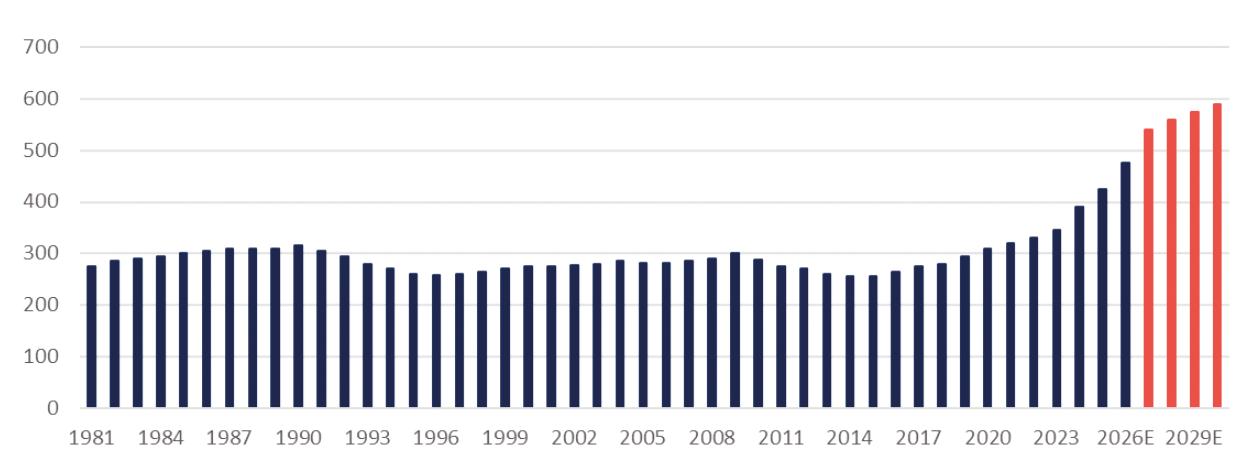
The year 2025 marked a historic turning point for global military expenditure. According to the International Institute for Strategic Studies (IISS), global defence spending reached a record $2.63tn in 2025, representing a 2.5% increase in real terms from the prior year. European spending is particularly notable: the continent now accounts for over 21% of the global total.
As shown in the chart below, Goldman Sachs is expecting this to grow significantly going forward, and several NATO members are committing to sustained budgets of 3–5% of GDP in the years ahead – levels not seen since the Cold War.
This is not a short-term procurement cycle. The structural drivers, including ageing equipment inventories, renewed competition for power,
Chart: Annual European defence spending
and the integration of advanced technologies, including AI, cyber capabilities, and systems into modern warfare, point to an extended period of elevated defence expenditure. The investment implication is a sustainable demand backdrop for defence-oriented industrial companies, particularly those with established positions in European procurement programmes.
The defence sector: Truffle’s investment approach
We recognise that national security is a legitimate and necessary function of democratic governments, and that the companies that provide the industrial base for that security play an economically and strategically important role. We believe that investing in a growing defence sector of this nature requires a responsible approach. This approach includes:
• Absolute exclusions: We do not invest in companies that manufacture controversial weapons (such as cluster munitions, landmines, and chemical or biological weapons). Given that NGOs and other human rights organisations tend to publicly flag when a company produces these products, we can identify relevant companies.
• Active monitoring: We invest in and actively monitor companies that manufacture conventional weapons and nuclearadjacent products.
In monitoring, we keep track of controversies, assess adherence to the United Nations Global Compact (UNGC), and evaluate alignment with the UN Guiding Principles on Business and Human Rights (UNGPs). Where controversies arise, we assess materiality, management response, and trajectory before determining whether continued ownership is appropriate.
Truffle’s exposure
As at 31 December 2025, the global carve-out of the Truffle SCI Flexible Fund held positions in six defence-exposed companies: Airbus, Indra Sistemas, Dassault Aviation, Babcock International, Leonardo and Qinetiq. The effective defence exposure is lower than our
actual defence exposure of 14.8% because companies such as Airbus and Indra Sistemas derive most of their revenues from civil aviation and technology services, respectively, and contribute less to effective defence exposure than their portfolio weights alone would suggest. None of these holdings screened negatively on our norms-based criteria and none manufacture nuclear or controversial weapons. However, we remain vigilant, particularly regarding ongoing investigations and geopolitical sensitivities such as the use of equipment in conflict zones. The defence sector is no longer a niche corner of the market but has become central to geopolitical stability and a significant driver of government spending. With national defence budgets projected to remain elevated for the foreseeable future, investors face a complex landscape of opportunity and ethical responsibility.
Our approach reflects this duality. We acknowledge the growing necessity of a robust defence industrial base, particularly in Europe, where nations are rebuilding capabilities after decades of relative neglect. The companies in our portfolio, from Airbus to Qinetiq, are at the forefront of this transformation, providing critical technologies ranging from next-generation fighter jets to advanced AI-driven defence systems. At the same time, our absolute exclusion of companies involved in controversial weapons and active monitoring of holdings in this sector provides a clear ethical boundary.
Principled exposure in a changing landscape
Looking ahead, we are mindful of new challenges for the sector. The integration of artificial intelligence into weapons systems represents the most significant emerging ethical challenge. The evolving nature of warfare will also require us to continually reassess our policies and holdings and ensure we remain good stewards of client capital when choosing to invest in a sector of this nature.
The investment case for defence exposure is compelling and, in our assessment, sustainable. The ethical questions it raises are important and require active engagement rather than passive acceptance. Our approach of combining absolute exclusions of controversial weapons, transparent disclosure of nuclearadjacent holdings, and ongoing monitoring of controversies and compliance with norms is designed to give clients confidence that our defence exposure is principled, not opportunistic. We will continue to engage directly with portfolio companies on their governance practices, supply chain conduct, and alignment with international humanitarian norms. As the landscape changes – and in defence it is changing rapidly – our stewardship commitments will change with it.
Source: Goldman Sachs
Why independence matters more than ever in wealth management
By Sandy Welch Editor MoneyMarketing
As South Africa’s wealth management industry becomes increasingly consolidated, genuinely independent advice is becoming harder to find. Yet, at a time when affluent families face growing financial complexity, independence may be more valuable than ever. According to Andrew Ratcliffe of Private Client Holdings (PCH), a multi-family office that has operated independently for more than three decades, the industry is undergoing structural changes that are steadily reducing the number of truly independent firms.
“We see five structural shifts that have systematically eroded independence,” says Ratcliffe. “These include consolidation, vertical integration, tied adviser models, rising compliance costs, and the increasing use of independence as a marketing term rather than a structural reality.”
The trend is visible both globally and locally. Private equity-backed acquisitions of advisory businesses continue to accelerate, while South Africa’s wealth management sector has experienced significant ownership changes over the past three decades. “As ownership changes, incentives change,” Ratcliffe explains. “The challenge is ensuring that client outcomes remain the primary focus.”
For many wealth management businesses, consolidation offers scale, operational efficiencies and regulatory support. However, Ratcliffe argues that these benefits can come at a cost if they compromise adviser independence. The rise of vertically integrated financial services groups has become a defining feature of the South African market. In many cases, banks, insurers or asset managers own the platform, the investment products, and the adviser distribution network. “When the same group controls multiple parts of the value chain, there is a structural incentive to recommend in-house solutions,” he says. “That doesn’t necessarily mean the advice is poor, but it does create potential conflicts that need to be carefully managed.” This is where the family office model stands apart.
The rise of the family office model
Unlike traditional wealth management firms that may focus primarily on investments, independent family offices take a broader approach, coordinating multiple aspects of a family’s financial affairs, including investment management, tax planning, fiduciary services, estate structuring, succession planning and governance.
PCH, which evolved from a corporate tax consultancy into a fully-fledged multi-family office, was among the early pioneers of the model in South Africa. “You cannot profess to be a family office if you cannot deliver on the various pillars required to service families,” says Ratcliffe.
What true independence looks like
For him, true independence is defined by structure rather than aspiration. “It comes down to three things: ownership, open architecture and an advice-led process.” Ownership is perhaps the most obvious. Independent family offices operate without the influence of a parent bank, insurer, asset manager or private equity owner. This removes many of the commercial pressures that can influence advice.
The second component is open architecture, which is the freedom to select, appoint or dismiss service providers solely based on what is best for the client. “We sit above the service providers, not alongside them,” says Ratcliffe. “That means we can choose the most appropriate asset managers, custodians, fiduciary specialists or platforms for each family’s needs.”
The third element is an advice process that starts with the family’s objectives rather than product solutions. For clients, the result is greater optionality and impartiality.
Family offices are uniquely positioned to guide these discussions because they often sit at the intersection of investment management, fiduciary planning and family governance. The challenge, however, is maintaining independence in an environment where regulatory demands and compliance costs continue to rise. Ratcliffe believes independence remains commercially sustainable, but only if firms are disciplined and embrace technology strategically. “Consolidators
win on scale, but independent family offices win on alignment, coordination and trust,” he says.
Complexity is reshaping client needs
The importance of a dedicated family office has grown as wealthy families face increasingly complex financial challenges. A decade ago, many families could rely on a trusted accountant, private banker or adviser to oversee most of their affairs. Today, it's more complicated.
Families increasingly have members living and working across multiple jurisdictions. Cross-border tax obligations, offshore trusts, global investment portfolios, digital assets, private equity investments, and evolving regulatory frameworks all require specialist expertise. “We’ve become global citizens,” says Ratcliffe. “The complexities around cross-border advice and structuring have become an essential part of family office services.” At the same time, wealth transfer is becoming a central issue for many affluent families. Globally, an estimated $84tn is expected to change hands over the next two decades. In South Africa, a growing proportion of high-networth individuals are now in their 60s and beyond, making succession planning an increasingly urgent priority.
With this in mind, family offices are adapting to the expectations of younger generations. Many firms are actively engaging heirs long before wealth transfers occur, through mentoring programmes, educational initiatives and family meetings. “The next generation is not necessarily loyal to institutions,” Ratcliffe says. “They are loyal to transparency, values and alignment.”
Using technology without losing the human touch
Artificial intelligence, integrated reporting systems, and advanced fintech platforms are allowing independent firms to deliver institutional-grade capabilities without massive headcounts. “Technology must replace headcount where appropriate,” says Ratcliffe. “It enables smaller businesses to remain efficient while maintaining high levels of service.” At the same time, he believes the human element remains irreplaceable.
Trust as a competitive advantage
Looking ahead, he believes independent family offices will become both rarer and more sought after. Consolidation is unlikely to slow, but neither is demand for independent advice. “The independent family office may never be the biggest model in the market,” he says. “But it can be the most trusted.”
Private Client Holdings is taking the lead in South Africa when it comes to providing high net worth families with an all-inclusive wealth management solution.
By Muhammad Paruk Wealthvest Investment Management
FFamily offices: The personal side of wealth management
or South Africa’s wealthiest families, managing money is no longer just about investment performance. Increasingly, family offices are providing a holistic approach to wealth management, helping families navigate everything from succession planning and education decisions to healthcare, travel and long-term legacy building.
As the needs of high-net-worth individuals become more complex, family offices are emerging as one of the fastest-growing segments of the wealth management industry. While traditional financial advice remains important, today’s affluent families are looking for trusted partners who can support every aspect of their financial and personal lives.
At its core, a family office is designed to simplify the lives of wealthy families. Rather than dealing with multiple advisers, lawyers, accountants and investment managers independently, families can access a coordinated team that oversees their financial affairs and helps them make informed decisions for the future.
The role of a family office extends far beyond managing investment portfolios. In many cases, advisers become deeply involved in understanding a family’s goals, values and long-term vision. Building these relationships takes time, trust and a genuine understanding of what matters most to each family.
“Investment management remains a central function, but family offices are increasingly taking a broader view of portfolio construction”
Unlike traditional wealth management, where investment returns may be the primary focus, family offices recognise that wealth planning is about people as much as it is about performance. Advisers often work closely with multiple generations of a family, helping to preserve not only wealth but also family values and legacy.
A key part of this process is getting to know clients on a deeper level. Robust Know Your Client (KYC) processes are essential; not only from a regulatory perspective but also to gain a comprehensive understanding of a family’s circumstances, ambitions and future needs. The more advisers understand their clients, the better positioned they are to provide meaningful and relevant advice.
One of the most important services family offices provide is helping families prepare for
future generations. Wealth transfer can be one of the most challenging aspects of financial planning, particularly when significant assets, businesses and property portfolios are involved.
Family offices work with families to develop succession plans, establish governance structures, and ensure that future generations are equipped to manage inherited wealth responsibly. This often includes facilitating family meetings, educating younger family members about financial stewardship, and helping parents prepare their children for future responsibilities.
In some instances, advisers become involved in decisions that many would not traditionally associate with wealth management. Discussions may include selecting suitable schools and universities for children, planning educational funding, supporting international study opportunities, and ensuring that future generations have the resources needed to achieve their goals.
Estate planning also remains a critical component of family office services. Without proper planning, the transfer of wealth can become complicated, time-consuming and costly. Family offices help families structure their affairs in a way that protects assets, minimises risk, and provides clarity for beneficiaries.
Investment management remains a central function, but family offices are increasingly taking a broader view of portfolio construction. Rather than relying solely on traditional asset classes, many wealthy families are seeking diversified portfolios that can withstand changing market conditions and create longterm value.
This often involves allocating capital across multiple investment categories, including listed equities, commercial and residential property, private equity opportunities and direct investments into businesses. By diversifying across different sectors and geographies, families can reduce concentration risk while accessing new sources of growth.
Private equity has become particularly attractive for many family office clients. The opportunity to invest directly in growing businesses allows families to participate in value creation beyond public markets. Similarly, investments in operating businesses can provide both financial returns and strategic opportunities aligned with a family’s expertise and interests.
Navigating these opportunities, however, requires specialist knowledge. Family offices often help clients explore areas they may be unfamiliar with, guiding them through complex transactions, conducting due diligence and assessing potential risks. In an increasingly interconnected world, many families are
investing across borders and entering markets that may be unfamiliar territory.
The ability to navigate this uncertainty is one of the reasons family offices have become so valuable. Whether clients are considering offshore investments, business acquisitions, international property purchases or alternative investment opportunities, family offices provide the support and expertise needed to make confident decisions.
Beyond wealth and investments, many family offices are also helping clients manage practical aspects of their lifestyles. Healthcare planning has become an increasingly important consideration, particularly as families focus on long-term wellbeing and ageing populations.
Travel planning is another area where support is often required. From international travel arrangements and residency considerations to travel insurance and healthcare access abroad, family offices help ensure that families can travel and live globally with greater confidence and convenience.
Ultimately, the goal of a family office is simple: to make clients’ lives easier. By bringing together financial planning, investment management, estate structuring, succession planning and lifestyle support under one umbrella, family offices allow families to focus on what matters most while trusted advisers manage the complexities behind the scenes.
As South Africa’s wealth management landscape continues to evolve, family offices are becoming increasingly important partners for affluent families seeking more than just financial returns. They offer guidance, continuity and peace of mind, helping families protect their wealth, support future generations and navigate an ever-changing world.
In an environment where complexity continues to grow, the value of trusted advice has never been greater. For many families, a family office is no longer simply a financial service – it is a long-term partnership built on understanding, trust and a shared commitment to preserving wealth and legacy for generations to come.
At Wealthvest, we recognise that effective wealth management extends beyond investment performance alone. Our approach examines all the factors discussed above, ensuring that every aspect of a client’s financial affairs is considered within a comprehensive and coordinated framework. With the necessary capabilities, resources, expertise and experience, Wealthvest is uniquely positioned to provide a full family office service offering, delivering tailored solutions that support the long-term financial wellbeing, legacy and objectives of our clients and their families.
Every client deserves a family office
By Sandy Welch Editor MoneyMarketing
Family offices are often associated with the ultra-wealthy: complex global structures, dedicated advisers, crossborder tax planning and multigenerational wealth strategies. But the principles that underpin them are increasingly relevant to a much wider client base. For financial advisers, the family office model offers a useful lens through which to view client relationships. It shifts the conversation away from products and portfolio performance alone, towards a broader understanding of the client’s life, family, legacy, risks and long-term objectives.
Jodi Suchard, Advisory Partner at Citadel, believes this approach should not be reserved for the very wealthy. “Every client should be a family office client,” she says. “In their world, it’s the only money they’ve created. We need to preserve it, grow it and keep it for generations.” At its heart, family officestyle advice is about putting the client at the centre of a coordinated plan. That means understanding not only their investment assets, but also their personal lives, family dynamics, estate planning needs, offshore exposure, trust structures, tax considerations and beneficiaries.
The family CFO
Suchard describes her role as being “the chief financial officer of the family”. Even where Citadel doesn’t manage all of a client’s assets, she says it’s important to understand the full picture. Without that, advisers risk overexposing clients to certain asset classes, missing structuring issues or failing to align investments with future cashflow needs. This approach requires time and trust. It may take several meetings before investments are even discussed with the client. “Investments are the last thing I look at,” says Suchard. “If your foundation is wrong, everything will collapse.”
The first conversations are about the client’s life, family and goals. Are they staying in South Africa or considering emigration? Do their children live abroad? What existing structures are in place? Are there local or offshore trusts? Are wills aligned across jurisdictions? Do beneficiaries understand what they may one day inherit? Only once these questions have been explored does the investment strategy follow.
Managing a dispersed clan
For advisers, this is a significant distinction. A family office approach is advice-led, not product-led. It requires advisers to coordinate
with fiduciary specialists, tax practitioners, asset managers, lawyers and trustees. It also requires the confidence to say that not every issue can or should be solved in-house. This is particularly important in a South African context, where families are often increasingly dispersed. Parents may remain in South Africa while children live in the UK, Australia, the US or elsewhere. Assets may be held across multiple jurisdictions, with different inheritance, tax and estate-planning implications.
Suchard says this complexity is now part of everyday advice. “I deal with a lot of multijurisdiction families,” she says. “Anything we design for the head of the family must speak to the beneficiaries as well.”
Ensuring the kids are alright
The coming intergenerational wealth transfer makes this even more urgent. Advisers who only have a relationship with the primary wealth creator may find themselves at risk when assets pass to the next generation. Children may not know the adviser, may not understand the strategy or may prefer to manage money themselves using digital platforms, social media ideas or AI tools. Suchard’s solution is to involve the next generation early, but appropriately.
Beneficiaries do not need to be part of every discussion, particularly where the primary client wants privacy. But creating smaller accounts for children or introducing them gradually to the advisory process can help build familiarity and trust. “I always bring the kids in,” she says. “Let them experience what it’s like to be a client. You don't want to lose them in the next generation.” This also means accepting that younger clients may engage differently. Rather than dismissing their interest in AI or self-directed investing, Suchard encourages learning alongside them. “I never stunt their ability to grow their knowledge,” she says. “Do that, but let’s do both together and work together.”
“Every client should be a family office client”
For many clients, the greatest challenge is not technical, but behavioural. Market volatility, geopolitical uncertainty and concerns about offshore exposure can trigger emotional decision-making. In this environment, advisers must be proactive. Waiting for a panicked client to call may be too late. Suchard says timing is central to calming clients. If money is needed tomorrow, it should not be invested in growth assets.
If it is long-term legacy capital, volatility can be tolerated. “Wealth preservation has different rules to wealth creation,” she says. She separates planning into lifestyle needs, estate and legacy assets, wealth preservation and wealth creation. Lifestyle capital must support spending requirements. Legacy capital can usually take more risk. Business owners, meanwhile, may be encouraged to secure enough to preserve their lifestyle, allowing them to take appropriate risks in their business. This separation helps clients understand why one pool of money may be conservatively managed while another is positioned for long-term growth. It also allows advisers to remove emotion from wealth preservation decisions.
A family office approach may also include philanthropy, family constitutions and letters of wishes. These tools help families articulate how wealth should be used, governed and passed on. While a family constitution may not be legally binding, it can act as a manual for future generations.
Compliance and due diligence remain essential. Structures, trustees, offshore providers and asset managers all require scrutiny. For clients, this provides comfort in a complex environment.
Ultimately, the family office model is less about the size of the client’s balance sheet and more about the depth of the relationship. For advisers, it is a reminder that investment management is only one part of the job.
The real value lies in understanding the family, protecting the legacy, and helping clients make decisions that endure beyond one generation.
Building a meaningful legacy for clients
As South Africa prepares for one of the largest intergenerational wealth transfers in history, legacy planning has become an increasingly important part of the advice conversation. Yet, effective legacy planning extends far beyond drafting a will or deciding who inherits specific assets. Coreen van der Merwe, Director at Sovereign Trust SA, unpacks some important considerations.
How does Sovereign Trust define effective legacy planning in today’s environment?
Effective legacy planning is about far more than the distribution of wealth upon death. It’s a holistic process that seeks to preserve and protect a family’s objectives, values, and financial resources, ensuring they are transferred in a structured and meaningful way to future generations. At its core, legacy planning is about creating a lasting framework that provides continuity, protects assets from unnecessary risks, and supports future generations in achieving their own goals and aspirations. It extends beyond financial considerations to incorporate family governance, succession planning, and the preservation that have shaped a family’s wealth over time.
By taking a proactive and tailored approach, individuals can ensure their legacy is not simply measured by the assets they leave behind, but by the lasting impact those assets have on the people and causes that matter most to them. It will also create a framework that preserves wealth and provides greater certainty and flexibility for future generations.
What are the most common mistakes South Africans make when preparing their estates, and how can financial advisers help clients avoid them?
Effective estate planning requires ongoing review and careful coordination of a client’s assets, liabilities, beneficiary nominations and broader legacy objectives. The earlier the planning process begins, the greater the opportunity to implement structures that provide both asset protection and an efficient transfer of wealth to future generations. Clients don’t tend to check in after setting up a structure – a health check, like servicing your car once a year, is important. A key consideration is ensuring that dependants and beneficiaries have access to
appropriate structures that can support them without having to wait for the often-lengthy process of winding up an estate.
One of the most common misconceptions we encounter is when clients request the same structure as a friend, family member, or colleague. A structure that works exceptionally well for one person could be ineffective or even detrimental for another. Successful estate planning requires a bespoke approach, ensuring that each solution is tailored to the client’s specific circumstances, objectives, and legacy aspirations, rather than simply replicating a structure that was designed for someone else’s needs.
How can advisers facilitate conversations around legacy planning, particularly when clients are reluctant to discuss topics such as death, succession and wealth transfer?
Advisers need to shift the focus away from death and towards the future clients hope to create for their families. Rather than starting with estate distribution, discussions can centre on family goals, business continuity, charitable aspirations, and the legacy clients wish to leave behind.
While it can be a difficult topic, most clients recognise the importance of planning for the unexpected. Life is unpredictable, and taking the time to put appropriate arrangements in place can provide peace of mind that the wealth they have worked hard to build will benefit their loved ones in the way they intended.
“Effective estate planning requires ongoing review and careful coordination”
One of the most valuable questions an adviser can ask is: What
would happen to your wealth if something unexpected were to happen tomorrow? Many clients have not fully considered the practical implications. The administration of an estate can take a significant amount of time, and access to funds may become challenging for dependants and beneficiaries during this period, depending on the structures and planning already in place. This is why it’s important to explore the various planning solutions available.
With significant wealth expected to transfer between generations over the coming decades, what considerations should families and advisers keep in mind?
Early planning provides valuable time to structure assets appropriately, clarify intentions, and ensure that future generations are prepared for the responsibilities that may accompany the transfer of wealth. Open communication is equally important, and where appropriate, all relevant parties should understand the planning arrangements in place. This can help facilitate smoother decision-making, improve transparency, and support the long-term success of the structure.
Legacy planning should not be viewed as a one-time exercise. Wills, trusts, beneficiary nominations, and business succession arrangements should be reviewed regularly to ensure they remain aligned with evolving family circumstances, legislative changes, and financial objectives. A holistic approach is essential. Financial advisers should work closely with fiduciary, legal, and tax professionals to ensure that all aspects of a client’s wealthtransfer strategy are coordinated and aligned with the family’s broader goals. By bringing together the right expertise, families can create a robust and flexible framework that not only preserves wealth but also supports their longterm legacy aspirations.
What role do trusts, life insurance and other estateplanning tools play in creating a legacy plan?
These tools can all play an important role in a well-structured legacy plan. The most effective legacy strategies typically combine a range of structures and solutions that work together to protect assets, facilitate the efficient transfer of wealth, provide liquidity when needed, and ensure that a client’s wishes can be implemented as intended. For South African residents, it’s particularly important to take a holistic view of wealth, as they are generally subject to tax on their worldwide assets. This means that both local and offshore holdings should be reviewed as part of the planning process. Careful consideration should be given to how assets are owned and structured to ensure they align with the individual’s broader estate, succession, and legacy objectives.
The overlooked role of endowments and sinking funds in legacy planning
When investors think about legacy planning, the conversation usually centres on wills and trusts. But, according to Glacier by Sanlam, that often overlooks a set of structures that can be just as powerful in shaping outcomes for beneficiaries: endowments and sinking funds. Used correctly, these vehicles do more than improve tax efficiency during your lifetime – they help ensure that wealth is transferred with greater speed, certainty and control.
The dual challenge: Tax and transfer
South African investors are navigating a tough landscape. On the one hand, marginal tax rates of up to 45% continue to erode returns. On the other, estate administration can take years, with executor fees and delays reducing the value ultimately passed on to beneficiaries. Endowments and sinking funds offer a practical response to both challenges. They provide capped tax rates (30% on income, including interest, and 12% on capital gains), while also introducing mechanisms that can improve liquidity and efficiency at death, particularly where beneficiaries are properly nominated.
Endowments: Efficiency meets succession
For investors with clear legacy objectives, endowments occupy a unique space between investment and estate planning. They are particularly relevant for individuals seeking tax-efficient saving solutions, families concerned about liquidity during estate wind-up, and individuals looking for creditor protection (after three years). Their appeal, from a legacy perspective, lies in a few key features:
Who qualifies for Special Trusts?
By Stacy Wallace Managing Director, Hobbs Sinclair Legacy
For families supporting minor children and/ or adults unable to manage their own financial affairs due to disability, traditional estate-planning tools do not always strike the right balance between protection and tax efficiency. What is less widely understood, however, is that South African tax legislation does provide a more favourable – yet often overlooked – alternative in the form of Special Trusts.
While trusts remain a widely used and effective estateplanning structure in South Africa, their tax treatment differs from that of individuals: most ordinary trusts are taxed at a flat rate of 45%. As a result, careful structuring is essential to ensure they deliver the intended outcomes. Special Trusts, recognised by the South African Revenue Service (SARS), are specifically designed for limited circumstances – but where they apply, they can materially improve outcomes for beneficiaries. “Special Trusts are not a workaround for high trust taxes – they’re a targeted instrument for very specific family situations,” says Stacy Wallace, Managing Director of Hobbs Sinclair Legacy.
• Direct payment to beneficiaries once claim requirements are met
• Simplified tax administration
• Creditor protection, supporting the preservation of benefits for intended beneficiaries
• Flexibility in beneficiary nomination for proceeds, ownership or both.
Endowments also offer income planning advantages, allowing tax-free withdrawals after the first five years. That said, they are not ‘set-and-forget’ solutions. They require at least one life insured, and outcomes depend on correct structuring and beneficiary nomination. Proceeds are net of tax (not tax free), and any disposal of units – including fund switches – will trigger capital gains tax.
Sinking funds: Continuity without life event triggers
Sinking funds share the same tax advantages but are structurally different – and that difference matters in legacy planning. With no lives insured, no creditor protection, and no beneficiaries for proceeds, they instead allow for the nomination of a successor owner. This makes them particularly effective for trusts, where continuity rather than transfer at death is the priority. Trusts are typically taxed at high rates – 45% on income (including interest) and an effective 36% on capital gains. Where a sinking fund on the Glacier platform is held by a trust with only natural person beneficiaries, it will be classified within the individual policyholder fund, resulting in a tax rate of 30% on income and an effective capital gains tax rate of 12%.
“They’re also often underutilised because many people simply aren’t aware that this option exists, or assume all trusts are taxed in the same way.”
Unlike standard trusts, Special Trusts are taxed on a sliding scale aligned with individual tax rates (18%–45%), which can significantly reduce the overall tax burden. In certain cases, they may also qualify for additional relief, including:
• An annual capital gains tax (CGT) exclusion of R40 000
• A primary-residence CGT exclusion
• Relief from donations tax under Section 7C for qualifying interest-free or low-interest loans.
SARS recognises two categories of Special Trusts, each with distinct requirements and outcomes. Type A Special Trusts are established solely for the benefit of individuals with a permanent mental or physical disability that renders them incapable of managing their own financial affairs. The condition must be both permanent and irreversible, with qualifying criteria defined in Section 6B(1) of the Income Tax Act.
“Type A Special Trusts are fundamentally about protection and continuity,” Wallace explains. “They ensure that vulnerable beneficiaries are financially supported within a structure that is both tax-efficient and legally robust.”
Type B Special Trusts, on the other hand, are testamentary trusts created through a will for the benefit of minor children. These structures exist only until the beneficiaries reach the age of 18, at which point the trust no longer qualifies as a Special Trust.
For families managing multi-generational wealth, this combination of tax efficiency and ownership continuity is a compelling value proposition.
A disciplined framework
Both endowments and sinking funds are subject to a five-year restriction period under Section 54 of the LongTerm Insurance Act. While this introduces limits on early access, it also encourages investment discipline – often an underappreciated benefit in long-term planning. Beyond five years, both structures become fully open-ended.
More than tax wrappers
Endowments and sinking funds are often positioned as tax-efficient investments – and they are. But their real value becomes clear in a legacy context. Although both structures have the same liquidity features and tax efficiencies, endowments facilitate wealth transfer and estate liquidity, while sinking funds enable continuity of ownership and tax-efficient structuring within trusts. For investors thinking beyond accumulation – and towards what happens next – they offer a way to start with tax efficiency, stay with structural certainty, and ultimately pass on wealth with fewer delays, reduced estate administration costs, and greater control over how and to whom that wealth is distributed. As always, the key lies in applying these tools within a broader financial plan, guided by an authorised adviser, and aligned to each investor’s long-term legacy goals.
Importantly, Type B trusts do not enjoy the same level of tax relief as Type A trusts. They are excluded from key benefits such as the CGT exclusions and the Section 7C relief. “This distinction is often overlooked,” says Wallace. “Clients hear ‘Special Trust’ and assume uniform benefits, but the reality is far more nuanced. The type of trust ultimately determines the tax outcome.”
Despite their advantages, Special Trusts are not a flexible planning tool for general use. Qualification is subject to strict requirements and approval by SARS, with close scrutiny of both the trust structure and its beneficiaries. This places significant emphasis on how the trust is established.
“If the trust deed or will is not correctly drafted from the outset, the trust simply won’t qualify,” Wallace notes. “There’s no room for ambiguity because SARS looks closely at both the intention and the wording.” From a governance perspective, it is generally recommended that a trust has at least three trustees, including at least one independent trustee with relevant professional experience in trust administration. This strengthens oversight and aligns with increasing regulatory expectations.
While Special Trusts offer a more favourable framework than standard trusts, they do not replicate all the tax advantages available to individuals. They do not qualify for personal tax rebates, medical tax credits, or certain interest exemptions.
“Special Trusts serve a clear purpose, but they are not a blanket fix for trust taxation,” Wallace concludes. “The key is understanding when they are appropriate and structuring them correctly from day one.”
What really happens when your clients inherit money abroad
Losing a loved one is difficult enough, but when that loss results in an inheritance from another country, it can also bring unexpected legal, financial and administrative hurdles. For South Africans inheriting money from abroad, understanding the three key steps involved – settling the foreign estate, transferring the funds home, and possibly using the money to invest in property – can avoid costly delays and unnecessary complications.
Step one: Settle the foreign estate
Before any inheritance can be paid out, the estate must be wound up according to the laws of the country where the assets are held. An executor appointed in SA has no automatic authority across borders. Separate legal processes must be followed in the relevant jurisdiction. In the UK, this is known as a grant of probate; in the US, it varies by state; in Portugal and other civil law countries, the process follows a different framework again. The timeline for this process also varies. A straightforward case in the UK could conclude in three to six months, while in more complex situations where there are contested wills or significant property holdings, it could take a year or longer. During this period, the beneficiary has no access to funds and, often, limited visibility into progress. The practical implication is that a South African beneficiary may know they are due to receive an inheritance for the better part of a year before anything arrives.
Step two: Bring the funds into SA
Once the foreign estate has been finalised and funds released to the beneficiary, the second process begins: bringing that money into South Africa in a manner that satisfies both the South African Revenue Service and the South African Reserve Bank’s exchange control requirements. Fortunately, inherited money brought into South Africa is not subject to income tax or donations tax because it is not viewed as conventional income. However, beneficiaries must disclose it on their next annual tax return and keep key documents – including the final liquidation and distribution account, the will or translated will, the executor’s letter and proof of transfer – to verify the source of funds for SARS, exchange control and future financial transactions.
Many beneficiaries also underestimate the currency conversion implications. Harry Sherzer, CEO of Future Forex, says inheriting foreign money and receiving it in rands are two separate events: “The estate process determines when the funds become available, but the exchange rate on the day you convert determines what you actually walk away with.” He recommends having compliance documents ready and engaging a forex specialist before the estate is finalised, so funds can move quickly once released.
Step
three: Using foreign inheritance to buy a home
For many South African beneficiaries, a foreign inheritance can help them enter the property market, move up the ladder, or reduce an existing home loan. But a bond application adds another layer of documentation, especially when the deposit comes from abroad. Banks must verify the source of deposit funds and, with foreign-sourced money, trace the inheritance from the foreign estate to the applicant’s local bank account. The same paper trail used for tax and exchange control usually satisfies this requirement. Bradd Bendall, National Head of Sales at BetterBond, advises beneficiaries to start the bond preapproval process early: “By the time the inheritance lands, you’re not starting from scratch – you already know your affordability, your price range and what additional documents the bank will need.”
By planning ahead and working with the right professionals at each stage, beneficiaries can avoid delays, protect the value of their inheritance, and be ready to put it to work as soon as it reaches South Africa.
When children emigrate, family trusts may need a fresh look
ADesiree Raghubir
s South African families become increasingly global, longestablished financial structures are being tested in new ways. One of the areas under growing strain is the family trust –particularly when adult children emigrate and become tax residents in other jurisdictions.
“Families often set up trusts with a very specific vision in mind –to support children, grandchildren and long-term legacy goals,” says Desiree Raghubir, Associate Director and Certified Financial Planner® at BDO Wealth. “But as families grow, change and disperse geographically, those structures don’t always adapt automatically.”
BDO Wealth has seen a growing number of families revisiting trusts that were established many years ago, often at a time when all beneficiaries lived in South Africa. When children emigrate, the tax, compliance and administrative implications can change significantly – sometimes with unintended consequences.
“In practice, it’s often the emigration of children that becomes a turning point,” Raghubir explains. “Once beneficiaries are no longer South African tax residents, trust distributions may attract higher local taxes and, in some cases, create the risk of double taxation.”
Recent changes to South African tax legislation have sharpened this reality. From March 2024, income and capital gains distributed by South African trusts to non-resident beneficiaries are generally taxed in the trust at higher rates. The so-called ‘conduit principle’, which previously allowed income and gains to flow through to beneficiaries for tax purposes, now applies only to South African tax resident beneficiaries. “These changes mean that structures that were perfectly compliant and efficient in the past may now be misaligned with a family’s current circumstances,” says Raghubir. “That doesn’t mean trusts are no longer useful – but it does mean they need to be reviewed.”
In one recent engagement, BDO Wealth worked with a multigenerational family whose trust had been created to hold business interests and to support successive generations. Over time, the family’s circumstances shifted as adult children emigrated and established lives abroad. This prompted a broader conversation around whether the trust still fulfilled its original purpose in a taxefficient and practical way.
“The starting point is always to revisit why the structure exists in the first place,” Raghubir says. “We look at the original intent, compare it to the family’s current reality, and then explore the available options and their implications.”
Importantly, these conversations extend beyond numbers and tax outcomes. Trusts often represent family history, values and intention, making any review deeply personal.
“For many families, reviewing a trust can feel emotional,” Raghubir notes. “But done properly, it can also bring clarity and relief –especially when there is a clear plan that respects the legacy while adapting to change.”
Raghubir emphasises that financial planning should never be treated as a once-off exercise. “Trusts are valuable wealth-planning tools, but they must remain fit for purpose,” she says. “My advice to families is to review existing structures regularly and ask whether they still align with your family values, your circumstances and where family members now live. That’s how you keep a legacy alive, relevant and sustainable.”
Building a savings culture among SA’s youth
By Sandy Welch Editor MoneyMarketing
South Africa’s youth face a paradox that should concern every financial adviser. They are financially intentional in that they are aware, wanting to save, eager to build wealth, yet structurally locked out of the very systems designed to help them do so. The statistics are stark: 60.9% of 15- to 24-yearolds are unemployed, and 82% of employed youth earn under R6 000 per month. “That means financial stability doesn’t just ‘arrive’ with the first paycheque. Instead, it has to be built deliberately through everyday money habits, smart decisions, and multiple income streams,” says Clair Brenner, FNB’s nav» CEO. However, when your income barely covers basic needs, the idea of setting money aside to save feels like a luxury the real world has already ruled out.
The savings paradox
According to Christian Helmbold CFP® & Chris Fraenkel CFP®, Wealth Managers at Private Client Holdings, as Gen Z enters adulthood and Gen Alpha follows close behind, families are confronting a familiar financial tension in a new form: how to encourage flexibility, purpose and experiences without sidelining the saving and investing habits that create long-term stability. “Together, these generations make up nearly half the world’s population, and for parents, the stakes are high,” they say. “If disciplined saving only starts seriously in a person’s 30s or later, the cost of lost compounding is significant.”
Financial behaviour research reveals a consistent pattern among South African youth: they understand the importance of saving, they want to save, yet they cannot save at meaningful levels due to structural constraints. Income poverty, informal employment, and financial insecurity make disciplined saving nearly impossible.
This is the savings paradox advisers must internalise. The solution is not to lecture youth about discipline because they already have it in abundance, stretching every rand across competing demands. The solution is to design savings pathways that accommodate their reality. “One thing we’ve seen at FNB is that there is a palpable demand among the youth for tools to intuitively support money management. Young consumers are increasingly focused on understanding their spending, building savings habits, and making more considered financial decisions, even when income is constrained,” says Brenner.
Financial literacy still essential
Creating a savings culture goes way beyond simply introducing children to investment products. Financial literacy is often seen as something technical, but in the early years it is more about behaviour than detail. According to advisers at Alexforbes, children first need to learn how to make thoughtful choices with money before they learn more complex financial concepts. They need to understand the difference between wanting and needing; the importance of waiting and saving; and that money is finite and must be allocated deliberately. In adulthood, most financial outcomes are driven less by knowledge and more by behaviour. That behaviour is often formed early.
Behaviour as the outcome determinant
For advisers working with youth, rather than product-focused advice, the conversation must centre on behaviour change. How do we build habits that persist regardless of income fluctuations? How do we create accountability structures? How do we frame long-term savings as identity formation – becoming the kind of person who builds wealth – rather than a sacrifice?
This is where professional advice creates compounding value. Product selection matters less than adherence. A client who maintains 10% contribution rates into a reasonable default fund will outperform one who chases returns inconsistently. The adviser’s role is to be the behavioural anchor.
Is Two-Pot a lifeline or a temptation?
The savings crisis in South Africa runs deeper than unemployment. Even among those who
“They understand the importance of saving, they want to save, yet they cannot save at meaningful levels due to structural constraints”
do save, South Africa faces a retirement savings catastrophe: research indicates that only 6–10% of South Africans are on track to retire comfortably. For today’s young workers, that number will only deteriorate unless advisers and policymakers fundamentally rethink how they engage this generation with savings products.
The introduction of the Two-Pot Retirement System represents the most significant reform to South African retirement savings in decades. Beginning 1 September 2024, savers gained access to a portion of their retirement fund while preserving the bulk for retirement. The intent is clear: provide financial flexibility without completely depleting long-term savings.
For young South Africans, this could be transformative – or deeply problematic. Advisers must recognise that access to retirement savings is not the same as readiness to make sophisticated financial decisions. Behavioural research consistently shows that windfall access increases short-term spending. Without proper guidance, the Two-Pot System risks accelerating the very drain it was designed to prevent.
Traditional wisdom, modern application
For generations, stokvels have functioned as informal savings and investment clubs across South African communities. Dismissed by formal finance as archaic, they represent something sophisticated: group accountability, regular contributions, and community-based investing. These are behavioural principles that formal financial planning is only now beginning to incorporate.
Advisers who recognise stokvels as legitimate financial tools and not merely curiosities can build trust with youth clients who already participate in them. These individuals understand the value of pooled savings; they simply need formal pathways to channel that discipline into registered products. The trust established through stokvel conversations opens doors to broader financial planning.
What advisers can do
Meet the youth where they are. Income volatility and informal employment are realities, not obstacles to overcome. Savings products must accommodate irregular contributions without penalty. Respect existing financial practices. The trust earned through this respect creates lasting adviser-client relationships.
The generation facing South Africa’s savings crisis is not lazy or irresponsible. They are constrained by structural factors and underserved by a financial system designed for formal employment. Advisers who understand this and design their practice around behavioural outcomes rather than product sales will build both client relationships and a more financially secure future for the nation.
Rethink saving: Help your clients earn more from life cover
For many South Africans, financial responsibility no longer follows a predictable path, with money set aside for a specific goal or a rainy day. Now it’s about maintaining consistent financial, health and protection habits that can create additional value over time. Today, innovative product features like Discovery Life’s PayBack reward these behaviours, helping clients get returns from the financial, health and protection decisions they make.
This shift also places greater emphasis on comprehensive life cover – not only as protection but as a solution that supports ongoing financial resilience and offers added value over time. Many clients are supporting their immediate families as well as their parents, siblings or extended family, all while working towards their own financial goals. Suddenly, income becomes more than personal earnings – it becomes the foundation of a broader financial stability. This creates a different kind of financial planning requirement: clients may not yet feel financially secure, but they are already exposed to significant financial risk.
As South Africa observes Savings Month this July, it highlights an important opportunity for advisers to shift the conversation towards the value of comprehensive protection. Many of these clients carry significant financial responsibility, yet they may not have built the savings buffers, protection solutions, or longterm financial resilience needed to support those who depend on them. This is where the financial adviser plays an essential role: helping clients understand the importance of protecting their income and building a more resilient financial foundation on which savings can compound.
Rethinking the savings conversation
Financial planning and life insurance should be seen as the foundation on which longterm savings are developed. While lifestage milestones such as marriage, home ownership or parenthood remain important,
“A more compelling conversation starts by positioning risk protection as the foundation for clients to build long-term wealth with confidence”
they may no longer be the strongest indicators of when a client needs to start building savings and financial resilience. A more relevant starting point is understanding the client’s financial responsibilities, protection needs and dependencies. These insights can be used to structure life cover and financial planning as a foundation for building sustainable savings habits.
The key question is therefore no longer only, “How old is this client?” but rather, “What financial responsibilities does this client need to protect today, so they can continue building long-term savings tomorrow?”
The answer often reveals a need for more than just investment planning, highlighting the need for risk protection and creating an opportunity to supplement savings through rewards like PayBack, which rewards consistent financial and healthy behaviours by returning a portion of premiums in cash over time.
Shifting from products to outcomes
Clients don’t always engage with traditional financial planning conversations around retirement or long-term legacy. A more compelling conversation starts by positioning risk protection as the foundation for clients to build long-term wealth with confidence. Clients often respond more readily to discussions about:
• Protecting the income that funds their financial commitments
Safeguarding the people who rely on their financial support
Ensuring that wealth-building plans can continue even if their income is disrupted.
Consider asking:
Why would income need to be protected for your long-term wealth plan to stay on track?
How long could you continue saving or investing if your income stopped unexpectedly?
• What would happen to your family’s financial progress if you could not work for six months?
Would your savings and investments be used to create wealth, or to cover the gap left by an unexpected financial shock?
Is your risk protection strong enough to preserve the wealth you are working to build?
These questions help shift the conversation from products to outcomes, showing clients that risk protection is not separate from wealth creation. It is the base that protects their earning ability, keeps savings and investments intact, and gives long-term
wealth the opportunity to grow.
Building resilience, not just wealth
Savings Month serves as a reminder that financial resilience is built over time through consistent habits, not just once-off decisions. This includes building habits that not only protect their financial future but also create additional value over time. Discovery Life’s shared-value model supports this by rewarding clients for how they manage their health, finances and protection.
Clients can benefit from:
• PayBack, which returns a portion of qualifying premiums in cash over time
The Cash Conversion Benefit, which can supplement retirement income
Integrated benefits and discounts across Discovery products.
Together, these features reinforce the value of consistent financial behaviour. The objective is not only wealth accumulation but helping clients build resilience while earning value back along the way.
An opportunity for advisers
This change in financial realities creates an opportunity to reposition life cover in a more meaningful way by helping clients understand:
• The value of their income
• The extent of their financial responsibilities
The risks associated with disruption
How shared-value solutions can reward positive financial behaviours over time.
Advisers can address financial resilience gaps before it’s too late – which is when a comprehensive life cover solution becomes critical. Beyond protection, solutions that reward clients for consistent financial behaviour can help them build resilience and receive tangible value in PayBacks over time – reinforcing the importance of staying committed to their plan.
Life cover now shifts from a grudge purchase to a proactive financial decision – one that not only protects income but also supports long-term financial progress. Increasingly, the most important financial planning conversation is not only with clients who have already built wealth, but with those whose income plays a critical role in supporting others and who need solutions that both protect and reward that responsibility.
Discovery Life Limited, registration number 1966/003901/06, is a licensed life insurer, and an authorised financial services and registered credit provider, NCR registration number NCRCP3555. Product rules, terms and conditions apply.
Discovery Life’s approach to saving goes beyond setting money aside –it rewards your clients for living well.
Offer your clients tailored, comprehensive life cover today. From premium discounts and PayBack to pre-funding retirement premiums, Discovery Life helps clients maintain full cover while saving over time.
Protection that does more by helping your clients save while they stay covered.
Discovery Life. The future of life insurance. Now.
* Efma-Accenture awards and recognition by the Independent Oncology Network (ICON). Discovery Life is more than life cover, its protection that pays back.
The quiet engine behind the AI boom
By Scott Cooper Investment Professional at Marriott Investment Managers
Much of the investment conversation over the past two years has been dominated by a small group of technology giants at the centre of the artificial intelligence boom. Less discussed, but arguably more durable, is what all this computing power depends on: electricity, and a great deal of it.
The numbers are striking. The International Energy Agency expects electricity demand from data centres to roughly double – from around 485 terawatt-hours in 2025 to about 945 by 2030, close to Japan’s entire annual consumption today – with demand from AI-focused facilities set to triple over the same period. Electric vehicles, reshored manufacturing, and broader digitalisation are all pulling in the same direction. The world is rapidly electrifying, and the grids built for a previous era are already straining to keep up.
This is giving rise to a multi-year, capital-intensive investment cycle: generating additional power, upgrading and expanding ageing grids, distributing electricity more efficiently, and cooling the data centres in which AI applications run. Much of the market’s attention has settled on the AI companies at the very centre of this trend, where valuations have become demanding. Yet the build-out they depend on opens a second, less obvious route to the same opportunity. Further down the value chain sit the established companies that enable electrification – those that generate, move, manage, and cool the power AI requires. Many are profitable, dividend-paying market leaders, well placed to benefit from rising electricity demand, largely regardless of which individual AI models or chip designs ultimately prevail.
Examples of our holdings aligned to this theme include:
• Schneider Electric is a global leader in energy management and automation, supplying the power distribution and cooling systems that modern data centres cannot run without.
• Eaton Corporation specialises in intelligent power management – the electrical components and systems that move, protect and control electricity across grids, industries, and data centres.
• Siemens brings deep expertise in industrial automation and smart infrastructure, electrifying factories, buildings, and transport networks the world over.
• Air Liquide provides the industrial and ultra-pure gases essential to semiconductor manufacturing, the chips that power AI, as well as to the wider energy transition.
Each is a market leader with the pricing power, financial strength, and dividend track record we look for. Crucially, none is a speculative bet on a single technology or product cycle. They are diversified, highly cash-generative businesses positioned to benefit whichever AI applications, chip designs or electric vehicles ultimately prevail. These companies are also well placed to continue rewarding shareholders with reliable and growing income while the wider AI landscape continues to evolve. In our view, this is a compelling way to participate in the electrification of the global economy: exposure to a powerful, multi-year structural theme through established, quality businesses, rather than through the narrow band of names where expectations and valuations are already high. As with all our portfolios, the objective is a more predictable outcome, founded on genuine longterm growth and a careful regard for both risk and valuation. These securities can be accessed via our international share portfolios and unit trusts.
Why SA advisers must look beyond listed markets
As South African investors continue to seek refuge offshore, a growing number are looking past traditional listed equities and bonds toward a quieter, less crowded corner of the global market: private markets. Dino Zuccollo (pictured), Head of Investor Solutions at Westbrooke, explains why the shift is happening, where the real value lies, and what advisers need to know before recommending private market exposure to their clients.
Westbrooke specialises in private market investments across the UK, US and South Africa. What advantages do private market opportunities offer compared to traditional offshore investments such as listed equities and bonds?
The most important distinction is structural. Listed markets are efficient, heavily analysed and prone to sentiment-driven volatility. Returns are largely a function of market beta. Private markets, particularly in the lower mid-market segments where we operate, are fragmented, under-institutionalised, and operationally complex. That complexity is where value is created.
In our UK Private Equity strategy, for example, we focus on businesses with EBITDA below £10m. There are approximately 196 000 such businesses in the UK, yet the segment attracts very little institutional capital. Larger PE funds cannot meaningfully deploy their mandates at that scale. This structural inefficiency creates better entry valuations, less competitive deal processes, and more room to add genuine operational value.
The trade-off, of course, is liquidity. Private market investments are longterm capital commitments, and they should be sized accordingly within a broader portfolio. But for investors who can match their time horizon to the asset class, the risk-adjusted return premium is compelling.
With capital preservation being a central part of Westbrooke’s investment philosophy, how do you manage risk while still targeting attractive longterm returns?
Our investment philosophy, codified in what we call the Westbrooke Investment & Risk Philosophy and Approach (WIRPA), is designed to generate asymmetric returns while holding capital preservation as the core principle. To once again use our UK Private Equity as an example, we focus on acquiring structurally advantaged businesses at sensible valuations. We assume conservative gearing assumptions, and drive value through operational improvement and cash generation rather than financial engineering. In practice, this means we prioritise businesses with high gross margins, recurring or highly predictable revenue, low capital intensity, and strong cash return on assets managed. These characteristics create resilience across economic cycles and give us downside protection before we even begin to deploy any growth strategy. In addition, a key differentiator of Westbrooke is that we invest meaningful capital alongside our clients in each of our funds and this shapes each of our investment decisions.
As many advisers are seeking greater diversification for their clients, do you see offshore alternative assets complementing a traditional portfolio? Absolutely, and the data supports the case strongly. KKR research indicates that average HNW allocations to private markets in developed markets globally sit at 15 - 22%. Our estimate is that South African HNW investors are allocating well below 10% on average. That gap represents both underexposure and a significant opportunity.
Continued from previous page
Private markets complement a traditional portfolio precisely because they behave differently. They are not marked to market daily, they are not correlated to listed equity or bond indices, and their return drivers (predominantly cashflow generation and operational improvement) are largely independent of public market sentiment.
For advisers, the most useful framing is one of building blocks. Offshore private market exposure is not a replacement for liquidityappropriate holdings. Clients still need access to listed instruments for short- to medium-term requirements. But for the long term, the illiquid portion of a portfolio – the capital that does not need to be touched for two to five years – private markets can meaningfully enhance risk-adjusted returns and reduce overall portfolio volatility.
For advisers considering offshore private market investments for their clients, what key factors should they evaluate?
There are several dimensions that matter, and the current environment makes each of them more important. First, alignment. How much capital has the manager co-invested alongside clients? A credible GP commitment – not a nominal 1% or 2%, but a meaningful stake – fundamentally changes the incentive structure.
Second, you need to understand where the target returns come from. Strategies that rely heavily on multiple expansion or leverage are much riskier. We seek businesses where most of our return attribution comes from the existing underlying cashflow of the business itself; that creates a conservative floor and reduces dependence on exit conditions.
“A key differentiator of Westbrooke is that we invest meaningful capital alongside our clients in each of our funds”
Third, market positioning and deal sourcing. In private markets, the ability to access off-market, proprietary deal flow is a genuine edge.
Fourth, track record and operational depth. How long has the manager been doing this, and in which parts of the cycle? Westbrooke was founded in 2004, and we have a heritage as shareholders and operators of assets. This long track record of operational history impacts how we manage our investments and enables us to operate as partners and not just capital allocators.
Finally, structure and reporting. Advisers should understand the vehicle structure, the draw-down mechanics, lock-up periods, and how performance is reported. Transparency and governance are non-negotiable, particularly for offshore structures.
Westbrooke recently announced the successful closing of a coinvestment in the management buyout of Radiocoms, the UK’s leading critical communications provider. What was the rationale behind this, and are there similar moves in the pipeline that you can mention? Radiocoms is an excellent illustration of the type of business we seek: a clear market leader in a structurally growing, non-discretionary sector, with strong recurring revenue and high barriers to entry. The business designs, integrates, installs and maintains secure mission-critical communications networks for essential-service customers such as defence, blue light, retail, transport and energy, where reliability and security are paramount. It serves over 600 customers, with systems that require annual maintenance and refresh cycles every four to five years. That creates a highly predictable, recurring revenue base that is largely insulated from broader economic volatility.
In terms of the pipeline, we are actively working on several similar opportunities. We cannot name specific transactions ahead of announcement, but our focus remains consistent: UK-headquartered private businesses in niche, structurally advantaged sectors, with £4m - £10m EBITDA, high cash conversion, and management teams with genuine ambition for growth.
Lessons from golf on investing, skill and luck
By Mark Dunley-Owen
Manager
Every year, millions of golf fans look forward with great anticipation to The Masters tournament played at the prestigious Augusta course in Georgia, USA. This year’s tournament winner was Rory McIlroy, who made history by becoming only the fourth player ever to clinch the title back-to-back. But the path to victory was not straightforward, with one shot determining the difference between winning and losing.
The question many may ask is, was it luck or skill that determined the outcome? While we may never know what extent luck played in the game, moments like these rarely come down to chance alone. The same can be said of investing. Successful investing is less about predicting outcomes and more about consistently applying a sound process. While luck will always play a role, a consistent and well-executed process can, over time, tilt the odds in an investor’s favour.
Challenging courses, and markets, separate skill from luck
The best golf players in the world prefer to play the hardest courses since that is where skill has the greatest opportunity to shine.
Challenging courses reward golfers who adopt a calculated approach. Likewise, skilled asset managers tend to enjoy the opportunities presented by more challenging markets.
In calm markets, outcomes can often look similar across investors, making it difficult to distinguish between luck and genuine skill. However, in more volatile environments, the advantage shifts to those with a disciplined, well-tested investment process.
Perseverance is key
It is easy to focus only on the wins and overlook the many missed shots and near losses along the way. As McIlroy himself noted, there are far more losses than wins in golf, but what sets the greats apart is their ability to persist without abandoning their approach. The same is true in investing. Periods of discomfort are inevitable as markets can be volatile, and there will be stretches where little goes your way. The key is to remain disciplined and stay the course. Achieving a solid long-term track record does not mean getting every decision correct.
Preparation is better than prediction
In the lead-up to the tournament, McIlroy focused almost exclusively on Augusta, making day trips to play the course and making it part of his weekly routine. While this approach has come under some scrutiny, it is clear that a cornerstone of his strategy was preparation. Similarly, in investing, planning – not prediction – is a better strategy to adopt.
Past performance is not an indicator of future success
Even elite skill does not translate into guaranteed outcomes from one year to the next. Although this was McIlroy’s second consecutive win at the tournament, in reflecting on the journey, he has spoken about how the pressure of trying to win the Masters and complete a career Grand Slam can make the task feel difficult.
An investment environment can turn yesterday’s winners into tomorrow’s underperformers. The discipline lies not in chasing repetition of past success, but in sticking to the approach that has been tested and delivered consistently over the long term.
Portfolio
at Orbis, Allan Gray’s Offshore Investment Partner
WHEN IT COMES TO INVESTING OFFSHORE,
That
Don’t just invest o shore. Invest di erently o
To find out more about our Orbis Global Equity Fund and Orbis SICAV Global Balanced Fund, visit www.allangray.co.za or call Allan Gray on 0860 000 654, or speak to your financial adviser.
By Elton James Head of Sales for Glacier International
Why a wider lens on global investing matters more than ever
South Africa represents less than 1% of the global investment universe and by limiting your investments to only local markets, you’re essentially missing out on 99% of the world’s opportunities. By taking a wider lens on investing, South Africans can access a broader world of opportunities, diversify risk, and position their portfolios for long-term success. Here are five practical tips for unlocking offshore investment success.
1
Think beyond just trying to be tactical and play the currency
Investing offshore is not just a currency strategy; in fact, over the long term the decision when to switch becomes less important against the other benefits of investing directly offshore. Global diversification provides access to a wider range of investment opportunities and sectors, better risk-adjusted returns, and access to markets that are less cyclical while protecting your wealth against inflation and the loss of future purchasing power. So having a longer-term, holistic wealth mindset is key to unlocking global investment opportunities.
2
Understand the regulatory, legal and tax implications
Once you have committed to investing offshore, it becomes critically important to understand the administrative, legal, and tax considerations that can impact your investment. Selecting
investment solutions that make the process easier administratively, offering tax benefits, and ensuring that downstream legal complications are avoided is a critical part of the process. A poorly structured offshore investment could cost you more in the long run, through unnecessary fees, penalties, or inefficient estate planning, and significantly impact the future value of the portfolio for you and your beneficiaries.
3
Consider using a portion of your retirement savings
At retirement, you may be entitled to withdraw up to a third of your retirement fund as a lump sum. This provides a useful opportunity to invest part of that capital offshore. In doing so, you can match your assets with future retirement liabilities in the same currency. Travel during retirement, overseas education opportunities for children/grandchildren, and wealth transfer at death to beneficiaries living abroad are all future considerations to bear in mind.
4
Choose an investment partner with global capabilities and a strong local presence
The global investment universe can be a daunting one to navigate and requires specialist knowledge, research and global insights. Choosing an investment partner to assist in portfolio construction and management is a distinct advantage. Your investment partner should be able to demonstrate:
• A credible brand with a team experienced in both local and international markets
A balanced portfolio needs discipline
By Sean Neethling Head of Investments at Morningstar
In today’s investing environment, global data flows faster than ever, from macro repricing to shifting narratives, and the default response is repositioning –adjusting exposures, chasing new ideas, repositioning around the story du jour. But that instinct is precisely what needs scrutiny.
Asset allocation still drives outcomes
Strip away the noise and outcomes remain the product of a surprisingly concentrated set of decisions. In South Africa, you need to get fewer things right: the split between offshore and domestic; the balance between growth and defensive; alignment with client constraints. In practice, this means portfolios are adjusted less frequently than the headlines suggest because most developments simply don’t meet the threshold for change.
Access is not a differentiator; translation is Every research platform can surface global ideas, but
better portfolios are built by the discipline to filter and translate information into decisions. At Morningstar, a wide range of inputs feed into our process – from equity and credit research to private markets and multi-asset views. Most of that opportunity set is intentionally filtered out. Only ideas with a clear, demonstrable impact on portfolio outcomes make it through.
Before implementation, ideas are tested through peer review that is challenged rigorously across the team. The goal is ensuring the assumptions are sound and the case for change is compelling. The result is a repeatable framework that reduces reliance on individual judgment and emphasises consistency over cleverness.
Portfolio-led thinking, not idea-led
The shift from idea-led investing to portfolio-led thinking is accelerating. Every allocation needs to justify its role: is it contributing to long-term returns, or providing specific diversification? That framing imposes a different kind of discipline – fewer, more deliberate positions, each tied to a defined purpose.
Diversification in a multi-scenario environment is essential, but it’s applied more deliberately. The focus is less on broad asset class buckets and more on how
Robust research capabilities, with the ability to evaluate offshore funds and asset managers; and combine these effectively within a portfolio
• A track record of consistency and managing portfolios across market cycles and regions.
5
Living local in a global world
Having an offshore investment mindset does not mean turning your back on South Africa, giving up a braai with friends or cheering on the Springboks. It’s about embracing the opportunities of a connected world while remaining firmly rooted in the place you call home, and not being totally dependent on a single economy to outperform, a currency to always be strong, or a small narrow market to determine your overall wealth.
A high-quality offshore solution should not feel like a black box. Choose an investment that is well-researched, transparent about costs and performance, and backed by regular reporting. You should be able to access your portfolio information easily 24/7, whether through digital platforms or via your financial adviser.
With the right guidance and solutions, you can futureproof your wealth, diversify risk, and access growth well beyond our borders.
Unlock a wider lens on global investing with Glacier International today, visit www.glacieronline.co.za
portfolios behave under different conditions – global markets where valuations are supportive, defensive segments for stability, and targeted allocations linked to specific risks.
On the active versus passive debate: it’s less about which outperforms the other and more about how they combine. Passive often represents the default position unless there is a clear, repeatable source of value from active management.
Alternatives demand the same rigour
Alternatives are now a staple of portfolio discussion, but they warrant the same discipline applied elsewhere. When allocating, you need to understand precisely what you’re buying. The hurdle for inclusion is high, particularly when fees, transparency, and liquidity are weighed against traditional assets.
The behaviour gap is still a risk
For all the focus on portfolio construction, investor behaviour remains one of the most consequential determinants of outcomes. Even the most robust portfolio can underperform if clients are unable to stay invested through volatility. The goal is about building portfolios that are practically robust and aligned with what clients can actually tolerate.
Why hybrid annuities are gaining ground
By Sandy Welch Editor MoneyMarketing
For many retirees, the annuity decision has long been framed as a binary one: choose the certainty of a guaranteed life annuity or the flexibility of a living annuity. But hybrid annuities are changing that conversation. Bjorn Ladewig from Just SA says the appeal lies in combining the strengths of both structures. “Use the living annuity part to get growth on your portfolio and use the life annuity part to get security,” he says. “Depending on how much you need from each, that then drives the dial.”
An income for life vs control
A guaranteed life annuity is designed to turn retirement savings into an income for life. It may offer different increase options, but the core benefit is certainty. Ladewig describes it as “the salary that you’re now earning, but without working anymore”.
A living annuity, by contrast, gives clients control over drawdowns, within the legal limits of 2.5% and 17.5% a year, and preserves any remaining capital for beneficiaries. That makes it attractive from a legacy and flexibility perspective. The risk is that clients are effectively self-insuring against longevity and market volatility. “The money could run out,” Ladewig warns.
The best of both worlds
Hybrid annuities aim to address this tension. Rather than forcing clients into an all-ornothing choice, they allow a portion of a living annuity to be allocated to a guaranteed life annuity component. In practice, this can provide a secure income floor while leaving the balance invested for growth and flexibility. The option has been available in South Africa since 2017, but Ladewig says take-up has taken time because advisers and clients needed to build confidence around two key questions: when to blend and how much to allocate. That is where advice becomes critical.
Addressing the need
The starting point is not the product, but the income need. Advisers should help clients distinguish between essential spending and discretionary spending, then express the required income as a percentage of retirement savings. Ladewig points to sustainable drawdown rates as a useful guide. Around retirement age, he says, a safe drawdown rate is often in the region of 4% to 5%, although this varies by age and gender.
A 4% drawdown implies that a client needs about 25 times their annual income saved. Put another way, someone needing R50 000 a month would need around R15m in retirement capital.
Just SA uses an income sustainability mapping framework that groups clients into three broad zones: safe, risky and danger. Ladewig says only about a third of the more than 40 000 living annuities it has mapped fall into the safe zone, where drawdowns are comfortably sustainable. Another third fall into the risky zone, where blending can help turn an uncertain income plan into a more durable one. The final third sits in the danger zone, where the income required is higher than a life annuity can sustainably provide.
Why advice is essential
“They give advisers a more nuanced toolkit and allow clients to retain some control”
For advisers, the challenge is that the regulatory framework gives clients wide freedom, but not always enough guidance. Living annuity investors may draw between 2.5% and 17.5% a year, but legality does not necessarily mean sustainability. Ladewig notes that difficult conversations around high drawdowns are not always happening. A hybrid annuity can help reframe those conversations. Rather than asking whether a client should choose a living annuity or a life annuity, advisers can start with the income requirement. The key question is not how much capital the client has in rand terms, but what percentage of that capital they need to draw each year.
Clients drawing below sustainable levels may be well served by a pure living annuity. Those drawing above safe levels, but within what a life annuity can support, should consider a hybrid structure. Those needing more than even a life annuity can provide, require a more difficult conversation about spending, expectations and trade-offs. Strong markets can make high drawdowns feel affordable, but recent returns should not be mistaken for a long-term plan. “If you’re getting 20% returns on balanced funds,
yes, you can afford drawing down 10%,” Ladewig says. “But markets are in the long term a lot more volatile than that.”
Behaviour and betting on the long game
Behavioural factors, such as client personalities, also matter. Some retirees are comfortable with market volatility and value flexibility. Others check fund performance constantly and become anxious when markets fall. For these clients, a guaranteed income component can reduce stress and support better decision-making.
Longevity is another behavioural blind spot. Ladewig says many retirees underestimate how long they may live. Even if a client correctly estimates life expectancy, that figure is only a midpoint. There is still a 50% chance of living longer. This is where a guaranteed income component can help. It can reduce the risk of poor sequencing, provide confidence through volatile markets, and help clients avoid panic-driven decisions.
Bridging the gap
Just SA’s Retirement Insights research also points to a gap between what retirees say they want and the products they choose. Respondents prioritise income that lasts, medical aid cover, protection from market movements, and inflation-linked income. Yet, many still default to living annuities, which primarily offer flexibility and legacy potential, although Ladewig believes strongly that retirees may need to put their own income security first, rather than think about legacy. “It’s a little bit like the oxygen masks in the aeroplane,” he says. “You help yourself first, only then can you help others.”
Looking ahead, hybrid annuities are likely to become a bigger part of retirement planning. They give advisers a more nuanced toolkit and allow clients to retain some control and legacy potential while securing part of their income for life. As Ladewig puts it, the message is simple: “I don’t have to do all or nothing. I can combine the two.”
A smarter retirement solution?
By Sandy Welch Editor MoneyMarketing
With hybrid annuities gaining traction with South African investors, MoneyMarketing editor Sandy Welch asked Old Mutual Insure to clarify some pressing questions.
What distinguishes a hybrid RA from a traditional retirement annuity?
At retirement, most clients are still faced with a binary decision – either move into a fully market-linked living annuity, or lock into a guaranteed life annuity. A hybrid living annuity approach challenges that framing. Rather than forcing a single choice, it allows clients to combine guaranteed and market-linked income. Part of the capital is used to secure a known income stream, while the remainder stays invested to provide growth and flexibility. The shift here is quite important. It moves retirement planning away from an ‘either/or’ decision toward a more deliberate construction of income, where different portions of the portfolio are assigned different roles.
Many investors struggle to balance growth potential with capital preservation. How does a hybrid RA help address these competing objectives throughout different market cycles? Post-retirement, the objective is no longer about maximising returns, it’s sustaining income without eroding capital too quickly. A hybrid approach addresses this by separating the portfolio into:
A guaranteed income component, which provides stability and reduces reliance on market performance
• A living annuity component, which remains invested to support longer-term growth.
This becomes particularly relevant in weaker market conditions. With a portion of income already secured, clients are less reliant on drawing from a declining portfolio, which helps mitigate long-term damage to capital. In stronger markets, the growth component continues to do the heavy lifting, supporting future income increases and preserving purchasing power. So rather than trying to optimise for any single market outcome, the approach is to improve consistency of outcomes over time.
How can a hybrid RA support a smoother transition from the accumulation phase to retirement income planning, taking market volatility into account?
One of the more underappreciated risks in retirement is timing; specifically, retiring into unfavourable market conditions. A hybrid structure helps reduce this risk in two ways:
Firstly, it allows clients to secure a base level of income upfront, meaning essential expenses are less exposed to market volatility from day one. Secondly, it avoids the need to fully commit at a single point in time. Clients can retain a market-linked component, with the option to convert it fully into guaranteed income later.
This creates a more measured transition into retirement, where clients can defer the final decision on the remaining market-linked component, rather than locking in the full retirement income structure upfront.
What types of clients are best suited to a hybrid RA, and what factors should advisers consider when determining whether it is an appropriate solution for a particular investor?
In practice, most clients do not sit comfortably at either extreme. Very few are fully comfortable taking on all the risk of a living annuity and, equally, many are reluctant to give up all
flexibility and capital access in exchange for guarantees. Hybrid structures tend to resonate with clients who:
Want certainty for core income needs, but flexibility around the rest
• Are concerned about longevity risk, but not ready to fully annuitise into a guaranteed annuity
Prefer a more balanced, diversified approach to income
• Have a clear distinction between essential and discretionary spending.
From an advice perspective, the key is less about categorising the client, and more about understanding how their income needs break down, and designing the solution accordingly.
How important is flexibility within a retirement product, and how do hybrid RAs enable investors to adapt their investment strategies to their needs and circumstances?
Flexibility remains important in retirement, but it needs to be applied selectively.
One of the limitations of traditional living annuities is that flexibility applies to the entire portfolio, which means that essential income is exposed to the same risks as discretionary spend. A hybrid structure introduces a more intentional approach because essential income is secured through a guaranteed component, and discretionary income remains flexible and market linked. Clients still retain access to capital and the ability to adjust drawdowns where appropriate, but they are not relying on that flexibility to meet non-negotiable needs. This makes flexibility more meaningful, because it is used where it adds value, rather than where it introduces risk.
Looking ahead, do you expect hybrid retirement solutions to play a larger role in South Africa’s retirement landscape, and what trends are likely to drive their adoption among advisers and investors?
“It moves retirement planning away from an ‘either/ or’ decision toward a more deliberate construction of income”
There are strong indications that they will. The industry has historically focused heavily on accumulation, with less emphasis on how income is structured post-retirement. That is starting to shift.
A few trends are driving this, including greater focus on income sustainability rather than portfolio size, and increased awareness of sequence and longevity risk. Advisers are also moving toward segmenting income (essential vs discretionary) and clients looking for certainty, but not at the expense of control. Hybrid living annuities align well with all these trends. They provide a framework for structuring income in a way that reflects how clients spend in retirement, rather than forcing a single, uniform solution. Over time, they are likely to move from being an alternative approach to becoming a more standard way of thinking about retirement income design.
How Amplify’s Stable Income Fund protected capital when it mattered
Amost
mplify Investment Partners Head of Retail Distribution, Nico Janse van Rensburg, and Malcolm Charles, Portfolio Manager from NinetyOne, recently discussed the performance of the Amplify SCI Stable Income Retail Hedge Fund in a webinar on Amplify’s website. It’s been just over 12 months since the strategy’s partnership launch, and the conversation provides a timely assessment of how macro-driven retail hedge funds insulate investor portfolios when sudden shocks upend traditional asset channels. (Ninety One is the sub-advised partner manager on the Amplify SCI Stable Income Retail Hedge Fund.)
The discussion revolved around balancing risk and return and how it requires moving beyond conventional defaults when structural global forces trigger rapid market shifts. May
2026 demonstrated this reality clearly, as international markets experienced AI-driven equity expansion and falling energy prices, while South African exchanges faced localised resource sector pressure offset by a stronger rand and resilient domestic bonds. For wealth managers, protecting capital beneath these shifting layers requires an investment manager operating with strict operational discipline.
The discipline of systematic preservation
While the strategy evaluates opportunities across the macro landscape with high conviction, its core success is anchored in an unwavering focus on capital protection. This active risk framework was severely tested during the high-volatility window of March 2026, when escalating geopolitical conflicts drove the domestic bond market down significantly. While traditional benchmarks experienced steep corrections, the fund remained flat, delivering a resilient 0.2% return for the month.
This preservation was not a product of luck. As Malcolm notes, the strategy systematically implements option protection as a nonnegotiable structural baseline. By rolling dollarcall options and bond-put options continuously, the portfolio construction automatically reduces duration and increases defensive allocations
when unexpected market pressures accelerate. Paired with deliberate profit-taking following the February national budget, this risk control allowed the team to protect capital without sacrificing long-term compounding potential.
Positioning for structural inflection
Looking ahead into the second half of 2026, the strategy remains conservatively positioned in the short term, holding a robust allocation to high-yielding credit to eke out consistent returns while near-term market uncertainties resolve. However, the medium-term outlook for South African fixed income is increasingly constructive. Recent ratings outlook upgrades from S&P, Moody’s, and Fitch signal institutional acknowledgment that domestic structural reforms across energy and logistics infrastructure are beginning to bear fruit. With foreign capital returning to domestic markets, valuations are becoming highly attractive. Rather than maintaining an underweight stance, the team is actively preparing to rebuild high-conviction bond positions over the next months, positioning the fund to capitalise on a strong fixed income recovery. True investment advantage belongs to those who maintain the patience to wait and the active discipline to protect capital while waiting.
See disclaimer here: www.amplify.co.za/hedge-funds-disclaimers/
on request from the manager. The rate of return is calculated on a total return basis, and the following elements may involve a reduction of the investor’s capital: interest rates, economic outlook, inflation, deflation, economic and political shocks or changes in economic policy. Annualisation is the conversion of a rate of any length of time into a rate that is reflected on an annual basis. Past performance is not indicative of future performance. This is a medium to high-risk investment. The value of participatory interests or the investment may go down as well as up. Collective investment schemes are traded at ruling prices and can
By Alan Yates Head of Distribution at Peregrine Capital
Ten
years ago,
you could not have bought this fund
Afew years ago, an adviser came to me with a problem most planners will recognise. His client was a retired teacher in her late sixties. Single income. A modest pension. She had watched her capital churn through a market she no longer had the time, or the appetite, to ride out. The balanced fund in her portfolio had given her a punishing 2020, a forgettable 2021, and not much to celebrate since.
She had asked him the question every investor eventually asks. Is there not something better than this?
For most of my career, the honest answer to that question was complicated. There were better tools. Strategies that could hedge, go short, manage drawdowns, and target real returns without depending on the index to do the heavy lifting. But those tools sat behind a door marked qualified investors only. They were for institutions, for pension funds, for wealthy families who could meet the high minimums and prove they belonged in the room. The retired teacher in front of him did not qualify.
That answer is no longer the right one, and it is worth understanding how that came to be.
South Africa’s hedge fund industry has just crossed a quiet but important threshold. At the end of 2025, retail hedge funds account for most of the hedge fund industry assets for the first time since the regulatory framework came into effect in 2015. Industry AUM has reached R216 bn. Retail funds attracted R9.1 bn in net inflows during a single year.* Ordinary South Africans, advised properly, are choosing this for themselves.
Peregrine Capital, established in 1998, is the oldest hedge fund manager in South Africa, and so we knew that if the status quo was going to change, it was incumbent on us to drive that change. For the better part of a decade, we have done the unglamorous work that sits behind those numbers. We engaged with the
regulators. We helped change the terms to fit the platforms that provided custody to the advisory ecosystem. We built funds that could live inside DFM wrappers without compromising the strategy that ran inside them. We had thousands of conversations with advisers; most of whom had spent their careers being told that hedge fund was a four-letter word in client portfolios.
The structural exclusion of ordinary investors from some of the most useful tools in the industry was making their long-term savings outcomes worse than they needed to be. The teacher I mentioned earlier has options today that she did not have eight years ago. So does her adviser. It helps to be specific about why these matters.
The diversification problem in a typical South African portfolio is real. The FTSE/JSE Capped All Share Index is currently around 30% resources (source: Bloomberg). A third of any equity allocation in a domestic portfolio is exposed to commodity prices the investor has no view on. Bonds remain useful, but they are not the diversifier they once were. Cash feels safe, but over any long-term horizon, it is a slow surrender to inflation. A well-run hedge fund complements all of these. The toolkit allows a manager to manage downside, reduce correlation to equity markets, and target a smoother return profile. That last point is the one that matters most for ordinary savers. The single most damaging thing a long-term investor can do is panic out of a market during a drawdown, and a fund that gives them a calmer ride is a fund they are more likely to stay in.
Track record is the only honest answer to whether a manager has done this well. Our Pure Hedge Fund has not had a negative calendar year since its launch in July 1998. Its
five-year correlation to the JSE is negative for three percent. Our High Growth Fund has compounded at 22.60% a year, net of all fees, since February 2000. One million rand invested at inception is worth more than R210m today. The SA Multi Asset High Equity category average over the same period turned that million into R14.7m.**
This is not about luck. It is 27 years of doing the same disciplined work through every market environment that has come our way, and through every market environment that will.
“Strategies that could hedge, go short, manage drawdowns, and target real returns without depending on the index”
The proposed amendments to Board Notice 90 are worth watching. Currently with the FSCA, they would – if approved – allow unit trust portfolios to allocate directly to retail hedge funds, opening a pathway for millions of ordinary investors to access these strategies through the portfolios they already hold. The outcome is uncertain, but the direction of National Treasury signaled in the 2026 budget suggests the conversation has shifted – from whether retail investors should have access to better tools, to how.
For advisers, the question worth sitting with is whether the portfolios you build for your clients are using the full toolkit available to them. Particularly in the income-protection and growth segments, where the trade-off between volatility and return matters most, a properly chosen hedge fund earns its place.
For investors, the question is simpler. The instruments that have done heavy lifting in institutional portfolios for three decades are now available to you. What is left to decide is the manager you trust to use them on your behalf.
from the Association for Savings and Investment South Africa (December 2025).
The biggest risk isn’t dying –it’s living with the consequences
By Sandy Welch Editor MoneyMarketing
For years, risk planning has centred on a familiar conversation: protecting families financially in the event of death. But claims experience is painting a very different picture of the risks South Africans are facing. While life cover remains a cornerstone of financial planning, the growing prevalence of severe illness and disability claims suggests advisers may need to rethink both the timing and structure of protection advice.
According to Arno Jansen van Vuuren, Head of Product for Retail Marketing at Old Mutual, claims data provides advisers with one of the clearest windows into the real financial risks facing customers today. “Claims data gives us a real-world view of where customers and their families rely on cover the most,” he says. “It also shows where financial protection really matters.”
Since 2002, Old Mutual has paid almost R100bn in claims, maintaining an overall claims payout ratio of more than 94%, with death claims historically paid at rates of between 97% and 100%. While these figures reinforce confidence that Old Mutual is honouring their commitments, they also reveal an important shift in the nature of claims.
Living benefits take centre stage
Perhaps the strongest trend emerging from recent claims statistics is the increasing importance of living benefits. “Cancer remains the major driver of claims and continues to grow,” says Jansen van Vuuren. "Although the traditional ‘big four’ severe illnesses –cancer, heart attacks, strokes and coronary artery bypass surgery – still dominate, noncommunicable diseases are accounting for an increasing proportion of claims."
“Perhaps the strongest trend emerging from recent claims statistics is the increasing importance of living benefits”
The trend extends beyond severe illness benefits. On disability claims, musculoskeletal disorders and nervous system conditions feature prominently, while cancer continues to be a leading cause of disability-related claims. For advisers, the implication is significant. Customers may need protection that helps them survive financially through illness or disability, not only cover that supports their families after death.
“In many cases, customers will need disability or severe illness benefits long before they need their life cover to pay out,” Jansen van Vuuren says.
Risk has no age limit
One of the biggest misconceptions in financial planning is that serious illness is primarily a concern for older customers. Claims data suggests otherwise. Old Mutual recently paid a severe illness claim to a 22-year-old customer, while the oldest severe illness claimant was 83. Death claims have been paid to customers over the age of 100. “It doesn’t matter what life stage your customer is in,” says Jansen van Vuuren. “If you’re having a risk conversation, there is a real risk to your customer.” This broad age distribution reinforces the importance of introducing protection planning early, rather than treating disability and severe illness cover as optional additions once investment portfolios have been established.
Meeting the gap
The picture becomes more sobering when set against the latest ASISA Gap Study data. The coverage shortfall is stark: for death cover, 3.1 million people are underinsured. For disability, the gap is 5 million. Many advisers may still associate this underinsurance primarily with affordability, but Jansen van Vuuren believes that assumption misses the bigger picture. The ASISA Gap Study shows that even higher-income South Africans remain significantly underinsured. Among individuals earning more than R30 000 per month, millions still lack sufficient protection.
Why customers still underestimate risk
If affordability is not the only explanation, what is driving this disconnect? Jansen van Vuuren believes it comes down to perception. Firstly, many people simply underestimate the likelihood of suffering a serious illness or disability.
Secondly, they underestimate the true financial impact when these events occur. Medical aid and gap cover often create a false sense of security. “People think they are fine if they’ve got medical aid, some savings and perhaps gap cover,” he explains. “But they don’t fully appreciate the cost of recovery, lifestyle adjustments and income disruption that comes with severe illness.”
Recovery often involves prolonged periods away from work, travel for specialised treatment, home adjustments and additional care costs, expenses that medical aid generally does not cover. At the same time, customers are living longer and claiming at older ages, meaning protection needs now extend well beyond traditional retirement planning assumptions.
Moving beyond product-led advice
These changing realities require advisers to rethink how they approach protection conversations. Rather than leading with products, Jansen van Vuuren believes advisers should focus on outcomes. “It’s about moving away from product-led conversations towards outcome-led advice,” he says. Instead of discussing policy features first, advisers should help customers understand the financial outcomes they want to protect.
For younger customers, the conversation may centre on income. “What happens if you can’t work for six months?” he suggests advisers ask. “How does that affect your ability to build your future?” For families, the discussion shifts towards maintaining household lifestyles if one income disappears. For retirees, the focus becomes protecting retirement savings from the financial impact of serious illness. This shifts the conversation from selling protection through fear to helping customers understand the financial outcomes they need to protect.
Reviews matter more than ever
Regular policy reviews are becoming increasingly important as customers' circumstances change. Many underinsured customers originally purchased appropriate cover, but their financial responsibilities have grown faster than their protection. “The need is growing faster than the cover,” says Jansen van Vuuren. Career progression, larger mortgages, growing families and longer life expectancies all change protection requirements over time. Without regular reviews, customers can unknowingly develop significant gaps in their financial resilience.
The adviser remains central
Technology and claims data are making protection conversations easier. Old Mutual has developed adviser tools that allow planners to demonstrate the types of claims experienced by people with similar age and demographic profiles, making abstract risks more tangible for customers. But data alone cannot replace advice. “The real value of advice lies in the outcomes it helps protect and the conversations that shape them,” says Jansen van Vuuren.
Arno Jansen van Vuuren
CHANGE HAPPENS WITH THE RIGHT CONVERSATION
It’s about the confidence you build, the trust you uphold, and the impact your advice has on the people you serve. Old Mutual stands beside you with guidance, tools and a commitment to responsible, customer‐focused standards that help you deliver meaningful outcomes.
INSURE I BANK I INVEST
BrightRock celebrates 15 years of challenging convention
By Sandy Welch Editor MoneyMarketing
After celebrating another strong year of growth and performance, BrightRock chief executive officer Suzanne Stevens has reason to reflect on a journey that began around a dining room table in the aftermath of the global financial crisis.
What started as a bold idea to rethink life insurance has become one of South Africa’s most distinctive risk businesses. Yet according to Stevens, the company’s success has always been rooted in a simple belief: insurance should be built around people, not products. “When we started having conversations about BrightRock in 2011, we were operating in a post-subprime lending crisis environment where there was a significant trust deficit between consumers and financial services institutions,” she says.
The founders believed the industry needed a different approach – one that would enable meaningful financial advice and create solutions tailored to individual circumstances.
A model that consumers needed
Rather than offering standardised cover, BrightRock developed a needs-matched model that allows advisers and clients to build insurance solutions around specific life goals, responsibilities and financial obligations. “The driving force behind our business was the belief that insurance products should platform advice that is centred on the individual and what matters most to them,” Stevens explains. “The product needed to empower both the adviser and the client to have a conversation about reallife needs, hopes and aspirations.”
Timing also played a critical role in BrightRock’s emergence. Stevens recalls how advances in technology inspired the company’s thinking. At a time when concepts such as 3D printing were demonstrating the possibilities of personalised manufacturing, BrightRock saw an opportunity to apply similar principles to financial services.
The company famously introduced advisers to its new model using a 3D printer during its 2012 launch presentation, illustrating how technology could create highly personalised outcomes rather than one-size-fits-all solutions. That philosophy remains central to the business today. “If anything, the demand for personalised cover has become stronger over time,” says Stevens. “Clients increasingly understand the value of designing cover that specifically matches their needs.”
She points to practical examples such as childrelated cover that falls away when dependants become financially independent, allowing premiums to be redirected to other protection needs. Similarly, cover linked to a home loan can
reduce as the outstanding debt declines. This flexibility means clients often receive significantly more relevant cover for every rand spent.
Ahead of the game
Technology remains foundational to BrightRock’s business model. The company has built its systems internally from the ground up, creating a bespoke technology platform that continues to underpin future innovation. Stevens notes that generating a single client quote requires millions of calculations to be completed almost instantaneously. “A needs-matched product would simply not have been possible without advances in technology,” she says. That innovation is often shaped by adviser feedback and real-world claims experiences.
While competitors have adopted certain features that BrightRock pioneered, Stevens believes the company’s underlying technology platform remains unique. “We’ve seen aspects of our innovation reflected elsewhere in the market, which is encouraging because it benefits consumers,” she says. “But we have not seen another solution that allows advisers to construct a completely unique product around every individual risk need in the way that our technology enables.”
When it comes to the rise of artificial intelligence, Stevens argues that while technology can enhance decision-making and improve efficiency, human relationships remain at the heart of financial advice. “Advice is fundamentally a relational role,” she says. “It is built on trust, understanding and human connection. Technology can support that process, but it cannot replace it.”
Redefining industry standards
One area where BrightRock’s influence has been particularly evident is in critical illness definitions. The company challenged traditional industry approaches by paying full benefits for certain serious diagnoses at an earlier stage than many conventional products. For Stevens, such developments demonstrate how innovation can improve outcomes not only for BrightRock clients but for the wider market.
She highlights the development of BrightRock’s patented Trauma IQ feature as a powerful example. The feature was inspired by a client who suffered a severe accident that required hospitalisation, surgery and intensive care but did not meet the traditional definitions for a critical illness
claim. The case prompted BrightRock to rethink how traumatic events should be covered. “We felt there was a genuine need to recognise significant life-altering events that may not fit conventional critical illness definitions,” she says. The result was a pioneering benefit that considers factors such as ICU admission, hospitalisation and rehabilitation requirements when assessing claims.
Serving financial advisers
A key ingredient in the company’s success has been its unwavering commitment to independent financial advisers. BrightRock distributes exclusively through advisers and continues to view professional advice as indispensable, despite rapid advances in technology and digital platforms. “We are absolutely proponents of the value of advice, particularly independent advice,” says Stevens. While consumers have unprecedented access to information, she believes making sense of that information has become more challenging rather than less. “Advice is becoming more valuable because people need help interpreting information and making decisions within the context of their own lives.”
The challenges ahead
Looking ahead, Stevens believes South Africa’s protection gap remains one of the industry’s biggest challenges. Many consumers remain underinsured, particularly when it comes to disability and income protection. Advisers play a critical role in helping clients understand these risks, but product providers also have a responsibility to improve affordability and value. “Affordability is a major issue in the current economic environment,” she says. “It’s vital that product providers continue finding ways to help clients get more meaningful cover for every rand they spend.” Education is equally important.
Stevens believes clients are far more likely to value and retain protection when they understand exactly what it is designed to achieve within their broader financial plan. As BrightRock enters its next phase of growth, the focus remains on further product innovation and making it easier for advisers and clients to do business with the company. While predicting the future has become increasingly difficult, Stevens is confident that one principle will remain unchanged. “People want solutions that reflect their individual circumstances,” she says. “That’s what we built BrightRock around, and it continues to guide everything we do.”
By Sandy Welch Editor MoneyMarketing
For much of its early history, the digital asset industry was defined by volatility, retail speculation and headline-grabbing price movements. Today, however, the sector is entering a very different phase –one characterised by institutional adoption, regulatory clarity and real-world utility.
Speaking at the recent LIDAC26 (Luno Institutional Digital Asset Conference), James Lanigan, Global CEO of Luno, said that the digital asset ecosystem has moved through three distinct eras: speculation, infrastructure and institutionalisation. “The first phase was dominated by retail investors and Bitcoin-driven enthusiasm. The second phase focused on building the infrastructure required for a mature market. What we are seeing now is the era of institutionalisation, where major financial institutions are entering the market and driving the next phase of growth,” he says.
The turning point came in early 2024 with the approval of Bitcoin exchange-traded funds in the United States, opening the door for some of the world’s largest financial institutions to participate directly in the digital asset economy.
Institutions are driving adoption
The arrival of global financial giants such as BlackRock, Fidelity Investments and Franklin Templeton has fundamentally altered perceptions of digital assets. Institutional participation is no longer theoretical. Today, hundreds of billions of dollars in value are being tracked on blockchain networks, while major financial institutions are actively building products and services around digital assets.
Lanigan points to the rapid growth of tokenised real-world assets as evidence of this shift. More than $320bn worth of value is now tracked onchain, representing a year-on-year increase of more than 60%. “These are real financial assets and real infrastructure. This is no longer simply a narrative about cryptocurrency. Institutions are investing, building and deploying capital into this ecosystem.”
Understanding the role of tokenisation
While the growth figures are impressive, the tokenisation market remains in its early stages. Most tokenised assets currently fall into what industry analysts describe as the ‘wrapper’ phase. In this model, the underlying financial product remains unchanged,
but blockchain technology dramatically improves accessibility, distribution and efficiency. Lanigan compares this to the early days of the internet.
“When newspapers first went online, publishers simply copied print content onto websites. The content remained the same, but distribution improved significantly. We are seeing a similar trend with tokenised assets today.” The next stage is the hybrid model, where certain functions such as settlement, transfers and yield generation occur on-chain while some activities remain off-chain.
Ultimately, the industry is moving towards fully native digital assets, where products are designed specifically for blockchain networks and governed entirely through smart contracts. Although only a small percentage of assets currently operate in this fully native environment, many believe this is where the greatest innovation will emerge over the coming decade.
Stablecoins emerge as the breakout success story
Among all digital asset categories, stablecoins have become the clearest example of genuine institutional utility, and now account for more than 90% of all tokenised value tracked on-chain, representing approximately $293bn globally. “Stablecoins are the proof point,” says Lanigan. “They have demonstrated both economic scale and meaningful utility.”
Their appeal lies in combining the speed and efficiency of blockchain technology with the stability of traditional currencies. Major payment providers have already recognised this potential. Visa now settles certain transactions using stablecoins, while leading payment companies are investing heavily in the sector.
Recent acquisitions by major global payment firms underscore the strategic importance of this infrastructure as businesses race to establish a presence in the evolving digital payments ecosystem.
The next growth frontier is non-US dollar stablecoins
Despite the dominance of stablecoins, the market remains heavily concentrated around the US dollar. Approximately 98% of all stablecoins are currently dollardenominated, even though only around half of global currency flows are linked to the dollar. For Lanigan, this imbalance highlights one of the largest opportunities in digital assets today. “There is a massive gap between the currencies people use every day and the currencies currently represented on-chain. That creates a significant opportunity for local currency stablecoins.” The growth of euro-backed stablecoins provides an early example of
this trend. Similar opportunities exist across emerging markets where businesses and consumers require localcurrency payment solutions. For Africa, and South Africa in particular, this creates an opportunity to participate in the next phase of digital asset adoption rather than simply following global trends.
Regulation becomes a catalyst for growth
One of the most significant changes in recent years has been the shift in attitudes towards regulation. Historically, regulation was often viewed as a threat to innovation. Today, many industry leaders see it as a critical enabler of growth. “Institutions do not enter markets with legal ambiguity,” says Lanigan. “They wait for regulatory clarity, and when that clarity arrives, significant capital follows.”
Examples are emerging across major jurisdictions. The United States has introduced legislation to support digital asset development, while Europe’s Markets in Crypto-Assets framework has provided clearer rules for issuers and investors.
South Africa has also taken important steps through the licensing framework established by the Financial Sector Conduct Authority. The country’s regulatory approach has helped create a safer and more credible digital asset ecosystem while encouraging innovation.
Africa’s opportunity in the institutional era
As institutional adoption accelerates globally, Lanigan believes Africa is well positioned to benefit. Rather than viewing it as being late to the digital asset revolution, the continent may hold advantages in areas where blockchain technology can solve real-world challenges, including cross-border payments, stablecoin settlements and financial inclusion.
“Africa is not late to the party when it comes to institutionalisation,” he says. “In many of the areas that matter most, including payment infrastructure and stablecoin adoption, the continent is well positioned to lead.”
For Luno, that opportunity is being pursued through a combination of retail services, stablecoin infrastructure, and institutional settlement solutions. More broadly, the message is clear: digital assets are no longer a fringe technology. The sector is entering a period where institutional participation, regulatory support and practical applications are driving growth. “The opportunity is now,” says Lanigan. “The foundations are in place, institutions have arrived, and the next phase of innovation is already underway.”