LIFE NEWMARK
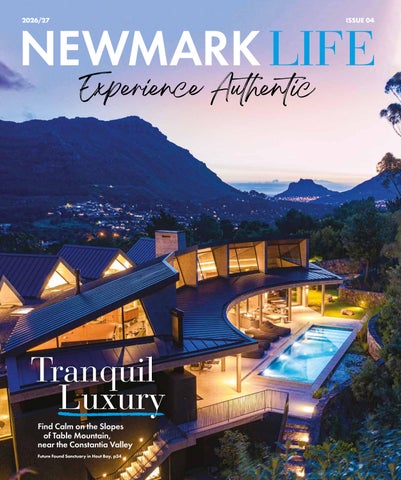
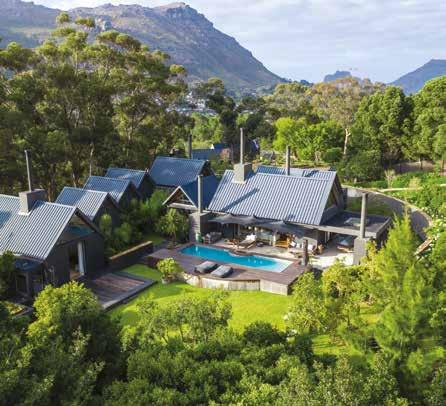
Find Calm on the Slopes of Table Mountain, near the Constantia Valley Future Found Sanctuary in Hout Bay, p34

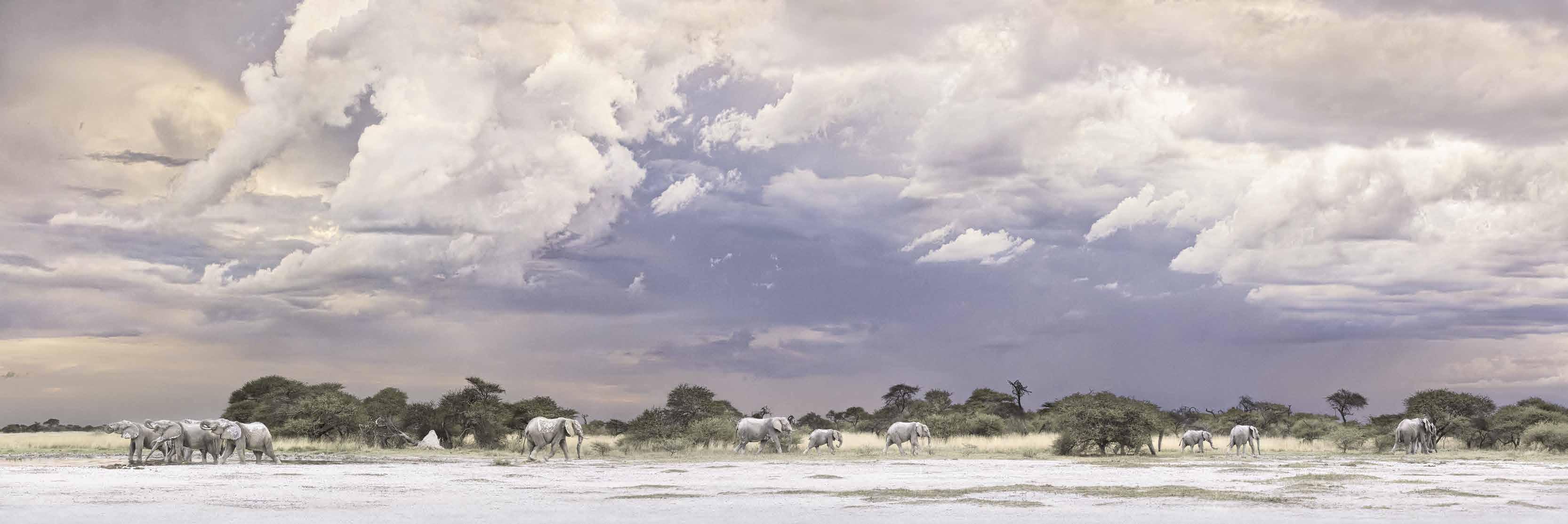
LIMITED EDITION WILDLIFE PHOTOGRAPHY · CAPE TOWN
Adam Rabinowitz · Conservation Photographer

10 LETTER FROM THE CEO
Neil Markovitz welcomes you to the 2026/27 issue.
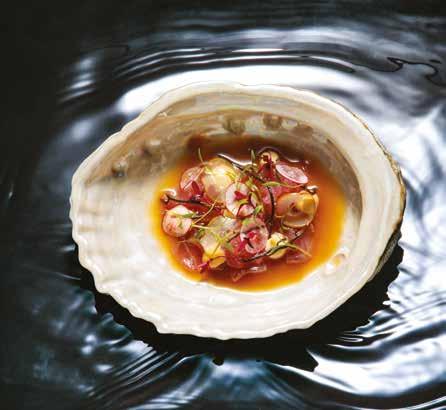
14 COOKING WITH RESPECT
Terrarium, the Queen Victoria Hotel’s fine-dining restaurant, has been recognised for its commitment to sustainability.
22 SMALL IS THE NEW LUXURY
Dock House Boutique Hotel offers guests all the perks of a big hotel in an intimate and intentional setting.
24 NIGERIA’S BEST-KEPT SECRET HAS A GOLF COURSE
Forty kilometres from the nonstop business of Lagos, Lakowe Lakes is quietly making the case for Nigerian luxury.
26 BAREFOOT SOPHISTICATION
Casa Luma: A beloved Atlantic seafront hotel enters a new chapter.
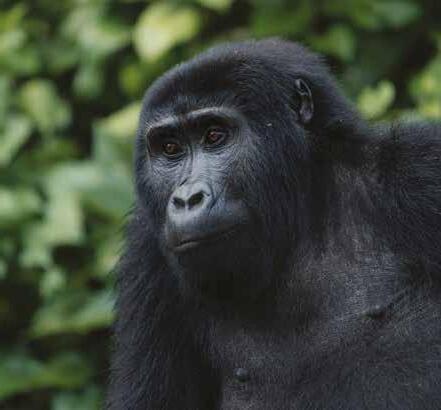
28 FACE TO FACE
The transformative power of gorilla trekking in Bwindi.
30 NAMIBIA’S NEW FRONTIER
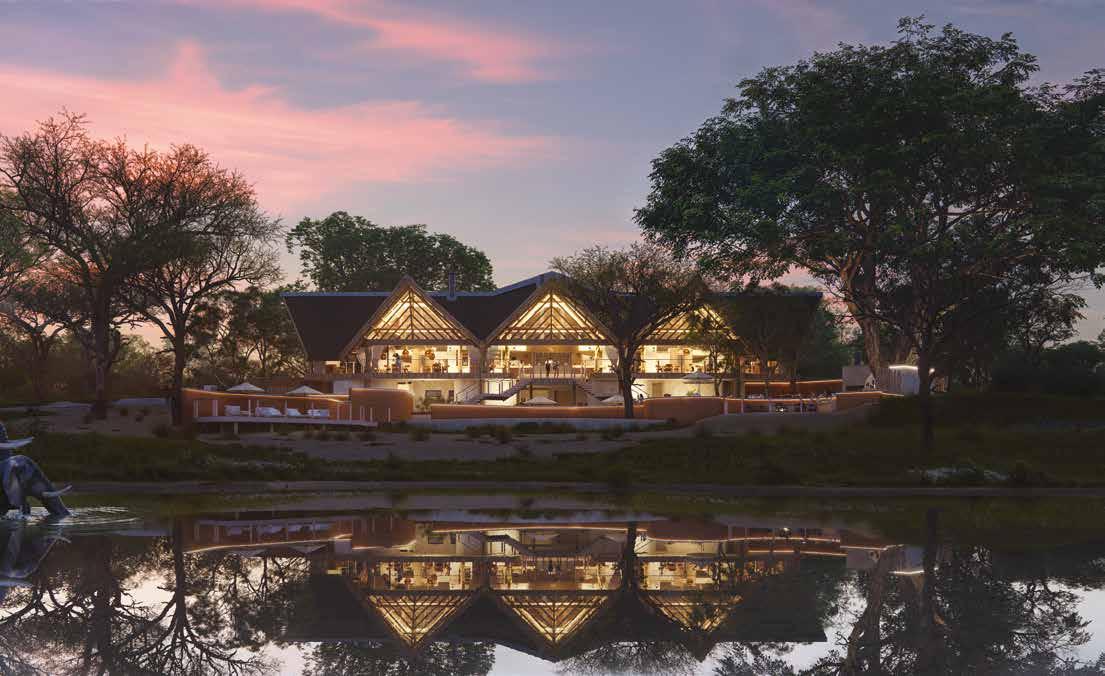
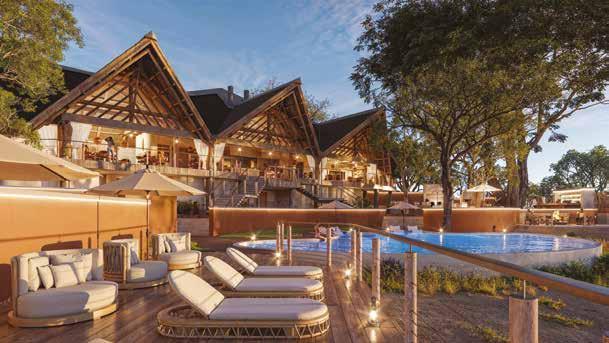
Thitaka River Lodge by Newmark Hotels & Reserves opens in Spring 2026 – and it’s already one of the most talked-about safari addresses of the year.
32 OUT AND ABOUT
Elevate your next adventure with some local objects of desire.
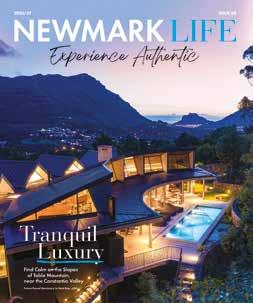
THE QUIET LUXURY OF FUTURE FOUND SANCTUARY
Explore this five-star regenerative travel hotel set on the slopes of Table Mountain near the Constantia Valley ON THE COVER

34 THE QUIET LUXURY OF FUTURE FOUND SANCTUARY
Thirty minutes from Cape Town’s CBD, a small and serious retreat has set a new bar for what a luxury escape in the Mother City can look like.
38 ISLAND ESCAPE
What beach house living really means at La Maison D’Été.
40 MAURITIUS UNDISCOVERED
The Mystik experience on Mont Choisy Beach.
42 UNDER THE MOUNTAIN, BESIDE THE SEA
Ginja restaurant at the Victoria & Alfred Hotel in Cape Town’s Waterfront precinct brings the philosophy of place-driven cooking to life with a fresh, seasonal menu filled with the flavours of the Cape.
46 THE HISTORIC WINCHESTER
The gentle restoration of a Sea Point landmark.
52 AN HISTORIC LANDMARK REBORN AT BLAAUWKLIPPEN
History and considered luxury in the Stellenbosch Winelands.
58 THE SECRET PLAYGROUND
The 18th floor of The Rockefeller Hotel in Cape Town’s CBD is a hidden gem.
60 BUSINESS TRAVEL, REFRESHED
A stay at The Catalyst in Sandton has all the bases covered.
62 THE HOTTEST ADDRESS IN TOWN
The Onyx Hotel on Cape Town’s Foreshore feels like home – but with an added edge.
64 FALLING FOR CAPE TOWN’S HIDDEN SEASON
Explore the Mother City’s quieter season from the Manor House.
66 SENSE OF STYLE
Whatever your destination, make sure you’re prepared.
68 WHERE THE RIVER KEEPS ITS OWN TIME
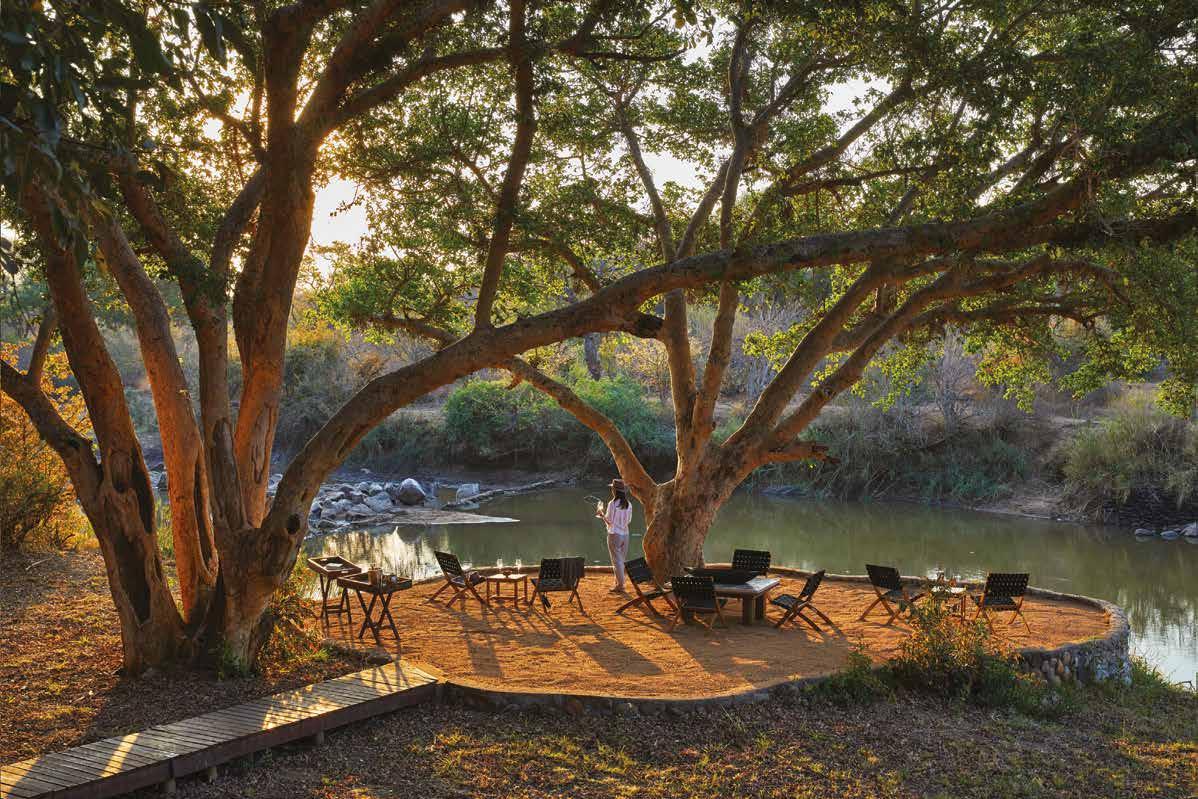
At Toro River Lodge, you follow a dirt road to the Makhutswi River, where attentive guiding, generous meals and the slow intelligence of the bush invite a quieter way of seeing.
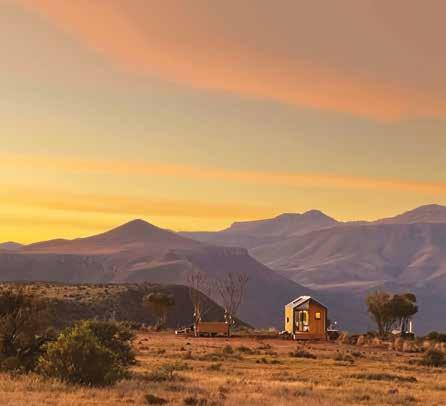
74 SKY, STONE AND SOUL Maryke Roberts loses herself to find herself during a restorative stay in Mount Camdeboo Private Game Reserve.
78 A GOLDEN LEGACY
The story of Motswari Private Game Reserve is the story of wildlife conservation in South Africa.
84 THROUGH THE LENS
Capture the bush on foot at Motswari African Retreat & Walking Safaris.
85 BUILT WITH LOVE
A short distance from Motswari Private Game Reserve’s main lodge, Geiger’s Camp offers a more intimate accommodation option for guests wanting a quieter experience.
86 THE LIONS OF QWABI
While lion populations have plummeted in the past half century, South Africa offers a rare note of resilience – and at QWABI Private Game Reserve, a deliberate, science-led effort is proving that with care and collaboration, the king’s domain can grow.
90 UNDER THE WATERBERG’S QUIET SPELL
Beneath star-filled Waterberg skies, bush silence and quiet luxury turn weddings, family escapes and retreats into restorative wilderness experiences.
94 SERENITY AT THE EDGE OF THE WORLD
Bupenyu Lodge, perched 180 metres above the Zambezi River, has been welcoming guests since March. Here’s why it was named one of 2026’s must-visit properties.
100 A RIVER RUNS THROUGH IT
The Komati River is central to the experience at Nkomazi Private Game Reserve.
106 ROOM WITH A VIEW
The Villa terrace at Chuini Zanzibar Beach Lodge.


Welcome to another bumper issue of Newmark Life ! This issue kicks off with a visit to Future Found Sanctuary in Hout Bay – one of the most architecturally compelling properties in our portfolio and, we’d argue, one of the most beautiful retreats on the Cape Peninsula. It’s a story that reminds us that sometimes real luxury is to be found in tranquillity. The property recently received the SCAPE Gold Key, recognising it as an icon of South African hospitality design – and reading the feature, it’s easy to understand why.
Beyond the cover, this issue marks three landmark openings in the Newmark portfolio. Toro River Lodge opened in December 2025 within the Greater Makalali Private Game Reserve in Limpopo. A Big Five property set on the Makhutswi River, it’s as untouched as the landscape that surrounds it. In March 2026, Bupenyu Lodge followed. Perched 180 metres above the Zambezi River in Zimbabwe’s Batoka Gorge, it’s already been named one of 2026’s must-visit places by Condé Nast Traveller And in Spring 2026, we welcome Thitaka Lodge in Namibia – our seventh country of operation. Situated in the Zambezi Region along the Kwando River in Bwabwata National Park, Thitaka offers guests a setting alive with wildlife, including four of the Big Five, and proximity to a natural elephant migration corridor. I can’t wait for you to experience it.
NEIL MARKOVITZ Chief Executive Officer at Newmark Hotels & Reserves
Closer to home, we have cause for real celebration. Terrarium at the Queen Victoria Hotel has received the Eat Out Woolworths Emerging Green Star Award – recognition of what our team has built with extraordinary care and intention. For those who’ve dined there, this comes as no surprise: Terrarium’s evolving menu is rooted in slow-fermentation philosophy and a deep commitment to sustainability. It is a stunning dining experience and this issue gives you a front-row seat to its story, including new dishes, fresh photography and a recipe to try at home.
The rest of the issue is equally rich. We celebrate Motswari Private Game Reserve’s golden anniversary – 50 extraordinary years in the Timbavati (p. 78 ); we revisit Blaauwklippen Manor after its remarkable postfire reopening (p. 52 ); we explore the eco-friendly Pods at Mount Camdeboo Private Game Reserve (p. 74 ) and the wild coastlines of Mauritius, Zanzibar and the Cape Peninsula. And for those who prefer their luxury a little closer to the city, we have you covered too – from secret rooftop sundowners at the Rockefeller to the exciting reinvention of Mouille Point fave La Splendida, set to reopen as Casa Luma in time for summer 2026
Whatever your destination this season, we trust you’ll enjoy the journey – and the stay.
CEO Neil Markovitz
Global Chief Financial Officer Garth Musikanth
Group Director of Marketing Keaton Quarmby
Newmark Life is published annually by Photodeli Custom Media Solutions on behalf of Newmark Hotels & Reserves. Merchant House, 19 Dock Road, Victoria & Alfred Waterfront, Cape Town, 8001
For media enquiries, please contact patuvuyo@ newmarkhotels.com
To book any of the hotels & reserves featured in Newmark Life, please contact 021 427 5901, email reservations@ newmarkhotels.com or visit our website www.newmarkhotels.com.

Publisher & Commercial Sales: Marc Blachowitz marc@photodeli.co.za +27 82 990 1926

Editor Jason Brown
Art Director Michelle von Schlicht
Contributors
Jonas Andersson, Mischke Bosse, Nickey Bothma, Paris Brummer, Pippa de Bruyn, Dook Photography, Taryn Elliott, Ryan Enslin, Damien Fourie, Sean Gibson, Pat de la Harpe, Roger de la Harpe, Richard Holmes, Sean Househam, Micky Hoyle, Patrick King, Andrea Nagel, David Ni, Wanita Nicol, Maryke Roberts, David Rogers, Jared Ruttenberg, Xavier Saer, Andrew Thompson, Nick van der Touw, Bruce Tuck, @wanderswithaudrey, million-memories.com. Akemi Digital (renders)
Printers
Shirley Bosman at SAGPrint shirley@sagprint.co.za
Terrarium, the Queen Victoria Hotel’s fine-dining restaurant, has been recognised for its commitment to sustainability
BY WANITA NICOL
Chris Erasmus, Chef Patron of Terrarium, is grinning. And rightly so. His restaurant on the ground floor of the Queen Victoria Hotel has just won the Emerging Green Star Award at the 2026 Eat Out Woolworths Restaurant Awards, as well as earned an Eat Out star.
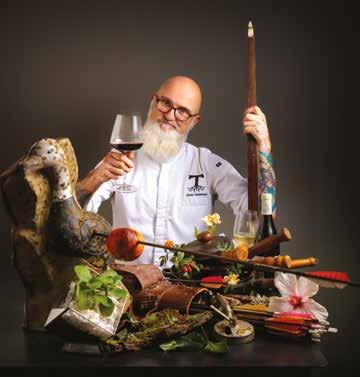
It’s the first year the prestigious awards has given out three Green Star Awards. According to the organisers, the Emerging Green Star Award “recognises an ambitious newcomer making bold strides by actively embedding applaudable sustainability principles into the restaurant from day one.”
That one of these awards went to a hotel restaurant has been the talk of South Africa’s food scene – especially as this isn’t Terrarium’s first recognition in the sustainability space. It also won the WWF-SASSI Green Philosophy Award for
responsible, sustainable practice, as well as a Plate, at the JHP Gourmet Guide™ Awards.
“Hotel restaurants don’t usually get a lot of awards,” says Erasmus. “So, to see this restaurant that’s relatively new on the scene just win both sustainability awards… Our industry friends are saying, who are these guys? What are they doing differently?”
Actually, they’re not just saying it – they’re coming to see for themselves. Since the awards, a number of chefs have been spotted among the guests in Terrarium’s dining room.
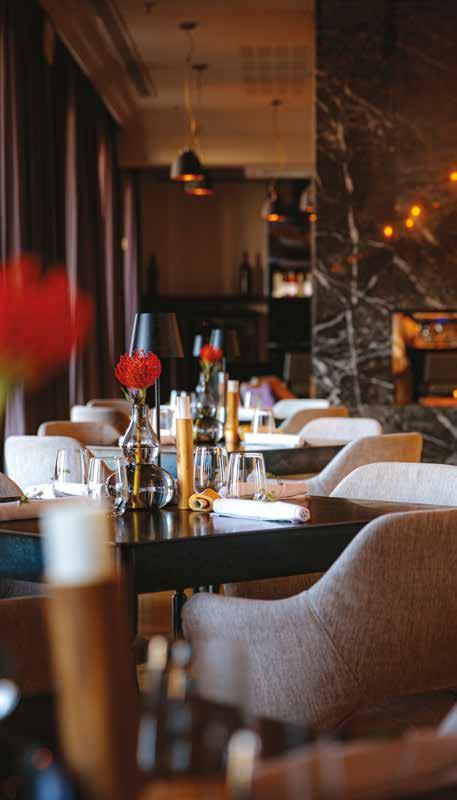
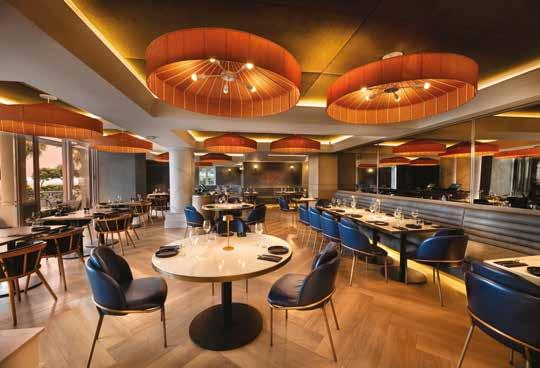
What they’re discovering: Terrarium moves away from what you might expect of a hotel restaurant. There’s nothing “safe” about the menu, which is informed by more conscious choices rather than what’s trending. Instead it follows a seasonal, hyperlocal approach guided by what’s available at the time. Its commitment to supporting local suppliers is reflected in everything from the ingredients on the plates to the plates themselves (handcrafted in Cape Town by Mervyn Gers Ceramics) and the art on the walls (original paintings by Stellenbosch artist Paula van Coller Louw).
“People always say sustainability is about growing your own vegetables and living off the land, which is not true. It’s impossible for a restaurant to be self-sustainable,” says Erasmus. Instead, the team focuses on what’s realistically achievable – which, it turns out, is a lot.
For Erasmus, sustainability extends beyond the menu. It’s also about minimising staff turnover by prioritising mental health and supporting the local economy.
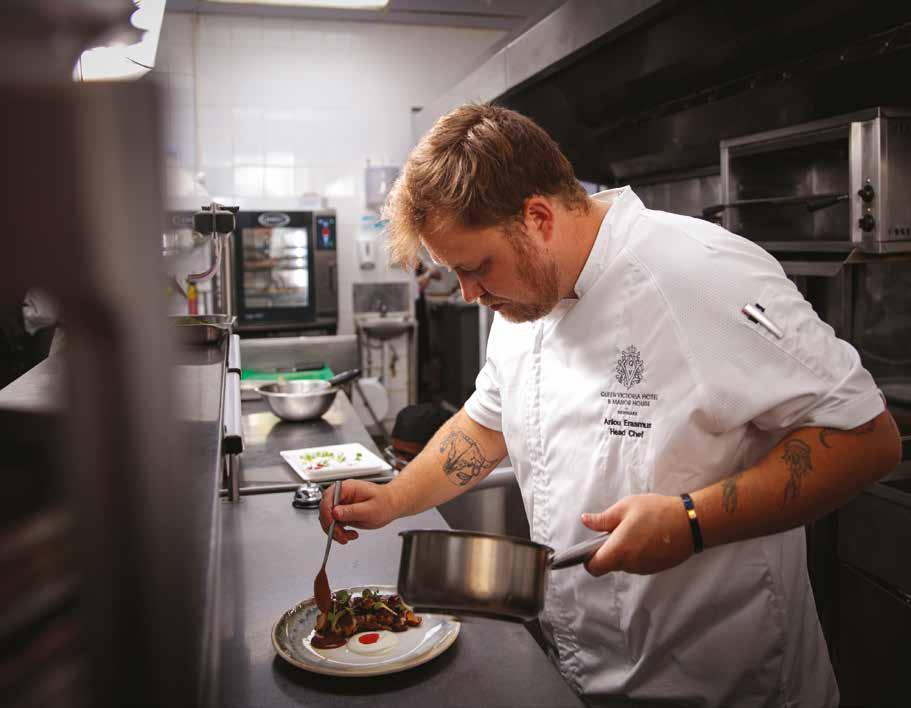
Terrarium Head Chef Anlou Erasmus (no relation to Chris) encourages up-and-coming chefs to treat the kitchen like their playground. “Anlou is amazing. He’s a teaching chef so he likes them to play around and get creative, and he’s willing to learn from the younger generation. There is zero ego,” says Erasmus.
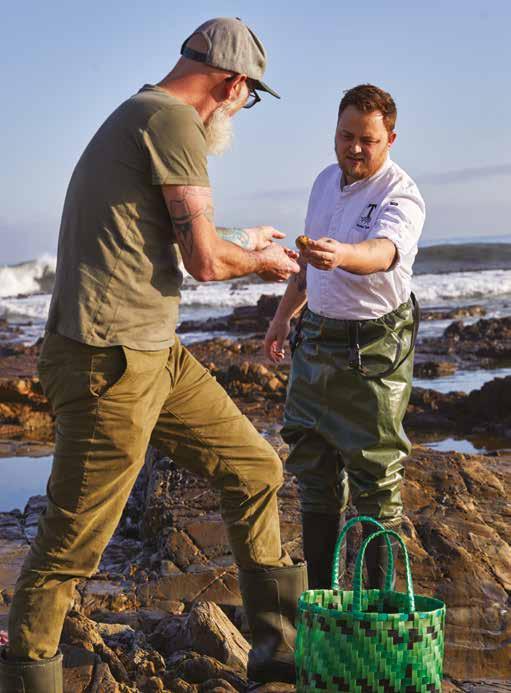
In keeping with Newmark’s philosophy, Terrarium keeps its carbon footprint as low as possible. In practice, this means sourcing local ingredients and working closely with producers and foragers. Seafood is sustainable; interesting vegetarian dishes encourage plant-based choices.
The menu changes seasonally – not on predetermined dates but dictated by nature, reflecting what is actually growing and available at the time. “You don’t waste if you understand the effort behind each ingredient,” adds Erasmus.
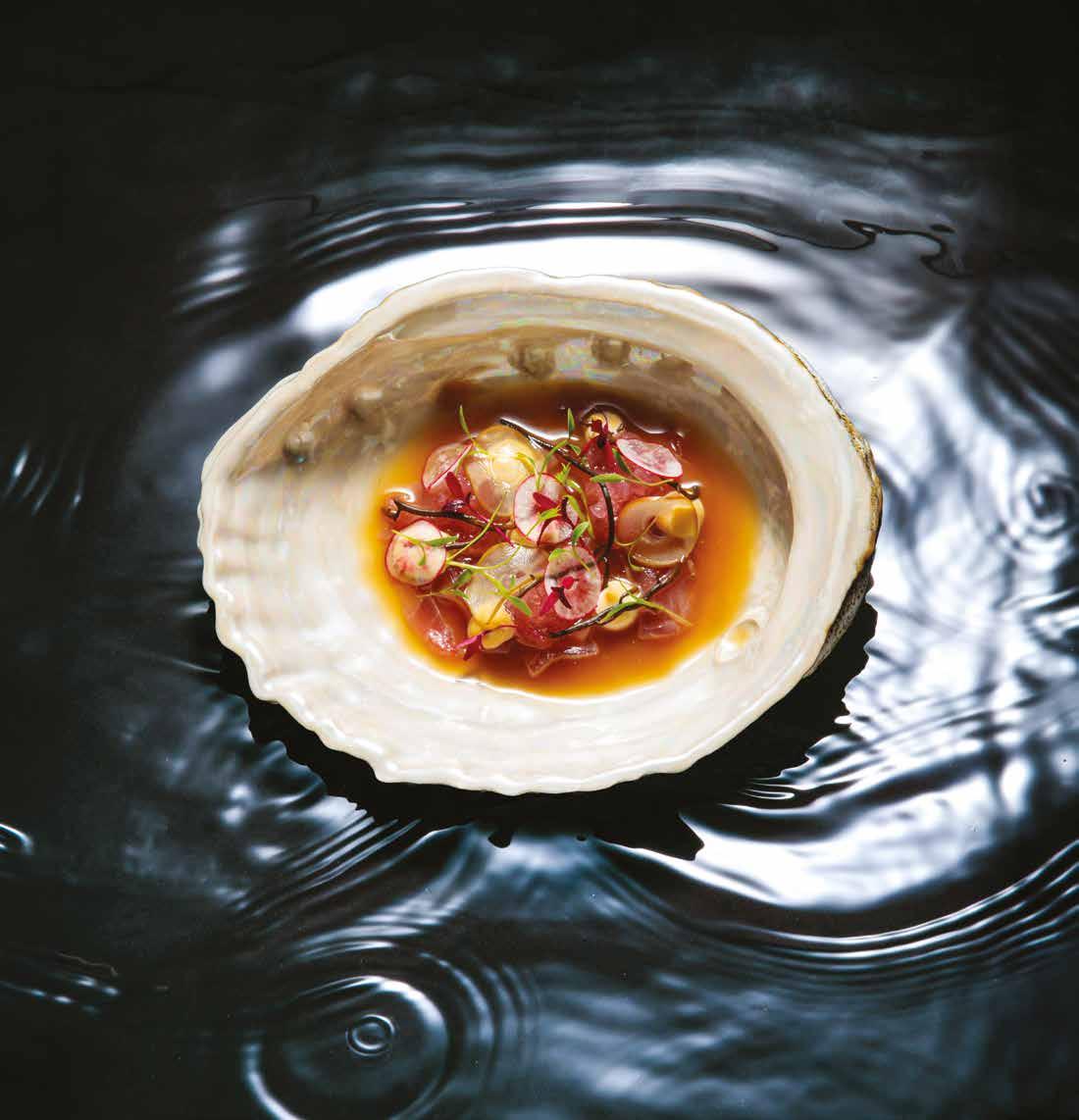
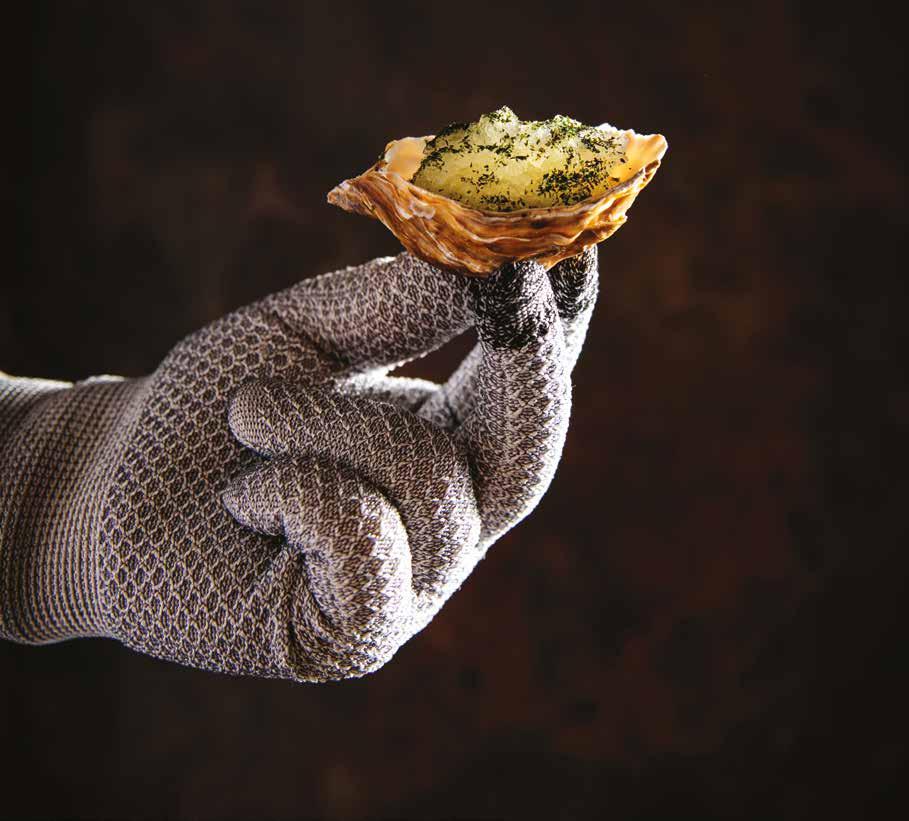
That culture of minimising waste is a hallmark of Terrarium’s approach. Even onion peels are dehydrated, burnt, and turned into powders; leftover bits of tomatoes are fermented and used in oleos.
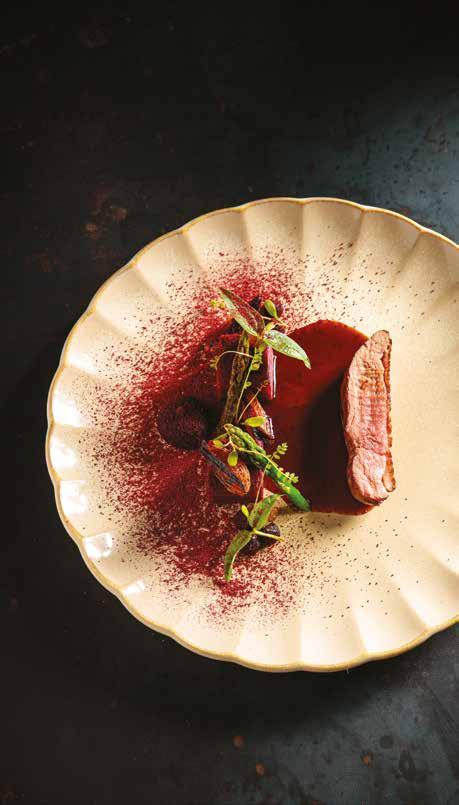
Slow fermentation is one approach you will find practised in the kitchen at Terrarium. But while it is having a moment, Erasmus doesn’t view it as a trend so much as a way to reduce waste by using byproducts that would otherwise have been discarded.
“It’s cool to use the term ‘trend’ but it’s actually been around for thousands of years,” he says, pointing to pickling, preserves and jams. “For example, you would eat fresh figs when they’re on the tree, but you eat green figs when they’re out of season.”
He also points to the health benefits – growing “good” bacteria that are beneficial for gut health and providing an alternative to ultra-processed foods.
At first glance, maintaining such a rigorous commitment to sustainability might seem restrictive. In reality, it has opened up a different kind of creativity. Whether you’re ordering the tasting menu or à la carte, you’ll find unusual cuts of meat, sustainably sourced seafood and seasonal produce prepared in unexpected ways.
Sustainability may have won Terrarium awards, but guests love it for a much simpler reason: really good food.
“LOOK AND YOU WILL SEE EXACTLY WHERE EVERY INGREDIENT BEGINS ITS JOURNEY.”

Chef Chris Erasmus shares his favourite South African rusk recipe – the one he learnt from his mother
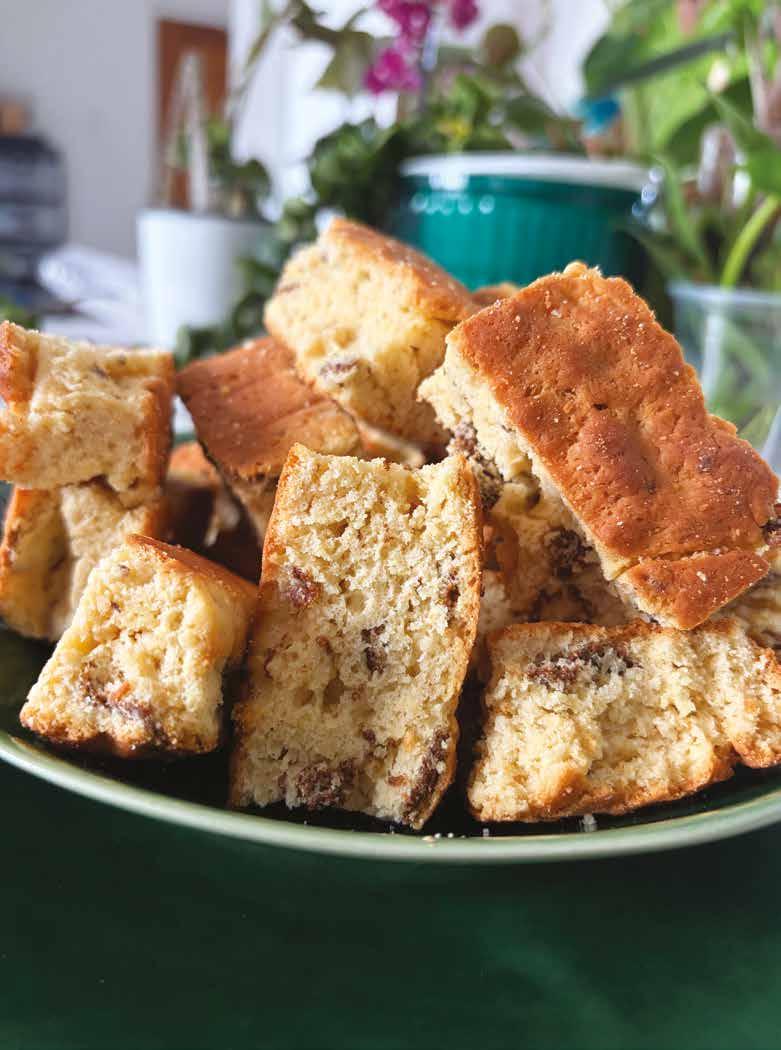
Ingredients
1kg Self-raising flour
10ml Salt
10ml Baking powder
500ml Muesli
250ml Sunflower seeds, lightly toasted
100g Pecan pieces, chopped
125ml Desiccated coconut
500ml All Bran flakes
500ml Brown sugar
500ml Amasi or buttermilk
500g Butter or margarine, melted
3 Extra-large eggs
1 Granny Smith apple, peeled and grated
Method
1. Preheat oven to 180°C. Grease three bread tins.
2. Mix together dry ingredients.
3. Combine amasi, butter and eggs. Add apple to wet ingredients, mix into dry ingredients.
4. Once a dough forms, roll into three balls and pack each into a tin. Bake for 45 to 60 minutes.
5. Once cooked, remove from tins and break up while hot; they crumble when cold.
6. Place on a baking tray and dry at 100°C until crisp and dry, checking every 20 minutes (this may take up to four hours, depending on your oven). Use a wooden spoon to keep the oven door slightly ajar for steam to escape. Store rusks in an airtight container to retain their crunch.





Dock House Boutique Hotel offers guests all the perks of a big hotel in an intimate and intentional setting
BY ANDREW THOMPSON
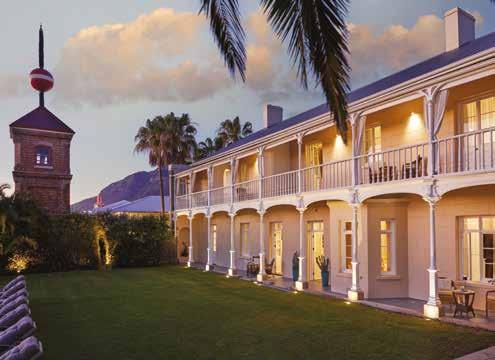
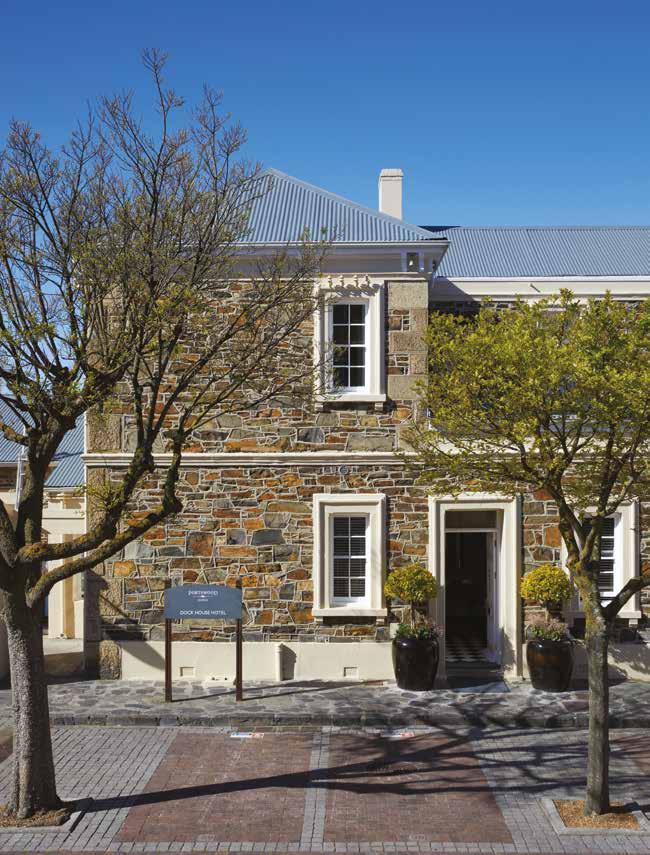
Dock House Boutique Hotel has five supremely elegant rooms and one spacious suite. In the V&A Waterfront, one of Cape Town’s busiest and most visited precincts, that’s a very unique proposition. It means fewer guests and less movement, but also more privacy. And, ultimately, a stay that feels closer to a lavish private residence than a conventional city hotel.
It’s also a property type aligned with the latest shift in the luxury-stay segment. According to forecasters, the boutique hotel market will grow to $106.46 billion in the next year. Analysts link that growth to personalised hospitality, experiential travel and demand for properties with stronger local character.
Amadeus’ 2026 travel research points in a similar direction, suggesting that guests increasingly want greater control over details such as room views, sleep-friendly touches, early check-in and late check-out, and more personalised welcomes.
Put simply, luxury travellers still want comfort, service and a good location. But many now also want to stay in
hotels that feel less anonymous and more intentional.
Dock House has something of an unfair advantage here because it was never built with scale in mind. It is set beside the historic Time Ball Tower and occupies a building that was originally the Harbour Master’s private residence in the 1800s. It offers a rare balance of convenience and privacy, while chandeliers and ornate ceiling cornices speak to its Victorian heritage.
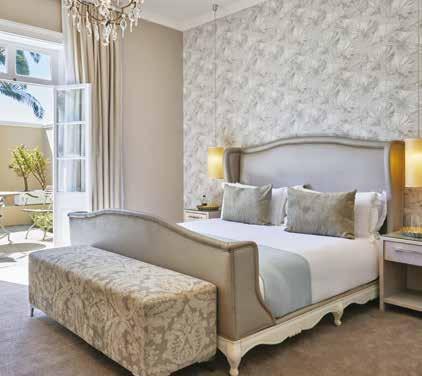
And the rooms reinforce that sense of place. There are five elegant rooms and one spacious suite, which can be booked individually or for exclusive use for a single special occasion. Three of the four upstairs luxury rooms have
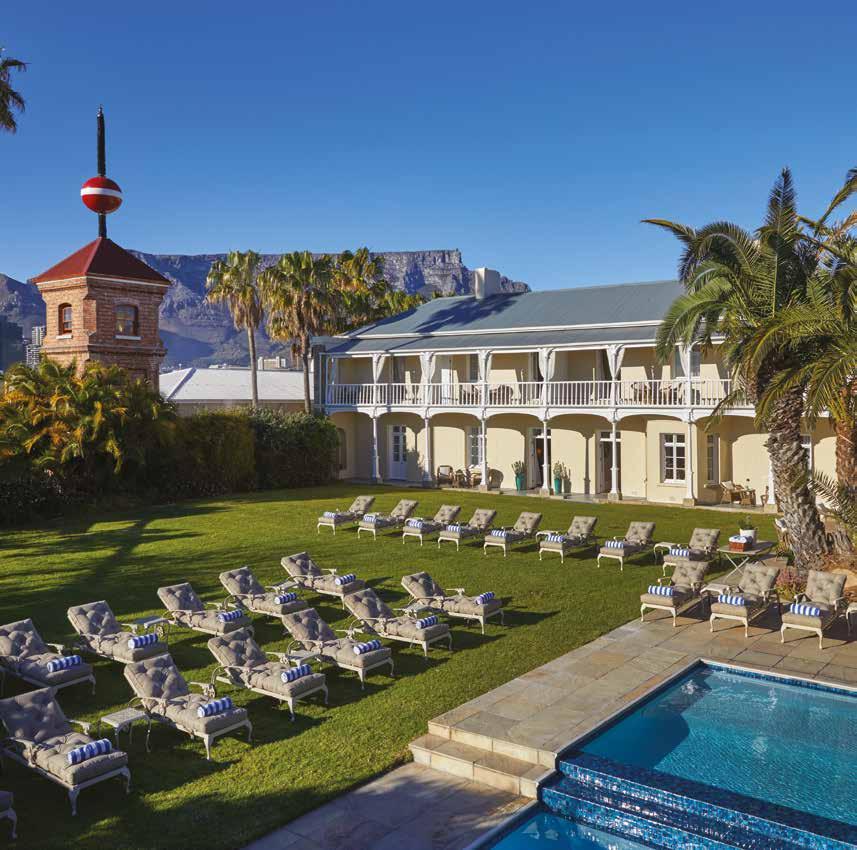
balconies with views of the harbour, while the ground-floor rooms open onto a verandah overlooking the garden and swimming pool. The suite opens to a private courtyard garden – a rare addition in a setting like the Waterfront. But true personalisation is also critical; luxury now is not only about attention to detail in the rooms and throughout the property, but also about understanding the unique preferences of each guest. This is the practical advantage of staff having only a few rooms and guests to look after.
Staff at Dock House Boutique Hotel, for example, quickly understand why a guest is in Cape Town – whether for a short business trip, a quiet break,
a family occasion or just a few days before heading into the Winelands. The service is attentive and personal without becoming intrusive.
Of course, location remains a key component of luxury travel regardless of property size, and for Dock House, it increases its appeal.
The V&A Waterfront precinct offers restaurants, shops, museums, harbour walks and the city within easy reach. Business travellers can visit the CBD and Cape Town International Convention Centre in minutes, while leisure guests have Table Mountain, the Atlantic coastline, and the Winelands nearby.
The smaller details – Wi-Fi, a gym, a pool, secure parking, concierge,
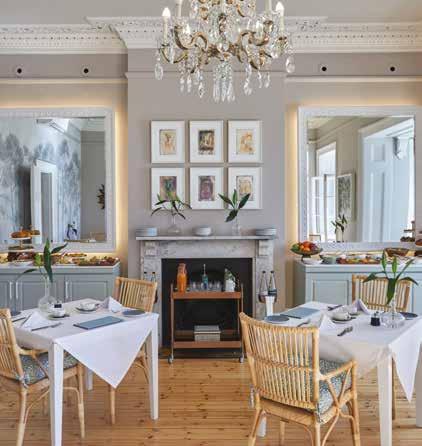
24-hour room service, and evening turndown – are all in place, while the Sanctuary Spa and a private library add to the sense of a well-rounded, considered stay.
And that’s the point. Small doesn’t mean making sacrifices or exclusions. Instead, at properties like Dock House, it means combining an ideal Cape Town location, the support of a wider hotel precinct, and the privacy and attention of a property with only a handful of rooms –something few larger hotels can match.

Forty kilometres from the non-stop business of Lagos, Lakowe Lakes is quietly making the case for Nigerian luxury
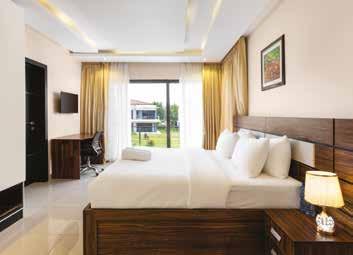
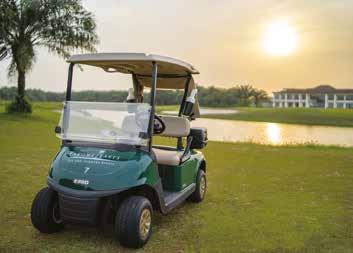
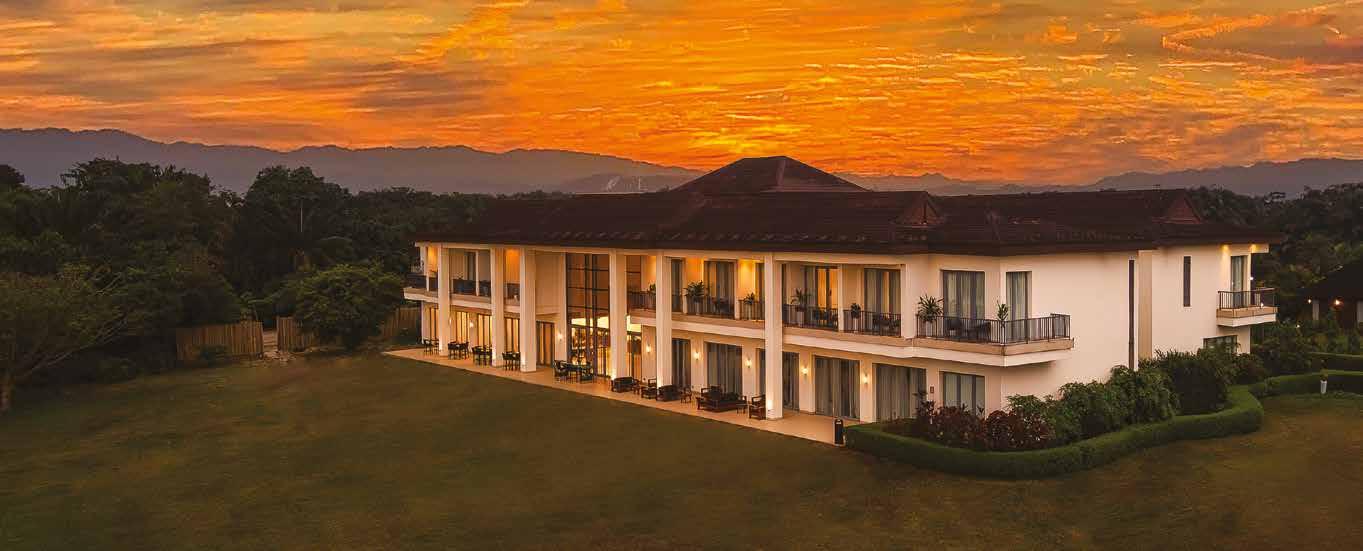
The drive from Victoria Island takes around 40 minutes on a good day, West African traffic being what it is. You leave behind the irreplaceable noise and energy of Lagos and you arrive at Lakowe Lakes Golf & Country Estate –308 hectares of tropical parkland that feels like a different country entirely. The transition is abrupt enough to be slightly surreal. One moment you’re in one of the world’s busiest cities, the next, there’s birdsong in the trees and the only traffic is a golf cart.
The golf course is the headline. Designed by PGA professional Robert O’Friel, it plays 6,700 metres from the championship tees – a par-72 layout of proper calibre, regarded by those who know the continent’s courses as one of West Africa’s strongest. It draws Nigeria’s top players for tournaments and holds its own under serious scrutiny. The driving range, pro shop, golf academy, clubhouse, and lighted nine-hole par-3 course complete a set-up that would turn heads anywhere. In Lagos, it’s remarkable.
Accommodation is split across several distinct formats. The Lodge on 18 is a 20-room boutique hotel – compact, contemporary, with garden and fairway views and the kind of attentive service that doesn’t require scale to function. The Balinese-inspired cottages sit lakeside; with the one- and two-bedroom layouts suiting longer stays. Apartments round out the options for those needing selfcatering space.
The food and beverage outlets range from the polished Restaurant on 18
to the more relaxed, lakeside Revivo Restaurant & Bar, where afternoons are spent watching the light change over the water while deciding between another round and a pedal boat. Sunset bonfire evenings with live music attract the kind of crowd that makes you realise Lagos’ social energy has very much followed you out here.
MICE (Meetings, Incentives, Conferences, and Exhibitions) groups have taken notice too. The event spaces handle conferences, corporate retreats and celebrations – relevant to anyone doing business in the region and needing somewhere that operates to an international standard.
Nigeria’s luxury tourism moment has been arriving for some time. Lakowe Lakes looks like proof it’s finally here.

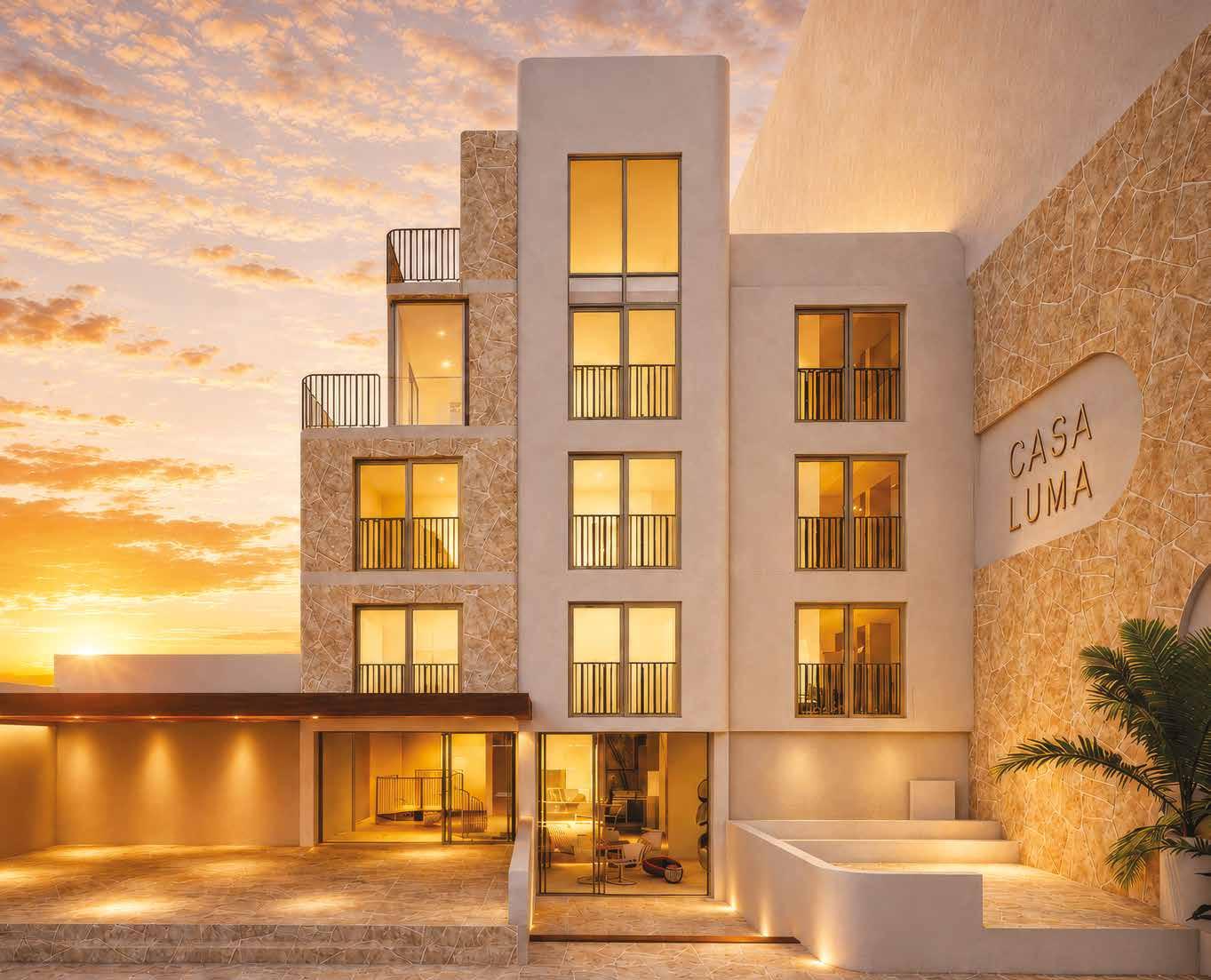
If you’ve been walking the Mouille Point promenade lately, you’ve probably noticed the building on the corner looking midtransformation – which is exactly what’s happening. La Splendida, the compact, 24-room hotel that has occupied this particular stretch of Cape Town’s Atlantic Seaboard for years, is being remade. Not demolished nor reimagined beyond recognition, but thoughtfully refreshed – and when it reopens, it will carry a new name: Casa Luma.
The rebrand isn’t a pivot. It’s more of a deepening. Where La Splendida has long traded on its enviable position – seafacing rooms, the promenade on the doorstep, and Sotano’s pavement tables below – Casa Luma intends to match
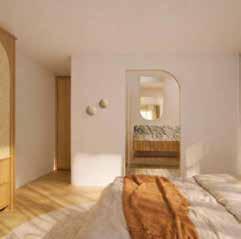
that location with interiors that finally feel fully aligned with their surroundings. The design is being led by Lara Myerson Designs and Hayley and Ori Saban from STUDIOHS Architects, and the brief they’ve worked from is refreshingly un-corporate: “barefoot sophistication” – raw and tactile, a place that engages all the senses rather than just ticking aesthetic boxes.
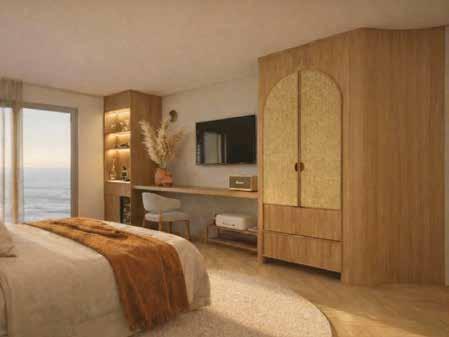
Curved walls soften the entrance into each room, creating a gentle reveal rather than a direct line to the bed. Oak joinery takes on organic forms. Warm cream tones replace cooler minimalism. Task lighting is positioned so guests can comfortably work if needed, while a comfortable chair beside the window encourages slower moments overlooking the ocean. The ambition is to make guests feel like they haven’t simply booked a room, but arrived somewhere that feels instinctively right.
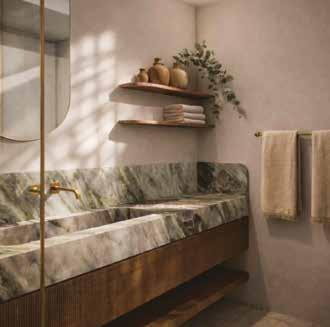
The rooms are receiving a full overhaul, though it’s the smaller details that suggest something more considered is taking shape. Woven artisanal bags, branded beach towels, a curated list of amenities and locally commissioned art. Bathrooms strip back unnecessary fuss in favour of crisp, calming palettes and practical shelf space designed for the things guests actually travel with. It’s the kind of thinking
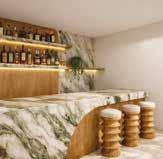
that separates a well-designed hotel from one that has merely been renovated. Beyond the rooms, communal spaces are being reworked to reflect the same philosophy. Curved pillars, textured walls, raw paving underfoot, structured planting, and organic stone finishes in the shared bathrooms continue the tactile material palette throughout the property. The lobby will introduce curved seating and social booths – spaces designed for lingering over a flat white between activities.
From the street, the building itself is also evolving. New windows, updated balustrades, and a textured stone feature wall facing the promenade are intended to give the property a stronger visual identity – one that catches your attention whether you’re walking past or driving by. It’s a confident design move for a hotel that has historically relied on understatement.
What won’t change is the thing that made this property worth caring about in the first place. The lighthouse still stands across the promenade. Dolphins still move through the bay beyond the rocks. And the sunny restaurant downstairs will continue filling its pavement tables by late afternoon. Casa Luma remains one of the defining hotel addresses along the Mouille Point promenade – and by summer, it will finally have interiors that feel equal to the view.
The transformative power of gorilla trekking in Bwindi
The Nkuringo Gate sits just minutes from Gorilla Heights Lodge – close enough that you step out into the chill of the morning still holding the warmth of your coffee. They brief you at dawn. A ranger outlines the rules with quiet authority: stay in a tight group, keep your voice low, don’t stare, no flash photography, maintain 10 metres if you can. You think you understand what you’re walking into. You don’t, not yet.
The forest swallows you quickly. Bwindi is not gentle terrain – the Nkuringo sector drops and climbs without apology, the path narrowing to a thread between walls of dripping vegetation. You duck under branches still heavy with last night’s rain. Mud pulls at your boots. Somewhere ahead, trackers who set off hours earlier are sending back co-ordinates. The gorillas are moving. So are you.
Then the guide stops. Raises a hand. The group stills. Through a gap in the undergrowth – nothing dramatic, no cinematic reveal – a silverback sits, enormous and entirely at ease, stripping bark from a branch with the focus of someone reading a newspaper. He
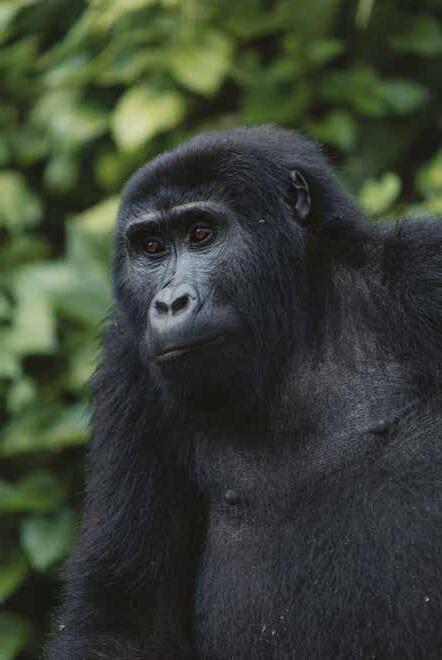
glances up. Holds your gaze for two, maybe three seconds. Then looks away.
That brief eye contact. You instinctively look down. That’s all it takes.
It’s what people try to describe and rarely quite manage. The weight of it – the recognition of something that shares 98 per cent of your DNA looking at you from a life so utterly different from yours. Unhurried. Unimpressed. Completely confident. Around him, the Nkuringo family – 14 members in total – move through the undergrowth: a youngster turning slow somersaults on a mossy log, a female nursing an infant, another picking methodically through the forest floor. You have one hour, but it disappears in what seems like minutes.
What makes this encounter possible is a conservation story that deserves more attention than it gets. In 1981, it was estimated that 254 mountain gorillas remained in the wild. Today, the global population is estimated to sit at just over 1,000 – the only great ape on earth whose numbers are climbing rather than falling. Bwindi alone shelters around
459 individuals, the result of decades of anti-poaching patrols, veterinary intervention, community partnership and the kind of sustained political will that rarely survives long enough to see results. Responsible tourism plays a significant role: permit fees, community revenue-sharing, ranger funding, and forest protection all feed directly into the recovery effort.

Gorilla Heights Lodge understands its role in this equation with unusual clarity. Positioned at the highest point of Bwindi’s Nkuringo sector –ridge-top, above the cloud line on clear mornings, overlooking a forest that stretches in every direction – the lodge sits closer to the Nkuringo trekking gate than any other property in the sector. That proximity isn’t just convenient. It means earlier starts, less road time, and permits coordinated through a team that knows this particular patch of forest well. Four gorilla families range through the Nkuringo sector alone: Posho, with 17 members; the Nkuringo family; Bushaho; and Christmas. Rushaga and Mgahinga are also accessible from here, expanding the possibilities considerably. Back at the lodge by early afternoon, you sit on the deck of your cottage and try to take stock of what just happened. The forest still dominates the view –ridge after green ridge rolling south towards the Virunga volcanoes on the Rwanda border, the sky beginning to stack with afternoon cloud. That brief glance from the silverback keeps returning to you, like a scene from a favourite film.
There are experiences in travel that rearrange things slightly – the way you hold your place in the world, your sense of what matters. A morning in Bwindi with a gorilla family is one of them.





Thitaka River Lodge by Newmark Hotels & Reserves opens in Spring 2026 – and it’s already one of the most talked-about safari addresses of the year
There’s a stretch of Namibia that most safari travellers have never reached. The Zambezi Region – the country’s far north-east finger of land, bordered by Angola, Zambia and Botswana –operates at its own pace, on its own terms. Rivers run wide and elephant herds move freely across invisible borders. The skies at night are overwhelmingly full of stars. It is, by any measure, extraordinary. And until now, it has been genuinely difficult to reach in any level of comfort.
That changes in Spring 2026, when Thitaka River Lodge opens its doors in Namibia’s Bwabwata National Park – Newmark Hotels & Reserves’ seventh country of operation and, arguably, its most ambitious debut yet. Condé Nast Traveller spotted it early, naming Thitaka one of 2026’s must-visit places before a single guest has even
checked in. The recognition feels well deserved. The lodge sits directly on the Kwando River, inside a forested elephant corridor that connects Namibia, Botswana and Angola. Elephants move through here with a regularity that stops you midsentence. Positioned within the greater KAZA Transfrontier Conservation Area, one of the largest conservation landscapes in the world, the region feels expansive in every sense.
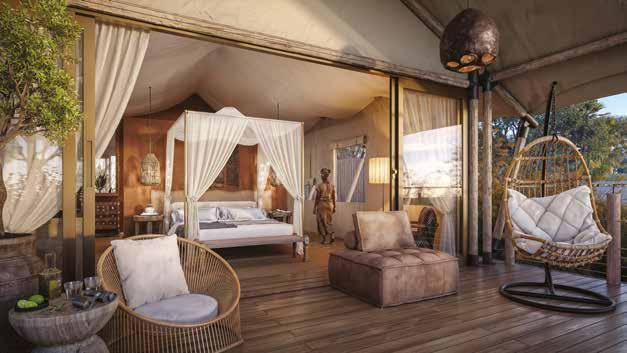
The lodge has 15 tented units – six Luxury Tents (each 51m2), three spacious Luxury Bush Tents designed for families, three Private Villa Tents with their own pools, and three Family Tents at 131m2. All sit on elevated decks – a design decision that protects the vegetation beneath and frames the surrounding bush in a way that feels genuinely considered rather than decorative.
Twice-daily game drives run through wetland landscapes rich with buffalo, lion, leopard and elephant – four of the Big Five. When river conditions allow, morning drives are swapped out for boat safaris along the Kwando, drifting past reed beds and floodplains where birdlife is astounding in its variety. Walking safaris, led by expert guides and armed rangers, bring a different rhythm: unhurried, close to the ground, focused on tracks, plants and the kind of detail that vehicles miss entirely.
Dining follows the same philosophy: a full-board, farm-to-table approach – breakfasts, high teas and dinners, with ingredients grown on-site or sourced from nearby community gardens. Boma dinners under open skies with fire-cooked meat and local braai wood are the social centrepiece. Pool-deck lunches are considerably more relaxed. Sundowners happen beside the river as the light does what African light does best.
Getting there requires a decision, which is the point. Guests can fly into Kasane (three hours by road through Chobe National Park) or into Katima Mulilo (an hour away). The roads are well-maintained and no 4x4 is needed. The lodge also has a private airstrip for charter flights.
Thitaka River Lodge is not trying to be the next Okavango. It is something harder to engineer: a first-rate lodge in a place that still feels genuinely wild, where the wildlife corridors stretch across borders and the river sets the pace.

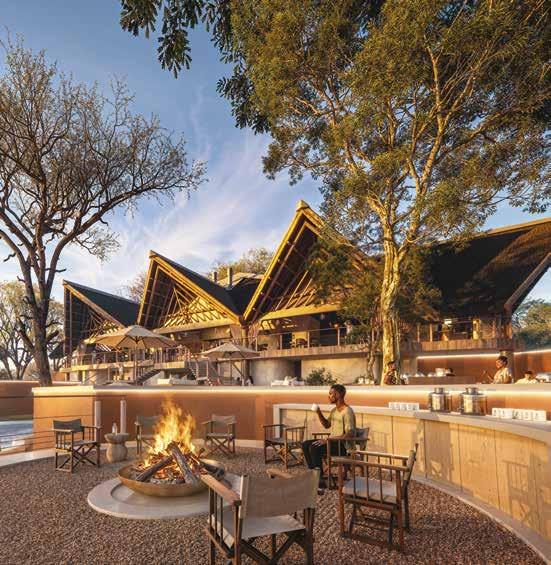
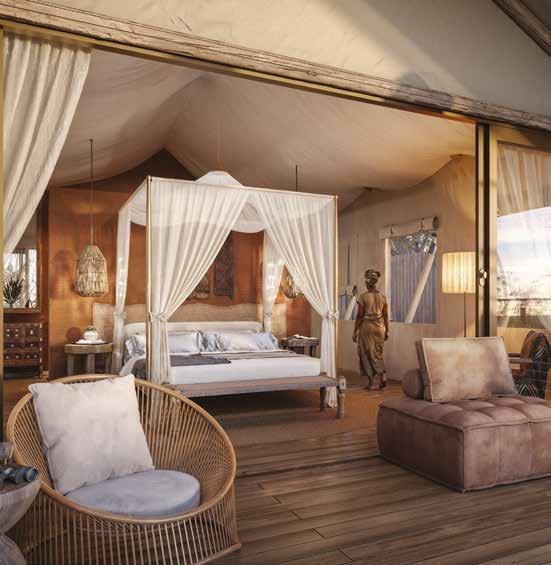
THITAKA RIVER LODGE IS NOT TRYING TO BE THE NEXT OKAVANGO. IT IS SOMETHING HARDER TO ENGINEER: A FIRST-RATE LODGE IN A PLACE THAT STILL FEELS GENUINELY WILD.
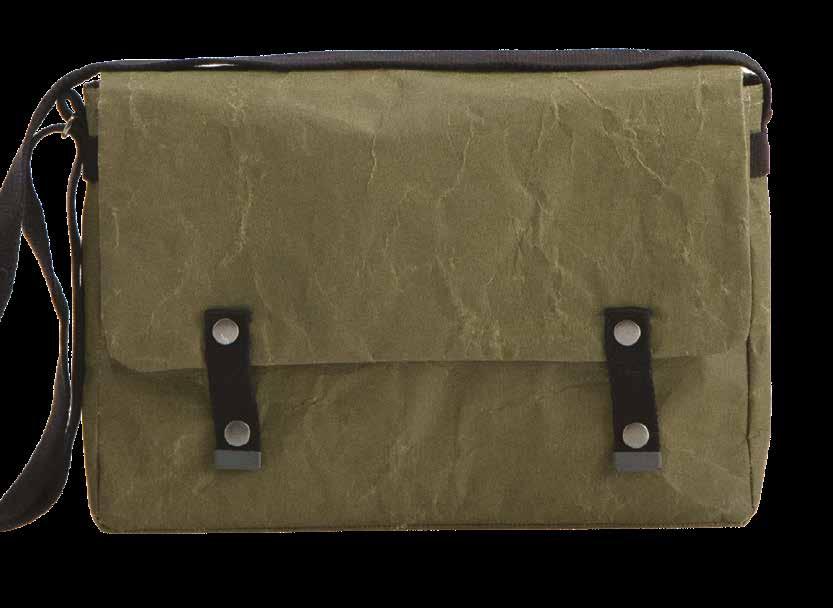
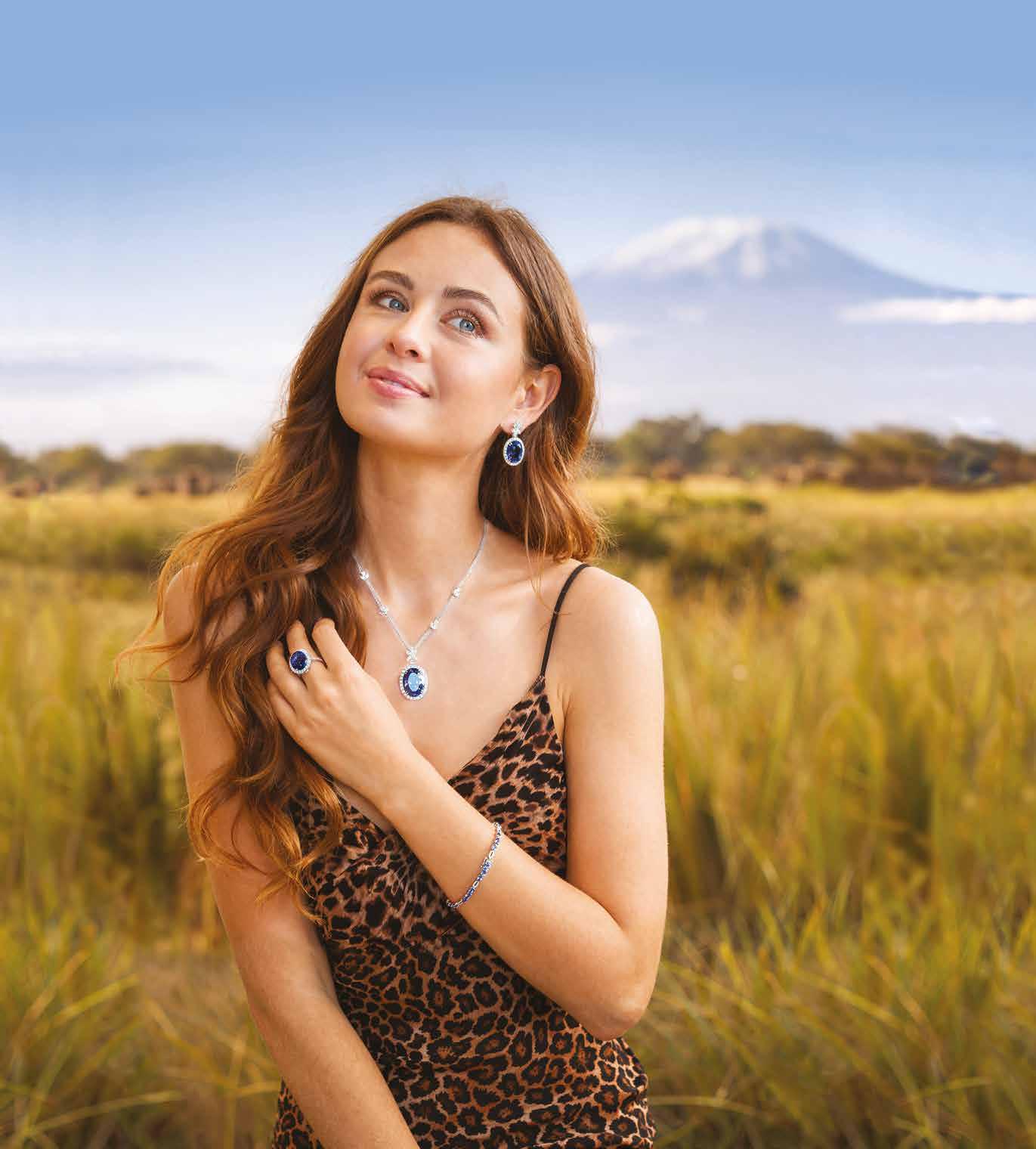
Carry your essentials in eco-conscious style with a messenger bag crafted from double-layered ProtectPaper® and a water-resistant coating for durability and everyday function. Roomy and sturdy, it fits your laptop and everyday travel gear with ease. R1,390, thewrendesign.com, @thewrendesign
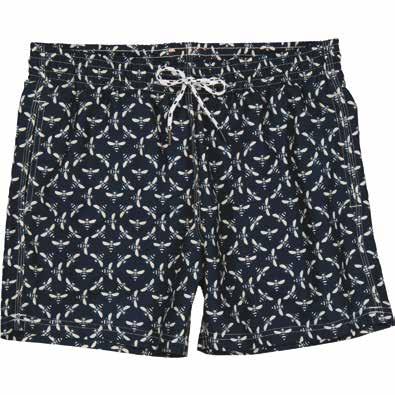
Classic shorts for whether you’re cooling off in Mauritius or poolside in the bush. Nothing says you’re a local like sporting the original Chasing Bees motif. Elasticated with a drawcord and two deep side pockets, plus lightweight mesh material for easy draining, and they’re quick drying. Cool by the pool. R890, chasingbees.co.za, @chasing.bees


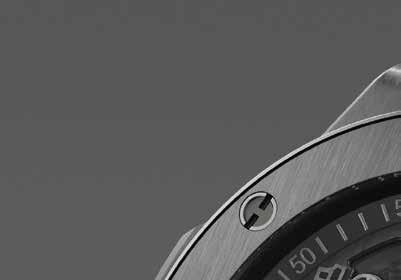
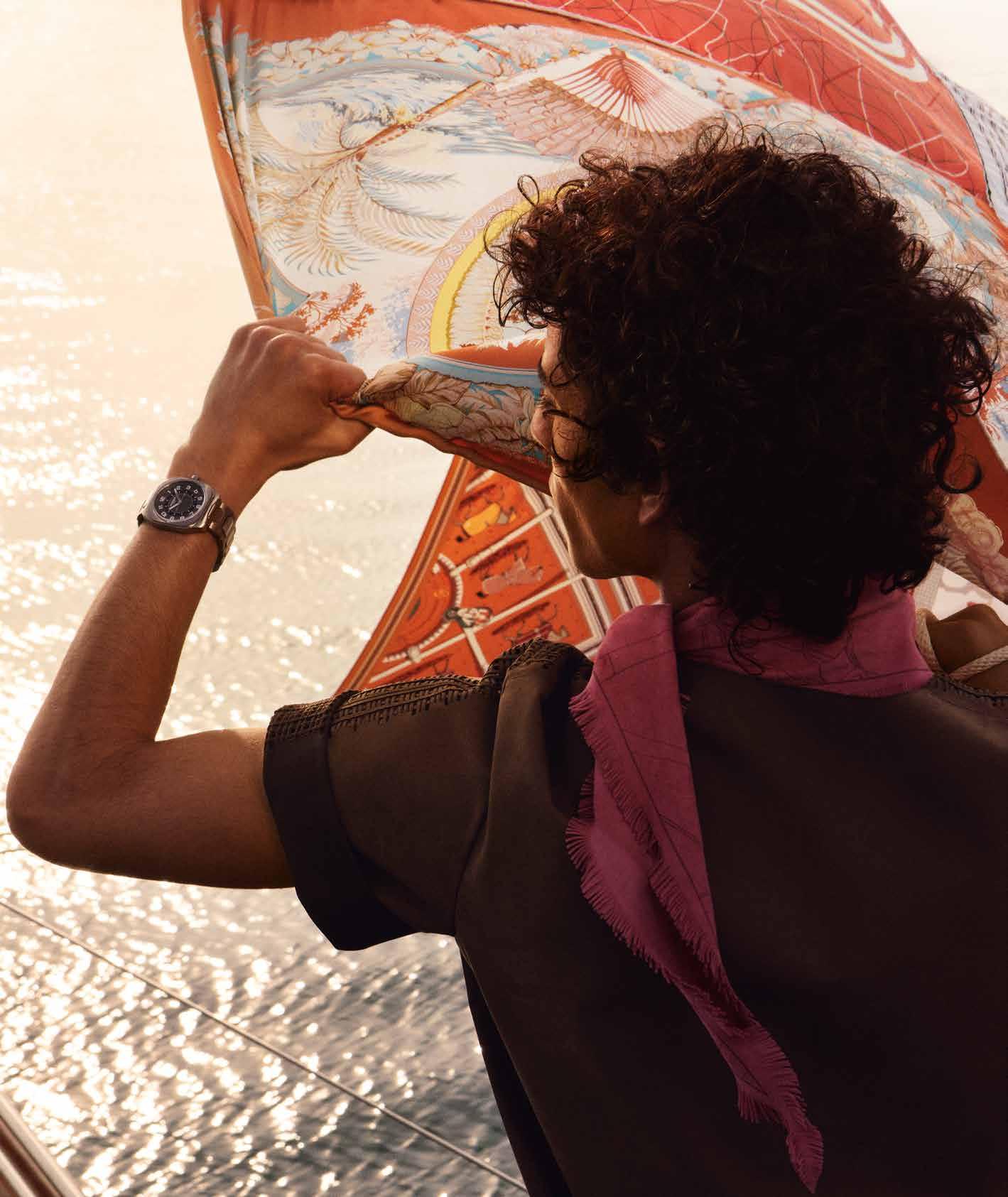
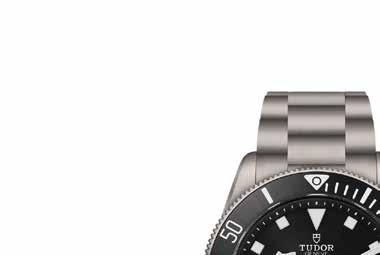
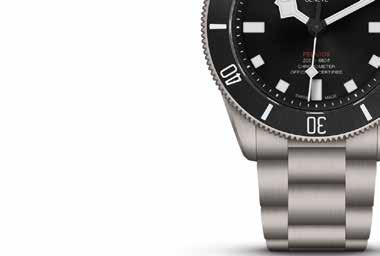
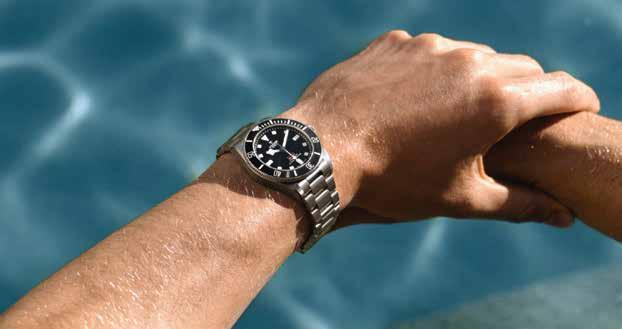
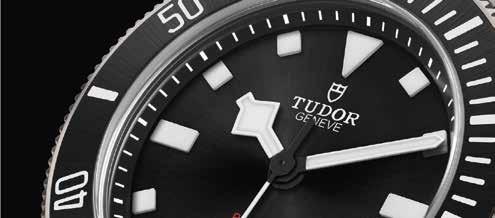
addition to local time and a third time zone. The Pelagos FXD GMT is Master Chronometer-certified to ensure maximum precision and reliability in the adverse real-world conditions endured by personnel of the Aéronautique Navale. R96,900, tanur.co.za, @tanur_collection
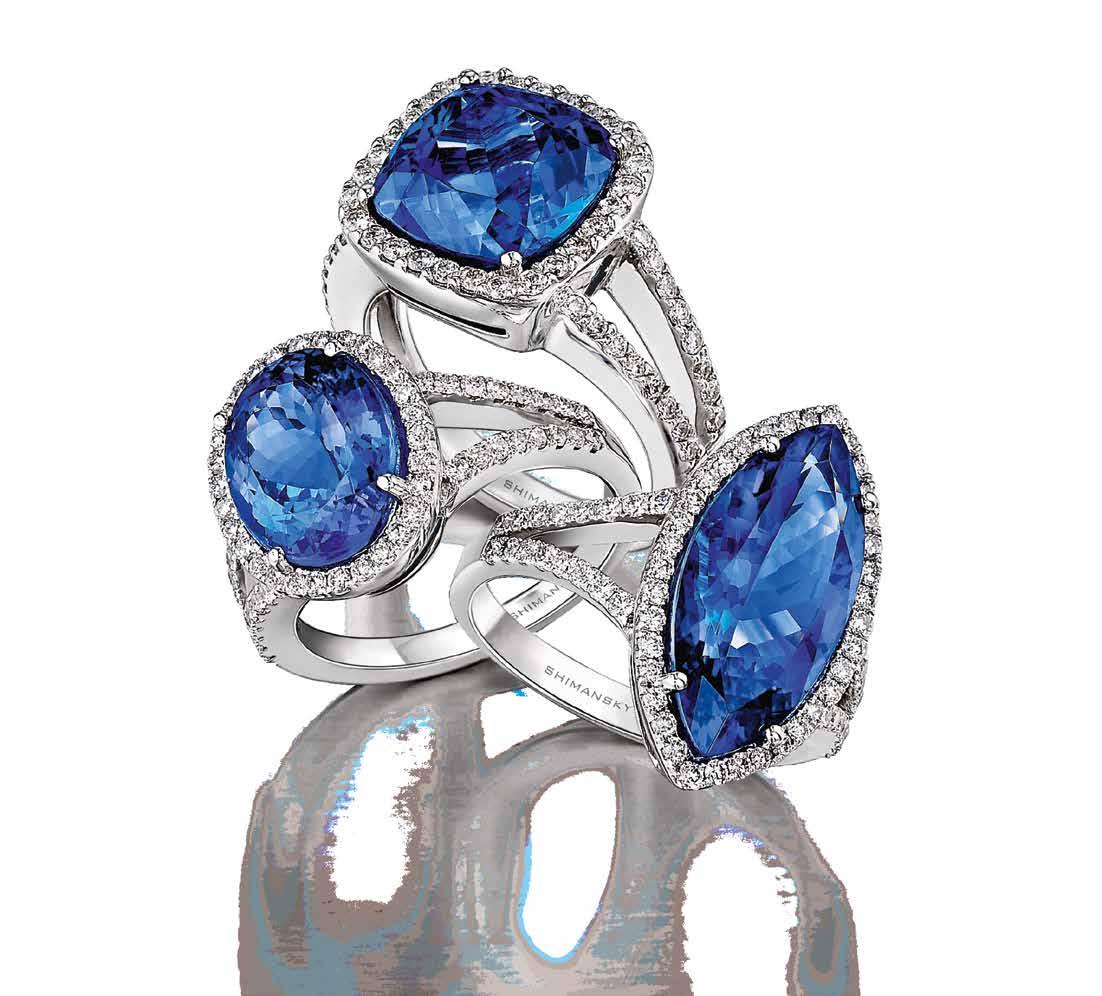
This exquisite ring takes inspiration from the graceful movements of a panther, meticulously crafted with expert precision and attention to detail. It beautifully captures the strength and beauty displayed by this magnificent creature and pays homage to impeccable design and unparalleled style. The Untamed Panther Ring is a must-have for the distinguished and discerning jewellery connoisseur. POA shimansky.co.za @shimanskyjewellery
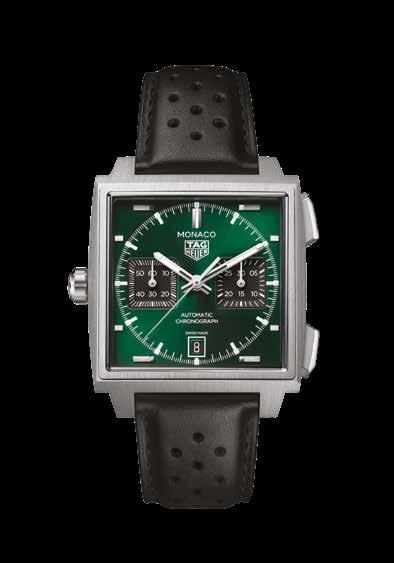
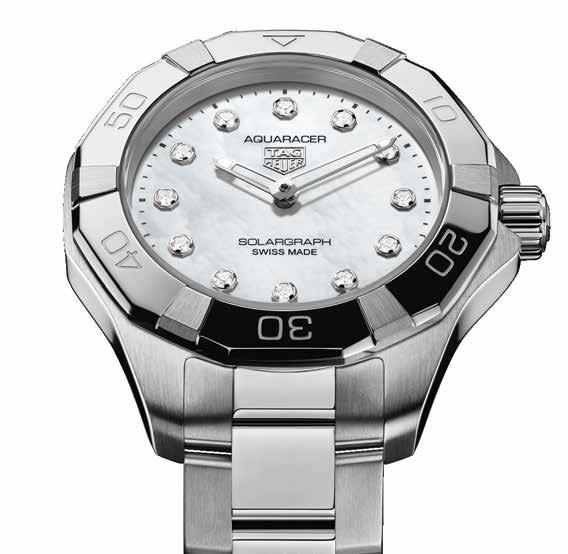
TAG HEUER
The square watch that changed everything is back, and even better. More than 50 years after Steve McQueen strapped one on at Le Mans, TAG Heuer has rebuilt the Monaco from scratch. Grade 5 titanium, a new in-house Calibre TH20-11 with 80-hour power reserve, and the crown still stubbornly on the left. Available in signature Monaco blue, British racing green or a two-tone titanium and rose gold.
TAG Heuer Boutiques picotandmoss.co.za @picotandmoss +27 11 669 0500
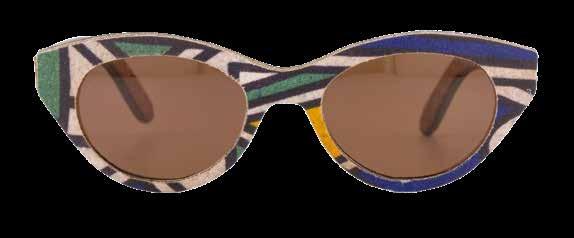
Protect your eyes with a sustainable Cape Town legend. The Ballo Flo is lightweight, durable and surprisingly buoyant (yes they float and bounce). They’re handcrafted from recycled cork, fabric off-cuts and recycled plastic, and finished with premium mineral glass lenses and robust spring hinges. R2,680, balloeyewear.com, @ballo.sun



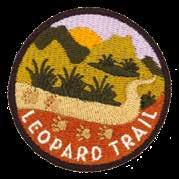
You deserve a badge! Whether you’ve just walked the five-day Fish River Canyon Hiking Trail or watched the sunset from Lion’s Head, these locally designed and embroidered patches offer a timeless way to mark the places, trails and experiences collected along your journey. What’s your next adventure?
R135-R165 per patch, trekpatch.com @trekpatch


FIELDBAR
This is the action cap. Ahoy’s 5-panel cap is made from recycled polyester, is quick-drying and snapback-fitted, with in-house designs that range from bold zebra to black/ gold. Beach, bush, mountain, pub… It handles the lot without breaking a sweat. Unisex, one size, zero fuss. R595, ahoylife.co, @theahoylife
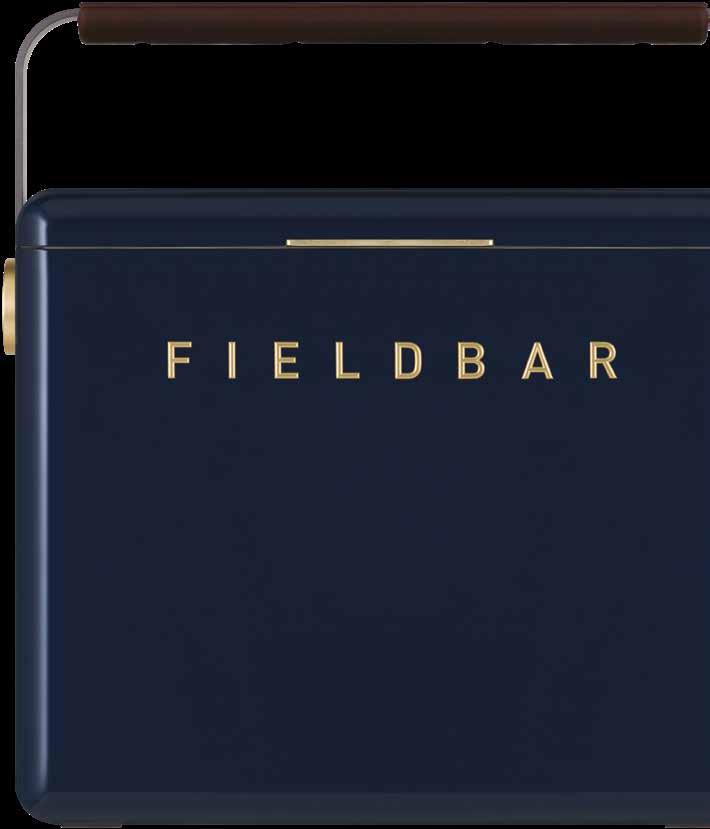
The coolest cooler you didn’t know you needed. The Gin Trunk is a 24-litre hardcase cooler box designed with generous gatherings in mind. Properly made and perfectly proportioned, the Gin Trunk is everything you would expect from a modern cooler. Durable, versatile, and comfortable to carry. Oh, and did we say stylish?
R4,799 fieldbar.co.za @fieldbar.co
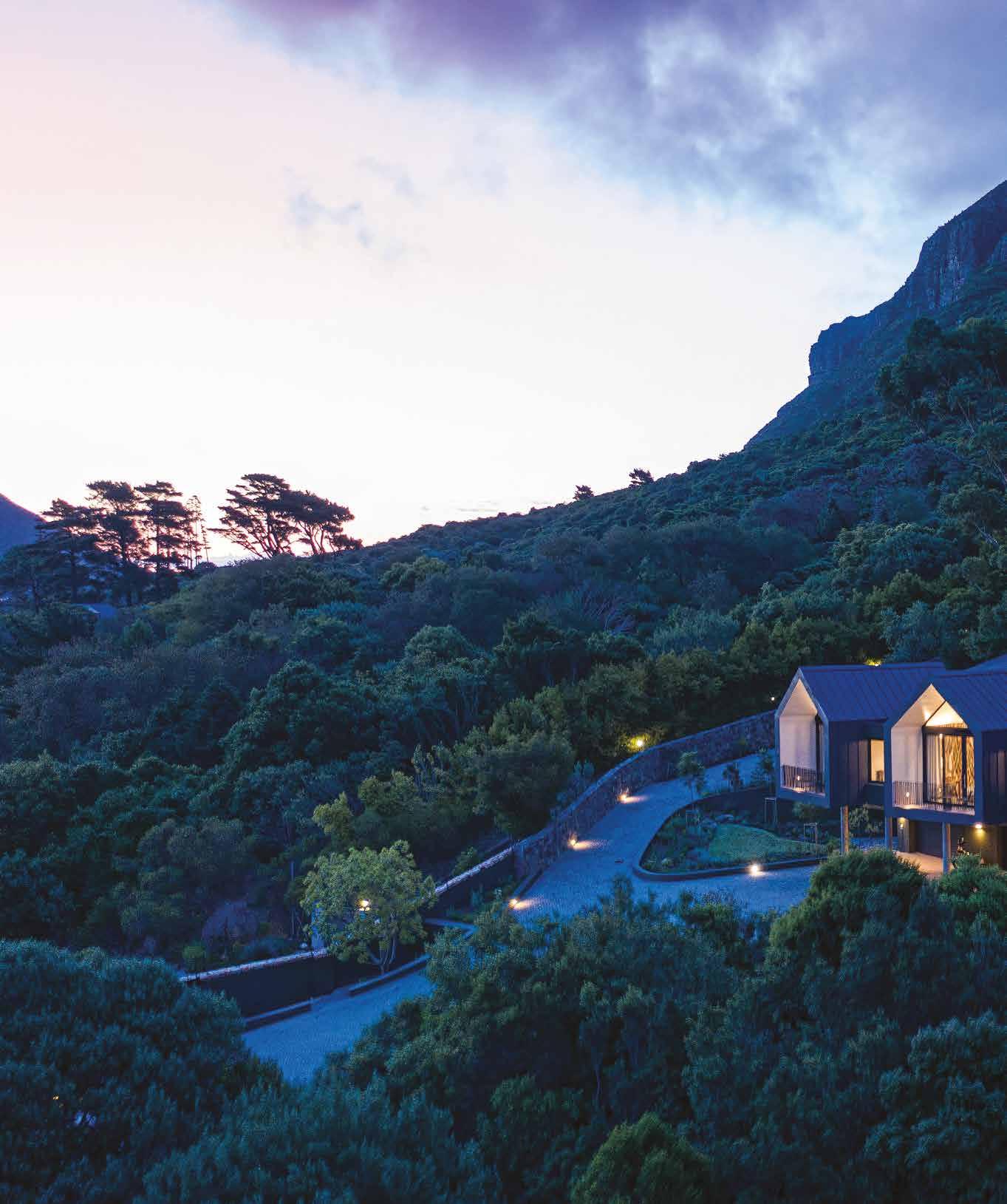
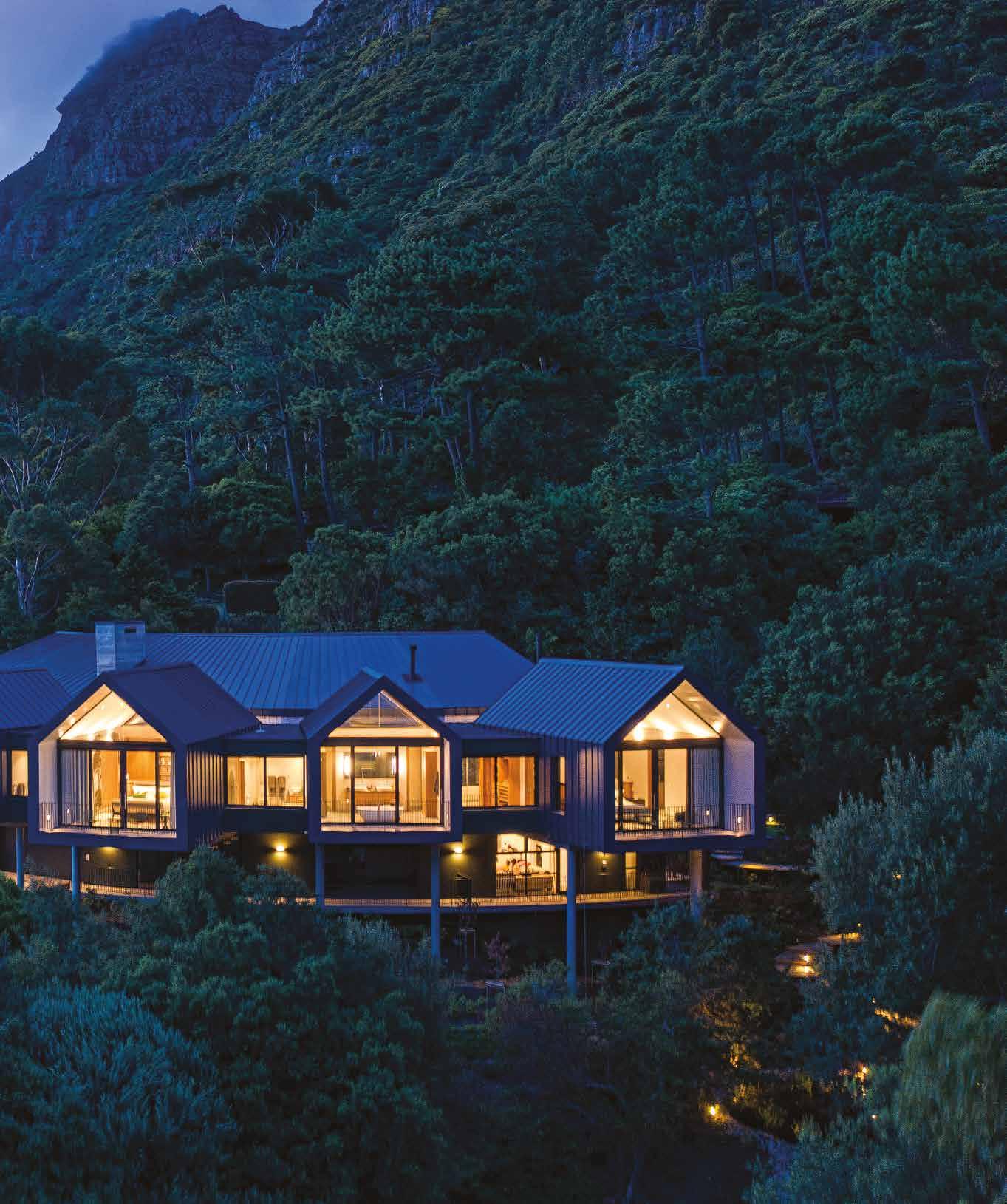
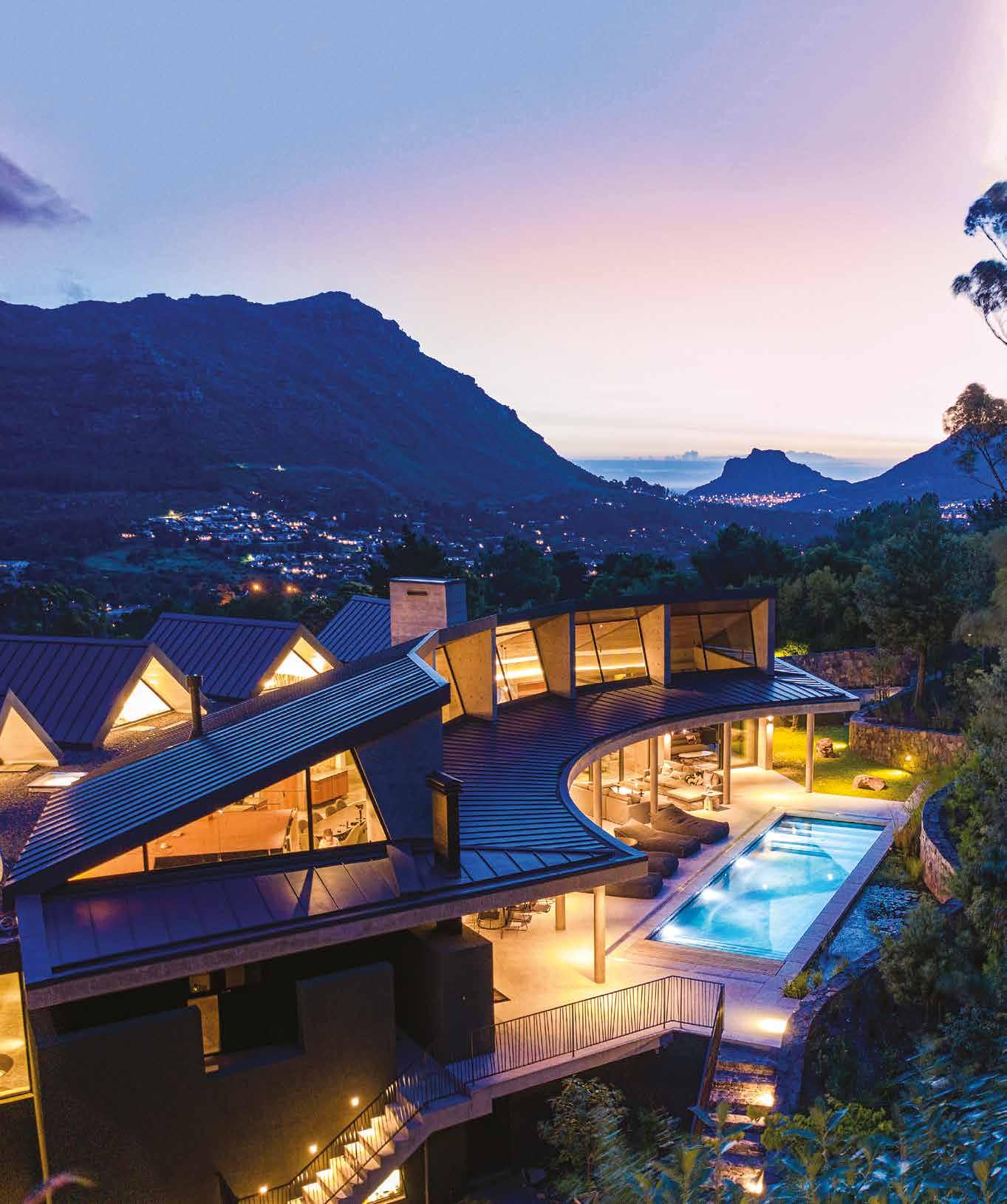
Thirty minutes from Cape Town’s CBD, tucked into the forested slopes close to the Constantia winelands, a small and serious retreat has quietly set a new bar for what a luxury escape in the Mother City can look like. No performance, just trees, stillness and space
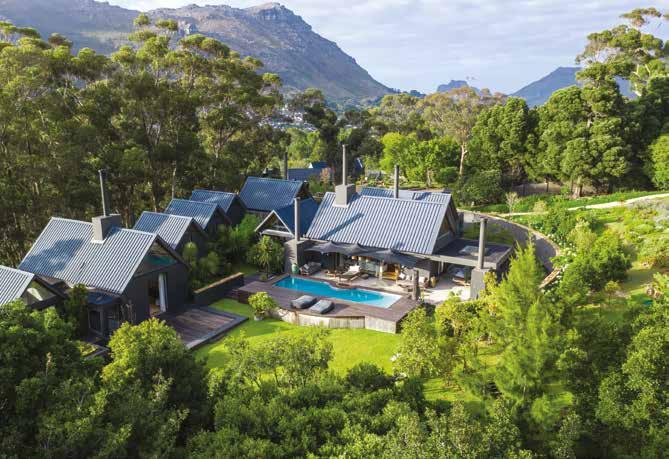
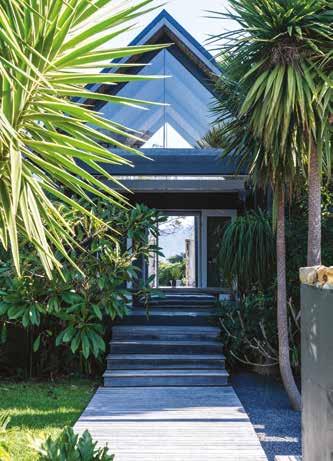
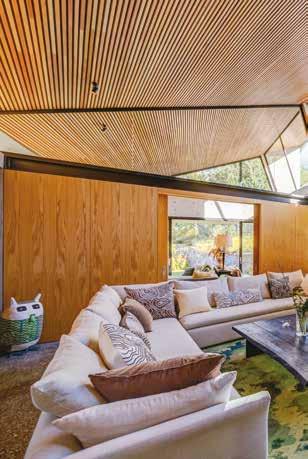
Winding up the narrow roads of Hout Bay, I get lost trying to find the entrance of Future Found Sanctuary. I took it as a good omen. Somewhere along the way, driving up the green slopes, I started to somehow feel lighter. The mountains close in from both sides, the valley opens below, and whatever you left behind in the city begins to lose its grip. By the time you turn off into the gardens of the Sanctuary – high above the surrounding suburbs – the transition is already underway.
This is not a hotel that announces itself. It feels like you’re entering a secret enclave. There’s no lobby engineered to impress. What you get instead is quiet. The specific quality of it up here – not silence exactly, more an absence of urgency – is the first thing the property gives you, and it turns out to be the thing you remember longest.
Cape Town is not a city that makes peace easy. Beautiful and relentless, its pull between beach, mountain, winelands and restaurant lists generates a low-grade scheduling anxiety that most visitors only recognise when it’s gone. At Future Found Sanctuary, it goes quickly. The mountain draws you in magnetically.
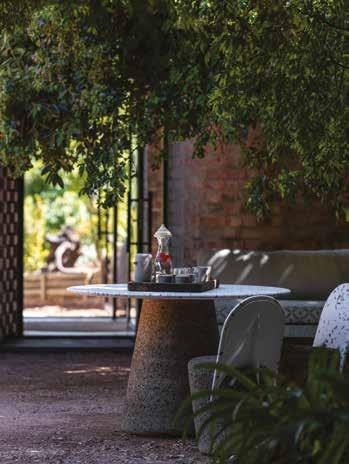
The property spreads across a 5.4-acre forested hillside with a variety of lush gardens threading between the accommodation villas and pods – dense fynbos, shaded clearings, indigenous trees closing overhead. It feels closer to Kirstenbosch National Botanical Garden just around the mountain than a hotel’s grounds crew’s idea of nature. There are corners up here where you can sit and hear nothing man-made at all. And that’s not by accident.
Mountain View Villa sits just below the five elements garden and offers a seamless blend of modern luxury and timeless indulgence. Impeccably decorated, it invites the outdoors in with floor-to-ceiling windows and glass doors. Outside lies a private pool oasis, a state-of-the-art braai area and an alfresco dining space with a canopy of stars providing the ultimate ceiling. Every detail is taken care of here; all you have to do is relax.
Maison Noir offers a secluded stay surrounded by lush landscaping: a five-bedroom villa, dark architectural lines, a private art collection, furniture that was chosen rather than specified. The Grand Master Suite runs to 90m2 – complete with mountain views from a king bed, built-in fireplace and private lounge. The Opulent Garden Suite has a lavish patio garden and offers complete privacy when needed; honeymooners tend to book it and barely surface. Three Deluxe Garden Room lofts complete the villa, each with outdoor showers, upper-level decks and small private gardens – loft configurations that give travelling groups actual space, not the pretence of it. Take the whole villa as exclusive use and it stops being a hotel entirely. Think of it as your own private villa with exceptional staff.
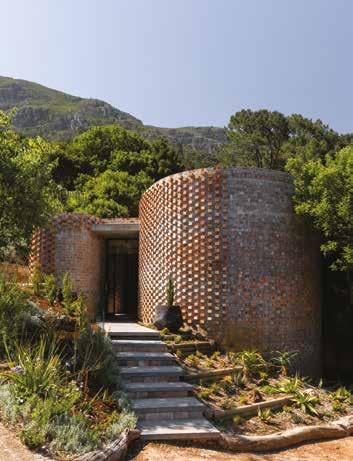
On a casual walk up the hill, you’ll find the hidden gems of the property: the Forest Pods – two very private hideaways that fold into the landscape and envelope you as you enter. Upstairs is the Sky Forest Pod with views towards Constantia Nek, while downstairs is the cosy and intimate Earth Forest Pod. The curved walls and vast expansive sliding doors give the pods an architectural feel that makes the space feel much more
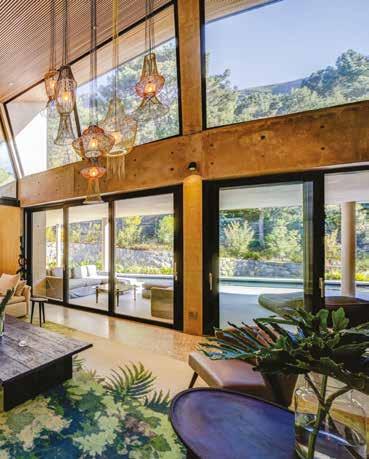
generous than the 70 and 75m 2 footprints. The only reason to leave would be to take a dip in the heated pool and order a G&T from the water to take in the expansive mountain overlooking the Sanctuary.
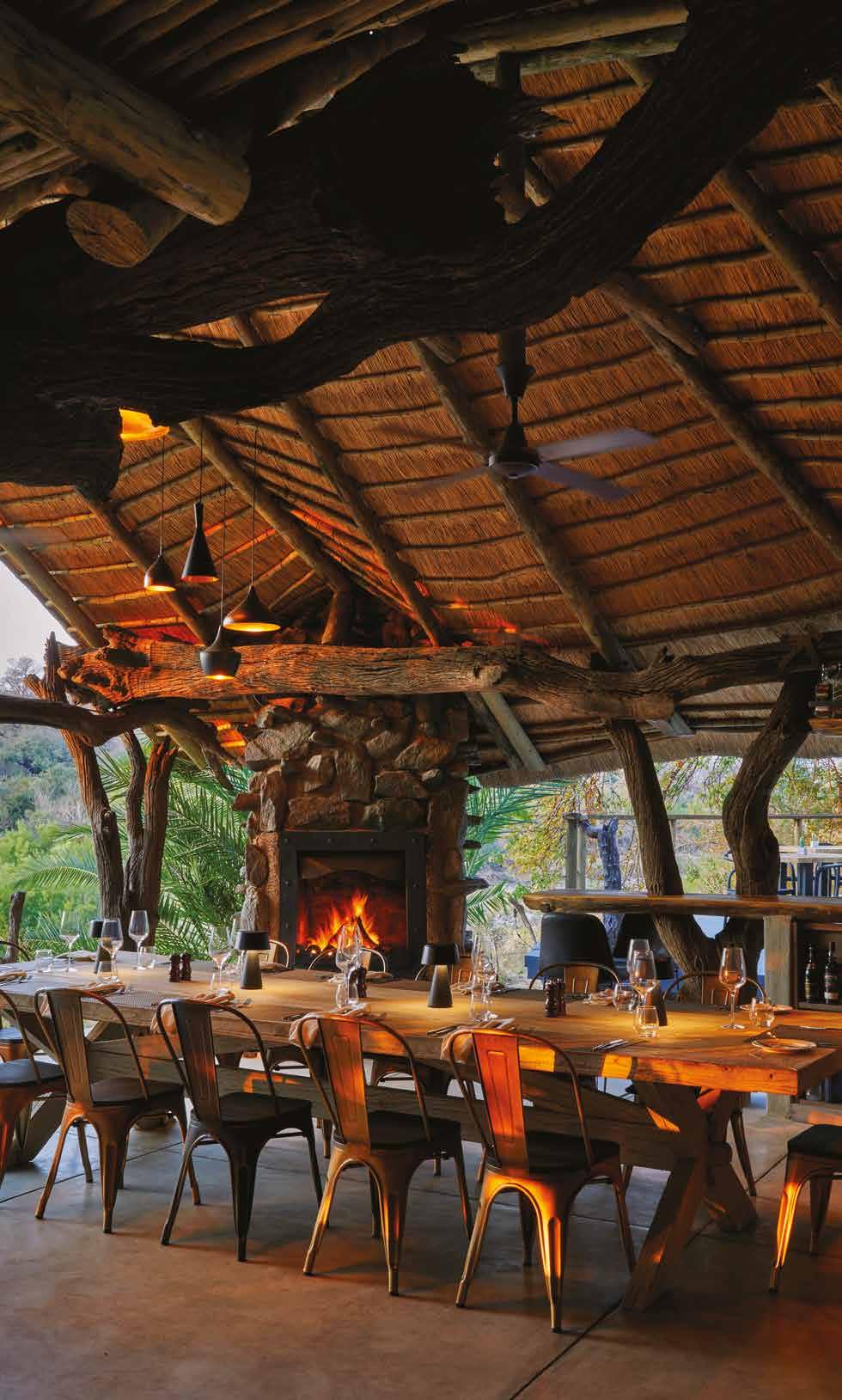
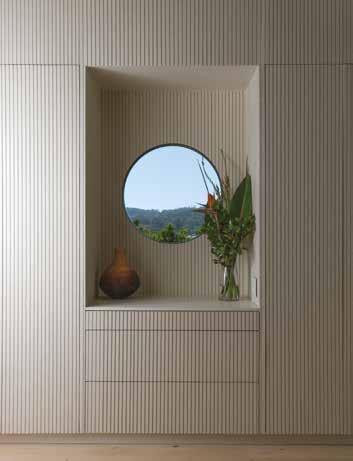
At the top of the mountain sits Villa Verte – lighter, more glass, longer views across the Hout Bay valley. The cantilevered balconies on the mountain-facing suites reach out into the treetops in a way that still stops people mid-thought when they step outside. Eucalyptus-forest wallpaper in the Deluxe Mountain Suite; real eucalyptus forest just beyond the balcony rail. Strelitzia and sansevieria prints in the two Deluxe Mountain Rooms, locally designed furniture and endless valley views from the bed. The kitchen is open-plan and homely – the private chef at a stove you could walk up to, meals built from what the property grows and what the harbour landed that morning. It feels less
like dining in a hotel and more like eating in someone’s very well-appointed home.
The property’s gym and three-room Sensorium Spa are up here too, along with heated pools and a cold-plunge pool fed by natural spring water from the mountain and held at 10-12°C. The tree canopy covers everything. Guests here describe a particular feeling – elevated above the city, entirely contained by the mountain – that turns out to be hard to replicate anywhere else.
None of it requires a packed itinerary. The Oranjekloof mountain trails start at the gate. Hout Bay harbour is 10 minutes downhill – fishing fleet, produce market, Seal Island boats, the smell of salt and diesel that reminds you the Cape is also a working coast. The Constantia wine route, just over the hill, is 10 minutes away. Chapman’s Peak Drive starts at the bottom of the valley. The team will organise any of it. But the guests who tend to get the most out of this place are the ones who organise very little – who spend a morning in the pool watching the mountain light move and consider that sufficient. It’s then that you realise that peace and tranquillity are the real luxury.

Thirteen rooms. Twenty-six guests maximum. In a city increasingly fluent in luxury – good hotels, serious restaurants, world-class wine – the genuinely scarce thing is space, and the peace that follows from it. Future Found Sanctuary has both, on a forested hillside above a working harbour, 30 minutes from the airport and some considerable distance from the feeling that you are one of many.
“IN A CITY INCREASINGLY FLUENT IN LUXURY, THE GENUINELY SCARCE THING IS SPACE, AND THE PEACE THAT FOLLOWS FROM IT.”
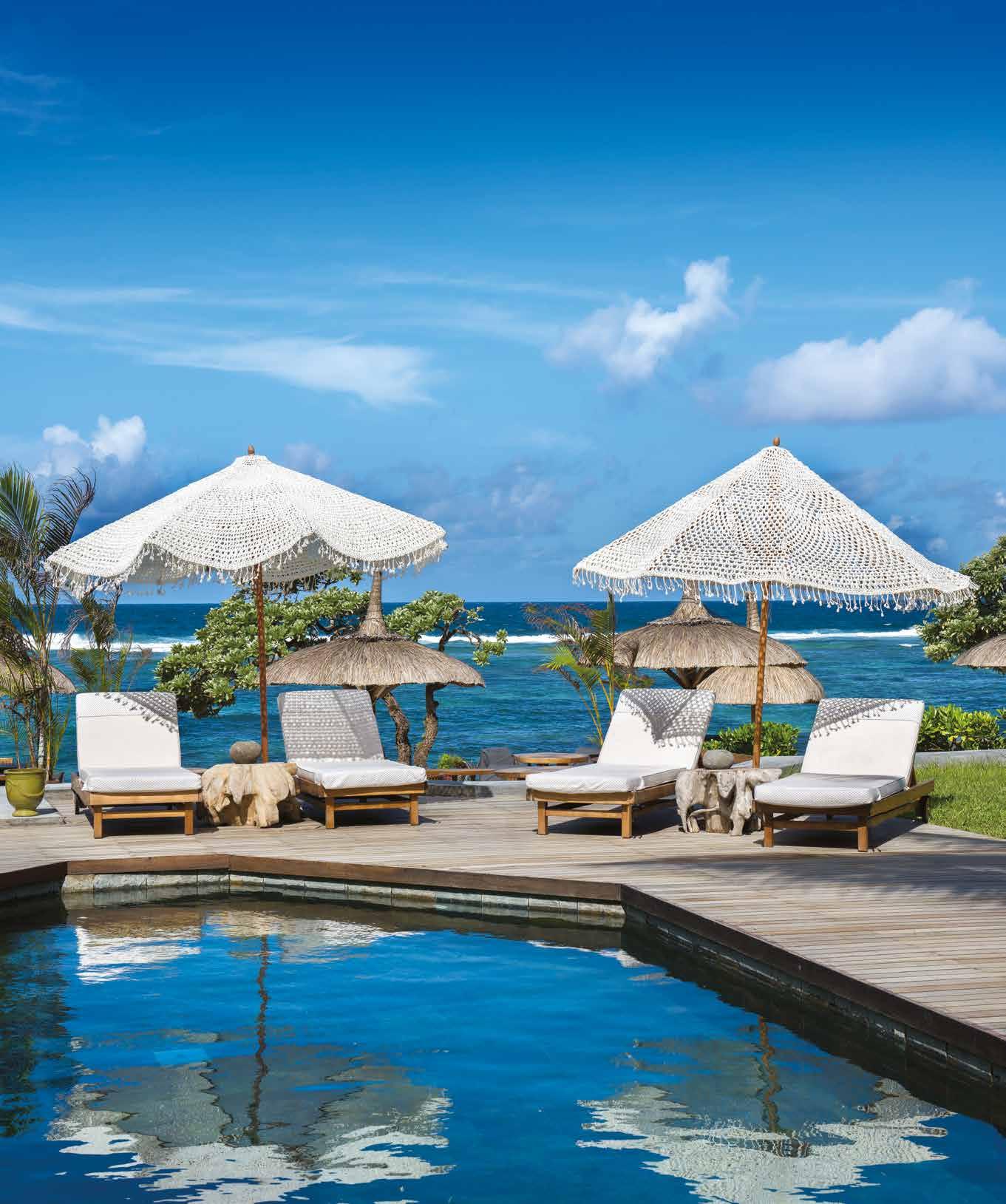
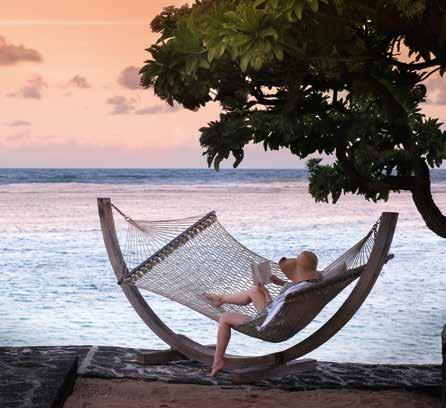
Forget the grand resort. On Mauritius’ north-east coast, a different kind of luxury is on offer, measured in hammock hours, coral views, and the freedom to eat whenever you please
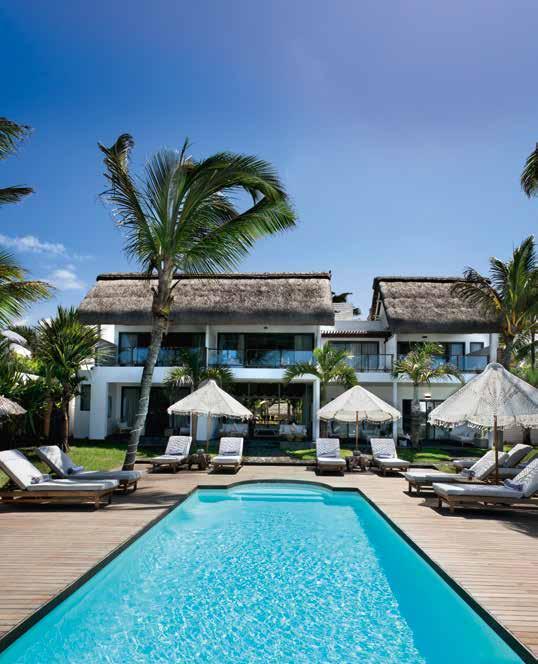
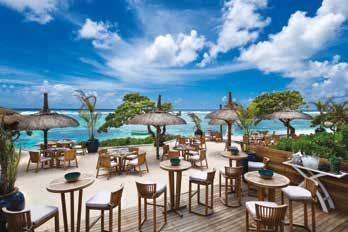
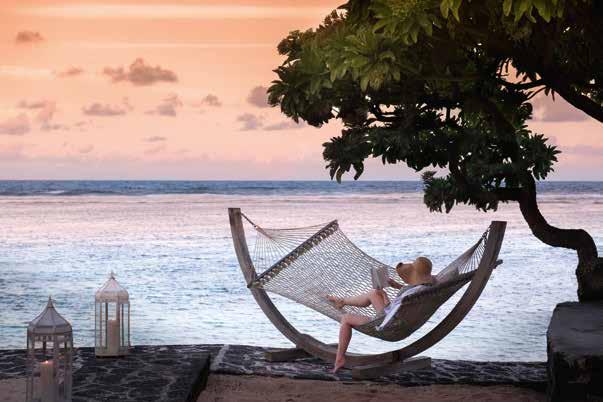
Start with the dinner. At La Maison D’Été, it’s served à la carte; no buffet, no sequenced sittings, no resort theatre. You eat when you’re hungry, at a table facing the lagoon, with the Indian Ocean doing most of the atmospheric work. A small detail, yes. But small details are usually where a place’s character lives.
Poste Lafayette is on Mauritius’ north-east coast: not the polished, resort-lined west, but the island’s trade-wind edge. Volcanic rock pushes into the water. The vegetation grows thick and uncurated. The sea runs properly cobalt. Getting here requires a decision – you’re not passing through on the way to somewhere more obvious. You’ve come specifically, and you know what you’re coming for.
La Maison D’Été – ‘summer beach house’, more or less – built its identity around that idea and has stuck to it. This is beachhouse living done with genuine care, not the approximation of it. Whitewashed walls, wicker, hardwood, palm-thatched roofs, terraces wide enough to spend an afternoon on. Island-chic, minus the performance.
There are 16 rooms across four categories. Deluxe and Superiors are compact but considered; Premium rooms bring more space and offer a luxurious beachfront setting. Then there’s La Vigie, a 65-square-metre suite on stilts, with panoramic water views that make most hotel rooms feel like an afterthought. Whether it’s worth the premium depends on how much time you plan to spend on your terrace. Most guests at La Vigie end up spending quite a lot.
Days here find their own shape. Bicycles are complimentary, as are kayaks, paddleboards and snorkelling gear – the kind of equipment most resorts rent out at resort prices. The beach is literally on your doorstep, but if even that is too far, both pools offer a cool respite from the balmy heat. Take a cooking class under the head chef, if you want something to do, or arrange a catamaran cruise to the northern islands, if you need to feel productive. Most people, once they’ve been here two days, stop planning quite so much.
The Garden Restaurant operates under a palm-thatched roof: wicker and hardwood, Mauritian cuisine using what the sea offered up that morning, wines from further afield, aged rums that merit attention. The Beach Restaurant strips this back – sand underfoot, custom cocktails, the water close enough to hear. The langoustines are locally famous, which in Mauritius is saying something.
La Parenthèse spa is there when you want it. The team can organise dolphin swims, fishing, hikes into the Black River Gorges, a loop through the island’s temples and colonial churches. Or it can arrange nothing at all, which is also a valid option.
La Maison D’Été is not for everyone, and it knows it. The traveller it suits has already decided that luxury doesn’t require scale – that 16 rooms and a kitchen that respects its produce can outperform 300 rooms and a celebrity-signed menu. From the terrace of La Vigie, watching the reef change colour at dusk, this feels more than reasonable. It feels just right.

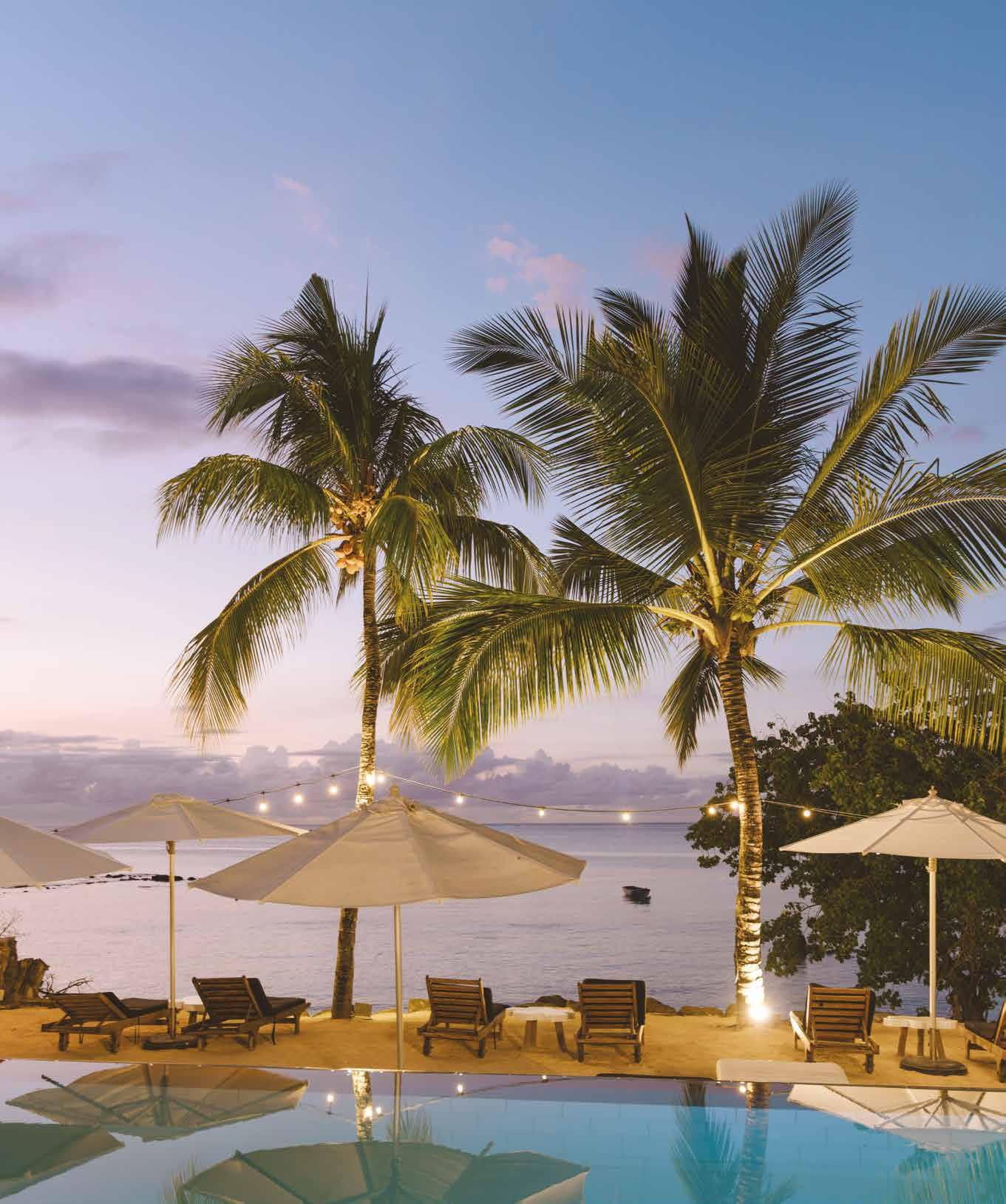
The north-west coast of Mauritius has been hiding in plain sight. The lagoon is almost absurdly calm, the village moves at its own pace, and the crowds have, against most odds, simply not arrived
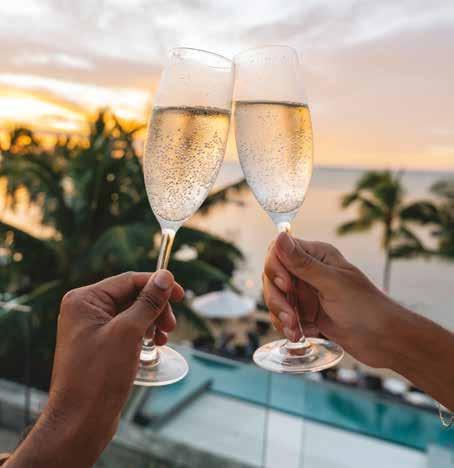
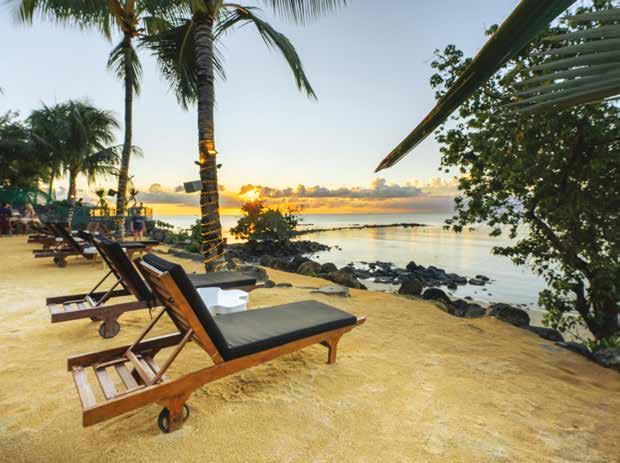
Early morning on Mont Choisy Beach, and the lagoon is barely moving. The reef holds the water in place, and without waves, the colour settles into something pale and clear – sea-glass green shading into aquamarine, depending on the cloud cover and the hour. Along the bay, the palm trees begin precisely where the sand runs out. No buildings interrupt any of this. Given how much of Mauritius’ coastline has been developed, subdivided and built upon, this feels genuinely unusual.
The north-west sits apart from the island’s more-marketed quarters. Grand Baie is five to ten minutes away by road, close enough to be useful – a good restaurant, a market, a night out – and far enough that its noise doesn’t carry. Mont Choisy itself developed slowly, almost accidentally, from fishing village to lowkey beach destination without the infrastructure catching up. The result is a stretch of coast that got lucky.
Mystik Lifestyle Boutique Hotel is right on that beach. Not nearby, not a short transfer from the shore – directly on it. The infinity pool runs towards the ocean, and the sight line from the water is arranged so that pool and lagoon seem to share the same plane. It sounds like a standard-issue hotel selling point. In practice, it stops you mid-thought.
The property suits adults – guests must be 12 or older, which quietly sets the atmosphere without imposing it. Rooms are contemporary and well-considered: queen-sized beds, full bathrooms, a palette pulled from the colours outside. They’re not oversized, but the balance between inside and out is weighted correctly. The sea is close enough that staying in the room for long feels vaguely counterproductive.
The #36 Beach Resto Bar is where the hotel finds its voice. All-day dining from 7:30, kitchen open until 10pm, every table facing the lagoon. The menu covers enough ground to keep a week interesting. The kitchen is accommodating in the way that confident kitchens tend to be: one guest brought in a fresh-caught tuna; the chef prepared it without any visible drama. That sort of thing tells you how a place is actually run.
The surroundings do their part. Mont Choisy Le Golf – Peter Matkovich’s 18-hole course – sits five minutes away and is worth a morning even for occasional players. Water sports are available along the beach; the protected lagoon is good for beginners, the open water beyond the reef for those who need more room. A cultural circuit of the island’s temples, pagodas, churches and mosques takes half a day and covers a lot of Mauritian history efficiently. The Pamplemousses Botanical Garden, one of the oldest in the southern hemisphere, is a straight drive south and often overlooked.
Why honeymooners have always found their way to Mont Choisy is not mysterious. A reef that keeps the sea flat, a setting that stayed undeveloped when other parts of the island didn’t, a proximity to amenities without dependency on them – these are conditions that can’t simply be built. They either exist or they don’t.
Mystik doesn’t have a dramatic arrival sequence or a lobby that sets out to impress. What it has is an excellent location, a bar with a sunset view that earns the walk up, and a stretch of coast that most visitors to Mauritius never find. At some point they will. Until then, the beach in the morning is yours.

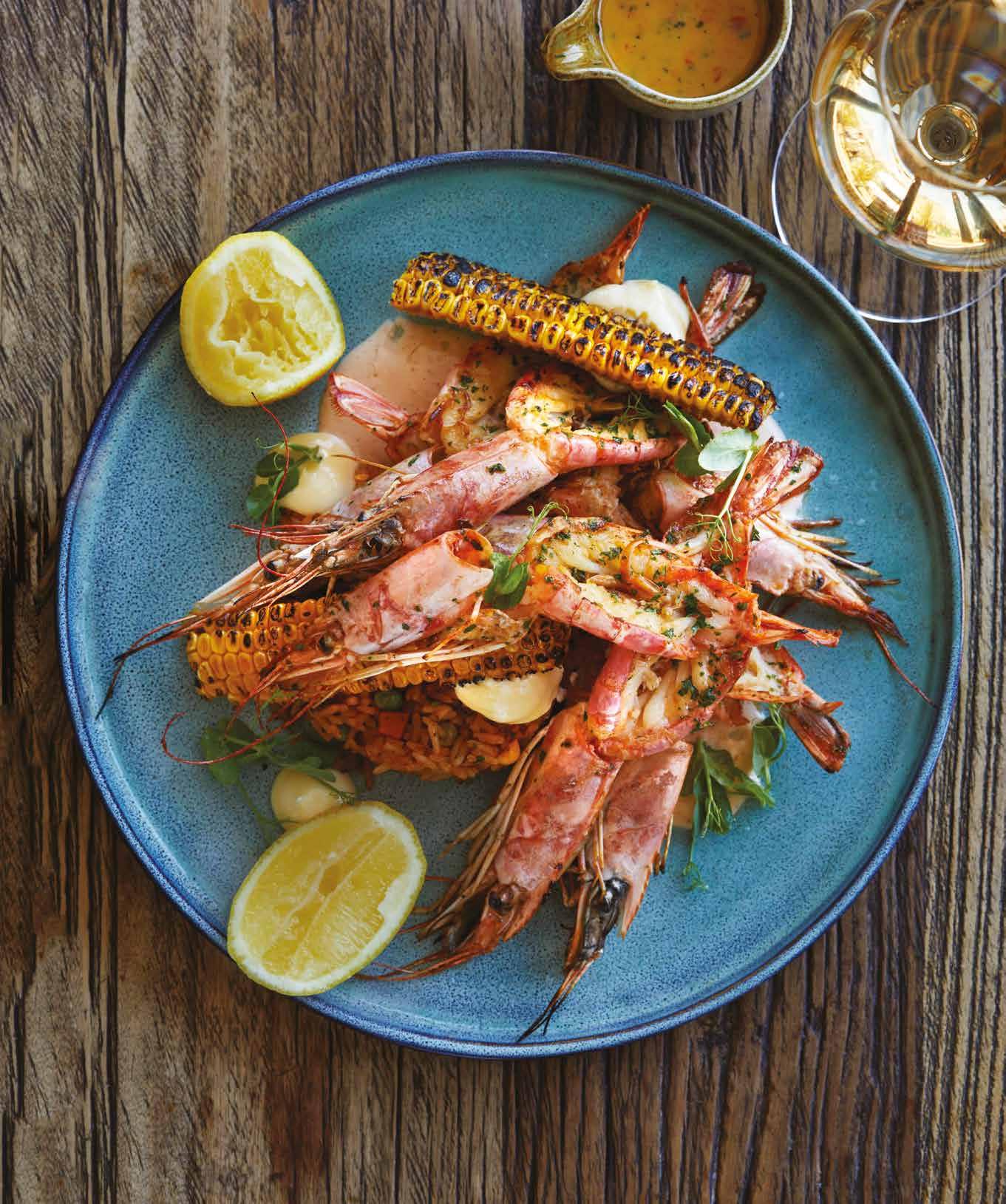
Ginja restaurant at the Victoria & Alfred Hotel in Cape Town’s Waterfront precinct brings the philosophy of place-driven cooking to life with a fresh, seasonal menu filled with the flavours of the Cape
BY WANITA NICOL
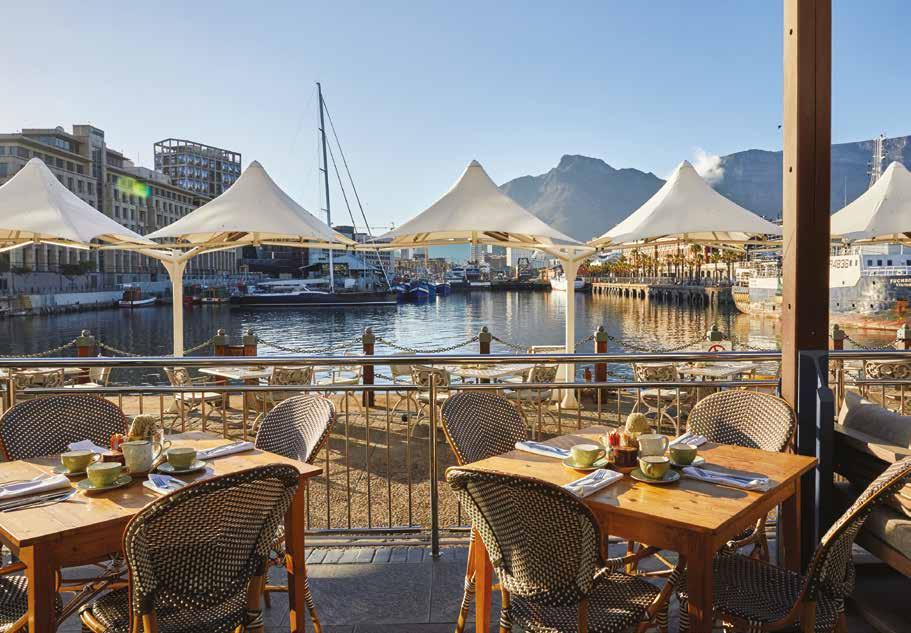
GINJA’S MENU IS DEEPLY ROOTED IN THE IDENTITY OF THE CAPE, DRAWING ON BOTH ITS RICH CULINARY HERITAGE AND ITS EXCEPTIONAL LOCAL PRODUCE
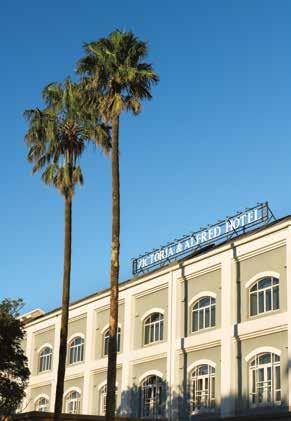
With quaint tables spilling out to the water’s edge, cool sea air filling your lungs, and a faceful of Table Mountain for a view, Ginja is the kind of eatery that entices you to linger. Pressing appointments lose their urgency amid the chatter of gulls and the sight of boats lazily bobbing at anchor. Some days you may even spot a frolicking seal.
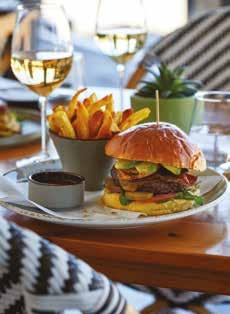
This languid location inspired Ginja’s menu. “The waterfront setting naturally lends itself to a menu that leans into fresh, vibrant, and ocean-inspired flavours,” says Matthew Smith, General Manager of the Victoria & Alfred Hotel. “Seafood plays a central role, from line fish and prawns to mussels and ceviche, all prepared in ways that highlight freshness and simplicity.” The philosophy of place-driven cooking comes through in a menu that presents unmistakably local flavours in a refined, modern way.
“Ginja’s menu is deeply rooted in the identity of the Cape, drawing on both its rich culinary heritage and its exceptional local produce,” says Smith. “You see this in the use of distinctly South African ingredients, such as springbok, Saldanha Bay oysters, Karoo lamb, and rooibos, all of which celebrate regional provenance.”
Beyond the dishes themselves, Ginja also prioritises local suppliers (a musttry for cheese-lovers: the Ciao Ciao burrata uses ingredients from a Cape Town cheesemaker). “Even though we are a large operation, we take exceptional pride in only using local, small-scale suppliers,” says Smith.

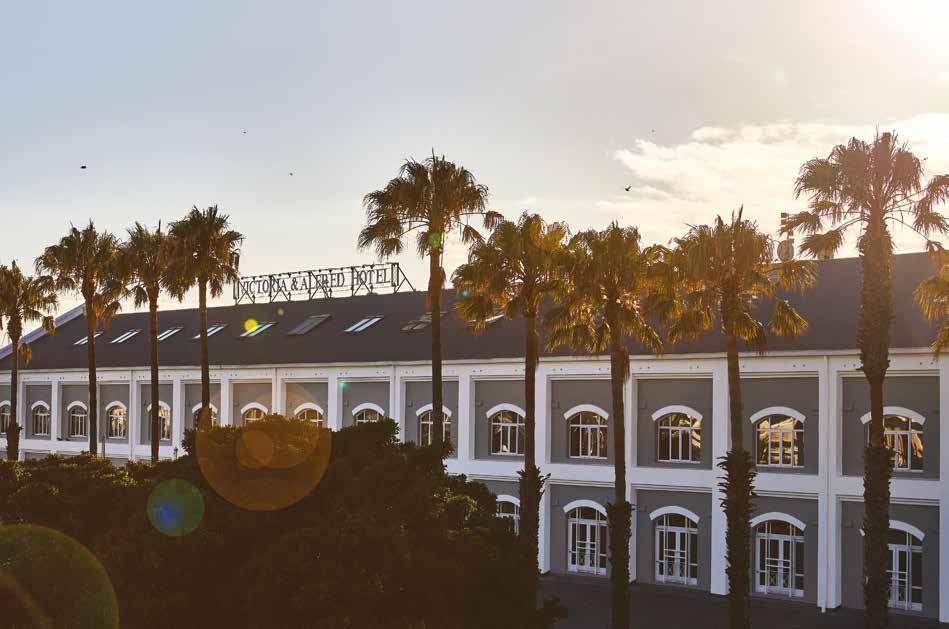
The preference for local suppliers forms part of Ginja’s commitment to sustainability, which comes across in other ways too. Meats are locally farmed and seafood options are sustainable. The vegetarian and plant-based dishes not only cater to guests’ preferences but offer a more conscious approach to menu design.
“Chef Jodi [Executive Chef Jodi Gillespie] approaches the menu as something dynamic rather than fixed, allowing it to evolve with the seasons to ensure that we are only using locally grown produce rather than importing,” says Smith.
Whether you’re staying at the Victoria & Alfred Hotel or visiting the Waterfront, a meal at Ginja will be an experience to savour.

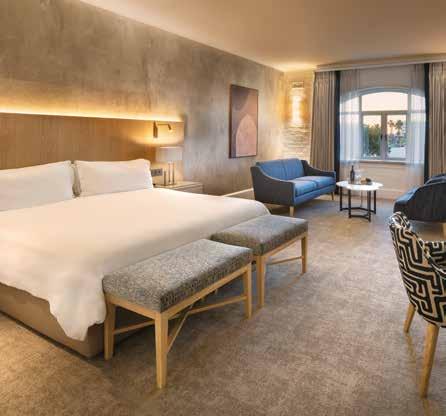
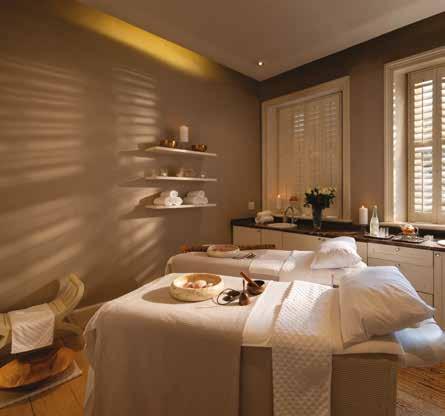
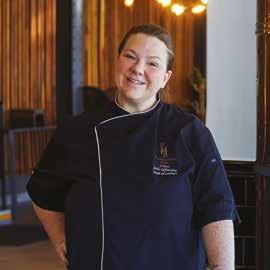
Highly respected on South Africa’s culinary scene, Jodi Gillespie has spent two decades honing her craft in South African kitchens and abroad. A “chefs’ chef”, she was appointed Western Cape Chairwoman for SA Chefs in February 2025. Through her role with the non-profit organisation, she works to develop and elevate the profession in South Africa. As Executive Chef for Newmark’s Waterfront properties, Chef Jodi crafts treasured experiences for guests that include not only what’s on the plate, but the stories around it.
You can see her attention to detail in the fresh, flavourful food, carefully curated drinks menu and memorable setting, where local lore comes alive.
“Sitting on the pier with Table Mountain as a panoramic backdrop creates a dining atmosphere that’s hard to beat. Combine that with dishes crafted with award-winning care, and you have something truly unique,” she says.
BY ANDREA NAGEL
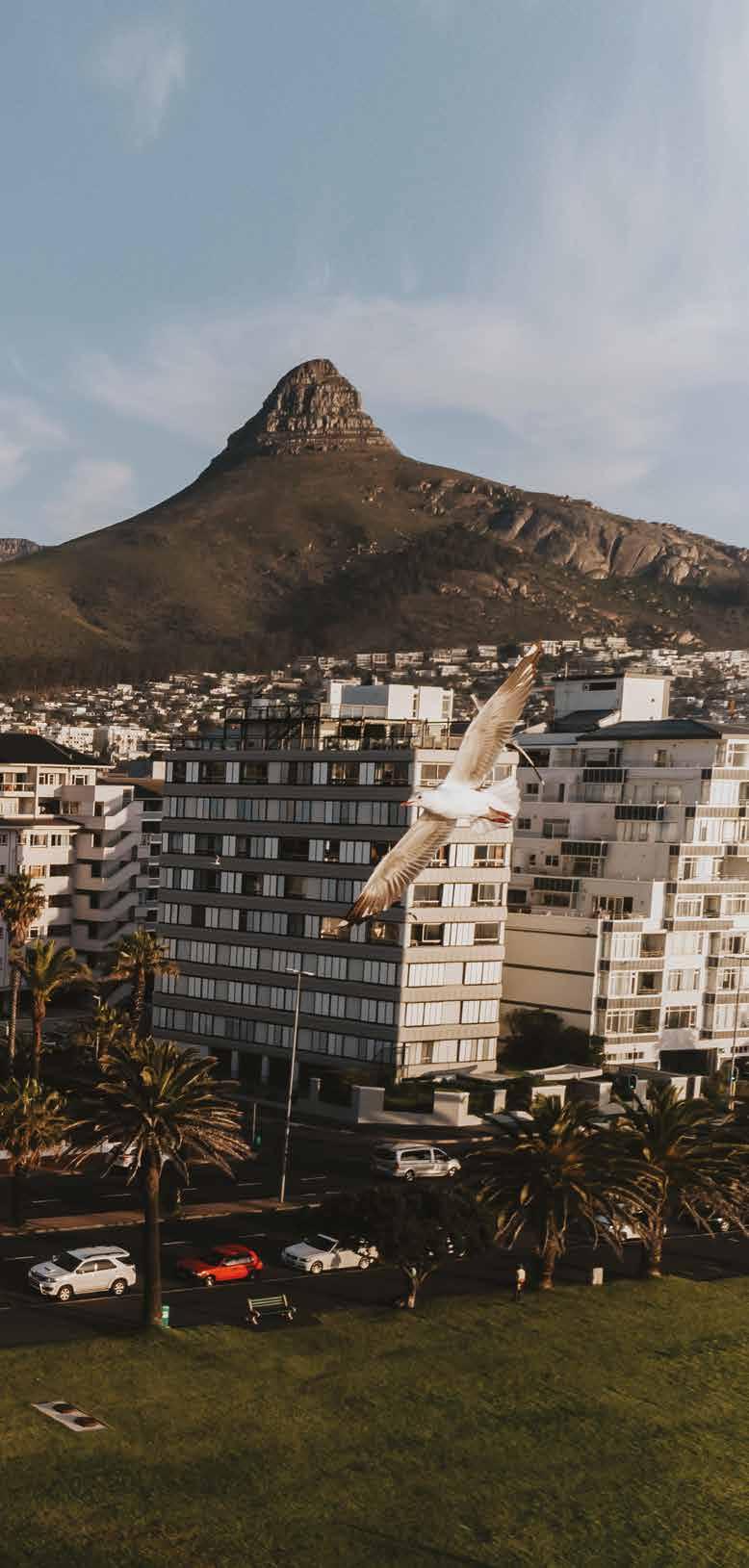
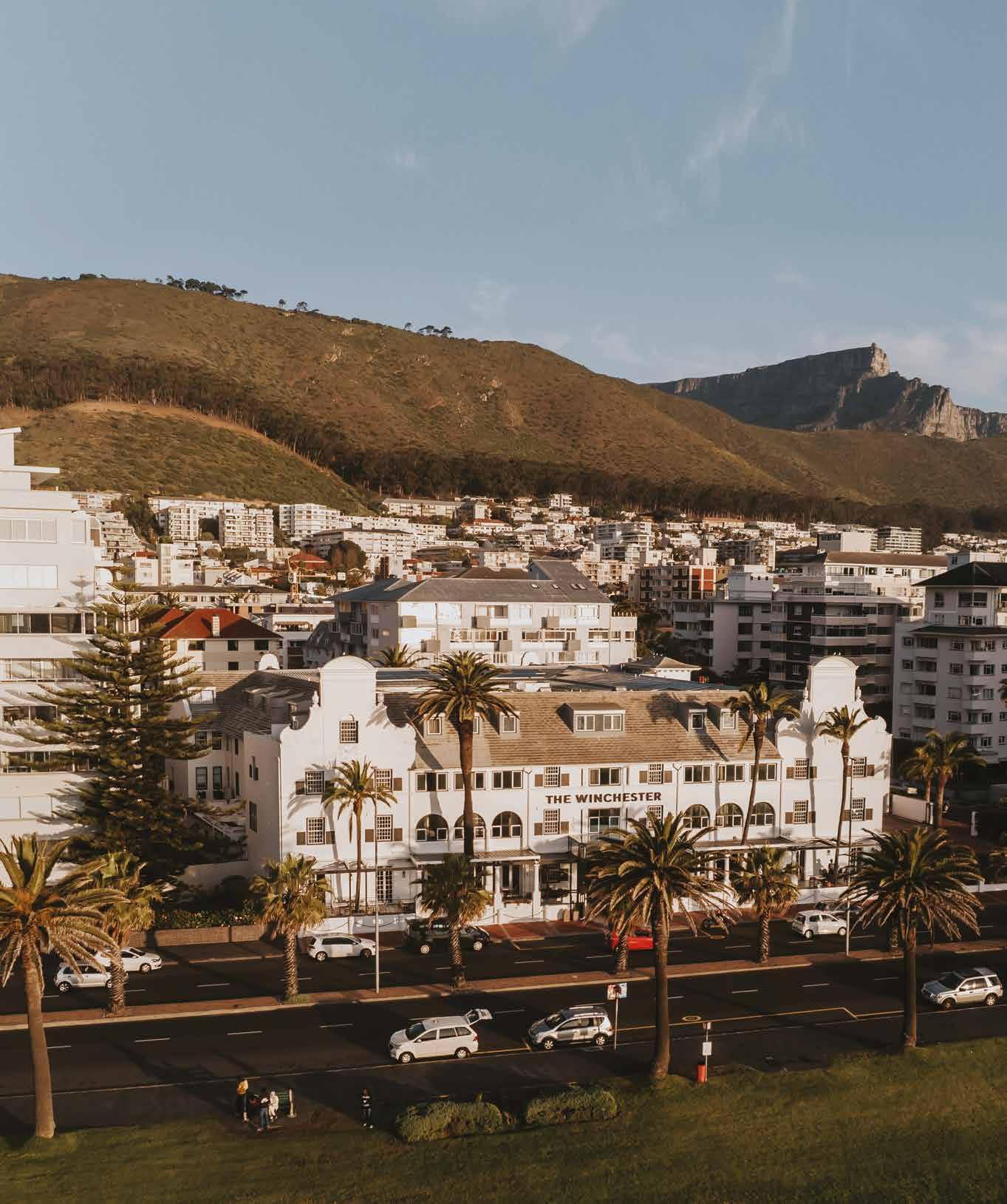
Sea Point has always attracted me – that long, restless ribbon of Atlantic-facing real estate where Cape Town’s contradictions are laid bare.
Pensioners and influencers, ageing façades and new, trendy restaurants, early-morning joggers and late-night bar hoppers – all of it jostling for space along that strip of ocean-facing ambition.
And right in the middle of that mashup of humanity – the promenade pulsing with dog walkers, runners, people doing push ups on the grass, paragliders sweeping past the window – sits The Winchester Hotel, occupying the sweet spot between being part of it all and watching the theatre go past from the box seats. The hotel is, in equal measure, a reminder of when Dutch Revival was the trending style of architecture in the Cape, and our modern, edgy moment of sleek lines, glass façades and an emphasis on invisible efficiency and comfort.
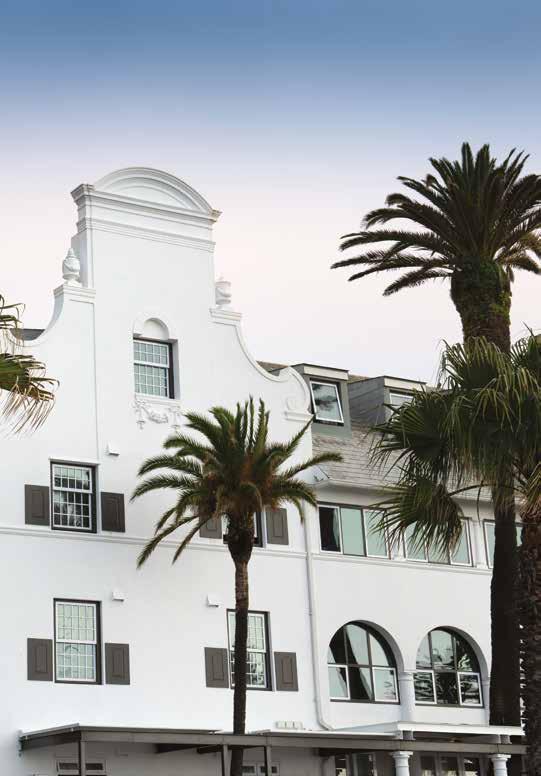
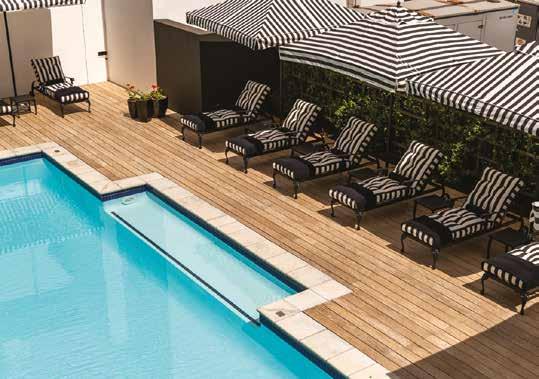
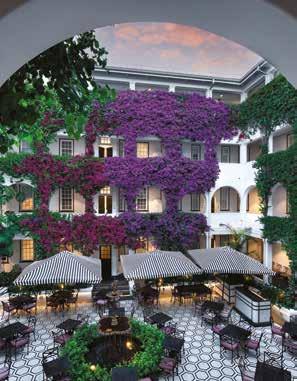
Sea Point won the lottery at birth, and like most natural beauties, has been trading on its assets ever since: the mountain, the sea, the light – why wouldn’t it? But inside the Winchester is another layer of reality. The hotel builds on Sea Point’s many charms, elevating and curating them, which is probably why it’s become an iconic fixture in the area. Its bougainvillea-framed courtyard and street-side terrace with ocean views have made it a favourite Sea Point spot for a drink or meal.
But the hotel didn’t arrive glossy and elegantly up-to-date. It’s been reincarnated more than a few times. It initially stood directly on the beach, not across the road from it. More than a docile shimmer in the distance, the Atlantic sometimes threatened to cross the beach and wet the front of the building. Cars drove through what’s now the doorman-manned front entrance into a courtyard that doubled as a parking lot – a detail that feels weird now, like a Rolls-Royce in your entrance hall. By 1958, a Mr and Mrs Harvey had acquired the building, converting it into a hotel piece by piece – quite literally. “Mrs Harvey began acquiring the units one by one until she eventually
owned the entire building,” explains general manager Walda Lloyd. “With a vision to transform the property, she converted it into a hotel.”
That act of slow accumulation seems to have defined the Winchester ever since. The property passed to Harvey’s daughter, Frances Wainford, and her family, who had the vision to upgrade it and not reinvent it beyond recognition. “You don’t really own a place like this,” says Lloyd. “You inherit it, you interpret it, and then you pass it on.” And what you inherit here are stories.
“One story I can share of the many is of the bougainvillea – planted in 1958,” says Lloyd. “Mrs Wainford’s mother asked her before she passed away not to put flowers on her grave, but to rather honour her memory by looking after the courtyard and bougainvillea.”
It is the sort of anecdote that borders on myth – but then the Winchester thrives on that kind of sentiment. The courtyard isn’t just a design feature; it’s a memorial, a living archive, a botanical inheritance.
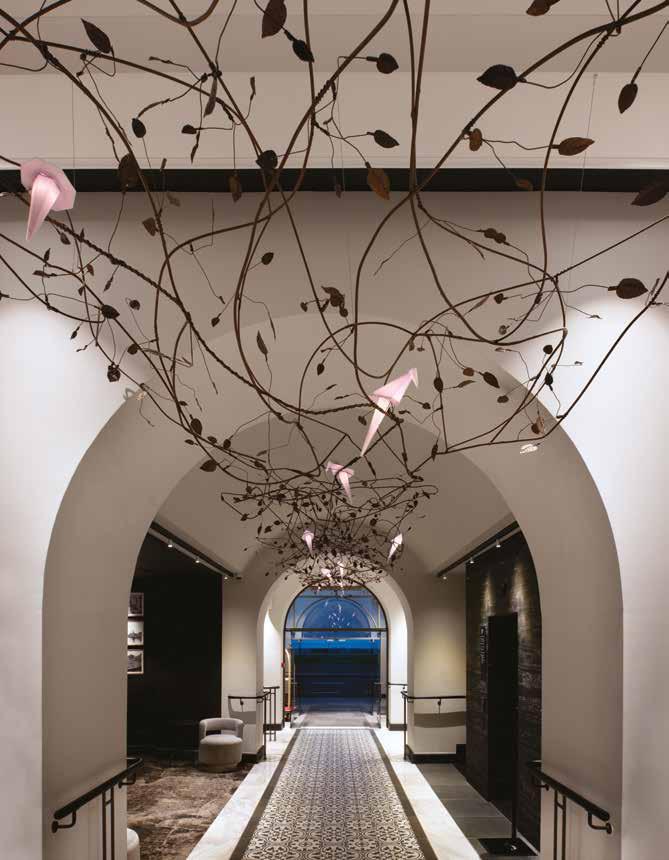
Of course, sentiment alone doesn’t keep a 100-year-old building upright. By the time the most recent refurbishment began – a R90-million exercise in structural diplomacy completed in 2021 – the hotel had begun to disintegrate in places. Salt had eroded concrete, plumbing had become a kind of external decoration, and the demands of modern hospitality were colliding with the limitations of early 20th-century design.
“Balancing heritage restoration with modern luxury is challenged by strict oversight from Heritage Western Cape,” Lloyd explains. “Delivering high-end guest expectations within compact, historic buildings requires careful integration of modern services without compromising the original character.”
Simply put, that means that everything was harder than it looked.
Much of the work – carbon patching, structural reinforcement, electrical compliance – is invisible. Which is the point. The goal wasn’t transformation, but illusion. To make the building feel as though it had always been this polished and composed. Mrs Wainford also played an integral role in creating the new look and feel of the bedrooms. The chosen colour schemes were inspired by key pieces from the extensive art collection she’s established over the years.
The more recent 2025 soft refurbishment has taken a lighter, more aesthetic approach. “It’s elevated the day-today guest experience by creating a more immersive, designled environment,” Lloyd says. “Each space feels curated, contemporary and distinctly memorable.”

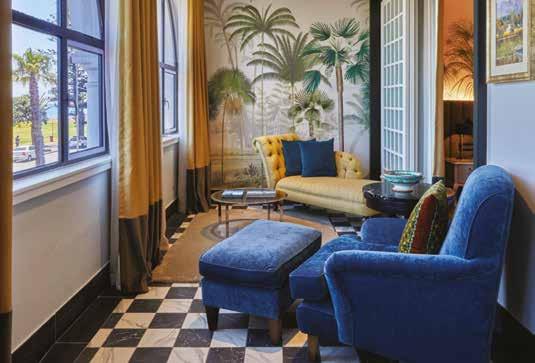
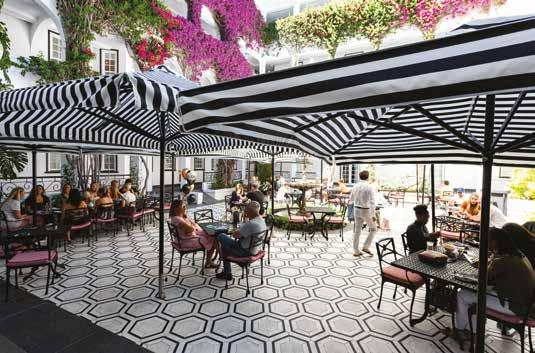
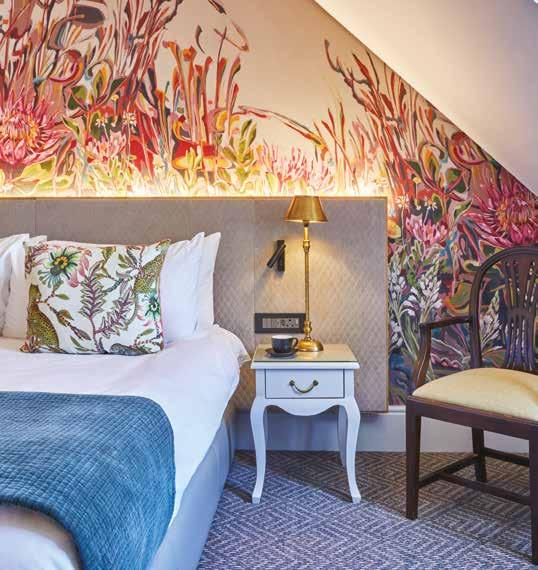
IN AN AGE OF BEIGE ANONYMITY, THE WINCHESTER’S INTERIORS FEEL PLAYFUL, ALMOST MISCHIEVOUS – A DELIBERATE REFUSAL TO BLEND IN. BOLD PATTERNS, LAYERED TEXTURES AND A MONOCHROME PALETTE THAT’S BOTH CLASSY AND THEATRICAL.
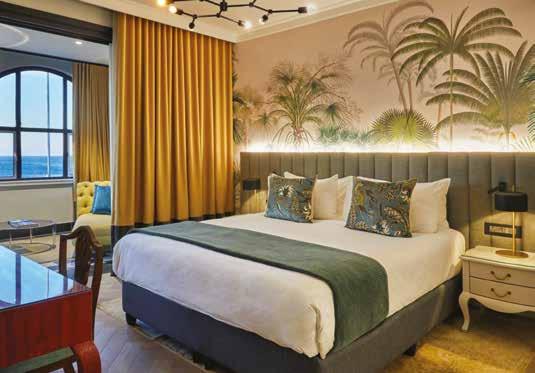
And then there’s the wallpaper, which guests have noticed. “Many highlight the refreshed aesthetic… And the unique character introduced through the new wallpapers,” she adds. They’re not wrong. In an age of beige anonymity, the Winchester’s interiors feel playful, almost mischievous – a deliberate refusal to blend in. Bold patterns, layered textures and a monochrome palette that’s both classy and theatrical.
The courtyard, however, remains the centre of gravity. “Everyone in Cape Town knows the building,” Lloyd says. “And everyone is attached to it.” That attachment isn’t abstract or detached. It’s lived. Sunday lunches, milestone celebrations, sundowner drinks that turn into long evenings. The Winchester is less a hotel than a friend and family favourite.
Maintaining that dual identity – heritage icon and living space – is a balancing act. “It comes down to being intentional about both preservation and relevance,” Lloyd says. Spaces like Shoreditch Restaurant and Harvey’s Bar evolve constantly, she says, while the architecture remains anchored. “This ensures the
hotel isn’t just preserved as an icon, but actively experienced as part of the neighbourhood’s daily rhythm.” And the neighbourhood is constantly changing.
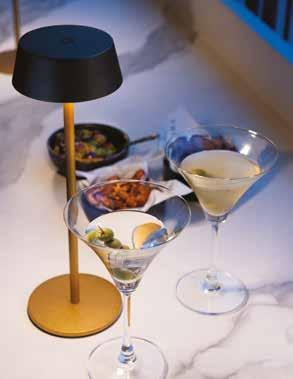
Once an isolated seaside residence, the Winchester is a foundational building in a densely layered urban environment. The promenade, land reclamation, the disappearance of the old railway line – all have shifted its relationship to the sea and the city. “The hotel’s character evolved alongside Sea Point itself,” Lloyd notes. From solitude to spectacle. From edge to centre. But some things haven’t changed. The terrace still catches the light in that particular way at sunset. The Atlantic remains indifferent. Harvey’s Bar retains its worldly, but playful charm. And the bougainvillea –carefully tended, quietly revered – continue to bloom.
Looking ahead, the future seems almost deliberately modest. “The next big refurb is our kitchen,” Lloyd says, with a pragmatism that feels entirely appropriate. No grand reinvention. No dramatic pivot. Just continuation. Like all classics, the Winchester doesn’t compete with the new. It outlasts it.
BY RICHARD HOLMES
STEP INSIDE AND YOU’LL DISCOVER THAT BLAAUWKLIPPEN MANOR LEANS INTO A QUIETLY POLISHED VISION OF WINELANDS LIVING.
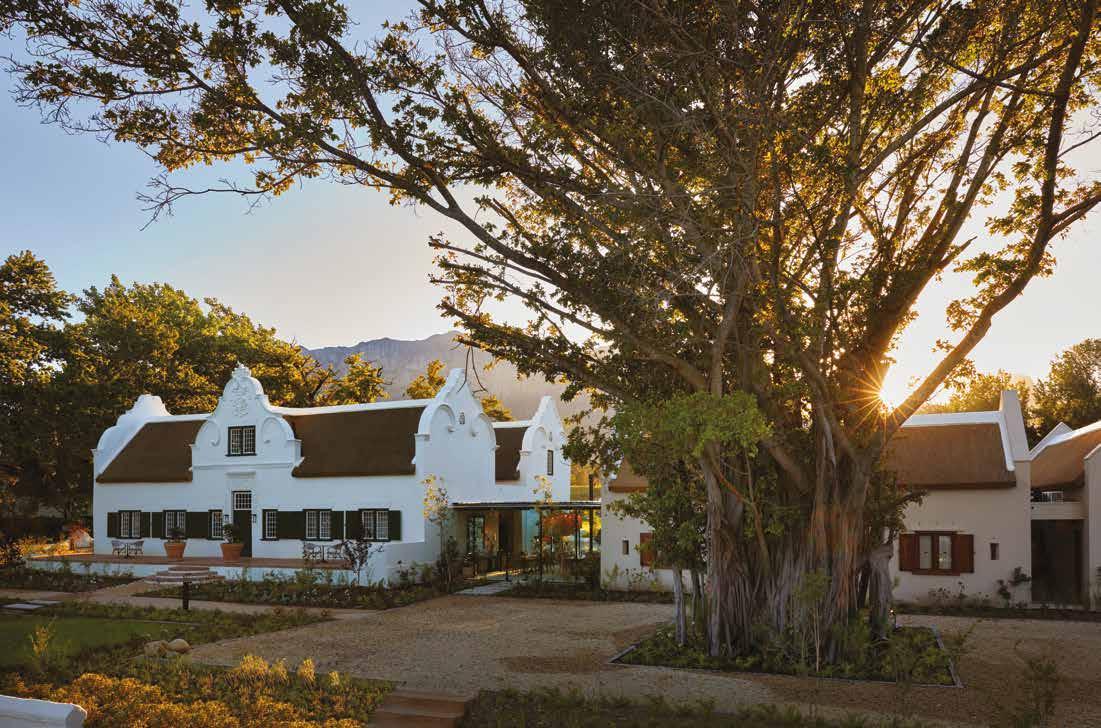
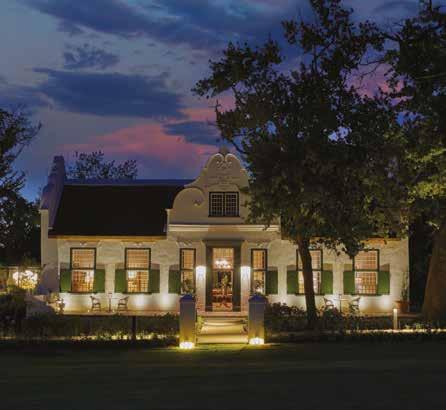
Autumn in the Cape Winelands, and the vines are beginning their months of winter rest. The rains that will soak deep into these ancient soils have yet to arrive, and Stellenbosch still basks in the ethereal glow of warm evening sunshine. As the sun sets, the sandstone cliffs of the Hottentots Holland Mountains are brushed with dusky hues of pink and orange. Somewhere above, a spotted eagle-owl, perched in the boughs of a stately oak tree, delivers its husky two-note call. Seconds later, its mate replies from across the stream that runs between a stand of poplar trees.
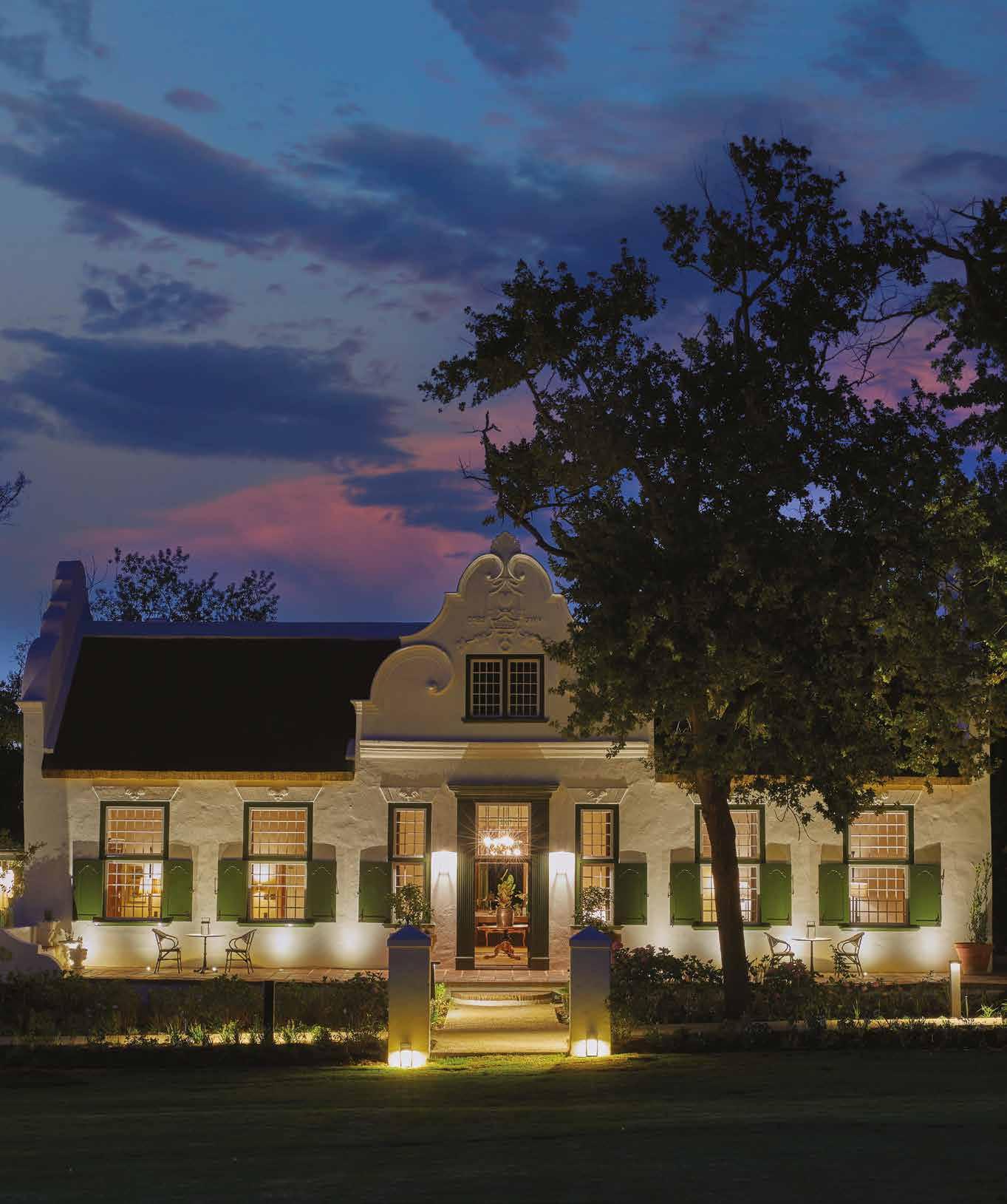
It’s a scene that feels frozen in time, a moment repeated across the centuries back to 1682, when what is today Blaauwklippen Wine Estate was first established by Dutch settler Gerrit Jansz Visscher. He was granted these lands by the colonial Governor Simon van der Stel, after whom the charming Winelands town of Stellenbosch is named. Within a decade, the first thousand vines had been planted; the start of a winemaking legacy that would
last for more than three centuries. And as I sit on the stoep of the Blaauwklippen Manor House with a glass of chilled Chenin Blanc from the estate in hand, it’s easy to feel the history that runs through this landscape.
However, history comes with its share of heartbreak. In April 2024, tragedy struck Blaauwklippen Wine Estate when a distant blaze on a neighbouring farm was swept across the landscape by fierce, gale-force winds. Reaching speeds of up to 139km/h, the wind drove the flames forward with relentless intensity, carrying the fire across vineyards and open ground with a force that proved impossible to contain. Within hours, the historic manor – including the gables dated to 1789 – had been razed to the ground.
But the ashes were barely cool before plans were in place to restore and reimagine this historic icon on one of the Cape’s oldest estates. Less than two years after the fire reached the manor’s thatch roof, the Blaauwklippen Manor reopened to welcome its first guests.
The estate’s heritage was the starting point of the reimagining of Blaauwklippen Manor.
A way to honour the past while looking forward to the future.
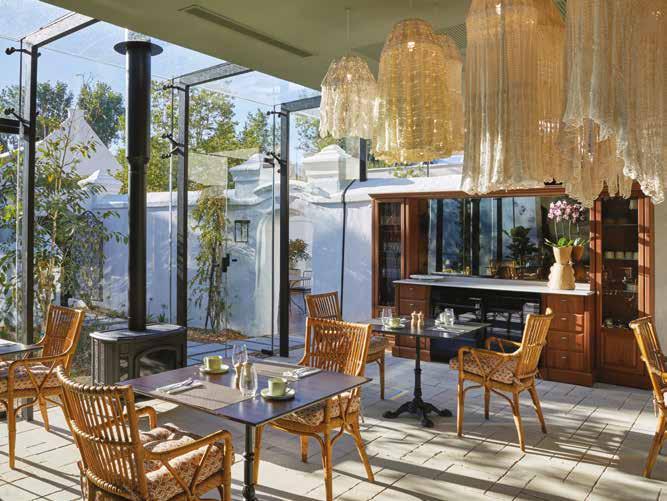
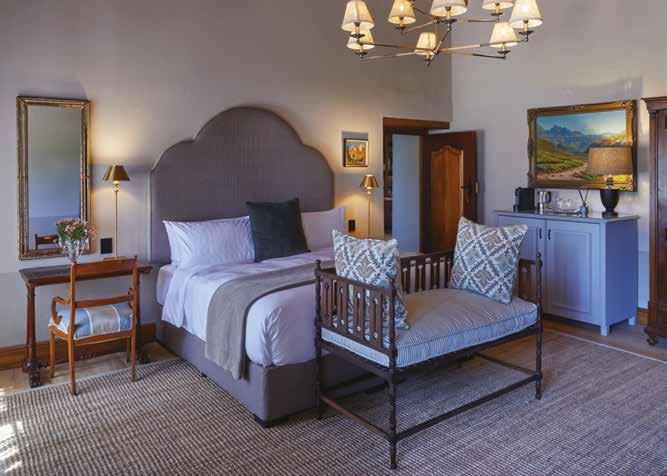
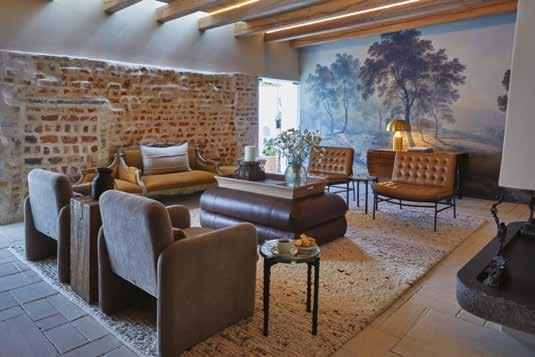
Today, the new-look Blaauwklippen Manor is an inspired evolution of the original; neither a mere replica nor a dramatic reinvention.
“The reopening of the Manor House and Jonkershuis is not simply about restoring buildings – it’s about restoring a sense of place,” explains Roelof van den Berg, Chief Executive Officer of Blaauwklippen. “These walls have welcomed travellers, thinkers and families for generations, and reopening them after such loss is a powerful reminder that heritage is something we actively carry forward.”
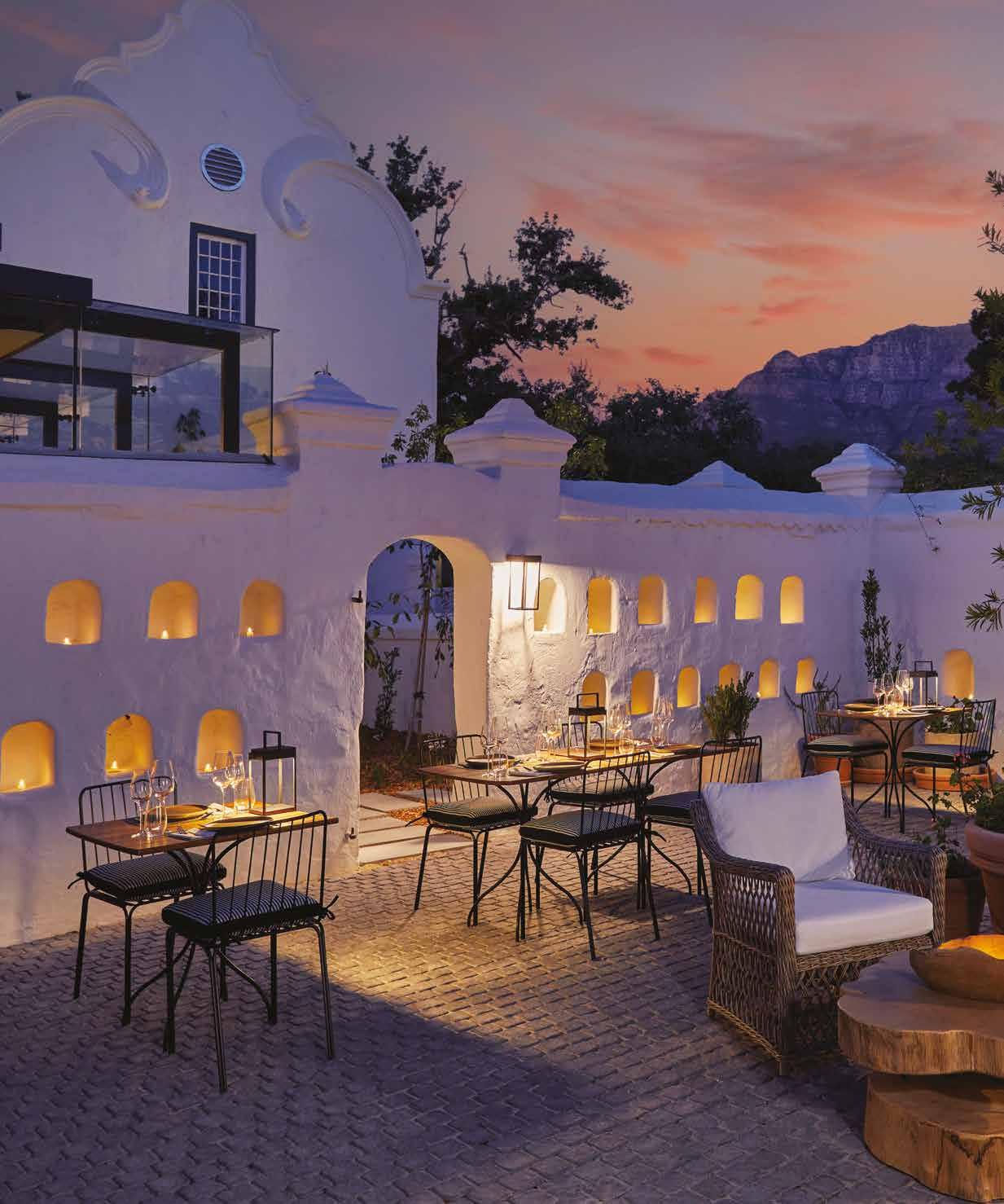
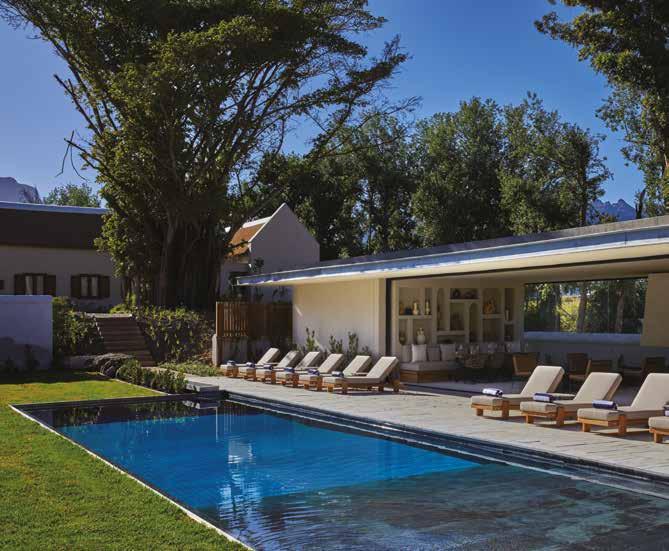
That heritage was the starting point for the reimagining of Blaauwklippen Manor; honouring the past, while looking forward to the estate’s next chapter. The sweeping gables shimmer white in the Stellenbosch sunshine, stark against the freshly laid thatch roof. The adjoining Jonkershuis building has also been restored, while a new conservatory links past and present into a holistic new hospitality offering on this historic Cape farm. In the gardens,
planted abundantly with indigenous species, the pool house offers a welcome oasis on the warm days of a Winelands summer.
Beyond the architecture, a palpable sense of history and place informed the look and feel of the rooms and suites spread between the Manor and the Jonkershuis.
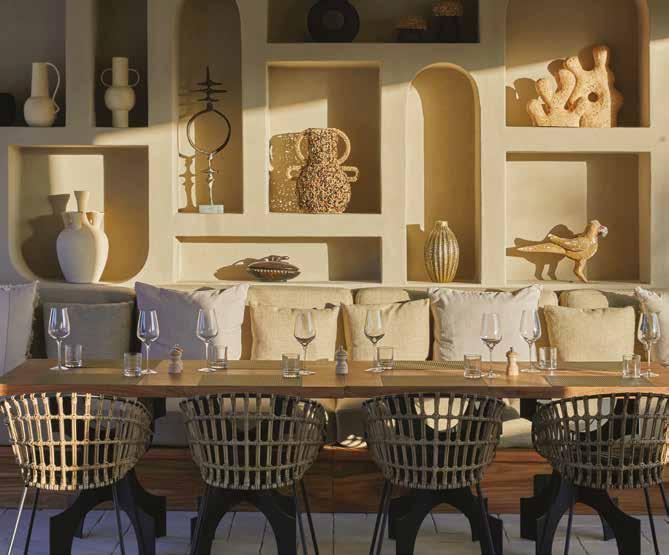
Step inside and you’ll discover that Blaauwklippen Manor leans into a quietly polished vision of Winelands living. Lofty ceilings and thick walls bring an immediate sense of calm, tempering the summer heat and setting the tone for interiors that feel rooted and refined. A collection of generously proportioned rooms occupies the historic heart of the building, their layered textures, soft tones and considered detailing giving the spaces an easy, contemporary elegance.
A shared lounge forms the social heart of the Manor, inviting guests to settle in over a good bottle of Zinfandel from the estate, a book drawn out over the afternoon, or an unhurried game of chess as evening gathers.
WHILE LOOKING FORWARD TO THE ESTATE’S NEXT CHAPTER.
A glass-walled dining space connects the Manor to the annex, creating a clean architectural contrast between old and new. Here, the rooms are more compact, but no less thoughtful, with the same layered design language and easy access to the Manor’s private lounge that opens onto the sunlit central courtyard. It’s another striking example of the farm’s past being reimagined, with alcove detailing from the original farm chicken coops subtly woven into the renewed space. Alongside, the Jonkershuis offers a selection of more spacious suites, well-suited to guests planning a longer, slower stay in the Winelands.
Aside from the setting in a quiet corner of the Blaauwklippen estate, the thread tying these spaces together is the considered aesthetic from Francois Du Plessis, the acclaimed interior designer who was also behind the reinvention of two of Newmark’s other Cape Town properties, The Winchester and Queen Victoria Hotel.
For Blaauwklippen, “we reintroduced a classic, luxurious feel that alludes to the estate’s history, complemented by a creative, colourful and slightly eclectic finish,” says Du Plessis. “We drew inspiration from the majestic surroundings at the foot of the Stellenbosch Mountains and incorporated prints that celebrate the region’s natural beauty.”
That celebration of Cape heritage extends to the culinary experiences on offer at Blaauwklippen Manor. While the estate’s De Blaauwe Kitchen is popular with both outside visitors and hotel guests for its country-casual menu, guests can also enjoy an all-day menu created by Head Chef Timothy Fortuin and Newmark’s Group Head Chef Chris Erasmus.
“It’s a varied menu, nice and relaxed, but with genuine respect for Cape cooking,” says Fortuin. “We’re serving dishes like lamb rigatoni with a lovely red pepper pesto, or line fish with garden greens and a proper lemon butter sauce. We’ll also have bobotie, along with some more relaxed dishes, like a really great smash burger. It’s about making people feel at home.”
Blaauwklippen Manor offers a natural base for exploring the surrounding estates of Stellenbosch, while still holding its own as a destination for slower days – whether tasting the estate’s wines, relaxing in the contemporary pool house, or simply watching the play of light as the sun sets across the Hottentots Holland.
It’s a timely reinvention of a timeless space in the heart of the historic Stellenbosch Winelands.

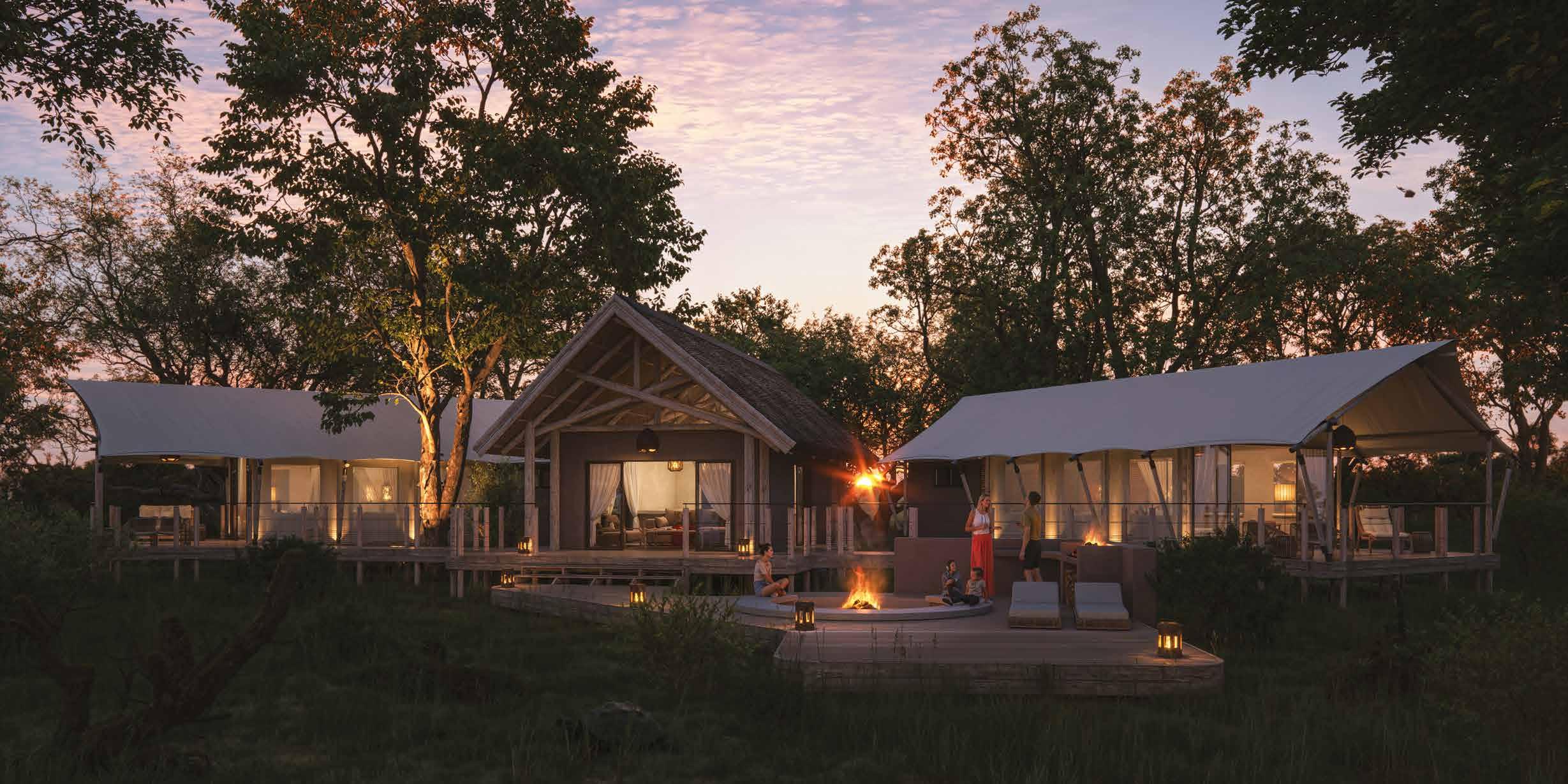
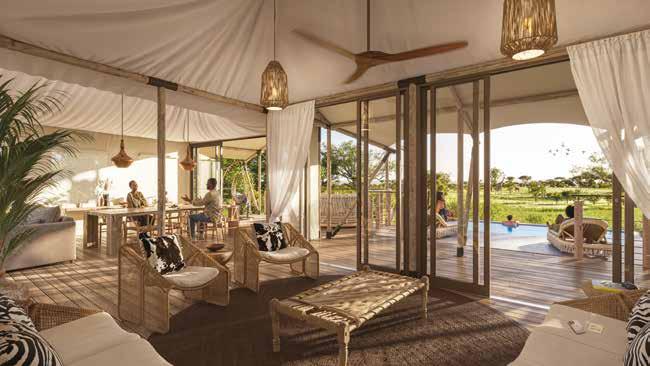
An exploration into stillness met with an arrival of Africa’s raw discovery. Experience tented safari luxury along Namibia’s Zambezi Region where refined comfort is quietly woven into true untouched wilderness. For bookings and enquiries, contact: reservations@newmarkhotels.com +27 21 427 5901 www.newmarkhotels.com
BY WANITA NICOL
“There’s a bar on your floor if you’re in the mood for a sundowner.”
I’m sure that’s what the front desk said. But standing in the corridor on the 18th floor of The Rockefeller Hotel, I’m not seeing or hearing anything that resembles a bar. I contemplate returning to my spacious suite. It does, after all, have a scrumptiously comfy couch, a large-screen TV and a room-service menu. Then, an unmarked door at the end of the passage catches my eye.
Initially, I’d assumed it was a service door. Or maybe a fire escape. I make my way towards it, trying to appear nonchalant to any security cameras that might be watching. Nothing to see here. Not me, trying to venture into a potentially off-limits area.
I try the door, expecting it to be locked. It isn’t. It swings open, and I step into Wonderland.
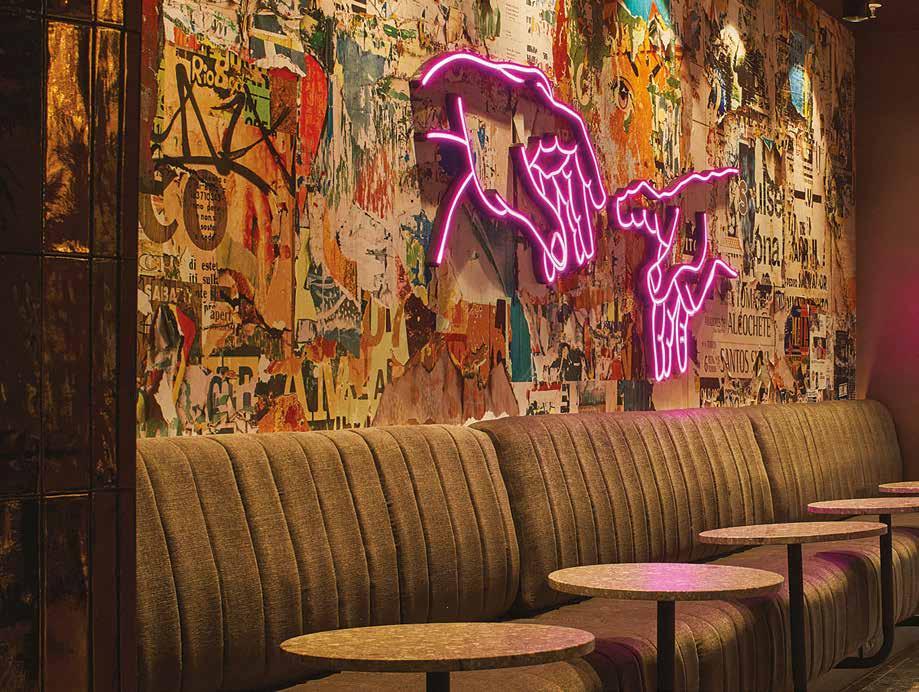
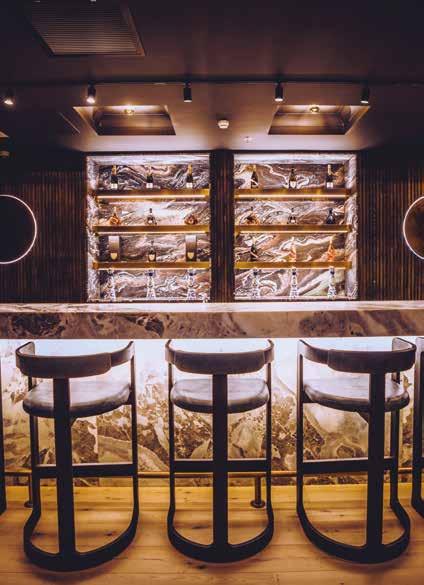
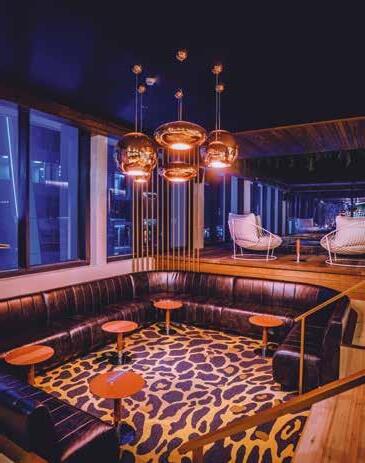
There are two ways to get to The Rockefeller’s Studio bar. One is the unremarkable door through which I entered that first night. The other is via an equally unremarkable lift. “Isn’t this the fireman’s lift?” my brother asks, when I return sometime later with him in tow. It is. But if you’re in the know, you’ll spot the small sign next to floor 18 that simply says “STUDIO” in plain block letters. The doors open directly onto the bar and a welcome note is etched into the floor: “Nice shoes”. Those unexpected touches are a hallmark of The Rockefeller. Studio is decorated with the same contrasting mix of warm elegance and urban grit that you’ll find throughout the hotel. There are nooks that feel private, tables where you could set up your laptop for the day and a large sunken area, complete with leopard-print carpet, that can only be described as a 70s-style groove pit.
Pull up a chair that suits your vibe
For large groups: The groove pit will make you feel like you’re in your own VIP area. It’s large enough that you could start an impromptu dancefloor. Just saying…
For privacy: A little nook around the corner from the groove pit is enclosed on three sides, creating a secluded space that can fit around six people.
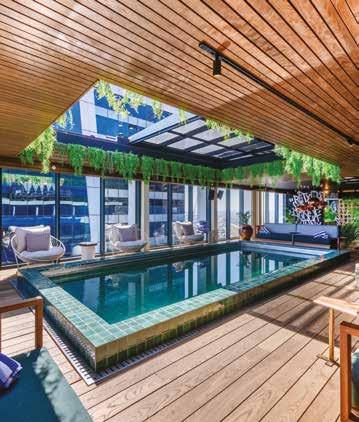
For sunset: Sprawl on a lounger and soak up the view through the floorto-ceiling windows on the pool deck.
For business: The area around the bar counter has small tables for those who want to bring their laptops and set up shop for a few hours, plus spacious booths to gather around for an afterhours brainstorm.
There’s also the pool deck, where a heated pool and retractable roof allow the space to shift with the light and weather, keeping it inviting year-round. A dip in winter, with rain pelting the floor-to-ceiling windows, feels like stepping outside of reality.
You’ll find that same signature quirk on the drinks menu. Skip the ready-topour “kegtails” and order a concoction made from scratch. Warning: they tend to travel in packs, in that they’re dangerously moreish. A mocktail menu caters to those who want a fun beverage minus the alcohol.
If you prefer your drinks more straightforward, there’s a good selection of whiskeys and gins to choose from. Or opt for some “liquid grapes” from the wine list. The Cape produces exceptional wines; you’ll find plenty of options to choose from.
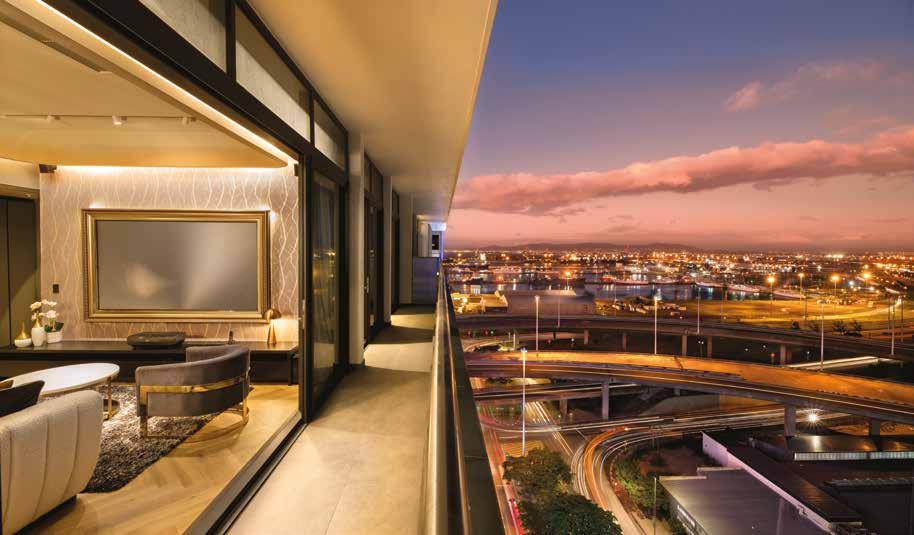
With trendy Afrobeats as your soundtrack, and views across the city towards Table Mountain on one side and the ocean on the other, you may as well order a bottle – you’re going to want to stay a while.
From its avant-garde decor to its unexpected quirks to the ground-floor fitness centre that’s better equipped than many commercial gyms, The Rockefeller Hotel is full of surprises. And the delight really is in the discovery. It’s not often you get to walk around a corner, through a door or out of a lift and go, “Oh wow!”
The Rockefeller keeps those little treasure-hunt moments coming. And the Studio bar is certainly one of them.

A South African tradition of having drinks with a view at sunset(ish). Cocktails or bubbly are popular choices, although any cold beverage is acceptable. Sundowners often precede dinner or kick off a night out. Studio closes at 8pm, making it an ideal sundowner stop before heading downstairs for your next adventure.

BY ANDREW THOMPSON
As necessary as business trips are, when the meetings are done, the experience shouldn’t feel like a chore.
Nor should it feel like a sequence of separate bookings – a meeting room here, a restaurant there, a hotel somewhere else, and a rushed transfer between them all. In Sandton, where diaries are often tight, and traffic can shape the day, there’s real value in keeping things focused.
Business travel is shifting and, in recent years, has demanded a refresh. Properties like The Catalyst, in the heart of Sandton, reflect that change. Of course, it’s close to the offices, banks and corporate headquarters that define this part of Johannesburg, but it’s not just a place to sleep between meetings – it’s designed for the full rhythm of a modern work trip. This
means easy access, efficient check-ins, wellequipped meeting spaces, quality dining, and the opportunity to reset without losing time to unnecessary movement.
This has become more important as business travel has evolved. Companies still need boardrooms, screens, conference equipment and reliable service. But the best work gatherings now ask for more than an empty room and a tray of sandwiches. They need spaces where people can concentrate, engage fully, take a break, and return to the next session without feeling drained by the venue.
Take The Catalyst’s meeting and conference facilities. The hotel offers conferencing for up to 100 delegates, along with breakaway rooms and boardrooms, supported by essentials such as smart screens, high-speed connectivity, and standard conferencing equipment. For
organisers, those are the details that matter – the fewer moving parts, the easier the day is to manage.
But the stronger appeal, especially for those attending, is what sits around those meeting rooms.
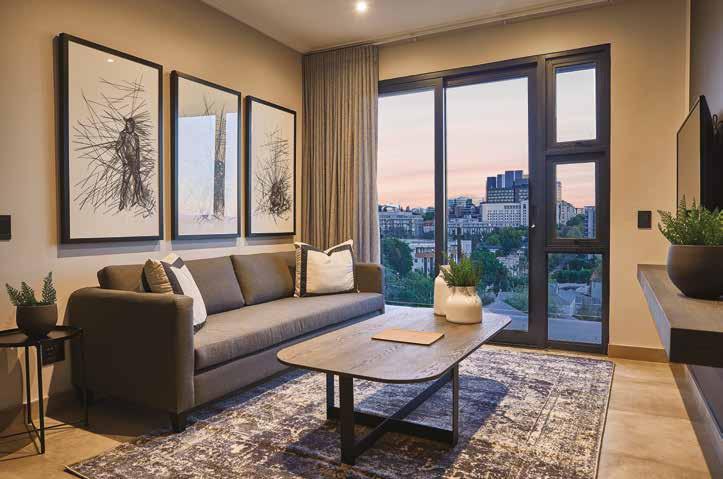
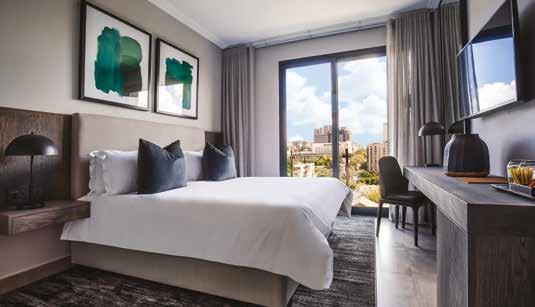
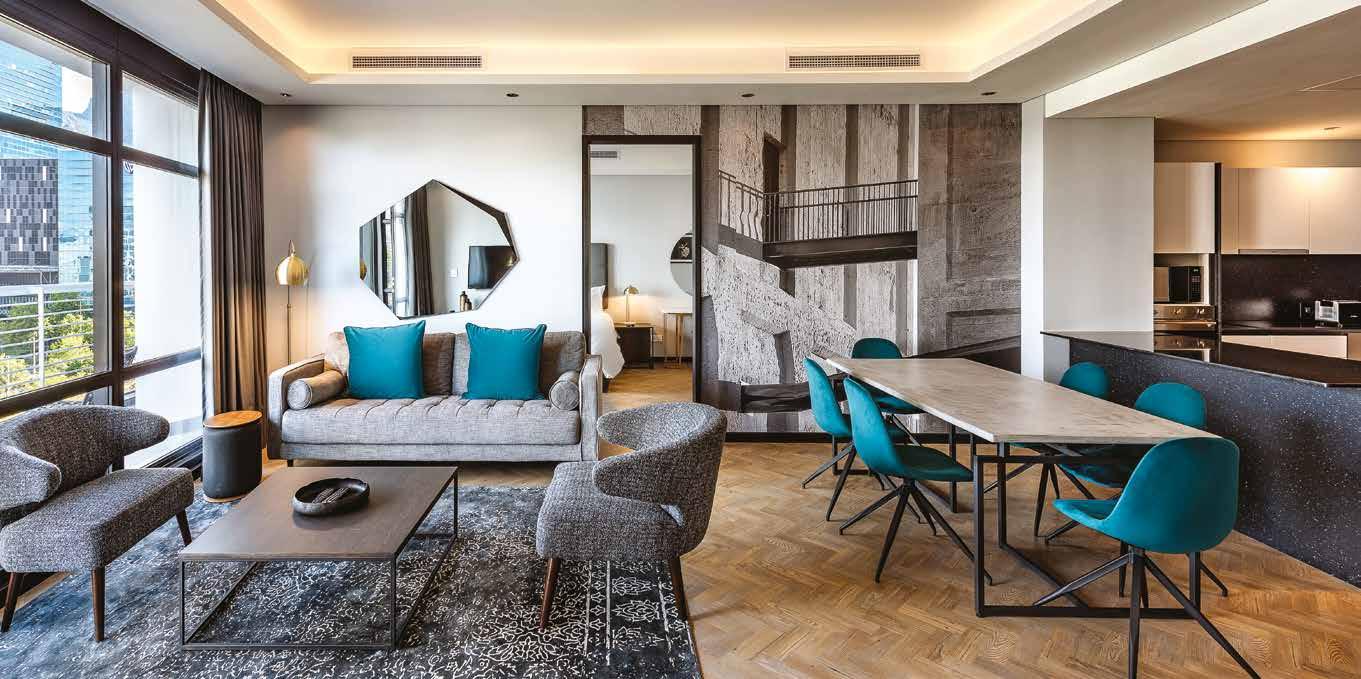
After a long day of working or even sightseeing, a hotel room can often feel limited and impersonal. The Catalyst has taken a different approach, offering 206 apartment-style rooms and suites designed for travellers who may need more than a quick overnight stay.
The rooms are polished without feeling anonymous, with considered finishes and contemporary detailing. They feel closer to compact urban apartments than traditional hotel rooms – useful when you need to answer emails, prepare for a presentation, or decompress between commitments. Some room categories also
include separate living spaces and kitchen areas, adding flexibility for longer stays.
The practical details help, too. There is high-speed Wi-Fi throughout the hotel, secure parking, laundry and dry-cleaning services, a fully equipped gym, and room service. For guests with meetings or errands nearby, the hotel also offers a complimentary shuttle within a 2.5km radius, including Sandton City and surrounding business hubs. These are not glamorous details, but they are often the difference between a smooth business trip and a frustrating one.
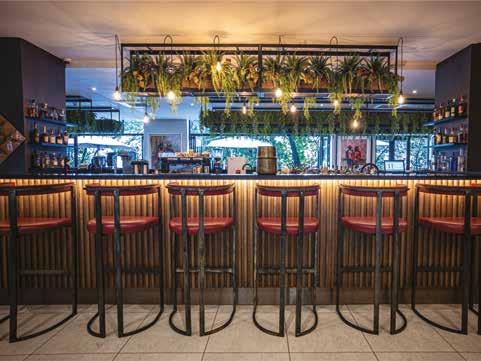
And then there is Kashew Restaurant, which serves as the hotel’s social hub. A 190-seater restaurant and bar, it allows the day to extend naturally beyond the meeting room – from working lunches to dinners or informal drinks on the outdoor deck. For
corporate groups, it means the day doesn’t need to end when the meeting does.
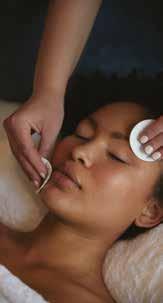
The same applies to the Sanctuary Spa. With treatment rooms, a sauna and a Jacuzzi, it gives travellers the opportunity to reset without leaving the property – whether between meetings, after a long day of travel, or before heading home.
And when there is time to step out, Sandton is on the hotel’s doorstep. Shops, restaurants and business addresses are close by, while Johannesburg’s broader cultural offering remains within reach for those extending a work trip into a longer stay.
Hotels like these understand that they need to reflect how business travel actually works – with one address that can handle the meeting, the meal, the overnight stay and the quieter moments in between. That’s what makes places like The Catalyst easy to return to.

The Onyx Hotel on Cape Town’s Foreshore feels like home – but with an added edge
BY WANITA NICOL
Once the forgotten outskirts of the city, Cape Town’s Foreshore precinct has undergone a wave of longoverdue development, transforming it into a growing business hub. The Foreshore is ideally positioned at the junction of two major highways as they enter the CBD. It’s where the city’s key public transport hubs are located, along with the Cape Town International Convention Centre (CTICC) and the Artscape Theatre Centre – Cape Town’s main performing arts venue. It also sits within easy reach of the V&A Waterfront.
In the heart of this evolving corner of the Mother City, you’ll find The Onyx, an apartment-style hotel that’s as comfortable as home but it comes with spectacular views of Table Mountain – the postcards will take themselves with your phone camera.
There’s a feeling of familiarity when you step into your room at The Onyx, even if it’s your first stay. The apartmentstyle layout creates an easy, lived-in feel, inviting you to settle in and unwind. It’s the kind of comfort that makes
business trips less transactional and more considered.
Drifting off in one of The Onyx’s kingsized beds, finished in high-quality linen, is the next best thing to sleeping in your own bed – and the ideal preparation for a full day ahead. After a good night’s rest, you’ll wake up refreshed and ready to take on whatever the day holds.
With so many high-rises around you, there’s a good chance your meetings are just a short walk away, saving you the stress of a commute. And if it’s a conference that’s brought you to town, the CTICC is just across the road.
Those who travel often will understand the challenge of maintaining a fitness routine while you’re away from home.
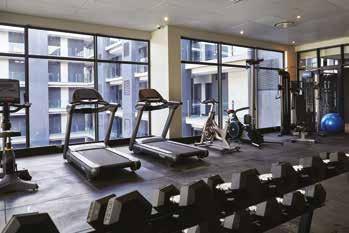
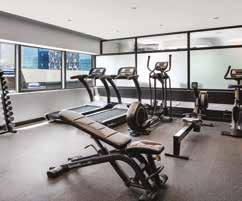
The gym at The Onyx stands apart in that it offers more than the basic cardio machines typically found in hotel gyms. There’s also a full weights rack, cable station, pull-up bar, dipping station and functional equipment, so you can stay on track whatever your preferred workout style. A large picture window also means you can train with a view.
#noexcuses
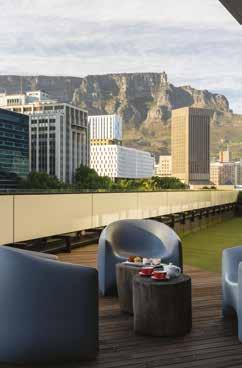
When it comes to urban living, The Onyx sits in a well-balanced position. It offers proximity to the city’s key attractions without the intensity of inner-city living. Trendy restaurants and nightlife are a five-minute cab ride away when you want them, but if you’d prefer a quieter evening in, that’s equally easy to find.
The hotel’s location in a more businessfocused part of town means evenings tend to be calmer, while double-glazed windows soften the hum of the city.

Another advantage is how easily you can move beyond the city centre. The Waterfront, Table Mountain and other City Bowl attractions are nearby, while the main highways offer direct access to the Winelands, West Coast, Kirstenbosch National Botanical
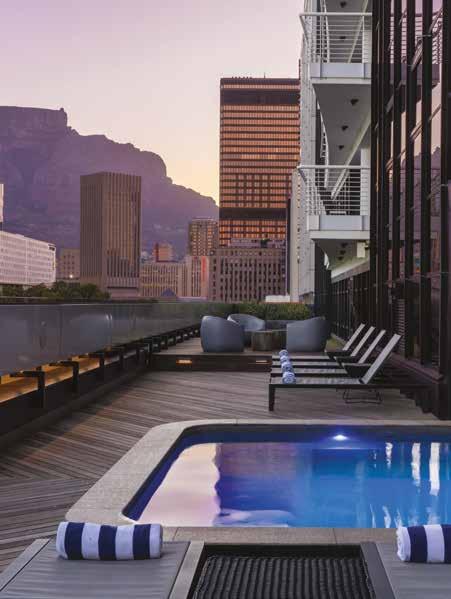
Garden, Cape Point Nature Reserve or the penguins at Boulders Beach.
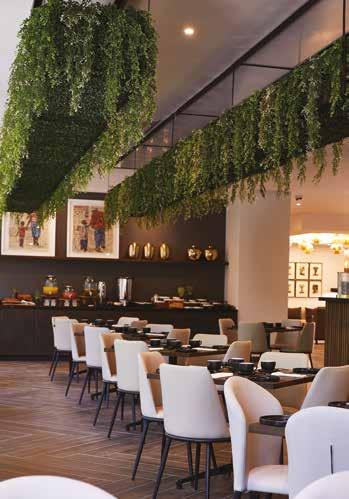
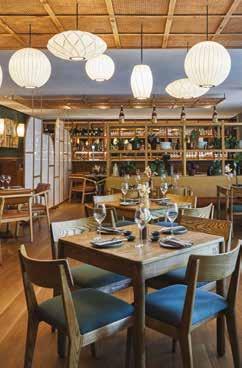
Capetonians have a reputation in South Africa for being a little snobbish when it comes to food and drink. But who can blame them with so much deliciousness on offer? Whether you’re making an occasion of it or grabbing a quick bite on the go, eating out in Cape Town is an experience. One of the CBD’s most popular spots is YU Asian Tapas and Bar, located on the ground floor of The Onyx.
Following its refurbishment in 2025, it has become a lively after-work destination and a starting point for evenings out in the city. The Asian-inspired menu leans into bold flavours and fresh ingredients, complemented by a creative cocktail and mocktail menu (try the Yu Spritz for something light and refreshing or the Wasabi Grinch if you’re feeling brave) and an extensive wine list with a number of options available by the glass, if you can’t decide. The Cape is wine country, and its various regions are well represented.
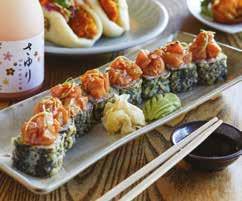
After a long workday, Granite Bar on the fourth floor is the place to unwind with a cocktail. Sip it on the deck with a view of Table Mountain. And in the morning, MRKT’s health-conscious, café-style breakfasts will fuel you for the day. They’re best enjoyed with a cup of freshly ground coffee from the barista – Capetonians are also famously snobbish about their coffee!
For longer stays, you might consider booking an apartment with a kitchenette (also a good choice for families), so you have the option of preparing your own meals when you’re craving home cooking. Although, with so many menu options to try, you’ll be forgiven for sparing yourself the hassle.
The idea of a “home away from home” is often overused in hospitality, but at The Onyx Hotel’s luxury apartments, it feels grounded in something more practical: space, flexibility and ease. It’s a place that adapts to the rhythm of your stay – whether that’s business-focused or more leisurely – with just enough energy to remind you that you’re in the city.
Explore the Mother City’s quieter season from The Manor House
BY ANDREW THOMPSON
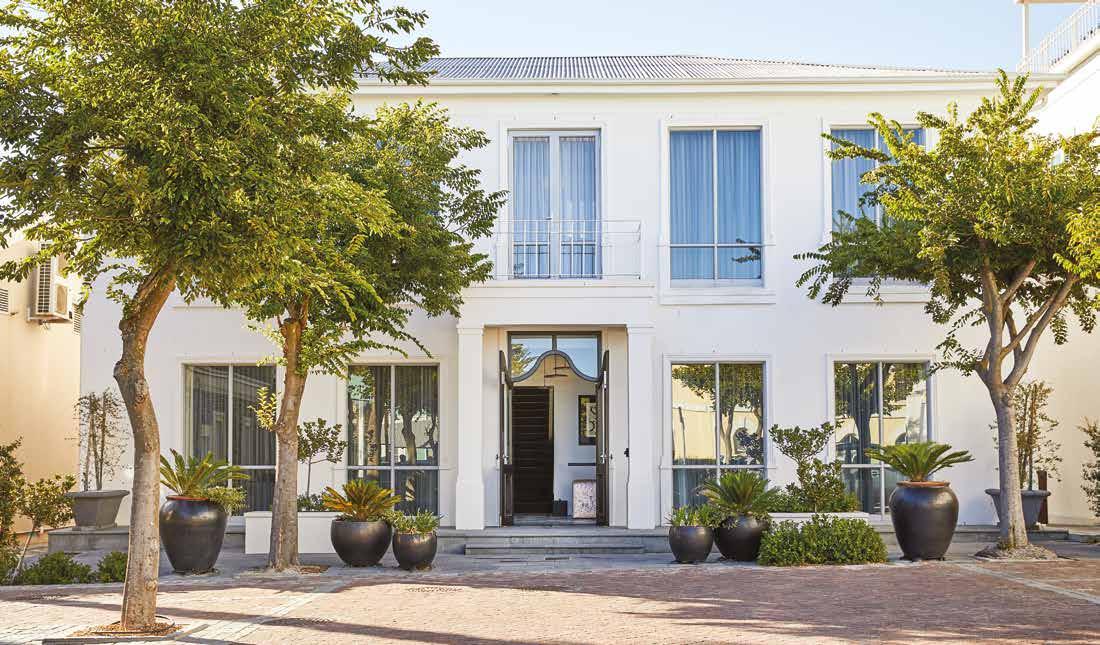

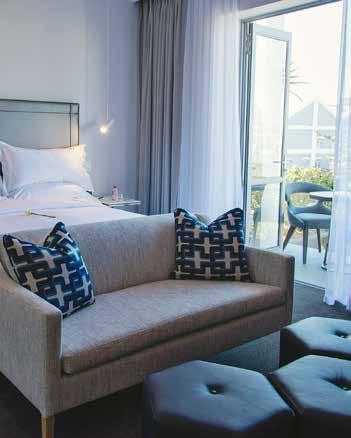
The mountain sits half hidden by cloud, the paving stones around the V&A Waterfront glisten, and somewhere high above the city, the early rains are finding their way down the gullies that will soon burst into waterfalls – celebrated more by locals in the know than visitors. After the first proper rains each year, Table Mountain changes quickly. The verdant slopes turn a deeper shade of green, the fynbos lifts, and its most popular attractions, once bustling, are free to enjoy in relative calm. This is the Cape Town that peak-season visitors often miss, and many Capetonians prefer to keep to themselves.
And The Manor House, set within the V&A Waterfront’s quieter historic precinct, is a fitting place from which to witness that change. It comprises four suites and can be booked exclusively, offering a level of privacy that feels removed from the movement of the harbour, even though restaurants, shops and museums remain a short walk away. That matters in Cape Town, because the Mother City, locals will tell you, rarely gives you a predictable day.
One morning, a soft rain settles in, making the obvious outdoor plans less appealing. So the city’s visitors turn indoors – to the Two Oceans Aquarium, where marine worlds
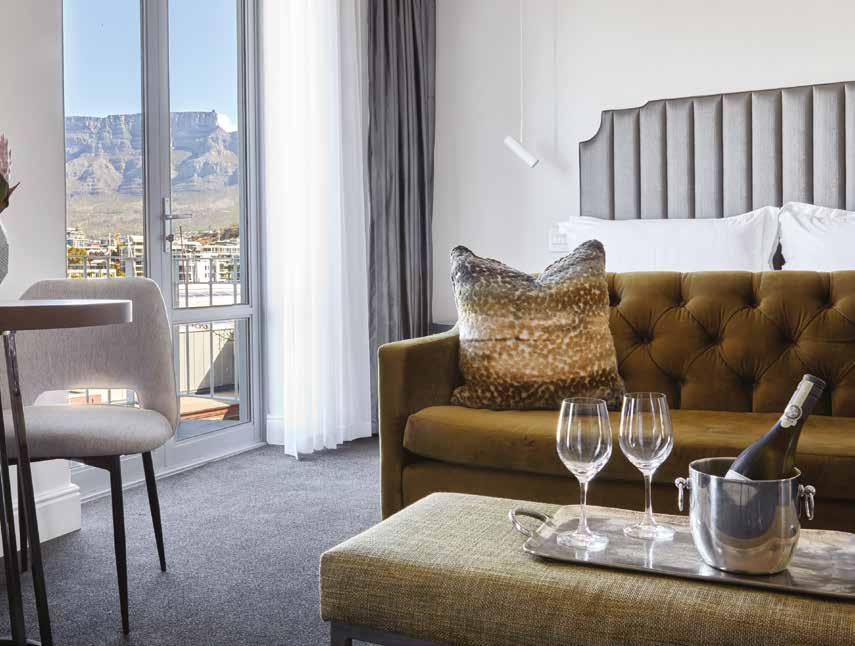
are brought under cover, or to Zeitz MOCAA, where the old grain silo has become one of Cape Town’s most distinctive museum buildings. Neither feels like a consolation prize at any time of the year, but in peak season, they can be easy to overlook. Even the drives seem different in this weather. The Atlantic Seaboard turns moodier, with waves rolling in from deep water. Constantia grows greener. The roads into the Winelands carry more atmosphere, especially when clouds sit low over the mountains, the vines begin to turn, and smoke from indoor fires drifts slowly into the air. Then, often without warning, the city
clears, and the mountain reveals itself again. The next morning arrives blue, still and perfectly mild. No wind. Clean air. Enough warmth to make you wonder what all the fuss is about. There’s enough bite to keep most out of the ocean, but this is walking weather – along the Sea Point Promenade, through the working harbour, beside the vines, up a mountain path, or along the beaches empty of their peak-season crowds.
Cape Town’s quieter season may not offer the reliable box-checking ease of peak season, but it offers a unique variety in greater peace. Rain on the mountain. Distant waterfalls in forgotten crevices. A museum morning
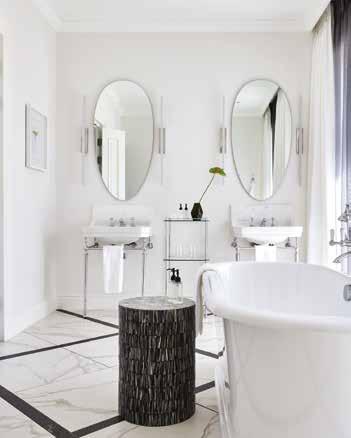
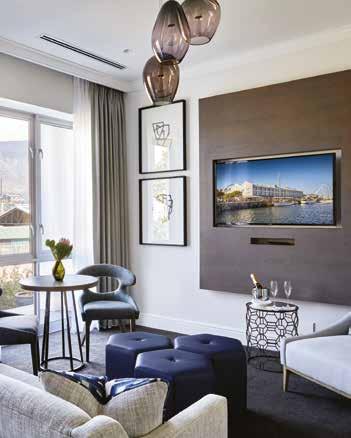
or a scenic drive followed by a fireside lunch. Then, a calm blue afternoon that other cities would happily claim as their finest day of the year.
From The Manor House, it’s all close enough to follow as the weather changes. And during this quieter season, you begin to understand Cape Town isn’t waiting for the crowds to return –it’s simply showing a different side of itself to those paying attention.

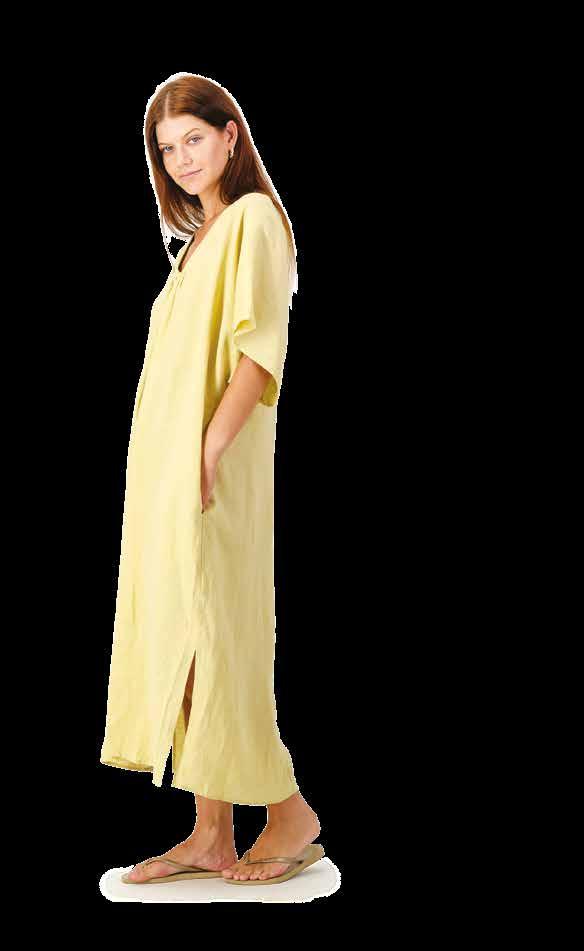
Whatever your destination, make sure you’re prepared
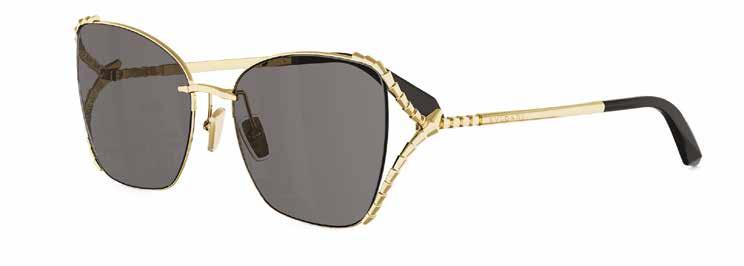
At last, outdoor drinkware made from a lightweight yet robust material that looks and feels like glass, without the fragility! Offering all the durability and practicality required for outdoor use, they are generously sized, crystal-clear, and designed to bring elegance to any alfresco occasion. Available in a set of four, and can be used as both stemmed and stemless glasses. Cheers! R1,299 for four fieldbar.co.za @fieldbar.co
CHASING BEES
Kaftan
A casual, chic, fulllength kaftan suitable for any occasion.
A relaxed and comfortable 100% premium linen kaftan with generous batwing sleeves and two side pockets for extra comfort. The perfect compact piece to pack, whatever your final destination.
R2,100 chasingbees.co.za @chasing.bees

Jewellery for your face. Bvlgari’s Serpenti Viper sunglasses carry the full weight of the Maison’s Roman craft tradition –the temples coil with the iconic scale motif that has defined the Serpenti line for decades. Italian-made, metal-framed, smoke-lensed and cut to a clean rectangular shape. Full UVA/UVB protection.
R21,175
Bvlgari Boutique picotandmoss.co.za @picotandmoss +27 11 883 1325
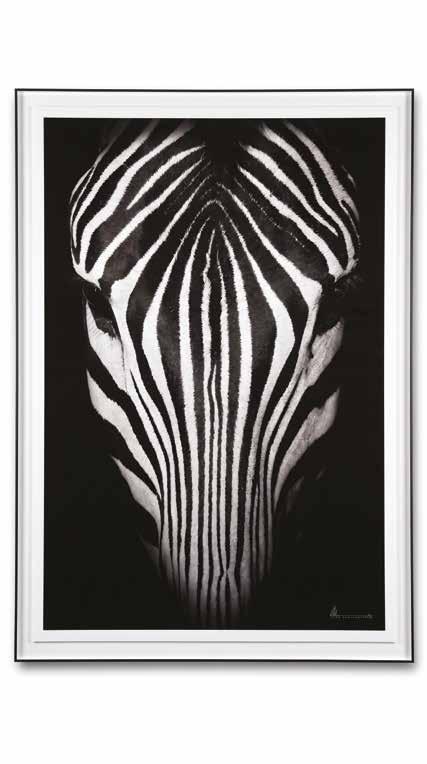
RABINOWITZ PHOTOGRAPHY
In the dappled shade of Hluhluwe iMfolozi, a zebra meets the lens with quiet intensity. Perfect symmetry and striking monochrome transform this fleeting encounter into a timeless, minimalist statement piece. From R5,900 rabinowitz-photography.com @rabinography

Time, reimagined. The Hermès Cut is built around a single geometric idea – a circle within a circle – and wears it with complete confidence. The satin-brushed steel case catches light from every angle, while the crown, perched at half past one and engraved with an H, signals that this watch doesn’t follow convention. Wear the strap in eight Hermès palette colours. Wear it your way.
POA
bhhboutique.co.za
@bhh_boutique +27 11 669 0790
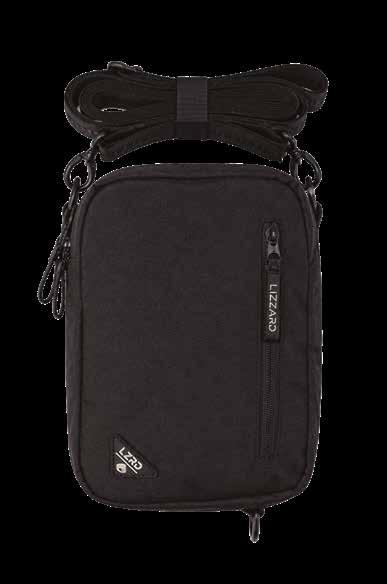
LIZZARD
Designed to keep your travel essentials accessible and close to your body, the Takoma sling bag comes fitted with a large opening main compartment, and a dedicated outer zip pocket for quick passport or cellphone access.
R440 lizzardonline.com @lizzardsouthafrica


Some jerseys outlive the moment. This long-sleeve, V-neck knit takes its cue from the iconic 1995 era – the one that stopped a nation – and rebuilds it in a heavier gauge cotton-blend that drapes better, feels richer and actually fits. Ivory base, authentic Springbok rugby detailing, and enough versatility to wear from the couch to the office without explanation. Saturdays just got a dress code.
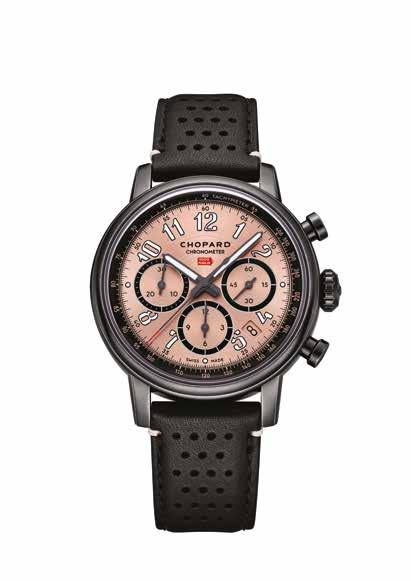
R1,799, oldschool.co.za, @oldschool_ltd
Racing has always left its mark – and this watch wears every one of them proudly.
Chopard’s limited-edition Mille Miglia Classic Patina is intentionally roughed up: the DLC-treated Lucent Steel case is tribofinished to mimic the honest wear of a vintage racer. The copper-toned dial, red-tipped seconds hand and perforated driving-glove strap do the rest. One of just 100.
R21,175
Bvlgari Boutique picotandmoss.co.za @picotandmoss +27 11 883 1325
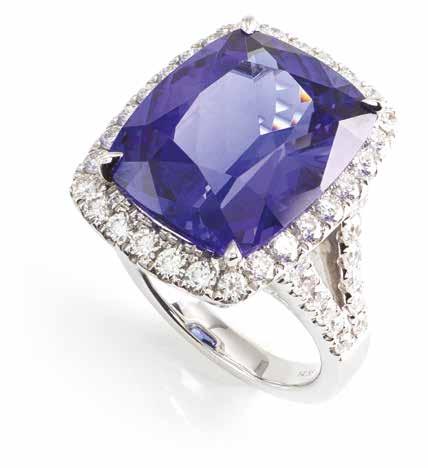
sharp black ceramic case. The star-shaped aperture, the constant 1/10th seconds indicator, the seamless bracelet – it’s urban architecture you can wear on your wrist.
POA
bhhboutique.co.za
@bhh_boutique +27 21 418 1889
THE DIAMOND WORKS 18K White Gold Tanzanite and 64 Diamond
The 18K White Gold EmeraldCut Tanzanite and Diamond Ring is a masterpiece of exquisite design and luxurious appeal. At the heart of the ring is a breathtaking 21.16-carat emerald-cut tanzanite and natural diamonds totalling 1.39 carats. POA thediamondworks.co.za @thediamondworks
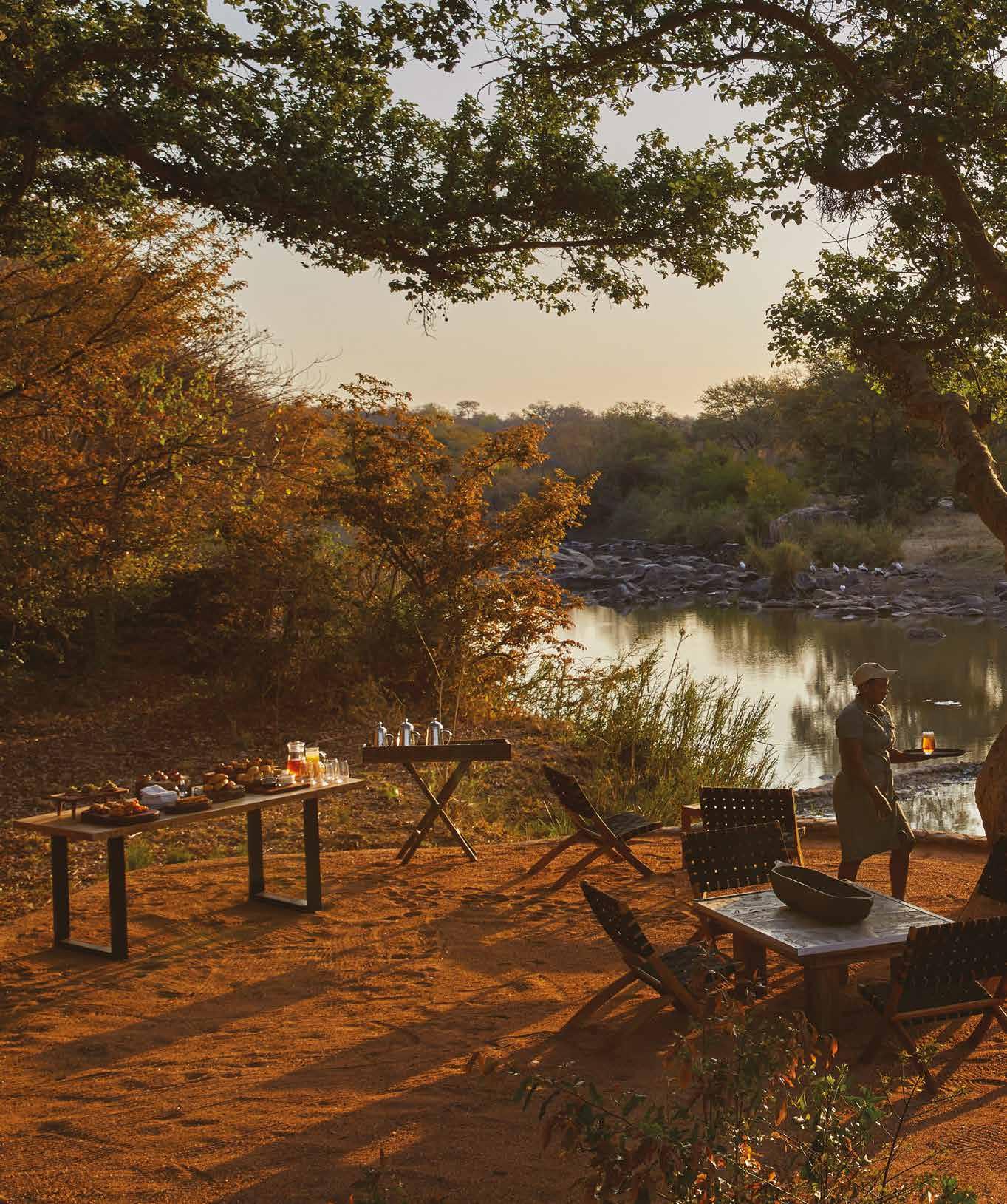
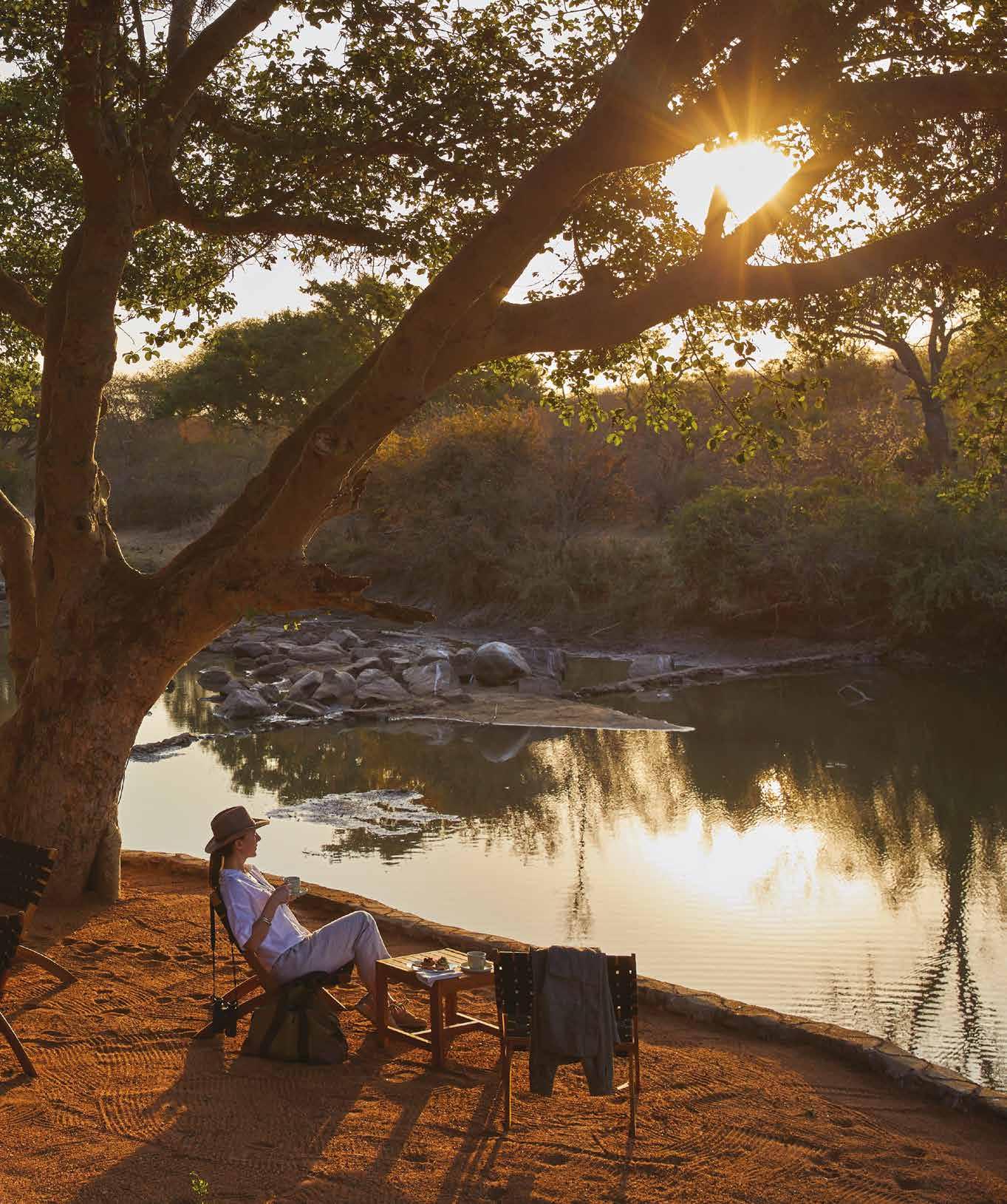
At Toro River Lodge, you follow a dirt road to the Makhutswi River, where attentive guiding, generous meals and the slow intelligence of the bush invite a quieter way of seeing
BY RYAN ENSLIN
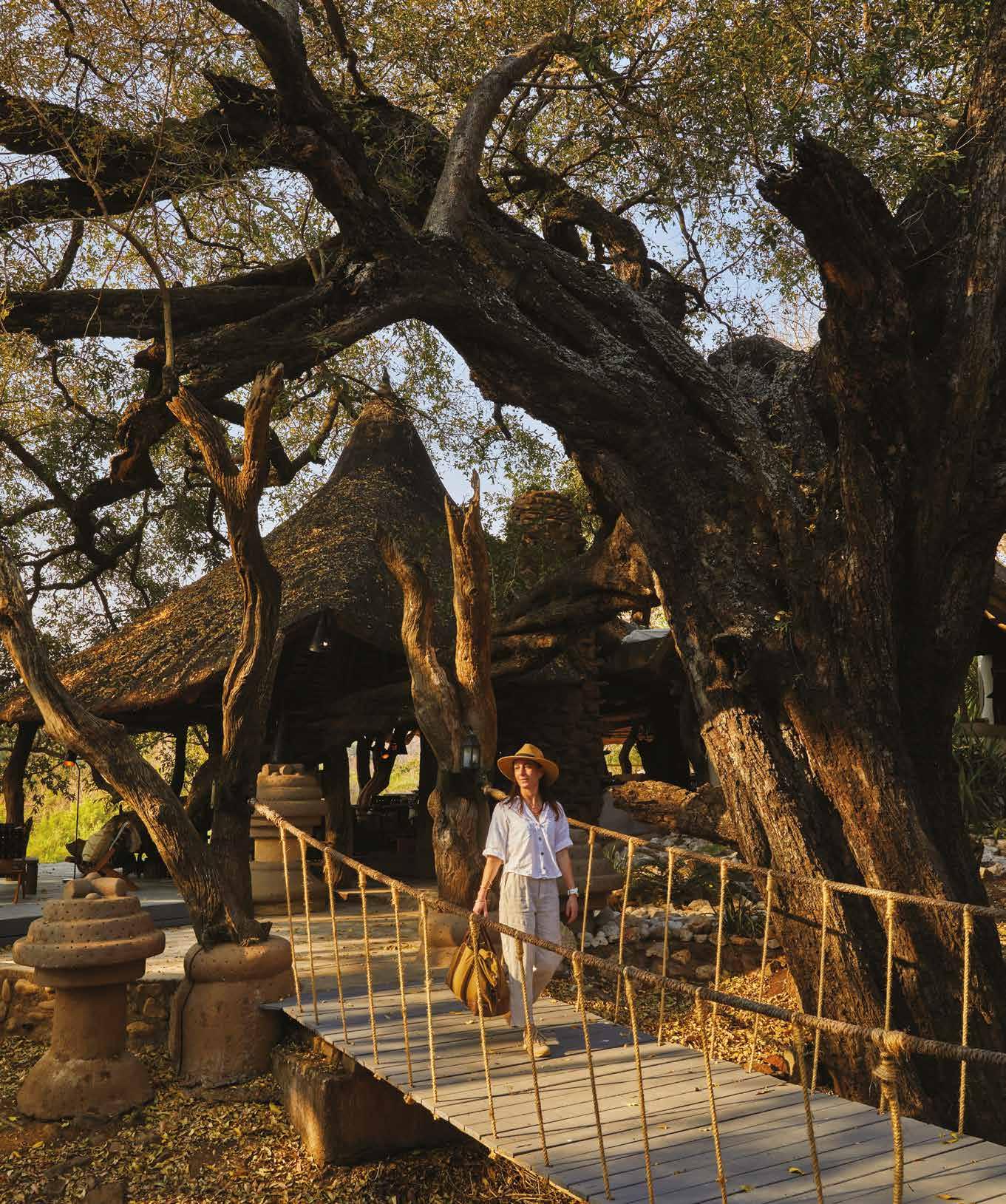
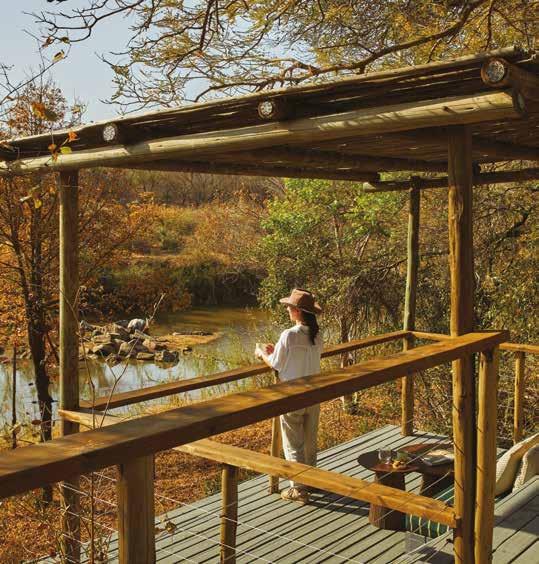
The R36 carries you almost to the edge of the experience. It is the last tar road before you arrive at the Greater Makalali Private Game Reserve, the final stretch where the journey still feels familiar. Painted lines, passing vehicles, the ordinary impatience of wanting to arrive. Then comes the right turn onto dirt. The sound beneath the tyres changes, dust lifts behind the vehicle, and the bush begins to gather around you.
For the next half hour, the road draws you in slowly. It does not feel like a transfer so much as a quiet surrender. The bush thickens. The dirt road bends through pockets of shade. The land seems to dip by degrees. Somewhere ahead is the Makhutswi River, though at first it remains unseen. You feel it in the way the vegetation gathers, in the denser green of the riverine bush, in the sense that the bush has begun to fold around you.
Toro River at Toro River Lodges opened in late 2025, set along a stretch of the Makhutswi River within Limpopo’s Greater Makalali Private Game Reserve. This is Big Five country, but Toro River does not lead with the promise of sightings alone. Its first impression is more intimate; the river below, trees pressing close, silence holding between bird calls. And the faint signs of animals moving through the bush before you see them.
The lodge rests close to the river without trying to dominate it. Its spaces look outward, yet keep the bush near. The pool deck catches afternoon light. The main restaurant opens to surrounding trees. Down by the Makhutswi, a discreet viewing point sits beneath an ancient tree.
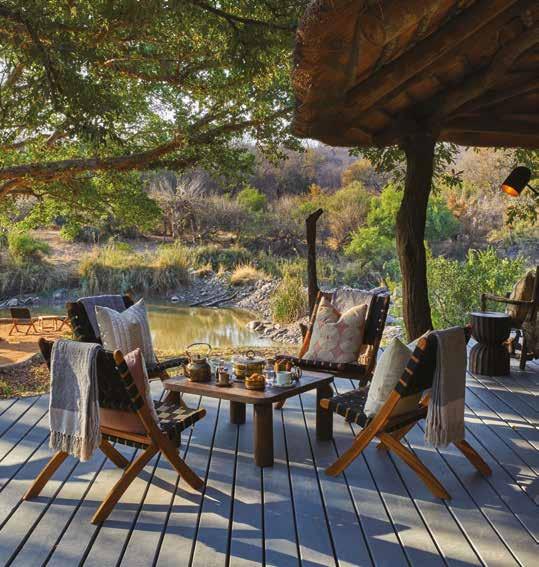
There are only five suites – three river suites and two luxury suites – few enough for the bush to remain close and for every presence to be noticed. In this space you begin to recognise footsteps, voices, the attentiveness of staff who remember how you take your coffee, when you might want water, or when it is better simply to leave the view uninterrupted.
My luxury suite was set slightly back into the bush, elevated above the river. Its private deck creates quiet pockets from which to take in the Makhutswi, linger with the morning light, or simply let the river hold your attention. I remember standing there early one morning, listening before looking. Bird calls. Leaves shifting. Water moving below. The suite held its comforts lightly, allowing the bush to remain present throughout.
Meals at Toro River Lodge rarely repeat themselves in place. Breakfast might unfold beneath trees near the river. High tea might appear on the pool deck, or at a lookout reached by game viewer. Dinner might gather in the main restaurant, or around the lodge boma beneath stars and smoke. One does not simply eat. One arrives somewhere.
Toro Views is a lookout reached by a short game-viewer drive from the lodge, climbing above the river until the land opens and the Makhutswi lies far below. High tea was served there one afternoon, at what felt like one of the highest points on the property. The wind threaded around me, close enough to hear in the pauses between conversation. Bird calls rose and fell away. Below, the river moved through its green corridor, with impala and buffalo moving along its banks.
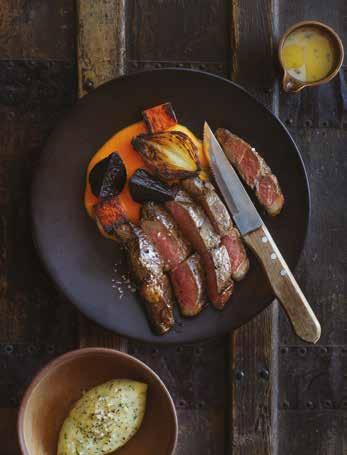
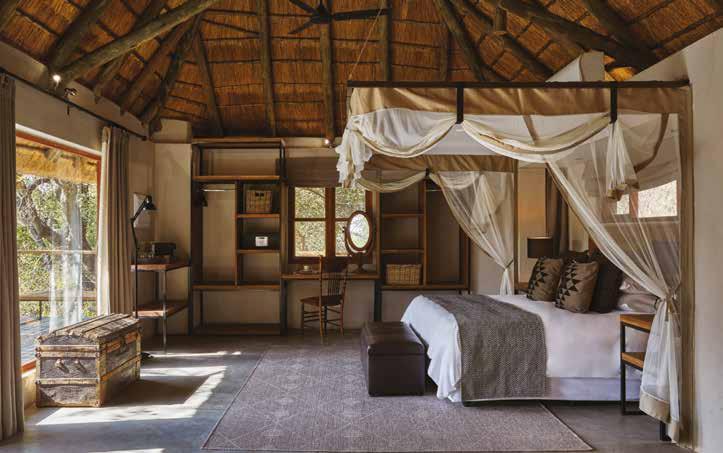
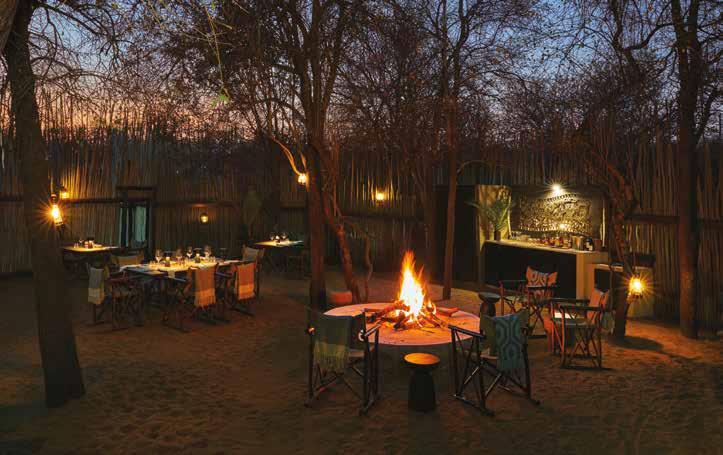
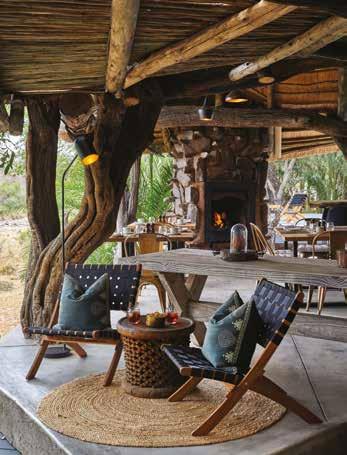
The food stayed close to the mood of the afternoon. Fresh, generous, and light enough not to pull attention from the view.
Chef Keletso Machate’s lemon-roasted chicken arrived tender in its warm broth, comforting without weighing down the meal. Around it, mango and avocado salad, sweet potato with feta and spring onion, and wild rice folded with chickpeas, black currants and crisp onions brought colour and balance to the table.
On my last night, dinner in the lodge boma brought the day down to firelight. Flames cracked. Smoke lifted into the branches. Around the fire, the meal felt joined to something older. People gathered outdoors, warmed by coals, eating as the night settled and the bush continued around them. Voices dropped beneath the stars. The meal became part of the evening rather than separate from it.
A safari lodge is carried by the people who know how to look. At Toro River Lodge, that attention begins in the vehicle before anything dramatic appears.
Guide Willem Scheuer has worked in the reserve since 2014. When I asked what had kept him here, he spoke of terrain, vegetation, hills appearing where one expects plains, and two river systems carrying life through the reserve. He spoke, too, of restraint. Only three vehicles at a sighting. It protects the animals, but it also protects the experience of seeing.
On the tracker’s seat, Brian Mnisi watched the road with the quiet intensity of someone reading a page others cannot see. Hippo tracks. Buffalo tracks. Lion tracks from the previous afternoon, near what may have been a kill. He has tracked
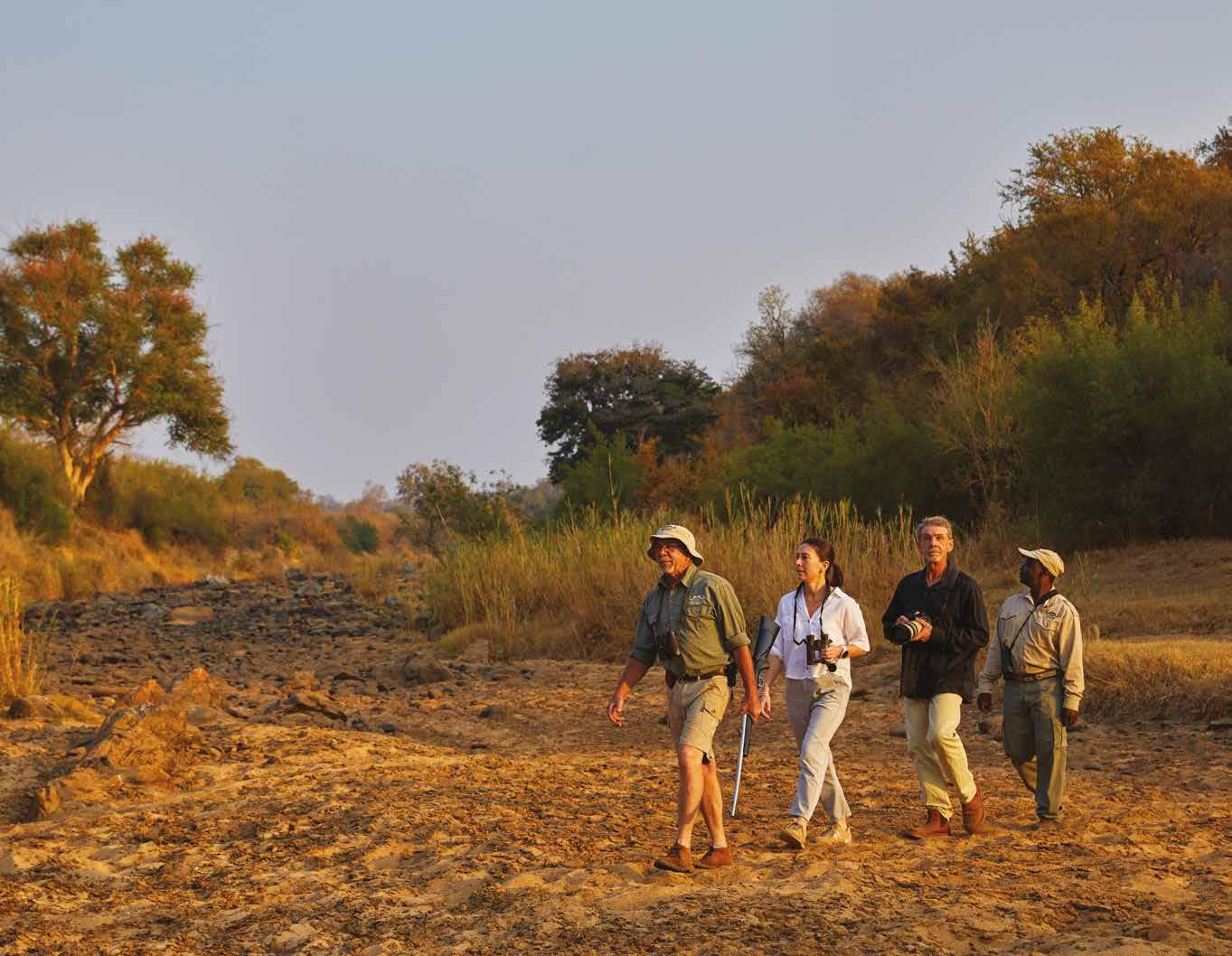
since 2016. As a child, he went into the bush with his father. Now he wants to keep learning, to qualify further and become a guide himself.
Toro River Lodge also offers guided walking safaris, led by trained walking guides. On foot, the height of the vehicle is gone. Tracks, seed pods, insect trails, bird calls and wind direction come forward. The body becomes alert in another way. It is still safari, but drawn into closer contact with the bush.
When it was time to leave Toro River Lodge, I followed the dirt road back through the reserve, carrying the quiet accumulation of the previous days. The river below my deck. The wind at Toro Views. Brian reading the sand, Willem speaking of hills and water. The boma fire lifting into the night.
Then the road stopped me. A male elephant stood ahead, feeding where the track narrowed. He pulled at branches and chewed slowly, making the road his own for as long as he needed it. Ten minutes passed. Then twenty. Nearly half an hour slipped away – the delay became its own kind of farewell.
I sat there thinking about how Toro River Lodge had worked on me, through repeated invitations to become still.
The bush did not release me quickly. Perhaps that is what Toro River Lodge offers at its best: not escape, not performance, but a quieter return to attention. Water below. Wind above it. The road falling away. Some places do not need to astonish loudly to alter the pace at which we breathe.

A love letter to Mount Camdeboo Private Game Reserve
Maryke Roberts loses herself to find herself during a restorative stay in this flourishing reserve
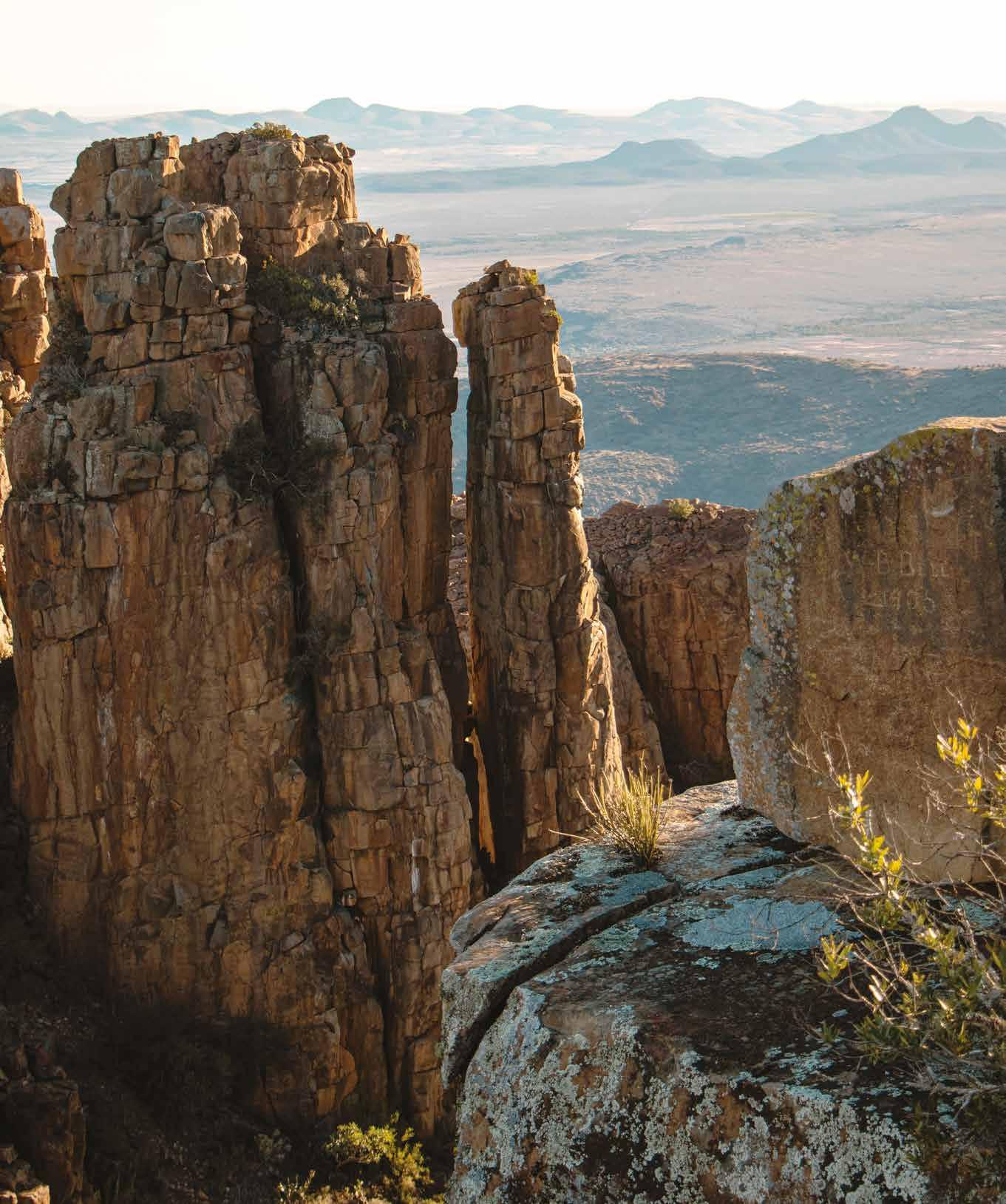
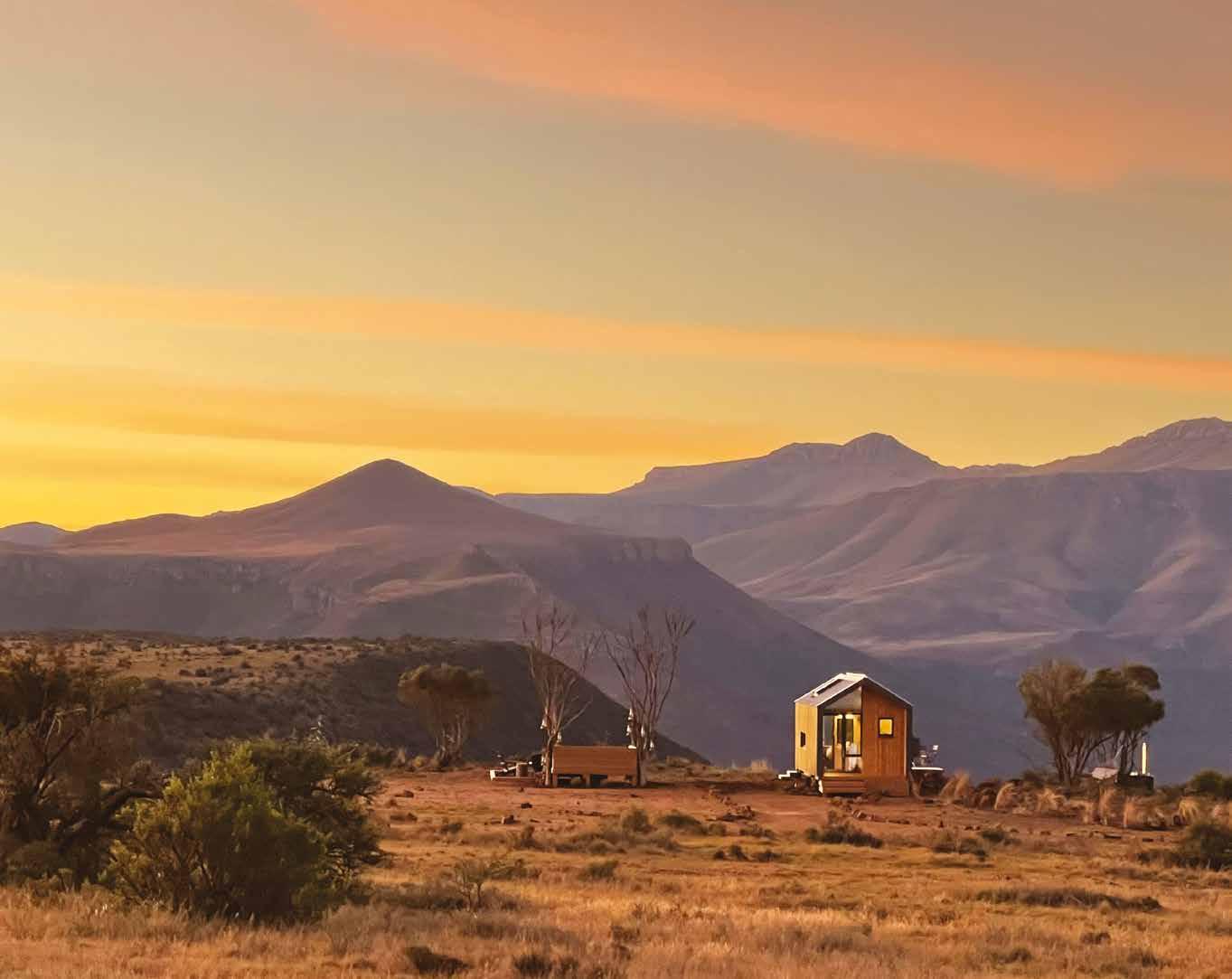
The sign at the gate is unexpectedly blunt.
“Predators and wild animals behind this fence.”
I shift upright in my seat, a slow smile spreading.
It’s a bracing welcome, and exactly why we’ve returned to Mount Camdeboo Private Game Reserve after three years. This isn’t merely a romantic Valentine’s escape; it is a pursuit of that fine, electric tingle of adventure that pairs so perfectly with the profound silence of the Great Karoo.
The journey from Gqeberha is a three-hour unravelling. As the road stretches out, the landscape expands, the horizon widens, and the mental noise of the city begins to dissipate. There is a peculiar magic to this region – it feels simultaneously alien and deeply familiar, peeling back new layers of your psyche with every visit.
Nestled within the folds of the Sneeuberg Mountains, Mount Camdeboo is a place of heart and soul. Upon arriving at the manor house – a grand historic home transformed into a luxury boutique escape – it is the small details that speak the loudest. The heavy Oregon Pine doors with their low-slung knobs; the rhythmic creak of wooden floors that echo generations of footfalls; the tactile history of a working farm refined by time.
The house doesn’t just welcome you; it reminds you of home. It evokes memories of a grandmother’s farmhouse where floors were buffed to a mirror shine with Cobra polish and the clocks seemed to tick more slowly.
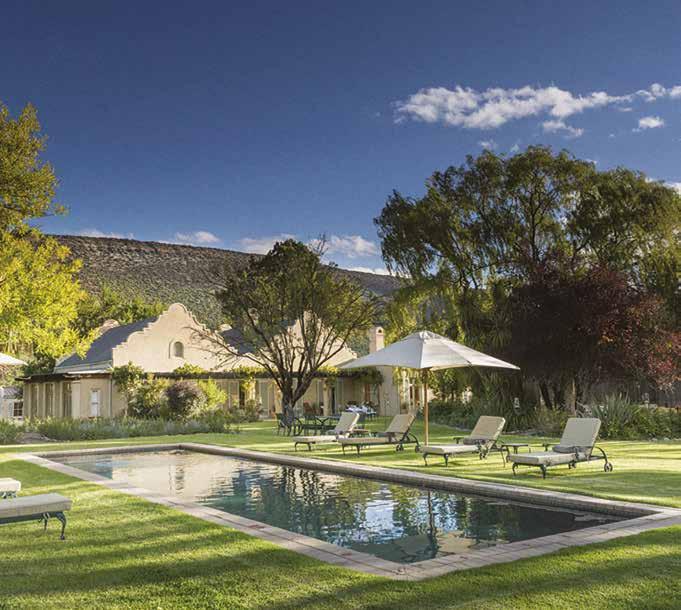
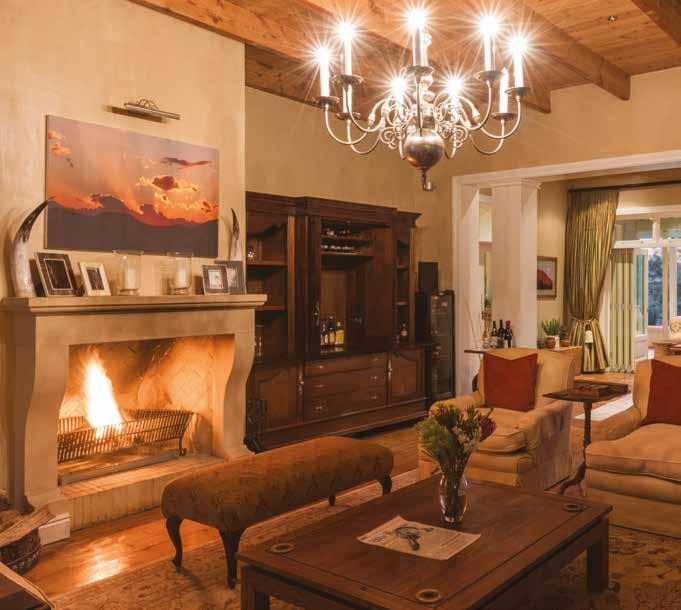
Our early start for the flight from Cape Town is instantly forgotten as a glass of homemade lavender-infused lemonade appears. It is cool, sweet, and comforting. For a fleeting second, I feel a pang of regret that we aren’t staying in the manor itself – until I remember our destination. Our “FOMO” vanishes the moment the image of the eco-friendly Pods flashes across my mind.
After a light lunch, we meet Martin Teuteberg, the head guide. We leave our vehicle at reception. I am relieved not to be piloting the steep, winding mountain tracks ourselves. Instead, we, our luggage, and our dinner are loaded onto an open safari vehicle.
The 50-minute climb to the Pods is a transition. As the valley floor drops away, so does the weight of the world. Martin speaks with a quiet reverence for the land. “Here, history is passed down through generations,” he explains. “The knowledge of the veld and the soil is held by those born of this earth, people who know every ridge and every tree.”
As we gain altitude, we pass the first Pod where we stayed a mere 36 months ago – a minimalist, modern cocoon perched on a plateau, looking inward toward the mountain folds. It is a place for losing yourself to find yourself. Our destination this time, however, looks outward, over the vast plains to where the earth finally meets the sky.
The Pods are masterclasses in understated luxury. Constructed of timber, glass, and linen, they are designed to bring the outside in. Massive glass doors and skylights frame the landscape: the sun sliding across the plains, the shifting shadows of clouds, and a nocturnal sky so crowded with stars it feels almost heavy. Inside, the amenities are perfectly curated: a queen-sized bed, a compact kitchenette, and a wooden deck featuring a private fire pit. A short distance away, a heated plunge pool waits, with a stack of wood ready to stoke the donkey boiler.
We tuck our salad into the fridge and keep the main course in a thermal bag before heading out for a late-afternoon game drive. Martin is a rare breed of guide, as comfortable discussing cloud formations as he is tracking lions. He allows for long, comfortable silences. It feels as though he is experiencing the veld anew through our eyes.
The Karoo envelops you. You smell the sun-baked earth and the dry grass; you feel the soft breeze against your cheek. You remember, quite suddenly, how to live in the moment. While we see plenty of wildlife, the real protagonist is the sky – a celestial theatre of shifting colours as the sun dips below the peaks.
Back at the Pod, a sudden Karoo chill prompts us to fire up the plunge pool’s heater. We soak in the warm water with glasses of
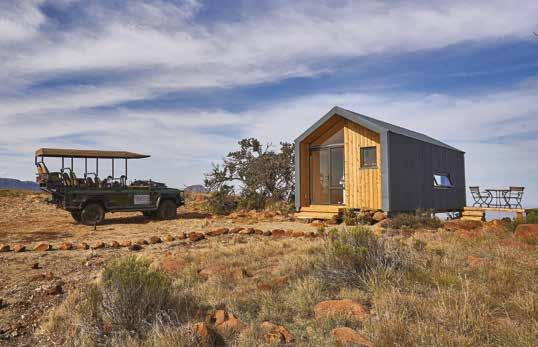
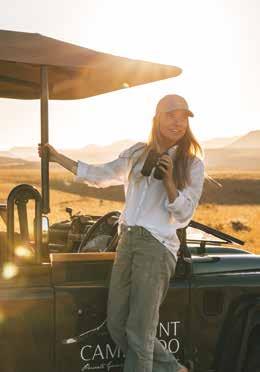
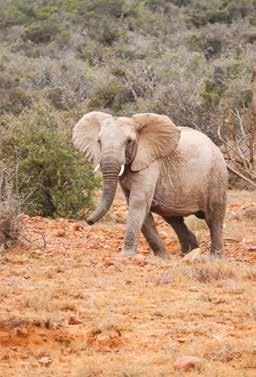
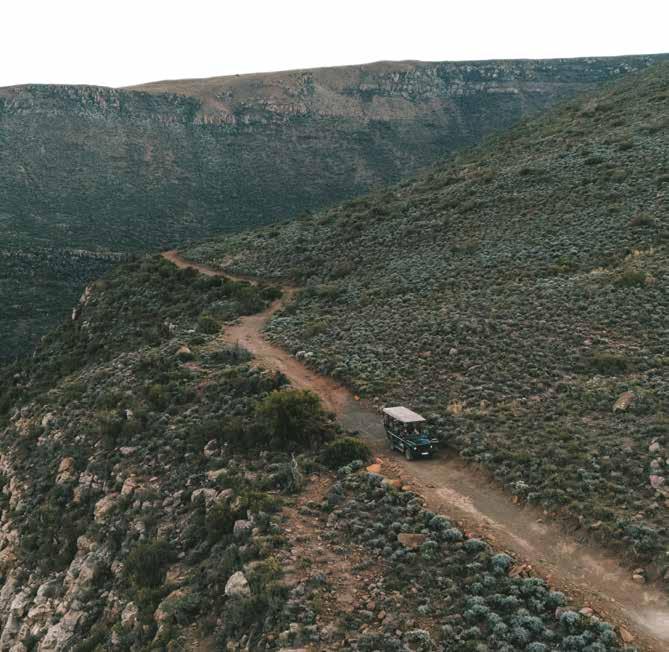
“THE BEAUTY OF THE RAIN IS THAT THE EARTH WIPES ITS SLATE CLEAN.”
sparkling wine, watching the twilight fade. Later, by candlelight, we enjoy a rich oxtail stew paired with wines from the Cape. That night, we lie in bed and look through the ceiling window, watching as a celestial hand paints the dark with silver strokes of starlight.
The following morning breaks with a pale sun and a light wind. Red hartebeest turn to gold in the first light as we head back out with Martin. “The beauty of rain,” he notes, “is that the earth wipes its slate clean. Every track is fresh. It’s a new beginning.”
At Sebrasdam, the animals are still damp from their morning rituals. We watch blesbok grazing peacefully, and in the distance, the guttural call of two lions echoes through the valley. “There are only four here,” Martin says. “To hear them is a privilege.”
The transformation of Mount Camdeboo from agricultural land to a flourishing reserve is nothing short of a miracle. Since 2018, the Big Five have been methodically reintroduced; white rhino, elephant, lion, leopard, and buffalo. But the focus is on the entire ecosystem, including endangered Cape mountain zebras and Blue Cranes.
On our final afternoon, Martin stops on a high ridge to watch the clouds. They “tumble and fight like cats in a bag,” he jokes, warning us of an impending storm. As we sip sundowners, two Verreaux’s eagles sweep over our heads. One settles on a massive
nest against the high cliffs, the other circles on the thermals, a picture of absolute freedom.
The storm arrives with theatrical timing. From the safety of our Pod, we watch lightning dance over the plains – silver whips cracking against a pitch-black sky. We retreat inside with wine, watching raindrops trace intricate patterns against the glass.
On our last morning, we drink strong coffee on the deck, inhaling the Karoo air for the last time. It is difficult to say goodbye – not just to the mountains, but to the quieter, more peaceful versions of ourselves we found here.
The bush has one final gift. On the winding road back down, we finally spot him: a male lion. We sit in silence as the wind plays through his mane. He watches us briefly, then loses interest, sensing perhaps that we have no intention of stealing his peace.
Mount Camdeboo’s greatness lies in its soul. It is a place of grit, silence, and honesty. From Martin’s encyclopaedic knowledge to the kitchen team’s warm smiles and fresh farm bread, everything is done with purpose. It is a healing reminder of what matters.

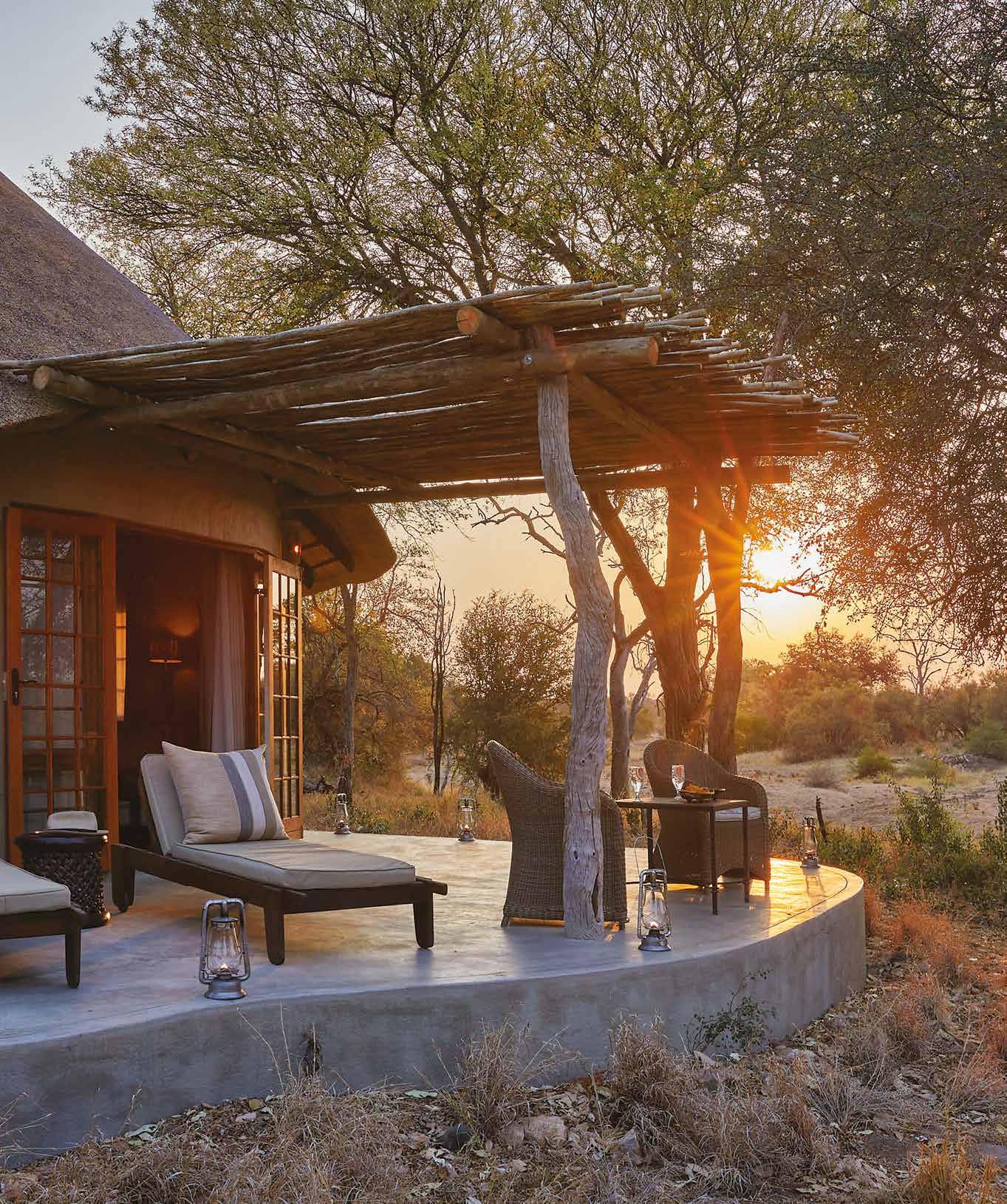
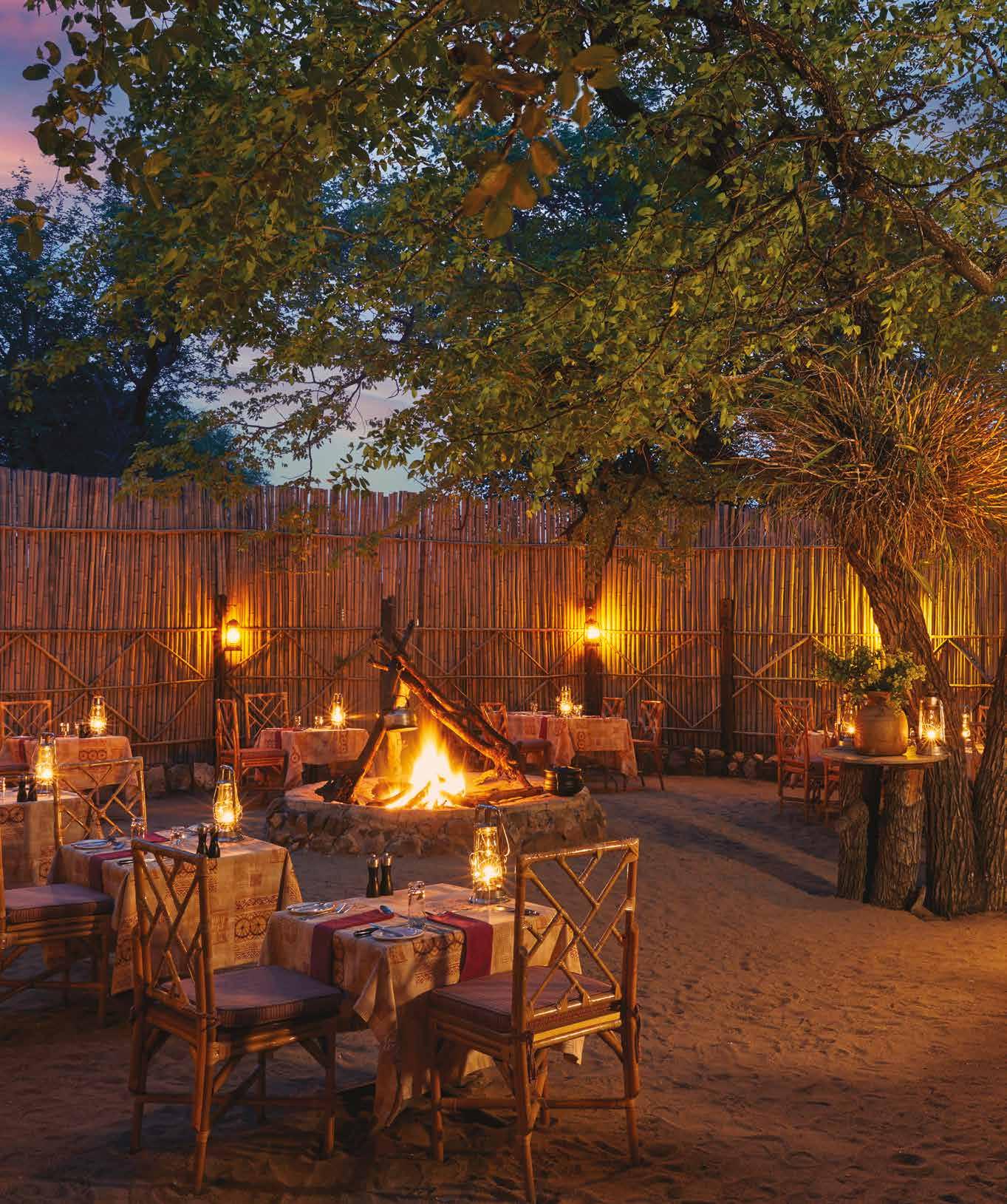
The story of Motswari Private Game Reserve is the story of wildlife conservation in South Africa. It’s also the very personal story of the Geiger family, who have been there since the beginning and are now celebrating 50 years of this special corner of the wild
BY WANITA NICOL
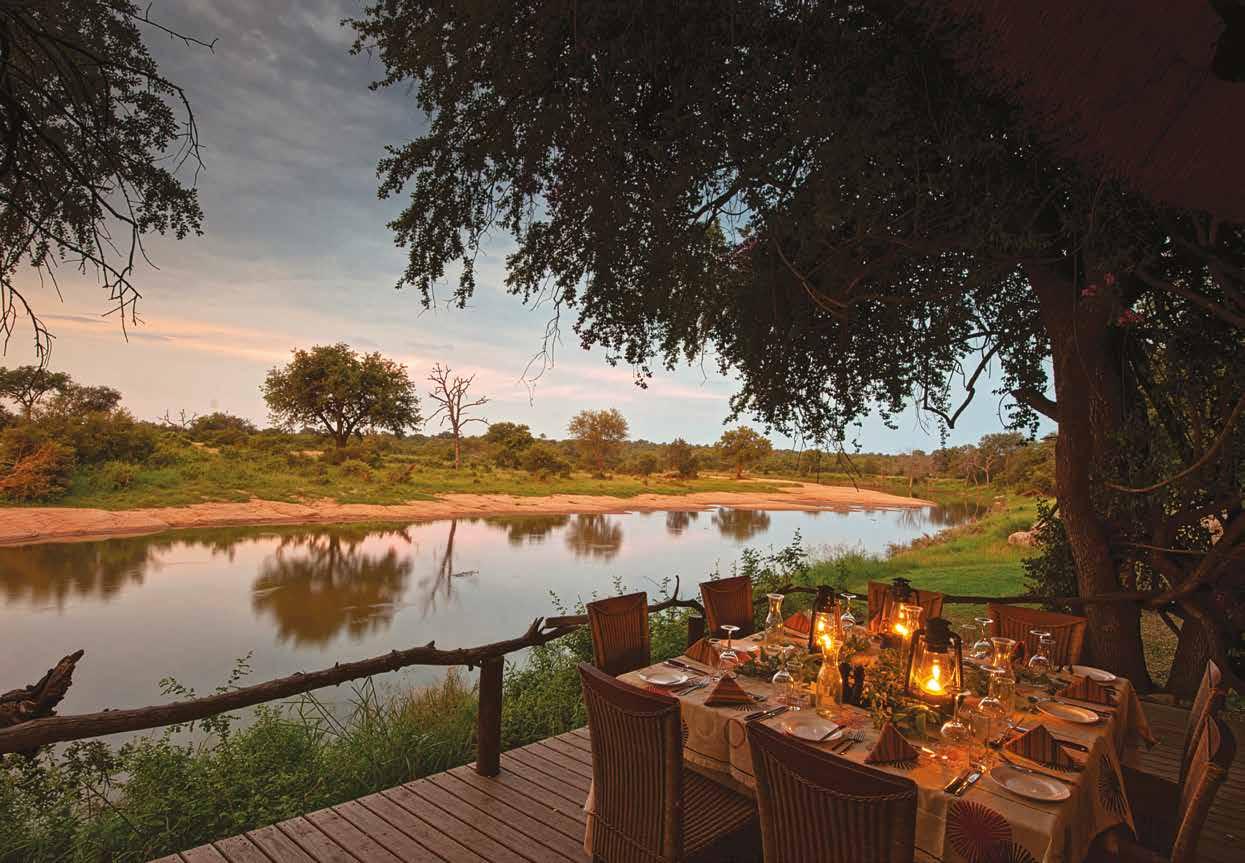
There are approximately 148 mammal species in the Timbavati, the privately owned area of land adjoining the central Kruger National Park that is home to the region’s legendary white lions. Today, these animals move freely, following ancient migratory paths across the unfenced land. But it wasn’t always this way.
When Motswari opened in 1976, there were fences separating privately owned land from the state-owned park. The movement of animals was restricted. They were skittish and shy, wary of vehicles, which they associated with hunting. It was rare to experience the kind of close encounters that you can enjoy today.
In those days, Motswari was a rehabilitation centre for wild dogs and cheetahs. There were five rustic rondawels on the property and a dining area around a communal swimming pool. Guests could stay for the princely sum of R55 (around US$3) a night.
On a neighbouring farm called Java (now Motswari’s Java Camp), Paul Geiger and his wife, Mechthild, were fulfilling their dream of owning land in the Timbavati. Paul formed a relationship with the owners of Motswari that allowed game viewing on his land, with the aim of getting animals accustomed to the sound of vehicles. That agreement was where it all began.
By 1982, Paul had bought Motswari and dedicated his life to conservation. As chairman of both the Timbavati and Umbabat reserves, he would go on to play a pivotal role in one of the region’s greatest milestones – negotiating the removal of the fences between the Kruger National Park and the neighbouring private reserves, allowing wildlife to roam freely.
The lodge, meanwhile, grew into a family business – a destination grounded in conservation, community upliftment and family values, brought to life by Paul, Mechthild and their children, Roland and Marion.
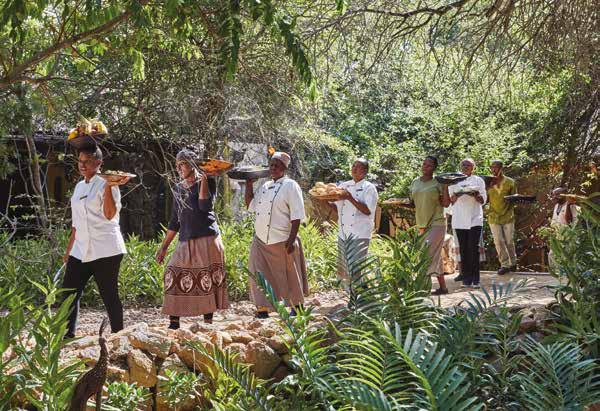
The number of staff at Motswari (four are second generation). The longest-standing staff member, Sarah Sibuyi in housekeeping, has been at Motswari for 28 years.
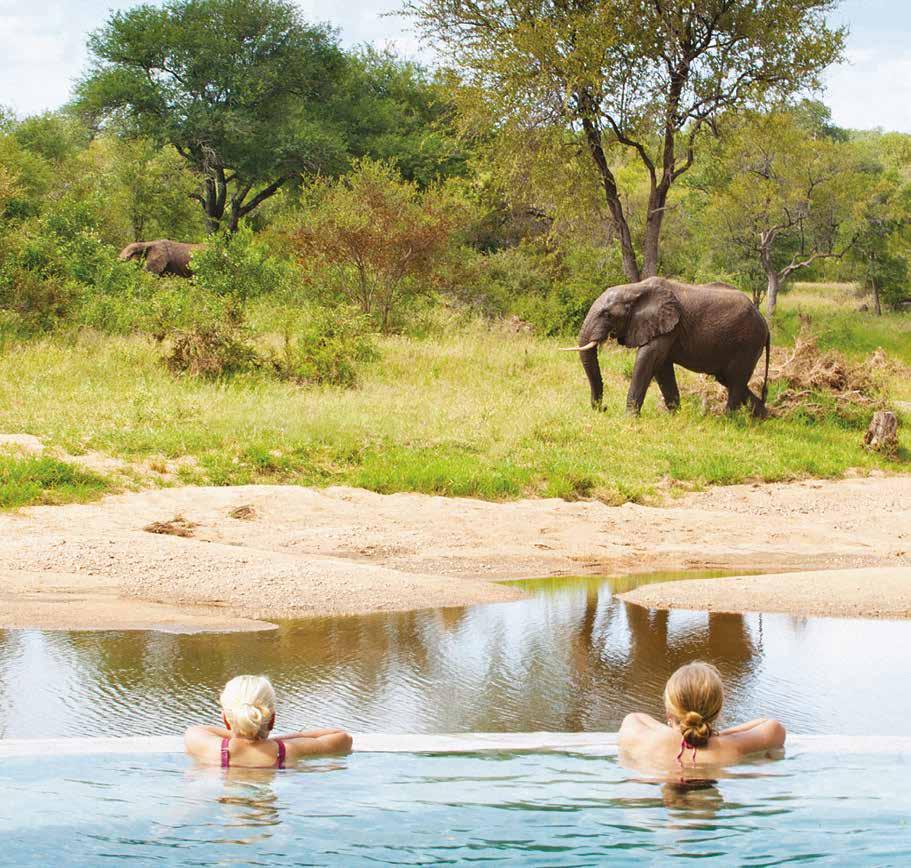
It’s the family memories stitched into the fabric of Motswari that make it so special: Marion and Roland learning to drive on the rugged bush terrain around the lodge. Marion’s wedding to Fabrice, whom she met at Motswari. Special birthdays. The arrival of the third generation of Geigers, Eléa and Victor Orengo De Lamazière (Marion and Fabrice’s children), who grew up immersed in Motswari, with a deep connection to the wilderness in their blood.
Eléa has happy memories of helping out in the kitchen as a little girl, waking up early to bake fresh cookies for the guests. “Looking out onto the riverbed with my apron on and the radio playing gospel music, I felt the utmost joy and pride to be there with my family.”
Victor recalls game drives when he was so small he had to sit on a stack of books so he could see. “I’d sit next to the
Marion’s creativity is present in every part of Motswari. She has an art studio on site, and when she’s at the lodge, guests might catch a glimpse of her at work, hands happily paintstained as her brush brings moving scenes to life. 98
guide, absorbing every word about the wildlife. I must have spent thousands of hours doing this. Those cherished moments sparked a lifelong passion.”
But not all memories are happy ones.
In 1998, Marion’s brother Roland was preparing to take over the running of Motswari from his parents when he tragically passed away. The responsibility of running the lodge passed to Marion, who had been making a name for herself as a fine artist both locally and abroad. Under her guidance, Motswari has grown into the unique and beloved lodge that it is today.
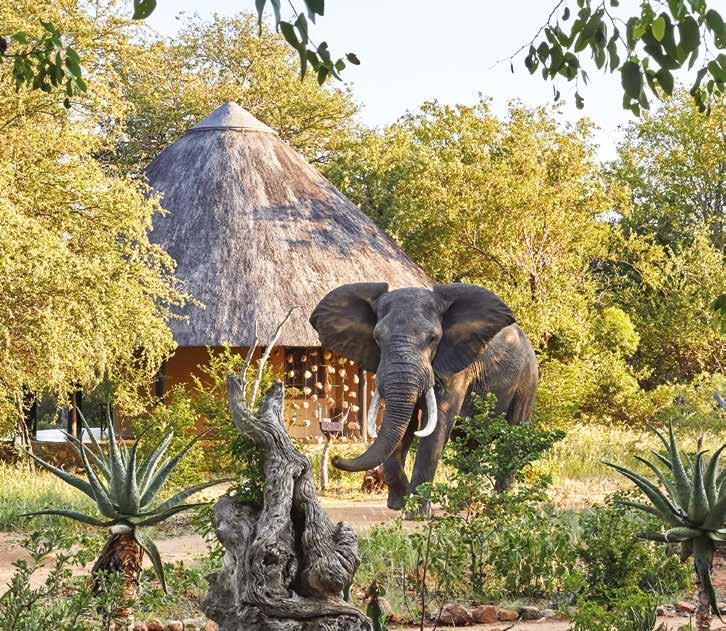
“TO CONSERVE AND PROTECT” IN TSWANA.
Her original artwork is displayed throughout Motswari, often inspired by the surrounding bush. But her artistic eye for the unusual can also be seen in the carefully considered layers of curiosity in the rooms and common areas. It’s these little details that transform something as simple as a bathroom mirror from functional to fascinating.
Under Marion’s stewardship, Motswari has become known for its mix of comfort, elegance and unexpected embellishments waiting to be discovered. Eléa has followed in her mother’s artistic footsteps, and you can be sure she’ll keep Motswari’s creative spirit alive when she one day takes over the lodge alongside her brother Victor.
Paul Geiger’s passion for conservation lives on at Motswari. In 2014, Marion founded Rhino Disharmony – a nonprofit organisation with the mission to end rhino poaching through the storytelling power of the arts. Sustainability is a way of life at the lodge and Victor and Eléa are committed to furthering this legacy.
“My vision for Motswari is to continue its family heritage,
ensuring that its conservation ethos and warm, family-like atmosphere thrive as we grow,” says Victor.
Once a collection of five rondawels, Motswari is now a family of five distinctive camps: the original Motswari Game Lodge, two self-catering camps, the intimate and artful Geiger’s Camp, and the newest addition, Motswari African Retreat & Walking Safaris. Each has its own character, yet they share the same heartbeat, grounded in authenticity and a mission to leave a sustainable footprint.
From bookings made on a telex machine in the home office to the seamless mobile booking system guests now enjoy, supported by Newmark Hotels & Reserves, the lodge has advanced significantly. Yet the wild spirit of Motswari remains unchanged.
“Without soul, hospitality is nothing more than a paid destination,” says Marion. “What makes Motswari unique is its spirit – the elephants walking their ancient paths, the stories shared around the fire, and the generations of guests who return to experience the same wilderness magic.”
It’s this intangible essence that keeps guests coming back again and again, embodying Motswari’s motto: Arrive as a visitor, leave as a friend.
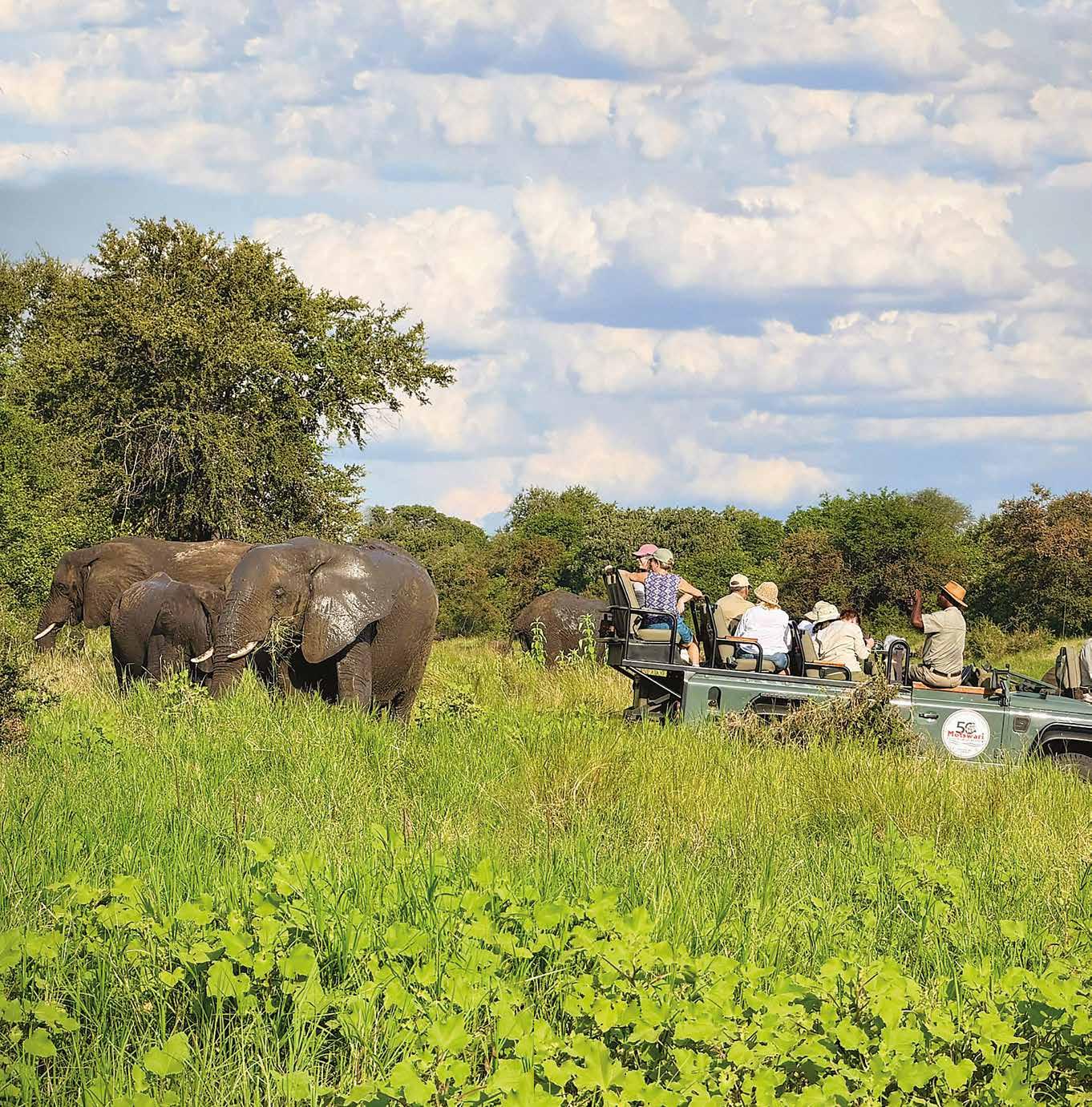

Capture the bush on foot at Motswari African Retreat & Walking Safaris
BY WANITA NICOL
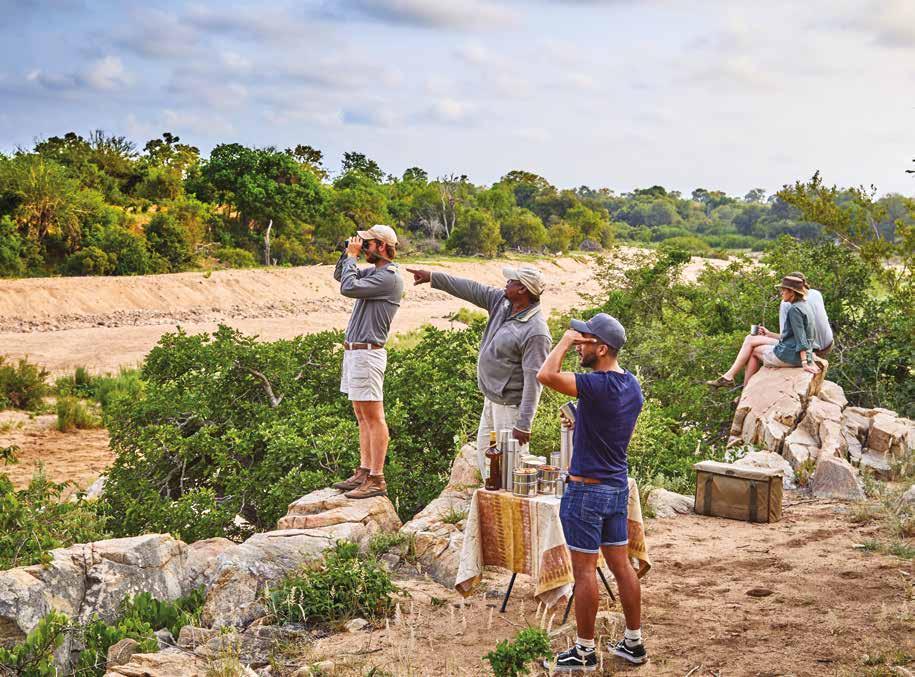
In 2025, photographer Mykal Dutton shared pictures of a rare white lion cub, snapped during his stay at Motswari African Retreat & Walking Safaris. Dutton, whose Instagram is filled with mesmerising wildlife photography, called it his “favourite sighting and moment from 2025”.
Set within the Timbavati and Umbabat Private Nature Reserves, part of the Greater Kruger ecosystem, Motswari offers access to a landscape where wildlife moves freely across unfenced terrain.
If you’re someone who loves the bush, Dutton’s excitement will be relatable – and his white lion images likely the object of envy. But the way we experience wildlife hasn’t always looked like this.
The concept of the “Big Five” has its roots in early hunting traditions – today, it represents some of Africa’s most soughtafter wildlife sightings.
Ticking off the Big Five is still a bucket-list item. Only now, instead of hunting them, travellers have learnt to appreciate these magnificent animals in their natural environment.
TIP: Save your phone for sunset selfies. To capture animals in the wild, you need a camera with a powerful zoom. Even at a distance, your lens can make the difference between an average snap and a photograph worth framing.
Often called the “golden hour”, the soft light just after sunrise produces well-lit photographs without the harsh shadows you get closer to midday. Animals are more active in the cooler temperatures, and you might catch details that disappear as the day wears on – overnight dewdrops sparkling on a spider’s web; nocturnal creatures, like owls and smaller cats; undisturbed pawprints in the sand.
“Shooting” is done with a camera. “Shots” are the images that freeze fleeting moments, preserving them as treasures to be revisited over and over.
While game drives offer broader wildlife encounters, walking safaris shift the focus to the finer details. On a guided walking safari, you take photographs differently. Led by experienced FGASAqualified guides, each walk reveals the little hidden details of this complex, interconnected world, and you learn to focus on different features. It’s those photographs that capture the essence of the bush.
But it’s important to remember that it’s not always the scale of the sighting, but the detail of the moment that stays with you.
Seconds matter when you’re photographing animals. If you’re new to this, avoid the fuss of lens or film changes by opting for a digital camera with an adjustable zoom lens. Make sure your battery’s charged and you have enough space on your SD card.

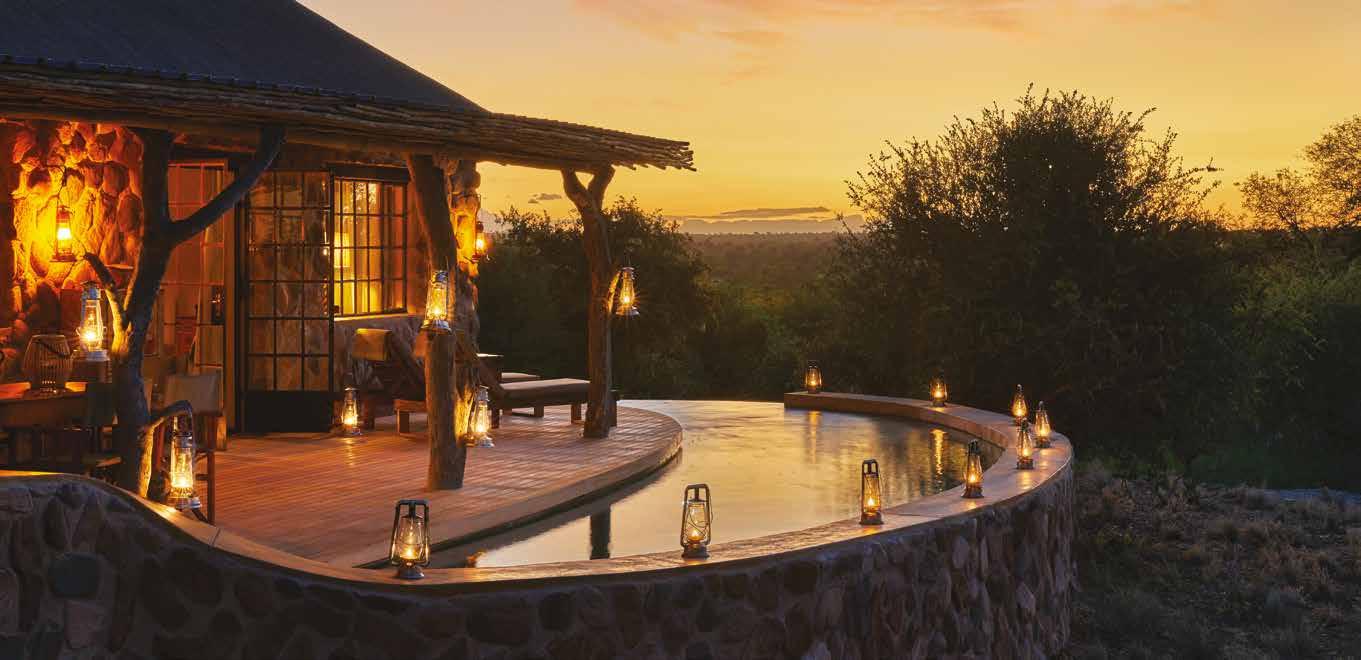
A short distance from Motswari Private Game Reserve’s main lodge, Geiger’s Camp offers a more intimate accommodation option for guests wanting a quieter experience. But more than that, it’s a tribute to the history of Motswari
BY WANITA NICOL
The late Paul Geiger, patriarch of Motswari Private Game Reserve and champion of conservation in the Timbavati, was seldom without his signature wide-brimmed hat. Now immortalised in the emblem of Geiger’s Camp, that hat welcomes guests to the five-room lodge that was once a family home.
Before Geiger’s Camp opened in 2014, the property where it now stands was Roland’s house. Roland was Paul Geiger’s son and the brother of Motswari’s owner, Marion Geiger-Orengo. Like Marion, Roland had a deep connection to the bush. In fact, he was starting to take on the job of running Motswari when he tragically passed away in a light aeroplane crash. When Marion made the decision to reimagine the home into a camp, she dedicated it to the memory of Roland and Paul (who, by then, had also passed on).
And so, Geiger’s Camp emerged as a lasting tribute to the Geiger legacy.
Guests at Geiger’s Camp often remark on the original artwork displayed in all five of its rooms. They’re Marion’s creations. Trained as a fine artist, she had exhibited extensively both locally and abroad before taking the reins at Motswari and is still active as an artist today.
Her artwork can be seen throughout Motswari, but the pieces on display at Geiger’s Camp are particularly special. They share the space with family heirlooms, artefacts and photographs that give the decor an added layer of meaning and the lodge a homely feeling that harks back to its roots.

A stay at Geiger’s Camp comes with generous meals and slow days next to the infinity pool. Game drives are led by expert guides and trackers, who will teach you about the hidden rhythms of the bush. Guests also have access to Motswari’s main camp facilities, just a short distance away. But the feeling that will stay with you is something harder to describe – the easy familiarity of being welcomed into a home.
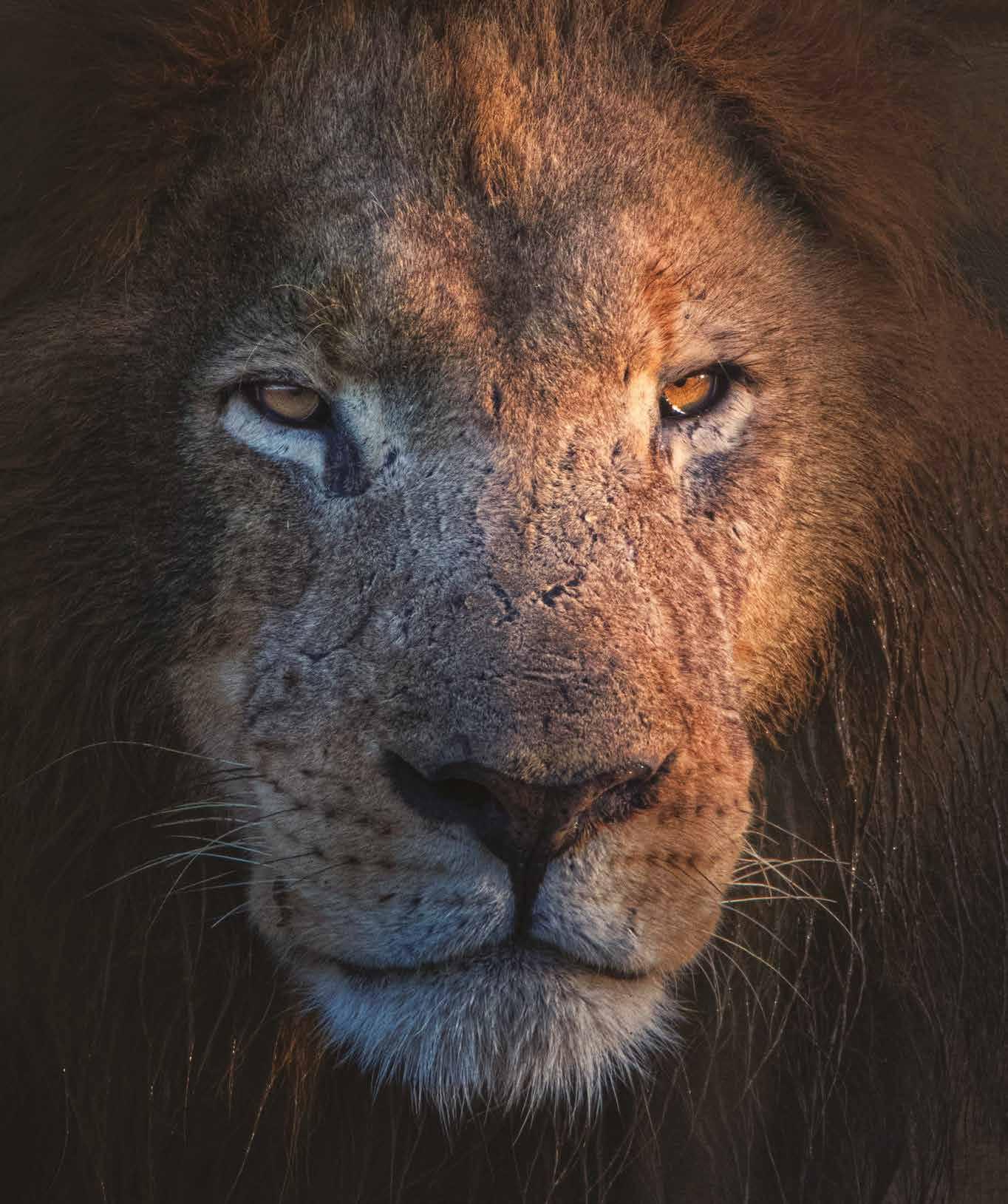
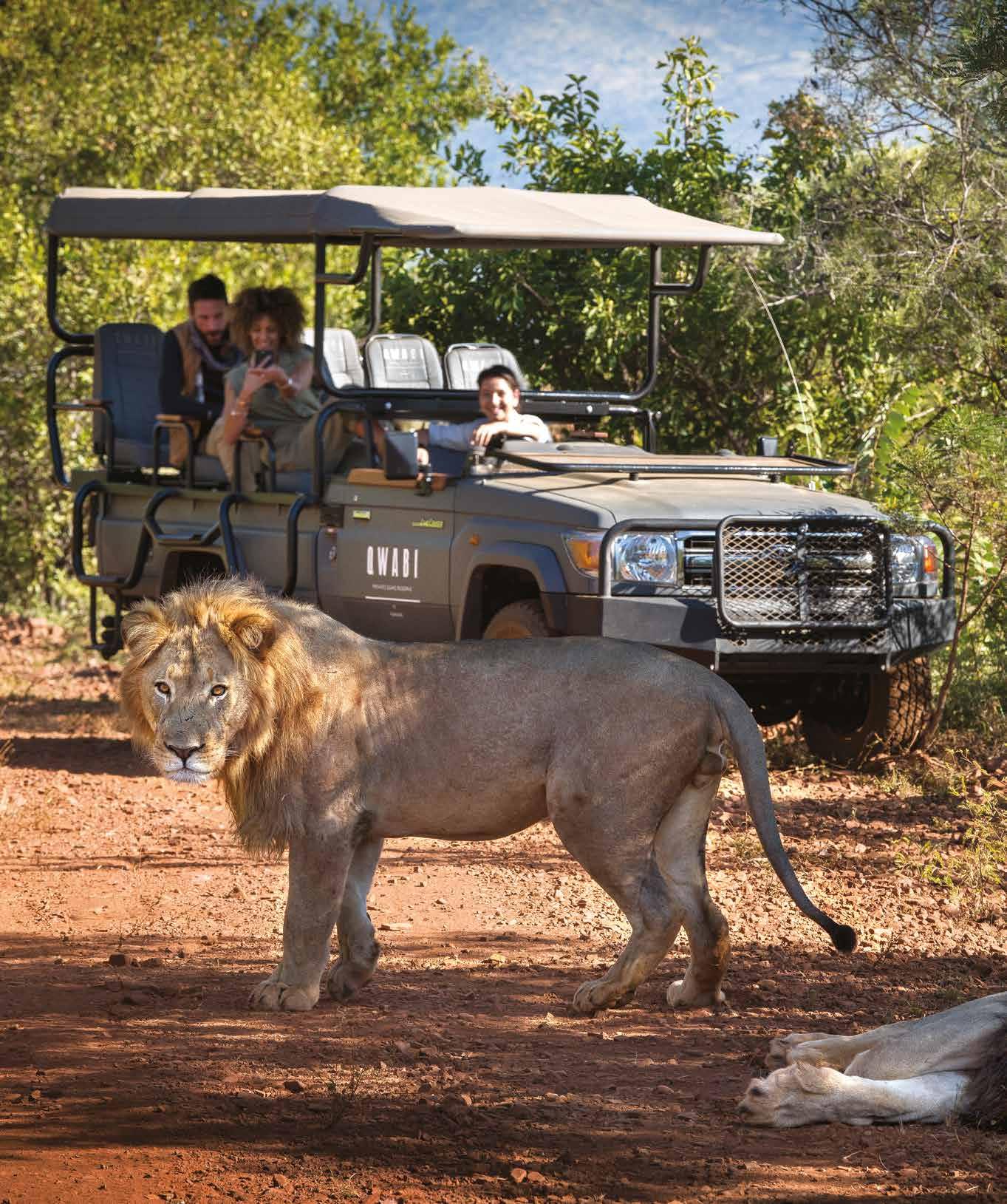
While lion populations have plummeted in the past half century, South Africa offers a rare note of resilience – and at QWABI Private Game Reserve, a deliberate, science-led effort is proving that with care and collaboration, the king’s domain can grow
BY PIPPA DE BRUYN
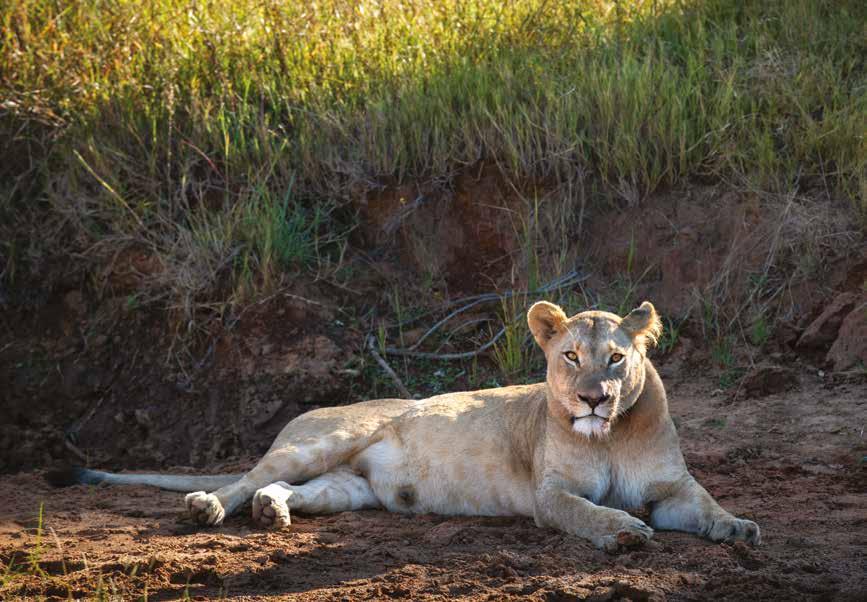
Full disclosure – when it comes to predator and prey, I am always #teamlion. Not for the kill, but because looking into the eyes of a free-roaming lion is a heartstopping moment – a searing, piercing encounter with raw power, like looking into the sun. And where Earth’s celestial king roams free, it signals an ecosystem in balance – a trophic cascade from Africa’s apex land predator to balance herbivores, vegetation and soil nutrients.
Yet across Africa, that balance is faltering. Like a canary in the proverbial coal mine, the sharp decline in lion numbers –lions are classified by the IUCN Red List of Threatened Species as ‘vulnerable’ – is an indicator of the state of its wilderness. There are an estimated 20,000 to 24,000 lions left in the wild – a 90% drop in just 50 years, 40% in the last two decades, with numbers shrinking most quickly in the lion strongholds of East Africa. By contrast, South Africa’s wild lion population has been growing, from around 2,300 in 2010 to around 3,500 at present (a number entirely separate from captive-bred lions).
The 11,000-hectare QWABI Private Game Reserve –a convenient 2.5-hour drive from OR Tambo International Airport – sits within one of the most scenic areas of the Waterberg Biosphere Reserve, an area that encompasses Marakele National Park on its western edge and the Lapalala Wilderness in the north, and is rated by SA’s National Biodiversity Institute as one of the most critically biodiverse sites in the country. Aside from its proximity and natural beauty, both QWABI’s lodges – the 58-room family-friendly LETAMO and 25-suite flagship BABOHI – offer an exceptional-value safari in a Big 5 reserve.
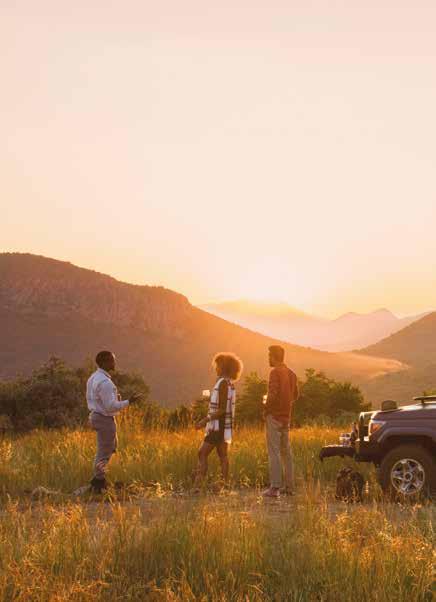
From the bird’s-eye vantage of BABOHI’s pool deck, the mirror-like waters seemingly cantilevered above the valley, the views are dramatic: an undulating mountainscape carpeted in dense greens under an arch of blue. Traversing it in an open game viewer reveals moments of singular beauty: red soil tracks fringed with wild grasses, dappled copses of silver cluster-leaf trees, wild seringas, russet bushwillows and magnificent Camel Thorns; short-grass valleys grazed by rhinos. Hard to believe that this patchwork of what was once predominantly cattle farms was earmarked for a development plan that would have razed the intricate bushveld tapestry for an 18-hole golf course, 513 residential stands, ten 20-bed lodges, and a 20-room hotel. Thankfully, the current owner, who purchased the property in 2009, had a very different plan in mind: to rehabilitate, remove alien species and fences, fix erosion channels, plant and sow indigenous vegetation, and ultimately, help the Big 5 return.
“When QWABI was declared a reserve, we already had a leopard population – elusive and well-hidden, but robust – as well as several antelope species, hippo, and even some buffalo. In addition, we wanted it to be a sanctuary for endangered and vulnerable species: sable, giraffe, white rhino, black rhino, cheetah, lion… To do so, we developed both an overarching management plan, as well as individual species management plans for LEDET, the government body that controls conservation in Limpopo. All of these are reviewed annually.”
This is Dr Andre Uys, wildlife veterinarian, co-founder of Conservation Solutions, and GM of QWABI Private Game Reserve. With more than two decades’ experience translocating large mammals across 13 African countries, Uys was a considered
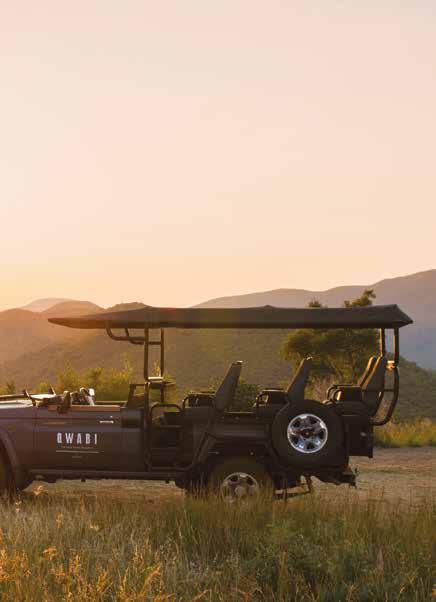
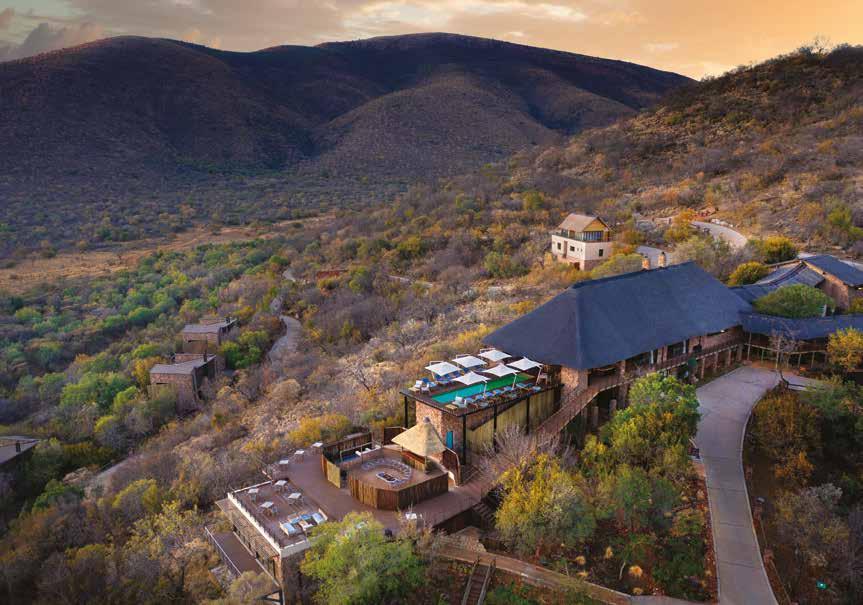
choice to steer QWABI into a well-balanced Big 5 reserve. When I ask whether reintroducing lions requires particularly careful planning, he nods.
“With a large number of herbivores to hunt, a lion population can experience explosive growth. We worked with Dr Haemish Melville of the Applied Behavioural Ecology & Ecosystem Research Unit at UNISA, and fitted camera collars to four of our adult females, which they wore for 12 months after they were introduced from Lapalala and Kwandwe in the Eastern Cape. It’s standard for researchers to use GPS collars, but these were the first collars to be fitted with cameras, activated by an accelerometer. This allowed us to study prey preferences, hunting frequency and interactions with other predators on the reserve, helping us better understand the carrying capacity of the reserve.
“We know that cubs are drivers for pride formation; with no cubs there is little motivation to form a pride, and individual lions can have a much more devastating impact on herbivore populations than a structured pride. But reserve size impacts numbers and limits natural gene flow. With each lioness producing one to four cubs every two years, and the subadult males leaving the natal pride at around two, we need to relocate them and work closely with the Lion Management Forum.”
Established in 2010, the Lion Management Forum is a coordinating non-profit body that has developed a national metapopulation management plan for South Africa’s lions, facilitating everything from shared research and genetic records to relocations, though Dr Susan Miller, who serves on the Forum’s board of trustees, points out: “We don’t
coordinate the actual relocations. It’s very much a bottomup approach. What we do is provide a platform for members to interact with one another and learn from each other’s successes and failures. But each reserve is responsible for how they choose to manage their lions.”
Asked about the future, Uys is optimistic. “My dream is to one day see the southern and northern part of the Waterberg connected. Without new land, populations of vulnerable and endangered species will stagnate. But regardless, we cannot have a ‘wait and see’ attitude to wildlife management.
“Where you have confined land, it must be actively managed. Without a holistic plan, our children and grandchildren may never get to see these magnificent species roaming freely. We have to look after every inch of our wilderness. By creating legally protected spaces, we create the future. But tourism also plays a vital role in sustaining conservation. Every visitor to QWABI contributes not only to a meaningful safari experience, but also to the protection of wild spaces and the communities connected to them.”
Tourism aside, as anyone who has visited a reserve devastated by an unchecked elephant population knows, the management of the Big 5 in a reserve with the delicate beauty of QWABI requires both a holistic vision and hands-on approach to species management. And the lions of QWABI Private Game Reserve appear to be in good hands indeed.

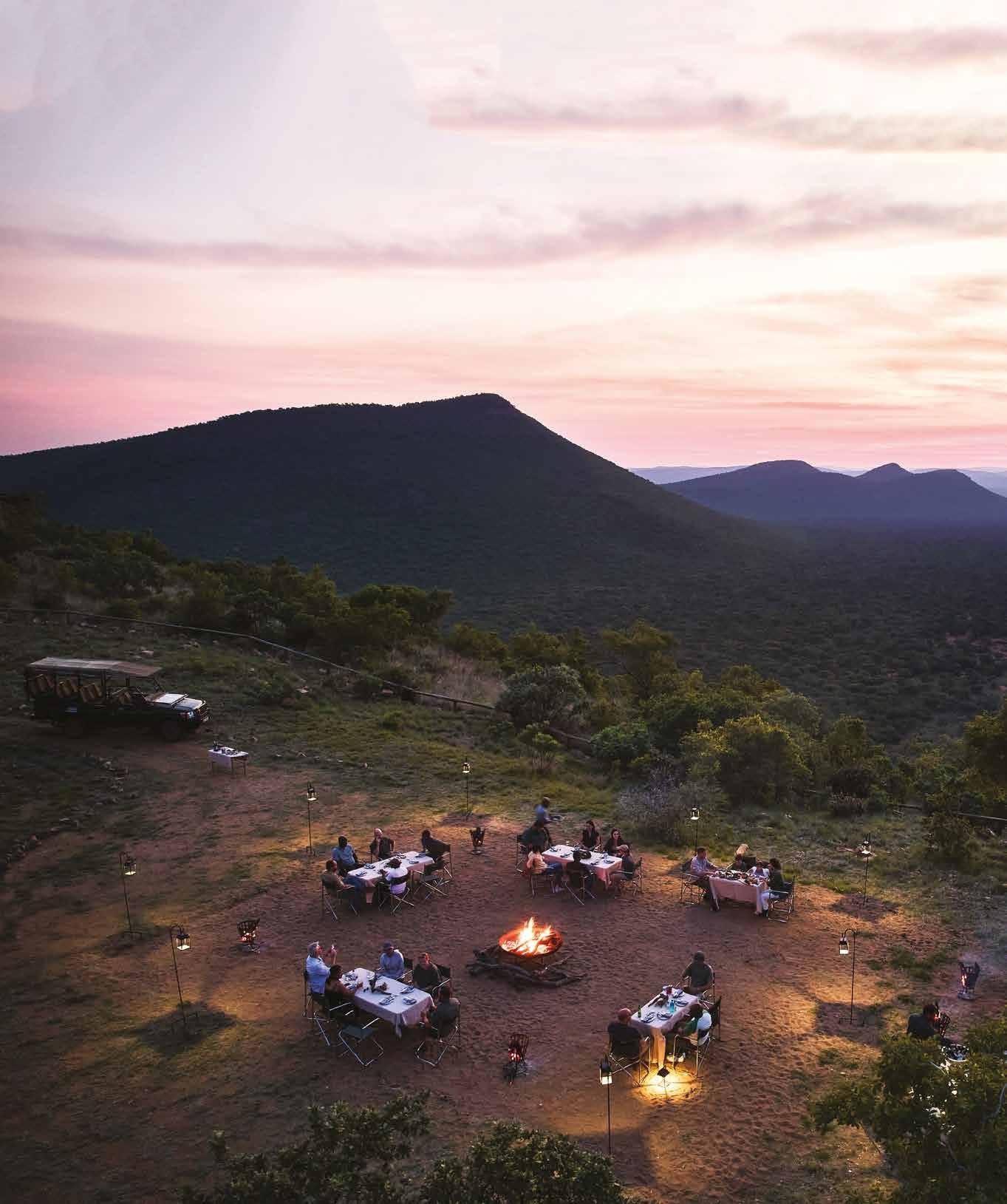
Beneath star-filled Waterberg skies, bush silence and quiet luxury turn weddings, family escapes and retreats into restorative wilderness experiences
BY RYAN ENSLIN
There are places where night arrives quietly and places where the dark feels rich and alive. At LETAMO, in the heart of QWABI Private Game Reserve, the Waterberg after dark feels vast, fragrant and wonderfully unhurried. The ancient sandstone ridges recede into shadow, the air cools against the skin, and above, the stars gather in brilliant numbers, bright enough to remind you how much of the sky most of us no longer see.
In that silence, broken only by the sound of birds at dawn and the subtle sounds of the bush around you, LETAMO begins to reveal itself as more than a safari lodge. It is a place for gathering – for families, weddings, milestone occasions and time away with colleagues – but also for something gentler. A place to breathe more deeply in one of South Africa’s most quietly restorative wilderness settings.
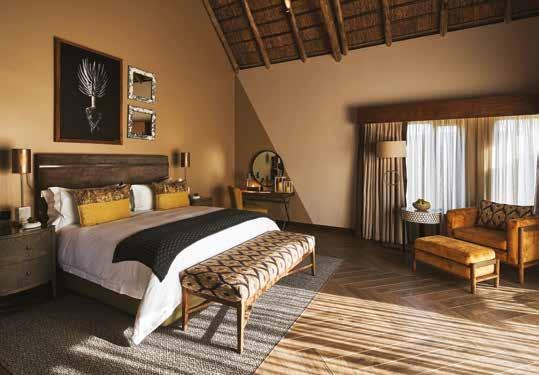
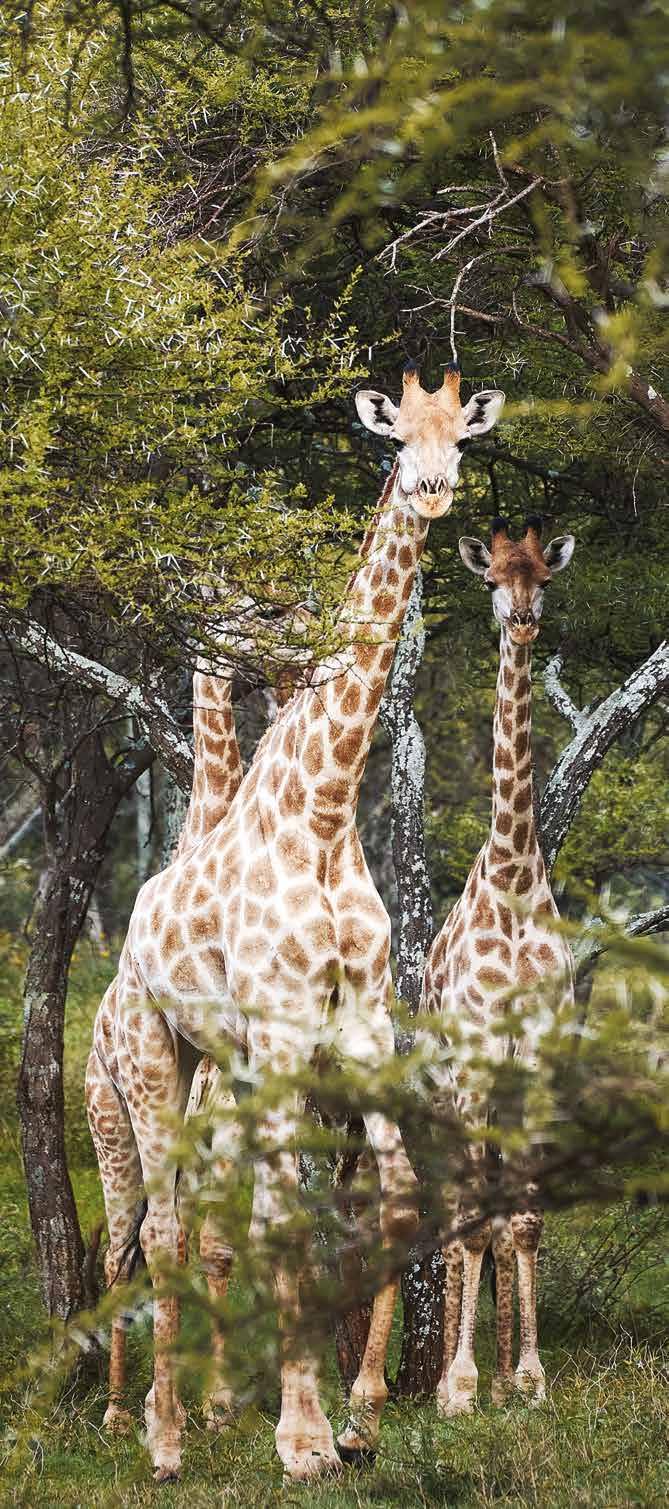
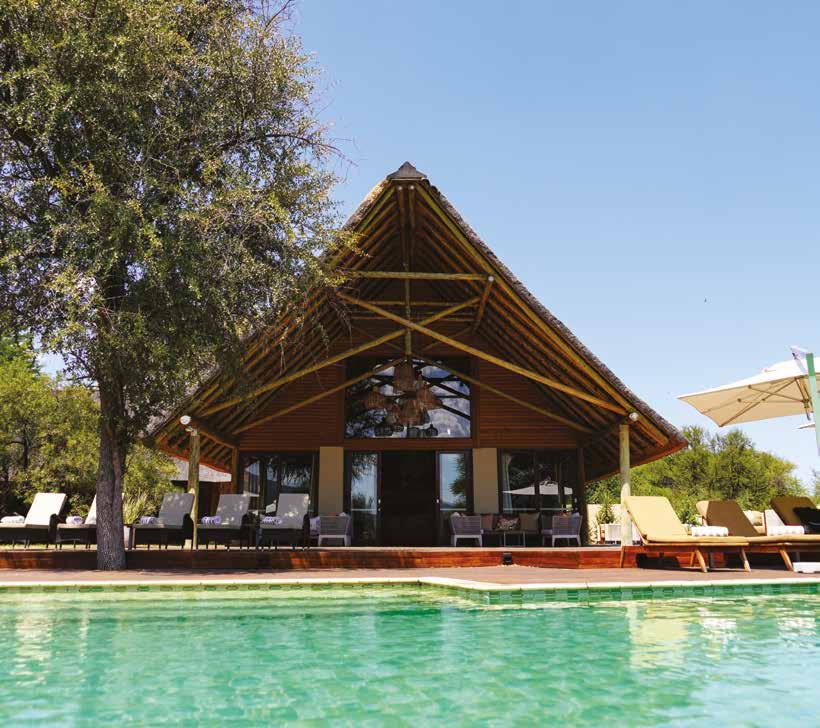
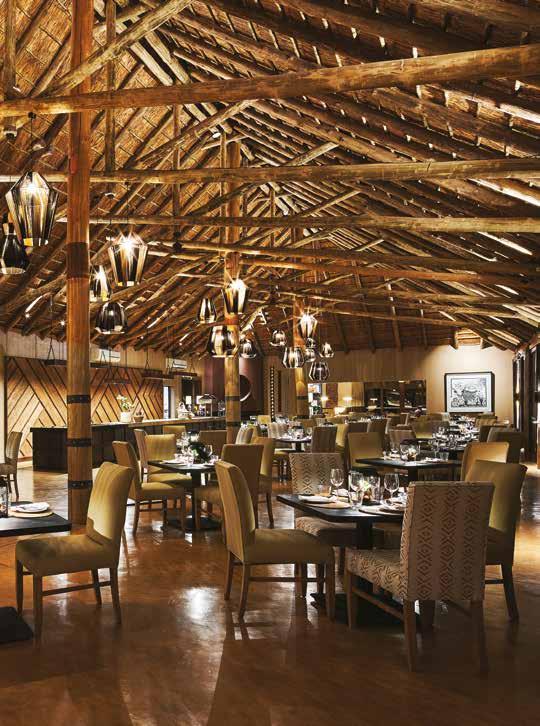
LETAMO IS WELL SUITED TO FAMILIES TRAVELLING TOGETHER, GROUPS OF FRIENDS, PRIVATE CELEBRATIONS AND CORPORATE RETREATS. YET IT RETAINS A WELCOME SENSE OF INTIMACY.
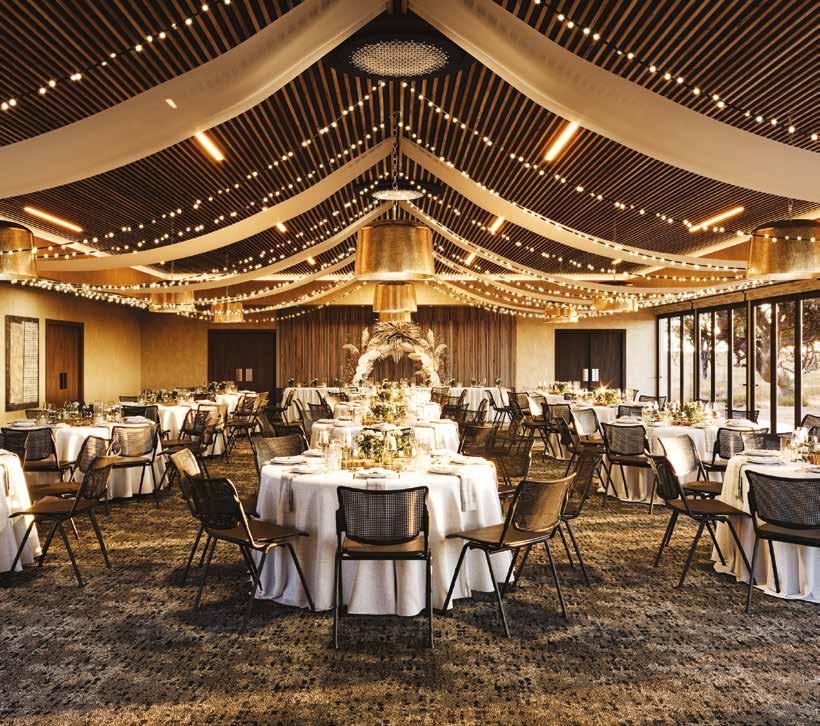
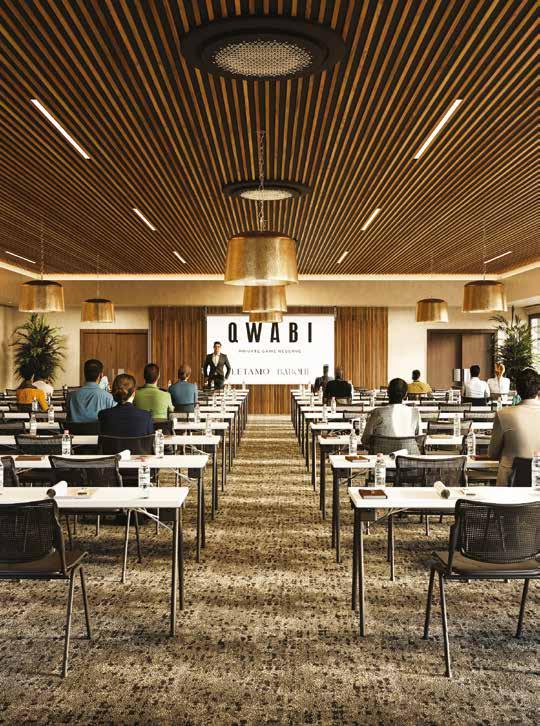
As the largest lodge on QWABI Private Game Reserve, LETAMO is well suited to families travelling together, groups of friends, private celebrations and corporate retreats. Yet it retains a welcome sense of intimacy. There is still a feeling that the bush remains close and that the rhythms of the reserve are never shut out by the comforts of the lodge.
Interleading rooms make family travel simpler. The kids’ club, pools and generous shared spaces create a natural rhythm between togetherness and pause.
A wedding at LETAMO takes its cue from the bush itself. From the way the afternoon light softens over the Waterberg, from the stillness that gathers before evening, from the sense that the land is already setting a tone no styling ever quite could. That is the beauty of a bush wedding done well. Not excess, but atmosphere. Not rigid formality, but a natural unfolding from ceremony into celebration.
Guests gather with the reserve opening around them, vows are spoken in the hush of late day, and the occasion slips easily into candlelight, shared tables, slow conversation and dancing beneath a sky thick with stars. At LETAMO, the setting does more than frame the wedding. It lends its depth, intimacy and an unmistakable sense of place.
That same sense of ease matters in a different way when colleagues gather here. LETAMO gives conferences and executive retreats something many business hotels cannot: room for people to settle into clearer thought and fuller attention. Conversation changes when it unfolds between open skies, fresh air and the quiet reset of time in the bush. Here, the formal meeting is only part of the day. Ideas carried from a morning session can continue on a game drive, over lunch, or later beside the fire when people often speak with more ease and listen with greater care. Few places manage to host that kind of gathering while holding on to the calm that makes people think and speak differently. Later this year, that offering is set to deepen with the addition of a purpose-built conference
centre at LETAMO. Designed in harmony with the lodge’s existing aesthetic, the facility is planned to accommodate up to 120 delegates, with one main plenary room and two smaller breakout rooms for focused sessions. The intention is not simply to add a meeting room to a safari lodge, but to create a fully equipped, high-end conferencing space where groups can step out of the city, gather with purpose, and remain immersed in the atmosphere of the reserve.
The same slowing down reaches the body. It is wellness, perhaps, that gives LETAMO its deepest pull. The Waterberg has long been valued for its malaria-free wilderness, but what stays with you here is the sense of release. The air feels cleaner. The silence lands differently. The body begins to unwind.
At the spa, that feeling is carried further. Treatments draw on local herbs, plant extracts and natural elements, extending the presence of the bush into a space of calm and tactile restoration.
For families, the restorative quality of LETAMO often arrives through the simplest things. Children move between game drives, nature-based activities and time at the kids’ club. Adults are given room to rest without feeling removed from the shared holiday. There are unhurried meals, time at the pool, laughter after a sighting and the retelling of the day’s adventures under a starladen sky.
Family wellness does not always look serene. Sometimes it looks like excitement, muddy shoes, children full of questions, and parents remembering how rare it is to have everyone fully present at once.

And then there is the quiet itself. The hush that settles between distant calls. Wind moving through trees. The faint rustle of the bush after dark. In a world saturated with noise, this may be LETAMO’s most persuasive offering.
By the time night returns, what remains is not simply the memory of a lodge, but the feeling of being steadied by the Waterberg, and restored not only by hospitality, but by the land itself.
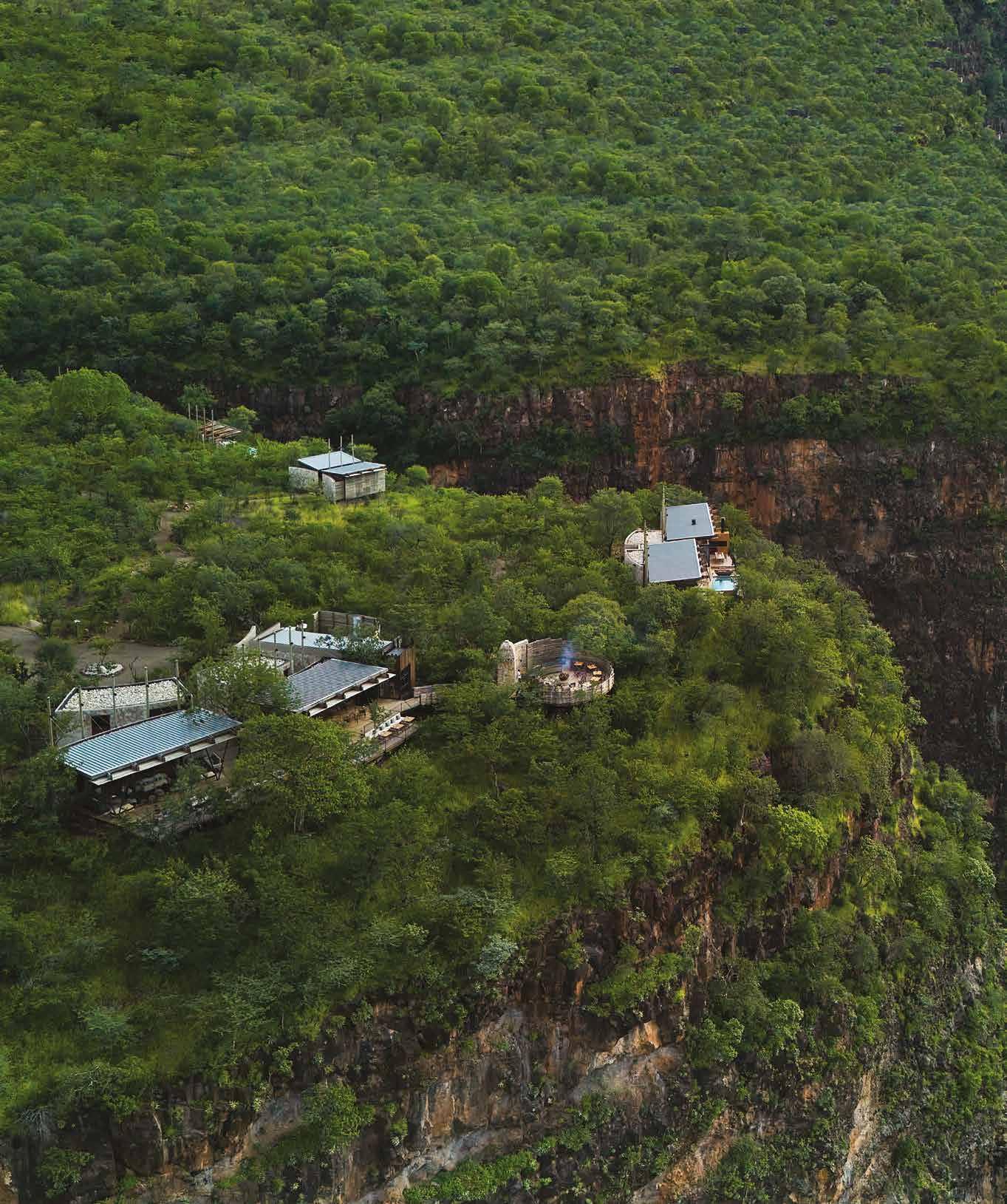
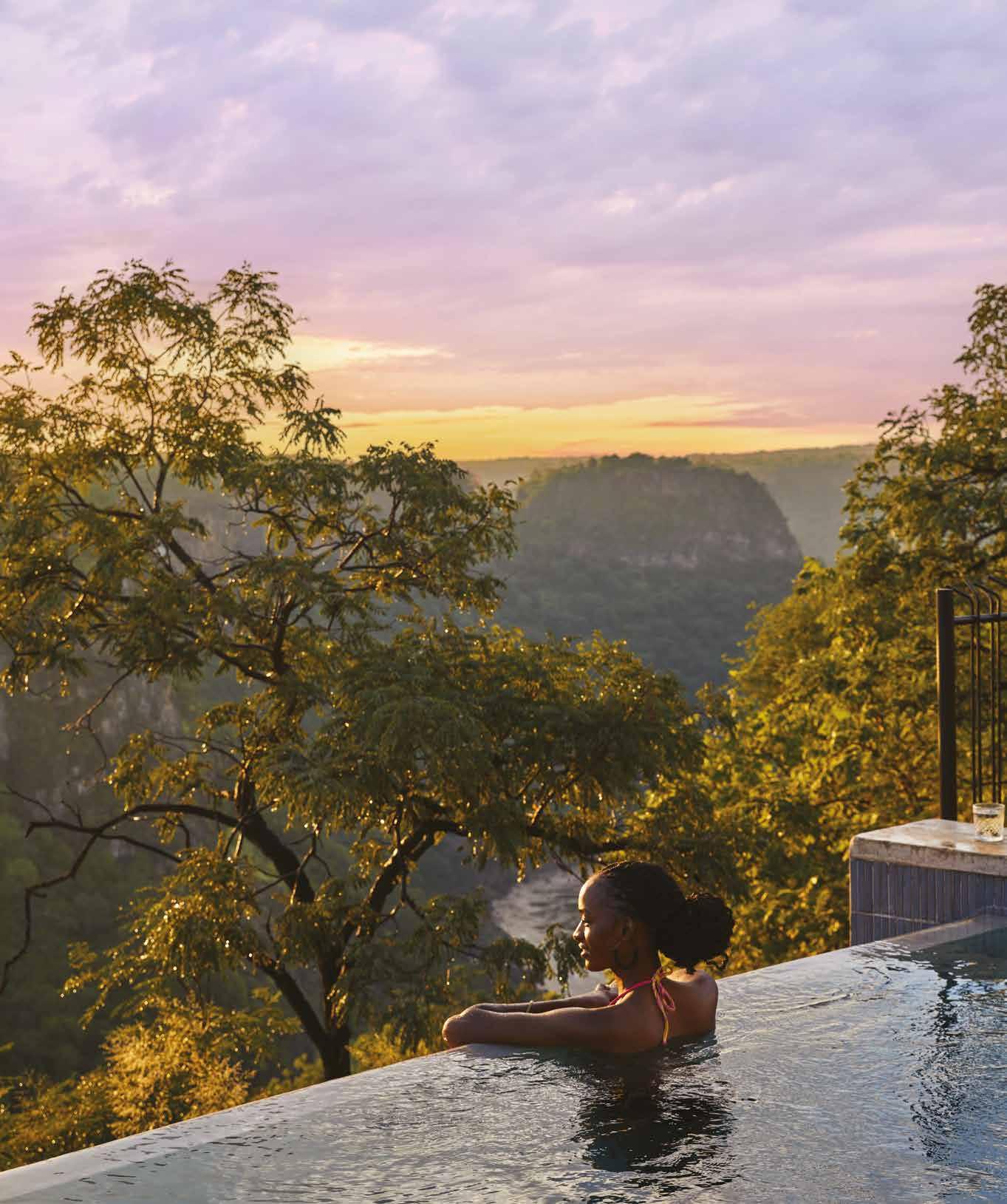
Bupenyu Lodge, perched 180 metres above the Zambezi River, has been welcoming guests since March. Here’s why Condé Nast Traveller named it one of 2026’s must-visit properties
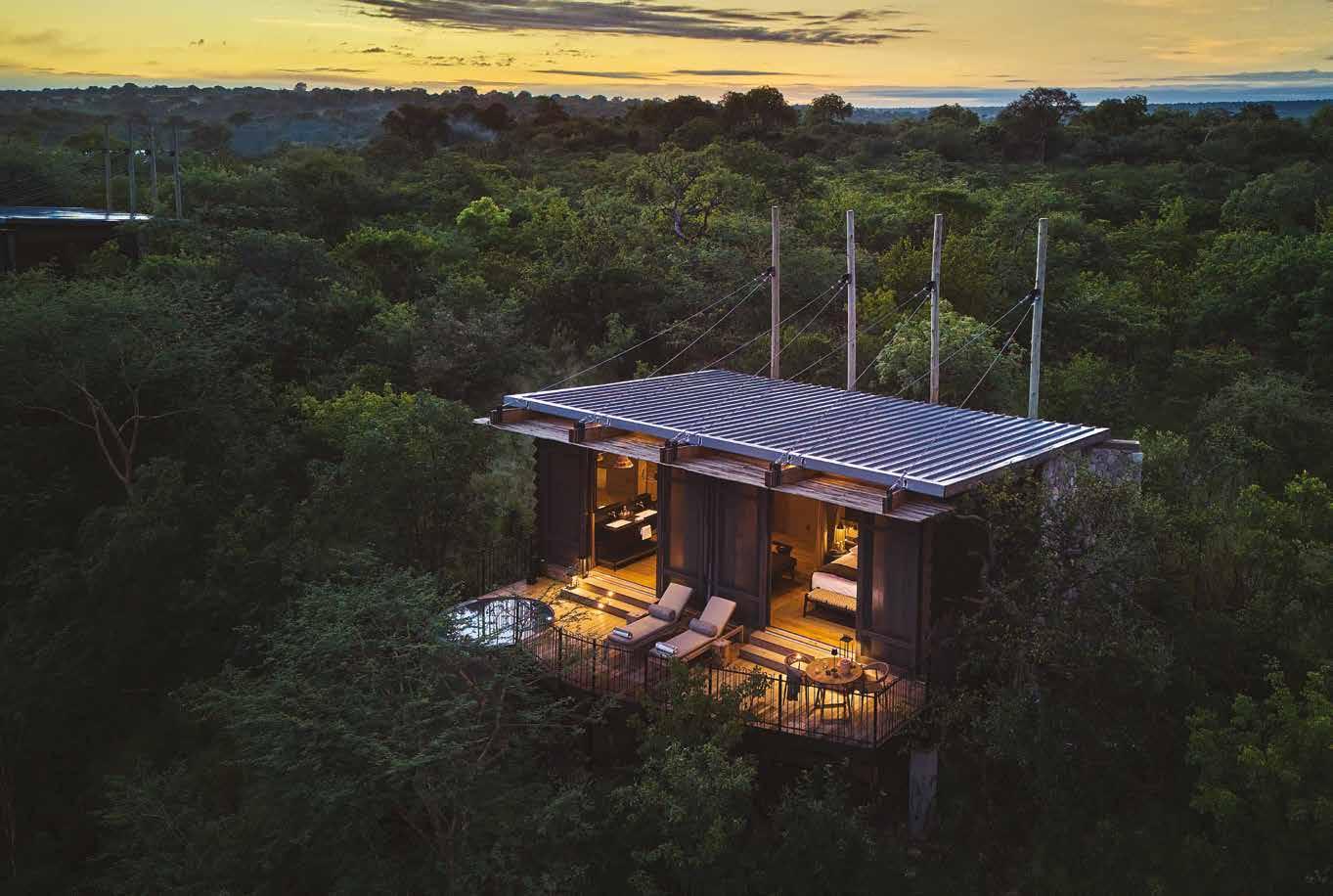
2026 heralded a new era in luxury tourism for Zimbabwe with the opening of Bupenyu Lodge, high above the Zambezi River.
Located on the edge of the Batoka Gorge, just a 45-minute drive from Victoria Falls International Airport, Bupenyu occupies a position that most lodge developers would consider unbuildable – and one that Experience Architects, the Stellenboschbased firm behind the design, treated as the entire point.
Eleven free-standing suites and a twobedroom villa deliver floor-to-ceiling glass, private plunge pools, and gorge views that make the rest of the world feel very far away.
The lodge is cantilevered over the gorge edge. Stone-clad passageways narrow like the gorge itself before opening to the first
vertiginous view of the river 180 metres below. Soaring roofs, tensile cables, raw stone and textured wood anchor the structure to the basalt terrain. The open-air cliffside boma – the Falcon’s Nest – takes its wooden contours from the nests of the endangered Taita falcons that inhabit the cliff face.
Inside, Amy Kidger of Hinterland Studio wove local Tsonga motifs into the cabinetry and textiles, layering basketry and handwoven detail alongside contemporary African finishes. Much of the intricate work was made by local craftspeople, many of whom also helped build the lodge.
The Bupenyu team were recruited from surrounding villages – people with a genuine stake in the lodge. When guests
ask about the Taita falcons, the geology, the communities downstream, the answers come from people who grew up within earshot of the river.
Bupenyu arrived at a good time. International arrivals to Zimbabwe rose 11% in the first quarter of 2026, reaching 384,561 visitors. Tourism revenue climbed by 14%, while UK and Irish arrivals increased by 89%.
At ITB Berlin 2026, Zimbabwe received recognition as the Destination of the Year – Natural Wonders. Victoria Falls International Airport expanded capacity, and new direct routes from Frankfurt have opened up markets that were previously difficult to reach.
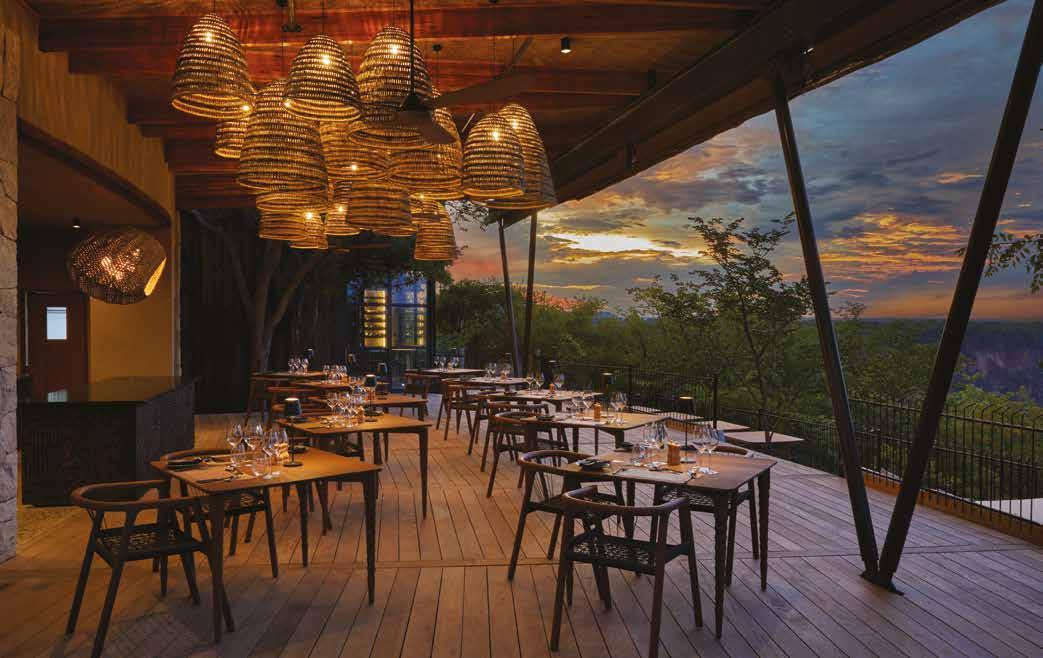
THE LODGE IS CANTILEVERED OVER THE GORGE EDGE. STONE-CLAD PASSAGEWAYS NARROW LIKE THE GORGE ITSELF BEFORE OPENING TO THE FIRST VERTIGINOUS VIEW OF THE RIVER 180 METRES BELOW.
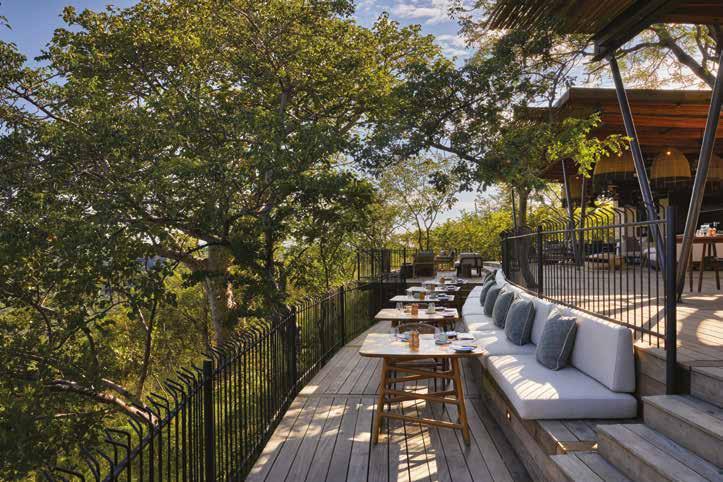
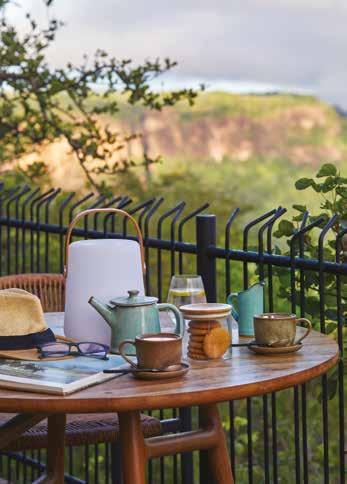
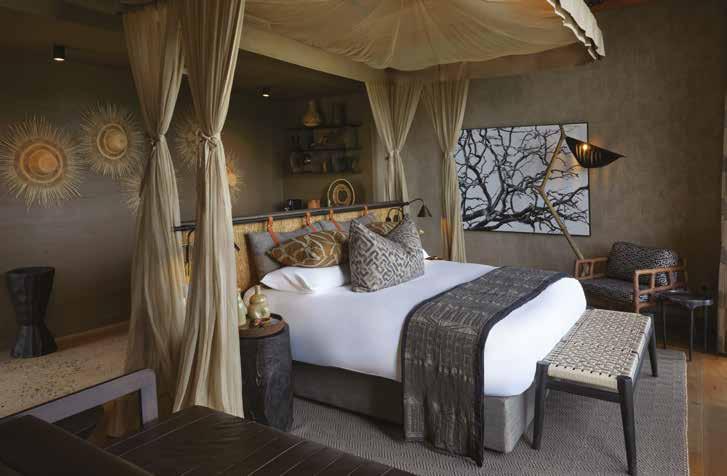
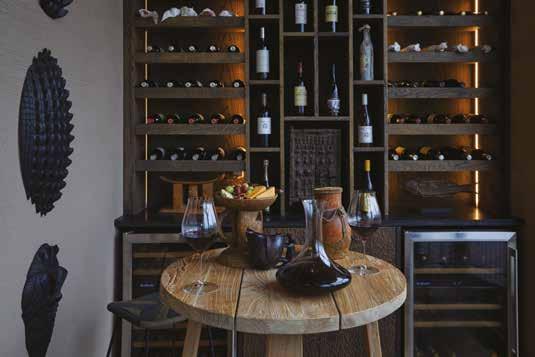
Eleven free-standing suites and a two-bedroom villa deliver floor-to-ceiling glass, private plunge pools, and gorge views that make the rest of the world feel very far away.
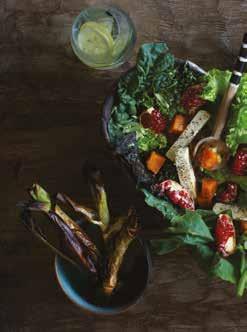
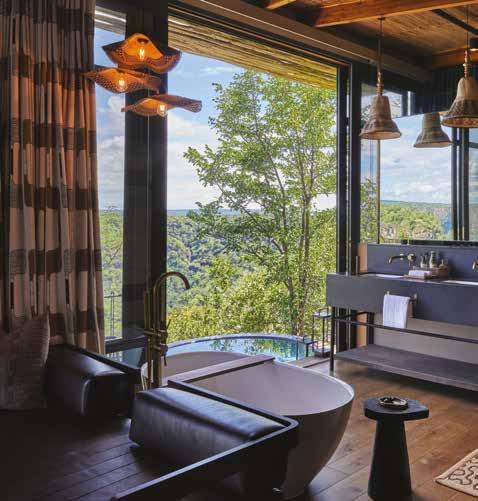
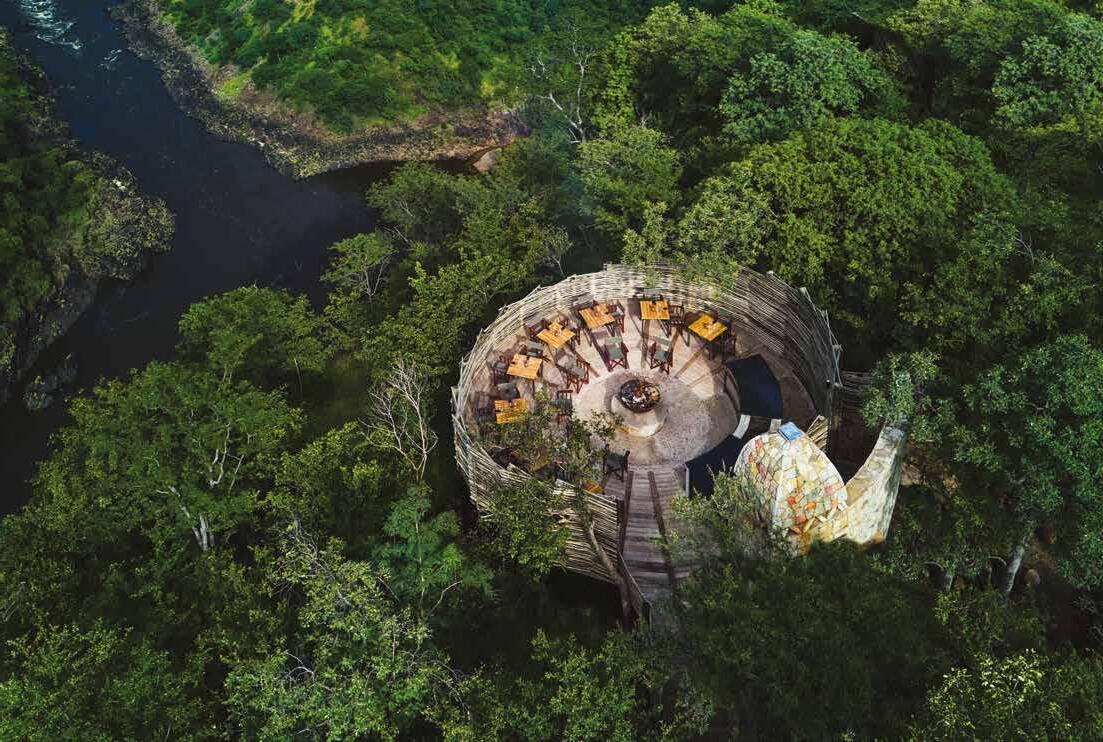
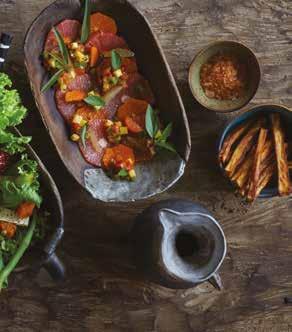
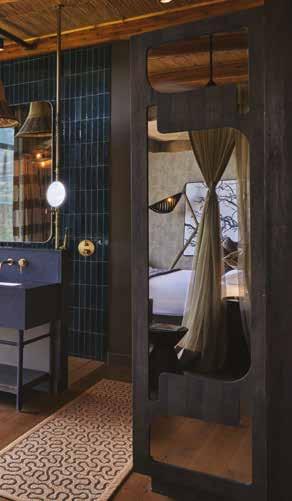
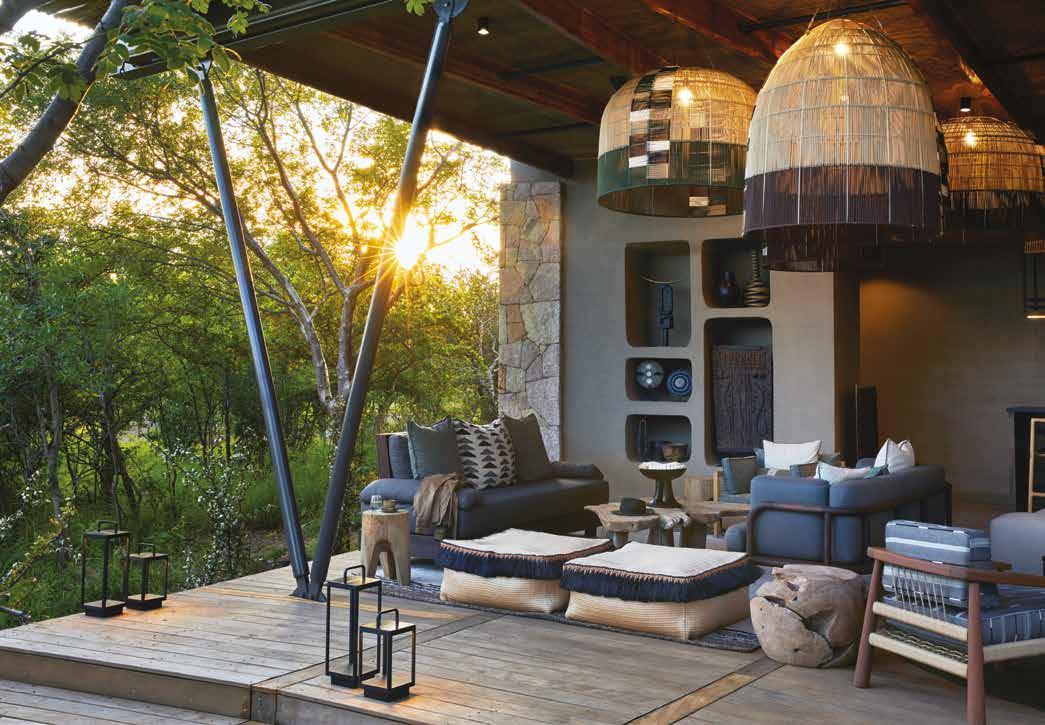
This is Newmark’s sixth country of operation – South Africa, Mauritius, Tanzania, Nigeria, Uganda and now Zimbabwe – with further openings planned in the Lowveld and Namibia later this year. Zimbabwe is currently where some of the group’s most compelling work is happening, and Bupenyu is the clearest expression of why.
The culinary programme, led by Chris Erasmus, Newmark’s Group Head Chef, alongside Group Sommelier Marlvin Gwese, uses local, seasonal produce and treats Zimbabwean food culture as a primary reference point rather than decoration. Dinner in the Falcon’s Nest
boma includes sadza, locally sourced meats, seasonal game and mopane worms for the curious.
The cliffside bird hide has quietly become the most requested private dining setting on the property. Two people, the gorge and no signal –a place where Gwese’s wine list is worth working through slowly.
For days when you feel like more than the gorge and a good book, ask about helicopter flights over Victoria Falls, rhino conservation excursions, horseback safaris, Zambezi River cruises, day trips to Hwange and Chobe, or swims at Devil’s Pool when the season allows.

Prefer to stay close? Spend the afternoon between the spa pods, infinity pool, gym or the 1km running track. Bupenyu means ‘‘the state of being alive” in Nambya. The lodge runs on solar energy, manages water carefully, and has built community partnerships into its foundations from the very beginning. From a plunge pool above the Batoka Gorge, watching the Zambezi work through the ancient basalt in the fading light, none of that feels incidental.
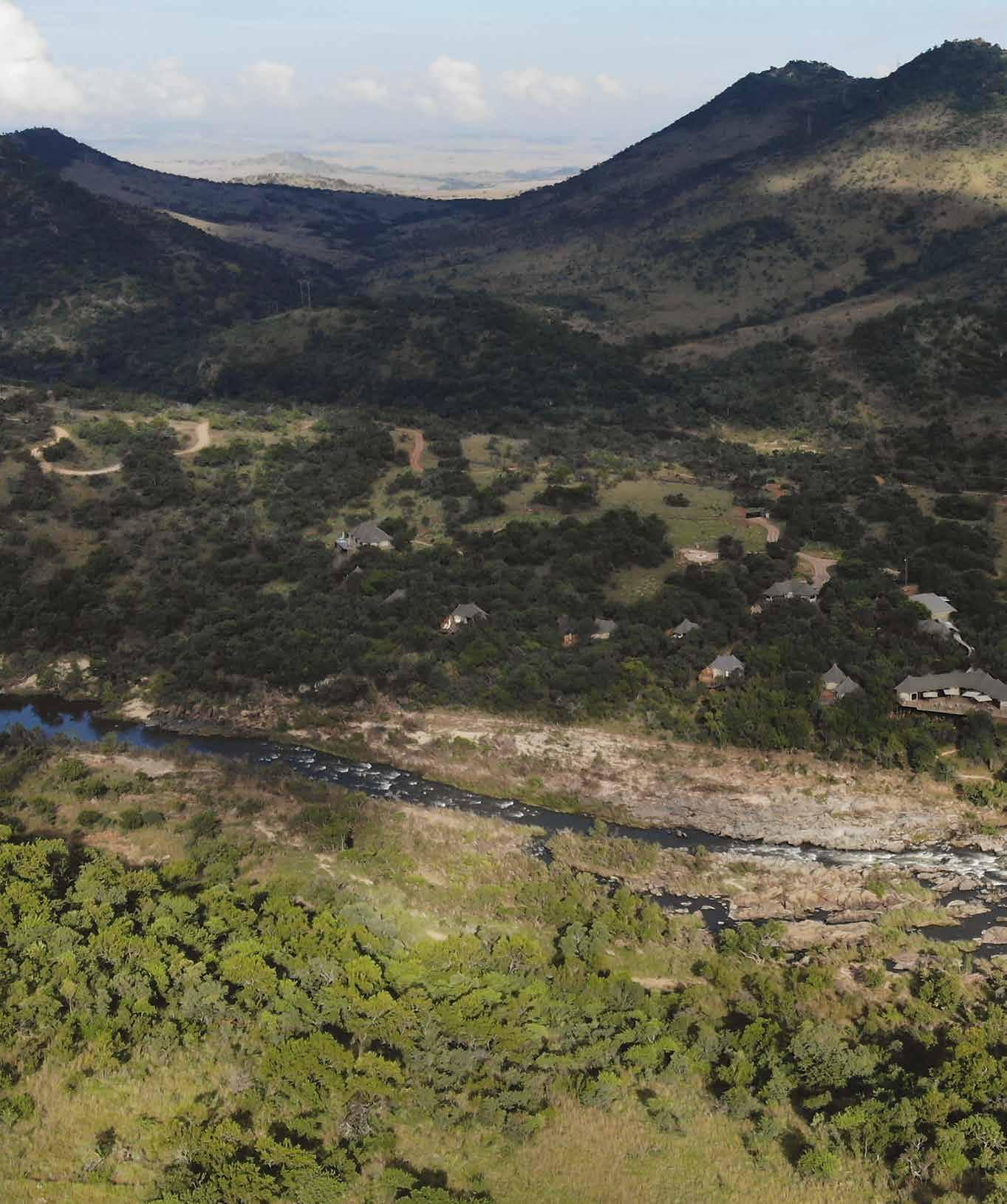
The Komati River is central to the experience at Nkomazi Private Game Reserve
BY RICHARD HOLMES
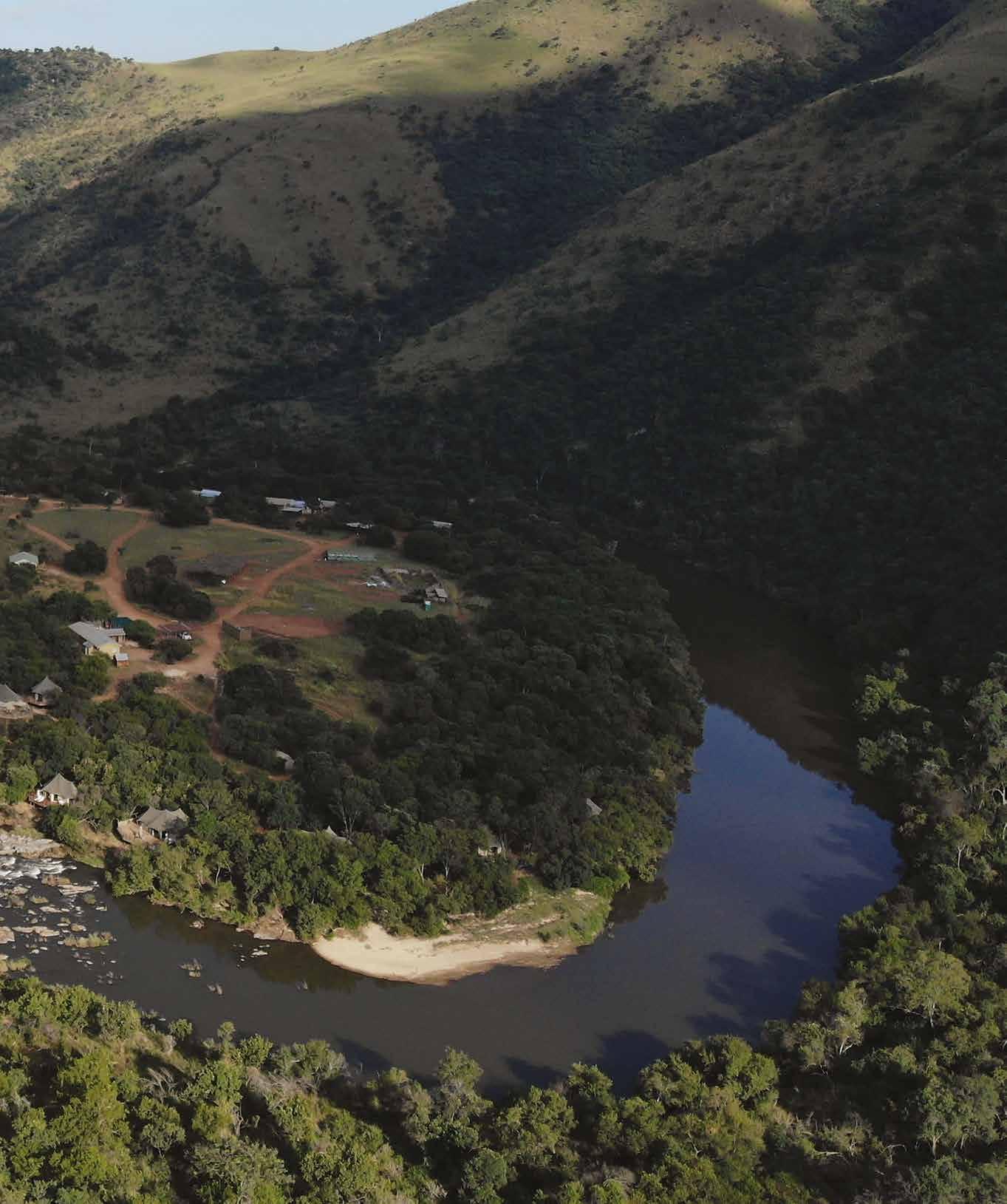
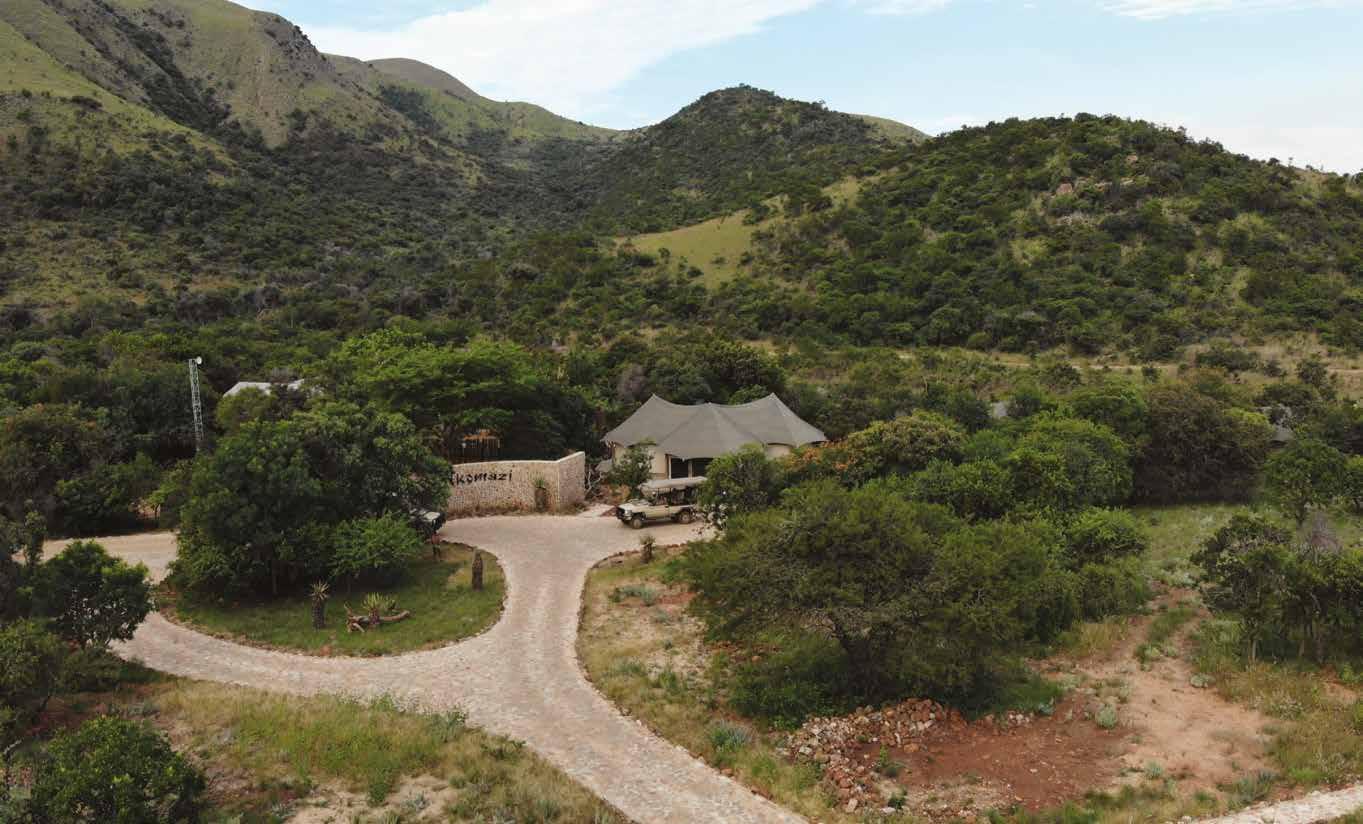
By the time the Komati River reaches the boundary of Nkomazi Private Game Reserve, these waters already have many stories to tell. Born in the highlands of Mpumalanga, this perennial river runs east through narrow valleys and wide grasslands, past quiet villages and across rock formations dating back more than 3.5 billion years.
It’s heading for the Indian Ocean at Maputo, but first it will arrive on the northern edge of Nkomazi, framed by the Makhonjwa Mountains. These rounded peaks, their once-sharp edges softened by time, form part of the Barberton Greenstone Belt, one of the world’s oldest geological formations and one of South Africa’s 12 UNESCO World Heritage Sites.
For guests at Nkomazi, they serve to frame the horizon, a northern bookend to the grasslands of the south. And in the middle, flowing through a landscape as old as time itself, is the Komati River.
“In the local siSwati language, inkomati is the word for a cow,” explains Lyla Bam. “Because it flows all year round, in local
culture it is seen as the cow that can be milked throughout the year.”
Bam is one of the specialist safari guides at Nkomazi Private Game Reserve, where the intimate under-canvas lodge rests above the river. Unlike the seasonal sand rivers of the Greater Kruger, the Komati River flows year-round, shifting seamlessly from a torrent driven by summer rains to the sinuous rivulets of the drier winter months. Whether the river is in ebb or flow, the water remains. And with it, a constant source of life across the reserve.
Each of the lodge’s 14 tented suites overlooks the river, blending vintage-inspired safari design with outdoor baths, private plunge pools and a deep sense of immersion in the bush.
And while the luxuries of the lodge are reason enough to visit, twice-daily game drives offer guests the opportunity to explore this 15,000-hectare private reserve and its diverse landscapes.
The grasslands of Nkomazi support healthy herds of antelope, alongside cheetah, lion, elephant, buffalo and leopard.
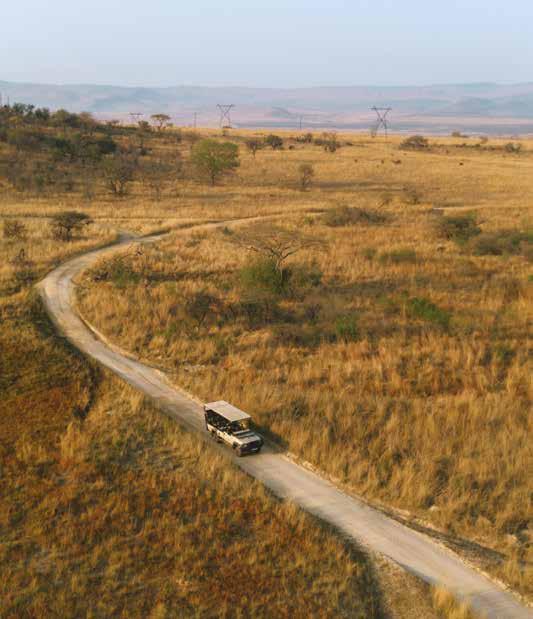
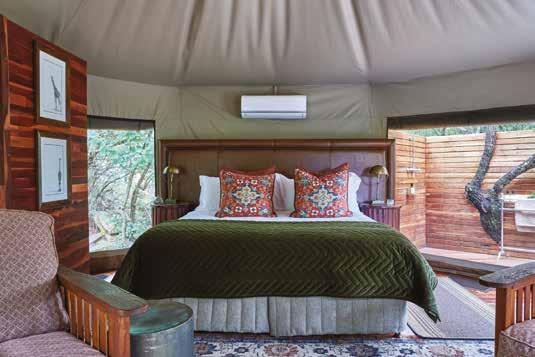
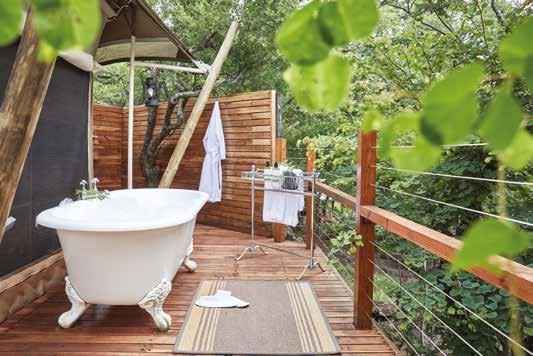
Of those fabled ‘Big Four’, it’s the leopard that is usually top of the wish list for guests, and when the call on the radio comes through that an ingwe has been spotted, all roads lead to the Komati River.
The riverbanks here are lush and thick with vegetation. Fever trees tangle with bushwillows, while towering leadwoods stand like sentries along the banks. For the guides of Nkomazi looking to share the wilderness with guests, the river is a gift. Animals are drawn to the river throughout the year, but especially in the dry months of winter, when the rest of the reserve is dry.
As antelope come to drink, predators are rarely far behind. The thick foliage of the riverine forest is the perfect camouflage for leopards, which are often spotted along the riverbanks. Cape clawless otters are a treasured sighting for some lucky guests. Hippo make their home in the deeper pools, while crocodiles are often seen sunning themselves on the sandbanks and rocky ledges.
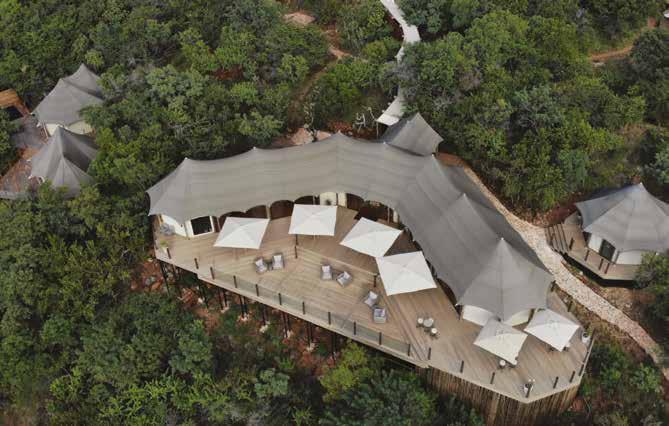
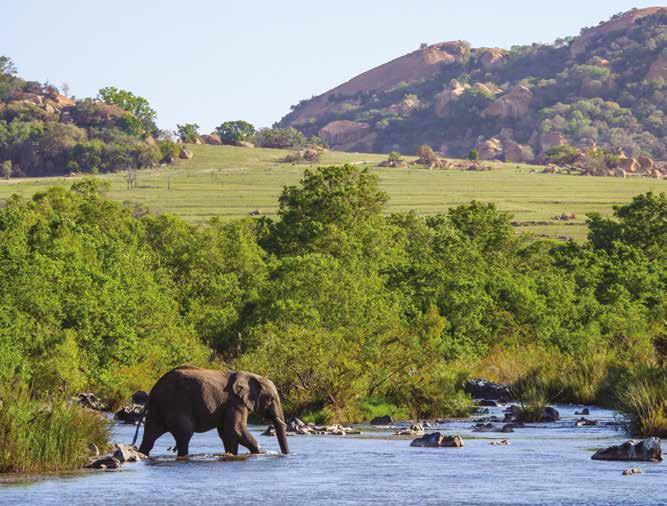
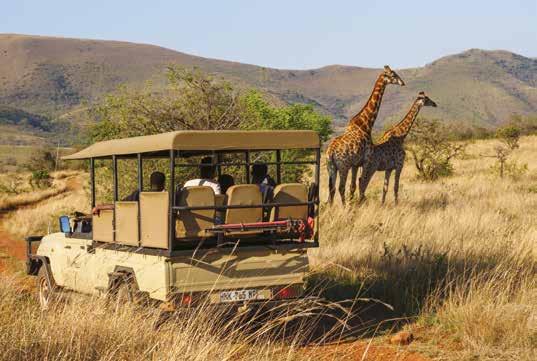
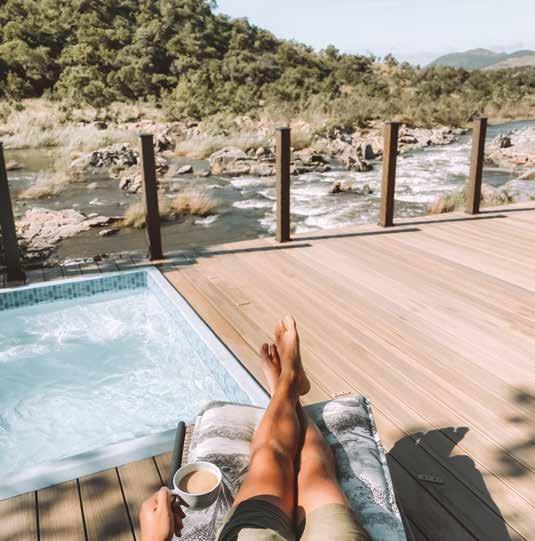
“Our elephants love the river too,” says Bam. “We’ll often follow the herd as they head to the river to drink, and if we’re lucky, they’ll spend some time walking and swimming in the river.”
Beyond twice-daily game drives, the Komati River shapes many of the experiences at Nkomazi, from bush breakfasts and riverside picnics to fly-fishing and guided walks.
“Bush breakfasts are really popular with our guests, and we love enjoying those down by the river,” says Bam. “We also do afternoon bush picnics, and the river banks are perfect for setting those up.”
With the sound of the river rushing past, and birdsong in the boughs above, it’s a truly immersive way to experience the bushveld. But this is a Big Four game reserve so a trained safari guide is always on hand to keep a close eye.
All of the Nkomazi guides are trained to take guests fishing, and it’s a great way to fill the quiet hours between game drives or keep kids entertained out in the bush.
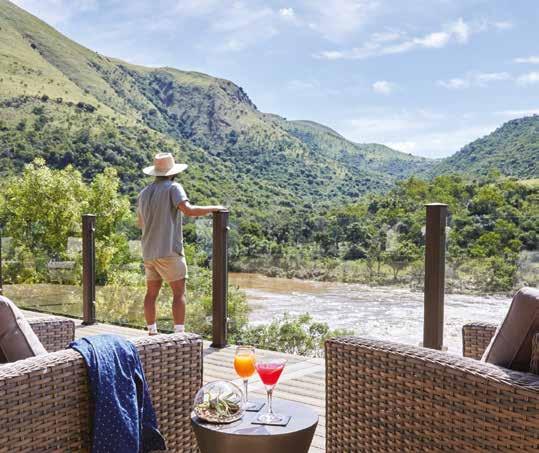
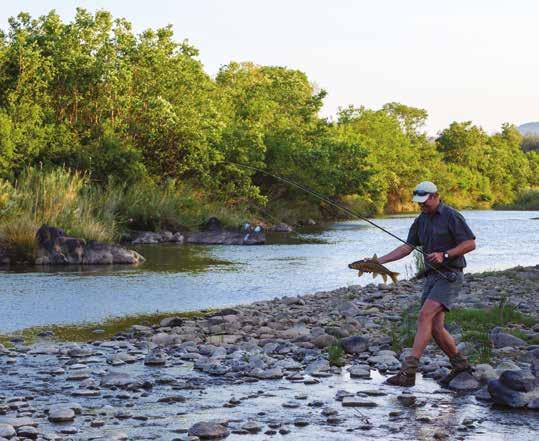
“We are mostly fishing for yellowfish and catfish, using a combination of bait and spinners,” says Bam. “But for guests who enjoy flyfishing, we also have fly rods available.”
It’s just one way in which the Komati River is so much more than a scenic backdrop to a safari at Nkomazi. Rather, it is a constant presence. A source of water and wildlife, shade and stillness. It shapes where animals move, where guests gather, and how they experience this ancient landscape.

Long after the game drives return to camp, and the boma fire burns low, the Komati River flows ever eastward towards the sea, carrying with it the quiet rhythm of this unforgettable corner of Mpumalanga. SCAN TO BOOK
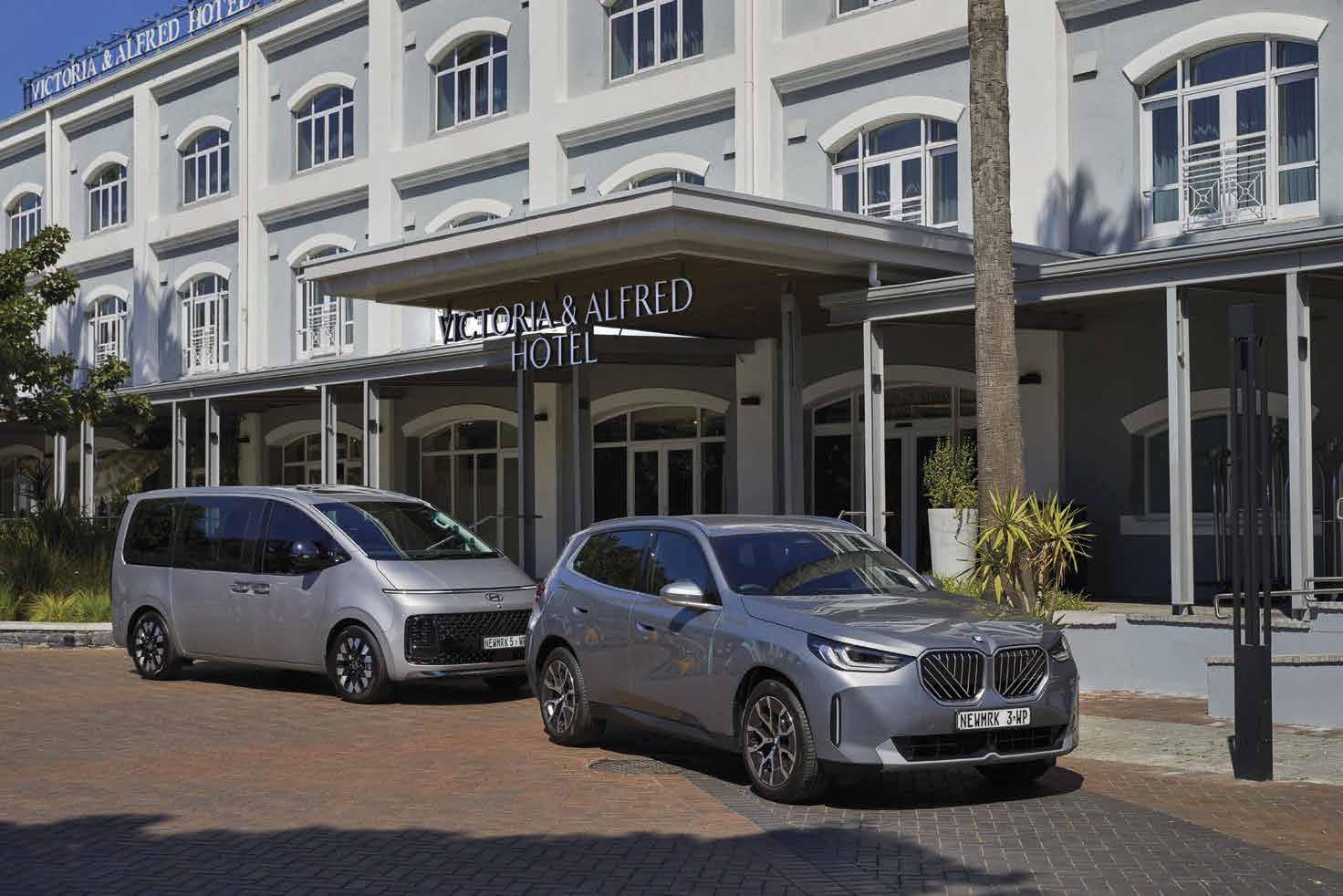
Explore Cape Town through curated touring experiences, from the winelands and coastline to the city’s vibrant culture. Personalised itineraries and added airport transfers are available to enhance your journey with seamless ease and effortless convenience.
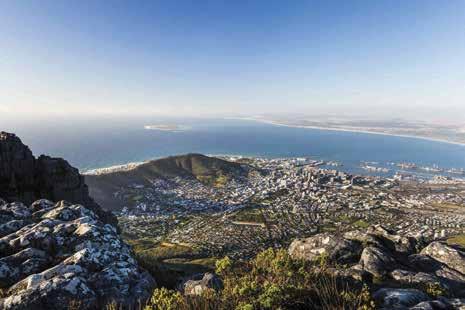
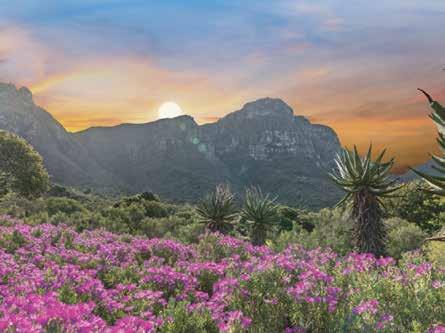
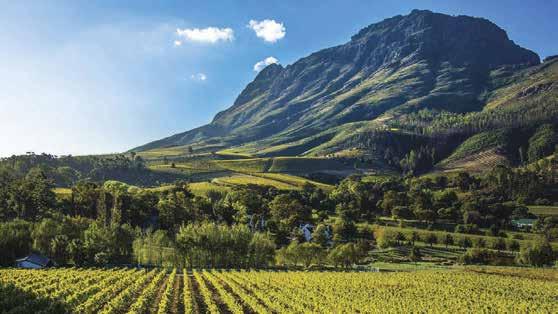
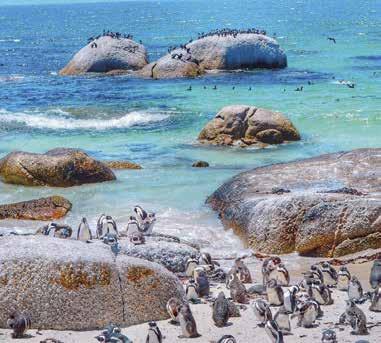
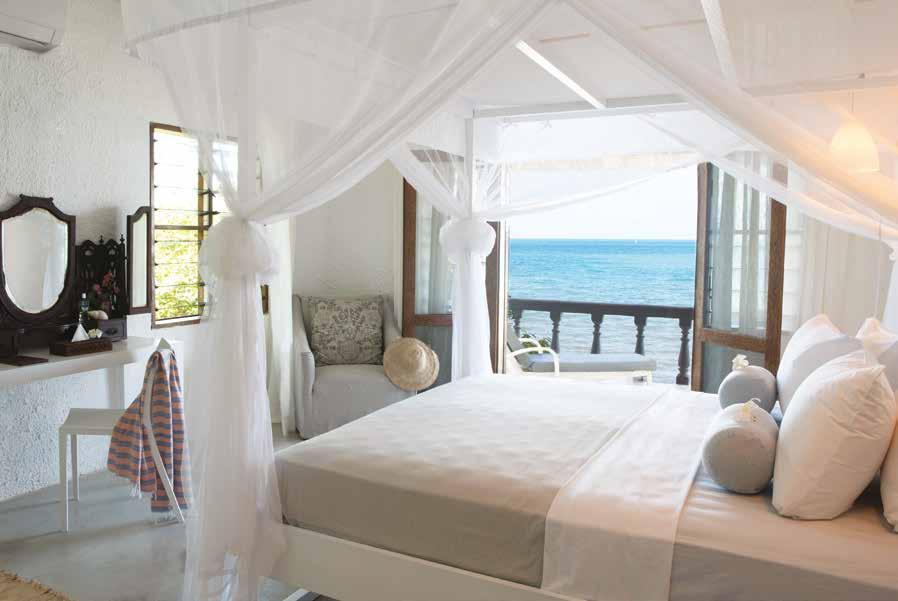
On the west coast of Zanzibar, 12 kilometres north of Stone Town, a lodge sits above the channel on the ruins of a Sultan’s palace. The Villa terrace looks straight out to sea. By late afternoon, you understand why this side of the island has been keeping a quiet secret.
You sleep with the doors open. The night air off the channel is warm, carrying salt and something faintly sweet from the frangipani below. The ocean is close enough to hear – not crashing, but breathing. A low, slow rhythm that settles you before you fall into bed.
You step out onto the Villa terrace barefoot. The channel stretches ahead, flat and pale in the early morning light, with the African mainland a faint line on the horizon. The air smells of the sea and, if someone in the kitchen is already moving, the first trace of coffee drifts up from the restaurant. You stand there longer than you meant to.
The Villa is Chuini’s most private stay. Set at the front of the bluff, it’s 135 square metres and comes with private staff and a terrace facing the channel head-on. It’s wide enough to live on – you can have breakfast here, sundowners here, with nothing between you and the view but open air. Occasionally, you’ll
see a dhow crossing in that unhurried way traditional wooden boats have always moved across this channel.
Chuini sits on the former grounds of Sultan Sayyid Barghash bin Said Al-Busaid’s summer palace, built on this bluff in 1873. The two pools guests use today were the Sultan’s baths, restored. Walk among the ruins in the late afternoon and the past feels very close.
Then the light changes. Around five o’clock, without announcing itself, the channel shifts from silver to a deep, burnt copper – the kind of colour that makes you reach for your phone before you realise that no photo can really do it justice. The dhows are still out there, small and dark against the horizon. The Sultan’s ruins throw long shadows across the garden. The palms are still and you take in the calm. The sun takes its time going down on this side of the island.
Come evening, you find yourself back on the terrace. The channel has gone dark, warm and velvety, with the light of a distant boat moving slowly south. The scent of frangipani deepens. Somewhere in the garden, you hear low animal sounds. You think about tomorrow, and then stop thinking about it. The ocean breathes. The night settles in. Chuini does the rest.