Northeast Wilderness Trust 2025 Annual
Report
A Wild Milestone
A remarkable thing happened in 2025. With the protection of Spruce Ridge Wilderness Preserve in New Hampshire, Northeast Wilderness Trust surpassed 100,000 forever-wild acres conserved!
How was this milestone achieved? By maintaining an unshakable focus on our mission to Conserve Forever-Wild
Landscapes for Nature and People. Northeast Wilderness Trust is, above all, a community of wild-hearted people. Our supporters, staff, and board share a deep dedication to a wilder tomorrow, where the intrinsic value of Nature is treated not as an abstraction but as a reality. We move closer to that future every day.
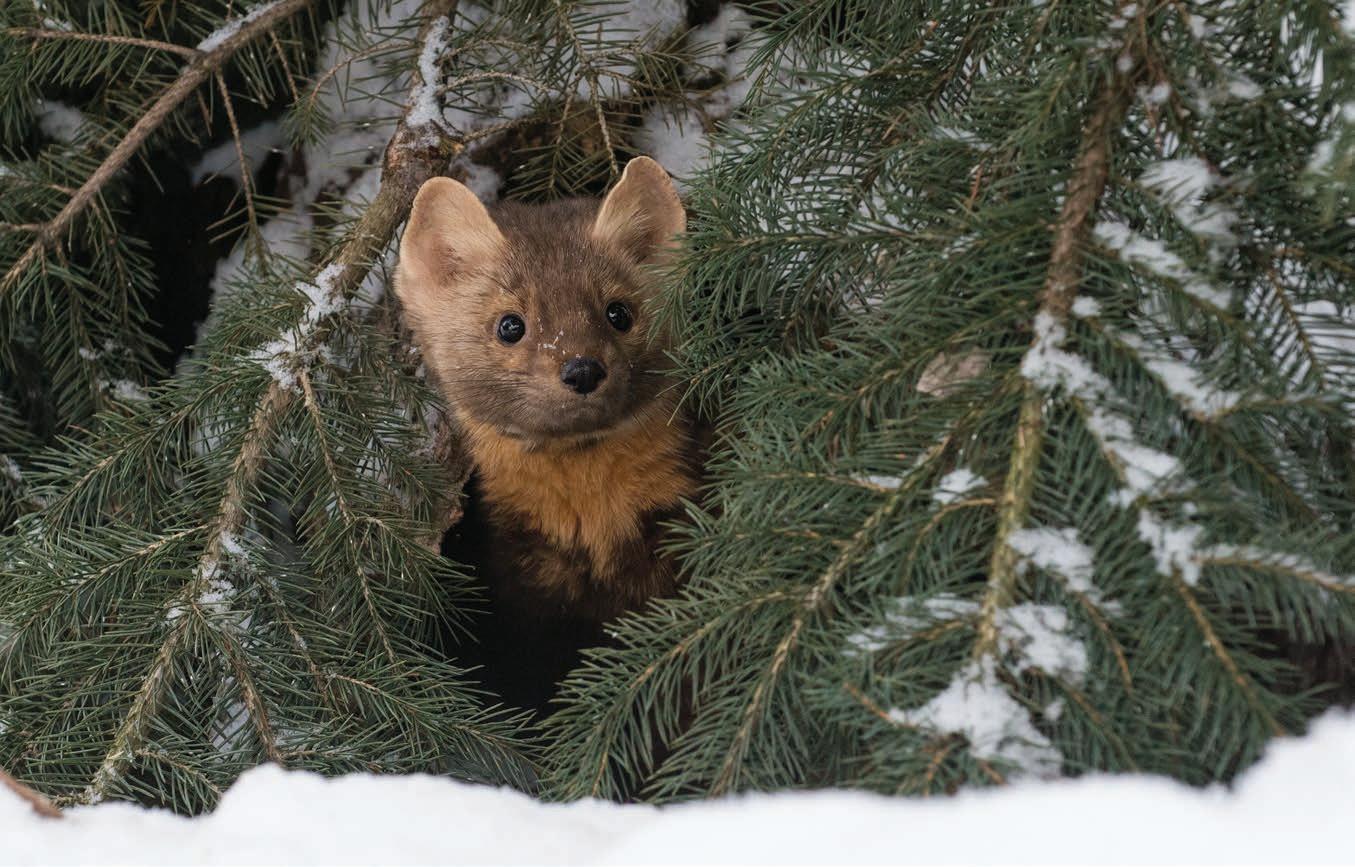
Acres matter. As a simple matter of landscape arithmetic, we need more wilderness in the world, especially here in the Northeast. But this milestone also represents far more than a number. These 100,000 acres are tomorrow’s old-growth forests. They are the leafy inhalation and storage of more than 9 million metric tonnes of carbon. They are home to our wild cousins, from the common porcupine to the elusive pine marten, the tiny liverwort to the mighty lynx. They are also places where evolution continues its never-ending work and where our inextricable connection to the grand web of life is most apparent—and most beautiful.
Northeast Wilderness Trust has blossomed rapidly. Just seven years ago, we celebrated 25,000 forever-wild acres conserved. This acceleration is a sign of something deeper—a growing recognition that wilderness, which currently makes up less than 4 percent of our home region, is not a luxury but a necessity. The tide is turning.
There’s a particular kind of hope that grows slowly, the way old forests do—not with human urgency, but with the patience of ecological time, or what we call “tree time.” With every acre protected today, we are, together, laying down the roots of forests that future generations will walk through in wonder. I can’t think of anything more hopeful than that and I thank you for being part of this crucial journey.
Today, we celebrate 100,000 acres. Tomorrow, we get back to work!
For the Wild,

Jon Leibowitz, President and CEO
Making the Wild Wilder
Study the map to the right closely, and you might notice a pattern: The dots and stars cluster, in certain places, along plotted lines. These are Wilderness Trust properties abutting or nearby long-distance hiking trails—and their location is far from random.
The longest of these lines is the storied Appalachian Trail. More than a century ago, conservationist Benton MacKaye described his vision for what would become the Trail: “A skyline along the top of the main divides and ridges of the Appalachians through to Georgia” of “wildlands as refuges against development.”
Though MacKaye’s brainchild and other long-distance hiking trails are better known today for their recreational value, this focus on the human utility of these pathways obscures their immense value for other dimensions: wildlife mobility, landscape connectivity, and wildness. The Appalachian Trail’s New England stretch, for example, is the longest and most well-connected chain of wildlands in the region. Vermont’s Long Trail offers another example. These trails enjoy strong protections, but their buffer zones—the areas on either side of them—are primarily private
land vulnerable to extraction and development.
Strengthening and expanding these preexisting corridors is a priority for Northeast Wilderness Trust, and several projects in 2025 advanced this goal. Prominent among them is Spruce Ridge Wilderness Preserve, a 2,000-acre property in New Hampshire’s Upper Valley that abuts the Appalachian Trail corridor. Spruce Ridge brings Northeast Wilderness Trust’s total protected acreage along the Appalachian Trail to more than 16,000.
In northern Vermont, meanwhile, the protection last year of Journey’s End Wilderness Preserve added a core wilderness area to the buffer zone of the Long Trail near its northern terminus. Northeast Wilderness Trust also safeguards nearly 2,000 acres within and along the Wapack Trail in New Hampshire.
This strategy capitalizes on preexisting corridors to boost landscape connectivity, a win for far-ranging wildlife and climate resilience. And it brings the original ambition of conservationists like Benton MacKaye to life—a fitting homage to the individuals and groups who shaped a national conservation ethic.

Baxter State Park
CANADA
VERMONT
MASSACHUSETTS
CONNECTICUT
Forever-Wild Places Protected by Northeast Wilderness Trust
Forever-Wild Place
Conserved in 2025
Other Protected Wilderness*
Appalachian Trail Long Trail
Wapack Trail

*GAP 1 and 2 status: Permanently Secured for Nature and Natural Processes, per TNC Secured Areas Database
Adirondack Park
Catskill Park
Wild Impact
in 2025 . . .
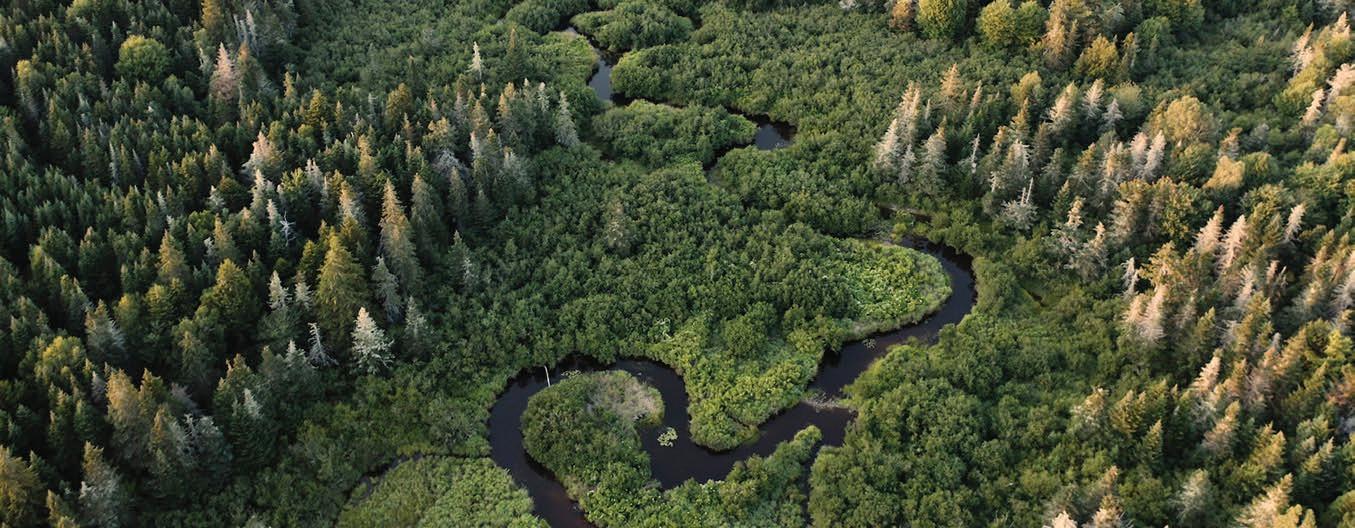
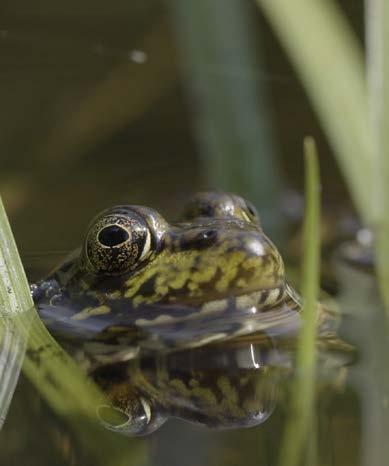
791 acres of wetlands
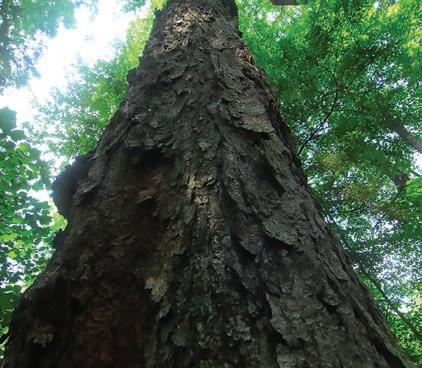
883,500 metric tonnes of carbon
567 tree diameters measured
10,421 acres protected
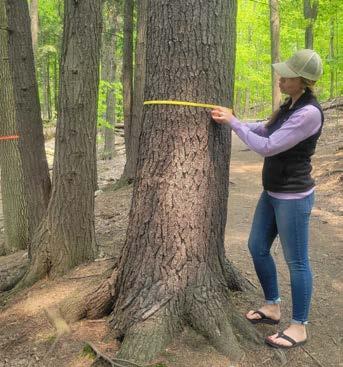
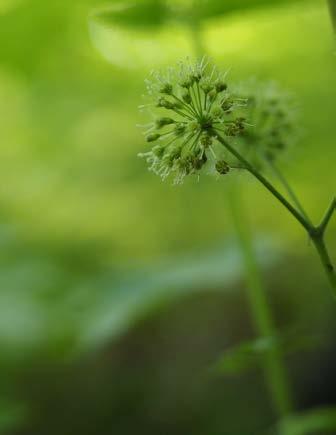
150 plant species identified on research plots
. . . and Beyond
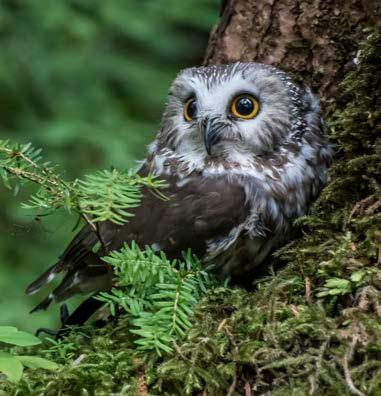
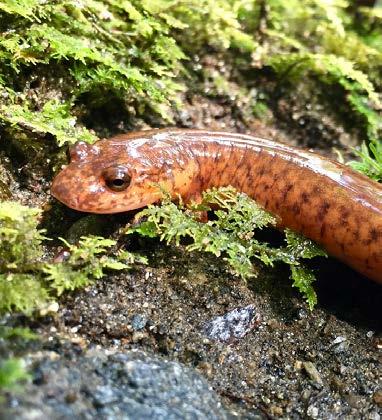
Northeast Wilderness Trust’s forever-wild preserves and easements provide habitat for more than 100 documented at-risk species.
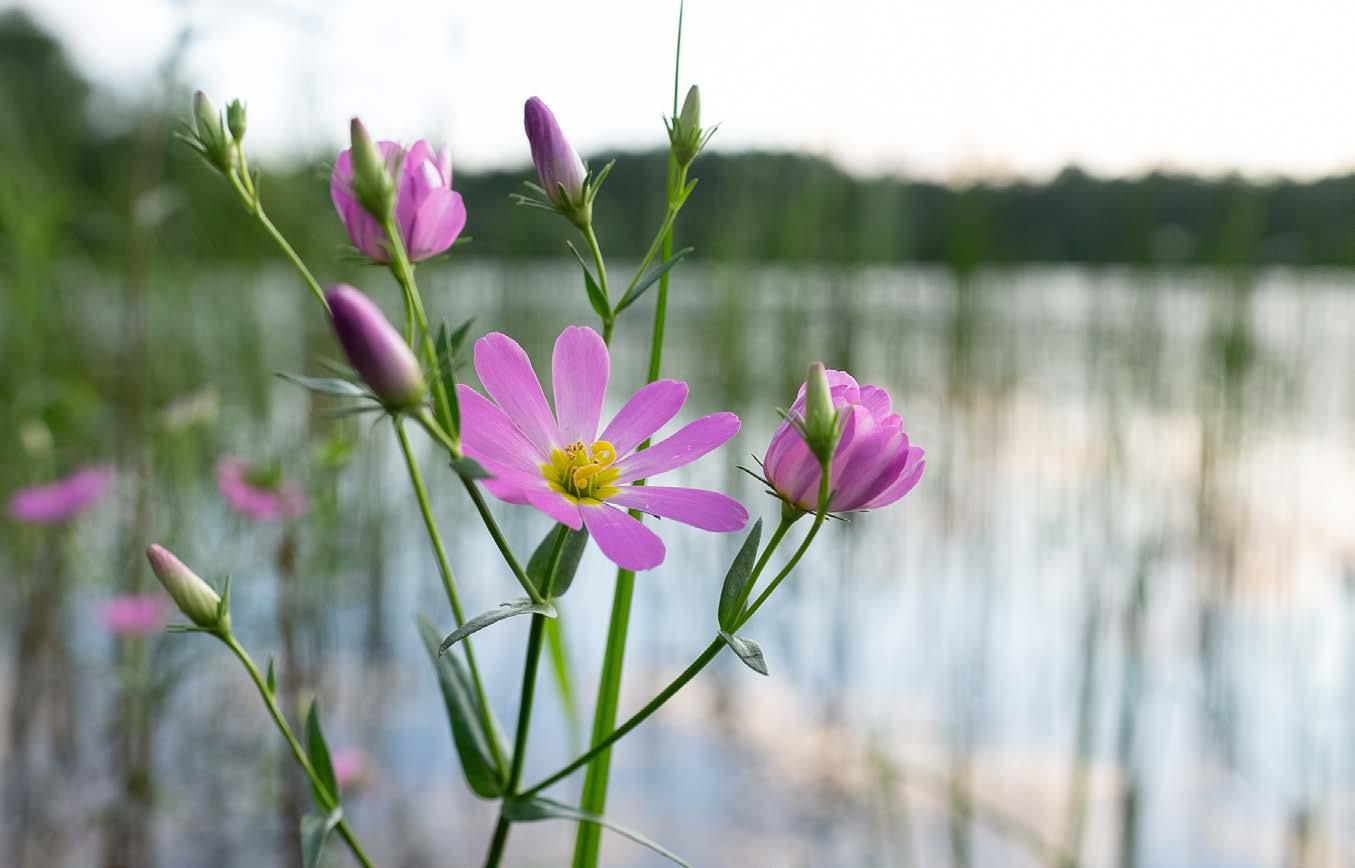
Plymouth Rose Gentian
Northern Saw-whet Owl
Northern Spring Salamander
Wild Places Protected in 2025
Bold Coast Wilderness Preserve
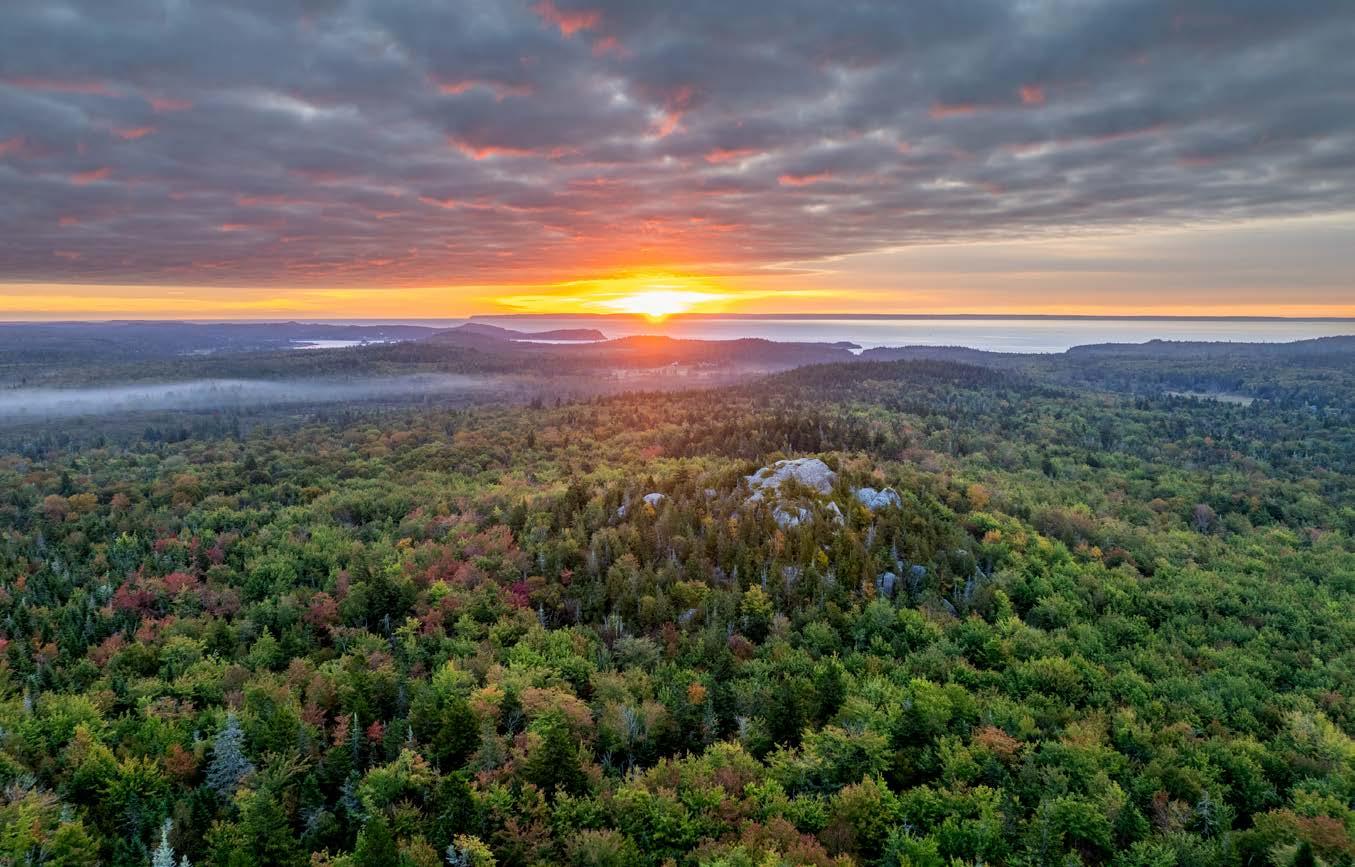
In a part of Maine under constant development pressure, 2,000-plus acres were set aside as wilderness forever in 2025. The new Bold Coast Wilderness Preserve in Downeast Maine, protected in partnership with Maine Coast Heritage Trust, links vast inland forests to the sea. This stretch of rugged cliffs and healthy wetlands is now wild in perpetuity.
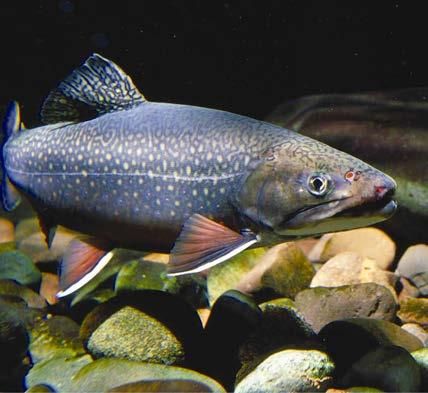
Water features abound on the property. The Preserve is home to more than 200 acres of wetlands, including a Grassy Shrub Marsh natural community listed as “rare/ exemplary” by the Maine Natural Areas Program. Six miles of streams wind through the parcel, and portions of these streams are premier habitat for brook trout and sea-run fish. Along the Preserve’s southern border is a Northern White Cedar Swamp and its vibrant array of rare mosses and ferns. Elsewhere on the land, hardwood forests of pin cherry, speckled alder, and white ash regenerate after decades of hard use, storing carbon and filtering the water that eventually makes its way into Cobscook Bay.
The Preserve adds a core wilderness area to a rich tapestry of conserved lands and abuts the state-owned, 12,000-acre Cutler Coast Public Reserved Land. Together with nearby properties owned by Maine Coast Heritage Trust, Bold Coast Wilderness Preserve expands an impressive forest block to encompass more than 15,000 acres— strengthening climate resilience and forming a vital pathway for wildlife on the move in response to rising temperatures and shifting ecosystems.
Cutler, Whiting, and Trescott Township, Maine
2,037 acres
Connects inland forests to the sea
Protects 204 acres of intact wetlands
Bold Coast Wilderness Preserve Brook trout
Spruce Ridge Wilderness Preserve
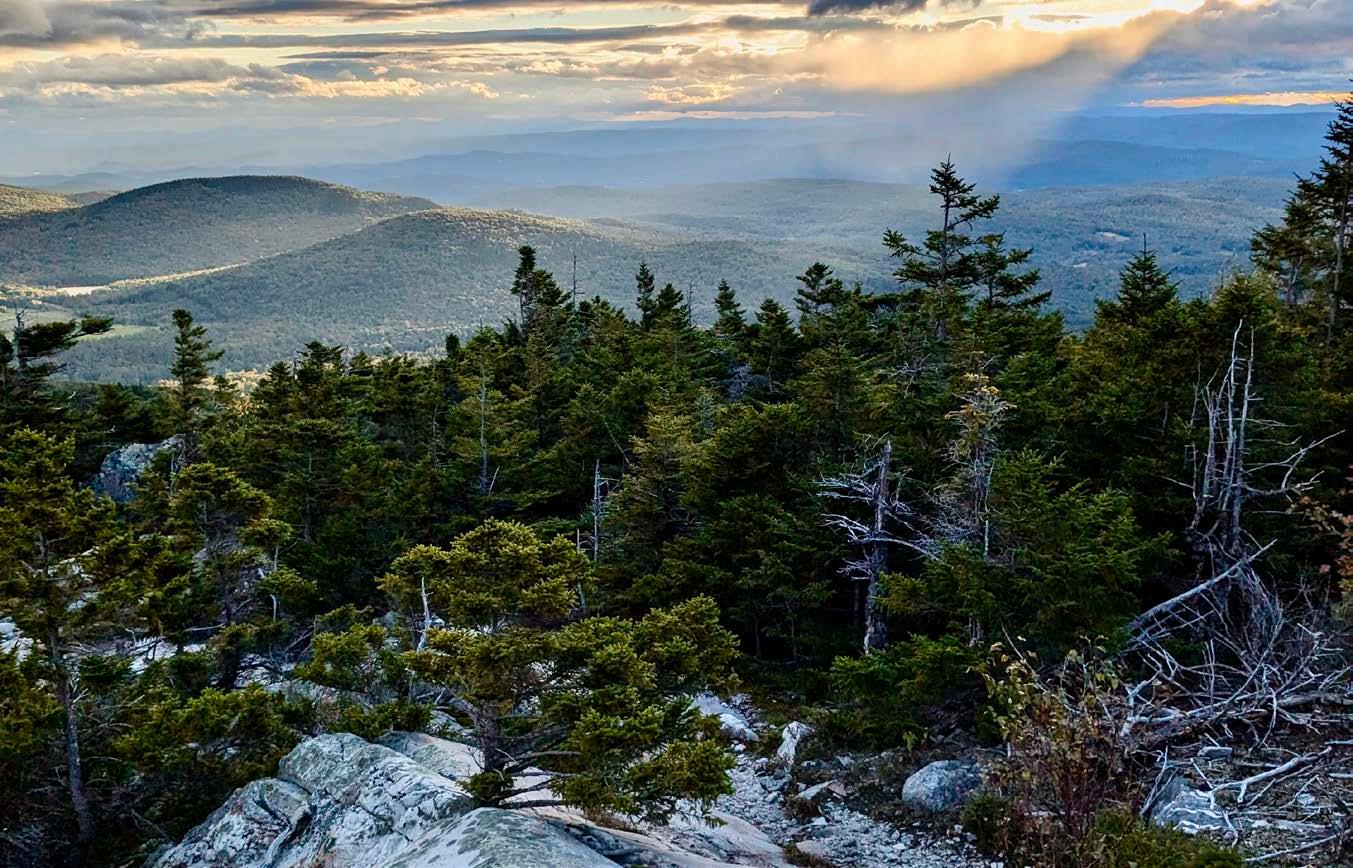
Spruce Ridge Wilderness Preserve is a special place—and not just because it pushed Northeast Wilderness Trust past 100,000 forever-wild acres conserved. It is an Ambassador Preserve, a place where locals can come to learn about wilderness and rewilding via informational signage and on-the-land events, and the Wilderness Trust’s largest property in New Hampshire.
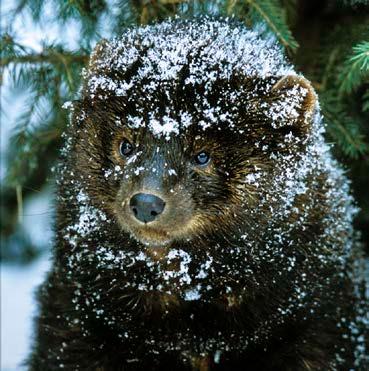
Spruce Ridge encompasses 2,020 acres of prime habitat, from steep mountainsides and a high-elevation pond to verdant forests and cold streams. A matrix of wildlife and riparian corridors crisscross the property, pathways for four-legged and finned inhabitants that, as of 2025, will always have a home in this piece of the state’s Upper Valley. Much of the Preserve lies within a Prioritized Habitat Block identified in New Hampshire’s Wildlife Action Plan, nodding to its significance for wide-ranging mammals like fisher, black bear, and moose.
Zooming out, the Preserve is also a study in landscape connectivity. The protected lands of the Appalachian Trail border Spruce Ridge on its eastern side; from the nearby section of the Trail, hikers can see the spruce forest for which the Preserve is named. Just south lies Upper Valley Land Trust’s Mountain View Conservation Area, while farther east are the 800,000 acres of the White Mountain National Forest. Spruce Ridge represents a key addition to this matrix of private and public conserved lands, a wild core where species sensitive to logging and disturbance can find respite and suitable breeding and foraging sites.
Orford and Lyme, New Hampshire
2,020 acres
Expands wilderness along the Appalachian Trail
Located among a matrix of other conserved lands, including White Mountain National Forest
Spruce Ridge Wilderness Preserve Fisher
College Hill Wilderness Sanctuary
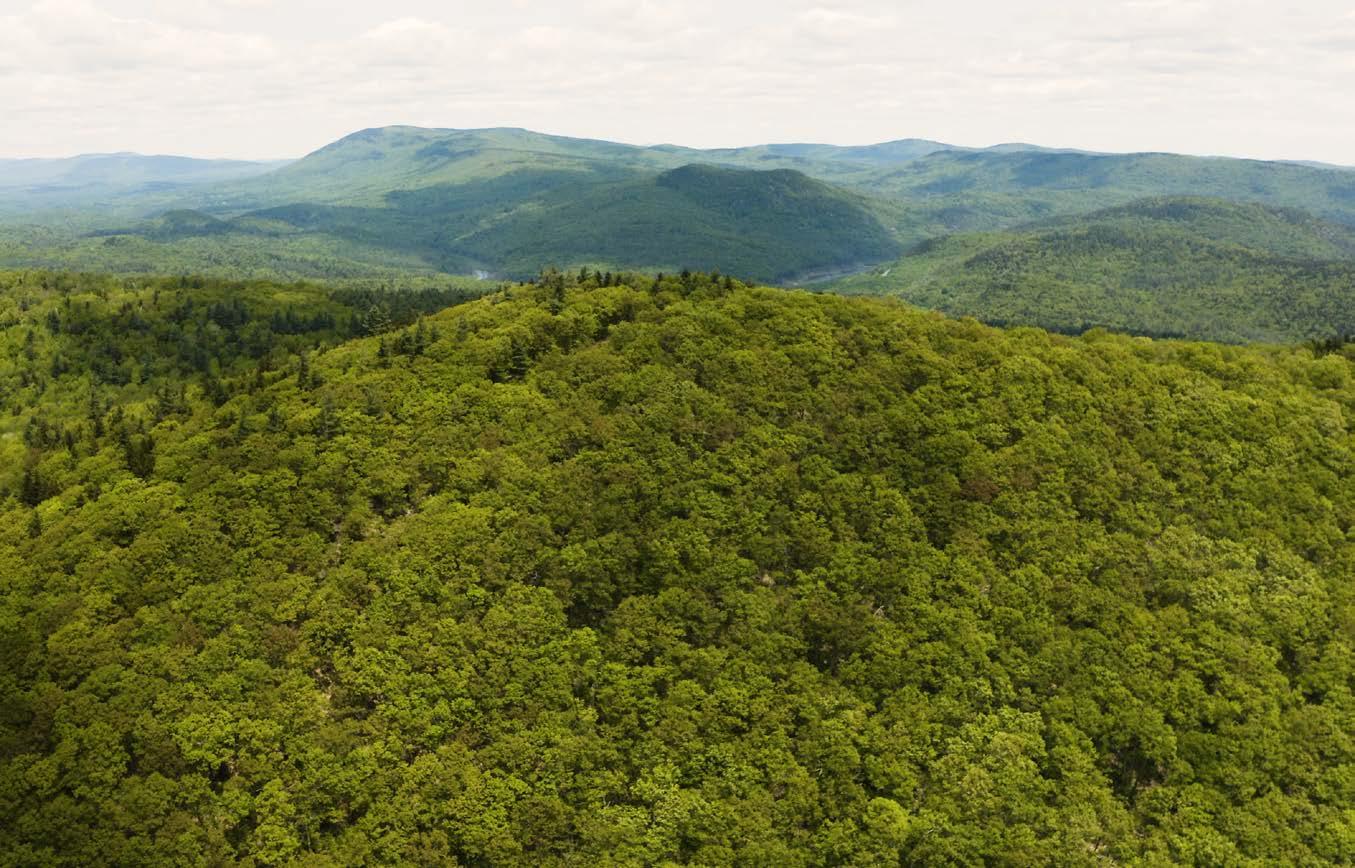
College Hill Wilderness Sanctuary features a rarity for southern Vermont: forests unlogged since the 1940s. Under forever-wild protection by Northeast Wilderness Trust, these forests are now free to continue their journey toward the structural and ecological complexity typical of an old-growth forest—an ecosystem class sorely lacking throughout New England.
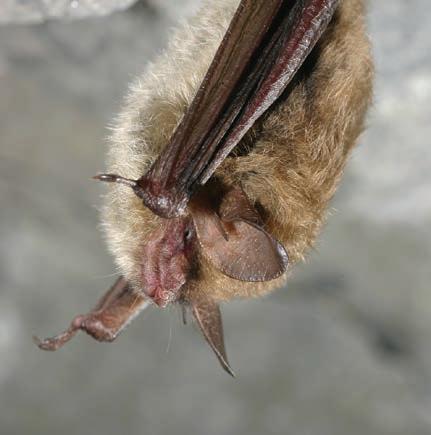
Atop College Hill, the Sanctuary’s namesake, sits a Dry Red Oak-White Pine Forest, an uncommon natural community in Vermont. Thick-trunked oaks and pines here provide food and nesting sites for species like black bear, turkey, and Blue Jay. The Sanctuary as a whole lies within an area mapped by the State of Vermont as habitat for the federally endangered northern longeared and tricolored bats.
College Hill’s preservation carries landscape-scale impact. The Sanctuary is in a forest block labeled by Vermont Conservation Design, a statewide conservation framework, as the highest priority for protection to strengthen habitat connectivity. Ample nearby conserved lands include Green Mountain National Forest to the Sanctuary’s west and Jamaica State Forest to its northeast. Between this conservation context and the property’s healthy ecosystems, College Hill stands to benefit wildlife within its borders and across the wider region.
587
Protects forests unlogged since the 1940s
Features a Dry Red Oak-White Pine Forest, an uncommon Vermont natural community
Jamaica, Vermont
acres
Journey’s End Wilderness Preserve
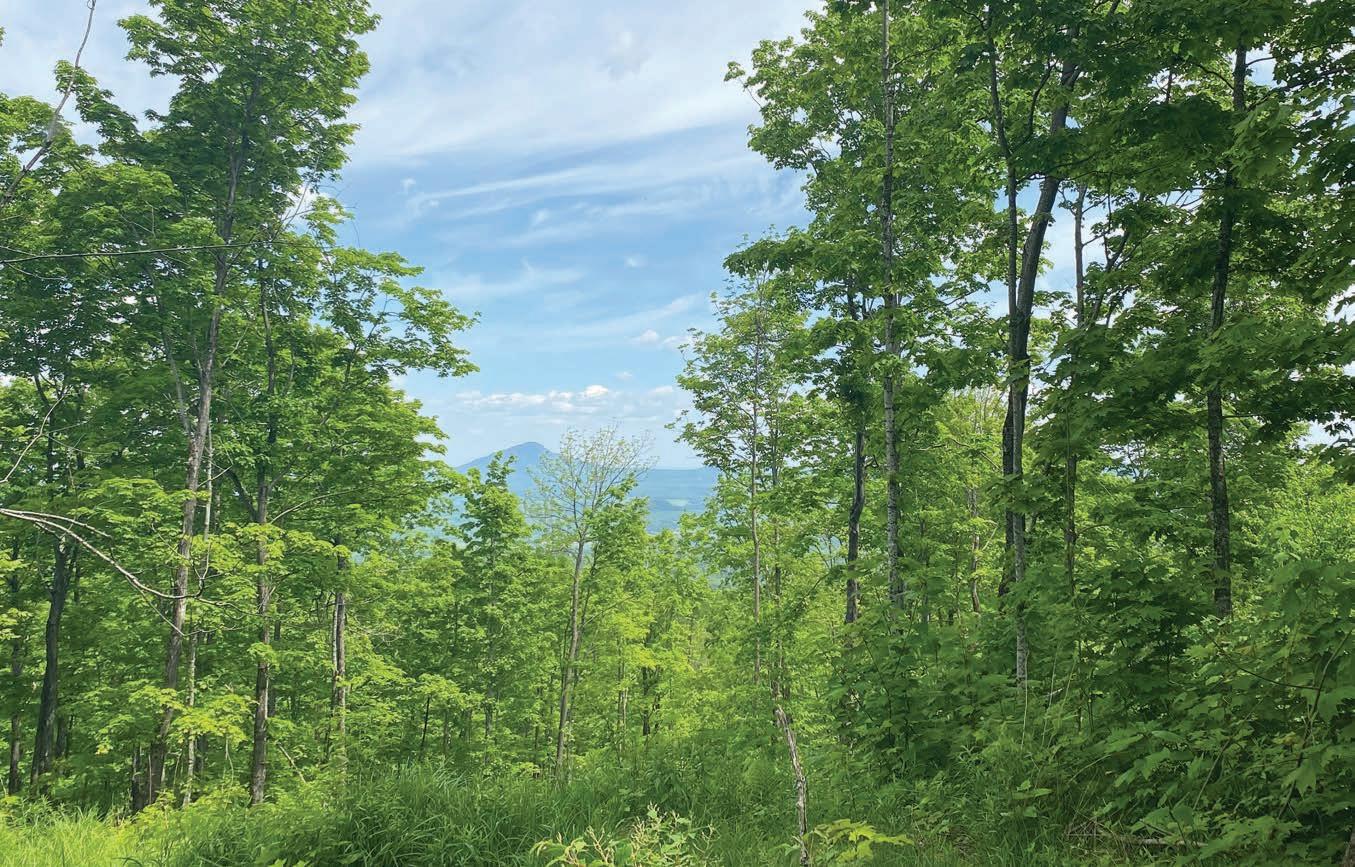
In Vermont’s northern reaches, just miles from the Canadian border, a new wilderness area expands the Long Trail corridor. Journey’s End Wilderness Preserve encompasses 342 acres of mixed hardwoods and conifers and 2,100 feet of stream frontage along Mountain Brook, which the Vermont Agency of Natural Resources classifies as Important Aquatic Habitat.
Matching the Preserve’s impressive wildlife value is its human significance. The property’s former owners, Ted Vogt and Susan Shea, dreamed for years about permanently protecting their land against development and logging. The couple’s appreciation for Northeast Wilderness Trust’s forever-wild promise to the places it safeguards motivated them to sell their land to the organization at a bargain rate, a testament to their care for Journey’s End and their commitment to a wilder Northeast.
“We chose to work with Northeast Wilderness Trust to conserve our land because of the organization’s forever-wild mission,” said Shea. “There is very little old-growth forest in Vermont; with time this forest will become one.” Vogt added: “Twenty years ago I started to dream about protecting this land. Northeast Wilderness Trust has made that dream a reality.”
The Preserve further ensures that this stretch of the Long Trail remains wild for hikers who pass by on their long-distance trips and for wildlife that call northern Vermont home.
At the landscape scale, Journey’s End abuts more than 30,000 acres of connected conserved land and lies within the Staying Connected Initiative’s Northern Greens to Canada proposed mega-linkage.

Jay, Vermont
342 acres
Adds wilderness acreage to the Long Trail corridor
Strengthens the Northern Greens to Canada habitat linkage
WILDER Future for All Toward a
Campaign for
a
Wild Future
Realizing Northeast Wilderness Trust’s vision—of a landscape of connected and resilient wildlands shared by a human culture that values wild places—requires the financial strength and flexibility to act on opportunity and to keep the organization’s forever-wild promise to the lands in its care.
Northeast Wilderness Trust recently launched the Campaign for a Wild Future in recognition of this need: to boost the organization’s institutional strength in order to advance wildlands protection today while preparing for the needs of tomorrow.
This first-ever campaign of its type for the organization aims to raise $18 million across three interconnected priorities:
$6.5 million to establish a Forever-Wild Action Fund for land acquisition projects.
$6.5 million to boost the Stewardship Fund, safeguarding existing forever-wild lands.
$5 million in long-term investment funds that will buoy the organization’s full suite of programs and operations.
Thanks to the leadership of Northeast Wilderness Trust’s board of directors and other generous supporters, $17.2 million
Illustration by Dylan Fant
Stewardship Fund
$6,500,000
Forever-Wild Action Fund
$6,500,000 Operating Fund
$5,000,000
of the $18 million goal has been raised as of December 2025. The plan is to complete the Campaign in 2026.
Every acre Northeast
Wilderness Trust protects is a future old-growth forest, where Nature is free to adapt and thrive. The Campaign for a Wild Future is a critical step toward that wilder future for all. Please consider joining Northeast Wilderness Trust in this exciting effort! Campaign Committee
Laura Appell-Warren, Vermont
Emily Bateson, Vermont
Annie Faulkner, New Hampshire
David Foster, Massachusetts
Alix Hopkins, Maine
Carol MacKinnon (Co-chair), New York
Brian Tijan (Co-chair), Vermont
Support the Campaign

“My wife and I felt strongly that we wanted to make as generous a donation as possible to Northeast Wilderness Trust now rather than wait until the end of our lives. Furthermore, we believe that contributing to the Campaign for a Wild Future was the best way for us to help the Wilderness Trust fulfill its vital mission of rewilding the Northeast now and for many years to come.
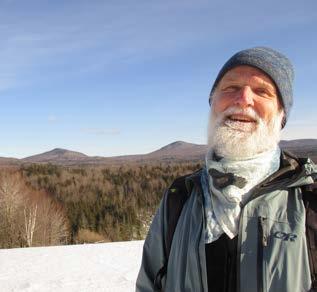
It has taken me quite a while to really comprehend the significance of wilderness as ‘the will of the land.’ It is hopeful, humble, and respectful of the network of multitudes of life forms, including animal, plant, fungi, and microbial, whom we share the Earth with. The Wilderness Trust’s forever-wild protection is the only type of work it does, making it THE leader in wilderness conservation in the Northeast. Supporting the Wilderness Trust and its rewilding mission is vital now so wilderness can last forever.”
Brett Engstrom
Studying and Celebrating All Things “Old Growth”
Mention “old growth” and a mossy forest of towering, thick trunks likely comes to mind. Large trees are a prominent aspect of old-growth ecosystems, but forest ecologists often think about old growth with more expansive parameters. They consider the term to denote a set of complex ecological conditions rather than a discrete age: downed trees, canopy gaps, and a certain undefinable “messiness” missing in managed forests. Ecologists study these conditions at large scales, as in a soaring grove of hemlocks, but they also look for old-growth characteristics on smaller scales, with magnifying glass in hand.
Northeast Wilderness Trust’s Wildlands Ecology team embraced old growth in its many forms in 2025, looking up at magnificent canopies and down at microscopic organisms. Over the summer, Wildlands Ecologist Jason Mazurowski and Wildlands Ecology Director Shelby Perry joined a group of veteran researchers to resample a rare patch of old forest in Marshfield, Vermont, contributing to a data record that goes back more than half a century.
At the 2025 Northeastern Old Growth Conference, co-sponsored by Northeast Wilderness Trust and organized by board member
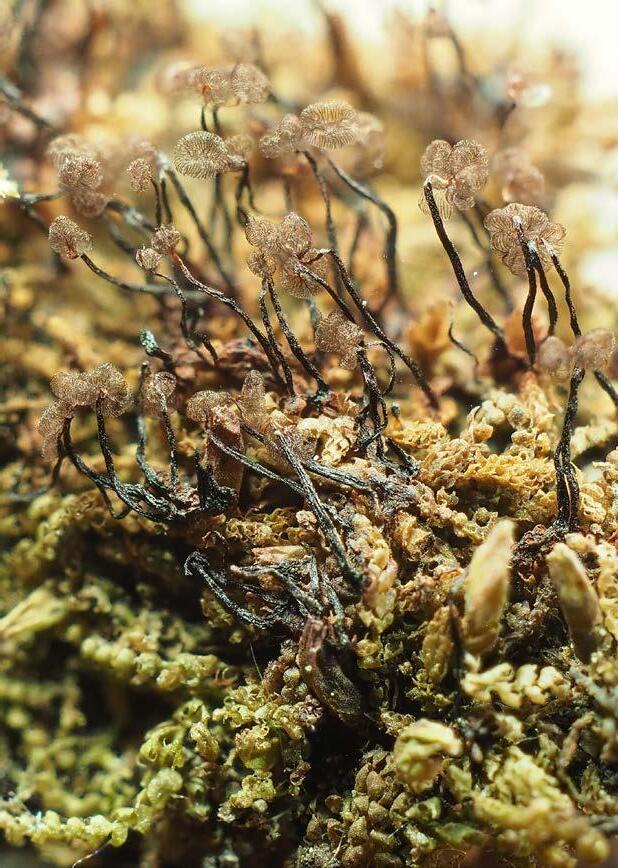
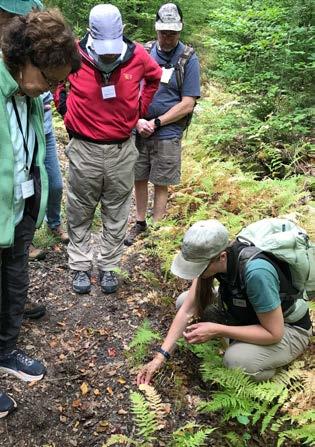
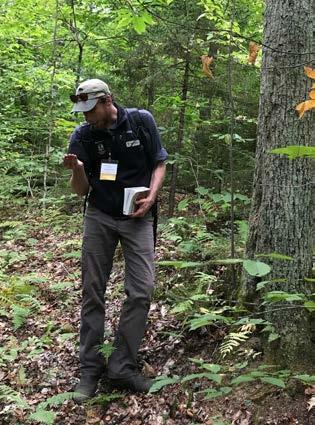
Liz Thompson, Perry and Mazurowski shifted their attention to the forest floor. Leading a workshop of more than 30 participants, the duo educated attendees about the “small wonders” that, while perhaps less majestic than a 300-year-old white pine, are equally critical to the health and persistence of old-growth ecosystems. (Perry will argue convincingly that a bird-cage slime mold is no less majestic than that gargantuan pine tree.)
Last year’s attention to old growth fits well within Northeast Wilderness Trust’s mission. Though most of the Northeast’s old-growth ecosystems—by some estimates less than 0.1 percent of the region’s forested area—have survived only because they exist in hard-to-reach places, they nevertheless provide examples of what Northeast Wilderness Trust’s forever-wild preserves and easements may one day look like. These special places store massive amounts of carbon, provide rich habitat for both common and rare species, and inspire humans to think on “tree time,” as Northeast Wilderness Trust staff often say, appreciating the slow but determined work of evolution in shaping the web of life and underscoring Nature’s intrinsic
value. By both contributing to scientific understanding of oldgrowth ecosystems and educating the public about their benefits for climate, wildlife, and society, Northeast Wilderness Trust’s Wildlands Ecology team is helping to create a world where reverence for old growth is commonplace. In Mazurowski’s words, “As part of the next generation of forest ecologists, we carry a responsibility to help realize a Northeast once more blanketed by old forests.”
Bird-cage slime mold, one of the “small wonders” of old-growth ecosystems; Perry and Mazurowski lead the conference workshop.
Protecting Wilderness through Collaboration
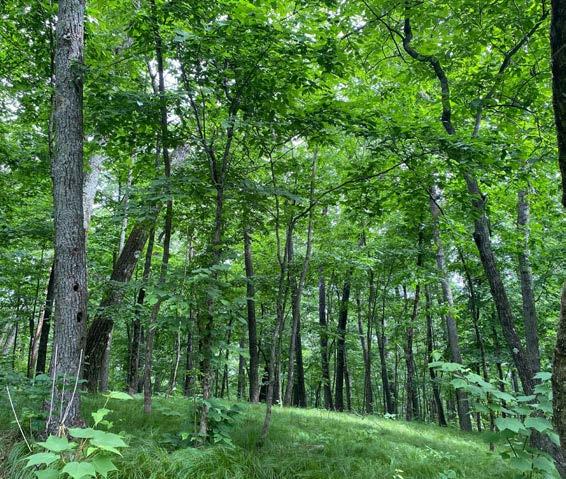
The acreage protected through Northeast Wilderness Trust’s Wildlands Partnership, which provides partner land trusts with financial and technical assistance to set aside more of their lands as forever-wild, expanded in 2025. Across the Northeast, five land trusts worked with Northeast Wilderness Trust last year to put more than $830,000 in awards toward creating forever-wild conservation easements totaling more than 4,200 acres. In New York, Thousand Islands Land Trust and Champlain Area Trails are bringing rewilding to their respective corners of the Empire State, where the Johnson/RAPOM, Kanzenbach Furgison, and Twin Valleys conservation easements now encompass nearly 1,000 acres. In Connecticut’s Berkshires, Sharon Land Trust worked with Northeast Wilderness Trust
to place a conservation easement on its 702-acre Jackson Peck property, which secures habitat for at least six rare, threatened, or endangered species. And in Maine, Frenchman Bay Conservancy and Midcoast Conservancy conserved via the program properties amounting to nearly 2,600 acres—including more than 400 acres of wetlands.
These successes underscore the Wildlands Partnership’s centrality to Northeast Wilderness Trust’s mission. The Partnership provides land trusts with project funding to create more wildlands in the Northeast, which helps correct the longstanding disparity in funding flowing to wilderness projects. To date, the Partnership has facilitated the protection of more than 14,000 forever-wild acres, a testament to the power of collaboration.
Sharon Land Trust’s Jackson Peck property
2025 Projects
Thousand Islands Land Trust
Johnson/RAPOM; 217 acres; Rossie, New York
Kanzenbach Furgison; 70 acres; Macomb and Rossie, New York
Champlain Area Trails
Twin Valleys; 650 acres; Lewis and Essex, New York
Frenchman Bay Conservancy
Green Lake; 1,921 acres; Ellsworth, Maine
Midcoast Conservancy
Northern Headwaters Basin; 663 acres; Montville and Freedom, Maine
Sharon Land Trust
Jackson Peck; 702 acres; Sharon, Connecticut
Frenchman Bay Conservancy’s Green Lake property
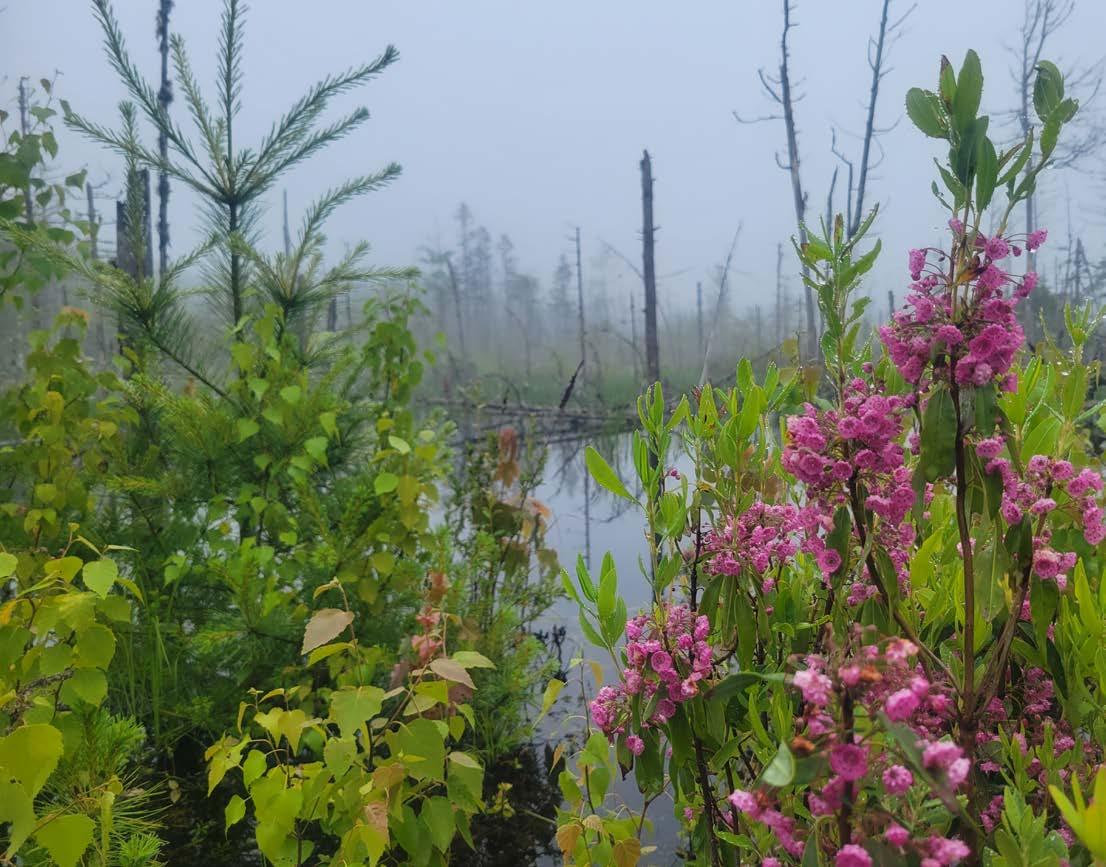
Land Stewards Spread the Wilderness Word
It likely comes as little surprise that Northeast Wilderness Trust’s land stewards are the face of the organization in local communities. Whether leading hikers on a wilderness walk, explaining guidelines to visitors at preserves, or speaking to a classroom of future conservationists, stewards are critical spokespeople for both Northeast Wilderness Trust and for wilderness values at large.
But stewards do not take on this role solely with the public. When Northeast Wilderness Trust partners with other land trusts, such as through the Wildlands Partnership, stewards frequently serve as ambassadors to these fellow conservation organizations. Many
of these partners are new to forever-wild conservation and rewilding, offering stewards the opportunity to introduce them to the nuances and benefits of passive management, two-layer legal protection, and other strategies that characterize Northeast Wilderness Trust’s forever-wild method.
2025 gave the Stewardship team several chances to practice their approach to wilderness knowledge-sharing. Early in the summer,
Maine Stewardship Manager Becky Clough and Stewardship Director David Mallard convened with staff from Maine Coast Heritage Trust (MCHT) at Bold Coast Wilderness Preserve,
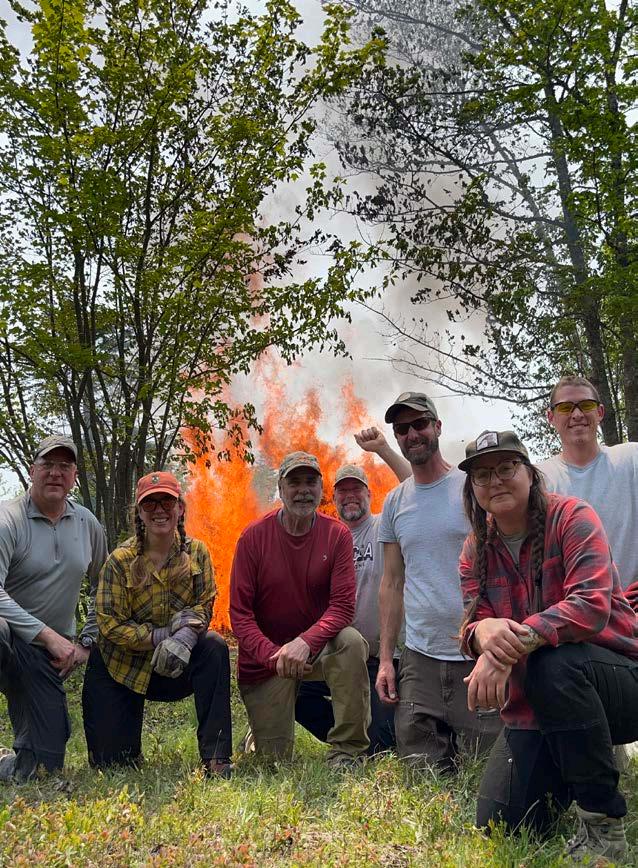
David Mallard and Becky Clough (left) with Maine Coast Heritage Trust staff and volunteers at Bold Coast Wilderness Preserve
protected jointly last year by MCHT and Northeast Wilderness Trust. Clough, Mallard, and MCHT staff deconstructed and burned the wooden components of several derelict human structures, carried out debris from the property’s forests, and removed a makeshift bridge obstructing wetland flows. During the undertaking, Clough and Mallard demonstrated that passive management does not always mean “no management”—sometimes a helping human hand can kickstart the rewilding process without compromising the wilderness ethic.
Meanwhile, on the other side of the region, New York Land Steward Janelle Jones built on her relationship with Champlain Area Trails (CATS), which, in Jones’ words, “has been blossoming for many years.” Jones has worked with CATS staff to maintain trails at Northeast Wilderness Trust’s Eagle Mountain Wilderness Preserve and Split Rock Wildway, and last year partnered with the organization as part of the establishment of the Twin Valleys conservation easement, held by Northeast Wilderness Trust on 650 acres owned by CATS in the towns of Lewis and Essex. Throughout the process of protecting Twin Valleys, Jones “spent hours learning” from CATS staff about their lands and management philosophy and has “spread the good wilderness word” in return.
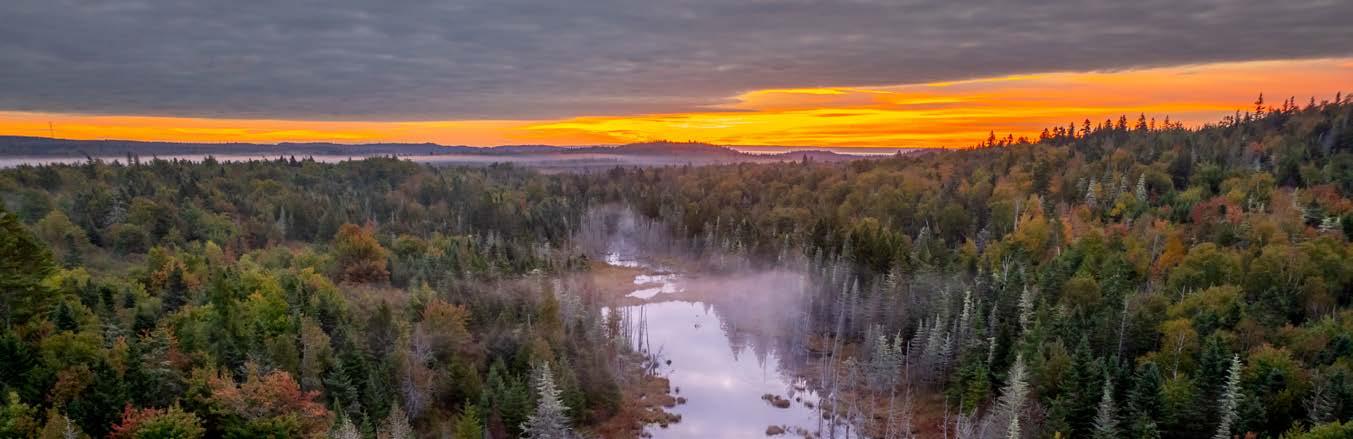
A New Wilderness Advisory Body
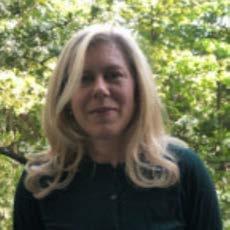
The robust growth of Northeast Wilderness Trust requires increased guidance and ambassadorship from supporters across the region. To meet this need, last year the organization created the Wilderness Council to deepen institutional knowledge across disciplines within or related to wilderness conservation, broaden the Wilderness Trust’s reach, and advance its mission. The Council complements the governance of the board of directors with a group of committed volunteers who bring expertise and local connections.
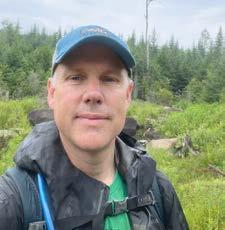
With the active leadership of co-chairs Katie Bacon and Mark Pener, the inaugural cohort of Wilderness Council members, hailing from diverse fields including academia, technology, and philanthropy, came together last year both in person for a hike at Northeast Wilderness Trust’s Mountain Brooks Wilderness Preserve and online. During these convenings, Council members learned more about the organization’s 2030 strategic plan and on-the-ground conservation work.
“I’m inspired to serve on the Wilderness Council because I believe there’s no greater legacy than protecting the natural world for future generations,” said Pener. “My family has always found healing and meaning in Nature, and I see Northeast Wilderness Trust as one of the few organizations truly committed to keeping landscapes whole and letting them flourish on their own terms. Being part of this mission feels both urgent and deeply hopeful.”
Northeast Wilderness Trust would like to express its gratitude to the Wilderness Council for strengthening the organization’s capacity to protect wild Nature. The Council’s contributions pair principled leadership with practical support. Already, the Council has provided meaningful insights and valuable introductions to landowners and stakeholders in the region and beyond. The collective dedication of its members ensures that wilderness protection is not only sustained today but carried forward for generations to come.
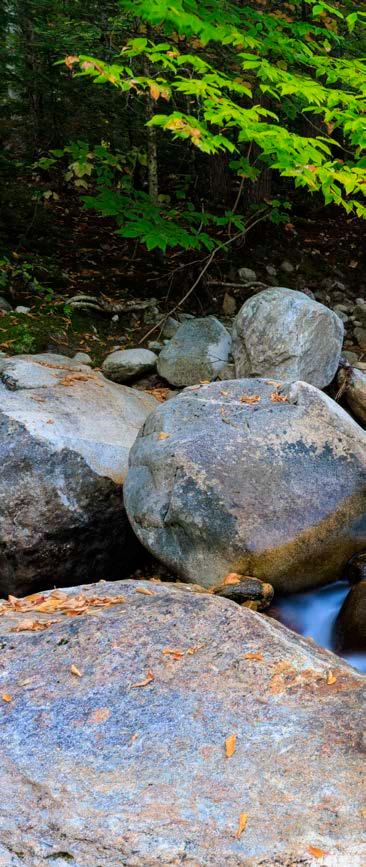
Mountain Brooks Wilderness Preserve
Katie Bacon
Massachusetts Co-chair
Mark Pener
Massachusetts Co-chair
Melody Badgett, Vermont
Henry Blodget, New York, Connecticut
Kasey DeLuke, New York
Kim Elliman, New York
David Foster, Massachusetts
Alix Hopkins, Maine
Tim Purinton, Vermont
Joan Ray, Maine
Tucker Taft, Massachusetts
“Extra! Extra! New Wilderness Area Created!”
The third pillar of Northeast Wilderness Trust’s 2030 Strategic Plan is “Champion,” defined as: “Elevating the understanding of, relationship with, and support for wilderness.” Securing wide news coverage of the organization’s conservation success stories is an essential element of the Champion pillar. Thanks to a steady stream of forever-wild accomplishments and carefully crafted pitches to reporters, 2025 was a banner year for media attention to the Wilderness Trust’s regionwide impact.
These efforts reached new audiences across the Northeast—and the country—last year. In October, an article in The Boston Globe profiled Spruce Ridge Wilderness Preserve in New Hampshire. Alongside important details about the property, one key statistic stood out: “While about 25 percent of land is conserved in New Hampshire, only about 4 percent is protected as a wilderness area free of logging,” a disparity many of the Globe’s
300,000 print and digital subscribers may not be aware of—and a core motivation of Northeast Wilderness Trust’s work. Later, in November, a piece in Vermont’s VTDigger online publication about Journey’s End Wilderness Preserve went viral, notching pick-ups by national outlets The Associated Press and U.S. News and World Report, as well as local outlets throughout the state.

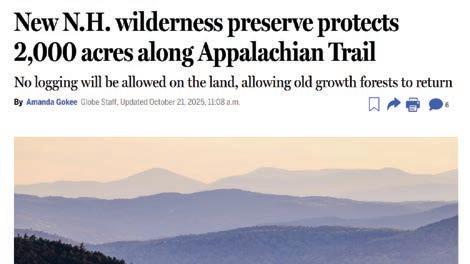
Critically, the piece defined forever-wild conservation: “Foreverwild areas—which may also be called wilderness areas, natural areas or ecological reserves—are legally protected tracts of land left to nature to evolve over time.” Stories like this, which often grow out of working relationships between Northeast Wilderness Trust staff and newsrooms, help to mainstream the far-reaching benefits of wilderness for the climate, wildlife, and society.
Meanwhile, over in the opinion section, President and CEO Jon Leibowitz penned incisive editorials
last year. A column in Maine’s Portland Press Herald, titled “Together, Maine Timber Companies and Conservationists Can Protect Old-Growth Forests,” made the case for strengthened protections for late-successional and oldgrowth forests (LSOG), which have drawn more interest from lawmakers and the public as their scarcity has come to light. Another opinion piece in Connecticut’s Hartford Courant argued that private land conservation, led by land trusts like Northeast Wilderness Trust and its partners, represents an indispensable complement to U.S. public lands.
This media coverage bolsters Northeast Wilderness Trust’s status as a thought leader in the wilderness movement. The organization is first and foremost a land trust, whose North Star remains protecting land as forever-wild. But with efforts like these and others within the Champion pillar, Northeast Wilderness Trust stands among the vanguard of a larger movement ushering in a healthier and more mutual relationship between human and nonhuman communities—a prerequisite for a wilder, more balanced Northeast.

Financial Statements for Fiscal Year 2024–25
Northeast Wilderness Trust continued to strengthen its financial position during the fiscal year ending June 30, 2025. Thanks to the extraordinary generosity of a growing community of supporters, contributions increased for both organizational operations and land conservation projects. Every dollar donated propels the Wilderness Trust’s mission, with a clear emphasis on protecting and stewarding land as forever-wild. In 2025, the Wilderness Trust invested in the growth and support of its talented and dedicated staff, who are advancing the goals of the 2030 Strategic Plan. At the same time, longterm financial sustainability was prioritized by increasing the Stewardship and Operating Funds by 14 percent and 16 percent, respectively. The Wilderness Trust also expanded its Reserve Fund, coming close to its goal of maintaining nine months of operating expenses in reserve.
As a result of this commitment to prudent financial management, the Wilderness Trust maintains a healthy cash position, carries no debt, and holds a growing investment portfolio.
Northeast Wilderness Trust Corporation was incorporated in 2002 in Vermont as a 501(c)3 organization. All contributions to Northeast Wilderness Trust are tax-deductible to the fullest extent of the law. Audited financial statements available upon request.
Summary Statement of Financial Position at June 30, 2025
$63,603,276
Summary Statement of Income and Expenses at June 30, 2025
* Land Conservation is a capital expense.
** Net income represents a combination of Land Conservation revenue waiting to be expended and operating surplus.
Honoring Service to the Wild
Northeast Wilderness Trust’s board of directors plays a host of critical roles for the organization. Board members are champions of the wilderness cause, finding unique ways to advance the Wilderness Trust’s mission.
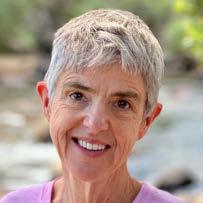
In 2025, board member Liz Thompson, a celebrated ecologist and devotee of wild places, went above and beyond in her contributions to the Wilderness Trust and the broader wilderness movement. In her voluntary role as chair of the steering committee of the 2025 Northeastern Old Growth Conference, Thompson masterfully oversaw all aspects of this critical convening. She lined up speakers and workshops, coordinated logistics, and promoted the Conference across media platforms, resulting in an impressive tally of nearly 300 attendees who delighted in a rich array of talks, workshops, and trips led by more than 50 conservation practitioners, scholars, and artists.
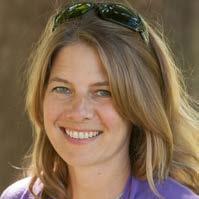
The board and staff are also bidding a member farewell as her time with Northeast Wilderness Trust comes to a close. Kristin DeBoer, the visionary executive director of Kestrel Land Trust in Amherst, Massachusetts, concludes her 9-year board term in May of 2026.
A deeply committed wilderness advocate, DeBoer has also been a crucial voice on the board’s finance and governance committees, including six years as chair of the latter. Her expertise and savvy will be dearly missed, but Northeast Wilderness Trust wishes her all the best as she continues her essential work protecting land in western Massachusetts and elevating wildlands protection in her area.
Thompson also steered From the Ground Up, the fast-growing quarterly publication of the Wildlands, Woodlands, Farmlands & Communities initiative, through another four issues of diverse perspectives on ecology, conservation, and other topics. These undertakings, combined with Thompson’s role chairing the ecology committee and serving on the executive committee of the Wilderness Trust’s board, did wonders last year for the Learn and Champion pillars of Northeast Wilderness Trust’s Strategic Plan.
Thank you, Liz, Kristin, and the whole board of directors!
Liz Thompson Kristin DeBoer
Northeast Wilderness Trust Conserves Forever-Wild Landscapes for Nature and People
STAFF
Ptarmigan Abbott Operations Manager
Eric Bailey Conservation Programs Coordinator
Tom Butler Senior Fellow
Becky Clough Maine Stewardship Manager
Anna Dundas Development Director
Sophie Ehrhardt Vermont Land Steward
Joe Falconeiri Southern New England Land Steward
Colby Galliher Editorial Communications Specialist
Michael Gauthier Finance Manager
Maddie Hatoum Digital and Technical Coordinator
Janelle Jones New York Land Steward
Richard Knox Communications Director
Jonathan Leibowitz President and CEO
Cathleen Maine Vice President of Operations
David Mallard Stewardship Director
Peter Mandych Land Conservation Director
Caitlin Mather Vice President of Conservation Programs
Jason Mazurowski Wildlands Ecologist
Nicie Panetta Vice President of Advancement
Shelby Perry Wildlands Ecology Director
Nathaniel Williams Grants Manager
Mandy Yonkman Donor Impact Coordinator
BOARD OF DIRECTORS
Brian Tijan, VT Chair
Carol MacKinnon, NY Vice Chair
Rick Rancourt, VT Treasurer
Eric Sorenson, VT Secretary
Laura Appell-Warren, VT
Emily Bateson, VT
Aram Calhoun, ME
Kristin DeBoer, MA
Brett Engstrom, VT
Kathleen Fitzgerald, VT
Daniel Hildreth, ME
Alan Jutras, MA
Bill Roper, VT
Liz Thompson, VT
Mark Zankel, NH
Mark Anderson, MA emeritus
Annie Faulkner, NH emerita
Susie O’Keefe, ME emerita
Photo Credits
Eric Bailey 12, 18
Frenchman Bay Conservancy 19
Zac Cota 5 (inset bottom)
Chris Gothberg 8
Al Hicks/NYDEC 11
Maine Coast Heritage Trust 21
Ryan Malagara 6, 20
Larry Master front cover, 24
Stephen Matter 4 (top, bottom left), 5, 10, 27
David Middleton inside front cover, 5 (inset top), 9
Jerry Monkman 23, back cover
Shelby Perry 6 (bottom right), 13, 17 (left)
USFWS 7
Northern long-eared bat by Al Hicks/NYDEC is licensed under CC BY 2.0
Printed on 100% post-consumer, processed chlorine-free paper and backed by our Green Guarantee.
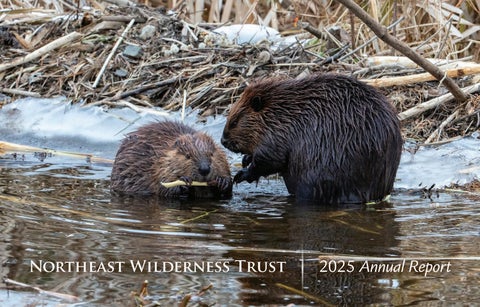
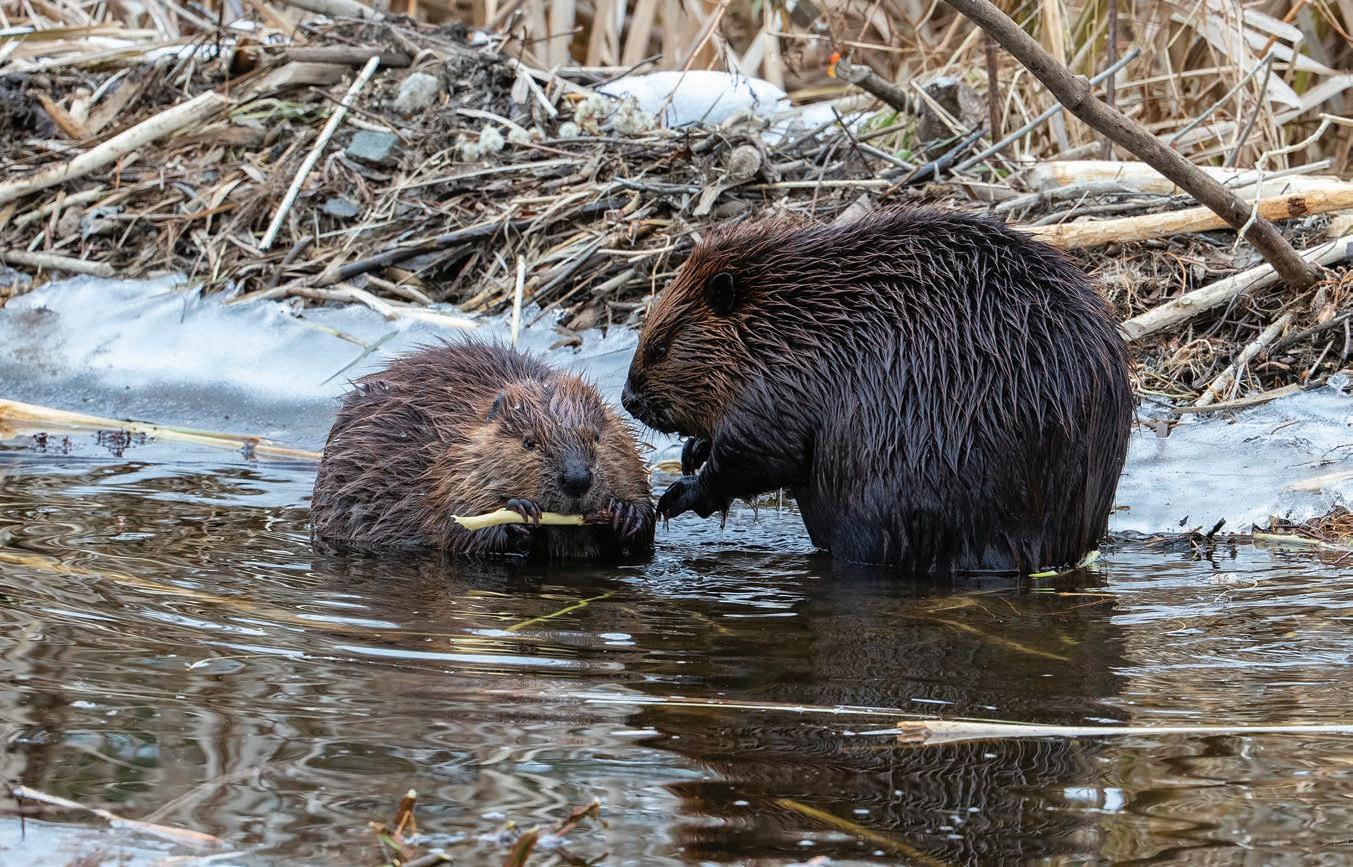
Front: American beavers
Back: Frenchman Bay Conservancy easements