By Leo Adam Biga
Dr.
Siobhan
Wescott has never needed to look far for inspiration. Now deep into a public health career that brought her to the University of Nebraska Medical Center in 2021, she’s inspiring others as the Dr. Susan and Suzette La Flesche Professor of American Indian Health and director of the American Indian Health and Indigenous and Rural Health Program. She also leads the NE-HEALING project that provides health, education, advocacy and leadership across indigenous and Native generations.
Growing up Athabaskan Alaskan outside Fairbanks, she was motivated by her trailblazer mother Betty Parent, who earned multiple higher ed degrees and taught American Indian history. Betty excelled despite losing her father to a fishing accident and being separated from her mother and sister when they contracted tuberculosis. Exclusionary policy prevented Native children from being fostered or adopted by Native families, so she was hidden by an aunt before being forced to attend boarding school.
Wescott’s late father, Gene Wescott, was a mountaineer, geophysicist, printmaker, dancer and actor who worked for the Geophysi-
cal Institute at the University of Alaska Fairbanks and did a three year stint with NASA’s Goddard Space Flight Center.
“Both of my parents were really influential,” said Siobhan. “I really took from them don’t take no for an answer or just because its a prestigious university doesn’t mean that you don’t belong there.”
From her mother, who taught at San Francisco State College, she learned Native women can do whatever they imagine. “She’s an amazing role model. I’m not sure I would have done anything that I’ve done if I didn’t have her showing me the way and helping me through
By Andy Bradley
Chances are, some of your earliest memories as a young child or teenager revolved around automobiles. As a sevenyear-old in 1960, my friends and I would sit on the front stoop watching cars parade up and down our street – our eyes peeled especially for the Buick “four hole” Electra — which triggered four solid punches to the arms of our companions. (A three-hole Buick merited just three slugs.)
Capitalizing on these wistful memories, classic car collecting, refurbishing and showing is as popular as ever, especially among retirees. An industry survey of 15,000 classic car collectors discovered that 42 percent of them are retired, and 25 percent are over 65. Eighty
percent are male.
New Horizons caught up with several older collectors recently at auto shows in Hooper, Fremont and Omaha. In the process, we discovered that local or regional shows can be found nearly every week through the warm weather months. These are typically sponsored by area car clubs, which number more than 70 in eastern Nebraska and western Iowa.
While the Fremont show on July 11 was the largest we attended, with nearly 500 entrees, by far the most prominent in the region is the Ice Cream Cruise at the I-29 Speedway in Pacific Junction, Iowa, about 20 minutes south of Downtown Omaha. Nearly 2,250 vehicles will be on display Sept. 25 to 27.
The world’s largest show is the --Cars continued on page 9.
things.”
From her father she learned curiosity and fearlessness. “He really encouraged me to do science.”“He was an Iowa farm boy scarred by his family losing their place in the Great Depression, so he never had a mortgage. They moved to California and he hitchhiked to Alaska. He built this 400 square foot cabin on a homestead site outside of Fairbanks. It took him five years.”
Siobhan and her siblings grew up in that cabin and used an outhouse.
As a young man her father was schooled in Native ways by an indigenous person he met in California before wanderlust led him to
Alaska, where he met her mother. His deep dive into Native rites led him to being a traditional dancer and elder for drum circles.
Her parents’ boundary-less lives influenced Siobhan. Another influence is one of the namesakes of the professorship she holds, Susan La Flesche, an Omaha tribe member who became America’s first indigenous physician in the late 19th century.
“The odds were against me in our time and I can’t even imagine how much worse it was for her,” said Wescott. “First, she wasn’t a citizen.”
The landmark decision establishing American Indians as “persons” under U.S. law, was rendered but a decade before she earned her medical degree in 1889. “Under those circumstances she was an absolute badass,” said Wescott. “She faced ridiculous odds and blew through all of them. She was just unrelenting. She did not take no for an answer.”
The hospital La Flesche founded on the Omaha reservation eventually closed and the building fell into disrepair but after renovations it’s now a center of study and healthcare again.
“I love that Dr. Susan’s legacy is
--Wescott continued on page 8.
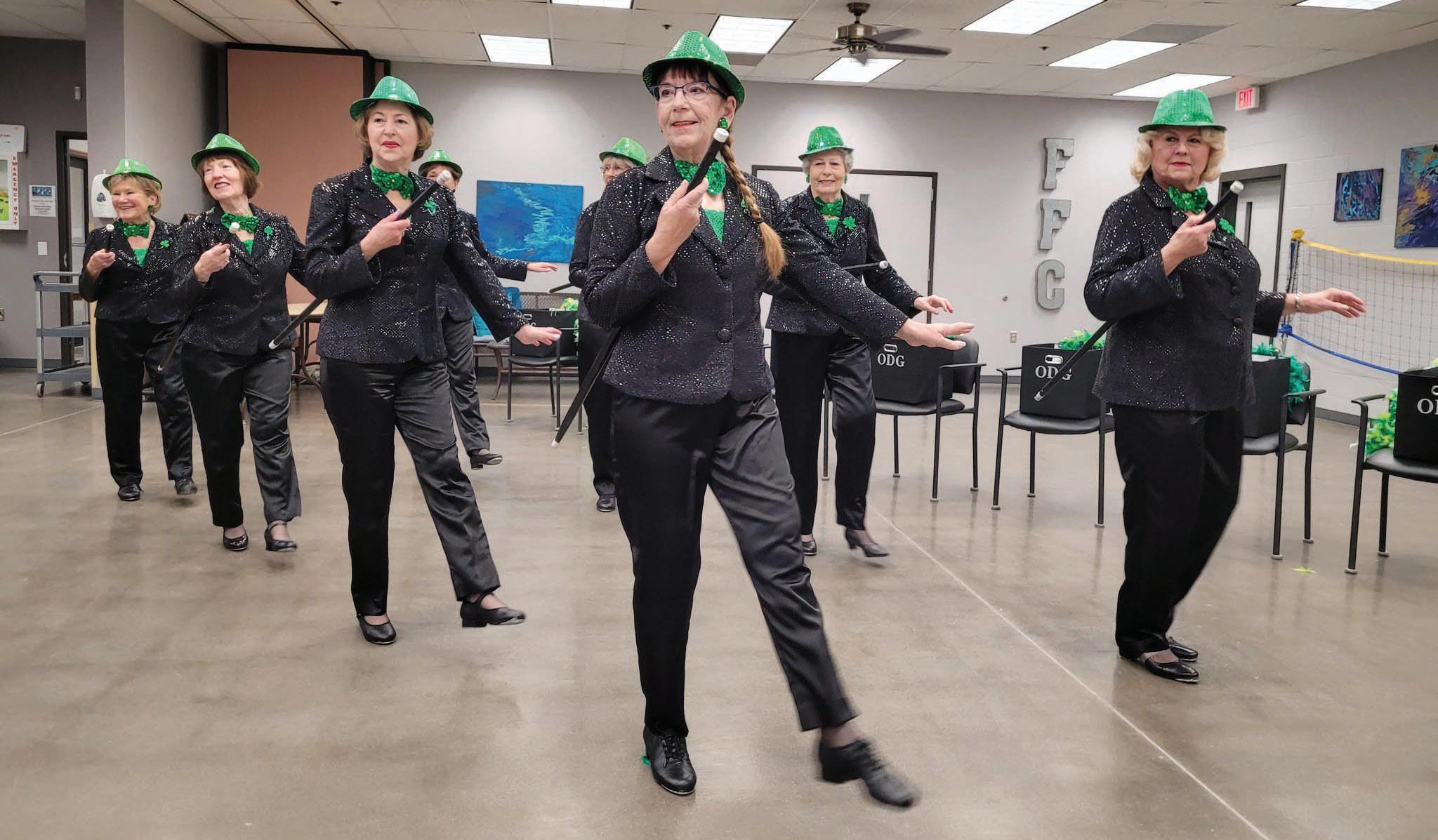
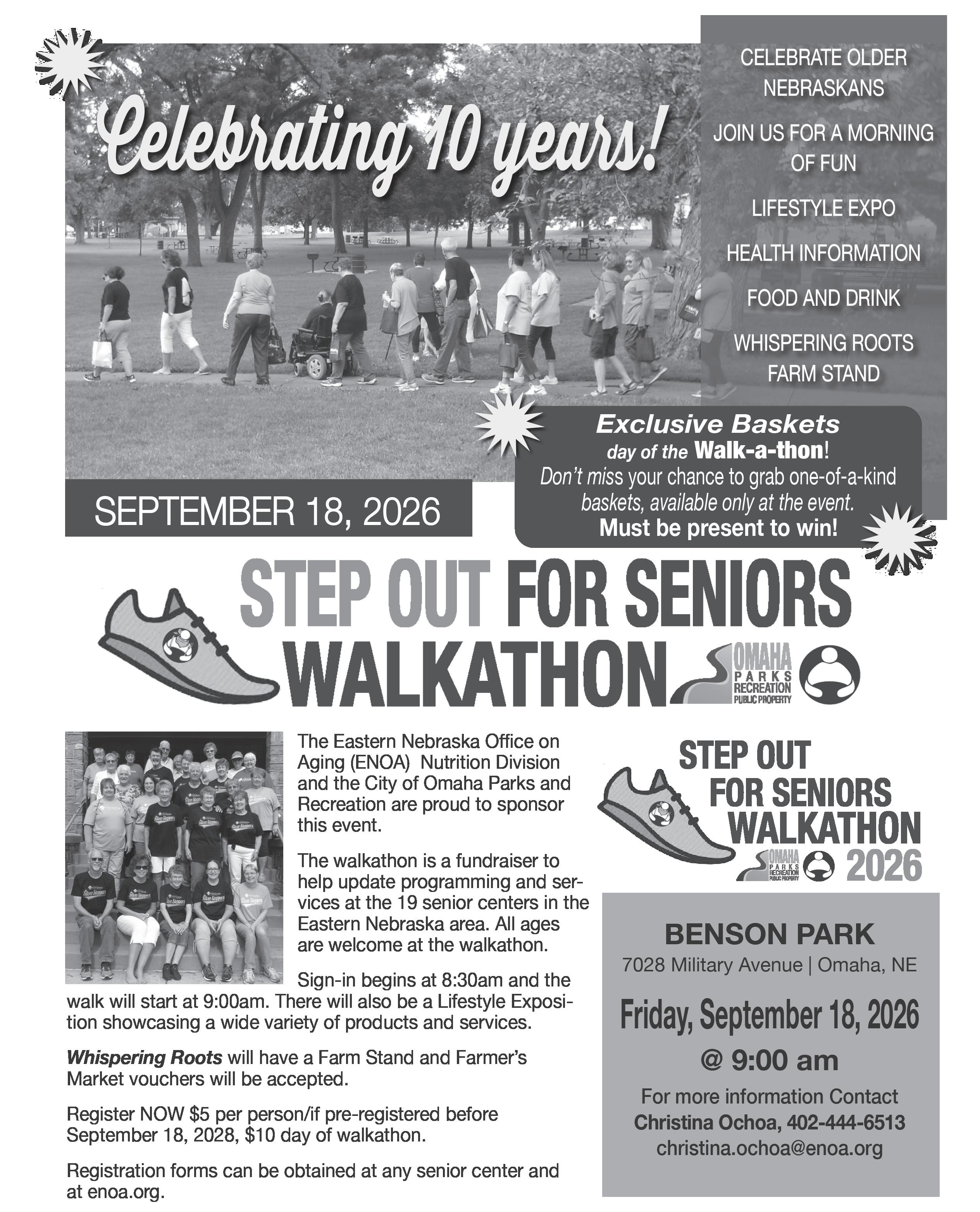
The Omaha Dancing Grannies are a local dance group who perform at senior centers, retirement communities, and community events. Learn more about The Omaha Dancing Grannies on Page 2.

After years of procrastinating, I finally planned and pre-paid my funeral. This is a gift I am giving my family and friends. When I die, I do not want planning to burden my loved ones. I created a road map of what to do that will answer many questions. Then I accompanied my sister-in-law to do her funeral plans. Her daughter thanked me profusely for saving her from future stress.
My biggest challenge was deciding how and where I want to be buried. A funeral plot, a mausoleum, or cremation do not appeal to me. Because I am concerned about the earth and my carbon footprint, none of these choices reflected my values. My sister in Dubuque has chosen to be interred in a natural burial cemetery. This requires a wooden box but no vault or grave marker. Over the years, all will be restored to the earth. I love this idea and so I arranged to be buried in the same cemetery. There is a natural burial cemetery in Bellevue but this one in Dubuque will be closer to many family members and to friends. My name and my sister’s will be etched on a
By Nancy Hemesath
memorial wall.
Once I made this decision, I met with the funeral home consultant. What seemed overwhelming was handled with ease. In addition to having my body transported across the state of Iowa, there will be a celebration of life at my parish church. I chose readings and songs that are meaningful to me and reflective of my life. The plans also reflect my desire for simplicity, while giving loved ones an opportunity for final good-byes. I want this because the final good-bye is so important to me when my loved ones have died.
This process has not been sad or morose. I have involved others close to me. My sister is preparing my graveside service. My wonderful, handy friend is building my pine box. I plan to ask another to do a eulogy. I envision it all as celebratory.
Truthfully, I have put this off for years because I was
not yet ready to face my mortality head-on. Because I am turning eighty in a few months, death seems much closer. When I first started my life-coaching business, I focused on the retirement transition. Now I am more focused on the next BIG transition. The process of funeral planning is helping me be more peaceful with my own death, no matter when it comes.
The process has brought me peace of mind and a deepened sense of my own spiritual journey. My fear of death, which I experienced in the past, has largely dissipated. I realize that this preplanning is not only a gift to my family and friends but also a gift to myself.
(Hemesath is the owner of Encore Coaching. She is dedicated to supporting people in their Third Chapter of Life and is available for presentations. Contact her at nanhemesath@gmail. com.)
By Ron Petersen
Are you ready to dance and move to the beat with the Omaha Dancing Grannies?
The Omaha Dancing Grannies have performed at birthday parties, assisted living facilities and even parades. They look to continue the tradition of bringing joy to people in 2026 and beyond.
“We love dancing and performing,” Omaha Dancing Grannies member, Diane Huerta said. “We see the joy in people, and we love seeing their face light up.”
The Omaha Dancing Grannies — who have been around for 40 years — perform two to three times a week throughout the metro area.
“Every show is different and we decide what we wear and perform during a show when we practice on Mondays. We know 32 dances and we have 15 costumes,” Huerta said. “We usually will perform 40-45 times a year, so it can be very busy.”
Every week, women come visit a local dance studio where they practice their steps and try to acclimate new members into the group.
“We critique the dances and incorporate new dancers into the mix, if we have any,” Huerta said. To dance in the Omaha Dancing Grannies, you must be 55 and older to be in the group and they have to have tap dancing experience.
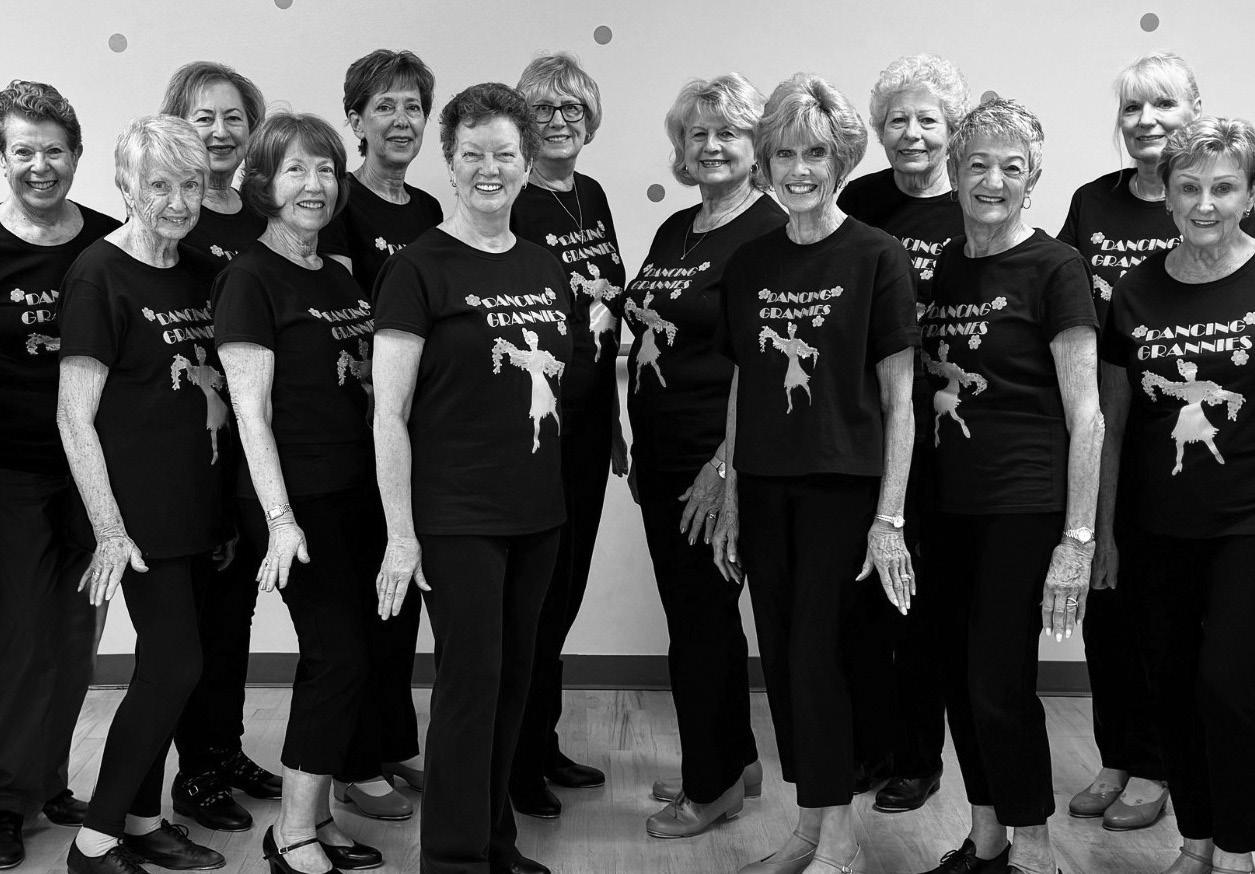
The Omaha Dancing Grannies is a group of tap dancers who perform for older adults around the eastern Nebraska area.
“Everyone gets to be pretty close with one another and most of us are friends,” Huerta said.
The Dancing Grannies currently has 17 performers (two in training), and they perform at places that include church luncheons, birthday parties, assisted living facilities, anniversary parties and more.
“We’ve even danced at Fremont Days every year in July, which is usually our biggest performance of the year,” Huerta said.
For their dedication and impact in the community, the Omaha Dancing Grannies love to perform for older adults, and they have fun doing it together.
“We love to bring joy, and we want to bring happiness,” Huerta said.
Hearing changes can creep up on us gradually, which makes them easy to overlook at first. We may find ourselves turning up the TV just a tad or asking friends and family to repeat themselves more often. Maybe we struggle more to follow conversations in loud or crowded spaces.
Can you relate? If so, you might have thought about taking an online hearing test to figure out if you’re dealing with hearing loss. These tests are widely available and usually cost nothing. To get a quick assessment from the comfort of your home, all you need is your smartphone or computer.
But while online hearing tests can provide valuable insights, they don’t always tell the whole story. Knowing exactly what these tests can (and cannot) reveal is important when making decisions about your hearing health.
HOW DO ONLINE HEARING TESTS WORK?
Online hearing tests use a series of tones, spoken words, or background-noise exercises to gauge how well you hear certain sounds and speech frequencies. Some focus mainly on volume and pitch detection, while others measure how well you understand speech in noisy environments.
WHAT HAPPENS DURING AN ONLINE HEARING TEST?
Most online hearing tests are fairly quick, taking anywhere from three to 10 minutes to complete. Before starting, the test may ask you to adjust your device volume or answer questions about your age, health, medical history, and symptoms (e.g., ringing in the ears).
The interactive screening portion of the test works something like this:
• The test plays sounds at different pitches and volumes through your headphones or speakers. You may also hear spoken words presented with varying levels of background noise.
• You may be asked to indicate when you hear a sound by clicking a button or selecting words. Based on your responses, the program reveals whether your hearing appears normal or if mild, moderate, or significant hearing loss is present. You’ll typically get immediate results in an on-screen summary or
follow-up email, which may also advise on the steps you should take next.
To improve the accuracy of your hearing loss test results, you’ll want to create the best possible testing conditions. Here are some pointers:
• Use high-quality overthe-ear headphones or earbuds instead of relying on your device speakers.
• Take the test in a quiet room by yourself without background noise. Turn off nearby televisions, radios, or fans.
• Follow the volume calibration instructions carefully.
• Use a reliable internet connection and updated device.
• Try to avoid guessing. Retake the test if you get interrupted at any point. Remember: Even under ideal conditions, online screenings are not a substitute for a professional hearing evaluation.
Online hearing tests generally measure your ability to hear sounds across different frequencies and volumes:
• Frequency (pitch) refers to pitch. Low-frequency sounds are deeper, like thunder or a bass drum. High-frequency sounds are sharper, like birds chirping or children’s voices. Agerelated hearing loss often affects high-frequency hearing first, which is why speech may start sounding muffled.
• Volume (intensity) is measured in decibels (dB). The softer the sound you can hear, the better your hearing ability at that frequency. Hearing thresholds help determine the degree of hearing loss:
• Normal hearing: -10 to 15 dB
• Slight hearing loss: 16 to 25 dB
• Mild hearing loss: 26 to 40 dB
• Moderate hearing loss: 41 to 55 dB
• Moderately severe hearing loss: 56 to 70 dB
• Severe hearing loss: 71 to 90 dB
• Profound hearing loss: 91 dB or higher
Test results can vary based on factors like device quality, room noise, and
whether the sound calibration is accurate.
ARE ONLINE
Online hearing tests can be reasonably accurate as screening tools, especially for identifying possible mild to moderate hearing loss. They can help people recognize hearing changes they may have been ignoring or unsure about. Findings from a 2022 study suggested that initial results from a smartphone hearing test were comparable to those from in-clinic hearing assessments. But online hearing loss tests are limited in key ways:
• Lack of control over testing conditions: Unlike professional hearing exams, online screenings cannot fully control testing conditions. Background noise, poorly calibrated headphones, internet lag, and device settings can all affect your test results. The American National Standards Institute (ANSI) has established guidelines for how quiet a room must be to ensure accurate hearing test results. In most cases, meeting these standards requires a specially designed soundtreated room.
• Inability to diagnose complex hearing loss causes: Online tests cannot detect certain medical problems that may lead to hearing changes. Issues like earwax buildup, infections, medication side effects, balance disorders, or conditions affecting one ear differently than the other can only be determined with a physical exam.
• Lack of real-world relevance: Many online tests focus mainly on detecting sounds or pitches. But in real life, hearing loss isn’t that simple.
• No professional input: Online hearing tests don’t include the opportunity to discuss your results, risk factors, or next steps with an audiologist.
That said, free hearing tests online can still be valuable as a first step. If your screening indicates early hearing loss, it may motivate you to seek treatment that improves your quality of life. Untreated hearing loss has been linked to social isolation, depression, a higher risk of falls, and cognitive decline in older adults.
(Article provided by the National Council on Aging).
New Horizons is the official publication of the Eastern Nebraska Office on Aging. The paper is distributed free to people over age 60 in Douglas, Sarpy, Dodge, Washington, and Cass counties. Those living outside the five-county region may subscribe for $5 annually. Address all correspondence to: Ron Petersen, Editor, 4780 S. 131st Street, Omaha, NE 68137-1822. Phone 402-444-6654. FAX 402-444-3076.
E-mail: ron.petersen@enoa.org
Advertisements appearing in New Horizons do not imply endorsement of the advertiser by the Eastern Nebraska Office on Aging. However, complaints about advertisers will be reviewed and, if warranted, their advertising discontinued. Display and insert advertising rates available on request. Open rates are commissionable, with discounts for extended runs. Circulation is 9,000 through direct mail .
Editor................................Ron Petersen, 402-444-6654
Ad Mgr................Mitch Laudenback, 402-444-4148
Contributing Writers.........Leo Biga & Andy Bradley
ENOA Board of Governors: Pat Tawney, Dodge County, chairperson; Lisa Kramer, Washington County, secretary/treasurer; Mary Ann Borgeson, Douglas County; Don Kelly, Sarpy County; Taylor Boyle, Cass County.
The New Horizons and the Eastern Nebraska Office on Aging (ENOA) complies with applicable federal civil rights laws and does not exclude, deny services to, or otherwise discriminate against any person on the basis of race, color, national origin, disability, age, sex, marital status, veteran status, or religion.
Medicare enrollment may seem straightforward, but the timing of your decisions can have lasting financial consequences.
Missing an enrollment deadline or misunderstanding the rules can lead to higher premiums, delayed coverage, or unexpected tax issues involving a Health Savings Account (HSA).
Medicare has specific enrollment periods, and not everyone should enroll in every part of Medicare at the same time.
The right timing depends on factors such as whether you’re still working, covered by an employer health plan, contributing to an HSA, taking prescription medications, or planning to begin Social Security benefits. Understanding how these pieces fit together can help you avoid unnecessary penalties.
Medicare Part A covers inpatient hospital care, skilled nursing facility care,
hospice, and some home health services. Most people qualify for premium-free Part A because they or their spouse paid Medicare taxes while working.
Because Part A is usually free, many people enroll at age 65 without realizing it can affect HSA eligibility.
If you’re enrolled in any part of Medicare, you’re generally no longer eligible to contribute to an HSA.
According to the IRS, your HSA contribution limit becomes zero beginning with the first month you’re enrolled in Medicare, including any retroactive coverage.
A common scenario looks like this:
Someone continues working past age 65, remains covered by an employer’s high-deductible health plan, and continues making HSA contributions.
They delay Medicare because they have employer coverage.
When they retire, they enroll in Medicare Part A and Part B. What many don’t realize is that premium-free

Part A is often retroactive. Medicare may backdate Part A coverage by up to six months (but no earlier than the month you turned 65).
If you contributed to your HSA during that retroactive period, those contributions may be considered excess contributions because you were retroactively enrolled in Medicare.
To help avoid this problem, CMS recommends stopping HSA contributions at least six months before applying for Medicare, Social Security, or Railroad Retirement Board benefits. This is especially important for people retiring after age 65.
If excess contributions occur, they may be subject to a 6% excise tax for every year they remain in the account unless corrected. In most cases, you’ll need to withdraw the excess contributions and any related earnings before your tax filing deadline.
Because these are tax issues, consult a qualified tax professional if you believe you’ve contributed after your Medicare coverage began.
Most people who qualify
for premium-free Part A do not pay a late enrollment penalty.
However, if you must purchase Part A because you don’t qualify for premiumfree coverage, Medicare may increase your premium by 10% if you delay enrollment.
The higher premium generally lasts for twice the number of years you delayed signing up.
For people with HSAs, the timing of Part A enrollment deserves careful planning, even if there isn’t a penalty.
MEDICARE PART B LATE ENROLLMENT
PENALTY
Medicare Part B covers doctor visits, outpatient care, preventive services, and other medically necessary care.
If you don’t enroll when first eligible and don’t have qualifying employer coverage, you may face a permanent late enrollment penalty.
age.
Even if you don’t currently take medications, it’s important to have either Part D or other creditable prescription drug coverage. Otherwise, you could face a late enrollment penalty when you enroll later.
The Part D penalty is based on how long you went without creditable prescription drug coverage and is generally added to your monthly premium for as long as you have Medicare drug coverage.
Many Medicare penalties result from simple misunderstandings, including:
• Assuming Medicare enrollment is automatic for everyone. Automatic enrollment only happens if you’re already collecting Social Security, and you will only be enrolled in Original Medicare.
• Enrolling in Part A while continuing HSA contributions.
• Forgetting that Part A coverage may be retroactive.
• Delaying Part B without confirming employer coverage qualifies.
• Assuming COBRA or retiree coverage allows you to postpone Part B.


The penalty increases your Part B premium by 10% for every full 12-month period you could have had Part B but didn’t enroll. The surcharge generally remains for as long as you have Part B.
For example, delaying enrollment by two years without qualifying coverage could increase your Part B premium by 20%.
Many people can safely delay Part B while covered under an employer group health plan based on current employment.
However, not all coverage qualifies. COBRA and retiree health plans generally do not allow you to delay Part B without potential penalties.
If you’re working past 65, review your employer coverage before your Initial Enrollment Period ends so you know whether delaying Medicare is appropriate.
PENALTY
Medicare Part D provides prescription drug cover-
• Skipping Part D because you don’t currently take prescriptions.
• Starting Social Security without understanding how it affects Medicare.
• Waiting until retirement to ask Medicare questions. A Medicare review before age 65 can help prevent many of these costly mistakes.
Planning ahead is the best way to avoid unnecessary costs.
Ask yourself:
• Are you turning 65 soon?
• Are you still working or covered under an employer health plan?
• Does your spouse’s employer provide your health insurance?
• Do you contribute to an HSA?
• Are you planning to begin Social Security?
• Do you have creditable prescription drug coverage? Your answers determine whether you should enroll in Medicare now or delay certain parts without penalty.
By William E. Seidler, Jr. SEIDLER & SEIDLER, P.C. Attorneys-at-Law
As people age, they often need support that does not always come from family members. According to 2024 United States Census data, approximately 3% of Douglas County residents age 65 and older were cohabitating with a partner. Across Nebraska, the percentage was 2.3%.
Cohabitation generally involves two people or more sharing a home, splitting expenses, and dividing household tasks. In some cases, the cost of maintaining a household may be more than one person can afford alone.
In other situations, one member of the couple may provide caregiving services for the other, or children may be living with the couple. Because cohabitating couples do not have the same legal protection as married couples, it is important to consider legal arrangements that provide structure and guidance if one partner becomes incapacitated or passes away.
Basic planning often includes durable powers of attorney for health care and finances.
These documents allow each partner to name the other as an agent who can make health care or financial decisions or both on their behalf if they are unable to do so themselves.
However, there may be circumstances in which one partner prefers to appoint a third party as healthcare/ financial agent, when family considerations are involved.
Some cohabitating couples own real estate together, either as joint tenants or tenants in common. In other cases, one partner owns the property and the other
--Medicare continued from page 4.
OMAHA
contributes through shared expenses, maintenance, or caregiving responsibilities.
The cost of maintaining the property may be more than one member of the couple can afford on their own, which makes contingency planning important.
Because cohabitating couples are not married, they do not have inheritance rights under Nebraska’s intestate succession laws.
If one partner wishes to financially provide for the other after death, a plan should be established to ensure those wishes are carried out.
Several estate planning tools may help accomplish this goal, including a will, trust, or beneficiary designation. The appropriate option depends on the couple’s circumstances and should be discussed with qualified legal counsel.
While basic estate planning can help protect a surviving partner, Nebraska’s inheritance tax is another important consideration. Transfers from a deceased person’s estate to an unrelated individual is subject to an 18% inheritance tax if the amount is over $10,000. Estate planning and financial planning strategies should take this potential tax liability into account.
Estate planning is also important when it comes to health care decisions.
If one member of a cohabitating couple becomes incapacitated and no health care power of attorney or court-appointed guardianship is in place, the other partner generally has no statutory priority to make medical decisions on that person’s behalf. This can mean one member of the couple is eliminated from making health care decisions for the other member.
Although Medicare rules are federal, your Medicare Advantage, Medicare Supplement, Part D, dental, and other health insurance options vary by location. Working with a local licensed insurance agent specializing in Medicare can help you compare plans, understand enrollment deadlines, and avoid expensive mistakes.
Mary Hiatt is a Retirement & Insurance Advisor and President of Mary the Medicare Lady (A nongovernment entity.) Not connected with or endorsed by the U.S. government or the federal Medicare program. Medicare Supplement insurance plans are not connected with or endorsed by the U.S. government or the federal Medicare program.
Similarly, if funeral arrangements become necessary, an affidavit can be prepared that authorizes a partner to make those arrangements.
No matter what their circumstances, older cohabitating couples should consider basic estate planning.
Taking these steps can provide greater certainty, protect both partners’ interests, and help ensure a smoother transition during difficult times.
The information contained in this column is general information.
Slight changes in individual fact situations may require a material variance in the applicable advice.
You should not attempt to solve individual problems based on the advice contained in this column.
If you have questions regarding the above, you should contact an attorney.
ou’re invited to visit the La Vista Senior Center, located at 8116 Park View Blvd. The facility provides activity programs and meals Monday through Friday from 8 a.m. to 5 p.m. Please call 402-331-3455 for general Community Center hours.
Meals are served weekdays at 11:30 a.m. Reservations are due by noon the business day prior to the date the participant wishes to attend and can be made by calling 402-331-3455.
A $5 contribution is suggested for the meal if you are age 60 and older. If you are under age 60, then the meal cost is $9.50.
In addition to meals being served daily, the La Vista Senior Center offers a variety of activities such as: Bingo, outings, cooking classes, movies with popcorn, arts and crafts, a variety of card games, quilting, Tai Chi, exercise classes, musical entertainment and various parties. Please visit our website at cityoflavista.org/seniors for updated information or call 402-331-3455.
I would like to become a partner with the Eastern Nebraska Office on Aging, and help fulfill your mission with older adults.
Traditional funding sources are making it more difficult for ENOA to fulfill its mission. Partnership opportunities are available to businesses and individuals wanting to help us. These opportunities include volunteering, memorials, honorariums, gift annuities, and other contributions These gifts are tax exempt.
$25 = One month of Personal Emergency Response.
$50 = Provides one week of Meals on Wheels for one older adult.
$75 = Provides one week of meals and activities at a senior center.
$125 = Full month of bathing assistance.
$175 = Helps provide respite care for an older adult.
$250 = Provides urgent relief and essential support to individuals during unexpected emergencies.
Other amount (please designate)__________________________
Please contact me. I would like to learn more about how to include the Eastern Nebraska Office on Aging in my estate planning.

Please see the ad on page 3
Thank you to the New
$50
Shirley Ramaekers
Terrie Saunders
$25
Gary Schrader
Lorrie Griffey-Cobb
$10
Elry McLendon
Kathy Maloney
A.J. Braun
$5
Julie Holz
Life can bring on stress for many of us. Finding ways to relieve stress is important to our overall health and wellbeing. Caregivers are not immune to this stress.
Please contact Respite Across the Lifespan at edbennett@unmc.edu or 402-559-5732 to find out more about respite services and to locate resources in your area.
The Saint Benedict Center will host a “Living Elderhood: Prayer, Love and Service” program from August 21-23 at the Saint Benedict Center located at 1126 Road I, PO Box 528, Schuyler, NE 68661.
Aging comes with physical, psychological, and social changes. With talks on living elderhood as a shared point of departure, retreatants are invited to encounter themselves and other older adults through small group conversations guided by the Holy Spirit. Retreatants will have time and space for personal reflection.
To register, go online to www.StBenedictCenter.com, call 402-352-8819, ext. 360 or email Retreats@StBenedictCenter.com.
Earlier this year, Omaha received designation as an Age-Friendly City as part of AARP’s Age Friendly network. This designation is impressive as it highlights our potential as a city for making Omaha a place for all ages to live well, especially older adults.
Thanks to you and others, the Age-Friendly Omaha project received over nine hundred survey responses with insights from people across the city. Analysis of the data is currently underway. We hope to present the results of the survey later this year.
In addition to surveys, we are also actively working to gain input from as many people as possible by holding listening sessions in August.
If you have not had a chance to share your thoughts about the future, please consider attending one of our listening sessions in August.
The dates, times, and locations include:
• Tuesday, August 4: ENOA, 4780 S 131st St. at 10 a.m.
• Wednesday, August 5: Bennington Senior Center, 322 N Molley St. Bennington at 12:30 p.m.
• Monday, August 10: HICSA, 730 S 38th Ave at 1 p.m.
• Tuesday, August 11: HICSA, 730 S 38th Ave at 1 p.m.
The Eastern Nebraska Office on Aging (ENOA) is an active member of the steering committee along with several other groups including Arboretum Village, the City of Omaha, UNO Gerontology, and Carolina Padilla. Spark is the lead for this initiative.
If you have more questions about this project, please reach out to hello@ agefriendlyomaha.org.
By Melinda Myers
Make it fun and convenient to add some homegrown flavor to cookouts, garden parties and meals. Grow a few herbs in containers on a patio, deck or balcony. Set a pot near the grill and fill it with favorite grilling herbs. Include some barbeque Rosemary known for its especially good flavor and aroma suited to cooking. Plus, the strong stems make the perfect skewer, something guests are sure to remember. Grow herbs like basil, marjoram, oregano and thyme for seasoning vegetables when grilling. Use pots of these and other favorites, like chives, set on the table as an edible centerpiece. Include snips and suggestions for guests to use for seasoning their own dishes.
Dress up beverages with fresh herbs like mint or basil in lemonade. Grow lemongrass as a vertical accent in containers and boil the stalks to make hot or iced tea. Use thyme as a trailer in containers and pair it with citrusy drinks or gin, vodka or bourbon for an earthy and minty enhancement. Sweeten beverages with fresh stevia leaves. Use them to create a simple syrup, steep into tea or muddle with other herbs to flavor drinks. Enjoy their added flavor in beverages, entrees and desserts and a variety of health benefits they provide.
Benefit from the anti-inflammatory effects of basil and Rosemary, vitamins and minerals in thyme, antioxidants in mint and calming effects of lavender. Most herbs prefer full sun and well-drained soil, but some, like mint, thyme, chives, parsley and lemon balm, will tolerate some shade. A bit of afternoon shade is welcomed by many sun-loving plants growing in hotter regions. Check the plant tag or seed packet for detailed planting information.
Grow herbs in containers that have
drainage holes and are filled with a quality potting mix. Incorporate a certified organic and sustainable amendment, like Wild Valley Farms’ wool pellets (wildvalleyfarms.com). This soil amendment made from wool waste reduces watering by up to 25%, adds nutrients, organic matter and increases air space for better plant growth. Grow individual plants in their own container or combine several in one pot. Place three to four plants in a 10-12” pot, four to six in a 14-16” container and six to eight in a 16 to 20” planter. Adjust this number based on the size of the transplants used and the mature size and growth habit of those included. Harvest a few leaves and stems as needed throughout the growing season. Regular harvesting encourages more growth for the future.
Herbs have the most intense flavor when harvested just before flowering. However, the flavor and pollinators that visit can still be enjoyed once flowering begins. Most herbs’ flowers are edible but be sure to check before adding any to beverages and meals. Using herbs to flavor dishes and beverages makes every meal a special occasion. Plus, family and friends will have fun seasoning their meal with tasty fresh herbs within easy reach.
Melinda Myers has written over 20 gardening books, including Midwest Gardener’s Handbook, 2nd Edition and Small Space Gardening. She hosts The Great Courses “How to Grow Anything” instant video and DVD series and the nationally syndicated Melinda’s Garden Moment radio program. Myers is a columnist and contributing editor for Birds & Blooms magazine and was commissioned by Tree World Plant Care for her expertise in writing this article. Her website is www. MelindaMyers.com.
You’re invited to visit the Fremont Friendship Center, 1730 W. 16th St. (Christensen Field). The facility is open Monday through Thursday from 9 a.m. to 3 p.m. and Friday from 9 a.m. to 12:30 p.m.
A meal is served weekdays @ 11:30 a.m. Reservations, which are due by noon the business day prior to the meal the participant wishes to enjoy, can be made by calling 402727-2815. A $5 contribution is suggested for the meal. This month’s activities will include:
• Everyday: Sip and Chat @ 9 a.m.
• August 3: Snacks from Home Instead @ 2:30 p.m.
• August 5: Music with Mark Irwin @ 10:30 a.m.
• August 6: Nye Presentation @ 10 a.m.
• August 10: Magic Show presented by Jeff Quinn @ 7 p.m.
• August 12: Music with Pam Kragt @ 10 a.m.
• August 14: Bingo with ProMed Care @ 10:30 a.m.
• August 18: Sleepless in Nebraska presented by UNL extension office @ 10 a.m.
• August 19: Music with Arthrighteous Brothers @ 10 a.m.
• August 25: Board Meeting @1:30 p.m.
• August 26: Music with Ben Tomesello @ 10:30 a.m.
Line dancing on Mondays @ 9:30 a.m.
Mahjong on Tuesdays @ 9:15 a.m.
Pinochle on Tuesdays @ 9:15 a.m.
Blood Pressure Checks on Tuesdays @ 10 a.m.
Bunco on Tuesdays @ 10:15 a.m.
Craft class on Tuesday afternoons @ 1:30 p.m.
Double Deck Pinochle on Tuesdays @ 1:30 p.m.
Tai Chi offered every Tuesday and Friday from 9:15-10 a.m.
Mahjong on Wednesdays at 12:30 p.m.
If you can’t stay for lunch with our friends and you currently participate in any activity at the center, you may now order a Grab-n-Go meal to take home for your lunch. Grabn-Go meals must be reserved the day before by noon and the person ordering the lunch must come in to the center to pick it up at 11 a.m. The number of Grab-n-Go lunches are limited to a first come first serve basis. Suggested donation is $5.
For meal reservations and more information, please call Laurie at 402-727-2815.
You’re invited to visit the Intercultural Senior Center (ISC), 5545 Center St.
The Intercultural Senior Center facility offers programs and activities from 8 a.m. to 4 p.m. Monday to Friday.
At ISC, we celebrate cultures, friendships, and healthy living every day. Free foot care will be offered this month. Other events this month includes Farmer’s Market Fun, ISC Seniors’ Art Exhibit at The Joslyn, Garden Club and Love on a Leash Walking Club.
What makes the ISC unique?
• Cultural Connections: ESL, Spanish, and Chinese classes, citizenship preparation, and global celebrations.
• Fitness & Fun: Tai Chi, Zumba, Salsa, Yoga, Pickleball, Chair Volleyball, and more to keep you active and energized.
• Creative & Social Activities: Jewelry making, crafts, karaoke, dance classes, music clubs, and exciting field trips.
• Health & Wellness Services:
• Footcare and dental care
• New blood pressure hub for heart health
• Nutrition consultations with our nutrition coach
• Health fairs and educational presentations
• Medical Care Services: Scheduling and accompanying medical appointments, refilling and picking up medications
• Low-Cost Medical Clinic: Available once a month
• Community Support: Free monthly food pantry, social services & interpretation services
• Transportation Services: Helping you get where you need to go
• Technology & Learning: Computer classes, tech support, and workshops to keep you connected.
• Meals & Community: Enjoy regular or vegetarian lunches, morning snacks, and coffee chats every Friday. For more information, please call 402-444-6529 or visit the ISC website at interculturalseniorcenter.org.
Allergies affect many people each allergy season. Some people have mild allergies, but others may be more serious. If you have a serious allergy that could cause you to have life-threatening reactions, make sure your coworkers are aware. If an emergency was to occur, it is important that people you are working with know how to respond.
Be aware of things that may trigger your allergy and situations where you could possibly encounter these triggers. Avoid these situations if possible.
In many work environments, different areas may contain more triggers than others. If you are aware of which areas impact you in a greater way, make sure to avoid these areas and ask to be moved.
Ways to decrease allergic reactions in the workplace:
• Make sure there is proper ventilation in your workplace. If you feel that this is not the case, talk to management to see if this is something that can be investigated and improved.
• Make sure your work area is getting
cleaned on a regular basis. When you don’t, dust and other allergens can gather in the space and cause a flare up in allergies.
• If there are plants, make sure they are watered and cleaned on a regular basis. Mold and other allergens can develop if they are not.
• Keep coats and other clothing in an area away from your workspace. If you are allergic to pets, pet hair on coworkers’ clothing can cause a reaction.
• If you have moderate to severe symptoms to allergies, you can talk to your doctor about allergy shots. These will help lessen your sensitivity to the allergens. If you are unable to pinpoint what is causing your allergic reactions, consider getting an allergy test done. This can help you figure out what causes you to have the symptoms and can guide you to avoid areas where the triggers are more prominent.
Submitted by Karen Rehm, worksite wellness specialist. To contact Karen at 402-483-1077 or send an email to krehm36@gmail.com.
•
•
--Wescott
alive,” said Wescott “and that extended to people thinking that if she made it to be a physician, I can too.”
Just as Susan’s travels took her East before she returned to serve her people, Wescott’s parents went far in search of their paths. Siobhan followed suit.
“The nomadic instinct I definitely inherited from both parents,” she said. “When my parents split Dad stayed in Fairbanks and mom was in Cambridge Massachusetts. They had an agreement where I would spend summers in Alaska. I started flying by myself from Boston to Fairbanks.”
It meant changing planes three times.
“At a very young age I figured out how to find common ground with pretty much anybody. I think that’s part of my ability to adapt.”
As a high school and college student she interned for Alaska U.S.senators Frank Murkowski and Ted Stevens. She found fascinating that die-hard Republican Stevens was close allies with true blue Democrat Sen. Daniel K. Inouye of Hawaii.
“That level of cooperation really said something to me. Here they were representing the two most far-flung states. They were in an uphill battle because they weren’t part of the coalitions and their states didn’t have the population bases. Yet they forged this great partnership where they got a lot of resources for their states by working together. It just goes to show that even if these are very polarizing times it doesn’t mean you can’t find common ground.”
After earning a degree in government from Dartmouth College, she worked on Capitol Hill for Sen. Tom Daschle from South Dakota and political consultant Pete Rouse.
She later did a fellowship on the senate committee on Indian affairs working for Sen. Inouye.
“I saw policy being made. Knowing what my family had been through I knew that policy mattered and that’s why I went into public health.”
Wescott earned her master’s in public health at the University of California.
“By the time I got to Capitol Hill,” she said,” the Child Welfare Act had been passed which made it possible for Natives to adopt or foster native children. And it’s really come a long way
COURTESY PHOTO
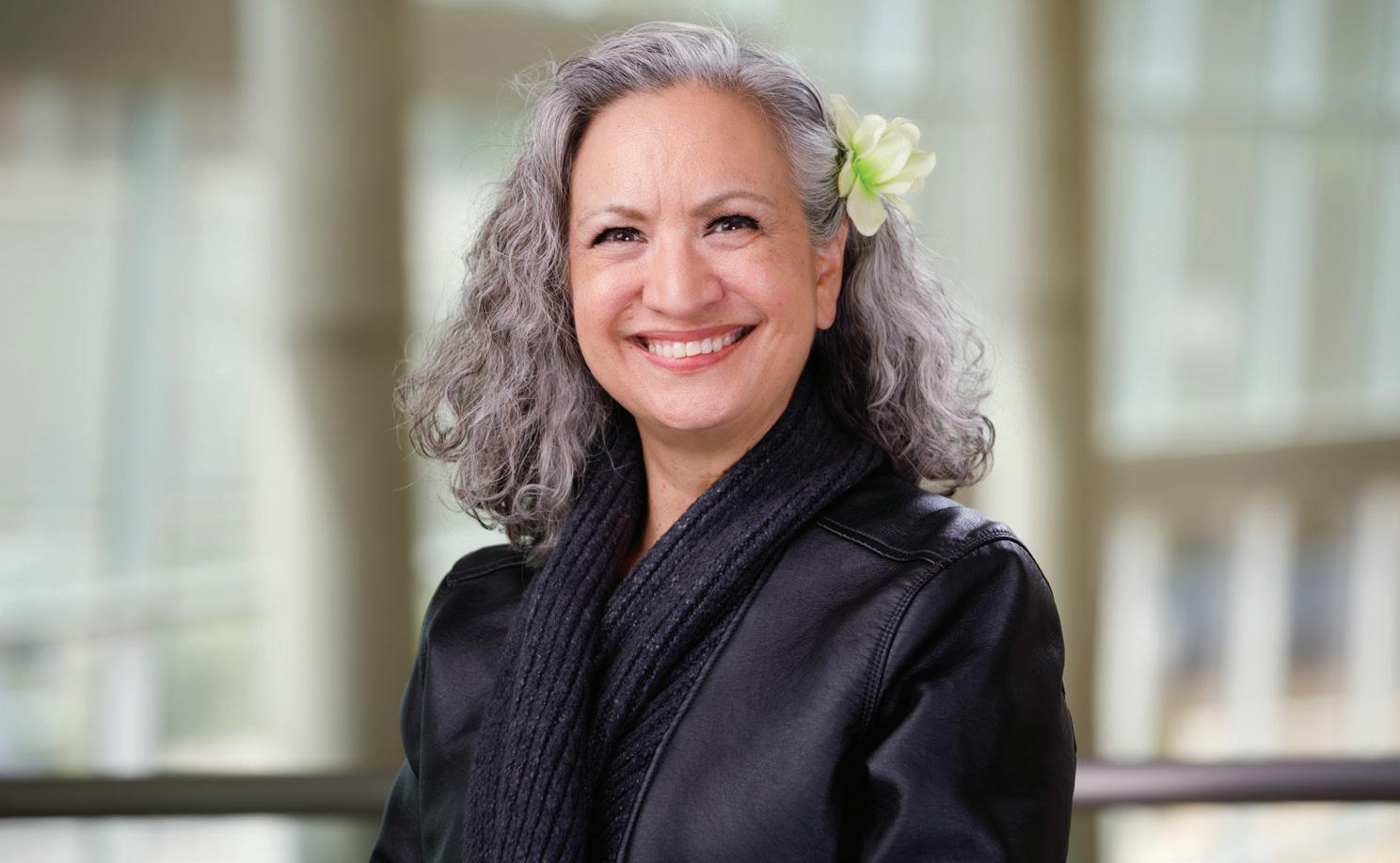
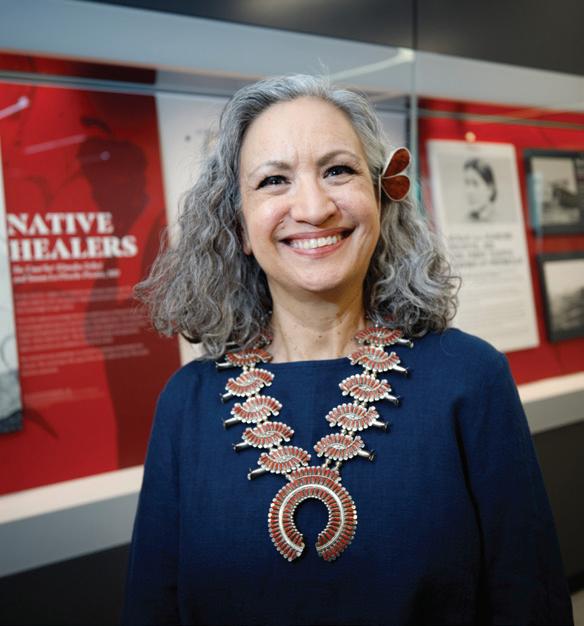
Dr. Siobhan Wescott is the director of the American Indian Health Program of the UNMC College of Public Health, where she also is an associate professor in the Department of Health Promotion.
since then.”
Turned off by the art of the deal that permeates D.C., she went home to Alaska to give back to her own. As a cancer educator in Alaska, she sat in on tumor boards where physicians discuss treatment options for complex cancer cases. The experience convinced her she needed a medical education. She got it at Harvard, where her mother preceded her decades before. Unfortunately, she said, Harvard proved “a toxic environment – I was belittled by the best.” The dismissiveness came from nearly all quarters. “The only place it didn’t come from was med students.”
Referring to what her mother must have endured, she said, “I know it was not easy for her but she’s not one to talk about the problems she experienced.”
As for her own experience there, Wescott said, “It wasn’t all bad but when it’s so bad it’s hard to see the good.” Participating in an integrated clerkship experiment exposed her to both extremes.
“There were people who didn’t treat us very well. As a med student you really are extremely vulnerable. But we learned to stick together and the organizers of the integrated clerkship were incredible mentors and protected us.”
She was fortunate to have many allies. “I had a great support system from other natives who were in the Harvard world.” One was Jackie Old Coyote, a former international fashion model and actress who left that life for education.
Harvard was not Wescott’s first brush with bias. Enough happened to her at Dartmouth that she contributed to a book, First Person, First Peoples: Native American College Graduates Tell Their Life
Stories. In her chapter she reflects on the fear she felt wearing traditional regalia at her graduation and her personal philosophy of prioritizing her own education and growth rather than feeling the burden to educate others about her culture. Of the book, she said, “It did turn out to be a very useful tool for administrators who really didn’t understand this population very well.”
As her career progressed, she said, “I’ve had a lot of wonderful physician mentors through the American Medical Association. That’s been another source of inspiration and support.” She serves as the Inaugural chair of the AMA’s newly formed Advisory Committee on American Indian and Alaska Native Affairs. She previously served on the AMA’s Underrepresented Minority Affairs Committee.
Giving voice to indigenous individuals is imperative when less than one percent (0.3) of the physician workforce is Native. She’s worked with several initiatives to try and bolster those numbers.
At Harvard she coordinated and later directed the Four Directions summer research program. “It was a great experience all around. We also tried to make it very Native, which is not an easy thing to do in Boston but we managed to do it.”
She said she’s heartened by the fact “there’s so many people who really want to see Native people succeed not only at UNMC or in Nebraska but on the national stage.” Prior to coming to UNMC she was co-director of the Indians Into Medicine Program at the University of North Dakota – the oldest Indian health service scholarship program. “There was a lot of mentoring of med students, which I really loved.”
A project she “unapologetically supports” is the planned first indigenous led medical school in the U.S., slated to open in 2030 in Rapid City, South Dakota. The idea behind the school, she said, is to infuse more of the we-take-care-ofeach-other and the-way-wesurvived-back-in-the-day model.”
Toward that end, UNMC recently dedicated an indigenous medicine garden on campus filled with plants that Native peoples have cultivated over millennia for their healing properties.
As far as possibly one day joining that national indigenous med school endeavor, she said. “I don’t rule it out.
I’ve been in Nebraska five years and that’s like an eternity for a nomadic person.”
UNMC Dean of Public Health Dr. Ali Khan doesn’t want to lose her after all that’s been invested in her there. She was hired after a nationwide search and Nebraska philanthropists endowed the program she directs and the professorship she holds. One of those benefactors, Dr. Carol Swarts of UNMC, still practices radiation oncology at 90. She’s become a new inspiration to Wescott, who calls her “an unstoppable force of nature.” Swarts in turn said UNMC is fortunate to have someone of Wescott’s caliber.
Khan agrees, saying, “We wanted to hire the best and brightest possible … and Dr. Wescott was the clear, outstanding candidate. She’s been an exceptional addition to the faculty. We’re delighted to have her. She’s an excellent scientist really doing good work across these communities.”
The program and project she heads focus on listening and responding to Native community needs. An example of what can result, Wescott said, is that from “a simple conversation about a community’s need for more lice shampoo came a huge heath fair that almost half of the tribe came to.” UNMC manned five booths. Until the fair, she said, UNMC hadn’t been much involved with this community but now is.
“It’s got many layers. Even though we don’t provide direct services – that’s really for the tribes to do and we don’t want to get in the way of that – we want to strengthen their options. At the same time, we’re looking to the future. We’re training Native students and helping them find their professional footing.”
An example of being proactive came when she organized a call between an infectious disease doc at Nebraska Medicine and clinicians from a tribe dealing with an outbreak of sexually transmitted infections.
“The clinicians were asking some superb questions from a lot of experience and wanting to do right by their patients. To be able to bring that expertise from Nebraska Medicine to this group of very talented and committed professionals at a Nebraska tribe was very satisfying. That’s the kind of thing we do. We really listen to what they need and we try and match what is possible within UNMC. We’re
not trying to reinvent the wheel or make a whole new program, but to strengthen connections between existing programs and these communities.”
That engagement, said Khan, is led by Wescott. “She’s been very deliberate about understanding the indigenous communities and building those relationships in Nebraska and the region. She’s excellent at relationship building. Her team is majority indigenous individuals who are grounded in the Native perspectives here in Nebraska.”
Whoever she meets and wherever she goes, Khan said, her engaging personality wins over people.“That’s her superpower.“
For Wescott, it goes hand in hand with being Alaskan, “Learning to adjust to everyone’s quirks rather than trying to change them – that’s Alaska to me. And also making things work –it’s what we do. Being an Alaskan means that you can make do with almost anything, and even if you have a lot of resources it doesn’t mean you should waste them.”
In Nebraska, where she has distant relatives, she sees “living off the land for much of the population (including most Native inhabitants) is the way of life just as it is for most Alaskans. “I have a huge amount of respect for what is interwoven in Nebraska, which is not only agriculture but cattle. I feel there’s an honesty to that. There’s a lot of tradition. Even though Omaha is a large city in the Midwest it still feels like a small town, and I do love that.”
An advocate of new blood test screenings for cancer, she’s thus far been frustrated in her efforts to make screenings readily available for the states’s rural residents. “But I’m not going to give up,” she said.
In her office she keeps a framed photo of the cabin and dirt road running by it from whence she came.
“I want to be grounded in the dirt road that is home.”
She’s uncertain she’ll return to Alaska for her career.
“I don’t know. It’s hard because Alaska is always home to me and I loved working there but I also feel like this area needs really strong native voices and I want to make it work here. The Midwest is also where my dad’s family is from so I feel like I’ve got a little of both worlds. Of course. I would never rule out Alaska again but I see this as where I’m supposed to be.”
Chevy.
one-day celebration in and around Detroit, scheduled August 15. One million visitors are expected to descend on the Motor City to view 40,000 classic vehicles.
Featured below are just a handful of local exhibitors who take immense pride in showing and bragging about their special cars.
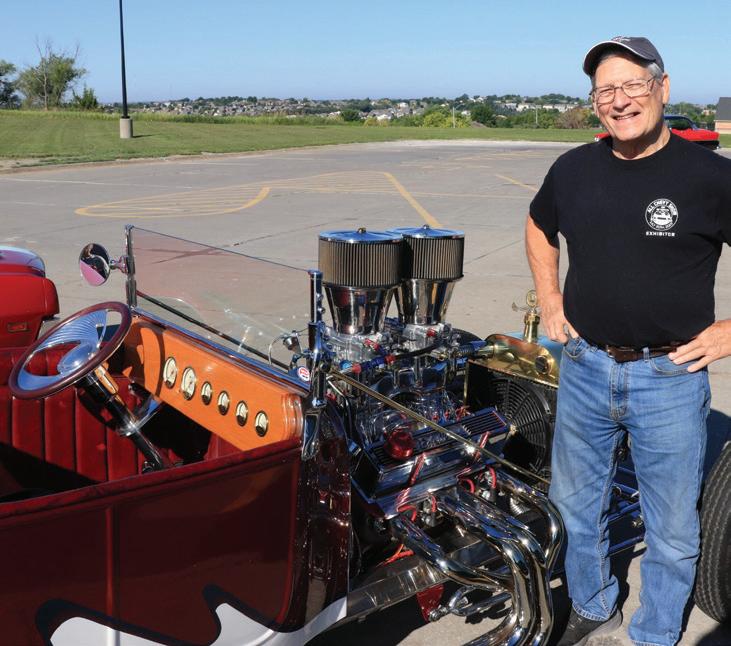
Barry Abel, 84, of Omaha shows off his 1923 Chevy fiberglass body kit car (a car put together with unassembled parts). This vehicle, on display July 11 at the 156th and Maple Streets Hy-Vee, won the T-Bucket class at the prestigious World of Wheels competition last spring at CHI.
“I don’t drive it on the street a lot,” Abel said, “It’s a show car.”
He intends to show this car at a rally this month in Spearfish, S.D.
Abel, who is a Vietnam veteran and a retired customer service supervisor for OPPD, maintains several other “project cars,” including a Chevrolet Corvette and a Camero. His first project as teenager was a 1950
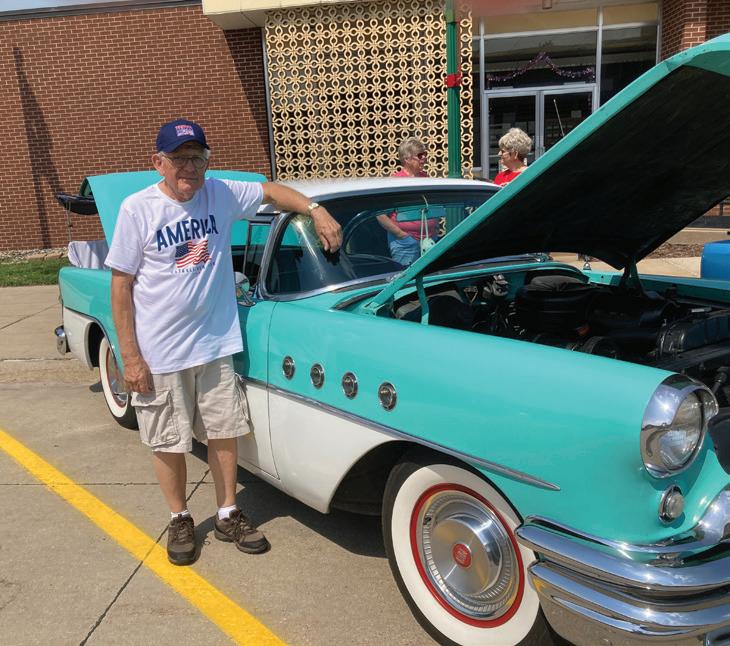
Larry Hill, 81, of Fremont, is pictured here with his 1955 Buick Century Riviera, the same make, year and model he purchased for $625 as a teenager. Yet, it is not the same car. Something possessed him to sell his pride and joy in 1966 — for a mere $125.
He had scraped together enough cash to buy that first car when his grandfather, a South Dakota farmer, set aside 20 acres for young Larry to plant, grow, harvest and sell his own field of corn — a field of dreams when he earned more than enough to buy that Buick.
For decades he kicked himself for selling that dream car. Fast forward 40 years, to 2007. Knowing how much he missed that car, his son, to Hill’s stunning surprise, scoured the internet for the same make, year and model, and discovered one for sale in Houston. He purchased it and had it transported to Omaha, where it awaited the unsuspecting Hill in his driveway — the same car he proudly displays here at the July 4 car show in Hooper.
Donald Nelson, 86, of
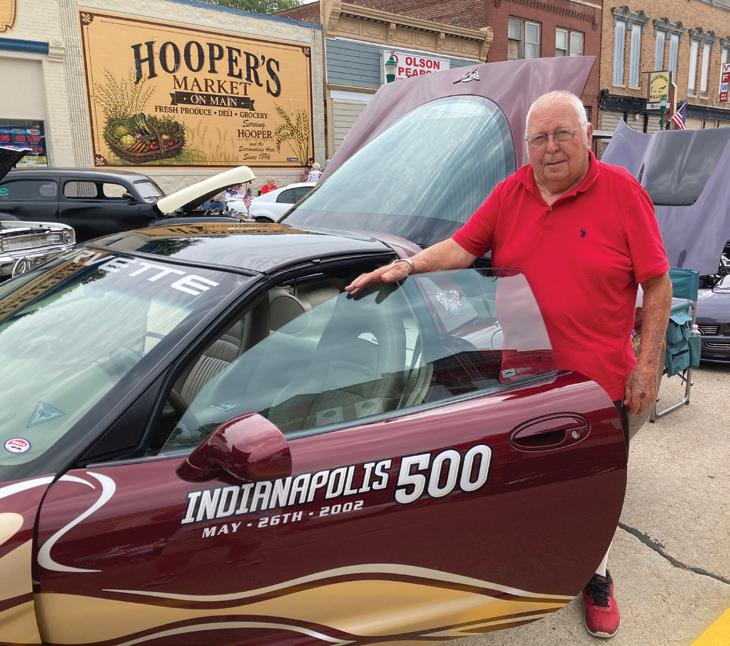
Fremont, proudly displays his 2003 50th Anniversary model Chevrolet Corvette at a rally in Hooper. This exact Corvette was the pace car for the Indianapolis 500 in 2002. He purchased it new after the race for $51,000. He enjoys exhibiting at shows throughout the region, including the Black Hills Classic in Spearfish, where he has placed in the top 10 the last three years. He also won first place in his Corvette division at the World of Wheels expo at CHI last spring. A relative newcomer to the auto show circuit, Nelson developed his love for Corvette show cars several years before his retirement from Valmont, where he worked from 1961to 2004.
Randy Peters, 72, of Murray, NE, has worked on hot rods and classic cars since he was 12. He currently tinkers with his four hot rods from his workshop in Murray. His collection includes this 1951 GMC Rat Rod, which he describes as “a sloppy-looking hot rod with no fancy paint.” He rescued it from Hamburg, Iowa, after flooding in 2019
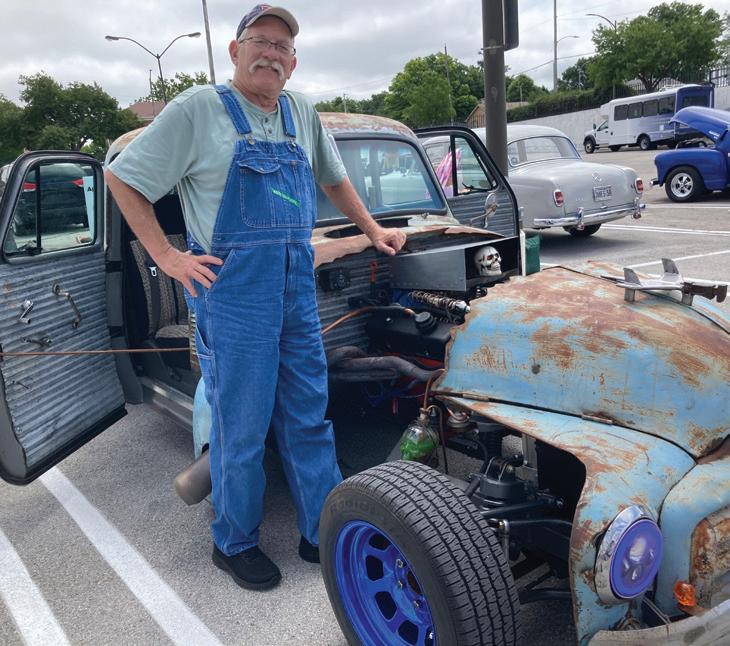
submerged it under eight feet of water. “It was completely rusted out.”
Peters has no plans to expand his collection. “It’s fun, but they’re getting to be expensive.” But he still enjoys showing off at car rallies — this one at the Center Mall on June 27. He attends a dozen or more car rallies a year.
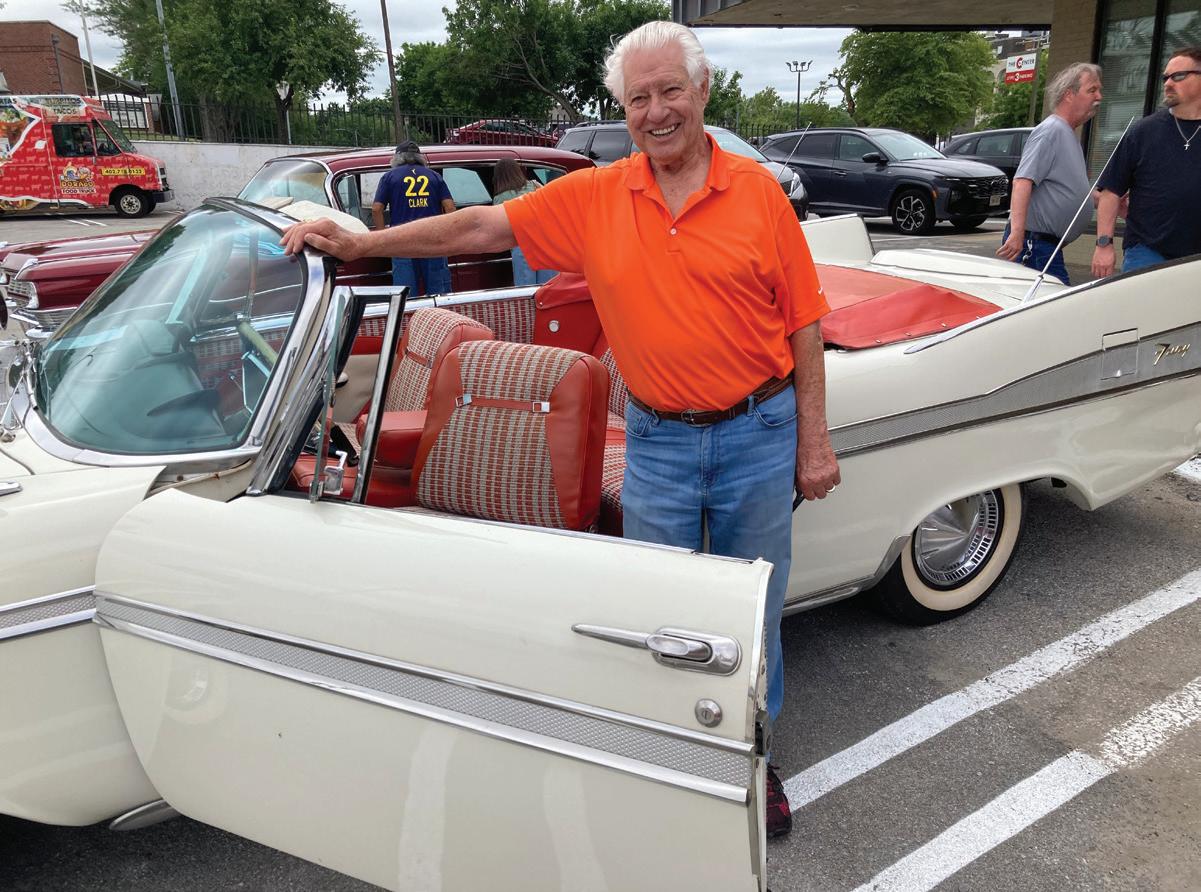
Patrick Ramaekers, 80, of Omaha, is pictured here with his 1959 Plymouth Fury convertible, one of 10 classic vehicles he stores and preserves in his warehouse. Five of them were on display this day at the Center Mall. He shares his passion for cars with children and grandchildren, who added several more classic vehicles of their own to the show, which was produced by his 21-year-old grandson, Patrick, as a fundraiser for cancer treatment.
A well-known, longtime insurance agent and financial planner in Omaha, Ramaekers said attending and exhibiting at area car shows is a great way to stay connected with his children and grandchildren.
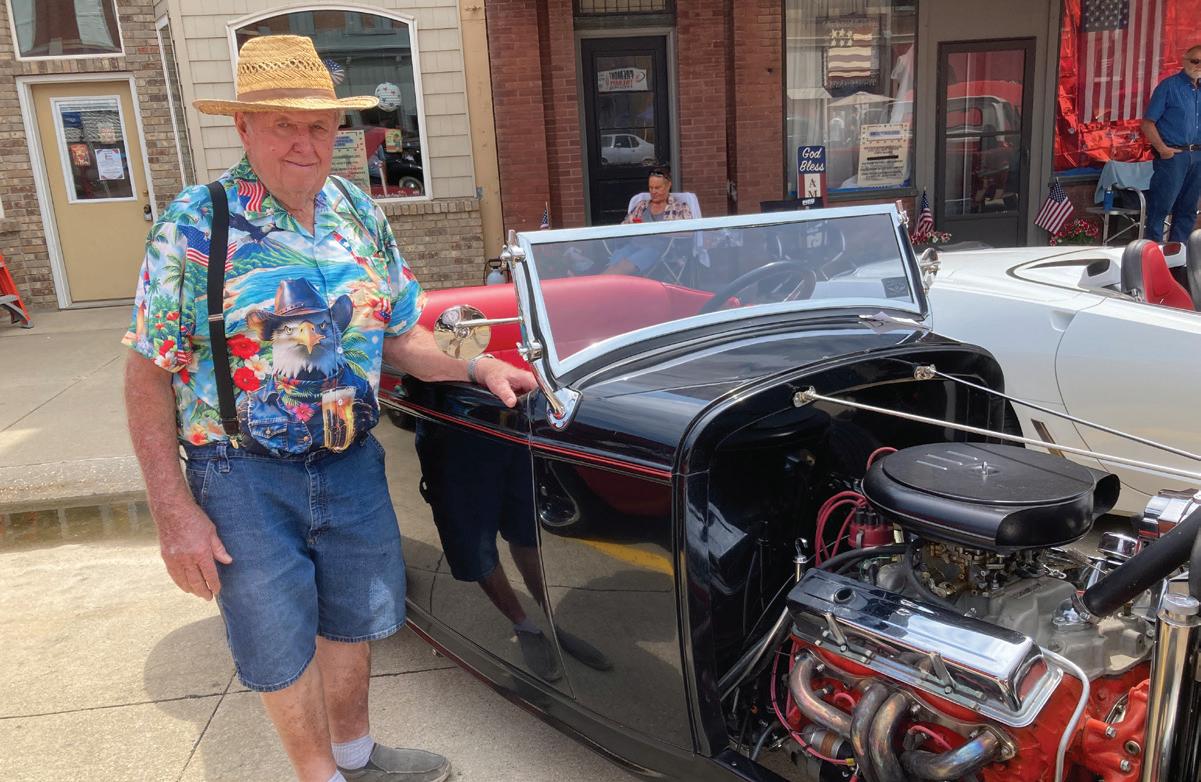
Don Sawyer, 84, of Fre-
mont shows off his 1932 Ford Coupe (retrofitted with a Chevy engine) at a July 4 car show in Hooper. The following Saturday, he had seven classics on display at the Fremont rally show that drew more than 450 entrees. Between Don and his two brothers, the Sawyer family had 29 cars on display.
Like most devotees featured here, Sawyer’s passion for cars emerged at a young age. His first pride and joy was a 1940 Ford Coupe, purchased when he was 15 for $100. Sawyer still maintains 10 cars, which he intends to leave to his 65-year-old son.
He has owned one of his classics, a black 1933 Ford Coupe, for 63 years — the same car he drove to win drag races in the 1960s. Sawyer is a former captain of the Fremont Fire Department, hanging up his hat in 1997. Claiming he’s a “failure in retirement,” he bides his time “working on cars all the time. I’m still building them.” He recently refurbished a 1949 wood panel “Woody” Ford station wagon, which was also on display at the Fremont show.
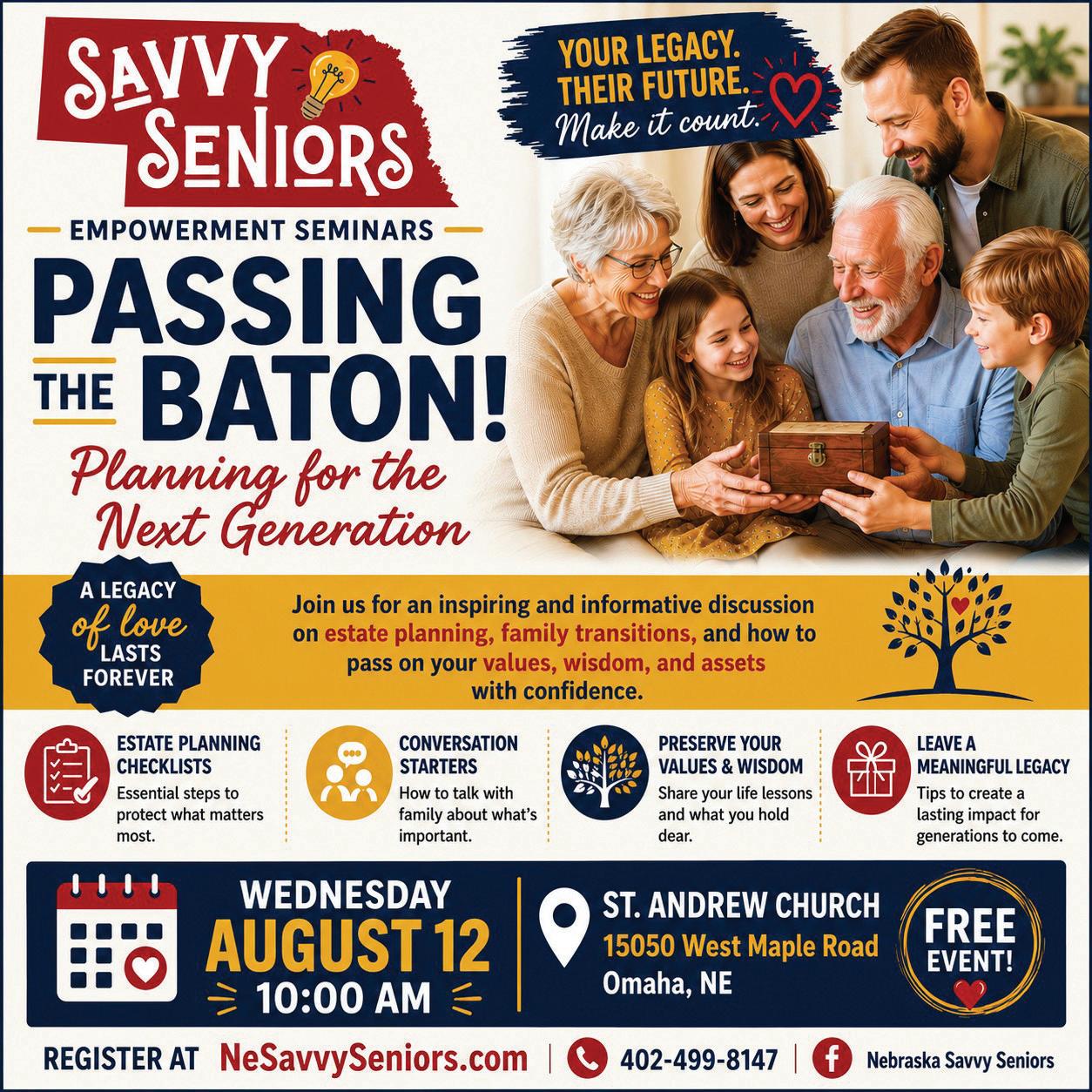
Millard Branch of the Omaha Library 13214 Westwood Ln Omaha, NE 68144
AUGUST 19, 2026 2.00 pm - 3.00 pm
AUGUST’S PRESENTER: Wednesday
Hosted by: Nebraska Realty Senior Real Estate Specialists Refreshments Provided! Call (402) 212-5282 to reserve your seat
As temperatures climb across the country, Senior Care Authority is sharing eight signs of dehydration that often get overlooked, drawn from years of firsthand experience helping families navigate health changes during the summer months.
Senior Care Authority works directly with thousands of families each year and has observed the same pattern repeat itself summer after summer: Dehydration symptoms get mistaken for something else entirely, whether that’s a bad night’s sleep, a stomach bug or just “having an off day.”
“Over the years, we’ve heard from countless families whose loved ones’ confusion or weakness turned out to be dehydration rather than something more serious, or in some cases, something more serious than dehydration,” said Frank Samson, founder and CEO of Senior Care Authority. “It reinforces how important it is not to dismiss sudden changes during hot weather.”
The warning signs to watch for and what research said.
INCREASED CONFUSION OR SUDDEN CHANGES IN MENTAL CLARITY
A systematic review of dehydration research in older adults found it is associated with measurable declines on cognitive performance, making confusion one of the more commonly overlooked early indicators.
In a large Mayo Clinic study involving more than 30,000 hospitalized patients, dehydration was common and was associated with an increased risk of falls, highlighting why dizziness and weakness should never be ignored.
Reduced thirst perception and diminished kidney function are cited as key reasons dry mouth and related symptoms show up more often and go unrecognized longer.
According to the National Institute of Health (NIH), dark-colored urine and reduced urination are among the most common observable signs of dehydration, which increases the risk of urinary tract infections (UTIs). This is especially impactful among older adults, as the International Journal of Infectious Diseases found that UTIs carry significantly higher rates of sepsis and mortality in patients over 65.
Fatigue is one of the easiest dehydration symptoms to overlook because it can resemble normal aging or a poor night’s sleep. Even mild dehydration can reduce physical performance and leave people feeling unusually tired or weak. The NIH reports that older adults are especially vulnerable because they often experience a diminished sense of thirst and may not realize they’re becoming dehydrated until symptoms develop.
According to the NIH, fluid and electrolyte imbalances from dehydration can
--Signs continued on page 11.
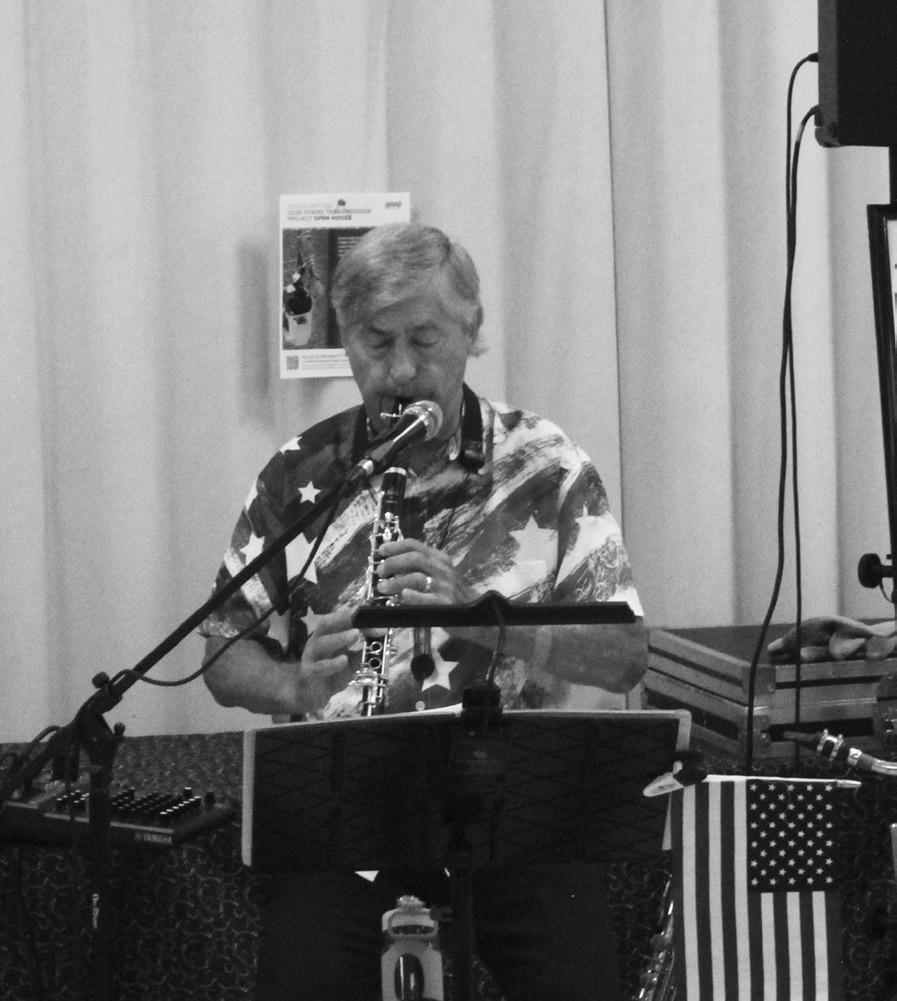
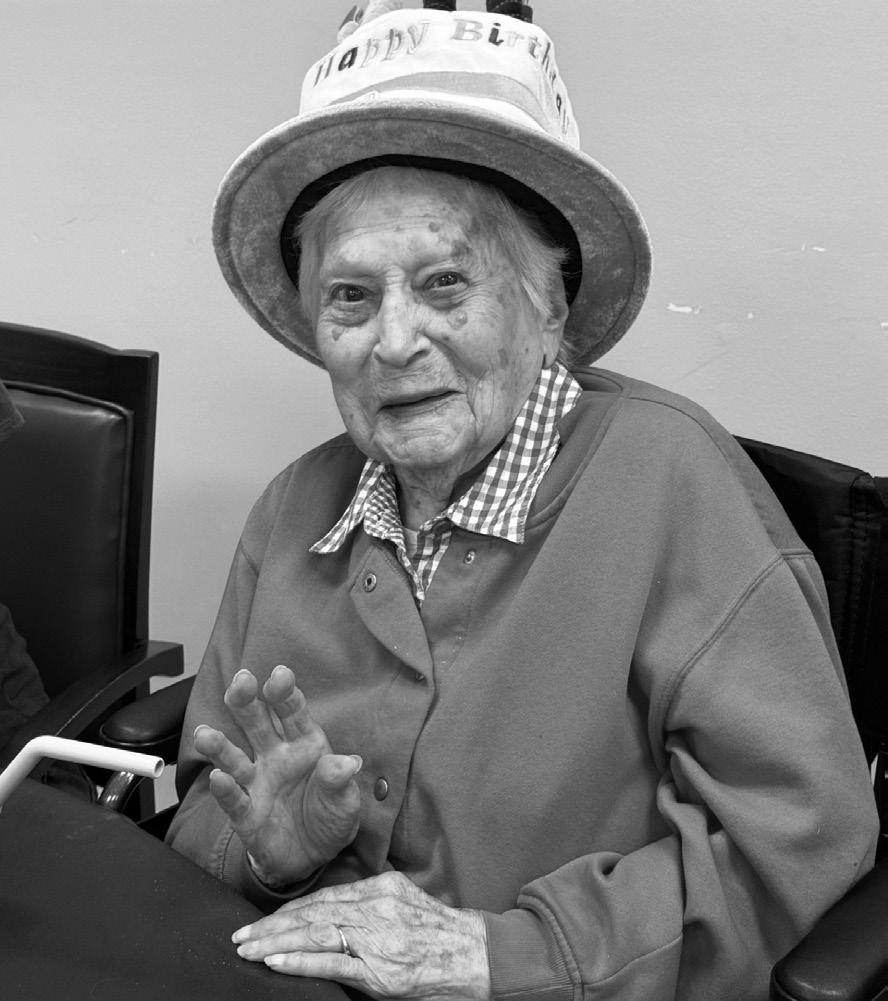
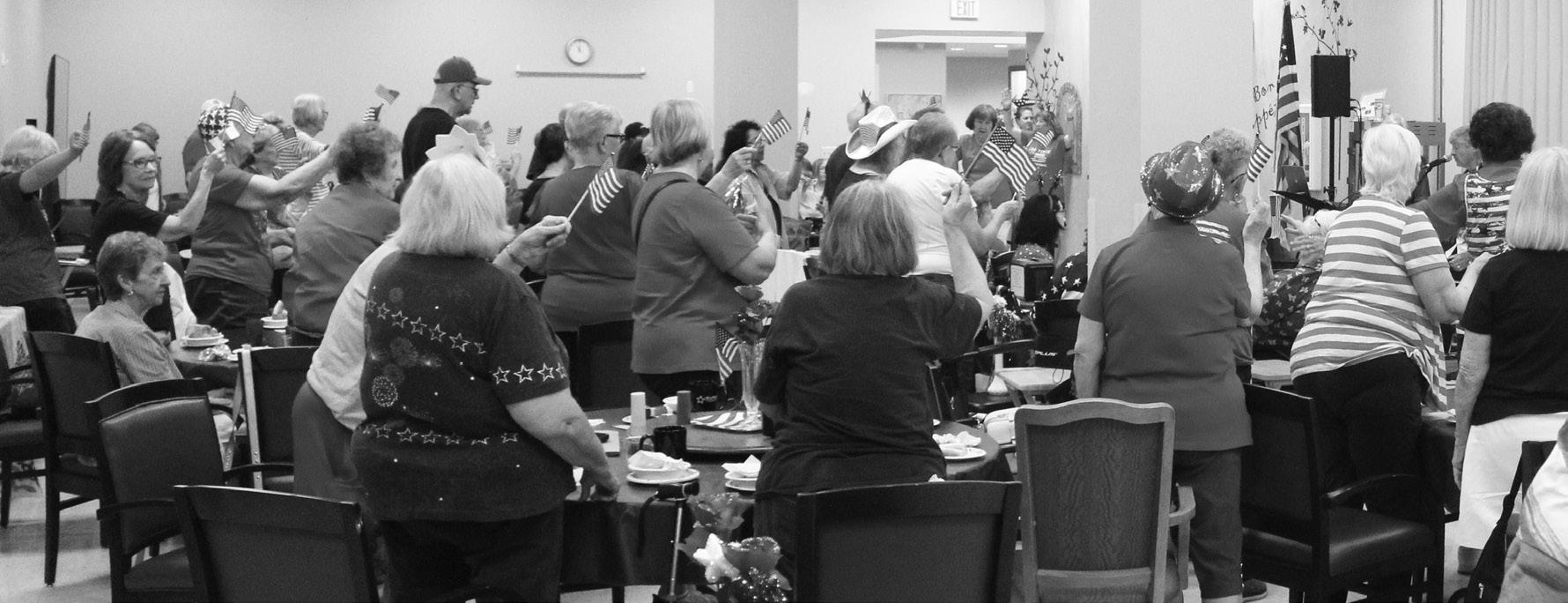
The Bellevue Community Center, located on 109 W. 22nd St., celebrated the United States 250th birthday with a party in July. The music was patriotic and played to the 4th of July theme. Doris Hendrickson (top right) was also celebrating a birthday, as she turned 106 on June 27th.
Signs continued from page 10.
cause muscle cramps and weakness, with older adults facing particular risk due to age-related declines in kidney function and thirst perception.
CONSTIPATION OR A SUDDEN CHANGE IN BOWEL HABITS
In an observational study of more than 21,000 older adults from the NIH , low fluid consumption was identified as the second strongest predictor of constipation, making it one of the most direct and overlooked connections between hydration and digestive health.
RAPID HEART RATE OR FEELING FAINT, ESPECIALLY WHEN STANDING
As the body loses fluid, blood volume drops and the heart has to work harder to keep blood circulating. According to research on hydration and cardiovascular function, this cardiovascular strain causes a measurable increase in heart rate, even with mild fluid loss. A racing heartbeat, dizziness when standing or feeling faint can signal that dehydration has progressed and should be evaluated promptly, particularly in older adults managing heart disease or blood pressure conditions.
Many of these symptoms can also signal other medical conditions, but dehydration is one of the easiest—and most important—causes to rule out, particularly during periods of extreme heat.
“Families know their loved ones better than anyone,” Samson said. “When something feels different—whether it’s confusion, fatigue or a sudden change in routine—it’s worth paying attention. Rec-
ognizing those changes early and talking with a healthcare provider when appropriate can make a meaningful difference.”
HOW MUCH WATER SHOULD OLDER ADULTS DRINK?
Adults over 65 should consult with a healthcare provider about daily fluid needs, as individual requirements vary based on medical conditions, medications and activity level. The National Academy of Medicine advises that healthy men should aim for about 13 cups of total fluids daily and healthy women about 9 cups, counting water, coffee, tea, milk and water-rich foods like fruits, vegetables, soups and yogurt, not just plain drinking water.
To stay ahead of dehydration, Senior Care Authority recommends drinking water consistently throughout the day rather than waiting to feel thirsty, keeping water within easy reach, eating water-rich foods and paying attention to urine color as a simple daily check.
Certain medications can also increase dehydration risk, including diuretics, some diabetes medications and laxatives, making it especially important for older adults to discuss their specific hydration needs with a healthcare provider based on their individual health conditions and activity level.
It is also important to be aware of when dehydration has crossed into emergency territory. A body temperature above 103°F, worsening confusion, loss of consciousness or seizures are signs that dehydration may have progressed to heat exhaustion or heat stroke and require immediate medical attention.
By Kelly C. Bourne
Having a will helps ensure that your assets will be distributed the way you want in the event of your death. A will also makes the task of handling your affairs after your death easier on heirs
and the executor of the will. We all have digital assets that also need to be handled or distributed when we die. Email accounts, cryptocurrency and social media accounts are examples of digital assets people hold. It’s important not to over-

look them during estate planning. Forgetting about them is easily done but is a big mistake.
Who should deal with your digital assets after your death? This activity could be assigned to the executor of the will. An alternative is to have someone who is technically savvy deal with these issues. This role is frequently referred to as a digital executor.
The first step towards protecting your digital assets is creating an inventory of them. After cataloging them, you need to decide how each will be handled or allocated to heirs. Examples
of these assets and the planning for each type are listed here:
• Physical devices like laptops, desktops and tablet computers have contents that can be valuable or important. These electronic devices will be inaccessible without the appropriate passwords. The section on passwords later in this article lists how you can securely provide passwords to your heirs and executors.
• Smart phones can contain a wealth of personal data including photographs, videos, online account details and social media account connections. Physical custody of your phone and the passcode to open it needs to be left for your digital executor.
• Financial accounts like pensions, IRA and 401K accounts likely have both a password and a device used by MFA (Multifactor Authentication) to access the account. Your executor needs to know about both to access these assets.
• Cryptocurrency, like Bitcoin, is worthless to heirs if they aren’t aware of its existence, location and the wallet key. This critical information needs to be documented and handed down. Since the IRS classifies cryptocurrency as property instead of currency there can be tax implications when bequeathing crypto to an heir. You should discuss your crypto holdings with a lawyer when setting up your will.
• Email accounts may contain business, legal, personal and sentimental data. Email account IDs, passwords and MFA devices required to access them need to be available to the executor.
• Social media platforms like Facebook, X and Snapchat all have different policies when it comes to how accounts are handled after the death of the owner. Some close the account while others set the account to a memorialization status. If you have any social media accounts, you should research the options and decide which of them is best for you.
• Backup files may need to passed to your heirs or executor. Potential locations include cloud storage services, external hard drives or USB thumb drives. The name of cloud storage service provider
and authorization or the account ID and password for your accounts should be documented. External hard drives and USB thumb drives are small enough that they can be hidden almost anywhere. Their location as well as passwords needed to open them must be handed down.
• Scheduled payments for accounts like taxes, subscriptions for streaming services like Netflix, antivirus software or utilities being paid via monthly payments out of your bank account should be documented. Your executor can terminate them at the appropriate time.
• Accounts like PayPal, Venmo, Zelle, loyalty points and airline miles represent potential assets that can be transferred to an heir. They need to be documented so the digital executor is aware of them and can recover them.
• IoT (Internet of Things) devices like routers, security systems, HVAC systems, web cameras and smart appliances have passwords. The passwords need to be documented so these items can be maintained or sold or given away.
• If the plan is for electronic devices like computers, smartphones, laptops to be sold or given away, your digital executor needs to remove all personal information from them first.
Creating a digital asset inventory is the first step. It must be periodically reviewed to keep it current. Newly acquired assets and changes to passwords are two examples of why the inventory needs to be periodically updated. Your lawyer or executor will need a copy of this document.
Passwords are an important enough subject to merit additional details.Your digital executor or heirs will need to know the passwords for all your devices and accounts. The difficulty is limiting access to the right people.
One place where you shouldn’t include passwords is in your will. When your estate is probated, your will becomes a public document. This means that virtually anyone in the world can access it. You don’t want your passwords to be exposed like that.
Another thing that you
--Assets continued on page 13.
By Ron Petersen
The Eagle Senior Center located at 1009 G St. is this month’s Senior Center of the Month.
The Eagle Senior Center manager, Audrey Roesler who has been at the center for nine years, said the people that come through the doors is her favorite part about the center.
The Eagle Senior Center has plenty of activities each month including chair yoga, bridge, zumba, a ukelele club and more. Whispering Roots has also visited and created where they all received a produce
bag.
While they have plenty of opportunities for activities, they are always looking for more participation.
For more information about the center, please reach out to Roesler at 402332-7367. The Eagle Senior Center is open Tuesdays from 9:30 a.m. to 2:30 p.m.
By Lois Jordan
Imagine walking into a room and having someone assume you are forgetful because of your age. Imagine being excluded from decisions or overlooked for opportunities— not because of your abilities, but because of the number of birthdays you’ve celebrated. This is ageism, and it affects millions of older adults every day.
Unlike many forms of discrimination, ageism often goes unnoticed. It appears in jokes about “senior moments,” assumptions that older adults cannot learn new technology, or decisions made for someone rather than with them. While these actions may seem harmless, they reinforce stereotypes that diminish dignity, independence, and self-worth.
Growing older is not a disease—it is a privilege. Today’s older adults volunteer, mentor, care for grandchildren, serve their communities, and continue working well into their seventies and eighties. They bring decades of experience, resilience, and wisdom. Yet society too often focuses on what people may have lost instead of what they still have to offer.
Age alone tells us very little about a person. One 90-year-old may live independently, while another needs significant assistance. We should never make assumptions based solely on age.
Ageism has consequences beyond hurt feelings. Research shows that negative attitudes about aging can contribute to social isolation, depression, poorer physical health, and a lower quality of life. Families can unintentionally contribute by speaking for older loved ones or making decisions
should never do is send your passwords to an attorney or digital executor in an email or text message. Email and text messaging are insecure methods of communication. Sending passwords via them is a huge security risk.
If you use a password manager like Keeper or NordPass to store your passwords, then you just need to leave its password to your digital executor. Otherwise
without including them. Older adults deserve the same respect as anyone else—to be heard, included, and empowered to make decisions about their own lives.
Our language matters. Terms such as “sweetie,” “dear,” or “the little old lady” may seem affectionate but can be demeaning when used instead of a person’s name. Person-first language reminds us to see the individual before the age.
Communities also play a role. Employers can value experienced workers. Healthcare providers can avoid age-based assumptions. Schools and community organizations can create opportunities for meaningful relationships between generations.
Most importantly, we can each examine our own attitudes. The next time you meet an older adult, ask about their story. You may discover a veteran, teacher, entrepreneur, nurse, artist, or someone whose experiences offer lessons no textbook can teach.
Ageism is unique because, if we are fortunate, every one of us will one day be older. The question is not whether we will age, but what kind of society we want when we do.
Growing older should never mean becoming invisible. It should be recognized as a testament to resilience, a source of wisdom, and a stage of life deserving of the same dignity, respect, and opportunity afforded to every generation.
Lois Jordan, CEO for Midwest Geriatrics Inc. Management company for Florence Home Healthcare Center, Royale Oaks, and House of Hope Assisted Living and Memory Care.
you should leave a list with the password and details for every account in the trust of your attorney. Another solution would be to leave this list in a safety deposit box and include the key and box location in your will.
I’m not an attorney so this article shouldn’t be taken as legal advice. You should work with your lawyer or estate planner to implement the best method of protecting your digital assets upon your death.
Very few people think that they’re going to die soon, but death comes for all of us eventually. You can make distribution of your digital assets significantly easier by taking a few reasonable steps now.
Kelly’s newest book, “Ransomware, Viruses, Social Engineering and Other Threats: Protecting Your Digital Assets” is available on Amazon and at The Bookworm.
You’re invited to visit the Millard Senior Center at Montclair, 2304 S. 135th Ave., this month for the following:
• August 5: Board Meeting @ 9:30 a.m.
• August 7: Free Luau lunch @ 11:30 a.m.
• August 10: Bunco @ 12:15 p.m.
• August 12: Sewing Club meet to make sun dresses and shorts @ 9:30 a.m.
The Center is looking for Two Card Tables
Tai Chi on Mondays and Fridays @ 9:30 a.m.
Bingo every Tuesday and Friday @ 12 p.m.
Sportswear Fridays. Wear your favorite team attire every Friday.
Hand-N-Foot Wednesdays @ 8:30 a.m.
MahJongg Wednesdays @ 1 p.m.
Chair Volleyball Thursdays @ 9:30 a.m.
Dominoes Thursdays @ 12:30 p.m.
For more information, please call 402-546-1270.
You’re invited to visit the Camelot Friendship Center, 9270 Cady Ave., for regular activities, which include Chair Yoga, card games, Tai Chi, Pinochle, 10 Point Pitch, and bingo. This month’s events include:
• August 4: Guest Bingo Caller; Allison from Archwell Health will be calling bingo @ 12:15 p.m.
• August 13: Jackpot Bingo @ 12:15 p.m.
• August 19: Team Trivia Challenge @ 12 p.m.
• August 20: Entertainment with Josh Hoyer from Merrymakers/Dreamweavers @ 11:45 a.m.
Every Monday and Friday – 10 Point Pitch @ 12:15 p.m.
Every Monday – Canasta @ 12:30 p.m.
Every Tuesday – Beginners Tap Class @ 12:15 p.m.
Every Wednesday – Chair Volleyball @ 10 a.m.
Every Wednesday – Pinochle @ 12:15 p.m.
Every Wednesday – Bridge @ 12:30 p.m.
Every Friday – Chess @ 12:30 p.m.
Grab N Go meals are available.
For more information, contact Stephanie at 402-4443091 or stephanie.asselin@cityofomaha.org.
First United Methodist Church has some excellent adult curriculums available. They are free for any Christian group which would like to study prayer, discipleship and beliefs.
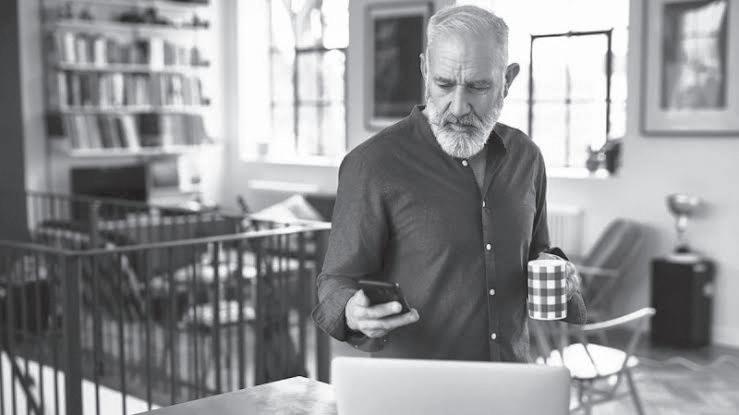
Avoid AI scams by pausing before acting on urgent requests and independently verifying the sender. Never send money via wire, cryptocurrency, or gift cards in response to a sudden message or call.
ArchWell Health
from your bank or insurance company.

Call First United Methodist Church at 402-556-6262 if you wish to receive more information about the list of the studies available.
We want to hear from you.
• Do you have questions about the Eastern Nebraska Office on Aging, its programs, or services?
• Do you have a comment about the agency and how it serves older adults in Douglas, Sarpy, Dodge, Cass, and Washington counties?
• Do you have a story idea for the New Horizons newspaper, or would you like to receive a FREE copy each month?
Please send your questions, comments, and story ideas to: enoa.info@enoa.org
We appreciate your interest in ENOA and the New Horizons
•
•
•
•
Rotary phones to smartphones. Typewriters to laptops. Encyclopedias to the internet. If you’re 65 and up, you’ve witnessed waves of technological change in your lifetime. But none may be as life-changing as artificial intelligence (AI).
Believe it or not, some of those changes are actually positive. In fact, a 2025 University of Michigan poll revealed more than half of older adults have used helpful voice-based AI tools like Alexa and Siri, along with text-based ones like ChatGPT and Gemini. Voice assistant tools have been especially useful for those with dexterity or vision challenges, empowering them to stay informed and socially connected. And AIpowered security systems support a safer life at home, thanks to features like motion alerts and doorbell camera footage.
That’s not to say there aren’t downsides. While AI makes it easier for grandparents to text their grandchildren or keep an eye on package deliveries, it also gives con artists and scammers powerful new tools for obtaining sensitive personal/ financial information. According to the 2025 FBI annual report, Americans lost more than $893 million to AI-related scams.
HOW SCAMMERS USE
AI
Scammers worldwide are using AI to make fraud more convincing and more personal than ever before. Their tactics include:
• Fake messages: Tools like ChatGPT or Claude help scammers write polished, persuasive emails and text that might appear to be
• Manipulated images and videos: Relying on AI tools that alter or make new images, they create convincing fake photos and videos — a puppy needing rescue or a child in danger — designed to tug at your emotions and open your wallet.
• Voice impersonation: AI voice-altering technology lets scammers impersonate celebrities or even your own loved ones, making it sound as if your grandson is calling in a panic and needing money, or a celebrity is personally pitching you an investment deal.
All those hard-to-detect emails, phone calls and images are fueling this surge in scams, including healthcare and insurance fraud. “Vishing” (short for “voice fishing”) scams often use AI voice-altering technology to impersonate trusted sources — like the Medicare office, your bank or your insurer — and trick you into sharing sensitive information (like your Medicare, Social Security, insurance or banking details), according to the U.S. Centers for Medicare and Medicaid Services.
HOW TO SPOT SCAMS AND PROTECT YOURSELF
AI makes scams harder to detect, but you can protect yourself with this simple, three-step approach: Pause, Verify, and Protect.
1. Pause
Scammers thrive on urgency. Your bank account will close if you don’t act now. Your grandson is in jail and needs bail money immediately. Your Medicare Advantage plan will be canceled if you don’t share your personal details now.
That sense of urgency is
a warning sign that the call, text or email could be a scam. So don’t react, pause. Close the email, ignore the text or hang up the phone.
2. Verify
While pausing, verify whether the claim is true.
• If the caller claims to be from Medicare, dial the official Medicare number, 1-800-MEDICARE, to check.
• If the email claims to be from your bank, don’t reply. Call the number on your statement or visit your local branch instead.
• If it sounds like your grandson on the other end, hang up and call his cell phone directly, or reach out to his parents or another trusted family member. Pro tip: Before clicking on any link or responding to an email, take a close look at the sender’s email address. Scammers often make small tweaks to real addresses in order to make theirs look legit: for example, swapping “ABCBank” for “ABCDBanc.” It’s easy to miss these minor adjustments if you’re not looking closely.
3. Protect Protect your personal information by never sharing it with individuals or entities you haven’t verified, especially if they sent an unexpected email, text or call. Remember: No legitimate bank, government agency or insurance company will ever rush you into sharing personal information. Real institutions always give you time to pause and verify. If you think you or your loved one has been a victim of an AI-related or other type of financial scam, don’t feel ashamed — take action, Contact the National Elder Fraud Hotline at 833–FRAUD–11.
Join Flaherty Senior Consulting for a series of Solutions Group gatherings that will address the questions and challenges caregivers face.
Solutions Groups provide opportunities for caregivers to learn how to deal with various issues, obtain skills and knowledge, engage in discussions, and interact with others in similar circumstances.
Upcoming meeting dates and locations are:
• Sept. 8, Nov. 10
St. Vincent de Paul Church 14330 Eagle Run Dr.
• Sept. 26, Nov. 28
Faith Westwood United Methodist Church 4814 Oaks Ln.
• Oct. 1, Dec. 3
The Servite Center of Compassion 72nd St. and Ames Cr.
• Oct. 21, Dec. 16
St. Timothy Lutheran Church 93rd and Dodge streets
The Solutions Groups are facilitated by Nancy Flaherty, MS, CDP, president of Flaherty Senior Consulting. She has extensive experience working with family caregivers and caregiver groups.
The National Council on Aging (NCOA) released a new research series examining the promises and risks of using Artificial Intelligence (AI) in home- and communitybased care that helps older Americans and individuals with disabilities live independently.
Nearly 63 million unpaid family caregivers and more than 3.2 million paid home care workers provide personal care and support to individuals in the U.S. While demand for these services continues to grow as the population ages, persistent low wages and high turnover among home care workers threaten quality of care.
The series, A New Era of Care, explains what AI is, where it is already being used in home care, and what safeguards are needed to ensure that the technology strengthens— but does not replace—the human touch of home care.
The sector is already innovating with AI, the research shows. Some providers are adopting AI-powered tools to improve safety and monitoring—such as sensors, fall-detection systems, and predictive analytics. Others are using AI to streamline operations, including hiring, training, communication across care teams, reporting, and claims processing.
outcomes: Tools may perform worse for disabled people, older adults, or rural communities and can treat groups differently.
• Human connection: Over-automation can erode judgment, autonomy, and relationship-based care.
• Usability and workflow: Poor design or poor integration can add tasks and increase stress.
• Compliance and liability: Errors can trigger HIPAA, Medicaid/ Medicare, labor, and contractual risks if outputs are not vetted.
You’re invited to visit the Florence Senior Center, 2920 Bondesson St.
At the Florence Senior Center, lunch is served at 11:30 am. A select menu is offered Monday thru Friday. Meal reservations must be made one day in advance. Please call by noon the day before for a meal reservation.
There will be a painting workshop with Kim Darling at 9 a.m. every Wednesday.
The center hosts activites such as Tai Chi, annual picnics/ special events, bingo, cards, gym & game room access, special guest speakers and socials.
Arts and crafts will be held on the third Wednesday of each month. They also provide health and nutrition programs.
For more information, please call Sandra Gossett @ 402444-6333.
Legal Aid of Nebraska operates a free telephone access line for Nebraskans ages 60 and older.
Information is offered to help the state’s older men and women with questions on topics like bankruptcy, Homestead Exemptions, powers of attorney, Medicare, Medicaid, and Section 8 housing.
The number for the Elder Access Line is 402-827-5656 in Omaha and 1-800-527-7249 statewide.
This service is available to Nebraskans ages 60 and older regardless of income, race, or ethnicity.
The Legal Aid of Nebraska hours of operation are 9 a.m. to noon and 1 to 3 p.m. Monday through Thursday, and 9 a.m. to noon on Friday.
For more information, email Nancy at flahertyconsulting@cox.net or call/text her at 402-312-9324. This
“When implemented well, AI can give home care workers more time to focus on people rather than paperwork,” said Nicole Howell, Director of Direct Care Workforce Development at NCOA. “Yet at the same time, we must continue to invest in job training and quality to ensure a strong workforce that can deliver the care every person deserves.”
Yet, providers universally report that there are key risks that must be addressed. These include:
• Privacy and consent: Weak safeguards can expose or misuse sensitive client and worker data.
• Accuracy and reliability: False positives/ negatives and generic outputs can waste time or cause harm.
• Bias and uneven
“AI can reduce burden for direct care workers and improve care, but only if it is designed and implemented with the needs and preferences of workers and clients at the center,” Howell said. “Rigorous, independent evaluations of AI tools can build trust and ensure that these technologies support, rather than undermine, the nature of home care jobs and workers, as well as the care received by older adults and people with disabilities.”