




NEWBOLD COLLEGE OF HIGHER EDUCATION EST. 1901


The Newboldian is a magazine for alumni and friends of Newbold
The Newbold Alumni Association is pleased to present the 2021 issue of The Newboldian
This special edition is dedicated to the 120th anniversary of Newbold.
We’d like to thank all members of our alumni community who submitted their contributions. We’d also like to say a special thank you to Lynda Baildam and Per Lisle for providing us with materials from our preserved archive, which pay tribute to our rich history. We hope that you enjoy its contents and encourage you to stay connected with Newbold and remain up to date on the latest news and events for alumni and friends of the College.
You can contact us to share your story or photographs, or to share your opinion about any of the content in this issue, by contacting the Editor at alumni@newbold.ac.uk. Letters to the Editor may be considered for publication.
To update your address or subscription preferences please visit newbold.ac.uk/newboldian.
Bisser STOYKOV
EDITORIAL TEAM:
Bisser STOYKOV (Editor)
Clive MALCOLM
Felicity BRODRICK
Kirsty WATKINS
Designed by Roland DAN ON THE COVER
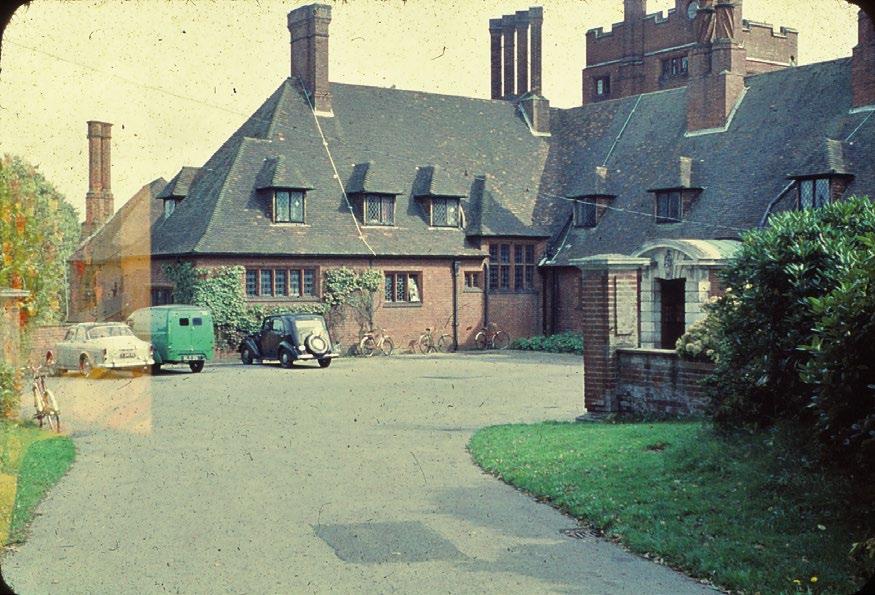
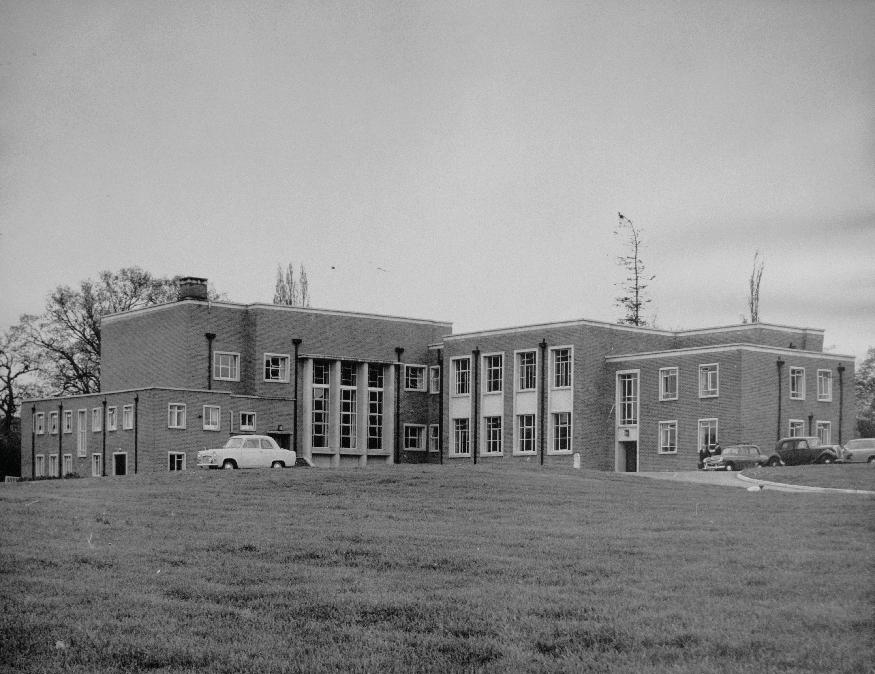
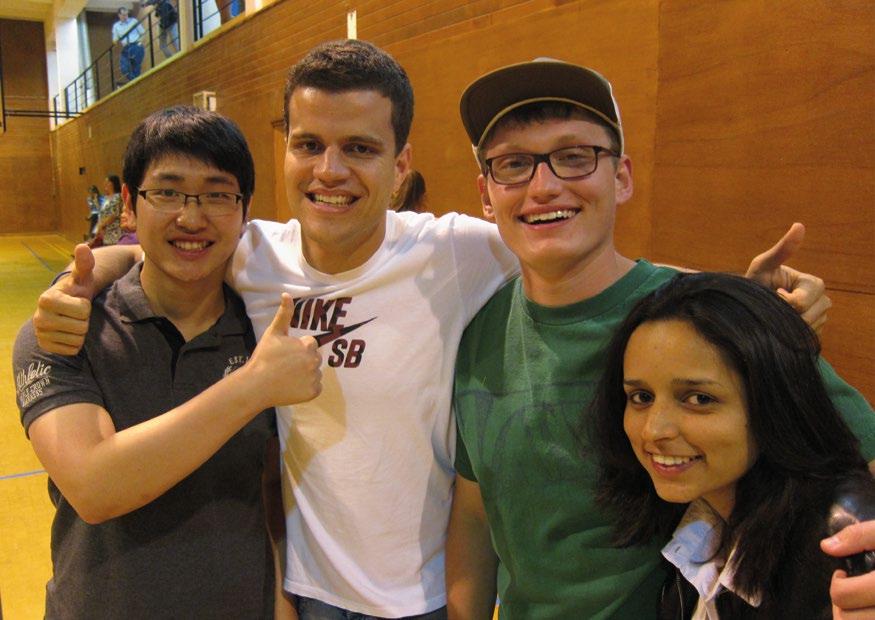
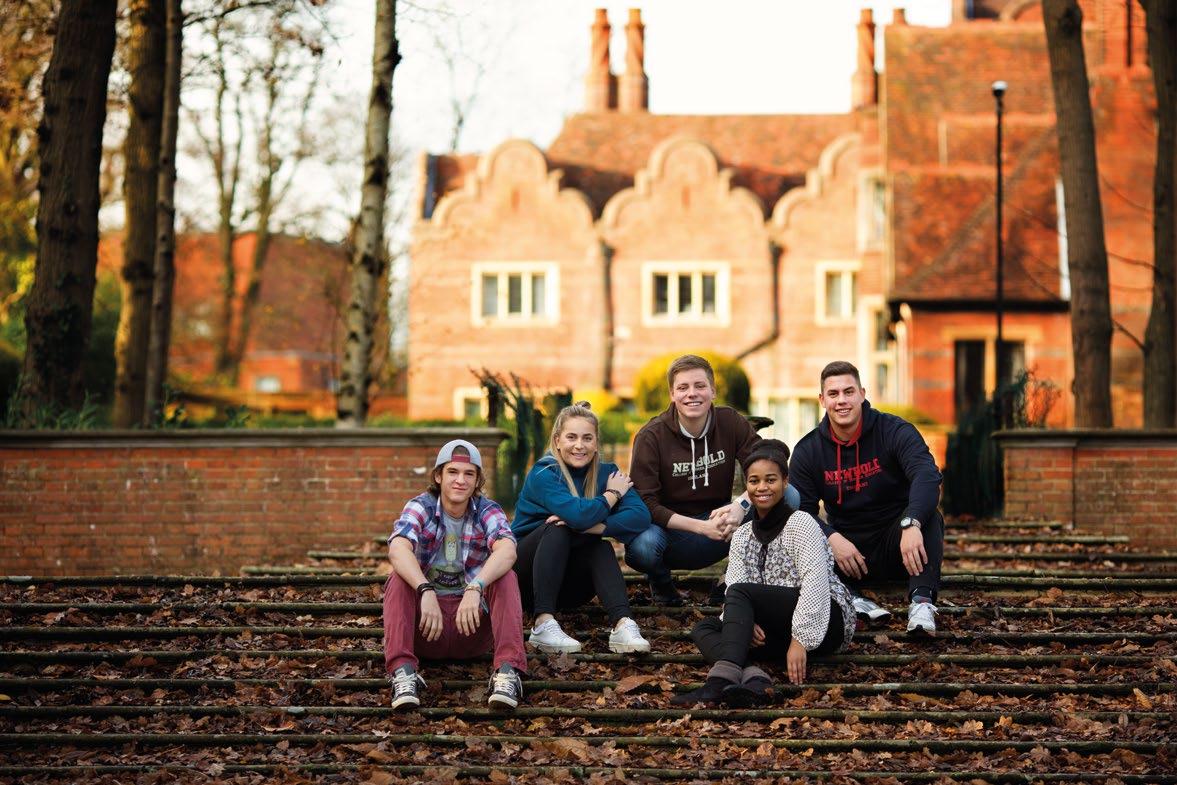
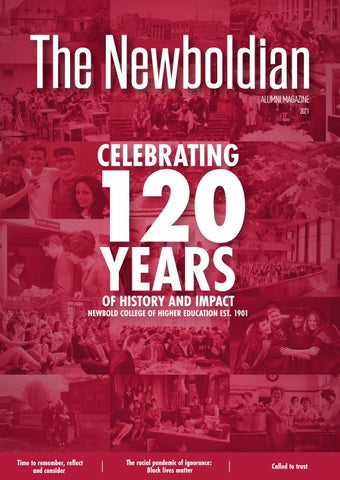
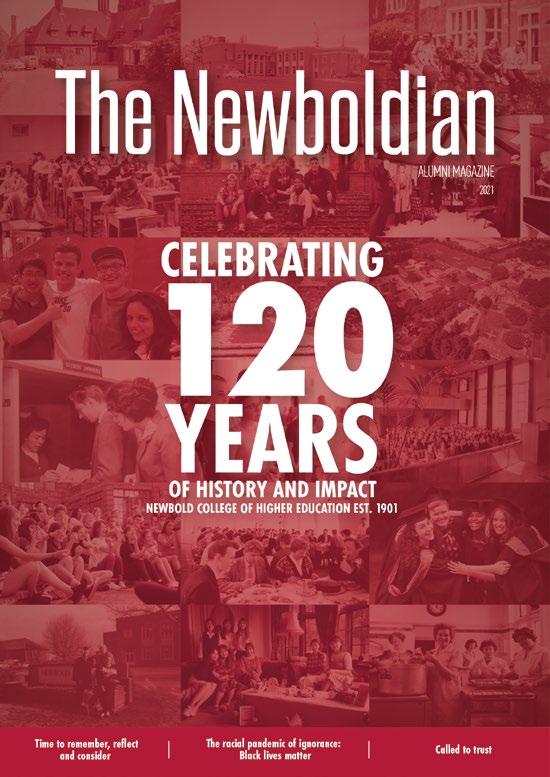
A selection of photos from the last 120 years of Newbold College of Higher Education
31 45 46 34 40 60 42 38
NEWBOLD LAUNCHES CENTRE FOR MINISTRY AND MISSION
WHAT DO WE NEED TO DO TO CREATE AN EVEN BETTER EXPERIENCE FOR STUDENTS AND STAFF?
HELEN AND MICHAEL PEARSON RECEIVE WENIGER AWARD FOR EXCELLENCE
TOM STONE COMES OUT OF THE SHADOWS WITH HIS FIRST BOOK STAFF UPDATES
OUR PLEDGE TO END RACISM ON CAMPUS
THE RACIAL PANDEMIC OF IGNORANCE: BLACK LIVES MATTER
INTERVIEW WITH DAG JAKOBSEN, PRESIDENT OF THE NEWBOLD COUNCILLORS
Disclaimer: The views and opinions expressed in this publication are those of the authors and do not necessarily reflect the official position of Newbold College of Higher Education. While all reasonable efforts have been made to ensure that information included in this publication is accurate, it is possible that details may have changed since printing.
© Newbold College of Higher Education



How difficult it is to realise that this is already the second issue of The Newboldian to be published during the challenges imposed by COVID-19. I pray that you will be blessed as you read its pages and reflect on what Newbold College of Higher Education means to so many right around the globe.
As we undergo a period of reorientation and (temporary) downsizing, driven by our Board of Governors with the pandemic as a catalyst, I look to the future with positivity and optimism. I am joined by colleagues in envisaging an even brighter future for a freshly expanded Newbold, devoted to serving the Church and to preparing young people for ministry and mission in a myriad of ways.
Despite – or perhaps because of – the restrictions of COVID-19 and the challenges of the past sixteen months, we have taken stock as Newbold has continued to operate in the optimum possible way. I too have taken the opportunity to reflect on all that I have enjoyed since I first joined the collegium back in 1982: the opportunities to teach and to lead in so many ways; speaking at assemblies, awards ceremonies, and even Valentine’s Day banquets; involvement in national and international recognition processes and events through quality assurance bodies and university validation and accreditation panels; learning from representatives of so many nationalities and cultures; and serving the Lord to the best of my ability in His College.
We thank God for Newbold and we pay homage to those who have shaped this institution, which was founded in August 1901 and which registered its first cohort of students on 6 January 1902. I regularly receive positive comments confirming the great impact Newbold has made on the lives of countless individuals. How appropriate it is, then, that despite COVID-19 wreaking havoc with our initial plans for 120th-anniversary events throughout 2021, we can legitimately still hold celebratory events under hopefully more normal circumstances in 2022.
As we intentionally cast a backward glance, I firmly believe that “we have nothing to fear for the future, except as we shall forget the way the Lord has led us … in our past history”. Thus these two anniversary years of 2021 and 2022 provide a bridge between our heritage and our aspirations for the years ahead. More than ever, we need to exhibit the qualities exemplified by our predecessors – faith, vision, sacrifice, commitment and perseverance. We inherit not just an institution, but the legacy of those who went before us – and we are particularly grateful for the support we continue to receive on a daily basis from our alumni, our students, our colleagues, and the wider municipal and Church communities.
As the famous watchmaker claims, “You never actually own a Patek Philippe, you merely look after it for the next generation.” And so it is with Newbold, as we prepare for the next stage in our story.
Newbold, summer 2021
Dr John Baildam PRINCIPAL
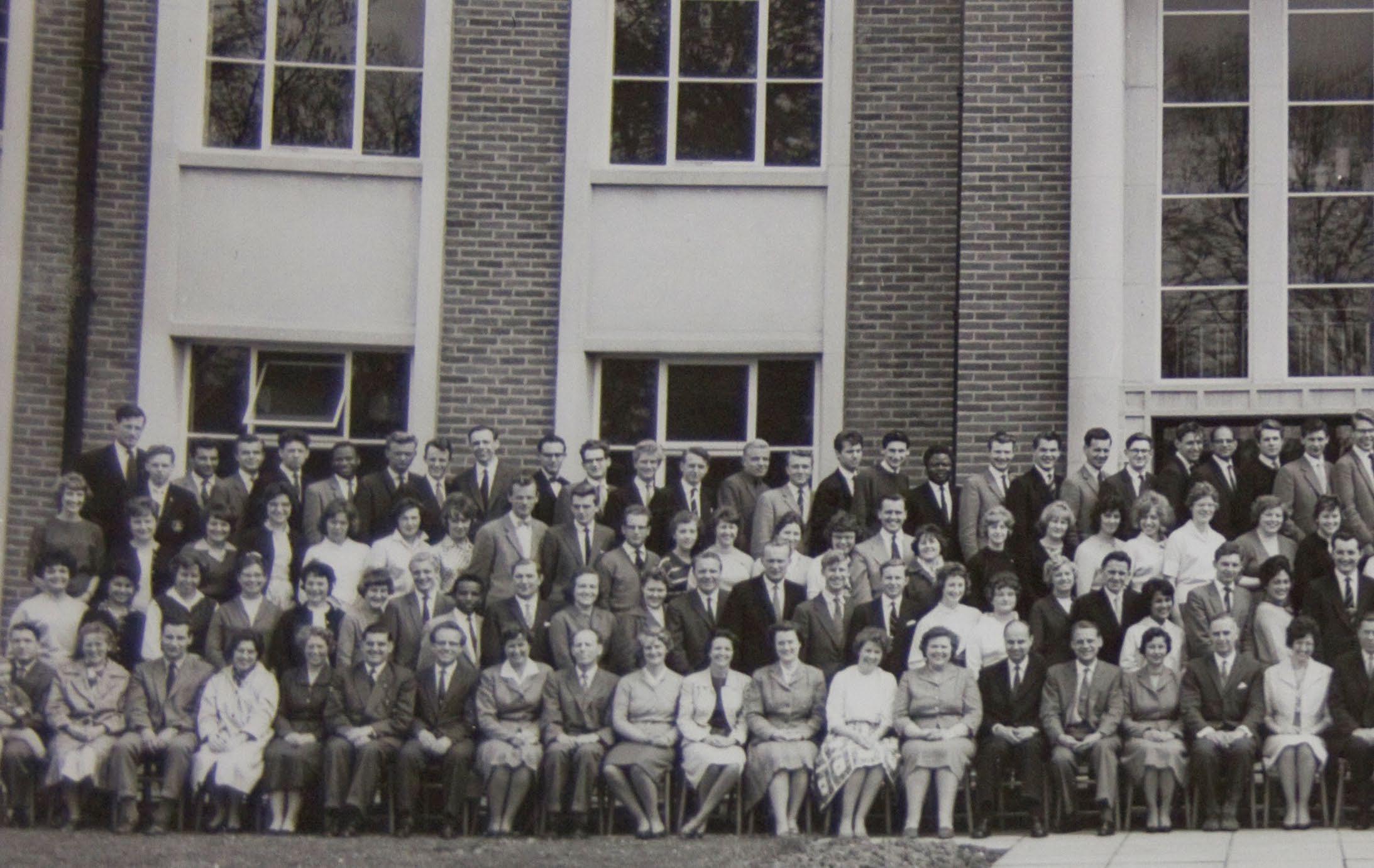
In 1900, the President of the British Union Conference of the Seventh-day Adventist Church, W. Prescott, presented a proposal for opening a college at the annual conference in Birmingham. After a decade of discussions, planning and fundraising, the delegates agreed to the proposal. It was finally voted in August 1901 to open a college. Thus, Newbold opened its doors for the first time, on Monday 6 January 1902, as Duncombe Hall College in Holloway, North London. Twenty students enrolled on the first day. By the end of the first term, that number had doubled to 40 students. Homer Salisbury, a 31-year-old American, became the first principal of the College. He was well-travelled and well-known for his practical approach to education.
During the 1900s, the standard of education in Great Britain was low. Many students needed help with elementary subjects. Salisbury carried out tests to determine each student’s level of education. His motto was, “Let us go on to perfection” (Hebrews 6:1). He built on these words in the College’s first prospectus, saying: “The one great object always kept in view will be to lead the students to learn how to think, and to think correctly – to teach them how to learn anything for themselves.”
The first courses offered to students between 1902 and 1903 included Scripture, History (taught from a biblical perspective beginning with ‘the flood’), Natural Sciences, Mathematics, preparatory classes for nursing, Music, English, Latin, Greek and Hebrew. The College’s academic programme was highly disciplined compared to today’s timetable.
For example, in 1908, the daily schedule was set out as follows:
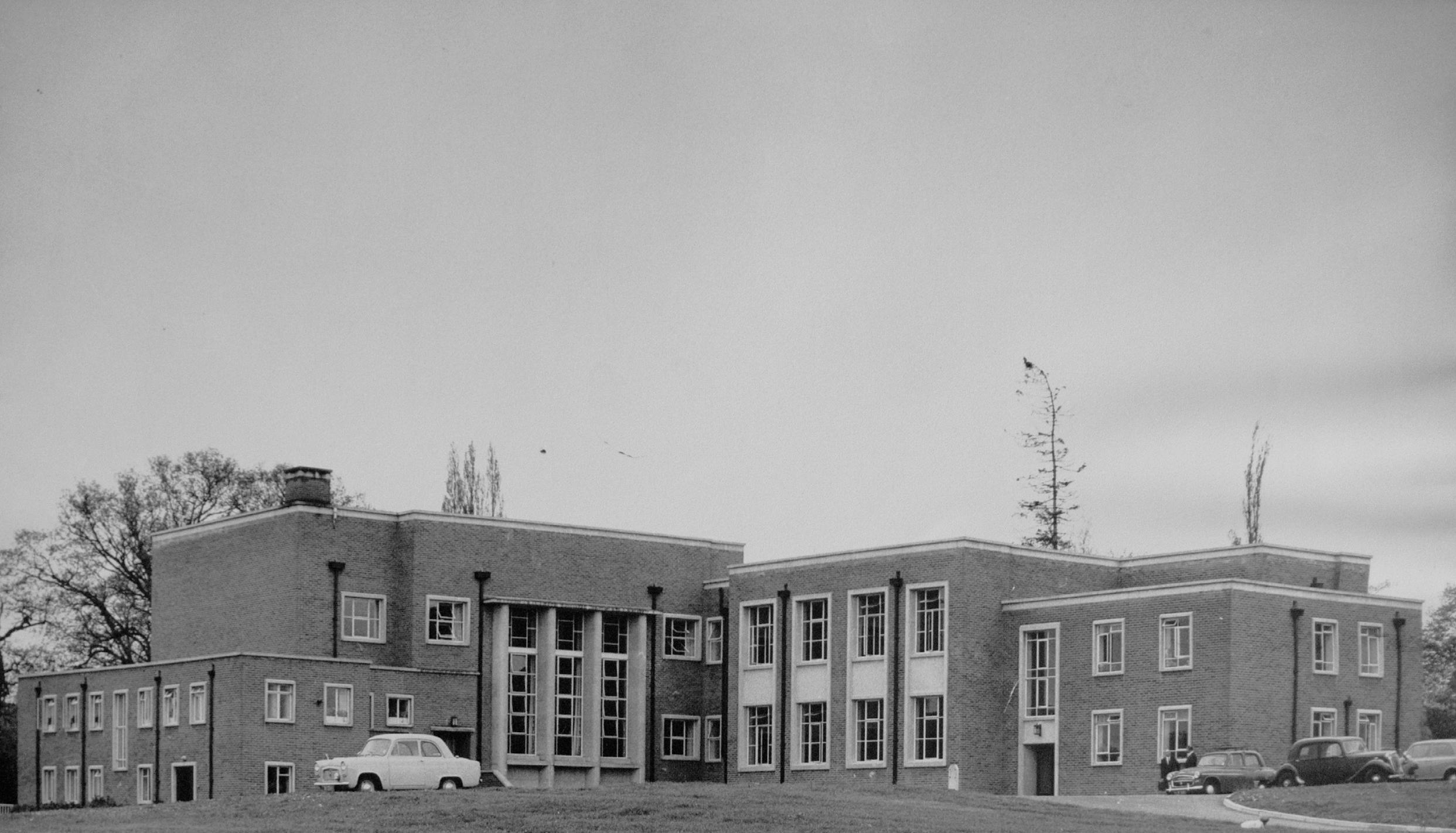
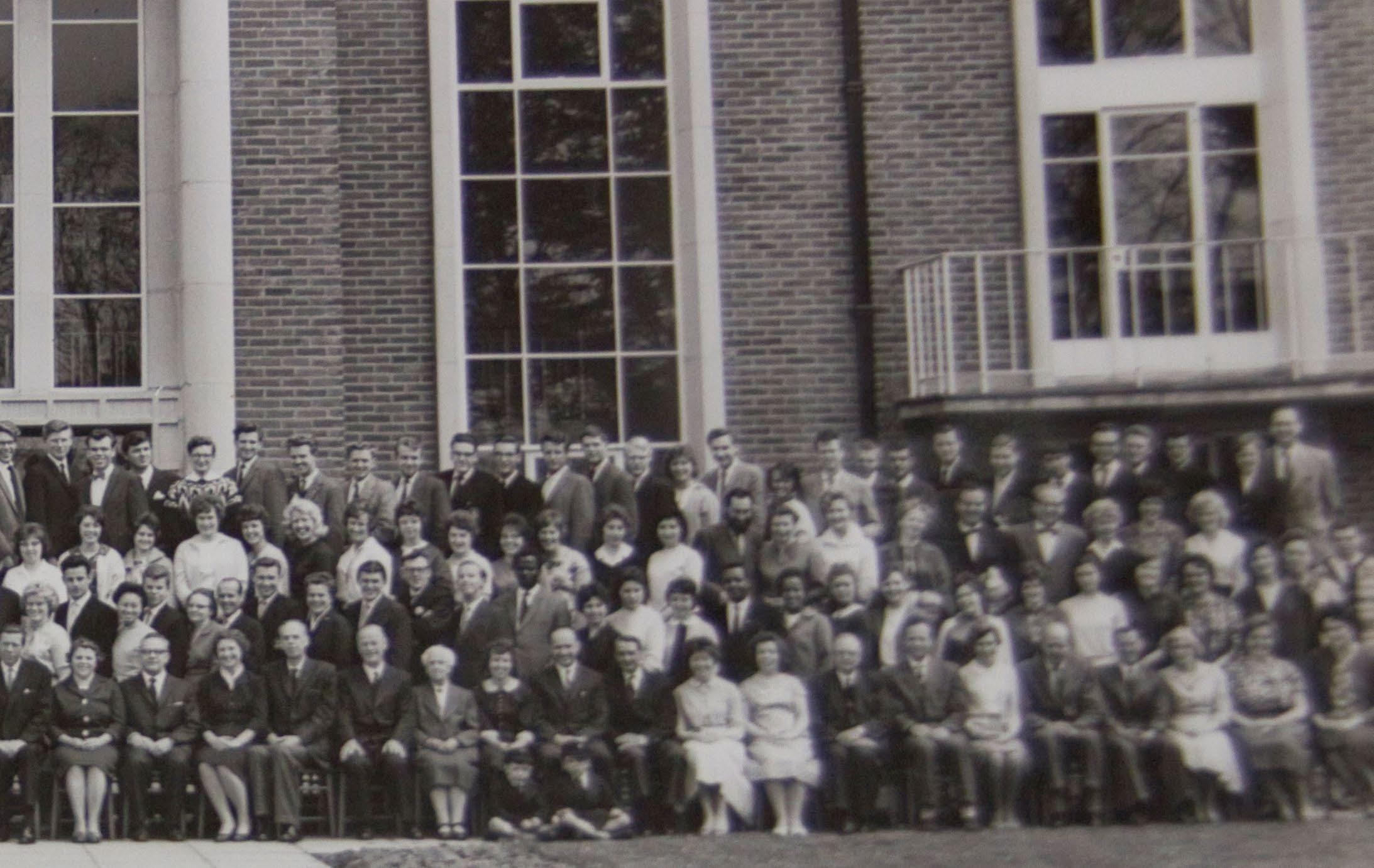
The College, upholding its Christian values, expected male students to be honourable gentlemen and female students ladylike, reserved and modest. Both adhered to specific rules of social interaction, which included the following:
• All students are expected to maintain a proper degree of reserve towards those of the opposite sex. Without a permit from the Principal, granted on special occasions only, gentlemen must not escort ladies on the streets nor to or from public gatherings.
• Students must at all times abstain from noisy and disorderly behaviour, and from unbecoming language and all improper associations.
• Separate strolling grounds are arranged for the ladies and gentlemen, and permission must be obtained from the Principal or Matron by those desiring to pass beyond the limits. Quiet and unmolested walks for exercise, private reading, or devotion are thus secured.
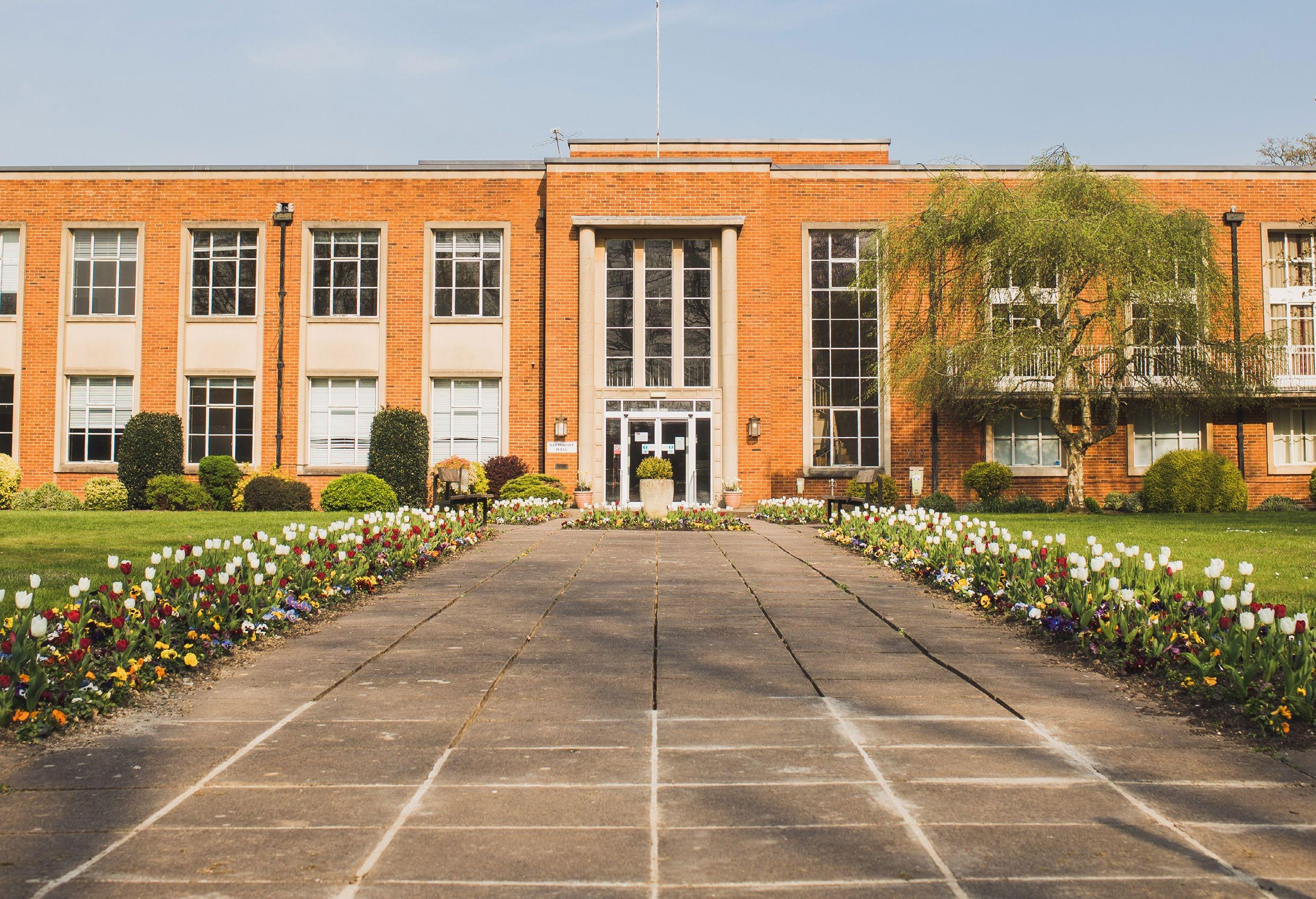
Homer Salisbury served as principal for six years. Sadly, in 1915, he drowned after throwing his life jacket to another passenger when the ship they were travelling in was torpedoed and sank in the Mediterranean. Salisbury’s legacy lives on to the present day; the main building at the front of the campus bears his name as a memorial to his achievements.
Salisbury’s leadership and hard work had laid the foundation for the future when Herbert Lacey stepped into the principal’s role in 1907 and moved the College to Watford, Hertfordshire. Not only did the College have a new principal, but it also adopted a new name: Stanborough Park Mission College.
Herbert Lacey was a pastor, evangelist, teacher and experienced principal. He taught Bible Studies, Church History and New Testament Greek, and he recruited Glen Wakeham to teach Science, Mathematics and Music. By 1910, 15 former students worked in three mission divisions, and the number of international students increased.
In 1913, the College had eight teachers and offered a four-year course in Ministerial Training, a three-year course in Missionary Service, a two-year Bible course, and a Business course. William T. Bartlett became interim principal the same year until Glen Wakeham took the position in 1914. Eighty-five students enrolled in 1915 despite the war and a shortage of male applicants.
Wakeham started up a poultry business and a market garden in 1915, implemented entrance examinations in 1918, increased accommodation facilities and sought affiliation with the Foreign Mission Seminary in Washington, DC. Over 200 students enrolled
Good behaviour always paid off even if permission had not been obtained, as when my young lady and I took an unauthorised Sabbath afternoon walk in the nearby park and ran into the Principal. I expected an interview the next morning, but nothing happened. Spencer G. Maxwell (1911–1915)
during the 1919–1920 academic year. Also, students wanting to take University of London degrees or selected Cambridge examinations received private tuition.
The Newbold of the 1920s remained focused on the Conference’s vision to prepare young people for missionary service. An excerpt from the College’s mission statement read:
“This education institution has been established by the British Union Conference of the Seventh-day Adventists for the purpose of training young men and women to become active workers for God in home or foreign fields. All activities of the College are directed towards this end.”
Between 1923 and 1926, over 60 students became overseas missionaries.
The 1930s was the ‘Golden Decade of Newbold’ where many changes took place. William Murdoch became principal in 1930 and moved the College in 1931 to Newbold Revel, an 18th-century manor house in the village of Stretton-under-Fosse in Warwickshire. The College’s name changed to Newbold College to coincide with its relocation. Concurrently, the British Union Conference had become part of the Northern European Division, which opened
I went canvassing in Warrington with Tom, a sea captain. He was a very successful colporteur, especially on the industrial estates, so much so that another church organisation reported him to the police, who interviewed him. Finding his credentials were in order, they released him and wished him success.
Bert Ainsworth (1934–1938)
the doors for Division students. New courses for teaching nonnative speakers of English drew more international students. New industries created on campus gave students opportunities to earn their fees. The College received recognition from the University of Oxford, making it easier for staff to gain a Diploma in Education.
In 1941, the Royal Air Force requisitioned the Newbold Revel estate for use as a training establishment after Great Britain suffered heavy bombing during the Blitz. The Government forced the College to find temporary accommodation until 1945. However, the British Union Conference decided to relocate it in 1946 to a ‘modern’ property in Binfield, a village near Bracknell, where it became Newbold Missionary College.
Newbold reached a milestone in 1953 when the British Union Conference transferred control of the College to the Northern European Division of the Seventh-day Adventist Church. In September 1953, it opened as the senior College of the Northern European Division with a renewed focus on training workers for church operations across northern Europe. In the same year, the College applied for affiliation with Washington Missionary College [later Columbia Union College and currently Washington Adventist University]. One hundred and fifty-six students enrolled in 1958, the highest enrolment since the 1920s.
In 1961, the College dropped ‘Missionary’ from its official title, symbolising a move from its sole concentration on ministry and mission to a Division college, serving an international constituency. It began offering more higher education qualifications. By 1967, it provided BA degrees in English, History and Theology and subsidiary courses in Business and Secretarial Science, Education, English, History, Music, Science and Religion, including Theology and Biblical Languages.
Roy Graham became principal in 1971, the same year Newbold added a postgraduate year for ministerial students. The College
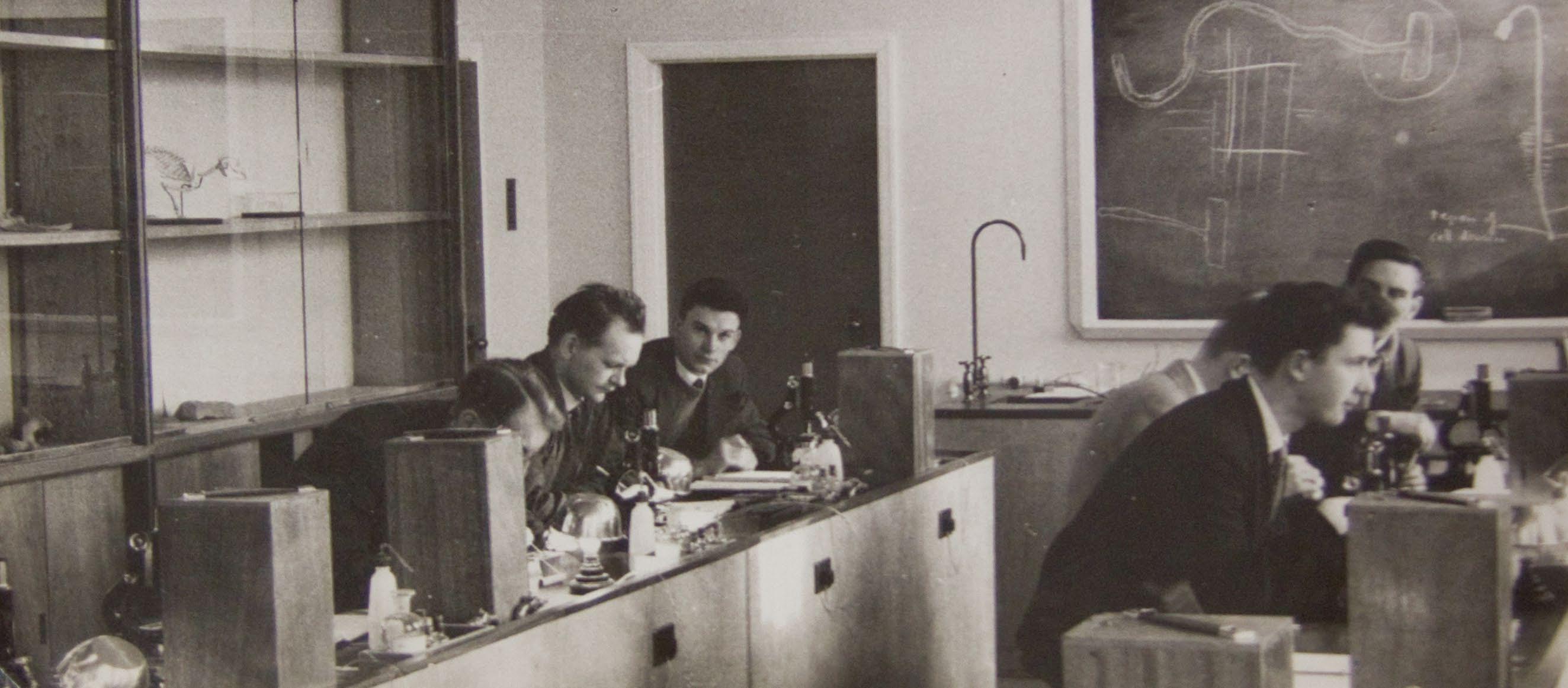
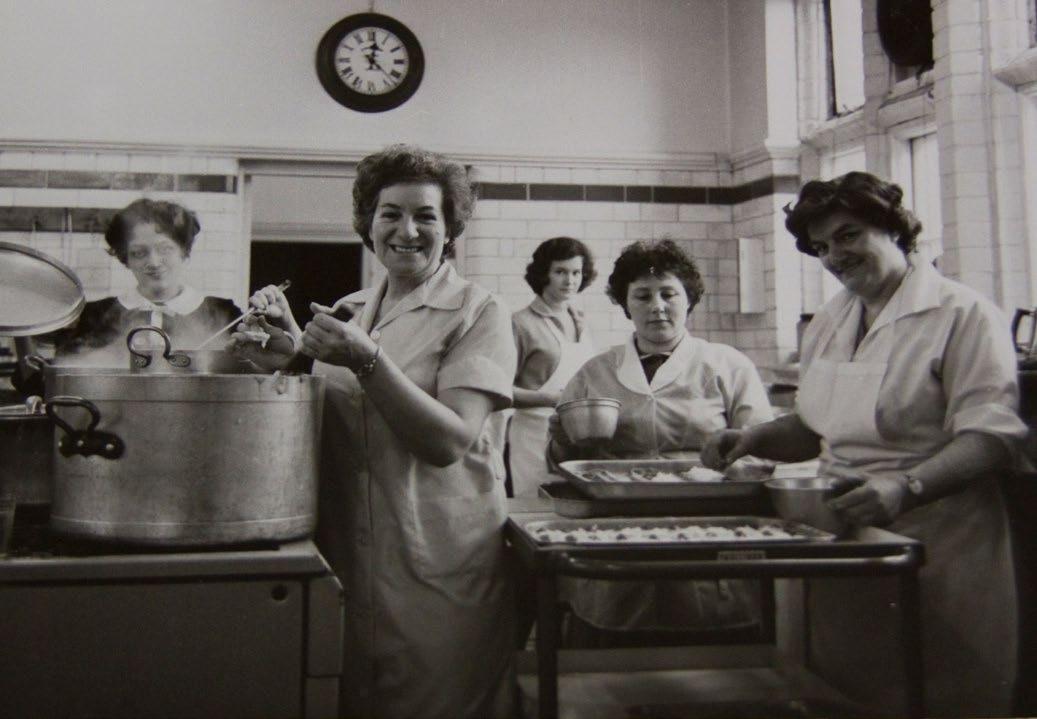
opened its gymnasium (sports hall) the following year. It caught the attention of the architectural community, which nominated it as the ‘Ugliest Building of the Year’ in an architectural journal. Newbold responded by planting conifers around the gymnasium to improve its appearance. The opening of the College’s library took place two years later in 1974. It provided not only more space for books and periodicals, but also library offices, workrooms for students and the services of professional librarians for the first time in Newbold’s history.
The College ended its farming activities in 1981, 66 years after their introduction in the 1910s. By 1983, the General Conference of the Seventh-day Adventist Church had granted permission to set up the European Institute of World Mission on campus. Newbold began its affiliation with Andrews University in the United States the same year.
At the end of four years at Newbold I felt that I was a different person… I was far more tolerant, broader in my thinking while still holding on to my belief.
Sam Davis (1981–1986)
Newbold strengthened its affiliation with Andrews University and renewed ties with Washington Adventist University during the 1990s. The partnerships opened the door for American students to come to England for a year and transfer credits to their studies in the United States.
The College achieved one of its most important partnerships in 1992 when it received accreditation by the Council for National Academic Awards and subsequently the Open University through the Open University Validation Services. Courses provided by the College included bachelor’s degrees in business administration, English, history, religion, theology and music, with a minor in communication and general education courses applicable to other degree subjects.
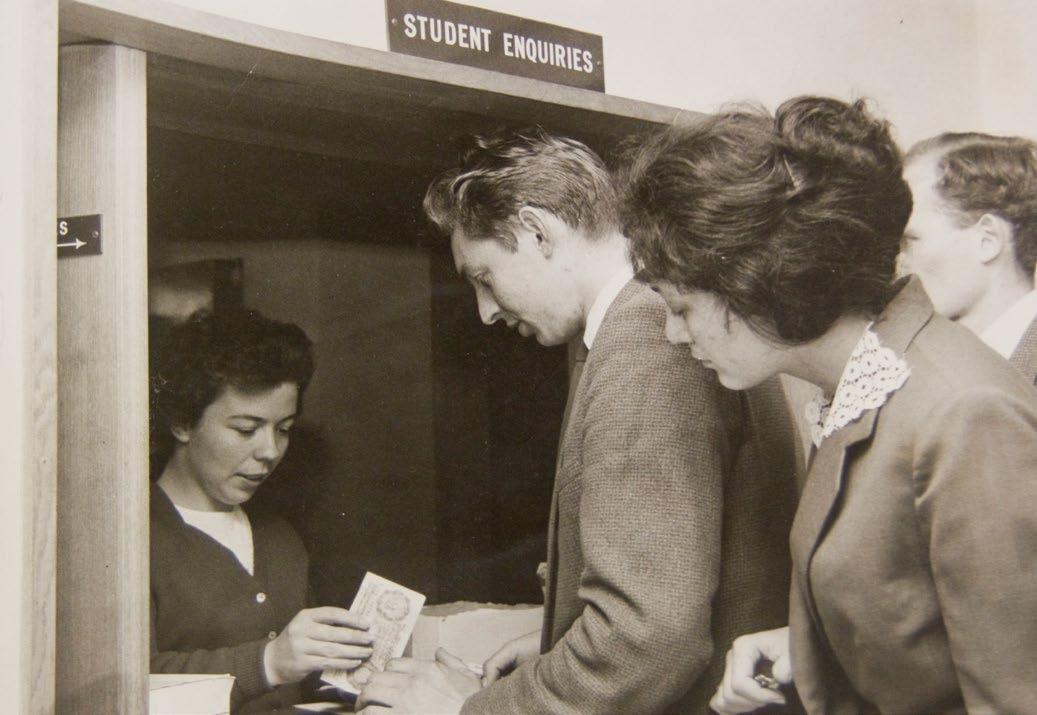
Photography: Archive
Dr Andrea Luxton, a former student, became Newbold’s first female principal in 1997. Dr Luxton had served as Newbold’s head of the English Department, and she was instrumental in establishing the College’s Humanities Department.
The new millennium ushered in a new era. It brought partnerships with universities in the United Kingdom, Germany and the United States, offering undergraduate programmes in Business Studies and Theology. Students could pursue postgraduate and research programmes in Theology and choose a range of Study Abroad options. These included gap year and affiliate study programmes, which were popular with North American students wanting to experience studies with a British heritage emphasis for one or two semesters and earn credits towards their US-based higher education studies.
In 2004, the College set up a theology provision in partnership with and accredited by the University of Wales Lampeter [now the University of Wales Trinity Saint David], which also provided accreditation for Newbold’s Business Studies programme in 2008. The College also received accreditation from the British Accreditation Council for Independent Further and Higher Education in 2008. Four years later, in 2012, it changed its name to Newbold College of Higher Education and also achieved Educational Oversight by the Quality Assurance Agency for Higher Education. The University of Wales Trinity Saint David subsequently granted Newbold a new partnership in 2015, with undergraduate and postgraduate Theology validation. In October 2020 the College was registered as an approved provider with the Office for Students in the United Kingdom.
I enrolled to study Theology at Newbold in 2013. It was there I believe God was developing my prophetic voice. He opened opportunities for my voice to be heard in different spaces, including European and Global Media Ministry projects.
Sophia Peart (2013–2016)
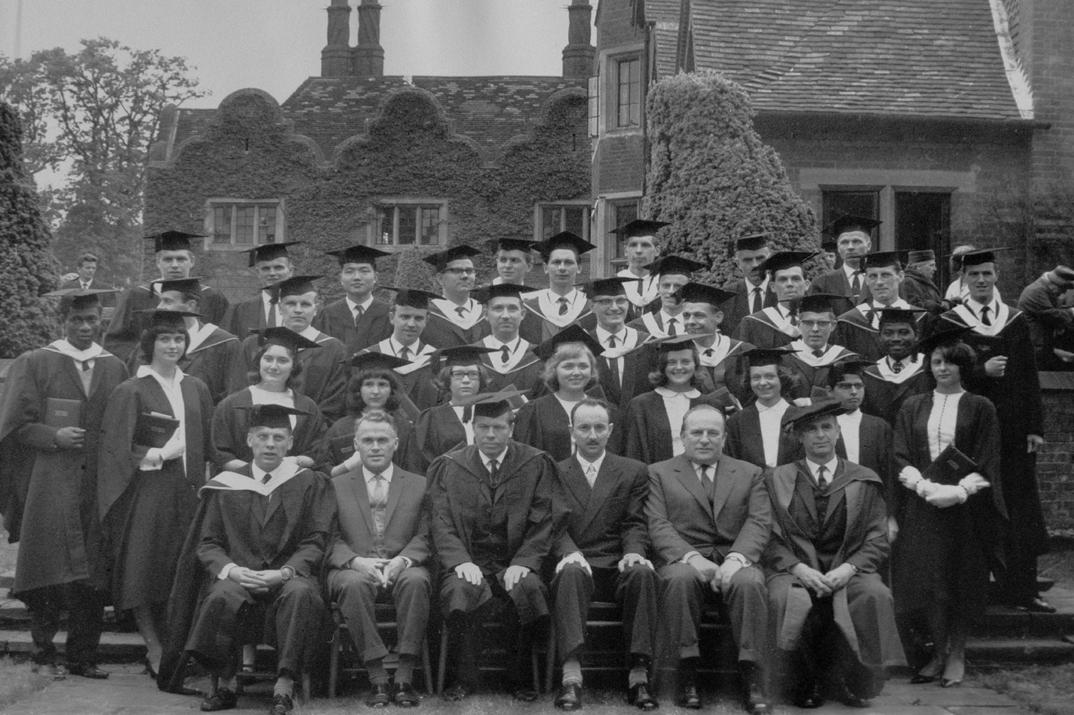
On 30 September 2020, Newbold’s Board of Governors met to decide how to restructure the College to meet the challenges of remaining relevant to the needs of the 14 Trans-European Division constituency. The Governors agreed that the College should return to its mission-centred roots. It set out plans to re-establish a Centre for Ministry and Mission, while maintaining the institution as Newbold College of Higher Education, “focusing solely on the education and preparation of ministers, evangelists, frontline church planters, leaders, and theologians”. The Board agreed the curricular changes for the 2021–2022 academic year.
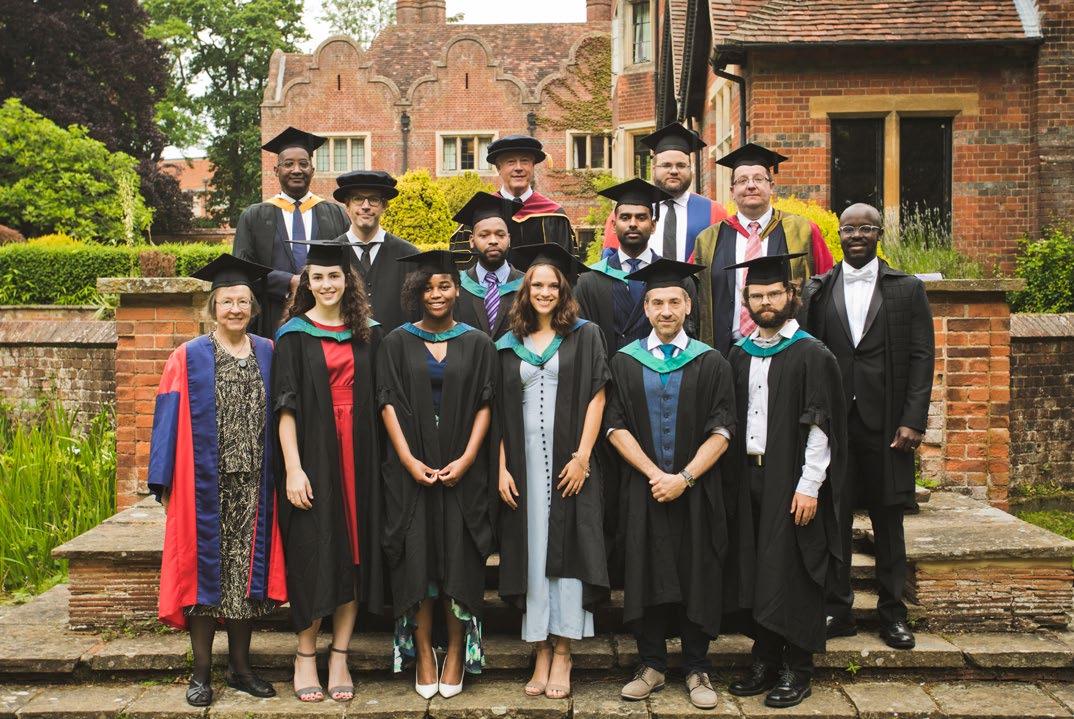
Newbold has served the Church for 120 years since August 1901 when the British Union Conference agreed W. Prescott’s proposal to lay the foundation for educating men and women for ministry and mission. Despite numerous changes, Newbold never lost sight of the vision set out by the annual conference of 1900, to establish a “missionary training school where consecrated young persons may obtain the instruction necessary to fit them for efficient service, both in this country and in foreign fields”.



Throughout its 120-year history, Newbold has drawn students from all walks of life. The College never limited itself to providing courses solely to prepare students to become pastors, or missionaries serving in far-off countries. Instead, it responded to recurring themes in society throughout the decades, equipping students with knowledge and skills to serve God in various capacities. For example, Newbold’s Business Studies degree programme lived up to the ideals of its founders by providing Adventist students with business skills: “Some are working for the Church, and some are working for humanitarian organisations. Others are working in for-profit organisations and making their contribution as lay people and as financial supporters of the Church” (The Newboldian, 2007).
In 1902, young men and women, eager to study at the only college in the United Kingdom that provided education from an Adventist Christian perspective, convened at Duncombe Hall College, the ‘first Newbold’. They were not disappointed. They were thrilled to learn History, analysed from a Christian bird’s-eye view, and Natural Science, Physiology, Anatomy and Physics taught with the Creator’s handiwork in mind. Their teachers taught English with a definitive goal: to ensure their students (many of whom only had a rudimentary education) would have a firm grasp of grammar, composition and use of rhetoric, as well as a thorough knowledge of literature. All students learned Latin, “not for the purpose of reading heathen classics” (Newbold Prospectus 1902–1903), but for the mastery of the English language itself. And, of course, the teachers taught Greek and Hebrew, intended for the reading and understanding of scripture. Students attended Mathematics classes and learned how to apply their knowledge to book-keeping and accountancy.
Even the Nurses’ Preparatory Classes – which would be considered old-fashioned or odd today – gave students the chance to learn “hygienic cookery”, “simple treatments” for ailments and skills to deal with “accidents and emergencies”. However, viewed in the context of the Adventist Church with its ‘health message’, it formed part of the College’s unofficial ‘Ministry of Healing’ programme that equipped students for everyday life and work in the mission fields. The same applied to Music studies, which was and still is an essential component in worship services worldwide.
Over time, the College introduced new courses and replaced others, reflecting the changes in the British and American education systems as they evolved throughout the decades to the present time. For example, during the 1930s, Newbold students dedicated four years to studying for a Ministerial and Bible Workers Diploma, or three years for a Business Diploma, compared to the 1980s or 2000s, where they graduated with an undergraduate or postgraduate degree within the same timeframe.
Newbold owes its success to the dedication and commitment of its teaching staff across all departments (past and present): Theology, Business, Humanities and the English Language Centre – “As it is, there are many parts, but one body” (1 Corinthians 12:20) serving God. In addition, Newbold’s 120-year story would be incomplete if we failed to mention the unquantifiable impact of the success of the College’s short-term programmes. These include the Gap Year, Adventist Colleges Abroad, British Culture Study Tour, and the English Language Centre’s Summer School and Year in Mission programmes, not forgetting the certificate and diploma programmes.
One of many examples of the College’s success was the British Culture Study Tour (run by the Department of Humanities), which acted as a magnet, drawing students from the United States and other parts of the world. Students studied the works of great British writers and learned about British culture and history during the intensive summer programme. They also went on excursions to historic locations such as Stratford-upon-Avon, Shakespeare’s birthplace, London and Oxford. The British Culture Study Tour’s popularity snowballed, and the demand for places led the organisers to run an additional programme during the summer.
It is worth noting that, during the course of Newbold’s short-term programmes, many students experienced a life-changing spiritual awakening through their interactions with other students and staff. Even non-Adventist and non-Christian students altered the direction of their lives – a testimony to the work of the Holy Spirit on campus.
Edward E. White said, “For me, Newbold evoked many happy memories.” He added, “It was my privilege to be a student at the ‘first Newbold’, Stanborough Park; a teacher at the ‘second’, Newbold Revel; and principal at the present, presumably the last, Newbold.” He spoke about the distinct characteristics of the buildings and facilities at each location. Notwithstanding, he went on to say:
Buildings are inanimate and hardly demand affection as they slowly crumble and require refacing, replacing, and sometimes indeed demolition. It is people who evoke nostalgic memories even if they too, after a lapse of years, also require refacing and rejuvenating.
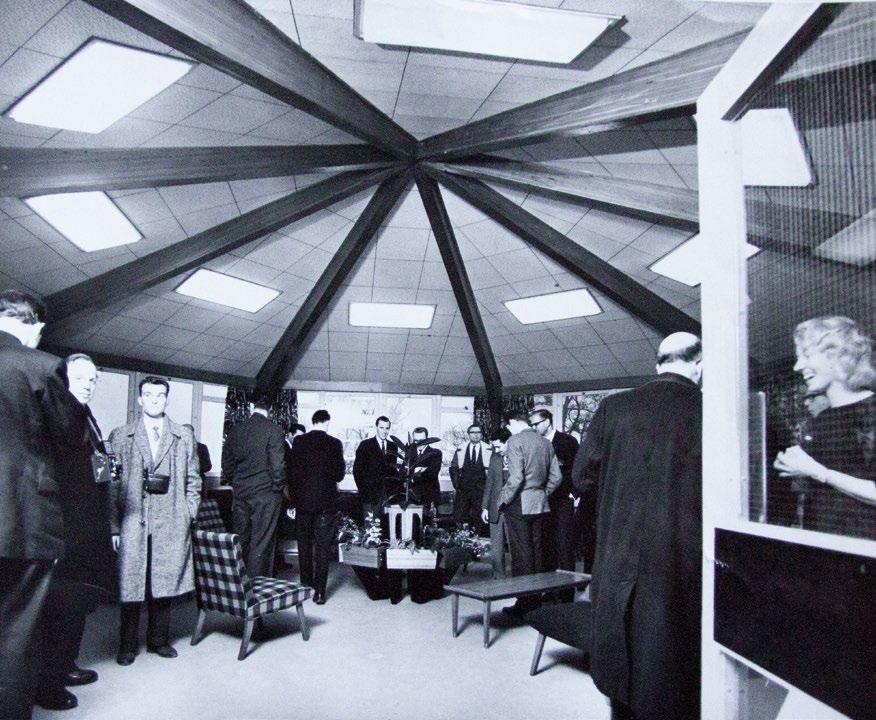
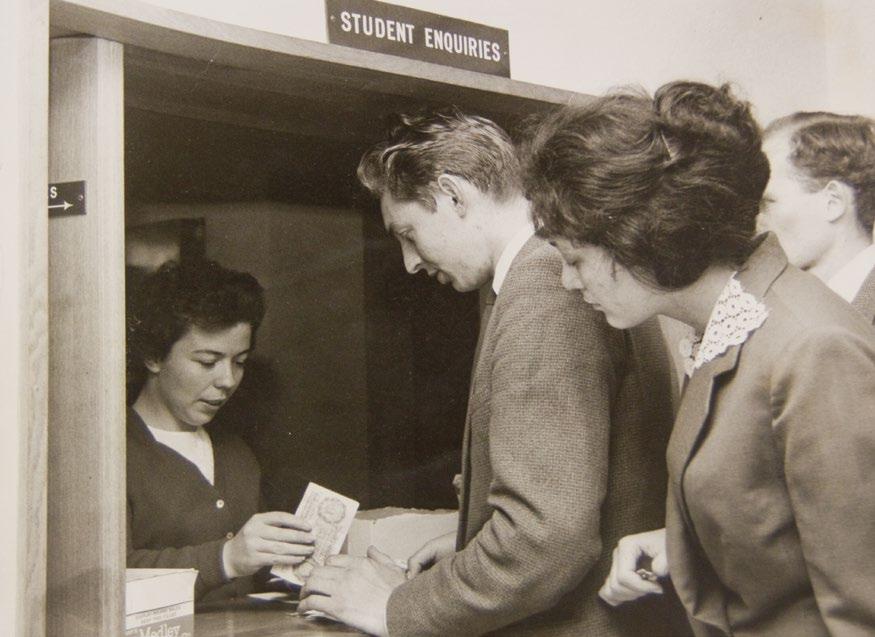
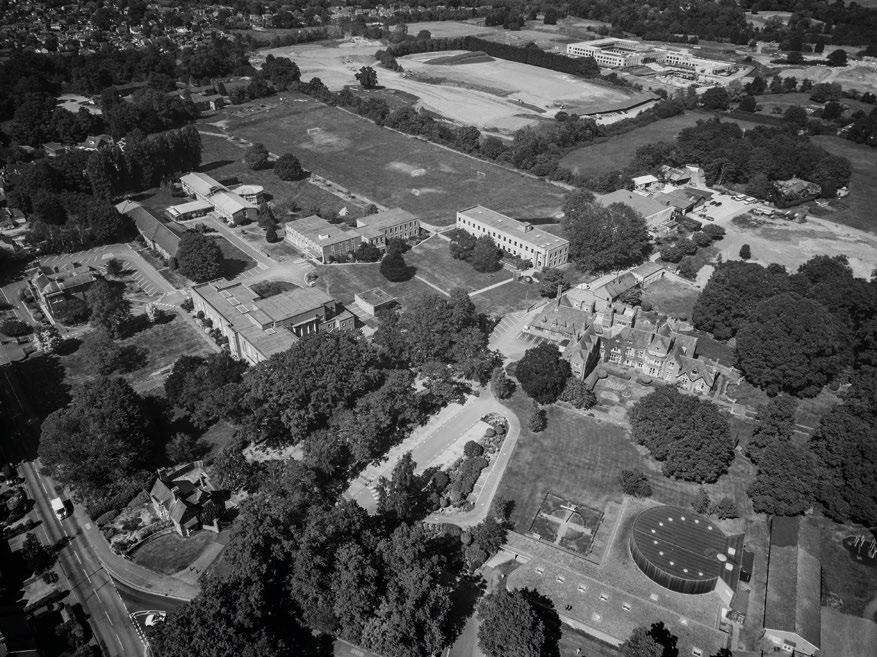
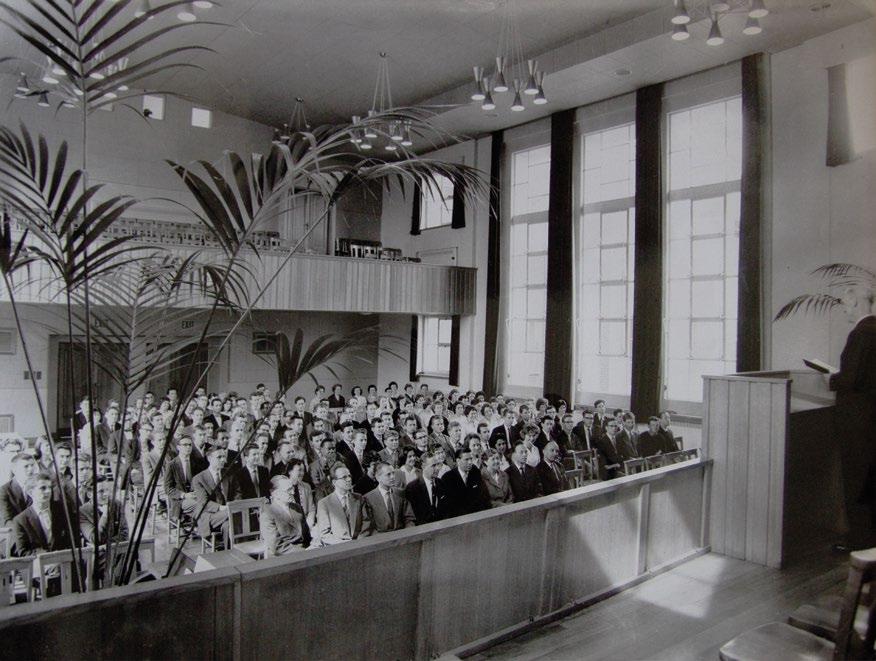
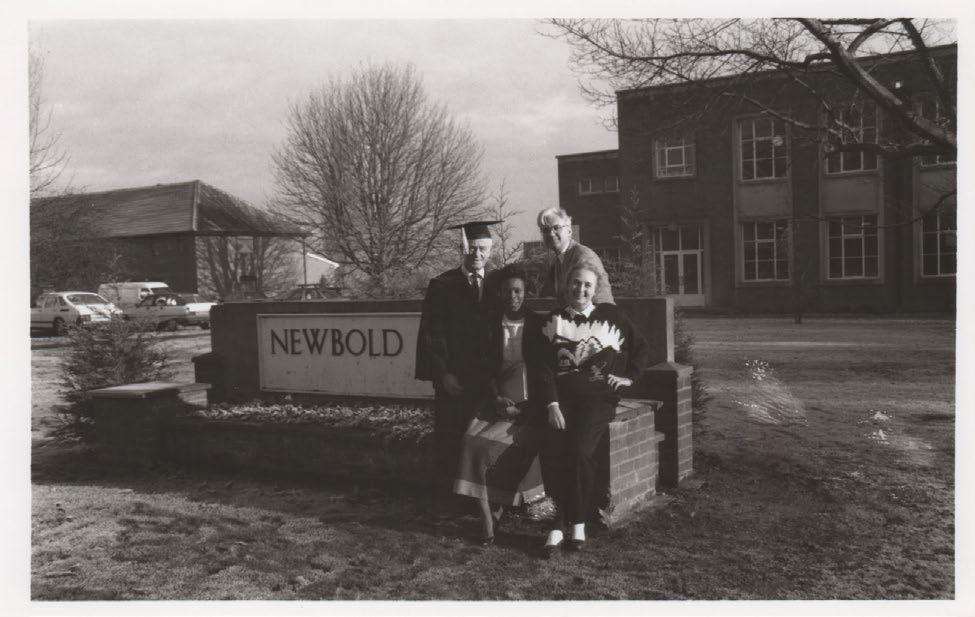
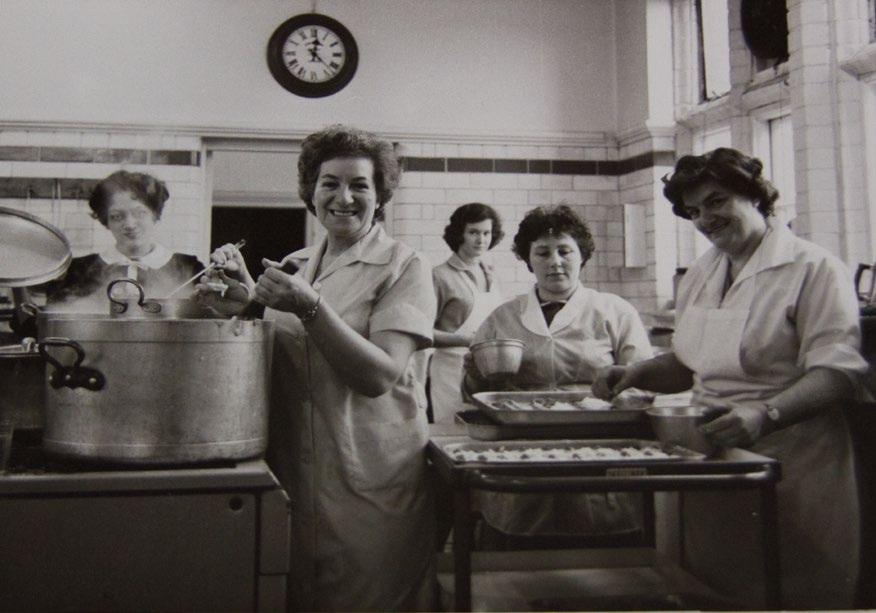
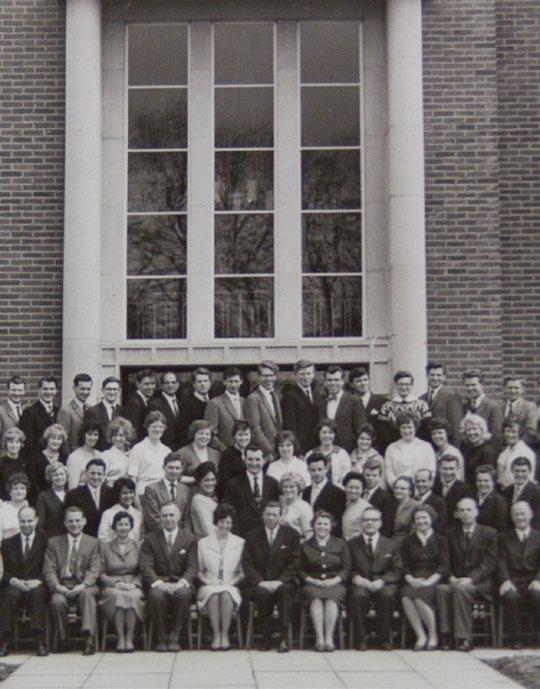
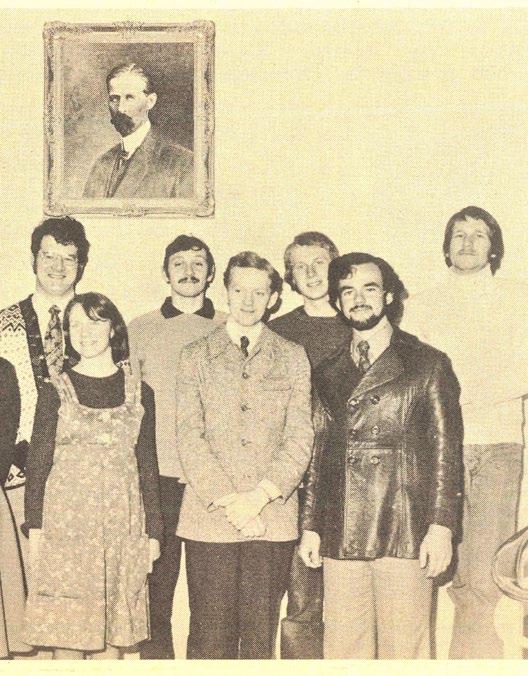
Echoing Edward White’s thoughts on nostalgic memories, we present a selection of quotations from articles and former students and images that reflect their experiences over the past 120 years.
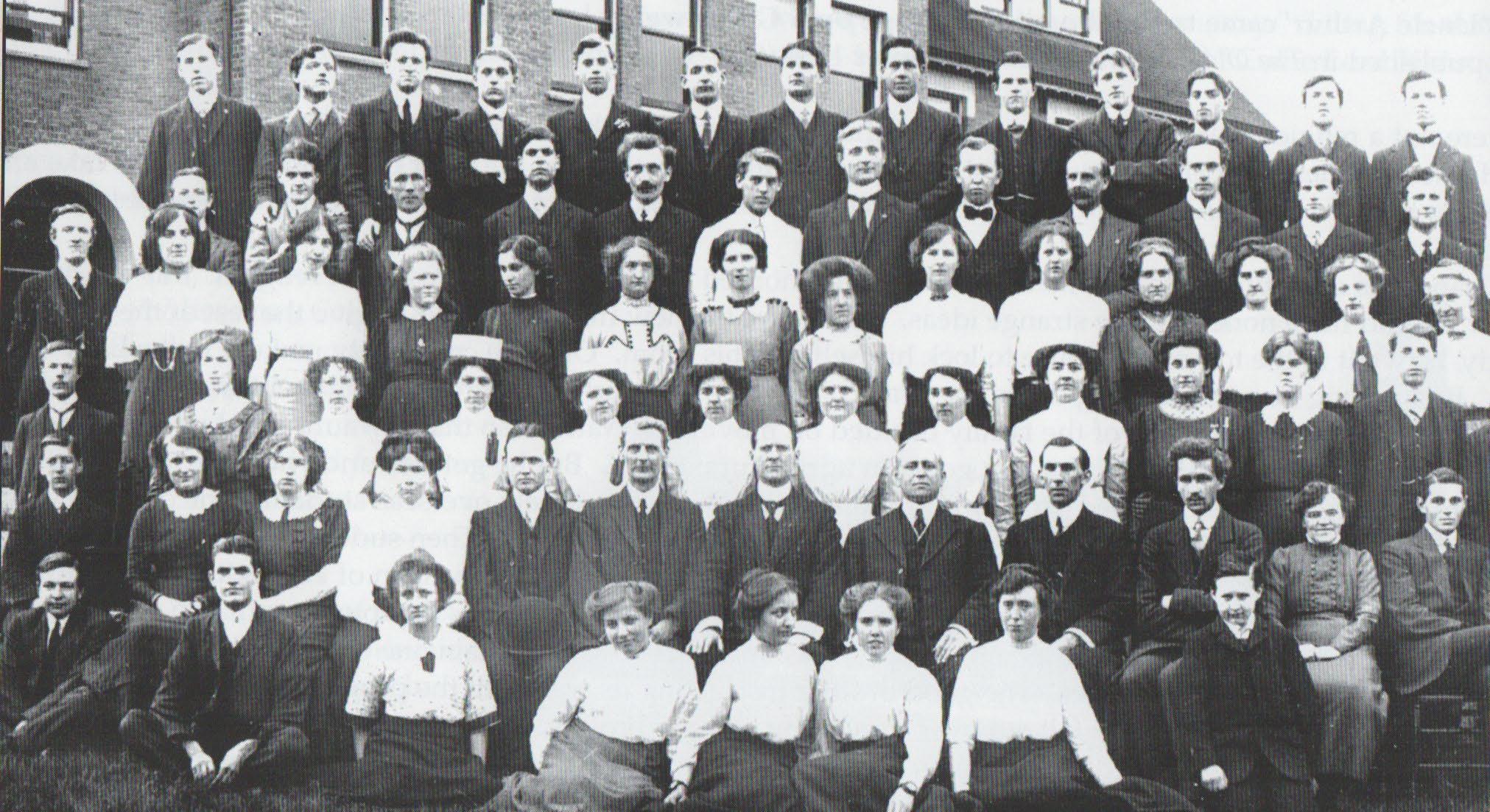
Stanborough College Group 1912—1913
“Right from the start, the students were inducted into the peculiarly Adventist training of colporteur work… ‘The students of Duncombe Hall College are determined to stir the millions of London, and eighteen of them have ordered 23,000 copies of Sunday: Notes on the National Campaign.’ What inspired audacity!”
The Journal of True Education, Vol. 15, No. 5, June, 1953, p. 26
“On Sabbath the young hopefuls were sent to the longsuffering London churches. My first sermon on the Christian armour of Ephesians 6 lasted just ten minutes with much perspiration and palpitation. The kind elder thanked me for coming out but did not reveal his inner feelings. Bless him.”
Spencer G. Maxwell, 1915 graduate, published in The Old Newboldian, No. 5, New Year 1982, p.2
“We are glad to note from the attendance of young people from the Continent that the reputation of our college is becoming international. We in England have not suffered through the war as many of our Continental brethren have, and we are glad to give some of them a share of our privileges, hoping that their work will thereby be strengthened.”
Missionary Worker, Vol. 23. Watford, November 1919, p. 9
“Students are about the busiest people on earth, but we have already devoted two days to the Harvest Ingathering Campaign. Some of the crack canvassers who went to the City of London have done so well that they refuse to tell anyone how much they have in their boxes. We are expecting some dramatic surprises when they are finally opened.”
Missionary Worker, Vol. 23. Watford, November 1919, p. 9
“The Foreign Mission Band has been very fortunate this year in having so many missionaries from all parts of the world spending furlough here, and consequently we have had the privilege of hearing much of the foreign fields… From the school this year we have sent out eight missionaries, five to Africa, one to Egypt, and two to France. With these and with those who have passed before to foreign fields, the members regularly correspond, for we realise how acceptable news from the home field must be.”
F. Barrett, The Missionary Worker, College Illustrated Special, 1924, p. 6
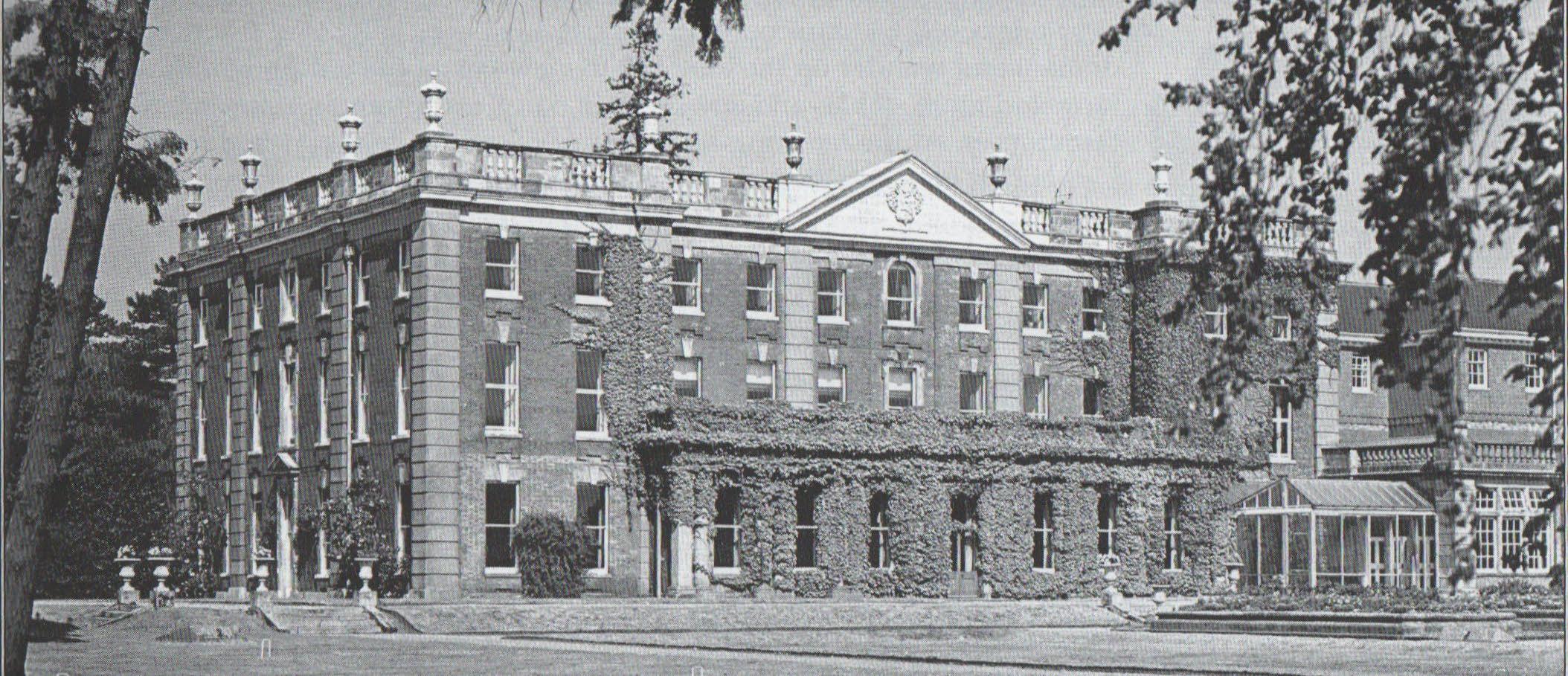
“I came to Newbold in 1936 from West Wales – a country lad of 16, who had never been far from home, until that time. Meeting students from different parts of Scandinavia, Estonia, Poland, Hungary, Yugoslavia, Germany, France and Spain was quite an experience. I don’t remember ever having seen a foreigner until that time. So, my youthful heart went out to them being so far from their homes and I tried to make them welcome.”
John Freeman (Newbold, 1936 to 1944), One Hundred Years of Newbold College, p. 32
“It was decided to move to Newbold Revel mansion near Rugby, which gave the college its motto. High up on the front of the building is a Latin inscription, Virtute et Labore [‘With courage and effort’]. Could any motto be more appropriate for an Adventist college?”
The Journal of True Education, Vol. 15, No. 5, June, 1953, p. 27
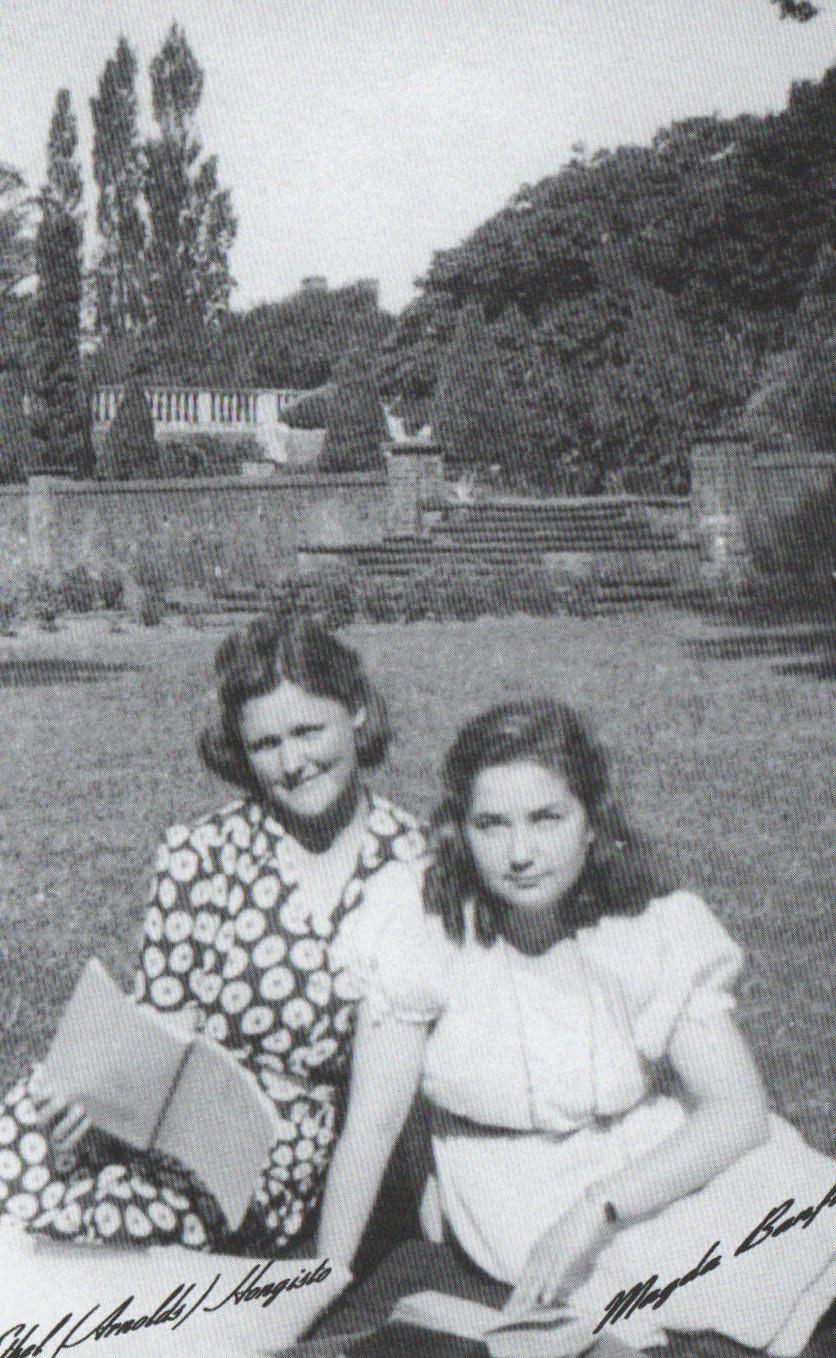
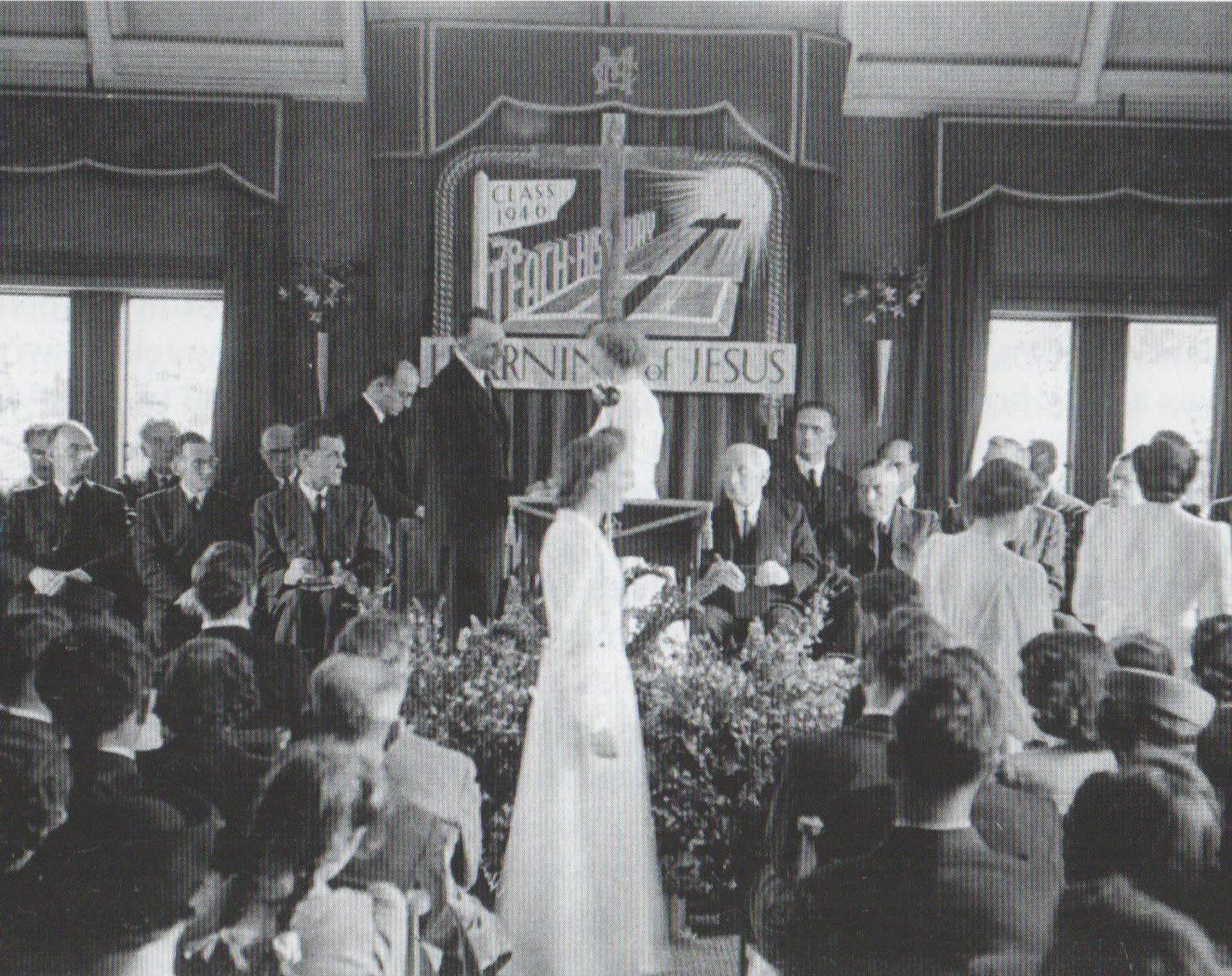
“I went to Newbold very unwillingly, and very anxious to get the year over as quickly as possible and in a highly critical attitude. Throughout this little drama I had been totally unaware of the fact that God was silently working in love for me and that this ‘one year’ at Newbold would be the turning point of my life.
Thank you, Newbold, for your consecrated Christian teachers who taught me Bible truth and gave me a vision of service. Thank you, Newbold, for wonderful fellowship with Christian young people, with resulting friendships that have stretched down through the years. Thank you, Newbold, for inspiring testimony meetings that drew me irresistibly towards the decision to dedicate my life and talents to God.”
Vera M. Porter, a 1940s graduate, published in The Old Newboldian, Autumn 1980, p. 13

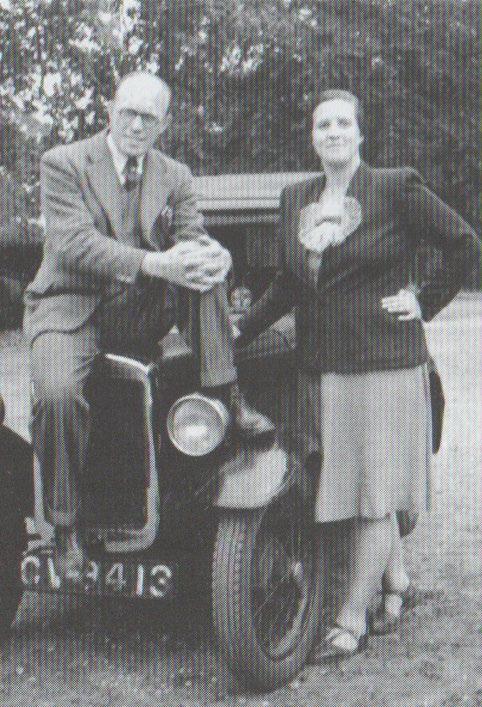
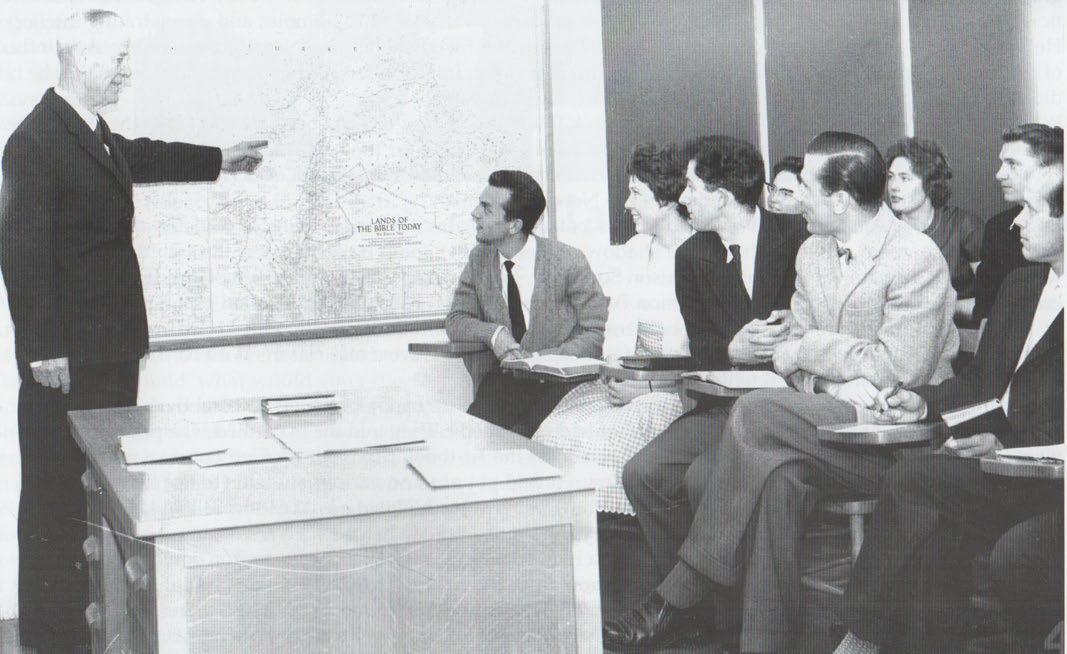
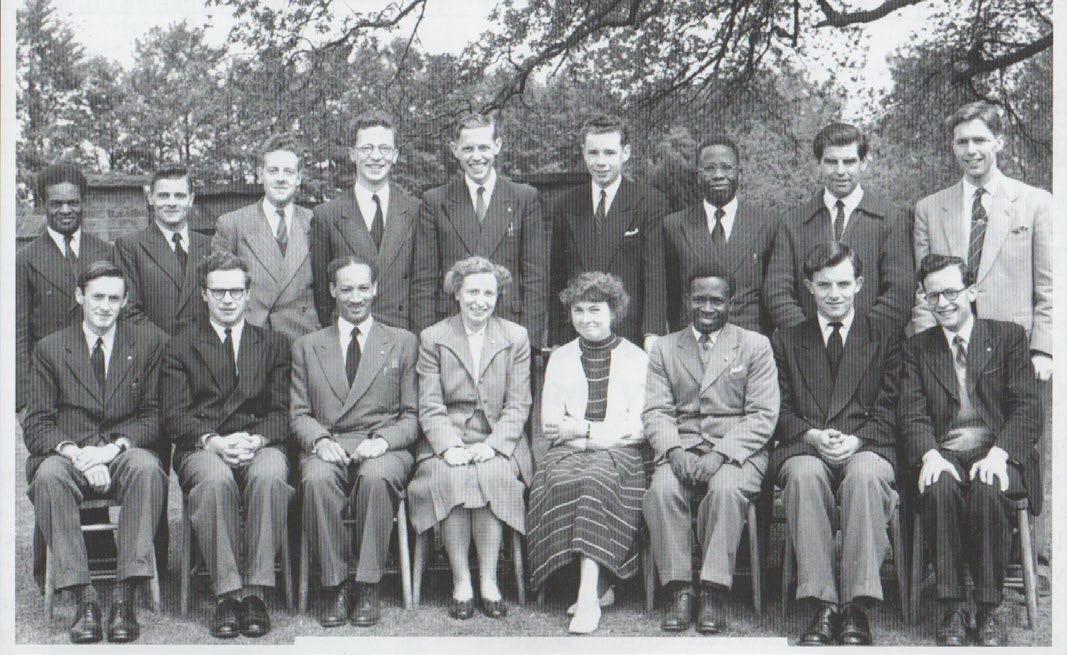
“As a student at Newbold, my days were filled with classes, work, choir, missionary outreach, class trips, and all the other activities of a busy college schedule. I was secretary to Pastor Norskov Olsen and the college staff, and also assisted Mr Brailsford in the biology lab. Needing some quiet from all this activity, occasionally I would get up early and go into Sylvia’s Garden and to the woods beyond. There I would sit and enjoy the solitude, listen to the birds singing, hear the rustle of tiny animals in the grass, and smell the wild flowers.”
Jean Epson, Newbold 1958 to 1960, One Hundred Years of Newbold College, p. 72
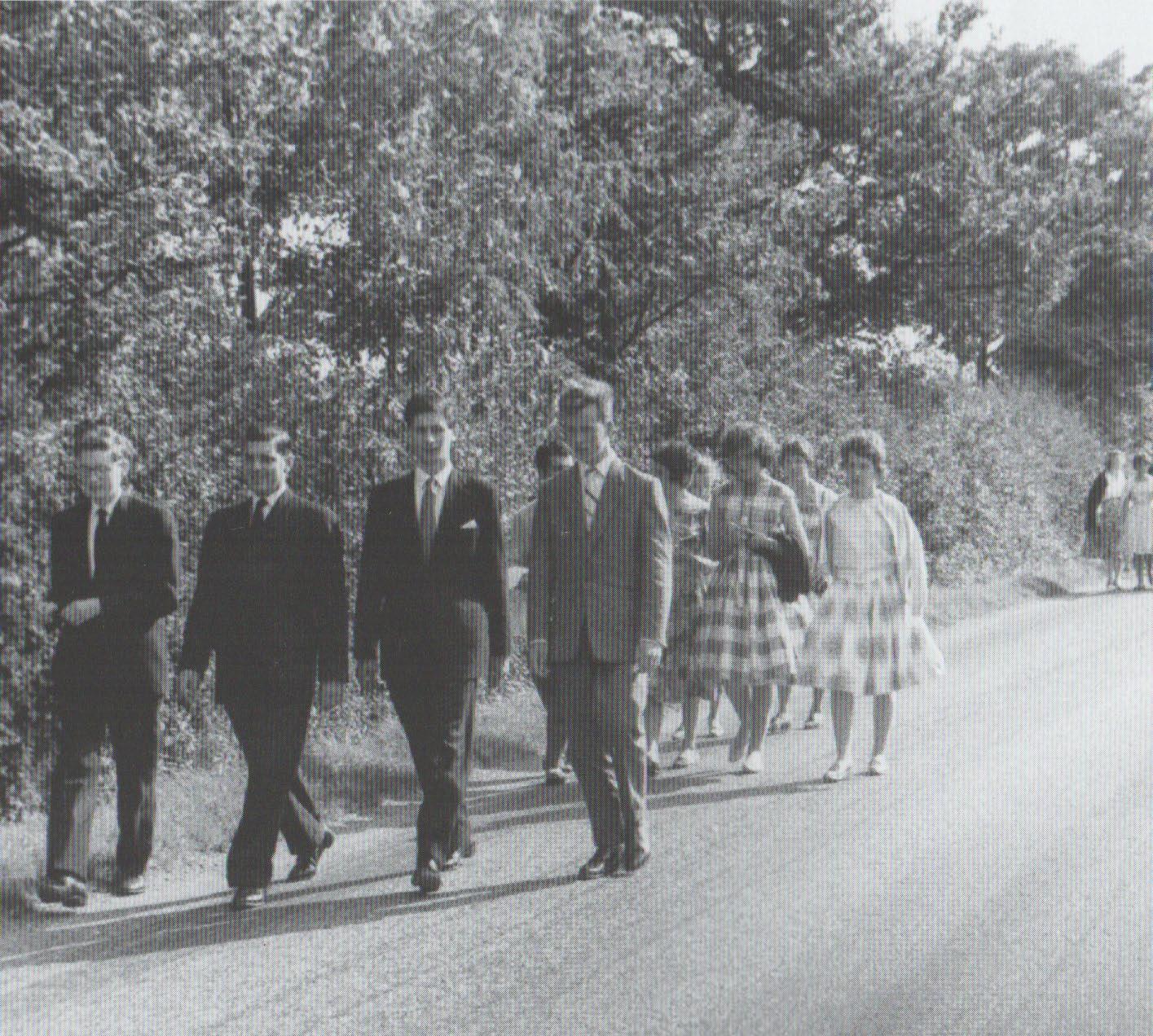
“The supervised Sabbath walk”
“In 1960, after ten years in the ministry, we and our two boys aged seven and 14 arrived at Newbold College from the Faroe Islands on a scholarship from the East Danish Conference. The Newbold experience was a drastic change in our lives! From the rough, treeless and windy islands to the mild green of England. From being a pastor in charge of a church to an obedient student in the classroom. From speaking Danish to a halting English.
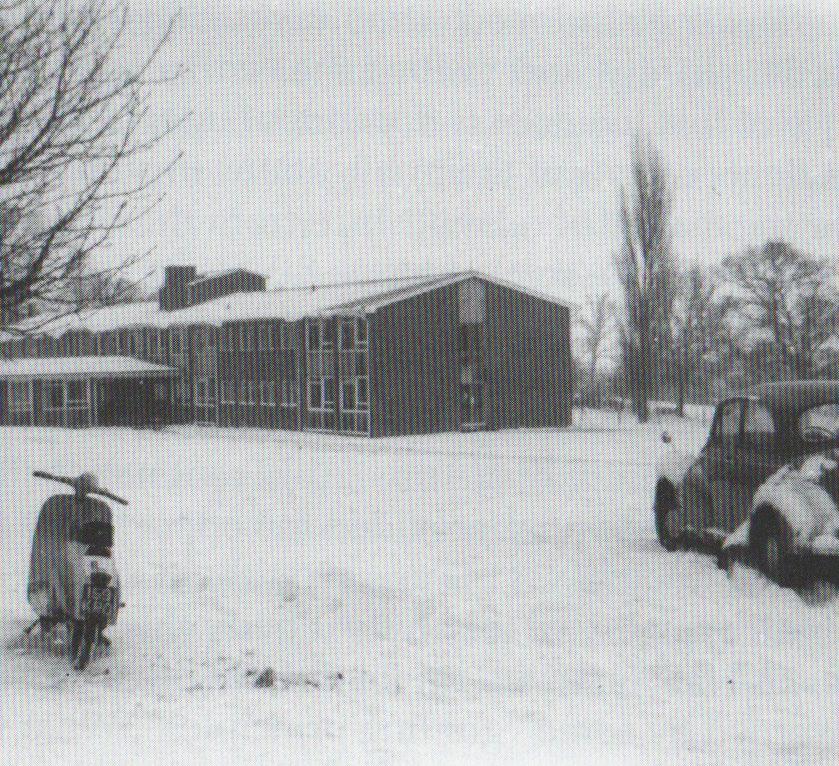
“As students at Newbold, we gained a lot. We received a recognised education that was accepted by the governments where, in later mission situations, we needed work permits. Newbold gave us also the very useful English language, which became our lingua franca, used (or misused) in our thirty years of service outside the borders of Denmark.”
Iris and Borge Schantz, 1960 to 1962, One Hundred Years of Newbold College, p. 108
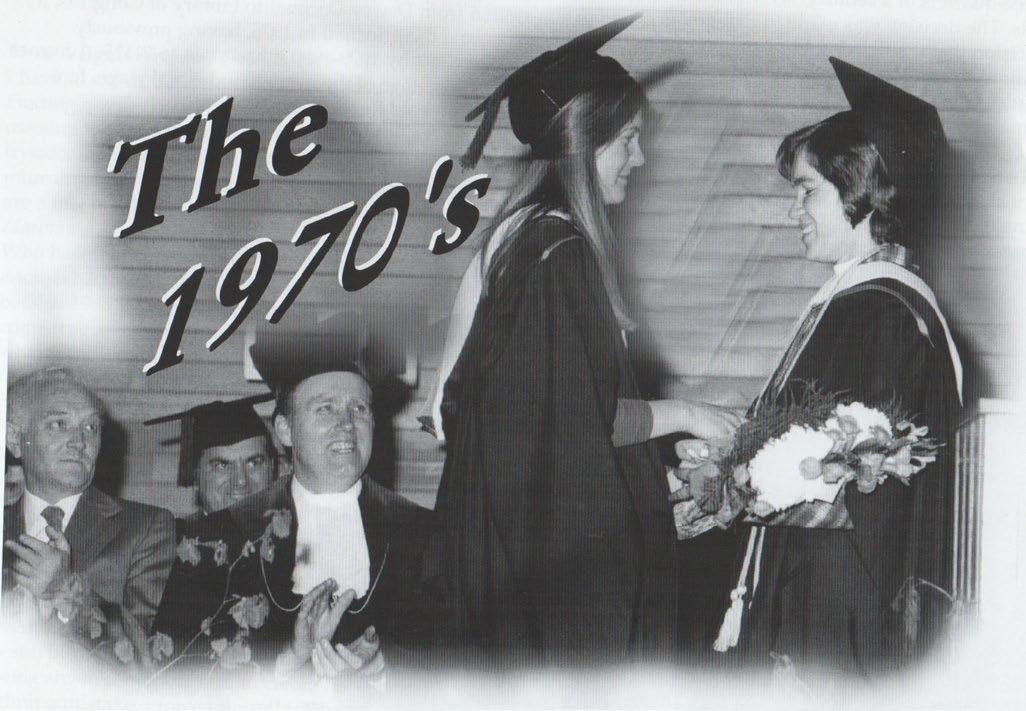
“Third time lucky, perhaps that should be restated as three times lucky, for this is how I describe my three stays at Newbold. In the early 1950s I lived here as a student’s child, between 1967 and 1972 as a BA student, and now as a student’s wife and a mother of three. Yes, the faces of Newbold have changed, I have been under five principalships, but Newbold and what it stands for has never really altered. Spiritually, Newbold has been a melting pot, a place for burning off the dross and polishing the character.”
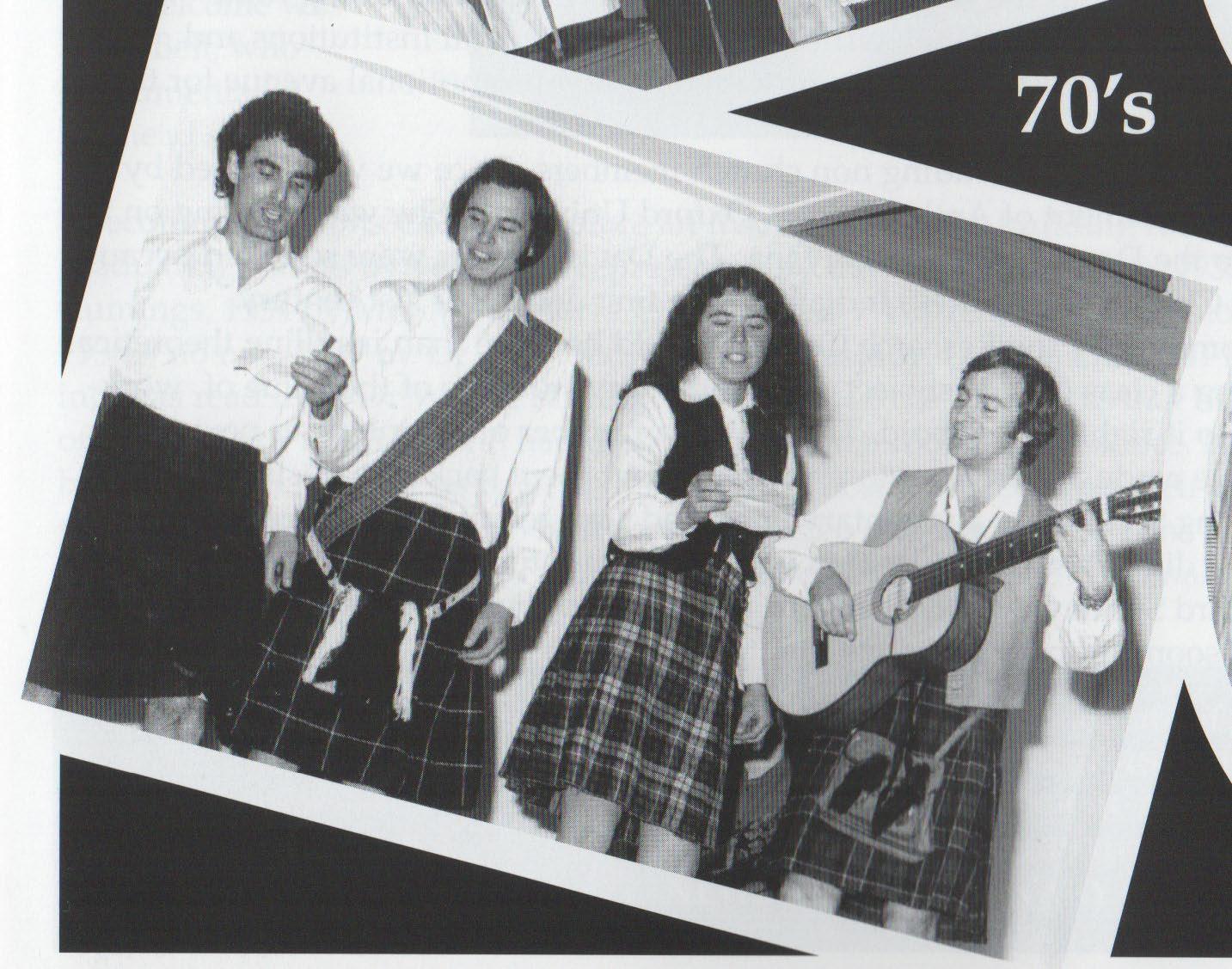
“In 1969, if you had asked a graduate of Newbold College about a ‘new’ library building, he would have exclaimed, ‘You’re dreaming!’ In 1975, starry-eyed, he would have led you to a new building behind the administration building.”
William M. Schemburg, published in The Old Newboldian, No. 8, Winter 1983
Heather Haworth, 1972 BA graduate, published in The Old Newboldian, No. 5, New Year 1982, p. 14
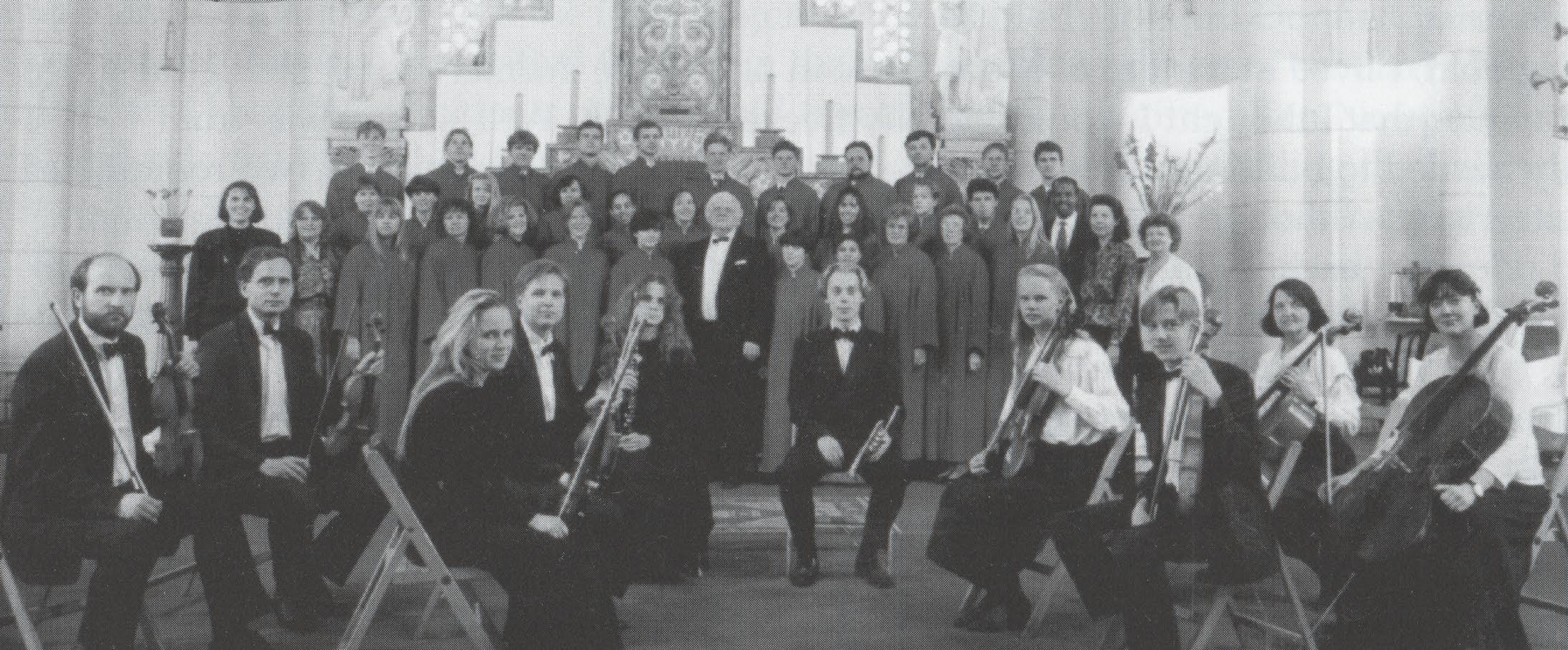
“What I remember best was the rich music life at Newbold while I was a music student. Our choir, under the direction of Mr Eivind Keyn, performed regularly and toured extensively in England and throughout Europe. I was privileged to travel five consecutive years with his choir, giving concerts in SDA schools and churches in Norway, Sweden, Denmark, Finland, Poland, Germany, Holland, Austria, France, Hungary, Italy and Yugoslavia.”
Vladimir Slavujevic (1983–1987), One Hundred Years of Newbold College, p. 142
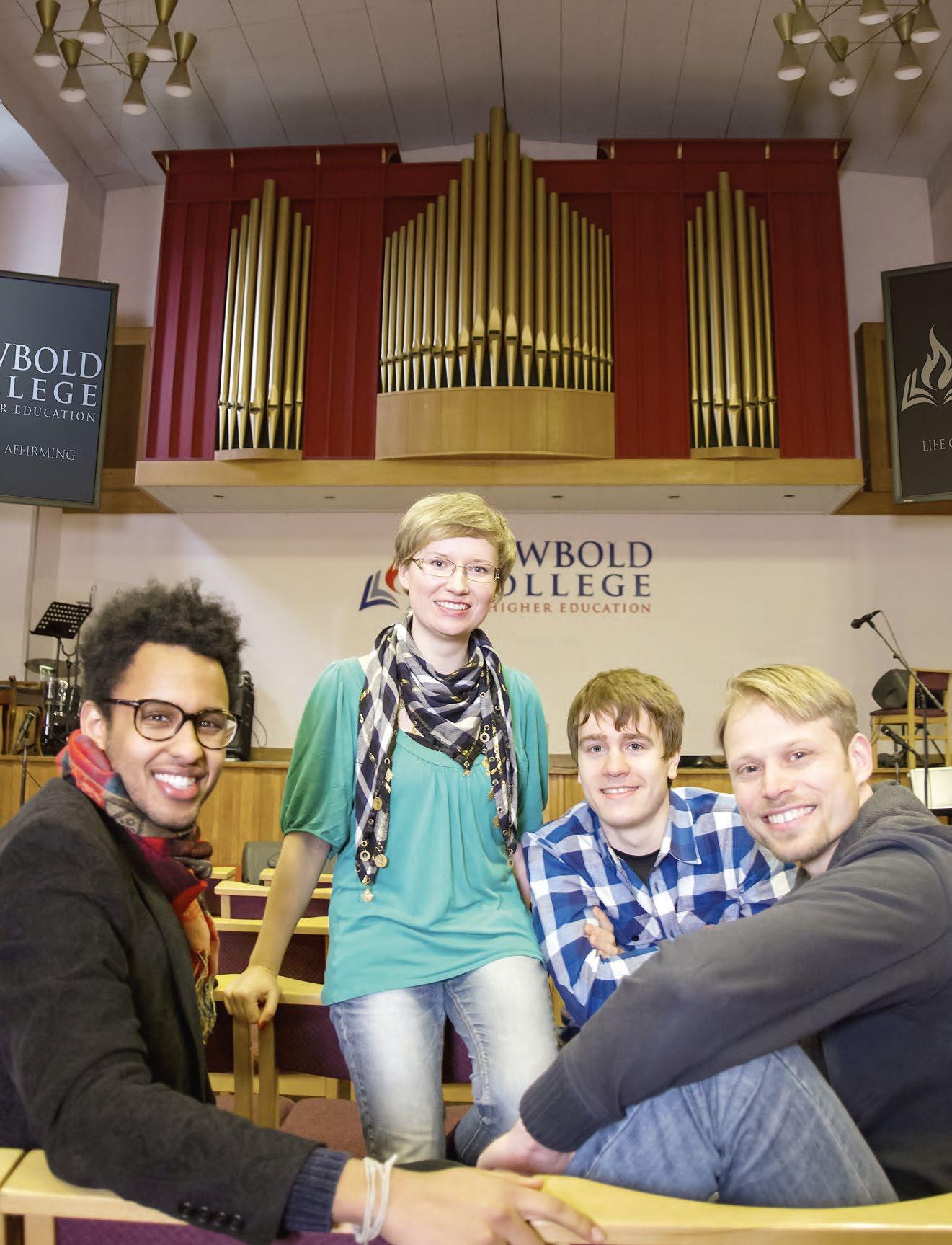
Jade Rescue Centre, home to 100 orphans, in Chiang Mai, Thailand. Gap Year students Robert Roach, Sarah Milchenko, Adelbjorg Ellertsdottir and Anni-Elina Vänskä fundraised prior to their trip to raise money to replace the kitchens in the orphanage, led worship and study activities for the children and assisted with teaching in nearby Chiang Mai Adventist Academy.”
“Gap Year Students Assist Orphanage in Thailand”, The Newboldian, Spring/Summer 2013, p. 31
memories and learned so much. Thank you for putting together this trip, it is something I will never forget. I hope to come back to Newbold soon.”
Sarah Delaware, British Culture Study Tour 2018
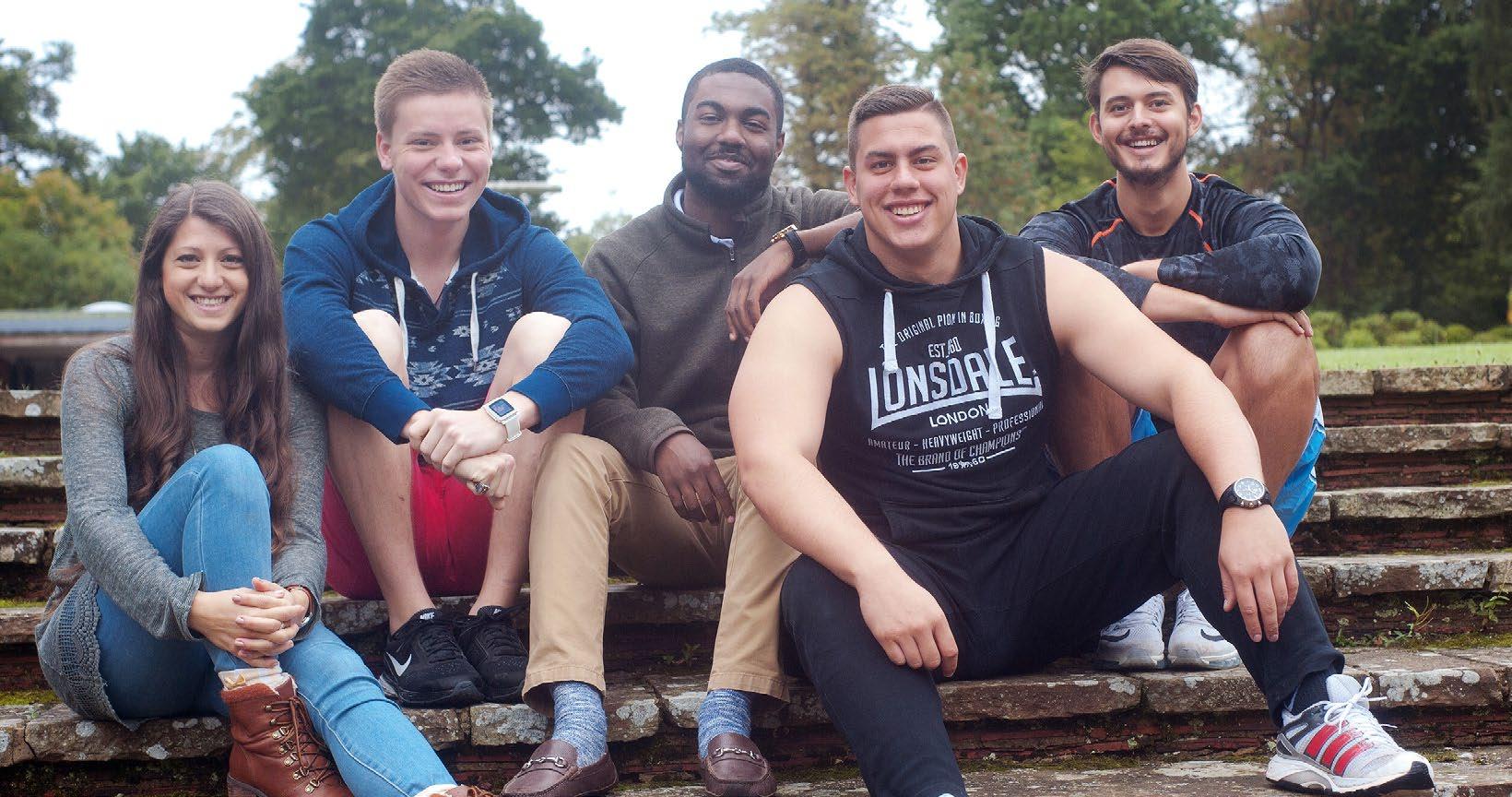

Former students share heart-warming stories of their experiences at Newbold – memories of inspiring lecturers, musical adventures and tales of ‘boy meets girl’, funny Valentine’s days and motor vehicles mischievously parked in the foyer of Salisbury Hall. We want to thank each person for their valued contribution to this special edition of the Newboldian.
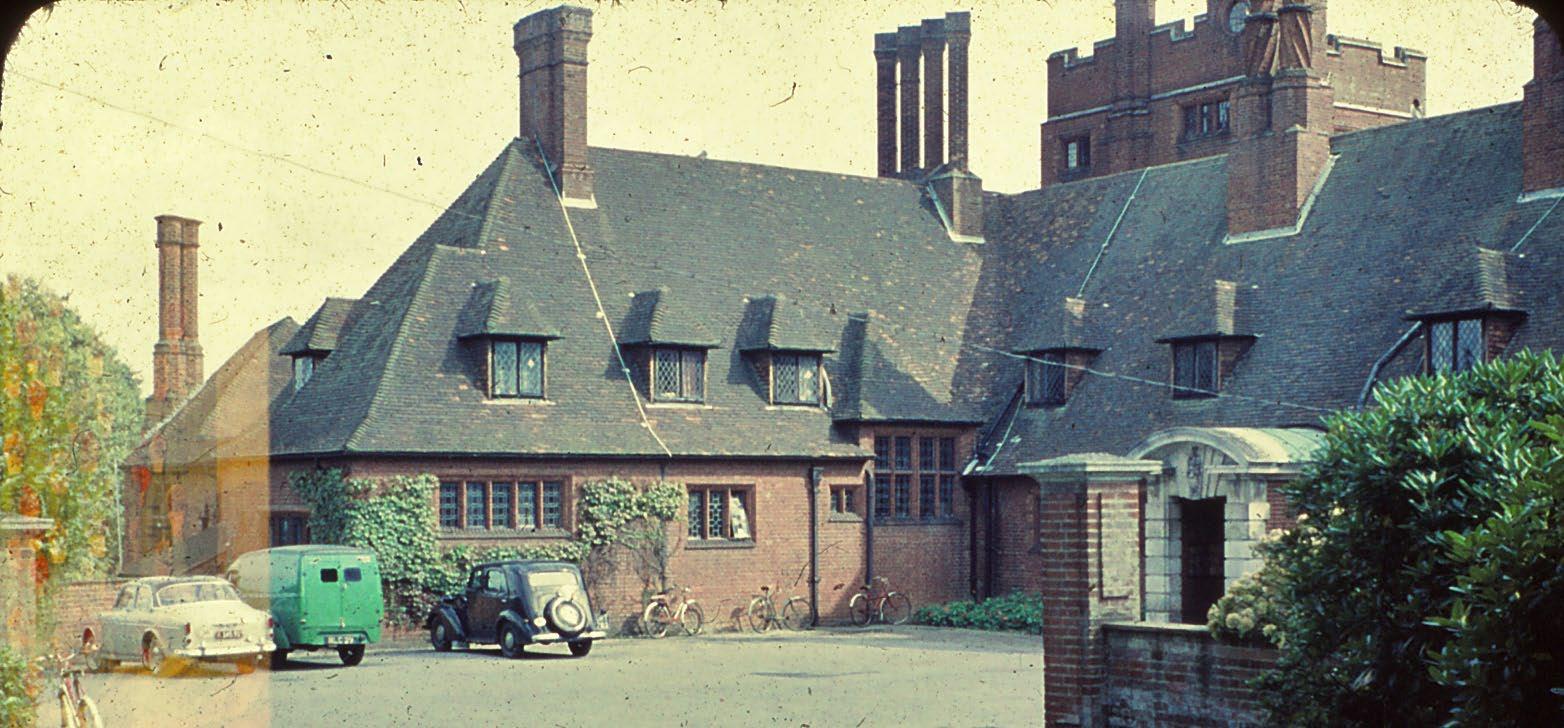
My father, Frank Blake, was born at Enfield Lock, near London, about 1902. He came to Canada in 1918 and started a seed business with two friends. I thought it would be wonderful to go to college in my father’s home country; a year at Newbold would help acquaint me with my English heritage.
I really enjoyed my classes at Newbold. Dr Graham was my favourite teacher, and I still remember dear old Elder Keogh and the study of Daniel and Revelation. It seemed as if there was almost
I had the privilege of joining the special choral group, going with the group to Scotland and singing with our quartet. I still remember visiting the tiny little apartment where David Livingstone was born (during the tour).
Another highlight of the year was going to London and hearing the performance of the Messiah. On another occasion, I attended a concert by Marian Anderson, a famous black American singer.
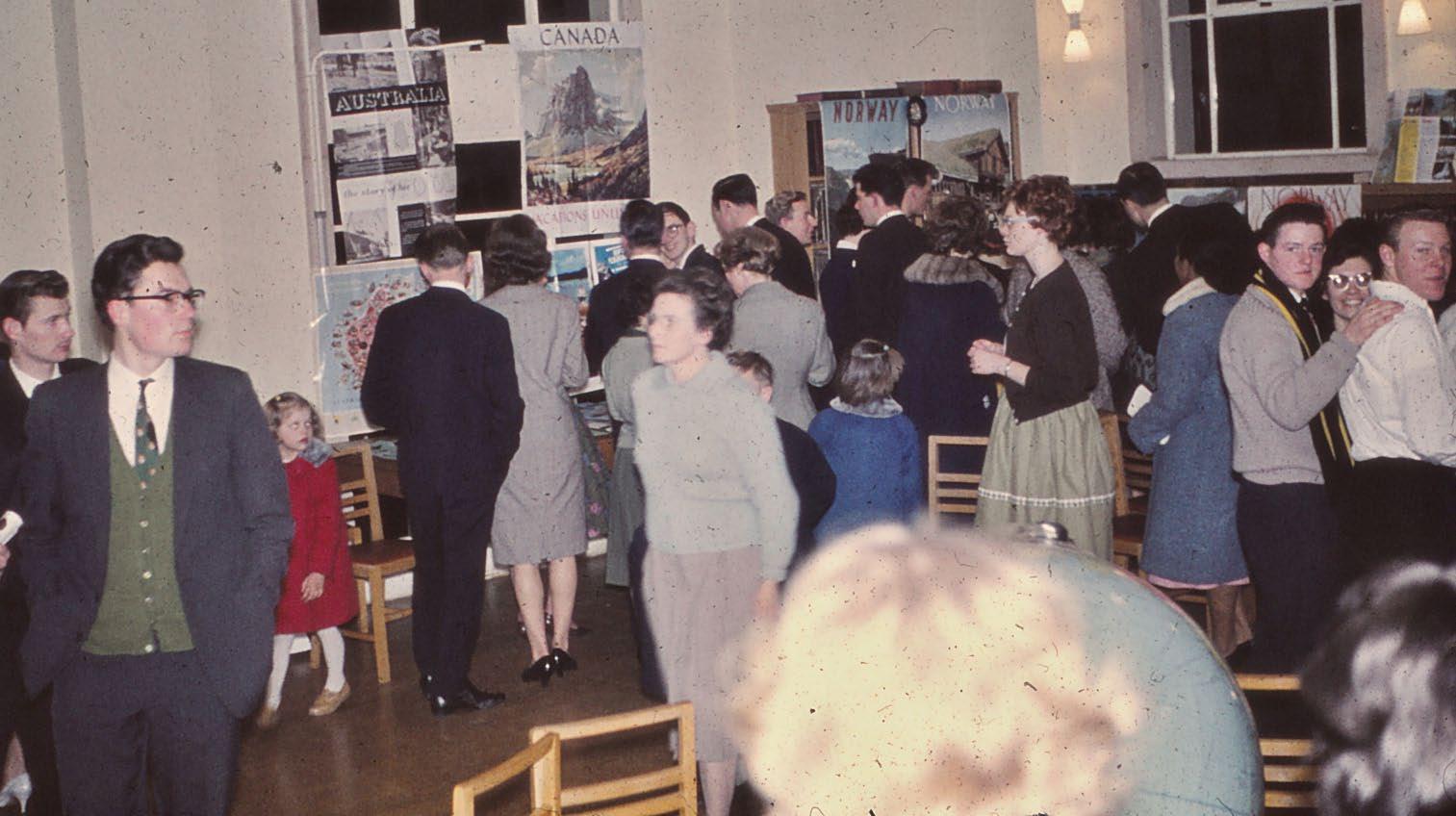
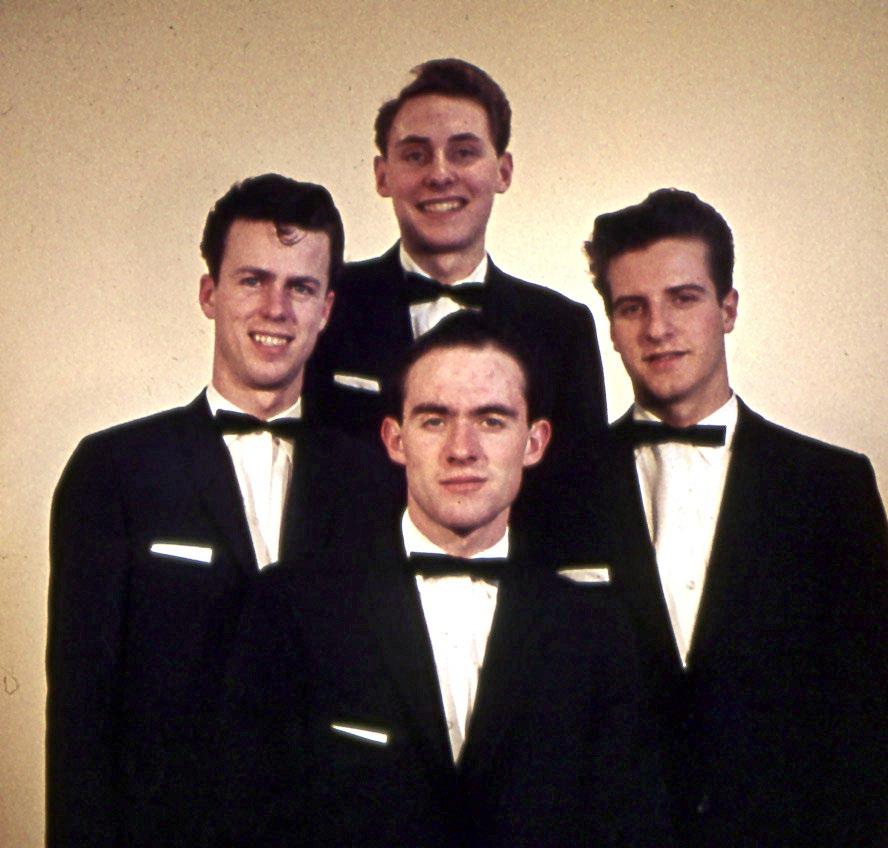
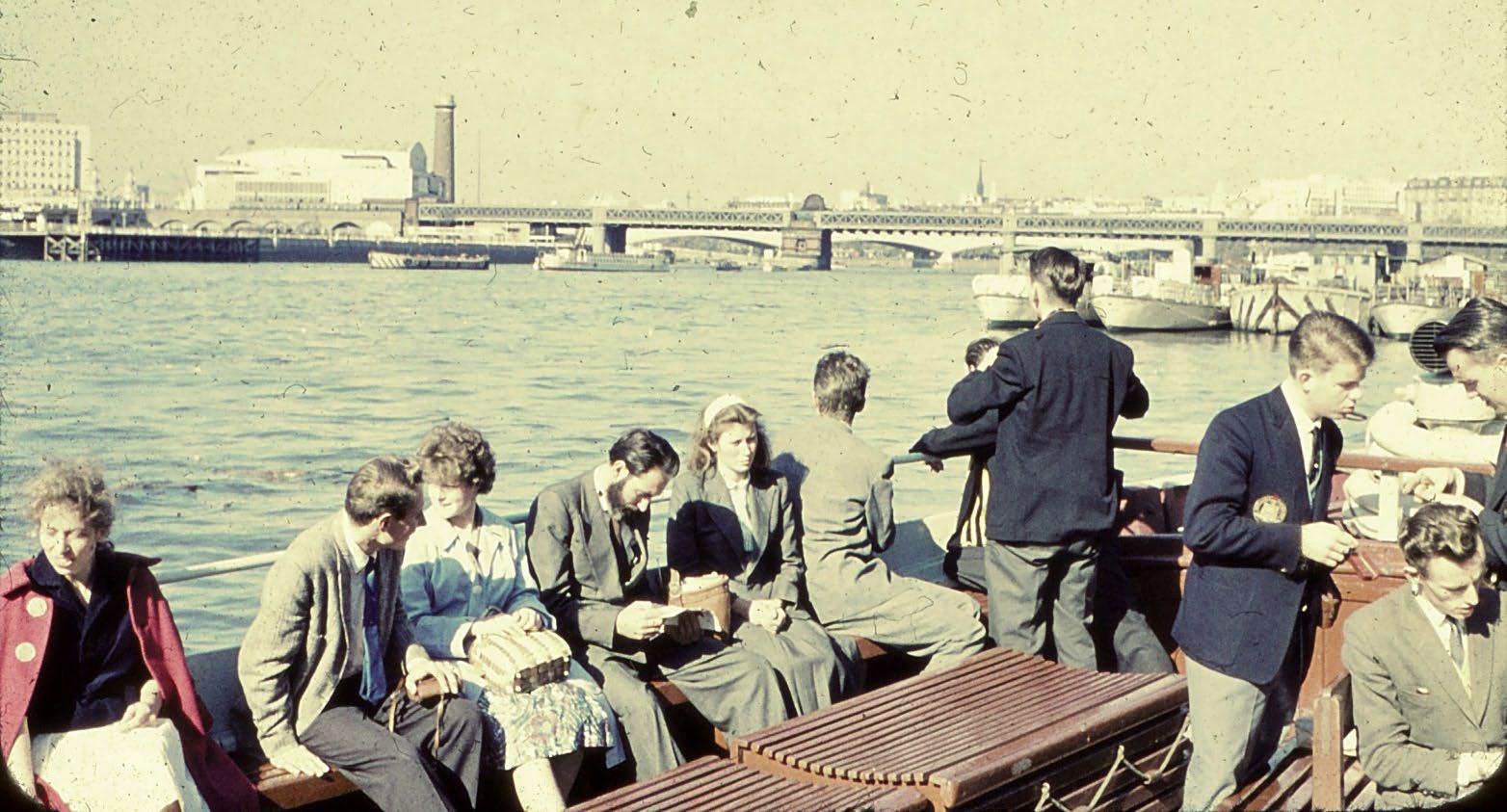
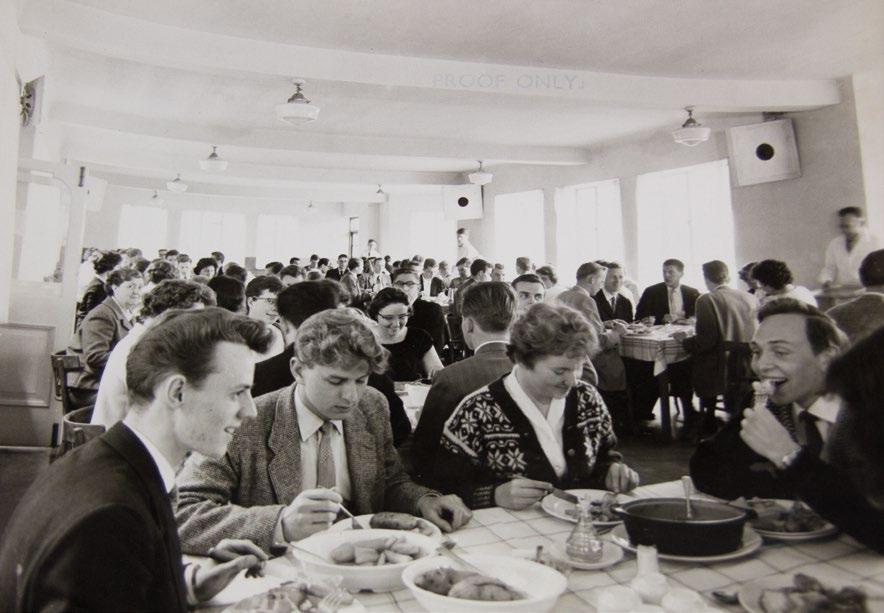
I remember the good times in the dining hall. Friday nights, we were to sit with a new group of students – always made up of a mostly new assortment of countries, which was a strong impetus to make a new set of friends, not just students from our home country.
On arriving at Newbold, I became involved in selling bedtime storybooks from door to door on Sundays. I always came back having made more than if I had stayed and worked in the carpenter shop at the College.
So, I have warm memories of my education at Newbold. God led my wife and me beyond pastoring to a special ministry for the deaf. Our middle daughter became deaf at three months,
and we later adopted a little deaf boy. In 2019, my wife of 55 years passed away, but I have continued in the Deaf Ministry with Gospel Outreach of College Place, home to Walla Walla University. Last year I remarried. My new wife was part of one of my pastoral congregations, and we are working together to help share Jesus’s love near our home here in Alberta, Canada, and especially in the world of the deaf.
Special greetings to any of my friends who were at Newbold during the 1961–1962 academic year! I think I was the first student ever to attend Newbold from Canada during a precious year I hope never to forget.
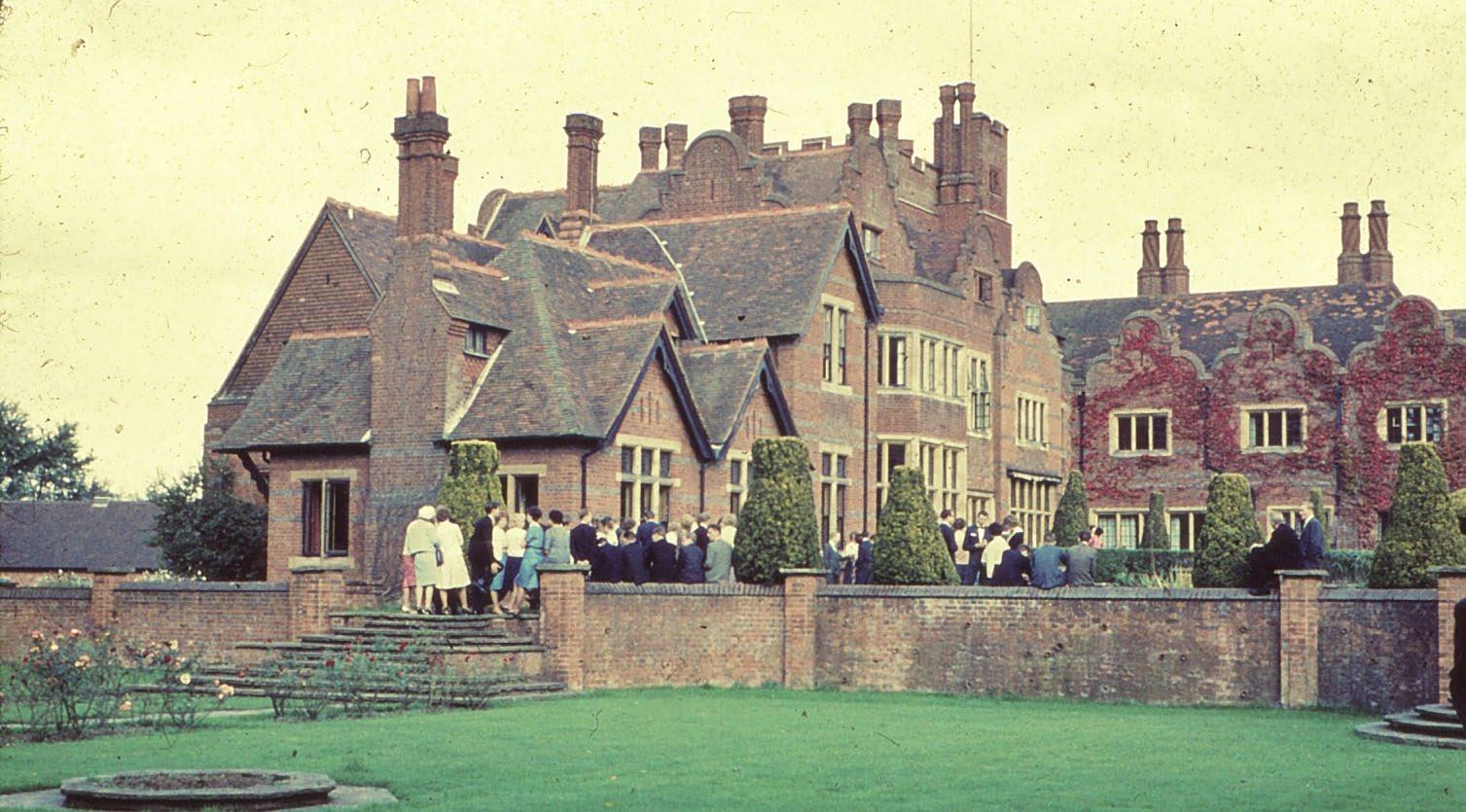
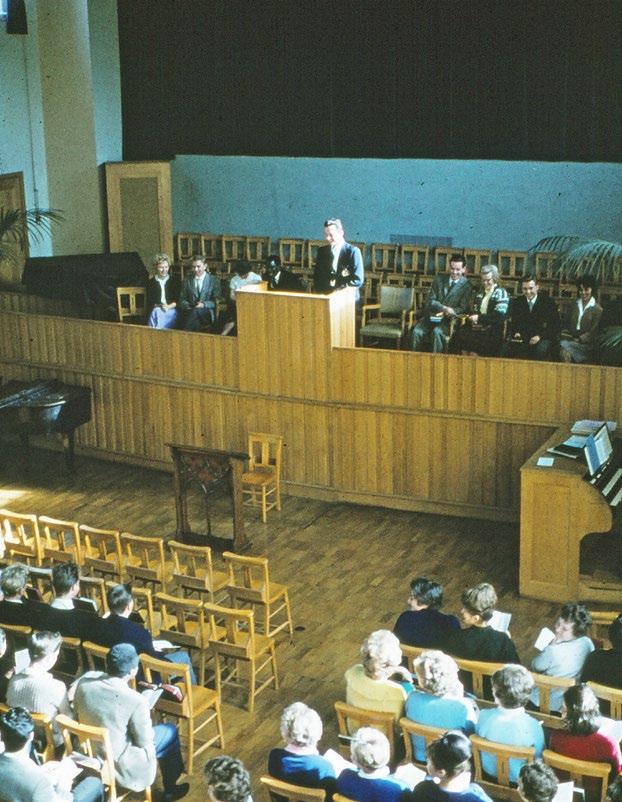
Prior to my arrival at Newbold, an underground student newspaper mysteriously arrived in everyone’s mailbox on an occasional basis. Articles ranged from the sublime to the ridiculous, but what irked the faculty the most were the “advice columns”, which, for instance, told students, “Take Professor Bamner’s class! You can get an ‘A’ without trying,” or, “Avoid Professor Nimard’s class! You will have a hard time getting a ‘B’.”
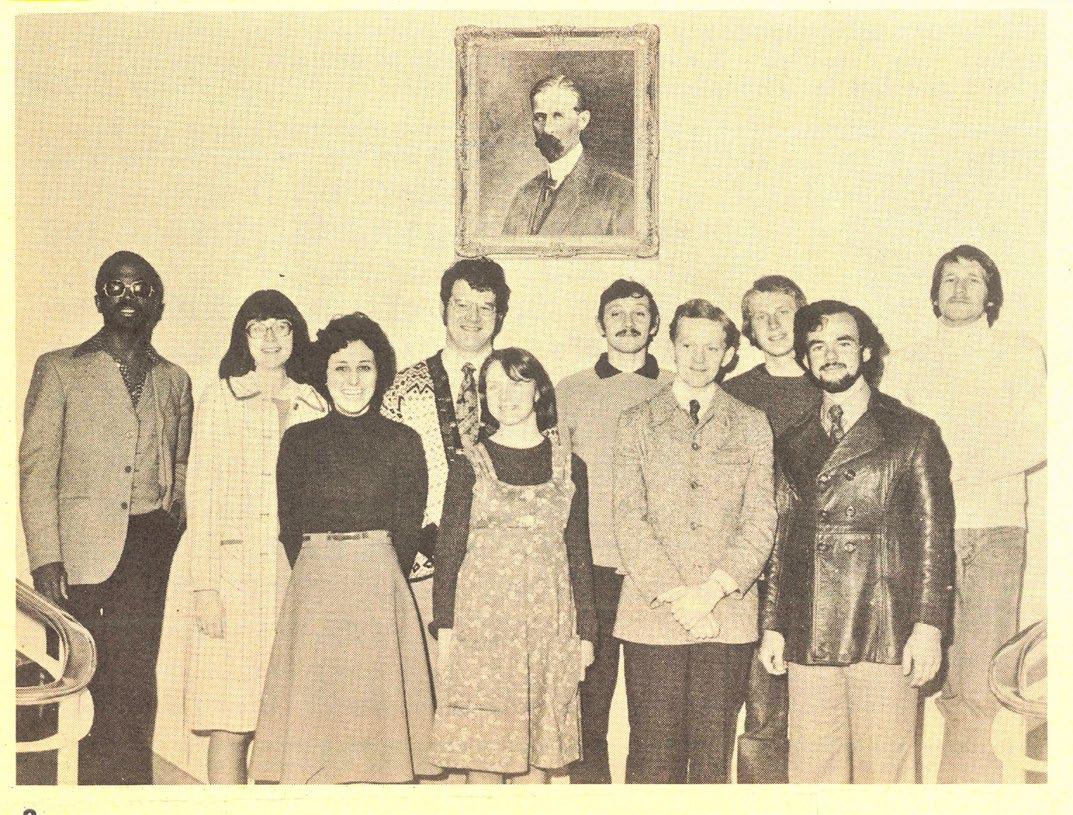
The journalistic masterpiece was called The Earnest Appeal. There was more than one student named Ernest, and they were immediate suspects, along with one or two others. Naturally, no one would own up to authorship. Every so often, despite the best efforts of Administration to keep the building locked and Gestetner machines policed, another edition of The Earnest Appeal would appear.
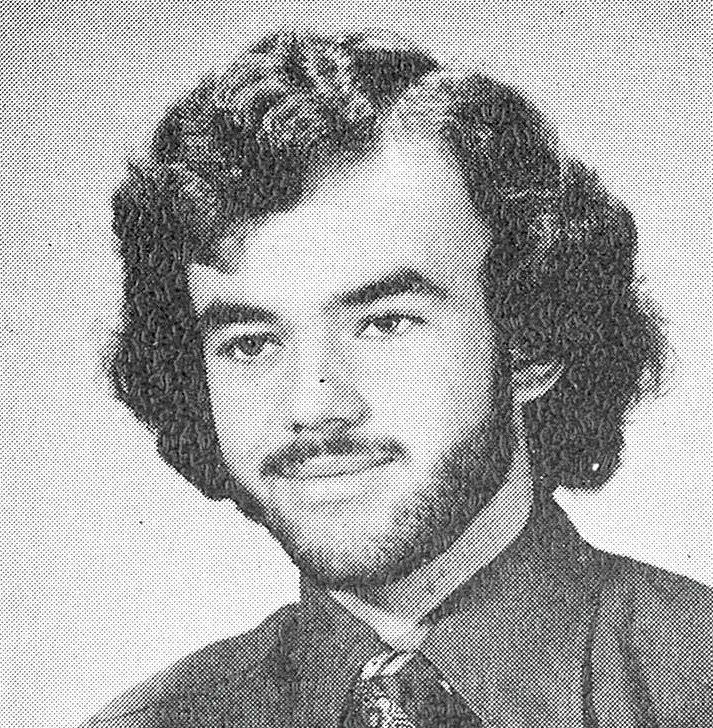

By now, I was in college. One year, I rather reluctantly ran for the position of Student Association President. Somewhat to my surprise, I won the election. At the first meeting of the Student Association, I assumed my position at the front of Salisbury Hall and, wielding the gavel that came with the office, declared the meeting open for business.
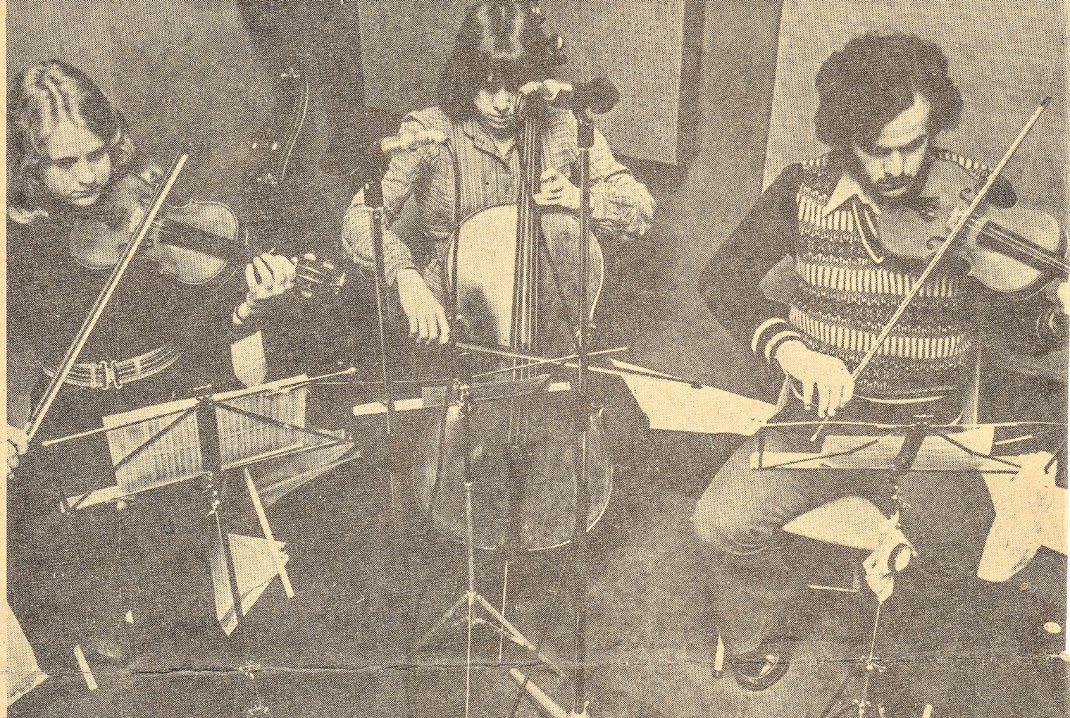
One of the students immediately begged leave to speak. Assuming a serious mien, which wasn’t his trademark, he began a lament targeting those who would stifle free speech. Opening up a wellknown devotional book by Ellen White, one of the three 19th century founders of the Seventh-day Adventist Church, he continued, “In summary, I read this solemn injunction from the inspired writings: ‘Let more earnest appeals be made’!”
The assembly burst into laughter. A day or two later, the next edition of The Earnest Appeal gave tribute to “that brave young man” who had stood up in the assembly and cried out for truth.
Whether by design or apathy, it seemed that the college administration ceased their efforts to stamp out the samizdat, and no more Earnest Appeals appeared.
James Astleford (1976 and 1978)
Photography: Supplied
The voyage across the calm North Sea in the light of June promised a brilliant summer. When I arrived in England, I drove my bright blue Volkswagen Beetle through the rolling green English landscape and finally stopped outside Moor Close.
I was in the MA Theology group, made up of people of various ages from different countries, and I was the only woman in our class (most of the time). I did my MA studies during the spring and summer semesters and worked as a pastor and chaplain during the winters. However, I enjoyed the thought-provoking lectures held at the brand-new seminar building, Church History with Andrew Mustard, and the never-to-be-forgotten Doctrine of Man with Mike Pearson. I will never forget Tuesday tea with Rose Howson in her office, where problems were solved among our two kindred spirits.
I learnt the honest interpretation of ancient text from the Bible during Sabbath School in Room 16, led by my long-time friends Mike and Helen; its value cannot be overstated. And then, there was the
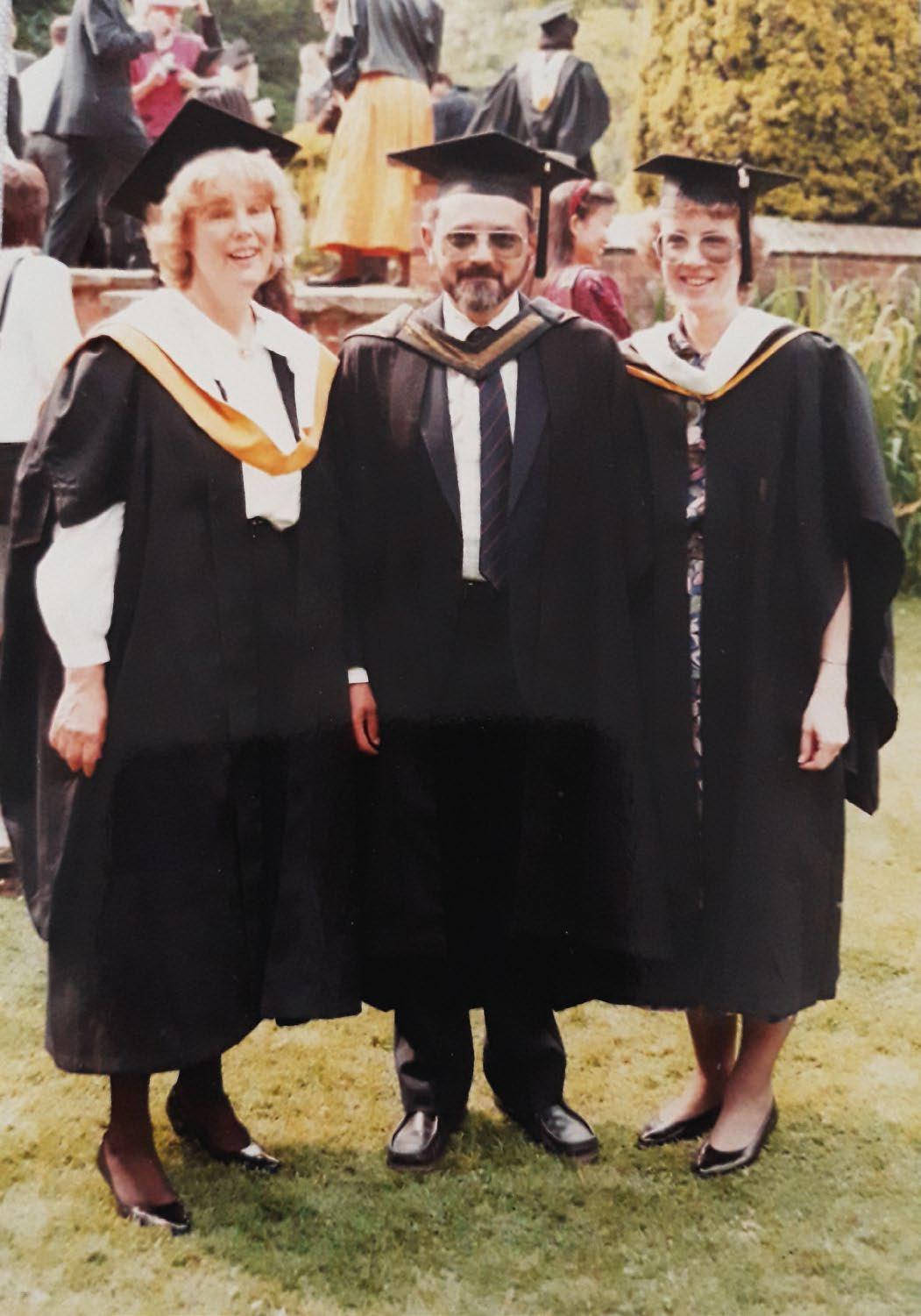
magnificent singing of English hymns as we stood in Salisbury Hall where beams of sunlight poured through the high windows, the walks along the lanes in Binfield, alone or in Sabbath groups, and the picnics in Parkham’s Park – oh, such summers filled with hope!
I enjoyed the intellectual, spiritual talks in and out of class and the optimistic support that all the female theology students received from our teachers – sadly, our hopes were dashed soon after we graduated in June 1990. The history of our Church has since reversed our fate: all of us women pastors are still here despite everything that has happened. My experience at Newbold gave me resilience and a deep-rooted faith that carried me through the not-so-easy years I had to endure. I am forever grateful for the privilege to study at Newbold, even in mid-life, 22 years after I first decided I wanted to go there.
Johansson Öster (1990)
In the week leading up to Valentine’s Day, 1970, only the girls of Moor Close (the ‘ladies’ residence’) seemed interested in romance. The boys were not paying any attention. One evening after tea (supper), the boys returned to Keough House (the ‘boys’ dorm’) to discover that their pyjamas had disappeared. In those days, nobody locked their doors, so the missing clothing had been simply lifted from under pillows and snatched from wardrobes while everyone was in the dining room. The event created several days of mystery as the boys made do with other clothing in the barelyheated dorm. Then during breakfast on the morning of 14 February, as the assembled students ate their daily Sunnybix, a dozen or so girls marched into the dining room carrying a gigantic cardboard heart. The heart, decorated with a huge red ribbon tied in a bow, almost touched the ceiling. Stapled across the heart were the missing pyjamas. The girls sang a sweet, romantic song and then announced that any boy who asked them for a date would receive their pyjamas in return. After Valentine’s Day, the girls left the unclaimed pyjamas in a pile in the boys’ waiting room at the dining room entrance. I wonder how many couples are still together, 51 years later?
Coltheart (1974 and 1975)
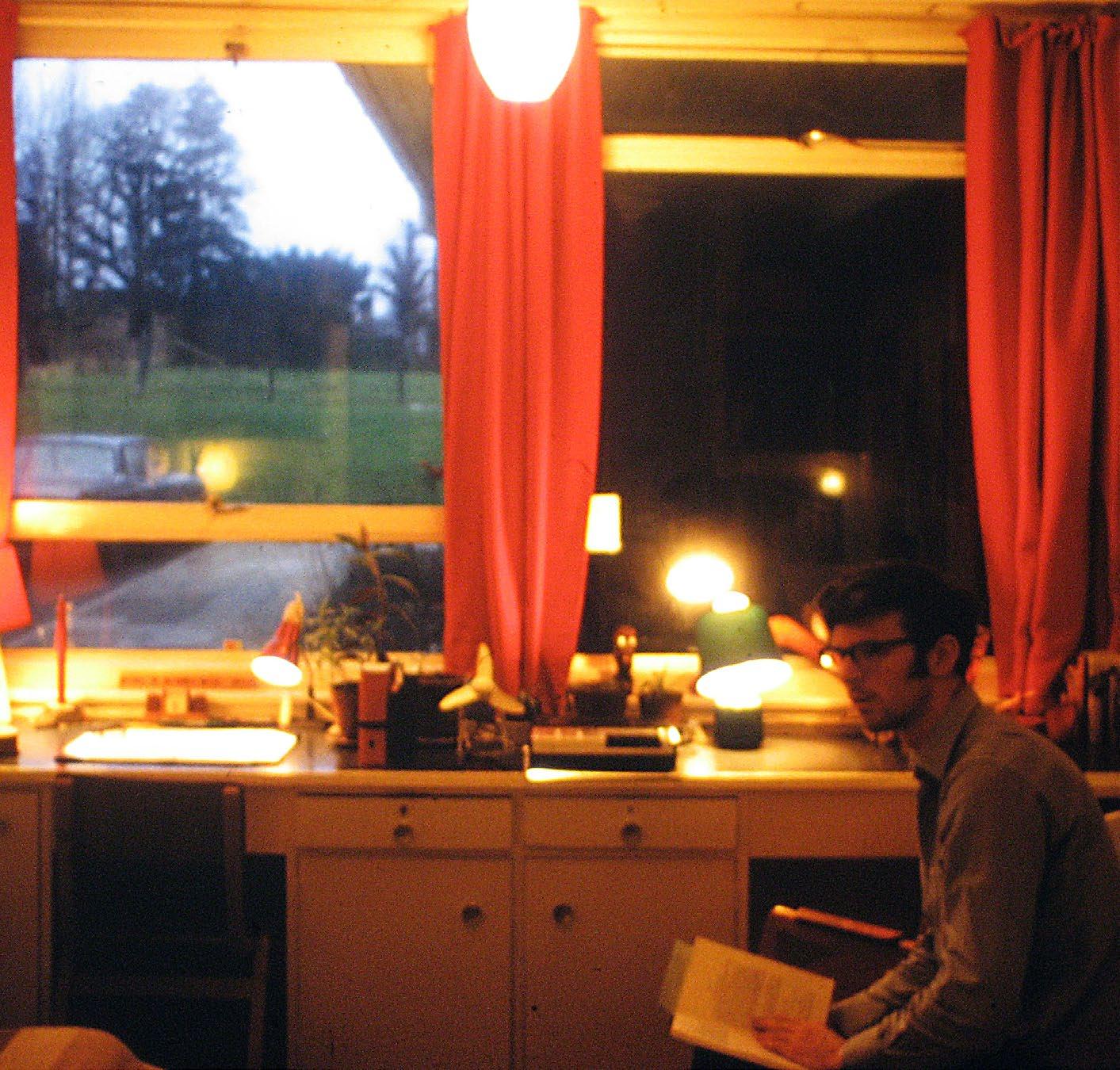
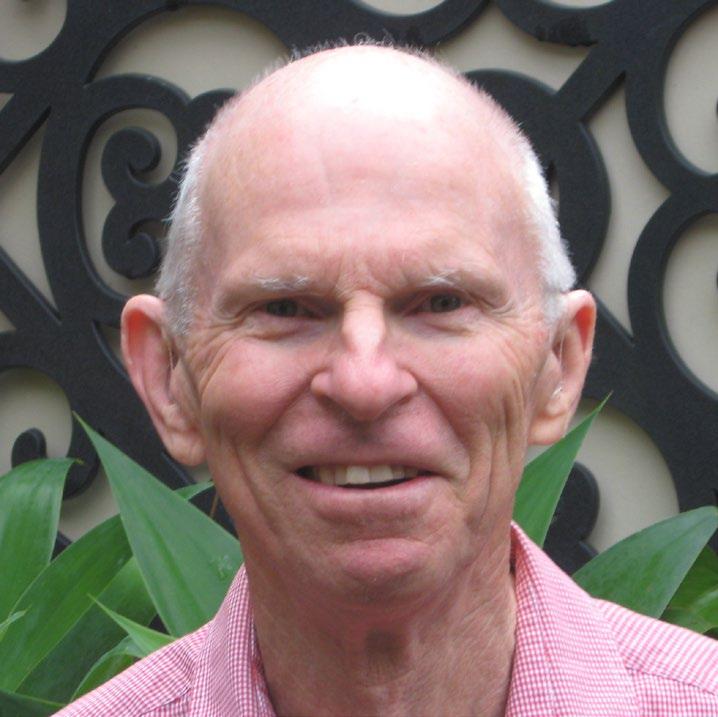
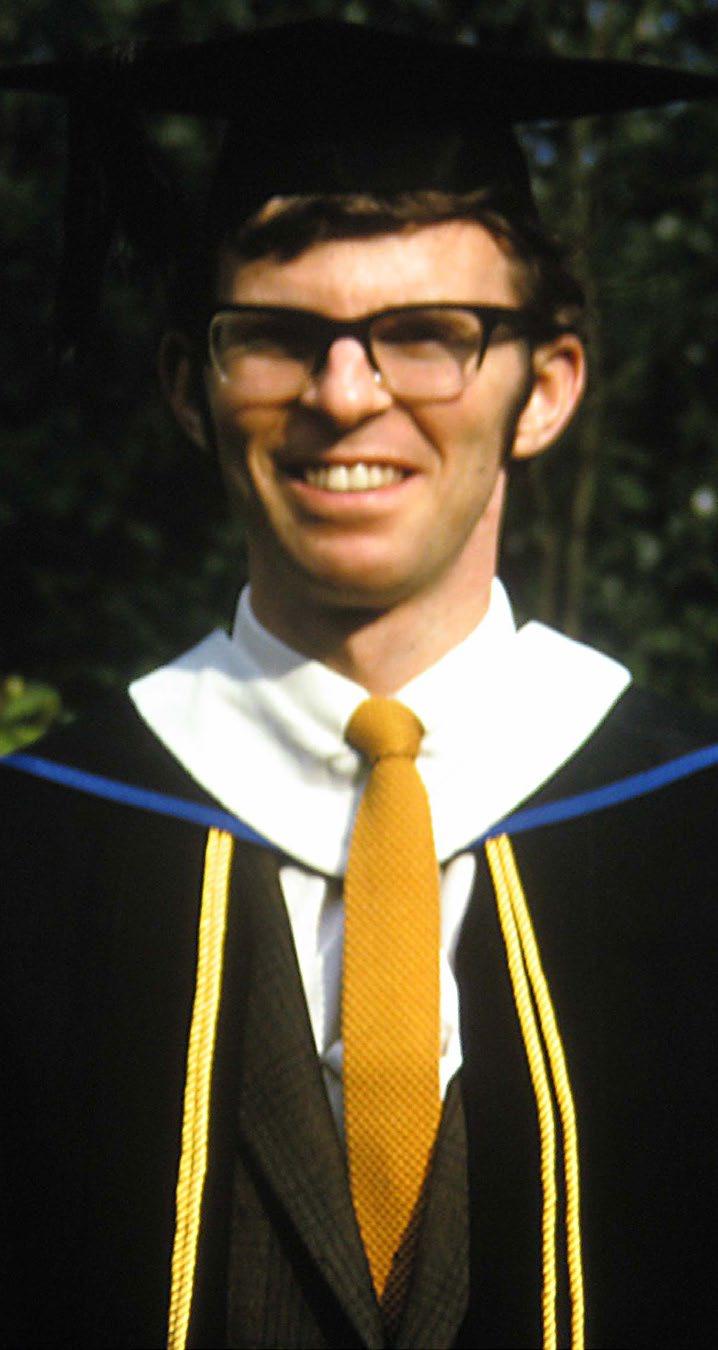
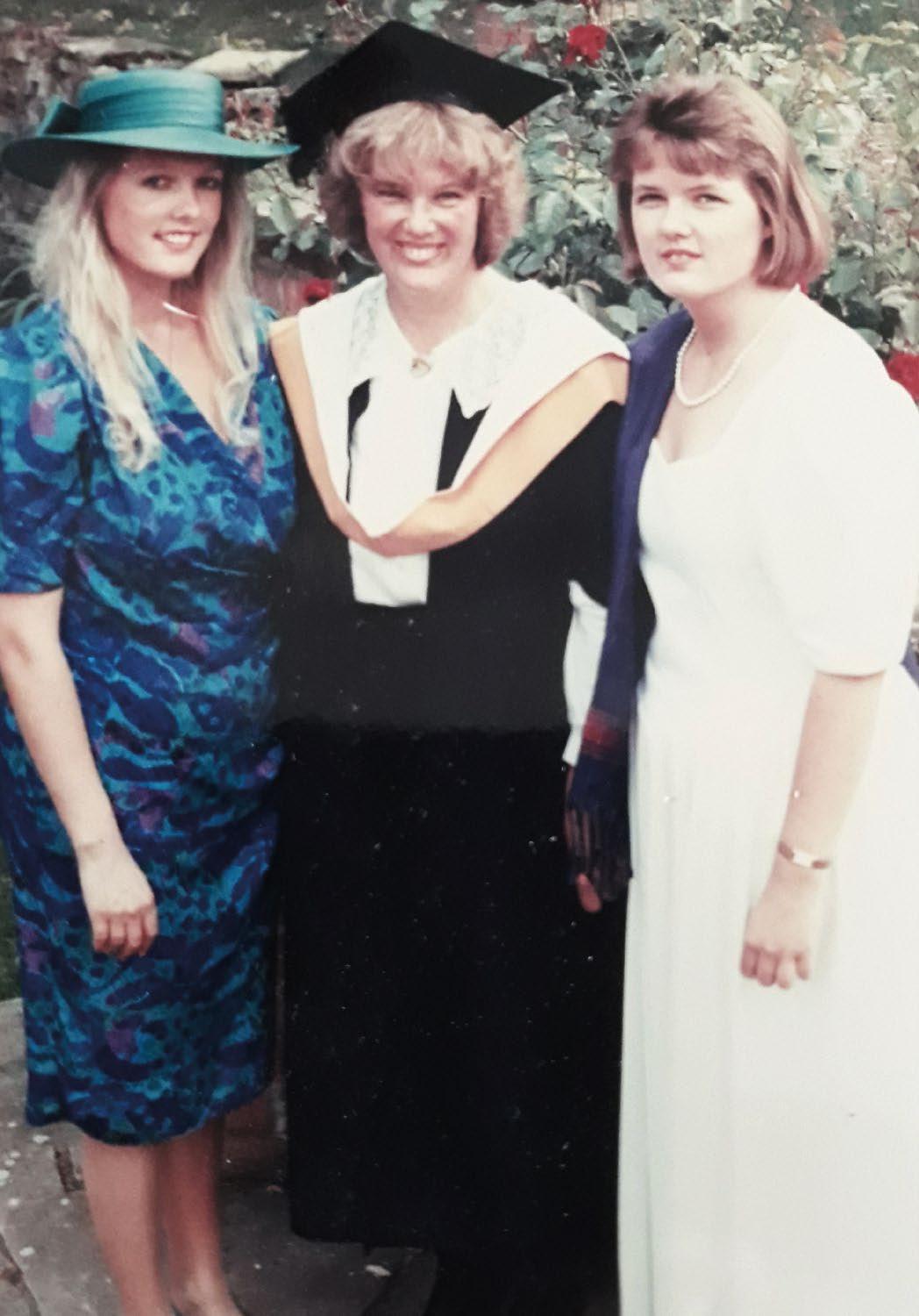
Soon after my sixteenth birthday in 1952, I entered Newbold to take the Teachers’ Course. At that time, there were 120 students, about 90 per cent British. I quickly settled and enjoyed the social life.
I really enjoyed the Saturday-night student entertainment, trips up to the New Gallery Evangelistic Centre in Regent Street, London, even doing some visiting for Pastor Vandeman. Sunday mornings, I worked in the large greenhouses and enjoyed the traditional Sunday lunch of savoury pie. I spent Friday afternoons scrubbing the entrance hall floor of Moor Close with Clemency Phillips-Mitchell; the boys left many large black scuff marks on the floor during the week. All classes were held at Moor Close at that time. We had assigned seating for meals each week which was posted on Friday.
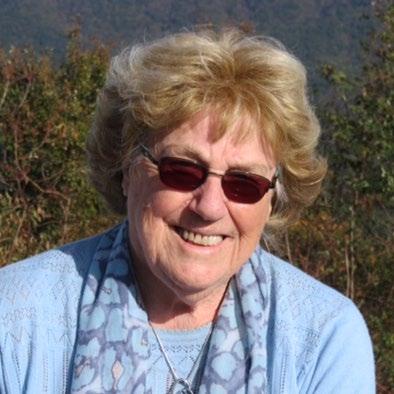
I discovered I could combine two courses with a little extra work, so I also completed the Bible Instructor’s Course, graduating in 1954 and 1957. I organised our 50th and 55th class reunions. Sadly, many of our class members are now deceased.
The two years I spent at Newbold, 1952–1954, were the best years of my youth. Today, I live near Southern Adventist University, Tennessee, USA.
Hardy-Mansfield-Baerg (1954
and 1957)
At the start of a new class, my friend tried to check out my interest in girls as they filed into the classroom. He invited a girl he knew to sit beside me. I had never seen her before, although it was her second semester at the College. When the teacher entered the classroom, he announced we should maintain seats for the remainder of the semester (this never happened in any other class). I barely spoke to the girl ‘locked in’ beside me until a few weeks later. Having twice failed to find a date to the Valentine’s Party, I asked her out. To cut a long story short, we married in Finland in 1975, graduated from Newbold in 1976 and celebrated our 46th wedding anniversary in May of this year.
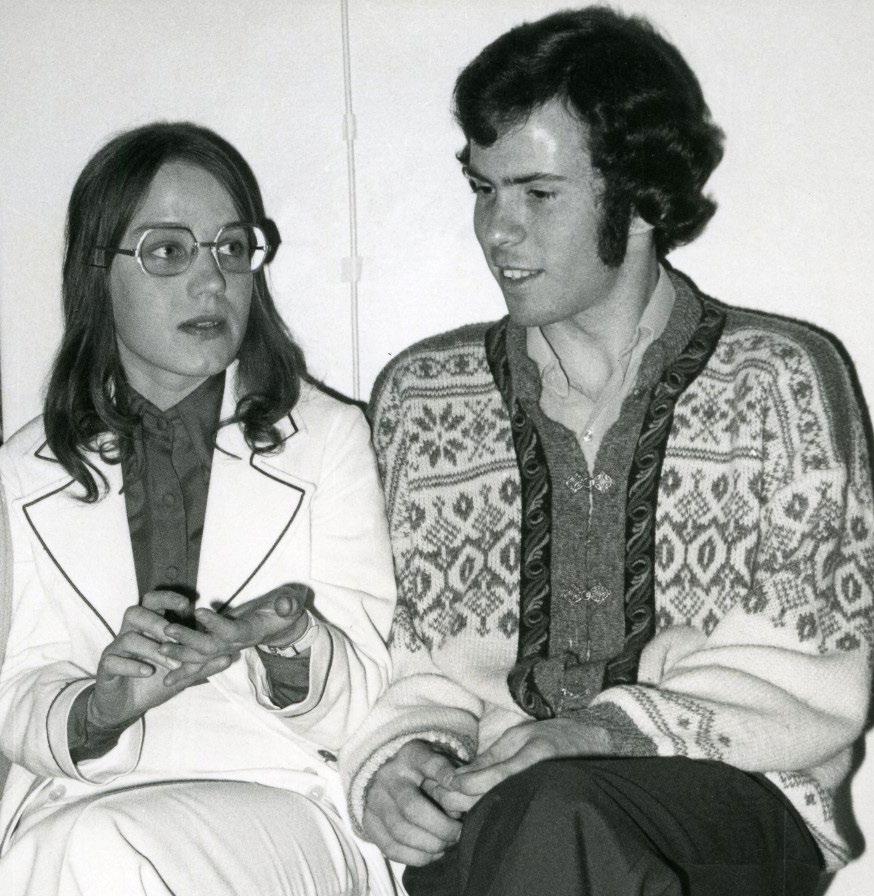
First date: 14 February 1974
I recall the time when the College was waiting to complete the installation of the organ pipes on the platform in Salisbury Hall. Word got around that someone was planning to park a small car on the platform. Newbold’s administration was seriously unimpressed. The principal, Pastor Roy Graham, announced in assembly if anyone attempted to do such a thing, he would expel them immediately (before this, someone had mysteriously parked three small cars in the foyer of Salisbury Hall, so they took the threat seriously). Anyway, the following day, the College administration discovered a full-sized cardboard cut-out of a Volkwagen on the platform, much to their relief.
Pirjo (Hautala) Coltheart (1976) and Alvin Coltheart (1976)
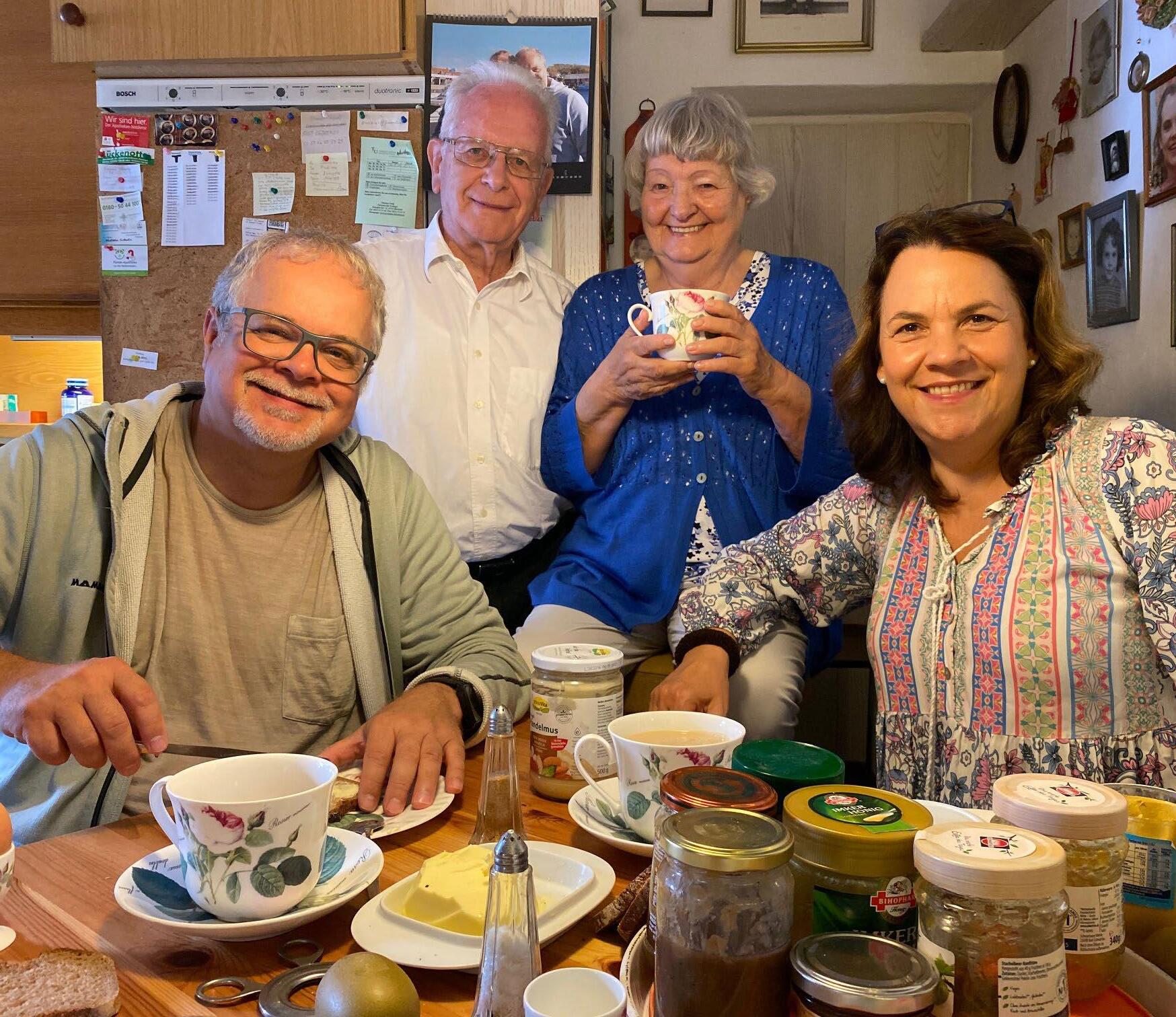
I met Margot at Newbold. We finished our degrees and graduated at the same time in 1963. More than that, we found love and marriage, and after entering the ministry in the Westphalian Conference, Germany, our family grew from two to five children. Our eldest child chose to follow suit by going to Newbold to study English and Religion from 1990 to 1993. His eldest child, our first grandchild, was born during that period. We continue to be thankful for the time we spent at Newbold and the many friendships near and far over the last six decades.
As we reflect on Newbold’s humble beginnings in the early 1900s and journey through to the present day, we invite five former principals to share their thoughts on the College. Their contributions form a part of our tribute to the dedication, commitment and leadership of each principal since Homer Salisbury. Every principal has played a pivotal role in shaping Newbold as a significant provider of Adventist education within the Trans-European Division and beyond.
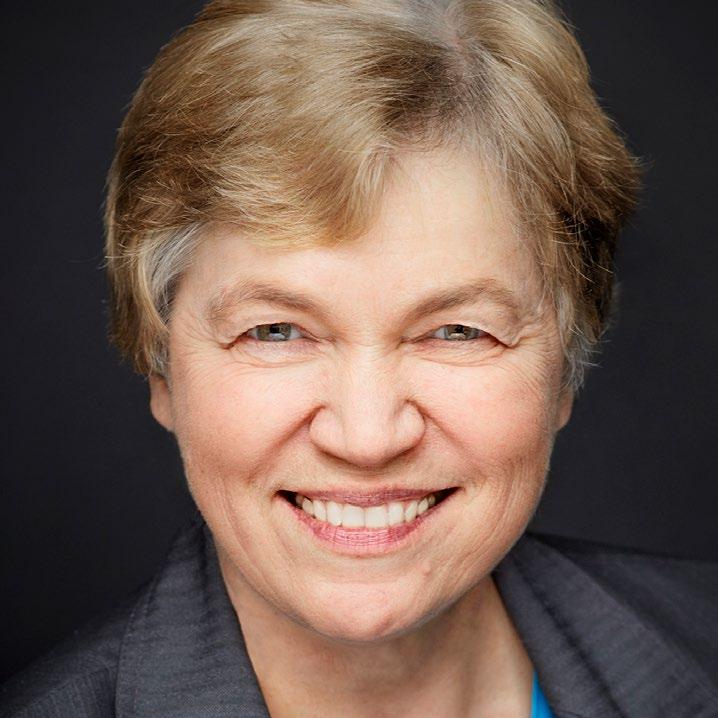
1997–2001)
I have had three ‘lives’ at Newbold: student, staff (teacher) and principal. And maybe I could add two more: as a teenager, attending special weekends, and especially participating in orchestral events; and in more recent years, as a partner institutional administrator.
So what did and does Newbold mean to me?
It was a place of connection: where I met and engaged with other Adventists, from the British Union but also globally. For me, it has always been a window into the world. Many of those I met and worked with at Newbold remain friends – everywhere.
It was a place of deepened faith. I found faith, I questioned assumptions in a safe environment, and I discovered a God, many times, who constantly was more than I had imagined.
It was a place to learn and grow: whether as a teenager, imagining what could be; a college student, passionate about service; a teacher, learning how to more effectively touch the lives of countless students; and as a principal, learning how to steer a unique and diverse ship through calm and choppy waters.
Without my ‘lives’ at Newbold I would not be what I am today or where I am today. Thank you, Newbold.
Newbold has repaid me many times over for the investment I made in it for over 40 years. I have been privileged to live life with young people from a wide range of cultural backgrounds with a remarkable range of giftedness. I have worked alongside highly skilled colleagues from whom I have learnt my trade and shared their appetite for learning. I was supported in academic achievements I had never even dreamed of.
The College has sent me to various parts of the world to do what I do best – to teach. There have been countless rich, informal moments filled with exchanges of ideas, laughter and a few tears. It has never stifled my curiosity about the world. And that curiosity is now still nurtured by Newboldians scattered around the globe. It has given us a lively community in which to live and a secure place to raise our family.
Underlying all this, Newbold has taught me about what the way of Jesus is really about – I have learned faith. The only possible response to all these rich gifts is profound gratitude.
(Principal during 2002–2008)
Newbold College is a place, a community, an idea. As a place, it’s a location, a starting point, a destination, a home to which we return physically and in memories. It is polished wood in Moor Close, morning light in Sylvia’s Garden, the smell of old books in the library, music filling Salisbury Hall, and meals shared with friends.
It is community, ever changing, yet remarkably consistent, shaped by shared experiences. It is turning conversations into friendships that last a lifetime, discovering the value of knowing those from other countries and backgrounds, struggling to fit study into otherwise busy lives, stretching to understand Greek or English or write yet another Harry Leonard essay.
Newbold is an idea, yet more than an idea. It is a hope carried in the hearts of students who come to study and a belief inspiring the staff that they are making a difference, that through their work lives will be improved, minds broadened, and perspective enlarged. A new insight into an ancient psalm, a hopeful prayer before exams, a thankful one upon degree completion, a commitment to live to a higher purpose pledged while on a quiet walk, or a conversation that helps integrate our lives and beliefs. As a place, a community and an idea, Newbold has impacted and will continue to impact the lives of individuals and the world they serve.
When l arrived in 1988, l found a college with an international staff and student body. Newbold already occupied a special niche in the worldwide Adventist family of institutions of higher education. The rural location provided an environment suitable for study and reflection and opportunities for walks and outings. Yet, there was easy access to an endless number of historical and cultural interest sites. The academic facilities were being upgraded, including a new library building, good classrooms and offices. A large number of housing units for married students were being completed, and a modern dormitory building was in the final stages of planning.
The improved physical facilities made life easier for staff and students, but it was people that made the college an inspiring place to work. This group of people comprised persons with very different opinions on issues and methods of achieving common goals, but I found a willingness to listen and cooperate. The members of staff were professionals who were kind and considerate while at the same time rigorous and demanding. Students had the opportunity to rub shoulders with colleagues that had experienced an upbringing very different from their own. The prevailing feeling of respect for other persons and their opinions, culture and background made it possible for this group of staff and students to function as a dynamic community. I enjoyed my years at Newbold.

Newbold – and more particularly Newboldians – continue to hold a special place in my heart. I have had the opportunity to visit over 60 countries (many of them during my years at Newbold) and to meet so many Newboldians in each of these countries who are living meaningful lives. I was – and continue to be – inspired by the many Newboldians who reflect positively on their life-changing, faith-affirming Newbold experiences.
I have learned that Newboldians are service-oriented people – caring, globally aware, and committed to social justice. While serving as principal I appreciated the strong support of students and staff alike for initiatives such as Newbold Impact Day as well as for other service-learning projects each semester. As I travelled and met Newboldians throughout the TED and beyond, I was buoyed by so many Newboldians serving others and feeling positive about the direction of their lives.
While at Newbold I learned from students, staff and Newboldians alike that there was more to Newbold than dilapidated buildings and neglected campus infrastructure. I discovered Newbold to be a chapter in God’s plan for my life – just as it has been for all Newboldians, and for those who continue to seek the Newbold experience. I am thankful that God brought Newbold and Newboldians into my life to teach me about His timing, His ways and His purposes. I continue to be in contact with many Newboldians, and each Newbold connection reminds me constantly of God’s big plans that He has for each of us – today, tomorrow and for the rest of our lives.
I encourage all Newboldians to stay open to that ‘life-changing, faith-affirming’ experience you associate with your time at Newbold. In that regard may Newbold continue to be not only remembered by you as a great time in your life – but may it continue to be great for your lifetime!
Newbold’s Board of Governors announced the launch of the Centre for Ministry and Mission on 29 January 2021. The Board’s decision to replace Newbold’s Department of Theological Studies with the new Centre of Ministry and Mission took immediate effect. Dr Daniel Duda, Education Director at the Trans-European Division (TED), was appointed Transitional Head to oversee the change following the announcement. He shares insights into the reason behind the change, what he aims to achieve and how the new Centre will equip ministers, evangelists and life-changers of the future.
What is the reason behind the Board of Governors’ decision to launch the Centre for Ministry and Mission?
The Board of Governors sees Newbold as playing a significant role in the TED’s 14 unions/fields. The goal is to recast a vision for Newbold’s mission in a multi-cultural and generally post-Christian context of 21st-century Europe. We plan to achieve this by revising the curriculum to inspire and equip men and women for front-line service. The TED needs about 30 theologians to teach in its five higher education institutions, so we have to educate them too. In addition, we need over 300 front-line church planters, pastors, evangelists, Bible workers and leaders over the next five years because a significant portion of current pastors, Bible workers and leaders will retire.
What do you aim to achieve in your role as the Transitional Head?
We need to implement the change of direction for the academic year 2021/22, which commences in September. Thus, my role is, primarily, to mobilise colleagues to ensure we all provide inspirational spiritual leadership, which begins in the classroom. We must also nurture students during placements and subsequent internships, setting them on a path to continued education. Newbold is just one player in the training of pastors and church workers. Other entities, like unions and conferences, also have a role to play.
Six panels will oversee different aspects of college life: the College’s operating model, organisation structure, accreditation, delivery modes, use of buildings and overall finances. The Centre for Ministry will have a new curriculum. However, we will continue to provide the Bachelor of Arts Honours degree, Graduate Diploma, Master of Arts degree and Postgraduate Certificate programmes with the University of Wales Trinity Saint David.
We are pursuing formal academic degrees as well as short courses. Biblical languages (Greek and Hebrew) will remain with the three streams within the master’s degree programme: Biblical Studies, Theological Studies and Pastoral Studies. However, we are going to restructure the curriculum to reflect this reorientation and put greater emphasis on Pastoral Studies.
What should prospective students expect to gain from the changes?
The command of Jesus is to make disciples who make new disciples (Matthew 28:18–20; 2 Timothy 2:2). If done right, this will lead to more disciple-makers. Therefore, the Centre for Ministry and Mission will provide a mix of on-campus intensives and a combination of online and classroom training. We will do our best to preserve the campus experience together with hybrid training for full-time and part-time programmes.
The previous Bachelor of Arts programme had 44% of credits in Biblical Studies, 22% in Theological Studies and only 17% in Pastoral Studies. The new degree programme will balance all three streams, each at 28% with 11% for Biblical languages and 5% for the dissertation. In addition, the Postgraduate Certificate programme will offer three practical modules addressing the pastoral experience in 21st-century Europe, rather than exegetical classes.
Yes. We are going to revamp the placement experience with more consistent supervision. In addition, we will offer more training for supervising pastors, and we are looking at ways of making placement part of the Bachelor of Arts Pastoral Studies modules.
Placement will be compulsory at the Graduate Diploma level too. Previously, students who came through the Graduate Diploma stream had only one year of placement (Bachelor of Arts students had three years’ placement). Now, they will continue their placement during the two years of their master’s programme.
And how will the new Centre prepare students for a successful career in ministry beyond 2021?
Nobody knows what the future ministry will look like. Clearly, the world after the pandemic will not go back to pre-pandemic normality. If Jesus does not come soon, our current graduates will be in ministry 30 years from now. How do we prepare them for ministry in a world that none of us can even imagine? That is a difficult task. We need to provide them with tools rather than answers, which will become obsolete.
Thus, we will teach them the principles of reviving existing churches, planting new churches for new target groups of people, understanding worldviews and engaging contemporary European culture. We will help them to feel at ease with digital discipleship, and above all, to understand how to approach the Bible, not as a codebook for recipes, but to mine it for principles that are timeless.
If you are a believer and reflect on how your life and spirituality are going, you are already doing ‘theology’. So yes, in that sense. However, if you take classes like Old Testament Apocalyptic, Reformation Theology and its Legacy or Approaches to Mission, it will broaden your perspectives, challenge your thinking and develop your spiritual walk with God.
We are going to continue the One Year in Mission and Service programme. Besides the on-campus offering, we will begin a new intensive bachelor’s degree programme in the Baltics for the Baltic Union and two unions in the former Yugoslavia territory. The programme, which allows students to study in their native languages, will be offered through Andrews University.
There is also a plan to offer an off-campus master’s degree starting in September 2022. All these will consider the unique missional side of different parts of the TED territory and thus enable students to serve better and more effectively.
If you feel the call from God, go for it. It is an exciting journey that will transform your life. You will gain new tools to deal with life’s difficult questions and your doubts, and you will be able to help other people on their spiritual journey as well.
Of course, you do not need to be a pastor to serve the Lord. We hope to reintroduce non-Theology programmes when the Centre for Ministry and Mission opens. We cannot revamp two to three programmes simultaneously with the number of people we have in the TED, but watch this space. We will still keep the name Newbold College of Higher Education. We do not want to reduce the College to a seminary only. There are different ways to serve the Lord in 21st-century Europe. Short courses will be offered to lay people in churches to develop and sharpen their tools too!
Can you recommend any academic work or literature as a starting point for those wanting to learn more about Theology as a subject?
Nicholas Thomas Wright (known as N.T. Wright or Tom Wright) writes scholarly works for academicians and popular publications for ‘everybody’. Dubbed the C.S. Lewis of the 21st century, I would certainly recommend three books by him: Simply Jesus (2012), Simply Good News (2015), and Spiritual and Religious (2017), which is an excellent analysis of how modern Christianity has dissolved into baptised paganism and humanism. For more challenging reading, I would recommend Alister McGrath’s Theology: The Basics (2017).
Over many years Governors have debated the optimum way forward for the College, bearing in mind its original purpose and the fact that fields right across the TransEuropean Division have been subsidising its operations heavily. Given changes in the landscape of 21st-century pastoral ministry and spiritual leadership, there has also been a need to reorient the College’s focus moving forward, with greater emphasis being placed on pastoral and spiritual leadership training.
As a result, at the end of September last year Governors voted to request that the College restructure its academic offerings in order to offer more in the area of Pastoral Studies than was previously the case and to reduce its offerings in other areas. Much consideration has been given to the various reoriented curricula within what is now our Centre for Ministry and Mission,
with a view to implementation for the new academic year. There has consequently been a significant downsizing in the College’s academic provision, with the English Language Centre closing in December 2020 and the Department of Business and Humanities closing at the end of the academic year just gone.
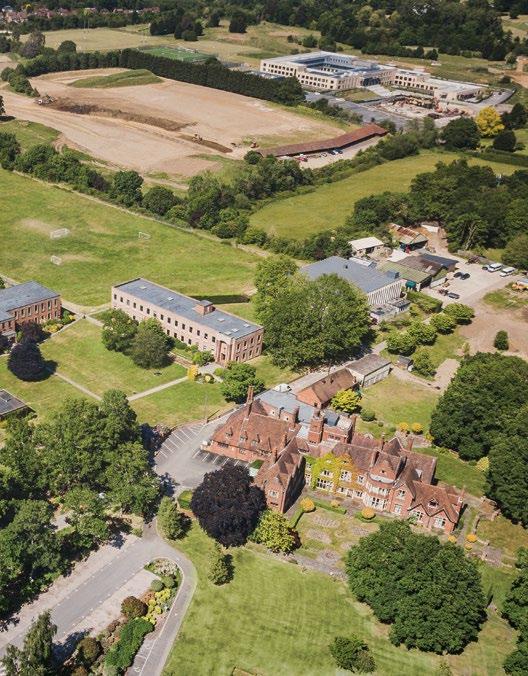
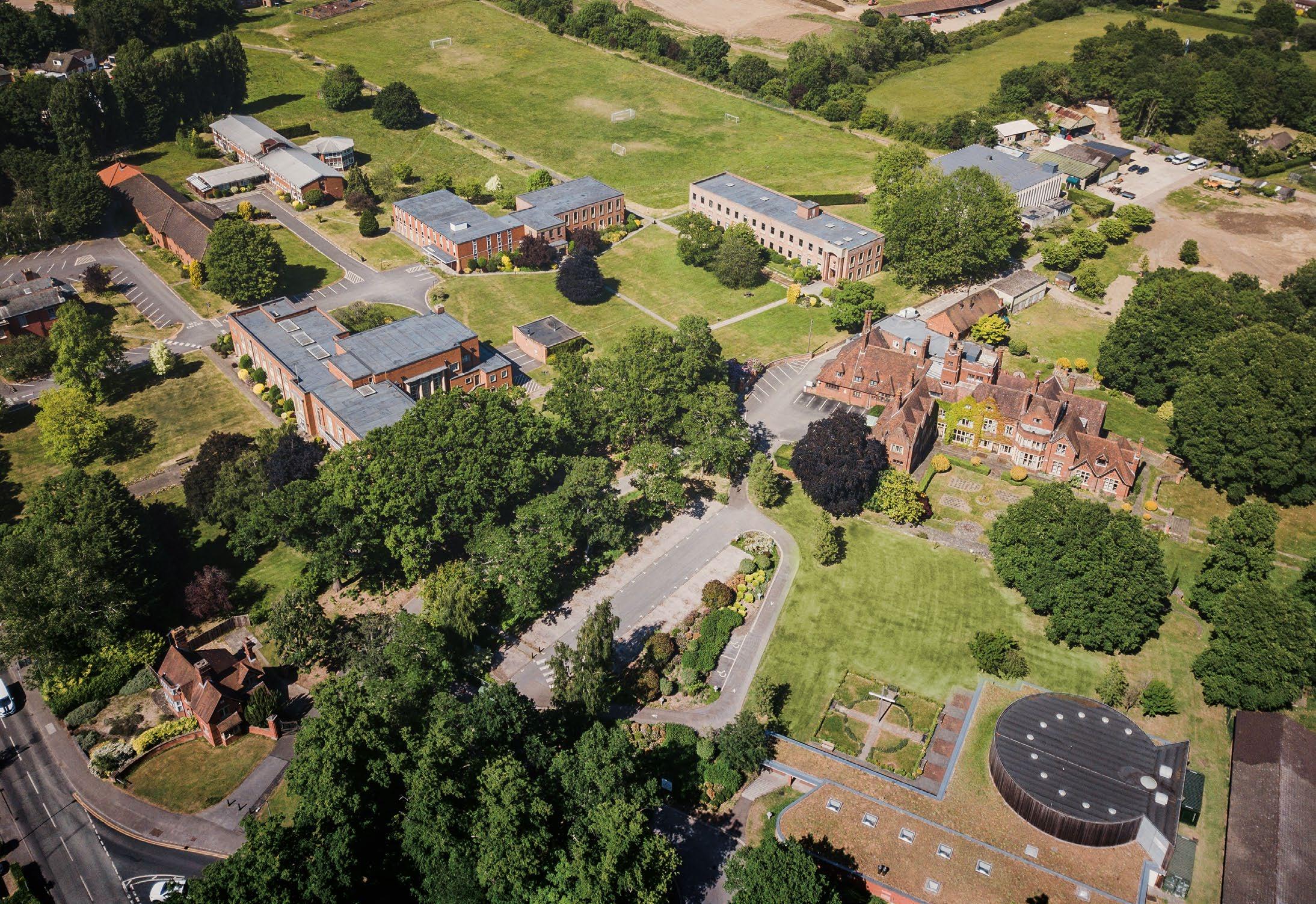
All classrooms and offices will be in Salisbury Hall, and work is ongoing to ensure that this building is refurbished accordingly. The Library will not change. Schuil House will be the College’s hall of residence, and of course the Sports Hall–Auditorium will be an integral part of the campus. There are no plans to reduce any of the campus or estate, and Governors and owners are exploring ways of using the various facilities in order to generate additional streams of income.

Head of Student Life and Chaplaincy, Danilo Puskas, reflects on the changes that have affected college life during the past year.
Icould use many words to describe the past year here at Newbold, but the word ‘change’ probably encapsulates most of the things that have happened in the life of the College. We have had a full year of online student experience, and the reorientation process has produced a significant shift in the identity and operations of the College. We have seen many changes in staffing, and we are all aware that 2020/21 is a landmark year in Newbold’s history.
Change is inevitable in the life of an institution. However, there is always that question: what do we want to keep, and what do we need to change? What do we need to do to create an even better experience for our students and staff while remaining faithful to the core identity of what Newbold is?
I had the opportunity to study at Newbold (2011–2014) before becoming a member of the College’s staff. I am sure many of you who have been a part of the College can relate to the things I will say. For me, Newbold was, and is, always about the people. That is how it was when I was a student and that is how it has been for several years since I have been working at the College.
People (lecturers) provide education for people (students). Many have experienced God in a fresh way precisely because of this unique community of people at Newbold. We have celebrated and we have been challenged by the wonderful diversity of people in the Newbold community. However, this must not change. Newbold must always be about people.
We need to recognise that we have not managed to protect and uphold diversity at all times. So, we need to change so that Newbold can genuinely be a safe place for every individual. We must change and address the spiritual needs of our students, so they can leave this place not just with the degree in their hands but with God in their hearts.
We need to change to inspire our students to positively impact the world because of the change of heart and mind during their time at Newbold. And maybe we need to change to avoid repeating those periods when Newbold was not about people.
I am sure most of us, through experience, know that change is often painful but necessary. That is why, in the aftermath of this historic year at Newbold, we must recognise that the development of the student experience at our ‘reoriented Newbold’ will be
ongoing in the months to come. Together, we will shape this new experience with our students because Newbold needs to be about people; our main people are our students.
As author Ellen White said, “God has linked old (educators) and young (students) together by the law of mutual dependence” (Christian Education 25). I am confident that this mutual dependence of staff and students, rooted in our joint dependency on God, is the best way for Newbold to change for the better.
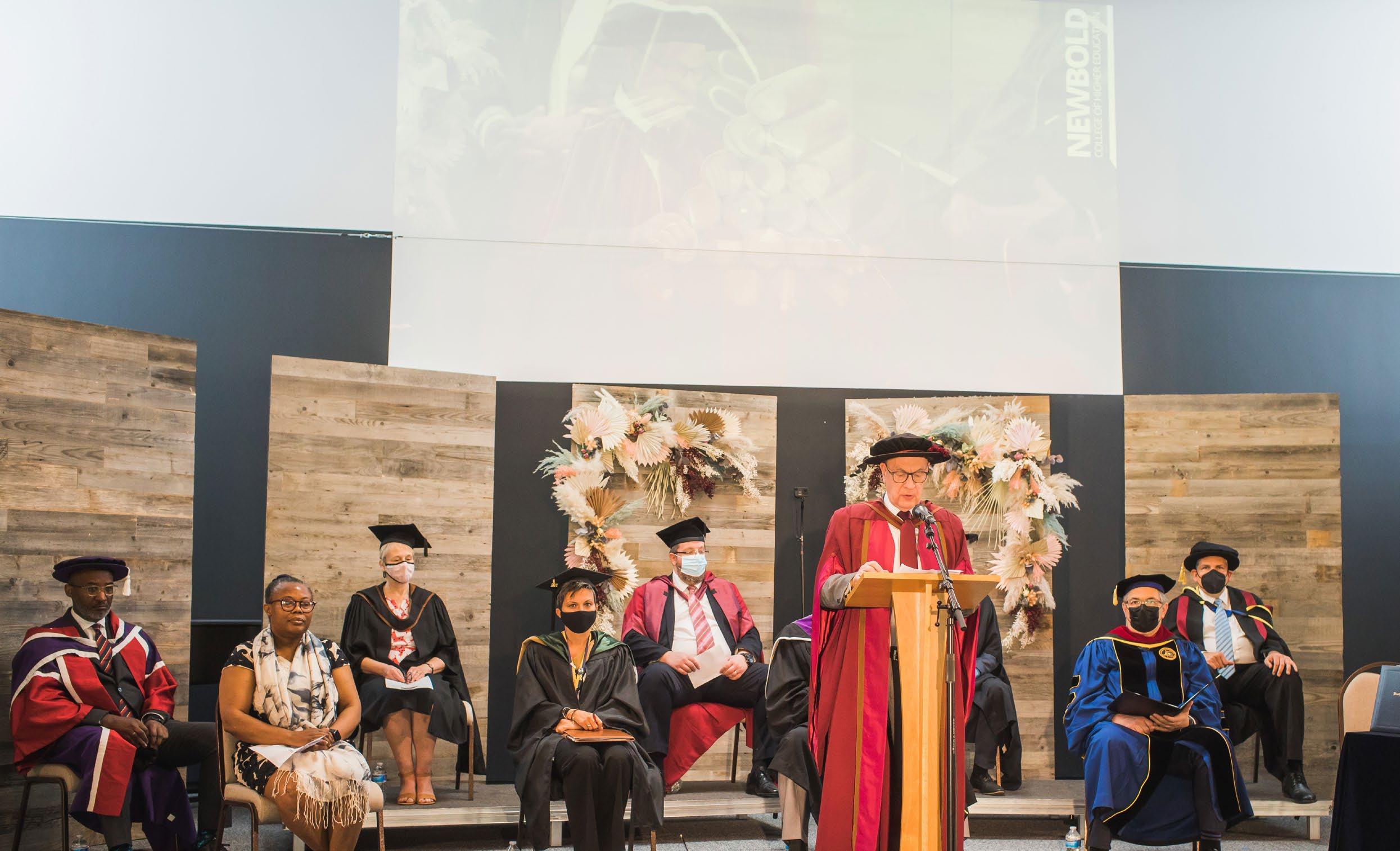
The academic year 2020–2021 was like no other, full of uncertainty and turbulence. Despite the various challenges, Newbold’s students remained committed to their studies, persevering with patience while the College pursued alternative avenues to deliver digital classes and virtual learning content to see the students through their programmes.
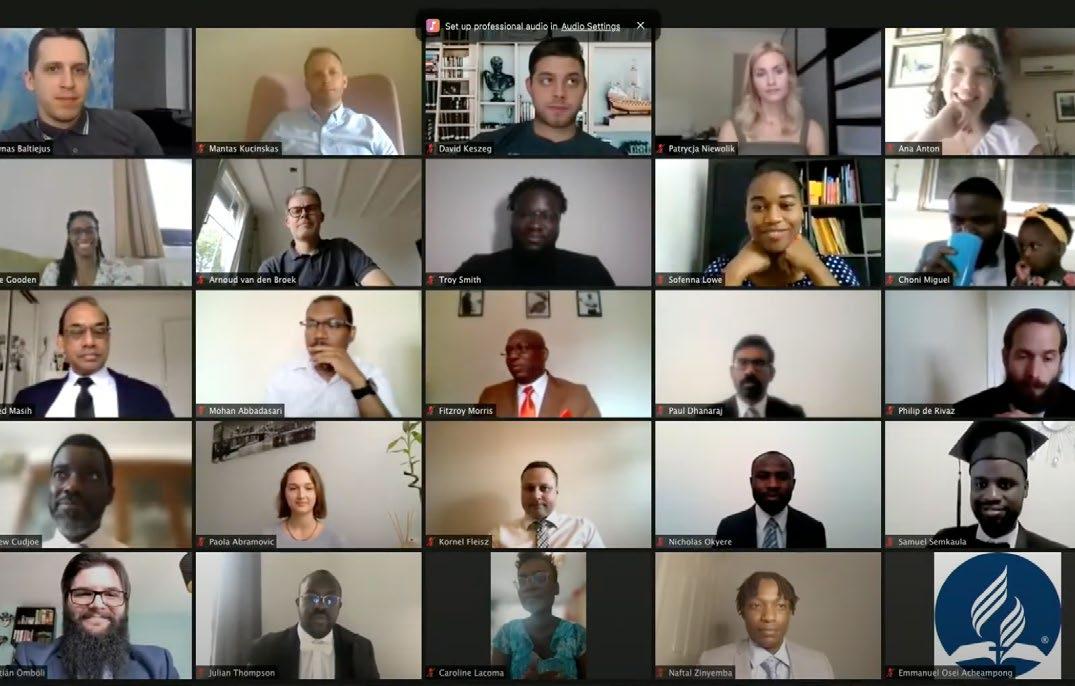
Sunday 11 July 2021 will always be remembered as staff and students came together in a hybrid format to celebrate their accomplishments. It was the first virtual Awards Ceremony in the College’s history, paying tribute to every individual’s remarkable academic and personal efforts in the face of adversity during the COVID-19 pandemic, and marking the last Awards Ceremony to feature programmes under the Department of Business and Humanities.
With special music conducted by Dr Sandra Rigby-Barrett, Dr John Baildam opened the ceremony with introductory remarks
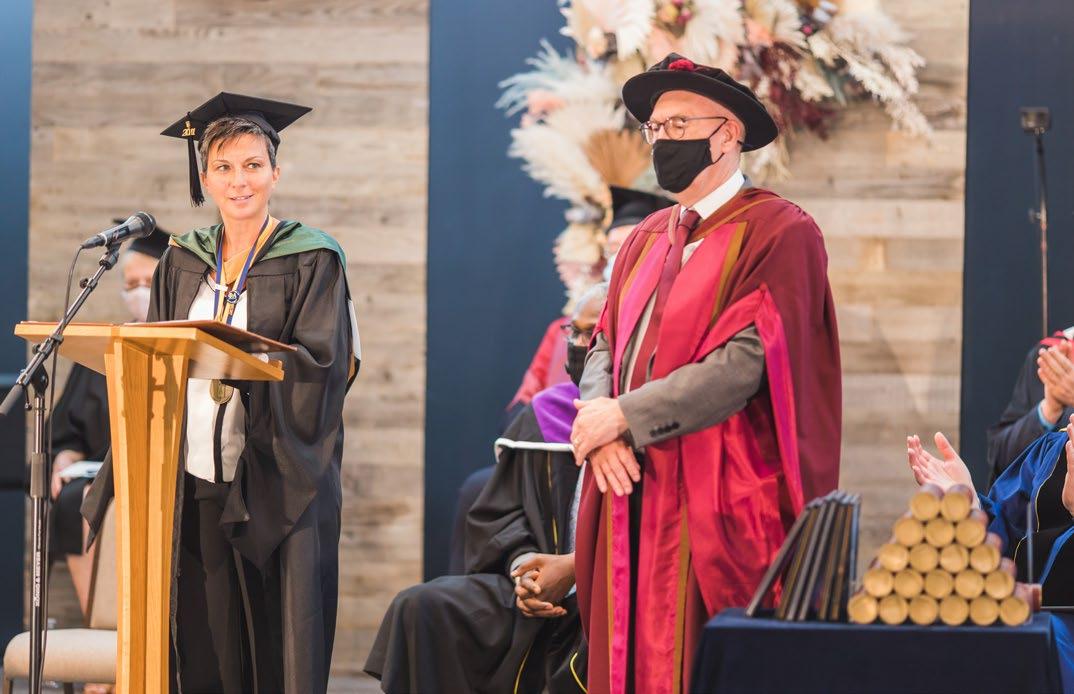
and thanks; Dr Emmanuel Osei, President of the South England Conference of Seventh-day Adventists, addressed the graduating students; Newbold’s Academic Registrar, Serena Santona, presented the graduating students; whilst Dr Daniel Duda delivered a charge to the graduating students and offered a prayer of dedication. Representing the student body, Pilira Zapita provided the students’ response, and Chief Financial Officer Abigail Wright made an appeal to raise money for the Student Aid Fund before the benediction.
College Principal Dr John Baildam recalls how the ceremony made for a poignant end to a challenging year: “Not only have we been dealing with the pandemic since March last year, but over the past nine months we have been going through a challenging period of reorientation and restructuring. I am grateful to my academic colleagues for their contributions to ensuring that so many of our students this year are graduating with First Class Honours, Merits and Distinctions. I thank our graduates for their commitment and
contribution to the College, and I look forward to a number of them returning to Newbold in September for the next stage of their academic journey.”
Most of the graduating students and academic staff managed to attend the Awards Ceremony on Zoom. They made great use of the chat box and video functions to cheer their peers on and wish each other every blessing for the road that lies ahead.
Once again, Newbold would like to congratulate all graduating students:
University of Wales Trinity Saint David
Bachelor of Arts with Honours, Biblical & Pastoral Studies:
Caroline Lacoma
Fitzroy Morris
Nicholas Okyere
Samuel Semakula
Graduate Diploma, Biblical & Pastoral Studies:
Gustav Nyajeri
Jairaj Kanakaraj
Marcial Hernandez Ramos
Marianne Thieme
Martynas Baltiejus
Michael Jayarathna
Philip De Rivaz
Simon-Levi Lie-Bakken
Sureen Rayavarapu
Thirza van den Broek
Washington Adventist University
Master of Arts, Theology:
Adam Cserpan
Alma Hernandez
Andrew Cudjoe
Anne-May Muller
Anton Torstensson
Arne-Kristian Andersen
Arnoud van den Broek
Austin Blackburn
Choni Miguel
Christle-Caroline Jasinta
Clebson Braga
Desiree James
Divinia Reynolds
Emmanuel Acheampong
Emmanuel Asamoah
Filip Stojanovic
Freddy Boutin
Godfred Asamoah
Hina Ahmed
Ida Hakkarainen
Kornel Fleisz
Krisztian Omboli
Leo Espana Reyes
Luca Zagara
Lydia Hamblin
Mantas Kucinskas
Matija Kovacevic
Miroslav Ostrovljanovic
Mohan Abbadasari
Naftal Zinyemba
Nicole Gooden
Paul Dhanaraj
Pilira Zapita
Qudon Stewart
Sergio de Sousa
Sofenna Lowe
Tajesh Puri
Thando Mlalazi
Troy Smith
Ville Suutarinen
Wezley Bishop
Wilfred Masih
Washington Adventist University degrees are subject to verification of the satisfactory completion of all requirements by the Academic Records Office of that institution.
Bachelor of Science, Business Studies:
Ana Anton
David Keszeg
Lazar Acimic
Loveness Magai
Andrews University
Miriam Szoke
Paola Abramovic
Patrycja Niewolik
Predrag Salonski
Strahinja Tasic
Teodora Ostojic
Andrews University degrees are subject to verification of the satisfactory completion of all requirements by the Academic Records Office of that institution.
Bachelor of Arts, Humanities:
Naomi Grit
To watch the live-streamed Awards Ceremony event in full, please visit our dedicated webpage: newbold.ac.uk/awards-ceremony or visit the College Facebook page: facebook.com/newboldcollege
Ending the academic year of 2020–2021 has been a time of conflicting emotions – it has been the year of a global pandemic that has affected every one of us, and the year of great transition for the College.
As we embark on a new direction, we must say goodbye to many talented, committed and passionate colleagues who contributed to student life across the whole with incomparable enthusiasm, knowledge, creativity and devotion.
The list below provides an update on all College staff changes across the last year. We take this moment to thank each and every colleague and friend wholeheartedly and wish them every blessing as they move on to pastures elsewhere.
1. Sandra Pilmoor 01/01/1984 English Teacher
2. Sandra Rigby-Barrett 01/09/1987 Senior Lecturer in Music, Director of Study Abroad and Year in Mission and Service Programmes
3. Aden Graham 01/04/1994 Assistant Engineer
4. Marinko Markek 01/09/1998 Lecturer in Business Management, Law and Economics
5. Peter Balderstone 29/08/2000 Contract Lecturer in Humanities
6. Isabel de Moraes 01/09/2000 Contract Lecturer, Dept of Business and Humanities
7. John Crissey 01/01/2003 Lecturer in Strategic Marketing and Management
8. Robin Anthony 01/08/2003 Contract Lecturer in Humanities
9. Radisa Antic 01/08/2003 Principal Lecturer Systematic Theology / Director E.G. White Centre
10. Samuel Gyamfi 27/07/2009 Student Finance Officer, Food Services Manager
11. Silvia Ribeiro 01/07/2012 Management Accountant
12. Lyn Sacareau 01/07/2014 Associate Residential Life Manager and Events Manager
13. Alastair Agbaje 18/08/2014 Chaplain
14. Fredrick Iloegbune 01/10/2015 Student Experience Co-ordinator
15. Kart Lazic 04/01/2016 Lecturer in Humanities
16. Miriam Stoykov 18/01/2016 Head of the English Language Centre
17. Ana Thompson 18/01/2016 English Teacher
18. Davina Gayle-Harris 04/04/2016 Lead Chef and Menu Co-ordinator
19. Angeline Tyrokomos 12/06/2016 Student Recruitment Officer
20. Daniel Derico 03/01/2017 Chef
21. Caroline Zagara 01/02/2017 English Teacher
22. Kyle Raymond 31/07/2017 Student Recruitment Officer
23. Clive Malcolm 24/09/2017 English Teacher
24. Katherina Gibbons 01/08/2018 Residential Life Manager
25. Fiona Marshall 02/01/2019 Student Information Systems Manager
26. Vasily Yunack 01/08/2019 Lecturer, Dept of Business & Humanities
27. Debbie Jones 01/12/2019 Receptionist and Guest Coordinator
Name
28. Roland Dan 01/07/2020 Digital Marketing Specialist
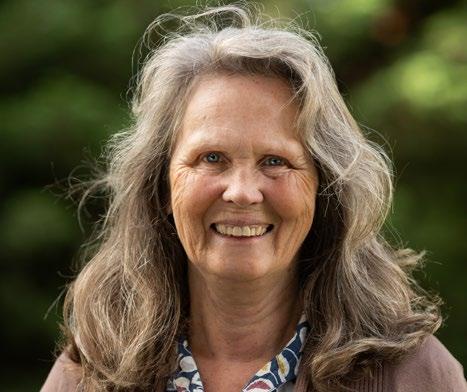




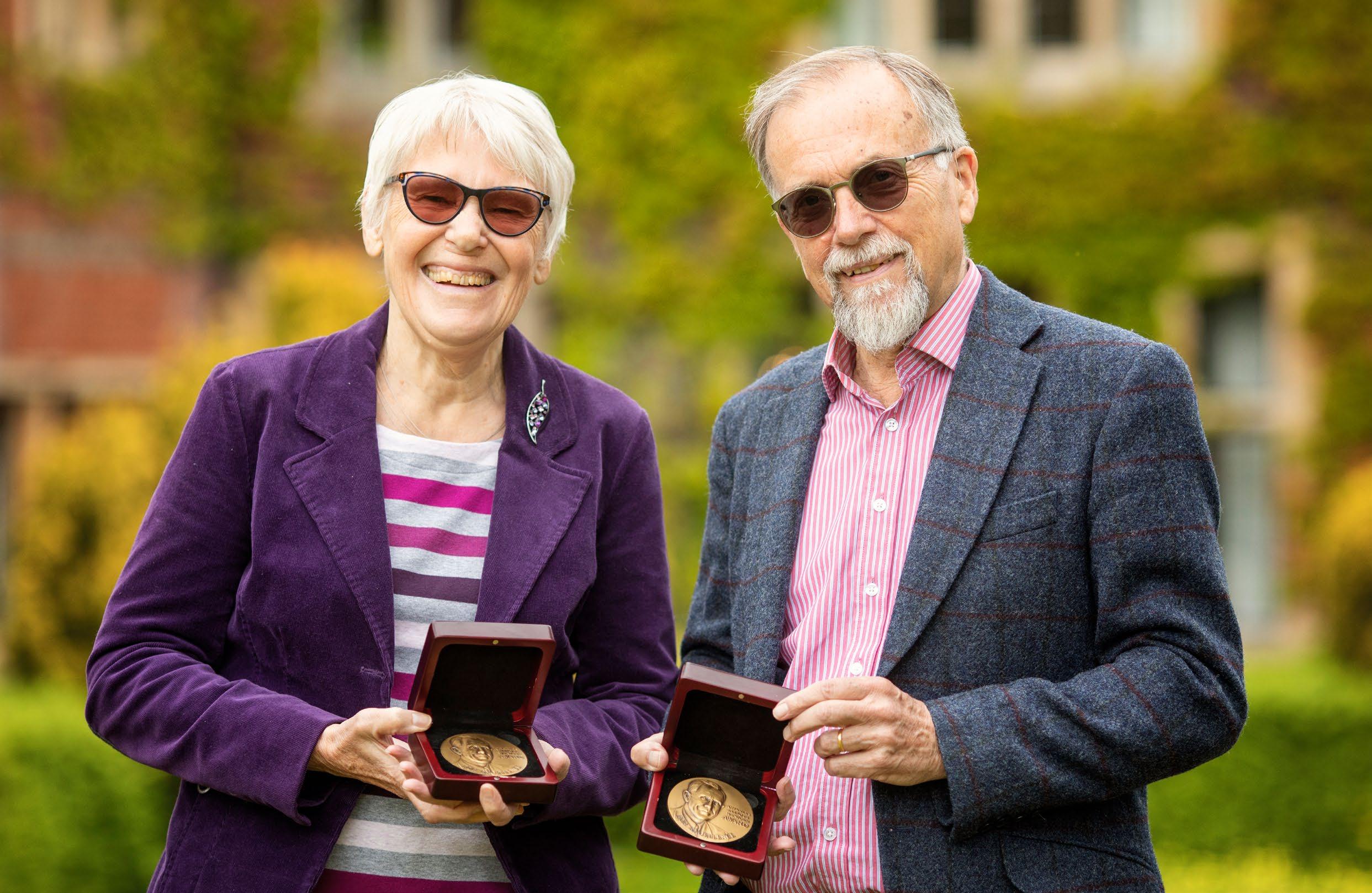
Few Newboldian readers will have heard of the Charles Elliot Weniger Society for Excellence. Weniger was an inspiring teacher and gifted speaker at Seventh-day Adventist theological seminaries in the United States. Every year, the society recognises and awards those who have made “significant contributions to the church, community, and world”. Among the recipients of the 2021 awards were Helen and Michael Pearson, whose life, work and ministry continue to be synonymous with Newbold.1
Words are important to the Pearsons: not just the careful use of them, but their best use for the sake of the Gospel. Their arrival at Newbold during the 1970s was a milestone for the College. Previously, teaching and practice were set mainly within a spiritual and intellectual box, but this was soon to change. Helen and Michael became pioneers for a new generation of Newbold students. As a result, the college classroom became a safe place to ask challenging faith questions.
Helen and Michael are teachers – dedicated to the pursuit of truth through asking the right questions. As Public Relations Officer for Newbold during the 1980s, Helen was responsible for the lasting motif: “Newbold – a place to ask questions.” Michael was quick
to create the ‘Pre-University’ course that offered a year of study between A-levels and university to help Adventist youth transition from the intellectual and spiritual security of the Adventist home to the rigour of university life in all its forms.
Michael’s commitment to philosophy and ethics encouraged the discipline of ‘spiritual wrestling’, particularly as it related to pastors. Helen slogged tirelessly through the strongholds of the Adventist ‘in-house’ speech, unintended mantras and clichés. It was a mission with purpose, a discipline that provided the opportunity for many a thought piece for the BBC on both national and local radio.
Both are preachers and are fascinated with the gift of preaching.
Michael’s reflective nature, as both teacher and tutor, has been a source of comfort for many students perplexed by the great issues of life, a further example of his commitment to pastoral care. His signature work Millennial Dreams and Moral Dilemmas, another example of his deep concern for the well-being of others, explains how the church has navigated through the choppy waters of social change.2

In 1992, Helen raised the question: “What does it feel like to be an Adventist woman?” Using the Church’s worship hour as her laboratory, her landmark article in Ministry Magazine was a call to the world church to think again about its unconscious ‘spiritual masculinity’:
What does it feel like to be an Adventist woman in 1992? Lonely, sometimes. I suspect that there are others who may feel much the same: skilful craftsmen in intellectual college churches, poor in rich churches, blacks in a predominantly white church, whites in a mostly black church, the young in a congregation of senior citizens, or the physically handicapped in a church full of joggers.3
Helen and Michael are not alone in believing that the Church’s ‘spiritual masculinity’ problem is still unresolved. In 1997, Helen’s concern for ‘others’, the ‘ostracised’ and those in pain led her to complete a psychodynamic counselling programme. She spent 15 years serving as coordinator for Newbold’s counselling service for students and staff.
Their lifelong journey to ‘discover what is true’, combined with support for the perplexed and distressed, is their mission because that is their understanding of the call of Christ. Their commitment often goes beyond support, leading them to ‘fight for’ others, even if it makes for an uncomfortable relationship with the powers that be.
In thanking the Weniger Committee for this honour, among those whom Helen wanted to honour were those “who understand that what so many of us lack – male and female, old and young –is not giftedness, but self-confidence, which sometimes needs a boost from authentic words of affirmation and insight”.
Michael presented the keynote speech “Excellence: a reflection”, noting that, in the Christian education context,
Excellence can never be about a superior position on a bell curve, but about endeavour, surmounting obstacles, being curious and challenging your own best efforts.
Compared to the norms for measuring excellence in secular society, Jesus measures excellence by a different standard: “It shall not be so among you. But whoever would be great among you must be your servant, and whoever would be first among you must be your slave” (Matthew 20:26, 27, ESV).
Although Helen and Michael have retired from the classroom, they continue to coordinate and host programmes at Newbold’s Diversity Centre, which provides a forum where majority and minority groups can discuss, reconcile and celebrate their differences.4
“All this is from God, who through Christ reconciled us to himself and gave us the ministry of reconciliation” (2 Corinthians 5:18, ESV).
First published in The Messenger (2021). Edited for context and republished with permission.
1The award ceremony was streamed live via the Loma Linda University Church on 20 February and can be found at this link, including Michael Pearson presenting the Clinton Emmerson Annual Address on “Excellence: a Reflection”: https://www.lluc.org/video-ar chive?sapurl=Lys5YzdiL21lZGlhLS9taS8ra3drN2Q0ej9icmFuZGluZz10cnVlJmVtYmVkPXR ydWU=
2https://www.cambridge.org/core/books/millennial-dreams-and-moral-dilemmas/1C9 DAAAF5296E3A19A91C54897F54902#
3https://www.ministrymagazine.org/archive/1992/01/all-things-to-all-women
4An archive of the Newbold Diversity lectures and reports can be accessed at: https:// www.newbold.ac.uk/diversity-centre/archive/
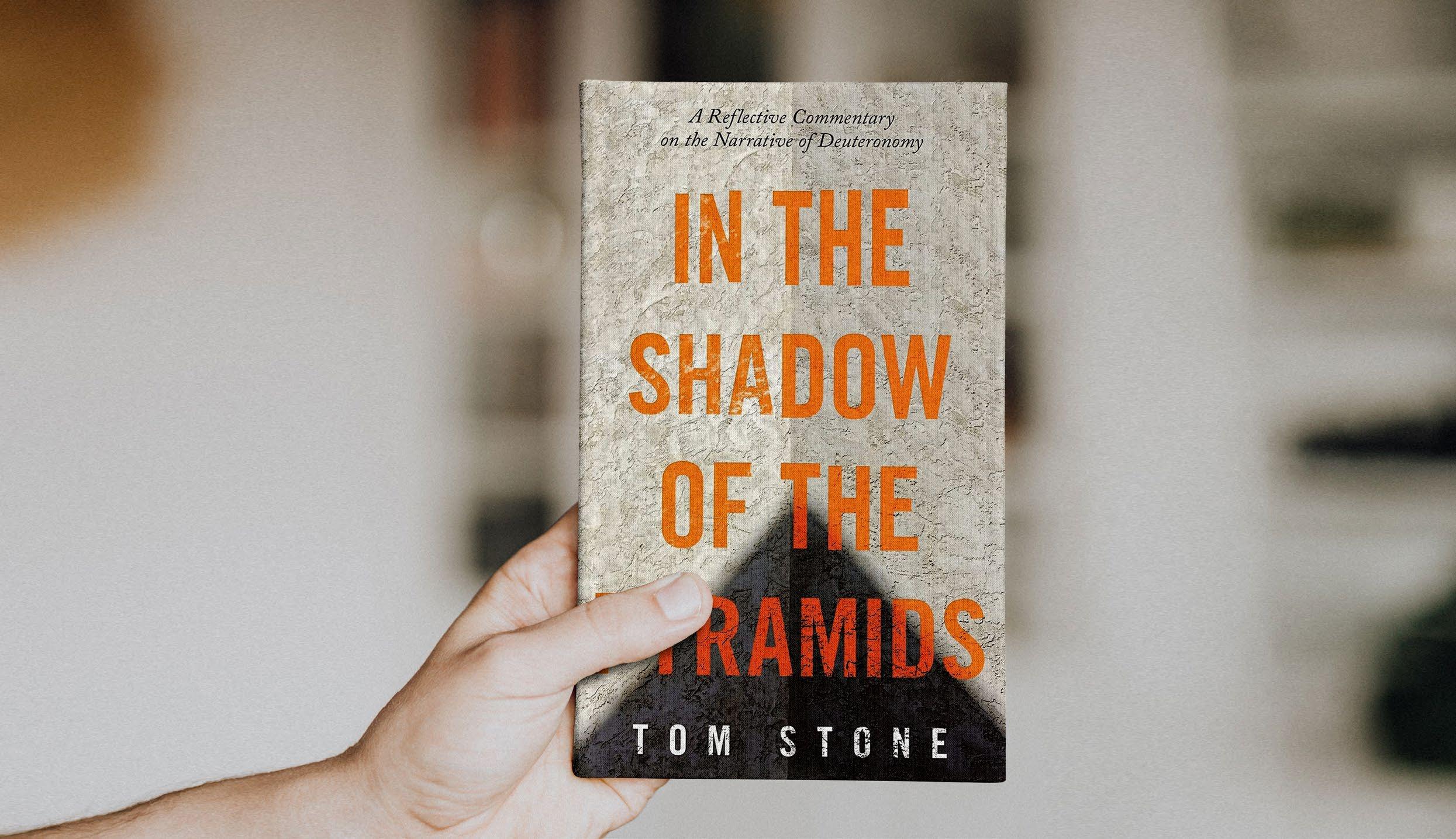
Newbold alumnus Tom Stone is a man on a mission to make God accessible to everyone, especially young people from all walks of life. Being a true Newboldian, Tom is passionate about creating safe spaces for students to ask questions about religion, God and the Bible and uses simple language to connect. He adopts a similar approach in his first book, In the Shadow of the Pyramids, where he explores the Old Testament book of Deuteronomy, showing how God planned to liberate His chosen people from a slavery mindset to become a great nation and a blessing to the entire world.
In the Shadow of the Pyramids takes readers on a journey of discovery, beginning in Genesis chapter 12, where the Bible “zooms in on just one man”, 75-year-old Abraham. Abraham has no children, yet God tells him that he would have a child and his descendants would become a “world-changing, history-making nation”. Moreover, God asks Abraham to journey 1,100 miles to a place he had never been to. Nothing seemed to make sense, but it was all a part of God’s master plan to find “a real, eternal solution to the human heart problem”.
Abraham’s descendants, the Israelites, were enslaved in Egypt for 400 years. God rescued His people from their Egyptian oppressors,

from the shadow of the pyramids. However, He knew the shadows cast were not only physical but spiritual, emotional and social. According to Tom Stone, Deuteronomy explores the liberation God offered to His people and shows how God’s ‘freedom legislation’ reflects the more comprehensive redemption narrative of the Bible. He says, like the Israelites, we are standing at the cusp of the ‘promised land’, and as we reflect on things that cast shadows over our own lives, God’s three-thousand-year-old guidance can still liberate our modern, unequal society.
Tom Stone is the Head of Religious Education at The Piggott School in Wargrave, Berkshire. He graduated from Newbold, in 2014, with a BA in Theology and attained a PGCE (Postgraduate Certificate in Education) at the University of Oxford in 2016. His book In the Shadow of the Pyramids: A Reflective Commentary on the Narrative of Deuteronomy (2021), published by WestBow Press, is available online at westbowpress.com, amazon.co.uk and Kindle.

Paediatric dentist Professor Helen Rodd was appointed Member of the Order of the British Empire (MBE) in the Queen’s Birthday Honours 2020. She received the award for her commitment to putting the needs of children at the heart of oral health research, and for her services to NHS dentistry.
On receiving the award, Dr Rodd said, “I am thrilled and humbled by this recognition for my work as a paediatric dentist. But I do not work alone; I am surrounded by wonderful, committed NHS and academic colleagues and the powerhouse that is the British Society of Paediatric Dentistry.
“Together we strive to improve the oral health, dental experiences and wellbeing of children, and we will not stop until inequalities are
addressed. Treating children and engaging them in meaningful research is a privilege and a joy, and I hope my love for paediatric dentistry will continue to enthuse others too.” 1
Dr Rodd studied Philosophy of Religion, Literature and Psychology at Newbold in 1983 before going to Bristol University to study dentistry. She is Deputy Director of Teaching and Learning and Professor/Honorary Consultant in Paediatric Dentistry at the University of Sheffield.
1 Royal College of Surgeons of England, https://www.rcseng.ac.uk/news-and-events/mediacentre/press-releases/professor-helen-rodd-mbe
by Dr Gifford Rhamie
Dr Gifford Rhamie is a Senior Lecturer in Pastoral and Biblical Studies and Director of Field Education at Newbold. He received his PhD in Biblical Studies (in 2019) from Canterbury Christ Church University, exploring how cultural studies can aid with interrogating and displacing Eurocentrism and anti-blackness in biblical and pastoral studies.
In his doctoral thesis, Dr Rhamie argues plausible historical reasons to believe that the Ethiopian eunuch in the Book of Acts, portrayed as an outsider or ‘non-fully-fledged Jew’, was a ‘black African Jew’. He says, in the wake of global unrest of “Black Lives Matter”, we are on the right side of history to discover the truth about race and ethnicity in the Bible, that ‘black lives matter’ for Jewishness in the Book of Acts and the origins of the Christian church.
Presenting the abstract for his PhD dissertation entitled “Whiteness, Conviviality and Agency: The Ethiopian Eunuch (Acts 8:26–40) and Conceptuality in the Imperial Imagination of Biblical Studies”, Dr Rhamie said:
My PhD dissertation, successfully defended in September 2019, is haunted by the vexed, yet slippery question, “Why cannot the Ethiopian eunuch in Acts 8:26–40 be conceptualised as a Jew in the British academy?” Is it because he is black? Given the multivalent registers of the main question, I turned to cultural studies, especially postcolonial studies, to procure analytical tools that allowed me to interrogate the conceptuality of different texts, ancient and modern, that commented on the Ethiopian eunuch’s ethnoreligious agency.
Essentially, the dissertation ably establishes that:
1. The Ethiopian eunuch was more than likely a ‘black African Jew’ of nonrabbinic Hebrew stock.
2. His ethnoreligious identity and agency decisively changed in the Patristic writings from a fully-fledged Jew to a GraecoRoman Gentile facilitated by the Adversus Judaeos tradition.
3. The force of whiteness as a literary tool, though predicated on the primacy of Graeco-Roman civilisation and dependent on ethnic and racial reasoning strategies, is emancipatory when deployed as an impulse of postcolonial criticism.
4. The new hermeneutic of ‘critical conviviality’ is demonstrated to be pivotal for reading the different world of ancient biblical data in order to reconstitute and recondition the Cartesian optic of whiteness.
5. Pilgrimage and representation are two literary signatures in Acts 8:26–40 that are foregrounded as conceptual (and cultural) tropes by ‘critical conviviality’, which in turn opens up conceptuality to reimagine a Pentecostal hospitality of joining; the Ethiopian as a kinsman and priestly eunuch; and the missiological intent of the story.
6. The Ethiopian eunuch as a fully-fledged Jew completes the paradigmatic formula of Acts 1:8, where he represents the diasporic Jews – following Jerusalem, Judaea and Samaria – before pre-figuring the ‘ends of the earth’.
7. The conversion of the African, Jewish kinsman is pivotal for reconstituting the origins of Christianity. His story, launched from the Afroasiatic Sinaitic peninsula, dislodges Christianity as a European project or claim. It is not a ‘white man’s religion’.
In the final analysis, the dissertation asserts that ‘Black lives matter’ for Jewishness in the book of Acts and for Christian origins.
To read the full thesis, please visit: https://bit.ly/2VHN34l
In the summer of 2020, following the unlawful killing of George Floyd in the United States and the subsequent Black Lives Matter protests, we received numerous letters and emails from past and present students and staff describing their agonising encounters with racism at Newbold. Their harrowing experiences served as a painful realisation that we were not living up to the ethos we were presenting.

In May 2021, we launched an Anti-Racism and Intersectional Justice Task Force, led by the Senior Leadership Team, to address racial inequality and create and implement a dedicated framework, which encompasses every area of the student experience at the College.
The overall aims of the framework include:
• Critically assessing all relevant College policies to ensure they clearly outline the procedures on racial and equal discrimination, as well as to eradicate any potential for racial bias and increase transparency on how we will challenge racial inequality
• Putting a comprehensive process in place to guarantee that diversity data collection is consistent and accurate
• Introducing diverse and inclusive new curricula within the new Centre for Ministry and Mission
• Expanding diverse literature offerings in our Roy Graham Library
• Raising awareness of the impact of racism in all forms –conscious and unconscious
• Creating thoughtful events that promote and celebrate culture and diversity throughout the academic year
• Building trust and confidence with staff, students, alumni, and those affected by racism in our community by opening safe spaces for supportive conversations
• Reporting incidents of targeted racial behaviour, prejudicial language, racial harassment, racial microaggressions and more
The theme that underpins this initiative is to ‘Promote, Prevent, Protect and Succeed’.
Each one of us needs to realise that as we take these crucial steps, we are equally responsible for ensuring that the Newbold experience is welcoming – genuinely welcoming, and consistently positive for anyone who walks through our door.
Danilo Puskas, Head of Student Life and Chaplaincy and Task Force leader, notes: “People come to Newbold with their own stories. They create new chapters in their lives and leave Newbold with fresh stories. There are romantic, spiritual, educational and humorous tales and countless travel stories that we enjoy listening to. However, there are also stories of disappointment, hurt and rejection, which remind us that we still have a lot of work to do. We want every Newboldian to experience the College as their home.
This Task Force exists to ensure Newbold is a place where diversity is truly and openly celebrated and protected.”
God’s word, values and love are the only narrative to follow. Going forward, an anti-racist Newbold is the only Newbold there can be. We cannot change history, but we can change our future course.
We will present our finalised framework, objectives, and updates with the launch of a dedicated webpage. So, please keep an eye out for this as the work resumes.
Thank you for your support.

On the one-year anniversary of George Floyd’s murder, I wish to write on the way impoverished knowledge is weaved as national knowledge, implicating religious institutions in its web. That is to say, we are looking at how an impoverished knowledge of race (knowledge that is lacking in vital information, which I call ‘implicit ignorance’) is manufactured in the United Kingdom’s narrative of nation building – a process and procedure I refer to as the ‘politics of ignorance’. This critically accounts for institutional racism. Our Christian imperative should commit us to support telling the whole truth of history and prophetically speaking truth to power.
Residents living in the north-western state of Punjab, India, recently reported that they can see the Himalayas for the first time in 30 years. Can you imagine living next door to the tallest mountain range in the world, so huge and imposing, for 30 years and not being able to see it because of pollution? The lockdown, as a result of the COVID-19 pandemic, had launched the lifting of this gross pollution. Now they can see the whole truth: the unadulterated beauty and splendour of the Himalayas.
The lockdown has also unmasked what some regard as an even worse (if not the worst) pollution-pandemic of the past 500 years. Yet, most people living in Britain (not to mention the so-called West) have not even seen it despite its proximity. I’m talking about the Himalayas of racism.
In August 2016, the NFL star player, Colin Kaepernick, took a knee at a game during the American National Anthem in silent protest against the widespread police brutality on black people. This ignited a firestorm in the media up and down the United States, even catching fire across the pond in the television studio of Good Morning Britain over here in the United Kingdom, not to mention lighting up the then White House, the torchbearer of moral panic.
Almost in antiphonal, symphonic response, this time on 25 May 2020, the whole world witnessed another knee, the knee of a police officer in America asphyxiating George Floyd for 8 minutes and 46 seconds.1 Since then, many people across the world –black, brown and white – especially young people, have taken to the streets in protest against what some regard as a lynching. In one voice, they chanted and still chant, “Black Lives Matter!”
Yet this largely peaceful, but dynamic uprising, which has pulled the plaster off the deep, throbbing wound of racism, has caused immense division in our country, our churches and our homes. For the first time in my lifetime – and I’m no longer young, I hasten to add – I’ve been bombarded by questions and conversations about ‘race’. Of course, the Bible conceptualises a single human race. Paul is quoted by Luke in Acts 17:26 – “He [God] has created from one human blood [race] every ethnic group of people to dwell across the whole face of the earth.” Yet, I’ve been asked: why is there a plurality of races? And, how are we meant to erase its demonic parent, racism? Yes, racism – the vicious, bloody institutionalisation of hatred for ‘other people’, as it were – gave birth to the concept of the plurality of races, 500 years ago. This created a castehierarchy within the human race, with the white ‘race’ at the top, black ‘race’ at the bottom and all others in between.2 This system, orchestrated by patriarchy and classism, was invented by the church and state in order to justify racism.3 Hence, racism was meted out intersectionally through the industrialised, chattel enslavement of African people and later the colonisation (rape and pillage) of their (and other dark peoples’) land.4 And this Himalayas of a global, human catastrophe has loomed unnoticed, if ignored, even in the 21st century. It has been hidden by thick pollution – until now!
I refer to this pandemic-pollution as the politics of ignorance.5 By ignorance I’m not referring to stupidity or idiocy, although these are never far. Neither am I referring to ‘unconscious bias’. Ignorance is the source of ‘unconscious bias’ (not the product) and structures it as so-called ‘unwitting prejudice’, absolving the perpetrator of all moral responsibility. I’m referring to organised, wilful and structural ignorance that is state sponsored and manufactured as ‘knowledge’. Hence, it’s political. To illustrate this, I will triangulate my argument by three examples taken from our last ‘summer of unrest’.
I have a white friend who became very upset last summer about the toppling of some statues of slave traders. He felt that his time in the armed forces for queen and country – meaning our pristine history – was rendered null and void by a mass of ungrateful, brittle and unpatriotic young people. He couldn’t see the fuss! When I told him that I saw where he was coming from because I used to feel the same – at least up until my early teens – he was shocked, especially at what I told him next. I shared what I discovered back then: that what we were taught in school was one big lie!

The stories of so-called heroic explorers like Captain Cook, Christopher Columbus, David Livingstone and Francis Drake (to name a few) – and these are still taught in schools by the way6 (I should know since I had the horror of seeing this recently in my child’s homework) – are a massive cover-up of Empire and genocidal exploitation of dark peoples. This erasure continues to be manufactured as our island’s history, as ‘knowledge’. Now, no matter how many halos these pedestalled ‘saints’ have accrued, our Christian values must venerate them for what they are: a piercing gong and a clanging cymbal, a hollow holiness and a symbolic shame. Why? Put simply, because of their bloody, white supremacist past. But sadly, detractors are more concerned about vandalism to property than they are injury to human beings; about ‘law and order’ than about justice. They would demur, “To what extend should we…? When do we draw the line? Is this an attempt at imposing colonial guilt? Am I to take this personally? But I wasn’t there!” As such, this ‘white fragility’, to use Robin DiAngelo’s term,7 is a symptom of ignorance – a pandemic-pollution that prevents us from seeing the merit of the uprising for what it is: the iconoclasm of an obsolete symbology of oppression.8 Ignorance is not bliss.
Now, I’m not mounting an argument for the toppling of statues. That’s for another presentation. As one rapper intoned, “You can take down walls and statues, we prefer if you change laws and statutes!” Therefore, my point is that national ignorance has masterfully “managed our memory”,9 shaped our nation’s education and commodified its inadequacy as ‘knowledge’, the consequence of which is catastrophic.
The first time I was called an English man was when I first visited Jamaica at the age of 26. I was playing football and the Jamaicans kept on calling me ‘English’ when they wanted me to pass the ball. During one game I got so frustrated at the namecalling that I stopped the game, picked up the ball and yelled, “I’m not English!” – to which they all rolled over on the grass with unbridled laughter. I was humiliated but understood there and then that I had a hybrid identity. Due to the history of African enslavement, colonisation and migration, I was a product of mixture. Now, despite this complex hybridity and contingency, with roots firmly in British as well as Caribbean and African soil (not to mention other parts of Europe), my entire existence
has been dogged by structural designs to marginalise me as ‘other’ and therefore not quite belonging to my country. I am from somewhere in the middle of the Atlantic, bereft of land and belonging.
At the heart of this classification is the politics of ignorance with respect to immigration. And this has not been better exemplified than in the recent Windrush scandal. In 2017, it emerged that literally overnight a number of British blacks of Caribbean descent lost their jobs, were stripped off their eligibility for benefits and access to the NHS, were made homeless, and were deported to countries they did not know. Some even died during this secret lockdown. The shocking part of the story is that these individuals were legitimately citizens of Great Britain since they came to Britain in the 1960s as children of citizens themselves when they were mainly between a few weeks and 9/10 years old. But they didn’t have papers. They couldn’t prove how they got here – most of them travelled on their parents’ passports, after all, even over 60 years ago.10 What transpired, we learnt later, was that the Home Office had earlier conducted what I call a ‘cleansing of the Sanctuary’, where they shredded and destroyed many of the official papers. But what, for me, is more ominous than this wanton erasure is a bigger question: What led the Home Office to think that they could treat a slice of the British population in this way? What gave them the reckless temerity, impunity and gilded licence to imagine that they could dismiss at a stroke a section, albeit a thin slice, of their fellow citizens? To answer this, I have to take you back to this scandal’s namesake.
The name of the scandal, Windrush, was drawn from a previously German cruise ship, renamed HMT Empire Windrush, which on 22 June 1948 brought 492 West Indians (Caribbeans), over a third of whom were veterans of the Royal Air Force, to its historic docking at Tilbury in Essex.11 The Empire Windrush itself drew its name from the River Windrush, which runs through Gloucestershire and Oxfordshire, yielding its waters poetically into the River Thames in Tilbury. Thus, when the Empire Windrush met the Windrush waters in Tilbury, the stars of British hospitality aligned symmetrically in the heavens to welcome the sons and daughters of the Empire – indeed subjects of the realm and citizens of Great Britain. Or did they? Instead, the British public greeted them with virile hostility. Yet, I put it to you, this was hardly their fault. It was primarily the fault of people in higher places, in Westminster’s hallowed halls and chambers, who for years had traded on the dehumanisation of the darker races. No wonder

ministers, before, during and after, attempted to derail the coming of the Windrush generation.
In the ensuing years, both the Attlee12 and Churchill13 governments erupted, Parliament erupted, and Fleet Street erupted. So much so that by the beginning of 1955 some were calling the (by now) 17,000 West Indians to go back ‘home’. Contrastingly, over the same period of 1948–1955, over 250,000 Eastern Europeans (not 17,000) and a smattering of Italians and Germans immigrated to Britain, some of whom were prisoners of war and former enemies of Britain. These foreigners were welcomed with open arms, described as having “the spirit and stuff of which we can make Britons”, people who would be “of great benefit to our stock”. Incidentally, this racial reference to ‘our stock’ was a popular social Darwinian and eugenics refrain in Britain at the time. Consequently, in contrast to the reception of the black British citizens, whom the politicians deemed as ‘unreliable and lazy’ and regarded as part of an ‘immigration problem’, there was for these Eastern European foreigners no mention in Fleet Street, no debate in Westminster, no race riots in Liverpool, no protests of “no Irish, no blacks, no dogs”.
That’s not to say that there was no opposition to the Eastern Europeans. But to quell the whispering tension, the Government systematically and strategically announced on the radio, leafletted homes and put up posters proclaiming the news that the Eastern Europeans were ‘just like us’. The irony is, of course, that these Europeans did not share the same language, foods, folk music, religion, history, sports (as in cricket), education and systems of politics as their white British counterparts. The Black British did, though. The only major difference between these and the British islanders was the colour of their skin.14 Even the enemies of the Realm were deemed ‘just like us’ over and against those of darker hues who spilt their blood ‘for King and Country’. There were European immigrants on one hand and black British citizens on the other – the presumption of indigeneity for the Europeans and the presumption of foreignness for the West Indians.
I self-identify as a British African Caribbean, postcolonial, secondgeneration ‘settler’ male. My composite identity acknowledges the different historical trajectories of my heritage. I’m proud of being British. But if I’m ever called an immigrant once more, I’ll… Nah! I’m only joking… My point is that the politics of ignorance inherited and reproduced by the Attlee and Churchill governments and sustained by the likes of the Blair and May governments structurally organised (and continue to organise) knowledge in such a way that skin difference is enough for one to be ‘othered’ as not really belonging and therefore denied as having full national agency. It is corrosively dehumanising and psychologically damaging. It formed the vicious fog of pollution that gave impunity to the scandalous violence towards the Windrush generation that partnered in restoring (and are still serving in) the post-war British economy, NHS, transportation and manufacturing industries. Ignorance breeds indifference, but more deadly, it breeds fear, contempt – yes, racism. This notion of fear leads me to the last example.

In December 2019, 114 people attempted to cross the English Channel from France, whilst in the same month 6,912 people attempted to cross the Mediterranean from the Middle East. The 114 caused a furore in the British media, especially over Christmas, our season of peace and goodwill to all humankind. This escalated in summoning Sajid Javid, then Home Secretary of the May Government, from a safari holiday, who, in turn, summoned British warships to the Channel to protect our rarefied shores. It was deemed a national emergency.
As if to keep up the pressure, the British media have been scurrying to keep on our screens the current plight of the (so-called) asylum and refugee crisis. BBC15 and Sky News16 reporters were dispatched to the Channel to give a pedestrian commentary on the refugees who were travelling across choppy, dangerous waters in a rubber dinghy. It was surreal. Simon Jones, for the BBC, for example, was in his big, safe boat, commentating on what could have been a sporting spectacle or live coverage of a nature programme, despite the fact that people – human beings – were overcrowded in a small, flimsy rubber dinghy armed with a plastic bucket to bale water out of the boat to stop themselves from drowning. True, he managed to ask, “Are you OK?” But it was so vacuous, so void, so pretentious. Again, what kind of environment generates this piece of indifferent, yet callous and dehumanising piece of television? Why can’t the reporters give us the context of this suffering – the storyline of why they are risking their lives? There’s nothing about fleeing war or persecution. Nothing about Britain’s and the Global North’s historical role in causing the mayhem in the Middle East in the first place. Just a camera curiously fetishising as the rest of us participate in what is a flat-footed, presentist piece of voyeurism, tone-deaf to the calamity of human suffering.
As if to help, on 9 August 2020, the Government appointed a ‘Clandestine Channel Threat Commander’. Nothing sensationally anti-invasion and hostile about this title. And of course, nothing to do with the frenzied charges of Nigel Farage. And now the MPs are jumping on the sensationalist bandwagon. They would be the first to say, “This has nothing to do with the violent clashes between anti-immigrant and anti-racist supporters on our streets.” So, why are members of the public, who claim to be colour blind, randomly attacking people of colour, telling them or us to ‘go back home’ just like they did the day after the Brexit vote? I agree, you cannot level the whole blame on them, because they are only responding to the fear stoked up and fed them by our elite politicians, mainstream media and white supremacists. In which case, we are referring to the orchestrated, structural politics of ignorance.
As Britons, we are all heirs to such impoverished knowledge. Consequently, wrongful but intentional ignorance feeds racism and is happily but uncritically coopted by many. And this complicity, unwitting or not, is an abomination! Why can’t we teach the whole truth? It’s the truth, in Jesus’s words, that will set us free.
In closing, I’m not saying that education is the panacea of racism, because there will always be racists despite all the knowledge out there (and that’s largely because there are embedded motivations within the construct of ignorance).17 I’m just arguing that since knowledge is power, the Christian imperative should drive us to support an honest nation building that owes its citizens a truthful, holistic education on matters of human dignity and decency. As such, we should call out the national mythology that is fed by inherited falsehoods, socialisation into white supremacy, a drip-feed of political amnesia, material desires, and skewed processes and procedures that consolidate the subjugation of others – in other words, we should take on and take down the politics of ignorance.18 Compassion and generosity for ‘Black Lives Matter’19 is for me an inevitable and worthwhile outcome.20
In 2020, Dr John Baildam, Principal of Newbold College of Higher Education, issued a written and digitally broadcast apology for the sins of racism perpetuated at Newbold. A few weeks later, he convened a staff meeting via Zoom, which he opened by reading out some of the most brutally honest testimonies of racism by students past and present. I didn’t quite anticipate my response. Something deep stirred within my belly as I found myself welling up and I had to turn off my webcam momentarily. I wept uncontrollably for some 15 minutes. In those heart-breaking moments, I saw myself, my children and my students, and I couldn’t keep down the realisation that
Photography: Jacob Lund | Shutterstock
despite these Himalayas stories looming large, Newbold couldn’t see them because of the pollution of inherited ignorance that they and the wider nation had bought into. Now that the pollution is being lifted, Newbold is taking bold steps to redeem its situation.
It is a challenge to put the cross before the flag, and not wrap the cross with the flag and give into a religion of nationalism.21 I believe that in the wake of the seething global unrest of ‘Black Lives Matter’, we are on the right side of history in telling the whole truth of our history, owning it and generating transformational change. So, if we have another summer (or season) of unrest, the next time you hear a feature about statues, the Windrush generation or the refugee crisis, ask yourself: what politics of ignorance is at play? Then seek to know the whole truth, not just the instant facts. For as Toni Morrison once remarked, “Facts can exist without human intelligence, but truth cannot.”
Dr Gifford Rhamie
1 Jules Boykoff and Ben Carrington, “Sporting Dissent: Colin Kaepernick, NFL Activism, and Media Framing Contests,” Int. Rev. Sociol. Sport 55.7 (2020): 829–49; Breonna Taylor
2 Isabel Wilkerson, Caste: The Lies That Divide Us (New York: Random House, 2020); Willie James Jennings, The Christian Imagination: Theology and the Origins of Race (New Haven; London: Yale University Press, 2010); Karen Brodkin, How Jews Became White Folks and What That Says about Race in America (New Brunswick, NJ; London: Rutgers University Press, 1998); David R. Roediger, Working Toward Whiteness: How America’s Immigrants Became White. The Strange Journey from Ellis Island to the Suburbs (Cambridge, MA: Basic Books, 2005); Noel Ignatiev, How the Irish Became White, Routledge Classics (New York; Oxford: Routledge, 2009); Jennifer Guglielmo and Salvatore Salerno, eds., Are Italians White? How Race Is Made in America (Routledge, 2012); and Canadians, Revisiting The Great White North?: Reframing Whiteness, Privilege, and Identity in Education, ed. by Darren E. Lund and Paul R. Carr, 2nd ed. (Rotterdam; Boston; Taipei: Springer, 2015).
3 Thirteenth-century art culture normativised Christian European identity as whiteness: Madeline Caviness, ‘From the Self-Invention of the Whiteman in the Thirteenth Century to “The Good, The Bad, and The Ugly”’, Different Visions: A Journal of New Perspectives on Medieval Art 1 (2008): 1–33. Heng builds on Caviness’s work to demonstrate how “both epidermal whiteness and epidermal blackness [became] touchstones of raced identity” from the thirteenth century onwards: Geraldine Heng, The Invention of Race in the European Middle Ages (Cambridge: Cambridge University Press, 2018), 8, 181–256. For a postulate on the civilising spread of Europe during the Middle Ages through the integration of the universalisation of geography with religion see John M. Headley, ‘Geography and Empire in the Late Renaissance: Botero’s Assignment, Western Universalism, and the Civilizing Process’, Renaissance Quarterly 53 (2000): 1119–55. For the notion that Europe was seen as “spatially coextensive with the Roman Empire”, and Christianity served as the singular binding agent right through to the dawning of modernity, see Anthony Pagden, ‘Europe: Conceptualizing a Continent’, in The Idea of Europe: From Antiquity to the European Union, ed. Anthony Pagden (Washington, DC; Cambridge; New York: Cambridge University Press, 2002), 33–54.
4 1452/4 CE: Pope Nicholas V wrote Dum Diversas which granted to the kings of Spain and Portugal the right to reduce any “Saracens [Muslims] and pagans and any other unbelievers” to perpetual slavery. This galvanised Europe against the Ottomans.
5 Shannon Sullivan and Nancy Tuana, eds., Race and Epistemologies of Ignorance (Albany: State University of New York Press, 2007).
6 For a typically benign, yet triumphalist narrative of British colonisation, see William Harrison Woodward, A Short History of the Expansion of the British Empire, 1500–1870, The Cambridge Series for Schools and Training Colleges (Cambridge: Cambridge University Press, 1902). For a critique of Empire: Walter Rodney, How Europe Underdeveloped Africa (London; New York: Verso, 2018); Robert J. Miller et al., Discovering Indigenous Lands: The Doctrine of Discovery in the English Colonies (Oxford; New York: OUP, 2012); Mark G. Brett, Decolonizing God: The Bible in the Tides of Empire (The Bible in the Modern World 16) (Sheffield: Sheffield Phoenix Press Ltd, 2008); R. S. Sugirtharajah, The Bible and Empire: Postcolonial Explorations (Cambridge; New York: Cambridge University Press, 2005); for David Livingstone’s three c’s – Christianity, commerce and civilisation – see Allen Brooke, ”David Livingstone and the Imperial Imagination” (Essay), Nineteenth-Century Prose (USA: The Free Library, 1991), https://books.apple.com/gb/book/david-livingstone-and-the-imperial-imagination-essay/ id514401865; for an opposing view, see F. Nkomazana, “Livingstone’s Ideas of Christianity, Commerce and Civilization,” Pula Botsw. J. Afr. Stud. 12.1 & 2 (1998): 44–57.
7 Robin DiAngelo, White Fragility: Why It’s So Hard for White People to Talk About Racism (UK: Penguin,
2019). For notions of whiteness, see Ruth Frankenberg, ed., Displacing Whiteness: Essays in Social and Cultural Criticism (Durham, NC: Duke University Press Books, 1997); Ruth Frankenberg, White Women, Race Matters: The Social Construction of Whiteness (London: Routledge, 1993).
8 (We need to realise that the logical end of white supremacy is black death!)
9 Charles W. Mills, “White ignorance” in S. Sullivan & N. Tuana (eds) Race and Epistemologies of Ignorance (Albany, NY: State University of New York Press, 2007), p. 28; Stuart Hall, Representation: Cultural Representations and Signifying Practices (London: Sage in association with the Open University, 1997), pp. 1–25.
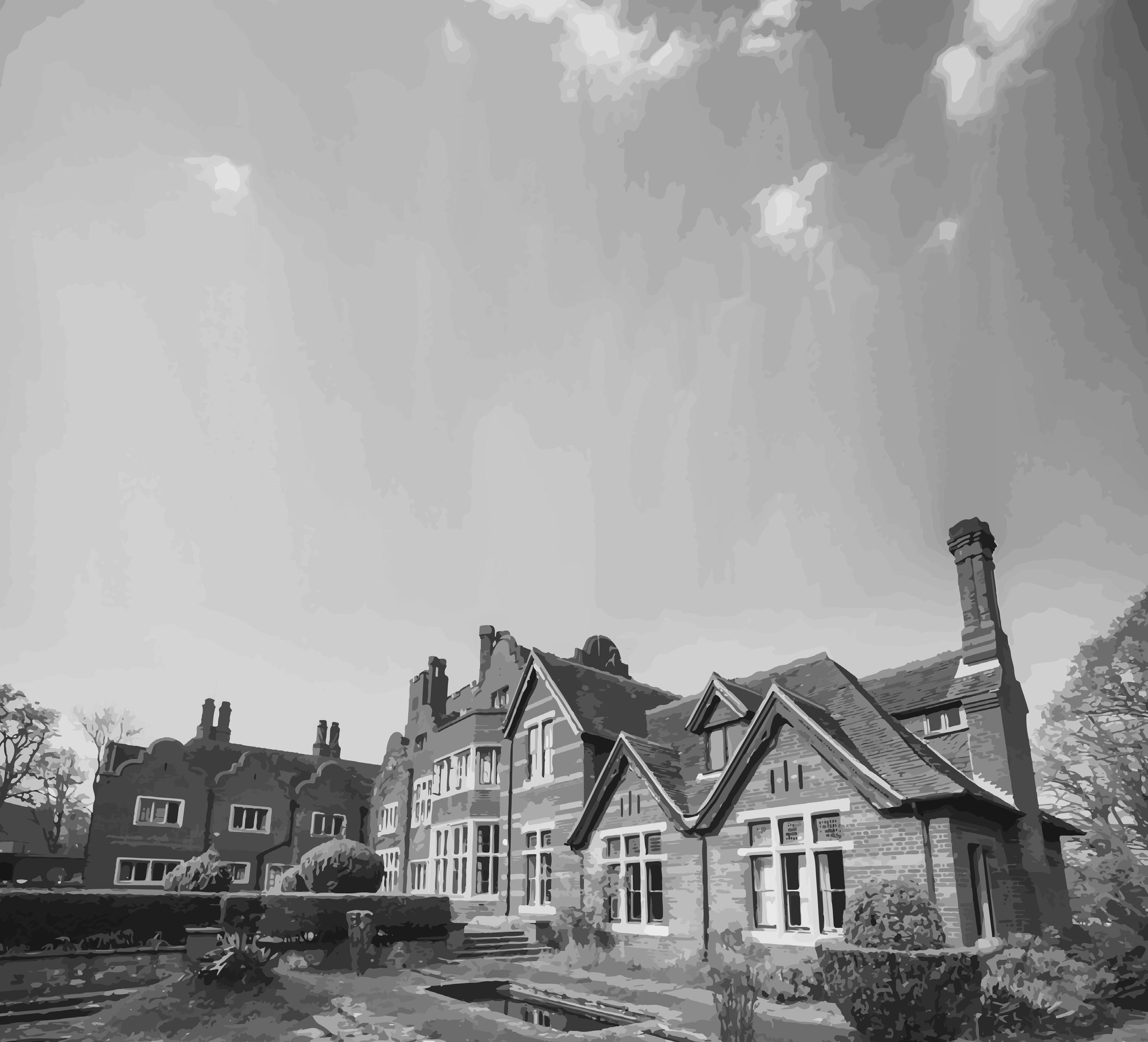
10 Amelia Gentleman, The Windrush Betrayal: Exposing the Hostile Environment (London: Faber & Faber, 2019).
11 David Olusoga, Black and British: A Forgotten History (London: MacMillan, 2016).
12 Attlee, the Prime Minister, made enquiries as to whether she might be diverted to East Africa, and the West Indian migrants offered work on groundnut farming projects there – Jo-Anne Lee, John Lutz, Situating: Critical Essays for Activists and Scholars (2005), p. 49. On the day the Empire Windrush reached Tilbury, eleven Labour MPs sent a letter to Attlee requesting that he put in place controls to limit black immigration to Britain. Black and British – Wendy Webster, Imagining Home: Gender, ‘Race’ and National Identity, 1945–64 (1998), p. 26, and James and Harris, Inside Babylon, p. 25.
13 In 1954, during lunch at Chequers with the Governor of Jamaica, Sir Hugh Foot, Churchill expressed his concern that if West Indian migration continued “we would have a magpie society: that would never do” – Peter Fryer, Aspects of British Black History (1993), p. 34. 1955, Harold Macmillan reported in his diary, with some incredulity, that Churchill thought “Keep Britain White” might make an appropriate slogan with which to fight the upcoming election – Peter Fryer, Aspects of British Black History (1993), p. 33.
14 Hardly surprising given some of the schoolbooks they were raised on — Boris Johnson – schoolbook at Ashdown House with ‘piccaninny’ word and other denigrating words.
15 Simon Jones. 10 August 2020
16 Ali Fortescue. 11 August 2020
17 Gabriella Beckles-Raymond, “Implicit Bias, (Global) White Ignorance, and Bad Faith: The Problem of Whiteness and Anti-Black Racism,” J. Appl. Philos. 37.2 (2020): 169–189.
18 “The possible causal factors are multiple (and not at all necessarily mutually exclusive): socialisation into a racist belief-set or a Eurocentric normative starting-point, inherited culture and tradition, inculcated social amnesia, typically skewed inferential patterns, deficient conceptual apparatus, material group interest, or epistemically disadvantaged social-structural location.” Charles W. Mills, ‘Global white ignorance’ in M. Gross & L. McGoey (eds), Routledge International Handbook of Ignorance Studies (Oxford: Routledge, 2015).
19 I am focussing on the human sentiment of the notion of ‘Black Lives Matter’, not on the political movement that it represents.
20 Naomi Osaka – Great article by Tumaini Carayol, Sunday 13 September 2020 (US Open Tennis Champion), who wore a different mask with different names onto the court: “It made me stronger, because I had more desire to win, because I want to show more names, and I want people to talk about it more.”
21 Athens should always be critiqued by Jerusalem, philosophy (and democracy) by prophecy. We should always hold our hermeneutical lens of suspicion on the hubris of nationalism and myths of nation building.

The 2020 Beach Lecture
What is the relationship between religious scripture and violence? The 2020 Beach Lecture explored this question – in 105 minutes. Holding the lecture online was a ‘first’ in the Beach Lecture’s 22-year history of commitment to religious bridgebuilding. The second unique quality was the featuring of not one but three speakers – a Christian, Dr Julia Snyder, a Jew, Dr Daniel Weiss and a Muslim, Dr Omar Shaukat – all from the Cambridge Interfaith Programme. Each speaker surveyed the connections between their own community’s sacred texts and human violence. They came up with surprisingly similar conclusions.
Dr Snyder began by exploring the many factors that lead up to an act of violence. She suggested that singling out someone’s religion as the cause of the violence is offering an over-simplistic account of human behaviour. A clear distinction needs to be made between motivation for violence and justifications cited for violent actions – often after the fact. Despite the fact that some violent men cite the New Testament to explain why they beat their wives, she said, “There is no evidence of a correlation between religiousness and domestic violence.” All the speakers demonstrated that in religious communities, “people cite scripture all the time in any circumstance and use it as a secondary justification”. They showed how a great deal of violence is also motivated by financial, political, historical, or social factors.
Dr Shaukat confirmed the complexity of human motivation as he shared the results of interviews he had done with recruits for ISIS and other similar organisations about their relationships to the Qur’an. He described how some of his interviewees began their violent activity in response to leftist propaganda which gave expression to their perceived sense of injustice towards Muslims in the wake of 9/11. Only subsequently did they discover what they perceived as justification for violence in Koranic texts and Jihadist interpretations of those texts.
A second area of agreement between the speakers was the importance of not deciding what people will understand from a scriptural text just by reading it yourself – especially if you do not belong to the community concerned. People from outside religious communities rarely understand the role that scriptures play inside them. They all pointed out that within their religious communities, different groups of people are debating the meaning of religious texts. Dr Shaukat recounted how Sunnis and Shias, for instance, disagree on what sort of purity is demanded of Muslims, seeking to interpret various Quranic texts accurately. All speakers agreed that discussion rather than avoidance and dismissal are vital routes to inter-faith understanding.
Dr Weiss illustrated what Jewish engagement with religious texts looks like by exploring rabbinic approaches to two texts in the sixth century C.E. Babylonian Talmud – the basis of most contemporary Judaism. Jews believe the scriptures are the Word of God, “who is good and wants human beings to choose life and blessing,” he said. He looked at two ‘violent verses’, which came out of a community needing to maintain justice by taking care of victims. Leviticus 24.19–20 calls for “an eye for eye and a tooth for tooth”. Deuteronomy 21:18–21 seems to advise the stoning of “a stubborn, rebellious, gluttonous and drunk son”. “The value of a violent-sounding verse is that it stimulates community discussion,” said Dr Weiss. He showed that Jews believe that scripture should be treated as something that needs to be discussed within the community. And they conduct that discussion conscious of the broad context of different scriptural exhortations and commitments. “Asking questions moves us away from our assumptions and prejudices,” he said, and “makes a community less likely to use violence.”
About 65 people online and many more on social media from around the world were left with more to think about as the Q&A session ran 15 minutes over time to deal with the questions being submitted. The interaction between individuals, communities and their texts had yielded plenty of food for thought. The three lecturers offered further material and willingness to offer interactive engagements via their website www.scriptureandviolence.org and their recent book, for which lecture registrants were offered a discount.

For its final lecture of 2020, the Newbold Diversity Centre was delighted to welcome Amanda Khozi Mukwashi, the CEO of Christian Aid, on Tuesday 10 November. The fact that she so clearly identifies as a Seventh-day Adventist added an extra dimension to the event. She framed her topic as a question: “Does poverty have a colour?” The subtitle added an extra dimension to her subject: “How the Church can restore dignity, justice and equality for all”. As she surveyed the Church universal and her own Adventist community, her answer to her own question was a resounding ‘yes’.
Though she has only been in her current post for two years, Amanda has 25 years of experience in relief and humanitarian aid organisations like the United Nations and Voluntary Service Overseas. She has seen poverty and its devastating effects at close quarters. Part of the power of her lecture was in her stories about places and people that she had visited in the course of her work. She opened with an account of her work with a women’s group in Ethiopia, a country that has witnessed drought more and more frequently in recent years. Vast areas have become infertile and people’s lives have been put at severe risk.
She pointed out that the primary driver of much poverty in this case and many others is climate change, which has disrupted centuries-old cultural patterns and ways of survival. While people in the West debate the causes of climate change, millions elsewhere feel it in their stomachs. “Those who suffer the worst consequences of environmental disaster are those outside the developed areas,” said Mukwashi. Those who are the greatest culprits when it comes to carbon emissions – the USA, Europe, Russia, China – experience the least impact on their daily life.
Everywhere, Black/Asian/Minority Ethnic people are ‘at the bottom of the food chain’ and living in extreme poverty around the world. In the UK, children of colour are more likely to be in care and less likely to be legally adopted. Where ethnicity intersects with gender, women of colour will find themselves most disadvantaged.
The reasons for all of this are of course complex. But it is clear that an economic system based on slavery, which has evolved and continues to evolve into a particular sort of capitalism, is a primary cause of inequalities and injustices. The UK is by no means blameless in these matters. For example, it is extraordinary to discover that it was only in 2015 that the UK government finished paying off compensation to slave owners, and that with the monies of tax-payers who are themselves the descendants of victims.
So – to the big question of the lecture: Where does the church stand on these issues and others like them?
It is important that the Christian church confesses its deep complicity in the slave trade. “The church was not only actively involved and engaged in grading black Africans as sub-human,” said Mukwashi. “It provided a rationale and gave permission for people to do so.” The church has slowly changed its view, but there is still much to be done in the business of restoration.
When it comes to developing dignity, love, justice and equality in the world, the church continues to do much to support the status quo. Its own structures replicate power structures and financial structures that are little different from their secular counterparts. The church still operates with hierarchical, male-dominated power structures. It still invests members’ money in enterprises that use large quantities of fossil fuels.
Amanda testified that she had become an Adventist while at university largely because of Adventist teaching on holistic human living. But, she observed, “Adventists are not looking holistically at the business of production and consumption.” If the role of the church is to restore dignity to all human life, it cannot continue as it is. It must redouble its efforts on behalf of the poor; it must work towards greener economies, must grow towards true gender equality. These matters are all intertwined – they are all about justice. The church will lose, is losing, its moral capital. It must engage with such issues.
Most of all we can individually be models of inclusiveness, people who are quick to welcome and slow to exclude. God has dignified us, so we must bring dignity to others. And poverty is one of the great destroyers of dignity. So many of the causes of inequality and poverty are beyond the reach of individuals, but Mukwashi advised us to play a part locally. We can increase our charitable donations, of course. We can write to our MP. We can keep going to church to keep alive the sense of the dignity of the individual. We can talk more than we do about poverty, dignity and equality from the pulpit and in Bible study groups without being party-political. We can review the way we as families and as a church spend our disposable income. We can lend our weight to groups that lobby for greater social justice in our world.
To conclude the lecture and the Q&A session that followed, Mukwashi left her online audience with a number of challenging questions to the church universal and the Adventist Church in particular. How would Jesus relate to the way we invest and in what we invest? Are we using the power and influence we have to change things? What is the role of the church in restoring sacredness to human life? If the church remains silent on these issues, then what is the role of the church? We talk about redemption, love and compassion, but is the world experiencing love and compassion through us?
The lecture’s title question was answered – and more: Does poverty have a colour? Yes, it is black and brown. Is the church in the business of ‘restoring dignity, equality and justice to all’? Yes, but it has its blind spots. Our job is to be as clear-sighted as possible about what those failures might be.
If we keep listening to the voice of Amanda Khozi Mukwashi and others like her, maybe our eyesight will improve!
Michael and Helen Pearson
It goes without saying: Newbold has been, is, and always will be a hub for ministry. It draws ‘the called’ from every corner of the world to a meeting of minds. Moreover, this gathering of inspired men and women arrive on campus with a united purpose – to learn – and fulfil Jesus’s great commission to “go and make disciples of all nations”. Here is a collection of stories from alumni called to trust the leading of the Holy Spirit to accomplish God’s mission through ministry.
Marica Mirilov, Bible worker, Director of Children’s, Women’s and Family Ministries in Cyprus, studied at Newbold with her husband, Dr Branislav Mirilov, President of the Cyprus Region Seventh-day Adventist Church. Marica recounts their intriguing story of a dream come true: to go to Newbold and serve God as missionaries.
Is it the threads of Newbold that enriched the weaving of my life story, or did my story add a thread to the tapestry of the College? Before you try to untangle the thread of the question, let me take you to the very beginning of my alumna story.
In 1984, my husband-to-be, Branislav, proposed to me twice at Maruševec, the Seventh-day Adventist secondary school and theological seminary, in what used to be Yugoslavia. The first proposal was what I had hoped for; we were deeply in love. However, the second one came as a total surprise.
One day Branislav said, “I’ve received an application form from Newbold College in England. I haven’t had the chance to talk to you about it, but I want to continue my theological education in England. It’s my dream. I want to increase my capacity for serving God. Are you ready to share this dream with me?” We had a shared dream; to go to Newbold to learn English, study theology and serve as missionaries, and that is what we did.

Newbold became our honeymoon destination in 1985, and the honeymoon lasted no less than seven years. What more could two young, dedicated, missionary-minded Seventh-day Adventist Christians ask for than English language immersion and the excellent academic programmes that Newbold offered? It was perfect.
We had to make some minor adjustments, such as getting used to using hot and cold water taps. However, on the serious side, we had to grapple with different political ideologies and a social environment unlike the one back home. More significantly, we saw other faces of Adventism embedded in different cultures present at Newbold. We had to recognise and humbly accept them all.
We learned to scratch the surfaces labelled conservative and liberal to understand different values, ways of thinking, and our roles as Christians. Newbold provided a good balance of teachers: those who challenged everything we had ever believed and those who confidently anchored our faith in the Word of God and Adventist teachings. We learned to do our own research, think for ourselves and come to our own conclusions. We matured in respecting people regardless of their views and we claimed the freedom to form our own.
What made our Newbold experience far-reaching was the amazing staff, role models who impacted the direction of our lives and Christian service. Mr John Rigby, business manager, not only concerned himself with getting a positive financial balance but did his best to create work opportunities for the students, as in our case.
Mrs Erica Hole, an English language teacher, and Mr Colin Hole, a maintenance director, commendably opened their home to many international students and made us a part of their loving family. Branislav loves to talk about the day he bought a car. Our teacher and librarian, Dr Hugh Dunton, offered to sell his car to Branislav. He invited Branislav to accompany him to the local garage and paid the mechanic to check the vehicle before selling it to him. As they waited outside the garage, Dr Dunton began weeding a flower bed. Branislav told me: “That day, I learned that honesty is above any cost. The war was raging back home and, as I stood by
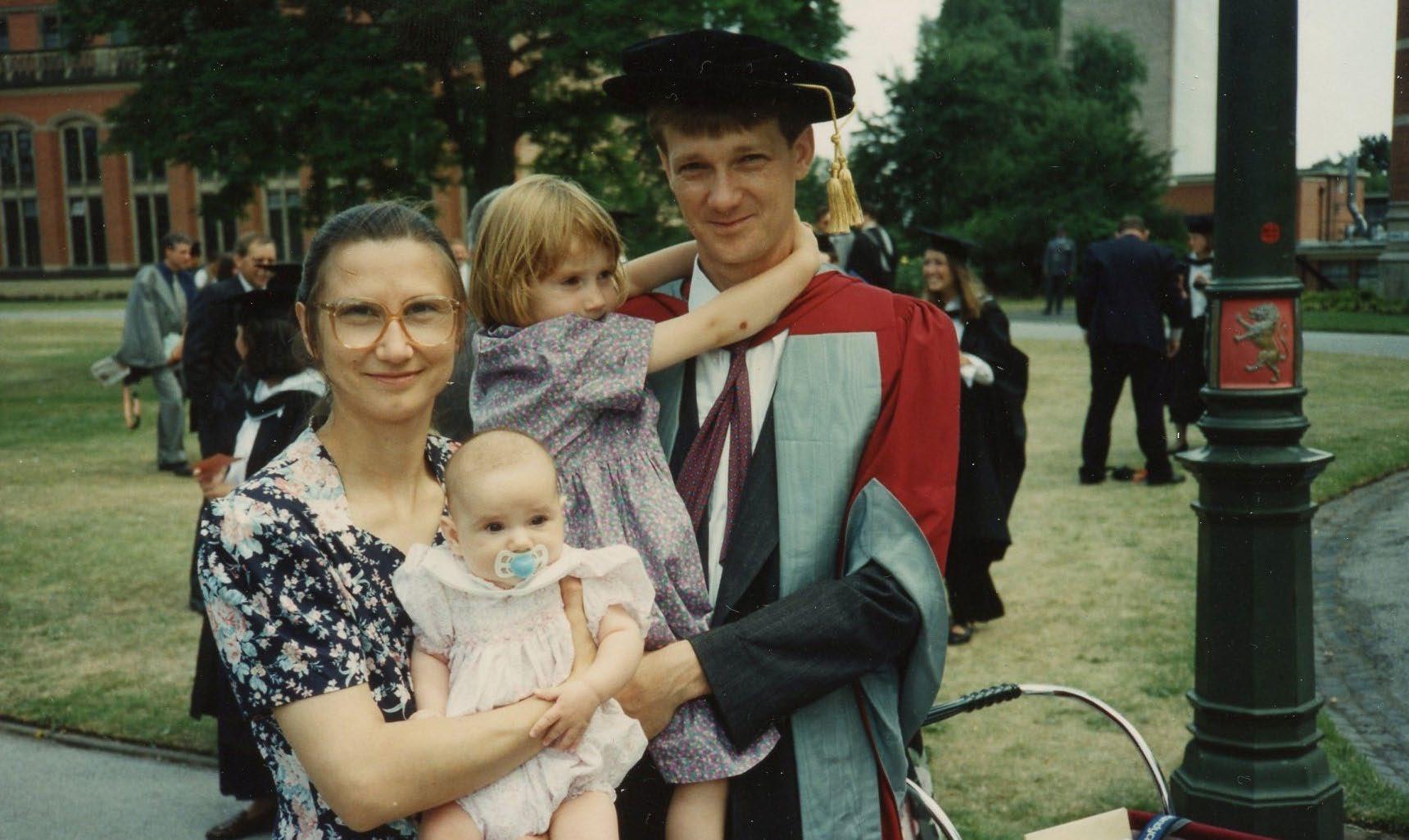
that flower bed, I learned that true patriotism is shown even in the smallest acts of kindness to others.”
I have pictures of the funny moments during staff open home nights, social programmes, going ingathering and many other instances where we achieved our goals together. The presence of the entire Newbold staff at church services, college assemblies and special events assured us that they meant what they said and expected us to be the same.
The help and guidance we received from our teachers went beyond student life at Newbold. Dr Harry Leonard, a muchrespected academic, had so much faith in his students. He encouraged me to do my postgraduate studies at the University of Reading and gave me the opportunity to teach history at Newbold.
We learned the importance of having a vision at Newbold. Our Dean of Theology, Dr Borge Schantz, worked on his idea of interconfessional exposure [engaging with Christian and nonChristian religious communities] and an academic collaboration with Birmingham University. His vision gave Branislav a unique opportunity to be mentored by Rev. Dr Frances Young, Professor of Theology at the University of Birmingham, and Dr Michael Pearson as an external mentor on behalf of Newbold.
The term ‘embracing diversity’ was not commonly used in the 1980s and 1990s. At Newbold, we did not talk about it, we simply practised it. We received the best unintentional training in global anthropology by socialising, studying and working together with fellow students from all over the world. We laughed
at our differences and analysed them without pride or prejudice. We felt honoured to be ‘ambassadors’ of our own cultures and social backgrounds, contributing to Newbold’s diversity and embracing it. Above all, we motivated and inspired each other, keeping up with new technology, discussing the latest trends and books.
We started dreaming of life and mission beyond national borders. Branislav and I lost our home base during our stay at Newbold; there was no more Yugoslavia. Our homeland separated into two nations, Serbia and Croatia, and our people became archenemies overnight. However, God listens to our quiet prayers and acts upon them in His time.
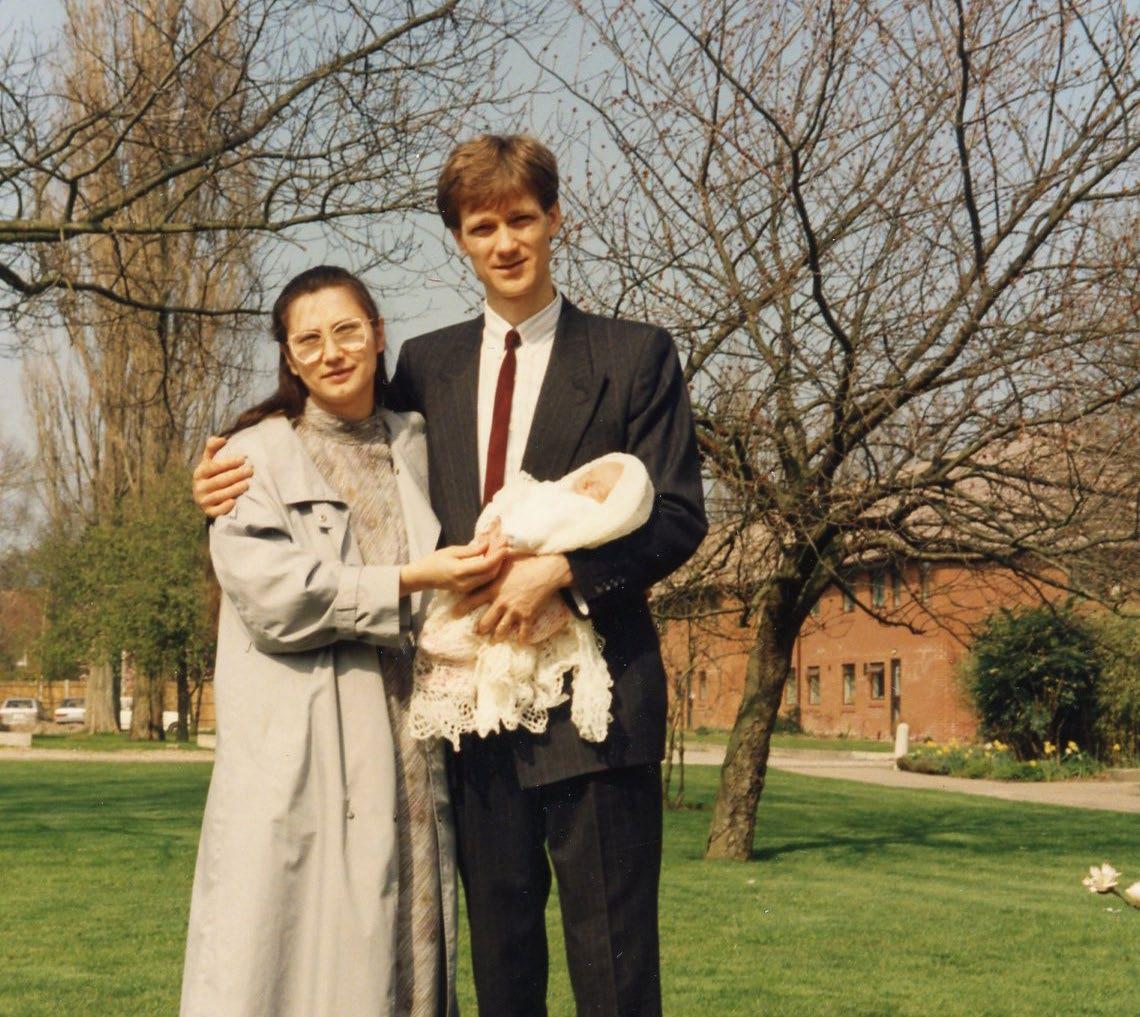
Photography: Provided
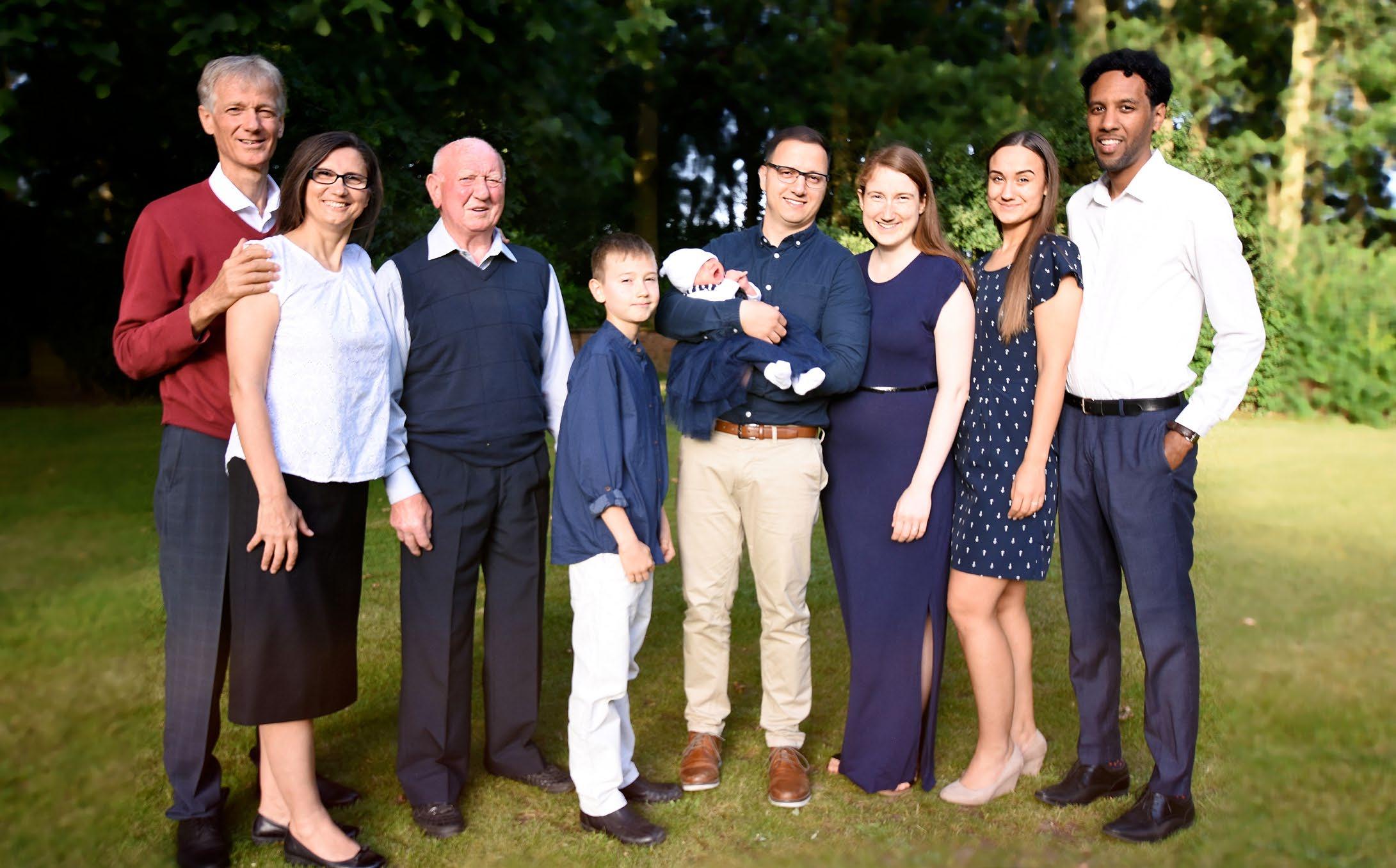
During assemblies, the College presented names and chose students for its Year in Mission programme. One day during assembly, Branislav whispered to me: “Can you imagine the two of us serving abroad in a mission field?” The unimaginable happened; our missionary journey began in Northern Ireland two years later after serving at Stanborough Boarding School in Watford.
What was the difference between going to Northern Ireland, blood-stained by political conflict, and going back to our own wartorn countries? Branislav, I and our daughters, Miriam, a toddler at the time, and four-month-old Natasha, were welcome outsiders in Ireland. If we had gone to our own divided countries, we would have been labelled passive contributors to the conflict being a mixed couple. Our vulnerability became our strength during our six-year mission in a divided and broken society.
Our next assignment shattered all our preconceived ideas of mission fields: we went to Germany, an affluent country where we spent five years ministering to ethnic ex-Yugoslavian communities in Stuttgart. When I say, ‘We,’ I mean my whole family. We adopted a family motto taken from Joshua 24:15: “As for me and my house, we will serve the Lord.”
When Newbold invited Branislav back as an associate pastor, there was a sense of coming home. On reflection, those two years gave us time to recuperate and prepare for the next call, which came unexpectedly. The Euro-Asia Division of the Seventh-day Adventist Church elected Branislav to serve as Education and Global Mission Director and later the Division Vice-President. We
moved to Zaoksky Adventist University in Russia, where I worked as a lecturer. Miriam studied Music, and Natasha completed secondary school. Our son Emmanuel was born in Russia, which reminds us of long cold winters and God’s constant presence in our lives.
Unfortunately, the harsh Russian climate took a toll on my health. I developed rheumatoid arthritis. We were uncertain about our future, but a quote from Frederick Buechner kept my faith alive: “The place God calls you to is the place where your deep gladness and the world’s deep hunger meet.” God is merciful and has a beautiful sense of humour – after five years of freezing winters in Russia, He sent us to one of the warmest countries in Europe, Cyprus.
God called us to a place where my health stabilised, a place where I am happy to be a Bible worker on the pastoral team led by my husband, who is developing Cyprus as a mission field. Although prosperous, some segments of the Cypriot society hunger for basic human respect, and all are hungry for Christian love and hope. We are glad to be serving in Cyprus.
It all started with Branislav’s dream of going to Newbold to extend his capacity to serve God. The Newbold dream continues with every new call to serve God, and our linguistic capacities never cease to grow. God has enlarged our intellectual and professional reach through ministry, teaching and administrative duties. Our daily prayer to God is to expand our ability to love and embrace those He calls us to serve.
Newbold alumnus Pastor Max McKenzie-Cook is the Director of Community, Diversity and Prison Ministries at the South England Conference of the Seventh-day Adventist Church. Having achieved a degree in law, an MA in Theology, and now an MBA, Pastor Max McKenzie shares a personal story about his path into ministry.
Ihave been in the ministry for seven years. I began my internship in Brixton before pastoring at churches in Battersea, Wallington and South London. Eventually, I moved to Welwyn Garden City and Stevenage churches before working for the Conference.
Pastoral ministry has allowed me to work in local church settings, and my MBA (Masters of Business Administration) has been invaluable to me as a church administrator. I know I will be a better pastor having both a theology degree and administration skills when I return to pastoring churches when the time comes.
Currently, I am involved in the I AM Urban initiative run by ADRAUK (Adventist Development and Relief Agency – UK). ADRA is an international non-government organisation, which does humanitarian work primarily abroad. However, there has been a shift in focus to working more in the United Kingdom, which gave birth to the I AM Urban initiative that provides humanitarian services for people living in urban areas. It is a new and inspiring project, and we have supported 72 food distribution hubs since the outset of the COVID-19 pandemic.
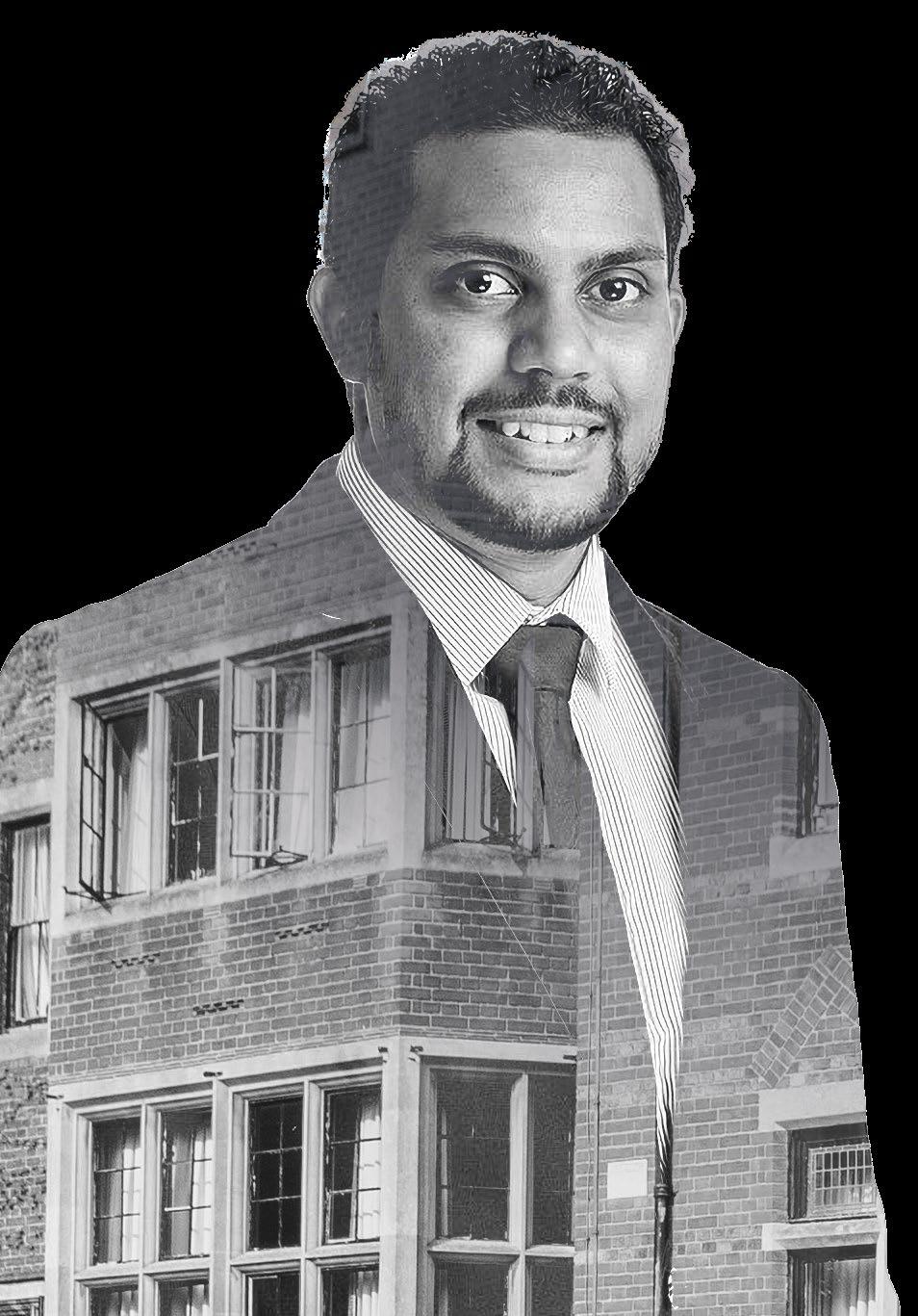
As a teenager, I never felt that I had the language and skill to articulate some of my feelings. I suffered from a lack of self-esteem, so I searched for meaning and belonging in different places, primarily through education. Sadly, I was not good at it; I did not perform well academically. In some ways, there was also a little self-sabotage; my grades often made me feel I was unintelligent, uninspired, unable to effect change to be meaningful to the world. However, it fed into my desire to study law.
One day, our school invited a barrister to talk to us about his career. He caught my attention when he mentioned the pay scale: as a QC (Queen’s Counsel), you could earn a quarter of a million pounds a year. I thought, “That is me.” That is what I wanted to do. I wanted to tell everyone, “I am a barrister earning a big salary.” It felt natural to me. At the same time, once I began my degree studies, I realised it was shallow to think success is equal to how much money you have in the bank. I was also struggling with God because I wanted to know what I could do to serve him.
When I observed my pastor and other influential people in my life, I realised that finding meaning, purpose and belonging in God was the only thing that would last. I started to understand the importance of attaching my belonging, self-worth and reason for being to God. I moved away from law and into pastoral ministry. Serving God gives me the most sustainable sense of belonging I have ever experienced.
Unlike many of my pastoral colleagues, I did not have a ‘Damascus Road experience’ that brought me into ministry. God was and still is working with me in more subtle ways. There are people who God has not woken up in the middle of the night, nor has he approached them in a vision, saying, “You must enter the ministry,” but they feel drawn to the ministry. So, it is important to recognise that the ‘still small voice’ is also confirmation of God’s calling.
I always knew going into ministry meant having to deal with intense situations such as trying to help someone who is feeling suicidal or couples going through separation or divorce. I had never confronted these issues head-on before, and we never learned how to handle such situations in an in-depth and practical way at Newbold. Having to face these issues made me anxious as a young pastor, but thankfully, I had excellent mentors.
Pastor Leslie Ackie, the Family Life Director for the British Union, was one of my mentors. He advised us to get counselling skills training, which is the best thing I have ever done in my pastoral ministry. I learned it is unrealistic to buy into the superman or superwoman version of a pastor, thinking you can handle every situation. Such pastors do not exist, and you will end up disappointing yourself and the members you serve, and in the worst-case scenario, you can hurt people by providing bad advice. You have to recognise your limits and know when to refer people to professionals to resolve their problems.
I remember my lecturers at Newbold saying, “We can’t teach you everything, but we can give you the skills and the tools to be able to handle the unknown in the best possible way.” The advice has helped me in my ministry.
Anne-May Müller is the pastor of the Café Church Seventh-day Adventist Church in Copenhagen and the Family Ministries Director at the Danish Union.
Igraduated from Newbold with a bachelor’s degree in Theology in 1994. After graduation, I returned to Denmark to begin my ministry. Now, 27 years later, I am back at Newbold as a parttime student studying for a Master’s degree in Theology.
I felt a strong calling to the ministry after finishing secondary school. I had to decide what area of work I wanted to go into, what kind of education I should pursue. I remember looking through pamphlets from different universities offering courses in chemistry, biology and geography, etcetera. Suddenly, I thought, “All this is useless unless I know God,” and I asked myself why would I want to learn any of these when I can study theology. I started praying about it, and different things happened to confirm theology was for me.
In my opinion, I do not have a lifelong calling to ministry but an ongoing one. Knowing God called me once is not enough because I need to know where God is leading me. I think it is essential to listen to the voice that makes me ask myself, “How can I best serve God?” So far, it has kept me employed in ministry for the Adventist Church.
One of the things I love about the Café Church is we are never afraid to ask questions like, “How can we be a relevant church right now?” Our main question is: How does what we preach and teach, and how does the way we live, become relevant to the average Dane in Copenhagen? It is always good to ask those questions. Also, we should ask hard questions about what we do, the way we do it, the language we use, the programmes we run, the structure we have around worship services and how they help us reach out.
The coronavirus pandemic has brought new challenges. However, I am proud of my congregation for finding ways to continue being a church even though all our churches are closed. It is very uplifting because it shows there are alternatives. The church is not bricks and mortar; the church is where we are. We have developed a concept called ‘Couch Church’, which we hold on Zoom on Sabbath mornings. We have had some fantastic worship services and discussions. It shows what is possible when we are flexible, adapt to new situations and continue to be relevant to our communities.
Being relevant also means making time for people. Some years ago, a teenager approached me and asked me to baptise her. We started Bible studies. The day before her baptism, I enquired why she had chosen me to baptise her. I was not the pastor of her church. I was working as the Danish Union Youth Director. She responded, “Because you were always there for us.” As pastors and as a church, we get so caught up in programmes, having to do one thing or another, that sometimes we forget to be with the people. That teenager knew I would make time for her. It was a defining moment in my ministry. I revisit this experience from time to time to remind myself that the way to bring people to God is by making myself available to them.
As I reflect on my ministry, I realise there are challenges unique to me as a female pastor. When I received the calling for the first time, I did not think being a woman would be a problem, and I did not foresee any difficulties. I did not have any significant challenges to my ministry until we drew closer to 2015, when there were many debates about women’s ordination in the Adventist Church. For the first time, I felt my church did not want me. I am not talking about my local church or the Danish Union, but the Seventh-day Adventist World Church. I struggled with this. It is strange that I worked for the Adventist Church for so many years and never felt that way until that moment.
One day, feeling frustrated, I went for a walk and talked to God. I am not one of those people who can tell you stories where “God said to me”, “God told me”, or “God showed me”, because I do not have those types of experiences. But on this occasion, I heard God say, “You’ve got to preach,” and that was all. He did not say you have to fight for women’s ordination, change the church, the world, or your attitude. He simply said, “You’ve got to preach,” and that has been an encouragement for me. I know that even if the World Church does not accept me, God has a plan for me, and I can fulfil His calling by preaching His word no matter where I am.
Pastor Patrick Johnson is the Ministerial Association Secretary and Discipleship Director for the Trans-European Division. He is the former pastor of Newbold Church, and he recently completed a PhD, where he researched Adventists’ experiences with disabilities.
During my PhD research, I looked at special needs and the Adventist Church. Up to this point, we have not done any serious studies into special needs, so I interviewed Adventist church members with disabilities. I wanted to hear about their experiences, be a voice for them, and let people know what it is like to be a member with a disability.
I started ministry in Norway after graduating from Newbold. I began work as a nurse, learned Norwegian, and served as a pastor. I have been a pastor for the last 30 years. Although I am working for the Trans-European Division, I am still the pastors’ pastor. My main focus in the Ministerial Department is pastoral health. I have been looking at exhaustion burnout, and we are trying to refocus things so pastors can remain in the ministry for a long time and enjoy what they do.
When I think about my ministry, I am most inspired whenever I see people change and give their lives to Jesus. When I do Bible studies, it is wonderful to see the light, as it were, switched on in people’s minds as they begin to realise what God is like and who Jesus is, accepting him as their saviour. There is nothing better than seeing that, and gives me tremendous joy to baptise those individuals. I feel privileged knowing I am a part of their journey.
There are other aspects of ministry, which I enjoy. Visiting people is one because you can bring hope to people’s lives. Having worked in nursing, I understand people’s medical needs, which helps when I visit the sick. I can bring hope to them from the scriptures, which gives them indescribable peace. It is fantastic. I live for those moments.
I believe preaching is one of the gifts that God has given me. The process of preparing sermons is a pleasure. Yes, it can be a challenge to come up with a sermon each week, but what I love most is having “Ha, ha!” moments [sudden insights] where everything falls into place, and you know “This is what God wants me to say”. I get such a boost from it.
As a pastor, expect to go through dark periods in your ministry. I remember what I called my “dark night of the soul” experience when everything was going wrong. I worked with a small
congregation that had set a goal to bring 20 people to Christ. By the end of the year, instead of gaining 20 new people, we lost 20 people. The experience was heart-wrenching for the remaining members. I questioned my calling, “Was I called to this thing?” It was a perfect storm. Soon, I received troubling news about my extended family, which bothered me. Then, my son was diagnosed with a disability. Everything converged, and I told myself, “This is not working at all. I should give up and go to do something else.” I was on my way out of the ministry.
It would have helped if I’d had a mentor during that difficult period in my ministry. Since that time, I encourage pastors to find mentors and advise them to expect down periods, which is why having a mentor is essential. I am mentoring a few people, but I have my own mentor. I have made sure I always have someone to mentor me. These days, with modern technology, you can have a mentor anywhere in the world. All too often, ministry can be very lonely, and we think we have to muddle through it on our own, which is the worst thing you can do. Have somebody, even friends, to share the good times and the bad times, because they will help you get through it.
When I recall my time at Newbold, I am proud to say I received a first-class education. When I arrived at the College, I was somewhat naïve, thinking I knew it all, but when you enter the class and sit with your professors, they begin to stretch your mind beyond what you think is possible. It is excellent. You need this experience when you go out into ministry because you have all types of questions coming your way.
Newbold’s international aspect is good too because you broaden your horizons past your own culture. Meeting people from other cultures with different mindsets is beneficial for pastors because more countries are becoming multicultural. Newbold is a brilliant place to gain this valuable experience.

“I must be lucky,” jokes Dag Jakobsen as he reflects on taking over the role of president of the Newbold Councillors shortly before news broke of COVID. “I was voted in at a meeting in Loma Linda, California, in late January 2020. Some of the participants had flown long distances to the event, including John and Lynda Baildam. None of us knew what was just around the corner – for the world, and, of course, for Newbold.”
Dag, who is Norwegian, graduated from Newbold with a Bachelor of Business Administration in 1989. He went on to earn his Master of Business Administration from Rollins College in Florida. In what he describes as “the best thing that ever happened to me”, he married Joelle Patton, whom he met while both were students at Newbold. Joelle, a general surgeon and surgical critical care specialist, has a thriving practice in Sacramento, California, where they live. Dag has enjoyed a successful career serving as Chief Operating Officer with major healthcare entities in California. His focus has been leadership and operation of the outpatient segments of the healthcare delivery system. This has also meant planning and executing significant expansions through mergers and acquisitions, as well as expanding by building new facilities. In one five-year period, he oversaw the building of 20 new healthcare facilities across Northern California.
We caught up virtually with Dag, who was enjoying a weekend skiing at Lake Tahoe.
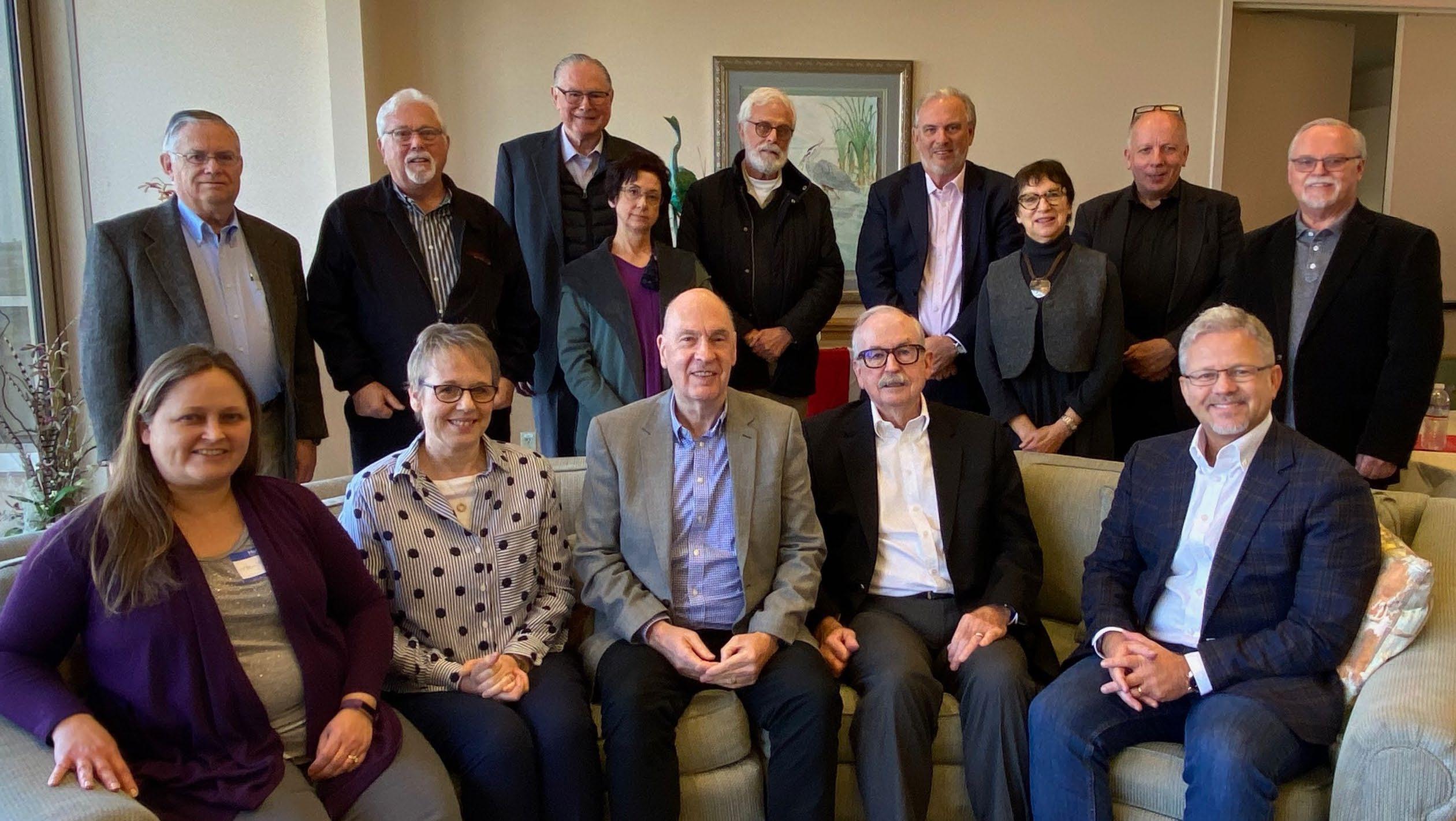
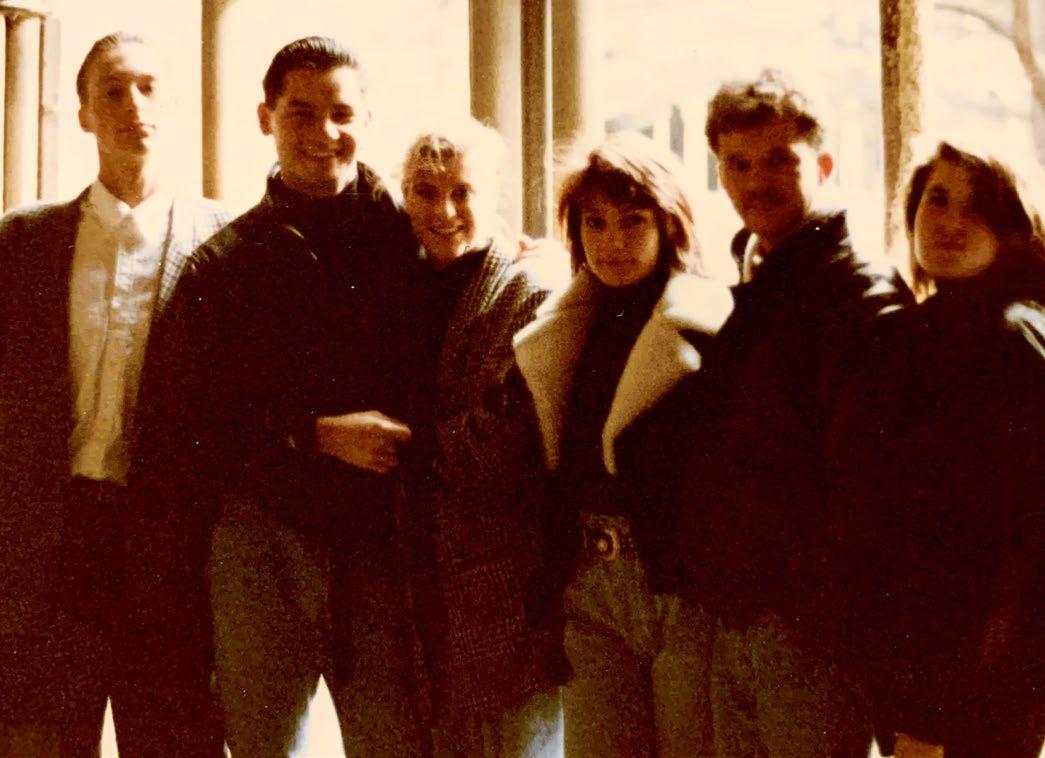
The Newbold Councillors, originally called the Newbold College Principal’s Council, were established as a committee in 1998 in Orlando, Florida, under the leadership of the principal at the time, Andrea Luxton. She was joined by Development Director Velda Cox, Alumnus Ken Vine, and a group of some 40 alumni and friends of Newbold, who came together out of a desire to support Newbold. Over the years we have raised money for projects on the Newbold campus, provided advice when called upon, and assisted the College in a variety of other ways. Our preference when supporting projects has been those that can also generate ongoing income for Newbold after the initial investments. Some examples of projects the Newbold Councillors have supported are: the renovation of the Blue Room, chapel, and some of the guest rooms in Moor Close; the restoration of Moor Close Lodge as a guest house; and the renovation of showers and WCs in Keough House. In collaboration with the funding by Council members Dr Richard and Patti Smith Catalano, we also established the ‘Smith Centre’, a conference/lecture facility in Salisbury Hall. Patti’s grandfather, Walter I. Smith, was once principal of Newbold.
The membership criteria are ‘rigorous’ – you have to love Newbold and want to help out. So, if you’re reading this and think “that describes me”, jot me a note. You’ll be welcomed on board. It’s that easy. I should perhaps mention that we do also collect nominal annual dues from our members, but they all go to great projects supporting Newbold. And you may find yourself elected to an office! The Executive Committee is made up of myself as the current president, Heather (Hall) Tourville, who is president-elect, and Jerry Hoyle, the past president. We serve for two-year terms.
We developed plans to expand our membership and to partner closely with the Newbold Alumni Association, as well as possibly start a non-profit organisation to assist us with fundraising. We were almost ready to start implementing these plans when the news hit about Newbold’s strategic change. And, of course, COVID-19 has, unfortunately, put a lot in a holding pattern.
It’s no secret that this has been a very tough year for higher education across the board, and for Newbold in particular. Maybe it’s been the toughest year for Newbold since World War II. At the end of it, many of the programmes we love and cherish are on hold, and precisely what the future is for Newbold is under discussion.
But one thing I’ve learned throughout my career is that the old saying about a crisis being an opportunity is exactly right. We were, I believe, overdue for higher education to be rethought. The fiscal crisis brought on by COVID-19 has given us no choice. If we’re smart now, this may end up being the best thing that could have happened. It certainly doesn’t feel like it right now! But let’s play the long game with determination, vision, and the willingness to innovate, even if innovation comes with risk. There is, after all, something a lot riskier than innovation – stagnation. Stagnation kills entities every time.
I don’t want to sound glib. The reality is that it’s easy to get consensus on the need to change. However, actually innovating and coming up with real, sustainable solutions – that’s the hard part.
I know there are many bright minds currently looking into this and what Newbold’s future should look like. I’ve been thinking about this with my friend and fellow Newboldian, James Standish. We both see a very bright future for Newbold, if the opportunities that now present themselves are embraced.
We foresee the hybrid model of higher education growing, which includes both online and in-person learning. Some of the most well-known and prestigious universities are experimenting with this model. Newbold is ideally situated to be a leader. Hybrid higher education would provide an opportunity for Newbold to include a much broader global community. That community could be integrated into in-person learning on campus for shorter or longer periods. Using a hybrid model, Newbold could provide a highquality British education infused with Adventist values that would be accessible and affordable to literally thousands of people across the globe. These new students would have the opportunity to come to Newbold for part of, or most of, their education to enjoy the opportunity of experiencing the glories of Newbold campus life. Yes, there would be lots of details to work out. Welcome to innovation. If it were easy, everyone would be doing it! The future of learning belongs to those brave enough to embrace it.
Newbold is in one of the most desirable locations on earth! It’s only minutes to Windsor, Henley, Virginia Water, and Ascot – these are world-renowned places. It’s also an easy trip from Newbold to London with all the cultural, historical, and entertainment possibilities the city has to offer. We’re talking from world-class sporting events at Wimbledon or Wembley Stadium to some of the greatest libraries and museums found anywhere, to every kind of music and theatre performance imaginable.
And then there are the transportation advantages. Newbold is close to Heathrow and Gatwick Airports, so getting in and out is simple. The train station is 10 minutes away to take you virtually anywhere in the UK and, if you like, to Paris for the weekend. And there’s a bus stop right outside the gate, so you don’t even need a car.
It’s also an incredibly gorgeous campus, centred around its crown jewel – Moor Close – which dates back to 1865. Put all of that together and we see opportunities everywhere we look.
There’s a concept in Adventism called the ‘Centre of Influence’. The idea is to create services that meet people’s actual needs – not the ones we wish they had. It’s based on Ellen White’s statement:
Christ’s method alone will give true success in reaching the people. The Savior mingled with men as one who desired their good. He showed His sympathy for them, ministered to their needs, and won their confidence. Then He bade them, “Follow Me.”
It turns out Newbold is perfectly positioned to be a centre of influence. Let me give just one example of how it could be a beacon in the local community. Newbold has fabulous food service facilities. Yes, they need to be renovated, but the basic bones of the place are solid. At the same time, vegetarianism is massively popular in England, and growing. The BBC reports that 25% of British dinners are now completely meat free. Imagine the cafeteria space leased to a vegetarian restaurant that serves both the needs of the campus and the community, with on-site dining, delivery, and high-end vegetarian cooking classes. This isn’t a fantasy. It’s a very real business opportunity that Adventist entrepreneurs like Jeremy Dixon, with his Revive Cafés in New Zealand, are successfully tapping into.
James and I are also working on a 55+ active living community concept adjacent to the Newbold campus. What better place to spend an active and engaged retirement than in a place that offers so much community, mental, physical and spiritual activity, and of course, beauty? The 55+ population is exploding. I don’t believe there are any Adventist 55+ communities in England. The world loves Newbold. Put it all together, and there’s a way to serve the needs of people in a way that glorifies God and brings us closer to Him.
Thanks so much, Dag, for your leadership of the Newbold Councillors and for sharing your vision.
Thank you! I would also like to add a particular word of thanks to John Baildam and the Newbold leadership team. I have led multiple restructurings and I know from experience how difficult it can be. It is really hard and challenging work. Let’s continue to keep them in our prayers and give them our support. And together, let’s embrace the changes necessary, whether they be similar to the vision I’ve outlined, or other options discussed and evaluated by the many people involved in this process. We all want to see Newbold embrace a future that far exceeds its glorious past.
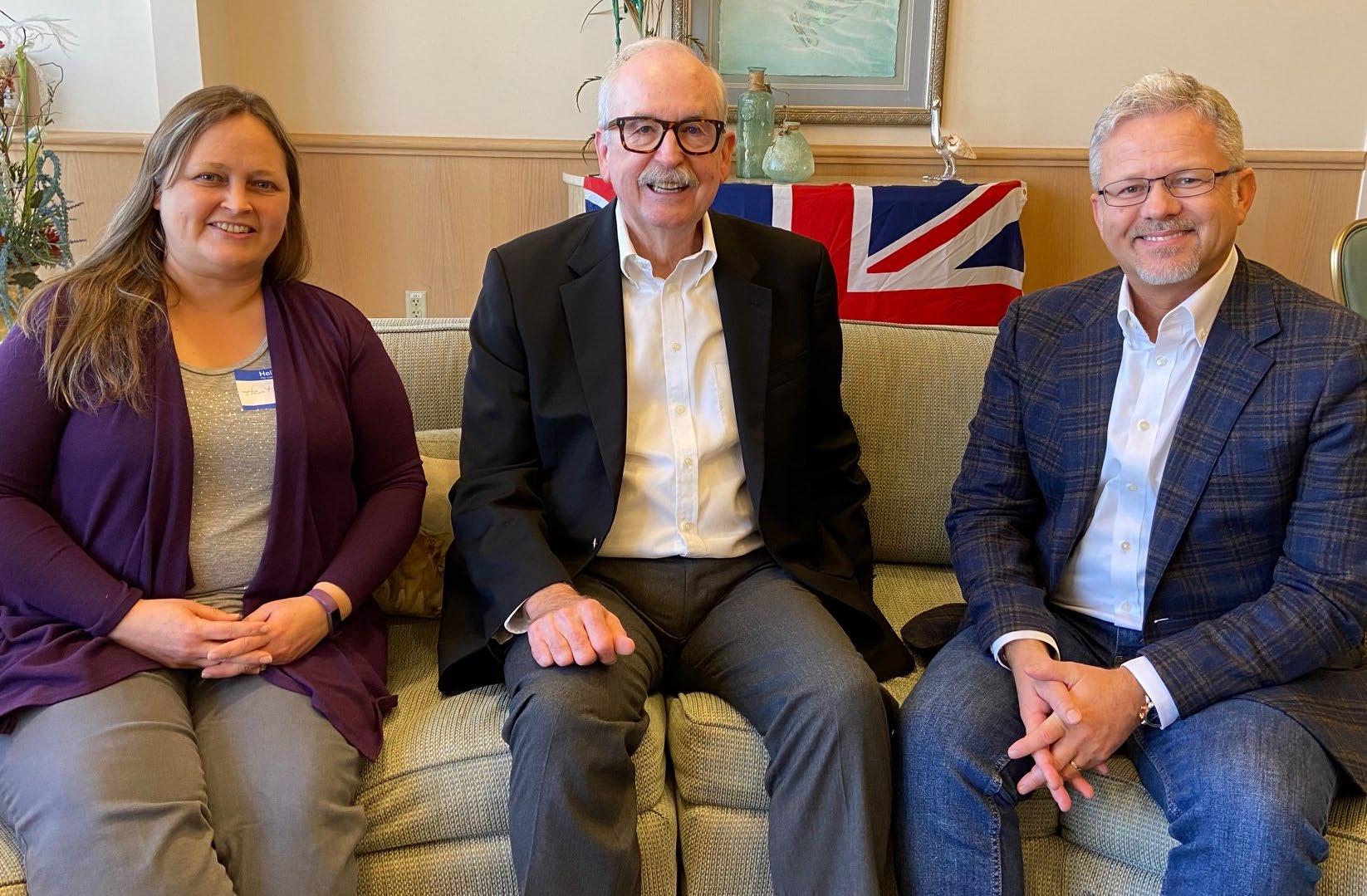
Lorna Hardy has fond memories of visiting Newbold as a child. Years later, in 1979, she was among the first cohort of female students to graduate from the College with a bachelor’s degree in Theology.
Inspired by lecturers Dr Harry Leonard, Dr Mike Pearson, Dr Woodfield and Pastor Dunnet, Lorna says, “The whole ethos of Newbold really made a difference to my faith journey. I met people from so many cultural backgrounds, and of different opinions, and I came to realise that we all loved God. And even more importantly, God loved us.”
Lorna married soon after her graduation and became involved in ministerial work in Northern Ireland and the Republic of Ireland before moving to Australia. She taught Bible and Early Childhood Studies for six years at an Adventist high school in Perth. Later, she worked for the Australian government as a career advisor and managed adult literacy programmes.
Lorna lives on a farm and enjoys writing. She has had four books published by Stanborough Press and she is currently writing a book aimed at people with little or no faith background. The new book draws on examples from her own life experiences as she uses “lighthearted watercolour illustrations” to share God’s love “in a relaxed way”.
Reflecting on the daily challenges brought by the coronavirus pandemic, Lorna draws inspiration from the poem “The Gate of the Year” by Minnie Louise Haskins, used in a Christmas speech by King George VI in 1939.
“May God bless you [Newbold] as you too step with confident courage into the unknown.” Lorna.
The Gate of the Year
‘God Knows’
And I said to the man who stood at the gate of the year:
“Give me a light that I may tread safely into the unknown.”
And he replied:
“Go out into the darkness and put your hand into the Hand of God. That shall be to you better than light and safer than a known way.”
So I went forth, and finding the Hand of God, trod gladly into the night. And He led me towards the hills and the breaking of day in the lone East.
So heart be still:
What need our little life
Our human life to know, If God hath comprehension?
In all the dizzy strife
Of things both high and low, God hideth His intention.
God knows. His will Is best. The stretch of years Which wind ahead, so dim To our imperfect vision, Are clear to God. Our fears Are premature; In Him, All time hath full provision.
Then rest: until God moves to lift the veil
From our impatient eyes, When, as the sweeter features Of Life’s stern face we hail, Fair beyond all surmise God’s thought around His creatures Our mind shall fill.

If you know someone that could thrive spiritually, personally and academically with us, then we’d love to hear from you through the Newbold Referral Programme.
For the September 2021 intake, we’re offering a scholarship of £1,500 that goes towards an applicant’s tuition fees. Give them the best start. ALUMNI | FRIENDS | CURRENT STUDENTS
It is with sadness that we report the deaths of the following members of the Newbold family.
Patrick Boyle (1935–2020)
alumnus: 1988
Ron Davey (1932–2021)
alumnus: 1977
Betty Doris Harker, née Moss (1934–2020)
alumna: 1955
Angélique Hornis, née Van der Horst (1941–2021)
alumna: 1971
Clyde Moore (1957–2020)
alumnus: 2000
Colin Morris (1934–2020)
alumnus: 1964
Desmond Murtagh (1926–2021)
alumnus: 1956
Sven Ohman (1946–2020)
alumnus: 1977
Javlan De Oliveria (–2021)
alumnus: 1989
Harold Soriton (1939–2021)
alumnus: 1988
Pierre Winandy (1932–2020)

“Do not let your hearts be troubled. Believe in God, believe also in me. In my Father’s house there are many dwelling places. If it were not so, would I have told you that I go to prepare a place for you? And if I go and prepare a place for you, I will come again and will take you to myself, so that where I am, there you may be also.”
John 14:1–3

Newbold College of Higher Education is an inclusive, student-focused provider owned and operated by the Seventh-day Adventist Church.
St Mark’s Road Binfield, Bracknell Berkshire, RG42 4AN United Kingdom
E: alumni@newbold.ac.uk W: newbold.ac.uk
Registered Charity Number: 1052494 ISSN: 2055 - 5474