Decoding plant language through light HOW HYPERSPECTRAL REMOTE SENSING COULD HELP PROTECT RICE HARVESTS
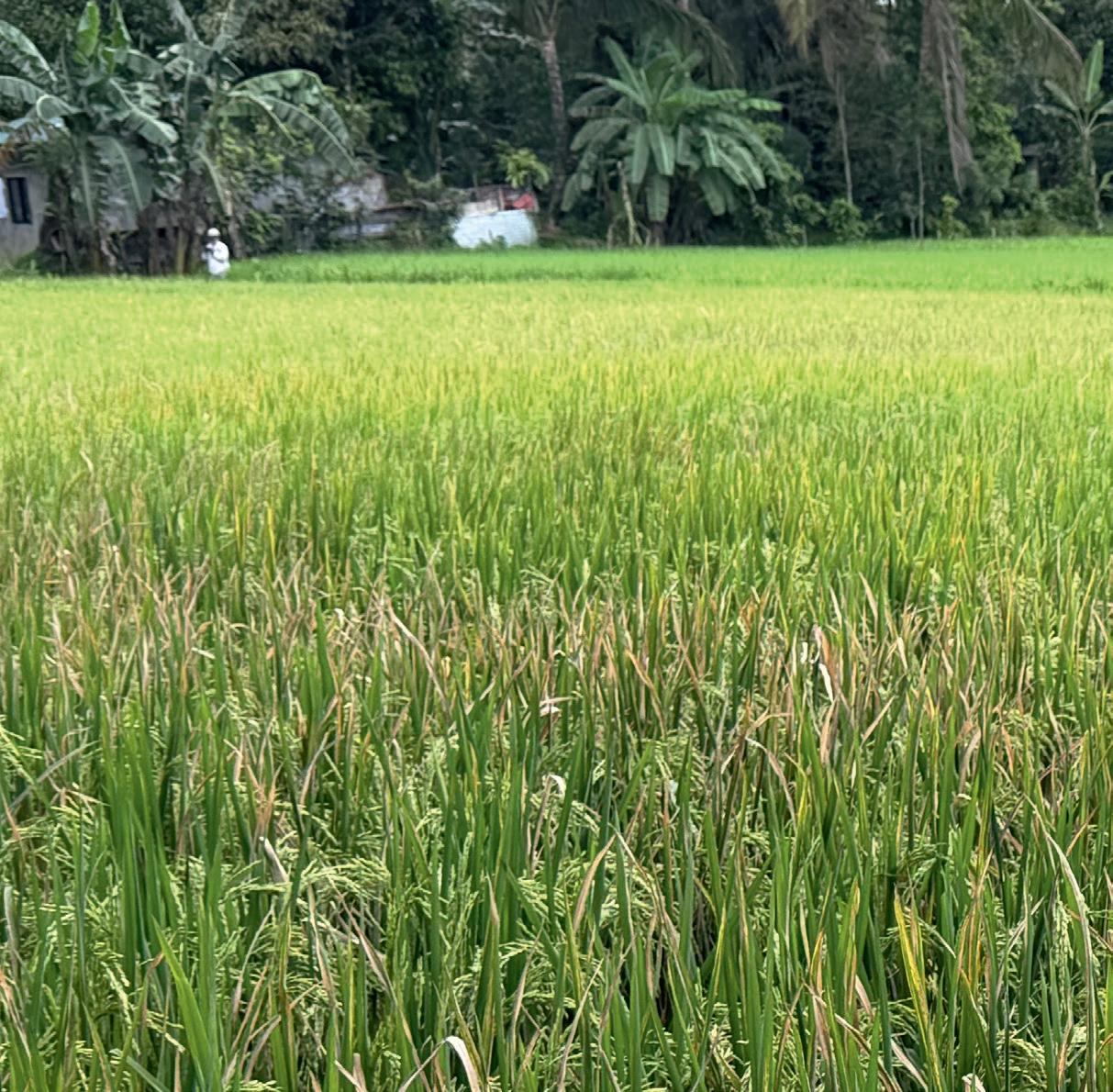
A rice field in the Philippines looks healthy until it doesn't. By the time a farmer sees the first yellow patches - the telltale sign of Bacterial Leaf Blight - a significant part of the harvest may already be lost. Roshanak Darvishzadeh, remote sensing scientist at the University of Twente (Netherlands), and Alice Laborte, geospatial scientist at the International Rice Research Institute (IRRI) in Los Banos (Philippines), are working towards something that would change that equation entirely: the ability to detect disease and other stresses in rice plants before any damage is visible to the human eye. Their medium is light itself - and the language that plants speak through it.
TEXT
Jasmijn Snoijink PHOTOGRAPHY
Shawn Landersz CGIAR
Roshanak Darvishzadeh
Alice Laborte IRRI
Job Duim
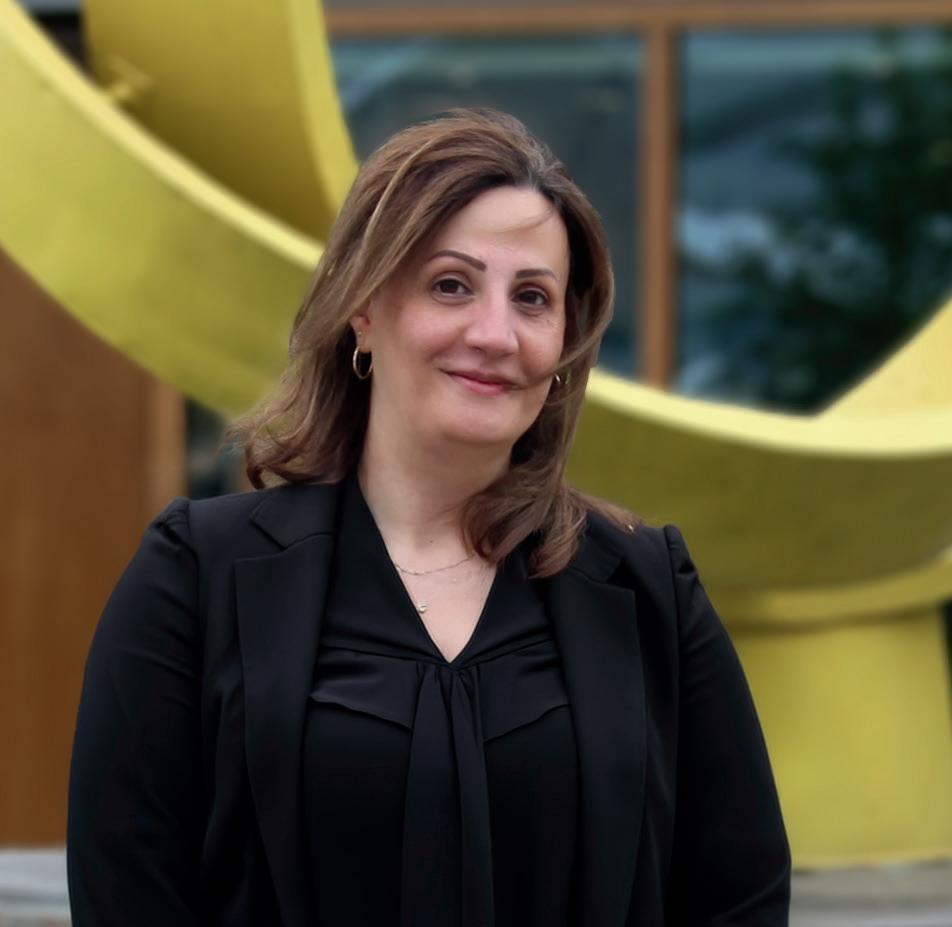
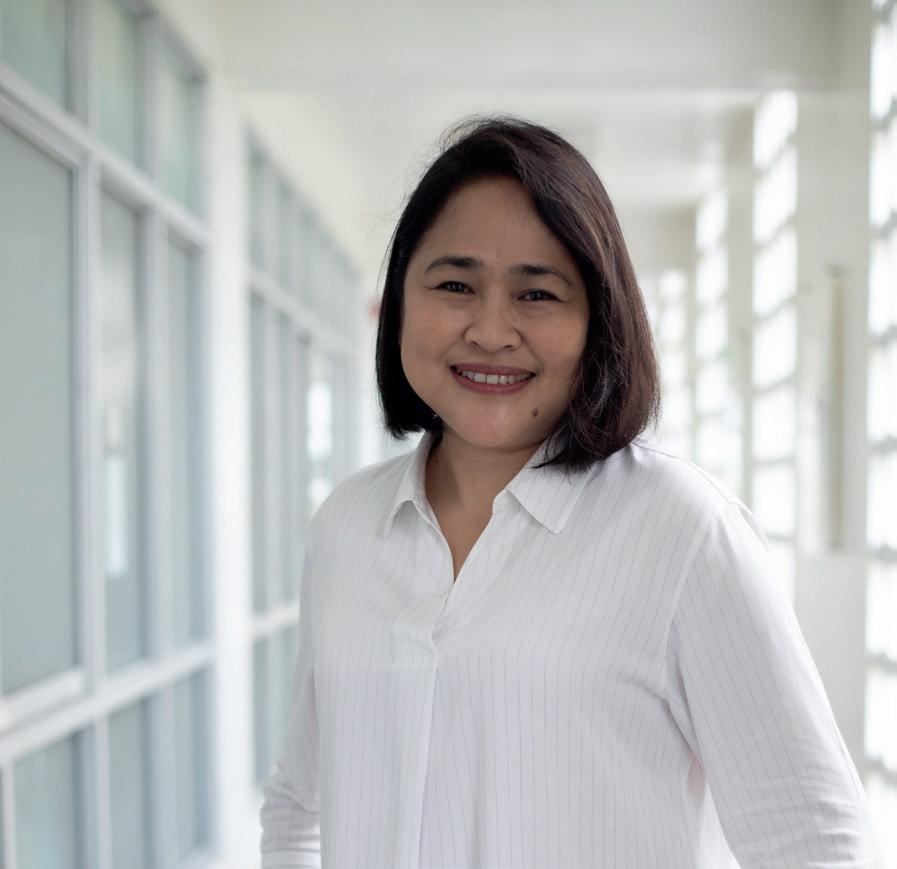
Theconversation between them begins, as it always does, with seven hours between them. In the Netherlands it is morning; in the Philippines it is already late afternoon. Both have been in back-to-back meetings since early. Alice has been at IRRI - part of CGIAR, the world's largest network of agricultural research centres - since before most people in the Netherlands are awake. This is simply how their collaboration works. 'We are basically there for each other whenever needed,' says Roshanak. The time difference has dissolved into the rhythm of the work.
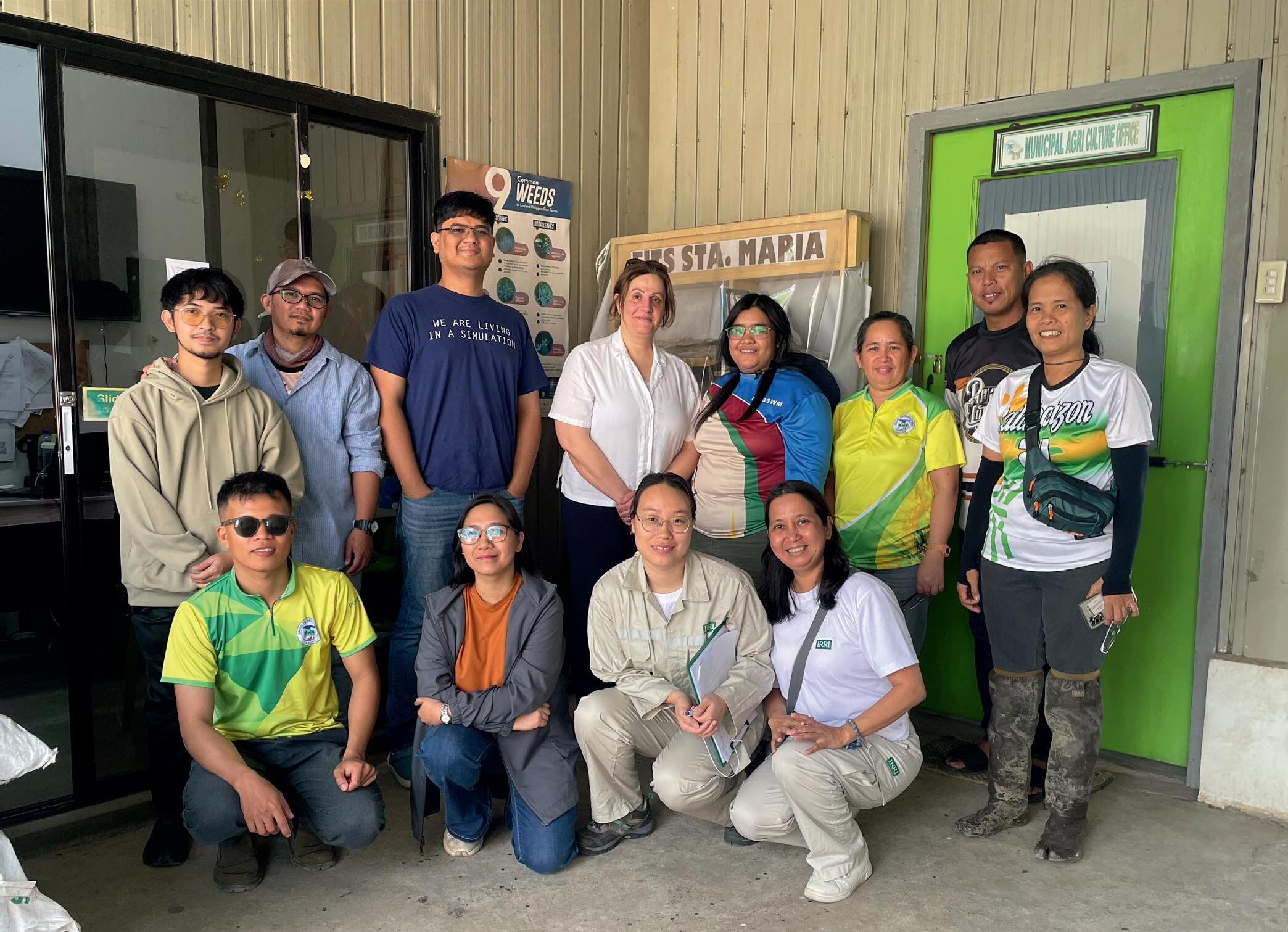
Their partnership grew gradually, through years of shared academic circles, students supervised together, projects that overlapped at the edges. Both are connected to ITC, the Faculty of Geo-Information Science and Earth Observation at the University of Twente, and to Wageningen University. When the NWO NL-CGIAR Senior Expert Programme offered a formal framework for the collaboration, it formalised something that had already been developing - and Roshanak travelled to the Philippines for the first round of field data collection, walking into rice fields often studied only through satellite data.
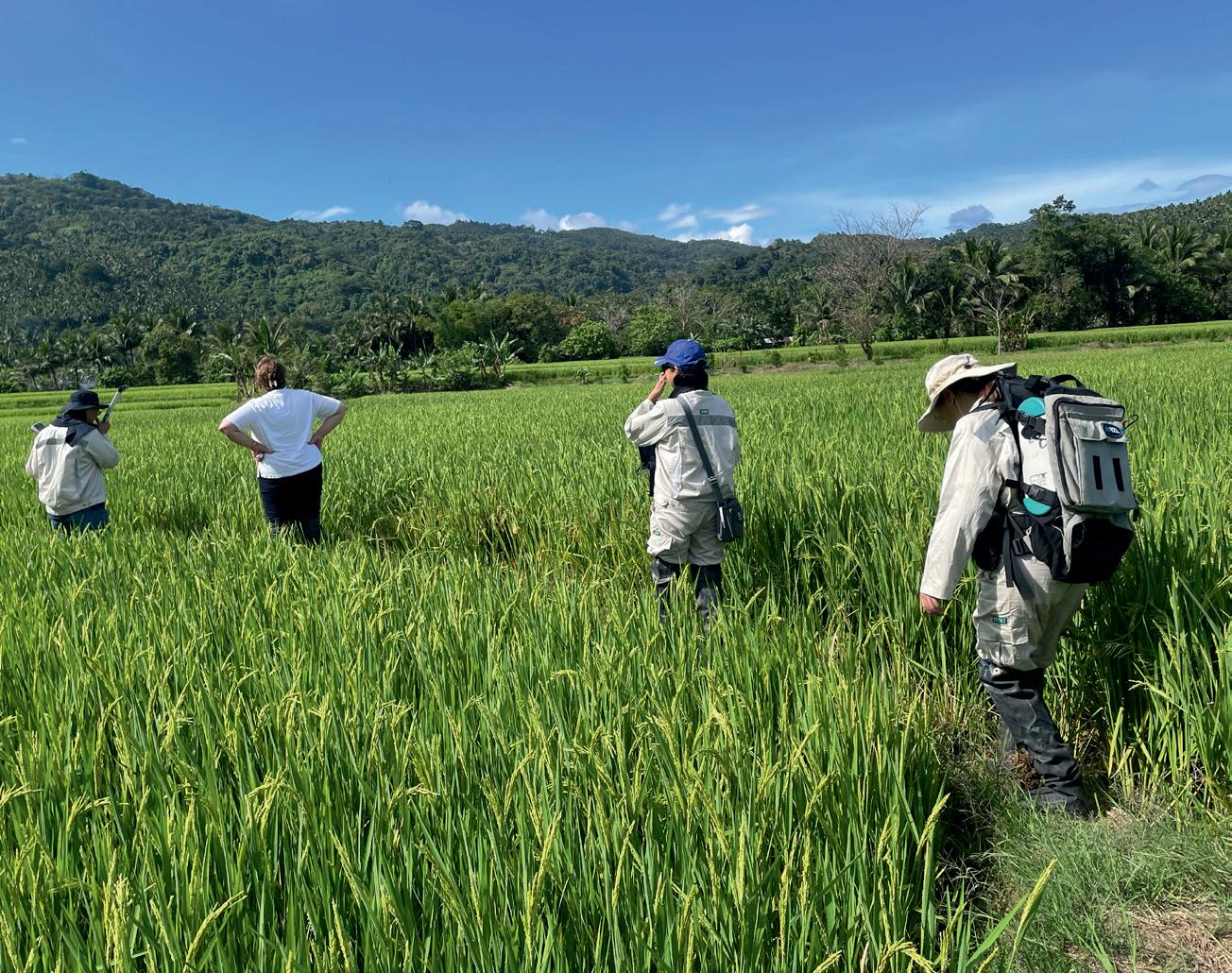
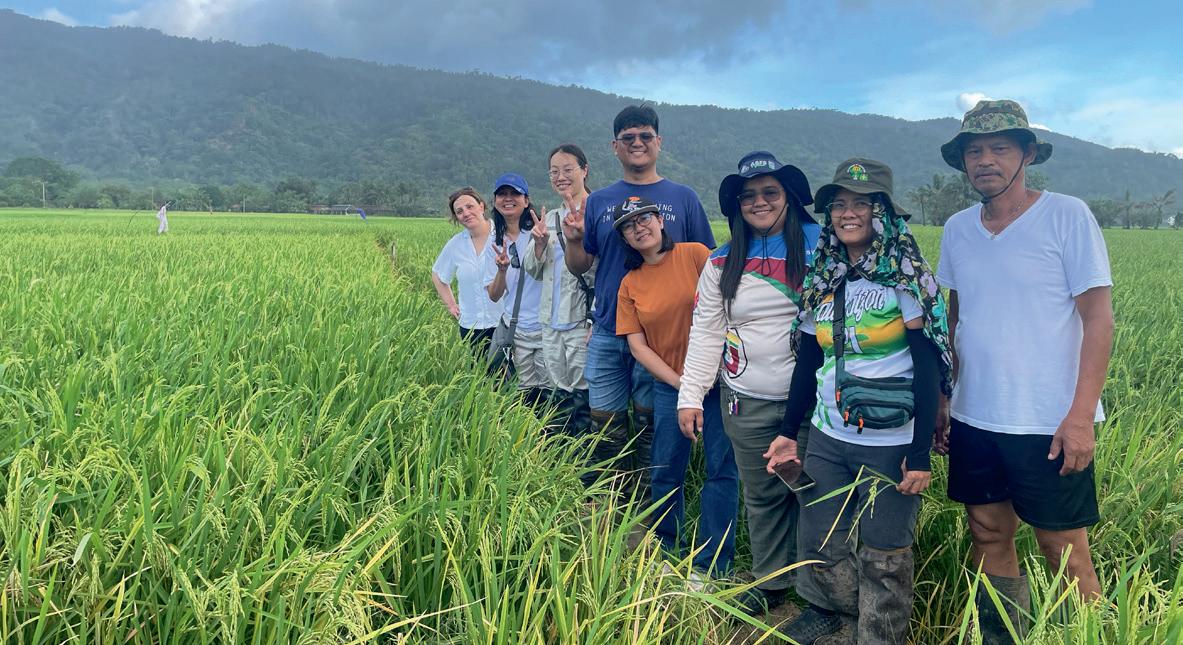
Being there in person turned abstract research into something personal. When the research team enters a paddy to collect plant measurements, they
By the time a farmer sees the first yellow patches - the telltale sign of Bacterial Leaf Blight - a significant part of the harvest may already be lost.
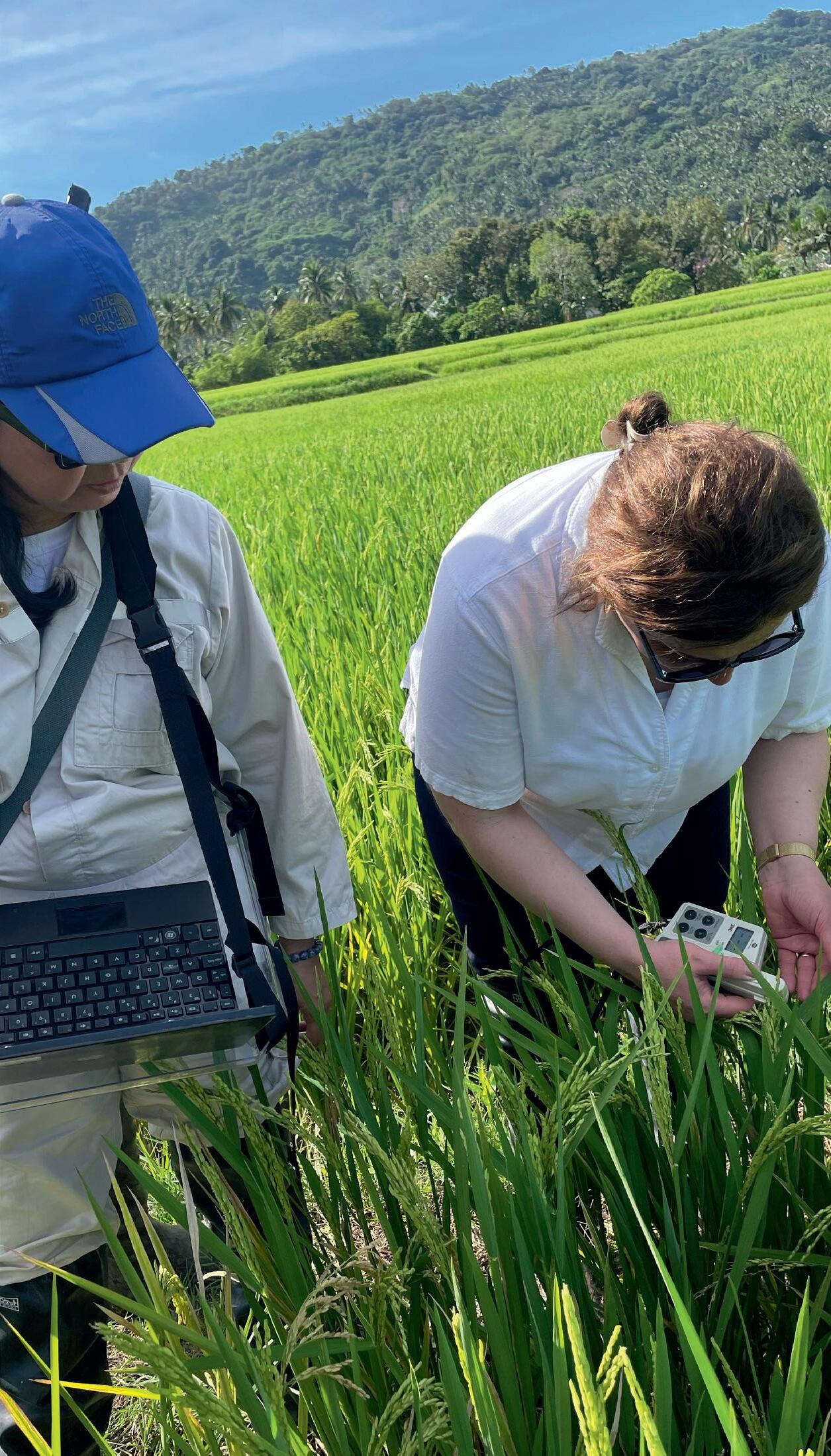
carry heavy equipment and inevitably damage part of the crop. The farmers let them anyway. 'When you walk in these fields, you damage part of their farm,' Roshanak said. 'But still they are willing to let us do it because they are hopeful that we can help them.' She could not speak the local language, but she could read it in their faces - the curiosity, and the hope. That look, she said, became a driver she carries with her back to the lab in Enschede: 'I want to be able to repay these farmers and tell them that we found a solution for them.'
The science behind that goal begins with some-
HYPRICE ONLINE POSTS
• Roshanak Darvishzadeh on LinkedIn
• Ziyi Wang, PhD candidate on LinkedIn
• Megha Doddamani Geo information & earth observation on LinkedIn
• University of Twente ITC Faculty article
Roshanak Darvishzadeh
Alice Laborte
Plants betray the first signs of disease through reflected light - long before any damage is visible to the human eye. Learning to read that signal could transform how the world protects its harvests.
thing plants do invisibly, all the time. Every plant reflects light back into the world - and the precise mixture of wavelengths in that reflected light carries a detailed record of what is happening inside the plant at that moment: for example changes in its water content, chlorophyll levels, and the state of its proteins and pigments. A healthy plant and a stressed plant reflect light differently. And crucially, the difference is visible in the reflected light long before it appears in the leaf.
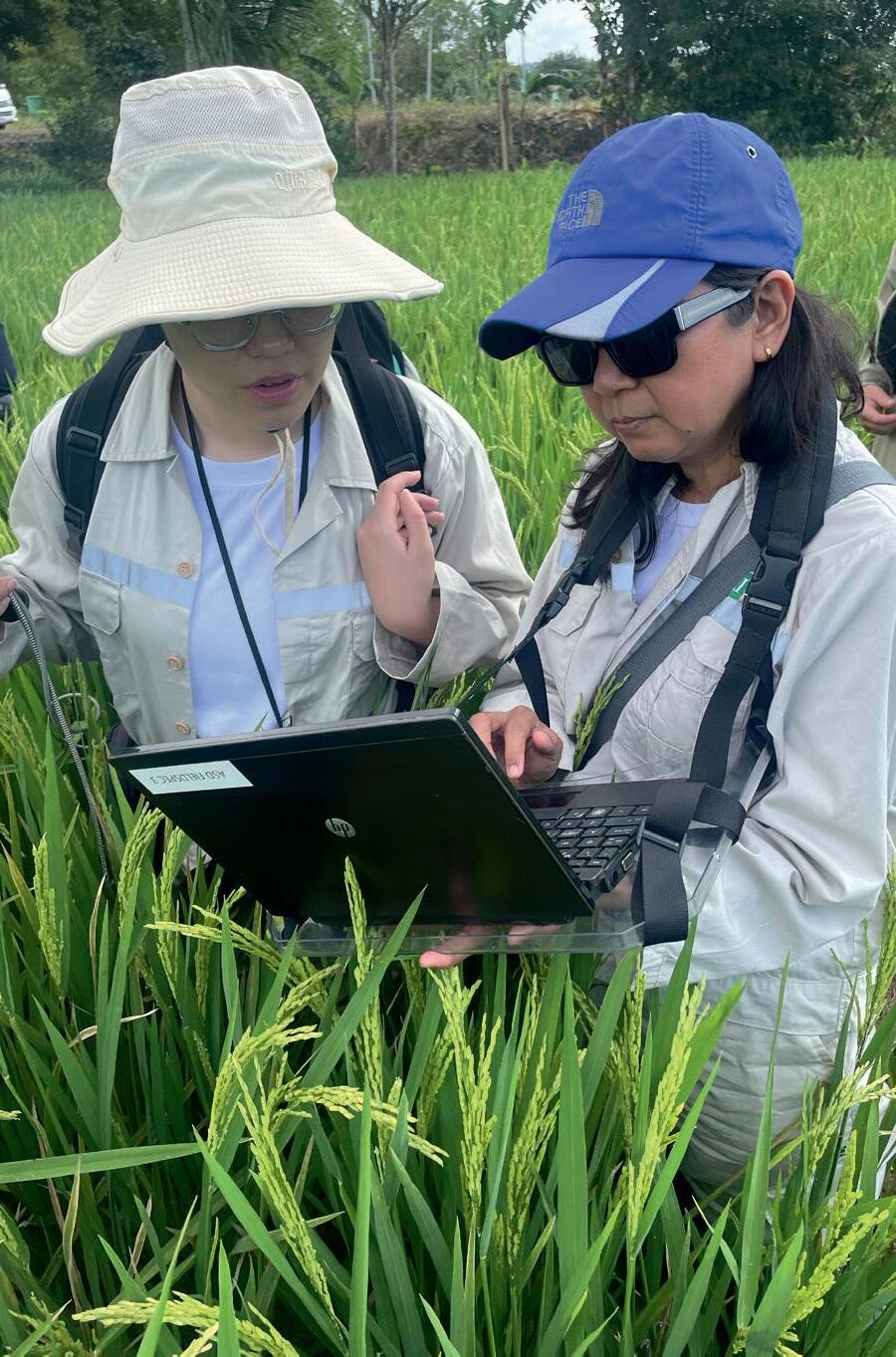
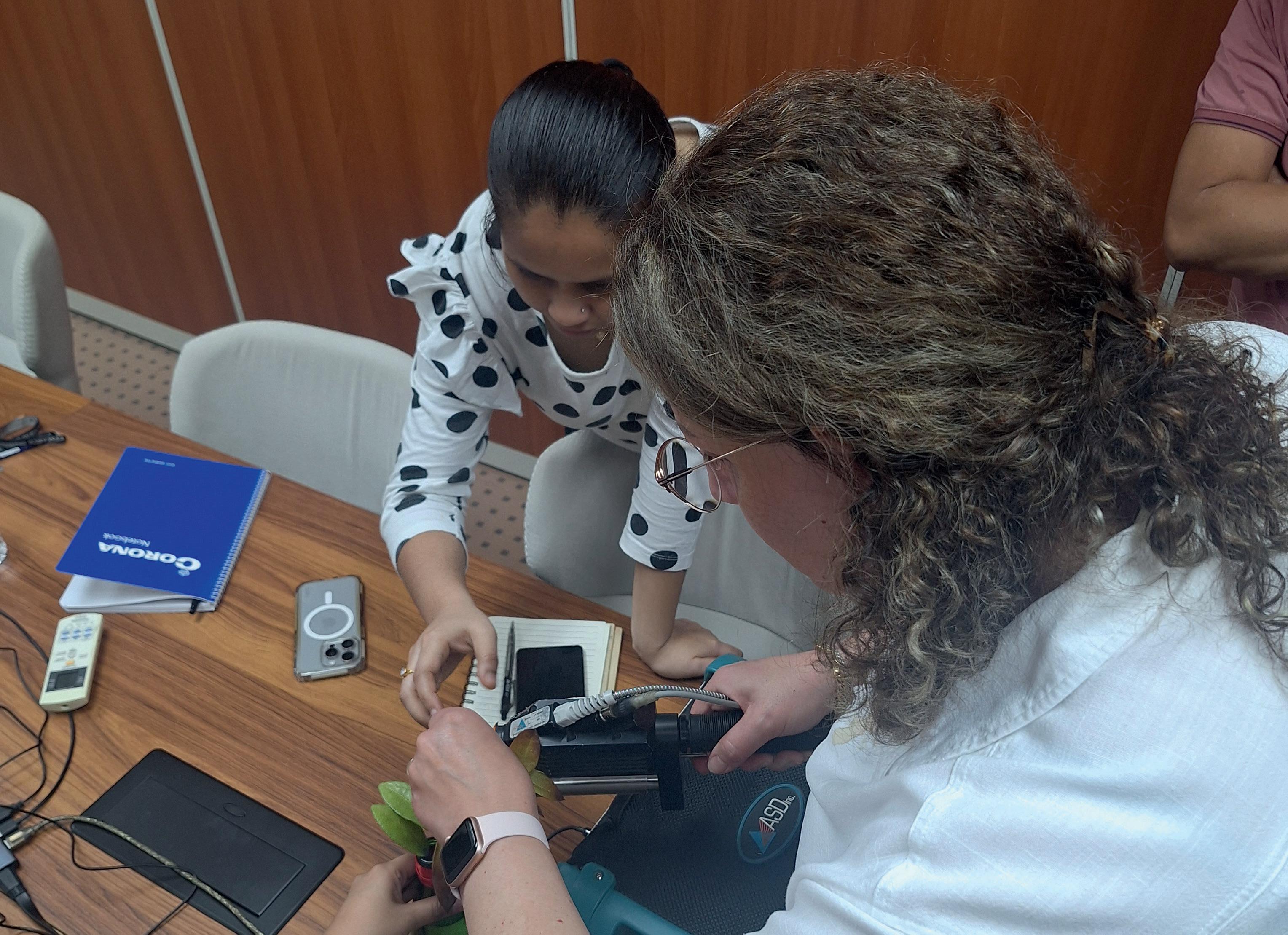
The HypRice project uses hyperspectral sensors - instruments that measure reflected light across hundreds of very narrow wavelength bands, many beyond what the human eye can see - to read those signals from rice plants. Each band reveals something different about the plant's condition. In the field, Roshanak and her team collect samples from healthy and diseased rice leaves, measure their reflectance and map the biochemical differences between them. That mapping becomes the training data for models that will eventually read the same signals from drones or satellites - flagging disease across entire landscapes before a farmer would notice.
'It is almost like decoding plant language,' Roshanak said, when that phrase came up in the conversation. Alice, listening, nodded. She has spent her career working at the scale where that language becomes geography.
Where Roshanak reads individual leaves, Alice
“It is almost like decoding plant language.”
reads regions. Her work at IRRI uses spatial data, remote sensing and landscape modelling to understand what is happening across rice-growing areas over time - the slow encroachment of urban land into paddies, the shifting boundary of floodwater, the changing timing and intensity of cropping. She gave a telling example: Bacterial Leaf Blight is typically a wet-season disease in the Philippines. But it is increasingly appearing in the dry season too, as rainfall patterns shift and the dry seasons become wetter. 'You see a lot of changes happening,' she said. 'And with remote sensing you can see how these changes unfold, how extensive they are, and
analyze the implications.' Rice paddies are not only fields, they are part of a climate and ecological system - contributing to emissions, responding to temperature shifts, reacting to water management decisions made far upstream. Alice's work holds all of that in view at once.
What makes the collaboration work, they both say, is that each brings what the other cannot supply alone. Roshanak relies entirely on Alice when it comes to rice - on how it grows, on what communities in Vietnam or Thailand or the Philippines actually do with it, on which national institutions matter and why. 'When I come to Alice with questions on rice context, I would just listen and accept what she says,' she said. 'I totally believe she knows more about rice than I do.' Alice, in turn, is direct about what Roshanak brings. Hyperspectral expertise is rare in the Philippines, and rare within CGIAR more broadly. 'This is really very advanced remote sensing technology,' she said. The collaboration gives IRRI access to a science it could not
Where Roshanak reads individual leaves, Alice reads entire regions. Together, they cover what neither could see alone: from the biochemistry of a single plant to the shifting patterns of a changing climate.
develop alone.
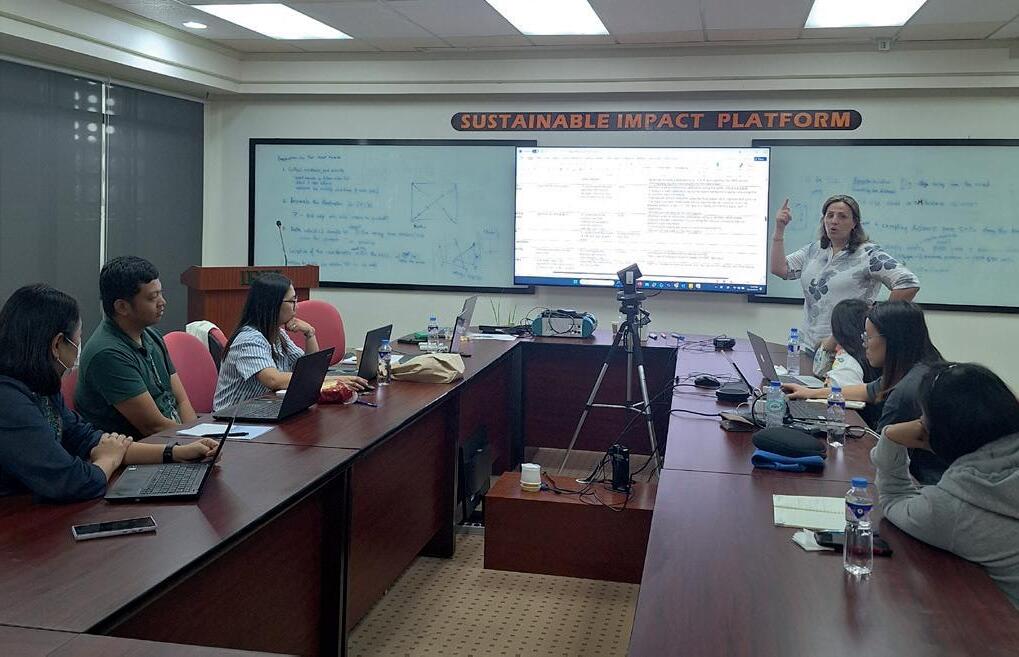
That transfer of knowledge is not incidental to the work - it is part of its design. Roshanak has already led training sessions for Alice's team at IRRI in hyperspectral data analysis. A similar training is planned in another South or Southeast Asian country. The model is to train the trainers: equip local scientists with the methodology so they can apply it themselves and scale it up - to new rice diseases, and beyond rice altogether, to other crops facing similar threats. Neither Roshanak nor Alice can be everywhere. 'We do not have to do everything,' Alice said. 'If we equip scientists with the method, they may be able to apply it themselves - because new diseases and pests will keep emerging.' The stakes of getting this right are not abstract. 'Rice is life,' Alice said. 'That really applies here in the Philippines. We eat rice three times a day. We consume about 120 kilos per capita per year.' To
put that in perspective: the average European eats around 6 kilos of rice a year - a factor of twenty less. The Philippines is one of the world's largest rice producers and one of its largest importers, because domestic demand is so high. Most rice is grown by smallholder farmers working small plots of land. When a typhoon hits - and the Philippines sees around twenty a year - they can lose everything. When disease strikes and goes undetected, the losses are severe and often irreversible. And the problem does not stop at the Philippine border. Bacterial Leaf Blight exists wherever rice is grown, across Southeast Asia, South Asia, and increasingly in Africa. A detection methodology built here could, in principle, work anywhere. 'If we find a solution,' Roshanak said, 'it will not be specific to the Philippines. It will be something that scientists can use globally.'
Bacterial Leaf Blight does not stop at borders. A detection method built in the Philippines could protect rice harvests across Southeast Asia, South Asia - and beyond.
There is still a long way to go. The work is in the phase of building and validating the scientific methodology. The sample sizes are growing but not yet sufficient to scale up to a broad operational system. A new PhD student has just started; master's students are being brought in; additional funding is being sought, including from the European Space Agency. Patience is part of the method. Alice has thought carefully about what operational use of this technology actually requires. Today,
pest surveillance in the Philippines means extension workers travelling into fields every month to record what they see. The system works, but it is slow and cannot reach remote areas. If satellite-based detection becomes operational, those workers could be deployed more precisely - sent only where imagery has already flagged a problem. Fewer visits, lower cost, faster response. 'You have to make it simple,' she said. 'If it is too complicated, it will never get operationalized - we know
The underlying technique - reading plant health through reflected lightis not tied to any single species. Not one solution, but a template.
that already.' National partners, including PhilRice and the Bureau of Plant Industry, are keen to see how advanced technology can improve existing early warning systems. Their buy-in is essential. When the project ends, someone else must carry it forward.
Walking through a village near one of the research sites, Roshanak found herself followed by a group of children. They could not speak English. She could not speak their language. But they walked alongside the team anyway, watching everything, trying to communicate. 'The impact this research team makes just by coming here - on these kids, on their curiosity - it is further than scientific achievement and expertise,' she said. She took a photograph to mark the moment. It sits somewhere now, a record of a connection that has no technical name.
Looking ahead, Roshanak wants to develop at least two robust methodological frameworks - one for Bacterial Leaf Blight, one for environmental stressors like heat, flooding and typhoon damage - that can be used to detect plant stress from above, with drones or satellites. But she also wants to leave something behind in the people she trains. 'We go into the field, with our boots in the mud, and we measure the plant's properties. That insight helps us interpret the signals from remote sensing sensors - and I hope to transfer that knowledge to the next generation.' Roshanak's ambition is systemic: a methodology that inspires scientists in other countries to apply the same approach to new rice diseases and threats. The underlying technique - reading plant health through
ABOUT THIS SERIES
Food security, climate resilience, sustainable food systems, these are challenges that no single country or institution can address alone. That is the driving logic behind the collaboration between the Netherlands and CGIAR, the world’s largest publicly funded network of agricultural research centres, working across low- and middle-income countries on the most pressing challenges in food and agriculture.
Through the NWO funded Senior Expert Programme in the NL-CGIAR research programme, experienced Dutch researchers contribute their expertise to The CGIAR
reflected light - is not tied to any single species. 'It is not just about rice,' she said. 'There are other crops and other vegetation types too.' That is the deeper promise of the work: not one solution, but a template.
The technology they are building is, in the end, a proof of principle. The case is specific: one crop, one country, one disease. But once you have taught a system to read the spectral response of one plant under one kind of stress, the same logic applies elsewhere - to other rice diseases, to wheat, to maize, to any crop whose distress signals travel upward as reflected light before they become visible in the leaf. The question is whether we have learned enough to listen - and to actbefore the damage we cannot yet see becomes the harvest we have already lost.
Research Portfolio, bringing Dutch knowledge to where it is needed most, and bringing global insights back to the Netherlands. The programme is designed to strengthen international research collaboration and ensure that science leads to real-world impact.
This article is part of a series of interviews highlighting these collaborations. The series is produced by the Netherlands Food Partnership in partnership with the NL–CGIAR working group, which brings together NWO, the Dutch Ministry of Foreign Affairs, and the Ministry of Agriculture, Fisheries, Food Security and Nature.