STORIES VOLUME 23
Thirty years ago this July, we were pitching in a field our first timber-framed stand to launch the hammocks we’d designed and made in a Wiltshire barn. Three decades later and we are at the RHS Chelsea Flower Show debuting an innovative outdoor kitchen that looks, feels and operates just like a regular kitchen while being weatherproofed for an alfresco lifestyle.
In the intervening years, Neptune has explored, developed, innovated and grown, from our early years as garden furniture specialists to today as an authority on beautiful, balanced kitchens and homes inspired by the natural world.
Our vision has remained the same throughout: to create modern classic products of high quality at fair prices, while our commitment to quality materials (we never use MDF or chipboard) and thoughtful craftsmanship has enabled us to build a business of over 30 stores in the UK and Europe and offer our customers lifetime guarantees on our kitchens and furniture.
For this edition of Stories, we’ve returned to our roots: the English countryside and our love for nature. From charting the evolution of John’s Wiltshire garden (once a concrete covered school yard) and the launch of Nettle, our new vibrant green shade that pays homage to the versatile plant, to design advice on decorating with different shades of green, we celebrate the natural world in all its guises. We also discover what home means to equestrian Callie Coles (horses are welcome in her kitchen) and the joy of growing and eating heirloom vegetables. We hope you enjoy this edition of Stories.

John Sims-Hilditch & Giles Redman Neptune co-founders
Thank you to the talented authors and journalists who contributed to this edition, along with our fabulous team of in-house writers.




Suzanne Imre
For many years, Suzanne Imre was the influential editor of interiors magazine Livingetc; a renowned style pundit and trend leader. Today, she works as a brand consultant, content director and writer. She lives in London and is always planning her next decorating project. @suzanne.imre
Callie Coles
Author and equestrian Callie Coles’ countryside living Instagram page begun as a ‘memory box’ for her three sons and now has 1.1 million followers. Callie’s latest project is her debut novel, Tangled Webs, the first of a trilogy titled The Spinning Silk Saga, which will be published by Viking in July 2026. @calliecoles
Blanche Vaughan
Blanche Vaughan is a cookbook author, cook, and the food editor at House & Garden. Her dishes are guided by seasonal ingredients –many grown in her Devon garden – and a love of simple, generous food. @blanchevaughan Photograph by Issy Croker
Martin Clunes
Actor Martin Clunes recently appeared in Emerald Fennell’s ‘Wuthering Heights’ and has starred in hit shows like Men Behaving Badly and Doc Martin. He has presented documentaries including Lemurs of Madagascar and A Dog
Called Laura. He was awarded an OBE in 2015 for his contribution to drama, charity and the community in Dorset where he lives with his family and animals. Photograph by Nicky Johnston





Jo Rodgers
American-born Jo Rodgers is a journalist who lives in London and East Sussex with her husband and three children. She is a contributing writer at Vogue, Condé Nast Traveler, House & Garden, and Country Life. @jo_rodgers
Kate Watson-Smyth
Kate Watson-Smyth is a design writer and the author of five books. In addition to renovating six houses of her own, she helps clients find their own interior design style. You can find her at Mad About The House on Substack. @mad_about_the_house
Giles Kime
Hampshire-based Giles Kime is executive editor of Country Life magazine and author of a number of books on leading designers, including Nina Campbell and Neptune’s creative founder, Emma Sims-Hilditch, all published by Rizzoli. His next book –on Kit Kemp – will land in spring 2026. @giles.kime
Meera Sodha
Food author and Guardian columnist Meera Sodha is a London-based cook who has written four best-selling cookbooks, the latest being Dinner, published by Fig Tree. She tests all her recipes in her newly installed Neptune kitchen. @meerasodha
Sally Coulthard
Sally Coulthard is a best-selling author and smallholder based in North Yorkshire. Her books weave together archaeology, history and the natural world to celebrate stories of the countryside. @salcoulthard
Photograph by Andrew Montgomery




When John Sims-Hilditch and Giles Redman established Neptune in 1996 with their innovative garden hammock, they had no idea how quickly their lives would change. ‘Looking back, we were very fast out of the blocks; selling 5,000 hammocks in our first year was quite a feat,’ recalls John. ‘But we had boundless optimism and enthusiasm and, from early on, we established our vision and principles, all of which remain true today.’
That vision was to create modern classic products of high quality at fair prices, while the business principles set out how they would achieve that: do the right thing, do it together, aim high, and keep it real.
As Neptune grew, the duo realised they had to adapt, not least to reflect the fact that garden furniture is seasonal. ‘The decision to move into interior furniture and accessories was a pivotal moment,’ says John, ‘and, from there, we moved quickly, establishing our own manufacturing facilities and opening stores.’
The kitchen side of the business was almost a ‘happy accident’, the result of John wishing to create an affordable, bespoke-looking kitchen for the family home, and listening to customers’ requests for freestanding kitchen items. ‘We took a small idea and made it a big idea,’ says John, ‘and that transition resulted in a unique concept.’
Creating stores (the first one opened in Winchester in 2012) allowed Neptune to showcase its

‘whole home’ approach. ‘We have a strong belief that our furniture is part of the home, not the solution to a home,’ John explains. ‘The architecture of the space is also important so, with our stores, we want each one to feel like it belongs in the local community. We lean into the local vernacular to ensure each store feels unique and special.’
From the start, John and Giles were mindful of how they communicated their vision. From early product shoots that incorporated accessories from John and Emma’s home to today’s instore events, content platforms and design expertise, Neptune has always offered more than a simple shopping experience. ‘We always look for better ways to connect with and truly help our customers,’ says John, ‘and hopefully, over the years, we’ve done it well.’
Looking forward, as technology becomes an integral part of the way we live, John is keen to explore how we can better integrate it into our homes. In other ways, Neptune’s future is simple: ‘We want to continue to create modern classic interiors and be recognised as the authority on beautiful, balanced homes,’ says John, adding with a smile, ‘and there are also lots of parts of Britain and abroad that we’ve not reached yet!’

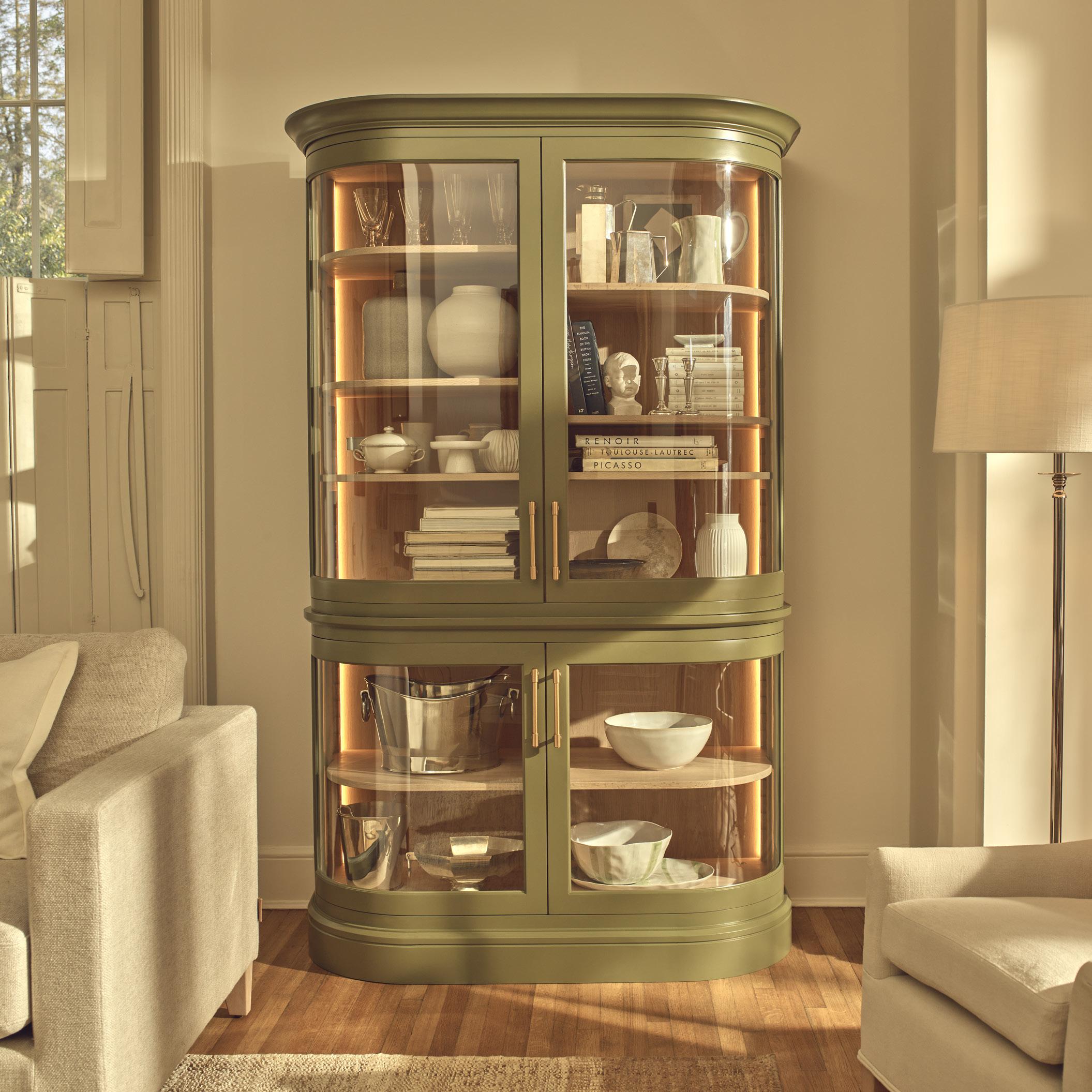
How better to mark 30 years of making quality furniture than with the new Henley curved cabinet? A feat of engineering and carpentry that tests the skills and craftsmanship we’ve honed over the last three decades.
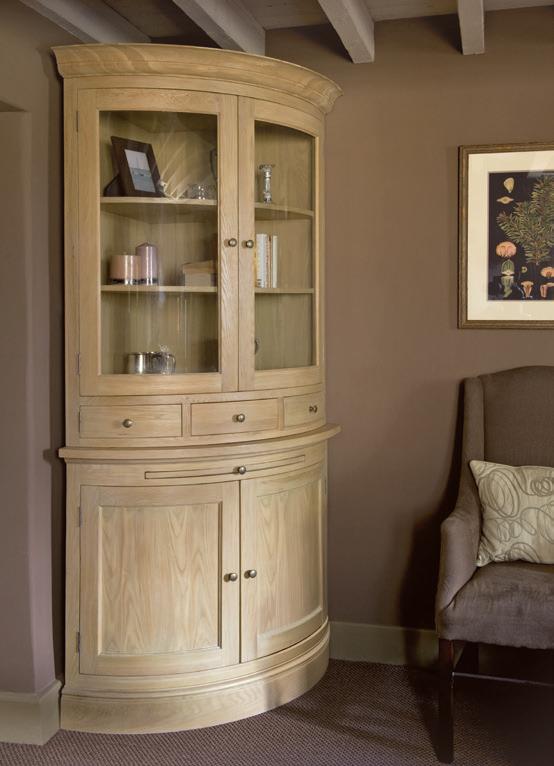
When you’re a furniture designer and maker, there really is only one way to mark a special anniversary, and that’s with a stand-out new design. Something that challenges how we’ve come to understand wood and glass – both the limitations and the possibilities – something that feels complementary to the rest of Neptune’s elegantly considered aesthetic but that also lifts the bar once more and tests our ingenuity.
The new Henley curved cabinet speaks to our core vision to create furniture that features natural materials, focuses on technical engineering and heritage carpentry, and celebrates innovative, quality design. Its curved edges reference back to the first Henley curved kitchen cabinet that co-founder John Sims-Hilditch designed some 15 years ago. A corner piece that was part of the kitchen collection, it was a challenging project at the time. This new iteration pushes the design considerations even further.
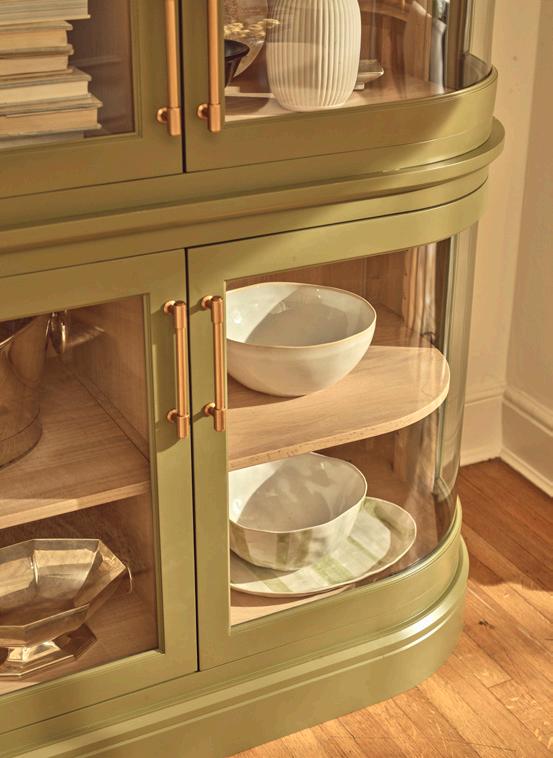
The key feature of the cabinet is its curved glass sides and internal, curved, solid oak shelves. Bending the molten glass and then fitting it into the curved door frames is a technically complex process requiring extreme precision and uniformity – something only possible to achieve because we own and oversee the design and making process from beginning to end.
The result is worth the effort. The Henley cabinet is a showstopping piece of furniture, a display cabinet that sits just as comfortably in a kitchen-diner, hallway or sitting room. It is both decorative and useful. With the exterior painted in Olive as standard (it can also be customised), the cabinet’s essence is pure Neptune with its attention to crafted details such as adjustable zig-zag shelves, Ellington flattened brass handles, and integrated lighting which offers a backlit effect for the objets on display. As a mark of 30 years of designing and making furniture, the Henley curved cabinet celebrates all that we’ve learnt and sets the standard for the next three decades.

Meet our new vibrant green paint shade that helps bring the outside in.
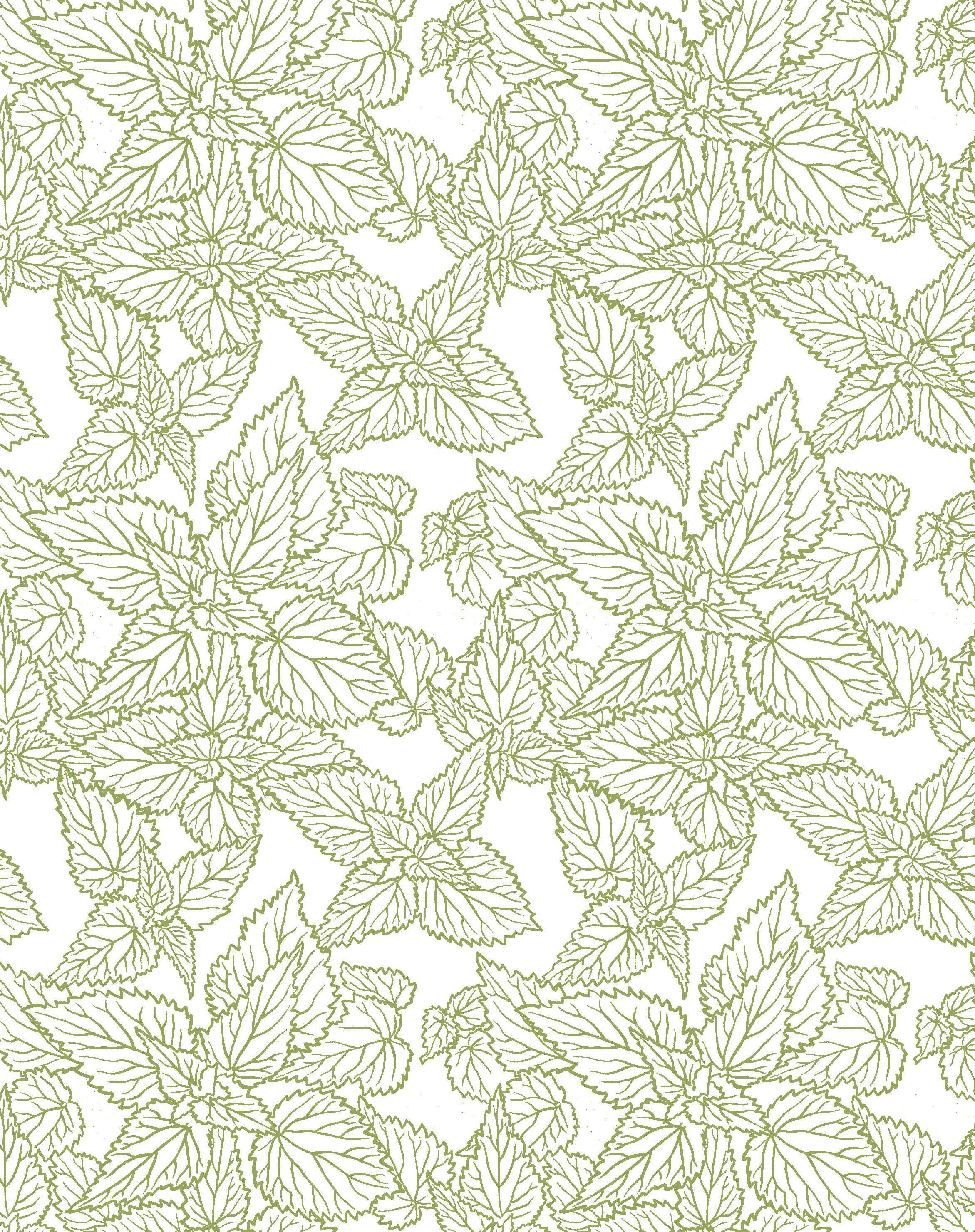
Walk through most summer woodlands and the floor will be a tangle of ferns, grasses and, of course, nettles. The latter are not only an essential food source for tortoiseshell and peacock caterpillars before they metamorphose into butterflies, but they have also been part of our country way of life for centuries, known as much for their medicinal and nutritious qualities as their sting. From soups to teas to beers, the nettle’s mineral and vitamin stores have long been used as an antioxidant-rich recipe ingredient. Roman soldiers rubbed the stinging leaves on their skin to keep warm at night, and during World War II, British children were encouraged to collect nettles to be used as a dye for camouflage fabric.
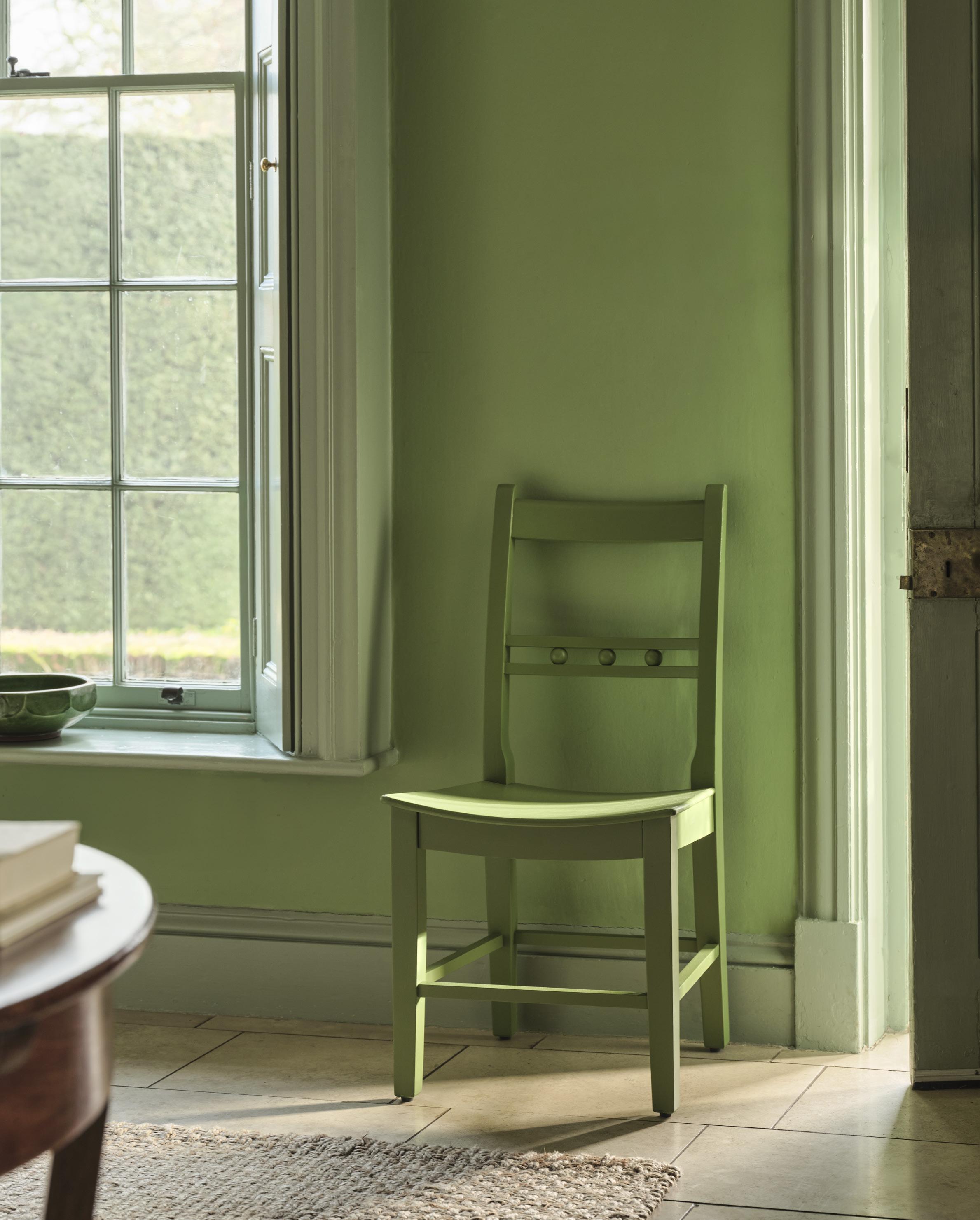
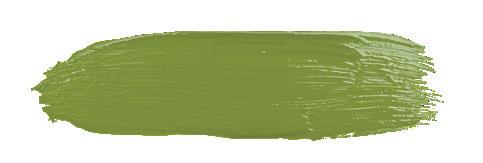
Joining our curated paint palette of 48 shades, our latest addition, Nettle, is an homage to this versatile plant. A warm, true green, carefully balanced with a hint of black for sophistication, Nettle is fresher than Olive, deeper than Quince and more energised than Cactus. ‘Nettle is a more vibrant take on a classic Georgian drawing room green,’ explains design director Fred Horlock, ‘and every bit as useable.’ Its warmth balances our cooler green shades and, when used in a decorative scheme, brings a sense of the immediacy of nature to a space, helping link the interior with the exterior.
Nettle is a great base layer for a colour scheme incorporating lots of greens, from the watercolour hues on our new tableware to the deeper shades in our floral table linens. Thanks to its soft yellow undertones, it can also be paired with warm colours such as our creamy-yellow Polenta and the ‘truer’ yellow of Saffron, or coupled with stronger hues like Rhubarb, Olive and Saddle.
Use Nettle in a sunny kitchen on cabinetry or as an accent on an island; try it in a utility, garden or boot room to connect the inside with the garden; or consider it for a dining room or library where its vibrant energy will be balanced by its refined elegance.
This is the
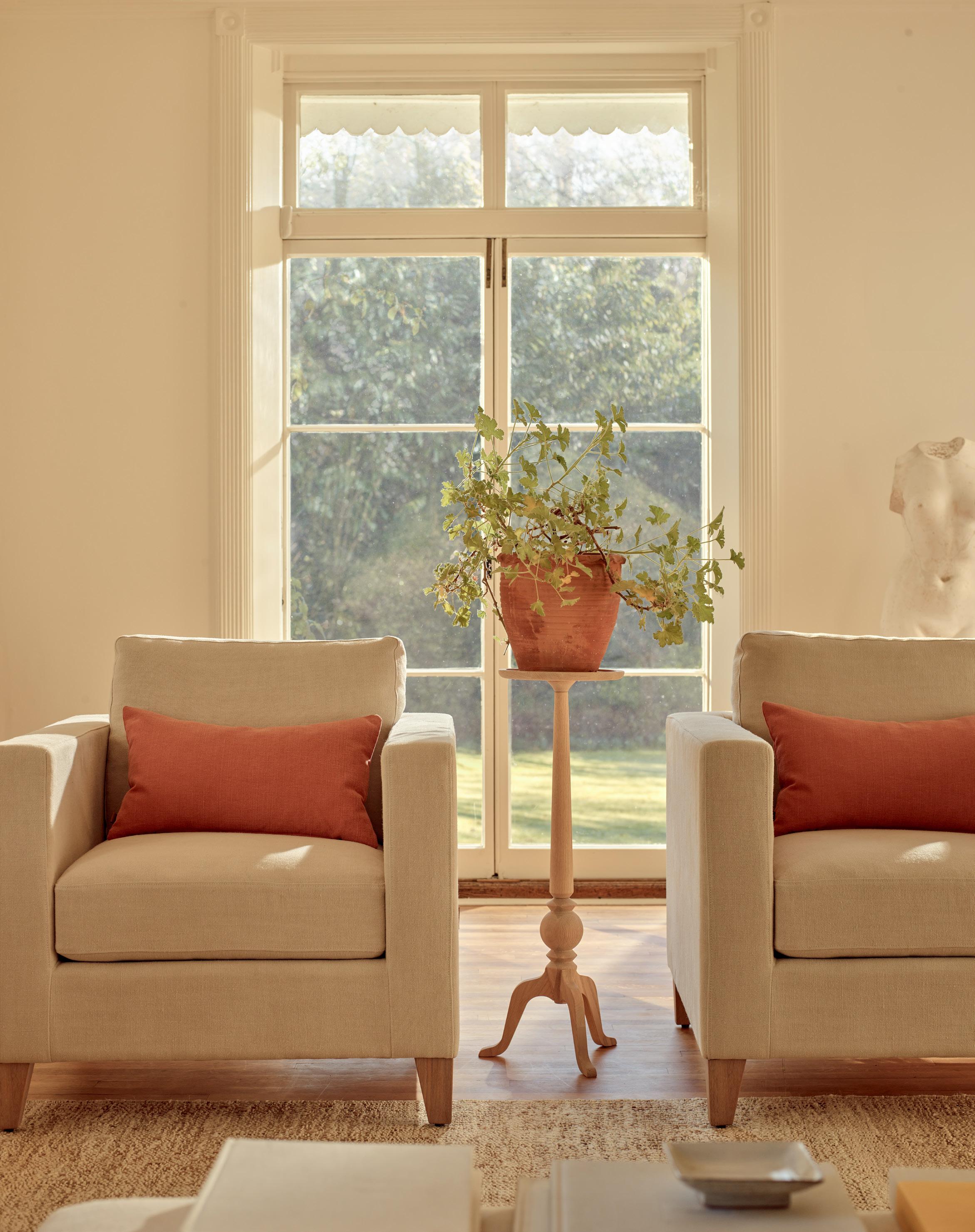
A feature of any respectable Victorian or Edwardian sitting room, plant stands reflected the eras’ obsessions with botany and a new understanding of the benefits of being close to nature, even indoors. Today, plant stands double up as lamp stands while adding visual height in a sitting room or interest in an under-used or dark corner. Our new Thornbury plant stand, in darkened or natural solid oak, blends Edwardian-inspired proportions with modern detailing. Heritage joinery ensures durability while the curved three-legged base provides stability.
Discover our full table collection, visit neptune.com/side-tables
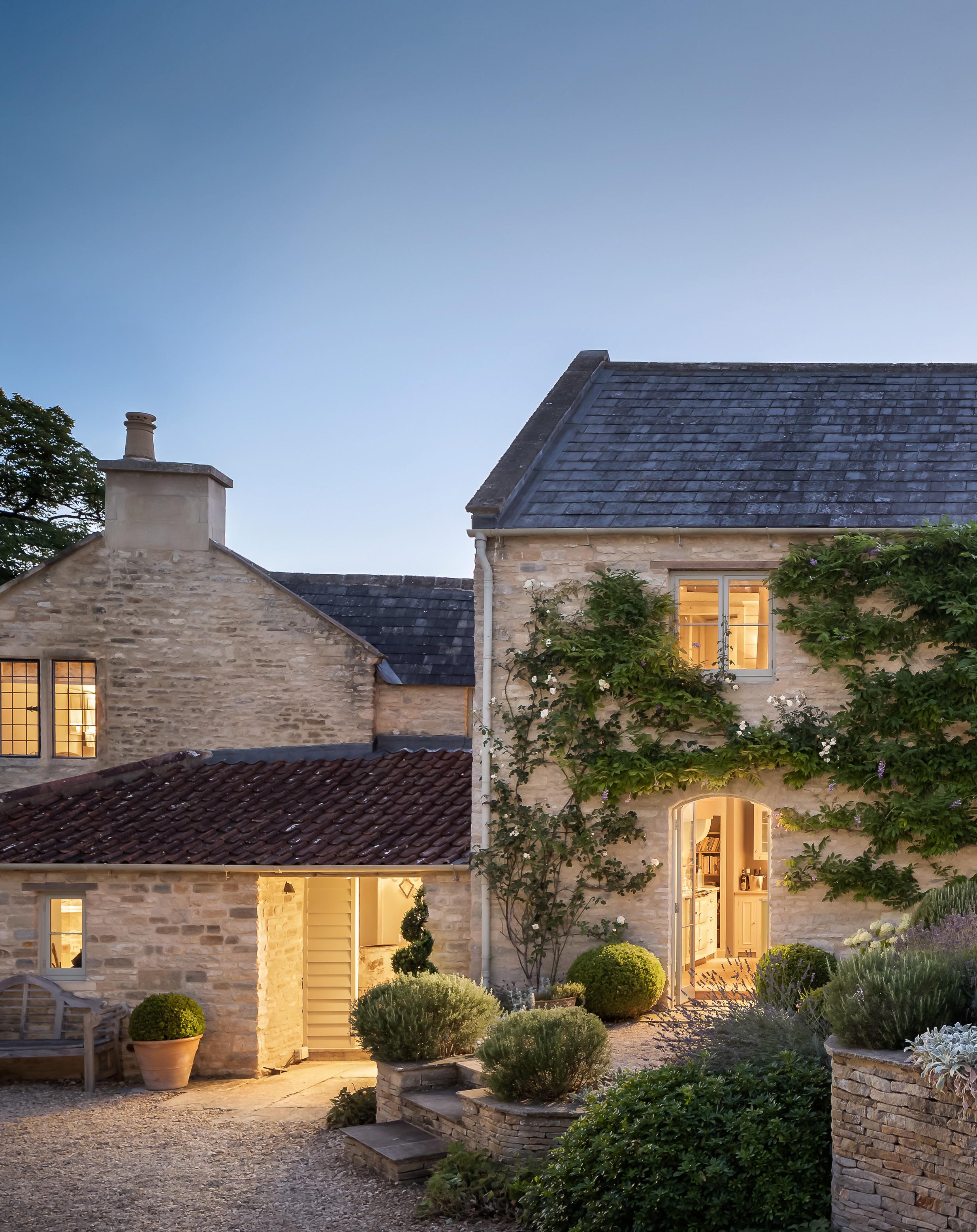
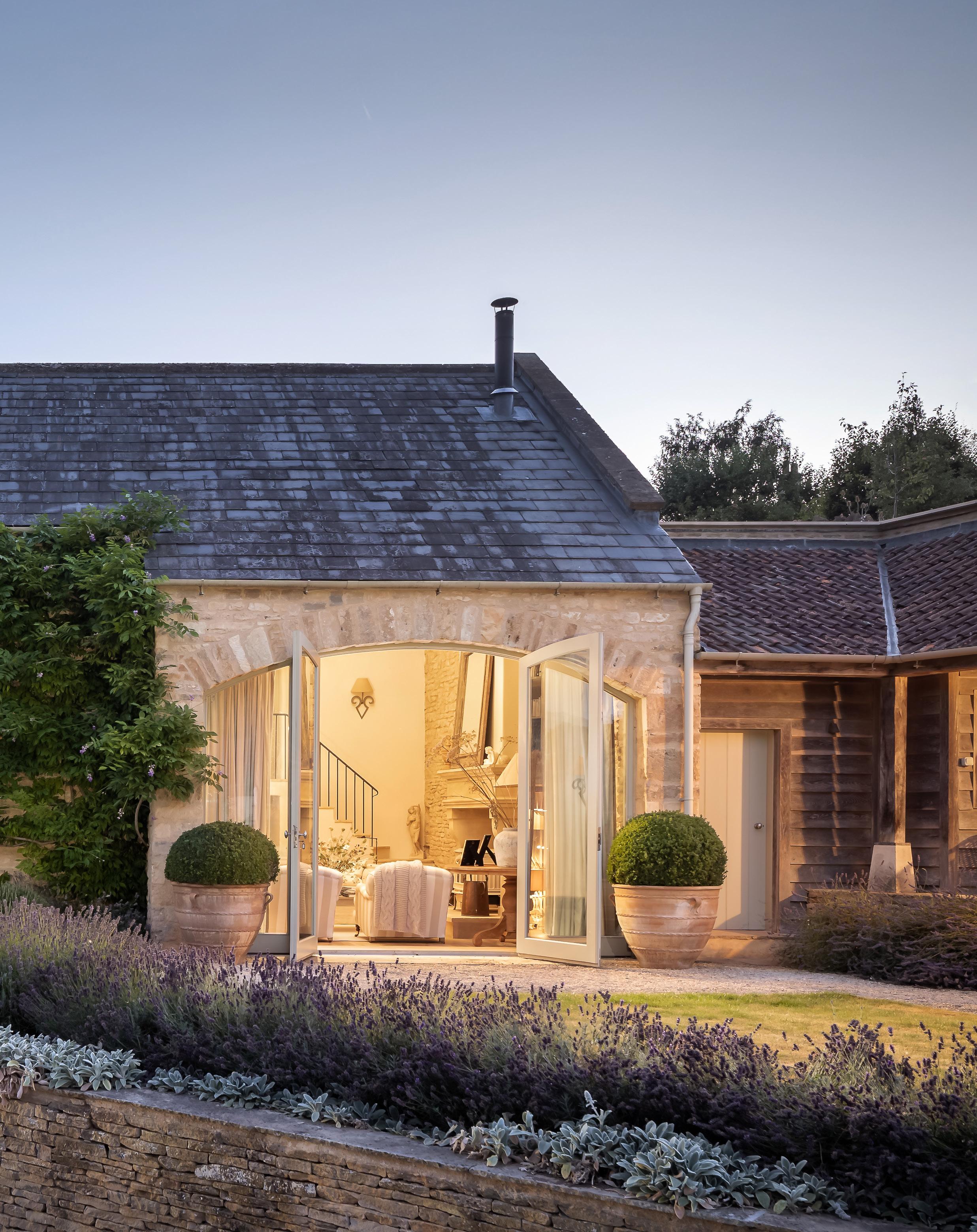
MUCH LIKE HOMES, THE BEST GARDENS DEVELOP OVER TIME AND ADAPT TO OUR CHANGING NEEDS. THE WILTSHIRE GARDEN OF NEPTUNE’S CO-FOUNDER JOHN SIMS-HILDITCH AND HIS FAMILY, IS NO EXCEPTION. ONCE A DERELICT SCHOOL PLAYGROUND, IT IS NOW A VERDANT PLOT IN WHICH TO ENJOY AN ALFRESCO LIFESTYLE, AS EDITOR SUZANNE IMRE DISCOVERS.

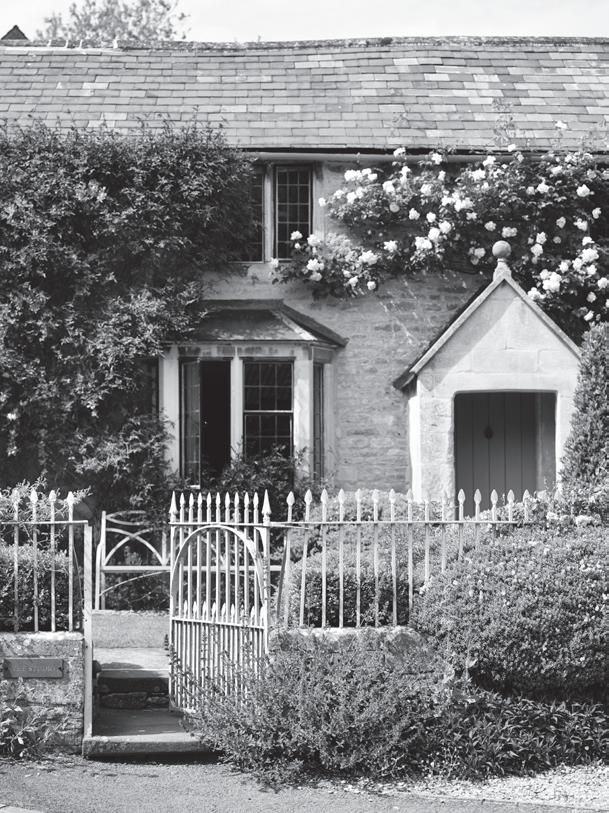
When John and Emma Sims-Hilditch bought their family home in a Wiltshire valley, it’s fair to say the garden wasn’t the selling point. ‘The property was a derelict school, unused since the 1970s, and the “garden” was a schoolyard with outside children’s loos and an abandoned field beyond,’ recalls John. Nor was the garden a straightforward layout. Instead, it comprised several different levels, a small orchard of gnarled apple trees, and a forgotten vegetable garden. ‘We started by sowing grass over the vegetable plot and, for the next few years, had leeks and onions springing up through the lawn,’ laughs Emma.
With young children and a growing business, a practical, family-friendly garden was the first requirement. They built a retaining wall using Cotswold rubble stone from the local riverbed, which set a structure for the garden. Then they established a large vegetable plot and introduced usable levels to the upper garden. For the children, John built a sandpit designed to look like an old coastal delivery vessel, complete with portholes and a hold door covering up the sandpit itself.
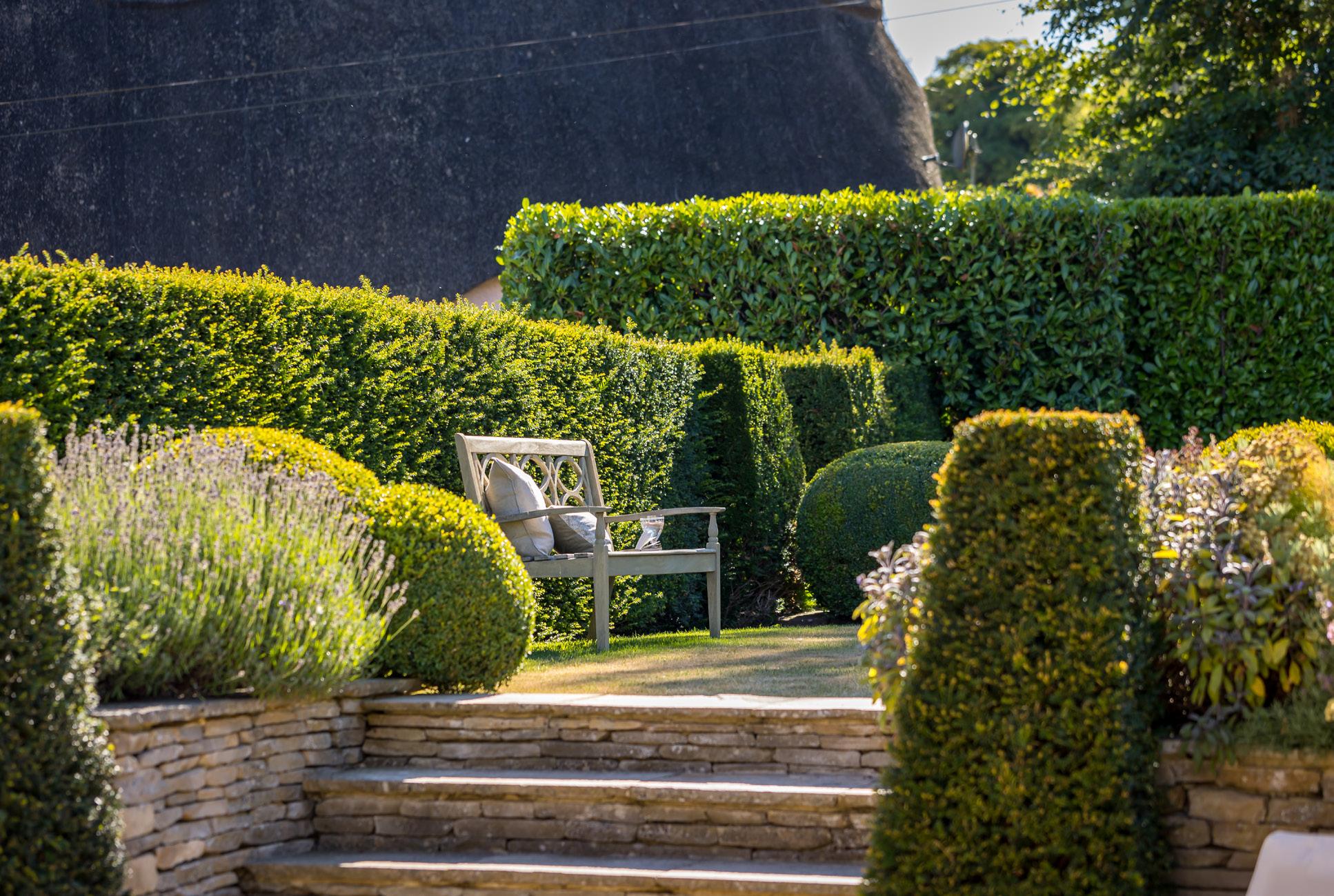

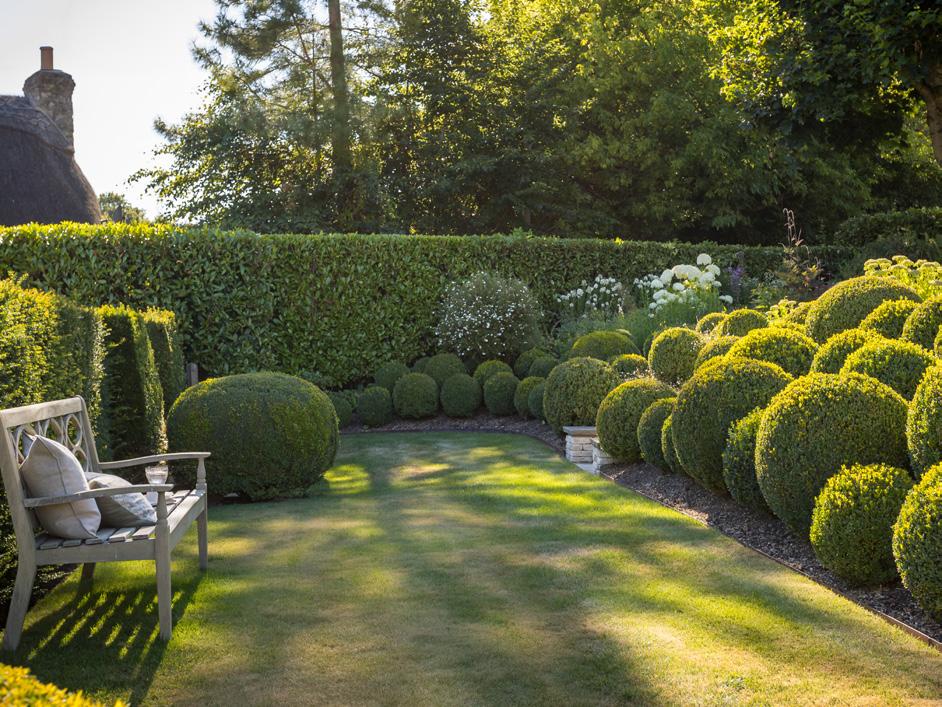

In the following years, as the children grew and the couple extended their home to incorporate the next-door barn, so the plot turned into a 360-degree landscape, offering the opportunity to create garden ‘rooms’, each divided by a wall, hedge or flowerbed. ‘When we moved our kitchen into the barn, we thought hard about how to integrate the interior with the exterior,’ says John. ‘We put French doors in the kitchen which led into a small herb garden and installed sliding glass doors from the sitting room into a courtyard, which is a wonderful sun trap.’
Thanks to the wrap-around plot, John and Emma were able to create multiple areas in which to enjoy aspects of the house and views: an upper terrace, the sunny courtyard, the front garden, and a sheltered loggia nestled against the south-facing wall. Alongside these areas, they also replaced the old orchard with more vigorous apple trees, installed bee hives, and created a wild meadow in the field beyond.
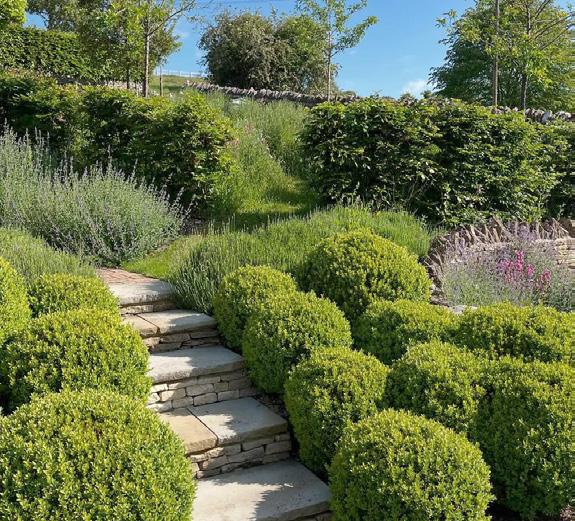
Five years ago, the couple introduced new elements, creating a formal garden at the front of the house, complete with pea shingle pathway, and a pleached lime walk at the back to provide privacy. ‘We have different style preferences,’ says Emma. ‘John likes Italianate hedging while I like English cottage gardens, but we managed to mix the two looks quite well.’ Flowerbeds are filled with roses, lavender and aquilegias, while hydrangeas bloom bountifully. Clouds of box look effective, and there is even some topiary in the form of two birds (‘they look more like chickens’), spirals, balls and an obelisk.
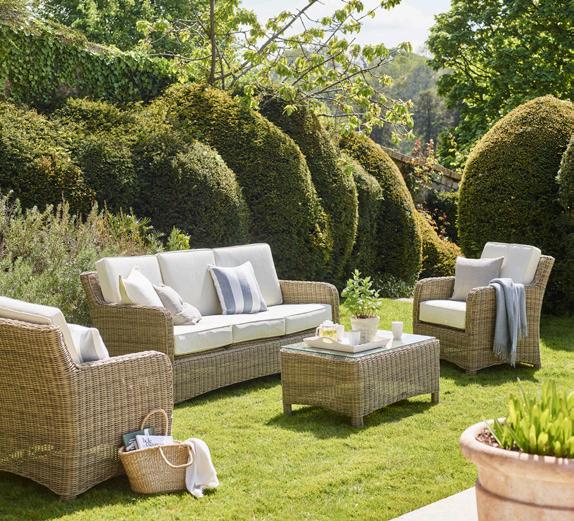
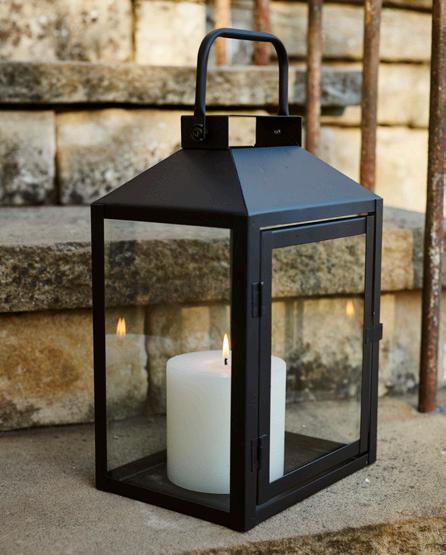
And when it comes to relaxing in the garden, the couple have mixed Neptune outdoor furniture in iron, teak and wicker finishes. ‘We have a large outdoor table that I like to style throughout the year so it doesn’t look empty when not in use,’ adds Emma. ‘I fill Neptune’s rattan Littleton baskets with herbs in the summer, heathers later, and then winter bulbs. Mix in some hurricane lanterns and the table becomes as pretty as the rest of the garden, all year round.’

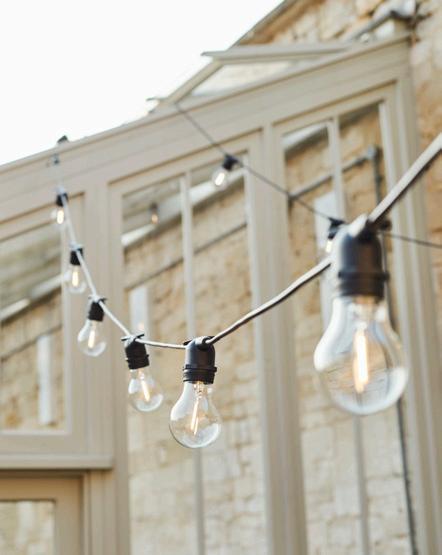
CREATE YOUR OWN TRANQUIL SPACE WITH OUR GARDEN ACCESSORIES AND LIGHTING


For author and equestrian Callie Coles and her husband, Toby, home is a place that should embrace all, with open arms. That includes their three sons, nine dogs, countless chickens and Sparky the kitchen-loving pony.
Ilove our house. The actual building means a great deal to me. My husband, Toby, while enduring the hardest tests man can be set – his mother dying and simultaneously breaking his back which meant that the threat of losing everything was ever-present for about three years – managed to rebuild Woodley Park from the ashes. This beautiful pile of bricks and cob on the edge of Dartmoor is literally made with his blood, sweat and tears.
I am sitting here at an ancient, polished oak dining table passed down from Coleses gone by, which I use as my desk. The smell of beeswax is comforting. My computer is jostling for space as beside it rests an enormous wooden crocodile that we just brought back from Kenya. Toby found it in a curio shop and decided he was coming home with us. He took up an entire bag. I may have grumbled, but I am secretly so glad to have him here keeping me company.
Our house is full of things that we have collected. A lovely turquoise urn rests on a medieval oak chest beside the front door. This urn we found in Marrakech, and I insisted we lug it home. The airline was livid that we had managed to get this huge bit of crockery through security, and as it did not fit into the overhead lockers,

it had to be put in the loo for take-off and landing. We were not popular. We also returned with a Persian carpet that we had found in the bazaar on the floor of a dusty apothecary, checked in as luggage.
Nothing is curated here: it is a mish-mash tapestry of our tangled lives. A lot of our furniture is from Toby’s parents. This means that, although Toby has lost them both, they are always close. The memories and the smell of his father’s pipe still linger in the rich green velvet of a wing-backed chair; ink stains from his mother’s pens will always decorate the drawers of the little Georgian desk beside the fireplace. It is all used though, and while the children have learned from an early age not to play with the precious books, nothing is shut away.
We live in the kitchen beside the Aga most of the time, so it’s important that the kitchen is welcoming and that there is room for everyone – including Sparky the pony. We have exposed stone walls, copper saucepans hanging from the rafters and open shelves. Home has to be comfortable and cosy for everyone.
As I have gotten older and we have added more children to the mix, I have come to realise that home is where my family is. So, when we move from this house this year, home will be wherever they are.
Together, Callie and Toby Coles run Iggywick, a wicker saddlery and accessories business, while Callie’s debut novel, Tangled Webs, will be published this summer by Viking, part of Penguin Random House.
Get ready for Broadway:
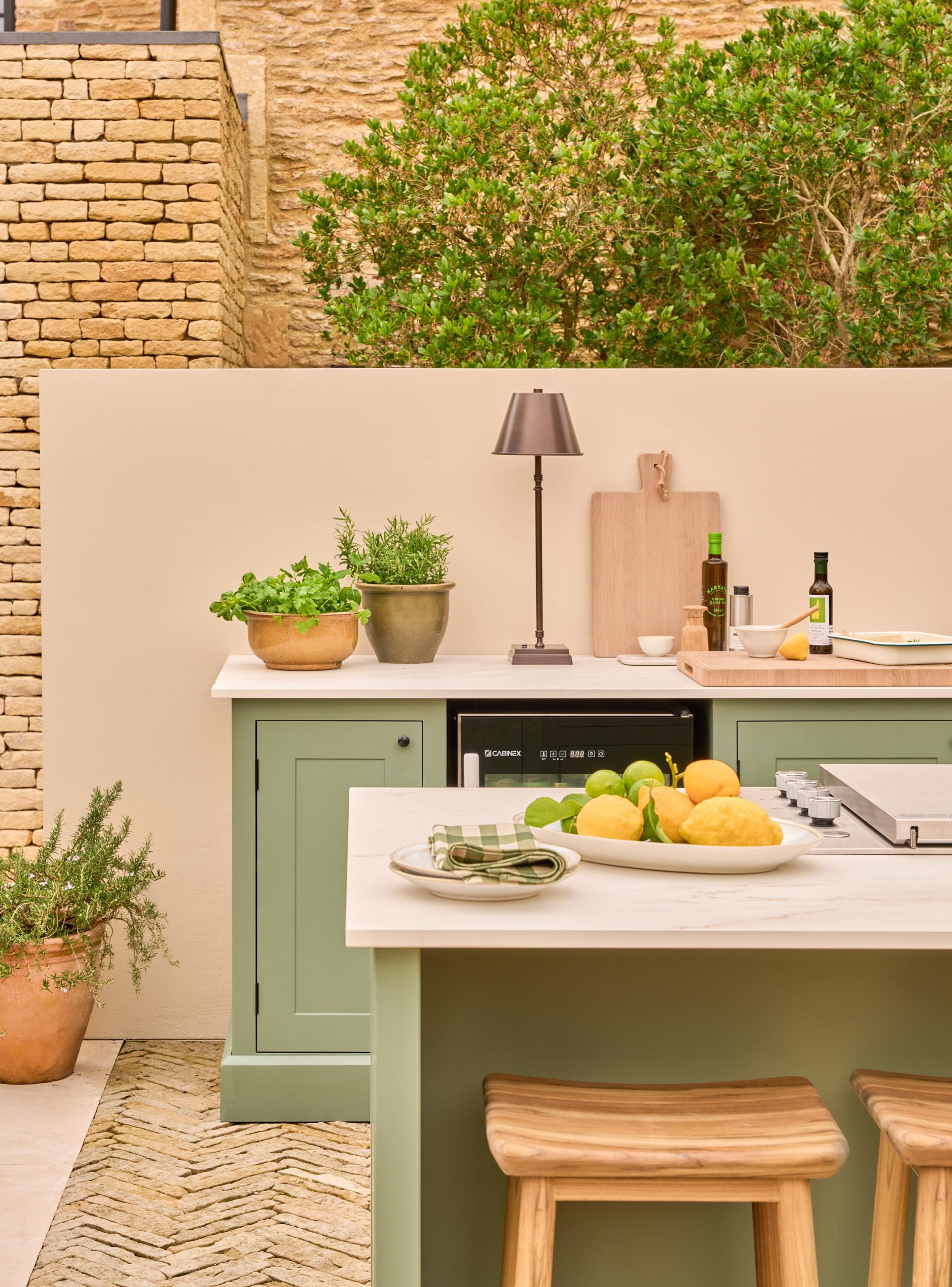
a new outdoor kitchen concept that harnesses our cabinetry craftsmanship and material expertise into a new collection created for cooking and entertaining in your garden.
As a company that began making garden furniture some 30 years ago before expanding into quality kitchen cabinetry, a kitchen concept for the garden seems completely logical. Introducing the imminent launch of Broadway: a fitted kitchen cabinetry collection designed with the same integrity as all our other collections, that is also meticulously crafted and weatherproofed for your garden, whatever the season.
In recent years, the barrier between outdoor and indoor living has experienced a metaphorical knocking down of walls. The rise in biophilic design has seen natural materials, plants, earthy colours and organic shapes welcomed into our homes. But what about taking the indoors outside? Creating ‘rooms’ in our outdoor spaces has been something we have done for many years at Neptune – our dining and living garden furniture and accessories are important parts of our whole home vision – but when it came to alfresco entertaining, the practicalities of the cook area all too often relied on indoor kitchen facilities.
Over the last few years, we had noticed a shift in the way people think about their garden spaces, as Fred Horlock, design director, explains: ‘In 2025, we were presenting our latest garden collection alongside our popular fitted Suffolk kitchen at the RHS Chelsea Flower Show. We had so many comments from visitors about their desire for more outdoor cooking options. Luckily, we were already in the early stages of drawing up concepts for what will become our new garden kitchen: Broadway.’

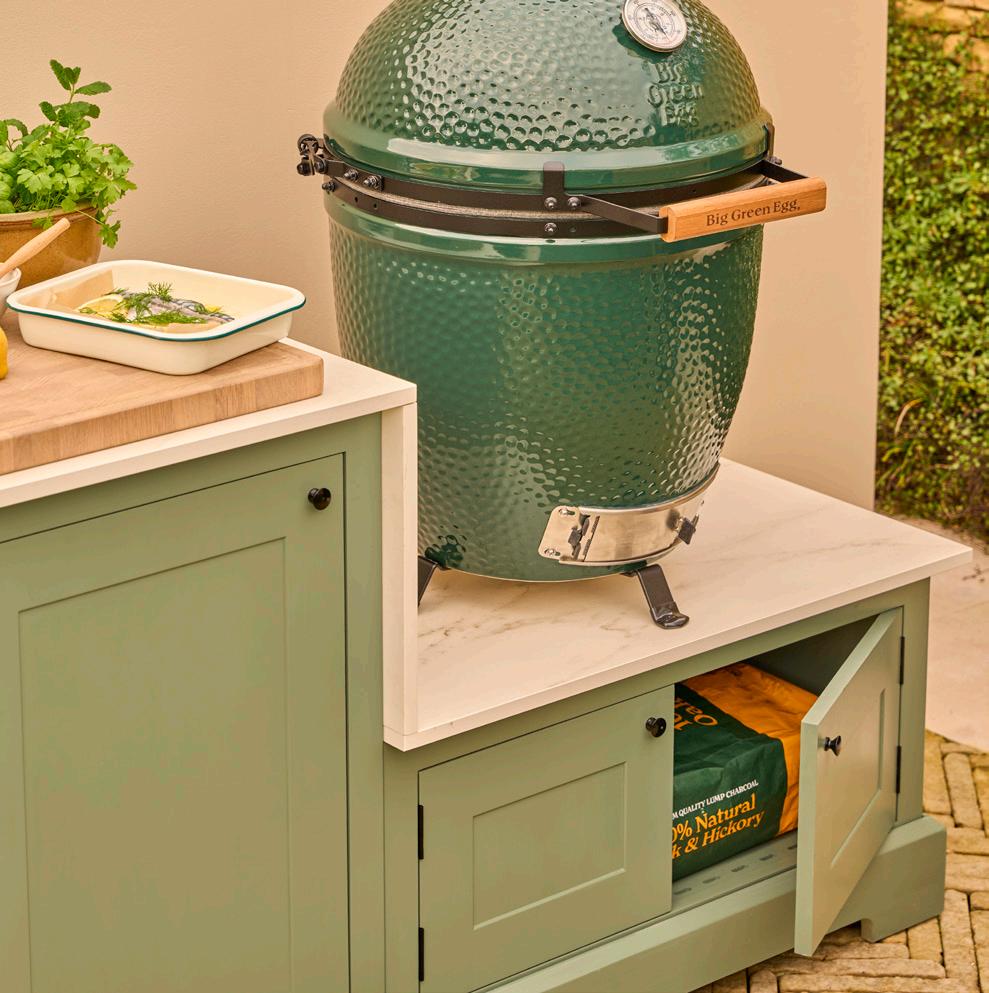
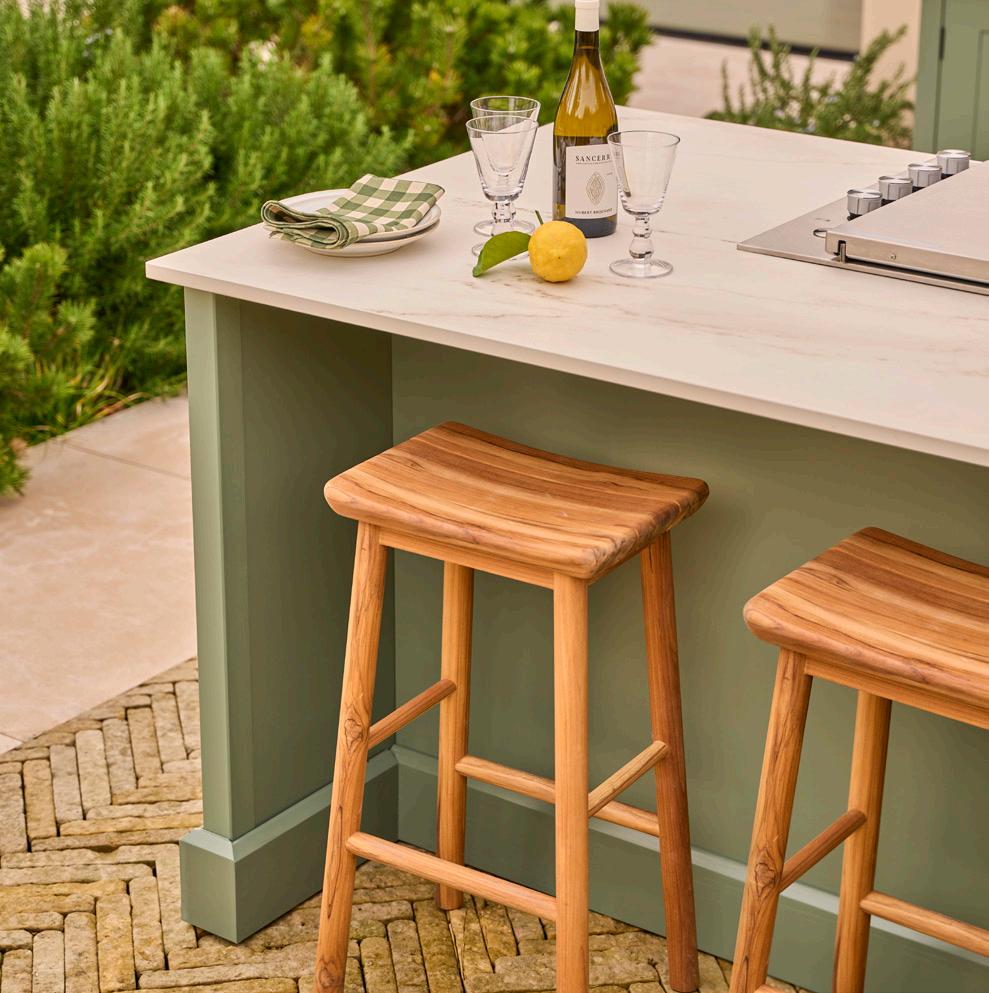
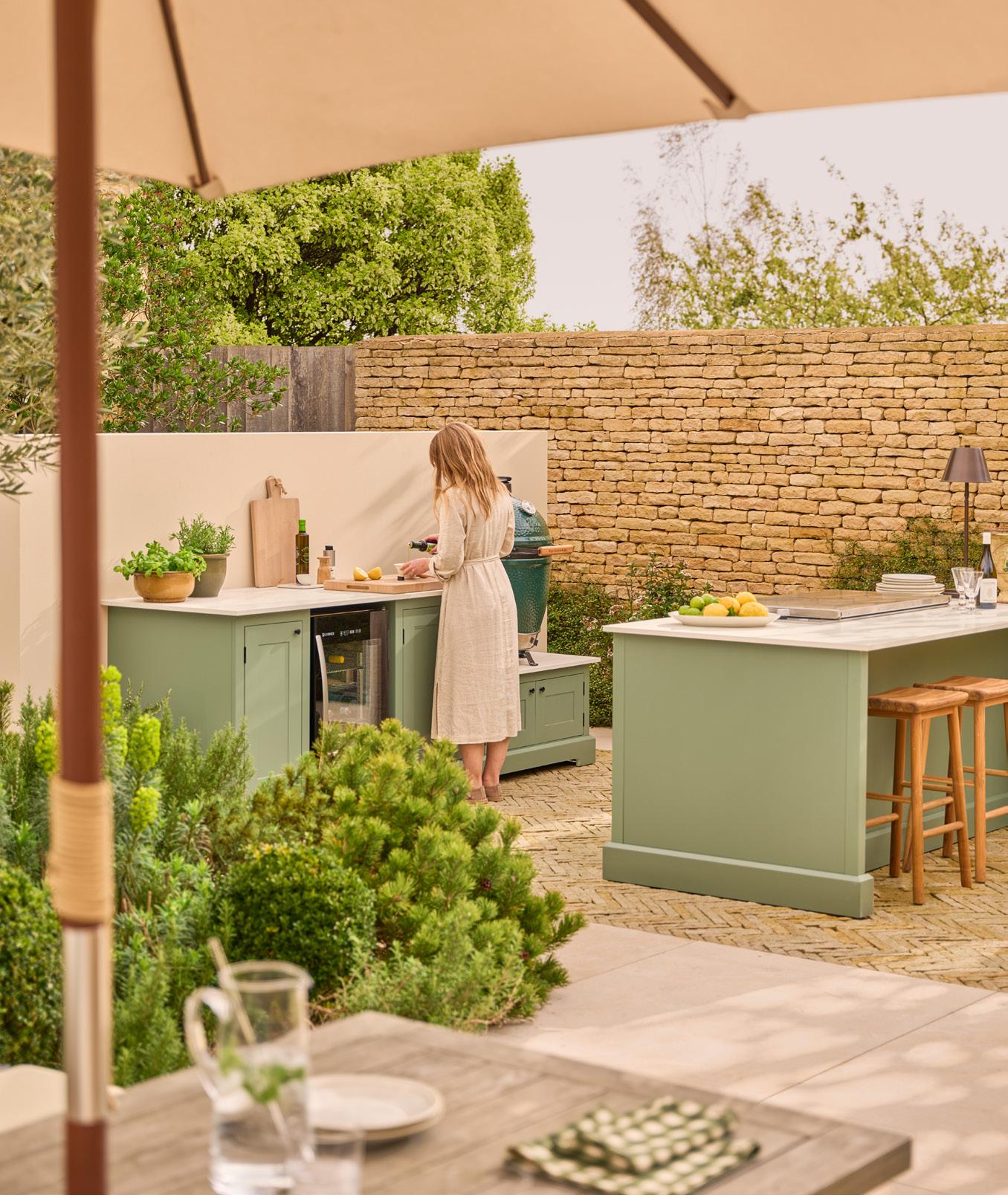
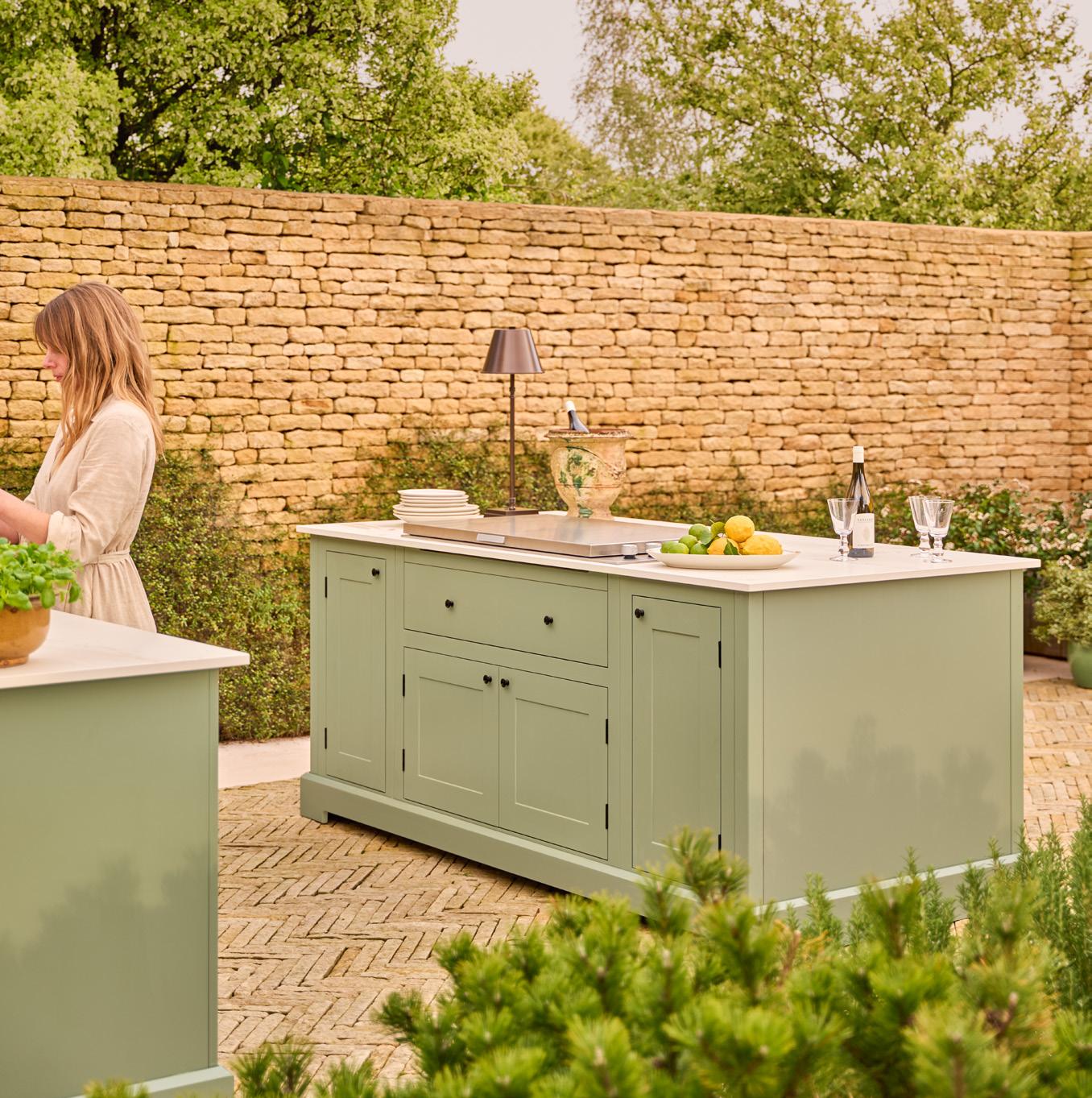
Envisioned as a seamless extension of the home, Broadway has the unique look of a traditional Shaker kitchen – with its classic, recessed panel, framed doors – but with careful consideration given to materials and construction to make it withstand the elements of outdoor living. The collection comprises of seven cabinet sizes, allowing you to configure any shape and layout of kitchen, from galley style to a U-shaped kitchen surrounding an island, to suit your garden or terrace.
Lead designer Mike Charlton explains: ‘We’ve taken our traditional modular approach to the new Broadway collection so that it can be configured to fit any garden. With each cabinet, we’ve used angled panel trims to ensure water run-off and added drainage holes inside.’
Crafted from a robust engineered timber and finished with a specialist weather-proof paint in our classic Cactus shade, Broadway breaks the mould of what an outdoor kitchen can be. ‘The garden is an extension of your living space, and Broadway is our next step in adopting this seamless approach to living,’ adds Fred. ‘It’s an outdoor kitchen that can be used to celebrate every season, while providing the freedom and fun of cooking alfresco.’
For the third year running, we will be exhibiting at RHS Chelsea Flower Show in May this year, showcasing the new Broadway outdoor kitchen for the first time as well as more of our alfresco dining and seating designs. In 2025, the award-winning stand featured the Borough freestanding island and a Borough dining table with matching chairs, alongside Kew sofas and armchairs. This year’s even larger exhibition stand will feature stunning alfresco cooking, dining and relaxing areas, all under an impressive oak-framed canopy. We hope to see you there.
The Broadway kitchen is available for pre-order through our specialist Kitchen Design Service, with expert designers on hand to support you throughout the planning process ahead of installation in 2027. neptune.com/outdoor-kitchen

Vegetable patches take on a whole new energy when planted with heirloom and heritage seedlings. And as for the cooking and eating… Cook and food writer Blanche Vaughan discovers more.
It was a black tomato that changed everything for Lucy Hutchings. Not just its rich umami flavour, but its drama: the dark mahogany sheen, the way it looked sliced open on a board. With a background in fashion, Lucy was perhaps attuned to how colour and form can turn the everyday into something covetable. What she didn’t know was that this was just the beginning of a total change of life.
Together with co-partner Kate Cotterill, Lucy is the force behind She Grows Veg, a seed company bringing heirloom vegetables back into home gardens with a distinctly modern, pleasure-led sensibility. It’s about flavour, curiosity and the simple thrill of growing something you can’t find easily elsewhere. Their advice is practical, jargonfree and reassuringly down to earth, making the idea of growing vegetables from seed feel like an adventure.
Heirloom, heritage, open-pollinated: the labels all describe varieties bred for taste, texture and character rather than shelf life. As a cook, that’s where the excitement lies. These vegetables behave differently in the kitchen. They’re sweeter, more bitter, more aromatic. A carrot might be purple or pale yellow, a beetroot ringed like a bullseye, a tomato perfumed and complex rather than watery. You don’t need a manifesto to justify growing them; you just need to cook them once to taste the difference.
For gardeners, they offer instant theatre. Sweetcorn resembles rows of multicoloured beads; aubergines are round and blush pink- or ivory-coloured lozenges; squash are striped green and yellow and palmated liked flowers; tomatoes come striped, ribbed, chocolate-brown or sunburst-orange. It’s hard not to feel a small jolt of delight when you harvest something that looks this intentional.
Growing doesn’t require space or expertise. ‘Don’t be afraid to fail,’ Kate and Lucy say. ‘Growing seeds is all about trial and error.’ A balcony or window box will do. Imagine a terracotta pot trailing a tangle of dwarf peas, ready to pod and pop into your mouth raw like sweeties. Beetroot is another easy win: forgiving and generous, and equally good roasted, grated raw or slow-cooked until sticky-sweet.
For beginners, Kate and Lucy often recommend tomatoes, salad leaves, broad beans and chicory. They’re productive, adaptable and immediately useful in the kitchen. ‘Rose of Venice’ chicory is particularly loved: a winter grower that comes into its own when the garden looks bare, its leaves blushed pink by frost. Grilled, it turns silky and faintly bitter, begging for olive oil and salt.
When people buy their seeds, Lucy takes pleasure in knowing that ‘they’re making, without realising, a better decision’. Better, not in a pious sense but in a delicious one. More flavour, more variety, more moments of surprise. Growing and cooking heirloom vegetables reconnects the garden to the table, and reminds us that food, at its best, is meant to be both nourishing and a little bit thrilling.



As we celebrate 30 years of making houses into homes, it feels fitting to take a moment to appreciate not just the designs themselves, but the invisible threads that tie them all together.
Do you remember the enchantment of a childhood doll’s house? A small, selfcontained world where rooms flow into one another and miniature furniture holds an irresistible charm. For many of us, it was an early lesson in arranging spaces, teaching us that interior harmony comes from thoughtful curation. Proportions must feel right, colours must speak to one another, and each piece of furniture should complement the next.
It’s this way of thinking that underpins how we design at Neptune. At the beginning of the creative process, our design lead, Mike Charlton, crafts balsa wood models of new furniture that, while miniature in scale, are far more revealing than those found in a traditional doll’s house. ‘The models allow me
to play with the shapes and joints and refine them easily,’ he explains. ‘A good model can tell you so much about a full-size piece of furniture, not only in its aesthetic but also in its strength and structure.’
Though the balsa wood models are a valuable tool, they are only one element of a much broader philosophy: that everything we create should belong to a carefully considered whole. For 30 years, we’ve curated furniture, fabrics, paint shades and accessories not just as isolated designs but as part of a wider conversation. Each piece is designed with an awareness of what sits beside it, what came before it, and what might come next. As a result, every Neptune design pairs effortlessly with another; a piece from autumn 2016, for example, should work just as well alongside a new creation from spring 2026.

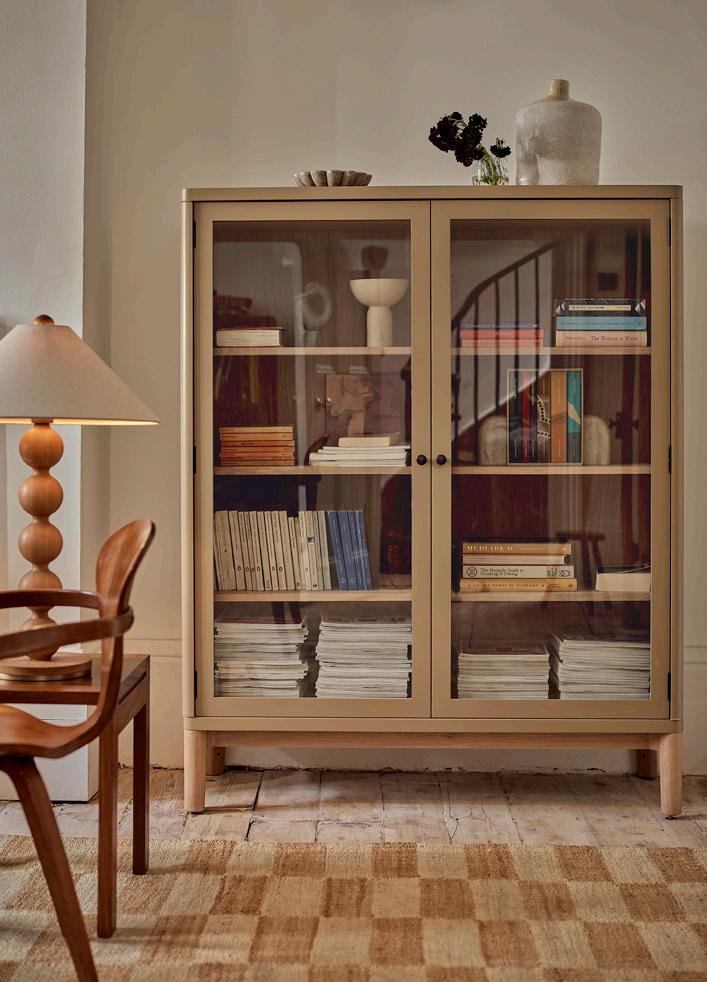
‘The beauty of this approach,’ says Fred Horlock, Neptune’s design director, ‘is that the collections don’t tell you what your home should look like; they offer possibilities. Everything sits together but nothing is prescriptive.’ Pair a generously proportioned farmhouse table, such as our Arundel trestle table, with classic spindle-back chairs and chalky paint shades, and your scheme leans into classic country style. Introduce our architectural carver chairs upholstered in rich green velvet, along with deeper paint hues, and the space takes on a more modern character. This principle extends beyond individual rooms, creating a sense of continuity throughout the home and allowing it to grow and change over time without ever feeling disjointed.
And it doesn’t stop with furniture. Paint shades, too, will sit happily alongside each other in harmonious, layered schemes. Artisanal accessories are scaled and crafted from natural materials that feel at home on our furniture. Serveware complements dinnerware; bed linen pairs effortlessly with throws; sofas find their natural partner in ottomans.
This way of designing has guided Neptune from the start and continues to shape everything we create. Rather than prescribing an aesthetic, we focus on coherence, offering ample opportunities for you to ‘play’ with confidence. Every piece in our collection invites you to mix, match and imagine, just as we once did in miniature in our childhood doll’s houses. Only now, the possibilities are life-sized.

Actor and author Martin Clunes on his special bond with the dogs in his life, both past and very much present.
Asolar eclipse was once considered to be a portent of doom. The gods were angry and had sent a celestial creature, maybe a dragon, or a pair of wolves, to swallow the sun. Just before sunset, on 8 April 2024, when the moon cast its shadow across our closest star, a litter of puppies came wriggling into the world.
Among the litter were two brothers, one with a tan and black patch on his ear and left eye. The other, a patch just on his ear. I didn’t know it then, but these two little celestial wolves would soon change our lives, push us to the brink and turn our world upside down.
The previous year we’d lost my very own and very precious Jack Russell, Jim, to liver cancer. Jim was everything I hadn’t realised that I wanted from a dog. For fourteen years, he had been my buddy and my right-hand dog. We did everything around the farm together. He was the puppy of a dog we knew and admired called Riley, who belonged to one of the cameramen on Doc Martin. He was handsome, business-like and very friendly.
Apparently, Jack Russells have a stronger bond with one of their owners and that was certainly the case with us two. We went everywhere together. As the years went on, Jim and I were joined at the hip. He would sit up in the cabin of our tractor as I drove around the farm and he’d never miss the opportunity to come with me whenever something needed doing.
When he got very old, Jim did begin to slow down. Then, after a short tussle with cancer, he finally slipped away. We buried him in the garden in a little coffin I’d made, filled with thirty-six of the little squeaky tennis balls that he loved. We still had our remaining dogs: Heidi, whose eyes went bad and had to be removed, and Bob Jackson, her son, now going blind himself, along with Laura, our retired guide dog. We loved them to bits, but they weren’t exactly the elite corps.
Extracted from Training John & Murray by Martin Clunes, published by Penguin Michael Joseph, £22

When you live out in the countryside, having a terrier around for some wilderness crowd control can be extremely useful. Terriers were, after all, originally bred to be working dogs. Jim did a great job of keeping deer and other wild animals at bay simply by being there, not to mention the legions of rats and mice he dealt with. Now, with just the benign presence of two blind Cocker Spaniels and one retired guide dog, the animal kingdom in our vicinity began to notice this lack of apex predators.
A few months later, I was in the kitchen looking out at my recently raided bird feeder and thinking fondly about Jim. I said to my wife Philippa, ‘I’ve been thinking, we should get another Jack Russell.’ I had this theory that we needed two. ‘Having two puppies is really no different to having one at this age,’ I declared confidently, almost believing it myself. ‘After all, we’ve had puppies before.’ So that was that.

This is the
The natural world has always sat at the heart of Neptune’s inspiration, and that includes the scents we fill our homes with. Our new Bay, Berry & Cedarwood candle, made from a blend of vegan soy and rapeseed wax, was created to celebrate our 30th anniversary and comes in a limited-edition, watercolour-inspired box.
Top notes of fruity blackberry and ripe peach mingle with a warm base of cedarwood and soft amber for a scent reminiscent of picking blackberries in the sunshine.
Finished with a hint of fresh bay leaf, this candle creates an evocative fragrance to fill your home from spring through to summer.
Discover our fragrance collection, visit neptune.com/candles

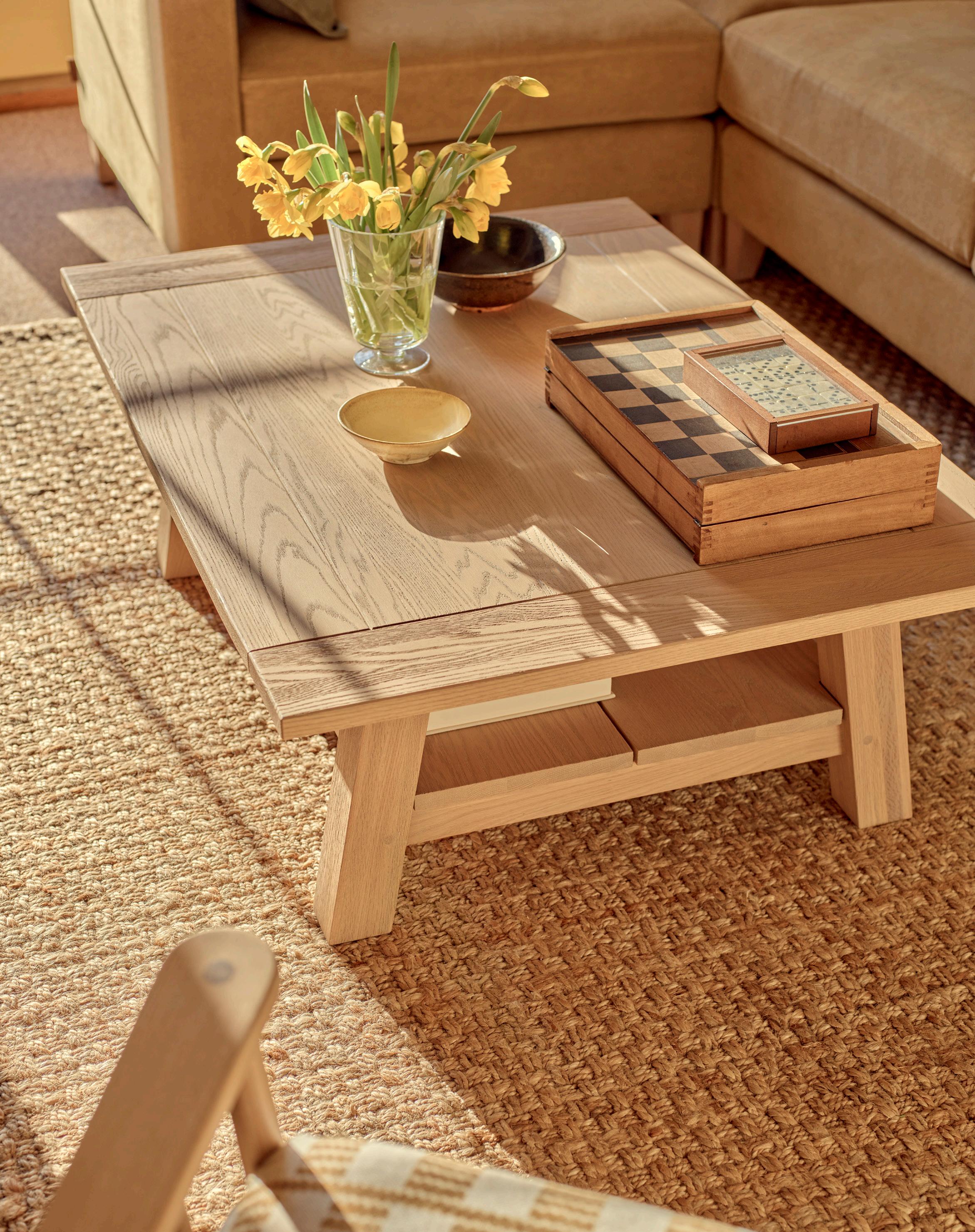
The coffee table is not just a useful repository for cups, glasses and books but also a reflection on the changing ways we live.

Never has a piece of furniture been so in step with cultural movements. One that has evolved as a result of the way we live and even the fashions that have defined centuries. What began as high, mahogany and walnut side tables in Georgian and Victorian times, when ladies sat primly in restricted corsets and formally entertained by serving tea in fine bone china, gradually evolved into solid, low tables, taking centre stage in sitting rooms, as times and fashions relaxed post-world wars. Today, an arguably even more relaxed time in the home, the coffee table has expanded and changed shape and material. While many are made from solid timber, there is a rise in marble, glass and stone designs, making any choice a striking focal point of the living room. They’re what furniture (and life) revolves around, where drinks are rested and remote controls stored. But the coffee table also retains its earlier sense of elegance, as a popular surface to display objets, play board-games or stack art books that reflect personal taste and style. Which is why it’s important to consider the shapes and materiality of these talked-about tables when searching for the one for your home.
Our new Arundel coffee table, the latest addition to the best-selling Arundel collection, focuses on the expansion of surface space while celebrating traditional craftsmanship and joinery techniques. An A-frame design with a deep tabletop, made from solid oak with a natural textured finish, this classic coffee table works in both contemporary and traditional living rooms, just as the similarly named dining table does for a kitchen space.
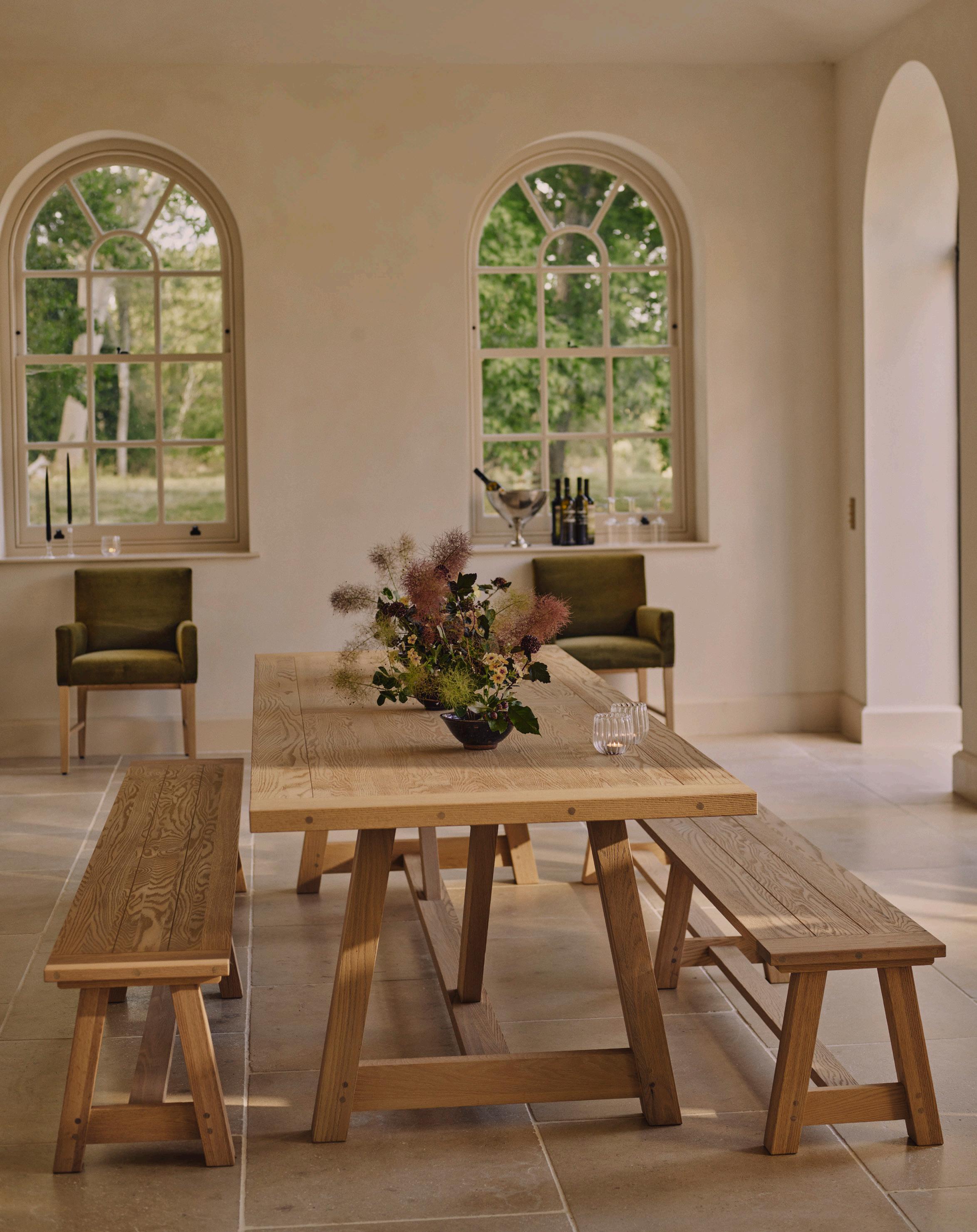
The trestle-style Arundel dining table was introduced in 2015. Solidly unfussy, its pure and simple lines combine form and function to create a timeless piece that can be passed down from generation to generation.
With solid A-frame legs, visible dowel lock joins, optional extending leaves, the deep and chunky (45 millimetre) tabletop, and a wire-brushed, tactile finish to the solid oak, it fits seamlessly into any kitchen aesthetic.
On a practical level, the design team were aware that kitchen and coffee tables see a lot of action and need protecting to prolong their lifetimes, but they were also keen not to lose the raw quality of the oak. Luckily, our IsoGuard® sealant protects timber without detracting from its natural beauty. Unlike a traditional varnish or veneer, which leaves a layer sitting on top of the wood, IsoGuard® works on a penetrative level, soaking into the wood and binding to the raw cellulose that it finds, coating it in a fine protective film, so leaving the wood surface looking and feeling naturally beautiful.
Historically, the un-hierarchical nature of the refectory table and the accompanying bench seating meant that it was used in the dining halls of medieval monasteries where it fostered a mood of togetherness amongst monks and their guests. This sense of conviviality and informality is continued today, whether gathered around the Arundel dining table for dinner or sharing a hot beverage over the Arundel coffee table with friends. But what we really want to know is, what will be the next evolution of this most versatile of tables?

Discover our full table collection, visit neptune.com/tables
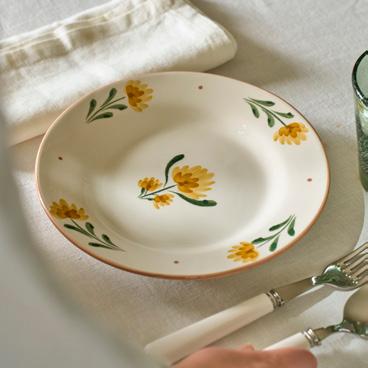
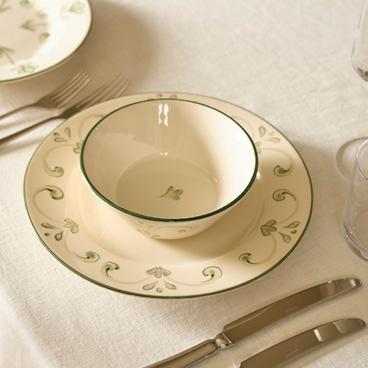

As a child, laying the table is something of a rite of passage – a sign of responsibility and grown-up-ness as plates and cutlery are carefully positioned for the family meal. Later, as an adult, laying the table can take on just as much significance, offering opportunities to elevate the simple task, express your creativity and show loved ones you care.
Here, we share our top tips for creating memorable tablescapes.
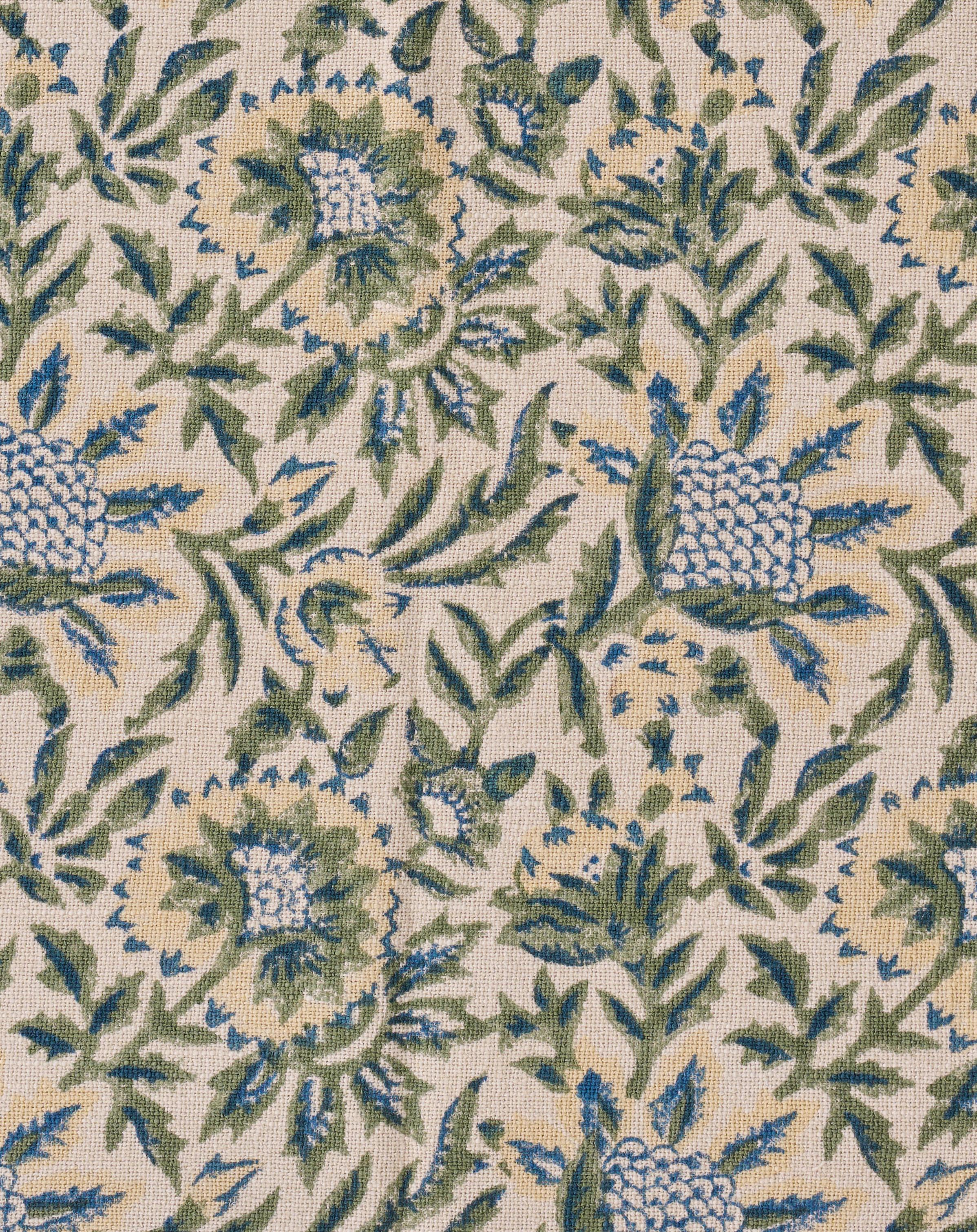
• View the tablecloth or placemats (or bare table texture) as your foundation and inspiration on which to build your scheme. A patterned linen design, like our new Sylvie tablecloth and napkins, will instantly set a mood for the table, but if you need to calm it down, you can always layer a plain table runner over it (or vice versa).
• To ensure the table feels cohesive, choose one colourway and either layer in varying shades of that colour or find a contrast hue to act as an accent and bring depth to the scheme.
• Don’t save certain tableware for best.
There is real joy to be had in using quality pieces for even the simplest of meals. For a maximalist mood, try mixing up patterns in one colourway, or for a more orderly look, intersperse different plate designs with white or plain coloured ceramics.
• Work in odd numbers when marking out spaces for serving dishes or decorative elements. A row of three, five or seven dishes,
candlesticks or vases will feel more balanced and orderly and help you build out the rest of the table scheme from there.
• Glassware will quickly set a mood for the table. Stemmed glasses, like our Hoxton or Islington designs, feel elegant and a little more formal; Ella coloured glasses add some informal energy to the tablescape; and mixing stemmed wine glasses with simple Greenwich water tumblers can create a more relaxed vibe.
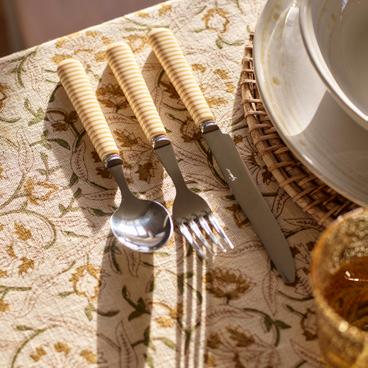
• Be creative with your cutlery. Bamboohandled knives and forks will give the table a summery feel, a gold finish adds some glamour, or try our cheery Saffron-striped Salcombe cutlery set to bring subtle pattern to the table.
• Be inventive when it comes to decorating the table. ‘Shop’ around your home for unexpected centrepieces – ornate book ends, an ornamental garden pot, a cake stand in lieu of a serving platter – or incorporate holiday finds or forgotten pieces from the backs of cupboards that might spark conversation. Centrepieces don’t have to match, just be ‘centrepieces’.
• If you prefer a more natural centrepiece, consider a stylish arrangement of colourful root veg sitting on a bed of moss, or a collection of architecturally shaped vegetables like artichokes or gourds. Even small terracotta pots of fresh herbs or bowls of shiny conkers, capped acorns or floating flower heads can look effective dotted along the centre of the table.
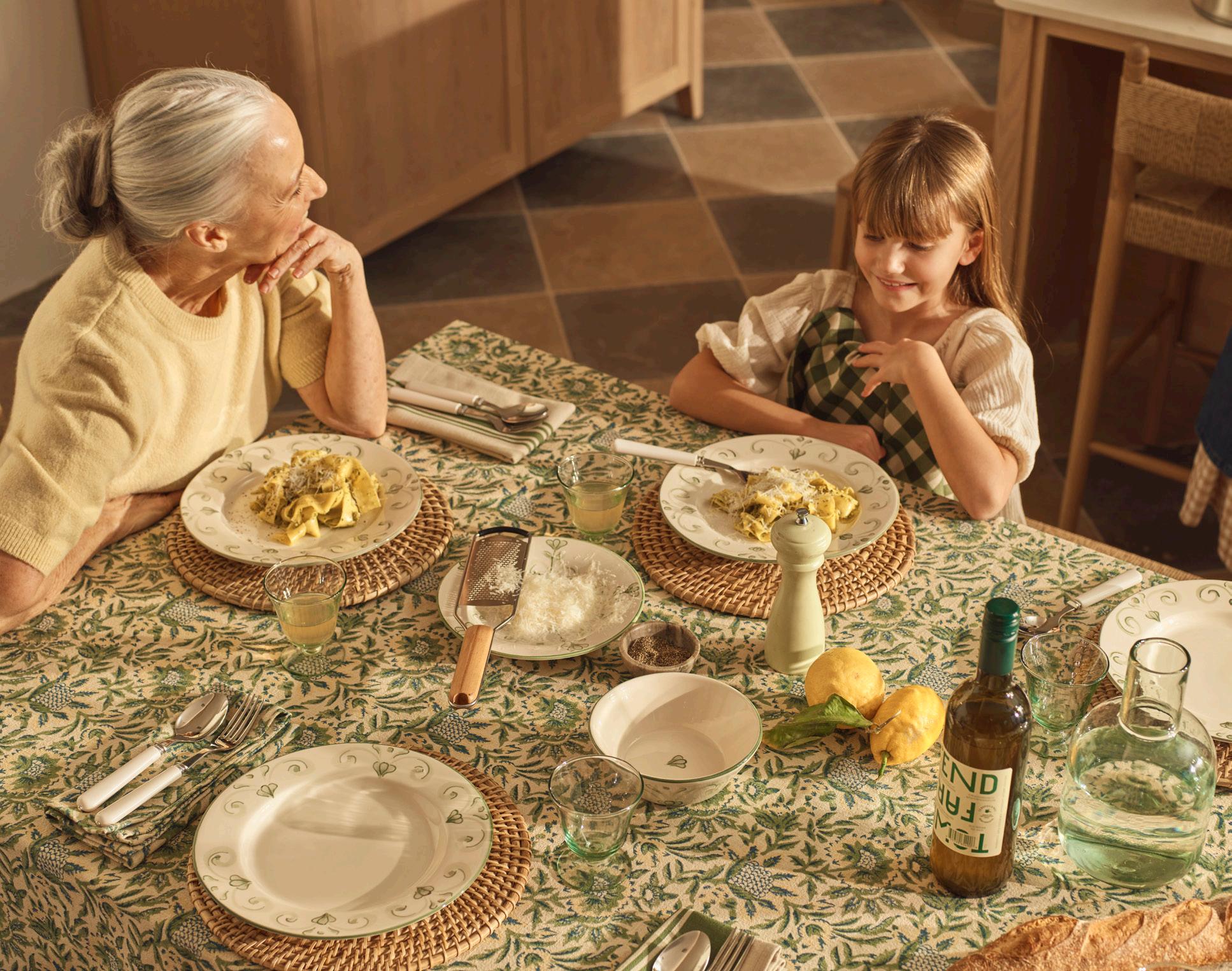
A beautiful tablescape is the chance to make family and guests feel welcomed and special, whatever the occasion.

When writer Jo Rodgers decamped from the city to the country with her family, it was the local, unsolicited words of advice that proved most enlightening.





Before we moved into our rental house in Sussex, the charming owner described an incident that happened one morning. He had been brushing his teeth, going about his business, when something caught his eye outside. Downstairs in the garden, among the apple trees and molehills, stood a fully grown bull. He was massive, with white horns, chewing on the lawn. The owner started running from window to window, trying to get a better look. And that was when he saw a second bull. And then a third. I’m assuming, at this stage, that he called off whatever he had planned for that day. In any case, the reason he was telling the story was to underline, for his downfrom-London tenants, a rural countryside warning so often repeated that you might stop taking it in: Close The Gate. He had not closed the gate. And his beautiful house, it so happens, is surrounded on three sides by hundreds of acres of pasture, roamed by organically-reared bulls.
There are bats in the attic here, too. Sweet, tiny common pipistrelles that squeeze under the slats of the Horsham stone roof. We see them flapping around at sunset. The official stance on bats, as explained to us by the pest control person who came to remove a wasp nest and noticed them, is to cede the territory where they have settled and leave them alone. That suits me fine. I’m not going up there anyway on account of the sinister scratching you can occasionally hear above our bedroom ceiling. It sounds too peculiar to be a bat, or a field mouse. Best case scenario, it’s a ghost.

I gloss over that type of news when I’m on the phone with my mother, who would resent any creature, wildlife or spook, crashing around above the heads of her three young grandsons. In that same vein, I also hide that we spent ten days without heat in January, thanks to the oil-fired boiler and a string of cancelled fuel deliveries. The village WhatsApp swooped to the rescue then, dispensing sympathy and electric heaters and lusty hatred for the oil companies, as well as advice for coping with the old boiler: crucially, don’t rely on automatic monitors, which do not work, and never let it get less than half full in the winter. Also, keep lots of dry firewood. And blankets. And develop a willingness to be philosophical, because there may not be anything you can do about it.
We met most of our neighbours in person this past winter when we went to a carol service at the local medieval church – a jaw-droppingly lovely place that doesn’t have heat or electricity or even running water (‘Bring rugs and torches, and get there half an hour early if you want a seat,’ a friend tipped us off beforehand). Our family of five crowded into a pew, exhaling cloudy breaths, taking in the lit candelabras and whitewashed walls dressed with just-cut ivy. A couple hundred of us sang ‘Silent Night’ and ‘Good King Wenceslas’ and a few lesser-known songs, for which there was a stapled handout with lyrics that we forgot to pick up at the entrance. We didn’t know the words, but we’re learning.





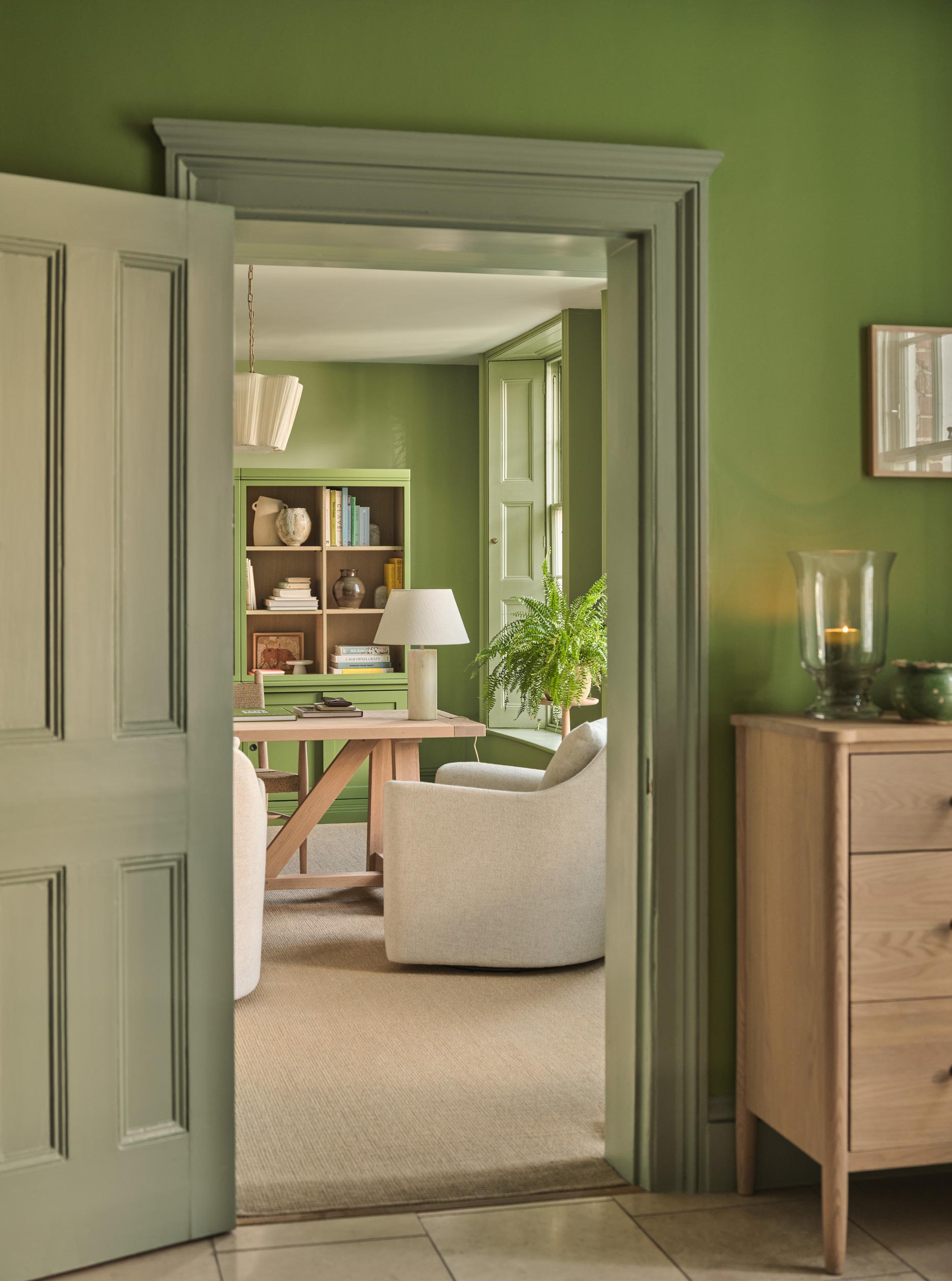
Design writer and author Kate Watson-Smyth has renovated six houses, the latest being a historic villa in northern Italy with a bold green sitting room. Here, she shares advice on how to find the right green for each room in your home.
Every few years, a particular colour is declared the ‘new neutral’. First it was grey, then plaster pink, and now it’s green’s turn. And what a palette we have to play with: there truly is a shade of green for every wall and taste.

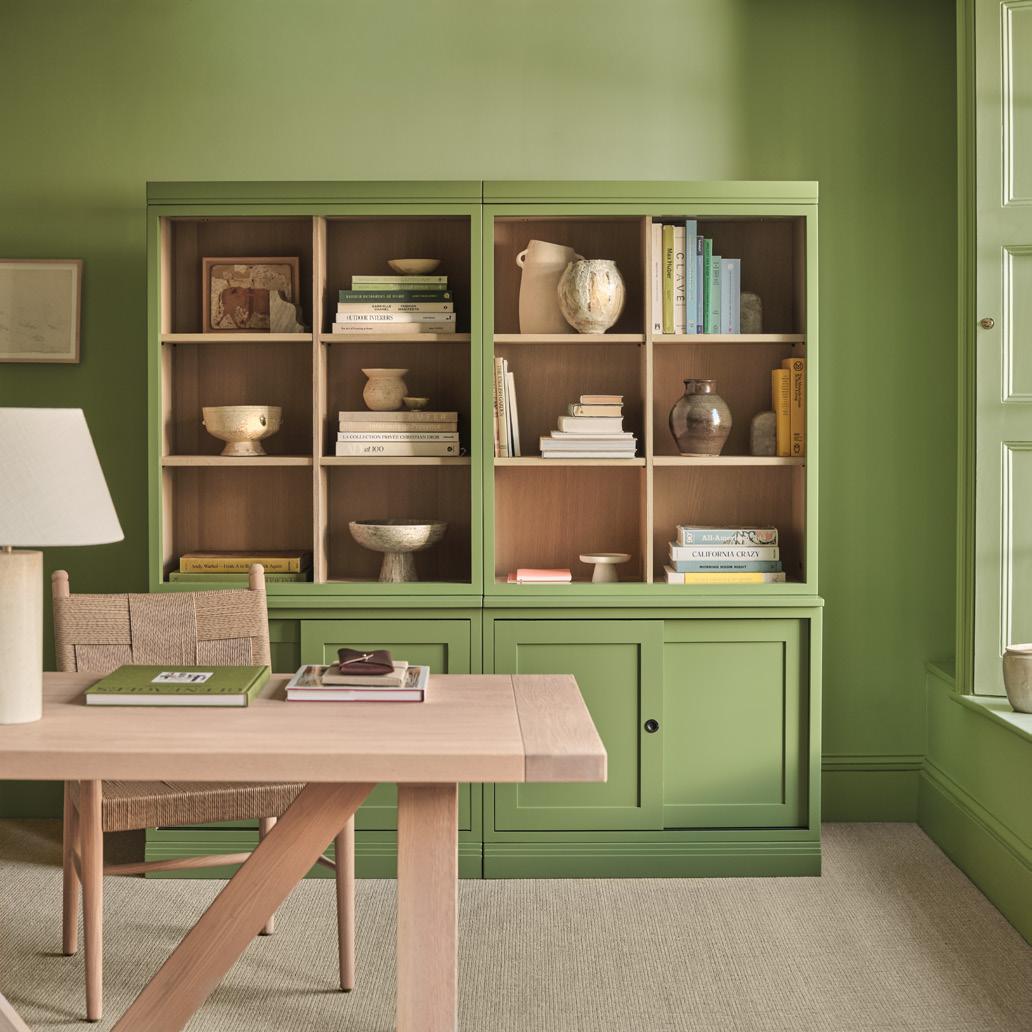
The first thing you need to do is decide on how you want to feel in the room and match the shade to the mood. So, if a bright emerald makes you feel alive and full of creative spirit, don’t put it in the bedroom. Save it for the office or the kitchen and look, instead, at a calmer sage to help you wind down in the evening.
Once you have worked out how you want to feel, you can start to look at the colour cards in more detail. Green is very easily influenced by the light around it, so you need to put your testers in dark corners as well as directly opposite windows. A north-facing room tends to have a steady bluish light which will keep your chosen shade at its truest, whereas as windows looking south will cast an orange glow and can make an olive appear muddy. Check colours in natural and electric light too, as they read differently according to the time of day.
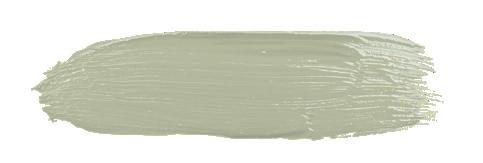
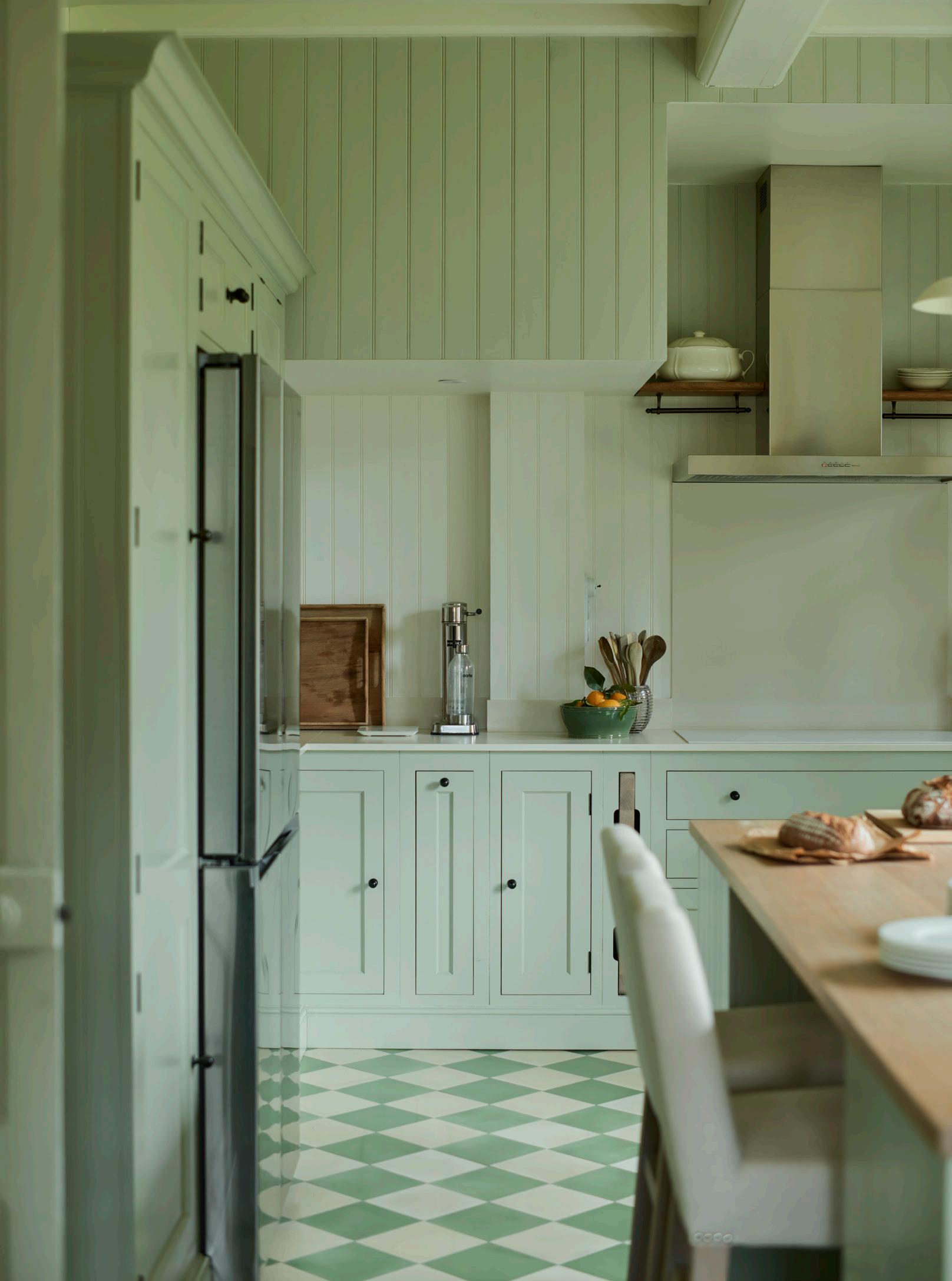
Now, while that might sound complicated, it’s actually just about taking a few minutes to think about the effect you want and a few more to paint a patch on the wall and see how you feel about it over a couple of days.
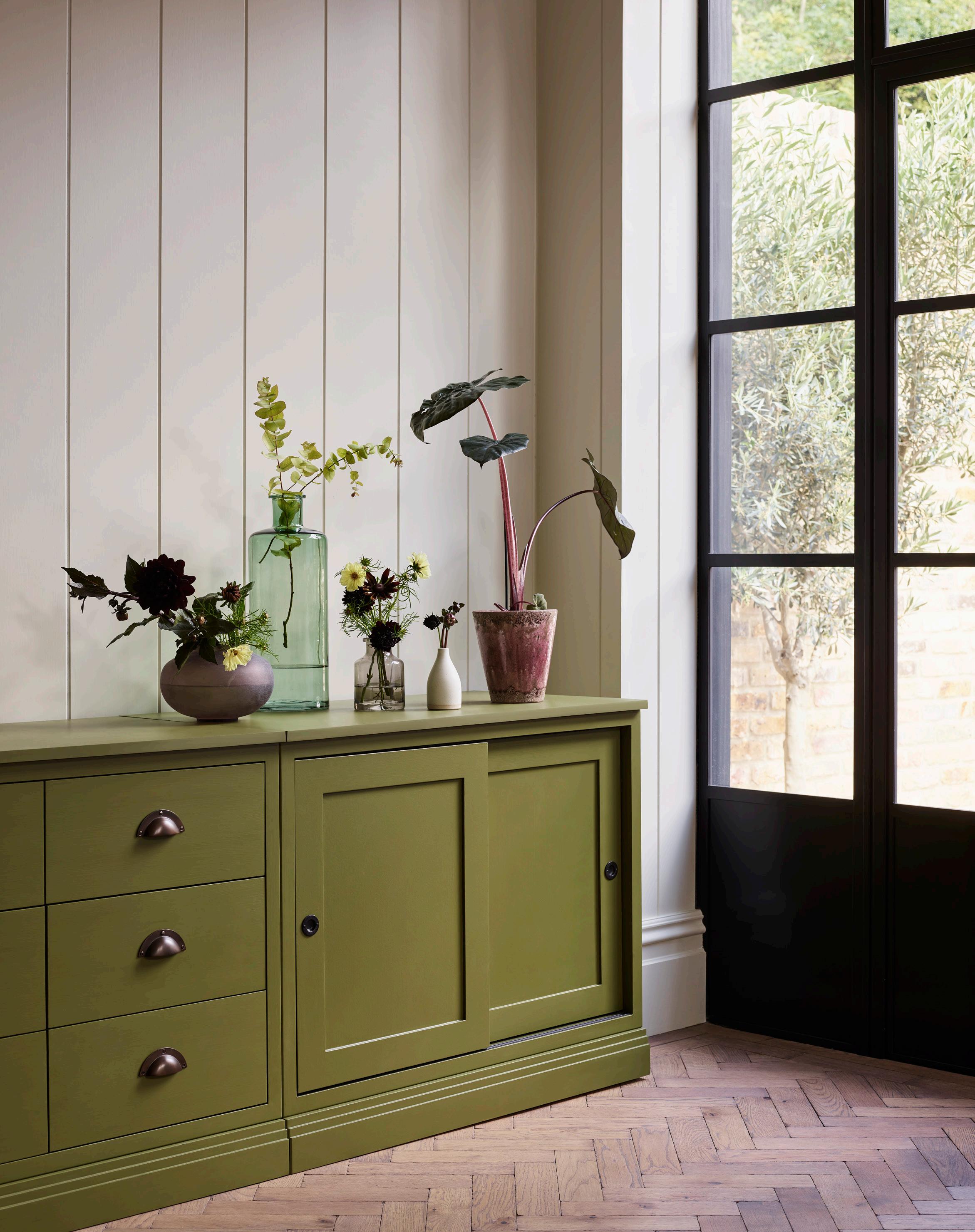
Generally, paler tones work well in bedrooms and bathrooms while the stronger forests and nettles (look out for Nettle, the newest green to the Neptune colour card) are better in sitting rooms and olive can be gorgeous on kitchen cupboards with a warm cream such as Old Chalk on the walls.
And that is the next thing – what are you going to pair with your chosen green? One of the easiest, and most obvious, ways to plan your green scheme is to look to nature. Find a leaf that matches your chosen shade and see what colour flowers it has. Silvery greens love lavender, and eucalyptus look gorgeous with shades of purple and lilac, while olive suits all shades of pink. Rhubarb and Potter’s Pink both love the new Nettle shade, a warm green with a hint of black. As does Polenta, a soft, warm yellow shade (whereas a stronger yellow can be a little too intense with bright green).
Finally, you need to decide how much green you want to use. While feature walls have been much mocked, there are ways to get them right – do one wall and all four skirting boards to introduce your shade to the rest of the room and pull it all together.
If you are going for the full drench (using the same shade on woodwork, walls and ceiling), make sure it’s a colour you truly love. And check your complexion. I once bought a house where one of the bedrooms had been drenched in a minty, arsenic sort of shade. It made everyone look bilious and was immediately replaced with a soft pink that flatters every shade of skin.
Of course, you don’t have to stick to paint on walls. If you have fallen in love with a strong shade, then it can look great on furniture and create a real focal point. The only question left is: which shade will you choose?
To order a Neptune paint card booklet, visit neptune.com/paint

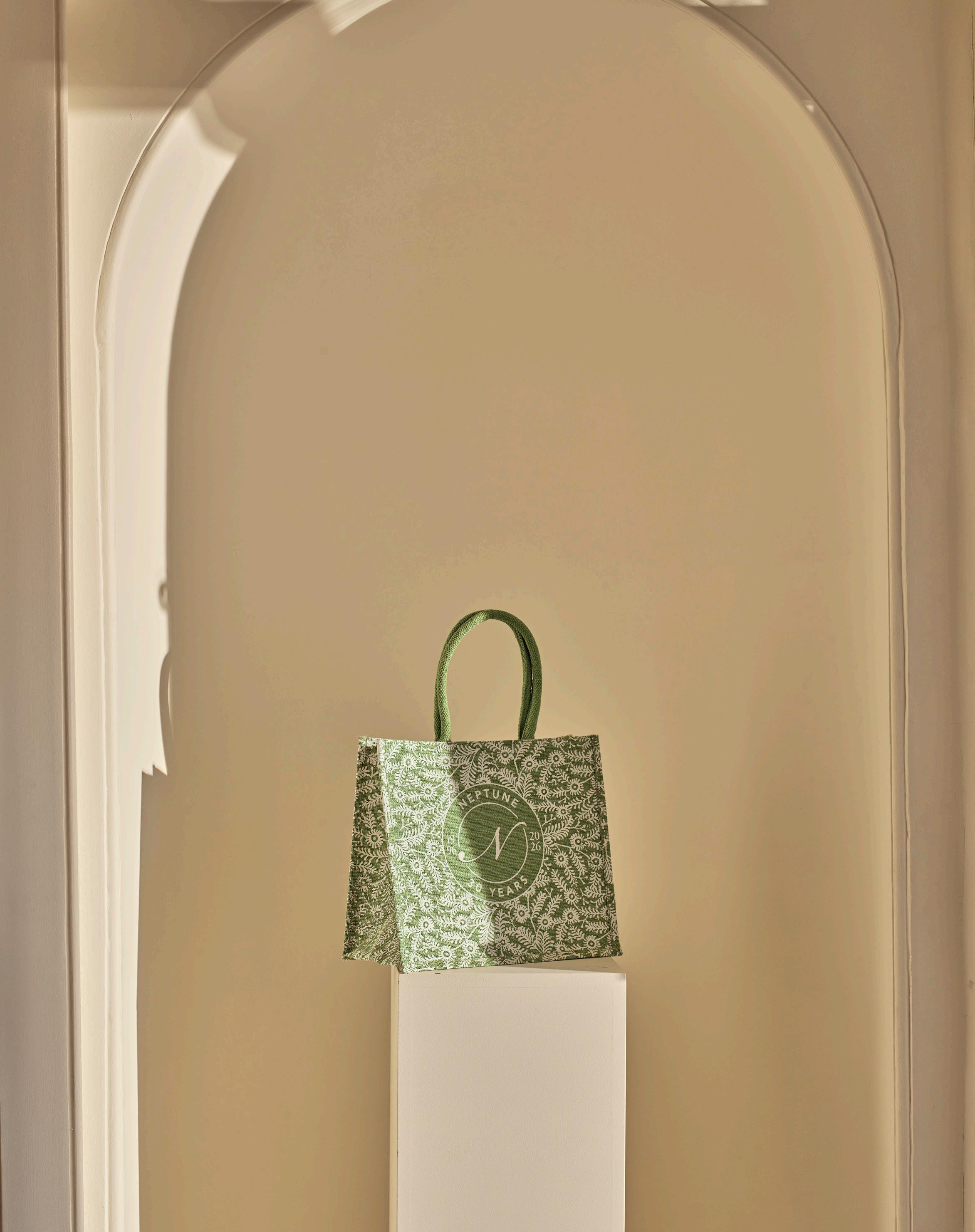
A glimpse down the shopping aisle. A match on the train. Once you spot the iconic Neptune jute bag, you’ll see them popping up wherever you go.
Cotton, canvas, jute – you’re likely to find a tote bag, a popular carry-all since the 1940s, hanging in cupboards in every home. But it’s fair to say, not all bags are the same. When the Neptune bag was introduced, it was designed to be more than just a bag for life. Following our founding principles of useful, well-designed product that enhances life, each one is made from durable woven jute with a water-resistant liner which, together, can withstand the demands of everyday life. It was created with the same craftsmanship, functionality and beauty that sits at the core of our kitchen collections or sink-in sofas.
Whether you’re using it for carrying produce home from the local market, to nestle presents inside to gift to a loved one, or as your carryall for a weekend away, its large capacity (with medium and large sizes available) and adaptability make it a reliable companion on all of life’s little adventures.
Since 2015, the colour of our jute shopping bags has changed each season to reflect our latest paint shade. From the popular plaster shade of Potter’s Pink and the ‘goes-with-everything’ Orkney White to the original Charcoal and autumn’s rich brown Saddle, there’s a bag for every occasion.
Each season, we meticulously create our paint shades in-house together with expert British paint mixers, and then use this shade to closely match our jute bags, bringing our popular paint colours outside the home.
In celebration of our 30th anniversary, we’ve created a run of limitededition printed jute bags, chosen as a homage to our love for nature. Delving through our archives, we’ve revisited our traditional Orla thistle motif interpreted in our new Nettle green paint shade to illustrate our medium bag.
In a world of fraying totes and unsustainable plastics, the durable Neptune jute bag has become a coveted (and useful) item, and this latest iteration is just the next chapter.

Is buying a listed house more trouble than it’s worth? Or will you be rewarded with a house full of character asks Country Life interiors editor and listed cottage homeowner Giles Kime.
In an edition of Country Life published in 1912, there’s an advertisement for 140 turned balusters, 80 half balusters, and 13 pillars. All yours for £200. They were from Trentham Hall in Staffordshire, a recently demolished house which, less than 50 years before, was the subject of a conversation between the Shah of Persia and the future Edward VII.
‘It’s too grand for a subject, you’ll have to have his head off when you come to the throne.’
Trentham Hall was one of the countless country houses demolished in the late 19th and early 20th centuries – the victims of economic turbulence, high taxation and changing tastes. It wasn’t until the trauma of the bombing raids in the Second World War and the damage they inflicted on some of our most iconic buildings (including the Palace of Westminster) that we began to appreciate the value of our architectural heritage.
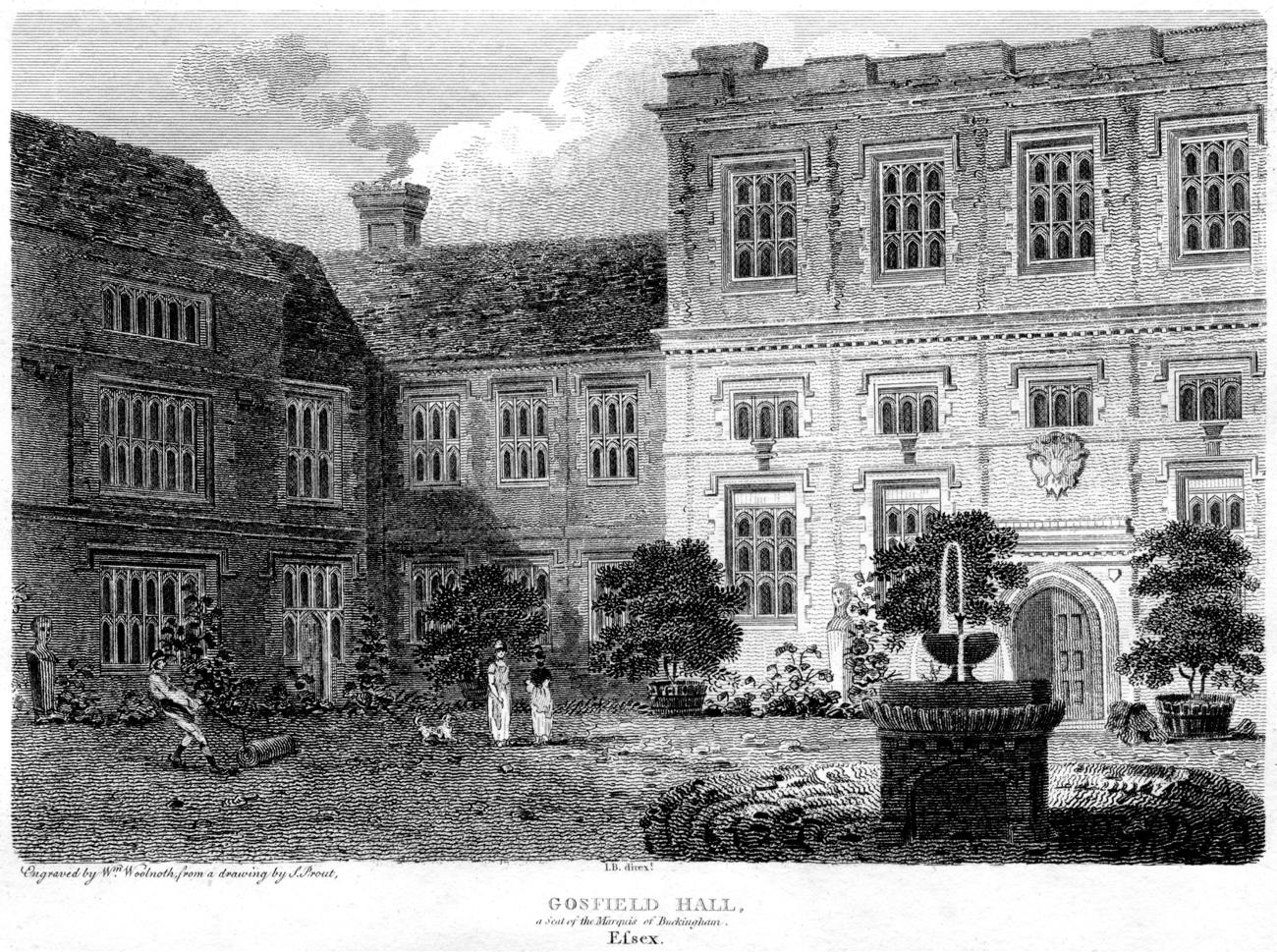
The first structure to be listed was the ballroom at Gosfield Hall in Essex, where the future King of France was exiled during the French Revolution and where he was attended by a retinue of 350. The Town and Country Planning Act of 1947 enshrined the idea of a list of buildings of similar historic interest that would be protected by law. Members of the Royal Institute of British Architects and the Society for the Protection of Ancient Buildings (founded by William Morris) were asked to compile lists. But it wasn’t just grand buildings that were graded Grade I, Grade II* and Grade II: any building, big or small, could be protected from demolition or inappropriate development.
For those who own a listed building, conservation officers can be seen as a bête noire: they have the power to dictate almost every aspect of a building, from its appearance to the materials. Often these vary from one officer to the next, with the result that stipulations are inconsistent and sometimes arbitrary. There are concerns, too, that conservation officers are guided by an unrealistic desire to set a building in aspic.
Yet, in most cases, these are outdated stereotypes, and increasingly a more pragmatic mood prevails. Having just gone through the process of dragging a 400-year-old house into the 20th century, I can attest that no aspect of the project has been compromised. Quite the opposite is true and, in a few instances, it has been significantly enhanced: we’re grateful for the fact that we were required to fit solar panels to a barn we converted, we love the structural beams we had to keep in the kitchen, and our conservation officer helpfully suggested a sympathetic plan for the extension to the kitchen.
A successful outcome relies on a collaborative spirit, an architect experienced in conservation, and a well-researched heritage statement. And while there’s rarely any gain without a certain amount of pain, the result is a house full of character that tells the story of the past more eloquently than any history book.
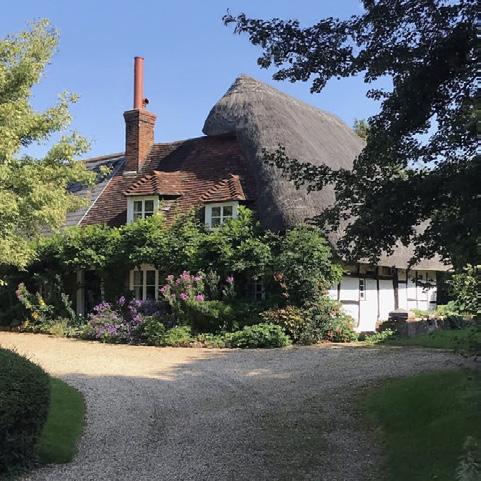


Neptune Cheltenham is housed in a Grade-II-listed Georgian building that was once The Parrot pub. When renovating the classic townhouse, we worked with conservation officers to preserve many of the original period features, from sash windows to the stone frontage and even the original metalwork canopy that the team sandblasted back to its original state.
‘The conservation officers were a font of knowledge who really helped us achieve the authenticity you need when restoring a listed building,’ says Neptune design director Fred Horlock.
For the design team, the benefit of the Grade II classification was the deep seam of information offered by the listed building register, which included an overview of the building, the original materials used and planning history. Fred and his team worked with all the available evidence to reinstate elements of the original layouts, period cornicing and ceiling roses, while also maximising light to enhance the interior spaces.
Meanwhile in Shropshire, Neptune by The Georgian House is situated in a Grade II* manor house, built for a lawyer in 1728 and set back from the street in picturesque Ludlow. Working with conservationists, the team there carefully preserved many of the original features while renovating the building, including original panelling in some of the rooms.
To find your nearest store, go to neptune.com/our-stores

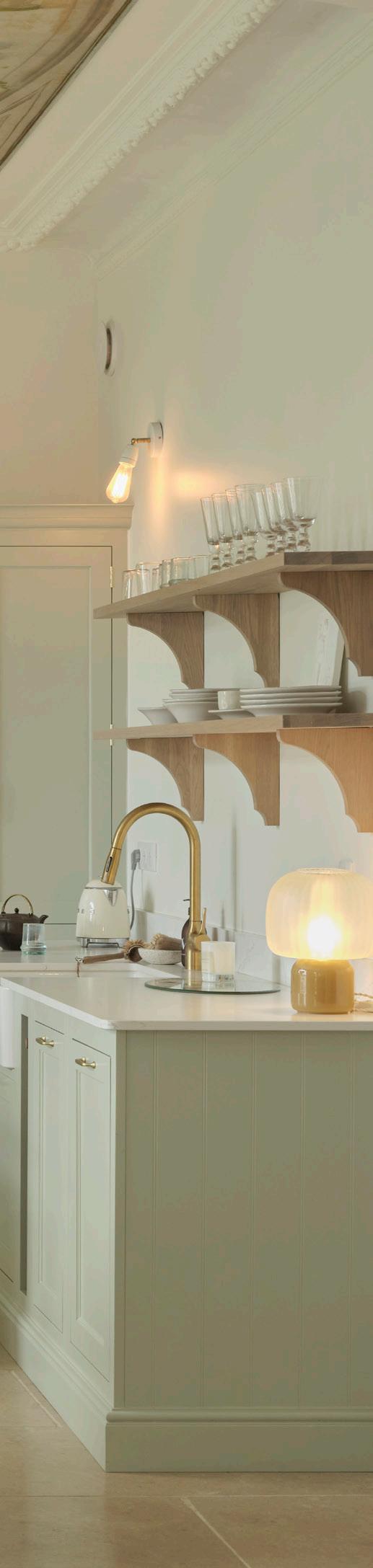
Neptune design director, Fred Horlock, explains how to plan a convivial and ergonomically efficient dining area in a kitchen, dining room or garden.

The layout
Balance and harmony are key considerations for a well-planned eat-in kitchen.
‘It is important to design both the functional kitchen area and dining area at the same time,’ says Fred, ‘otherwise they can look disjointed.’ He recommends bringing elements from the kitchen cabinetry into the dining area – such as a dresser or maybe storage cupboards for glassware – to better balance the overall effect.
The viewpoints
‘Pay attention to how you will use the space,’ says Fred. ‘Think about both sitting and standing viewpoints, especially from the dining area – you don’t want to be looking at the dirty dishes as you eat, for example. Equally, you might want to position a hob or stove where you can face guests as you cook.’
The island
‘Islands can be great for serving drinks from or chatting over a coffee, but they can’t take the place of a dining table,’ Fred advises. ‘If space restraints mean a choice between an island or a dining table, I would choose the table.’
The dining table
‘When it comes to the table itself, think flexible. Unless you have a particularly spacious dining area, an extending table will allow for large dinner parties while being more space efficient at other times.’
As for seating, Fred suggests a banquette like the Buckland fitted bench for smaller dining areas: ‘It can fit more people. Similarly, refectory benches like the Arundel can be a good way to cater for extra guests.’
The décor
‘You can mix styles between kitchen cabinetry and dining furniture as long as you keep the palette of colours and materials contained,’ says Fred. ‘Alternatively, if you have the same style of kitchen and dining furniture, you can play with colours and textures more.’ Position table lamps in both areas to link the spaces and make the room feel more homely, and limit the number of wall cabinets to allow for wall lights and art. As for colours, a neutral, fresh palette with added layers of colour works best in a space that will be used throughout the day and into the evening. And finally, Fred recommends introducing task lighting for cooking and dimmable lighting in both areas so you can vary the mood of the room as required.
The layout
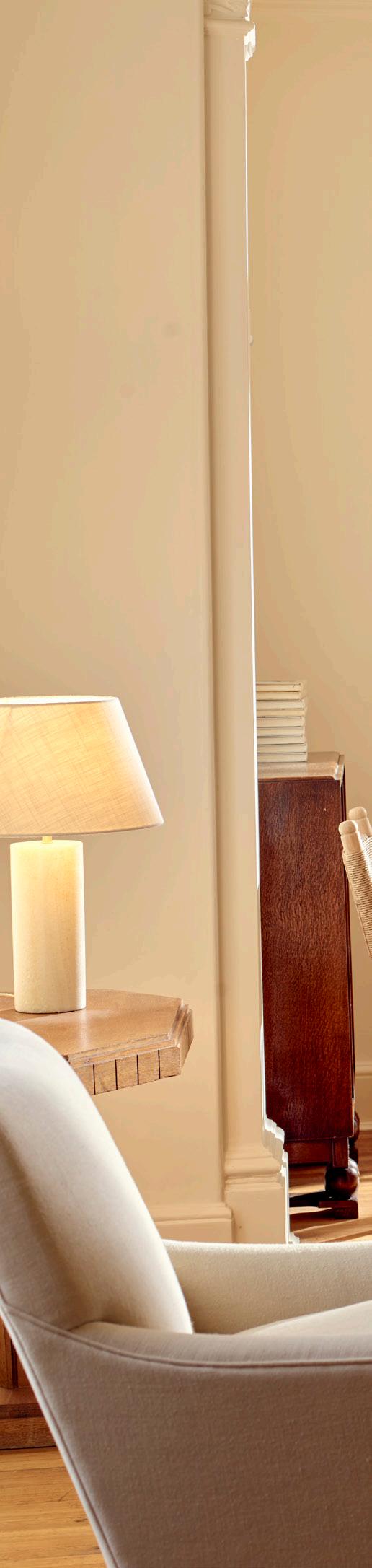
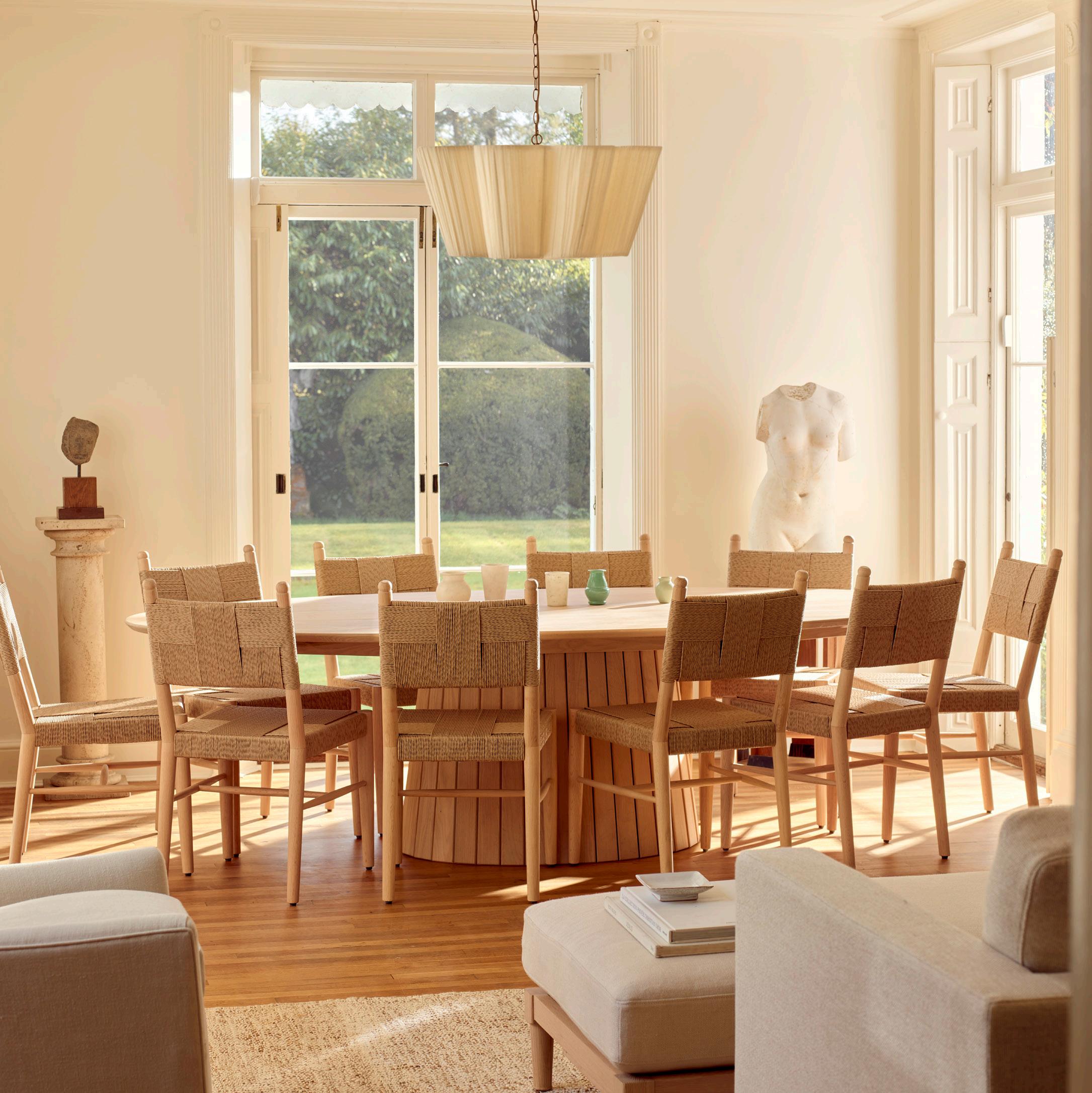
‘In a more formal dining room, symmetry will help create an elegant feel and ensure no one is sitting at the “good end” or the “bad end” of the room,’ says Fred. Applying symmetry to the plan also helps keep lighting levels balanced and avoids creating dark, unused corners, as you can ensure pendants and wall lights are evenly positioned around the room.
The table
‘Round tables are great for conversation flow, allowing for equal distancing between guests and no hierarchy. However, guests can be left feeling rather lost if there are not enough people at the table. Long or extendable tables offer more flexibility and work well in larger dining rooms, adding to a sense of grandeur.’
The seating
‘For long lunches or dinners, your own, comfortable chair is preferable over benchstyle seating. Upholstered chairs like the contemporary Shoreditch or more curvaceous Mowbray are good options.’
The storage and display
‘Bring in functional furniture pieces like a dresser, drinks cabinet or sideboard, then add in favourite accessories that spark conversation,’ Fred advises. ‘Dining rooms should have personality, so introduce artworks, travel finds, or a display cabinet filled with objets.’ If you have unused space, consider a neat, bureau-style desk – such as the Ardingly, which folds flat – and fill corners with plants on plant stands.
The lighting ‘Avoid ceiling spotlights in a dining room,’ says Fred, ‘and instead opt for wall lights that flush the walls, a statement light above the table (ensure there is at least a 70cm gap between the pendant and the table to allow for easy conversation) and non-fragrant candles that don’t interfere with the food.’
The décor
You can be more dramatic in a room reserved for dining: greens or reds are classic options, but keep shades deep, like our Chestnut or Olive, to avoid lots of visual noise. ‘You don’t want lively colours as they increase the speed at which you eat –a ploy used by fast food restaurants,’ warns Fred. Acoustics, too, are important to help relaxed conversation, so opt for curtains that absorb peripheral sound rather than blinds or shutters.
The layout
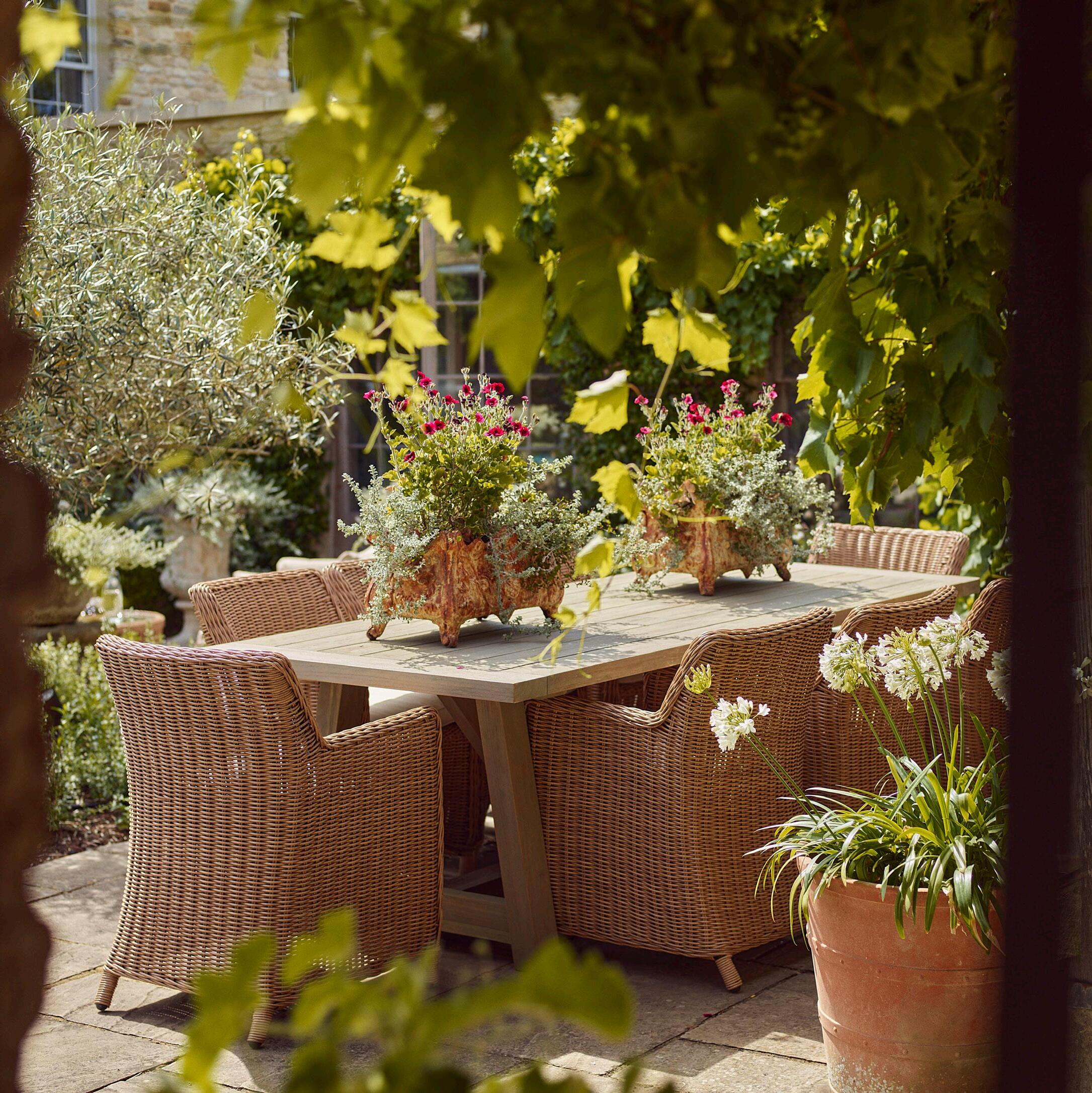
‘Planning an outdoor dining area comes with more architectural challenges as the space is less contained and needs to work with both the house and the garden,’ says Fred. ‘Positioning is key – try to locate it near the kitchen for convenience, and think about where the strong sun falls at lunchtime and again at sunset as these will be the times you’ll most likely be using the space and you don’t want guests sitting in the sun’s glare.’
The garden
‘An alfresco dining area needs to work with the surrounding landscaping to maximise the enjoyment of eating outside. Ideally plan the space at the same time as the garden: it should feel part of the garden environment, so surround the area with potted plants and greenery. You could also add plants with a natural fragrance, such as jasmine that becomes fragrant in the evenings, to set the mood.’
The dining furniture
‘You will probably use different areas of the garden depending on the time of day – a morning coffee in the sunshine, a
long shady lunch, or afternoons relaxing as the sun dips – so arrange furniture in different spots,’ says Fred. Consider a bistro table and chairs (like the Boscombe) on the terrace for that morning coffee; a dining table under the shade of a parasol. Dining chairs from the Harrington or Longmeadow collections offer comfort and style, while the teak Pembrey table or Regency-inspired Cheltenham collection, with its steel legs and granite top, are sturdy outdoor options. A sofa and coffee table area is good for pre- or post-dinner drinks or a more relaxed afternoon tea. Consider the simplicity of the Kew collection or the more expansive modular Compton sofa set.
The lighting
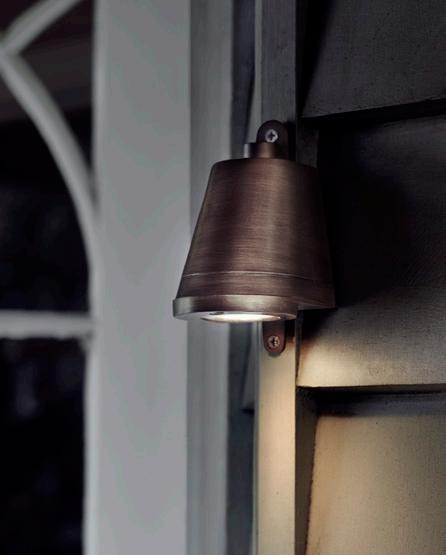
‘Permanent outdoor lighting can be tricky as it can be rather harsh,’ adds Fred, ‘so keep it low-level immediately around your dining area with downlights like Dartmouth. You could then hang atmospheric festoon lights overhead and use uplighters amongst the greenery.’ He also suggests using cordless lamps like the Hanover alongside candles in hurricane jars to illuminate the table for the perfect alfresco dining setting.
For our full collection, visit neptune.com/dining

For cook, author and Guardian food columnist Meera Sodha, the Burnt Sienna and Potter's Pink-painted Suffolk kitchen in her studio offers the ideal mix of efficient, ergonomic design with the colour inspiration she looks for when testing her flavourful recipes. Here, she shares three tasty and light dishes from her latest book, Dinner, perfect for a spring or summer lunch party.


Makes enough for two
Pre-cooked jarred chickpeas are fantastic for salads because they are ludicrously creamy. If you have only tinned, use two tins and, to get rid of any chalkiness, put the chickpeas and their water into a saucepan, bring to a boil and simmer for five minutes, then drain, to get super-soft chickpeas. Belazu makes an incomparable rose harissa.
For the dressing
3 tbsp rose harissa paste
3 tbsp extra virgin olive oil
3 tbsp lemon juice, from 1-2 lemons
1 tsp fine salt
For the salad
1 700g jar of cooked chickpeas
½ red onion, finely sliced
30 baby plum tomatoes (300g), halved
1 cucumber (350g), deseeded and cut into 1 cm half-moons
20 pitted Kalamata olives, halved
20g fresh coriander
30g fresh mint, leaves picked Pitta bread or flatbreads, to serve
1 Put all the dressing ingredients into a bowl and stir. Drain the chickpeas, tip into a large bowl, and add the onion, tomatoes, cucumber and olives. Pour the dressing over the vegetables and mix well. Finely chop the coriander and all but a small handful of mint leaves. Sprinkle over the chopped coriander and mint, and fold through the salad.
2 To serve, toast the pitta breads or heat the flatbreads and cut into pieces. Tip the salad out onto a serving platter, scatter over the remaining mint leaves and serve with the bread on the side.

Recipes from Dinner by Meera Sodha, published by Fig Tree
Makes enough for four
Don’t be put off by the list of ingredients: there’s very little cooking to be done here.
5 tbsp Greek yoghurt
5 tbsp mayonnaise
½ tbsp mild curry powder
3½ tbsp mango chutney (I like Geeta’s)
½ red cabbage (250g), core removed, the rest very finely shredded
Salt
1 First, make the curried mayo. Put the yoghurt, mayonnaise, curry powder and a tablespoon of mango chutney into a bowl, mix well and leave to one side.
2 Next, place the shredded cabbage in a bowl with half a teaspoon of salt, then scrunch with clean hands until wilted. (If you get red hands, scrub them with the inside of the juiced lime to remove the colour.)
3 For the sticky mango and lime glaze, put the lime juice, two and a half tablespoons of mango chutney, the garlic, gram flour, a teaspoon of salt and three tablespoons of water into a bowl and stir well.
2 limes, 1 juiced to get 2 tbsp, the other quartered
2 cloves of garlic, crushed
1 tbsp gram (chickpea) flour
1 tbsp rapeseed oil
500g hard paneer, cut into 2½ cm cubes
4 shop-bought naan or flatbreads
30g fresh mint, leaves picked
4 Put the oil into a frying pan over a medium to high heat. When hot, fry the paneer, turning every minute or so to brown each side, for around five minutes. Turn the heat down, add the mango and lime glaze and cook for three to four minutes, stirring, until the glaze goes sticky and coats the paneer cubes.
5 Heat the naan or flatbreads (I zap them in the microwave), then slather over the curry mayonnaise, scatter over the cabbage, cover with the paneer and sprinkle with some mint leaves. Squeeze over some more lime, then roll up and eat.

Makes enough for 10-12
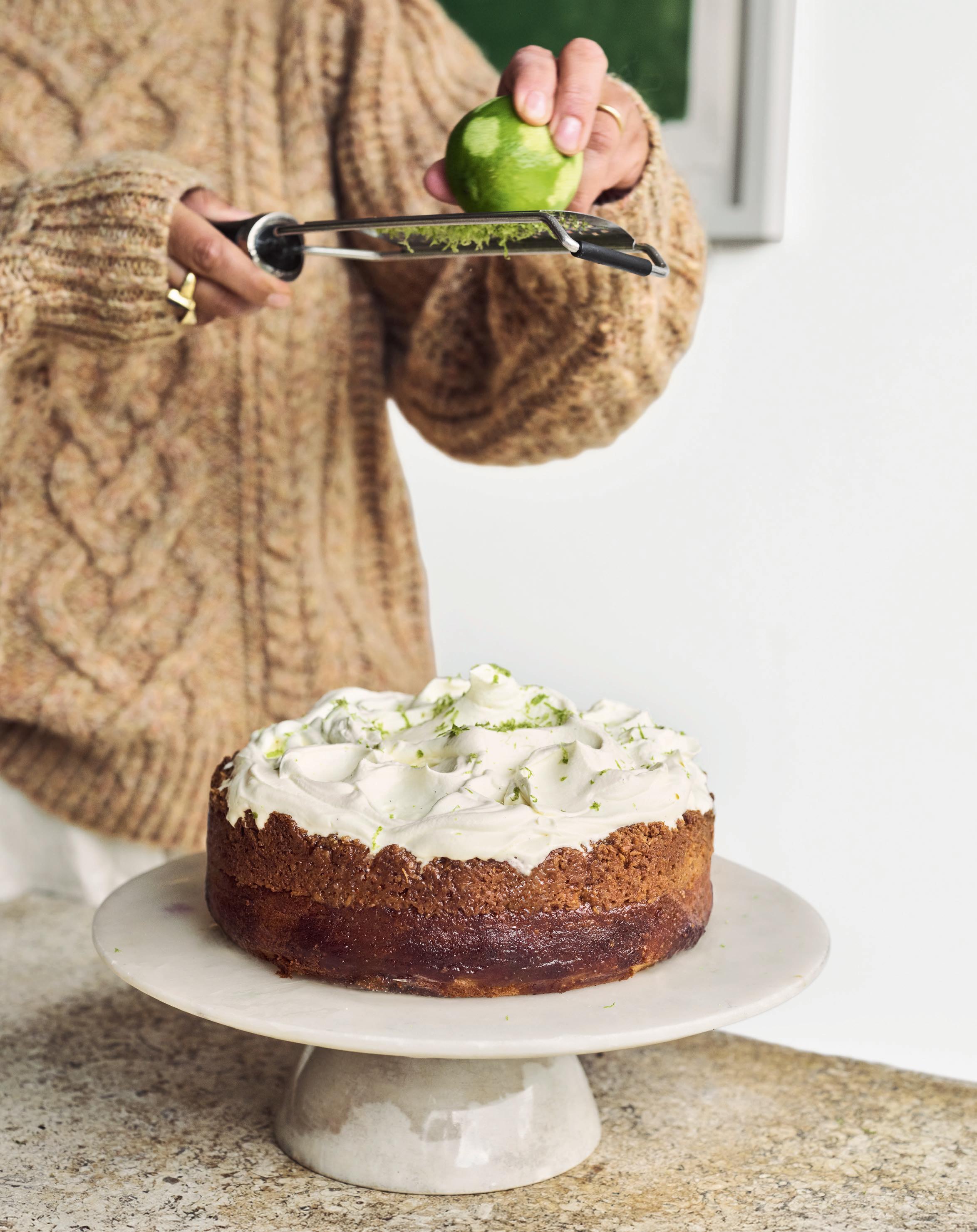
Coconut and cardamom are a very Indian flavour combination, but this cake is Danish. The best bit is the crunchy and chewy coconut caramel topping, which cracks away to reveal a yielding soft sponge.
For the cake
75g unsalted butter, plus extra to grease the tin
150ml whole milk
1 tsp vanilla bean paste
1 lime, zested
3 large eggs
225g caster sugar
225g plain flour
2 tsp baking powder
¾ tsp ground cardamom
½ tsp salt
1 Preheat the oven to 180°C fan/200°C/gas 6. Cut a circle of greaseproof paper big enough to line the base of a 22 cm cake tin, and another long strip to go all around the inside, making sure that it will come up three centimetres above the top of the tin. Grease the tin, line with the greaseproof paper and set aside.
2 Melt the butter for the cake in a small saucepan, leave it to cool for three minutes, then add the milk, vanilla bean paste and the lime zest. Mix and leave to one side. Put the eggs and caster sugar into a mixing bowl and mix with an electric whisk until pale, creamy and thick. The mixture should be at ribbon stage (thick enough to hold its shape when drizzled back on itself). Sift the flour, baking powder and cardamom into a large bowl. Mix well, then fold in the eggs and sugar, then the milk and butter mixture, until well combined. Pour the batter into the tin and bake for 30 minutes.
For the coconut topping
115g unsalted butter
75ml whole milk
250g soft light brown sugar
1 tsp ground cardamom
150g desiccated coconut
To serve
300ml double cream
1 tsp vanilla bean paste
1 lime
3 As soon as the cake hits the oven, make the coconut topping. Put all the topping ingredients except the desiccated coconut into a small pan, bring it to a boil, and boil for one minute, then take off the heat. Five minutes before the cake comes out, reheat the pan until the topping is thin and runny, then take off the heat and add the desiccated coconut.
4 When the cake’s time is up, remove it (but leave the oven on) – it will be wobbly and starting to turn golden on top. Gently and evenly layer the coconut mixture over the cake, making sure not to press down, then return to the oven and bake for another 25 minutes. Take out of the oven and leave the cake to cool completely in the tin before removing and decorating.
5 Just before serving, put the cream and vanilla bean paste into a bowl. Using the electric whisk, beat the cream to soft peaks. Top the cake with the cream, then grate over the lime zest.
Portugal is renowned for its expert ceramicists, whose skills are passed on from generation to generation. So, it is where we headed to create our tableware collections.
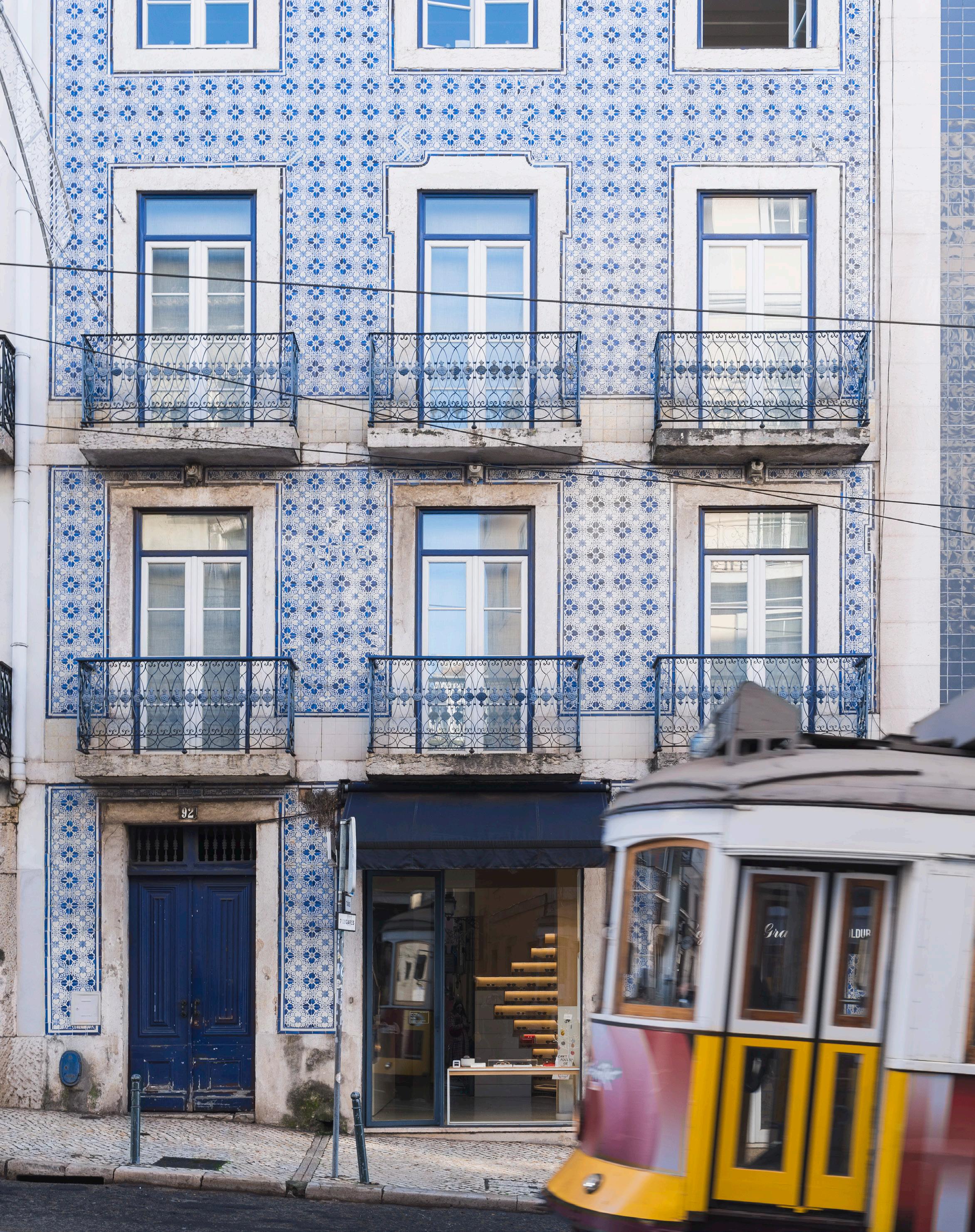
Wander around Lisbon and it is easy to see the passion the city has for ceramics. From ornately tiled house facades to church interiors, ceramics are a national specialism and displayed with a sense of pride. It is why we had no hesitation in going to Portugal to work with expert local makers when it came to producing our tableware and ceramics collections.
Neptune head of product, Clare Treasure, explains, ‘When we were looking for manufacturers to work with, we were clear on what we needed: a workshop skilled in hand-painting techniques and one that was expert in organic shaping and reactive glazes.’ Around Lisbon, Clare and the team found both.
‘The hand-painting workshop is a real atelier,’ she says. ‘There are six craftspeople working at turn tables, fine brushes in hand, and a tiny kiln at one end of the room.’ At the factory where we create our reactive glaze collections, the scale might be bigger but the attention to detail is the same. ‘Every piece of clay is hand shaped and thrown before it is pressed by the mould, potters sit turning the handles of individual mugs, and the products are hung from the roof for final drying after being baked in the kiln,’ adds Clare.
Our new Lamorna collection, hand painted in the bespoke workshop, was not only made in Portugal but inspired by Portugal. ‘The idea evolved from the blue and white tiles we spotted on house exteriors around Lisbon,’ says Clare. ‘Back in the office, we developed the motif using our new Nettle green shade, rather than blue, and softened the scroll designs into a leafy, floral pattern to feel a little more in keeping with an English country garden.’


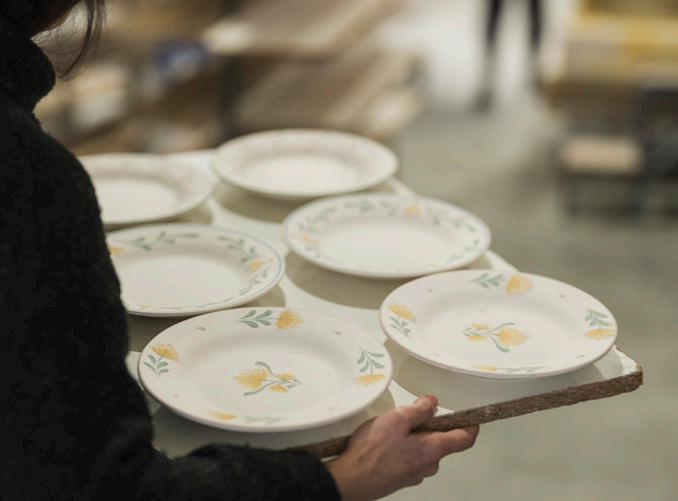



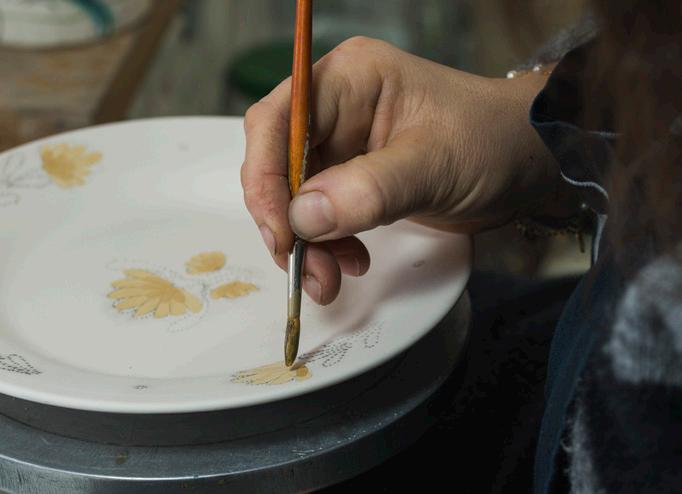
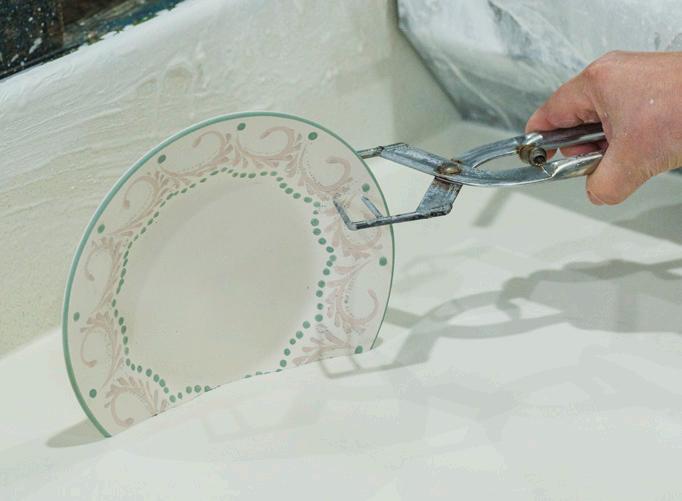
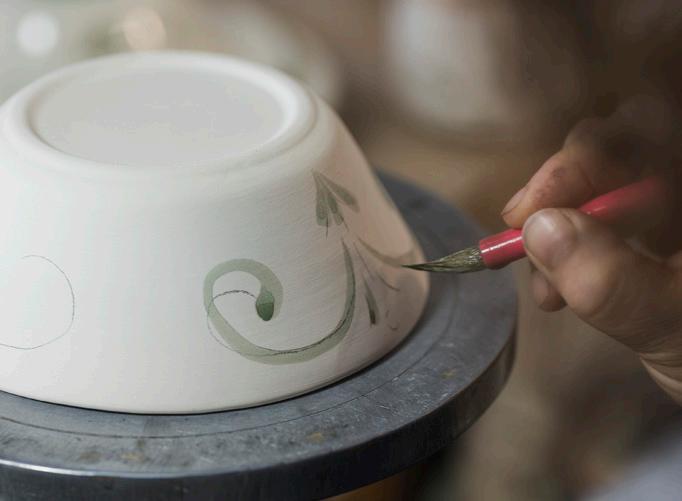

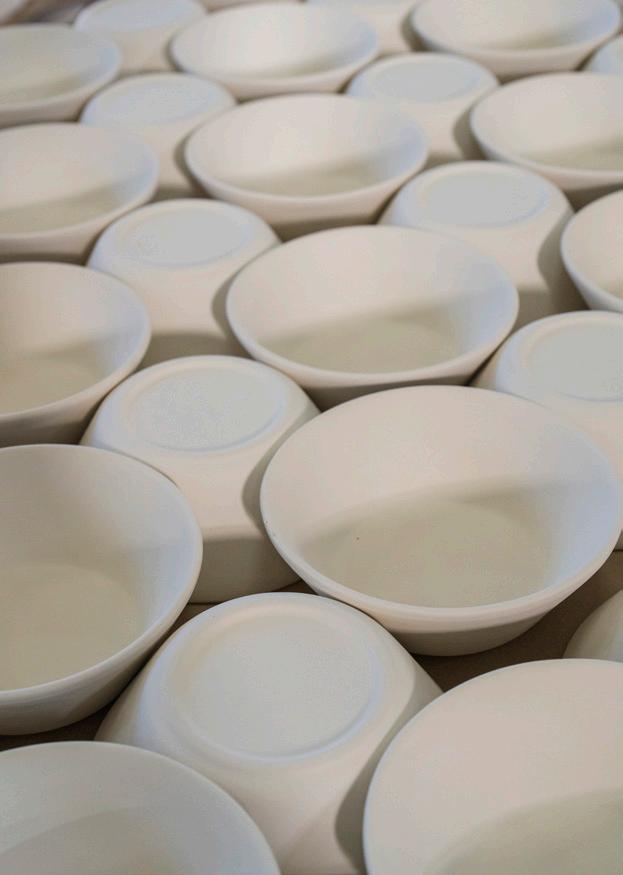


The Callington dessert plate collection – decorated in Nettle, Blakeney Blue and Saffron shades – was also crafted in this same studio, the patterns painted with brushes the artisans make themselves to ensure they achieve the perfect brush stroke.
Our new, organically shaped, striped pieces in the collection were made at the factory specialising in reactive glazes. ‘A reactive glaze gives each piece its individuality,’ explains Clare. ‘It feels more authentic, and we like that.’
The team also consider how the tableware will work within the wider Neptune collections. ‘Like everything we do, the pieces have to celebrate quality craftsmanship and materials,’ says Clare. ‘Ceramics live on our tables for a long time and get added to over the years, so the designs should be timeless. As we only use natural woods in our furniture, we feel that the slightly more organic-shaped ceramics pair best with the tactile irregularity of our wood finishes. We see the table as the frame and the plates as the art, and we want them to sing together!’
Discover our full tableware collection, visit neptune.com/tableware

T Y L E ON
Once reserved for prized porcelain in grand houses, the plate wall has returned with an expressive story to tell.
A P L A TE
The instinct to display ceramics isn’t new. At the neo-Palladian villa Marble Hill in Richmond, porcelain was once given its own entire room where plates were arranged and prized as much as paintings. This was typical of the grand houses of 17th- and 18th-century Europe where ceramics were elevated beyond their function, hanging as symbols of cultural capital and status, carefully arranged to impress.
Today, the plate wall has returned as part of a broader shift towards handcrafted, artisanal design. It’s less about status and more about storytelling. A painted dessert plate
picked up on holiday. A ceramic bowl from a local maker. A delft plate found at a flea market. Hung together as a personal archive and a showcase of choice. They no longer require a designated display room either: any bare wall can become the perfect backdrop, from kitchens and dining rooms to hallways, sitting rooms and even bathrooms.
The resurgence also creates space for both old and new ceramics, like Callington, our latest collection of decorative dessert plates. Crafted in a specialist factory in Portugal, each plate is hand-painted with botanical motifs. ‘Portugal is renowned for its ceramic craftmanship,’ explains
assistant buyer Jessica Stevens. ‘We wanted to work with makers who could ensure a painterly, artisanal feel,’ she adds – something the Portuguese ceramic industry has been perfecting for generations.

Neptune art director and stylist, Meaghan Hunter, shares her her top tips for creating a plate wall:
Choose pieces you’re drawn to but look for a common thread, be it colour, motif, era or maker. This creates cohesion without feeling contrived, allowing the arrangement to feel collected over time.
Mismatch large- and small-scale patterns and layer different styles and patinas. Try a geometric border next to a floral pattern, or an engraving of a castle alongside something more painterly. Shallow bowls or the occasional framed piece can add visual depth, too.
Plate walls suit overlooked or awkward areas particularly well – long hallways, above doorways, contained within paneling and plate racks, or on chimney breasts.
For hanging, adhesive discs are strong and discreet or plate hangers offer a classic look. Remember, like any good collection, a plate wall can evolve as you collect new pieces, so it doesn’t need to be perfect first-time round.
Test your layout before committing. In larger arrangements, start with a central hero piece and work outwards; in smaller spaces, a simple linear run feels intentional.
This is
UPHOLSTERY
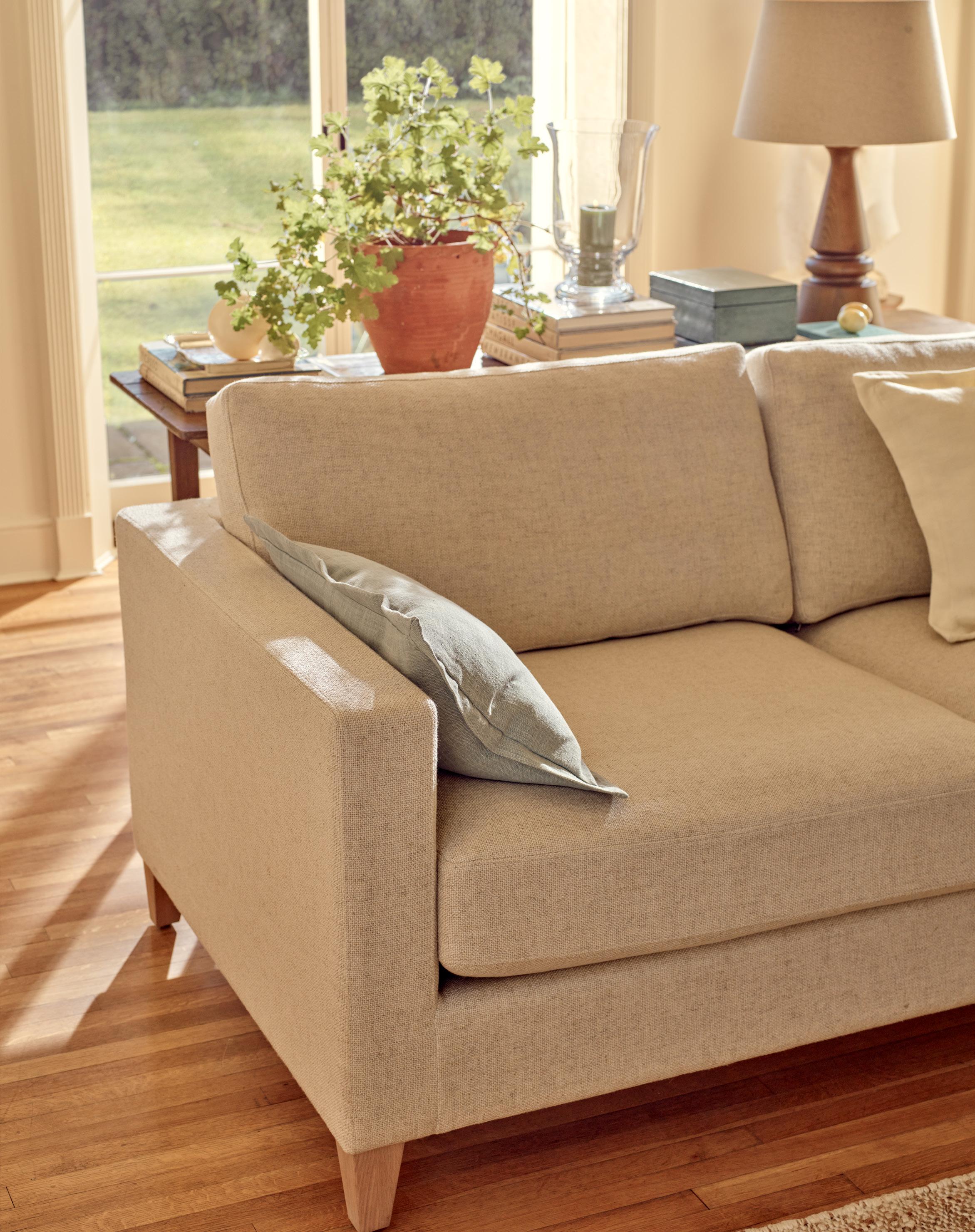
Stemming from the French word for ‘curled’ or ‘loop’, bouclé fabric was all the rage post World War II, with furniture designer Eero Saarinen using the material on his famous ‘Womb’ chair for Knoll and Coco Chanel adopting it for her iconic boxy jackets. This season, we have reimagined our contemporary, clean-lined Shoreditch sofa in a cotton-mix cream bouclé. With subtle loops that add softness and texture and give it a tactile quality, the fabric might look indulgently luxurious but it also has a high ‘rub count’, which means it’s a durable choice for upholstery and cushions.
To request a fabric swatch, visit neptune.com/fabric-samples

Deep in the Loire Valley region of France, ex-pats Sharin and Steven were looking for a way to honour the local history and architecture, while adding a personal touch to their 16th-century manor house kitchen.

Every kitchen project begins with a spark. Maybe a view from the window, a colour from a favourite painting, or a treasured piece of furniture. For Sharin and Steven, who grew up in the US and England respectively, the kitchen renovation in their 400-year-old manor house, nestled in the picturesque Loire Valley, began with an understanding and appreciation of the property’s history. ‘The starting point for our new kitchen was the 16th-century fireplace – which was the manor’s original cooking oven – that anchored one end of the room,’ explains Sharin.
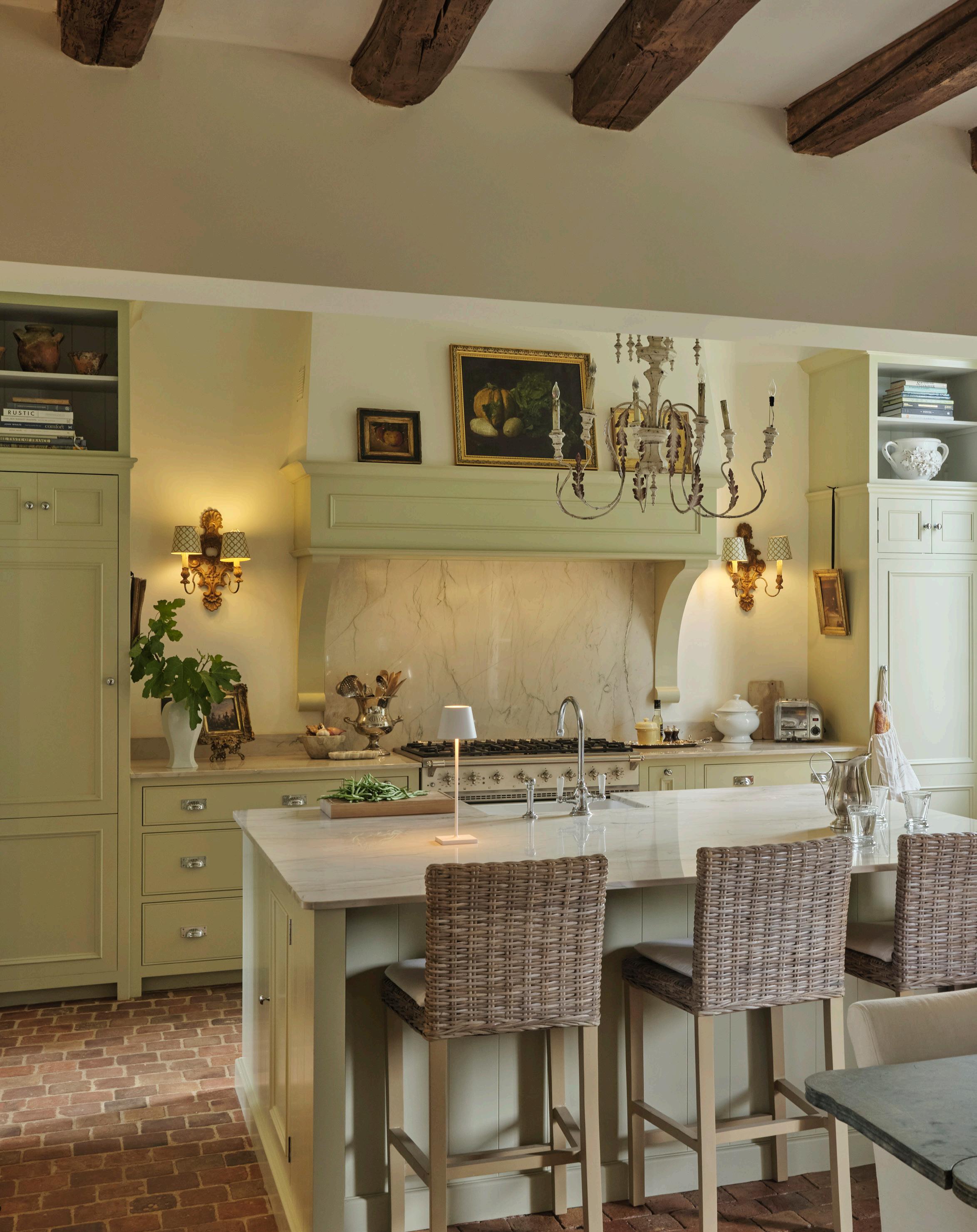
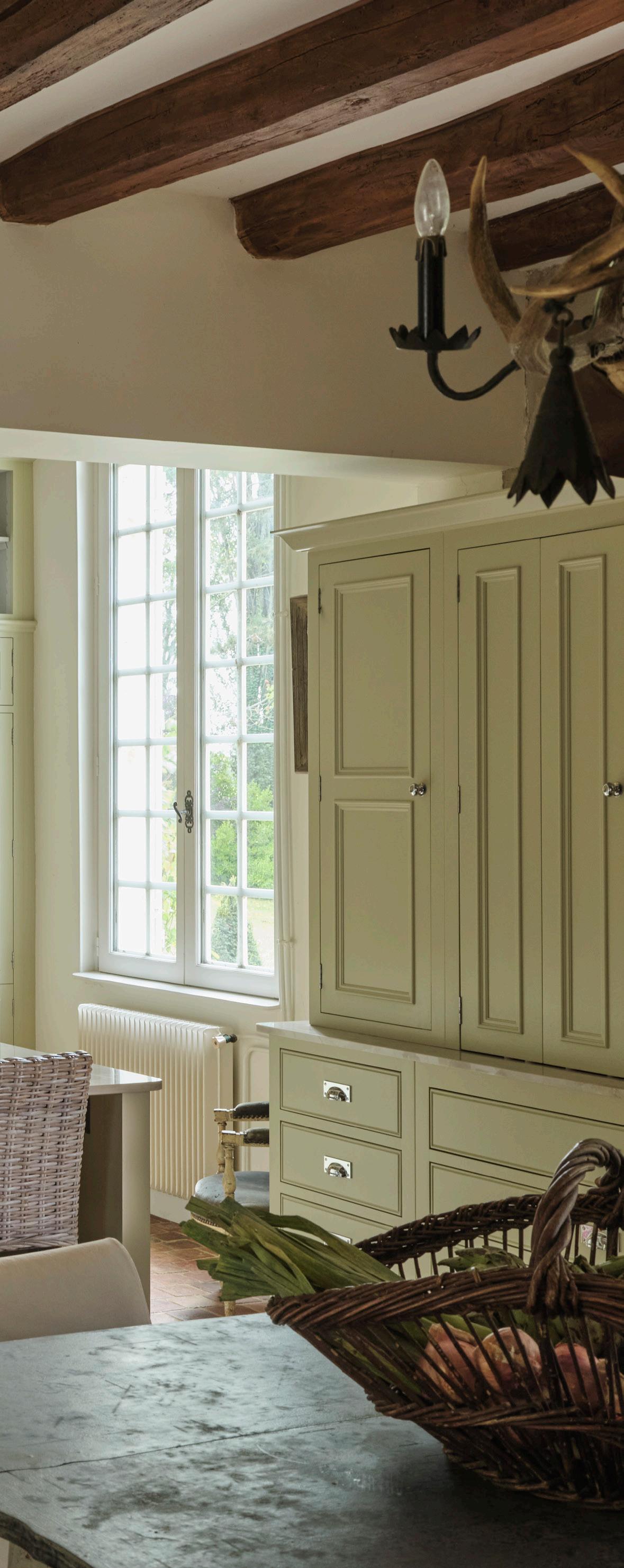
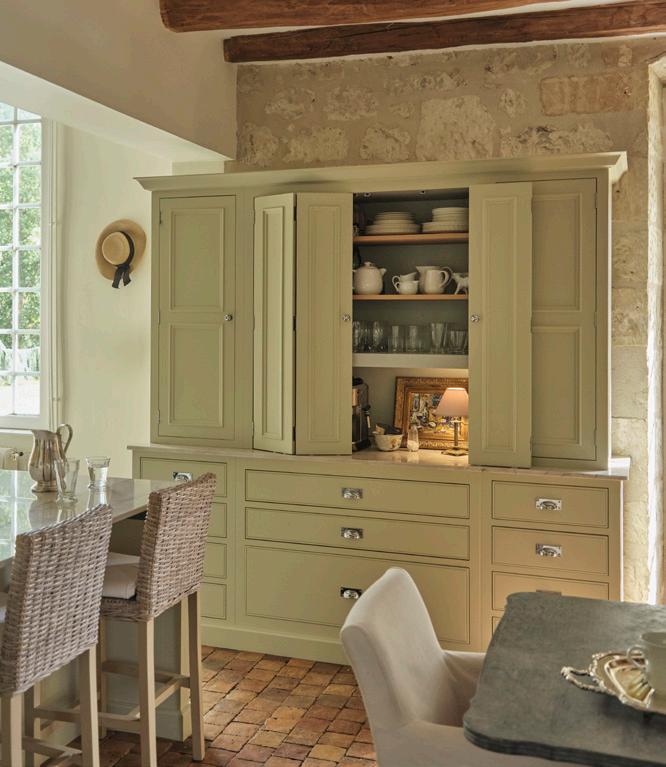
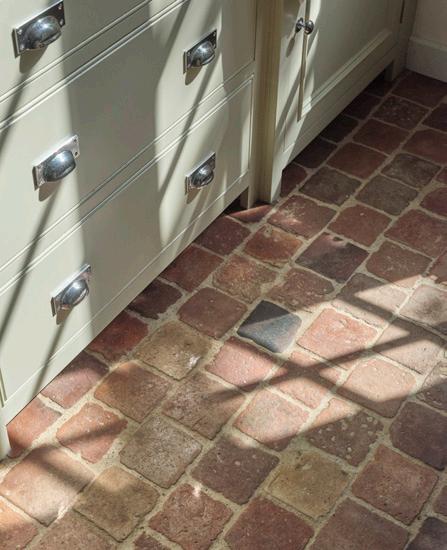
The couple wanted a large kitchen, which meant the removal of a wall that separated the original part of the home, used as a dining space, and the newer, but small, kitchen area. ‘It was really important to us that we restored the natural beauty of the property, starting with revealing the stone walls, which had been hidden behind upholstered fabric for nearly 40 years, and restoring the original beams. We also had to source tiles to match the original terracotta ones that were still in the dining area, which had started its life as the manor’s original kitchen,’ says Sharin.
When it came to cabinetry, the couple were after a classic look that would suit the period building but still feel fresh and practical. Working closely with designer Pierre Pensec of Neptune Paris, Sharin and Steven selected the Chichester kitchen cabinetry, painted in Dove Grey. ‘I loved the Chichester collection for its classic design that will stand the test of time, its freestanding aesthetic, and also how it blends seamlessly with the architectural features of our home,’ says Sharin.
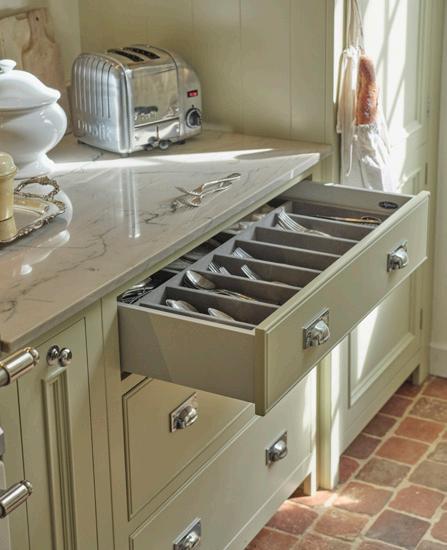
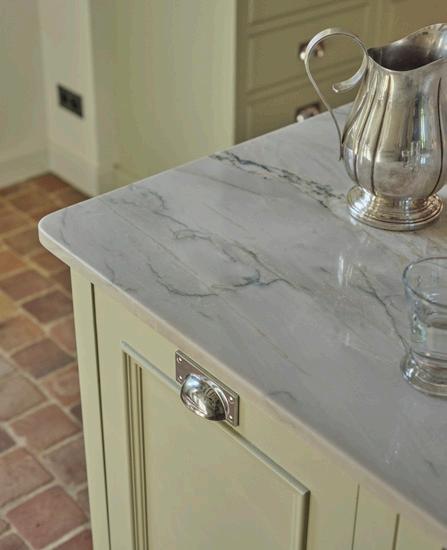
In addition to the run of cabinetry, Sharin and Steven chose a bespoke ‘Texas-sized’ island that holds the sink, dishwasher, rubbish bins, microwave oven, extra storage, seating space and a towel rack. ‘The large island separates, but also joins, the kitchen and dining spaces, and reminds me of the home I grew up in the US,’ explains Sharin. ‘And we use it all the time for cooking, entertaining friends and also working.’ The Lacanche range, finished in an English cream enamel, is framed by the architecture of the space and was one of the couple’s non-negotiables.
One challenge to overcome when working with a historic property was how to fit the kitchen cabinetry snug to the original, somewhat irregular, terracotta tiled floor. ‘Stuart, the carpenter who completed the joinery work for us, meticulously cut out the bottoms of each cabinet to perfectly fit against each floor tile,’ explains Sharin.
A kitchen that is steeped in tradition and history also requires an injection of personality. The couple leaned heavily into French heritage design and the influences of old châteaux in the local area for their decorating ideas, as Sharin explains: ‘I was inspired by the classic French Renaissance architecture that we’re so lucky to be surrounded by here in the Loire Valley, such as sculptural details, symmetrical facades, and ornate decorative objets.’
Sharin describes her personal interior design style as ‘maximalist’, so was keen to layer quality pieces together to create a coherent and inspiring scheme. ‘I love decorating with found objets I discover in flea markets and on my travels,’ says Sharin.
‘Our Neptune kitchen is a significant part of our “happily ever after” in France,’ she adds.
Use our kitchen cost calculator to get an estimate of your Neptune kitchen’s cost, from cabinetry to installation. Then book a free consultation with our design experts. neptune.com/kitchen-estimator

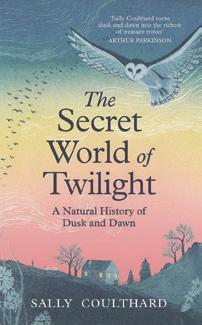
There are two daily moments in the rhythm of the countryside that are particularly magical, if you pause to observe them, says author and columnist Sally Coulthard.
Every day, in the period just before sunrise and straight after sunset, magic happens.
Dawn is morning’s twilight, dusk the evening’s. Twice a day, the atmosphere is partially illuminated by a sun hiding below the horizon, creating a sky that glows with a soft, kaleidoscopic light.
Living on a smallholding at the bottom of a North Yorkshire valley, I experience dawn and dusk in many iterations. For much of the year, I’m up before sunrise, traipsing the dog around the barns or feeding the crowing and bleating flocks scattered around the farm. I’m even more likely to see dusk, an event that takes on a completely different character depending on the season.

Twilight also turns out to have a secret life of its own. While night-active creatures are ‘nocturnal’ and day dwellers ‘diurnal’, twilight animals are ‘crepuscular’. In the blushing light, when the sun is rising or hidden just below the horizon, many forms of life begin their busiest times.
Hedgehogs, barn owls and bats are perhaps our best-known crepuscular creatures, but many hedgerow, pond and woodland animals live life on the day’s margins. From frogs to foxes, otters to blackbirds, the half-light provides rich pickings and golden opportunities. Even our most pampered pets and farm animals, who seemingly fall in line with human routines, retain their crepuscular streak.
Plants and insects are also drawn to dawn and dusk. To attract insects such as moths, many flowers have evolved twilight charms. Some, like evening primrose, only bloom as the sun sets, while others, including honeysuckle, nicotiana and jasmine, release heady scents as daylight fades. In the vegetable garden, dusk also brings movement. Buttercups and daisies close their petals, lupins droop, and the leaves of runner beans and courgettes slowly fold themselves down for the night, a behaviour that has a name: nyctinasty.
In spring and early summer, the farm fills with birdsong at morning’s twilight. Robins in the orchard are usually the first to start, followed by song thrushes, blackbirds, chiffchaffs, goldfinches, wood pigeons and the mighty-voiced wren.

It’s a spirit-lifting but brief chorus; around half an hour after sunrise, most birds fall silent as the day warms. At dusk, some sing again, notably robins and blackbirds, joined by quieter voices often drowned out at dawn, such as blue tits, tree sparrows and dunnocks. It’s a subdued performance, and one that signals the day is drawing to a close.
In this evening half-light, I’ll beat the bounds of the farm again, watching the hens head for their coops and the starlings flock to the silhouetted trees. By the following morning, the same places will look different and there will be new signs to notice – small details that only reveal themselves in the quiet rhythms of twilight. Sally Coulthard is the author of The Secret World of Twilight, published by Bloomsbury.


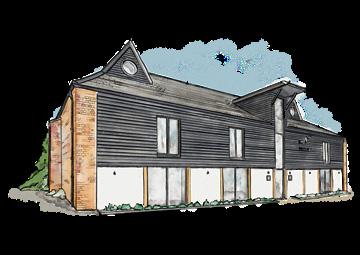


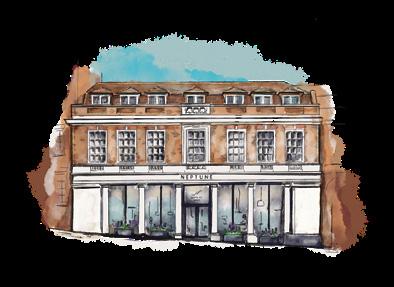
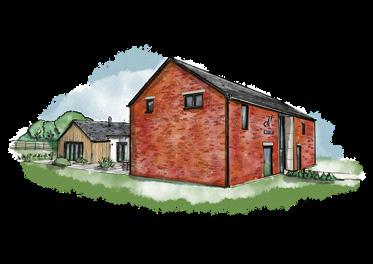
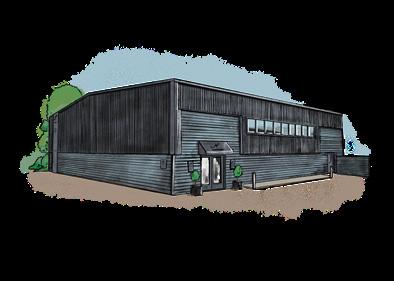

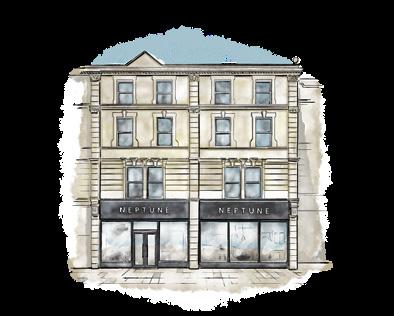


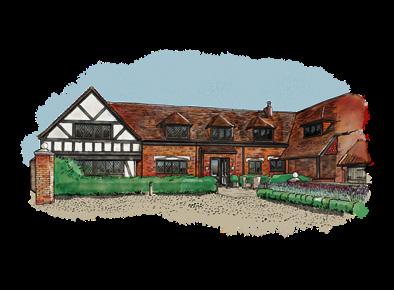

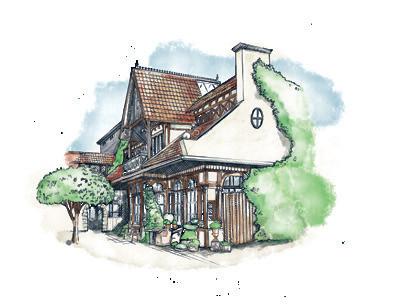

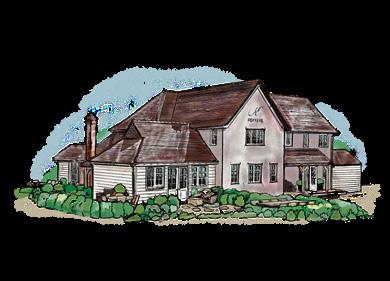

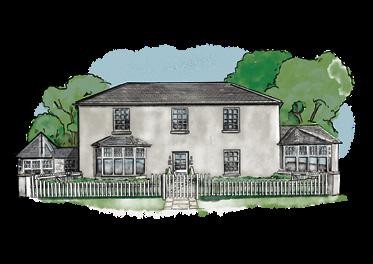
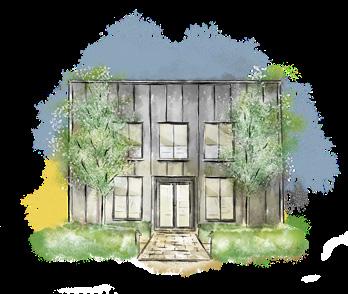
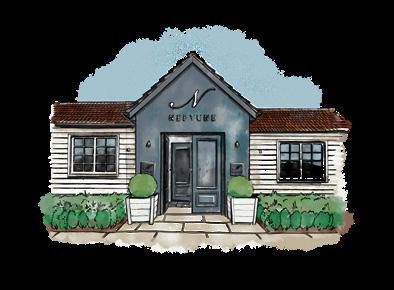
With over 30 stores across the UK and Europe, our friendly teams look forward to welcoming you.
To find your nearest store, go to neptune.com/our-stores






UK
Bath BA1 5BD
Belfast BT7 3GB
Bristol BS8 2QY
Bury St Edmunds IP33 3PH
Cambridge CB22 7PX
Canterbury CT1 3TY
Cheltenham GL50 4DW
Chesham HP5 1NG
Chester CH2 4JR
Chichester PO20 2EW
Chiswick W4 4HH
Colchester CO3 8LT
Edgbaston B15 3AA
Farnham GU9 0BB
Fulham SW6 2TD
Guildford GU1 3AJ
Hailsham BN27 1DQ
Hove BN3 4QD
Knutsford WA16 8TA
Market Harborough LE16 7AF
Reading RG10 9SA
Redbrick WF17 6JF
Southport PR4 6JA
Swindon SN5 8YG
Tonbridge TN9 1RF
Weybridge KT13 8DX
Wimbledon SW19 1RX
Winchester SO21 1HL
York YO32 9TW
Wiltshire Outlet SN5 8YG
We have Neptune stores across the UK, Ireland and Europe. To see all of our homes, visit neptune.com/our-stores
Store in store:
Neptune by Treehouse Midmar, Aberdeen, AB51 7NB
Neptune by Creative Classics, Ayr, KA7 2HD
Neptune by Sims Hilditch, Bath, SN14 8JR
Neptune by Woods of London, Blackheath, SE3 0TA
Neptune by Hunters, Derby, DE1 1SY
Neptune by Richard F Mackay, Edinburgh, EH11 2SG
Neptune by Malone and Smyth, Fermanagh
Neptune by Bridgewater Interiors, Gateshead, NE8 2AJ
Neptune by Aberford Interiors, Leeds, LS25 3DP
Neptune by The Georgian House, Ludlow, SY8 1AT
Neptune by Appleyard, Norfolk, NR25 6AR
Neptune by Wilton Kitchens, Salisbury, SP2 0HX
Neptune by Holloways, Worcestershire, WR6 5DE
Neptune by Bradley Gardens, Wylam, NE41 8JH
Neptune by 1933, Co. Meath
Neptune by Browsers, Limerick
Neptune by Global Village, Dublin
Neptune by Global Village, Wicklow
Neptune by The Orchard, Co. Kildare
Neptune by Trevor Morrow, Co. Mayo
Neptune by Castle Cabinets, Kilkenny
Neptune Paris
Neptune Paris Ouest
Store in store:
Neptune by Beaumont, Trélissac
Neptune by Fabrica, Eymet
Neptune by Just Kitchens, Miélan
Neptune Berlin
Neptune Fellbach
Neptune Tegernsee
Store in store:
Neptune by Helma Interior, Heidelberg
Neptune by Faszination, Oschatz
AUSTRIA
Neptune by Steinwender, Wien
BELGIUM
Neptune by O&V Home Interiors, Seneffe
ITALY
Neptune by Adi Arredamenti, Brescia
LIECHTENSTEIN
Neptune by Allure, Vaduz
SWITZERLAND
Neptune by Styles Interiors, Mont-sur-Rolle
Neptune by Friolet Interiors, Zurich
THE NETHERLANDS
Neptune by The Classic House, Weteringbrug (near Schiphol)

We do everything we can to make sure Stories is as environmentally sound as possible. The paper we use comes from responsible sources, and is also carbon balanced by the Woodland Trust.
Please note that, while the colours shown in this volume are as accurate as possible, they will not always precisely match our paint shades. All information and pricing is correct at time of printing.

What makes a design last generations? Is it exceptional craftsmanship? Is it honest materials? Is it timeless design? For us, it’s all of these. That’s what makes a Neptune home.
