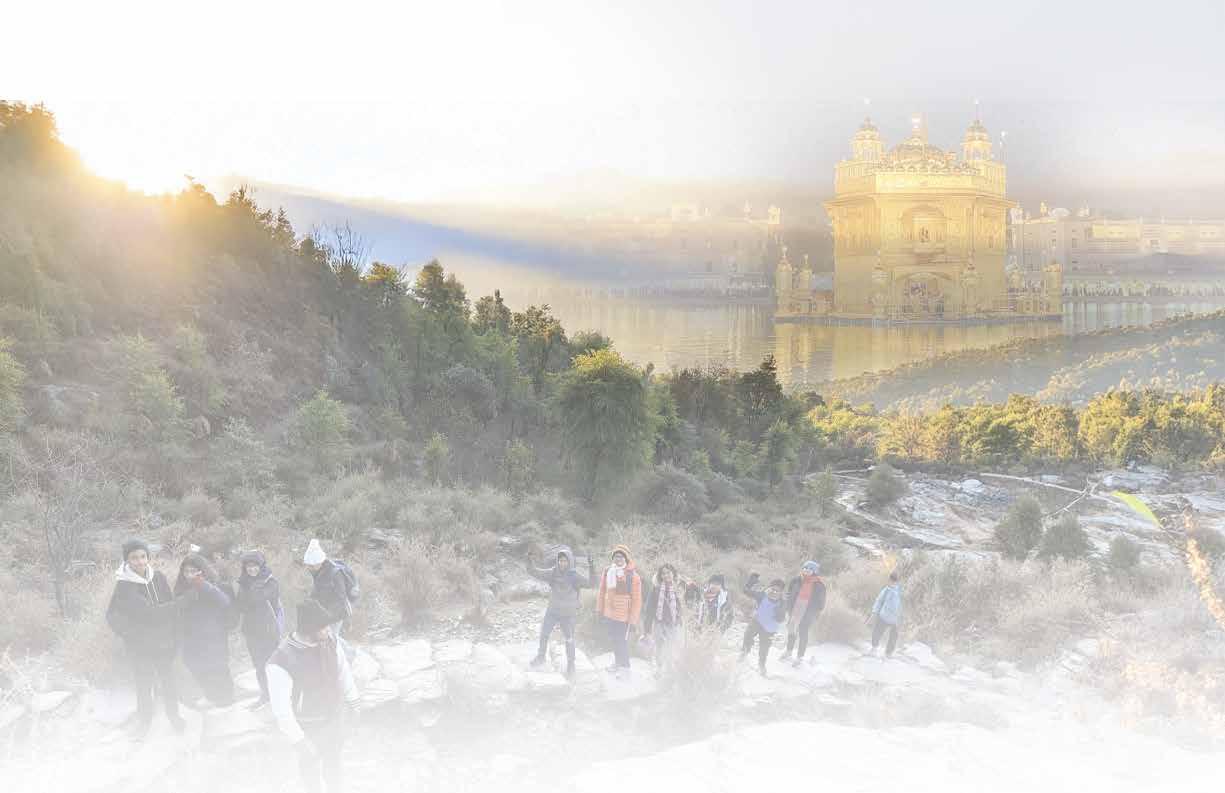
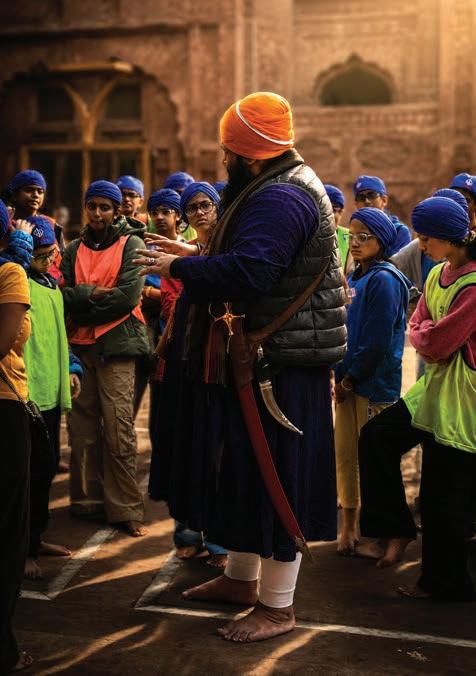
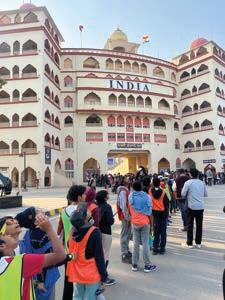
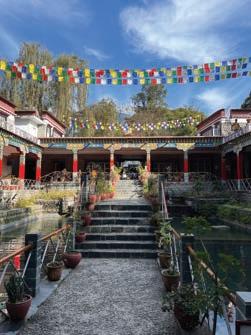
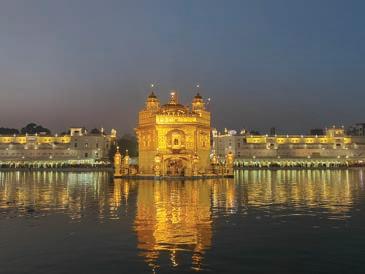
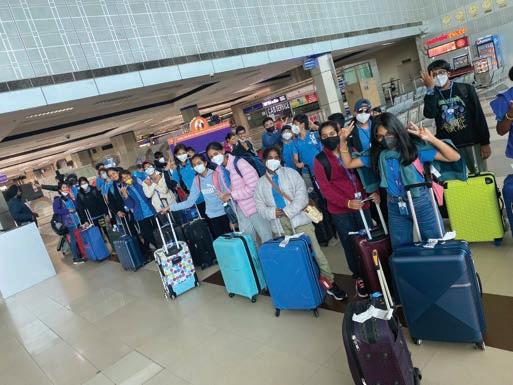
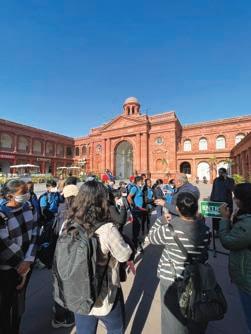
Amritsar and Dharamshala are not just places on a map — they are places that live inside you long after you leave.
For our Grade 7 students, this journey is an invitation to step into stories that still breathe: stories of lo ve and loss, of borders and belonging, shaped by history, politics, and culture in ways that continue to influence lives today. It is also a journey into understanding freedom — not as a single idea, but as something layered, complex, and deeply human. It asks not just what happened here — but what does this mean for who I am, and who I want to be?
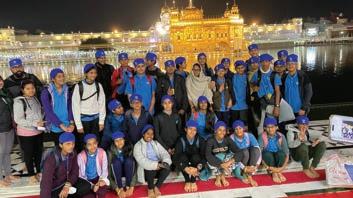
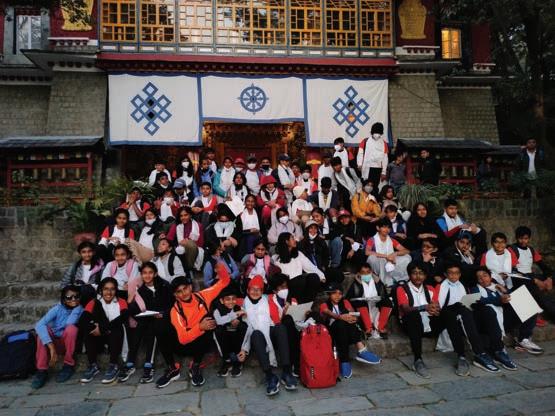
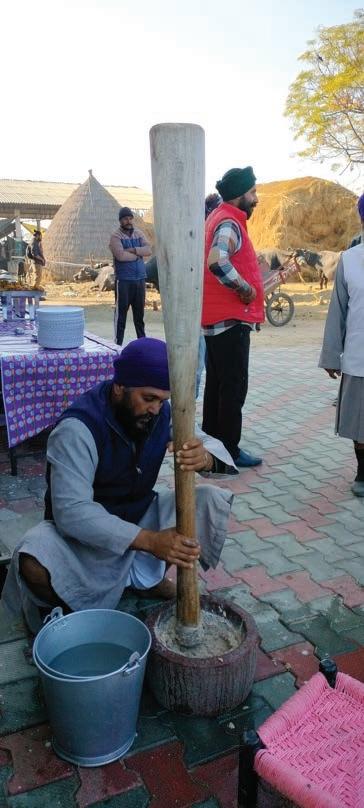
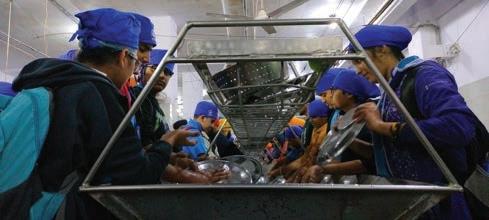
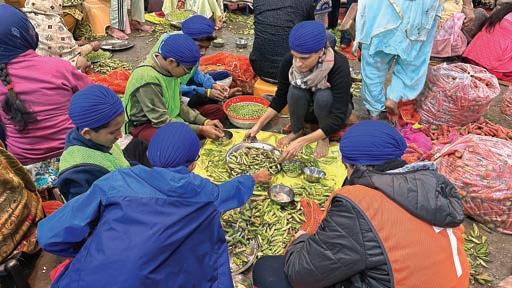
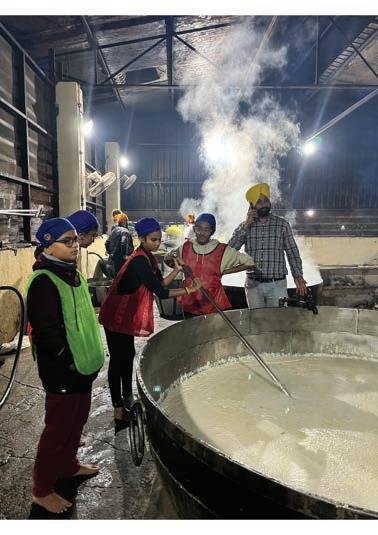
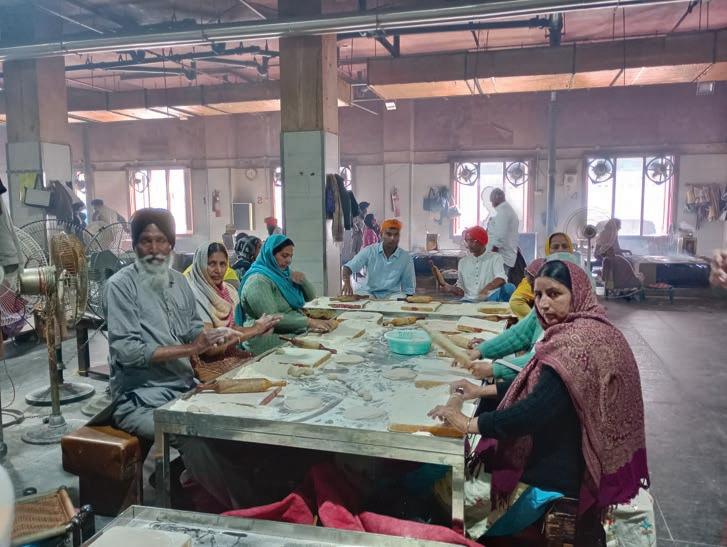
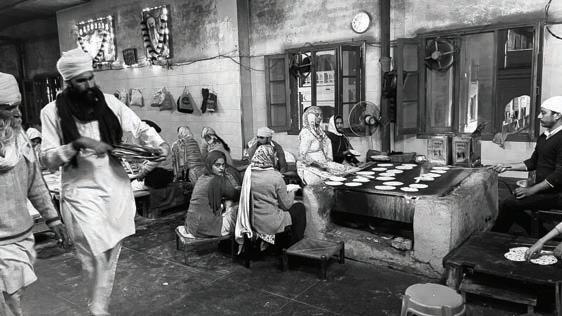
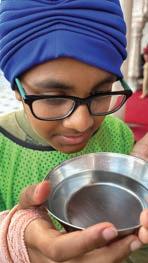
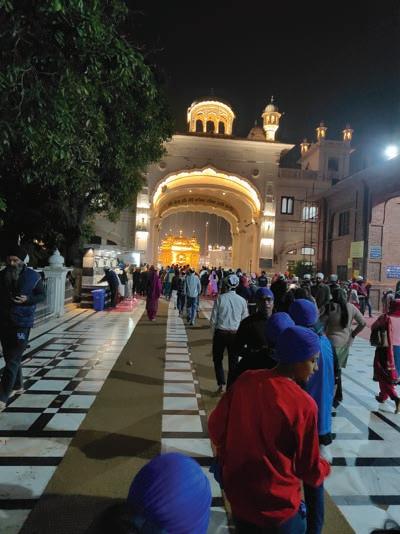
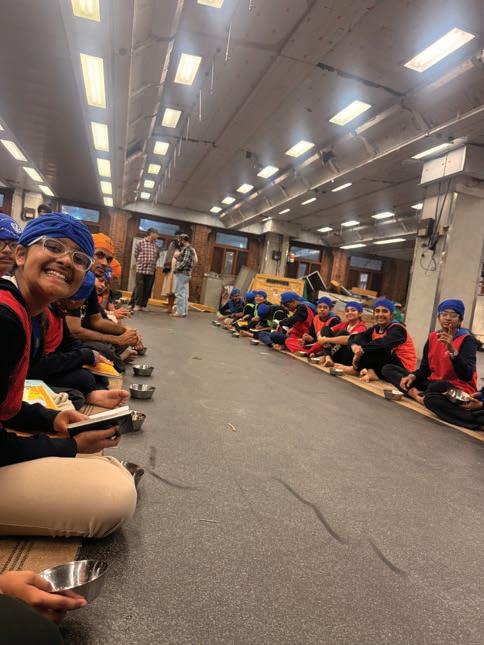
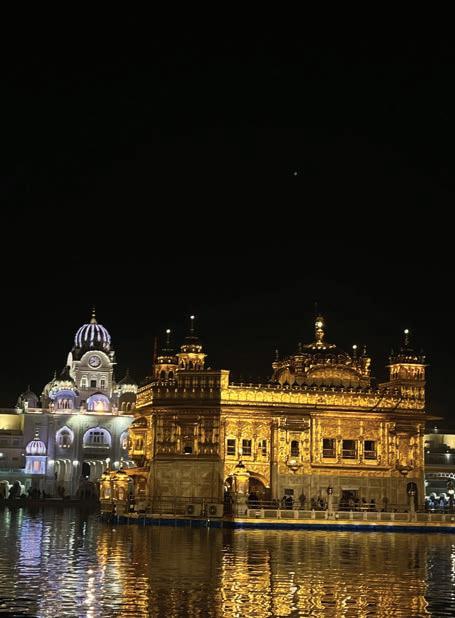
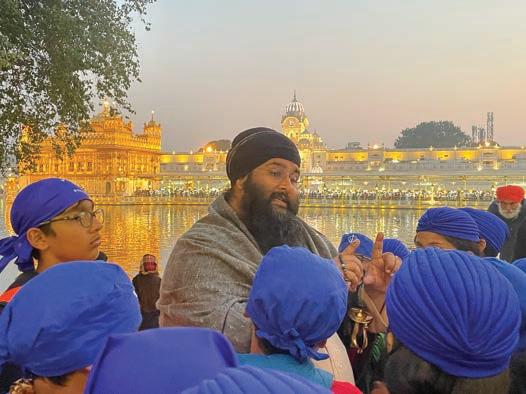
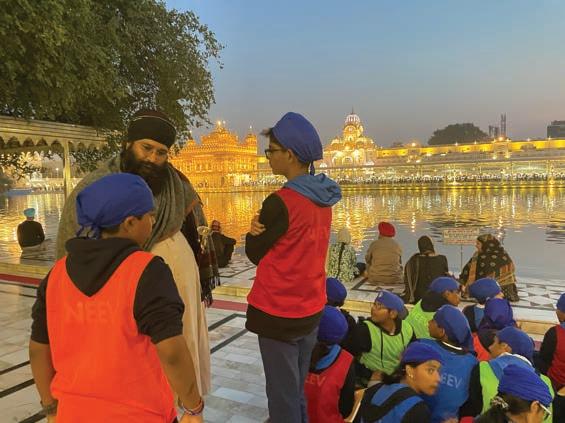
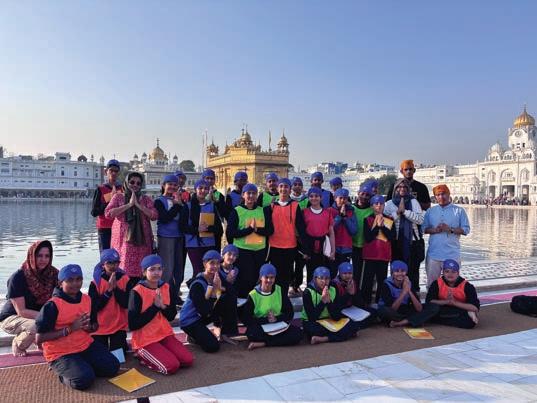
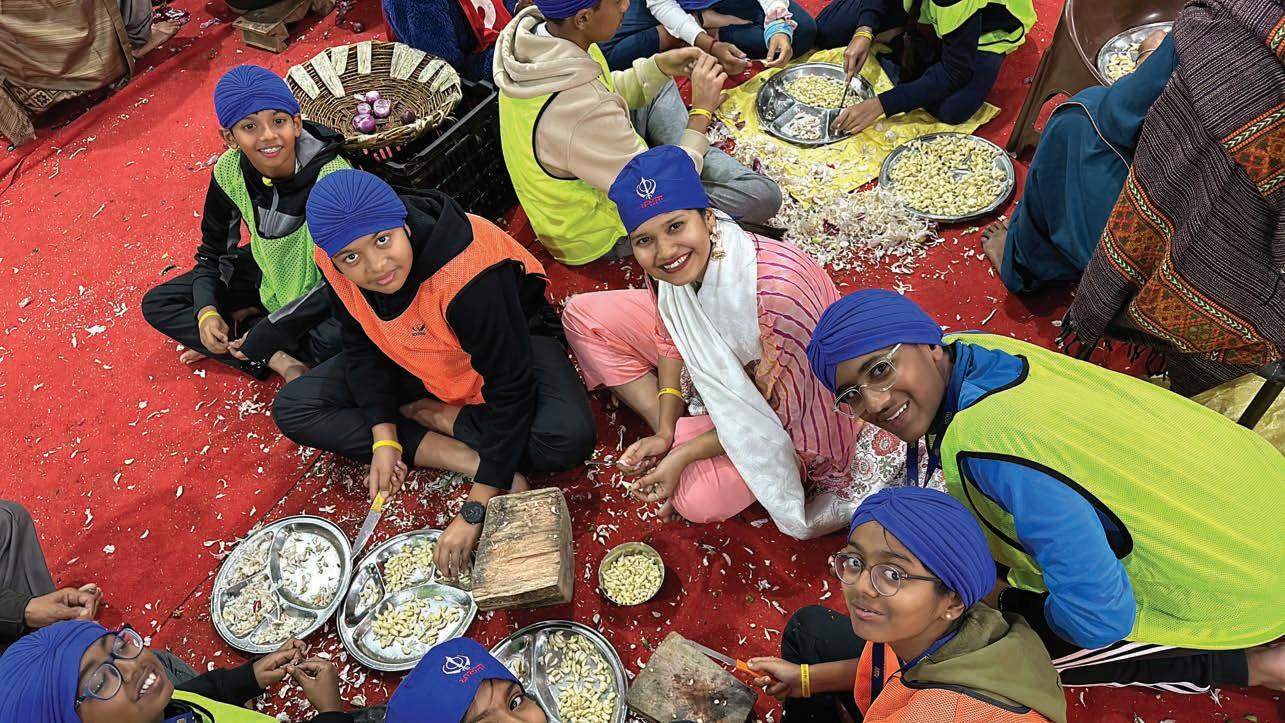
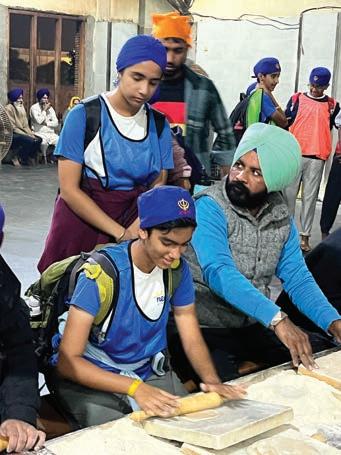
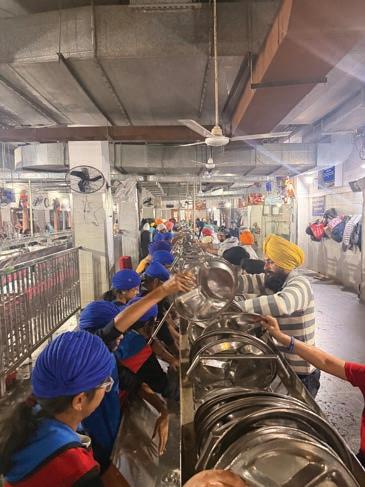
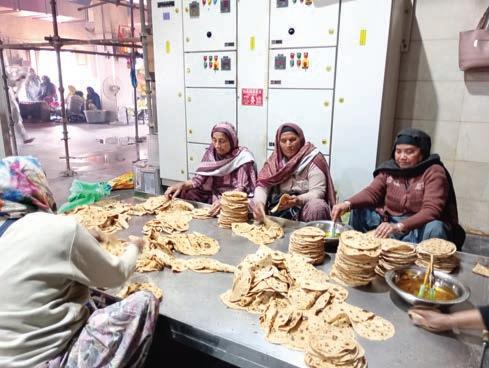
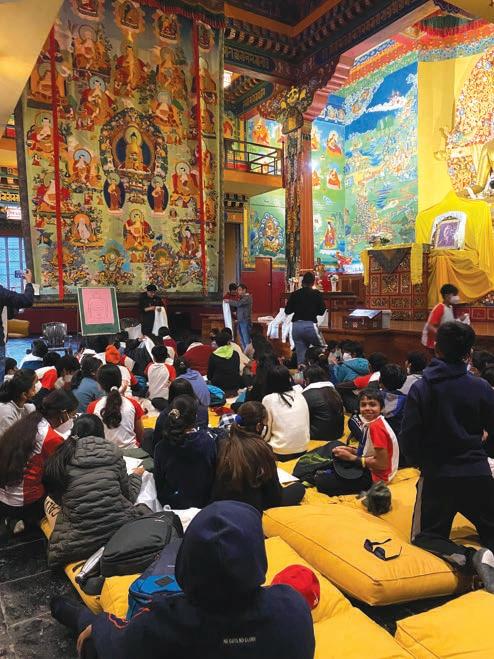
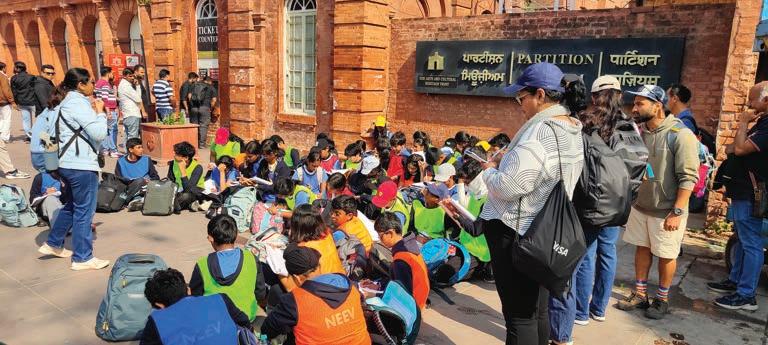
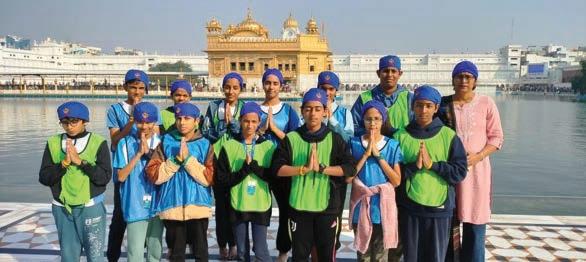
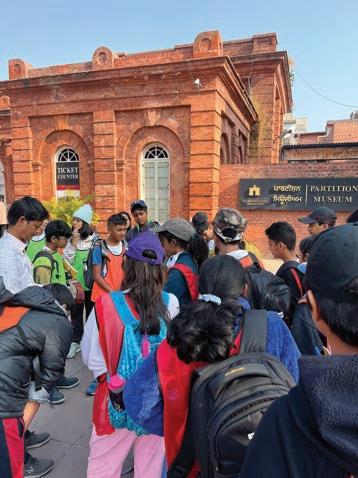
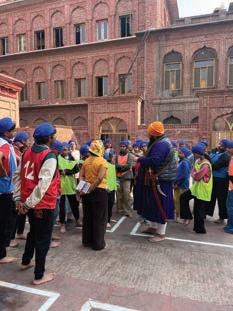
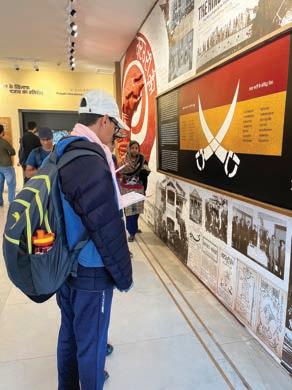
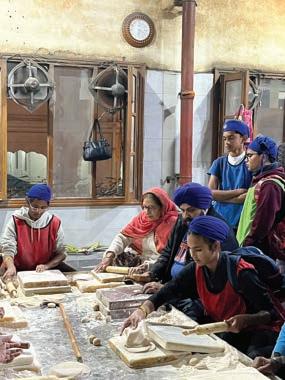
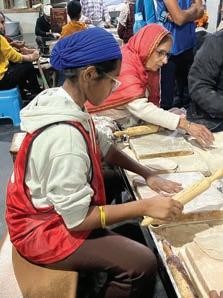
At the Golden Temple, they discover the gentle power of seva — and a quiet, humbling sense of freedom in serving others. At the Wagah Border and the Partition Museum, they sit with the weight of history and the realities of politics, beginning to see how freedom has been fought for, shaped, and experienced in different ways. At the Tibetan Children’s Village and Norbulingka, they encounter communities that continue to hold onto their culture, dignity, and hope — revealing yet another dimension of freedom: the ability to preserve identity even in displacement.
This journal is where their reflections live — their questions, their wonderings, their small and significant moments of connection. It is not just a record of what they learned. It is the beginning of how they are learning to feel the world more deeply.
Amritsar & Dharamshala Learning Journeys
The Learning Journey to Amritsar and Dharamsala is built around encouraging students to explore how ideas of freedom are negotiated in contexts very different from their own lives, and yet hold resonances that each student is able to bring back to oneself.
During the trip, students see firsthand how the core tenets of the religions of Sikhism and Buddhism are built around the principles of service to others before self, as well as introspection, sharing prosperity, and living honestly.
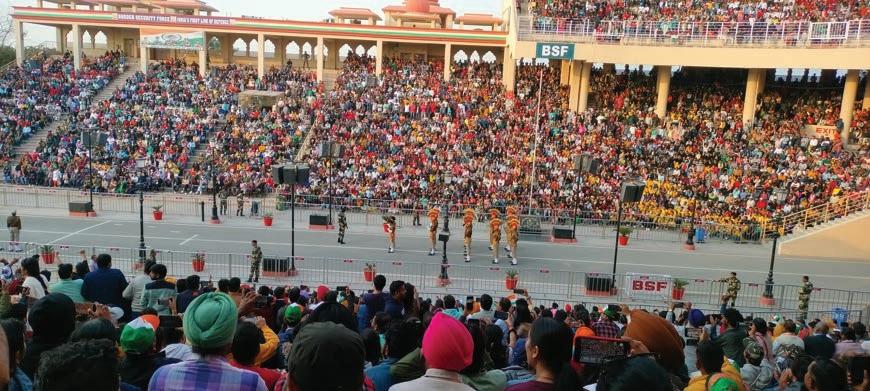
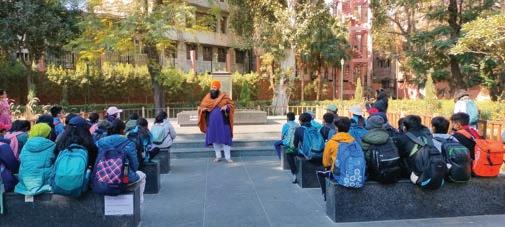
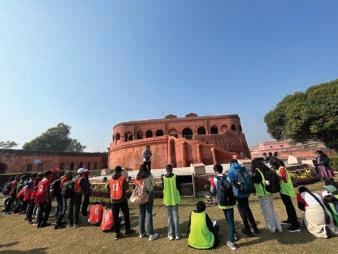
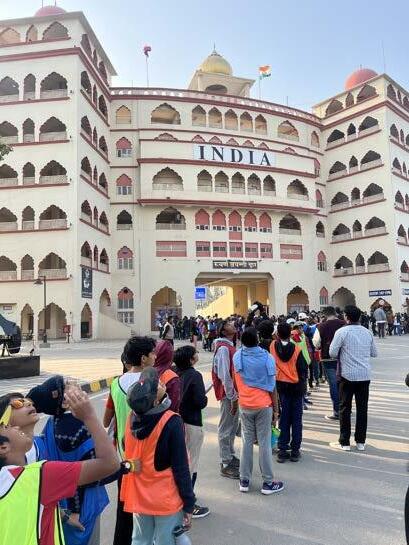
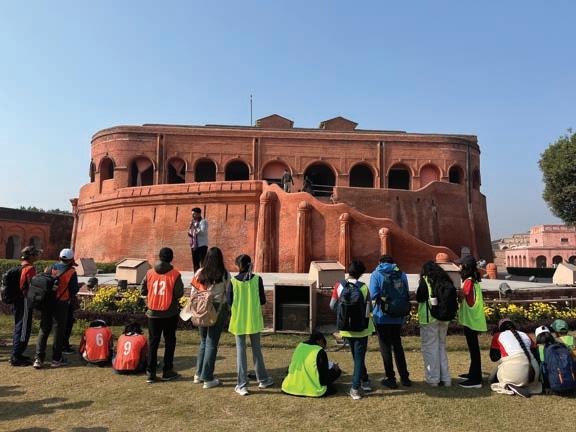
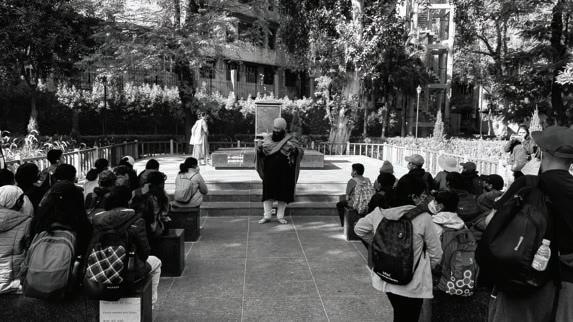
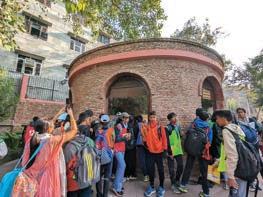
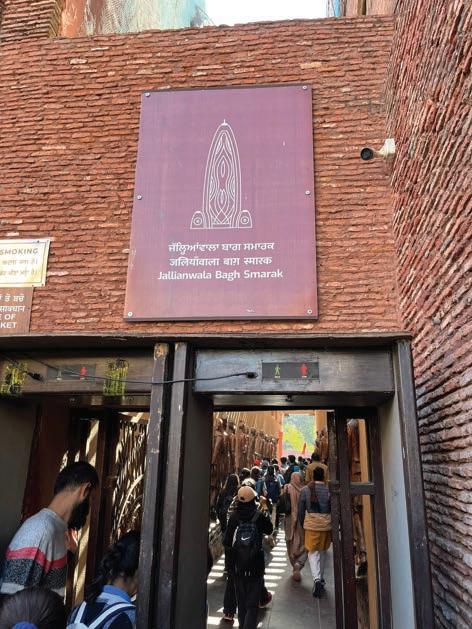
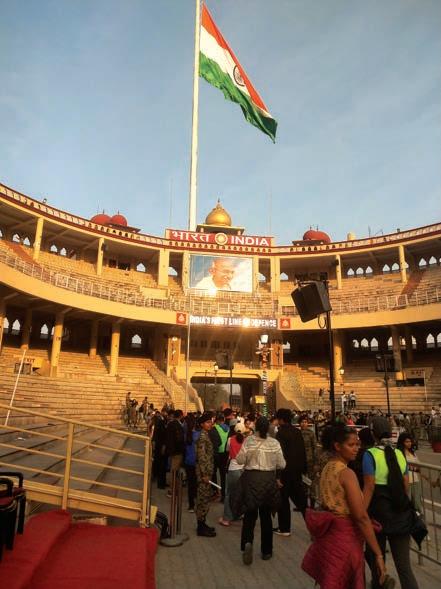
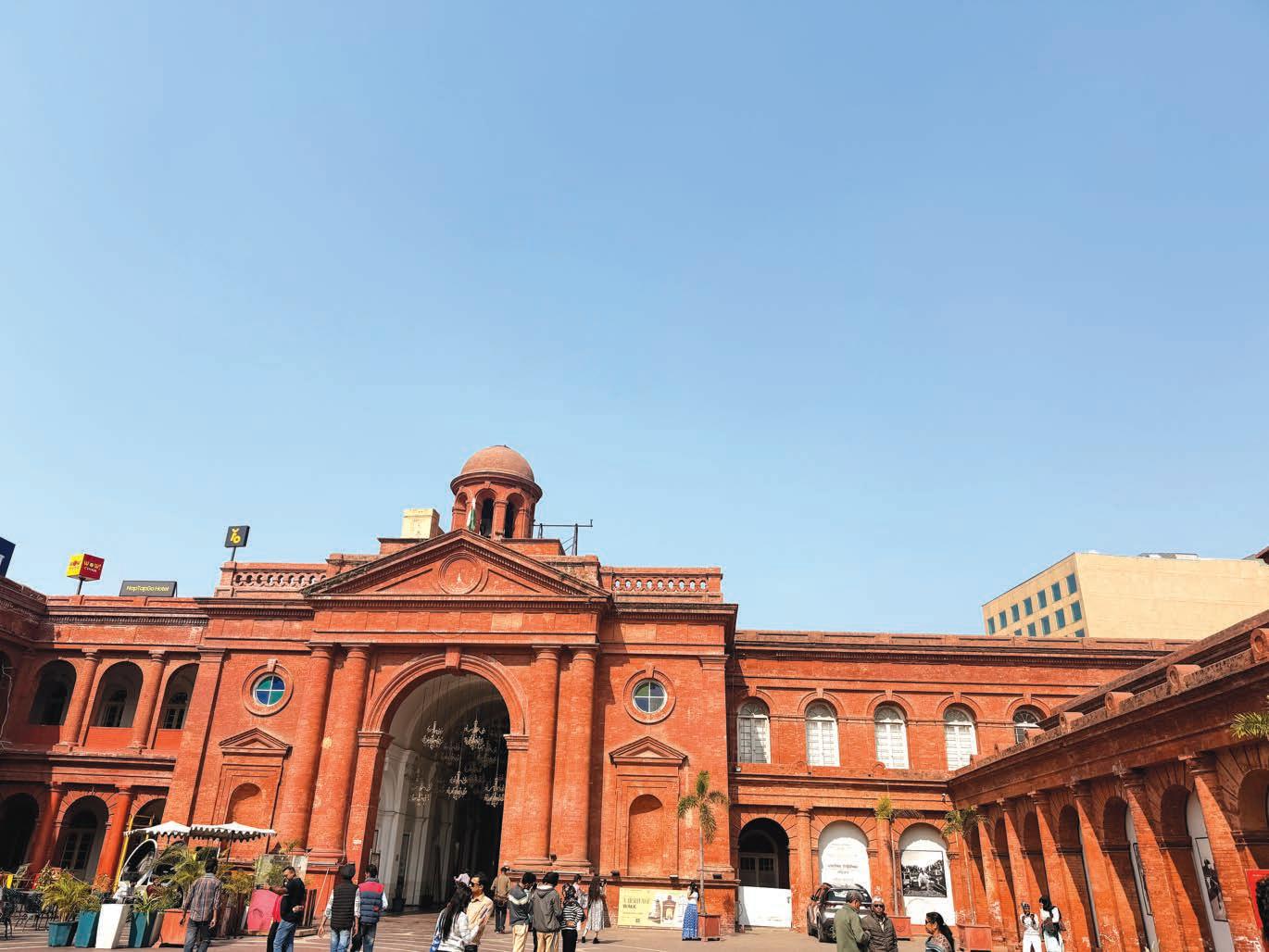
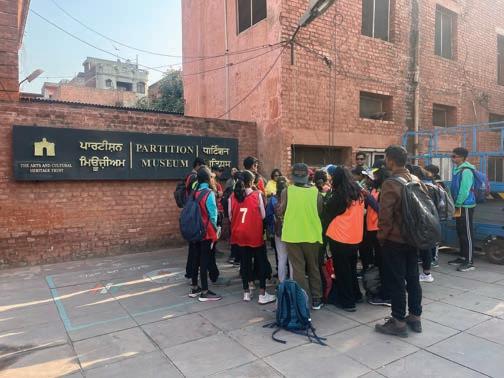
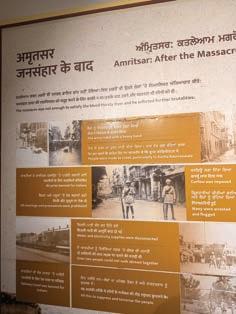
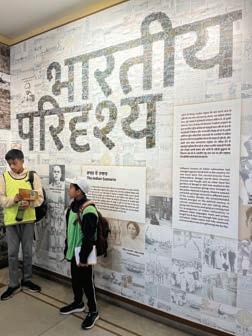
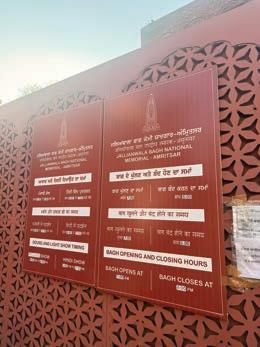
Through their visits to Jallianwala Bagh and the Partition Museum in Amritsar, students examine the historical events that played a pivotal role in India’s freedom movement. Travelling to the Attari-Wagah border brings home the reality of just how close the neighbouring country of Pakistan lies — Lahore is a mere 40 km away from Amritsar — and the consequences that we continue to shoulder as a result of lines drawn on a map in June, 1947.
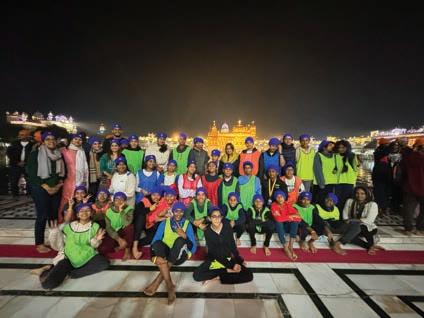
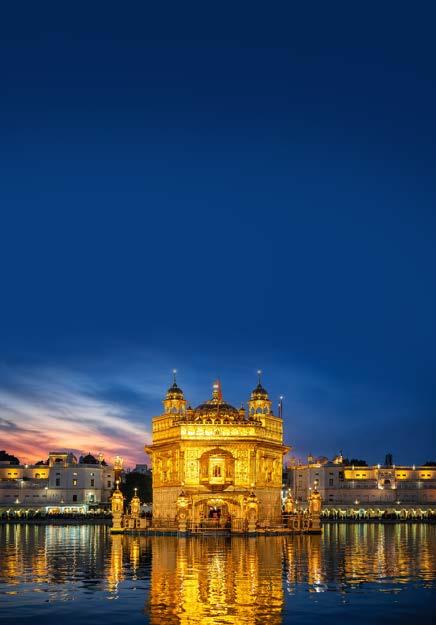
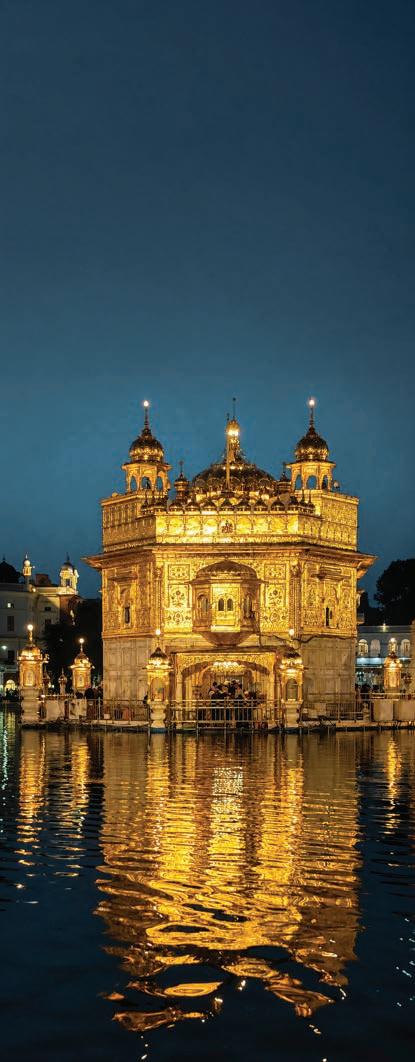
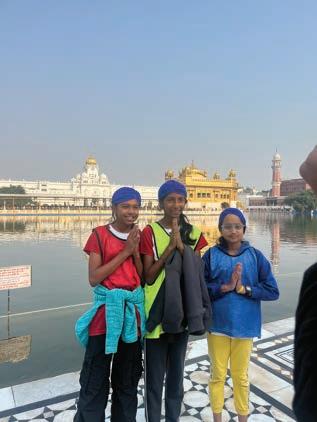
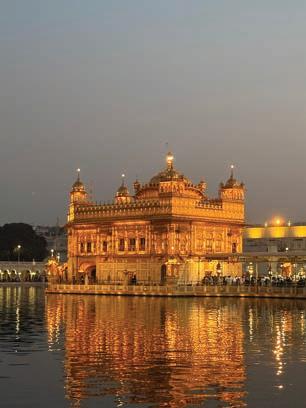
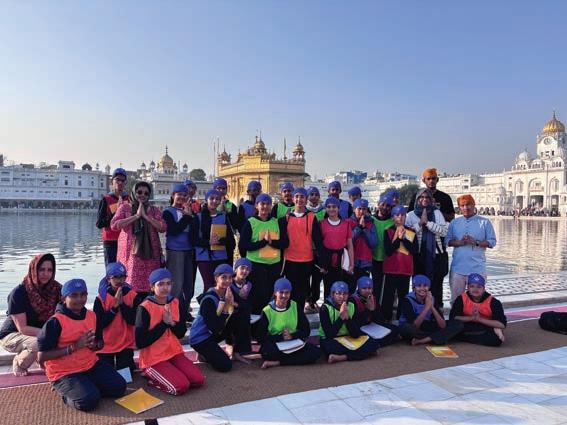
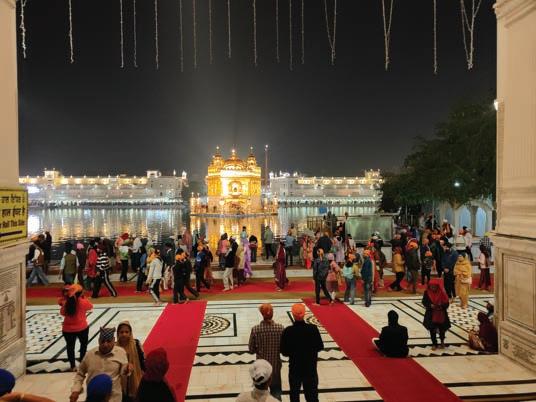
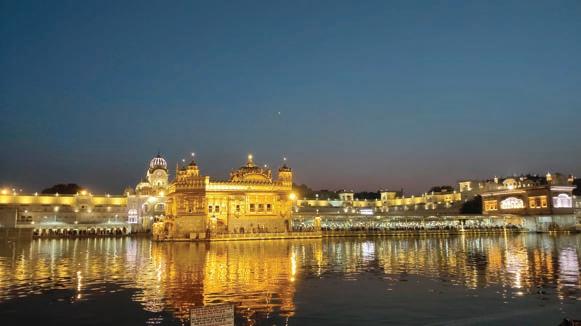
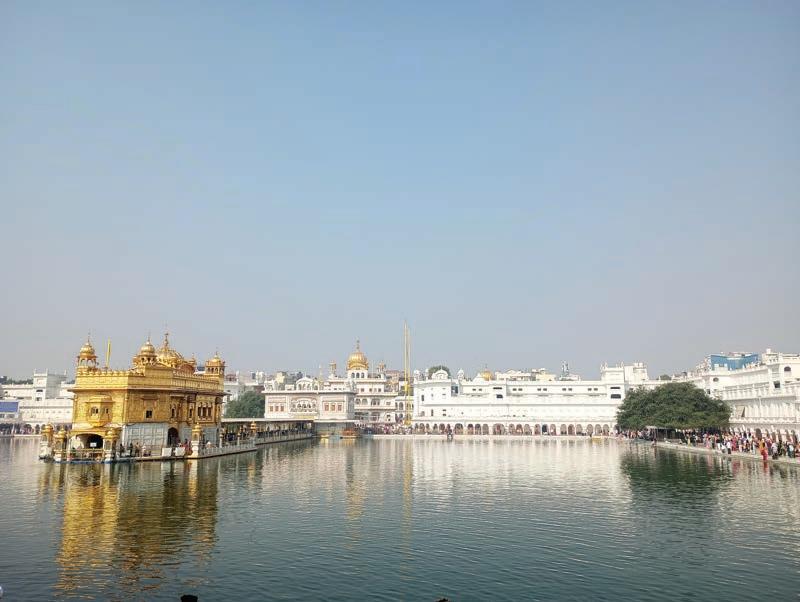
Spe llbinding in its beauty, the Golden Temple has an almost corporeal effect on our students, welcoming
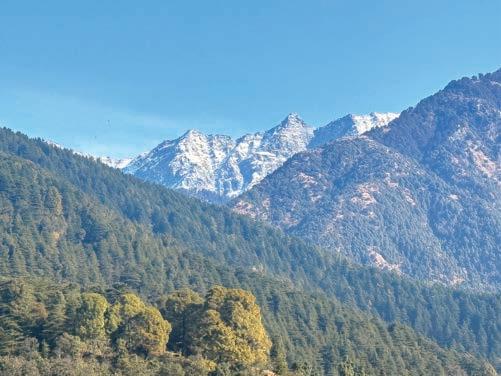
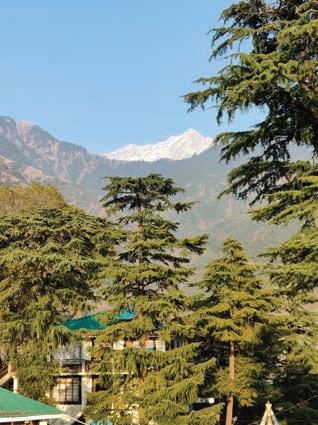
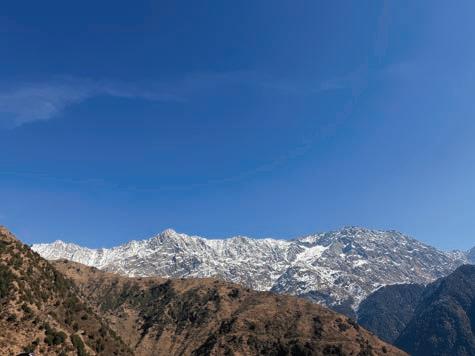
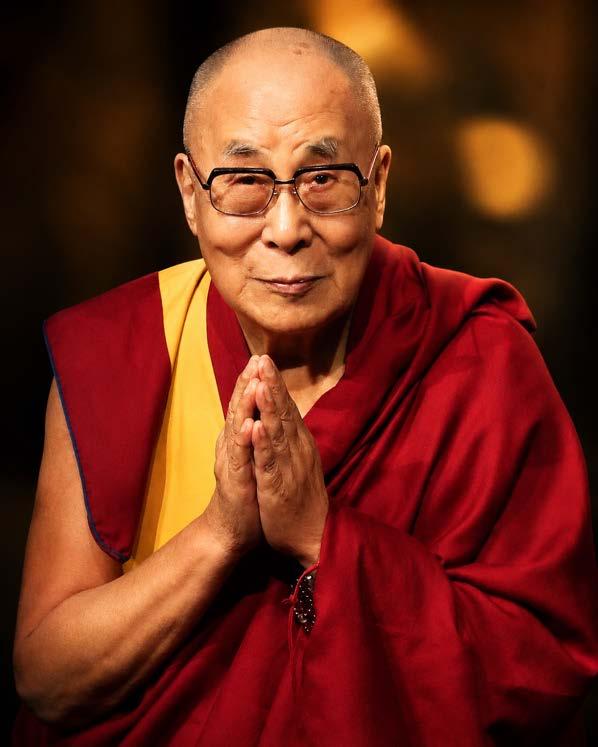
Alongside learning about how our borders are protected by our defence forces, the students also encounter what crossing over from one state into another feels like, and perceive how the topography changes. The first view of the Himalayas on entering Himachal Pradesh brings alive for them their History lessons detailing His Holiness The Dalai Lama’s passage into India through the snowy mountains in 1959, putting life and limb at risk, carrying the hopes of the Tibetan nation in his stride.
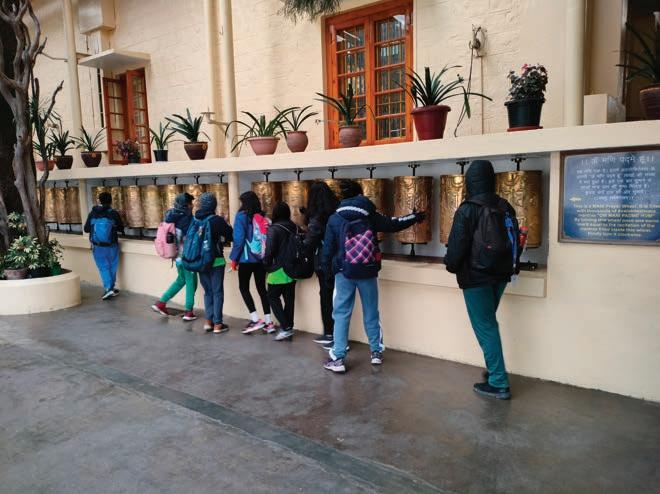
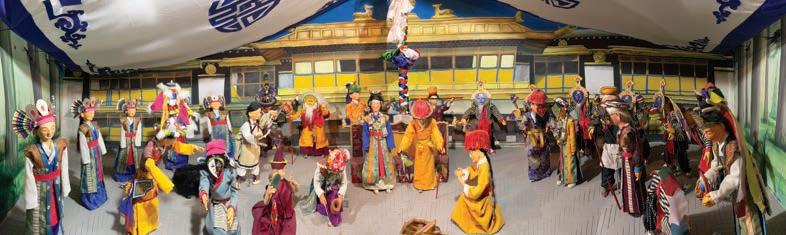
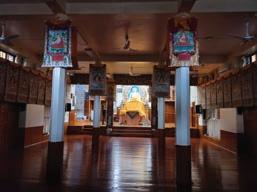
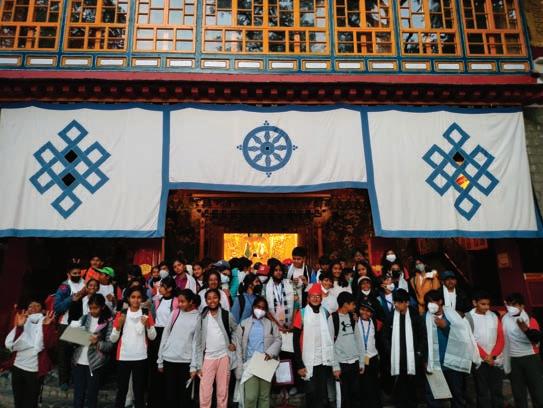
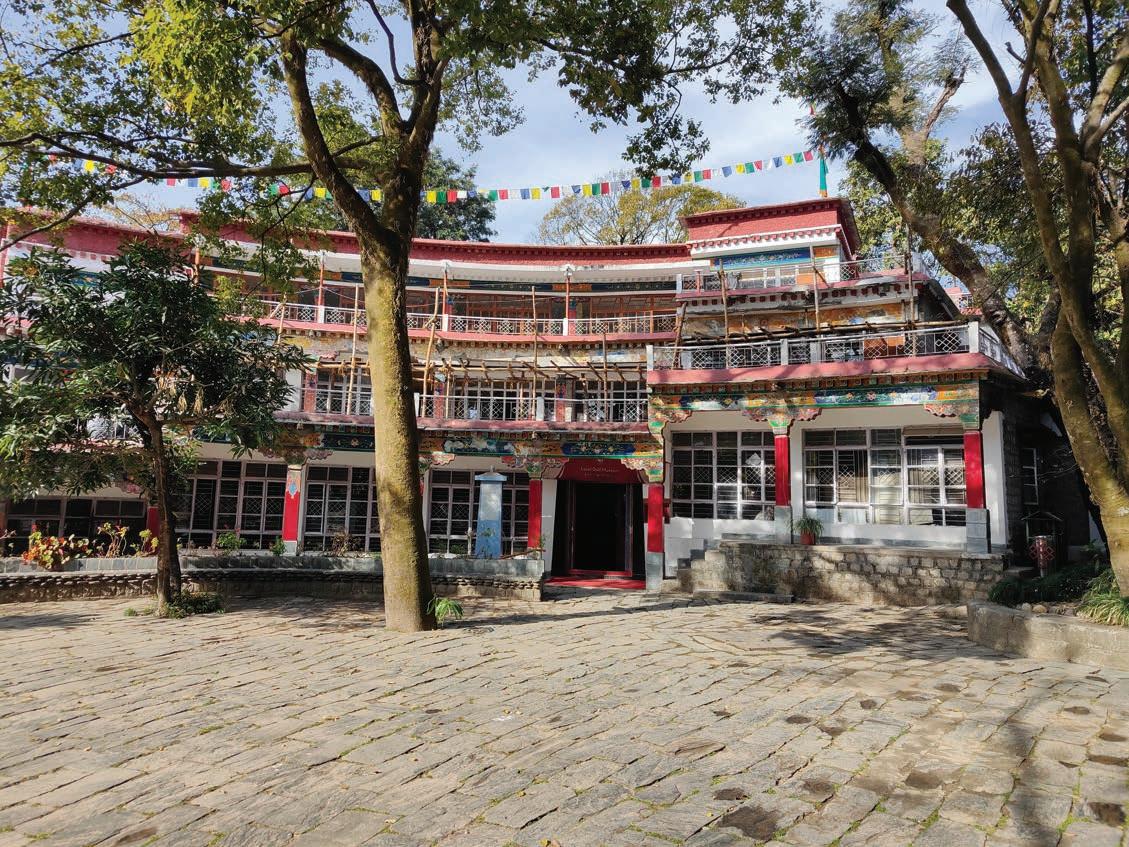
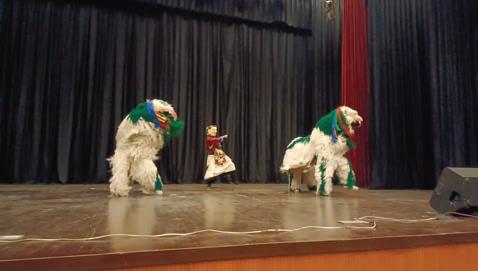
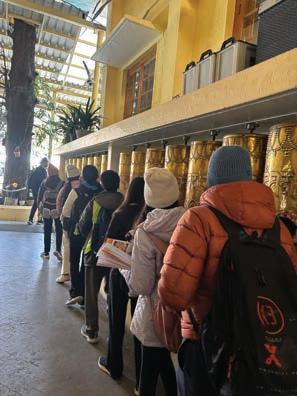
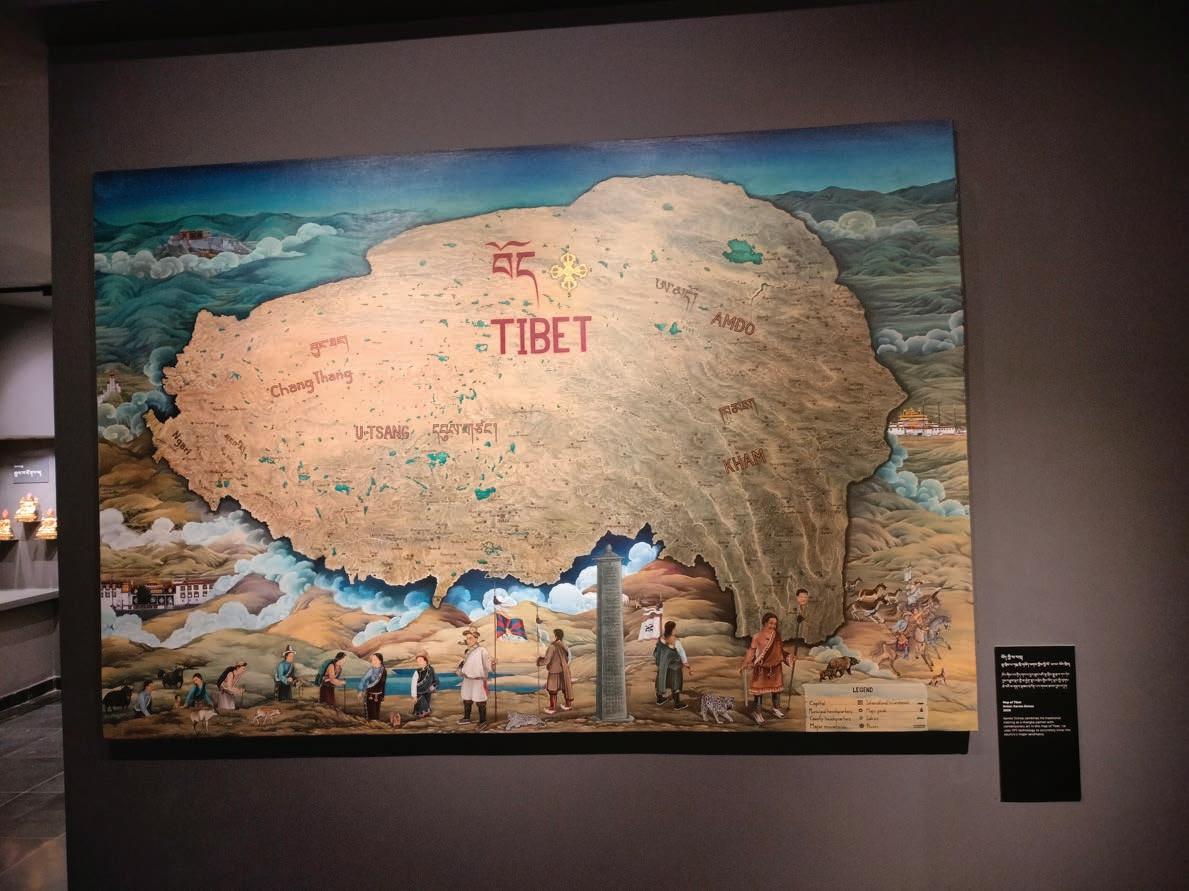
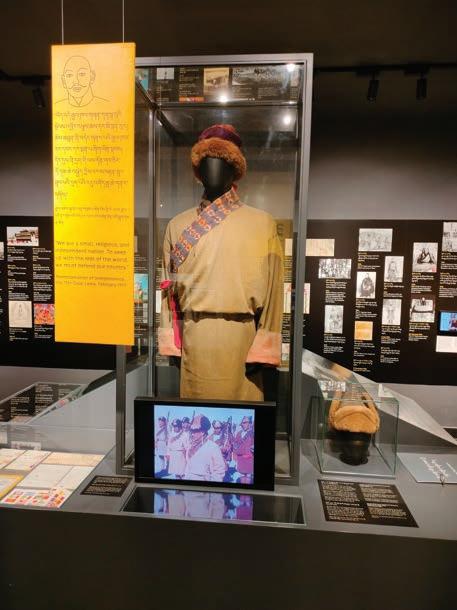
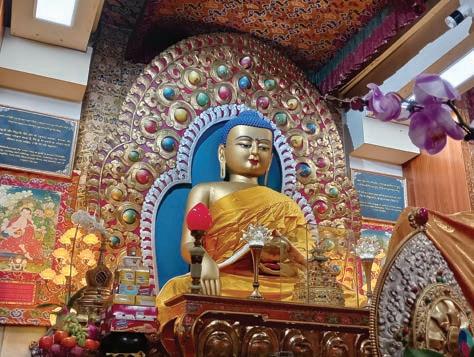
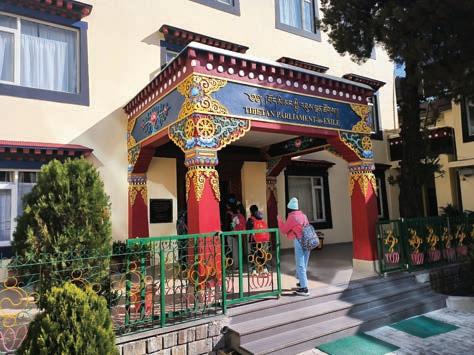
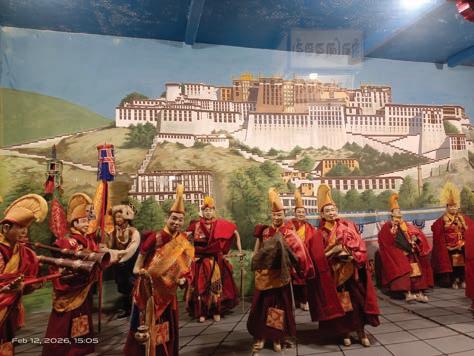
In Dharamshala, the students witness how an entire community keeps their memories of Tibet alive today through the customs they adopt, the institutions they maintain, and the traditions they live by. Our seventh graders visit the Tibet Museum, the offices of the Central Tibetan Administration, and the Dalai Lama temple. They get to take in the traditional Snow Lion Dance — a key element of Tibetan celebrations — as well as be a part of a communal dance themselves.
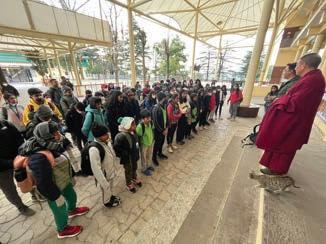
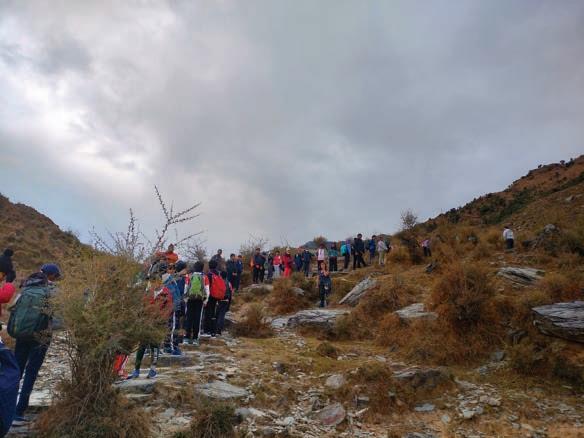
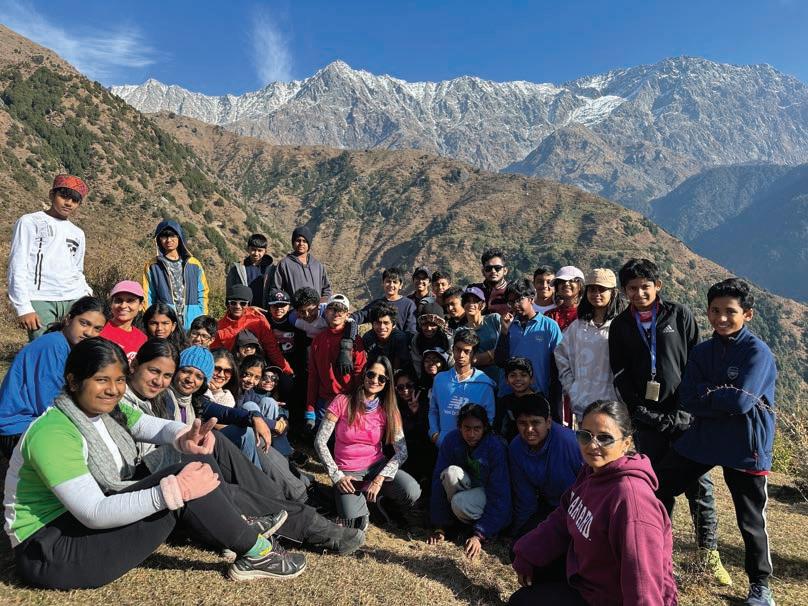
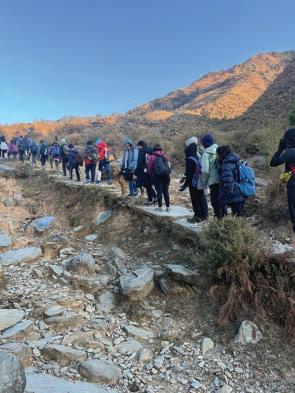
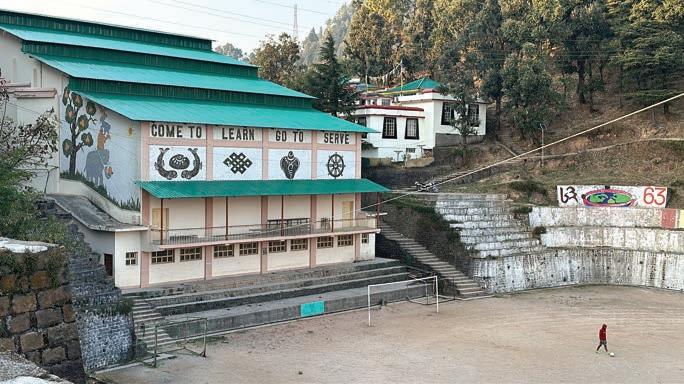
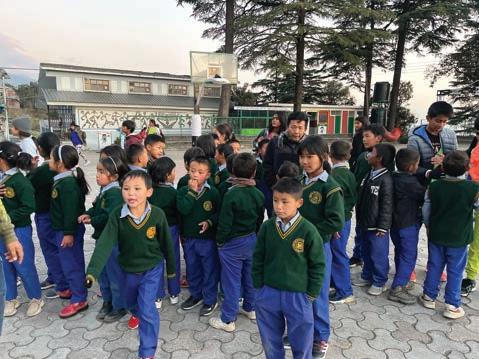
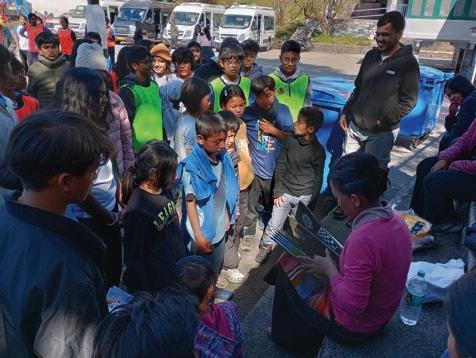
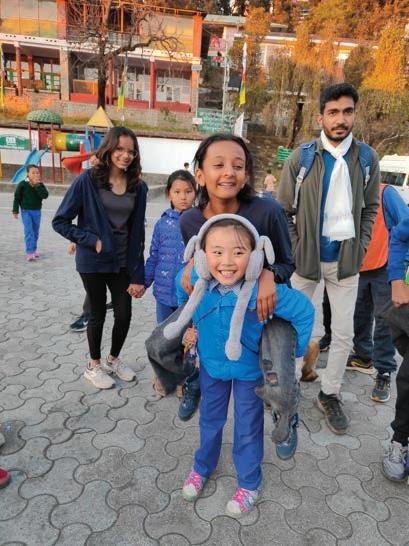
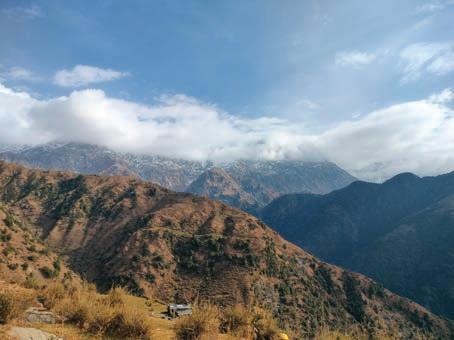
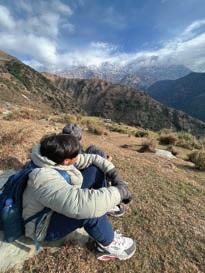
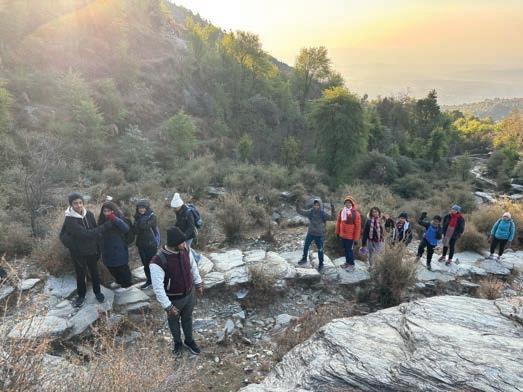
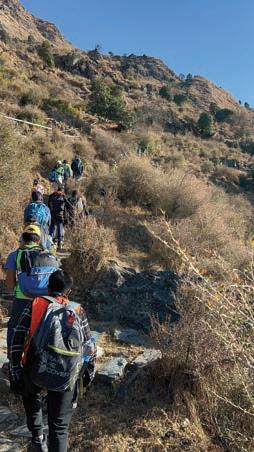
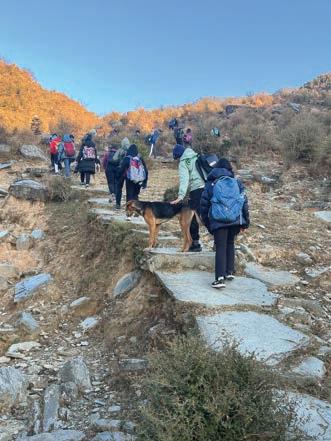
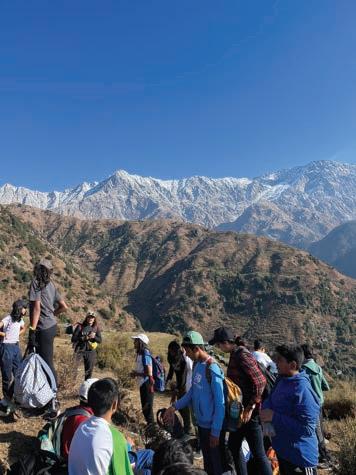
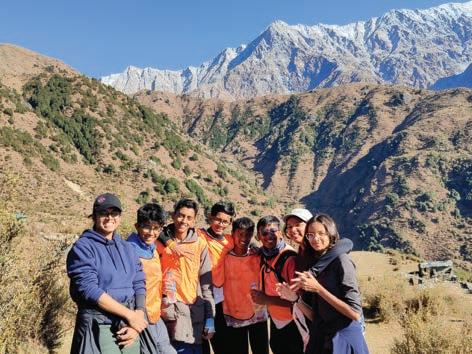
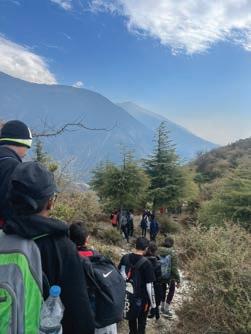
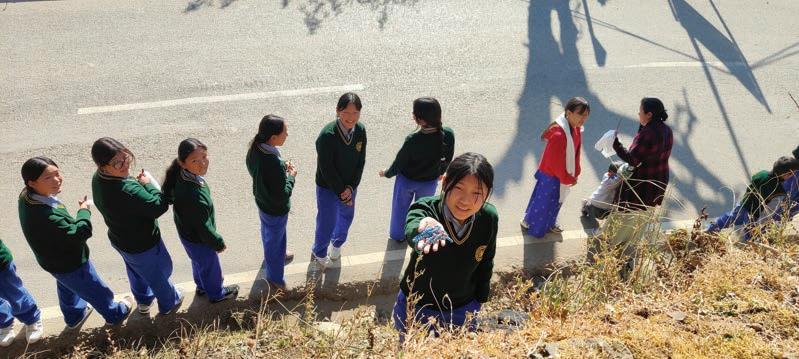
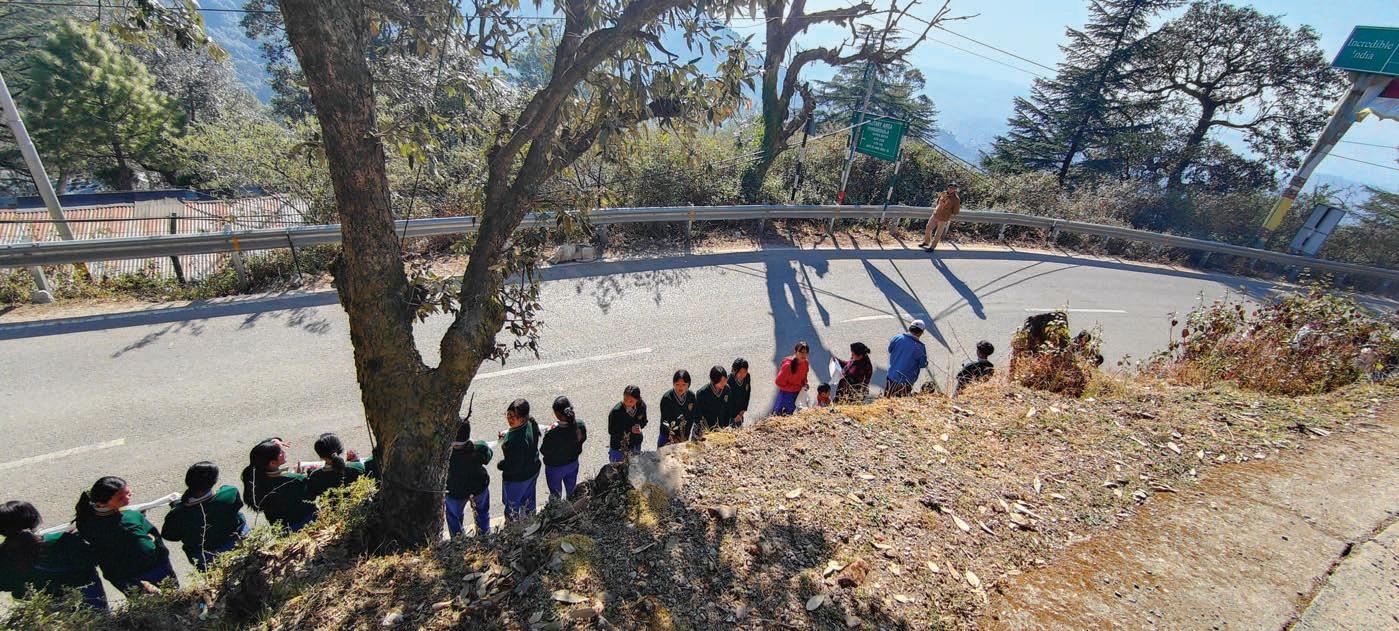
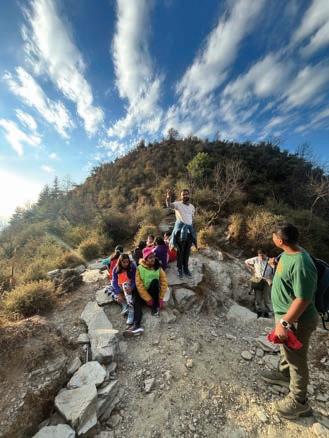
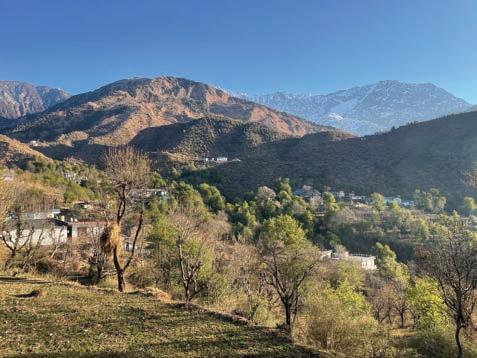
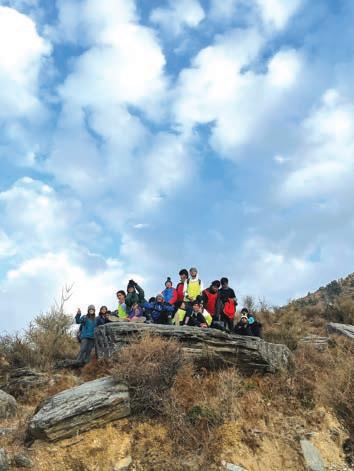
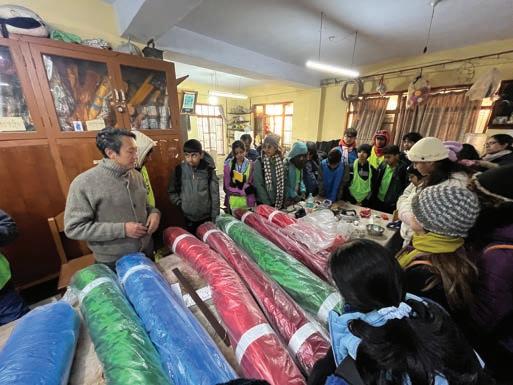
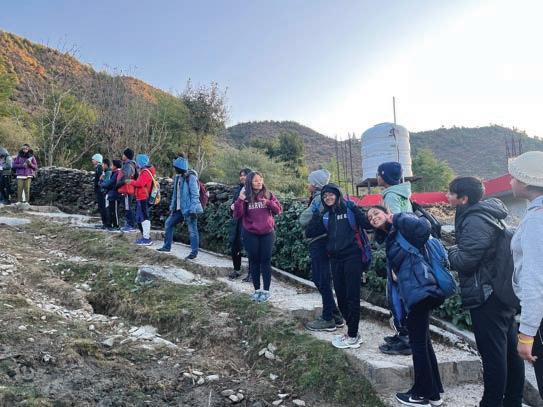
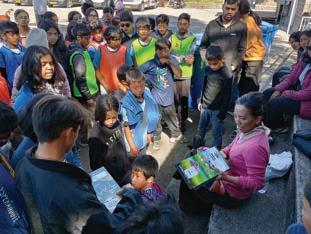
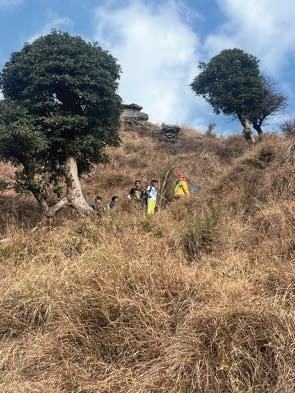
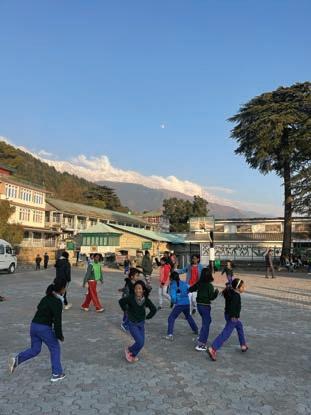
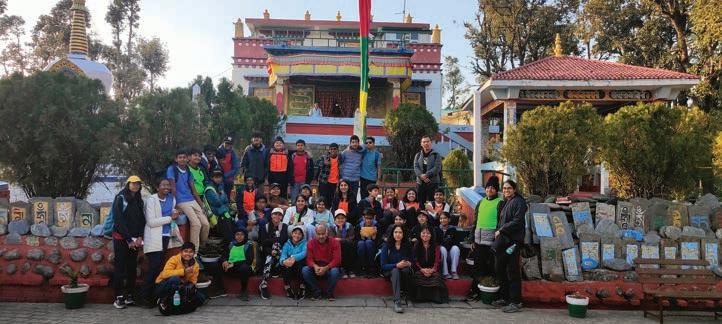
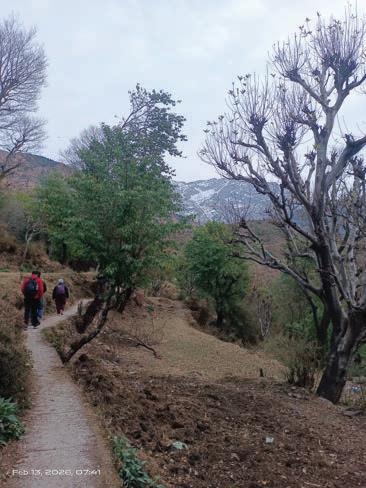
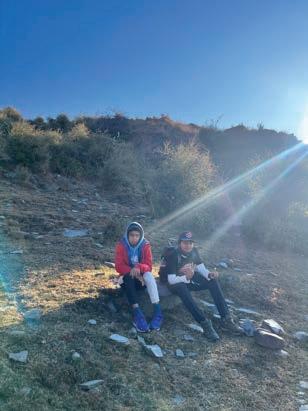
Studen ts engage with a short trek to view the Dhauladhar range of the mighty Himalayas, and often have the most fruitful portion of the journey when they visit the Tibetan Children’s Village — a residential school established for the children of Tibetan refugees — and spend time with the residents there.
Lea rning journeys at Neev go beyond providing students with the opportunity to make real-world connections to their learning. What these journeys do is that they immerse students in the context of their learning so much that the children distill a feeling of awe for themselves, often without realising it.
Con fronted with the grandeur of natural beauty, the splendour of man-made creation, the outsize joys that come from living simply, and the gentle tenacity of service, these experiences leave our students truly moved. They refine the essence of these impressions, and carry them within, cherished, lighting the path for their way forward.
Learning Journeys at Neev
Past Learning Journeys Over the Years
• Grade 4 - Hampi
• Grade 5 - Delhi
• Grade 6 - Gujarat
• Grade 7 - Dharamshala and Amritsar
• Grade 8 - Rajasthan
• Grade 9 - Ladakh / Madhya Pradesh
• Grade 10 - Gudalur
• Grade 11 - North East India
• Grade 12 - Coorg
2022-2023 2022-2023
2023-2024
Places we explored CHAPTER 01
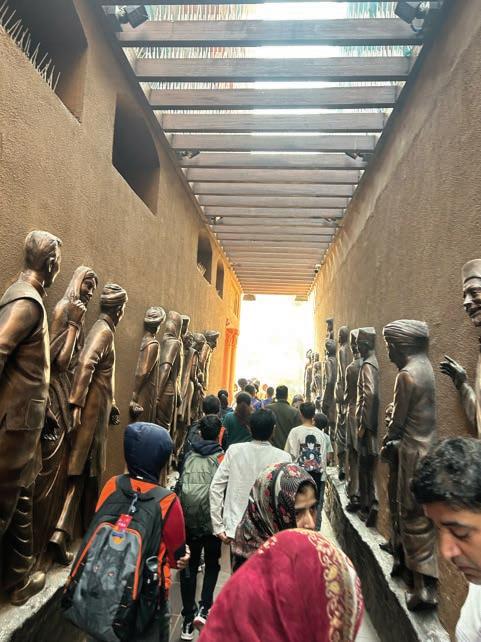
Each place on this journey offered the students something more than what meets the eye. From the quiet grace of the Golden Temple to the solemn echoes of Jallianwala Bagh, from the charged energy of the Wagah Border to the gentle resilience of the Tibetan Children’s Village and the cultural richness of Norbulingka — every space held a story waiting to be felt.
As they moved through Amritsar and Dharamshala, these were not just places they visited, but experiences that invited them to pause, reflect, and connect. In different ways, each one deepened their understanding of humanity — of sacrifice, unity, identity, freedom and the strength it takes to hold on to hope.
Amritsar
What makes Punjab special imagine this:
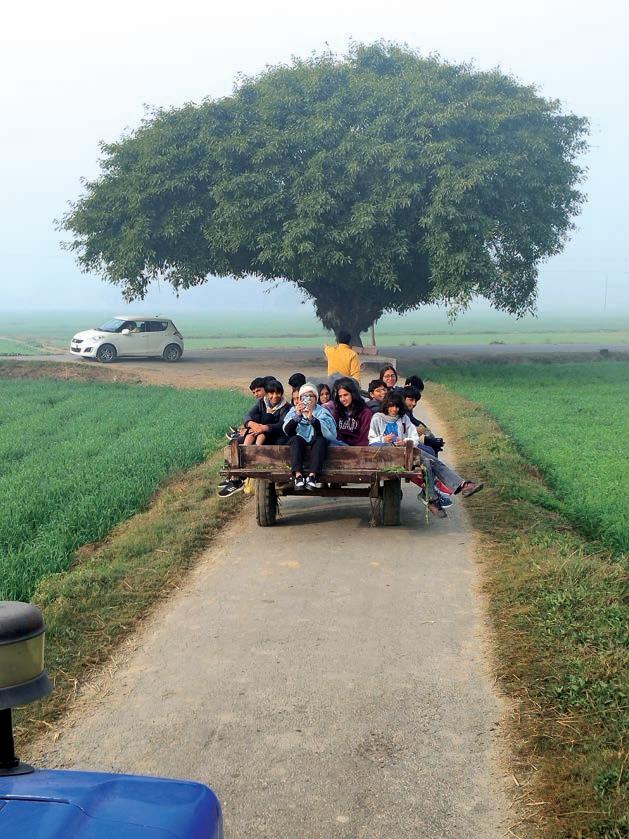
Riding in a tractor, Ducking as we drove close to bushes
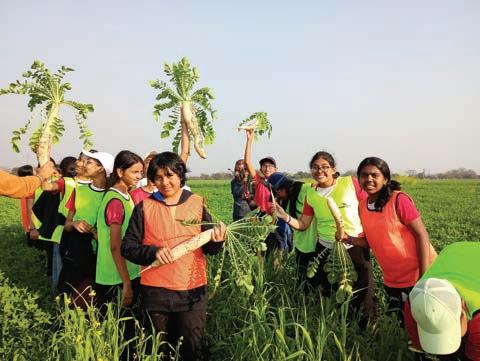
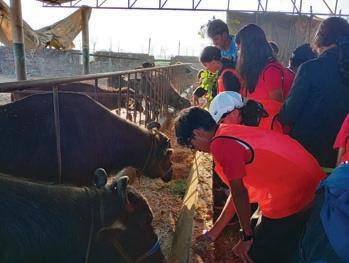
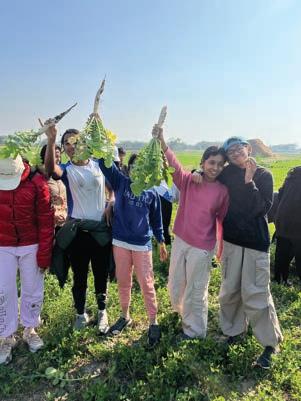
Walking through fields, plucking radish as a cool breeze swept past
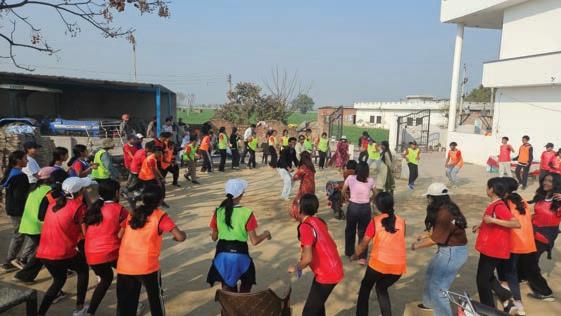
Dancing to Hindi songs, Holding the radish above our heads like They were our only hope Every single day.
This was village life-
Or the bhangra Not the monuments Or the Golden Temple, But the community, The lifestyle, The warmth, And the society.
I guess I’ll be Taking home
Much more than a radish.
Riddhi Mantri, 2025-26
Our country
A pulsing crowd
A unified beat
Cheers for our country
Dancing bhangra
Singing folk
Culture of our country
Warmth in our hearts
Spreading like wildfires
Love for our country
A common purpose
Doing our best
Working for our country
Marching soldiers
A patriotic crowd
Together in our country
Arushi Chandra, 2022-23
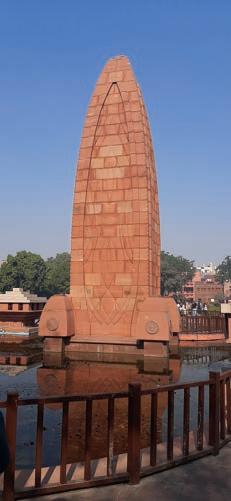
S taring at the Amar Jyoti, a small fire which tries to bring light to a darkened scene, but everyone stays in sorrow. I stare into the fire, I can only visualize and hear the shots being fired, and the scattered dead bodies across the field, bodies filled in the giant wells and the tiny crevices. The loss of loved ones, people were joyous and came to celebrate a peaceful celebration that day. How could something so tiny, warm and bright bring such pain in people's hearts.
Aadhya
Chopra, 2023-24
R aja of Sikhs
Raja Ranjit, a king of many tales
Sailing the river and hoisting the sail With victorious battles He stood as tall as on scaffolds
Though he lost his eye, He faced the world with no Sigh With determination anything is possible This is shown by the ruler of Sikhs
Raja Ranjit Singh
(The lion amongst tigers)
Harman Singh Oberoi, 2024-25
G obindgarh Fort Entrance Tower **
The wind wandered in like a half-lost tune, cold as a shadow, slow as the moon.
The walls rose tall, just bright red stone, made bigger by the moat left alone.
No water below, no rage and no roar, just grass and a tree where fear lived before.
The tree stood quiet, ready and free, making the red-brick fort bow to it beneath.
I stood at the edge, wind brushing my face, eyes on the tree in that silent place. Four bastions watched from each side, keeping their stories right deep inside.
Only seven acres the world gets to see but what lives in the rest, and what could it be?
I want to be like this fortress, bold, weathered by time, but never old. Still, strong, with a beautiful grace,
Vir Bhansali, 2024-25
Shere-e-Punjab: Maharaja Ranjit Singh
Imagine. Just imagine how it would feel like if you had to suddenly rule a vast kingdom. That would be difficult wouldn’t it? But for a 12 year old? Thats unprecedented! Maharaja Ranjit Singh was left fatherless after his beloved dad died in battle. This meant that he had to take over his dad’s vast kingdom at just the age of 12. With Dad no more there, he had nobody to show him the ropes, nobody in his family that he could ask for help and advice. This story, is one of surviving the odds, bravery and most importantly courage. This tale inspired me to not just idolise foreigners, but to look at India’s rich history about India’s heroes of the past. Truly a sher’s story!
Arjun Jain,
2024-25
Wielding the Talwar Post some delicious snacks at the farm we headed to the big, fascinating gurudwara. A kind man from the farm gave us an extensive tour of this gurudwara, explaining each and everything in the Gurdwara with immense pride, respect and honor. While listening to him I realized how close he holds religion to his heart and how important religion is. Shortly after this tour I was given a dream-like opportunity, which was to wield the Talwar! The little kid inside me started jumping and remembering all those dreams of holding and wielding a sword! When I snapped back to reality, I found myself arms reach away from the sword and the moment I grabbed that sword, some part of me went calm and felt pleased and fulfilled with joy and happiness from this childhood dream. While I was soaking in the moment, the man prompted me to touch the back of the blade to my head as a form of respect and as soon as he said that I followed, but after doing this I realized that this isn’t the time or place for my inner warrior to shine but rather for worship, so I happily returned the Talwar telling myself to respect its purpose and religious significance.
Darsh Tolani, 2024-25
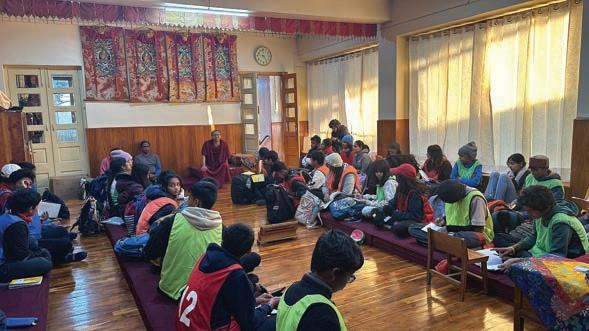
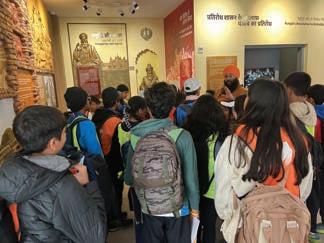
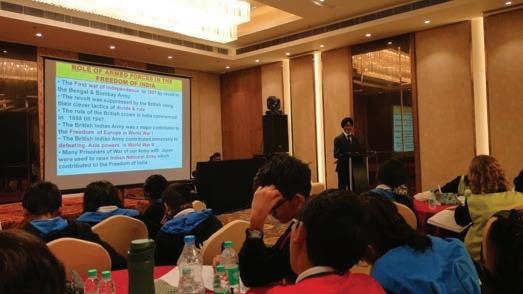
Session with Tarun Ji on Amritsar's History
In the room, I listened to Tarun Ji talk about Amritsar. His voice was full of energy, and I could feel the stories coming alive. He shared tales of brave people and important events. I imagined the busy streets of Amritsar, filled with life and history. I felt proud to learn about this place and its culture. It was a special moment that made me feel connected to the city and its past.
Sana Verma, 2024-25
Amritsari Dhaba
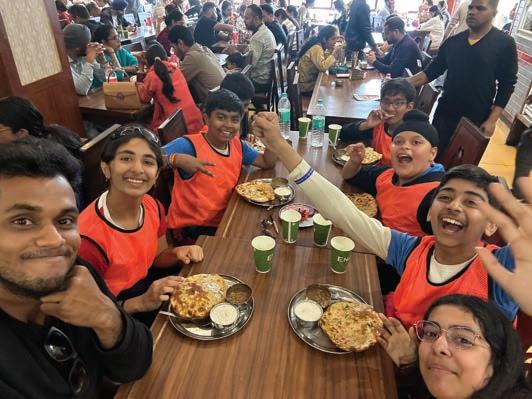
When I entered the Brothers Dhaba in Amritsar, I was welcomed to a warm and friendly place. The air smelled amazing, full of spices and freshly cooked food. I could hear happy chatter from families and friends sitting together having their meals. One of the dishes I was most eager to try was the famous Amritsari Kulcha. I was surprised by how crispy the outside was and how soft and fluffy the inside felt when I took my first bite. The Kulcha was stuffed with tasty spicy potato, there was a big pile of butter melting on the top creating a puddle of butter making it even more delicious
Zoya Kinra, 2024-25
After a long walk, through the Golden Temple, Partition Museum, and endless bus rides, I was tired, sleepy, hungry, hungry and a little more hungry. Soon we stepped foot into a local Punjabi dhaba where the smell of ghee and aloo immediately attacked my nose. I had never smelled anything better. My mouth started to water. I quickly washed my hands and sat down closest to the kitchen hoping I would get the food faster. Soon it arrived. The crispy aloo paratha alongside super flavourful chana. I dipped the crispy ghee topped paratha into the chana then straight into my mouth. Flavours exploded in my mouth. One bite after another I had devoured 4 crispy, delicious, satisfying parathas with 7 bowls of chana. Every bite brought me immense joy, happiness and satisfaction. I had never tasted food so good. The flavour of the meal, the vibe of the place, and the immense joy it brought me still resonates with me till this day. You know how they say ‘Don't ask what you can do for your country, ask what's there for lunch’.
Nimay Agarwal, 2024-25
Fond Memories In A Local Amritsari Dhaba
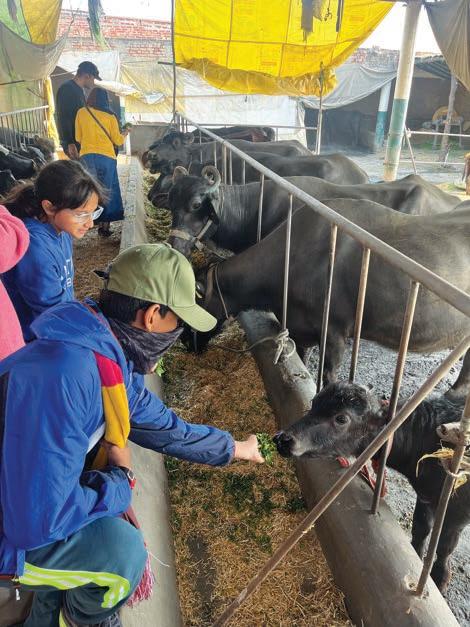
The holy radish from the farmAs we walked back to the house, Vivaan was hoisting a radish into the air, calling it the ‘holy radish,’ and the other boys were crowding around it, calling it a new religion. We took it everywhere we went: close to the buffalo and the cows. But we kept it far from everyone else while doing the Bhangra.
Ishaan Khandelwal, 2025-26
B hangra, Beats, and Bliss
Radish
I fall back on the ground as I pull an earthy, giant radish out of the soil. We giggle as everyone gets a chance at the radish, the hot sun sets into the pink horizon. I felt happiness, the type where I didn't care about anything except the moment I was in, and this kind, I rarely felt back home. Why can't life back home be this pure? How can I make it be? Honestly, I don't know, but that's ok, that's something to think about later. Right now, I want to embrace this joy of being in the moment.
Leher Medda, 2025-26
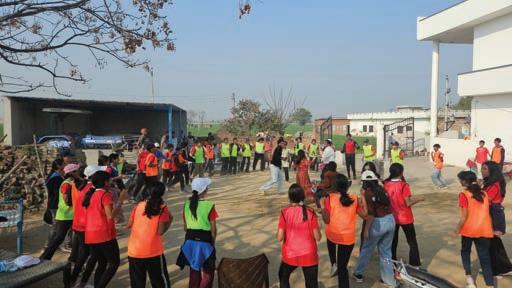
A farm in Punjab. That was where I was. Ms. Nidhi told us that we would be learning bhangra, so obviously, I was instantly on a sugar rush with no absolute intake of any sugar. I mean, you cannot expect me to not become hyper when someone tells me I can dance — note: I had no idea how to do bhangra — ‘cause that’s just straight up unfair. Anyway, we began with the learning part but that wasn’t really the best part. The freestyle post the apparently “official” freestyle, which frankly sucked ‘cause the other team’s choreo was basically a ripoff of ours, was the real highlight. However, the most ironic part remains the way all the South Indians decided to gang up and play prime Tamil kuthu music at the heart of a pureplay
Noises
They can be distracting
But not as distracting as the roads of Amritsar
“Kulfi, kulfi, Idhar aao, kulfi” says a man in a kulfi stall
A crowd of tourists roar their conversations
A woman holding a baby whispers to buy her fake dior sunglasses
I think to myself, “This is worse than Bangalore”
I immediately change my mind when I take a bite of Kulcha
Shaurya Max Havinahal, 2025-26
Bhangra (On a Farm)
For some, it’s just a typical dance form
But for me its a form of expression
As the steps were being taught
A flame ignited in me
Energy all of a sudden I joined in and started to dance I danced my heart out and in the end I realised I’m just showing why my roots are important to me and expressing my culture in a different form
And that’s why I can proudly say Meh hoo Punjabi
Arjan Singh, 2024-25
The sound of people playing drums and people laughing rang in my ears; the people teaching us how to do bhangra were down-to-earth and cheery, encouraging me to dance along and feel the beat. Adrenaline was coursing through my veins, my heartbeat racing equally as fast. We all charged forward, jumping, dancing, feeling, laughing, excited, and energetic. Every new step made me smile, laugh, and feel accepted into another culture; it helped me learn about new traditions and practices. Overall, I loved it, I loved the drums, the bhangra, the laughs, and the cheers; oh, they were everything, enriching the experience, a simple moment, yet meaningful and one of the most cherished ones yet.
Iqra Rahiman, 2024-25
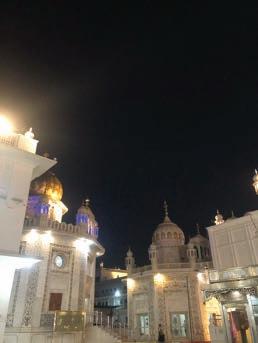
Golden Temple
T he temple of gold:
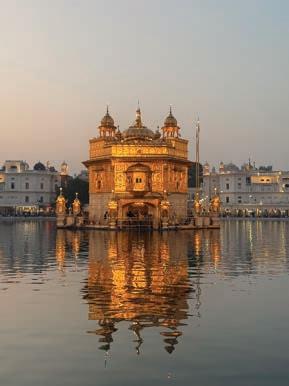
A temple of gold that shined the air
A temple of gold that soon lost its glare
A temple of gold with many people
A temple of gold with that’s open for all
A temple of gold that flourished with happiness
A temple of gold with a lake of water
A temple of gold that never shattered
A temple of gold with holy water
This was the temple we went to today
That left a impression in a beautiful way
Harman Singh Oberoi, 2024-25
The one thing that stood out to me today was the oneness of the Golden Temple. In the temple, all walks of life were welcome. This was evident from the 4 entrances of the complex.
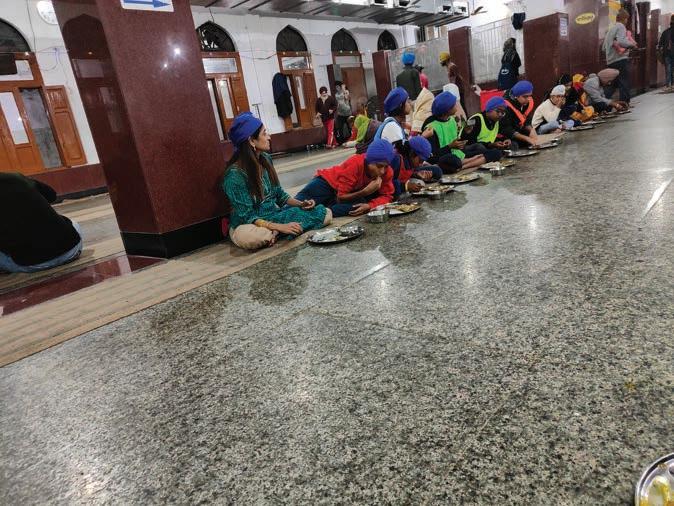
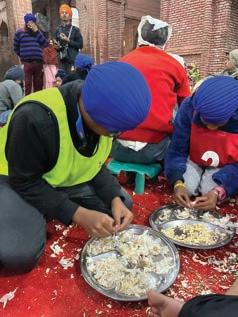
As I stepped into the temple, a feeling of peace and calm came over me. I understood the way Sikhs worked together to serve people at places like the Langar Hall. I could see how people put service at the top of their timetable and helped those in need.
From then on I realised how unified the Sikh community was. As I was walking through the temple, I could see everyone treated as equals and not judged upon.
Theref ore I understood that this community was based on ideals like equality and not judging people by anything and this is what made the Golden Temple the highlight of my day.
Arihanth Natarajan, 2024-25
Holy Land
The Golden Temple is a Sikh’s holy land
A place where love and bravery take open stand
A place where temporal power meets spirituality
A place where majority meets minority
A place where every individual is considered grand
The Golden Temple is a Sikh’s holy land
Aryman Manipal, 2025-26
Golden thoughts
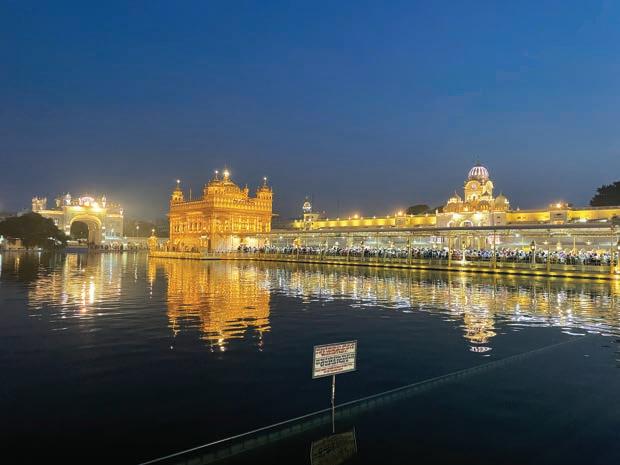
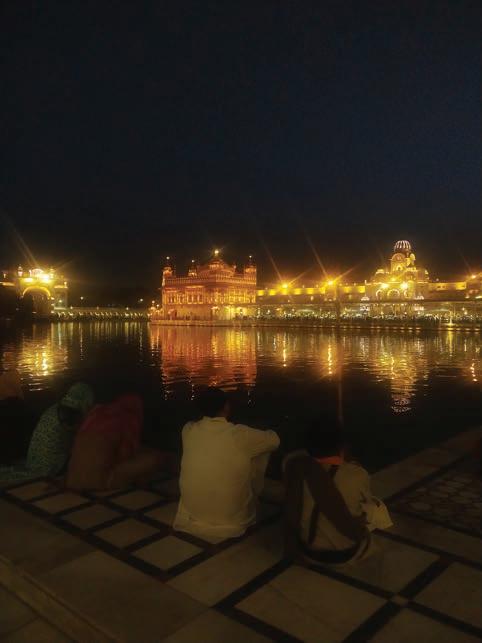
The golden temple. Well, what made it so golden anyway? Just the color, or something more? Could it be the culture, the traditions, the very holiness of the place? Or was it my personal connection? The place I’ve been to 3 times before, and yet today I saw it in a new light. One that shined all the way in the dark corners of my mind. One that led to electricity striking me like thunder in a storm. One that made me feel part of something more, a community, a passion, a belief. Just as the sun set on the horizon and the lights lit up, the previous thoughts cluttering my mind set as well, and a new light of perspective shone instead. It led me into another world. Spun into a whirlwind of what it meant to be part of a faith, to follow belief, to undertake traditions. It spun me into a whirlwind of what it meant to have identity, to have opinion, to have perspective. It spun me until I was no longer a person, but just another reflection of the gold.
Nimrat Kaur, 2025-26
M oment of peace - As I entered the Golden Temple, the world seemed to slow down. The soft golden glow reflected on the water felt like warm sunlight touching my face. The quiet hum of prayers wrapped around me like a blanket. When I sat for Langar, I felt something I can’t fully explain, a mix of calm, belonging, and respect. Serving food to strangers made me realise how powerful kindness can be. At that moment, everyone felt equal, and so did I.
Arjun Rawat, 2025-26
Tranquility
I always think too much. My mind is always trafficking with lost thoughts. But, today that changed. With my legs trembling in pain and my eyes blinding from the golden shimmers beaming out the temple, I finally stepped foot on the numbingly cold marble, inside the Golden temple. I kneeled down and sat on the coarse rug as my ears started ringing from the alto tones of the bhajan being sung. I gazed around the intricate designs carved with gold on the ceiling and walls. My eyes started twinkling as the sounds of the harmonica and people chanting in a trance started fading away. My eyes closed and I couldn’t see anything but darkness. It felt as though I was finally at peace. Quiet. Just as the faint, soothing voices of the prayers and a rush of positivity and gratitude went down my spine, I fell asleep. But, I wasn’t sleeping exactly. Actually, I was the most awake I had ever been.
Tara Gupta, 2022-23
My fondest memory in the golden temple…
I sat down tiredly with my plate (which was still wet from the previous use) . I immediately smelt the aroma of homemade food. It smelled exactly like it did at home, where I would be sitting with my family and eating together.
As the food started to come I realized the amazing smell was from simple everyday food, nothing fancy. At home I would crib about how plain and bland dal, rice, roti, chole, kheer, buttermilk is, but on that day I was excited for the food. We were having hotel food since we landed in Amritsar making this feel like the closest food to home.
Once I got all the food I immediately dug in, and once I took my first bite I could not stop. It was delicious. I left my spoon and ate with my hands like I do at home. Within 5 min my food was gone and I was full and energized.
Leaving the room I realized that nothing can beat your mom’s home cooked meal, be it from a 5 star restaurant or even made by Gordon Ramsey himself!
Sama Maheshwari, 2024-25
Diversity
The dazzling gold blazed under the setting sun. The multicolored pagadis form a brightly colored quilt upon the bridge, and the finely cut marble realizes a milky moonlight glow. The chilly breeze carries the aroma of fresh prasad, and the sound of water creates a good atmosphere. I feel glad not just because of that mouth-watering Prashad I devoured, but also because I am aware of the nation's cultural diversity. I understand that every faith has special qualities that set it apart, I understand that my nation has fostered these priceless culturals and produced something very beautiful.
Ahan Gupta, 2022-23
Embracing the good Sometimes people don't eat, Sometimes people don't have money to eat, Sometimes people don't have the time to make food.
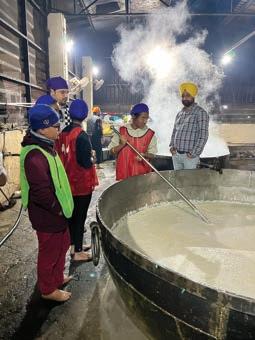
In the Golden Temple, I saw people making food for 1,000s and 1,000s of people. You don't have to share the same religion to enjoy the delicious food. It's free for everyone. After seeing all of this, I realized there is always good in the world, and we need to embrace it.
Tarana Ranganathan, 2022-23
T he Golden Temple, the most sacred place in Punjab, left a deep impression on me. I was fascinated by its rich history and had so many questions such as how much gold was used, who built it, and how it has been maintained over the years. What really moved me was that the temple was open to all regardless of people's religions and races. This sense of openness touched me deeply, even though I'm not a Sikh. The daily Langar, where thousands sat down to free meals prepared by volunteers, taught me selfless service and giving back to the community.
The Golden Temple's core message is “we should think of the world as one” resonated with me. I felt a sense of harmony, peace and equality. The Golden Temple was not just some sightseeing trip, it was also a lesson about equality. This full experience motivated me to travel around the world and experience different cultures when I grow up.
Who Are We?
The line was long, and the people were impatient. Rows and rows of heads were seen, like an army of multicolored ants. The colors were vibrant and strong, like a rainbow drawn by my cousin. Just then I realized - among the army of ants I was a single person. Blue on the top of their head. Me. I woke up to reality. I was a single person in a huge world. What tiny change can I make? What can I do? Just then, my eyes jolted up, inside a room. I had forgotten about the Golden Temple of Punjab. Later, my mind drifted to rows of more people washing dishes together. Seeing the people of different beginnings coming together as one, I realized who I am.
Reyahn Bantia, 2022-23
Zidane Das, 2024-25
This Day cannot be forgotten, us standing in the line with thousands and thousands of people, people pushing around each other, and this is happening because the people want to see the Golden Temple. In person this was completely new for me and on the top of that I had like hundreds and thousands of questions flowing in my mind, what would be the inside of the temple, is the temple made out of real gold, what is there inside the temple and with all these questions inside my mind I waited patiently until I entered the temple and after I entered the temple I was silent because the inside of the temple was fantastic, beautiful, fabulous I had millions words which still couldn't describe the inside of the Golden Temple… the inside of the Golden Temple so beautiful that my eyes started watering.
Aryan Beere, 2022-23
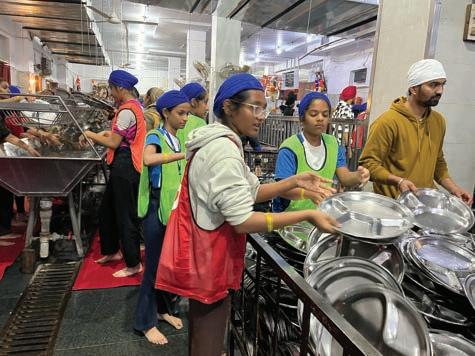
People were all around, gold and silver in every room, and birds flew high in the sky, waiting for everyone to complete their prayers. “Walk in one straight line and don't let go of each other's backpacks” is what the teachers said. Everyone was so impatient. People were rushing through between our hands like there was no tomorrow. After a while, we finally made it! We were all so thrilled and cheerful. In the temple the crowd was insane! As we walked & walked, our legs were all soar but we kept pushing through. Later on, we went to the rooftop to discuss what we observed and the history behind everything. It was quite fascinating. “Look at the sunset, the sky is so pretty,” my friends told me. It was breathtaking. As we were walking down, I could smell the prasad, and as I assumed, it was really tasty! We went to the place they make food and saw various machines. Before that, we washed the utensils and cutlery to show our participation to God.
That was an experience I will never forget.
Jiana Morzaria, 2022-23
Harmandir Sahib
The gleaming gold of the Harmandir Sahib. (Golden Temple) caught my eye as we entered the humongous queue. Right then all my visits to the Harmandir sahib crossed my mind, the gold shining as bright as the sun, the water as still as a non-living thing with perfect reflection of the Golden Temple. ""Angad"" called my friend. We are here ..
Angad Singh, 2022-23
On June 4th, 1984, there was an attack launched on Harmandir Sahib of Amritsar codenamed Operation Bluestar. It caused a lot of unrest to all pilgrims and Sikhs. When I went there today, there was no evidence of this attack ever happening. This is when I realized that peacefulness emitted by Sikhs be it in an attack or mere fight they were all so peaceful no matter what. Today I saw peace at its finest best.
Sreenivas Sreekanth, 2022-23
My Visit to the Golden Temple
I was standing in swarms of crowds inside the Golden Temple. The intricate design of the dome on the ceiling was covered with gold. The walls had been designed with stories of people cased in glass. There was an area in the front with white mattresses that had two rows of people playing folk songs. People were pushing and pulling me to get closer to the stage. Finally, after a large struggle of pushing my way through the crowd, I reached the stage. I took the 10 rupee note from my pocket and threw it with the rest of the cash. I then sat on my knees and touched my forehead to the ground. I got up and left the room back through the swarm of people. Once I was out I realized that the Sikh religion is a religion of peace and people who follow this religion let others practice whatever religion they want without any violence.
Aditya Thakkar, 2022-23
When I visited the Golden Temple, it felt really peaceful. The water around the temple was so calm, and the golden building looked amazing in the sunlight. Even though there were a lot of people, it didn’t feel loud or crowded. Everyone was respectful and quiet. Walking barefoot on the marble felt different, but kind of special. I liked sitting in the langar hall and eating with everyone. It didn’t matter who you were, we were all treated the same. Being there made me feel calm and happy inside It’s a place I’ll always remember.
Shreeya Suresh, 2024-25
Infinite Patience:
The Golden Temple is a majestic and swarming temple. Swarming because it is the largest Sikh temple in India. Even though it is a Sikh temple, people from all cultural backgrounds visit this magical temple. A place full of knowledge.
As we e ntered through the main entrance, a blinding yellow light flashed in my eyes. I was in awe when I had seen the main shrine of the temple. As if it was set ablaze by the sun. But my feeling of awe was outweighed and tarnished by the feeling of shock. There was a long line that seemed to go forever. Countless people made the fiery and golden beauty of the main shrine feel imaginable. There was only one entry to the main shrine. A bridge connected the shrine to the rest of the temple. A dazzling pool of holy water surrounded the golden shrine.
Whe n we got to the back of the line. Holding each others bags and chatting. We kept each other sane as we were slowly but surely moving up the line. An impatient and aggressive woman cut the line by swinging and throwing my arm. How could a stubborn and desperate 7th grader have infinite patience.
Vihaan Mishra, 2022-23
R eal Gold
As I sit up at the terrace of the “Golden Temple”. My eyes close, with not a sound to be heard. I feel the cold marble against my legs as I sit alone, alone with my thoughts, realizing the beauty of the culture, the kindness of the people. No sound to be heard, just me, me and my thoughts. Realizing the real gold is in silence.
Prathavi Shekhawat, 2023-24
Deja Vu
It can’t get colder
My hands freezing up till my finger tips, I couldn’t walk any longer. I had bruises and cuts going along my feet and the bottom was much worse. We stopped; just on the rooftop of the Golden Temple and stood in silence. The breeze flowing through my hair. Everything went silent for that split second. I was one with god, one with the air and breeze, and one , with myself.
Kaavya Kadambi, 2024-25
Set in Gold
Take off shoes, drop your bag and go down the stairs.
The standard drill.
What I saw was nothing close to standard, though.
The simple concept of a temple, set in gold. The beliefs of millions, set in gold.
The generosity and kindness of people, set in gold.
Immortalized forever.
Aaryan Kalangi, 2023-24
Suddenly, the doors open into a huge room with mats laid across. I ran around with my friends trying to find a seat, plate, bowl and spoon in hand. As I sat down, a sudden wave of deja vu overtook me. Years ago, I used to go to Langar with my nani and nana at our Gurudwara. While I was hidden away in my thoughts, someone yelling at me on whether I wanted roti or not brought me back to life. After I got my roti, I looked around and thought of one word. Diversity. People of all religions, backgrounds, social and economic statuses sitting together and eating.
I wondered, what would it be like if the entire world was this inclusive? Maybe, just maybe, would that happen one day. Us sitting with our nani and nanas, enjoying the simple, but delicious food in front of us.
Rhea Rajiv, 2024-25
This Day cannot be forgotten, us standing in the line with thousands and thousands of people, people pushing around each other, and this is happening because the people want to see the Golden Temple. In person this was completely new for me and on the top of that I had like hundreds and thousands of questions flowing in my mind, what would be the inside of the temple, is the temple made out of real gold, what is there inside the temple and with all these questions inside my mind I waited patiently until I entered the temple and after I entered the temple I was silent because the inside of the temple was fantastic, beautiful, fabulous I had millions words which still couldn't describe the inside of the Golden Temple… the inside of the Golden Temple so beautiful that my eyes started watering.
Aryan Beere, 2022-23
T he flag was a symbol, a symbol of my wonderful home, India. Loud noises, yummy tastes and a feeling of relaxation. The langar was a place where no matter your economic or social status, could come and enjoy nutritious, scrumptious food free. It seemed like there were hundreds of people all eating at once and even though the air was cool, the people made it just a bit warm. This was a place, a place of togetherness where I felt like I won't alone. A place where kindness was common and goodness was in everyone’s house. It was a service done by people with hearts of gold ironically in the place where gold is found here. I wish I could be like these people helping without expecting anything in return, hopefully one day I can learn.
Shivank Singh, 2024-25
Visiting the Golden Temple was an experience that left a mark on me. It was an unforgettable experience. I stood in line for hours to get a chance to bow down to Guru Granth Sahib, eat the prasad and langar, and finally did Seva by helping clean dishes. During my prayers and the background recitation of the Guru Granth Sahib, I felt a deep sense of peace and connection to the divine. Participating in Seva made me humble by giving me a sense of equality with everyone. I felt proud for helping others have a meal, my soul felt fulfilled and content when I did seva. I noticed people from all walks of life regardless of caste, religion, or status, eating and sitting together as equals. I felt a sense of unity and oneness with everyone. As a Sikh, these moments brought my relationship with god a little more closer. It also taught me that freedom can also mean equality and service to others. Serving others selflessly with no expectations for anything in return is a way to exercise our freedom to bring people together.
Sahejdeep Singh, 2024-25
The Golden Temple in Amritsar shines like a bright jewel, its golden dome sparkling brightly in the sun. As I walked closer, the soft sound of hymns filled the air, wrapping me around feeling calm and peaceful. The cool marble pathways beneath my feet lead me to the heart of the sacred place where people from all over come to pray and seek hope. The wonderful aroma of food came my way from the langar where generous volunteered serve free meals to thousands of visitors everyday. Everyone sits together on a simple mat, not only sharing food but also smiles and stories creating the sense of community which I could almost identify everywhere we visited that really brings out the third pillar of Sikhism - to share and understand that shows that everyone is equal here within the Sikh community.
Zoya Kinra, 2024-25
Golden Memories
I sat on my grandmother’s bed as she braided my hair, which gave me a sense on confort. She was telling me about the Golden Temple, about how intricate the patterns are, how beautiful the designs on the walls are, how skilled the artisans and architects were while crafting the temple. Of course, 6 year old me didn’t know the temple, but today, as a 13 year old, I understood, each carving tells a story. As I walked in, the gold shimmered, the chandeliers hung from high ceilings, I though I was in a palace. As I looked around more, I understood why my grandmother said the artisans and architects were skilled, because everything looked perfect, just like the moment with my grandmother
Tara Hiremath, 2025-26
As I stepped into the Golden Temple, a wave of cool air brushed against my skin, sending a quiet shiver down my spine. The marble floor felt icy beneath my feet, yet strangely comforting. With every step I took, the noise of the city slowly disappeared behind me. Golden walls sparkled like they were made of pure light. The reflection in the calm water made it look even more magical, almost unreal. Soft hymns echoed around me, filling the space with a peaceful rhythm.
Prerna Agarwal, 2025-26
The Taste of Selflessness
As I stepped into the Harmandir Sahib, the soft echo of Waheguru was wrapped around me, mixing with the low murmur of thousands of whispered prayers. This was a special placeA place in which everyone was accepted. I went to many temples, but this one will always have a place in my heart. We all had the same food, The same water, and the same happiness. It didn’t matter where you were from, which religion, or which gender you were, because Seva was free. While eating lunch at the Langar seva, I felt like the food made me warm. It was not just how hot it was, But how someone I barely knew was making it; And the fact that people were doing it; Out of love and hopeHope that whoever is eating it will enjoy it. This taught me that selflessness is the best virtue a man can ever have. This is what I call real gold.
Aditya Raghuram Talluri, 2025-26
Golden Tranquility
Bathed in sunset hues, the Golden Temple emerged like a celestial mirage. Gleaming spires mirrored the tranquility within, where whispers of prayers and ripples of holy water created a timeless dance. Amidst saffron-clad pilgrims and the echo of hymns, I felt an ephemeral connection to divinity, etching serenity into my soul.
P eople surrounding me everywhere, getting closer and closer every second. Everyone with different stories, everyone with different identities, but here we are standing united and equal. A small smile took over my face as time started to feel still. I learnt that no matter how different we are, we will always have something in common, something called being human.
Saina Samir Goenka, 2025-26
W aheguru, Waheguru, Waheguru echoed all around as the faint sounds of Kirtan engulfed me, the smell of incense sticks and Kada Prasad all around. As I looked out, the intricate art gave me chills, a feeling I couldn't describe. My hands went cold, my hands trembled, and my heart beat went faster, but not out of fear. Out of pride, in utter awe of the Golden Temple.
Sreeved Reddy Kambalapally, 2025-26
what I thought of the Harmandir Sahib when I first entered. I thought of what seems to be all the possible things going through everyone’s heads at that moment. I saw strangers wearing patkas, and through those I saw prayer and worship. I saw strangers from outside India, and through them I saw interest and sometimes hurry. We went into the main sanctuary, and there was one of the reasons it was called the Golden Temple by many. The sunlight reflected off of painfully bright panels of brass, bronze and gold. We ate food in a large hall with floors as black as obsidian. I wondered what the strangers who volunteered here felt like when polishing or cleaning or washing. Happy? Blessed? Good about themselves? I felt as if I couldn’t know less about the strangers around me.
Advay Sahay, 2025-26
E nveloped, drenched, draped in layers of gold, gold that seemed to trickle into corners, wrapping us in a sheen of morning light. I stood still, lost in a symphony of conversation. A clang echoed through the chamber - my balance betrayed by a metal railing that ran across the sea of marble tiles. I shrugged it off and kept moving forward when a thought raced through me - the Sikh religion and values were mirrored in this very instance. The criss-cross network of metal railing showcased the close interconnection between them all, their willingness to always put the community first.
T he shining gold that covered the temple was forged, mended and shaped painstakingly at extreme conditions, and yet it had come out more stronger, more beautiful than ever - just as the Sikhs had in the face of adversities.
Vihaan Agarwal, 2025-26
The sun was setting over the the Golden Temple like a golden ribbon wrapped around a precious jewel. Beside me prayers floated in the air, drifting over the rippling sarovar. The wind was perfumed with a scent of kada prasad warm, sweet, comforting wrapped itself around us. For a moment everything felt still as if the city took a breath.
Sacred stillness
The evening sun, slid over the Golden Temple like honey. Beside me a group of people were murmuring the mool mantra Their voices drifted above the gentle splash of sarovar. The smell of prasad wrapped us with comfort and warmth. For a moment everything was still like the city was at peace that Made me feel calm,joyous and enlightened.
Ariyanna Lal, 2025-26
meditating on the top floor of the Golden Temple in a corner. I could feel everything around me - like I was in another universe. After meditating, my mind was clear. It was like wiping away frost from a window on a cold day. The feeling was unmatchable.
Bagh
A pology I stared, shocked at the sights of the Jallianwala Bagh. My entire body turned to ice, as I was unable to comprehend what I was seeing. I was absolutely dumbfounded. I felt like a bullet pierced my heart, leaving a universe sized hole. “How could Dyer fire openly at over 15,000 people in such cold blood?”. “How could he fire at innocent people trying to escape?”. My blood started to boil. Every second felt like an extra wound in my heart. A scary, gloomy aura hung over the place, with the ghosts of the massacred wailing in my ears. An official apology hasn’t been issued yet. But do we need one? Will we ever recover from this atrocity? Flattening a crumpled paper does not remove the crease. Bandaging a cut does not eliminate the pain. Will the hearts of Indians ever heal?
Avyay Tenzin Agarwal, 2022-23
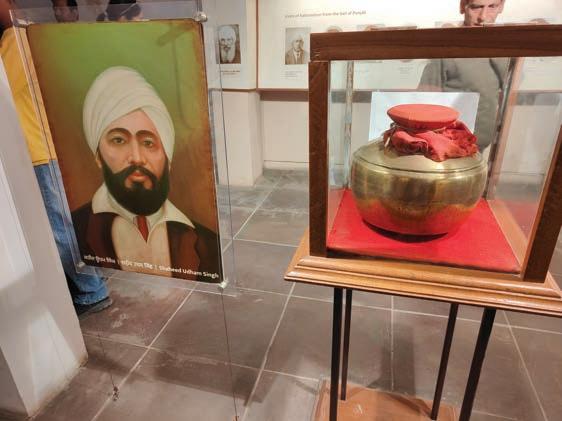
Udham Singh
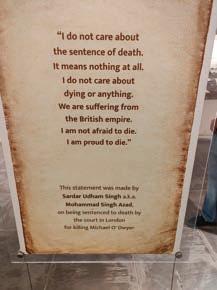
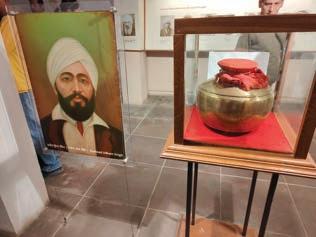
Today, I went to Jallianwala Bagh and saw the eternal flame for Udham Singh, the man who killed General Dyer. As I saw this, my heart filled with respect for this man who killed someone who killed someone who had ended thousands of lives. I don’t know why I felt so much respect for a killer, someone who is supposed to be looked down upon. But when I closed my eyes, my emotions went from RAGE, to HATRED (For General Dyer) and then to RESPECT, for a man, who in my mind, fulfilled justice. Thank You, Udham Singh
Ishaan Shivam, 2024-25
The Well
The well where they thought they were safe
The well where they thought they could escape
The well where they thought nobody would go
The well where nobody was safe
The well where nobody escaped
The well where 120 came out dead
Viraj Tejavath, 2025-26
Jallianwala
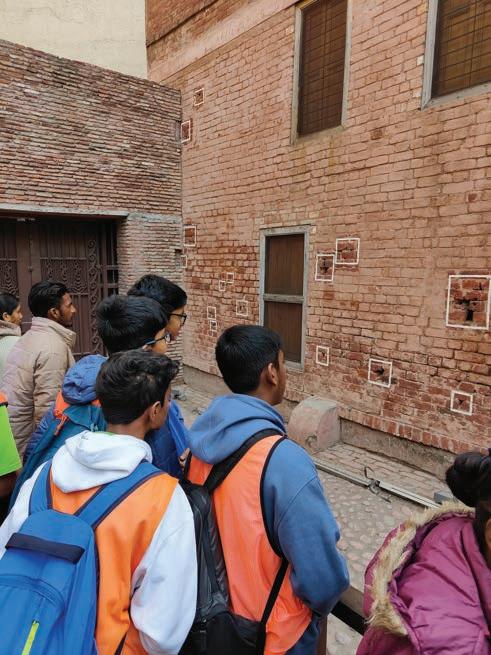
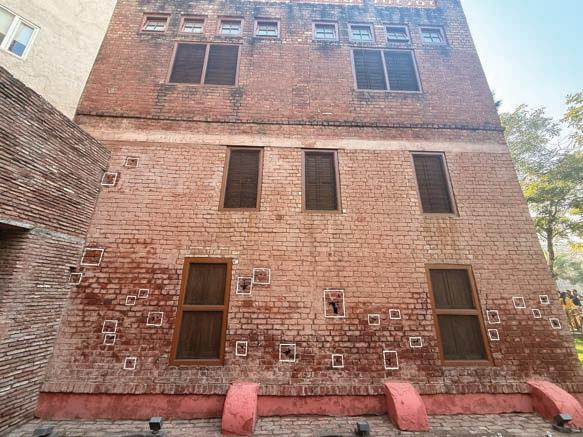
One of the most impactful moments happened at Jallianwala Bagh, where the heavy silence covered our group as we walked through the grounds. The bullet marks on the stone walls served as haunting reminders of the tragic massacre of April 13, 1919, when British troops opened fire on unarmed civilians. Standing there, I felt a chill run down my spine, connecting me to the suffering and resilience of those who had come before me. This moment had a mix of sadness and anger, making me to reflect on the sacrifices made for freedom.
This experience shaped my understanding of freedom as both a struggle and a privilege. The pain of historical sacrifice reminded me that my own freedoms are intertwined with the struggles of others. As a Sikh, this connection is particularly important, as the history of my community is filled with stories of resilience in the face of oppression. The sacrifices made by Sikhs throughout history have in me a sense of responsibility to honor their legacy by showing their justice and equality today.
Nishka Sehgal, 2024-25
T he holes in the wall. The horror in my head. The screams I hear, as I walk a beautiful place, which has a dark secret. Beauty cannot hide death, as death is immortal.
Pranav Hari, 2023-24
N ever
My pen stopped. Frozen.
I stared at the words death, children, innocent, all stuck together, heavy. Voices around me blurred into a hum, my head loud as my mind replayed the scene. Again, again, and again. 1,650 bullets. Not numbers, people. 372 bodies. Cries unfinished.
120 lying in the well, swallowed whole. For what? To send us a message, to tell India, a free nation for the past 76 years, to stop fighting back?
Never.
India is our home, our country, our mother. The day we stop standing up for it will never come, because this soil remembers. Scars don’t fade, they settle, but healing is what matters, rising again and refusing to let anyone take what we love most.
Our home, our identity, my home, my identity. And as I sat there, I realized the moment was no longer on the page, it was inside me, a part of me.
Ishika Mehta, 2025-26
’m walking with my classmates on the land which once held the sombre event of the Jallianwala Bagh. I could see the gunshot markings imprinted into the brick walls leaving a permanent scar. I could see the pink square granite tiles on the ground that marked where the bullets were shot from. It was that very point where a soldier shot a bullet that murdered an innocent soul. I could see the large, open and empty land of grass on the majority of the Bagh. It was the land where thousands of innocent souls were killed. As I’m walking on the stone pathway, all I could think of was how the event was like back on April 13th, 1918. I could hear and see the gunshots, the brawl of people running, shouting and jumping into the well all in my head. I could see a mother tightly holding onto her child, chanting a prayer to save them. I could see ruthless soldiers killing innocents like murderers. It was all just so heartbreaking, of how so many people were killed just because of tyranny.
Dhruv Krishnan, 2022-23
I t shall stay forever: Respect. Respect is something I had for the people who lost their lives. Everywhere I walked, I could hear screams and shrieks of people. There were so many trees surrounding us, it was as though all the trees were crying the whole time because they had seen it... they had witnessed it. Just like the “Amar Jyoti” that would never extinguish, the trees shall know and remember that 10 minutes forever and ever.
Bhavya Ranjit, 022-23
T here was lush green grass, it was bright and sunny with a happy crowd. There were benches and statues. But it was not like this 103 years ago, there was bloodshed, pain, violence and suffering. There were so many innocent people who died, and there were so many people who killed them. There are people now who visit Jallianwala Bagh to respect the people who died. It is up to all of the people, us, to make the right decisions, so the world does not end up like this: Where there are sides in everything, where people kill for what they want, where people die for what they want. We need a world where all of us together can do the right things.
Nishka Lahoti, 2022-23
B loody History
The golden rays of sun shimmered on the fountain waters, which were flowing down the fountain. The red brick walls surrounding the fountain were old, dust stuck onto them like a fly stuck in a spider web. The bullet marks of the older days were highlighted with white squares on the wall. The very walls where many had tried to climb, only to be shot and killed, to collapse on the ground. I stared at the wall with both awe and unease, feeling as if the massacre had happened a day before. Moving on, I saw a square, surrounded by a fence. I blinked for a second, and realized that was where General Dyer ordered his men to start shooting the innocent people, who were just celebrating Baisakhi. Turning my back on the square, I followed my classmates to the well. The depths of it filled me with dread, my stomach churning at how deep it was. To think people had jumped down there to live, only to die due its depths. I sigh, but turn to move on to the next showcase. As I move on to the showcase, I'm ready to learn the fascinating yet horrifying history of our Jallianwala Bagh.
Apsara Jaydev, 2022-23
R eliving
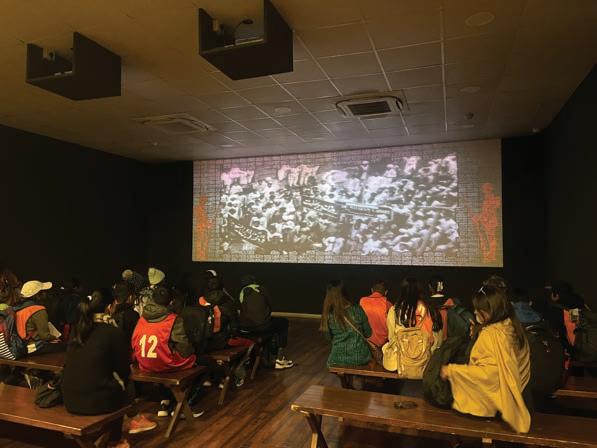
Jallianwala Bagh, a place where many people lost their lives. The place was looking completely transformed. No death, no depressing feeling, just a normal green park. The bullet holes were hard to believe, but then I saw the deep well. I tried imagining the people, and how they jumped in as soon as the bullets were fired. The video that we saw in the theater, made me realize the dark past that Jallianwala Bagh faced. I closed my eyes, and tried to relive the experience.
Arianna Sethi, 2022-23
T he Truth
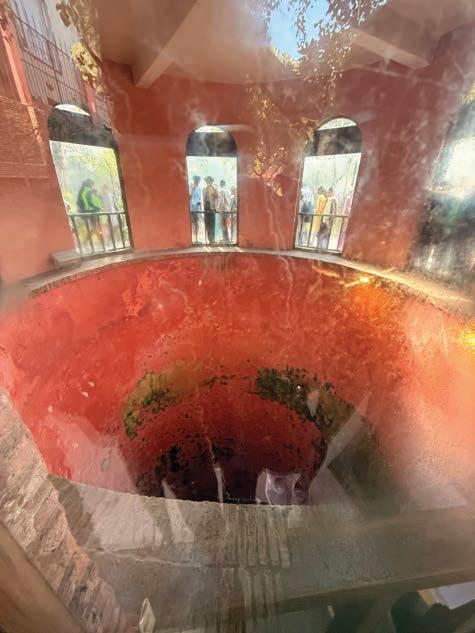
A cool, gentle breeze hit my face as I stared through the foggy glass into the dark midst of the well below. It was amazing how the maroon well I looked into was once used as a shield during the Jallianwala Bagh massacre.
It caused my stomach to churn. As I stared into the nothingness below, ignoring the loud screams that surrounded me, I pondered, ‘What really happened during the Jallianwala Bagh incident?’.
Vivaan KT, 2022-23
W hen I saw the Jallianwala Bagh, filled with lush green trees, and beautiful flowers, my first thought was, this isn’t the Jallianwala Bagh. How could a place filled with happy cheerful people munching on snacks be the same place where thousands of people had died, given their life away?
It was only fitting that everybody here should mourn and be sad, feel for the unwilling martyrs who had died in this very place. That’s when it struck me. Nobody living now could ever feel the terror and shock the people In Jallianwala Bagh had felt in that very moment. They were the ones who had actually experienced it, and most hadn’t even come out alive. We were just people looking at their lives through the glass of a museum or looking at their names etched on a tombstone.
Bhumi Bhandari , 2024-25
B urning Flame
That well, now surrounded with brick walls and glass Confined.
Just like the people here 1 century ago
A horrible historic event.
I imagined being there when it happened, I imagined my ears filling with the echoes of the gunshots that were being fired at my family and friends, I imagined having to jump down that well, not even knowing if I would ever even make it out alive.
To think that that well once held hundreds of bodies All dead.
K ites
Jallianwala Bagh felt like a recovering place, yet every step walked, carried a strange heaviness, the walls rising around it, protecting it, bullet marks sitting on them like stubborn freckles that won’t wash away, the wind moving carefully, as if it remembers what happened. And up on the trees, kites. Kites everywhere. Torn kite, stuck kite. Kites that could not move, victims of the tree. Kites that could not fly anymore, kites that could never be fixed, never be healed. Is this what victims of the massacre felt all those years ago?
Ziva Sama , 2025-26
M arks, everything and everyone leaves a mark or an impact on you. And sometimes, it can be quite literal. As I saw a ruined but still pretty study building in Jallianwala Bagh, full of holes in them, my heart went out for the people who were massacred, but more importantly their families, the people whose memories are etched on the walls. It was a truly heartbreaking moment when I realized that children my age were shot. The horrifying truth left a deep impact on me and my perceptions.
S. Poorani, 2024-25
Today we visited the Jallianwala Bagh massacre. Being there made me feel the pain and how scared the people were.
I couldn’t help but imagine having fun at a festival or gathering but then BOOM! Guns fired, hearing the people cry and scream, people jumping into wells for maybe just a chance at survival.
Being there and being able to hear 1650 shots getting fired in just 10 mins. All the deaths, all the injuries, all the trauma. But then you remember all of this. Why? Why did it happen?
It was just 1 individual who set out his little troop because there was a gathering and it was illegal at the time.
Aishwarya Sandy Sree , 2024-25
T he school trip smelled like diesel and dusty memories.
Punjab's heat clung to my skin, but it was nothing compared to the weight in that garden.
Jallianwala Bagh. A garden that doesn’t bloom, just bleeds.
I stood where children once played, and where soldiers, on command, turned the soil into a grave. History teachers told us facts. But that red stone didn’t give facts. It gave pain.
It handed me silence thick as grief. And a question:
How do you grow anything from blood?
Something in me cracked that day.
Maybe innocence.
Maybe belief.
But something hollowed out space for truth. That’s how school taught me. Not through textbooks.
But through standing in a dead garden, and hearing it still breathe.
Rakshitha Srivatsan, 2024-25
people who were here and were killed mercilessly. It made me reflect on the sacrifices made by those who
T he video we watched at Jallianwala Bagh narrated the whole story of how the soldiers entered without warning and started shooting everyone. It also told us that many people jumped in well to save themselves. Tharun Deep Singh Ji took us to Jallianwala Bagh where he showed us where the soldiers shot from how there was nowhere to hide and the bullet holes in the wall.
Adityavardhan Jha - 2023-24
2 8 Bullet Holes
I take in a deep breath as I look at the wall filled with 28 bullet holes. My eyes fog up as I think of all the people who lost their lifes. While I take deep breaths to calm myself down. It takes a second for me to take my focus from the bullet holes on the wall boxed in white to my friends and the crowd around us but I do it and let out a sigh of relief.
Mysha Saraf , 2025-26
T he weight of history - The moment I stepped into Jallianwala Bagh, a cold shiver ran through me. The silence felt loud, like the air itself remembered everything. I stared at the bullet marks on the walls, frozen in place, imagining the fear and pain of the people who were trapped. The well stood there quietly, but it felt heavy with thousands of untold stories. I felt a tightness in my throat, a mix of sadness and anger. It made me understand how precious freedom is, and how much people suffered for it.
Arjun Rawat , 2025-26
O ne man’s order carved a wound that scarred not just the land, but the souls of a nation.They had gathered in peace — thinking of family, of celebration, of nothing violent. Then came the command. Guns rose. Shots shattered the air. Laughter turned to screams. The soil beneath their feet darkened.
At Jallianwala Bagh, innocence met cruelty without warning. And those who lived through it carried a silence heavier than the gunfire itself.
Siddharth Vattikuti , 2025-26
A nything but this
My shoes slap the pavement Laces dancing around with every step
The auto rickshaw ahead of me jumpstarts, a puff of smoke clouding my eyes as I stumble to catch up. I lock my ankles as I step on a pothole, pain shooting up my leg, quickly replaced by awe at the bustling marketplace, alive with all the people.
Alive
Unlike those in the park that day. My feet tremble as I step on the ground, trying to estimate how how much blood I’m stepping on.
The path turns to warm, red liquid, sticking to my strides.
I stare into the expanse of ground, bodies layered in piles as I shake my head. Punishing my imagination for letting me see such gore.
Anything. Anything but this.
Tvisha Agarwal , 2024-25
Wagah Border
Thank you
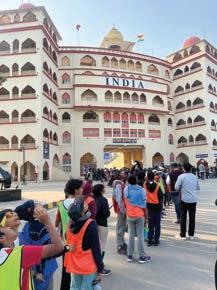
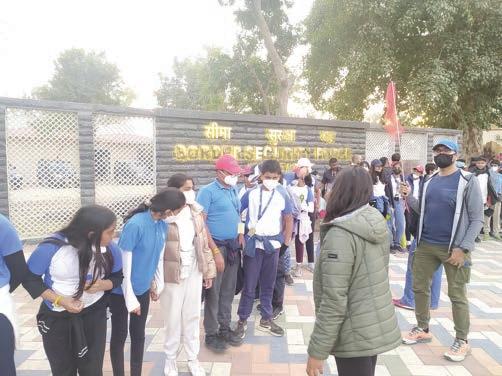
Attari border. The same place my great-uncle laid his life fighting Pakistani planes. The same place he was awarded the Param Veer Chakra for his bravery. The same place we went to enjoy and celebrate today. Thank you, Flying Officer Nirmal Jit Singh Sekhon.
Aryman Manipal, 2025-26
The
Tree
There stood a tree. There were 2 sides, divided. A stadium cut in half, sliced like butter. But so was the tree. It stood on one side, but leaned on the other.
Which side was it truly part of?
The side of tricolor, or the side of green and white?
But both of them were so similar, doing the same thing. Trying to overpower the other. Screams, cheers with the same words - Hindustan Zindabad! Pakistan Zindabad! Does this tree have to choose?
It starts on one side, but goes on the other. Just like the people. Choosing sides. Staying where you come from or fleeing because of who you are. Why is there a division? Why does this tree have to choose?
Pari Chatlani, 2023-24
S ounds and Sights
I step foot into the arena
I’m attacked by sounds and sights
Sounds of freedom
Sounds of songs
Sounds of people. Our people. My people.
Sounds of bustling crowds
Sounds of scuffling shoes
Sounds of teachers telling us to bridge the gaps
Sounds of music blaring in my ears, as I’m not longer just in Punjab or Attari. I’m in India.
I’m attacked by sounds and sights.
Sights of the border gate
Sights of Pakistan
Sights of India
Sights of people, their people. Our people. My people.
Sights of bright screens
Sights of colorful, dancing crowds
Sight of three gates:
One in India. Orange, adorning a tricolor. One in Pakistan, a beige buliding raising the moon and star.
Lastly, one in between. Black, heavyset.
Marking a brotherhood that can never be.
Tvisha Agarwal, 2025-26
The Stadium
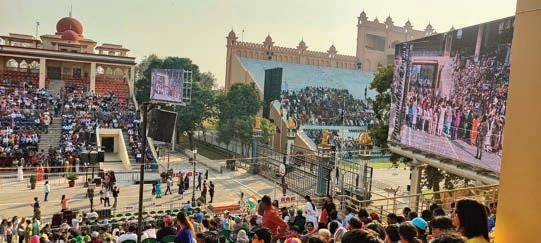
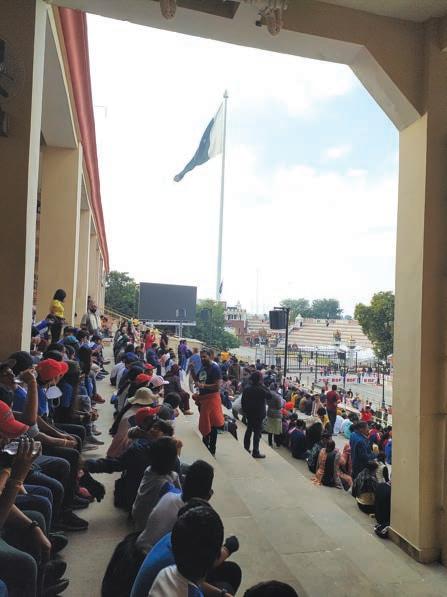
As songs played and people shouted, I understood what real chaos is. I saw the Pakistan flag waving and moving in the air with independence and pride. As I lost myself staring into a huge screen, playing different images of nature with some text in Hindi, I re-thought what was happening around me. As music played and people shouted, I realized it was people sharing their love for our country, a sign of our respect. The music being played was encouraging for the people and it has shown a sense of pride for our country. Under all of that noise and chaos, there was love and a sign of care for our country.
Gautam Poddar, 2022-23
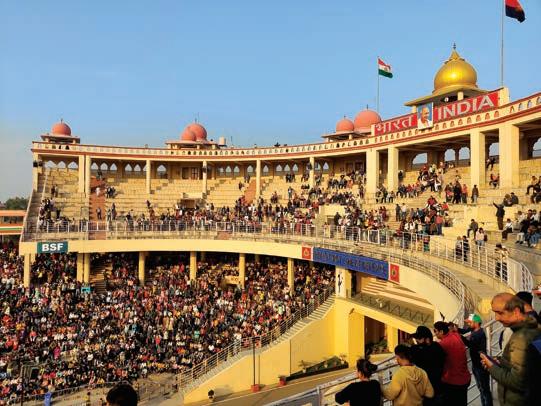
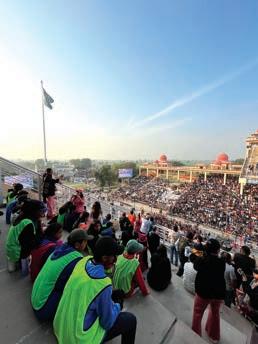
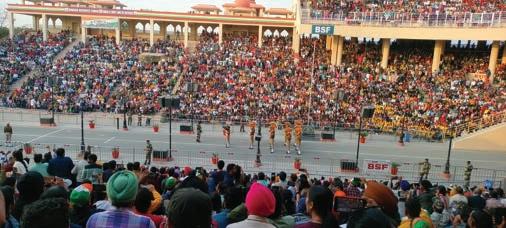
Proud to be Indian I sat myself down on the concrete steps, thoroughly blanketed with dust, the sun radiated elegant and warm rays as the stadium filled with people. There stood a long road, nestled between a brooding black gate, the pleasant breeze immediately tackled by the rampant jeering of proud Indian people, their faces splotched with the Indian tricolour. Two admirable flags lean tall, accommodating the Independence of two flourishing nations. On the road, stood many honourable soldiers surrounded by the hyper crowd, fashioned in a diverse palette of brown shirts and pants, and a white and red shawl across their shoulders. The crazy loudness of instruments and vocals resonated among the crowd, aggregating a pure Indian tune as a young guard ran around the road, performing lots of acrobatics and hyping the crowd even more as the soldiers stood in formation. “BHARAT MATA KI, JAI”, the crowd shouted as the gate opened, the soldiers firmly marching up to their rivals, kicking up their feet multiple times before shaking hands and returning to their stance. Thoughts clashed within my mind, “How are they so civil with their rivals?”, my thoughts took a steep diversion, “We’ve been through a hurricane of brutality together and against one another, but yet we find the peace to stand on common ground”, I thought as the fresh scent of patriotism lurked within the air, how proud I am to witness the beautiful nation we’ve developed.
Vedant Kumar, 2023-24
Loud (Wagah/Attari Border)
Cheers, claps and hoots echoed in the stadium, as the proud, honourable Indian army men faced the rivals. Was the patriotic song on the speakers too loud? No!. Was the cheering crowd loud? Relatively. Were the dancers in the walkway loud? Maybe. Were the marching soldiers' footsteps loud ? Not really. So what was the thunder that made my heart race, as I clapped my hands red. Goosebumps erupted across my body, as I had a realization. India’s blood, India’s pain, India’s struggle, India’s fight for freedom. That was the loudest of them all.
Avyay Tenzin Agarwal , 2022-23
Duality
Thousands of people gather around a seemingly insignificant black gate. The blood sweat and tears shed all led to this - This dividing gate that invokes so much bad blood between people who a few decades ago were birds of the same feather. And yet, while separating so many people, in a way it unites us - Every day, thousands of people gather at this location from both nations, each united in pride. Each united in resentment. Each united in cheer. Each united in hubris.
Idhant Rohin, 2022-23
Beyond
The stadium was jam packed with people. The ceremony wouldn’t start for an hour and half of the stadium was already full. The stadium was split into two halves by a 5 meter long gate. On my left was Pakistan, a country which I had only heard about in school & from the news, and on the right, India, my country where I was sitting. It felt unreal that I was seeing a country that had once been a part of ours. While people were screaming Vande Mataram & Bharat Mata ki Jai and dancing to patriotic music, I couldn’t stop wondering what life was like there. Was it full of corruption and terrorists like I had heard or something more. Is Pakistan a peaceful country? Are they somewhat similar to us? What is Pakistan beyond the stereotypes?
Vivaan Padmanabhan, 2022-23
Unity of our country
The teachers were yelling, "Stay in line!"
People saying, "Excuse me," and going through. Me thinking, "What if I get lost in the big crowd?" My friends never let my hands go. I felt safe. The crowd was passionate, shouting "Vande Mataram!," showing the solidarity and unity of our country at the Wagah border.
Tarana Ranganathan, 2022-23
Me and my classmates move in a uniform manner trying to find our way through the swarming Attari border. The moment I entered the stadium I was deafened by the blaring speakers. I found the way to my seat and was mesmerized by the crowd. The excitement was uncanny. The patriotic manner of the host made me feel slightly uncomfortable but also fascinated. I could observe what he was willing to do to allow ordinary people like me to sleep without the fear of getting bombed in the middle of the night. Now I can sleep knowing that I am safe and protected from the destructive atrocities we call war.
Sathya Ganesh, 2022-23
The crowd roared as the soldiers marched forward towards the border. The stadium shook as the crowd rose to the waiving proud Indian flag. It was patriotism to the next level, the level of a country who worked hard for their independence, a way for those unsung heroes to finally feel proud
Arya Joseph Mathew, 2025-26
The majority of people do not have freedom. People have to fight day and night, and sacrifice their lives for us. People have to evacuate from their hometowns for their safety. Those people aren't in their comfort zone and neither are the people that fight on behalf of us. When we visited the Wagah border, I observed how passionate people are to save others' lives. When we got there, it was blaring. The chanting of everyone, I couldn't resist chanting and singing with my friends. The music and background noise of the drums & trumpets were surrounding us. All the soldiers marched in front of the crowds, and the population going in to dance to show how we love our country was just mind-blowing!
The Pakistanis were on the other side and it was kind of sad not seeing all of us as a whole. People differentiate each other because their religions just doesn't seem right.
When the gates opened between India and Pakistan everyone started cheering really loudly and their faces lit up. This is an adventure that was great and that I will remember forever.
Jiana Morzaria, 2022-23
Today we went to the Wagah Border. The area where we were seated was almost at the top and the whole area was enormous which made it feel more likely to get lost. All around us there was blaring loud music going throughout the speakers which was spread all around. Each song that was played was about India like India wale. There was a whole crowd of soldiers on both sides of the border which made the whole experience even more interesting and new. Each soldier had a role during the ceremony which would make the audience scream at the top of their lungs with motivation for all the soldiers protecting our country. The crowd was roaring with excitement as the border was opened and two soldiers from India and Pakistan shook hands calling a truce. Both sides of the crowd were cheering when both flags went down to show they won't be fighting after sunset. This whole experience helped me feel more protected and proud of the Indian army for helping us all feel this safe.
Alisha Kaushik, 2022-23
The cheers on the Wagah Border were loud on both the Indian and Pakistani sides. Both militaries were trying to put on a better show than the other. They tried to compete as if they were enemies. It was like the history of the 2 nations shown in a ceremony. But then the gates opened and the cheers were louder than ever. The soldiers of each country lowered their flags in no man’s land. It is then that I realized that Indians and Pakistanis eat the same food, speak the same language, and have the same culture. This made me realize this show's true purpose: to bring India and Pakistan closer and stop the conflict.
Aditya Thakkar, 2022-23
The 2 nations
You're sitting there. Between the vast crowds of thousands of humans. People are screaming, cheering and clapping for their nation. Music is blasted into your ears. You look over to the other side. The Pakistanis have put their own show. The BSF (Border Security Force) and the Pakistani rangers are guarding the giant black iron gate. This gate separates the 2 nations. The 2 nations that were once united, now divided more than the lines that separate them.
Ishi Tandon, 2022-23
O ne and the same
An ocean of roars across the border. The huge speakers playing loud Hindi and Urdu music fills the ear. The air is chilly but is lost in the burning, feverish excitement of the crowd. Wagah border, the barrier, the gate between India and Pakistan is in peace, for only once in a year. The patriotism swells and crests like a tsunami. With my fellow students, I too am also cheering alongside them until I stop and think: What would it be like on the Pakistan side? Would it be any different? I would still be screaming my lungs out, patriotic and enjoying the performance. Perhaps it is one of moments such as that beating retreat ceremony, when none of it matters. When the sandbags and weights of society and ego fall off and experience pride, everyone's heart beats at once. When you stip away the titles and the boxes assigned to us, you can see the truth inside. That we humans are truly one and the same, underneath.
Vihaan Varior, 2022-23
A surge of adrenaline:-
As the BSF waved his arms directed at the crowd. Encouragement to thousands of proud and competitive Indians.
Chantings of ‘Hindustan zindabad’ swept past the Wagah border.
I did not resist chanting along with my friends. The aura of the blaring crowd persuaded me to chant till my full extent. The pride and compassion. A surge of adrenaline.
Vihaan Mishra, 2022-23
Same
I am sitting at a crowded stadium with patriotism surrounding me. I think some of it seeps into me too. I watch keenly as the ceremony starts and look at the gates being opened. I look at both the soldiers marching towards the thin like that has divided two whole nations. The two men look the same. The land on the other side of the border looks the same. The people in the other stadium look the same. I heard Hindustan Zindabad, it sounds the same as Pakistan Zindabad. Everything is the same yet why are we so different and divided?
Devangshee Khemka, 2023-24
As the representatives of the Indians and the Pakistanis shook their hands, time slowed down. I heard the drums banging, the people cheering and the people clapping. A cold breeze brushed my face. For a moment, just a moment, I thought the conflict was over, and then a thought crossed my mind, if the color of our blood is the same, why do we differentiate between caste and religion?
Vivaan Karthik, 2023-24
A Slab of Iron:
The speakers blasted louder than a black hole, the people yelling and cheering increasing the sound decibel, and the Pakistan flag standing high and tall, tall enough to touch outer space, just dancing to the wind, or to the Indian music. I couldn’t help but stare at it, in question. What would it be like to have peace? What would it be like to stand together? What stood between us?
As our bright Indian flag rose on the Wagah border, my level of respect and pride also rose for our indian army. Leaving a ton of activities undone, we left from the Golden Temple to the border. The sun was shining but the air remained cold, not letting us get disappointed just yet. From the moment we crossed the checkpoint i thought about all the people in 1947 who would have crossed it too, same line, just different purposes. But then I thought about who all must have been killed by just crossing that checkpoint and then I felt grateful. I felt grateful i was safe protected like a wrapper around candy by our Indian army. When I was on the border line watching our two nations, which were originally one being reunited again, reunited by love, diversity or acceptance. Then it hit me what if a relationship like what was shown today was shown between Hindus, Muslims and Sikhs in 1947? What if that relationship was the answer to One India to a diverse india and to a peaceful India? I often ask myself is the change is something that i really want what if i like the way things are right now but then I realized i was being selfish the “change” may be different for me as a one but might benefit a group of people who know and suffered more than i will ever. Seeing our two nations made me feel proud that we had finally and at last moved on from violence and disagreement to ahimsa. A cold evening and a warming experience a combination that made my day.
Aadhya Suresh, 2024-25
H industan.. ZINDABAD
Vande… MATARAM
Bharat mata ki… JAI
The noise was deafening, but my face wore a smile. I was engulfed with patriotism, my love for India swept over me. I had never been so close to Pakistan before. But when i finally did see Pakistan, I was proud, proud to be Indian, but a small part of me was also in sorrow, Pakistan was in shambles, the houses, the roads everything was in ruin. India on the other hand, had a humongous stadium right across the border with the Indian flag waving high above it. Watching the Indian soldiers flexing their might made me swell with pride, silently thanking them for safeguarding our country. I am still a proud Hindustani, but sometimes I do think, would we have been better as one
Arjun Jain, 2024-25
As I see the Indian and Pakistani flags go down and the stands rise up on both sides of the large, rolling black gates, I hear the Pakistani stands chant, followed by ours. The message is the same as ours. Our side, better than yours. But both sides aren’t so different I realized, imagining the hundreds of refugees stepping over the border into a new home, where they still didn’t belong. On both sides people fought.
On both sides people fled.
On both sides people died. Once countrymen, now enemies, because of religion, and an invisible line. As my teachers tell me it's time to leave, I watch the stands beyond the gate for the last time, who stand cheering, staring right back at me, and I realize maybe it's time to recognize we arent as different as we believe we are. Though the 2 stands disagree on most topics, both have a strong belief in the country they belong to. And maybe - united by pride today, we can unite as a nation tomorrow.
Elizabeth Stoeckel, 2024-25
The Invisible Line
Different
Patriotic music. Loud cheers. Brave soldiers. That was what I saw when we went to the Wagah Border. 2 countries, 2 sides, 2 flags.
Thousands of people watching, thousands of historical events shared.
1 division.
The ceremony was entertaining, but all I could think about was how we were only metres away from Pakistan, just a fence to separate us.
I couldn’t wrap my head around how this division hadn't existed before, at least not physically.
As I watch the processions happening on our side, I glance over the large screen into the other side. I watch them mirror our actions:
Dancing the same way, Cheering the same way, Staring back the same way.
‘Do they think the same way?’ I wonder. ‘Are they also curious? Angry? Excited?’
What do they think when they look at us?
Not everything is the same: The clothes they wear are different, Their architecture is different, The people are different.
But still, we breathe the same air. We share the same roots.
We watch the same ceremony At the same place
At the same time.
But we are different.
Tysha Raheja, 2025-26
Unity
The thrill of entering the Attari Border is there for every Indian. But when I entered, I only felt sadness when I was in the division between the two countries. Why stay separated when you can be united? Why can’t we become one again? Why can’t we hold arms together? Or why won’t we? There are so many ifs in history. What if Kashmir were given to Pakistan? What if Pakistan never attacked India? Alas, we shall never know.
Aaryan Bhagat, 2025-26
Drums and all kinds of noises echoed throughout the stadium, soldiers of the attari border flipped and passed guns in synchronization. It was delightful to see I felt proud to witness that this is my country, India.
Aaryan Devaiah, 2025-26
P RIDE
The passion, the heart-felt aggression, and the pride for their nation, simply astounding. On both sides, the Attari and the Wagah border, I saw nothing less than those 3 things in each and every one of their eyes.
Guns shuffled, screams echoed, and I was left in awe. And in that moment, I questioned everything. I questioned how each and every one of them could love their nation so much. I questioned how they had the courage to stare their rivals in their eyes. And I questioned - myself this time, what have I taken for granted, to have such a free nation like India, but not have the same pride as the people at the border did.
Arihan Dhruva Reddy, 2025-26
We enter a massive stadium, in front of us 2 huge gates being guarded by the BSF and the huge crowd of pilgrims, and not much later I see the Pakistani border 300 meters away from me, my heart stops for a moment but then I ensure myself it’s okay my BSF is on duty.
Arman Singh Sahni, 2025-26
The Flag:
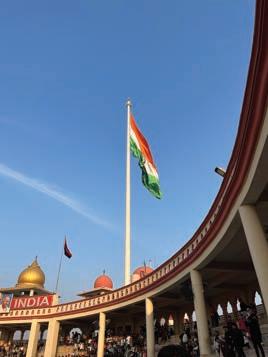
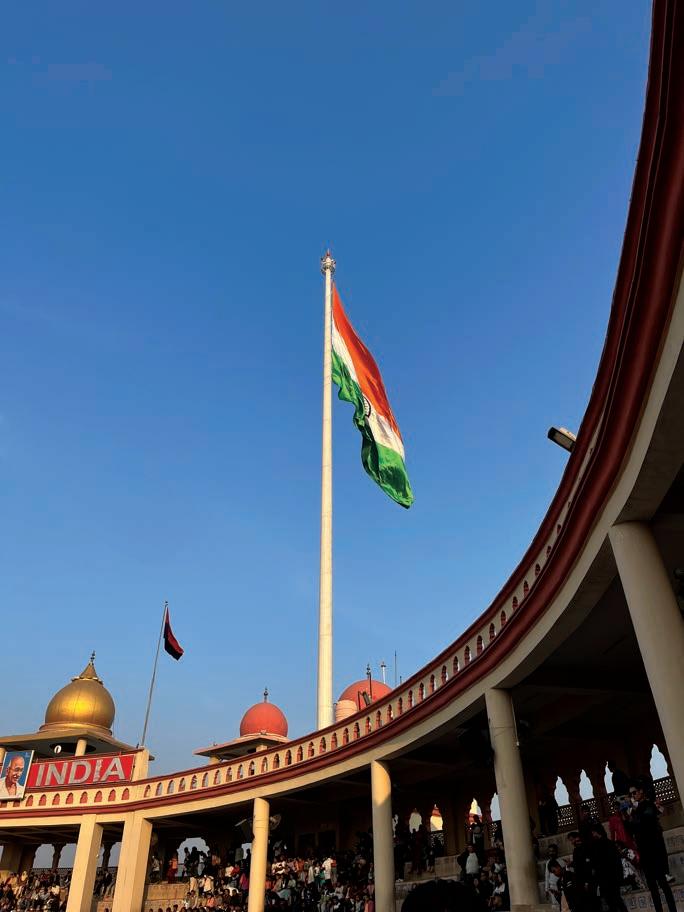
As I gazed upon the great Indian flag, towering above me, billowing in the wind, I noticed how majestic the flag was, with it’s huge proportions, and the royal colors flying high in the sky. I gained even more respect for our flag and our country, seeing how powerful and majestic it is, but also how humping and welcoming it is.
Likith Paila, 2024-25
Border millions of people
The Wagah border packed with people standing and shouting on the Indian side Bharat mata ki Jai, Hindustan Zindabad, Vande Mataram! and on the other side of the border the Pakistani side shouting Pakistan Zindabad and Jeevey Jeevey Pakistan! The gate was grand while it sent shivers down my spine. The smell of popcorn filled the air as we saw the soldiers march towards the gate both Pakistani and Indian, with pride in their eyes as they lowered their flags. Everything left the smell of popcorn, the people chanting, and the soldiers marching stopped. I realised one metal fence separating 2 brothers with roots before the partition both together at once and now divided by religion, leaders, and the British. Both countries were once of the same land, people, and same ethnicity all separated by 1 long metal fence. Both brothers are so close yet so far.
Caylum Raj Mannava, 2025-26
D ivided
The crowd roared as the tall soldier kicked his leg in the air, shaming the other side of the border. The crowd roared and jumped out of their seats clapping. But this brought out an unsettling feeling inside me.
We put each other down, start wars, start riots, simply because we are placed on two different sides of an invisible line. But we praise the ones who created the line and suddenly become enemies to the people who fell victim to this act, just like us?
The trauma of this partition that led to thousands being killed will always remain, but deep in our hearts, we need to remember one thing, we are all human.
Ruhi Singh, 2025-26
An Invisible Line
Chants soar; belittling one country, celebrating another. Why, what’s the point?
I only see the rift widening between us.
It’s a show of power, a sign to them, ‘we are stronger’.
And it’s only solidified by hostile looks across a fence.
My chants feel half-hearted, and I can’t bring myself to think of them differently; they just seem like me. How I would react if people kept insulting my home.
I can’t do it. I close my eyes and let it wash by.
Avram Lucas Bucur, 2025-26
The comforting warm afternoon sun sets a serene ambiance, at the Attari - Wagah Border as me and many other students waddle towards the entry, almost like penguins. However, as we moved through the main entrance, a plethora of distinct sounds commanded the air, so boldly - powerfully, that the beat of songs matched your heartbeat. A sudden wave of patriotism, unity, and togetherness overcomes me, like a splash of cold water on my face. Each side - men, women, children, and the elderly all rush to their seats, proudly supporting their soldiers energetically. At that moment, when our flags were hoisted high we were not India and Pakistan. We were the world. We were us.
Upmanyu Awasthi, 2025-26
Dharamshala
A heaven on Earth
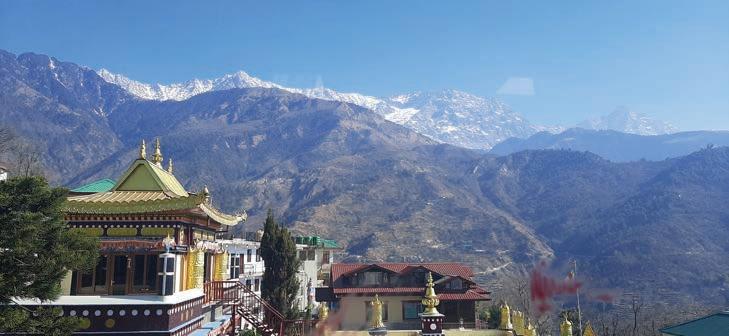
A crown of mountains with sparkling, shiny tips of snow, makes us stare at its glow.
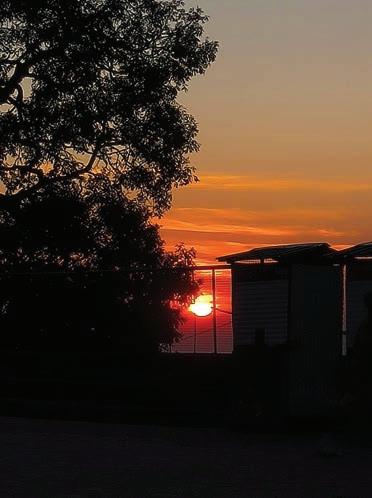
In the midst of these ranges, we see heavenly sunrises as if God is playing with colors of red, orange and yellow.
The chill in the weather adds to the enjoyment of the scenic beauty, As if to show-off is nature’s first duty.
This place is surely a paradise. The serenity is as high as it can get, I feel relieved that I am away from the traffic, horns and busy city I live in and here in a place that makes me feel relaxed and peaceful. Adding to the place’s beauty, the art we see everywhere, depicts the culture and beliefs of the people living here and it looks so spectacular that it cannot be described in words. When I hear the word ‘heaven’ the first thing that pops into my head is this place. Its name is Dharamshala and it is a heaven on earth.
Nikhil Juneja, 2022-23
A bus ride in Dharamshala
The sun was slipping away, slowly, but surely. I stared intently at the snow capped peaks, as if trying to make the snow melt with my bare eyes. The pleasantly warm sun soaked my skin. I took a deep breath, watching the sun drift away. I gripped my seat, and quickly, darkness surrounded the outside. I looked through the window, squinting my eyes to barely make out a few figures. As the road started to become windy, I looked at all the lights coming from the shops, and began to wonder what life is like for them. What life is like, crossing borders to get to safety. What life is like, without knowing what your country itself is like.
Aarika Natarajan, 2025-26
owering Majesties
As the cold wind blew through the windows sweeping my thoughts aside. I could feel my mouth reshaping, like a crack of dawn as a smile stretched across my face. My eyes wide open, refusing to close, taking in the majesty before me. My breath sped up by the second while my heart slowed almost to a stop. Thoughts, memories and emotions collided over like an ocean's wave, sweeping away the cold from my shoulders, and bringing light a new sense of wonder. The curved peaks, the white snow that layered the massive mountains like a blanket, the trees below that swayed, left to the mercy of the wind and the clouds protecting the region’s topmost heights. As the mountains towered over the scene, shadowed only by the sun, dipping down, leaving a beauty of colors in its wake. I felt as if my heart would almost break leaving it. Make my life miss every moment I spent in awe, staring at its majesty, and make my canvas of the world redrawn forever once more. Never have I ever thought, such a small moment would stay with me forever more.
Nimrat Kaur, 2025-26
My eyes were struggling to stay open as I woke up to a dark hotel room. I stumbled over to the window and opened the curtains. Through the misty windows I saw a truly wondrous sight. Snow capped mountains towered over tree covered hills. The beauty of Dharamshala shone in the morning light. This view gave me a sense of gratitude, of the once in a lifetime experience we get to face. Of the privilege we have going through a profound exploration of other cultures, history & how they shaped the world we live in today. I closed the curtains with a newfound sense of gratitude flowing through my veins.
Rishaan Bahri, 2024-25
S unrise
As I approach the breakfast hall, I look out at the sky. The glistening moon and twinkling stars adorning and embellishing the dark sky. I wonder how powerful the Sun is — even at nighttime, we are still graced by its light. A while later, I start to see the peaking sun rays from behind a lush hill, casting a rosy hue, giving a glorious greeting to the mountains. A couple minutes later, the clouds turn an iconic crimson-orangegolden color as the sun slowly engulfs the sky in its warmth. I flashback to yesterday, where the serene sunrise greets me as I’m on my way to energize myself for the day. How so many vibrant shades are visible at the twilight! I finally see the sky, slowly lightening its blue shade. The Sun wishes me a great morning.
Moksh Batra, 2022-23
H ISTORY, LONG AND OLD
The Archives, a room filled with all scriptures and the Earthy smell each page at the teachings of many scholars. All colour coded in blue, yellow and red. As I looked through the endless rows of scripture. I could also feel a sense of learning and spirituality in the air, when I saw these pages of scriptures, I could see each bump on the pages, each page had neat black letters that were complimented by the light brown and soft surface showing its real age.
Parth Kankariya, 2025-26
1 -2, 1-2-3-4, 1-2, 1-2-3-4, I watched as our whole circle's steps fell together synchronising in perfect harmony. Music played in the background. Tibetans dancing, everyone dancing, united as one. Despite our differences, we celebrated their culture like it was ours.
Zaara Samarjeet Salvi, 2025-26
G unshots, screams, pain. Back in Tibet there was pain. But all I saw was joy as I looked ahead at the stage. All I saw was awe when I looked around me. This community was not broken. It was the most healed thing.
Singing, dancing, the difference to me was like black and white.
Cheers, laughs, joy, here in India.
Eka Sivaraman - 2025-26
T he moment I stepped into the Dalai Lama temple, the whole atmosphere changed. My feet felt cold as I walked across the wooden floor. I felt a sense of quiet, calm and serenity. Beautiful paintings, mandalas and statues of different colours surrounded us. A subtle sweet scent filled the air as I thought to myself 'I've never felt anything so amazing before'.
Zaara Samarjeet Salvi, 2025-26
M editation at the Dalai Lama Temple When I first sat down, my mind was everywhere.
Thoughts kept popping up,random things, small worries, things I forgot to do. I kept noticing them... then trying to let them pass. Slowly, the chanting around me became clearer.
Not loud, just steady. Constant. Like a background rhythm that never stopped. Without realising it, my breathing began to match it. In... out... slow... steady.
Everything started to feel softer. The air felt calm, almost heavy with quiet. I noticed little things, the sound of someone shifting nearby, the faint smell of incense, the feeling of my breath moving in my chest. Nothing dramatic happened. My mind didn’t go completely empty. But for a few moments... it stopped rushing.
Tia Singh, 2025-26
ords
The dusty smell of books fills the air. Each book, though covered in the same mustard-yellow cloth carries heavy meaning.
The deafening silence echoes through the room, but the stories of history that vibrate through the room makes the room feel heavy with thought.
I eye the numbers on each label — 1676, 1677, 1678. The magnitude of these numbers send me a strong message — a message that history, culture and a sense of community could never truly be lost.
We always have words — even when time passes, and life changes — words always carry who we are.
This applies as long as we make an effort to preserve these words that carry inexplicable significance.
Haya Nasir, 2025-26
Tibetian Children's Village
The Tibetan Children’s Village
The small village filled with Tibetan children. 24 children in each home having 1 foster parent. This experience showed me that freedom is hard to get and identity is hard to show for them but now it is not. They are taught life lessons from Buddha they study every scripture and book teaching them discipline. They do their homework daily and with that their responsibilities of growing their own food, cooking three meals a day by themselves, and washing their clothes every day with a packed schedule. I observed each one of them taking their responsibility seriously and disciplined compared to us. I feel so privileged and lucky because we have people around the house to help us, cook for us, and wash our clothes for us but the small children can do all of it by themselves. Through this experience I got to set goals for myself in being responsible in school and outside school (finishing homework, taking up responsibilities in class like leadership, respecting rules and regulations setting a role model for the younger grades etc) is how I can show improvement or improve.
Aarna Sujith, 2024-25
S miles everywhere. Bright, easy, unguarded. You wouldn’t guess how much they had been through just by looking at them. Their laughter rose into the air like nothing had ever tried to weigh it down. There was something quietly powerful about that, joy that refused to disappear. Pain may have shaped their stories, but it hadn’t taken their light. Their smiles didn’t ignore what they had faced. They simply chose to shine anyway.
Tia Singh , 2025-26
L ast week, I visited the Tibetan Children’s Village in Dharamshala, and it was amazing. As soon as I arrived, the kids welcomed me with big smiles and waves. They were so kind and friendly, even though we had just met. They showed me their school, shared stories. One boy said, “Now you’re part of our family,” and that made me feel really special. I didn’t want to leave. Visiting TCV taught me that kindness and friendship don’t need any words—just a good heart.
Yohan Sunny, 2024-25
T IBETANS CHILDREN’S VILLAGE:
TCV
Thought to be physical
Abusive and loud
Expecting the worst
But, is the complete opposite
Kind, joyful and fun
Uncruel and unabusive
The best experience
Not judging
Without noticing
Not trusting
Our friends
Warm hearted and lovely
TCV
Alok Bose, 2024-25
B eing Human
“Green light” I pulled my new found best friend with me by the hand and froze when the girl in front by the basketball hoop turned around. We ran again and this time crossed the line of the basketball court. My friend and I jumped up and down, hugging and high-fiving each other like the other 7th and 2nd graders around us, playing, running, laughing together, putting our differences beside us. When we had to say goodbye, we held hands and hugged, promising never to forget each other. As we hugged one last time, I thought about all the games, laughter, and fun we’d had together and seen others having too and I realized that despite our differences, everyone had bonded and interacted as if we’d known each other for lifetimes. This visit to TCV taught me that games are games, no matter who you play with. Jokes are jokes no matter who you make them with. Laughter is laughter, no matter who you share it with. And, human is human no matter who you share it with.
Elizabeth Stoeckel, 2024-25
T he Match of the Century
It was time for the greatest kabbadi match. The 7th graders of Neev vs the 2nd graders of TCV (Tibetan Children's Village). Surely, this is gonna be an easy match. As I stepped in for the first time, I tried to play it easy as they were just second graders, but the moment I crossed to the other half, they hoarded me like a swarm of bees. With ease, they splattered my body over the cold, hard ground. I tried to get up, but they buried me with their bodies. At first, I thought they beat me because I was not trying to win, but as I went for the second raid, while trying, they still slammed me into the ground without breaking a sweat. As the rounds got more intense and more fun, it made me forget that they were just second graders, and it reminded me of the kabbadi games I played with my friends at home.
Ronit Salwan, 2024-25
T ibetan School:
During all the laughter and chatter at the Tibetan Children’s Village, I found myself drawn into a conversation with a young girl named Hiaungu. Happy screams and loud footsteps surrounded us, but her voice cut through the noise. “You walk to school?” she asked, her eyes bright with curiosity. I replied, “No, I take a car.”
Her response broke my heart: “You have a car?” I quickly tried to cover it up, talking about the bus instead, hoping to fix the gap between our worlds. But that simple question made me pause. Here was a child who found joy in the little things, while I often took my privileges for granted.
Looking at her happiness with what little she had made me reflect on my own life. I realized how often I act bratty, selfish, and ignorant, always wanting more—more than what my friends have, more than what I need—without recognizing that many people live without even half the luxuries I enjoy. Yet, they still find joy in their lives.
Nishka Sehgal, 2024-25
My New Friend
As we finished our tour of the TCV village, I walked over to the basketball court, wondering how I would talk to any of these little kids in front of me. We played games and had fun, and a little girl approached me and stood next to me while we were playing red light green light. I smiled at her and she smiled back and grabbed my hand. That small moment made my day as my heart warmed. I felt chosen! After that, we stuck to each other and played many games together. We walked around, holding each other's hands and her sitting on my back, proudly showing off about how this small girl chose me. I felt happier, and happier than I've ever been with a second grader. What I appreciated the most while spending time with her is how we were bonding without even talking (much). Although she didn't understand me when I asked her for her name, I had an amazing time with her and I will never forget her. She was my new friend.
Rhea Rajiv, 2024-25
As I was in an intense Kabbadi game with 2nd graders from the Tibetan Children's Village (TCV), I just needed to tap one kid out of 50 and run back to my side to get a point for my team. I thought this was going to be easy, but I was wrong. As soon as I tapped one of the kids, all of them viciously attacked me, took me down, jumped on me and stopped me from going to my side. I was truly in the thick of it. But even though I didn’t get a point for my team, seeing the smiles and happiness in all those kids who had to stay without their parents truly made my day. After all, even though they were pretty vicious, they were also pretty fun to hang around with as we all shared the love of sports and having a lot of fun.
T he Children of TCV & Us
My legs felt like falling off as a crowd of 2nd graders chased after me. The kids of the Tibetan Children's Village screamed excitedly as they ran up and down the concrete basketball court, laughing and smiling. There I realized how similar we actually are. Even though we speak different languages, live in different places & have different backgrounds and origins. At that moment we were one. One big mob of kids running up and down the basketball court, screaming with excitement!
Bahri , 2024-25
A s I walked around the Tibetan school I saw so many different faces and also a new culture. I became really excited about meeting the second graders. Once we got to meet the second graders we started playing tag with them. That was when I met a girl with a blue jacket, We started talking and playing games like banana split, red light, green light and a Pikachu hand game that she taught me. We both became really close and were so sad to see each other leaving. My heart melted as I walked towards the bus waving one last good bye. I could feel my heart crumbling into small pieces but I knew that even though I wouldn't see her again, we both had a awsome together and that I would never forget that.
Sana George, 2024-25
Mohammed Tahmeed Chedkhan, 2024-25
Rishaan
Tibetan Children’s Village
Tibetan Children’s Village was loud not chaotic, just full of life.
They weren’t just students. They were kind of like little adults who’d already been through more than I could imagine.
It was as it being far from home taught them to hold each other up instead.
Then there was Tenzin Yutok.
I met her for just a few hours, but those hours stuck.
She was kind, honest, not trying to impress anyone.
Just being herself.
We talked, laughed, and played ‘banana split’ Then we had to leave.
And I didn’t expect it to hurt, But it really did.
I missed her before the bus even left the parking lot.
On the bus ride home, I thought about my brother.
He’s going to college soon.
He’s still here now, in the room next to mine, but the idea of him being gone? It already feels heavy.
And I guess meeting Tenzin made it real You don’t need years to feel close.
Sometimes a few hours is enough to remind you what missing someone feels like.
And growing up, I think, means learning how to hold that feeling without letting it break you.
Rakshitha
Srivatsan, 2024-25
B ullied by 2nd Graders
I was tired after a long trek, but seeing 50 little 2nd graders screaming “Kabaddi!! Kabaddi!!” made me forget all of that, and filled with excitement and joy instead. 10 minutes later, it was my turn to go and I had just seen 5 of my strongest and fastest friends get tackled to the ground and jumped on. I ran forward, looking for an easy target, but, before I knew what was happening, I was jumped on from behind and surrounded by all of them, struggling to stay on my feet, and laughing uncontrollably, in pure shock. The call of “Done” from Samkit Sir was a relief, and I stumbled back to my side in disbelief.
As the day went on, we played many games; tag, red-light green-light, dragon, and it was chaos in all of them. The kids did, and said, a lot of things that 2nd graders shouldn't know about. Nevertheless, it was still really fun and enjoyable. It really made me feel content that we were able to make so many kids happy with such a simple act, and we enjoyed it too. When it was over, I was left breathless from constant running, dodging and mewing. I was hugging the kids, one was on my back and I was high-fiving the others. As I did this I felt sad that we had to leave, and the moment I got into the bus, I wanted to get out and play with them again.
Ishaan Shivam, 2024-25
P ower of football:
Walking around the Tibetan Children's Village, I saw a group of kids playing football and a wave of sadness hit me. I hadn't played in days, and watching them brought me back how much I miss the thrill of scoring goals and the rush of out-maneuvering defenders. My legs felt weak as I walked away, realizing that football is so much more than a sport to me; it's part of who I am, something that gives me joy, confidence and a sense of belonging. Seeing how football brings the Tibetan community together despite their challenges made me realize football has the power. I guess the saying is true: "7 days without football makes one weak."
Zidane Das, 2024-25
T ibetan’s Children’s Village (TCV)
The kids in the TCV stay in a house along with 23 others (12 boys and 12 girls). They are made to prepare their meals in 2nd or 3rd grade. The children learn 3 different languages, Hindi for communicating with locals and English if they want to apply for jobs or if they are going abroad and Tibetan, the teachers want their students to preserve their culture of Tibetan unlike the Chinese govt brainwashes the students by taking them away from their parents forever and not teaching them Tibetan. This is positive freedom because the Indian government allows TCV to preserve their culture and not force them to ditch their native language, but they also had to learn Hindi and English because the CBSE format can’t be changed. These insights have made me think about how privileged I am and how the area I live in is very peaceful and there is no means of conflict or hardships compared to Punjab and Tibet.
Aryav Kumar, 2024-25
W hen I visited the TCV (Tibetan Children’s Village) in Dharamshala, I walked onto the basketball court shivering in the cold evening. I see a swarm of 2nd grade girls running towards us. One girl from the crowd runs to me and gives me a hug. A warm feeling fills my heart, warm enough to stop me from shivering. Although we couldn’t speak the same language, we quickly became friends. She taught me new hand games through which I learnt about her culture. She jumped on my back as we ran around the court. I felt a special connection with her, like something I have never felt with anyone this young before. Spending time with her made me appreciate the importance of friendship. I realized how grateful I am for everything I have after seeing these kids living such happy lives even with so little. I left the school with a new memory that I will forever cherish. Interacting with the students at TCV made me realize how important it is to preserve our culture, especially when facing challenges. Their strength in keeping their traditions alive made me respect my own identity more. This experience taught me that true freedom is expressing yourself and supporting others as well. These insights will make me make choices that will encourage me to stand up for those who need help.
Sahana Raj, 2024-25
I nvisible Walls
The sound of a dribbling ball reawakens my want to get back on the court. Excitement fills me as I approach the TCV basketball court. But what do I find?
An invisible barrier telling me not to play. Telling me I am not good enough to play. Telling me that even if I do play, I won't get the ball.
Simply because I'm a girl. But I think back to the countless times I have played with boys in my community.
I decide its time for an invisible stereotype to stop deciding what I can and can't do.
I’m going to prove that being a girl does not mean being less, it means the ability to be equal and to be more.
Sarah Abigail Stoeckel, 2025-26
trength in silence - Walking through the Tibetan Children’s Village felt different from anywhere else. There was a quiet strength in the air, almost like the walls carried stories. I noticed the students laughing and learning, their faces full of hope even though they lived far away from home. Their classrooms were simple, but their spirits felt unbreakable. Hearing their stories made my chest feel heavy and warm at the same time. I understood something new, identity is not just where you live, but what you carry in your heart.
Arjun Rawat, 2025-26
R esponsibility.
A warm milky scent wraps around us in the main room. So many kids in one home and still they’re cleaner than us. The differences are clear as day. A crowd of those whose lives are built from responsibility against a crowd of those who most haven't even a taste of such. Why are we not like them, why am I not like them? Is it that that we aren't given the chance for responsibility, or is it that we choose not take such chances?
Rishitha Ivy Rajkumar, 2025-26
U nity (Day 3)
Laughter fills the air—not fake and staged, but genuine—like the kind you’d hear from a friend after telling them a funny joke.
Even though we had never met any of the children at the Tibetan Children’s Village before, a connection formed immediately: as if we had known each other forever.
Playing, talking, and listening, even though we knew our paths would never cross again.
Building bonds, even with so many differences. in age, in interests, in experiences, in lifestyles, in the hardships we faced before, ones that could never, ever compare to ours.
Even with all these differences, we unite.
Tysha Raheja, 2025-26
Right-Left. Right-Left-Right-Kick!
People I once barely spoke to Became the ones who pulled laughter out of me.
Right-Left. Right-Left-Right-Kick!
The steps weren’t complicated.
But somehow, moving in harmony felt like more than just a simple dance. Who are we?
We’re different personalities, different friend groups, different backgrounds.
Yet somehow synced with the same rhythm. We’re students still figuring out identity, learning that connection doesn’t always take years to form.
We’re proof that sometimes all it takes is one outstretched arm and a catchy beat
And in that moment,
We weren’t just students.
We were a cohort moving as one.
Tanishka Pant Warrier, 2025-26
Children who haven’t met family in years.
Children who push through every day with a smile.
And, if they can smile at four walls and a roof,
At a place they were never meant to grow up in,
Why can’t I smile at the food on my plate?
At the people who have made me who I am.
At the sun that embraces me in its warmth.
At a world that has welcomed me with open arms.
And as I stood there, wind slapping me in the face, eyes fixated on a palace in the woods, I couldn’t help but wonder, If I can’t smile at a home perfectly carved out for me, Then do I deserve to live in it?
Aadyaa Gupta, 2025-26
R ealisation
The sound of one of the Tibetan kids dribbling the basketball became louder and louder as I walked closer and closer to the basketball court. underpriveileged, yet more grateful than the privileged.
I looked around me with a sudden realization of how happy they were in this place.
Not meant to be here, but adapting anyway.
Not meant to go through everything they have, but moving on from it anyway.
Not meant to feel the pain they hide, but feeling it anyway.
Yet the bright smiles plastered to their faces were inviting, masking their pain with happiness.
How do they manage to find happiness after what they have been through?
How do they find joy, separated from their family, far away from home? Far away from their real home?
Standing there, I wondered, can we also find happiness in the dark times?
Can we learn to let go of the sad things and find the bright side in them?
Araiya Agarwal, 2025-26
B eing Ahead
The score glimmered "7-0," uncertain, almost deceptive.
For the first few fragile minutes, we played as though the game belonged to us. Then they advanced, pounced, and captured, just as their land once was. Not recklessly, but deliberately - with smiles on their faces.
Possession by possession, they reclaimed the game. Under the watchful, ancient mountains of Dharamshala, they didn't resemble a team shaped by comfort. They seemed forged by something sterner - by exile, by endurance, by the quiet pain of rebuilding, as if coming back from a deficit was familiar to them.
In the shadow of half-time, the score flashed "23-17." They recovered, but the story wasn't complete. I crossed half-court, exposed the ball for a heartbeat - gone.
He claimed the ball with practiced instinct - not hurried, not surprised - as if he had played these games before, as if he knew to seize whatever opportunity briefly revealed itself. I collapsed, breathless - but also emptied, as though surrender would be easier. Shouts blurred. I withdrew inward.
In that moment, I questioned myself.
"Is this who I truly am?"
Arihan Dhruva Reddy, 2025-26
A feeling
It was a feeling I couldn't describe. It's the feeling you get when you see a 5 year old child smile, but you don't know what thoughts are running through her head. It's the feeling you get when you see a crowded, cluttered room with multiple beds stacked next to each other, realising this is home to someone. It's the feeling you get when you see children using a tied up group of rubber bands instead of a football. Yet, they persevere. They manage to make it through everyday and end it with a smile, they make the best out of every little thing they have, standing up for each other, facing hardships, meeting new people. And that's what matters, The resilience they have in them. Instead of wanting new shoes, new clothes, gifts on every holiday, they want peace, a roof over their head, the sun, the moon, and the stars.
Ruhi Singh, 2025-26
I looked around the TCV dorm, and was amazed at how it was so tidy, the beds were made neatly, the cupboards were organized , and the floor was spotless. I knew that the students were in charge of keeping their rooms clean and cooking and I was in awe of their discipline , but I was also ashamed, ashamed that at the age of 13, I still relied on my parents to remind me to clean after myself, ashamed that I didn't even wash my own dishes, and it was in that moment that I realised the character and independence of those Tibetan children, and how that school taught them priceless values.
Avi Raichand Rawar, 2025-26
H appy
As I saw that the bed and children with a great joy and happiness, I wonder how are they so happy? How are you so happy even though they don’t have their parents, how are they so happy and grateful even with the minimum stuff, how are they so happy even though they share rooms with people, they don’t know how are they happy knowing that the people in the bed are in danger, and one day I wish I could be as brave and powerful like them.
Samaira Mariam Khan, 2025-26
H ope
How? How can these children play with such big smiles on their faces? After losing everything? Their homeland, maybe even their parents? How do they wake up every day, and still have smiles on their faces? What is their secret? Maybe it's hope, like a small kindling in their hearts. Maybe it's hope, lighting up the path. Maybe, just maybe, it's hope, the hope of getting back what's rightfully theirs. The hope for a better future.
Maithili Jha, 2025-26
P arents
Parents, lost parents, forgotten faces, yet children; yet the children laugh and play and enjoy. How do they do that, even after not seeing their parents for years? How can they find joy in a life without parents? How?
Sreeved Reddy Kambalapally, 2025-26
T he grins on the faces of the Tibetan children filled my heart with joy and happiness as we raced around in circles playing duck duck goose. The sound of laughter and chatter filled the air and the sun's warmth finally hit us on this cold morning. Their faces lit up everytime they caught someone, and if they didn't, unlike us, they didn't give up but their faces showed what determination truly is.
Zaara Samarjeet Salvi, 2025-26
M y New Friend
As we finished our tour of the TCV village, I walked over to the basketball court, wondering how I would talk to any of these little kids in front of me. We played games and had fun, and a little girl approached me and stood next to me while we were playing red light green light. I smiled at her and she smiled back and grabbed my hand. That small moment made my day as my heart warmed. I felt chosen! After that, we stuck to each other and played many games together. We walked around, holding each other's hands and her sitting on my back, proudly showing off about how this small girl chose me. I felt happier, and happier than I've ever been with a second grader. What I appreciated the most while spending time with her is how we were bonding without even talking (much). Although she didn't understand me when I asked her for her name, I had an amazing time with her and I will never forget her. She was my new friend.
Rhea Rajiv, 2024-25
S et Aside
The sports field
It's where all feelings, all histories can be set aside
To make way for sheer pride, fun, and joy
That is exactly what I saw today
People of ages as diverse as their possibilities in life
All sharing the same, painful, weakening history
Everyone in this humble village
Focusing their concentration on improving
The 'boing' of a basketball on uneven cobblestones smoothened by determination
The satisfying rebound of a football off walls stained with years of hard work
And the unpleasant, yet victorious 'bang'
As it met with a metal door acting as a goal
Their only goal for the next 10 minutes or so
They inspired my to try
Try the same
Naman Shastri, 2023-24
T he basketball teams were incredibly unfair. On one side of the court, the Tibetan children of TCV were tall, broad, strong, shooting hoops with such ease, I wouldn't be surprised if they did the same in their sleep. Whereas, on our team, we had the people I see everyday, still the same chaotic and idiotic people as always, looking meek and miniscule in front of those giants. I shook my head as I took a seat near the court, we’re definitely not winning, I thought and then, the game started. The ball passed back and forth, at such a speed, my eyes couldn't follow it. Intense passing, running across the court, and amazing shots, and the match continued. But as the scores kept on stacking up, I realized Neev students were actually playing, actually winning. I finally understood that physical strength isn't what powers people through tough times, but the motivational mindset that everyone should have that actually helps you achieve your goal. Oh shoot! Sorry, I meant to say basket.
Shanaya Banerjee, 2024-25
A ll of Us Are Tagged (Dead)
My heart was racing, my feet pounding against the concrete. All my friends were tagged and I was the last man standing.
Every single child in the playground turned around and stared me in the eye from across the field. It was terrifying, I held my thigh to stop my feet from shaking. And that’s when they started. I was face to face with a horde of raging Tibetan kids. I couldn’t help but imagine them as an army of mini Usain Bolts. I started running to my right, the armada turning as well. I tried running circles around them like a dog herding sheep but that failed instantly when they began blocking my path. I took a sharp U-turn but it was too late. They were circling in on me like zombies who hadn’t eaten brains in months.
But I saw an opening, a gap between 2 kids.
I prepared to leap between, the kids closed in, my arms swung, my feet lifted off the ground and . . . I slipped. My gripless shoes scraped off the stone and I feel to my knees, the gap closed as if the gateway to heaven was shut.
I slowly accepted my fate as I was trampled.
And the light was gone . . . these children were dangerous. They were crushing my lungs. I felt that if they all attacked China together, it would turn into Tibet overnight.
Neel Nayak, 2024-25
S omething I Could Not Walk Off
Today was undoubtedly the best day on the trip so far, from the bendy, narrow and steep slopes of the trek to the relaxing views from the temple to the vicious kids of the CTV, today truly will be a day I will never forget and look back on and hope to relive one more time.
The children's village was one of the best experiences of my life, The children were entertaining to play with because they were pleased about the aspect of us even being there, as they lived each second they had with us to the greatest extent they possibly could. As I saw the kids, I was expecting chill monk-type people, as I thought all Tibetans were nice people (not that the kids were bad, they were also very nice). When we first realised we were going to have to play with people half our age we were frankly crestfallen because we had gone to the extent of making tactics against them, but we tried our best not to offend them because they were jumping out of their skins waiting to play with us, so we walked it off and went to go play with them expecting an easy win, but as soon as we started our hopes died down as we watched Ronit get pulled down and excessively stamped on by little people half his height. As we were all rolling with laughter, I saw it in their eyes they were giving it their all, surely as their great-grandparents had given it their all to protect their nation but I quickly snapped out of it and stepped into their half line like Mike Tyson but I soon realized that I was severely outnumbered and had little kids coming on me from all directions, I tried to tag and touch a few of them but they were all working fabulously as a team as they all pushed from one direction and all I could do was try to stay on my feet and not bash my skull into the concrete below or worse hurt another kid.
They were probably the funniest kids I have ever been with, and the best part of my day came when I was able to convince one of the little kids that I was Ronaldo's nephew.
Rayhan Syed Fouad, 2024-25
Norbulingka
Heaven in stillness
Norbulingka is not just an institute; it feels like a world separated from time. The moment I stepped in, everything slowed. The air felt softer. Prayer flags fluttered gently, carrying whispers of stories I could not hear but somehow felt. Tibetan colours, deep reds, golden yellows, ocean blues, glowed against nature. Every wall, every carving, every corner seemed alive.
There was no noise of the future here. No rush, no screens. Just wind moving through trees older than memory.
It felt untouched, preserved like a secret. Norbulingka is not an ordinary institute.
Prathik Lokesh Reddy, 2025-26
I started drawing. My senses left the surroundings and sharpened on the sketchbook. As the Master instructed us, showed us the way to draw the Buddha in his holy proportions, I felt a bit homesick. It reminded me of my old house, coloring, sketching, and oil pasteling, covering my room walls with artworks. As my mind returned to the present, I focused on my drawing and gave it my best, feeling homesick once again, but this sickness was not something to be cured, not if I tried and tried and poured my soul into it. I won’t be going back to my old house, even if I did, I won’t be seeing those artworks again, and even if I did, I won’t be feeling those feelings anymore, because that chapter, that proportionality I had then is broken. But, if I focus on the proportions of my life once more, maybe, just maybe, I can fix it, and the sickness will start to ebb.
Likith Paila, 2024-25
branches and the still rocks against the gushing stream. I made my way up to the temple and I realized that for the mind to be calm we must be amidst nature.
S. Poorani, 2024-25
A s we walked towards the Norbulingka Institute
I was feeling annoyed “another monastery” I felt
But as we entered
It was like stepping into the world of Tibet
A magical colourful and peaceful realm
Sounds of Mani wheels flowing water and swaying branches
Brought Tibet back to life
As we explored this extravagant land
I noticed
It was filled with colours,
As well as paintings statues and dolls
Bringing
Their culture back to life
Their tradition back to life
Their TIBET back to life
With a hope to regain their Rich, extravagant, magical
Country back to life
TIBET
Kanishk Vivek Reddy, 2025-26
Perfect
Sitting down on the cushion and observing the big canvas which lay on the platform in front of me. I looked at the measurements and lines all overs Buddha’s face. Every inch of space had a specific measurement to fill. As much as I tried I couldn’t get it right, I couldn’t get it perfect. If I drew one eye properly I would mess up the other . But this brought up a thought, what exactly is perfect. Is Buddha perfect or was it just humans trying to seek what they want in worship figures?
Shrishti Nayak, 2024-25
Focus
As we walked into the painting studio of the Norbulingka Institute, our group was making a lot of noise, and I assumed the painters would get disturbed, but when I gazed upon them I saw them intently focusing on their work, their focus unwavered by our relentless chatting, I was extremely impressed at their ability to stay undistracted from the task ahead of then, and wished I could achieve that focus someday.
Avi Raichand Rawar, 2025-26
The Feeling of An Artist
I felt like an artist today, sketching like an expert. Even though we received help from an ACTUAL professional, it gave the same type of excitement as being a real one. But this experience was not only about gaining knowledge, but it was also about making friends and building relationships. Today was the day to leave the occupation of a student and become an artist for a day.
Aaryan Bhagat, 2025-26
Triund Trek
T rekking in the Dhauladhar mountain range was an unforgettable adventure. The trail took us through forests, meadows, and rocky paths, with every step revealing breathtaking views. The climb was tough, and my legs felt like they were about to fall off, but the sight of snow-capped peaks and the sound of the unique birds kept me going. Reaching the flag I felt magical. Surrounded by towering mountains and fluffy clouds, I felt like I was on top of the world. The view was incredible. We stopped there for some time to soak in the view and observe our surroundings. On our way down, we stopped at a small temple in the mountains. The temple was simple, with prayer flags blowing in the wind. Then came the best part-a pot of food in the temple served steaming hot Maggi. After the long trek, it was the most delicious meal I’d ever had. Sitting on a rock, surrounded by mountains, with a warm plate of Maggi in hand, I felt like I was in heaven. As the sun began to rise, painting the sky in shades of orange and blue, I realized this trek wasn’t just about reaching the flag. It was about the little moments — the views, the temple, and even the Maggi — that made it truly special.
Nimaay Reddy, 2024-25
T riund Trek
Triund trek, a very adventurous trek up the mountains, to the Mana peak and from there to a temple. I was walking through the prickly thorny bushes, on very slippery tiny rocks, with a very steep slope. I was afraid to go any further. I gave it a go, but I slid so I backed off. Then I tried to squat down and go, in the process of going down I stepped on a very slippery rock, I slid down and fell on my back. It was quite an embarrassing and painful experience, but then I told myself “Life is all about learning, next time i should watch my step”. With that in mind i stood up, dusted myself and moved on.
Mishika Reddy, 2024-25
Was to me…
Each step was to me, near death
Each thorn was to me, a poke of my energy drifting away
Each breath was to me, a fraction of my spirit fading away
However,
Each view I looked at was to me, looking into heaven
Each inch we got closer to the peak was to me, a fraction of my optimism reappearing
Each break was to me, a fire burning inside
Each bite of maggi was to me, a taste of success
#1 - Unity:
The leaves were scrunching, the rocks were clattering, the chilling wind was blowing. The endless path downward seemed to mirror the river of thoughts in my head. Would I fall? Would the person behind me fall? If they fall, would we all go down like dominoes? I see a long line of all my friends and classmates walking down the trail, falling, slipping, tripping. We all looked like dots to me, just leaking across a paper. What I saw in front of me were all these thoughts and questions flying around, and without any space left in my mind to worry about my feet, I tripped on a rock. The footsteps stopped. She turned around and offered me a hand, I looked up at her, and we exchanged smiles. That was when I realized that we weren't like dots. We were connected. We were a line. Unified.
Keerat Singh, 2022-23
Triund Trek
The Triund trek is about 2,850m above sea level, in the daytime there is no snow but at night there could be snowfall only in winter. The Triund trek is an easy level trek. On the Triund trek, I realised that I had safety gear, pathways and a guide through the trek, but Tibetan children who were half my age had to cross much larger mountains without anyone to guide them so they had to navigate their way to India or even Nepal to reach safety along with the threat of the Chinese government hunting them down. We also had sports or trekking shoes which would suffice for the trek but Tibetans probably had to depend on their mere chappals or even walk barefoot. This is negative freedom because the Chinese government is putting a whole population at risk just for resources such as water, lithium, copper and gold.
Aryav Kumar, 2024-25
Saharsh Sai Prashanth, 2025-26
U p in the Mountains
Falling down and getting up are everyday parts of my footballing life
But as a grey rock, smoothened by hundreds of past adventurers, gives way under my apparently clumsy feet, a thought hits me:
Trekking is different
I've stubbed my toe before, tripped, slipped
But the seemingly eternal journey of my backside
From straight up to resting on a sharp piece of gravel
Shows me something: Trekking is different
Lying on the floor, I would usually hear frustrated voices telling me to get back up
But this time, worried voices speaking of the scares I gave them and "Watch where you're going" surrounded me
One wrong move could cost a life
Trekking is different
Naman Shastri, 2023-24
The Dhauladhar mountain climb:
The arduous climb through the Dhauladhar mountain ranges, initially marked by physical discomfort and the thin air burning my lungs, transformed into an experience of profound connection. The unexpected companionship of Bobeshwar, a stray dog with soulful eyes, shifted the focus from the physical ache to a burgeoning empathy. His unwavering presence, his patient waiting, and his intuitive assistance in navigating the path fostered a bond transcending language barriers.
It highlighted the power of observation and patience in forging connections, even with creatures so different from ourselves. The breathtaking view from the viewpoint, the snow capped peaks piercing the sky, the valleys spread out like a crumpled carpet served as a potent reward, reinforcing the sense of accomplishment and solidifying my connection with Bobeshwar. This shared experience in the unforgiving terrain created a memory etched in the crisp mountain air, the gaze of a stray dog, and the grandeur of the Himalayas. The simple pleasure of hot Maggi noodles at the small temple further underscored the beauty of adaptability and resourcefulness in the face of challenge. The Tibetan Children's Village offered a starkly different, yet equally powerful, reflection.
Nevan Kosgi, 2024-25
After dragging my feet uphill for 2 hours, the only thing I was expecting at the top of the mountain was exhaustion and heat. I sit on the dirty rocks near the dull red flag, swaying in the wind with pride, inviting us to stay.
Sharp ridges of mountains pierce the bright blue sky like a needle weaving cloth, and the pale white snow is scattered on rocks on the range behind us in a sweet rhythm. The sun plays hide-and-seek with the clouds, peeking out mischievously, blinding me in a way that doesn’t hurt. My feet were still throbbing from the climb, my heart beating rapidly, and my breathing heavy, but that didn’t matter—all I could focus on was the view.
‘I have to capture this,’ I thought to myself. ‘But how?’
I couldn’t take a picture, but I had an idea. I take out my sketchbook and fineliner, and try my best to recreate the scenery before me, my pen flowing, creating smooth strokes with my eyes fixated on humble Himalayan peaks. This was better than taking a photo.
The camera could never represent the natural serenity that my eyes saw, my ears heard, my hands touched, my body felt, and my drawing depicted.
Tysha Raheja, 2025-26
A
treat
The journey up the mountain left us with scars of experience as well as some memories that would stay with us forever. However, all of us were very excited for what was to come next. We made our way to the temple, the path was narrow. Thorns were sticking out of the bushes. I thankfully made it out without a single prick. But, towards the end, it was a little downhill and the path was filled with loose rocks. I took slow and small steps, my body slowly sweating and with every step, I thought what would have happened if I fell. Realizing that was stupid to think of, I quickly shook off the feeling. My body was vibrating with every step, a look of nervousness spread over my face. Finally, I as well as my other friends reached the temple. To relax, I had a cup of “mountain tea” as the locals in the temple called it with some buttery Good Day biscuits. It made me feel better. When all of my friends finally reached the temple, we waited. Waiting for our main reason of happiness: The Maggi. Our stomachs complained a little bit as we waited. Finally we smelled it. The iconic smell we’ve known for years. That iconic flavourful masala. The Maggi was finally here! When the teacher came and gave me my plate of Maggi, I sat down and admired the view as I devoured the noodles. I savored every bite. Though I was a little grumpy That I only got the burnt remains of the Maggi as my second serving, I still had a grin on my face. This was my definition of relaxation.
Vidush Kabra, 2022-23
T he Dog
My lungs feel like they are being burned by the bitterly cold air. My spirit sinks lower and lower as the light rises higher in the sky. I collapse to the ground, my calves hurting almost as much as my lungs. A few rocks roll away, and the impact causes the dust to hurl into the air, forming a haze. I notice a flash of black and a pink tongue in the dust. A dog's face is staring into mine with an almost bemused expression. The dog runs aheads with a beconing bark before turning to face me. My spirits are suddenly high, and the path doesn't seem as difficult.
Dhruv Chakraborty Nagri, 2022-23
Certainly not “Maggi”: After a very unstable trek for my legs and the rest of my body, I was given something that most people would call “Maggi”. But for me I would call it a “Trophy”. Many would say the taste of it is “Chatpata Maggi” and then they would start remembering home, but for me it was neither of them. The taste was like “the taste of victory” and the feeling of it was just like the first time I won a gold medal in a race. These feelings shall stay with me always.
Bhavya Ranjit, 2022-23
The Dhauladhar mountain climb:
The arduous climb through the Dhauladhar mountain ranges, initially marked by physical discomfort and the thin air burning my lungs, transformed into an experience of profound connection. The unexpected companionship of Bobeshwar, a stray dog with soulful eyes, shifted the focus from the physical ache to a burgeoning empathy. His unwavering presence, his patient waiting, and his intuitive assistance in navigating the path fostered a bond transcending language barriers.
It highlighted the power of observation and patience in forging connections, even with creatures so different from ourselves. The breathtaking view from the viewpoint, the snow capped peaks piercing the sky, the valleys spread out like a crumpled carpet served as a potent reward, reinforcing the sense of accomplishment and solidifying my connection with Bobeshwar. This shared experience in the unforgiving terrain created a memory etched in the crisp mountain air, the gaze of a stray dog, and the grandeur of the Himalayas. The simple pleasure of hot Maggi noodles at the small temple further underscored the beauty of adaptability and resourcefulness in the face of challenge. The Tibetan children's village offered a starkly different, yet equally powerful, reflection.
Nevan Kosgi, 2024-25
T he Trek
The sky is like a pencil and an eraser. Erasing and drawing a new picture every second. Gorgeous, breathtaking light filters through the hazy clouds trying to signify something beautiful. Slowly the clouds drifted apart, presenting the most amazing sunrise. Speaking out to me, the sky and the sun seems to know everything going on around me. My dreams, my fears, my emotions.
Pain... My legs were shivering and wobbly. My legs felt like strings of noodles while coming down the mountain. The path was rugged, rocks here and there, dry sand as it filled itself between the rocks.
Questions kept bombarding up into my head, I tried to ignore them and just live in the moment.
Weaving a story through everything, I found all of us in a temple. A medium sized temple, marble white, with gold highlights on the top. Some people were sitting, some were walking, some were dancing, some were drinking chai and everyone was talking.
We all, as a team, as a group, as a batch, as a cohort all reached safely. Together.
Iniya Babu, 2022-23
BOBNESHWAR:
The One and Only
The fierce and loyal
Always returning
In the mountains
And in our hearts
A dog of color
Black and brown
May he return
As we love and miss
The almighty
The One and Only BOBNESHWAR!
Alok Bose, 2024-25
J ust the wild
I take a deep breath as I get off the bus. This is it. My first trek. As I take in the fresh air, I feel calm, yet nervous. Me and my classmates slowly ascend to the uneven stairs, and as I see the mountain, my heart sinks to think I have to climb it. As I trudged through the rocky, uneven terrain, I noticed something furry. I squint, and realize, it's 2 dogs. I blink with surprise, and laugh out loud. To their wagging tails, to their playful yelps, everything about them fills me with energy. I feel a boost of adrenaline and serotonin, and climb up with more power in my step, as the dogs bark and run past us, climbing the landscape with ease. As I reach the break point, I let out a sigh of relief, feeling peace stir inside me. No city air, no honking, no chaotic, busy hustle and bustle, just me, the dogs, my friends, and the wild.
Apsara Jaydev, 2022-23
A (very boring) Trek
As the wind howled and the sun rose, I felt bored. It was something I had done so many times before. I had high hopes for this trek as we were in the land of ice and snow, but the terrain looked barren. I looked at the looming Himalayan mountains in front of me, jealously. Covered in snow, that is where I wanted to go. I was bored, with nothing to cheer me up apart from singing - that too horribly. When we reached the peak, it was one of the most disappointing moments of my life, I was expecting snow to be everywhere, with few trees that could last the cold, but it looked like Afghanistan without the Americans. I was utterly bored and disappointed.
Vyom Maruwada,
2022-23
L ife
Chaos left and right, children talking and birds chirping but someone was unlike the others. The dogs who accompanied us on the Trek. As I was trekking the humungous mountain, I thought about how he had to find food every day. No help and no one to feed him. On the other hand, lucky us. We are given healthy nutritious food 3 times a day. EVERY SINGLE DAY! But these children and animals around us are working hard to earn a simple meal just because they are not born into a privileged family like ours.
Angad Singh, 2022-23
My spirits are low as I see a slippery plane of gravel in a narrow path up ahead. I can't see where we are going. The guide slowly goes out of my eyesight. I panic and try to hurry. I step on a particularly slippery rock and fall. Everything stops. I try to grab anything around me. I almost sigh with relief but suddenly I feel multiple sharp pricks in my palm. I realize that I had grabbed two thorn bushes in the chaos. I quickly pull my hand away from the bush. Somebody comes behind me and asks if I am okay. They help me get up and I still can't find the guide. After some stumbling, everybody reaches the temple, thankfully with the guide. With a plate full of warm Maggi in my hand, I finally look at the view. The sky is a beautiful dawn gradient of the yellows and oranges and reds. The rolling hills surround the red and green roofs of the Tibetan town of McLeod Ganj and I realize that even though I had a rough patch, I would remember it for my whole lifetime.
Surabhi Choudhari, 2022-23
Stones that Stay
As I brought myself to continue the rhythmic pattern of my footsteps, my surroundings seemed to fade away. The constant chatter of my friends drowned in the atmosphere, ringing sweetly across the mountains. The greenery blurred my vision, my only focus being the path below. The fragrance of wet grass swirled away from my nose. All I could focus on was the path below. I used my feet to check for loose stones, regaining my balance, as I almost reached the end. That's when I realised, every path has its loose stones, it's the firm ones you choose that stay with you forever.
Tara Arora, 2023-24
A True Friend
Hands numb, skies blue, the sounds of rocks clashing and my friends yelling, at the top of their lungs “orange light, orange light” while going the hand signal. I walked up the challenging terrain and looked up at the huge mountains almost breaking my neck in the process. I saw the snow capped peaks that seemed like they were oh so close but yet they’re miles away. Looking at the giant mountains I felt small and demotivated with the mindset that I’m never going to make it, searching for some motivation to lift me up. And there she was, shining brighter that’s the golden temple, Alanaa. She grabbed my hand and we finished the trek, together. Helping each other at every step and not leaving each others side until the end. I thought to myself “What did I do to find a friend like this? A true one” as we walked away, arms interlinked, into the green mountains.
It was ugly
It did not belong there
It had disgusting black thorns
Thin brown stems
Compared to the roses and violets it was a rusted bolt
But unlike the other plants it was not the one getting crushed
It was living a peaceful life
It made me realise
Everywhere you go its survival of the fittest
You either adapt or become stepping stones for others
Narayan, 2023-24
Nature's Unseen Symphony
From heat to ice, noise to silence, urbanization to mountains, the breathtaking beauty of nature sends shivers down my spine. This is life, I tell myself, ponderin why so many choose to overlook such magnificence.
Vedant Rajagopal, 2023-24
Stinging Nettles - On trek
Vivaan
We sat in silence. My breath was shaking, maybe because of the altitude. We had managed to reach the top, and the view was beautiful. For me, it wasn’t the snow capped mountains that drew my attention (maybe because I’ve seen them a lot before), it was the fog in the gaps of the mountains far away that I couldn’t look away from. I’d never seen a view like this before, it was definitely unique. But then I thought about how I am going to describe this to my parents. They are the ones who first taught me to love nature and explore all parts of it. How could I possibly be here but they weren’t? I told myself that I will come here with my parents one more time, stand at the peak, and take a picture of the 3 of us, and the mountains far away.
Gayatri Unnikrishnan, 2024-25
N ear Death
As I was walking down the Triund trek, I was very happy that I reached the peak and I thought nothing could go wrong. Until, it happened. I was stepping on rocks until I stepped on a loose rock and slipped at the edge of the mountain. At this point, all my past memories with my family and friends felt like they were vanishing.
My heart was pouncing and I thought I was going to fall down the mountain. Slowly, one leg was hanging and then the other. I looked at the rock I slipped on and it bounced down the mountain. I thought I was going to die and my life would end until there was one person, Arihanth, who grabbed my jacket and saved my life. Thank you for that. If he was not there, I wouldn’t have been standing here in front of all of you.
Ayaan Saraogi, 2024-25
T he Trek
I stood on the grainy sand beneath me with all my friends. Then I turned my head up and saw it. There it was glaring back at me, thousands of feet above me, irking me to climb it. I watched as the mountains of the Triund peak pierced the clouds and were covered in an icy cold blanket of snow. Time was ticking, the sun slowly peeking out of the mountains. I knew it was time to start stepping. With each thud on the earth beneath me, I felt more motivated to reach the summit. I tried to ignore the tiredness and pain in my legs that slowly grew as I went higher. But, I didn't stop. Two and a half hours went by like a snap. After the memories and experiences that we gained, we reached the summit. I looked at the view and my eyes lay fixed on it. I couldn't take my eyes off it. I rubbed my eyes to make sure I wasn’t dreaming. But of course I wasn't. I could see the Triund peak a hundred times better from here. The tips of it were hidden by fluffy clouds. Though it would take another 3-4 painful days to reach the top of the Triund peak, I knew that I would climb it one day. There were also many other mountains, most of which were covered with trees from head to toe. This was one experience that I won't soon forget.
Vidush Kabra, 2022-23
Last weekend, I went on the Triund trek near Dharamshala, and it was awesome! The hike was tough at times, with lots of uphill climbing, but the views made it totally worth it. We saw colorful birds, and even spotted some mountain goats. When we reached the top, the mountains looked like something from a postcard—huge, white, and glowing in the sunlight. It was super cold, but staying at the house after the trek and eating noodles made it fun. I’ll never forget how peaceful and beautiful it felt up there.
Yohan Sunny, 2024-25
Subway Surfers of the Sky
Post some dreamlike views at the top of the mountain we made our way back down, this time in the name of Maggi. I didn’t expect it but the way down turned out to be way harder and scarier than the way up. While each and every rock feels like it's a landslide waiting to happen we couldn’t be more afraid. My friends and I continued to motivate each other to stay on the path and not give up. While we continued on our descent for maggi, I had a realization that we were consistently turning into subway surfers of the sky. We kept slipping, sliding and rubbing our hands across the ground trying to hold on to dear life. Not to mention some high level dodging and parkour skills that we picked up thanks to this trek and the mountain's thorny friends. I think it's safe to say that this was a “rough” day!
Darsh Tolani, 2024-25
Triund Trek
We started our trek to Triund early in the morning. The sun was just coming up, and the air was fresh. The path was steep, but I felt excited with every step. I could hear the birds singing their golden tune and the leaves rustling around me. When we reached the top, I was amazed by the view. The mountains and valleys looked beautiful, and I felt calm and happy. Standing there with my friends, I realized how small I was in this big world, but I felt a strong connection to nature. It was a wonderful moment I will always remember.
Sana Verma, 2024-25
M aggi
The rustle and bustle of many scuttling feet fills the air. Even though it is a peaceful environment up in the mountain, people are in a hurry to descend the mountain and get over with the trek. Finally, we spotted a small temple to stop by. Over 60 children and around 15 adults stop there. We are hit with the news that Maggi is being made. Everyone's stomach is rumbling. Eventually the hit of freshly made Maggi hits the air. We get our servings one by one. I take a bite of the hot Maggi and immediately feel warmth in my body. The taste slightly differs but nonetheless we eat.
Ishi Tandon, 2022-23
C limbing in their Steps
The trail beneath my feet was already worn, Pressed down by others before I was born. Through tall trees and steps whose color was gray, We walked the trail that they made today. They left their home all the way to this height, And turned their sorrow into my new light. Beneath the peaks of snow and stone, Honestly, I don’t think we were ever walking alone. Their quiet strength with the crisp air, It was a heavy climb, but it was one that actually made me care.
Nimrat Kaur, 2025-26
E very Step
My armpits were wet, slick with hot sweat. While my nose was numb, an ice cube ready to melt. Somewhere in the distance, snow capped mountains moved like giant yetis, Or perhaps that was just the quick, quivering movement of my legs and my head spinning in a world of its own. With a short step, my heart beat quickened. Thump Thump Thump
With the next, the crunching of stones beneath my feet got louder, turning into an ear-shattering squeal. Crunch Crunch Crunch
With every step, the top got nearer. My smile got wider, And my pride grew greater.
And with every step, I knew we were going someplace better
Aadyaa Gupta, 2025-26
O ne More Step
One more step, I told myself after what felt like my hundredth slip on the walk that never seemed to end. I knew deep down in my heart the motivation was hopeless but it felt like fuel getting added to flames as my hope and perseverance re-ignited.
One more step, I told myself my foot burning and protesting but my eyes in awe of what they were seeing. A mix of purple, blue, yellow and orange filled the sky and illuminated everything it could reach.
One more step, I told myself but this time something was different. The flag which marked the end to this long and never ending trek was in the corner of my eye. I felt a wave of relief pass over me and I heaved, puffed and continued to finish this hike.
Devaansh Swaminathan, 2025-26
S tillness at the Top
By the time we were halfway up, My legs didn’t feel like mine. Each step felt heavier than the last. Gravel slipped beneath my shoes, And the higher we climbed, the thinner the air became.
Breathing stopped being automatic; I had to remind myself to inhale I could feel my heartbeat in my throat, in my head,
Cold wind pressed against my face. For a moment, all I could think about was how much further to the top. Would it be worth it?
What if I fell before I found out?
What if I got lost?
But then we reached the top. Snow-capped peaks stretched endlessly ahead, white against a cloudless blue sky.
Layers of hills folded into each other, green, tree-filled, quiet, as if they had been waiting for us.
My sore legs faded into a dull ache. The air filled my lungs differently. Everything that felt like too much on the way up suddenly felt small, and to be honest, so did I.
The mountains didn’t celebrate our arrival.
They just stood there, unmoving, steady, silent.
And for a moment, So did I.
Jihyo Lee, 2025-26
Others Before Self
Visiting the Golden Temple and participating in langar seva was a humbling and inspiring experience. As I entered the temple, the sight of its intricate artworks was breathtaking. But what stayed with me most was the langar hall, where people of all races, backgrounds and economic status sat together to eat. When I joined the seva, I was nervous at first. I helped wash plates and though my hands were tired, I kept going. As I scrubbed the plates, it was like all my sins were scrubbed off me. I saw everyone working together, smiling and sharing the same purpose: service. It didn’t matter who you were; all that mattered was helping others. The atmosphere around me was filled with kindness. Seeing hundreds of people eating together, regardless of religion, wealth, or status, made me realize how powerful equality can be. I thought about how Guru Nanak started this tradition and reminded us that everyone is equal in front of God. When I sat down to eat, the simple meal of channa, roti, and kheer tasted special. It wasn’t just food; it was a symbol of community coming together. I felt connected to everyone around me, even though we were strangers. Leaving the Golden Temple, I felt more grateful. Langar seva taught me that even small acts of service can make a big difference. It’s not just about helping others - it’s about becoming a better person through helping, compassion, and unity.
Nimaay Reddy, 2024-25
O thers Before Self
Swish Clang Slam
People surround a tub of water filled with dirty plates vigorously grabbing, rubbing soap and throwing on a tray above
Within ten minutes, we finish all the plates
Volunteers swish around the water for any vessels, but finds none
Silence hangs in the air
Someone pours a basket of used bowls and the cycle restarts
As fast as it ended
In no time we finish the entire tray once again, and our seva is over
These 20 mins made me think
How good does it feel to help those we never meet?
Learning to give
The edge of my sleeves dipped into the cold wash basin as I reached for a bowl.
The. Worst. Feeling. Ever. How could people do this everyday? Voluntarily?
I look around me, at a room filled with students (including me) so used to expecting things back that they lose sight of what it means to help, really help.
Help isn’t help when you’re taking more than you give.
Help isn’t help when you have to be asked to do something.
Help is definitely not help if you have the same mindset as I did.
So what does it mean to help? Really help? Glancing up at the community kitchen, I think I finally understand what help truly is.
In the quiet clatter of steel plates, I found it; Maybe help begins when entitlement ends.
Samaya Shrivastava, 2025-26
Langar Seva:
Being a part of the Golden Temple's Langar Seva has been one of my most memorable moments. The heart of Sikhism is Langar Seva, where volunteers cook and serve meals to everyone, showing both collaborative service and equality. Even though my job was to clean dishes, I felt a great sense of satisfaction and joy knowing that I was contributing to maintaining this wonderful tradition and giving back to the community. Men and women were seen working diligently together in a shared attitude, which caused a wave of joy.
The size of everything definitely got to me; the Golden Temple does, in fact, have the largest communal kitchen in the world, with enormous pots of food being prepared and a variety of massive bowls waiting to be served. This was one instance where volunteers' participation and compassion was clear. This shows service and community as important Sikhism values. In addition to giving me back, participating in Langar Seva gave me a strong sense of purpose and belonging, so these joyful and satisfying memories never went away. Langar Seva is very important, not just for the meal service but also for the participants. Those engaging in Seva demonstrate positive freedom, as their involvement is a voluntary choice rather than a forced obligation. Each volunteer has the autonomy to decide whether or not to participate, and their decision to serve reflects a commitment to community and the values of Sikhism. This selfless act fosters a sense of unity and purpose, allowing individuals from diverse backgrounds to come together to help others. Ultimately, Langar Seva enriches both the community and the volunteers, highlighting the power of choice in service.
The Path
The turban on the head. The kara on the arm. Most might find it ordinary. But for me, it is a constant reminder of the path which I yearn to follow. The path of the Sikhs. It all started with an eight-year-old boy who used twenty rupees to feed hungry ascetics rather than buy groceries. His father slapped him for it. But, others saw what his own dad didn’t; a true soul. And then the community kitchens. Langar. Everyone being equal, from emperors to commoners. All sitting together eating a healthy, homecooked meal. A man making an entire city called Amritsar for worship. A man dying at 8 to smallpox, yet saving the city of Delhi from smallpox at the same time. But in my opinion, the best part? The fact that all these years later, the religion is still going strong. Still respected. And that youth like myself, still follow the pillars. Still doing service. And this is why I am proud to be a Sikh. Jo bole so nihaal, sat sri akal.
Samar Sabharwal, 2025-26
Standing at the cleaning station, for the langar seva is loud to say the least. The clattering of the utensils is deafening, since the workers need to work fast, they throw the plates and bowls into the soapy water. Unluckily all the water splashed onto me, drenching me in seconds. I did not get the worst of it though, my friends over at the next station were flinging water at each other cleaning themselves more than the utensils. The plates seemed to never end, they just kept coming and so I kept cleaning. The job was simple enough, you wash the plate with the soapy water and keep it on a rack near my head. In some time, my arms switched to auto pilot, until finally I was told to line up with my friends. Other than the noise, doing my simple job was fun. I realise, this is what seva is about. It is about the joy you get from helping others, this was why people don’t expect anything in return just helping others warms the cockles of their heart.
Aarav
Patel, 2022-23
The deafening sound rung in my ears as me and many others washed utensils, offering our Seva, helping others with no gain for no apparent reason. With the loud noise in the background, I started to smile and enjoy the experience and it made me feel more united with the people with whom I was working with made me feel a tie and a unity with people I was providing a service to.
Water splashing, spoons dropping, plates clanging, and bowls falling and smashing. At the end of that hour, everyone left, clothed, all wet, but a sense of accomplishment beamed in me, this was a new experience, from the organization of washing to the equality of the action to the pride in serving others. All I felt that day was the sense that we helped and changed someone's life. (even if it was the smallest role to play) As the echoes of clanging dishes faded, the warmth of making a difference lingered in the air.
the noise. It was chaos, yet I could witness a sense of unity. People of all ages, maybe different castes, everyone was working together to clean plates, I could see and feel equality and it also reminded me of my mom doing the same. We were all working together to give back to the community without expecting anything in return.
Vivaan Padmanabhan,
2022-23
most dishes I had washed my whole life, something that I had taken for granted when my help asked for my lunch box to clean it. I would always be too lazy to get up and take it out of my bag.
But when I was standing there in one of the 12 washing stations, I realised that I have been mollycoddled my whole life and that one maid was doing all the 12 steps of washing on her own twice a day. I have realised that sometimes just because someone doesn’t have a big fancy corporate job doesn’t mean they don’t work hard.
I have also learnt the importance of giving back to society and not expecting anything in return.
Ananya Shridharan, 2024-25
Squashed in the crowd of people entering the Golden Temple, my hand was sweaty but I made sure I did not leave my best friend's hand. I had butterflies in my stomach to find out that a mother and baby had sat down. I realized they needed some water and had no idea what to do until I saw a bottle of water moving across the crowd. I was overjoyed to find that many people believed in seva and never stopped doing it.
Sristuti Vyakaranam, 2023-24
We recently went to the Golden Temple. There we found the true spirit of the Sikhs' religion. All the people who were less fortunate and selling things like glasses and clothes and many other things to get some money for their living.
We also saw many people who were sleeping on the road wearing nothing but a shirt and pants while we were all shivering wearing 3 layers. Apart from the beautiful buildings and the white and golden walls and the holy water shining in the sunlight... The thought of this really encouraged me to do the seva (even though I didn’t really have a choice) — to help people get food, spoons, plates, and bowls cleaned so they can be served with the food from the Langar. So they can fulfill their hunger, so they can get the energy they truly need, so they can recover and walk and do what they want to do, and to what we can do, many more other things. This made us reflect on what chances we would have lacked to help other people but at the end of the day, it's not always the thoughts that count but also the action.
Aishwarya Sandy Sree, 2024-25
The Guru Ka Langar resonated with me as it teaches me about the efforts taken by people to get people together no matter their gender or class to sit and eat together from food cooked in a common kitchen. This also taught me about the importance of getting rid of inequality completely and the truth and importance of the statement “United we stand, divided we fall”. I feel worried about the consequences of staying divided as I believe that if we all stand together and share the same, united goal, we can change the world completely for the better of both ourselves and for the rest of the world.
Saarth Jain, 2024-25
Seva is a practice of serving food to people in Gurudwaras practised by the Sikh’s. I have done seva and before i did it i thought it was a punishment given to me or I was forced to do this, I didn’t feel like it was important but this thought me freedom as food was served to people, irrespective of their caste, culture, race or gender and this taught me my identity as serving them food became a pleasure as an act of kindness which influenced me to do the same whenever I get the opportunity to do it. At first it was challenging to wash the dishes but after some time i got the hang of it and became much faster in washing the dishes. This also had a huge impact on the choices that I will make as i will change my behaviour towards helping others instead of thinking only the negative side.
Tanay Nawani, 2024-25
T he clanging of metal dishes fill my ears as I walk into the seva area. I’m taken aback by the amount of people that have volunteered for no pay, and as I join the volunteers washing dishes, I fell something inside me,
Water splashing, plates clanging & people chattering! I plunged my hands into the cold, soapy water with a metal plate, washing it well, Everyone was helping expecting nothing in return just for the other people who could not. Helping clean and making yummy food really helped me understand how warm people can be in this cold weather.
It was a place, a place of togetherness where I once though there were only less fortunate people making cheap food. Now I realize that there are people of all kinds altogether giving each other a nice homemade feeling. As I washed I felt a certain responsibility and role as a part of seva.
Shivank Singh, 2024-25
The sound of water rushing filled the air as we began cleaning. I rolled up my sleeves, getting ready to wash the piles of dishes in front of me. The water felt warm on my hands, and even though there were so many plates to clean, I knew I was helping. I was surrounded by people who were giving their time with kindness and generosity. We worked together, and it felt good to be part of something meaningful and beautiful. Even a simple task like washing dishes felt special because we were doing it for our community together.
Anam Tanzeem Aga, 2025-26
Scrubbing scrubbing scrubbing - plate after plate, spoon after spoon, bowl after bowl. Washing dishes was actually pretty fun! The idea of helping someone who I don’t know and making their day better gave me more energy to work and more happiness and satisfaction after it.
Reyansh Dharmapurikar, 2025-26
There was a big “bang” noise at the langar seva. I was offering my service by washing the dishes. I gagged whenever my feet stepped on dirt, when the water splashed on me and whenever I had to put my hands in the water to reach for a plate and wash it. Then I realized how entitled and ungrateful I was being. I thought about my mom and my helpers. Oh the disgust they must have had on their faces yet they still washed my dirty plates and clothes. I wash away these thoughts and continue to wash the plates with a
O ther Before Self I'm pulling with all my strength and might , and finally, we pull a giant radish. Tears form in my eyes. The radish is amazing and illuminating. I don't believe this. I love it more than anything else, but somebody wanted it more so without another thought I gave it to them. Others before self, and I love that line.
Ritvik Patchigolla, 2025-26
L angar Seva in the Golden Temple: Wet. It was wet. My feet were shivering. I was in pain. I could not take it anymore. I felt the constant urge to wear my lovely and comfortable shoes. Walking around, my eyes caught a glimpse of something spectacular, millions of people were eating in peace, and their faces of happiness delighted me. At
many people the chapati maker could help in a minute. As I washed the dishes I realised the chapati maker offered service without expecting anything in return except signs that read "out of order". When I grow up I want to be a chapati maker, working to help people until I become "out of order".
Reagan Joseph Toji, 2022-23
An Unforgettable Moment
Some moments on a learning journey stay with us forever unexpected, fleeting, and deeply meaningful. As the students travelled through Dharamshala, they experienced one such surreal moment when His Holiness the Dalai Lama passed by in his convoy and warmly waved at them. In that brief instant, the journey transformed into a memory the students would carry with them for years to come. CHAPTER 03
A n Unbreakable Spirit
The atmosphere was warm and inviting as we stepped into the presence of the 14th Dalai Lama Tenzin Gyatso. As he passed by and waved at the crowd you could feel a sudden surge of hope flood through your body. It felt like being near an unbreakable spirit who would never stop fighting.
Arya Joseph Mathew, 2025-26
M eeting a celebrity
Going to the Dalai Lama Temple we suddenly stopped, I look outside my window and saw many people standing on the side of the road. Then we get to know that the Dalai Lama is will be coming through this very road, I start getting excited because i might see the Dalai Lama. We go to the side of the road and then suddenly i see His Holiness sitting in a black car smiling while waving to everyone, but i cant help but thing “how can he smile after all the suffering he has faced”.
Sai Aarav, 2025-26
Him
Anticipation.
Building. Growing.
Tangible, hanging in the air. Hours pass. Tension shatters. Cheering smiles, shocked faces, happy tears. One man generates all that. The matte-black jeep disappears. Not-so-silent, excited whispers were traded. Satisfaction.
Avram Lucas Bucur, 2025-26
As we walked out of the bus, we saw the huge crowd gather up, it felt like they were never stopping. The impact of a leader was clearly shown. The smell of agarbatti could not dent the spirits of the joyful crowd waiting for their leader's arrival. We could see how much he meant to them. We saw 100’s of people lined up to welcome their leader. He was everything to them, he lead them through darkness and pain forging his own path for him and his people.
Abhay Reddy Vutukuru, 2025-26
An Echo of Peace
The cold caught me, fast as lightning, as I stepped outside the bus. “Had it really been that cold before?” But I honestly didn’t care. As I zipped up my jacket, I could feel my hands shivering with excitement. Feel my knees shaking in anticipation and feel my mouth reshaping, like a crack of dawn as a smile stretched across my face. How lucky I was, being able to see the Dalai Lama. As I stood, staring out at the crowd that had come to watch, I realized the true depth of what was about to happen. A patriot of sorts, a freedom fighter, an inspiration. How could one ever be like that and not seek revenge from those who snatched his home, who forced people to leave their loved ones and sometimes even their lives behind. How? Simply how? With my mind clouded with thoughts, like the sky right before a storm, I felt a wave of emotion come over me. Was it sadness? Hope? Inspiration? Excitement? And then the lightning struck. I never thought an old man in a black car would ever leave me with such a memory. Smiling and staring out his window, there he was. The Dalai Lama. My breath stopped, heart racing, hands sweating, jaw dropping. Only for a moment it felt that time stopped, like I was living that moment for hours rather than
Supreme Leader: We got down the bus, my heart started pounding fast, I felt a rush of blood through my whole body. I was waiting for the moment, until I saw a police car, which was getting followed by a black car. In the car, I saw an old man waving his hand to everyone, everyone stood up and were greeting him with their traditional white cloth, I could hear some of my classmates scream "That is the Dalai Lama!". I couldn't believe my eyes, I couldn't believe that I got to see his holiness, it was a once in a lifetime moment which is unforgettable.
Vihaan P, 2025-26
Dalai Lama Sighting
As our bus slowed to a stop, I wondered, ""What is it that's making our bus slow down?"" Is it because the Dalai Lama was coming back, as we were told by Ms Kartika, or was it a normal traffic jam? I leaned to the side to see what was going on out of my window. I saw all of the whole of group 1 on
Towards the Unknown
How did thousands of Tibetans have such faith, such belief, such trust in the Dalai Lama while they combated snow, disease, death, grief, and so many more indescribable struggles?
How did thousands of them keep moving forward, not knowing the welcome they would receive from the other side?
Him
I can only wonder I saw the Dalai Lama today, and one can say I saw him .
But did you see him?
Did you see his eyes?
Those eyes who watched as red soldiers took his home
Those eyes that remember loved ones who passed, siblings, friends, parents
Those eyes that look at the younger generation with hope
In him we see the strong, brave tide of Tibetan culture. It is not all black and white, but grey. It is grey because with those eyes does he see the formidable next generation he fought for.
It is grey because with those arms does he leads a group of Tibetans through the Himalayas to safety.
Every single time a Tibetan addressed the Dalai Lama, they addressed him as ‘His Holiness’. It’s like when me and my family address a god’s name by starting with ‘lord’ and how we address elders by saying ‘ji’. It shows deep respect and personally sparks a feeling inside of me that I can’t really put into words, but let me try anyway. I feel proud to be part of such a culture that shows so much respect. I am honoured to be in a country with multiple religions, almost all of which practice respect as an integral part of life. A wise person I met one day said, and I quote, “Respect is a huge pillar of religion. It brings about a connection
Beyond the places they visited and the experiences they immersed themselves in, this journey stirred something deeper in the students — emotion. From the quiet stillness of the mountains in Dharamshala to moments of joy and gratitude shared along the way, each experience was felt in its own unique way. At the Tibetan Children’s Village, encounters with stories of hope and resilience left a lasting impression, gently shaping their understanding of strength and courage. In reflective spaces like the art institute, emotions found quieter expression — sometimes in words, sometimes in silence.
This chapter captures the emotional landscape of the journey — subtle, sincere, and CHAPTER 04
A Day of Mixed Emotions
Today was a day, I felt multiple emotions. Entering the Jallianwala Bagh and seeing the bullet marks on the walls, I was able to imagine the massacre in my mind and feel the pain of those innocent people, who lost their lives with no warning, nor any time to flee. I kept thinking that it was so unfair. When I entered the Partition Museum and saw the gruesome images and the suffering of people, I was finally able to understand what my great grandparents went through, when they left their home and forcefully fled to a new place empty handed. I did hear stories about their challenges, but today I realized how bad it all was. Finally, in the Golden Temple, I was able to feel peaceful and the power of that religious place. I was completely surrounded by people who prayed for themselves and their families. I sat down and shut my eyes to feel the place. Today, I indeed felt a mixture of emotions which were both positive and negative. I was overwhelmed. I even learnt various things and also realized a lot about myself and my identity. I will not forget this day, for a long long time.
Nikhil Juneja, 2022-23
Hope
How do they do it? How do they keep a smile on their face, when they have been exiled from their own country. How do they find the power to keep rebuilding their community and rejuvenate their culture when it would have been easier to give up. How do they ignore an easier life to retain their identity? But now I realize, they have hope. Hope to keep their identity if they return to their homeland. Hope to build a
Feelings, Emotions, Perspectives
Today was different. I was walking around the museum and was exploring all the things that caught my eye. And then I saw it, it was a video about Tibetans self-immolating in the middle of the streets. I was traumatized, there were large rectangular pieces of paper in 2 stacks, on it, there was information about kids, adults, middle-aged millennials and teenagers, even senior citizens, that set themselves on fire because they couldn’t stand the torture anymore. 8 - 60 year olds did this to themselves and that was what scarred me today, it left a huge black hole right in my heart. And I was in tears.
Kaavya Kadambi, 2024-25
H appiness
I watched as the children laughed and played with an electrical wire. A makeshift rope. I watched as the children played with a torn football. I watched as the TCV students beat the Neev students on a makeshift basketball court. They had little yet they won. They had little yet they were happy. If they can be happy with such little and a dark history why can't we? Why do we want every precious thing in the world, when we can live with such little? It was then I realized that happiness is in the tiny moments in life, not the big picture.
Shravya Garodia, 2023-24
Thank you Mama Moment: All around me, there's plastic. Along the floor and along the walls. The air smells like citrus, and the Tibetan teacher is showing us how to recycle pale blue cartons. I listen on, interested, but then something catches my eye. Her voice fades away in the background . A small piece of plastic rests on the hard, brown wood of the shelf. A message, probably to one of the school teachers, is etched onto it in big, scrawly letters. I manage to read “thank you mama” on there, and feel a wave of sadness wash over me.
During the tour, the guide explained how many of the children didn’t have parents anymore, and those who did were back in Tibet. The teachers here are their guardians. I realized that the child probably wasn’t even writing to their biological parents, yet they showed so much gratitude. Sometimes, we don’t realize we are living in peace, in the light - until we truly see conflict and face darkness.
Sristuti Vyakaranam, 2023-24
I walk over to the railings and see something I haven’t seen in a really long time. The sun is setting, and the fog covers just the ends of the mountains far away. The view is breathtaking and even nostalgic. Suddenly, memories slip in off beautiful mountain ranges in the well, US.
Wherever I go in India, I always compare the place to an even better one I’ve seen there. Even in this trip, I see myself comparing places like the Wagah border, the Golden Temple, or even the hotels to the places there. I try to stop doing it but well I can’t. I haven’t been able to in the past 2 years, and I don’t think I ever will.
But what I saw today, well let’s just say that it wasn’t even possible to compare it. In fact, it may even be my top places I’ve ever seen. The view I saw today will be a truly unforgettable one and one of the rare places I definitely can’t compare.
Gayatri Unnikrishnan, 2024-25
Joy
My stomach ached at its most as we stepped off the bus at one of India's most patriotic places. I felt as if I was about to faint but either way I was excited, excited about being at “the” Wagah Border, to see the extravagant show I expected to witness. As we talked the pain increased but so did the excitement, and as we quietly sat down and the music began I only felt the immense joy fill my body to the brim.
Avani Shirole, 2022-23
Aether Island
I turned my head towards the window as the bus turned the corner into a clearer part of the road. The trees slid away as my eyes adjusted to the warm orange evening sun. My eyes move to the horizon where I expected there to be an endless stretch of Himachal land. What I saw instead was very different from the open expanse of solid land. The hill we were driving on was surrounded in — was it mist? Was it fog? Was it the clouds?
This felt like a dream. I was surrounded by an empty void on an aether island. For a moment, it was just the island and the infinite expanse of swirling clouds. I felt my 7-year-old self being reborn, seeing and being on a floating island in sky — fresh out of a fairy tale.
The engine’s vibration came to me and I was shooken back to reality. The sun may be setting under the clouds, but this memory is something that will never sink out of
Brotherly Love
After a wonderful time with the 2nd graders from TCV, it was close to the time to go home, but before I left, the 2nd graders wanted to climb on my back for one last moment of fun. One small kid climbed on top of my shoulders. Soon, all the other 2nd graders started to climb my friend's back. Everyone started to have a playful fight. The 7th graders were the legs and the 2nd graders as the hands. It was a good ending to our fun time. As we were playing, it reminded me of the times my brother would carry me on his shoulders to fight our other friends. Though we had just met, these second graders felt like brothers to me.
There I was standing in the middle of a basketball court watching all my friends locking hands with the Tibetan children. That is when I thought when will I be able to find that 1 friend who will hold my hand and play with me. In the second round of the game Red Light, Green Light, I saw her, the 9-year-old, cute little girl wearing a blue headband. Just before the second round, she came and clutched my hand. Within a few seconds she was my partner.
At the end of the game, I felt that I knew her my entire life even though we could barely name 3 things about each other. I finally found her — the friend I felt like I was looking for my whole life. When she wanted me to carry her on my back, I happily said yes! As a few minutes passed, she started lightly choking me by clinging on my neck too hard. But it does not matter because I knew that I have only an hour of my whole life with her. After a few games, pictures, and a few sets of banana splits, it was time to say goodbye — the goodbye that I don’t want to say. When I told her I have to go she hugged me so tight, followed by a high five and fist bump. It was hard to say goodbye. Goodbyes are always hard to say but this felt different. You cannot possibly say goodbye to a special bond and friendship that you
Hope
As I walked into the bus, my foot felt numb, my back dropped down, and my eyes started watering thinking about the fact that I would never see her ever again. But what hurts me the most is that you get a limited amount of time with the person who you built a bond with and in a blink of the eye, you are separated, similar to the Partition of India and Pakistan.
Viha
Sanath, 2024-25
Imagine never knowing if the house your ancestors lived in, ate in, slept in still stands. If any of their family or friends survived. I don't need to imagine. My great grandparents had to flee their home, their memories to cross the line. The line that formed because of 2 countries that were divided because of who they are. Because of their differences, their need for power. But even in all this chaos, my ancestors had hope. Hope that they will survive and build up their lives again, restarting from scratch. And that's exactly what they did. Hope is the reason I exist today. So i hope, one day I can visit the home my great grandparents once lived in, ate in, slept in. But at the same time, be safe. Safe from the reason they fled in the first place.
Pari Pavan Chatlani, 2025-26
As we were on the bus ride back from TIPA (Tibetan Institute of Performing Arts) with the window down, looking at the beautiful scenery outside, it hit me: this was the last day on the trip, and tomorrow we go back home. At that moment all the memories; from learning about the partition, waiting in the lines of the Golden Temple, doing seva, watcing Tibetans set themselves on fire for freedom, eating the delicious Tibetan momo’s, somehow losing to TCV’s 2nd graders in a game of Kabbadi, all flashed through my head, and what made this an even more memorable trip, was the fact that I got to experience it with all my friends. This trip is one that I will never forget.
Mohammed Tahmeed Chedkhan, 2024-25
My Fondest Memory in Norbulingka … Walking into Norbulingka was like walking into a Pinterest aesthetic photo. The place was full of greenery and calmness. You could hear nothing but birds chirping and the howl of the wind.
When we started walking around the area I realized this was an art institution. A place full of Tibetans who share the same interest as me… Painting. There were so many different types of painting forms being done. Somewhere on wood, paper, cloth, and canvas.
Being an artist myself this became my dream land. I mean come on! IMAGINE… sitting here all day looking at the beautiful view and painting. THIS WAS LIFE.
H ope
As I coursed my way through the quiet ambience of the Museum, the coldness created an overwhelming numbness in my body as I stood there, amused by the brightly lit, poster boards fashioned in an aesthetic yellow and filled with text, crafting a seemingly uneventful story. As I stood there documenting my learning, adrenaline surged through my body, and an uncontrolled radiance of thoughts flashed in my head, thoughts too blinding to visualise. Underneath the aesthetic fashion of the board, it lay woven with threads comprising a balanced tricolour of knots. One colour preserved Tibet’s beautiful culture, another reliving China’s oppressive stance, and the only thing standing between the two was the thin string of hope, merely hope. I fell into a deep trance, knowing this thread is prone to unthread into autonomy, stitching the sullen faces with homely cheers, cheers of being able to go home once again.
Vedant Kumar, 2023-24
I n my eye, lasted a glint of horror, horror from hearing and watching terrible stories of innocent Tibetans fleeing their homes, getting killed and involuntarily banishing their identity between the borders of two countries. As all the stories came to and end I felt guilty, guilty that I had taken all my advantages for granted from my friends to my family to my safety all of it was taken for granted. Next a sense of regret spread through my body and I decided that it has to go away. So then I started to list down all the people I was grateful for, which made me realize if it was my best friend or someone who knows that my favorite food is ladoo the list seemed to never be coming to an end. It felt like everyday I was grateful for a new person or the same person everyday and I was ashamed that I could not express my gratitude to these people. “Something done in the past stays in the past” is a quote that my dad always tells me which then somewhat made me believe that its not too late express this gratitude if it was from telling these people that I love them to just wishing them Good night it would convey the message that I was grateful to have them in my life. In the end I might have not been able to get rid of that regret but I can still assure myself that hope still lies.
Aadhya Suresh, 2024-25
Resilience
Annexed. Exiled. Extruded. The Tibetans had been through so much in such a short period of time. Their people dislocated, their homeland destroyed. And yet, they push on, creating infrastructures, museums, librariesall for their culture and members. I sit there, listening to the woman talk about her painful memories, patiently explaining it to us with such sensitivity, and I think - Could I? Even if I could, would I?
Idhant Rohin, 2022-23
G ratitude
The sound of laughter and joy filled my ears as soon as we entered the playground. There were children everywhere, running, jumping and smiling; each of them filled with joy just simply playing “bop the weasel” with all of us. That was the moment gratitude hit me, lost in my thoughts I realised how little these children have and how we have so much yet somehow we still manage to take all of it for granted. These children have probably never even seen their own parents and all they have is a small cubby with clothes and a trunk that they open once a month which teaches them gratitude and how to live simply, with all this and more how come I never seem to feel this way? How can I change?
Shalini Sriram, 2023-24
H ope at the Horizon
I open my eyes to the extravagant snow-capped mountains, watching over us like ferocious giants, rising above the ordinary hills beneath them. The cold wind strikes my nose, making me quiver, as if the air itself carries a warning.
I stare deeply into the depths of the mountains, and suddenly a strange feeling grips me. Trapped, abandoned, sealed away. As though we are nothing more than a veggie roll, tightly covered in aluminium foil, tucked away from the rest of the world. And is this what the Tibetans felt? Lost. Abandoned. Afraid. Yet still moving forward and walking not towards certainty, but towards the possibility of something better. Not knowing if tomorrow would exist for them. Their fate balanced on chance, as unpredictable as a coin suspended mid-air, waiting to fall.
Life or death. Heads or tails.
Hope. Four letters. So small, yet the only thing carrying millions across the Himalayas I see before my eyes. And standing here in Dharamshala, I realise, sometimes, hope is the only summit we ever truly reach.
Manasvi Sharma, 2025-26
S ilence
Silence. Nothing but silence as we admired the towering mountains and beautiful nature surrounding us. Even though we sat quietly, basking in the sunlight, I knew that these mountains were the only way the suffering Tibetans are able to survive in India today. Survive, not stay alive. 80,000 Tibetans travelled across those mountains, their only chance for escape from the gory and violence in their once peaceful home, those mountains I stare at today. All the way from frostbite to getting shot, their hardships never ended. Leaving their home, losing their freedom and country to China, their friends, family, their people getting murdered, the list goes on. These thoughts are the only thing that occupy my mind staring at the treacherous and dangerous mountains they crossed. How did these Tibetans manage to survive that journey? But all I hear is silence around me, everyone silently appreciating the Tibetan’s grit and honour, their physical and mental strength to achieve this feat, to cross these mountains. But though these thoughts create chaos in my mind, all I hear is silence.
Shanaya Banerjee, 2025-26
I mpossible has the word possible in it That one thing that most children wish for on their birthday, I fear. Dogs. I have always been embarrassed of this fear of mine, but something even more embarrassing would be my friends seeing me break down, panic or blackout if a dog came close. But of course, to my luck, there he was. After reaching our first break spot, I was sitting on a rock as I tried catching my breath and relaxing my limbs. I looked up, and there he was panting and staring at me with his big, wide eyes as if I were a piece of meat. I froze. My jaw dropped. Sweat clammed up my hands as I just sat there, stared at the dog who was just 5 inches away from me. Tears started to roll down my cheeks and just as I was about to yell my lungs out, my friend held my hand and told me to close my eyes. Breathe. In and out, in and out. I felt like my soul had left my body, I felt as if I was going to pass out. I opened my eyes, he was sitting next to me, his tail touching my thighs. To my surprise, I was okay. I didn’t cry. I didn’t yell. I sat there right next to the animal that normally reduced me to a quivering, screaming, teary mess. A smile turned my distraught into slowly stroking the fur of the dog. As my friends started clapping and cheering for me in excitement, I thought to myself, I did it. I finally did it.
Tara Gupta, 2022-23
Bonfire crackling, people chattering. Me sitting, singing, laughing. Me happy, excited, and full.
Me on the bonfire night.
The first bite of a crispy and gooey marshmallow,
The first line of a song.
The first sentence of a conversation is always the best.
Because at the beginning I knew there is more to come.
I know that I am content, and I know that while this moment is over physically, the memories will never leave me.
I know that I will always cherish it.
What I didn’t know is that Harsh sir and Ujwal sir can roast marshmallows 5 at a time.
I didn’t know I would sing.
I didn’t know how tasty kebabs could be.
But that’s what made tonight special for me.
Baruni Dass, 2024-25
Echoes Within
There are journeys that take you somewhere, and then there are journeys that take you somewhere within yourself — this was the latter. Across the golden silence of the Harmandir Sahib, the bullet-marked walls of Jallianwala Bagh, the iron gate at Wagah, the art-filled corridors of Norbulingka, the laughter of Tibetan children, and the unforgiving stones of the Triund trek, our students did not simply observe — they felt, questioned, and were quietly transformed. What you will find in these pages is not a record of places visited, but of inner landscapes discovered: a student who found humility washing dishes at langar, another who saw her own sheltered privilege for the first time at TCV, one who looked across the Wagah Border and noticed a little girl wave before her father pushed her hand down. Some wrote poetry. Some wrote questions they could not yet answer. Some wrote letters to themselves. Across years, across voices, across prose and verse, a single thread runs through every piece — the courage to sit with what they saw and let it
This chapter is a testament to that courage, and to the belief that the most powerful classroom has no walls.
Peacock Pride
A peacock always stands strong. Even after losing a fight, he stands strong. He displays his colors. His turquoises, teals, emeralds and browns. All his colors are valued. He waves his fan, displaying his strength. He is proud of who he is.
Communities are peacocks. They share their stories in their full glory. Their identity will never change. No matter who tries to crush them, they will always be proud of who they are.
We should be peacocks. Remember our history. Remember our values. Remember our strengths, our perspective of ourselves. Remember to be proud of who we are.
Arushi Chandra, 2022-23
A silent story
A quiet museum tells me a story, of love and compassion, of peaceful protest of personal sacrifice, and of individual action. But the story deafens me as people face torture, as people leave their homes, as people embark on a hell journey, leaving their country behind. The silent story screams, “We are not terrorists” “We don't want wealth or land” “We only want our identity” “We just want to be Tibetans”
Avyay Tenzin Agarwal, 2022-23
Beyond a Bark
I saw a tree. It was tall. It was wide. It was old. It lived through an event, a devastating but important event. An event that changed the lives of millions. An event that the world knows of. An event that rewrote history, our history, my history. This tree had seen bloodshed, it had seen cruelty, it had seen sacrifice. And while all this is true, it has also seen independence. It lived through a time where the leaders were different, where the people were different, where life was different. But all that this tree reminded me of was that history happened, but the future hasn’t. Today, after a long, important, and emotional day, after seeing my strong faith in the form of gold, I put this pen to paper, and this tree is all I can remember. This tree tells me that my web of history can’t be changed, but the web of my future is yet for me to make.
Keerat Singh, 2022-23
F.A.I.L.
As Ms. Karthika called out the names of the people selected for debate, I noticed that I was not on the list. That was OK, but my mind raced back to the past. I am one person who usually takes despair with a smile, but maybe I had too much of it. Losing the class rep election by a hair’s breadth as a new student. Losing the chief reporter position barely. But, these clouds too had a silver lining. I remembered what I gained from these failures. Discipline. Focus. Commitment. Doors that I would have not seen if I had succeeded. But what made me the most happy was seeing a classmate prevail. Besides, so what if I failed? There were others who emerged victorious, which always seems to make me smile. And, always remember that F.A.I.L. is short for First Attempt In Learning. N.O. is short for Next Opportunity. But, I just have one thought. As I prayed in the Harmandir Sahib, I prayed for all my friends’ wishes to come true. But, did I forget to pray for my own?
Samar Sabharwal, 2025-26
Everything has maths - Norbulingka. Walking through the gates in Norbulingka made me scared since I have never been good at math and I most certainly will never be. When I walked into the room where we would be doing the drawing, I was extremely surprised since I saw drawing of the Buddha having multiple lines crisscrossing it. When the instructions were given, I began to understand how and why these lines are important. I connected to ratio, proportions, units and measurements that we have learnt in Math. I have had a view point that in the world, we will never use Math except - passing or getting a job/ college. This experience helped me change my viewpoint and helped me realize that Math can be used everywhere.
Shivansh Sharma, 2024-25
Shelter
Sheltered. I am sheltered from the harsh reality of this world that I live in, to see a Tibetan individual speak about hardships and struggles only makes me more guilty. However, that guilt was quite instantly abolished after a hearty Naan and Butter Chicken paired with a fruitful conversation with friends. In this sheltered privileged family that I am lucky to be born into, I have yet to face what those with less privilege have. Arriving in an adequate plane ride, a nice air conditioned bus into a hotel with a stunning view, I was not guilty. Certain people have shed blood, shed tears and lost loved ones. In my opaque shield of privilege, I am yet to see the beyond and into the real world. My opaque shield is a soap bubble for the rest and what I perceive of this world is merely a glorified story told. There is a saying that goes "Beauty is in the eyes of the beholder," but when those eyes lack a full field of vision, it results in a restricted view.
Serendipity
At first, I was hesitant. Taking off my shoes and socks at a temple?
Memories came flooding back to me as I looked at the clearwater tall turbaned men stood in with their hands folded. I shook out of a trance when I heard Miss Amita shout for me from the opposite side of the entry. I stood in a sea of people, trying my best to hold on, to not let go. We reached the top floor of the temple, I knocked on the gold covered onion domes. They knocked back at me, as if they understood me and how I felt.
As we walked in a circle around the Gurudwara I sat on my knees, kneeling down, my hands touching the cold, hard marble step. I felt a quick rush of adrenaline, running, running, running through my body until I got myself up. I have never been as proud to embrace my identity as I was today.
Myra Bhasin, 2022-23
The Difference
As I craned my neck to view the sight in front of me, I watched the gate as it opened, allowing the officers in uniform to move on either side of the gate travelling in unison as they swayed like dancing peacocks in the rain at night. The only difference between them was a male and a female. A peacock and a peahen. Alike though they may be but different they are indeed. From their stance to their colours, to their roles,to their audiences. As we are, to our flags, our uniforms, our positions and one and another. The differences between them are similar to genders and values. Males spread their wings, swaying with their bright, bold colours and peahens with their slightly duller colours, a little brownish grey. Both can be found coming together in times of happiness, prosperity and need which is something I hope our countries will be.
Diya
Gopinath, 2022-23
Norbulingka
The Norbulingka Institute has some of the most detailed artworks and sculptures I had ever seen. We were told that the artwork took around forty five days, and if a mistake which could not be fixed was made the artist would have to start all over. I could never imagine doing that. I looked around in awe at the vibrant and immaculate artwork, and thought about the kind of dedication and skill it takes for a person
What if?
What if there was no massacre in Jallianwala Bagh? How would it impact us? What would I be doing right now? What if I lost one of my family members in this? How would my life be right now? We are lucky to not lose our lives or any unfortunate things happening to us, even though we could not have done anything. We can't change the past but we can certainly change the future. As a proud Indian I would only say “Chodo kal ki baatein, kal ki baat purani, naye daur mein likhenge hum milkar nayi kahani” which just means “Leave the things of yesterday, yesterday’s things are old, we will right a new story in the new era.”
Bhavya Ranjit , 2022-23
As I brought myself to continue the rhythmic pattern of my footsteps, my surroundings seemed to fade away. The constant chatter of my friends drowned in the atmosphere, ringing sweetly across the mountains.
The greenery blurred my vision, my only focus being the path below. The fragrance of wet grass swirled away from my nose.
All I could focus on was the path below. I used my feet to check for loose stones, regaining my balance, as I almost reached the end. That's when I realised, every path has its loose stones, it's the firm ones you choose that stay with you forever,
Unknown
I Dream of Blue Sky
Multicoloured kites dot the horizon. Their coloured cloth soaring above the bright gold of the Harmandir Sahib. Each one of those kites are driven with hope and each fly to the top, as those with their strings cut slowly descend, rid of its tie to the Earth. Among the kites are drongos, sitting upon telephone wires and taking to the skies. They do not know of the cultural and spiritual significance of where they fly. They just fly among the stars and the setting sun. The Golden Temple will always be a place of wonder, just as the drongos fly, dreaming of blue sky and the world below their feet, as do we dream of a world of freedom and democracy. A world in which we can practice whatever religion we want to, and live a life of happiness and howl to the moon on lonely nights, truly free. Until then I dream. I dream and dream and dream. I dream of blue skies.
Vihaan Varior, 2022-23
I strain my arms as I struggle to squeeze through the streets in front of the Golden Temple. I hold tight in order to not lose the line. As soon as we reach the Jallianwala Bagh, my uneasiness simply increases. The bullet holes were a long-lasting impression of an unjust massacre. These reminded me of India and Pakistan. Broken forever. What were we supposed to expect? I remember the BSF officer blatantly degrading the worth of Pakistan in front of hundreds at the Wagah border. After that, we go to the Golden Temple. I see thousands gathered across all religions in that one sacred place. Muslims and Hindus eating together. Sikhs and Christians paying their respects together. Maybe that 104-year-old wall wasn't broken forever. Maybe it was just waiting to be completed.
Surabhi Choudhari, 2022-23
T itle: Legs
Based on our brutal basketball match loss at the Tibetan Children's Village (TCV).
I found myself in the centre.
Hands numb, fingers cold, and my nose ready to fall off.
My legs, the only thing holding me up.
The ball went up, and so did my freezing hands. I tried to reach, but missed by a mile.
The shouts of our teachers reached my ears, yet only my legs could respond by running down the court. Thirty seconds later, I found myself on the end line. Ball in hand
Not once, not twice, but five times over.
Once again the teachers shouts reached my ears, but this time they called us of court. Had their constant shouts of motivation gone in vain?
Could we have done anything better? I look at my legs once again.
Blaming them for not carrying me faster. Blaming them for not sending me higher. Blaming them for not pushing me harder.
Yet they still hold me up.
Legs: Part 2
Based on my thoughts before the Triund Trek on my legs, based on my thoughts on our basketball game loss at TCV
Today, after less than six hours of thinking of yesterday’s brutal loss.
I looked at my legs once again.
Today they had to hold me up, yet again. For three kilometres up and three kilometres down.
For two and a half hours up and 2 and a half hours down.
They had to hold me up. On rocky terrain and slippery stones. To the summit and back. They had to hold me up.
Unlike yesterday, after our brutal loss. I was confident.
My legs would hold me up.
My legs could hold me up.
Zohraab Krishnan, 2023-24
“You can see the end.” “You’re almost there!” “You can do it, it’s not much longer now.” The words of motivation from the people around me, and my conscience. Although they were true and were made to seem easily doable, the last leg of the trek was anything but. As I pushed upwards, I thought about how people enjoy this. How could anyone ever get any joy from this perspiratory activity overlapping with an ever-changing temperature as it rose from its lowness. Moving ahead, I slowly realised how nice it actually felt. The company, who kept on encouraging; the view, which was definitely worth the climb; and the environment, how calm and relaxing it was. No hustle and bustle of the city, just serenity at its best. Finally, entire body aching, I pushed. I knew it would be worth it, just for a moment.
Moksh Batra, 2022-23
Tibetan Parliament-in-Exile
The parliamentary hall was not big and looked just ordinary. After I heard the story of the Tibetans and how they survived for so long under exile, it gave me hope and made me want to support the Tibetans. While I was questioning the Indian Prime Minister's decision of letting them stay in India,
Samaira Gupta, 2023-24
Bang Bang Bang
Joy is in the air
The corridor filled with happiness
Baisakhi has begun
Halt comes the sound from an old grumpy man
Men walk through guns in hand
The man screams fire to his troops as the guns start shooting
Bang bang bang is the sound of guns in my ears
Bang bang bang, holes in the walls
No exit in sight, one option left, the well
Only some survive, scarred for life
As bang bang bang keeps playing through the ears of the few
With no home left
The end is near
Kabir Arora, 2023-24
Indifferent
T he Lying Contest of Screened Truth
The place where lies will be the best is the huge lying fest
However even if one says "I saw an elephant that flies!" or even "A heartless demon who cries" or even a crime that will pay
If the Chinese Government would say "Contest or no contest , We tell no lies"
Congrats China, you have won first prize!
Nirbhav Naveen, 2023-24
Soldiers walking in unison. That's all I can see. Why does it matter what side of a line they're on? Why does it matter what clothes they're wearing? Why are they're lives decided by somebody who doesn't even know them? Why is the country they're part of decided by some random person? Why are some people booing some and cheering for the other? They are after all doing the same thing, so why are some hated and some loved?
Bare bones
Clack, clack, clack goes the skull of a goat as it rolls down a stationery rock, glimmering in the sun, with the weight of nothingness on its bones. What once was significant to its friends, its family, is now being toyed with, by some random spoiled 7th graders, to whom the concept of life seems largely insignificant. Is that what is to become of me? For me to be thrown around, broken, smelled, called disgusting, labeled "Maggot poo", broken on the unwashed kneecaps of smelly 12 year olds? What can I do so not to fall prey to the well of insignificance? So not to become a pile of bare bones.
S he cried
She cried when she interviewed the Tibetan children. She cried when the children said they wanted to be with their parents. She couldn’t hold back her sobs and it broke my heart. The person I am talking about in this context is the interviewer in the video we saw at the Tibetan parliament who was asking children refugees some questions to which the answers brought her to tears. The moment the lady told us she was crying, I had to hold back my own tears. I felt terrible for the interviewer from the very bottom of my heart and soul. I hope those children made it out safely and are leading amazing lives. I could tell the lady was good at heart, and I wish she didn’t have to go through what she did.
Kashish Goel, 2024-25
F ire: Self-immolation of Tibetans
Fire is an element of our world
Fire gives warmth
But fire is followed by death
155 people use fire as a weapon that day
They burnt themselves to crisp
As others stood watched
Sometimes something that gives us pleasure
Can be used as a weapon
Things are not always what they seem to be
Vivaan Narayan, 2023-24
For the Future
A big hole in a hill
A place for fun
For all the children yet to come
Made by students and teachers alike
Worked on for hours on end
Knowing that when its finished its not for them
They will be too old
Too old to play
Too old to run
Then why the work?
If not for them?
Why work?
If not for them, then who?
A glimmer of hope
A village in the mountains
Over 1000 children live there
But it isn't their home
They are in a foreign land
They left behind their families
They left behind their friends
They left behind their country
But is it their country?
Is it still home?
The Chinese have enveloped their land in a dark cloud of change
Dams built, rivers blocked
Holes drilled, lithium sold
Veda Thachery, 2023-24
Perfect
Sitting down on the cushion and observing the big canvas which lay on the platform in front of me. I looked at the measurements and lines all overs Buddha’s face. Every inch of space had a specific measurement to fill. As much as I tried I couldn’t get it right, I couldn’t get it perfect. If I drew one eye properly I would mess up the other. But this brought up a thought, what exactly is perfect. Is Buddha perfect or was it just humans trying to seek what they want in worship figures?
Shrishti Nayak, 2024-25
All of Us are Tagged (Dead)
My heart was racing, my feet pounding against the concrete. All my friends were tagged and I was the last man standing. Every single child in the playground turned around and stared me in the eye from across the field. It was terrifying, I held my thigh to stop my feet from shaking. And that’s when they started. I was face to face with a horde of raging Tibetan kids. I couldn’t help but imagine them as an army of mini Usain Bolts. I started running to my right, the armada turning as well. I tried running circles around them like a dog herding sheep but that failed instantly when they began blocking my path. I took a sharp U-turn but it was too late. They were circling in on me like zombies who hadn’t eaten brains in months.
But I saw an opening, a gap between 2 kids. I prepared to leap between, the kids closed in, my arms swung, my feet lifted off the ground and . . .I slipped. My gripless shoes scraped off the stone and I feel to my knees, the gap closed as if the gateway to heaven was shut.
I slowly accepted my fate as I was trampled. And the light was gone . . .these children were dangerous. They were crushing my lungs. I felt that if they all attacked China together, it would turn into Tibet overnight.
Neel Nayak, 2024-25
An unfitting image
When I first heard about the Institution of Budhism Dialectics I wondered if they learnt anything apart from teachings of Buddha, surely it was an easy way to get out of proper schooling. But when I got the answer to my question, my views on both the school and the religion changed . Hearing about the debates they had made me realize what excatly a school was for. School teaches us life lessons, values and how to use our knowledge to do good things. Although the IBD didn’t fit my perfect image of a school it was just as good (or even better). Teaching real-life values instead of reading directly from books made them different from the schools we go to, but still portrayed the idea of a school. This not only gave me respect for the school and the religion, but I also realized how everything doesn’t have a perfect image to be admirable.
Shrishti Nayak, 2024-25
The Learning
I sat in an institution, but not the one that usually comes to mind. I was listening to a monk, explaining the concept of morality and compassion. I thought of all my previous experience in this trip. Was I compassionate? Was I selfish? I realized I shouldn't dwell on the past, but focus on the present, the future too. Happiness spreads and questioning is everything, I learned, and I thought to myself, how different my life would be if I had these values in my life. If I used these values in my life, if they were a part of me.
Likith Paila, 2024-25
Forgotten
When I stare down at the well all I see is the light brown rim.
Everything it contains is darkness.
No one knows how many fell for their family
No one knows how many people we pushed in No one knows.
Other exhibits had neat labels with most of the information about the artefact on a plaque.
There was a death toll, a map, dates, and as I hunt for more, I find nothing.
Where was this well originally?
Where are the neat labels for these heroes?
Why were these women not remembered as soldiers for our country?
All of them have given their lives for this nation. All of them are martyrs.
As I looked on, I wondered if I could have half as much courage compared to what they sacrificed.
Baruni Dass, 2024-25
T he Vastness of Everything
I sat there, still, on the mountain peak we had just trekked, elated by the breathtaking view. I had forgotten all about the cold and the thorny ground I sat on when I looked into the deep valley below. I stared at the minuscule houses and trees, unable to take in the vastness of the place. I couldn’t see the end of the mountain range, knowing it would go on and on forever. Clouds expanded across the sky as far as my eyes could see. The peaks of some snow-capped mountains were covered with clouds, leaving me wondering how much higher they would go. The size and expanse of everything made me feel small and insignificant, but in a comforting way, for it gave me a sense of the possibilities in this vast and beautiful world.
Reyna Doshi, 2024-25
N orbulingka
I started drawing. My senses left the surroundings and sharpened on the sketchbook. As the Master instructed us, showed us the way to draw the Buddha in his holy proportions, I felt a bit homesick. It reminded me of my old house, coloring, sketching, and oil pasteling, covering my room walls with artworks. As my mind returned to the present, I focused on my drawing and gave it my best, feeling homesick once again, but this sickness was not something to be cured, not if I tried and tried and poured my soul into it. I won’t be going back to my old house, even if I did, I won’t be seeing those artworks again, and even if I did, I won’t be feeling those feelings anymore, because that chapter, that
dossier talks about the two doctors, Doctor Sathya Pal and Doctor Saifuddin who once preached non-violent protest against the British rule. They joined hands to promote Hindu-Muslim unity in Punjab. Hindu, Muslims and Sikhs march on to celebrate naumi. They even drink water from each other's cups. This annoyed the British because unity between Hindus, Muslims and Sikhs was a threat to the Britishers and the Raj. This has taught me that freedom is connected to unity and how many conflicts exist for singular freedom.
Aaryan Reddy, 2024-25
of positive liberty. The man willingly risks his life, for his people, for his religion, and for his everyday bread.
And at that moment, I thought, would I risk my life willingly, but for my religion, and for my people? Would I dare to climb a hundred foot spear, even if it was my only source of income, in the name of Seva?
The answer is obviously, no.
I am exercising my positive freedom, a choice to do seva, and I decided not to do it.
But this man has influenced me to be brave like him, helping people everyday, be it directly or indirectly and this influence has affected my identity in a good way to be a brave, courageous and responsible person.
Ranganath Chandrashekar,
2024-25
Though I didn’t go on the trip, there were a few realizations while reading the dossier and learning material in the sessions before the trip that stayed with me. Firstly, the periods when we defined “freedom” stayed with me, as they led me to question my previous notions of freedom, and think deeply about the freedom I have, and what I do with it. Positive and negative freedom also showed me that there is no one definition of freedom.
Secondly, when we read about Partition, and the Tibetan arrival in India, I started to realize how valuable and important freedom is, and how far people would go to be able to experience it. This made me realize that I am very privileged to have almost complete freedom.
Lastly, when we read about Langar Seva, I realized that in some cultures, you are encouraged to use positive freedom properly, and that service is an essential value, despite the fact that historically, Sikhs have lacked the freedom to practice their religion, and had to fight for it.
Kabir Chandrashekar Seshadri, 2024-25
Talk by Tarun-Ji
The talk by Tarun-ji provided valuable insights into Sikhism. He discussed several key aspects of the faith, such as the Five Kakars and the Three Pillars of Sikhism, along with other important topics. Through his words, he demonstrated the concept of positive religious freedom — where one follows the regulations of their faith, yet does so in a manner that is just and compassionate. This deepened my understanding of positive freedom and contributed to shaping my perspective on it. Additionally, the experience helped shape my own identity, making me more religiously aware and accepting of different beliefs. This newfound openness will be invaluable in school, as it will encourage me to be more open-minded and receptive to diverse opinions.
Talk by Mr. Gyatso
The talk on Buddhism by Mr. Gyatso provided me with valuable insights into the faith. I learned about the practices that monks follow and their deep significance within the Buddhist tradition. This allowed me to better understand their religious beliefs and how these beliefs shape their identity and sense of freedom. The discussion helped me appreciate the profound connection between religion and personal freedom in the context of Buddhism.
Om Karthikeyan, 2024-25
Evolution of the Panj Pyare and the Khalsa: This reading changed the way I look at freedom as the Sikhs were still fighting for theirs in 1699. Out of a crowd, only 5 men volunteered to lay down their lives when Guru Gobind Rai asked and others were going to go to congregate at Anandpur Sahib. I realised that the Khalsa community had to change their identity (discard their surname), men take on the surname of Singh, and women, Kaur. This has shaped my own identity and freedom as I feel that the Panj Pyare required a lot of courage and bravery for volunteering which I can apply everyday by just trying to be confident and that they were also willing to die for a part of the freedom for the Sikhs.
Saumya Kotangale , 2024-25
W hen I heard about the Dalai Lama’s migration from Tibet to India and how he had to leave behind his country and his people, I felt sad and angry at the Chinese for forcing the Dalai Lama out of his home. From this I learned that sometimes in life you will have to leave your home and your comfort zones, and you will have to explore the world. I also learned about this while reading Siddhartha Gautama story. This made me learn about how the Dalai Lama and the TIbetans that went with him and started a new life in Dharamshala this taught me how there were different thoughts of freedom like how someone like me would think freedom was becoming 18 years old and living my own life but for the tibetans it would be going back to their own country and for the people in tibet it would be for them to live with their leader under their leaders rule. Learning about the different perspectives on freedom it made me think about my identity and how my identity can impact my thoughts on freedom where I realized that my thought of freedom and my identity is in my control and I can work towards achieving what I call FREEDOM. Learning about this will make me make different choices that can help me achieve my thought of freedom just like how the Indian freedom fighters fought for India's independence. I am choosing my freedom by going into my deepest thoughts and desires to find a goal which will benefit me to find my IKIGAI.
After a week or two going back and forth between these different stories of the Sikkhs and the Tibetans, I reflected on my own identity and freedom. Growing up I never had to worry about losing my homeland or not being able to practice my beliefs, unlike the Sikhs and Tibetans. I am slowly realising now that freedom and identity are not simple ideas. They can mean different things to many people depending on their experiences. For the Sikhs freedom is about being able to follow their traditions and beliefs with no compromise. For the Tibetans it is about being able to have control over your government and country. These insights forced me to think about my own place in the world and the choices I make. I am extremly grateful for the freedom and the ability I have, that has been given to me to be able to express my identity, but I also know that not everyone has the same freedoms and rights as me.
Vriddhi Sethia, 2022-23
M y strength is that I am able to make connections with the real-life world, like when I went to the Jallianwala Bagh, it was mentioned that their only way in was their only way out, so I was able to relate that to when the massacre happened and noticed how narrow the passageway was. This made me realize that tiny little factors like these can affect the past, and the massacre which happened helped me to shape my definition of freedom - when you are not controlled by your actions but can do whatever you want under the law. I also understood that with great freedom comes great responsibility, and I should use my freedom wisely and not take it for granted. For example, I took my freedom in my house by not doing my laundry, but I started to get used to it because my mother introduced it to me. Like this, I will use my freedom wisely and powerfully. My weakness is that I don’t go in depth to the concept. When I look into people’s perspectives, I see a whole different world, but I don’t go into the perspective of the people who were in that tragedy or historical event.
Krishna Khurana, 2023-24
I reflect that I was able to make a perception of freedom in a positive way that I expected I would be able to do. I was able to understand different viewpoints in many events throughout the learning journey, such as in the Jallianwala Bagh massacre, I was able to notice that no one followed the rule that General Dyer implied. No doubt the punishment was way too harsh but it was the reason behind the violent actions taken by him. I was able to understand everything in person in the place with Tarun Deep ji helping me out every time. I was able to understand what made the Khalistan movement and how it ended.
T he Ones History Couldn’t Return
I looked around me; the architecture was not Indian, but ironically the Indian Partition Museum was built there. From the first step, my heart swelled with pride, to see that after so much struggle we finally made it, but also a sense of burden, how could we ever live up to those martyrs - the innocent, the kids the women?
The women.
Cloth made to look like it was smeared with blood but nothing caught my eye as much as the numbers. So many memorials built to commemorate those lost lives, but what about those who made it out alive, those still on the other side of the border not by will but by force?
Thousands of women, assaulted and forcefully taken to the other side with no one knowing where they are or what they are doing. How could humans be so capable of such atrocities?
Yet so many years post-independence, we still don't know if all those women are back.
It is a time like this, 79 years post-independence, when India is the swathanthra nation we fought to be; it is a time like this we must think, are we being good ancestors to the future? Are we being good descendants of those who laid down their present so we could have ours? Are we worth their lives? What can we do better not only for our betterment but also for our country? Who are we, and who are we becoming as individuals, a community and a nation?
Aahana Karkally Sanath, 2025-26
Namit Mer, 2022-23
A DANCE BETWEEN FEELINGS
Each beat resonates in my ears, as if it’s a serenade for my soul. A step forward, a step back. I clumsily try to figure out the Tibetan dance, even though I’m probably disrespecting it the way I’m waddling and flailing my arms. But it doesn’t matter. We share smiles and laughs as we embrace the culture of these people, and we can feel it in the air with every step.
As if the music had suddenly turned to trembling, our once grinning faces turned solemn. Someone has fallen. Panic fills the air. How do we help? Are we even helping enough? Is this the right way to feel? But in times like this, our teachers remind us that no matter what, we have to help people up and enjoy the time we have left. We help people up and dance once more. Because the real way to help is to keep moving with the music, and stop dwelling on the times we get knocked down.
The song of our life is one that’s surprisingly short, yet we can still go off-beat. What really matters is how we stay up on our feet, letting the hard times pass with every step, and restoring happiness with every beat.
Dia Suresh, 2025-26
P lastic:
A beautiful nature trail high up in the Himalayas ruined by something nature never intended to create. Something artificial, something harmful, something PLASTIC. Although it wasn’t me who was affected it still hurt me as much as it hurt nature. And in that moment, with the breeze blowing in my face and the mountains looking down on me like a supreme being; I saw all the plastic thrown around and wondered what would it feel like if someone dumped stuff all over me? What would happen to me if I was treated as worthless and converted into a dump without choice? Who am I to ruin such a serene place? How can I treat nature with a different care than the one it gives me? And with all these thoughts in my head I look back up at the mountains and pick the small plastic chocolate wrapper off the ground.
Ishaan Pokhriyal, 2025-26
I NEVER BELIEVED IN VIEWS. Why should I?
A view is a mere perception of the eye. Google exists. A view is everywhere. What is the point?
I asked myself again. Why should I?
With the frost tipped Himalayan wind blowing my. hair this way and that, I stared.
Stared at the mountains, painted with snow that danced its way down - perfectly imperfect.
Stared at the size of the world, reminding me how puny I was in relativity.
Stared at the trees lacing the 2.5 kilometer drop, a reminder of our determination, grit, and the force of sheer will.
Stared at the sky, watching the Griffin vultures soar past fluffy clouds, ignoring the cold, having fun.
Stared at my friends, each frozen in the fantasy photo we sat in.
I never believed in views. Never until now.
Guneeva
Kalkat, 2025-26
2 Places
Walking through a cow and buffalo barn in Punjab. Thinking of a similar cow shed halfway across the world in Lancaster County PA, where my mom grew up and my aunt and uncle now work. Looking at the turbans worn by the farm worker here on the Punjabi farm. Thinking of the traditional Mennonite headcovering my grandmother still wears.
Looking at the joy and laughter on the Gill farm in Punjab.
Thinking of the stories my family told me about similar joy on my family's farm. Both places are so different, I reflect, but yet the people who live in these opposite
Doubt
My body slid down slowly, rocks tumbling after me. My eyes widened, and my hand jerked in panic straight into a bush of piercing thorns. My leg in pain, my hand bruised, heat rising as pain erupts everywhere. For a moment, I almost stayed there.
But she didn’t. A nine-year-old Tibetan girl, falling more times than I ever could, yet never stopping. A girl who left her home, crossed into another country, and still carried a smile, laughing her heart out, knowing she cannot return, cannot see her family, cannot live the life she once dreamed of.
And she still stands, so I stood too, her
W HAT DOES THAT MAKE ME?
Hot sun blazes on the ground and the market is filled with chatter. Crowds push past us as I focus on staying within the line and not getting lost amidst the masses of people buying, selling, talking, laughing. A stitch is already forming in the side of my stomach. I’m bored, tired and frustrated as we walk and walk and walk, seemingly without end. My legs ache from the effort.
And then I realize – what about the Tibetans, who trudged through carpets of snow, always fearing that they would be found? What about the Hindus and Muslims who left their homes for a new country and a new life, never knowing how safe they really were?
What about those people, who walked and walked and walked more than I ever have to escape the grasp of foreign power, just to preserve their culture? Their identity? Those people? Those Tibetans, those Hindus and Muslims? Their walking for days and weeks and months made them warriors.
So if I can’t walk a distance as small as this… …what does that make me?
WHAT DOES THAT MAKE ME?
An art institute filled with beautiful intricate paintings, each stroke of the brush telling a story. A grand theatre built to display the performing arts of a culture and a religion like no other, with every leap and bound of its unique dance silencing the room with awe. A village full of laughing friendly children willing and ready to interact with you no matter who you are, a museum quietly showcasing the details of a usually generically described event whose features aren’t normally discussed, a shimmering gold temple filled to the brim with millions of people just there to worship it. Every place has something beautiful to offer; something new to ooh and aah at; something else to distract me with. But even while I admire all of it, one thought is weighing on my mind, something that I just can’t stop thinking about.
My sister.
Even through all the fun I’m having, I’m not able to put the questions of “is she having fun”, “does she miss me” and “is she okay” out of my head. It’s the longest time I’ve ever been away from her, and even after I return I won’t get to see her for another two days.
And then the thoughts come crashing back, like lightning striking my brain.
I remember the Tibetans. Separated from their sisters, brothers, mothers and fathers. Having to walk through snow and rocks and mud, wasting blood, sweat and tears on seeking refuge in a foreign country that’s nothing like their homeland. Holding on by threads to hope that their country will be free one day, that they’ll see their families again, that they’ll live a long and wholesome life.
I remember the Indians during that dark and fateful time known as the Partition. Fleeing their homes in the middle of the night, being robbed, starved, dehydrated, walking for weeks on end to what could be their future home or their death. Being separated from family close to them, their only true friends, just because of the cruel issue of religious hierarchy – different in every perspective. How much pain they must have felt. How much trauma they must have faced.
How much optimism they must have attempted to sustain. And they still persevered, even knowing that their sisters or their brothers may be dead.
How can I be like them?
Persevere and be strong?
Those people’s strength, hope and ability to go on without their family made them warriors and heroes. So if I can’t even spend eight days without my sister – who’s only one phone call away –– what does that make me?
Nea Mikaela Gupta, 2025-26
Belongingness
We walked up and up, we climbed the rocks, we reached the top, but we did not belong. I saw the villagers staring intently, looking at our clothes, looking at our young faces, they watched us stumble, never hindering their watch, every step became a boulder to fit in. They knew we did not belong, looking at us with a dreamy expression, probably thinking of our lavish lives. They went up and down every day, every hour, and could we not do it for just 1 day?
Siddhartha Singh, 2025-26
Silence
The serene mountaintop was filled with nothing but silence as we reflected on the journey that had passed with closed eyes. Many thoughts flooded my blank mind.
Thoughts about the difficult but rewarding trek we had endured. Thoughts about the adventures yet to come in Dharamshala and Amritsar. And most of all, thoughts about the people who could witness such natural beauty every day, but at the cost of a dangerous climb. I opened my eyes, feeling a renewed sense of peace, and turned to appreciate the snow-capped mountain in front of me.
Skanda Balaraman Kashyap, 2025-26
Boxes
There was a girl, maybe 4 or 5, on the other side of the Wagah Border. In Pakistan. She waved wholeheartedly to the Indians, a huge smile lighting up her little face until her father pushed her tiny hand back down.
I could not help but think that because she was so young, she did not put people into boxes, instead she just so them as what they were, human.
I wish everyone could see the world like that.
Sarah Abigail Stoeckel, 2025-26
Pebbles crunched under my feet like grains of sand stuck to the inside of my shoe these pebbles were quite like me yearning to be something more some were picked up, while some were dropped each pebble had its place in life just like we do
Eventually making me wonder How does life work? Are we born just to fall? These questions are all unknown until they aren't.
Aarav Kumar, 2025-26
Steps
Steps. So many steps. Some big, some small. Some lose, some strong. Yet each step brought me higher, helped me grow. Each step was different, some made me slip, while others were faster. Every step changed me, made me feel stronger, taller, wiser. Each step would be one in the right direction. Steps, big or small, lose or strong are steps I need and there will always be so many.
Towards the Unknown
How did thousands of Tibetans have such faith, such belief, such trust in the Dalai Lama while they combated snow, disease, death, grief, and so many more indescribable struggles? How did thousands of them keep moving forward, not knowing the welcome they would receive from the other side? How did thousands of them raise their chin high and look at the unknown straight in the eye?
I move forward, fully aware, I would probably never know the answers to these questions flooding my mind, so I did the only thing I could, experience – maybe not the whole, or half, or even quarter of what they felt in those desperate times, but so I could maybe, just maybe, slightly understand what they had gone through, so I walked.
Tara Ramakrishnan, 2025-26
Perspectives
28 bullets, 28 potential targets, 28 potential deaths. The carelessness of Dyer was astonishing. 1650 rounds fired, 379 deaths. All of this because of perspectives. Funny, just a singular thought of a different perspective would have changed the path of a thousand families.
Aryman Manipal, 2025-26
I t was just a dance right? Something we were trying out? If it was just that, why was everyone looking carefree? Looking like we were all one? Right then it was like all the fog in my head cleared. So this is how the Tibetans united, this is how they were one.
Avigna Satheesh, 2025-26
To Be a Griffin
The Griffin flies. No, it soars.
Like Icarus approaching the sun.
Majestic wings blissfully streaming through the air. No need to climb. No need to sweat. Carried by the wind. But Icarus fell.
Daksh Jain,2025-26
W hy can't we?
Why can't we
Just be grateful for the things we have today
Why can't we
Just be ready to get out of our comfort zone
Why can't we
Just not complain and fight back to something
Maybe this is what we should learn from the great personalities and also the old and young Tibetans
Harsh Ojha, 2025-26
The Thought “Whoosh” just the sound of gravel sliding from under my feet gives me chills. My hands and legs on the ground, just mere seconds away from slipping. Piercing cold snow mocked me from above as the scorching sun burned in my eyes.
Despite thorns pricking me from literally everywhere, I couldn't help but admire the fog circling around the lush green and white canopy of the mountain.
But it was not the view that made me persevere, it was the thought that 1,000s if not
1,000,000s of people - children just like me went through conditions like these, only 10 times harder, 10 times colder, and 10 times hotter all at once.
It was the thought that they had to struggle without the comfort of their family, their friends.
It was the thought of being caught by fierce soldiers.
That was the thought that made me persevere.
Inaya Jainil Shah, 2025-26
Just Dance 1, 2, 1, 2 , 3, 4 — the numbers repeat in my head like a rhythmic motion, instructing my completely uncoordinated body. On 4, everyone's legs kick, reaching the sky — breaking the limits of what people define as culture. Not synchronized, perfect motion — but motion where in each step — stories of community illuminate the ground with celebration, joy, fun — and of course the sweat dripping down our exhausted bodies. The large group of people — students and teachers — move in a circular motion — not a perfect one, and a very slow moving one — but one filled with laughter, smiles and the joy of being carefree. This joy is one that gently hits me like a cool breeze. For once, in a long time, life feels genuine — like through dancing — we unlocked a more authentic version of ourselves that craves community, joy and connection. Not just through the links of our hands — but through the shared passion and sense of belonging we shared in that moment.
Haya Nasir, 2025-26
Being Human:
My legs move fast and arms sway vigorously trying to catch up to the person in front of me. I lift my head trying to figure out where we have reached, and there it was, standing tall in all its glory, The Golden Temple. The shimmering gold stood out amidst the white floating fog. The tingling cold sensation of the marble piercing my feet, and the chants of “WAHEGURU” ringing in my ears. People of different ages, economic backgrounds, identities, perspectives, and powers all gathered together ignoring the differences and focusing on what was common, being humble, being grateful, and being human.
That's when it hit me, my different is someone's normal, my normal is someone's privilege, my privilege is someone's minimum. It then dawned upon me that breaking away from these differences, and moving closer to the commonality is what will make us more humble, more grateful and ultimately, more human.
Myra Nigam, 2025-26
True Power
The cymbals crash, the drum bangs, the flute plays, producing a burst of energy, full of raw emotions and exaggerative paces. Even with only three instruments, the music feels powerful, teaching me that true power isn't always about having more but about how strongly a few sounds can shape what we feel and believe.
Ziva Sama, 2025-26
Gratitude
While taking part in seva at the Golden Temple of Amritsar, I found myself at a dish-washing station, cleaning plates and bowls for people I would probably never meet. Initially, I felt a sense of discomfort, but as I moved on and persisted, I came to realize how often people at home serve me without any expectation of gratitude. In that exact moment, I gained an understanding of humility, gratitude and self-service.
Siddharth Gupta, 2025-26
O ne Step Forward
One step forward and I trip and fall, As the pain of my wounds sting I take another step
One more step forward and I stumble but this time I don’t fall. I know I did something right but i dont know what
One more step forward but this time I lift my leg a bit higher and put my foot down a bit harder, this time I don’t fall, I dont stumble
Is this what persistance feels like?
Is this what it feels like to be broken down and rebuilt?
Is this what it feels like to shine like gold despite your past?
Is this what it feels like to take one step forward?
Nitya Anchal, 2025-26
The domain expanded. Malevolent temples. Opulent gold glimmering from the shrines. I saw people, my people, our people. Feet on the ground, head on the ground. Bowing down with unimaginable pride. The sheer amount of respect for their religions leaves me in awe. Hardships they face, battles, deaths, struggle for freedom, yet they stand proud. While I walk around with a half tilted frown. Why?
Rityn Shah, 2025-26
TIPA in Neev?
As I started watching the Tibetans perform, I was fascinated. The way they moved together-the turns, the jumps, even the way their hands curved in the air - felt different from anything I had seen before. The music wasn’t just background noise, it was this steady, powerful thing in the back of my mind, and it gave me goosebumps.
Once the dance finished, I actually got the chance to sit with them for a photo and later even talk with them personally. I didn’t mind being the last person to move out of the hall; in fact, I slowed down on purpose so I could stay a bit longer and ask them questions.
As I talked more with them, they explained how much preparation went into that “one” performance-the hours of practice, the mistakes, the corrections, and all the coordination they had to do to make it look smooth. They told me how they watched each other out of the corner of their eyes, counted beats in their heads, and trusted the person next to them not to mess up.
On the way back, I kept thinking about it. Then I realized something. These were not foreign or unknown concepts at all. They were the same simple things our teachers repeat to us every single day: “Listen to each other,” “Work as a team,” “Pay attention,” “Communicate.” It just sounded more boring in class and more magical on stage.
Well, who knew that a Tibetan school show, with costumes and music and all that, was actually teaching the same things we’re supposed to learn in our normal school life?
Shashvath Palanivelrajan, 2025-26
A Letter of Praise
I watched the great fields, they seemed to go on forever like an ocean of green.
But how to tend a behemoth, that is the task our farmers take on every day, of every year. To feed a billion, and they sow the seeds of life of our nation, they are the backbone of our nation. Then my mind drifted to our soldiers who every day train and train to lay down their lives to our nation, for when they rise they do not know the fate of the next day.
It’s ironic how the two professions of our nation share the utmost importance, yet are so different one uphold unpredictable and unforgiving the testimony of the “wild life”. Meanwhile the other is a testimony of grit every day, wake up, labour, sleep again and again, these professions may not be glamorous or money making but in my eyes are the most honourable.
Jai jawaan, Jai kisan! (No, not the jam). But seriously about that I wondered because while the government stopped this now, a lot of farmers still got exploited and still are by middle men and large exporters selling a product for much lesser than we buy. It is a injustice for their labour.
I therefore suggest we take a moment to respect their labour and grit.
Siddhanth Sridhar, 2025-26
Amrit
As I ate dal and roti, simple nutritious food, I could taste the many flavors, I could hear people doing seva and dishes clanging into each other. I could see people going in rounds serving food. The smell of the wonderful kheer took me back home. It felt as if there was a pooja at home and I was sitting on the floor enjoying the kheer my mom made. How wonderful those some moments are that just stay in our memory forever.
Vedika Ashish Arya, 2025-26
A group
When one fell, we helped When one laughed, we all laughed When one finds a path, we all follow Stuck together like glue Laughed like there is no tomorrow
Viraj Tejavath, 2025-26
What Can’t We See?
I see birds, soaring through the sky. I see snow, blanketing the mountaintops. I see thorns, clinging to the plants. I see rocks, scattered across the ground. But what is it that we cannot see?
Vihaan Jhunjhunwala, 2025-26
Pride
Their eyes glisten with the ghosts of their ancestors past, but still a smile, but still they stand strong like the great sun this glimpse of them inspired and made me realize how privileged i am it also gave this message, no matter who they are or where they are from they will never be afraid to share their light.
Avyaan Abhishek, 2025-26
It was a bright sunny day. As I followed my friends through a beautiful sight of red flowers and huge trees, suddenly my surroundings seemed to fade away like old memories, the content chatter of my friends filled the background. My vision got blurry wanting to only focus on the complex path below me. I placed my feet gently towards the rocks & realized all of the stones were loose. That's when I realize there could be many loose stones in your life but only choose the ones who are firm, the ones who will stay with you forever.
Diya Gowda, 2025-26
At Norbulingka, after the long workshop, someone stepped forward and placed a white cloth around my neck. The fabric was light, almost weightless, but the moment felt heavy with meaning. It sat softly against my skin, cool and clean, like a quiet full stop at the end of everything we had just learned. I realised then that endings don’t always need applause or noise, sometimes they’re marked with gentleness, and that gentleness itself can be a kind of power.
Ziva Sama, 2025-26
I was roaming the archives, searching for something particularly interesting.I stopped in my tracks as something colorful caught my eye. I read the label and gasped in awe as i found out that it was a sculpture made out of silk. I wondered how much effort it would have taken to make this!
Adhrit Jethi, 2025-26
Present.
Under a roof built centuries ago, stood a group of kids only a little over a decade old. Maybe centuries ago it was nothing like what we see, maybe what we see now is only made of memories, perhaps in the future it would be nothing as it is. Yet a moment pulsing with stories of the past, stood alive and breathing with the life of the present, awaiting the changes of the future. I wish to be as present is every tense as the glittering golden temple of Amritsar.
Rishitha Ivy Rajkumar, 2025-26
Missing stones
They came, They saw, They found... Holy land! They built, A temple!
They got donated, 170 KG’S of gold! They built, They came, They saw,
They found, A place to kill, The came, They saw, They found, Those to kill, They fought, They stole, They broke. And now,
We have missing stones, From our history and culture, Because, They came, They saw, And... They found.
There were at least 5 people mindlessly playing with the white strips of cloth we were given. Mindlessly playing with someone's respect right in front of them. Is this who I want to be remembered as?
A mindless child?
Avigna Satheesh, 2025-26
I twist the cap off, taking one last sip, and still feel the weight of water left inside. For a second, it sloshes quietly, clear and harmless, before I drop the bottle into the bin and hear the plastic thud. Walking away, I can’t stop thinking about how easy it is to waste when you have enough and the kind of power privilege gives you without you even noticing..
Ziva Sama, 2025-26
Siddhartha Singh, 2025-26
Identity
Children running around everywhere, not being afraid of who they are, celebrating their culture and identity. I just stood there in complete silence as my brain burst into a million thoughts. While the whole world is drifting away from their identity, Tibetans are drifting closer and closer and that whats making them not give up on their country. So I thought, why can’t we embrace our identity? Why do I have to be embarrassed by it? What's stopping me? I went completely blank.
Saina
Samir Goenka, 2025-26
Loud
There is a buzz in the air, Everything seems to be so loud, Everyone doing their own thing, All around me, People selling, People buying, People talking, People listening, People cooking, People eating, People walking, People sitting, Everyone having a purpose, But what's mine? Everyone belonging, But do I? Honestly,
It was the realest thing I had experienced here, And yet it felt so surreal at the same time, Even with all the loudness, My mind stayed quiet.
Aradhya Khemka, 2024-25
M onks expert talk
I was taking notes as Gayshe Gyatso was talking about values of Buddhism which should be respected and followed by all. As he was talking about it in detail I started to wonder about the importance of why my parents say whatever they say. It reminded me of incidents where I lose control and tend to yell, “It is my life and I know what to do,” when I actually don’t know what to do. Now I started to feel guilty and realised my mistake. I felt like going back home, later giving a tight hug to my parents and asking them to forgive me. I wanted to assure them that from next time onwards I won’t repeat this again.
Mishika Reddy, 2024-25
She cried
She cried when she interviewed the Tibetan children. She cried when the children said they wanted to be with their parents. She couldn’t hold back her sobs and it broke my heart. The person I am talking about in this context is the interviewer in the video we saw at the Tibetan parliament who was asking children refugees some questions to which the answers brought her to tears. The moment the lady told us she was crying, I had to hold back my own tears. I felt terrible for the interviewer from the very bottom of my heart and soul. I hope those children made it out safely and are leading amazing lives. I could tell the lady was good at heart, and I wish she didn’t have to go through what she did.
Kashish Goel, 2024-25
F ire: Self-immolation of Tibetans
Fire is an element of our world
Fire gives warmth
But fire is followed by death
155 people use fire as a weapon that day
They burnt themselves to crisp
As others stood watched
Sometimes something that gives us pleasure
Can be used as a weapon
Things are not always what they seem to be
Vivaan Narayan, 2024-25
The
Everlasting Fire
As I sit on the cool stone bench, gazing at the little flame ahead of me, mesmerised, I close my eyes. I begin to wonder. Wonder about the significance of the bright orange fire. I don't think of it as a flame, but as a symbol of the everlasting memories of the past. Of each individual that was killed during the Jallianwala Bagh massacre, of their spirit and hope lasting on, of the war they have fought, and the sacrifices they have made for the future of their nation. I know that not only is the fire everlasting, but the memories of my ancestors are within me.
An Unfitting Image
When I first heard about the Institution of Budhism Dialectics I wondered if they learnt anything apart from teachings of Buddha, surely it was an easy way to get out of proper schooling. But when I got the answer to my question, my views on both the school and the religion changed . Hearing about the debates they had made me realize what excatly a school was for. School teaches us life lesson, values and how to use our knowledge to do good things. Although the IBD didn’t fit my perfect image of a school it was just as good (or even better). Teaching real-life values instead of reading directly from books made them different from the schools we go to, but still portrayed the idea of a school. This not only gave me respect for the school and the religion, but I also realized how everything doesn’t have a perfect image to be admirable.
Shrishti Nayak, 2024-25
Being Loved
Step after step, Heartbeat after heartbeat, Breath after breath, I go, And go, And go, I stop for a minute, I look up,
I’m not in Dharamshala anymore, I’m in the snowy terrain of the Himalayas, I’m running, Running for my life,
Leaving everything behind, All of it, I turn around, I hear something,
Something I wish I could never hear, I see something,
Something I wish I could never see, Thump, thump, thump, Running faster, Hardly keeping up, I look up again, Suddenly,
I’m back again in 2026, Looking at the snowy peaks, Being free, Being happy, Being loved,
Something that they couldn't have.
FINDING RHYTHM
I couldn't find him. I looked past the dancers’ merry smiles. I looked above their bobbing heads And below their twirling feet.
I Looked to the left of the professional TIPA dancers.
I looked to the right of my giggling friends .
I looked behind the TIPA building, glistening in the fading sun. Wherever could he be?
My every step was paces behind the rest.
My arms - arms that prefer writing - moved stiffly.
My face was constricted in a tight smite grimace.
"Rhythm?" I begged silently "Save me" Where could he be?
Perhaps he was smiling, amused at my jumbled movements?
Laughing at my counting?
One, two, one, two, one, two, three, four. Taunting the ragged breaths I took hidden in his hidey-hole?
Then, I found him.
Dressed in the golden of happiness, blinking in time to the music, smiling warmly.
I found Rhythm.
The rhythm took over.
My heart raced, roaring with the drums. My movements were fluid, almost… graceful?
I stepped and I danced. Rhythm broke my fear.
And I was smiling.
Not the fake smile I used when my mum makes something I hate do for dinner and I don't want to hurt her feelings, Not the forced smile I put on when people are too l telling me their problems to care about mine.
A real smile.
I found Rhythm.
Guneeva Kalkat, 2022-23
Line that Divided, Lives that Endured
A LINE
We used to be one united country, how did we let a hastily drawn line, and that too by foreigners, turn us against each other? We fell for their propaganda, we let them divide us.
But a line may have divided land, not who we are.
My Hindi carries Urdu in it, my Bengali and Punjabi flow through borders. Therefore, I am not Indian, I am Indian, Pakistani, and Bangladeshi.
Yet, I watched the Attari and Wagah sides of the border mock each other.
How can we fix something as broken as us?
Leher Medda, 2025-26
B orders
Once united all as one now fight over land with guns
2 nations carved out of one people separated people angry losing a part of their heart
for some its good for some its not for some its a matter of right or wrong.
Many battles fought some won some lost in the end all is one
Religion separates Religion unites the border that changed lives
Arjan Singh, 2025-26
Partition Museum
The Partition Museum stands as a sad reminder of one of the most tragic and transformative events in Indian history: the partition of India in 1947. The museum offers a thorough documentation of the violence, displacement, and lasting scars caused by the partition, focusing on its impact on communities such as Dalits, Muslims, and the countless others who were caughtin the turmoil.
As I moved through the exhibits, I gained a deeper understanding of the emotional and psychological toll the partition took on individuals and communities. The museum shed light on how power, when exercised without limits or regard for human life, can lead to devastating consequences. Similar to my visit to Jallianwala Bagh, this experience reinforced the importance of ensuring that no party, organization, or individual wields unchecked authority. Without constraints, power can fracture societies, cause immense suffering, and alter the course of history. What struck me most was how the partition reshaped identities. I could see how the remnants of the partition still influence India’s social structure to some degree today, shaping community divisions and relationships. The struggles of those who lived through it have become an essential part of our national identity, and this museum offered me a new perspective on the privileges I often take for granted. This experience deepened my appreciation for the sacrifices made by countless individuals during this painful period of history. It made me reflect on my own identity and the history that has shaped it. I now carry a greater respect for the freedoms and privileges I enjoy, knowing that they were hard-earned by those who lived through the partition's hardships.
Om Karthikeyan,
2022-23
Imagination
I walked through the partition museum, observing the photos, articles, videos that were on display, showing the effects of the partition. The many people that died, the people who lost everything they loved or owned, all their stories were there for us to see. India has a dark history, and this is a fact that I was always aware of. But taking a walk through this museum helped me better visualise it. I could imagine their pain, confusion, anger, fear. I could imagine having everything torn away from you and I could imagine having to see all this happen but not being able to do anything about it. I, fortunately, only had to imagine what happened, they had to go through it. For that, I have immense respect and sympathy for them, and it really made me realise how lucky and privileged I am to be able to live in a free India.
Ayaati Chaturvedi, 2022-23
Inside the Partition Museum
The silence meets me first. It settles around me... then inside me.
Objects everywhere, but they don’t feel like objects.
A suitcase holding urgency.
A letter holding absence.
A photograph holding a moment that cannot return. Everything feels paused mid-life.
Mid-journey.
Mid-goodbye.
I keep imagining footsteps leaving home... not knowing if I will ever turn back.
That feeling lingers, quiet, heavy, unfinished.
Tia Singh, 2025-26
What If:
What if the British were not obsessed with the idea of divide and conquer?
Then would they have felt scared at Ram Noami
Would they have passed the Rowlatt Act?
Would people not have suffered?
Would the Jallianwala Bagh massacre not have occurred?
What if it did not occur?
Would Punjab not have taken up arms against the British?
Would a nationwide struggle not have suddenly sparked?
What if the partition never happened?
Would I still be living in my ancestral home in undivided India?
Would my great-grandparents ever have met?
Would I still be alive right now?
We will never know
One can only imagine “What if?
Myra Bhalla, 2025-26
P artition Museum
As we were walking through the enormous halls of the museum looking through the artifacts two main representations caught my eye. One was a big saw cutting through a wall and the other one was a representation of a broken house. At first it looked like it made no sense but the more I thought about it I wondered why would they want to show us a broken house and why was there a saw in the wall. Eventually I came to the conclusion about the house, which was, during the riots many houses got destroyed and crushed so they wanted to show how the houses looked after the riots. The more I looked at the saw the more I wondered until I finally asked and this was to show how painful the partition was since the saw is the most painful tool. I then left the museum with a lot of new questions stored up for another journey.
Alisha Kaushik , 2025-26
O ne line
One line. That’s all it is on a map. Yet people leaving their homes just in search of new ones. Long, tiring journeys through all weathers. Hundreds starving as they make the journey.
Just because of one line.
Anirudh Murari Raghavan, 2025-26
P artition Museum:
The True Side:
My eyes surrounded, by the history, the information plaques, the endless numbers of televisions, catching my eyes, reminding me how I had not looked at one in a week. As I saw and read the screen, a look of guilt had ridden my eyes, a feeling of dismay stuck my face, as I saw and heard the stories of those whose experiences showed me the true side of a day in August my country celebrates victoriously. This feeling struck my mind like the saw on display, striking and slicing a brick wall as a symbol of what the partition was really like. An analogy of nothing but the truth, representing how when a saw slices, it is a slow and painful process, and that was what it was like for those people.
That was the true side.
Dayita Raju , 2022-23
C onfused murmurs and joyous shouts are heard
A divide is created between people who understood the step and people who didn't Boys and Girls
Who gets to decide when a divide is to be formed? Is it people or that invisible voice in your head that tells them to do so?
Must we always be divided? Today, it was like always Girls with girls and boys with boys
Of course, everyone wants to be with their friends, but can’t people have friends from the opposite gender? Today was like any other day, but not quite In the excitement and chaos of music, dance and laughter
The rift closed A bridge was formed
And for a moment, just a moment It was all lost in fun
Myra Bhalla, 2024-25
But this line can create war, change, conflict, yet what's more is that it's invisible. An invisible wall.
Not big, bold, thick, like the iron gates that separate them.
What's so different between us that there needs to be a line that defines where we stand?
What's so different between us that there needs to be music and announcements bursting through the speakers, trying to be louder than the ones next door? Is it the way we dress?
What we eat?
What we listen to?
How we make our toast?
How we make our toast, and then what we put on it?
Why do we bring each other down?
Why are they trying to be better than the other? Why do we have to cheer as loudly as our throats can go?
Why can’t we be united?
Jihyo Lee, 2025-26
or something so much more. With the 2 flags hoisted high, both striving to be the topmost in people’s hearts. The stories of partition clouded inside mine. All of them, women, men, children alike. All of them, those who cannot sleep, cannot dream, cannot speak, cannot walk, cannot live, without the horrors creeping up their spine like an ant on a leaf. Small, but always there. How could they live? I stared at the border. How could crossing a gate become a matter of life or death? With my mind clouded like the sky right before a storm, I could feel my hands shivering, my legs shaking and my breath quickening.
“Was it worth it?” The question seemed to reverberate through the walls of my mind. “How could they possibly live this way?” Yet another unanswerable question. But yet still I had hope, hope for them, hope for us, hope for the future. And that’s when I realized that was all I could do, hope, only hope.
Nimrat Kaur, 2025-26
W here one became two Shouts surround me as I sit in the middle of a huge crowd,
My heart races as I look at the gate, On one side, India, and on the other side, Pakistan.
My eyes were not able to register the space between the two countries.
I try to absorb every detail, but I cannot budge my eyes from the gate. We used to be one country, But now, only two gates are separating us.
Kavni Anand Reddy, 2025-26
D ivided, but what if?
At the wagah border I found myself seated in a stadium that was split between 2 nations, India and Pakistan, enveloped by vibrant music, vivid colors and the feel of national pride. I found the ceremony dynamic and impactful, but as it concluded I couldn't help but wonder about the past. I contemplated whether alternative choices made by leaders such as Muhammad Ali Jinnah might have altered the destinies of the 2 nations. The festivities encouraged me to think about division, unity and the significance of decisions.
Siddharth Gupta, 2025-26
G ate
There was a gate,
A closed one
Two nations, one either side, One march,
One language, One look of the people, Why is there a closed gate?
The border runs through both countries and cultures,
The gate separates two of a kind,
The gate caused a rivalry, The gate caused pain,
The gate caused death, But still,
There is a gate
Reyaansh Nabar, 2025-26
S cars
A young child in a ripped bandana was lying barebacked on a dirt road with deep gashes on his paper like skin. His ribs jutted out from his chest and his arms limply spread out. I could not tear my eyes away from the frail figure in the glossy black-and-white picture that hung in the partition museum. I drown out the cacophony of noises from around me to gaze intently at a past horror. It was a young child in the arms of death only because of a badly drawn line. This story was hidden like many others in the folds of time. I had once thought of the partition as only a scar in the arms of Indian history. But these scars ran far deeper than I thought and while they have faded away, scars always leave a mark. In the yellow museum light, I sigh deeply thinking about the child in the ripped bandana and many others like him who faced impossible struggles.
Riya Bopanna, 2022-23
T he Bagh of Violence
As I observed the holes in the walls, I viewed the people whose hearts, the bullets left holes within. I started to feel something new within mine, it was glistening and raw, an anger. As well as the more I learnt the more the rage grew. Not for the said enemy (British), but anger, for the enemy was each other, two halves being created of/ from a country that was once a whole. Because the ones who carried the guns, and fired were the ones who caused the massacre were the people, our people. The people once united, twisting and turning against each other under the influence. For again it was us who turned the walls from grey/brown to red. Why could we all not stand united to say, “I am sorry, but not today”? Today, this day, I will not go against my country, my people, my family, my race. What is the reason we could all not say, “I am sorry but not today, I from today shall let no violence among my people remain”.
Diya Gopinath, 2022-23
B e Grateful
T he Partition Diary
I’m looking at each photo, article, video and model one by one. Each exhibit is showing me the pain and struggle faced by the people during the partition. I could see how the pain towered and flattened each person who faced the partition. All I thought was how so many people had to put in so much effort and so many sacrifices during the time where one country broke into two. It was all like a diary where each exhibit was like an entry. Each entry is curated by different individuals who suffered from the partition. All entries showed the agony, sacrifices, effort and struggles that were faced and done by millions. As I leave the exhibits, I don’t feel like the book ended. Because the exhibits were just a small percentage of those who suffered during the Partition of 1947.
Dhruv Krishnan, 2022-23
As I was into the next section of the museum, I was intrigued but also felt heartbroken seeing all of the documents, pictures, and videos. I knew the partition was violent and brutal, but this was agonizing, aggressive, vicious. The partition tore up people's lives. Seeing the sad pictures of kids starving, adults crying because of what they experienced made me feel a lot of guilt, my stomach ached. I realized that life was very unfair for them, and no matter how terrible life might be for me now, I should be grateful for the life and experiences I have.
Nishka Lahoti, 2022-23
D oes Freedom Come at a Cost?
Title - Awakening
The cheers were loud and the voices were proud. I was sitting on the stands, starting to droop when I heard a deafening roar of all the proud Indians. It was like someone had zapped my brain awake. My droopiness left me as suddenly as Professor McGonagall turns into a cat. I stood up, yelling with the crowd. The colors burst in my brain. Rows of greens, oranges, and whites - like a multi-layer cake. I was finally awake.
Reyahn Bantia, 2022-23
SEEN
People cheering and flags waving. Chairs filling and children laughing. The Attari-Wagah border is filled with happiness and excitement. And just for a moment everything fades away – to a small moment inside my head when I realize the unity our country has built since the Partition. The country that raised me, fed me, clothed me and took me under its wing. The country that made me part of the community that has faced so many scars, but gradually healed under the support of all of us. Of us. Of Indians. In that one moment I’ve never felt more seen.
Not just as me, but as all of us. As India.
Nea Mikaela Gupta, 2024-25
Borders
Thundering sound echoes through the stadium. I find my seat, and turn to watch the captivating ceremony that takes place. I recall chants of Vande Mataram increasing my enthusiasm and observing the excitement of an intrigued audience that filled the stadium. I see the border, a mere line drawn between two countries that changed so much. A line between countries with differing perspectives, but countries that went through a similar struggle to get where they are today. A line that changed the course of history for these two nations, symbolizing a friendship that could never happen. I exit the stadium feeling different inside, my perspective altered by looking at that gate, and by looking at our nation’s confidence and enthusiasm even at its very border, despite its struggles.
Skanda Kashyap, 2025-26
Tension was everywhere, music on an all-time high, dancing, and excitement. However, all I could think of was the struggle and problems given by a small line dividing the destiny of the people. Everyone sees only the line but not the people, and not our brothers and sisters, but our enemies, are we so far that we don't recognize our friends?
We fail to understand that without a line drawn decades ago, a mistake our ancestors made, we would have no partition, no war, no politics, only people. This one line forced soldiers to stay up all night guarding, this one line divided families and this one line changed the future. Just a line, a single small line that changed and divided destiny forever.
Hrehaan Bhaskar, 2023-24
The lines that never faded: As I reached out and touched the cold glass encased around the artefacts, a voice suddenly called out behind me. “Hey! Don’t touch the glass. That’s not allowed.” A shiver ran down my spine. My hand froze mid-air. But though I heard what they said, in that moment, my mind wasn't there. It was with them. The people who faced the Partition. They had no choice but to obey lines drawn by strangers considered bigger than them. Some fled, leaving behind their homes, their memories, their identities. Families were torn apart, relationships sliced in two, deeper and more painful than any border could ever be. How did they bear it? How did they wake up each morning, carrying that emptiness inside them?
All my life, I had heard stories about Ahimsa. Peace. Non-violence. Freedom. But what about the silence that followed? What about the people who lost everything and acted like nothing happened, as though the moment was to never be spoken about?
It felt wrong to compare my small discomfort to their suffering. Like comparing a beetle to a lion. My life had always been normal. Comfortable. Safe. And theirs had been rewritten overnight.
I stood there, staring through the glass. That thin, invisible barrier. So harmless, yet it reminded me of another barrier. One that had divided millions. One that still lives on, on land and in the hearts of the people.
And all I could do was stand there in silence, grateful for the life I have, and honour those who lost theirs, so that we could live ours.
Manasvi Sharma, 2024-25
How can I frown? After everything I’ve got handed, after having it easy. How can I frown when people have had it much worse than me, when people have left their family, migrating across countries. How can I frown?
Shivansh Malhan, 2025-26
An Invisible Line
Chants soar; belittling one country, celebrating another.
Why, what’s the point?
I only see the rift widening between us. It’s a show of power, a sign to them, ‘we are stronger’.
And it’s only solidified by hostile looks across a fence.
My chants feel half-hearted, and I can’t bring myself to think of them differently; they just seem like me.
How I would react if people kept insulting my home.
I can’t do it. I close my eyes and let it wash by.
Avram Lucas Bucur, 2024-25
Wagah Border
I felt slightly uncomfortable sitting on the cold concrete floor, my eyes gazed down at the ceremony. What would India be like if the partition never happened? Deep thoughts stayed in my mind the whole ceremony. A slice had been taken away from a once delicious cake. India and Pakistan would have made one remarkable country together. I continued watching the ceremony. I constantly looked at Pakistan, it felt like India and Pakistan belonged with each other.
Arvaan Raghav, 2022-23
#2 - Memories:
India-Pakistan. The moment you hear this, you think of war, partition, and enmity. Never peace. Not once. Standing here at the border, half of my mind thought that open fire would start any second and we’d have to run out of here. But I stood there, amidst all the cheering, and a sort of celebration, and I thought that India and Pakistan may be divided, but we were still unified. But the soldiers marching, the drums beating, and the rhythmic clapping was just what it looked like on the outside. On the inside, there was a history, a sad history, and there were memories, painful and emotional memories, especially for me. And all this reminded me of is that this history, our history, can't change, and these memories, would always remain.
Keerat Singh, 2022-23
S till, We Walk
I stumbled, a blemish in an orderly line - Sand crunched under my feet my steps clashing out of tune with the groups steady procession.I looked down dissatisfied to see what caused the disruption - and it was my shoelace. As I bent down to tie it back a thought raced through my mind. That there always will be oppression - resistance that tries to undo your perseverance, opposition that frays your beliefs and rocks that will chip away at your identity. The only solution was to continue tying it tighter and stronger using better technique and setting on the path once again - just as the Tibetans had done all those years ago…
Vihaan Agarwal , 2025-26
S indhis Persevere
I saw how my culture was separated, the culture once united not being separated by "religion" I could see what my great grandparents went through but just merely. When I saw the display about Sindh and Sindhis but that quickly faded away after I read the stories, the stories about how it was to migrate, the struggles that they had to face and to just think that my great-grandparents faced it just for the future generations to come was not easy to take. The train rides with way to many people that even to find a seat of the roof was lucky seat but if we get a middle seat we whine. But us Sindhis are known to persevere through the difficulties and challenges and still keep a smile on our face which is why us Sindhis are still here and still growing even with the problems and hardships we face. To and this Jai Jhule Lai.
Vivaan Amruth Sampige , 2025-26
32 children can’t go home
32 children hiding their pain behind a
32 children taking each other as
32 children with hope, with faith, with a spark slowly fading within them
The struggle, the pain we’ll never know what they truly went through, we’ll never know the scars on them that will never fade, we’ll never know about the times their hearts stopped beating, we’ll just never know.
Sitaara Sharath, 2025-26
This section invites a deeper, more personal reflection as students consider the themes of identity and freedom through the lens of their experiences in Amritsar and Dharamshala. Engaging with the teachings of Sikhism and the lived realities of Tibetan refugees, they begin to explore how freedom can be understood in diverse and often complex ways. These reflections trace how such encounters shape their evolving sense of self — prompting them to question, connect, and reimagine their own identities. In doing so, students also consider how these insights might influence their perspectives, their place in the world, and the choices they make moving forward.
Before this trip I never really wondered about freedom and identity and what it was. I thought freedom was about your rights and the constitution and who governs you and I thought identity was your family. This trip however has given me a new understanding of what freedom and identity truly means and why it is so important to understand perspectives.
Firstly at the Langar hall enjoying the tasty chole, dal and warm rotis I looked around and saw that while some people were like us, people who were fortunate and wealthy others were different. People who aren't that well dressed or fortunate were also enjoying the same warm food being served to us. This gave me a dose of reality that the language wasn't perfect. My dal was mixed a little with my water and sabji was also mixed in my dessert but that's what makes it so enjoyable. It didn't have to be fancy, expensive food where we are being pampered, it was perfectly simple. While walking outside the langar hall I realized that the concept of conflict and unity is quite similar to this. Mohhamad Ali Jinnah said that “The partition was the only choice and we couldn’t have done anything else and the bloodshed was too much” But what if there was another option and our people would have still done fine. The day before Jallianwala Bagh we saw Hindus drink a Sikh drink at a Hindu Festival with Muslims all together. It was the epitome of diversity as a strength. So why did some many people have to leave their house, their country and their people. The expert Miss Nitika’s grandmother said “sometimes I wonder if India was my home when I grew up in Pakistan. They may have lost a lot of physical items but they lost their identity and who they were”. This gave me a new understanding of freedom. When I saw people coming from all different backgrounds I realized that freedom isn't only about rights and where you come from but instead it's also about identity and the feeling of belonging. It is a sense of knowing who you are and being allowed to showcase yourself. Religious background shouldnt be the spark for conflict but the spark for unity. Religion
over history. I had naturally come to the conclusion that religions are only causing conflict
Dharamshala also told me new things. I realized that freedom is different for the Tibetans and the Sikhs. While we were at the Institute of Buddhist Dialectics sitting on our comfy chairs and enjoying the view given to us. With the sunsetting and the mountains in the background. The head monk then started talking about compassion and loving each other. Honestly I was pretending like I cared and I was being enlightened when deep down I was getting bored then he said something that stood out to me. He said “Don't do a task you want to do when you want to do it. Do it consistently and that is what makes you feel content”. While I already knew this for some reason this stood out to me because on so many occasions I have waited for motivation to do something wishing that next day somehow the conditions will be optimal for studying and like this pushing off my task till the very last moment. But it came to my realization that motivation is just hope, you can't wait till you get it, you just have to keep working to achieve your goal. This made me realize what positive freedom really is all this time I wasn't really clear of it was. But now I know. Positive freedom is being able to use your opportunities and constraints in way that you benefit yourself. Such as using the academic and extracurricular opportunities you get by working hard and getting better and whatever you're passionate about. Freedom doesn't always have a deep meaning but instead a way you can relate to it in your daily life.
Finally at the CTA we were listening to Ms. Tukden talked about the struggles her country faced and her opinions on the problems. You could see it in her eyes as she mentioned that her culture is slowly dying. She also mentioned that most people declined the dual citizenship offer that India had given them. I wondered why they did that and what was the point of their problems with the green book and government control. But suddenly looking at the people in the street enjoying their culture I understood why. Citizenship was the only part of their culture they had left. Military enforcement is something China had as a power and they got the resource
basket they always wanted. I shaped the way I think about freedom because I realized that freedom is nothing with Identity. The people seeking refuge in India as Tibetans are alive and probably have rights but the culture they live for is slowly being destroyed and they have no power to change any of that. While they are not bad I have learnt that true power of freedom is not there if your sense of belongingness is not there to be celebrated.
While it may not completely change the way I see myself in the world it will change the way I think about freedom. And I want to change that. Rather than me always thinking about freedom as who has rights to what. I want to see why some people don't get rights and how it changes the way they feel about their identity. Not only will I also change the way I am grateful for the freedom I am being given my freedom and express my identity and what freedom is to me as a person I also want to change the way I look at positive freedom. From now on I will try to use the contrast and choice/opportunities I get in a way that benefits me. That monk also had another strong quote which I would like to end with “Intelligence can destroy the world if it has no moraity”.
Arav Chaoji, 2024-2025
On this learning journey through Amritsar & Dharamshala, I have learnt, seen, heard & felt a lot of thingspertaining to the concepts that we came to learn. This essay talks about some events & experiences that Ifelt made a profound impact on me. The first part describes what I observed & felt during these experiences & the second part talks about their connection to different contexts of freedom & freedom & identity for me & how it impacts my choices. The first main experience that made a profound impact on me was going through the Golden Temple & performing sewa there. As we walked beside the giant water body on the stinging, numbing, cold marble floor, the Golden Temple shone in all its glorious prestige. I found myself studying the architecture, both new & old, & trying to note every single detail. As we went
inside the sanctum sanctorum, I felt a sense of smallness & wondered at the imagination of the designers & the resilience of the builders. And as we ate langar, I marvelled at how much a community can accomplish by working together. As we washed dishes for sewa, the hall was filled with the din of clanging plates & cups along with conversation. I felt an innate sense of productivity & being part of a larger whole. These are, to me, amazing examples of the concepts of Sikhism. The second profound experience was at the Tibetan Museum. As I walked through the small galleries, I really began to get a sense of the struggles of the Tibetans
since the 1950s. Interacting with all the different elements, I saw, heard & read about all the difficulties of life in Tibet, the geography & history of Tibet, Tibetan culture & the possible future. While looking through all this, I thought of how this issue should be given more attention internationally & how it could be solved. Thirdly, we visited the Attari-Wagah Border. As we rushed into our seats, I looked out into the sea of people, all here to cheer for our beautiful country. With the Tiranga massively towering over us, the ceremony began & we all felt a rush of patriotism & pride for our country & everything it stands for. When they opened the gates to lower the flags, I saw the Pakistani side with its one, singular stand. As I looked at the people & army officers, I realized that they weren’t as different as us, other than by religious majority. That made me think why we aren’t brothers, standing united against the rest. I still ponder that today. Lastly, we went on a trek up a small mountain in the Dhauladhar range, the foothills of the Himalayas. Ascending up the slippery slopes & high rocks, you could see Dharamshala almost in its entirety in a sea of blue-ish mist. The ascension was hard & we felt relieved when we reached the summit in 1 & a half hours. At the top, Dharamshala & the high, snow-capped peaks joined to make a beautiful view & we meditated for a while. Coming down was tricky as we surfed on the loose rocks & got pricked & cut by thorns. In the end, I felt proud & enthralled by the experience.
These experiences taught me a lot about the themes of Freedom & Identity & gave me new contexts & perspectives to look at them from. For the Golden Temple visit, I saw how freedom of expression could lead to such architectural beauty, how it can lead to amazing feats by a community & how you are free to embrace only your natural limitations. At the Tibetan Museum, you could again find the concept of freedom & its imposed limitations, in this case with the Chinese limiting Tibetan freedom & rights. Also, the freedom of the designers to try & take all of their history & fit it in that space. At Attari-Wagah Border, the freedom to be a part of, live in & represent a country is displayed & again this freedom of expression & design. In terms of my own freedom & identity, these experiences,
especially those pertaining to religion, affected my understanding of my own identity greatly. They have shown me different ways of how people think & interpret thoughts & they have also shown me my role & what is possible to do to help in this world. That also is related to my freedom and choice to do almost anything that should be focused on helping those in these crises.
Mayur Ram, 2024-2025
TCV-Tibetan Children’s Village:
While we were at the TCV we met many kids, mostly second graders.They did have freedom but yet not much. Tibetans overall do not have much freedom because of the Chinese, however the Tibetan children we saw in Dharamshala had a fair amount of freedom. But even though they had the freedom that they had, they were still very disciplined and obedient. That is one thing I really admire about them. In that moment I felt guilty because they do so many of their chores without complaining, while we do not even help around the house, and also crib for every small chore that is given to us. I also felt happy that they were happy and in my opinion they would not have been where they are today if India would not have accepted the Tibetans into India when China invaded them. The girls we saw at the village were very sweet, kind and were very organized for their age. This experience taught me how to appreciate the freedom I have and use it in a positive and responsible way. To the Tibetan children freedom meant a lot because most of them know their past and know what has happened to their ancestors and what people in tibet had to face when the Chinese invaded their land. Imagine every move you take is being watched and every word you say is being heard, that is exactly what the Chinese did to Tibet. The Chinese did not allow the Tibetans to speak their language, eat their type of food, dress the way they want or even practice religious activities that they believed in. Even after all that we saw the Tibetan children speaking their language, all of them understood it, and that is what made me happy because I saw that they are trying and achieving their goal of preserving their culture.
Jallianwala Bagh:
In the Jallianwala bagh I saw gunshots in the wall and a huge deep dark well. The environment I was in did not feel safe because I knew that there were many people who had gotten killed there, right where I was standing. I feel bad for the people who died there, and for what, fighting for freedom and rights? Imagine the life of those people who jumped into the well to save their life and avoid the violence. I felt grateful to be living in the 20th century where I have more freedom than I know, freedom that those people
did not have,and it is indirectly because of those people that we have freedom now. I am grateful that I was not one of those people who had to see their friends and family lying on the rocky ground, taking their last breath, let alone me being shot or me having to jump into the well seeing my last sight as my dead friends and family. I learnt that you never realize the freedom you have and how good it is compared to many other people unless you learn about the violence and devastations many people of that era faced. Now I realize that the people in those times would have been so grateful and happy if they had the freedom we have now.
Golden Temple:
When we went to the Golden Temple we did “seva” which is kind of like a community service. Honestly I have never really felt good about washing dishes before. But seva was the first time I actually felt good and happy about washing dishes. I felt like I was doing the right thing and that I was indirectly giving back to the community, helping people and indirectly feeding all thepeople who came to eat at the langar hall in the Golden Temple. I was fascinated by the
amount of people willing to help and give back to the community, not expecting anything in return. I realized that many people in the Golden Temple exercised positive freedom instead of negative freedom. I feel that now on I can and will exercise positive freedom more especially in house chores like washing the dishes, cleaning the floors or even cooking. Now I know that most of the people over there respect the freedom they have and use it in a way that it is impacting others too. I have learnt that I can also practice and prioritize positive freedom and use it in responsible ways such as giving back to the community more and generally helping people.
Avantikaa, 2024-2025
were unimaginable and would stay with them for a lifetime. Listening to their horrible,sad stories broke my heart.. Each child had a unique story marked by loss and struggle, yet they radiated hope and kindness that belied the harsh realities of their lives. Despite their immense challenges, they managed to channel their small amount of privilege into acts of kindness and hope, whether it was sharing from their limited resources or comforting a friend in distress.
Many moments have significantly impacted my life, but three stand out as truly transformative, reshaping my understanding of privilege, identity, and the essence of human connection.
The first key moment was when I met the children at TCV. They were only 7 or 8 years old, yet the pain and suffering they had endured
But in comparison, I realized that I often took my own privileges for granted. Blessed with so many privileges I am moving through life without fully considering the struggles of others. This realization made me want to change. It became clear that I needed to step up and make a difference, even in small ways. As a result, I began to focus on how I could help my family and my school community. Simple acts like cleaning up after myself, or donating clothes I had outgrown. I learned that these small measures of kindness not only uplifted those around me but also deepened my understanding of what it means to be a good person. I am now trying to be that change and to show other people that doing good with the privileges that have been blessed upon us is the right way to be a good person. The second important moment for me was the Triund trek, an experience that was not just a physical journey but an exploration of my potential. As I climbed through majestic forests and along the rugged trails, I found myself in awe of the Dhauladar range. Each step seemed to show me that like the mountains, I too have unlimited potential. At the summit, I have realized that our identities are shaped by experiences that push us to our limits. The challenges of the trek taught me that I should embrace new experiences, seek out adventures, and try out new hobbies that I find interesting. This journey gave me a newfound appreciation for the process of self-discovery, encouraging me to step outside of my comfort zone and explore who I could become.
The last key moment I experienced on this trip was visiting the Golden Temple. This temple embodies principles of equality and freedom, with its Harmandir Sahib radiating the essence of Sikhism. Walking through the temple's vast
Langar hall, I saw that people of different castes, creeds, religions, and races coming together to share the same meal while sitting on the same floor. This experience served as a powerful reminder of unity and acceptance it highlighted the human capacity for compassion, regardless of differences. This realization shone a new light on my own biases, making me reflect on how, perhaps subconsciously, I might have been stereotyping people. I began to think about the changes I could make in my life, such as treating everyone with the same respect and learning about people's backgrounds to get understanding and compassion.
Through these transformative moments, I have grown not just as a person but as a member of a larger community, eager to embrace others and contribute positively to the world around me. Each experience has etched itself deeply into my identity, shaping me into someone who values empathy, adventure, and equality.
Roshan Bhunia, 2024-2025
Freedom In Everything
Throughout this learning journey, I have been a part of many experiences. Some made me think a lot, some taught me a lot, and others made me feel grateful for what I have, but they all have something incommon. They all showed me that freedom is more than just having the right to do whatever I want,and also that freedom is very much connected to identity. It all started with 3 days of sessions about India’s history, freedom, identity and the partition. At this point, I understood that my identity defineswho I am, but I still wondered, what defines my identity? This question stayed in my mind throughout the trip, and came back to me during three significant moments.
Firstly, Jallianwala Bagh. As we listened to stories and walked around the park, I saw remnants of everything that the British have done to India. The bullet holes show brutality and ruthlessness, and remain a stark reminder of the events that occurred in the park on April 13th, 1919. I looked at the well that 120 people jumped into to try and save themselves, I understood what freedom really means. Negative freedom, the freedom from interference, is something that those innocent citizens did not have. The British did not have a reason to open-fire at them. (Though they were in a large gathering, which was banned by the British). Through this experience, I learnt more about my identity, and what my culture believed in. As Indians, we are against the British, and we believe in non-violence and justice. My decisions are influenced by this because I do not want to go against my culture, even if it puts restrictions on what I can and can’t do.
Another experience that resonates with me was connecting with a girl at Tibetan Children’s Village. Her name was Tenzin Namsel. I interacted with her by playing games, and the first game we played was tag. At first, when we started playing, she didn’t look too happy. I assumed that she didn’t want to play, so I asked her what she wanted to do. She shrugged and continued running. A while later, another girl came up to her and said something in Tibetan (I didn’t understand). They played another game together, and they laughed and she seemed
happier than before. This made me wonder, why didn’t she tell me? I realised that she still played it even though she probably didn’t like it. Was it because she didn’t believe in ungratefulness? Or because she felt forced to play, and didn’t understand when I asked her what she wanted to do? I also observed older kids doing housework, and chores such as cooking food and cleaning, and they weren’t complaining and were grateful for whatever they had. If I were them, I would complain and refuse to do work. I realised that these qualities are things that I should implement in my life. I will do so by trying to help everyone around me, even if it means doing something I don’t like. I will be more compassionate, and not complain about having less than others, by looking at what I do have instead of what I don’t. This connects to my identity because it’s what I believe in, and this experience taught me that my identity consists of my beliefs and values, and it makes up who I am as a person.
Lastly, my experience at the Golden Temple taught me a lot about positive freedom and religion. I noticed thousands of people dedicating hours of their lives to pray. Additionally, these people are not forced to do so, and they still do, which is why it makes it a part of their beliefs and values. This made me realise the importance of religion and responsibility, which is an important part of one’s identity. I felt grateful for understanding another culture, and proud that people believe in their religion. In conclusion, I think this trip has made me a better person, and taught me to be more compassionate, grateful, and patient. I have also learnt a lot about my country’s history, the partition, and Tibetan and Sikh culture. I also am able to answer the question that I had before the journey. I now know that my identity consists of my beliefs and values, my culture and religion, traditions that I follow and choices that I make. I also feel that I have gotten to know myself better, and understood what freedom and identity mean to me.
Niyanta Agarwal, 2024-2025
My experiences in Amritsar and Dharamshala deepened my understanding of identity and freedom, shaped by the teachings of Sikhism, the partition and the struggles of Tibetan refugees. Each moment — whether at the Golden Temple, the Tibetan Children's Village, the Tibetan Museum, or the Wagah Border — deepened my understanding of these concepts and their relevance to my own life.
Visiting the Tibetan Children’s Village in Dharamshala was a transforming experience for me. One moment that struck me was the encounter with a little girl names Chum. Even in her situation, Chum radiated joy and warmth that people with way more than her have never radiated before. She told me that her friend, only twelve years old, was great at cooking delicious meals. This is a skill I found humbling, as I am the same age and one of the only dishes I can make is Maggi. Listening to her talk about her chores, her home, her zero mention of Tibet- made me
feel a sense of gratitude. Here was a child who had grown up in exile, who lives far away from her homeland and doesn’t know who or where her parents are, yet was so joyful doing her simple duties. I watched as they laughed loudly and giggled into each others ears. Her laughter rang against the seriousness of her circumstances. I couldn’t help but make comparisons to my own life and privileges. Now I feel guilty for not appreciating what I have, for not being grateful. I left TCV feeling inspired and grateful. The encounter with the children at the Tibetan Children's Village highlighted the strength of identity over bad situations. Despite their struggles, these children radiated such joy, teaching me that freedom is not just about physical movement but also about maintaining one's cultural heritage and spirit. This understanding influences my choices because it is encouraging me to engage in community service and support people that don’t have/can’t have voices. This visit was not just to witness their struggles but to celebrate them and learn from their strength.
In the Tibetan Museum, I found myself standing before an amazing installation. The cameras were scattered everywhere throughout the room. One lens after another appeared to follow my every move and gave me a feeling of surveillance, a sense of unease. I started to understand what Tibetans felts like under Chinese rule, a place where every moment in their life is watched and regulated.
There was a contrast between the museum’s educational purpose and the invasive presence of the cameras. It made me feel uncomfortable and at the same time, it made me realise how constant surveillance affects people in Tibet’s daily lives. It’s a reminder that for most people, privacy is something they can hardly afford. As I continued looking at the exhibit, I saw others visiting and I saw their reactions. Their expressions went from curious to disturbed. This created conversations about human rights and the importance of protecting the Tibetan culture in the face of oppression. I left the Museum feeling like I had a responsibility to tell this story and support the people who
couldn’t speak for themselves.
The exhibit at the Tibetan Museum with all of the surveillance cameras heightened my understanding about how oppressive figures take away freedom (like the Chinese did to the Tibetans). It reminded me of the need to stand up against injustice and fight for human rights. Because of this realisation, my friends and I started discussions on social justice and human rights in school, raising awareness among our friends about global issues.
The performance was held at the Attari-Wagah Border, the air was filled with energy and excitement. As people sat in their seats and started to get settled, everybody was electrified by the excitement, cheers and waving flags throughout the ceremony. When the ceremony started, the enthusiasm reached a different height! Troops from both India and Pakistan marched in perfect rhythm. I could hear the crowd on the other side of the border, whooping and cheering. The crowd on our side erupted into chants of “VANDE MATARAM!” And “JAI HIND!”. It was a moment when all of our differences faded, a collective sense of belonging and pride in our country immersed all of us. As we watched the soldiers perform their elaborate performance, I felt a deep connection to my heritage. The Lowering of our national flag with the Pakistan flag symbolised both rivalry and respect! I left with a sense of pride. I felt inspired by my country’s rich culture and history. I feel proud to be Indian.
The performance at the Attari-Wagah border was a celebration of national pride that showed us all unity despite our differences. Freedom relates to both individual and collective meanings.
In conclusion, my journey through Amritsar and Dharamshala has increased my understanding of identity and freedom. These experiences inspire me to embrace diversity, advocate for justice, and actively engage in my community, shaping my choices and reinforcing my sense of responsibility in the world.
Samaya
Rao, 2024-2025
There is a strange, grounding shift that happens when you leave the mist of Dharamshala and descend toward the golden, sun-baked horizon of Amritsar. Traveling from the quiet resilience of the mountains to the bustling heart of Punjab felt like more than just a change in altitude; it was a journey through different layers of what it means to be human. In the classrooms of the Tibetan Children’s Village, I saw how identity is a fierce act of preservation, a way to stay free even in exile. But as I reached the plains of Amritsar, my understanding deepened. In the haunting, bullet-scarred silence of Jallianwala Bagh, I saw the heavy price of that freedom, and finally, through the rhythmic, selfless energy of Langar seva, I realized that true identity is found when we let go of the ego to serve one another. Together, these places taught me that freedom isn't just a right we're given; it’s a spirit we carry and a responsibility we owe to each other. In the dictionary, freedom is described as the power or right to act, speak, or think as one wants, or, the state of not being imprisoned or enslaved. And up till last week, that's exactly what I thought it was. However, I’ve learned that freedom is much deeper than a simple definition. I this through the lens of the Sikhs, who have navigated years of neglect between the majorities in India and Pakistan. I saw it again in the Tibetans, who were forced to leave their homes behind following the Chinese invasion. I saw it at the Tibetan Children’s Village, which after operating for almost a decade, has still managed to maintain the position of the biggest Tibetan school in India. Although only 32 children stayed back during the holidays, they created a family for themselves. Helping one another with chores, studies, and everything a child without parents would be missing out on. The older children reminded the younger ones about where they were from, who they were, and what their culture was. Over here, I realized that freedom isn’t just having a piece of land that isn’t occupied by oppressors, but rather being in a community that allows you to grow, not just physically but as a person, allowing you to share your thoughts and perspectives on culture. I explored a very different side of freedom in Amritsar. One was the lack of it Indians had before the partition, and the other was freedom Sikhs had created for themselves. At the Jallianwala Bagh site, I was truly
heartbroken to see how a single protest, a single gathering, the ego of a single person, led to the deaths of hundreds of innocent people. Many tried to jump in the well, drowning themselves. Others attempted to escape, creating a stampede in a small pathway. Here, I understood how lucky I was to have the freedom my ancestors were deprived of. I understood how sometimes, freedom doesn’t mean not being punished for speaking your mind, but rather freedom can be just knowing that expression isn’t illegal. On the contrary, at the Golden Temple, I got to see a world that the Sikhs had built for themselves. A world where everyone is equal, no matter the class, caste, gender or race. I felt a sense of freedom while eating the simplest meal on the ground surrounded by all people. This was the freedom of not being discriminated against, not being put down because of something that isn’t your fault. It was quite fascinating to explore different sides of freedom and what it can be. Because, freedom can’t be confined to a single definition when people have given themselves freedom through the actions they do, the food they eat, and the words they speak. Freedom wasn’t the only concept that stuck with me; I also started looking at identity in a much deeper way. Before this trip, I thought identity was just a label you were born with, like your name or nationality. But after visiting Dharamshala and Amritsar, I realized it is something people have to actively protect so it doesn't disappear. At the Tibetan Children’s Village, I saw how identity is tied to memory. Because they live in exile, the school works hard to keep their culture alive by teaching in Tibetan until Grade 4 and practicing traditional music and dance. Even for the few kids staying back during the holidays, their shared culture created a sense of family. It showed me that your identity isn't just about where you live, but about the community you choose to build. When I reached the Golden Temple, my perspective shifted again. In Langar, your personal identity — like whether you’re wealthy or what "class" you belong to — doesn't matter at all. The Sikh faith is built on Seva, or selfless service, and you see that when everyone sits together on the floor for a simple meal. Here, identity is defined by how you serve others rather than how you stand out. Finally, at Jallianwala Bagh, I realized that identity
is what gives people the strength to make sacrifices. The people who gathered there in 1919 were so attached to their country that they stayed even when things turned violent. Their identity as Indians was stronger than their fear. Looking at the bullet holes in the walls, it hit me that identity is an anchor; it connects us to our ancestors and gives us the courage to stand up for what we believe in.
Looking back, this journey changed more than just my travel itinerary; it changed how I want to carry myself both inside and outside of school. Seeing the resilience at TCV made me realize that my own education and culture are things I shouldn’t take for granted. In school, I want to be more intentional about how I share my perspective and how I help others find their own "community," just like the kids in Dharamshala did for each other. At the same time, Langar taught me that true leadership isn't about being at the top, but about being willing to serve. I want to approach my daily life with less ego and more of that spirit of equality. Finally, the sacrifice at Jallianwala Bagh is a reminder that the freedom I have to speak my mind is a privilege bought by others. Moving forward, I want my actions to reflect that weight — to be someone who stands up for what is right and uses my voice because I know exactly how much it is worth.
Aadya Gupta, 2025-2026
During this trip I went through various experiences which have shaped my identity, understanding of my freedom as well as the choices that I make in my daily life. They also shaped my understanding of how freedom is applied in various contexts. Three experiences where I have been able to reflect on how these shaped me, were our visit to the Tibetan Parliament in Exile on day two, and our visits to the Golden Temple and the Partition Museum on day 5.
The Partition Museum, the only of its kind in India made me view my identity and freedom very differently. As my great-grandparents came from the North of Punjab, they were forced to move across the border (although only a small distance) along with many others, but I only ever heard a few stories from them, and very vague memories of what they remembered. In the Partition Museum, I saw the graphic details of what had happened during those painful years, and was able to pick up a few tiny shards of my past from what others brought back with them. I began to think about how my identity was actually incomplete, as I knew almost nothing about my home in Pakistan. In the process of earning our freedom from the British and having our own identity as a nation, we lost so much of it too. This had an impact on the choices that I made in and outside of school, by making me focus more on all the hard work put into achieving our freedom as a democracy, and therefore choosing to support Indian establishments and preserve our heritage more. This visit also made me value my freedom more, and therefore choose to use it more wisely and responsibly by exercising “positive” freedom wherever possible, meaning the freedom to do something, but restraining yourself anyways using your own self control. The Tibetan Parliament in Exile works and runs like any other. However, unlike any others, it is the only parliament which operates for a different country than the one that it is located in. This moment made me feel thankful that I still lived in and was a citizen of a country which was a democracy, and free to run itself. However, it also made me feel disappointed that a country even in this day and age can rule over another country and attempt to forcefully strip its
citizens of their cultural identity and heritage and instead indoctrinate them into their own culture and beliefs. This made me even more vigilant to sense social injustice or bullying when it is occurring and end it immediately, especially in school where at an immature age power is easily abused. Seeing this live parliament in exile made me value India’s free democracy more and want to get more involved in our politics and learn about our judicial system, so that I as a citizen could play my part in nudging our nation into a better future.
The Golden Temple was known as a place of immense religious sentiment and was renowned for its architecture and artworks since it was originally built by the 5th Sikh guru more than 400 years ago, and even more so when it was given its lustrous gold and marble in the 1840s along with its new name. But 40 years ago, there was an incident inside it which made it much more famous to everyone, even people of different faiths. When India received independence from the British, our founding leaders agreed that India would be a secular nation, in which people of all faiths, castes, and communities would be allowed. But if these people were violently fighting for independence from us, then what could we as a nation have done wrong? We had more than enough evidence that the British were unjust, violent, and cruel rulers, so had we done the same to Sikh communities? It is said that one man's terrorist is another’s freedom fighter, but if these people claimed to be fighting for all Sikhs, then why was it that the majority of Sikhs viewed them as terrorists too? It led me to the conclusion that this was just violent separatist movements with no clear reason. Even though India is a secular nation, I wondered if I was lucky or considered so in any way for being in the majority percent of the population’s religion.
This did not change my choices much. After much reflection I am happy to say that I am quite an open-minded person, and although I do always try to improve in this aspect, this trip was more educational rather than reflective for me. During this trip I have had many wonderful experiences that have shaped my understanding of my identity and freedom, the choices that I
make in and outside of school, and my view on how freedom is applied in various contexts. After reflecting on this journey, I feel that these three moments were the ones that changed and shaped me the most in these ways; the visit to the Tibetan Parliament in Exile on day two, and the visits to the Partition Museum and Golden Temple on day five.
Azad Rishikesh, 2025-2026
During our learning journey in Amritsar and Dharamshala, we gained a lot of factual knowledge about Tibetan refuge in India, Sikhism, Indian independence, and more. But that wasn't my main takeaway from this unforgettable experience. We may have gotten a lot of insightful information, but what I valued most was the way we touched upon concepts such as perspective, causality, power, and most importantly, identity and freedom. These concepts stayed in my mind during most of the engagements we had, especially key moments like The Triund trek, the Norbulingka Institute and Thangka Painting, the Tibetan Children's Village, and the langar seva at the Golden Temple. As I went on, I reflected on how in my daily life, I take so many things for granted and what I can do in the future to make sure I'm conscious about this. As we climbed up the mountain, I was exhausted because of the heat, my feet aching and my head hurting. I was complaining about how long the trek was and
how difficult it was to go downhill without slipping when I realised that this was only a fraction of what the Tibetans had endured while going to India, seeking refuge when they weren't even sure if it would be granted to them. As I reached the peak, I knew the feeling of pride and relief I had couldn't compare to how the Dalai Lama and his followers must have felt when they reached Arunachal Pradesh after two weeks of trekking across the Himalayas barefoot with limited supplies in the blistering cold, across much steeper ranges. I tried to enjoy what I had at the top, a beautiful view of snowy mountain ridges, fog covering the city below. I feel a wave of calmness and serenity wash over me, but also shame and regret, because I realized how entitled I was, leading a comfortable and constant life, when my biggest issue was my laptop running out of battery in the middle of a movie. I realized the amount of freedom I had, the freedom to express my own cultural beliefs without getting oppressed for it, the freedom to make my own choices about my activities and actions, and the freedom to travel almost anywhere with comfortable facilities.
These Tibetan refugees had to use their own positive freedom to defy the rules set by the toxic Chinese government, and Nehru had to defy standard procedure and also exercise his positive freedom by allowing them to take refuge in India without having taken advice from the cabinet. This realization taught me that positive freedom should only be used when absolutely necessary in order to defend basic human rights or confront major issues in society. The structures of the Norbulingka Institute stand tall, coexisting with the greenery around it. Learning about how the building was a copy of another building in Lhasa, Tibet made me feel both awe at how well the Japanese architecture was incorporated and how well they were able to recreate the beauty of the palace. But it also made me sad to see that the only way to preserve their culture was to leave and start it again elsewhere, completely abandoning the land that their predecessors left for them. As I learned that Thangka painting requires you to learn it for three years, and it has been passed on from centuries of generations, I felt both amazed at how long it it has survived for and the
amount of devotion it requires, but also upset and outraged at the lack of recognition that such a beautiful art form was getting exposed to. I imagine those focused artists deciding to express themselves freely and embrace their own identity, only to have it ignored and looked down upon. The Norbulingka Institute is one of the biggest institutes of the art form, yet it only had a small number of students learning it, only this amount of students still carrying on such a central part of Tibetan identity. I think about my own Indian identity and its art forms, like henna art, mandalas, and rangolis. What would happen if they started to fade away too? At that moment, I realized that these aspiring Tibetan artists weren't just doing this out of their own personal freedom. They also did this because they felt a strong sense of responsibility and obligation to honor their ancestors' mission. If I ever get the opportunity, I thought to myself, I want to be like the people I see here today and preserve my heritage in whatever way I can.
When we went to the Tibetan Children’s Village, I felt an instant connection with the children there, even though we came from different backgrounds and have never interacted before. The excitement and joy that reflected in their eyes while they met us was obvious, and I'm sure it was the same for me too. At first, I felt slightly out of place, but after we started talking and playing, my nervousness went away as I felt more safe to be myself. While learning about how children at TCV were usually orphans, semi-orphans, or from underprivileged communities. I felt pity, but as I connected with them more, I felt guilty for feeling that pity earlier because I realised that I had judged them too soon. I also felt a pang of jealousy at how positive and grateful they were, even after all the hardships they must have heard of or faced, whereas in my own life, I usually whine and get upset when something doesn't go my way. One thing that really stuck with me was how the adult members helping out at TCV were usually also past students there. It shocked me to hear that they chose to come back to their childhood to preserve a tradition that impacted them majorly and helped them form their identity today. From this experience, I learned that using your freedom to volunteer for causes you believe in
and becoming an active part of it doesn't just make you a better person, it also supports a larger objective. The Golden Temple was absolutely breathtaking—but in my opinion, the best part was the langar seva. When we entered the community kitchen, I was surprised to see the amount of people seated inside, all eating together while sitting on the same floor next to each other. I was even more surprised to learn that there are thousands of visitors every day, and it's open for 24 hours, seven days a week, 365 days a year. ‘Where do they even get the funding from?’ I wondered. Then I realised that all the staff were there out of their own free will, without any money or benefits (at least in physical form). At first, I didn't understand it. How could so many people want to do difficult labour without getting paid? But as I drank the warm, well-seasoned chai made from proud hands and washed the soupy dishes that had saved millions from starvation, I understood the true meaning of seva. The Sikh concept of seva meant involuntary acts of service without expecting anything in return. It had no limits: not the religion, not the upbringing, not the caste, not the magnitude of the impact, and not even the age or nationality.
So, as I reminisced about my experience on the bus after exiting the ethereal temple, I made a mental vow to try to adopt forms of seva in my daily life whenever I could. like picking up something that someone had accidentally dropped and returning it, feeding stray dogs, or donating to an NGO. It didn't matter what it was; it just needed to be a powerful way of showing that I cared. In conclusion, this learning journey didn’t just expand my factual knowledge, it made me think about the way I view my own life. I came to understand that while Tibetans and Sikhs embrace their cultural and religious identities with courage and pride, actively preserving them despite oppression, I usually overlook that part of myself. I rarely express my own identity with the same mindset, and now I feel that I should change that. I also became aware of how fortunate I am to have grown up in a loving, secure, and privileged environment, which is something I take for granted. The freedom I have, which is the freedom of speech, expression, belief, and movement, is not something everyone
is guaranteed. For many communities all around the world, it is something fought for, protected, and defended. This journey taught me that freedom is not meant to be used only for personal convenience, but as a way to uplift others, preserve important traditions, and stand up for rights. Moving forward, I want to live more consciously, using my freedom not just as a privilege, but as a responsibility and obligation to the community.
Tysha R, 2025-2026
“Events in history are connected by many small, often unrelated episodes which are in turn triggered by various incidents” – an excerpt from the dossier that loomed in my brain throughout the learning journey, and I realised it struck true on multiple occasions. In Dharamshala, we learnt that years before the Dalai Lama even sent the letter to Mr Nehru ji asking for refuge in Indian territory, the issue was being discussed and heavily debated in the Indian Parliament. How taking in a few thousand refugees desperately asking for help turned China, which was originally an ally, into one of India’s strategic rivals. Another example is how a simple wave of a hand caused the massacre of thousands of Indians in cold blood, riots all over the country and the eventual struggle for complete freedom, inspiring millions to rise up. Dyer marked his name
in the history of red by causing the uprising of millions and the downfall of a decades-long rule. Freedom is so much more than people realise, the bloodshed, the pain, the suffering, things you could never or even want to imagine. Hate of a rule, love of a country, love of the people, faith.
When we visited the partition and Tibetan museum i got chills when I saw the videos, letters, documents and writings of the ones who survived and didn't. I saw the PTSD, trauma, loss, assaults, self-immolation, and the suicides. In the name of what? Freedom? Why would they? Why would they protest and riot when they very well knew they would either die or live miserable lives? But what if they didn’t know? What if they believed, hope, faith, the only thing that they could live off of, go forward when they were told to quit? Some of them had nothing but themselves, but they accepted that and moved on.
Freedom is different for different people; we already learnt this through the journey. This reflection helps us go deeper and see that my identity and freedom are built on the sacrifices of the past. They sacrificed their present, past, and their future for us. We are the future that leads our country on. After understanding all of this, it makes me feel more grateful for the opportunities, freedom and privilege I have. I want to learn about the history of our country instead of staying in the sheltered bubble in which I have been my whole life, in the restricted vision in which I perceive the world. I know the amount of suffering the people before us suffered; no amount of museums, apologies or essays could ever give justice to those people, or change the concrete fact that we can't change history, but the most we can do is honour it and remember them, the reason we have what we have today. I want to respect my education and advocate for this topic. This learning journey helped me to explore this topic through multiple perspectives, both fighting for their country, freedom and identity. This makes me more aware of my role as a student both inside school and outside. Moving on to my personal moments in the journey that have really stuck with me. The first key moment for me was visiting TCV in Dharamshala. When we were walking through the
campus i had observed the quiet strength and sense of family of the students, even after all they went through, they bonded, interacted and strived to pursue new heights. I also felt a sense of resilience, which wasn't loud as it was powerful, and throughout the time we were learning about Tibetan history i felt a deep respect for their faith and courage. My 2 main takeaways were that even after everything doesn't go the way you want it to, and even after multiple hardships, people can still have hope, and rise up together. Secondly, that identity is not only shaped by your community or surroundings (it does play a role) but rather what you believe in, your true core values, your likes/dislikes, and beliefs. Identity comes from within. Another experience I thoroughly enjoyed was the trek in Dharamshala. At first, I was quite nervous since it was my first time ever trekking, but as I kept walking, trying to ignore the burning in my calves, I started to truly enjoy the fresh air and absolutely stunning views of the great Himalayas. It was something that pushed me out of my comfort zone, but isn't that part of embracing your freedom?
Trying new things with effort and dedication, to appreciate and be grateful for what we have, which is also one of the key principles of Buddhism. I learnt that sometimes you need to explore new things, have a broader range of experiences to really understand and acknowledge a perspective or opinion, and that growth begins with smaller steps, but it will always help you reach a destination at the end of the road, and to keep going even if it feels challenging, have hope. Lastly, one of my happiest moments was the farm visit where I was riding on a tractor, singing songs and chatting with my friends. It was a break from the city life I was so used to! We had a homemade meal of rajma, roti, chai and fried pakodas, bringing back pangs of homesickness. As the cold mist of the morning started to clear up, we slowly started dancing with enthusiasm to Hindi songs we all knew and loved. I observed the magnitude of difference between our lives and theirs, how a sparsely furnished house could be filled with such happiness and peace. I learnt that the big events or parties aren't the only things that stay with us, but rather the small
moments of food, music, friends and having fun in new experiences! The simple but joyful freedom of the vast fields, with no restrictions of the bustling cities. It showed that your identity is about the small moments and how you express yourself through them.
This journey has taught me how power, conflict and identity are deeply interconnected, and the importance of patience and resilience through both the Tibetans, determined to get their country back, and the Indians fighting for their independence over years of struggle, but I could apply this in my daily life too, in everyday challenges, academically, socially and emotionally and always remember to have hope. In conclusion, this journey has taught me that history is filled with misery, regret and violence, but also hope, struggle and resilence, the freedom that we have today is because of the sacrifice of countless before us. These experiences have broadened my view and made me more aware of my responsibilities as a citizen of this country, and for that, I will be forever grateful.
Tara R, 2025-2026
During our trip to Amritsar and Dharamshala, we had many experiences and sessions where 2 main themes always resurfaced. Identity and freedom. Every one of these experiences helped me understand these concepts further and how it connects to me and my life as well. Firstly, we learned a lot about Sikhism and the lives of Tibetan refugees, and it allowed me to explore how freedom can be observed in different contexts. Like we saw at the Tibetan Children’s Village, the Tibetan refugees have settled across India, and some even in other countries. I saw how they were willing to go to such measures like crossing the Himalayas where we struggled at only a small fraction on the Triund trek compared to doing the dangerous act of crossing the whole mountain, and very likely alone as well. It showed me their determination to ensure their freedom for generations to come, and it came with the hope to return to a free homeland once again. I saw how important freedom was to them, and the freedom of being able to express their identity. Similarly, I could see a similar drive in Sikhism. Although we didn’t delve too deep into it, the Khalistan Movement was taking place because they felt they weren’t being treated like first class citizens and wanted their own state for Sikhs. They almost felt that their freedom and right to be treated well were jeopardized and they also decided it was the only solution to solve their problem. These experiences all had so many learnings to give, but one thing they all had in common was that they all contributed to my understanding of identity and freedom.
Firstly, our visit to the Norbulingka Institute of Fine Art showed us how the Tibetans preserved their heritage through preserving their own art forms, and I found myself making connections to the bold red and black Madhubani paintings my mother used to spend hours on, and the intricate designs matching with some I witnessed back in Bihar as well. I understand now why my mom spent so much time and effort on these paintings, and how she stayed motivated. It was for the same reason as the Tibetans. It was to preserve our culture, our identity. I now understand that better. Secondly, at the Tibetan Children’s Village, I saw how these children were managing to preserve their culture
through simple things like their schedules. It changed my view on identity and freedom because I’ve seen how they’re using their newfound freedom in India to preserve their identity despite having lost their homeland and maybe even their parents.
I saw these people, my age and even younger, taking so much pride in their identity, while I complain about feeling hot in my ethnic wear. This has definitely improved my understanding. Finally, going on the trek helped me understand the lengths these refugees would go in order to preserve their culture. We went in a group, fully prepared with experienced guides to help with only a fraction of what the refugees had to do.
They went with very few belongings, insufficient knowledge about the climb and maybe even alone, which increases the difficulty significantly. And they did it all for their freedom and their identity. This has also greatly deepened my understanding.
After learning about these events and seeing these experiences, I do think there are some behaviours I want to change or start doing. This trip helped me see how sheltered my life really is, and how I don’t really have the right to complain about such miniscule things. Going forward, I will try to show more appreciation for any cultural activities both at home and in school, and I can also interact with them more by partaking in rituals and trying to learn about them. This way I am using my freedom to be able to understand my identity and appreciate it more. A new practice I have already started since the trip ended was lighting the dia in the temple every day at 6:00 PM, similar to how my mother did as a child. It’s a tradition done in our family and the trip has also allowed me to appreciate it better. In conclusion, this trip has had many experiences, all of which has allowed me to understand freedom and identity at a deeper level. I can now change my behaviour in order to better appreciate and accept first my culture and other ones as well.
Maithili Jha, 2025-2026
Our journey through Amritsar and Dharamshala truly opened my eyes to what freedom really is. The contrast between the Tibetan struggle for freedom and the history of Sikhism introduced me to two different paths to finding freedom, but one question I really needed to answer is what defines our freedom. For most people, the definition of freedom would probably be the ability to do whatever you want. But oftentimes, we don’t consider that we all don’t have the same kind of freedom. This only really became clear to me after I took one major thing into consideration: constraints. Constraints are the essential defining factors of negative freedom; being free from something. In our daily lives, simple constraints show up in lots of different ways; mainly to obtain peace, security, and order. For example, a teacher would tell you to wait for your turn to speak to ensure ideas are exchanged in an orderly fashion where everyone is heard, and road safety laws exist to reduce the risk of accidents. But what really changes freedom for person to person is perspective.
For both Buddhists and Sikhs, or any religion for that matter; religion isn’t just the things you
believe in, it’s the way you live your life. Buddhists believe in finding happiness in having nothing, freeing one’s soul from the pain of suffering (dukkha) and achieving the true state of enlightenment. Sikhs believe in helping those in need, treating all as equal, and honest living. These people live their lives embodying these values, being proud of who they are and what they believe in. Here the difference lies in how these people choose to get the freedom to live these lives this way. Separatist Sikhs’ fight for positive freedom, giving them the ability to utilise their freedom to build an individual, self-sufficient country for the Sikh cause, but violence and extremism has caused major damage to even non-separatists Sikhs themselves. The majority of Tibetans want negative freedom, wanting to be free from the oppression of the Chinese government and being able to practice their culture without constraints through peaceful means, but they are often not recognized as an individual government and not given freedom of expression in their own country.
In Punjab, some Sikhs were fighting for their own freedom, an autonomous state that could be devoted to the Sikh cause. But in the path to trying to achieve freedom, there was pain and bloodshed on both sides. Gurudwaras and the Golden Temple became bloodbaths as both separatists and members of the Indian Army were killed, and historical architecture was destroyed. Countless people lost their lives, 70% being Sikh. Stereotypes and horrible media reputation stirred civil unrest in the community, especially after the assasination of Indira Gandhi, Sikhs were called ‘terrorists’ and riots tore over the country. Rather than gaining an autonomous state, there has been bloodshed and pain in history, with the path to freedom being a bloody one.
In Tibet, constraints are in place for the same reasons; maintaining peace, order and security. But these constraints are in favor of the higher political power of China, who are the colonizers; leaving the people to bear the weight of oppression. Keeping all the citizens under the same religion and criminalizing anything that disobeys the norms put in place may crush
rebellion and maintain the ‘peaceful’, ideal environment the Chinese government have in mind, allowing them to assert complete power; but this only does the opposite to the people of Tibet, leaving them stripped of their culture, rights and personal freedom. Security cameras hidden in and around sacred sites and homes are meant to ensure order, but would violate basic rights in most other countries. As I observed in the Tibetan Museum, these painstaking cultural losses caused civil unrest all throughout society. This especially bore weight on the younger generations, with those as young as 16 would rather burn themselves to death than go against what they truly believe and lose the cultural, defining aspect of their identity.
Honestly, I never really regarded culture as something to be deeply cared about. I mean, I knew that it was a part of personal identity, but it just felt like something that we were forced into and could easily live without. But the story of the Tibetan people got me thinking, ‘Would I feel the same way if I had the freedom to practice my culture taken away from me?’ And this was the moment I realized that having this ability, this positive freedom of being able to experience and embrace the culture yourself is a great privilege. I never learned any Indian languages, and people often used to say that ‘All Indians know at least 2 Indian languages’. I said that I didn’t know a single one and I was still fine. But the truth was it wasn’t all fine. Every time I went to a festival, watched an old movie or even met distant family, I would stand there awkwardly as everyone burst into laughter, just wishing I could understand even a word they were saying. My parents often regret not teaching me when I was young, and I really do regret it too. But now even if it’s just a few words in Bengali or rhyming phrases in Tamil, trying to learn the languages my parents grew up speaking feels as if I’m growing closer to my community. Every festival I go to, every word I learn, every song I hear, I’m grateful to have. I’m grateful to have the opportunity to enjoy the culture that has been built around our family for generations, and join the heart of the community fueled on food, music and fun filled moments. While freedom exists to different extents, it’s important for the people who have the freedom to embrace their
identity, do so. Every time I close my eyes to meditate, every time the warm prasad touches my tongue, every time my hands brush against the cold carvings of prayer wheels, it’s a chance for me to embrace the freedom of expressing my identity. This trip has really changed not only how I perceive my own actions, but the way I think about the world as whole. Every action has its cause and effect, and that’s where the 4th and final key concept, causality comes in. That’s the real reason why we need to understand our history. Not to memorize the dates of battles from thousands of years ago, but to understand what shaped the world we live in today and what we can continue to do in the future to make this a better place. One day, I hope to learn enough Bengali and Tamil to have a full conversation with my parents, at least enough to make them laugh. One day, I hope that Ishi finishes school at the TCV, and I finish school at Neev, but we’ll both enter the new chapter of our lives remembering the people who came before us, hopefully with the freedom to make the world better as we grow up. I hope, rather I vow to truly appreciate my culture from this day forward, remembering the freedom that I have to remember how I got here, to this moment, where I can celebrate what truly makes me, me.
Dia Suresh, 2025-2026
The cities of Amritsar and Dharamshala became my personal experience of cultural heritage and history coming together in a perfect blend. The two key concepts of freedom and identity which people use in their everyday lives without understanding their actual meaning and these were what I explored through the course of our LJ. The concepts which I used to take for granted and use without understanding their meaning and value now become clear to me. My understanding of both concepts changed completely through multiple important experiences which included interactions and deep reflections.
Our most important experiences included visiting Jallianwala Bagh and Attari-Wagah Border and Harmandir Sahib. At Jallianwala Bagh and the Partition Museum I discovered the harsh truths of our history while gaining a unique perspective about the freedom struggle and partition which schools and history books often do not teach. I discovered that more than 100 years ago our ancestors faced persecution and violence while they fought to maintain national unity and attempt to resolve their internal problems and protect the idea of Indian nationhood. I only truly understood freedom at Jallianwala Bagh after learning about all the sacrifices and the real story behind the freedom struggle. The experience showed to me how fortunate I am to live in a developed India which provides me with rights and opportunities that my ancestors could barely imagine. I realized that true freedom only exists if you are both free from oppression and foreign rule but also when you are free to exercise your fundamental rights. The visits led me to make a promise to honor the sacrifices which brought us independence while I work to promote equality and justice through democratic systems. I plan to accomplish this by understanding my responsibilities and executing them to my maximum capability while I exercise my rights respectfully. These could be by exercising my right to vote in my school community and exercising my right to expression through any medium I wish.
During the journey I discovered fundamental values which people practice throughout their everyday activities. The Tibetan students and
institutions in Dharamshala and in religious places like the Harmandir Sahib. I observed people doing seva (selfless service) while demonstrating the principle of selflessness which requires people to prioritize others before self; a motto both the Sikh and Tibetan people live by. Both Sikh and Tibetan communities maintain their fundamental values which serve as their guiding beacons throughout the most challenging times. Their core identity depends on that resilience. The identity of resilience provides me with inspiration which I want to make part of my personal identity.
I saw something extraordinary when our group visited Tibetan institutions which included Tibetan Children's Village and Tibetan Institute of Performing Arts and Norbulingka Institute. Many Tibetans had shifted away from their previous goal of achieving political freedom and autonomy. The preservation of Tibetan cultural heritage through language and art and traditional practices and value systems was their highest priority. The Tibetans who left their homeland carried their cultural identity with them and although they were physically separated from their homeland in spirit it was always there with them. They only took pride in their identity and not inembracing westernization as most of us do today. From that moment, I chose to protect my own identity with the same spirit. Your real identity exists beyond personal preferences and beliefs because it reflects your cultural background, value systems and life experiences. Your identity will remain with you throughout your life. The Tibetans taught me that even when unseen circumstances take away land, power, wealth or other material; identity remains if you choose to preserve it.
My experiences allowed me to gain a new perspective on both freedom and identity. Through my experiences I discovered that all people do not receive the same level of freedom even though there is the common public belief that everybody has freedom. Many communities continue to fight for fundamental rights. I experience personal freedom together with the ability to freely express myself. I discovered that freedom requires I take responsibility for my actions while I need to serve my community as a
way to repay the benefits it provides me. People build their identity through different ways that include both social connections and personal ideological beliefs. The inner compass of a person exists as a guiding force that enables them to differentiate between right and wrong based on their personal values during tough times. The Sikh and Tibetan communities demonstrated that identity rooted in strong principles can withstand displacement, trauma, and change.
After the LJ I have decided to take certain actions in my life which are as follows. I will dedicate myself to show respect for the privileges which I used to overlook. I will maintain my personal identity through life while following my core values. I choose to live my life through dedicated service which requires me to put other people first and make choices based on empathy and accountability instead of self-interest. This journey provided me with historical knowledge about different cultures and their respective cultural heritage. It helped me understand my place in the world.
Ishaan Pokhriyal, 2025-2026
This section brings together a collection of student-created compelling and historically grounded stories, each rooted in careful research and thoughtful reflection. Drawing from their research journals, dossiers, and prior learning, students have reimagined moments from significant events such as the Jallianwala Bagh Massacre (1919), the Chinese invasion of Tibet, and the Khalistan movement in Punjab. Through these narratives, they move beyond facts and timelines to explore the human experiences within history — shaping stories that thoughtfully weave together plot, setting, character, perspective, and conflict. Each piece stands as a testament not only to their understanding of historical context, but also to their ability to approach the past with empathy, creativity, and depth.
Echoes of Exile
In the vast tapestry of my journey as a Tibetan, crossing into India around 1560, a story unfolds, woven with threads of sorrow and strength. This journey is more than just a physical transition; it’s a desperate escape from deep personal sadness, a tale echoing through time.
My story begins against the backdrop of Chinese rule, which became harsher after the 1559 Tibetan uprising. My family, like many others, faced tough times. We didn’t have much, but we were alright. My mother, the strong core of our home, was the only one I had left to care for me. My family passed away due to harsh conditions and a few were even killed by Chinese soldiers. As time passed, my mother, the only one who made me stay alive, my guiding light, got sick, and we were not able to afford medicines. This led to her condition getting worse, and no one did anything about it despite our cries. She then passed away. Her passing left a deep mark on me. The sadness that followed became a somber tune highlighting the harsh realities of my life under Chinese rule. Her sacrifice echoed through my journey.
As I travel to India, the once lonely expanses of Tibet change into green valleys and tall Himalayas around Dharamshala. This physical journey mirrors my emotional one, an attempt to leave behind the tough memories of my past. The air, cleaner than Lhasa, holds both the promise of a new start and the weight of unresolved sadness. In India, the Tibetan community in Dharamshala has become a safe place. Yet, it’s a refuge with the constant reminder of my mother’s absence. I keep thinking of her, how if she was with me right now, how much fun we could have had, and would’ve been able to survive with access to food, water, and even shelter, as well as the love from each other, we could at least keep each other going even after we fled our country. Fellow refugees become a support system, helping each other navigate the challenges of exile while carrying the heavy weight of personal loss.
The struggle for Tibetan independence, closely tied to my personal sadness, takes on new forms. Contributing to the fight becomes a tribute to my mother’s memory. The teachings of the Dalai Lama guide me, helping me stay strong and determined to keep our cultural flame burning. In this journey, Tibetan identity becomes a guiding force. The echoes of invasion and the erosion of cultural roots are met with a resilience that goes beyond borders. It’s a story that spans generations, a testament to the strong spirit of a people who, despite challenges and the destruction of sacred sites, strive to keep alive the flame of their cultural heritage.
In Dharamshala, where the Tibetan community stands as a beacon of hope, I find purpose. The year 1560 marks not just my physical arrival but the start of a complex emotional journey. I grapple with the painful loss while actively participating in the collective struggle for the preservation of Tibetan identity, a struggle that has left its mark on many lives like mine. The cold weather during winter and the massive landscape and mountain range reminded me of Tibet’s geographical richness. The “Roof of the World” where Mount Everest stands tall and the “Water Tower of Asia” from which rivers flow. Yet, this beauty comes with burdens, as Tibet’s resources become a battleground, coveted by external forces and exploited at the cost of its cultural identity. In Dharamshala’s early years, the absence of elaborate structures did not diminish the significance of our endeavors. With simple tools, we carve out spaces for cultural preservation. The echoes of traditional melodies and ancient tales reverberate through makeshift auditoriums, transcending the physical limitations of our surroundings.
The journey of exile becomes a tale. It’s a testament to the resilient human spirit facing challenges. In this journey, I find myself improving, everyone surviving, keeping our culture alive, and not letting anyone quiet us down. During my travels, I could hear my mother’s voice whispering in the wind, carrying words of encouragement and love. Her guidance became my compass, directing me through the rough path of exile. In moments of uncertainty, her reassuring whispers echoed,
providing the strength to endure and the courage to contribute to the collective struggle.
Tibet, once a source of abundance in geographical riches, is now a cherished memory in our minds. The phrases “The Roof of the World” and “The Water Tower of Asia” serve as metaphors for our aspirations and cultural resilience, transcending borders. The exile journey transforms into a poignant chapter, marked by a heartfelt struggle in the absence of modern political structures. Borders, both physical and ideological, become lines we cross in search of refuge and resistance against forced identity. The identity that China sought to erase finds a sanctuary in hearts and minds across borders.
In the year 1560, as we stand on the cusp of a new beginning, echoes of our shared journey resonate. Makeshift structures witness a resilience that transcends time. The simplicity of Dharamshala’s landscape becomes a canvas portraying the story of survival, adaptation, and the preservation of a rich cultural heritage. Days passed, and a few friends and I, accompanied by builds and structures, stood as a testament to the spirit of a people who refused to be defined by imposed borders. The struggle for Tibetan independence echoed in institutions and museums, remains rooted in personal narratives of loss, resilience, and hope that began in the shadows of exile.
In the end, the journey of the Tibetan people in 1560 becomes a story of endurance. The story of identity, loss of homeland, and challenges of building anew. Whispers of that time resonate, telling a tale of survival, adaptation, and the strength to preserve culture against the winds of change.
My mother told me one thing before she passed away, it was that “life is like a river, full of twists and turns, sometimes calm and sometimes turbulent. But no matter what, keep flowing, my child, for even in the darkest moments, you'll find the strength to carve your path.”
Siddharth Singla, 2023-2024
Whispers in the Himalayas - Tibet’s Nightmare
It was raining, the bright orange sun slowly fading away, but for me it was a day like any other, in the Sichuan province’s brigade of the army. As I stared from atop a mountain at the now barren Tibetan Plateau the cold air hitting my face my gaze fixed on the vast expanse before me. I look over at the land my country just annexed remembering my vow to the People's Republic of China yet on my face is a conflicted look. I was a high ranking member of the army of China, a major yet as I stood over this barren land I couldn't help but sympathise with these innocent people. The border a both physical and metaphorical line now non existent divided the powerful and the oppressed but now china had destroyed it seeking to exploit their resources for their own greedy benefits and while I was completely with that cause, standing amidst the rubble of the destroyed Tibetan beauty I couldn't help but sympathise with the Tibetan struggle.
I walked across the newly emptied town, gun in hand leading my troops behind me I saw the blood, I saw the bodies and I had seen all of it multiple times before but this time after so many years of immersing myself into this beautiful culture I felt conflicted the very struggle I had been trying to put away for so many years has me sympathising with it. On the 17th of December 1962 I was conducting my daily mountain patrol duties as usual while waiting for further orders from my commanding officer out the corner of my eye I saw a scuffling movement I brought out me weapon calling out in Chinese “I am armed and will not hesitate to shoot” as I slowly moved my head over a large rock I saw them, a small group possibly a family trembling in the cold with their thin two jackets over the ‘chubas’ and their small backpacks on their back, in both the children and the adults, their eyes reflected fear, desperation but also perseverance to maintain their cultural identity. In a
moment of enlightenment I realised I couldn't turn away from their suffering let alone kill them, so i made a decision, a secret one of course but a decision nonetheless, I betrayed every vow I ever made to the Chinese and I let them go, I also provided them with an ample amount of food and water for their journey as well. Then over the years under the cloak of the night's darkness I began to secretly assist the Tibetan refugees, smuggling food, water and resources across the border became a nightly ritual for me as I navigated the treacherous mountain paths without raising alarms. As my operation continued I forged an unlikely alliance with Tenzin, a Tibetan leader embodying the efforts of every single refugee, he spoke passionately about preserving Tibetan culture in their new found safe haven, India. He also spoke about their covert operations to try and reclaim their land back from the chinese and re establish the home of Buddhism. Guilt and responsibility gnawed at me for completely abandoning my allegiance to the PRC. As months passed news of my operations reached my commanding officers and I went from the patrol man to the person being patrolled. So in a last minute ditch effort I took a stance, betraying anything and everything I ever worked for as I defected, crossing the very border I had guarded for years knowing this time I could very well never return. I joined forces with Tenzin and his team and we boosted their operation by a mile with my intricate knowledge of the military. We were able to help thousands of refugees get over the border and the struggle for identity and resources became more real everyday.
We were becoming quite known in the Chinese military as rebels and we were being constantly pursued. About 6 years into our operation in 1968 as I was helping one of Tenzin’s co-workers Ceba help cook dinner in their home in Dharamshala, today it was Thukpa but as the fire came on under the pot we heard a noise, running, mere moments later the doorbell rang and I saw a Tibetan man, one I had never seen before, he knew my name though and in his out of breath voice he blurted out “Xing, they know you’re here. You need to leave. They are asking for you at the border. They said if you don't come, they will take you by force and kill anyone that comes in their way.” I stood at the door the cold air in my face as I comprehended what I just heard. I was now conflicted.
This was the largest ethical dilemma I had to face since I came here. Do I stay and risk the lives of the very people I sought to help in the first place or do I leave and face the consequences of my actions? I thought for a long time before coming to the decision no matter the persuasion I received from Tenzin, his family, or his coworkers I had to do what was right and I left the house and drove to the border, Chinese troops along with my old commander were already waiting there for me and greeted me in Chinese in a rather sarcastic manner. As they aimed their guns at me and my old commander told me about how actions have consequences I thought about all I had accomplished in these 6 years and no matter what happens now I have made a difference. And as they pulled their triggers and the bullets went through my body I learnt the true cost of standing up for what you believe in.
Ruhaan Nishant, 2023-2024
I carry a heavy sack full of vegetables after the morning harvest, it has been a bountiful season yet I know we will not have the fruits of our labor. The uneven roads of Amritsar make the walk back home all the more exhausting especially in this humid weather and that too with my strength. I am sweating but am welcomed home to an ice cold glass of water that Maa kept for me on the table. I sit down and practically throw the sack on to the floor but I see the look on Maa’s face and then decide to ‘gently’ lay the bag down. I drink the chai in my tiny cup as I hear Pa’s voice louder than ever going on about some Rowlatt Act. He’s talking to Maa about how “utterly ridiculous“ this is and how it is not okay that the British now have the rights to arrest people without a permit, detain someone without a trial and put someone on trial without a jury! I mark the date in my head, 18th
March, 1919 - The day we lost our free will. My hazel brown eyes go wide as I hear this and I walk into our small kitchen with my curly black hair swinging around to see what is happening, Pa looks enraged and then looks at me. He stops and places a calm smile on his face tying to contain his anger for me. I tell him that I heard everything that he said and that I want to know what is happening. Maa and Pa stopped me and bhaiya from reading the paper so that we wouldn’t “get scared” in Maa’s words but now I want to know, I want to know what is happening to my country. Pa finally caves and tells me everything after what felt like months of begging, apparently the British have been killing and capturing Indians left,right and center and for no reason that too! I was in shock just thinking about the cruelty and injustice that the Indians are facing. We just want to be free and this is what we get for it.
I just woke up and checked the date. It’s almost been 3 weeks since Pa told me about that horrible act, I heard Maa come into my room and say today Gandhi ji placed a stop or Hartal on all of India. No trains are running, no shops are open and no mail is being delivered to us. “So you have no work to do today since all the shops are closed and there is no where to deliver the veget-.” Without letting Maa finish I ask “But why is there even a Hartal in the first place?” She replies, “ This was Gandhi’s way of non-violently protesting against that Rowlatt Act. Non violence is one of Gandhi's strongest beliefs.” I quickly get out of bed as soon as Maa leaves and I get ready for my sort of free day, or so I thought. I was about to go down for breakfast when I hear Maa yell “Maya! come down fast beta, just because there is Hartal you can’t be as slow as a turtle.” I scream right into Rahul bhaiya’s ears trying to wake him up and finally he wakes up in a haze of confusion, I chuckle and run downstairs before he can get to me.
“I’m so excited” I say to Rahul bhaiya as we both wake up to the sound of Maa singing her bhajans or kirtans louder than fireworks. Today is the 9th of April, 1919 and its also Ram Navami, it is the day where we celebrate the birth of Lord Ram. The Hindus chant and sing to Lord Ram while Muslims and Sikhs watch. But yesterday Pa told me that to show unity and our strength, this time the Sikhs, Hindus and Muslims joined forces and were stronger together to go against the British. I feel so much pride and am so happy to celebrate with my family and all my friends when those idiotic British are dividing our country.
To make matters worse, the next day I see Pa roll his hand into a fist tightly as he reads the paper. I ask him what happened and in an angry tone he says that “the deputy commissioner of AmritsarMiles Irving has arrested Dr’s SatyaPal & Kitchlew and they have been deported to Dharamshala, and General Reginald Dyer is to take charge of Amritsar from the deputy commissioner. General Dyer passes a rule stating that people shall not leave the city without asking and no one is to leave their home after 8pm.” I was infuriated, why did the British have the right to decide who we could meet and when or where? How dare they! Maa then walked in and said that she heard that a lot of people decided to meet at 4:30 pm on Baisakhi which is in just 3 days at the Jallianwala Bagh where they would peacefully protest against the British. I was determined to make sure that our family goes and to my surprise, Maa said that we are going but to celebrate Baisakhi and that’s all because she wants nothing to do with any of this. It is the day of the meeting, 13th April, 1919. Maa is extra stressed out today because it is the day of Baisakhi. She tells me that it is a very important day for us Punjabis because it is the day where we celebrate our harvest. As the day goes, slowly it becomes 4:30pm. We leave home and with a short walk we reach the Jallianwala Bagh, ready to celebrate our culture and identity ‘peacefully’. After about an hour of mingling with people and celebrating, I hear screams and people yelling “Hide!, Run for your life”. I am so frozen with fear that I don’t realise that a bullet is coming for me. I soon see it and scream but my legs aren’t moving. I heard the agonizing screams of someone and when I open my tightly shut eyes, it’s Rahul bhaiya. He is on the floor with blood oozing out of his stomach. I immediately burst into tears and so do Maa and Pa. My body fills with a rush of guilt and anger both because of that one bullet, that one bullet took the life of an innocent 16 year
the life of an innocent 16-year-old but now was not the time to express my emotions. Especially not when the sound of a gunshot starts to echo in the background as Maa quickly grabs me along with Pa and runs faster than a cheetah to seek shelter. She tells me to keep calm and starts frantically talking to Pa. I hear them talk about death and that if “God forbid if something happens to us, who would Maya stay with?” I hear gunshot after gunshot and It feels like time has stopped but finally after around 10 minutes the shooting seemed to have stopped and people slowly got out of their hiding areas and went outside. I see thousands of lifeless bodies on the blood soaked floor and even more families in tears. I was devastated, enraged and guilty all at the same time. That was the moment I realised that I will never be able to get over bhaiya’s death but the one thing I could do to avenge him was to fight back. Today I vow to participate in any and all movements and acts towards India’s freedom and Independence until we are.
Shalini Sriram, 2023-2024
1984 riots. Perspective - Sikh Sympthathiser
“You know that this is our only chance to save them” hissed my twin sister Rukmini. “Shiva, you of all people know that our so-called brethren are willing to lay blame on anything they can get their hands on, their rage an ocean ready to strike the innocent. Even Muslims are getting the blame for the assassination of our P.M.” I cringed my jaw. She had a point; Abhijeet and Aditi were in danger. And so was Aisha, even though she was only a visitor to India from Pakistan. We raced from our house as fast as the wind. I heard an angry voice as poisonous words filled the air in a hateful chant about purification of Hindus and extermination of all Sikhs and Muslims. “They are here” I whispered. My sister cursed in Sanskrit “We were too slow.” I replied “The mob is slower than both of us. And Rukmini you know how fast our friends are.” I heard a dozen loud explosive sounds and all my courage melted to the floor. This time it was I who cursed. “I feared so, they have at least got a single machine gun” Rukmini spoke underneath her breath. We hid as the angry mob passed us. I saw two men carrying a cannon. But on the cannon lay a sinister contraption with four straps and a metal board with spikes on it. My sister growled under her breath “I am glad I have my hornet and wasp venom in my rucksack. I cannot wait to use it,” she whispered through gritted teeth. Then I remembered what these contraptions were for. The straps were large enough to “...hold a man and blast him to a thousand pieces with the cannon. They were used as army punishment by the East India Company, but it was so horrible that even the British stopped using it.” I replied. And as I watched the mob walk by, I wondered, have we really sunk below the level of the British? In no time I chided myself. You have a job to complete. My sister spoke through gritted teeth “I have a plan to save them, but you must trust me. It is the only way to save them.” “Tell me” I said. “You are not going to like it.” she replied. I knew what was going to happen but I asked anyway. She told me. I did not like it.
Our home was a beautiful place to live in with the lush forest on the east and beach on the west. Our house was a little two-story house with a third as a terrace and made out of brick. We rushed back home at top speed. “It’s about time you talked to me about the secret tunnel.” Rukmini was so surprised, she nearly slowed down “How did you know? I planned on not telling you that part until we reached home.” I replied “My dear sister, I found out long ago and I did not tell on you because I knew that one day it will need to be used by us, or Abhijeet and Aditi when the persecution happened. I also found out about the flare you built for them out of my old homemade firecrackers, so don’t even bother telling me about that.”
She glared at me suspiciously, but with a hint of relief, and replied in an irritated voice “What else do you know about my other secrets?” “I also know that you are a prodigy at chess.” I replied innocently.
She sighed as if to say ‘I will have a word after all this is over.’ She went up to the treehouse we had just built ourselves. She pulled out a hatch that I did not notice before and inside lay a number lock. She typed the numbers 14, 9, 1931. The locked door opened and inside lay a key. She opened the second trapdoor and into the miniature terrace of our treehouse. I clicked on the lighter of Rukmini’s flare and the ground trembled as the rocket flew and exploded with a green bang and whistle. “Now,” she spoke, “we wait”. A few minutes passed. Then an hour. I began to lose hope. “How long is this tunnel going to be?” I asked. Just then a roar came below the treehouse. I looked out and my courage returned as hatred. I saw the angry mob below the treehouse, chanting about deceivers and blood-traitors. The leader was one recognised. Sajjam Kumar. The mobs called him ‘Our heroic cleanser’. We, on the other hand, called him ‘Indian Hitler’. But again, Hitler was less hateful compared to the monstrosity in front of us. He had handsome features, but was shaded with ugliness from his hateful expression as truth squirmed out of him. His voice was melodic, but rusty and with a croak from the evil that spewed out of it. To him, Sikhs where just political pawns to gain popularity. Only many years later will me and my sister give testimony along with others sending him into life imprisonment. He croaked with nothing but evil spewing out of his mouth “Why did you send up that flare child?” I said “I did not, my sister did it. She is completely insane.” Rukmini glared at me, but giggled hysterically to prove the point. Sajjam Kumar said “We will clean your house of the Sikh and Muslim filth child. Let us in!.” My heart skipped more than a single beat. “I am afraid if evil gets through they will get a good sting. We have hornet problem here. But Sajjam Kumar refused to back down. I whispered “Rukmini? Your bottle of venom.” My sister smiled a cold smile, which made me glad she was on our side. She pulled out her rucksack and dipped shrapnel into the bottle. She threw a few pieces like darts, but in a way that it seems that bees are attacking. But this was hornet venom, or raw pain. An unearthly howl filled the sky as Sajjam howled like a tormented wolf along with other “There are bees here! No Sikh would dare to enter the home anyway.” When the left I heard whispering “Abhijeet it was your genius Idea to go to the treehouse” “No Aditi, you’re why we have to come here. Aisha be a good girl and if you do, I will play with you.” I grinned “Please tell me that you attached a tunnel up to the treehouse.” My twin sister smiled, even if she was a bit exhausted, as we opened the door to greet our three friends.
Nirbhav Naveen, 2023-2024
The Dark Indian Day
It was a day like any other. I woke up hearing people banging on the doors and windows, screaming and protesting. I got up from my bed with disgust and grabbed my clothes. A red and white khadi kurta and a matching pair of earrings. I pushed away the curtains and walked outside my bedroom, only to see my parents looking tensed. My dad was reading the newspaper and my mom was sitting next to him looking out the window. Over the past few days, life has been tough. More violent than usual. As I entertained myself and tried not to focus on what’s going on outside, it felt impossible. I was tired of lying to myself and pretending that everything is fine and nothing is happening outside. I took a sneak peak at the newspaper even though my parents hate it when I do so - and later found that 2 people called ‘Satya Pal’ and ‘Kitchew’ were arrested today by General O’Dwyer. I feel bad for them. It felt odd but at the same time it felt like a normal day of chaos outside. My parents main occupations are being farmers and doing agriculture on a daily basis while im in school. But today, they didn’t go.
We live in Amritsar in a tiny village full of happy and optimistic people. Except, today there was no spirit or joy lingering outside. The only thing I could see outside was chaos, and only chaos. After hours of doing nothing, my parents finally came up to me and had a proper conversation. I was very surprised. They told me that there is a peaceful protest happening in a garden in Amritsar. All the
people are gathering there on the day of Baisakhi to have a peaceful protest. Hearing my parent’s tone, they seemed serious but committed at the same time. I respectfully agreed, hoping to be exposed to some kind of adventure or perspectives from the people of my country. I thought maybe I’ll be recognised to have been a part of something big. Maybe I can finally contribute to the freedom of my country. For the rest of the night, our tiny home was quiet. It was so quiet that I could hear the silence echoing in my ears. I layed on my mattress, it was around midnight and for the first time in the day I felt peace. I felt excited. I felt some hope. I tried to sleep. I tried not to think about chaos or the violence outside today. Tried not to think about people being punished and arrested. Tried not to think about riots and mobs outside.. Tried not to think of our restrictions. Peace. I told myself to just think about ‘peace’.
In the morning, once again another day marked on the calendar. I don’t think this has much significance. I once again wore my flimsy broken chappals, wore the same pair of earrings except I wore a pastel light green and a bold yellow khadi kurta to signify peace and boldness. I pulled the curtain out of my way and walked outside. I could sense a very slight feeling of hope. The chaos outside today was relatively lesser compared to yesterday. Hours passed and I didn’t even realise because I was lost in my own thoughts. It was 4:30, Crowds started gathering outside the garden. My parents walked with me. Arms linked together so I don’t get lost. They were with my the whole time. As we walked in, I knew people looked calm on the outside, but inside everyone was restless. Suddenly, bullets dodged across. Firing, gunfire, screaming and crying. I sat on the floor, with my hands on my ears. The gunshots were too loud. After 2 minutes, I decided to save myself - I got up and realised my parents weren’t by my side anymore.
I looked everywhere. Every direction. They were no where to be seen. I saw a big deep well which people were jumping into but I knew that if I jump out of that I might never be able to come back out again. I hurriedly ran towards the exit trying to dodge several bullets, but it was blocked. I realised, the best way to survive was to play dead. I found 3 corpses covered in blood on the floor. I quickly relocated them and put them on top of me. I got some blood from here and there and put it over myself so that I can play dead. Minutes passed, and I was still there. I felt heavy and faint. I couldn’t take the weight anymore. But I knew, I move, I’m dead. After a point of time, the shooting had stopped. Looking around me I felt alone. Only dead bodies and blood. I quickly got up and ran out the exit. A huge crowd came in. All the Amritsaries came to find their family. Everyone was in search of their family. I accepted that maybe I won’t find my parents again.
I cried for hours. I couldn’t sleep at all. But I don’t think anyone could after what happened today. As only a child of 14, I was traumatized and scarred for life. The neighbor let me sleep and stay at her house because my parents didn’t make it. It was only me and a few other lucky people who actually survived this massacre. It was horrifying. As I threw away my bloody clothes, looking at my yellow and pastel green khadi kurta with red blood on top of it, was saying something to me. I will never be able to forget this traumatising experience, or this struggle that Indians faced. Or even the fact that like me, many others lost their family. Some lost kids, some lost parents, some lost grandparents, some lost relatives or maybe some lost friends. I will not forget this.
Ravnoor Bijral, 2023-2024
Escape to Freedom
It was around late 1950 when the foreigners came to Tibet, the invaders, the enemies. It was that time when our “neighbors” greedily eyed our resources given by the grace of Buddha, and soon they came to take it all away. But before all that, the Chinese were just another nation, struggling to keep its power and fix its government. It is very hard to remember the times before the “autonomous Tibet and the Chinese Liberation”, and all that we know comes from my parents who sadly could not make it across the border to safety. They said Tibet was free once. They said Tibet could practice religion without persecution once. They said Tibet was happy once, but now all we see is pain, suffering, persecution, etc. All I wish for is Tibet to go back to how it was, but I will probably never see my beloved country again. Before I tell you my story, let me introduce myself as Tsering Norbu Jigme Rinchen (or Rin for short), I am 83 years old, born in 1940 to my parents Tenzin Jigme (father) and Tshering Dawa(mother) in the Qamdo city in Kham (eastern Tibet). Most of my external family was quite disappointed in me as I didn’t have the traditional strength and courage of the Khampan warrior clan to which my family belonged. However, my elder brother Jigme Dorji Wangchuk (not to be confused with the 3rd king of Bhutan) always believed in me and convinced me that I had my Khampan blood and courage just like my family.
Anyhow, that year, the “friendly Chinese government” forced His Holiness the Dalai Lama (Gyalwa Rinpoche -Tibetan Leader) to sign the 17-point agreement that “liberated Tibet”. Soon after this the Chinese showed their true colors as invaders, tortured the Tibetan people for a long time, and destroyed our religion and culture. Finally, in 1959 our brothers and sisters took up arms and revolted against the foreigners, but were brutally punished. The soldiers began to try to capture our beloved Dalai Lama and so he was forced to flee to India. At this time my family was in shambles. As true Khampans we had tried to fight the Chinese, and for this, my Brother was shot and killed, my family was thrown into work camps, and then they came for me. So, on that fateful night in February 1959, I ran away from my cousin’s house where I was hiding to cross the mountains into Nepal. I was very scared that night and simply couldn’t think straight. I didn’t have my war clothes or any food and I feared for my life. That night while hiding in a bush, I heard the noises of a small crowd. When I peeked through the shrubs, I saw a party of Chinese soldiers crossing by and quickly dug in. Soon, I heard their voices, they spoke Tibetan!. And the man in the center seemed too compassionate and caring for a PRC soldier. Soon enough, they found me in the bushes and I was sure I was done, I would be killed and would die a coward’s death. Just then the man in the center removed his cap and was revealed to be one and only Tenzin Gyatso, Leader of the Tibetan people, His Holiness the 14th Dalai Lama in disguise.
- 10 days later-
As we trekked through the snow in the mighty Himalayas we could barely see each other, the only thing that kept me going in these harsh conditions was the voice of my brother in my head and the words of encouragement the Dalai Lama gave us and our group (25-40 people). But we could make out, that the Dalai Lama was just as scared as us, his wisdom in age had not yet shown, and the 25-year-old from Amdo led us through the harshest of conditions to escape the Chinese. However, he was courageous and kept hope, a quality that my Khampan clan would have celebrated. I still remember our fateful introduction just outside Lhasa when he revealed himself to me and said in Tibetan “Be brave and keep hope (lung bkyod stong phyogs dang dga' ba rim snang)”. Those words kept me going. About a few hours into the journey through the mountain, one of His Holiness’s guards spotted a Chinese patrol, and we all quickly hid in the snow just when a blizzard hit. The Chinese retreated but we lost our comrades and I was lost in the snow. Which way to go, I wondered. Everything was white. I was scared, everyone was missing, disappeared as though they never existed. All I found was a map that had been blown off by one of the Chinese soldiers when they hurried to start their jeeps. I started towards the south (based on the position of the sun). I had to persevere. I started heading south making sure to evade Chinese soldiers by day and travelled by
night. I was soon out of the food given to me by the Dalai Lama and was scared for my life if I was found, I saw animals dead in the snow from the cold or Chinese bullets mistaking them for Tibetans. I saw the most horrific things as Buddha had when he left his palace. The only thing that kept me going was my desire to prove myself a true Khampan warrior and my elder brother’s words of not giving up and knowing my identity (no matter what, I will always be Jigme Rinchen, a Khampan warrior). One night was especially difficult when I had no food, no water, and no warmth. That night a Chinese patrol found me and chased me in their jeeps, firing their guns. All I could do was run, run where the jeeps couldn't come, just run. Months of suffering I experienced and finally gave up, when I saw a troop of soldiers approaching me. I was too tired to run, too tired to fight, and just surrendered. As they came closer I noticed some odd things about them, They wore different military patterns and had prominent mustaches and beards. They didn’t seem Chinese. I was further surprised when they lent me a hand instead of the muzzle of their guns. They were helping me! Soon I saw their armband that had a different flag imprinted, a tricolor, and their names sounded different from Tibet or China, they reminded me of the names of Indian kings and gurus like Ashoka and Padmasambhava. This was India, the birthplace of Buddha, I was finally free. I soon came down the mountain in one of the jeeps of the Indian army in which there was also a Tibetan monk to help translate the languages. He told me that this was the Dogra Regiment of the Indian army and was taking me to their medic for a check-up. I was relieved to be in a land of democracy and freedom at last. I asked the monk if the Dalai Lama had made it to India, to which he replied “Yes” I was overjoyed to know that my leader was safe and that we still had hope under him, even if we were now in exile from the only land we called home.
- 1 week later-
It had been months since I had met the Dalai Lama and lost him in the blizzard, I was eager to meet more of my brethren in India as I was not fully comfortable with the locals and their extreme curiosity in us, we were now the foreigners, we were the invaders, we were the settlers. I made a silent promise to myself to honor my Khampan blood which brought me here and showed me my courage and not be like the Chinese in the same situation I now found myself in.
I went to the nearby monastery in the hope of meeting Gyalwa Rinpoche (Dalai Lama) and wishing him well as was customary. I was not able to do so that day, and hope to finally show him my gratitude for taking me through the perilous journey before I pass. While we Tibetans are now used to Indian culture, We will never be able to return completely to our old way of living. A new land, we were now the foreigners, we were the invaders, we were the Tibetans.
Hrehaan Bhaskar, 2023-2024
Hailstorm of Death
I am a thirteen-year-old girl. Today is the 13th of April, the festival of Baisakhi, and I am going to Jallianwala Bagh with my father and elder brother to join the peaceful protest against the unjust Rowlatt Act. We are among thousands of people who have gathered there. As we walk there, across the holy Harmandir Sahib, music vibrates in my ear — the sound of dhol frolicking in the atmosphere — and there is a smile on everyone’s face. The fragrance of flowers and freshly cut grass fills the air, and the feeling of doing something for my country makes my heart flip in my chest. My father’s stories ring in my head, someday I will grow up in a free India, in complete swaraj.
As we walk there, I see a British officer. He is aggressively beating up a man in the corner of a dark alley and accusing him of being a terrorist. A rage of fury shoots up my chest and into my throat. How can they label us terrorists? After breaking into our house, robbing us, and killing us for demanding our possessions back, how could they call us that? The anger rushes up, filling my head
and eyes. Although my father pulled me back, I want to go there. I want to help him. There might not be much I can do, but I want to do my best for my Bharat. My father calms me down; he tells me to keep away from public attention and that our time will come soon, but until then, we have to wait patiently and wisely.
I enter the Jallianwala Bagh complex holding Papa's hand, it is beautiful. Lush green rolling fields, cornered with vibrant, vivid, but gentle flowers on all four sides. The way in is the only way out, but it has magnificent red walls surrounding a building and a deep well inside. It is a place where people of different faiths and backgrounds come together to celebrate and relax. Papa is talking to my bhaiya about Satya Pal and Kitchlew's arrest and the riots it caused on April 10 and 11, 1919, and about how last week a British official barged into our uncle’s house and searched the place in suspicion of any patriotism and threatened to arrest him. All I know is that this Rowlatt Act has caused a lot of trouble for the Indians and has ignited a new flame of protest and justice in our society since it was passed on March 18, 1919. I try to enter their conversation, but it ends with my brother teasing me for not knowing anything about politics,then me chasing him across the field.
Sudde nly we hear loud noises, like thunder, and then see a line of soldiers blocking the only exit of the park. They have huge rifles in their hands, and behind them stands a man in a khaki uniform. He is Brigadier General Dyer, the butcher of Amritsar. He orders his men to fire at the crowd without any warning or provocation. I am not able to think straight; I am feeling terrified. I frantically look for my father, but before that, the bullets rain down on us like a hailstorm of death. People scream and fall, blood splattering everywhere. I watch my father collapse, a red hole in his chest. He was my hero, and he was gone. I see my brother run towards him, only to be shot down by another bullet. He was my best friend, and he was gone.
I feel a sharp pain in my leg, and my vision starts to blur. I feel blood rushing down my head, and then I fall too. I lay on the ground, pretending to be dead, not having the energy to get up and run. As a river of deep red starts to pool around me, the coppery, metallic scent stinging my nose, I hope that the shooting will stop. But it doesn't. It went on and on, and what seems like an eternity is only 10 minutes. The soldiers keep firing, even at the people who are trying to escape by climbing the walls or jumping into the well, thinking there might be a spark of hope in surviving or that they would rather die like this than in the hands of the British. The British are like a pack of wild wolves; they show no mercy or humanity. The bullet holes leave a mark on the walls and our lives forever.
I don't know how I escaped, I don't know when I made it out, that memory is blank in my head. It's been just a week, but even though I have survived, I endure physical and emotional scars that haunt me. Every loud noise sends shivers down my spine, and every crowded place fills me with anxiety and fear. Making me wish I never escaped. I miss my father, and I miss my brother. I have nightmares about that day. I still hear the shots, the screams, and the cries. I still see the faces of the dead, the wounded, and the dying. But despite the darkness in me, I found a newfound sense of purpose. I have become determined to fight for justice to ensure that the sacrifices of those who died that day were not in vain. That day was my starting point, and I swear to help fight against this injustice. The British said 379 people were killed and 1,200 were wounded in the massacre, but as someone who survived the brutality and as someone who had to witness the horror, I can say that this number brought injustice to the sacrifices made and the murder done. My father’s dreams are now mine, I want a free India. I want to throw myself into the struggle for independence, working tirelessly to bring about change and make a better future for generations to come. And I will not stop until I do so.
Saanvi Mann, 2023-2024
A Never-Ending Journey
I’m scared, as a chilly, harsh breeze sends shivers down my spine. I’m scared as the late October snow turns my hair white. I’m scared as I hear the wind howling, no different from the gunshots of those communist Chinese bullets that struck A-Pha that fateful day in Lhasa, 1959, just last year. I’m scared, in spite of the warm feeling of A-Ma’s frail hands clutching my shoulders, and the tinkling of the aged jade locket dangling from her neck.
We are leaving our small village of Langchen-La, and with that, all my childhood memories, from waving brightly colored flags on Losar, to the joy of receiving the woolen ragdoll weaved by A-Ma from yak hair. We are leaving our homeland for a “Tibetan Children’s Village” far away, that I knew wouldn’t feel like my village. The memories of me and A-Ma visiting A-Pha at his newspaper office to deliver his lunch of mutton dumplings, and of waking up at 6:00 every morning to spin prayer wheels at the hilltop Nyingmapa Monastery, echo in my head as we trek the mountain passes. I’m just an 8-year-old girl who is leaving everything, and I’m scared.
Three days later, after hours of trekking these lofty mountains that I had observed every morning from our porch, we approached the border between Tibet, our nation, and this strange country called India, which we hear about so many times. We encounter a monk named Dorje, who looks just like the Dalai Lama, the man whose footsteps we tread in. He is clean shaven from head to toe, and draped only in red robes, even in these high Himalayan heights.
Although he treats me and A-Ma no lesser than Buddha himself, putting a roof over our head and taking us into his monastery containing thousands of beautiful paintings and scrolls, his long lectures on the importance of preserving what he calls “identity” bore me, reminding me of the endless history lessons that we were forced to endure at school. However, whenever I look into Dorje’s eyes, it feels like they say it all, and I feel a small spark of hope. They take me to simpler times, when our furry Tibetan Mastiff, Sheroo, barked at squirrels, when A-Pha comforted me after I got a splinter from chopping wood, when I used to frolic in the meadows to collect the beautiful pagoda flowers for my parents, when anything was possible.
I will always remember today, 26th October 1960. Why had I not seen it? Why had I not recognised those fatal signs that A-Pha had been exhibiting? She was not equipped to handle the treacherous Dhauladhar Range, having never traversed such a demanding journey before, and although she had finally reached a better place, amidst the snow thudding down like blocks of hail, I certainly had not.
As A-Ma took her final breath, my dear A-Ma who had done everything with me, from kite flying to cooking thukpa, she removed the jade locket that had always been at her neck, and pressed it into my trembling hand. She smiled at me one last time, and then there was darkness. Salty tears roll down and freeze on my cheeks, mirroring how I felt. I recollect the late night conversations that my parents used to have about the evil Chinese demons, with names like “Mao Zedong” and “Chinese Communist Party”, and how they were destroying our land, beating up noble monks and setting fires to our schools. I will never forget the day when our beloved Nyingmapa Monastery was razed by these monsters, nor the day A-Pha was shot while peacefully protesting in Lhasa. All of these events had led to the death of A-Ma, my last beacon of hope, and I curse the vile fiends for all they’ve cost me.
I’m forced to trudge through the thick snow all alone for hours that feel like days, and days that feel like weeks. I eventually see an array of figures plodding through the snow like a caterpillar. As I squint my eyes, I realize that they are tanks! Military green tanks, lined with the stripes of the Indian flag. I feel a momentary spirit of joy, but seeing the emerald flash of the jade locket, I’m speechless again. As the soldiers who find me offer to ferry me to my destination, I accept their proposal, and they show me to the small hatch of the vehicle. I crouch in, tightly clinging onto A-Ma’s locket, remembering that it holds the never-ending spirits of all the things I love.
After two days of chugging up and down slippery slopes, we reach the “Tibetan Children’s Village” in this Indian hill town called Dharamshala. Apart from the view of the Himalayas, I do not notice anything at all similar to Langchen-La. There are none of Sheroo’s friendly barks, no scent of pagoda flowers, and no Nyingmapa Monastery. Wait, what’s that?
As I look to my right, I see the reflection of a small shrine shimmering in a pool, framed by ornate walls and a red rooftop. It is bordered by the stone statues of two Buddhas bowing their heads down to me, along with the many heads of Garuda poking from the temple’s enclosure. The nostalgic smell of hot thukpa wafts to me from kitchen windows. As I look around the children’s village, I observe Tibetan children of all ages playing games, doing chores and praying to Buddha. Suddenly, it strikes me. All us children are united. We are all Tibetans, who have been forced to abandon our homes, memories, and even parents to come to this new world. Although India is nothing like Tibet, the people here have tried their best to make it comfortable and homely for us, the new generation of a disappearing country. I kiss the jade locket, just before the Indian soldiers march me into the reception of the Tibetan Children’s Village, realizing that life is a never-ending journey.
Kabir Singh, 2023-2024
Hello, my name is Jetsun Pema, I lived in Tibet, now known as the so-called “China” but now I live happily in Dharamshala, India. I was born on June 9th, 1938. My father's name is Choekyong Tsering and my mother’s name is Diki Tsering. I also have a sibling named Tenzin Gyatso. He was the one who was selected to be the 14th Dalai Lama. He was a huge revolutionary figure at that time and still is. In 1935, Mao Zedong, a Chinese communist, and his troops trekked 18 mountain ranges and 24 rivers, aiming to make people join the Chinese Communist Party. Soon enough in 1950 they reached Tibet, aiming to claim our land. We as Tibetans were weak. We as Tibetans lacked materials, and we as Tibetans didn't have a choice. China was stronger and was threatening military intervention. So with no choice, multiple government officials argued and negotiated, until finally in 1951, China came up with a 17-point agreement which was signed by all government leaders/officials and my brother, His Holiness the Dalai Lama the 14th, under the conditions they respected Tibetian autonomy and guaranteeing that Dalai Lama would be alive. But in 1958, the Chinese government killed hundreds using tanks and military. All those people were a part of the Khamba tribesmen. Our whole family was shocked to learn about this, I was scared the most but my brother reassured me,“Jetsun, you are my little sister, I would never let anyone hurt you”. I stayed strong for him, my family, Tibet, and myself. I knew my brother was doing everything he could to stop the whole of Tibet from being exploited. China's main aim was to destroy Tibet, and one of the main things they were doing was breaking our religious beliefs. They mined and mined until there was nothing left. In our culture mining these religious grounds is not allowed but that is exactly what they did. Tibet might be filled with natural resources and minerals but China had no right to go against the agreement. Point 7 stated that they wouldn't destroy any religious beliefs. China destroyed many religious structures like monasteries, and they broke the 17-point agreement. This was not fair to anyone living in Tibet. I’m just hoping nothing happens to my family or me, I’m very worried about my brother. On March 1, 1959, there was a knock on my door. It was two young Chinese soldiers who were looking for my brother I was so scared I panicked and ran behind him. They were inviting him to a theatrical performance. By March 10th, he received a letter inviting him to the dance show and a demand to come to Chinese military headquarters without any soldiers with him. I was so scared and begged him not to go, “Please, Tenzin don't go, you’ll risk your life, and they’ll probably kill you,” I said. He replied, “I’m aware. We are fleeing this country and traveling to India”. It was 4 pm on 17th March, 1959, when
Chinese soldiers fired two shells in the direction of our residence, it didn't do much damage but we all were scared for our lives. Knowing we were in danger, My brother, my family, a few of my brother’s trusted soldiers and I managed to escape at 10 pm when there were fewer Chinese soldiers and so that we could avoid being caught by the Chinese sentries.
I was shivering, the winds blew and the snow made it harder to walk. I held tight on my long red Chuba and Bakhu which kept me slightly warm. I wore my boots which helped me walk in these harsh weather conditions. I was holding on and could do it. The mountains were tall and we had to cross the long 500-yard river of Brahmaputra. Those days were the most stressful days of my life, from being almost killed to trekking towards Lhuntse Dzon. I was carrying a backpack with food, water, and some clothes. After countless nights of sleep and countless mornings of trekking on 26th March 1959, we reached our long-awaited destination, Lhuntse Dzon. This is when my brother wrote a letter to India’s Prime Minister, Jawaharlal Nehru. He stated our plans of coming to India to seek refuge and how China had exploited and harmed Tibetans. He mentioned our great relations and asked if India could make arrangements for us. I was relieved, our lives were saved. The soldiers, my family, my brother, and me. It was a long journey, our food was almost over, and our water too. We reached Tsona, and after countless hours and days we were here, we had done it, we were at the border of India and Tibet. We were informed that arrangements were made for us in Delhi. I was happier than I could ever be, I ran and hugged my brother, joyous that he did so much for us, for me. Everyone was chanting “Long Live His Holiness”. We reached only to be greeted by Prime Minister Jawaharlal Nehru and welcomed by his warm words, “My colleagues and I welcome you and send you greetings on your safe arrival in India. We shall be happy to afford the necessary facilities for you, your family, and your entourage to reside in India. The people of India, who hold you in great veneration, will no doubt accord their traditional respect to your person.” I thought the people of India were so nice, they were providing refuge to us and maybe others who managed to escape the cruelty of China. Now in the future, millions seek refuge in India, we as Tibetans are blessed to have such kindness. I’m safe, I might not be home but I’m with family. Here we were together, with Buddhism saved and other Tibetan Cultures.
We all were in Dharamshala now and 2 years later, my brother was working hard for the new government in exile we were allowed to have. Dharamshala was filled with Tibetans and Buddhism. I always thought about how we were going to leave everything behind. I was scared that our culture and our religion would be lost or even forgotten but no, my brother and all the Tibetans in India have worked so hard to keep us Tibetans alive. It didn't feel like home at first but slowly it did. The streets were filled with Tibetan culture, my brother founded the Tibetan Institue for Performing Arts (TIPA) and made this village for all those kids coming in from Tibet, those who were struggling. It was really fun, I would visit the children every day, and we would share our stories and bond. Their happy faces got to me, it made me feel like I had a home here. Also, finally, my brother built the Norbulingka institute to keep our culture alive and he also built the Dalai Lama temple consisting of ancient manuscripts and structures of Buddha. I finally found a home, I found a new family, and lastly, I found freedom.
Jai Arya, 2023-2024
Watched
We were standing in a room filled with cameras. Everywhere we stood, a camera caught us, our live video displayed on a screen. The cameras flickered, a constant reminder of what we were in that moment. Watched. I had to remind myself “This is only a museum about life in Tibet, nothing can happen to me. I will be free from the cameras as soon as I leave this exhibit.” But as I walked out, I could not stop thinking about how much freedom I have. The freedom I have to say what I want to, follow my religion and traditions. The fact that I am not watched 24/7 is a huge freedom in itself. It would do me good to never forget the freedom I have and to use it well.
Sarah Abigail Stoeckel, 2025-26
R oots Across the Line
It stood tall, majestic and strong, filling the patriotic atmosphere with a bright splotch of green leaves. But was it really strong? Was it really feeling that majestic? Had it really enjoyed being tall and looking over everything that’s not on our eye level? Had it seen the partition times’ struggles? We saw the ceremony once. One time, we saw India showcasing its valours. One time, where we saw both the sides cheering to prove their side was better, sometimes, a side even booing the other. But this was just one time. This tree had to see it every single day. Did it enjoy hearing each country’s patriotic sense, or did it go to sleep with a bitter aftertaste of seeing how these countries indirectly argued? I can’t help but wonder, was this tree also like us, humans? Did it also have a stance on this? You never know. Was that why the tree stayed green even through autumn when all other trees turn orange, to be diplomatic and choose a common color between both the flags? Would the tree have its own take when it’s standing between two extremely conflicted countries, divided into 2 halves, one on each side? You never really know.
Saadhwishri Venkatesh, 2025-26
T he Great Griffon
The top. Finally, victory. I have reached heaven. I am on top of the world. But wait...a presence looms over me. I look up and there it is. A great vulture, soaring like a god. Its wingspan stretches the sky. Its watchful eyes scan its domain, So free. How must it feel to be up there? But something itches the back of my mind. I see the vulture, a great Himalayan Griffon but in my mind. I see Tibet. Guns fire, bullets fly past my head. I am denied my freedom, uprooted from my home. Forced into the unknown, leaving behind sorrow and grief. Lives burn in their wake while I beg for my life. Oh, how must it feel to fly.
Avyukt Dev Shome, 2025-26
P encil
I saw the pencil snapped in half. The two halves resting on the floor. I picked it up and pressed the ends together. They fit perfectly.
For a moment, the crack vanished. It looked untouched. Whole.
As if it had never broken
On the map, the border between India and Pakistan does the same thing.
The lines interlock. Like puzzle pieces.
I look at the pencil again.
I know that if I try to write, it will snap again.
The fibres don’t weave back together. They just touch.
Maps don’t show that part. They don’t show tension. They don’t show pressure.
They don’t show how something can align perfectly and still be broken.
The halves look seamless in my hand, but I feel the weakness.
Is it the same with us?
We can fit in seamlessly into expectations, into roles, into the shapes drawn for us but fitting has never been the same as being whole.
Amay Agarwal, 2025-26
What Still Flows...
My feet brushed against the face of another rock shelf, testing for its stability and pausing only for a brief moment. I heaved my chest up once more and willed my legs to carry me farther and faster, yet they resisted. Sighing with the groan of pain that shot up through my body and then a flicker of movement caught my attention. In a clearing, surrounded by dense shrubbery, lay a pipe - old and battered, rusty and dull with a multitude of holes, water trickling out of them spewing in all directions. An idea then hit me like an arrow - I realized, that the Chinese conquest of Tibet was merely a scar - that even though the Tibetans had been abused and ill treated just like that old pipe, it still carried water, symbolizing the people’s unbroken spirit and desire to preserve their culture with clarity and focus. The holes were simple coverups and while they had been pierced that hadn’t been diluted.
Vihaan Agarwal, 2025-26
H ealed Scars
The repeated clang of the basketball cut through the stillness of the frigid morning air, the soles of my shoes dug into the crevices of the court’s undisturbed tiling. I stood still, eyes locked on the opponent, waiting, watching and then he moved. A subtle flick of the wrist and he was roaring past me, while I fell gradually towards the ground. I hissed in pain as minute rocks bore their way into my hands, skidding across the surface. With exaggerated precision, I turned them overto witness blood seeping into the paths of my palms. As I saw this, I wondered whether there really was a choice all those years ago for India to accept those refugees or for the Tibetans to flee their country. Was it all as inevitable as the blood that trickled downwards. As I picked myself up, I saw a little girl do the exact same maneuver. The people of Tibet may not forget these wounds, but they sure have recovered better than me.
Vihaan Agarwal, 2025-26
A Line Between Unity:
It was crazy to think about the fact that Pakistan was just a few meters away from us. There were cheers from both sides of the Wagah border as they were celebrating their country. Trumpets blew, flags were hoisted, the crowd was cheering and in the background you could hear the crunching of popcorn. I felt a little discomfort. “Why?” you may ask. It was because I felt a sense of heaviness seeing how competitive the countries were as they were at first united, and now divided by walls.
Zahrah Hanif, 2025-26
Wagah Border
The Wagah border exhibits freedom because it is the only border in the world where you can see both armies marching past. It is the only place where you can stay seated in a stadium and see another country. This is a huge tradition in Amritsar because people on one side can see their friends and family on the other side. In the partition, a lot of families were separated because of the conflict between religions under the colonial era. This is an example of negative freedom since, when Cyril Radcliffe drew the borders the people were separated and forced out of their homes. The British exhibited negative freedom because they didn’t account for the other Muslim minorities in India and the Hindu and Sikh minorities in Pakistan.
Aryav Kumar, 2024-25
F lag
Look up at the beautiful sky, There you will see something fly, Many different colours, Spun through time, Built on fines, Our country, Stands high, So we will not say bye. Just like our flag, We must soar, High.
To dedicate our past, We must go fast, To change not I, But our, Future.
Siddhartha Singh, 2025-26
D eath Death
Burns that go deeper than skin, bones and organs
So much to live for yet, Freedom is deprived
All I may see is photos, text, numbers, names But consider that oppression means that They may never open their eyes once more Fire
Burns that should put shame in rulers’ minds yet,
They do not bat an eye.
Reyaansh Nabar, 2025-26
Valleys
The pebbles spun. I moved. The valley loomed below me.
My heart metaphorically burst with adrenaline as I realized I was going to die.
The Tibetans would have gone through the exact same thing. But worse.
How many of them had died crossing the Himalayas?
But I knew. 1.2 megapeople.
To think that their journey did only involve thorns rather, thorns, jagged edges, and snow with the People’s Liberation Army behind them.
To think that we only had a taste of harsh terrain whilst the Tibetans knew the real pain.
The sharp, splintery thorns would have been nothing.
To think that they had to ration food as well
To think they had a higher chance of falling the pain they went through.
Ahaan Shokeen, 2025-26
S entinels
Watching. Always watching. Cameras everywhere. I can't hide. Panic floods my veins, even though it's just an exhibit. All alone. Can't risk anyone tattling. This is their curse. I'm glad it isn't mine. But that doesn't stop me from feeling it.
Watching. Always.
Avram Lucas Bucur, 2025-26
P ositive freedom is freedom set by boundaries and rules, and negative freedom is when you take advantage of the freedom you already have. When we went to the Golden Temple, I could connect it to the 3 pillars of Sikhism. For example, it reinforced sharing what you have through the Langar Seva where anyone is allowed to come and have a meal at the temple. I think that this stood out for me because I realised that in the city of Amritsar, no one would go hungry just because they don’t have any money since they can come and eat at the langar for free. This helps me shape my own identity and values because this teaches me that we should treat everyone with respect no matter how they look or no matter where they come from. I can implement this in school by including everyone and not singling anyone out. These values also help shape your identity and what kind of person you would want to be. I can also connect this to positive freedom because positive freedom is also about living life based on your values and to help not only yourself thrive but your entire community thrive and the Langar seva is doing exactly that.
Aanya Agarwal, 2024-25
W INGS
As I watched the two Egyptian vultures soar high in the sky, I can't help think of the similarities they have to Tibetans. The Tibetans have their own wings too. Before the Chinese came, they were soaring high in the sky. When the Chinese arrived, they broke their wings so they couldn't fly again. But the Tibetans had the courage to say that we will learn how to fly again we will heal our wings we will be free. And so they tried. They crossed the border knowing safety was just beyond it, knowing there was a place to heal their wings. It was this attitude that got them free, free so that they could finally spread out their wings and fly again.
Ayana Laxminarayan, 2025-26
Freedom is the right and ability that is given to a person to exercise their choices without being constrained or hindered by anyone. Freedom is divided into positive and negative freedom. Positive freedom is when a person is given the right and ability to exercise their own choices without taking away others right or hindering with others ability to exercise freedom. Negative freedom is when someone interferes when you’re exercising your own choices or you hinder with others ability and right to exercise their choice. This learning of freedom is enabling me to change some actions I will do in the future. One example is all this while in group tasks I have been making decisions or suggesting ones that benefit me or my friends but may hinder to other people’s thought. I will bring a change by always seeing if my decision is causing and hindering someone’s ability to exercise their own decisions or choices.
Tanay Shah, 2023-24
T hroughout this unit, we learned and discussed a lot about Freedom and Independence. This helped me create my narrative. Before this unit I used to think that Freedom is the right to self-govern, and do whatever you want as long as it does not harm someone. But now I add something more to that. “Freedom is the right to self-govern and to fulfill duties. To speak for yourself and the voiceless”. I think that my strength or how point of view shapes my perception is that I understand what freedom is to other people and can help me create a broader perception of freedom. My weakness is that I use less evidence when understanding freedom which means that my understanding may not be the same throughout the world. But as of now my new definition/understanding can help me in many ways. For example, we learned about Tibetan migration and how China captured Tibet and how the Tibetans had to leave for India. With that, if I meet a Tibetan, I can behave more like they would want me to behave. In my community, if anyone does not follow their duties then I have the right to politely correct them and help them.
Dishen Surana, 2023-24
I n my understanding, positive freedom is when you exercise your freedom to the extent that you don’t harm anyone else or disrupt their freedom. Negative freedom is when you neglect the people around you and their freedom, and exercise your freedom without any constraints. During this trip, I saw examples of freedom misused and freedom curbed. Examples of freedom misused were historical events like the Rowlatt Act because the British harmed and neglected our freedom in pursuit of their freedom. One example of freedom curbed would be when General Dyer made the law of not allowing more than four people to gather in one place. This freedom was curbed because this law kept the Indians in check and restrained their actions. In my community, I will start incorporating a lot more positive freedom so that everyone’s freedom is respected and accounted for while exercising your freedom.
Azaad Ajmera, 2023-24
Freedom is of 2 types positive and negative. Positive freedom is when you have the right to do or say anything, but with rules and regulations, so that you do not harm anyone else's freedom. Negative freedom is when you can do or say anything you want, without any restrictions. An example of positive freedom is when we went to the Golden Temple. You were supposed to wear a turban, or anything else to cover your head so that you don’t disrespect their religion, but apart from that, you could do your own prayers and take a dip in the sacred pool. An example of negative freedom is the Jallianwala Bagh massacre. The Britishers just came and shot everyone. They did not think about how the Indians would feel, and how it would impact us. They completely restricted Indians from doing anything they wanted, and we were not even allowed to express our culture. My sources gave me basic information on the Jallianwala Bagh massacre, like when it happened, and a brief about how it happened, but since it did not tell me the process in detail, I had to do some research on that. I have already taken actions for freedom in my community. This is because even though I don’t celebrate a few festivals, and there is an event for
Exploring "Freedom and me” in the land of Amritsar and Dharamshala Amritsar