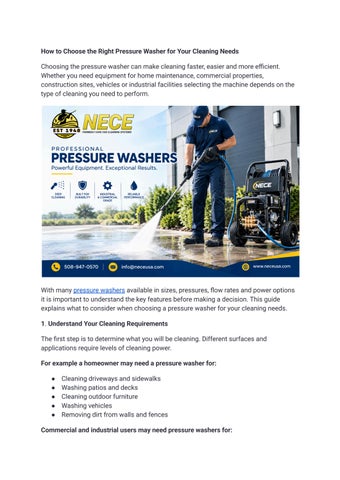
How to Choose the Right Pressure Washer for Your Cleaning Needs Choosing the pressure washer can make cleaning faster, easier and more efficient. Whether you need equipment for home maintenance, commercial properties, construction sites, vehicles or industrial facilities selecting the machine depends on the type of cleaning you need to perform.
With many pressure washers available in sizes, pressures, flow rates and power options it is important to understand the key features before making a decision. This guide explains what to consider when choosing a pressure washer for your cleaning needs. 1. Understand Your Cleaning Requirements The first step is to determine what you will be cleaning. Different surfaces and applications require levels of cleaning power. For example a homeowner may need a pressure washer for: ● Cleaning driveways and sidewalks ● Washing patios and decks ● Cleaning outdoor furniture ● Washing vehicles ● Removing dirt from walls and fences Commercial and industrial users may need pressure washers for:
● Cleaning buildings and warehouses ● Removing grease and oil ● Washing heavy equipment ● Cleaning manufacturing areas ● Maintaining vehicles ● Removing stubborn dirt and debris from concrete surfaces Understanding your application helps you choose equipment with the appropriate pressure and water flow. 2. Check PSI. Gpm Two of the most important specifications when comparing pressure washers are PSI and GPM. PSI (pounds per square inch) measures the pressure produced by the machine. Higher PSI can help remove dirt, grease, stains and other buildup. GPM (gallons per minute) measures how water the pressure washer delivers. A higher GPM can help rinse away dirt quickly and cover larger areas efficiently. If choosing a machine based only on PSI, consider both PSI and GPM. The combination of pressure and water flow determines how effectively a pressure washer can perform cleaning jobs. 3. Choose the Right Power Source Pressure washers are generally available with gas-powered systems. Electric Pressure Washers Electric pressure washers can be a choice for lighter-duty applications and locations where electrical power is readily available. They are often convenient for cleaning and smaller jobs. Gas-Powered Pressure Washers Gas-powered machines can provide mobility and are useful when electrical power is not readily available. They are often selected for demanding commercial and heavy-duty cleaning applications. The right power source depends on where you will use the machine, how frequently you will use it and the level of cleaning power required. 4. Consider Hot Water vs. Cold Water Another important consideration is whether you need a water or hot-water pressure washer.
Cold-water pressure washers are suitable for general cleaning applications, including removing dirt, mud, dust and loose debris. Hot-water pressure washers add heat to the cleaning process. Hot water can be particularly useful when dealing with grease, oil, food residue and other difficult substances. For industrial environments hot-water equipment can provide an additional level of cleaning performance. 5. Think About Portability Consider how and where the pressure washer will be used. If you need to move equipment around a property look for features such as: ● Durable wheels ● Convenient handles ● Compact construction ● Easy hose storage ● controls For larger commercial or industrial applications a more substantial machine may be appropriate particularly when high performance and long operating periods are important. 6. Select the Right Accessories The pressure washer itself is part of the cleaning system. The right accessories can make a difference in performance and convenience. Common pressure washer accessories include: ● High-pressure hoses ● Spray guns ● Adjustable spray wands ● Surface cleaners ● Turbo nozzles ● Extension wands ● Foam applicators ● Specialized cleaning attachments Different nozzles and accessories can help control the spray pattern and make it easier to clean surfaces. 7. Consider Frequency of Use Think about how you expect to use your pressure washer.
For cleaning a machine designed for lighter use may be sufficient. Businesses and contractors that use pressure washers regularly may benefit from equipment designed for more demanding workloads. If a pressure washer will be used for hours at a time or on a frequent basis durability and serviceability become especially important considerations. 8. Match the Machine to the Surface Not every surface should be cleaned using pressure. Excessive pressure can potentially damage materials such as painted surfaces, wood, certain types of siding or other sensitive materials. For surfaces such as concrete heavy-duty equipment may be appropriate. For delicate surfaces using the correct nozzle, pressure setting, distance and cleaning technique is important. Always follow the equipment manufacturers recommendations. Use appropriate cleaning methods for the surface being cleaned. 9. Look at Durability and Maintenance A pressure washer is an investment, for commercial and industrial users. Look for equipment constructed with quality components. Designed for the intended workload. Regular maintenance can also help keep equipment operating. Depending on the machine maintenance may include: Following the manufacturers maintenance instructions can help support operation over time.Checking hoses and connections ● Inspecting spray nozzles ● Cleaning filters ● Checking oil levels on machines ● Following pump maintenance recommendations ● Storing equipment properly ● Inspecting equipment before use
10. Consider Safety Pressure washers can produce powerful water streams so safe operation is essential. Before using a pressure washer read the manufacturer's instructions. Use appropriate protective equipment. Keep the spray away from people, animals, electrical components and vulnerable surfaces.
Be particularly careful when working with hot-water systems or powerful commercial equipment. Proper training and operating procedures are important for businesses and professional cleaning teams. 11. Think About Long-Term Value The cheapest pressure washer is not always the economical option. Consider the value of the equipment including performance, durability, maintenance requirements, accessories and support. For businesses a machine that completes cleaning tasks efficiently may save time and labor costs over its useful life. Before purchasing, compare the machine's specifications with your cleaning requirements rather than selecting equipment based only on the highest PSI rating or lowest price. 12. Professional Pressure Washers for Different Applications Professional pressure washers are available for a range of cleaning environments. Contractors, property managers, automotive businesses, industrial facilities and other commercial users may require equipment for handling frequent and demanding cleaning tasks. The best equipment depends on the application. A machine designed for vehicle cleaning may have requirements from one used for removing industrial grease or cleaning large concrete areas. That is why it is important to identify the job and then select the equipment that matches it. Final Thoughts Choosing the right pressure washer starts with understanding your cleaning requirements. Consider the surface you need to clean, the type of dirt or residue you need to remove the required PSI and GPM, the power source, water temperature, portability, accessories and expected frequency of use. For household cleaning a smaller pressure washer may be enough. For demanding industrial applications professional equipment, with higher performance and durability may be a better choice. At NECE USA we provide pressure washers and industrial and commercial cleaning equipment designed for a variety of cleaning applications. Choosing the equipment can help make cleaning jobs more efficient while providing the performance needed for demanding environments.
Looking for the pressure washer? Take a look at cleaning equipment, from NECE USA and pick a choice that fits your cleaning needs.