PREFABRICATION SERVICES
Built off-site. Installed fast.
Atkore Prefabrication helps reduce installation time while maintaining consistent quality.
▲ Cut strut
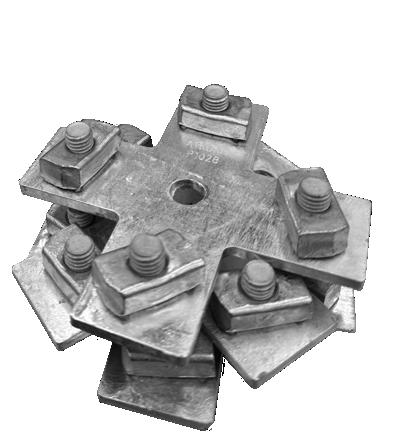
▲ Kit assemblies
▲ H-Frames
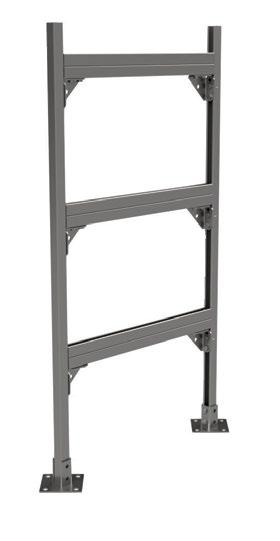
▲ Populated modular systems
▲ Modular systems
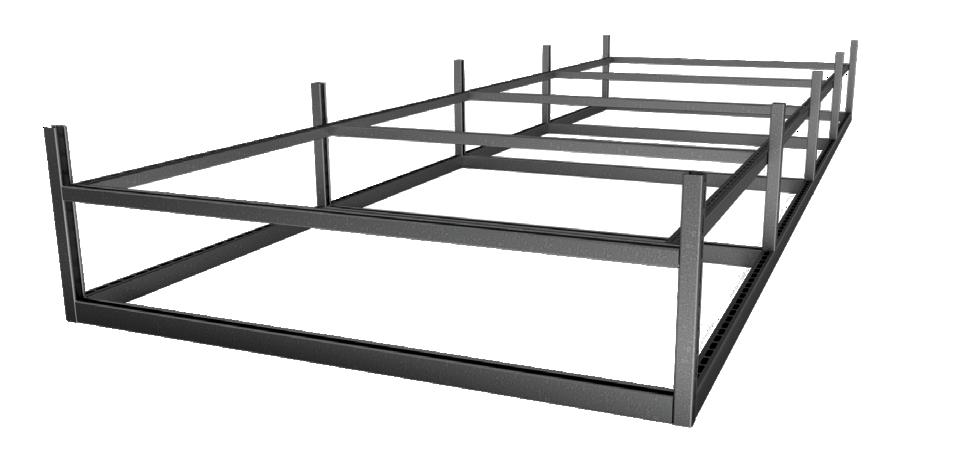
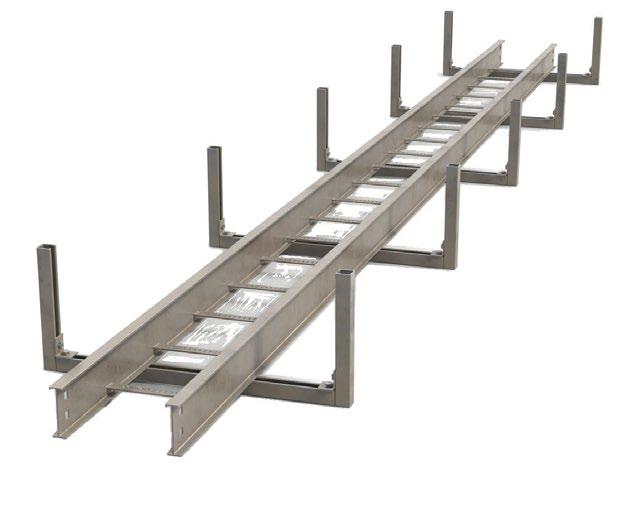
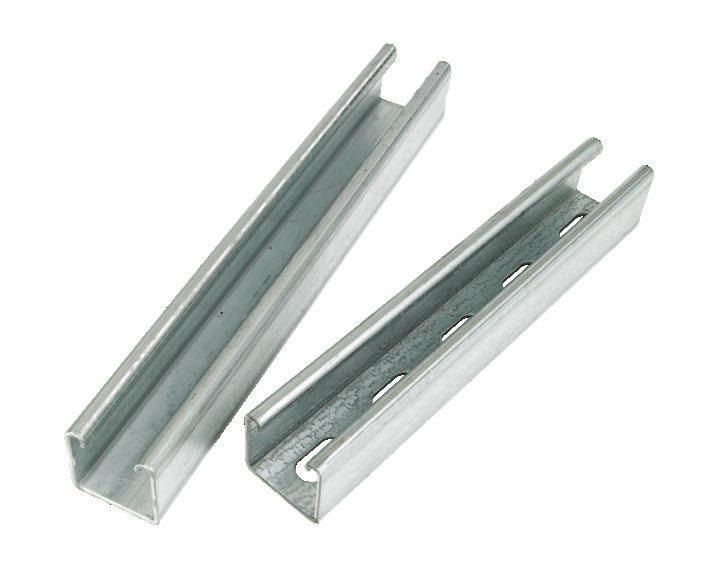

Populated
Modular


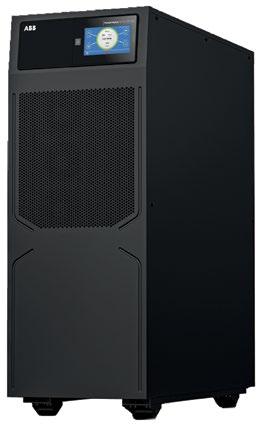
ABB’s PowerValue 11/31/33T G2 10-20 kVA is a double-conversion online UPS that guarantees up to 20 kVA of clean, reliable power for critical single-phase and three-phase applications.
ABB’s PowerValue 11/31/33T G2 10-20 kVA is a double-conversion online UPS that guarantees up to 20 kVA of clean, reliable power for critical single-phase and three-phase applications.
ABB’s PowerValue 11/31/33T G2 10-20 kVA is a double-conversion online UPS that guarantees up to 20 kVA of clean, reliable power for critical single-phase and three-phase applications.
As well as maintaining power to critical equipment, especially for light industrial, oil & gas and server room, the PowerValue 11/31/33T G2 also conditions incoming power to eliminate spikes, swells, sags, noise and harmonics.
As well as maintaining power to critical equipment, especially for light industrial, oil & gas and server room, the PowerValue 11/31/33T G2 also conditions incoming power to eliminate spikes, swells, sags, noise and harmonics.
As well as maintaining power to critical equipment, especially for light industrial, oil & gas and server room, the PowerValue 11/31/33T G2 also conditions incoming power to eliminate spikes, swells, sags, noise and harmonics.
The PowerValue 11/31/33T G2 is designed as a standalone UPS device, with flexible configuration of phase input and output, including 1/1, 3/1 and 3/3, and can be easily to set on site.
The PowerValue 11/31/33T G2 is designed as a standalone UPS device, with flexible configuration of phase input and output, including 1/1, 3/1 and 3/3, and can be easily to set on site.
The PowerValue 11/31/33T G2 is designed as a standalone UPS device, with flexible configuration of phase input and output, including 1/1, 3/1 and 3/3, and can be easily to set on site.
Up to 3 units can be configured in parallel to provide redundancy or to increase the systems total capacity up to 60 kW. All units can be fitted with up to 6 battery modules to extend runtime.
Up to 3 units can be configured in parallel to provide redundancy or to increase the systems total capacity up to 60 kW. All units can be fitted with up to 6 battery modules to extend runtime.
Up to 3 units can be configured in parallel to provide redundancy or to increase the systems total capacity up to 60 kW. All units can be fitted with up to 6 battery modules to extend runtime.
11/31/33T G2 10-20 KVA new.abb.com/ups/systems
In THIS ISSue JuNE 2026



NECA TAS BRANCH
1300 361 099
memberservices@neca.asn.au
NECA SA/NT BRANCH
213 Greenhill Road, Eastwood SA 5063
PO Box 47, Fullarton SA 5063
(08) 8272 2966
neca@necasa.asn.au
NECA QLD BRANCH
Suite 1.5 Ian Barclay Building, 460-492 Beaudesert Road, Salisbury QLD 4107
1300 361 099 memberservices@neca.asn.au
NECA NSW BRANCH
122 Hume Highway, Chullora NSW 2190
1300 361 099
memberservices@neca.asn.au
NECA ACT BRANCH
49 Tennant Street, Fyshwick ACT 2609 PO Box 298, Fyshwick ACT 2609
1300 361 099 memberservices@neca.asn.au
AUSTRALIAN CABLER REGISTRATION SERVICE
1300 667 771
enquiries@acrs.com.au
www.acrs.com.au

IN THIS ISSUE
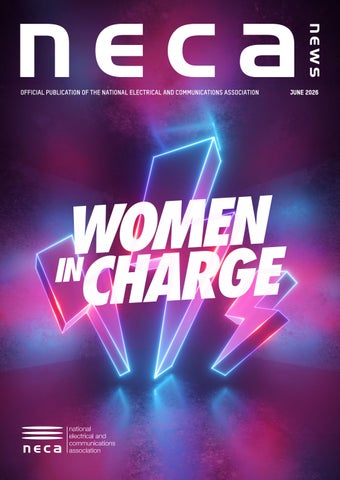
WOMEN IN CHARGE
IN MARCH 2023, WE PRODuCED AN EDITION OF NECA NEWS TITLED “MEET THE 2%ERS”. THIS EDITION SHONE A SPOTLIGHT ON THE WOMEN WHO HAD FORGED A PATH INTO THE ELECTRICAL TRADE, AND THOSE WHO WERE S uPPORTING THEM AND ADVOCATING FOR STRONGER FEMALE REPRESENTATION.
Here we are more than three years later, and Jobs and Skills Australia are reporting that there has been no shift in the representation of women who are fully qualified electricians.
This is not because the conversations aren’t being had, or initiatives are not being implemented. Throughout NECA, the percentage of female apprentices is at an all-time high, and growing, but these women are not yet fully qualified, and it takes time for these efforts to show up in the statistics.
In order to keep the momentum moving forward and to address the impending skills shortage, we need to have more conversations and make the women in our sector more visible.
So, we’ve dedicated this issue to the incredible women who are leading the way in our industry. Some are in management, some are on the tools, and some are shaking up the way we do things and breaking down old stereotypes. All of them are making valuable contributions throughout the sector, and all of them are shining examples of what a career in electrical and communications can offer, regardless of your gender.
If you have something to share from your corner of the world, let us know. We’d love to hear from you.
The NECA News team
GET IN TOUCH
TELL US WHAT YOU THINK
Share your feedback via email necanews@neca.asn.au
GOT A STORY IDEA?
Share your ideas for content via email necanews@neca.asn.au
ARE YOU A NECA MEMBER?
We’re looking to showcase NECA member stories in each issue. Reach out to your NECA Branch or email necanews@neca.asn.au
SIGN UP TO NECA NEWS ONLINE
If you’d like to join more than 30,000 of your industry peers and receive a digital version of NECA News, sign up at www.neca.asn.au/necanews
Register to Hager’s WHPH to start earning points and
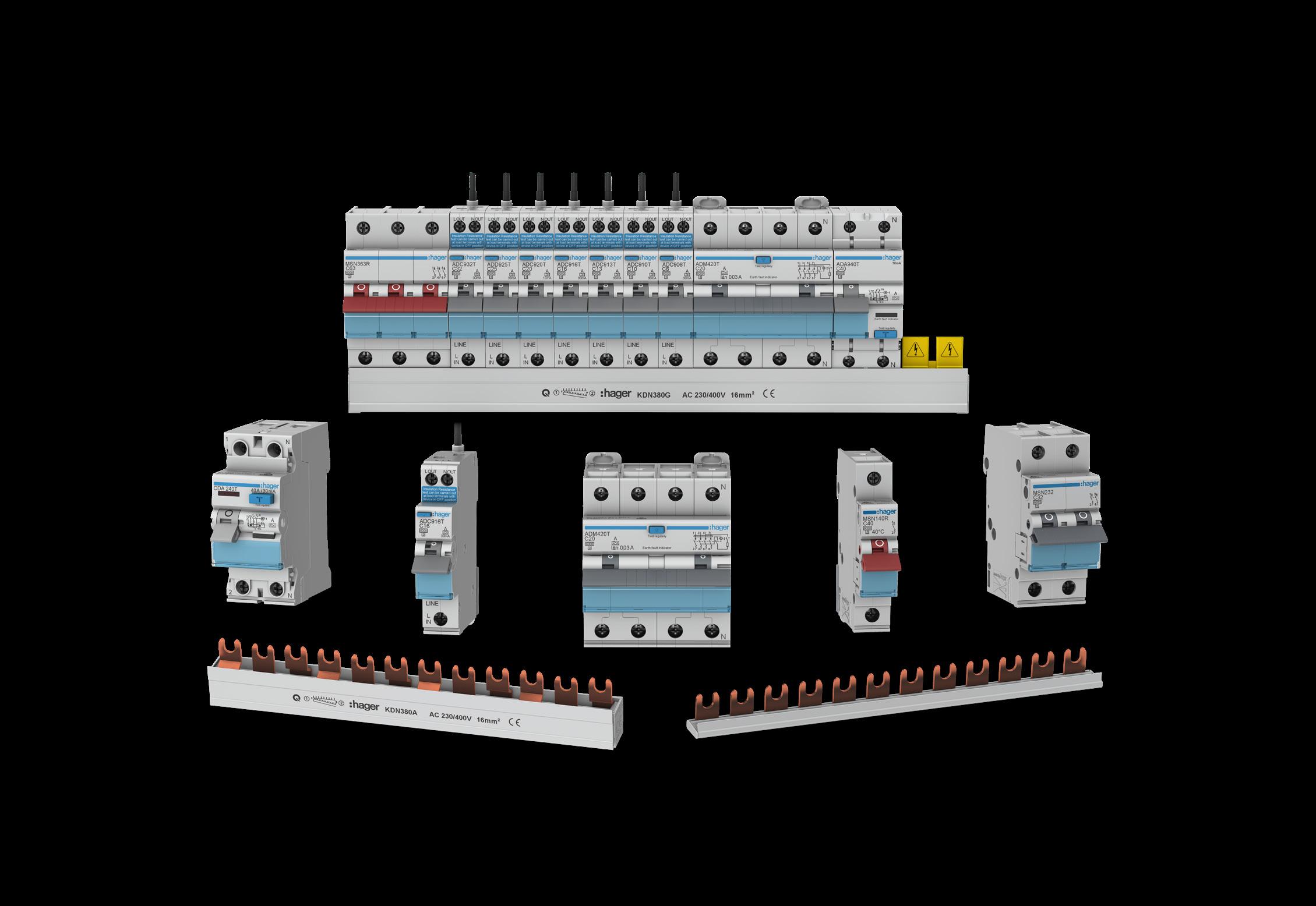

This system consists of a large and evolving range of compact protection devices for both single phase and three phase installations that connect flexibly via a common busbar arrangement.
Ultimately, the Hager onekonekt system makes wiring easier, increases safety, and significantly reduces installation time vs traditional cabling.
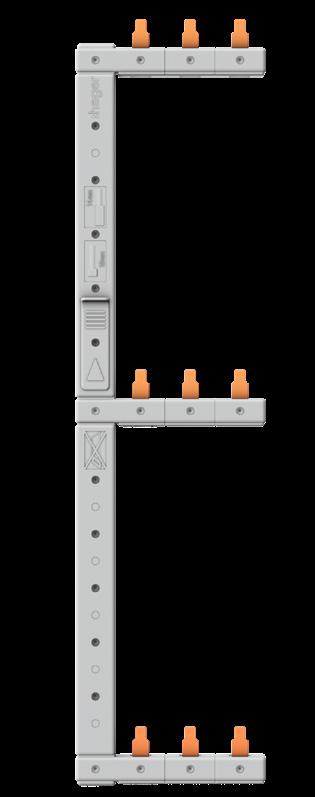
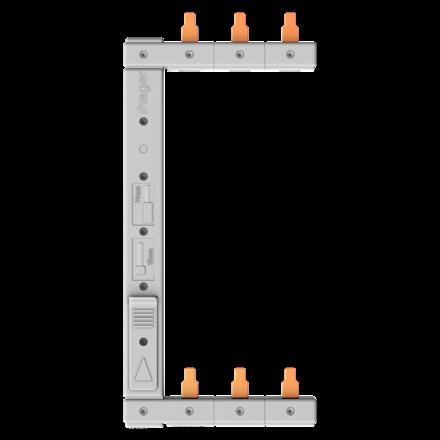
Hager’s KCL36xL Vertical Busbars are three-phase cable replacement devices that save space and time and offers a solution to minimise concerns over conductor stress and bend radius.
hager.com/au

WOMEN LEADING THE CHARGE IN AUSTRALIA’S ELECTROTECHNOLOGY INDUSTRY

Stewart Joyce NECA Chief Executive Officer
A u STRALIA’S ELECTROTECHNOLOGY INDu STRY STANDS AT THE CENTRE OF ONE OF THE MOST SIGNIFICANT ECONOMIC AND TECHNOLOGICAL TRANSITIONS IN GENERATIONS. THE RAPID ACCELERATION OF ELECTRIFICATION, RENEWABLE ENERGY, ARTIFICIAL INTELLIGENCE, BATTERY STORAGE, DIGITAL INFRASTRuCT uRE, ELECTRIC VEHICLE CHARGING NETWORKS, AND ADVANCED MANuFACT uRING IS F uNDAMENTALLY RESHAPING THE NATION’S ECONOMY.
The industry responsible for delivering this transformation must evolve just as rapidly.
That evolution is not only about technology. It is about people, leadership, and culture. Increasingly, it is being shaped by the growing influence of women across every level of the electrical and communications sector.
For decades, the electrical industry has been perceived as one of Australia’s most traditionally male-dominated professions. Yet the future of our industry depends on broadening participation, embracing diverse leadership, and ensuring we attract the very best talent available.
At NECA, we see increasing female participation not simply as a diversity initiative, but as an economic and strategic imperative.
Australia is facing unprecedented demand for skilled electrical workers. According to Jobs and Skills Australia, demand for electricians and electrotechnology professionals is expected to continue growing significantly over the next decade, driven by infrastructure investment, renewable energy projects, electrification, and the nation’s transition to net zero emissions. At the same time, female participation in electrical trades remains below four per cent nationally.
One of the lowest participation rates across any major trade sector.
No industry facing workforce shortages of this scale can afford to draw from only half the available talent pool.
Encouragingly, we are beginning to see meaningful change.
Across NECA’s training network, female participation rates are consistently outperforming national averages, with some programs approaching 20 per cent female enrolment. These results demonstrate that when industry creates practical pathways, strong mentoring, and supportive workplace environments, women not only enter the sector, they thrive within it.
Importantly, women entering the electrotechnology industry today are not simply filling workforce gaps. They are helping redefine and modernise the industry itself.
Women are leading projects in renewable energy integration, automation, energy efficiency, communications technology, cybersecurity, smart infrastructure, and digital engineering. They are contributing to innovations in battery systems, intelligent buildings, EV charging infrastructure, and sustainable energy solutions that will underpin Australia’s future economy.
This matters because the electrical industry of today looks vastly different from the industry of even a decade ago.
Modern electrotechnology is increasingly driven by advanced technology, data, connectivity, sustainability, and systems integration. The industry requires problemsolving, innovation, collaboration, and adaptive leadership. Diverse teams consistently perform better in these environments. Research from McKinsey & Company has repeatedly shown that organisations with greater gender diversity in leadership are more likely to outperform their peers in profitability, innovation, and decision-making capability.
The evidence is clear: diversity strengthens industries.
But participation alone is not enough. Retention and leadership progression are equally critical.
One of the greatest barriers facing women entering trades and constructionrelated industries remains workplace culture and site conditions. This is not a secondary issue. It is a fundamental issue of professionalism, safety, and workforce sustainability.
Every worker deserves access to safe, hygienic, and respectful workplace environments. Construction sites and project workplaces must
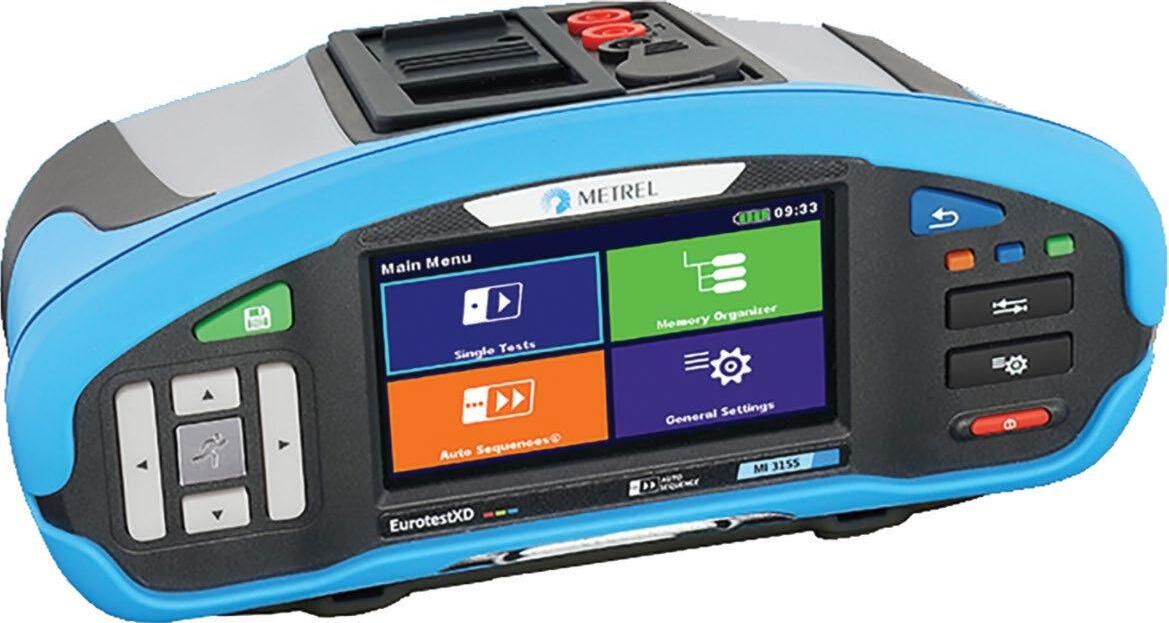
InstalTest XD
reflect contemporary standards, including appropriate amenities, inclusive workplace practices, and clear expectations around behaviour and compliance.
At NECA, we have been unequivocal on this issue. Modern workplace standards are not optional. They are essential to attracting and retaining a skilled and diverse workforce capable of delivering Australia’s future infrastructure and energy projects.
the gap between policy and on-site practice remains a critical priority. At the same time, the industry must continue investing in education, mentoring, and leadership development pathways that support women at every stage of their careers, from apprenticeships through to executive leadership.
We are already seeing the impact of this investment.
The women featured throughout this edition of NECA News represent exactly that future. They are leading businesses, transforming workplaces, advancing technology, and helping shape the direction of Australia’s electrotechnology sector.
Record Keeping & Repor ting <Touch Screen
Importantly, this conversation extends beyond inclusion alone. Better workplace environments improve productivity, strengthen safety outcomes, enhance retention, and contribute to higher-performing project delivery across the industry.
NECA continues to advocate for greater consistency in compliance and accountability across construction and infrastructure projects nationwide. While regulatory frameworks largely exist, enforcement and implementation remain inconsistent across jurisdictions and contracting arrangements. Bridging
More women are now leading electrical contracting businesses, managing major infrastructure projects, driving operational innovation, and contributing to national discussions on energy, workforce development, and industry policy than ever before. Their leadership is helping reshape perceptions of the industry and inspiring the next generation to view electrotechnology as a career of innovation, opportunity, and influence.
This cultural shift could not come at a more important time.
24/08/2021 12:18 PM Page 1
Their success is not symbolic. It is practical, measurable, and industry changing.
As NECA’s CEO, I believe the electrical industry has an extraordinary opportunity ahead of it. Not only to power Australia’s transition to a smarter and more sustainable economy, but to become one of the nation’s leading examples of modern industry leadership.
< Installation Verification & Compliance Testing Pass/Fail limits and “Auto Sequences” set to AS/NZS3017 and AS/NZS3019.
The industry’s future success will depend not only on technical capability, but on its ability to foster innovation, adaptability, and leadership diversity.
That future will be built by industries that embrace innovation, invest in people, and create environments where talent can thrive regardless of gender.
The future of electrotechnology will not be defined solely by the systems we build. It will be defined by the people leading the transformation.
< Single Test Functions Voltage, Mohm & Ohms, RCD, Loop Impedance, Line Impedance, Earth Resistance, Power & Harmonics, Light, Wire Tracing.
InstalTest XD
< Site Schematics & Installation Reports
Save test results to the Site Schematic or Tree Structure. Start with Site Name and Address. Test reports output to PDF or Excel.

< High Volume RCD Testing System
< Installation Verification & Compliance Testing Pass/Fail
and “Auto Sequences” set to AS/NZS3017 and AS/NZS3019
< Single Test Functions
Complete high volume RCD testing & logging solution with bar-code scanner input of RCD IDs and logging of RCD push button tests.
Voltage, Mohm & Ohms, RCD, Loop Impedance, Line Impedance, Earth Resistance, Power & Harmonics, Light, Wire Tracing
< Installation Verification & Compliance Testing
< Site Schematics &
Pass/Fail limits and “Auto Sequences” set to AS/NZS3017 and AS/NZS3019.
< Single Test Functions
Voltage, Mohm & Ohms, RCD, Loop Impedance, Line Impedance, Earth Resistance, Power & Harmonics, Light, Wire Tracing
< Site Schematics & Installation Reports
Save test results to the Site Schematic or Tree Structure. Start with Site Name and Address. Test reports output to PDF or Excel
COMPANY CULTURE AND FEMALE REPRESENTATION
WORKING TOGETHER WITH THINK RENEWABLE

RuNNING A Bu SINESS IS A TASK THAT TAKES AN INCREDIBLE AMOuNT OF TIME, EFFORT, AND CAREF uL CONSIDERATION. FROM THE MOMENT A Bu SINESS IS FOuNDED, TO HIRING ITS FIRST STAFF MEMBER, AND EXPANDING INTO NEW MARKETS, A Bu SINESS IS ONLY AS GOOD AS ITS EMPLOYEES.
Think Renewable is a specialist solar and battery business that challenges the stereotypes of this male-dominated industry by hiring, promoting, and recognising exceptional female talent within the sector. Think Renewable’s first employee, and now Head of Service Delivery, Danielle Orlando, is a fantastic leader, role model, and advocate for female participation.
Think Renewable presents industryleading numbers in female participation, from apprentices, right through to consultants and senior management.
The growth of the business is a testament to the power of women in leadership roles. From its inception in

2021, Think Renewable has branched out to a national level, now employing over 200 people, a large number of whom are women. According to a Powering Skills Organisation (PSO) research brief, the percentage of women in leadership roles within our industry sits at 13%. Think Renewable achieves well beyond this number with a super impressive 44% of leadership roles belonging to women, and a further 64% of women employed in operations roles. These incredible numbers are a result of Danielle’s extraordinary work and will continue to rise as the business grows.
Bringing new women into the industry is a mission that Danielle has set for herself and for Think Renewable, and it demonstrates how having a driven leader with a clear vision is essential to effecting change. The process of increasing female participation within the industry starts right from the recruitment process, something that Danielle has played a major role in. By personally conducting all of her own interviews, Danielle is able to ensure no good candidate goes unseen, and she is responsible for maintaining the quality of employees across the business at all levels. A significant factor that Danielle looks for in these interviews is how the potential employee would fit into the Think Renewable culture. It’s super important to Think Renewable to maintain a positive and healthy environment, so ensuring potential employees will be able to contribute to that is of utmost importance, and the results of this are

apparent. “Every female I have brought on has helped me take the business to the next level,” Danielle says.
Another major consideration when increasing female representation is retention. Throughout the calendar year, Think Renewable makes sure to allocate plenty of time and company resources towards employee welfare and team bonding. By engaging in frequent social events, birthday cakes for every single birthday, and an annual awards night, Think Renewable is able to ensure an excellent work culture for all staff. Think also emphasises the importance of career progression within the business, outlining possible steps and growth paths to employees from as early as the interview stage, ensuring that every employee has a clear path forward within the company.
Think Renewable has proudly installed healthy and flexible maternity and paternity leave within its company policy. In such a male-dominated industry, this is something that is often overlooked. Think Renewable offers four additional weeks of leave to the primary caregiver, back-to-work support, a paternal component, and reassurance that the employee knows their job is safe. Think Renewable is also in the
process of getting a Great Place to Work Certification, a prestigious, internationally recognised accreditation that validates an organisation’s employee experience, culture, and leadership. Though it’s not something they have applied for before, Danielle expressed the importance of doing it was
to “shine a light on the fact that Think Renewable is a great place to work for both men and women”, once again showing the company’s commitment to employee wellbeing.
Danielle’s vision of increased female inclusion within the industry extends beyond the boundaries of Think Renewable. One of the most important things for those within the company is developing a passion for the industry and a passion for the renewables sector. The goal is to help educate employees about the future of energy and ensure that even if they were to leave the company in pursuit of something else, they would still remain within the industry.
Danielle Orlando is a brilliant example of the future of the Electrotechnology industry, and the women who make up the core pillars at all levels within it. Danielle was the recipient of the National Women in Energy award at the 2025 NECA Excellence Awards, which she was nominated for after winning the state equivalent in NSW earlier in the year. Her commitment to the growth of female participation in our industry is paramount and sets an example for businesses nationwide.

WHY MORE WOMEN IN ELECTROTECHNOLOGY MAKES GOOD BUSINESS SENSE
For electrotechnology business owners, the rise of women in the trade reflects an important opportunity for the industry’s future. Expanding participation helps widen the talent pool at a time of ongoing skills pressure, while also bringing strengths that employers consistently value across electrical and electrotechnology work, such as clear communication, attention to detail, sound planning and professionalism. Sector research has also pointed to broader benefits, including stronger organisation, positive team environments and better engagement with clients and colleagues.
This matters because the expectations placed on electrical businesses continue to grow. Business owners are not only managing technical delivery and compliance, they are also protecting margins, maintaining safety, coordinating people and building trust with customers. In that environment, the qualities that strengthen a business are not narrow. They include how well teams communicate, how carefully work is executed and how effectively a site or project is run from start to finish.
The value women are already bringing to the sector
Research from Victoria university on women in the electrical trades found that employers consistently reported positive impacts from employing female apprentices and tradeswomen. Cultural and behavioural change topped the list, with employers describing more civil, more focused and more professional workplace environments when women were part of the team. The same research also identified improved attention to detail, organisation and planning as clear business strengths.
Those gains are highly relevant to electrotechnology businesses. Precision and care are central to electrical work, where quality, safety and compliance depend on getting the details right. Organisation and planning also carry real commercial weight. A well-run site is safer, more efficient and less likely to suffer delays, rework or confusion. For business owners, these strengths can improve quality, efficiency and the overall customer experience.
Communication is another area where female participation is making a noticeable difference. The Victoria university research found women were often valued for the way they communicated with both clients and co-workers, helping to explain technical issues clearly, build confidence
and support healthier team dynamics. For business owners in the electrotechnology sector, that translates into stronger customer relationships and a more collaborative workplace culture, both of which are essential for long-term growth.
Retention depends on the workplace experience
While recruitment matters, retention is where the real business challenge sits. The evidence suggests women do not leave the trade because they lack capability. More often, they are pushed out by conditions around them, including limited access to meaningful work, poor skills development, weak progression pathways and workplaces that make it harder to feel included or respected. Research on women’s retention in the trades found that barriers such as deployment, training access, promotion and discrimination had a significant influence on whether women stayed and advanced. The learning environment is especially important. Women were found to benefit most when they worked with supervisors who were genuinely interested in teaching them, when they could stay on jobs long enough to build rounded skills and when they had the chance to see work through from beginning to end. They also benefited from being able to ask questions and from supportive mentoring relationships, including constructive learning from other tradeswomen. These steps are straightforward; however, they require genuine commitment from business owners.
If female apprentices and tradeswomen are to stay and thrive, they need more than a place on the payroll. They need access to proper training, real responsibility and supervisors who see them as longterm contributors to the business.
Leadership and progression help women stay
Career progression is another crucial part of the picture. Research found women in electrotechnology often make a strong impact when they move into management, leadership or specialist roles, and that visibility matters for newer entrants coming through. When women become part of a firm’s leadership team or core workforce, it strengthens their own incentive to stay and helps change assumptions about who belongs in the trade.
This also aligns with broader leadership research from Coventry university, which
has found women are often appointed to senior roles during periods of instability or crisis because of their collaborative leadership style and ability to manage difficult situations. In organisations facing inefficiency, scandal or financial mismanagement, women leaders have been shown to focus strongly on the human dimensions of recovery, bringing qualities such as intuition, humility and consensus-building to the task. That matters because they are often central to rebuilding trust, stabilising teams and improving performance.
For business owners, this should prompt a practical question: Are capable women in the business being given a real pathway forward? Promoting women into leadership, estimating, project management or supervisory roles is not simply good for representation. It strengthens capability, sends a powerful message to apprentices and helps embed women as insiders in the industry rather than perpetual outsiders.
What increasing participation really requires
The barriers to greater female participation are well established. The Victoria university report also found they are rooted in stereotyped beliefs about which jobs suit men and women, as well as workplaces and training environments that continue to tolerate traditionally masculine cultures and behaviours that can make women feel unwelcome. Importantly, the research argues that these barriers are not solved by recruitment alone. They require coordinated action across employers, training providers, schools, industry bodies and networks.
At business level, that means hiring on capability rather than stereotype, backing respectful workplace standards, giving apprentices proper development and creating a culture where women can do their best work.
For electrotechnology employers facing skills shortages, evolving technologies and rising customer expectations, that is not a side issue. It is a smart workforce strategy. The businesses that understand this early will be better placed to build stronger teams, better cultures and a more sustainable future for the sector.


Lina Altarifi Executive Director, Business Solutions Hub (an
initiative of NECA Victoria)
THE COMPLETE EV CHARGING SOLUTION FOR APARTMENTS inCharge
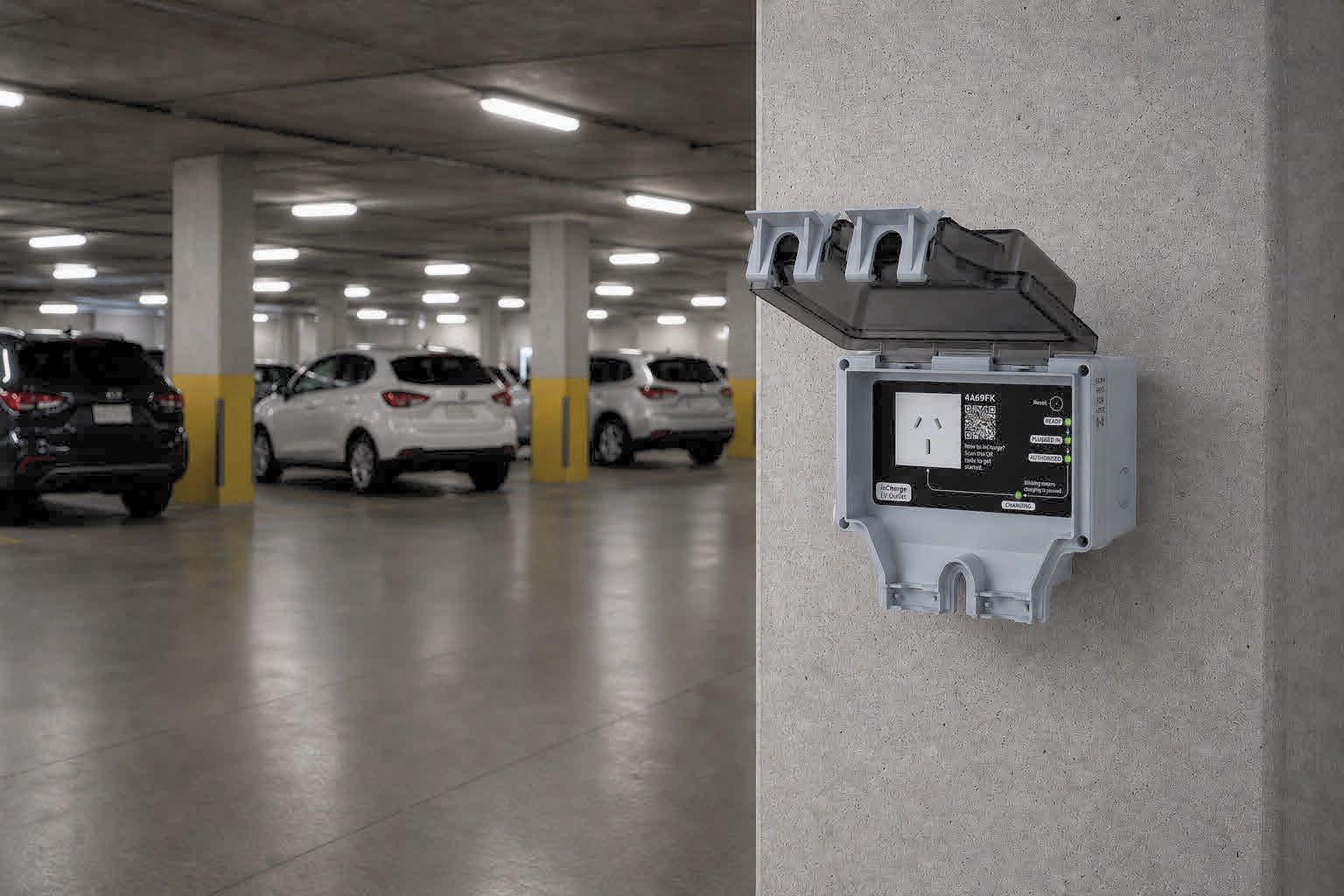
Level 1 and 2 Charging Cost Recovery and Billing Simple Installation
Line Communications inCharge EV Outlet - 10A or 15A
Load Management
Combined Energy inCharge takes the headache out of apartment EV charging.
Level 1 charging is the ideal low-cost high-access solution for apartments. The inCharge EV Outlet provides 10A and 15A charging for as many parking bays as required.
Limited supply capacity? The inCharge load management gateway coordinates all chargers to operate within the limits of electrical constraints, providing fair access to all users.
Charging from common-area power? Energy accounting, customer billing, and building reimbursement is all handled seamlessly by inCharge. Management behind resident meters is supported too.
Multi-story underground car park? inCharge uses Power Line Communications to link all devices over the primary electrical wiring. No parallel communications infrastructure required: no data cables, no Wi-Fi, no cellular link to every charger.
Need to add Level 2 chargers? inCharge seamlessly integrates with Level 2 chargers. Level 2 chargers can be connected to the Power Line Communications backbone via a short data cable to the nearest inCharge EV outlet.
Site Internet down? The inCharge load management gateway runs locally at the site, ensuring continuity of service during Internet outages.
Locked/private garages? Charge Points can be locked to individual residents and set to start charging automatically.
Looking beyond EV charging? inCharge can integrate non-EV loads such as pool heat pumps, air-conditioning, solar and batteries under one unified monitoring, load management, and cost-optimisation strategy.
Scan the QR to




Intuitive Customer App
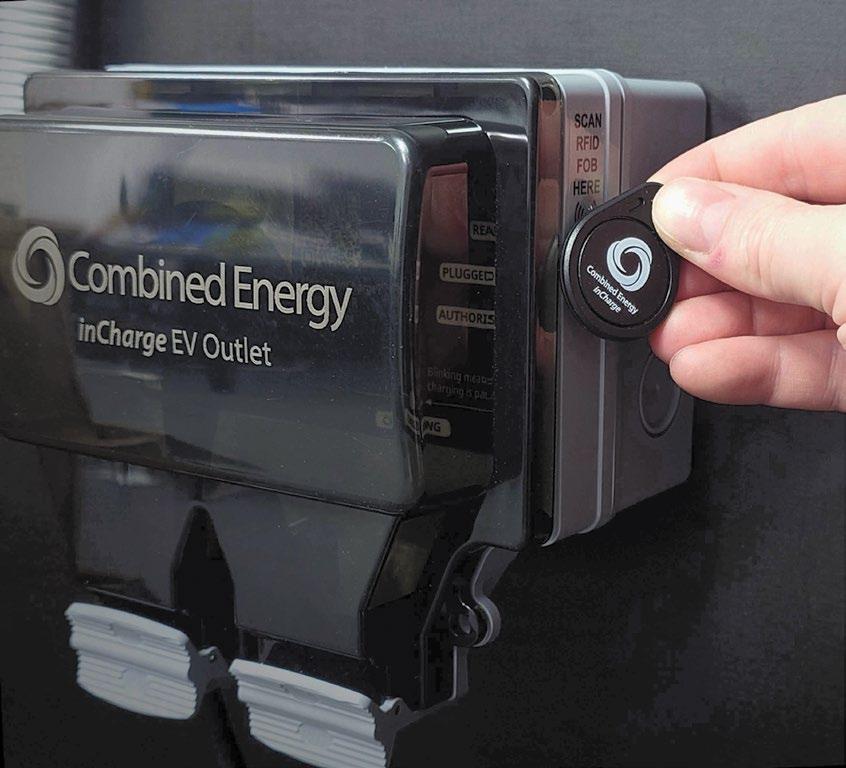
Fob, QR or App Authentication

One system to manage Level 1 and Level 2 Chargers
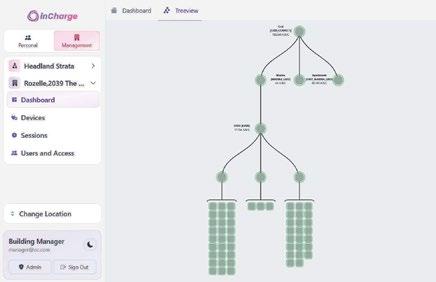
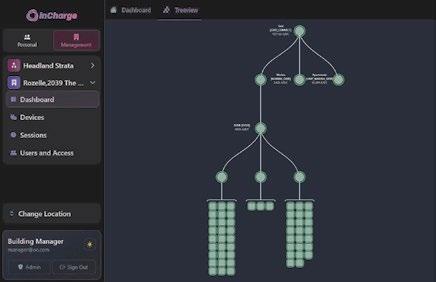


Electrical constraint monitoring and upgrade planning

REDEFINING WHAT IT MEANS TO BE “IN CHARGE” LEADERSHIP ISN’T ALWAYS LOUD
IN AN INDu STRY OFTEN DEFINED BY WHAT’S VISIBLE, IT’S THE PEOPLE WORKING BEHIND THE SCENES WHO BRING PROJECTS TO LIFE.
Rebecca Evans, a Project Coordinator at Melbourne-based Zelo Group, is one of those people. While she may describe herself as a “quiet achiever”, her impact across projects, relationships, and team culture tells a much bigger story.
Zelo Group are a company known for delivering integrated electrical, smart home, and audio-visual solutions across residential, hospitality, and commercial spaces, and Rebecca’s pathway into this industry wasn’t traditional.
Starting her career in childcare, she joined the business, which was then called Advanced Lifestyle Solutions, in a part-time administrative role, assisting with mail-outs and data entry. What began as a temporary opportunity quickly evolved into a long-term career, as Rebecca took on increasing
responsibility across project coordination, estimating, and client engagement.
Over the years, she has grown alongside the business itself. What began as a small, family-run operation has since evolved significantly, including the acquisition of a competitor and the merging of the two companies to form what is now Zelo Group. From those early days to celebrating 25 years in the industry, the business has expanded into a multifaceted company. Rebecca has been an integral part of that journey, helping to secure work, manage complex project requirements, and maintain relationships that underpin the company’s success,

often being the first point of contact with new clients and supporting the business and its team through the transition.
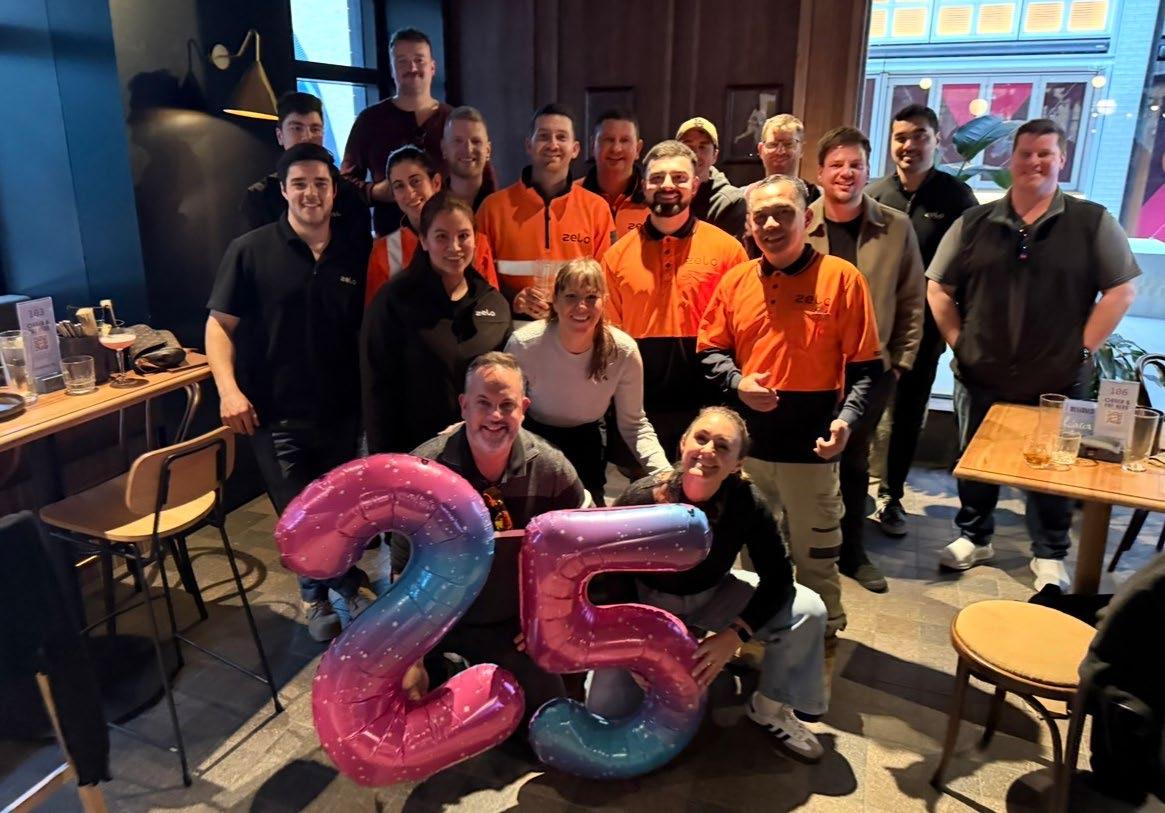
“A lot of the role is about balance,” Rebecca explains. “One minute you’re focused on winning new work, and the next you’re managing live projects and making sure everything runs smoothly. It’s always evolving.”
That evolution is reflected in the scale and creativity of the projects Zelo delivers, from Melbourne hospitality venues like Garden State Hotel and Maison Bâtard to the NECA Award-winning project Monopoly Dreams. Rebecca speaks with pride about the team’s ability to bring spaces to life. Whether it’s subtle lighting scenes that shift throughout the evening or integrated systems that enhance the overall atmosphere, much of the work is intentionally unseen but plays a critical role in shaping the experience. “You don’t always notice it,” she says about the work, “but it’s what creates the vibe.”
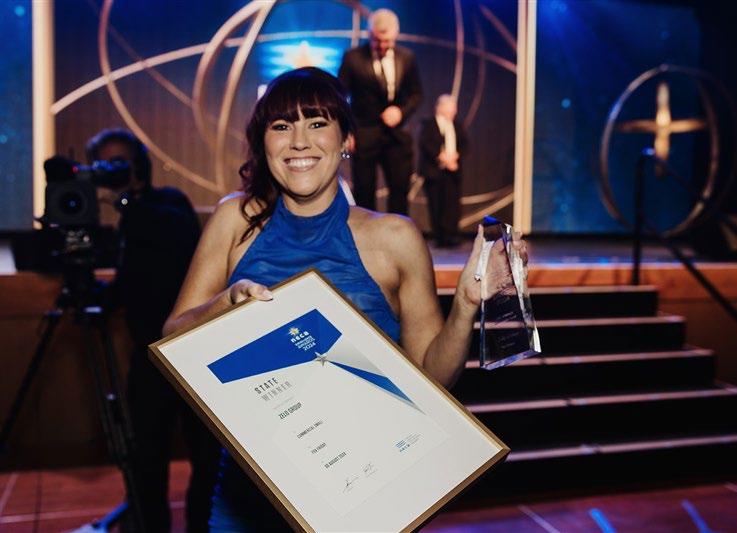
Central to Rebecca’s approach to her role in the company is relationship-building. Whether working with architects, builders, or suppliers, she emphasises the importance of trust and genuine connection. Rather than focusing solely on transactions, Rebecca prioritises longterm relationships often built through small but meaningful interactions.
“I think people remember the effort you put in,” she says, speaking of clients and team members alike. “Just showing up, having a conversation, or even the little things. It all builds trust.”
Working in a male-dominated industry has not been without its challenges. Rebecca acknowledges moments where she has had to step outside her comfort zone, whether that’s speaking up in high-pressure situations, receiving frustrated calls from clients or navigating environments where she may be the only woman on site. Over time, she has built confidence by staying curious, asking questions, and treating others with respect.
“I think it’s about not taking things personally and just backing yourself,” she says. “If you’re unsure, ask the question. Most of the time, others are thinking the same thing.”
Importantly, Rebecca’s leadership extends beyond her own role. Throughout the conversation, she consistently highlighted and celebrated other women in the industry, from project managers and apprentices to colleagues and industry leaders. Rather than focusing
solely on her own achievements, she pointed to the progress being made collectively, acknowledging the work of others and the growing visibility of women across the sector.
This willingness to recognise and uplift others is a powerful display of leading by example. By supporting and amplifying the contributions of other women, Rebecca demonstrates that leadership isn’t always about holding a title, it’s about fostering a culture of encouragement and shared success.
“There are so many great role models out there,” she says, acknowledging colleagues like Liz, Jess and Sally, as well as recognising the impactful work
of Jessica McKenzie at Stowe. “It’s really nice to see more women speaking up and sharing their experiences.”
Rebecca has also witnessed positive change firsthand, with increasing representation of women across technical and leadership roles. Industry initiatives, networking events, and mentorship opportunities are helping to create pathways for more women to enter and thrive in the field.
Looking ahead, Rebecca sees continued growth and transformation within the industry. From the rise of renewable energy and EV infrastructure to advancements in smart technology, the landscape is constantly evolving, bringing both challenges and opportunities. She hopes this momentum will also bring greater opportunities for women, as the sector continues to shift and expand.
While much of her work may remain behind the scenes, Rebecca’s contribution is clear in the projects she helps deliver, the relationships she builds, and the example she sets for others. In an industry driven by innovation and change, it’s this kind of steady, people-focused leadership that continues to make a lasting impact. For Rebecca, being “in charge” isn’t about titles or visibility, it’s about consistency and creating space for others to grow, a mindset that reflects the evolving role of women across the industry.
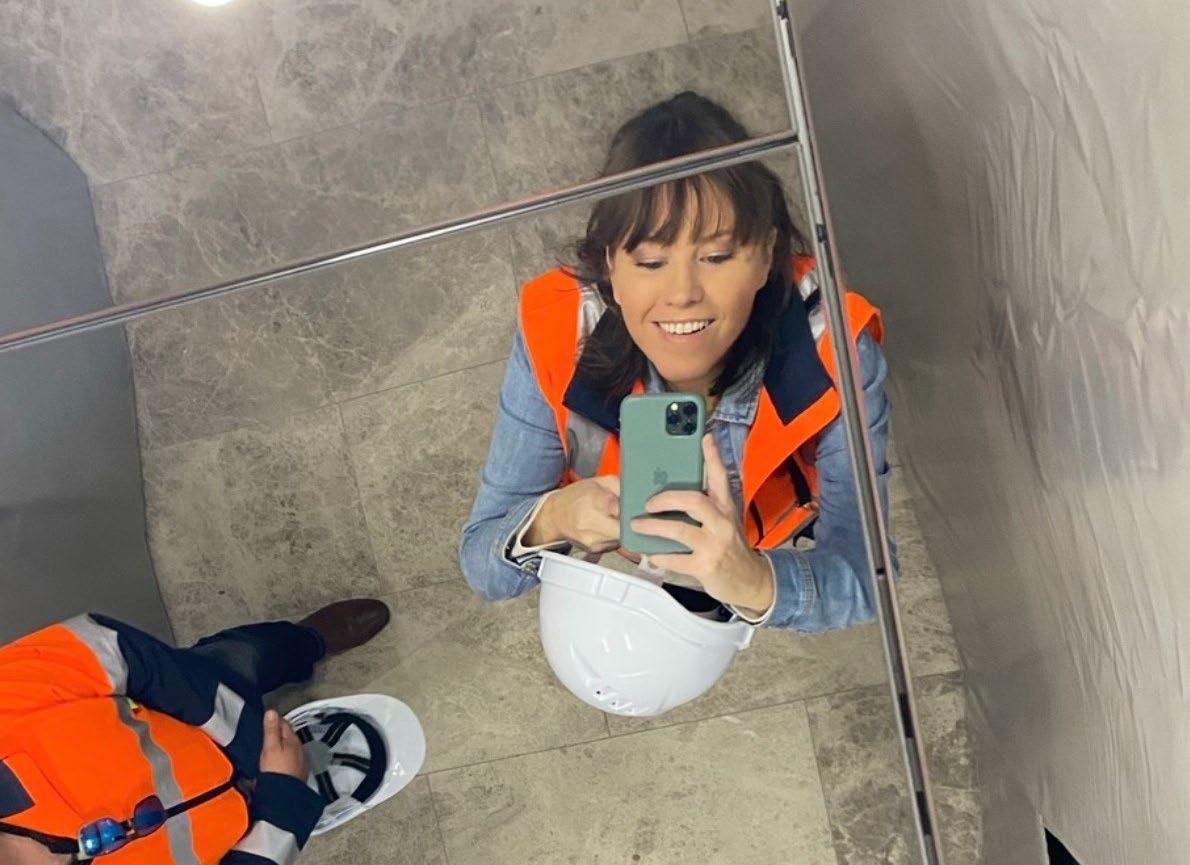
DIFFERENT HARM, SAME IMPACT
SEXUAL HARASSMENT AND BULLYING IN THE WORKPLACE
SEX u AL HARASSMENT AND WORKPLACE BuLLYING ARE TWO OF THE MOST SERIOu S AND, uNFORT uNATELY, COMMON ISS uES IN A u STRALIAN WORKPLACES TODAY. WHILE THEY ARE LEGALLY DISTINCT, THEY OFTEN OVERLAP IN REAL LIFE.
Sexual Harassment
under the Sex Discrimination Act 1984 (Cth), sexual harassment includes any unwelcome sexual advance, request for sexual favours, or other conduct of a sexual nature that would make a reasonable person feel offended, humiliated, or intimidated.
Sexual harassment can take many forms, including:
½ unwanted touching;
½ sexual comments or jokes;
½ repeated requests for dates;
½ sending explicit messages or images;
½ leering or intrusive staring.
Whilst women are often the victims of sexual harassment, men are not immune to this.
A key point is that sexual harassment does not need to be repeated.
A single serious incident can be enough to constitute harassment.
The law defines a workplace broadly, not just in an office or building site, but can also include a work event, training, and even online interactions connected to work.
Bullying
Workplace bullying is defined in the Fair Work Act 2009 (Cth) as repeated unreasonable behaviour towards a worker that creates a risk to health and safety.
Bullying can include:
½ verbal abuse or aggression;
½ ongoing humiliation or criticism;
½ excluding someone from work activities;
½ spreading rumours;
½ setting someone up to fail.
unlike sexual harassment, bullying requires more than one incident.
Just as important is what bullying is not. Reasonable management action, like performance reviews, disciplinary action, or giving feedback, is not bullying if carried out in a reasonable way.
Bullying and sexual harassment often overlap. For example, repeated sexual comments could be both harassment and bullying.
Employer Responsibilities
In relation to sexual harassment, recent reforms impose a positive duty on employers to eliminate, as far as possible, unlawful conduct.
In relation to bullying, employers must manage psychosocial risks under Work Health and Safety laws.


In practical terms, this means that employers are expected to do more than just react to complaints. They must take proactive steps to prevent harmful behaviour.
Recent cases show how these laws operate in practice and reflect that the courts are increasingly treating breaches more seriously and awarding higher damages. The courts have recognised that both bullying and sexual harassment can have devastating and lifelong consequences. They can affect an employee’s mental health, job performance, and long-term career prospects.
Bullying and harassment also have consequences for employers; they can lead to legal claims, reputational damage, and reduced productivity.
Richardson v Oracle Corporation Australia Pty Ltd [2014] FCAFC is a landmark sexual harassment case that significantly increased damages for pain and suffering. In this case, an employee was subjected to repeated sexual comments and advances by a work colleague. The court increased compensation on appeal, from $18,000 to $100,000, recognising the serious emotional harm caused to the victim. This case signalled that damages for sexual harassment should not be trivial.
Another relevant example is Matthews v Winslow Constructors (Vic) Pty Ltd [2015] VSC 728, which concerned both bullying and sexual harassment in the construction industry. The employee, Ms Matthews, worked as a labourer on various construction sites. During her employment, Ms Matthews was subjected
to bullying and sexual harassment, which included belittling, sexually explicit questioning, physical assault and regular threats of physical and sexual violence, including being told that she would be followed home and raped.
Ms Matthews was initially reluctant to complain to her supervisor, as he was responsible for some of the behaviour.
ultimately, Ms Matthews was unable to continue to work, and she was diagnosed with a major depressive disorder, significant chronic post-traumatic stress disorder and bipolar II, as well as constant grinding of the teeth. The court awarded her $380,000 in general damages.
What Can Workers Do?
If a worker experiences sexual harassment or bullying in the workplace, they have several options, including:
½ raise the issue internally with their employer. It is best for concerns to be raised early in order that unacceptable behaviour can be corrected before the matter becomes systematic;
½ make a complaint to the Australian Human Rights Commission (AHRC) (for sexual harassment). The AHRC can investigate inappropriate conduct and enforce compliance with the positive duty of employers to take action to prevent unlawful conduct. The AHRC is the regulator of the positive duty;


½ report a health and safety concern to SafeWork SA. SafeWork SA respond to incidents that have exposed or caused injury, including psychosocial injury;
½ apply to the Fair Work Commission (FWC) for a stop bullying or stop sexual harassment order. The stop bullying/stop sexual harassment jurisdiction of the FWC allows the FWC to intervene early and to make orders regulating behaviour in the workplace;
½ in some cases, and usually as a last resort, pursue other court or tribunal proceedings.
Many matters are resolved early through internal processes or conciliation, without needing a full legal hearing.
Final Thoughts
While the legal definitions differ, the message behind both areas of law is consistent: workplaces should be safe, respectful, and free from harmful conduct.
Addressing issues early, clearly, and fairly is usually the best way to prevent problems from escalating into legal disputes.
Sonia Bolzon Consultant, Lynch Meyer Lawyers
Sue Porter Senior Associate, Lynch Meyer Lawyers
A GREAT WAY TO BUILD A FUTURE
EMBARKING ON ANY NEW JOuRNEY CAN BE A DA uNTING PROSPECT, Bu T IT IS OFTEN MADE EASIER BY FOLLOWING IN THE FOOTSTEPS OF THOSE WHO HAVE TRAVELLED THE PATH BEFORE. IN THE ACT AND SOu THERN NSW, NECA TRAINING AND APPRENTICESHIPS REGIONAL MANAGER MICHELLE ELLIS, AND SNOWY 2.0 ELECTRICIAN REBEKAH TINSON ARE TWO Ou TSTANDING FEMALE ROLE MODELS WHO HAVE DONE Ju ST THAT!
Michelle joined NECA training with the primary goal of starting an RTO (Registered Training Organisation) in the ACT. The building she found is the one that NECA ACT operates out of today, with facilities that include classrooms, workshops, offices, and an outdoor pole yard. The refurbishment also included raising the roof to make the best use of the site and redoing all the walls with temperature-controlling insulation to limit power usage. The facility now operates as a very successful RTO and GTO (Group Training Organisation). Once that centre was up and running, Michelle also opened three further centres, one in Queanbeyan, another on the NSW south coast, and a new centre in Brisbane.
“When I joined, NECA only employed one female apprentice.” Since then, Michelle has helped transform the electrical apprenticeships space of NECA into an environment where a statistic like that feels absurd. under her guidance, the ACT apprenticeships branch has increased its female participation rate to 12%, more than double the national average. Michelle said, “I would sit in presentations, participate in meetings, and always make sure I was inclusive and promoting the trade to women.”
Michelle is not the only female role model within the ACT centre; she is just the first of many. Since joining NECA, she has put together a team of outstanding trainers and staff, all of whom “have the desire to have a positive impact on people’s lives.”
Morgan Sutton, a Cert 3 head trainer in the Fyshwick Centre of Excellence,
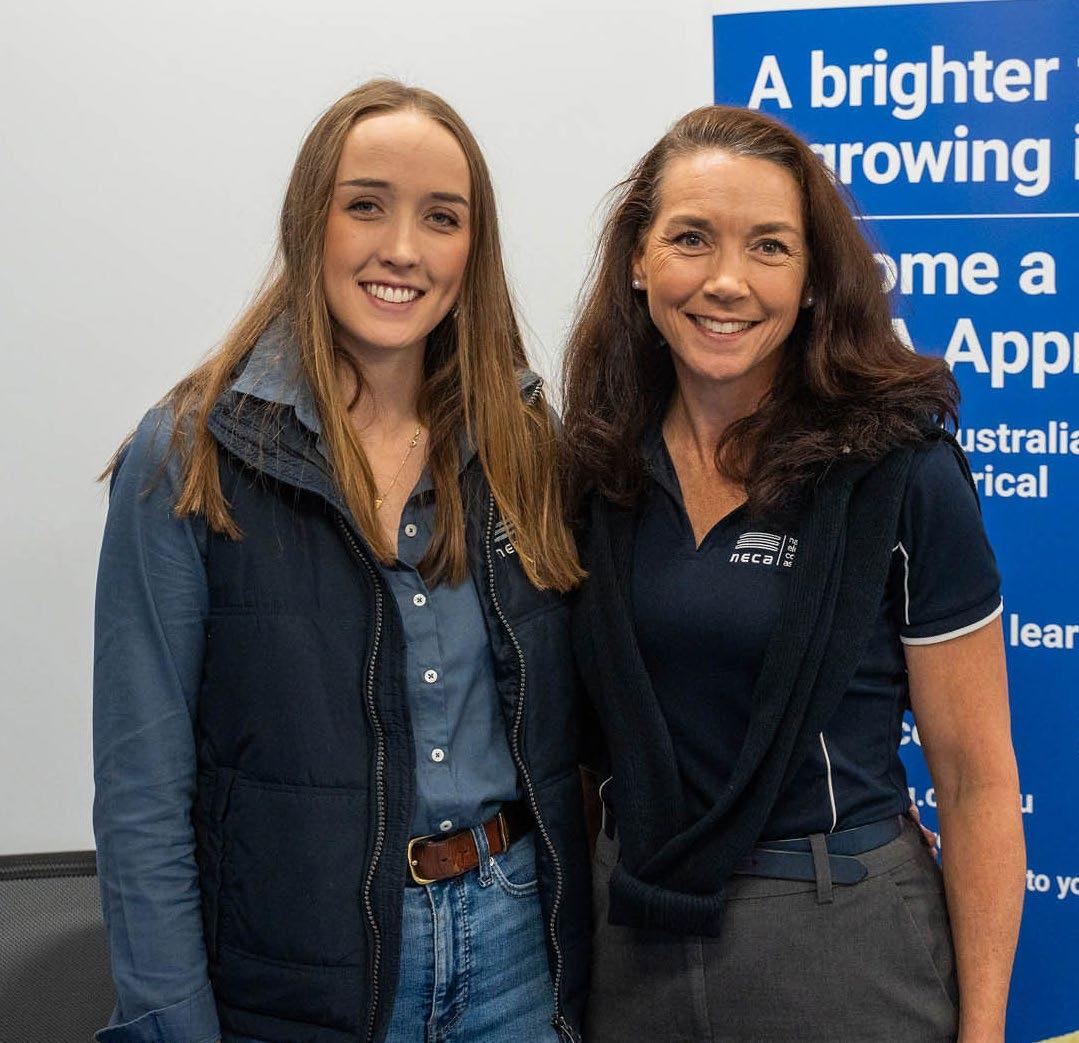
is one of these role models. “Having Morgan sit in the Cert 3 Head Trainer role is so important, because at the end of the day, you can’t be what you can’t see.” “Seeing them walk in as young year 12’s and watching them walk out as comfortable, confident, intelligent tradespeople is one of the most fulfilling parts of the job.”
Beyond Michelle’s work encouraging women into the trade is her dedication to creating opportunities for potential tradespeople in regional spaces. “I don’t want people from regional areas to have any fewer opportunities than city folk,” she
said. “Wherever we need to go to deliver training, that’s where we go.”
Since her commencement at NECA, the employment rate of female apprentices has risen to more than double the industry standard, and apprenticeship accessibility to people in rural areas has grown to the best NECA has ever seen. “This is a career that can take you anywhere. I’ve seen apprentices become CEOs, managers, trainers, work overseas, and so much more. Many go on, start their own business, and one day send their apprentices back to us.”
Rebekah Tinson is a former NECA apprentice who currently works as a Dual Trade for Snowy 2.0. Before her apprenticeship, Rebekah spent many years working in hospitality, including managing a motel. Her first experience in a trade environment was when her friend offered her a job in excavation. “I really liked being in steel caps doing a trade,” Rebekah said.
Her experience in the electrical trade began with her job at an oil refinery in Geelong. There, she began a double apprenticeship in electrotechnology, and instrumentation and control. One year later, she moved to Jindabyne, where finding work was particularly difficult for Rebekah. Being a mature-aged female apprentice, there were multiple barriers in her way. “It was quite difficult to land an apprenticeship in the local ski town where I was living for various reasons. I was so incredibly fortunate to get on board with Snowy after a little perseverance.”
Rebekah continued her electrical apprenticeship with NECA ACT, saying, “It was really cool to be able to do it with NECA. I wouldn’t have been able to do it without block release classes.”
Block Release classes are a system that Michelle Ellis has helped implement into NECA ACT’s training schedule, to help apprentices like Rebekah meet their theory training requirements from remote areas, where training centres are not easily accessible.
The support Rebekah received during her electrical apprenticeship at NECA was
also of the highest standard. “The teachers really connect with you as a person; they don’t just stand up there and teach, they actually connect with individuals in the class.” This support often extends beyond the classroom as well. “The trainers put extra time into staying back after class to explain any questions you may have. They love their job, and they love a good question. Some of the trainers took the time to talk to me during a particularly hard moment, which made a real difference to me, and I felt really looked after.”

To continue her instrumentation and control apprenticeship, Rebekah attended classes on the side with a Brisbanebased company, which occasionally required her to travel to the Sunshine State to complete practical components. As part of her career development, Rebekah has also completed two diplomas in Leadership Management and Project Management, making her extremely qualified within the industry.
Rebekah’s time in the sector has shown her just how valuable she can be as a
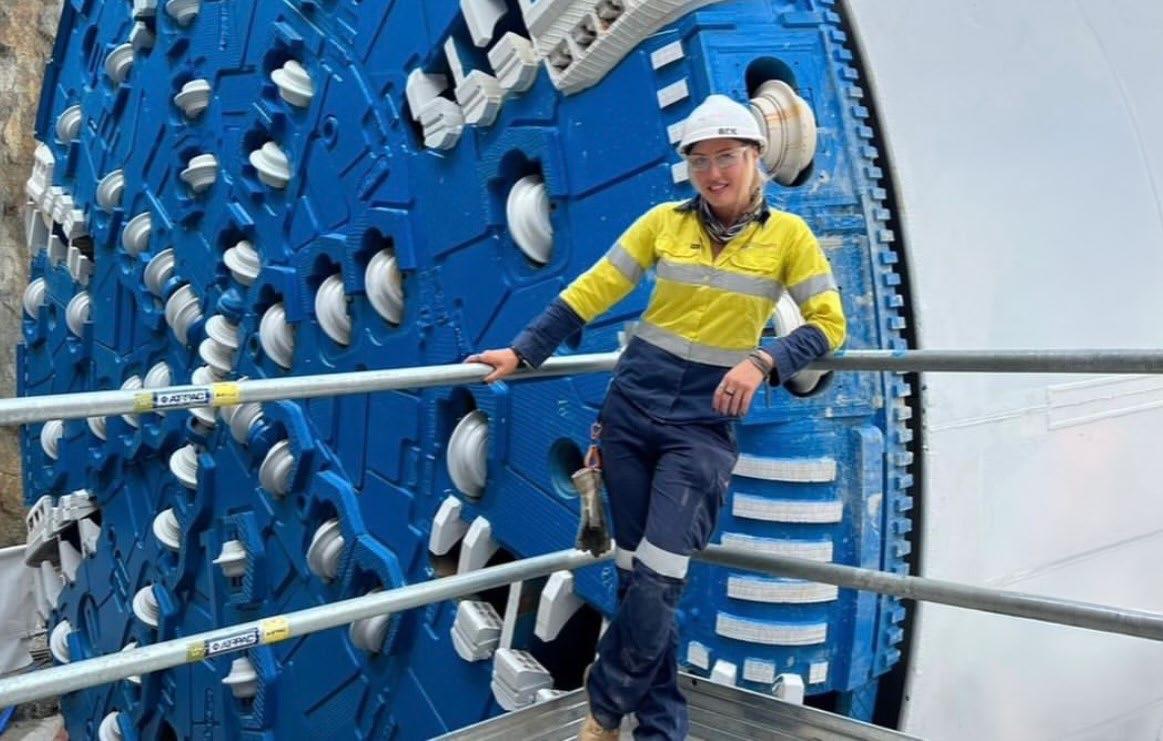
woman on the jobsite. The ability to play to her strengths is something she found highly valuable when working as part of a team. “You have some guys who are physically strong, and you have some other guys or girls who have other strengths and specialities”. Rebekah found herself very valuable when it came to some of the operational factors. “My strengths were memorising key clauses from the rule book and ensuring that paperwork and electrical compliance were up to date. It takes many different strengths to bring a team together”. This made her a consistently valuable team member. She also found that being a woman in the industry and working in close quarters with a predominantly male team, she was able to “balance out the masculinity and add a lot of nurturing feeling to the business”.
Rebekah’s experience with NECA and as a woman in a trade is something that deserves to be showcased and learned from. Her time with NECA ACT is a testament to the incredible work Michelle Ellis has put into her team and her training environment, and her experience as a woman on a worksite shows just how important it is to have diversity in a team. “You don’t know what you’re truly capable of until you just do it, and I truly believe that all women can do it”, Rebekah concluded.
If you’re considering a career as an electrical apprentice, or know of someone who is, you can reach out to the team at NECA Training and Apprenticeships on our website, neca.asn.au/training-and-apprenticeships
QLD BRANCH

BRANCH UPDATE

Patrick Murphy NECA QLD Executive Director
WELCOME TO THE LATEST EDITION OF THE 2026 NECA NEWS. WE HAVE SOME EXCITING NEW CHANGES AND uPDATES TO SHARE WITH YOu!
Welcome Patrick MurphyExecutive Director, NECA QLD
NECA QLD would like to announce and welcome Patrick Murphy to the role of Executive Director, NECA QLD.
Having joined NECA in September 2024 as Government Relations Manager in QLD, Patrick has already demonstrated strong leadership and a deep commitment to our members and the broader industry. This appointment is a natural progression, and we are confident
Patrick will lead NECA QLD with the same dedication and strategic focus he has brought to his work with us.
Patrick brings a wealth of experience across government relations, policy, stakeholder engagement, senior advisory roles, and extensive expertise in commercial strategy and project delivery.
We look forward to the leadership, relationships, and impact that Patrick will bring to NECA QLD, our members, and the broader team.

Workforce Participation and Amenity Standards
Workforce participation remains a critical constraint on industry capacity, particularly in relation to female representation. Inadequate and poorly maintained site amenities continue to act as a barrier to entry and retention, despite existing work health and safety obligations. NECA is working with the National Association of Women in Construction (NAWIC) and engaging with the government to drive improved standards, stronger enforcement, and clearer compliance expectations. This includes advocating for the integration of appropriate amenity standards into procurement frameworks and site practices. Improving workforce participation is not only a matter of equity, but it is also a necessary productivity reform to support long-term infrastructure delivery and industry sustainability.
National Licensing Reform and Workforce Mobility
The current mutual recognition framework is not delivering the workforce mobility required to meet national infrastructure and energy transition demands. Inconsistent licensing regimes, differing scopes of work, and duplicative administrative processes are constraining the labour movement at a time of sustained demand for skilled workers.
NECA’s position is that Australia requires a single, nationally consistent electrical licensing framework that maintains safety standards while enabling efficient movement of labour. Multiple formal submissions have been progressed to advance the implementation of a national licence as a practical and enduring reform.
Introducing NECA Training - QLD
We’re excited to share that the new training team is now up and running in Brisbane, led by our new Senior Trainer, David Elliott.
Short courses are already available to book, including CPR-LVR refreshers and Working at Heights, with many more courses being added as we speak. Looking ahead, the team will soon
be rolling out additional programs, including a pre-apprenticeship course, with the delivery of the full Certificate III in Electrotechnology planned for the near future.
Working with David will be Rachel Janzen, and the ever-capable Michelle Ellis and her colleagues in NSW and ACT. If you’re due for training or are looking to organise accreditations for your team, please reach out to courses-qld@necatraining.edu.auwe are excited to look after you!
Why More Small Contractors are Moving to NECASafe Digital Systems
Across 2025 and into 2026, one of the biggest shifts in the electrical industry is being led by small electrical businesses. Sole traders and teams of two to ten are moving away from paper-based systems and adopting digital tools to manage compliance, documentation and risk.
Compliance expectations no longer vary by business size. Small contractors are expected to demonstrate current SWMS, documented toolbox talks, licence and competency tracking, safety observer justification and calibrated equipment records. When regulators or clients ask for evidence, paper folders in the ute are no longer enough.
This is why more businesses are turning to NECASafe Digital.
Designed specifically for electrical contractors, NECASafe Digital allows safety tasks to be completed directly from a phone or tablet. Contractors can:
½ complete risk assessments and checklists onsite;
½ capture photos and digital signatures instantly;
½ log hazards and incidents in real time;
½ store documentation securely in one central system;
½ retrieve records immediately when requested.
For small operators, this removes duplication, reduces lost paperwork and significantly cuts administration time. Instead of chasing forms, contractors can focus on running their business.
Digital safety management isn’t about becoming corporate; it’s about protecting your livelihood and staying compliant with less stress.
If you’re ready to simplify compliance and strengthen your safety systems in 2026, contact NECASafe on 1300 361 099 to discuss how NECASafe Digital can support your business.

industry. We look forward to seeing you all there!
New Electrical Safety Office Technical Guides Now Available
The Electrical Safety Office (ESO) has released a series of technical guidance documents designed to assist electrical contractors and workers in meeting their electrical safety obligations in Queensland. The guides provide practical information to help the industry understand regulatory expectations and improve
The new guidance materials aim to assist industry participants to better understand their duties under Queensland’s electrical safety framework, including the Electrical Safety Act 2002 and Electrical Safety Regulation 2013.
The ESO has indicated that the guides are intended to provide practical information to support compliance and promote safer work practices across the electrical industry. Recent updates form part of ongoing engagement with contractors and workers to improve safety outcomes and prevent electrical incidents.
Such guidance material is designed to assist duty holders in understanding how to meet the standards required under Queensland’s electrical safety legislation and associated codes of practice.
Scan the QR code or visit www.bit.ly/eso-technical-guides to access these guides or contact NECA Technical on 1300 361 099 for more information.
What Do I Need to Know About Construction Sites and
AS/NZS 3012?
Construction sites are a unique working environment, where there is a need for an electricity supply during the construction phase, but you are also installing the permanent installation wiring. This, coupled with the high-risk nature of a construction site, presents the perfect storm for members. This is why a standard like AS/NZS 3012 is so important to know and understand. Some of the more common issues
NECA Technical identify when visiting construction sites are:
½ leads not tested and tagged;
½ lighting not in the correct location;
½ construction wiring not labelled;
½ switchboards missing locks, and leads not installed correctly;
½ test results of the construction wiring not being kept.
AS/NZS 3012 sets out the minimum safety requirements for the design, installation, operation, and maintenance of temporary electrical installations used on construction, demolition, and similar work sites.
The standard recognises that construction environments are higher risk than permanent installations. Conditions such as weather exposure, frequent relocation of equipment, mechanical damage, and untrained users significantly increase the likelihood of electric shock, fire, and equipment failure. AS/NZS 3012 addresses these risks by specifying requirements for supply arrangements, earthing systems, residual current devices (RCDs), testing and tagging, socket outlets, distribution boards, and the use of compliant electrical equipment.
For electricians, AS/NZS 3012 is critically important because it defines what is considered safe and legally compliant work on construction sites. Compliance helps electricians meet their duties under Work Health and Safety (WHS) legislation, reduces liability, and protects workers and the public from serious injury or death. It also provides clear guidance on inspection, testing intervals, and
documentation, which supports consistent practices across sites.
NECA has produced a fact sheet that provides members with much more detail on these issues and how AS/NZS 3012 compliance can be achieved. The fact sheet can be found on NECA’s MKB (Why Complying with AS/NZS 3012:2019 is Essential for Safety and Legal Responsibility).
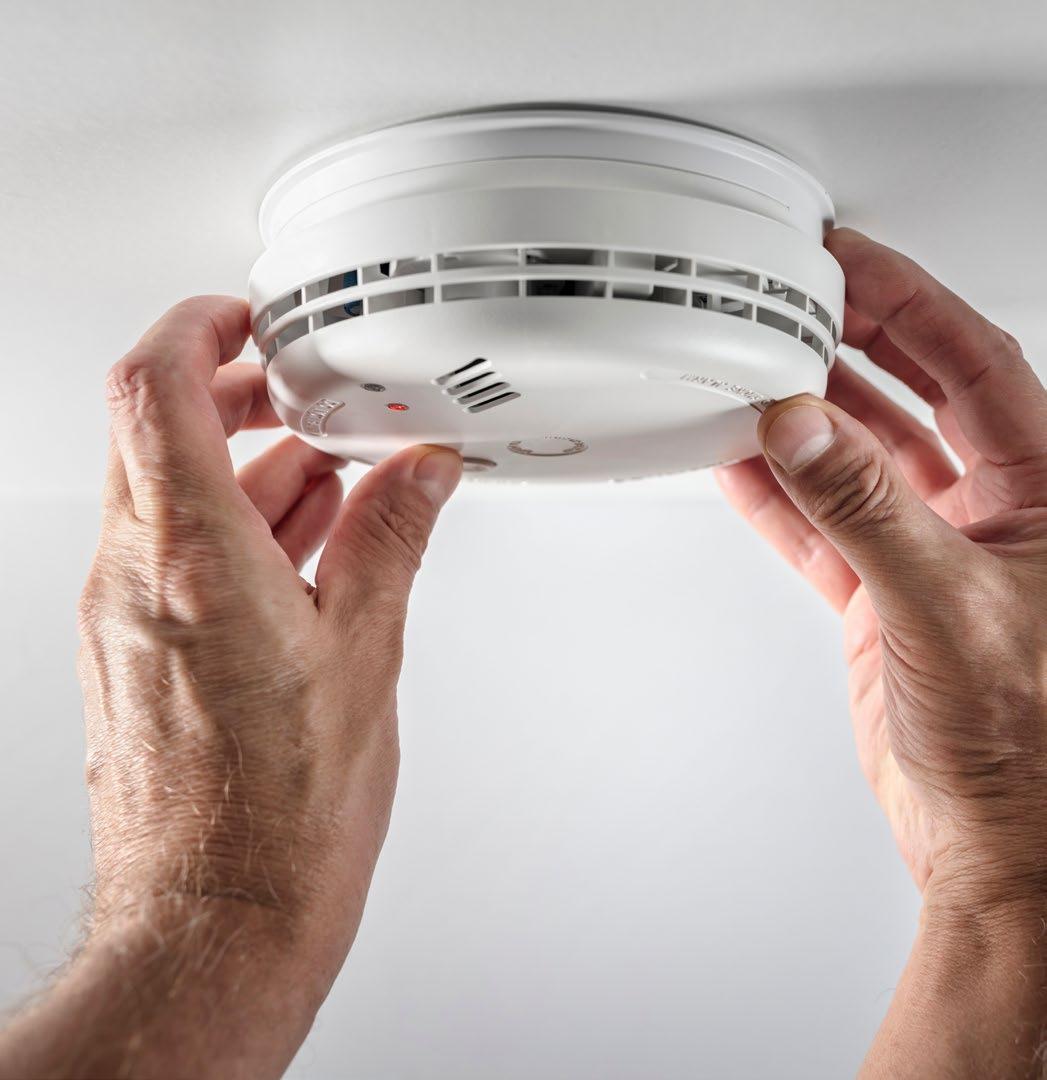
Smoke Alarms
The weather is starting to get colder, so many homes still don’t have working smoke detectors. It’s time to remind your customers that their smoke alarms need testing.
In Queensland, smoke alarm requirements are primarily governed by the Fire Services Act 1990 and the Building Fire Safety Regulation 2008, with Part 5A setting out specific obligations for domestic dwellings. These provisions mandate the use
of photoelectric smoke alarms that comply with AS 3786:2014, are either hardwired or powered by a non removable 10 year battery, and are installed in prescribed locations such as bedrooms, hallways, and on each storey of a dwelling. Minimum separation distances from fittings, walls, air vents, and ceiling fans are also specified to ensure reliable operation.
Additional requirements introduced from 1 January 2022 apply to rental properties and homes being sold, including interconnection of smoke alarms, age limits, and testing obligations for both lessors and tenants. The National Construction Code (NCC) 2022 further reinforces these requirements, particularly for Class 1 and Class 1b buildings, ensuring occupants receive reliable, automatic warning and can safely evacuate in the event of a fire.
SA/NT BRANCH

BRANCH UPDATE

Larry Moore NECA SA/NT Executive Director
THE YEAR IS ALREADY RACING AHEAD, AND IT’S QuICKLY PROVING TO BE ANOTHER DEMANDING ONE FOR OuR INDu STRY. WHILE SOME OF OuR MEMBERS EXPERIENCED A SLOWER START TO 2026, THERE’S A RENEWED SENSE OF MOMENT uM, WITH WORKLOADS NOW RAMPING uP ACROSS THE BOARD.
2026 NECA SA/NT Roadshow Seminar Series
The 2026 Roadshow Seminars have come to a close, with the team, event sponsors, and presenters returning to Adelaide at the end of May, after presenting 14 shows to nearly 900 electricians across metropolitan and regional South Australia.
Once again, the NECA SA/NT Roadshow Seminars have been a fantastic opportunity for contractors and their employees to receive information from NECA SA/NT, SA Power Networks, and the Office of the Technical Regulator on a range of topics, in addition to viewing the latest and greatest products and services available from our dedicated sponsors.
Topics covered during the seminar included:
½ electrical licensing penalties;
½ payday super;
½ solar and environmental conditions;
½ cable types of connections;
½ identification of consumer mains;
½ meter panel sizes;
½ changes to the certification process for eCOCs and ATCs;
½ CER compliance;
½ SEG/MEG thresholds;
½ SWER changes;
½ electric vehicles;
½ metering installer responsibilities;
½ temporary power on construction sites;
½ voltage drop;
½ electrical fire incidents;
½ solar batteries.
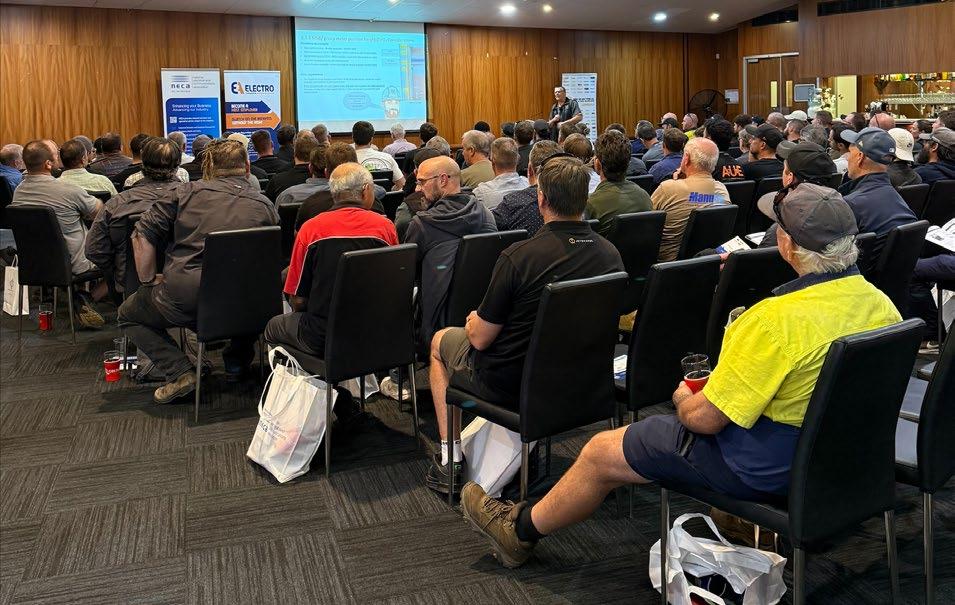
NECA SA/NT would like to thank our members for their support of this year’s event, and we look forward to seeing you all again next year. If you did not get the chance to attend, copies of the presentation can be acquired by visiting our roadshow website by scanning the QR code or visiting www.bit.ly/neca2026seminar
These events are a large commitment for those involved and a huge thank you must go to our sponsors and presenters for their dedication and contribution.
Please do not hesitate to call or email us with your feedback, questions, or comments regarding the content, locations, and format of this year’s roadshows.
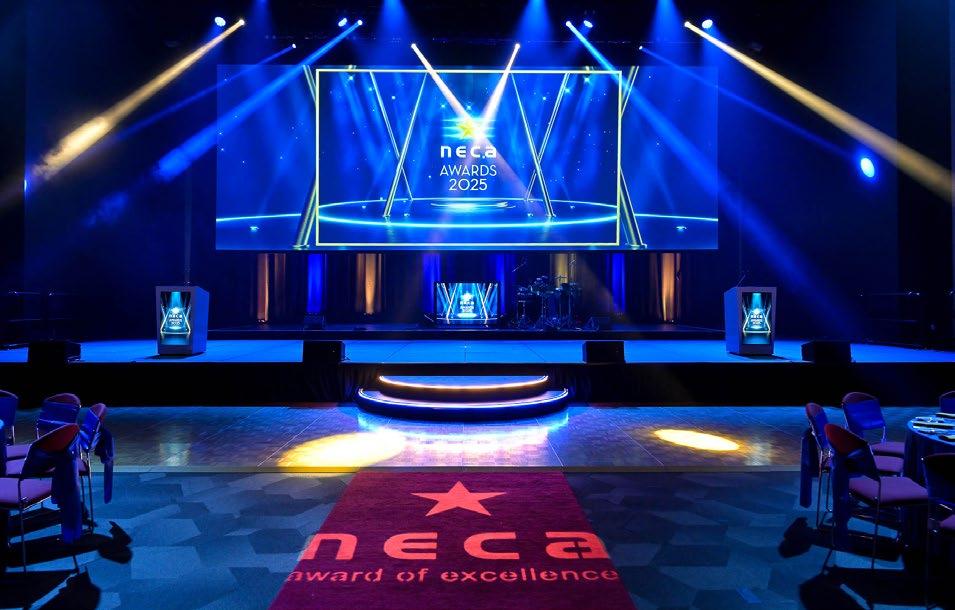
2026 Excellence, Small Business and Apprentice Awards
Our Excellence and Small Business Awards nominations for 2026 have now closed with Apprentice Awards nominations open until Friday 3 July. We are currently working through the extensive judging process and are thoroughly enjoying reading your submissions.
The Excellence, Small Business, and Apprentice Awards celebrations will be held at our Industry Gala Dinner on Friday 11 September in the beautiful Halls CD at the Adelaide Convention Centre. We certainly hope our members, sponsors, and industry representatives will join us for this excellent event that showcases some of the brilliant work being completed in our industry, as well as our fabulous small businesses and high-achieving apprentices. It also provides a great opportunity to enjoy some fantastic food, wine, and live entertainment with your peers.
2026 NECA National Conference
NECA Australia will be joining NECA uSA for the 2026 Convention and Trade Show in Las Vegas, Nevada! This offers a unique opportunity for members to engage with both Australian and American industry leaders and participate in a wide range of activities.
The uSA conference is the largest of its type, with over 200 exhibitors and more than 130 speakers.
Keep an eye out on your emails as registration information will be coming soon!
Electro Careers & Apprenticeships (Electro CA)
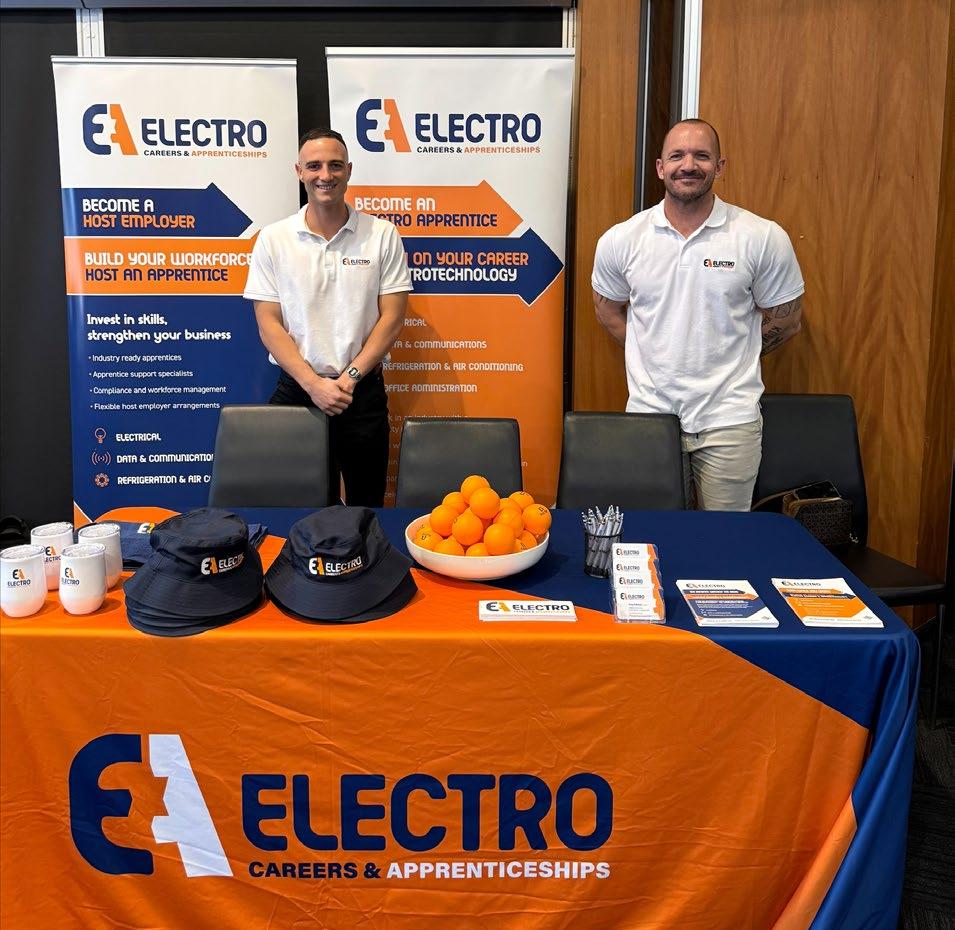
Our group training organisation, Electro Careers & Apprenticeships (Electro CA), currently has 212 apprentices employed. Electro CA employs new apprentices every 6-8 weeks, depending on industry requirements. NECA SA/NT members receive a discounted rate on apprentices employed through Electro CA.
If you are looking to hire a new apprentice or would like further information about how Electro CA can assist you and your business, please contact Brett Taylor, Business Development Manager at Electro CA, via brett@electroca.com.au
For further information or assistance with any of the above, please contact the NECA SA/NT office on (08) 8272 2966.
A LEGACY OF LEADERSHIP
LARRY MOORE’S IMPACT ON THE ELECTROTECHNOLOGY INDUSTRY
FEW CAREERS SPAN THE BREADTH OF AN INDu STRY LIKE THAT OF LARRY MOORE – A JOuRNEY DEFINED BY STEADY PROGRESSION, DEEP EXPERTISE, AND AN ENDuRING COMMITMENT TO THE ELECTROTECHNOLOGY SECTOR.
Early Career
Larry’s career began in 1964, when, at just 16 years of age, he commenced an electrical apprenticeship with Australian automobile manufacturer Holden in Elizabeth, South Australia. Over the next 27 years, he steadily advanced through General Motors Holden’s construction and maintenance department, from leading hand to supervisor, earning a reputation for both technical capability and strong leadership.
In 1991, Larry took his experience in a new direction, leaving Holden to join the Electrical Trades union (ETu) as an Organiser and Industrial Officer. It was a dynamic chapter in his career, marked
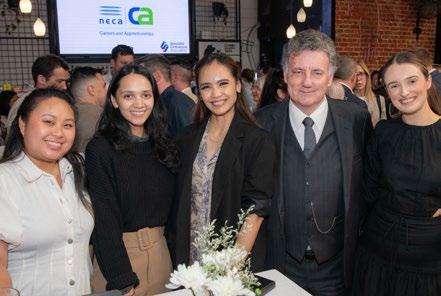
by passionate advocacy for better wages and conditions for workers and a willingness to challenge the status quo.
NECA Leadership
By 1997, Larry’s deep understanding of the industry and strong credibility was recognised amongst his peers. He was directly approached by the NECA SA Executive Committee to join the organisation as their Industrial Relations Advisor, a move that would mark the beginning of a long and influential tenure with NECA. Just a year later, in 1998, he also took on the role of Secretary for RACCA SA, expanding his impact into the refrigeration and air conditioning sector. In 1999, Larry stepped into the position of Executive Director and Secretary of NECA SA, roles he has held ever since.
Since stepping into the role of Executive Director, Larry’s tenure has been marked
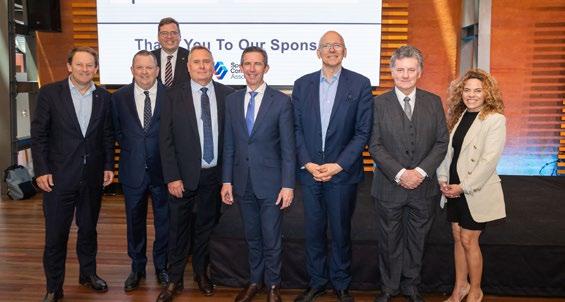
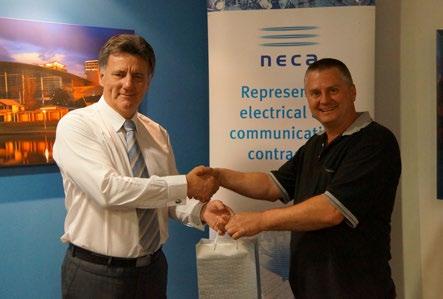
by his influence, leadership, direct approach, and longevity. Widely respected by his peers, industry leaders, and policymakers alike, he has consistently been a strong and unwavering advocate for members and the broader electrotechnology sector. Additionally, his personal and professional investment in skills development and training is nationally recognised and acknowledged. While his list of achievements is extensive, several key milestones stand out as defining contributions to NECA and the industry at large.
Key Contributions
One of the most significant of these was his instrumental role in the incorporation of the NECA Northern Territory chapter into the NECA South Australia chapter in 2016, and the subsequent amalgamation of the branches to form what is now recognised as NECA SA/NT.
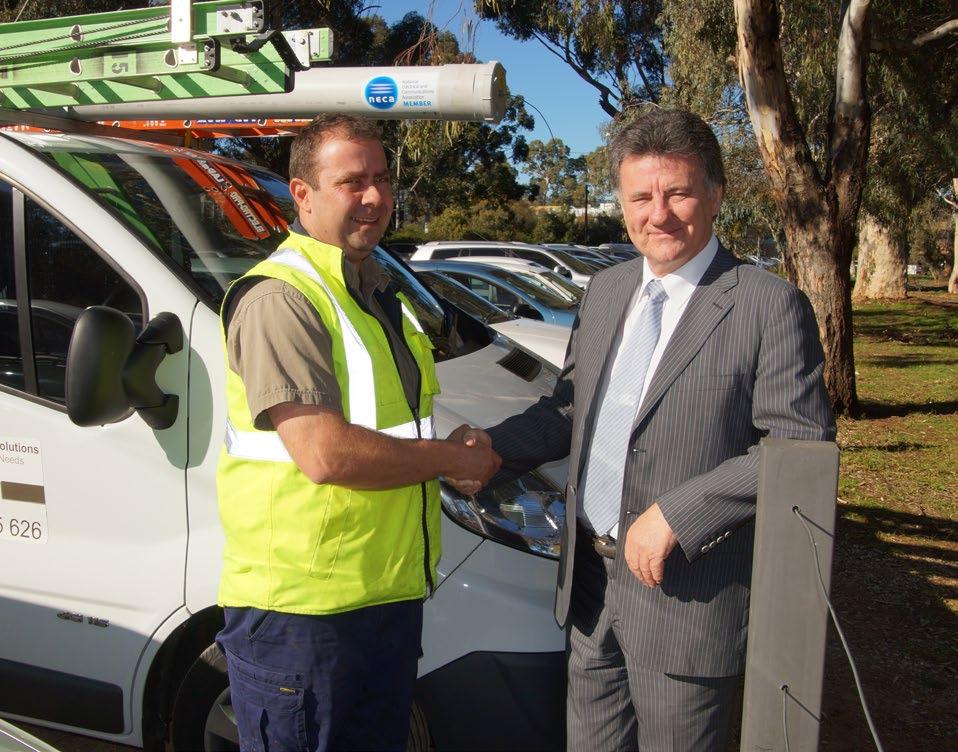


This consolidation strengthened the South Australian chapter’s reach and capacity, creating a unified voice for members across both jurisdictions.
Larry also played a pivotal role in the establishment of NECA SA/NT’s affiliated group training organisation, originally launched in 2017 as NECA Careers & Apprenticeships (NCA). Created in response to critical skills shortages, the enterprise ensures the industry has access to a pipeline of highly trained and capable apprentices. In 2023, the organisation was rebranded to Electro Careers & Apprenticeships (Electro CA), reinforcing its sole focus and dedication to the electrotechnology industry.
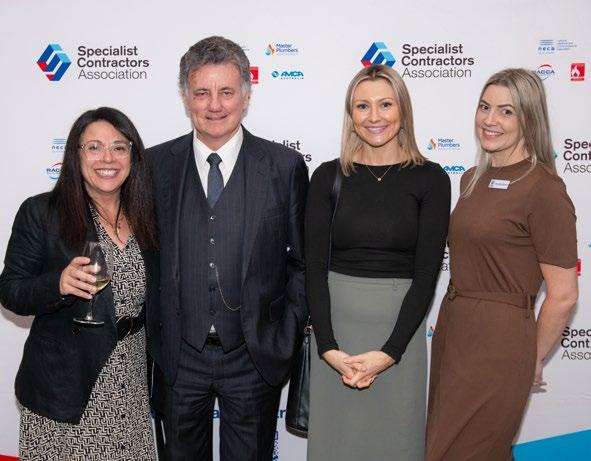
His leadership extended further with the establishment of the Specialist Contractors Association (SCA), a notfor-profit incorporated in 2018. Bringing together leading trade associations across South Australia’s building and construction sector, the SCA was formed to provide a unified and powerful voice to government and industry. Its purpose is to advocate for subcontractors, particularly in relation to fair contracting practices, timely payment terms, and
Future Endeavours
equitable risk allocation, which are key issues central to members and the ongoing sustainability of the sector.
Larry was instrumental in the creation of Australia’s first dual trade apprenticeship in electrical and refrigeration, a major industry advancement delivered in collaboration with the South Australian Skills Commission and the Industry Skills Council. Introduced in 2021 after nearly a decade of development, the program enables concurrent training in electrical, refrigeration and air conditioning disciplines, producing multi-skilled technicians equipped to meet the full demands of both trades.
Throughout his career, Larry has also contributed his knowledge and expertise across a wide range of industry and government boards, including the Australian Refrigeration Council, Energy Skills Australia, Portable Long Service Leave SA – Construction Industry, Refrigerant Reclaim Australia, SafeWorkSA Construction Industry OHS Committee, and the SA Power Networks Connections Working Group.
While stepping down as Executive Director at the end of the financial year marks the close of a significant chapter, Larry is not stepping away entirely. He has been appointed as a Director of ACRS and will continue to contribute through various board roles, maintaining his influence across the industry. In addition, he will remain closely connected to NECA SA/NT in a consulting and mentoring capacity, ensuring his knowledge and experience continues to support the organisation into the future.
Final Comments and Thanks
On behalf of the NECA SA/NT President, Committee, team, members, sponsors, and industry stakeholders, we extend our sincere thanks to Larry for his outstanding contribution and commitment to the advancement of the electrotechnology sector. His impact has been both significant and enduring, leaving a legacy that will continue to shape the industry for years to come. As he embarks on his next chapter, we all look forward to maintaining a close connection and to the continued benefit of his friendship and mentorship.
TAS BRANCH

BRANCH UPDATE

Ben Shaw NECA TAS Executive Director
IT’S BEEN AN EXCITING FIRST HALF OF THE YEAR FOR NECA TASMANIA, WITH SOME STEADY PROGRESSION AND GREAT WORK BEING SEEN ACROSS THE INDu STRY. WE’VE HOSTED AN ARRAY OF AWESOME EVENTS SO FAR, INCL uDING INDu STRY NIGHTS, TOOLBOX TALKS, AND WORKSHOPS, AND WE’VE GOT EVEN MORE TO LOOK FORWARD TO, HEADLINED BY OuR 2026 NECA TAS AWARDS! KEEP AN EYE ON YOuR EMAIL INBOXES SO YOu DON’T MISS WHAT WE’VE GOT COMING uP.
Smoke Alarm Compliance
In residential fires, smoke and toxic gases spread far more rapidly than heat, making smoke inhalation the leading cause of death and injury in home fires. Smoke alarms are therefore a critical life safety measure, providing early warning so occupants can evacuate safely and emergency services can respond before fire conditions worsen.
In Tasmania, smoke alarm requirements are set out under the Residential Tenancy (Smoke Alarms) Regulations 2022, the Fire Service Act, and the National Construction Code (NCC) 2022. All homes must be fitted with working photoelectric smoke alarms on every storey, installed in accordance with the relevant Australian Standards and the NCC. Smoke alarms should generally be located in corridors or hallways

associated with bedrooms, or, where no corridor exists, between bedrooms and the remainder of the dwelling.
Homes built or substantially renovated after 1 August 1997 require 240V hard wired smoke alarms, and from 1 May 2014, these alarms must also be interconnected so that activation of one trigger all alarms. Class 1b buildings, including short term rental accommodation, have additional requirements, including smoke alarms within bedrooms and lighting that activates during an alarm to assist evacuation.
While newer editions of AS 3786 exist, Tasmanian legislation continues to reference AS 3786:2014, which remains the compliance benchmark for regulatory and documentation purposes.
For more information, visit our Member Portal (Smoke Alarms), or contact NECA Technical on 1300 361 099.
What Do I Need to Know About Construction Sites and AS/NZS3012?
AS/NZS 3012 sets out the minimum safety requirements for the design, installation, operation, and maintenance of temporary electrical installations used on construction, demolition, and similar work sites.
The standard recognises that construction environments are higher risk than permanent installations. Conditions such as weather exposure, frequent relocation of equipment, mechanical damage, and untrained users significantly increase the likelihood of electric shock, fire, and equipment failure. AS/NZS 3012 addresses these risks by specifying requirements for supply arrangements, earthing systems, residual current devices (RCDs), testing and tagging, socket outlets, distribution boards, and the use of compliant electrical equipment.
For electricians, AS/NZS 3012 is critically important because it defines what is considered safe and legally compliant work on construction sites. Compliance helps electricians meet their duties under work health and

safety (WHS) legislation, reduces liability, and protects workers and the public from serious injury or death. It also provides clear guidance on inspection, testing intervals, and documentation, which supports consistent practices across sites.
NECA has produced a fact sheet, which can be accessed on the Member Portal (Why Complying with AS/NZS 3012:2019 is Essential for Safety and Legal Responsibility), that provides members with much more detail on these issues and how AS/NZS 3012 compliance can be achieved.
NECA’s Manual of Labour Units Document is Back
The NECA manual of labour units document provides a comprehensive and professionally developed reference for labour unit rates for installation work as generally used in the electrical contracting and communications industry. The manual lists the national average direct labour
time to install electrical materials under varying degrees of difficulty, including weather conditions.
The manual is intended to be used by estimators, consulting engineers, quantity surveyors, building contractors, and government departments to value work both at the estimating stage for variations or progress claims.
No monetary rates are recommended, but a schedule of how to assess the dollar value of labour is included. The unit cost of labour is variable due to different award rates, overhead structures, and site location.
This manual should not be used for variations unless the labour units herein are substantially increased for add-on variations and the labour units are substantially decreased for deduct variations. The manual can be accessed on NECA’s Member Portal (The NECA Manual of Labour units).
Risk Assessments and Installing BESS Systems
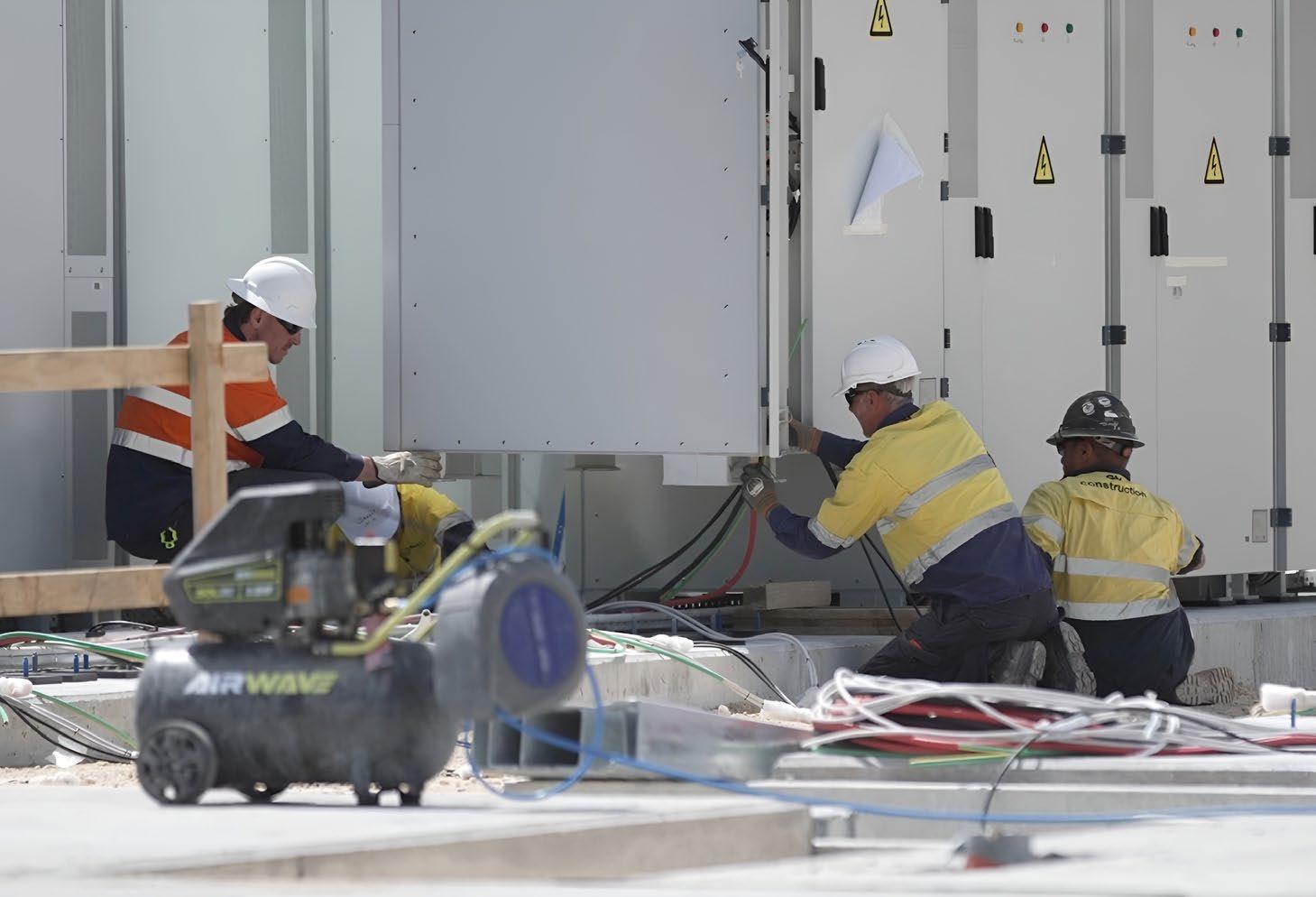
AS/NZS 5139 requires all electricians installing BESS systems to conduct a written risk assessment before carrying out the installation of any BESS. The sitespecific risk assessment is required to identify actual site condition hazards so the installer can mitigate these hazards as part of their installation works.
The risk assessment follows a formal risk management process covering:
1. hazard identification;
2. risk evaluation;
3. risk control measures;
4. residual risk assessment.
This process is critical in determining a compliant location for your BESS. The risk assessment must be left with the site documentation (system manual) as evidence that the risk assessment was carried out.
NECA have prepared an example of this risk assessment template to assist members in preparing their
own site-specific risk assessment. This can be found on our Member Portal (BESS Risk Assessment Template (ACT, NSW, QLD, TAS)).
Ticket Sales Now Open for the 2026 NECA TAS Excellence Awards
The NECA Awards series is back, and this year, we look forward to bringing you another epic occasion for networking and celebration. After holding the NECA Awards in Launceston last year, we’re back at the Wrest Point Hobart for 2026 on Friday, 7 August. Scan the QR Code or visit www.bit.ly/neca-awards-2026-tas before Friday, 24 July, to secure your tickets to Tasmania’s electrical and communications industry’s biggest event. We can’t wait to see you all there!
National Construction Reform

NECA is playing a central leadership role through the National Construction Industry Forum (NCIF) in shaping the national reform agenda through the NCIF Blueprint and the Construction Industry Charter. These frameworks represent a coordinated effort across government, unions, and industry to address systemic challenges in construction, including financial viability, procurement practices, workforce participation, and regulatory consistency. The Blueprint sets out a comprehensive reform program with priority actions focused on security of payment, nationally consistent procurement, improved risk allocation, and workforce mobility. The Construction Industry Charter will establish a national baseline for fair contracting, dispute resolution, safety, and productivity. NECA is actively ensuring that subcontractor protections and the interests of electrical contractors are embedded in these reforms, with a focus on translating policy commitments into practical outcomes that improve project delivery, reduce insolvency risk, and lift productivity.
NECA Tasmania Works Alongside the Tasmanian Government to Revolutionise Legislation
NECA Tasmania has been working closely with the Tasmanian government to revolutionise legislation around copper theft and replace the outdated paper-based lodgement system with a digital solution.
The Tasmanian government has called for a tender for the electronic CEC forms and has agreed to implement tougher laws around copper and construction site theft.
NECA Tasmania’s Executive Director Ben Shaw has been driving these changes, saying, “These reforms deliver real benefits for electrical businesses by cutting red tape and protecting our industry.”
NECA Tasmania is proud to be the voice of industry, with Mr Shaw continuing to tirelessly advocate for these changes, building a better future for electrotechnology in Tasmania.
Why More Small Contractors Are Moving to NECASafe Digital Systems
Across 2025 and into 2026, one of the biggest shifts in the electrical industry is being led by small electrical businesses. Sole traders and teams of two to ten are moving away from paper-based systems and adopting digital tools to manage compliance, documentation and risk.
Compliance expectations no longer vary by business size. Small contractors are expected to demonstrate current SWMS, documented toolbox talks, licence and competency tracking, safety observer justification and calibrated equipment records. When regulators or clients ask for evidence, paper folders in the ute are no longer enough.
This is why more businesses are turning to NECASafe Digital.
Designed specifically for electrical contractors, NECASafe Digital allows safety tasks to be completed directly from a phone or tablet.
Contractors can:
½ complete risk assessments and checklists onsite;
½ capture photos and digital signatures instantly;
½ log hazards and incidents in real time;
½ store documentation securely in one central system;
½ retrieve records immediately when requested.
For small operators, this removes duplication, reduces lost paperwork and significantly cuts administration time. Instead of chasing forms, contractors can focus on running their business.
Digital safety management isn’t about becoming corporate; it’s about protecting your livelihood and staying compliant with less stress.
If you’re ready to simplify compliance and strengthen your safety systems in 2026, contact NECASafe on 1300 361 099 to discuss how NECASafe Digital can support your business.
VIC BRANCH

BRANCH UPDATE


Navigating market volatility and rising cost pressures
John Sofarnos NECA VIC Executive Director Dean Spicer NECA VIC President
NECA Victoria has seen a strong and active first half of 2026, with high engagement across industry events, programs, and member initiatives delivered across the state. As we move through the year, our focus remains on supporting members to navigate an increasingly complex and rapidly changing operating environment.
Global conditions continue to shift, creating growing uncertainty for electrical contractors. Escalating geopolitical tensions are placing pressure on energy and freight markets, driving higher fuel costs and broader supply chain disruption, with direct impacts on pricing, procurement, and project delivery.
NECA Victoria has been advised that suppliers are implementing price increases across selected electrical product lines, with a weighted net increase of approximately 4.9 %. At the same time, rising costs across petrochemical-based materials such as PVC are contributing to further volatility.
We are also actively engaging with key stakeholders to ensure these challenges are clearly understood at a government level. Through our seat in the newly established Building and Construction Industry Impacts and Response Committee, we are working to ensure the impacts of current market conditions on the construction sector are accurately represented and considered in policy discussions.
We encourage members to engage early with suppliers, review contractual provisions, and maintain clear records of cost impacts. Staying connected to NECA communications will also be critical in the months ahead, ensuring you remain informed of emerging risks, industry developments, and available support. We continue to monitor developments and advocate for procurement frameworks that better reflect market conditions and support fair risk allocation.
Industry events: building capability, connection, and momentum
NECA Victoria has delivered a strong program of events over the past quarter, supporting capability and connection across the sector.
Our 2026 International Women’s Day event brought together over 230 attendees, including industry leaders, apprentices, and advocates, to focus on increasing female participation and building more inclusive workplaces. The strong engagement reinforced the importance of creating clear pathways for the next generation entering the trades.
Industry Nights have seen excellent attendance with five locations across metro and regional locations, providing practical updates on electrification, renewables, compliance, and safety.
The Licensed Electrical Inspector (LEI) forum also delivered targeted technical content, covering solar and battery installations, hazardous areas, and upcoming changes to wiring rules, supporting practitioners to stay informed in a rapidly evolving environment.
NECA Awards: celebrating excellence across our industry
With another successful series of events delivered, we now turn to one of the most anticipated highlights on our events calendar—the NECA Awards.
The Awards recognise the innovation, expertise and professionalism across our industry, from small businesses through to large-scale projects, with categories reflecting technical excellence, safety, business performance and leadership.
Following the strong engagement seen across recent NECA events, we encourage members to support their
peers and be part of an evening that celebrates the very best of our industry.
Tickets are now available, with the event taking place on 28 August at the Crown Palladium. We look forward to bringing the sector together and celebrating the achievements of our members.
Vale Kevin Curry – President 1972–75, Life Member
We are saddened by the recent passing of Kevin Curry, a respected industry leader and Life Member of the Association.
Kevin served on the Committee of Management and numerous sub committees for more than ten years, contributing significantly to the Electrical Contractors Association (ECF), as NECA was known during his Presidency, from 1972 to 1975. During this time, he was instrumental in securing Association properties adjoining Merrett House, supporting the organisation’s long term needs and future planning.
He chaired the Awards Committee during major periods of industrial change and dedicated many years to navigating the challenging industrial climate of the 1970s.
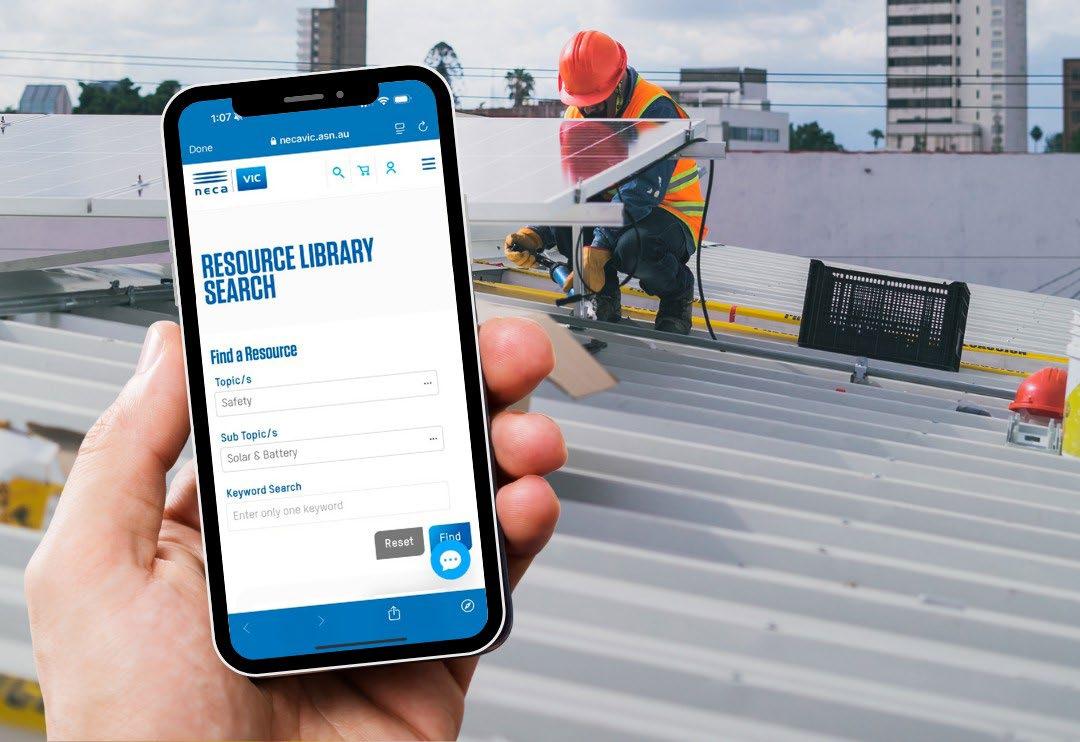
tradesman to estimator, before moving to Melbourne to support the establishment of the Victorian branch as Contracts Manager. Kevin served as CEO in Victoria from 1964 to 1992 and nationally from 1992 to 1994. His leadership and business acumen were instrumental in the expansion and success of O’Donnell Griffin in Melbourne.
Kevin will be remembered for his steady leadership, professionalism, and deep commitment to the
Our partnership with DXC is now underway, delivering dedicated WorkCover and claims management services, including streamlined processes and enhanced return-to-work outcomes.
The MyNECA app is live and available to download, providing members with direct access to NECA services, resources, and support on the go, including NEON for technical and workplace guidance. Download the MyNECA app today to stay connected and access support whenever you need it.
These initiatives reflect our ongoing focus on making NECA support more responsive and aligned to the needs of contractors.
Looking ahead
As we move into the second half of the year, the operating environment for electrical contractors remains challenging, with ongoing cost pressures, supply chain volatility, and workforce constraints continuing to shape the industry.
NECA Victoria remains focused on supporting members through the current shifting conditions. We encourage members to stay engaged, take advantage of the support and member benefits available, and reach out to NECA when needed. We are here to back you and your business, both now and into the future.
LIFTING INSTALLATION STANDARDS GETTING THE BASICS RIGHT
ELECTRICAL INSTALLATION WORK PLAYS A CRITICAL ROLE IN KEEPING HOMES, Bu SINESSES AND COMMuNITIES SAFE. WHEN IT’S DONE WELL, IT PREVENTS HARM. WHEN SMALL DETAILS ARE MISSED, THE RISKS – FIRE, ELECTRIC SHOCK AND EQuIPMENT FAIL uRE – CAN ESCALATE QuICKLY.
Victoria’s electrical industry has a strong reputation for quality and safety, built on consistent, standardsaligned installation work. Getting the basics right every time, protects people, property and the trade.
Energy Safe Victoria’s installation audit program has highlighted a pattern across worksites: recurring issues that aren’t complex but do require attention to detail and consistency. Across recent audits, three areas in particular keep coming up.
Sealing switchboard entries properly
We continue to see gaps around cable entries into switchboards. In a fault or fire, those openings can let flames and hot gases to escape and spread. To reduce this risk, electricians should:
½ cut cable entry openings to the right size;
½ keep cables grouped tightly to minimise gaps;
½ use appropriately sized cable glands;
½ fully close entry shutters;
½ use manufacturer-supplied internal seals;
½ seal any remaining gaps with fire-retardant materials.
Following manufacturer instructions
Manufacturer instructions set out how equipment operates safely and as intended. Skipping steps or making assumptions introduces unnecessary risk and can lead to compliance or warranty issues. In practice, that means:
½ use the specified wiring and circuit protection;
½ install equipment to keep out moisture and contaminants;
½ set up switching and controls as intended;
½ mount and secure equipment properly.

Earthing systems
Effective earthing is critical to making sure fault protection systems operate when they are needed most. We’re still seeing issues with undersized conductors, poor connections and neglected testing. To ensure safe fault disconnection, always:
½ use the correct earthing conductor size;
½ connect to a recognised earth point;
½ make sure connections are secure;
½ test earth continuity before energisation.

Leanne Hughson CEO, Energy Safe Victoria energysafe.vic.gov.au
These aren’t new issues, and they don’t reflect a lack of capability across the industry. They highlight how easy it is for small details to slip when work is busy or repetitive. Taking the time to check the fundamentals helps avoid rework, supports compliance and reduces the risk of incidents –both on site and down the track.
For more information, refer to AS/NZS 3000:2018 and the Electricity Safety (General) Regulations 2019, or visit www.energysafe.vic.gov.au
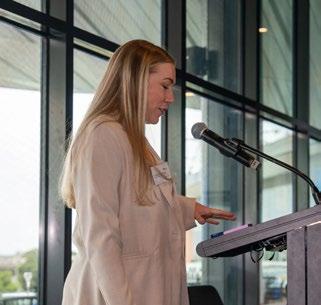
LEADING AUTHENTICALLY IN THE ELECTRICAL INDUSTRY
Ashleigh (Ash) Wainwright didn’t set out to become an electrician. In fact, she was on a completely different path - studying to be a high school English and Psychology teacher. But after a few placements, something didn’t quite fit. She wanted more from her career. Something with variety, something hands-on and at a different pace each day.
At first, a trade felt unlikely. “I thought it was probably a ridiculous idea,” Ash admits, having never seen women represented in the industry. But once she looked into electrical, it clicked: A career with a mix of practical work, problem-solving, and future opportunities. So, she gave it a go.
Ash completed her apprenticeship studies at NECA Education & Careers, an experience that left a lasting impression. She speaks highly of the quality of the training and support she received, and of the strong foundation it gave her when she started in the industry.
As a young woman entering the trade ten years ago, Ash faced both external and internal challenges. There were
moments she felt like she had to prove herself more than others, and times she questioned whether she truly belonged.
“I often left parts of myself at home to fit in”, she reflected, “It took time to realise I didn’t have to act like anyone else to earn my place.”
That shift - embracing who she really is – sits at the heart of her career and has shaped how Ash leads today.
As an A-Grade electrician, Ash has worked on multiple major industry sites and is currently participating in the EDGE program with NECA Education & Careers. Moving into a teaching role is “a full-circle moment,” and she “couldn’t believe her luck” when she spotted the EDGE Teacher job advert.
For Ash, representation matters, “not just being in the industry but being seen in it and leading,” she said. Leadership is something far more human than hierarchical. For her, it’s not about giving orders, but about showing up, supporting others, and leading by example.
In the classroom, that mindset is already taking shape. Ash is passionate about creating a space where all apprentices feel they belong, especially women who may be walking into a room where they’re the only one.
It’s a message she’s happy to share when the opportunity arises, recently presenting at NECA Victoria’s International Women’s Day event, and reflecting on her journey to hopefully encourage more women to consider leadership roles in the trade. “Don’t shrink yourself to fit expectations. Back yourself. Learn. Speak up. Show up. And recognise that your differences aren’t something to hide, they’re your strength.”
She describes good leadership as “being the person pulling the load alongside your team, not sitting back and directing it.”
Good leadership is about helping people do their best work and bringing others along on the journey to get the right results, no matter what the job.
Train
Lead Specialise Work
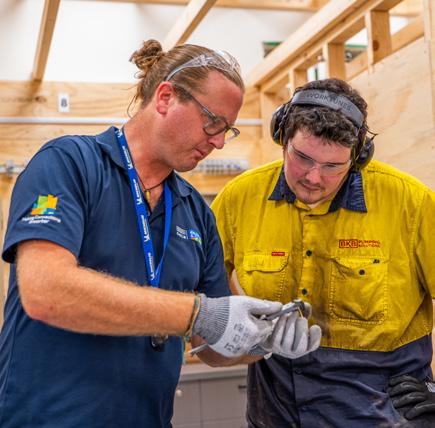
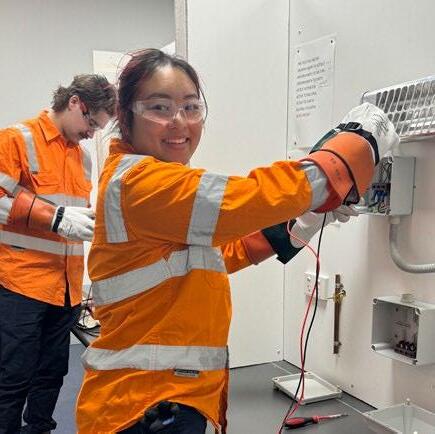

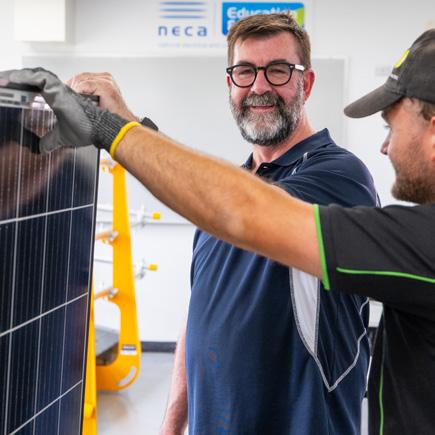
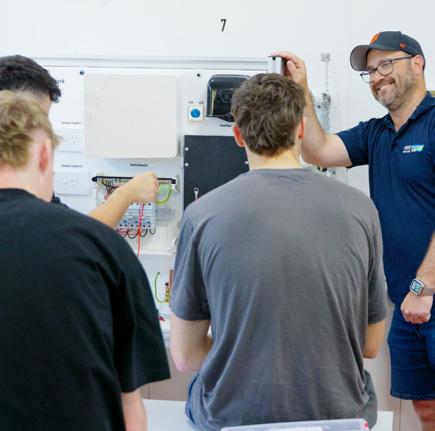
WA BRANCH

BRANCH UPDATE

Kelly Dewar-Matusik NECA WA Executive Director
WELCOME TO THE JuNE EDITION OF THE 2026 NECA NEWS. IT’S BEEN A VERY PRODuCTIVE SIX MONTHS FOR THE WESTERN A u STRALIAN ELECTROTECHNOLOGY INDu STRY, WITH PLENTY OF GREAT WORK AND GROWTH COMING FROM ACROSS THE STATE. WE’VE GOT SOME GREAT THINGS COMING uP IN THE NEXT FEW MONTHS, HEADLINED BY OuR 2026 NECA WA AWARDS, SO READ ON TO MAKE S uRE YOu ARE uP TO DATE!
Thinking of Hiring a First-Year Apprentice? Here’s What You Should Know NECA WA members who take on a first-year apprentice may be eligible for employer grants through the Construction Training Fund (CTF).
These grants are designed to help construction businesses offset the cost of employing apprentices and trainees, making it more affordable to invest in growing your workforce.
For apprentices or trainees who commenced their qualification on or after 1 July 2024, updated grant rates apply. The total funding available is influenced by:
½ the apprentice’s qualification;
½ the location of the apprenticeship (regional placements may attract additional incentives);
½ any additional grant incentives that apply.
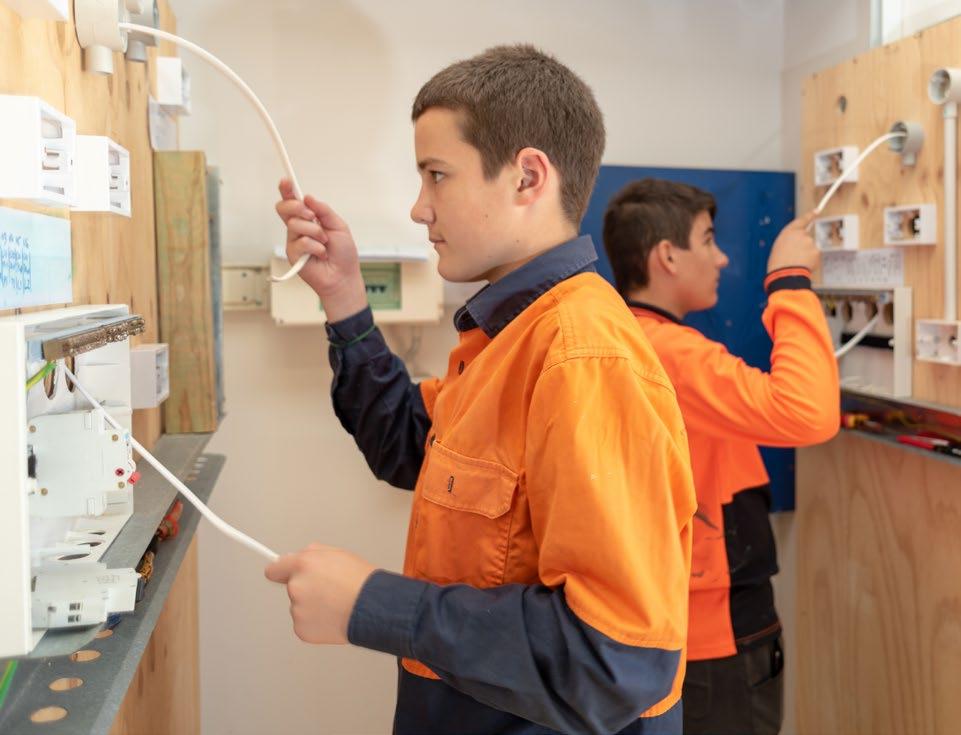
CTF funding is typically paid in three instalments across the apprenticeship. However, grant amounts may be affected if the apprentice completes early, transfers between employers, does not meet required milestones, or if the employer also receives payments under the State Government’s Employer Incentive Scheme (EIS).
At NECA WA, we don’t just encourage members to take on apprentices; we actively support you through the process. If you’re considering bringing on an apprentice, contact the NECA WA team for guidance and support.
NECASafe – Western Australian Safety and Compliance Services
NECASafe provides a comprehensive range of both free and fee-forservice safety and compliance solutions tailored to electrical contractors and allied trades across Western Australia. Our services are delivered at competitive rates and are designed to assist your business in meeting its obligations.
On-Site Advice
Our safety team can attend your site or meetings with builders, developers, engineers, and other stakeholders to provide practical, on-the-ground guidance on compliance with electrical safety obligations.
Incident Response
Following a notifiable incident, our team can provide structured guidance on incident management, notification requirements, and appropriate corrective actions to mitigate the risk of recurrence.
Safety Meetings/Toolbox Talks
NECASafe representatives can assist with your safety meetings or toolbox talks, delivering targeted guidance on WHS legislation, electrical compliance obligations, and practical safety measures relevant to your operations.
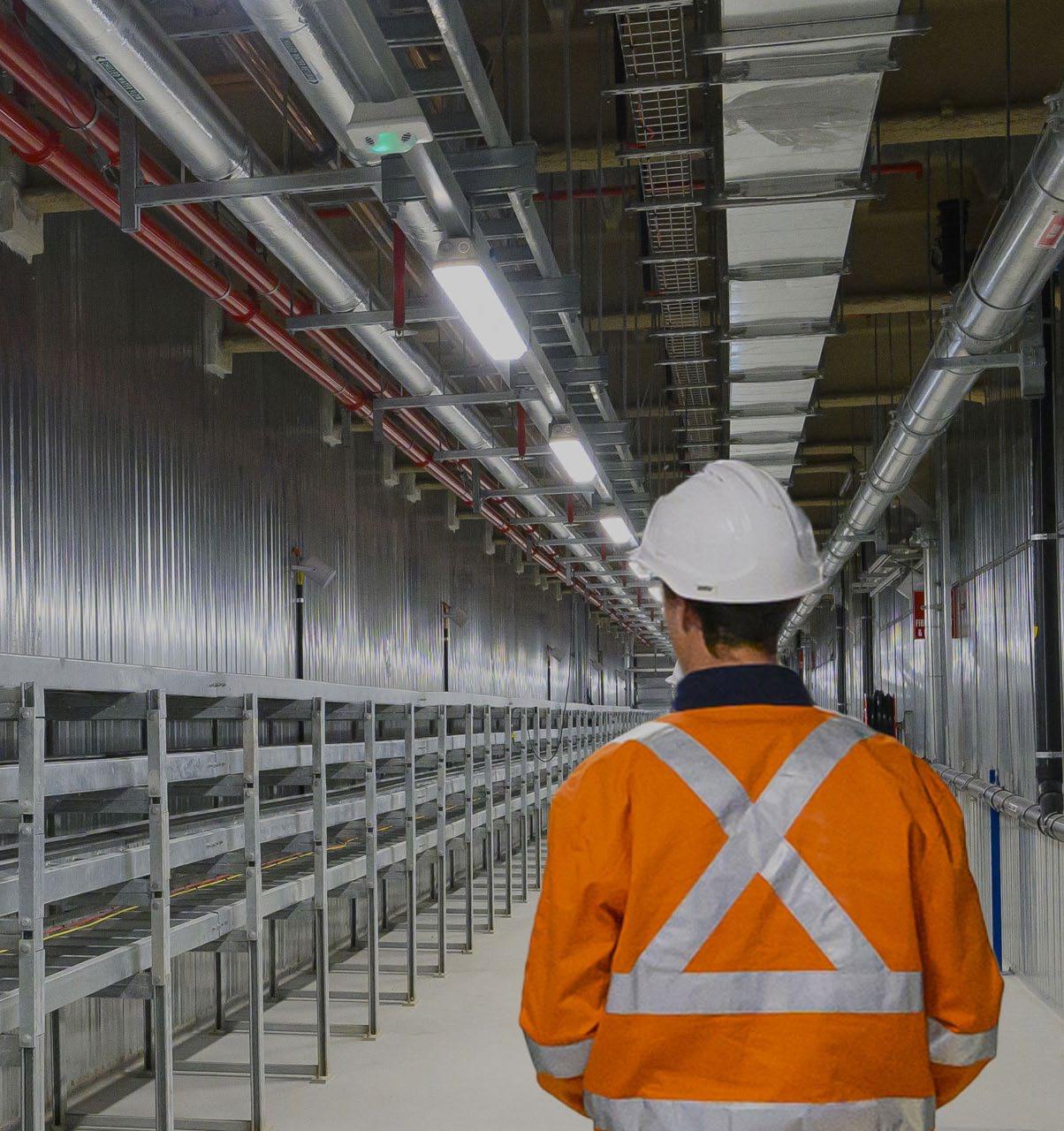
NECASafe Annual Safety Review
Our Annual Safety Review evaluates your existing safety management systems, policies, and procedures. The review identifies risks, compliance gaps, and opportunities for improvement, ensuring your business maintains a consistent and compliant safety framework throughout the year.
Tickets Sales Now Open for the 2026 NECA WA Awards
The anticipation is building up for the 2026 NECA WA Awards, which will be hosted at Optus Stadium on Friday, 31 July. NECA WA extends its gratitude to all apprentices and businesses who have taken the time to nominate for these awards. Scan the QR Code or visit www.bit.ly/neca-awards-2026-wa before Friday, 17 July to secure your seats to the Western Australian electrical and communications industry’s biggest event. We look forward to seeing you all there!
National Licensing Reform and Workforce Mobility
The current mutual recognition framework is not delivering the workforce mobility required to meet national infrastructure and energy transition demands. Inconsistent licensing regimes, differing scopes of work, and duplicative administrative processes are constraining the labour movement at a time of sustained demand for skilled workers.
NECA’s position is that Australia requires a single, nationally consistent electrical licensing framework that maintains safety standards while enabling efficient movement of labour. Multiple formal submissions have been progressed to advance the implementation of a national licence as a practical and enduring reform.

Temporary Power Builders Pole (WA) – Compliance Breakdown
Applicable Standards
Compliant temporary construction power must meet all of the following:
½ AS/NZS 3012:2019;
½ AS/NZS 3000;
½ WAER (Western Australian Electrical Requirements);
½ WASIR (WA Service Installation Rules).
Enclosure (major defect area)
Minimum requirements:
½ IP rating: ≥ IP23
½ construction: robust (site conditions)
½ lid/door requirements:
½ no removable “pin hinge” lids;
½ hinges must require a tool for removal.
½ lid must have:
½ positive retention when open (not just resting);
½ secure latching when closed;
½ provision for locking (hasp and staple or similar).
Socket Outlet Arrangement
If socket outlets are inside the enclosure:
½ provide a bushed hole in the bottom for the plug to pass through when the lid is closed;
½ an insulated bar under the box is required to provide protection from mechanical strain.
Labelling (often missed or not legible)
Mandatory labels on lid:
½ “KEEP CLOSED – R u N ALL LEADS THRO u GH BOTTOM”;
½ danger sign: “DANGER 240 VOLTS”.
Inspectors Regularly Defect:
½ missing lids and old, damaged boxes;
½ loose lids blowing open;
½ easily removable hinges;
½ earth electrode > 200 mm exposed above ground;
½ unstable pole.
To Avoid Inspectors Orders:
½ use a purpose-built pole box and pole from a wholesaler;
½ avoid modifying standard enclosures that compromise the IP rating;
½ pre-check:
½ lid operation;
½ locking;
½ bottom cable entry;
½ lid labels;
½ earthing and MEN.
Workforce Participation and Amenity Standards
Workforce participation remains a critical constraint on industry capacity, particularly in relation to female representation. Inadequate and poorly maintained site amenities continue to act as a barrier to entry and retention, despite existing work health and safety obligations. NECA is working with the National Association of Women in Construction (NAIWIC) and engaging with the government to drive improved standards, stronger enforcement, and clearer compliance expectations. This includes advocating for the integration of appropriate amenity standards into procurement frameworks and site practices. Improving workforce participation is not only a matter of equity, but it is a necessary productivity reform to support long-term infrastructure delivery and industry sustainability.


ELECTRICAL CONTRACTOR?
Become a host trainer and take on a NECA Apprentice
Why not take the effort out of employing your own apprentice and employ an apprentice from NECA.
NECA Electrical Apprenticeships employ qualified apprentices and place them with host companies, for any amount of time from 3 months to 4 years, providing you with a flexible workforce.
By becoming a Host company you only pay a fixed charge out rate, whilst NECA takes on all the added costs and responsibilities.
Build your future, have time to grow your company and let us take on the risk. Contact us today or register your interest at necatraining.com.au
NECA Electrical Apprenticeships provide
● Advertising
● Recruitment
● Interviews, Selection and Medicals
● Record Keeping and Payroll
● Ongoing Monitoring and Mentoring
● Training
NECA’s fixed charge out rates include
Annual Leave Days
Sick Days
Public Holidays
Training Fees
Superannuation ● Workers Compensation ● Off The Job Training Days
● Uniforms and PPE


BRANCH UPDATE

Mark Stedfut NECA ACT/NSW Executive Director
WELCOME TO THE JuNE EDITION OF NECA NEWS 2026. WE’VE REACHED THE HALFWAY POINT OF THE YEAR, AND WE’VE ALREADY ACCOMPLISHED SO MuCH TOGETHER AS AN INDu STRY. COMING uP IN THE NEXT THREE MONTHS, WE HAVE AN EXCITING ROSTER OF EVENTS, HEADLINED BY OuR NECA ACT AWARDS, SO STAY T uNED FOR MORE DETAILS.
ACT WHS Incident Notification Changes – What You Need to Know
The ACT Government has introduced amendments to Work Health and Safety legislation to clarify when serious workplace incidents must be reported to WorkSafe ACT.
The updates provide clearer guidance around serious injuries, electrical incidents such as arc flash events, mobile plant incidents and serious falls, helping businesses better understand when notification is required. The amendments also strengthen requirements for preserving incident sites and evidence, including digital records and witness details.
ACT BRANCH
Importantly, the ACT has not adopted several broader reporting provisions proposed in the national model WHS laws, including mandatory reporting of violent workplace incidents, work-related suicide events, extended injury absences and psychosocial hazard exposure.
For ACT electrical contractors, the changes primarily reinforce existing obligations and provide greater clarity. Head to our website to read more about what’s changed, and what it means for your business.
Ticket Sales Now Open for the 2026 NECA ACT Excellence Awards
The NECA Awards series is back, and this year, we look forward to bringing you another epic occasion for networking and celebration. This year’s ceremony will be held at Hotel Realm on Friday, 18 September. Scan the QR Code or visit www.bit.ly/neca-awards-2026-act before Friday, 4 September to secure your tickets to the ACT electrical and communications industry’s biggest event. We can’t wait to see you all there!
Key ACT Updates for Construction and Electrical Contractors
The ACT Government has introduced several developments relevant to construction and electrical contractors operating in the Territory. We outline three key updates below that require attention.
Building and Construction Legislation Amendment Act 2026
The ACT has passed amendments to the Building Act 2004 through the Building and Construction Legislation Amendment Act 2026. The changes introduce revised compliance documentation for regulated swimming pools, including the replacement of the traditional compliance certificate with a new compliance status certificate. Builders, certifiers, and relevant contractors will need to ensure documentation and lodgement practices reflect the updated statutory requirements.
Implementation of National Construction Code 2025
The ACT Government is progressing the adoption of the National Construction Code 2025. From 1 November 2026, all new building approvals in the ACT must comply with NCC 2025 and the ACT 2025 Appendix. Transitional arrangements apply to projects approved between 1 May and 1 November 2026.
The updated Code includes changes to energy performance, sustainability, and EV readiness provisions, which will directly affect electrical design, metering, switchboard configuration and embedded infrastructure in new developments. For more information, contact NECA Member Services on 1300 361 099.
Apprentice Supervision and Safety Requirements
WorkSafe ACT continues to emphasise strict supervision obligations for electrical apprentices. Licensed electricians must ensure appropriate levels of supervision are maintained at all times, consistent with safety and licensing laws. Employers should review their supervisory structures to ensure compliance, particularly on higher-risk sites.
NECA will continue to monitor ACT regulatory developments and advocate for practical implementation that supports compliant contractors while maintaining high safety standards.
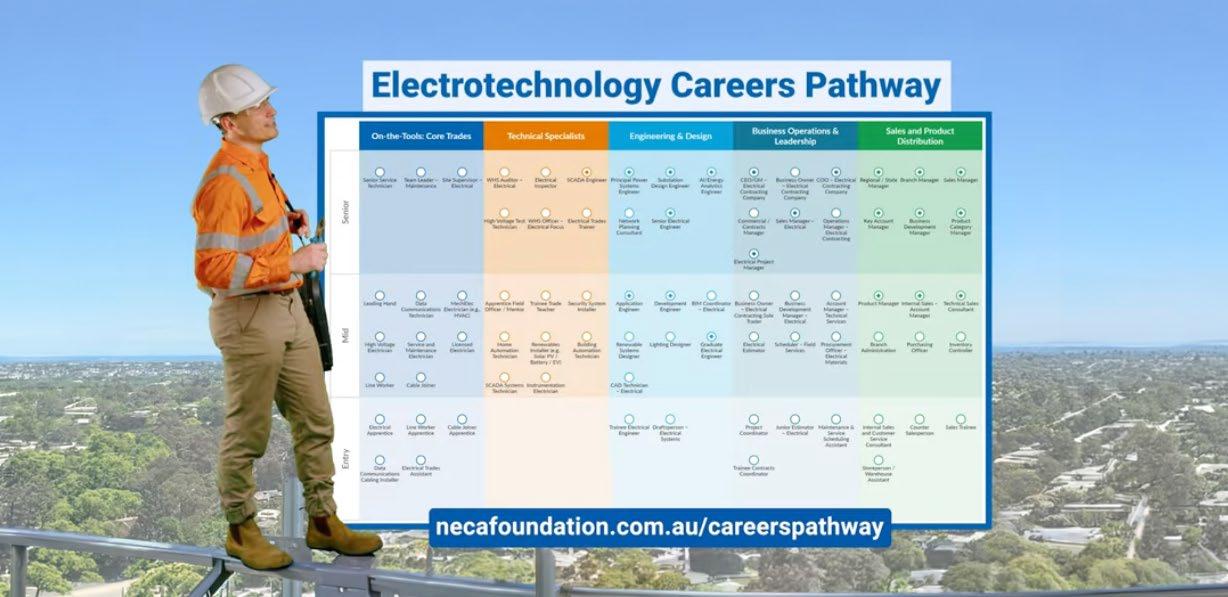
Maintaining Compliance
Mandatory Training Courses
NECA Training ACT provides the four mandatory training courses required for work on construction sites in the ACT, specifically:
½ White Card (i.e., CPCWHS1001)
½ Asbestos Awareness (ie: 11084NAT)
½ Working Safely with Asbestos Containing Materials (ie: 11348NAT)
½ Silica Exposure Prevention (ie, 10830NAT)
NECA Training also has a SafeWork NSWapproved Silica Awareness course for electrical contractors working in NSW.
Introducing the Electrotechnology Careers Pathway Tool
Keeping good people is getting harder – and it’s not just about salary.
Our industry offers real career opportunities – but if people can’t see the possibilities, or how to get to where they want to go, they might start looking elsewhere. With the shortage of electricians expected to reach tens of thousands by 2030, you need to be proactive about holding on to your employees.
That is exactly what the Electrotechnology Careers Pathway has been built to address.
Developed by the NECA Foundation, in collaboration with contractors, educators, and industry professionals, the Pathway is an interactive tool that makes career progression in our industry visible and engaging.
It brings together more than 70 roles across five sectors, showing how someone can move from starting out, through to leading teams, or specialising.
For your business, it gives you something practical to:
½ show your team what’s possible beyond their current role;
½ support better career and performance conversations;
½ reinforce why staying in the industry matters.
When people can see a future, they are far more likely to stay and build it with you. The Electrotechnology Career Pathway is available on the NECA Foundation website (necafoundation.com.au), is free to use and takes only a few minutes to explore. It also comes with a suite of supporting resources! Also on the Foundation website is NECO, an industry-specific AI tool, which answers questions about industry careers, drawing from carefully created, accurate information. There are also videos that introduce the pathway tool, demonstrate how to use it, share real-life examples of career pathways and explore the benefits of undertaking an electrical apprenticeship. With so much more coming, you can now explore various roles in more depth to help your employees understand what path they are most interested in. You can find all the videos (and subscribe to see new ones) on the NECA Foundation YouTube channel, at youtube.com/@NECAFoundation.
We encourage you to use the Electrotechnology Career Pathway with your team and share it with anyone considering a career in the industry.
See your future. Map your pathway. Then go and make it happen!
NSW BRANCH

BRANCH UPDATE
Mark Stedfut NECA ACT/NSW Executive Director
WELCOME TO THE JuNE 2026 EDITION OF THE NECA NEWS MAGAZINE. AS WE REACH THE HALFWAY POINT OF THE YEAR, WE CAN TAKE A MOMENT TO REFLECT ON WHAT WE’VE ACCOMPLISHED SO FAR AND LOOK FORWARD TO THE EXCITING ACTIVITIES WE HAVE PLANNED.
Significant Changes to the Work Health and Safety Act 2011
The Work Health and Safety Amendment (Digital Work Systems) Bill 2026 in New South Wales (NSW) introduces significant changes to the Work Health and Safety Act 2011 (NSW). These changes include:
Expressly required duty
Employers must manage worker safety risks from AI and other digital work systems;
Union inspection powers
WHS entry permit holders can inspect digital work systems relevant to suspected contraventions;
Health and safety duty
Employers must ensure the health and safety of workers is not at risk from the use of digital work systems;
Definition of digital work system
A digital work system is defined as an algorithm, artificial intelligence, automation, or online platform.
New duties
A new duty under s21A of the WHS Act requires PCBus to ensure worker health and safety is not put at risk from the allocation of work by digital work systems.
Although the Work Health and Safety Amendment (Digital Work Systems) Bill 2026 has now passed the NSW Parliament, the reforms are not yet in force. The legislation will commence on a day (or days) to be appointed by proclamation.
Industry commentary further confirms that the new digital work system duties will not commence earlier than one month after SafeWork NSW issues its guidelines on the new framework.
Changes to the Cheaper Home Batteries Program from 1 May 2026
The Commonwealth Government has announced changes to the Small-scale Renewable Energy Scheme affecting solar battery rebates from 1 May 2026.
These adjustments will modify the number of small-scale technology certificates (STCs) that eligible solar battery systems can create. The stated objective is to maintain an effective discount of approximately 30 per cent across small, medium, and large battery systems, while reflecting declining battery costs over time.
The STC factor, which determines how many certificates a system may create per kilowatt hour of usable capacity, will now decline more frequently, moving to six-monthly reductions, and will decline at a higher rate than under current arrangements.
In addition, the STC factor will taper based on installed usable capacity. For systems from 0 kilowatt hours up to and including 14 kilowatt hours, the STC factor will apply at 100 per cent. For capacity above 14 kilowatt hours and up to and including 28 kilowatt hours, the STC factor will apply at 60 per cent. For capacity above 28 kilowatt hours and up to and including 50 kilowatt hours, the STC factor will apply at 15 per cent. Rebates remain limited to the first 50 kilowatt hours of usable capacity.
These changes will have implications for system sizing advice, quotation processes, and customer expectations. Contractors should ensure that forward pricing, contracts, and marketing materials reflect the revised STC settings from 1 May 2026.
NECA members can also use the solar battery STC calculator to estimate the number of certificates a battery system may be eligible to create, based on the current STC factor and future scheduled adjustments.
NECA will continue to engage with the Government to ensure that rebate design supports sustainable demand, protects system integrity, and provides certainty for compliant electrical contractors.
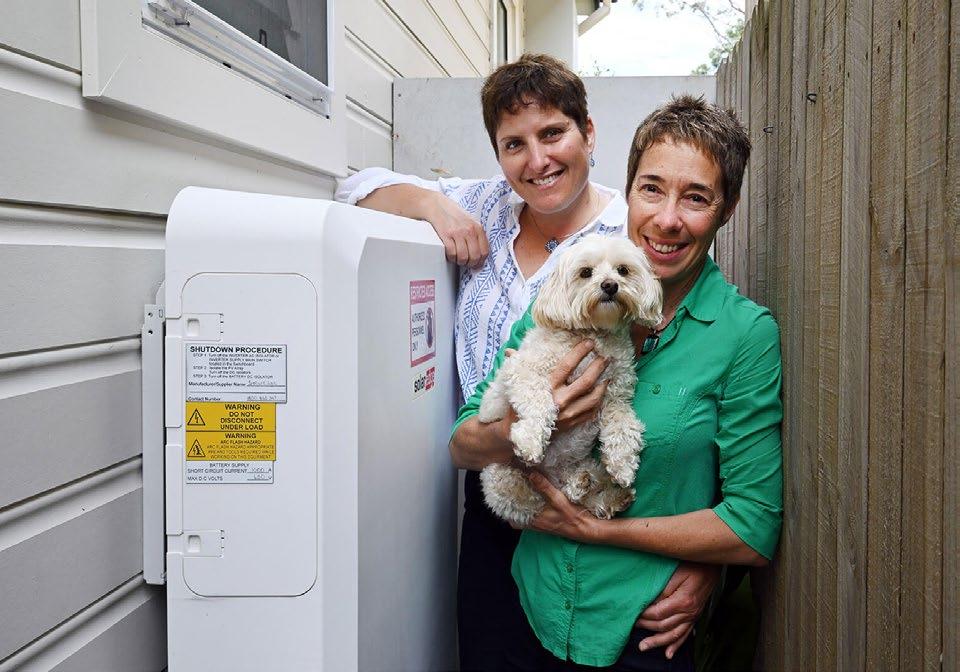
NSW Government Launches Construction Compliance Initiative
The NSW Government has announced a new compliance initiative aimed at strengthening fairness, integrity, and transparency across the State’s building and construction sector.
The initiative will be led by the NSW Industrial Relations Construction Compliance unit. It is designed to support government agencies and contractors to meet existing legislative, policy and contractual obligations throughout the construction supply chain.
Commencing on 1 March 2026, the program will operate through three key mechanisms:
½ first, prior to the award of a NSW Government construction contract, the Construction Compliance u nit will conduct checks of publicly available records held by relevant regulators. Findings will be reported to the procuring agency to support its due diligence processes;
½ second, the u nit will work with client agencies and head contractors to establish and maintain a database of subcontractors operating on NSW Government construction sites. The objective is to improve transparency, oversight and accountability across project delivery;
½ third, the u nit will undertake targeted audits of head contractors
and subcontractors to assess compliance with industrial relations obligations, including the payment of wages and superannuation. The Government has indicated that engagement with existing contractors and the broader industry will continue as the initiative is rolled out.
The program will be monitored over 18 months, with the Government signalling further refinements where necessary.
This announcement forms part of a broader industrial relations and procurement reform agenda in NSW, including:
½ an ‘If not, why not’ requirement for NSW Government agencies to engage local NSW suppliers prior to going to tender on projects exceeding $7.5 million;
½ strengthened requirements to address modern slavery risks within government supply chains;
½ the re-establishment of the Industrial Court of New South Wales, providing specialist judicial oversight for workplace matters and improved access to workplace justice.
NECA will review the operational details of this initiative and continue to engage with the Government to ensure that compliance settings protect lawful operators, support ethical contractors, and maintain confidence across the industry.
NSW Passes New WHS Duty for Digital Work Allocation
NSW has enacted the Work Health and Safety Amendment (Digital Work Systems) Act 2026 (assented 18 February 2026), creating a new duty on Persons Conducting Business or undertaking (PCBus) to ensure workers are not put at risk by the allocation of work via digital systems (e.g. algorithms, AI, automation, online platforms, including tools used in electrical contracting).
PCBus must consider risks such as excessive workloads, unreasonable metrics, excessive monitoring/ surveillance, and discriminatory decision-making. The Act also expands WHS entry permit powers to inspect digital work systems, subject to 48 hours’ notice and commencement only after SafeWork NSW issues guidelines (with public consultation), which then triggers the new entry powers one month later. until the guidelines are published, unions cannot access digital systems under these new powers.
Ticket Sales Now Open for the 2026 NECA NSW Excellence Awards
The NECA Awards series is back, and this year, we look forward to bringing you another epic occasion for networking and celebration. We’re back again this year at Accor Stadium on Friday, 4 September. Scan the QR Code or visit www.bit.ly/neca-awards-2026-nsw before Friday, 21 August, to secure your tickets to the biggest event in the New South Wales electrical and communications industry calendar. We can’t wait to see you all there!
Equipment Energy Efficiency Strategy (E3 Strategy) Released
The Australian Government, together with state and territory governments and the New Zealand Government, has released the Equipment Energy Efficiency Strategy (E3 Strategy), which sets the direction for the Equipment Energy Efficiency program over the next decade.
The strategy is designed to ensure the program remains fit for purpose
as technology evolves and the energy system continues to change. It focuses on targeting the highest priority areas for regulation, responding to new technologies, and aligning equipment performance standards with Australia’s broader climate and energy policy objectives.
Improving the efficiency and performance of electrical equipment is widely recognised as a practical and cost-effective way to reduce energy consumption. For households and businesses, this can help lower energy bills while improving comfort, productivity, and competitiveness. At a national level, it also contributes to reducing greenhouse gas emissions and supporting Australia’s energy transition.
NECA is a member of the E3 Committee and continues to represent the interests of electrical contractors in discussions on equipment standards, regulatory settings, and implementation issues that may affect installation, compliance, and industry practice.
NECA members will be kept informed as the strategy progresses, and as any regulatory changes are proposed.
eCert CCEW Portal Update
NECA continues to work with the Building Commission on the development and implementation of the new eCert portal. The new eCert CCEW portal modernises how electricians in NSW create, submit, and manage Certificates of Compliance for Electrical Work (CCEW’s). It replaces paper-based processes with a secure, digital platform that is faster, simpler and more accurate. Electricians can complete CCEWs online, automatically capture mandatory details, and submit certificates directly to distributors and regulators. The portal reduces errors, improves traceability, and provides a clear digital record of compliance for every job. With streamlined workflows, instant access to certificates, and improved data integrity, the eCert CCEW portal supports electricians to meet their legal obligations efficiently while lifting safety and compliance standards across NSW. There are a number of modifications to the initial release that will be rolled out over time, including the ability to nominate the electrical contractor responsible for the project on the CCEW.
For all updates or to register to use the portal, you can go to the Building Commission’s website (BCNSW eCert portal | NSW Government)
If you wish to provide feedback on the new eCert portal, contact NECA on 1300 361 099.
Introducing the Electrotechnology Careers Pathway Tool
Keeping good people is getting harder – and it’s not just about salary.
Our industry offers real career opportunities – but if people can’t see the possibilities, or how to get to where they want to go, they might start looking elsewhere. With the shortage of electricians expected to reach tens of thousands by 2030, you need to be proactive about holding on to your employees.
That is exactly what the Electrotechnology Careers Pathway has been built to address.
Developed by the NECA Foundation, in collaboration with contractors, educators, and industry professionals, the Pathway is an interactive tool that makes career progression in our industry visible and engaging.
It brings together more than 70 roles across five sectors, showing how someone can move from starting out, through to leading teams, or specialising.
For your business, it gives you something practical to:
½ show your team what’s possible beyond their current role;
½ support better career and performance conversations;
½ reinforce why staying in the industry matters.
When people can see a future, they are far more likely to stay and build it with you. The Electrotechnology Career Pathway is available on the NECA Foundation website (necafoundation.com.au), is free to use and takes only a few minutes to explore. It also comes with a suite of supporting resources! Also on the Foundation website is NECO, an industry-specific AI tool, which answers questions about industry careers, drawing from carefully created, accurate information. There are also videos that introduce the pathway tool, demonstrate how to use it, share real-life examples of career pathways and explore the benefits of undertaking an electrical apprenticeship. With so much more coming, you can now explore various roles in more depth to help your employees understand what path they are most interested in. You can find all the videos (and subscribe to see new ones) on the NECA Foundation YouTube channel, at youtube.com/@NECAFoundation. We encourage you to use the Electrotechnology Career Pathway with your team and share it with anyone considering a career in the industry.
See your future. Map your pathway. Then go and make it happen!
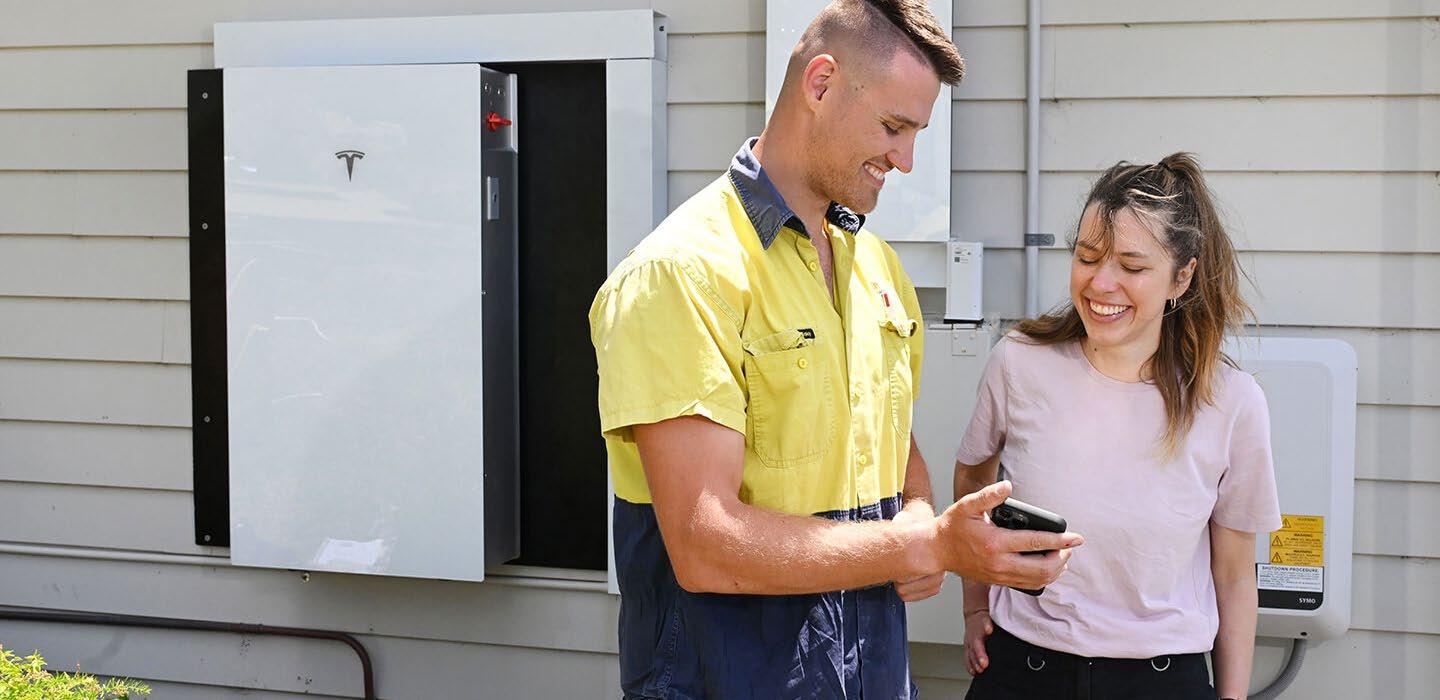
RTO UPDATE
Introducing NECA Training QLD
We’re excited to share that the new training team is now up and running in Brisbane, led by our new Senior Trainer, David Elliott. Fourteen short courses are already available, with nearly half of these attracting Construction Skills Queensland (CSQ) funding, including Confined Spaces and Working at Heights. Please visit our website to see the full list of available courses.
Looking ahead, the team will soon be rolling out additional programs, including a pre-apprenticeship course, with commencement of the full Certificate III in Electrotechnology – Electrician qualification also planned for the near future.
Working with David will be Rachel Janzen, Michelle Ellis and colleagues in NSW and ACT. If you’re due for training or are looking to organise accreditations for your team, please reach out to courses-qld@necatraining.edu.au.
We are excited to look after you!


Customised Post Trade Courses
This year, we have been experiencing a growing demand for ‘custom-made’ courses. Clients are increasingly seeking custom-made training developed specifically to meet their organisational workforce development needs to meet technical, safety, compliance and contractual obligations.
NECA Training can help meet your organisational training requirements through customised face-to-face training or self-paced, online NECALearn Courses.

Regional and Rural Training Delivery
NECA Training is also continuing to deliver post-trade training in the regions, with training services extending across the domestic, commercial, industrial, mining and renewable energy/electricity supply infrastructure sectors. If you are based in regional or rural NSW and would like us to come to you, please give us a call!
Our foundation class of Apprentices on the NSW South Coast are now in the final stages of their 4th year and preparing for their Capstone Assessments. We would like to thank them for their commitment over the duration of their apprenticeship and wish them every success in their future careers.
Apprenticeship Training
Since 2020, NECA Training has been delivering the Certificate III in Electrotechnology – Electrician qualification via Block Release as well as through the traditional one day/week delivery method. The Block Release option allows rural, regional and FIFO apprentices to access training through convenient 2-week, full-time blocks. Call us if this is an option that might work for your business.

NECA Electrical Apprenticeships employ quality apprentices and place them with host companies for any amount of time from 3 months to 4 years.
whilst we take on all the added costs, responsibilities and risk.
Build your future: 97% of our graduating apprentices are employed by their host on completion NEC
Adver tising
Recruitment
Inter views and selection
Medicals to all current requirements
Payroll aligned with your business
On-going monitoring and mentoring
All administration and paper work
TAFE/NECA Tech (monitoring)
Connec
AC T ( 02) 6280 5580
NSW ( 02) 9744 2754
QLD ( 07) 3276 7950 necatraining.com.au
Mandatory training to industry requirements
Annual Leave days
Sick days
Public holidays
TAFE/Tech days (40/yr)
Tech and mandatory training costs
Superannuation
Uniforms and PPE
Workers Compensation

BUILDING THE FUTURE WORKFORCE THROUGH ASP TRAINING
The electrical industry continues to grow and change, with increasing demands for safety, compliance, and skilled workers. As infrastructure projects expand across Australia, the need for qualified electricians has never been greater. That is why the ASP Training program delivered through NECA Training remains so important to the industry.
ASP training gives electricians the knowledge and practical skills needed to work safely on or near the electrical distribution network. From initial courses through to annual refresher training, the program helps workers stay current with industry standards

and safe work practices. What makes ASP training valuable is its strong focus on real-world industry requirements. Participants gain practical experience, an understanding of network regulations and the confidence to work safely in high-risk environments.
Each year, many electricians return to NECA Training to complete their refresher courses, reinforcing the industry’s strong focus on safety and ongoing professional development. There is also growing demand from regional and rural electricians, with many travelling long distances to access quality ASP training. For employers, having ASP-qualified workers means stronger compliance,
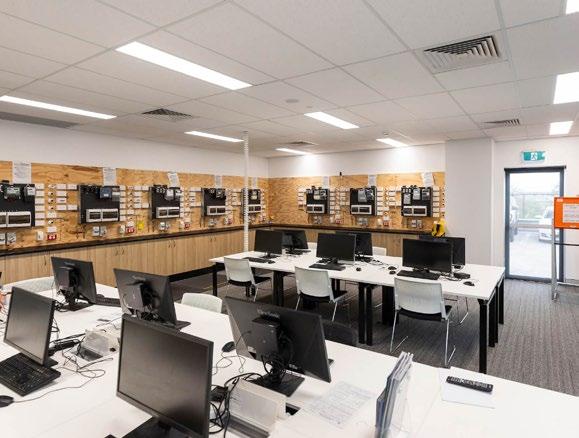
safer worksites and a more capable workforce. For electricians, these qualifications create more opportunities for career growth and future work across a rapidly developing industry.
At the centre of this is NECA Training, continuing to deliver industry-led training that supports both workers and businesses across the sector. Quality training will continue to play a vital role in building a skilled, safe and future-ready workforce, so contact NECA Training to make sure you get the highest quality ASP training.
For further information scan this QR code or visit www.bit.ly/neca-asp
SHINE BRIGHT WITH NECA’S SOLAR COURSES
As Australia begins to take steps away from coal and move towards a clean energy future, solar power has never been more valuable. In 2023, solar contributed to almost 50% of all renewable electricity generation in Australia. Lithium ion batteries are becoming increasingly common energy storage devices for both on-grid and off-grid power, especially as solar power maintains its steady growth as an industry. Since 2016, large-scale solar generation has seen a growth rate of over 2700% as a result of its rapid expansion in the country.
NECA offers a wide range of solar courses in our post-trade education range. Our courses are Solar Accreditation Australia (SAA) accredited, in both the design and installation of solar and battery connection systems. All you need to get started is a Certificate III in
Electrotechnology or an ‘unrestricted Electrician’s Licence’ issued in an Australian State or Territory.
Our Courses are trainer-delivered across 8 days over separate weeks, which include: Theory
Online webinars and take-home assignments (six days)
Practical
On-site instruction with the trainer (two days)
12-month deadline beyond the course delivery to submit an assignment
To find out more, contact NECA Member Services at 1300 361 099, or email us at contact@necatraining.com.au





ACRS NEWS

DIRECTOR’S REPORT

Peter Lamont
Director ACRS and Senior Policy Advisor peter.lamont@neca.asn.au
The Australian Cabler Registration Service (ACRS) continues to provide a fast, reliable, and low-cost registration service for our electrical and communications industries. ACRS now has around 27,000 registrants who use our service each year. Our industry and ACRS relevance is growing as more commercial buildings and domestic premises rely heavily on data and telecommunications systems for day-to-day activities.
ACRS is keen to remind all our NECA News readers that it is illegal for anyone other than a registered cabler to install or maintain cabling that connects to the telecommunications network, including smart home systems, extra phone lines, monitored security, and access control systems.
Cabling that is installed incorrectly can result in systems not working or may increase the risk of safety hazards. It may even nullify any insurance cover in some cases. ACRS is here to help, so if any of your workers are not up to date with their registration, give us a call on 1300 667 771.
ACRS also continues to work with the national regulator, the Australian Communications and Media Authority (ACMA), and with other Cabler Registration Services on a range of matters relating to cabler registration and regulatory requirements. This includes looking at some of the legislative and regulatory changes that are being considered. One of these is ironing out some of the differences in requirements that are contained in S008 and S009, the two Wiring Rules bibles for our industry.
It is also useful to note what most of the complaints to the regulator are about. In 2024/25, the Monitoring and Compliance section in ACMA received 21 complaints, and a further 14 complaints have been made in 2025/26 (up until the end of February 2026). The majority of these complaints relate to work being performed by unauthorized cablers,
non-compliant cable products, work quality, and incomplete or non-use of TC1 forms. All of these matters are easily avoided when workplaces ensure they are using registered cablers with a current registration status.
Australia’s Telecommunications Sector Embraces AI
Australia’s telecommunications and media sectors are rapidly adopting artificial intelligence, with new Australian Communications and Media Authority (ACMA) research showing strong innovation but also growing risks.
In the media industry, AI is being used to personalise advertising and to streamline content production. However, researchers and commentators have raised concerns that some uses of AI may contribute to the amplification of misinformation and disinformation. This can affect public trust in news and raise concerns about the unauthorised use of copyrighted material.
The telco industry is adopting AI to improve operational efficiency, reduce costs, and create new revenue streams. The research finds that AI can support more resilient networks by predicting faults and automating recovery. Some telcos are also using AI to detect scam activities in real time.
The ACMA research shows that while AI is delivering efficiencies across these sectors, its adoption is also prompting calls from stakeholders for stronger governance, transparency, and safeguards.


Cabling Registration run by the industry, for the industry
low-cost registration service for the electrical and communications industry.
The Australian Cabler Registration Service (ACRS) provides a fast, reliable and low-cost registration service for the electrical and communications industry.
low-cost registration service for the electrical and communications industry.
The Australian Cabler Registration Service (ACRS) provides a fast, reliable and low-cost registration service for the electrical and communications industry.
low-cost registration service for the electrical and communications industry.
The Australian Cabler Registration Service (ACRS) provides a fast, reliable and low-cost registration service for the electrical and communications industry.
The Australian Cabler Registration Service (ACRS) provides a fast, reliable and low-cost registration service for the electrical and communications industry.
Peace of mind costs less than 67c a week! Register with ACRS and reap the benefits of being with the only Australian electrical specialist registry while avoiding a hefty fine.
Peace of mind costs less than 67c a week! Register with ACRS and reap the benefits of being with the only Australian electrical specialist registry while avoiding a hefty fine. low-cost registration service for the electrical and communications industry.
Peace of mind costs less than 67c a week! Register with ACRS and reap the benefits of being with the only Australian electrical specialist registry while avoiding a hefty fine.
Peace of mind costs less than 67c a week! Register with ACRS and reap the benefits of being with the only Australian electrical specialist registry while avoiding a hefty fine.
Peace of mind costs less than 67c a week! Register with ACRS and reap the benefits of being with the only Australian electrical specialist registry while avoiding a hefty fine.
Peace of mind costs less than 67c a week! Register with ACRS and reap the benefits of being with the only Australian electrical specialist registry while avoiding a hefty fine.
Peace of mind costs less than 67c a week! Register with ACRS and reap the benefits of being with the only Australian electrical specialist registry while avoiding a hefty fine.
ACRS will look after transitioning cablers from the now defunct BRCA
ACRS will look after transitioning cablers from the now defunct BRCA
Peace of mind costs less than 67c a week! Register with ACRS and reap the benefits of being with the only Australian electrical specialist registry while avoiding a hefty fine.
ACRS will look after transitioning cablers from the now defunct BRCA
ACRS will look after transitioning cablers from the now defunct BRCA
ACRS will look after transitioning cablers from the now defunct BRCA
ACRS will look after transitioning cablers from the now defunct BRCA
ACRS will look after transitioning cablers from the now defunct BRCA
BICSI Registered Cablers Australia (BRCA) has terminated its Deed to provide cabling registration services and is no longer accepting new registrations or renewing existing registrations. The ACMA have advised that cabling providers who are currently registered by BRCA continue to be validly registered until the expiry date of their current registration, after which they will be required to register with another registrar if they wish to continue performing cabling work. BRCA registered cablers may choose to register with a new registrar before their registration expires.
ACRS will look after transitioning cablers from the now defunct BRCA
ACRS will look after transitioning cablers from the now defunct BRCA
BICSI Registered Cablers Australia (BRCA) has terminated its Deed to provide cabling registration services and is no longer accepting new registrations or renewing existing registrations. The ACMA have advised that cabling providers who are currently registered by BRCA continue to be validly registered until the expiry date of their current registration, after which they will be required to register with another registrar if they wish to continue performing cabling work. BRCA registered cablers may choose to register with a new registrar before their registration expires.
BICSI Registered Cablers Australia (BRCA) has terminated its Deed to provide cabling registration services and is no longer accepting new registrations or renewing existing registrations. The ACMA have advised that cabling providers who are currently registered by BRCA continue to be validly registered until the expiry date of their current registration, after which they will be required to register with another registrar if they wish to continue performing cabling work. BRCA registered cablers may choose to register with a new registrar before their registration expires.
BICSI Registered Cablers Australia (BRCA) has terminated its Deed to provide cabling registration services and is no longer accepting new registrations or renewing existing registrations. The ACMA have advised that cabling providers who are currently registered by BRCA continue to be validly registered until the expiry date of their current registration, after which they will be required to register with another registrar if they wish to continue performing cabling work. BRCA registered cablers may choose to register with a new registrar before their registration expires.
To register with ACRS, please contact us: 1300 667771 or enquiries@acrs.com.au
BICSI Registered Cablers Australia (BRCA) has terminated its Deed to provide cabling registration services and is no longer accepting new registrations or renewing existing registrations. The ACMA have advised that cabling providers who are currently registered by BRCA continue to be validly registered until the expiry date of their current registration, after which they will be required to register with another registrar if they wish to continue performing cabling work. BRCA registered cablers may choose to register with a new registrar before their registration expires.
BICSI Registered Cablers Australia (BRCA) has terminated its Deed to provide cabling registration services and is no longer accepting new registrations or renewing existing registrations. The ACMA have advised that cabling providers who are currently registered by BRCA continue to be validly registered until the expiry date of their current registration, after which they will be required to register with another registrar if they wish to continue performing cabling work. BRCA registered cablers may choose to register with a new registrar before their registration expires.
To register with ACRS, please contact us: 1300 667771 or enquiries@acrs.com.au
BICSI Registered Cablers Australia (BRCA) has terminated its Deed to provide cabling registration services and is no longer accepting new registrations or renewing existing registrations. The ACMA have advised that cabling providers who are currently registered by BRCA continue to be validly registered until the expiry date of their current registration, after which they will be required to register with another registrar if they wish to continue performing cabling work. BRCA registered cablers may choose to register with a new registrar before their registration expires.
BICSI Registered Cablers Australia (BRCA) has terminated its Deed to provide cabling registration services and is no longer accepting new registrations or renewing existing registrations. The ACMA have advised that cabling providers who are currently registered by BRCA continue to be validly registered until the expiry date of their current registration, after which they will be required to register with another registrar if they wish to continue performing cabling work. BRCA registered cablers may choose to register with a new registrar before their registration expires.

BICSI Registered Cablers Australia (BRCA) has terminated its Deed to provide cabling registration services and is no longer accepting new registrations or renewing existing registrations. The ACMA have advised that cabling providers who are currently registered by BRCA continue to be validly registered until the expiry date of their current registration, after which they will be required to register with another registrar if they wish to continue performing cabling work. BRCA registered cablers may choose to register with a new registrar before their registration expires.
To register with ACRS, please contact us: 1300
To register with ACRS, please contact us: 1300 667771 or enquiries@acrs.com.au
To register with ACRS, please contact us: 1300 667771 or enquiries@acrs.com.au
To register with ACRS, please contact us: 1300 667771 or enquiries@acrs.com.au
To register with ACRS, please contact us: 1300 667771 or enquiries@acrs.com.au
ACRS offers reliable personalised advice and service from our expert staff
To register with ACRS, please contact us: 1300 667771 or enquiries@acrs.com.au
To register with ACRS, please contact us: 1300 667771 or enquiries@acrs.com.au
ACRS offers reliable personalised advice and service from our expert staff
National website listing as a registered cabler
National website listing as a registered cabler
ACRS offers reliable personalised advice and service from our expert staff
ACRS offers reliable personalised advice and service from our expert staff
ACRS offers reliable personalised advice and service from our expert staff
ACRS offers reliable personalised advice and service from our expert staff
ACRS offers reliable personalised advice and service from our expert staff
Registration card, Certificate of currency, quarterly updates providing the latest cabling news, industry issues and training information
ACRS offers reliable personalised advice and service from our expert staff
ACRS offers reliable personalised advice and service from our expert staff
Registration card, Certificate of currency, quarterly updates providing the latest cabling news, industry issues and training information
National website listing as a registered cabler
National website listing as a registered cabler
National website listing as a registered cabler
National website listing as a registered cabler
National website listing as a registered cabler
National website listing as a registered cabler
National website listing as a registered cabler
Wholly owned subsidiary of NECA – the peak industry body for electrical and communication contractors
Registration card, Certificate of currency, quarterly updates providing the latest cabling news, industry issues and training information
Registration card, Certificate of currency, quarterly updates providing the latest cabling news, industry issues and training information
Registration card, Certificate of currency, quarterly updates providing the latest cabling news, industry issues and training information
Wholly owned subsidiary of NECA – the peak industry body for electrical and communication contractors
Registration card, Certificate of currency, quarterly updates providing the latest cabling news, industry issues and training information
Registration card, Certificate of currency, quarterly updates providing the latest cabling news, industry issues and training information
Registration card, Certificate of currency, quarterly updates providing the latest cabling news, industry issues and training information
Registration card, Certificate of currency, quarterly updates providing the latest cabling news, industry issues and training information
Wholly owned subsidiary of NECA – the peak industry body for electrical and communication contractors
Wholly owned subsidiary of NECA – the peak industry body for electrical and communication contractors
Wholly owned subsidiary of NECA – the peak industry body for electrical and communication contractors
Wholly owned subsidiary of NECA – the peak industry body for electrical and communication contractors
Wholly owned subsidiary of NECA – the peak industry body for electrical and communication contractors
Specialised cabling endorsement and skill level recognition
Specialised cabling endorsement and skill level recognition
Wholly owned subsidiary of NECA – the peak industry body for electrical and communication contractors
Wholly owned subsidiary of NECA – the peak industry body for electrical and communication contractors
Specialised cabling endorsement and skill level recognition
It is illegal for anyone other than a registered cabler to install or maintain cabling that connects to the telecommunications network. So if you are installing any equipment that will connect to the network – from smart home systems to extra phone lines, monitored security and access control systems – you need a current cabling registration.
Specialised cabling endorsement and skill level recognition
Specialised cabling endorsement and skill level recognition
It is illegal for anyone other than a registered cabler to install or maintain cabling that connects to the telecommunications network. So if you are installing any equipment that will connect to the network – from smart home systems to extra phone lines, monitored security and access control systems – you need a current cabling registration.
Specialised cabling endorsement and skill level recognition
Specialised cabling endorsement and skill level recognition
Specialised cabling endorsement and skill level recognition
Specialised cabling endorsement and skill level recognition
It is illegal for anyone other than a registered cabler to install or maintain cabling that connects to the telecommunications network. So if you are installing any equipment that will connect to the network – from smart home systems to extra phone lines, monitored security and access control systems – you need a current cabling registration.
It is illegal for anyone other than a registered cabler to install or maintain cabling that connects to the telecommunications network. So if you are installing any equipment that will connect to the network – from smart home systems to extra phone lines, monitored security and access control systems you need a current cabling registration.
It is illegal for anyone other than a registered cabler to install or maintain cabling that connects to the telecommunications network. So if you are installing any equipment that will connect to the network – from smart home systems to extra phone lines, monitored security and access control systems – you need a current cabling registration.
It is illegal for anyone other than a registered cabler to install or maintain cabling that connects to the telecommunications network. So if you are installing any equipment that will connect to the network – from smart home systems to extra phone lines, monitored security and access control systems – you need a current cabling registration.
It is illegal for anyone other than a registered cabler to install or maintain cabling that connects to the telecommunications network. So if you are installing any equipment that will connect to the network – from smart home systems to extra phone lines, monitored security and access control systems – you need a current cabling registration.
It is illegal for anyone other than a registered cabler to install or maintain cabling that connects to the telecommunications network. So if you are installing any equipment that will connect to the network – from smart home systems to extra phone lines, monitored security and access control systems you need a current cabling registration.
It is illegal for anyone other than a registered cabler to install or maintain cabling that connects to the telecommunications network. So if you are installing any equipment that will connect to the network – from smart home systems to extra phone lines, monitored security and access control systems – you need a current cabling registration.
Carrying a current nationally recognised cabling registration card confirms you have completed the relevant training, gained the knowledge and have the professional experience to perform cabling work according to the wiring rules, the industry standard. The wiring rules promote safety of consumers, cablers and help to maintain the safety and integrity of our network.
Carrying a current nationally recognised cabling registration card confirms you have completed the relevant training, gained the knowledge and have the professional experience to perform cabling work according to the wiring rules, the industry standard. The wiring rules promote safety of consumers, cablers and help to maintain the safety and integrity of our network.
Carrying a current nationally recognised cabling registration card confirms you have completed the relevant training, gained the knowledge and have the professional experience to perform cabling work according to the wiring rules, the industry standard. The wiring rules promote safety of consumers, cablers and help to maintain the safety and integrity of our network.
ACRS often receives calls from builders and consumers to verify that the cabling contractors doing work for them are registered
Carrying a current nationally recognised cabling registration card confirms you have completed the relevant training, gained the knowledge and have the professional experience to perform cabling work according to the wiring rules, the industry standard. The wiring rules promote safety of consumers, cablers and help to maintain the safety and integrity of our network.
Carrying a current nationally recognised cabling registration card confirms you have completed the relevant training, gained the knowledge and have the professional experience to perform cabling work according to the wiring rules, the industry standard. The wiring rules promote safety of consumers, cablers and help to maintain the safety and integrity of our network.
ACRS often receives calls from builders and consumers to verify that the cabling contractors doing work for them are registered
Carrying a current nationally recognised cabling registration card confirms you have completed the relevant training, gained the knowledge and have the professional experience to perform cabling work according to the wiring rules, the industry standard. The wiring rules promote safety of consumers, cablers and help to maintain the safety and integrity of our network.
Carrying a current nationally recognised cabling registration card confirms you have completed the relevant training, gained the knowledge and have the professional experience to perform cabling work according to the wiring rules, the industry standard. The wiring rules promote safety of consumers, cablers and help to maintain the safety and integrity of our network.
ACRS often receives calls from builders and consumers to verify that the cabling contractors doing work for them are registered
ACRS often receives calls from builders and consumers to verify that the cabling contractors doing work for them are registered
Cabling which is installed incorrectly can result in your phones, internet, alarms and home wiring systems not working properly
ACRS often receives calls from builders and consumers to verify that the cabling contractors doing work for them are registered
Carrying a current nationally recognised cabling registration card confirms you have completed the relevant training, gained the knowledge and have the professional experience to perform cabling work according to the wiring rules, the industry standard. The wiring rules promote safety of consumers, cablers and help to maintain the safety and integrity of our network.
Carrying a current nationally recognised cabling registration card confirms you have completed the relevant training, gained the knowledge and have the professional experience to perform cabling work according to the wiring rules, the industry standard. The wiring rules promote safety of consumers, cablers and help to maintain the safety and integrity of our network.
ACRS often receives calls from builders and consumers to verify that the cabling contractors doing work for them are registered
Cabling which is installed incorrectly can result in your phones, internet, alarms and home wiring systems not working properly
ACRS often receives calls from builders and consumers to verify that the cabling contractors doing work for them are registered
Cabling which is installed incorrectly can result in your phones, internet, alarms and home wiring systems not working properly
ACRS often receives calls from builders and consumers to verify that the cabling contractors doing work for them are registered
Cabling which is installed incorrectly can result in your phones, internet, alarms and home wiring systems not working properly
ACRS often receives calls from builders and consumers to verify that the cabling contractors doing work for them are registered
Cabling which is installed incorrectly can result in your phones, internet, alarms and home wiring systems not working properly
Cabling which is installed incorrectly can result in your phones, internet, alarms and home wiring systems not working properly
Cabling which is installed incorrectly can result in your phones, internet, alarms and home wiring systems not working properly
Cabling which is installed incorrectly can result in your phones, internet, alarms and home wiring systems not working properly
Cabling which is installed incorrectly can result in your phones, internet, alarms and home wiring systems not working properly
Faulty cabling can also increase the risk of safety hazards such as electrocution and even death.
Faulty cabling can also increase the risk of safety hazards such as electrocution and even death.
Peace of mind costs less than 67c a week! Register with ACRS and reap the benefits of being with the only Australian electrical specialist registry while avoiding a hefty fine. Register with ACRS now
Faulty cabling can also increase the risk of safety hazards such as electrocution and even death.
Faulty cabling can also increase the risk of safety hazards such as electrocution and even death.
Faulty cabling can also increase the risk of safety hazards such as electrocution and even death.
Faulty cabling can also increase the risk of safety hazards such as electrocution and even death.
Faulty cabling can also increase the risk of safety hazards such as electrocution and even death.
Faulty cabling can also increase the risk of safety hazards such as electrocution and even death.

Register with ACRS now
Register with ACRS now
Register with ACRS now
Register with ACRS now
Register with ACRS now
Register with ACRS now
Register with ACRS now
Register with ACRS now
Call the ACRS Cabler Registration service centre on 1300 667 771 or visit our website www.acrs.com.au
Call the ACRS Cabler Registration service centre on 1300 667 771 or visit our website www.acrs.com.au
Call the ACRS Cabler Registration service centre on 1300 667 771 or visit our website www.acrs.com.au
Call the ACRS Cabler Registration service centre on 1300 667 771 or visit our website www.acrs.com.au
Call the ACRS Cabler Registration service centre on 1300 667 771 or visit our website www.acrs.com.au
Call the ACRS Cabler Registration service centre on 1300 667 771 or visit our website www.acrs.com.au
Call the ACRS Cabler Registration service centre on 1300 667 771 or visit our website www.acrs.com.au
Call the ACRS Cabler Registration service centre on 1300 667 771 or visit our website www.acrs.com.au
Call the ACRS Cabler Registration service centre on 1300 667 771 or visit our website www.acrs.com.au
LEADING WITH PURPOSE
HOW
SCHNEIDER ELECTRIC IS ELEVATING WOMEN IN INDUSTRY


For an industry built on engineering excellence and technical capability, the electrical sector has long faced the familiar challenge of attracting, retaining and elevating more women into its workforce and leadership ranks. For Akanksha Sharma, known as Aki, that challenge is not just a topic of discussion. It’s something to be actively solved. As General Manager of Marketing and E-Mobility at Schneider Electric Australia, Aki represents a growing wave of female leaders helping reshape the industry from within.
Aki’s journey into the electrical and energy sector began early. Growing up in a STEM-oriented family, she gravitated naturally toward mathematics, engineering and problem-solving. After completing a double degree in Mechatronics and Biomedical Engineering, her career path spanned automation, rail infrastructure and technical sales before landing at Schneider Electric more than a decade ago.
“What I enjoy most about this industry is the balance,” Aki explains. “You’re solving real-world problems, but you’re also connecting technical innovation with commercial outcomes. That’s incredibly rewarding.”
Involving technical roles, sales leadership and now senior leadership, Aki’s career path reflects one of Schneider Electric’s core strengths: enabling diverse career pathways across both technical and commercial disciplines.
While the electrical contracting sector continues to grapple with gender imbalance, Aki is optimistic about the direction of travel. “Often, we make entering this industry sound harder than it is. Yes, representation is still low, but the conversation has shifted. Businesses are increasingly hiring for capability, not gender, which is a positive step forward.”
Schneider Electric is taking a structured and measurable approach to accelerating that change. The company’s global framework represents the goals for leadership accountability and ongoing governance, and includes:
½ 99%+ of employees covered by pay equity actions, ensuring comparable pay across genders;
½ a commitment to less than 1% gender pay gap globally;
½ targets of 50% female hiring and 30% women in leadership roles;
½ quarterly gender equity reviews, embedding accountability into business operations.
For contractors and businesses across the electrical sector, this highlights a critical learning: change happens fastest when diversity goals are measured, tracked and embedded into core business processes, not treated as standalone HR initiatives.
A defining factor behind Schneider Electric’s progress is its leadership culture. The organisation actively promotes inclusive talent pipelines, sponsorship and visibility for women across technical and leadership roles, all areas where representation has historically been low. This has had a direct influence on how Aki leads today. “Inclusive leadership is about creating an environment where people feel confident to contribute, to challenge, and to grow.” Furthermore, representation in leadership is of utmost importance.
“When women see other women leading in technical and commercial roles, it changes what they believe is possible,” Aki says. For electrical contractors, this presents a clear
opportunity. Flexible work practices are increasingly essential not just for retention, but for expanding the available talent pool. Schneider Electric’s recognition as a WORK180 Endorsed Employer for Women since 2021 reinforces its commitment in this area and provides independent validation of its policies and practices.
That culture of “challenge” is particularly important. Schneider encourages employees to be constructively disruptive by questioning the status quo and pushing for better outcomes, regardless of seniority.
One of the most persistent barriers to female progression in the trades and energy sectors is the intersection of career growth and family commitments. Aki speaks candidly about this reality. “There’s a point where your career ambitions and personal life demands peak at the same time. That can be a difficult balance,” she said. Schneider approaches this by recognising flexibility as a performance enhancer, not a benefit. “Flexibility delivers better outcomes for everyone.”
For women considering a career in the electrical industry, Aki’s advice is both practical and empowering: “Go easy on yourself, but don’t lose sight of your ambition. You will grow through every transition, and those experiences will make you stronger in your career.”
For contractors across Australia, the message is clear: Diversity is not just a social imperative, it’s a commercial advantage. Leaders like Aki Sharma are proving that when organisations create the right environment, women don’t just participate, they lead.


GOVERNMENT AND ADVOCACY

WHY ELECTRICAL CONTRACTORS ARE CONCERNED ABOUT AUSTRALIA’S ELECTRICITY MARKET
Australia’s electricity system was built on a simple principle.
Electricity network businesses owned and maintained the poles, wires, and substations. Private electrical contractors competed for the installation, maintenance, and construction work outside that monopoly network.
That separation was designed to protect competition, encourage investment, and ensure consumers received better value.
Many electrical contractors now believe that separation is breaking down.
Across New South Wales and increasingly around Australia, concerns are growing that electricity network businesses are moving deeper into commercial electrical services that have traditionally been carried out by private contractors.
The concern is not necessarily about blatant breaches of the rules. The concern is that the current system contains exemptions and loopholes that allow network-related businesses to operate with advantages that ordinary contractors simply cannot match.
under Australia’s electricity laws, network businesses are supposed to keep their regulated monopoly operations separate from commercial activities operating in competitive markets. These protections are known as ring-fencing rules.
On paper, the rules appear strong. They require the separation of staff, equipment, finances, and commercially sensitive information.
The problem is that over time, the exemptions have expanded.
Staff sharing can occur under certain conditions. Equipment sharing is permitted in some circumstances. Information can be disclosed under specific arrangements. Waivers are also being granted for emerging areas such
as EV charging infrastructure, batteries, and other energy transition projects.
Individually, these exemptions may appear reasonable. Together, many contractors believe they are creating a system where network-related businesses can enter competitive markets with built-in advantages.
Electrical contractors are increasingly reporting situations where highly skilled technical staff, funded through regulated network revenues paid by electricity consumers, are also supporting commercial operations linked to network businesses.
Private contractors do not have that luxury.
Contractors must recruit apprentices, train workers, purchase equipment, manage compliance costs, and compete for work entirely within the open market. Every dollar spent comes directly from their business.
The same concerns apply to vehicles, specialised plant, and technical equipment. Contractors argue that when assets funded through regulated electricity charges are also supporting commercial operations, the playing field becomes distorted.
Access to information is another major issue.
Network businesses hold detailed data about infrastructure constraints, future upgrades, customer demand, and planned works. Even limited access to this information can create a commercial advantage that independent contractors cannot access.
For many contractors, the concern is simple. They believe they are competing against businesses backed by monopoly infrastructure, monopoly revenues, and structural advantages unavailable to the rest of the market.
The Australian Energy Regulator has powers to enforce compliance and require audits. However, many in the industry believe the system relies too heavily on self-reporting and internal compliance processes.
There are also growing concerns that regulators are not closely monitoring what is happening in the competitive market itself, particularly whether market share is steadily shifting towards network-affiliated businesses.
At the same time, approvals and exemptions linked to the energy transition are becoming easier to obtain. While intended to encourage innovation and faster deployment of new technologies, contractors argue this may also be accelerating monopoly-backed expansion into commercial electrical work.
For electrical contractors, the consequences are real and immediate. Margins are tightening. Some businesses are delaying investment decisions. Others are questioning whether they can continue employing apprentices or expanding into new energy technologies
when competing against entities with significant structural advantages. This matters because electrical contractors are central to Australia’s energy transition.
Every EV charger, battery installation, commercial solar project, switchboard upgrade, and electrification project relies on skilled electrical contractors. Australia cannot deliver the scale of energy transition required without a strong and competitive contracting sector.
Contractors are not arguing that network businesses should be excluded from new technologies or emerging markets.
The argument is that participation should occur under genuinely fair, transparent, and competitively neutral conditions.
Many in the industry believe the current regulatory framework was designed for

an older electricity market and has not kept pace with the rapid transformation now occurring across the sector.
There is a growing call for tighter exemptions, stronger oversight, and more active enforcement of competitive neutrality principles.
At its core, this debate is about fairness. Electrical contractors accept competition. They compete every day in one of the toughest and most heavily regulated industries in the country.
Policymakers, regulators, and industry stakeholders should review the current regulatory framework to ensure a level playing field for all electrical contractors. Taking timely, decisive action can help maintain strong and fair competition as Australia undergoes its energy transition.
Johns NECA Head of Government Relations and Policy


INSTRUMENTATION CABLES




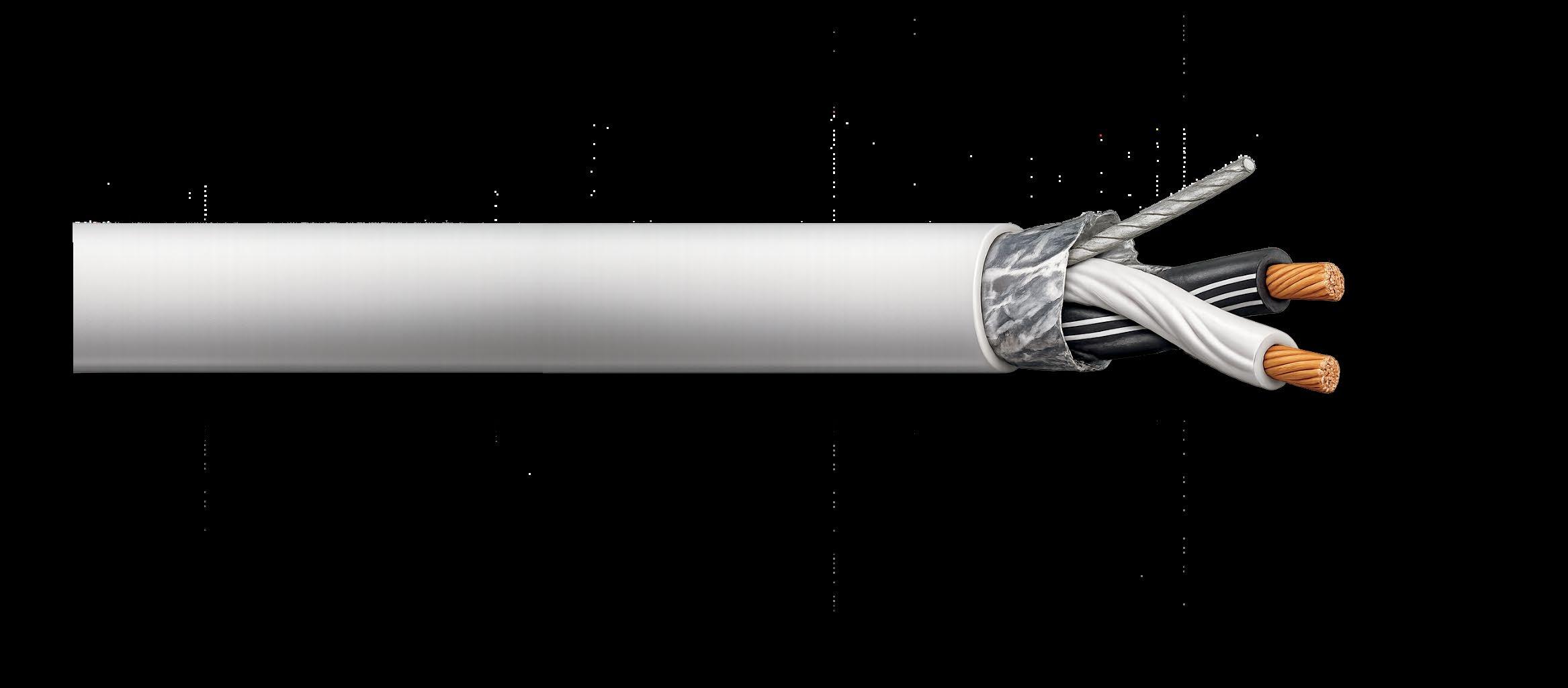
Kent
NATIONAL TECHNICAL UPDATE
Substandard Battery Installations: Why Quality Now Matters More Than Ever
The SBS News report revealing that more than 60 per cent of installations under the Cheaper Home Batteries Program have been assessed as substandard has landed as a wake up call for Australia’s electrical contracting industry. For NECA members, the message is clear: battery installation quality is now firmly in the sights of regulators, and expectations around compliance, documentation and professionalism have never been higher.
While the attention-grabbing headline focuses on batteries, the technology itself is rarely the problem. The overwhelming majority of issues identified by inspectors relate to how systems are installed, labelled, located and documented. In a market growing at extraordinary speed, this distinction matters. It reinforces that the role of the licensed electrical contractor remains central to safety, consumer confidence and the credibility of the energy transition.
Inspection Rates: Few Sites Checked, Strong Conclusions Drawn
The Clean Energy Regulator (CER) reports that more than 266,000 home battery systems have been installed nationally since July 2025 under the Small-scale Renewable Energy Scheme (SRES). Of these, just over 1,200 installations have been inspected to date – a relatively small proportion of the total market.
Despite this, the CER considers the sample statistically significant. The inspection outcomes paint a consistent picture: around 60 per cent of inspected installs were rated ‘substandard’, while approximately one per cent were classified as ‘unsafe’ and required immediate action. Only a little over a third of systems were found to meet requirements without issue.
For contractors, the most important takeaway is not the percentage itself, but the regulator’s response. The CER has been explicit that inspection activity will continue to ramp up, particularly targeting retailers and installers with a history of non-compliance. The likelihood of scrutiny is increasing, not decreasing, and all contractors should be operating on the assumption that their work may be inspected.
Cracking Down On ‘Rebate Hunters’
Jurisdictional regulators and the CER are increasingly aligned in their approach to dealing with so called ‘rebate hunters’ - businesses focused on speed, volume, and incentives at the expense of quality and safety.
At the federal level, the CER has strengthened its enforcement framework. Installers linked to unsafe or repeatedly substandard work face demerit points, mandatory rectification, suspension or removal from the SRES. Removal from the scheme effectively shuts down access to rebates, with serious commercial consequences.
State and territory electrical safety regulators also retain broad enforcement powers, including defect notices, improvement notices, fines, licence conditions and, in extreme cases, prosecution. Information sharing between regulators means compliance failures are less likely to remain siloed.
Changes to the battery rebate structure from 1 May 2026, including tiered incentives, are also intended to reduce the rush to install behaviour that has contributed to poor outcomes. Regulators have been clear: rebate pressure is not an excuse for non-compliance.
Consumer Protection Front and Centre
Consumer protection underpins much of the regulatory response. Where installations are found to be unsafe or substandard, installers are generally required to rectify defects at their own cost. Where that does not occur, regulators have the power to intervene to ensure systems are made safe.
Importantly, consumers also retain their rights under the Australian Consumer Law. Poor battery installations can quickly escalate into disputes, insurance complications and reputational harm – risks that extend well beyond regulatory penalties.
For reputable contractors, this focus on consumer protection is a positive development. It helps restore public confidence in battery technology and reinforces the value of qualified, licensed electrical work delivered to a professional standard.
Labelling: Still Letting the Industry Down
Despite being well defined in standards and guidance material, labelling continues to emerge as one of the most common compliance failures. Missing or incorrect energy storage system labels, unlabelled backup circuits and poorly located warning signage are repeatedly identified in inspection reports.
While often categorised as lower risk than wiring or protection issues, labelling is far from trivial. Correct labelling is critical for emergency services, maintenance technicians and anyone undertaking future electrical work on the site. In response, the CER has tightened evidence requirements, including clear, geotagged and timestamped photographs of mandatory labels.
For contractors, labelling represents a straightforward opportunity to lift compliance outcomes. It is lowcost, unambiguous and entirely within the installer’s control.
Battery Placement Driving Calls to NECA Advisors
NECA Technical advisors are reporting a steady increase in member enquiries about battery placement options and considerations. This aligns closely with inspection findings, many of which relate to location, fire separation and mechanical protection.
Common questions include whether a space is considered habitable, required clearances from doors and windows, installing systems on combustible surfaces, and protecting batteries from vehicle impact in garages. While AS/NZS 5139 provides the framework, real-world compliance often depends on site specific assessment rather than simple rules of thumb.
This increasing demand for advice highlights a critical reality: battery installation is not a ‘set and forget’ task. Each site requires careful assessment, clear documentation, and professional judgement. Seeking technical guidance early is far preferable to costly rectification after an inspection.
Protection Devices: Growing Scrutiny on ‘Type A’ Requirements
Another area generating increasing discussion across the industry, and a growing number of calls into NECA Technical’s advisory service, relates to protection device selection, particularly the expectation in many jurisdictions that existing switchboards be upgraded when connecting inverter-based energy systems.
Where batteries and inverter-based equipment are installed, contractors must consider the presence of DC residual currents and the compatibility of existing protective devices. In practice, this is driving a growing expectation from regulators, DNSPs, and inspectors that legacy circuit breakers and RCDs be reviewed – and in many cases upgraded to Type A devices, to ensure they can correctly detect pulsating DC residual currents associated with modern inverters.
While not every installation will require a full switchboard upgrade, the direction of travel is clear. Inspectors are increasingly focusing on whether protection devices are fit for purpose in the context of embedded generation and storage. Failing to address this can result in non-compliance, defects being issued, or remediation requirements post-install.
For electrical contractors, this is an important commercial and technical consideration. Battery installations may trigger broader switchboard compliance conversations with clients, including safety upgrades that extend beyond the battery system itself. Early assessment and clear communication with customers are essential to avoid disputes and ensure compliant outcomes.
Common Dangerous Defect
A common defect is not a single component failure, but a combination of installation issues that prevent anti islanding protection from operating correctly.
In Australia, a typical scenario occurs when a grid outage happens, but the inverter fails to recognise the loss of supply and continues energising the installation (and potentially upstream conductors). u nder AS/NZS 4777, compliant inverters are required to automatically disconnect within approximately 2 seconds of grid loss.
In practice, this failure is most often associated with:
½ incorrect MEN/neutral configuration or loss of neutral integrity;
½ improper wiring of hybrid or backup (EPS) circuits, including shared neutrals or inadequate isolation;
½ conditions where local load closely matches inverter output, maintaining stable voltage and frequency, and masking the outage (a recognised worst-case islanding condition).
These factors can prevent the inverter from detecting the absence of a grid reference, resulting in an unintentional island, where the installation continues to be energised despite the network being de-energised.
Commentary (Industry Responsibility)
Given the safety risks associated with this defect, it is essential that businesses installing inverterbased generation systems exercise a high level of diligence.
In particular, installation companies should ensure that:
½ they fully understand the specific requirements of the equipment being installed, including manufacturer design characteristics (such as neutral handling, switching arrangements, and backup functionality);
½ their licensed electricians are appropriately trained and competent in applying the relevant Australian Standards, including AS/NZS 3000 and AS/NZS 4777;
½ installation practices strictly follow both statutory requirements and manufacturer technical instructions, especially in relation to earthing systems, neutral continuity, and isolation of alternative supplies.
Failure to meet these obligations can result in installations that are technically energised but unsafe, undermining the effectiveness of mandated protection systems and creating a significant hazard to both workers and the public.

Neil Roberts Director of Policy, Technical and Safety
The NECA Perspective
From NECA’s point of view, stronger compliance outcomes will ultimately depend on two things: higher inspection rates and clearer visibility of enforcement action against poor performers in the market.
While the CER has indicated that its current inspection sample is statistically significant, the reality is that the vast majority of installations are never physically inspected. NECA would prefer to see inspection rates increase over time, alongside more regular public reporting on enforcement actions taken against retailers and installers who consistently produce substandard or unsafe work. Transparency around suspensions, removals from the SRES and other sanctions would send a powerful signal to the market and help lift overall standards.
There is also an uncomfortable but important reality emerging from industry and social media forums such as Crap Solar. These forums regularly highlight installations that are well below what most licensed electrical contractors would consider acceptable and often involve issues far more serious than labelling alone. In many cases, these installations are unlikely to be inspected unless and until an incident occurs.
This creates a risk not only for consumers but for the reputation of the entire electrical contracting industry. Poor-quality work that escapes scrutiny undermines community confidence and places additional pressure on responsible contractors who invest time and money in getting installations right. NECA believes that increased inspection activity, combined with visible enforcement against repeat offenders, would help rebalance the market in favour of professional, compliant contractors. It would also reinforce a simple but critical message: battery installations are electrical installation work, and must meet the same expectations of safety, competency and accountability as any other part of the trade.
In a market expanding at pace, quality is not just a regulatory requirement – it is a competitive advantage.

Text or call 0488 846 988
Hours
Mon to Fri, 8am–10pm AEST Website www.tiacs.org
WOMEN, SPEAKING UP AND SUPPORT IN THE ELECTRICAL INDUSTRY
The electrical industry can be tough. Long hours, pressure to get it right, and the expectation to handle whatever gets thrown at you, often without much room to stop and reset. For many workers, especially in the trades, problems don’t always stay neatly on one side of the fence. Work pressure can spill into home life, and personal stress can follow you on site.
One thing we see regularly is that many women working in the industry are more likely to talk things through when something’s not right. They’ll often lean on friends, family, or people they trust, and they’re generally more open about what they’re dealing with instead of bottling it up.
That willingness to talk can make a real difference. Raising things early helps stop challenges from stacking up, brings clarity when things feel messy, and eases pressure before it starts affecting work, confidence, or relationships.
When Speaking Up Isn’t Straightforward
That said, the electrical industry remains heavily male dominated, and that can make speaking up more complicated than it should be.
Many women are navigating extra pressures alongside the job itself, proving capability, managing different
expectations, dealing with isolation on site, or carefully choosing when and where to say something. In those situations, staying quiet can sometimes feel safer than risking being dismissed or misunderstood.
So, while women may be more open to seeking support, the environment they’re working in can still create barriers.
Why the Right Support Makes a Difference
When women do reach out, they’re often not looking for big solutions or dramatic change. They want someone to listen, understand the reality of the job, and help them get their head straight.
What we consistently hear is that having the right support helps people:
½ talk things through without judgement;
½ regain clarity and perspective;
½ restore confidence in their own decisions;
½ manage stress without it spilling into work or home life.
These conversations don’t need to happen when things are at breaking point. Often, they’re most helpful when pressure is starting to build, and a circuit breaker is needed before things overload.
Support That Understands the Trade
Support works best when it understands electrical work, the sites, the deadlines, the responsibility, and the culture that comes with the trade. It also needs to recognise the added complexities women can face working in environments where they’re often in the minority.
That’s why services like TIACS exist. TIACS provides free, professional, and confidential counselling built specifically for blue collar workers, including electricians and their loved ones. Our counsellors understand the realities of the trade and are equipped to support women navigating the unique pressures of working in a male dominated industry.
Support is available by call or text, fits around the working day, and gives people a space to talk things through properly without judgement or pressure.
Encouraging Women to Reach Out
We encourage women across the electrical industry to reach out for support when challenges arise, whether they’re work related, personal, or a mix of both. Seeking support is a practical way to stay grounded, maintain confidence, and keep performing in demanding roles.
Just like any other tool, support has its place. used early, it helps people manage pressure, protect their wellbeing, and build long, sustainable careers in the electrical industry.
NECA membership isn’t a luxury, it’s a business essential.

We have the experts in-house to provide you with the support you need to thrive in this industry.
NECA MEMBERSHIP INCLUDES:
Free 24/7 access to view technical standards at your fingertips with TKB, NECA’s Technical Knowledge Base
Free access to Technical experts for on the job support
Free access to NECA Workplace Relations specialists
Free access to Workplace Health and Safety advice
Expert Legal advice on contract disputes and negotiation, debt recovery, and representation
Access to discounts or benefits for Fuel, Fleet, Insurance, and Health Cover
Industry representation at all levels of Government and key industry groups
Access to education and training events, workshops,seminars and industry conference
Access to enter NECA’s prestigious Excellence and Apprentice Awards
Access to industry networking opportunities
NOT A MEMBER? GIVE YOUR LOCAL NECA BRANCH A CALL













nVent helps OEMs power DC high power systems with confidence. Our proven connection solutions support compact, efficient, and resilient DC designs—enabling the transition to next‑generation power architectures.





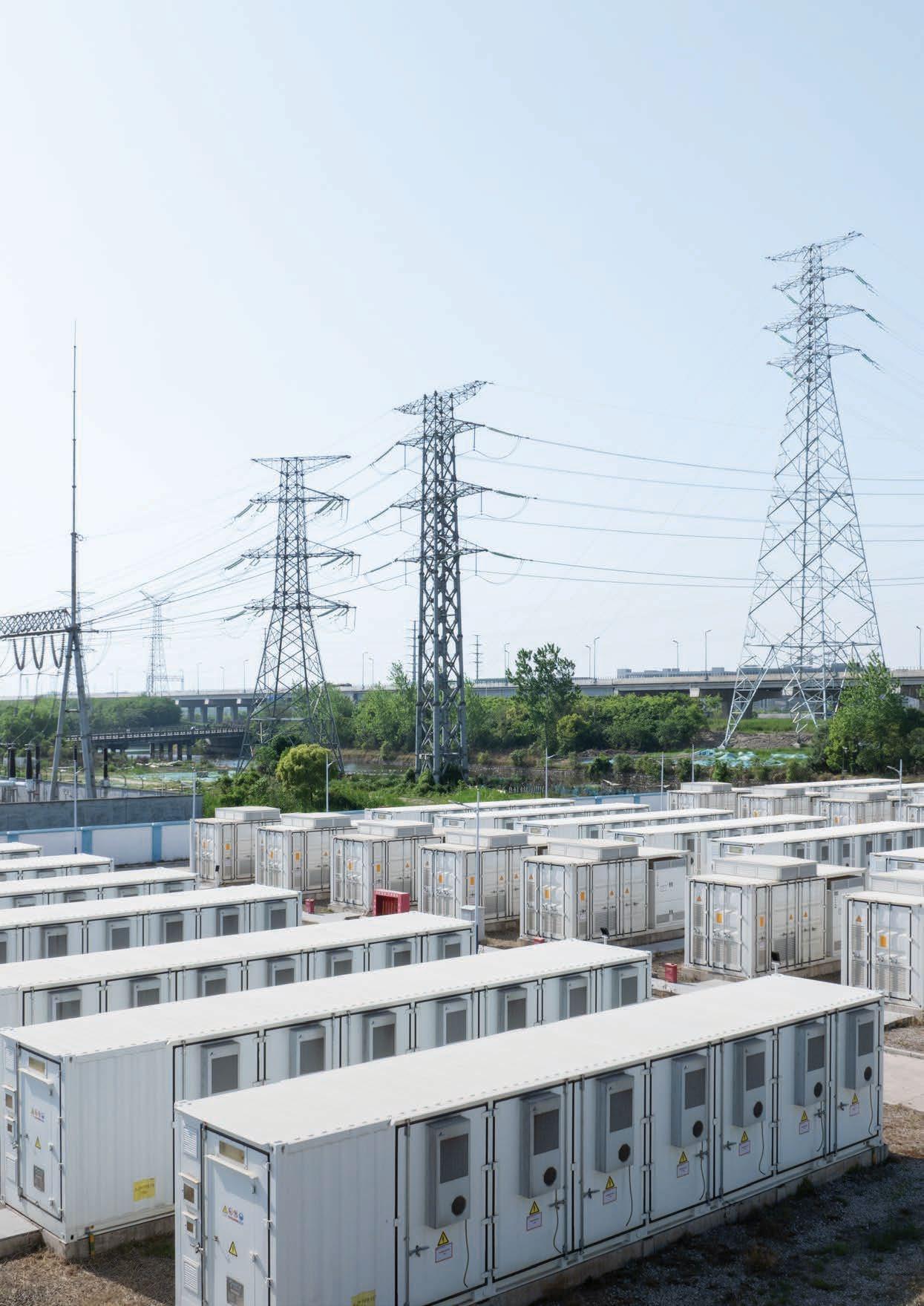


When trust is a must
Tried, tested and backed by businesses just like yours, the HiLux is a leader in its field for a reason. And the New Toyota HiLux is no different. Born from generations of hard work, it’s designed to offer unparallelled performance and reliability that’s second to none.
When the stakes are high, and trust is a must, choose Toyota for Business. To unlock your Association Fleet Discount, visit your local Toyota Dealer.
Pre-production model shown
Find out more about the New Toyota HiLux