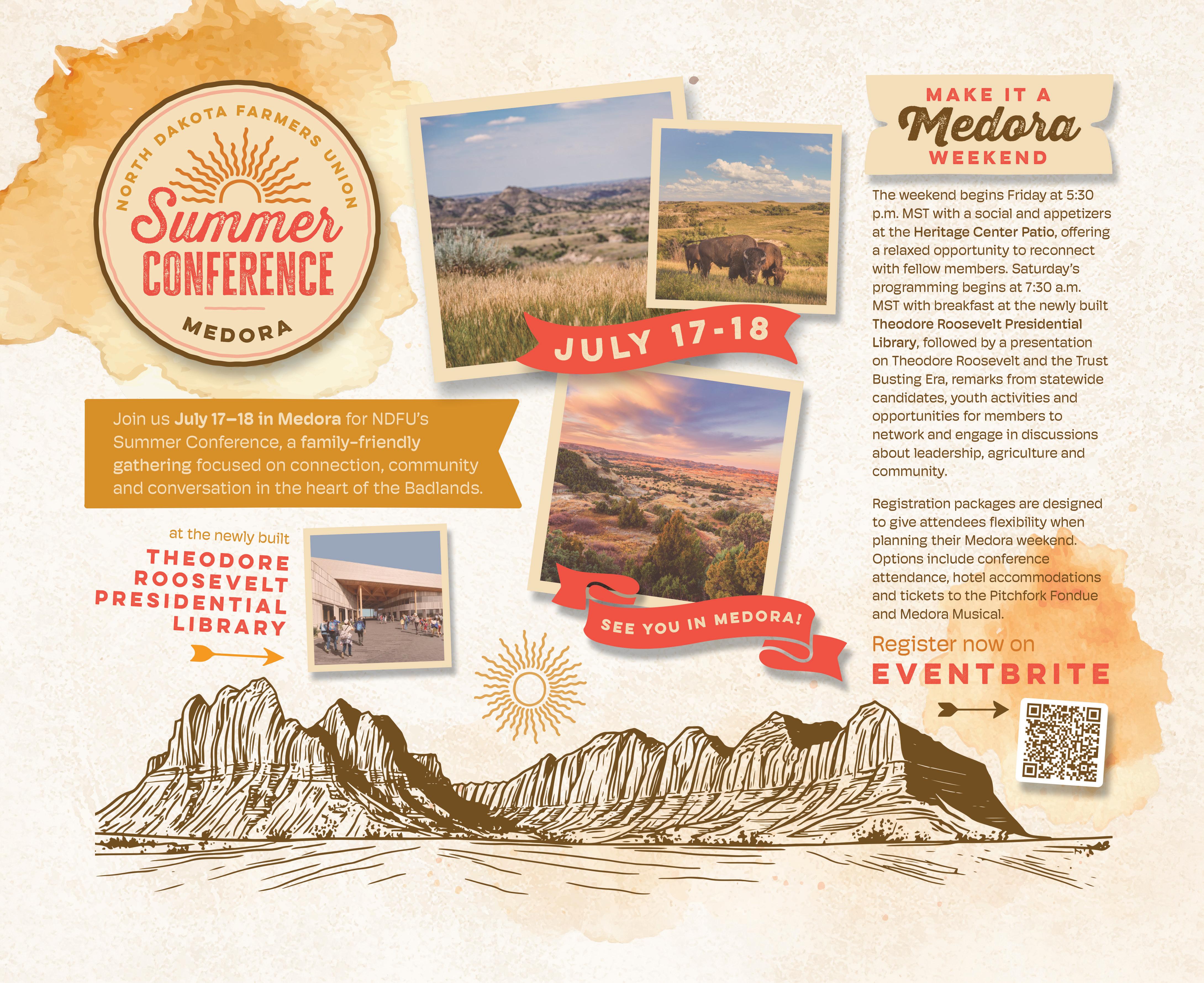
Theodore Roosevelt reprisor Joe Wiegand to kick off NDFU Summer Conference July 17-18 in Medora
My name is Blake Kemnitz. I was born in Grafton and raised in Grand Forks, where I graduated from Red River High School and the University of North Dakota. My wife, Laney, also attended UND, and we have been married for two years. In our free time, we enjoy spending time at Sibley Lake in Dawson, North Dakota, being with friends, and attending as many UND sporting events as we can.
I have been with Farmers Union since early 2022, and it has been the best career decision I’ve made. My agency partner Aaron Dunphy has given me invaluable on-the-job training. It’s especially meaningful to work alongside my former high school baseball coach and now a close friend. What I enjoy most about being an insurance agent is the ability to take care of people I know and trust, and to provide clarity and support when clients need it most.
Before joining Farmers Union, I worked as a lender at a credit union in Grand Forks, where I now serve on the board of directors. I also stay connected to my roots by judging DECA competitions after being invited back by a former teacher at Red River, helping local high schools prepare for state. In addition, I serve on the Grand Forks Legion Baseball board, giving back to a program I once played for. These roles keep me closely connected to the community and allow me to continue building strong, meaningful relationships.
Jamestown, ND 58402-2136
016-211
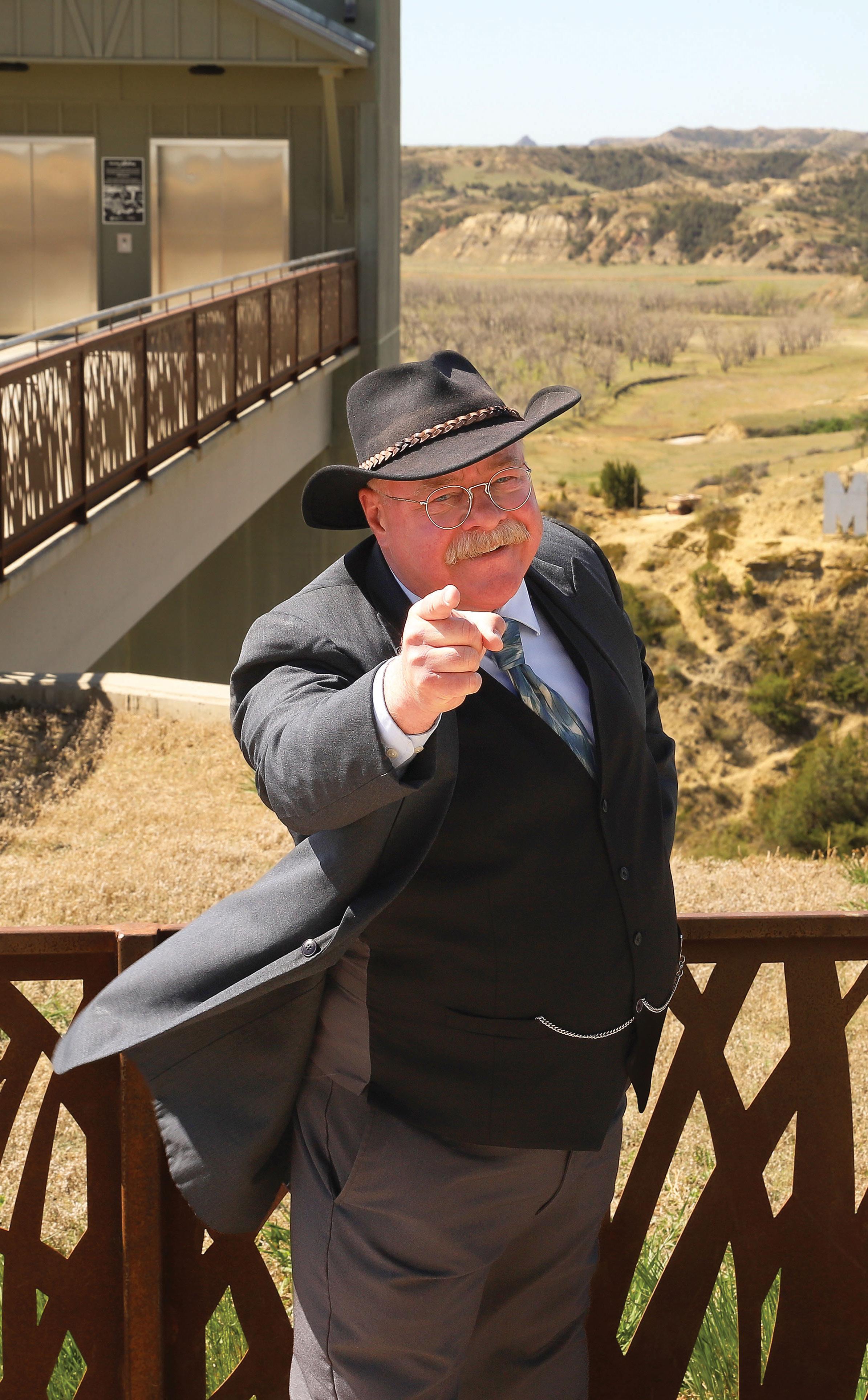
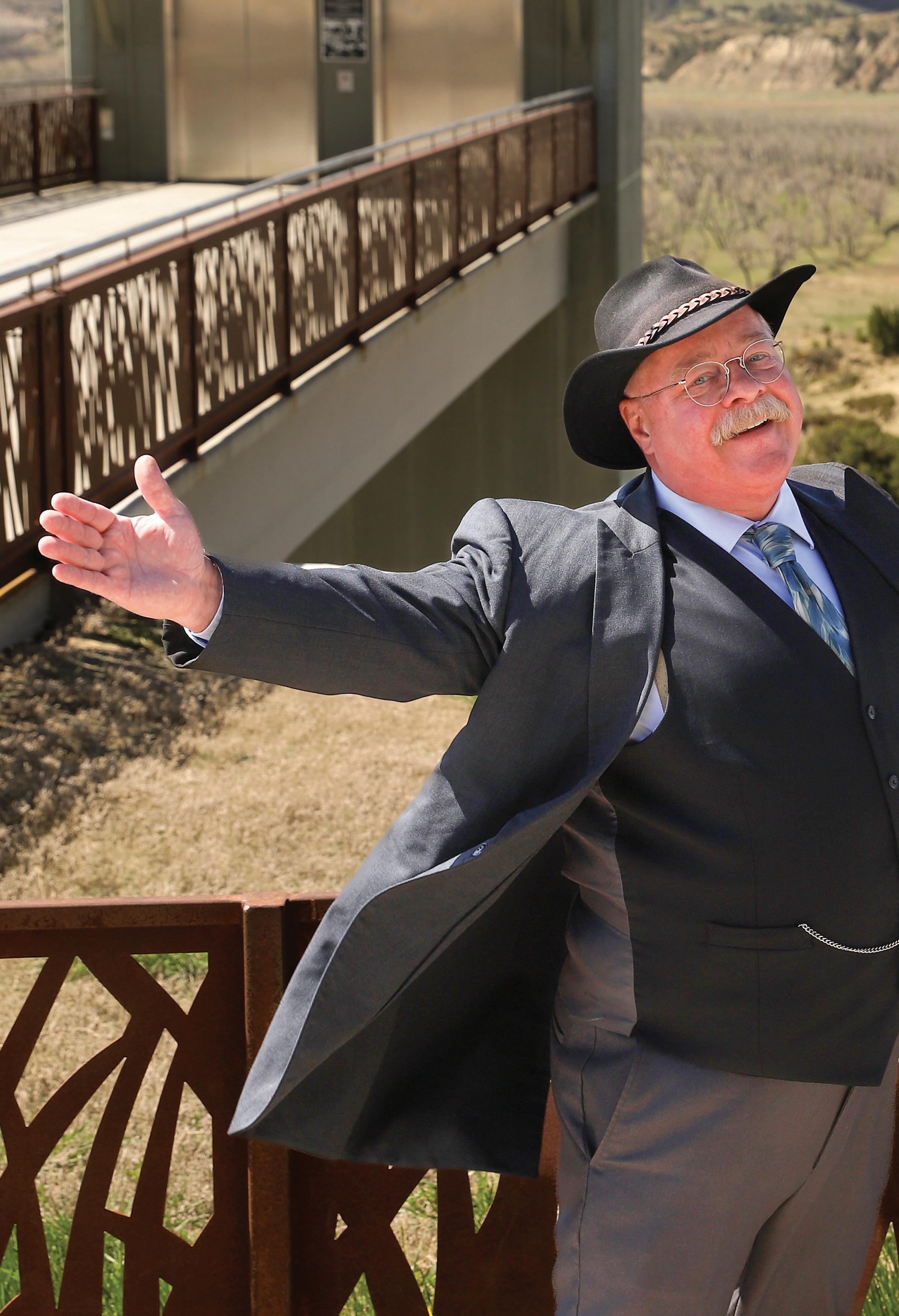
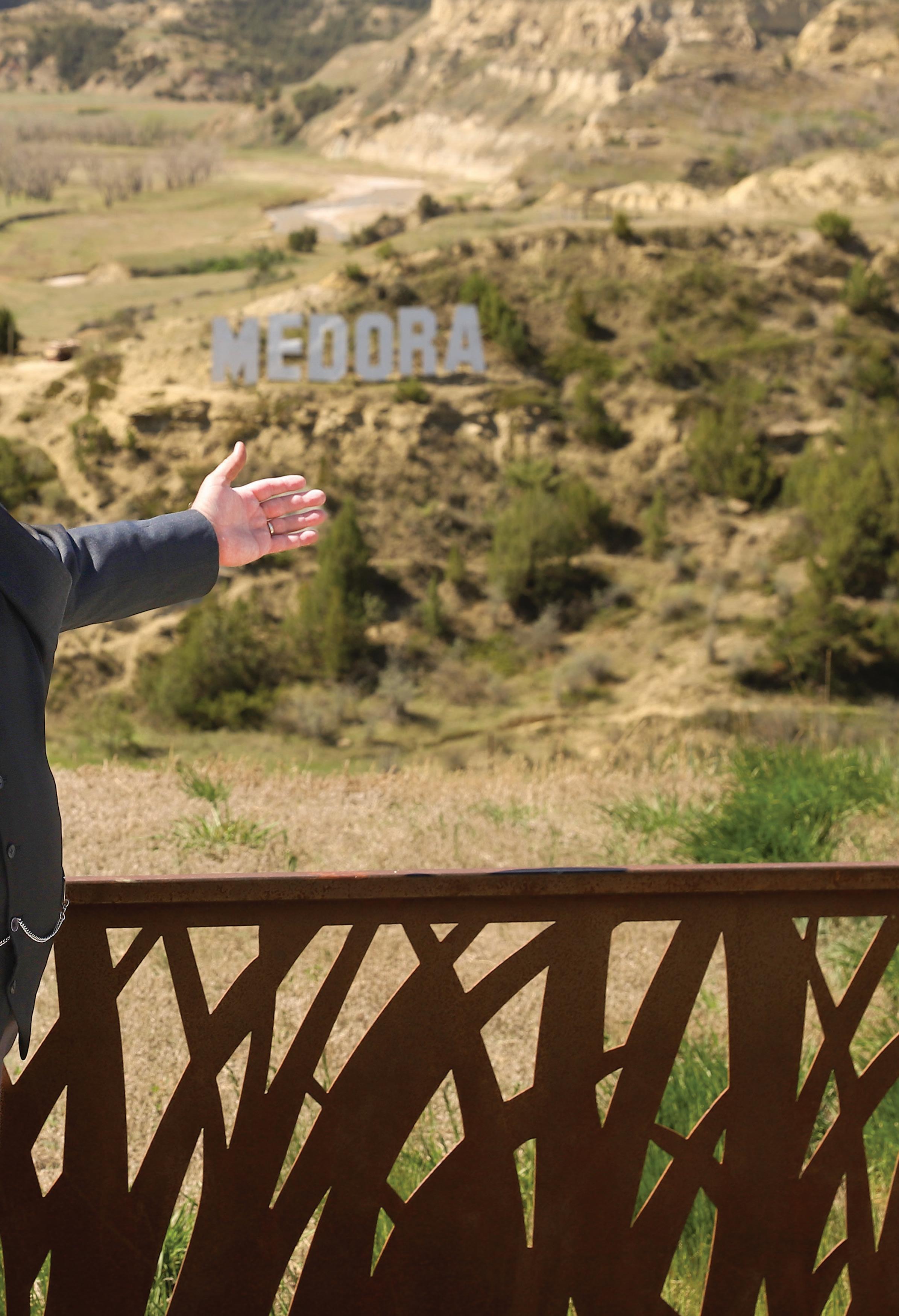
Theodore Roosevelt reprisor Joe Wiegand stands at the top of the amphitheatre of the Medora Musical with the iconic Medora sign in the background. Wiegand, originally from Illinois, has been reprising T.R. for more than 20 year.s
BULLY!
Joe Wiegand is Medora’s Teddy Roosevelt reprisor, to speak at NDFU's Summer Conference
For more than 20 years, Joe Wiegand has been someone else.
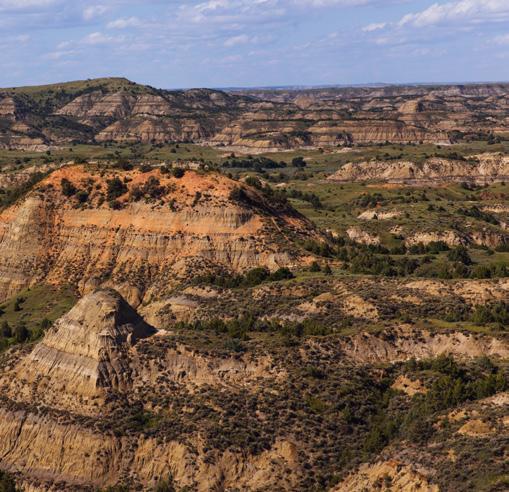
In the Badlands of western North Dakota, you’ll find him there. He’s the brilliant “reprisor,” not impersonator, of Teddy Roosevelt, who has been the headliner for the Theodore Roosevelt Medora Foundation for 15 summers now.
On the morning of July 18, Farmers Union members attending the Summer Conference will experience “the ebullience, the buoyancy” of Theodore Roosevelt the instant Wiegand steps into the presidential library. “He [Roosevelt] spoke of the glory of work and the joy of living. I just think adding joyfulness to an occasion is a very Rooseveltian thing,” remarks Wiegand.
CONTINUED TO NEXT PAGE
Story by Pam Musland, NDFU • Photos by Chris Aarhus, NDFU
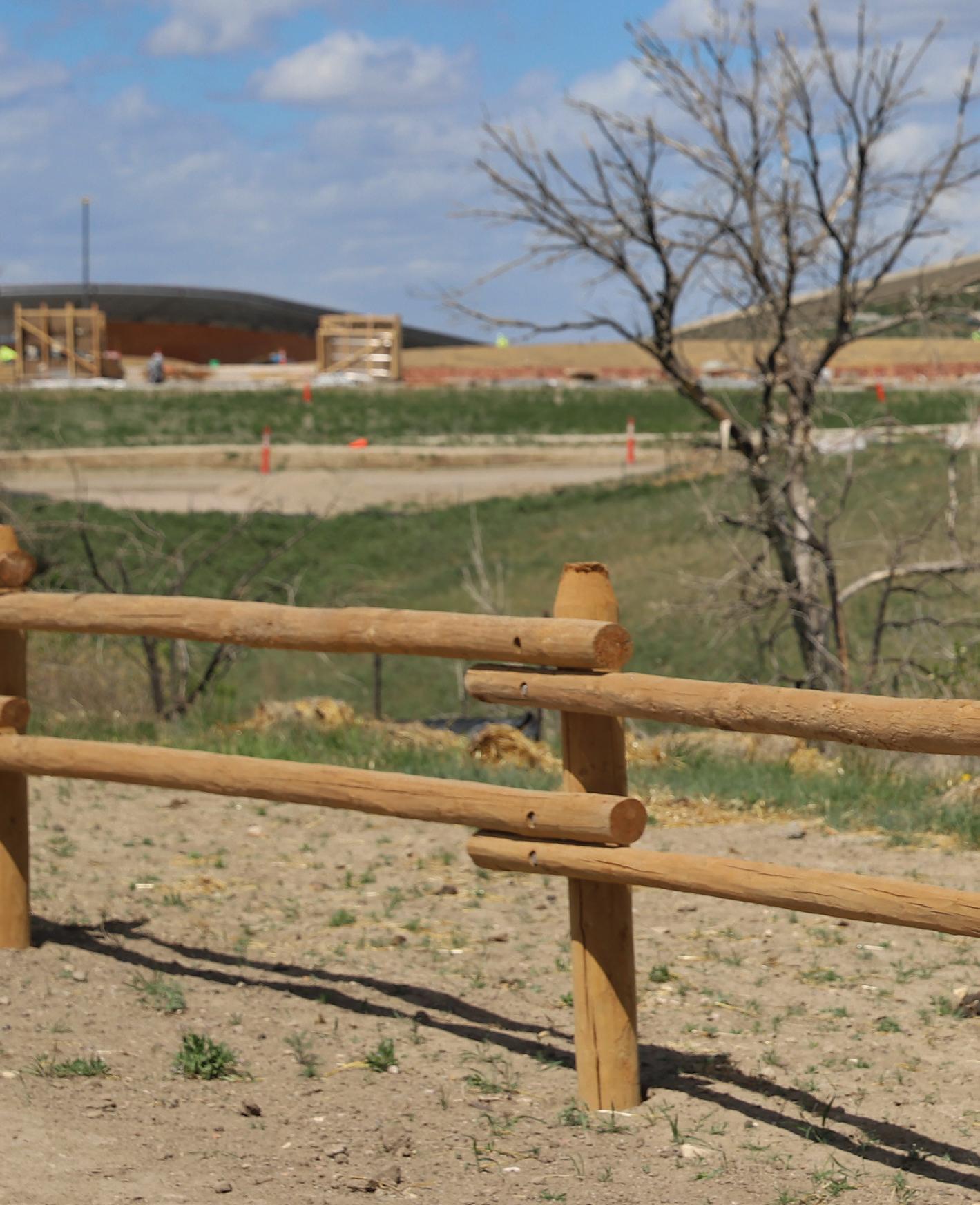
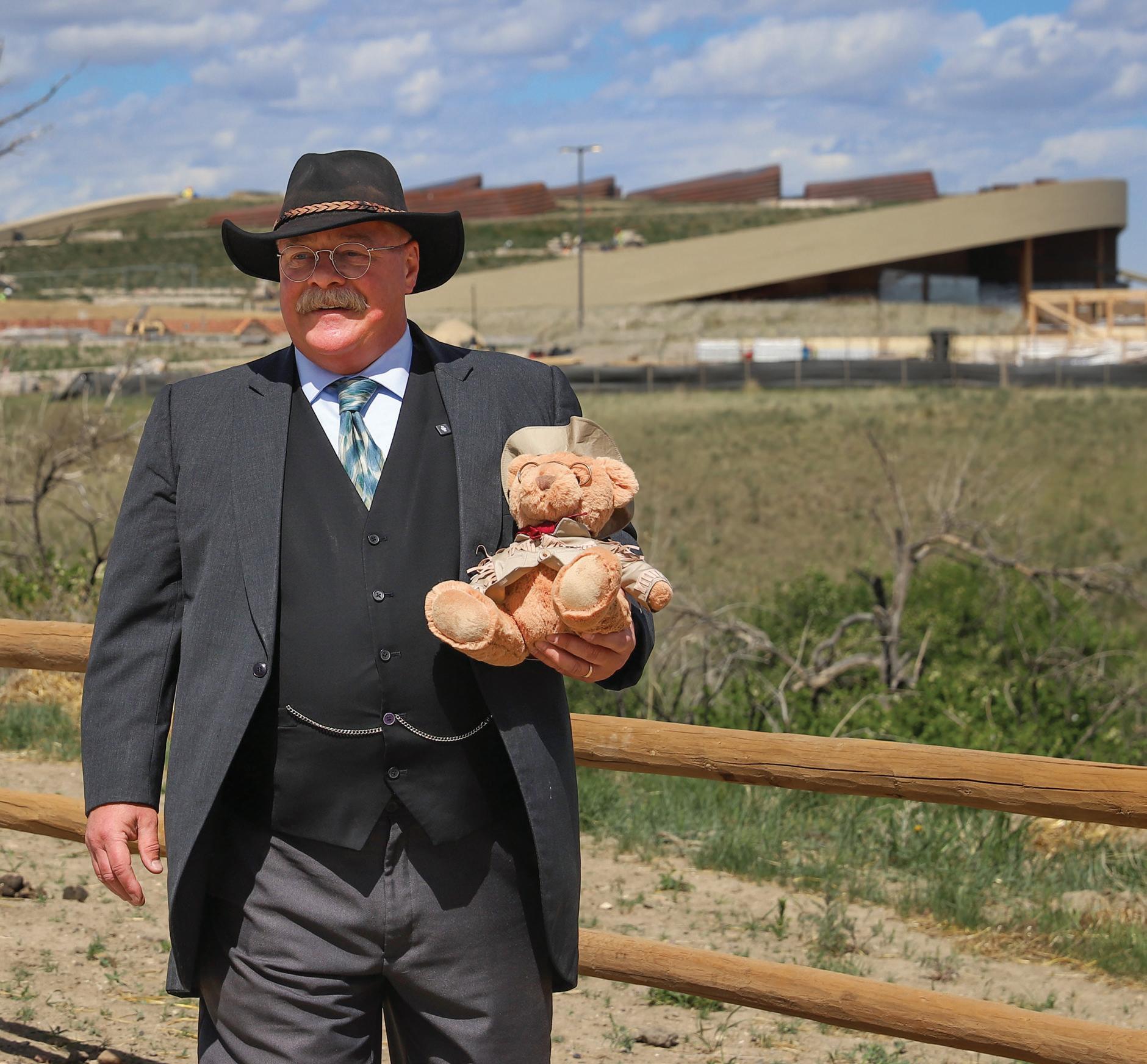
Theodore Roosevelt reprisor Joe Wiegand stands in front of the new Theodore Roosevelt Presidential Library in Medora, set to open in July. NDFU's Summer Conference will be one of the first conferences in the museum.
CONTINUED FROM PREVIOUS PAGE
FORD ECONOLINE VAN
Raised in the suburbs of Chicago, Wiegand began reading presidential biographies in elementary school. “I was reading above my age, reading Eisenhower’s Crusade in Europe, which is Dwight David Eisenhower’s memorial of throwing back the Nazis in Europe. I was just fascinated with history and military history.”
During the nation’s bicentennial year when he was 11 years old, Wiegand’s father sold their home, loaded all their possessions into their Ford Econoline van and headed to Hollywood. “My father became a hippie comedian. We bought a burned-out house of ill repute one block north of Hollywood Boulevard,” he said. The family cleaned up the rooms and rented them on a weekly basis to artists, comedians, singers, dancers, and young people trying to make it in Hollywood.
When his father and an actress helped his mother deliver Wiegand’s sister Joy in their
rooftop apartment after the doctor became stuck in traffic, Wiegand says good-naturedly, “The only way then to be a rebellious teenager with all of this silly hippieness was to volunteer for Ronald Reagan and join the NRA and the Christian Coalition.
“From a very young age, I learned stagecraft from my father. And then we did an amazing adventure across the country called “Walkin’ Proud, Talkin’ Loud for America” in the summer of 1981. I was 16.”
The Wiegands left California in the same Ford Econoline, this time towing a large homemade red, white and blue trailer. They travelled across the country collecting handwritten messages from Americans as part of their social commentary show, before arriving at the White House on the anniversary of the signing of the Constitution where they delivered the 6,500 messages and gifts from people across the country.
Then it was back to the suburbs of Chicago. Wiegand excelled in school, earning a
scholarship for college to become the first person in his family to graduate high school. He attended The University of The South, in Sewanee, Tenn., majoring in political science.
During his senior year, he was awarded a prestigious Watson Fellowship and spent the year interviewing national legislators in challenged democracies, traveling to Costa Rica, Italy, the Philippines, South Korea and South Africa. “I interviewed F. W. de Klerk, the future president of the Republic of South Africa, the man to preside over the dismantling of apartheid. A pretty fascinating time to be a 23-year-old traveling the world,” he said.
A RACE TO GET SOMEWHERE
By this time, Wiegand had already dipped his toe into the political arena having run youth campaigns for Congressman Phil Crane of Illinois. “I was on a race to get somewhere. Where I thought I was going to get was into Congress,” he shares.
He managed state political campaigns and was involved in various elections, before becoming a county board commissioner in DeKalb County, Ill. In 1994 and 2004, he made unsuccessful races for the Republican nomination in the Illinois state house.
But several years earlier, his sister-in-law gifted him the book The Rise of Theodore Roosevelt by Edmund Morris. She said, “I know you’ve got a servant’s heart but maybe your public service isn’t going to come through in the form of elections.” Wiegand politely thanked her for the book, thinking he’d never quit elections and would run until he won.
“I read that book, and between my father’s background in comedy and performance, and being familiar with the craft of the one-man show – a unique genre to convey storytelling and history and humor – I started writing from my readings and experiences,” he said.
He was on a 50-state tour in Alaska when he CONTINUED TO NEXT PAGE
CONTINUED FROM PREVIOUS PAGE
received a call from the White House. “Would I be available to perform for Teddy’s 150th birthday, which was Oct. 27, 2008. It was a lifechanging experience, because I never worked in politics again,” he said.
GHOST INTERPRETATION
While portraying Teddy Roosevelt, Wiegand doesn’t work from a script. He also doesn’t tie himself to a specific age, but rather does a ghost interpretation.
“The vast majority of audiences really don’t have very much idea of what it means to be in 1912 or 1915,” he says, suddenly transforming into Roosevelt. “So, I come to life with the omniscience of being able to, after my own life experience, tell you about my cousin Franklin being president, or my son Ted Jr. being the oldest man and the only general to go to shore on D-Day, June 6, 1944.”
As a very believable 60-year-old Theodore Roosevelt, now a few months older than Roosevelt lived to be, Wiegand said there are professional questions as to how long he will stay in that role. “Leadership, I believe,
identifies and trains and equips its replacement. It's part of the responsibility of being a leader.”
With great gusto, Wiegand works with other reprisors to hone their craft. “We’re not reenactors. We’re not impersonators. The word comes from the Enumerated Powers Clause. ‘Congress can issue letters of mark and reprisal by which a privateer is authorized to capture an enemy ship and present it in exchange for reward.’ What I'm trying to train my colleagues to do is to capture the spirit of Theodore Roosevelt, and then present it in exchange for reward, and to become each of them, in their own way, more professional.”
Wiegand notes the Summer Conference falls on the same weekend in Medora as the Badlands Chautauqua. “Farmers Union members shouldn't be surprised if they see about a dozen Teddy Roosevelts in town that weekend,” he says.
THE MOMENTS
As a reprisor, Wiegand has actually met Roosevelt family members. “That’s been very special for me to get acknowledgement from the family that they understand the earnestness with which I perform, certainly with a bit of the fun and frivolity. So many historians and
hgfhfkul
Please JOin Us
Business Meets the Badlands
North Dakota Cooperative Directors Association Meeting
Friday, July 17, 2026 • Medora Rough Riders Hotel
Lunch at Noon (MT)
• Business Meeting 1-5 p.m.
Topics
• Economic Outlook
• Board Governance
• Member Allegiance
• CHS & Land O’Lakes Updates
Please RSVP by June 19th cooperatives@ndfu.org Or 701-952-9101
others have identified that Teddy Roosevelt remained in touch with his inner boy — the playfulness, the games, the enjoyment of time playing games with children, and not the sort of Tiddlywinks or a board game,” he says. “The game was out hiking point to point, where you never went around, but normally always over, under or through.”
For Wiegand, teaching students about Teddy Roosevelt has generated impactful moments in his career. “I find that most young people are able to absorb the story of how Teddy Roosevelt not only lost his father when he was 19 years old … when he’s 25, his wife and mother die of two different diseases on the same day in his arms beneath the same roof, both unexpected. Very often, I’ve been able to elicit from the students a vision of what they might like to do with their lives.”
hgfhfkul
As a cooperative director, your role is more vital than ever as we navigate a changing digital and economic landscape. Join other cooperative board members in historic Medora for a day of strategic leadership, networking, and critical industry updates.
Held in conjunction with the North Dakota Farmers Union Summer Conference.
He references the famous “The Man in the Arena” excerpt from Teddy Roosevelt’s “Citizenship in a Republic” speech from 1910. “If people are in turn inspired to perhaps be in the arena for the cause about which we are gathered, like Farmers Union, or if they might be inspired by the fullness of life that the character Theodore Roosevelt conveys, if there's a bit of their own sense of tragedy and loss that they might be experiencing to realize that Theodore Roosevelt, as much as any of us, came through ill health and tragedy and political defeat.
“Then maybe it will inspire them to overcome their own hardships and to be that man or that woman in the arena, making a difference for themselves, for their families, for their communities. To make the world a better place for you having been here.”
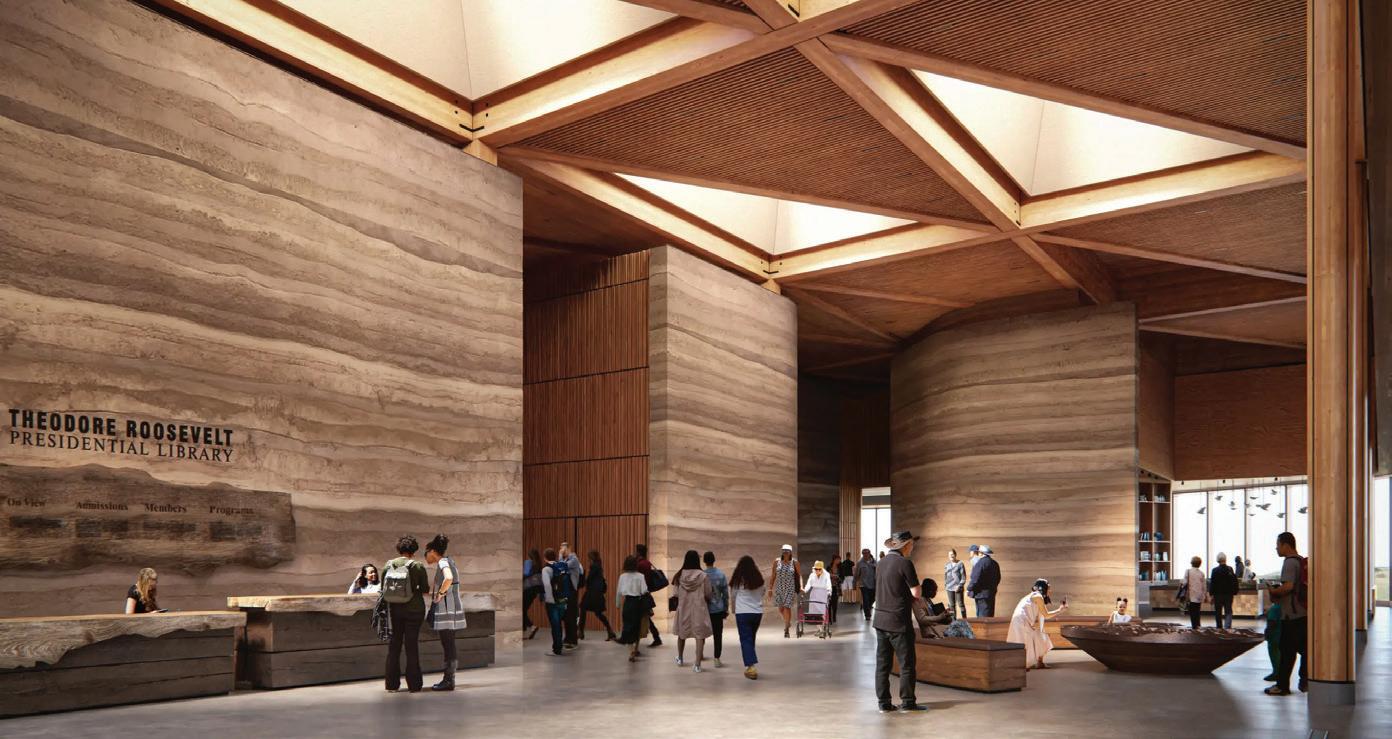
A rendering of the lobby, courtesy of the Theodore Roosevelt Presidential Library, which is set to open in July in Medora.
C amp Farmers Union
for a summer of adventure
kids who love adventure, like making crafts, laugh loud & often, enjoy playing sports,
reward lasting friendships unforgettable memories
james river heart butte
June 8-11 .......... Junior 1
June 16-20 ...... Senior 1
June 23-26.......Junior 2
June 29-July 2 . Junior 3
July 6-10 ......... Senior 2
July 13-16 ........ Junior 4
July 20-23 ....... Junior 5
July 27-31 ....... Senior 3
The youth's grade needs to have been the last completed grade. Kick off your boots and jump into summer fun at Farmers Union Camp!
Farmers and ranchers are often described as eternal optimists. Through tough markets and rough weather, we usually find a way to feel hopeful and confident about what the future holds. So, when a reporter recently asked me if farmers are still optimistic about this growing season, he was a bit surprised when I told him optimism wasn’t the right word. Instead, I landed on a different adjective: resilient.
So far, 2026 has been marked by challenges. While commodity prices have improved some, that’s been more than offset by rising input costs. In most parts of the state, planting got off to a late start. Now, drought is taking hold out west. Farmers and ranchers are typically hopeful people, but we know what we’re up against this year. Optimism won’t get us through this growing season: resilience will.
At NDFU, it’s our job to help you be more resilient. That’s certainly been the theme of our advocacy work lately. We’ve pushed to grow renewable fuels markets and calm trade tensions, so you have more stable demand for what you produce. We’ve continued our century-long call for fair and competitive markets, so your input costs come back to reality. We’ve advocated to complete the farm
bill, so you have access to the financing tools and conservation support you need.
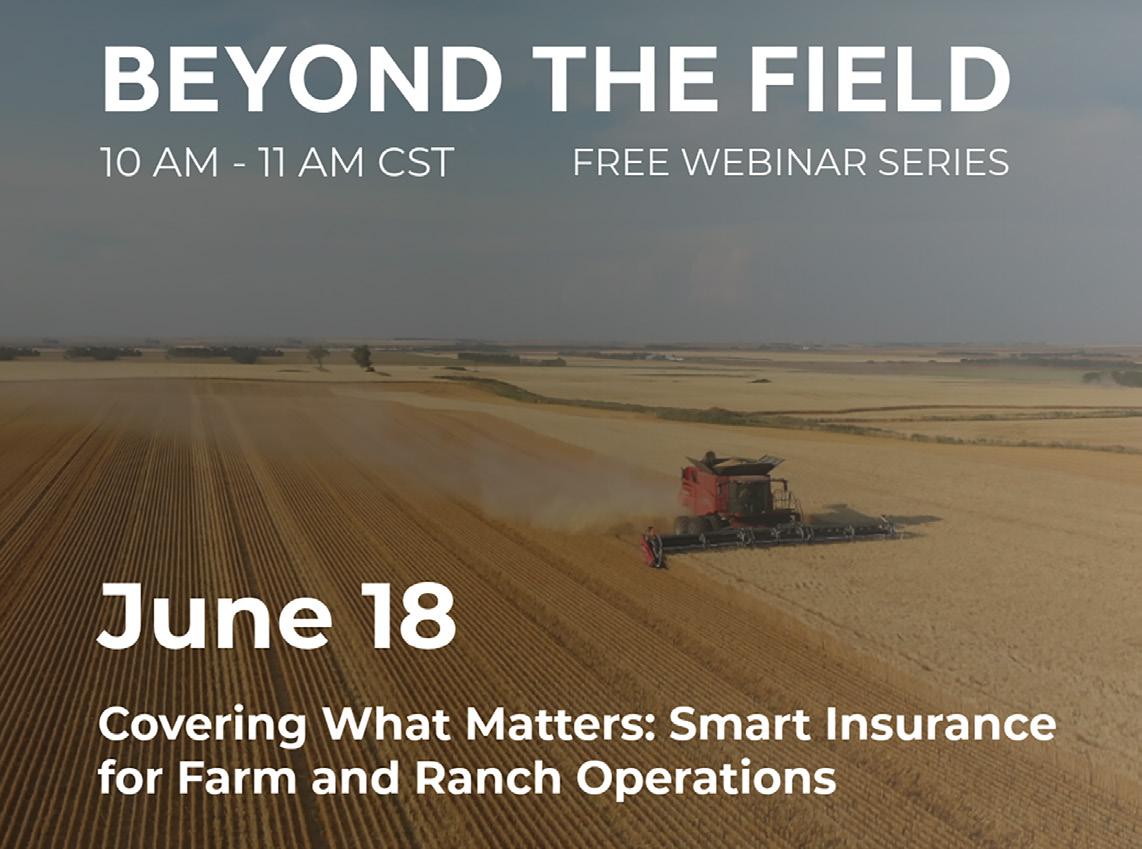
Our education programs are there to support your resilience too. Last month, we hosted a webinar on managing through market volatility as part of our “Beyond the Field” series. On June 18, we’ll host a webinar to educate you on insurance options for your operation. I hope you find these free educational sessions help you manage through the challenges and capture new opportunities.
Finally, sometimes we just need to know that we’re not alone. That’s why we’re hosting a free, QPR Suicide Prevention Training as part of our Summer Conference in Medora on July 18. We know that you want to be there for your friends and neighbors when the stress becomes too much. This training will help you ask the right questions, say the right things and get your loved ones the support they need.
If optimism is seeing the light at the end of the tunnel, resilience is taking each hard, trudging step toward it. We know that better days are ahead for family farmers and ranchers. We also know it’ll be hard work getting there. That’s what we’re here for.
Explore with Field Days
NDSU summer events give producers an opportunity to see research in action
BY CHRIS AARHUS, NDFU
What exactly happens at NDSU’s Research Extension Centers?
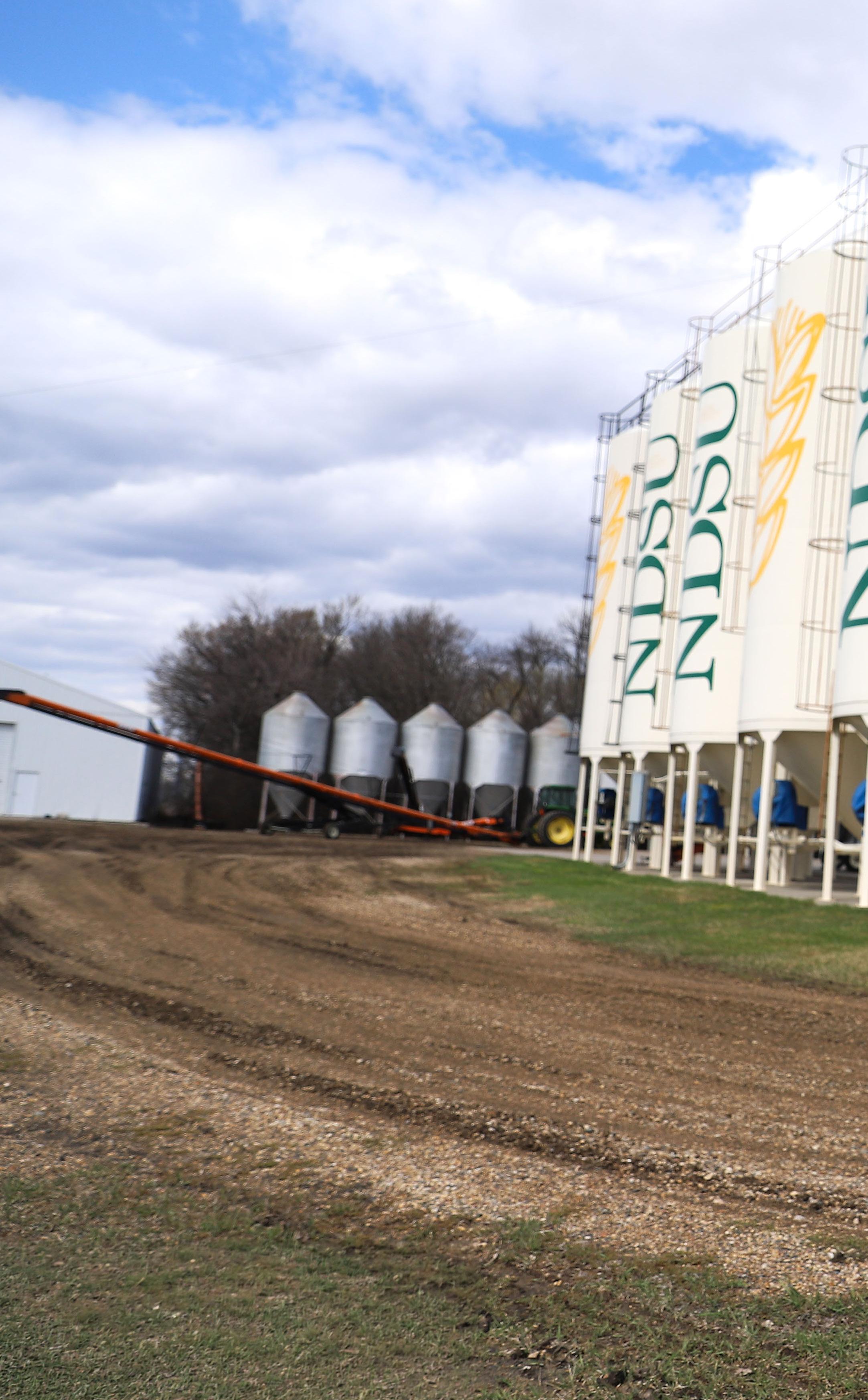
If you’ve ever driven by one of these centers positioned around the state or its Agronomy Seed Farm near Casselton, you might have seen the hustle and bustle of people and equipment.
“These research centers advance the knowledge and understanding of agricultural production,” said Marlen Eve, assistant director for the North Dakota Agricultural Experiment Station, which overseas the research centers. “Their goal is to demonstrate and inform others, to help (producers) adopt these practices for their own operations and ultimately improve the profitability of agriculture in North Dakota.”
The North Dakota Agricultural Experiment Station (AES) offers a first-hand look every summer, and this year
CONTINUED TO NEXT PAGE
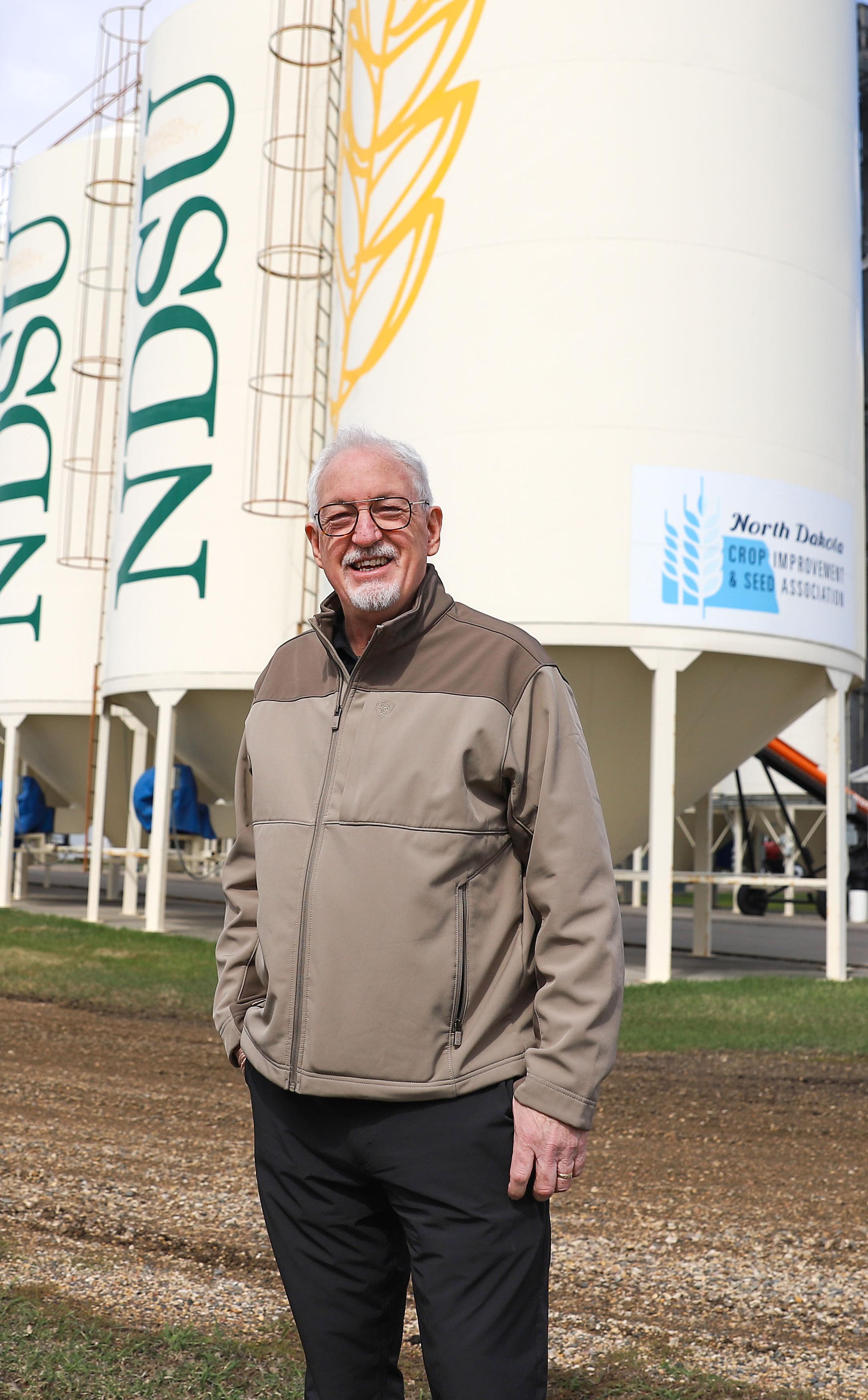
Marlen Eve, assistant director of the North Dakota Agricultural Experiment Station, stands on NDSU's Agronomy Seed Farm near Casselton.
Photo by Chris Aarhus, NDFU.
2026 Field Days
Location Date Time
Central Grasslands (Streeter)
Hettinger
Dickinson
Williston
Agronomy Seed Farm (Casselton)
Carrington
North Central (Minot)
Langdon
Nesson (Ray)
July 7 10 a.m.CDT
July 8 5 p.m. MDT
July 9 4:30 p.m. MDT
July 10 9 a.m. CDT
July 13 5 p.m. CDT
July 14 9 a.m. CDT
July 15 9 a.m. CDT
July 16 8:15 a.m. CDT
Aug. 5 9 a.m. CDT
Oakes Aug. 6 9 a.m. CDT
For more information, go to https://www.ndsu.edu/agriculture and click on Ag Research and then Field Days. Or search for the specific Research Extension Center in your area on Facebook to get the latest!
CONTINUED FROM PAGE 16
is no different. NDSU’s Field Days kick off July 7 at the Central Grasslands extension center in Streeter. It’s offering 10 site visits, capping the summer with an event at the Oakes Irrigation Research Site on Aug. 6.
Eve said Field Days is primarily intended to transfer the knowledge gained at the research centers directly to producers to inform management decisions in their operations.
“At each of these days, you’ll hear presentations, see demonstrations and get information specific to the crops and livestock that are grown in that part of the state. Oftentimes, there are hands-on activities and sometimes, a meal.”
This year’s especially notable as NDSU’s new president, Dr. Marshall Stewart, plans to attend to meet local farmers and get more familiar with North Dakota crop and livestock production.
“We’ll have a good crowd traveling to Field Days with us, and we look forward to meeting a lot of our farmers and ranchers there,” Eve said. Different sites feature different presentations, he said, largely based on what’s vital to that area’s producers. For instance, the Hettinger Research Extension Center is the only site with research on what Eve called, “a growing sheep
and goat industry in North Dakota.”
“It’s known for its expertise on sheep genetics, sheep breeding and wool quality,” he said. “And that’s the only place you’ll interact with sheep.”
Up in Langdon, producers might see presentations or demonstrations related to canola research. In the northwest, pulse crops and wheat are researched regularly. For those not interested in small grains, the Williston extension center has a curated research garden that’s maintained by a horticulturalist, Dickinson includes a public garden that has proven to be popular and it doesn’t stop there.
“Minot and other RECs have worked in grape varieties that are adapted to the cold North Dakota landscape, and Carrington has an impressive fruit orchard,” Eve said. “These are some of the things that I would watch for that you may not think about when interacting with a research farm.”
Each extension center has a Facebook page, Eve said, where specific event details can be found. If producers aren’t sure, they can call their local research center and find out more about Field Days.
“Come on out and enjoy Field Days,” Eve said. “And even if it rains the day before or day of, don’t assume it’s canceled. That’s often when we get our best attendance.”
POLICY HOPPER
FROM NORTH DAKOTA FARMERS UNION
Easement policy affects more than conservation
BY HONGXI ZHAO AND MATTHEW GAMMANS NDSU CENTER FOR AGRICULTURAL POLICY AND TRADE STUDIES
Conservation easements are legal agreements in which a landowner agrees to restrict certain land uses to protect conservation values in exchange for payment. Depending on the easement type, these restrictions may limit development, subdivision, drainage, conversion, or certain agricultural uses. These agreements can shape landowners’ production options and affect land values in regions where farming and ranching are major economic activities.
The U.S. federal government has entered into more than 43,000 conservation agreements with private landowners, with at least an additional 200,000 agreements held by other governmental and non-governmental entities. Federal easements remain a subject of public interest and policy debate, especially in regions where a large share of land is privately owned, and agricultural production plays an important role in the broader economy.
In April 2025, Reps. Julie Fedorchak of North Dakota and Harriet Hageman of Wyoming introduced the Landowner Easement Rights Act (H.R. 2773). The proposal would prohibit the Department of the Interior from securing new conservation easements lasting longer than 30 years and would allow landowners, in some eligible cases, to renegotiate, renew, or buy back certain existing easements at fair market value.
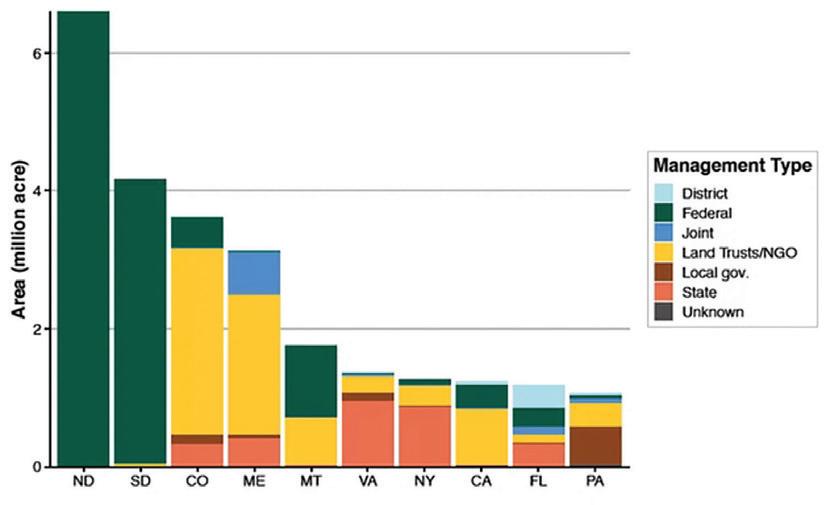
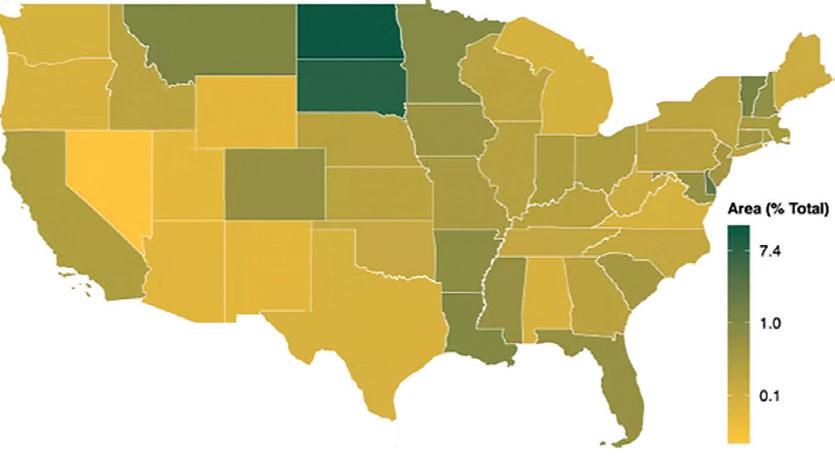
Federal easement acreage is concentrated in a relatively small number of states. The top four states account for a large share of all private land under federal easement. Figure 1 shows that North Dakota and South Dakota rank first and second in total area of private land under easement, with nearly all easement land in those states managed by the federal
government. Colorado and Maine rank third and fourth, although easements in those states are more often administered by land trusts or other nonfederal entities. Several of the leading states also have substantial agricultural production.
It should be noted most federal conservation easements in North Dakota are "working land" easements, allowing agricultural operations to continue, though with strict, targeted limitations. Wetland easements may allow the areas to be farmed, but not drained; grassland easements may allow grazing, but not tillage.
NOTE: The data only covers privately owned lands, and excludes easements with unknown ownership type.
Figure 2 shows federal easement acreage as a share of total state area. On this measure, easement concentrations are especially high in the Northern Plains, with North Dakota and South Dakota standing out. Other states with relatively high shares include Montana, Minnesota, Delaware, Louisiana, and Colorado. In several states with relatively high easement shares, agriculture and ranching are major land uses, so easement restrictions may have important implications for how private land is
Figure 1: Top 10 States by Easement Area
Source: NDSU using PAD-US (2025).
Source: NDSU using PAD-US (2025).
NOTE: The data does not include any easement with unknown ownership or management type. The denominator, state areas, includes both land and water areas
managed.
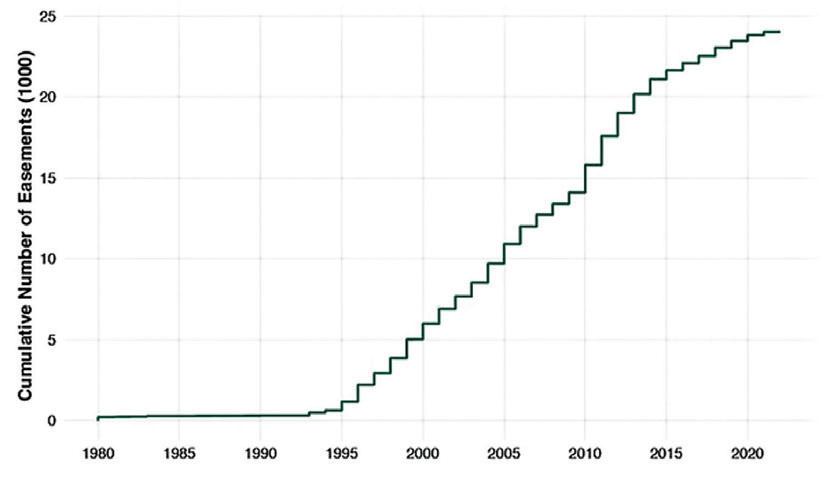
The cumulative number of easements (with a recorded establishment year) shows steady long-run growth, as illustrated in Figure 3. Before 1990, relatively few easements appeared in the data. The number increased after the introduction of major federal programs, including the Wetlands Reserve Program in 1990, the Farm and Ranch Lands Protection Program in 1996, and the Grassland Reserve Program in 2002. Growth remained steady during the 2000s. In 2014, the Agricultural Conservation Easement Program (ACEP) consolidated these federal programs. Today, most federal easements fall under either ACEP Agricultural Land Easements or ACEP Wetland Reserve Easements. The available data indicates that federal easements became much more common after the 1990s and have
3: Number of Easements by Establishment Year
NOTE: The data covers only privately owned lands under federal management, and does not include any easement with unknown ownership, management type or establishment year. About 45% of available observations have a missing establishment year.
the number of federal easement records with private landowners, 91.9 percent are classified as perpetual conservation easements. These agreements are commonly intended to preserve wetlands, grasslands, and other habitat values in perpetuity. While they can provide substantial payments to landowners, they may also impose durable limits on future land-use options. In agricultural settings, those limits are especially important because restrictions on conversion, drainage, or other land improvements can affect production choices, returns to land, and the flexibility of future owners.
Overall, the PAD-US data show that federal conservation easements on private land are geographically concentrated and often longlasting. The strongest concentrations appear in states where agriculture, grazing, and
Figure 2: Federal Easement Acreage as a Share of Total
Figure
Source: NDSU using PAD-US (2025).
Breaking the silence
Behind the food that feeds the nation, many farmers face overwhelming emotional and economic pressures that too often go unnoticed and untreated. FirstLink can help.
If you or someone you know may be experiencing a mental health crisis, call or text FirstLink at 9-8-8.
BY CHRIS AARHUS, NDFU
Jennifer Illich understands the pressure and pride that comes with family farming.
The executive director of FirstLink is a Velva native, growing up on her family’s farm and being members of North Dakota Farmers Union.
“My dad was the vice president of the Carleton (local),” she said. “I grew up in the Farmers Union world.”
Fast forward to today, and Illich works to strengthen Rural America via FirstLink, which provides a free, confidential suicide and crisis lifeline by calling or texting 9-88 in North Dakota and western Minnesota. It also operates a 2-1-1 information and referral helpline for those just needing to bend an ear.
According to the Center for Disease Control, farmers commit suicide at 3.5 times the rate of the general population, a number that continues to tick up since the farm crisis of the 1980s. Illich said that in rural areas, suicide contagion is a real threat.
“The entire group is at a higher risk,” Illich said. “Research shows that if a (farmer commits suicide), it increases the risk in the community because maybe he was viewed as someone (who would never). And then all of a sudden, it’s, ‘Well it happened to him, maybe it’ll happen to me.’ It gets real scary for us when people are taking their own lives, especially in rural areas.”
With farmers looking at an increasingly difficult year, they’re under immense pressure to make ends meet. North Dakota Farmers Union encourages
CONTINUED TO NEXT PAGE
“We want people to call before they’re thinking suicide. If they’re feeling depressed or anxious or just need someone to talk to, that’s when we want you to call.”
— Jennifer Illich Executive Director of FirstLink
QPR training at summer conference
NDFU's Summer Conference July 18 in Medora is holding a 90-minute workshop, based on Question-Persuade-Refer (QPR) Suicide Prevention training through NDSU Extension, that will explore the high stress levels in agriculture-related jobs and the impact on mental and emotional well-being.
Please register for this session as a free add-on to your general conference registration. To learn more, look for the QR code on Page 5.
farmers and ranchers to reach out and get the help they need, and to keep an eye on their neighbors.
Illich said farmers, like any group, should watch for notable changes in their communities.
“Maybe someone is ordinarily a very talkative person and sticking to themselves when you hardly ever seen them alone,” she said. “Maybe it’s someone who looks disheveled when they always seem to have it together. Any kind of big behavior change could be a warning sign to suicide.”
She said risk-taking is also a warning sign, such as driving unnecessarily fast on a gravel road or unusual thrill-seeking with a motorcycle or ATV.
“They get the notion that they don’t care if they live or die, and they’ll let fate decide,” she said. “That can be a really big one in rural areas.”
How can friends and neighbors help? Illich said they can seek out a connection first, doing something that will engage the farmer or rancher in conversation.
“It could just be a cup of coffee, but it could be a walk around the farm to check cattle together,” she said.
If that conversation isn’t able to happen, friends can dial 9-8-8 and let a specialist know they’re concerned about a certain individual, she said.
“Call it and say, I’m worried about my neighbor,” Illich said. “They’ll ask you a few questions. Then we would call that neighbor
FIRSTLINK RESOURCES
u Thinking bad thoughts? Call or text 9-8-8.
u Just anxious? Call 2-1-1.
u Chat with a specialist online at firstlink.org
and say something like, ‘Hi, this is Jennifer and somebody in the community is worried about you. Do you have some time to talk?’ Sometimes, we call and they don’t want to talk. So, we’ll call the original caller back and say, ‘Here are some ways you can help your neighbor.’”
Beyond just a conversation, FirstLink works with the eight human service centers across North Dakota for those that may respond better to a more personal interaction.
“Sometimes, they need to see someone in person, and we can send a therapist right to their home,” she said. “Or, maybe they don’t want someone in their home, and would rather it be a meeting at a coffee shop, and we’ll do that too. And that comes at a free or reduced rate, so people don’t have to worry about paying for that service.”
Illich said the key is to reach out yourself or for a friend before it hits a crisis stage.
“We want people to call before they’re thinking suicide,” she said. “If they’re feeling depressed or anxious or just need someone to talk to, that’s when we want you to call.”
What's happening
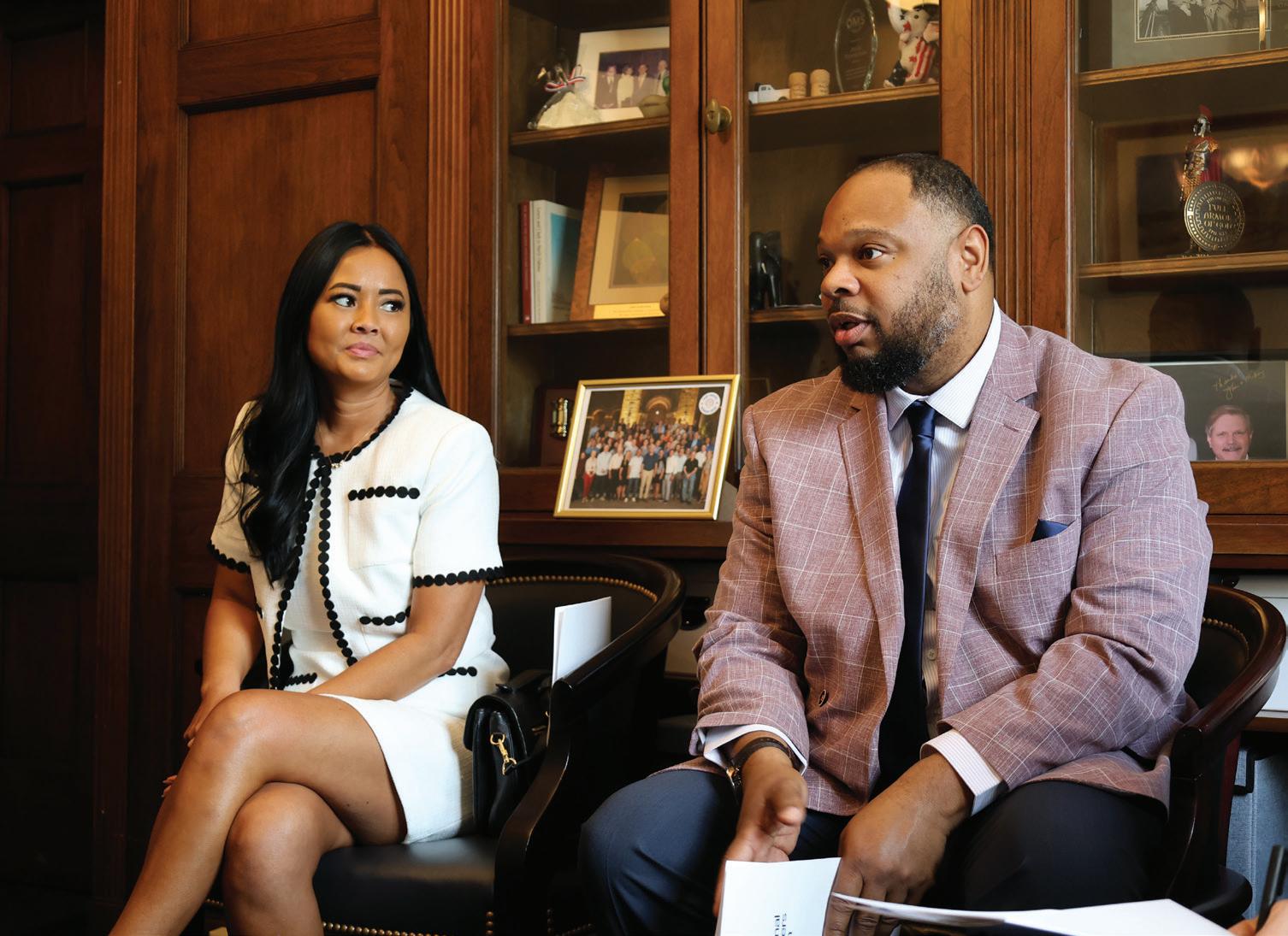
were North Dakota’s representatives at National Farmers Union’s advocacy training April 21-22 in Washington, D.C.
Stephen Holmes of Grand Forks County Farmers Union and Sarah Thorsrud of Cass County Farmers Union
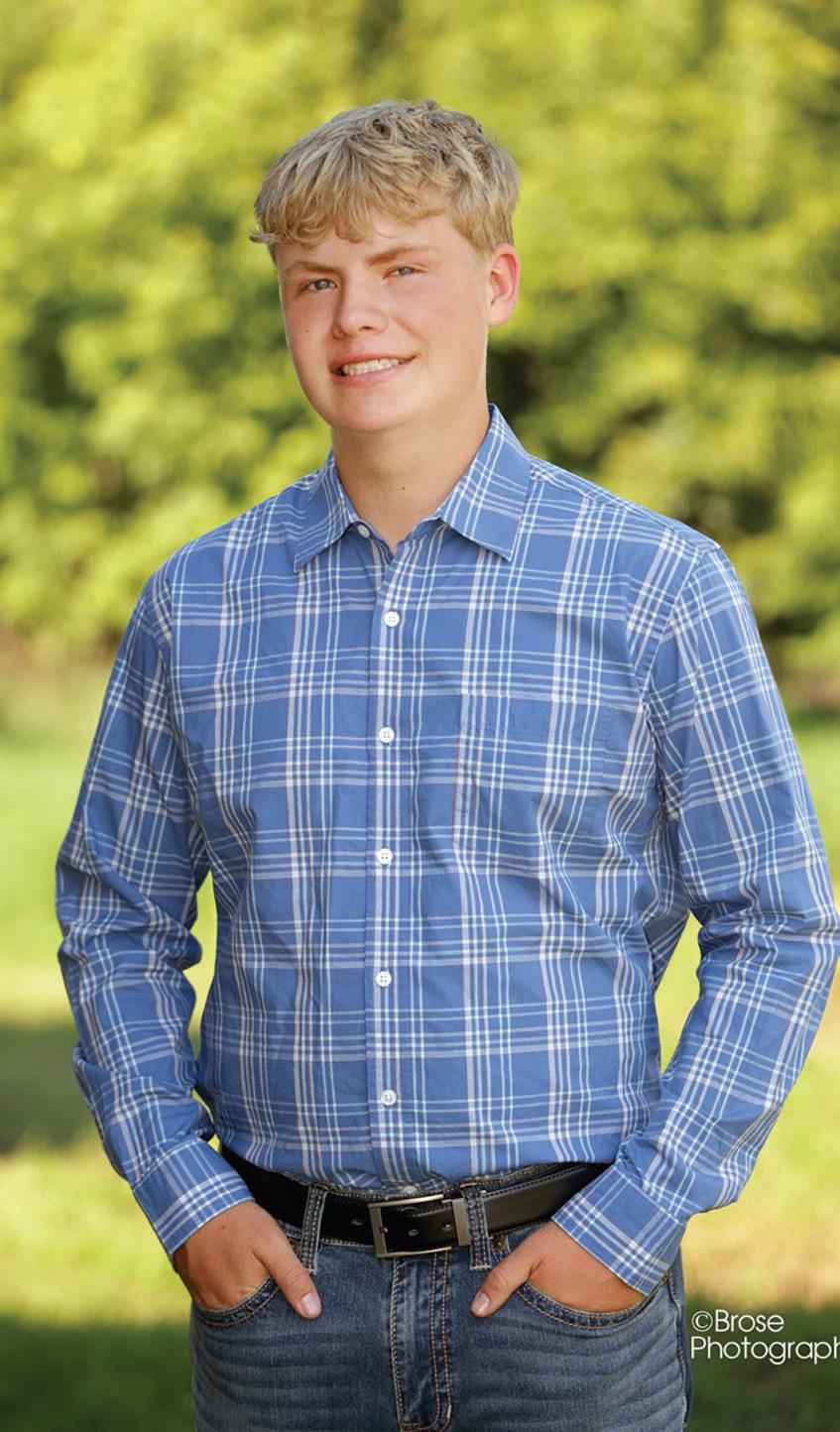
Tucker Stover of Larimore was awarded a $1,000 scholarship from Grand Forks County Farmers Union. Stover plans to attend NDSU in the fall to major in ag business.
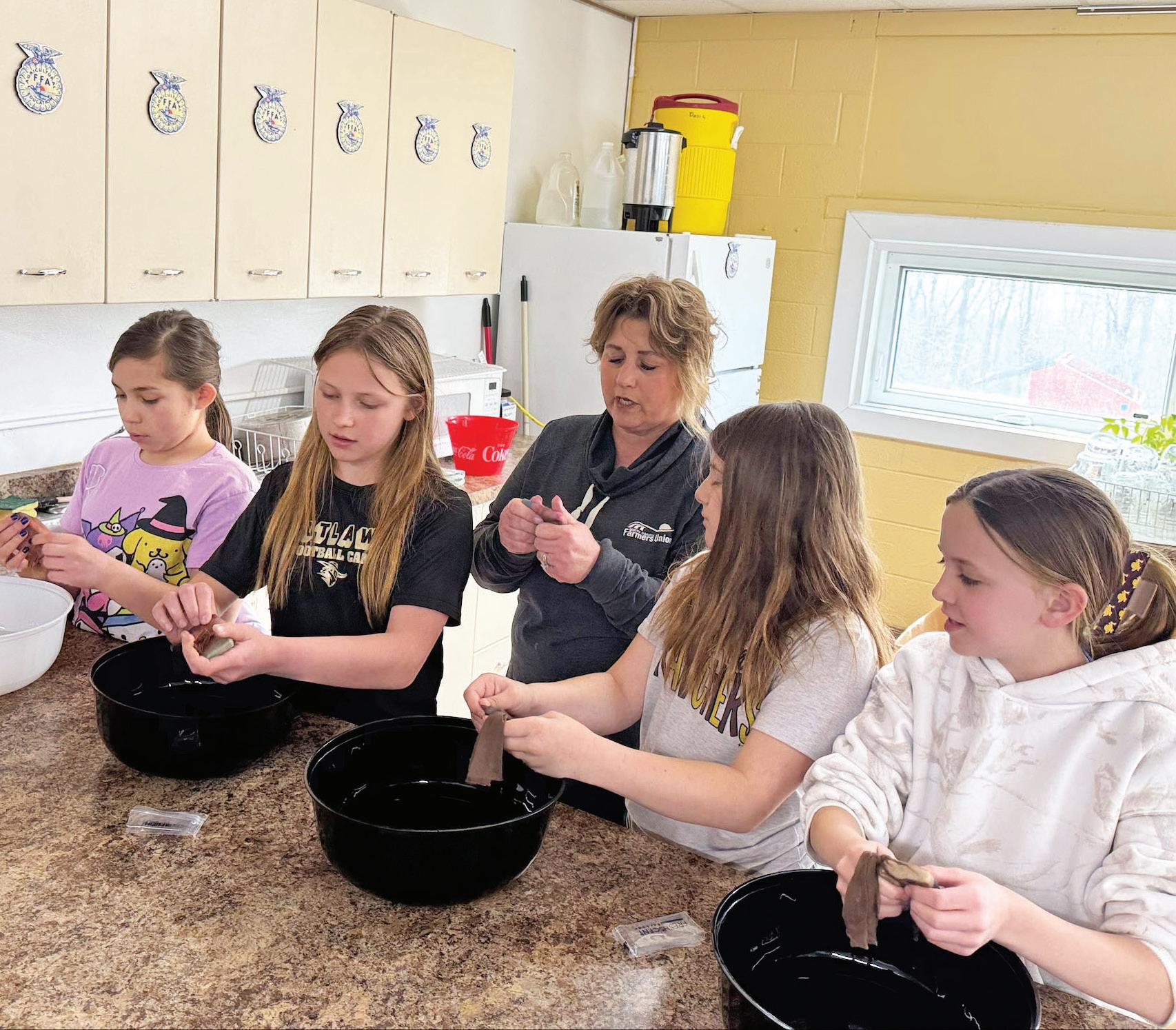
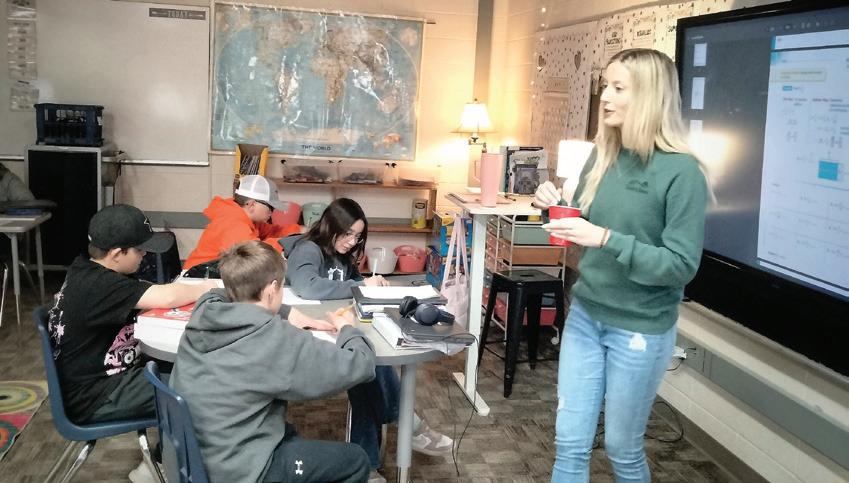
Burke County Farmers Union EPIC coach Denise Miller shared ag education at Powers Lake school and made wool-covered soap with the students. She also talked about upcoming camp season and how youth from Burke County can earn some extra prizes and opportunities.
around the state?
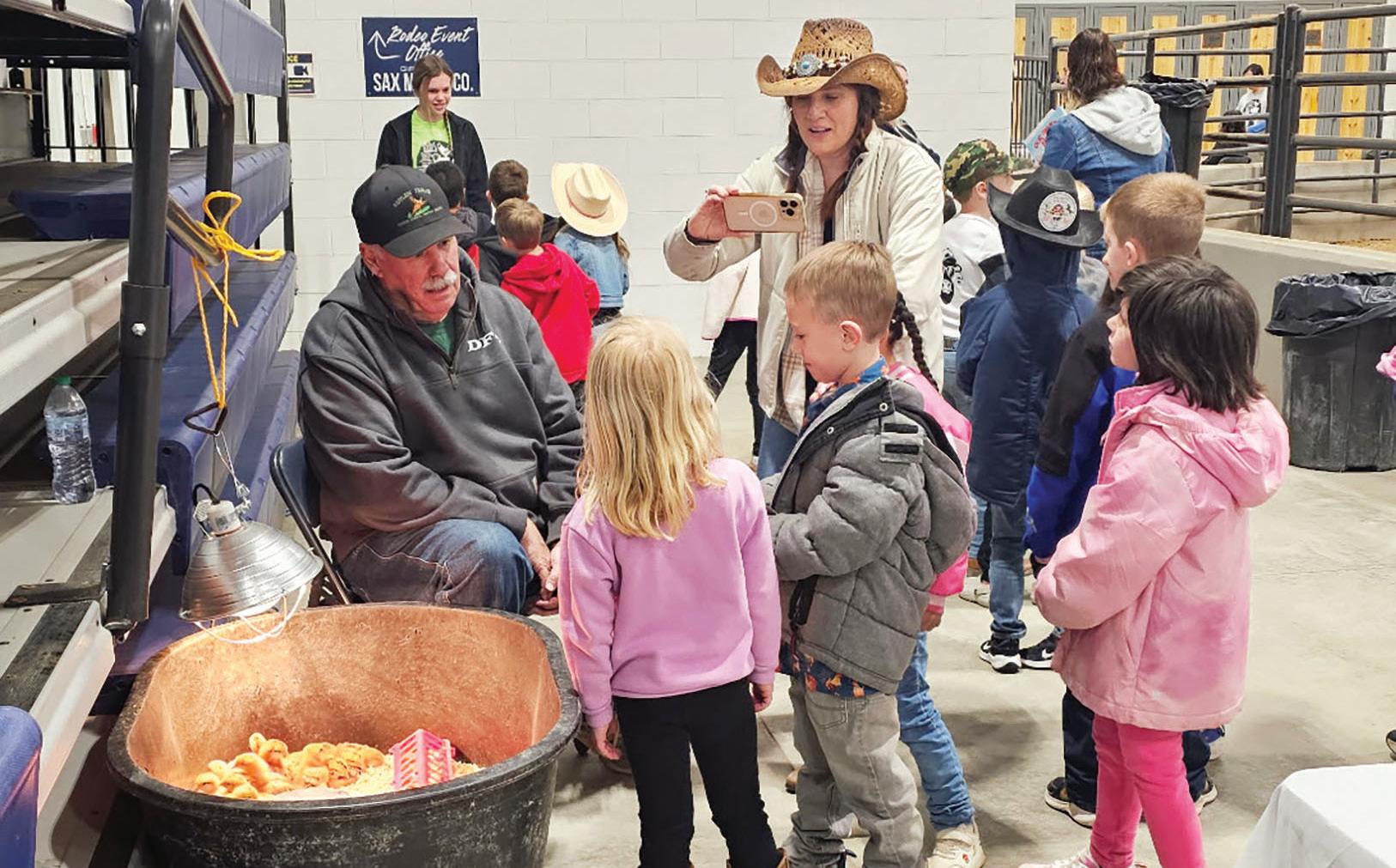
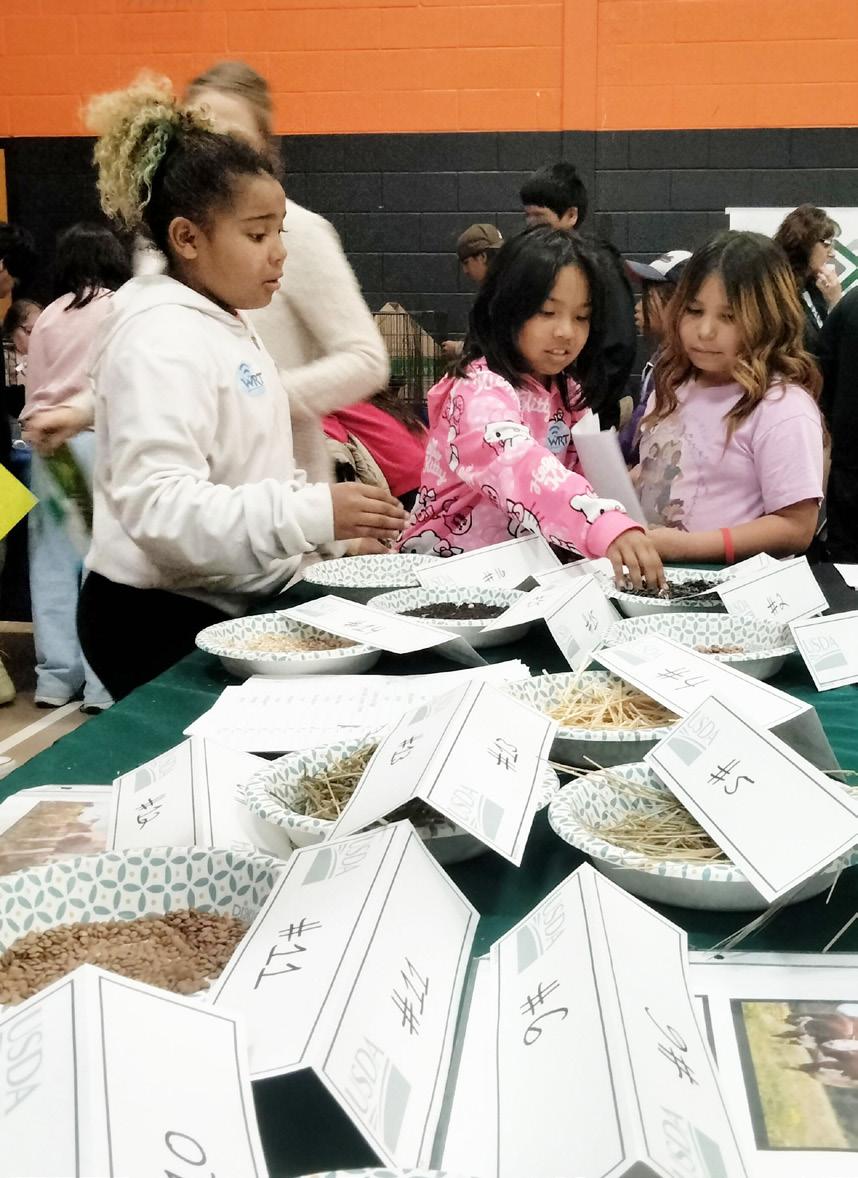
NDFU Vice President Bob Kuylen, along with Stark County Farmers Union board members, educated local students and community members on where their food comes from during the Kids Day on the Farm at Dickinson State University. EPIC coaches from Stark and Dunn counties also shared youth education.
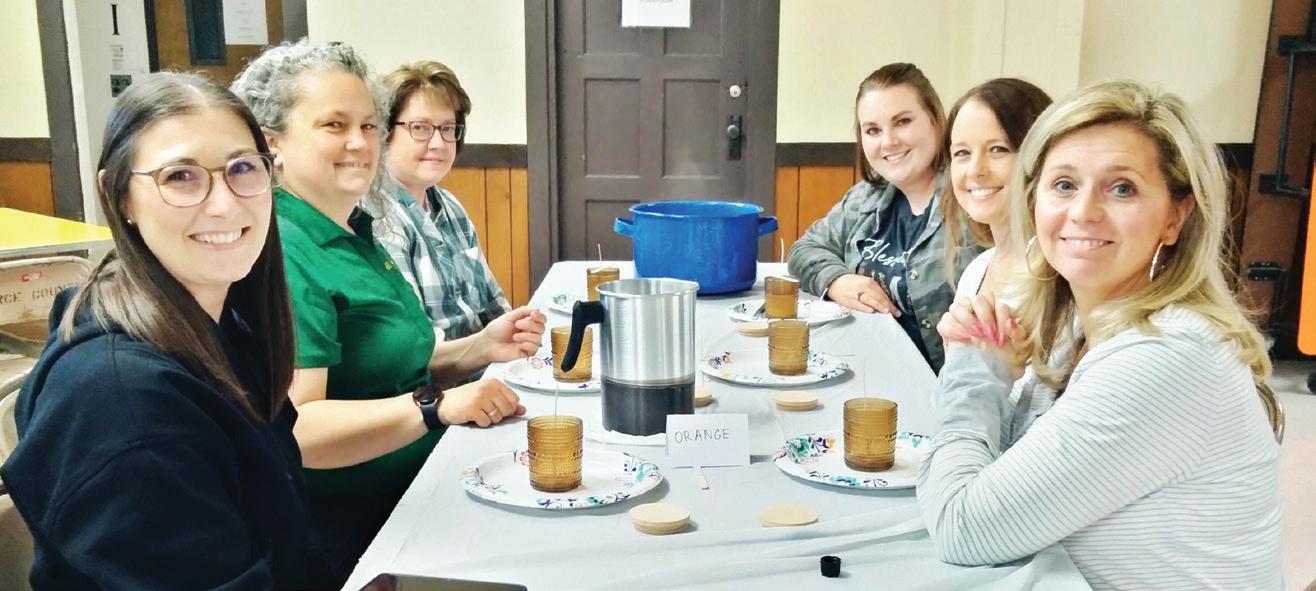
Pierce County Farmers Union hosted a WILD (Women in Leadership Development) event April 10 at the Memorial Hall in Rugby. They partnered with the Pierce County Extension office to learn about pollinators and make scented beeswax candles.
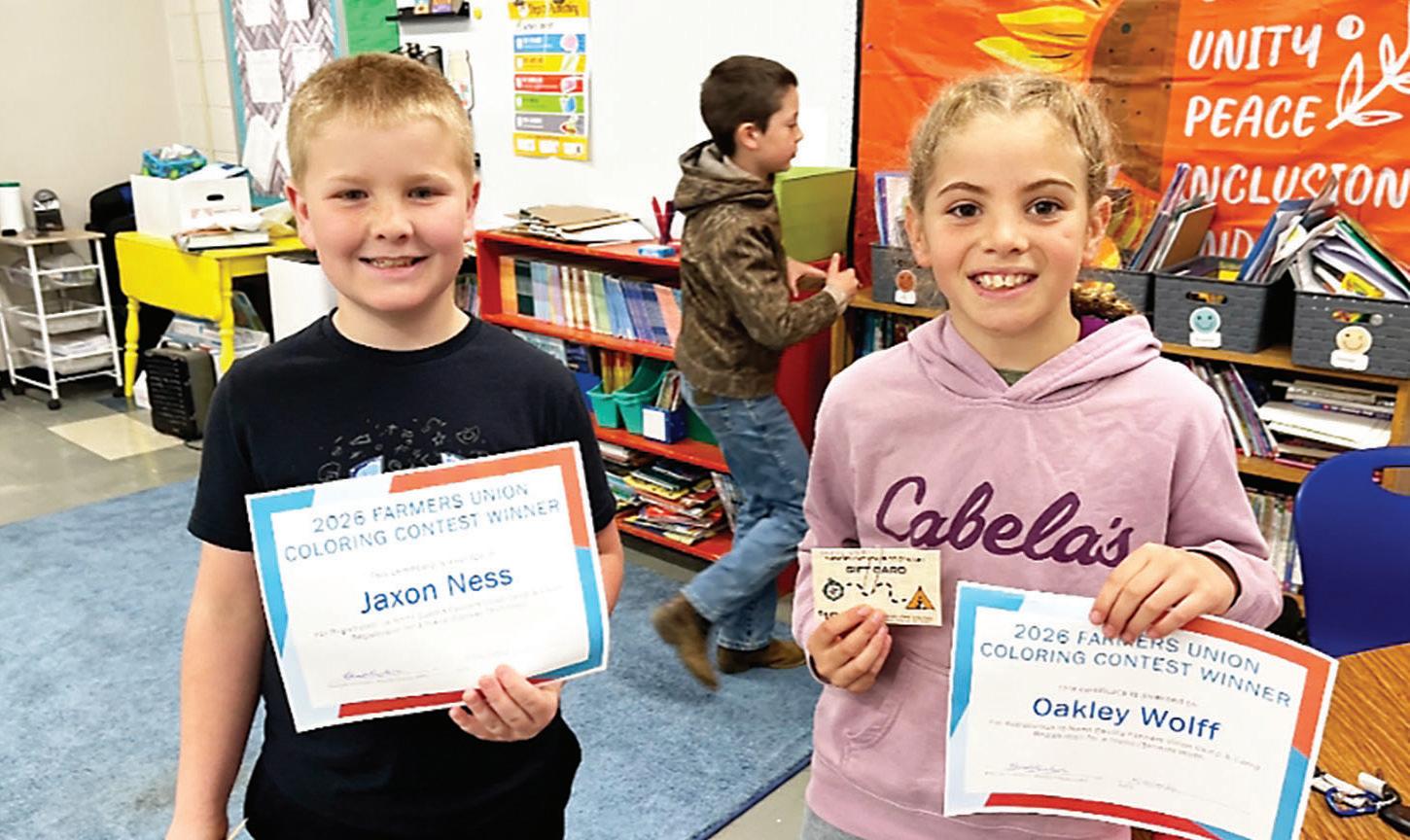
Jaxon Ness and Oakley Wolff won the Adams County Farmers Union coloring contest, earning a trip to Farmers Union Camp.
Around the state
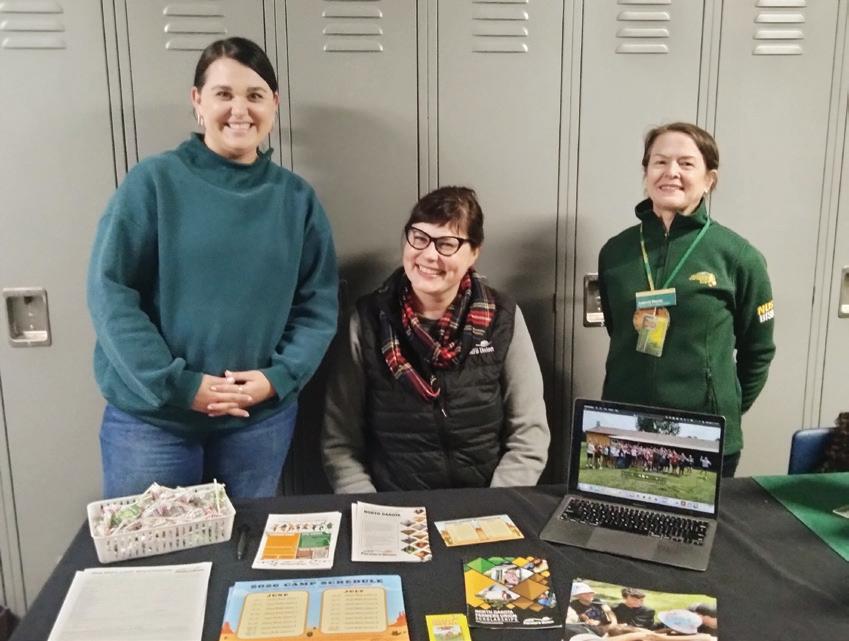
LaMoure County EPIC coach Carly Rott, left, partnered up with LaMoure County Extension agent Julianne Racine, right, sharing a table during Edgeley’s Summer Sign-up on May 6. The school invited local organizations to share their summer programming with students before summer break. In middle is NDFU member relations specialist Sabrina Hornung.
Sioux County Farmers Union hosted their annual Farm and Ranch Day April 24 at Selfridge School, engaging with over 200 students from throughout the county.
County Farmers
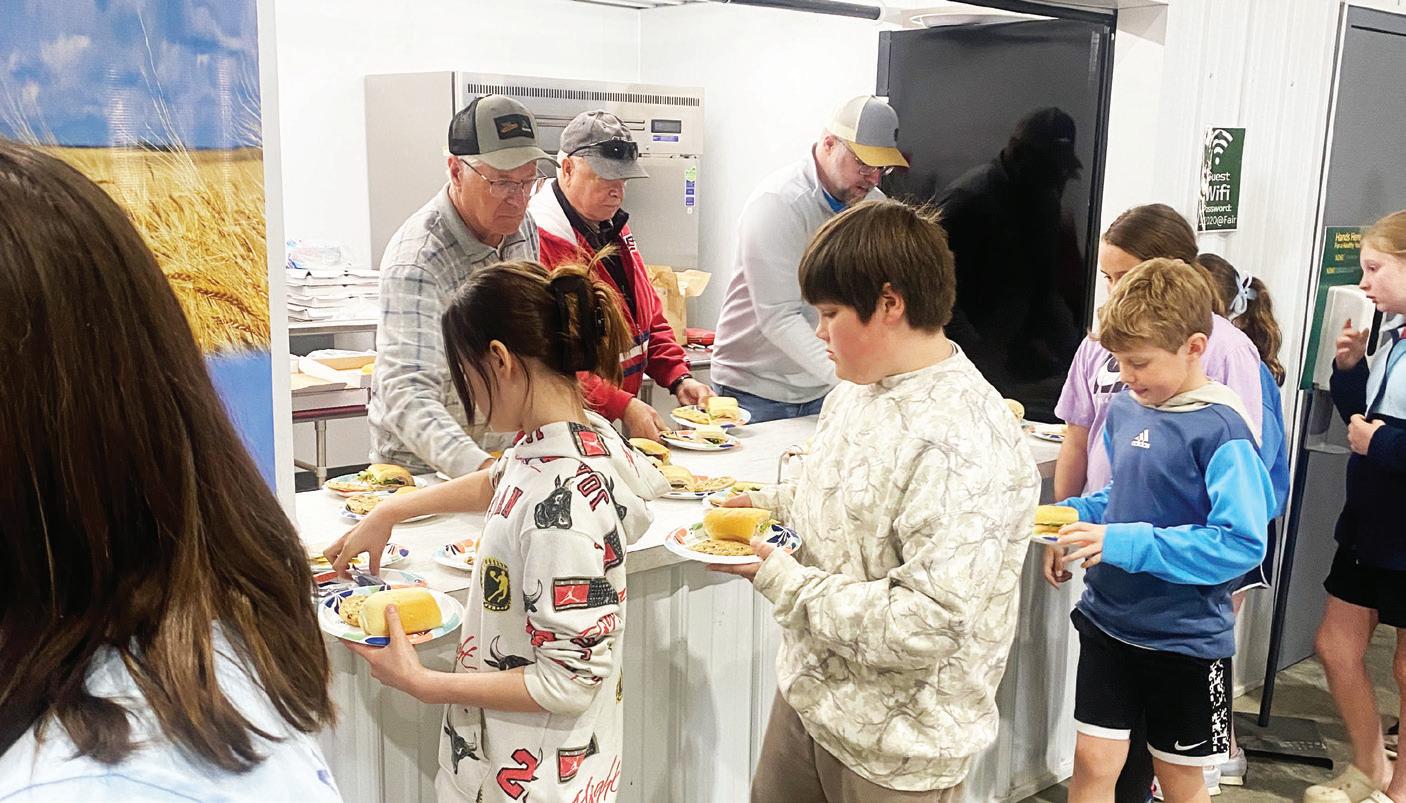
members served 160 fourth graders from area schools at an NDSU Extension Field to Fork event April 22 at the Ramsey County Event Center.
Paige Hulm, EPIC coach for Emmons and Logan counties, visited elementary school classrooms in Napoleon and Linton on May 1, talking about Farmers Union. They played NDFU Camp Bingo.
Ramsey
Union board
CLASSIFIEDS
Ads must be submitted through the online form at www.ndfu.org. Click “Classifieds” at the very bottom of ndfu.org and fill out the online form. Ads must be re-submitted each month. No exceptions! Deadline is the 15th of every month. Limit 75 words.
MEMBERSHIP DUES MUST BE CURRENT!
FARM
FOR SALE
20' FLEX COIL NO TIL SEEDER, 20' Air Seeder w/2320 Flexi-Coil Cart with monitor. Field-ready. 701-327-4441, Donald Fanta, Tappen.
TRANSPORT, drive over drill transport, rear steer $900; 16 ft. viber shank, great shape for its age, $650; 5 bottom Melroe plow & packer $500; Can deliver any of these items. Gerald miller 701-400-5742, Gerald Miller, Mandan.
JD 956 Discbine, 14 ft, 3 pt hookup, 2012, ready to go, $15,000. 701-477-5588, John Jolliffe, St. John.
ROWSE Double 9 wide frame with IH Heads and an extra set of sickles. 701-396-7611, Harold Haase, Monango.
H & S 18-WHEEL RAKE, 2013 H & S rake in great shape. Retiring, no longer needed. $13,000. 701-202-0400, Ron Monzelowsky, Bismarck.
MOWER, LA175 John Deere lawn mower $1200; Farm King 51’, 7 inch auger PTO, $100. 701-880-1149, John Flemmer, Golden Valley.
GARDEN TRACTOR, 314 John Deere comes with tiller, mower deck, front blade, chains etc. Call or text 320-2094. or leave message at following number: 701-486-3168, Clifford Meadows, Medina.
ONE NEW TIRE LT245-75R-Load Range E. 2-Cream Separators, 4-wheel Steel Running Gear, 1 Covered Wagon Running Gear, 1905 All metal JD Hand Operated Corn Sheller, like new has paint and serial number. One 12’ Kirschmann Drill. Two NH 256 Rakes with Dual Hitch. Email: larryn@westriv.com. 701-5488020. Larry Nagel, Shields.
TWO TRACTORS, older Allis Chalmers with woods belly mower, crank start. Ford 8 or 9 N. Both ran a few years ago, not running now, selling as is. $500 each. 701-430-6966, Dave Bremer, Finley.
ALLIS CHALMERS tractor D17; 1978 Honda 4 Wheeler; Accordion; John Deere 12 ft hay rake. 701-270-0184, Harold Severson, Lakota.
WANTED
TRACTORS, IH 706, 806, 1206, 756, 856, 1256, 1456, 1066, 1466, 1566 on up; 4520, 4620, 5010, 5020, 6030; MMs 950s on up; Olivers 1965 on up; ACs 175, 200, 210, 220, D-19, running or not. 701-628-2130, Jerry Lumley, Stanley.
FOR SALE
FENCING SUPPLIES, steel t-posts (5', 5.5', 6', all separated), wooden fence posts, metal corner braces, wood corner posts, telephone poles, railroad ties, 3 pt postal auger, skid steer post pounder (new, 3 different sizes available). 701516-2920, Aaron Subart, Robinson.
1960 WILLYS WAGON, 4X4, 3 speed,with overdrive, 226ci 6-cylinder flat head, not running, has some rust, been gathering repair panels, and new parts, Delivery up for discussion. 707-425-7315, Vernon Buchmann, Fairfield, Calif.
RV BRAKE SYSTEM, RV Blue OX Tow Bar and Electronic brake system. Like new. 701-3502553, Dale Giedd, Devils Lake.
ANVILS, 100 pounds to 175 pounds all in very good condition with good square edges. Massey Harris porcelain sign measures 30" by 8' long near mint condition. 701-220-5746, Val Ganje, Bismarck.
MOTORHOME, 2005 Winnebego Vectra 40' motorhome with 400 cummins and 4 slides; 2000 Lund 18' Adventurer fishing boat; Radiators for Farmall M & H tractors along with a few other old tractor parts. Selling men's Columbia bike and woman's Schwinn bike. Please text for more info and prices. 701-7890679, Anne Vig, Aneta.
BEAR CAT GRINDER MIXER PARTS. I probably have the last inventory of new Bear Cat parts which is available anywhere. I have 2 gear cases, new gear case gears, shafts, hammers, bearings, and several other miscellaneous parts. Keep that dependable grinder mixer running for years yet. Check with me as I may have the new parts you need. Text or leave a message. 701-833-2220, Jerome Behm, Burlington.
UTILITY TRAILER, 5x8 with two foot sides and a 4-foot fold down ramp, tilt bed, tires 20.8 x 0-10 in good condition with spare and 2 inch hitch. $400 or best offer; Complete wine making kits with bottle drying rack includes 5 three gallon carboys, bottle capper, and books $300; 701226-1060, Don Scheeler, Bismarck.
2015 Honda-4 Wheeler Ribcon 4 X 4, 1,700 Hours, 6,500 Miles, New Battery; New Tires on Front, Doesn’t use oil, No transmission problems; Asking $5,600, with new set of tires $5,900. larryn@westriv.com. 701-548-8020, Larry Nagel, Shields.
HARLEY DAVIDSON MOTORCYCLE, 1989 Heritage Softtail Classic, two-toned Red and Maroon, 27,000 miles, lots of chrome, crash bar, windshield, saddle bags, one owner. HD tarp with strap goes on. Can text or email pics. Good shape. 701-263-1206, Lathan Romsos, Bottineau.
WANTED
OLD STUFF, ND license plates, ND picked arrowheads, Advertising signs, advertising thermometers, gas pumps, oil cans, Road signs with Indian Head logo, ND HP metal door sign. I also buy old toys, marbles, crocks, metal trade tokens or anything else that's old and interesting. I can travel to your location to see your for sale items. 701-220-5746, Val Ganje, Bismarck.
SIGNS, ADVERTISING, COLLECTIBLES. My son and I are looking for things to add to our collection. Old Signs, Farm Related, Gas & Oil, Advertising, Highway Signs, Railroad related items, License plates, oil cans, barber/salon items. Old items w/ small town advertisingmirrors, thermometers. Paying cash and will travel. Text/Call anytime. Would love to visit with you. Or stop and visit me along I-94. 701-9890495, Bryan Behm, Medina.
PRAIRIE DOG HUNTERS to hunt on my land. Make reservations now. larryn@westriv.com. 701-548-8020, Larry Nagel, Shields.
MAULS, authentic Native American hrooved mauls (Indian Hammerheads). Will pay $70 to $100, depending upon condition. 952-3344742, Paul Legler, Lakeville, Minn.
Founding Farmers expands tasty BBQ festival
Founding Farmers, the farmerowned restaurant group, isn't known for doing things halfway, and how they are continuing to roll out their new BBQ program is no exception.
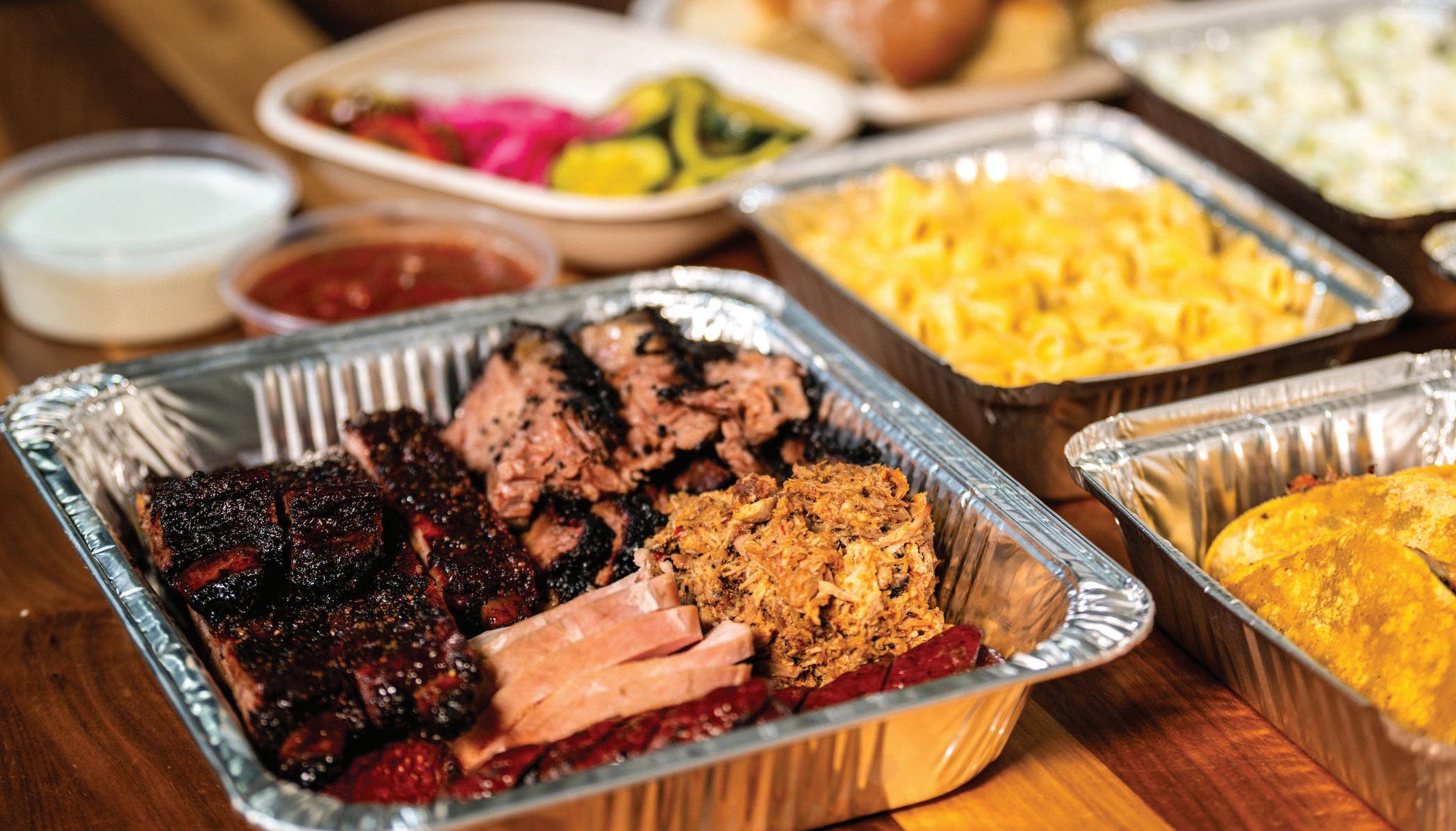
Last year, they started serving a once-a-week BBQ festival at their newest location in Alexandria, Va. This spring, they are expanding. As of May 26, Founding Farmers Alexandria and Founding Farmers & Distillers are offering a special BBQ menu for dinner starting at 4 p.m. The lineup spans BBQ Trays, handhelds both classic and unexpected, scratch-made sauces, and what they're calling the "Farmers Trinity," a combination of brisket, spare ribs and jalapeño cheddar beef
SCAN THE QR CODE WITH YOUR PHONE TO UPDATE YOUR ADDRESS
sausage served with a wide variety of their BBQ fixin’s.
At its core, this is a program built on the same principles that guide good farming — patience, craft, and an honest respect for the process. For BBQ, that means years studying the science, proper wood selection, precise temperature control, the chemistry of a good rub, the kind of deep, methodical approach that turns a cooking method into a discipline. Handcrafted at their Maryland smoke shack, Founding Farmers BBQ is another step in their thoughtfully sourced, scratch-made enterprise. And a reminder that doing something right often means taking the long way around.