


we celebrate excellence and support innovation.
Your support of the FASSE Fund helps teachers, researchers, and classrooms thrive.
Together, we celebrate excellence and support innovation. Your support of the FASSE Fund helps teachers, researchers, and classrooms thrive.
Every day, social studies teachers across the country work tirelessly to prepare our students to be informed, thoughtful, and engaged members of society — yet many lack the financial resources to attend professional events, pursue research, or bring innovative classroom ideas to life. Your support of the FASSE Fund (Fund for the Advancement of Social Studies Education) makes all this possible.
When you give to FASSE, you help:
Every day, social studies teachers across the country work tirelessly to prepare our students to be informed, thoughtful, and engaged members of society — yet many lack the financial resources to attend professional events, pursue research, or bring innovative classroom ideas to life. Your support of the FASSE Fund (Fund for the Advancement of Social Studies Education) makes all this possible.
• Empower educators with opportunities they might otherwise miss.
When you give to FASSE, you help:
Many exceptional teachers cannot afford registrations, travel, or conference experiences — experiences that inspire, rejuvenate, and improve their instruction.
• Empower educators with opportunities they might otherwise miss. Many exceptional teachers cannot afford registrations, travel, or conference experiences — experiences that inspire, rejuvenate, and improve their instruction.
• Advance research and innovation in social studies education.
• Advance research and innovation in social studies education.
FASSE grants support meaningful classroom application projects, pioneer innovation, and open research doors that deepen learning and broaden social studies understanding.
• Honor excellence in teaching, scholarship, and service.
FASSE grants support meaningful classroom application projects, pioneer innovation, and open research doors that deepen learning and broaden social studies understanding.
• Honor excellence in teaching, scholarship, and service.
Through awards supported by FASSE, we recognize educators and researchers whose work elevates the profession and celebrates outstanding contributions to social studies teaching and learning.
Through awards supported by FASSE, we recognize educators and researchers whose work elevates the profession and celebrates outstanding contributions to social studies teaching and learning.
By giving to FASSE, you become a partner in a national effort to strengthen the social studies profession — ensuring teachers are honored, supported, and equipped to inspire future generations.
By giving to FASSE, you become a partner in a national effort to strengthen the social studies profession — ensuring teachers are honored, supported, and equipped to inspire future generations.
Support FASSE today at: www.socialstudies.org/donate
Support FASSE today at: www.socialstudies.org/donate
Designate your gift to the Fund for the Advancement of Social Studies Education and join a community committed to excellence in teaching, research, and student engagement.
Designate your gift to the Fund for the Advancement of Social Studies Education and join a community committed to excellence in teaching, research, and student engagement.
Give now to help support social studies classrooms –and the teachers who power them!
Give now to help support social studies classrooms –and the teachers who power them!
socialstudies.org/awards
126 Introduction
Bárbara C. Cruz and Clarence V. Walker, Jr.
This special issue celebrates the Harlem Renaissance by elevating lesser-known figures, histories, and social issues and equipping teachers with classroom-ready teaching strategies.
128 Harlem in Motion: Snapshot of a 20th-Century Renaissance
David Ponton III
Inviting students to explore the Harlem Renaissance as a global cultural movement through art, music, and literature can deepen their understanding of Black identity, challenge stereotypes, and highlight creative expression as a tool for liberation.
133
Political Activism in the Harlem Renaissance
Peter Hulme
Exploring political cartoons and key figures of the Harlem Renaissance can launch an important lesson on how civic engagement and activism shaped Black life during this period.
138
Bridging Literature and Civic Inquiry through Zora Neale Hurston: An Interdisciplinary Approach
Brittany S. Lee-Wright
Using Zora Neale Hurston as a case study, this article offers inquiry-based strategies to expand Harlem Renaissance teaching and center Black women’s intellectual contributions.
163
Sources and Strategies
Applying Students’ Historical Thinking Skills to Oral Histories as “A New Way of Writing”
Cheryl Lederle and Stacie Moats
Using Federal Writers’ Project oral histories, including Ralph Ellison’s, this article guides students in analyzing interview techniques, author perspective, and links to later literary works.
169
Lessons on the Law
250 Years of Judicial Warrants: The Exceptions That Prove the Rule
Brooks Holland
Examining the complexities and exceptions of the Fourth Amendment’s warrant requirement can spark engaging lessons on what counts as reasonable searches and seizures in U.S. law.
176
Teaching the C3 Framework
Trusting Students to Deliberate, Collaborate, and Produce: Inquiry in a Co-Taught ESL Civics Classroom
Meghan Hawkins and Kathy Swan
This article highlights civics teachers’ use of collaboration and student-centered inquiry to support English learners and build critical thinking.
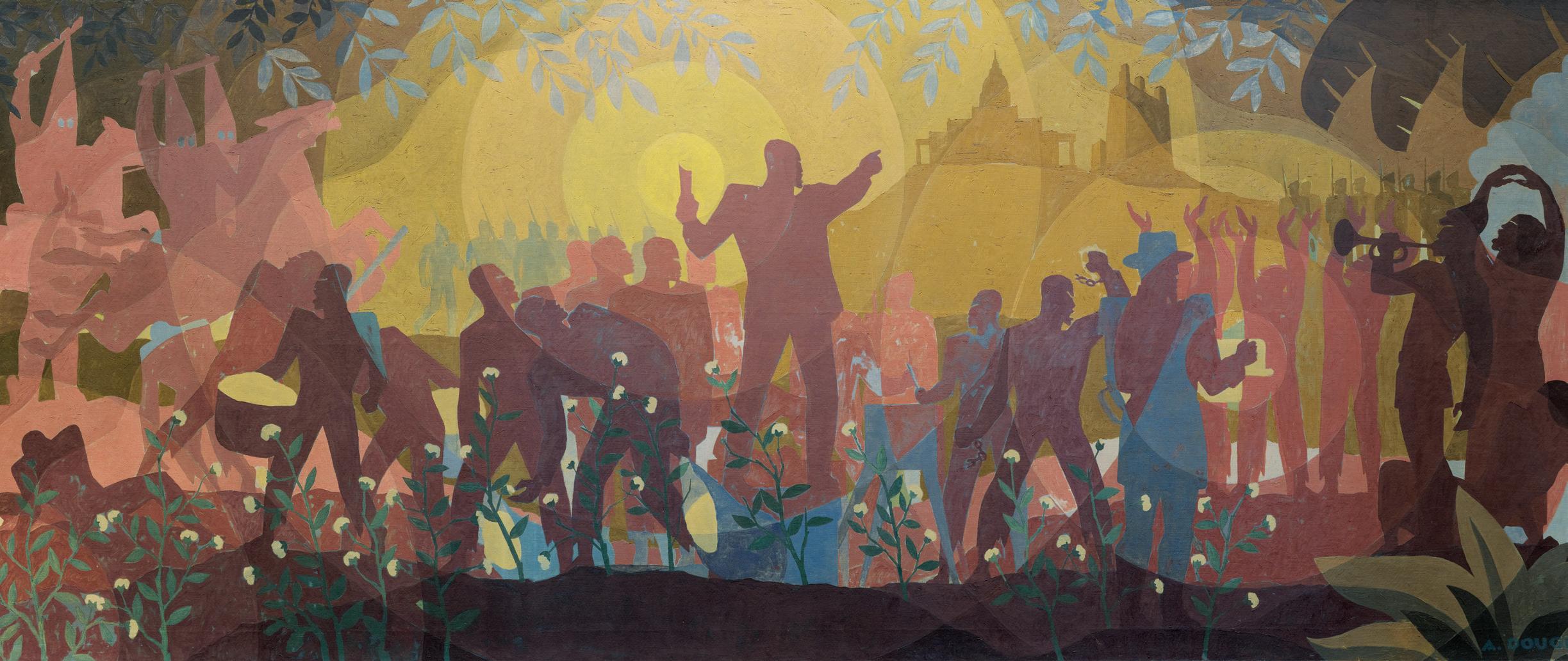
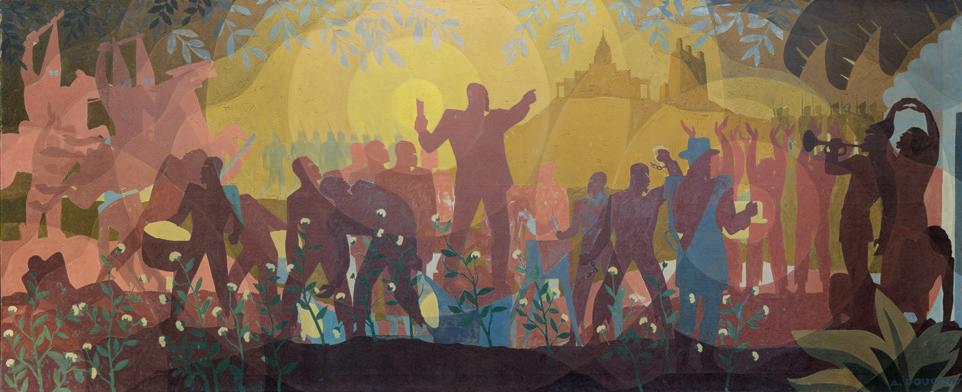
ABOUT THE COVER: Aaron Douglas, Aspects of Negro Life: From Slavery to Reconstruction, 1934 (Art & Artifacts Division, Schomburg Center for Research in Black Culture, The New York Public Library)
144
Lift Every Voice and Sing:
The Art Legacy of the Harlem Renaissance Bárbara C. Cruz and Clarence V. Walker, Jr. Exploring Harlem Renaissance artists—from Augusta Savage to Aaron Douglas—through visual analysis and evidence-based strategies offers an engaging entry point for examining how art documents history and addresses social issues.
150
Beyond Harlem: Teaching about the Harlem Renaissance and Its Impact
Paul G. Sauberer
This annotated bibliography offers curated online and print resources, plus classroom strategies, to help teachers guide grades 5–12 in inquiry, discussion, and analysis of the Harlem Renaissance.
Pullout center of journal (after page 152)
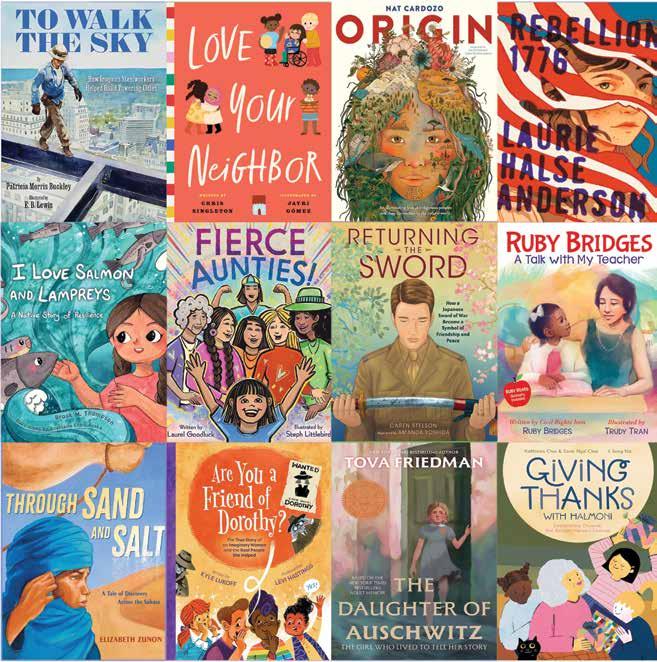
The Notable Social Studies Trade Books for Young People
The NCSS Book Committee and the Children’s Book Council present this year’s list of more than 100 books that can support meaningful inquiry and thoughtful learning in the social studies classroom.
155–162
The 2026 Carter G. Woodson, Septima P. Clark, and Rev. Dr. Pauli Murray Book Awards
This year’s NCSS Book Awards honor stories of resistance, women’s transformative leadership, and LGBTQ+ voices—highlighting diverse histories that inspire lasting social change.
Middle Level Learning, published three times a year online, features lessons and activities for middle school teachers. Access the current issue and back issues at www.socialstudies.org/middle-level-learning.
Use your smartphone’s camera to scan this QR code
NCSS OFFICERS
Tina M. Ellsworth, Ph.D. (President) University of Central Missouri, Warrensburg, MO
Joe Schmidt (President-Elect) Colonial Williamsburg Foundation, Williamsburg, VA
David Kendrick (Vice President) Loganville High School, Loganville, GA
Jennifer Morgan (Past President) West Salem Middle School, West Salem, WI
BOARD OF DIRECTORS
Alex Cuenca Indiana University, Bloomington, IN (2026)
Carly Donick Cabrillo Middle School, Ventura, CA (2026)
Terrell Fleming Prince Edward County Public Schools, Farmville, VA (2027)
Kimberly Huffman Wayne County Schools, Smithville, OH (2027)
Stephen Masyada Lou Frey Institute and the Florida Joint Center for Citizenship, Orlando, FL (2027)
Heather Nice Colonial Williamsburg Foundation, Williamsburg, VA (2026)
Stephanie Nichols Narragansett Elementary School, Gorham, ME (2028)
Renita Parks Memphis, TN (2028)
Marc Turner Spring Hill High School, Columbia, SC (2026)
Gabriel Valdez Fort Worth Independent School District, Fort Worth, TX (2028)
Amy Walker Olathe USD 233, Olathe, KS (2027)
Anne Walker Edison High School, Alexandria, VA (2025)
EX-OFFICIO
Casey Cullen
Ex-Officio | House of Delegates Steering Committee Chair (2025–2026)
SOCIAL EDUCATION (ISSN 0037-7724) is published by National Council for the Social Studies (NCSS) six times a year: September, October, Nov/Dec, Jan/Feb, March/April, and May/June. Logotype is an NCSS trademark. Contents © 2026. The views expressed in this publication are those of the authors and not necessarily those of NCSS.
ONLINE: Visit us at www.socialstudies.org/publications and www.ingentaconnect. com/content/ncss.
READERS: The editors welcome suggestions, letters to the editor, and manuscripts to our peer-reviewed journal. Guidelines at www.socialstudies.org/publications; submit at www.editorialmanager.com/ncssjournals; questions to publications@ ncss.org. Contributors express their own views, reflecting divergent opinions. Send manuscripts for departments to the department editors.
DELIVERY AND CHANGE OF ADDRESS: View and update your record, www.social studies.org/membership; send new address to membership@ncss.org; or call 800-296-7840 ext. 111. Callers outside the U.S. and Canada use 301-588-1800 ext. 111.
PERMISSION to reproduce articles for academic use, contact Copyright Clearance Center, Academic Permissions Service, 222 Rosewood Dr., Danvers, MA, 01923; 978-750-8400 (phone), 978-750-4470 (fax).
ADVERTISING: Maribell Abeja-DeVitto, Account Manager, MAbejaDeVitto@smith bucklin.com; 312-673-5483 Visit www.socialstudies.org/advertising for rates and specifications.
INDEXED by Institute of Education Sciences, eric.ed.gov and by ProQuest, www. proquest.com.
POSTMASTER: Periodicals postage paid at Silver Spring, MD, and additional mailing offices. Send address changes to Social Education, NCSS, 8403 Colesville Rd., #1100, Silver Spring, MD 20910, USA.
EDITORIAL STAFF
Jennifer Bauduy Editor
Laura Godfrey Director of Publications and Resources
Rich Palmer Art Manager
SOCIAL EDUCATION DEPARTMENTS
Elementary Education Andrea S. Libresco
Inclusive Social Studies Stacie Brensilver Berman, John M. Palella, Diana B. Turk
Instructional Technology Michael J. Berson, Meghan McGlinn Manfra
Lessons on the Law Tiffany Willey Middleton
Research & Practice Jeremy Stoddard
Sources and Strategies Lee Ann Potter
Teaching the C3 Framework Kathy Swan, John Lee, S.G. Grant
NCSS EXECUTIVE DIRECTOR
Kelly McFarland Stratman
DEPUTY EXECUTIVE DIRECTOR
Joy Lindsey
NCSS DIRECTORS
Timothy Daly Director of Operations
Laura Godfrey Director of Publications and Resources
Ashanté Horton Director of Events
Become an NCSS member!
Use your smartphone’s camera to scan this QR code or go to www. socialstudies.org/membership.
MEMBERSHIP in the National Council for the Social Studies (NCSS) is open to any person or institution interested in the social studies. All members receive the NCSS journal of their choice (Social Education or Social Studies and the Young Learner), as well as the e-newsletter, The Social Studies Professional (two issues per month), access to the online NCSS publication archives, the online Middle Level Learning supplement, and discounts on NCSS conference registration, books, and professional development programs. Regular membership rates for individuals are $90 per year. Rates for students and retired persons are $53 per year. For rates and benefits of institutional membership, and further information on all levels of membership, go to www.socialstudies.org/membership.
SUBSCRIPTIONS to Social Education are available to non-member institutions. A print-only subscription is $114 per year. Online subscriptions for Social Education are available through the IngentaConnect platform. Visit www.socialstudies.org/ publications/subscriptions and www.ingentaconnect.com/content/ncss. The online subscription is worldwide, IP supported, and SERU friendly for $199 per year. The online-plus-print subscription is $252 in the United States (add $11 for Canada and $45 international to cover mailings).
SINGLE COPIES of Social Education are $6.00 (member price), $7.95 (non-members) plus shipping and handling. Contact 1-800-683-0812. Single articles are available (pdf: $14.95 for non-members) at www.ingentaconnect.com/content.ncss. NCSS members can access articles through the online archives.
P.O. BOX: To become a member or subscribe (as an institution) by mail, send a check to NCSS, P.O. Box 79078, Baltimore, MD 21279-0078.
RETURN ADDRESS: Social Education, NCSS, 8403 Colesville Rd., #1100, Silver Spring, MD 20910, USA.
As the school year wraps up, we have your required summer reading! This issue of Social Education is jam packed with some amazing content that you will not want to miss.
This special issue highlights the vibrant era of the Harlem Renaissance by bringing attention to overlooked figures, untold histories, and important social issues, while also providing educators with practical resources and ready-to-use classroom strategies. Guest editors Bárbara C. Cruz and Clarence V. Walker, Jr., share their vision in The Harlem Renaissance: 100 Years of Impact, Influence, and Inspiration. They have curated a quintet of articles about the art, literature, and politics of the Harlem Renaissance—each one with the resources needed to bring this unique period to your classroom. In Beyond Harlem: Teaching about the Harlem Renaissance and Its Impact, Paul G. Sauberer has created an annotated bibliography with curated online and print resources and teaching strategies to help guide grades 5–12 in studying the Harlem Renaissance.
This issue also includes the Notable Social Studies Trade Books for Young People list for 2026. This special pullout is something that educators eagerly await each year. I was fortunate enough to attend the Illinois Council for the Social Studies conference earlier this spring, and prior years’ lists were referenced in several sessions. They were cited by veteran educators as a critical resource and elevated to preservice teachers as a “must have” for their classrooms.
Since 1972, NCSS and the Children’s Book Council have presented its curated selections. This year’s collection features over 100 engaging books that highlight diverse histories, perspectives, and civic themes, encouraging deeper exploration and critical thinking in social studies classrooms.
This year’s NCSS Book Awards—The Carter G. Woodson, Septima P. Clark, and Rev. Dr. Pauli Murray Book Awards—celebrate narratives of resistance, groundbreaking leadership by women, and LGBTQ+ perspectives, showcasing a wide range of histories, creativity, and activism that foster
deeper understanding and promote equity, dignity, and meaningful change. These often underrepresented and overlooked stories are a critical part of our history and national experience, and we are proud to elevate them here. We extend a special thanks to the NCSS volunteer committee members for their time to read and review these books.
We round out this issue with some of our “regular” features. In Sources and Strategies, Cheryl Lederle and Stacie Moats use the Federal Writers’ Project’s collection of oral history interviews to guide classroom analysis, explore interview techniques, author perspective, and connections between historical narratives and later literary works in Applying Students’ Historical Thinking Skills to Oral Histories as “A New Way of Writing ”
In our Lessons on the Law column, 250 Years of Judicial Warrants: The Exceptions That Prove the Rule, Brooks Holland explores the nuances and exceptions within the Fourth Amendment’s warrant requirement, offering a foundation for engaging lessons on how “reasonable” searches and seizures are interpreted in U.S. law.
In the Teaching the C3 Framework column, Trusting Students to Deliberate, Collaborate, and Produce: Inquiry in a Co-Taught ESL Civics Classroom, Meghan Hawkins and Kathy Swan explore how two civics teachers use trust, deliberation, collaboration, and student-centered production to enact meaningful inquiry, supporting English learners while fostering engagement, critical thinking, and a “beginner’s mindset” in the classroom.
As always, we welcome your feedback. Please email socialed@ncss.org.
Thank you for all that you do to advance social studies and to support your students and fellow educators. Wishing you all a very good end of the school year!

Kelly McFarland Stratman is the Executive Director of NCSS.

Honoring Excellence in Social Studies Education
Are you — or someone you know — making an extraordinary impact in social studies? Now is the time to be recognized.
National Council for the Social Studies (NCSS) proudly announces the 2026 Awards & Grants season is officially open. Each year, NCSS celebrates outstanding educators, researchers, authors, and leaders whose work strengthens the field and advances civic learning nationwide.
WHY APPLY OR NOMINATE?
• Recognize excellence in teaching and leadership
• Elevate impactful research and scholarship
• Highlight innovation in classroom practice
• Earn national recognition among peers
AWARDS INCLUDE:
Teacher & Classroom Leadership Awards
Recognizing exemplary educators and instructional innovators.
Research Awards and Grants
Celebrating significant contributions to social studies scholarship.
Book Awards & Professional Grants
Honoring authors who expand and enrich the discipline.
And additional awards recognizing service, leadership, and lasting impact.
SUBMIT BY JUNE 30, 2026
Applications and nominations must be submitted through the official NCSS Awards Portal. Early submissions encouraged!
Nominate a colleague. Apply yourself. Be recognized.
NCSS Awards 2026 — Celebrating Those Who Shape the Future.
socialstudies.org/awards
Bárbara C. Cruz and Clarence V. Walker, Jr.
At the height of the Roaring Twenties, philosopher and educator Alain Locke published his groundbreaking anthology of African American and African art and literature, The New Negro . Locke’s 1925 collection of essays, poetry, and fiction is widely credited as sparking a movement that would redefine what it meant to be Black in America and in the world: the Harlem Renaissance.
The following year, Carter G. Woodson introduced Negro History Week, selecting the second week of February to highlight the birthdays of Frederick Douglass and Abraham Lincoln. Fifty years later, the month-long event that became Black History Month in
the U.S. was officially recognized by President Gerald Ford during the nation’s bicentennial. In 1986, the event was codified into law by Congress.
One hundred years after these historic beginnings, social studies educators continue to explore novel and innovative methods of honoring this remarkable period of Black progress in the classroom. This special issue of Social Education endeavors to commemorate and celebrate this rich historical period by elevating lesser-known figures, histories, and social issues from the margins of the curriculum to the forefront, by equipping teachers with new knowledge and classroomready resources and teaching strategies.
David Ponton ’s opening essay foregrounds the New Negro Movement, or, as it was later called, The Harlem Renaissance, as a global movement wherein writers, visual artists, musicians, activists,
and others used their talents to advance Black liberation by presenting new Black aesthetics and challenging stereotypes of the Black Diaspora across space and time.
Peter Hulme ’s essay invites readers to consider the ways in which Black activists of the Harlem Renaissance harnessed notions of civic engagement and activism to address the everyday realities of the Black Diaspora. Highlighted in this piece are well-known figures such as W.E.B. Du Bois, Marcus Garvey, and James Weldon Johnson, as well as lesserknown but equally important political leaders such as Amy Jacques Garvey, Grace Campbell, and Cyril Briggs.
Brittany Lee-Wright centers Zora Neale Hurston as a case study for social studies educators seeking to expand Harlem Renaissance instruction beyond the narrow literary canon that is often presented. Taking an inquiry-based learning approach that centers Black women’s intellectual labor, Lee-Wright offers readers practical ideas to enhance the teaching of Black women’s histories and contributions in social studies education.
Paul Sauberer ’s annotated bibliography of teaching resources extends the content presented in the issue’s articles. These curated resources provide social studies teachers with a range of rich pedagogi -
cal options to incorporate into their instruction.
In our ( Cruz and Walker ) collective work on visual artists of the Harlem Renaissance, we demonstrate for readers the ways in which these artists created visual art to document history and tackle social issues. It is our aim to share practical, evidence-based visual teaching strategies that teachers can employ in their classrooms to pique student interest and meet curriculum mandates. While the breadth and depth of the Harlem Renaissance’s reach and impact are much broader than we could possibly hope to cover in this special issue, we hope this issue serves as a starting point for social studies educators to reimagine how they might broach this remarkable period of progress and creativity in their classrooms.

Bárbara C. Cruz is Professor of Social Science Education at the University of South Florida. Her communityengaged teaching and research interests include social studies teacher preparation, global and multicultural perspectives in education, English learners, and visual art across the curriculum.

Clarence V. Walker, Jr., is Assistant Professor of Social Science Education at the University of South Florida. His work explores innovative approaches to teacher learning, particularly at the intersection of social studies education, visual art, and communityengaged research with an emphasis in Black Studies.
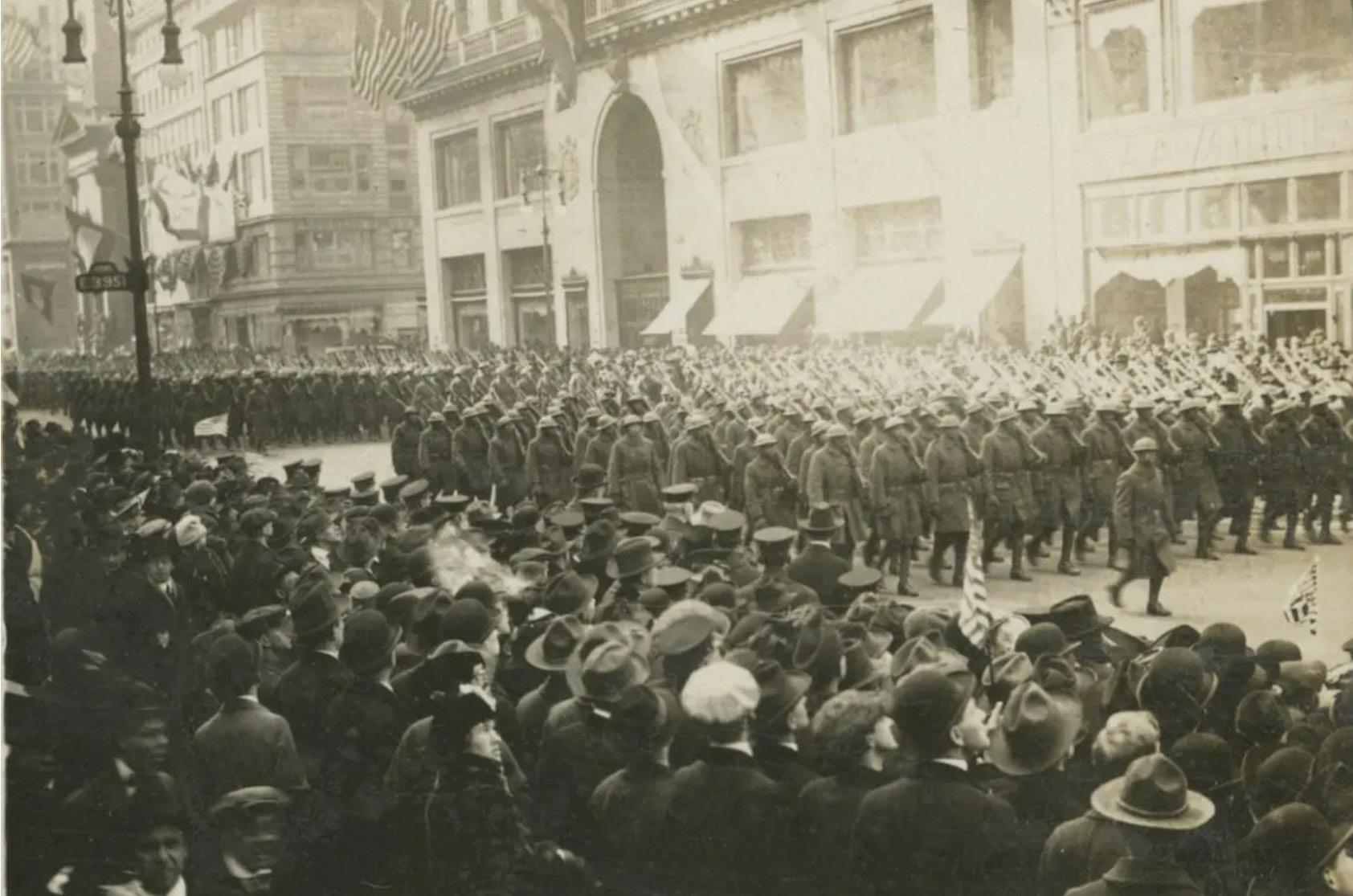
In the early months of 1918, members of the allBlack 93rd Infantry Division, commanded by Brig. Gen. Roy Hoffman, became the first American Division to arrive in France during World War I. The soldiers had traveled overseas to protect Western democracy “against the threat of German race arrogance,” yet prejudice and discrimination remained a part of their existence back home. Nevertheless, Hoffman believed the Black American
“Spartans,” or Harlem Hellfighters as they were dubbed, and their battlefield record would have a great impact on the future of the Black men in the United States and all over the world.1
As W. E. B. Du Bois wrote in the NAACP’s The Crisis magazine when the soldiers returned to the United States, they had fought “in far-off hope” for “America and her highest ideals… [and] in bitter resignation. For the America that represents
and gloats in lynching, disfranchisement, caste, brutality, and devilish insult.”2 Du Bois urged Black veterans to carry on their fight for democracy on the American homefront.
“This is the fatherland for which we fought! But by the God of Heaven, we are cowards and jackasses if now that the war is over, we do not marshal every ounce of our brain and brawn to fight a sterner, longer, more unbending battle against the forces of hell in our land,” he wrote.3 Indeed, with an emboldened sense of pride in their own valor and dignity, Black Americans would engage politics, literature, and the visual and musical arts through the 1920s to create a movement of thought that would move through “rent ” parties, literary magazines, racially mixed nightclubs, and across oceans, introducing the world to a “New Negro.”
The “New Negro”
This “New Negro” was not a person or a single archetype, but an idea in motion—one in conflict with itself and with the world that created it: a paradox of being Black, a subject in one’s own eyes and an object in the eyes of the world. “Crawling from beneath the wreckage of war,” one contemporary writer noted, Black political imaginaries awakened from the Nadir of American race relations that had “threatened to submerge” them, emerging through creativity, curiosity, and ethical expression in the arts.4 There was a renaissance afoot—indeed, several—and the “New Negro” would reckon with them through literature, visual art, music, and both devotion to and contestation over ideas of racial uplift and pride. The historical context of what would come to be called the Harlem Renaissance reveals it as an
opportunity for new life—one that threatened to unsettle foundational ideas about the meaning of humanity—and as a gift from Black creatives who imagined the world reborn.
One stimulus of this rebirth was the mass relocation of Black Americans from the rural South to urban centers in the North and the South, known as the Great Migration. The move to urban centers was spurred by the demands of the war industry in 1915 as well as by white supremacist terrorism. After the Civil War, newly emancipated people crisscrossed the national landscape in search of lost family and new opportunities. Yet their movements became increasingly restricted following the collapse of Reconstruction in the wake of the Compromise of 1877. Many were forced into conditions of debt peonage, revealing the tenuous meaning of freedom for Black people in a nation willing to compromise away their rights to maintain an uneasy and racially exclusionary peace. In this context, the Great Migration marked a rebirth of mobility: the “migration of a million and a half African Americans from the South to the North between 1915 and 1930 initiated a new era in Black—and American—political life.”5
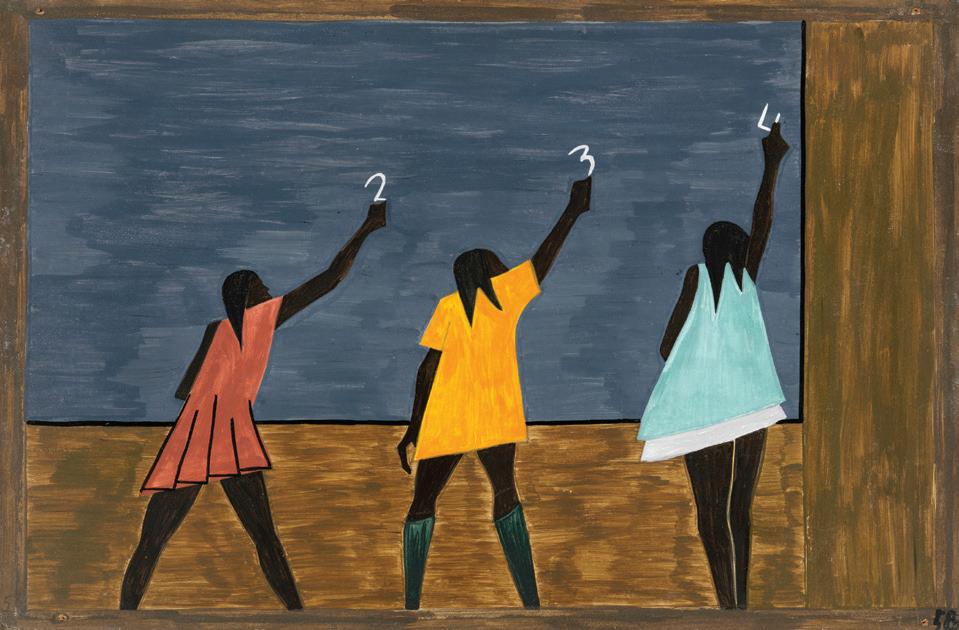
In the North the Negro had better educational facilities (ca. 1940-41) by Jacob Lawrence. (© The Museum of Modern Art/ Licensed by SCALA / Art Resource, New York and © 2026 The Jacob and Gwendolyn Knight Lawrence Foundation, Seattle / Artists Rights Society [ARS], New York)
While migration may have helped Black people find new opportunities, it did not provide them absolute relief from the violence they sought to
escape. Indeed, whether they moved or stayed, Black Americans would also have to confront the rebirth of the Ku Klux Klan. The Klan resurged in the late 1910s and early 1920s. Using several propaganda films during its “rigorous recruitment drive,” the Klan deployed “more than 200 Kleagles” (recruiters) to reinforce the lie that Afro-descendants were less-thanhumans. 6 White Americans lynched an average of 55 of their Black counterparts between 1914 and 1922, an average that increased in the four years following the end of the Great War. 7
The “New Negro,” confronted with the caustic realities of American racial terror and emboldened by wartime service as well as visions of a more just democracy, forged a rebirth of its
own: the Harlem Renaissance. Many scholars have noted the pivotal role Alain LeRoy Locke played in institutionalizing this cultural awakening as editor of The New Negro . 8 According to Locke, the literary and artistic movement in Harlem represented “a spiritual coming of Age,” through which Black people sought to rehabilitate their psychologies from the degradations of racial persecution. At the same time, it expanded the scope of the American “ race problem ” to global dimensions, “linked up with the growing group consciousness of the darkpeoples” of the world. 9
The New Negro was an anthology of persuasive essays, history and art history, poetry, fiction, plays, visual arts, and music. Its contributors included familiar Black artists like Langston Hughes, Claude McKay, and Countée Cullen;
Historical Photographs
Using the National Archives “Analyze a Photograph” tool (www.archives.gov/education/lessons/worksheets/ analyze-a-photograph-intermediate), ask students to critically view the 1919 photograph of the Harlem Hellfighters (Figure 1). Provide students with the date of publication so they can consider the context of world events as they complete their analysis.
Visual Art
Project or print in color all four panels of Aaron Douglas’s 1934 Aspects of Negro Life. (Available through The New York Public Library Digital Collections, https://digitalcollections.nypl.org.) Divide the class into four groups, assigning one panel to each: “From Slavery Through Reconstruction” (see Figure 2 and cover of this issue of Social Education), “The Negro in an African Setting,” “An Idyll of the Deep South,” and “Song of the Towers.” Ask each group to identify the primary message of their assigned panel and to consider how Douglas’s artistic style and choice of medium convey that central idea.
Music
Springboard into the study of the Harlem Renaissance by playing music from artists of the era, such as Louis Armstrong, Gladys Bentley, Cab Calloway, Duke Ellington, Bessie Smith, or Ethel Waters. Using the Library of Congress’s “Analyzing Sound Recordings” handout (www.loc.gov/static/programs/teachers/getting-started-with-primarysources/documents/Analyzing_Sound_Recordings.pdf), have students critically analyze the meaning of the selected recording or music video by observing, reflecting, and questioning.
Peer Teaching, Independent Research, and Primary Source Documents
Obtain writings or excerpts from the writers discussed in this article. Working individually or in pairs, ask students to read and paraphrase a work, conduct brief biographical research of the author, and share findings with their peers in a whole-class format. Brown’s African American Voices: A Documentary Reader from Emancipation to the Present (2014) offers an excellent collection of essays and other relatively short works by authors such as W. E. B. Du Bois, Claude McKay, Marcus Garvey, Langston Hughes, and Amy Jacques Garvey.*
*Leslie Brown, ed., African American Voices: A Documentary Reader from Emancipation to the Present (Wiley-Blackwell, 2014).
white abolitionists and racial liberals like Angelina Grimké and Albert C. Barnes; as well as Zora Neale Hurston, the young and enterprising anthropologist; Richard Bruce Nugent, the openly gay writer, who until recently had become obscure in memories of the Harlem Renaissance; and Jean Toomer, the poet and novelist whose experimental book Cane challenged both the genre of the fiction novel and “the Negro [as] a genre stereotype.”10 Indeed, Renaissance thinkers would argue in various ways, the “Negro” was a fiction—a proposition constructed through racial slavery and European imperialism that proposed that there was a being called Human and a human-like creature called a “Negro” that stood apart from it.11
For many artists, this Renaissance represented an effort to proclaim the absolute and unconditional humanity of Black people. The boldness of this proclamation reflected not only Black American experiences in the Great War, but also the flow of ideas into the United States from “the Black Tropics.” By 1920, foreign-born Blacks represented about 20 percent of New York City’s Black population, hailing from the Latin American and Caribbean colonies of Spain, France, Portugal, Britain, and the Netherlands. Their presence would have unmistakable consequences. Wilfred Domingo, a Jamaicanborn Harlemite, opined that the “outstanding contribution of West Indians to American Negro life is the insistent assertion of their manhood in an environment that demands too much servility and unprotesting acquiescence from men of African blood.” In short, according to Domingo, West Indian immigrants encouraged American-born Black folks to resist their imposed “inferior status” and resist “abdicat[ing] their humanity.”12
As world-crafting ideas flowed into Harlem with new arrivals, so too did Harlem reach across oceans through the movement of its creative peoples and the transmission of its ideas. The Harlem Renaissance can be understood as a postcolonial phenomenon in which American writers, artists, and thinkers sought to educate the public about the harms of imperialism and its deep connection to the “Negro problem” at home and abroad.13 Marcus Garvey, the Jamaican-born Pan-Africanist and Black nationalist dreamer, called for a new era of ra-
cial pride and Black autonomy. Garveyism inspired Black Americans to imagine a postcolonial world. It also spurred debate about how new and imaginative that world could be if its vision were one of racial separation rather than inclusive democracy.14 Beyond the United States, Garveyism found receptive audiences, especially in Panama, where workers’ class consciousness pushed back against the imperial conceit embodied in the U.S.-controlled Canal Zone. Moreover, the extension of Jim Crow–style racial practices to Panama heightened the race consciousness of Black migrants and laborers. There, an “Association of Universal Loyal Negroes” was founded with intentions to develop Black sovereign nations.15 The NAACP took a different approach. Typically appreciated for its work in the United States, the NAACP reported on and investigated acts of racial discrimination, and especially lynching in Panama and America’s growing empire elsewhere in the Caribbean and Pacific.16
Just as Garveyism and the NAACP’s racial liberalism remained ideas in motion, the artistic messages of the Renaissance’s creatives were always in motion, too, vacillating between celebrating the reclaimed idea of the “Negro” and deconstructing the white supremacist invention of “the Negro.” For instance, denying race as both a biological construction and a social fact, Jean Toomer declared in 1930, “Though I am interested in and deeply value the Negro, I am not a Negro.” He argued that “to have freedom” he could not “allow my being colored, for the colored world is dominated and segregated. I must live, first, as an individual.”17
But whereas Toomer resisted the boundaries of racial designation, in 1926 Langston Hughes encouraged their embrace as a way to resist the “urge to race toward whiteness… ” Hughes declared, “I am a Negro—and beautiful,” not to assert that race was fixed and immutable, but to expose the lie on which the very idea of “the Negro” was built.18
That sense of ideas in motion extended to the Harlem Renaissance itself, its art reflecting and refracting a “paradox” visible on the streets of Harlem, the chain gangs of Georgia, the theaters of war in Europe, and across the colonized lands
of Africa, Latin America, and the Pacific. Like jazz, “the Negro” emerged as a mythical yet deeply human figure—too expansive to be confined by race or nation.19 In this form, it improvised, created, and labored its way into history as a disruptive force, one that continues to challenge the world’s sustaining lies.
In its place, they invited a new world. Rejecting the deceit that was the invention of race, they envisioned a humanity that could recognize that Negro art was “as new as it is old and as old as it is new,” as Du Bois wrote in The Crisis. For Du Bois, art was an essential tool “for gaining the right of black folk to love and enjoy.” In this way, the Harlem Renaissance invited viewers to see worlds more primeval and expansive than their own—not as destinations, but as birth canals, pointing toward “a vision of what the world could be if it were really a beautiful world,” where people “realize themselves, and where they enjoy life.”20
Notes
1. “Gen. Hoffman Tells Story of Black Heroes,” The Black Dispatch (Oklahoma City), April 11, 1919, 1, 5.
2. W. E. B. Du Bois, “Returning Soldiers,” The Crisis, May 1919, 13–14.
3. Du Bois.
4. “The New Negro Is Reading,” The Half-Century Magazine, May 1919, 1, 15–16; Shane Graham, “Cultural Exchange in a Black Atlantic Web: South African Literature, Langston Hughes, and Negritude,” Twentieth Century Literature 60, no. 4 (2014): 481–512; Nicholas L. Gaffney, “‘He Was a Man Who Walked Tall Among Men’: Duke Ellington, African American Audiences, and the Black Musical Entertainment Market, 1927–1943,” The Journal of African American History 98, no. 3 (2013): 367–91; Robert C. Hart, “Black-White Literary Relations in the Harlem Renaissance,” American Literature 44, no. 4 (1973): 612–28.
5. Steven Hahn, A Nation under Our Feet: Black Political Struggles in the Rural South, from Slavery to the Great Migration (Harvard University Press, 2003), 465–66.
6. Tom Rice, “‘The True Story of the Ku Klux Klan’: Defining the Klan through Film,” Journal of American Studies 42, no. 3 (2008): 473.
7. Tuskegee Institute, “Lynching Stats: Dates, Years, Causes,” n.d., Lynching Information, Tuskegee University Archives Repository, https://archive.tuskegee.edu/repository/digitalcollection/lynching-information.
8. Eugene C. Holmes, “Alain Leroy Locke: A Sketch,” The
Phylon Quarterly 20, no. 1 (1959): 82; Richard J. Powell, Cutting a Figure: Fashioning Black Portraiture (University of Chicago Press, 2008), 71.
9. Alain LeRoy Locke, ed., The New Negro: An Interpretation (A. and C. Boni, 1925), 12, 14, 16.
10. Nick Aaron Ford, “Jean Toomer and His ‘Cane,’” The Langston Hughes Review 2, no. 1 (1983): 16–27; William Stanley Brainwaithe, “The Negro in American Literature,” in The New Negro: An Interpretation, 29.
11. Emily Anne Parker, “The Human as Double Bind: Sylvia Wynter and the Genre of ‘Man,’” Journal of Speculative Philosophy 32, no. 3 (2018): 439–49.
12. W. A. Domingo, “Gift of the Black Tropics,” in The New Negro: An Interpretation, 343–49.
13. Robert Philipson, “ The Harlem Renaissance as Postcolonial Phenomenon,” African American Review 40, no. 1 (2006): 146.
14. W. E. B. Du Bois, Dusk of Dawn, ed. Henry Louis Gates Jr., with Kwame Anthony Appiah (Oxford University Press, 2007), 75; Colin Grant, Negro with a Hat: The Rise and Fall of Marcus Garvey (Oxford University Press, 2008); J. A. Zumoff, “Black Caribbean Labor Radicalism in Panama, 1914-1921,” Journal of Social History 47, no. 2 (2013): 429–57.
15. J. A. Zumoff, “Black Caribbean Labor Radicalism in Panama, 1914-1921,” Journal of Social History 47, no. 2 (2013): 192.
16. “National Association for the Advancement of Colored People,” The Crisis, July 1918, 122.
17. Quoted in Darwin T. Turner, In a Minor Chord; Three AfroAmerican Writers and Their Search for Identity (Southern Illinois University Press, 1971), 32, 34; For more on the social construction of blackness see Frantz Fanon, Black Skin, White Masks (Grove Press, 2008), 148–49.
18. Langston Hughes, “The Negro Artist and the Racial Mountain,” Nation, June 23, 1926, 692–294; Langston Hughes, “The Negro,” The Crisis, Jan. 1922, 113.
19. J. A. Rogers, “Jazz at Home,” in The New Negro: An Interpretation, 216.
20. W. E. B. Du Bois, “Criteria of Negro Art,” The Crisis, Oct. 1926, 292, 297.

David Ponton III is an Associate Professor at Rollins College and author of Houston and the Permanence of Segregation: An Afropessimist Approach to Urban History (University of Texas Press, 2024).
Peter Hulme
The first political protest of the “New Negro” movement—later referred to as the Harlem Renaissance—made little noise. On July 28, 1917, around 10,000 African Americans marched down Fifth Avenue in New York City, from 57th Street to Madison Square Garden in a silent parade to draw attention to a recent series of racially motivated attacks in various parts of the country, most notoriously in East St. Louis, Illinois (see Fig. 1). In response to the attacks, President Woodrow Wilson was equally silent.
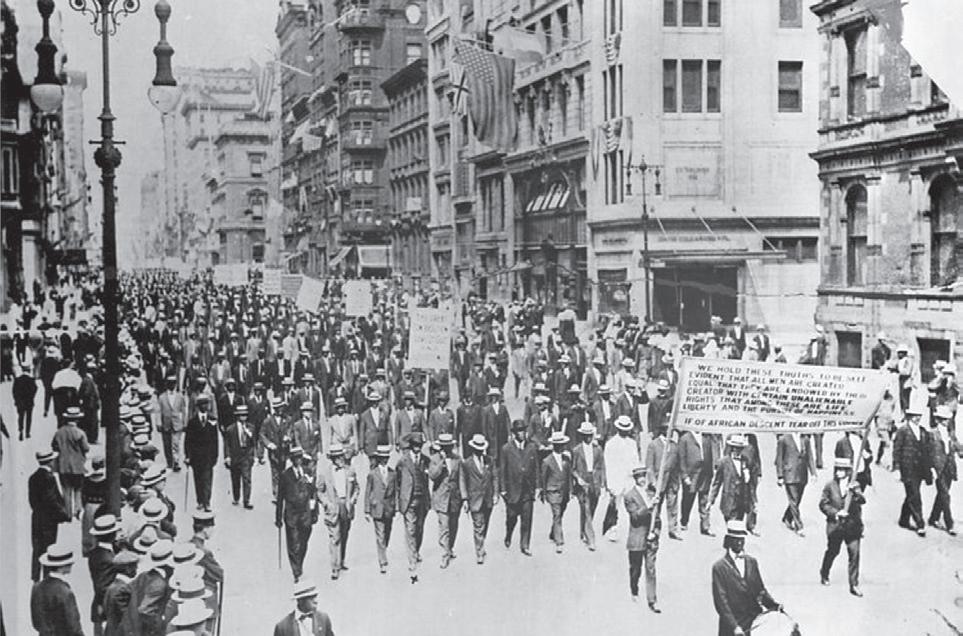
1. Silent Protest parade in New York City, July 28, 1917, in response to the East St. Louis race riot. (The New York Public Library Digital Collections)
A coalition of groups organized the protest, led by the National Association for the Advancement of Colored People (NAACP), whose leading figures, such as W. E. B. Du Bois (1868-1963) and James Weldon Johnson (1871-1938), were gaining prominence in the African American community, supplanting Booker T. Washington, who had died in 1915. During this period, the NAACP’s principal
campaign—unsuccessful until 2022—was to get Congress to adopt an anti-lynching bill. While the NAACP was certainly an activist organization, its stated aim of pursuing African Americans’ constitutional rights was regarded as too accommodating by more radical activists in the 1920s, some motivated by Black nationalism, others emboldened by the 1917 Russian Revolution.
U.S. participation in the First World War had divided Black citizens. Some, like Du Bois, took a patriotic route. In an infamous editorial in the NAACP’s The Crisis, Du Bois proclaimed: “Let us, while this war lasts, forget our special grievances and close our ranks shoulder to shoulder with our own white fellow citizens and the allied nations that are fighting for democracy.”1 Others argued that this was a white man’s war that African Americans should stay away from. However, the end of the war and the return of Black troops galvanized Harlem. In a later editorial, Du Bois penned what would become one of his most famous utterances: “We return. We return from fighting. We return fighting. ”2
Among the Black troops returning to New York City in February 1919 was the 369th Infantry Regiment of the American Expeditionary Force who had served in France, surviving 191 days under enemy fire and receiving the Croix de Guerre, a French military honor awarded for bravery and distinguished service in battle. Nearly half of its 2,000 members didn’t make it home. While most parades, like the 1917 silent one, marched down Fifth Avenue into the heart of Manhattan, the Harlem Hellfighters, as the Black troops were popularly called, marched from Madison Square Park
up Fifth Avenue towards Harlem. They marched behind James Reese Europe’s 60-strong military band, which had taken live jazz to France, where it was celebrated as a truly American product.3 As the band reached Harlem, they switched from martial music to popular jazz tunes.
The two most important Black nationalists were Hubert Harrison (1883-1927) and Marcus Garvey (1887-1940). Both, like a significant number of Harlem activists, were born in the Caribbean— Harrison in St. Croix, Garvey in Jamaica.4 Harrison was a self-taught intellectual, renowned for his ability to speak cogently and at length on any topic, effortlessly linking local racial concerns to world events. Most Harlem street corners would have several speakers vying for attention, with orators using stepladders for visibility. Nobody could compete against Harrison.5 Street corners were important gathering places, but other locations provided shelter and, where needed, privacy. The Universal Negro Improvement Association (UNIA) held weekly meetings at Liberty Hall on West 138th in Harlem. Elsewhere, the 135th Street branch of the New York Public Library and the Frederick Douglass Bookstore on 125th Street were less susceptible to infiltration by agents of J. Edgar Hoover’s newly formed Bureau of Investigation, later the Federal Bureau of Investigation (FBI). Meanwhile, local activism took many forms. Trade unions were prominent. Jamaican activist and journalist W. A. Domingo (1889-1968) helped organize the first union of elevator operators;6 A. Philip Randolph (1889-1979) was founder and first president of another such organization, the Brotherhood of Sleeping Car Porters. Tenants associations provided a further forum for activism. The Harlem Tenants’ League often organized effective campaigns against rent increases and evictions.
Newspapers and magazines were important vehicles for political activism. Harrison was associated with several short-lived ones, such as The Voice and The Clarion. Longer lasting was The Messenger (1917-28), edited by Chandler Owen (1889–1967) and Randolph, with a radical social-
ist and trade union agenda. But by far the most successful newspaper was Negro World, started by Marcus Garvey in 1918 and run in conjunction with the UNIA. Distributed internationally, it had a circulation far in excess of all the other Black newspapers put together. A talented publicist and compelling speaker, Garvey collected an enormous number of donations for his various business schemes, all of which failed.7 He styled himself Provisional President of Africa and held massive annual conventions in New York. Both Harrison and Domingo edited Negro World for short periods but fell out with Garvey, as almost all other Black leaders did. Garvey’s star began to wane when he held an ill-judged meeting with a leader of the Ku Klux Klan and pronounced that the two organizations had much in common. Imprisoned on charges of mail fraud, he was deported in 1927.
The UNIA and Negro World both survived Garvey’s absence, thanks in no small part to the organizational skills of his second wife, Amy Jacques Garvey (1895-1973), who wrote a “Woman’s Page” for Negro World, which frequently offered the sharpest political analysis in the paper. Another prominent Black organization was the semi-secret African Blood Brotherhood (ABB), established in 1919 by another West Indian, Cyril Briggs (1888-1966), although much of the organizational work was carried out by Grace Campbell (1883-1943). Campbell’s job as a parole officer gave her keen insight into the gendered and racist structure of the criminal justice system. The ABB folded in the early 1920s when several of its leaders joined the incipient American Communist Party. All these mass-member bodies, such as the NAACP, the UNIA, and the ABB, helped cultivate among African Americans social consciousness, Black pride, and a new commitment to political activism.
Despite his business failures, Garvey regarded himself as a true capitalist. Other prominent Black figures such as Harrison, Randolph, Owen, and Domingo adhered to socialism, though they found it difficult to make headway given the entrenched racism within the Socialist Party of America. Randolph and Owen’s The Messenger
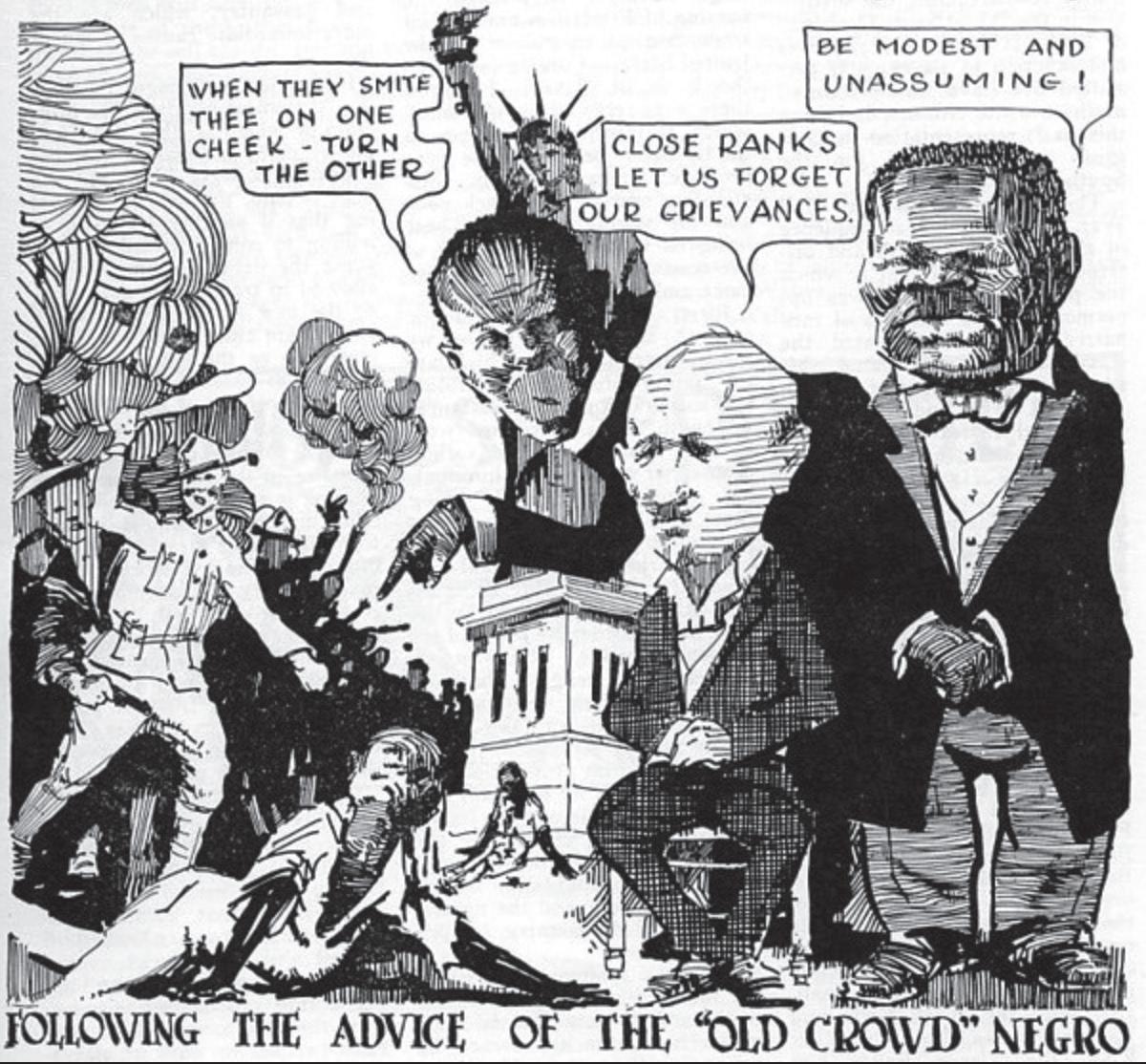
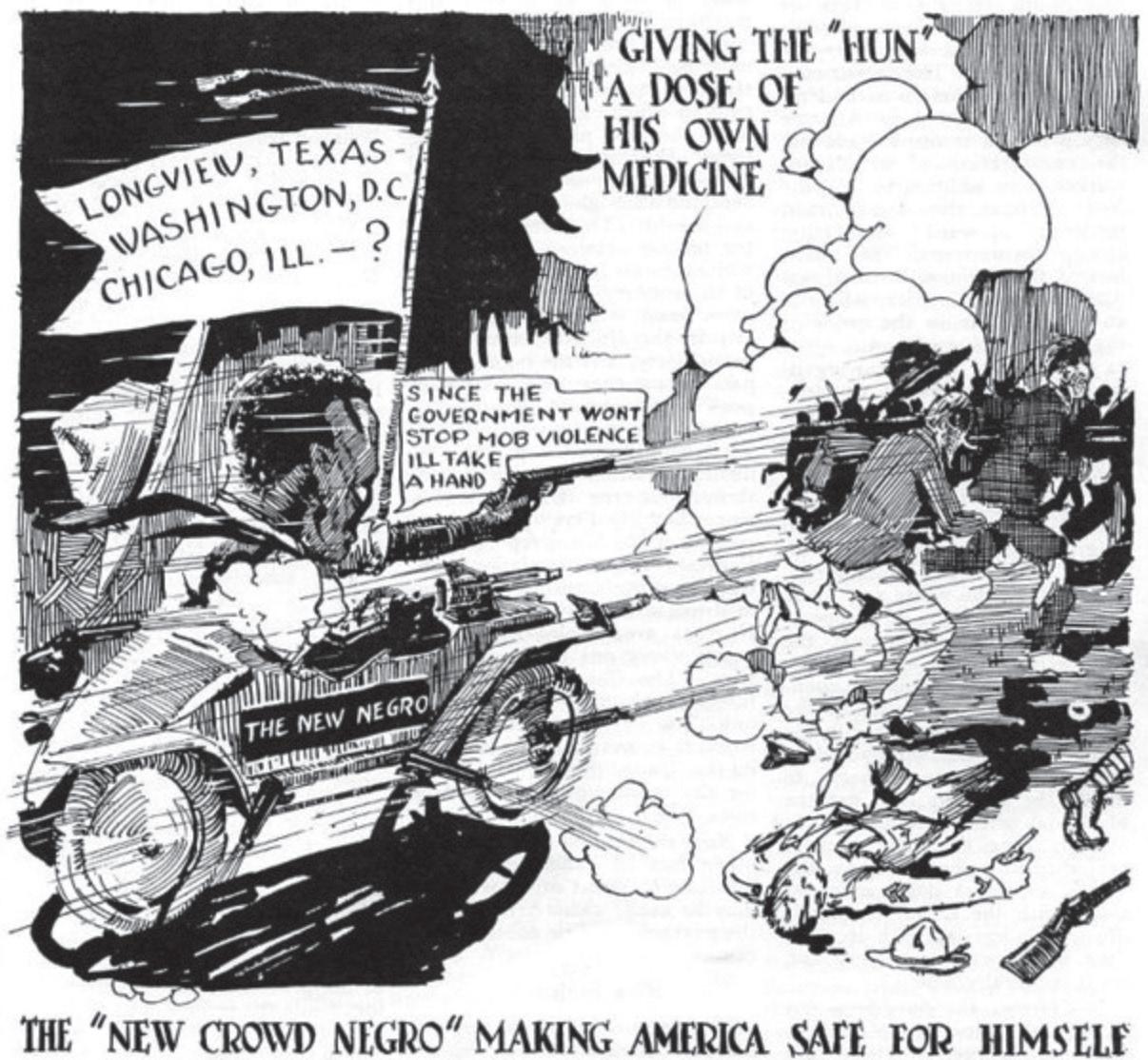
was openly critical of what it called “Old Crowd Negroes” (Fig. 2), against whom it contrasted the “New Crowd” of real political activists, weapons in hand (Fig. 3). It also mounted an anti-West Indian campaign in favor of Garvey’s deportation—a move that caused Domingo to break with the magazine, for which he’d been a contributing editor, and to start his own newspaper, The Emancipator. There and in other venues, Domingo developed a cogent critique of the modern USA from a revolutionary socialist perspective in a series of articles whose titles tell their own story: “Capitalism the Basis of Colonialism,” “Socialism the Negroes’ Hope,” “Bolshevism and the Darker Races.”8
What are now regarded as the main publications of the Harlem Renaissance were wary of committing to radical political activism. Harrison was originally slated to write a piece for what became a special issue of the journal Survey Graphic titled “Harlem: Mecca of the New Negro,” but his essay was among the first to be dropped when space became a problem. Domingo was the most radical figure represented in the issue, though his contribution was limited to a survey of the West Indian presence in New York—a far cry from his earlier, more trenchant work. He did, however, end with a rallying cry drawn from a
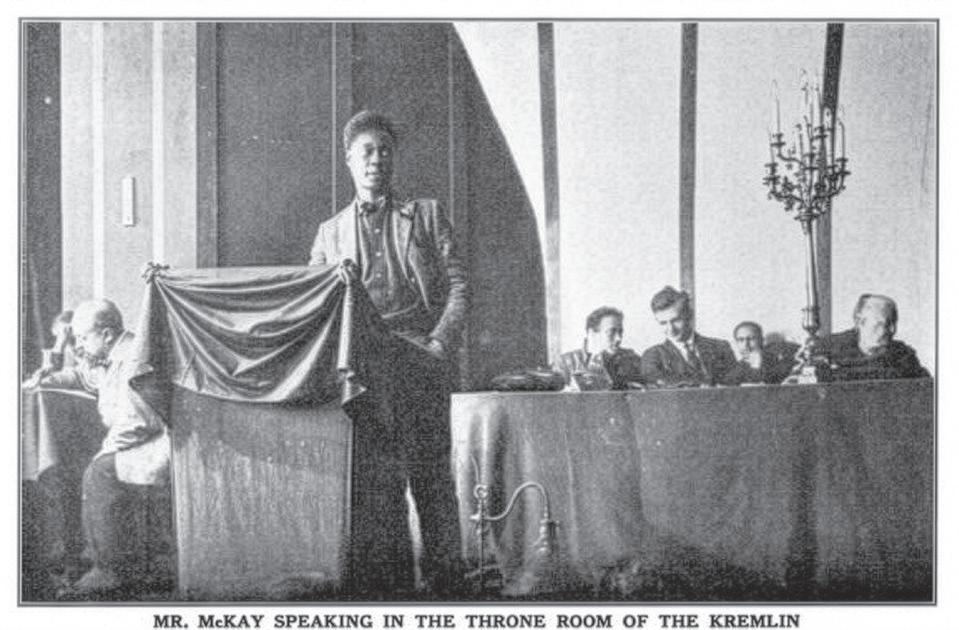
poem: “Like men we’ll face the murderous, cowardly pack, / Pressed to the wall, dying, but fighting back.”9 These were the final two lines of “If We Must Die,” a 1919 sonnet by Domingo’s friend and fellow Jamaican, Claude McKay (1890–1948). McKay wrote the poem in response to the wave of racial violence that swept U.S. cities in the months following the First World War. “If We Must Die” became one of the best-known works of the period, widely reproduced in Black newspapers and magazines. McKay was Harlem’s preeminent poet-activist, though his political commitments often took him abroad, most notably to the Fourth Congress of the Comintern in Moscow in 1922.10
the liberal magazine The Nation sent the NAACP’s James Weldon Johnson to Haiti to report on the U.S. occupation of that Caribbean nation. The four pieces Johnson wrote for The Nation hit hard.11 He laid waste to the popular misconception that the U.S. intervention was simply humanitarian and that the occupation had continued purely to maintain order in a violent and unruly country. Rather, Johnson wrote, Haiti was now controlled by the U.S. National City Bank, in whose interests the Haitian constitution had been changed and its civil government ignored. The U.S. administration had conquered Haiti, Johnson argued, with less justification than Germany’s rape of Belgium—a not insignificant charge. This was political activism by means of grounded investigation and forensic analysis. Johnson held the U.S. empire to account.
Conclusion
It often happens that the vibrant and unsettling political radicalism of the day is toned down and tidied up in later accounts. Critical consensus eventually settled on “the Harlem Renaissance” as
the preferred designation for the period, aligning these years with the Celtic Renaissance in Ireland and emphasizing the cultural dimension above all. At the time, however, the commonest epithet was “the New Negro Movement,” more suggestive of both political organization and Black agency. Some of the organizations from the period still survive, such as the NAACP and the (much reduced) UNIA. Its towering political figures—Du Bois, Harrison, Garvey, Domingo—continue to inspire new generations of activists.
1. W. E. B. Du Bois, “Close Ranks,” The Crisis 16, no. 3 (July 1918): 111.
2. W. E. B. Du Bois, “Returning Soldiers,” The Crisis 18, no. 1 (May 1919): 13-14, at 14.
3. Reid Badger, A Life in Ragtime: A Biography of James Reese Europe (Oxford University Press, 1995).
4. Winston James, Holding Aloft the Banner of Ethiopia: Caribbean Radicalism in Early Twentieth-Century America (Verso, 1998).
5. See the collection of his writings in A Hubert Harrison
Primary Sources
The New York Public Library’s Digital Collections (https://digitalcollections.nypl.org) allows users to search for articles, photographs, and other material published in magazines such as The Messenger and The Crisis. Teachers can use this resource to create visually rich presentations, and students can access primary source materials as they conduct research individually or in small groups.
Political Cartoons
Ask students to compare the 1919 cartoons (Fig. 2 and Fig. 3) from The Messenger. Using a scaffolded questioning strategy, guide students’ analysis by asking questions such as:
1. What differences do you notice in how the “Old Crowd Negro” and the “New Crowd Negro” are drawn? How does each figure interact with white society or authority in the image?
2. What symbols or objects can you identify? What might they represent?
3. What message is the cartoonist trying to send about change within the Black community?
4. How does the emphasis on self-expression and dignity in the Harlem Renaissance reflect what you see in the “New Crowd Negro”?
5. Can you see any connections between the “New Negro” ideals and modern social movements today?
Historical Biographies and Peer Teaching
In small groups, ask students to research one of the individuals discussed in this article, with each group member taking primary responsibility for a specific phase of the person’s life: childhood and education; political activism; works published; legacy and impact. Allow students to create digital presentations to share with their classmates.
Reader, ed. Jeffrey B. Perry (Wesleyan University Press, 2001).
6. “Elevator Operators Winning Fight,” The Emancipator (April 24, 1920): 1.
7. Colin Grant, Negro with a Hat: The Rise and Fall of Marcus Garvey (Vintage, 2009).
8. See the collections of his writings in African American AntiColonial Thought, 1917-1937, ed. Cathy Bergin (Edinburgh University Press, 2016); and Red and Black in Harlem and Jamaica: The Revolutionary Life and Selected Writings of W. A. Domingo, ed. Peter Hulme and Leslie James (Pluto Press, 2025).
9. W. A. Domingo, “The Tropics of New York,” “Harlem: Mecca of the New Negro,” Survey Graphic 53, no. 11 (March 1925): 648-50.
10. On the international dimensions of Harlem Renaissance activism, see James Smethurst, “London, New York,
and the Black Bolshevik Renaissance: Radical Black Internationalism during the New Negro Renaissance,” in A History of the Harlem Renaissance, eds. Rachel Farebrother and Miriam Thaggert (Cambridge University Press, 2021), 195-210.
11. James Weldon Johnson, “Self-Determining Haiti,” The Nation 111 (28 August 1920): 236-38; (4 September 1920): 265-67; (11 September 1920): 295-97; (25 September 1920): 345-47.

Peter Hulme is Emeritus Professor in Literature at the University of Essex. He recently co-edited with Leslie James Red and Black in Harlem and Jamaica: The Revolutionary Life and Selected Writings of W. A. Domingo (Pluto Press, 2025).
Council?
a local space to:
� Connect with colleagues in your area
� Engage in professional development and community events
� Recognize and celebrate outstanding teaching and scholarship
� Participate in awards and programs at the state level
Brittany S. Lee-Wright
The Harlem Renaissance remains one of the most taught cultural movements in U.S. history courses, often introduced through iconic images, jazz clubs, artistic salons, and the bustling streets of Harlem as a symbol of Black modernity in early twentieth century America. The 100-year commemoration of Alain Locke’s The New Negro: An Interpretation presents a timely opportunity to revisit the Harlem Renaissance with a fresh curricular purpose.1 Locke’s anthology did more than capture a “moment ”; it helped formalize a new public language of Black self-definition, one that aligned cultural production and identity with political and civic imagination. The political, artistic, and literary figures who contributed to the movement were as diverse as America itself; yet time and again, most treatments of the Harlem Renaissance are reduced to just a few well-known names, most of them male. The centennial invites educators to ask: Whose Renaissance do we teach? Which writers become the representatives of the era? And how do curricular choices either reproduce or disrupt historical patterns of inclusion and exclusion?
For many classrooms, Harlem Renaissance instruction still privileges a narrow canon, that is, one that frequently emphasizes male writers and intellectuals whose voices have been historically validated by publishing institutions and academic
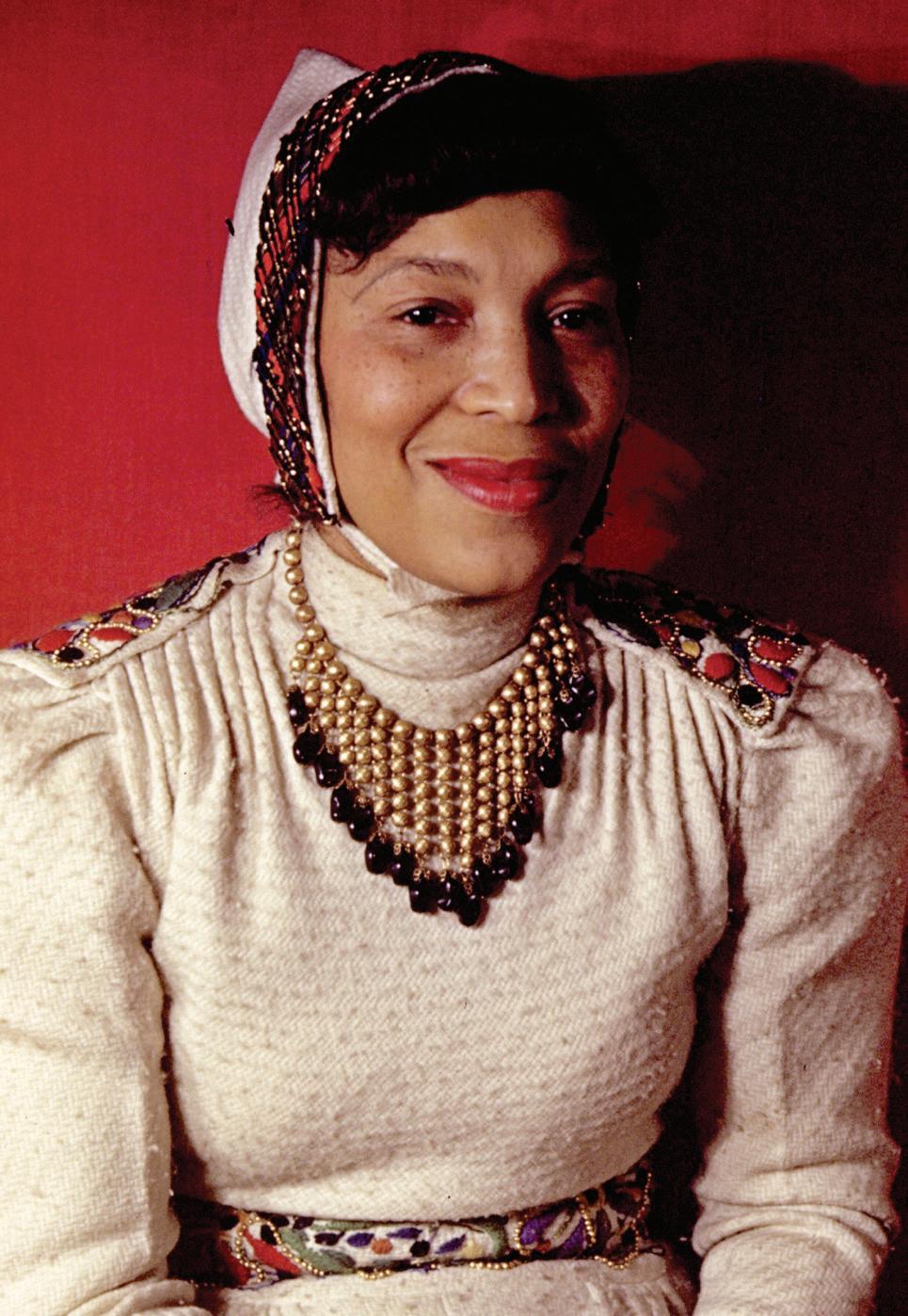
gatekeeping.2 In contrast, Black women writers often appear as supplemental figures rather than central architects of Renaissance thought.3 This marginalization reflects the gendered and radicalized conditions under which Black women wrote, published, and were reviewed.4 When teachers center Black women writers, they not only correct a historical record, but also expose the consequences of exclusion—demonstrating how power determines whose voices shape public narratives and whose experiences are relegated to the margins of collective memory. Zora Neale Hurston presents an especially compelling case study for social studies, as she challenges traditional disciplinary boundaries.5 Hurston was a novelist and an anthropologist, a collector of folklore and a creator of fiction, a participant in Harlem Renaissance networks and an ethnographer of Southern Black communities.6 Her work allows teachers to connect Harlem Renaissance literature to primarysource inquiry, revealing how cultural expression functions as a form of civic knowledge through which communities interpret power, identity, and belonging. Using Hurston as a focal case, social studies educators can incorporate Harlem Renaissance literature into their curricula, connecting it to historical and anthropological contexts while centering on Black women’s intellectual contributions.
Barriers, Breakthroughs, and Black Women Writers’ Intellectual Labor
Harlem Renaissance history is often told as a story of networks—magazines, salons, patrons, and institutions that cultivated a “New Negro” cultural presence. Yet the same structures that amplified some voices constrained others. Black women writers, for example, encountered unique obstacles in publishing and professional recognition. Editorial decisions, patron expectations, and cultural norms frequently pressured Black women into forms of representation, either sentimental uplift narratives, sanitized respectability, or exoticized depictions that catered to market demands. These constraints shaped what could be said, how it could be expressed, and whether it would be widely circulated. Writers such as Jessie Redmon Fauset, Nella Larsen, Georgia Douglas Johnson, and Marita Bonner produced fiction and drama that explored the complexities of race, class, gender,
and modern identity, often with sharper critiques of respectability politics and intraracial tension than mainstream accounts acknowledged. Their work demonstrates that the Renaissance was not merely an artistic celebration but also a contested dialogue about Black womanhood, social mobility, and the costs of “progress.”7 When students read these writers as voices of the era, they learn to recognize how cultural movements are shaped by power relations, not simply by talent.8
At the same time, Black women writers not only reacted to constraints; they expanded the intellectual boundaries of the movement.9 Their writing carried sociological, historical, and political insight, frequently mapping how gendered expectations intersected with racial violence, economic precarity, and community responsibility.10 In social studies classrooms, this matters because it reveals the Renaissance as civic work, where literary production serves as a means of theorizing public life, belonging, and freedom.11 Hurston represents both a member of this cohort and a distinct figure within it. Like other Black women writers, she navigated the gendered and racialized realities of publishing.
Life in Eatonville, Florida—one of the first incorporated all-Black towns in the United States—helped shape Zora Neale Hurston’s understanding of Black community life as complex, self-governing, and culturally rich.12 Hurston was born in 1891 in Notasulga, Alabama. She moved to Eatonville as a young child, where her father later served as mayor. Her mother emphasized education and self-confidence in her children. Eatonville’s significance extends beyond biography; it functions as historical evidence for teaching Black political agency at the local level, particularly during eras when mainstream narratives often depict Black life primarily through oppression. In Eatonville, Hurston encountered everyday models of Black governance, entrepreneurship, storytelling, and communal accountability, experiences that informed her lifelong interest in folklore, voice, and cultural preservation. Her later writing consistently reflects an awareness that Black communities created institutions, traditions, and moral codes that sustained life under Jim Crow.
Hurston’s academic pathway, culminating in study at Barnard College and training under Franz Boas, the “Father of American Anthropology,” reflects the broader historical context of Black intellectual life during the early twentieth century. Anthropology, as a discipline, was grappling with questions of culture, race, and scientific authority. Hurston’s position as a Black woman within this field is crucial for classroom discussion because it invites students to interrogate the power dynamics embedded in knowledge production. Such inquiries prompt students to wrestle with questions such as: Who has historically been authorized to define culture and interpret marginalized communities, and how does meaning shift when those once studied claim authorship and scholarly authority? In what ways do research methods and disciplinary norms shape whose stories are told and legitimized?
Hurston’s anthropological fieldwork, particularly her folklore collection and later involvement with cultural projects under the auspices of the Works Progress Administration, bridges the realms of oral history and literature. She gathered folktales, songs, and community narratives, preserving cultural memory that might otherwise have been dismissed as “informal” or “unscientific.”
In this way, Hurston’s work helps educators present the Harlem Renaissance not solely as an urban Northern phenomenon, but also as a movement deeply connected to Southern Black experience, migration, and cultural continuity.13 This is precisely the kind of material social studies educators can use to teach historical inquiry: folklore as evidence of community values, resistance, humor, labor life, and moral reasoning. The connection is essential for teaching the Great Migration as more than a mere relocation; it was also a cultural transmission, people carrying stories, language, music, and belief systems into new contexts.
Unfortunately, however, gender politics and shifting ideological expectations shaped Hurston’s reception. She was sometimes criticized for representing Black life in ways that did not align with the political scripts favored by certain male intellectuals or publishing tastes. As a result, many of her works were overlooked during her lifetime. Her later rediscovery reveals how literary reputations are constructed and reconstructed over time.14
For social studies, this provides an opportunity to bridge historiography and literature: how cultural memory is formed, who is remembered, and why.
Close reading in social studies is not simply an English Language Arts practice imported into social studies classrooms.15 When taught as inquiry, close reading involves the deliberate examination of language, narrative form, and historical context to reveal how texts produce meaning and shape interpretation. In social studies contexts, it becomes a method for analyzing perspective, context, and evidence, particularly when students approach texts as artifacts embedded within specific social and historical conditions. Hurston’s writing lends itself to this approach because her literary craft is inseparable from cultural observation and community speech, positioning her work at the intersection of literature, history, and ethnography.16
To illustrate how this interdisciplinary approach can function in practice, the following exemplars demonstrate how Hurston’s texts may be used to deepen historical inquiry and critical analysis within the social studies classroom.
Hurston’s 1928 essay, “How It Feels to Be Colored Me,”17 available online via various sites such as the Internet Archive, offers a compelling entry point for teaching identity as a historically constructed concept rather than a purely personal one. “I remember the very day that I became colored,” Hurston wrote, describing the day she left her all-Black hometown. “I left Eatonville, the town of the oleanders, as Zora. When I disembarked from the river-boat at Jacksonville, she was no more. … I was not Zora of Orange County any more, I was now a little colored girl.”
The essay reflects the Harlem Renaissance era’s negotiation of Black modernity—how Black individuals navigated racial classification while articulating selfhood beyond imposed categories. In classroom inquiry, teachers can guide students to ask:
• What does Hurston claim about racial identity, and how does she frame agency?
• How does historical context (Jim Crow, migration, and changing urban life) shape the essay’s stance?
• What is the difference between individual experience and public representation?
Hurston’s voice in the essay can be paired with other sources (e.g., newspaper excerpts, migration narratives, political speeches) to help students compare how “race” and “citizenship” are described across genres. Students can examine how Black writers contested the terms of American belonging, sometimes through uplift rhetoric, sometimes through irony, and other times through personal narrative that refuses simplification.18
“Sweat”: Morality, Gender Relations, Labor, and Community Judgment
Published in 1928, Hurston’s short story, “Sweat,” presents a morally charged narrative centered on a Black woman named Delia Jones, whose labor and endurance are contrasted with her husband’s cruelty.19 The story exposes intersecting realities: gendered violence, economic dependence, labor exploitation, and community surveillance that reveal how civic life operates within informal systems of power when formal institutions fail to protect marginalized individuals. For social studies inquiry, “Sweat” (https://scalar.lehigh.edu/africanamerican-poetry-a-digital-anthology/zora-nealehurston-sweat-1926) can be read as a cultural text that reveals:
• How gender roles operated in Black communities under Jim Crow conditions;
• How labor shaped the politics of social legitimacy and survival; and,
• How community talk functioned as informal social regulation.
Together, these dynamics illustrate that civic authority is not exercised solely through law or government but through everyday moral judgment, economic control, and communal norms.20 Students can analyze setting and dialogue as evidence of social structure. They can also connect
the story to broader historical questions, such as the legal protections available to Black women. Here, educators can pose questions such as: How did economic systems constrain family life? How did communities interpret justice when formal institutions were hostile or absent?
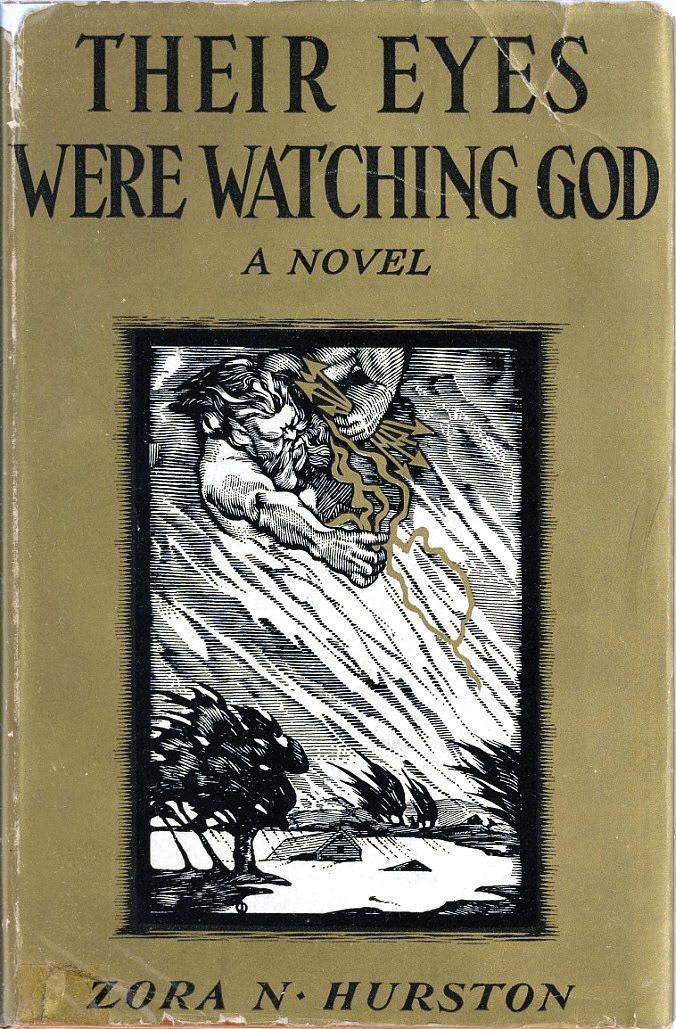
Excerpts from Their Eyes Were Watching God offer perhaps the most direct thematic bridge to social studies education: the development of voice, autonomy, and moral agency. The protagonist Janie’s journey is not merely romantic; it is civic, in that it dramatizes the struggle for self-definition, public participation, and moral agency within systems that constrain who may speak, decide, and belong. In teaching select excerpts, educators can foreground:
• Participation and authority in discourse (who is permitted to speak, whose testimony is legitimized, and who defines communal “truth”);
• Autonomy as historically negotiated within intersecting systems of gendered expectation, racial hierarchy, labor structures, and marital power in the Jim Crow South;
• The relationship between place and identity (e.g., town life, mobility, public reputation).
These scenes foreground questions of voice, autonomy, and civic participation:
• Janie’s early marriage to Logan Killicks (Chapters 2–3): This section allows students to examine how gender roles, labor expectations, and economic survival shape personal autonomy within the Jim Crow South.
• The Eatonville porch scenes during Janie’s marriage to Joe Starks (Chapters 5–6): These scenes provide opportunities to analyze public discourse, community authority, and the regulation of voice—particularly who is permitted to speak and whose perspectives are silenced.
• Janie’s reflection after Tea Cake’s death (final chapters): This moment foregrounds self-definition, moral agency, and the development of voice, inviting students to consider how individuals construct identity through lived experience. “Ah done been tuh de horizon and back and now Ah kin set heah in mah house and live by comparisons. Dis house ain’t so absent of things lak it used tuh be befo’ Tea Cake come along. It’s full uh thoughts.… Ah done lived Grandma’s way, now Ah means tuh live mine.” (p. 191)
The novel’s Southern setting helps students resist treating the Harlem Renaissance as a geographically isolated cultural movement. Instead, it invites inquiry into the dynamic relationship between regional roots and urban expression, creating continuity with studies of the Great Migration. Students may consider: What does it mean that cultural innovation became symbolically associated with Harlem, even as the cultural practices, dialects, and lived experiences that shaped that innovation remained deeply rooted in the South? Together, these interdisciplinary strategies demonstrate how Hurston’s texts bridge literary
study and social studies inquiry.21 By integrating historical context with critical analysis, educators can help students understand literature as both a reflection of social structures and a site of resistance. Ultimately, teaching these texts through an interdisciplinary lens fosters deeper historical understanding and prepares students to engage thoughtfully with questions of power, identity, and democratic belonging.
Teaching Hurston within the context of the Harlem Renaissance invites educators to reconsider not only which texts are taught, but how cultural movements themselves are understood. When Hurston’s work is framed as historical evidence rather than supplemental literature, students encounter the Harlem Renaissance as a contested intellectual project shaped by struggles over representation, authority, and belonging.
Hurston’s fiction and ethnography reveal that cultural production is inseparable from civic life.22
Through Hurston’s characters, such as Janie Crawford’s negotiation of autonomy and Delia Jones’s confrontation with injustice, students see how agency emerges within everyday spaces shaped by gender, labor, and community judgment. These narratives challenge narrow definitions of citizenship by illustrating that civic participation often occurs beyond formal political institutions, within households, workplaces, and local communities where power is negotiated and contested.23
Centering Hurston and other Black women writers of the era also reshapes how the Harlem Renaissance is taught. Rather than a singular story of artistic brilliance centered in Harlem, the movement appears as a network of regional, gendered, and intellectual tensions connecting the South and the North, folklore and modernity, individual expression and collective identity.24 Black women writers, long positioned at the margins of Renaissance narratives, emerge not as peripheral figures but as theorists of social life whose work illuminates the lived realities of democracy under constraint.
For social studies educators, this reframing carries significant pedagogical implications. Teaching Hurston interdisciplinarily, incorporating literature into the social studies classroom, enables students
to recognize culture as a form of knowledge and storytelling as a mode of historical interpretation. Such an approach encourages students to interrogate whose voices are preserved, whose experiences are legitimized, and how historical narratives are constructed.
Hurston’s work ultimately demonstrates that civic life is not only legislated but lived, constructed through stories, struggles, and the everyday negotiation of dignity and power.25 Fundamentally, teaching Hurston is not simply an act of inclusion; it is a methodological shift. Her work compels educators and students alike to view cultural texts as archives of civic thought, sites of resistance, and records of community knowledge. In doing so, Hurston offers more than a lens on the Harlem Renaissance—she provides a framework for understanding how marginalized communities articulate freedom, negotiate power, and imagine democratic possibilities.26 Teaching her work, therefore, is not only about revising the canon, but about redefining what counts as history and civic knowledge in the social studies classroom.
Notes
1. Alain Locke, ed., The New Negro: An Interpretation (Boni and Liveright, 1925).
2. Cheryl A. Wall, Women of the Harlem Renaissance (Indiana University Press, 1995).
3. Hazel V. Carby, Reconstructing Womanhood: The Emergence of the Afro-American Woman Novelist (Oxford University Press, 1987).
4. Deborah E. McDowell, The Changing Same: Black Women’s Literature, Criticism, and Theory (Indiana University Press, 1995).
5. Carby, Reconstructing Womanhood, 18-21.
6. Valerie Boyd, Wrapped in Rainbows: The Life of Zora Neale Hurston (Scribner, 2003); Zora Neale Hurston, Mules and Men (J. B. Lippincott, 1935).
7. Patricia Hill Collins, Black Feminist Thought: Knowledge, Consciousness, and the Politics of Empowerment, 2nd ed. (Routledge, 2000); Jennifer C. Nash, Black Feminism Reimagined: After Intersectionality (Duke University Press, 2019).
8. Nash, Black Feminism Reimagined.
9. Brittney C. Cooper, Eloquent Rage: A Black Feminist Discovers Her Superpower (St. Martin’s Press, 2018).
10. Keisha N. Blain, Set the World on Fire: Black Nationalist Women and the Global Struggle for Freedom (University of Pennsylvania Press, 2018).
11. Soyica Diggs Colbert, Radical Vision: A Biography of Lorraine Hansberry (Yale University Press, 2021).
12. LaKisha Simmons, Crescent City Girls: The Lives of Young Black Women in Segregated New Orleans (University of North Carolina Press, 2015).
13. Sarah J. Jackson, Moya Bailey, and Brooke Foucault Welles, #HashtagActivism: Networks of Race and Gender Justice (MIT Press, 2020).
14. Salamishah Tillet, In Search of the Color Purple: The Story of an American Masterpiece (Duke University Press, 2021).
15. Gholdy Muhammad, Cultivating Genius: An Equity Framework for Culturally and Historically Responsive Literacy (Scholastic, 2020).
16. Bettina L. Love, We Want to Do More Than Survive: Abolitionist Teaching and the Pursuit of Educational Freedom (Beacon Press, 2019).
17. Zora Neale Hurston, “How It Feels to Be Colored Me,” The World Tomorrow (May 1928).
18. Yolanda Sealey-Ruiz, Advancing Racial Literacies in Teacher Education: Activism for Equity in Digital Spaces (Teachers College Press, 2021).
19. Zora Neale Hurston, “Sweat,” Fire!! Devoted to Younger Negro Artist, 1926.
20. Gloria Ladson-Billings, “But That’s Just Good Teaching! The Case for Culturally Relevant Pedagogy,” Theory into Practice 34, no. 3 (1995): 159-165.
21. Keith C. Barton and Linda S. Levstik, Teaching History for the Common Good (Lawrence Erlbaum, 2004).
22. Farah Jasmine Griffin, Who Set You Flowin’? The AfricanAmerican Migration Narrative, rev. ed. (Oxford University Press, 2020).
23. P. Gabrielle Foreman, “Black Archives and the Politics of Preservation,” American Literature 93, no. 2 (June 2021): 213-238; Erica Armstrong Dunbar, She Came to Slay (37 Ink, 2019); Joel Westheimer and Joseph Kahne, “What Kind of Citizen? The Politics of Educating for Democracy,” American Educational Research Journal 41, no. 2 (2004): 237–269.
24. Autumn Womack, “Black Futurity and Literary Form,” American Literature 94, no. 3 (Sept. 2022): 519-543.
25. Keisha N. Blain and Tiffany M. Gill, eds., To Turn the Whole World Over: Black Women and Internationalism (University of Illinois Press, 2019).
26. Griffin, Who Set You Flowin’ ?

Brittany S. Lee-Wright is an Assistant Professor of Reading and Reading Coordinator at Florida Memorial University. Her work focuses on literacy instruction, culturally responsive pedagogy, and preparing preservice teachers to support diverse learners through research-informed and practice-based approaches. Contact her at Brittany.Lee-Wright@fmu.edu or via linkedin.com/ in/brittany-lee-wright-ph-d
Bárbara C. Cruz
Clarence V. Walker, Jr.
In 1937, artist Augusta Savage was commissioned to create a large sculpture for the 1939 World’s Fair. For any artist, the invitation would have been an honor. But for an African American woman born and raised in the Jim Crow era of the American South, it was a career-defining moment. The commission resulted in the creation of Lift Every Voice and Sing (The Harp), one of Savage’s most celebrated works. Honoring James Weldon Johnson’s poem and hymn of the same title, the 16-foot sculpture’s 12 singers form the strings of the harp, with another figure at the front holding the hymn’s sheet music. Savage went on to create influential works and inspire generations of artists to depict the full American experience.
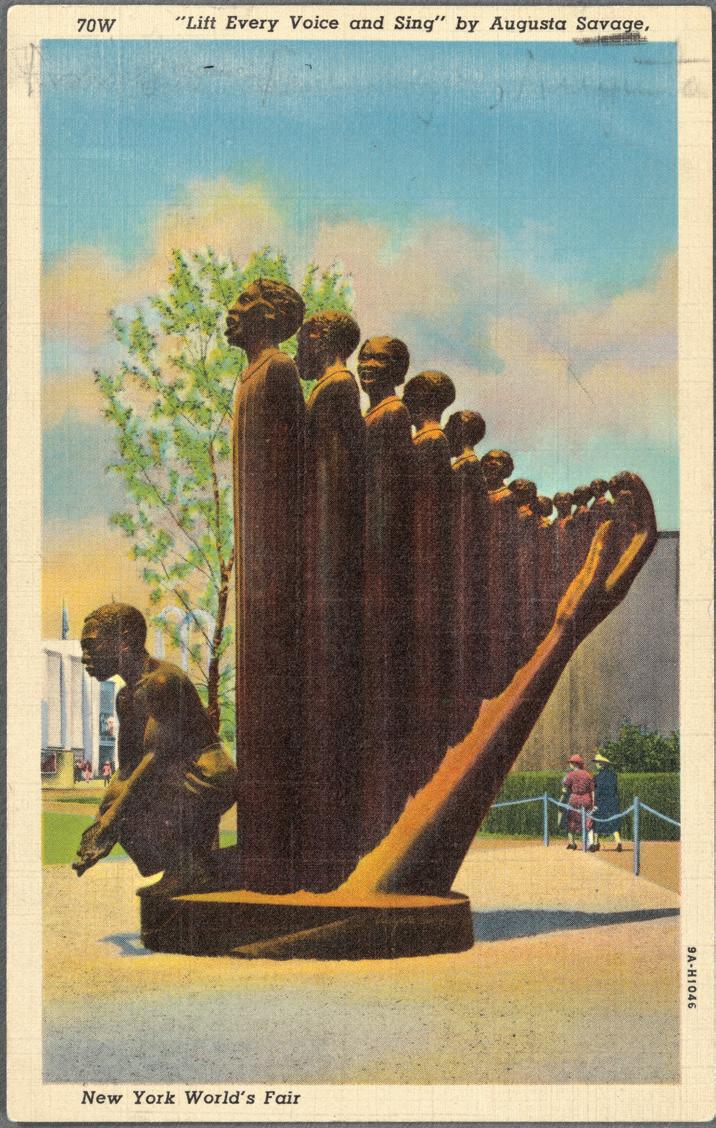
Savage’s enduring impact—along with dozens of others who were active during the Harlem Renaissance—exalted Black cultures, chronicled the daily life of African American communities, and shone a light on civil rights for all citizens. The philosophical and creative movement that evolved examined and centered the experiences of Black people, simultaneously confronting prejudice while celebrating community and culture. The Harlem Renaissance’s far reach and impact on the arts is still palpable today.
All forms of visual art exploded during the Harlem Renaissance. New artistic approaches in painting, sculpture, and photography projected proud representations of Black people reflecting American folk traditions, African motifs, and European modernism. Through their work, African American artists during this time explored themes of identity, social justice, and the complexity of Black life, ultimately challenging racist stereotypes and promoting a positive Black aesthetic. In the pages that follow, we have included brief profiles of some of the key artists most closely associated with the movement, an overview of their work, and ideas
for incorporating their art into the social studies classroom.
Augusta Savage (1892 –1962)
Sculptor, arts educator, and freedom fighter, Augusta Savage was born in Green Cove Springs, Florida. Early on, educators recognized her gift for sculpting figures out of clay and encouraged her further learning. Motivated by this support, Savage arrived in New York City in 1921 to study at Cooper Union. She earned widespread respect for her 1923 bust of W. E. B. Du Bois and her 1928 bust of Marcus Garvey, but her 1929 work Gamin, a bust of a young Black boy, brought her critical acclaim and secured a Rosenwald grant to study abroad.
After two years abroad, Savage returned to Harlem and soon opened the Savage Studio for Arts and Crafts. It was there that Savage produced her finest works with her students, among them Jacob Lawrence, Gwendolyn Knight, Kenneth Clark, Ernest Crichlow, and countless others. Reflecting on Savage’s mentorship, famed visual artist Jacob Lawrence once shared, “If Augusta Savage hadn’t insisted on getting me onto the [Works Progress Administration] project, I don’t think I would ever have become an artist. I’d be doing a menial job somewhere.”1 Ever the advocate of students and Black visual artists, Savage also helped establish the Harlem Artists Guild and the Vanguard Club to further organize around issues of importance to Black visual artists. Both organizations underscore her efforts to cultivate the talents of others and the use of visual art as a tool to tackle social issues and raise Black consciousness.
Teaching Idea: To springboard into a unit of study on the New Negro Movement, teachers can project the image of Augusta Savage’s Lift Every Voice and Sing (The Harp) (Fig. 1) and employ Yenawine’s Visual Thinking Strategy (VTS)2 approach (What is going on in this image? What do you see that makes you say that? What more can we find?). This strategy helps foster critical and evidence-based thinking, as students are encouraged to observe, make inferences, and draw connections with new and prior knowledge.
Social Studies Themes: CULTURE; TIME, CONTINUITY, AND CHANGE; CIVIC IDEALS AND PRACTICES
Gwendolyn B. Bennett (1902-1981)
Gwendolyn B. Bennett spent her early years on the Paiute Indian Reservation in Nevada, where her parents were teachers under the auspices of the Bureau of Indian Affairs. Later, the family moved to Washington, D.C., and after her parents divorced, Bennett lived with her father in New York, where she attended Brooklyn’s Girls’ High School. There, she excelled in art, literature, and theater. In college, Bennett’s interest in art and literature deepened. She took art classes at Columbia University and the Pratt Institute and published poetry and short stories in notable venues such as the NAACP’s The Crisis magazine and the National Urban League’s Opportunity: Journal of Negro Life After studying in Paris, Bennett refined her technique in oil, watercolor, and ink. When she returned to the United States, she taught art at Howard University.
Bennett is recognized as both an accomplished artist and writer who championed the rights of African American women during the Harlem Renaissance. In her artwork, Black women are often centered and exalted in novel ways. As an example, her July 1926 cover for Opportunity: Journal of Negro Life (see Fig. 2), synthesizes aspects of Art Deco with Roaring Twenties fashion imagery to pay homage to Josephine Baker and resulting in an expression of Black Deco that “documents a pivotal moment in art history.”3
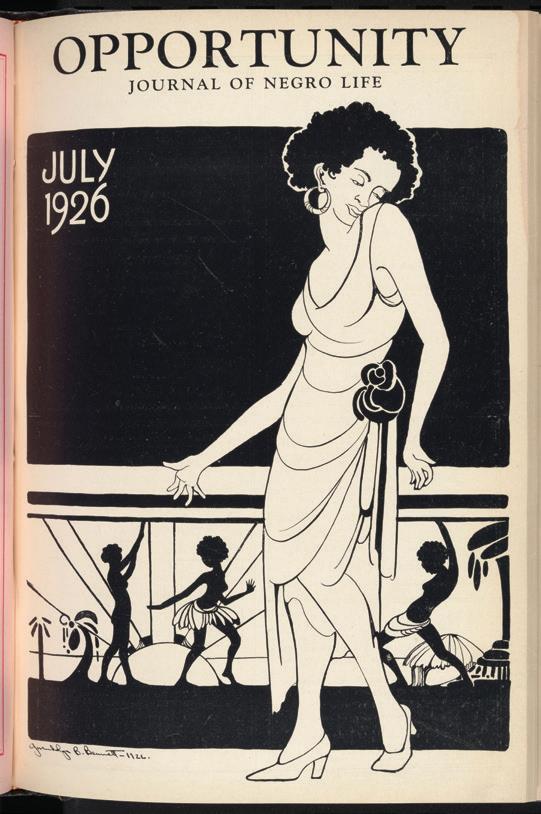
Figure 2. Cover of July 1926 issue of Opportunity by Gwendolyn B. Bennett. (Schomburg Center for Research in Black Culture, Jean Blackwell Hutson Research and Reference Division, The New York Public Library)
Teaching Idea: Using Bennett’s cover design from the July 1926 Opportunity magazine, guide students to critically consider Bennett’s design in a historical and societal context. In a unit examining the 1920s, students can make connections between their existing knowledge and expand their appreciation of the era by engaging in the “Connect, Extend, Challenge” strategy:4
Connect Extend Challenge
How are the ideas and information presented in this artwork by Gwendolyn B. Bennett connected to what you already know? What new ideas do you get by viewing the artwork that extend or push your thinking in new directions? What is still challenging or confusing for you? What questions or wonderings do you have?
site: www.nga.gov/artists/38654-aaron-douglas Into Bondage (1936) and The Judgment Day (1939) both feature haunting, transparent silhouettes that reflect Douglas’s signature style. Ask students to create a two-column compare and contrast chart, noting the similarities and differences between the works: What do they have in common, both in style and in content? How are they different? What might the titles of the works refer to? How do the silhouettes and gestures of the figures convey the central message of each work?
Social Studies Themes: TIME, CONTINUITY, AND CHANGE; GLOBAL
Social Studies Themes: CULTURE; TIME, CONTINUITY, AND CHANGE; PEOPLE, PLACES, AND ENVIRONMENTS
Aaron Douglas (1899-1979)
A native of Topeka, Kansas, Aaron Douglas developed an early interest in art from his mother. After earning a Bachelor of Fine Arts degree from the University of Nebraska, he taught art in Missouri, later moving to Harlem in 1925. Soon, he was illustrating for publications like the NAACP’s The Crisis, and his work was featured in the books of prominent writers such as Claude McKay and Langston Hughes. In 1939, Douglas founded the Department of Art Education at Fisk University, serving as chair until he retired in 1966. He was beloved as a teacher and mentor, helping aspiring African American artists.
Douglas is considered a leading figure of the Harlem Renaissance, tackling racism and segregation in the United States through his paintings, illustrations, and murals. His unique artistic approach featured distinctive silhouettes and geometric shapes, blending African and modern art aesthetics. Many of his works explore connections between African Americans and their African heritage.
Teaching Idea: Invite students to view two works by Douglas on the National Gallery of Art’s web-
Born in 1901 in Florence, South Carolina, painter and graphic artist William Henry Johnson developed an early appreciation for art thanks to newspaper cartoons and encouraging teachers.5 Inspired by his Pullman porter uncle’s stories of Harlem, Johnson sought to experience Harlem for himself.
Through his success at the National Academy of Design and later with the influential Harmon Foundation, Johnson secured funding for study abroad, primarily in Europe. By the late 1930s, he began identifying with the burgeoning Primitivist art movement and came to increasingly adopt that approach over that of his formal academic training.6 Of this new approach, he wrote, “My aim is to express in a natural way what I feel both rhythmically and spiritually.”7
By 1938, the rise of Nazism in Europe and the fear of war prompted Johnson’s return to the United States. Thenceforth, Johnson endeavored to center Black subjects in his works, later reflecting: “I came back with the burning desire to commence where I left off…. This development shall continue for the rest of my life, and [it] is the painting of my people.”8
Some of Johnson’s finest works were produced during World War II, when he elevated the contributions and experiences of Black servicemen and women to the war effort. Following his wife’s death, he turned to religious themes in his paintings,9 with a focus on Black subjects. And, according to art scholar David Driskell, Johnson celebrated themes of Black Christianity like no other. The Fighters for Freedom series was also produced
around this time, offering interpretations of Harriett Tubman, Nat Turner, and Haile Selassie, among others.
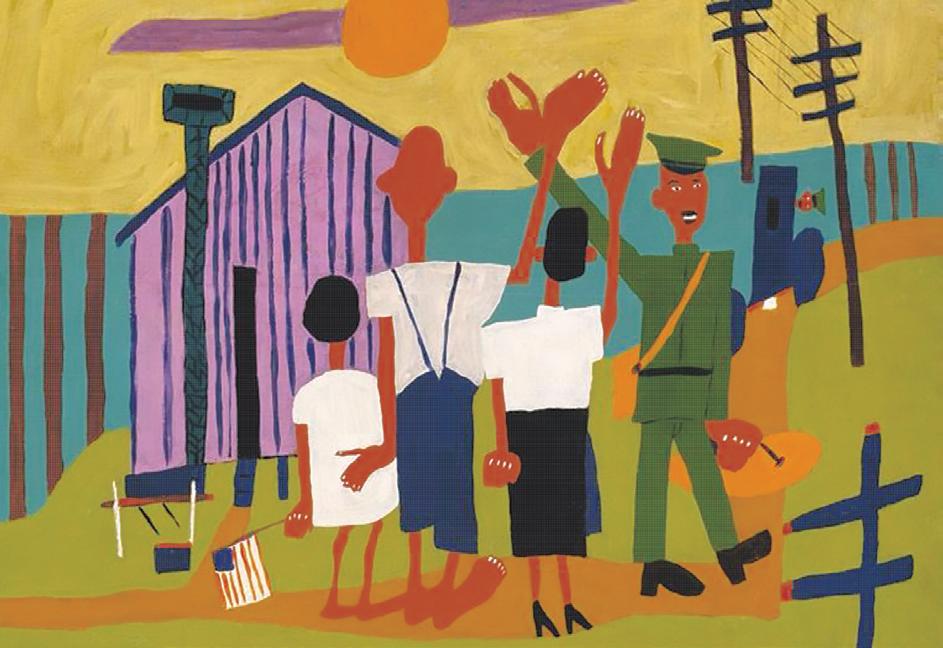
Figure 3. Off to War (ca. 1942-1944) by William Henry Johnson. (Courtesy of Smithsonian American Art Museum, Gift of the Harmon Foundation)
Teaching Idea: As a springboard for a unit of study on World War II, teachers can facilitate critical thinking and reflection by having students consider Johnson’s Off to War (Fig. 3) painting, using NARA’s Analyze an Artwork handout (www. archives.gov/education/lessons/worksheets/ analyze-an-artwork-intermediate). Divided into four parts (i.e., meet the artwork; observe its parts; try to make sense of it; and use it as historical evidence), the handout encourages students to engage with visual art as a medium to understand historical and contemporary social issues. Social Studies Themes: POWER, AUTHORITY, AND GOVERNANCE; GLOBAL CONNECTIONS; CIVIC IDEALS AND PRACTICES
Loïs Mailou Jones (1905-1998)
Born and raised in Boston, Massachusetts, Loïs was encouraged to develop her love of art by her family. She earned degrees in art and art education from the School of the Museum of Fine Arts and the Design Art School, both in Boston. A lifelong learner, she continued to take art classes and hone her craft throughout her lifetime. Her travels in Haiti, France, and parts of Africa inspired Jones to create African-themed work that contributed to the Négritude movement.
Jones’s art reflects the bold patterns, vibrant colors, and motifs associated with the African
diaspora. She was an accomplished artist who created works of textiles, masks, paintings, and more. Some of her most famous works, such as Moon Masque (1971) and Les Fétiches (1938), feature masks that exalt African heritage.
Teaching Idea: After learning about Loïs Mailou Jones’s life and artistic contributions, students can examine her mask-themed works by searching “Loïs Mailou Jones mask art,” noting the geometric shapes and angles, colors, and imagery. They can then use their knowledge of her life and work to create a mask of their own. The organization Art Projects for Kids offers a step-by-step tutorial based on Jones’s style: https://artprojectsforkids. org/lois-mailou-jones-mask-art
Social Studies Themes TIME, CONTINUITY, AND CHANGE; PEOPLE, PLACES, AND ENVIRONMENTS; GLOBAL
Born in Philadelphia, Pennsylvania, to a middleclass Black family, Meta Vaux Warrick Fuller attended an integrated elementary girls’ school and took lessons in piano, guitar, and dance. She ultimately excelled in the field of visual art, specifically sculpture. Her works were often themed around Egypt and Ethiopia and “pushed back on stereotypical images of African Americans in art.”10 For Fuller, art was a political act; it was culture-making and used to develop, promote, and sustain racial consciousness. Works such as In Memory of Mary Turner as a Silent Protest Against Mob Violence (1919) and Ethiopia (ca. 1920) attest to this artistic-philosophic approach.
Although Fuller’s works were widely celebrated in Europe, early on in her career, she was often overlooked in the United States. Consequently, she took to scrapbooking to counter such erasures and situate herself in the historical record.11 Recognized by her contemporaries as a subversive means to document Black life, Fuller’s scrapbook offers insights not only into her contributions to the art world, but also provides richer accounts of Black life in the late nineteenth and early twentieth centuries.12
Teaching Idea: Share with students that scrapbooks were commonly used in the nineteenth and twentieth centuries. Ask students to explore Fuller’s scrapbook online, which documents the mass exodus from the American South to the North
and Northwest known as the Great Migration: https://issuu.com/danforthartmuseum/docs/fuller_ scrapbook. Invite students to create a scrapbook documenting their own family, cultural background, or community as a culminating activity.
Social Studies Themes: CULTURE; TIME, CONTINUITY, AND CHANGE; CIVIC IDEALS AND PRACTICES
Realist painter and arts educator Laura Wheeler Waring is best known for her sensitive portraits of African Americans, as well as her still lifes and landscapes. Throughout her career, she used her artistic talents to preserve Black history and culture by centering and elevating Black leaders and change-makers (e.g., portraits of Dr. Sadie T. M. Alexander and Raymond Pace Alexander) and still others that gave voice to complicated race relations (e.g., Mother and Daughter, 1927) and other social issues. Once considered the principal illustrator for The Crisis, 13 her works compelled viewers to confront social issues of the day while others celebrated Africa’s great civilizations (see Fig. 4). In addition to her work with and for The Crisis, Wheeler Waring illustrated countless books and poems for Black writers.
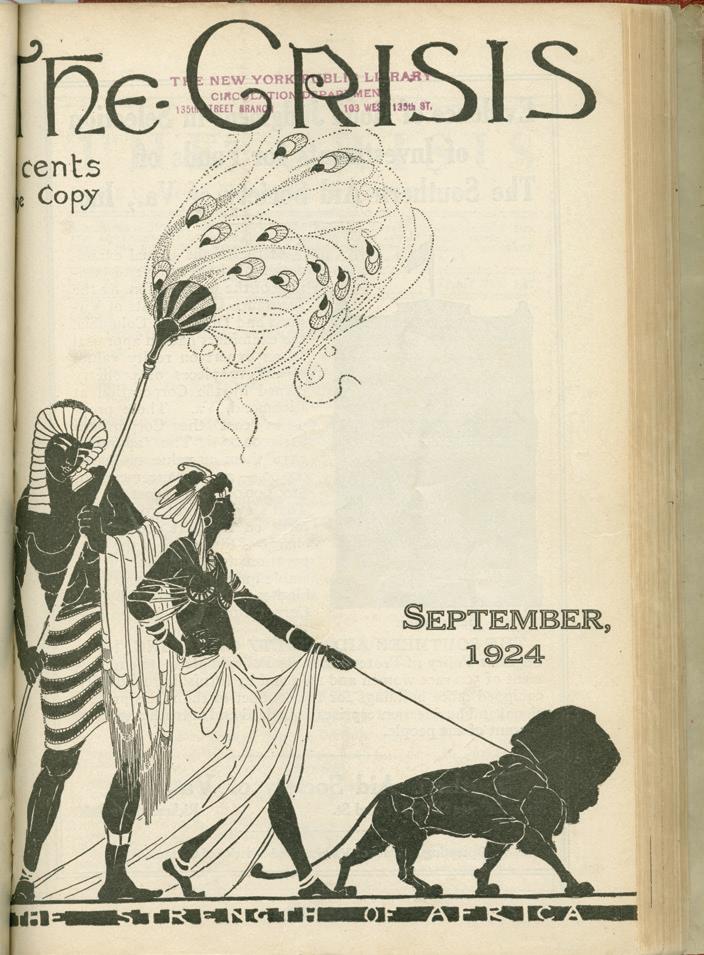
In 1926, Wheeler Waring returned to her alma mater, Cheyney Training School for Teachers at the State Normal School to teach full-time and did so until her retirement in 1945.14 In 1943, she, along with Betsy Reyneau, was commissioned by the Harmon Foundation to paint for an exhibition titled “Portraits of Outstanding American Citizens of Negro Origin.” It is from this collection that Wheeling Waring is most known, with portraits of W. E. B. Du Bois, Marian Anderson, and James Weldon Johnson, for example.
Teaching Idea: The Black press played a critical role in popularizing social issues important to the Black community. After studying the New Negro Movement, teachers can have students role-play as journalists for leading magazines of the period (e.g., The Crisis, The Messenger, or Opportunity) and design a magazine cover that highlights social issues affecting the Black community in the early twentieth century or the efforts of a Harlem Renaissance figure.
Social Studies Themes: PEOPLE, PLACES, AND ENVIRONMENTS; INDIVIDUALS, GROUPS, AND INSTITUTIONS; CIVIC IDEALS AND PRACTICES
Conclusion
While the New Negro Movement’s origins were situated in the neighborhood of Harlem, the “ Harlem Renaissance ” belies the breadth, depth, and connectivity of Black creators and innovators during this era. 15 Nevertheless, the Harlem Renaissance or New Negro Movement was a magnificent time wherein Black creators of all disciplines used their talents to celebrate, elevate, and document Black life. Visual artists, in particular, strategically harnessed their artistic prowess to galvanize populations around Black aesthetics and social change. Still others used their talents to heed Arthur Schomburg’s call to “recover histories of resistance omitted from official narratives.” 16 As Bearden and Henderson (1993) contend, the fact that influential leaders such as Du Bois and Garvey sat for visual artists like Augusta Savage is a testament to the significance of visual art in this remarkable period of Black progress. Like the Black visual artists of the New Negro Movement, we believe visuals are powerful windows into contemporary and historical social issues, and when paired with evidence-based visual learning strategies, they
offer learners meaningful pathways to engage in social studies learning.
Notes
1. Romare Bearden and Harry Henderson, A History of African-American Artists: From 1792 to the Present (Pantheon Books, 1993), 297.
2. Philip Yenawine, Visual Thinking Strategies: Using Art to Deepen Learning across School Disciplines (Harvard Education Press, 2013).
3. Suzanne W. Churchill, “‘The Whole Ensemble’: Gwendolyn Bennett, Josephine Baker, and Interartistic Exchange in Black American Modernism,” Humanities 11, no 74 (2022): 15, https:// doi.org/10.3390/h11040074
4. Harvard Project Zero, Artful Thinking Final Report (Harvard Graduate School of Education, 2006), https://pz.harvard.edu/sites/default/files/ ArtfulThinkingFinalReport-1.pdf
5. Gary A. Reynolds and Beryl J. Wright, Against the Odds: African-American Artists and the Harmon Foundation (Newark Museum, 1989).
6. Bearden and Henderson, A History of AfricanAmerican Artists; Richard J. Powell, Homecoming: The Art and Life of William H. Johnson (National Museum of American Art; Rizzoli International Publications, 1991).
7. David Driskell, “The Flowering of the Harlem Renaissance: The Art of Aaron Douglass, Meta Warrick Fuller, Palmer Hayden, and William H. Johnson,” in Harlem Renaissance: Art of Black America, ed. Mary Schmidt Campbell (Studio Museum in Harlem, 1987), 105–154.
8. Powell, Homecoming, 150.
9. Powell, Homecoming
10. Raffaele Passannante, “A Sculptor’s Legacy: Meta Vaux Warrick Fuller’s Scrapbook,” Woman’s Art Journal 45, no. 1 (2024): 4.
11. Erin Schneider, “Asserting Agency: Meta Vaux Warrick Fuller’s Scrapbook,” Panorama: Journal of the Association of Historians of American Art 8, no. 2 (2022): 1–15, https://doi. org/10.24926/24716839.15090.
12. Schneider, “Asserting Agency.”
13. Amy Helene Kirschke, “Laura Wheeler Waring and the Women Illustrators of the Harlem Renaissance,” in Women Artists of the Harlem Renaissance, ed. Amy Helene Kirschke (University Press of Mississippi,
2014), 86–112, https://doi.org/10.14325/mississi ppi/9781628460339.003.0005
14. Cheyney University of Pennsylvania is the current name of the institution formerly known as the State Normal School.
15. Bearden and Henderson, A History of AfricanAmerican Artists; Henry Louis Gates Jr. and Nellie Y. McKay, eds., The Norton Anthology of African American Literature, 2nd ed. (W. W. Norton, 2003).
16. Kobena Mercer, Alain Locke and the Visual Arts (Yale University Press; Hutchins Center for African & African American Research, 2022), https://doi. org/10.37862/aaeportal.00339, 99
Bárbara C. Cruz is Professor of Social Science Education at the University of South Florida. Her community-engaged teaching and research interests include social studies teacher preparation, global and multicultural perspectives in education, English learners, and visual art across the curriculum.
Clarence V. Walker, Jr. is Assistant Professor of Social Science Education at the University of South Florida. His work explores innovative approaches to teacher learning, particularly at the intersection of social studies education, visual art, and community-engaged research with an emphasis in Black Studies.
Acknowledgement: We wish to thank the University of South Florida’s Research Council and the Department of Teaching & Learning for their generous support in securing select images in this article and issue.
©2026 National Council for the Social Studies https://doi.org/10.66392/VQTB1985
Paul G. Sauberer
The Harlem Renaissance is frequently taught as a brief cultural high point of the 1920s—often reduced to jazz music, poetry, and a handful of well-known figures. In many classrooms, it appears as an isolated moment rather than a sustained movement shaped by migration, racial violence, political struggle, and creative resistance. As a result, students may leave with an appreciation for the movement’s art, but little understanding of why it mattered or who it was for.
Teaching the Harlem Renaissance through sound, sight, and story allows students to encounter the era as a response to lived experience. Music, visual art, photography, and literature reveal how artists and writers used creative expression to confront racism, reshape public narratives, and imagine new futures for Black communities. These sources help students recognize the Harlem Renaissance not as a distant historical moment, but as a conversation about identity, voice, and belonging that continues today.
This annotated bibliography presents curated online and print resources that can be used to teach the Harlem Renaissance across grades 5-12, along with classroom strategies that support inquiry, discussion, and student analysis. The collected resources are intended to support the articles in this special issue and serve to enhance traditional textbook treatments of the topic. These resources are designed to help teachers weave cultural expression into broader discussions of history, civics, and social change, rather than treating the Harlem Renaissance as a stand-alone unit. The resources that follow are grouped around three entry points:
historical context, creative expression, and literary voice.
Before students can understand the creative explosion of the Harlem Renaissance, they need a sense of the historical conditions that set the stage for it. The Great Migration, World War I, and persistent racial violence shaped the lives of Black Americans and influenced how artists, writers, activists, and others used their work to respond to these realities. The following resources help students situate the Harlem Renaissance within this broader historical context.
Harlem Renaissance Teacher ’s Guide and Primary Sources (Library of Congress) is a collection of classroom-ready materials that introduces students to the historical context of the Harlem Renaissance. Using photographs, music, and primary documents, students investigate how the Great Migration, World War I, and early twentieth-century America shaped the movement and its cultural expression. www.loc.gov/classroom-materials/ harlem-renaissance
National Museum of African American History and Culture) provides an overview of the social and political forces that shaped the Harlem Renaissance. Through historical narrative and supporting examples, students examine how migration, iden-
tity, and cultural expression intersected during this period. https://nmaahc.si.edu/explore/stories/ new-african-american-identity-harlem-renaissance
Harlem Hellfighters (Lucas Films) is a 30-minute documentary that highlights the history and legacy of the 369th Infantry Regiment, an all-Black unit known as the Harlem Hellfighters that served during World War I. Through historical narration and visual storytelling, students examine themes of racial discrimination, patriotism, military service, and public memory while considering how Black soldiers’ contributions were celebrated abroad yet often minimized at home. www.youtube.com/ watch?v=dt7Y62RXk0c
Art, Music, and Visual Culture: Seeing and Hearing the Movement
The arts and music were central to the Harlem Renaissance and often serve as students’ first entry points into the movement. Visual imagery and sound allow students to explore how visual artists and musicians challenged stereotypes and created new representations of Black life and culture.
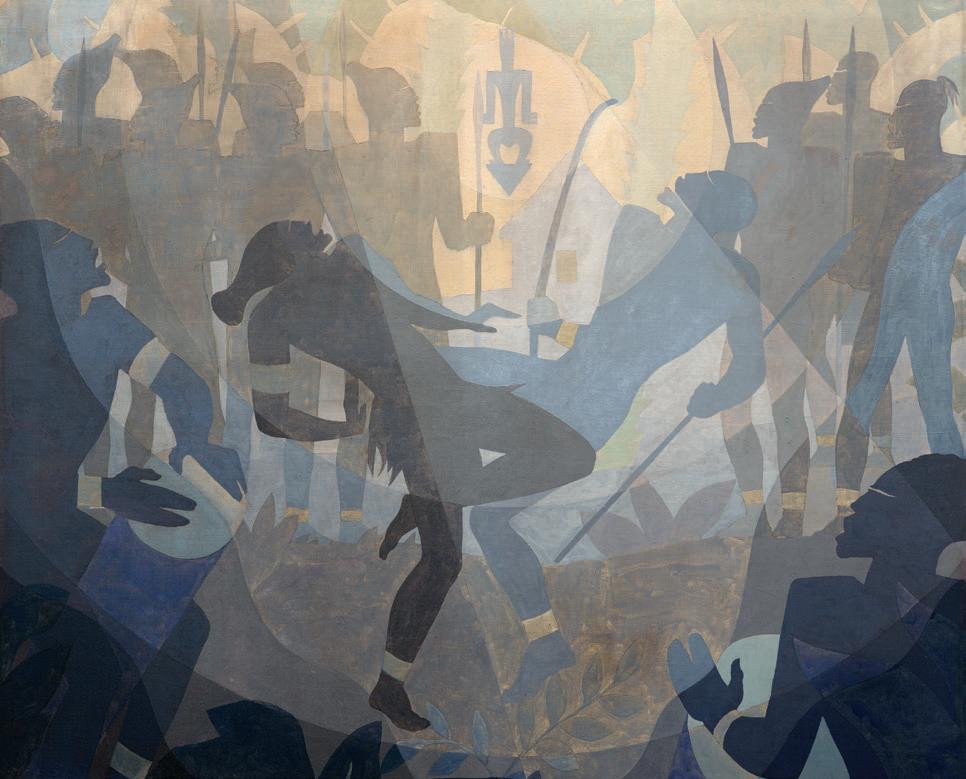
communicated pride, resistance, and collective memory during the Harlem Renaissance using one of the strategies discussed earlier in this special issue. https://digitalcollections.nypl.org/ items/242f84e0-c6f4-012f-6fee-58d385a7bc34
Augusta Savage Research Guide (New York Public Library). This guide supports student and teacher research on Harlem Renaissance sculptor and arts educator Augusta Savage. Through biographical framing and organized links to archival collections, images, readings, and related resources, students investigate Savage’s artistic contributions, her role in building Black artistic communities (including her teaching and mentorship), and how sculpture and public art served as sites of representation, activism, and cultural pride during the period. https://libguides.nypl.org/ AugustaSavage
Drop Me Off in Harlem (The Kennedy Center) is an interactive resource for grades 6–12 that explores the people, places, and collaborations that shaped the Harlem Renaissance. Using maps, primary sources, and music, students investigate how sound, art, and literature intersected to reflect community life and cultural expression during the period. www.kennedy-center.org/education/ resources-for-educators/classroom-resources/ media-and-interactives/interactives/drop-me-offin-harlem
James Van Der Zee Photography (Williams College Art Museum & The National Gallery of Art) comprises collections that document Black life, style, and community in Harlem during the Renaissance. Through visual analysis of curated images and accompanying contextual media, students examine self-representation, community pride, and how photography challenged dominant cultural narratives. https://artmuseum.williams.edu/ collection/featured-acquisitions/james-van-derzee and www.nga.gov/exhibitions/james-van-derzees-photographs-portrait-harlem.html
Aspects of Negro Life by Aaron Douglas (New York Public Library) is a four-part mural series that explores Black history, identity, and cultural continuity through symbolism, movement, and African imagery. Through close observation and interpretation, students examine how visual art
National Gallery of Art Video ( Introduction to the Show: James Van Der Zee’s Photographs ): www.youtube.com/watch?v=qW0ZF3hkZlw continued on page 153 after Notables
As our world becomes increasingly connected, global issues become entangled with students’ daily lives. To prepare students as globally aware future leaders, social studies curricula must re ect the reality of these current global challenges. Drawing from theories and frameworks in global social studies education, Jing A. Williams, Bárbara C. Cruz, and Anatoli Rapoport provide practical, cross-curricular methods for secondary social studies teachers to incorporate global education into their daily teaching.
Organized by common social studies content areas, each chapter identi es topics that support globalmindedness. is book also includes powerful vignettes based on real classroom interactions and innovative, classroom-tested teaching approaches and strategies that engage students in activities that hold personal meaning for them. Bene tting educators at all levels, Teaching With a Global Perspective: Approaches and Strategies for Secondary Social Studies Teachers encourages educators to cultivate global awareness, challenge their students’ thinking, and support their development as informed citizens in an interconnected world.
Member / List Price:
https://members.socialstudies.org/store





Approaches and Strategies for Secondary Social Studies Teachers






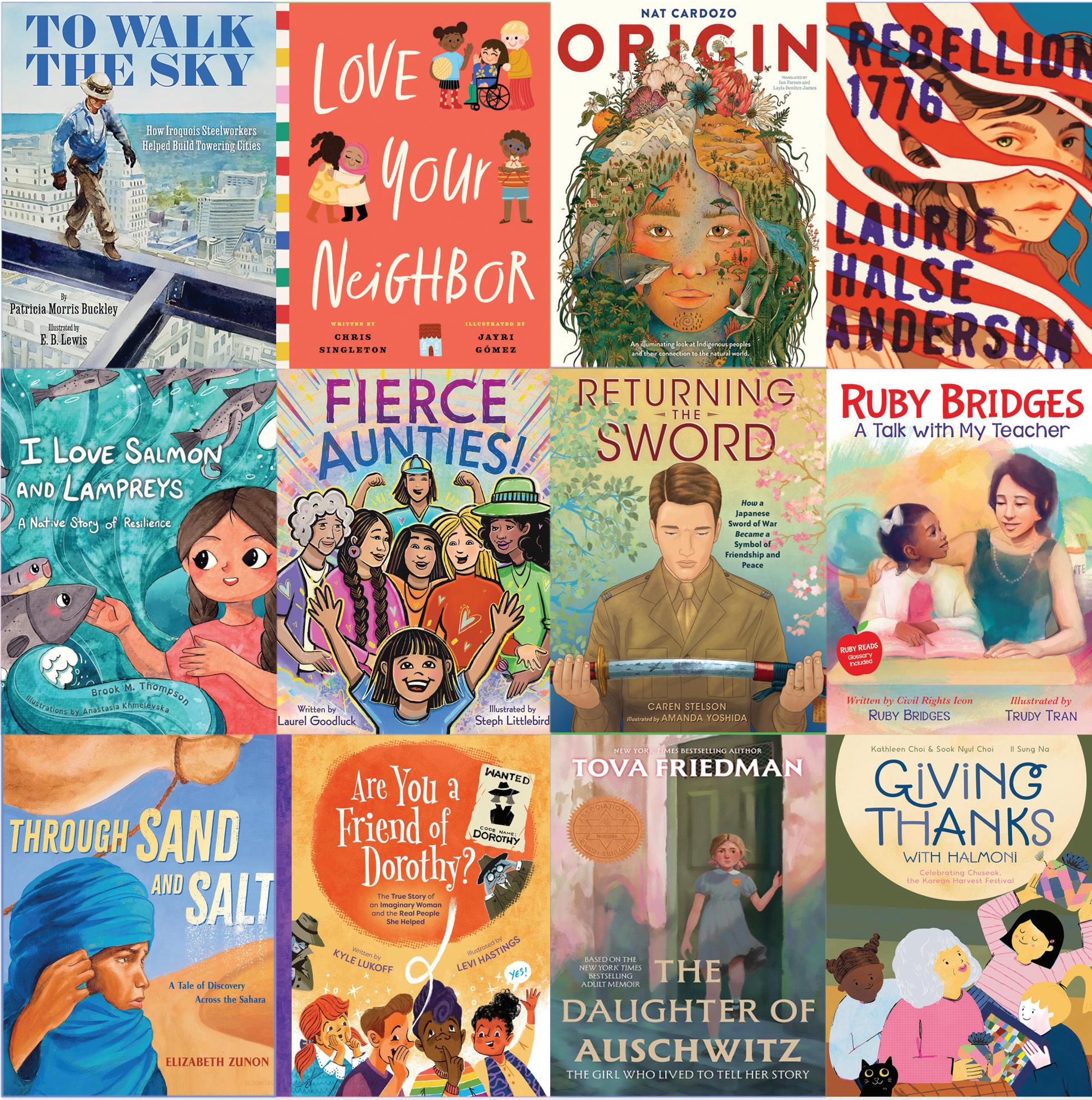
The books that appear in this annotated list were evaluated and selected by a Book Review Committee appointed by the National Council for the Social Studies (NCSS) and assembled in cooperation with the Children’s Book Council (CBC). NCSS and CBC have cooperated on this annual bibliography since 1972. Books selected for this bibliography were published in 2025 and were written for children in grades K-12. The Book Review Committee looks for books that emphasize human relations, represent a diversity of groups and are sensitive to a broad range of cultural experiences, present an original theme or a fresh slant on a traditional topic, are easily readable and of high literary quality, have a pleasing format, and, where appropriate, include illustrations that enrich the text. Each book is read by several reviewers, and books are included on the list by committee assent; the annotations do not necessarily reflect the judgment of the entire committee.
Publishers’ addresses are available in standard reference works such as Children’s Books in Print (R.R. Bowker) and Literary Market Place (R.R. Bowker), and from CBC. CBC’s Members List may be viewed at cbcbooks.org/our-members. Titles are arranged by broad subject categories. Although many are appropriate for more than one category, they have been placed where their usefulness in social studies education appears greatest. Annotators have also indicated the thematic strands (shown below) from National Curriculum Standards for Social Studies: A Framework for Teaching, Learning, and Assessment, to which the book relates.
Thematic Strands of the NCSS Curriculum Standards for Social Studies CULTURE
TIME, CONTINUITY, AND CHANGE
PEOPLE, PLACES, AND ENVIRONMENTS
INDIVIDUAL DEVELOPMENT AND IDENTITY
INDIVIDUALS, GROUPS, AND INSTITUTIONS
POWER, AUTHORITY, AND GOVERNANCE
PRODUCTION, DISTRIBUTION, AND CONSUMPTION
SCIENCE, TECHNOLOGY, AND SOCIETY
GLOBAL CONNECTIONS
CIVIC IDEALS AND PRACTICES
1. The titles marked with an asterisk are Selectors’ Choices—books that individual committee members responded to with particular enthusiasm; 2. Title: Subtitle; 3. Author(s); 4. Illustrator(s); 5. Publisher; 6. Number of pages; 7. International Standard Book Number (ISBN); 8. Price as of January 2026; 9. Reading levels: P: Primary (K-2), I: Intermediate (3-5), M: Middle (6-8), H: High (9-12). They are intended as guidelines and are not meant to limit the potential use of titles; 10. Brief descriptive annotation, plus notations about additional textual materials, if any; 11. Initials indicating the reviewer responsible for the annotation (see list at right); 12. Thematic strands of the curriculum standards for social studies (see above).
Elaine Alvey (EA), Assistant Professor of Education, University of Alaska, Southeast Juneau, AK
Mary L. Brennan (MLB), Student Achievement / ELL Coordinator, Fountain-Fort Carson School District 8, Fountain, CO
Dessilyn Chappell (DC), Assistant Professor of Elementary Education, University of West Alabama, Livingston, AL
Debra A. Demers (DAD), Teacher Learning Coordinator, George Washington Teacher Institute, Mount Vernon, VA
Seunghoon Han (SH), Assistant Professor, University of Northern Iowa, Cedar Falls, IA
Magdalena Mata (MM), National Board Certified Teacher, Texas National Board Coalition for Teaching, Boerne, TX
Taylor Mayer (TM), Director of Organizational & Talent Development, Think Education, San Diego, CA
Stephanie M. Nichols (SMN), Second Grade Teacher, Narragansett Elementary School, Gorham, ME
Paul G. Sauberer (PGS), Doctoral Candidate, University of South Florida, Tampa, FL
Tanya M. Schmidt (TMS), Education Coordinator, Oshkosh Area School District, Oshkosh, WI
Stefanie Wager (SW), Past President (2020-2021), National Council for the Social Studies, Grimes, IA
Valerie Struthers Walker (VSW), Professor of Education, Gustavus Adolphus College, St. Peter, MN
Jessica L. Walsh (JLW), Teacher, Indian Prairie School District 204, Aurora, IL
Ablaze: The Story of America’s First Female Smokejumper. Jessica Lawson. Illustrated by Sarah Gonzales. Penguin Young Readers / Viking Books for Young Readers. 40pp. ISBN 9780593463659. $18.99. (P) A lyrical, biographical picture book about Deanne Shulman, the first female smokejumper in US history, depicting her path from nature lover to wildland firefighter. It highlights determination, gender equality in work roles, and environmental stewardship. Includes Author’s Note, Glossary. (MLB)
Dream a Dress, Dream a Poem: Dressmaker and Poet, Myra Viola Wilds (A Picture Book). Nancy Johnson James. Illustrated by Diana Ejaita. Abrams Books / Abrams BFYR. 32pp. ISBN 9781951836535. $18.99. (P) This lyrical picture book biography introduces readers to Myra Viola Wilds, a Black dressmaker and poet whose creativity and perseverance reveal how art and self-expression can flourish despite social and historical barriers. Includes Author’s Note. (TM)
Alberto Salas Plays Paka Paka con la Papa . Sara Andrea Fajardo. Illustrated by Juana Martinez-Neal. Macmillan Children’s Publishing Group / Roaring Brook Press. 40pp. ISBN 9781250838612. $19.99. (P, I) Ready or not, Alberto Salas is on the hunt to seek out papas (potatoes) from all around the Americas before these delightful, special spud varieties go extinct. Includes Cultural Dictionary, More About Alberto Salas, More About Potatoes, Author and Illustrator Notes. (JLW)
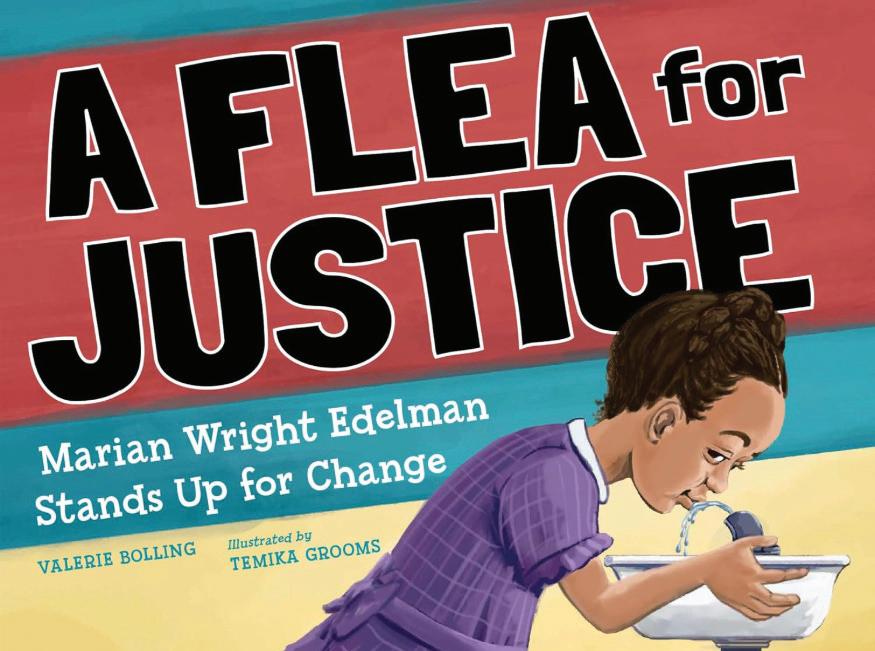
Fanny’s Big Idea: How Jewish Book Week Was Born. Richard Michelson. Illustrated by Alyssa Russell. Penguin Young Readers / Rocky Pond Books. 40pp. ISBN 9798217003259. $18.99. (P) This lively picture book tells the story of a Boston librarian’s push for inclusivity. Her efforts developed into an annual celebration of Jewish books and culture that continues 100 years later. Includes Additional Information, Bibliography. (TMS)
A Banquet for Cecilia: How Cecilia Chiang Revolutionized Chinese Food in America. Julie Leung. Illustrated by Melissa Iwai. Little, Brown BFYR / LBYR Plus. 40pp. ISBN 9780759557413. $18.99. (P) Cecilia Chiang’s life story connects migration, cultural exchange, and entrepreneurship, showing how foodways and culinary innovation reshaped American perceptions of Chinese culture and identity in the United States. Includes Author’s Note. (SH)
The Daughter of Auschwitz: The Girl Who Lived to Tell Her Story. Tova Friedman. HarperCollins / Quill Tree Books. 208pp. ISBN 9780063381544. $18.99. (M) An account of Tova Friedman’s experiences as one of the youngest Auschwitz survivors, this memoir offers a powerful, personal perspective on the Holocaust, World War II, and human endurance. (MLB)
A Flea for Justice: Marian Wright Edelman Stands Up for Change. Valerie Bolling. Illustrated by TeMika Grooms. Charlesbridge. 32pp. ISBN 97816235 45826. $17.99. (I) Even as a young girl, Marian Wright Edelman was a “flea for justice,” determined to make people itch. From swapping segregated water fountain signs to becoming Mississippi’s first Black woman lawyer and founding the Children’s Defense Fund, this picture book celebrates her tireless activism. Includes Timeline, Author’s Note, Bibliography. (EA)
Fred Flips! How One Gymnast Realized that Differences Can Become Strengths. Frederick Richard with Ryan G. Van Cleave. Illustrated by Darcie Olley. Bushel & Peck Books. 32pp. ISBN 9781638192299. $18.99. (P, I) An Olympian’s inspiring story of perseverance as a Black boy in a female-dominated sport, overcoming racism and bullying while learning to embrace the power of standing out. Includes About Frederick “Flips” Richard. (MLB)
Frida Kahlo’s Flower Crown . Nydia Armendia-Sánchez. Illustrated by Loris Lora. Abrams Books / Abrams BFYR. 33pp. ISBN 9781949480351. $19.99. (P) This beautiful, vivid book uses poetry to introduce young readers to Frida Kahlo through the flowers and plants of her garden. The imaginative text celebrates art, identity, creativity, and self-expression. Includes Glossary. (MM)
Hick: The Trailblazing Journalist who Captured Eleanor Roosevelt’s Heart . Sarah Miller. Random House Children’s Books / Random House Studio. 384pp. ISBN 9780593649091. $20.99. (M, H) An informational biography of journalist Lorena Hickok, tracing her groundbreaking career and intimate relationship with Eleanor Roosevelt through letters that illuminate power, gender, and belonging in Depression-era America. (PGS)
A Hug Like Michelle’s, A Voice Like Beyonc é’ s Carole Boston Weatherford. Illustrated by Savanna Durr. Abrams Books / Appleseed. 40pp. ISBN 9781419771507. $18.99. (P)
I Wish I Didn’t Have to Tell You This . Written and illustrated by Eugene Yelchin. Candlewick Press. 432pp. ISBN 9781536215533. $22.99. (H) This graphic memoir follows a harrowing 1980s quest for artistic freedom in Soviet Russia, chronicling Eugene Yelchin’s journey from a Siberian asylum to a hard-won escape to America. (EA)
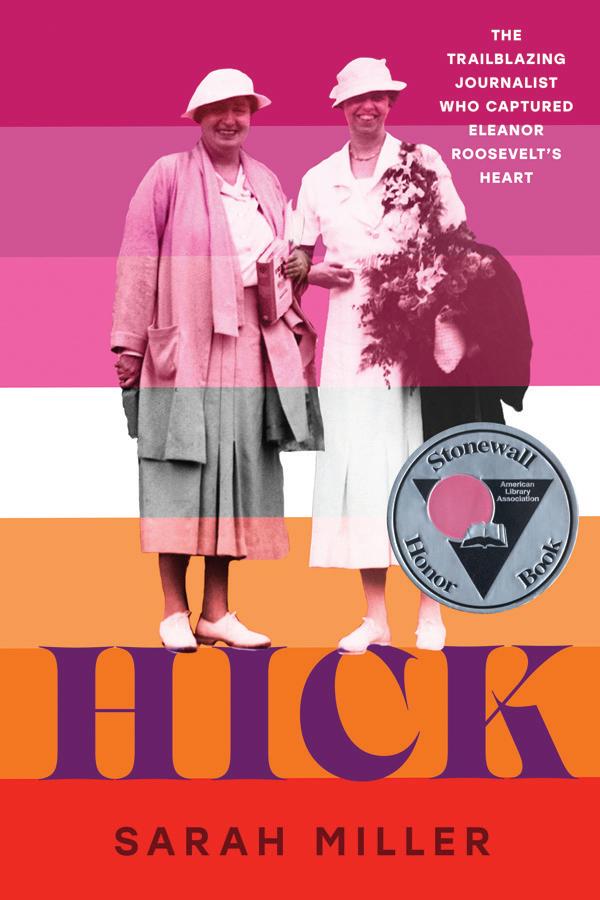
In this celebration of Black history and excellence, a young girl sees herself in 17 notable and inspiring Black women, from ballerina Misty Copeland to Supreme Court Justice Ketanji Brown Jackson. Includes Author’s Note, Mini Biographies. (SMN)
I am Sally Ride . Brad Meltzer. Illustrated by Christopher Eliopoulos. Penguin Young Readers / Rocky Pond Books. 42pp. ISBN 9780593533420. $16.99. (P) Sally Ride’s journey from curious child to first American woman in space highlights gender equity, scientific curiosity, and public history, emphasizing role models and civic inspiration in US space exploration. Includes Timeline, Sources, Future Reading for Kids. (SH)
Imogen: The Life and Work of Imogen Cunningham . Elizabeth Partridge. Illustrated by Yuko Shimizu. Penguin Young Readers / Viking BFYR. 40pp. ISBN 9781984835185. $18.99. (P) When Imogen was born in 1883, girls weren’t encouraged to be artists. With her father’s support, she found her way to art, and then to photography, creating portraits celebrated for their luminous light and experimental vision. Includes Author’s Note with Primary Sources, Timeline. (VSW)
Jella Lepman and Her Library of Dreams: The Woman Who Rescued a Generation of Children and Founded the World’s Largest Children’s Library . Katherine Paterson. Illustrated by Sally Deng. Chronicle Books. 112pp. ISBN 9781452182629. $21.99. (I) In the aftermath of World War II, Jella Lepman dedicated her life to collecting books to help young people heal, ultimately creating the world’s largest library for children’s literature. (JLW)
Lady of the Lines: How Maria Reiche Saved the Nazca Lines by Sweeping the Desert . Michaela Maccoli. Illustrated by Elisa Chavarri. Astra BFYR / Astra Young Readers. 48pp. ISBN 9781662620096. $18.99. (I) This narrative chronicles scientist Maria Reiche’s preservation and protection of pre-Columbian geoglyphs etched into sands in southern Peru. Includes Photo and Brief Information about Maria, Timeline, Bibliography. (MM)
Let’s Fly: Barrington Irving’s Record-Breaking Flight Around the World . Barrington Irving and Chana Stiefel. Illustrated by Shamar Knight-Justice. Penguin Young Readers / Dial. 40pp. ISBN 9780593532133. $18.99. (P) This inspiring biography tells the story of Barrington Irving’s determination, courage, and dream to fly solo around the world, making history as the youngest person and first Black man to do so. Includes Timeline, Bibliography. (SW)
A Line Can Go Anywhere: The Brilliant Life of Artist Ruth Asawa . Caroline McAlister. Illustrated by Jamie Green. Macmillan Children’s Publishing Group / Roaring Brook Press. 40pp. ISBN 9781250310378. $19.99. (P, I) Drawing inspiration from her childhood in a Japanese American incarceration camp, Ruth Asawa turned hardship into art, creating delicate wire sculptures and dedicating her life to arts education. Includes Author’s Notes, Bibliography. (DAD)
even in the hardest circumstances. Includes Author’s Note, Selected Bibliography, Food Glossary, Brief Background on Refugees and Refugee Camps. (SH)
Marjory’s River of Grass: Marjory Stoneman Douglas, Fierce Protector of the Everglades . Written and illustrated by Josie James. Little, Brown BFYR / Christy Ottaviano Books. 40pp. ISBN 9780316446914. $18.99. (P) Marjory Stoneman Douglas dedicated her life to defending the Florida Everglades, demonstrating how individual activism can protect land and water for future generations. Includes Author’s Note, Selected Bibliography, Source Notes, List of Florida Conservatories. (SH)
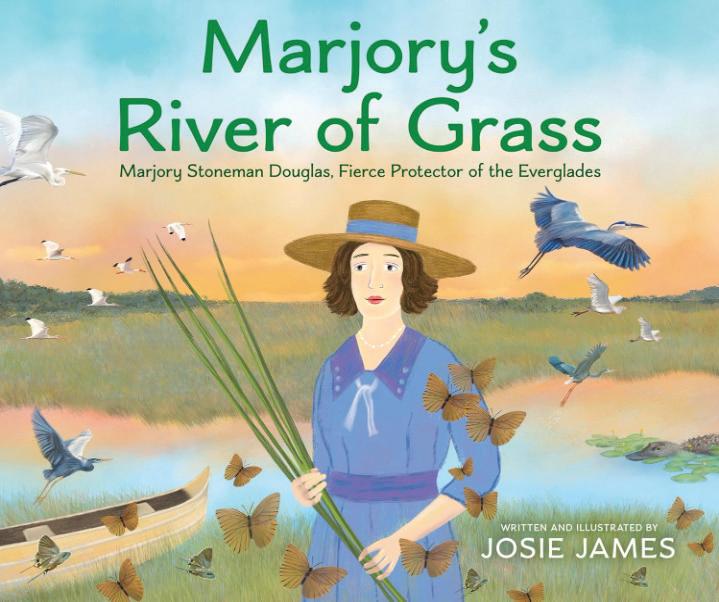
Make a Pretty Sound: A Story of Ella Jenkins—The First Lady of Children’s Music . Traci N. Todd. Illustrated by Eleanor Davis. Chronicle Books. 60pp. ISBN 9781452170640. $19.99. (P) From the bustling streets of Bronzeville in Chicago, young Ella Jenkins danced to the beat of her own drum. As an adult, she travels the globe and brings back dazzling sounds to delight young people. Includes About Ella Jenkins, Author’s Note, Selected Bibliography, Timeline. (JLW)
Mariam’s Dream: The Story of Mariam Al-Shaar and Her Food Truck of Hope . Leila Boukarim. Illustrated by Sona Avedikian. Chronicle Books. 44pp. ISBN 9781797222332. $17.99. (P) Mariam Al-Shaar’s journey to build a women-run kitchen in a refugee camp shows how courage, teamwork, and determination can create opportunity and hope,
Maya Angelou Finds Her Voice . Connie Roop and Peter Roop. Illustrated by Noa Denmon. Simon & Schuster Children’s Publishing / Aladdin. 40pp. ISBN 9781481449267. $19.99. (P) Rooted in Maya Angelou’s early life experiences and a period in which she lost her voice due to a traumatic event, this book chronicles her journey to becoming a powerful writer and speaker. Includes Author’s Note, Biography. (MLB)
The Music Inside Us: Yo-Yo Ma and His Gifts to the World (A Picture Book Biography). James Howe. Illustrated by Jack Wong. Abrams Books / Abrams BFYR. 48pp. ISBN 9781419755217. $19.99. (P) This lyrical biography traces Yo-Yo Ma’s journey from child prodigy to global ambassador, celebrating how his music transcends borders to foster universal human connection and a deeper understanding of our shared world. Includes Timeline, Author’s Note, Illustrator’s Notes, Bibliography, Resources. (TMS)
Never Silent: A Hiroshima Survivor’s Story. Setsuko Thurlow & Kathy Lowinger. Illustrated by Michelle Theodore. Annick Press. 64pp. ISBN 9781773219851. $22.99. (M) Setsuko Thurlow’s first-person account of life before, during, and after the bombing of Hiroshima blends memory, history, and later activism to humanize the lasting impacts of nuclear weapons. Includes Historical Context Section, Timeline. (MLB)
Abdulrahman Sori, an African prince sold into slavery in the United States, who was eventually able to return to Liberia 40 years later. The story highlights Sori’s faith as a Muslim, education, intelligence, and creativity. Includes Author’s Note. (VSW)
One Girl’s Voice: How Lucy Stone Helped Change the Law of the Land. Vivian Kirkfield. Illustrated by Rebecca Gibbon. Astra BFYR / Calkins Creek. 40pp. ISBN 9781662680458. $18.99. (I) Share Lucy Stone’s inspiring journey as a 19th-century suffragist and abolitionist, highlighting her advocacy for girls’ education, persistence at Oberlin College, activism, and lasting influence on women’s rights and laws. Includes Author’s Note, Bibliographical References, Timeline / Fun Facts, Picture Credits. (MLB)
She Persisted: Kamala Harris. Raakhee Mirchandani (with introduction by Chelsea Clinton). Illustrated by Alexandra Boiger and Jessica W. Clark. Penguin Young Readers / Philomel Books. 112pp. ISBN 9798217039593. $6.99. (I) An informational biography detailing Kamala Harris’s life and career, highlighting her public service, perseverance, and leadership while inviting readers to connect her story to their own. (PGS)
Oppenheimer and the Atomic Bomb. Young Readers’ Edition of American Prometheus: The Triumph and Tragedy of J. Robert Oppenheimer. Kai Bird and Martin J. Sherwin. Adapted by Eric S. Singer. Penguin Young Readers / G.P. Putnam’s Sons BFYR. 336pp. ISBN 9780593856451. $18.99. (M) A remarkable biography for younger readers on Oppenheimer, one of the 20th century’s most brilliant physicists, and his contributions to the scientific community. It describes the origins and consequences of the Cold War. Includes Author & Adaptor Notes, Index, Primary Sources, Photos, Charts, Quotes. (DAD)
Prince Among Slaves: The Remarkable True Story of an African Prince Enslaved in Mississippi, and His Journey Home. N. H. Senzai. Illustrated by Anna Rich. Penguin Young Readers / Nancy Paulsen Books. 48pp. ISBN 9781984816986. $19.99. (P) A powerful biography of
Snowshoe Kate and the Hospital Built for Pennies. Margi Preus. Illustrated by Jaime Zollars. Abrams Books / Abrams BFYR. 48pp. ISBN 9781419756719. $19.99. (P) This picture book celebrates Kate Pellam, a country doctor in 1950s rural Wisconsin who delivered some 4,000 babies and inspired her community to start a penny drive to build a local hospital. Includes Author’s Note with Primary Sources, Illustrator’s Note, Bibliography. (VSW)
That Swingin’ Sound! The Musical Friendship of Ella Fitzgerald and Louis Armstrong. Rekha S. Rajan. Illustrated by Ken Daley. Simon & Schuster Children’s Publishing / Beach Lane Books. 48pp. ISBN 9781665957038. $19.99. (P) This lyrical picture book biography traces the intertwined lives of jazz legends Ella Fitzgerald and Louis Armstrong, foregrounding collaboration, cultural history, and friendship within the social and musical worlds of 20th-century America. Includes Author’s Note, Illustrator’s Note, Recommended Reading for Kids. (SH)
To the Top of the World: Barbara Hillary, the First Black Woman to Reach the North and South Poles. Deborah Blumenthal. Illustrated by Anastasia Magloire Williams. Simon & Schuster Children’s Publishing / Atheneum BFYR. 40pp. ISBN 9781665927734. $19.99. (P) At 75, Barbara Hillary defied illness and hardship to become the first Black woman to reach both the North and the South Poles. This inspiring biography celebrates her lifelong perseverance and her mission to combat climate change. Includes Author’s Note. (TMS)
Allyship as Action: 7 Ways to Advocate for Others. Tanya Boteju. Illustrated by Bithi Sutradhar. Orca Book Publishers. 48pp. ISBN 9781459840478. $19.95. (M) This essential guide empowers young readers to become strong allies, moving beyond performative gestures. Through realistic scenarios, it teaches how to acknowledge privilege, navigate mistakes, and take action in the pursuit of equity. Includes Index, Supplemental Resources. (EA)
Vanished: Seven Women Magicians
Who Simply Disappeared. Anna Hays. Illustrated by Mary Kate McDevitt. Random House Children’s Books / Bright Matter Books. 240pp. ISBN 9780593712559. $18.99. (I, M) An intriguing exploration of seven pioneering female magicians whose talents challenged expectations, yet whose lives and legacies were overshadowed by male peers. Includes Bibliography. (SW)
Black Girl Power: 15 Stories of Celebrating Black Girlhood. Leah Johnson (editor). Disney Hyperion / Freedom Fire. 320pp. ISBN 9781368098960. $18.99. (M) Fifteen acclaimed African American authors present stories that span realistic and speculative fiction, exploring everything from anxiety and friendship conflicts to supernatural twists, family tensions, and forging one’s own path. (VSW)
Who Discovered How to Breathe Underwater? Jacques Cousteau. Ned Wolfe. Illustrated by Caroline Hu. Penguin Young Readers / Penguin Workshop. 64pp. ISBN 9780593385647. $7.99. (I) This graphic novel explores the life of Jacques Cousteau and his invention of the Aqua-Lung, the modern scuba device that helped change underwater exploration. Includes Timeline, Bibliography. (DC)
Women Who Dared: 52 Stories of Fearless Daredevils, Adventurers, and Rebels. Linda Skeers. Illustrated by Livi Gosling. Sourcebooks / Sourcebooks Explore. 128pp. ISBN 9781728297781. $16.99. (M) This informational collection profiles 52 women from diverse cultures and time periods, highlighting courage, risk-taking, and perseverance while encouraging readers to reconsider who shapes history and why their stories matter. (TM)
A Festa for Luana. Joana Pastro. Illustrated by Duda Oliva. Simon & Schuster Children’s Publishing / Atheneum BFYR. 40pp. ISBN 9781665924795. $19.99. (P) A charming and adorable story of a Brazilian American girl finding her identity after moving to Brazil. Features expressive, painterly art and dynamic fonts to invoke tone. Includes Author’s Note, Glossary, and Recipe. (MM)
Girls on the Rise. Amanda Gorman. Illustrated by Loveis Wise. Penguin Young Readers / Viking BFYR. 32pp. ISBN 9780593624180. $19.99. (P) Through rhythmic and empowering verse, this picture book invites girls to imagine change, practice bravery, and stand together, affirming that their voices and actions matter in building a more just world. (PGS)
If You Were a Kid at the March on Washington. Josh Gregory and Aaron Talley. Illustrated by Ana Latese. Scholastic Inc. / Children’s Press. 32pp. ISBN 9781546136231. $7.95. (I) Follow Eugene and Lori as they prepare for the March on Washington with their mom and dad. Facts and photos are woven into this fictional story to provide background information. Includes Timeline, Words to Know, Index. (DC)
Muzoon: From Refugee to Leader . Muzoon Almellehan. Illustrated by Asma Enayeh. Random House Children’s Books / Random House BFYR. 48pp. ISBN 9781984852038. $5.99. (P, I) An inspiring true story of Muzoon Almellehan, whose journey from refugee to global advocate highlights resilience, education, and the power of young people to create change. Includes Author’s Note. (SW)
Putin vs. Zelensky: The Russo-Ukrainian War . Ben Thompson. Macmillan Children’s Publishing Group / Roaring Brook Press. 240pp. ISBN 9781250339560. $24.99. (I, M) This is an easy-to-read look at the Russia-Ukraine war through its opposing leaders. By contrasting Putin and Zelensky, this guide unpacks the 2022 invasion’s profound global impact and contextualizes the conflict in regional history. Includes Timeline, Bibliography, Index. (EA)
Refugee: The Graphic Novel . Alan Gratz. Illustrated by Syd Fini. Scholastic Inc. / Graphix. 176pp. ISBN 9781338733969. $14.99. (I, M) The stories of three different children and time periods, and their experiences of being driven from their homes in Europe, Cuba, and Syria by violence. Includes Author’s Note, Historical Facts, What You Can Do section. (SMN)
My Home Is In My Backpack . Eugenia Perrella. Translated by Sally Polson. Illustrated by Angela Salerno. Floris Books. 32pp. ISBN 9781782509 257. $18.99. (P) Clara and her family are refugees who are walking towards what they hope will be a permanent home. They have each other and learn that “home” is not a place, but a collection of people and meaningful values. Inspired by the experiences of Venezuelan refugees. Includes Author’s Note. (VSW)
The Sacred Stone Camp . Rae Rose. Illustrated by Aly McKnight. Penguin Young Readers / Dial. 40pp. ISBN 9780593696637. $18.99. (P) This book chronicles the historic Standing Rock resistance through powerful prose and photography, documenting the Indigenousled movement to protect water, sovereignty, and ancestral lands against the Dakota Access Pipeline. Includes Author’s Note. (SW)
Outsider Kids: A Parachute Kids Graphic Novel (Parachute Kids #2). Written & illustrated by Betty C. Tang. Scholastic Inc. / Graphix. 288pp. ISBN 9781338832716. $14.99. (I, M) In this graphic novel sequel, immigrant siblings navigate life without their parents and confront isolation, school pressures, and cultural stigma while building community, resilience, and a sense of belonging in a new country. (PGS)
We are American Too . Kristen Mei Chase. Illustrated by Jieting Chen. Macmillan Children’s Publishing Group / Farrar, Straus and Giroux (BYR). 40pp. ISBN 9780374390211. $18.99. (P) This book follows Mei, a young Chinese American girl, as she recalls her family’s history and her identity as an American at a rally against anti-Asian hate. When she arrives on stage, she shares her story. Includes Author’s Note. (DC)
Where Are the Women? The Girl Scouts’ Campaign for the First Statue of Women in Central Park. Written & illustrated by Janice Hechter. Red Chair Press / Red Chair Press BFYR. 32pp. ISBN 9781643713809. $18.99. (I) This nonfiction picture book chronicles New York City Girl Scouts’ fouryear civic campaign to challenge gendered public memory, highlighting youth activism and democratic participation through their effort to install statues of women in Central Park. Includes Bibliography, About Sojourner Truth, About Susan B. Anthony, About Elizabeth Cady Stanton, Additional Readings, Interesting Facts. (SH)
A World Worth Saving. Kyle Lukoff. Penguin Young Readers / Dial. 352pp. ISBN 9780593618981. $18.99. (M, H) When a trans teen’s friend, Yarrow, goes missing after standing up to the leaders of their SOSAD (Save Our Sons and Daughters) group, a golem arrives and reveals that demons are behind the “treatment” and disappearance of Yarrow and other transgender teens. (JLW)
One Wrong Step. Jennifer Nielsen. Scholastic Inc. / Scholastic Press. 336pp. ISBN 9781338275865. $18.99. (I, M) In this 1939 adventure story, two young Mount Everest climbers and their Sherpa guide undertake a dangerous rescue mission after an avalanche traps their fathers’ climbing team. They’re challenged by weather, injury, sickness, grief, and possible Nazi spies. Includes Author Note, Glossary, Maps. (DAD)
Dad, Is It Time to Gather Mint? Celebrating the Seasons. Tyna Legault Taylor. Illustrated by Michelle Dao. Portage & Main Press / HighWater Press. 36pp. ISBN 9781774921227. $18.95. (P, I) Young Joshua is a boy who learns from his Omushkego Cree and Anishinaabe family members when to fish, hunt, gather, and harvest food in each of the four seasons. Includes Maps, Glossary, Recipe. (SMN)
I Love Salmon and Lampreys. Brook Thompson. Illustrated by Anastasia Khmelevska. Heyday Books. 32pp. ISBN 9781597146685. $20.00. (P, I) This heartfelt memoir and history blend explores the reciprocal bond between Native communities and the Klamath River’s fish. Through dyslexia-friendly text, it advocates for habitat restoration while honoring Indigenous traditions and environmental stewardship. Includes Fun Facts, Map, Additional Information. (TMS)
Origin: An Illuminating Look at Indigenous Peoples and Their Connection to the Natural World Written & illustrated by Nat Cardozo. Translated by Layla BenitezJames & Ian Farnes. Red Comet Press. 64pp. ISBN 9781636551555. $25.99. (M, H) This beautifully illustrated and well-researched resource features 22 Indigenous groups with information on the land they live on and what it means to them. Includes Illustrated Map, Author’s Note, Call to Action. (VSW)
Safe Harbor. Padma Venkatraman. Penguin Young Readers / Nancy Paulsen Books. 176pp. ISBN 9780593112502. $17.99. (M) Far from the Bay of Bengal, tender-hearted Geetha feels lost in her new Rhode Island home along Narragansett Bay. When she and outgoing Miguel help rescue a stranded seal pup, they work together to save it using the power of music, hope, and a new understanding of home. Includes Author’s Note, Resources. (JLW)
CeeCee: Underground Railroad Cinderella. Shana Keller. Illustrated by Laura Freeman. Charlesbridge. 32pp. ISBN 9781623543891. $18.99. (P) This inventive retelling of Cinderella places the classic tale within the context of the Underground Railroad, highlighting courage, community support, and resistance while introducing young readers to the realities of enslavement. Includes Author’s Note. (TM)
El Niño. Pam Muñoz Ryan. Illustrated by Joe Cepeda. Scholastic Inc. / Scholastic Press. 256pp. ISBN 9781338068559. $18.99. (I, M) A powerful, easy-tofollow story of a teen boy on a swim team dealing with the death of his sister. Excellent for exploring grief, resilience, perseverance, and mythical storytelling. (MM)
Photos and Information about the True Story. (DC)
Grandmother Moon. Wunneanatsu Lamb-Cason. Illustrated by Trisha B. Waters. Augsburg Fortress Publishers / Beaming Books. 32pp. ISBN 9781506487038. $18.99. (P, I) A poetic retelling of a traditional Indigenous story, this book honors the moon’s guiding presence while celebrating gratitude, balance, and humanity’s respectful relationship with the natural world. Note: The book references the use of tobacco, so young readers may need additional explanation. Includes Author’s Note. (SW)
Climate: How Wladimir Köppen Studied Weather and Drew the First Climate Map. Darcy Pattison. Illustrated by Peter Willis. Mims House. 32pp. ISBN 9781629443058. $24.99. (P, I) Wladimir Köppen’s childhood fascination with shifting landscapes birthed modern climatology. This book explores how he created the first climate map, establishing the five essential zones still used today. Includes Glossary, Bibliography, Author’s Note. (EA)
Brown Girl in the Snow. Yolanda T. Marshall. Illustrated by Marianne Ferrer. Greystone Books / Greystone Kids. 40pp. ISBN 9781771649261. $19.95. (P) When Amina swaps Caribbean sunshine for her new home, she misses her tropical garden and favorite foods. Through curiosity, community, and a library book, she discovers how greenhouses help her favorite island flavors flourish. Includes Author’s Note. (EA)
The Camel Library: A True Story from Pakistan. Marzieh Abbas. Illustrated by Anain Shaikh. Macmillan Children’s Publishing Group / Feiwel & Friends. 32pp. ISBN 9781250322029. $18.99. (P) Roshan the camel carries firewood in Pakistan, but when COVID-19 hits, the world stops. Soon, Roshan is carrying books to excited children in rural villages, bringing stories and joy in a time when schools and libraries were closed. Includes Fun Facts About Camels,
Down on the Bayou. Glenda Armand. Illustrated by Alleanna Harris. Random House Children’s Books / Crown Books BFYR. 40pp. ISBN 9780593707883. $18.99. (P) When Troy visits his grandfather in Louisiana, they take a boat ride with Uncle Joe down the bayou. Grandpa and Uncle Joe share stories about the past, including about their ancestors’ enslavement, which inspires Troy to write poetry and stories of his own. (VSW)
Faye and the Dangerous Journey: An Ojibwe Removal Survival Story. Kim Sigafus. Illustrated by Soia Di Chiara Manetti. Capstone / Stone Arch Books. 112pp. ISBN 9781669086277. $9.99. (I) Faye and her family begin the traumatic journey from Wisconsin to Minnesota with thousands of Ojibwe to receive money the US government owes them. The government reneges and hundreds of people fail to survive. Includes Author’s Notes, Tribal Words, Glossary, Nonfiction Backmatter, Discussion Questions. (DAD)
Fierce Aunties! Laurel Goodluck. Illustrated by Steph Littlebird. Simon & Schuster Children’s Publishing / Simon & Schuster BFYR. 40pp. ISBN 9781665948968. $19.99. (P) A powerful, easy-to-read graphic novel focusing on Indigenous women in art, featuring a lovely story of women supporting women, packed with diverse cultural power. Includes Author’s Note. (MM)
Fighter in the Woods: The True Story of a Jewish Girl who Joined the Partisans in World War II . Joshua M. Greene. Scholastic Inc. / Scholastic Focus. 160pp. ISBN 9781546135852. $18.99. (M) The extraordinary story of Holocaust survivor Celia Kassow’s courage and strength and her escape from Polish ghettos to her work with the Soviet Partisans and their resistance. Includes Author’s Note, Photos, Further Reading List. (DAD)
The Gift of the Great Buffalo . Carole Lindstrom. Illustrated by Aly McKnight. Bloomsbury Children’s Books. 40pp. ISBN 9781547606887. $18.99. (P) A young Métis-Ojibwe girl is delighted to take in the sights and sounds of the biannual buffalo hunt. But when the scout team is unsuccessful, she uses her gifts to help. Includes Author’s Note, Important Terms, History of the Buffalo Hunt, Bibliography. (JLW)
Under Attack (Kidnapped from Ukraine #1). Marsha Forchuk Skrypuch. Scholastic Inc. / Scholastic Press. 320pp. ISBN 9781546104513. $7.99. (I, M) This captivating book is about two sisters’ struggle to survive the Russian invasion of Mariupol, Ukraine, in February 2022. Darlia tells about being taken from Ukraine and “adopted” into a Russian family. Includes Author’s Note, Maps, Discussion Questions. (DAD)
The House on the Canal . Thomas Harding. Illustrated by Britta Teckentrup. Candlewick Press / Candlewick Studio. 56pp. ISBN 9781536240702. $19.99. (P, I) This well-written story offers a different perspective on the house that hid Anne Frank, sharing an untold angle. An excellent resource for children, teaching them about homes, how spaces and their inhabitants change over time, and the history embedded in those structures. (MM)
To Walk the Sky: How Iroquois Steelworkers Helped Build Towering Cities. Patricia Morris Buckley. Illustrated by E. B. Lewis. HarperCollins / Heartdrum. 40pp. ISBN 9780063046979. $19.99. (P, I) Brimming with history and information, this is an inspiring tribute to the Haudenosaunee and Canadian First Nations steelworkers, whose skill and courage built many of our iconic landmarks, including the Empire State Building. Includes Author’s Note, Historical Note, Publisher’s Note, Glossary. (DAD)
The World Entire: A True Story of an Extraordinary World War II Rescue Elizabeth Brown. Illustrated by Melissa Castrillón. Chronicle Books. 68pp. ISBN 9781452170985. $19.99. (P) The true story of Aristides de Sousa Mendes, a Portuguese diplomat who defied his government and helped refugees escape France to flee the Nazis by granting visas to Portugal. Includes Author’s Note, Timeline, Quotes and Sources, Bibliography. (DC)
America Gives Thanks. Bob McKinnon. Illustrated by Thai My Phuong. Penguin Young Readers / Penguin Workshop. 48pp. ISBN 9780593658819. $19.99. (P) This thoughtful narrative explores the history of gratitude across the country. Through diverse stories, it demonstrates how giving thanks strengthens community bonds and fosters a powerful, shared sense of connection and belonging. (TMS)
Are We There Yet? The First Road Trip Across the USA
Stacy McAnulty. Illustrated by Elizabeth Baddeley. Simon & Schuster Children’s Publishing / Margaret K. McElderry Books. 48pp. ISBN 9781665937474. $19.99. (P) Dr. Horatio Nelson Jackson, Seward Crocker, and Bud the Bulldog set off on an adventure to complete the first cross country road trip from California to New York. Includes Timeline, Facts, Bibliography. (SMN)
Are You a Friend of Dorothy? The True Story of an Imaginary Woman and the Real People She Helped. Kyle Lukoff. Illustrated by Levi Hastings. Simon & Schuster Children’s Publishing / Simon & Schuster BFYR. 40pp. ISBN 9781665931663. $19.99. (P) This vibrant narrative explores a legendary secret code used by the LGBTQ+ community to foster safety and belonging. It celebrates a shared bond, showing how an imaginary icon created deep community connection, resilience, and lasting collective joy. Includes Author’s Note, Resources. (TMS)
Arm in Arm: The Grimké Sisters’ Fight for Abolition and Women’s Rights. Angelica Shirley Carpenter. Lerner Publishing Group / Zest Books. 296pp. ISBN 97987656 27433. $19.99. (H) In the early 1800s, activist sisters Sarah and Angelina Grimke spoke out for abolition, civil liberties, equality, and women’s rights across the Northeast. Includes Author’s Note, Family Tree, Glossary, Historical Notes, Bibliography, Further Reading. (DAD)
for Young Readers. 200pp. ISBN 9781665957700. $19.99. (H) Taylor Cassidy brings her viral Fast Black History TikTok series to life, highlighting 12 groundbreaking figures. Blending vibrant research with relatable anecdotes, this joyful guide inspires readers to learn Black history and make their own unique mark. (EA)
Becoming a Ballerina: The Story of Michaela Mabinty DePrince . Laura Obuobi. Illustrated by Olivia Duchess. HarperCollins. 40pp. ISBN 9780063222465. $19.99. (P) An informational picture book biography of ballerina Michaela Mabinty DePrince, tracing her journey from Sierra Leone to professional dreams as she confronts loss, racism, and exclusion, pushing back against “you don’t belong” messages with determination, joy, and love of dance. (PGS)
Black Hair Can: The Roots of Our Roots . Written & illustrated by Sylvia Rodriguez. Charlesbridge. 40pp. ISBN 9781623545901. $17.99. (P) Celebrate the origins of the hairstyles of the African diaspora in this lyrical picture book. Includes The CROWN Act, The Roots of Our Roots. (JLW)
Black History Is Your History. Taylor Cassidy. Illustrated by Adriana Bellet. Simon & Schuster / Atheneum Books
The Cookie Vote. Margaret McNamara & Daniel Bernstrom. Illustrated by G. Brian Karas. Random House Children’s Books / Random House Studio. 40pp. ISBN 9780593173305. $18.99. (P) A fun, civics-oriented picture book about voting and democracy, using cookies to teach how votes are cast and counted, why everyone’s voice matters, and how collective decisions work in a community. Includes Real State Cookies and Recipe. (MLB)
A Dangerous Idea: The Scopes Trial, The Original Fight Over Science in Schools. Debbie Levy. Bloomsbury Children’s Books. 288pp. ISBN 9781547612215. $20.99. (M) News outlets sensationalized the controversial 1925 “Monkey Trial,” prioritizing headlines over science. This well-researched account of The State of Tennessee v. John Thomas Scopes brings to light the dangers of resisting historical facts. Includes Timeline, Source Notes, Selected Bibliography. (JLW)
Dreams to Ashes: The 1871 Los Angeles Chinatown Massacre . Livia Blackburne. Illustrated by Nicole Xu. Lerner Publishing Group / Carolrhoda Books. 40pp. ISBN 9798765627228. $19.99. (I) In the 1800s, a wave of Chinese immigrants traveled to the West Coast for gold. When no gold was found, they found work elsewhere, but encountered xenophobia. A local dispute erupts into terrible violence against the newest immigrants. Includes Historical Note, Bibliography. (DC)
Fight for the Right to Read: Samuel Wilbert Tucker and the 1939 Sit-Down Strike for Library Reading Equality. Jeff Gottesfeld & Michelle Y. Green. Illustrated by Kim Holt. Creston Books. 32pp. ISBN 9781954354333. $19.99. (I, M) Nonviolent protestors in 1939 Alexandria, Virginia, participate in a “read-in” in a newly built library to bring attention to segregation and reading equality. Includes Afterword. (SMN)
Fortune Cookies for Everyone!
The Surprising Story of the Tasty Treat We Love to Eat. Mia Wenjen. Illustrated by Collen KongSavage. Red Comet Press. 32pp. ISBN 9781636551593. $18.99. (P, I) Grandma Miyako explores the history of the iconic fortune cookie with her grandchildren, sharing stories about an unresolved rivalry between California bakers. This book celebrates immigrant contributions. Includes Author’s Note, Illustrator’s Note, Glossary. (EA)
Hiding in Plain Sight: Kate Warne and the Race to Save Abraham Lincoln . Beth Anderson. Illustrated by Sally Wern Comport. Astra BFYR / Calkins Creek. 48pp. ISBN 9781635928235. $18.99. (I) A historical account of Kate Warne, America’s first female detective, whose intelligence and bravery helped uncover a dangerous plot and protect President-elect Abraham Lincoln on his journey to inauguration. Includes Afterword, Bibliography. (SW)
The Friendship Train: A True Story of Helping and Healing after World War II. Debbie Levy. Illustrated by Boris Kulikov. Bloomsbury Children’s Books. 48pp. ISBN 9781547608027. $20.99. (I) This compelling true story recounts how American children organized relief efforts for postwar Europe, highlighting youth activism, global cooperation, and the power of collective action during times of recovery and healing. (TM)
George Washington’s Spectacular Spectacles: The Glasses That Saved America . Selene Castrovilla. Illustrated by Jenn Harney. Astra BFYR / Calkins Creek. 32pp. ISBN 9781662680434. $18.99. (I) An informational picture book recounting how George Washington’s glasses helped avert a crisis of loyalty, humanizing him in a pivotal moment and showing how leadership can be grounded in sacrifice, humility, and trust. (PGS)
How the Word Is Passed: Remembering Slavery and How it Shaped America (Adapted for Young Readers). Clint Smith. Adapted by Sonja Cherry-Paul. Little, Brown BFYR / Little, Brown. 272pp. ISBN 9780316578509. $18.99. (M) An informational journey through key places tied to American slavery, pairing vivid storytelling with historical context and interviews to examine how institutions, landscapes, and narratives pass the past forward through remembrance, distortion, and denial. Includes Glossary, Selected Sources. (PGS)
The Juneteenth Alphabet . Andrea Underwood Petifer. Illustrated by Ana Latese. Sourcebooks / duopress. 40pp. ISBN 9781464219016. $14.99. (P) An expertly illustrated ABC book that celebrates Juneteenth—a day of freedom for all. Each page includes letters, words, and more informational facts and details. Includes Glossary, Nonfiction Features, Websites. (DAD)
Leyenda/Legends: 60 Latine People Who Changed the World . Mónica Mancillas. Illustrated by Isadora Zeferino. Chronicle Books. 132pp. ISBN 9781797211985. $19.99. (I) This large, colorful book is an excellent collection of mini-biographies highlighting the diverse Latine community, featuring vibrant illustrations. (MM)
The Library in the Woods . Calvin Alexander Ramsey. Illustrated by R. Gregory Christie. Lerner Publishing Group / Carolrhoda Books. 32pp. ISBN 9781541599123. $19.99. (I) After a storm destroys his family’s rented farm, nine-year-old Junior moves to Roxboro, North Carolina, in 1959. There, he experiences town life and segregation and, with new friends, discovers a library in the woods for Black residents. Includes Author’s Note, Biographies. (MLB)
Rosa by Any Other Name. Hailey Alcaraz. Penguin Young Readers / Viking BFYR. 416pp. ISBN 9780593525579. $20.99. (H) Set in 1950s Phoenix, Arizona, this reimagining of Romeo and Juliet explores Mexican American identity, assimilation, and injustice during the civil rights movement, highlighting how love, resistance, and youth voice challenge systems of oppression. (TM)
The Lost Women of Science . Melina Gerosa Bellows & Katie Hafner. Illustrated by Karyn Lee. Random House Children’s Books / Bright Matter Books. 208pp. ISBN 9780593896716. $17.99. (I, M) The accomplishments of many women in science have been overlooked. This book highlights 10 brilliant female scientists and recognizes their great achievements. Includes Bibliography. (DC)
Rebellion 1776 . Laurie Halse Anderson. Simon & Schuster Children’s Publishing / Atheneum BFYR. 416pp. ISBN 9781416968 269. $18.99. (M) Extensively researched, this historical fiction novel transports readers back to Revolutionary Boston to follow the harrowing and sometimes hilarious exploits of young Elsbeth, a bold and sassy white servant fighting her own battles to survive and be reunited with her father. Includes Notes on Sources. (JLW)
Remember Who You Are . Leona Prince & Gabrielle Prince. Illustrated by Sara General. Orca Book Publishers. 32pp. ISBN 9781459840317. $21.95. (P) This picture book weaves cultural traditions with personal values, encouraging individuals to honor their heritage while embracing the unique gifts, identities, and strengths within their community and the wider world. Includes Author Biographies. (MLB)
A Sea of Lemon Trees : The Corrido of Roberto Alvarez . Mar í a Dolores Águila. Macmillan Children’s Publishing Group / Roaring Brook Press. 304pp. ISBN 9781250342614. $17.99. (I, M) Set during the Great Depression, this novel in verse recounts the Lemon Grove Incident in California, when Mexican Americans protested the creation of a separate, “Americanization” school for their children. Includes Author’s Note, Bibliography, Note on Language, Brief Background and History of Lemon Grove Incident. (SH)
Silenced Voices: Reclaiming Memories from the Guatemalan Genocide. A Graphic Novel. Written & illustrated by Pablo Leon. HarperCollins / HarperAlley. 240pp. ISBN 9780063223554. $18.99. (H) In this moving graphic novel, Pablo Leon weaves together his heritage with the history of the Guatemalan Civil War. As a mother recounts her narrow escape from the 1982 genocide, her sons discover their family’s legacy of sacrifice and survival. Includes Author’s Note. (EA)
The Six Triple Eight: A True Story of the Black Woman Battalion of World War II. Tonya Abari. Illustrated by Lance Evans. HarperCollins. 48pp. ISBN 9780063265769. $19.99. (P) The incredible story of the all-black female 6888th Central Postal Directory Battalion and their mission to deliver a backlog of mail to troops overseas. Includes Author’s Note, Legacy of the 6888, Timeline, Glossary, Further Reading. (SMN)
The Swans of Harlem: Five Black Ballerinas, a Legacy of Sisterhood, and Their Reclamation of a Groundbreaking History (Adapted for Young Adults). Karen Valby. Random House Children’s Books / Delacorte Press. 288pp. ISBN 9780593643563. $19.99. (M, H) An informational account of five Black dancers who reshaped ballet, highlighting mentorship and sisterhood as they confronted exclusion and rewrote the record, showing how cultural institutions decide whose stories endure. (PGS)
Unstoppable John: How John Lewis Got His Library Card—and Helped Change History . Pat Zietlow Miller. Illustrated by Jerry Jordan. Penguin Young Readers / Viking BFYR. 32pp. ISBN 9780593524909. $18.99. (P) This inspiring picture book highlights John Lewis’s childhood experiences, detailing how perseverance, courage, and civic action empowered him to challenge injustice and become a leader in the Civil Rights Movement. (TM)
Artists, Activists, Labor Leaders and many more. Includes Terms and Figures. (SMN)
How the U.S. Government Works: A Kid’s Guide to Civics. Syl Sobel. Sourcebooks / Sourcebooks Explore. 48pp. ISBN 9781464229992. $9.99. (P, I) A reference guide for young learners about the US government, including the three branches of government, their roles, the job of the president, and more. Includes Glossary, Index, Resource Guide. (SMN)
Where Only Storms Grow . Alyssa Colman. Macmillan Children’s Publishing Group / Farrar, Straus and Giroux (BYR). 256pp. ISBN 9780374392789. $17.99. (I, M) During the Dust Bowl of the 1930s, one Oklahoma family places the future of their farm in the hands of two young people, one a budding poet trying to understand how to better care for the land, and the other, a volunteer nurse pushing the limits of life with scoliosis. Includes Author’s Note. (JLW)
The ABCs of Women’s History . Rio Cortez. Illustrated by Lauren Semmer. Hachette Book Group / Workman Kids. 64pp. ISBN 9781523523290. $18.99. (P) This picture book celebrates women in history by letter, highlighting the changes they brought about—from
It’s About Time! Big Ideas That Changed the World #6 (A Nonfiction Graphic Novel). Written & illustrated by Don Brown. Abrams Books / Fanfare. 128pp. ISBN 9781419773310. $15.99. (I, M) Albert Einstein guides readers through a history of how time has been measured and conceptualized. Includes Timeline, Author’s Note. (VSW)
Make Good Trouble. Jamia Wilson. Illustrated by Devon Blow & Ashley Lukashevsky. DK. 224pp. ISBN 9780744092196. $14.99. (I) An excellent, detailed resource of movements that sparked change, this book empowers young readers with stories of activism, justice, and courage, highlighting collective action, youth voices, and pathways to meaningful civic engagement across history worldwide. Includes Key Dates of Action, Commemorations, Glossary, List of Further Readings. (MM)
Rise Up! 25 Powerful Protests in American History. Rachel C. Katz. Illustrated by Sophie Bass. Barefoot Books. 48pp. ISBN 9798888593691. $17.99. (P, I) Written by an American History teacher, this book features beautiful illustrations and explores topics of protests of all kinds, highlighting 25 powerful moments in US history that show how collective action shapes democracy. Includes Map, Descriptions, Timeline. (MM)
The Sandy Lake Tragedy: Following in the Footsteps of the Ojibwe. Emily Faith Johnson. Capstone / Capstone Press. 32pp. ISBN 9798875206139. $31.32. (I) This important nonfiction text recounts the Sandy Lake Tragedy of 1851, caused by the US government’s forcible relocation of the Lake Superior Ojibwe and resulting in the death of hundreds of people. Includes Author’s Note, Glossary, Timeline, Additional Resources. (EA)
All the Stars in the Sky. Art Coulson. Illustrated by Winona Nelson. Simon & Schuster Children’s Publishing / Simon & Schuster BFYR. 40pp. ISBN 9781665931373. $19.99. (P) A student Star of the Week tradition gets transformed. With the help of his grandma, Clay reflects on the ways his community is made up of a constellation of shining stars. (JLW)
9781662621017. $18.99. (P, I) This book blends a heartfelt memoir with exploring how baking serves as a vital tool for healing, cultural connection, and finding “home” during tough times. Includes Author’s Note. (SW)
The Interpreter. Olivia Abtahi. Illustrated by Monica Arnaldo. Penguin Young Readers / Kokila. 40pp. ISBN 9780593620441. $18.99. (P) Through evocative illustrations, this moving story follows a young girl navigating the weight of translating for her family, capturing the emotional complexities of language barriers, and the vital importance of family, community, and compassion. (TMS)
Ballet Brown (Bellen Woodard Original Picture Book #2). Bellen Woodard. Illustrated by Fanny Liem. Scholastic Inc. 40pp. ISBN 9781546134077. $18.99. (P, I) This profoundly moving narrative celebrates Bellen Woodard’s journey to speaking up for herself and her peers. By championing representation in ballet, young Bellen, the founder of the More than Peach Project, transforms her environment into a healthy, equitable space where every child feels seen. Includes Author’s Notes. (TMS)
Brave . Written & illustrated by Weshoyot Alvitre. Penguin Young Readers / Kokila. 32pp. ISBN 978059 3531600. $18.99. (P) Centering on the significance of Native pride in long hair, this narrative follows a boy’s journey to embracing his roots. He discovers that real courage is found in honoring ancestral history and fostering a resilient community spirit. (TMS)
Bread Days . Written & illustrated by Hannah Chung. Astra BFYR / Astra Young Readers. 40pp. ISBN
Love Your Neighbor. Chris Singleton with Ryan G. Van Cleave. Illustrated by Jayri Gómez. Bushel & Peck Books. 32pp. ISBN 9781638192268. $18.99 (P, I) A thoughtful examination of empathy and moral responsibility, this book challenges readers to confront prejudice, practice compassion, and consider what it truly means to care for others in a contentious world. (SW)
Maybe Just Ask Me! Written & illustrated by Katie Mazeika. Simon & Schuster Children’s Publishing / Beach Lane Books. 40pp. ISBN 9781665949897. $19.99. (P) On her first day at a new school, Mazie’s classmates make up stories about her scarf and eye patch until she finds the courage to tell them to “just ask.” This story is a kind reminder that people with differences own their stories. (PGS)
The Peanut Man . Carmen Agra Deedy. Illustrated by Raú l Col ón. Peachtree / Margaret Quinlin Books. 48pp. ISBN 9781682635681. $18.99. (P, I) A young Cuban refugee struggles to adapt to her American home while longing for a friend. Eventually, a familiar encounter at a baseball game bridges the gap between her past and her present life. Includes Afterword. (TMS)
Rap It Up! Carole Boston Weatherford & Jeffrey Boston Weatherford. Illustrated by Ernel Martinez. Macmillan Children’s Publishing Group / Henry Holt and Co. (BYR). 32pp. ISBN 9781250833570. $18.99. (P, I) A lively introduction to rap music, this book celebrates rhythm, rhyme, and cultural expression, depicting how hip-hop empowers creativity, storytelling, and voice through playful verse and vibrant energy. Includes Author’s Note, Glossary. (SW)
At Last She Stood: How Joey Guerrero Spied, Survived, and Fought for Freedom. Erin Entrada Kelly. HarperCollins / Greenwillow Books. 208pp. ISBN 9780063218901. $19.99. (I) A gripping true story of Joey Guerrero, a Filipina spy who used courage and deception to resist Japanese occupation and fight for freedom during World War II, all while dealing with her own personal battles. Includes Author’s Note, Bibliography. (SW)
Ruby Bridges: A Talk with My Teacher . Ruby Bridges. Illustrated by Trudy Tan. Scholastic Inc. / Orchard Books. 48pp. ISBN 9781338753943. $19.99. (P, I)
After her first year in school, Ruby Bridges wonders where Mrs. Henry has gone in her second year. Thirtyfive years later, Ruby reconnects with her former teacher to find out why she had left. Includes Author’s Note, Teacher Glossary. (SMN)
The Atlas of Languages: Words Around the World. Rachel Lancashire. Illustrated by Jenny Zemanek. Abrams Books / Abrams Book BFYR. 96pp. ISBN 9781419766831. $22.99. (P) A beautifully illustrated reference that explores global languages, explaining where words come from, how languages connect, and offering maps, language trivia, and visual infographics that highlight linguistic diversity and cultural connections worldwide. Includes Illustrated Maps, Language Family Trees, Sidebars with Fun Language Facts, Infographics. (MLB)
What Color Is the Baby? A Celebration of Skin Tones. Harshini Vankineni. Illustrated by Neha Rawat. Candlewick Press. 40pp. ISBN 9781536228946. $18.99. (P, I) A debut author takes a critical look at colorism, transforming a loaded question about a newborn’s skin tone into an openhearted celebration. Through a sister’s love, this story reclaims beauty beyond harmful shade-based prejudices. (TMS)
What Will I Do if I Miss You? A Picture Book for Separation Anxiety. Melissa T. Schultz. Illustrated by Lilia Micelli. Familius. 32pp. ISBN 9798893960037. $17.99. (P) A story about how to address talking with children who are experiencing separation anxiety anytime, but particularly when beginning school for the first time. Strategies for kids, such as knowing ahead and the importance of routines. (SMN)
Binna’s Dalgona. Written & illustrated by Sojung KimMcCarthy. Penguin Young Readers / Dial. 32pp. ISBN 9780593856550. $18.99. (P) Language learning and cultural identity intersect as a Korean child navigates classroom communication, illustrating immigrant experiences, peer support, and how everyday foodways become sites of belonging and cross-cultural understanding. (SH)
Bittersweet: Based on the True Tale of the Berlin Candy Bombers. Written & illustrated by Christy Mandin. Simon & Schuster Children’s Publishing / Margaret K. McElderry Books. 40pp. ISBN 9781665960588. $19.99. (P) An informational picture book about the Berlin Airlift, showing how pilot Gail Halvorsen’s candy parachutes lifted children’s spirits and sparked a movement, linking postwar hardship to everyday acts of generosity. (PGS)
Dedushka: Memories of My Grandpa and Ukraine. Written & illustrated by Katerina Spaeth. Paw Prints Publishing. 40pp. ISBN 9781223188973. $19.99. (I) Set in Ukraine, Dedushka teaches his granddaughter to read, grow vegetables, argue, and dye Easter eggs. Includes Glossary, Recipes, Author’s Note. (VSW)
Dig! Ruth Hatfield. Illustrated by Sophia Watts. The Quarto Group / Wide Eyed Editions. 80pp. ISBN 9780711295681. $19.99. (I) From the Bronze Age to Aboriginal Australian archaeology, accompany archaeologists on digs across the globe to explore buried world history. Includes Timeline, Introduction to Archaeology, Ways to Get Involved. (SMN)
Girls with Goals: How Women’s Soccer Took over the World. Clelia Castro-Malaspina. The Quarto Group / Holler. 176pp. ISBN 9781836001898. $19.99. (H) The history of women’s soccer from the earliest games thousands of years ago to the birth of modern soccer in 19th-century England, to current-day soccer. Includes Primary Source Documents, References, Quotes. (DAD)
Diyas at Circle Time: A Celebration of South Asian Festivals Around Diwali Time. Anjali Joshi. Illustrated by Tim Palin. Sambasivan & Parikh / Modern Marigold Books. 32pp. ISBN 9781949528008. $24.99. (P) This picture book explores the different festivals that happen across South Asia during the holiday season. It is an inclusive text that shines light on a variety of faiths. Includes Real Photos, Descriptions of Holidays. (DC)
Game Changers: Stories of Hijabi Athletes from Around the World. Charlene Smith. Illustrated by Natalya Tariq. Orca Book Publishers. 80pp. ISBN 9781459838048. $24.95. (M) This informational book spotlights hijabi athletes from around the world, sharing stories of perseverance and pride while addressing barriers, stereotypes, and the power of visibility through sport. (PGS)
The Gift of Eid. Shifa Saltagi Safadi. Illustrated by Aaliya Jaleel. Holiday House. 40pp. ISBN 9780823455652. $18.99. (P, I) A heartfelt story of generosity and community, this book follows a young girl who learns that sharing kindness and compassion is the most meaningful way to celebrate Eid. Includes Author’s Note. (SW)
Giving Thanks with Halmoni: Celebrating Chuseok, The Korean Harvest Festival. Kathleen Choi & Sook Nyul Choi. Illustrated by Il Sung Na. Red Comet Press. 32pp. ISBN 9781636551616. $19.99. (P) Intergenerational storytelling around Chuseok introduces Korean cultural traditions, gratitude, and ancestral remembrance, while highlighting cross-cultural connections between Korean and US harvest celebrations through friendship, foodways, and family rituals. Includes Glossary, Additional Information. (SH)
The History of We. Written & illustrated by Nikkolas Smith. Penguin Young Readers / Kokila. 40pp. ISBN 9780593619681. $18.99. (P) Fossil evidence shows humanity began in Africa, meaning all people share common ancestors. The book imagines humanity’s first artists, travelers, and healers, centering Black people in our shared origins through storytelling and art. Includes Picture Timeline, Author’s Note. (MLB)
Hopeful Heroes: More Poems about Amazing Latinos
Margarita Engle. Illustrated by Juliet Menéndez. Macmillan Children’s Publishing Group / Godwin Books. 48pp. ISBN 9781250313942. $18.99. (P, I) This collection of poems, written in first person, introduces readers to Latin Americans whose accomplishments range from resistance against invaders to winning the Nobel Prize, to innovative photography. Each spread includes the featured person’s country of origin and a colorful illustration. Includes Notes About Their Lives. (VSW)
Kente for Jojo . Bernard Mensah. Illustrated by Elizabeth Zunon. Random House Children’s Books / Alfred A. Knopf BFYR. 32pp. ISBN 9780593567128. $18.99. (P) Kente is more than cloth—it is love. A big brother helps choose the perfect Kente for baby Jojo, guided by family, a rainbow, and a weaver, while sharing legend and patterns of Kente through art. Includes Visual Celebration of Kente Cloth, Cultural Symbolism, Family Story. (MLB)
Max in the Land of Lies: A Tale of World War II . Adam Gidwitz. Penguin Young Readers / Dutton BFYR. 352pp. ISBN 978059311 2113. $18.99. (I) Set during World War II, this historical fantasy follows a young Jewish boy navigating occupied Europe. The story explores propaganda, moral courage, and resistance while encouraging readers to examine truth, power, and ethical decision-making. (TM)
Oh No! Chinese School! / ā i y ā ! y ò u d ě i sh à ng zh ō ng w é n k è ! Crystal Murakami. Illustrated by Jon Kenzo Okeya. East West Discovery Press LLC. 36pp. ISBN 9781949567151. $21.95. (P, I) Crystal hates going to Chinese School on Saturdays. She’d rather play with her friends. When a new student from China is bullied in school, Crystal realizes she’s glad to be bilingual. Includes Multilingual text. (SMN)
Returning the Sword: How a Japanese Sword of War Became a Symbol of Friendship and Peace . Caren Stelson. Illustrated by Amanda Yoshida. Lerner Publishing Group / Carolrhoda Books. 32pp. ISBN 9798765611531. $18.99. (I) This true story follows a World War II veteran haunted by Nagasaki’s devastation. By returning a captured sword to its rightful owner, he transforms a wartime relic into a powerful symbol of reconciliation, humanity, and peace. Includes Additional Information, Personal Reflections, Bibliography. (TMS)
Nainai’s Mountain . Livia Blackburne. Illustrated by Joey Chou. Holiday House / Neal Porter Books. 40pp. ISBN 9780823452187. $18.99. (P, I) Through a Taiwanese American child’s first visit to Taiwan, the story highlights transnational identity, intergenerational bonds, and place-based belonging. Includes Author’s Note. (SH)
The Nine Moons of Han Yu and Luli . Karina Yan Glaser. HarperCollins / Allida. 432pp. ISBN 9780063284432. $19.99. (M) Alternating storylines feature Luli Li, who lives in New York’s Chinatown in 1931, and Hana Yu, who lives in Chang’An, China, in 731. Each character faces economic challenges that require them to venture beyond their homes. Includes Author’s Note, Bibliography. (VSW)
The Spy in the Museum: How Rose Valland Saved Art from the Nazis . Written & illustrated by Erin McGuire. Simon & Schuster Children’s Publishing / Beach Lane Books. 40pp. ISBN 9781534466173. $19.99. (I) This beautifully illustrated book describes Valland’s heroic efforts to save a Paris museum’s artwork from Nazi destruction during World War II. Includes Historical Note, Author’s Note, Sources. (DAD)
This Skirt Won’t Work . Jennifer Cooper. Illustrated by Eva Byrne. Sourcebooks / Sourcebooks Explore. 48pp. ISBN 9781728267845. $18.99. (I) Throughout history, women struggled in restrictive clothing until they designed new clothing that allowed them to move more easily as they participated in sports. Text and illustrations work well in this nonfiction picture book. Includes Biographies of Historical Figures. (DAD)
Through Sand and Salt: A Tale of Discovery Across the Sahara
Written & illustrated by Elizabeth Zunon. Bloomsbury Children’s Books. 48pp. ISBN 9781547607 051. $18.99. (P) This stunning picture book follows Malik’s first caravan journey across the Sahara to Timbuktu. As he transports precious salt, Malik discovers the mineral’s vital role in history, biology, and trade, while he also gains newfound self-confidence. Includes Author’s Note, Bibliography, Glossary. (EA)
The Traveling Taco: The Amazing and Surprising Journey of Many of Your Favorite Foods . Mia Wenjen. Illustrated by Kimberlie Clinthorne-Wong. Red Comet Press. 36pp. ISBN 9781636551319. $19.99. (P) A nonfiction picture book with rhymes traces tacos, pasta, and ice cream across continents, revealing how foods travel, mix cultures, and evolve, making geography, cultural exchange, and food history accessible for young readers everywhere today. Includes Map, Author Biographies. (MLB)
The Children’s Book Council
The Children’s Book Council (CBC) is the nonprofit trade association of children’s book publishers in North America. The CBC manages national book awards, creates educational programming, promotes diversity in book publishing, and collaborates with other national organizations, including NCSS. The CBC also oversees Every Child a Reader, an award-winning 501(c)(3) national organization supported by donations and grants, whose major national campaigns include: Children’s Book Week (since 1919), National Ambassador for Young People’s Literature, Get Caught Reading, and the Anna Dewdney Read Together Award. Learn more at everychildareader.net. Other bibliographies on which the CBC cooperates:
• Outstanding Science Trade Books
Printed in the June issues of Science and Children, Science Scope, and The Science Teacher, a joint project of the National Science Teachers Association and the CBC. For information on how to obtain a copy of this booklet, contact the Children’s Book Council at cbc.info@cbcbooks.org. Or go to www.cbcbooks.org/outstanding-science.
• Best STEM Books for K-12 Students
Published in the March issues of NSTA’s K-12 journals and online, a joint project of the National Science Teachers Association and the CBC. For information, contact CBC at cbc.info@cbcbooks.org. Or go to www.cbcbooks.org/best-stem.
National Council for the Social Studies
NCSS is a professional, nonprofit association for social studies teachers and educators at all levels, from early childhood through college. It engages and supports teachers in strengthening and advocating social studies.
NCSS publishes two major journals. Social Education addresses all levels of the profession, offering articles whose subjects range from the latest research to practical classroom ideas. Social Studies and the Young Learner is devoted to K-5 social studies education, meeting teachers’ needs for new information and effective teaching activities. Middle Level Learning, which provides ideas and activities for the middle grades, is an online supplement published three times a year.
NCSS members receive a subscription to either Social Education or Social Studies and the Young Learner. All members can access the online NCSS newsletter, The Social Studies Professional, with professional news, opportunities, resources for teachers, workshops, travel and study programs, and NCSS activities.
NCSS developed and published the national social studies standards, National Curriculum Standards for Social Studies: A Framework for Teaching, Learning, and Assessment, which are used nationally as a basis for curriculum planning and student performance assessment. The annotations in this list include references to the thematic strands of the social studies standards to which the book relates (see page 2).
This list of Notable Social Studies Trade Books for Young People is an NCSS member benefit, published in the May/June issue of Social Education, which is sent to all members. The list is available to members at www.socialstudies.org/notable-trade-books.
For information on membership and services, email membership@ncss.org, call 301-588-1800, or visit www.socialstudies.org/membership. The NCSS mailing address is 8403 Colesville Rd, #1100, Silver Spring, Maryland 20910. Visit NCSS online at www. socialstudies.org.
This list is a joint project of NCSS and the Children’s Book Council.
NCSS Publications: Jennifer Bauduy, Editor • Laura Godfrey, Director of Publications Rich Palmer, Art Manager
Scan to join NCSS www.socialstudies.org/membership
BEYOND
HARLEM from page 151
The Trailblazing Women Artists of the Harlem Renaissance (AWARE: Archives of Women Artists, Research & Exhibitions) provides an overview of women visual artists associated with the Harlem Renaissance to help broaden the movement beyond its most commonly taught writers and musicians. By foregrounding artists’ lives and work through short contextual framing and linked profiles, the resource supports student analysis of how gender, race, and artistic self-representation shaped cultural production and public visibility during the era. https://awarewomenartists. com/en/decouvrir/les-artistes-pionnieres-dela-harlem-renaissance
The Harlem Renaissance and Transatlantic Modernism (The Met Museum) is a digital exhibition that explores visual art from the Harlem Renaissance within a global context. Using artwork and curator commentary, students examine how Harlem artists engaged with modernism and international artistic movements. www.metmuseum.org/exhibitions/the-harlemrenaissance-and-transatlantic-modernism
Harlem Renaissance Podcast (The Met Museum Perspectives Series) is a collection of audio episodes that explore key artists, movements, and cultural themes of the Harlem Renaissance. Through expert commentary and storytelling, students investigate how visual art, music, and community intersected during the period and how these creative expressions shaped modern culture. www.metmuseum.org/perspectives/ series/harlem-renaissance-podcast
The Louis Armstrong House Museum is a historic house museum in Queens, New York, that preserves the home, archives, and cultural legacy of jazz legend Louis Armstrong. Using archived recordings, photographs, writings, and memorabilia, students explore Armstrong’s life and impact on jazz as a uniquely American art form and cultural force. www. louisarmstronghouse.org/louis-armstrong
Bessie Smith (TeachRock: Trace It Back) provides an overview of “the Empress of the Blues,” introducing her life, musical impact, and cultural significance in the early twentieth century. This resource supports quick inquiry into how Black women performers shaped popular music and public life, and can serve as a launching point for exploring voice, audience, and representation during the Harlem Renaissance era. https://teachrock.org/traceitback/ bessie-smith
Musical Harlem (The Kennedy Center) explores how jazz music reflects the cultural and social themes of the Harlem Renaissance. By listening to audio samples, analyzing elements of jazz, researching musicians, and creating original jazz-inspired artwork, students investigate how jazz functioned as a unifying force that connected community, culture, and creative expression. www.kennedy-center.org/education/resourcesfor-educators/classroom-resources/lessonsand-activities/lessons/3-5/musical-harlem
Literature of the Harlem Renaissance: Voice and Perspective
Harlem Renaissance literature offers students powerful examples of voice, identity, and storytelling. Poetry, short stories, and essays from this period allow students to examine how writers addressed race, gender, and belonging.
Zora Neale Hurston Plays (Library of Congress) is a primary source collection that features Hurston’s plays and related archival materials, offering direct access to her writing and cultural work. Students are provided with sources to investigate how Hurston drew on Black Southern folklore, dialect, humor, and community life to shape performance and preserve cultural expression, while also considering how plays functioned as both art and social commentary during and beyond the Harlem Renaissance. www.loc.gov/collections/zora-nealehurston-plays/about-this-collection
Langston Hughes Primary Sources (Library of Congress) is a collection of poems, manuscripts, recordings, and photographs that highlight
Hughes’s role as a central literary voice of the Harlem Renaissance. Through close reading and listening, students explore how Hughes used rhythm, everyday language, and imagery to reflect Black life and community experience. https:// blogs.loc.gov/folklife/2018/10/langston-hughesexperimental-folklorist
Legacy: Women Poets of the Harlem Renaissance (Nikki Grimes) introduces students to the often-underrepresented women writers of the Harlem Renaissance and highlights how their poetry expanded the movement’s themes of identity, community, migration, and resistance. Through biographical context and selected poems, the resource supports close reading and discussion of how Black women poets used voice, form, and lived experience to challenge dominant narratives and claim space within a literary movement that has frequently centered men. https://nikkigrimes. com/books/legacy
The Harlem Renaissance (Poetry Foundation) provides an overview of major poets, key writers, and major themes associated with the movement. The curated collection examines how the authors of the Harlem Renaissance crafted voice and perspective to address race, migration, identity, and community, and offers poetry that reflects diverse lived experiences, including how gender roles and expectations shaped self-expression and public visibility. www.poetryfoundation. org/collections/145704/an-introduction-to-theharlem-renaissance.

Paul G. Sauberer is a doctoral candidate in the Department of Teaching and Learning at the University of South Florida, focusing on Social Science Education. His research interests encompass social justice within the context of social studies curricula and pedagogy. He can be contacted at psauberer@usf.edu
NCSS welcomes manuscripts from members interested in publishing in one of our periodicals—Social Education, Middle Level Learning, or Social Studies and the Young Learner
We are looking for substantive articles and lesson plans in any of the social studies disciplines. We are very interested in publishing more articles on psychology and geography.
We welcome articles on the following topics:
• Social and Emotional Learning
• Teaching Civil Discourse
• Formative Assessments
• Fostering a Global Mindset
• Teaching about Climate Change
• Teaching Social Studies to English Language Learners
• Teaching about Equity and Diversity
• Promoting Cultural Inclusion
• My Favorite Lesson Plan
NCSS is strongly committed to advocacy for the social studies. We welcome articles on any form of advocacy in which you have engaged.
For more details (including the preferred length of manuscripts and procedures for submitting them), see www.socialstudies. org/publications/how-submit
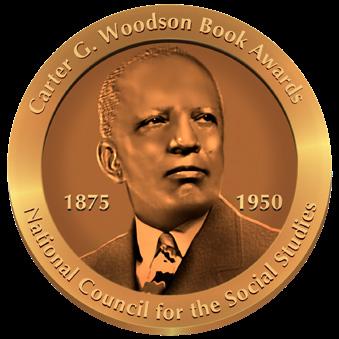
The Carter G. Woodson Book Award, established in 1974, honors exceptional nonfiction and informational trade books that highlight the diverse cultural experiences of ethnic groups in the United States. Named for Dr. Carter G. Woodson, historian, educator, and father of Black History Month, this award reflects his commitment to amplifying underrepresented voices and providing engaging narratives that deepen historical empathy and understanding. This year’s honorees examine resistance and leadership alongside lesser-known histories of racial violence and injustice, tracing stories of enslavement, abolition, community activism, cultural pride, and resilience through carefully researched and compelling true narratives.
—Sydney G. Beauchamp, Chair: Carter G. Woodson, Septima P. Clark Women in Literature, & The Reverend Dr. Pauli Murray Book Awards Committee
Elementary Winner
Black Diamond Kings, by Charles R. Smith Jr, illustrated by Adrian Brandon. Candlewick Press. Reviewed by Elizabeth Sturm, Associate Professor, Department of Education, Lewis University, Romeoville, Ill. In Black Diamond Kings, sports poet Charles R. Smith focuses on the Negro Leagues, using varied poetic forms to reflect the personalities of the 12 athletes highlighted in this picture book, including a sonnet for Willie Wells, the “Shakespeare of Shortstops.” All readers will delight in the use of tall tales as a poetic device in the poem “Fast as What?
James ‘Cool Papa’ Bell.” The use of other youthfriendly styles, such as acrostics, will also provide great examples for students learning to write their own poetry. Adrian Brandon’s bold paintings pair beautifully with the text, carefully detailing the athletes’ greatness, and just like the poems, each painting is unique to the individual portrayed. In the back matter, Smith provides “Player Notes” and “More About the Negro Leagues.” Social Studies Themes: CULTURE; TIME, CONTINUITY, AND CHANGE; INDIVIDUALS, GROUPS, AND INSTITUTIONS.
Miss Betti, What is This? How Detroit’s School Lunch Lady Got Good Food on the Menu, by Lela Nargi, illustrated by Kristen Uroda. Sleeping Bear Press. Reviewed by Rachel K. Turner, Assistant Professor of Elementary Education, School of Teacher Education & Leadership, Utah State University Eastern, Price, Utah
This inspiring book tells the true story of Betti Wiggins, a school lunch administrator who transformed her district’s lunch program by instilling small changes to the menu. She sought to bring fresh and nutritious foods to all students. Throughout her time in Detroit, Michigan, Wiggins also introduced other changes such as school gardens and salad bars. The beautiful, bright illustrations convey student excitement over learning about and engaging with fresh food. This book demonstrates that one person’s impact on their community takes time and builds on small changes.
Social Studies Themes: INDIVIDUALS, GROUPS, AND INSTITUTIONS; CIVIC IDEALS AND PRACTICES.
Prince Among Slaves: The Remarkable True Story of an African Prince, Enslaved in Mississippi, and His Journey Home, by N. H. Senzai, illustrated by Anna Rich. Nancy Paulsen Books (Penguin). Reviewed by Ann Adkins, Fifth grade teacher, St. Pius X/St. Leo School, Omaha, Neb
N. H. Senzai presents the incredible story of Prince Abdulrahman Sori of Fouta Djallon, stolen from his homeland and forced into slavery. Adulrahman lived the first part of his life as the son of a king, then spent the majority of his life enslaved, and returned finally toward the end of his life to Africa as a free man.
Senzai’s narrative renders the prince’s captivity in Mississippi with striking immediacy, tracing the conditions he endured while forced to labor on a plantation. His royal origins offer no protection; like so many others, Abdulrahman is subjected to the brutality of enslavement. Anna Rich’s full-page illustrations deepen the account, echoing and extending the text. Her attention to expression—especially in the faces she portrays—conveys a range of feelings that draws the reader into Abdulrahman’s extraordinary life.
Social Studies Themes: TIME, CONTINUITY, AND CHANGE; PEOPLE, PLACES, AND ENVIRONMENTS; INDIVIDUALS, GROUPS, AND INSTITUTIONS; POWER, AUTHORITY, AND GOVERNANCE.
Dreams to Ashes: The 1871 Los Angeles Chinatown Massacre, by Livia Blackburne, illustrated by Nicole Xu. Lerner Publishing Group (Lerner Books). Reviewed by Valencia Abbott, Social Studies Teacher at Rockingham Early College High School, Wentworth, NC
This essential book introduces a difficult but necessary chapter of U.S. history with care, recounting the racially motivated 1871 massacre of Chinese immigrants in Los Angeles. Written in lyrical prose and supported by dramatic, evocative illustrations,
it helps readers grasp the human impact of racist violence without overwhelming them. Instead, it invites questions, builds empathy, and fosters an emerging sense of fairness and justice. By addressing an event often absent from history curricula, the book fills a critical gap and underscores the lasting harm of prejudice and silence. It affirms that children can engage with complex truths when guided thoughtfully, while also ensuring that Asian American histories are seen and valued. Ultimately, it connects past injustice to the work of shaping more informed, compassionate readers.
Social Studies Themes: TIME, CONTINUITY, AND CHANGE; INDIVIDUAL DEVELOPMENT AND IDENTITY; INDIVIDUALS, GROUPS, AND INSTITUTIONS; POWER, AUTHORITY, AND GOVERNANCE; CIVIC IDEALS AND PRACTICES.

Malcolm Lives! The Official Biography of Malcolm X for Young Readers, by Ibram X. Kendi. Farrar, Straus and Giroux. Reviewed by Jennifer Welch, East Carolina University, Greenville, NC.
Kendi presents adolescent readers with a comprehensive biography of Malcolm X, tracing his life from childhood to revolutionary leader. Written specifically for young people rather than adapted from an adult text, the book incorporates markers of historical empathy, at times suggesting that a person “maybe” felt a certain way when the record is incomplete. He also speaks directly to teen readers to draw them in; one chapter opens, “Have you ever seen adults argue?”
These stylistic choices do not detract from the book’s grounding in historical documentation. Each chapter includes photographs and repro-
duced materials—such as letters between Malcolm and family members or notes for speeches in his own handwriting. Together, these elements and Kendi’s accessible style create a sense of intimacy and immediacy that engages young readers.
Social Studies Themes: INDIVIDUALS , GROUPS, AND INSTITUTIONS; CIVIC IDEALS AND PRACTICES.
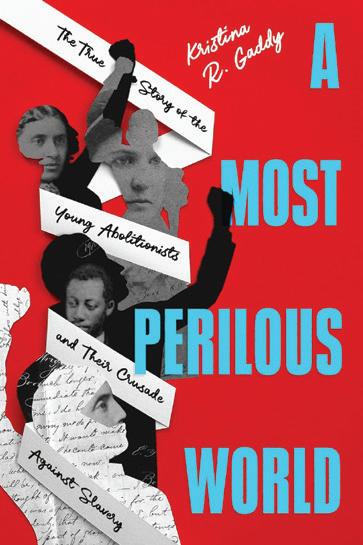
A Most Perilous World: The True Story of the Young Abolitionists and Their Crusade Against Slavery, by Kristina Gaddy. Dutton Books for Young Readers. Reviewed by Jennifer Welch, East Carolina University, Greenville, NC
Kristina Gaddy’s biography of four children of abolitionists humanizes the movement’s leaders by focus-
ing on the children’s adolescent lives. It shows how growing up in these households shaped their thinking, activism, and futures. Their renowned parents, including Frederick Douglass and William Lloyd Garrison, are at times both proud of and frustrated by their children, who must forge their own personal and political paths under the weight of expectation—an angle likely to help students connect with these historical figures.
Because of their parents’ roles, these young people also intersect with notable figures such as Henry “Box” Brown and John Brown. Some connections arise from their own experiences; for instance, Garrison’s son attended Harvard alongside Abraham Lincoln’s son. Gaddy also weaves in romances, financial struggles, and generational conflict, incorporating primary sources such as newspaper excerpts, photographs, and journal entries.
Social Studies Themes: INDIVIDUALS, GROUPS, AND INSTITUTIONS; CIVIC IDEALS AND PRACTICES.
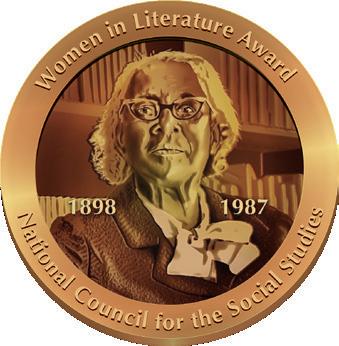
The Septima P. Clark Women in Literature Award, established in 2019, honors exceptional nonfiction and informational trade books that highlight the stories, perspectives, and achievements of women. Named for Septima Poinsette Clark, a trailblazing educator and civil rights activist, this award celebrates her legacy of using education to advance justice and equality. The award recognizes well-crafted, original, and undertold stories of women who shaped history. This year’s honorees highlight women whose curiosity, courage, creativity, and leadership reshaped their fields, from science and conservation to civic action, mathematics, and poetry, offering powerful examples of how women across time and cultures have challenged boundaries and created lasting change.
—Sydney G. Beauchamp, Chair: Carter G. Woodson, Septima P. Clark Women in Literature, & The Reverend Dr. Pauli Murray Book Awards Committee
Elementary Level Winner
Ablaze: The Story of America’s First Female Smokejumper, by Jessica Lawson, illustrated by Sarah Gonzales. Viking Press. Review by Jennifer Gallagher, East Carolina University, Greenville, NC.
Equal policies do not always lead to fair outcomes. This is a lesson Deanne Shulman learned firsthand as she fought to become the nation’s first female smokejumper. Despite proving she was courageous, capable, and willing to leap from
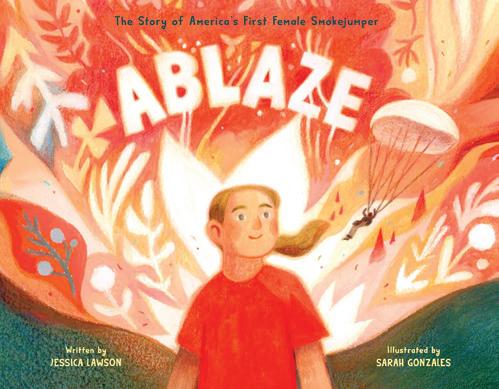
airplanes into raging wildfires, Deanne was initially rejected because of her size. She refused to back down; her determination and persistence ultimately earned her a place in the field and launched a lifelong career in forestry and emergency management. Jessica Lawson’s simple yet suspenseful text brings Deanne’s trailblazing story to life, while Sarah Gonzales’s bold, fiery illustrations deepen the book’s emotional impact.
Back matter includes a biography of Deanne Shulman and a glossary of key terms.
Social Studies Themes: INDIVIDUALS, GROUPS, AND INSTITUTIONS; CIVIC IDEALS AND PRACTICES.
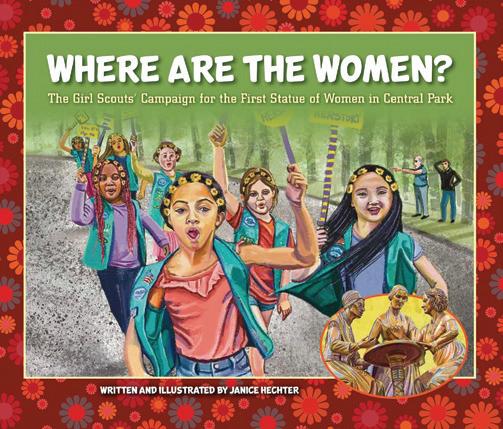
Where Are the Women? The Girl Scouts Campaign for the First Statue of Women in Central Park, written and illustrated by Janice Hechter. Red Chair Press. Reviewed by Jennifer Gallagher, East Carolina University, Greenville, NC.
“Where are the women?” That was the question New York City Girl Scouts kept asking as they toured Central Park. Despite more than 160 years of history, the park contained not a single statue honoring a woman. Frustrated by the injustice, local troops joined a growing movement to demand that women be commemorated on pedestals alongside men. Drawing on their advocacy skills— fundraising, raising awareness, and meeting with decision-makers—the girls persisted until, in 2020, a monument honoring women suffragists was finally unveiled. Author-illustrator Janice Hechter names the real Girl Scouts involved and places them front and center in the illustrations, rightly celebrating them as the heroes of the story.
Back matter includes a bibliography, interesting facts, and additional information about the women pioneers honored in the monument. Red Chair Press also offers a free educator guide on its website.
Harriet Tubman, Force of Nature: A Biography in Poems, written and illustrated by Caroline Brewer. What On Earth Publishing. Reviewed by Valencia Abbott, Social Studies Teacher at Rockingham Early College High School
This biography in poems by Caroline Brewer offers an intimate and powerful portrayal of one of the most formidable figures in American history. Written in lyrical verse and illustrated by Brewer herself, the book demonstrates a rare unity between word and image. Each poem is deliberate, allowing Harriet Tubman’s life to unfold in moments that highlight her courage, faith, and strategic brilliance without reducing her to myth or legend. Brewer’s artistic choices are especially meaningful. She uses collage with newspaper print to represent the clothing of the enslaved, an intentional decision meant to show that the enslaved and enslavement “were always, and still are, important news.” This choice grounds the story firmly in historical urgency.
The book is important because it resists flattening Harriet Tubman into a single narrative of escape and rescue. Instead, Tubman is presented as a force shaped by nature, community, and conviction. The poetry invites reflection, while the illustrations deepen emotional understanding, helping readers feel the weight and wonder of Tubman’s choices. By presenting history through verse, Force of Nature affirms that children can engage complex lives through artful, thoughtful storytelling and honors Tubman’s enduring humanity and strength.
Social Studies Themes: TIME, CONTINUITY, AND CHANGE; INDIVIDUAL DEVELOPMENT AND IDENTITY; INDIVIDUALS, GROUPS, AND INSTITUTIONS; POWER, AUTHORITY, AND GOVERNANCE; CIVIC IDEALS AND PRACTICES.

The Black Mambas: The World’s First All-Woman AntiPoaching Unit, author and photographer Kelly Crull. Millbrook Press, an imprint of Lerner Publishing Group.
Reviewed by Ariana Sanders, High School Social Studies Teacher, Cincinnati, Ohio.
Author and photographer Kelly Crull spent five years researching the female rangers known as the “Black Mambas,” culminating in a trip to South Africa to experience their lives in the bush. He tells their story in an intimate way, allowing readers to connect with the women, the animals, and their conservation work. This empowering account highlights women in nontraditional careers and showcases their efforts, from tracking poachers and monitoring wildlife with GPS to rescuing injured animals and patrolling the land.
Educators and students alike will be drawn to further explore the topics presented. This book is well suited for middle school cross-curricular learning, encouraging discussion of ethical concerns around poaching, wildlife conservation, and environmental stewardship. Activities such as mapand-compass navigation or tracking exercises can extend student engagement.
Did you know? The Black Mambas won the Champions of the Earth Award in 2015, the United Nations’ highest environmental honor, recognizing transformative impact and global inspiration.
Social Studies Themes: PEOPLE, PLACE, AND ENVIRONMENTS; INDIVIDUAL DEVELOPMENT AND IDENTITY; POWER, AUTHORITY AND GOVERNANCE; SCIENCE, TECHNOLOGY AND SOCIETY.
The Five Sides of Marjorie Rice: How to Discover a Shape, by Amy Alznauer, illustrated by Anna Bron. Candlewick Press. Reviewed by Ann Adkins, Fifth Grade Teacher, St. Pius X/St. Leo School, Omaha, Neb.
For many of us, mathematics is a subject associated with rote memorization and endless calculations. This book offers a different perspective, showing that mathematics, like other sciences, is a field of discovery. It tells the story of Marjorie Rice, who, despite having no formal training, contributed to the understanding of mathematical patterns.
Author Amy Alznauer traces Rice’s early fascination with patterns and how, in 1975, she learned that a new tessellating pentagon—a shape that can tile a surface in a repeating pattern—had been discovered. This sparked Rice’s quest to find additional five-sided shapes that could tile a plane. She ultimately discovered not just one, but four new tessellating pentagons.
The author provides enough background for readers to appreciate the mathematical ideas, while Anna Bron’s illustrations add clarity to these concepts. The back matter offers further information about Rice’s life, along with suggestions for exploration.
Social Studies Themes: INDIVIDUAL DEVELOPMENT AND IDENTITY; SCIENCE, TECHNOLOGY, AND SOCIETY.
Middle/High Honor
Magic in a Drop of Water: How Ruth Patrick Taught the World About Water Pollution, by Julie Winterbottom, illustrated by Susan Reagan. Rocky Pond (Penguin). Reviewed by Sydney G. Beauchamp, Teaching Professor, Indiana University South Bend, South Bend, Ind.
This inspiring book traces the scientific life of Ruth Patrick, whose careful study of freshwater organisms transformed how scientists understand water pollution.
Beginning with Ruth’s childhood curiosity, the book shows how close observation and systematic investigation led her to study diatoms. From this work, Ruth Patrick developed the Patrick Principle, which uses biodiversity as evidence to evaluate the condition and health of waterways. The text presents environmental science through curiosity, the scientific process, and respect for the natural world.
In the classroom, this book offers many paths for
study. Teachers can use it to introduce women in science, environmental stewardship, aquatic biodiversity, and discussions about how curiosity can grow into meaningful work that helps the world. The back matter includes additional biographical information and a timeline of Ruth Patrick’s life. Social Studies Themes: TIME, CONTINUITY, AND CHANGE; PEOPLE, PLACES, AND ENVIRONMENTS; INDIVIDUAL DEVELOPMENT AND IDENTITY; SCIENCE, TECHNOLOGY, AND SOCIETY.
The Rev. Dr. Pauli Murray Book Award, established in 2024, honors outstanding nonfiction trade books that illuminate diverse gender expressions, identities, and pivotal historical events. Inspired by Pauli Murray’s legacy as a Black, queer legal scholar, activist, and educator, this award reflects their fight for racial and gender equity. This award was created with support from The Pauli Murray Center for History and Social Justice and recognizes books that embody Murray’s compassionate spirit, authenticity, and truth-telling. This year’s honorees feature artists, activists, and young people whose lives and work illuminate queer history, creative expression, and the ongoing struggle for equality. These stories offer readers thoughtful, affirming narratives that deepen historical understanding and promote dignity and belonging.
—Sydney G. Beauchamp, Chair: Carter G. Woodson, Septima Clark Women in Literature, & The Rev. Dr. Pauli Murray Book Awards Committee
Mary Oliver, Holding on to Wonder , by Erin Frankel, illustrated by Jasu Hu. Calkins Creek. Reviewed by Kristy A. Brugar, Professor, Social Studies Education, Instructional Leadership and Academic Curriculum Department, Jeannine Rainbolt College of Education, University of Oklahoma, Norman, Okla.
This is a delightful picturebook biography of American poet and Pulitzer Prize winner Mary Jane Oliver (1935-2019), whose poetry was inspired by her connection to the natural world. Beginning with Oliver’s life as a young girl fascinated by nature, Erin Frankel chronicles the poet’s life exploring the forest and sea, her archival work for the estate of Edna St. Vincent Millay, her teaching career, and her relationship with long-time partner Molly Malone Cook.
Frankel’s descriptive prose is beautifully complemented by Jasu Hu’s watercolor illustrations of the natural world.
Social Studies Themes : PEOPLE, PLACES, AND ENVIRONMENTS; INDIVIDUAL DEVELOPMENT AND IDENTITY.
Jim: Six True Stories About One Great Artist, written and illustrated by Jerrold Connors. Dial Books. Reviewed by Rachel K. Turner, Assistant Professor of Elementary Education, School of Teacher Education & Leadership, Utah State University Eastern, Price, Utah.
Told through six short stories, this picture book biography of esteemed children’s book author and illustrator James Marshall highlights important moments from his childhood through adulthood.
The author captures Marshall’s humor, creativity, and kindness through lively artwork inspired by his own illustration style. Readers learn about the experiences that inspired his books, as well as his friendships, collaborations, and the challenges he faced, showing how perseverance helped him succeed. This engaging and inspiring book encourages young readers to appreciate their own artistic expression, value creativity, and discover what it means to believe in themselves.
Social Studies Themes: TIME, CONTINUITY, AND CHANGE; INDIVIDUAL DEVELOPMENT AND IDENTITY.
Edie for Equality: Edie Windsor Stands Up for Love, by Michael Genhart, illustrated by Cheryl Thuesday. Lee & Low Books. Reviewed by Sarah Segal, Seventh Grade Teacher, Hood River Middle School, Hood River, Ore.
In 2013, Edie Windsor “proved that love is love, that equal means equal” by challenging and defeating the Defense of Marriage Act (DOMA) in the U.S. Supreme Court. Edie for Equality: Edie Windsor Stands Up for Love chronicles her life and journey, highlighting the experiences that shaped her moral compass and inspired her to fight discrimination. Cheryl Thuesday’s colorful illustrations complement the narrative and help bring Edie’s story to life. Supported by her “chosen family” and inspired by her lifetime partner, Edie became a legendary LGBTQ+ civil rights leader.
The back matter provides a timeline of key events before, during, and after Edie’s DOMA victory. It also offers deeper explanations of the Supreme Court case, historical context of the U.S. judicial system, Edie’s time in Washington, D.C., and an Author’s Note reflecting on the personal impact of this landmark decision.
Social Studies Themes: TIME, CONTINUITY, AND CHANGE; INDIVIDUALS, GROUPS, AND INSTITUTIONS; POWER, AUTHORITY, AND GOVERNANCE; CIVIC IDEALS AND PRACTICES.
Trans History: From Ancient Times to Present Day, by Alex L. Combs and Andrew Eakett. Candlewick Press. Reviewed by Kimi Waite, Assistant Professor of Child and Family Studies. California State University, Los Angeles. Los Angeles, Calif.
This engaging and timely graphic novel takes readers from Ancient Egypt and Medieval Europe to the present day, showing that transgender people have always been here, despite being largely excluded from curricula and textbooks. A valuable resource for teachers, students, librarians, and curriculum specialists, each chapter is color-coded for easy navigation. In the face of ongoing attacks on LGBTQ+ rights, book bans, and challenges to teaching accurate history, this book serves both as an archive of transgender history and a call to elevate narratives that have been historically erased. Social Studies Themes: TIME, CONTINUITY, AND CHANGE; PEOPLE, PLACES, AND ENVIRONMENTS; INDIVIDUALS, GROUPS, AND INSTITUTIONS.
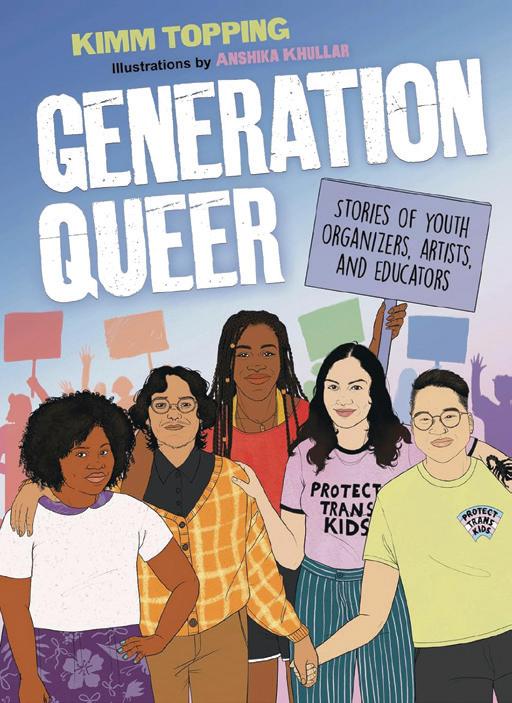
Generation Queer: Stories of Youth Organizers, Artists, and Educators, by Kimm Topping, illustrated by Anshika Khullar. Tu Books (Lee & Low Books).
Reviewed by Sarah Segal, Seventh Grade Teacher, Hood River Middle School, Hood River, Ore.
Kimm Topping’s Generation Queer: Stories of Youth Organizers, Artists, and Educators is an essential resource for teachers, allies, and community members.
Championing LGBTQIA+ voices, the book is organized into six sections highlighting activists as organizers, artists, and educators. The chapter “From Walkouts to Marches” details political organizing and protest, while chapters 5 and 6 present practical actions for youth and educators. Features throughout the book include a table of contents, maps, illustrations, timelines, and graphics providing historical and modern context. The book also includes contact information for national organizations that support civic engagement and the exercise of constitutional rights. Central to this
resource is the author’s call for readers to stop, reflect, and pursue deeper research for personal and societal growth. At its heart, the book advocates for a world where all individuals are “thriving, safe, and able to achieve meaningful lives for themselves.”
Social Studies Themes: TIME, CONTINUITY, AND CHANGE; PEOPLE, PLACES, AND ENVIRONMENTS; INDIVIDUAL DEVELOPMENT AND IDENTITY; INDIVIDUALS, GROUPS, AND INSTITUTIONS; POWER, AUTHORITY, AND GOVERNANCE; CIVIC IDEALS AND PRACTICES.
Rho Kappa National Social Studies Honor Society is the only national honor society dedicated to social studies — providing schools with a prestigious, standards-aligned way to recognize academic excellence, leadership, and civic engagement among high-achieving juniors and seniors at the secondary level.
Why school leaders choose Rho Kappa:
• Nationally recognized distinction for top social studies students
• Enhances school and district academic profiles
• Reinforces civic readiness and college preparation
• Low-cost, flexible implementation led by teacher advisors
Rho Kappa strengthens your academic culture while honoring the students who exemplify excellence in social studies.

Learn more at socialstudies.org/rhokappa
In July 1932, during the greatest economic crisis in U.S. history, Franklin D. Roosevelt accepted the Democratic Party’s presidential nomination, promising a New Deal for the American people. That promise became a series of relief, recovery, and reform programs designed to help the unemployed and poor, revive the economy, and change the financial system to prevent another depression. One New Deal program, the Federal Writers’ Project (FWP), employed as many as 10,000 previously unemployed writers, who contributed to numerous projects across the country.
One, the Folklore Project, focused on life histories—firstperson narratives of life and work. These materials, intended to be published in a series of anthologies that would form a mosaic portrait of everyday life in America, were collected, compiled, and transcribed by hundreds of writers, many of whom went on to successful writing careers. Their many approaches to structuring and documenting the interviews,
coupled with each writer’s purpose and skill, yielded variation in form, focus, and format. The resulting products ranged from dialogues to narratives and case histories that the Writers’ Project staff variously described as life sketches, living lore, industrial lore, and occupational lore. The narratives were meant to reflect the ordinary person’s struggle with the vicissitudes of daily living.1
How to best capture these narratives was the focus of a staff meeting that eight employees of the Federal Writers’ Project in Chicago participated in on July 13, 1939. Among the participants were authors Nelson Algren (whose 1949 novel, The Man with the Golden Arm, would win the National Book Award), Jack Conroy, Stuart Engstrand, Margaret Walker, and Hilda Satt Polacheck. Bessie Jaffrey, a shorthand reporter, took notes during the meeting. According to Jaffrey’s notes, Algren opened the meeting by stating, “The purpos[e] of this meeting is to inaugurate a new line in the accumulation of
industrial folklore … and collect material appropriate to a national volume approximating THESE ARE OUR LIVES [sic].” As the meeting continued, the staff discussed approaches to structuring an interview for various outcomes and explored the benefits and pitfalls of different ways of collecting and capturing the interviews. Algren declared that “The point of thes [sic] documents is that they reveal what is really a new way of writing—which we’ll attempt here.” The ensuing discussion focused on interview techniques, with fellow writer Stuart Engstrand in favor of approaching interviewees “with an idea in mind” and Algren advocating to “just let them ramble.”
Present students with the three and half pages of typed notes (www.loc.gov/item/ wpalh000034) from that meeting (page 2 is featured in this article), allow a few minutes for them to skim the pages, and then encourage them to read page 2 aloud (a reader’s theater approach may work well), and ask them to identify arguments
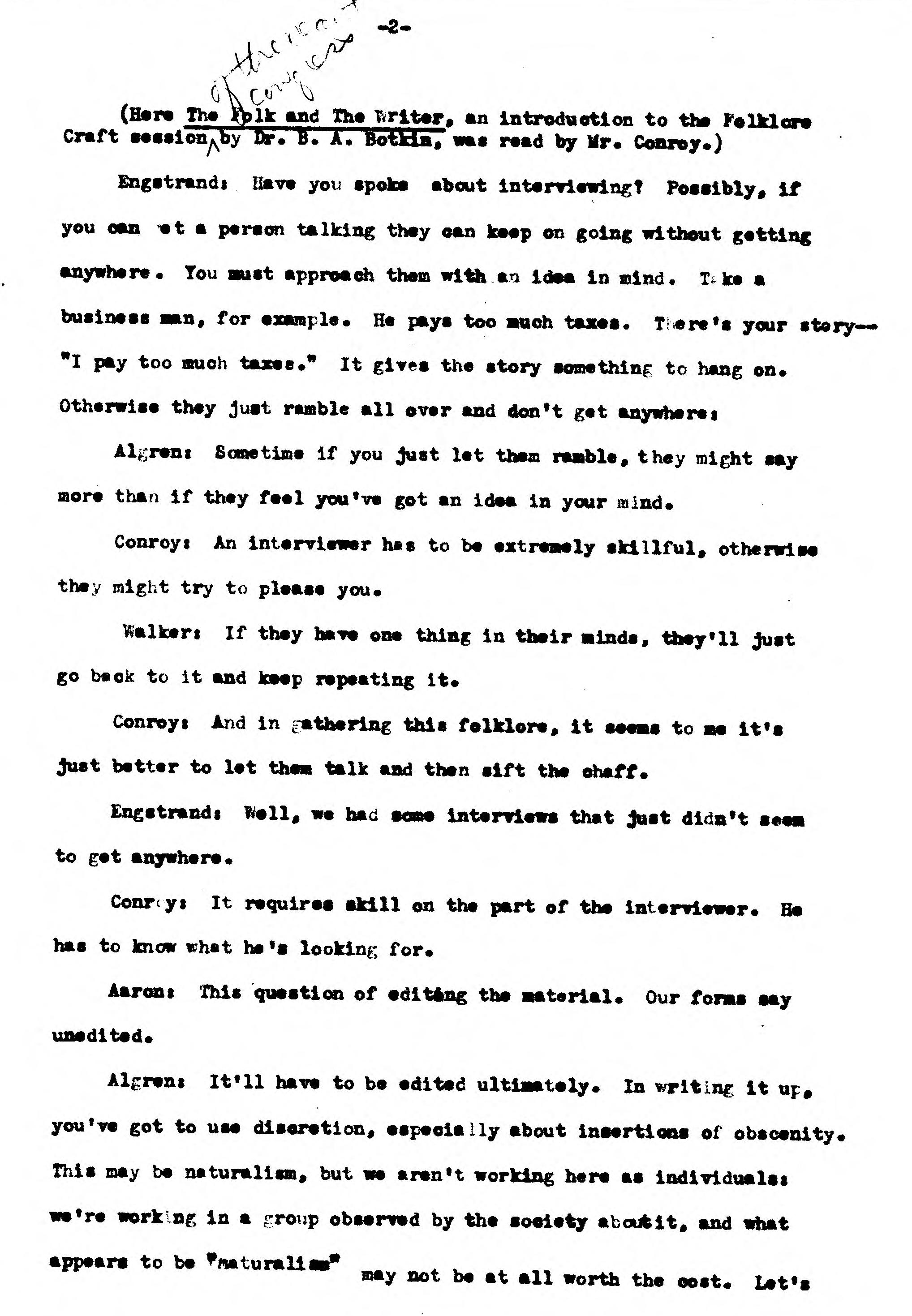
Bessie Jaffey. Staff Conference in Industrial Folklore. Illinois, 1939, page 2 (www.loc.gov/item/wpalh000034).
supporting each approach to conducting and recording an oral history interview. Next, introduce students to examples of life histories that were collected and to their authors. Some of the writers, including Nelson Algren, Zora Neale Hurston, and Ralph Ellison, might be familiar to students today.2 Invite students to read and analyze two examples of the work that Ellison submitted to the Federal Writers’ Project to evaluate both the success of his technique and the extent to which his work met the stated goal of “approximating these are our lives.” They might also revisit their notes about interview techniques and consider which approach Ellison was likely to have used (the one supported by Engstrand or the one supported by Algren).
Begin by asking students to observe only the first page of “Harlem,” (www.loc.gov/resource/ wpalh2.21020203/?sp=1) and the first page of “My People Made the Truckin Business” (www.loc.gov/resource/ wpalh2.21020106/?sp=1) (both pages are featured here), comparing the two for similarities and differences. Students might notice each page appears to use the same form or template but with different typed responses (or lack thereof) to the numbered prompts. Ask students to consider which details, if any, appear to be the same. For example, they might observe that both pages share a location (the state of “New York”), the name of worker, “Ralph Ellison,” and year, “1939,” with dates in close proximity (“May 1” and “June
14”). Encourage students to continue looking closely but focus on differences between the two sources. Ask what additional details they observe. For example, students might notice, “Tales - Anecdotes” and the number, “18,” handwritten at the top of the example with the subject, “My People Made the Truckin Business.” At the bottom of this same page, students might read aloud the typed response to “6. Description of room, house, surroundings, etc.”:
Labor hiring room. Benches, chairs, Posters: “Black and White Unite.” Bunch of bananas with caption, “Stay in Your own bunch, Or You’ll get Skinned.” Card tables. A row of large windows looking down upon streets below, alive with cars, street cars, and people.
In comparison, students might wonder why the other example’s first page has been left blank for all prompts, including “6,” and only lists “Harlem,” as its subject. They might also wonder about what appear to be initials, “DO,” handwritten at the top and a stamped date, “JUL 6 1939.” Invite students to reflect on both pages based on their observations. Lead a class discussion by asking: What was the purpose of each oral history? What might they expect to read in each interview based on its cover page? What details make them say this? Reflecting on their background knowledge of U.S. and world history, what else was happening in 1939 at the time of these oral
history interviews? Working in pairs or small groups, challenge students to write down any questions that come to mind before directing them to read additional pages of the examples. It may help to share the following prompt: What do you wonder about ... who? what? when? where? why? how?
Setting aside students’ lists of initial wonderings, along with any notes on observations and reflections, display or share copies of one or more additional pages from both oral history examples. Encourage students to read critically, seeking clues to each source’s intended audience and purpose. If students need additional scaffolding, continue analyzing each source together as a class with students completing individual copies of the Library of Congress Primary Source Analysis Tool in response to selected prompts from the Teacher’s Guide to Analyzing Oral Histories (www.loc.gov/programs/ teachers/getting-started-withprimary-sources/guides). If students are familiar with this process, assign pairs or small groups the remaining pages of one or both sources to analyze independently.
After analysis, discuss the following questions together as a class, encouraging students to reference text from the sources as evidence in their responses:
• What did you notice about the language or structure of each interview? Whose voice or perspective is continued on page 168
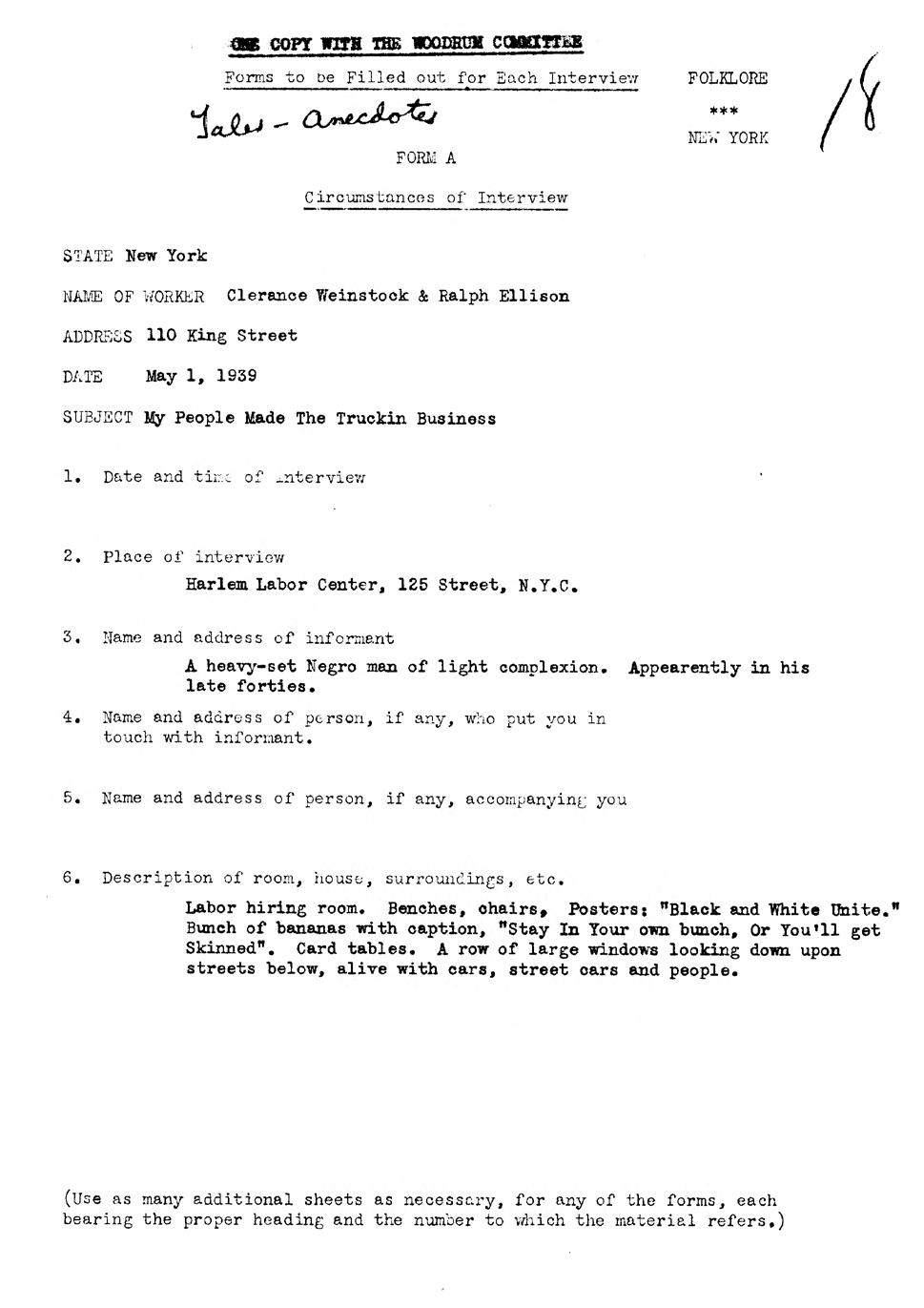
Clerance Weinstock and Ralph Ellison. My People Made the Truckin Business. New York City, 1939. Manuscript/Mixed Material. (www.loc.gov/item/wpalh001378)
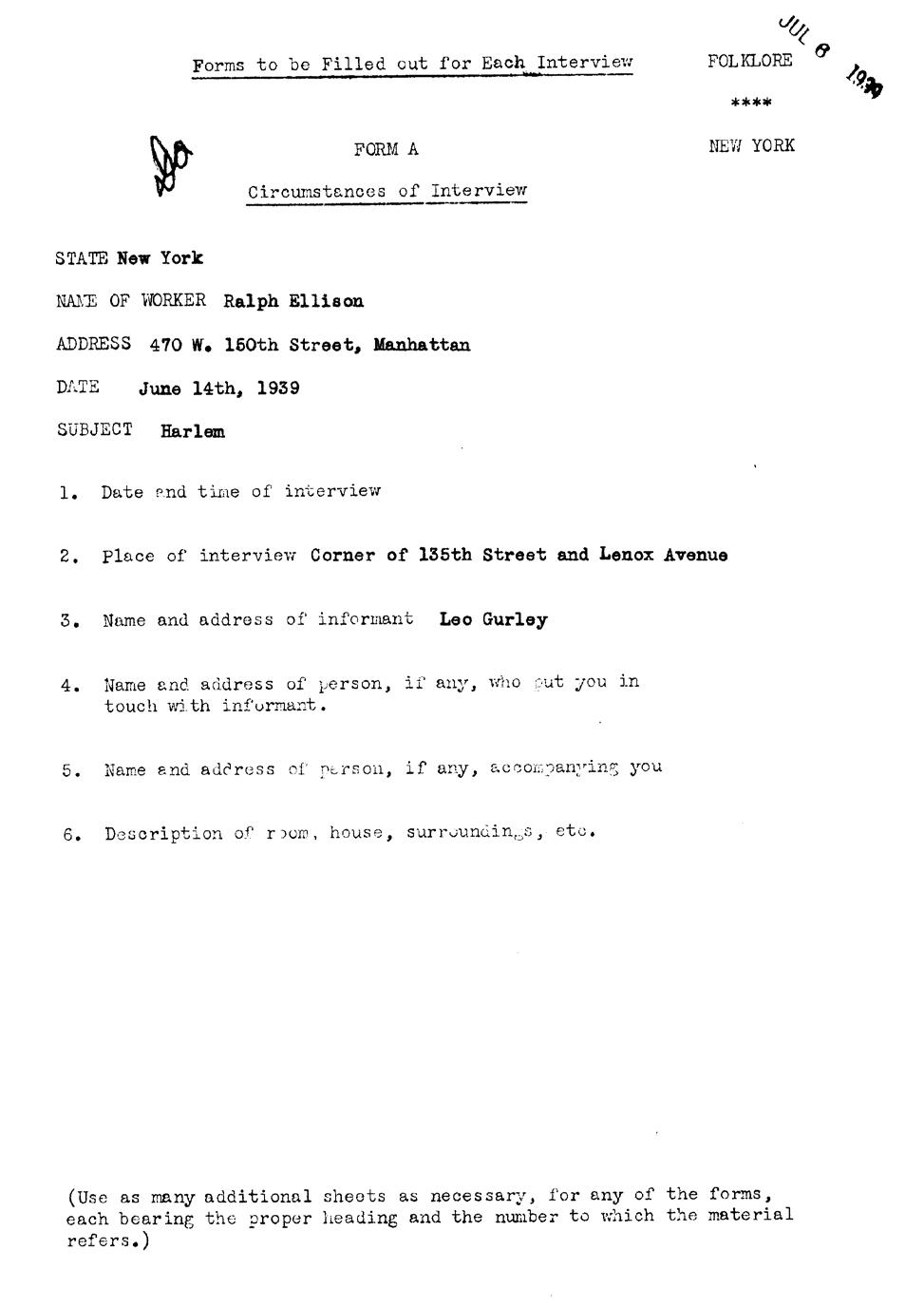
Ralph Ellison and Leo Gurley. Harlem. New York City, 1939. Manuscript/Mixed Material. (www.loc.gov/item/wpalh001379)
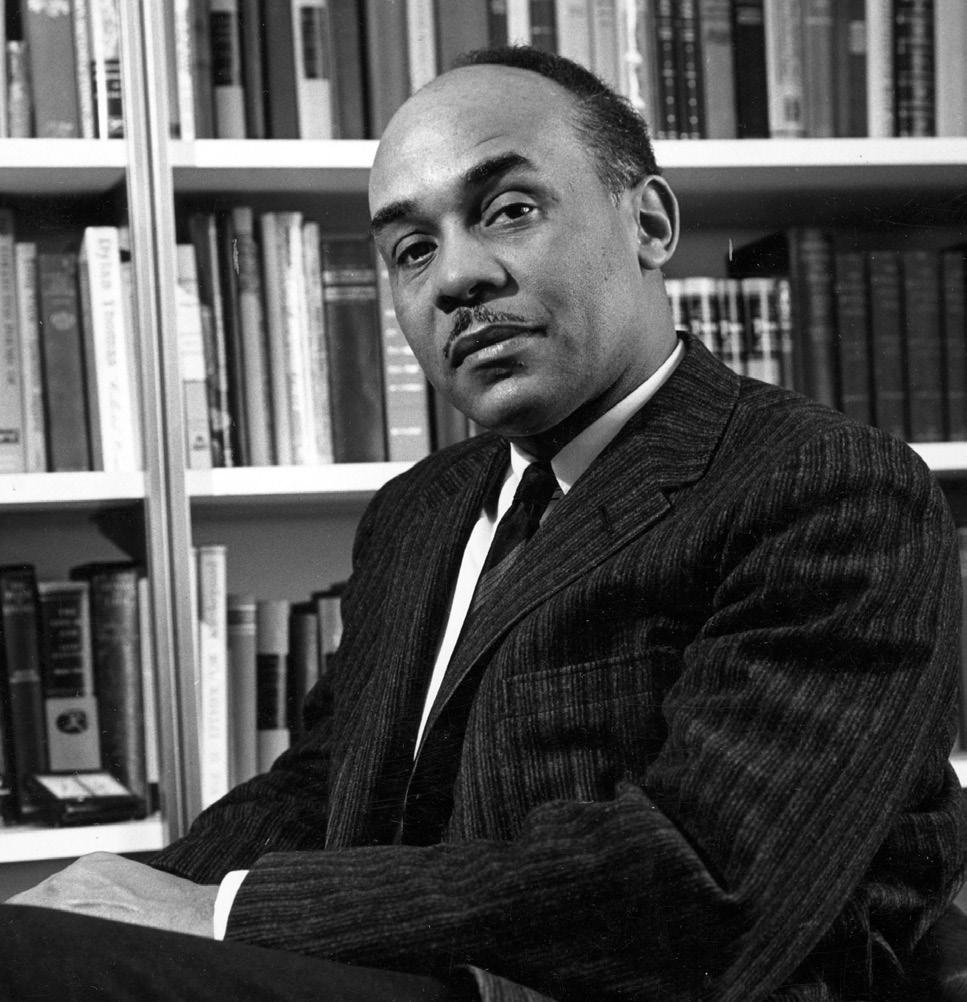
In addition to the American Life Histories collected by the Federal Writers’ Project, many other oral history collections exist at the Library of Congress. Some feature transcriptions, others include audio or video recordings. They provide first-person accounts of a wide range of events and experiences. They include:
Born in Slavery: Slave Narratives from the Federal Writers’ Project, 1936–1938
(www.loc.gov/collections/slave-narratives-from-thefederal-writers-project-1936-to-1938)
This collection contains more than 2,300 first-person accounts of slavery and 500 black-and-white photographs of former slaves. These narratives were collected in the 1930s as part of the Federal Writers’ Project (FWP) of the Works Progress Administration, later renamed Work Projects Administration (WPA).
Civil Rights History Project
(www.loc.gov/collections/civil-rights-history-project)
These video recordings of interviews with activists cover a wide range of topics within the freedom struggle, such as the influence of the labor movement, nonviolence and self-defense, religious faith, music, and the experiences of young activists. Actions and events discussed in the interviews include the Freedom Rides (1961), the Albany Movement (1961), the March on Washington for Jobs and Freedom (1963), the Selma to Montgomery Rights March (1965), the Orangeburg Massacre (1968), the Poor People’s Campaign (1968), sit-ins, and voter registration drives in the South. The murder of 14-year-old Emmett Till in 1955, a horrific event that galvanized many young people into joining the freedom movement, looms large in the memories of many movement veterans.
COVID-19 American History Project
(www.loc.gov/collections/covid-19-american-historyproject)
Researchers interviewed a range of workers on the front lines of COVID-19, a global pandemic that altered many aspects of American life, including the lives of funeral home owners, hospitality professionals, and educators. These workers’ stories detail the changes they experienced in their personal and professional lives. Workers speak about the loss of family and friends, the hardships they endured, and moments of resilience, when they sought to make the best of uncertain times. Taken together, these stories
serve as a snapshot of what it was like to live and work in the United States during the COVID-19 pandemic.
Occupational Folklife Project
(www.loc.gov/collections/occupational-folklife-project) This project began in 2010 as a multi-year project by the American Folklife Center (AFC) to document the culture of contemporary American workers during an era of economic and social transition. The interviews, which average 50-60 minutes in length, feature workers discussing their current jobs and formative work experiences, reflecting on their training, on-the-job challenges and rewards, aspirations, and occupational communities. In many cases, interviewees were asked to trace the career choices and educational paths that led them to their present jobs and share their thoughts on the future of their professions.
Veterans History Project
(www.loc.gov/collections/veterans-history-projectcollection)
The Veterans History Project (VHP) of the Library of Congress American Folklife Center collects, preserves and makes accessible the firsthand narratives of U.S. military veterans who served from World War I through more recent conflicts and peacekeeping missions, so that future generations may hear directly from veterans and better understand what they saw, did and felt during their service.
Voices Remembering Slavery: Freed People Tell Their Stories
(www.loc.gov/collections/voices-remembering-slavery) The recordings of former slaves in Voices Remembering Slavery: Freed People Tell Their Stories took place between 1932 and 1975 in nine states. It is important to note that all of the interviewees spoke 60 or more years after the end of their enslavement, and these recordings reflect their full lives. The individuals documented in this presentation have much to say about living as African Americans from the 1870s to the 1930s, and beyond.
Voices from the Dust Bowl: The Charles L. Todd and Robert Sonkin Migrant Worker Collection, 19401941
(www.loc.gov/collections/todd-and-sonkin-migrantworkers-from-1940-to-1941)
This online presentation of selections from a multiformat ethnographic field collection documents the
from page 165
represented? In what ways?
• How would you describe each interviewee’s story? For example, would you categorize one, both or neither under “TalesAnecdotes?” Why?
• Reflecting on who is telling this story and who is writing it down, who is the creator of this source? What can you glean about the writer’s purpose from how the oral history is recorded/ documented/written?
• Why do people tell stories? What is the value of documenting people’s stories, if any?
The introduction to the collection of life histories (available at: www.loc.gov/collections/ federal-writers-project/articlesand-essays/introduction) notes that, “The accuracy of most of these memories can’t be confirmed, but perhaps it is more useful to ask instead, what do these stories express? Personal recollection has a significance of its own and offers a window
everyday life of residents of Farm Security Administration (FSA) migrant work camps in central California in 1940 and 1941. It provides access to a selection of items including 371 audio titles, 23 graphic images, a sampling of dust jackets from the recording discs, and all the print material in the collection, such as song texts, clippings, and correspondence.
onto the ways people shape their identity and see the world around them.” Share this quotation with students and allow time for them to consider the extent to which they agree or disagree with the statement, and then ask: What can (and what cannot) be learned from an oral history? How does it compare to learning from other types of sources in the historical record such as letters, photographs, or maps?
If time allows, encourage students to look for connections between a writer’s contributions to the FWP and later published work. For example, can they find similarities between the way Ellison constructs dialogue in his novels to how he records the conversations he has with interviewees. Ask if they can connect themes from the FWP work to Invisible Man, his bestknown work, or one or more of his short stories.
Finally, encourage students to explore the American Life Histories Collection and read one or
If you try these suggestions, or a variation of them, with your students, tell us about your experience! During the last week of June, the Teaching with the Library of Congress Blog at blogs. loc.gov/teachers will feature a post tied to this article and we invite you to comment and share your teaching strategies.
more that captures their attention and share any observations or questions that it prompts with the class.
1. Much of that work resides in the Manuscript Division at the Library of Congress and more than 2,800 of the life histories are available online at www.loc.gov/collections/federalwriters-project
2. The introduction to the collection (www.loc.gov/collections/federalwriters-project/articles-and-essays/ introduction) notes that although the writers were not supposed to work on their own writing during work hours, “Many Federal Writers’ field research did influence their subsequent fiction.” Readers familiar with the writers’ later published poems or novels might look for themes and other influences from their work with the FWP. For example, “Ralph Ellison began to experiment with ways of capturing the sound of Black speech that he refined in his novel Invisible Man. ‘I tried to use my ear for dialogue to give an impression of just how people sounded. I developed a technique of transcribing that captured the idiom rather than trying to convey the dialect through misspellings.’”
Cheryl Lederle and Stacie Moats are Educational Resources Specialists at the Library of Congress. For more information on the education programs of the Library of Congress, please visit www.loc.gov/ teachers
“Do you mind if I look around the car a lil’ bit?”
“Well, my glove compartment is locked, so is the trunk in the back. And I know my rights so, you gon’ need a warrant for that.” —Jay-Z, “99 Problems” (2003).
Search warrants, and their Fourth Amendment cousin, arrest warrants, have occupied a storied place in United States jurisprudence and culture. “You got a warrant?” is almost as familiar a refrain in the search and seizure context as “I want a lawyer” in the interrogation context of Miranda warnings.
In reality, however, the Supreme Court has recognized so many exceptions to the warrant requirement that the police can engage in extensive search and seizure activities without any warrant in many circumstances. Moreover, when the police do act with a warrant, the Supreme Court also has created exceptions to the main remedy for Fourth Amendment violations— the “exclusionary rule.” The exclusionary rule prohibits the prosecution from using evidence that the police obtain in violation of the Constitution. As a result of these many exceptions, the Fourth Amendment often does not guarantee that the police will act with a valid warrant.
This article explores the source and nature of the warrant requirement in the U.S. Constitution. The article further examines the many exceptions to this requirement that reveal the principal constitutional rule under the Fourth Amendment: a rule of reasonableness, not a consistent warrant requirement.
The Fourth Amendment to the U.S. Constitution supplies the warrant requirement that the federal government and all states must follow. The Fourth Amendment contains two clauses, however, that have an interesting relationship with each other:
The right of the people to be secure in their persons, houses, papers, and effects, against unreasonable searches and seizures, shall not be violated, and no Warrants shall issue, but upon probable cause, supported by Oath or af-
firmation, and particularly describing the place to be searched, and the persons or things to be seized (emphasis added).
The first clause is often called the “reasonableness” clause because it provides a general right against unreasonable searches and seizures, without specifying police action that would be unreasonable in particular contexts. The second clause is often termed the “warrant” clause because, if the police do act with a warrant, this clause provides the required conditions for a valid warrant. Neither clause confirms when a warrant from the second clause is necessary to make a search or seizure “reasonable” under the first clause.
The difference is not a technicality. If the police do not need to obtain a warrant, the police can search or seize according to their own judgment without having to satisfy judicial review until weeks or months later
during pretrial proceedings, or perhaps not at all if, for example, the defendant pleads guilty. By contrast, if the police must act with a warrant, they must demonstrate probable cause for the search or seizure beforehand to a “neutral and detached magistrate” who has independent authority to reject the warrant. The public witnessed this authority recently when judges refused to authorize an arrest warrant for Don Lemon and other journalists for allegedly unlawfully disrupting a house of worship during the ICE protests in Minnesota.1
Over the years, the Supreme Court has identified numerous circumstances when a search or seizure is categorically reasonable without any warrant. Even when the Fourth Amendment does presumptively require a warrant for certain searches and seizures, the Supreme Court has identified other contextspecific exceptions when the police still may act without a warrant. Moreover, if the police
do search with a warrant, exceptions to the exclusionary rule remedy for Fourth Amendment violations may protect many searches from challenges even with defective warrants.
The Supreme Court’s Fourth Amendment jurisprudence, including the warrant requirement, did not develop in earnest until the twentieth century. During this time, the Supreme Court decided that the Fourth Amendment applies to the states, not just the federal government, significantly expanding the number of cases subject to Fourth Amendment requirements. The Supreme Court also developed the “exclusionary rule” during this era. This rule established the remedy in criminal cases for Fourth Amendment violations by excluding unlawfully seized evidence from the prosecution’s case.2
In this context, the Supreme Court needed to identify more definitively when the police
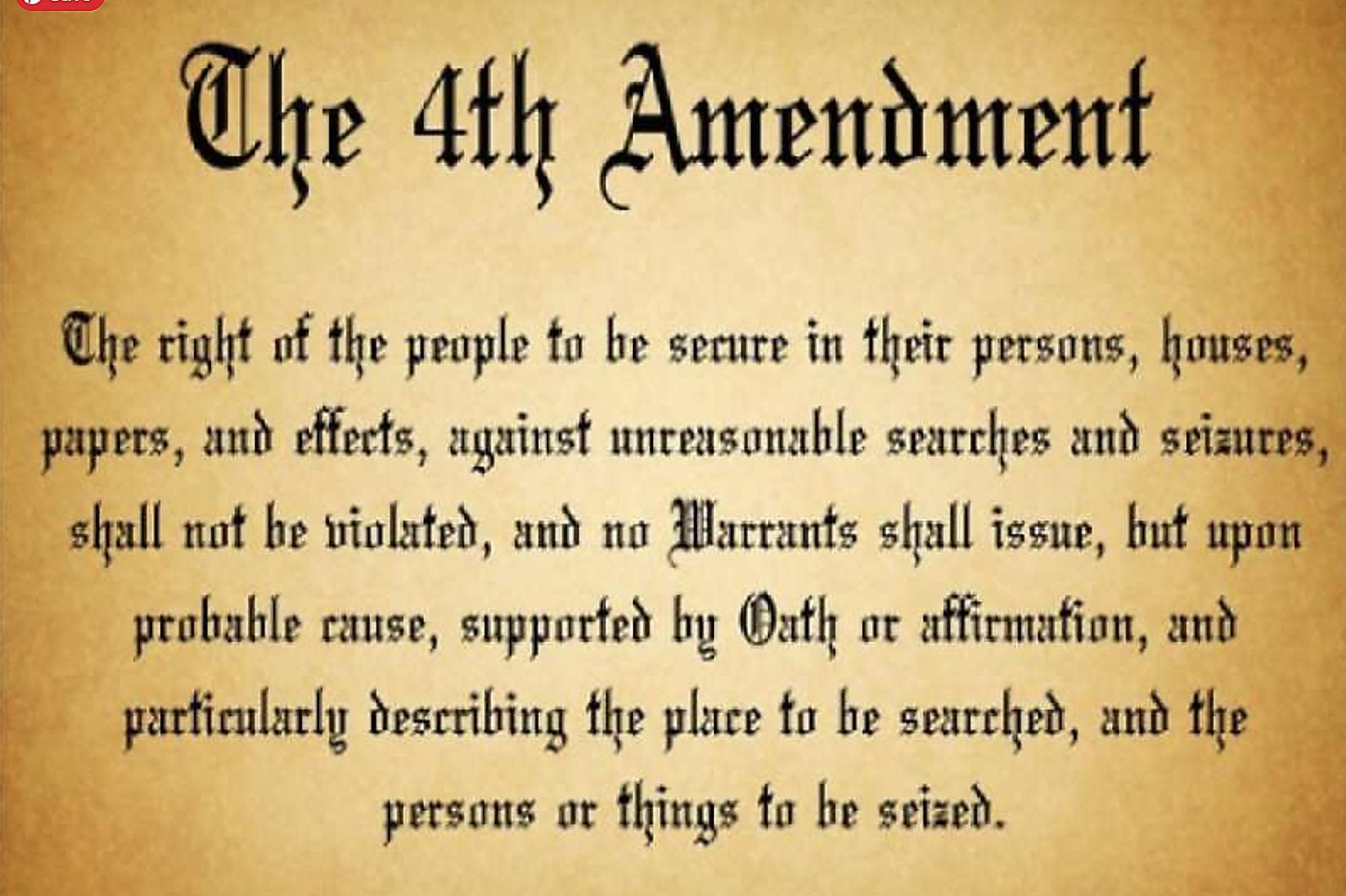
must obtain a warrant to make a search or seizure reasonable. In early cases, the Supreme Court described searches without warrants as “exceptional,” where the question of “[w]hen the right of privacy must reasonably yield to the right of search is, as a rule, to be decided by a judicial officer, not by a policeman or governmental enforcement agent.”3 By the 1990s, however, the Supreme Court had elevated “reasonableness” as the “touchstone” of the Fourth Amendment rather than a general presumption in favor of warrants, creating space for more and more warrant exceptions.4
The Supreme Court nevertheless has consistently presumed the need for a warrant to search a person’s home. The Court has held time and again, “‘[a]t the very core’ of the Fourth Amendment ‘stands the right of a man to retreat into his own home and there be free from unreasonable governmental intrusion’ … With few exceptions, the question whether a warrantless search of a home is reasonable and hence constitutional must be answered no.”5 The Supreme Court more recently has extended this presumption of a warrant to personal technologies and data that capture so much information about our lives. The Supreme Court analogized a smartphone to a digital home, recognizing that “[m]odern cell phones are not just another technological convenience. With all they contain and all they may reveal, they hold for many Americans ‘the privacies of life.’”6
Still, in a series of decisions, the Supreme Court has clarified that many searches and seizures outside of these contexts do not require a warrant so long as a judge later determines that other reasonable conditions are present. As a result, our physical persons and many aspects of our personal lives are subject to search or seizure without a judge authorizing a warrant in advance.
The following are primary examples that law students learn as “exceptions” to the warrant requirement. The Supreme Court, however, more accurately treats these searches and seizures not as literal exceptions but as categorically “reasonable” without the need for advance judicial review through the warrant process. The police thus can act on their own judgment in real time, and the prosecution can demonstrate later, if necessary, that the conditions for reasonableness were present:
• Arrests: The Supreme Court has long held that an arrest in a public place does not require a warrant.7 The police need probable cause to arrest someone, but they do not need to show probable cause to a judge until after the arrest. The one exception is when the police arrest a suspect in the suspect’s home, in which case the police need an arrest warrant to justify entry into the privacy of the home.8
• Searches incident to arrest: The authority of the police to make warrantless arrests opens an extensive exception for searches without a warrant: the search-incidentto-arrest rule. Under this rule, when the police arrest someone, to protect themselves and any evidence, the police automatically can search the arrestee.9 The police do not need probable cause that they will find anything during the search, only probable cause for the arrest itself.
A search incident to arrest includes the arrestee’s clothes and all containers or personal items on the arrestee’s person, as well as property within the arrestee’s “grabbable area.”10 The grabbable area extends to the passenger compartment of a vehicle when the arrestee was a recent occupant, including all containers in that space.11 The rule further permits a DNA swab of a felony arrestee to confirm that person’s identity.12 The main limitation to this rule is that the police cannot automatically search a smartphone or digital device on the arrestee’s person, because these devices hold for many Americans “the privacies of life.”13 This degree of search presumptively requires a warrant.
• Cars: Despite rapper Jay-Z’s famous lyric about the police needing a warrant to search his locked car trunk, “You gon’ need a warrant for that,” the police in reality need no warrant to search a vehicle, locked or unlocked. Instead, the Supreme Court has categorically exempted cars from the warrant requirement for 100 years due to their mobility, visibility, and regulation.14 The police need only probable cause that the vehicle contains evidence or contraband reasonably to search anywhere in the car and in any containers that could hold the object of that search.15 This exception extends to other motorized vehicles such as boats and planes, and includes motor homes that are not fixed to the ground.16 The police, however, cannot use the automobile exception as a justification to enter a home in which the car is located without a warrant.17
• Investigative stop-andfrisks: The police may find themselves with some evidence-based suspicion of criminal activity yet still lack the probable cause that would be necessary for a warrant. The Supreme Court has authorized a
warrantless, temporary seizure of a person in this context so the police can “confirm or dispel” a “reasonable suspicion” of criminal activity.18 The police effectively can maintain the status quo for a short time to investigate for probable cause. While this temporary seizure cannot be a full arrest, the police can control a person’s movements and even restrain the person. The police also can “frisk” someone, a limited pat-down of clothing for weapons, if the police reasonably suspect the person is armed and dangerous. Whatever the police find in plain view during this stopand-frisk is reasonable under the Fourth Amendment despite the absence of a warrant or even probable cause to arrest.
• “Special needs”: The Supreme Court has identified certain governmental “special needs” outside of traditional law enforcement investigations where it does not apply a warrant requirement and instead requires only reasonableness. For example, the government may search people without a warrant or even individualized suspicion at the
border and at airport security because of the special security needs at those locations.19 With reasonable suspicion, the police can establish warrantless vehicle checkpoints to look for drunk or unlicensed drivers to maintain roadway safety.20 The police and school officials further may search student property without a warrant if they have reasonable suspicion of criminal activity to preserve safe schools.21 The government also reasonably may require students in extracurricular programs and certain public employees to submit to random drug testing without a warrant.22
In all of these contexts, the Supreme Court has found warrantless searches and seizures to be categorically reasonable without a warrant. In other contexts, however, where the law does presume the need for a warrant, the Supreme Court still recognizes other exceptions that can excuse a warrant in specific cases.
The Supreme Court does presume the need for a warrant for the search of a home to be reasonable, or the search of a personal digital device, or an intrusive body search. Yet, the “touchstone” of the Fourth Amendment is still a reason-
able search, not a warrant. This warrant presumption thus can yield in individual cases to other reasonable circumstances. Two major examples are “consent ” and “exigent circumstances”:
• Consent: The Supreme Court long has recognized that a person’s voluntary consent to search makes a search and seizure reasonable, even in cases that otherwise would require a warrant, such as a search of a home.23
“Voluntary” consent is the key to reasonableness. The Supreme Court has held, however, that the police do not need to advise a person of the right to refuse consent for consent to be voluntary, so long as the police do not coerce consent.24 If two or more residents are present when the police seek consent to search, however, the police must defer to any person who denies consent.25 The police also must limit a consent search to the reasonable scope of that person’s permission to search without a warrant, and no further.26 Consent to search only a car in a driveway, for example, would not extend to a search of the house behind it. Moreover, courts permit the police to lie to people to induce
consent so long as the police do not coerce the consent. For instance, in a recent case in the news, immigration officers lied to a resident in a university’s housing building, claiming they were investigating a missing child to obtain permission to enter that home without a warrant. Once inside, the officers instead arrested a student for an alleged immigration violation.27 The police, however, may not falsely claim they have a warrant when they do not, because the warrant would mean the person does not have any choice about whether to consent to a search.28
• Exigent circumstances: The police sometimes encounter exigencies during an investigation that make a warrant application impracticable or even dangerous. When the police are in “hot pursuit” of a fleeing suspect from a crime, for example, the police may chase that person into a home without a warrant if the crime is serious or presents exigencies making pursuit reasonable.29 The Supreme Court even upheld a warrantless search of a home when the police created their exigency— they banged on the
door and announced, “Police!” inducing the people inside to try to destroy suspected drug evidence.30 The Supreme Court also recently confirmed that police may enter a home without a warrant if they reasonably believe a person inside needs medical or safety help.31
As this brief survey illustrates, while warrants are important to Fourth Amendment rights, the Supreme Court has established numerous exceptions to the warrant requirement. The focus nowadays is on “reasonableness.” Moreover, even when the police do act with a warrant, the
Supreme Court has created important exceptions in warrant cases to the exclusionary rule remedy for Fourth Amendment violations.
If the police do act with a warrant, the law protects that search or seizure from challenges in some significant ways, because the law encourages the police to seek warrants. The warrant itself may be a simple document authorizing the search or seizure. As the Fourth Amendment requires, the warrant on its face must particularize the place to be searched and persons or things to be seized. The warrant also
Free, downloadable, editable, current Preview in the Classroom features non-partisan, easy-to-understand overviews of current cases before the U S Supreme Court Developed from the American Bar Association’s Preview of United States Supreme Court Cases, which analyzes every case slated for oral argument, the resources offer expert quality at your fingertips
ambar.org/classroompreview

must be issued by a “neutral and detached magistrate,” who cannot be an official aligned with law enforcement.32 A search with a defective warrant violates the Fourth Amendment, and the exclusionary rule would prevent the prosecution from using that evidence at trial.
Separate from the warrant itself, however, is the warrant application. In this application, law enforcement shares the evidence of probable cause with a judge under oath or affirmation. According to the Supreme Court’s “good faith” exception to the exclusionary rule, if the police act with a judicially approved warrant, the exclusionary rule will not exclude that evidence from trial, even if the warrant application failed to establish probable cause.33 This warrant exception does not mean the police did not violate the Fourth Amendment because they acted in “good faith”—the Fourth Amendment explicitly requires probable cause for a valid warrant. Rather, the Supreme Court decided not to apply the exclusionary rule remedy for these violations to encourage the police to seek warrants in “good faith”—even if the evidence proves to be insufficient. These violations thus are left without a remedy in the criminal process. Interestingly, multiple states have rejected this “good faith” exception under state law, but this exception-to-the-exception applies only in these state courts.34
By contrast, if the police in bad faith lie to or mislead the judge about probable cause to obtain a warrant, a defendant
can seek to exclude the evidence.35 The police can lie or mislead in this context either affirmatively or through material omissions. But this rule does not quite punish the police for lying. The judge, therefore, must excise the lies from the warrant application and decide whether the application still establishes probable cause. If yes, no harm, no foul, despite the lies—the warrant remains valid. If a prosecuting attorney is the officer who applies for the warrant, however, lawyer ethics rules may impose a greater duty of disclosure on a prosecutor. For example, a prosecutor may have a duty to disclose whether the law limits the authority of a judge to authorize a warrant to search the property of certain professionals, such as journalists to protect the freedom of the press.36
The warrant requirement of the Fourth Amendment has a long and storied history in both law and culture. The many warrant exceptions that have emerged over the last century, however, prove the principal constitutional right: reasonable searches and seizures. The Supreme Court will start with the expectation that reasonableness requires a warrant in some cases, but frequently the Constitution does not begin with that presumption. And even when it does, specific circumstances may make a search or seizure without a warrant reasonable anyway. Under this framework, reasonableness rather than a warrant is the signature right of the Fourth Amendment.
1. See Alan Feuer, “Appeals Court Rejects Justice Dept. Push for Arrest Warrant for Don Lemon,” New York Times (Jan. 24, 2026).
2. See Mapp v. Ohio, 367 U.S. 643 (1961).
3. Johnson v. United States, 333 U.S. 10, 14 (1947).
4. See Florida v. Jimeno, 500 U.S. 248, 250 (1991).
5. Kyllo v. United States, 533 U.S. 27, 31 (2001).
6. Riley v. California, 573 U.S. 373, 403 (2014).
7. See United States v. Watson, 423 U.S. 411 (1976).
8. See Payton v. New York, 445 U.S. 573 (1980).
9. See United States v. Robinson, 414 U.S. 218 (1973).
10. See Chimel v. California, 395 U.S. 752 (1969).
11. See Arizona v. Gant, 556 U.S. 332 (2009).
12. Maryland v. King, 569 U.S. 435 (2019).
13. See Riley, 573 U.S. at 403.
14. See Carroll v. United States, 267 U.S. 132 (1925).
15. See United States v. Ross, 456 U.S. 798 (1982).
16. See California v. Carney, 471 U.S. 386 (1985).
17. See Collins v. Virginia, 584 U.S. 586 (2018).
18. Terry v. Ohio, 392 U.S. 1 (1968).
19. See United States v. Flores-Montano, 541 U.S. 149 (2004).
20. See Michigan Dept. of State Police v. Sitz, 496 U.S. 444 (1990).
21. See New Jersey v. T.L.O., 469 U.S. 325 (1985).
22. See Board of Education v. Earls, 536 U.S. 822 (2002).
23. See Schneckloth v. Bustamonte, 412 U.S. 218 (1973).
24. See id.
25. See Georgia v. Randolph, 547 U.S. 103 (2006).
26. Florida v. Jimeno, 500 U.S. 248 (1991).
27. See T. Floss on, S. Otterman and L. Ferré-Sadurní, “A Tale of Two
Seasons at Columbia, and Two Responses to Student Arrests,” New York Times (Feb. 28, 2026).
28. See Bumper v. North Carolina, 391 U.S. 543 (1968).
29. See Lange v. California, 594 U.S. 295 (2021).
30. See Kentucky v. King, 563 U.S. 452 (2011).
31. See Case v. Montana, 607 U.S. __ (2026).
32. See Coolidge v. New Hampshire, 403 U.S. 443 (1971).
33. See Leon v. United States, 468 U.S. 897 (1984).
34. See e.g., State v. Afana, 233 P.3d 879 (Wa. 2010); People v. Bigelow, 488 N.E.2d 451 (N.Y. 1985).
35. See Franks v. Delaware, 438 U.S. 154 (1978).
36. See C. Savage and E. Wemple, “Judge Rebukes U.S. Over Application to Search Reporter’s Home,” New York Times (Feb. 23, 2026).
Lessons on the Law is produced by the American Bar Association’s Division for Public Education, which works to advance public understanding of law. The ideas and opinions expressed herein are the author’s own, and do not necessarily represent official positions of the American Bar Association, the ABA’s
Board of Governors or House of Delegates, or the ABA Standing Committee on Public Education.

Brooks Holland is the
Donald and Va Lena Scarpelli Curran Professor of Legal Ethics and Professionalism at Gonzaga University School of Law.
Enrique Fuller-Avalos, a law student at Gonzaga, contributed to the preparation of this article.
Join us in Washington, DC for two and a half days of leadership seminars, networking, and advocacy on July 13-15! The nation’s capital will be bustling with activity as we celebrate America 250. You won’t want to miss out on this unique opportunity to be in the nation’s capital and empower your own leadership and advocacy skills!
Our agenda will include several topic areas for you to choose from as we explore the city and its place-based educational opportunities at three dynamic sites:
• Building local relationships to leverage primary source materials in your districts.
• Strengthening your state council through infrastructure evaluation and tips on driving growth.

MUSEUM OF THE BIBLE
• Discussing the importance of religious literacy and how to advocate for meaningful and respectful integration into your state meetings, classrooms, and beyond.
• Supporting preservice teachers at a state council level.


Learn more and reserve your spot at SocialStudies.org/SLI2026 today!
THE PEOPLE’S HOUSE: WHITE HOUSE EXPERIENCE
• Building your leadership and advocacy network - expanding beyond your state.
• Visit the National Mall.
• Hill Day - make your voice heard! More information to be announced soon!

REGISTRATION IS NOW OPEN!
Discounted hotel room blocks have been secured but will fill fast.
There is something elusive about inquiry. Inquiry teachers know what inquiry sounds like: the overlapping voices of students in small groups wrestling with a problem, with the occasional excited “Oh!” heard over the hum. They know what inquiry looks like: the carefully crafted counterclaim that synthesizes a source’s historic critique written by the student you least expected. They know what inquiry feels like: the pride when students begin to shape shift into civic actors. These electric moments where students are doing social studies keep inquiry teachers committed and coming back for more.
The Inquiry Design Model (IDM) offers a path, but a blueprint does not guarantee results.1 The blueprint helps inquiry teachers clarify the “what” of inquiry in the form of compelling and supporting questions, formative and summative performance tasks, and primary and secondary sources. The blueprint stops
short of prescribing the “how” of inquiry. That path is forged by the inquiry teacher who must try, refine, and repeat inquiry until the practice looks, sounds, and feels dynamic. Where then do we learn about the “how” of inquiry? We watch and learn from the teachers who have blazed these paths for us. In this article, we peer into an inquiry classroom where two teachers show us how to do inquiry within a collaborative context. The student
population is evenly split between native English speakers and English learners (ELs). We tell stories of what we saw and we share insights from interviews with two very talented inquiry teachers, Ms. Megan Somers and Mr. Ricky King.
A decade of documenting teachers’ inquiry practices led us to a recent theory of trust.2 We wrote, “Trust is the new
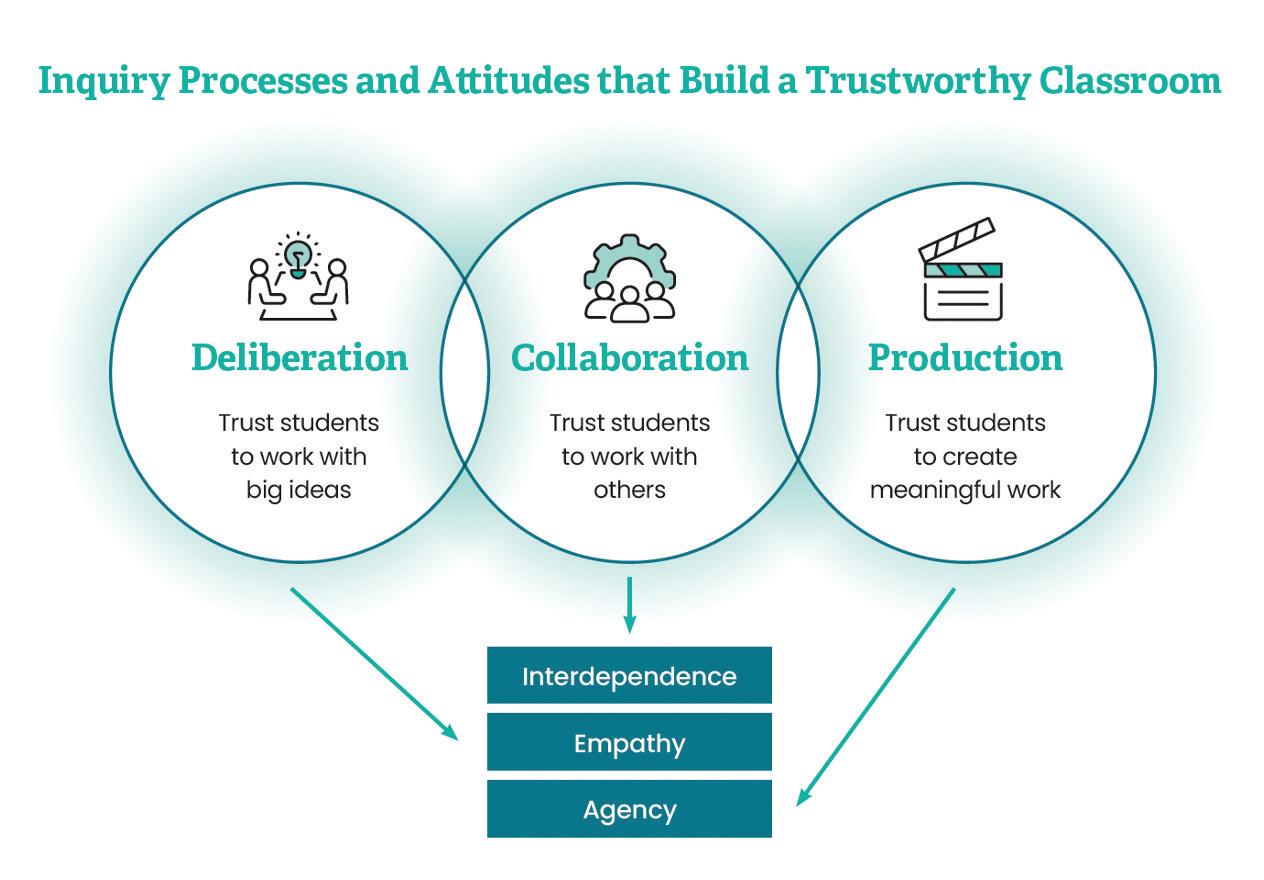
frontier in blueprinting—not because it’s new, but because we finally understand just how foundational it is.” We suggest that there are three key processes inquiry teachers use consistently to build a trustworthy classroom: deliberation, collaboration, and production. 3 Deliberation allows students to consider each other’s ideas; collaboration occurs when students work as a team to problem-solve; and, production is the process of constructing meaningful work. When inquiry teachers use the key processes regularly, they build a culture of trust with their students that engenders empathy, interdependence, and agency.4
Using this trust framework, we asked the following question: How do teachers create opportunities for deliberation, collaboration, and production? In addition to describing these experiences, we looked further for insight into the ideas and impulses that informed their design choices. What follows are our findings and analysis after studying these two teachers over a semester of inquiry in a co-taught Civics course at a large suburban high school in Normal, Illinois.
Megan Somers and Ricky King Megan Somers and Ricky King are both seasoned, certified social studies teachers. Somers has taught eight years since earning her Master’s in History Education and another in Teaching and Learning from Illinois State University. King has been teaching for six years
since earning his Bachelor’s in History Education with a Master’s in English, both from Illinois State University. Ricky King is bilingual and fluent in English and Spanish.
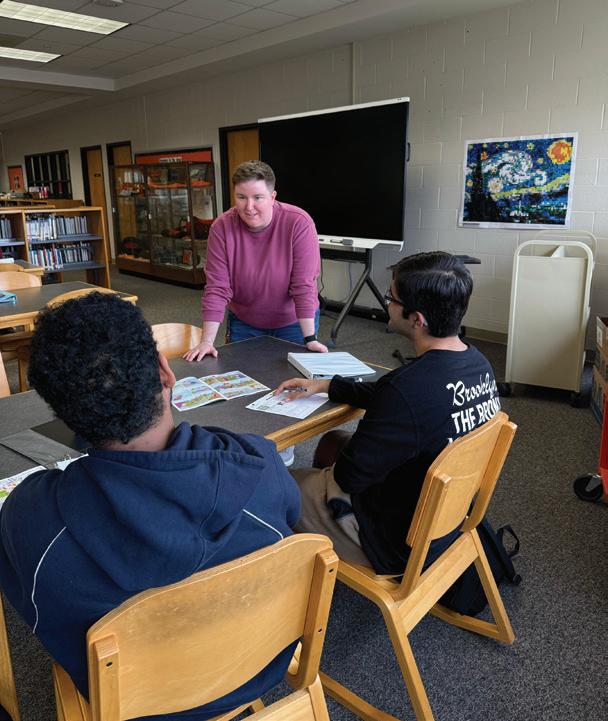
In the class we observed, Somers is the lead content teacher, and King serves as the ESL teacher. In addition to English, some ELs in the class speak Spanish, others Vietnamese, French, or Portuguese. We assumed that the pair differentiated inquiry-based instruction for ELs, but from our very first conversation, it became clear that they did not differentiate instruction for ELs,
aside from providing home language translations. Instead, they approached the class from a posture of trust, believing all students could experience meaningful inquiry.
Somers and King make conscious decisions to trust their students from the first day of the semester. They do not expect trust to be earned; that would simply take too long. Instead, the structure of their course entrusts students with inquiry from the moment they enter the classroom. Instruction is designed to turn thinking over to students. At times, the teachers and students have reservations, but they do not turn away from the risk of inquiry. As Somers explains: “I always have a moment at the beginning of the unit where I ask myself, ‘Am I trusting my students too much?’ And students are like, ‘Are you trusting us too much?’ Then we go, ‘No, I don’t think we are.’ And we slide them the next thing, and they crush it.”
Somers and King apply this mindset to all students. They see the ability to speak in multiple languages as an asset, and know that ELs can think, read, write, and produce language. They explain that calls for differentiation for ELs often imply lowering expectations or outcomes for students. They take pride in countering this narrative. Instead of designing for ELs, they design for the students in their class, many of whom are ELs.5 Megan Somers is clear: “Supporting ELs is so ingrained in how we build things, period, that we don’t build things and then modify them. We just build
inquiries in a way that is accessible to ELs.”
In the sections that follow, we mine this mindset of trust further, elucidating the teachers’ approaches to inquiry using quotes from interviews. We examine how the teachers link their beliefs to the inquiry practices of deliberation, collaboration, and production. We add to these practices by showing how the teachers’ design choices were intentional, student centered, and disciplinary in each of the three phases of the trust framework And, finally, we conclude with a key insight from our observations that it takes a beginner’s mind to become a bonafide inquiry teacher.
Megan Somers and Ricky King intentionally design their course to foster deliberation. They codesigned three units that span a semester, each anchored by a compelling question worthy of deliberation. For their final
seven-week unit on civic participation, the teachers created a series of what they called miniinquiries under a larger compelling question (see Table 1).
Supporting questions account for the specific context and vocabulary needs of the students in the class, including ELs. For example, in the mini-inquiry “Why are we so politically polarized?”, students first define terms like political ideology and political party as foundational concepts in supporting question 1. These concepts then support further analysis in supporting questions 2 (How do people pick “a side”?) and 3 (What role does social media play in what people think/believe?).
Deliberation happens every day—not just during an inquiry— and is frequently modeled by the teachers. During an inquiry around the compelling question “How does identity shape how we vote?” Somers described her process for interpreting data out loud in front of the class, while King asked her
follow-up questions that he anticipated students might have. In doing so, they modeled the empathy that underpins effective deliberation. After students panicked when asked to write a claim about the data, the teachers listened to their concerns. They then modeled what to do when stuck, demonstrating how to replicate the process students had already practiced in class with new data.
These two teachers design for student-centered deliberation. Students in the class are encouraged to speak and write in their home language if it allows them to participate. Speaking more than one language is considered a strength, not a weakness. The teachers frequently solicit participation in home languages, translating when they can, or relying on peers or technology to translate when they cannot. Instruction and formative tasks are designed to foster conversation that moves between students, not through the teachers. For example, one formative performance task
Final unit on civic participation including topics, mini-inquiry compelling questions, and culminating inquiry compelling question.
1 Voting Systems / Political Parties How do voting systems impact the outcome of an election?
2 Political Ideology / Voting Behavior How do identity and beliefs impact voting behavior?
3 Presidential Elections & Electoral College Should the United States keep using the Electoral College?
4 Voting Rights History & Youth Voter Participation Does voting matter?
5 Non-Voting Civic Participation
Culminating Inquiry
What organizations foster connection to help our democracy?
How can I be part of an organization that fosters connection to help our democracy?
Compelling Question
Supporting Question #1
What is political ideology? Political party? How do they connect?
asks students to work collaboratively to sort a set of cards into specific groups; another asks students to create a human timeline where the class has to negotiate and come to consensus about a chronology; and, another task asks students to create an evidentiary claim in small groups where each person has to contribute words and ideas.
This intentional design allows student-centered deliberation of disciplinary sources. The sources and formative tasks are themselves about deliberation and pluralistic democracy (notably easy to do in a civics class, but certainly possible in other social studies courses). Compelling and supporting questions lead students to deliberate meaningful and relevant disciplinary concepts, including the Electoral College, voting behaviors, and political polarization.
Somers and King believe that effective collaboration begins with intentionally grouping students based on their individual personalities and linguistic strengths. “We believe that ELs learn language when they engage in language use, when they engage in home language and English language use, and
Why are we so politically polarized?
Supporting Question #2
How do people pick “a side”? How does identity shape beliefs?
the only way to do that is to give them the opportunity to talk,” says King. Formative tasks are designed to be collaborative and include mixers, the use of the Question Formulation Technique (QFT), and jigsaws. “We’ve intentionally, structurally built all of the activities from the beginning of the semester to tomorrow, to help students be able to talk. And we at no point force anybody to talk. When you put the structures in place, they will do the talking,” King noted. Strategies that yield successful collaboration are intentionally repeated. Somers believes that the point of scaffolding is that it is eventually removed. When students routinely collaborate and then you “take the structure away, they can still do it,” she says.
The physical arrangement of the classroom, with the desks in pods, creates a studentcentered environment that allows students to provide one another with language support. The teachers trust students enough to step back and create the space for students to turn to each other for help, breaking the habit of seeking answers from the teacher.
Disciplinary sources allow students to collaborate around actual disciplinary problems. While considering the compel-
Supporting Question #3
What role does social media play in what people think/believe?
ling question “Is the Electoral College a fair voting system?” students are given a set of maps showing the results of the Electoral College and popular vote from previous elections.
“We trusted students to go through those and answer a series of questions based on those maps,” King said. “All students did, and again, we had ELs today who were taking the lead in their groups, because they got it.” Students in the class worked together to analyze demographic data from the Pew Research Center to predict election results by group, and were welcomed to do so in the language of their choice.
Disciplinary sources provide a necessary vehicle for content and allow students to consider diverse perspectives, aligned to district and state standards.6 As an entry point for collaboration, Somers and King encourage students of all achievement levels to read sources out loud to add their voices to the discussion. Crucially, the disciplinary sources they pick help lower the barrier to true collaboration for students who may lack the vocabulary or background knowledge. For example, a student may understand what the Electoral College is after learning about it in class, but lack the confidence or vocabu-
lary to ask a question. A map of the election results is paired with another map that includes state names for those unfamiliar with America’s geography, and allows students to physically point to what they are talking about. We witnessed a cycle of trust around disciplinary sources: Somers and King trust that students can do source work, students feel that trust, students take intellectual risks, and students improve over time. “[They] know we’re not going to give them something that feels impossible. So anytime we hand them a challenging source, they assume that we think they can do it. We have mutual trust,” says Somers.
These teachers’ approach to production centers on maximizing thinking while reducing writing. In doing so, barriers to production that exist for many students (spelling, English sentence structure, the time required to write, and frustration associated with getting ideas down on paper) are
removed. Carefully designed formative and summative tasks reinforced the teachers’ high expectations for all students. “Everybody receives the same compelling question, the same inquiry structure, the same assessment structure, the same sources, just in multiple lan-
guages,” says King. Color is used to intentionally support learning. For example, when learning about the political spectrum, the teachers use the color red to represent the right, conservatives, and Republicans; blue represents the left, liberals,
and Democrats. Political spectrums on graphic organizers, notes, and bar graphs all use the same colors. By the time students analyze electoral maps, they already understand the color coding.
Production takes many forms, but is most effective when
student-centered. The use of such visual instructional supports and sources resulted in opportunities for spoken and written production. King noted that intentionally reducing barriers to entry increased participation even from usually quiet students.
At one point in the semester, the teachers realized that their students’ written arguments were difficult to follow. They designed a graphic structure to help students organize their ideas while crafting arguments. The teachers designed a graphic in multiple languages
Nombre: Unidad 3 - Participación cív ca Educación cívica (King y Somers) Evaluación del Colegio Electoral (Spanish) Instrucciones:
Argumentation organizers in English, Spanish, Vietnamese, and French.
● ¡ELIJA SOLO UNA RECLA MACIÓN! ¡RELLENE SOLO UNA PARTE DE ESTA EVALUACIÓN!
● Formula una afirmación que responda directamente a la pregunta
● Sustente su afirmación con tres pruebas
● Explica mediante razonamientos cómo cada prueba demuestra la afirmación
Segunda pregunta: ¿Es el Colegio Electoral un sistema de votación justo?
Reclamación →
1A Pruebas Información específica que muestre
2A Pruebas:Información específica que muestre la idea de su afirmación después del porque
2B Razonamiento: Esta evidencia demuestra la veracidad de su afirmación porque
to assist students in their argumentation.
The teachers also realized that their students were developing what they called “claim burnout.” Again, rather than turning away from inquiry, they innovated, creating an inquiry with two variations of the same compelling question that used the same supporting questions and sources. For the summative assessment, they trusted students to select which compelling question they wanted to answer. King explains,
The claim option provides students with the choice to choose the claim that they feel they can have the most success writing, to increase that buy-in, and to increase the accessibility and lower the barrier to entry to claim writing.
Somers and King make inquiry-based instruction student-centered in part by seeing students as people who live in the political reality of the contemporary moment. While other teachers used the compelling question “Will I Vote?”, this question felt “disingenuous” for their students—none of whom were old enough to vote, and some of whom would not have the right to vote when they turned 18. Instead, they asked, “Why does voting matter?” Addressing head-on the polarization in the world in which their students live, the inquiry explores subgroups with low voter turnout in recent elections and helps students understand why people choose
to vote or choose not to vote. Another inquiry explores avenues for civic participation other than voting. The teachers curated a list of organizations that high school students in their community could actually join and allowed students to self-select an organization, including the option of picking a group in which they already participated.
Rather than succumbing to the linguistic challenges of textbooks, the teachers focused on visual disciplinary sources like bar graphs, data tables, maps, and a documentary.7 Formative and summative tasks asked students to engage in the disciplinary practices of political scientists. Students used demographic data from previous elections to predict future election results. Students created posters explaining why voting matters for specific demographic groups, based on actual demographic data. After researching avenues for civic engagement, students tried to persuade peers to join a specific club or group. Mirroring civic engagement in real life, students produced not only written work, but also engaged in argumentation out loud with peers.
Somers and King are unequivocally committed to inquiry. When they find something that works, they repeat the structure while introducing new content. As Somers explains, this method “produces a space where students use their think-
ing power to produce quality ideas, and not necessarily to figure out what we were asking them to do.” The civics course culminated with a mixer, where students encouraged peers to join the civic group they had researched.
It was the last day of the semester before final exams, and per the school’s grading policies, students’ grades were already finalized. Since the mixer did not affect grades, it offered a strong example of classroom trust, with every student participating.
Somers: The only student that I’ve ever had look at me and say, “No, I will not read out loud today,” had an A. [She] didn’t have to do [it]. Not only did she do the thing, but she was walking around the room to students that she had never been in a pod with, calling them by their first names and asking them questions.
King: ELs were talking with non-ELs, and native English speakers were talking with ELs.
Somers: Every time I’ve had a fear that students might not be willing to engage in collaboration, the kids have proven me wrong.
King: That’s where the cool leap of faith comes in at the beginning of the semester when we … trust our students to do something like this. It pays off in the end, because today happened
… and it was perhaps the coolest day of class.
Somers and King make both the practice and purpose of inquiry visible. Beyond the what and how, they reveal its deeper why: a genuine curiosity about how students learn and how they, as educators, can support that learning. Yes, they teach from blueprints. Yes, they enact the practices of deliberation, collaboration and production. But there is something more at play.
In the book, Zen Mind, Beginner ’s Mind, Shunryu Suzuki writes, “In the beginner’s mind there are many possibilities, but in the expert’s there are few.”8 We see this “beginner’s mind” in the reflections and practices of these two teachers. They have an openness to learning about learning; they are curious about who their students are and who they might become; they observe themselves, each other, and their students without judgement; and, they are humble in their craft, always seeking to be better. And by doing so, they remind fellow
inquiry teachers to take “the cool leap of faith” and inhabit a beginner’s mind.
Notes
1. Kathy Swan, John Lee, and S.G. Grant, Inquiry Design Model: Building Inquiries in Social Studies (NCSS, 2018); Kathy Swan, John Lee, and S.G. Grant, Blueprinting an Inquiry-Based Social Studies Curriculum (NCSS, 2019).
2. Kathy Swan, S.G. Grant, and John Lee, “Trusting Inquiry: Teaching with the Inquiry Design Model,” Social Education 87, no. 5. (2023): 328-331.
3. Swan, Grant, and Lee, “Trusting Inquiry.”
4. Swan, Grant, and Lee, “Trusting Inquiry.”
5. Meghan Hawkins, Kathy Swan, and Bárbara Cruz, “Teaching with an Ethos of Trust: Anatomy of an Inquiry Design Model Blueprint for English Learners,” Social Education 89, no.3 (2025): 168-175; Ashley Taylor Jaffee and Cinthia Salinas, eds., Teaching Culturally and Linguistically Relevant Social Studies for Emergent Bilingual and Multilingual Youth (Teachers College Press, 2024).
6. “Illinois Learning Standards for
Social Science,” Illinois State Board of Education, last modified May 5, 2025, https://www.isbe.net/ Documents/IL-Social-ScienceStandards.pdf
7. For examples, see Luciana C. de Oliveira, “What History Teachers Need to Know About Academic Language to Teach English Language Learners,” Social Studies Review 51 (2012): 76-79 or Clara L. Brown, “Strategies for Making Social Studies Texts More Comprehensible for EnglishLanguage Learners,” The Social Studies 98, no. 5 (2007), 185–188.
8. Shunryū Suzuki, Zen Mind, Beginner’s Mind, ed. Trudy Dixon (Weatherhill, 1970), 21.
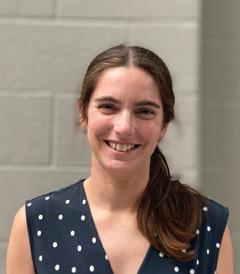
Meghan Hawkins is a social studies teacher and department chair at Normal Community High School in Normal, Illinois. She just completed her doctoral work in Curriculum and Instruction at the University of Kentucky.

Kathy Swan is a professor of social studies education in the College of Education at the University of Kentucky.
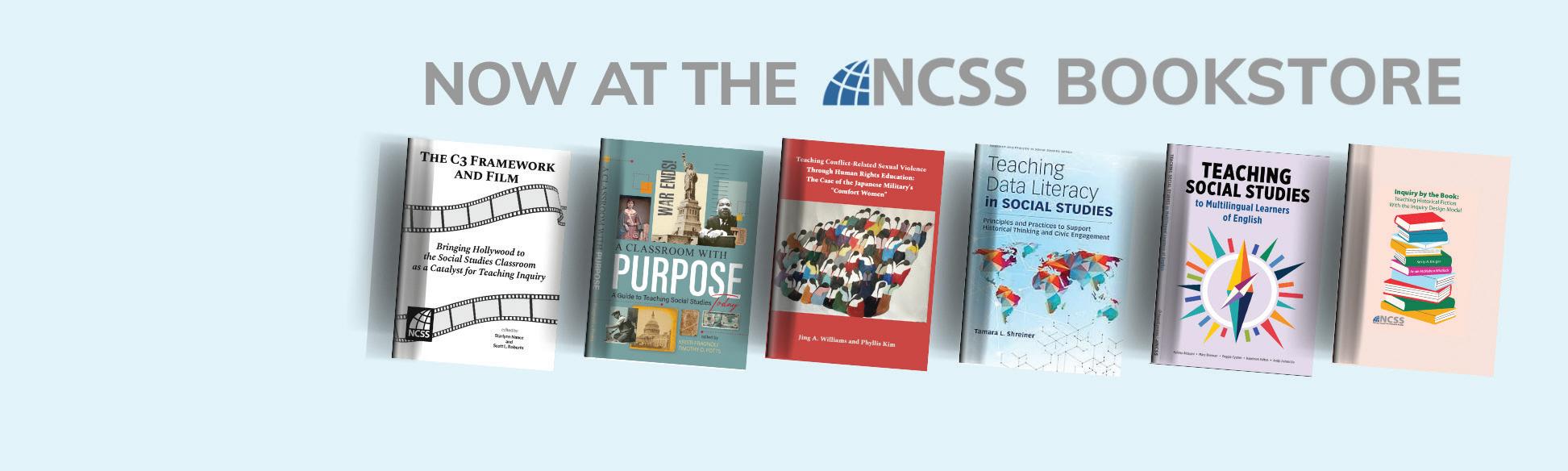
Valerie Struthers Walker is a Professor of Education and Faculty Associate for Teaching and Advising at Gustavus Adolphus College in St. Peter, Minnesota. Her area of expertise is elementary social studies and English language arts, with an emphasis on diverse children’s literature and elementary economics education. This is her thirtieth year as an educator.
Q. Why did you become an educator?
A. I’ve always loved children’s questions and their willingness to explore the world. Becoming an elementary teacher allowed me to explore the world with my students through children’s literature and social studies inquiries. I shifted to teacher education because I love spending time in classrooms and collaborating with teachers. My current role lets me do both.
Q. What teaching success or career achievement are you most proud of?
A. I’m always thrilled when elementary education majors “discover” (or rediscover) that teaching social studies is a powerful way to connect to students, explore meaningful questions about ourselves and others, and have fun. I love introducing our teacher candidates to NCSS through publications, our state conference, and even virtual visits from NCSS colleagues. Most recently, I have had

a chance to use the Inquiry Journeys curriculum [from inquireEd] with the class and introduce them to NCSS webinars as an on-going form of professional development [www.socialstudies.org/ professional-learning].
Q. When and why did you join NCSS?
A. I joined NCSS around 2010 after attending the Minnesota Council for the Social Studies state conference. I not only felt welcomed by my newfound colleagues, but challenged to keep learning as an educator.
Q. How has being a part of a professional association enriched your career?
A. My engagement with NCSS and MCSS is the way I keep up-to-date with the field and connect with K-12 educators. One of my favorite activities has been to serve as a member and co-chair of the Notable Social Studies Trade Book Award committee.
For inquiries about Social Education advertising, call Maribell Abeja-DeVitto at 312-673-5483 or e-mail MAbejaDeVitto@smithbucklin.com
Information about advertising rates and specs can also be found at www.socialstudies.org/advertising
socialstudies.org/conference
CUFA is the NCSS Associated Group for college and university faculty dedicated to advancing social studies education at the higher education level. By joining, you gain opportunities to:
• Share research, teaching strategies, and best practices with fellow social studies faculty
• Engage in national discussions shaping social studies higher education
• Participate in initiatives that advance the field and support social studies educators
• Network with colleagues across institutions
Membership is simple:
1. Be an active NCSS member.
2. Join CUFA to access exclusive resources, events, and a professional community of university faculty.
Strengthen your voice, connect with peers, and stay engaged in the national social studies community.
Learn more and join today: socialstudies.org/cufa