COMMON GROUND









18
Finding Common Ground at Sweeps Week
More than 100 volunteers complete Warrior Horse ranch improvements while supporting veterans and first responders.
6
The Invasion of the Sweep Scammers
Industry leaders share how ghost Google
Business profiles are stealing leads and what chimney sweeps can do to report them.
10
Components of a Good Respiratory Program
Why chimney companies need medical evaluations, fit testing, and the right filters to protect workers from long-term exposure.
14
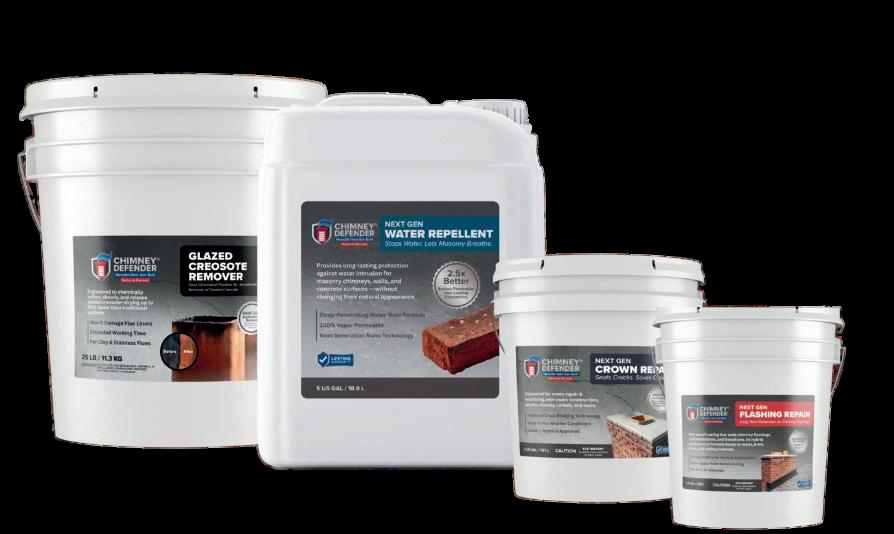
Elevating Sealers
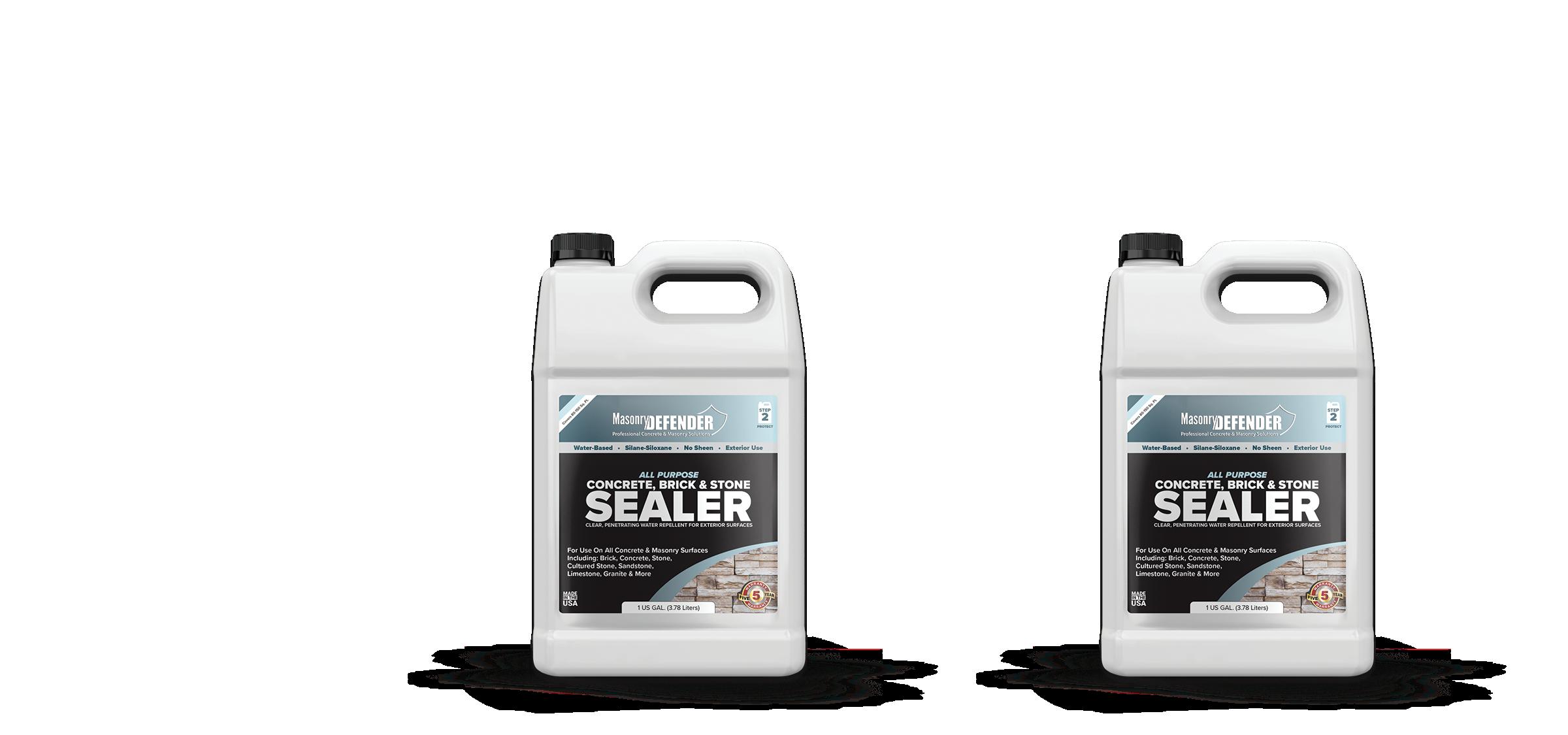
Why chimney protection demands more than a one-size-fits-all sealer.
23
Collecting the Stories Behind 50 Years of NCSG NCSG begins collecting member stories to document the people and moments that shaped the Guild’s history.
24
Quit Burning Down Your Spring and Summer
Money Tree
Missed calls, weak follow-up, and poor tracking are costing chimney companies more than they realize.
28
Auto Insurance Best Practices
Why driver screening, vehicle maintenance, and proper coverage are key to controlling costly onthe-road incidents.
31
Meet the Director: Jonathan Cross
A second-generation sweep shares how growth, innovation, and long-term employees define success at D.J. Cross, Inc.

Have you ever seen some interesting things on the job?
Submit a photo with your name and location to marketing@ncsg.org.

Let us know what’s going on! Submit industry concerns to NCSG’s Policy Action Center. We post live on the website and look into how we can take action. While you’re there, you can also check out the blog for past issues we’ve addressed. Check your email and Facebook to stay up to date!
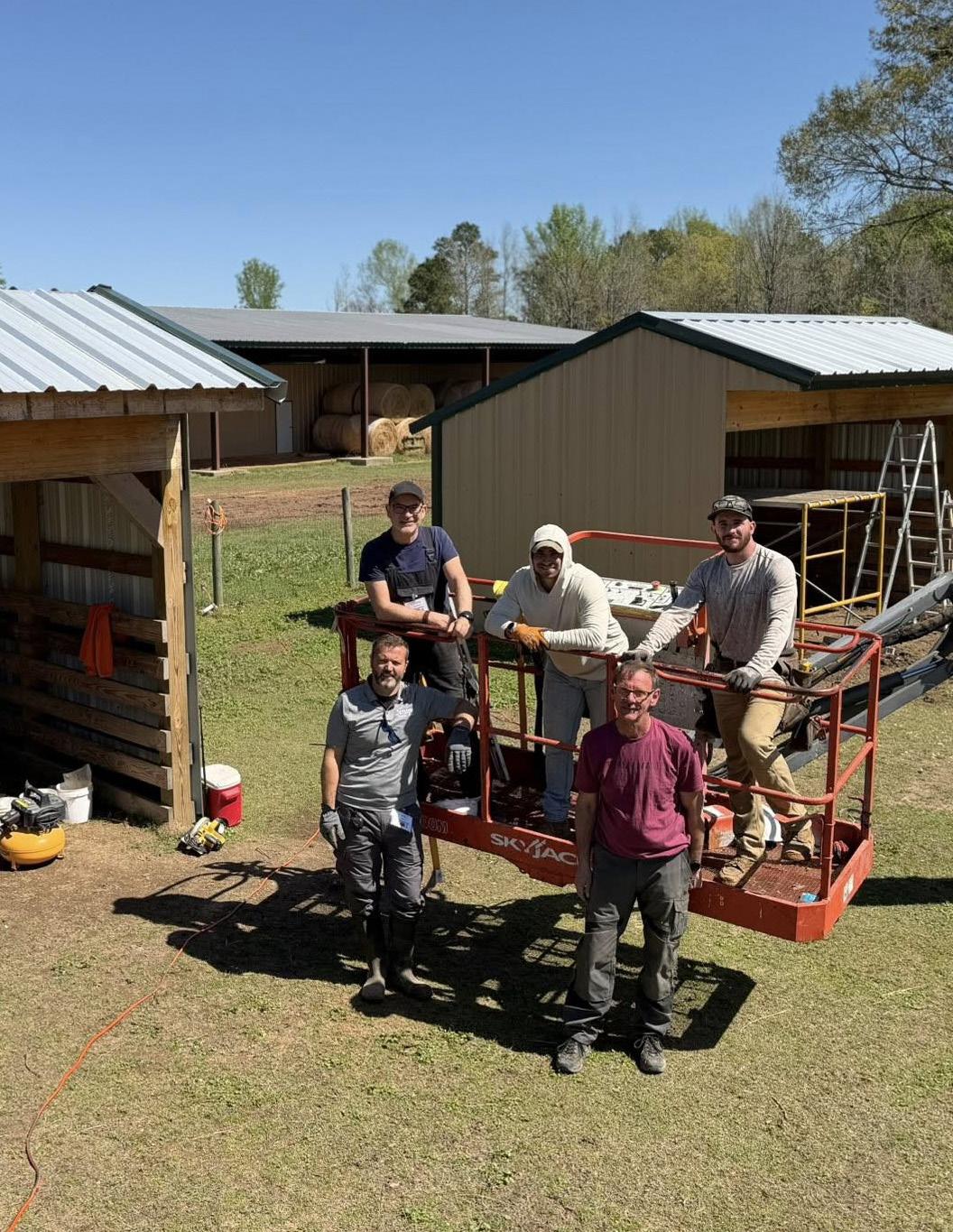
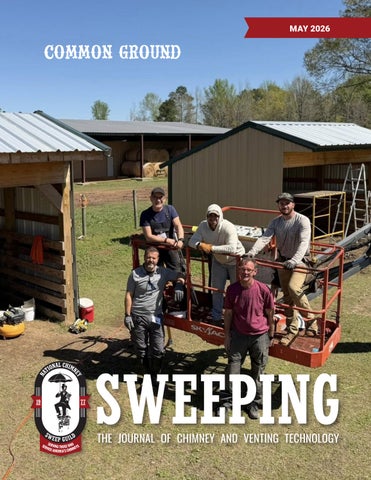
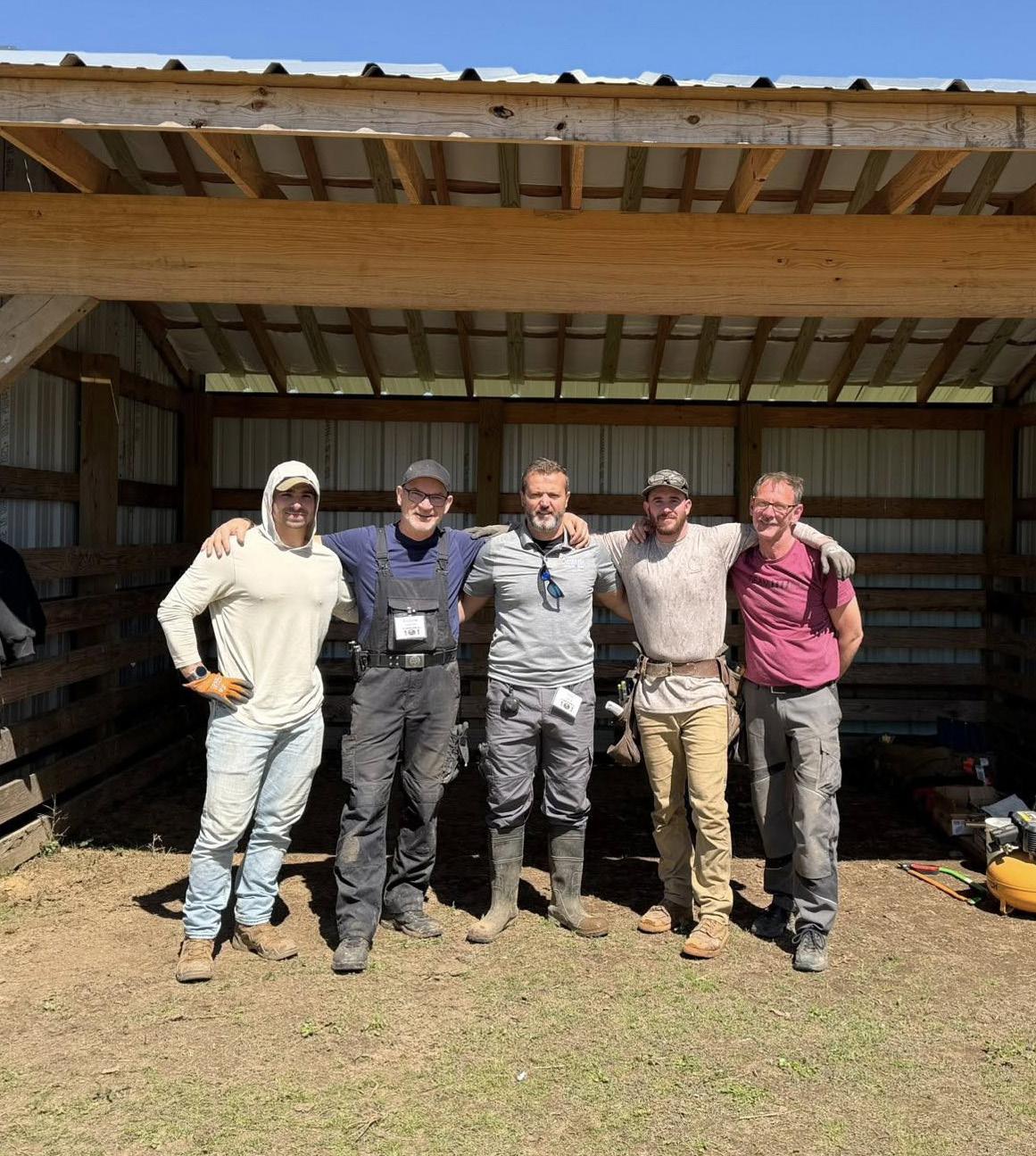
On the Cover: The annual Sweeps Week at Warrior Horse draws volunteers from all over the world.
Front row (left to right): Vick Jakupi (New York) and Markus Wenzelmann (Germany)
Back row (left to right): Andreas Gartner (Germany), Nick Lanci (New York), and Austin Brozowski (New York)
(317) 837-1500
Kailah Schmitz, CAE, Executive Director director@ncsg.org
Jessica Thornton, Associate Director and Certifications Coordinator jessica@ncsg.org
Jonathan Erdman, Director of Education education@ncsg.org
Sydney Kaizer, Director of Marketing and Communications; Sweeping Editor marketing@ncsg.org
Brittney Burton, Membership and Events Coordinator bburton@ncsg.org
Libby Almendarez, Membership, Certifications, and Digital Coordinator office@ncsg.org
DISCLAIMER
The views expressed in Sweeping do not necessarily reflect the views of the National Chimney Sweep Guild (NCSG) or its staff.
ADVERTISING
To advertise, email Malisa Minetree at sweepingads@me.com or call (317) 603-7854.
NCSG further reserves the right to reject at any time any advertising determined not to be in keeping with the publication’s standards. Acceptance of advertising by Sweeping does not necessarily constitute endorsement of products or services advertised. NCSG does not make any effort to review or substantiate claims made by advertisers.
PHOTOGRAPHY
Stock images by iStock, Adobe.
ARTICLE SUBMISSION
NCSG encourages industry partners to submit press releases and articles to the editor at marketing@ncsg.org. Submissions should contain items of interest or importance to the chimney and venting industry. Submissions should not contain direct solicitations, prices, or other forms of advertising verbiage. Submissions may contain images or artwork attached in a JPG format.
In all cases, NCSG reserves the right to edit submissions for space limitations, keep the release and publish at a later date, or refuse to publish the release for any reason. Neither publishing, nor refusing to publish the submission should be considered a statement of NCSG’s opinion regarding the release. © 2026 National Chimney Sweep Guild
IIt's training season!
Have you worked through your to-do lists and implemented ideas from HPBExpo and the National Chimney Sweep Guild (NCSG) Convention & Trade Show? Are you identifying training needs and committing to attending education events in the next months prior to the fall burning season? Spring and summer are a great time to tune up your inspection process and improve your masonry, gas service, and relining skills.
Need to enhance your sales techniques and provide support to your customer sales representatives? There's a class or training event for that! Your team can benefit from in-person classes, hands-on training through your regional and state guilds, the chimney sweep school, live virtual courses, and on-demand online learning. You can also build skills through FORGE, NCSG's virtual reality and online learning platform, as well as participating in networking events and mastermind groups.
Read through this issue of Sweeping to brush up on your respiratory safety knowledge (page 10), enhance your understanding of masonry coatings and sealers (page 14), and find out what industry professionals are doing to combat the explosion of fake Google Business locations (page 6).
Learning often happens in unexpected places. Read the Sweeps Week recap article (page 18) to find out how attendees practiced skills while giving back to veterans and first responders. Consider attending the Sweep Away Cancer Bike Rally on June 5-6 to network with fellow chimney sweeps while supporting a charity assisting those in our industry who are fighting cancer.
Be sure to check out the industry events listed on NCSG's event calendar (page 32), and if your favorite events are not listed, please submit the class information by scanning the QR code to the right. You can also stay informed about upcoming events through various industry Facebook pages. A big thank you goes out to the many vendors who continue to support these valuable training workshops!
If you don't see the training you need, reach out to the NCSG Education Committee, a state or regional guild, or a vendor company to help bring those opportunities to life.
Looking forward to seeing you at an upcoming event! ■

By Debbie Wiedwald, President, National Chimney Sweep Guild
15-16, 2026
By Frank Motola, President, Brantastic, Stephen Allen, General Manager, Brandtastic, and Jerry Isenhour, Coach and Consultant, CVC Success Group
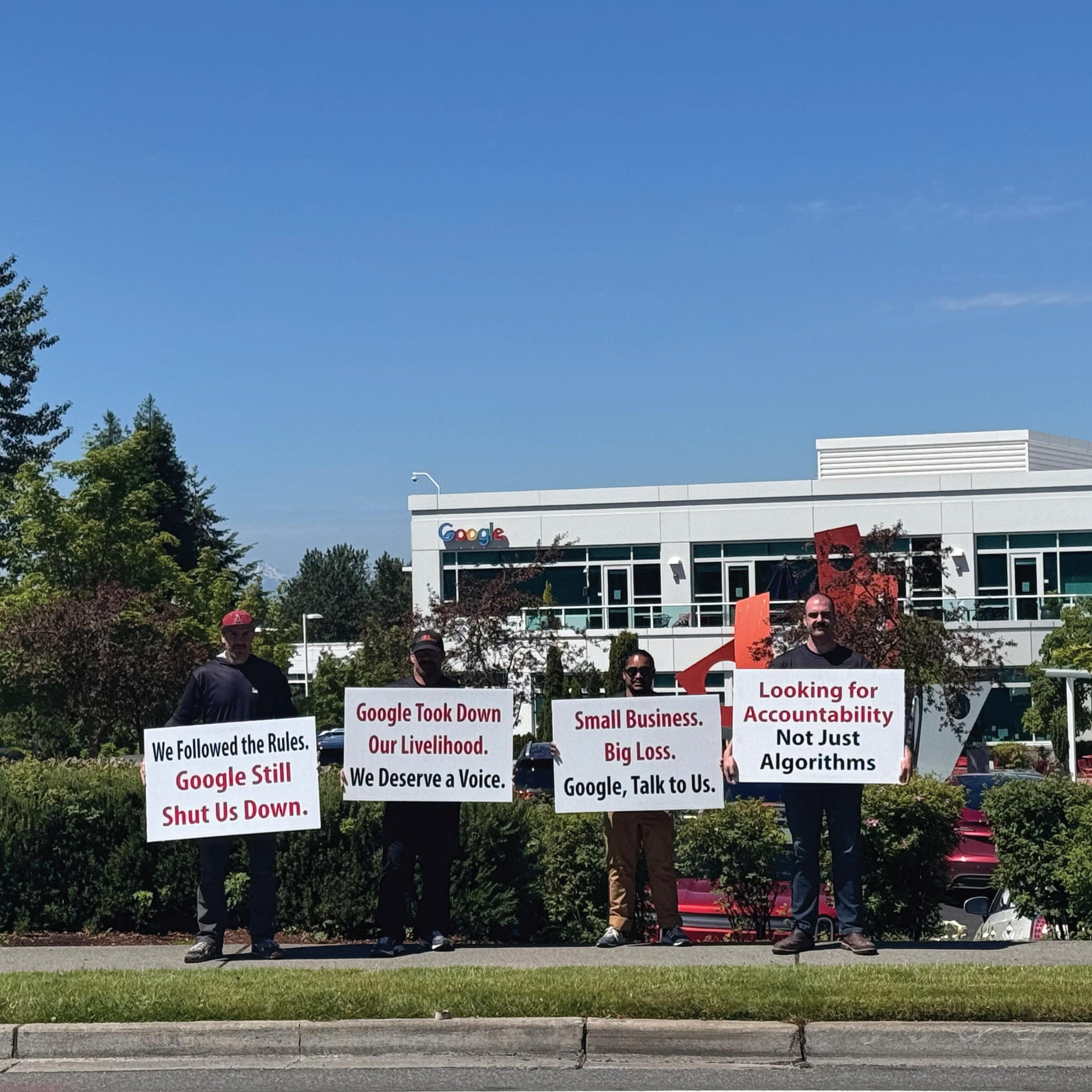
In 2025, Next Level Chimneys protested outside Google's office after their Google Business Profile was wrongfully suspended.

TThe chimney industry is facing a massive identity crisis, and it’s happening right in front of us.
On October 28, 2025, a group of about 20 professionals from the chimney sweep community gathered online to address a growing industry issue: the explosion of fake Google Business locations.
This wasn't just a one-time venting session. This group has remained in constant communication, fighting the scammers who are stealing leads and putting homeowners at risk.
Jerry Isenhour, founder of CVC Success Group, sat with Frank Motola and Stephen Allen of Brandtastic to talk about where all of these "ghost locations" are coming from and what we can actually do to kick them off of our maps.
Jerry Isenhour: "I’ve been in this trade since 1982, and I’ve never seen anything like the wholesale takeover we’re witnessing today. It’s a coordinated attack by people who don't even own a ladder. Frank, why is the Google Business Profile (GBP) the primary target for these scammers?"
Frank Motola: "We've both been at this a while, and Google has consistently presented small businesses with changes to deal with in order to show up in the rankings. Imposters have always been an issue, but now the door has been blown wide open at Google for some folks to dominate if they choose to because Google is NOT PAYING ATTENTION."
Stephen Allen: "It is the target because that’s where the money is. Today, your Google Local
profile generates about 70% of your solid leads. Scammers have found a massive loophole because Google is often more concerned with protecting its ad revenue than policing local maps. These cheaters and liars use review-building networks (real people that work for spammers and have high Google respect) to pump out five-star reviews daily. They can take a brand new, fake business and put it at the top of the search results in just a few weeks. They are well-funded and persistent. It can cause a sweep who has been in business for years to disappear from the rankings."
Jerry: "You mentioned these review-building networks. How deep does that go? Are they actually paying for this reputation?"
Frank: "Absolutely. These aren't just a few fake friends leaving kind words; these are sophisticated 'click farms' and review generation services. They are literally paying for batches of reviews to manipulate the algorithm. It’s a pay-to-play deal where the players are frauds buying a fake reputation they never earned."
Jerry: "Is AI behind all these fake listings?"
Stephen: "AI is NOT to blame because the core tasks need to be done manually by the network of scam 'helpers' that make these fakes work so well."
Jerry: "Stephen, you’ve been tracking these ghost locations. They aren't just taking business




away from honest sweeps; they are actually hurting people. How bad is it?"
Stephen: "It’s dangerous. These lead gen companies show up in unmarked vans with sloppy technicians who wouldn't know a chimney fire if it started in front of them. We’ve seen them charge a customer $1,030 just to silicone a cap to a crown. They didn’t address the liner that was needed or the fact that the crown required a full replacement. They’re charging premium prices for shoddy work while leaving the home as a total fire hazard."
Jerry: "A homeowner sees a profile with 500 reviews and thinks they’re safe. What is the best way to spot these fake companies?"
Stephen: "The best weapon you have is the 'Google Map Street View Test.' If you look up a suspicious competitor on Google Maps and their 'office' is a high-rise building, UPS store, or building with no permanent signage, you’ve found a ghost. They use 'virtual offices' to trick Google into thinking they’re local, even though this type of business address is a direct violation of Google’s policies."
Jerry: "One thing that stops a lot of honest contractors from fighting back is the fear of retaliation. If we start reporting these fake locations, are we putting a target on our own backs?"
Stephen: "That’s a common myth, but here is the reality: when you report a location to Google, it is completely anonymous. Google does not tell the scammer who flagged them.
We use a three-step process to take them down. We start by making an edit to the profile. If that doesn't work, we move to the Business Redressal Form, which goes to a human being. The final step is reaching out to a Google Product Expert in the community forums. You can report up to 100 fake locations at once with the data."
Jerry: "It feels like a game of whack-a-mole, though. We get one suspended, and two more pop up. Why is it so easy for them to get back on the map?"
Frank: "It is… because they’ve turned it into a science. They use fake documents and photos of a random door with a temporary logo taped to it to pass Google’s verification. These groups are taking in thousands in revenue, so they have the resources to get reinstated every time they get caught. We need to remain vigilant and get even more active reporting fake chimney sweep businesses."
Jerry: "So if Google isn't fixing it fast enough, what is our next move?"
Frank: "We’re moving past the report button and going directly to the media. A list has been created of investigative reporters,
publishers, and editors across all media outlets. We will make them aware with compelling evidence that we have a story worth reporting on."
Make It Local: Let the Press Know
Look at how Next Level Chimneys in Seattle was able to leverage a public demonstration into a solution. They were wrongly suspended for months due to an alleged glitch. After the automated reinstatement process led nowhere, they took it to the streets and protested right outside Google’s Kirkland office. It was only after that public pressure and the resulting media coverage that Google admitted their mistake and restored the business. You can read more about their story in the July 2025 edition of Sweeping. We need to apply that same level of public accountability whenever it is called for.
Stay tuned and join the fight by visiting www.ChimneyScam.com or reaching out to Frank, Stephen, and/or Jerry at the contact information below.
• Jerry Isenhour, CVC Success Group: 704-425-0217
• Frank Motola, Brandtastic Marketing: 407-414-5270
• Stephen Allen, Brandtastic Marketing: 813-862-8964 ■

By Jonathan Erdman, Director of Education, National Chimney Sweep Guild
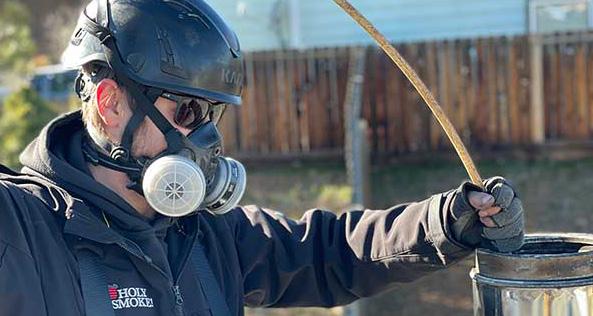
IImagine handing one of your chimney sweeps a new drill and telling him, “This should do the job, but I’m not sure. It will probably work most of the time, I mean, it’s a drill.” If you were the sweep, would you feel confident that you could do the job successfully? Even if it worked most of the time, how would it make you feel about the company? As crazy as this sounds, we actually do this with respirators. A lot. And the scariest part of all is we are talking about our lungs.
I truly believe that no business owner sets out to negatively affect the health and well-being of their sweeps or install crews. Most of the time, small business owners simply don’t know what goes into a good respiratory safety program, and it can be overwhelming. Of all the tools we use in our work, let’s take a closer look at respirators and make sure we are setting our sweeps (and their lungs) up for success.
Your company must have a written respiratory safety plan that includes the respirable hazards your employees will be exposed to in your work. Most chimney companies are exposed to creosote, crystalline silica dust (masonry), dust, and decaying animals (birds, squirrels, etc.). All of it is nasty stuff, but it shouldn’t stop us from being able to do our work.
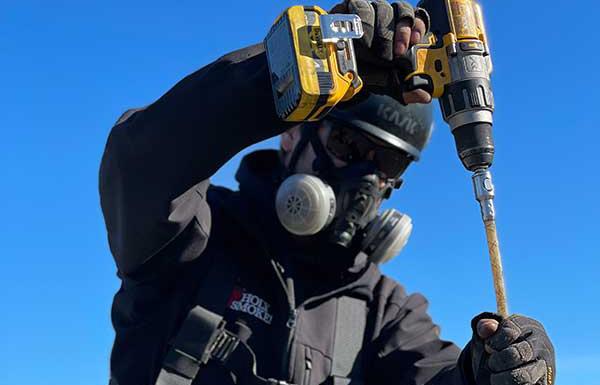
Your plan should include when you will require your employees to don a respirator, which types of respirators you will make available, and which filters will be used in these applications. But before you even get into types of masks and filters, you must follow the proper steps to verify your team can actually use a respirator.
A quick note to keep in mind as you consider your safety plan: respirators (along with other PPE) should never be the first line of defense in safety planning. For example, a respirator alone can help minimize exposure, but a respirator with another method to reduce the hazard will be far better!
Before putting a mask on, your employees must complete a medical evaluation from a qualified medical professional to determine if it is acceptable to wear a respirator. To some, this may sound a little silly, but there are medical conditions that prevent an individual from being able to wear a mask. If you expose someone to hazardous airborne materials, and they physically or medically cannot wear a mask, then you as a company will need to determine the next steps available to that employee.
The medical evaluation often does not require the employee to schedule an appointment with a physician. A simple preliminary questionnaire can be submitted to a doctor for evaluation. That’s it. The form will have all the information a medical provider will require for making a determination.
A note about HIPAA (Health Insurance Portability and Accountability Act) before we proceed. An individual’s medical history and current conditions are a very private matter. This process will involve individuals completing this form directly with the medical provider. The results provided to the company should only be PASS/FAIL. This is all the information a company needs to determine if the employee can be outfitted with a mask. At no time should the company request or keep a record of an employee’s medical records when it comes to this process. All you need to know is can they wear the mask. That’s it.
What are some conditions that would keep an individual from being able to wear a mask? It can vary, to be honest. It could be something as “simple” as claustrophobia, or as “complex” as an existing respiratory condition. If an employee fails this evaluation, do not sit them down and ask “Why?” That’s irrelevant and a violation of HIPAA.
On rare occasions a medical provider may request that the individual follow up with an office visit for further evaluation. This could clarify any conditions that would prevent someone from wearing a mask, or could also rule out any conditions. It’s a very subjective evaluation. For our purposes, all we need to be concerned with is PASS/FAIL.
So where do you do this? Several organizations have webforms that can be used to complete this process. It’s relatively inexpensive and painless. Reach out to your safety go-to person and inquire about what would be best to use.
Once you receive the eval results, file them away. Unless a major medical event happens in the employee’s life, this is a one-and-done process. No need to re-evaluate.
Once an employee has been approved by a medical professional and the results have been filed, the next step is determining if the respirators they will use actually fit. There are two types of fit tests: quantitative and qualitative.
To put it simply, the quantitative fit test involves using instruments to objectively determine a fit factor of the mask seal on the employee’s face. This method was required for all full-face respirators (negative or positive) until OSHA clarified in a letter of interpretation of 1910.134(f) in 1999 that this method would only be required in full-face respirators if the employee would be exposed to an environment where the exposure is 10 times or more than the permissible exposure limit (PEL).
The PEL for creosote and respirable crystalline silica is very, very low. In both cases, if you can see it, you are already over exposed. That being the case, the PEL also takes into account the length of time you are exposed to the substance. In most cases the PEL is an 8-hour, continual exposure time frame.
For sweeping chimneys, we probably aren’t going to sweep for eight hours continuously. It is possible, however, we may be working in smoke chambers or other similar environments for a long period of time. If you use full-face respirators, you should consider completing a quantitative fit test for your employees just to be on the safe side.
Masonry crews will certainly be exposed to silica dust, and if they utilize full-face respirators, again, it would be prudent to complete a quantitative fit test. Okay, so let’s talk about qualitative fit testing. This process is more subjective. The employee wears his or her respirator, dons a “hood”, and performs simple actions such as looking around and reading the famous “Rainbow passage” while the test administrator sprays a highly concentrated solution into the hood. If at any time the employee smells or tastes the solution, the test is failed.
While this a simple solution for testing, it relies on the honesty of the employee. You can probably see how this test would be easy to “cheat.” When I perform these tests, I encourage the participant to be honest by simply reminding him or her that it’s always good to fail this one if you smell or taste the solution! That means we can take steps to fix it before they start breathing all that yucky garbage into their lungs. So we should approach this method with the intent to “prove it works” rather than just getting it over with.
All fit test results will need to be recorded and filed. If you are not sure how to schedule a fit test for your
company, do an internet search or reach out to your local health department. They will point you in the right direction. Or again, contact your safety go-to person and they can also assist.
I wouldn’t be the least surprised if someone got their hands on this article and skipped right to this section. This is by far the hottest part of this topic. And let’s be honest! Chimney dudes love their beards. Well, for the most part at least.
Here’s the bottom line - your employees must be able to pass a fit test if they want to wear a respirator. Facial hair will very often be the reason the mask cannot create a good seal on the face of the employee.
Have you ever seen a firefighter with a beard? No, and you shouldn’t. It isn’t permitted. They do love that all too familiar badge of brotherhood, though. What is your company policy regarding facial hair for men? There are respirator designs out there that seal around the neck of the wearer and supply

positive air pressure to the mask. It’s called the thousand-dollar-beard, because they are typically $1200+. All because of a beard.
At the end of the day, it’s your company. It’s your policy. But if you require respirators (and you must), then each employee exposed to creosote, silica, and all the things we mentioned must pass a fit test.
For the work chimney companies perform, there are two filters that will work for every situation – the organic vapor filter and the P100 particulate filter. A combination of the two is the best way to prevent inhalation and reduce exposure.
If you work primarily in masonry, then a P100 particulate filter may be all you use, and that is just fine. If you sweep chimneys primarily, a combination of the two is highly recommended.
How long do the filters last? Like most of the matters we deal with in our work, you must always follow the manufacturer’s instructions. For example,
the 3M combo filters (P100+OV) indicate they have a 30-day max life, BUT only when exposed to airborne and substances. Some may also indicate that the max life is reduced to one week if the user is exposed for 40 hours. I used to always write the date on the cartridges when I removed them from the packages just to remind me.
For other manufacturers such as Sundstrom, the filters do not have a listed max life. The label indicates that when a difference in breathability is noticed it should be replaced. I personally preferred this brand because of the pre-filters that came with the other filters. A pre-filter doesn’t act as a filter and cannot replace any filter, but it traps nuisance particles and prolongs the life of the actual filters. Those pre-filters are pennies on the dollar too!
A PAPR (often referred to as “papper”), is a powered air-purifying respirator. It supplies breathable, filtered air directly to the face mask. An acquaintance of mine owns a pressure washing business. Several years ago he was in an accident where he was over exposed to a hazardous substance that burned his esophagus, and could have done the same to his lungs. But because of this injury, he could not work due to the potential of exacerbating his injuries. The PAPR saved his job and his pressure washing business. He has to use a PAPR, and with it he can do his work.
When should you use a PAPR rather than a standard, negative-pressure respirator? Well certainly if you just cannot shave the beard. If you have facial hair, this is probably your only option. It’s also ideal in high-concentration environments. Here’s a little secret, too, a loose-fitting PAPR that drapes over the head/shoulders do not rely on a tight seal to provide breathable air and are not subject to fit testing! That

being said, any mask with a tight-fitting seal must be fit-tested.
NIOSH. NIOSH. NIOSH.
Say that 10 times fast. Every respirator you use must be NIOSH-approved. NIOSH is the National Institute for Occupational Safety and Health. Their job is to identify workplace hazards and conduct research for ways to mitigate those hazards. This also means they certify specific personal protective equipment products used as respirators. If a company tries to sell you a mask that isn’t NIOSH approved, don’t buy it. Look for the letters “NIOSH” on the packaging and/or labelling. And certainly look in the manufacturer’s guide. If it isn’t there, find another one. There are plenty of NIOSH approved respirators on the market.
Summary
Congratulations on reading an entire article on respirator safety. It shows your level of commitment to the safety and well-being of your employees as well as your own health. When it comes to injuries in the workplace, respiratory injuries often do not show up immediately. Exposure to respirable crystalline silica often will not have signs or symptoms until many years later. Imagine a sneaky little ninja throwing star embedding itself in the lining of your lungs and stealthily destroying your lungs like a very patient intruder just hiding and waiting, damaging a little more each passing year until it’s too late.
Have a written plan for your respirator safety, including the hazardous substances your employees will be exposed to and the respirators you will make available to them. Set up your medical evaluation process, and determine how you will conduct your fit testing. Leave no room for doubt before you hand those respirators out! ■
Jonathan Erdman serves as director of education for the National Chimney Sweep Guild, where he helps guide training and professional development across the industry. He is also the owner of Rooftop Safety USA and brings practical experience in safety practices, including fall protection and respiratory considerations in field work.
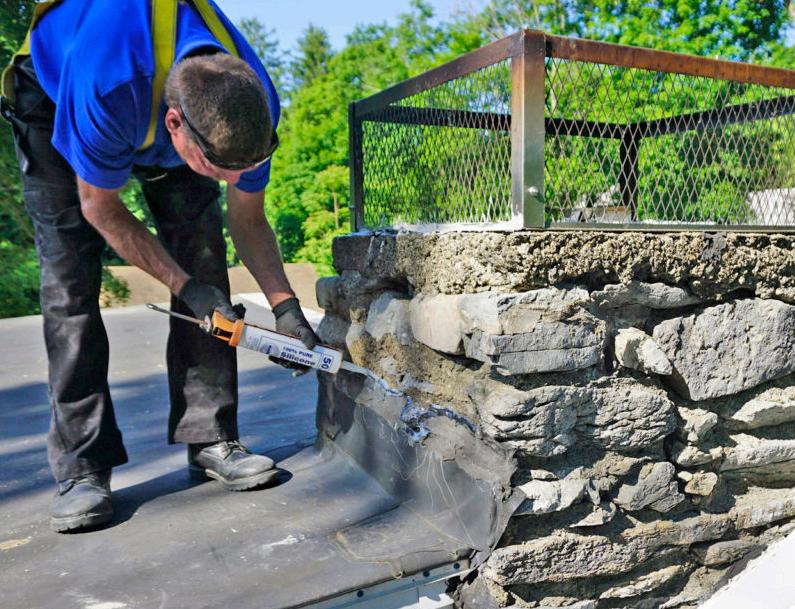
Why chimney protection demands more than a one-size-fits-all sealer
By Bruce Berglund, Ph.D., Vice President of R&D and Technical Services, SaverSystems
TThere is a big difference between a driveway and a chimney.
Before joining the chimney industry, I spent 30 years in the coatings business, working in technical and commercial roles developing sealers and coatings for masonry surfaces like concrete and brick. Those products ranged from heavy-duty systems for bridge decks to DIY sealers for patios, sidewalks and driveways.
The lesson was simple. Masonry products may look similar on the label, but they are not all designed for the same job.
That became especially clear when I worked on a water-based DIY silicone sealer for a major coatings manufacturer. Commercial
Masonry coatings and sealers generally fall into three categories: film-forming coatings, densifiers, and penetrating sealers.
Film-forming coatings create a continuous barrier on the surface. They can work well in places where abrasion resistance or chemical resistance is the main goal, like garage floors. Densifiers penetrate and react within concrete to improve hardness and durability. They are useful in certain
technologies were too expensive and too complicated for that use, so the goal was to create something easy to apply, affordable and stable on the shelf. We got there, and it worked well for driveways.
But a product designed for patios and driveways is not automatically the right product for a chimney.
That is where confusion can start. Some sealers give excellent firstday results and look great because water beads nicely on the surface. But chimney protection is not about how a product looks right after application. It is about how well it keeps water out over time while still allowing the masonry to breathe.
In this trade, we are not protecting sidewalks. We are protecting homes.
commercial floor applications. Penetrating sealers coat concrete capillaries with water resistant silicones.
Chimneys are different. For above-grade masonry exposed to weather, a penetrating sealer is usually the best fit. It needs to reduce water absorption without trapping moisture inside the masonry.
That last point matters. If a product blocks water from escaping as vapor, it can contribute to spalling, cracking and other moisture-related damage.
"In this trade, we are not protecting sidewalks. We are protecting homes."
One of the biggest misunderstandings in the field is the idea that water beading equals protection.
Beading can be a good sign, but it is not the same as longterm water resistance. Some of the highest-performing silicone sealers used in demanding applications provide excellent water repellency over time but do not create dramatic beading. On the other hand, some products bead very well at first but do not hold up as long on masonry.
For chimney work, the real question is not, “Does it bead today?” The real question is,
“Will it continue reducing water intrusion after seasons of weather exposure?”
That is what protects the structure.
There are many types of silicone materials, and they do not all perform the same way on brick and mortar.
Some lower-cost materials can give strong initial performance, but they may not last as long, especially on alkaline surfaces or under harsh weather conditions. Higher-performing silicone technologies are typically better at bonding, crosslinking and maintaining water resistance over time.

Bruce Berglund, Ph.D. SaverSystems VP of R&D and Technical Services

That does not mean every job needs the most complex chemistry available. It does mean the product should be designed specifically for masonry protection in real-world chimney conditions, not borrowed from a lighter-duty use.
A chimney is not one uniform surface. You may be treating older brick, newer mortar joints, crown repairs, or other masonry components, all with different chemistry and porosity.
That matters because many silicone treatments rely on moisture and the right surface conditions to cure properly. Newer, more alkaline materials often help that process. More neutral surfaces can be less forgiving.
This is one reason formulation matters so much. A well-designed product needs to perform across the different materials commonly found on a chimney. It also needs to do that without creating side effects like darkening from overapplication or poor wet-out.
For a chimney sweep, the takeaway is practical. The right product still has to be applied correctly, at the right spread rate, on the right surface.
A chimney sealer should reduce water entry, but it should still allow trapped moisture to escape.
That is what people mean when they talk about breathability or
vapor permeability. Chimneys take on moisture from rain, snow, condensation, and normal exposure. If water gets in and cannot get back out, damage follows.
In freeze-thaw climates, that damage can show up quickly. Water inside masonry expands when it freezes. If there is not enough room for that expansion, pressure builds and the surface begins to break down. Properly made masonry helps, of course, but a good penetrating sealer can improve performance by limiting water uptake while still letting the system dry.
Another common claim is depth of penetration.
For some applications, deeper penetration matters. On highways or other high-abrasion surfaces, it can be a real advantage. On a chimney, that is less important. The protection is needed where water enters: at or near the exposed surface.
In practice, deeper is not always better. Penetration depends on the substrate, the test method and the physical properties of the product. A dramatic number on a data sheet does not automatically mean better chimney performance.
What matters most is whether the treatment provides lasting protection where the chimney is exposed.
A chimney sealer has to work in the field, not just in the lab.
Water-based products are often easier to apply and easier to clean up, but stable water-based silicone systems are not simple to make. If the formulation is not right, shelf life can suffer, and performance can change over time. That is why in-can stability matters. The product should perform not only when it is manufactured, but also after it has been stored and then used on the job.
Ease of use matters too. Sweeps need products that are practical, consistent and easy to apply by brush, roller, or sprayer without unnecessary complications.
The bottom line is straightforward. Chimneys need sealers designed for chimney conditions.
That means strong water resistance, vapor permeability, durability on both brick and mortar, reasonable shelf stability, and easy application in the field. Good beading can be a plus, but it should never be the only reason to trust a product.
When sweeps understand what is behind the label, they are in a better position to choose products that deliver long-term protection, not just short-term appearance. ■
By Kevin Russell, Founder/Executive Director/President, Warrior Horse
IIt was another incredible year here on the Warrior Horse ranch! We had well over 100 attendees and volunteers for Sweeps Week on March 9-13, 2026. We had sweeps attend from all over the world, including Germany and Canada.
It’s just amazing to me to have this kind of support. I have never been to a volunteer event at which people are wholeheartedly willing to do whatever it takes to get the work done. No complaining, no whining, no feuding. Positive attitudes all around.
As you can imagine, it takes months to prepare for such an event. The week leading up to it, we ran electricity to the new location for the outdoor kitchen, framed the countertop for the drop-in range and double oven, and prepared the sink.
Throughout Sweeps Week, Chavez and his team pumped the food out constantly. Three full meals a day, along with homemade desserts. Coca-Cola partnered with us to provide beverages, and the lieutenant governor's office provided Louisiana catfish for attendees.
All the brick was laid under the timber frame for all five elements: the pizza oven, cooktop grill, fireplace, and both rocket bench stoves—nearly 5,000 bricks in all. We even lit the fireplace for the first time.
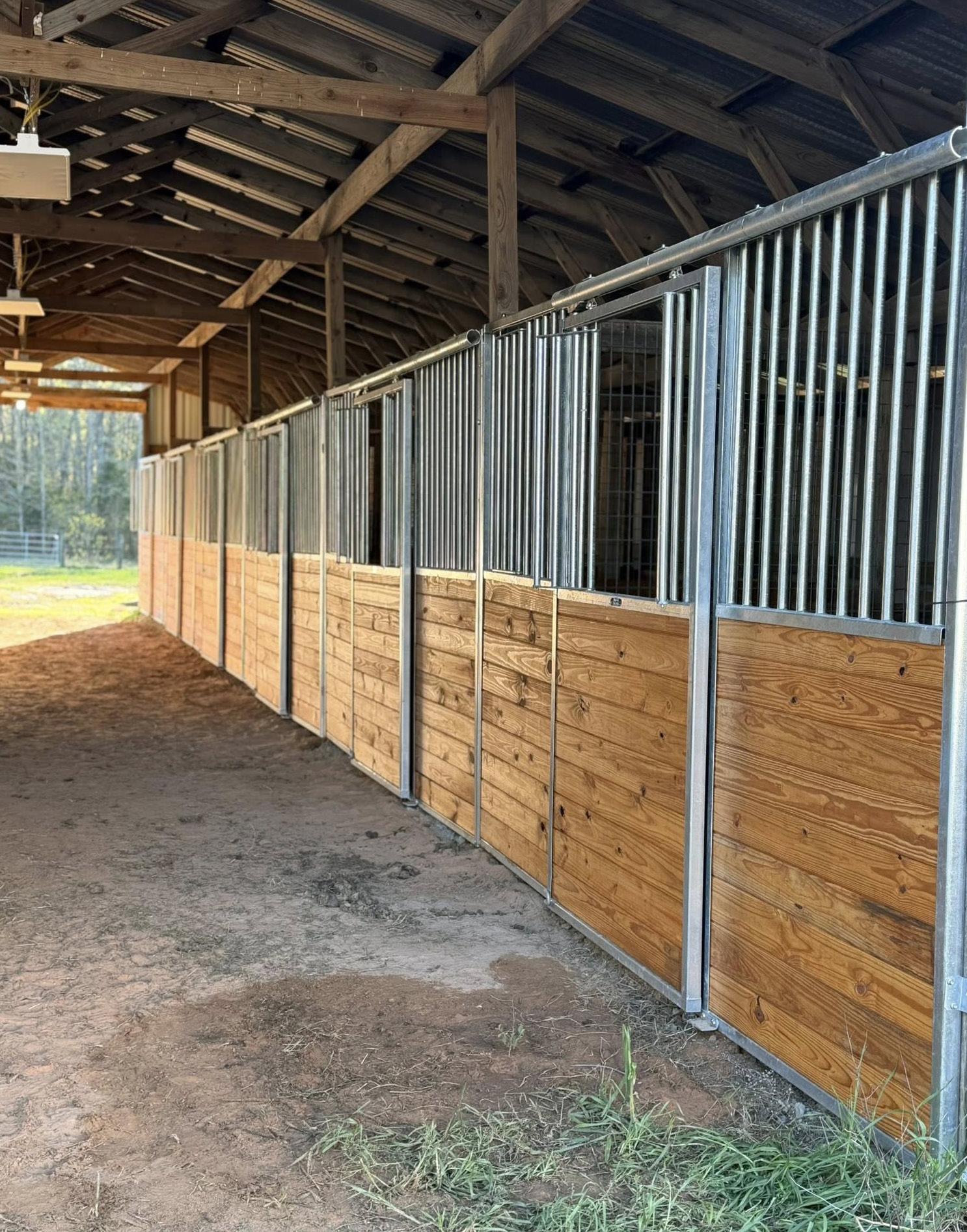
One of the most amazing things about laying all the brick was having 16 inspirational messages embedded using Morse code that Chris Prior adapted from audible to visual. During our classes at Warrior Horse, the veterans and first responders will be able to decipher the messages as a team building activity. It’s just another way to bond more deeply and have fun while doing it. I’m sure it will blow their minds knowing how much time, energy, and effort went into this for them! We were able to finish building the second lean-to for the horses to have shelter out in the pasture. The barn was transformed as well. All the stall fronts were filled with tongue and groove boards, the walls were boarded, and the stall dividers were assembled. The gravel was raked level and the rubber mats were put in the stalls. We also installed metal for the tack room. All the boards were stained as well. The stall fronts were then adjusted out.
Fence posts were put in and horse fencing put up. All the stumps in the front pastures and backyard were dug up and removed, as well as many in the back pasture. The front and middle pastures were raked and sticks were picked up. Dirt work was done to raise the horse waterer and level several low spots. Gravel was brought in and spread for both
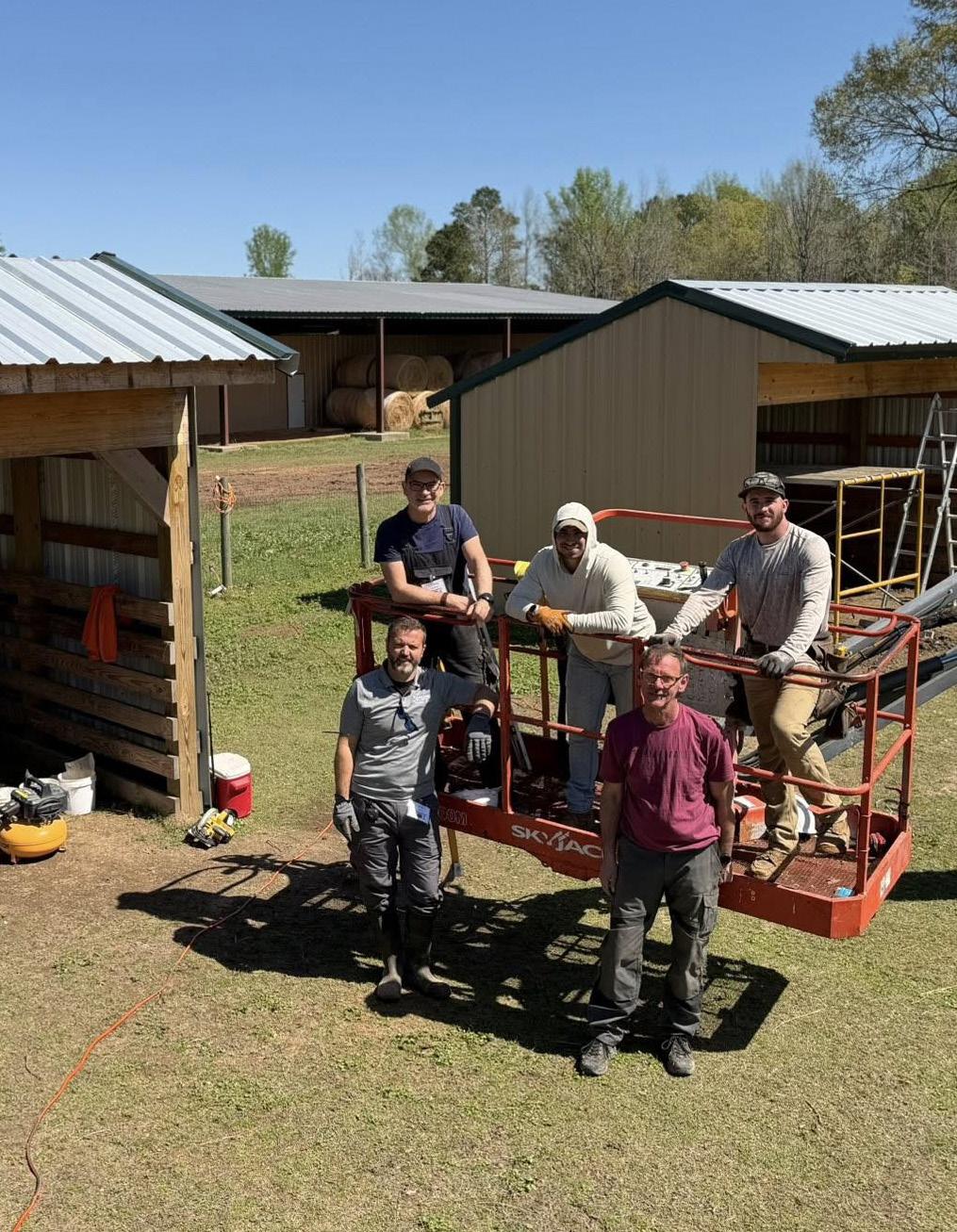
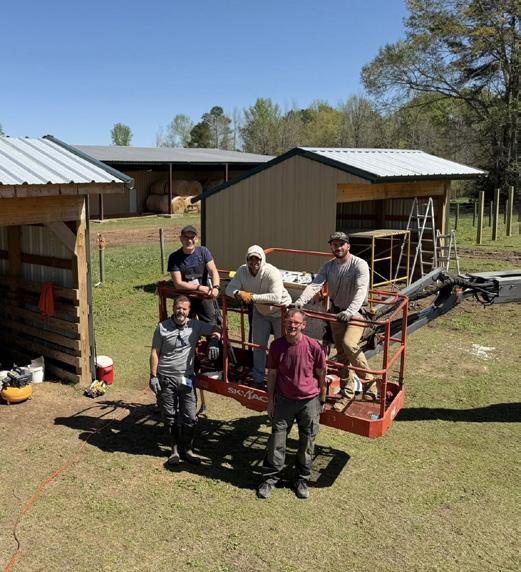
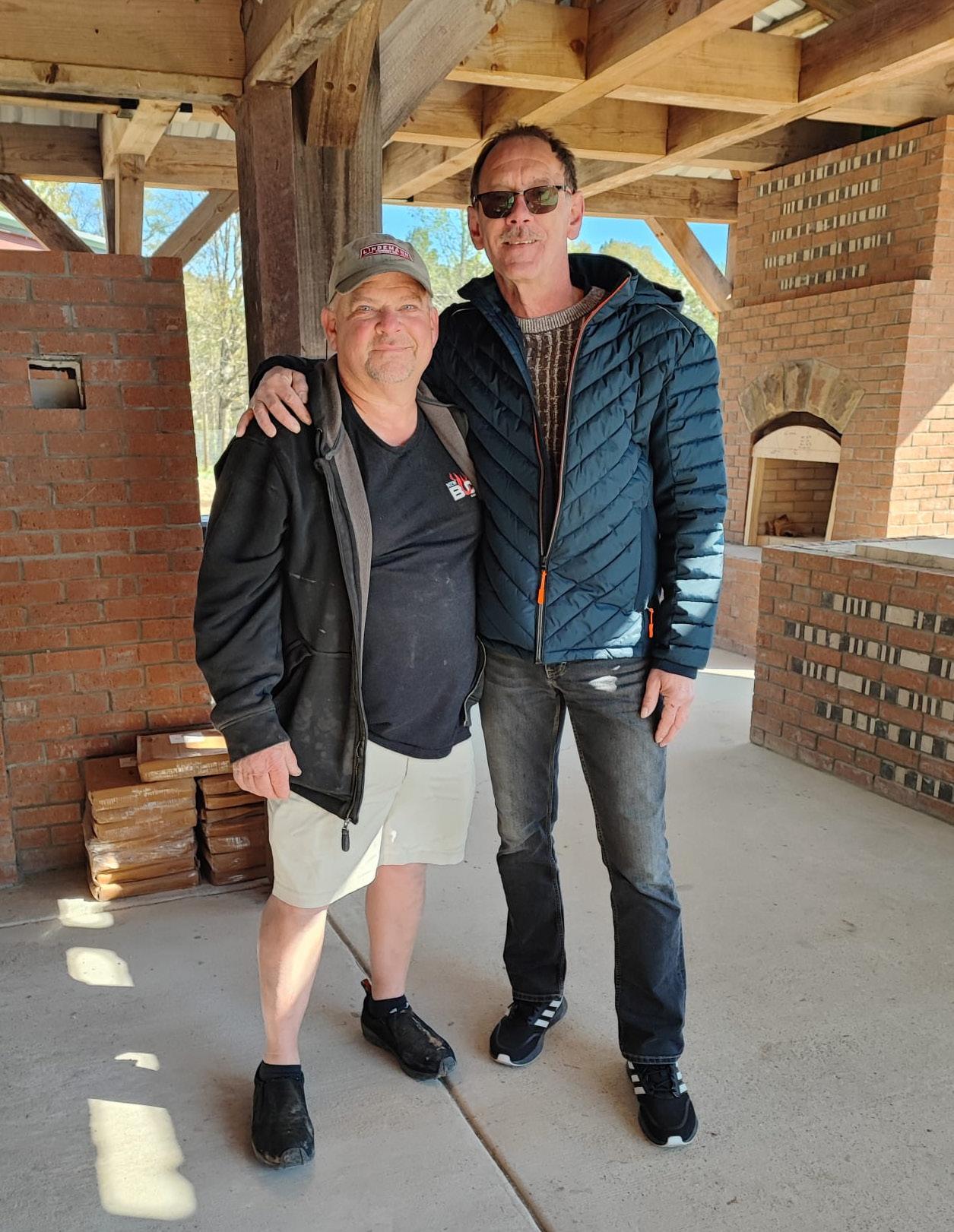
Building lean-tos and friendships during Sweeps Week at Warrior Horse on March 9-13, 2026.


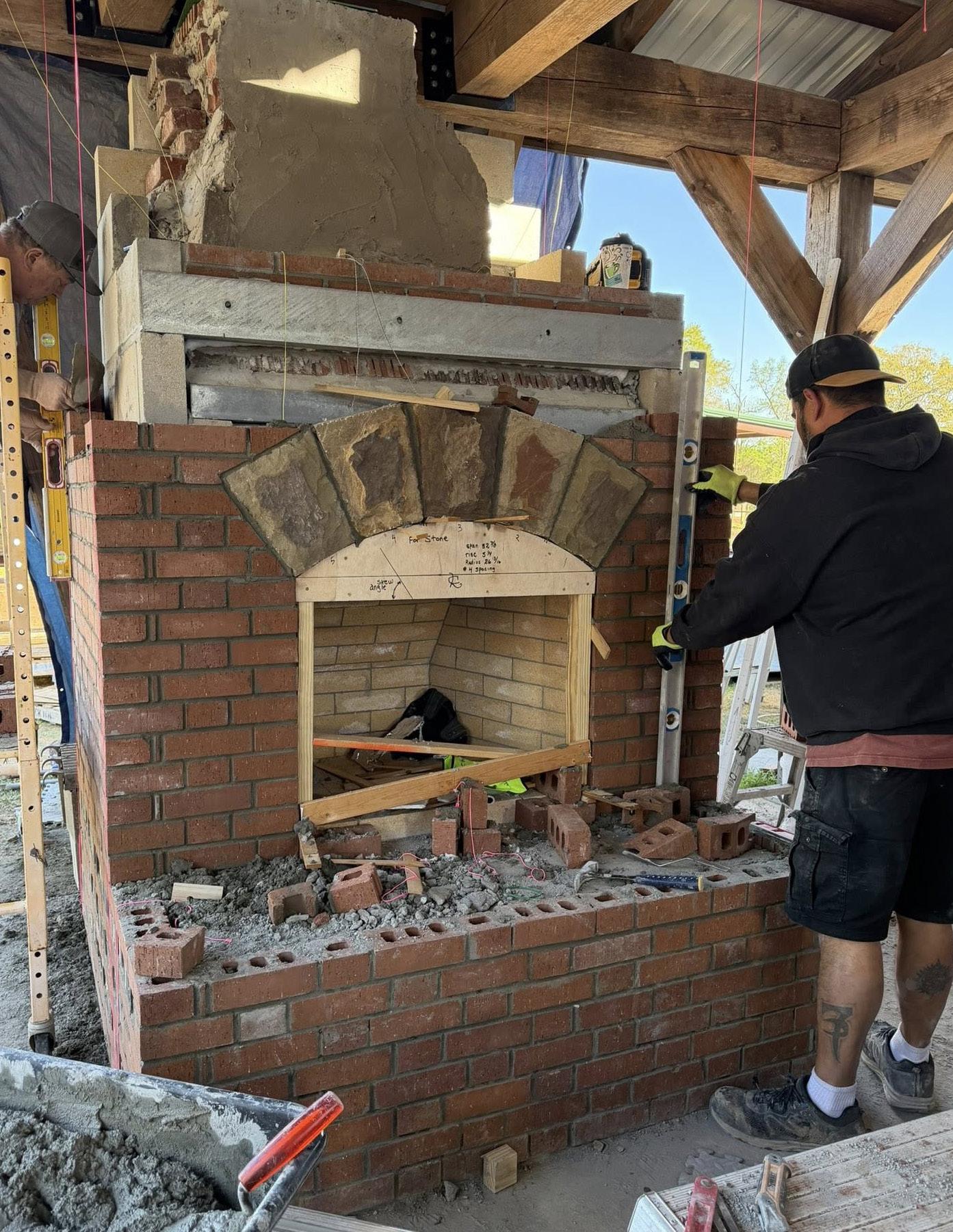
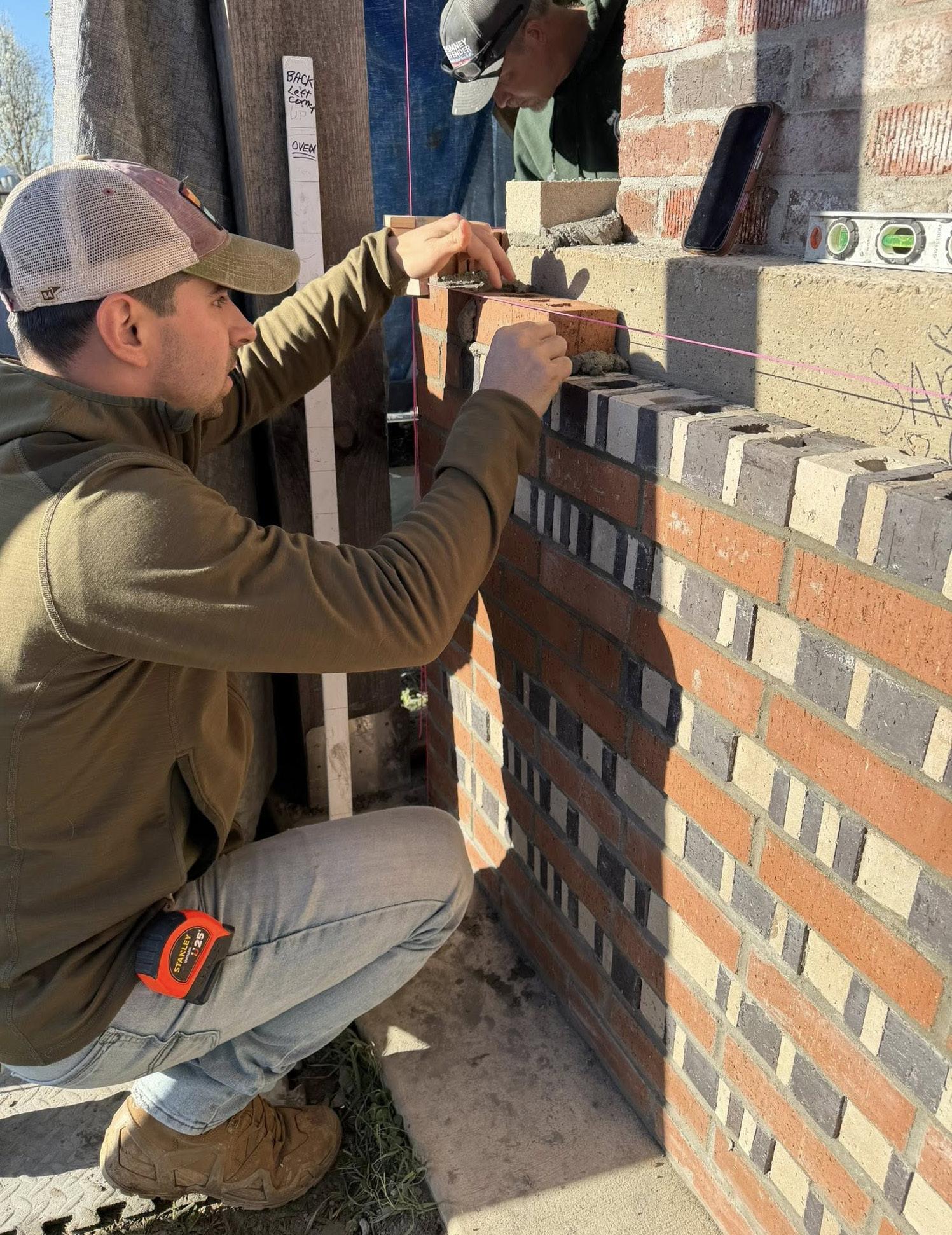
Careful measurements guide the placement of more than 5,000 bricks throughout the build.
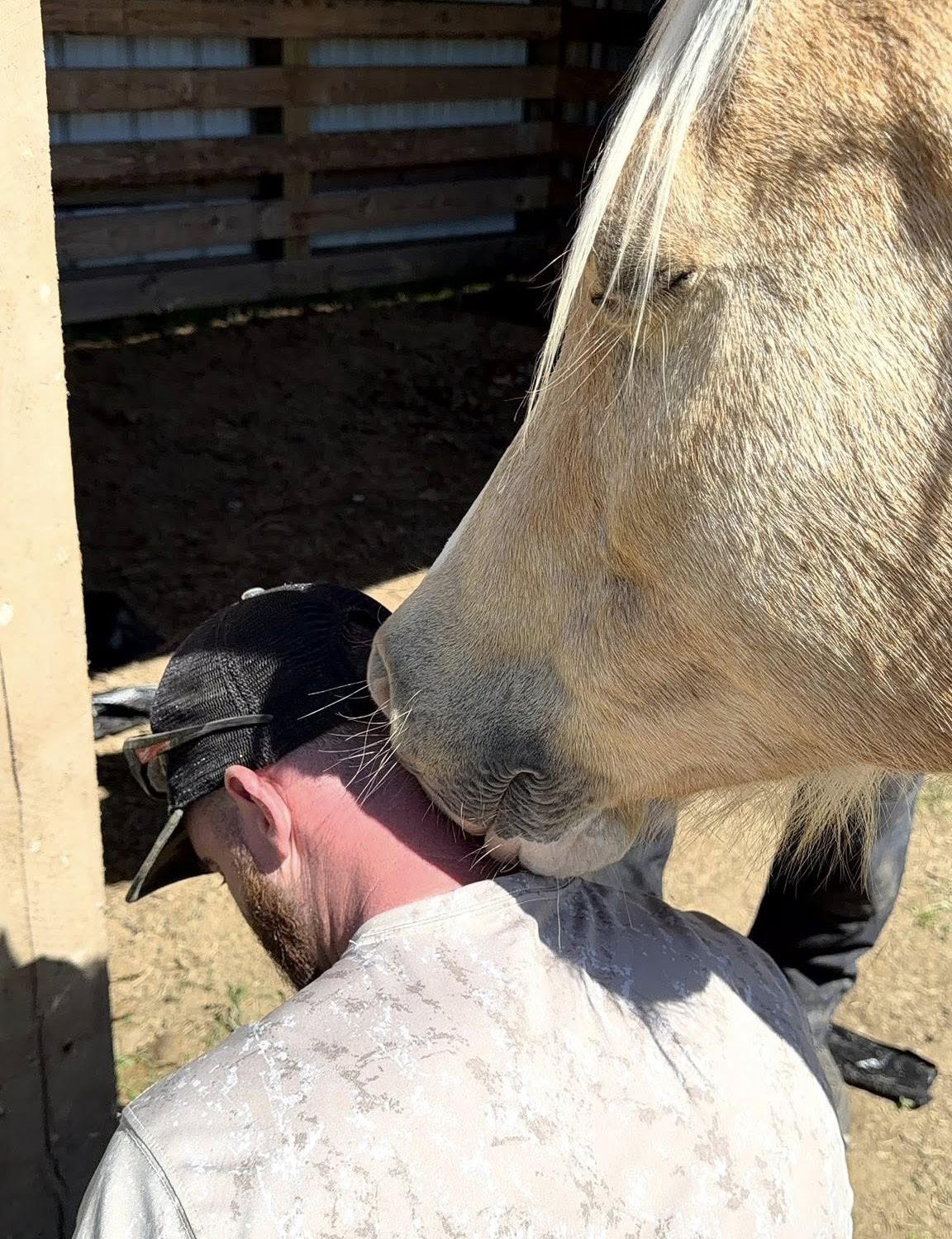
There’s always supervision on this job. Sugar checks in to make sure everything is done right.
driveways. One of the sheds was releveled so the door now closes properly. The firepit was moved, and all the stumps and wood that were picked up was burned. All the old burn piles were cleaned up and leveled. The brick and stone were all repalletized and condensed, making it look much more appealing. Leaks were fixed on the shop and arena roofs. The horse trailer was washed out. I could go on for hours. It would have taken me a lifetime to achieve all the work that was done in only a week.
We had our bands out—The Crowd on Monday and Mojo on Tuesday. Both are incredible beyond belief. On Thursday, we had one of the veterans who went through the program come share his experience. What an honor to know we played a part in his life transformation.
Friday was a busy day working with our local ABC news affiliate and speaking about the program with my good friend Brian Fowler. Around 11:15 am on Friday, we had our own air show right over the ranch
with one of my good friends Keith Rutherford and four of his friends, each in their own plane, wrapping up the show with the missing man formation.
After all the work was completed, cleanup commenced for the next couple of days. For me, however, I spent the next three weeks returning everything that we borrowed and putting all the tools and equipment back in place. Well worth every minute of it.
Our dates have already been decided for next year: February 22-26, 2027. It is earlier than usual, but with all the other events to work around, it’s always better to be a little cooler than hotter. This year, the temperatures were in the 70s and 80s the last week of February. We hope to have everyone return next year, as well as those that couldn’t make it this year and many new faces.
Once again, THANK YOU to each and every one who made this year truly amazing, including all the sponsors! ■






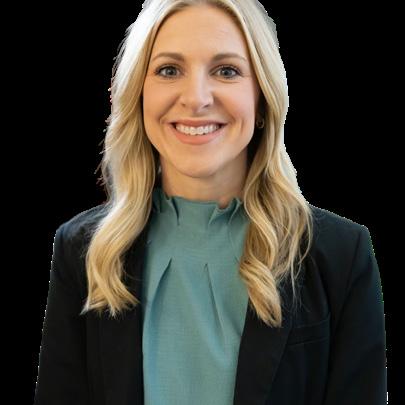
By Kailah Schmitz, Executive Director, National Chimney Sweep Guild
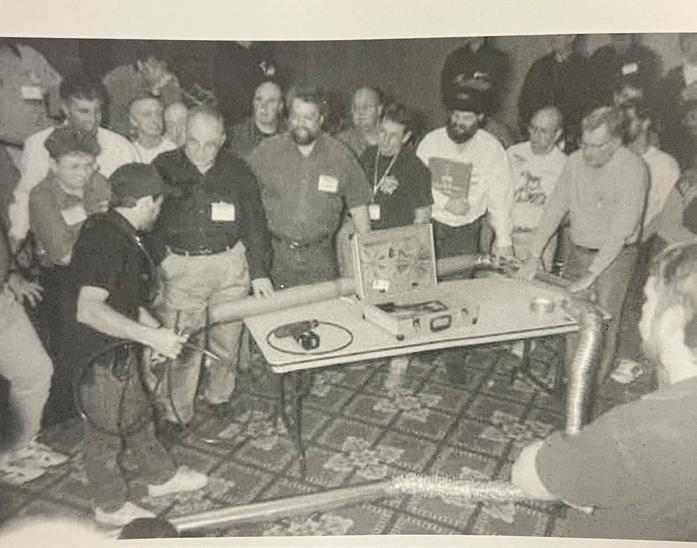
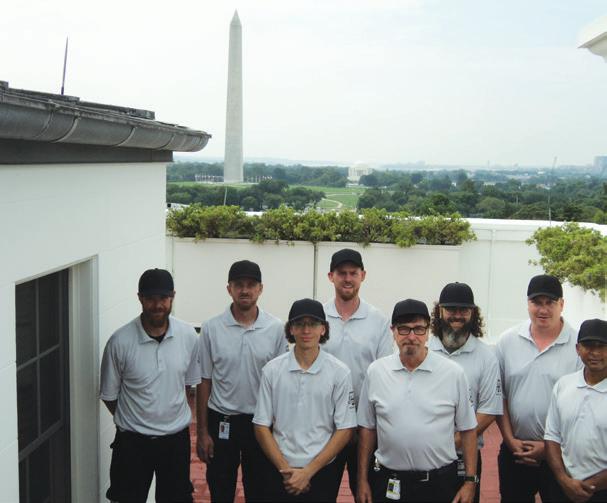
As the National Chimney Sweep Guild (NCSG) prepares for its 50th anniversary in 2027, our focus is starting to expand beyond a timeline of events. Dates, locations, and milestones tell part of the story, but they don’t fully capture the experience of the people who have been part of the Guild over the years.
Across the industry, there are moments that stick. A job that didn’t go as expected. A first convention. A conversation that changed how someone approaches their business. In many cases, those stories are shared informally, passed along in conversation or revisited years later. They are part of the industry’s history, but they are not often documented.
Those memories are what the Guild is starting to collect.

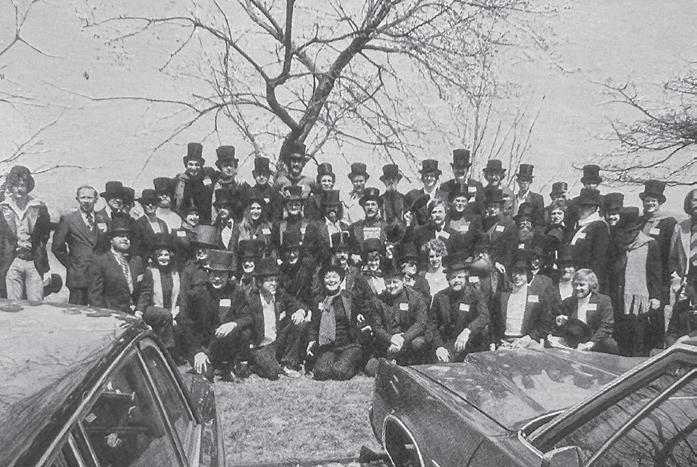
Members are invited to submit stories from any point in their careers, whether tied to a specific NCSG event, program, or simply a moment that stayed with them. Over time, these submissions will help create a more complete record of the Guild's first 50 years. They will provide a clearer view of how the industry has evolved and highlight the people who shaped it along the way.
The collection effort is already underway and will continue leading up to the 50th anniversary convention on April 6-10, 2027 at Hershey Lodge in Hershey, PA. Registration for that event will open on November 27, 2026 (Black Friday).
Members who have a story they would like to share can submit it through the form at ncsg.org/ ncsg-50th-anniversary-memory-collection. ■

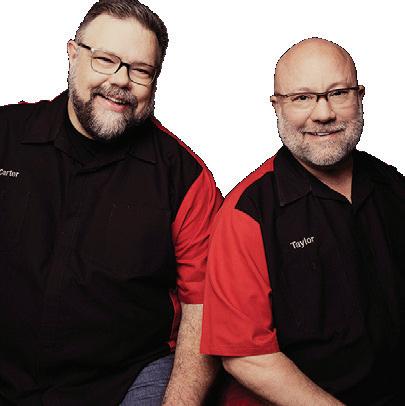
By Taylor Hill and Carter Harkins, FutureNow Marketing
» Where chimney companies lose revenue after the job, from missed calls to lack of follow-up
» What lead tracking reveals about gaps in phone handling, CSR performance, and daily operations
» How simple follow-up habits can turn open estimates into real work, even in slower seasons
IIn the chimney and hearth industry, we pride ourselves on being technical experts. We can spot a hairline crack in a clay liner from the bottom of the flue, we know the NFPA 211 codes like the back of our hands, and we understand the physics of draft better than most engineers. But there is a massive, expensive gap between being a great technician and running a high-growth business. That gap is where your leads live—or, more accurately, where they go up in smoke.
We’ve spent the last several months diving deep into the data of various companies across the country, and the trend is impossible to ignore. There is a prevailing "set it and forget it" mentality when it comes to customer acquisition. Many owners assume that as long as they have a website or a decent reputation, the leads will just keep flowing in.
But when the "off-season" hits, or when the economy shifts, reality sets in. The faucet is barely dripping. The irony? Usually, the bucket underneath that faucet has a giant hole in it that has never been patched. Why? Because most companies are performing the sweep, handing over a professional estimate for repairs, and then... absolutely nothing happens. They never follow up. By skipping that final, crucial step, you aren't just missing a job; you are leaving massive amounts of money on the table for your competitors to scoop up.
Once a company decides to stop guessing and actually puts a system in place to track and record every incoming lead, we find three "ugly truths" that surface. These are the things owners hate to admit because they reflect on the culture and operations of the business rather than just "bad marketing."
1. The Silent Killer: Unanswered Calls
We like to think our offices are buzzing hubs of productivity. The reality? A staggering percentage of calls go unanswered or to voicemail, and in our "on-demand" society, that customer looks down and dials the “next” one.
2. The Conversion Gap: CSR Training
We often hire for personality and then throw people onto the phones with little more than a price sheet and a calendar. CSRs need training just like everyone else in your business.
3. The Operational Breakdown
Marketing might be doing its job by making the phone ring, but if your operations, the scheduling, the quoting, and the follow-up, aren’t done, the lead is wasted. And, a wasted lead is money lost.
To illustrate how these play out in the real world, I want to share three stories from the field. These aren't hypothetical; these are actual scenarios uncovered through lead-tracking data.
We recently set up a lead-tracking app on a website for a company where the owner was still wearing many hats, including answering the primary business line. He was convinced he was "on top of it."
When the first month of data came back, it was a gut-punch: over 60% of the phone calls were going unanswered. To make matters worse, the people who actually bothered to leave a message weren't getting a call back for 24 to 48 hours—if at all.
The owner’s first reaction wasn't curiosity; it was defensiveness. "The app is wrong," he insisted. "There’s no way I’m missing that many calls." It wasn't until we sat down and looked at the time-stamped call logs—comparing them to his own outgoing call history—that the truth became undeniable. He was busy on job sites, driving, or in meetings, and the "ping" of the phone was being ignored.
The Fix: Once he moved past the ego hit, we implemented an AI-driven assistant to handle the
overflow. It catches those missed calls, answers basic questions, and captures contact info immediately. By acknowledging the failure of the "one-man-show" phone system, he turned a 60% loss into a massive revenue gain.
In another instance, an owner was confident in his front-office staff. He had a long-term CSR who had been with the company for years. He estimated they had at least a 60% appointment-setting rate.
After we integrated a tracking system, the real rate was revealed to be below 40%—and that was on leads the system graded as "highly qualified" (people specifically asking for inspections or repairs, not just price shoppers). Because we could actually listen to the recordings, the owner heard something he hadn't noticed in years: the CSR sounded tired, dismissive, and was failing to ask for the appointment.
When confronted with the recordings, the employee didn't get angry—they got honest. They admitted
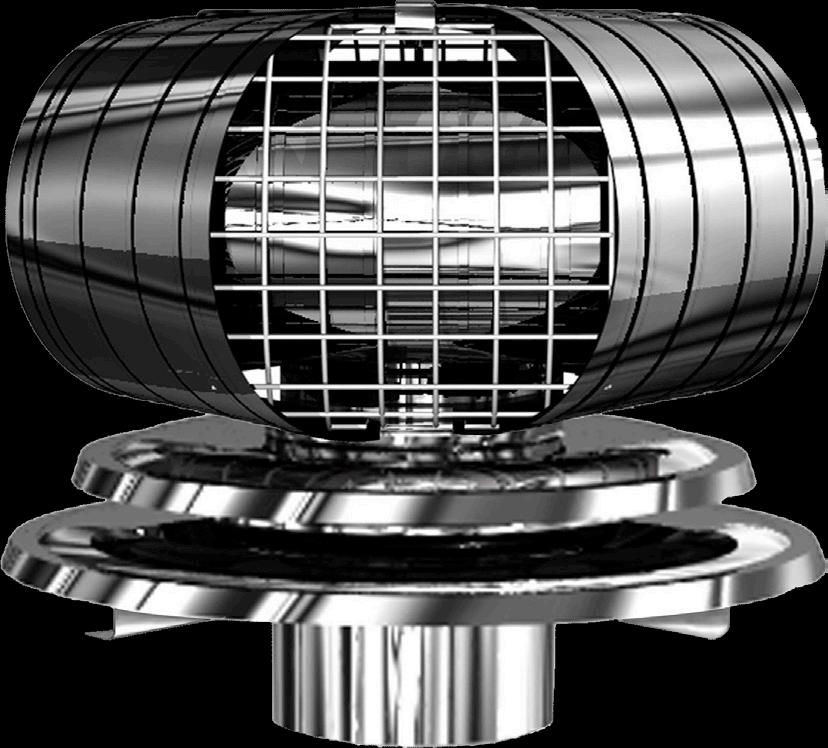
• Vacu-Stack® works with single wall, double wall, triple wall, or masonry.


• Solves draft problems related to hills and mountains, tall trees, and tall buildings near the chimney.
• Sizes available from 3” to 30”+; custom and oversize available. Air cooled and non-air cooled.
• Standard construction is 100% austenitic stainless steel; also available in other alloys including copper and Type 316 for marine/coal appliances.
Improved Consumer Products, Inc. PO Box B Attleboro Falls, MA 02763 (508) 695-7000 Fax: (508) 695-4209 www.chimneycaps.com
Although there have been many attempts to copy it over the last 40+ years, there is only one Vacu-Stack® .
Always ask for it by name and look for the seal of authenticity on top of the cap.
100% made in USA
to being burned out and felt they were just "going through the motions." Instead of a messy termination, the owner invested in professional CSR retraining. Today, that CSR feels re-energized with new scripts and techniques, and the appointment close rate is steadily climbing back toward that 60+% goal.
The third thing owners realize once they see their leads laid out in front of them is the sheer lack of follow-through. A lead should never just "disappear." In a healthy business, a lead stays active until the customer gives a definitive answer.
These are operational issues. If you are relying on your memory, and memory is a terrible business strategy, to call or email an open estimate at day 3, day 7, and day 14, then you are burning up money. We’ve seen companies find tens of thousands of dollars in "lost" revenue simply by going back through their tracking app and seeing which leads never reached a "Yes" or a "No." Every lead needs to be worked until the end of the line.
We hear this a lot during the "shoulder seasons." Owners say, "I don't need a tracking system; I need more customers!"
If your phones are quiet, the very first place you need to look is your Open Estimates file. Almost every chimney company that struggles with a "slow" spring or summer is guilty of the same thing: they perform a chimney sweep in the fall, identify $3,000 worth of masonry work or a liner replacement, send the estimate, and then never call, text, or email that customer again. They wait for the customer to call them.
The number one reason owners give for not following up? "I don't want to bother the customer."
Let’s kill that myth right now. I was sitting in a chiropractor’s office recently and overheard a conversation that perfectly illustrates the customer's perspective. A patient was talking to the lady at the front desk and said:
"I don't know about other people, but I want to tell you how much I appreciate you sending out those text reminders for my appointments. With my job, kids, and everything else I have going on, knowing you are following up with me gives me one less thing I have to worry about."
Read that again. One less thing to worry about. Your customers aren't sitting at home thinking, "Gosh, I hope that chimney guy doesn't call me to see if I want to fix that fire hazard in my living room." They are busy. They have kids in sports, deadlines at work,
and a million other household chores. They want you to lead them to the solution. When you follow up, you aren't being a "pushy salesman." You are being a professional who cares about their safety and their home.
If you want to transform your lead management today, you don't necessarily need a fancy suite of tools (though they certainly help). You need a change in protocol:
• Audit Your "Voicemail Graveyard:" Check your phone logs. How many calls came in after 5:00 PM or during lunch that never got a return call? That is your first missed opportunity.
• The "Rule of Three" for Estimates: Never let an estimate sit for more than 48 hours without a follow-up call, email, or text. If they don't answer, try again in four days. Then a week later. Don’t stop until you get a no.
• Listen and Learn: Even if you don't have a recording system, sit in the office for an hour and just listen to your CSRs. Are they asking for the appointment? Are they confident? If not, that’s a training opportunity, not a firing offense.
• The "Status" Check: Every lead in your system should have a status. "Pending," "Scheduled," "Quote Sent," or "Dead." If a lead doesn't have one of those, it's a hole in your bucket.
You work for your leads so stop letting them slip away. You pay for marketing, you pay for your trucks, and you pay for your reputation. To let a lead die simply because you didn't answer the phone or didn't want to "bother" someone with a follow-up is a waste of everything you’re building.
Stop burning down your money tree. Work those leads all the way to “no”. Until then, that lead is still alive and you’ll find that the "slow season" isn't nearly as slow as you thought. ■


















By Gordon Sheucraft, Risk Advisor, SouthPoint Risk
» How to structure an auto insurance policy that actually fits chimney service work
» How driver screening and vehicle maintenance reduce accidents and keep costs under control
» What it takes to safely secure tools and equipment to prevent injuries and larger claims
For National Chimney Sweep Guild (NCSG) members, the most serious loss you face on a routine workday often doesn’t happen at the chimney or the appliance—it happens on the road. A single crash involving a loaded service truck can injure technicians, damage expensive tools, sideline vehicles during peak season, and drive up your premiums for years.
Chimney professionals routinely navigate tight residential streets, steep driveways, rural backroads, and congested highways. This exposure requires a commercial auto policy designed around service fleets, not a generic business auto form.
Work with a knowledgeable insurance agent who understands chimney operations. Make sure you carry:
• Adequate liability limits to protect against serious bodily injury and property damage claims
• Physical damage coverage (comprehensive and collision) that reflects the value of your trucks, vans, bodies, and custom racks
• Hired and non-owned auto coverage for times when employees use personal vehicles or rented trucks on company business
Confirm that all owned vehicles and regular drivers are properly listed. A carefully structured policy is the
foundation—your day-to-day practices are what keep it affordable.
Your fleet is only as safe as the people driving it. Motor vehicle record (MVR) checks are one of the most important and underused tools in controlling auto risk.
Before you hand over the keys, run an MVR on any employee who may drive a company vehicle or their own vehicle on company business. Recheck a minimum of once a year. MVRs reveal speeding violations, at-fault crashes, DUIs, and license suspensions that might never come up in interviews.
Create a written driver qualification policy that spells out:
• Which violations are disqualifying (for example, DUIs or reckless driving within a certain timeframe)
• How many minor violations you will accept
• When a driver will be placed on probation or removed from driving duties
Apply this policy consistently and document your decisions. In the event of a serious accident, the ability to show that you screened, approved, and— when necessary—removed drivers can be a powerful defense against allegations of negligent hiring or supervision.
Mechanical problems that would be a minor hassle in a personal car can be a major hazard in a loaded service truck. A strong maintenance program supports safety on the road and paints a favorable picture for insurers when they evaluate your account.
Key elements include:
• Preventive maintenance schedules tied to mileage and time for oil changes, brakes, steering, suspension, and lights
• Seasonal checks for tires, batteries, wipers, and defrosters
• Daily or pre-trip inspections, with drivers walking around the vehicle to check tires, lights, mirrors, warning lights, racks, and trailers
Empower technicians to tag a vehicle out of service if they notice a safety issue and back them up when they do.


Your trucks and vans carry ladders, chimney rods, vacuums, liners, venting components, and sometimes heavy appliances. Improperly secured items can become dangerous projectiles in a sudden stop or collision, turning a minor fender-bender into a serious injury claim.
Set clear standards for:
• How ladders are loaded and tied down on racks
• How small tools are stored in bins, shelves, or cabinets
• How heavy equipment is placed, balanced, and tied down in the cargo area or on trailers
Inspect racks, straps, anchor points, and interior storage regularly, replacing worn or corroded components before they fail.
If you ever have any questions, please feel free to give me a call at 615-473-3261 or send me an email at gsheucraft@southpointrisk.com. ■


IIn this industry, it’s easy to stick with what you know. If something works, you keep using it. Same products, same processes, same way of getting the job done.
There’s nothing wrong with that— consistency is part of what keeps businesses running.
But there’s a line where “this works” quietly turns into “this is good enough.” And that’s where things start to stall.
The reality is, what got you here won’t keep you here.
Innovation in our world isn’t about chasing trends or overcomplicating things. It’s about paying attention to what’s actually happening in the field. Where jobs slow down. Where things fail. Where sweeps have to fix the same problem twice.
That’s where the opportunity is. It’s the willingness to ask questions. To hear when something isn’t working. To admit there’s a better way, even if it means changing what you’ve been doing for years.
Because innovation isn’t something you turn on once a year. It’s a habit.
By Darin Bibeau, CEO/Owner, National Chimney
It shows up in the conversations you have with your customers. Not just when you’re selling, but when you’re asking how things are actually going once the job is done.
It shows up in how you run your team. Are you asking where time is being wasted? What’s causing callbacks? What’s harder than it should be?
And it shows up in whether you’re willing to act on what you hear. Not every idea is going to be a home run. Some won’t work at all. That’s part of it. But doing nothing has a cost too—and most of the time, it’s a lot bigger than people think.
The companies that keep moving forward aren’t always making big, flashy changes. More often, they’re just getting a little better every day. Faster installs. Fewer problems. Better results for the customer. That adds up.
There’s also a leadership piece to this that matters just as much.
If your team feels like they have to do everything the same way it’s always been done, you’re not going to get better. But if
they know it’s okay to speak up, point out problems, and suggest improvements, things start to change.
You get better ideas. You solve problems quicker.
And you build a team that actually cares about doing things the right way.
At the end of the day, innovation isn’t about awards or recognition. It’s about making the job easier, the results better, and the business stronger.
So the question is simple: Where are things breaking down? Where are you losing time?
And what are you going to do about it?
Because the people who keep asking those questions—and doing something with the answers—are the ones who stay ahead. ■

Established over 45 years ago, D.J. Cross is one of the oldest and most experienced chimney service providers in the United States. With more certified technicians on staff than any other company in the area, D.J. Cross, Inc. has become the leading professional chimney service provider in the Greater Philadelphia region.
We’ve built a strong reputation as the go-to company for complex and challenging projects— often taking on work that others turn away. In fact, many competitors refer homeowners to us when a project exceeds their capabilities.
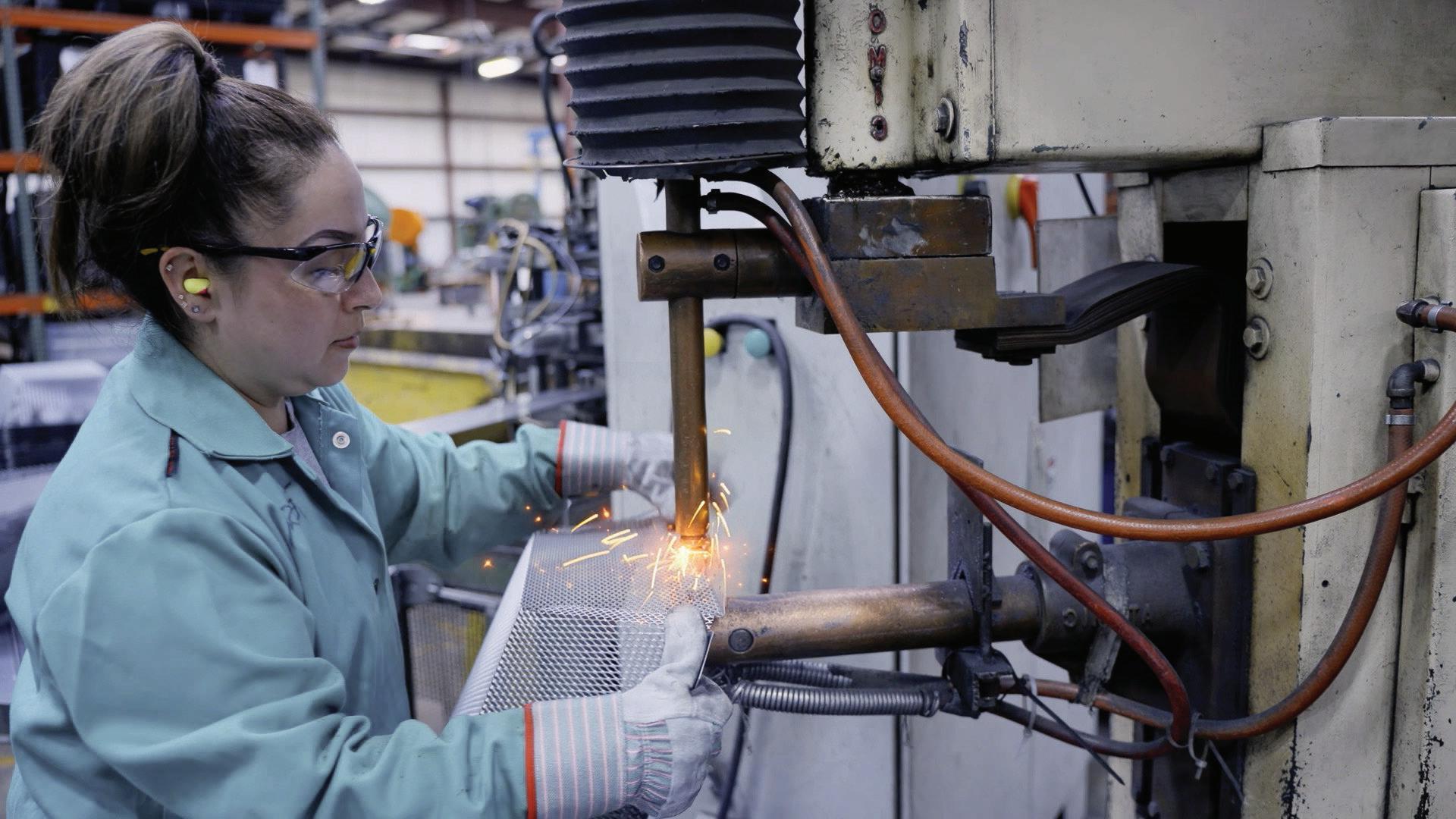
Approximately five years ago, we launched Cross Break Sheet Metal, initially producing custom chase covers and rain caps for our own service division, as well as for a select group of regional chimney, roofing, and masonry contractors. Since then, we have introduced the CrossFlex Chimney Lining System, which is proudly listed under UL1777.
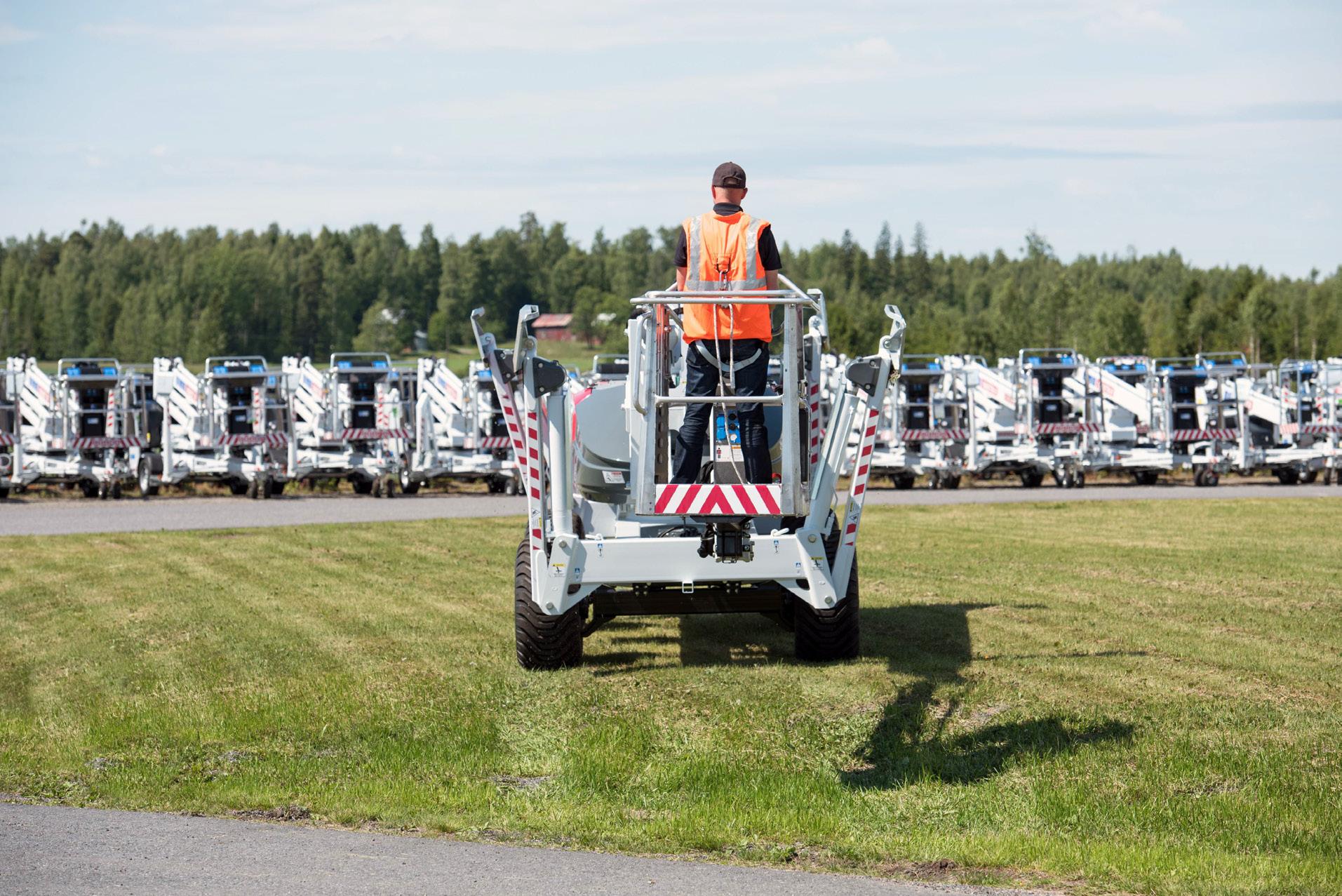
Two years ago, we expanded further with the launch of Cross Braced Scaffolding, a full-service system scaffolding company offering rentals and OSHAcompliant installations.
Success means having faithful, long-term employees who are fulfilled in their careers, take pride in their work, and are proud to be part of our company.
I enjoy exploring the United States and have driven cross-country five times. I’ve also been a vegetarian for 28 years.
I’ve been sweeping chimneys since my teenage years and attended one of the first National Chimney Sweep Guild (NCSG) training schools in 1995 at age 15—before the Chimney Safety Institute of America (CSIA) Technology Center even existed. ■
Tuesday, May 5, 2026 at 8:00 am–5:00 pm CT | Virtual (Google Meet)
Office managers are expected to keep everything running, but rarely get clear training on how to lead the office, track performance, or create consistency. This one-day, virtual class will help office managers step into true operational leadership.
May 13-16, 2026 | East Stroudsburg, PA
Join us for our annual charity workshop at Resica Falls Scout Reservation along with a live Ahren-Fire unit installation, sponsored by Copperfield Academy and led by Bill Ryan and Mike Segerstrom. CEUs available. Lunch included with registration.
June 5-6, 2026 | Fontana Dam, NC
Come support Sweep Away Cancer and have a great time with your friends, family, and fellow sweeps! Travel to the base of the famous “Tail of the Dragon” route along beautiful Highway 28. This will include 318 curves over 11 miles.

2026 WETT AGM & Conference
June 7-9, 2026 | Winnipeg, MB
From coast to coast, WETT brings professionals together through shared standards, education, and a commitment to safety and excellence in wood energy.
June 25-26, 2026 | Central City, PA
The PA Guild of Professional Chimney Sweeps is partnering with Rooftop Safety USA to host a two-day ropes class at Camp 93 in Somerset County. This class will focus on proper access and equipment.

CSR 360°
July 15-16, 2026 | Virtual (Google Meet)
CSR 360° is a two-day, virtual class for customer service representatives in the home service industry. Learn how to drive growth, guide calls with confidence, ask the right questions to qualify work, and turn more of the right calls into booked jobs.

Viking Chimney Solutions LLC Sugar Land, TX
Join Date: 3/4/2026
Chicken Lady Speaks/ Operations Excellence Freeman, MO
Join Date: 3/10/2026
Top Hat Chimney Service Oswego, IL
Join Date: 3/10/2026
Soot & Tie Chimney Sweep Hayden, ID
Join Date: 3/24/2026
A+ Chimney & Dryer Pros Horsham, PA
Join Date: 3/25/2026
First Due Chimney Colbert, GA
Join Date: 3/30/2026






President; Region 4 Director
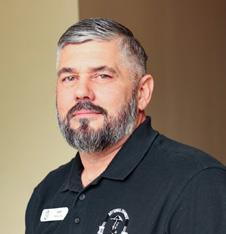
Debbie Wiedwald Blackburn’s Chimney Sweeps debbie@blackburnschimney.com
Vice President; At-Large Director
Gary Smalling Smalling Masonry gary.smalling@smallingmasonry.com
Treasurer; Region 1 Director
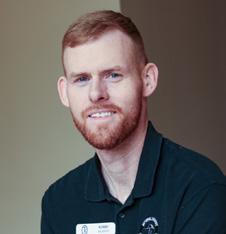
Robby Murphy
Hudson Valley Chimney Service rmurphy@hudsonvalleychimney.com
Secretary; Region 3 Director
Drew Stein
Chimspector drew@chimspector.com
Region 2 Director
Jonathan Cross
D.J. Cross/Cross Break Sheet Metal jon@djcrossinc.com
Region 5 Director
Roland Perez
AAA Home Services and Aaron's Chimney Services roland@myaaahomeservices.com


Region 6 Director
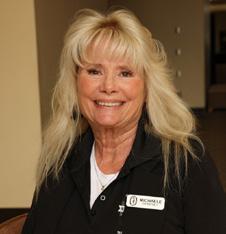
Michaele Dempsey Professional Chimney Sweep prochimneymichaele@gmail.com
At-Large Director
Cory McGill Done Right Chimney cory@donerightchimney.com
At-Large Director
Brett Conklin Chimney Monkey brett@chimneymonkey.com
At-Large Director
Lee Roff
Lords Chimney leeroff@lordschimney.com
At-Large Supplier Representative
Brian Barclay KW DRAFT brianb@rmmanifold.com
Advocacy
Debbie Wiedwald
Blackburn’s Chimney Sweeps
Bylaws
Brett Conklin
Chimney Monkey
Certification
Steve Sobczak
Total Chimney Care
Education
Gary Smalling
Smalling Masonry
Cory McGill
Done Right Chimney
Ethics
Roland Perez AAA Home Services
Events
Brian Barclay KW DRAFT
Governance
Drew Stein Chimspector
Marketing
Lee Roff
Lords Chimney
Brett Conklin
Chimney Monkey
Membership
Michaele Dempsey Professional Chimney Sweep
NFPA 211; NFPA 54
Jim Brewer
SureFire Training Academy
NFPA 31; Tech. Advisory Council
Steve Scally
Fireside Sweeps
UL 1390; UL 1391
Dan Freeman
Freeman Fire
National Chimney Sweep Guild
1255 SW Prairie Trail Parkway
Ankeny, Iowa 50023-7068