THE JOURNAL OF CHIMNEY AND VENTING TECHNOLOGY
10
Forge Expands Beyond Virtual Reality
New training options, including Forge Elite, make NCSG’s immersive learning platform more flexible for sweeps at every stage of their careers.
7
Call for Speakers: 2027 NCSG Convention
NCSG is looking for engaging speakers to help shape education at the Guild’s 50th anniversary convention in Hershey, PA.
8
The Tech Differentiator
How simple tools like videos, tablets, and digital proposals are helping technicians build trust and close bigger jobs.
12
Protecting Chimney Swifts
Seasonal visitors bring new service calls and new opportunities to balance conservation with chimney protection.
14
How the Right Tools Reduce Callbacks and Increase Profitability
Updated equipment and smarter technology can help sweeps avoid costly return visits.
18
Repair vs. Rebuild
Modern restoration products may offer homeowners a practical alternative to full chimney reconstruction.
21
Are You Chasing the Wrong Review Metric?
Why the total number of Google reviews may matter far less to customers than you think.
26
Winning the War Against Scam Operators
Fake listings, lead brokers, and digital scams are reshaping how chimney companies compete for customers.

Have you ever seen some interesting things on the job?
Submit a photo with your name and location to marketing@ncsg.org.

Let us know what’s going on!
Submit industry concerns to NCSG’s Policy Action Center. We post live on the website and look into how we can take action. While you’re there, you can also check out the blog for past issues we’ve addressed. Check your email and Facebook to stay up to date! Page 23
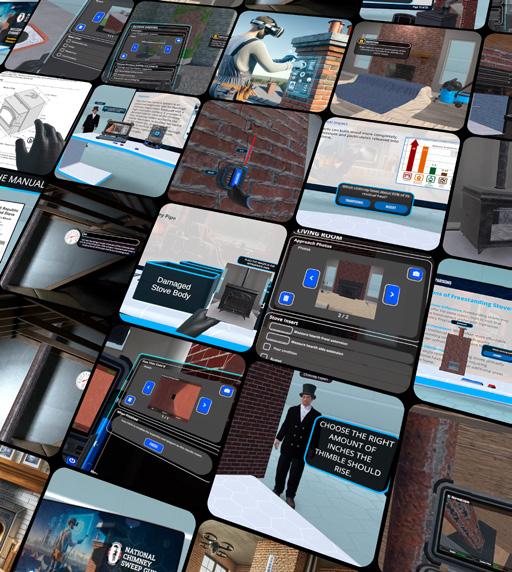
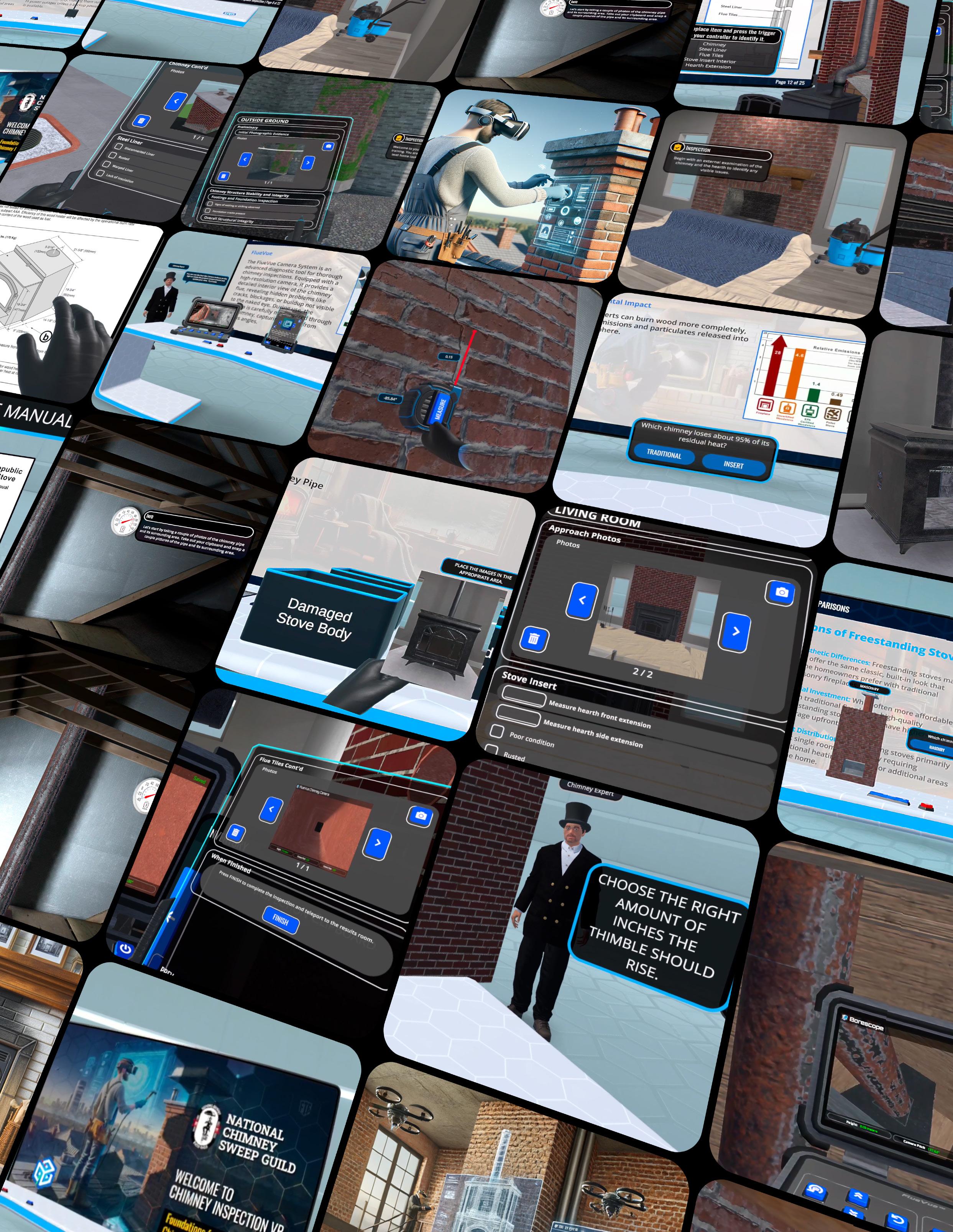
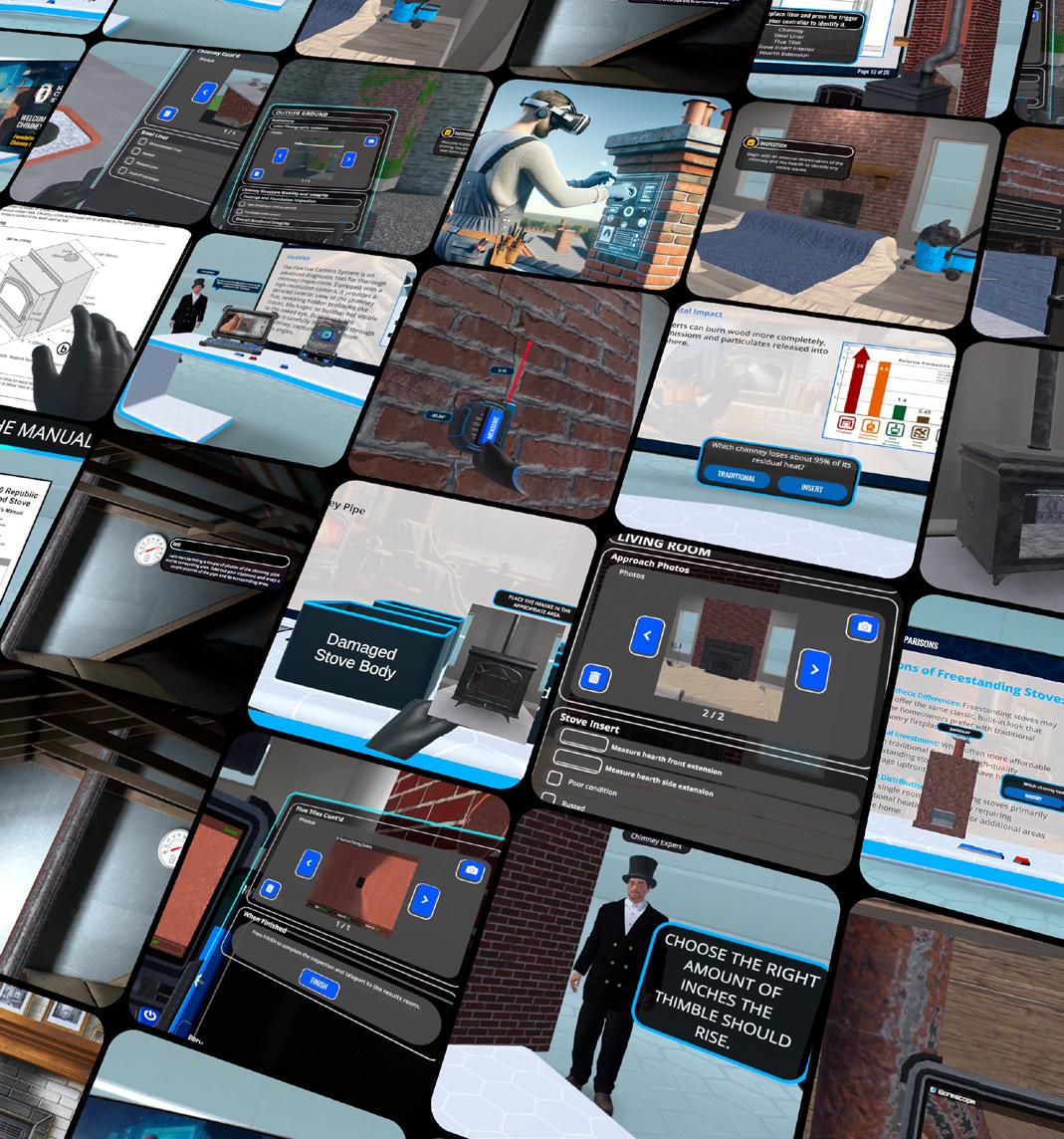
On the Cover: A preview of Forge, the National Chimney Sweep Guild's immersive training platform.
(317) 837-1500
Kailah Schmitz, CAE, Executive Director director@ncsg.org
Jessica Thornton, Associate Director and Certifications Coordinator jessica@ncsg.org
Jonathan Erdman, Director of Education education@ncsg.org
Sydney Kaizer, Director of Marketing and Communications; Sweeping Editor marketing@ncsg.org
Brittney Burton, Membership and Events Coordinator bburton@ncsg.org
Libby Almendarez, Membership, Certifications, and Digital Coordinator office@ncsg.org
DISCLAIMER
The views expressed in Sweeping do not necessarily reflect the views of the National Chimney Sweep Guild (NCSG) or its staff.
ADVERTISING
To advertise, email Malisa Minetree at sweepingads@me.com or call (317) 603-7854.
NCSG further reserves the right to reject at any time any advertising determined not to be in keeping with the publication’s standards. Acceptance of advertising by Sweeping does not necessarily constitute endorsement of products or services advertised. NCSG does not make any effort to review or substantiate claims made by advertisers.
PHOTOGRAPHY
Stock images by iStock, Adobe.
ARTICLE SUBMISSION
NCSG encourages industry partners to submit press releases and articles to the editor at marketing@ncsg.org. Submissions should contain items of interest or importance to the chimney and venting industry. Submissions should not contain direct solicitations, prices, or other forms of advertising verbiage. Submissions may contain images or artwork attached in a JPG format.
In all cases, NCSG reserves the right to edit submissions for space limitations, keep the release and publish at a later date, or refuse to publish the release for any reason. Neither publishing, nor refusing to publish the submission should be considered a statement of NCSG’s opinion regarding the release. © 2026 National Chimney Sweep Guild
NNational Chimney Sweep Guild (NCSG) members continue to see real value in staying connected with aligned industry organizations, including the Hearth, Patio & Barbecue Association (HPBA), Tree Care Industry Association (TCIA), various roofing associations, home inspector organizations, and the Building Performance Association (BPA). These partnerships help broaden perspectives, strengthen best practices, and bring fresh ideas back to the chimney and venting industry.
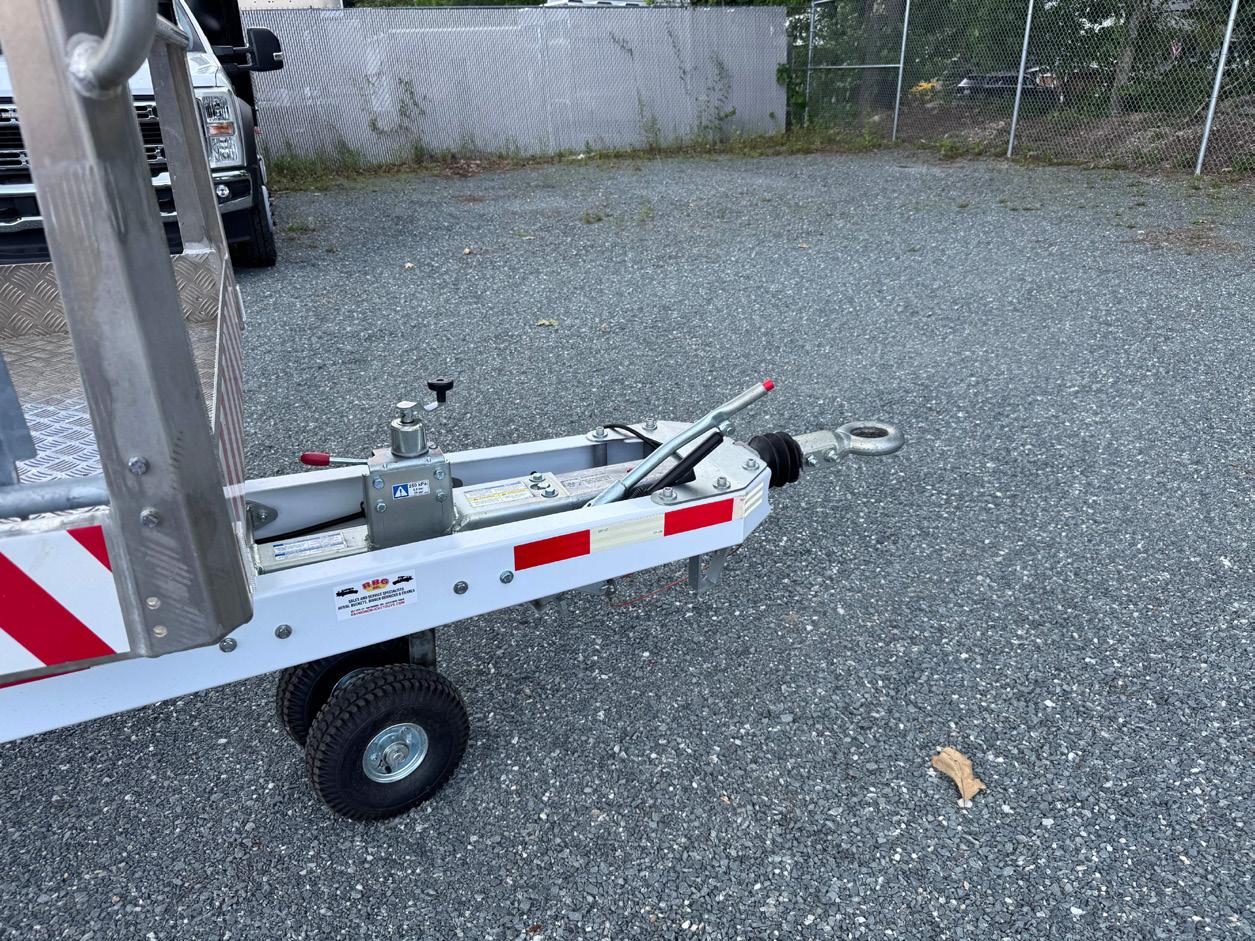
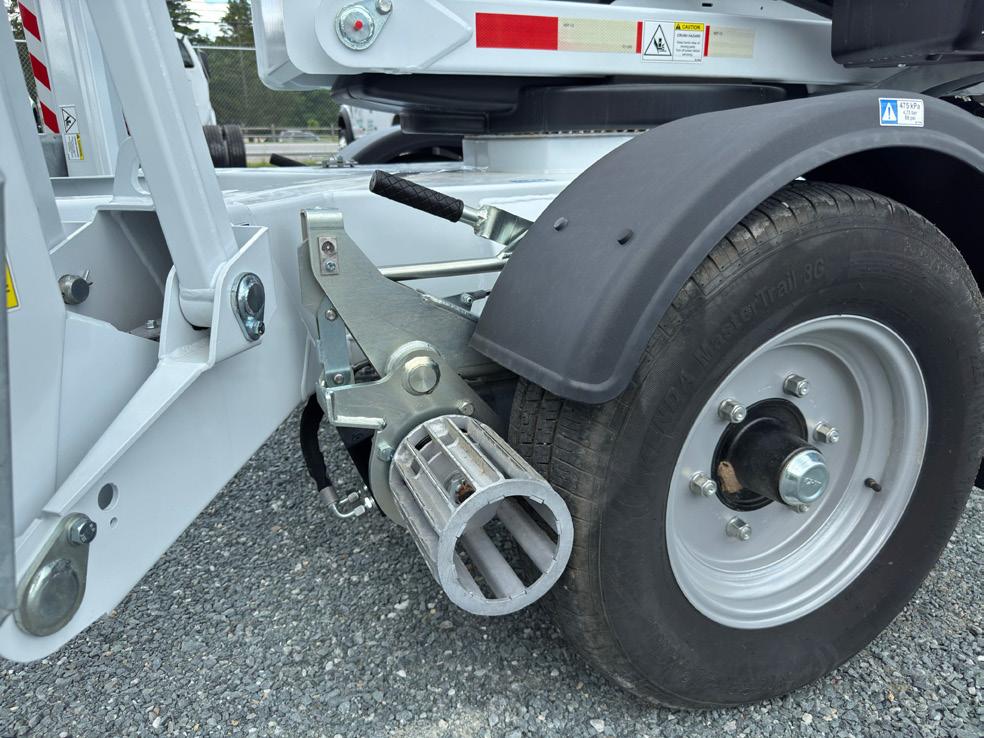
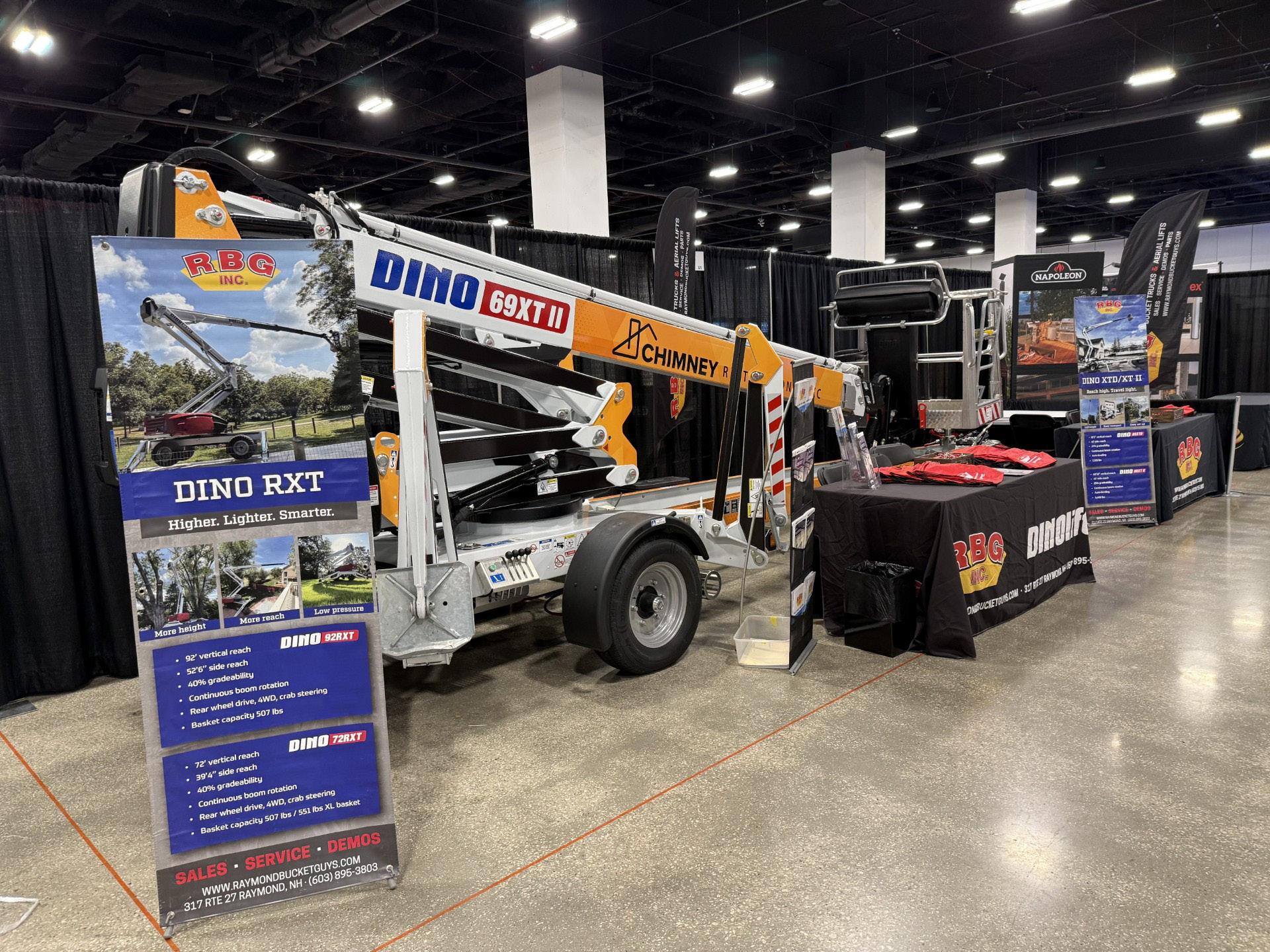
At HPBExpo in March, attendees were introduced to emerging scientific approaches for predicting draft performance using real-time, in-field data. These tools will help professionals better diagnose system behavior and improve outcomes for customers. Through NCSG’s involvement with other industries, chimney service professionals also gain exposure to innovative equipment—such as pull-behind lifts that improve jobsite efficiency, safer and more effective roof access solutions, and advanced blower door systems that provide deeper insight into house pressure dynamics.
Technology continues to play a growing role in day-to-day operations. AI continues to be used in practical ways, from responding to customer inquiries more efficiently, to generating marketing content, to streamlining the development of standard operating procedures (SOPs). These tools are not replacing expertise, but rather enhancing the ability of professionals to deliver consistent, high-quality service.
The Guild’s reach extends beyond the United States as well. Through collaboration with international partners like Wood Energy Technology Transfer (WETT) in Canada and participation in the annual meeting of the European Federation of Chimney Sweeps (ESCHFOE), NCSG members gain valuable insight into global trends, regulations, and innovations shaping the future of the trade.
As you read through this issue of Sweeping, we invite you to explore the many ways tools and technology are transforming the chimney service profession—enhancing safety, improving diagnostics, and helping businesses operate more effectively than ever before.
Please share what tools and technology you frequently use with NCSG members in the NCSG members' Facebook discussion group. Also, please let your regional director know which industries you’d like to see the Guild collaborate with in the future.
I hope you attend regional and state Guild trainings this summer to further enhance your knowledge of industry tools and technology! ■


By Debbie Wiedwald, President, National Chimney Sweep Guild

















TThe National Chimney Sweep Guild (NCSG) is now accepting speaker proposals for the 2027 NCSG Convention & Trade Show in Hershey, PA.
We are looking for teachers who bring energy, insight, and useful takeaways to the classroom. Whether you’ve been in the industry for decades or have a fresh perspective to share, we want to hear from you.
Teaching at convention is a great way to give back to the industry and connect with chimney professionals from across the country. Many past speakers say it has opened the door to new business and valuable professional relationships. Plus, selected presenters receive free convention registration (a $500 value) and one complimentary hotel night per speaking day.
We’re interested in a wide range of topics—everything from chimney construction, relining, flue liners, sweeping techniques, and system installations to safety, codes and standards, customer service, and

business development. We also welcome sessions on emerging tools and technology, including artificial intelligence, marketing strategies, and communication skills.
Whether your expertise is highly technical or geared toward running a better business, your knowledge could make a big impact.
Proposals are due Friday, July 31. Submissions should include your session title and description, speaker bio and headshot, A/V needs, and contact information. The NCSG Speaker Selection Committee will review all proposals in August.
Submit yours at ncsgconvention.org or scan the QR code above. We are excited to celebrate the 50-year anniversary of the Guild with you!
If you're interested in joining the Speaker Selection Committee, please contact Brittney Burton, NCSG membership and events coordinator, at bburton@ncsg.org. ■
apply!
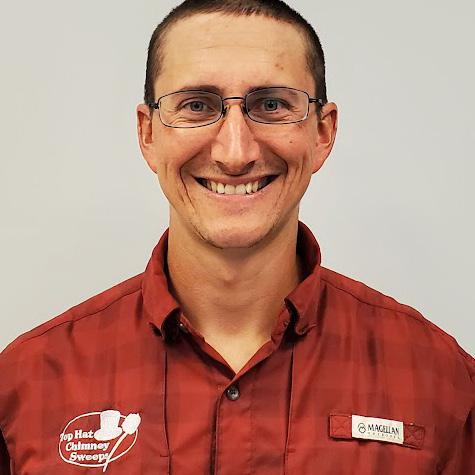
By Trent Simmons, Owner, Top Hat Chimney Sweeps
In nearly every industry circle lately, the conversation eventually turns to artificial intelligence. We’re told AI will write our reports, schedule our routes, and maybe even sweep our flues. But while everyone is looking toward a high-tech future, I’ve found that the most immediate growth doesn't come from a new algorithm—it comes from how our best people use the tools already sitting in their pockets.
In my last article, I shared how shifting from "ultimatums" to "options" helped our company, Top Hat Chimney Sweeps, see our average ticket soar from $700 to $3,712 (updated). But as any owner knows,

A technician documents chimney conditions in real time, using mobile tools to support clear, accurate recommendations.
Photo courtesy of SAF Fire n' Stone
a strategy is only as good as its execution. When I looked at the data to see why some technicians were consistently hitting those higher marks while others stayed stagnant, the answer was clear: our top-performing technicians leverage mobile technology to build a bridge of trust that a clipboard simply can't support. They aren't necessarily "tech wizards." They are simply using their phones and tablets as transparency tools. Here is the digital playbook our most successful technicians are using to turn standard inspections into high-value solutions.
In our industry, we deal with "hidden" problems. Because the customer can’t safely see what we see, they have to rely on blind trust. Our top-performing technicians have found that video is the ultimate trust-builder. They’ve moved beyond static photos and started using a "video loop" that humanizes the process:
1. The "Intro" Video: Before the knock on the door, the top-tier tech sends a quick selfie video. "Hi Mrs. Smith, this is [Name] from Top Hat Chimney Sweeps. I’m five minutes away and looking forward to seeing you!" It breaks the "stranger danger" barrier and starts the relationship before they even step onto the porch.
2. The "On-Roof" Discovery: This is where the highest value is created. Instead of just showing a photo of a cracked crown, these techs record a short video while

they are standing on the roof. They narrate what they see in real-time. When a homeowner sees the actual height, hears the wind, and sees the tech’s hand pointing at the deterioration, the "ultimatum" feel disappears. It’s no longer a sales pitch; it’s a narrated documentary of their home’s condition.
3. The "Thank You" Followup: A brief video after the appointment to say thanks and recap the next steps ensures the customer feels cared for long after the truck leaves the driveway.
We’ve all seen it: a technician tries to explain a $3,000 repair while scribbling on a smudged paper form. It’s a disconnect. Our top performers treat their iPad as a professional showroom.
By using digital proposals, they can show high-resolution evidence of the problem sideby-side with a clear, tiered list of solutions. When a customer can tap a screen to compare a "Good" repair to a "Best" restoration, they feel empowered. The tablet moves the technician out of
the "salesman" role and into the "consultant" role.
Is every technician at Top Hat Chimney Sweeps doing this every single time? Honestly, no. Like any team, we have a range of adoption. But the data doesn’t lie: there is a direct correlation between the frequency of video usage and the size of the final invoice.
The technicians who lean into these "common" tools—the ones who take the extra 60 seconds to film a roof discovery or send an intro video—are the ones consistently hitting that $3,712 average. They understand that in a world of "ultimatums," the person who uses technology to provide clarity and choice is the one who wins the job.
You don’t need to wait for the "AI revolution" to upgrade your business. The technology required to triple your average ticket is already in your pocket. Start by looking at your top performers. What are they showing the customer that the others aren't?
Encourage your team to get on camera. Move your proposals from the clipboard to the screen. You’ll find that when you use technology to be more transparent and more human, the "options" you provide stop feeling like a sales pitch and start feeling like the professional guidance your customers are actually looking for. ■
By Jonathan Erdman, Director of Education, National Chimney Sweep Guild


Jonathan Erdman, NCSG Director of Education
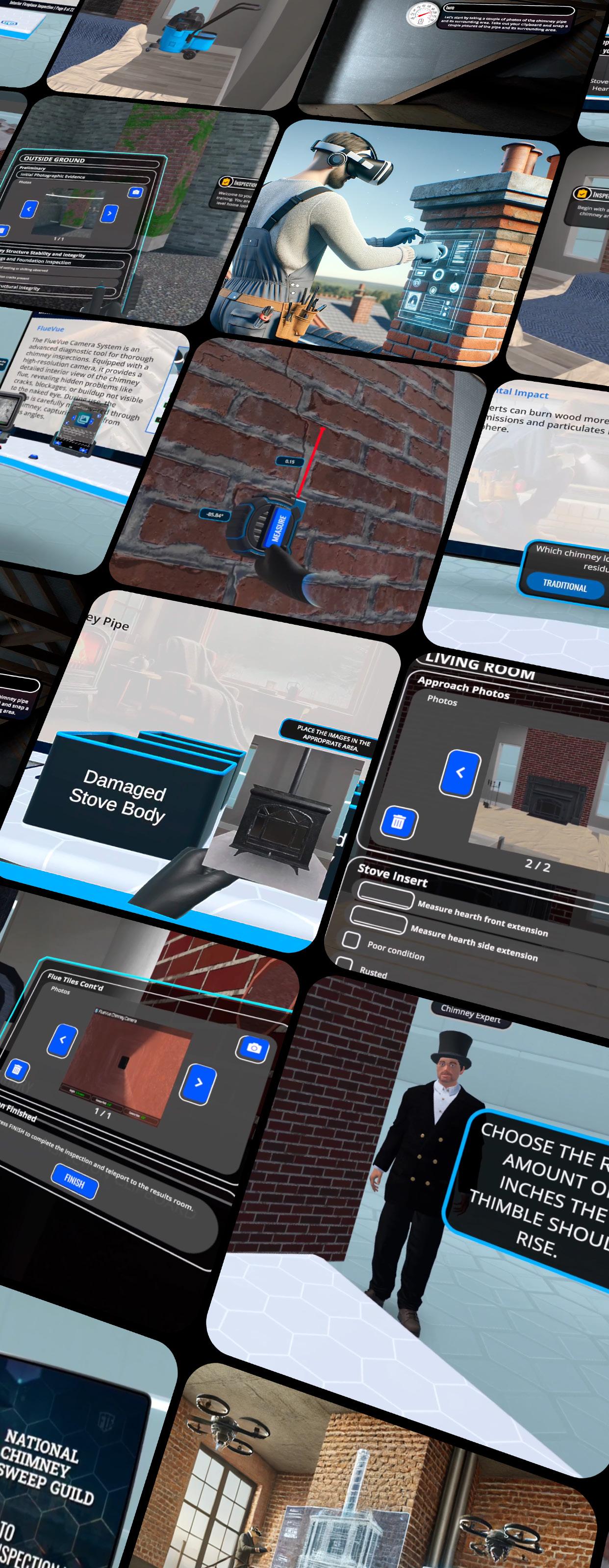
The tools of our trade have always defined what we do. From the brushes and rods in our hands to the knowledge we carry into every job, the right tool makes all the difference. That philosophy is exactly what drives the continued development of Forge—the National Chimney Sweep Guild's immersive training
platform—and the latest round of updates is worth your full attention.
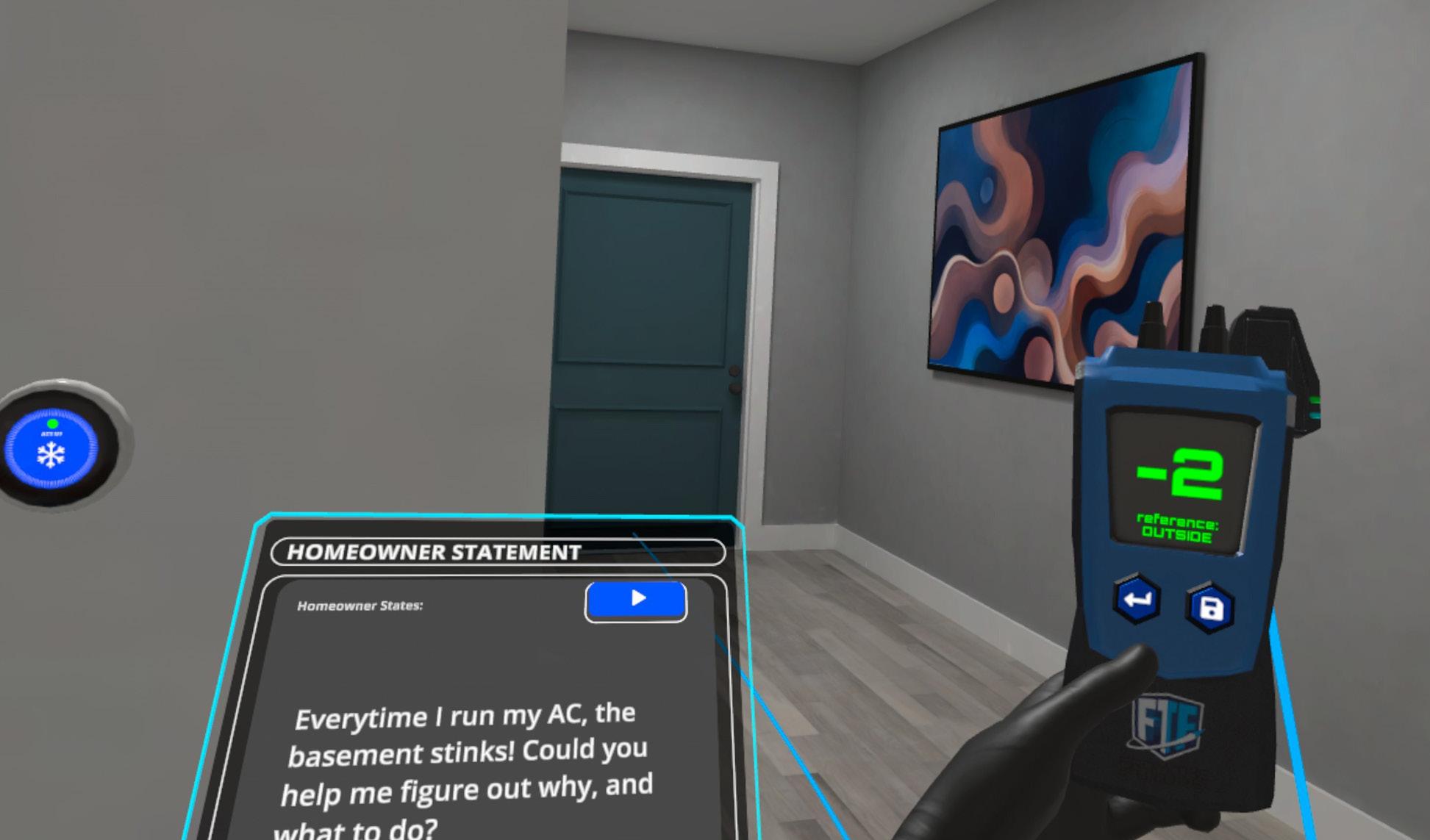
If you haven’t explored Forge yet, now is the time. Built around virtual reality (VR) as its primary mode of instruction, Forge delivers a genuinely different approach to learning—one that research has consistently shown improves knowledge retention. That immersive, hands-on experience remains the foundation of the platform, and that isn’t changing. What is changing is how broadly Forge can serve the industry.
One of the most consistent pieces of feedback we’ve received
since Forge launched is that VR, while compelling, isn’t practical for every situation. The cost of the hardware, the learning curve for those unfamiliar with the technology, and the reality that seasoned technicians often just need a targeted refresher rather than a full onboarding experience. Rather than scale back the VR experience to accommodate those concerns, we chose a different path: expanding what Forge offers alongside it. The platform’s core remains intact, while new options are being added to serve a broader range of users and learning needs.
After revisiting an invitation from Jerry Isenhour’s CVC Success Group, we’re pleased to introduce a new tier within the platform:
Forge Elite. Current Forge subscribers can now access CVC Success Group’s online video training library at a discounted rate, adding a traditional videobased learning pathway alongside Forge’s VR content.
A few things worth clarifying about this partnership: CVC Success Group remains fully owned and operated by Jerry Isenhour and his team—NCSG plays no role in managing their content or day-to-day operations. Think of Forge Elite as a discounted access bridge between two complementary platforms. It is entirely optional and is not a requirement for any Forge subscriber.
It’s also important to say plainly: our industry is well-served by a wide range of high-quality educational resources. NCSG recertification CEUs can still be earned through any approved course on any approved platform. Forge Elite is one more option available to members—not a replacement for the many strong training resources professionals already rely on.
The expansion doesn’t stop there. As we move into the second half of the year, look for continued additions to the Forge platform. On the near horizon: content and tools aligned with preparing for the NCSG Certified Chimney Professional (CCP) certification, as well as updates to the nationally-recognized apprenticeship program that will incorporate Forge as an additional learning pathway alongside existing class offerings.
Forge was built to grow, and it’s doing exactly that. Whether you’re new to the trade, a veteran looking to sharpen your edge, or somewhere in between, there has never been more inside Forge worth exploring. ■

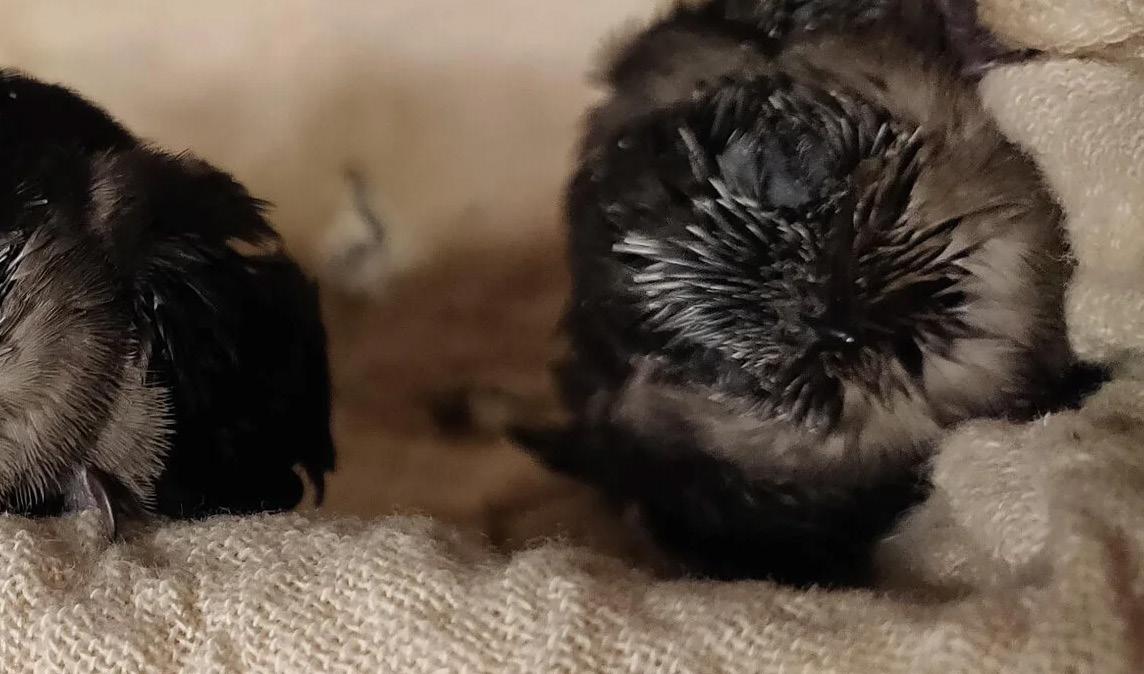
Each spring and summer, chimney sweeps across the country begin to see a familiar—and often surprising—visitor: the chimney swift. These small, cigar-shaped birds, known for their aerial acrobatics and constant chattering, return to North America each year after wintering in South America. And increasingly, they’re choosing our customers’ chimneys as their nesting and roosting sites.
For our industry, that means an uptick in calls: inspections, removals (when legally permitted), consultations, and education. Chimney swifts have quietly become a seasonal driver of business for many sweeps.
But there’s a bigger story here, one that directly impacts both the future of these birds and our profession.
Chimney swifts are protected under the Migratory Bird Treaty Act, making it illegal to remove or disturb them while nesting. Beyond legal protection, they are also a species of growing conservation concern. Their population has declined significantly over the
past several decades.
Why? One major reason is the loss of habitat.
Historically, chimney swifts nested in large hollow trees. As forests were cleared and old-growth trees disappeared, they adapted—remarkably—to human structures, especially chimneys. But now, modern building practices and widespread chimney capping are removing even those alternative nesting sites.
In short, we unintentionally created a solution… and are now taking it away.
This is where our industry finds itself at a crossroads.
On one hand, chimney caps are essential. They protect homes from water intrusion, animal entry, and costly damage. They are a critical part of responsible chimney maintenance—and yes, they are a key product we proudly stand behind.
On the other hand, completely eliminating access points without considering alternatives contributes to the decline of a species that has come to depend on our built environment.
By Kristina
The answer isn’t choosing one over the other. It’s balance.
Forward-thinking sweeps are beginning to embrace a dual approach:
• Install high-quality chimney caps to protect the home
• Create rescheduling policies to allow active nest to prosper
• Educate homeowners about chimney swifts
• Recommend or install alternative habitats, such as chimney swift towers
Swift towers are freestanding structures designed specifically to provide safe nesting and roosting spaces. They can be installed in yards, parks, schools, and community spaces, offering a win-win solution.
This approach does more than protect birds. It positions chimney professionals as:
• Educators
• Conservation advocates
• Trusted experts
And it opens the door to new conversations and new services.
Chimney swifts aren’t just a seasonal inconvenience or a service call, they’re part of a larger ecological story that intersects directly with our trade.
By supporting conservation efforts, respecting migratory bird protections, and offering alternative solutions, we help ensure:
• The survival of a unique and beneficial species
• Continued seasonal business tied to their migration
• A stronger, more trusted reputation for our industry
Consider supporting organizations dedicated to swift conservation and migratory bird protection. Groups like National Wildlife Federation (NWF) and other bird conservation nonprofits are actively working to monitor populations, build habitat, and educate the public. ■


By Darin Bibeau, CEO/Owner, National Chimney
In this industry, callbacks are more than an inconvenience, they’re a direct hit to profitability, scheduling efficiency, and customer trust. Every return visit eats into already tight margins and takes time away from new revenue opportunities. Across the hundreds of chimney sweeps we work with every year, one pattern shows up consistently: the right tools and technology don’t just make jobs easier, they prevent callbacks before they ever happen.
Most callbacks can be traced back to a handful of root causes: inconsistent installation practices, product limitations, or environmental stressors like weather exposure. While training and experience play a role, the tools and materials used on the job often determine whether a system performs as expected over time.
Outdated or inadequate tools introduce vulnerability. A tool that worked fine five or 10 years ago may no longer meet the demands of modern materials or installation standards. Just like you wouldn’t expect a decade-old smartphone to keep up with today’s software, it’s unrealistic to expect aging equipment to deliver consistent, high-quality results in the field. Technology evolves and so should your toolkit. Chimney sweeps who proactively update their tools every few years tend to see measurable
improvements in both efficiency and outcomes. Newer tools are designed with precision, repeatability, and ease of use in mind. That means fewer installation errors, better system performance, and ultimately fewer callbacks. The same applies to materials. Advances in product design have led to solutions that are more durable, more weatherresistant, and more forgiving during installation.
We’re also seeing the early impact of AI and digital tools in the field. These technologies aren’t replacing expertise, but they are enhancing consistency and helping crews catch issues before they become problems. Staying ahead of these trends means protecting your time, your reputation, and your bottom line.
The most successful chimney sweeps we work with treat their tools as an investment, not an expense. They regularly evaluate what’s working, what isn’t, and where upgrades could eliminate friction in their process. They understand that a small improvement in installation consistency can prevent a costly callback weeks or months later.
At the end of the day, profitability isn’t just about how many jobs you complete, it’s about how many you don’t have to redo.
Reducing callbacks starts with control. And control starts with the right tools. ■






















































By James Phillips, Director of Professional Sales, SaverSystems
When a chimney begins to deteriorate, with cracked mortar joints, spalling bricks, or water intrusion, homeowners are often told a full rebuild is the only reliable solution. While reconstruction can restore structural integrity, it is not always the only path forward. Chimney professionals serve homeowners across a wide range of financial situations, and your responsibility is to provide solutions that protect safety and extend chimney life at every level.
In many cases of chimney degradation, especially those driven by moisture damage and surface wear, professional chimney sweeps can deliver that balance through targeted repairs using modern, warrantied restoration products designed to extend chimney life by years.
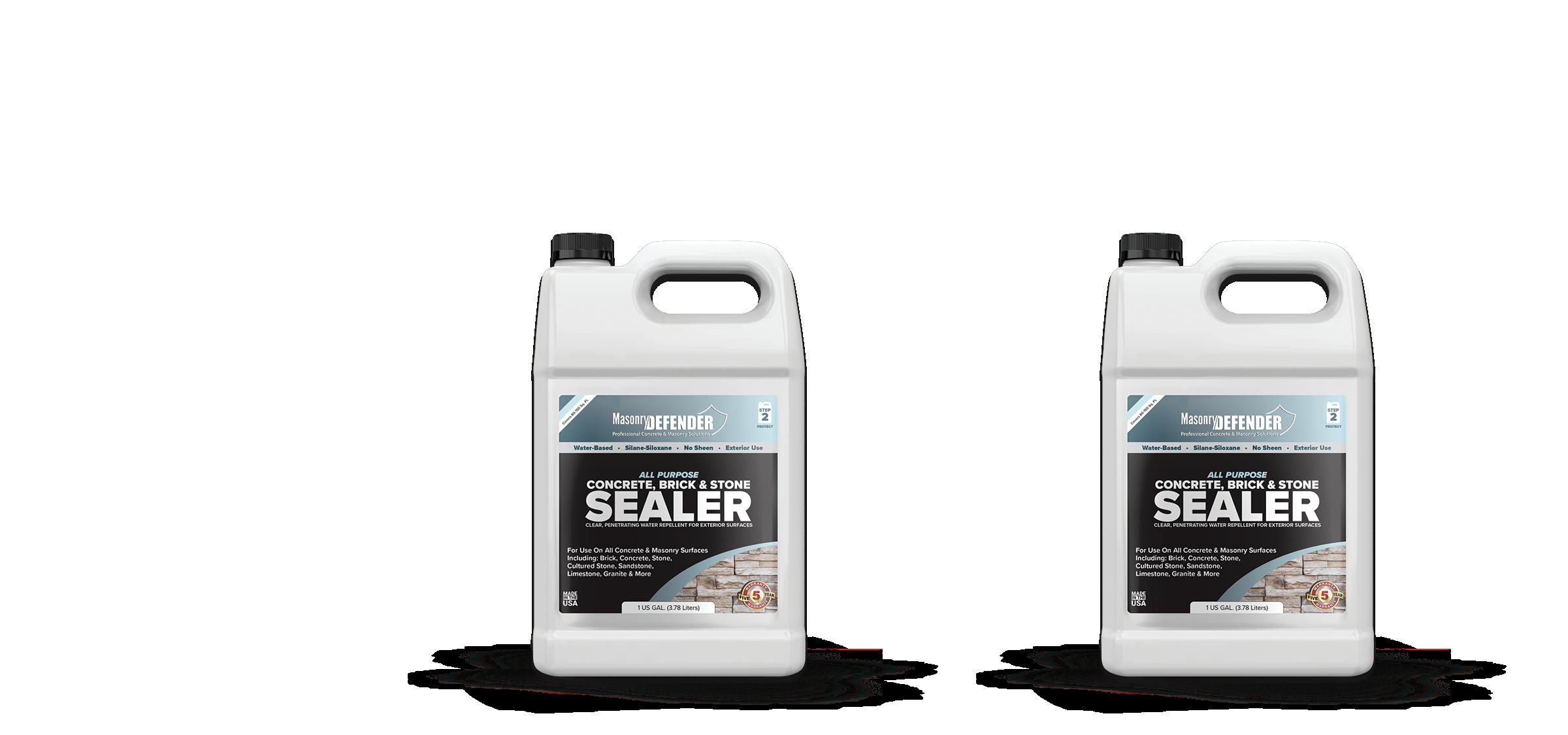
One of the key advantages of these repair systems is their ability to address the root cause of most chimney failures (water penetration) without requiring demolition. Chimneys are uniquely exposed structures, enduring freeze-thaw cycles, precipitation, and thermal stress. Over time, masonry materials absorb water, which expands during freezing temperatures and leads to cracking, flaking, and joint erosion. Rather than defaulting every homeowner to a full rebuild, chimney professionals can apply specialized coatings or resurfacing compounds that seal and protect the masonry from further moisture intrusion. This allows us to offer a meaningful solution even when a full reconstruction is not financially realistic.
Products that carry 7-10-year warranties are particularly valuable in this context. These warranties reflect a level of durability and performance that gives both the contractor and the homeowner confidence in the repair. When properly applied, these systems create a flexible, waterproof
barrier that accommodates minor structural movement while preventing water from re-entering the chimney. This effectively halts the deterioration cycle and stabilizes the existing structure, delivering real performance and not just a temporary patch.
From a cost perspective, the difference between repair and rebuilding is substantial. A full chimney rebuild can run into tens of thousands of dollars, depending on height, accessibility, and materials. It also involves significant labor, potential roofline disruption, and longer project timelines. In contrast, repairs using high-quality, warranty-backed products typically cost a fraction of that amount and can often be completed in a day or two. For homeowners, this means there is almost always a viable path forward, whether they need a lowercost option to address an immediate concern or are choosing a phased approach before a larger investment.
This is where chimney sweeps play a critical role. Unlike general contractors who may default to reconstruction, chimney professionals are trained to diagnose venting systems and masonry performance in detail. That expertise allows them to present a range of solutions for repair, restoration, or rebuild, based on actual conditions and homeowner constraints. By leveraging warrantied repair systems, sweeps can offer options that align with both the technical needs of the chimney and the financial reality of the homeowner without compromising on safety.
It’s important to note that not every chimney is a candidate for repair. Severe structural failures, major leaning, or foundational issues may still necessitate a rebuild. But in a large percentage of cases, particularly where damage is limited to
exterior surfaces or mortar joints, a repair approach is entirely sufficient and far more efficient. Having that option matters, because it ensures more homeowners can take action instead of delaying critical work due to cost.
Ultimately, the use of long-warranty repair products allows our industry to do what it should do at its best: provide practical, scalable solutions that protect homeowners. Whether the job calls for a full rebuild or a targeted repair, the goal is always to stop deterioration, restore function, and deliver
results that last. By expanding the range of viable solutions, chimney professionals can help more homeowners address problems early, reduce longterm damage, and keep chimneys performing safely, regardless of budget. ■



By Jordan Masters, Owner, Flame Masters Fireplace Solutions
We all watch the number.
100 reviews.
150 reviews.
200 reviews.
Those milestones feel like wins. I remember hitting each one and thinking, this is what’s going to move the needle.
But at some point, I started asking a simple question: Am I chasing the wrong metric?
Assumption
More reviews = more trust = more jobs. So we push for volume and track the number. I did the same thing.
But eventually, I started questioning whether that number actually mattered.
As part of my MBA research project, I surveyed customers to understand how they use Google reviews when deciding who to call.
The total number of reviews—the thing I had been focused on for years—wasn’t showing a strong connection to whether customers chose us (out of nearly 250 customers we surveyed, only 3 said the total number of reviews even mattered before they called).
Because if that’s true, then what are we really chasing?
A high review count might make you feel like you’re in the game. But, only about a quarter of customers even looked at reviews in the first place. And for those who did, it wasn’t the number that mattered— it was the content. They weren’t comparing totals— they were reading, looking for proof you could solve their problem. The detailed reviews—the ones where customers explain what happened—are the ones that build trust.
Chasing review volume becomes a scoreboard. It’s easy to track and feels like progress. But it can also create the impression that the number itself is what’s driving customer decisions.
In reality, most customers aren’t even looking at reviews—and among those who are, the total count rarely comes into play.
At that point, you have to ask what adding more reviews is really accomplishing.
Because in many cases, it just makes the number bigger.
If you want reviews to work for you, the focus has to shift.
Encourage customers to share:
• What they were dealing with
• Why they’d recommend you
Those are the reviews future customers connect with.
For a long time, I thought I was building something meaningful by growing that number. But going through this process forced me to step back and look at how customers actually behave.
In our case, only about a quarter of customers even looked at reviews, and among those who did, the total count barely registered. That changes how you look at where your time and energy go. Because if most customers aren’t relying on reviews to make their decision, then reviews aren’t the primary driver of your business.
What actually drives long-term growth are the things we’ve always known—relationships, referrals, repeat customers, and the overall experience you create. Reviews still have a place.
But they’re not the engine. ■
FIELD-ORIENTED REALISTIC GUILD EDUCATION
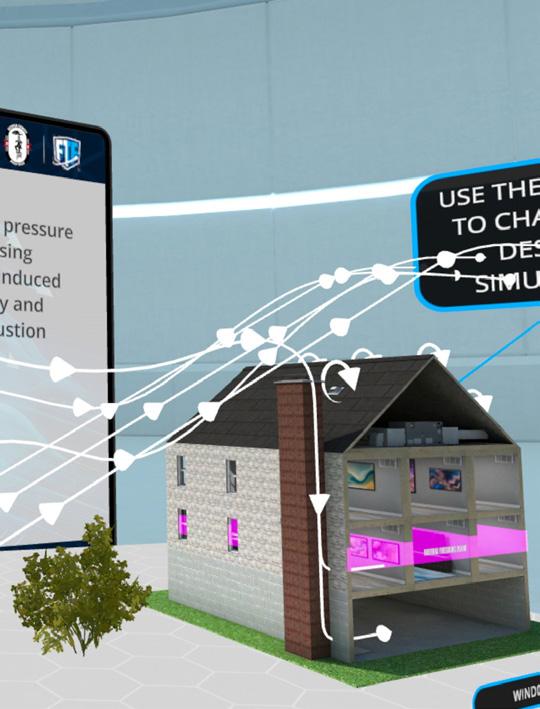
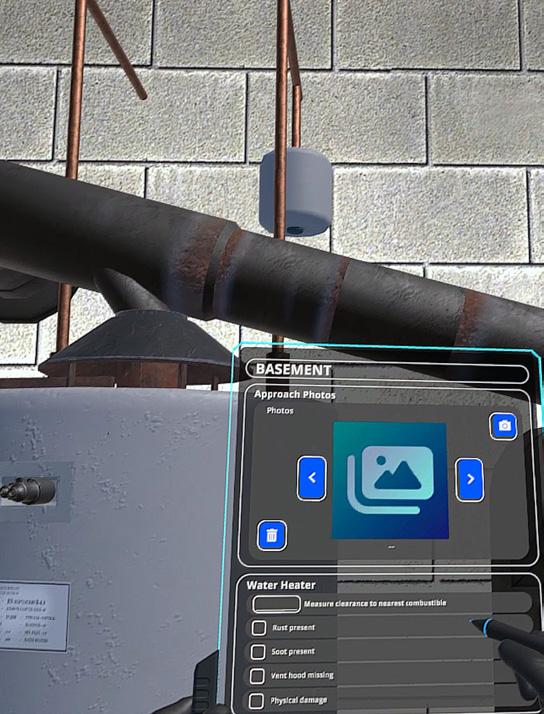
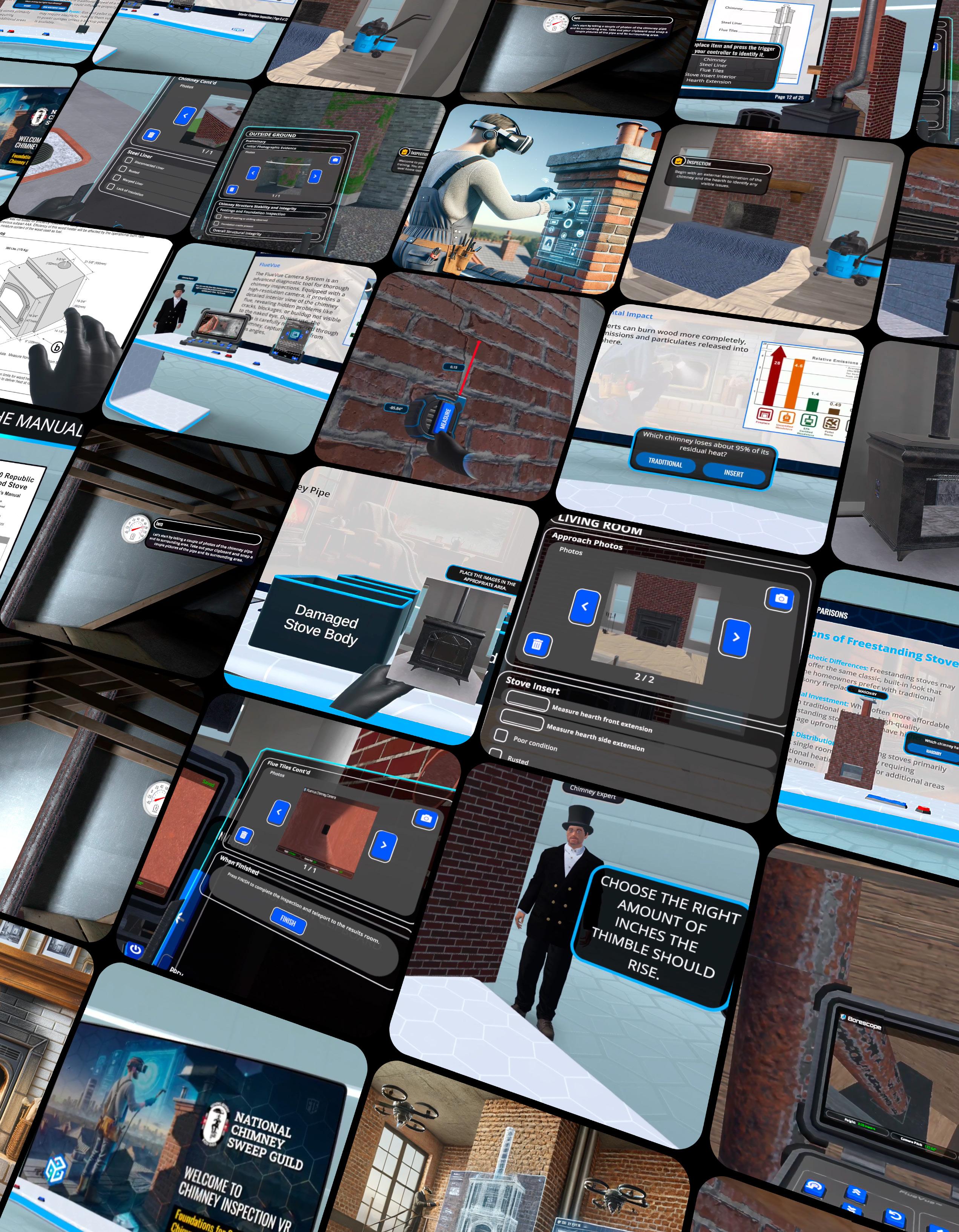
The eight NCSG Forge Hands-On Virtual Reality (VR) training modules currently offer over 40 CEUs and cover the core skills chimney professionals need: masonry fireplace inspection, prefab fireplace systems, house pressure testing, gas fireplace basic diagnostics, and more.
☑ Real World Simulation
☑ Substantial Cost Reduction
☑ Superior Knowledge Retention
☑ Practice To Perfection
☑ Train Anytime, Anywhere
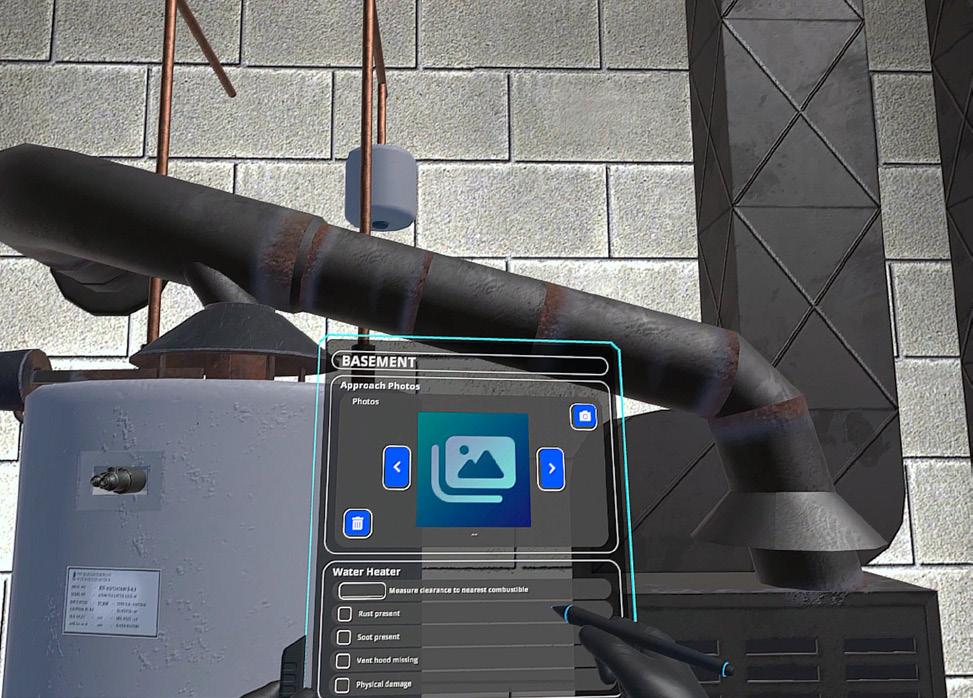

Courses include:
���� Masonry Wood Insert Inspection (VR) ���� Basement Furnace and Water Heater Inspection (VR) ���� Gas Fireplace Basic Diagnostics & Troubleshooting (Online + VR)
���� Inspection Fouindation: Masonry Fireplace (VR)
���� Combustion Principles, Draft & System Diagnostics (Online) ���� Carbon Monoxide & Electrical Safety (Online)
���� House Pressure: How Air Moves Through a
(VR) ���� …and more!
“I
and other expenses.”
- Corey McGill, Done Right Chimney
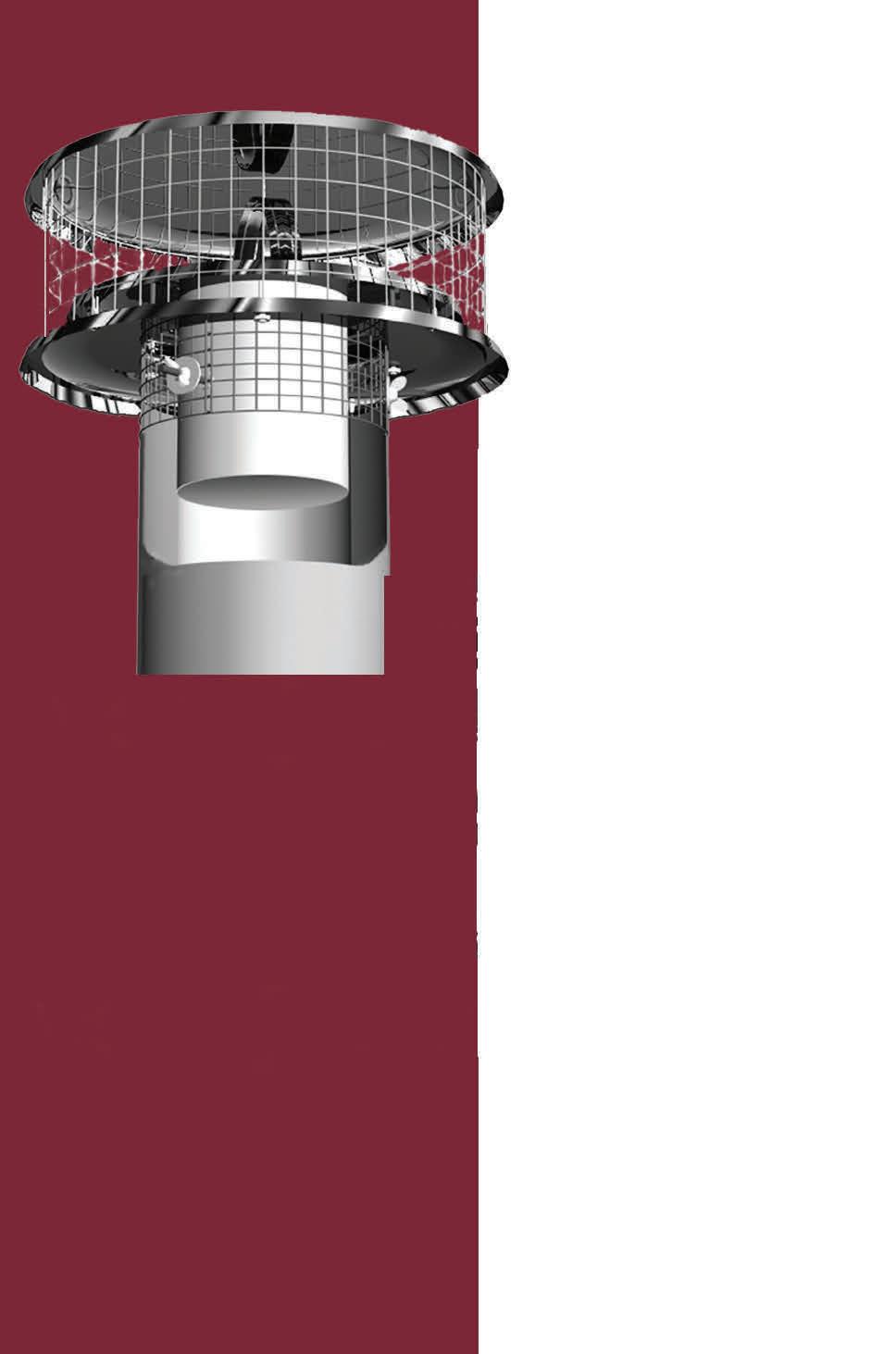
• The industry standard for keeping out squirrels, birds, leaves, and other debris.
Model WSA-TDW for air cooled chimney the authentic Available from leading distributors nationwide.

• Works with single wall, double wall, triple wall, or masonry chimneys.
• Sizes available from 3” to 30”+; custom and oversize available. Air cooled and non-air cooled.
• Standard construction is 100% austenitic stainless steel; also available in other alloys including copper and Type 316 for marine/coal appliances.
Improved Consumer Products, Inc. PO Box B Attleboro Falls, MA 02763 (508)695-7000 Fax: (508) 695-4209 www.chimneycaps.com
Although there have been many attempts to copy it over the last 40+ years, there is only one Weathershield® . Always ask for it by name and look for the seal of authenticity on top of the cap. 100% made in USA

"Homeowner
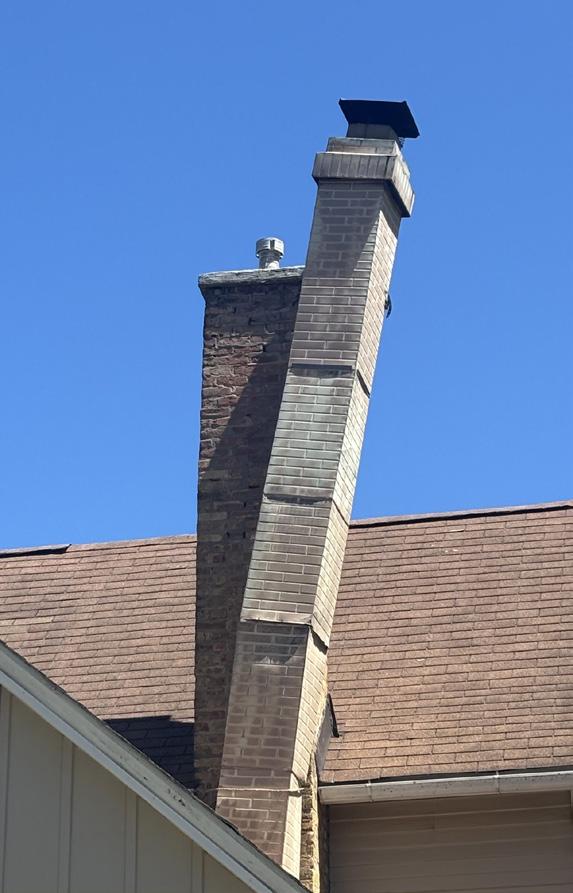
SUBMITTED BY: Brett C. in Buffalo Grove, IL
Have you ever seen some interesting things on the job? Submit a photo with your name and location to marketing@ncsg.org.


By Chris Van Leeuwen, Vice President of Professional Development, Veracity Insurance Solutions
Many small businesses do not understand the risk that employees can bring to the company. Employees can be your greatest asset and your greatest liability.
As the understanding of the rights in the workplace becomes more widespread, and as employees can more easily access information about the law and sample demand letters, small businesses are increasingly being drawn into lawsuits involving harassment, discrimination, retaliation, and wrongful termination. The great bulk of these lawsuits are not about an owner attempting to do something nefarious. They are about disagreement, perception, and process: what was said, what was written down, what happened next, and how the company treated it consistently.
These types of lawsuits are not included in your commercial general liability policy. The cost of defense in employment-related lawsuits can be devastating to a small business, even if you have not done anything intentionally wrong.
The “HR department” is usually whoever has the time between assigning jobs, ordering parts, dealing with customer calls, and dealing with payroll. The supervisors are usually the best technicians, promoted with little training in documentation, coaching, discipline, and complaint resolution. These are not necessarily indicative of a company that is careless. They do, however, indicate that the company is vulnerable.
Employment practices liability insurance (EPLI) claims begin with a messy conversation, a misinterpreted text message, an angry discipline
session, a termination that seems unfair, or a complaint that is inconsistently resolved. Retaliation claims are also prevalent because they can be appended to nearly any type of employment claim as soon as the employee has complained about something that is protected by law. The Equal Employment Opportunity Commission (EEOC) reported a 9% increase in claims, and retaliation claims were the most prevalent type of claim.
This data is a reflection of the larger truth: more employees are willing to bring claims, and more lawyers are willing to take them on.
Most owners consider harassment as something that occurs from employee to employee. This is just the tip of the iceberg.
One of the most unpleasant risks for service trades is third-party harassment in a direction that no one anticipates: your employee harasses a customer, tenant, property manager, or vendor contact, and your business is drawn into the lawsuit. The claim can be sexual harassment, discriminatory statements, unwelcome touching, lewd remarks, stalking, intimidation, or a series of inappropriate conduct. This is particularly dangerous for chimney sweeps, as their technicians regularly enter private residences, often with little supervision. One bad apple can cause a huge problem for your business in a single visit.
Then there is the classic third-party harassment scenario in the opposite direction: your customer or vendor harasses your employee, and your business can be held liable if it knew or should have known and failed to take corrective action. In other words,
once your insured is put on notice, it must have a documented response that is timely and effective, policy enforcement, intervention, limiting access, and documentation.
Nationwide’s EPLI “Facts and Figures” states that the average cost to defend even nominal EPL claims is $10,000, and that costs increase for claims that go to court. The same document cites EPL claims costing an average of $50,000–$70,000.
On the severity side, the 2015 Hiscox Guide to Employee Lawsuits reports that 19% of matters resulted in defense and settlement payments, with average total costs of $125,000 for those paid matters. Industry reporting summarizing the same Hiscox dataset cites a median judgment around $200,000 and notes that about 25% of cases can result in judgments of $500,000 or more.
For a small chimney company, those numbers are not theoretical. A five-figure defense bill can disrupt cash flow immediately and threaten the survival of the business.
An EPLI policy may provide coverage for defense expenses and judgments for claims and allegations of:
• Wrongful termination
• Discrimination
• Harassment and hostile work environment
• Retaliation
• Failure to hire or promote
• Employment-related defamation or invasion of privacy
• Wage and Hour Claims
• Third-Party Coverage
Third-Party coverage is essential for chimney businesses because the worst-case situation is not always employee vs. employee. It is employee conduct against a homeowner, or a homeowner
claim that your company did not supervise and protect them.
In addition to having the right insurance coverage, training is essential to minimize your risk of employment practices claims. Consider the following to minimize your risk:
1. A simple, written code of conduct that is effective on job sites. Be specific about professional conduct in customer homes, including language, humor, photography, social media, and physical contact.
2. A complaint procedure that doesn’t go through the immediate supervisor. If the supervisor is the problem, employees need an alternative. Small businesses can use an owner, an office manager, or an outsourced HR hotline.
3. Performance management in writing. Most wrongful termination lawsuits are actually documentation disputes. Written job performance, feedback, and consistent discipline will protect the company if a termination is later claimed to be discriminatory or retaliatory.
4. Standards for vendors and subcontractors. Insist that subcontractors and staffing vendors adhere to minimum standards of conduct. Put it in writing. Reserve the right to remove people from job sites. Document it when you do.
5. Train the working supervisors. Most lawsuits expand because the first-line supervisor mishandled the first complaint. Brief, effective training for supervisors on retaliation and complaint escalation will quickly pay dividends.
If you have employees, you already have employment practices risk. The only choices you have are whether you self-insure that risk or shift some of that risk with an EPLI policy and tighten up your operations so that claims are less likely and easier to defend. ■


By Jerry Isenhour, Coach and Consultant, CVC Success Group
The chimney industry is under attack—not from competitors playing fair, but from digital scam operators exploiting Google and social media. Here’s how real companies can fight back and take control of their markets.
The chimney service industry is undergoing a structural shift. What was once built on referrals and reputation is now dominated by digital visibility— Google Maps, Local Service Ads, AI-assisted processes, and social media. Marketing has moved from traditional methods such as yellow pages, newspaper, and direct mail. At the same time, illegitimate operators are exploiting these presentday platforms to infiltrate local markets, siphon leads, and erode trust.
This is not a nuisance—it is a systemic threat. Fake Google listings impersonate real companies, lead brokers resell customer inquiries, scam operators bait customers with low prices and upselling fraudulent repairs, and there are even reports of legitimate companies having their voicemails intercepted. The result is declining margins, confused customers, and a damaged industry reputation.
The companies that will dominate the next decade are not just better technicians—they are better at digital visibility, brand authority, and customer trust. Scam companies can buy attention, but they cannot build trust. That is still the battlefield advantage of legitimate company’s control.
Google Business Profiles (GBP) are the primary battleground. Scam operators are using fake addresses like UPS stores and vacant lots, creating duplicate listings, stuffing keywords into business names, and even impersonating legitimate companies. These tactics manipulate rankings and confuse homeowners.
The red flags are clear if you know what to look for: no real storefront or address, generic or keywordheavy names, suspicious or limited reviews, and no real photos of trucks, teams, or jobs. It works because consumers trust Google and often cannot distinguish between ads, real companies, and fake listings. If you don’t control your presence on Google Maps, someone else will—fair or not.
Lead-generation companies are posing as chimney service providers. They run ads under fake brand names, capture homeowner inquiries, and then sell those leads to multiple contractors. The customer believes they contacted a local company, but they didn’t. For legitimate companies, this means higher advertising costs, lower-quality leads, reduced close rates, and constant brand confusion.
Platforms like Facebook and Instagram are now primary tools for market entry. You’ve seen the tactics—$49 chimney cleaning offers, urgency messaging, and targeted ads in affluent zip codes. These leads are funneled into call centers and dispatched to underqualified subcontractors. The scam starts with a low price, but it ends with a high-
pressure upsell inside the customer’s home and poor quality work.
The industry is especially vulnerable due to low or no regulation, minimal licensing requirements, and a major consumer knowledge gap. Homeowners rely heavily on perceived authority, and seasonal demand allows scammers to flood markets at peak times. Many homeowners want it now and when legitimate companies are booked weeks out then that consumer is ripe for the picking by scam operations.
If legitimate companies fail to act, services become commoditized, industry trust erodes, and margins shrink. Silence in the market doesn’t create stability, it creates opportunity for bad actors.
Winning companies take control by fully optimizing their GBP, maintaining consistent posting, using real photos of their team and work, and focusing on review frequency, not just volume. A steady flow of new reviews will outperform a large but stagnant review base.
This is not a one-time effort, it’s ongoing maintenance. Report fraudulent listings, document violations, and coordinate with industry peers. Removing one fake listing is not a victory, it’s part of staying competitive.
Scammers may win clicks, but real companies win trust. Your brand must clearly answer why you are safer, more qualified, and worth more. That trust is built through certifications from the National Chimney Sweep Guild (NCSG) and Chimney Safety Institute of America (CSIA), insurance transparency, educational content, and professional presentation.
Create content that educates and protects consumers—scam awareness videos, inspection walkthroughs, before-and-after documentation, and pricing transparency guides. The company that educates the market becomes the authority the market trusts.
Don’t compete on price—that’s a losing strategy. Compete on authority and clarity. Focus on certified professionals, proven track records, transparent processes, and no-pressure service.
Digital scammers cannot replicate real-world trust networks. Build strategic partnerships with realtors, home inspectors, HVAC contractors, and roofers. Join local networking groups like Business Networking International (BNI). Referrals remain the highest-trust currency in the chimney industry.
Teach homeowners what a real inspection includes, what realistic pricing looks like, and how to identify scams. Warning signs include prices that seem too good to be true, high-pressure sales tactics, and lack of credentials or documentation.
Winning companies will be defined not just by technical skill, but by visibility, trust, and authority. Losing companies will remain reactive, price-driven, and invisible online, while winning companies will be proactive, brand-driven, and digitally dominant. This is no longer just a trade—it’s a digital battlefield.
Scam companies are not going away. They will not play fair, and they will continue evolving. But they cannot build real trust. That remains the advantage of legitimate companies and the foundation of longterm market leadership. And the battle you must be engaged in must be sustained for success. ■
Watch this YouTube broadcast to explore futher discussion on this topic:
IIt was late afternoon in Montgomery, and the air inside the bus tasted of exhaust and stale sweat. The windows rattled in their frames with every heavy grind of the transmission, doing little to move the thick Alabama heat. I had ridden that route enough times to know the unspoken choreography by heart. The bus was divided by an invisible line that shifted with every stop, enforced by a rigid set of rules we had all been conditioned to accept without question. When the driver barked his order, the air in the bus seemed to pull taut. The row where she sat was commanded to clear. Three figures stood immediately, their heads bowed to the familiar weight of the system.
But the woman by the window remained seated.
My first reaction wasn’t admiration. It was a hot, selfish flare of indignation. It was the end of a blistering day, and I just wanted the bus to put it in gear so I could go home. Why couldn't she just stand up like the rest of them? I felt the familiar, conditioned anger of a man whose comfortable routine was being disrupted. The rules of the segregated South were brutal, but for those of us sitting in the front rows, they offered the cheap
By Phillip Stoller, President and CEO, SaverSystems
comfort of predictability.
The driver shouted again, the harshness of his voice cutting through the heavy air. She did not move.
We sat baking in that suffocating oven until the police arrived. Heavy boots thudded against the ribbed rubber steps. When the officers ordered her up, I caught myself waiting for the struggle. I wanted her to shout, to curse, to give them a reason. A spectacle would have made it easy. It would have allowed me to dismiss her as unreasonable and allowed me to believe the system was working the way it should..
But she didn't give us that cheap absolution.
When she stood, she didn't look defeated, and she didn't look angry. She looked at the men with the badges with a quiet, devastating pity. In the face of all that loud, metallic authority, her absolute stillness made the armed police look profoundly weak. There was no struggle. She simply smoothed her dress and allowed them to walk her off the bus and out into the sweltering street.
As I watched her through the duststreaked glass, the self-righteous annoyance I had felt moments before turned to ash in my mouth.
The silence she left behind pressed against my chest, but I didn't fully understand it then. At the time, I just felt a hot, shameful flush of cowardice.
It took years for the memory of that afternoon to fully erode my complacency. Looking back, what unsettles me most was not her refusal. It was the eventual, crushing realization that the cruelty of it all only worked because people like me had always quietly agreed to keep standing. We had traded our courage for the comfort of avoiding a scene. Her quiet dignity proved louder, and far more devastating to my own conscience, than any shouted threat could have ever been.
That afternoon in Montgomery displayed two very different kinds of silence. As with all powerful tools, silence possesses a shadow. There is a vast difference between the courageous, disciplined restraint of a strong leader and the cowardly avoidance of a weak one.
Avoiding conflict, delaying hard decisions, and hoping a problem will simply vanish in the quiet is not leadership; it is an abdication of duty. It is the exact kind of
quiet complicity that kept the narrator of our story, and so many others, sitting comfortably in the front of that bus.
The silence of a strong leader, however, is actively engaged. Courageous silence always accompanies a selfless act paired with moral authority. When an individual quietly does something that will cost them greatly, the moral authority of that act is so profound that to say anything would only diminish it.
That is what Rosa Parks did. She paid a severe price, which is exactly why she didn't have to say anything. She did not ignite a movement with a microphone; she ignited it with a profound, immovable stillness that forced everyone around her to confront a reality they had been desperately trying to ignore. Courageous silence, when anchored to deep conviction and personal sacrifice, can expose the truth faster than a thousand carefully crafted arguments.
We live in an age that confuses volume with authority.
It is a common assumption that leadership is a loud, forceful endeavor, and that true power belongs exclusively to those who give the orders. Yet history consistently proves that towering systems can be brought to their knees by someone who simply refuses to participate in the noise.
While the segregated rules of 1955 are behind us, the human tendency to mistake noise for power is still sitting right in the front row of our businesses today. In today's corporate environment, we are conditioned to believe that whoever speaks first in a meeting holds the power, and that a leader must always possess an immediate, audible answer. But true leadership often requires the gritty courage to defy that expectation.
Behavioral science has finally begun to catch up with what that bus revealed decades ago. Organizational psychology shows that silence is not a void of thought, but rather a profound form of cognitive discipline. When leaders intentionally pause, they reduce the body's emotional reactivity, allowing judgment to catch up with primal instinct. In the high-stakes environments of business, whether on a manufacturing floor or in a boardroom, a leader who reacts instantly is often reacting emotionally. Silence buys the cognitive space where wisdom can catch its breath.
Furthermore, economists study a concept known as "signal strength." When a signal is constant, it becomes background noise. When it is rare, it carries immense gravity. Leaders who speak too much dilute their own
authority. But when a leader who is known for deliberate restraint finally chooses to speak, the room naturally leans in. Their words carry weight because they are not squandered on the trivial.
When a leader holds their tongue, they also create the psychological safety for others to step forward. This actively engaged silence draws out the hidden intelligence of the team, allowing critical problems to surface before they become catastrophic.
• The Hope: You do not need the loudest voice or the most charismatic delivery to lead your team effectively. You simply need the clarity of conviction and the courage to let the space between your words do its heavy work.
• The Challenge: Tomorrow, when the pressure mounts and the primal urge to immediately fill the silence rises in your chest, resist it. Pause. Let the tension sit. Speak only when your words act as a precise tool to move your people closer to the mission. Because in the end, the strongest leaders are rarely remembered for the volume of their commands, but rather for the quiet conviction that changed the course of the journey. ■
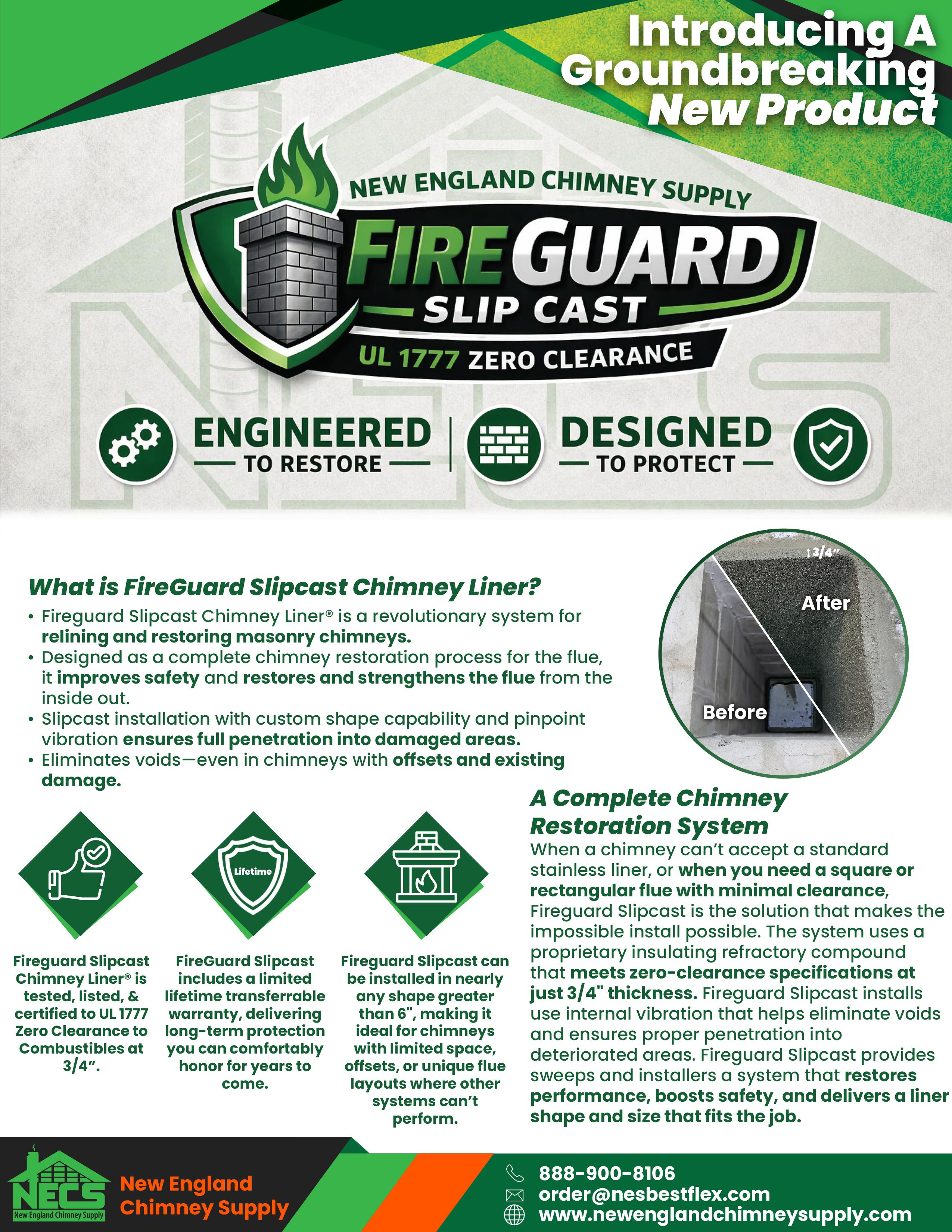
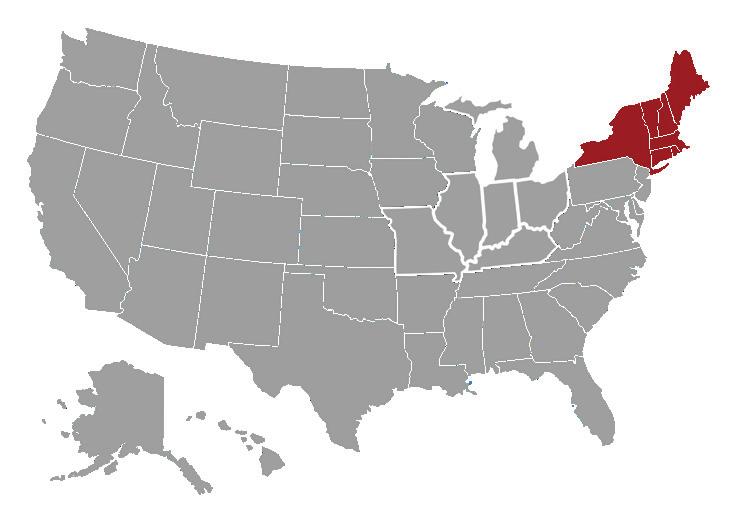


Robby Murphy Region 1 Director
IIf you haven’t heard about next year’s convention in Hershey, PA, then you must be living under a rock. The National Chimney Sweep Guild (NCSG) is celebrating its 50th anniversary!
I wasn’t even a twinkle in my parents' eyes when this Guild got its start back in 1977. A gallon of gas was 62 cents, Star Wars hit the movie theater, and Jimmy Carter was in office.
My own business turned 50 years old this year. Founded in 1976 when the need for sweeps came back, it has served the same community for five decades. This history has led us to tell our story whenever we get the chance.
From the first phone call to folding up your drop cloths, are you telling your company’s story? Your customers want to hear what sets you apart from the rest. Even if your company is five years old, it has history and uniqueness.
Being a member of the NCSG is an easy way to start a conversation about your dedication to the chimney trade. When I mention there is a gathering of almost 1,000 chimney sweeps each year, our customers laugh, of course. But it contributes to the story that sets us apart from the next guy.
Sweeps luck! ■
Cory McGill At-Large Director


TThe weather is getting warmer in New England, mud season is over, the trees are leafing out, and the scam companies are out in full force. Like mosquitoes, they are swarming in from every direction.
How is your company handling this epidemic? Are you staying ahead of it, or are you spending your time fixing the damage after the fact?
Between a heavy social media presence focused on business resources for consumer education and networking with overlapping professionals in our communities, we are starting to see a difference. Homeowners are beginning to push back, ask better questions, and call us for another opinion.
Even when people are outside our service area, we still take the time to talk with them and help educate them on how to avoid being scammed. We are also working to improve outreach to the elderly population, as they are especially vulnerable to high pressure sales tactics and fear-based marketing.
With the cost of everything continuing to rise, homeowners are looking for trustworthy professionals now more than ever. As an industry, we cannot simply complain about the bad actors, we have to out educate them, out-communicate them, and out-professional them. Consumer trust may become one of the most valuable tools we have moving forward. Oh, and be good to each other, we're all in this together! ■

June 17-18, 2026 | Virtual (Google Meet)
Office managers are expected to keep everything running, but rarely get clear training on how to lead the office, track performance, or create consistency. This class will help office managers step into true operational leadership.
June 25-26, 2026 | Central City, PA
The PA Guild of Professional Chimney Sweeps is partnering with Rooftop Safety USA to host a 2-day ropes class at Camp 93 in Somerset County. This class will focus on proper access and equipment.

CSR 360°
July 15-16, 2026 | Virtual (Google Meet)
CSR 360° is a 2-day, virtual class for customer service representatives in the home service industry. Learn how to drive growth, guide calls with confidence, ask the right questions to qualify work, and turn more of the right calls into booked jobs.
July 24-26, 2026 | Middle Grove, NY
Recharge your spirit and mind at the 34th Annual New York State Chimney Sweep Guild. Fun for the entire family—bring spouses and kids for food, fire, fun, and friendship!
Office Manager Essentials
August 6-7, 2026 | Virtual (Google Meet)
Office managers are expected to keep everything running, but rarely get clear training on how to lead the office, track performance, or create consistency. This class will help office managers step into true operational leadership.

CSR 360°
August 13-14, 2026 | Virtual (Google Meet)
CSR 360° is a 2-day, virtual class for customer service representatives in the home service industry. Learn how to drive growth, guide calls with confidence, ask the right questions to qualify work, and turn more of the right calls into booked jobs.
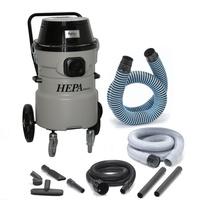



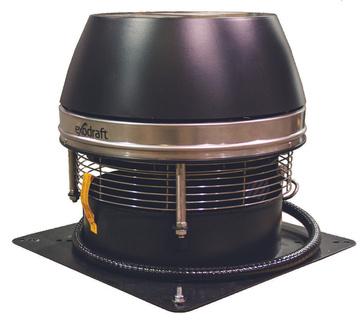

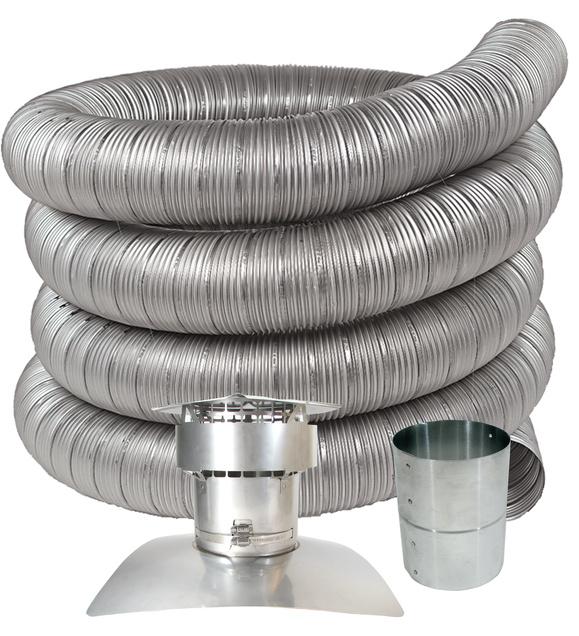
Any Order* Over $800 May Request No Payment Due Until October 1, 2026 and any order over $2,500 receives Free Freight anywhere in the continental U.S.
Call Or Email For Your Free Copy Of Our Current Catalog Featuring Tools, Chimney, and Hearth Accessories
* Dating offer subject to credit approval. * Must mention ad at time of order placement, valid on stock products only. * Good through July 31, 2026.
Owens Chimney Systems, Inc.
Rhett Blackmon Owens Chimney Systems, Inc.






President; Region 4 Director
Debbie Wiedwald Blackburn’s Chimney Sweeps debbie@blackburnschimney.com
Vice President; At-Large Director
Gary Smalling Smalling Masonry gary.smalling@smallingmasonry.com
Treasurer; Region 1 Director
Robby Murphy
Hudson Valley Chimney Service rmurphy@hudsonvalleychimney.com
Secretary; Region 3 Director
Drew Stein Chimspector drew@chimspector.com
Region 2 Director
Jonathan Cross
D.J. Cross/Cross Break Sheet Metal jon@djcrossinc.com
Region 5 Director
Roland Perez
AAA Home Services and Aaron's Chimney Services roland@myaaahomeservices.com




Region 6 Director
Michaele Dempsey Professional Chimney Sweep prochimneymichaele@gmail.com
At-Large Director
Cory McGill Done Right Chimney cory@donerightchimney.com
At-Large Director
Brett Conklin Chimney Monkey brett@chimneymonkey.com
At-Large Director
Lee Roff
Lords Chimney leeroff@lordschimney.com
At-Large Supplier Representative
Brian Barclay KW DRAFT brianb@rmmanifold.com
Advocacy
Debbie Wiedwald
Blackburn’s Chimney Sweeps
Bylaws
Brett Conklin
Chimney Monkey
Certification
Steve Sobczak
Total Chimney Care
Education
Gary Smalling
Smalling Masonry
Cory McGill
Done Right Chimney
Ethics
Roland Perez AAA Home Services
Events
Brian Barclay KW DRAFT
Governance
Drew Stein Chimspector
Marketing
Lee Roff
Lords Chimney
Brett Conklin
Chimney Monkey
Membership
Michaele Dempsey Professional Chimney Sweep
NFPA 211; NFPA 54
Jim Brewer
SureFire Training Academy
NFPA 31; Tech. Advisory Council
Steve Scally
Fireside Sweeps
UL 1390; UL 1391
Dan Freeman
Freeman Fire
National Chimney Sweep Guild
1255 SW Prairie Trail Parkway
Ankeny, Iowa 50023-7068