HEIGHTENED FOCUS

THE JOURNAL OF CHIMNEY AND VENTING

6
In this interview, investment banker Franklin Harris explains what private equity’s arrival could mean for chimney businesses and the industry.
14
Heightened Focus
Understand when OSHA’s fall protection exceptions apply, why every company still needs a plan, and how the NCSG agreement helps chimney professionals work safely.
20
New Beginnings for Our Neighbors to the North A firsthand look at WETT’s new chapter and the partnerships shaping Canada’s chimney industry.
PAID ADVERTORIAL
22 From Trash Bag to Trade Tool
How one family’s drafty fireplace inspired a patented product built for homes nationwide.
26
Your Best Marketing Tool: The Inspection Report Clear photos and homeowner-friendly explanations can turn inspection findings into trust, approvals, and referrals.
28
So You've Been Put on Notice
What happens after you’re put on notice, and how strong documentation can protect your business.
32
General Liability: Where the Line Is Drawn How general liability distinguishes defective products from faulty workmanship and what each means for a claim.

Have you ever seen some interesting things on the job?
Submit a photo with your name and location to marketing@ncsg.org.

Let us know what’s going on!
Submit industry concerns to NCSG’s Policy Action Center. We post live on the website and look into how we can take action. While you’re there, you can also check out the blog for past issues we’ve addressed. Check your email and Facebook to stay up to date!
On the Cover:
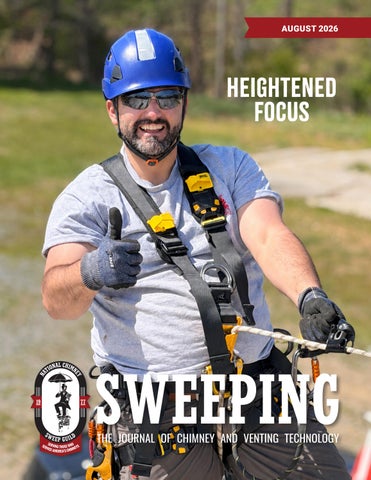
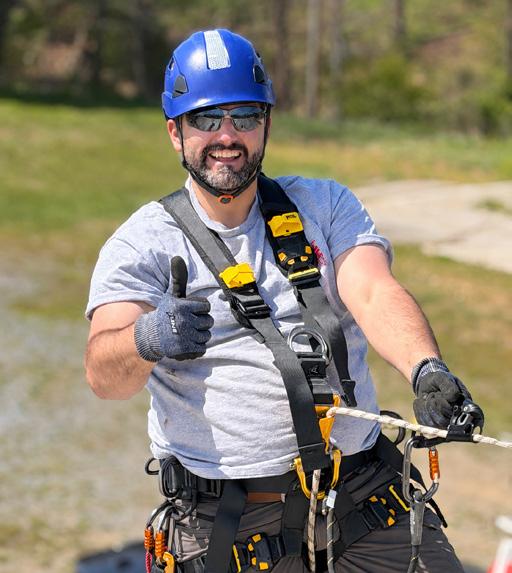
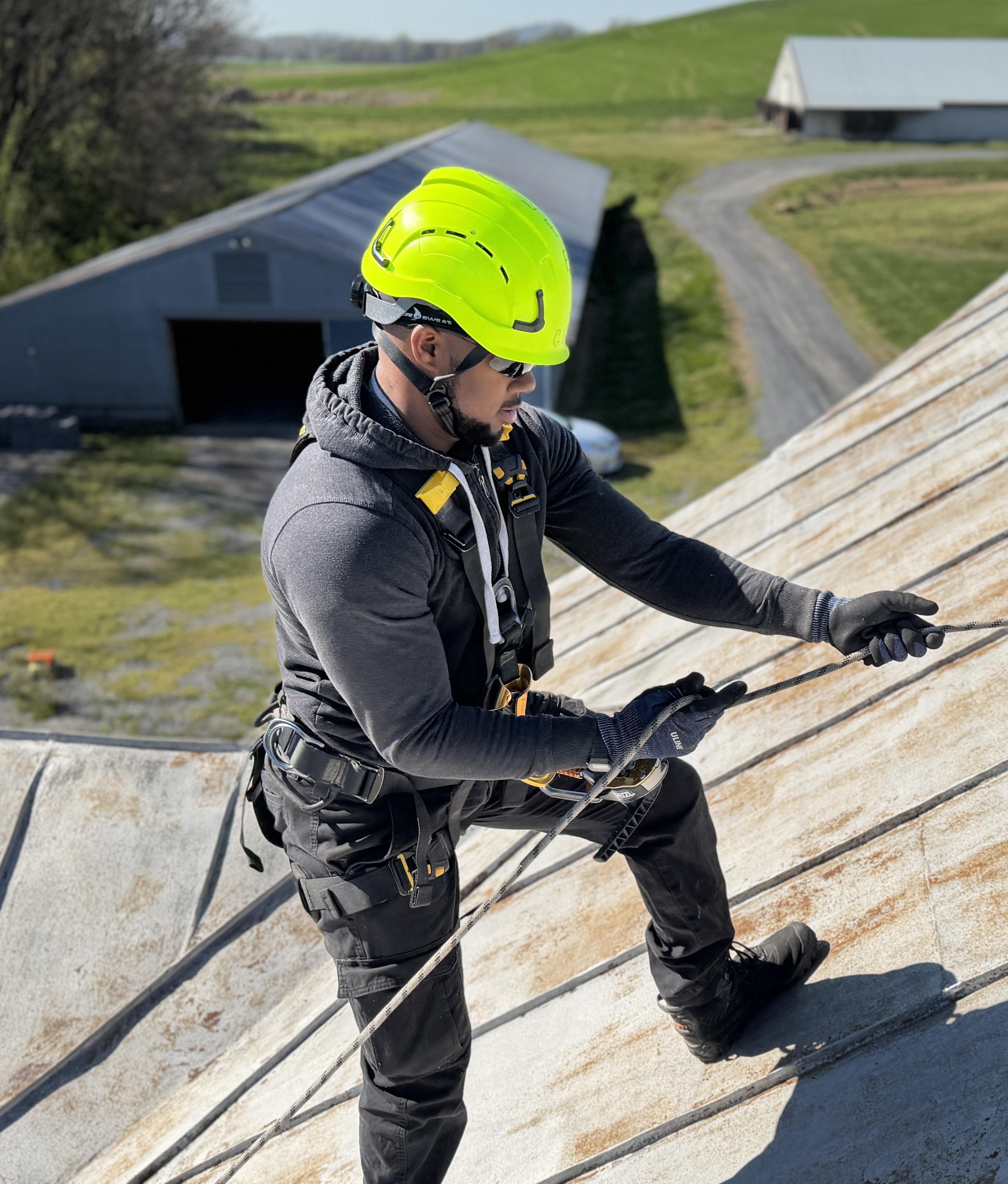
JT Rapaport of Blue Ridge Chimney Services in Harrisonburg, VA, practices fall protection skills during a Rooftop Safety USA class.
(317) 837-1500
Kailah Schmitz, CAE, Executive Director director@ncsg.org
Jessica Thornton, Associate Director and Certifications Coordinator jessica@ncsg.org
Jonathan Erdman, Director of Education education@ncsg.org
Sydney Kaizer, Director of Marketing and Communications; Sweeping Editor marketing@ncsg.org
Brittney Burton, Membership and Events Coordinator bburton@ncsg.org
Libby Almendarez, Membership, Certifications, and Digital Coordinator office@ncsg.org
DISCLAIMER
The views expressed in Sweeping do not necessarily reflect the views of the National Chimney Sweep Guild (NCSG) or its staff.
ADVERTISING
To advertise, email Malisa Minetree at sweepingads@me.com or call (317) 603-7854.
NCSG further reserves the right to reject at any time any advertising determined not to be in keeping with the publication’s standards. Acceptance of advertising by Sweeping does not necessarily constitute endorsement of products or services advertised. NCSG does not make any effort to review or substantiate claims made by advertisers.
PHOTOGRAPHY
Stock images by iStock, Adobe.
ARTICLE SUBMISSION
NCSG encourages industry partners to submit press releases and articles to the editor at marketing@ncsg.org. Submissions should contain items of interest or importance to the chimney and venting industry. Submissions should not contain direct solicitations, prices, or other forms of advertising verbiage. Submissions may contain images or artwork attached in a JPG format.
In all cases, NCSG reserves the right to edit submissions for space limitations, keep the release and publish at a later date, or refuse to publish the release for any reason. Neither publishing, nor refusing to publish the submission should be considered a statement of NCSG’s opinion regarding the release. © 2026 National Chimney Sweep Guild
TThe National Chimney Sweep Guild (NCSG) exists to bring our industry together through safety, education, certification, business development, and advocacy. Everything we accomplish is possible because of our members. As our industry continues to evolve, a strong Guild and an engaged membership are more important than ever. Together, our collective voice shapes the future of the chimney and venting industry.
Education remains one of the Guild's greatest strengths. Dedicated volunteers on the Education Committee work year-round to develop meaningful learning opportunities for chimney professionals at every stage of their careers. Members can expand their knowledge through in-person classes at regional events and the annual NCSG Convention and Trade Show, as well as virtual training through Forge and virtual reality. Valuable publications, including the Guide for Chimney Professionals and the Residential Chimney Service Safety Manual, are also available for members to purchase.
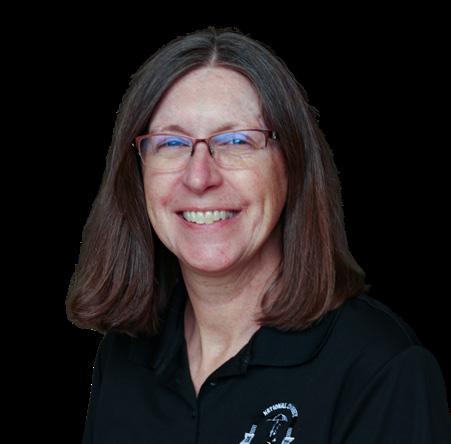
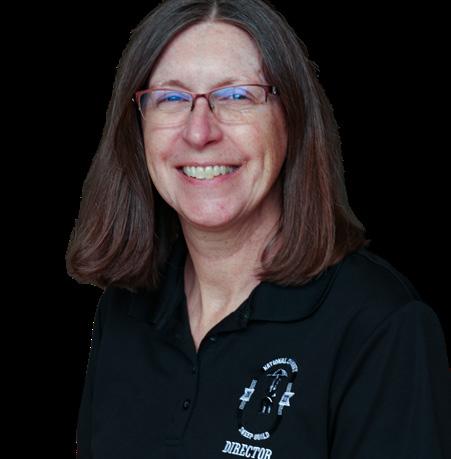
By Debbie Wiedwald, President, National Chimney Sweep Guild
Professional development extends beyond the field. Customer service representatives and office staff can strengthen their skills through virtual CSR 360° and Office Manager Essentials classes. The Guild's U.S. Department of Labor-registered Apprenticeship Program provides a roadmap for developing the next generation of skilled technicians, while NCSG's accredited certification program recognizes individuals who have demonstrated their knowledge through rigorous exams.
We also continue to collaborate with chimney professionals in Canada and Europe, sharing ideas and best practices that strengthen our industry worldwide. Be sure to visit the events calendar on the NCSG website, ncsg.org, to find training opportunities offered by regional guilds and our education partners.
Advocacy is another cornerstone of the Guild's mission. In this issue, NCSG Education Director Jonathan Erdman highlights NCSG's ongoing commitment to workplace safety and our agreement with OSHA. Guild members also dedicate countless hours serving on codes and standards committees, ensuring the chimney sweeping profession has a voice in the development of industry standards. In June, chimney sweeps joined hearth professionals in Washington, D.C., meeting with Congressional representatives to advocate for fuel choice and policies that support our industry. Committed Guild members continue to provide business owners with strategies to address scammers and misleading companies listed on Google.
As we look ahead, excitement is building for the Guild's 50th anniversary celebration in 2027. I encourage you to join us April 6-10, 2027 in Hershey, Pennsylvania, for the 2027 NCSG Convention and Trade Show. It will be an opportunity to celebrate our history, connect with industry peers, explore the latest tools and products at the trade show, and invest in your professional growth.
The Guild's success depends on the involvement of its members. Whether you serve on a committee, teach a class at convention, participate in codes and standards development, or simply share your expertise with fellow professionals, your contributions make a difference. Thank you for your continued support of the Guild. Together, we will continue building a stronger future for our industry. ■
An investment banker's view on consolidation, valuation, and what it means for owners
By Debbie Wiedwald, President, Region 4 Director, and Advocacy Committee Chair, National Chimney Sweep Guild

PPrivate equity has discovered the chimney sweep industry. Over the past year, National Chimney Sweep Guild (NCSG) member companies across the country have fielded calls from unfamiliar firms, watched local competitors change hands, and wondered what a wave of institutional capital means for a trade long dominated by independent, often family-owned operators.
Two transactions in particular have drawn attention: Argosy Private Equity's backing of Endura Services, and, more recently, Shore Capital Partners' investment in Chimney Collective, a rollup assembled by a group called Village Partners. Neither deal is an isolated event. Once private equity identifies an industry worth consolidating, history shows that more investment typically follows.
To help NCSG members understand what is actually happening and what it may mean for their own businesses, Debbie Wiedwald, NCSG president and Advocacy Committee chair, sat down with Franklin Harris, a veteran investment banker who has spent more than three decades advising companies and private equity firms on mergers, acquisitions, and sales. He now serves as a senior advisor at CEO Discovery, a business that connects financial sponsors with senior operating executives.
In the conversation that follows, Franklin explains what private equity is, why it has turned its attention to residential and home services, and what chimney sweep business owners (whether they are actively considering a sale or not) should understand about the forces now reshaping their industry.
Franklin Harris is an investment banker with over 30 years of experience and senior advisor at CEO Discovery.
Debbie Wiedwald is president of the National Chimney Sweep Guild Board of Directors and owner of Blackburns Chimney Services in Columbus, OH.
Debbie Wiedwald: Thank you for joining me, Franklin. Before we discuss what is happening in the chimney services industry, can you tell our readers about your background and your experience with private equity?
Franklin Harris: Of course. I have spent the last 30+ years as an investment banker. For two-thirds of that time, I co-headed the financial sponsors group at two different middle-market investment banks. My job was to cover more than 100 private equity firms and understand precisely what each one was looking for in an acquisition. Today, I am a senior advisor at CEO Discovery, where I continue to work with business owners who are weighing their options around building, buying, or selling a company.
Debbie: For readers who may not have worked with these firms directly, what exactly is private equity?
Franklin: When people refer to “financial sponsors,” they are really describing several distinct types of investors: private equity firms, venture capital firms, family offices, and sovereign wealth funds. Private equity firms raise institutional funds from limited partners, such as pension funds, sovereign wealth funds, and wealthy individuals, and they deploy that capital into operating businesses. What sets private equity apart from other types of investors is control. These firms typically buy at least 51% of a business, and often up to 100%, with the intention of making changes and improvements over time so they can sell the business again at a profit.
Debbie: Is selling for a profit their only goal, or are there other objectives at play?
Franklin: Profit is the primary measure of success, but it is worth understanding how that success is actually defined. The key metric is multiple of invested capital, or MOIC. For example, if a firm invests $1 in equity and receives $4 back, that is a 4x MOIC. Achieving that kind of return typically requires making a business meaningfully bigger and better, not simply holding it passively. That means private equity firms are usually active participants.

They will not run the business day-to-day the way a CEO would, but they will sit on the board, offer strategic guidance, and share lessons learned from other companies in their portfolio, sometimes in entirely different sectors. The ultimate goal is to create a larger, stronger business with more customers and satisfied employees, because that is what ultimately drives the return.
Debbie: Once a private equity firm has built up a company, what happens next?
Franklin: Private equity funds operate on a life cycle. A private equity firm typically invests in a business with a plan to sell it again within four to six years. That exit can take several forms: a sale to another private equity firm, a sale to a strategic buyer already operating in the sector, or a sale to a corporation seeking to enter the sector for the first time. Whatever form it takes, the fund's structure requires that the business eventually be sold again.
Debbie: What are the pros and cons when private equity enters an industry like this one?
Franklin: There are real advantages and real drawbacks, and both deserve to be taken seriously. On the positive side, private equity represents an alternative form of ownership. A small business owner thinking about exiting often has a narrow set of options: pass the business to a family member,
sell to an individual who may or may not have much capital, or, if the business is large enough, take it public or sell to a strategic buyer. Private equity fills the gap between those extremes. Because these firms raise capital institutionally, they typically have more money available than an individual buyer would, and after acquiring a business, they are often eager to invest further in growth. That growth orientation cuts both ways. If your business has grown slowly, a private equity owner may look for ways to accelerate that growth, which can mean changes to policies, procedures, service levels, and customer relationships, and sometimes to staffing, as the new owner brings in people suited to a fastergrowing organization.
Debbie: What about chimney sweep businesses in markets that are less attractive to private equity, or owners who simply do not want to be involved with private equity at all? How does this affect them?
Franklin: Once private equity has discovered an industry—as it clearly has here—more investment tends to follow, not less. You cannot put that genie back in the bottle. As a business owner, however, you are under no obligation to sell, or even to speak with anyone. Private equity-backed competitors will be under pressure to grow, and that growth can come from taking market share as much as from overall market expansion. In practice, that can look like more aggressive pricing or more aggressive hiring in your market. If you operate in a defensible niche, you may be fine. If your market is already competitive, expect it to become more so.
Debbie: How does private equity ownership typically affect employees and customers?
Franklin: The honest answer is that it depends, and both groups can benefit or be negatively impacted. Because private equity can only grow a business by retaining customers, new owners often look for ways to expand the value proposition, adding repair services alongside sweeping, for instance, or bundling in other home services. That can genuinely benefit customers. On the other hand, there are absolutely cases where customer satisfaction declines after a private equity investment, particularly if new procedures and policies do not work as smoothly as intended right out of the gate. This is one reason private equity firms place such a high value on a selling owner who is willing to roll some equity and stay on to manage the business they built. The same logic applies to employees: an owner who stays involved can help keep the team in place, keep morale high, and continue developing
people over time. Depending on the firm, equity participation can also extend beyond the senior leadership team, sometimes down to mid-level managers and other employees.
Debbie: What impact does private equity tend to have on suppliers, vendors, and the broader industry?
Franklin: The chimney sweep industry, like many other home services, has a long tail of mediumsize and small businesses. As private equity consolidation continues, you will see some larger organizations emerge. Their scale will give them more purchasing power with vendors. That can work out well for everyone involved: an owner who sells into private equity may see supply costs drop by something on the order of 10%, and from a vendor's perspective, selling to four or five large, sophisticated organizations instead of 100 small ones can be profitable as well.
"Once private equity has discovered an industry—as it clearly has here—more investment tends to follow, not less. You cannot put that genie back in the bottle."
Debbie: What specifically are private equity firms looking for in a chimney services business?
Franklin: Scale is the first thing a firm looks for once it has decided to invest in a sector. It is far easier to buy one company with 50 employees than 10 companies with five employees each, so investors typically start with the largest organizations in an industry and work their way down the list.
Scale usually correlates with more sophisticated operations as well, both in how services are delivered and how the back office is run, so the more developed those systems are, the better. From there, firms examine the history of the business: growth trends, customer retention, how the service
offering and geographic footprint have expanded over time, and the strength of the employee base, including tenure, training, and whether real programs exist to recruit, train, and retain people. These are all hallmarks of a well-run business. While it can be difficult for a small operation to check every box, the more of them you can check, the more attractive you will be.
Debbie: Are PE firms focused purely on profit, or are there other valuation metrics that matter?
Franklin: The key valuation metric is EBITDA, meaning earnings before interest, taxes, depreciation, and amortization. Take your revenue, subtract the cost of services sold and general and administrative expenses, and you arrive at EBITDA, which does not include depreciation, amortization, interest, taxes, or capital expenditures. EBITDA functions as a rough proxy for cash flow. Valuation multiples vary widely based on EBITDA level and the quality of the business behind it. A small, loosely organized business with only a few employees might be valued at only 2x or 3x EBITDA. A large,



well-run national business with $50 million of EBITDA could command 20x EBITDA or more. The better organized your systems, policies, and books, and the more scale you have, the higher the multiple you can expect to receive.
Debbie: What kind of advisors should a founderowner have in place before pursuing a sale to private equity?
Franklin: You absolutely need a lawyer with mergers and acquisitions (M&A) experience, specifically experience selling private companies. The legal documents involved are reasonably standard, but an experienced M&A lawyer will know the specific provisions that matter. This is particularly important if you are rolling equity or staying with the business in an ongoing role rather than selling for cash and walking away. Selling 100% of a business for cash is the simplest scenario to document. Anything involving ongoing salary, bonus, equity rights, or a continuing role introduces additional complications you need to understand clearly.



















Beyond legal counsel, whether you need an investment banker or a broker depends largely on the size of your business. Most investment bankers focus on businesses with at least $2 to $3 million of EBITDA, and ideally $5 to $10 million or more. Investment bankers will prepare sellers by asking upfront the due diligence questions that private equity firms will ask later. I will acknowledge some bias here, having spent 30 years as an investment banker, but a professionally managed sale process delivers real value. For businesses on the smaller end of the spectrum, M&A brokers play a similar but lighter-touch role. They run a less exhaustive process and produce more basic marketing materials, which places more of the diligence burden on prospective buyers and can make the process somewhat rougher. At a minimum, every seller needs a lawyer, and if the size of the business supports it, an investment banker or a capable M&A broker adds real value.
Debbie: You mentioned that owners often stay involved with their companies after a sale. What do those ongoing roles typically look like?
Franklin: It depends heavily on where you are in your career and what you want. If you have built a business with, say, 30 employees, someone still needs to manage it day-to-day, and there are
several ways that can work. You could sell and retire immediately, letting someone else take over. You could sell and stay involved, either in a full-time role or in more of an oversight capacity. Or, especially if you are younger, you might look for an opportunity to take on more responsibility when you join a larger organization that buys your company. Private equitybacked platforms need regional vice presidents and other leaders, so a sale can become a springboard to a bigger role and a longer runway for your career.
This connects to something else worth understanding, which is deal consideration, meaning how you actually get paid. The simplest structure is 100% cash at closing. But many deals also include earnouts, where part of the purchase price, say $20 out of every $100, is paid later and is contingent on hitting revenue or EBITDA targets. Separately, there is the concept of rolling equity: instead of taking all $100 in cash, you might reinvest $30 of it into the parent company. This is where your lawyer becomes essential, because there are many ways to structure these situations, which can be great wealth-building opportunities. For example, if a private equity firm is targeting 4x its money over five years, and you roll $30 of your proceeds, that stake could be worth $120 in five years. That is what people mean when they talk about getting a “second bite at the apple.”

Debbie: So when evaluating an offer to buy their business, an owner should really be looking well beyond the initial payout?
Franklin: Exactly. It is the full structure: the upfront payment, the earnout terms, the rolled equity, and, if you are staying on, your ongoing salary and bonus. Private equity firms are skilled at structuring deals to match what an owner actually wants. If your priority is maximizing wealth over five years, you might roll more equity. If you want to keep working, they can structure a real, well-compensated role for you from day one. The best private equity partners take the time to understand what a founder wants out of an exit and structure a deal that benefits the owner, the business, its customers, and its employees alike.
Debbie: Is there anything else our readers should be thinking about?
Franklin: We have covered the core of it, though there is always more nuance around maximizing value in a specific sale. Ultimately, it comes down to a question every business owner has to answer for themselves: what do you actually want at this stage of your life? Do you want to keep growing aggressively? Are you ready to sell and step back? One advantage of owning your business outright is that you have no fiduciary obligation to anyone but yourself, so the decision is genuinely yours to make. I would encourage any owner thinking about this to seek advice, from a banker, a broker, or even an accountant or lawyer who has seen similar situations play out, so you can learn from what has worked for others and what has not.
Debbie: Thank you, Franklin. We appreciate your insights on private equity and how our members should be thinking about the changes in our industry. ■
More than just a badge or logo
CSIA® Longevity
Since 1983, The Chimney Safety Institute of America® (CSIA®) has been dedicated to serving the chimney and venting industry through trusted education and training. Guided by our Mission, Vision, and Core Values, our team is committed to supporting professionals with the knowledge, resources, and certifications they need to better serve their communities.
To provide the highest standard of education and resources to advance the knowledge of industry professionals for the benefit of the public.
CSIA® Certification
Dedicated to advancing professional education, research, advocacy, and safety for all communities, both now and in the future.
Fiercely Dedicated Forever Evolving Industry Leading
Certification is more than just a badge it's a commitment to excellence, ongoing education, and providing customers with the highest level of professionalism and safety.





Understanding the NCSG/OSHA agreement
By Jonathan Erdman, Director of Education, National Chimney Sweep Guild
Just the other day, an acquaintance of mine reached out to me with a concern. Someone he knew had recently completed a hands-on training class, and the instructor told him fall protection wasn’t required by the Occupational Safety and Health Administration (OSHA) for chimney inspections. My colleague was pretty concerned and asked me to clarify. Could this be true? Why would someone teach such a thing when safety is such a big concern?
My colleague was a bit surprised when I informed him that technically, the instructor may be correct. Let’s unpack this.
Around 2006, OSHA wanted to crack down on fallrelated deaths and injuries across the board. Work at height became a national focus, with residential roof construction taking center stage.
Rooftop Safety USA is one industry organization offering hands-on fall protection training focused on OSHA Competent Person requirements. Owner Jonathan Erdman also serves as NCSG’s director of education, bringing extensive safety expertise to the Guild.
Several changes took effect, such as requiring five-point harnesses to be worn rather than the smaller belt-harness. Anchors were to be secured at the highest point of the structures to provide adequate means for personal fall arrest systems to be implemented. Under no circumstances should ladders be set up on pitched roofs.
While this was all well and good, how do you think that made the chimney sweeps feel to be held to these same standards? There were some clear oversights in the new regulations that didn’t take into account industries like chimney sweeping that technically fall under OSHA construction regulations, but don’t exactly do construction for a lot of the work.
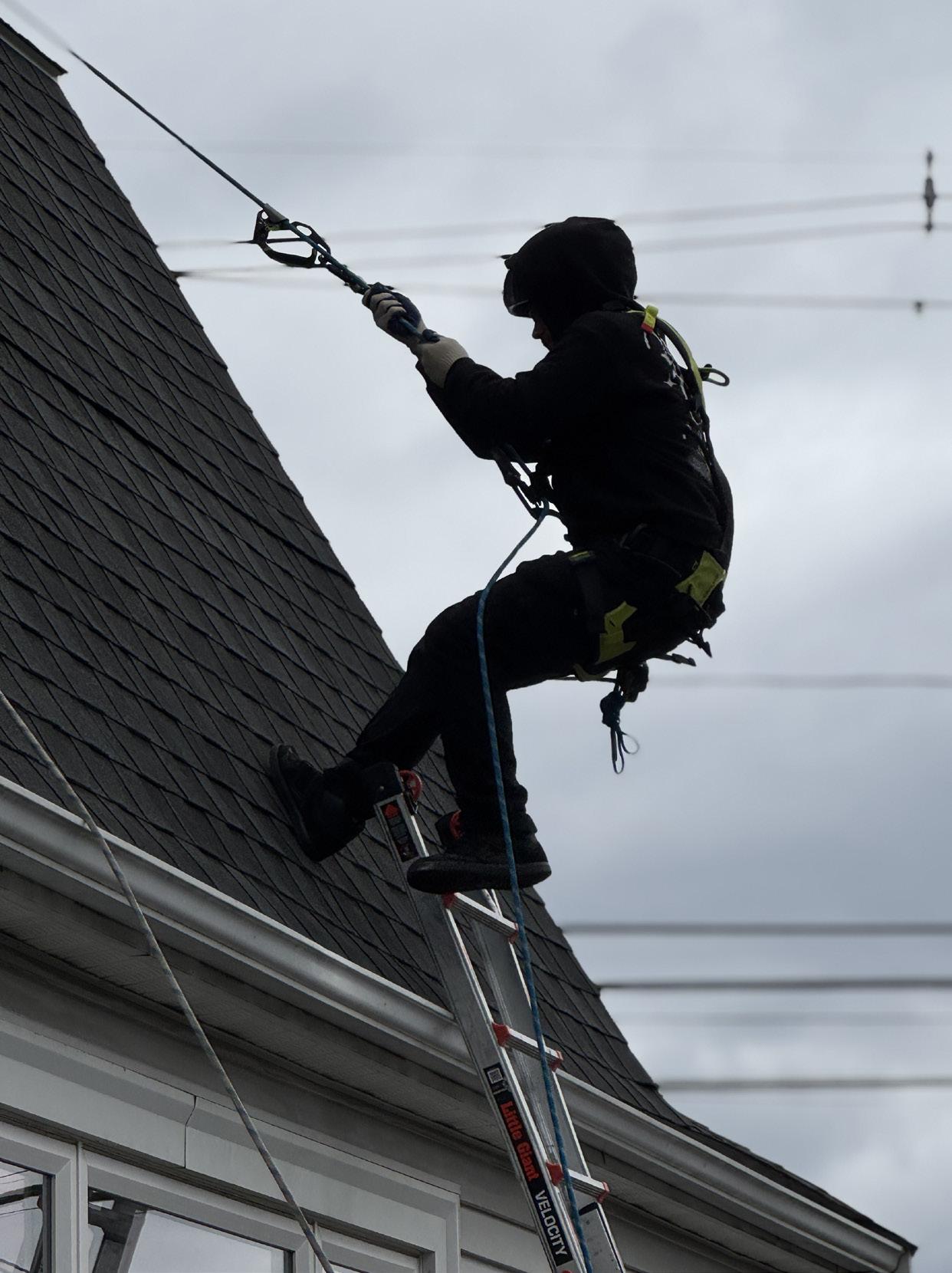
As all this was taking shape, a group of people from the National Chimney Sweep Guild (NCSG) tried to contact OSHA and make several recommendations as new regulations were taking shape. There were several items that needed to be emphasized, including using non-penetrating roof anchors, using ground anchors, and an allowance for using ladders on roofs to access the top of the chimney as long as they are properly secured.
Imagine having to inform a homeowner you were required by OSHA to nail or screw a temporary roof anchor to their roof prior to beginning your work. The liability is certainly manageable, but why do it if you don’t have to? Why drill holes when there are other ways that are just as secure?
OSHA, however, didn’t even entertain the Guild's recommendations. In 2010, OSHA issued a notice of proposed rulemaking for walking and working surfaces, which did not include any of NCSG’s recommendations. These updates were eventually incorporated into the revised construction regulations under OSHA 29 CFR 1926.
Conversations with OSHA continued for several years with no progress. After six long years of waiting, NCSG filed a lawsuit. Something needed to be done to get the attention of regulators.
Chimney professionals want to work safely, but we also want regulators to consider the unique challenges the chimney service industry faces. We were being held to strict construction standards, but there are a lot of tasks associated with chimney work that are simply not construction.
In December 2024, OSHA agreed to settle with NCSG’s proposed recommendations.
The NCSG and OSHA agreement is the product of that negotiation. The primary focus of the agreement was clarifying that there are several chimney service-related tasks that are not categorized as construction. These “covered” tasks would then fall under the OSHA 29 CFR 1910 general industry safety regulations.
According to the 1910 general industry standard, there is a small subsection (§1910.28(a)(2)(ii) to be precise) that says, “Fall protection is not required when inspecting, investigating, or assessing workplace conditions or work prior to the start of work or after all work is completed.”
This could potentially be exploited as a reason to not ever use fall protection for chimney inspections. OSHA, however, has an extremely narrow view of this particular code. The intent behind the regulation is to investigate the work surface conditions prior to
doing any sort of work.
In their very own FAQs, OSHA states, “The exemption is limited to inspections and assessments of workplace conditions prior to the start of work or after all work has been completed, and does not apply to workers conducting routine and frequent inspections.”
In other words, this is literally one trip up and down and is only permitted when inspecting the condition of the actual walking and working surface. The moment true work begins, fall protection requirements must be followed. But how do we apply this understanding when, quite often, our work is the inspection, and the inspection is our work?
Enter the 2024 agreement. This clarifies for us that in the scenario where a worker is taking one trip up and down for an inspection, the use of fall protection is not required by OSHA. The agreement lists other small tasks that could be performed in order to do a proper inspection such as brushing off a bit of creosote, removing a cap to get a look into the chimney, as well as taking measurements.
The agreement also explains how certain tasks, such as sweeping and installing caps, may be performed on roofs with a pitch of 4/12 or less without fall protection.
Keep in mind, the regulation doesn’t stop there. There is a literal exception to the exception that states if fall protection is available and in place, it must be used. Also, if you plan on taking more than one trip up and down, this exception doesn’t apply.
Here’s are some things to keep in mind when you are formulating your company’s fall protection plan. I hate to be the bearer of bad news, but if you do not have a fall protection plan, an OSHA inspector may view any discussion of exceptions as an attempt to sidestep fall protection requirements. There is no exception for the need to have a fall protection plan.
If your company has a safety program with a detailed fall protection plan that is consistently followed, OSHA may be more receptive when certain tasks qualify for exceptions under the agreement.
To be honest, though, is it really OSHA who needs to be convinced? I received a call recently from a friend of mine who owns a successful sweep company in New England. He was asking me about using a RidgePro, and we began discussing other topics— including exceptions. He said, emphatically, “But I want them to have fall protection all the time. 100%.”
To which I replied, “Well, you are the guy signing the checks, so you get to make that decision.”
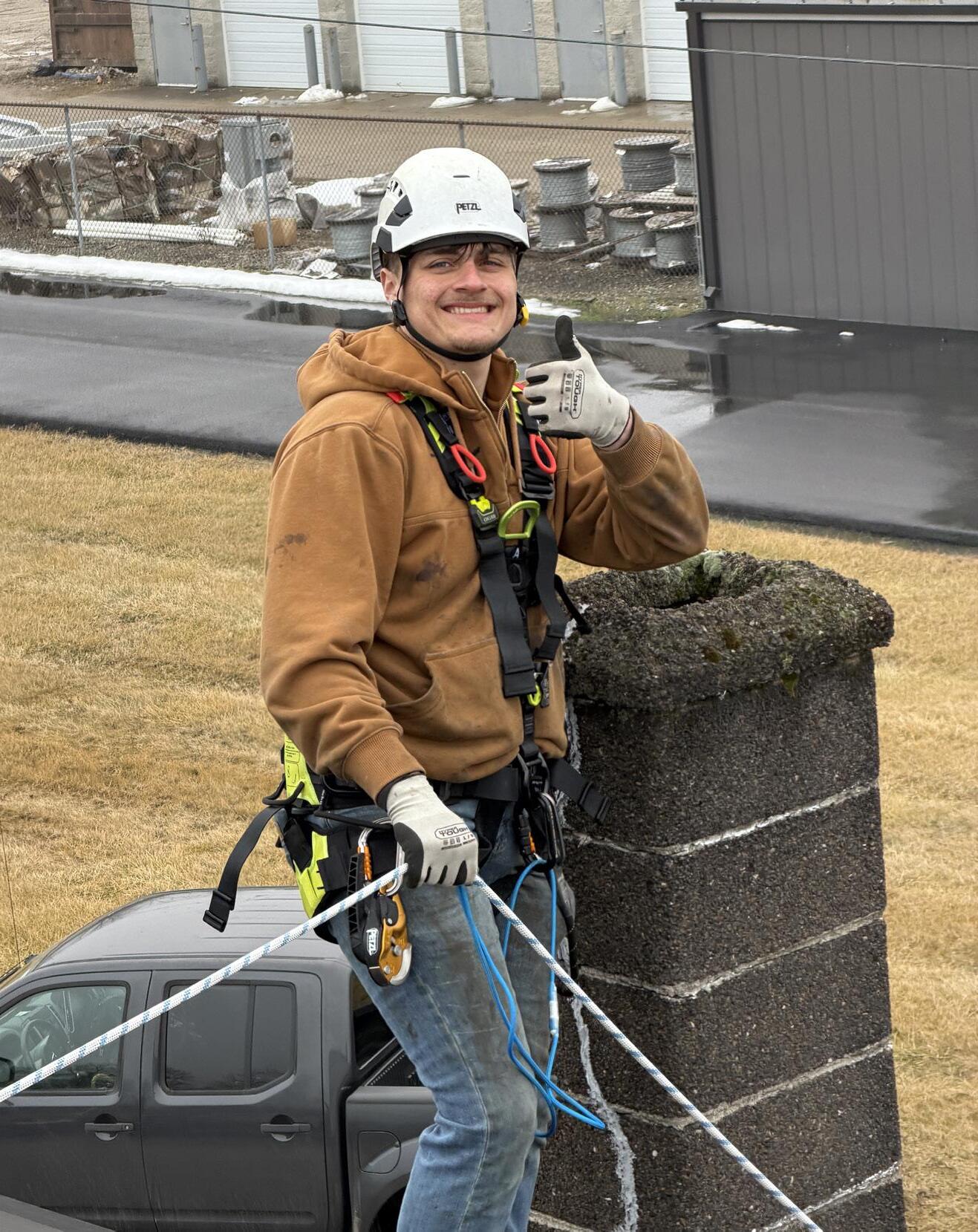
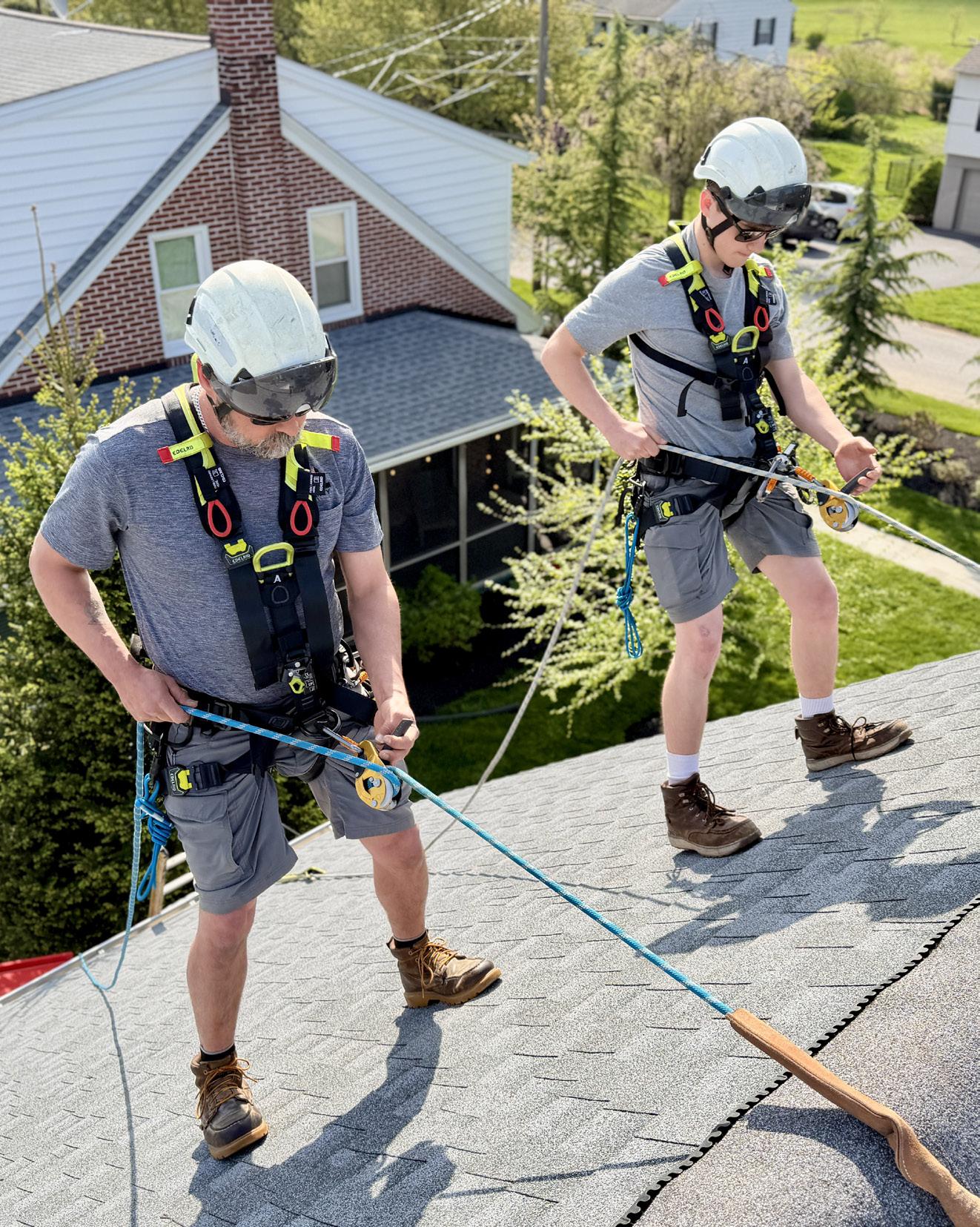

At the end of the day, OSHA doesn’t clock in at your company. OSHA doesn’t sign checks. OSHA doesn’t go home to its family. You do.
Any time you are climbing a roof, you’re taking a risk. The majority of serious injuries and fatalities ironically take place on “easy” roof pitches. The important thing to remember is you need to see the big picture and have a plan. Communicate that plan to your team and work accordingly.
The NCSG and OSHA agreement reemphasizes the importance of every company having a designated competent person on each jobsite. This individual is the one who will notate the hazards and put a plan together in the jobsite hazard assessment. Because there is so much variety in our work and chimneys are often in hard-to-reach spots, there has to be a plan.
The NCSG and OSHA agreement can be confusing at first glance, but if you understand that it was intended to provide for the use of creative anchoring, the use of ladders on roofs, and other allowances for residential roof service work, you can see that it was never intended to “get away” with as much leniency as possible. Rather, it was driven by a desire to make the regulations make sense for the chimney service industry.
There is a growing trend in the industry of companies taking a no-nonsense approach to safety. My encouragement is this: Don’t wait for someone else to come around and tell you what you have to do. Make a good plan and ensure your employees stick to it. Stick to it like their lives depend on it, because at the end of the day, they do. ■



II fully expected my time in Canada to be a little chilly or perhaps even cold. I was grossly mistaken. Winnipeg, like many of the northern states, was experiencing a heat wave during our visit, and it was definitely not cold. While my fiance, Jess, and I found plenty of refrigerator magnets that proudly displayed the “Winterpeg” nickname, the city was anything but wintry. It certainly was beautiful, but not cold. The warm weather was undoubtedly an indicator of the warm welcome we would receive from our Canadian chimney sweep colleagues. From the moment we arrived, they made us feel like VIPs. They were glad that the National Chimney Sweep Guild (NCSG) was attending their annual general meeting (AGM), and the more I spoke with my fellow attendees, the better I understood why.
NCSG's presence at the Wood Energy Technology Transfer (WETT) Conference and AGM meant more than only having a booth at a trade show. Over the last year, WETT has gone through significant changes within the organization, including switching management companies and electing a new board of directors.

By Jonathan Erdman, Director of Education, National Chimney Sweep Guild
What we were witnessing firsthand was WETT beginning to redefine themselves. We were truly seeing the formation of what I will refer to as WETT 2.0. Our presence there was a statement of support from one organization to another.
WETT is essentially a blank canvas rebooting itself—a canvas ready to be painted with the future of Canadian chimney sweeping. While they are holding on to their foundational principles, like their certification for sweeps and standardized inspection process, they are beginning to adopt new methods for accomplishing them.
For example, they rolled out a new app that would be used for completing their inspections. The organization invested in the development of the software to update the process and will begin to provide training to make sure their sweeps are familiar with it.
Another great example is looking for more ways to provide education and training to their technicians and business owners that would expand the options available to their WETT certified sweeps. Currently, educational offerings are available only via video but seem to be a bit limited. They are looking to
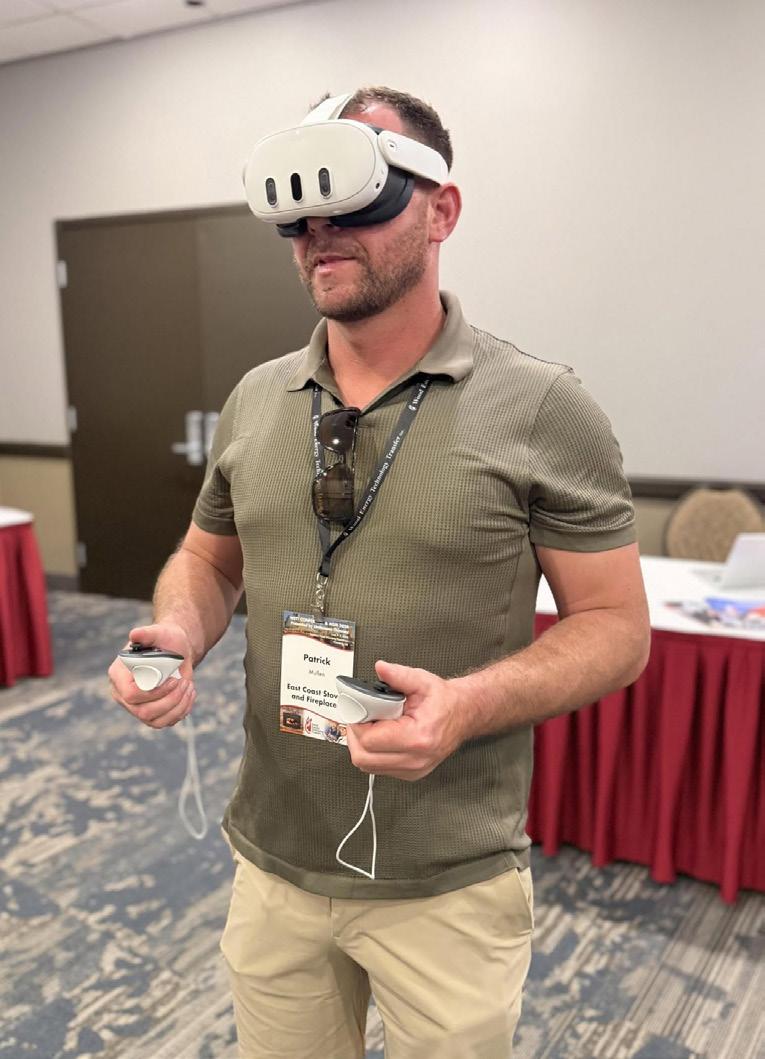
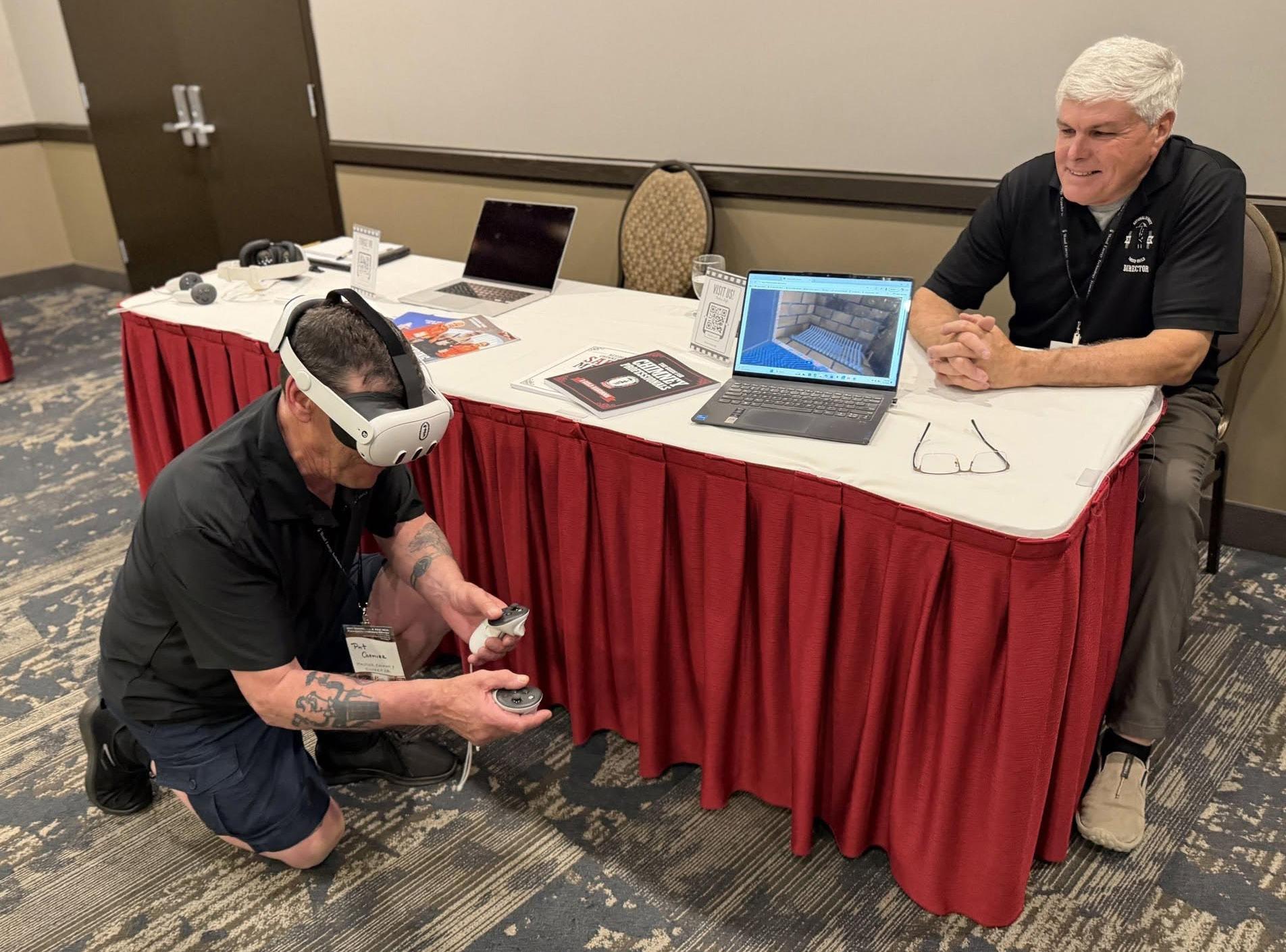
expand that by making NCSG Forge's virtual reality technology available for their organizational CEUs. NCSG Forge was on site with virtual reality headsets and demonstrations during the conference, and there was a big push by WETT to get everyone familiar with the technology. Aside from adopting new tech to expand their horizons, WETT is also aware of the generational shift taking place in the industry. Just like the United States, recruiting new sweeps can be a challenge. One would think that chimney sweeping would be more popular in such a cold weather area, but showcasing the value of working in the trades to younger generations can be a real challenge.
This being the case, I have made myself available to assist WETT in reviewing their training checklists and processes to make sure they have a robust onboarding experience for new hires. While they may not have a registered apprenticeship program like the NCSG and US, the principle remains that having a plan for individual development is a worthy investment.
The whole event was sponsored by an NCSG supplier member
company, Lindemann Chimney Supply, with owner and CEO Rob Lindemann giving the opening keynote address. He shared his own personal story of how he had to reinvent himself and the company a few times over the years. It was personal, vulnerable, and effective.
I was pleased to be joined by my friend and NCSG past president Bill Thornton, who is sort of a WETT expert, having attended previous meetings. They all held him in high regard, and he was a tremendous asset to have at this meeting. As Bill put it, he “bleeds NCSG” and has a genuine passion for the industry that transcends borders and cultures. This was very clear during our time together at WETT.
Other notable NCSG supplier member companies were also present, including SaverSystems and Inspection Fire. The Hearth, Patio & Barbecue Association of Canada (HPBAC) was also present and was

clearly established as another organization like NCSG who wants to see WETT succeed.
The event closed with a panel discussion where NCSG, Lindemann, Inspection Fire, SaverSystems, HPBAC, and others took questions from the audience. The topics ranged from the future of education and how to effectively use AI in business. The overarching message was, “You are not alone.”
The WETT Conference and AGM didn’t close with a hard and fast “the end” after the closing session. Instead, it was very clear to all in attendance that this was only the beginning. Personally, I am very excited to have a front row seat to see how the future unfolds for Canada’s chimney sweeping industry. I believe there are certainly many great things to come from WETT 2.0. ■
By Kyla Pehr, Content Coordinator, HY-C Company
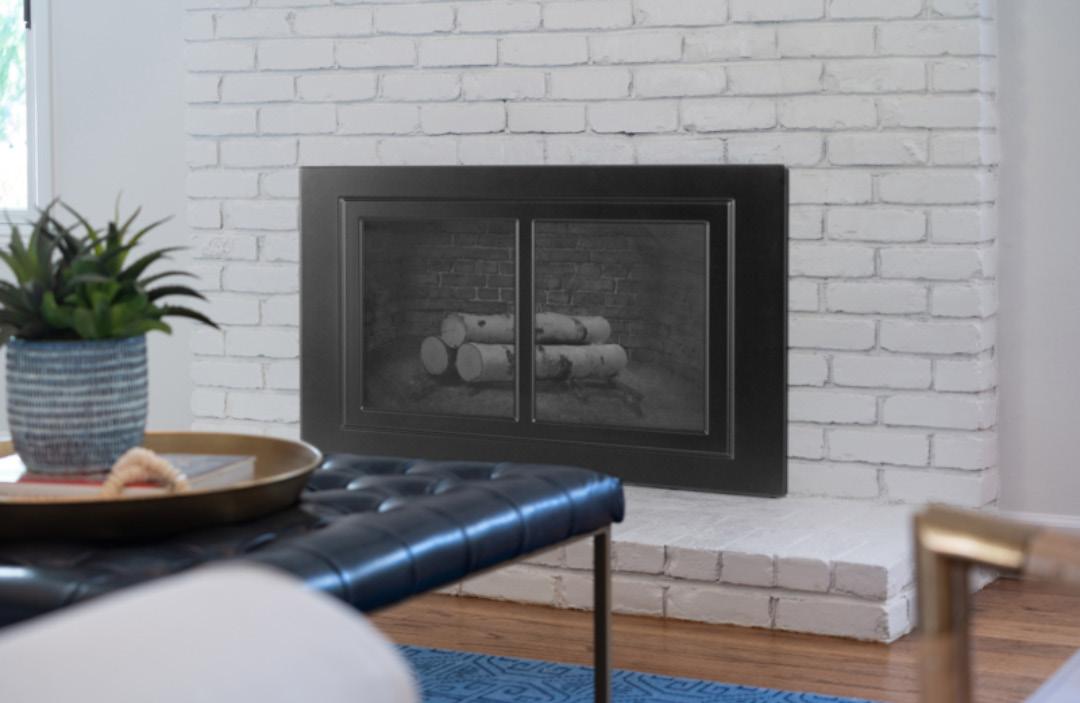
MMost people assume a fireplace is either burning or dormant. The Owens knew otherwise. An open flue is a direct line between outside and in, leaking heat in winter, cool air in summer, and letting in anything small enough to climb or fly through. Their solution, the Hearth Stopper®, is an insulated cover that seals that opening in minutes, no tools required. What started as a trash bag taped over their own mantel is now a patented product built by a national manufacturer. Here's how it happened.
Danielle Owens, a special education teacher, and her husband Tim, a banker, didn't set out to invent anything. The idea came from their own living room in the Kansas City area, where cold air poured steadily through the fireplace.
The stakes were higher than comfort, though. When the Owens' son was born in 2016, he spent 30 days in the NICU before coming home. Three years later, their daughter spent 96 days in the NICU after an early, high-risk birth, then returned to the ICU for 18 more days after contracting RSV.
"She spent 42% of her first year of life in the ICU," Tim said.
"We felt like we couldn't let our baby play on the floor because of the cold draft the fireplace was letting in," Danielle added. "We were always searching for a way to solve the draft issue."
They couldn't find one. And then a bat got in through the chimney.
"There's a picture of our son lying on the floor next to a trash bag that was taped up on the fireplace," Tim said. "That was the original."
Trash bags became foam insulation, foam became warped vinyl prototypes, and warped prototypes eventually led to a thermoformed front with a polystyrene insulation core, which is a method the Owens learned about from a neighbor in product design.
"I'm not an engineer," Tim said. "[I was] just trying to figure out what would work."
Tim focused on mechanics. Danielle made sure it looked like it belonged.
Fireplaces can leak 15-30% of a home's energy, with windows accounting for up to 40% more, according to Tim. Most
homeowners write the loss off as unfixable. The Hearth Stopper, which works on gas and woodburning fireplaces alike and seals around cracks and ash dumps, was built to challenge that. It also turned out to work in reverse. Orders started coming in from places like Yuma, Arizona, where summer heat pushes down through the chimney into the house. Chimney technicians confirmed—a pressurized flue pushes hot air back into the room, and sealing it keeps the conditioned air where it belongs. A winter product became a yearround one.
Other use cases emerged from customers directly. Parents used it as a barrier to keep toddlers from the firebox, and allergy sufferers reported less pollen drift during spring. The Owens had already seen both firsthand—their son has severe asthma and allergies.
Launching during COVID-19 meant plastic manufacturers were tied up producing Plexiglas barriers. Tim made 600 to 700 calls looking for anyone willing to help. A San Diego company sent a rejection letter predicting the product would never sell. Tim had it framed and still keeps it above his desk.
ENERGY STAR turned them down on a technicality—though Tim's contact at the U.S. Department of Energy admitted he'd buy one himself.
The setbacks overlapped with personal loss: Danielle's mother had a stroke, and Tim lost both of his parents within weeks of each other. The Owens say they tried quitting five or six times. What kept them going was their son: "You can't quit. You work too hard on it."
Now, when Tim asks their
daughter what she can do, she already knows the answer.
"I can do hard things," she says.
Built for Scale
Partnering with HY-C Company turned a homegrown fix into something built for scale. The Hearth Stopper now has slimmer redesign, more cost-effective manufacturing, and broader retail and e-commerce distribution.
A U.S. patent is secured, with approvals pending in Canada and Europe, too.
The payoff shows up in calls like the one Tim got from a customer who'd been ready to gut and rebuild her fireplace wall, a $40,000 job, until a Hearth Stopper made it unnecessary. The Owens' daughter is seven years old now. She weighs 42 pounds. She is starting softball. She is happy, she is healthy, and she beat just about every odd the doctors gave her. The Hearth Stopper is still catching up to her. ■




By Brittney Burton, Membership and Events Coordinator, National Chimney Sweep Guild
It is National Chimney Sweep Guild (NCSG) membership renewal time. Renewal invoices were emailed in early July, and memberships must be renewed by Wednesday, September 30, 2026, to avoid a lapse in benefits.
Membership is held at the company level, so renewing does more than keep one person connected to the Guild. It keeps benefits available to everyone on your team, including owners, technicians, office staff, and managers. Whether someone needs help in the field, training for a new role, or a trusted industry connection, NCSG membership gives your company resources built specifically for chimney and venting professionals.
One of those resources is the NCSG Technical Advisory Council hotline (TAC line), which members can contact with questions about codes, installations, and other technical issues. Members also have access to the online manual library, which includes more than 800 hard-to-find manuals for wood stoves, gas logs, and factory-built fireplaces. The library can be accessed from a smartphone or tablet, making it easier for technicians to find product information while they are on a job site.
Membership also helps your team continue learning. Members receive discounted registration for NCSG classes, Forge technical training, the annual Convention & Trade Show, and Guild certification exams. Training opportunities cover technical topics as well as customer service, office operations, safety, and business management.
The Guild also gives members ways to learn from one another. Mentor Connect is available at no cost to NCSG members and their employees, offering an opportunity to discuss technical, business, and professional challenges with experienced chimney professionals. The members-only NCSG
Facebook discussion group provides another place to ask questions, exchange referrals, and share information with others in the trade.
Throughout the year, members receive Sweeping magazine and biweekly eNews updates, helping them stay informed about Guild programs, industry developments, upcoming education, and other news affecting chimney and venting businesses.
Some of the Guild’s work happens behind the scenes. NCSG monitors legislative, regulatory, code, and standards issues that affect chimney and venting businesses. The Guild participates in industry discussions involving the National Fire Protection Association (NFPA), Environmental Protection Agency (EPA), Occupational Safety and Health Administration (OSHA), International Residential Code (IRC), and International Code Council (ICC).
Renewing keeps your company listed in the NCSG online member directory, where homeowners can find member businesses in their area, and allows you to continue using the NCSG member logo.
Use the link in your renewal invoice to pay annual dues in full or select a monthly payment plan. Companies enrolled in auto-renewal will have their payment processed September 30 using the card on file.
To update your payment information, request another invoice, or ask a renewal question, email office@ncsg.org or call 317-837-1500. We are happy to help make the renewal process as easy as possible.
Renew by September 30 to keep these benefits available to your entire team for another year! ■


MYour
Marketing
Isn’t Your Website. It’s Your
By Amy Connor, Vice President of Marketing, SaverSystems
Most chimney companies spend a lot of time thinking about marketing before the appointment. They work on Google reviews, websites, truck wraps, uniforms, and advertising. Those are all worthwhile investments.
However, many overlook the most powerful marketing tool they already have—the inspection report.
The inspection is not just where you identify problems. It is where homeowners decide whether they trust you enough to solve them. A professional inspection report with clear photos, simple explanations, and thoughtful recommendations can be the difference between a customer saying, “I’ll think about it,” and, “When can you get me on the schedule?”
Most homeowners know very little about their chimney system. Unlike a leaking faucet or a broken garage door, chimney problems are usually hidden from view.
When you recommend repairs, you are asking someone to spend hundreds or even thousands of dollars on something they cannot easily see or understand.
From their perspective, the questions are reasonable.
Is this really necessary?
Is the damage as serious as they say?
Can this wait another year?
These questions are not usually a sign that they distrust your company. They simply do not have
enough information to make a confident decision. A well-prepared inspection report fills that gap.
Words matter, but photos often matter more.
When homeowners can see a cracked flue tile, a deteriorated crown, rusted metal components, or water damage inside the firebox, the conversation changes. The repair is no longer an abstract recommendation. It becomes a visible problem.
The strongest inspection reports do more than include pictures. They connect each photo to a simple explanation that helps the homeowner understand why the damage matters.
Instead of writing: “Cracked crown.”
Consider writing:
“The cracked crown is allowing water into the chimney structure. If left unrepaired, moisture can accelerate masonry deterioration and lead to more extensive repairs.”
That approach educates the customer instead of pressuring them.
Many technicians hesitate to recommend additional work because they do not want to appear pushy. Ironically, thorough documentation often has the opposite effect.
When recommendations are supported by photographs, inspection findings, and clear
explanations, homeowners see a professional evaluation instead of a sales presentation.
The report allows the evidence to speak for itself.
It also gives homeowners something they can review after you leave. Many repair decisions happen later that evening when they discuss the report with a spouse or family member.
A detailed inspection report continues building confidence long after the appointment ends.
The value of a quality report extends well beyond today’s estimate.
Homeowners frequently share inspection reports with family members, insurance adjusters, real estate agents, and home inspectors. Every time someone else reads your report, it reflects your professionalism.
It also creates a valuable history for future service visits.
When next year’s inspection documents completed repairs or identifies new concerns, customers can clearly see how their chimney has changed over time. That consistency builds credibility.
Companies that consistently deliver organized, professional reports often receive more referrals because customers remember how clearly everything was explained.
People recommend companies they trust. A great inspection report helps earn that trust.
You do not need expensive software to improve your inspection reports. Start by evaluating your current process.
Ask yourself:
• Are your photos clear, well lit, and easy to understand?
• Do they show both the close-up damage and its location?
• Are your explanations written for homeowners instead of industry professionals?
• Does every recommendation explain why the repair matters?
• Would someone with no chimney knowledge understand the report?
Small improvements in documentation can produce noticeable improvements in customer confidence and repair approval rates.
This week, review your inspection reports with your team.
Include more high-quality photos.
Replace technical language with homeownerfriendly explanations.
Explain the consequences of delaying repairs.
Standardize your reporting process so every customer receives the same experience.
Think of every inspection report as part of your marketing, not just your documentation.
Marketing does not stop when the appointment begins. In many ways, that is when it becomes most important.
A homeowner’s decision to move forward depends on more than the estimate. It depends on whether they understand the problem and believe your recommendation.
A professional inspection report helps them do both. It educates, builds confidence, and makes repair recommendations easier to accept. Over time, better reports lead to stronger customer relationships, higher close rates, and more referrals.
The companies that grow consistently are not always the ones spending the most on advertising. More often, they are the ones doing the best job helping homeowners understand what they found and why it matters. ■


By Jerry Isenhour, Coach and Consultant, CVC Success Group
One of the most unsettling experiences a business owner can face is receiving a certified letter informing them they have been "put on notice." For many contractors, this immediately creates fear and uncertainty. However, being put on notice does not mean you have been sued or that you are guilty of wrongdoing. It simply means an insurance company is investigating whether your work may have contributed to a loss, and that you may be subject to litigation through subrogation. Subrogation is the process in which an insurance company "steps into the shoes" of its insured and pursues another person or company to recover some or all the money it paid on a claim.
Subrogation has become a highly specialized area of law. Today, hundreds of law firms and thousands of attorneys across the United States devote a significant portion of their practice to investigating and pursuing subrogation claims on behalf of insurance companies. Many national firms employ teams of attorneys, engineers, causeand-origin investigators, and technical experts whose sole responsibilities are recovering losses paid by insurers.
Over my career, I have worked with countless contractors across the country who have experienced this process. Understanding what happens—and how to respond—can make an enormous difference in protecting your business.
When a structure fire or other significant property loss occurs, the homeowner contacts their insurance company to begin the claims process. Once the insurance company evaluates the loss, it often investigates everyone who performed work in or around the damaged area.
Depending on the circumstances, this may include:
• Chimney service companies
• Fireplace installers
• HVAC contractors
• Electricians
• Masons
• Builders
• Roofers
• Manufacturers
Receiving notice simply preserves the insurance company's legal rights while determining whether another party may share responsibility for the loss. In today's insurance industry, this has become a common—and often automatic—business practice.
Following a fire, the fire department extinguishes the blaze and conducts an initial investigation. Depending upon the extent of the damage, a fire marshal or cause-and-origin investigator may also examine the property.
After the homeowner files an insurance claim, an adjuster is assigned. If there is any indication another party may have contributed to the loss, the claim is often referred to the insurance company's legal department for possible subrogation—the process of attempting to recover the money paid on the claim from another responsible party. At this point, every contractor associated with the damaged area may receive a notice. Do not panic. Being put on notice is not a lawsuit. It is simply the beginning of an investigation.
If you receive notice:
1. Notify your insurance carrier immediately.
2. Do not attempt to handle the matter yourself.
3. Cooperate fully with your insurance company and legal counsel.
This is exactly why you carry liability insurance. Your insurance company will assign experienced adjusters, attorneys, and technical experts to represent your interests throughout the process. But this is also why you should review your liability coverage to ensure you are adequately covered as these claims can quickly escalate into millions of dollars.
If there is one lesson every contractor should remember, it is this—documentation is your best defense. Years may pass before litigation begins. Memories fade. Employees leave. Customers forget details. Your inspection reports, photographs,







invoices, signed proposals, recommendations, customer acknowledgments, emails, and service records become the evidence that tells your story. Every company should routinely document:
• Inspection findings
• Photographs before, during, and after work
• Customer recommendations
• Repairs declined by the customer
• Signed proposals
• Work orders
• Emails and written communications
• Digital inspection reports
• CRM records
Never assume a photograph or note is unimportant. Seemingly insignificant documentation has resolved numerous cases.










Today's businesses rely heavily on technology. Back up your records using reliable cloud storage or secure servers.
Never delete or alter documentation after receiving notice. Changing reports, deleting photographs, or modifying dates can create far greater legal problems than the original claim.
Many lawsuits involve actions performed by employees rather than owners. Every technician should receive ongoing training on:
• Industry standards
• Company procedures
• Inspection documentation
• Photograph requirements
• Customer communication
• Safety recommendations
• Report writing
Training records often demonstrate that a company exercised reasonable care and maintained professional standards.
One of the first questions attorneys and experts often ask is: "What is your company's standard procedure?"
If your company has no written procedures, it becomes difficult to demonstrate consistent professional practices. Every contractor should develop written standard operating procedures (SOPs) covering inspections, repairs, documentation, customer communication, and safety recommendations. Consistency protects both your customers and your business.
When emotions run high, the natural instinct is to discuss what happened with others. Don't. Discuss the matter only with:
• Your insurance company
• Your attorney
• Employees directly involved
Instruct employees not to discuss the incident with customers, friends, competitors, or on social media. Avoid emails, text messages, online forums, Facebook, or industry discussion groups. This is not a time for Facebook experts. Anything written or posted may become discoverable during litigation.
Your insurance company will likely assemble a team that may include:
• Claims adjusters
• Cause-and-origin investigators
• Engineers
• Industry subject matter experts
• Attorneys
These professionals review every available document before inspecting the property. A joint inspection is then scheduled where representatives from all involved parties examine the fire scene. This investigation will be led by the insurance company that insures the property. Their actions will be observed by other parties. Evidence is photographed, documented, and, if necessary, removed and stored for laboratory examination. Business owners are encouraged to attend as observers whenever possible but should avoid discussing the case.
The purpose of the investigation is to reconstruct what occurred before the incident. Investigators carefully analyze burn patterns, wiring, chimney systems, fireplaces, appliances, and structural components. Their conclusions may support— or differ from—the original fire department investigation. The objective is to determine the true origin and cause of the loss.
After the inspection, the process often slows dramatically. Weeks, months, or even years may pass before the insurance company decides whether to pursue subrogation. Many notices never become lawsuits. If the available evidence does not support legal action, the matter may simply end.
If the insurance company proceeds with subrogation, lawsuits are filed against those believed responsible. Depositions follow. Business owners, technicians, homeowners, investigators, and experts may all be called upon to testify under oath.
Attorneys ask detailed questions regarding:
• Training
• Qualifications
• Procedures
• Documentation
• Work performed
• Company policies
Your attorney will prepare you beforehand. Listen carefully, answer honestly, and never speculate.
Both sides exchange expert reports, photographs, engineering analyses, and technical opinions. Additional reports and rebuttals often follow as each side challenges the other's conclusions. The documentation generated during a major case can easily total hundreds and even thousands of pages.
Although court dates may eventually be scheduled, many subrogations never reach trial. Most are resolved through mediation or negotiated settlement. These decisions are often business decisions made by insurance companies after evaluating legal costs, risks, and available evidence. A settlement does not necessarily mean anyone admitted fault.
Receiving notice can be one of the most stressful events in a business owner's career. Fear, frustration, anger, and uncertainty are completely normal.
Remember that being put on notice is not a finding of negligence. It is simply part of today's legal and insurance environment. Continue serving your customers, managing your business, and working closely with your insurance company. Do not allow one incident to define your company.
The companies that successfully navigate these situations are usually the ones that prepared long before an incident occurred.
They have:
• Comprehensive documentation
• Written procedures
• Well-trained employees
• Strong safety practices
• Adequate insurance
• Consistent recordkeeping Preparation—not luck—is what protects a business.
Most contractors will never experience a major subrogation claim. However, every contractor should conduct business as though it could happen tomorrow. Develop systems. Train your employees. Document every inspection thoroughly. Photograph everything. Communicate professionally. Follow industry standards. Maintain adequate insurance.
In my years working with contractors and serving as an expert in the industry, I have seen companies avoid costly litigation because they maintained outstanding documentation. I have also seen otherwise defensible cases become difficult because important records simply did not exist. When bad things happen, your greatest protection is not your memory. It is your documentation.
Proper documentation, sound procedures, professional training, and consistent business practices remain the strongest defense any contractor can have. ■


By Chris Van Leeuwen, Vice President of Professional Development, Veracity Insurance Solutions
Many sweeping professionals install liners, dampers, and other components as part of the job. That combination of service and product creates a common point of confusion when a claim arises: was the loss due to the product or the work?
The answer is important because general liability (GL) policies handle those two situations differently.
GL policies are designed to cover bodily injury and property damage caused by your operations. That includes your work (services) and product you sell or install. But if something goes wrong, the policy looks at who caused the problem.
If a chimney cap fails and causes water damage, the question becomes:
• Was the cap defective?
• Was it installed incorrectly?
Those are two different paths, and they can lead to different outcomes in a claim.
Should a component you installed turn out to be defective—for instance, a liner that breaks from exposure to heat or a cap that has defects from the manufacturing process—the manufacturer of that product can end up being the party held liable.
Under such circumstances, your GL coverage will be triggered in the first place if you have a legal action filed against you. But the carrier will try to recoup the damages from the manufacturer or the company’s insurance provider. This will usually be done privately through a procedure called subrogation.
The important thing for you to know is that GLs don’t typically cover the replacement of products that turned out to be defective. They only cover losses arising from such damage. For example, if your liner breaks down and triggers an entire structure fire, then the damage caused by the fire may be covered even though the broken liner isn’t.
If the problem can be traced to poor installation of the product, then you are responsible for the claim. Typical examples include:
• Incorrectly installed cap, causing water intrusion into the chimney system
• Incorrectly installed liner, causing heat transfer or fire
• Improper installation of components, violating building codes or manufacturer guidelines
In such situations, your GL policy would address any resultant damages; however, it would not compensate you for performing the work again. This point must be understood clearly. The GL policy does not act as a warranty on the quality of your work. Its purpose is to indemnify against damages arising from your work.
Thus, if a fire breaks out due to improper installation, then the loss from the fire would be covered by your GL policy. However, reinstalling the liner properly would not be paid for by the policy.
There are many instances where claims contain both parts. There could be a flaw in the product, but it wasn't taken into consideration during installation. Or, it might work according to the design, but only
when installed according to certain standards.
These make gray areas that include different parties, like the installer, the manufacturer, and maybe even the distributors.
For chimney sweeps, documentation becomes very important at this point.
In GL insurance, the above exposures belong to the "products-completed operations coverage" section. This coverage section deals with completed operations that are already put into service.
This is important considering that most claims related to chimneys do not occur right away. An entire system can seem to work fine for several months or years before any breakdown occurs. In
such cases, the claim would be reviewed to find out whether it is related to the product itself, the installation process, or both.
It is crucial to have enough products-completed operations coverage, particularly for companies offering installation services.
Each installation includes both the tangible product and the professional service. In case of failure, insurance doesn’t view them as equals.
Knowing where GL insurance makes its distinction enables you to set proper expectations in advance of filing a claim. It lets you know what your coverage will and won’t do for you. ■
SNAPLOK IS NOW PROUDLY PART OF THE HY-C FAMILY, BRINGING 114 COMBINED YEARS OF CHIMNEY AND DUCT EXPERTISE TO THE NEXT GENERATION OF SWEEPING EQUIPMENT.

Fully stocked and ready to ship No-hassle ordering and same day shipping
Stainless steel fittings for trusted durability Don’t settle for inferior aluminum fittings that break
NEW! Snapscan Ultra Motorized Pan & Tilt Video System
Smaller camera, voice dictation, state-of-the-art digital
Get ready for the busy season!
Send your cameras in now for a tune-up with our full-time, certified repair techs.

Check out our new website at snaploksystems.com or call (866) 914-2010.

CSR 360°
August 13-14, 2026 | Virtual (Google Meet)
CSR 360° is a 2-day, virtual class for customer service representatives in the home service industry. Learn how to drive growth, guide calls with confidence, ask the right questions to qualify work, and turn more of the right calls into booked jobs.
August 19, 2026 | Virtual (Zoom)
Mentor Connect is a free virtual program where NCSG members and their employees can ask questions, share experiences and learn from other chimney professionals.

August 19-20, 2026 | Virtual (Google Meet)
Office managers are expected to keep everything running, but rarely get clear training on how to lead the office, track performance, or create consistency. This class will help office managers step into true operational leadership.
August 20, 2026 | Virtual (Zoom)
Under Pressure is an interactive virtual class that teaches chimney professionals how to use pressure testing and draft measurements to diagnose chimney and venting problems.


















A Noble Sweep Chimney Services LLC
Mandeville, LA
Join Date: 6/2/2026
A-Tec Chimney Sweep
South Kingstown, RI
Join Date: 6/11/2026
Atlas North Bedford, OH
Join Date: 6/17/2026
deGroh Innovation LLC Hinckley, OH
Join Date: 6/18/2026
Did you know homeowners can search for NCSG member companies and certified individuals on the membership directory on our website? We receive several phone calls each week, too! Keep your business contact information current by logging into your NCSG member profile and reviewing your profile details. Visit ncsg.org and click Log In.
Membership
709
Total member companies of the National Chimney Sweep Guild
4,087
Employees served by NCSG resources and programs
50
Years of serving those who service America's chimneys
48
States represented across NCSG membership





President; Region 4 Director
Debbie Wiedwald Blackburn’s Chimney Sweeps debbie@blackburnschimney.com
Vice President; At-Large Director
Gary Smalling Smalling Masonry gary.smalling@smallingmasonry.com
Treasurer; Region 1 Director
Robby Murphy
Hudson Valley Chimney Service rmurphy@hudsonvalleychimney.com
Secretary; Region 3 Director
Drew Stein Chimspector drew@chimspector.com
Region 2 Director
Jonathan Cross
D.J. Cross/Cross Break Sheet Metal jon@djcrossinc.com
Region 5 Director
Roland Perez
AAA Home Services and Aaron's Chimney Services roland@myaaahomeservices.com

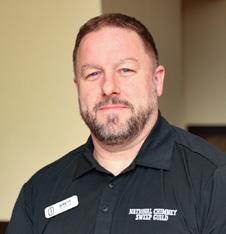


Region 6 Director
Michaele Dempsey Professional Chimney Sweep prochimneymichaele@gmail.com
At-Large Director
Cory McGill Done Right Chimney cory@donerightchimney.com
At-Large Director
Brett Conklin Chimney Monkey brett@chimneymonkey.com
At-Large Director Lee Roff
Lords Chimney leeroff@lordschimney.com
At-Large Supplier Representative
Brian Barclay KW DRAFT brianb@rmmanifold.com
Advocacy
Debbie Wiedwald
Blackburn’s Chimney Sweeps
Bylaws
Brett Conklin
Chimney Monkey
Certification
Steve Sobczak
Total Chimney Care
Education
Gary Smalling
Smalling Masonry
Cory McGill
Done Right Chimney
Ethics
Roland Perez AAA Home Services
Events
Brian Barclay KW DRAFT
Governance
Drew Stein Chimspector
Marketing
Lee Roff
Lords Chimney
Brett Conklin
Chimney Monkey
Membership
Michaele Dempsey Professional Chimney Sweep
NFPA 211; NFPA 54
Jim Brewer
SureFire Training Academy
NFPA 31; Tech. Advisory Council
Steve Scally
Fireside Sweeps
UL 1390; UL 1391
Dan Freeman
Freeman Fire
National Chimney Sweep Guild
1255 SW Prairie Trail Parkway
Ankeny, Iowa 50023-7068