Emerging technologies from ASSA ABLOY

Emerging technologies from ASSA ABLOY
Visit the ASSA ABLOY booth at 52 - 54 and don’t miss our Gameday experience at our booth in the Sinatra Ballroom Foyer.
Thinking about making the move to mobile access?
The latest electronic access control solutions are transforming security, visitor management and remote access. Now you can try it out for yourself.
Check out our Gameday Experience booth in the Sinatra Ballroom Foyer! Get your HID mobile wallet credential and you’re ready to go. Plus, you’ll be automatically entered to win fun prizes like an HID cooler, exclusive swag and a complimentary consultation with a mobile access expert.
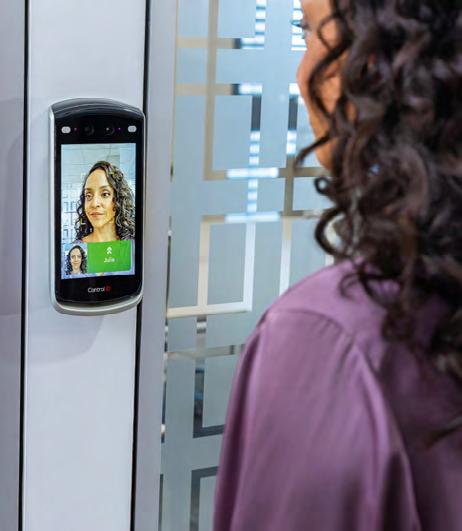

Facial identification biometric devices You can be the credential
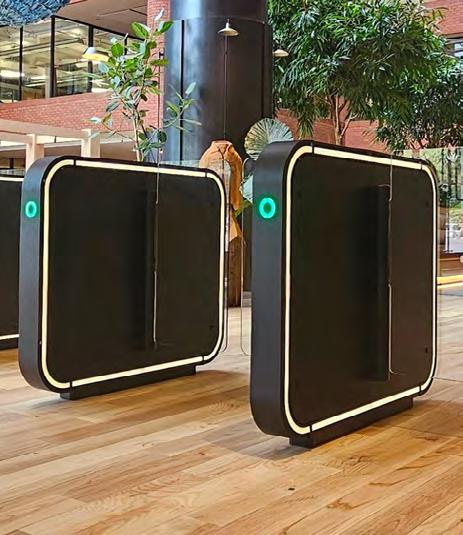
Expression Speedgate from Entrance Systems
Control access with speed, style and seamless flow

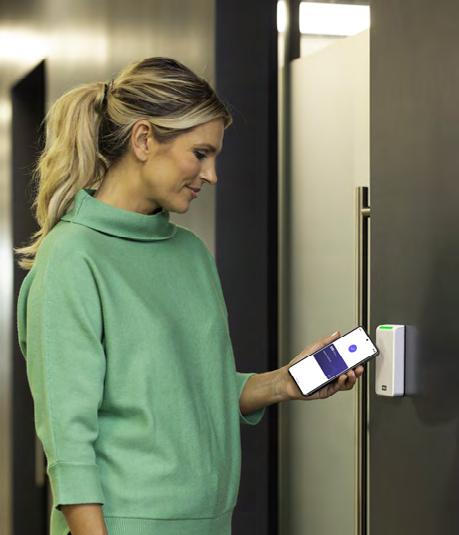
HID Signo Reader 40 Designed to be highly versatile, powerful & connected to the future
Don’t just think about it. See how mobile access can transform your environment! Click here or scan to get your mobile credential.
ESTABLISHED IN 2006, the National Center for Spectator Sports Safety and Security (NCS4) is the nation’s only academic center devoted to the study and practice of spectator sports safety and security. The NCS4’s strategic priorities are guided by a National Advisory Board and industry Advisory Committees.
The NCS4 collaborates with professional associations, government agencies, academic entities, and the private sector to provide training, resources, and networking opportunities.
We support the sports and entertainment industries through innovative research, training, and outreach programs. Our mission is realized by working closely with a diverse group of organizations and subject matter experts to better understand the threat environment, identify vulnerabilities, communicate risk-mitigation techniques, and close capability gaps.
We will be a leading partner with government, private sector, and sports and entertainment organizations to create and deliver critical resources for enhancing safety and security.
The NCS4 is located in the Trent Lott National Center at The University of Southern Mississippi (USM), a top-tier (R1) Carnegie classified institution for its very high research activity. The Center is partially funded by grants from the Department of Homeland Security (DHS) and Federal Emergency Management Agency (FEMA).
A Note From the Executive Director, Dr. Stacey A. Hall 3 NCS4 TEAM
As the World Cup comes to North America, a massive safety and security operation — forged through years of collaborative efforts — will anchor the biggest sporting event on the planet.
With the number of drone operators increasing every year, detection and mitigation of remotely piloted aircraft can be complicated and confusing. Here’s a primer.
Why is keeping fans in the stands still such a big challenge — and what can be done about it?
National Center for Spectator Sports Safety and Security 118 College Drive #5193 | Hattiesburg, MS 39406 | 601-266-6183
NCS4.USM.EDU
EOE/VETS/DISABILITY
Dr. Stacey A. Hall
WELCOME TO THE SPRING/SUMMER EDITION of Gameday Security magazine. This issue examines the safety and security landscape for the FIFA26 World Cup, the largest sporting event ever, the rising threat of rogue drones and legal issues around counter-drone mitigation, and the importance of crowd management in preventing field/court incursions. Enjoy the issue!
The NCS4 mission is to support the sports and entertainment industries through training and education, research, and outreach programs. The NCS4 continues to be a significant resource in helping advance safety and security best practices, and I would like to share our impact and progress on some items since the fall, including:
• Over 65,000 people have been trained through the DHS/FEMA/ TEEX national training program since its inception. Eight courses are available, covering topics such as risk management, incident management, communications, evacuation planning, crowd management, and staff training and development.
• Since summer 2024, NCS4 has delivered 194 courses in preparation for the 2026 FIFA World Cup, training approximately 6,000 first responders with the assistance of 40 qualified instructors. The DHS/FEMA funding and training partnership with NCS4 has enabled the continued delivery of important coursework to multi-agency safety and security teams across the 11 host cities and surrounding communities that are hosting matches and Team Base Camp sites.
• The NCS4 eLearning suite consists of four courses, including frontline staff foundational skills, crowd management, venue staff training - security awareness, and the senior leader course in sports and entertainment security. There are currently over 4,500 learners registered in the learning platform. Check out NCS4LEARN for more information.
• The Certified Sport Security Professional (CSSP) program continues to grow. The certification is for professionals currently serving in the sports security industry or those individuals planning career transitions to the sport and special event security industry. Check out the application process here.
• The NCS4, in collaboration with the DHS Cybersecurity and Infrastructure Security Agency (CISA), published a Lightning Safety Guide for Sports and Special Events. The guide provides practical, scalable guidance to support lightning safety planning and operations for events of all sizes and can be accessed here
• A new research seminar, ‘The Role of Crowd Psychology in Managing Safe Events: Implications for Effective Show-Stops,’ can be accessed here
• The first-ever Handbook of Sport Security, edited by Dr. Stacey Hall, was published by Routledge, a Taylor and Francis Group. More information can be found here
• The 2026 Venue Security Director Industry Research Report will be published in August/September.
• The NCS4 staff and research affiliates presented at local, national, and international conferences and workshops. In addition, they have contributed to peer-reviewed journal articles and professional publications.
• The 2026 Sport and Entertainment Technology Alliance members include 24/7 Software, Accredit Solutions, Aluma, Axis Communications Inc., Esri, Experior Group Inc. - Red Ball Drills® , EyeLock, Genetec Inc., InControl – The Simulation Company, inOrbit, Raven Controls, S2 Global Inc., SkySafe, Titan HST, and Xtract One.
• A new Technology Alliance Whitepaper, ‘Optimizing Venue Operations with Data-Driven Key Performance Indicators (KPIs) and Executive-Level Reporting, can be accessed here.
• The NCS4 hosted a sold-out National Forum for the Professional Sports and Entertainment community in Charlotte, NC, on February 23-24. A Key Takeaway Report was shared with all attendees.
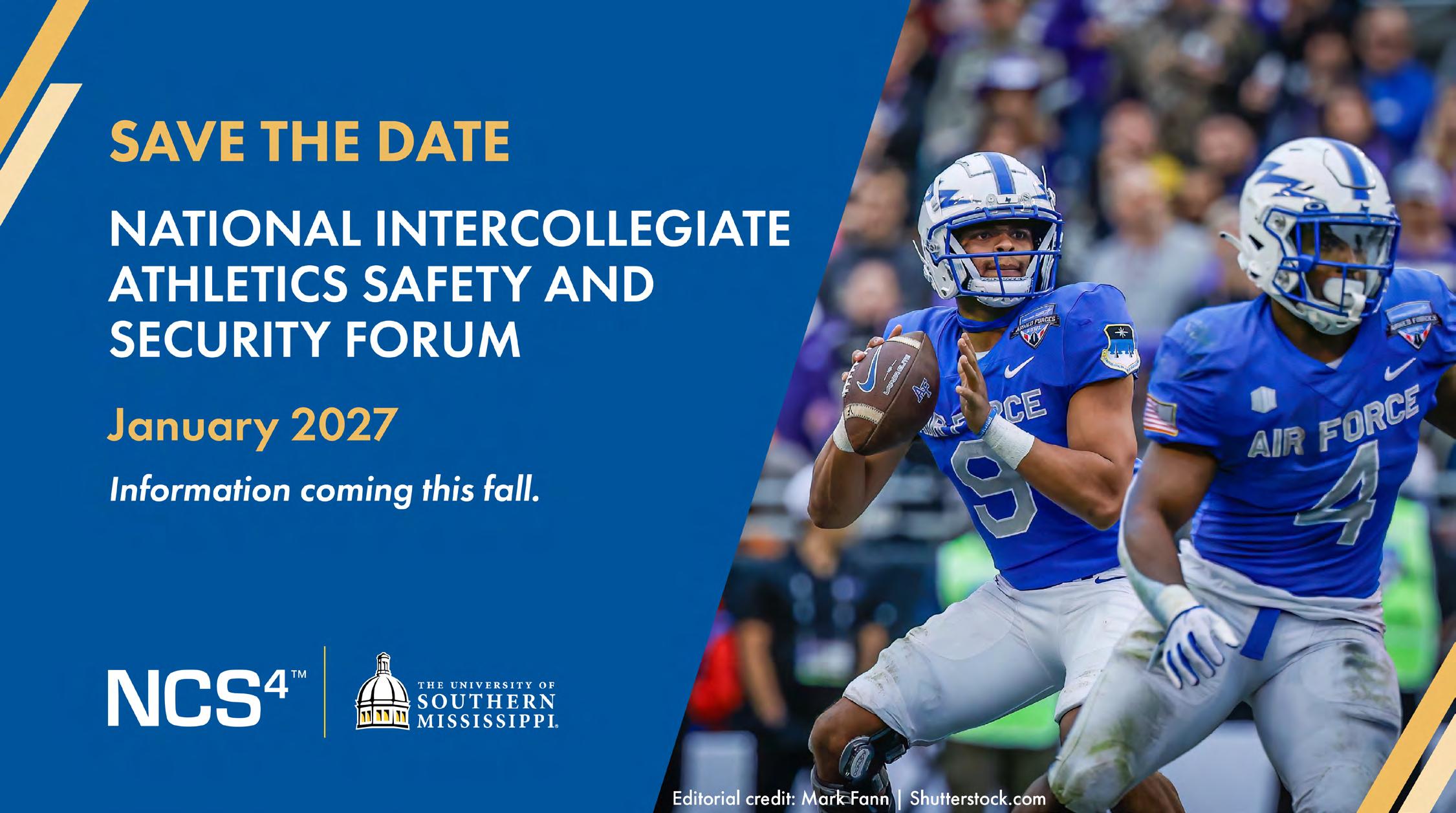
• The National Intercollegiate Athletics Safety and Security Forum will be held in January 2027. Additional details will be available this fall.
• The 17th Annual Conference and Exhibition will be held June 23-25 at the JW Marriott Desert Springs Resort and Spa in Palm Desert, California. This year’s conference theme, Honoring the Past, Securing the Future, pays tribute to the visionaries, partners, and professionals who have shaped the event safety and security industry while exploring emerging challenges, technologies, and strategies that define its future. We look forward to welcoming over 500 attendees and 80 exhibitors, honoring leaders in the field at the awards luncheon, recognizing new CSSP certificants, and awarding scholarships to young professionals through our program sponsored by Axis Communications. The NCS4 will also be celebrating its 20th anniversary!
The NCS4 team is grateful for our partnerships with professional associations, government agencies, solution providers, and academic entities. We also appreciate the support of our membership base. The National Advisory Board, Advisory Committees, Technology Alliance, and CSSP Commission continue to be instrumental in helping shape our strategic priorities to address the challenges and needs of our industry.
I hope you all have a fun and safe summer! l
Kind Regards,

Stacey A. Hall, Ph.D. NCS4 Executive Director and Professor of Sport
Management
Dr. Stacey A. Hall Executive Director and Professor of Sport Management
Lauren Cranford Director of Operations
Dr. Brandon Allen Director of Research and Associate Professor of Sport Management
Michael Broadus Curriculum Manager
Anthony Palazzolo Manager of Marketing and Business Development
Sara Priebe Event and Membership Manager
Jonathan Ruffin Instructional Design Specialist
Tymika Rushing Business Affairs Manager
Jonathan Stanford Training Manager
Roger Swartz Senior Training Manager
Lauren Villarreal Training Manager
Samir Bhattarai Web Developer
Kate Largen Graduate Assistant
Olukola Olukunle Graduate Assistant
Peyton Phillips Graduate Assistant
Nishit Thapa Web Developer

NCS4 LEARN provides eLearning professional development opportunities for all staff levels, including frontline staff, supervisory, and leadership. Organizations can enroll and monitor their teams in asynchronous and customizable learning experiences. The course catalog currently includes the following:
• Frontline Staff Foundational Skills – introduces frontline staff members to the skills necessary for providing guests with a safe and enjoyable experience.
• Venue Staff Training: Security Awareness – enhances safety and security awareness among venue and event staff, providing a foundational understanding of safety and security principles for your organization to build upon.
• Crowd Manager Fundamentals – provides a foundational understanding of safety and security principles for frontline venue and event staff with role-specific add-ons (i.e., guest services, parking management, concessions, ticket-takers).
• Senior Leader Course: Sports and Entertainment Security – covers security leadership fundamentals in business management, emergency management, planning considerations, legal and regulatory guidance, crowd management, and security procedures.
Please visit the website or contact us at NCS4LEARN@USM.EDU if you have any questions or would like to inquire about bulk registration.
Scan the QR code or visit our website to learn more.

NCS4.USM.EDU/ELEARNING
CO-CHAIRS: RICHARD FENTON AND BILLY LANGENSTEIN; SECRETARY: GARY GARDNER
Virginia Brophy Achman VPrepared
Akmal Ali, J.D. Aluma and inOrbit
Matthew Bettenhausen, CPP AEG Worldwide
Scott Breor Cybersecurity and Infrastructure Agency (CISA)
Chris Curran National Football League (NFL)
Scott Dunn Dunn Strategic Advisory LLC
Richard Fenton, CSSP (Co-Chair) Ilitch Holdings
Brian Finch Pillsbury Winthrop Shaw Pittman LLP
Gary Gardner (Secretary) TOTALeACCESS Inc.
Steve Georgas, CPP, CSSP Levy
Mike Hartnett Ilitch Sports and Entertainment
Elliot Hopkins National Federation of State High School Associations (NFHS)
Michael Hughes Federal Law Enforcement Officers Association (FLEOA)
G.B. Jones
FIFA World Cup 2026 (FWC2026)
John Junell Live Nation Entertainment
Carmelina Kennelly Federal Bureau of Investigation (FBI)
Billy Langenstein, CSSP (Co-Chair) Live Nation
Jared Maples National Hockey League (NHL)
Jim Mercurio JCM Events Management and Consulting
Joe Monroe, CSSP University of Kentucky
Larry Naifeh University of Oklahoma
Leon Newsome National Basketball Association (NBA)
Steve Olsen PGA Tour
Donald Paisant, CSSP Texas Rangers Baseball Club
Linda Reid
Walt Disney World
Russ Simons Venue Solutions Group
Jeff Stonebreaker, CSSP, Major League Soccer (MLS)
David Thomas Major League Baseball (MLB)
Rebecca Wilusz, Ph.D., CSSP Duke University
Joshua Ball, CSSP Kansas City Chiefs
Mariah Barber Pacers Sports and Entertainment
Troy Brown UFL
Eugene Byrd Jr., CSSP (Co-Chair) Major League Soccer (MLS)
Daneeque Chamberlain State Farm Stadium
Vernon Conaway, CSSP
Maryland Stadium Authority
Joe Coomer, CSSP
AMB Sports + Entertainment
Mario Coutinho
Toronto Blue Jays Baseball Club
CO-CHAIRS: EUGENE BYRD JR. AND DARREN JOHNSON
Chris Curran
National Football League (NFL)
Richard Fenton, CSSP Ilitch Holdings Inc.
Zoe Garza Major League Soccer (MLS)
Kevin Hackenbrack Philadelphia Phillies
Mike Hartnett
Detroit Red Wings / Detroit Tigers
J.P. Hayslip Philadelphia Eagles
Kevin Henry Pocono Raceway
Brian Herbert Golden State Warriors
Jim Hosfelt
Dover Motor Speedway
Darren Johnson (Co-Chair) Detroit Lions / Ford Field
Annie Kosky Orlando Magic
Melanie Lee Major League Baseball (MLB)
Toby McSwain LIV Golf
Todd Metro
Miami Marlins
Angie Nix
MetLife Stadium
Donald Paisant, CSSP
Texas Rangers Baseball Club
Russ Simons Venue Solutions Group
Michelle Y. Spahn
St. Louis Cardinals
Bill Squires
FIFA 2026 Men’s World Cup New York New Jersey Host Committee
Brian Zumwalt
Dallas Cowboys
CO-CHAIRS: JEFFREY STOLL AND BECCA WILUSZ
David Allison University of Texas
Ian Ballantyne Yale University
Randy Buhr NCAA
Andrew Burchfield Marsh Advisory
Brian Cordill Kansas State University
Julie Cribbs Louisiana State University
Kory Dahlen Southeastern Conference (SEC)
Matt Davidson University of Nebraska
Scott Dickson The Ohio State University
Matt Elliott, CSSP University of Alabama
Evan Feinglass University of Connecticut
Mike Gregory University of Tennessee
Lee Harris University of California
Byron Hatch College Football Playoff
David Hensgen University of Texas, El Paso
Jared Hoernig Old Dominion University
Orville Jennings The University of Arizona
Keith Kopinski University of Notre Dame
Bryan G. Makinen, CSSP Eastern Kentucky University
Leigh Ann Moffett Southern Methodist University
Joe Monroe, CSSP University of Kentucky
David Oliver Western Kentucky University
Hatcher Parnell University of Southern California
Drew Pittman, CSSP Baylor University
Christie Purks University of Georgia
Todd E. Sandstedt SecureSport
Jeffrey Stoll, CSSP (Co-Chair) NCAA
Garrett Ton Georgia Southern University
Becca Wilusz, Ph.D., CSSP (Co-Chair) Duke University Athletics
Brett Coulter Maryville City Schools
Lamont Dodson Cleveland Metropolitan School District
Kathy Drenth East Jordan Public Schools
Wayne Folkes Lamar County School District
Christopher Furlong Cranbrook Educational Community
Dale Hackbarth
St. Marks School of Texas
CO-CHAIRS: KYLE POORE AND DENA SCOTT
Jay Hackett, CSSP Milton Academy
Elliot Hopkins
National Federation of State High School Associations (NFHS)
Jim Inskeep Carmel High School
Larry Johnson Grand Rapids Public Schools
John Paton
Alberta Schools Athletic Association
Kyle Poore (Co-Chair) Lincoln Public Schools
Ben Rolens, CSSP
Katy Independent School District
Jack Sample Nettleton School District
Dena Scott (Co-Chair) Texas A&M University
Dr. Dustin Smith Broken Arrow Public Schools
Danielle Stevens Lake Zurich School District
Gary Stevens Thornton Academy
Dr. Jeffrey Sullivan
Montgomery County Public Schools
Lonnie Tillman
Mississippi High School Association
André Walker
Houston Independent School District
CO-CHAIRS: CARLY CAULFIELD AND MICHELE “SHELLY” WEINSTEIN
Virginia Brophy Achman VPrepared
George Banker
John Bertsch IRONMAN World Championship
Carly Caulfield (Co-Chair) Houston Marathon
Michael Clemons Running USA
Nicole Donovan
Stacy Embretson The McCourt Foundation / Los Angeles Marathon
Michael England
Walt Disney Marathon
Mike Garrity, CSSP Little Rock Marathon
Greg Haapala Grandma’s Marathon
Michelle Juehring Quad-City Times Bix 7
Mark Klukow, CSSP Minneapolis Police Department
Michelle La Sala Blistering Pace Race Management
Michael Licitra New York Road Runners
Ted Metellus New York Road Runners
Mike Nishi Chicago Event Management
Bill Roberts Twin Cities In Motion
Jan Seeley Christie Clinic Illinois Marathon
Nathan Smurdon Beyond Monumental
Katie Swor Detroit Free Press Marathon
Stuart C. Wall Navy Race Organization
Michele “Shelly” Weinstein (Co-Chair) Cogent Steps LLC
Ed Whetham Twin Cities In Motion
CO-CHAIRS: JAMEY KIRBY AND JOHN PEPPER
Nilo Ambriz Monster Energy Corporation
Earl Biggett Orange County Convention Center
Jason Caceres Amazon
Michael Diienno National Event Services
Bryan Frieders Redrock Entertainment
Steve Georgas, CSSP Levy
Charles Gray Google
Mike Hartnett Ilitch Holdings Inc.
Mark Helgeson Omni Houston Hotel Galleria
John Junell Live Nation Entertainment
Jeff Keas Populous
Jamey Kirby (Co-Chair) ASM Global


Victor Mancebo Live Nation Entertainment
Gilbert Marroquin AEG Worldwide
Brian Murphy Navy Pier
Blake Paris Smith Entertainment Group
John Pepper, CSSP (Co-Chair) Major League Soccer (MLS)
Johnny Romero AEG Presents Festivals
James Seagle, CSSP Gas South District
Tim Sjogren Kimley-Horn
Tim Smith C3 Presents
Ed Warm Joe’s Concerts / Windy City Smokeout
Megan Williams Barack Obama Presidential Library


Vern Conaway Jr. Maryland Stadium Authority
Joe Coomer
AMB Sports & Entertainment
Scott Ellis University of South Carolina Division of Law Enforcement and Safety
Richard Fenton, Illitch Holdings Inc.
CHAIR: DREW PITTMAN | VICE-CHAIR: GREG OVERSTREET
Jay Hackett Jr. Milton Academy
John King
Summit Consulting Services/Boston College (Ret.)
Mark Klukow
Minneapolis Police Department
Billy Langenstein Live Nation
Melissa Lesperance Illitch Holdings Inc.
Joe Monroe University of Kentucky
Greg Overstreet (Vice-Chair) Mercedes-Benz Stadium
Drew Pittman (Chair) Baylor University
Benjamin Rolens
Katy Independent School District –Leonard Elementary
Jeff Stonebreaker Major League Soccer

The NCS4 is the only organization that offers a certification recognizing expertise in sport security management. Earning the Certified Sport Security Professional (CSSP) designation sets you apart from other professionals and highlights your dedication to remaining current with industry trends. Professionals in the sports security industry need to have a firm grasp of public safety measures and understand how to apply those measures in the unique environments created by sports venues and events. The CSSP certification validates expertise in the following domains:
•Business and Facility Management
•Emergency Planning
•Emergency Management
•Legal and Regulatory
•Crowd Management
•Security Principles and Practice
The CSSP certification is awarded to individuals who meet experience, education, and professional reference criteria and pass an exam relevant to sports safety and security management. It is maintained through ongoing continuing education and industry contribution requirements every three years.
For more information, contact
Scan the QR code or visit the website to learn more.






THANK YOU TO OUR 2026 SPORTS AND ENTERTAINMENT TECHNOLOGY ALLIANCE
THE SPORTS AND ENTERTAINMENT TECHNOLOGY ALLIANCE is a consortium of individuals and organizations committed to spectator safety and security excellence through innovation. Members work alongside practitioners and the NCS4 to explore how people, processes and technologies can best contribute to safety and security challenges in a meaningful way.
Co-Chairs:
Akmal Ali and Donald Paisant









The whitepaper introduces a practical framework for defining, tracking, and applying KPIs that enhance safety, efficiency, and guest satisfaction, and integrates insights from leaders at SoFi Stadium, Kroenke Sports & Entertainment, the Kansas City Chiefs, Boise State University, the Texas Rangers, and 24/7 Software.
Scan the QR code to view the whitepaper.


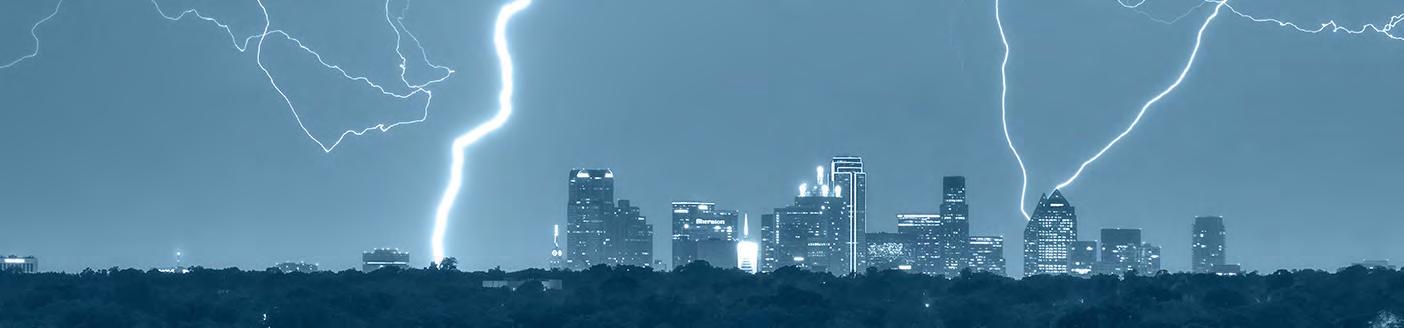

The Lightning Safety Guide for Sports and Special Events provides practical, scalable guidance for venue owners, operators, and event organizers, highlighting:
• Why lightning poses a serious and unpredictable risk to outdoor events
• The importance of preparation, clear decision points, and defined roles
• Best practices for lightning monitoring, protective actions, and event operations
• Provides “tear away” checklists for small and large events
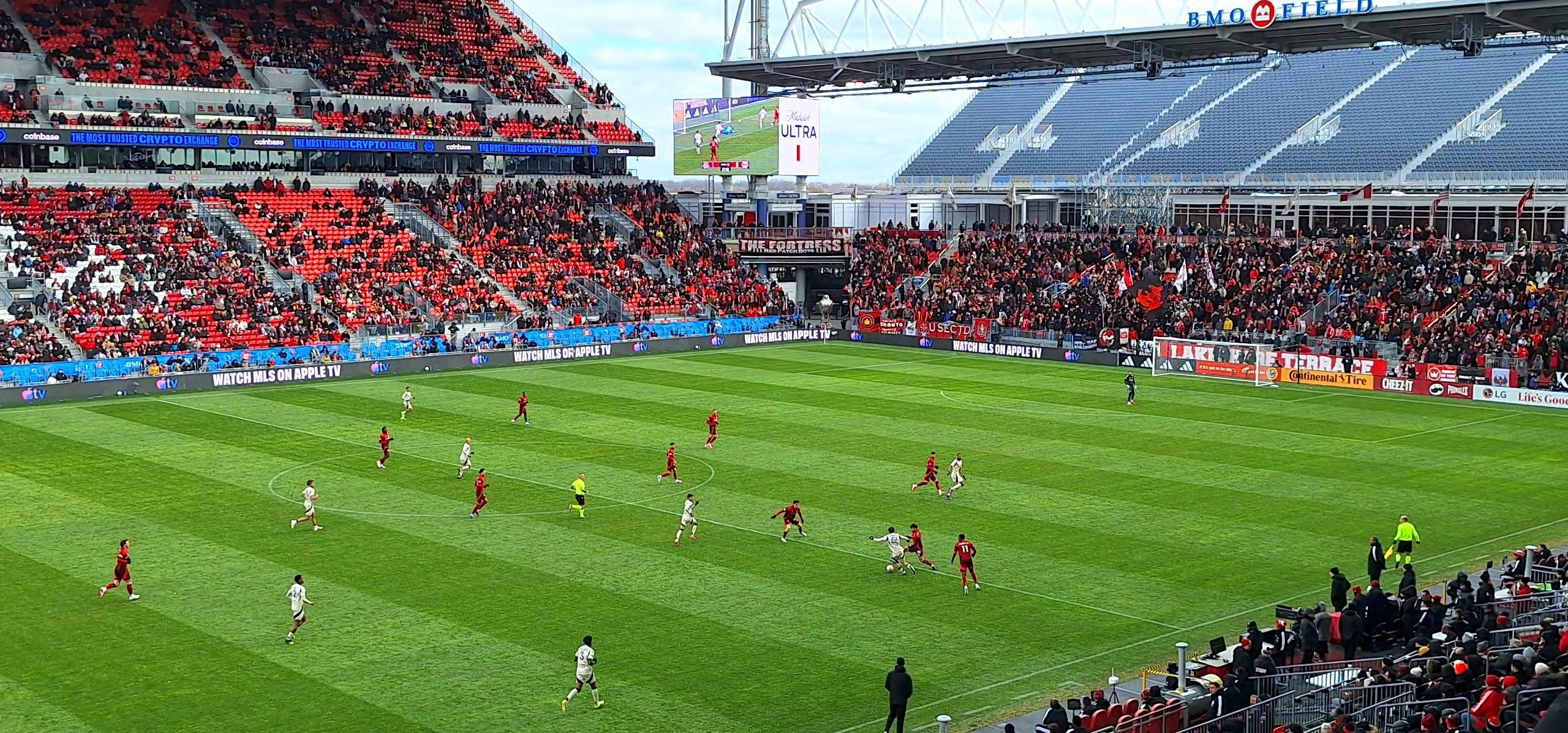
As the World Cup comes to North America, a massive safety and security operation — forged through years of collaborative efforts — will anchor the biggest sporting event on the planet.
By Michael Popke
WHEN THE 2026 FIFA WORLD CUP was awarded to North America in 2018, the responsibility of hosting the largest sporting event in the world came with a litany of security challenges for the United States, Canada, and Mexico. And in recent months, an already long list of concerns has been compounded by fears of ICE raids in U.S. host cities, ticket pricing fiascos, and escalating geopolitical turmoil.
It’s a lot, and FIFA is navigating the tournament’s safety and security landscape with a massive operation that involves collaboration with public, private, broadcast and sponsorship partners; state and local fusion centers; event management experts; and a global intelligence network to — in the words of FIFA World Cup 2026 Chief Safety & Security Officer G.B. Jones — “put together a very comprehensive and consistent safety and security program to keep everyone who touches the World Cup safe.”
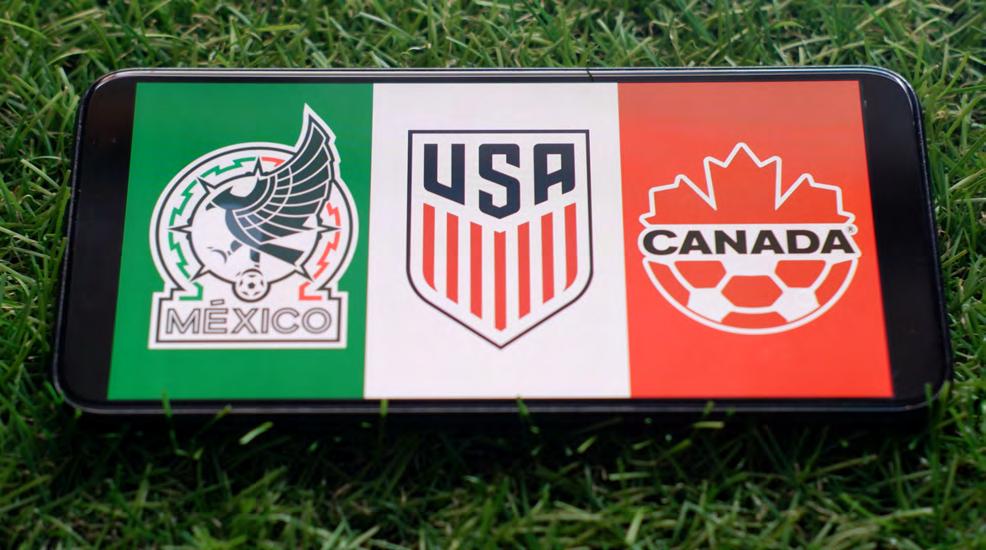
The tournament begins June 11 and runs through July 19, with matches scheduled at stadiums in 16 cities — 11 in the United States, three in Mexico, and two in Canada. This World Cup will feature the most teams (48) and matches (104) in the event’s 96 -year history.
“The threat environment was dynamic and complex prior to the [U.S.] conflict with Iran and other geopolitical issues, which have just heightened the level of complexity,” says John Cohen, executive director of the Office of Strategic Programs & Initiatives for the Center for Internet Security, an independent, nonprofit organization dedicated to securing IT systems and data that also is a FIFA World Cup 2026 strategic intelligence partner. “It was bad before; it’s more complex now.”
Jones acknowledges the complex task that he and his FIFA team face in the coming weeks.
“We have deliberately built an intelligence program at FIFA that focuses on soccer intelligence,” Jones says. “We’re not as focused on some of the geopolitical threats and risks that we know public sector authorities are focused on. So DHS and FBI analysts are paying attention to counter-
terrorism, criminal, WMD [weapons of mass destruction] threats, and cyber threats, for example, and they’re sharing that information with us. … Consequently, we are focused on soccer intelligence and soccer-related threats, fan conduct, team issues, and how geopolitics impact the competition itself — and the logistics related to that competition.”
FIFA, he adds, is “hyper-focused on soccer intelligence and understanding what has happened historically in World Cups around the world, so that we can bring that information back to the intelligence community and fill in gaps in their knowledge. We’re not replicating what they’re already doing on the public sector threats for which they’re responsible, but augmenting what they know with soccer-specific intelligence that really exists only in the realm of FIFA and its partners.”
FIFA has consistently stated that “the safety and security of fans and participants is FIFA’s top priority at all its events worldwide, and the FIFA World Cup 2026 in Canada, Mexico and the United States is no exception,” a spokesperson told Gameday Security in a statement. “In line with previous FIFA competitions, FIFA’s safety and security team works closely with federal, state, tribal, and municipal authorities; host city committees; stadium operators; and relevant agencies to plan, coordinate, and deliver comprehensive security measures for the tournament.”
Jones is the man in charge of working with all of those entities.
“Safety and security for the entire World Cup is a shared responsibility between FIFA as the event organizer and the host nations and host cities,” says Jones, who was the international security director for the National Football League before joining FIFA in late 2023. “But the footprint has evolved to also include team training sites, base camp cities, and a lot of places along the
road between all of those nodes. We have about 600 different sites that we have a responsibility for.”
From providing match-day protection for fans, players, referees, and others, to navigating hotel, transportation and food security logistics, to planning for fan violence, extreme weather and rogue drones, the list of considerations can seem endless.
Which is why one of the first major tasks Jones set out to accomplish upon taking his FIFA post was to engage representatives of all host countries and host cities and learn how each of them approach special event planning. From those conversations, 18 common areas of planning focus emerged.
Working definitions for each of the 18 areas were established, and officials then identified six to eight strategic objectives for each one. From there, stakeholders were tasked with developing plans based on those objectives.
“That’s what created a consistent framework around which all of the host cities are delivering, so that we have one World Cup,” Jones says. “We don’t want 16 different World Cups. We want a single World Cup that’s executed in very special ways in each of the host cities and host nations.”
That mission adheres to what Jones told Gameday Security in 2024 regarding the need for facility operators, in particular, to be flexible in their approach to World Cup safety and security matters: “Understand the impact of your operations when coupled with 15 other stadiums. We may stretch you as a stadium, so that we can build consistency across 16 stadiums.”
Now, all of that planning is transitioning to actual operations.
“They have to go out and execute,” Jones said two months before the first match, featuring Mexico vs. South Africa (Group A) at Mexico City Stadium, renamed
We are focused on soccer intelligence and soccer-related threats, fan conduct, team issues, and how geopolitics impact the competition itself.
G.B. JONES
FIFA World Cup 2026 Chief Safety and Security Officer
by FIFA from Estadio Azteca. “There may be little anomalies in how each one of the stadiums will operate, and it’s the local operators who have to identify those anomalies, work through how that maps against our consistency model, and ensure that we’re delivering the same product across the entire continent.”
Enter an organization like CIS, which has helped FIFA define the best information-sharing tools to ensure the right connectivity across public and private partnerships, as well as provide deeper levels of connectivity with local fusion centers.
“The type of things we do specifically is conduct a pre-event assessment of the physical cyber information operation and disruptive threats that could be deployed against a highly visible public event,” Cohen says, noting that CIS also was involved with informationsharing among law enforcement and election officials during the 2024 presidential election. “We not only work closely with organizers of the event and state and local authorities so that we have awareness of those threats and are better able to detect pre-incident indicators, but we also develop plans to address those threats during the event itself. We will track the activity of foreign and domestic threat actors using a variety of tools that are designed to pick up criminal or threat-related activity, and should a threat begin to evolve, we will facilitate information-sharing between government and nongovernment organizations so that they can — in a cohesive, integrated, and effective manner — address the threat.”
While the possibility of a terrorist attack at a high-profile event like the World Cup remains a top concern, so do counterfeit online tickets, the risk of cyberattacks, human trafficking in and around match venues, public
This World Cup is taking place at a time when the U.S. is facing the most volatile and, quite frankly, dangerous threat environment I’ve seen.
JOHN COHEN Executive Director, Office of Strategic Programs and Initiatives Center for Internet Security
transportation disruptions, drones deploying potential explosives, and other threats.
“This World Cup is taking place at a time when the U.S. is facing the most volatile and, quite frankly, dangerous threat environment I’ve seen — in large part because threat actors have fully embraced the power of the internet,” says Cohen, whose previous roles include serving as head of intelligence and head of counter-terrorism operations for the U.S. Department of Homeland Security in two presidential administrations. “The threat has become more dynamic, more diverse, and larger scale.”
Yet, he’s encouraged by how local law enforcement officials are transitioning from “the tradecraft that was used to deal with the threats of yesterday to be better able to address the threats of today and tomorrow,” he says.
“I’m more optimistic than I was three years ago, because — particularly at the state, county and city levels — we’re seeing greater awareness of the emerging threat environment, greater sophistication and planning,” Cohen adds. “They are more in tune to the diverse threats that they need to be prepared for than, quite frankly, the federal government is. I think the federal government has been slow to come to the game, no pun intended, and to evolve their security planning activities to take into account the rapidly evolving threat environment.”
Cohen cites the increased use of more sophisticated intelligence analysis in major fusion centers and stronger integrated planning — such as physical security planners working more directly with cybersecurity taskforces — as indications of the shift.
“Traditional stovepipes that used to impede collective planning between cyber, emergency management, law
enforcement, and other public safety entities are breaking down,” he says. “We’re seeing state and local agencies begin to engage in the integrated planning that’s necessary to confront the integrated environment.”
To get a sense of the impact FIFA’s collaborative safety and security protocols will have on the World Cup, consider last year’s Club World Cup — which took place in 11 U.S. cities, including Miami, Atlanta, Seattle, and East Rutherford, N.J.
“FIFA is confident that the efforts being made by the governments of Canada, Mexico, and the United States will ensure a safe, secure, and welcoming environment for everyone involved,” FIFA said in a statement. “The FIFA Club World Cup 2025 already provided a strong example of the safety and security measures in place
in the United States, with almost 2.5 million fans passing through the turnstiles and enjoying matches in a friendly, inclusive, and carnival-like atmosphere. Likewise, FIFA … organized the FIFA World Cup 2026 Play-Off Tournament in Mexico [in March] with over 160,000 fans attending the four matches and no major security incidents reported.”
Cohen echoes that sentiment.
“Look, you can’t stop everything, but what I can say confidently is this: What I have personally witnessed is one of the most extensive levels of preparation that I have ever seen for a major event of this type. And I’ve been doing this for a long time,” he says, citing more than four decades of law enforcement experience. “The work of FIFA and the host region is extensive, and they’re doing everything they can to make sure that the games are safe and free from disruptions.” l






THE NCS4 INDUSTRY SAFETY AND SECURITY BEST PRACTICES ARE AVAILABLE ONLINE.
Search for and find best practices at your fingertips – on game day, in a meeting, wherever you need them.
The NCS4 recognizes the need to help protect people, infrastructure, and information by sharing safety and security best practices. General best practices applicable to all types of venues and events are presented with the capability to navigate to industry-specific best practices, including professional sports and entertainment events, intercollegiate athletics, interscholastic athletics, and marathon and endurance events.
Scan the QR code or visit our website to view the Best Practices.
NCS4.USM.EDU/RESOURCES/ BEST-PRACTICES

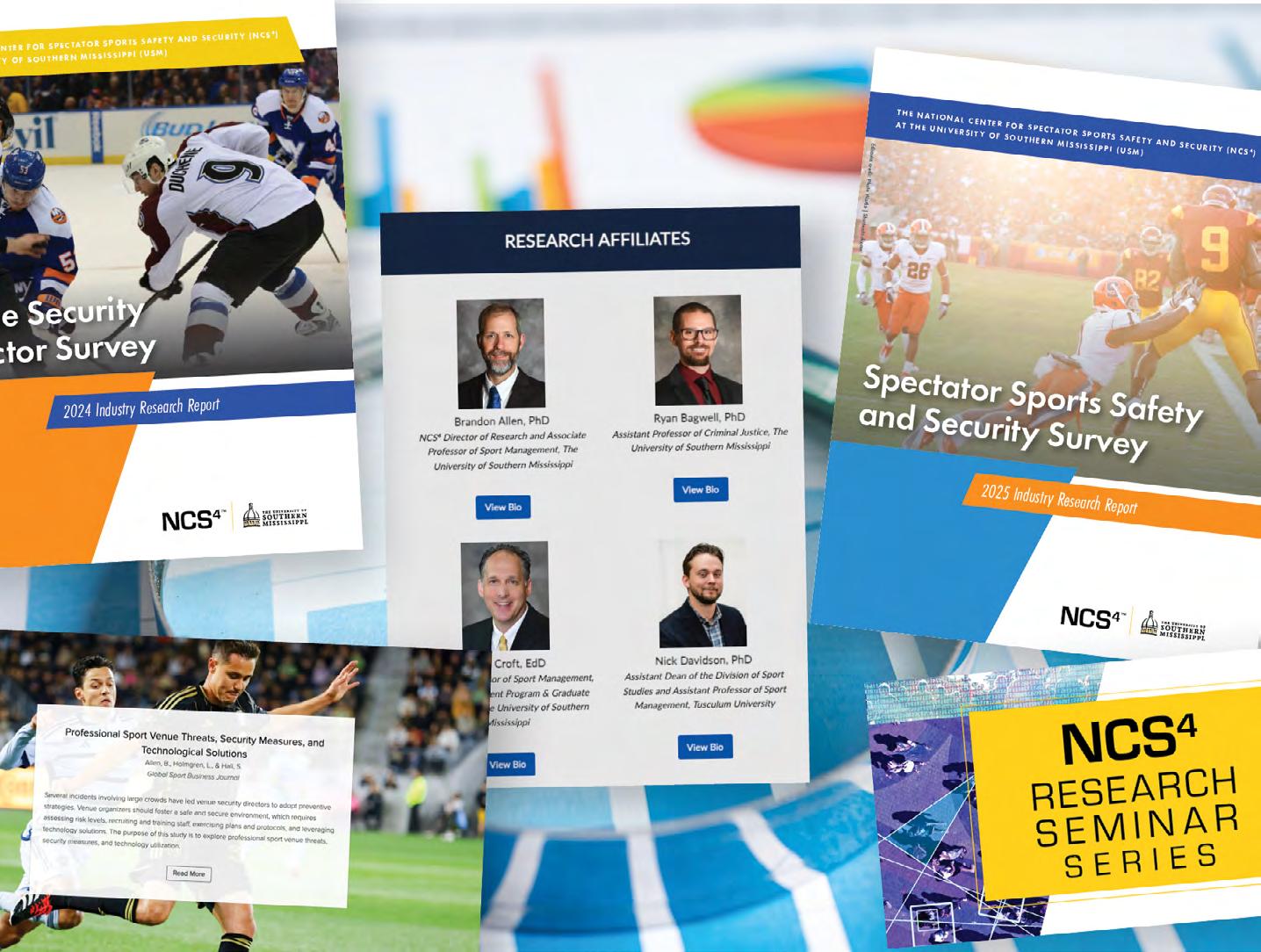
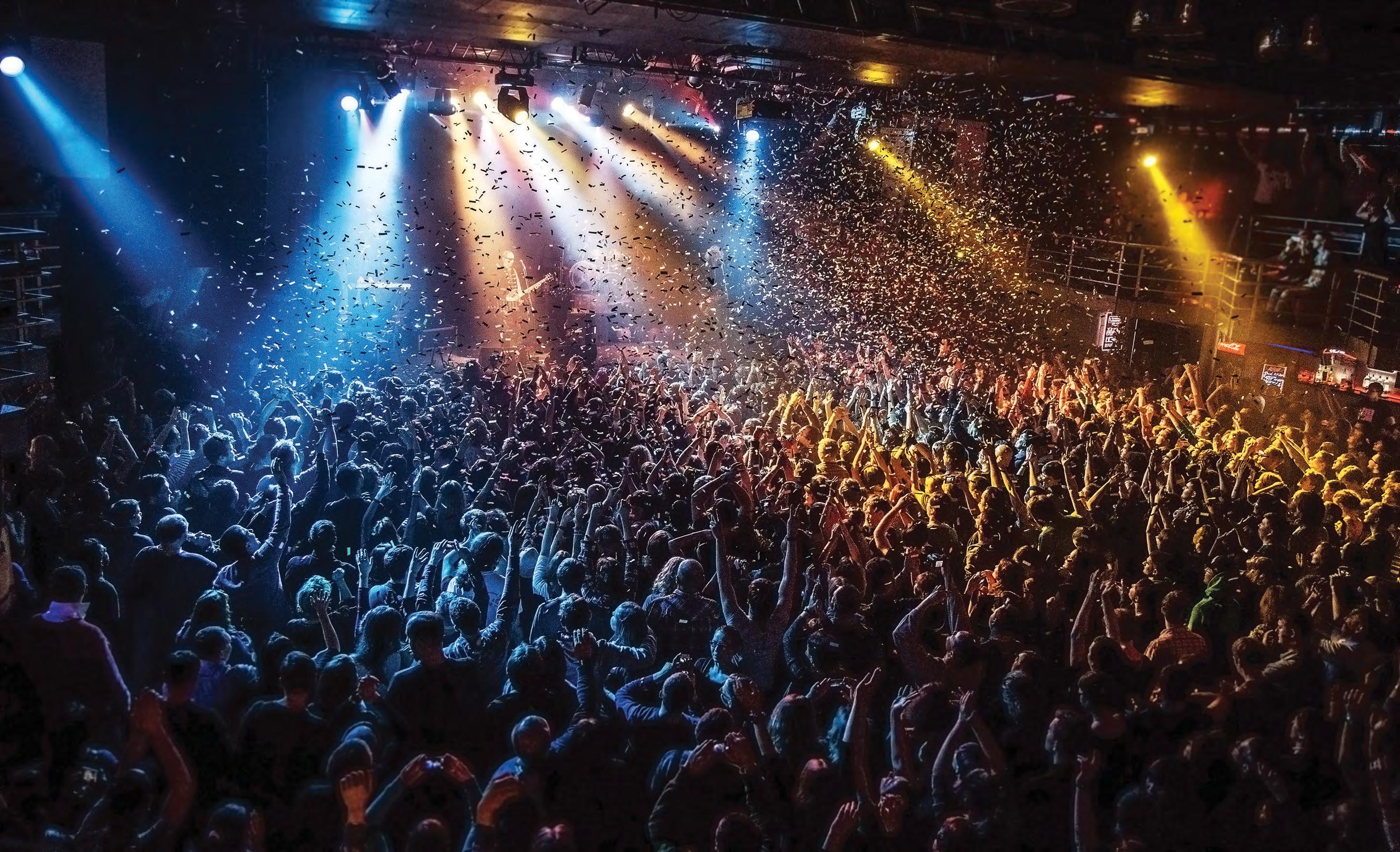
The NCS4 is the nation’s only academic center devoted to the study and practice of spectator sports safety and security. The NCS4 applied research goals are accomplished through partnerships with industry professionals and academics.
The NCS4 staff, research affiliates, and colleagues nationally and internationally publish peer-reviewed articles, white papers, and industry research reports. Additionally, the NCS4 Research Seminar Series shares interdisciplinary research on sports safety and security topics with outcomes applicable to practitioners and academic stakeholders.

Scan the QR code or visit our website for more information on research at NCS4.
NCS4.USM.EDU/RESEARCH
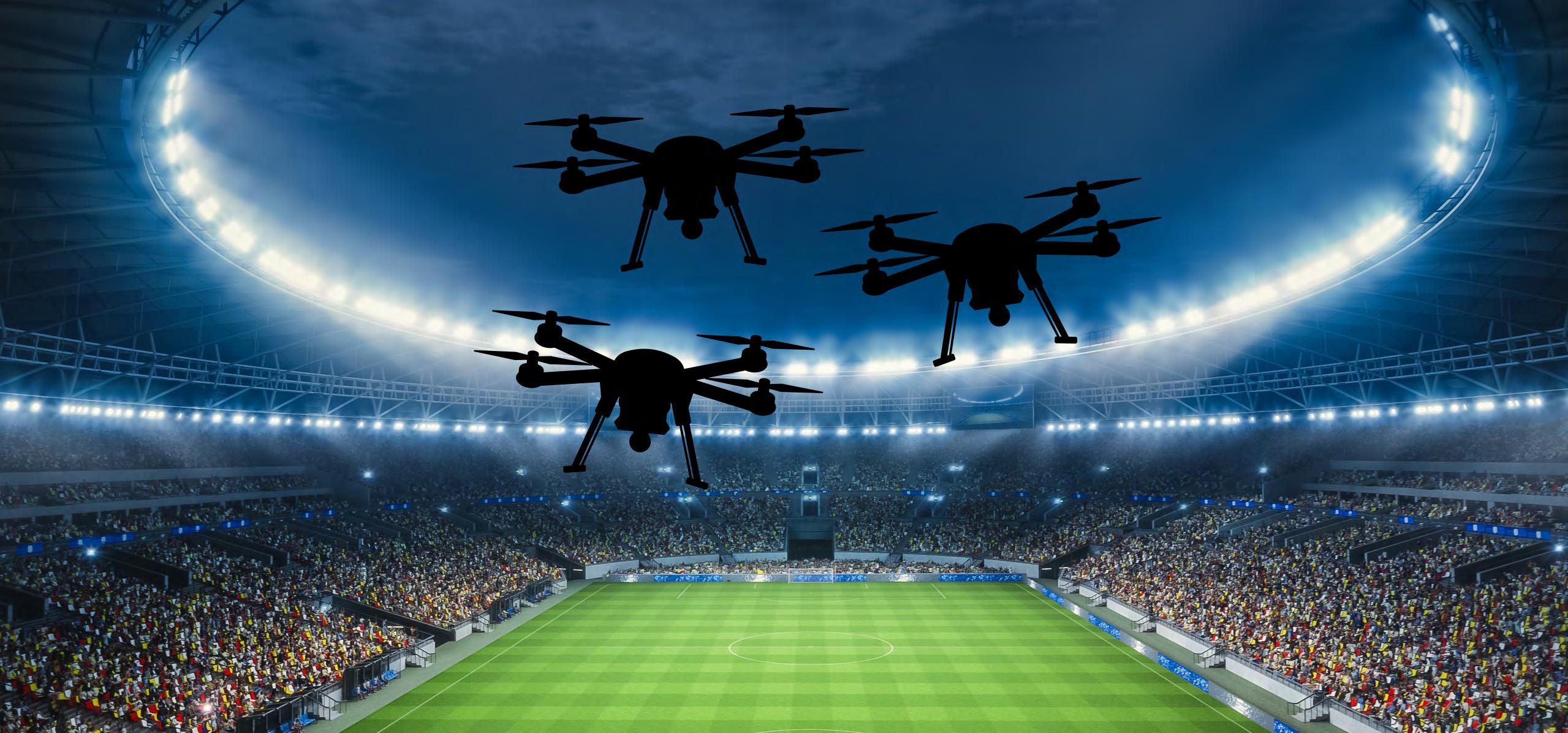
With the number of drone operators increasing every year, detection and mitigation of remotely piloted aircraft can be complicated and confusing. Here’s a primer.
By Michael Popke
IN JANUARY, POLITICO DECLARED that the “most dreaded gatecrasher” at stadiums hosting this summer’s FIFA World Cup 2026 matches would not be fans but rather drones. Which is one of the reasons the United States Department of Homeland Security is investing $115 million in counter-drone technologies to keep the skies safe during tournament matches, as well as during celebrations commemorating the country’s 250th birthday. That is in addition to the $250 million awarded to World Cup host states through the new Counter Unmanned Aircraft Systems Grant Program.
“The drone threat is quickly evolving,” says Tom Adams, director of public safety for DroneShield, which provides counter-UAS [unmanned aircraft systems] solutions that focus in part on radio frequency sensing, artificial intelligence, and machine learning.
Facility operators need to recognize that traditional approaches to drone monitoring, like visual line-of-sight, are no longer sufficient.
MELISSA SWISHER
SkySafe’s Chief Revenue Officer
Consumer access to drones is rapidly evolving, too, with more than 10 million units expected to ship this year, according to Melissa Swisher, chief revenue officer at SkySafe, another drone detection and airspace intelligence platform.
“Today’s drones are inexpensive, widely accessible, and increasingly capable of carrying payloads or high-resolution cameras,” she says.
“Facility operators need to recognize that traditional approaches to drone monitoring, like visual line-of-sight, are no longer sufficient as drone activity becomes more frequent and sophisticated. Traditional methods are labor-intensive, difficult to scale, and often leave security teams with little actionable information during or after an incident.”
To effectively protect players, fans, and staff, Swisher suggests that facilities use real-time drone detection and airspace intelligence capabilities to identify drones the moment they appear and assess critical details such as flight paths, altitude, operator location, and behavioral patterns.
There’s no question that drone activity over outdoor sporting events has accelerated, but so have the penalties for unauthorized access into temporary nofly zones — which is how federal law designates airspace surrounding NFL, NCAA, and other stadiums with more than 30,000 seats on gamedays. Violating national defense airspace is a Class A misdemeanor punishable by up to one year in prison, one year of supervised release, and/or a $100,000 fine, according to CourthouseNews.com.
We do have concerns about some of the things the world has learned about drones from wars in Ukraine, Russia, and the Middle East. As the technology evolves, so does the threat landscape.
G.B. JONES
FIFA World Cup 2026 Chief Safety and Security Officer
In April, more than a halfdozen drone sightings around Denver’s Coors Field during this season’s first homestand for Major League Baseball’s Colorado Rockies “sent law enforcement scrambling to track down the operators,” ESPN.com reported. The Federal Aviation Administration even issued a warning to drone operators over concerns about the potential threats they posed.
“The illegal drone activity did not jeopardize anyone’s safety, but there were enough violations that the teams on the ground were concerned about the number of operators that did not seem to understand the seriousness of the situation,” FBI spokesperson Vikki Migoya told ESPN.com. “Thus, the proactive messaging.”
Law enforcement officials are serious about pressing charges against rogue drone operators. According to KOMO News in Seattle, at least 30 unauthorized drones were cited flying over a championship parade with an estimated one million spectators for the National Football League’s Seattle Seahawks in February, following the team’s Super Bowl LX victory. The King County Ground Intercept Team, a joint state and federal law enforcement unit that detects, tracks, and mitigates unauthorized drone flights, pursued reckless endangerment and other criminal charges for a pilot who ignored warnings and flew a drone inside a packed Lumen Stadium during the celebration.
“We are still seeing a lot of clueless and careless drone operators in and around sporting events,” says G.B. Jones, chief safety and security officer for FIFA World Cup 2026 and former security director for the NFL. “We haven’t seen targeted drone usage at sporting events writ large, but we do have concerns about some of
the things the world has learned about drones from wars in Ukraine, Russia, and the Middle East. … As the technology evolves, so does the threat landscape.”
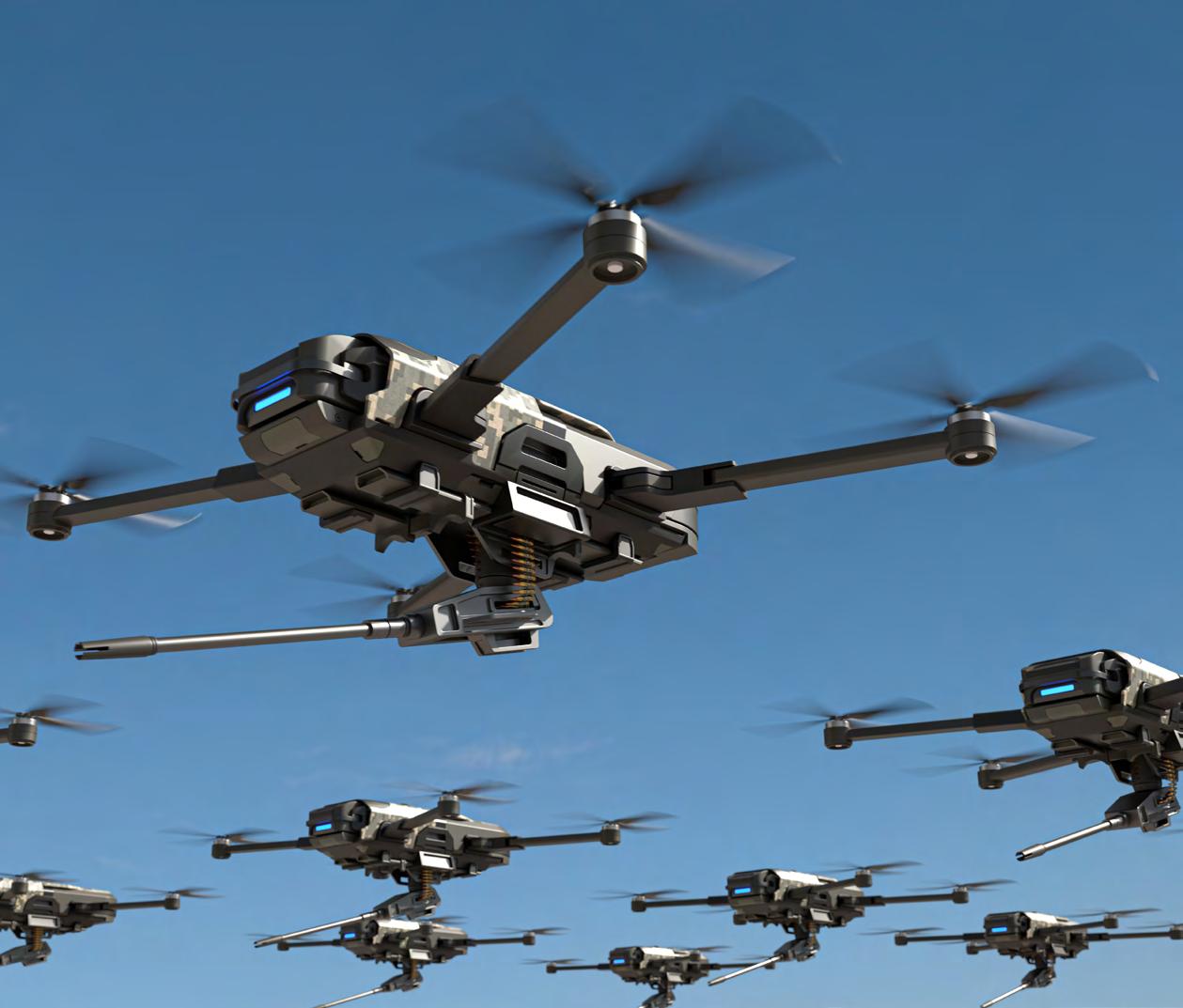
Specifically, he cites the use of fiberoptic and GPS-enabled drones that fly without radio frequency signatures, making them more difficult to detect and counter.
The Safer Skies Act, passed by Congress in December, could go a long way toward helping mitigate drones on a broader spectrum. The act gives local law enforcement agencies — including state, local, tribal, and territorial police — greater authority to take counter-UAS mitigation action against drone threats to public safety and critical infrastructure. And with companies like SkySafe and DroneShield helping lead the way, drone detection and counter-UAS efforts are entering a new phase that involves increasing education and coordination.
“Even the law enforcement teams that are most steeped in this space have been doing this for fewer than five years,” Jones says. “The policies and procedures and legal cases have not yet caught up with where this new technology is, and the authorities have not yet caught up with where the threat is. So yeah, this absolutely has to be a collaborative approach.”
While the Safer Skies Act expands authority previously only granted to agencies like the U.S. Department of Homeland Security and the Department of Justice, it also requires the Federal Bureau of Investigation to train state and local law enforcement officers on the proper use of counter-drone technology before it is deployed. The act makes Department of Justice grant funding available for state and local authorities to purchase approved counterdrone equipment, too.
“State and local agencies are often best positioned to quickly respond to drone threats at sports games and other large-scale events within their jurisdictions,” Swisher says. “The Safer Skies Act is a positive step for
enabling [them] to disable unauthorized drones, but this expanded authority needs to be paired with a better understanding of a drone’s intent, activity, and threat level. Simply knowing a drone is in the air isn’t enough. Authorities need to understand who is operating it, whether it is authorized to be in a given area, the drone’s imaging and payload capabilities, its flight path, and its historical activity. Without this level of intelligence, it’s very difficult to accurately determine whether escalation is necessary.”
SkySafe technology deploys a cloud-based sensor network that creates a dome of situational awareness over a facility or event space to capture that vital information, according to Swisher, which then allows security personnel to more effectively monitor and respond to drone activity in real time.
The SkySafe platform also offers Forensics-as-a-Service, a solution that Swisher says closes the loop from drone detection to prosecution. Data recovered from drones is often encrypted, damaged, or inaccessible — making it difficult to turn drone hardware data into legally defensible evidence. Forensics-as-a-Service, she adds, allows data from recovered drones to be extracted and analyzed, correlated with information captured by the SkySafe platform, and generated into court-ready reports that can be used to prosecute drone operators.
Not all drones are operated by bad actors, though. Many are authorized for photography purposes, critical infrastructure inspections, the delivery of medical supplies, and other beneficial rationales. All of which complicates the pursuit of safer skies.
“Drones don’t tell you what they’re up to, what their mission is,” Adams says. “Are they nefarious? Are they non-nefarious? The only way to begin to determine that is if you start gathering information from sensors — whether they be RF, camera radar, acoustic, or other
Drones don’t tell you what they’re up to, what their mission is. The only way to begin to determine that is if you start gathering information from sensors.
TOM ADAMS DroneShield’s Director of Public Safety
types of sensors in the airspace. That way, you can at least see what’s going on in the airspace and begin to assess whether or not that drone is a threat — and what your response is going to be.”
DroneShield integrates best-in-class sensors into its counter-drone software platform to help end users manage airspace, he adds. The company also provides RF-jamming technologies and is in the process of integrating a kinetic drone defeat capability.
As an example of how effective detection technology can be, Jones notes that when he worked for the NFL, officials at league stadiums reported spotting approximately 350 drones in and around facilities during regular-season games during the 2022 season, which was nowhere near the number detected by sensor technology.
“We did an analysis using technology that had sensors in and around the vast majority of stadiums, and we found that there were over 2,500 drone incursions into the temporary flight restricted spaces during the regular season,” Jones says. “And we’ve seen those numbers continue to rise.”
As drones continue to infiltrate the skies over sporting events and other large-scale outdoor activities, it will be vital for facility and event operators to stay up to date on emerging counter-UAS technologies and begin exploring available options — especially if they haven’t already started to do so.
“A lot of people are confused about this topic, about what they should and shouldn’t do,” Adams says. “But the best way to tackle this problem is with policies and procedures training, and then a multi-sensor approach to drone detection and a multi-effector approach to drone defeat.”
Just as importantly, Swisher adds, venue operators need the ability to capture and preserve drone flight data for post-incident investigations and potential prosecutions. Without that forensic visibility, security teams are often left acting blindly both during and after incursions, making it harder to deter repeat activity from bad actors.
“You need transfer of evidence and collection of evidence in your stadium environment,” Jones agrees. “Even if your stadium security team makes contact with a drone operator and manages to get them to land [the drone], you still should be contacting the police department so an assessment can be made of that operator to determine if they had nefarious intent and to get that into the system. You can’t seize drones on the privatesector side, but we can on the public-sector side. We may then be doing analysis on those drones to identify what was on them in terms of a payload or what’s in them in terms of data, and whether or not that matches what the operator is telling you in terms of their intent. There are a lot of things we need to be thinking about, but it has to be an integrated response plan that includes technology, responders, and law enforcement and private security integration.”


“This is going to be a very challenging mission,” Adams admits. “But I think approaching it like you would any other security challenge — educating yourself, finding people that can educate you, developing a wide range of policies and procedures — is going to be the key to your counter-UAS program.” l
Why is keeping fans in the stands still such a big challenge — and what can be done about it?
By Michael Popke
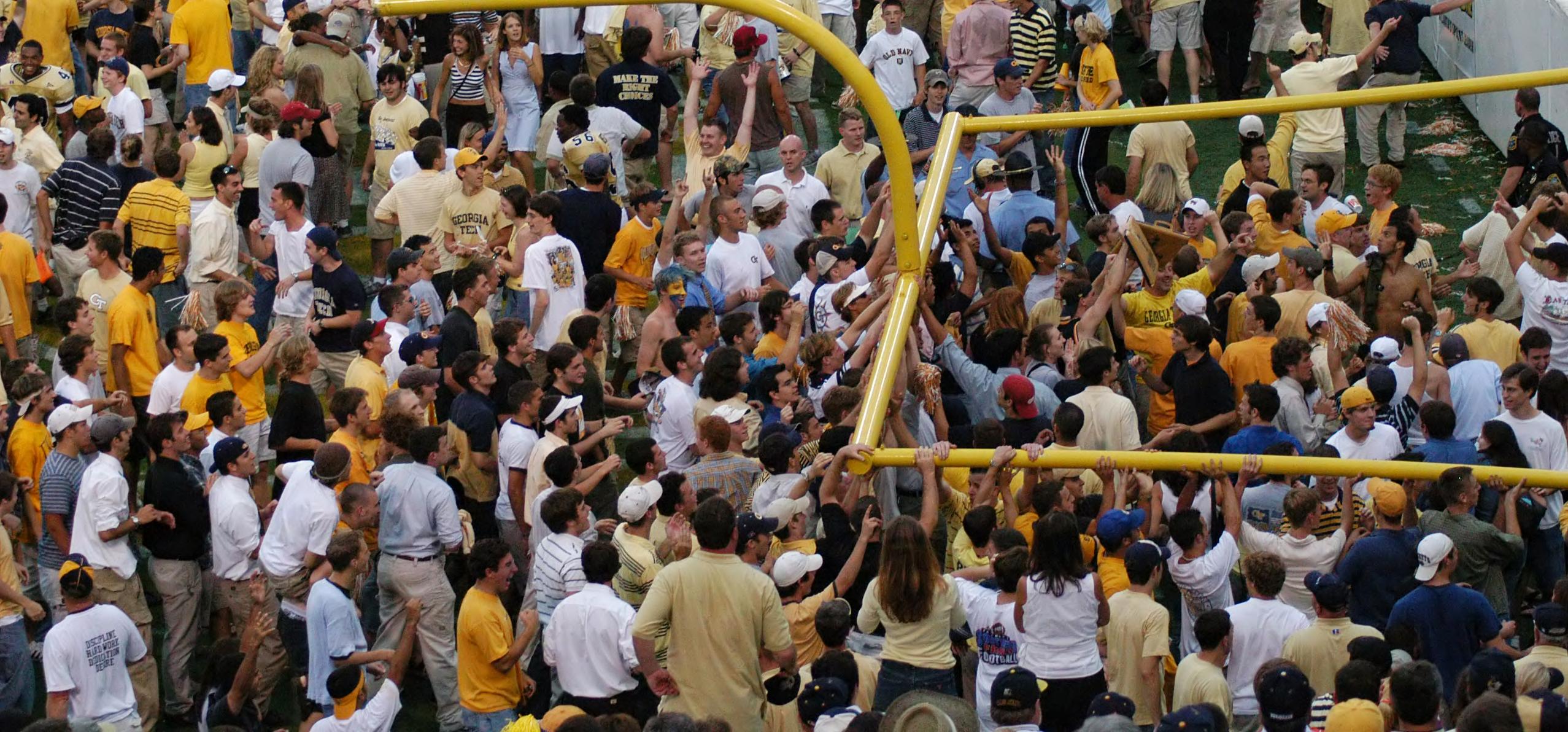
WITHIN THE SPAN OF NINE DAYS IN FEBRUARY, a pair of high-profile court-storming incidents rocked college basketball. The first was on Feb. 6 at the Dean E. Smith Center in Chapel Hill, N.C., after 14th-ranked University of North Carolina rallied from 13 points down and scored a buzzerbeater to stun No. 4 Duke, 71-68. Tarheels fans took to the court not once but twice — the first time with 0.4 second remaining, after which game officials had to clear the floor and let Duke run one more play before pandemonium ensued again. The Atlantic Coast Conference fined North Carolina $50,000 for violating the league’s “event security policy.”
Then, on Feb. 17, following the University of Iowa’s 57-52 win over Nebraska at Carver-Hawkeye Arena, an Iowa fan rushed the post-game handshake line and shoved a cellphone in the face of Cornhuskers coach Fred Hoiberg. The coach swatted it away, inadvertently hitting an Iowa staff member. Iowa issued a formal apology for the security breach, while the Big 10 refrained from issuing a fine.
Keeping fans in the stands — and off the court or field — has been a decades-long challenge, especially at the collegiate level. When discussing recent incursion incidents, it’s not uncommon for the conversation to pivot back to what happened on Halloween Eve 1993 at Camp Randall Stadium in Madison, Wis., when the University of Wisconsin beat the University of Michigan, 13-10. Dozens of fans were injured, with some knocked unconscious and not breathing, after students storming the field created a crush of humanity against iron railings and chain-link fencing. When those gave way, people were trampled. Badgers football players joined first responders in pulling bodies to safety and performing CPR. In the aftermath, university officials made adjustments to general admission seating in the student section and installed new barriers to discourage rushing the field.
Today, more than three decades later, big questions still remain across college sports: Why do field and court storming incidents continue to occur? How can they be mitigated? And are tighter and stricter enforcement measures needed?
“There are several factors that go into this issue and why it still happens,” says Gil Fried, a professor of sports management at the University of West Florida specializing in sport risk
There has been such an effort to make the fans part of the game that some fans feel emboldened and try to get involved as much as possible.
GIL FRIED
management and who will be speaking about fan incursions at NCS4’s 17th Annual National Sports Safety and Security Conference & Exhibition in June in Palm Desert, Calif. “Once you allow it to happen, people will feel emboldened to keep doing it. You do not see this in professional sports because they have clamped down for years, and fans know it.”
Social media and the chase for viral moments also play a big role, according to Fried, as does the appetite for fans to seek retribution on players after losing a big bet — both of which are a reflection of new societal norms.
“Culture is changing and some people feel the rules apply to others, not to them,” he says. “There has been such an effort to make the fans part of the game that some fans feel emboldened and try to get involved as much as possible.”
“The way people act is definitely different now,” adds Becca Wilusz, assistant director of athletics at Duke University. “I think if you look at any celebration that spills on to a field or a court, phones in hands recording is a prominent feature. People are trying to get the video and post it online to get noticed, thinking, ‘Maybe my video is going to be the one that ends up on SportsCenter.’ It also impacts safety, because you’re not looking where you’re going. You’re looking at yourself recording yourself on your phone.”
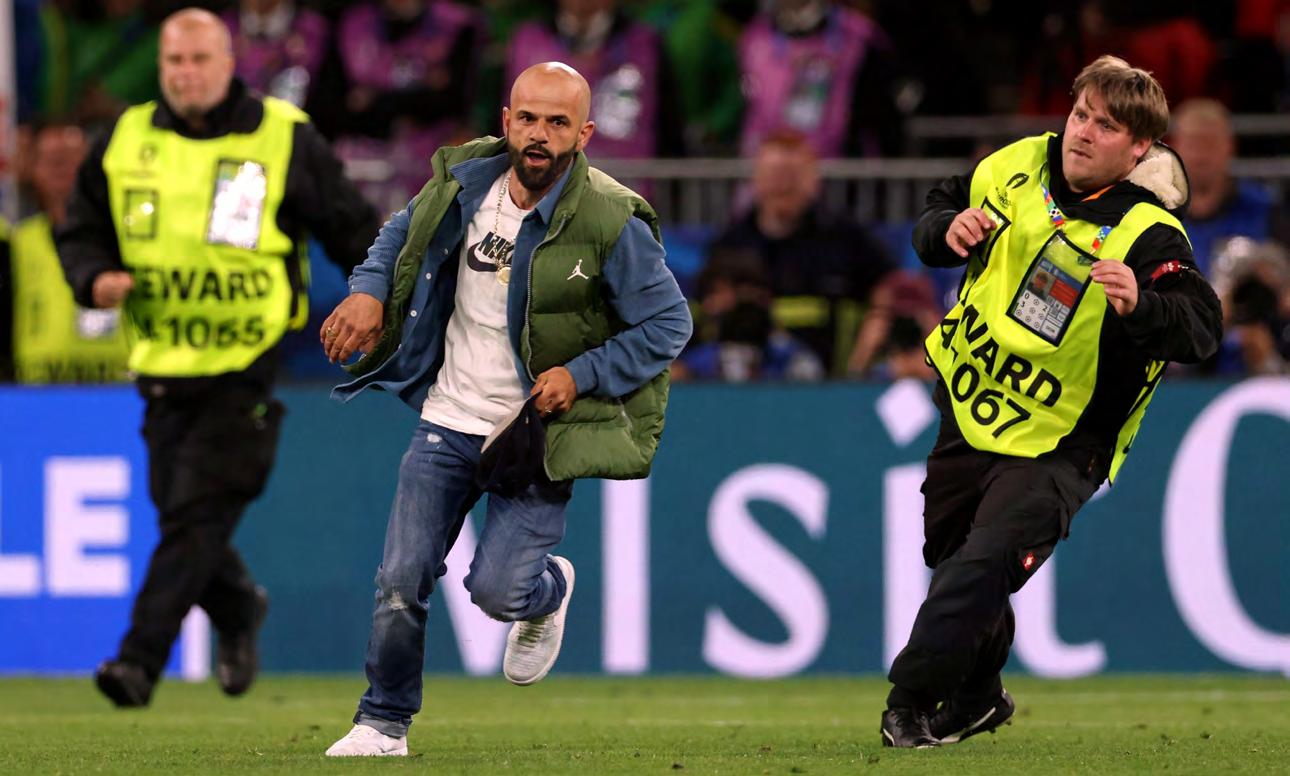
Fried and Brandon Allen, director of research for NCS4 and an associate professor of sport management at the University of Southern Mississippi, maintain an ongoing database of field and court incursions and their aftermath. What were the circumstances? What mitigation was attempted? How many injuries were reported? Were fines assessed?
“From a safety and security perspective, there should be zero tolerance for any type of field or court incursion,” Allen says. “That’s our stance at NCS4. It doesn’t seem that fines are deterring them. So if institutions are going to get serious about this, I think they’re going to not only have to eject fans but also maybe have some other kind of individual punishment like a season or lifetime ban.”
Fried agrees, adding that penalties for students and other fans who violate security policies and procedures by entering the playing area need to have “teeth.”
“I don’t want a totalitarian state, but oftentimes the only thing that will get people to respond in the appropriate way is really stiff penalties,” he says. “Maybe consider changing the student code of conduct to say that if you rush the field and get caught, you’ll be suspended from the university for a semester. Or cause home teams to forfeit a game if fans rush the court or field.”
When it comes to establishing policies and procedures for crowd mitigation, “there’s not going to be a one-size-fitsall plan, because every facility’s seating arrangements are different” Wilusz says. “Barriers, or lack thereof, between your student sections and the playing surfaces are different. Even student section dynamics are going to be different. So it’s definitely not something where you can take what X university does and just copy and paste it into your venue. That innately makes this an ongoing challenge.”
From a safety and security perspective, there should be zero tolerance for any type of field or court incursion. That’s our stance at NCS4.
BRANDON ALLEN NCS4’s Director of Research
What facility operators and security professionals can do, though, is plan ahead by looking at home games on the schedule and foreseeing the possibility (or even likelihood) of a fan incursion situation. Is a perennially top-ranked team or an in-state rival coming to play? If so, that’s a good time to enlist the assistance of the university’s student affairs department to engage with student leaders who can then set a positive example in the student sections — which Wilusz admits is a lot easier with smaller groups.
In some situations, she adds, the risk of causing more harm by trying to stop the surge is greater than allowing it to happen.
“If you’re talking about reasonable practices, there is a point in all of these plans where you just say, ‘Do I have to let them go, so they don’t get hurt?’ You trade one bad outcome to avoid a potentially worse outcome,” Wilusz says, adding that fans have rushed the field at Duke’s Wallace Wade Stadium after big football wins. “For us, sometimes the answer is ‘Yes, we’re going to let them go.’ But it’s definitely a catch-22. The key is, if you can’t prevent it, how do you allow it to happen as safely as possible?”
While fans at professional sporting events do not typically rush the field or court — doing so at a National Football League game, for example, is a crime that also results in a lifetime ban at all NFL stadiums — Darren Johnson has dealt with several field incursions as senior director of safety and security for the Detroit Lions.
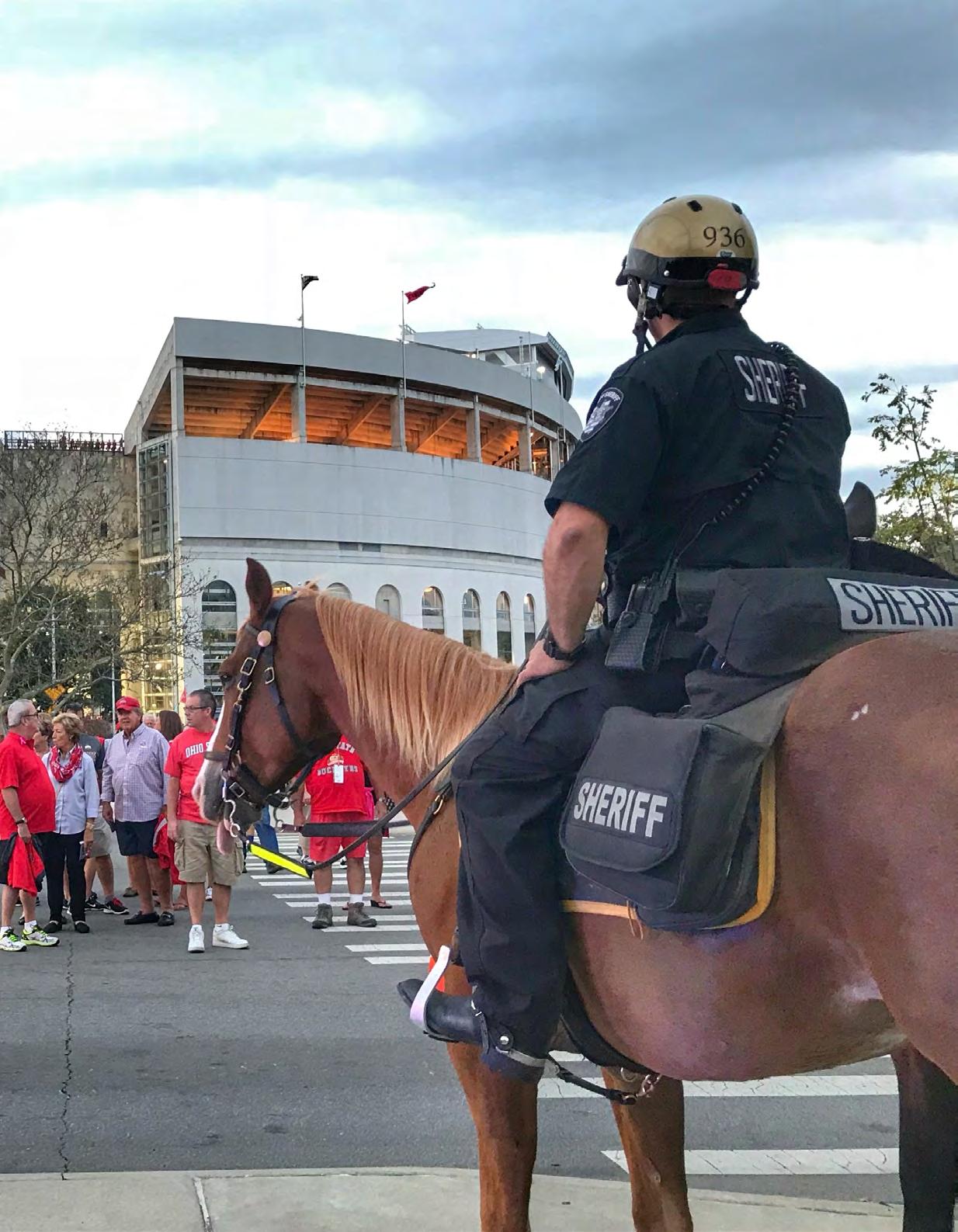
“We did, for years, have issues with that,” he says, adding that a few years ago the Lions replaced thirdparty security staff previously positioned on the playing surface at Ford Field with uniformed law enforcement officers to act as a deterrent. “The staff we took from the field was repositioned at the bottom of the vomitories and the bottom of every stairwell to be buffers between the wall and the individuals going over it. We also now have security personnel at the top of sections in the
The difference is having a police officer with a badge and a gun vs. someone being paid $20 an hour.
DARREN JOHNSON Detroit Lions’ Senior Director of Safety and Security
lower bowl checking tickets to make sure fans aren’t migrating down after people start leaving the game early.”
Johnson, who is a member of the NFL’s Stadium Security Directors Advisory Committee, suggests venue operators establish relationships not only with local law enforcement officials but also county and state officials. The Lions work with the Michigan State Police and the Detroit Police Department to enforce the increased onfield security presence. From a fan’s perspective, Johnson says, “the difference is having a police officer with a badge and a gun vs. someone being paid $20 an hour.”
The most effective incursion mitigation efforts occur when a solid crowd management plan is in place, according to Fried, who points to policies and procedures at professional stadiums and arenas, as well as at college football bowl games and NCAA basketball tournaments (where fans don’t rush the playing surface).
That plan needs to be seamless and developed with input from all key stakeholders and then communicated effectively to all involved parties, he says. It should
It’s definitely a catch-22. The key is, if you can’t prevent it, how do you allow it to happen as safely as possible?”
BECCA WILUSZ
Duke
University’s
Assistant Director of Athletics

include perimeter controls, interactions with crowds and social media monitoring. High-tech methods like deploying AI-powered video surveillance and behavioral tactics, real-time crowd-heat mapping and deployment of wayfinding and communication apps to notify fans of the least-congested exit routes also can help with crowd control and prevent field or court access. Consider working with local authorities to develop and enforce laws that make rushing past security or jumping barriers an enhanced crime, too.
Besides a good plan, there needs to be appropriate training of personnel — including steps to engrain behavior in muscle memory, Fried adds, suggesting venue operators simulate real-world situations via tabletop exercises and walk-through drills in which they anticipate crowd dynamics and mitigation shortcomings.
“The key is having a plan, practicing the plan, identifying the weaknesses, reinforcing those weaknesses and then retraining to address concerns,” Fried says.
Additionally, some facilities have adopted policies and procedures that delay victory celebrations by using a countdown clock until players, coaches and game officials have left the playing surface. Others move victory celebrations to a designated offsite area, such as a student center.
“I’m hopeful for changes like those,” NCS4’s Allen says. “I’m not yet sure how effective they are, but they are things other institutions can look into.”
Positive actions should be celebrated, too, according to Wilusz — even in the wake of an incursion.
“In crowd safety, nobody ever talks about near misses, because it means you made a mistake and something went wrong. But it didn’t go as wrong as it could have gone,” she says. “How do we find ways to communicate and celebrate that — not phrasing it as a ‘near miss,’ but as a ‘good catch’? ‘It didn’t go perfectly, but we caught this. We did X, Y and Z to keep it from going bad.’” l

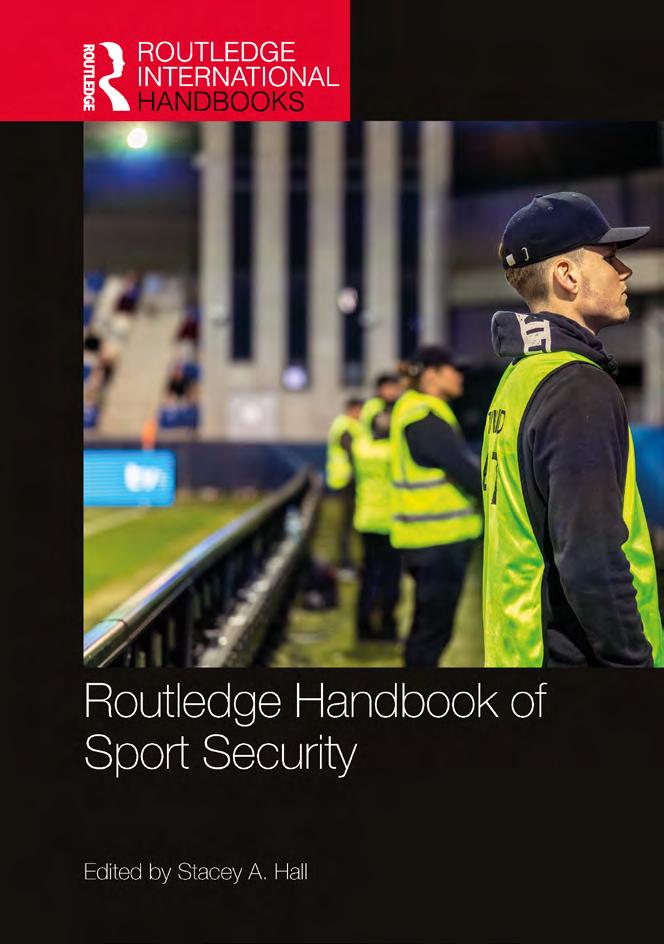
Sep 2025: 536pp 28 B/W illustrations
Hb: 978-1-032-64123-2
eBook: 978-1-032-64130-0
For more information visit: www.routledge.com/9781032641232
Edited By Stacey A. Hall
This book provides an in-depth analysis of security issues and concerns in contemporary sport. Featuring the work of leading researchers and practitioners from around the world, it offers practical, evidence-based commentary and guidance.
Drawing on the latest research evidence, the book examines the multiple stakeholders, agencies, and organizations involved in providing a safe space for spectators, participants, staff, organizations, communities, and sponsors. It considers the coordination of private and public entities in the sports security ecosystem, including facility management, event management, law enforcement, emergency management, emergency medical services, and state/federal government partners, as well as the private sector organizations providing support services. The book also offers a comprehensive analysis of key issues and debates in contemporary sport security, including terrorism, cybersecurity, spectator violence, planning and assessment guidance for sport venues and events of all sizes, management and policy considerations for leaders and decision-makers, and the lessons learned from critical incidents. It introduces the core principles of research methods in sport security and looks ahead at the future developments in this rapidly changing field
This is essential reading for any advanced student, researcher, practitioner, or policy-maker with an interest in sport studies, security studies, event studies, criminal justice, management, or public policy.
Part I: Introduction and Key Players
1. The Sport Security Landscape, 2. Security Partners
P Part II: Issues
3. Sports as Soft Targets: The Terrorist Threat and Counterterrorism Considerations, 4. Perception of Risk and Terrorism: Impact on Elite Sporting Events, 5. Spectator Violence: Causes, Concerns, and Considerations, 6. Hooliganism - Origination, Trends, and Strategies for Securing Soccer Stadia, 7. Managing Large Crowds: The Application of Science, Tools, and Applied Strategies, 8. Hostile Vehicle Mitigation Planning for Sports Venues and Open-Access Events, 9. Bombing Prevention Planning for Sports and Special Events, 10. Severe Weather Impact on Sports and Preparedness Measures, 11. The Threat of Illegal Drones to Sports, 12. Cybersecurity Issues and Rules for Sports Organizations, 13. The Intersection of Human Trafficking and Large-Scale Events, 14. Sporting Events and Crime: A Meta Analysis P Part III: Planning and Assessment
15. Securing International Sports Events, 16. Securing Professional Sports, 17. Securing College Sports, 18. Securing Youth Sports, 19. Sports Travel and Tourism Security, 20. Event Risk Assessment and Management, 21. The Importance of Information and Intelligence Sharing in Securing Sports, 22. Human Resource Needs and Professional Development, 23. Enhancing Preparedness Through Exercises, 24. Situational Crime Prevention (SCP) Application in Sports
P Part IV: Management and Policy
25. Emergency Response and Recovery Considerations for Sporting Events, 26. Integrating a Victim-Centred Approach into Emergency Management and Sports Security, 27. Evacuation and Protective Actions, 28. Crisis Management and Business Continuity, 29. Crisis and Risk Communications in Sport: Navigating the Complex Terrain, 30. Legal Considerations for Sport Venue Owners and Operators, 31. Negligent Security Litigation: Preparing for the Unexpected, 32. The Economic Impact of Securing Sports, 33. Balancing Security and the Guest Experience, 34. Ensuring Live Events are Accessible, Inclusive, and Safe For All, 35. Reframing Sport Venue Security: The CommunityDriven Approach
P Part V: Conclusion
36. Critical Perspectives on Sport and Security, 37. Research Methods in Sport Safety and Security, 38. Sport Security Technology Trends and Solutions, 39. Lessons Learned from Security Incidents at Sports Venues and Events, 40. Sport Security Best Practices, Guidelines, and Resources: A Global Review

Scan the QR code to order your book or visit: www.routledge.com/9781032641232

National
SPORT AND SPECIAL EVENT RISK MANAGEMENT AND PLANNING AWR-167
Building capabilities for multi-agency collaboration, intact teams are immersed in a collaborative environment incorporating basic concepts relative to planning, risk assessment, training, exercising plans, and recovery/ business continuity through scenario-based training modules.
SPORT AND SPECIAL EVENT STAFF TRAINING AND DEVELOPMENT MGT-304
This DHS/FEMA-funded course brings together first responders, government, and commercial facilities personnel to improve safety and security training and development programs. The overall goal for this training is to provide tools and methodologies for training and developing staff assigned to and responsible for public safety at sporting and special events.
SPORTS AND SPECIAL EVENTS INCIDENT MANAGEMENT MGT-404
Develops athletic department staffs, facility management personnel, campus public safety personnel, emergency response supervisors, and others involved in sports and special event management to better prepare for, manage, and recover from incidents that could occur during a sporting event or other special event.
SPORT AND SPECIAL EVENT EVACUATION AND PROTECTIVE ACTIONS MGT-412
Prepares venue operators, first responders, emergency managers, promoters, local government, and third-party service providers to effectively collaborate on evacuation and protective action planning. The course supports participants in creating plans with actionable decision criteria that can be adapted for almost any event.
ENHANCED SPORTS AND SPECIAL EVENTS INCIDENT MANAGEMENT MGT-440
Prepares emergency responders, as well as event management personnel, concessionaires, athletic department personnel, and chief executives who would be involved in the preparation for and response to a large-scale incident during sporting or special events.
SPORT AND SPECIAL EVENT ENHANCED RISK MANAGEMENT AND ASSESSMENT MGT-466
Provides participants with tools and methodologies for conducting venue and event-specific risk assessments. In this course, participants will analyze risk and utilize assessment outputs to determine risk mitigation options and their effectiveness.
SPORT AND SPECIAL EVENT PUBLIC INFORMATION AND EMERGENCY NOTIFICATION MGT-467
Prepares participants to identify and navigate the sport and special event communication landscape before, during, and after an incident. This interdisciplinary course brings planners, operators, communication, government, public safety, marketing, and public relations professionals together to prepare and/or enhance venue and event communication programs.
CROWD MANAGEMENT FOR SPORT AND SPECIAL EVENTS MGT-475
Prepares venue operators, first responders, event planners, promoters, local government, and other public safety agencies to address crowd management by exploring effective planning considerations, crowd dynamics, queueing strategies, and strategies for ensuring public order. The course content is scalable and applicable to all sports and special events regardless of venue size, capacity, or type of event.
For more information about hosting or attending, contact the NCS4 Training Department: NCS4TRAIN@USM.EDU Scan the QR code or visit the website to learn more.



The 18th annual National Sports Safety and Security Conference & Exhibition will take place June 22-24, 2027, at the JW Marriott Miami Turnberry Resort & Spa in Miami, Florida. The conference will offer dynamic programming, solution provider engagement, and opportunities to network with fellow professionals. This highly regarded gathering of sports safety and security professionals is an opportune time to share ideas, tools, and proven strategies to help advance the industry. Please mark your calendar and make plans to join us! Full conference details will be released later this year.
Security directors and operators, facility and stadium managers, event planners/operators, law enforcement personnel, emergency managers, fire/HAZMAT, emergency medical/health services, athletic administrators and governmental representatives
These are individuals representing or supporting professional sports leagues, intercollegiate athletics, interscholastic athletics, marathon and endurance events, and sport and entertainment facilities (concerts, festivals, e-sports, convention centers, etc.).
WHAT TO EXPECT AS A CONFERENCE ATTENDEE
• Meet and greet at the opening reception and social in the Exhibit Hall
• Hear from leading industry experts on current topics and technology advancements
• Participate in interactive panel discussions
• Attend the Awards Luncheon
• Network with peers
• Engage with panelists and attendees in dynamic breakout sessions
• Explore emerging technologies
• Discover new products and services in the Exhibit Hall