What Can Catholics Expect From Trump 2.0?
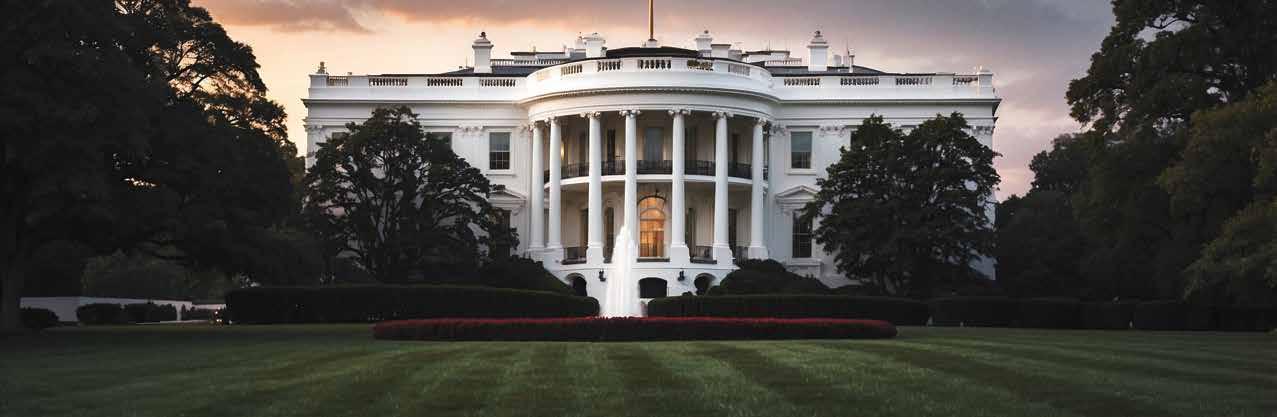
Donald Trump’s election as the 47th president of the United States last November has been dubbed the greatest comeback in American political history.
Consider the state of Trump’s political fortunes four short Januarys ago. Following a bitter defeat in 2020 and the ensuing riot at the U.S. Capitol, Trump was denounced by many, including in his own party.
But in the proceeding years, Trump regained the trust of voters while fending off a highly coordinated opposition. He even literally dodged a bullet. And on Jan. 6, his opponent, Vice President Kamala Harris, ratified his victory. Talk about a comeback.
Content compiled by Peter Laffin, staff reporter
Key Catholics in the Cabinet

Abortion and Wokeism
Trump’s vow to erase all vestiges of “wokeism” — which is, roughly speaking, the worldview that prioritizes mutable identity characteristics over biology and divides all individuals into the categories of “oppressor” or “oppressed” — has been widely publicized. This desire has been seen as instrumental in his selection of current Fox News personality Pete Hegseth, a former Army officer, to become the next secretary of defense, for instance. However, his campaign’s weakened position on the defense of life, which included vice-presidential pick JD Vance’s public support for the availability of abortion pills and his and Vance’s promotion of in-vitro fertilization, as well as his ongoing battles with leaders in the pro-life community over the past year, have largely gone unreported by the mainstream press.
Trump’s waffling over whether to personally vote against Amendment 4 in Florida that would have overturned the state’s six-week abortion ban, further dismayed his pro-life supporters.
The rifts remain larger and the wounds fresher than many realize.

“President Trump is not a pro-life candidate,” Live Action founder Lila Rose said during the campaign. Rose ended up voting for Trump over Kamala Harris.
Eliminate “wokeness.” Part of Trump’s plan to battle “wokeness” is to sign bills or issue executive orders that enforce the biological understanding of sex and gender, outlawing “gender-affirming care” for minors, and withholding federal funds for institutions that actively promote progressive ideologies. “On Day One, I will revoke Joe Biden’s cruel policies on so-called ‘gender-affirming care,’ a process that includes giving kids puberty blockers, mutating their physical appearance, and ultimately performing surgery on minor children,” he said in a video released shortly after his election win. He also vowed to pass a law prohibiting “gender-reassignment surgery” in all 50 states, which would render any hospital or health provider that participates in “chemical or physical mutilation of minor youth” as falling short of federal health and safety standards. As such, they would no longer be eligible for Medicaid and Medicare.
Abortion flip-flop. Trump’s position on abortion as he enters his second term is ambiguous. While he has reaffirmed his personal dislike of abortion, particularly late-term abortion, he has maintained numerous positions that rankle the pro-life community. These include his support for exceptions and accessibility of IVF in every state and his stated refusal to sign a national abortion ban in favor of state’s rights. “I’m not signing a ban, and there is no reason to sign the ban because we’ve gotten what everyone wanted,” Trump said in September in reference to his previous administration’s role in overturning Roe v. Wade and Doe. v. Bolton and returning the abortion issue to the states.
Immigration
Fixing the broken immigration system of the United States was one of the major issues around which Donald Trump built his 2024 presidential campaign, and signs point to it being the focal point of his next administration.
Trump has vowed to act swiftly — and in ways that could conflict with teachings of the Catholic Church.
Adding to the perception that Trump has a mandate to act boldly on immigration, a newly released AP poll finds that nearly half of Americans say it should be a top priority for the new administration, the highest of any issue by double figures.
Reports indicate that Trump could declare a national emergency on immigration, which would allow his administration, led by his director of U.S. Immigration and Customs Enforcement (ICE) Tom Homan, a Catholic, to bypass congressional appropriations and divert funds from the Department of Defense to tackle the issue.
Ending Birthright Citizenship. Trump has vowed to eliminate the practice of conferring automatic citizenship for individuals born within U.S. territory irrespective of the legal status of their parents. He claims that birthright citizenship acts as a magnet for illegal immigration and has vowed to make restrictions through executive orders. Opponents, including the U.S. Conference of Catholic Bishops (USCCB), believe the move would threaten human dignity and create a permanent “underclass” of stateless children. “The Church opposes the repeal of birthright citizenship because it would render innocent children stateless, depriving them of the ability to thrive in their communities and reach their full potential,” the USCCB website reads. Experts maintain that executive actions restricting birthright citizenship will be immediately challenged in court, setting up a Supreme Court decision on the matter.
Mass Deportations. Trump and his team have promised to launch the largest deportation program in U.S. history. The Pew Research Center estimates that 11 million unauthorized immigrants currently reside within the U.S., while Trump’s vice president, JD Vance, believes the number is closer to 25 million. Trump believes that mass deportations will benefit American workers by freeing up jobs and driving up wages. Homan has vowed to target “the worst first” by prioritizing criminals and national security threats. Cardinal Robert McElroy, the new archbishop of Washington, has said that “having a wider indiscriminate massive deportation across the country would be something that would be incompatible with Catholic doctrine.”
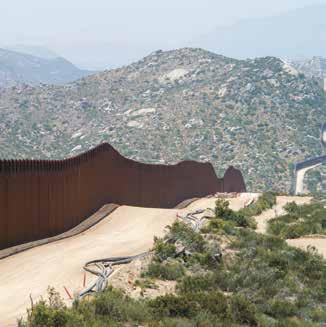
Finishing the Border Wall. Throughout the campaign, both Trump and his Democratic Party opponent Kamala Harris promised to continue the border-wall project that began during Trump’s first term, signaling a shift in political will for the project. Harris had previously called the wall a “vanity project” that was “un-American.” Construction of the border wall was halted by Biden in 2021, and materials have been waiting — and rusting — at the border ever since.
Foreign Policy
Even before taking his second oath of office, President Trump has been active in shaping U.S. foreign policy. Numerous world leaders have made the trip to Trump’s Florida estate, Mar-a-Lago, and his reception at the reopening of Notre Dame Cathedral in Paris had all the trappings of a presidential visit.
Trump has also availed himself of the bully pulpit of the presidency by proposing that Denmark sell Greenland to the U.S., teasing the acquisition of Canada as the 51st state (he has appeared to take particular delight in referring to former Canadian Prime Minister Justin Trudeau as “Governor Trudeau”), and threatening to assume control of the Panama Canal from Panama.
It is unclear how these expansionist designs fit within the “America First” foreign policy Trump campaigned on, which promised to bring the war in Ukraine to a swift end, increase economic pressure on China, and expand the Abraham Accords to further normalize relations between Israel and Arab states in the Middle East.
Expand the map. Trump’s stated ambition for territorial expansion has taken many off guard, and there is debate regarding his level of seriousness. His open musing about annexing Canada has been widely interpreted as elaborate “trolling” of America’s neighbor to the north. But his targeting of Greenland and the Panama Canal appear to be more serious and strategically sound.
Negotiate peace in Ukraine. Bringing a swift end to the killing in Ukraine is a rare area of agreement between Trump and the Vatican. Trump has repeatedly promised to forge a negotiated peace between Russia and Ukraine. “I would tell Zelenskyy, no more [military aid]. You’ve got to make a deal. I would tell Putin, if you don’t make a deal, we’re going to give [Zelenskyy] a lot,” he said on a Fox News interview. “I will have that settled in 24 hours.”
Increase economic pressure on China. While Trump has signaled ambiguity regarding his willingness to use the U.S. military to defend Taiwan from Chinese aggression, Trump has been vocal about turning up the pressure on China through economic coercion, intensifying efforts against Chinese espionage and imposing restrictions on Chinese ownership of American assets, including farmland and technology.
Expand the Abraham Accords. Trump has signaled a desire to build upon the Abraham Accords, a series of agreements that normalized diplomatic relations between Israel and several Arab states, which he helped negotiate during his first term. Jared Kushner, Trump’s son-in-law and chief negotiator in the Middle East, has said that Saudi Arabia’s inclusion would be a key component of the expansion in hopes of achieving lasting peace and prosperity in the Arab Gulf states.