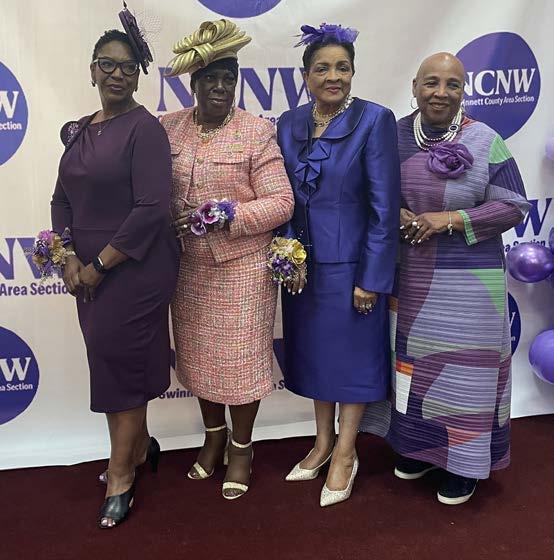
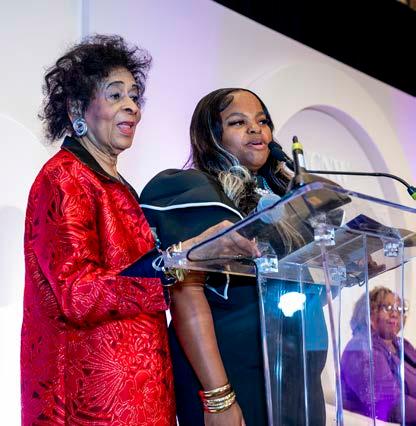
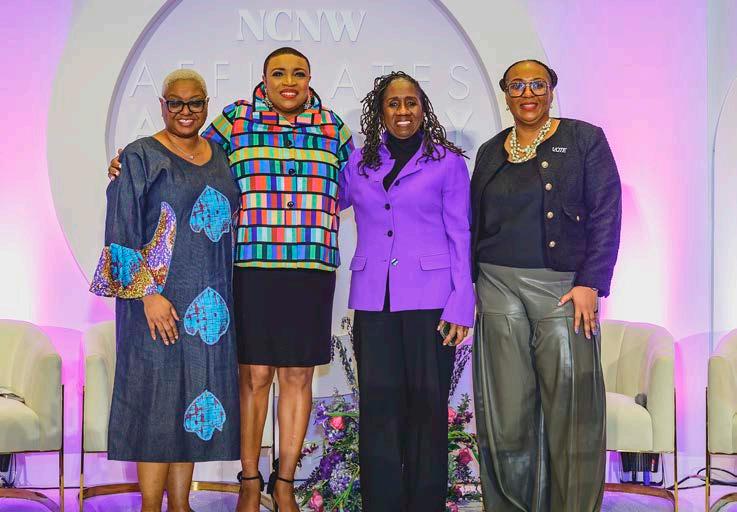
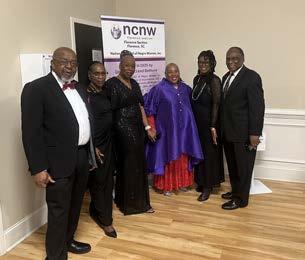
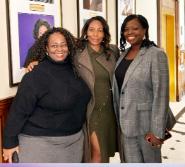
NCNW Board Chair, Dr. A. Lois Keith, pictured with (L to R) Gwinnett County (Ga.) Area
Section President Sebrecia Colquitt, Top Ladies of Distinction National President Eddie Lee Marsh, and granddaughter of Founder Dr. Mary McLeod Bethune, Dr. Evelyn Bethune at the section tea.
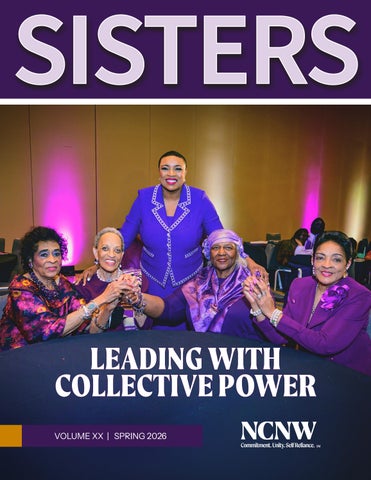
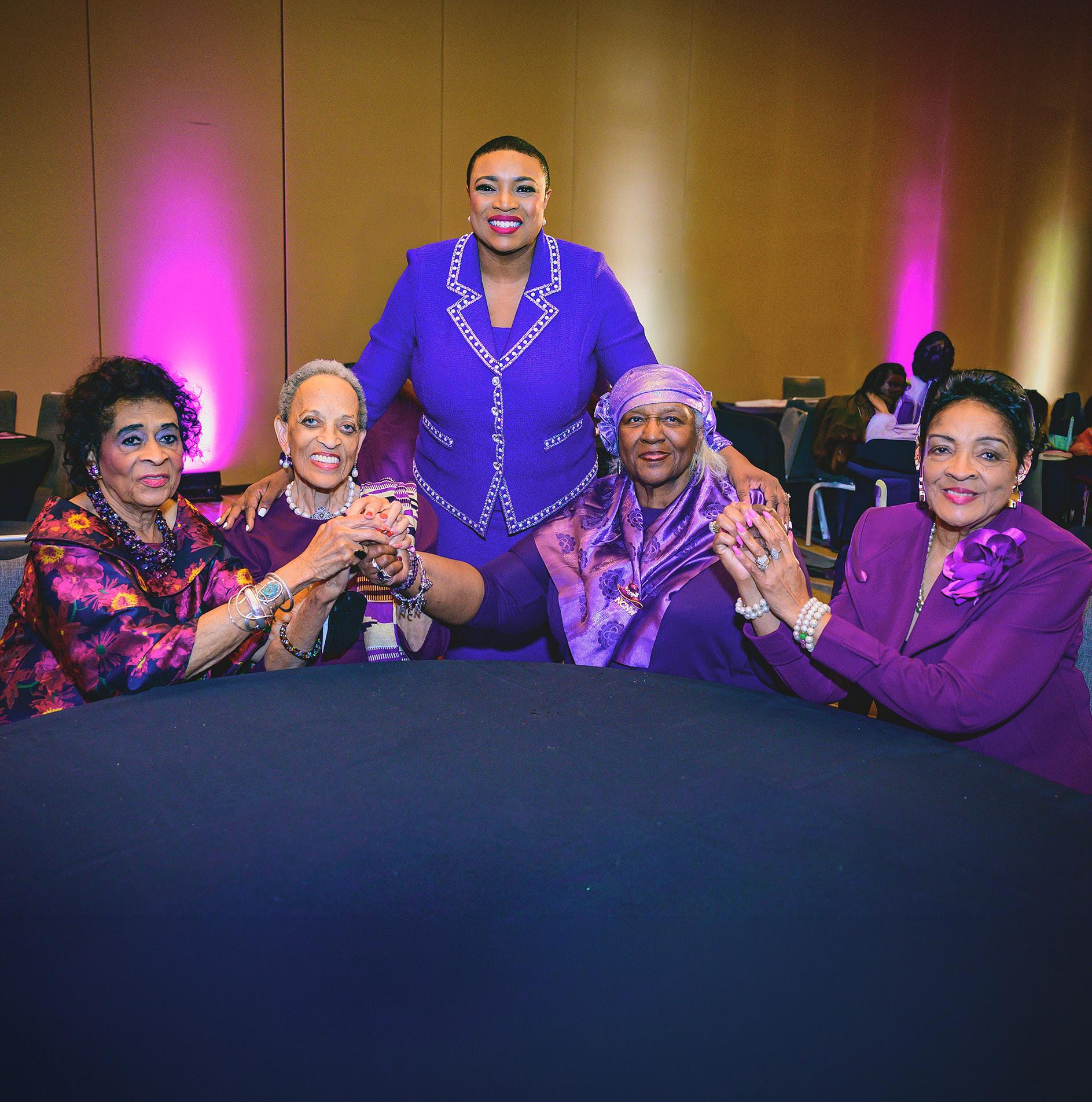
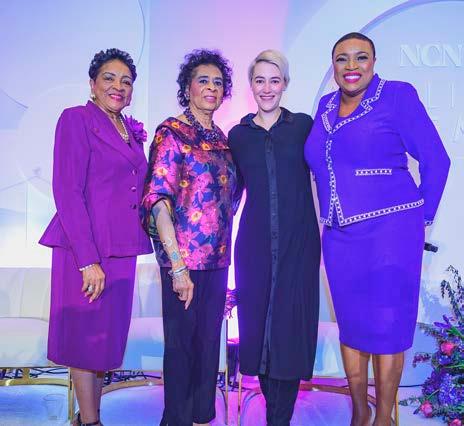
ON THE COVER: Leadership at its best celebrating 90-years of commitment,
and self-reliance. (L to R) Dr. Thelma T. Daley, 5th chair and 8th national president; Dr. Johnetta Betsch Cole, 4th chair and 7th national president, Rev. Shavon Arline-Bradley, first President & CEO, Dr. Barbara Shaw, 2nd chair and 5th national president, and Dr. A. Lois Keith, 6th chair. Not pictured is Dr. Ingrid Saunders Jones, 3rd chair and 6th national president.
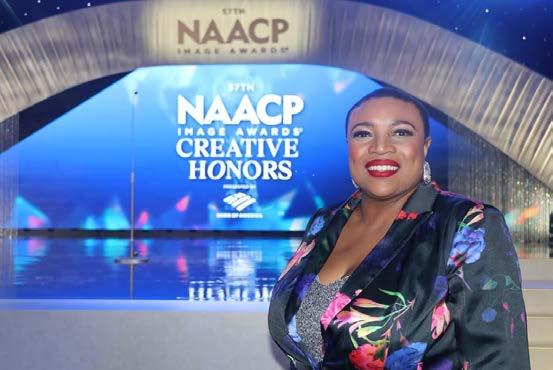
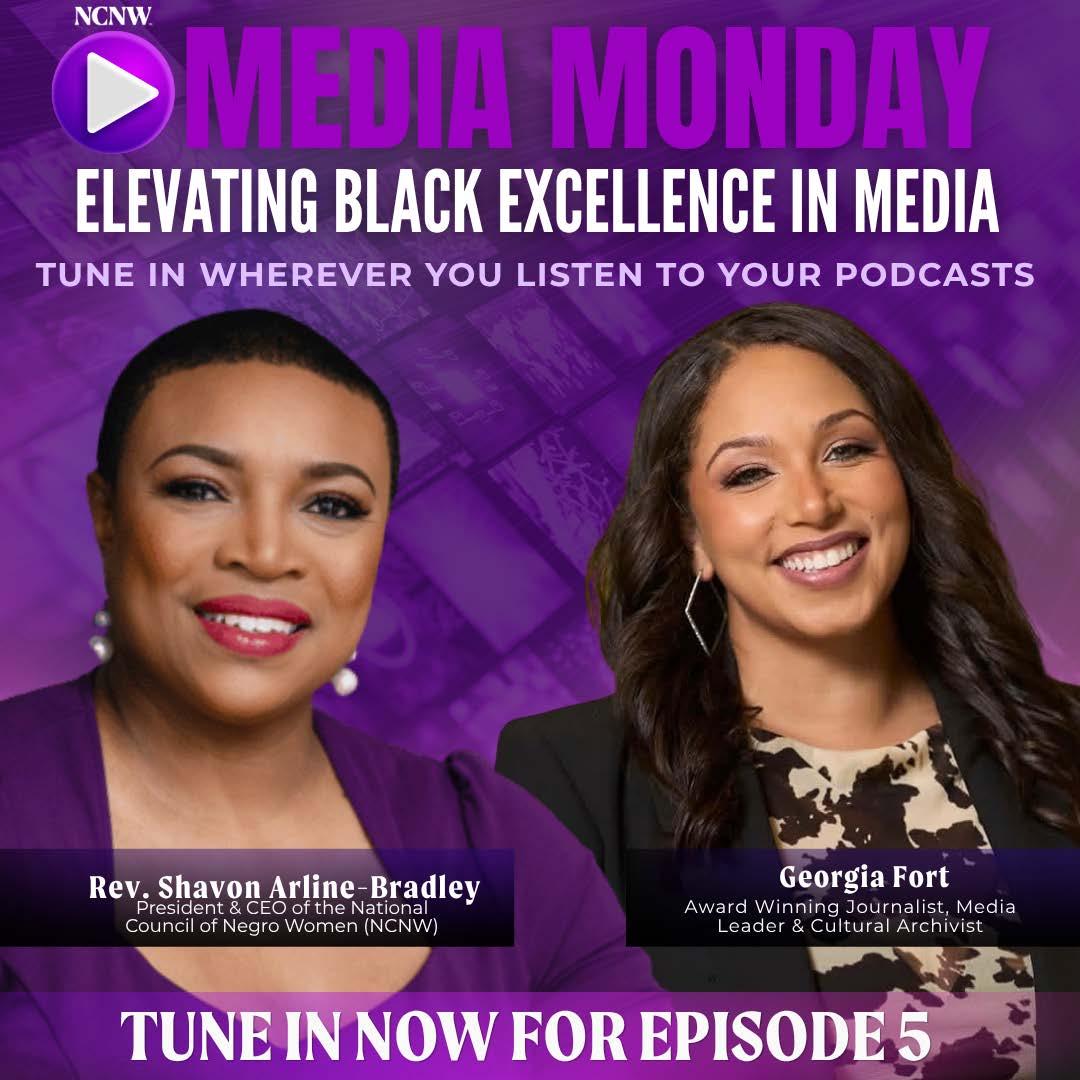
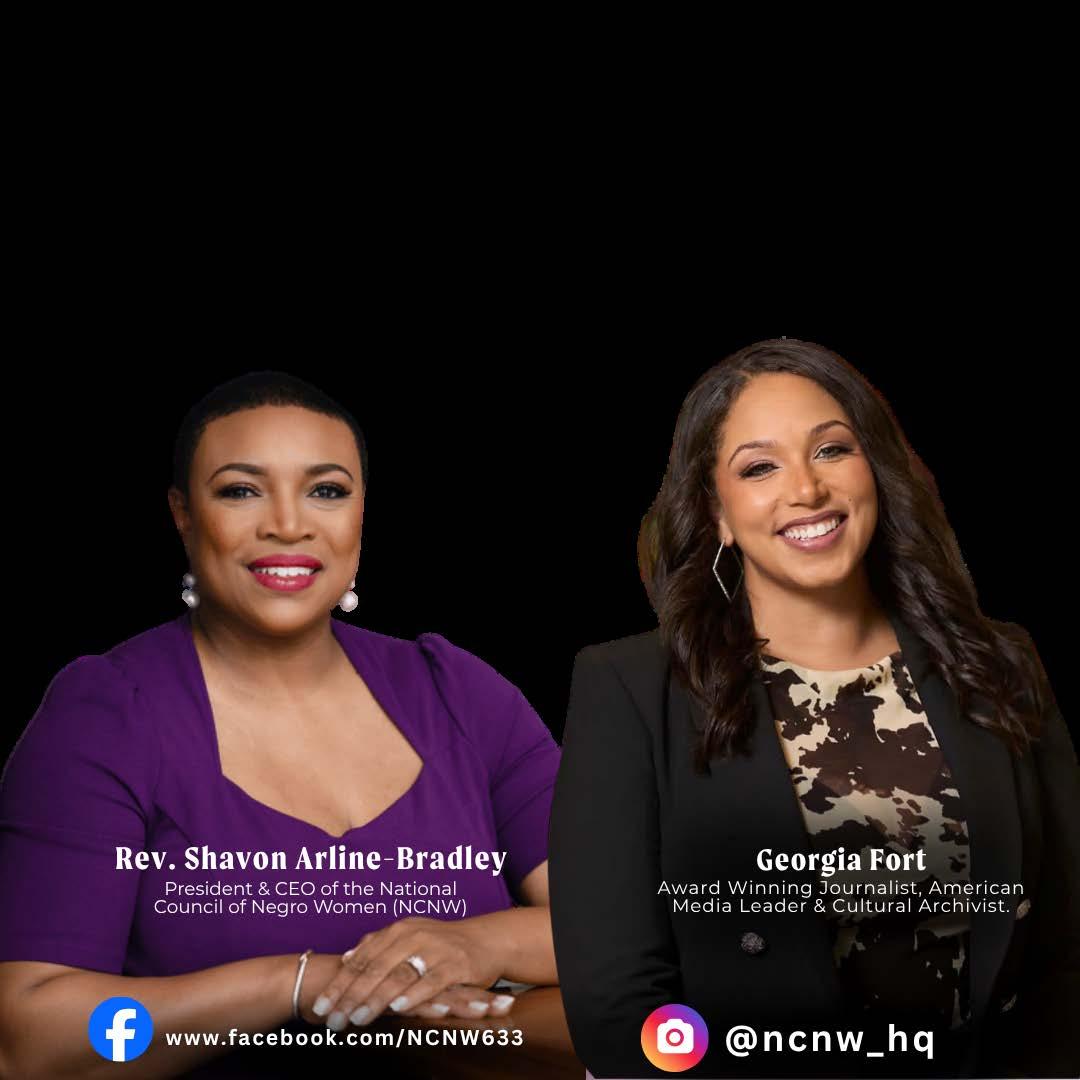
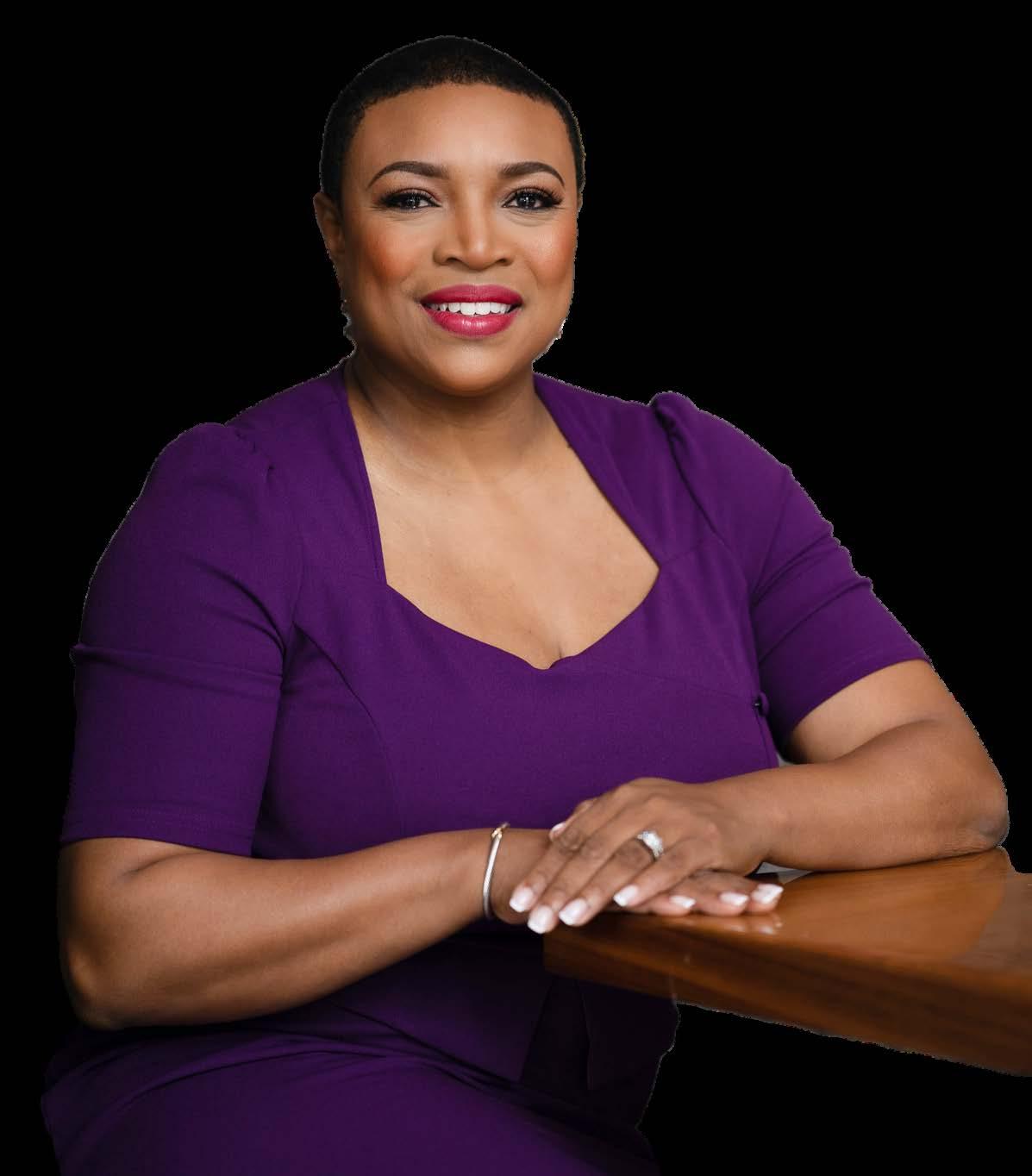
NCNW President
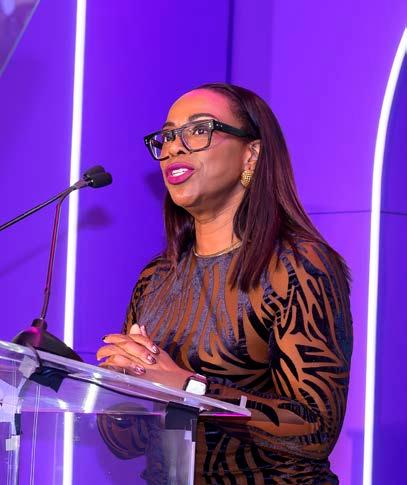
Shavon Arline-Bradley celebrating Black Excellence at the 2026 NAACP Awards
When Black women organize, change happens. “ ”
Message from the Chair
Dear NCNW Sisters,
What a remarkable time to be a part of the National Council of Negro Women (NCNW). As I reflect on where we have been and where we are headed, my heart is full of gratitude for each of you, full of pride in what we have built together and full of hope for what is yet to come.
Yes, the challenges before us are real. Voting rights remain under threat. Access to quality education and healthcare is still a fight. The economic barriers facing Black women and their families have not disappeared. But sisters, neither have we, and that is everything. Because when Black women are at the table, solutions follow. When Black women organize, change happens. When Black women speak, the world is moved.
NCNW was founded on exactly that belief, and 90 years later, it remains as true as ever. Dr. Mary McLeod Bethune envisioned an organization that would not simply react to the world but help shape it. Dr. Dorothy I. Height spent her life proving that it could. And today, through your dedication, your service, and your love for one another, we are doing exactly that.
Perhaps nothing fills me with more optimism than the young women who are stepping into this legacy with open eyes and ready hands. Black women leaders, are not waiting to be invited into the conversation. They are creating it. They are uniting voices that have long gone unheard and translating lived experience into a language that speaks truth to a nation’s conscience.
As we celebrate this 90th anniversary, I want each of you to carry with you the quiet confidence that comes from knowing who you are and where you come from. We are the daughters of Bethune and Height. We are the embodiment of their dreams. And the best of NCNW, sisters, I truly believe this — is still ahead of us.
With gratitude,
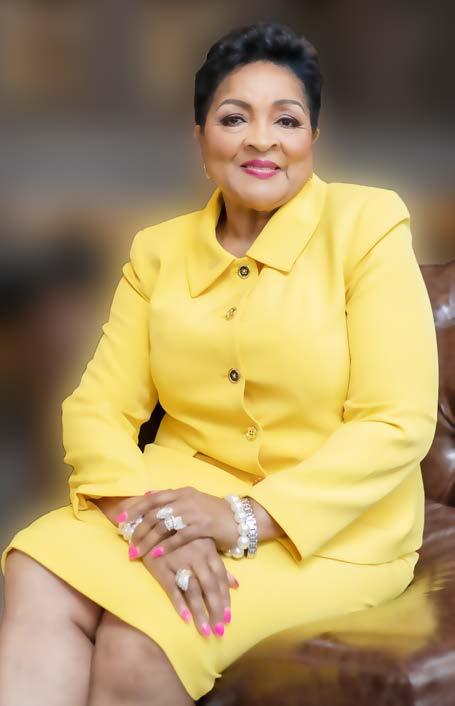
Dr. A. Lois Keith National Board Chair
Message from the President
The challenges before us are great, but so is our resolve. “ ”
Dear NCNW Sisters,
Civil Rights journalist and activist Ida B. Wells once said, “Eternal vigilance is the price of liberty.” At NCNW, our vigilance is exercised with strategic expedience, as we continue to mount an exceptionally powerful campaign for the advancement of Black women across the globe. With our forward-thinking programs and advocacy, NCNW services the agenda of women of African descent through numerous calls to action on federal and state policies regarding voting rights, education access, reproductive justice, and countless other civil rights initiatives. During this time, it is imperative to remember that we continue to boldly announce our presence and assert our dignity to those who hold positions of power at all levels.
Like the eternal vigilance of Ida B. Wells, NCNW has existed for 90 years as a guiding force and moral compass for policymakers and decision makers. Through her spirit and the spirits of NCNW past presidents, Dr. Mary McLeod Bethune and Dr. Dorothy I. Height, the economic influence of Black women shines through. At our National Headquarters, we are humbled and honored by the hundreds of people across the country who celebrated our 90th anniversary and then became Power Sustainers through our Power of 20 campaign. Their understanding of the transformative power of collective investment has fueled our ability to show up, speak out, and deliver results for Black women and their families.
As we mark our momentous 90th anniversary, we were reminded that the work is far from over. The challenges before us are great, but so is our resolve. We move forward anchored in legacy, driven by purpose, and united in sisterhood — because the advancement of Black women is not just our mission, it is our mandate.
With eternal vigilance,
Rev. Shavon L. Arline-Bradley President
and CEO
Ascending to Uncommon Height:
90 Years of Legacy, Truth, and Resolve
BY WHITNEY GUILFORD
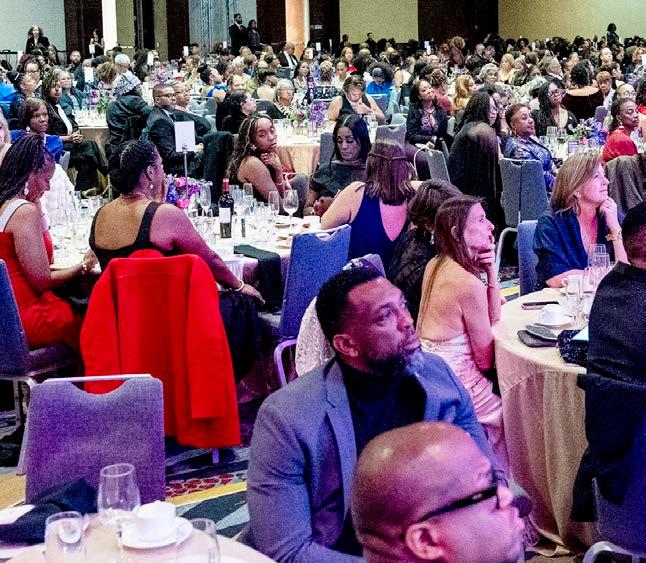
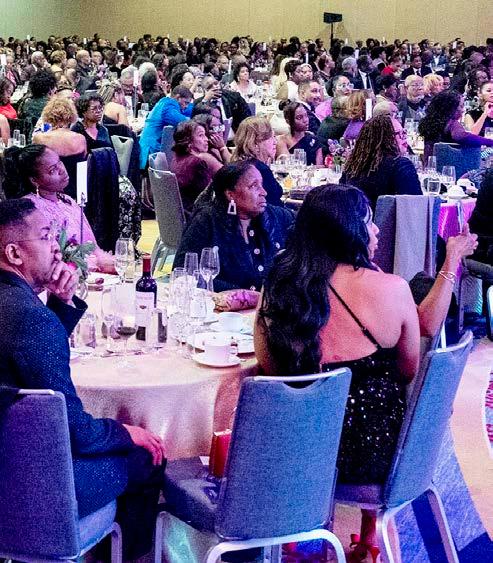
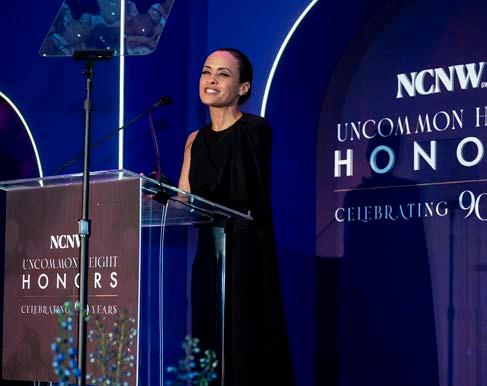
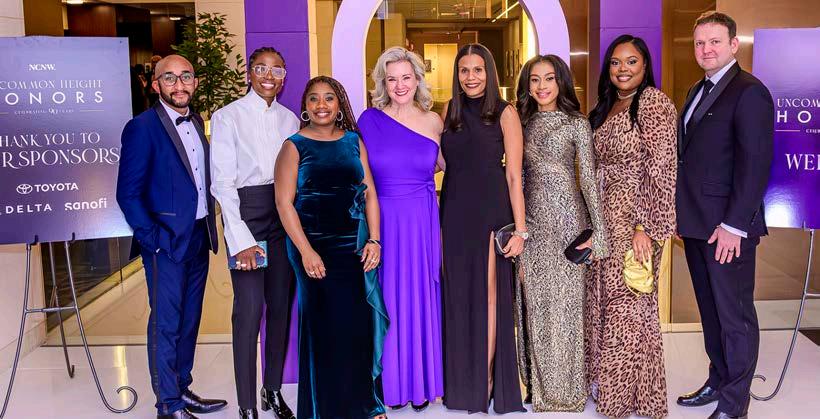
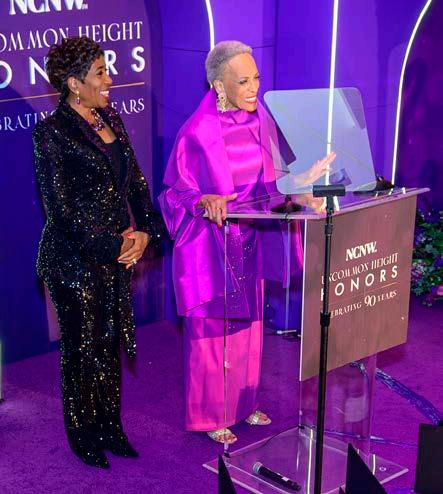
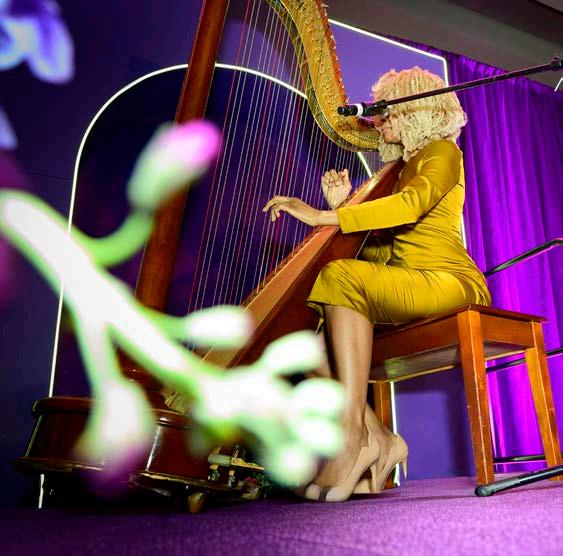
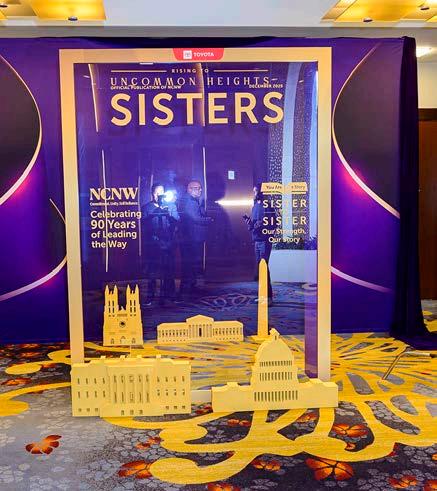
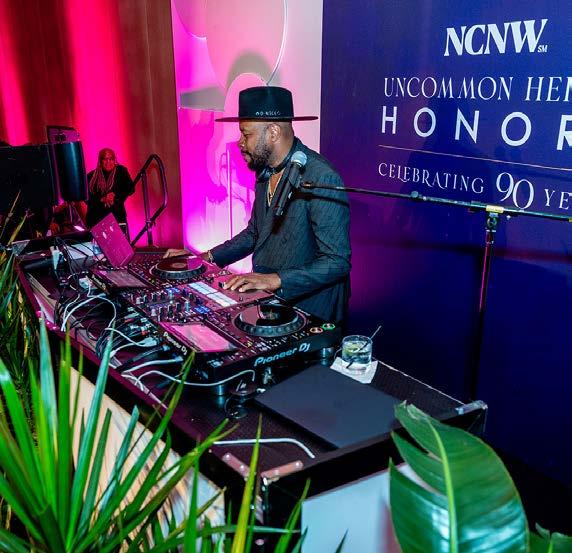
The 19th Uncommon Height Honors Gala was far more than a glittering fundraising event; it served as a profound reclamation of the founding spirit of the National Council of Negro Women (NCNW). As the organization marked its 90th anniversary on Dec. 6, 2025, in Washington, D.C., the evening functioned as a living bridge between the radical vision of Dr. Mary McLeod Bethune and the contemporary leaders who carry her torch. By gathering dignitaries on the purple carpet for a night of reflection and recognition, NCNW reinforced the idea that “Uncommon Height” is not a destination of personal success, but a collective responsibility to uphold the pillars of community, advocacy, and service that have sustained Black women for nearly a century.
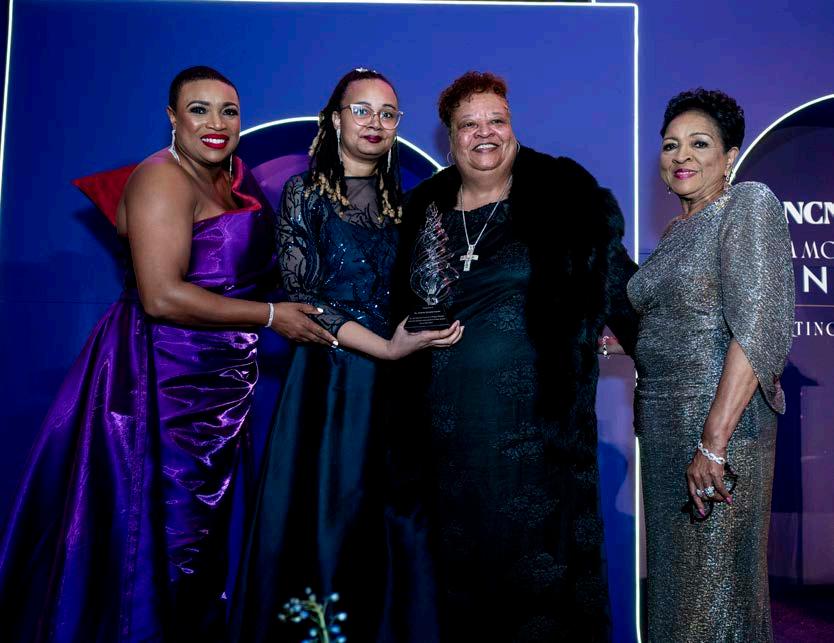
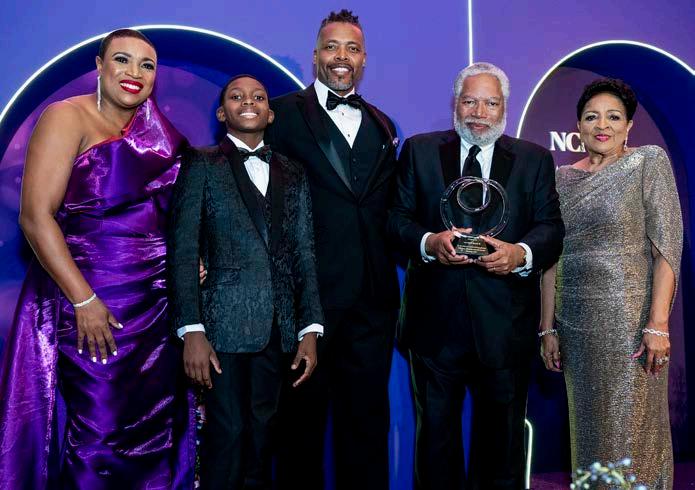
A central, deeply emotional pillar of the evening was the special tribute to The Honorable Alexis M. Herman. With her family in attendance to receive the posthumous Crystal Stair Award, the gala paused to honor a woman whose impact on NCNW was as foundational as it was transformative. Secretary Herman was more than a political titan; she was the organizational heartbeat of NCNW.
To the board Chairs and Presidents who sought her counsel, she was a brilliant financial advisor and a powerhouse fundraiser who ensured the longevity of the organization. Beyond her strategic mind, she was a cherished mentor, partner, and friend whose guidance shaped the leadership of NCNW through its most pivotal moments. Her legacy was captured in a moving retrospective that reminded everyone present that Sec. Herman’s commitment to the “Uncommon Height” philosophy was not just a professional duty, but a personal calling.
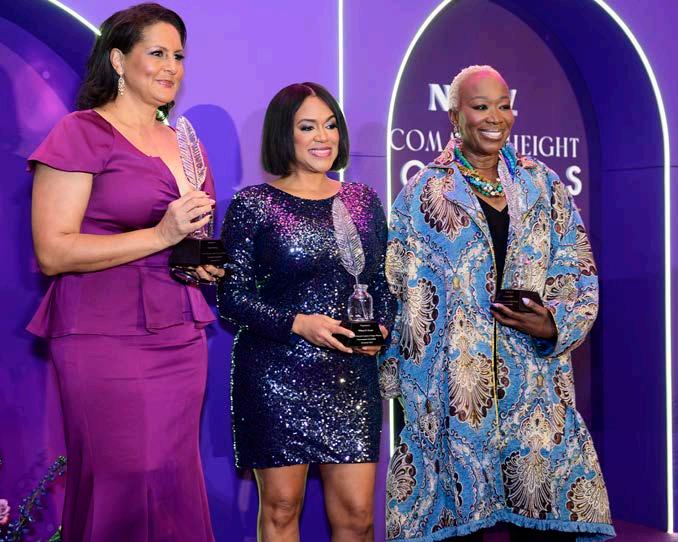
A pivotal and timely addition to the ceremony this year was the Uncommon Journalist Award, a category born from the urgent necessity to protect the integrity of the Black press. In an era where major news institutions like the Washington Post and MS NOW have significantly reduced their staff, often leaving Black journalists at the forefront of layoffs, NCNW recognized that these storytellers are among the few remaining guardians of truth regarding the current administration. Black journalism continues to serve as a critical check on power, fearlessly dissecting policies that many mainstream outlets overlook or minimize. By honoring Joy Reid, Tiffany Cross, Melissa Harris-Perry, and Karen
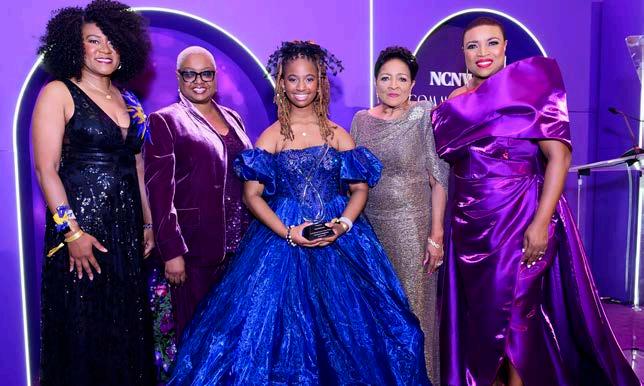
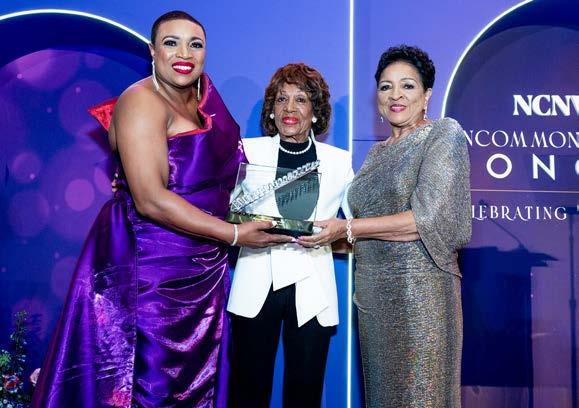
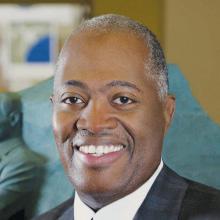
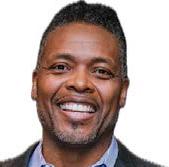
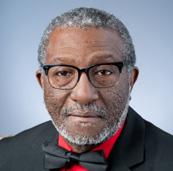
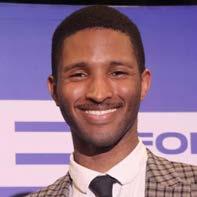
(L to R) NCNW President & CEO Shavon Arline-Bradley, XXX, Dr. Valerie Daniels-Carter, inaugural Alexis M. Herman Public & Community Service honoree, and NCNW Board Chair, Dr. A. Lois Keith pose with award.
Finney, NCNW did more than offer a platform; it provided a sanctuary to uplift the spirits of those who find themselves in the crosshairs of a shifting media landscape.
These journalists remain the vital voices addressing the existential threats facing the community today, from the aggressive legislative rollback of DEI initiatives to the systemic attacks on Black voter participation. Their work shines a necessary light on the targeted deportation of immigrants from predominantly Black nations, ensuring these stories are not buried under the
weight of a broader political cycle. The gala served as a reminder that the battle for truth requires immense courage, and NCNW is committed to ensuring these warriors have the support and visibility they need to continue their work.
The program further deepened its roots in history by recognizing the indomitable Congresswoman Maxine Waters alongside Secretary Herman with the Crystal Stair Award, highlighting a lineage of leadership that refuses to blink in the face of adversity. This recognition, paired with honors for emerging changemakers: Dr. Valerie DanielsCarter, inaugural Alexis M. Herman Public & Community Service honoree; Alena McQuarter, the Changemaker honoree, and Lonnie G. Bunch III, the Charles L. Franklin Associate honoree, created a tapestry of multigenerational resolve.
Ultimately, the night was a testament to the fact that while NCNW celebrates nine decades of history, its true work lies in the ongoing, relentless pursuit of justice and the elevation of those who dare to lead with conviction.
Media Mavens (Lto R) Karen Finney, Tiffiany Cross, Joy Reid, and Melissa HarrisPerry (not pictured) collectively receive the new Uncommon Journalist Award.
19th THE AWARDS GALA UNCOMMON HEIGHT
Affiliates Assembly 2025: “Rising Together Hand in Hand”
BY WHITNEY GUILFORD
The weekend had a different kind of energy. No keynote applause, no honoree tributes, no culminating moment designed for the camera. When the National Council of Negro Women convened its 2025 Affiliates Assembly in December, the organization was clear-eyed about what it needed: not a celebration, but a plan.
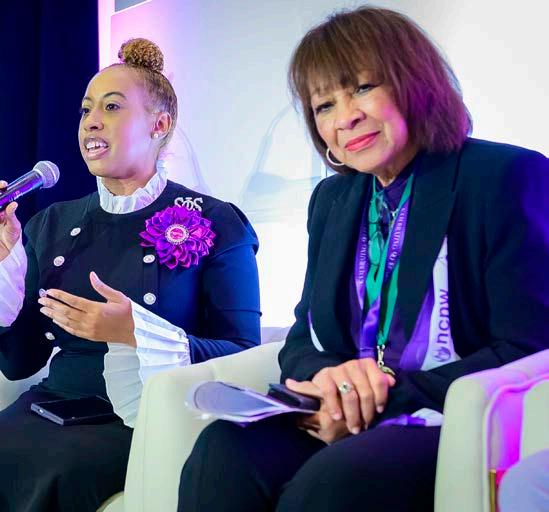
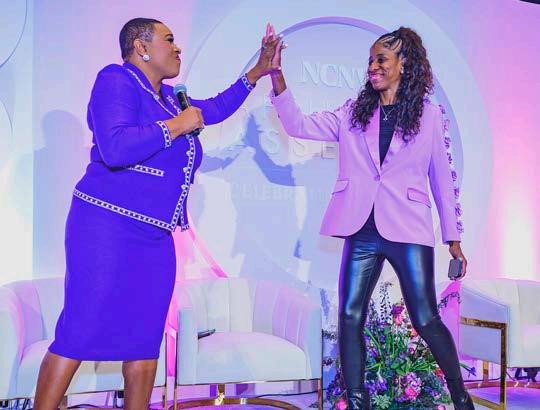
Under the theme “Rising Together Hand in Hand,” representatives from 34 of 38 NCNW national affiliate organizations gathered Dec. 5–6 for two days of deliberate, sector-by-sector, to work under the leadership of NCNW 5th Chair and 8th National President, Dr. Thelma T. Daley, and Tempress “Tee” Solomon, who serve as chair and co-chair of the National Affiliates Committee. Together, the NCNW affiliates connect millions of Black women and families across the country giving a reach of 3 million. The central question of the weekend wasn’t ceremonial. It was operational: what does it look like when all 38 of us move as one?
NCNW calls it “the Power of 38.” The idea is straightforward, and quietly radical: the collective political and civic weight of these organizations, when unified around a shared agenda, becomes something no lawmaker can ignore. The assembly’s main order of business was making sure that unity became actionable. Affiliates were formally introduced to the PowerUp policy toolkit, a practical framework equipping them to become fully participatory in the political landscape from municipalities to Capitol Hill.
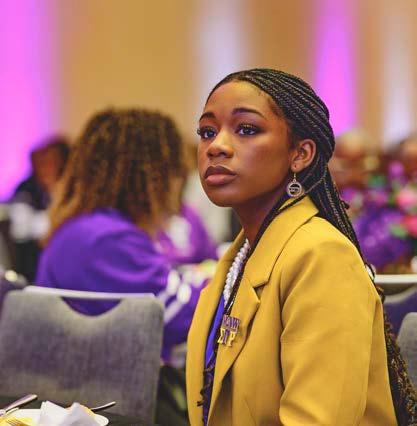
But the assembly understood that strategy divorced from context is just paperwork. Civil rights attorney Sherrilyn Ifill delivered a data-driven accounting of the economic and legal realities facing Black women in 2025, not as prologue, but as stakes. Dr. Ashley Robertson Preston grounded the weekend in the organization’s own institutional memory, presenting archival research on the history of the Affiliates Assembly itself. And perhaps most pointedly, Dr. LaTanya N. Townsend led a session that many in the room may have needed most: a focused examination of the mental health of women in highlevel leadership, naming the weight that comes with the work. The assembly also looked squarely at the question of who carries the work forward. An intergenerational session brought together legacy leaders and Gen Z and Millennial representatives to have an honest conversation about transition: what gets passed down, what gets reimagined, and what it means to lead a 90-year-old organization into its next decade.
That anniversary loomed large over everything. The 2025 Affiliates Assembly served as the first major event of the NCNW 90th anniversary year, establishing the 2026 roadmap for local sections and introducing the Bethune Power Rubric, a new internal standard for how affiliates and sections measure their community impact. Dr. Mary McLeod Bethune built this organization in 1935. The assembly was, in part, an act of accountability to her vision.
The strategic sessions, organized as six concurrent “Circles of Power,” grouped affiliates by sector. Greek-letter organizations in one section of the room, health and service groups in another, advocacy-focused organizations in a third, trading best practices and building the kind of cross-organizational trust that doesn’t happen over a dinner program. The conversations were direct: what’s working, what isn’t, and what the next four years require.
Presentations were made by partners poised for action: Terri Carmichael Jackson, executive director of the WNBA Players Association; Ashley Robertson Preston, Ph.D., author, historian & professor; Dr. Vedet Coleman-Robinson, president & CEO of the Association of African American Museums, and Liliahn Majeed, chief DEI officer at L’Oreal Groupe. Thirty-eight organizations. One direction. The work continues.
Gamma Phi Delta Honors NCNW Board Chair
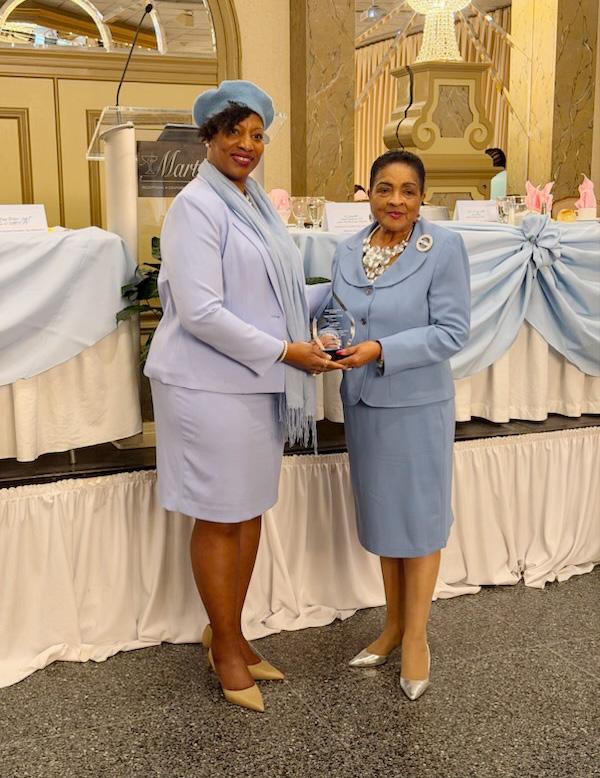
NCNW Board Chair, Dr. A. Lois Keith (right), was honored with the Gamma Phi Delta Legacy Luminary Award, presented by Gamma Phi Delta National President, Dr. Kartessa Bell (left) at the 83rd Founders Day Celebration. This recognition underscored a shared commitment to leadership and the advancement of professional and personal development for women.
Dr. Keith also served as the keynote speaker at the celebration recently held in Baltimore. The event provided an opportunity to reflect on the organization’s historic legacy and its continued impact on the community.
Gamma Phi Delta is an affiliate organization of NCNW.
Rev. Shavon Arline-Bradley Issues Nationwide Moral Check In MLK Day Sermon at Washington National Cathedral
BY WHITNEY GUILFORD
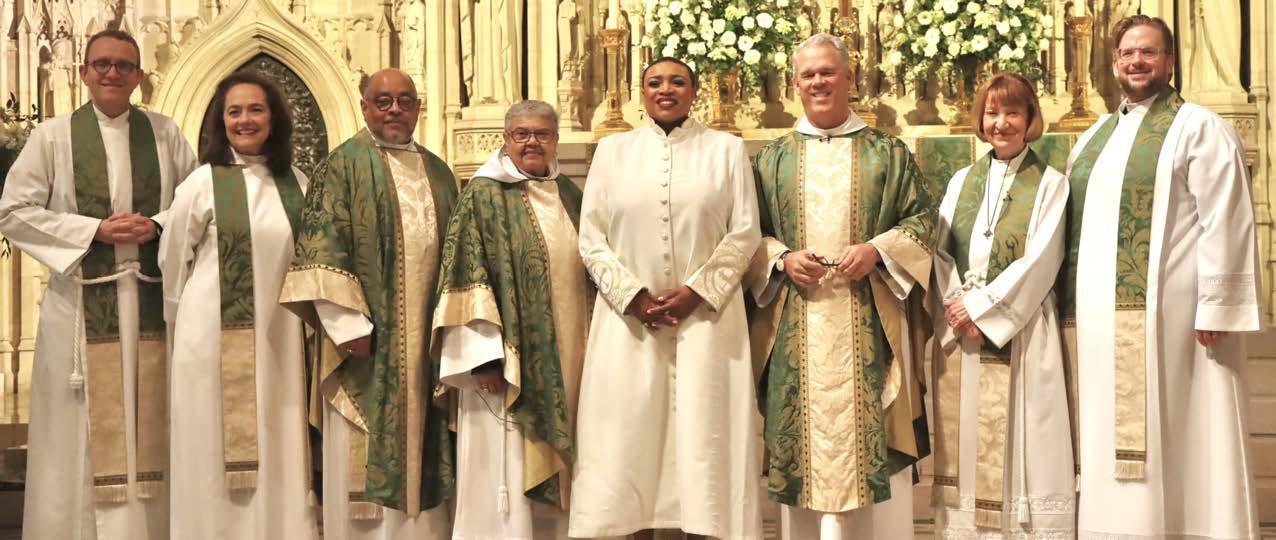
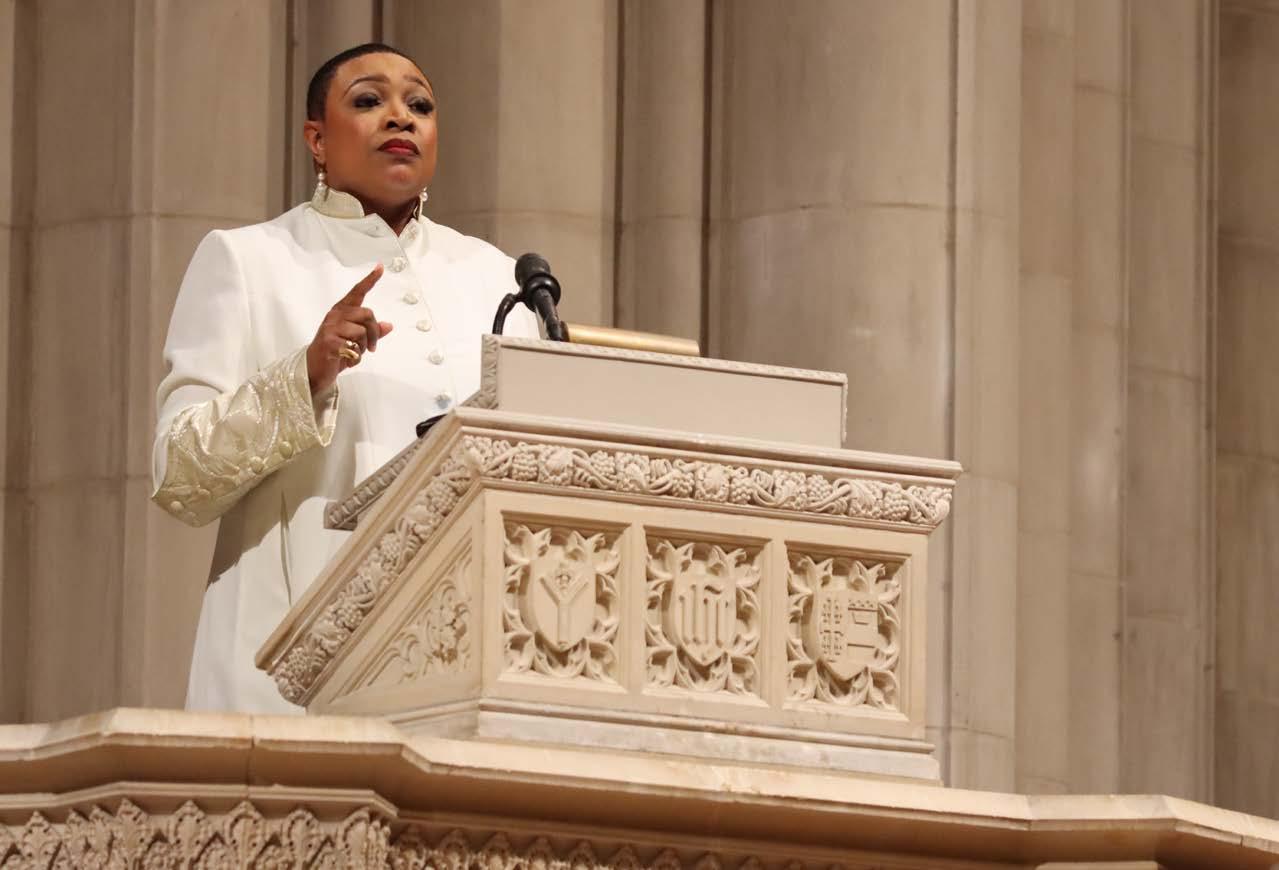
In a bold call to action and reflection, NCNW President and CEO, Rev. Shavon Arline-Bradley delivered a powerful sermon entitled “America, What Have We Done?” at the Washington National Cathedral on Sunday, Jan. 18, as part of the Cathedral’s Martin Luther King Jr. Day Commemoration.
Before a multiracial and multicultural congregation gathered at one of the nation’s most recognized houses of worship, Rev. Arline-Bradley challenged the country to examine its conscience and recommit to the unfinished work of justice envisioned by Dr. King, declaring that “the spirit of King is sounding the alarm.”
A Camden, N. J. native, Rev. Arline-Bradley grounded her message in both faith and public conscience, connecting Dr. King’s legacy to the moral crises facing the nation
today. Naming the emotional and spiritual toll of persistent injustice, she stated, “America, this is all exhausting.”
The sermon was anchored in Matthew 25:40, one of Jesus’ parables, which reads:
“Truly I tell you, just as you did it to one of the least of these who are members of my family, you did it to me.”
Using the scripture as a moral blueprint, Rev. Arline-Bradley reflected on the source of Dr. King’s unwavering conviction. “As I pondered the life of Dr. King, I wondered where he found his moral blueprint,” she said. “How could this man stand so firmly in the face of cowardice and conflict? In my role as president and CEO, that answer has become clearer than ever.” She emphasized that Matthew 25 gives a clear conscience for those who fight for justice.
Building from this foundation, Rev. Arline-Bradley posed a series of moral questions that echoed throughout the Cathedral and spoke directly to the state of human rights in 2025.
“America, what have we done? Did we feed the hungry, or did we cut SNAP and benefits? Did we quench the thirsty, or is there still contaminated water in Flint, Mich., and Jackson, Miss.? Did we care for the sick, or did we repeal legislation that extended tax credits for millions of Americans? Did we see a stranger and invite them in, or did we sanction a militia with a badge to murder the innocent?”
Drawing on the scholarship of W.E.B. Du Bois, Rev. ArlineBradley referenced double consciousness — living in constant tension — and expanded the framework to reflect the lived experience of Black women. “Black women have a quadruple consciousness, as I am Christian, Black, American, and woman,” she said.
As the sermon moved toward its conclusion, Rev. ArlineBradley challenged the nation to consider its next steps. “On this King Day, you may wonder — is the damage done? Now
the question has changed from ‘America, what have you done?’ to ‘America, what will you do now?’” She closed with a direct challenge to the church: “Will the church just spectate, or will you participate?”
The sermon and location carried deep historical resonance for NCNW. The Washington National Cathedral was the location of the 2010 funeral service of NCNW President Emerita, Dr. Dorothy Irene Height, one of Dr. King’s closest collaborators and a towering female figure in the modern civil rights movement who was eulogized by former President Barack Obama. In 2025, Rev. Arline-Bradley preached here at the funeral services for the Honorable Alexis M. Herman, former U.S. Secretary of Labor and long-time NCNW board member, underscoring the enduring presence of NCNW in moments of national mourning, moral reckoning, and civic reflection.
In invoking the legacies of Dr. King, Dr. Height, and Secretary Herman within the same sacred space, Rev. Arline-Bradley reaffirmed the unwavering commitment to justice, equity, and moral courage — urging the nation to move beyond commemoration toward collective responsibility and action.
Summit Sets Future Framework for Black Vax Agenda
BY WHITNEY GUILFORD
The pandemic gave the NCNW Good Health WINs (GHWs) program its urgency. The 2025 Summit gave it its mandate.
Convened as the program’s most expansive training to date, the 2025 GHWs Summit marked a quiet but significant turning point: the moment NCNW formally declared that Good Health WINs was no longer a crisis response, but a permanent pillar of the organization’s advocacy work for the decade ahead.
The shift was visible in the agenda. Where earlier summits centered almost exclusively on COVID-19, the 2025 gathering introduced what organizers called “The Big Four,” a new framework training NCNW members and partners to address the full landscape of respiratory illness threatening Black
communities: COVID-19, flu, RSV, and pneumococcal disease. The expanded focus reflected a harder truth. The health vulnerabilities that the pandemic exposed did not leave with it.
Timing of the summit made practical training especially critical. The federal Bridge Access Program, which had provided free vaccines to uninsured Americans, came to an end in 2025. Summit leaders moved quickly to fill the gap, training attendees on how to help community members identify new pathways to low-cost and free vaccinations in the changed landscape.
The summit also pushed its “Trusted Messenger” model into new territory. NCNW members have long been trained as community health educators, but the 2025 gathering
expanded that role into digital health literacy, equipping messengers to identify and actively debunk the viral health misinformation circulating on social media. In an environment where a single misleading post can reach thousands before a correction does the work of the trusted messenger now starts online.
Perhaps the most consequential structural change was the full integration of maternal and reproductive health as a core pillar of the GHWs program. The framing was direct: protecting the health of the household starts with the immunization and wellness of Black mothers. For a program built on the understanding that community health is personal, it was a natural and overdue expansion.
Session highlights reinforced the blend of training and momentum. Attendees completed Module 6 of the GHWs Certificate Program, the final installment of a certification series focused on leveraging community trust to drive health policy at the local level. Experts from the National Foundation for Infectious Diseases co-led sessions on the shifting science of respiratory viruses, ensuring that NCNW messengers carried the most current data back to their communities.
And, dedicated time was given to “Best of Show” case studies, spotlighting how affiliates and partners like Eta Phi Beta Sorority and The Links, Incorporated used mini-grants to fund community health activations in 2025.
The summit also launched the 2025 edition of the Respiratory Resource Guide, a practical flipbook covering symptoms, vaccine schedules, and local resources for the season ahead, and announced the 2025-2026 Dorothea B. Walker Legacy Scholarship, investing in the next generation of public health professionals.
Taken together, the ambitions of the summit mapped onto four goals: expanding access in the post-Bridge Access landscape, shifting the program’s educational frame from vaccine confidence to whole-family health preparedness, moving GHWs advocates into decision-making seats at local health departments, and building the infrastructure to sustain the work long-term.
The conversation NCNW started during a pandemic is now a permanent one. Good Health WINs intends to keep it going.
NCNW to Engage and Mobile Vulnerable Communities
BY AFIA WILLIAMS
National Council of Negro Women (NCNW) and the American Red Cross signed a partnership agreement on Mar. 3 to engage and mobilize resources in the most vulnerable communities. Together, they can alleviate suffering for sickle cell patients through blood donations. They will also help those who are experiencing hardship after a devastating disaster and lack preparedness tools to respond during times of an emergency.
Through the Red Cross network across all fifty states and territories, NCNW sections will have an opportunity to develop programs that transform through selfless service in the communities served. They will host blood drives, recruit Black donors, to save lives mainly in Black communities.
The relationship between NCNW and the American Red Cross was forged decades ago by NCNW founder, Dr. Mary McLeod Bethune. As an advisor to President Franklin Roosevelt, she attended American Red Cross
wartime conferences advocating for African American representation within the organization at a time when Black voices systematically excluded.
Dr. Bethune fought to desegregate blood donations and Black blood drives. She encouraged Black women to staff canteens and pressed for broader representation on national boards, resulting in her serving on the American Red Cross Board. She did not just open doors—she rebuilt the entire structure. Her efforts established a bridge between the Red Cross and the African American community that stands strong to this day.
Over 100,000 Americans live with Sickle Cell Disease— and 90% of them are Black. They need blood transfusions to survive. But here’s the challenge: they need blood that matches their unique genetic markers, which means they need donors who look like them. Dr. Bethune laid the groundwork. Now, NCNW is building the movement.
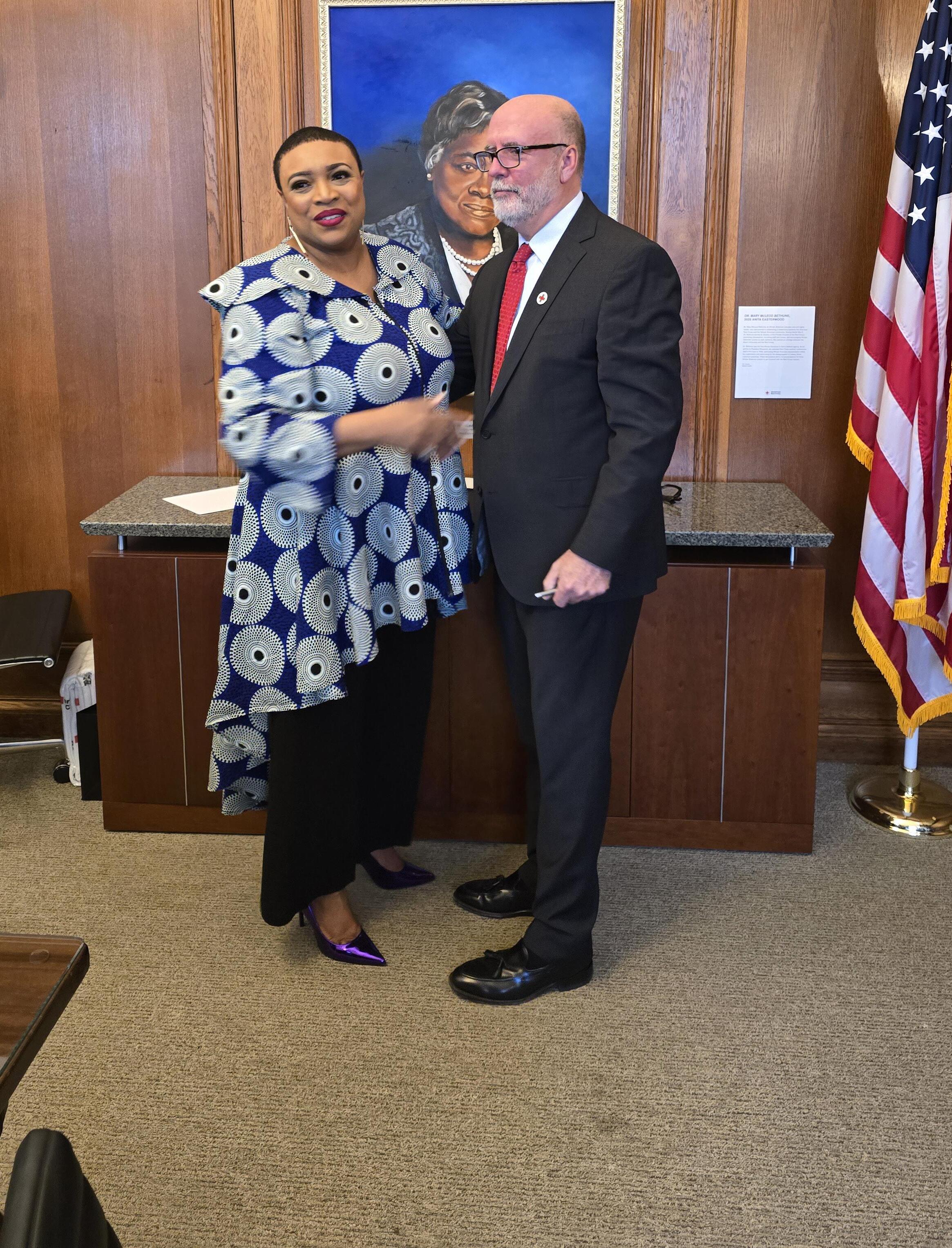
NCNW President & CEO Shavon Arline-Bradley and American Red Cross President, Bio Medical Services President & CEO Chris Hrouda after signing partnership agreement.
Piloted Food Program, NOURISH, Makes Impact
BY AFIA WILLIAMS
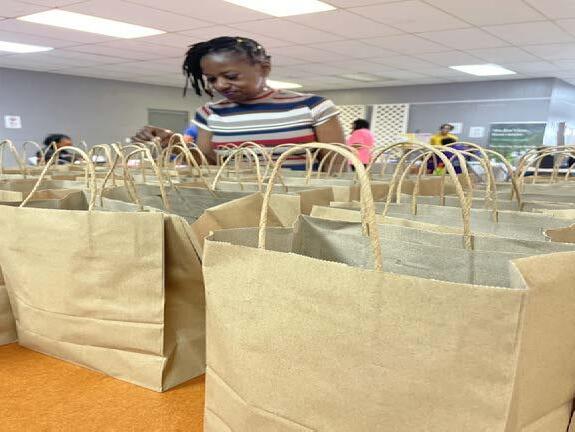
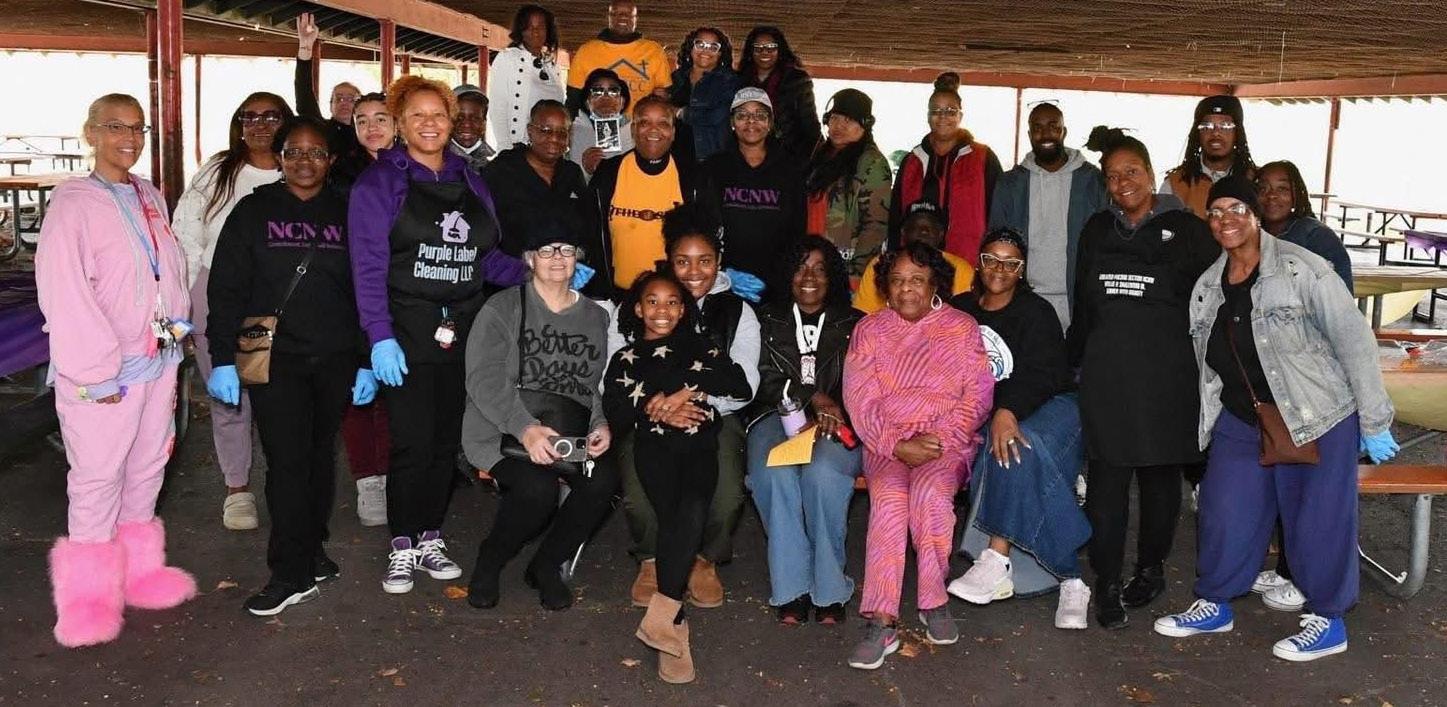
In 2025, National Council of Negro Women (NCNW) launched NOURISH, a pilot food security mini-grant program, powered by Amazon, to support community-based solutions addressing food insecurity, nutrition education, and SNAP access.
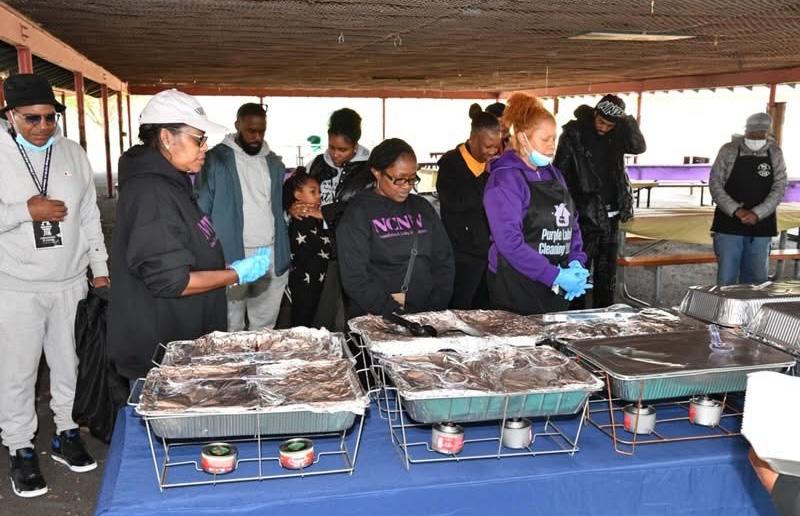
Through small but flexible $500 grants, NOURISH empowered local NCNW sections to respond directly to urgent community needs, particularly during a period marked by SNAP disruptions and heightened economic strain.
Across participating sections, the NOURISH pilot demonstrated that targeted micro-investments, paired with trusted community leadership, can generate outsized impact—delivering nutritious meals, expanding access to food resources, strengthening partnerships, and restoring dignity to individuals and families facing hunger.
During the 2025 pilot, NOURISH-supported activities reached communities across multiple regions, including:
Seattle, Wash. (multiple zip codes across King County)
Greater Pocono Region, Penn.
Mississippi communities (including Okolona and surrounding areas)
Collectively, sections served urban, suburban, and rural communities, ensuring that support reached families, college students, seniors, and unhoused individuals. Sections utilized NOURISH funds to implement a range of high-impact activities, including:
Community food drives and food distribution events
Nutritious community meals and family-style dinners
SNAP education and outreach (flyers, brochures, one-on-one conversations)
Nutrition education workshops and healthy eating demonstrations
Participation in health fairs and community resource events
Partnerships with food pantries, universities, community organizations, and faith-based groups
Many sections intentionally paired food access with education, ensuring participants left not only fed, but informed about longer-term resources. Results yielded were
300+ individuals directly served across events
Dozens of families reached, including unhoused families and foster families
176 college students fed during a university-based community meal
330+ meals provided or equivalent food assistance
The 2025 NOURISH Pilot Program demonstrated the power of community-led solutions to food insecurity. Through modest investments, NCNW sections delivered nourishment, education, and hope. Meeting people where they are and reaffirming the role of NCNW as a trusted leader in health equity and food justice.
This pilot program laid a strong foundation for scaling NOURISH into a sustained national initiative capable of reaching even more families in the years ahead. NOURISH proved that when trusted community leaders are resourced, even modestly, they can move faster, reach deeper, and respond where large systems cannot.
advocacy in action
Power in Motion: How Advocacy & Policy Is Meeting the Moment
BY BRASHANDA MCCOY
At the close of 2025, the work of the Advocacy and Policy (A&P) team was centered on a simple but urgent question: how do we meet this current moment in a way that is both immediate and lasting?
The team was tracking legislation, listening closely to our members, and seeing in real time how barriers to civic participation continue to shape Black communities. It was clear that what was needed was not just outreach or information, but structure. Something that could connect national priorities to local action in a way that was consistent, practical, and sustainable.
NCNW PowerUp was first conceptualized by NCNW General Counsel Mareco Edwards as a response to the shifting civic landscape and the need for a more coordinated, intentional approach to engagement. That vision was then strategically build out by Dr. Ja’Lia Taylor, director of Policy, Telecommunications, and Technology, who led the development of the full framework and ensured it could be implemented across our national network.
In December 2025, focus was placed on building the foundation. During the National Affiliates Assembly, the A&P Team convened with more than 400 affiliate leaders from across the country. Those conversations grounded the approach and reinforced the need for a unified civic engagement strategy. At the same time, NCNW PowerUp was formed into a fully realized six-pillar model designed to support voter education, registration, protection, mobility, support, and communication.
The team conducted research on battleground states for the midterms, analyzed voter turnout patterns, and mapped key policy issues to ensure the work reflected
the realities facing Black communities. By the end of January, they had established a strong foundation and a clear direction for national implementation.
The team moved from building to launch by officially rolling out NCNW PowerUp across NCNW sections nationwide on Feb. 4. A&P worked closely with affiliate leaders to ensure they were prepared to implement the framework locally and shared organizing tools, strengthened communication channels, and supported sections as they began to plan their own civic engagement activities.
A&P also remained focused on legislative developments. As discussions around the SAVE Act evolved, they developed and distributed targeted communications to members, breaking down the legislation and its potential impact on voter access. They also provided updated voter information and state-specific guidance, so members had accurate, timely resources to support their participation and outreach efforts.
In February 2026, the work began to take shape in communities. NCNW State Advocacy & Policy Manager Micah Jumpp traveled to Seattle, where the department hosted its first NCNW PowerUp activation and engaged directly with the Seattle community and NCNW members. During this activation, NCNW President & CEO Shavon Arline-Bradley and Byrd Barr Place, CEO Dr. Angela Griffin, led a dynamic conversation on food insecurity and voting rights. Jumpp and Seattle Section Social Justice Chair Winona Hollins-Hauge followed with an NCNW PowerUp charge, outlining the target, Washington House district, key dates, and Seattle activation plans. Attendees then heard from community members and developed an NCNW PowerUp action plan grounded in our six pillars. The experience gave A&P an opportunity to see how the framework translated in practice and how communities responded to it in real time.
NCNW President & CEO Shavon Arline-Bradley pictured with Seattle Section and Affiliates after PowerUp session.
That same month, the A&P team also led national training sessions with more than 300 NCNW members and affiliate leaders. These sessions focused on equipping leaders with practical tools for organizing, voter outreach, and addressing barriers to participation. What stood out most was the level of engagement and readiness from the NCNW network to carry this work forward.
In March, the team continued to expand and deepen this work. Jumpp traveled to Sacramento, Calf. to support their Advocacy Day at the State Capitol, where she led a PowerUp session and legislative advocacy training in partnership with the NCNW Social Justice Committee, alongside NCNW leaders Donna Wood and Dr. Helena Johnson. The group was recognized on the floor of the California State Senate before meeting with elected officials to discuss key issues, including maternal health and juvenile justice. This engagement reflected how PowerUp can be integrated into year round civic engagement and strengthened NCNW members’ connection to elected officials on the ground.
Throughout these months, the A&P team were also intentional about connecting policy to everyday life. Their work on broadband access and digital equity reflected that understanding. Access to reliable internet shapes how people receive information,
access services, and participate civically. These are not separate issues. They are part of the same landscape. Dr. Taylor partnered with Vice President & Associate General Counsel Traci Biswese at the National Internet and Television Association (NCTA) and hosted another live as part of the “Bethune Tech Talks.” They dived into these issues around broadband that focused on impacts to the Black community specifically.
The A&P team stands out with how much of this work has been about connection. Connecting members to information. Connecting national strategy to local action. Connecting policy to lived experience.
A framework was built, but more importantly and information bank for NCNW sections to use, adapt, and carry forward was solidified.
The A&P Team is happy with the growth of PowerUp thus far, as they now have a strong foundation, a trained network of over 500 members, and a clear direction for members and affiliates alike. This work is not about a single moment. It is about sustained engagement and making sure Black communities have the tools, knowledge, and support to participate fully in our elections.
Now as we approach the midterm elections, it’s time to PowerUp and get ready to vote!
The Black Women’s Leadership Collective Launches:
Effort will leverage the reach of a coalition of national Black women-centered organizations, leaders, and advocates reaching more than 20 million Black women nationwide.
National Council of Negro Women (NCNW), in partnership with The Black Women’s Leadership Collective (BWLC), its 11 partner organizations and BWLC’s North Carolina and Virginia chapters, today announced the launch of One Million Black Voters Rising (1MBVR), a bold, multi-year effort to register one million new Black voters, build collective power and long-term civic engagement. Rooted in the organizing power of Black women—our democracy’s most active participants—1MBVR launches with a combined reach of more than 20 million Black women nationwide and their networks.
Using a combination of digital tools, on-the-ground organizing, and culturally competent outreach, 1MBVR invites participants to register new voters and sustain engagement through 2026, 2028, and beyond. Equipped and supported to activate their own networks—in neighborhoods, campuses, workplaces, and congregations—and to have direct, honest conversations. By focusing on person-to-person activation, 1MBVR aims
to convert untapped eligibility into real outcomes: more resources for schools, deeper investment in communities, greater opportunity for families, and leadership that is accountable to Black voters.
This effort is grounded in a simple truth: Black political power has not peaked—it has been undercounted, underestimated, and undervalued. At a time of unprecedented threats to our lives, our opportunities, and our communities, anti-Blackness and racism are having a real impact on our present and our future—issues that are not always addressed in traditional voter registration efforts. This is a critical moment to demonstrate what’s possible when we move together—across organizations, sectors, and states. That’s why 1MBVR is designed to meet people where they are, building the movement through trust, conversation, and connection.
The One Million Black Voters Rising Movement launches with an urgent call to Join the Movement to One Million Stronger. We are rising to use our power—because we
have the numbers to create real change, and because there is more to do: more to protect, more to fight for, and more to build for the next generation.
“Now, more than ever, ensuring everyone participates in the political process is essential, and registering to vote is crucial to that involvement. Our collective goal of registering 1 million new voters reflects our commitment to civic duty, which is under immediate threat. Bad-faith actors are attempting to create fear and uncertainty around both the impact of the Black vote and voting security. These actors rely on disinformation and intimidation in their method of destruction. We at NCNW, and as Black women, are familiar with these insidious actions, and are equipped to mobilize our communities to mount a strong resistance. This push for 1 million new registered voters is a strategic initiative to strengthen the spirit of the people who encompass our democracy and to communicate that their voices will be heard
at the polls,” said Shavon Arline-Bradley, NCNW president
& CEO
The Black Women’s Leadership Collective (BWLC) is an intergenerational, intersectional organizing hub of national Black womencentered organizations, leaders, and advocates from across the country. Rooted in the power of collective action, BWLC is building, growing, and activating a national network to ensure Black women’s voices are heard—in the halls of power, at the ballot box, and in our communities. Together, we represent and engage millions of Black women through our expansive network. Whether mobilizing voters, shaping policy, or cultivating leadership, BWLC is harnessing the full force of Black women’s leadership to drive transformational change across the country. www.blackwomensleadershipcollective.org
To learn more, visit: www.onemillionblackvotersrising.org
BY ELISSA JOHNSON
We Can’t Afford to Look Away: The Threat of Immigration Enforcement to Black Communities
From Los Angeles to Chicago, to Washington, New York City, to the latest violence in Minneapolis –for over a year the harm of increased immigration enforcement has been on full display and like always Black communities and families are caught up in the crackdown.
Under the guise of “public safety” and “immigration enforcement,” there is a renewed attack on our civil rights that concerns every single one of us. Whether it is the attack on birthright citizenship, increased surveillance, court-sanctioned racial profiling – better known as Kavanaugh stops – or the speed with which the administration is criminalizing and incarcerating tens of thousands of people across the country, the urgency of this moment is clear.
I am haunted by the images of the hundreds of Chicagoans awakened and dragged out of their homes in the middle of the night last year. And there are so many other examples that should raise our alarm bells even before the recent killings of Keith Porter, Jr., Renee Good, and Alex Pretti. Unfortunately, the $191 billion that Congress appropriated last summer for the Department of Homeland Security, including ICE, all but guarantees this enforcement apparatus will continue to grow.
Now some may say that the immigration fight is not ours, but we know better.
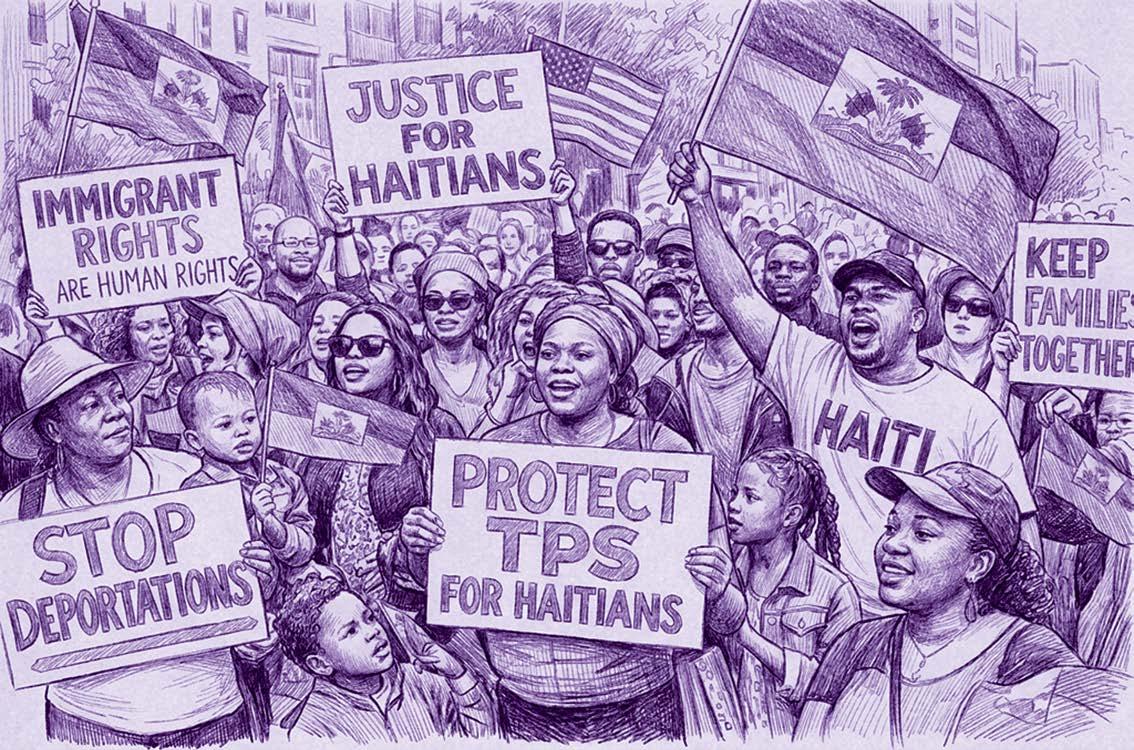
There are at least 330,000 Haitians living in our communities whose legal status the administration is trying to strip away. And that is only a small fraction of the more than five million Black immigrants in the
United States. Black immigrants have lived in the United States for an average of 14 years, working in critical industries like healthcare, education, finance, technology, and manufacturing. They are part of our communities from coast to coast, making up more than a quarter of the Black population in Florida and Washington state and contributing billions to metro economies, like Washington, Atlanta, Houston, Boston, Philadelphia, Penn., Minneapolis, Baltimore, and Chicago. As immigration enforcement intensifies across the country, Black immigrants are more likely to be stopped, detained, and deported—tearing apart families and destabilizing communities. These policies do not just harm immigrants, they harm the 1.7 million U.S. citizen children of Black immigrants and they threaten Black communities as a whole.
The terror we see unfolding across the country builds on the foundation of an overly punitive criminal justice system that has ravaged our communities for decades. We cannot afford to let the playbook that brought us mass incarceration reemerge, when the work to dismantle its harm is still ongoing. We know all too well the damage of an era defined by the harsh and racially disparate administration of “justice.”
After nearly 40 years of unprecedented growth, our prison and jail populations reached their peak around 2008. Since that peak, we’ve been combating those draconian policies to bring people home with great success. We reduced the Black imprisonment rate by nearly half through evidence-based reforms, while also increasing the safety of our communities. But now, increased criminalization, incarceration,
and immigration enforcement threatens to discard the lessons we learned over the past 20 years and again put our neighbors and family members behind bars.
The cost of returning to these failed approaches is incredibly high.The extraordinary amount of money being poured into arresting and incarcerating Black and brown people worsens the affordability crisis, widens the racial wealth gap, and comes directly at the expense of investments in healthcare and proven safety programs.
So what can we do?
We can look to the evidence to avoid repeating past policy mistakes.
We can advance safe and effective policies that expand freedom for our communities.
We can urge our state leaders to restrict coordination with federal immigration enforcement, use their oversight power to visit detention centers, prisons, and jails, and utilize zoning and state laws to prevent the massive expansion of detention camps.
We can call on our federal elected officials to use every tool at their disposal to claw back the money appropriated for ICE and DHS and instead invest that money to bring down the cost of living and healthcare costs for Americans.
We can work together to advance politically resilient solutions that ensure our harmful criminal justice and immigration systems do not continue to be weaponized in ways that undermine our nation’s promise and democratic ideals.
Elissa Johnsonis the vice president campaigns for FWD. To learn more, visit the website FWD.us
SECTION NEWS
GEORGIA SOUTHERN SECTION
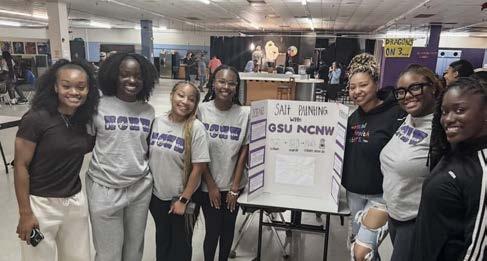
The Georgia Southern Section volunteered at the Statesboro STEAM Academy, assisting students with a salt painting activity that demonstrated how art and science can go hand in hand. Using glue, salt, and watercolor paint, students created fun, textured artwork and learned about hygroscopic properties.
HAMPTON UNIVERSITY SECTION
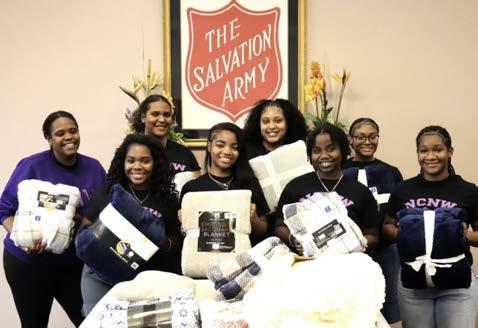
The Hampton University Section volunteered with the Salvation Army, a longstanding organization dedicated to providing essential services to communities in need, to sort and organize donations. They helped ensure items were processed efficiently and distributed to those who needed them most.
GREATER AUSTIN SECTION
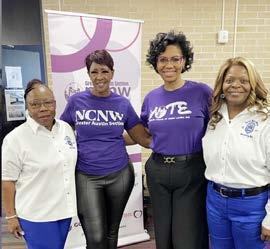
The Greater Austin Section partnered with their affiliate local chapter of Zeta Phi Beta, Sorority, Inc. to share the GoodHealthWINs initiative with the community at the annual Power of SHE Conference. They also collaborated with community partners, including the NAACP Austin Branch and Phi Delta Kappa, Inc., Delta Beta Chapter, to host a “State of Education” Town Hall.
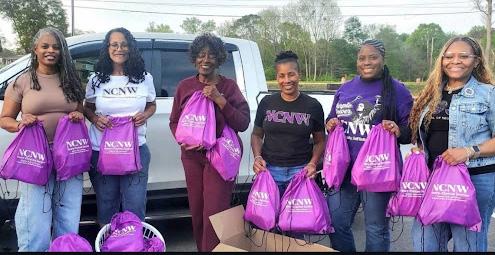
The Henry Clayton Section Outreach and Social Justice Committees, in collaboration with the Period Project, sponsored a Hygiene, Pads, & Power Delivery to support women in crisis in Clayton County.
MANHATTAN SECTION
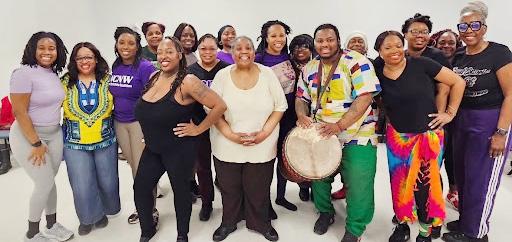
The NCNW Manhattan Section hosted an Afro-Caribbean dance class in celebration of Black History Month and Heart Health Month. The event promoted cultural appreciation and encouraged physical activity as part of overall wellness.
HENRY CLAYTON SECTION
NEW ORLEANS SECTION
Members of the New Orleans Section assisted individuals with voter registration and helped update voter information ahead of the midterm elections. They also provided guidance on the registration process and shared important voting resources to ensure community members were informed and prepared.
RICHMOND SECTION
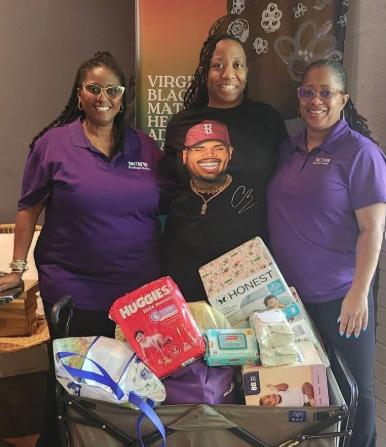
In support of Black Maternal Health Week, the Richmond Section donated much-needed baby supplies to mothers and babies served by community partner, Birth in Color RVA.This effort helped ensure families have access to essential resources during pregnancy and the postpartum period, while also raising awareness about the disparities Black women face in maternal healthcare.
NORTHERN VIRGINIA SECTION
NCNW Northern Virginia (NOVA) Section met the needs of others by combining service, education, advocacy, and partnerships to create meaningful, sustainable change. Attendees received life-changing health information about crucial preventive measures against respiratory diseases, such as COVID-19, influenza, RSV, and pneumonia, including over 100 masks and hand sanitizers. Community partners also served attendees hearty soup and hot chocolate, as well as a warm lunch.
PHILADELPHIA SECTION
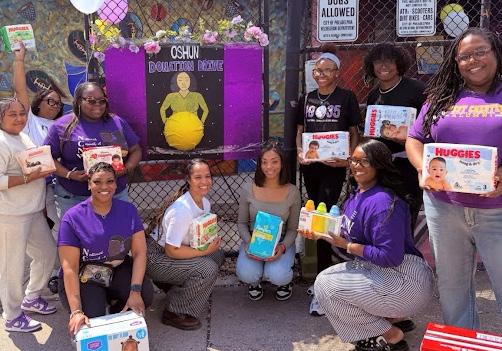
Philadelphia YACA Committee hosted their 2nd Annual Oshun Baby Shower Donation Drive in honor of Black Maternal Health Week. Donations were collected through the Amazon wishlist, and community members generously supported a local family center to provide mothers with essential items for their growing families.
TEXAS STATE SECTION
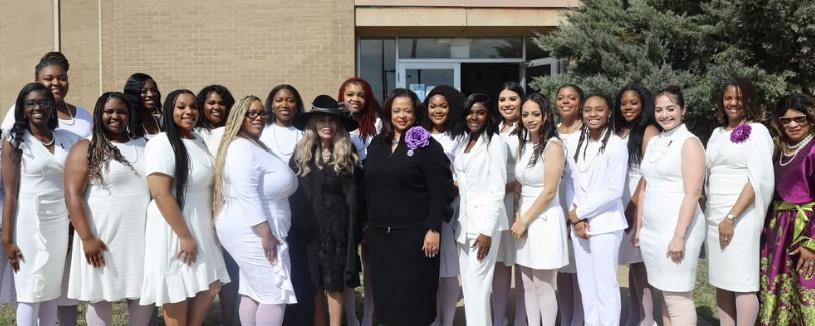
The Texas State Coalition supported and led the chartering of the Jarvis Christian University Section, officially welcoming a new generation of collegiate sisters into our organization.
FLORENCE SECTION
UNIVERSITY OF DELAWARE SECTION
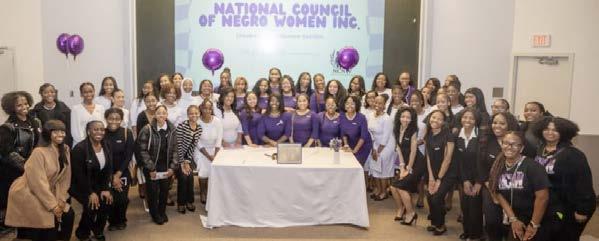
We are extremely proud of the 36 new members inducted into the University of Delaware Section. Their demonstrated excellence, leadership, and commitment to service are commendable, and their contributions are already making a meaningful impact. We look forward to seeing the ways they will continue to lead, serve, and inspire.
The Florence Section held its Annual Scholarship Gala and proudly hosted Founder, Dr. Mary McLeod Bethune’s granddaughter, Dr. Evelyn Bethune (center), who is pictured with Dr. Modestine J. Samuel, section president (left) and Andrea Johnson, chair of the scholarship committee (right). Dr. Bethune’s great-grandnieces — Miriam Gregg, Mrs. Gloria Dantzler, The Honorable Jereleen Holloman Miller – were also in attendance.
100 Looks Good on Sister Doris Wethington
BY WHITNEY GUILFORD
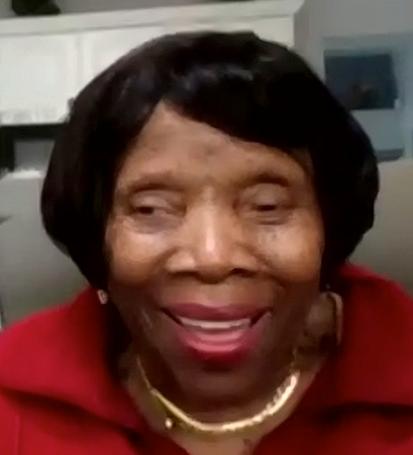
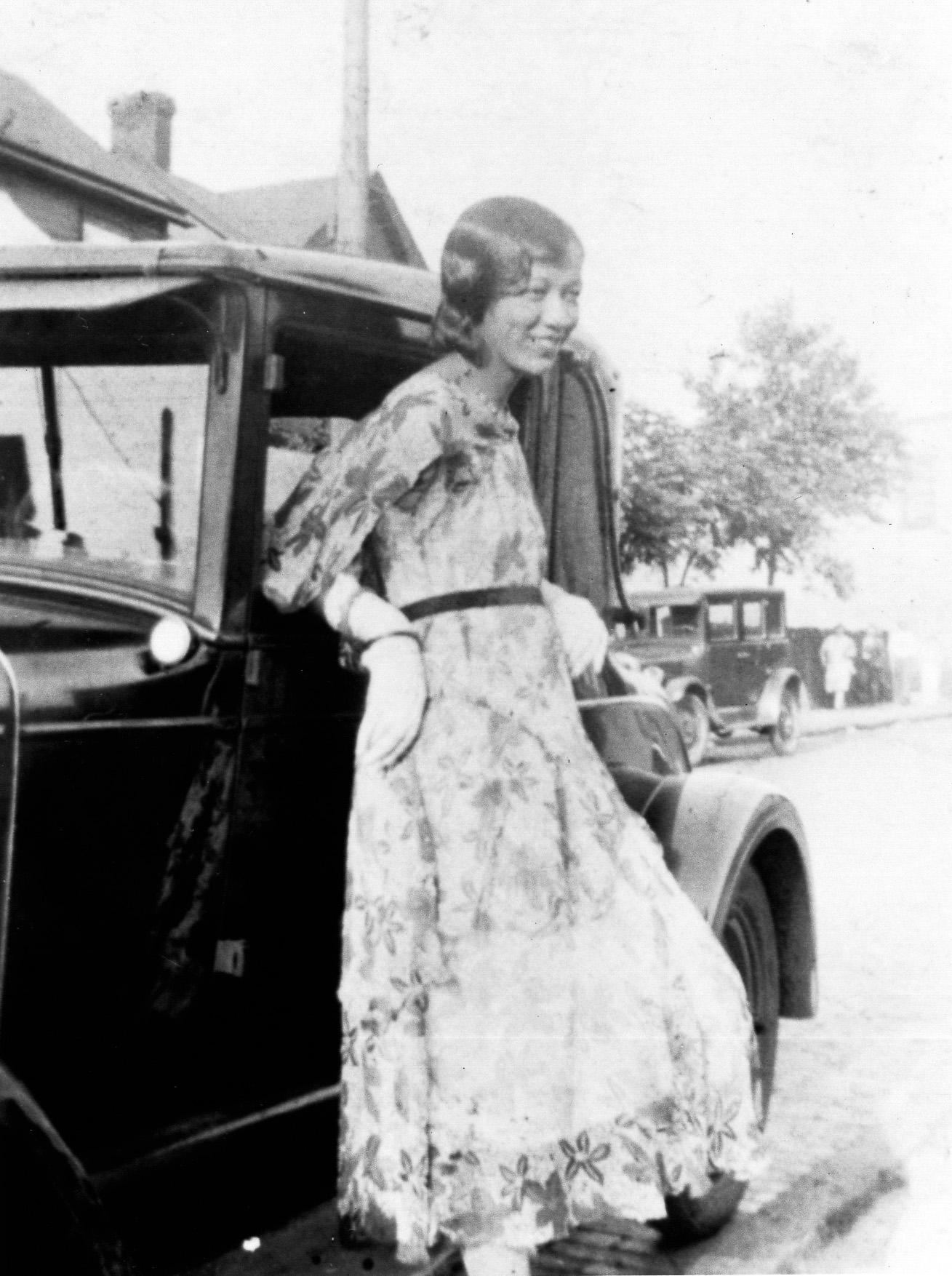
She was smuggled between Caribbean islands in the dead of night on a leaking boat, bailing water with a tin cup at nine years old so the vessel wouldn’t sink before it reached shore. By the time she was 14 she was working as a maid for a white family in Guadeloupe, quietly carving thin slices of chicken from the breast before she served dinner, portions small enough that no one would notice they were gone, and packing them into a container she would hand off to a sympathetic bus driver who carried the food across the island to her mother and young daughter, because that was the only way she knew to make sure they ate. Decades later, she would walk 20 blocks through a New York winter with her sick child wrapped in a blanket in her arms, because she had no money for a cab and because cabs in those days weren’t stopping for people of color anyway. This is Doris Wethington, who just turned 100 years old and is the oldest member in the National Council of Negro Women Lake Sumter Marion Counties (LSM) Section, as she recalled those days!
Born in New York City during the Great Depression, a time she described simply as one when “there was no money, no food,” Wethington was sent by her parents to Dominica, a British Caribbean island, to be raised by her grandmother while her parents tried to survive the economic collapse back in New York. Life on the island was lean but communal, with families growing what they could, bartering plantains, bananas, sugar cane, and homemade brown sugar with white-owned grocery stores in exchange for rice and flour, trading goods rather than money in an economy where cash was nearly nonexistent. When Wethington was around nine, her mother moved them from Dominica to Guadeloupe in the middle of the night, a clandestine journey that her daughter-in-law and President of the LSM Counties Section, Marquesa (Shaun) Wethington, described plainly, “If you were caught traveling between islands
without authorization, you either drowned or went to jail. The boat took on water the entire crossing, and every passenger bailed.”
Guadeloupe, French island with more jobs and better prospects, was supposed to be more prosperous than Dominica, but the promise did not hold. When Wethington‘s mother tried to enroll her in school after arriving, she was turned away at the door, told that at 14, she had aged out of eligibility.
“I thought that was taking advantage of a minor,” Wetherington recalled, “And I didn’t feel good about it at all.” So, she went to work instead, taking a position as a maid for a white family, doing all the cleaning and cooking and serving in exchange for a small wage and a portion of the family’s leftovers after they had finished eating, a share she described as not amounting to much. Rather than accept it, she developed a workaround that she recounted with quiet matter-of-factness: before serving the meal, she would carefully slice thin pieces from the chicken breast in a way that left the pieces looking whole, then pack her
portion into a container and give it to the bus driver, a man who took nothing for himself in exchange, to carry to her family in the next town. She would telephone her mother to meet the bus at 2 o’clock and make sure the empty container came back on the return trip.
“And that’s how we survived,” Wethington said.
When she was around 18, her father in New York had saved enough to send for her, and she arrived in Harlem sometime around 1947 or 1948, settling on 138th Street. She felt like she was stepping into a neighborhood that was alive with music and culture in those years like The Cotton Club, the Renaissance Ballroom where her future husband danced the Lindy Hop on weekends. There was Birdland, and performers like Cab Calloway and Fats Domino moving through the clubs and theaters of upper Manhattan. Wethington found her way to St. Mark’s, the Evangelist Catholic Church, where the choir director was holding auditions, and her soprano voice earned her the solo parts and introduced her to James Wethington, the church organist, whom she would marry.
Through the Catholic Church, which her daughter-inlaw noted served as a kind of informal employment network for Black New Yorkers in that era, Wethington built a working life across the city. She cleaned offices at Metropolitan Life at night and eventually convinced her supervisors to move her to the day shift. She cleaned homes on the Upper East Side and parlayed one employer’s goodwill into a job at his curtain factory, learning to sew valances and ruffles on an industrial machine. She eventually trained in IBM keypunch technology and moved into medical coding at Harlem Hospital, a skill she learned through a workplace program.
Through all of it, she sang, and the singing kept opening doors. From St. Mark’s, Wethington’s voice carried her to St. Patrick’s Cathedral on Fifth Avenue, where, according to her daughterin-law, she became one of the first Black sopranos to perform, singing solos for weddings and funerals and concerts alongside her husband, who accompanied her on the organ. The engagements eventually took her to Rome, where she sang for the Pope, though as she noted with characteristic practicality, the choir had to pay their own airfare. Her choir also performed in the wedding scene of The Godfather Part III, and she sang at a concert in Washington, D.C., during the George H.W. Bush administration, an event she remembered less for its grandeur than for the fact that the organizers offered nothing to eat and the performers, who had been warned ahead of time, brought sandwiches on the bus.
Wethington lives now in central Florida, a place quite different from the islands she crossed in leaking boats and the Harlem streets where she built a life note by note and job by job. Her story belongs to a particular and urgent tradition, of Black women who were never given anything and who built everything they had through ingenuity and endurance and a quiet refusal to accept the portions they were dealt, whether those portions were measured in chicken or opportunity.
She turned 100 on Dec. 4, 2025, and she still, by all accounts, has a very beautiful and kind smile. We salute you, Doris Wethington!
SISTERS New Legacy Life and Life Members
AS OF OCTOBER 29, 2025 THROUGH MARCH 31, 2026
LEGACY LIFE MEMBERS
Ms. Mrs. Samantha Agee
Ms. Jamie Bland
Ms. Erica Blount
Ms. Evelyn Boyd
Mrs. Camille Breaux
Ms. Barbara Campbell
Rev. Carolyn C. Cavaness
Mrs. Dorothy Cochran
Mrs. Cynthia Coleman
Ms. Georgia M. Daniel
Ms. Lois Dupree
Ms. Lisa Floyd
Ms. Pamela Glover
Mrs. Jayda Griffin
Mrs. Tanya Haggins
Ms. Yvonne Harmon
Ms. Sandra Hickman
Dr. Helen Jackson
Ms. Michele Jackson
Dr. Aishia Johnson
Dr. Tia Jones
Ms. Asiya Khaatoon
Mrs. Bobbie Lewis
Dr. April Long Banks Wyatt
Ms. Corrie Marable
Ms. Tracey McNeil
Mrs. Jean Moses-Petree
Ms. Michelle Renee Norflee
Ms. Hazel Patterson
Ms. Michelle Patterson-Moss
Ms. Synovia Pettice
Ms. Monica Ray
Ms. Najah Roberts
Dr. Monay Sanders
Ms. Tyeakiejia Santiago
Ms. Karen Stanley
Dr. Nethel Stephens
Ms. Virginia Tabourn
Ms. Dorothy Thomas
Ms. Denese Tyson Brown
Ms. Leah Wade
Ms. Valarie Walker
Ms. Paula Wall
Ms. Natalie Wallace
Ms. Kala Walton
Mrs. Aurelia Worthy
Ms. Sandra Young
Ms. Marjorie Younger
LIFE MEMBERS
Ms. Ms. Mariah Adams
Mrs. Dorlita Adams
Dr. Bwanda Albert
Ms. Jacqueline Allen
Ms. Tonette Amos
Ms. Kennedy Anderson
Ms. Sharon Artis
Ms. Jamilla Atkinson
Ms. Beverly Austin
Ms. Celery Austin
Ms. Nakishia Bailey
Mrs. Karen Batten
Dr. Sharifa Batts
Miss Sonia Baxter
Ms. Tonia Bellard
Ms. Tina Berryman
Mrs. Lydia Best
Ms. Shaunesi R. Bledsoe
Ms. Daphne Brooks
Ms. Valeria Brown
Mrs. Erika Bryant
Ms. Tamika Bryson
Mrs. La Quisha Buchanan
Ms. Germaine Buchanan
Ms. Mary Bullock-Williams
Ms. Shelia Bunch
Ms. Karen N. Burk
Mrs. Pamela Butler-Kendrick
Ms. Kimberly Bynum
Ms. Cynthia Calhoun
Mrs. Tracey Canada
Ms. Shelby Carolina
Ms. Sonya Carter
Ms. Mary Ann Casey
Ms. Zelda Casher
Mrs. Tracey Charity-Ray
Mrs. Kirby Christian
Ms. Rosalind Clarke
Ms. Alberta Coker
Ms. Oweida Cole
Dr. Vikki R. Coleman
Ms. Alicia Coleman
Ms. Beth Coleman-Oliver
Ms. Celestine Cox
Mrs. Diana Coye
Ms. Cherie Craft
Ms. Tanya Crawford
Ms. Lisa L. Dames
Rev. Tyheshia N. Davis
Dr. DeLishia Davis
Ms. Carole Davis
Ms. Sheri Dozier
Ms. Donna Drayton
Ms. Monique Easterling
Ms. Tracey Easton
Ms. Pamela Edwards
Mrs. Vereda Elliott
Ms. Rosalind Fennell
Ms. Cynthia Finch
Mrs. LaRaunce Anderson Fleming
Mrs. Gloria Foster-Wimbley
Dr. Rosalind Barnes Fowler
Ms. Lenora Frazier-Williams
Ms. Irether Gaines
Ms. Tiffany Gary
Ms. Sheri Generlette-Toomer
Ms. Lillian Godette
Dr. Dionne Godette
Mrs. Deniece Gray
Mrs. Leslie Green
Ms. Juanita Green
Ms. Angela Grimes
Ms. Cynthia Grissom
Mrs. Asiah Clendinen Gumbs
Ms. Vathrice Hartwell
Mrs. Jannette Henry-Davenport
Ms. Tina Hines
Ms. Deborah Horne
Ms. Angela House
Ms. Latasha Howard
Ms. Jessica Hunter
Mrs. Crystal Isom
Ms. Yolanda Jackson
Ms. Sharonda Jennings
Ms. Nakaii Jinnings
Ms. Terri Johnson
Ms. Iris Jones
Ms. Simone Jones
Ms. Catherstine Jones
Mrs. Katrina D Jones
Mrs. Synthia Jones
Ms. Lisa Jones
Ms. Tarkishia Kegler
Ms. Leonora Kirkland
Ms. LynJondria Kitchen
Ms. Latoya Lacey
Ms. Jernell Logan
Dr. Lucinda Majors
Ms. Dawn Martin
Rev. Tarishia Martin
Ms. Deirdre Martin-Banks
Ms. Stephanie Martin-Liggins
Ms. Lillian Massey-Jones
Ms. Deborah Maxwell
Ms. Rhonda McLean
Mrs. Ingrid Owens McMillan
Ms. Shaniqua McNeil
Ms. Bonita McQueen
Ms. Jural Melvin
Mrs. Lottie Minor
Mrs. Yolanda Mitchell
Ms. Jujuan Mitchell
Ms. Gloria Montague
Ms. Claudine Moseley
Ms. Vernette Moss
Mrs. Tawanna Muniz
Ms. Sandra Nicholson
Ms. Winsome O’Neill
Ms. Dedra Parmlee
Ms. Rochelle Peele
Mrs. Dale Pelsey-Becton
Miss Dinola Phillips
Dr. Erica Ponteen, PhD, LCSW
Ms. Ronesha Prioleau
Ms. Michele Quille
Mrs. Venus Randle
Ms. Erycka Reid
Ms. Inga Sinclair Rice
Ms. Olivia Robinson
Ms. Shirley Rouson
Ms. Dorothy Roussell
Ms. Eleanor Simms
Ms. Eleanor Simms
Mrs. Tanya Smith
Ms. Priscilla Smith
Ms. Gloria Stewart
Ms. Kary Stone
Ms. Lesia Swaringen
Mrs. Erika Swaringen-Blankumsee
Dr. Claudette Sweet
Ms. Patricia Tarver
Mrs. Reginia Tate
Ms. Beverly Tatham
Ms. Shauna Taylor
Ms. Cheryl Taylor
Ms. Florence Terry-Pullen
Ms. Florence Terry-Pullen
Ms. Atundia Thompson
Ms. Seretha Tinsley
Mrs. Lisa Tooson
Mrs. Veronica Teresa Tubman
Mrs. Brenda Turner-Mims
Mrs. Telia Virgin
Ms. Brittany Waddy
Ms. Leichele Walker
Ms. Tufara Waller Muhammas
Dr. Angela Watson-McClarty
Ms. Wanda Webb
Ms. Alicia White
Dr. Viva White
Mrs. Gabrielle Whitworth
Ms. DeJeanette Williams
Mrs. Stacie Williams Moultrie
Mrs. Lorna Wilson
Ms. Hazel Wilson
Ms. Rachel Winchester
Ms. Vanessa Windham
Ms. N. Renee Woods
Mrs. Brenda Woods
Mrs. Margie Paulette Worthy
Dr. Gloria Young-Jordan
CHARLES L. FRANKLIN ASSOCIATES
On Wednesday, Mar. 25, leader of the NCNW Charles L. Franklin Associates (CLFA), the support auxiliary of NCNW, named in honor of physician, activist, and supporter of NCNW, the late Dr. Charles L. Franklin, Jr., held a webinar, “Brothers in Service,” introducing the newly reorganized group and its mission, goals and objectives.
This session included a high-level overview of the advocacy activities, and the overall recruitment goals. Other areas covered were:
Supporting and Protecting Black Women
Mentorship
Safe Spaces for Men
Community Service
Outreach
“Through the CFLA, and under the leadership of Chair Harry E. Johson, Sr. and Co-Chair Andrew Bradley, we want to challenge the narrative in showing that Black men do support Black women. We also want to challenge the “Manosphere” culture by promoting healthy masculinity, while holding space for men of all backgrounds,” said NCNW Vice President of Membership David Glenn, Jr.
Men can join via the NCNW website at ncnw.org or through a community or collegiate section. A list of sections can be found on the website, ncnw.org. The cost to join is as follows:
CL FA
Collegiate Associate Supporter fee is $25 per year
National Associate Supporter fee is $75
Associate Life supporter fee is $750 and paid once in a lifetime
Associate Legacy Life supporter fee is $1,500 and paid once in a lifetime
Affiliating with the National Council of Negro Women (NCNW) is a strategic move for women’s organizations with aligned purposes, mission, and goals. This can be seen through our 38 national affiliate organizations.
Known as an “Organization of Organizations,” NCNW Founder, Dr. Mary McLeod Bethune had the vision of unity as a catalyst for change. The primary purpose of the NCNW Affiliate Membership program is to unite national women’s organizations of African descent, creating a potent council with a reach of 3,000,000 individuals nationwide.
Affiliate organizations play a pivotal role within NCNW. Their leaders serve on the NCNW Board of Directors, offering vital support on critical issues and policies, while participating in key NCNW activities, such as voting at the biennial convention and affiliates assembly. These engagements foster collaboration and ideasharing related to programmatic work.
The benefits of affiliation amplify impact. Having a collective voice unites like-minded organizations to amplify impact. Collaboration aligns organizations that broaden outreach potential.
Through commitment to national connection, organizations gain access to influential women’s organizations and entities by joining a network of influential women’s organizations and entities in line with Dr. Mary McLoud Bethune’s vision and commitment to advancing Black women and their families and communities.
Affiliate meetings and requirements are the NCNW National Convention, which occurs biennially, with affiliate heads as national board members, sending up to five voting delegates, along with the National Affiliates Assembly. For the assembly, affiliates gather biennially, each sending up to five representatives.
To qualify as an NCNW Affiliate, your organization must maintain a national presence with active branches in at least five states. To apply, simply submit a letter expressing your interest and provide copies of your organization’s bylaws/ constitution, a list of current officers, and proof of your board’s approval.
Acceptance as an affiliated organization is voted on by the NCNW National Executive Committee.
Kicking Off the Year by Empowering Excellence: NCNW HR
Team and HR Board Co Chair, Emily M. Dickens
Lead the Way in Leadership and Employee Training at NCNW
BY DALMYRA CAESAR
In early 2026, the National Council of Negro Women (NCNW), building on a year of robust employee feedback and HR-driven insights, launched a transformative Leadership and Employee Training initiative designed to elevate workplace culture and professional development across the organization. At the forefront of this initiative was Emily M. Dickens, J.D.(center), a nationally recognized leader in workplace and workforce policy, who provided invaluable training and inspiration to the NCNW staff.
A Strategic Response to Employee Voices
Throughout 2025, NCNW HR team, led by Vice President of Human Resources Dalmyra Caesar (right)and Human Resources Generalist Paula Young (left), gathered employee feedback at all organizational levels, shaping a new focus on Training and Development. This commitment led to the introduction of comprehensive Leadership and Employee Training programs—delivered both in person and virtually—to ensure accessibility and impact for every staff member. The program aims to foster positive relationships, enhance job satisfaction, and drive organizational success. One such way to drive success is through “civility.”
“Civility in the Workplace,” a topic rooted in research and best practices from the Society for Human Resource Management (SHRM), is designed to strengthen communication, collaboration, and accountability across NCNW, equipping both leaders and employees with practical tools for respectful, productive workplace interactions.
The techniques provided will establish a standard for professional conduct, supporting the NCNW mission to cultivate a respectful and high-performing organizational culture. To lead the discussion on civility, the NCNW HR team looked immediately to the NCNW Board, HR Committee cochairs, Emily M. Dickens, J.D. and Artis Hampshire-Cowen, J.D.
Dickens is celebrated for her leadership in shaping workplace policy at the national level. As chief administrative officer for SHRM—the world’s largest HR trade association—she oversees global operations in governance, policy, legal affairs, and philanthropy, acting as a trusted advisor to SHRM CEO and Board of Directors.
Event Highlights
The training event featured a thoughtful agenda, including opening remarks from President and CEO Rev. Shavon Arline-Bradley and an overview of the training objectives, followed by an engaging fireside chat with Dickens on the strategic importance of civility in today’s workplace. The interactive session included remarks from other members of the executive leadership team including Chief of Staff Lisa Hargrove, staff Q&A and concluded with special recognition of Dicken’s contributions to the NCNW community.
Looking Ahead
As NCNW continues to grow, the Leadership and Employee Training initiative—anchored by expert guidance from leaders like Dickens—will remain a key driver of organizational growth and cultural excellence. By prioritizing civility, communication, and collaboration, NCNW is setting a powerful example for workplace success in 2026 and beyond.
NCNW Headquarters Staff
ADVOCACY AND POLICY
Ja’Lia Taylor Director of Policy, Telecommunications & Technology
Tyese Williams Policy & Advocacy Manager
Micah Jumpp State Advocacy & Policy Manager
Brashanda McCoy Government Relations Coordinator
COMMUNICATIONS
Tonita Perry Chief Communications Officer
Sandra Green Graphics Designer
Ashante Corey-Bey
Digital Media Specialist
DEVELOPMENT
Faridah Burnett
Donor Relations Manager
Stephanie West Development Manager
EXECUTIVE OFFICE
Shavon Arline-Bradley CEO and President
Lisa Hargrove Chief of Staff
Parys Grigsby Director of Executive Operations
Lauren Dew Senior Executive Assistant
Winnie Caldwell Senior PT Executive Assistant
Noel Bernard Director of Security Operation
HUMAN RESOURCES
Dalmyra Caesar Vice President of Human Resources
Paula Young Human Resources Generalist
LEGAL & COMPLIANCE
Mareco Edwards General Counsel
Tiffany Royster Associate Council
John Wallace Compliance Manager
MEMBERSHIP
David Glenn, Jr. Vice President of Membership
Danielle Tyson Membership Manager
Yolanda Sutton Membership Coordinator
Robin Smith
Membership Operation Assistant
OPERATIONS
Jonathan Townes Operations Manager
LaTarsha Small Finance Specialist
Jade Walker Director, Data & Impact
PROGRAMS & IMPACT
Halima Adenegan Director of Leadership Programs
Afia Williams Senior Manager of Programs
In Memoriam
REV. DR. LILLIE A. BURGESS, NCNW Legacy Life Member¸ Benedict College NCNW Collegiate Campus Advisor, and Member of Alpha Kappa Alpha Sorority, Inc., in Columbia, SC has departed this life.
One of six children born to the late John and Eloise Thomas, she was reared in a loving home with five siblings.
In preparation for her distinguished career in academia, Dr. Burgess earned a bachelor’s degree in Bible and church ministries and a master’s degree in Christian education and biblical studies from Columbia International University and a doctorate in comparative religion with a concentration in Islamic religion at Union Institute and University in Cincinnati, Ohio.
A faithful member of Ridgewood Baptist Church in Columbia, she served there as an associate minister, advising and serving as president of the Senior Women Mission team and as president of the Foreign Mission board. She also served as president of the Gethsemane Women and led thirty-three volunteer foreign mission teams to East Kenya, Tanzania, and Uganda, Africa; South Africa; Haiti; and Santo Domingo in the Dominican Republic.
Through these missions, Dr. Burgess became a prominent speaker on enhancing spiritual growth and international religious studies, using her firsthand knowledge of East African religious landscapes to educate audiences in the United States. She was recognized for her contributions to higher education, as she was a professor of philosophy and religion at Benedict College for twenty years in the Social Sciences and Criminal Justice Department at Benedict College, developing curricula, such as Foundations of Christian Education and Synoptic Gospels. She
became the first female campus minister in the 150year history at Benedict College appointed Aug. 12, 2020.
Dr. Burgess served as advisor to Theta Alpha Kappa, the Religion and Philosophy National Honor Society, the Club for Religious Studies and Theology, and the Benedict Byrd Section of the National Council of Negro Women. Her commitment to higher education was honored at her alma mater, Columbia International University, with the establishment of the Reverend Dr. Lillie A. Burgess Scholarship to help African American students earn a quality education.
Dr. Burgess authored three articles: “Living above Circumstances,” “A Lady Called Mosette,” and “Pass It On.”
In 2010, her extensive work was honored with the Order of the Palmetto, South Carolina’s highest civilian award. She received the AT&T Teachers of Excellence achievement award and was named a Red Cross Hero for her efforts in raising funds during the Haiti earthquake relief campaign.
Dr. Burgess was honored for leading fundraising efforts for foreign missions, including the Midlands Baptist Church Community Foreign Missions Award, and for successful campaigns at Benedict College, most notably for leading the Campaign of Women’s Association who contributed the largest amount for the 2015 Founder’s Day.
Together with her beloved husband, the late Deacon McArthur Burgess, she reared three fine children: Fredrick, Quinn, and Joycelyn. Blessed with the affection of three loving grandchildren: Kelly, Jeremy, and Alissa Rivera, she enjoyed two greatgrandchildren, Justin Bartley and Leira Burgess. She lived for the Lord and thanked Him for her rich experiences and her godly heritage.
CARLOYNN ELIZABETH MARTIN, Legacy Life Member, View Park Section, CA. Carolynn, served as immediate past president of the NCNW View Park Section. Through her work with the NCNW Act Against AIDS Leadership Initiative (AALI), she founded and served as the executive director of the Los Angeles Wellness Station, providing critical health, social, and educational services to underserved communities in Los Angeles. Her leadership advanced public health initiatives, including HIV/AIDS awareness and prevention within the African American community,
as she served as co-chair of the National Black HIV/AIDS Awareness Day Coalition in Los Angeles.
Carolynn dedicated many years to the foster care system, serving as a foster parent and providing care, stability, and guidance to numerous children and youth; and her legacy of compassion, advocacy, and service has had a lasting and meaningful impact on her community, the Southern California Coalition, and NCNW.
Dorothy Juanita Levine Legacy Life Member Golden Gate Section, Calif.
Shirley Williams Golden Gate Section, CA
Carlolyn Fae Wright Life Member
Cuyahoga County Section, Ohio
Delores Day Webster Life Member
Cuyahoga County Section, Ohio
David Clarence Menefee Associate Supporter, Cuyahoga County Section, Ohio
Darlene Hardimon Legacy Life Western Reserve Section, OH
Latoya Dean Coastal Wilmington Section, N.C.
Etta Smith Perkins Selma-Dallas County Section, Ala.
Claris Theresa Waller Life Member Huntington Section, N.Y.
Nadine Bryan Life and Charter Member
Coastal Wilmington Section, N.C.
Happy 114th Birthday, Dr. Height!
Happy 114th Birthday to our beloved Dr. Dorothy I. Height, president emerita of the National Council of Negro Women! Always recognized as a national treasure, she was a visionary who kept her finger on the pulse of progress, leaving behind many valuable insights that guide our commitment to unity and self-reliance. We continue to honor her legacy by engaging in the work she passionately dedicated herself to. Use the QR Code to view the mini-documentary, “The Life and Surprising Times of Dr. Dorothy Height,” produced by the National Visionary Leadership Project, which beautifully captures her essence.