One church carries a quiet yet powerful story that reshapes how brokenness is seen.

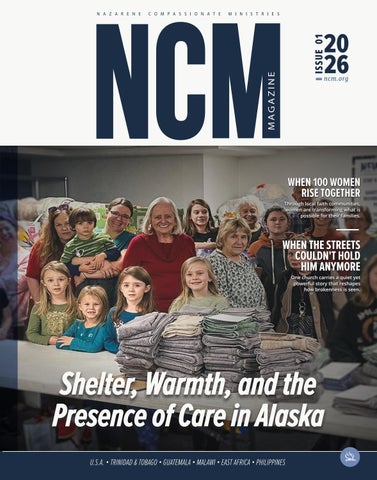
One church carries a quiet yet powerful story that reshapes how brokenness is seen.
NCM Magazine aims to tell stories of the church living out Christ's compassion. Our hope is that all of us would hear the call to compassion as a lifestyle.
Following the example of Jesus, Nazarene Compassionate Ministries partners with local congregations around the world to clothe, shelter, feed, heal, educate, and live in solidarity with those who sufer under oppression, injustice, violence, poverty, hunger, and disease. NCM exists in and through the Church of the Nazarene to proclaim the gospel to all people in word and deed.
NAZARENE COMPASSIONATE MINISTRIES 17001 Prairie Star Pkwy, Lenexa, KS 66220 (800)310-6362, info@ncm.org
MAGAZINE DESIGN: Prelude
COVER PHOTO: By Chrissy Mizar
FOR A FREE SUBSCRIPTION visit ncm.org/magazine
SUBSCRIPTION CHANGES email info@ncm.org or write to NCM Magazine, 17001 Prairie Star Pkwy, Lenexa, KS 66220
QUESTIONS? COMMENTS? email info@ncm.org
Two years ago, two members of a rural East African faith community began gathering village women to talk and learn.
In October 2025, Typhoon Halong struck Alaska’s southern coast, causing catastrophic fooding in coastal indigenous communities.
A social work student from a Taytay, Rizal church carries a quiet yet powerful story that reshapes how brokenness is seen.
What every Nazarene should know about our church in the Middle East.


“ Now faith is the assurance of things hoped for, the conviction of things not seen. Indeed, by faith our ancestors received approval. By faith we understand that the worlds were prepared by the word of God, so that what is seen was made from things that are not visible.”
- Hebrews 11:1-2

It isn’t often that we glimpse God’s hope and restoration unfolding right before us. When we do—when resurrection hope breaks into view—it is something worth holding onto.
In those moments, we are invited to open our eyes just a little wider, to expand our gaze beyond what is immediately in front of us. We are called to look up, to place our trust in the Lord even when the weight of daily steps feels heavy. And in that same breath, we are invited to dream bigger, to let our imagination stretch beyond what we can see, trusting that God is at work in ways still unfolding.
Expanding our vision is not only hope in a future promise or faith in things unseen. It also takes place concretely in the ordinary places of our lives. As Christians and through the life of the church, we are called to be a people who are transformed by the salvation and restoration inaugurated in the life, death, and resurrection of Jesus, who walked on this earth.
•Children, youth, and young people are learning that, “To lead like Jesus is to love, serve, and sacrifice for others.”
•We see how our God of love leaves no child or vulnerable neighbor forgotten.
•We trust that God is working even now. When we see that “no part of life is wasted in Christ. Even in the darkest places, God’s grace is at work.”
•When disaster strikes, we witness the church present and serving with Christ’s love. The church “not only provides help in the moment but hope for tomorrow.”
“ Looking to Jesus the pioneer and perfecter of our faith, who for the sake of the joy that was set before him endured the cross, disregarding its shame, and has taken his seat at the right hand of the throne of God.”
- Hebrews 12:2

As you read the following pages, I invite you into the testimonies to God’s faithfulness and a heavenly hope descending into the everyday. When the world around us is troubled, afraid, or small-minded, I encourage you to return to these stories because they tell of placing hope and trust in Jesus. We trust God’s plans that are beyond our imagination, and we give thanks for how they are unfolding right now across the globe. We rejoice because God is at work.
•Women who once felt invisible are now contributing financially, mentoring others, and participating in community activities.
Jesus had that vision of the Father and, empowered by the Holy Spirit, lived a godly life. It didn’t take him to the seat of power and principalities, but to suffering and shame. Yet it took him to death and resurrection and eternal life with the Father that is hope beyond all hope.
Let us be a people who live each moment of life concretely yet differently because we have a hope that is beyond us.
May we walk the streets, talk to the people, live out hope in each community, and build a home there with the love of Christ.

Nell Becker Sweeden, Director of NCM
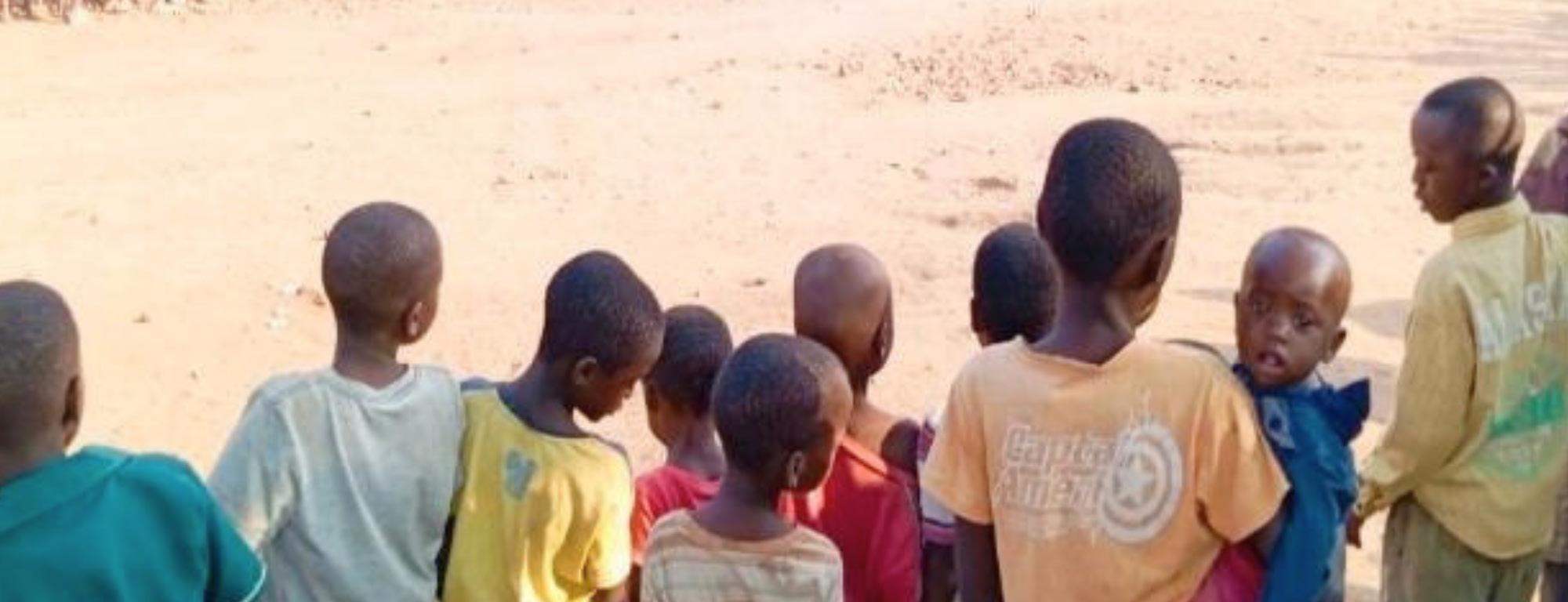
At a Nazarene child development center in Malawi, more than 360 children and teenagers find the hope of Christ and regular, nurturing care. A large part of the center’s efforts goes towards improving the health of the children who attend by providing nutritious meals.
Sarah*, age nine, saw her health drastically improve after joining the center once she began receiving the food she needed to thrive.
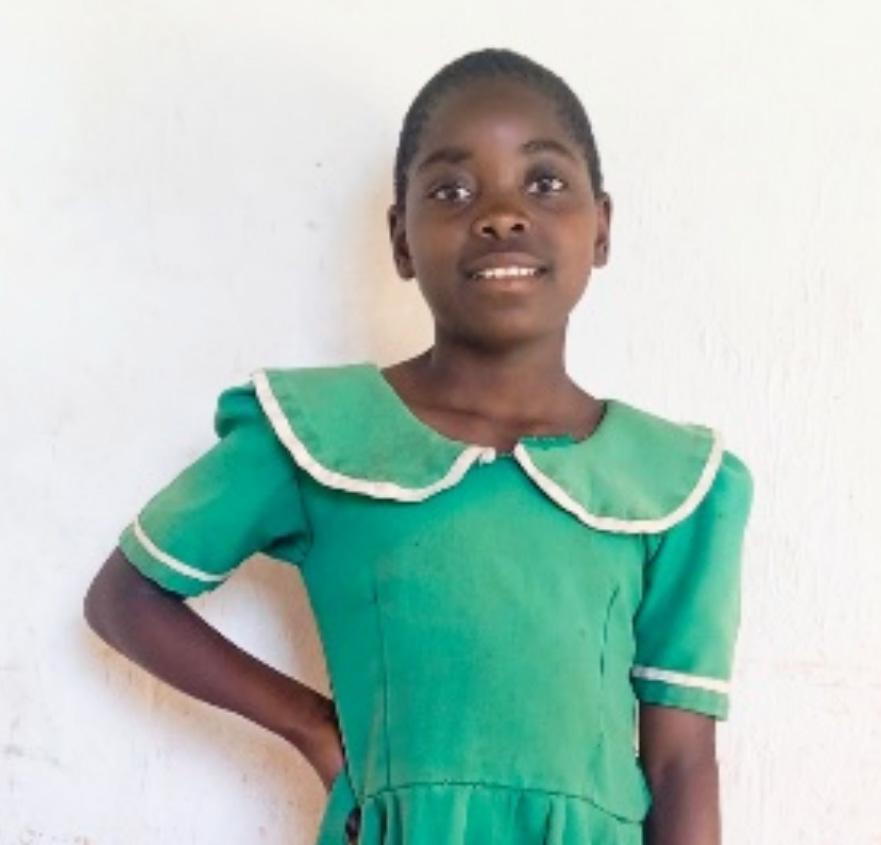
“When I came to school in the morning, my head hurt because I [was] so hungry, and the sun made me so tired,” she explained. “I used to just look at the board, and the numbers for math would blur. It felt like my body was fighting with my brain.”
Poor nutrition does more than stunt growth or leave a child vulnerable to diseases. It also impacts their ability to function and learn, and adds stress to a family’s home life. At the child development center, regular meals mean that children like Sarah won’t have to struggle as much with fatigue, and their parents can rest assured their child is cared for and safe.
“Because they’re not battling hunger, kids can focus and concentrate in class, leading to a real intellectual boost,” shared a center leader. “This support has reduced family conflicts, helping parents feel secure enough to go out and find
work ... it’s a beautiful example of how nourishing a child also nourishes the whole family.”
Sarah is living proof of that benefit. The porridge she eats each day has provided a much-needed boost.
“Now, when it is time for a break, I know I will get energy,” she said. “I can sit still and follow my teacher’s lessons all the way until the end of the day. I feel stronger, and now I understand how to do long division!”
Tamara* enrolled in the center last year. She was noticeably smaller than her peers, struggled with lethargy, and frequently missed school due to sickness. Tamara lived at home with her grandmother and they often struggled to have enough to eat. Through the fortified foods and balanced meals at the center, Tamara was restored to good health.
“Before the center, my heart was heavy,” shared her grandmother. “I was afraid for Tamara. But now, she is laughing, she is running. Her teacher at school told me she is focused and not sleeping in class anymore. This food and love from the church, it is a blessing that has given my grandchild her childhood back.”
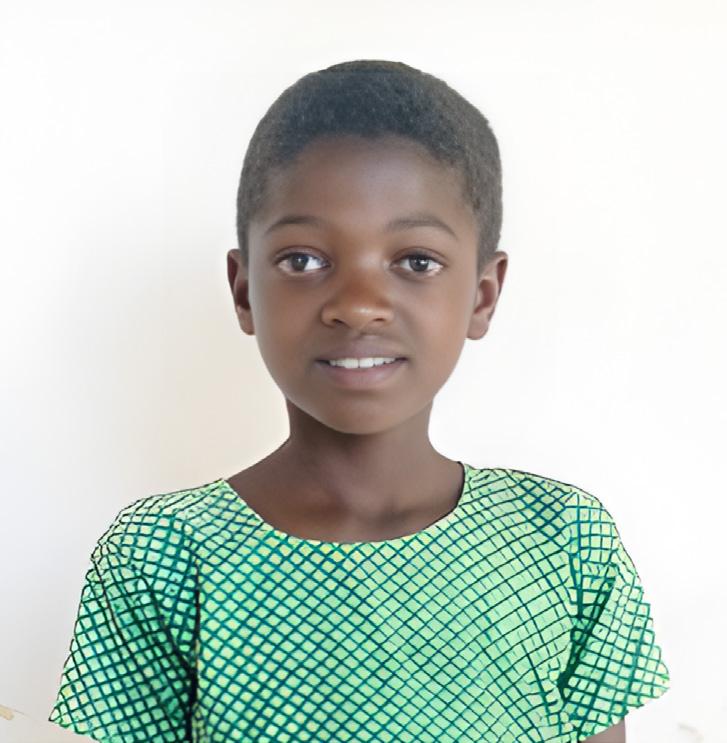


The community where the center is located has been impacted by extreme climate crises that have led to hunger and malnutrition. Whether from extreme heat, cyclones, or severe droughts, ongoing climate volatility has decimated local crop production. At the same time, economic instability and soaring food prices make recovery nearly impossible for struggling families.
“The support provided by the center is more than just supplemental,” explained the leader. “It is a non-negotiable lifeline and a reliable source of stability amidst truly chaotic and critical times.”
Mrs. Malekano, a mother of a student, shared that anxiety and concern were ever-present at home. “My husband and I were always tired, always worried. When you have no food, you have no peace,” she explained. “The [center] changed everything, and not just because of the food. Knowing that our daughter is safe, fed, and cared for gave us our peace of mind back. This new peace allowed my husband to go out every morning with a calm heart, searching for jobs. I started helping a neighbor make dresses. We can now focus on our work without the heavy fear of our child being hungry. The [center] gave us back our dignity.”
In addition to alleviating food insecurity, the center offers a variety of holistic activities to support students and their families.
9 A workshop on safety helped children identify risks they face on their daily route to school.
9 A peer support group helped eight newly-enrolled children acclimate to the rhythm and activities at the center.
9 In preparation for Easter, students studied the Passion of Jesus in their Bible lessons.
9 Older students guided younger students in reading and homework skills.
9 Sanitation and hygiene lessons helped reduce sickness among the students.
9 Music and sports lessons rounded out the students’ education.
9 Families took gardening classes to improve food security at home.
Another nine-year-old, David*, started attending the center in January. The staff noted he was reserved and kept to himself, feeling out of place. His family was new to the area, and due to financial struggles, David didn’t have a school uniform or supplies.
“Everything changed with our January ‘Back-toSchool’ distribution,” shared a center leader. “David was presented with a brand-new uniform. However, his transformation didn’t stop at clothing.”
The teachers realized that David needed reading assistance to close a gap in his schooling. Pairing him with an older student named Grace* opened the door to both academic encouragement and a new friendship.
“Grace sat with him under the shade, patiently guiding him through his letters,” said the leader.
In just a few weeks, David was joining in with the other students, cheering for teammates in sports, and even reading the scoreboard out loud. His family couldn’t help but see the difference the center was making.
“I thought my son would be left behind because we moved, but the center opened its arms to us,” shared David’s mom. “Seeing him in his uniform, reading with an older student, gives me the peace I haven’t had in a long time.”
David’s mother has recently joined the Nazarene church that sponsors the center, opening their family to another source of support, encouragement, and peace.
Despite challenges and needs that are always present, the center staff see that hope continues to grow through this ministry, one child at a time.
“The center is growing,” said the leader. “More children are coming, and we thank God for what he is doing through this ministry! We are being the hands and feet of Jesus in our community, and [the] lives of children are being transformed.”
*Children’s names are changed for protection.
Nazarene child development centers like this one in Malawi are located all around the world, are led by local churches, and are designed to bridge gaps for children living in poverty. By providing spiritual, intellectual, physical, emotional, and social care, these centers become places of hope and healing.
As a child sponsor, you will be matched in a one-on-one relationship with a child at a Nazarene child development center. Your financial support, the letters you exchange, and your prayers will ensure the child you sponsor has continued access to their center.
Sign up to sponsor a child here: ncm.org/sponsor
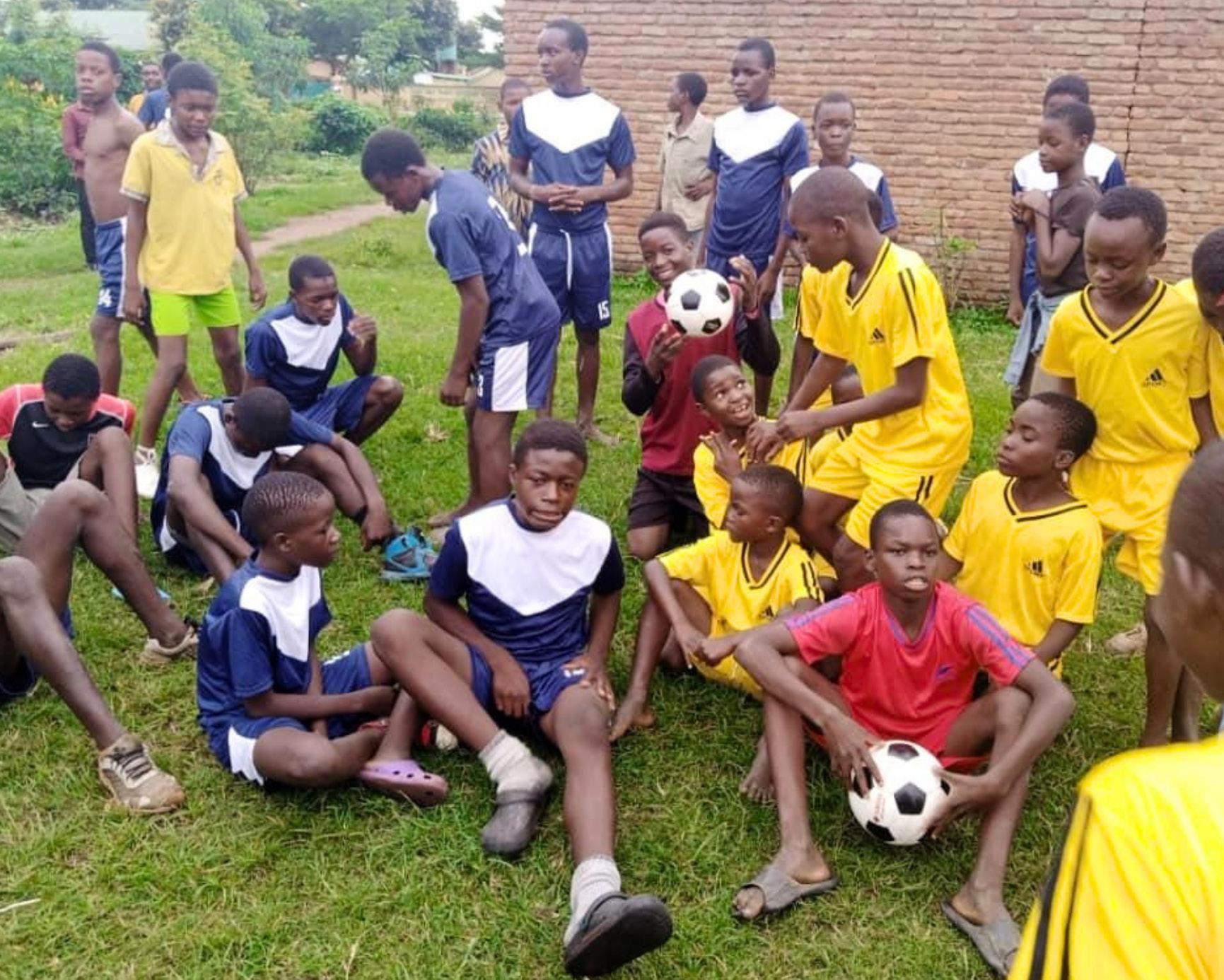
Through training, savings, and partnership with local faith communities, women are transforming what is possible for their families.
By Dana Franchetti | Photos by Hope Brock and Lauren Snodgrass
Two years ago, two members of a local faith community in a rural area of East Africa began quietly gathering women from their village to talk, listen, and learn. They spent time building relationships, asking questions, and understanding the challenges their neighbors faced each day. As trust grew, so did a vision. Together with the women themselves, they began shaping a program to strengthen families, create new opportunities, and bring hope to a community that had long struggled with poverty and conflict.
The context was not easy. The village was known for tensions between families and communities that often led to mistrust and division. Additionally, this is a community where Christianity cannot be practiced openly. When the idea for this project was first introduced, even local authorities doubted that such an effort could succeed.
Many of the women had never attended school. Most were mothers responsible for large households. Income was unpredictable, and saving money was
often impossible. When emergencies came, families frequently had no choice but to borrow money or skip essential needs.
Yet week by week, women continued gathering together.
Today, as the Women and Girls Empowerment Project has come to completion, the story of these women looks very different.
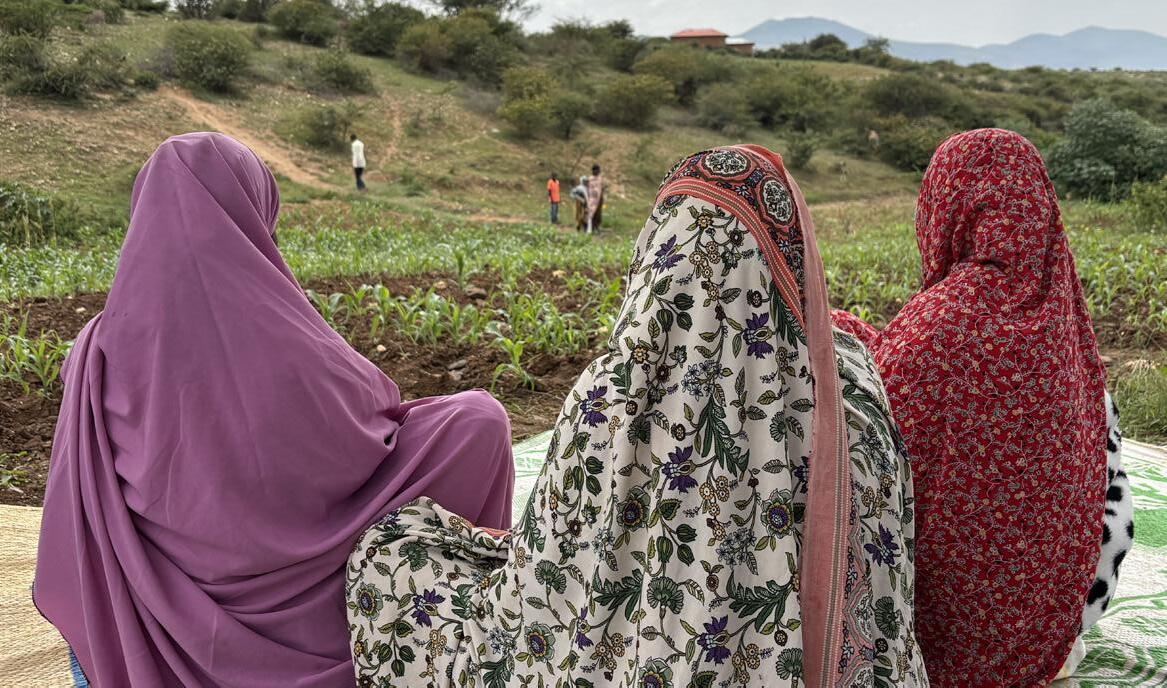
Through a partnership between the local faith community and Nazarene Compassionate Ministries, 100 women and girls participated in training that combined literacy education,
vocational skills, financial literacy, and strong peer support networks. What began as a small initiative has grown into a foundation for resilience, dignity, and hope for participants, their families, and their wider community.
Over time, these gatherings did more than build skills. They also fostered peace and reconciliation among women who had once lived with deep tensions.
For many women in the program, the first step toward change was education.
Eighty-six percent of participants had never attended school. Illiteracy limited their ability to participate in everyday life, manage finances, and support their children’s learning, let alone follow their dream of starting a new business.
Through adult literacy classes organized by members of the local faith community and taught by a young woman from the area, women began learning to read and write for the first time.
“Before, I could not read and write, but now I can do it,” explained one participant named Zahra*. “It brightens my mind. I can write my name now.”
The ability to read and write quickly opened new possibilities. Women could track sales from their businesses, use mobile banking, and help their children with schoolwork.
“I got business training skills, and now I earn my own income,” said Hani*, another participant. “I can read and write now. I use my own phone, unlike before.”
Hani also saw the impact in her home.
“It encourages my kids when they see their mother going to school and trying to read and write.”


Learning did more than build knowledge. It strengthened confidence and dignity, reminding women that new opportunities are possible at any stage of life.
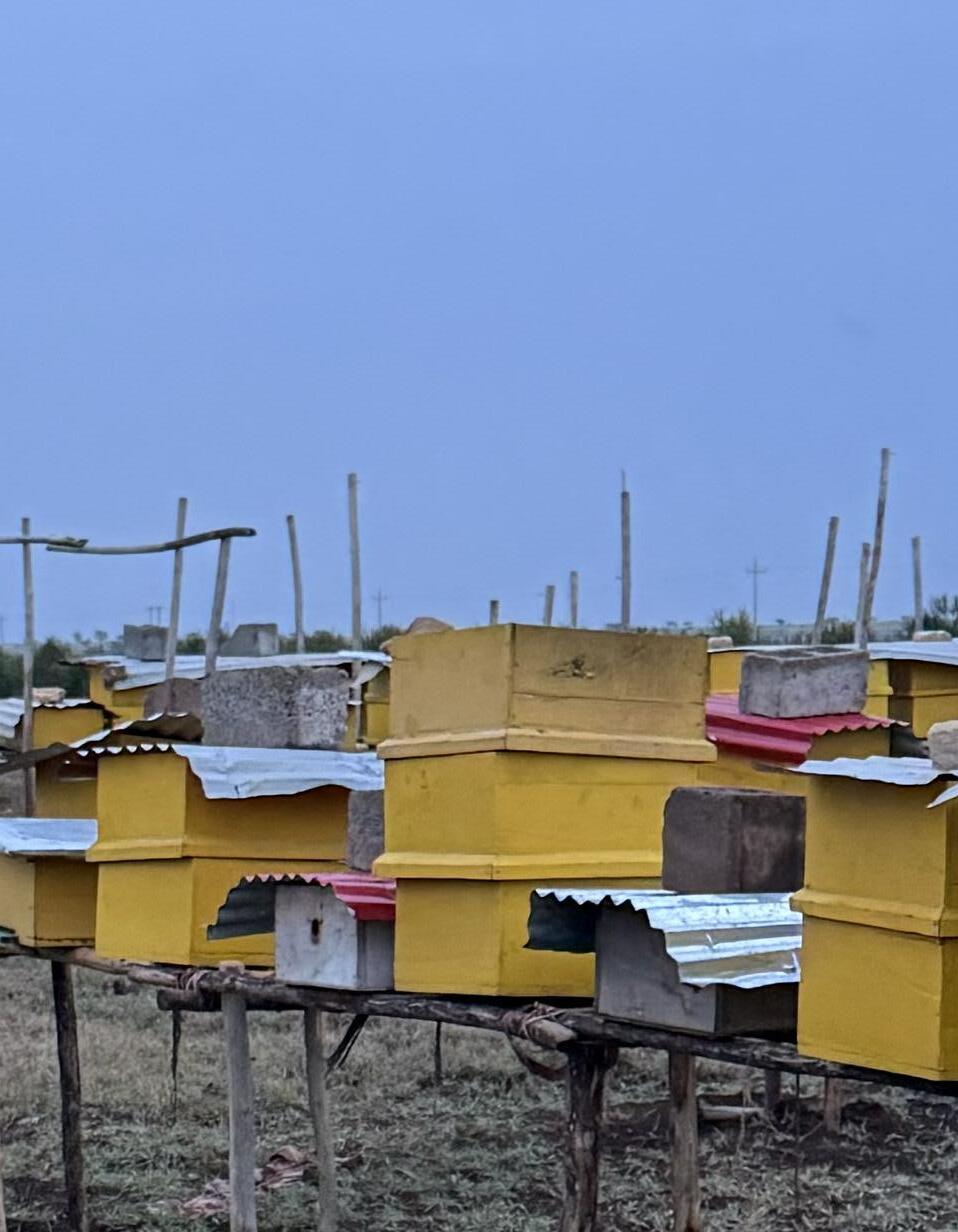
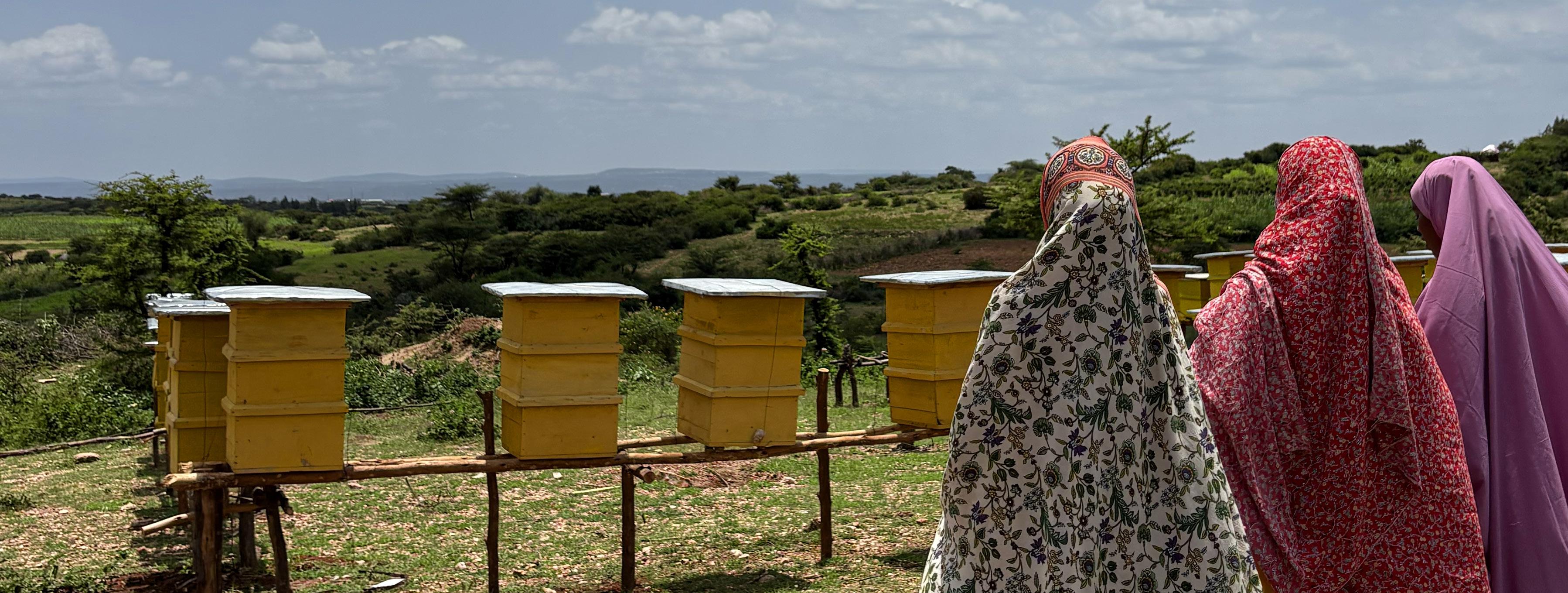
Alongside literacy education, the project offered vocational training that reflected the local community's needs and opportunities. Participants chose between two primary pathways: beekeeping and beauty therapy.
Most of the women trained in beekeeping are learning how to care for hives, harvest honey,
and bring their product to market. Others gained beauty therapy skills that enable them to earn income locally through providing henna art.
For many participants, this was the first time they had ever owned a business.
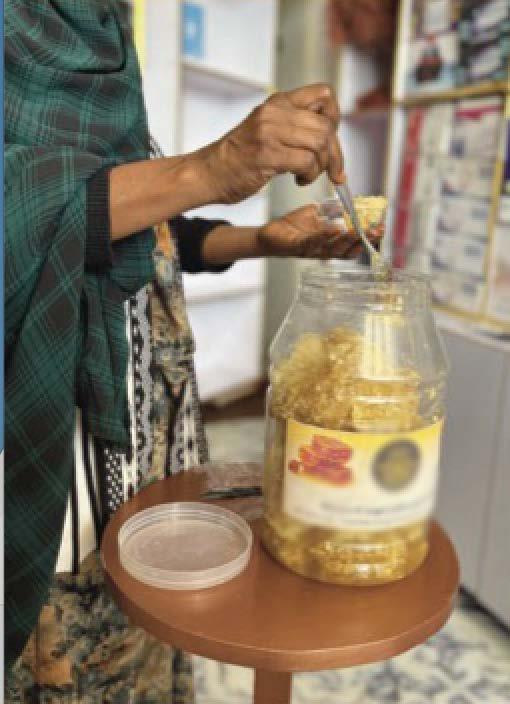
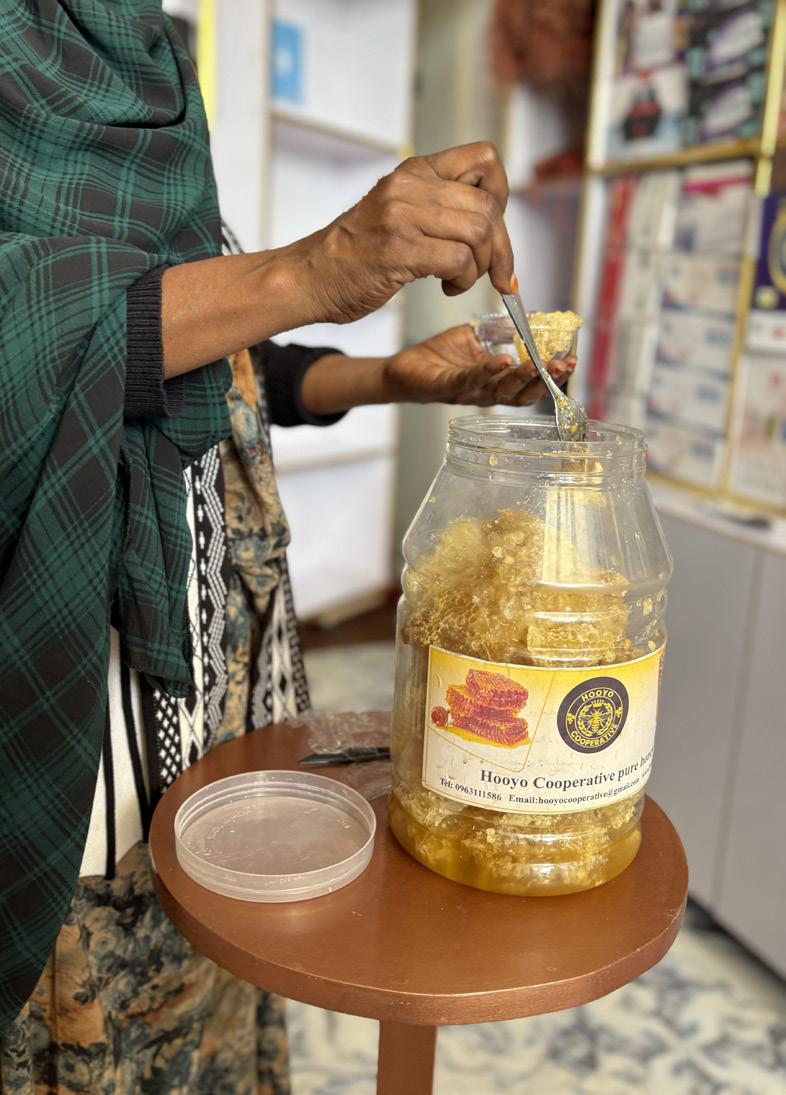

“Before, I had no business,” remembered Zahra. “Now I have something to do. I have a goal every day, and that makes my life better.”
Through the cooperatives, women learned not only technical skills but also how to work together, reach customers, and grow their businesses.
“Now we are harvesting the honey, and we sell it,” said Ayan. “That gives us financial support.”
Ayan* has felt the impact of that financial support in very important ways. Income from these businesses has helped families meet daily needs and plan for the future.
“I am a mother of seven children,” she explained. “Now I am a better mother because I can support my children using my own income.”
By the end of the project, every focus group participant reported earning income from the skills they learned, and nearly 8 out of 10 participants had established a business.
One of the most significant changes has been the way women manage money.
Before the project, many families saved money at home if they were able to save at all. Unexpected expenses often meant borrowing money, missing payments, or going without essential needs.
“If I could not buy food for my kids, I had to borrow or sometimes skip that meal,” said Ayan.
Through financial literacy training, participants learned budgeting, record keeping, and safe saving practices. Many opened bank accounts for the first time.
“Before, we used to save money at home. Now we save in the bank,” explained Hani.
Savings have created new stability during times of crisis.
“My baby got sick,” she shared. “I sold a goat that
I bought from my savings and covered the expenses.”
By the end of the program, most women reported having savings or other resources that could help cover unexpected expenses. Families that once struggled to respond to emergencies now have options and greater peace of mind.
While the project strengthened livelihoods, one of its most powerful outcomes has been the
“There is a diference in how the community sees us now. They see that we can make a diference.”
community that formed among participants.
Women were organized into groups that met regularly for training, encouragement, and shared learning. Over time, these groups became trusted networks of care and support.
“Being together as women, we uplift each other,” Zahra reflected. “If you have a problem at home, you have a place to go.”
Participants described the group as a place where they can speak honestly about their lives and encourage one another.
“Sometimes we cry together, sometimes we laugh together. That helps us.”
The network also functions as a practical safety net when challenges arise.
“The group contributed for me, and that is how I managed,” one woman shared.
This sense of belonging has strengthened emotional well-being and helped women face difficulties with greater resilience.
As women gained skills and confidence, they began stepping into new leadership roles within their communities. Women who once had little opportunity to participate in public life began organizing cooperatives, mentoring other women, and engaging with local government offices connected to livelihoods, women’s affairs, and community development.
Through partnerships fostered by the project, these offices helped support training, strengthen

cooperative structures, and connect the women to broader opportunities for income and skills development.
“There is a difference in how the community sees us now,” Hani explained. “They see that we can make a difference.”
Women who once felt invisible are now contributing financially, mentoring others, and participating in community activities.
“They respect me more than before,” said Ayan. “They know that now I serve the community. We [also] taught other women outside the group.”
Through literacy awareness efforts, participants helped encourage adult education within the broader community.
“There are about 400 families in the community, and we engage in literacy awareness,” explained one project leader. “Because of us, the government allowed adult literacy programs in schools.”
The ripple effects of this project are an encouraging reminder of how change within a small group can influence an entire community.
From the beginning, members of the local faith community played an essential role in the life of the project. They prayed for the women, worked alongside them, helped construct and maintain beehives, and supported the training activities. Their involvement helped build trust in the community and created space for the project to grow.
For many members of the faith community, the project also strengthened their relationships with one another. Some shared that before the project, they believed there were only a few believers scattered across the area. As they worked together, they discovered others who shared their faith.
“Before, it was too difficult to even pray or think together,” one member of the faith community reflected. “Now we pray and grow together.”
Others described how the project strengthened their sense of unity and purpose.
“This project was like a chain,” another believer shared. “It increased our ability as a faith community.”
In a place where followers of Christ have to practice their faith in secret, the project created space for both practical service and
spiritual encouragement. Through relationships, compassion, and faithful presence, members of the faith community were able to walk alongside their neighbors in ways that brought both practical and spiritual transformation.
One member of the faith community, a young woman called Samira*, described the impact this way:
“The project brought double benefit: I came to know the Lord and I gained a skill. When the project leaders showed up, everything changed. They helped some of us know about God in secret.”
Reflecting on her life before the project began, she added, “I see that we were hopeless. But in one year my life has completely changed. I accepted the Lord and I have work. I am a different person.”
Stories like hers remind us that the impact of compassionate ministry often reaches beyond livelihoods alone.
Through these partnerships, the project strengthened trust across the community and created space for lasting collaboration.
With the project's conclusion, the women who participated are not returning to where they began.
“In one year, my life has completely changed. I accepted the Lord, and I have work. I am a diferent person.”
They now have skills, savings practices, and businesses that continue to grow. They have networks of support and stronger voices within their families and communities.
Perhaps most importantly, many describe a renewed sense of hope.
“I am feeling that my future is brighter now than before. It's not fuzzy,” shared Ayan. “It's better than before. Sometimes we face some challenges, but I am still optimistic.”
The project may be complete, but the work of these women is only beginning.
Through the partnership of the local faith community, Nazarene Compassionate Ministries, and the determination of the women themselves, a stronger future is taking root in this community.
*Names have been changed to protect participants.



In the Q’eqchi region of Guatemala, many communities are far from essential services. Access to healthcare can require extensive and often prohibitive travel. Economic opportunities are limited. Families often depend on small-scale farming or informal work to meet daily needs.
These realities shape everyday life. They also shape how the church responds.
Across seven districts in the region, local churches are working alongside their communities through Community Health Evangelism (CHE). Together, they are addressing health, economic, and spiritual needs in practical, locally-led, and relationship-rooted ways.
This work begins with listening and continues through equipping.
Pastors, leaders, and community members are participating in ongoing training focused on health, entrepreneurship, and
community development. These are not one-time events. They are part of a process that strengthens people over time and invites them to put what they learn into practice.
In many communities, pastors are now serving not only as spiritual leaders but also as educators, facilitators, and health promoters. This is especially important in places where distance makes access to medical care difficult.
Through these efforts, families are learning how to prevent illness, care for one another, and make informed decisions about their health. At the same
time, churches are growing in their ability to respond to the realities around them.
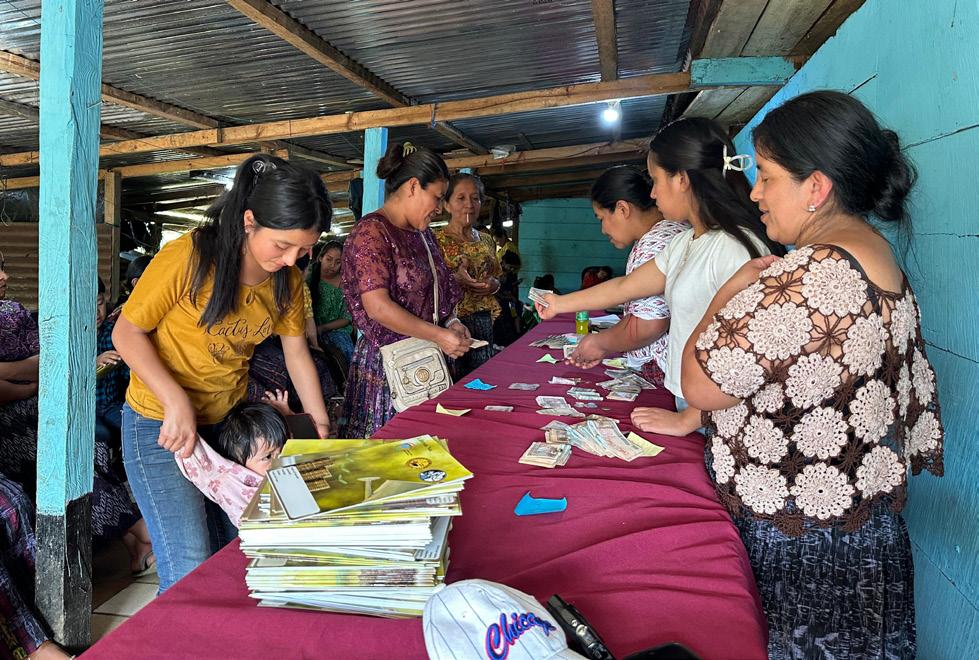
One of the most visible expressions of this work is found in savings and credit groups.
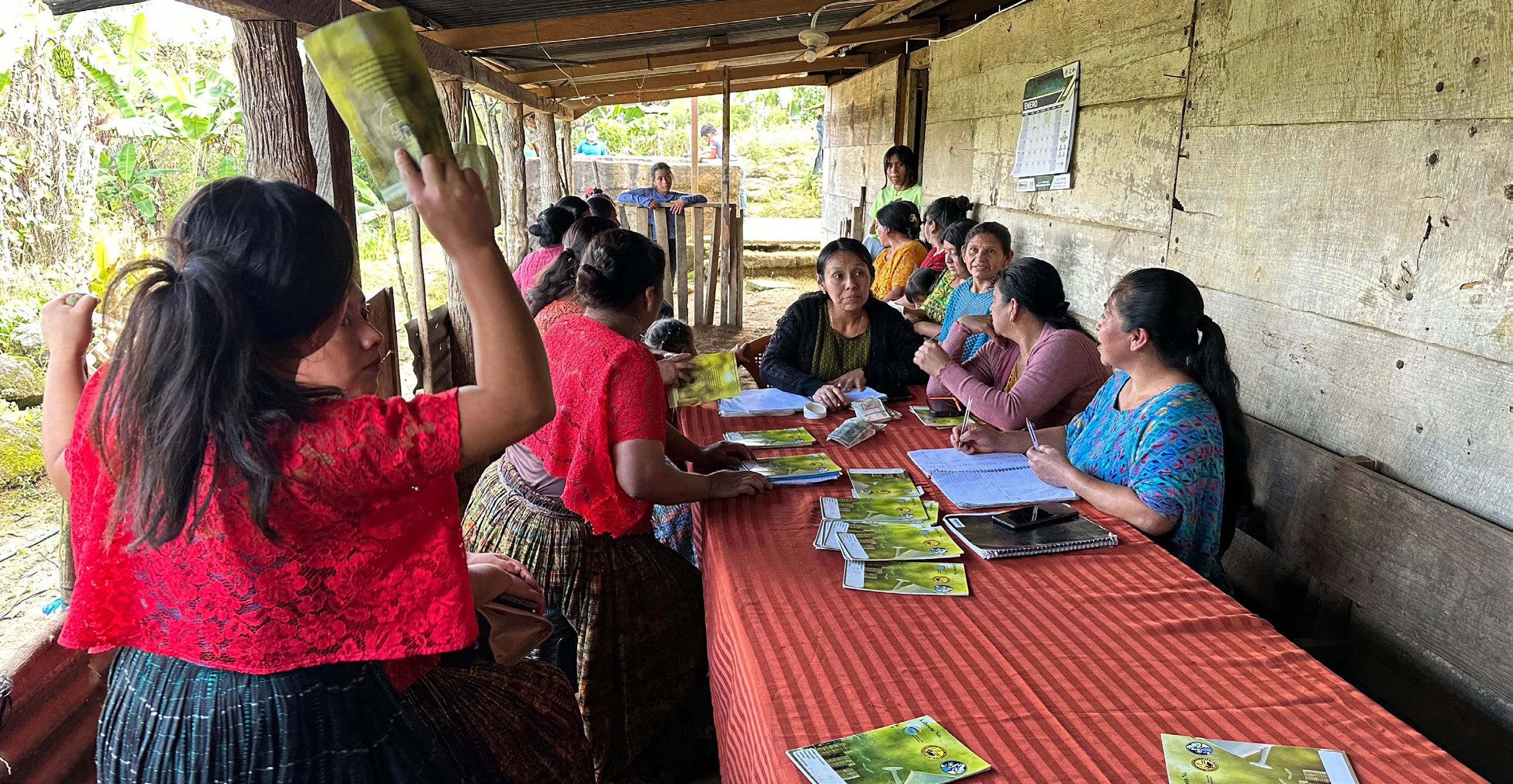
At the beginning of last year, 12 groups were active across the region, comprising more than 600 women. By midyear, participation had grown to 660 women across multiple communities, including new groups in Setuj and Nueva Esperanza in Cobán.
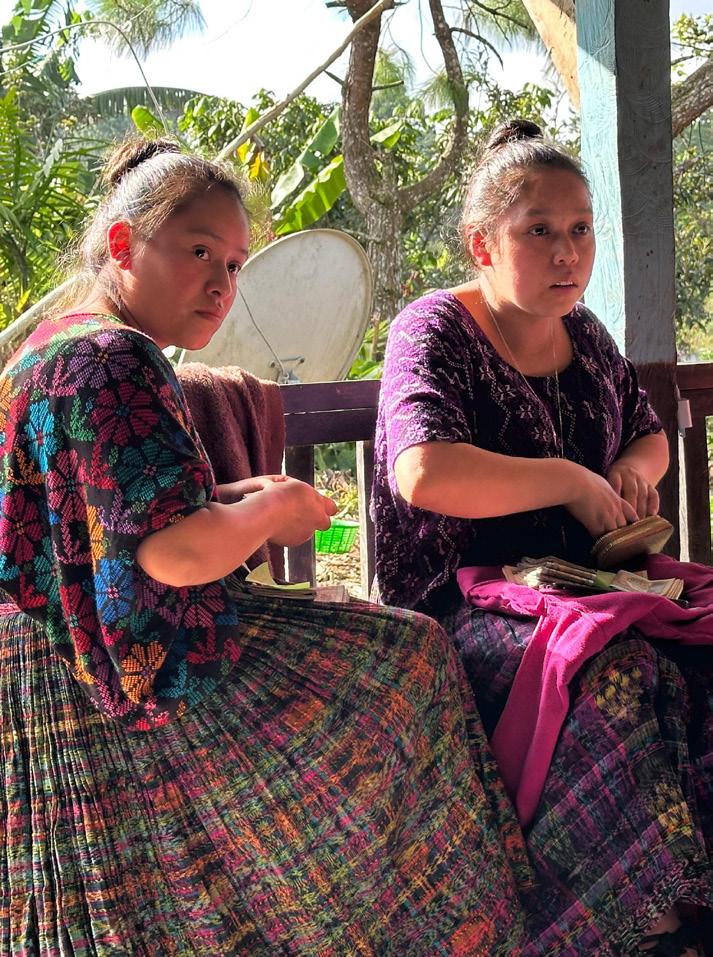
Training is central to everything taking place.
Leaders are being equipped to teach others, multiplying the impact across districts and communities. In some areas, trained leaders are helping others learn how to use tools like the JESUS film to reach nearby communities. In others, they are guiding families in developing livelihoods or improving health practices.

These groups create space for women to save regularly, access small loans, and invest in their families. Many are starting or expanding small businesses. Others are using their savings to support agriculture or household needs.
Over time, the impact grows.
In one year, these groups collectively saved and repaid loans totaling almost $450,000 (USD). Behind that number are hundreds of individual decisions to plan ahead, to invest, and to support one another.
The results are practical and immediate. Families gain access to food, support their children’s education, and contribute to household expenses in new ways.
For Gloria, a member of one of the savings groups, this change is deeply personal.
“This year, I became a member of the savings and credit group because I see how it supports us and helps me continue with my small business,” she said. “Currently, I sell avocados, chili peppers, cilantro, and beans.”
The opportunity has become a meaningful source of stability for her family.
“Thank God, through this I am able to provide what my children need and support my husband with the household expenses.”
This kind of leadership development creates long-term change. It also strengthens the role of the local church.
For Pastor Hugo, what began as training has grown into both ministry and opportunity.
“I began training in community health evangelism when it was offered in the Zona Trece Aguas area,” he said. “Later, I studied to become a health promoter, and now I have a pharmacy.”
He describes the journey as one marked by provision and support.
“I am grateful for all the support I receive through the ministries of the church, especially CHE, because through this, we have other opportunities.”
As pastors and leaders grow in knowledge and confidence, they are helping their communities move toward greater stability and health.

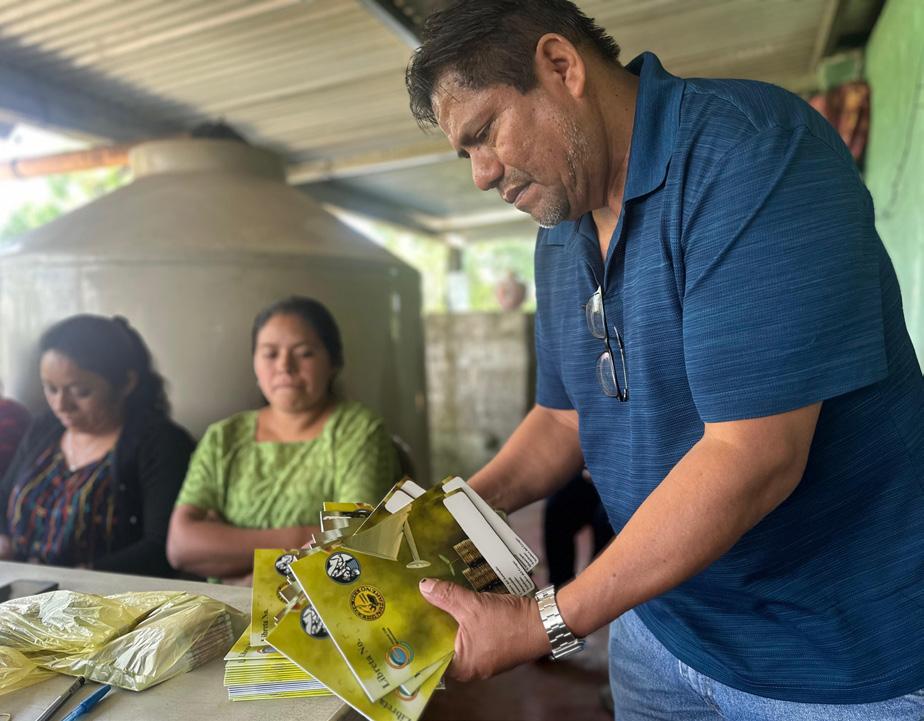
The work is also creating opportunities for children and young people.
In one community, young leaders who had previously been trained stepped in to support families with children who were not yet in school. Over four months, they taught letters and numbers to 15 children while also working with parents to support learning at home.
For many parents, this was a new experience. Some had not learned to read or write themselves, yet they were able to engage with their children’s learning and track their progress.
Young people are also stepping into active roles in their communities. In one district, 35 youth participated in training and then went out to share their faith. They connected with 275 people, distributed 225

Bibles, and prayed openly in the streets. What they learned became part of who they were.
For some, simply being introduced to this work has opened a new way forward.
For Nidia, the experience has been both new and transformative.
“I had never heard of Community Health Evangelism before,” she said. “I thank God for being invited to learn how the church and its members can grow and improve their situation before God and within the family.”
She now looks ahead with a sense of purpose.
“I have enjoyed this time and have been blessed. I want to continue forward and be part of this ministry.”
Across the Q’eqchi region, local churches are becoming more deeply connected to the everyday realities of their communities. They are present in moments of need, in spaces of learning, and in the steady work of building something new.
Through Community Health Evangelism, the church is living out a holistic witness. It is responding to practical needs while pointing to the hope found in Christ.
And in community after community, that witness is taking root.

God of boundless mercy, whose love gathers every child of every nation,
We lift before you the children of this world and all vulnerable people who have been driven from their homes.
We remember those fleeing war and violence, those living as refugees and immigrants seeking safety, and those uprooted by storm, fire, and flood.
You know their names and their stories.
You see the nights spent in uncertainty and the long roads traveled in fear. Surround them, we pray, with your protecting grace.
Be their shelter when homes are lost, their comfort when families are scattered, and their hope when the future seems uncertain.
Let the presence of the God of peace be felt even when it is hard to see.
Stir our hearts by your Holy Spirit so we do not turn away from their suffering.
Forgive us when we grow indifferent to the cries of the vulnerable. Form in us the compassion of Christ.
Strengthen those who serve.
Bless caregivers, teachers, neighbors, and all who offer support. Through their hands, may your mercy be known.
By your transforming grace, bring healing where there is trauma, home where there is wandering, and peace where there has been violence.
We trust that no child or vulnerable neighbor is forgotten in your kingdom and that your love is at work even now.
Through Jesus Christ our Lord.



By Amy Heckman | Photos provided by Chrissy Mizar
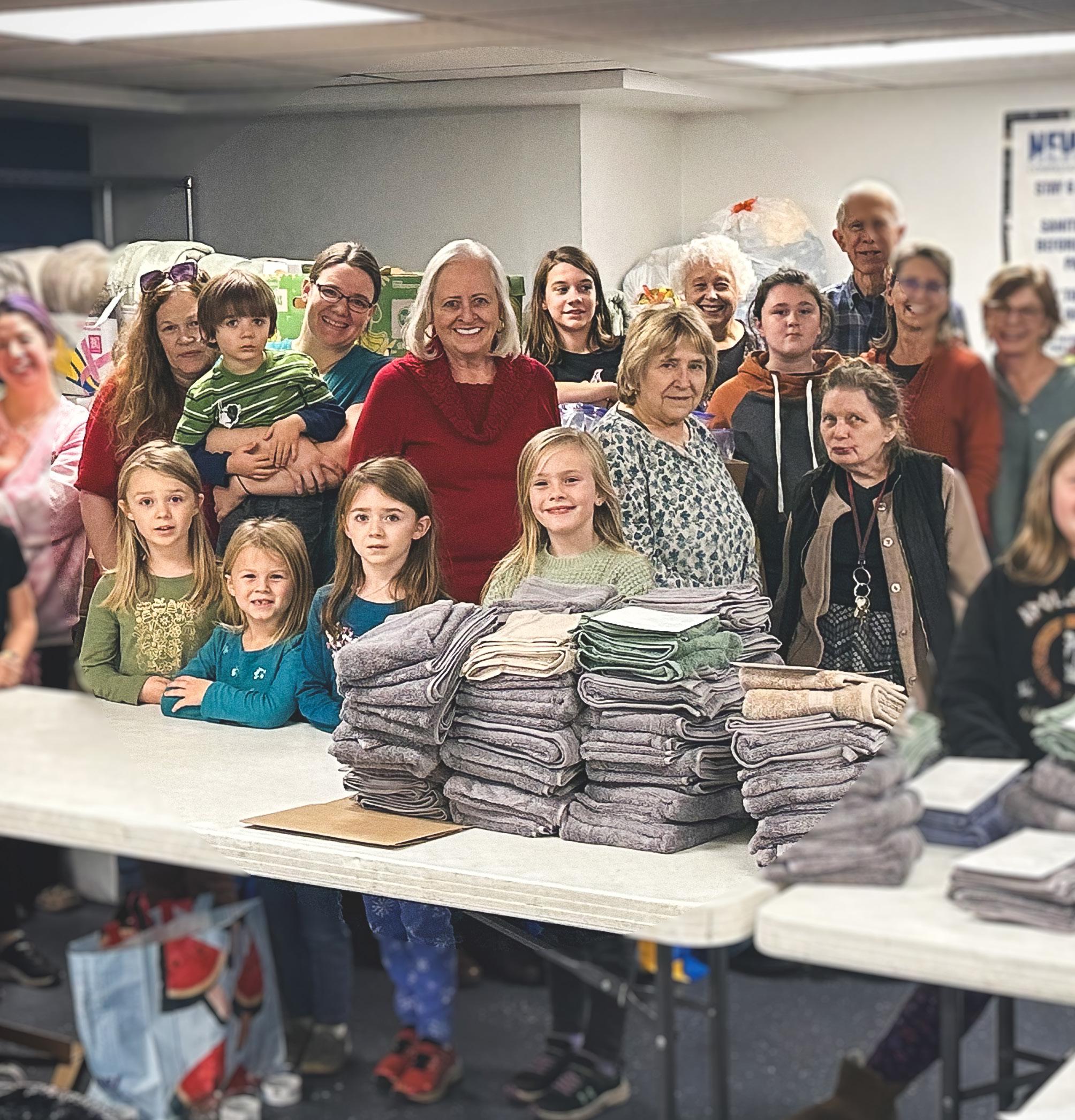
In October of 2025, along Alaska’s southern coast, the weather warnings began days before the winds and rains arrived. Typhoon Halong, a powerful storm that formed thousands of miles away in the Pacific, was moving north. When it made landfall in the state on October 11, floodwaters inundated small, coastal, Indigenous communities. The impact was immediate and catastrophic.
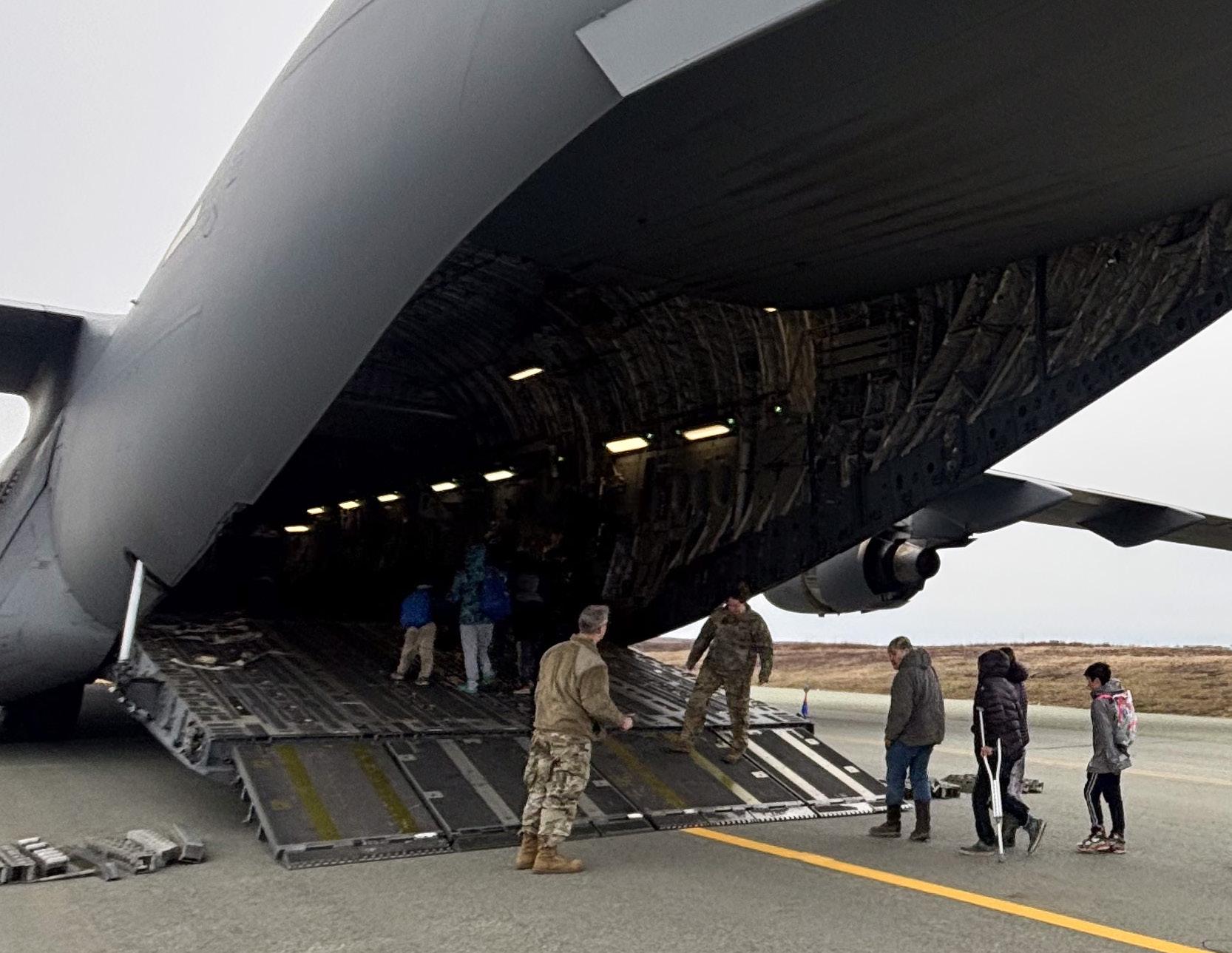
Halong flooded entire villages, lifting houses off their foundations, contaminating water supplies, washing away stockpiles of fish and other foods, eroding the shoreline, and ripping up roads and boardwalks. Once the storm passed, the totality of the destruction became clear. In a remote part of the state, hundreds of miles from the U.S. road system and any easily accessible shelter, almost 1,600 people suddenly had no place to live safely. Residents of Kipnuk and Kwigillingok, both communities of the Yup'ik people, suffered deeply as the storm forced a complete evacuation of both villages. But they weren’t alone, as close to 50 other communities also experienced damage from the storm.
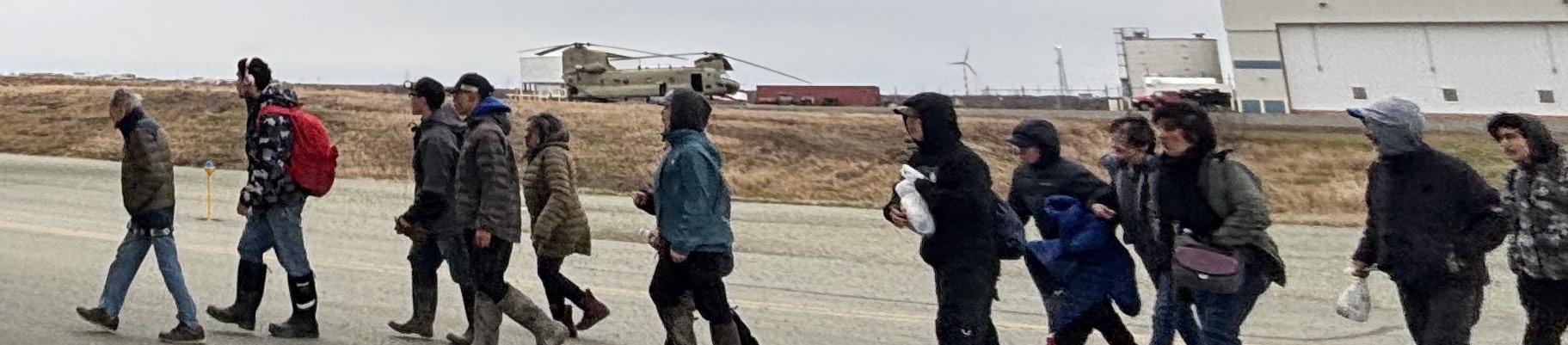
Those who boarded the military planes destined toward Bethel and Anchorage left behind belongings, pets, homes, and the familiarity of life in a small, tight-knit village.

For the approximately 600 evacuees that arrived in Anchorage, refuge first looked like living in one of two convention centers: the Alaska Airlines Center at the University of Alaska and the Egan Center located in downtown Anchorage. Agencies such as the Red Cross, tribal governments, and local nonprofits provided cots, food, clothing, and guidance on seeking federal
disaster relief assistance. But life in a convention center doesn’t erase the trauma of escaping a devastating storm, and it was with this understanding that local Nazarene churches in Alaska began to mobilize to express the love and care of Christ to these families.
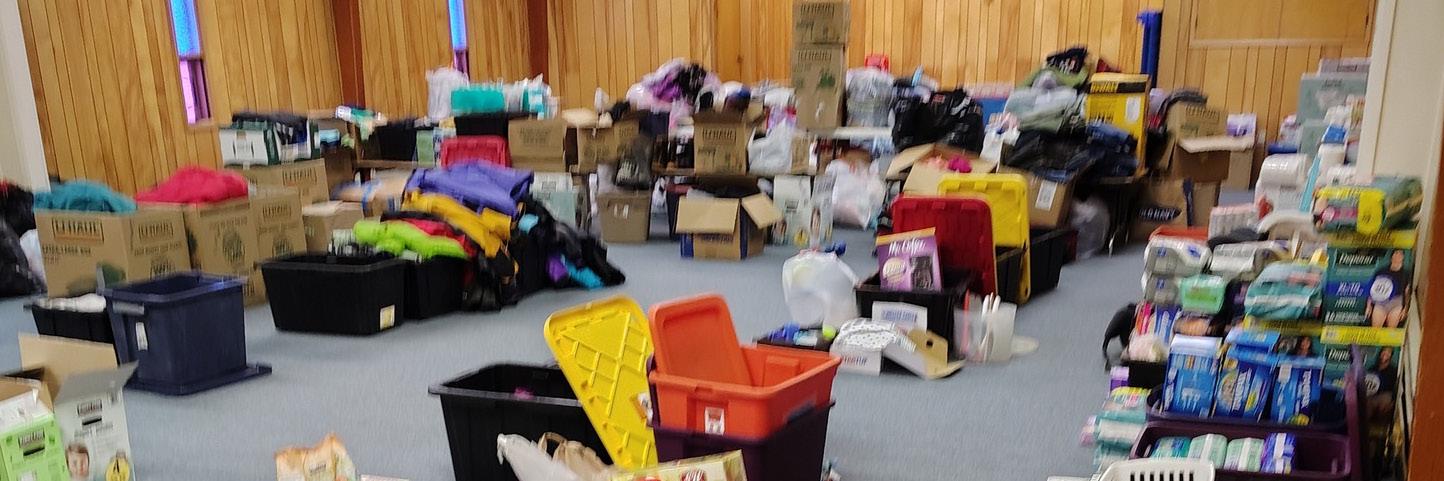
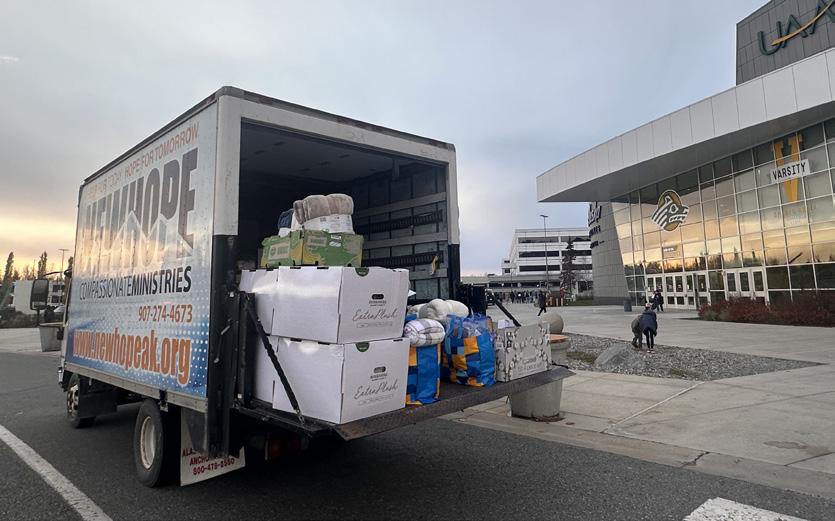
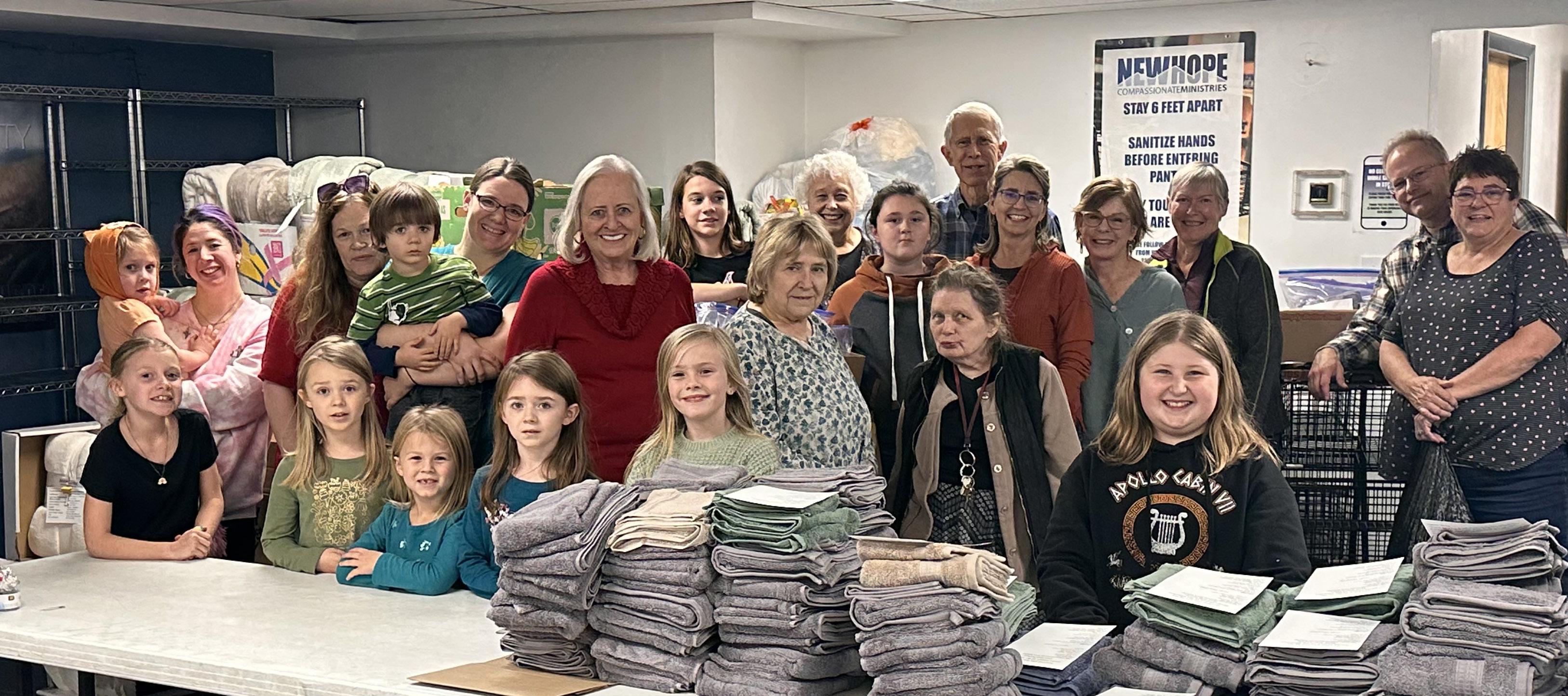
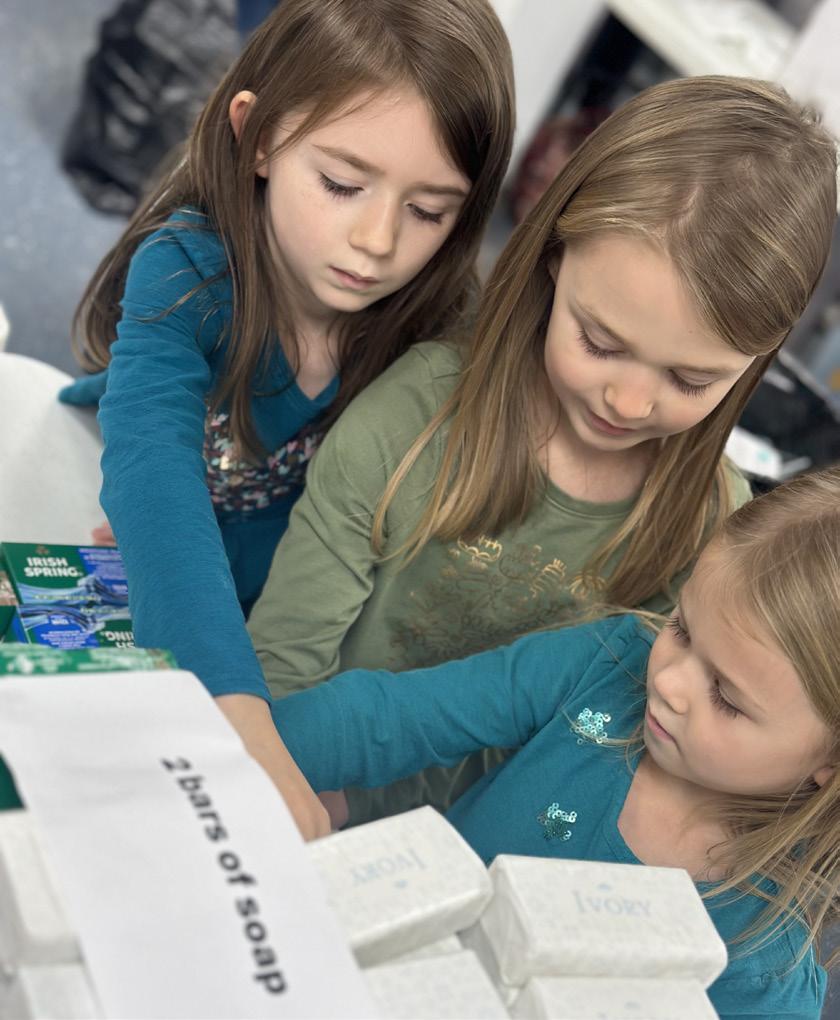
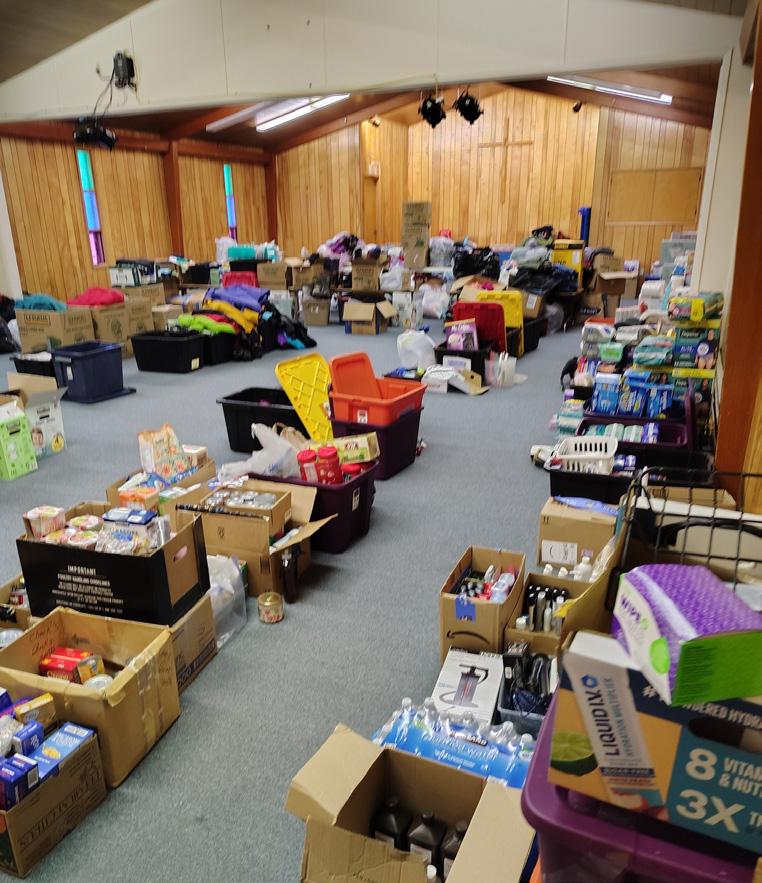
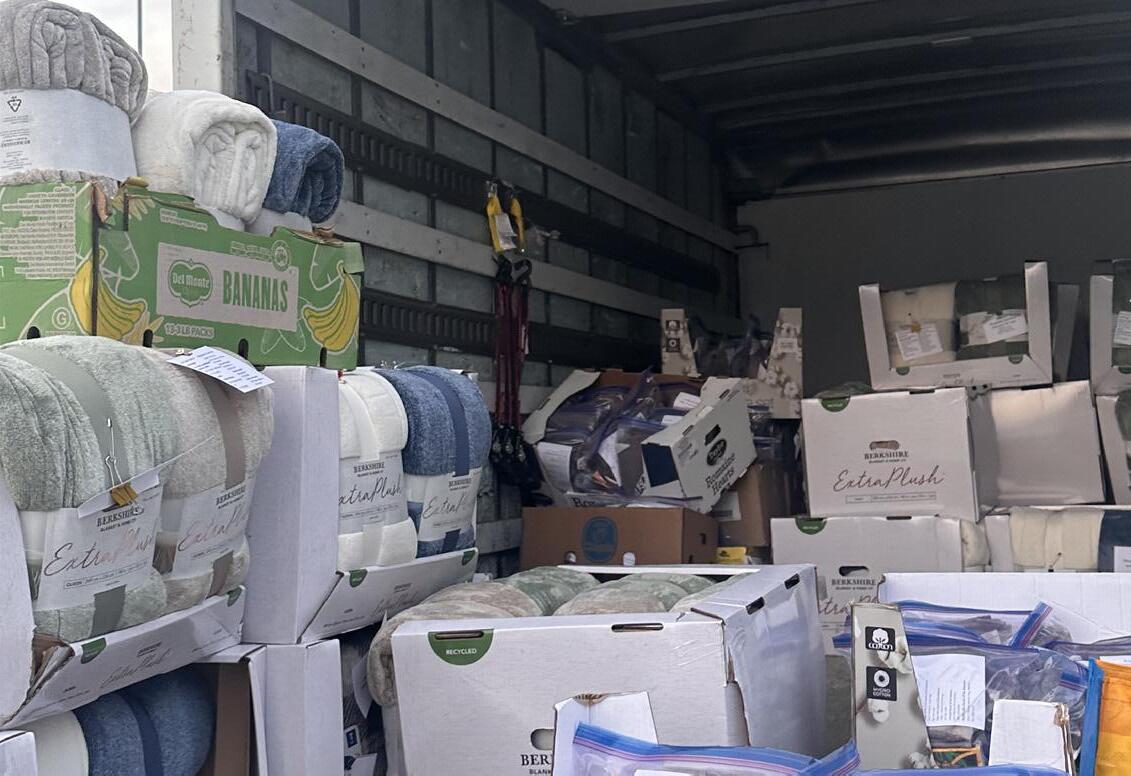
With funding from Nazarene Compassionate Ministries and in partnership with New Hope (a Nazarene Compassionate Ministries center (CMC) in Anchorage), churches across the Alaska District united to assemble Crisis Care Kits
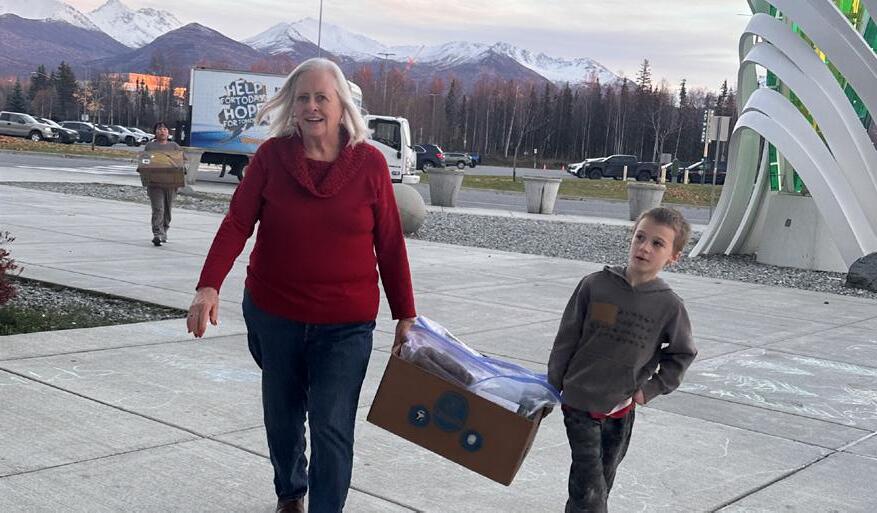
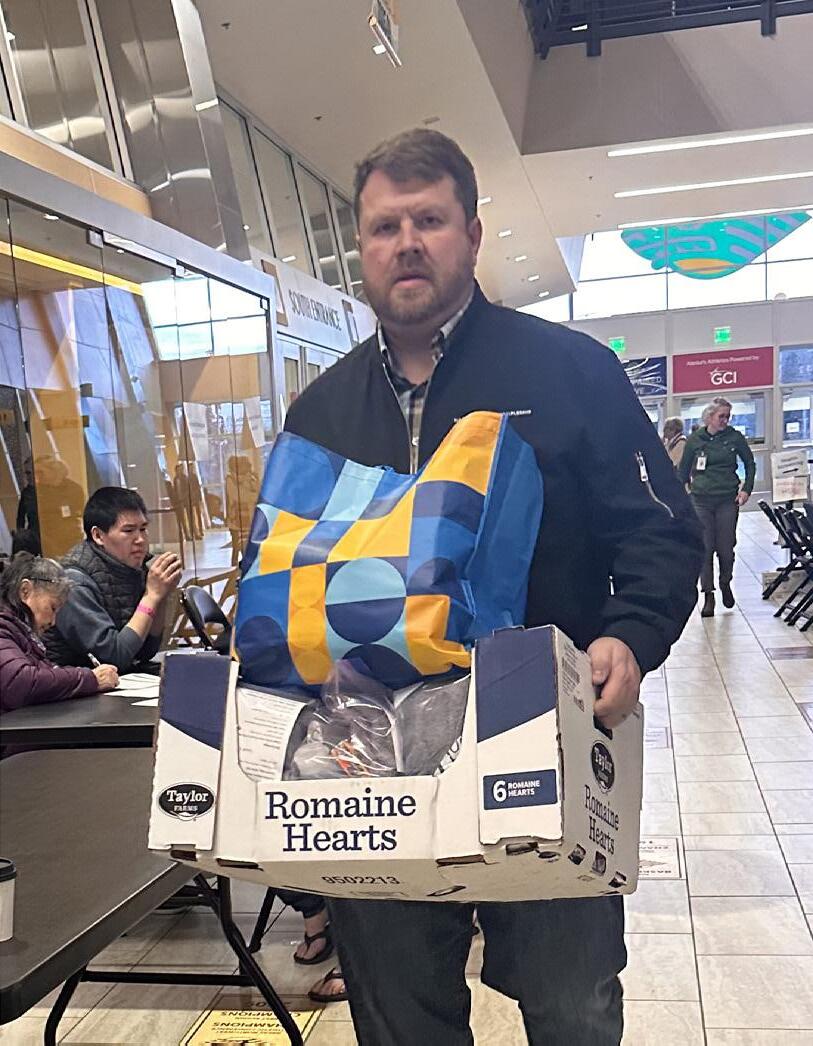
and purchase queen-size, warm blankets to distribute at the convention centers. In addition, First Church of the Nazarene in Fairbanks and Frontline Mission, a CMC in Wasilla, also collected food, clothing, and supplies to bless evacuees.

“We knew that [evacuees] were in town, and wanted to help and do something,” explained Chrissy Mizar, wife of District Superintendent Rev. Hunter Mizar. “They were allowed to bring one backpack when they left home. Imagine trying to choose what to put in your backpack!”
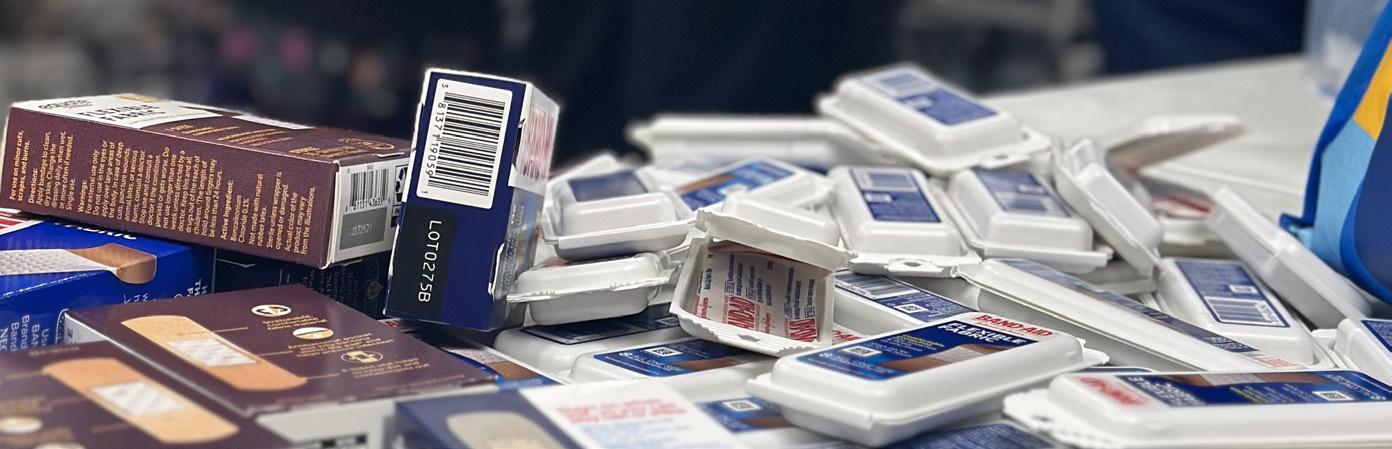
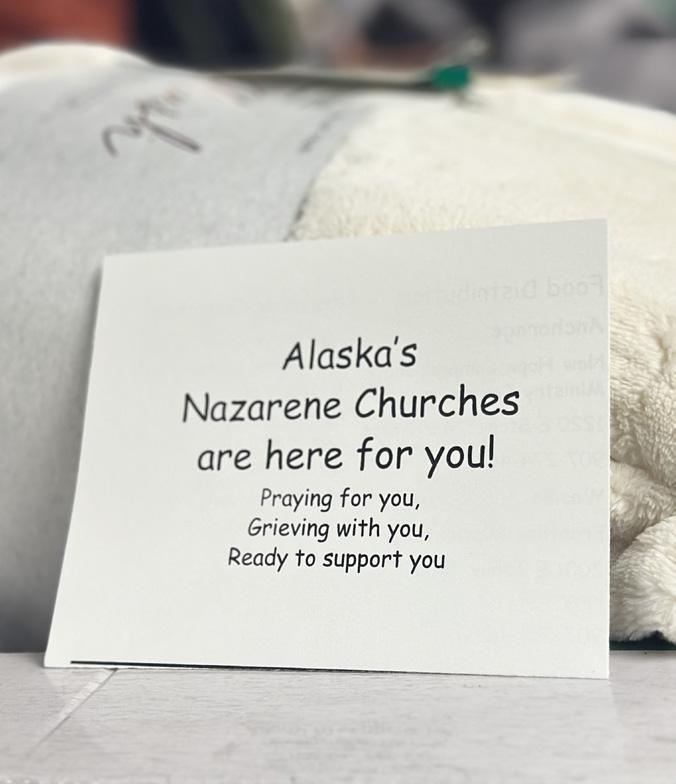
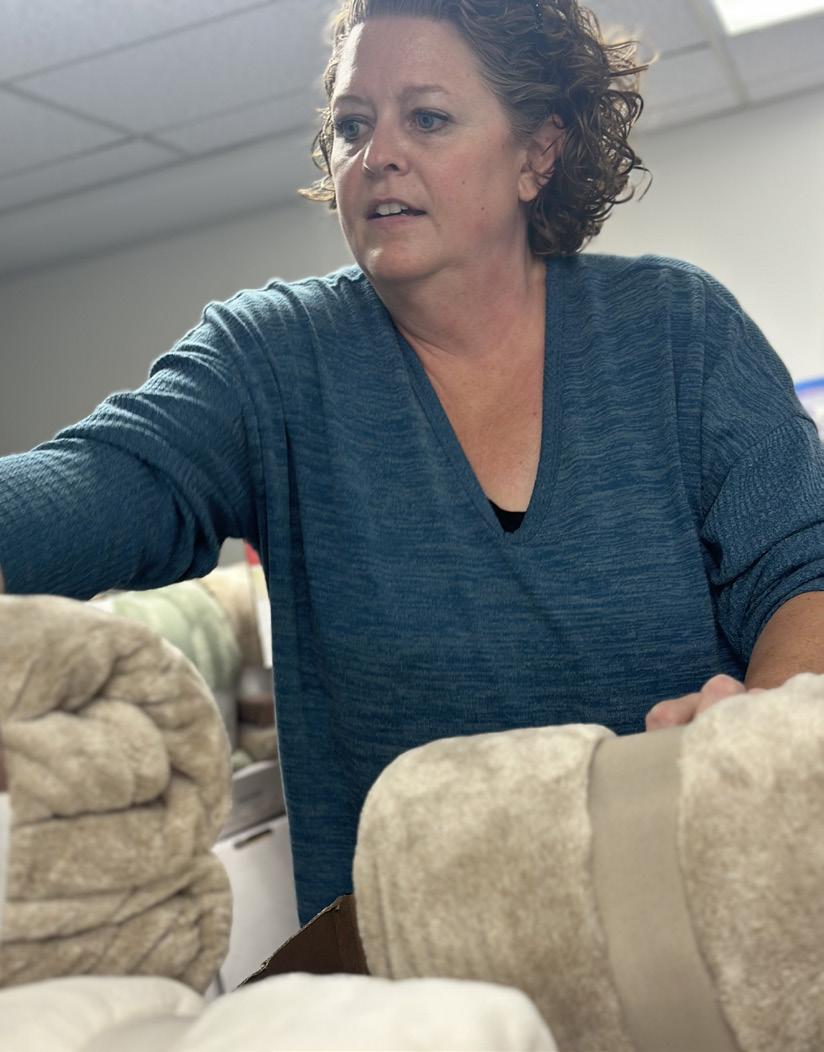
Through the Crisis Care Kits, the Mizars and other Nazarene leaders and volunteers hoped to meet immediate, practical needs. The blankets, tagged with information from the district and a message of care, were meant to provide warmth for families facing sudden displacement.
“They were allowed to bring one backpack when they left home. Imagine trying to choose what to put in your backpack!”
“[We] just wanted to give them something for comfort,” Chrissy explained.
“My heart sank when I learned how quickly people had to pack a bag and leave the only home they'd ever known,” shared Lindsay, a volunteer who helped assemble kits. “When a tangible opportunity came along to create Crisis Care Kits for moms, dads, and kids who lost everything, our helplessness was able to turn into helpfulness. We were happy to help our neighbors just a little and ease the huge discomfort they were feeling after their sudden evacuation."
At the Alaska Airlines Center, a middle-school-aged boy, a survivor of the storm, watched the
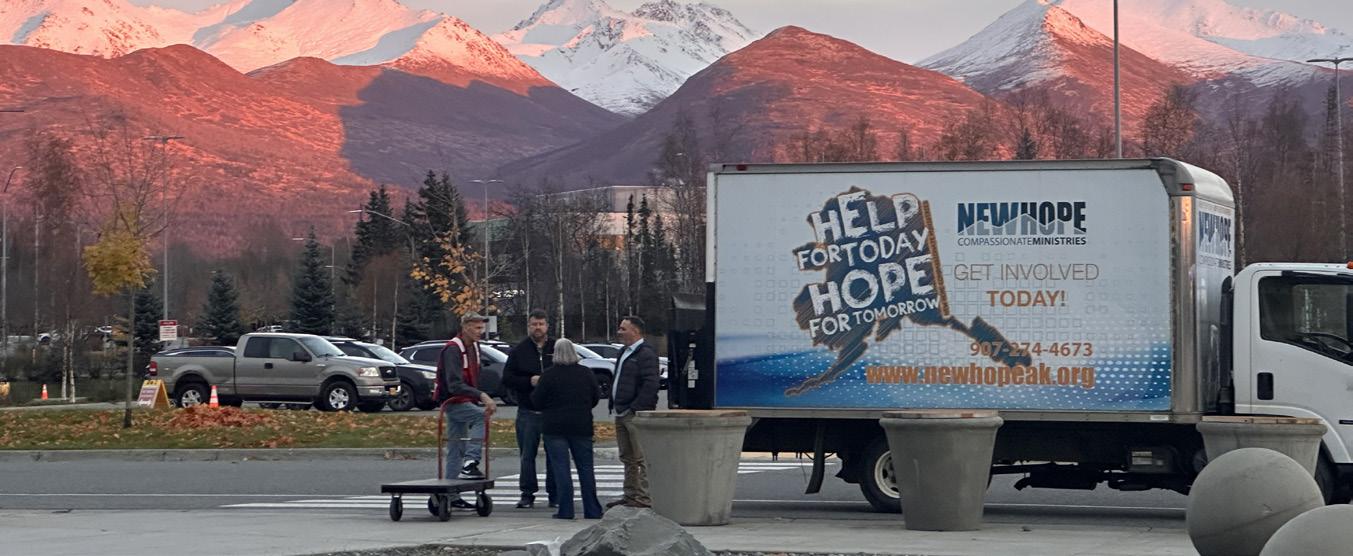
volunteers unload the New Hope truck full of supplies. He was thrilled to see boxes of soft blankets.
“He said, ‘Are these for us? Can I have one?’ And then he grabbed the boxes and began helping us,” said Chrissy. The boy was so excited he wrapped his blanket around his shoulders while he continued to unload boxes. “He didn’t take that blanket off the whole time we were there.”
Because of the eagerness they saw in the boy and others who received blankets, the group decided to give one to each person, instead of one to each family.

“They just needed them,” Chrissy recalled. “They were so grateful.”
“ There is a diference that is tangible and seen when the church steps in to serve through Christ’s love ... We not only provide help in the moment, but hope for tomorrow. ”
A total of 450 blankets and 200 Crisis Care Kits were purchased, assembled, and shared with evacuees across both convention centers.
Jason Ellis, director of New Hope, included his children in the response.
“I liked how I gave a blanket to another boy and he said, ‘God bless you!’, and everyone was so happy when we gave them soft blankets,” said Atigun, seven years old.
“The smiles on my children's faces as well the children of the families we helped support were priceless,” Jason shared. “There is a difference that is tangible and seen when the church steps in to serve through Christ’s love ... We not only provide help in the moment, but hope for tomorrow.”
It will take some time before life returns to some semblance of normal for the families from Kipnuk and Kwigillingok. It’s also possible most will never return to their traditional existence on the coast, as tribal leadership continues to debate whether to fully rebuild or to try to relocate the communities.
While evacuated families wait for those decisions, they have found more permanent housing in Anchorage. Children and teenagers are attending local schools, and New Hope Compassionate Ministries has seen an uptick in visitors to its food pantry— an indication that some survivors are beginning to rely on this ongoing, church-led resource.
OF CONDITIONS IN KIPNUK AND KWIGILLINGOK DIRECTLY AFTER HALONG MADE LANDFALL

By Simbarashe Kanenungo Africa Region Holistic Child Development Coordinator
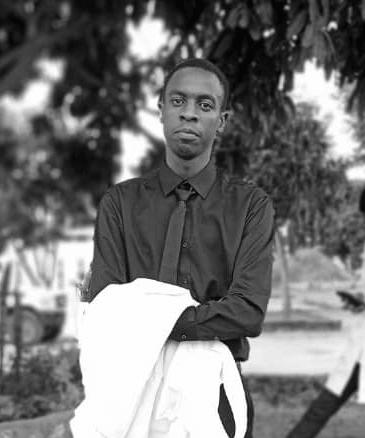
Jeremiah Mulenga grew up as the son of pastors in the heart of Luapula Province, located in northern Zambia, where the church is often the center of community life. His parents poured their lives into shepherding their congregation and instilled in Jeremiah the values of discipline, compassion, and perseverance.
Like many pastors’ kids, Jeremiah faced the challenge of balancing his education with limited family resources. In grade 9, he joined the sponsorship program for Nazarene pastors’ kids, a turning point that enabled him to continue his schooling.
“Child sponsorship helped me accomplish my dream by giving me the opportunity to stay in school and continue my education,” reflected Jeremiah. “[Because of] this support, I'm able to focus on learning, grow in confidence, and believe that my future will be better despite the challenges I faced.”
With this support, Jeremiah excelled academically, earning outstanding results in grade 12. His achievements were not only a
personal victory but also a testament to the impact of community-driven initiatives that invest in the next generation of leaders.
Jeremiah’s vision, however, extended far beyond the classroom. He carried a deep passion to serve others, inspired by his parents' example and his faith. His dream was to become a doctor, a calling that would allow him to bring healing to both body and soul. With courage and determination, he applied to the Copperbelt University to pursue a degree in medicine.
Yet, as is often the case, financial hardship threatened to stand in the way. His parents could not afford the university fees. For many, this would have been the end of the road. But Jeremiah’s story was different. He refused to let circumstances define his future. With humility and hope, he reached out to the sponsorship coordinator for Zambia, sharing his vision and his need. The coordinator reached out to the regional office to find out if there was a way to support Jeremiah with his studies.
“To lead like Jesus is to love, serve, and sacrifce for others.”
“ To my sponsor, I want to say thank you very much. Your support has truly made a diference in my life.”
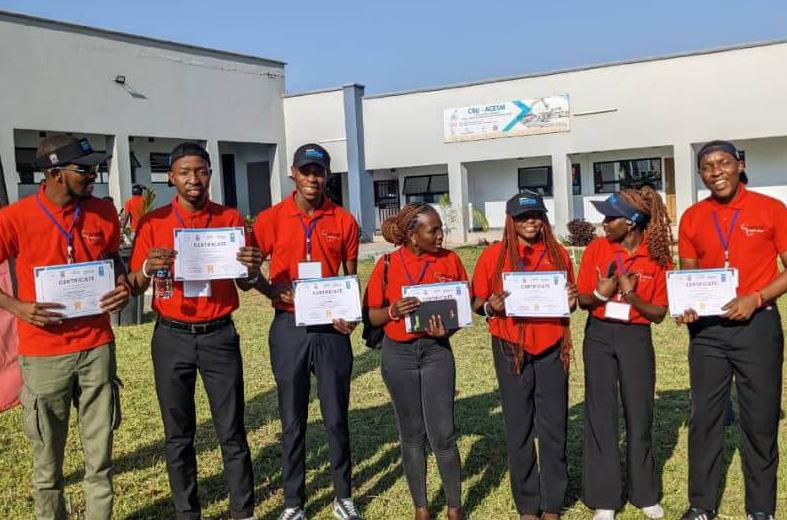
His story touched hearts. The national leadership brought his request to the Africa Regional NCM Office, where they together applied for LEAP (Leadership Education and Advancement Program) funding. By God’s grace, Jeremiah was awarded the scholarship. What had seemed impossible became reality.
“The benefits of child sponsorship include support for my education, encouragement to keep working hard, and opportunities to develop important life skills,” he shared. “It also helped me realize that there are people who believe in me and are willing to support my journey toward a brighter future.”
Today, Jeremiah is in his third year of medical studies. Each day, he walks the halls of Copperbelt University with gratitude and determination.
“LEAP is helping me grow both academically and personally. It is helping me build leadership skills, confidence, and a mindset of making a positive impact in my
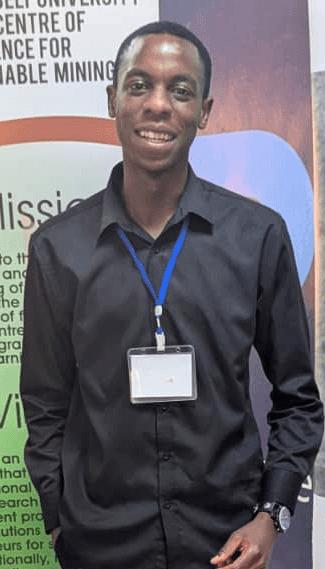
community,” he said. “So far, I have reached my third year as a student, and the remaining two years toward completing my studies are possible with the hope of continued sponsorship from LEAP.”
His journey is not just about personal success; it is about the power of faith, perseverance, and community support. He knows that his education is not for himself alone, but for the countless lives he will touch in the years to come.
Jeremiah looks forward to the day he will graduate, ready to serve his nation and his church with compassion and skill.
“To my sponsor, I want to say thank you very much,” he reflected. “Your support has truly made a difference in my life. Because of you, I have been able to pursue my dreams and continue building a better future. I am deeply grateful, and I pray that God blesses you for your kindness and generosity.”

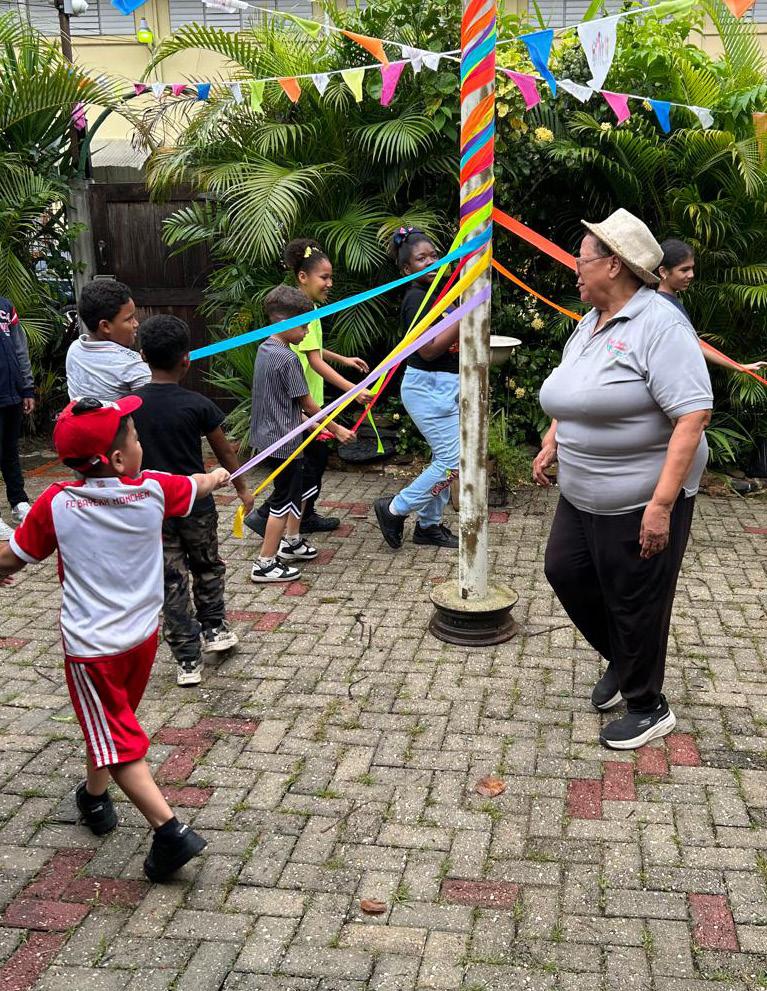
Centro de Esperanza is providing displaced children in Trinidad and Tobago with access to education and a supportive community.
In the midst of displacement and uncertainty, a quiet kind of transformation is taking place. At the Arima Church of the Nazarene in Trinidad and Tobago, children and families are finding more than education. They are finding a place to belong.
Centro de Esperanza was established to provide Venezuelan migrant children with access to primary-level education. As non-nationals of Trinidad and Tobago, undocumented migrants have limited opportunities to attend school. While
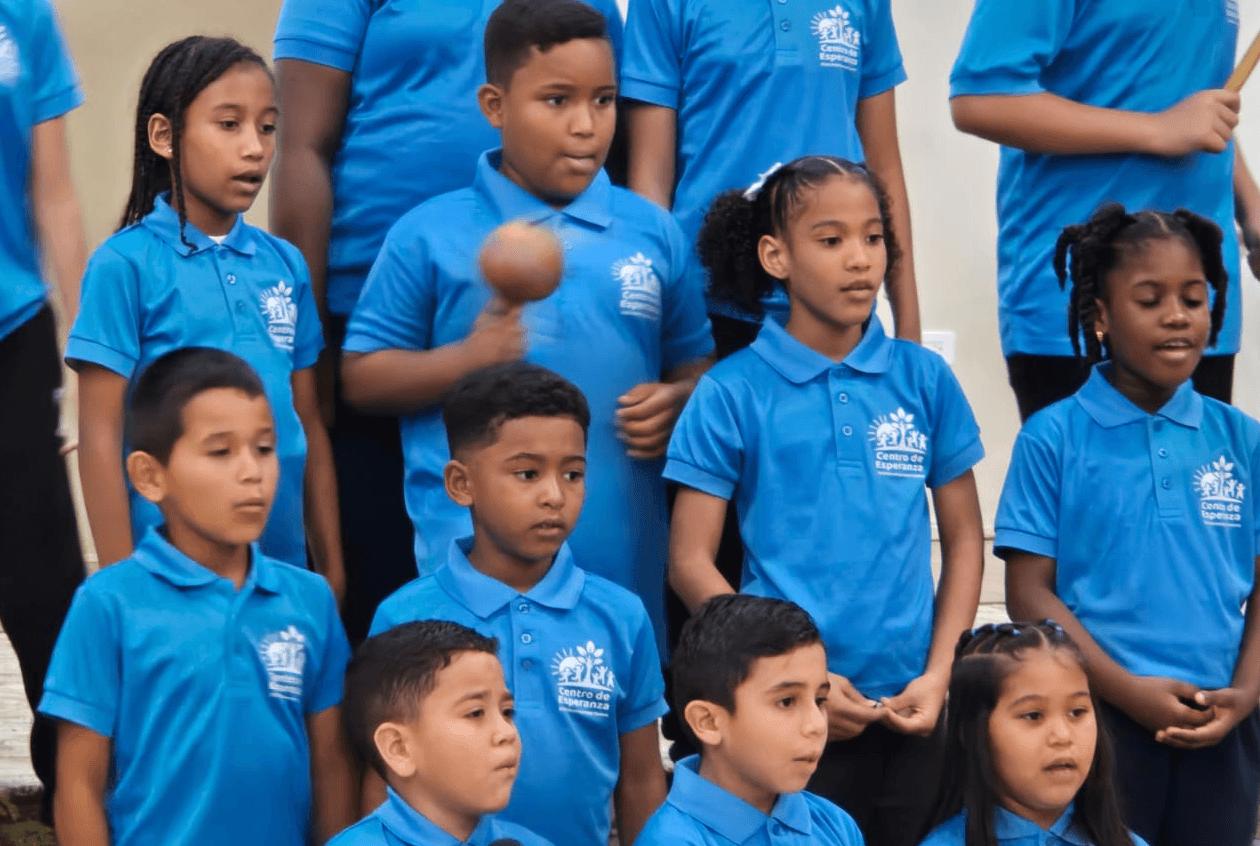
children are guaranteed free education, spaces are limited, and registration with a government agency is required. For many students at the center, this is their first experience with formal education.
Since opening in September 2024, the center has served 45 children and their parents. Current enrollment includes 17 students between the ages of 5 and 12, with space for 20 students and a growing waiting list.
Centro de Esperanza does not require parents to provide documentation of their legal status. Through relationships built over time, leadership has come to understand the sacrifices many families made to reach Trinidad and Tobago. Although the distance from Venezuela can be as short as ten miles, the journey is often difficult and, for some, deeply distressing. Many children have lived in Trinidad and Tobago for years without ever attending school.
Parents carry significant pressure as they seek better lives for their families. Some are highly trained professionals, others are skilled artisans, and still others are unskilled laborers. Without proper documentation, many are limited to lowpaying jobs with long hours and challenging living conditions. Even so, families demonstrate resilience
and a clear commitment to their children’s future.
The child development center provides a safe and supportive environment where children can grow and learn. Through partnership with Nazarene Compassionate Ministries, the church continues to strengthen this work, offering hope and a pathway forward.
“We find a place in the midst of the migration crisis where our children receive the education they need and much more,” said Roosmery, a parent of a student. “Not only do our children learn, we parents also receive and learn with them.”
In addition to teachers and a center assistant, the program is supported by volunteers from the church’s Spanish-speaking congregation. Many of these volunteers are migrants themselves, serving through music, Christian education, cooking,
and lessons on hygiene, character, and values. These shared experiences create meaningful points of connection within the community.
“It is a unique and wonderful experience, every treatment of our children, the performance of each teacher and administrator only makes me thank all of you for allowing us to be part of the center,” Roosmery shared.
Support for the center has come in many forms, including donated materials, access to dental care, and contributions of books, meals, and school supplies. Students also visit the national library, where Spanish-language resources create additional opportunities for learning and connection. Teacher training partnerships have equipped educators with valuable tools to serve students well.
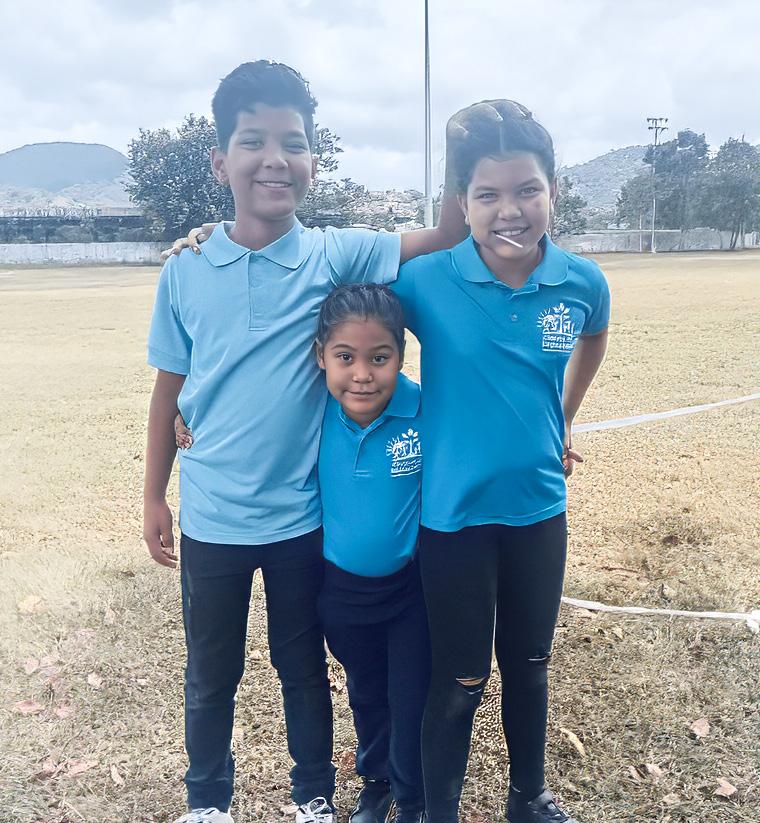
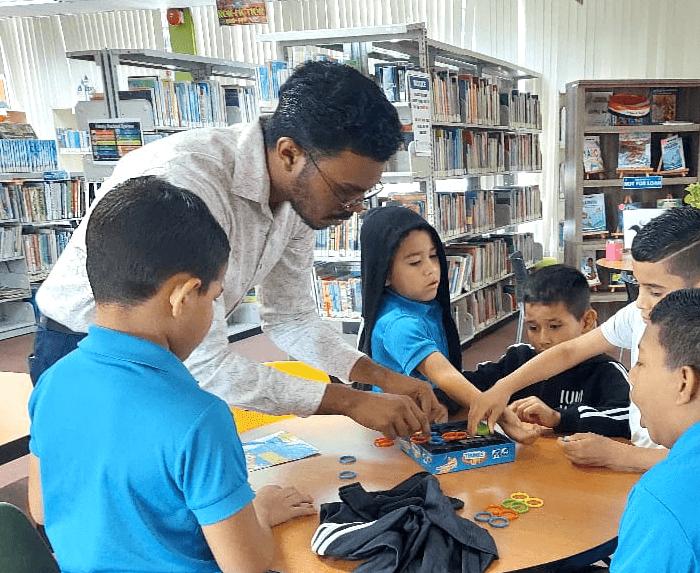
“Through relationships built over time, leadership has come to understand the sacrifces many families made to reach Trinidad and Tobago.”
The curriculum includes art, science, music, physical education, and reading in both English and Spanish. Weekly sports and music sessions help children build confidence, teamwork, and joy in learning. Field trips offer students and families opportunities to experience new places together, strengthening both education and community.
“Peace in the middle of the storm. This is what educational center means to us.”
The central goal of Centro de Esperanza is to provide a strong academic foundation for children. Challenges remain, including transportation barriers and the need for bilingual teachers. Even so, consistent support and relationships continue to shape the program’s impact.
Families have come to Trinidad and Tobago seeking refuge, and the church remains present with them. This work is made possible through the leadership of the local church, dedicated teachers and volunteers, and the participation of families who continue to show courage and hope.
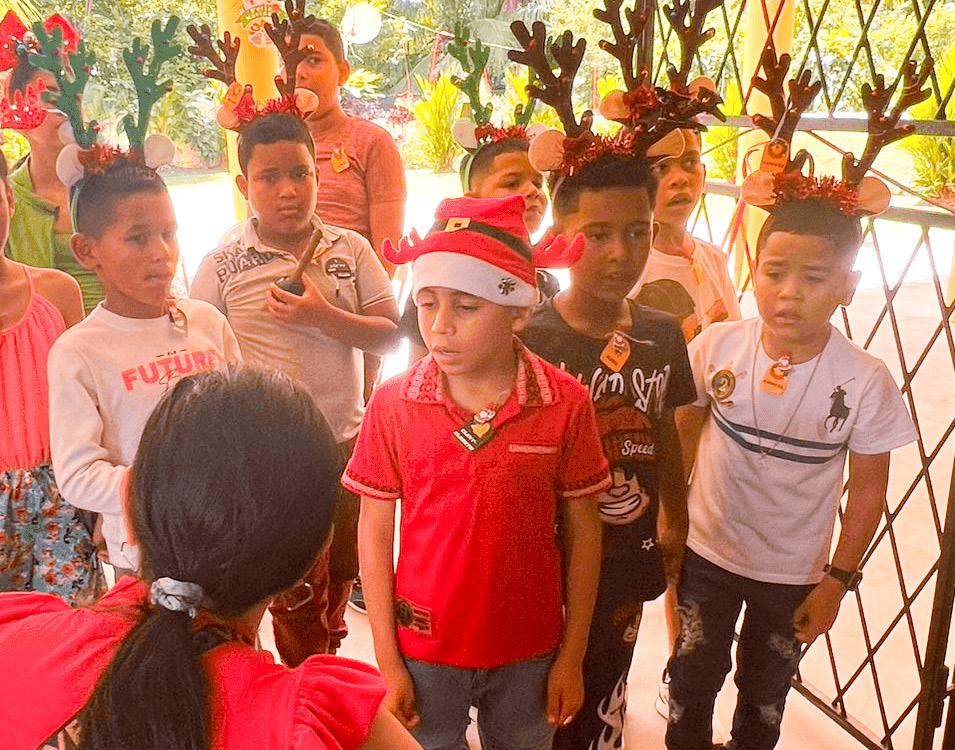
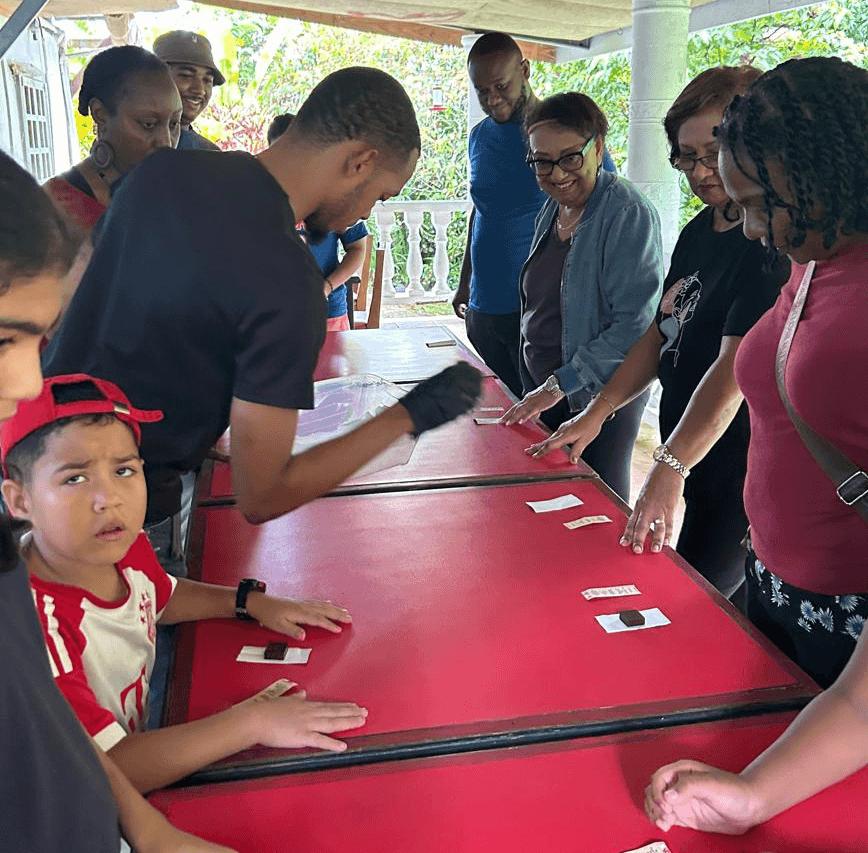
“Peace in the middle of the storm,” Roosmery explained. “This is what the educational center means to us.”
There is anticipation for how these ongoing relationships will continue to grow, as the church remains faithfully present with children and families in the community.

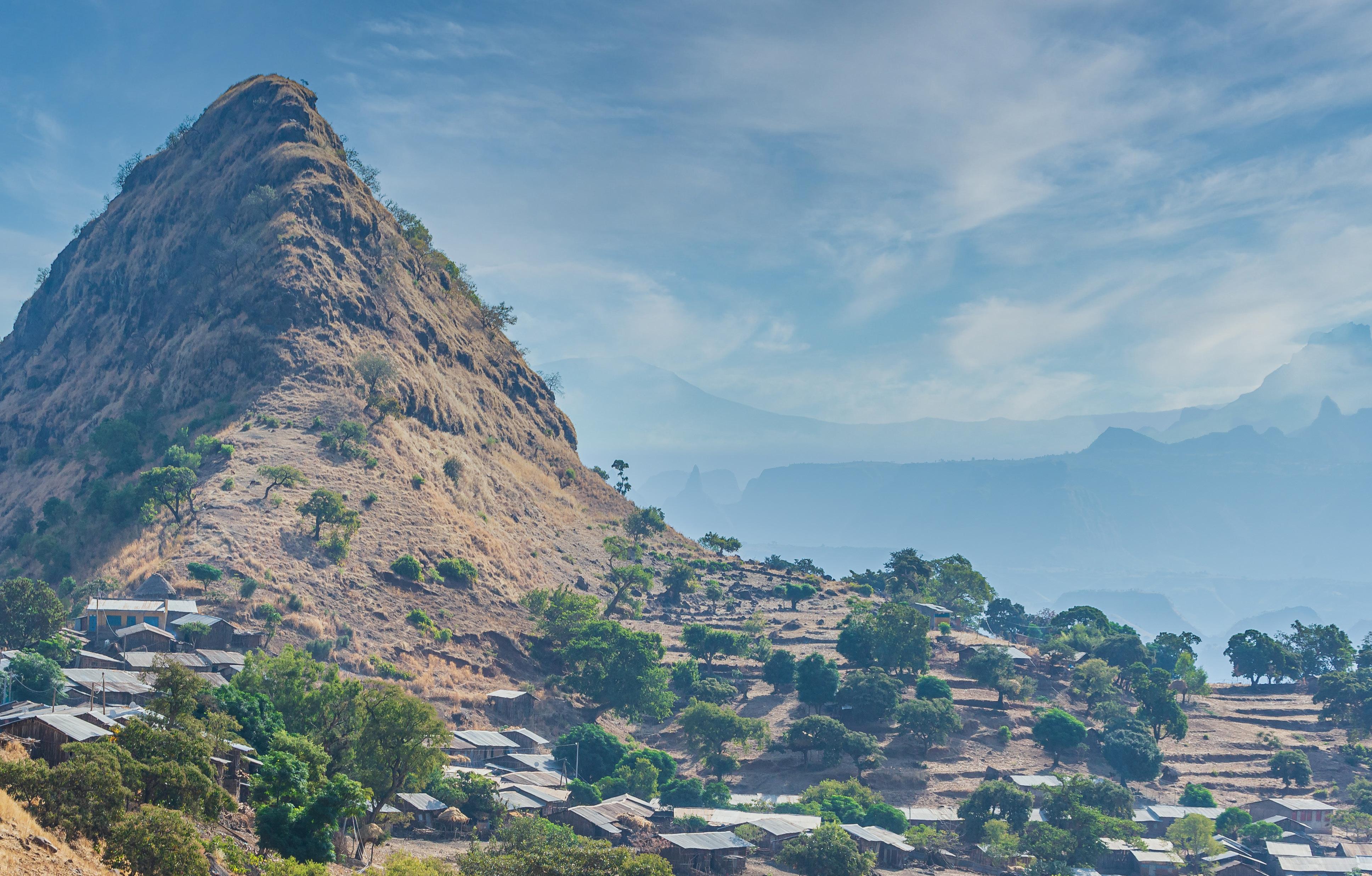
Ethiopia, located in the Horn of Africa, is a country rich in history, culture, and deep-rooted faith traditions. It is home to diverse communities where the Church continues to be present in meaningful and transformative ways.
Ethiopia follows a unique calendar system—12 months with 30 days each, plus a short 13th month, making it 7 to 8 years behind the standard global calendar.
It is widely considered the birthplace of coffee.
Christianity has been part of Ethiopia’s history for over 1,600 years.
The country has more than 80 distinct ethnic groups and languages.

Every act of compassion, every moment of connection, and every step of faith is part of a larger story God is writing through the Church. Your story can encourage and strengthen others.
TO SHARE

Share how you or your church are engaging in compassionate ministry and be part of telling the story of what God is doing.
Or visit:
ncm.org/share-your-story
by Jan Elyssa Haban Natividad, Asia Pacifc Region
There are stories that begin in light, and then there are stories like his, ones that learn how to find it.
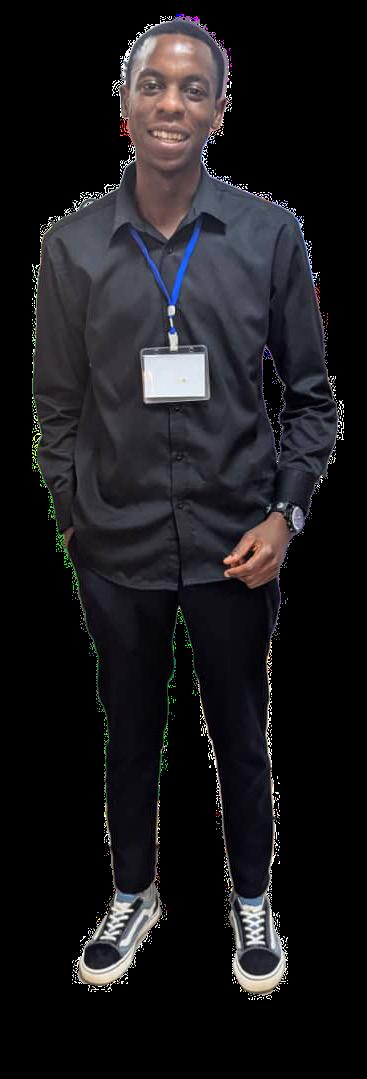
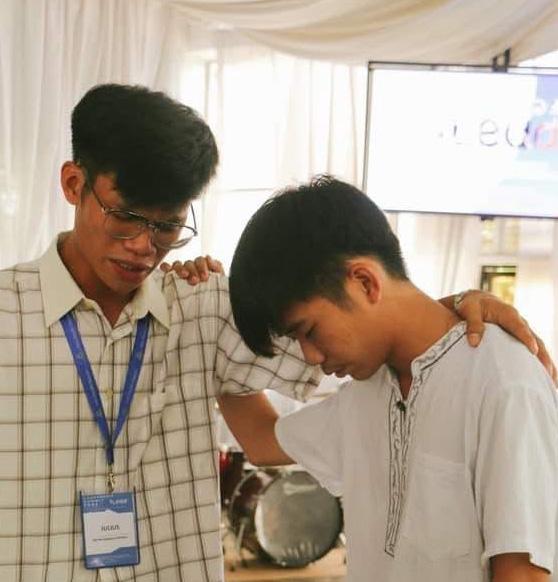
Julius Macandog, an incoming first-year college student pursuing a Bachelor of Science in Social Work, is part of the River of Life Community Fellowship Church of the Nazarene located near Asia Pacific Nazarene Theological Seminary in Taytay, Rizal.
He carries his story quietly, almost like something fragile, yet powerful enough to change the way brokenness is seen.
But before there was Julius, he was called someone else. They called him Chukoy.
Chukoy grew up in a family that was anything but simple. With thirteen siblings from different backgrounds, five of them his biological siblings, his understanding of family was far from peaceful. In a world where home is meant to be safe and warm, his was loud, chaotic, abusive, and often marked by hunger and darkness. At a young age, he began searching for something to fill the emptiness he felt.
At eleven, he began looking for a sense of belonging among people who seemed to understand him. Friends became his escape, but they led him down a path that slowly consumed him. What began as curiosity became habits such as smoking, drinking, staying up

all night in computer shops, and getting into fights. It gave him a sense of control and a kind of freedom, even if only temporarily. Over time, Chukoy learned how to survive on his own. He sold rags in busy areas like Tikling, Cubao, and IPI in Pasig City, walking farther each day and drifting further from home. Eventually, the streets became his reality. For almost three years, he lived there, sleeping on cardboard outside fast-food restaurants, bathing in gas-station restrooms, and eating whatever he could afford, sometimes just soup.
To get by, he begged and handed out envelopes to tourists, hoping for spare coins. He wore secondhand clothes without

drawing attention. But survival came at a cost. Influenced by those around him, he fell deeper into harmful patterns that affected both his body and mind. There were parts of his story he hesitated to share, not because they were untrue, but because of the fear of judgment.
There were moments when local officials and social workers brought him to shelters. There were times when his mother searched for him, doing everything she could to bring him home. He even met his biological mother and spent time in Laguna, but still could not find the peace he longed for and eventually returned to the streets of Taytay.
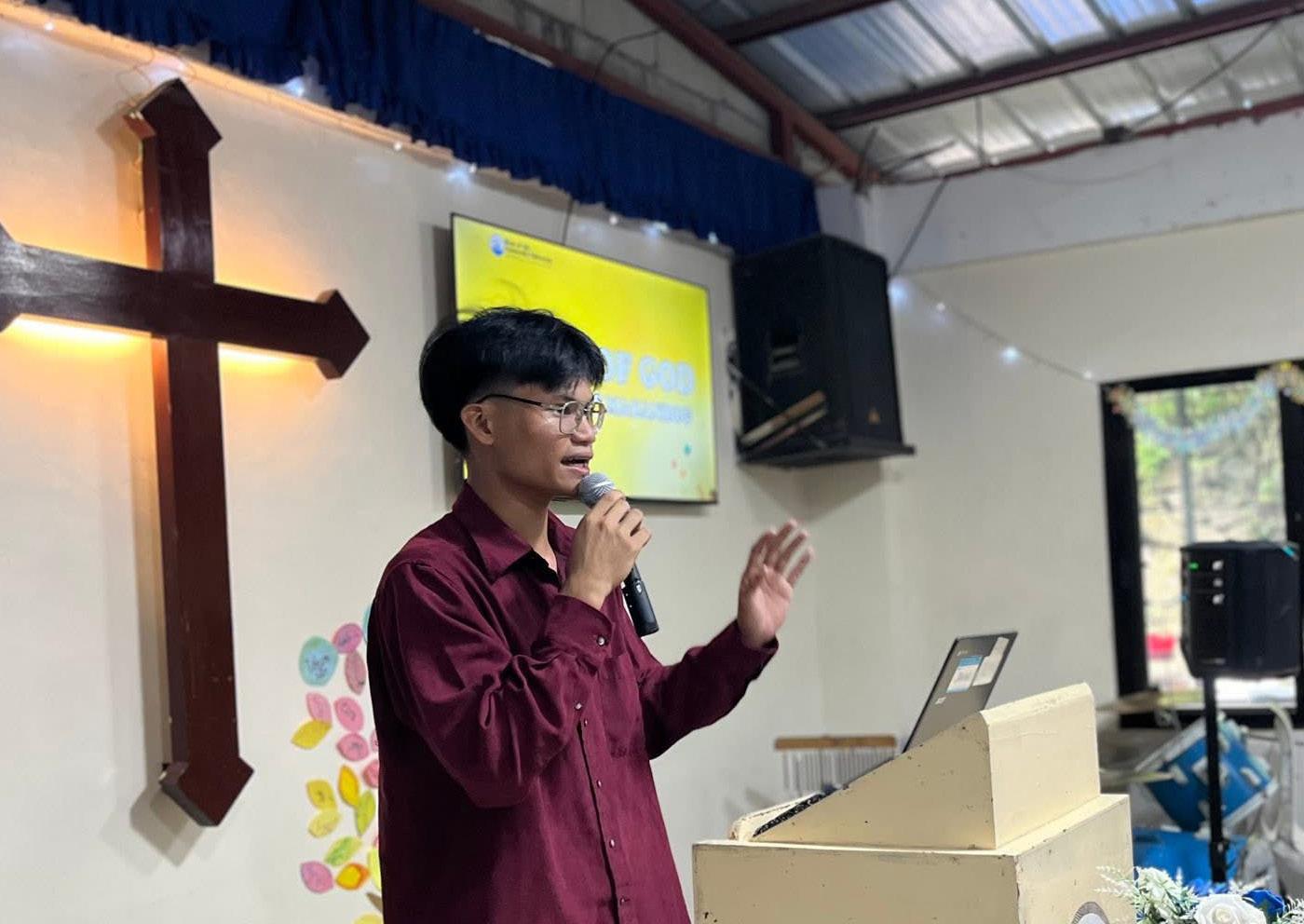
A year passed, and life continued in the same direction until one ordinary day changed everything. Near a place he often visited stood the River of Life Community Fellowship Church of the Nazarene. Every Saturday, the child development center offered programs for children and youth. At times, Chukoy would attend with friends for the food, the music, and the games, then leave.
One day, a youth leader invited him to a youth camp. He refused at first, again and again, but the invitation continued. Eventually, he agreed.
“Maybe nothing will be lost if I go, right?”
The Survival Youth and Teens Camp lasted three days and two nights. At first, he observed. He watched others, asked questions, and tried to understand. Then something shifted. As people around him prayed and responded, he found himself doing the same. He began to understand the sacrifice of Jesus and what it meant for his life.
In that moment, he encountered God not as a distant idea, but as someone present and personal in Jesus Christ. It felt as though everything he had experienced had led him there.
Standing there, he made a decision.
“Right here where I stand, I will bury ‘Chukoy.’ And I will live a new life as Julius.”
What felt like an ending became a beginning. Today, Julius walks a new path shaped by purpose, direction, and hope. Through the
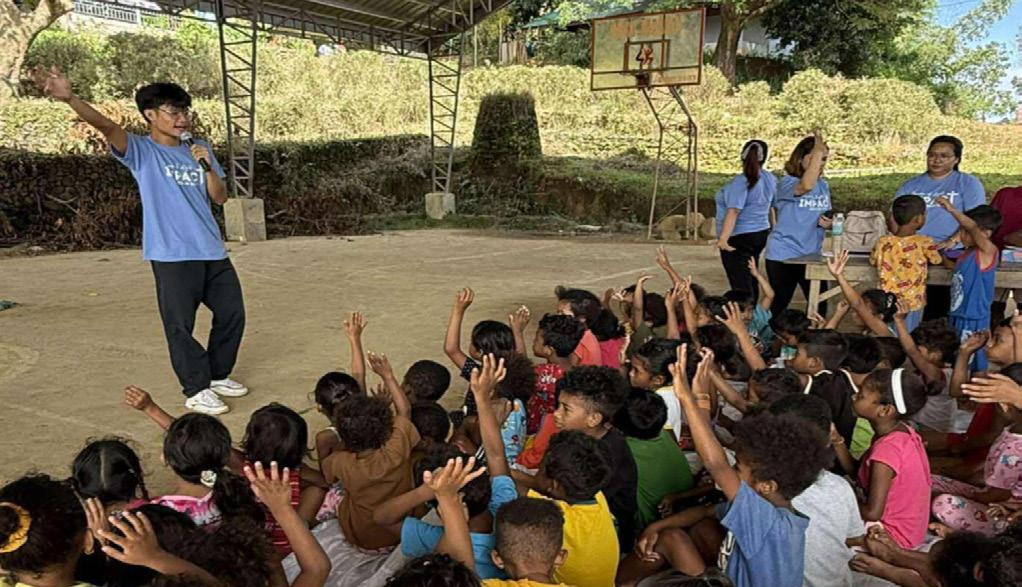
Gintong Aral Children and Youth Development Program of the River of Life Church of the Nazarene, he now serves alongside other youth, sharing not perfection, but transformation.
He serves as NYI president and mentors life groups. He was welcomed into the home of a pastor who continued to walk with him, helping him grow in understanding God’s love and care. With encouragement, he returned to school after several years away, completing his studies through the Alternative Learning System and graduating from senior high school.
Julius now advocates for children on the streets and serves as a coordinator with a youth organization connected to the Philippine children’s ministries network. Together with other youth leaders, he continues reaching children still living in the same conditions he once knew.
“To lead like Jesus is to love, serve, and sacrifice for others,” he said.
His story lingers, not because everything is easy, but because it reveals that no part of a life is wasted in Christ. Even in the darkest places, God’s grace is at work.
Somewhere, there are still stories like his, unfinished, uncertain, searching.
Julius is living proof.
By

What every Nazarene should know about our church in the Middle East.
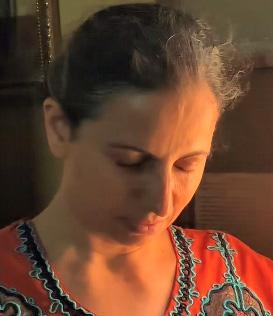
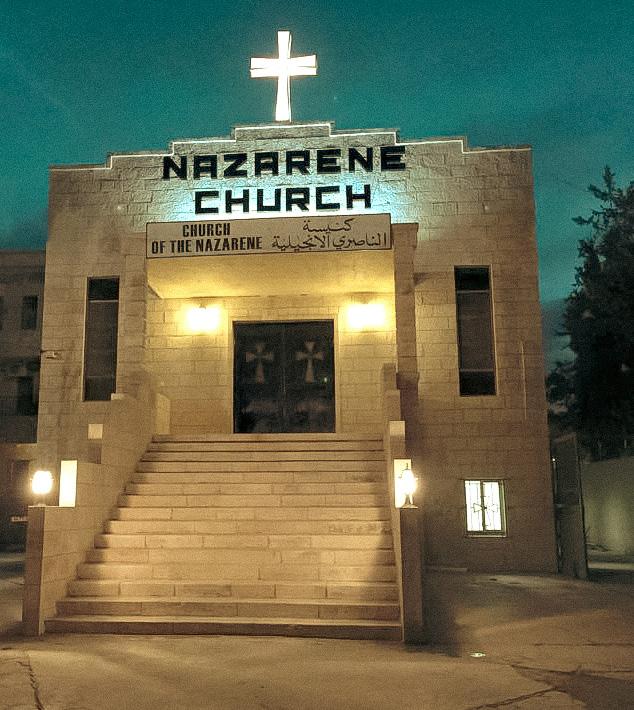
I’ve had the privilege of helping coordinate the Nazarene church’s emergency response efforts in the Middle East for the last 13 years – as well as pastoring the Church of the Nazarene in Jerusalem for 3 years.
While serving as a pastor in Jerusalem, I spent a lot of time showing people around. Turn right out of the gate of the Nazarene church, and within a two-minute walk you arrive at the site where Stephen was stoned. Two minutes more, you’re at the Garden Tomb. Ten more minutes and you’re at the site of the crucifixion in the Old City. We’d go up the Mount of Olives – with a breathtaking view of the city - and read how Jesus weeps over Jerusalem because they did not know the things that make for peace. I loved being an unofficial tour guide. To walk with someone along the shores of the Sea of Galilee … what’s not to like?
As inspiring as it is to see the ancient stones of the Shepherd’s Fields in Bethlehem or Peter’s house in Capernaum, today, more than ever, I wish I could bring people
to meet the “living stones” – our Middle Eastern sisters and brothers in Christ. Did you know we have Nazarene churches in Galilee? That might be our first stop - to the Arab Christians who make up our churches there. Perhaps we’d join our pastor from Nazareth (a real Nazarene!) and celebrate the baptisms of young people from his church in the Jordan River. We’d go to the Old City in Jerusalem where the Nazarene church first gathered in 1921 when ministering to Armenian refugees. We’d stop by Bethlehem Bible College – a Palestinian theological institute equipping Palestinian evangelicals for ministry. We would go to a center where Nazarenes have taught and studied in years gone by, that works for peace in the region.
We’d visit our Nazarene schools in Jordan and learn about 75 years of vibrant ministry impacting thousands of children. We’d stop by our
Nazarene churches reaching out to refugees from Syria and Iraq – and hear stories of God’s grace that would blow our socks off. We’d see firsthand how the good news is still spreading throughout the Decapolis – including the new Nazarene youth drop-in center in the north of Jordan.
In Syria, we’d connect with leaders who served throughout countless years of war, earthquakes and scarcity – and we’d hear how their churches are growing still, as Jesus continues to reveal God’s presence to people. Our hearts would burn as they share stories of resurrection hope breaking out in the most improbable of places. We’d see the living stones in Egypt and their microloans program helping people to get back on their feet.
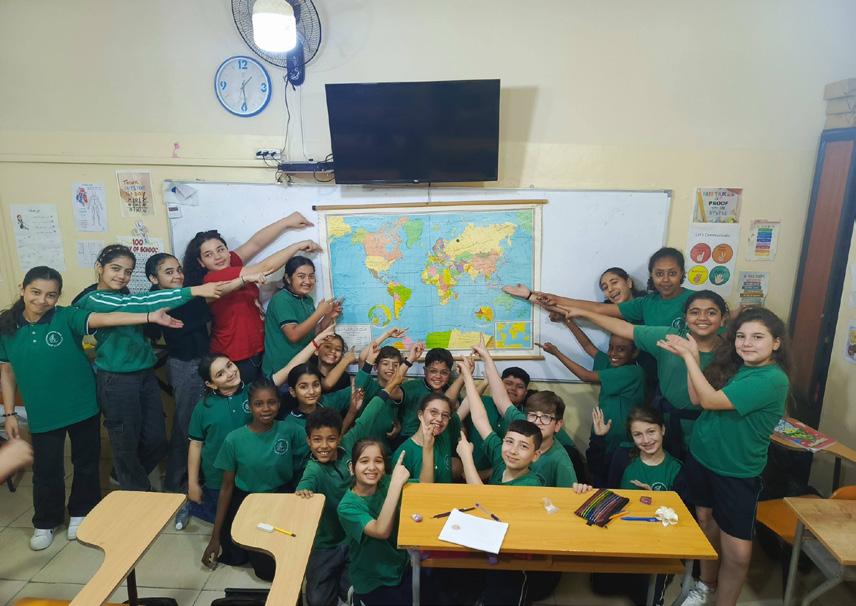
– and it would break our hearts even more. We’d have witnessed how some of our countries are complicit in wars that have destroyed so many lives. We’d lament and we would write to our elected officials and say, “not in our name”. We would raise our voices to shout for peace – and truthfully live out Jesus’ calling to be peacemakers. As a denomination, we can be immensely proud of local Nazarene churches throughout the Middle East who serve those in need with such fortitude, courage and generosity – and have done so for more than 100 years.
We’d perhaps end our tour in Lebanon and worship at the Nazarene campground in the mountains. You’d have coffee with our school principal who dedicated her life to serving children in need and eat dinner with our pastors who have served people day and night under Israeli bombardment. They would remind us by their own testimony that “war may shake the ground, but it cannot silence the praise of God’s people.”
We’d leave Beirut filled to overflowing with stories of how God is at work throughout the Middle East –and how the Church of the Nazarene is playing its part.
The global Nazarene family has contributed enormously to lifesaving support in the Middle East. Keep going. Don’t stop. And where we can, let’s use our voice to cry out for peace.
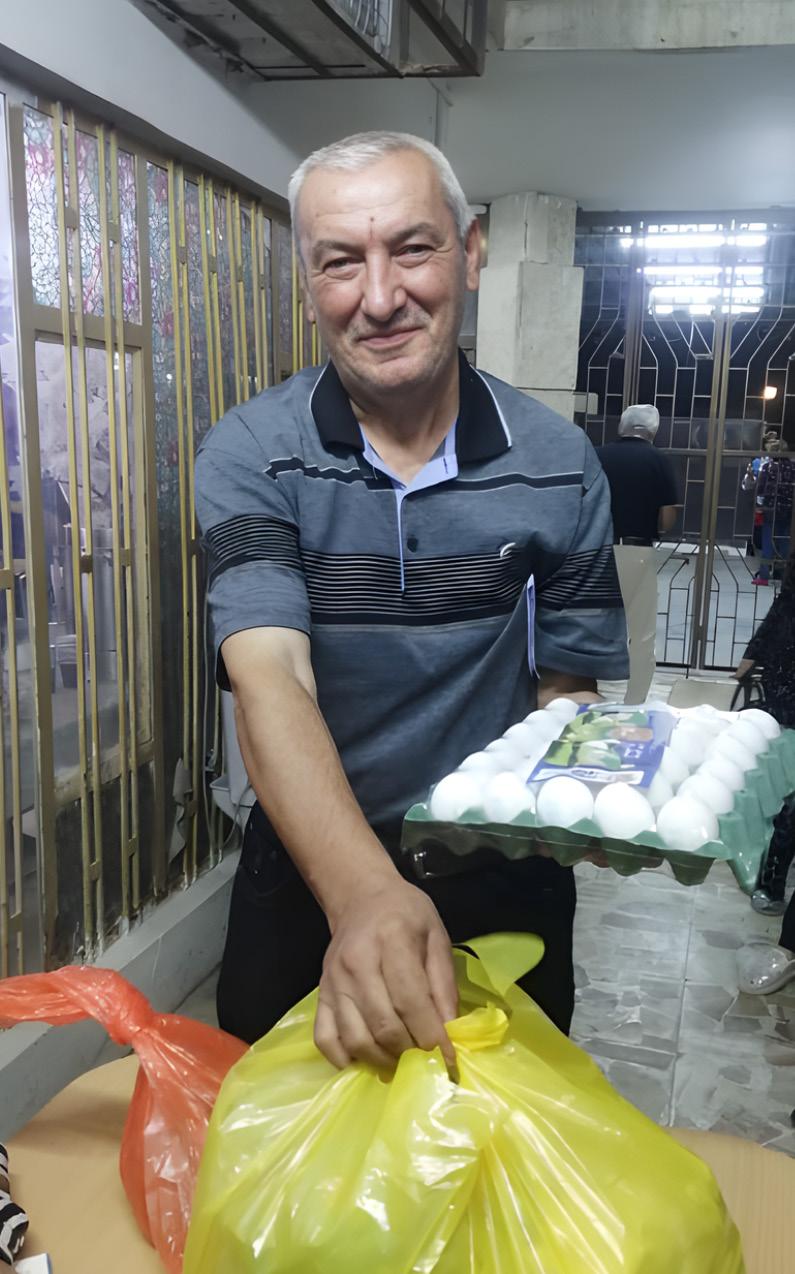
We would return home, newly cautious of all those who claim God is on their side, because we would have been reminded how God’s heart is for the poor, the downtrodden and the oppressed. We’d have renewed insight that God’s kingdom does not conform to any national boundaries or favour one ethnicity over another – Paul’s words ringing in our ears that Christ has broken down the dividing wall and there is no longer Jew or Gentile, male or female, slave or free. We would watch the news differently


God of every nation and every people, God, whose heart is for the poor, the oppressed, and the displaced, We come before you with gratitude and humility.
We thank you for the Church in the Middle East, for sisters and brothers who bear witness to your grace in places marked by conflict, uncertainty, and need. Thank you for faith that endures, for hope that rises, and for love that is lived out day after day through acts of courage and compassion, big and small.
Jesus, Prince of Peace, you wept over Jerusalem and longed for your people to know the things that make for peace. Teach us to see as you see.
Give us hearts that are moved not only by ancient stories, but by the living testimony of your people today.
Holy Spirit, form in us the life of Christ.
Shape us into a people who reflect your holiness in love, who stand with those who suffer, and who refuse to be indifferent to injustice or violence.
Break down every dividing wall in us, so that we may live as one body, seeking your kingdom above all else.
God of compassion, be near to those who live under the weight of war, displacement, and loss. Strengthen pastors, teachers, and leaders who continue to serve faithfully. Provide for every need, let your peace take root even in the most uncertain places.
Send us, as your Church, not as spectators but as participants in your work. Give us courage to speak for peace, wisdom to act with humility, and generosity that reflects your own abundant grace.
May we be a people who do not grow weary in doing good.
May our lives bear witness to your reconciling love. And may your kingdom come, on earth as it is in heaven.
We pray in the name of Jesus Christ, who breaks down walls, restores what is broken, and calls us to follow in the way of peace.


Child Sponsorship supports what local churches are already doing to care for children and families—creating space for learning, belonging, and long-term development.
Be part of a child's hope at ncm.org/sponsor-a-child


By Amy Sherman
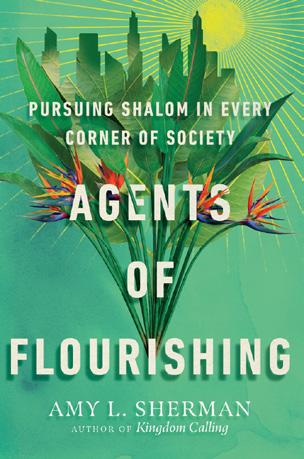
Amy Sherman’s Agents of Flourishing explores how individuals and communities can actively pursue shalom, or holistic peace, in every area of society. It invites the Church to participate in God’s work of restoration by fostering well-being, justice, and right relationships in everyday spaces.
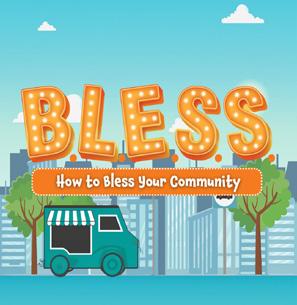
This 6-week children’s curriculum explores Jesus’ mission to help people fnd their way back to God, as well as how he lived out the B.L.E.S.S. practices—and showing us how to live out that mission, too.

The Bible Project’s introduction to the Sermon on the Mount presents it as the clearest picture of Jesus’ announcement that God’s kingdom has arrived, ofering God’s presence and blessing to all people. It explores how Jesus redefnes the “good life” through right relationships with God and others, calling people into a way of living marked by love, humility, and trust in God’s reign.
Watch it here: bibleproject.com/guides/introduction-to-the-sermon-on-the-mount

Four years after the start of the full-scale war in Ukraine, local churches have become vital centers of care, as communities increasingly look to spiritual leaders for both practical support and hope. In this interview, Church of the Nazarene leaders Pastor Svetlana and Pastor Sergei refect on how the church has become a “warm place,” offering shelter, resources, and faith in the midst of an ongoing crisis.
SCAN HERE TO STUDY NOW
SCAN HERE TO WATCH NOW
SCAN HERE TO LISTEN NOW
Though we cannot think alike, may we not love alike? May we not be of ONE HEART, though we are not of one opinion? Without all doubt, we may.
Herein all the children of God may unite, notwithstanding these smaller differences.”


– John Wesley

Right before Jesus went to the cross, He prayed that all believers, past, present, and future ‘may be one, as You, Father are in Me, and I in You; that they also may be one in Us, that the world may believe that You sent Me’ (John 17:21 NKJV). This was Jesus' prayer for us all, yet more often than not, I fear we have not lived up to it. Instead, we fight for our own way, for our selfish desires, for our right to be superior. We build churches centered on our own cultural ideas of God, rather than on seeking to bring us back to Him. And then we fight with other churches and religions about who is serving their personal culture god the best.
Come dream with me. Dream of a fight for something bigger, something more important and worthwhile. We need to fight for justice and peace, for the walls between us to come crashing down.
— John M. Perkins, Dream with Me: Race, Love, and the Struggle We Must Win
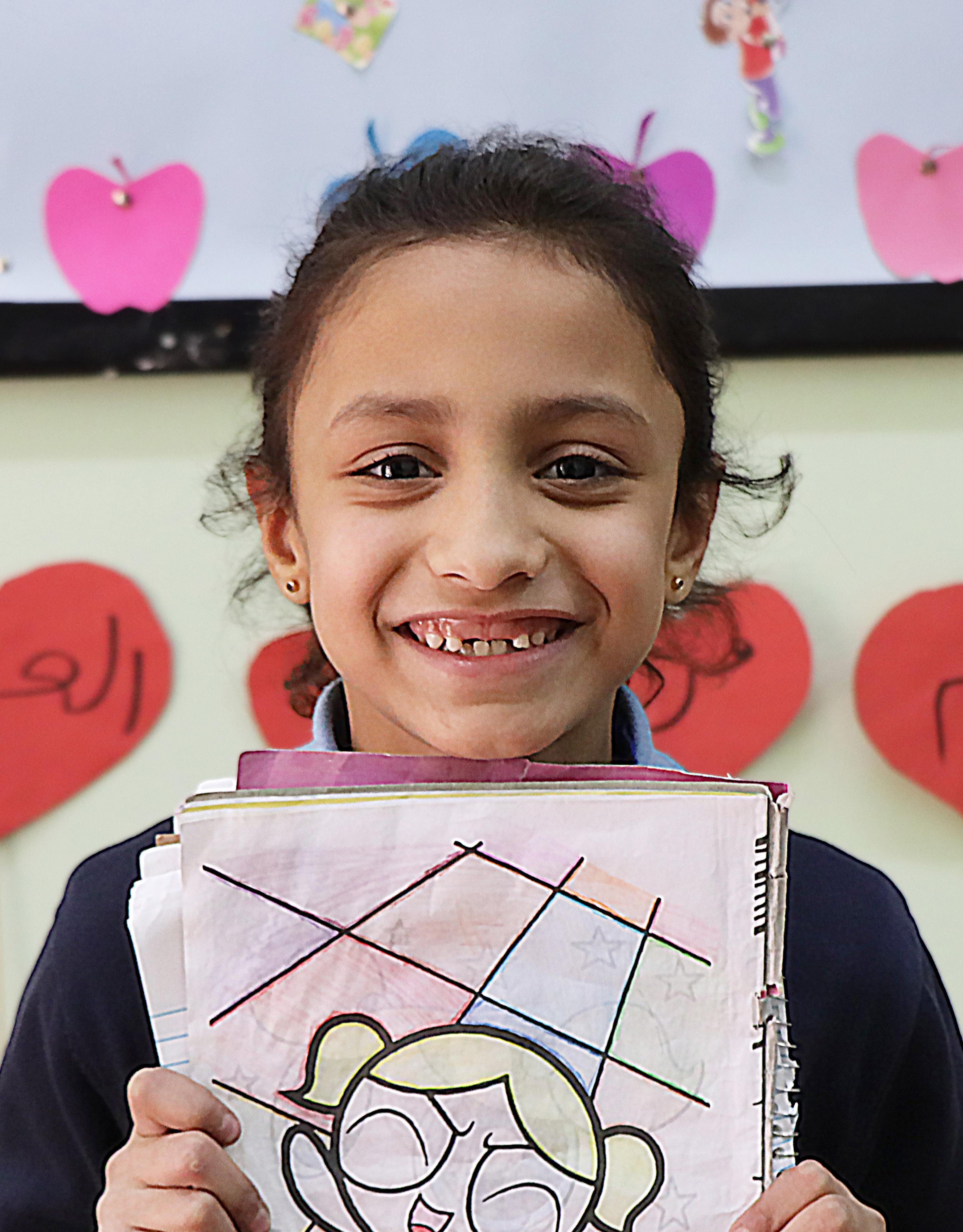
This Christmas, help displaced children fnd safety, belonging, and hope. Join Nazarene Compassionate Ministries in creating spaces where every child is welcomed, cared for, and given the opportunity to thrive.
Church of the Nazarene 17001 Prairie Star Pkwy Lenexa, KS 66220
(800) 310-6362
Info@ncm.org