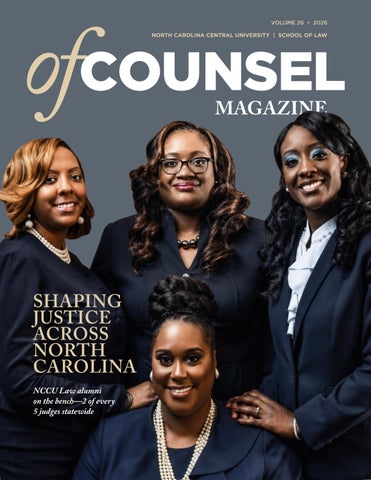
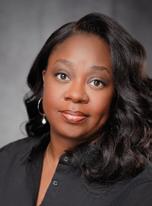
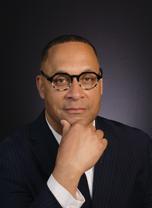
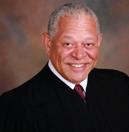
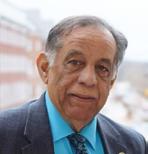
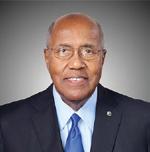
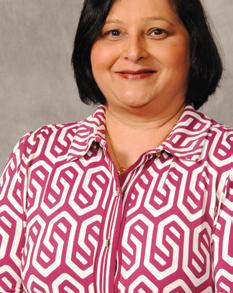
NCCU Law alumni on the bench—2 of every 5 judges statewide
ASSOCIATE
DIRECTOR
UNIVERSITY
EDITOR:
DESIGN:
CONTRIBUTING
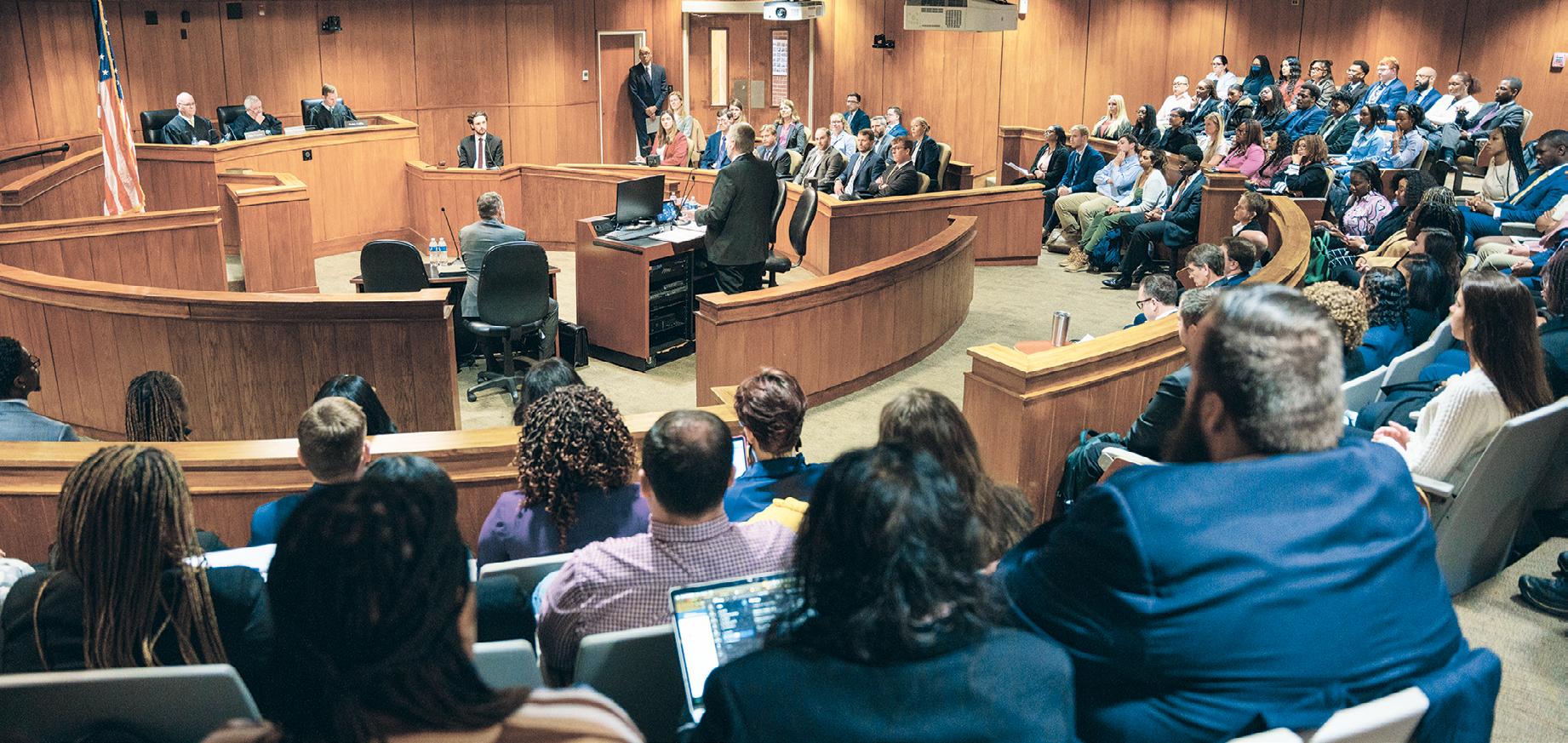
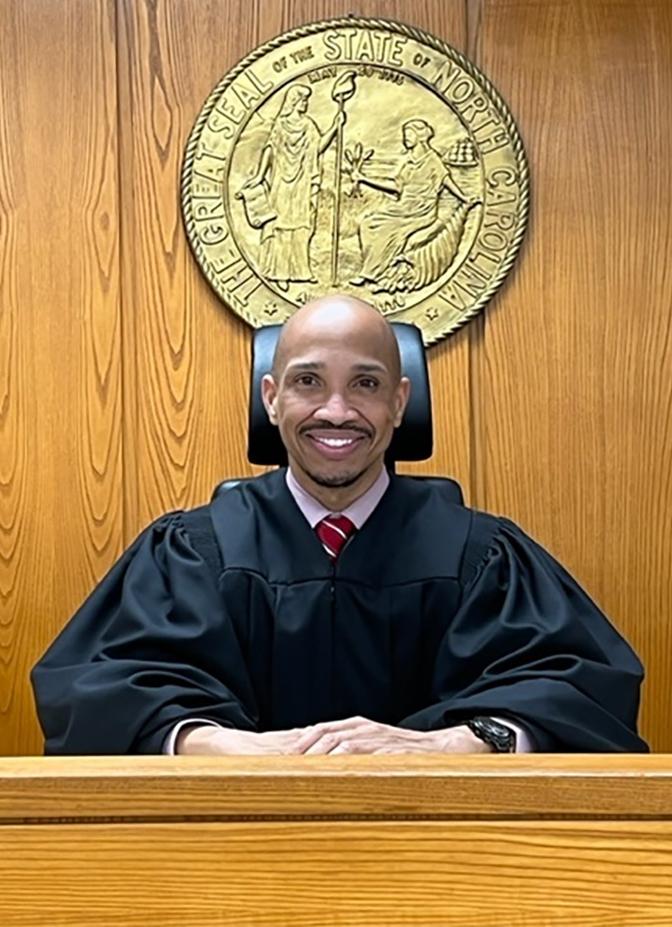
Above: The North Carolina Court of Appeals convened
special session to conduct oral arguments at the NCCU School of Law Moot Courtroom on March 19, 2026.
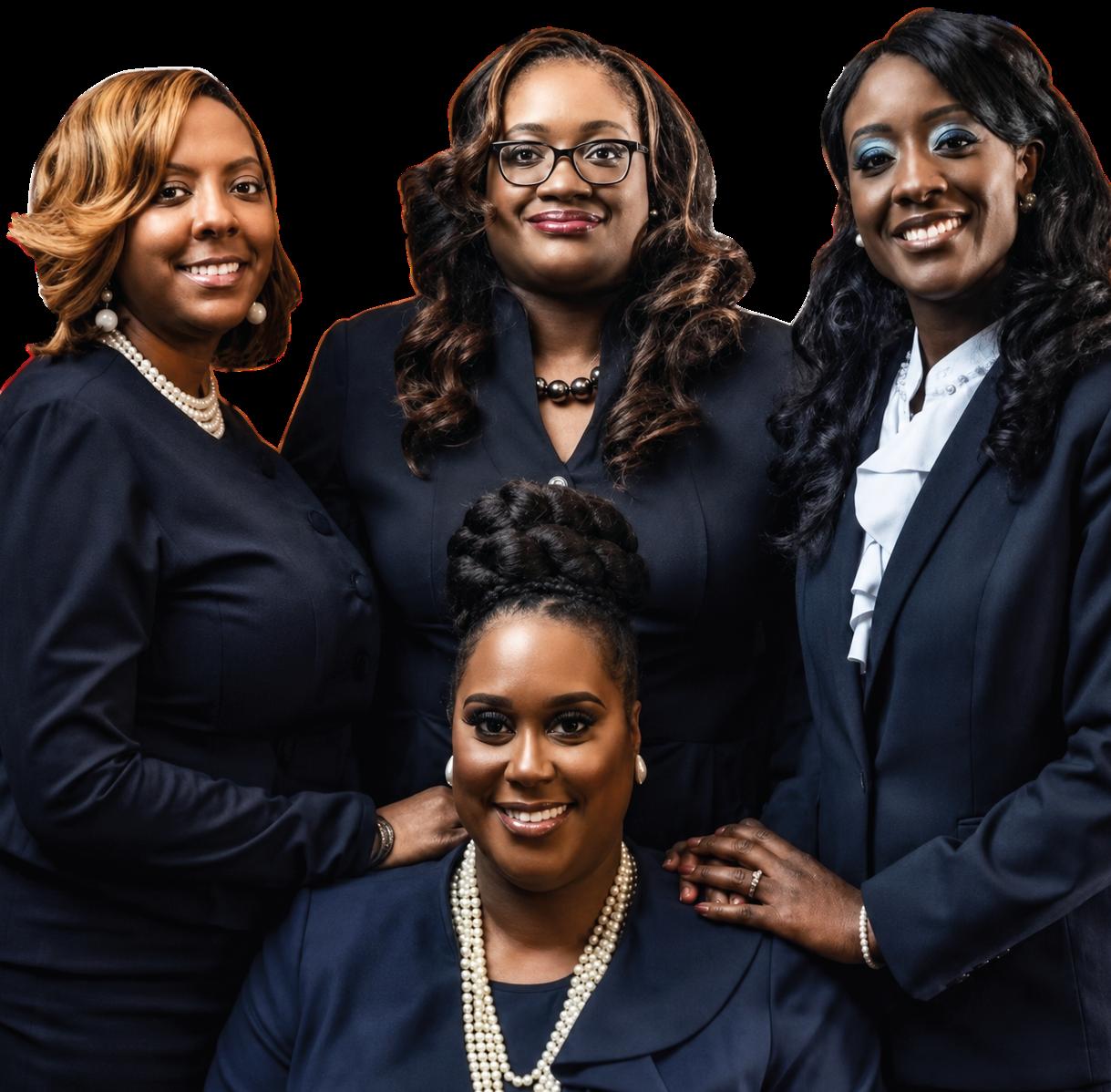
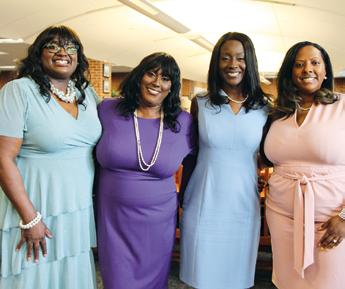
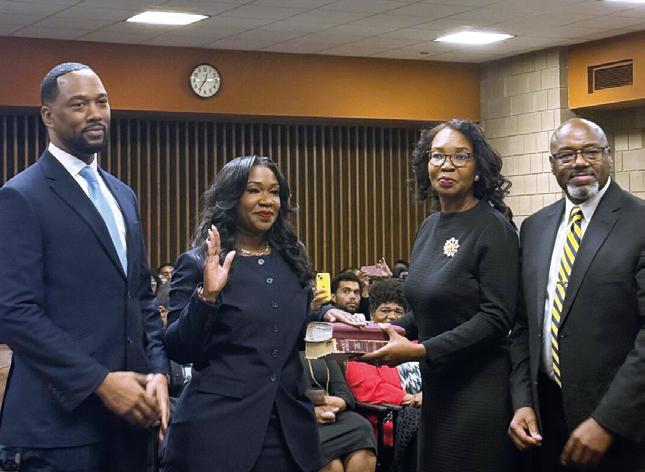
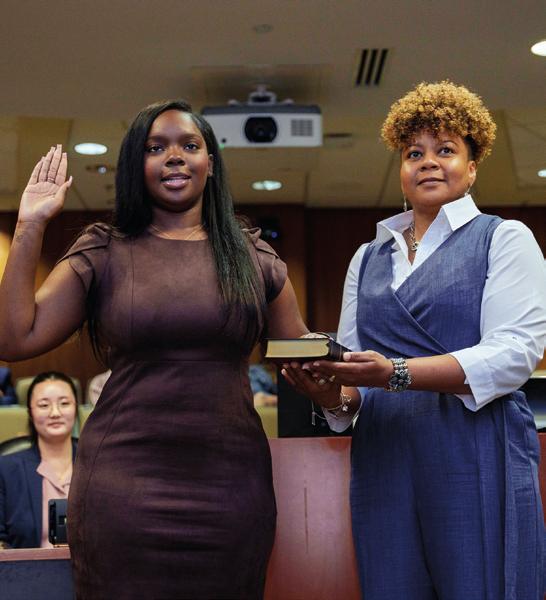
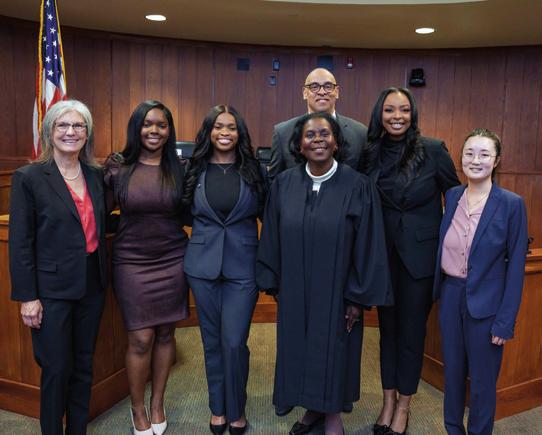
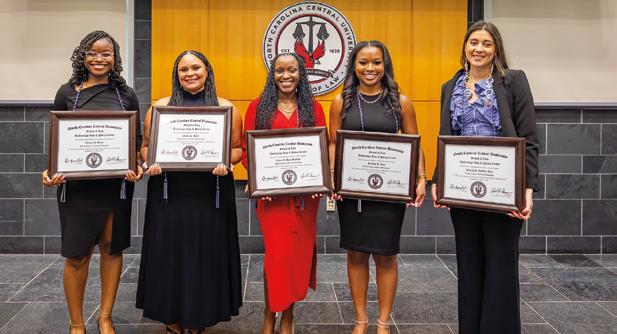
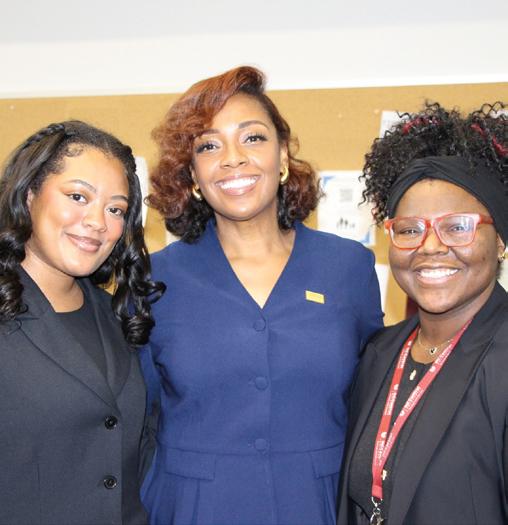
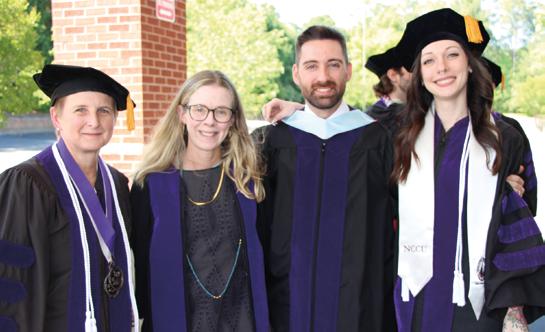
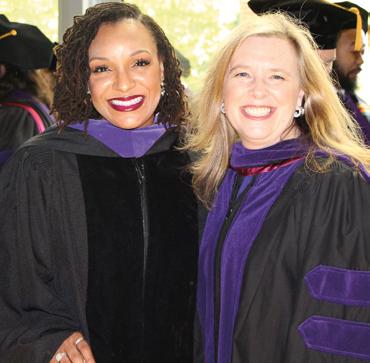
Cover: Left to right: Judge Teresa Raquel Robinson Freeman, Judge Keisha Wright Hill, Judge Camille Banks-Prince and Judge Shamieka L. Rhinehart
Photo: Eric J. Banks, MJNC Photography
message
FROM INTERIM DEAN DON CORBETT
Dear Alumni, Friends, and Members of the NCCU
I think at its best, a law school should be measured not just by what happens in the classroom, but by the impact its graduates have beyond it. I think this is certainly true at North Carolina Central University, and part of the reason it’s such a pleasure to welcome you to this digital edition of Of Counsel Magazine, which will highlight the achievements of our terrific students, faculty, and staff.
It’s been an honor to serve as interim dean at our law school this past academic year. It has allowed me to see up close, and be reminded of the strength and resilience that exists within our community. We have stayed focused on our mission while trying to make investments in the future, whether those have involved making curricular changes, bringing in new faculty members, or cementing our space in the field of law and technology. Despite the rapidly evolving changes in our field, service remains the core of who we are and what we do. Our clinics and pro bono efforts are doing real work for real people, expanding access to justice and shaping our students into the kind of lawyers we want them to be.
School of Law Community:
We are also incredibly grateful for our continued growth in donor support. The part of the job I have probably enjoyed the most has been reconnecting with our alums in my various road trips and other outings. Your professional accomplishments not only shine a positive light on our institution, but your contributions make a direct impact upon our current students, whether it is donating to our scholarship fund or funding special projects, like that which was aimed at our tutors this past fall. It is also worth noting that right now, there are 170 graduates of our law school serving on the bench as judges across the state and region. It is a wonderful legacy, one which we hope to build upon in the future.
I hope you enjoy this issue and the stories it highlights. I also hope you’ll join me in welcoming Dr. Joseph Grant, our new dean, to the family this fall. He is excited about joining us, and will surely carry the banner well in our continuing commitment to justice and service. Thank you so much for everything, and for being part of the NCCU School of Law community.
Don Corbett Interim Dean. North Carolina Central University School of Law
JOSEPH KARL GRANT
Appointed Dean of the School of Law
By Stephen Fusi
NNorth Carolina Central University (NCCU) has appointed Joseph Karl Grant as dean of the School of Law, effective July 1, 2026. He will report to Dr. Ontario S. Wooden, provost and vice chancellor for academic affairs.
Following a national search, Grant was selected to lead the School of Law at a pivotal time for legal education and student success. He brings an extensive background in legal education, academic leadership and institutional advancement, with a strong record of supporting faculty, engaging stakeholders and driving strategic priorities that strengthen law schools and their impact.
Grant will lead the School of Law in advancing its academic mission, improving bar passage outcomes, strengthening external partnerships and increasing the school’s visibility across North Carolina and beyond. His direct engagement in work related to the development and implementation of the NextGen Bar Exam will bring valuable expertise to NCCU’s efforts to support student success and enhance bar readiness.
“Joseph Grant is a thoughtful leader, respected legal scholar and experienced administrator whose
background aligns well with the future of our School of Law,” said Dr. Ontario S. Wooden, provost and vice chancellor for academic affairs.
“He understands the evolving landscape of legal education, including the opportunities and challenges presented by the NextGen Bar Exam, and he brings the vision, partnership-building skills and commitment to student success that this moment requires. I am confident his leadership will help strengthen academic excellence, improve bar passage outcomes and elevate the School of Law’s impact and visibility.”
Most recently, Grant has served as interim dean and holds the Josiah H. Blackmore II/Shirley M. Nault Chair in Legal Education at Capital University School of Law. In prior leadership roles, including associate dean of administration and finance, he oversaw budget management, faculty development and promotion and tenure processes. He also serves as a subject matter expert on the National Conference of Bar Examiners’ NextGen Bar Business Associations Drafting Committee.
Grant has held faculty appointments at several institutions, including Howard University School of Law, Florida A&M University College of Law, West Virginia University College of Law, Appalachian School of Law and the University of Oregon. His teaching and scholarship span business associations, property, estates and trusts, taxation, financial regulation, sustainable business entities, and race and the law. Before entering academia, Grant practiced corporate and securities and labor and employment law in Cleveland, and later established his own private practice. He earned a Bachelor of Arts in political science from Brown University and a Juris Doctor from Duke University School of Law. His proven success in fundraising, strength in stakeholder engagement and strategic leadership will be essential to advancing the School of Law and building on its legacy of excellence.
There are 170 (out of 421 total) sitting judges in North Carolina who are NCCU School of Law alumni.
NCCU SCHOOL OF LAW’S IMPACT ON NORTH CAROLINA’S JUDICIARY
By Terri Godwin Hyman
What truly sets North Carolina Central University (NCCU) School of Law apart is its extraordinary influence on the state’s judiciary.
There are 170 sitting judges in North Carolina who are NCCU School of Law alumni, according to an internal database maintained by the law school. There is a total of 421 judges in North Carolina (not including state Supreme Court judges), according to the fiscal 2023-2024 annual report by
the North Carolina Judicial Branch.
That means two out of every five judges currently serving across the state’s district, superior and appellate courts, earned their law degrees from NCCU School of Law.
Since 1939, NCCU School of Law has committed to its mission of providing access to an exceptional legal education for those historically marginalized and excluded from the profession. That mission has produced
generations of leaders who have gone on to shape the legal and civic landscape in North Carolina and beyond.
Among NCCU Law’s distinguished alumni are Congressman G.K. Butterfield, Governor Mike Easley, Justice Michael R. Morgan, Judge Wanda G. Bryant, H.M. “Mickey” Michaux, Attorney Floyd B. McKissick, (former Durham) Mayor Elaine O’Neal and Attorney Willie E. Gary,
whose life story inspired the 2023 film “The Burial” starring Jamie Foxx. Together, their remarkable achievements reflect NCCU Law’s influence not only in the courtroom, but across every level of public service and advocacy.
North Carolina is home to six American Bar Associationaccredited law schools: Campbell University, Duke University, Elon University, North Carolina Central University, the University of North Carolina at Chapel Hill and Wake Forest University.
Preparing Leaders for the Bench NCCU School of Law’s reputation for cultivating judges is no accident. The school’s practiceready curriculum, hands-on clinical training, and emphasis on public service prepare students for the real work of justice. Many graduates begin their careers as prosecutors, public defenders and legal aid attorneys, roles that naturally lead to judicial appointments or elections.
NCCU SCHOOL OF LAW’S IMPACT ON NORTH CAROLINA’S JUDICIARY
The school’s proximity to Raleigh and the state’s judicial hub provides students with access to mentors and professional networks that strengthen their readiness for the bench.
“Our students come to NCCU Law with purpose,” said Don Corbett, interim dean of NCCU School of Law. “They are drawn to law because they want to serve those in marginalized and underrepresented communities. We build on that foundation by giving them the tools, skills and confidence to lead. It’s no surprise that so many of our graduates go on to become judges. They see the law as a calling, and they carry that purpose with them to the bench.”
While the statistics are remarkable, the real significance lies in what they represent: a judiciary that reflects the
Left to right: Judge Keisha Wright Hill, Judge Shamieka L. Rhinehart, Judge Camille Banks-Prince and Judge Teresa Raquel Robinson-Freeman
communities it serves. NCCU Law graduates bring a wealth of experience and perspective that helps strengthen public trust in the justice system.
2 OF EVERY 5
Judges currently serving across North Carolina’s district, superior and appellate courts, earned their law degrees from NCCU School of Law
GOV. JOSH STEIN APPOINTS NCCU LAW ALUMNA ALICIA MARKS FLOWERS ‘08 TO SUPERIOR COURT FOR JUDICIAL DISTRICT 14B
Alicia Marks Flowers ‘08 was appointed to the North Carolina Superior Court bench by Gov. Josh Stein on Dec. 12, 2025, to serve Judicial District 14B, which includes part of Cumberland County. Flowers filled the vacancy created by the retirement of Judge Gail Adams ’84.
“Alicia Marks Flowers’ appointment to the North Carolina Superior Court is a proud moment for NCCU School of Law,” Interim Dean Donald Corbett said. “Her distinguished record of public service, commitment to justice and leadership signify the impact our graduates continue to have on the judiciary across North Carolina.”
Flowers brings extensive prosecutorial and leadership experience to the bench. Prior to her appointment, she served as associate dean of administration and external affairs and counsel to the dean at NCCU School of Law, where she helped provide strategic guidance and advance the institution’s mission of public service and excellence. Before joining the law school, Flowers spent 15 years in the Cumberland County District Attorney’s Office, earning a reputation for professionalism, integrity and commitment to justice.
Flowers earned her Juris Doctor from NCCU School of Law after receiving a bachelor’s degree from North Carolina Agricultural and Technical State University.
With 170 sitting judges, NCCU School of Law continues its proud legacy of producing judicial leaders who serve communities across North Carolina and beyond.
Terry Flowers (husband), The Honorable Judge Alicia Marks Flowers, Pamela Marks (mother) and Michael Marks (father).
SAVE THE 1965 VOTING RIGHTS ACT!
DDuring the first full weekend of March for the past 60 years, thousands of Voting Rights supporters and activists gather in Selma, Alabama to re-enact the infamous “Bloody Sunday” march in honor of the 525 individuals who sought to demonstrate demands for federal protections for the right of African Americans to register and vote, and to protest the shooting death of voting rights activist Jimmie Lee Jackson by a White Alabama State Trooper.
On March 7, 1965, the cortege of marches gathered at the Brown Chapel AME Church to begin a walk to the state capitol in Montgomery, 49 miles away. After a prayer for safety and peace, the marchers walked six blocks on the sidewalk to the top of the Edmund Pettus Bridge and, as they reached the foot of the bridge leading out of Selma, they were confronted by 50 state
troopers and other supporters who rode on horses and ordered the marchers to disband and abandon the march to the state capitol. Led by John Lewis, then the leader of the Student NonViolent Coordinating Committee (SNCC) and the Southern Christian Leadership Committee (SCLC), the group refused to disband, and was immediately physically attacked by the troopers with a massive use of tear gas and batons which were widely used to beat the marchers. This attack resulted in the hospitalization of 17, and serious injuries to 40 others including John Lewis who was knocked unconscious after a brutal beating to his head and face by the troopers. As a result, the march was abandoned.
The violence displayed against the marchers was recorded by local television stations, and immediately broadcast across the country. The sight of this event and shocks from its viewing created immediate reactions and condemnations from civil rights leaders, congressional representatives, including the four elected African Americans who served in Congress at the time, and President Lyndon Johnson. Two weeks later, and led by Dr. Martin Luther King Jr., more than 3,200 marchers, now with the protection of federal marshals, completed the Selma to Montgomery March which issued a call for a national effort to obtain federal protection for the right to vote. At the time, African Americans and people of color were legally discriminated against in efforts to register and vote, particularly in southern states, in contradiction to the mandate of the 15th Amendment to the Constitution which is supposed to prohibit racial discrimination in voting. The campaign to enact federal protections for
the right to vote was then endorsed by President Johnson who actively called on Congress to immediately enact a Voting Rights Act. After Congress acted affirmatively to pressures from the civil rights community and the strong urging of President Johnson, the 1965 Voting Rights Act was signed by President Johnson on August 6, 1965. As a result of the enactment of the Voting Rights Act, national robust campaigns were organized across the country which led to the registration of and voting by millions of African Americans and other racial minorities. The presence of the Act allowed for and fueled successful efforts to expand the registration and voting processes around the country. This expanded voting presence resulted in the election of thousands of racial minorities in local, state and national elections. This electoral success directly resulted in the historic presidential campaigns of Shirley Chisholm (1972), Jessie Jackson (1984 and 1988), and the election of President Barack Obama in 2008.
By Professor Irving Joyner
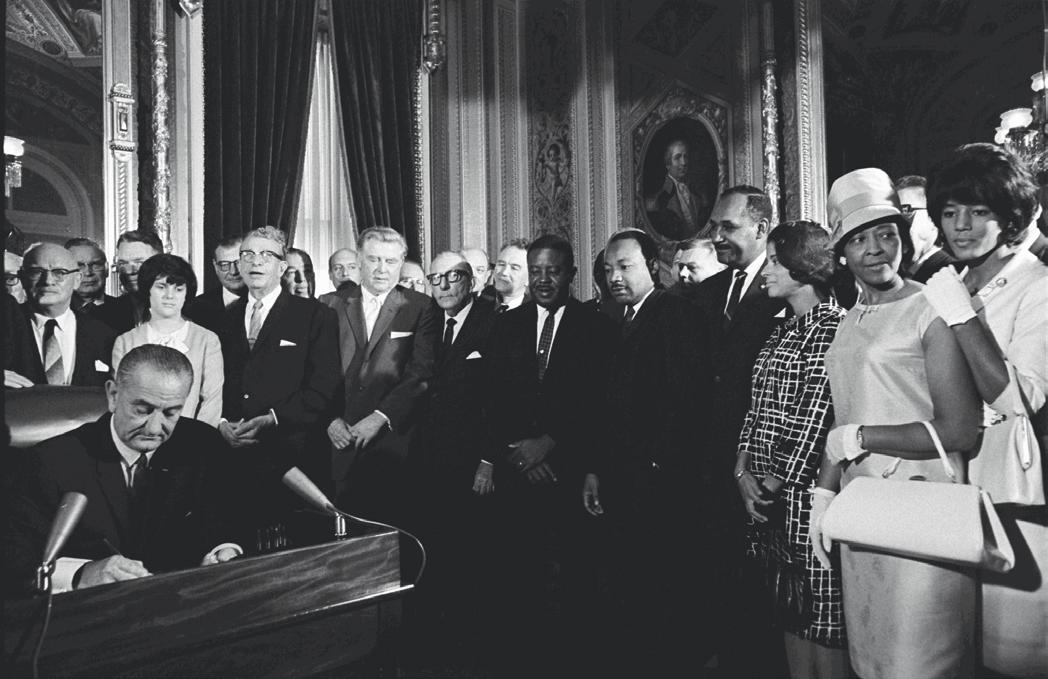
President Lyndon B. Johnson signs the Voting Rights Act of 1965 while Martin Luther King Jr. and others look on. Photo: Yoichi Okamoto
President Barack Obama delivers remarks in 2015 during the event to commemorate the 50th Anniversary of Bloody Sunday and the Selma to Montgomery civil rights marches, at the Edmund Pettus Bridge in Selma, Alabama. Photo: Pete Souza
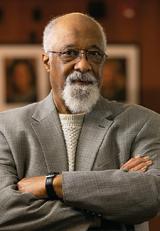
Irving Joyner
1965
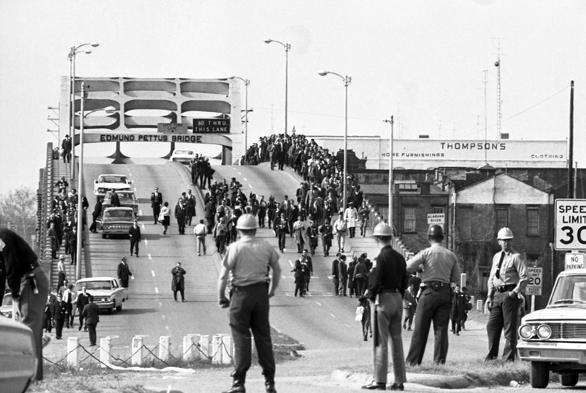
Bloody Sunday (1965) - Alabama officers await demonstrators at the Edmund Pettus Bridge. Photo: U.S. Department of Justice
THE SCHOOL OF LAW RANKS AMONG THE TOP
6
LAW SCHOOLS IN THE STATE
Since the enactment of the Voting Rights Acts, and due to its successes, regular and persistent political efforts by opponents have been underway to dismantle the act. The election of President Obama added fuel to the resolve of those opponents to destroy the act. Since 2010, those destruction efforts have slowly gained success. A major defeat to the act occurred in June 2013 when the U.S. Supreme Court, in its Shelby v. Holder decision, ruled that the “Preclearance” provision of the act was unconstitutional due to the passage of time which eroded the need for this remedial device since efforts to prevent racial minorities from voting were no longer present in those covered jurisdictions in which racial discrimination was once rampant. That defeat has made it more difficult and expensive to challenge the racially discriminatory voting practices which continue to be enacted at the state level.
Today, the Trump Administration and some congressional representatives are engaged in a hotly contested effort to enact federal legislation that will allow challenges to the citizenship and voting rights of individuals who do not possess documentation that can establish that they were born in the United States or properly naturalized. The Brennan Center estimates that nine percent or 21.3 million American citizens, who are otherwise eligible to vote, do not possess documents which can establish their birth in the United States. Among these citizens are African Americans
who never possessed an official birth certificate due to the racial discrimination that they experienced during the “Jim Crow” era, which barred African Americans from being born in public and private hospitals where live birth certificates were regularly issued. In addition, the Center for American Progress estimates that 69 million women and four million men who do not utilize the names which were assigned to them at birth will be unable to register and vote. This provision would include, among others, those individuals who married and took on the names of their spouse or those who now use hyphenated surnames or simply decided to utilize other names. These restrictions will result in these individuals being purged from existing voter rolls, and with no notice being provided to them. In addition, it will make it more difficult for unregistered citizens, especially students, to register, and will ban the use of mail-in ballots.
Another casualty of this effort is that individuals who registered to vote by utilizing the voter motor legislation or registered by mail or registered by online means will have to re-register, and present the state-issued documents which will be required by this proposed legislation.
Efforts to pass this “Safeguard American Voter Eligibility Act” (SAVE) have already been successful in the House of Representatives where it passed on April 10, 2025 with a 220 – 208 vote. The legislation is now pending in the Senate where a push to suspend the normal voting protocol is underway with pressure and threats from President Donald Trump and his allies.
The pending SAVE legislation will have a dramatic impact on citizens’ right to register and vote. Even though this legislative effort is directed toward the election of federal officials, it will disenfranchise the voting rights of millions of citizens and create massive confusion in the upcoming elections.
THE SCHOOL OF LAW HOSTED INAUGURAL SWEARING-IN CEREMONY FOR MAY 2025 GRADUATES
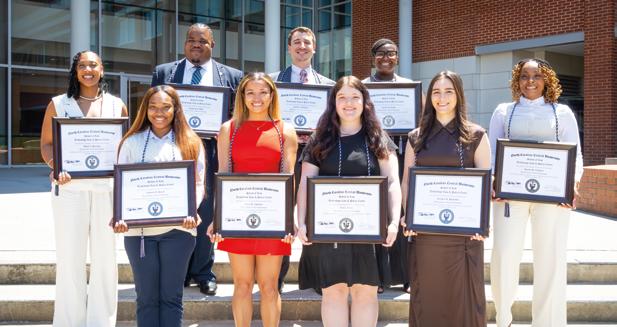
The School of Law hosted its inaugural swearing-in ceremony, celebrating members of the 2025 graduating class who were admitted to practice law in the state of North Carolina.
The swearing-in was held on Oct. 10, 2025 in the Moot Courtroom.
The Honorable Patricia TimmonsGoodson, retired Justice of the Supreme Court of North Carolina and former dean, presided over the ceremony and administered the oath of office to the new attorneys.
“Crossing this threshold from student to attorney is more than a professional milestone. It is the start of a lifelong journey of service and purpose,” said Interim Dean Don Corbett. “Our graduates carry forward the proud legacy of NCCU Law, and exemplify what it means to lead with excellence and make an impact in their communities.”
Patricia Timmons-Goodson, retired Associate Justice of the North Carolina Supreme Court, and Interim Dean Don Corbett presided over the swearing-in ceremony.
LEGAL EAGLES
Voting Rights Act, continued
CAROLINA’S JUDICIARY
LIFTING AS WE CLIMB
By Terri Godwin Hyman
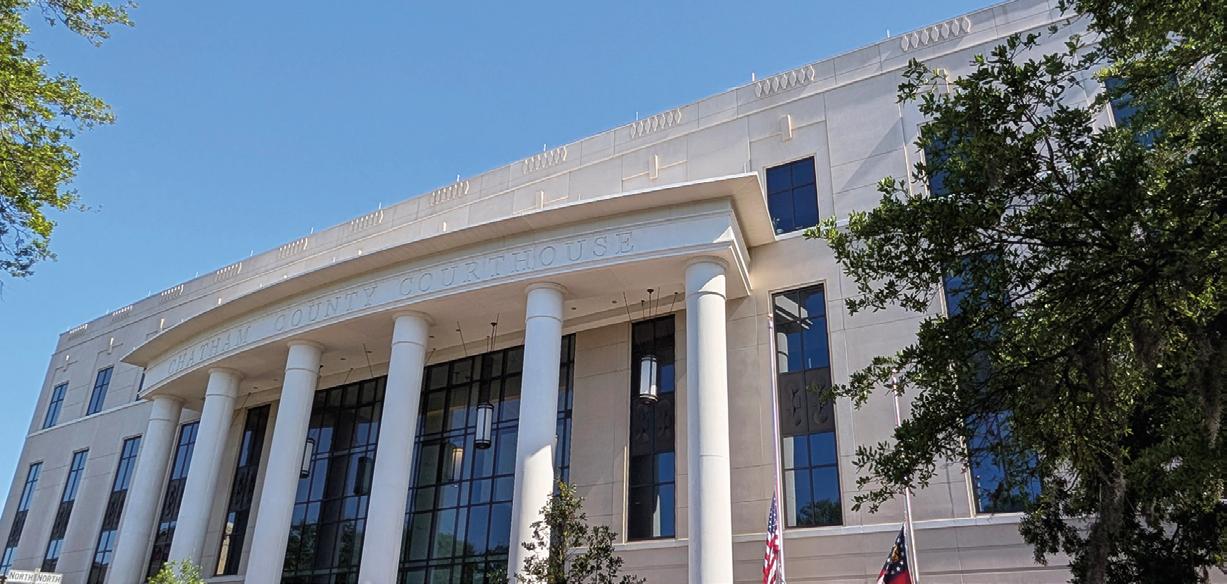
On April 18, 2025, Chatham County, Georgia, dedicated its new $78 million courthouse to the late Honorable Eugene H. Gadsden, a distinguished alumnus of NCCU School of Law, Class of 1953.
Admitted to the Georgia Bar in 1956, Gadsden made history in 1979, when he became the first African American appointed to the Chatham County Superior Court, a position he held until his retirement in 1992. A native of Savannah, Ga. he joins an
elite group of NCCU Law alumni honored in this way, including the late Honorable Ola M. Lewis ’90, for whom the Brunswick County Courthouse in Bolivia, North Carolina, was renamed in 2022.
Judge Lewis was a mentor to many, including Judge Pauline Hankins ’94, a District Court Judge in North Carolina’s District 15.
Judge Hankins, who earned her Bachelor of Science degree in electrical engineering from North Carolina State University,
grew up in Brunswick County witnessing the effects of underrepresentation in the legal system. With nine brothers, she worried they might not always be treated fairly, and saw a law degree as both a way to serve her community and protect those she cared about.
Now in her 13th year on the bench, she is currently the only African American judge in her county. Hankins works tirelessly to prove herself, earn respect and serve her community.
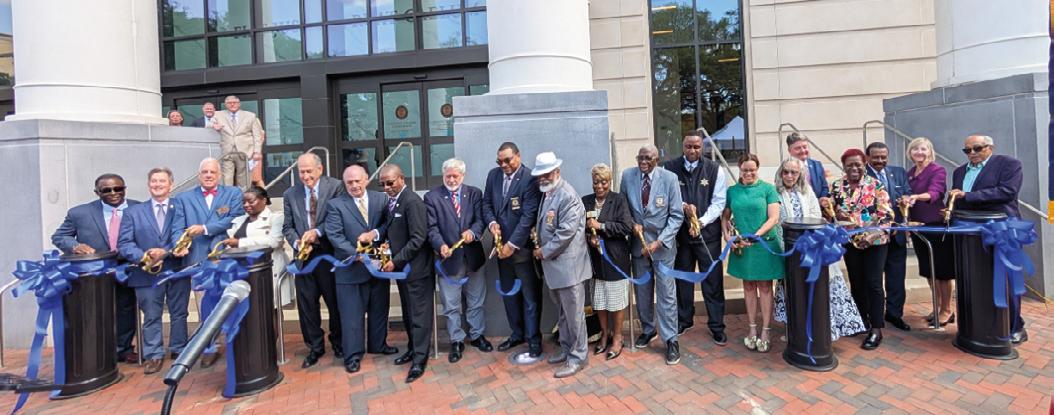
The Chatham County Judicial Complex’s new Eugene H. Gadsden Courthouse is named in honor of Judge Eugene H. Gadsden ’53. A ribbon cutting ceremony was held on April 18, 2025.
“Service has always come naturally to me,” she says, crediting NCCU School of Law for strengthening that commitment.
As a juvenile court judge, Hankins presides over delinquency, abuse and neglect cases, as well as domestic violence, child support and criminal matters. Her advice to aspiring attorneys, “Seek mentors and actively engage with your community,” two pillars that were key to her own grassroots judicial campaign victory.
Judge Jason Disbrow ‘98 took a different route to the judiciary. Born in New Jersey and raised in North Carolina, Disbrow entered NCCU School of Law through the Performance-Based Admissions Program (PBAP) in 1995, crediting its intensive preparation with setting him up for success. Between his second and third years of law school, he worked at the District Attorney’s Office in Brunswick County, where he made valuable connections.
His torts professor, Mark Morrison, knew of a friend in Southport, N.C., who was seeking an associate. After passing the bar in the summer of 1998, Disbrow began his first legal position, practicing family law and criminal defense and eventually becoming a partner.
Appointed to the District Court in 2015, Judge Disbrow remains guided by the principle that the courtroom is about justice, not just convictions.
“Ninety-nine percent of the people who come before me are good people who just made bad decisions,” he says.
For Judge Sarah McPherson
‘16, the road to law school was anything but traditional. After college, she met and volunteered with Judge Lewis in Brunswick County’s Treatment Court, a grant-funded position. When the grant ended, Judge Lewis introduced her to then-attorney Pauline Hankins, who hired her as a legal assistant, and later involved
her in her judicial campaign.
One day, Hankins asked McPherson: “Have you considered going to law school?”
McPherson’s grandmother had recently died, leaving her about $800, just enough to cover LSAT prep. She saw it as a sign from God. Inspired by the NCCU Law graduates she had met and observed at the courthouse, she applied solely to NCCU School of Law and was accepted into PBAP.
“These women inspired me, the Lord intervened, and here I am,” she said.
McPherson says NCCU School of Law provided far more than a legal education, it instilled professionalism, preparedness and an understanding of why attorneys are held to a higher standard. She also learned that having a voice as a lawyer means zealously advocating for clients, ensuring they are heard and represented with integrity.
“When the bar is high, you rise to the bar,” she says.
Attendees gathered during the official ribbon cutting ceremony.
Lifting As We Climb, continued
FROM LECTURES to LITIGATION:
A Law Student’s Perspective on Pro Se Litigants and Access to Justice
By Ruth Montilla ’26
Law school teaches that the legal system rests on the principles of due process and equal protection. In classrooms, we analyze doctrine, debate precedents, and learn the procedural frameworks designed to safeguard fairness.
Yet for many individuals who enter the courtroom without representation, those constitutional promises often feel distant from reality. Through my experience as both a law student and a pro se litigant in family court, I have seen how the legal system designed for trained attorneys can become overwhelming for those forced to navigate it alone.
Across the country, family courts increasingly involve cases with at least one self-represented party. The reasons are largely economic. Legal aid services are limited to individuals far below the poverty line, while private attorneys remain financially out of reach for many working and middle-class families. The result is a widening “justice gap,” leaving many litigants responsible for presenting their own cases in disputes involving custody, financial stability, and family integrity. Self-represented litigants must perform tasks that challenge even trained law students: drafting motions, complying with procedural rules, presenting evidence, and responding to opposing counsel before a judge. In theory, procedural safeguards exist to ensure fairness. Yet in practice, procedural complexity can become a barrier itself. A case may turn not on its legal merit, but on whether a litigant understood formatting requirements, filing deadlines, or evidentiary standards.
Experiencing this divide while studying the law offers a unique perspective. I have sat in
lectures learning about evidentiary standards and due process protections while simultaneously preparing to apply those same rules alone in a courtroom. The contrast between legal theory and courtroom reality reveals how difficult it can be for individuals without representation to effectively advocate for themselves. At the same time, legal education plays a critical role in preparing future attorneys to confront these realities. At North Carolina Central School of Law, experimental learning opportunities such as clinics, trial preparation courses, and community-focused initiatives train students to recognize the structural barriers many litigants face while developing the practical skills required for effective advocacy. Faculty mentorship and academic support services further encourage students to think critically about the law’s impact beyond the classroom.
LITIGATION IS NOT SIMPLY ABOUT MASTERING PROCEDURAL RULES, BUT ABOUT UNDERSTANDING HOW THESE RULES AFFECT REAL PEOPLE
NCCU SCHOOL OF LAW SETS THE STANDARD FOR LEGAL TECHNOLOGY EDUCATION
For students like me who are drawn to litigation, trial preparation and courtroom advocacy courses offer invaluable insight into the responsibilities attorneys carry within the justice system. These experiences demonstrate that litigation is not simply about mastering procedural rules, but about understanding how these rules affect real people whose lives may be shaped by courtroom outcomes.
As I transition from law student to practicing attorney, observing the challenges faced by pro se litigants has deepened my commitment to courtroom advocacy. Preparing future lawyers to recognize and address these systemic barriers is essential to preserving the legitimacy of our courts and ensuring that the promise of equal justice under law remains meaningful for all.
By April Dawson, associate dean of Technology and Innovation
The rapid rise of artificial intelligence is reshaping the legal profession, and law schools across the country are working to prepare students for a technology-driven future. At NCCU School of Law, that preparation has been underway for years, and it is now earning national recognition. In October 2025, National Jurist preLaw Magazine named NCCU School of Law the #1 Most Innovative Law School in the nation, citing the school’s Law & Technology Certificate program, and the emerging AI Governance Specialization as primary reasons for the ranking. Two months
later, the American Bar Association’s AI Task Force Year 2 Report featured NCCU alongside Stanford, Case Western Reserve, Vanderbilt, and other leading institutions for its pioneering work in AI and legal education.
At the center of these achievements is the Technology Law & Policy Center (TLPC), launched in 2021 with a five-year, $5 million grant from Intel Corporation. The TLPC established a Law & Technology Certificate program requiring 11–14 credit hours of coursework spanning law practice technology, legal technology and equity, and experiential learning, along with at least two technology law electives in areas such as artificial intelligence, privacy, cybersecurity, or intellectual property. Students must also complete 25 hours of tech-related pro bono service to underserved communities.
Through its partnership with the IAPP, the TLPC created pathways for students to earn certifications including the Certified Information Privacy Professional (CIPP/US, CIPP/E) and Certified Information Privacy Manager (CIPM). Since 2023, more than 30 students have earned their CIPP/US certification.
Building on that foundation, NCCU School of Law became the first law school to offer a course in AI Governance, designed to prepare students for the IAPP AI Governance Professional (AIGP) certification exam. Launched in spring 2025, the course explores the legal, ethical, and regulatory frameworks surrounding artificial intelligence, covering risk management, AI-related harms, bias, environmental impact, and international regulation. Three members of the Class of 2025 — Alliah Harrison, Kate McDaniel, and Mary Grace Stoneking — earned their AIGP certifications during the inaugural spring 2025 course, demonstrating the program’s ability to produce practice-ready graduates with credentials in one of the fastest-growing areas of law and policy. These achievements reflect a commitment rooted in NCCU School of Law’s founding mission. For more than 85 years, the school has prepared lawyers from underrepresented communities to lead and serve. The TLPC extends that mission into the technology era, ensuring that the students who will shape AI policy, govern emerging technologies, and protect civil rights in the digital age are trained right here at NCCU School of Law.
EAGLES IN THE AGE OF AI: PREPARING FUTURE LAWYERS TO ANALYZE HEALTH CARE DATA, POLICY, AND EQUITY
By Professor Dana G. Jones ‘97
The legal profession is entering a new era, shaped by artificial intelligence, data analytics, and complex health care payment systems. Today’s lawyers must understand not only statutes and regulations but also how technology and data influence the delivery of health care and the administration of programs, such as Medicare and Medicaid. This year, students in my Health Law class, entitled, Medicaid and Medicare Litigation, Law, Policy and the Role of Data had the opportunity to explore these emerging issues through a handson project that integrated legal analysis, litigation readiness, data science, and artificial intelligence.
and Medicaid influenced payment systems, compliance oversight, and health equity outcomes.
As the Intel grant reaches the end of its fiveyear term, sustaining this nationally recognized work requires new investment. The TLPC needs support to continue its work. We invite alumni, corporations, law firms, and philanthropic partners to help build on what has been accomplished, and ensure the Center’s continued growth. To learn more about supporting the TLPC, please contact techlawpolicyctr@nccu.edu. To learn more about the TLPC, see the TLPC Annual Report at https://heyzine.com/flip-book/5c88da2bda.html.
The idea for the project emerged after I was selected to participate in a cohort of NCCU educators to study at the University of the Virgin Islands with fellow educators from across the country; to learn how to integrate data science into course design. Inspired by the training, Legal Eagles were taught an analytical process that emphasized data discovery, integration, and interpretation. Students applied traditional legal reasoning to real-world policy questions. Instead of approaching health law solely through casebooks and statutes, students engaged health law doctrine as investigators, examining how legislative and regulatory changes to Medicare
Working in teams, the students analyzed publicly available datasets and policy materials to explore how payment delivery mechanisms affect different populations. Their research focused on vulnerable groups, children, women, and the elderly, who are often at the center of health policy debates. By examining patterns in reimbursement and service utilization, students explored whether changes in payment structures could create disparities in access to care or provider incentives. The project also required students to confront one of the most pressing challenges facing modern health systems: the growing use of artificial intelligence and automated decisionmaking tools. AI is increasingly used in health care administration for tasks such as claims review, fraud detection, and risk scoring. While these technologies can increase efficiency, they also raise important questions about bias, transparency, and accountability.
Students examined how algorithmic decision-making can reflect the biases present in the underlying data used to train these systems. The class explored how lawyers, policymakers, and compliance professionals must critically evaluate both the design of these systems and the data that informs them to ensure that emerging technologies do not reinforce inequities in care delivery
or payment systems. In addition to grappling with ethical and regulatory concerns surrounding artificial intelligence, students encountered the practical realities of working with complex datasets. Health care data is rarely neat or easily interpreted. Learning how to interpret and contextualize this information requires careful analysis and collaboration, skills that are increasingly important for lawyers working in health care compliance, regulatory enforcement, and policy development. Through this interdisciplinary approach, our Legal Eagles learned that modern health law practice requires lawyers to move beyond traditional legal analysis and engage with data-driven evidence to understand how policies operate in the real world. A practical aspect of this class included a class action lawsuit simulation. Students drafted relevant pleadings and engaged in simulated practice at all stages of the litigation process.
As artificial intelligence and data analytics become deeply embedded in health administration, legal professionals are essential in ensuring that these tools are used responsibly to safeguard fairness and accountability in health care systems. Our Legal Eagles are ready for the challenge!
Left to right: Justice Thomas, Gabriel Kluch, Kristien Teel, Mia Jaber, Elikem Donor, Professor Dana Jones, Kayla Mitchell, Alena Carr, Robert Gabe Tudor, Elizabeth Camara, Deja Alston, McKenzie Powell
NCCU School of Law Sets the Standard, continued
THE INVISIBLE INTERVIEW: HOW AI IS QUIETLY DECIDING WHO GETS HIRED
By Kamilah Kennedy ‘26
Recently, I applied for a legal intern position at a software company. Shortly after submitting my application, I received an email thanking me for my interest and explaining that the next step would be an AI-powered, gamified interview designed to showcase my potential beyond a résumé. The message promised a fair and equal opportunity, the most in-depth feedback I had ever received from a job assessment, and a gamified experience that would be, in its words, “cool.”
I received a consent notice and even the interview questions in advance. On the day of the interview, I cleaned my office, dressed professionally, and sat in front of my computer ready to engage. Instead, I was greeted by a 32-bit video game avatar. Its mouth moved out of sync with its words. At one point the voices were switched between the avatars, so I found myself speaking to an African American male character named Sarah and a small blonde avatar named Marcus.
Beyond the technical awkwardness, the interaction itself felt adversarial. The avatars could not read tone, facial expressions, or hesitation. Their follow-up questions suggested I was not using the keywords they expected rather than responding substantively. Then the interview ended abruptly—mid-sentence—with no goodbye and no explanation of next steps. It felt less like the conclusion of an interview than being disconnected from a call. Thankfully, I never heard from the company again.
The gamification of interactions with technology may sound appealing or “cool.” But what this interaction lacked was the very skill that consistently eludes artificial intelligence: human judgment. I had assumed that at some point an actual person would
review the interaction, notice that I was appropriately dressed, or ask clarifying questions about my answers—observations that require contextual judgment. That never happened.
This lack of human oversight has already contributed to a wave of litigation involving automated hiring tools. In Mobley v. Workday, the plaintiff alleged that Workday’s screening technology systematically excluded him based on race, age, and disability. The EEOC reached a $365,000 settlement with iTutorGroup after the company relied on a hiring system that automatically rejected applicants over the age of fifty-five without human review. And in Kistler v. Eightfold AI, a class action alleges that the company generates “consumer reports” about applicants from various unverified sources without consent or the opportunity for applicants to review the information, potentially violating the Fair Credit Reporting Act and California law.
These cases illustrate the legal and practical pitfalls of relying solely on automated decisionmaking systems in hiring. When organizations prioritize efficiency over oversight, they risk replacing contextual evaluation with rigid pattern recognition. Hiring decisions require the assessment of tone, credibility, adaptability, and nuance—qualities that automated systems struggle to interpret. For this reason, meaningful human oversight remains a critical component of responsible AI governance in employment decisions.
FROM REBUILD to RESULTS: The Veterans Law Clinic’s Impact at NCCU School of Law
By Professor Stephen J. Valentine ‘09
At NCCU School of Law, a quiet but powerful transformation has been taking place—one that reflects the institution’s enduring commitment to service, excellence, and opportunity.
The Veterans Law Clinic remains the only program of its kind at a historically Black college or university (HBCU), a distinction that continues to set NCCU apart nationally. But its current success did not happen overnight.
When I stepped in as the clinic’s second full-time director in 2020, I was tasked with rebuilding what had once been North Carolina’s first Veterans Law Clinic founded by Craig Kabatchnick in 2007. With the support of Dean Fred Williams and a critical grant secured in partnership with the University of North Carolina School of Law, the clinic began a new chapter.
That momentum faced an immediate test. As the COVID-19 pandemic reshaped higher education, the clinic quickly adapted—transitioning to virtual learning while simultaneously expanding its academic offerings.
A new prerequisite course in Veterans Benefits Law was introduced, strengthening the foundation for students before they entered the clinic.
Today, the clinic stands as a model of experiential learning.
Students engage directly with real cases, mastering the complexities of veterans law through handson advocacy. They work with foundational legal authorities such as federal statutes, regulations, and VA procedural manuals— gaining practical skills that extend far beyond the classroom.
Just as importantly, the clinic embodies NCCU’s mission of truth and service. Students are not required to have military experience—only a commitment to supporting those who have served. That commitment has been translated into meaningful outcomes, both for clients and for graduates.
The clinic has become a pipeline to prestigious opportunities. Alumni have gone on to positions with organizations such as Chisholm, Chisholm, & Kilpatrick, as well as careers in the Judge Advocate General’s Corps, the U.S. Department of Veterans Affairs, and the Board of Veterans’ Appeals.
Students also showcase their skills on a national stage through the Veterans Law Moot Court Competition, hosted by George Washington University Law School and the Court of Appeals for Veterans Claims. There, NCCU School of Law students have distinguished themselves—earning top honors, including recognition for best oral advocacy.
The most compelling measure of the clinic’s success lies in its impact on veterans’
The NCCU School of Law Veterans Law Clinic is the only program of its kind at a historically Black college or university
lives. Over the past five years, the clinic has secured more than $700,000 in retroactive disability compensation, and over $400,000 in annual ongoing benefits for its clients—lifechanging outcomes for those who served our country.
This work has not gone unnoticed. The clinic has received support from both the community and corporate partners, including a $100,000 endowed scholarship from Duke Energy in honor of Pfc. Booker T. Spicely, as well as grants from the Downtown Durham Rotary Club, and generous individual contributions.
For NCCU School of Law alumni, the Veterans Law Clinic represents more than a program— it is a reflection of the school’s legacy in action. It is where advocacy meets opportunity, and where students are empowered to make a tangible difference.
As the clinic continues to grow, it stands as a testament to what is possible when vision, resilience, and community support come together in service of those who served our nation in uniform.
EAGLE EXCELLENCE: Launching a New Era of Career Services
By Savaun Perry ’10, assistant dean of Career Services and Professional Development
The halls of the NCCU School of Law are buzzing with a renewed sense of purpose.
Since March 2024, when Savaun Perry ’10 was appointed assistant dean for Career Services and Professional Development, the mission has been clear: to reimagine what career support looks like for the modern legal professional.
Under Dean Perry’s leadership, the Office of Career Services and Professional Development (OCSPD) has ushered in a bold new chapter. This evolution began in the summer of 2024 with a refreshed identity, and a mission statement that serves as our North Star:
“To cultivate professional identity and career readiness skills by providing comprehensive career counseling services that empower our students to forge vibrant legal careers that align with their unique talents; connecting them with employers, alumni, and the experiences necessary to thrive in the legal profession.”
This mission is distilled into our new tagline: Cultivate. Empower. Connect. Innovation in Action: THRIVE Thursdays.
Central to this new era is our flagship initiative, THRIVE Thursdays. An acronym for Train, Hone, and Refine our Professional Identities with Valor and Excellence this program is designed to meet the evolving needs of our students through three strategic pillars:
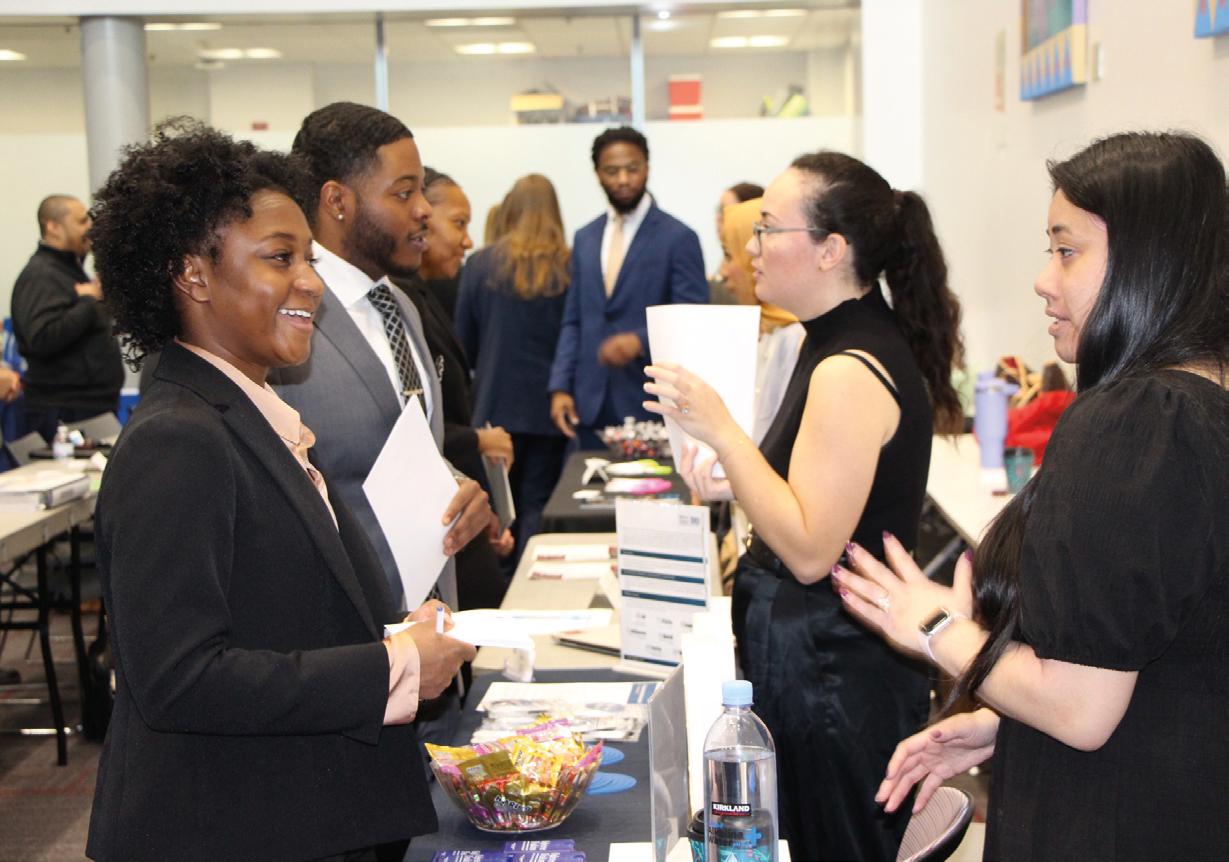
1. Employer Tabling: We are building organic bridges between students and legal professionals. By hosting regular tabling events, we create a vibrant ecosystem where students can network on their own terms, fostering authentic connections that often lead to lasting opportunities.
2. Career Cultivation: Our office is developing specialized resources that highlight diverse practice areas. Through themed monthly explorations, we empower students to look beyond the job search and truly forge a career path that suits their passions.
3. Alumni Connections: We are bringing the “Nest” back to campus. By inviting our esteemed alumni to engage directly with students, faculty, and administration, we are fostering mentorship and co-creating valuable programming that gives our students an inside look at the profession.
Momentum by the Numbers
The results of this revitalization are already evident. Under the meticulous organization of Dean Perry and Director Lon’Cherie Billingsley, our Annual Career Fair has seen exponential growth:
• 2024: 15 Employers
• 2025: 27 Employers
• 2026: 28 Employers and approximately 150 student attendees
To keep pace with this demand, our On-Campus Interview (OCI) program has expanded to three distinct sessions—mid-summer, early fall, and winter—ensuring our students have multiple touchpoints with recruiters throughout the year.
Dynamic Programming and Global Reach
We are committed to bringing the legal world to Durham. Recent highlights include a high-level conversation with EEOC Commissioner Kalpana Kotagal, and engaging panels on International Law in partnership with the North Carolina Bar Association (NCBA).
Beyond the classroom, our students are representing NCCU School of Law on the national stage. Our Eagles have traveled to Las Vegas for the Corporate Counsel Women of Color Conference, and to Phoenix for the 25th Annual ABA Judicial Clerkship Program (JCP), gaining invaluable exposure to the highest levels of the bench and bar.
Modern Tools for the Modern Advocate
The OCSPD is leaning into technology to ensure no student is left behind in a competitive market. From enhanced resume-reviewing AI to new software that makes virtual interviews readily accessible, we are providing the digital tools necessary for success. Furthermore, we are restructuring our Career Closet, ensuring every student has access to a professional wardrobe at a moment’s notice for that life-changing interview.
These strategic enhancements have produced tangible results, most notably a nearly ten-point increase in overall job placement rates when comparing the Class of 2024 to the Class of 2025. As we look toward the future, this “New Era” of Career Services at NCCU Law is more than just a series of programs—it is a promise. We are committed to ensuring that every Eagle is equipped to soar, from the classroom to the courtroom and beyond.
Left to right: Aaliyah LeCompte 3L, Savaun Perry ‘10, assistant dean of Career Services and Professional Development and Lon’Cherie D. Billingsley, director of Recruitment and Employer Development
NCCU Law students attend spring career fair.
Career Services, continued
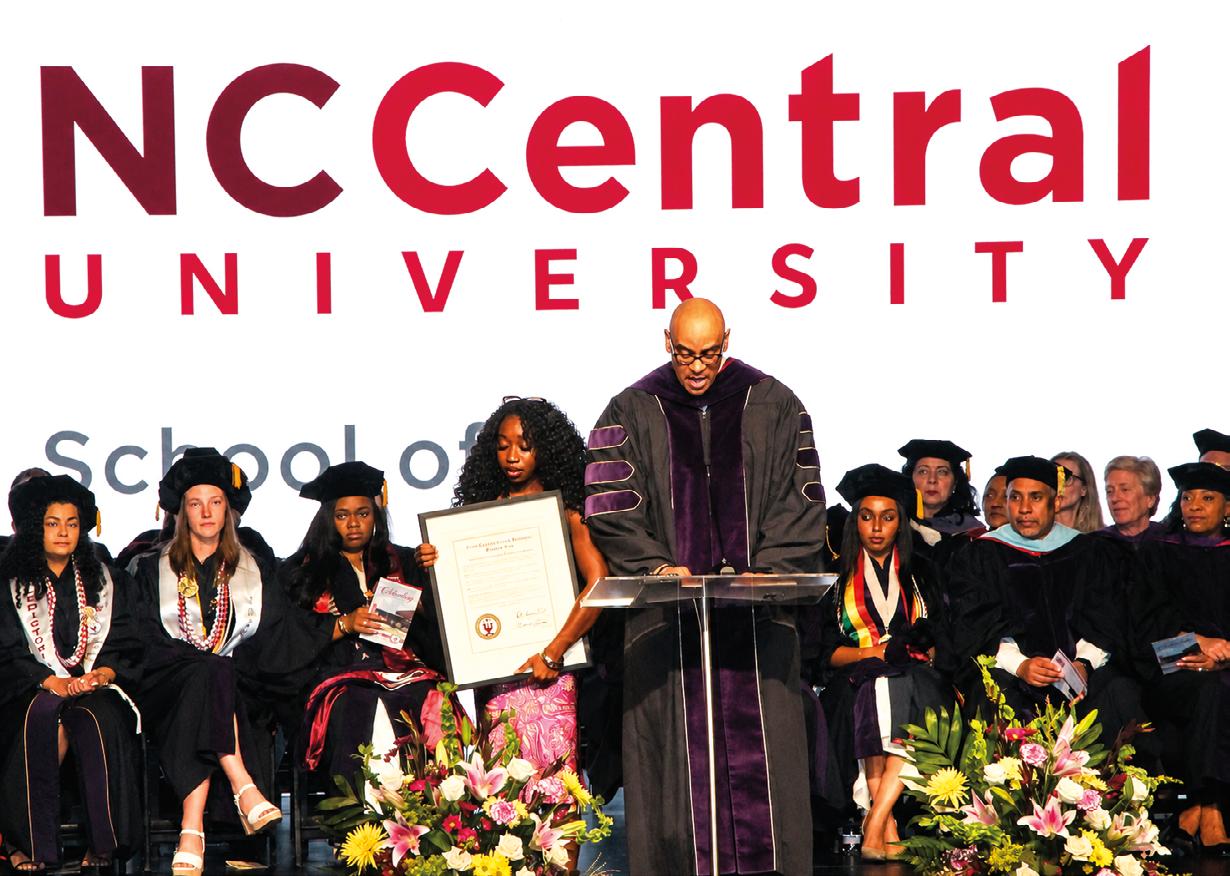
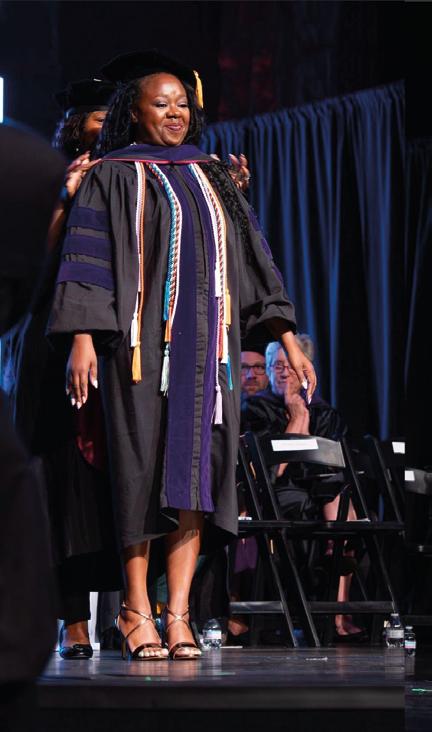
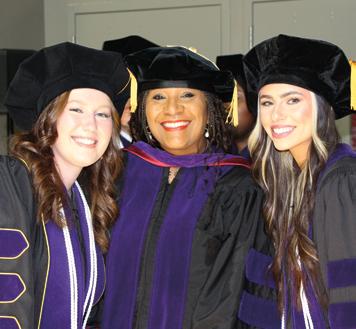
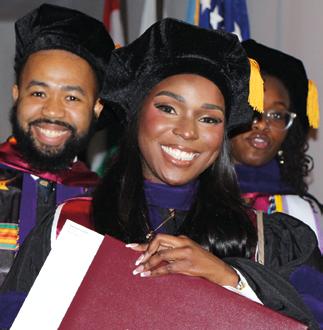
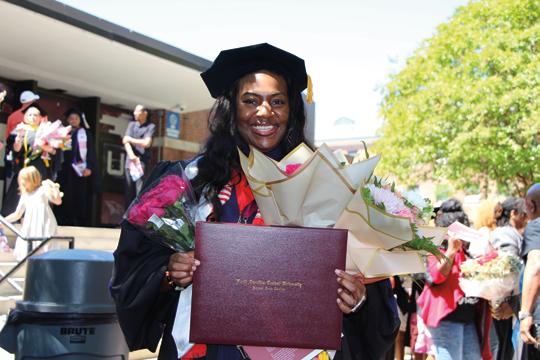
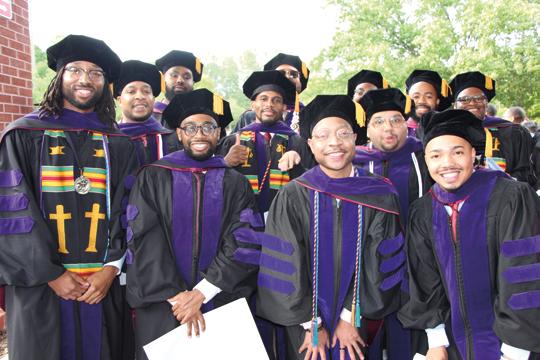
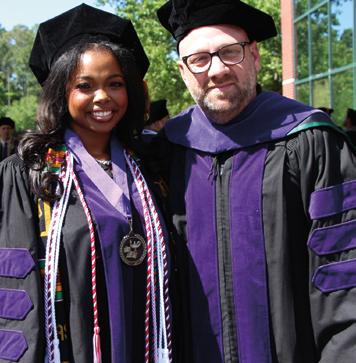
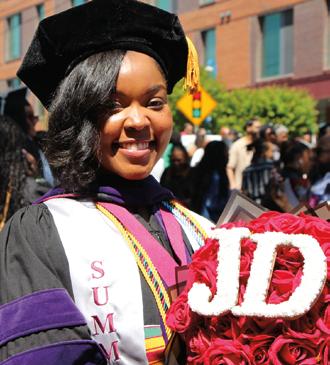
HOODING CEREMONY
a Marim Habib Istafanos, Halena Bohs, Bria Johnson, Masadericka Ampa (Sister of Sulaimane Bangura), Interim Dean Don Corbett, Betseat Tadiwos, Dean Malik Edwards, Professor Dana Jones, Professor Mimi Afshar, Professor Tenika Hall, Professor Laura Mathews-Jolly and Lydia Lavelle
b Kamilah Kennedy
c Kayla Mitchell, Professor Dana Jones and Lanie Goforth
d Ivan Cunningham, Ashley Conyers and Elikem Dodor
e Kerri Edwards
f Lynn Moore, Joseph Perry, Taylor Hodges, Trevor Wilson, Levi Wiggins, Malachi Moultrie, Davis Williams, Randall Hazard, El-Joshua Allen, Melody Moorehead, Ivan Cunningham and William O’Bannon
g Olivia Bayabona and Professor Jason Jones
h Alena Carr
i Judge Ashleigh Parker and Professor Katherine Copeland
j Donna Dodson, Professor Laura Matthews-Jolly, Attorney/Professor Joshua Xerri and Morgan Casey
k Malachi Moultrie
NCCU LAW STUDENTS PROVIDE VIRTUAL ASSISTANCE THROUGH THE NC FREE LEGAL ANSWERS CLINIC
NNCCU School of Law students are expanding access to justice, not only from a courtroom, but from their laptops as well. Through the NC Free Legal Answers Clinic, a remote, tech-enabled pro bono, NCCU law students are helping North Carolinians navigate civil legal issues. Through the online platform, income- eligible residents can submit questions related to matters such as housing, family law, employment and consumer concerns.
Under the supervision of licensed attorneys, student volunteers research client questions and draft responses that help individuals better understand their legal options. The work is practical, meaningful, and directly supports the School of Law’s mission of service and advocacy. For the student volunteers, the experience is a reminder of why they chose to study law.
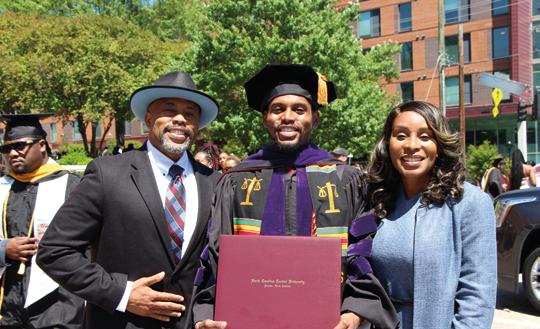
Elikem Dodor, a recent graduate of the NCCU School of Law Class of 2026.
Student Reflections
“I enjoyed working with the Free Legal Answers Clinic. I love research, and even though each request typically focuses on one issue, it still feels like impactful work,” said law student Euraja Anderson. “It was rewarding to receive positive feedback about my response — my legal analysis was on point. With law school and parenting being such a tedious balance, the Clinic didn’t feel like work or a responsibility. It was enjoyable and rewarding.”
Similarly, law student Elikem Dodor believes the true value of volunteering with the clinic lies in being able to translate complex ideas into clear, practical guidance that people can use.
“Legal knowledge is only useful when it can be clearly conveyed to the people you aim to serve,” she said. “It strengthened my confidence and better prepared me to continue serving the community through pro bono after licensure.”
Real Impact
Lakethia Jefferies ’09, director of the NCCU School of Law Pro Bono Clinic, notes that the platform removes barriers for students and clients.
TO LEARN MORE ABOUT THE PLATFORM, VISIT NC.FREELEGALANSWERS.ORG
“This platform allows our students to strengthen their skills while providing legal support to individuals who may otherwise have nowhere to turn,” she said. “Their contributions have a real, tangible impact on people’s lives and help advance access to justice across our state.”
Pro Bono Clinic Advances Access to Justice through Partnership
By Terri Godwin Hyman
As demand for civil legal services continues to rise across North Carolina, the Pro Bono Clinic at NCCU School of Law is expanding access to justice through its longstanding partnership with Legal Aid of North Carolina.
The collaboration addresses critical legal needs in underserved communities. Through joint initiatives focused on housing stability, estate planning and services for seniors, the partnership reflects a shared commitment to public service and equitable access to legal support.
One initiative is the housing advice line, where law students under attorney supervision, assist tenants facing unsafe or unstable living conditions. Students help provide legal information, referrals and advocacy support—empowering residents with knowledge of their rights in an increasingly complex housing landscape.
Under the leadership of Lakethia Jefferies, the Pro Bono Clinic also partners with Legal Aid to serve Durham’s senior community through its Wills Clinic. Many older adults face financial and structural barriers to accessing basic estate planning services. Through this initiative, NCCU Law students assist seniors with wills and advance directives while developing skills in client counseling, professionalism and ethical lawyering.
For second-year law student Aalyiah LeCompte, the clinic provides practical experience. “I’ve gained hands-on experience working directly with clients, particularly learning how to explain legal concepts and jargon in a way that’s clear and accessible,” LeCompte said. “The clinic has helped me build rapport with clients while walking them through legal documents, explaining different provisions and discussing their options.”
LeCompte noted that access to wills and estate planning services is especially critical for the communities the clinic serves. “Cost is often a major barrier,” she said. “In my experience, I’ve also seen that some minority clients can be reluctant to engage in wills and estate planning due to limited access, uncertainty about the process or discomfort discussing these issues.”
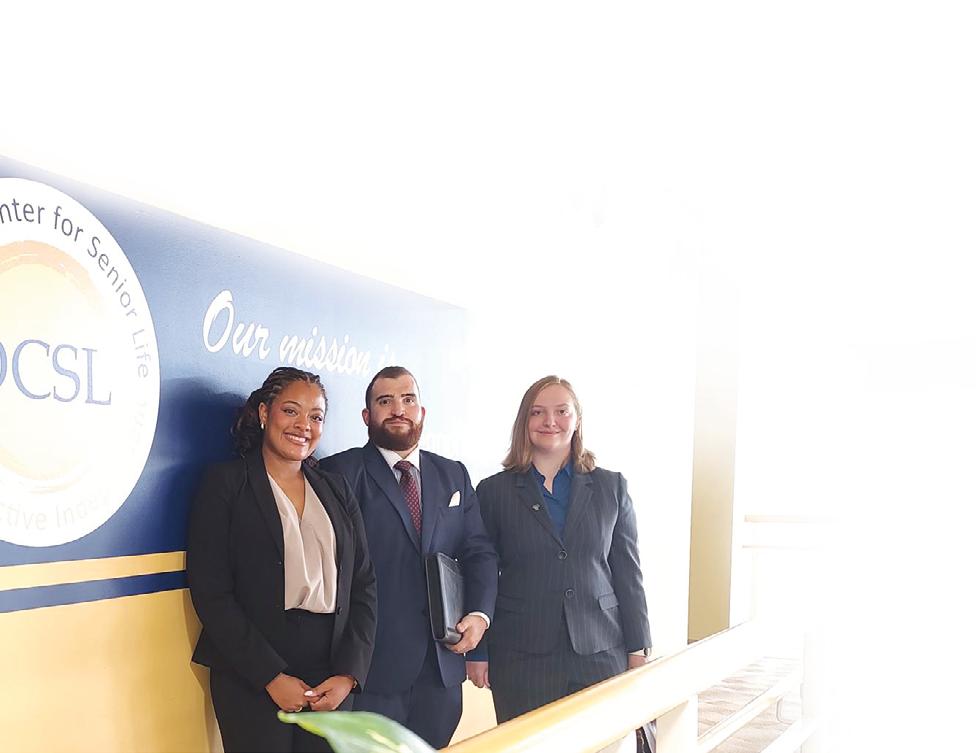
At the Durham Center for Senior Life, students primarily serve individuals over the age of 60 by offering a one-stop opportunity to receive guidance and assistance. Legal Aid of North Carolina confirms client eligibility and prepares documents in advance. Students then work directly with clients to review those documents, explain key provisions and ensure their wishes are accurately reflected.
The partnership strengthens both service delivery and student learning by combining Legal Aid’s deep community expertise with the law school’s commitment to experiential education. Students gain exposure to real-world legal challenges while learning to pair legal analysis with empathy, cultural humility and professionalism.
Left to Right: Aaliyah LeCompte, Aaron Specht (Duke Law student) and Jenna Sims
MY LEGAL EAGLE REVIEW
By Professor Lydia Lavelle
I will complete thirty years of employment with NCCU School of Law this spring and have been reflecting on this memorable experience. My connection to the school started when I spent four years in the evening program earning my J.D. Three years later, I started my employment at the law school, hired as the first Pro Bono Coordinator and director of Alumni Relations. After serving as Dean of Students for ten years, I joined the faculty in 2009. I started phased (part-time) retirement three years ago which concluded this spring.
What a profound privilege it is to be a Legal Eagle! I would like to mark this occasion by sharing some significant memories as I head into the next chapter of my life.
Legal Eagle Review, continued
3. 9/11: Listening to the radio on my way to work on September 11, 2001, I heard about an airplane slamming into one of the iconic twin towers in New York City. When I arrived, I was shocked to learn from Sharon Alston that another plane had just struck the second tower. We went downstairs to a large lobby that at that time was outside the moot courtroom (the virtual classroom had not yet been built). Staff from the library had set up two television sets on rolling carts so that faculty, staff, and students could watch the coverage as the details of the attacks emerged. I don’t remember anyone getting much work or studying done that day.
4. United States Supreme Court Part 1: In 2004, I organized an opportunity for our alumni to be sworn in before the United States Supreme Court in Washington, DC. At the event, Dean Mills presented twenty-three NCCU law graduates for admission to Chief Justice William Rehnquist. At the reception afterward, Justices Sandra Day O’Connor and Ruth Bader Ginsburg honored us with a visit. What a memorable experience for all of us!
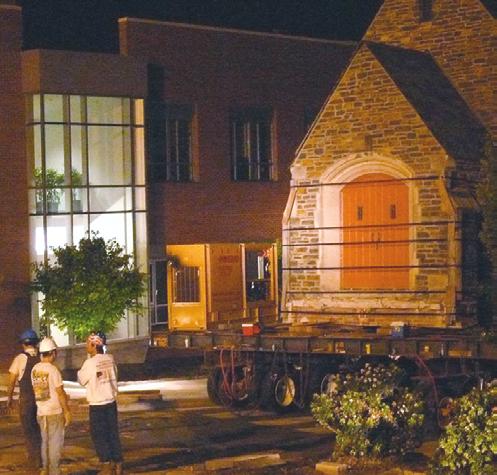
Holy Cross Catholic Church is pictured in front of the law school on its journey from Alston Avenue to its new location on Fayetteville Street.
5. Home Away from Home: In my years at the law school, I had at least six offices, one of which was in a completely different building. Students took fall semester exams in December 2003; when they returned for the spring semester in January 2004, the entire law school had temporarily relocated to the N.C. Mutual Building, which at fourteen stories, was one of the tallest buildings in downtown Durham.
We set up shop on the 7th and 8th floors with classrooms and faculty/staff workspaces. Everyone enjoyed being able to park close to the building and eat at the full-service cafeteria on the first floor. The food was good, and they easily catered law school events.
We stayed there for a year and a half while the Turner Law Building underwent a major renovation and expansion. Workers built the two-story wing housing the Dean’s Suite, faculty conference room (later named the Mills Conference Room), other suites, and the Great Hall. They also added the glass front entrance and expanded the basement level student lounge. When students returned to the building, they immediately christened that space “The Fishbowl.”
The renovation to the law school in 2004-2005 included the addition of a new wing on the Alston Avenue side of the building.
1. Mentors and heroes: Dean Janice Mills was the second of several deans who served during my time at the law school. Those of us lucky enough to work with Dean Mills, or engage with her as alumni, remember her as the standard by which we would hold all future deans. She had a brilliant mind and a wicked sense of humor. During her tenure, our events featured commissioned artwork for the law school and reunions that included Michelle Bond (the daughter of our first graduate, Robert Bond ‘43) and Ruth Caldwell ‘48, one of the law school’s first female graduates. Dean Mills also secured renowned civil rights attorney Fred Gray as a visiting professor. NCCU Chancellor Julius Chambers, with whom Dean Mills had previously worked with, also visited frequently. Dean Mills was initially appointed as acting dean. She accepted the position of permanent dean of the Law School after no stronger candidate emerged during a dean search. Even though she had not applied, others noticed her leadership acumen, and she accepted the position “because my Chancellor asked me to.”
2. Relocation of Holy Cross Church: Many may not know that the historic Holy Cross Catholic Church used to be located on Alston Avenue, just north of the law school parking lot where the School of Nursing is now. During the last week of April 2010, workers hoisted the church onto a platform. The church made its way up Nelson Street in front of the law school toward its eventual home on Fayetteville Street, where it sits today. It was exciting to watch!
Professor Lydia Lavelle
10. Legal Eagle connections: The connections I made as a student, alumni, and employee at the law school have served me well my entire professional career.
One of my law school study partners, Beverly Scarlett, became an Orange County District Court judge. Years later, Judge Scarlett administered the oath of office to me twice –once when she swore me in as a member of the Carrboro Board of Aldermen (now Town Council), and again six years later as the Mayor of Carrboro. When I clerked for Judge Clifton E. Johnson ‘67 on the N.C. Court of Appeals after graduation, one of my co-clerks was Nichelle (Nikki) Perry ‘93. When I practiced law after my clerkship, Kevin C. Foy ’94, and I were law partners. Later, Nikki, Kevin, and I all became colleagues at the law school.
I tell my students to cherish the friendships they build in law school. I remind them to always look for a Legal Eagle in the courtroom.
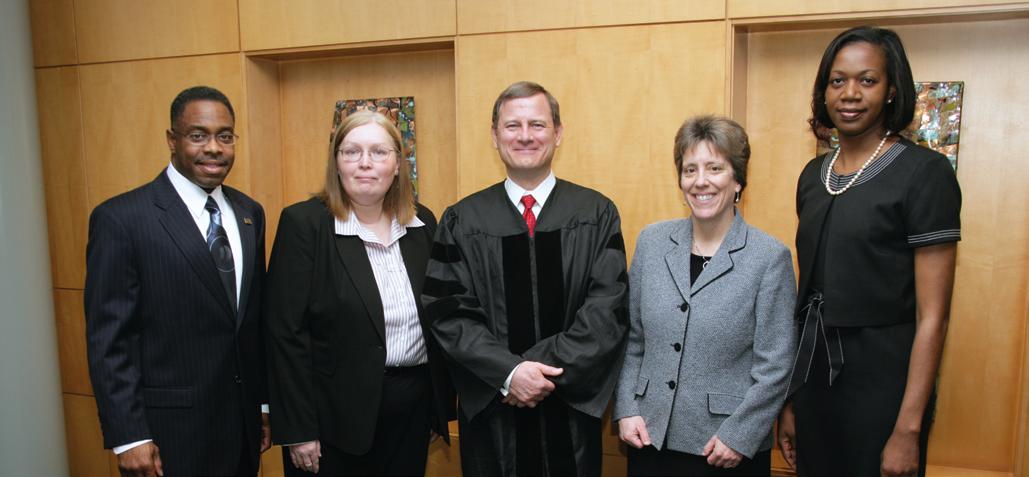
6. United States Supreme Court Part 2: Dean Raymond Pierce arranged for United States Supreme Court Justice, Chief Justice John Roberts to visit our law school in April 2009 for a moot court competition. After a complete renovation for the occasion, the moot courtroom never looked better! Fourth Circuit Court of Appeals Judge Allyson Duncan and retired Supreme Court Chief Justice Henry Frye joined Chief Justice Roberts on the bench. The six students participating in the event had been selected through an earlier competitive process for this honor at the law school. The evening before the arguments, Chief Justice Roberts swore in nineteen NCCU alumni to practice before the U.S. Supreme Court, a fond memory they will always have of their law school.
7. Quote of the day: I started law school as an evening program student in 1989 - in room 100 to be exact. Twenty years later, I taught my first class as a full-time faculty member to evening students in that very classroom.
I taught Civil Procedure for 18 years, and we always began each class with a “quote of the day.” This tradition gave us all a grounding moment before diving into the academic rigor of
the subject. I would contribute the quotes for the first few days of each semester, before turning the responsibility over to the students. Their quotes ranged from inspirational to exasperation, from professional to personal, from song lyrics to current events, and from introspective to silly. Sometimes we would pick a theme for the quotes. Those who know me well will not be surprised to learn that for one Summer Start session, all the quotes for those five weeks had to be about baseball!
I will miss the interaction I had with students. I learned so much from them, both by hearing the quotes they selected, and their reasons for their choice. One of the very best things about being a professor is that the teacher often learns as much as the students, and I thank my Civil Procedure students for furthering my education.
8. Great employees: It is nice when the people you work with feel like family. Many NCCU School of Law employees made working there a real pleasure (Mrs. Iris Gilchrist, the long-time dean’s secretary, comes to mind). I cannot possibly list everyone, but I want to give a special shoutout to two A+ employees during my tenure.
One is Greg Clinton, who was our technology guru. Because of his vision and expertise, we are known as a nationwide law school leader in the field of technology. We have top-notch equipment, applications, training, and teaching (we had Zoom for years before the world turned to Zoom).
Our event planner extraordinaire, Staris Best, is the other person I want to commend. If you attended any program, banquet, or other law school gathering in the last 20+ years, you have been the beneficiary of her talents. Thank you for managing all the details, Staris!
9. COVID19: When we left the Turner Law Building for spring break in 2020, we did not return to in-person classes for 17 months. My office was like a “capsule in time” for a year and a half with my calendar stuck on March 2020 until August of 2021. Although faculty members already were familiar with Zoom, moving all classes, programs, and departments online was a heavy lift. We managed, but as with other teaching institutions, we are still dealing with the repercussions this type of teaching and learning had on students.
The quote I always shared with my Civil Procedure students at the end of their spring semester is by Louie L’Amour. “There will come a time when you believe everything is finished. That will be the beginning.” I am reminded of that quote in my own professional journey. When I began phased (part-time) retirement Three years ago, I had the opportunity to join The Brough Law Firm, a practice focusing on local government and land use law, where I continue to work. There, Nick Herman occupies the office next to mine. Coincidentally, as an adjunct professor, Nick taught me legal writing in my very first class at the law school thirty years ago. Just another full circle moment. Thank you, NCCU School of Law!
Left to right: Former Dean Raymond Pierce, Evening Dean Adrienne Meddock, United States Supreme Court Chief Justice John Roberts, Professor Lavelle, and former Director of Legal Writing Brenda Gibson.
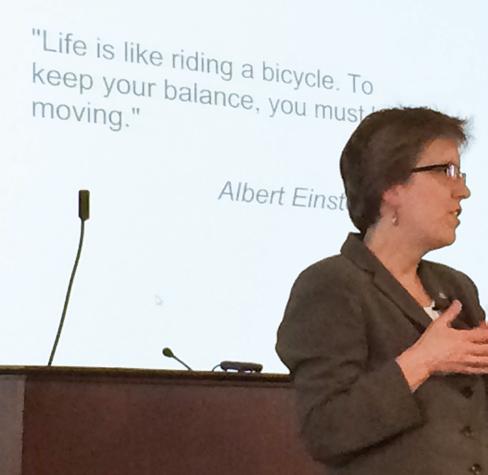
Professor Lavelle teaching Civil Procedure with her “quote of the day” in the background.
Legal Eagle Review, continued
Legal Eagle Review, continued
By Harrison Do 3L
AN ADVOCATE’S JOURNEY
I chose to pursue my legal education at the NCCU School of Law due to the institution’s rich history of producing attorneys who are dedicated to government service. As an aspiring North Carolina assistant district attorney, I have found my legal education to be an extraordinary experience that is preparing me to advocate for my community.
My 1L year taught me how to engage with the law. Analyzing judicial opinions and sharpening my legal writing skills established a strong foundation on which I now stand. Professor Ashley Hilliard elevated my writing by teaching me how to use the law to craft a compelling legal argument. Professor Irving Joyner’s class affirmed my interest in criminal law, and reminded me of the extensive power prosecutors wield in our system. In addition, I had the good fortune to attend Professor Tamika Moses’s Prosecution Seminar. This unique opportunity allowed me to meet veteran prosecutors at all levels of government from across the state.
The capstone of my first year was my summer internship with the Wake County District Attorney’s Office. As a Raleigh native, it was a dream come
true to return to Wake, and serve my home county. With my practice certificate in hand, I entered District Court each day to represent the state of North Carolina. Indeed, this formative summer left an indelible mark on my growth as a future prosecutor. Consequently, I developed an enduring commitment to advocate for victims of crime and pursue justice.
My 2L experience has progressed alongside some of the most consequential events in the nation’s history. Professor Chris Brook’s Constitutional Law II class has been particularly relevant, as we witness the testing of the U.S. Constitution, and the intentional dismantling of our foundational institutions. Furthermore, I have found great joy in taking Race in the Law with the Honorable Josephine Kerr Davis, and Restorative Justice with Professor Scott Holmes. Both classes illuminate the historical context of the law and highlight how innovative methods can be used in the pursuit of justice. Finally, returning to Professor Joyner’s classroom and taking Criminal Procedure has been a wonderful continuation of my studies; I have particularly enjoyed visiting with the
professor during office hours, and discussing the complexities of this area of the law.
This summer, I have been invited to return to the Wake County District Attorney’s Office, and continue my service to the state. I am looking forward to getting back into a courtroom and applying my new knowledge and skills.
Furthermore, I embark on this final summer with an abiding sense of gratitude for all the individuals who have supported me along the way.
Thank you, NCCU Law, for opening doors for this first-generation law student and descendent of immigrants. I am honored to be a member of this illustrious community that continues to be a beacon of hope and justice for the nation.
NCCU LAW STUDENTS GAIN COURTROOM EXPERIENCE SERVING
FAMILIES
NNCCU School of Law Family Law Clinic continues its commitment to the community through handson advocacy that is changing lives.
Under the leadership of Professor Katrina Smith ‘09, clinical students Ivan Cunningham, Sterling Elliott, Nadteya Glover, Janelle Moore, Melody Moorehead IV, Kylie Kelly and Taylor Wheeler have delivered positive results for families navigating complex legal matters.
This semester, students successfully represented clients in child custody and summary judgment of divorce proceedings in Wake and Durham counties.
One of the most profound moments came when second-year law student Sterling Elliott presented a summary judgment motion after overcoming several procedural hurdles. When the court granted the divorce, the client broke down in tears, bringing years of uncertainty to an end.
“It was a humbling experience,” Elliott said. “Knowing that someone was relying on us to represent them during a difficult time in their life helped me understand the trust the community places in us, and how important it is to be a good steward of that trust.”
In another case, Janelle Moore, Taylor Wheeler and Melody Moorehead IV helped a grandmother secure sole legal and physical custody of her granddaughter, providing stability and protection for the child.
For Wheeler, the experience revealed just how immediate the impact of family law can be.
“What surprised me the most is how immediately the work we do impacts someone’s life,” she said. “In other areas of law, things can feel more removed or delayed, but in family law the decisions being made in the courtroom can affect a family that very same day.”
“Seeing that firsthand was really powerful for me,” Wheeler continued. “When you stand up in court and advocate for your client, the outcome can shape something as significant as where a child will call home until they’re 18 years old or how a family
moves forward when a divorce is finalized the same day as the hearing.
It reinforced that what we write and say in the courtroom has the ability to change someone’s life, and that is a responsibility I take very seriously.”
Through the clinic’s classroom component, students refine their advocacy skills before entering the courtroom.
Students in the NCCU Family Law Clinic learn that the practice of law is not just about mastering legal doctrine, but about using their voice to help change lives and expand access to justice for those who need it most.
Professor Smith assigns students older case files and asks them to prepare oral arguments as if they are presenting before a presiding judge. Students also draft hearing scripts and outline their legal arguments in preparation for upcoming court appearances.
“I was surprised by how often we simply had to lend an ear to our clients,” Elliott said. “Many of the cases we handle are very emotional. Sometimes clients just need someone to sit with them on the phone for a moment and know that someone hears them and empathizes with what they’re going through.”Beyond litigation, the NCCU Family Law Clinic continues its partnership with Legal Aid of North Carolina. Students lead monthly divorce workshops to expand access to justice for individuals navigating the legal system.
Working directly with clients has also challenged students to translate complex legal concepts into plain language.
“The process of identifying issues, applying the rules and reaching a conclusion remains the same,” Elliott said. “But explaining it to clients is different from writing a law school exam answer. Clients don’t need us to read a statute they need us to explain how it applies to their case.”
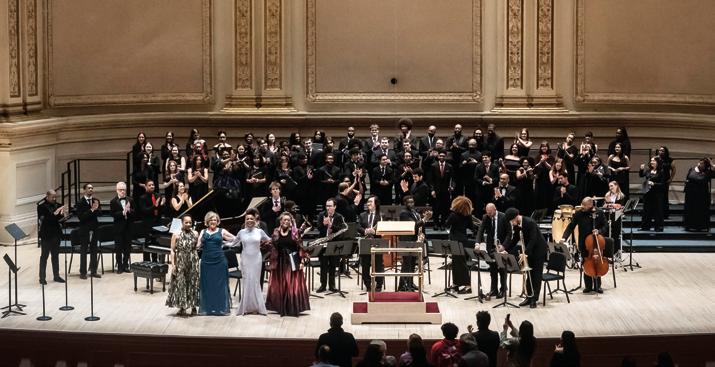
FROM THE CLASSROOM TO CARNEGIE HALL: TEACHING THE LAWS OF CREATIVITY
By Attorney Miriam Johnson ‘18
Legal education is often associated with precision, structure, and restraint. Yet one of the most powerful roles the law can play is protecting creativity and allowing expression to thrive. That understanding has guided my work as a Technology Law Fellow at NCCU School of Law, where I have now taught my Video Game Law course three times while continuing my own creative journey as a vocalist with the NCCU Vocal Jazz Ensemble.
Video games offer a uniquely rich lens for legal education. They combine storytelling, art, software development, community engagement, and commercial enterprise. Across three iterations of the course, students have examined how intellectual property, contracts, privacy, platform governance, and emerging technologies shape creative industries. Each time the course has evolved, reflecting not only changes in the industry but also the growing confidence of students who begin to see themselves as lawyers operating in innovative spaces.
Last semester, students moved beyond theory to creation. Working collaboratively, they developed original game concepts, business plans, and pitch decks that mirrored real world creative ventures. They considered ownership structures, licensing strategies, data practices, and monetization models. As I shared my own final project
for the class, a vocal recital of “Stardust” arranged for me by Professor Maurice Myers, I offered them a simple charge. I told my students, “Give me a show.” What I meant was, show up fully, bring your preparation, your creativity, and your confidence to the presentation. They did exactly that. Their work reflected not only legal competence, but pride in what they were building.
Teaching the course repeatedly has reinforced an important truth. Many law students arrive with talents and interests that extend far beyond traditional legal pathways. Some are gamers, artists, designers, musicians, or entrepreneurs. When legal education validates those identities, students gain clarity about who they are becoming, and how the law can support that growth. The classroom becomes a space
where professional development and personal expression are not in tension, but in conversation.
At the same time I was guiding students through these projects, I was also rehearsing as part of the NCCU Vocal Jazz Ensemble in preparation for a performance journey, culminating at Carnegie Hall this April. Moving between teaching, rehearsals, and administrative responsibilities underscored the same lesson I emphasize with students. The law does not require us to narrow ourselves. Instead, it gives us tools to protect the full scope of our talents.
That philosophy extends beyond the classroom. Much of my work involves writing and storytelling for the Law School and the Technology Law and Policy Center, including producing the annual report, and shaping how the Center’s work
is communicated to the broader community. Whether documenting student achievements or capturing moments of institutional growth, this work is about helping others see who they are becoming and why it matters.
Together, these experiences reflect a shared purpose. Law, when taught with intention, does not inhibit creativity. It safeguards it. It gives students and institutions the language, structure, and confidence to build futures that honor both rigor and imagination.
Miriam Johnson (above) is the Technology Law Fellow at the NCCU School of Law, where she teaches Video Game Law, and works with the Technology Law and Policy Center on emerging issues in privacy, intellectual property, and innovation.
RRenowned civil rights attorney, Ben Crump visited North Carolina Central University (NCCU) School of Law ahead of his recent campus book signing as part of his “Worse Than a Lie” book tour.
Hosted by the Student Bar Association, Crump engaged with students, sharing insights from his legal career, and offering words of encouragement to the next generation of legal advocates. Known for his work in high-profile civil rights cases, Crump emphasized the importance of using the law as a tool for justice, advocacy and meaningful change.
Crump later spoke to a larger audience during a session moderated by NCCU School of Law alumni Harry Daniels and Robyn Sanders, continuing the conversation on civil rights, advocacy and the role of legal professionals in advancing justice.
Left to right: Incoming Parliamentarian Jasmine Boone, Ben Crump, Student Bar Association incoming President Bakari Jackson and Nesita Alex.
NCCU Vocal Jazz Ensemble, Tribe Jazz Orchestra Singers, Berklee Vocal and Instrumental Jazz Ensemble, Queens College Jazz Ensemble, New York University Village Voices.
From the Classroom to Carnegie Hall. continued
DEAR LEGAL EAGLES
Message from Student Bar Association President
2026-2027 SBA officers: Ivan Williams, Jasmine Boone, Bakari Jackson, Amyah Solomon and faculty advisor Dean Carol Chestnut
AAfter two years of service as class president, I am honored to continue my service to NCCU School of Law’s student body as the 2026-2027 Student Bar Association president.
As the needs of today’s law students evolve, our Student Bar Association must also evolve. We are focused on exploring opportunities to increase institutional and alumni partnerships, enhance Student Bar Association operations, and better serve our student body.
With intention, we are committed to positioning the Student Bar Association as a hub focused on (1) improving career outcomes, (2) improving the student experience, (3) honoring our rich legacy, (4) introducing new traditions, and (5) strengthening alumni relationships.
I would like to commend our graduating 2025-2026 Student Bar Association officers for their commitment, contributions, and years of service to the NCCU School of Law student body. These officers include Olivia Bayabona (president), McKenzie Powell (vice president), Paulina “Polly” Webber (parliamentarian), Donna Dodson (4LE class representative), Aimee Roix (4LE class representative), Cassidy Patterson (3L class representative), and Taylor Wheeler (3L class representative)
Furthermore, I would like to congratulate our 2026-2027 Student Bar Association officers. These officers include Gregory “Ivan” Williams (vice president), Amyah Solomon (secretary), Kaleigh O’Neal (treasurer) Jasmine Boone (parliamentarian), Ashley Witherspoon (4LE class representative), Catherine “Cee Cee” Huffman (3LE class representative), Justin Mosley (3LE class representative) Muluken Hass (3L class representative), Jasmine Peele-Garcia (3L class representative), Janae Moore (2LE class representative) Sachiko Reid (2LE class representative), Amber “Tiara” Baker (2L rlass Representative), and Edmund “Eddie” Rhynes, Jr. (2L class representative)
As a long-term objective, we, as students, are committed to strengthening our relationship with NCCU School of Law’s Alumni Association. This includes expanding cost-friendly engagement opportunities, establishing an accessible alumni database, honoring your contributions, and offering tangible support in your endeavors.
Our student body is eager to take flight from “social hub” to “student hub.” As aspiring legal professionals, we understand the importance of access, mentorship, and opportunity. Here at NCCU School of Law, we always welcome alumni back home! Whether you are interested in mentoring the future of the legal profession, participating in panels, offering internship opportunities, or offering other resources, we welcome you to connect with us at lawsba@nccu.edu.
Together, we will embark on strengthening our infrastructure for generations of NCCU School of Law alumni and students to come. Eagle Pride. AMPLIFIED!
In Truth and Service, Bakari Zyaire Jackson 3L
PURSUING PURPOSE:
Redefining Professional Growth Beyond Titles and Milestones
By Olivia Bayabona ‘26
Professional development is often framed as a pursuit of success, such as titles, positions, and milestones that signal progress. Over time, I have come to understand it differently: true growth is not just what you achieve, but why you pursue it.
My perspective on this shifted during a period of unexpected disruption. When I was sent home during my undergrad years due to COVID, my professional momentum felt paused in ways I had not anticipated. Like many students, I was forced to recalibrate, not just my routines, but my sense of direction. In that space of uncertainty, I developed a deeper desire for growth that extended beyond the classroom, leading to me pursuing additional avenues of career and professional exploration. I sought to re-engage with my environment in a way that was intentional, impactful, and aligned with who I was becoming. That desire ultimately contributed to my decision to pursue the presidency of the Student Bar Association. While my genuine passion for my law school played a significant role, it was not the only reason. I was also seeking an opportunity to grow, to challenge myself, to lead, and to reclaim a sense of forward movement after a period that felt stagnant. In doing so, I learned that leadership is not about holding a title, but about serving with purpose and showing up consistently for a community you care about. It becomes easy to chase what looks meaningful, rather than what actually is. In highly competitive environments and career industries, there is often an unspoken pressure to pursue roles or paths that appear impressive. However, not every opportunity that elevates your resume will align with what fulfills you. Through my experiences, I have learned that doing what you love is not passive, it requires intention, discipline, and self-awareness.
Developing a polished professional presence, for example, is not about appearance alone, but about credibility and respect for the spaces you enter. Similarly, leadership roles like those within SBA are not simply resumé builders, they are opportunities to develop tangible skills such as communication, organization, and accountability
that translate directly into the legal profession. I have also learned the importance of trusting my preparation. Confidence is not rooted in perfection, but in the work you put in long before the moment of evaluation. You don’t need to justify who you are or prove your worth as a person. Instead, you stand on the work you have done and the steps you have taken. When your decisions are questioned, you rely on your reasoning, preparation, and effort, rather than your intelligence or whether you “deserve” to be in the room. In doing so, the focus shifts from personal validation to professional substance. At the same time, professional fulfillment is not uniform. What energizes one person may not resonate with another, and that difference is not a flaw, but a guide. Some may find purpose in advocacy, others in transactional work, public service, or leadership. The path itself matters less than the alignment behind it.
The difference often lies not in what you pursue, but in why you pursue it. The most sustainable paths are often rooted in purpose, whether that be service, curiosity, impact, or personal growth, rather than external validation alone.
Professional development, then, is not just about profession, it is about alignment. When your work aligns with your purpose, growth becomes not only achievable, but meaningful.
Left to right: Bakari Jackson, Olivia Bayabona, Atty. Robyn McGee, Atty. Amber Creft, Atty. Chazlé Woodley, Atty. Joshua Richardson, Atty. Abigail Holloway and Atty. Aviance Brown
NCCU LAW
By Sidney Minter ’11
In 2011, Sidney O. Minter earned a juris doctor, graduating with honors, from NCCU School of Law, where he served as editor in chief of the NCCU Law Review. In 2009, while in law school, his article, “Blurring the Lines: How State v. Bowden Accurately Interprets the Meaning of Life Sentence,” was published in the NCCU Law Review. During law school, Minter also served as a tutor for Contracts I and Evidence. Prior to law school, Minter earned a master’s degree in public administration, graduating with a 4.0 GPA from High Point University in 2008. He earned a Bachelor of Arts in political science from the University of North Carolina at Greensboro in 2004. Minter currently serves as senior counsel at Advance Auto Parts. His journey with Advance Auto Parts began in 2020 when he joined as a labor and employment attorney; thereafter, he was promoted to associate counsel in 2022, and again promoted to his current role in 2024.
Prior to his tenure at Advance Auto Parts, Minter worked for an Am Law 100 law firm, Jackson Lewis PC, from 2018 to 2020, and as a labor and employment attorney at Fisher Phillips from 2016 to 2018. His foundational years in the legal field were spent at Teague Campbell Dennis & Gorham LLP, where he practiced general civil litigation, workers’ compensation defense and employment law between 2011 and 2016. For his professional contributions, Minter has been recognized with numerous awards, including Black Enterprise as a BE Modern Man,
Rising Star in Employment & Labor Law by Super Lawyers, and Top 40 Under 40 by the Charlotte Business Journal. As a result of his professional accomplishments and involvement, he is actively involved in various industryrelated organizations, having previously served a three-year term on the Board of Governors for the North Carolina Bar Association and the North Carolina Bar Foundation. Additionally, he serves as an executive committee member of the National Bar Association (Labor & Employment), on the Annual Planning Committee for the National Employment Law Counsel, a preeminent employment law organization. He has published numerous publications, which cover a range of topics within employment law, showcasing his expertise and thought leadership.
Minter is committed to community relations, as evidenced by his role as co-chair of the Corporate Counsel Subcommittee for the North Carolina Bar Association. Beyond his contributions in a legal capacity, his involvement extends into civic engagement and thought leadership. From 2015 to 2019, he served as president of the Burlington Alumni Chapter of Kappa Alpha Psi Fraternity Inc. He currently serves as general counsel for the Middle Eastern Province of Kappa Alpha Psi Fraternity, Inc., and is a member of the Human Resources Committee of the Triangle YMCA.
Balancing his professional life with personal interests, Minter enjoys boxing and lifting weights, playing basketball, reading and creative writing, listening to music and traveling. He is also a devoted father to his son, who was born in 2019.
Memorial
HONORABLE DONNIE HOOVER
’74
The Honorable Donnie Hoover, 75, of Charlotte, North Carolina peacefully transitioned to his heavenly home on October 8, 2025, surrounded by family. Born on November 23, 1949 to the late Arthur Hoover and Geneva Phifer Hoover in Charlotte, North Carolina, Hoover was reared on a farm off of Yorkmont Road by his maternal grandparents, Russell and Cora Cureton Phifer. Though his grandparents lacked formal education, they taught Hoover all about tending to the crops and the animals, while stressing the importance of education and faith in God.
Always a “spirited” young man, Hoover attended Plato Price School where he attempted to learn when he wasn’t getting into trouble –both at school and again at home when his grandmother found out. He continued on to York Road High School where a classmate in his 10th grade English class, Josephine, caught his eye. When York Road closed before his senior year, he completed high school at West Charlotte Senior High in 1967. While in school, he played in the band, and was also an all-state tackle on the football team.
After dropping off his brother, Dr. Eddie Lee Hoover, at the University of North Carolina
at Chapel Hill in 1962, he set his sights on attending UNC. He initially aimed to continue his football career there, and potentially become a professional football player. However, after his attempt to walk on the team was fruitless because the coach had already selected the one African American player he wanted for the year, he decided to change his path.
A child of the Civil Rights era, Hoover started his activism at a young age, and continued it throughout his life. One of his first acts of civil disobedience was around the age of 10. He rode his bike to a local pharmacy to buy a hot dog, and was determined to sit at the whites only counter for once to eat it. He attempted to do so, but the pharmacist told him that he knew he needed to head outside instead. Deflated, but not completely deterred, Hoover complied.
At UNC, he was only one of 19 African American students in his class, and he quickly noticed injustices on campus. Along with classmates, he founded the Black Student Movement in 1968, and organized a strike to bring attention to the workplace inequities the cafeteria workers experienced. A dining hall takeover and a few highway patrol officers later, their demands were met. Their work also resulted in the establishment of the African
American studies program, from which Hoover was one of the first two students to graduate. He also double majored in political science, graduating in 1971.
Rest assured that Hoover had his fair share of fun at UNC as well. He was quick to tell you that he promised the Lord a long time ago that if He let him off of the farm, He didn’t have to worry about Hoover bothering His land anymore. So instead of returning home to the farm or to work at his parents’ locally renowned restaurant, Hoover’s Drive-In, he remained in Chapel Hill during breaks, and took extra classes to justify his summers of playing cards and partying with his friends.
Hoover shifted away from his life in the fast lane in the summer of 1970 when he decided to marry that classmate from 10th grade on August 22, 1970. Hoover and Josephine were able to celebrate 55 years of marriage this year. After getting married, Hoover finished his senior year of college, and decided to go to law school at North Carolina Central University in Durham, NC. While there, he continued fighting for change. He was the president of the law students’ association, and was successful in his mission to get more recruiters to come to the school.
Upon graduation in 1974, he moved to Washington, D.C.; and began his career in the Attorney
General’s Honors Program as a Trial Attorney with the United States Department of Justice. During his nine years there, he rose to the level of assistant branch director and supervised over 30 trial attorneys.
While in D.C., Hoover and Josephine welcomed two children, Maya and Russell. Sadly, Russell preceded him in death in 1988 at the age of 7, succumbing to childhood cancer.
In 1983, Hoover returned to Charlotte with his family and entered private practice. With no regard for child labor laws, he hired his then 7 year old daughter as a receptionist, paying her $1/ hour. Hoover continued advocating for clients for over 24 years before being appointed to the Mecklenburg County District Court bench in 2008. He served on the District Court for 10 years before being appointed to Superior Court in 2018. In 2021, Hoover retired after a remarkable legal career spanning 47 years.
While serving as a judge, Hoover continued his advocacy work. He established a veterans’ jail diversion program, and worked with Goodwill Industries, the Center for Communities-In-Transition, and the Exodus Foundation to help ex-offenders who appeared before him to find employment. He also worked extensively on behalf of our youth through the Governor’s Gang Task Force, the CharlotteMecklenburg Schools’ Truancy Court Program, and the Greater Enrichment Program, an afterschool enrichment program for disadvantaged children.
Hoover was a member of the Mecklenburg County Bar
Association, the John S. Leary Bar Association, and the North Carolina Association of Superior Court Judges. He was a Life Member of the NAACP, a member and past master of Zechariah Alexander, Sr., Lodge No. 833, Prince Hall Affiliate, a Shriner, a member of Charlotte Consistory #35, and a member of the Black Political Caucus of Charlotte-Mecklenburg.
At his core, Hoover was a family man. No matter how busy he was, he always made time for them. He went on countless field trips, and served as president of the PTA at East Mecklenburg High School. He enjoyed making up stories to tell the children in the family, particularly his famous “Chicken Heart” horror stories. He was always generous with his advice and guidance, and he regularly showed his care through his masterful cooking skills.
Hoover loved Josephine dearly; and they were truly best friends. He readily took on caregiving duties when she was faced with health challenges in recent years, and he made sure that she had everything required to support her changing needs. He affectionately referred to Maya as his “Favoritest Daughter in the Whole Wide World,” but the apple of his eye was his grandson, Nolan.
Best buds from day one, Hoover (aka Papa) and Nolan loved to have any sort of adventure together, particularly if trains were involved. When Nolan was an infant/toddler, Papa would come home at lunch to feed him, and put him down for his nap. As Nolan got older, Papa would pick him up from school each day, but only after he made sure to prepare Nolan’s after school
popcorn snack just like he liked it. After Papa made Nolan dinner, they would play games, watch Bluey, build forts, or do whatever else they could dream up. Nolan and Papa were two peas in a pod.
Hoover spent his life selflessly pouring into others and bettering all of the communities and structures he was a part of. He was truly a unique person who greeted everyone with a big, warm smile, genuinely cared about others, and was hard not to love. His absence has left a void in the hearts of many, but he would want everyone to remember the life he led and to continue his legacy.
FRANK SEATON TURNER ’73
Frank Seaton Turner, a distinguished educator and public servant, passed away on February 14, 2025, at the age of 77. Born on July 6, 1947, in Mount Pleasant, N.Y., Turner dedicated his life to his family, to education, community building and public service. Turner earned his Bachelor of Arts and Juris Doctor degrees from North Carolina Central University. He taught business law, and served some time as chairman of the Business Department at Morgan State University for 41 years, inspiring and developing the minds of countless students. In 1986, he served as deputy campaign manager for Maryland Congresswoman Barbara Mikulski leading to her becoming a United States Senator. Turner continued to work as a special assistant to Senator Mikulski from 1987-1993.
In 1990, Turner made history by becoming the first Black judge in Howard County. In 1994, Turner again made history by becoming the first Black elected to the Maryland General Assembly from Howard County. He served in the House of Delegates for 24 years, from January 11, 1995, to January 9, 2019. During his tenure, Delegate Turner was a member of the Ways and Means Committee, and chaired its financial resources subcommittee, overseeing matters related to gambling and casinos.
Beyond his legislative duties, Turner was deeply involved in local education. After retiring from the legislature, Turner was appointed by former Maryland Governor Larry Hogan in 2019 to serve as a trustee at Howard Community College in Columbia, Md. Turner’s commitment to his community was evident in his advocacy for various projects, including securing state funding for the Harriet Tubman Cultural Center in Howard County. He was a member of the Tau Pi Chapter of Omega Psi Fraternity, Inc. as well as other servicebased organizations. His legacy of service and dedication to education and community development will be remembered by all who knew him.
He is survived by his wife, Kimberlee Carter Turner; former spouse, Leslie Smith Turner; sons, Frank Turner II (spouse Tara), Terrence Turner, Travis Turner, Brandon Harris, and Harold Cogdell, Jr.; Francis Turner, brother; Augusta Turner, sister; John Turner, brother; Celeste Turner, sister; and three grandchildren as well
as many nieces and nephews. His passing marks the loss of our devoted patriarch, and a dedicated educator, public servant, and community leader whose contributions have left an indelible mark throughout the state of Maryland.
WILLIAM T. “BILL” WILSON, JR. ’77
William
Thomas
“Bill” Wilson, Jr., a beloved attorney, veteran, community leader, mentor, and friend, passed away on September 24, 2025, at the age of 82.
Born on April 25, 1943, Wilson lived a life defined by service to others. He proudly served his country in the United States Army before continuing his public service as a civilian employee with the Department of Revenue. It was during his time serving on jury duty that he became inspired by the legal profession and decided to pursue a career in law.
Wilson earned his Juris Doctor with honors from North Carolina Central University School of Law, beginning a distinguished legal career that would span nearly five decades. In 1977, he left his hometown of Apex, North Carolina, to establish a law practice in Sanford. That practice would grow into the respected firm of Wilson, Reives & Doran, where he became known for his integrity, professionalism, and unwavering dedication to his clients and community.
Throughout his career, Wilson devoted himself to helping ordinary people navigate
difficult circumstances. He was a trusted advocate for individuals and families facing personal injury, workplace injury, and wrongful death matters, always approaching his work with compassion, fairness, and a deep sense of responsibility. To those he served, he was more than an attorney—he was a counselor, advocate, and source of reassurance during life’s most challenging moments.
Beyond the courtroom, Wilson was a tireless champion for his community. He generously shared his time and talents through numerous civic and nonprofit organizations, including the NC Community Development Initiative, Central Carolina Community College Board of Trustees, Brick Capital Community Development Corporation, and the Kiwanis Club of Lee County. His commitment to service earned him many accolades, including the Governor’s Volunteer of the Year Award and recognition as Sanford Area Chamber of Commerce Member of the Year.
Wilson’s greatest legacy was the impact he had on people. He was a mentor to young attorneys, a trusted colleague, and a friend to many. His wisdom, encouragement, and willingness to help others opened doors and created opportunities for countless individuals throughout his life. He believed deeply in the power of education, hard work, and service, and he embodied those values every day.
He leaves behind a legacy of professional excellence, community leadership, and service above self.
Honorable Donnie Hoover, continued Frank Seaton Turner continued
BUILDING COMMUNITY THROUGH GIVING AT NCCU SCHOOL OF LAW
By Karuna Rekhraj
At the NCCU School of Law, giving is more than a transaction. It is part of a tradition grounded in community, access and impact. Behind every scholarship and strengthened program is a network of alumni and supporters who believe deeply in the mission of this institution. At the center of this work is the Development and Alumni Relations Office, where relationships, not just resources — drive meaningful change.
In my seven years as assistant director of development and alumni relations, I have learned that fundraising is not just about dollars. It is about people. It is about staying connected to alumni at every stage, from recent graduates making their first gift to long-time supporters who have remained committed over decades. When alumni feel valued and connected, giving becomes a natural extension of that relationship.
Annual giving plays a vital role in sustaining this connection. Campaigns such as the Year-End Giving Campaign, Giving Tuesday and Day of Giving are designed not only to raise critical support, but to bring our community together. A successful Day of Giving combines lead gifts, compelling storytelling, alumni ambassadors, and real-time engagement to build energy and participation. For many, it marks the beginning of a deeper and more meaningful relationship with the law school.
PHILANTHROPY IS NOT ONLY ABOUT OBLIGATION, BUT ABOUT COMMUNITY AND BELONGING.
KARUNA REKHRAJ, assistant director of development and alumni relations
Beyond campaigns, the heart of this work lies in building trust. Whether connecting with a graduate making their first gift or working with an alum to support a scholarship in honor of a loved one, each interaction is rooted in transparency and shared purpose. Over time, these relationships become the foundation for lasting impact at NCCU Law.
Events also play an important role in strengthening these connections. From the 1L Pinning Ceremony to Homecoming, the Technology Law & Policy Summit, and the Ultimate Homecoming Fish Fry, these gatherings create opportunities for alumni to reconnect and engage with the life of the law school. They remind us that philanthropy is not only about obligation, but about community and belonging.
Storytelling further brings this work to life. Through Of Counsel and digital platforms, we highlight the experiences of students, faculty and alumni whose lives have been transformed through generosity. These stories demonstrate that every gift, no matter the size, creates a lasting ripple effect.
At its core, development work is about partnership — aligning alumni passion with institutional need and creating meaningful pathways to give back. Howard Thurman reminds us, “Don’t ask what the world needs. Ask what makes you come alive, and go do it. Because what the world needs is people who have come alive.”
As NCCU School of Law continues to build on its legacy, our alumni and supporters remain essential partners. Together, we are not only sustaining the institution, but we are shaping its future, one relationship at a time. It is truly a fulfilling role to work alongside our alumni, whose commitment, generosity and pride in NCCU Law continue to inspire this work every day.
FUELING FUTURE INNOVATORS: MARK WEBBINK GIVES BACK
For Mark Webbink ’94, giving back to NCCU School of Law was personal.
Webbink recently made a $50,000 gift to support the law school’s Intellectual Property Clinic, creating new opportunities for students to gain practical experience in one of the legal profession’s most dynamic and evolving fields.
His motivation for giving stems from gratitude for the opportunities the NCCU School of Law made possible in his own life.
“I will always remember the story of Dean Harry Groves’ persistence, despite opposition in some quarters, in establishing the evening program,” Webbink said. “But for his persistence, I would never have had the opportunity to go to law school.”
That access changed the trajectory of his life and career. Webbink said he has long felt a sense of indebtedness to the institution that opened the door for him.
“Supporting the clinic was a way of saying thank you for that opportunity, and a career focused on intellectual property,” Webbink said.
Balancing full-time work with evening classes over four years was demanding, Webbink said, but the support of classmates and professors made the journey rewarding.
He added that the ability to pursue courses aligned with his interests while receiving a strong legal education, helped prepare him for a successful career in intellectual property law.
Webbink went on to build a distinguished career focused on intellectual property transactions, helping companies grow through innovation, branding and strategic development.
Now, he hopes his gift will help today’s students discover similar opportunities.
“It’s an area of law that continues to be important to our economy, and I am hoping the clinic will inspire students to pursue that path,” Webbink said.
For fellow alumni, Webbink believes giving back can take many forms. Financial support matters, but mentorship, advocacy and opening doors for others can be just as valuable.
“Giving back is not just donating money,” he said. “Donating your time and connections to help new students and graduates is even more important.”
He points to his own career as an example. When he joined Moore & Van Allen, he was the firm’s first NCCU School of Law graduate. By the time he left to become the first general counsel at Red Hat, several more NCCU School of Law alumni had joined the firm.
“I’m proud I had a hand in setting the table for others to follow,” Webbink said.
Through his generosity and example, Webbink continues to create pathways for future generations of NCCU School of Law students, ensuring opportunity, innovation and excellence remain at the heart of his purpose.
NCCU SCHOOL OF LAW NAMED
ONE
OF THE TOP10 LAW SCHOOLS, RANKING AT NO. 5 IN THE NATION FOR FEMALE ENROLLMENT BY ENJURIS FOR 2024.
NCCU School of Law
DONOR HONOR ROLL
Donor Honor Roll list reflects annual gifts made between July 1, 2024 – December 31, 2025. The Donor Honor Roll is our opportunity to thank alumni, friends and partners who have demonstrated their support.
Scholarships: Aminah Ghaffar ’26 and Nolan Locklear ’3L are joined by family members and Interim Dean Corbett during the presentation of the Julian T. Pierce ’76 Scholarship at the law school.
NCCU School of Law and the Julian T. Pierce Legacy Foundation presented $30,000 in scholarships to Aminah Ghaffar and Nolan Locklear during a special ceremony celebrating the life and legacy of distinguished alumnus Julian T. Pierce ’76.
A native of Pembroke, North Carolina, Pierce was a trailblazing attorney and advocate for justice. As the first director of Lumbee River Legal Services, now Legal Aid of North Carolina, his legacy and commitment to service continue to inspire future generations of Legal Eagles to lead with purpose.
School of Law
640 Nelson Street
CHANGE SERVICE REQUESTED
Members of the NCCU School of Law Golden Legal Eagles Class of 1976 gather during the Golden Legal Eagles Luncheon on May 8, 2026. The luncheon honored alumni celebrating 50 years since graduating from NCCU School of Law.
from
Pictured
left to right: Russell L. McLean III, Robert Calvin Rivers, Garry Stevenson, William Dudley Sr., Jacqueline Morris-Goodson, Harry C. Brown, Deborah M. Jefferies and Mohamed M. Shyllon.