The North Carolina
Volume 22 Issue 4 • Autumn 2026
Family Physician Quarterly News in North Carolina Family Medicine
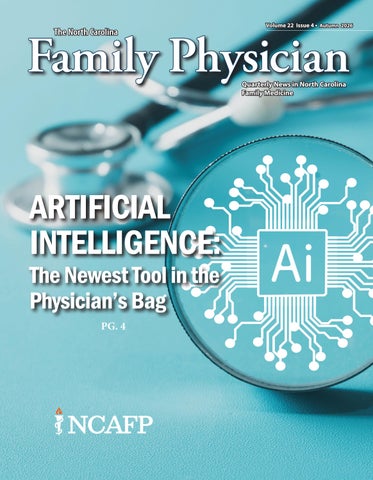
ARTIFICIAL INTELLIGENCE: The Newest Tool in the Physician’s Bag PG. 4
FAMILY PHYSICIANS -WEEKEND---•---
DEC.
10-13, {o) OMNI GROVE PA RK INN 2026 'v ASHEVILLE, NC
Heart Failure • Hypertension • Lipid Management 9- CARDIOVASCULAR
ENDOCRINE & METABOLIC
@3 Obesity • Diabetes (CGM) • Hypercortisolism
tlf �
0
fNCAFP
� NORTH CAROLINA ACAO&HY OF FAMILY PHYSICIANS
HEAL TH Men's Health Update cf MEN'S
9
WOMEN'S HEAL TH Menopause • PMOS
GERIATRICS & NEUROLOGY
DERMATOLOGY �(,Hidradenitis Suppurativa • Dermatologic Procedures �
GASTROENTEROLOGY & HEPATOLOGY
oOo POPULATION HEALTH nn Agricultural Health • Cancer Screening
Polypharmacy • MCI / Alzheimer's • Fatigue • Hospice Care IBS • Hepatic Encephalopathy
Ob COPD
*
"
PULMONARY
INFECTIOUS DISEASE
Sexual Health & STls • PrEP • Hepatitis C
PSYCHIATRY & BEH AVIORAL HEALTH
Behavioral Health & Communication Strategies
MUSCULOSKELETAL & SPORTS MEDICINE
Sports Medicine • Joint Injections • KSA on MSK
B
PEDIATRICS
Pediatric Emergencies
TECHNOLOGY & INNOVATION
� Al in Family Medicine • Top 10 Family Medicine Studies in 2026
0
LIFESTYLE MEDICINE
�
Buprenorphine in Primary Care
Food is Medicine
A DDICTION MEDICINE
Inside Autumn 2026
Death Certificate-Related Complaints: A Leading Cause of Medical Board Investigations PG. 28
PRESIDENTIAL UPDATE
CME OPPORTUNITIES
4
20 Timely Clinical Updates from Trusted Expert Faculty
Artificial Intelligence: The Newest Tool in the Physician’s Bag
and Up to 71.50 Live AAFP Prescribed Credits This December
CHAPTER AFFAIRS
8
The NCAFP Foundation: Supporting Our Students and a Whole Lot More
RESIDENTS & STUDENTS
24 Labor and Delivery in Stanly County: Why I’ll Become a Family Physician
MEMBERSHIP
10 Member Profile: Austin Morgan, MD
PRACTICE MANAGEMENT
28 Death Certificate-Related Complaints: A Leading Cause of Medical Board Investigations
PUBLISHED BY
EDITOR Kevin LaTorre, NCAFP Communications DESIGN & PRODUCTION Peter Graber, NCAFP Communications
Have a news item we missed? NCAFP members may send news items to the NCAFP Communications Department for publishing consideration. Please email items to kevin@ncafp.com.
919.980.5381 • ncafp.com Material in articles and advertisements does not necessarily express the opinion of the NCAFP. Official policy is formulated by the NCAFP Board of Directors.
PRESIDENTIAL UPDATE
Artificial Intelligence: The Newest Tool in the Physician’s Bag “All these require arrangements, depending on the materials, so that you can have the tools, the equipment, the metallics and the rest of it (gauzes, compresses, bandages, drugs) already prepared. Because the shortage of these things creates embarrassment and causes harm. For your trips, you will carry a simple and portable kit. The most appropriate is the one which follows a methodic layout, because the physician cannot keep everything in mind.” (Tsoucalas et al., 2011)
The physician’s bag dates back well beyond the time of Hippocrates. Even then, he recognized the importance of carrying the tools needed to care for patients effectively. Over the centuries, the contents of that bag evolved to include instruments such as the stethoscope, otoscope, ophthalmoscope, reflex hammer, and blood pressure cuff. Historically, physicians carried these tools because they often traveled to patients’ homes and practiced in a variety of community settings. Today, patient care largely takes place in clinics, hospitals, and health systems, yet the concept remains unchanged: physicians need the right tools to provide the best possible care. Over time, our “physician’s bag” has expanded to include electrocardiograms (EKGs), point-of-care laboratory testing, radiographic imaging, and, more recently, point-of-care ultrasound (POCUS). Now, another innovation is finding its place alongside these familiar tools: artificial intelligence (AI). For many family physicians, the most visible application of AI is the ambient listening or AI scribe technology embedded within electronic health records (EHRs) and documentation platforms. These tools help reduce
4 | The NC Family Physician - Autumn 2026
By Benjamin F. Simmons, MD, MHA, FAAFP NCAFP President
documentation burden, allowing physicians to focus more on their patients and less on their computer screens. The positive impact on workflow and physician satisfaction has made ambient AI one of the most discussed applications of AI in Family Medicine. However, ambient scribes represent only one aspect of AI’s potential. Family physicians continue to face workforce shortages, increasing administrative demands, mental burnout, and growing complexity in chronic disease management. At the same time, our specialty remains grounded in continuity, comprehensiveness, and long-term therapeutic relationships. As AI becomes more integrated into health care, an important question emerges: How can AI support family physicians while strengthening the care we provide to our patients? To better understand AI’s potential in primary care, I took a deeper dive into the literature. In the scoping review AI and Primary Care, Katonai and colleagues identified four major themes: early intervention and decision support, chronic disease management, operations and practice management, and acceptance and implementation (Katonai et al., 2025). One of the most promising applications of AI is earlier disease detection. Studies have demonstrated the ability of AI models to identify patients at increased risk for conditions such as colorectal cancer and cardiovascular disease. In one study, an AI model predicted colorectal cancer with a sensitivity of 73% and specificity of 84%, supporting earlier diagnostic decision-making. Other studies demonstrated improved detection of heart failure with reduced ejection fraction using AI-assisted EKG interpretation.
2025-2026 NCAFP Board of Directors Executive Officers President
Benjamin F. Simmons, MD, MHA, FAAFP
President-Elect
Deanna M. Didiano, DO, FAAFP
Secretary/Treasurer
Amanda R. Steventon, MD, FAAFP
Immediate Past President
S. Mark McNeill, MD, FAAFP
Executive Vice President Gregory K. Griggs, MPA, CAE
At-Large Directors D. Landon Allen, MD, MPH, MBA, FAAFP Stacey A. Blyth, MD Lisa A. Cassidy-Vu, MD, FAAFP Eric H. Chen, MD, FAAFP Katherine E. Haga, DO, FAAFP Jay I. Patel, MD, MPH Kelley V. Lawrence, MD, IBCLC, FABM, FAAFP Patrick S. Williams, MD, FAAFP
Academic Director Robert N. Agnello, DO, MHPE, FACOFP, FAAFP
Resident Director Irina Balan, MD
Resident Director-Elect Claire Namboodri, MD
Student Director Ryan Taylor
Student Director-Elect Taylor Ellis
AAFP Delegates & Alternates AAFP Delegate AAFP Delegate AAFP Alternate AAFP Alternate
A combined EKG-stethoscope platform utilizing AI algorithms identified reduced ejection fraction heart failure with a sensitivity of 92% and specificity of 80%. AI also shows promise in improving the identification of melanoma and other skin cancers in the primary care setting (Katonai et al., 2025). Chronic disease management is another area where AI may have a significant impact. Family physicians manage patients with increasingly complex medical conditions while simultaneously addressing social determinants of health and meeting value-based care expectations. Chronic illnesses such as diabetes, cardiovascular disease, and stroke continue to account for a substantial portion of morbidity and mortality in the United States.
Tamieka Howell, MD, FAAFP Thomas R. White, MD, FAAFP Rhett L. Brown, MD, FAAFP Jessica Triche, MD
NCAFP Committee Chairs Workforce Committee Advocacy Committee
Jay Patel, MD, MPH
Katherine Haga, DO, FAAFP
Practice Environment Nichole L. Johnson, MD, MPH & Professional Development Committee
NCAFP Foundation President Maureen Murphy, MD, FAAFP
Research suggests that AI can enhance risk stratification, identify 2501 Blue Ridge Road, Suite 120, Raleigh, North Carolina 27607 www.ncafp.com
medication gaps, support safer prescribing practices, and improve patient follow-up (Katonai et al., 2025). AI-powered tools may also help physicians rapidly identify relevant evidence-based recommendations and clinical guidelines at the point of care.
and the practical realities of implementation. Encouragingly, health care professionals have expressed strong interest in AI education and training, suggesting that physicians recognize both the opportunities and responsibilities that accompany these emerging technologies (Katonai et al., 2025).
A notable example is OpenEvidence, a platform supported through partnerships with organizations including the As family physicians, we have always adapted to new tools American Academy of Family Physicians (AAFP), The that improve patient care. From the New England Journal of Medicine, stethoscope to the ophthalmoscope, JAMA Network, National from the EKG to POCUS, each inComprehensive Cancer Network, novation has enhanced our ability to Cochrane, American Diabetes From the stethoscope to the diagnose, treat, and care for patients. Association, American College of ophthalmoscope, from the EKG AI represents the next step in that Obstetricians and Gynecologists, to POCUS, each innovation evolution. American College of Emergency Physicians, and others. By rapidhas enhanced our ability to Yet, like every tool that has come bely synthesizing current medical diagnose, treat, and care for fore it, AI should be viewed as an adevidence and guideline recompatients. AI represents the next junct to clinical practice rather than a mendations, platforms such as step in that evolution. replacement for clinical judgment. A OpenEvidence can help physicians stethoscope does not replace the phystay informed while reducing the sician who interprets what is heard, time required to search for clinical and an ultrasound machine does not information. In a specialty where replace the physician who understands the patient’s story. every minute matters, rapid access to trustworthy clinical Similarly, AI cannot replace the trust, compassion, context, evidence can improve both efficiency and decision-making. and human connection that define Family Medicine. AI is also being studied and implemented to improve practice operations. Beyond documentation support, AI AI may be one of the newest tools in the physician’s bag, applications are being used for patient scheduling, enbut the most important tool remains the family physician counter coding, workflow optimization, and population who uses it wisely. health management. Depending on the specific technology, studies have demonstrated improvements in efficiency, reductions in administrative workload, and enhancements in clinical decision support (Katonai et al., 2025). REFERENCES Many of us are already benefiting from AI without fully 1. Tsoucalas, G., Kousoulis, A. A., Tsoucalas, I., & Androutsos, G. realizing its presence. Currently, EHRs increasingly incor(2011). The earliest mention of a black bag. Scandinavian Journal of porate AI-driven functions that help identify abnormal Primary Health Care, 29(4), 196-197. https://doi.org/10.3109/028134 laboratory trends, detect potential medication interactions, 32.2011.629153 support clinical decision-making, and facilitate informa2. Katonai, G., Arvai, N., & Mesko, B. (2025). AI and primary care: tion sharing across health care settings. These capabilities Scoping review. Journal of Medical Internet Research, 27, e65950. often operate quietly in the background, helping physihttps://doi.org/10.2196/65950 cians manage increasingly complex volumes of data while 3. Tran, M. (2026). The CARE Model: A Framework for Artificial keeping patient care at the center of the encounter. Despite its promise, AI adoption and acceptance remain variable. Important concerns remain regarding patient privacy, data security, interoperability, transparency, and the ethical use of AI in health care. Qualitative research has highlighted the gap between the envisioned benefits of AI
6 | The NC Family Physician - Autumn 2026
Intelligence Integration in Chronic Disease Management. Journal of Healthcare Management, 71(4), 235-243.
The NC Family Physician - Autumn 2026 | 7
CHAPTER AFFAIRS
The NCAFP Foundation: Supporting Our Students and a Whole Lot More In this magazine, we regularly feature many of our advocacy efforts, and obviously we include plenty of information about our great CME. However, not to be overlooked is the great work we undertake through the NCAFP Foundation. For this column, I will highlight several of our Foundation’s new grant-funded projects. As the charitable arm of the NCAFP, the NCAFP Foundation is widely known for supporting our medical students and residents – most notably through our ongoing $6 million endowment campaign for our workforce initiatives. Recently, however, we have been able to expand some of our offerings through several exciting grant-funded projects. Now’s a great time to discuss just a few of these.
SHARED-CARE MODEL OF MATERNITY CARE The Perinatal Access to Care and Health in North Carolina (PATCH-NC) initiative seeks to expand access to high-quality maternity care throughout the state. Funded by the Leon Levine Foundation through a grant to the North Carolina Community Health Center Association, the NCAFP Foundation will serve as a sub-grantee. The overall initiative centers on family physicians as the primary maternity care providers in rural communities in safety-net provider offices like health departments and community health centers. Family physicians will lead teams to provide prenatal and postpartum care locally, while partnering with Family Medicine residencies, OB/ GYNs, and maternal-fetal medicine specialists who support consultations, high-risk collaborative care, and deliveries. This “Shared-Care” model reduces access barri-
8 | The NC Family Physician - Autumn 2026
By Gregory K. Griggs, MPA, CAE NCAFP Executive Vice President & CEO
ers while ensuring patients receive continuous, coordinated care close to home that extends beyond pregnancy and to the whole family. The NCAFP Foundation’s role will be to deliver education about the Shared-Care model, particularly to our Family Medicine residencies. We will be taking a didactic session to our state’s Family Medicine residency programs to teach residents about the model. In addition, we will be providing education on the model at our Family Medicine Day for medical students, provide CME on Shared Maternity Care at our Annual Meeting in 2027, and publishing an in-depth complete magazine article about the project next year. Our own Dr. Shannon Dowler is Principal Investigator for the project as a consultant to the North Carolina Community Health Center Association.
ENHANCED TECHNOLOGY FOR PRIMARY CARE PRACTICES Through funding from the UnitedHealthcare Community Plan of North Carolina, the NCAFP Foundation will soon begin implementing a grant to provide technology investments to independent primary care practices, Federally Qualified Health Centers, and rural health clinics. Our Foundation is serving as the lead partner and fiduciary for this initiative but will also be working with the NC Pediatric Society and the North Carolina Community Health Center Association. The goal of this investment from the UnitedHealthcare Community Plan of North Carolina is to reduce administrative burden, improve
provider efficiency, and expand patient access, particularly for Medicaid members and historically underserved populations. Selected practices may receive a technology investment award of up to $100,000. The funds can be used for technology such as AI scribe tools, EMR upgrades, and other technology that can improve efficiency. Applications should be available to the members of all three participating organizations by the end of the year with a due date likely in January. Look for more information in our e-newsletter, NCAFPNotes, in the near future.
RESIDENT AND EARLY CAREER ENGAGEMENT INITIATIVE The NCAFP Foundation has also entered into a three-year grant agreement with Community Care of North Carolina (CCNC). The goal of the initiative is to strengthen the pipeline of family physicians, to advance communities of support for family physicians in the state, to better establish a framework for mentoring, and to facilitate opportunities for individuals entering independent and alternative practice models in areas of primary care need across North Carolina.
NC) Foundation that expanded our summer experiences for medical students interested in Family Medicine, as well as providing funding for many of our other medical student initiatives. We have a long partnership with the BCBS NC Foundation supporting these efforts. Recently, we received an additional grant from the United Healthcare Community Plan of NC that will help further enhance our pathway initiatives. This grant takes a multi-pronged approach to increasing interest in primary care. Some of the efforts will include: • Increased engagement with HOSA — Future Health Professionals, a student-led organization that promotes opportunities in health careers at the middle school and high school levels • Enhancements to a number of our existing programs, including increased funding for our medical student scholarships, increased funding for the Family Medicine Interest Groups at our state’s medical schools, additional resources to fund medical students to attend our Annual Meeting and/or the AAFP Future Conference, and additional support for other student programs
As part of the project, we will be increasing our engagement with residents and early-career physicians in the state, holding regional physician networking groups, increasing Family Medicine workforce opportunities through engagement and mentorship strategies, and expanding and strengthening the didactics we provide to Family Medicine residency programs across the state. We will also work to develop a system to match interested physicians with practice opportunities, which may include joining or taking over a current practice or starting a new site or affiliated practice.
• A targeted effort to connect Family Medicine residents with loan repayment opportunities and other incentives in the state that encourage graduates of Family Medicine residencies to stay and practice in NC
As part of the initiative, we hope to increase the number of Family Medicine residents who stay and practice in North Carolina, particularly in areas of need. In addition, we will be working with a few partners to develop and strengthen mechanisms that support early career family physicians across the state. Look for more information as this work moves forward.
We are very excited about how all these additional programs are expanding the work of our Foundation. As these efforts develop over the next year, we will keep our membership informed through our e-newsletter and other outreach efforts. Stay tuned!
ENHANCED STUDENT AND RESIDENT INITIATIVES Finally, as many of you know, we are in the third year of a grant from the Blue Cross and Blue Shield of NC (BCBS
• Development of new innovative teaching/preceptor sites in rural or underserved areas of the state to help family physicians in these areas to offset the cost of teaching with some start-up funding
And don’t forget, there’s still time to support our endowment campaign: Growing Tomorrow’s Family Doctors. We are over 75% of the way to our goal of $6 million, and we hope to complete that campaign no later than Dec. 31, 2027. If you are interested in contributing or want to learn more, please go to www.ncafp.com/foundation/foundation-donation or reach directly out to me at ggriggs@ncafp.com.
The NC Family Physician - Autumn 2026 | 9
MEMBERSHIP
Member Profile: Austin Morgan, MD Dr. Austin Morgan is a family physician at Novant Health Family Medicine Rocky Point near Wilmington, NC. In addition, Dr. Morgan serves on the NCAFP Advocacy Committee. Dr. Morgan encountered medicine early, which prepared him to later choose Family Medicine. His parents are both primary care physicians, and as a kid Dr. Morgan took notice of their example. “When I was really little, I liked what they did,” he says, “how they took care of people and made a difference for their patients.” But Dr. Morgan began seeing his own pathway into medicine when he began accompanying his parents on service trips to Uganda. Over eight trips between 2011 and 2025, Dr. Morgan helped support new schools and offer free clinics with a Ugandan physician in impoverished communities there. “That was a big catalyst,” he says. “We really saw some significant health disparities there, and that was the turning point for me to go into medicine.” But why Family Medicine specifically? During medical school at Oregon Health and Science University (OHSU), Dr. Morgan realized that our specialty was the most versatile one he could enter. He enjoyed his internal medicine, pediatrics, and OB-GYN rotations but wanted to perform
10 | The NC Family Physician - Autumn 2026
By Kevin LaTorre, MA NCAFP Communications & Membership Manager
all three kinds of care. After some confusion, Dr. Morgan realized there was one way to do that: “Where could I do all those things? Family Medicine,” he says. It also helped that Family Medicine closely serves Dr. Morgan’s heart for population health. Prior to medical school, he had completed a master’s in global health at Duke University, and during medical school he realized the central role of primary care in that area. “I remember seeing the benefits of primary care on people’s health and how it decreased overall health care spending,” Dr. Morgan says. “If I wanted to have that kind of positive impact on a community, I was going to be a family physician.” In 2023, Dr. Morgan began residency at Novant Health New Hanover Regional Medical Center (NHNHRMC) in Wilmington. “We fell in love with North Carolina during my master’s and wanted to come back,” he says. Enrolling at NHNHRMC was his first choice. “The residency really impressed me during my interviews,” Dr. Morgan says. “I really appreciated their focus on health equity, access to care, and social determinants of health.”
Throughout his training, Dr. Morgan enjoyed support from both family physicians and Family Medicine organizations.
reasons I decided to stay in North Carolina is working with the NCAFP. It’s been wonderful.”
In Oregon, OHSU School of Medicine Dean Dr. Rebecca Cantona helped support him through his medical training. “She’s just a lovely person,” Dr. Morgan says. Another mentor, Dr. Brian Park, connected Dr. Morgan to the Robert Graham Center, which proved pivotal. Dr. Morgan ended up serving as a Visiting Scholar at the Center in June 2026. His research there identified the areas of highest need for primary care in the U.S. by physician-to-patient ratio and social deprivation factors.
Specifically, Dr. Morgan has enjoyed the advocacy work he does through the NCAFP and American Academy of Family Physicians. “White Coat Wednesday and the Family Medicine Advocacy Summit in Washington, DC were both wonderful,” he says. “The policy change is slow, but I’m hopeful, since we keep continuing to have these policy conversations about our patients and their health care. There’s also a great community of family physicians in North Carolina, and the NCAFP spearheads that. We’re all working together.”
“That program was exceptional,” he says. “The hope is that someday our research could be used to identify priority areas for new residency programs or other ways of incentivizing physicians to go to those high-need areas. Plus, I get to enjoy the entire breadth of Family Medicine: there’s your typical clinic, but also this health policy research at a national center.”
Dr. Morgan’s support also came from the NCAFP. During his residency, Dr. Morgan attended two White Coat Wednesday events and the Winter Family Physicians Weekend. “They’re great events,” he says. “One of the
Dr. Morgan has remained part of that community since finishing residency in 2026. He practices in Rocky Point but also at MedNorth, a Federally Qualified Health Center, with NCAFP members Dr. Mayra Galeano and Dr. Alexandra Werner. They now mentor him while he does a half-day per week at MedNorth. “They’ve taken me under their wing,” he says. And when he can, Dr. Morgan picks up a monthly hospital shift at Pender Medical Center in nearby Burgaw. “It’s been a good schedule so far,” he says.
We’d like to thank Dr. Morgan for his commitment to his patients and to Family Medicine advocacy!
MEMBERS in the NEWS By Kevin LaTorre, MA NCAFP Communications & Membership Manager
Four NCAFP Members Named to Governor’s Health Care Affordability Commission NCAFP members Dr. Cristy Page, Dr. Dev Sangvai, Dr. Karen Smith, and Dr. Tom Wroth are serving on the NC Health Care Affordability Commission! On June 30, NC Governor Josh Stein signed Executive Order No. 39 to establish the Commission to “develop timely, concrete solutions to rein in surging health care costs.” NC Dept. of Health and Human Services (NCDHHS) Secretary Dr. Dev Sangvai co-chairs the Commission with NC State Treasurer Brad Briner. Voting members include the two co-chairs, four bipartisan legislators, and the Director of the Office of State Budget and Management. Dr. Page, Dr. Smith, and Dr. Wroth are serving along with 16 other health care experts as advisors to the Commission. The
group is examining several priority areas, including: • Improving data collection and recordkeeping to better serve consumers and inform policymakers • Addressing health care workforce shortages by increasing supply of providers, especially in primary care • Expanding access to and utilization of primary care across the state Dr. Wroth serves as President & CEO of Community Care of North Carolina, and Dr. Page serves as the CEO of UNC Health and Dean of the University of North Carolina School of Medicine. Dr. Karen Smith is a past NCAFP President and the incoming President of the NC Medical Society.
The NC Family Physician - Autumn 2026 | 11
NCAFP Leaders Attend the NC Primary Care Collaborative
Taylor Ellis Named 2026 Pisacano Scholar!
On Aug. 10, Exec. VP and CEO Greg Griggs, NCAFP President Benjamin “Frankie” Simmons, Community Care of North Carolina (CCNC) President Dr. Tom Wroth, past NCAFP president (and incoming NC Medical Society President) Dr. Karen Smith, and others attended the Roundtable on Strengthening Primary Care in North Carolina at the NC BioTechnology Center. The event gathered policymakers with leading advocates for primary care in North Carolina, where they discussed how to best serve North Carolinians by strengthening primary care. The roundtable event was developed by the Primary Care Collective and co-sponsored by CCNC and the NC Area Health Education Centers (NC AHEC).
In September, the Pisacano Foundation named NCAFP member Taylor Ellis (pictured) as one of its 2026 Scholars! As a Pisacano scholar, Ellis will receive a $28,000 scholarship and begin educational programs and leadership training to further her commitment to Family Medicine.
Griggs welcomed attendees to the roundtable with brief opening remarks and a call for greater investment in primary care. “With a tremendous amount of attention on health care affordability in North Carolina, we have a unique opportunity right now,” Griggs stated in his opening remarks. “I hope today serves as a catalyst for ongoing work. It’s past time to address the affordability crisis in health care, and enhanced primary care investment is one key way of addressing that problem.”
Kathryn Atkinson Celebrates 20 Years at NCAFP! In September, NCAFP CME & Events Director Kathryn Atkinson, CMP, celebrated 20 years of great work at the NCAFP! For the last twenty years, Kathryn has worked tirelessly and creatively to put on flawless CME events that educate and entertain our members! “Kathryn has a fantastic mind and heart for putting on some of the best educational events in the country,” NCAFP Exec. VP and CEO Greg Griggs says. “She has always made sure that our members receive everything they need from our CME, including convenient and fun experiences with their friends and colleagues. Kathryn is also a dear friend and a pleasure to have as a leader on the NCAFP staff. She has been instrumental to the success of the NCAFP over the last two decades.” 12 | The NC Family Physician - Autumn 2026
She is currently a fourth-year medical student at the Wake Forest School of Medicine. Ellis serves as the NCAFP Student Director-Elect and as the national student representative to the AAFP Family Medicine Obstetrics Member Interest Group. Congratulations to Ellis! (Also, read her account of learning to practice rural Family Medicine on pg. 24!)
ADVISORY
Awards & Recognitions
Dr. Charles Rhodes Receives AAFP Humanitarian Award By Kevin LaTorre, MA Communications and Membership Manager
During the American Academy of Family Physicians (AAFP) Congress of Delegates in October, past NCAFP president Dr. Charles W. Rhodes (pictured) received the AAFP Humanitarian Award! He was selected for this prestigious award thanks to his decades of tireless mission work in the rural villages of the Dominican Republic. For over 23 years, Dr. Rhodes has led hundreds of physicians, residents, medical students, nurses, and other volunteers on medical mission trips to provide medical care for patients in remote mountain villages and in the southern bateyes (sugarcane plantations), where most populations have little or no regular health care access. After years of service in the region, his return trips are almost like family reunions, with patients, teachers, and interpreters looking forward to his arrival and the care he and his team bring.
CAPITAL INSURANCE
An unwavering commitment to your success. For more than 50 years, we’ve committed to enhancing the lives of those we serve. Visit curi.com/go/ncafp to discover why your best future is ahead with Curi. .
CORPORATE SPONSOR OF THE NORTH CAROLINA ACADEMY OF FAMILY PHYSICIANS
While serving patients during these mission trips, Dr. Rhodes has also led many individuals to enter medicine, particularly Family Medicine and primary care. In some instances, high school and college students first got the bug for medicine by going with Dr. Rhodes on one of his mission trips. During this work, he also became a leader at Solid Rock International, a nonprofit that provides medical care and education to Dominican communities. Dr. Rhodes became a Solid Rock member in 2013 and then served as its president from 2021 to 2025. The greatest challenge and achievement of his leadership at Solid Rock was the completion of a new hospital in San Juan de la Maguana. Today, the facility covers 46,000 square feet and offers health care to all members
The NC Family Physician - Autumn 2026 | 13
of the city, offering them services and specialists that their communities had never accessed before. However, the construction took over a decade (and $5.5 million) to complete, thanks to the damage and delays caused by an earthquake, hurricanes, and COVID-19. But throughout these trials, Dr. Rhodes continued to raise funds from churches and civic groups around the U.S., when he wasn’t bringing more teams to help build the hospital and provide medical services to San Juan at the same time. The hospital was completed in 2023 and now cares for tens of thousands of patients each year.
After completing his medical training and four years of service in the U.S. Air Force, Dr. Rhodes joined what was a small private practice in rural Mt. Pleasant, NC. He ultimately helped grow that small practice into 12 clinic sites over a four-county area with over 90 clinicians and a Family Medicine residency program. The practice remained private until 2007, when they joined what is now Atrium Health. He “retired” from Atrium Health in May 2025 after 38 years in the same practice, only to immediately join the primary care clinic at his local public health department, Cabarrus Health Alliance.
In addition to his years of international medical service, Dr. Rhodes continued to be a Family Medicine leader right here in North Carolina. He served as NCAFP President in 2017 after six years on the Academy’s Board.
“Dr. Rhodes is always serving others,” NCAFP Exec. VP and CEO Greg Griggs said. Congratulations to Dr. Rhodes!
Dr. Cristy Page Receives AAFP Robert Graham Family Physician Executive Award By Kevin LaTorre, MA Communications and Membership Manager
During the American Academy of Family Physicians (AAFP) Congress of Delegates in October, NCAFP member Dr. Cristy Page (pictured) received the Robert Graham Family Physician Executive Award! The award honors family physicians whose skill as executives ensure that their overall organization delivers high-quality health care to their patients, demonstrating how family physicians can improve health both in the exam room and on an organizational scale. Dr. Page has certainly demonstrated how one family physician can improve health care outcomes on an organizational scale. After becoming CEO of UNC Health in November 2025, Dr. Page began leading a statewide network of 20 hospital campuses, 450 clinics, and more than 54,000 employees to fulfill the system’s mission to improve the health of the people of North Carolina. She also serves as Dean of the UNC School of Medicine (UNCSOM), where she oversees the training of future physicians at one of the country’s top public medical schools. Because she handles all these responsibilities at once, it’s easy to forget that Dr. Page had only become the UNC-
14 | The NC Family Physician - Autumn 2026
SOM Department Chair in Family Medicine in 2017. Her work has always been impressive, whether it was leading innovative health care initiatives and strategic partnerships, developing branch campuses of UNC, or growing rural residency programs. Dr. Page is the first woman and first family physician to lead UNC Health, which is also rare across other major health care systems. In addition, she’s a three-time Tar Heel: at UNC, she finished her B.A. in Psychology as a Morehead Scholar, UNC’s most prestigious scholarship. During her gap year before medical school, she worked for the Morehead Foundation visiting schools to see how the scholarship program was working, ultimately traveling to all 100 counties of North Carolina. Dr. Page went on to receive her medical degree and her MPH at UNC in 2002, to complete her Family Medicine Residency at UNC in 2005, and serve as a fourth-year chief resident there in 2006. When announcing her appointment as CEO, UNC System President Peter Hans stated, “In every role she has held — physician, educator, innovator, and mentor — Dr. Page has led with reassuring confidence and a clear sense of purpose. She is the kind of leader who builds trust by earning it, and who reminds us that the heart of health care
is public service to others. We could not ask for a better steward of UNC Health’s mission.”
sense of calling. At every step of the way, I’ve found other mission-driven people to work with, teach, and mentor.”
“It has meant a lot to me over the course of my career to work at a place with a true commitment to mission and service,” Dr. Page told Business NC in an interview. “That is in complete alignment with my own personal values and
Her personal values and personal calling have served NC family physicians, residents, medical students, and patients well. Congratulations to Dr. Page on her well-deserved recognition!
Why Renew? Here’s What Four NCAFP Members Have to Say By Kevin LaTorre, MA Communications and Membership Manager
By now, you’ve heard about renewing your membership to remain with the AAFP/NCAFP through 2027. It’s our favorite way of reminding you about your membership benefits: evidence-based clinical development through all CME activities and events, career resources to help you advance through every stage of your work, policy advocacy for your work and your patients in NC and DC, and many others. (How to renew by paying your dues and reporting your CME are outlined at https://www.ncafp.com/membership/ncafp-renewal-reinstatement-dues-cme. Be sure to review that before your Dec. 31 renewal deadline.) But for this issue of The North Carolina Family Physician, we wanted to be sure you heard about your membership benefits from your fellow members. Your resources are resources that thousands of your fellow family physicians enjoy all the time. Here’s why a few of them are choosing to renew for 2027:
Dr. Morgan Parker I often tell my primary care patients, “If we keep skiing down the same slope over and over again without changing anything, we’ll keep ending up in the same place at the bottom of the hill.” I use this illustration when we talk about starting a statin, managing reflux, or making other changes. It’s a simple way to acknowledge that wanting a different outcome requires some action. This thinking applies to medicine at large. I count myself lucky to work at a wonderfully supportive practice, but
the larger health care system can be frustrating through insurance hurdles, prior authorizations, and endless bureaucracy. For me, AAFP/NCAFP membership is one way to avoid skiing down that same slope. Through the NCAFP, I can support state and national advocacy efforts, take part in excellent CME, and enjoy opportunities to meet and unwind with my peers. I’ll be renewing my membership for 2027, and I encourage you to do the same.
Dr. Matthew Drake I’m renewing my membership for 2027 because of the NCAFP’s commitment to student programing. As a medical student, I was drawn to Family Medicine through NCAFP experiences like the summer programs, the Winter Family Physicians Weekend in Asheville, and Family Medicine Day. I met mentors who inspired me and helped me see myself in Family Medicine. Early exposure is incredibly important in a student’s decision to pursue a specialty, and as we face a worsening primary care shortage, these kinds of programs are even more valuable to help draw learners into primary care. I’m a family physician in part because of the influence of the NCAFP. I support the NCAFP with my membership to give medical students today the same opportunities that I had, to help them explore Family Medicine and see all that our field has to offer. Continues on pg. 19
The NC Family Physician - Autumn 2026 | 15
Dr. Austin Morgan, Dr. Irina Balan, and other NCAFP members with a congressional aide in Washington, DC. Dr. Bailey Sanford, Dr. Atif Mahmood, Dr. Shannon Dowler, Dr. Brittany Watson, Dr. Andrea DeSantis, Dr. Brad Christoph, and other NCAFP members during the AAFP Advocacy Summit.
Gabriella Morin, Dr. Austin Morgan, Dr. Irina Balan, and another NCAFP member at the AAFP Advocacy Summit. Dr. Irina Balan, Dr. Austin Morgan, and other NCAFP members with a congressional aide in Washington, DC. The full group of NCAFP members and leaders attending the AAFP Advocacy Summit.
Dr. Karen Smith and NCAFP President Benjamin "Frankie" Simmons with NC Gov. Josh Stein at the 2026 budget signing.
Dr. Patrick Williams, Dr. Karen Smith, NC Gov. Josh Stein, Dr. Benjamin "Frankie" Simmons, and Dr. Cedric Bright.
Dr. Karen Smith and Dr. Benjamin "Frankie" Simmons with NC Gov. Josh Stein at the 2026 budget ceremony.
NCAFP student members during their Boone summer program.
Dr. Cedric Bright, Dr. Karen Smith, Dr. Patrick Williams, and Dr. Benjamin "Frankie" Simmons.
NCAFP student members complete a hands-on workshop during their summer program.
NCAFP student members try a new procedure during the eastern summer program in Greenville.
Dr. Susan Alexander and a colleague in the MAHEC Asheville Family Medicine Residency booth at FUTURE.
Dr. Daniel Yoder, Tracie Hazelette, and other leaders in the MAHEC - Hendersonville booth at FUTURE.
Dr. Claire Namboodri and other NCAFP members during a social at FUTURE.
Dr. Daniel Yoder and other NCAFP members during a social at FUTURE.
Dr. Kelley Lawrence with other NCAFP members during a social at FUTURE.
Dr. Jessica Rabazza, Dr. Jeshrine Mazhil, and Dr. Jamie Crews in the Novant Health Family Medicine Residency Program booth at FUTURE.
NCAFP members at the Wake Forest Family Medicine Residency booth at FUTURE.
Dr. Hoon Kong and other NCAFP members in the Atrium Health Cabarrus Family Medicine Residency Program booth at FUTURE.
Rayed Hamid, Andie Anderson, Taylor Ellis, Joe Morell, Grace Flinchum, and Dr. Karen Wolf show their AAFP award for their work at the Wake Forest School of Medicine Family Medicine Interest Group.
Dr. Benjamin "Frankie" Simmons, Ann Greiner, and Greg Griggs attend the NC Primary Care Collaborative.
Rep. Heather Rhyne, Rep. Dr. Tim Reeder, Dr. Benjamin "Frankie" Simmons, and Sen. Jim Burgin at the NC Primary Care Collaborative.
Dr. Benjamin "Frankie" Simmons and Rep. Heather Rhyne at the NC Primary Care Collaborative.
Dr. Benjamin "Frankie" Simmons speaks during the NC Primary Care Collaborative.
Dr. Deanna Didiano, Dr. Shannon Dowler, Dr. Tamieka Howell, and Dr. Benjamin "Frankie" Simmons during the Southeastern Family Medicine Forum.
Dr. Deanna Didiano, Dr. Tamieka Howell, Dr. Shannon Dowler, Dr. Benjamin "Frankie" Simmons, and Greg Griggs during the Southeastern Family Medicine Forum.
Dr. Brian Lanier and other members at the Wilmington Area Family Physicians Social.
NCAFP members enjoying the Wilmington Area Family Physicians Social.
Dr. Jessica Chase, Dr. Stephanie Horan, and another member at the Wilmington Area Family Physicians Social.
Dr. Brian Lanier and other NCAFP members at the Wilmington Area Family Physicians Social.
Medical students Ocean Redmon, Meric Trombley and Ryan Kieffer with NCAFP's Perry Price.
18 | The NC Family Physician - Autumn 2026
Dr. Deanna Didiano and Dr. Benjamin "Frankie" Simmons with other leaders at the Southeastern Family Medicine Forum.
Medical students practicing ultrasound during the summer.
Dr. Elikem Garfo
Dr. Tamieka Howell, Dr. Deanna Didiano, Dr. Benjamin "Frankie" Simmons, and a colleague at the Southeastern Family Medicine Forum.
NCAFP members attend the Wilmington Area Family Physicians Social.
I joined the North Carolina Academy of Family Physicians because of my strong belief in the values of Family Medicine: comprehensive care, prevention, continuity, and serving patients and communities where they live. After more than 13 years in medicine, I’ve come to the realization that being a family physician is about much more than treating individual medical problems. It is about building lasting relationships, advocating for patients’ health, and contributing to the well-being of the communities we serve. The NCAFP does all these things. Staying with the NCAFP gives me an opportunity to stay connected with fellow family physicians, grow professionally, and contribute to the future of Family Medicine in North Carolina. For me, membership is an investment — not only in my own professional development, but in the future of Family Medicine and the patients we have the honor and privilege to serve. I’m excited to be part of an organization that supports physicians while advocating for high-quality, accessible care for our patients.
Dr. Aram Alexanian I’m renewing my NCAFP membership because its mission closely aligns with what matters most to me as a family physician and clinical informaticist: supporting family physicians so we can focus on what we love — caring for patients. In my informatics work, I focus on reducing administrative burden and using technology thoughtfully to enhance the human connection in medicine, not replace it. My involvement with the NCAFP over the past few years has also opened my eyes to the Academy’s important advocacy on behalf of family physicians and our patients, particularly at the state level where many of the challenges we face can begin. The opportunity to connect with and mentor the next generation of talented family physicians has also been just as meaningful to me. This is one way to pay forward the great mentorship I’ve received throughout my career. That work is energizing and reminds me why our professional community matters. For me, renewing is an investment in advocacy, connection, and the future of Family Medicine. Thank you, NCAFP, for all you do for us! The NC Family Physician - Autumn 2026 | 19
CME OPPORTUNITIES
Timely Clinical Updates from Trusted Expert Faculty and Up to 71.50 Live AAFP Prescribed Credits This December The 2026 Winter Family Physicians Weekend is quickly approaching, and this year’s conference offers more education, schedule flexibility, and opportunities to connect with colleagues and peers than ever before! Scheduled for Dec. 10-13, 2026, at the Omni Grove Park Inn (GPI) in Asheville, our easy-to-use, interactive hybrid conference format makes this beloved Family Medicine tradition accessible across North Carolina and beyond. If travel or a busy December schedule makes joining us in person difficult, plan to participate virtually and still enjoy the live CME experience. With up to 71.50 Live AAFP Prescribed Credits available through an exceptional lineup of mainstage sessions, optional workshops and Translation to Practice® activities, you can create the conference experience that works best for you. (See the full overview of CME credits on the opposite page to understand how you can do that!) Led by Program Chair Dr. Amir H. Barzin and Program
20 | The NC Family Physician - Autumn 2026
By Kathryn Atkinson, CMP NCAFP Director of CME & Events
Vice Chair Dr. Jessica Triche, this year’s conference includes over 25 mainstage sessions and several important optional workshops and seminars. Dr. Barzin serves as President of UNC Health Faculty Physicians and as an associate professor in the UNC School of Medicine’s Department of Family Medicine. Dr. Triche is Director of Clinical Services at ECU Health Family Medicine and a past president of the NCAFP. Together, they have helped develop a program filled with timely clinical updates, outstanding expert faculty, and practical information you can begin using right away. And what an incredible program it is! From start to finish, each day is packed with the CME you need, focused on the patients you see every day, and delivered by expert faculty you know and love.
We’ll kick things off Wednesday afternoon with an optional pre-conference Musculoskeletal Care hybrid KSA Workshop led by Dr. Jonathon Firnhaber. Then, beginning Thursday morning, the main stage will deliver practical updates on polypharmacy with everyone’s favorite pharmacist, Sandy Robertson, PharmD, and “Food Is Medicine” with board-certified lifestyle medicine family physician Dr. Victoria Boggiano. The first day will also feature obesity care and a strong cardiovascular lineup covering resistant hypertension, aldosterone in heart failure and chronic kidney disease, lipid management, and the growing role of PCSK9 inhibitors.
and chronic pain. An important cancer screening update is also on the agenda, and Dr. Garett Franklin will close the conference with a quick review of the “Top 10 Family Medicine Studies of 2026.” Professional connection is an important part of what makes the Winter Family Physicians Weekend more than just another CME conference. And because of that, we’ve made sure the schedule includes dedicated time to catch up with medical school friends and residency colleagues, connect with others who share your interests in patient care and Family Medicine, and build valuable new relationships. You will also want to explore the bustling exhibit hall and receive the latest updates, resources, and information from more than 70 vendors supporting Family Medicine.
Sports medicine expert Dr. Karl “Bert” Fields will discuss when to inject and when to refer, followed by a hands-on workshop with Dr. James McNabb focused on common musculoskeletal injections in Family Medicine. ThursProfessional connection is day also includes a highly requested optional hybrid workshop, “Menoan important part of what pause Matters: Evidence-Based Care makes the Winter Family in Family Medicine.”
Saturday evening, plan to join us for the Presidential Gala — one of the most anticipated traditions of the weekend. During the celebration with live music and a gourmet meal prepared by the GPI chef, we will Physicians Weekend more The following day, the mainstage seswelcome the incoming Board of than just another CME sions will address continuous glucose Directors and celebrate Dr. Deanna conference. monitoring, outpatient heart failure Didiano as she is installed as the management, hidradenitis suppuNCAFP’s 2026-2027 president. rativa, irritable bowel syndrome, It will be a wonderful evening to hepatic encephalopathy, PMOS, and celebrate our leaders, enjoy time toother important patient care concerns. Attendees may also gether, and look ahead to another exciting year for Family choose from two optional Friday afternoon workshops: Medicine. “Five Adults with Fatigue: The Second Diagnosis,” an interactive, case-based hybrid session led by Dr. Thomas The Winter Family Physicians Weekend truly offers someWhite, or a hands-on dermatologic procedures workshop thing for everyone: outstanding CME, nationally recogcovering incision, drainage, and debridement with Dr. nized faculty, practical clinical updates, and the special caBrian Rayala. maraderie that has made this event such a beloved NCAFP tradition for decades. I’ve highlighted only a handful of the Saturday features another full day of important and timely expert guest faculty ready to educate and inspire you this education, including mild cognitive impairment and AlzDecember. Be sure to visit www.ncafp.com/wfpw to meet heimer’s disease management, hospice care, men’s health, the entire amazing guest faculty lineup, review the full artificial intelligence in Family Medicine, challenging conference schedule, and register. patient encounters, and pediatric emergencies. And back by popular demand, returning presenter (and past NCAFP Join us in Asheville for the complete Grove Park Inn expepresident) Dr. Shannon Dowler will share “IYKYK…Top rience, or take advantage of the convenient virtual option 10 Clinical Updates in Sexual Health and STIs.” and participate from wherever you are. Either way, I truly hope you will make plans to be part of this year’s terrific We will wrap up Sunday morning with practical updates Family Medicine tradition. We look forward to being with on COPD, PrEP and hepatitis C, and agricultural health you in December! in Family Medicine. Returning guest faculty and addiction medicine expert Dr. Michael Baca-Atlas will lead an important session on buprenorphine for opioid use disorder
22 | The NC Family Physician - Autumn 2026
Thank You to the Sponsors of the 2026 Winter Family Physicians Weekend!
We Are Grateful for Your Support
The NC Family Physician - Autumn 2026 | 23
RESIDENTS & STUDENTS
Labor and Delivery in Stanly County: Why I’ll Become a Family Physician It was 6 a.m. The nursing staff had called the attending and me in for the delivery of a patient who had arrived on Labor and Delivery at 10 centimeters dilated and ready to push. It was the last week of my Rural Health Elective in Stanly County, and by then I was familiar with the routine of gowning up for a delivery. I took my place at the foot of the bed with the attending beside me, and together we guided a beautiful baby girl into the world.
By Taylor Ellis NCAFP Student Director-Elect
obstetrics services. Family physicians are in a unique position to help bridge these gaps in rural areas.
Because of my experiences growing up, I wasn’t certain that I would have the emotional resilience to return to a rural area as a physician. Medical school changed that perspective. Through the NCAFP’s Rural/Underserved Summer Immersion Program in Hendersonville and Boone, I spent time learning alongside family physicians at the Mountain Area Health Education Center (MAHEC) residency It was the best way to start a Saturday morning. programs the summer after my first year of medical school. Through this, I was able to truly see what That day, I was on Labor and comprehensive rural practice could look Delivery, managing laboring like. I began to envision a new future for patients and any other pregnanFor those considering myself. I envisioned a future where I could cy-related complications. The day give back to the very communities that before, I was in clinic managing rural medicine or simply inspired me to pursue medicine. chronic diseases including diabewanting to experience the tes, peripheral artery disease, and breadth of our specialty, I So when I learned about the opporasthma. The day before that, I was tunity to complete a fourth-year rural in the newborn nursery, performencourage every medical elective in Stanly County, I knew I had ing newborn physical examinastudent to seek out a rural to apply. What I didn’t anticipate was tions and counseling families on just how broad the experience would everything from safe sleep to feedhealth rotation. become. ing. Every one of these experiences was alongside family physicians with During my rotation, I was able to care fellowship training in obstetrics, and for patients literally from the beginning of their lives. every day they demonstrate the remarkable breadth of I participated in deliveries, cared for newborns in the full-scope Family Medicine. nursery, helped adult patients navigate pregnancy, managed chronic diseases such as hypertension and diabetes in Growing up in a rural area, I saw firsthand how limited clinic, and performed outpatient procedures such as shave health care access impacted those around me. Routine biopsies and long-acting reversible contraceptive placepreventative care often meant driving long distances, and ment. I experienced what it means to provide truly comprefinding obstetric or specialty care required leaving the hensive care as a family physician. Every day reinforced why county altogether. Across North Carolina, many rural Family Medicine is uniquely equipped to address the diverse communities continue to face a shortage of primary care needs of rural communities. physicians, and numerous counties have limited or no
24 | The NC Family Physician - Autumn 2026
This experience was made possible through the vision and dedication of Dr. Dawn Caviness, Director of Rural and Community Health at the Cabarrus Family Medicine Residency Program. Dr. Caviness and her team are launching a rural residency track based in Albemarle, allowing residents to experience what it is like to care for patients in Stanly County. Housing and mileage support for my rotation were generously provided through the NC AHEC Rural Teaching Hub Grant in partnership with Atrium Health Stanly, making this opportunity accessible as a visiting student. Outside of the hospital and clinic, I spent my free time getting to know the charm of Stanly County. I spent time exploring historic downtown Albemarle with all its locally owned restaurants and coffee shops, practicing yoga just minutes from my house, picking strawberries at a local farm, and hiking at Morrow Mountain State Park.
important questions as I apply to residency programs this fall: where do I hope to practice as a family physician, and which residency will give me the opportunity to grow into that role? As I continue exploring residency programs, my time in Stanly County will remain one of the most formative experiences of my medical training. It reminded me why I want to become a family physician: to be able to care for patients at every stage and challenge of their lives, build lasting relationships, and make a difference in the communities that need it most. For those considering rural medicine or simply wanting to experience the breadth of our specialty, I encourage every medical student to seek out a rural health rotation. You may leave with a deeper appreciation of the versatility of Family Medicine and a new perspective on where your career as a family physician can take you.
My time in Stanly County reminded me to ask myself two
Five North Carolina Medical School Family Medicine Interest Groups Win National Awards! By Kevin LaTorre, MA Communications and Membership Manager
This past summer, Family Medicine Interest Groups (FMIGs) at five North Carolina medical schools received awards from the American Academy of Family Physicians (AAFP)! Each school’s FMIG received various Program of Excellence awards: • The Campbell University School of Osteopathic Medicine received the 2026 AAFP Program of Excellence Award for Professional Development. • The Duke University School of Medicine FMIG received a 2026 AAFP Program of Excellence Award. • The East Carolina University (ECU) Brody School of Medicine FMIG received the 2026 AAFP Program of Excellence Award for Exposure to Family Medicine. In addition, ECU FMIG Advisor Dr. Jessica Zimmerman received the 2026 AAFP Joyce Jeardeau Memorial Award for her exemplary support of the FMIG. • The University of North Carolina School of Medicine
FMIG received the 2026 AAFP Program of Excellence “Rising Star” Award. • The Wake Forest University School of Medicine FMIG received the 2026 AAFP Program of Excellence Award for Promoting the Scope and Diversity of Family Medicine. These Program of Excellence Awards recognize FMIG groups that “encourage student interest in the Family Medicine specialty,” according to the AAFP. “The students, faculty, and staff at your institution who have dedicated their time and effort to building a strong FMIG have truly set themselves apart,” AAFP VP of National Residency and Academic Partnerships Dr. Karen Mitchell told the groups. “I applaud your outstanding achievement.” The NCAFP works closely with these FMIGs to help medical students explore Family Medicine. These FMIGs received their awards and recognition on Aug. 31 at the Celebration Breakfast during the AAFP’s FUTURE Conference. Congratulations to these FMIGs and to the many NCAFP members who make them happen as leaders, faculty advisors, and members!
The NC Family Physician - Autumn 2026 | 25
The Landscape of Family Medicine By Emily Moore, DO, MPH PGY-3 MAHEC Boone Family Medicine Residency
Western North Carolina and western Honduras are separated by a few thousand miles, but both have a way of making geography part of the medical history. During my third year of residency, I spent two weeks in western Honduras, including one week working with a medical brigade. The nearest hospital was about two hours away, so “send them to the emergency department” stopped being a simple plan. That quickly became clear. Within the first several days, I evaluated unstable angina, managed diabetic emergencies with glucoses in the 500s, treated a hypertensive emergency, diagnosed shingles, and used a small portable ultrasound to evaluate everything from kidneys to a shoulder injury. Those problems were fairly usual for Family Medicine. What was different was how little distance there was between them and the social determinants in the communities where our patients lived. Without immediate access to advanced imaging, labs, or nearby specialty care, even familiar decisions for these patients’ care carried different practical consequences. One of our home visits was to an older woman with chronic pain years after a femoral neck fracture. She could barely walk, and reaching her home required navigating a steep path that was difficult even for our team. Her mobility was only part of what made getting care difficult. The route from her front door to the road created another barrier entirely. We often describe access with words like distance, transportation, language, and availability. But for her, access depended on the literal path to her door. For her, a clinic could technically exist nearby and still be functionally unreachable. A few days later, we traveled to the most isolated community we visited during the trip. Elsewhere, diabetes and hypertension were everywhere. In this community, I saw surprisingly little of either. That might have seemed encouraging, but it didn’t mean the community was healthier. Instead, we saw malnutrition, anemia, weight loss, and repeated presentations of depression. The rains hadn’t come as expected. Crops were failing. Families were losing both food and the income those crops were supposed to provide. The clinical presentations made more sense once the community around them came into view. Depression wasn’t occurring separately from crop failure. Malnutrition wasn’t occurring separately from food availability and income. Chronic pain wasn’t
26 | The NC Family Physician - Autumn 2026
occurring separately from the landscape between a patient’s home and the nearest road. The diagnosis was only one part of the story. Those connections between diagnosis and material factors looked different from patient to patient, but they made a similar sense in every case. Diabetes is shaped by what food is available and affordable. Medication plans depend on transportation, work schedules, cost, and pharmacy access. A treatment plan can be medically sound and still fail if it doesn’t fit the life of the person expected to carry it out. In Honduras, those connections were concentrated enough that we couldn’t miss them. They also illustrated just how expansive Family Medicine can be. Some days, practicing good Family Medicine meant managing an acute emergency with limited resources. On others, it meant performing a procedure, using point-of-care ultrasound, incorporating OMT, or making a home visit. Sometimes it meant recognizing that one of the most important influences on a patient’s health was happening far outside the clinic. On our final clinic day, our team worked inside the local health center rather than setting up in another community site. After a week of home visits, temporary clinics, and traveling between communities, it was another view of how care was already happening there — not in one place, and not through one group alone. Family Medicine rarely stays within the walls of the clinic. The work may begin with the person sitting in front of us, but it quickly stretches outward to the patient’s family, home, roads, pharmacy, available food, community, and the systems that connect them all. In Honduras, none of that felt like an expansion of Family Medicine. It felt like Family Medicine itself. Emily Moore, DO, MPH, is a third-year resident at MAHEC Family Medicine in Boone with a background in applied epidemiology and public health. Her work in western North Carolina includes developing the High Country Community Directory, a regional resource connecting patients and clinicians with community services. She is especially interested in rural Family Medicine and finding practical ways to bring clinical care, public health, and community work closer together.
Trusted expertise that drives proven outcomes. We’re more than an insurance policy.
With an unwavering commitment to serving you, our real-world perspectives and solutions help you manage risk because we care about your long-term success—in medicine, business, and life. Curi offers comprehensive, traditional medical professional liability (MPL) insurance as well as an option to create your own tailor-made MPL coverage through our alternative risk solutions. Scan the code or call us at 800-328-5532 to find out how our innovative offerings and benefits can deliver peace of mind. Continues on next page.
CORPORATE SPONSOR OF THE NC ACADEMY OF FAMILY PHYSICIANS
The NC Family Physician - Autumn 2026 | 27
PRACTICE MANAGEMENT
By Jean Fisher Brinkley NCMB Communications Director
Death Certificate-Related Complaints: A Leading Cause of Medical Board Investigations
TOP CAUSES OF INVESTIGATIONS — FAMILY PHYSICIANS ONLY Allegation
# of Cases
1. Substandard care – non prescribing 2. Prescribing issues 3. Communication issues 4. Death certificate issues 5. Patient dismissal
234 156 66 44 11
WHY COMPLAINTS OCCUR Complaints involving death certificates typically fall into two categories: • Refusals to certify a death • Delays in completing the death certificate
A recent analysis of North Carolina Medical Board (NCMB) disciplinary data shows that concerns related to death certificates have become one of the most common reasons for a licensee to be investigated. Between Jan. 1, 2021, and July 1, 2026, cases where the primary allegation was refusal or delay in completing death certificates accounted for more cases than any topic besides substandard care (non-prescribing), prescribing issues, and communication problems. During this time period, 15% of all investigations involving issues with death certificates were opened against family physicians.
28 | The NC Family Physician - Autumn 2026
Since Sept. 1, 2022, North Carolina has required all death certificates to be submitted electronically through the North Carolina Database Application for Vital Events (NC DAVE). Most delay-related cases stem from a clinician’s inability to access NC DAVE — either because they are not registered or are experiencing login or password issues. NCMB has observed that resolving these issues can take up to two weeks. Families and funeral professionals may interpret these delays as reluctance or unwillingness to complete the certificate, which prompts their complaints. It is important for licensees to realize that delaying the completion of a death certificate creates unnecessary complications for the surviving family members with funeral arrangements, estate proceedings,
and other legal and personal matters. Further, state law requires physicians to complete a death certificate within three days of receipt of a request. If clinicians in a practice or facility have not yet registered with NC DAVE, the first step is to email NC DAVE to request that the practice or employer be added to the system. Once the practice appears in the registration portal, clinicians should complete the registration form and create their credentials. New registrants are strongly encouraged to log in immediately to confirm access to the necessary forms and resources. All assistance requests should be directed to ncdavesupport@dhhs.nc.gov; NCMB does not manage NC DAVE.
UNDERSTANDING LICENSEE RELUCTANCE The second main reason for investigations is clinician reluctance to certify a death. NCMB frequently hears from licensees who feel uncomfortable certifying a death when they have not seen the decedent recently — or, in some cases, have treated the patient only infrequently. While understandable, these concerns do not prevent a clinician from completing a death certificate. North Carolina law allows any licensed physician, physician assistant, or nurse practitioner to certify a death, even if they have never treated the decedent. A death certificate is fundamentally a legal document, not a clinical one. Although accurate cause-of-death information is important for public health, the law requires only that the certifier enter a plausible probable cause of death after reviewing the medical record. Training on determining cause of death is available through NC DAVE and through the Centers for Disease Control and Prevention. Licensees also express concern about potential consequences if the cause of death is later determined to be something other than originally indicated. NCGS § 130A115(f ) provides reassurance: as long as the certificate is completed to the best of the clinician’s ability, without fraud or malice, the certifier cannot be disciplined by the Board or held civilly liable.1
CONSEQUENCES FOR FAILING OR REFUSING TO CERTIFY THE DEATH CERTIFICATE Failure or refusal to complete a death certificate when the licensee clearly has a responsibility to do so could lead NCMB to consider disciplinary action. In addition, the
law allows the NC Department of Health and Human Services to impose administrative fines starting at $250 for the first violation, $500 for the second violation, and $1,000 for each subsequent violation.
WHY YOU MAY BE ASKED TO CERTIFY Deaths resulting from injury, violence, or other suspicious circumstances fall under the jurisdiction of the medical examiner system. In all other situations, NCGS § 130A115(c)authorizes certification by: • The clinician who was in charge of the patient’s care for the illness or condition leading to death • The chief medical officer of the hospital or facility where the death occurred • A physician who performed an autopsy and has access to the medical history2 When an individual dies unattended at home, none of these conditions may apply. Such cases are often referred to a community physician — frequently a family physician — for certification. NCMB’s position is clear: when asked, clinicians should complete death certificates as a final service to former patients, their families, and the community. This expectation is outlined in the Board’s position statement, Clinician Obligation to Complete a Certificate of Death: “The Board encourages clinicians to undertake completion of death certificates for patients (current, recent, or remote) under these circumstances as a professional, ethical, civic, and public health responsibility. Failure or refusal to complete a death certificate, when the licensee clearly has a responsibility to do so, could lead the Board to consider disciplinary action.”3
BE READY FOR THE NEXT REQUEST • Register for NC DAVE. If you are not yet registered, do so now. Early registration prevents delays when a request is received. If you are not yet registered, do so now at https://davenc.vitalchek.com/web/Logon.aspx • Communicate proactively. If you experience access issues or other delays, notify the funeral professional promptly. Continues as"DEATH CERTIFICATE" on pg. 30
The NC Family Physician - Autumn 2026 | 29
Care Resources
NC-PAL Is Expanding Services This Fall By Dr. Gary Maslow NC-PAL Director
The North Carolina Psychiatry Access Line (NC-PAL) is a statewide telephone behavioral health consultation program that is EXPANDING this Fall with the addition of Adult Mental Health and Lifespan Substance Use expertise, with support from the NC Division of Mental Health, Developmental Disabilities, and Substance Use Services. Over the past decade, NC-PAL and the NC MATTERS perinatal programs have supported clinicians including family physicians, pediatricians, OB/GYNs, nurse practitioners, physician assistants, and others across North Carolina by providing access to pediatric and perinatal psychiatry experts. Now through the same phone line, clinicians will be able to reach both the existing pediatric and perinatal experts, as well as experts in adult mental health and substance use disorders.
• Mental health concerns for child, adolescent, and adult patients • Substance use disorders • Intellectual and developmental disabilities (I/DD) Services include: • Guidance regarding assessment, diagnosis, treatment planning, medications including OBOT, and psychotherapy interventions • Assistance identifying community resources for patients and families • Information about state and local programs and services
The NC-PAL phone number is (919) 681-2909 and is answered Monday through Friday from 8 a.m. to 5 p.m. (excluding holidays).
Additional trainings and practice support are also available by contacting ncpal@dm.duke.edu or ncmatters@unc.edu.
Our psychiatry and behavioral health specialists can offer guidance across the lifespan on:
Dr. Gary Maslow serves as director of NC-PAL. In addition, he is an Assistant Professor, Medical Director of the Duke Integrated Pediatric Mental Health Clinical Practice Unit, and Co-Chief of Duke’s Division of Child and Family Mental Health & Developmental Neuroscience.
• Perinatal mental health
"DEATH CERTIFICATE" continued from pg. 29 Families and funeral homes often file complaints when their follow-up calls and emails go unanswered. • Delegate within your practice. Any physician, physician assistant, or nurse practitioner with access to the medical record may complete a death certificate. Consider designating specific clinicians as in-house certifiers who can assist with or complete certificates efficiently. Communicate with the funeral professional so the certificate can be assigned to the designated clinician. Jean Fisher Brinkley is NCMB’s Communications Director, a role that involves developing and overseeing production of communica-
30 | The NC Family Physician - Autumn 2026
tions materials and strategies needed to enhance public and professional awareness and understanding of the Board and its mission. She joined NCMB in 2008, after an 11-year career in newspaper journalism, most of it dedicated to reporting on medicine, health policy, and the business aspects of health care. She lives in Raleigh with her husband and two high-school-aged daughters. REFERENCES 1. NCGS § 130A115(f ) is available at https://www.ncleg.net/enactedlegislation/statutes/html/bysection/chapter_130a/gs_130a-115.html 2. NCGS § 130A115(c) is available at https://www.ncleg.net/enactedlegislation/statutes/html/bysection/chapter_130a/gs_130a-115.html 3. “Clinician Obligation to Complete a Certificate of Death” is available at https://www.ncmedboard.org/resources-information/professional-resources/laws-rules-position-statements/position-statements/clinician-obligation-to-complete-a-certificate-of-death
Practice Perspectives
Feed Your Health: Meeting One of Health Care’s Greatest Challenges at Its Source By Marcus Wallace, MD, MBA, FACP Chief Medical Officer, Vice President of Clinical Operations and Innovation Blue Cross and Blue Shield of North Carolina
The old saying, “An apple a day keeps the doctor away” may sound quaint in an era of advanced diagnostics, precision medicine, and breakthrough pharmaceuticals, but its core message still matters.
have limited impact. Research shows many patients discontinue GLP-1 therapies within the first year,2 and, without lasting changes in nutrition and lifestyle, weight regain is common.3
Updated for today’s health care environment, it might read, “Better nutrition can improve quality of life while helping address one of the largest drivers of health care spending.” That doesn’t roll off the tongue quite as easily, but it captures why Food Is Medicine is moving from the margins of health care into the mainstream.
Feed Your Health embraces a more holistic approach. By combining medically tailored food with education and one-on-one coaching from registered dieticians, health coaches, and wellness associates, the program helps members with uncontrolled Type 2 diabetes improve blood sugar control, build healthier habits, and address food and nutrition insecurity.
Blue Cross and Blue Shield of North Carolina (Blue Cross NC) has been on the leading edge of this work for many years. This spring, we released the first 12-month study showing the impact of our innovative Feed Your Health program, the foundational intervention in our Food Is Medicine work. The results show why formally integrating nutrition into care models for chronic disease should be a critical strategy for improving health and reducing avoidable costs.
The data from our study are encouraging: Participants with diabetes experienced significant reductions in HbA1c levels (1.5 points in six months), improvements in self-reported physical and mental health, and trends toward lower emergency department utilization. Among Medicare Advantage participants, 86% lowered their A1c below 9.0, and 77% of individual under-65 participants lowered their A1c below 8.0.4
Sustainable Health Requires More Than a Prescription As family physicians, you see the consequences of inadequate nutrition every day. Diabetes, obesity, cardiovascular disease, and other nutrition-related chronic conditions fill your schedules and undermine your patients’ well-being. At Blue Cross NC, we see those impacts in other ways, too: They drive utilization and contribute to rising costs. According to the Centers for Disease Control and Prevention, the United States spends approximately $5.3 trillion annually on health care, and roughly 90% of that spending is associated with people living with chronic and mental health conditions. More than 40 million Americans have diabetes, 115 million adults have prediabetes, and obesity affects about 40% of adults and 21% of children.1 Public dialogue about this challenge often focuses on GLP1 medications as a solution, but medications alone usually
Among some populations, the program was also associated with significantly lower inpatient costs during the first year after enrollment. For individual participants under 65 years of age, inpatient costs decreased by $153 per member per month through 12 months post-enrollment. Medicare Advantage participant medical costs were $227 per member per month lower than non-participants.
Making “Food Is Medicine” Part of Everyday Health Coverage Feed Your Health is one of the first Food Is Medicine programs in the country offered at no additional cost to commercial members. That matters because food and nutrition insecurity are not limited to people without jobs or coverage. Many affected households include adults working full time and covered by employer-sponsored insurance. Recent research suggests approximately one in 12 people with employer-sponsored insurance experiences food insecurity.5
The NC Family Physician - Autumn 2026 | 31
The challenge is often more complex than income. Some people lack convenient access to sufficient food, while others have enough calories but not enough of the foods that support good health. Some have never even had the guidance to make healthy eating sustainable. Others encounter unexpected life events that place stress on household finances. That is why Food Is Medicine programs like Feed Your Health can be a meaningful extension of family physicians’ care, giving members enhanced access to food, knowledge, confidence, and coaching to turn healthier choices into lasting routines.
Closing the Gap Between Advice and Action As physicians, we have an opportunity — and a responsibility — to help make nutrition support a more consistent part of how we care for patients with chronic disease. Feed Your Health points to a more connected model of care that pairs clinical guidance with broader support that follows patients when they leave your office. Partnership is at the heart of this approach. As more practices integrate nutrition support into general care, making referrals to registered dieticians and programs like Feed Your Health can help close the gap between what patients are advised to do and what they are realistically able to do to better manage diabetes. Chronic disease and the health care affordability crisis are intertwined. Meeting that dual challenge requires more than treating illness after it appears. Feed Your Health shows how nutrition can become part of a broader care model that supports better health before needs become more costly.
Feed Your Health is offered by NourishedRx, an independent company providing nutritional services on behalf of Blue Cross NC. NourishedRx does not offer Blue Cross or Blue Shield products or services. Evaluation results are based on analysis of internal program and Blue Cross NC claims data.
Marcus Wallace, MD, is Chief Medical Officer and Vice President of Clinical Operations and Innovation, where he leads care management, health care programs, quality, clinical innovation, and clinical effectiveness initiatives. A board-certified internal medicine physician with more than 20 years of health care leadership experience, Dr. Wallace has held senior leadership roles at Elevance Health, Centene, UnitedHealthcare, Health Net, and Aetna, and he remains actively involved in community service through several nonprofit and advisory board positions.
REFERENCES 1. Centers for Disease Control and Prevention. (2026, May 26). Fast facts: Health and economic costs of chronic conditions. https://www.cdc.gov/chronic-disease/ data-research/facts-stats/index.html 2. JAMA Network Open. (2026, January 2026). Discontinuation and reinitiation of dual-labeled GLP-1 receptor agonists among US adults with overweight or obesity. Baker et al. https://pmc.ncbi.nlm.nih.gov/articles/PMC11786232/ 3. U.S. National Library of Medicine. (2026, October 2025). Rebound or retention: A meta-analysis of weight regain after the discontinuation of glucagon-like peptide-1 (GLP-1) receptor agonists and other anti-obesity drugs. Aoutla et al. https://pmc.ncbi.nlm.nih.gov/articles/PMC12535773/ 4. Blue Cross NC. (2026). Our Feed Your Health program lowers health care costs. https://iprsoftwaremedia.com/49/files/20264/33edf8855daff7c14585a91477004d31/U49905-FeedYourHealth-OnePager_FINAL.pdf 5. J.P. Morgan. (2026, January 2026). Food insecurity trends in employer-sponsored insurance. https://www.morganhealth.com/insights/2026foodinsecurity