A band of students is reviving the radio. Is anyone tuning in? | pg. 18
Young campaigners pave a new path to connect with the next generation. | pg. 32
A band of students is reviving the radio. Is anyone tuning in? | pg. 18
Young campaigners pave a new path to connect with the next generation. | pg. 32
What’s on your Northwesternbucketlist?
PRINT MANAGING EDITOR Gabby Shell
ASSISTANT MANAGING EDITORS Laura Horne, Emma Richman
EDITORS-AT-LARGE Mya Copeland, Olivia Teeter
SENIOR PREGAME EDITORS Emi Levine, Ila Dohrmann
ASSISTANT PREGAME EDITORS Anna Caputo, Linda Montejo-Bartolon, Lucy Van Meir, Evelyn Won
SENIOR DANCE FLOOR EDITORS Gabe Hawkins, Helen Ryan, Heidi Schmid, Grace Sharma
ASSISTANT DANCE FLOOR EDITORS Sophia Gutierrez, Louise Imber, Gloria Ngwa
24-hours-in-Mudd challenge
SENIOR SPOTLIGHT EDITORS Gavin Fisk, Sofia Hargis-Acevedo, Hazel Hayes, Ava Wineman
ASSISTANT SPOTLIGHT EDITORS Ina Choe, Greta Cunningham
SENIOR HANGOVER EDITOR Seychelle Marks-Bienen
ASSISTANT HANGOVER EDITORS Seneca Christie, Arlette Correa
CREATIVE DIRECTOR Leila Dhawan, Ilse von Heimburg
ASSISTANT CREATIVE DIRECTOR Maanya Kejriwal
DESIGNERS & ILLUSTRATORS Lillian Ali, Talia Boren, Alex Ingvoldstad, Maya Hawks, Rawya Hazin, Zoey Jowers, Linda Montejo-Bartalon, Zoe Oland, Olivia Teeter, Sydney Urbach, Julia Volman
PHOTOGRAPHERS Kaya Costom, Carter Nishi, Jake Xu
Josie Belfer, Eleanor Bergstein, Mariana Bermudez, Ivy Frater, Mitra Nourbakhsh, Isabel Papp
EDITOR-IN-CHIEF Jezel Martinez
EXECUTIVE EDITORS Mariana Bermudez, Dallas Thurman
MANAGING EDITORS Mary Amelia Weiss
ASSISTANT MANAGING EDITOR Haley Kleinman
DIVERSITY, EQUITY AND INCLUSION EDITORS
Stephanie Beresford, Gabe Hawkins, Aryn Honaker
NEWS & POLITICS EDITOR Aryn Honaker
ENTERTAINMENT EDITORS Ethan Bandaccari, Brad Sontay-Tzun
ASSISTANT ENTERTAINMENT EDITOR Jay Dalal
LIFE & STYLE EDITOR Marley Smith
ASSISTANT LIFE & STYLE EDITOR Zoe Oland
AUDIO & VIDEO EDITOR Olivia Teeter
FEATURES EDITOR Maya Mukherjee
CREATIVE WRITING EDITOR Christina Caro
OPINION EDITOR Stephanie Beresford
ASSISTANT OPINION EDITOR Brooke Sharp
SCIENCE & TECHNOLOGY EDITOR Grace Sharma
GAMES EDITOR Christina Caro
SOCIAL MEDIA TEAM Dallas Thurman, Jezel Martinez
PUBLISHERS Hana Akakura, Olivia Teeter
AD SALES Desiree Luo
OUTREACH CHAIR Emerson Leger
NEWSLETTER EDITOR Mariana Bermudez
COVER PHOTO BY CARTER NISHI

The last few days of Spring Quarter exit like a gasp of relief at the end of a long race; freshmen toss out piles of worn-once clothing in the foyers of dorms they will never call home again, seniors toss purple caps in the air in one last show of unity before spreading out across the world.
I often find myself wrapped up in the finality of these moments, grasping in vain at a present already receding into the past. But then spring presents me with its perennial message: There will always be new life emerging from the old. To celebrate that spirit, we centered the NorthbyNorthwestern spring edition around the idea of rebirth.
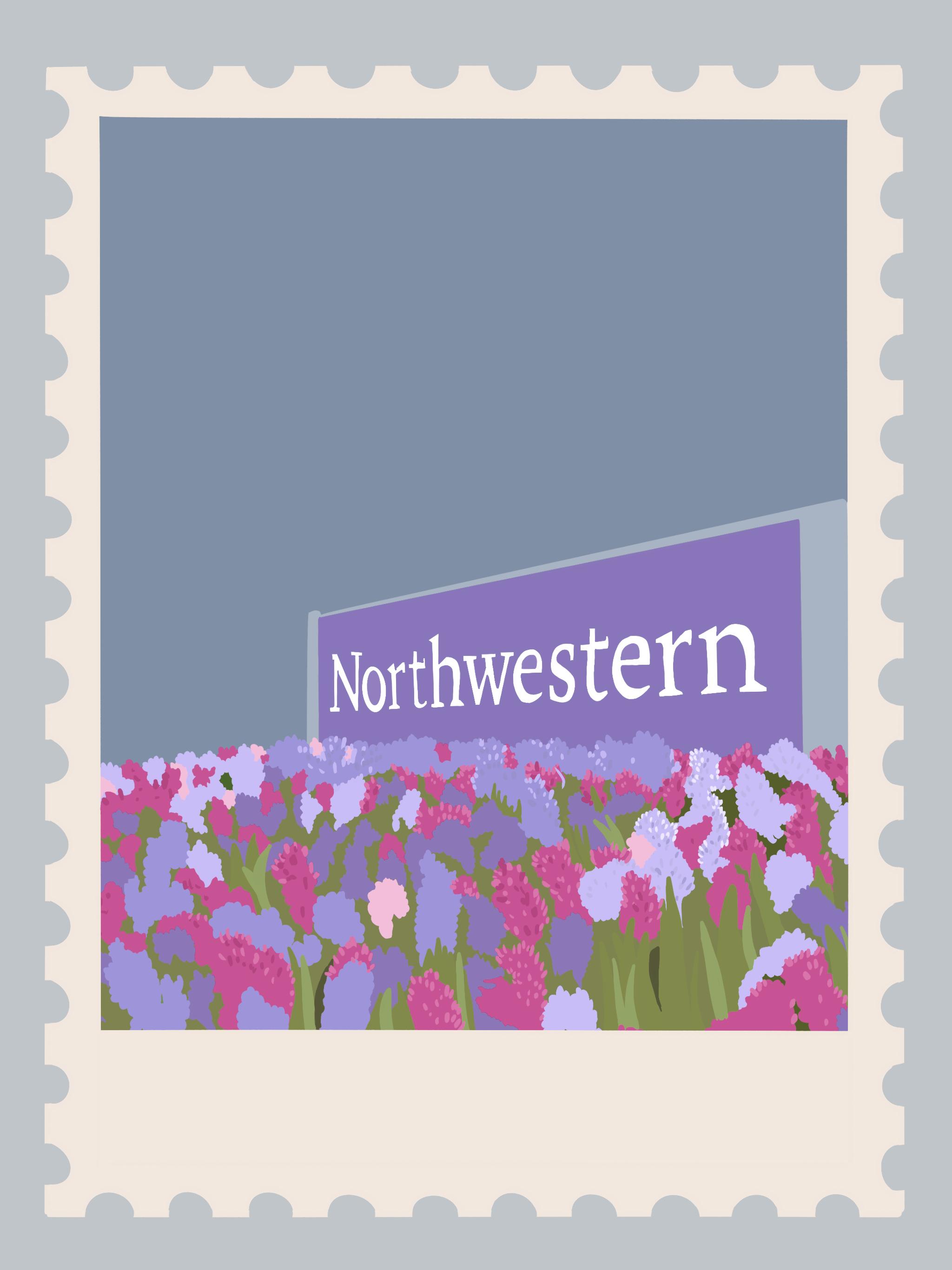
Pregame opens with a reminder to slow down and smell the flowers — literally — creating a map of the best blooms on and around campus. It also encourages sustainability and reuse, offering a closer look into some of Evanston’s best second-hand stores.
Dance Floor profiles several student groups bringing new life to their organizations, even in the face of external pressure like funding cuts, lack of interest and location concerns. We also venture off campus, exploring how the Evanston community is reacting to the closure of two public schools and the opening of a new one.
In Spotlight, we talk to young politicians rewriting the electoral playbook — changing both how campaigns run and their underlying goals. Students discuss social media addiction and the new ways they view their online lives. We also examine whether Northwestern’s party scene really is dead — and what might be growing in its place.
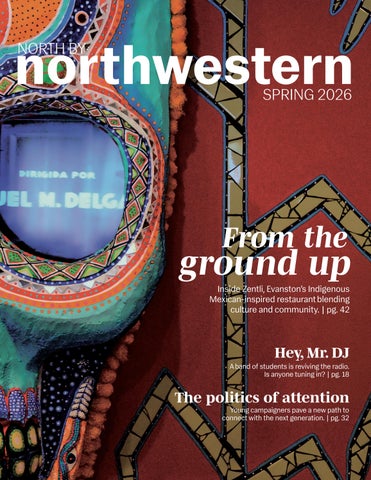
Our cover story, “People of the corn,” exemplifies this message of rebirth: We talk to Alfonso “Piloto” Nieves Ruiz, a local restaurateur and artist who, in the face of repeated hardship, created local restaurant Zentli as both a manifestation of his American Dream and a celebration of his Mexican roots. Throughout the piece — and his restaurant — Nieves reminds us we are all connected, reborn in the spirits of our children and our communities.
Truly, this magazine would be nothing without the amazing community behind it. For eight weeks, NorthbyNorthwestern’s talented team of writers, designers and editors poured their time, energy and creativity into cultivating these stories until they bloomed onto the page. I want to give a special thanks to my two Assistant Managing Editors, Laura Horne and Emma Richman, and my Creative Directors, Leila Dhawan and Ilse von Heimburg, for continuously going the extra mile for this magazine.
As you read this issue, I encourage you to slow down, take a breath and embrace the new life budding around you.
Sincerely,

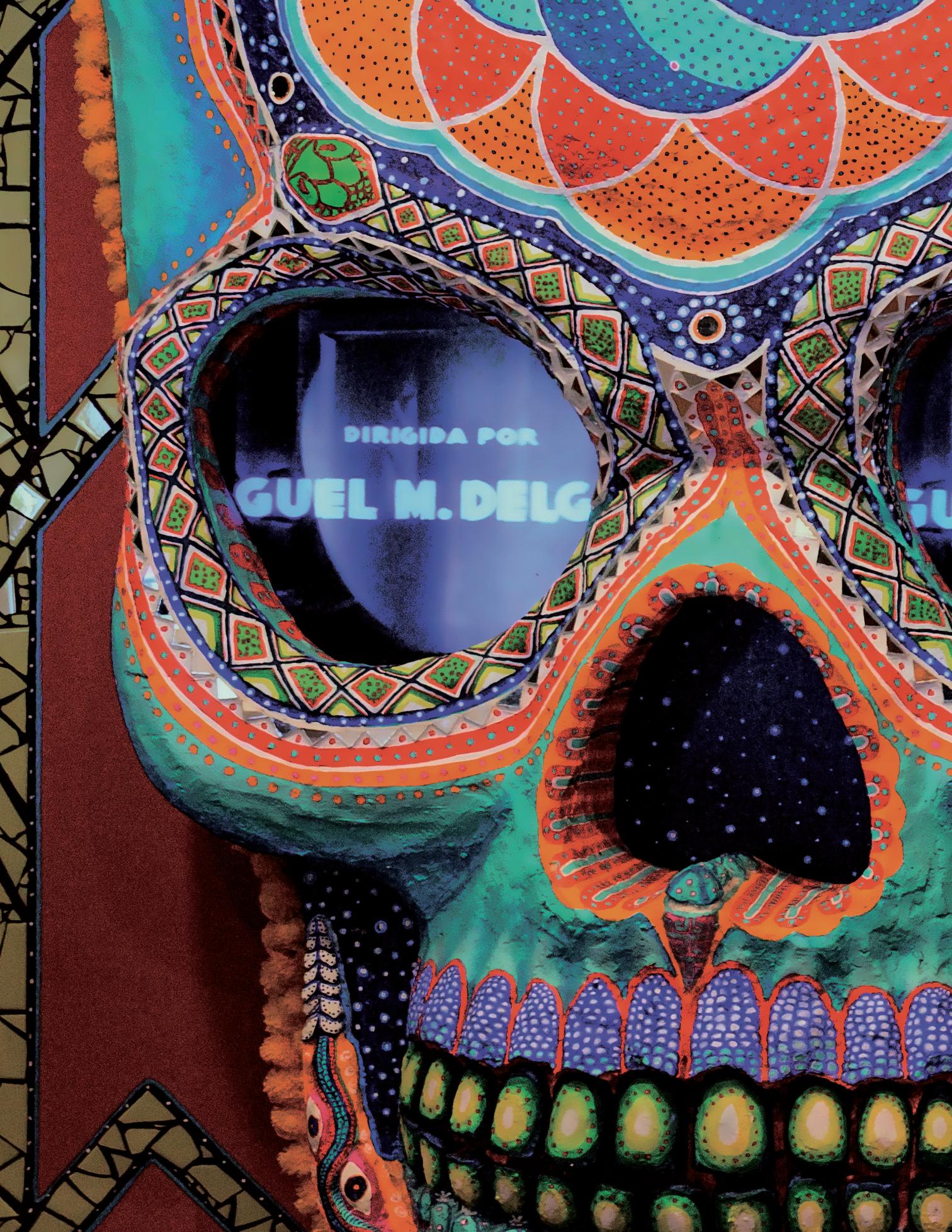
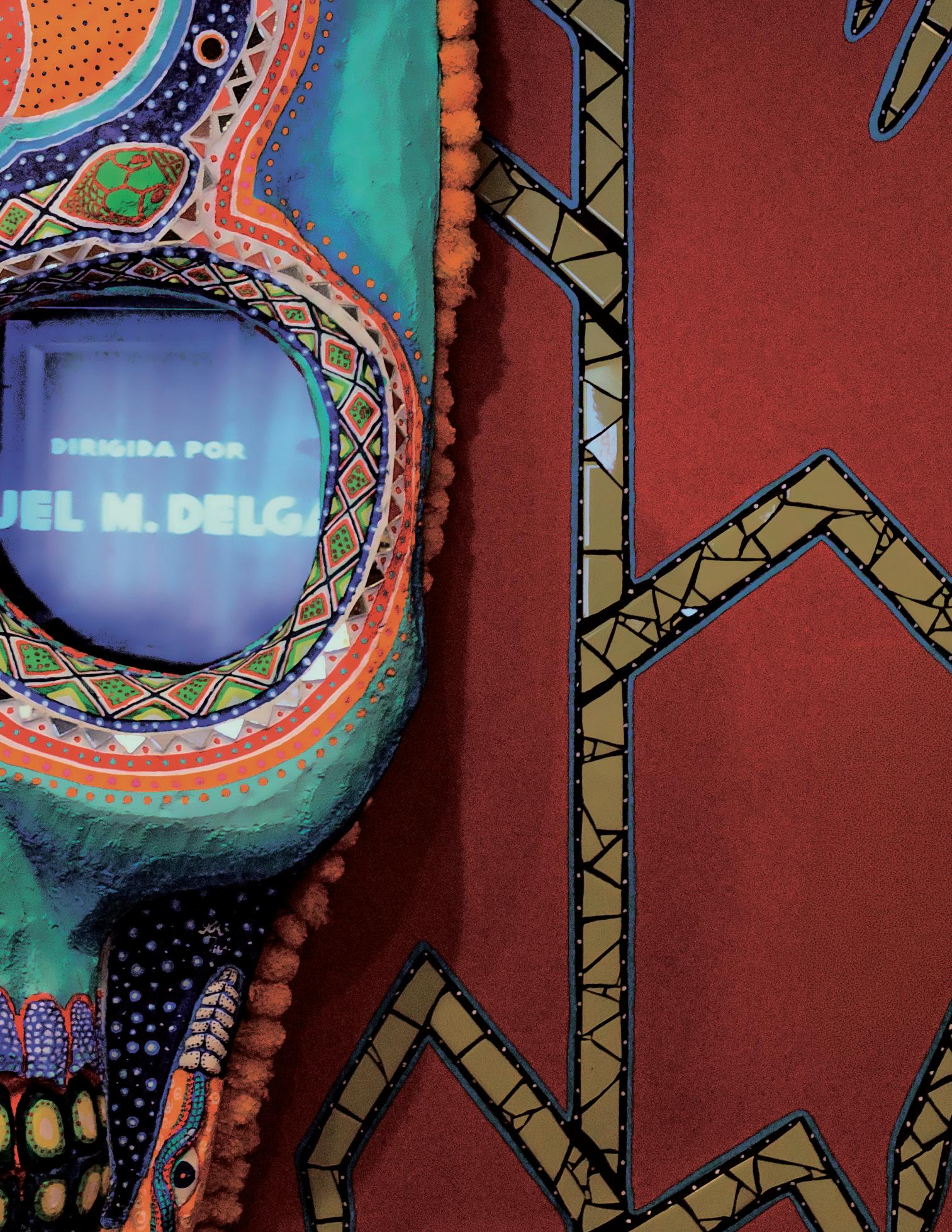
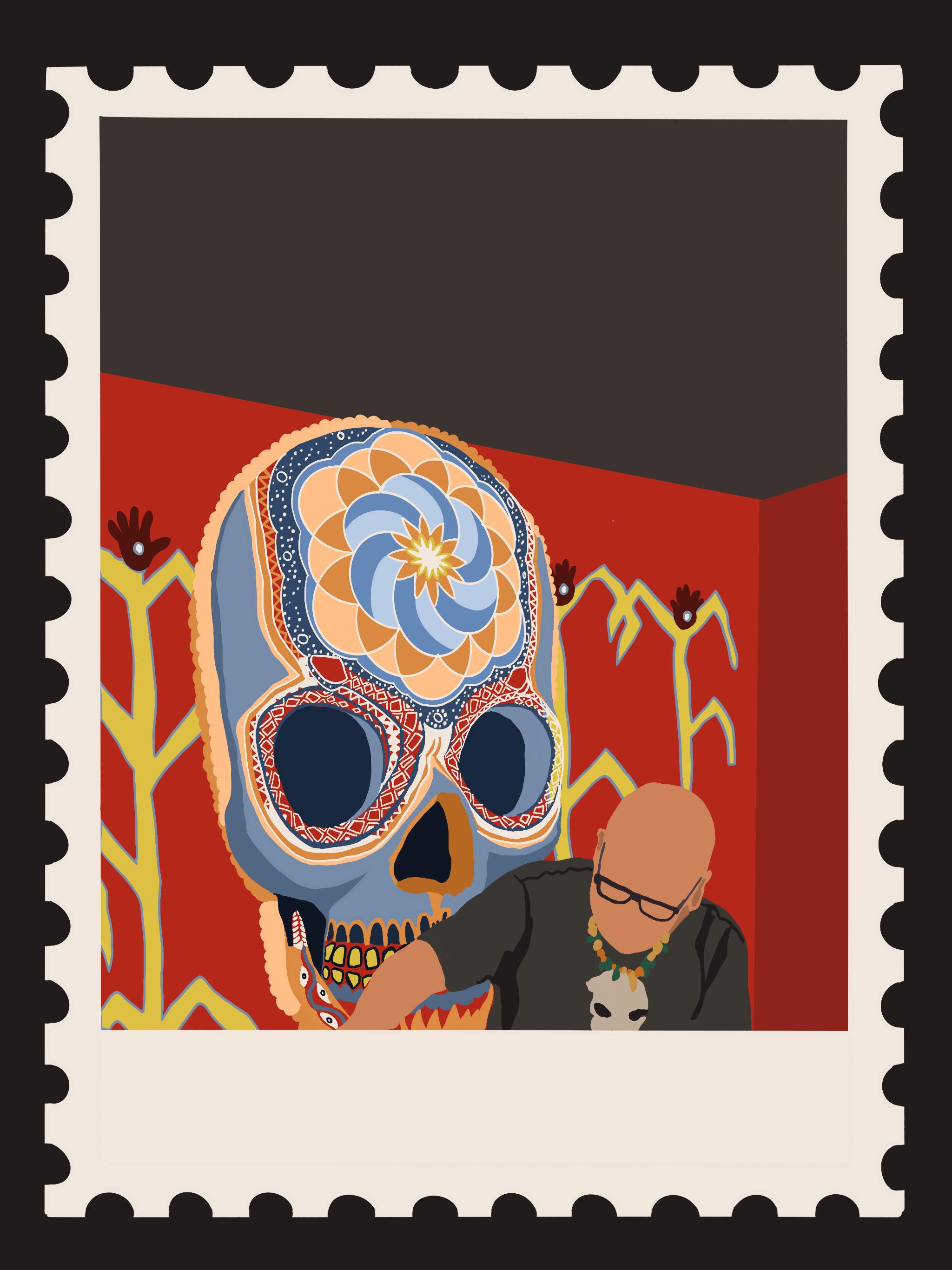
As I walked into Zentli to take photos for the cover story, I was embraced by motifs of family, growth and Mexican heritage. A mural takes up an entire wall of the restaurant: a painting of the owner’s mother and son, dandelion fluff and humming birds floating in the air. As I see it, the mural represents generational ties; wisdom is passed down through the old and finds new life in the young. I might be slightly biased, but it seemed like a perfect representation of our concept for this quarter’s issue: rebirth. Like corn stalks, this magazine undergoes a seasonal life cycle — it grows, it fruits, and each quarter we figure out how to come back a little taller.
Zentli reminded me of my roots in expressing myself through art. As a designer, you are tasked with telling someone else’s story through your own eyes. Bringing “People of the corn” to life challenged me to portray another artist in a way that is both meaningful and true. It forced me to slow down, digest and really understand someone else’s craft.
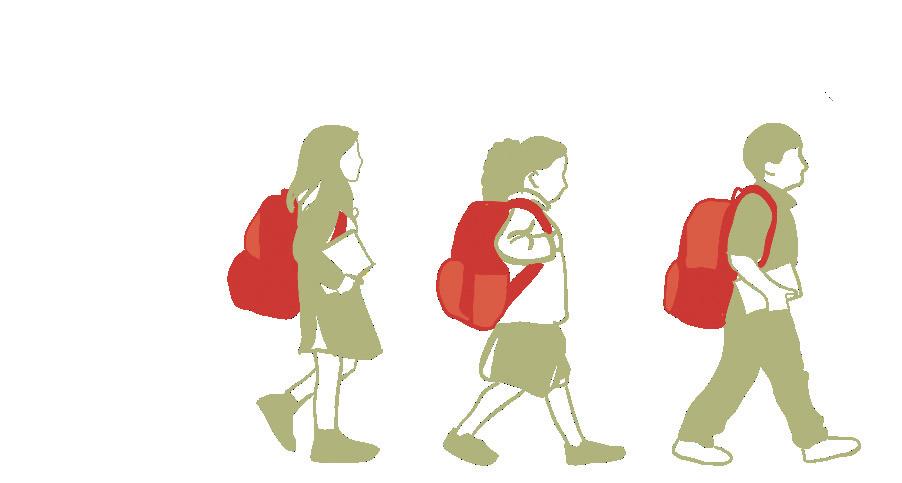
This quarter, rebirth shone through our soft, earthy color palette. We take the concept literally in “Campus in bloom,” as photos of budding flowers decorate the page. In “A district divided,” the drawings follow children moving from one school to the next, illustrating the beginnings of their new educational journeys. Our cover story shows how some of the most creative works flourish from endings. Framed in a lively red, the artworks take on a life of their own.
This magazine would not have been possible without my other half, Ilse von Heimberg. Thank you for your positivity and for making me a better designer and leader. As always, a huge thank you to Gabby Shell, Laura Horne and Emma Richman, as well as Assistant Creative Director Maanya Kejriwal. Finally, thank you to the writers, editors and designers who make this magazine happen every quarter. I’ve loved growing with you this quarter.
As Northwestern’s school year comes to a close, we’re looking toward the future and all the rebirths we’ve yet to experience. We can’t wait for you to enjoy this issue.
Sincerely,
Campus in bloom
8 Dog with a blog 10
The swipe economy 11 Thanks, it’s thrifted
WRITTEN & PHOTOS BY ILA DOHRMANN // DESIGNED BY SYDNEY URBACH
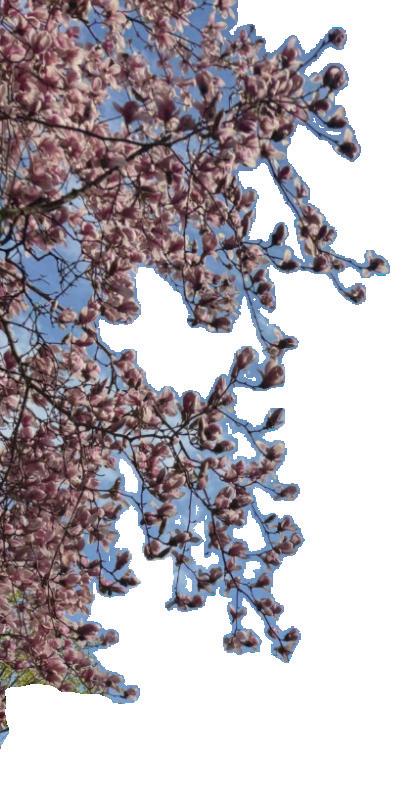
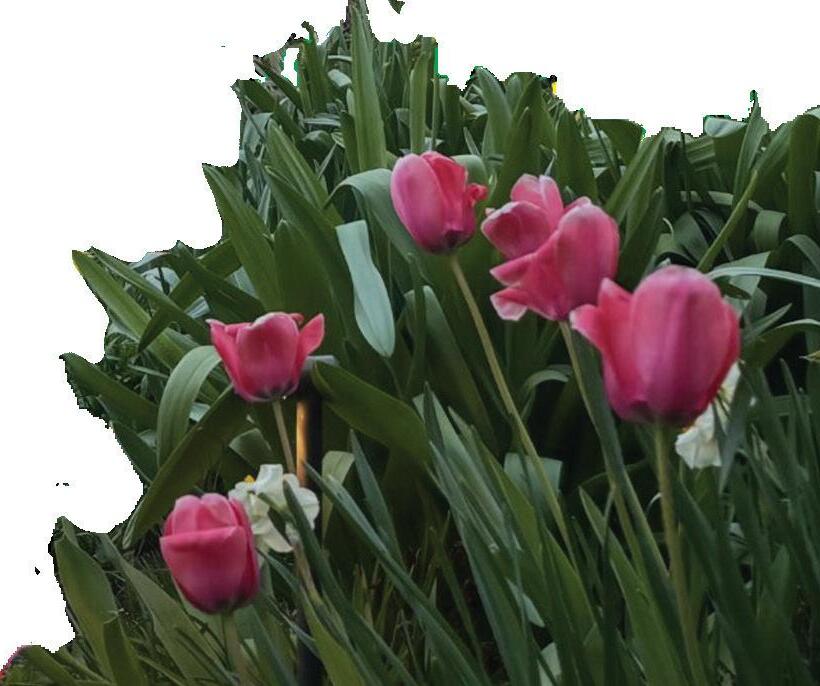
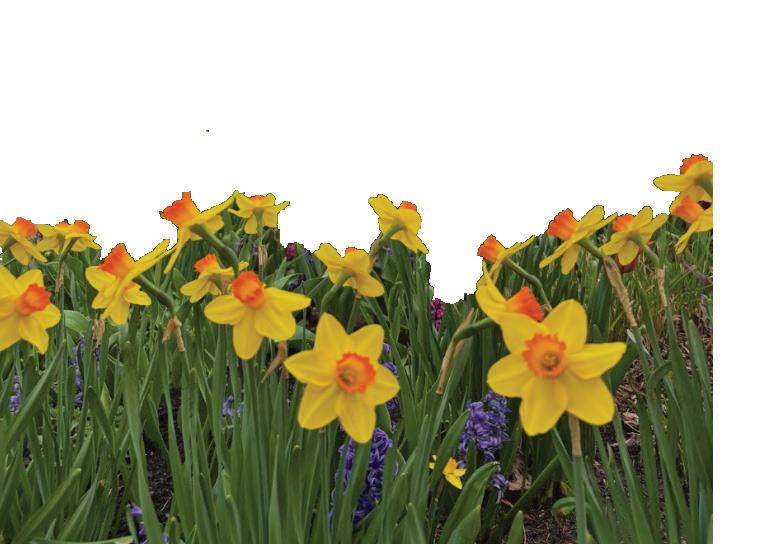
When the high-stress environment of Northwestern condenses life into a loop between your dorm and the library, the walk can feel suffocating. But now that spring has sprung, campus has transformed from the dreary gray of winter to a beautiful landscape bursting with color. Here’s where to find Northwestern’s best seasonal flowers.
Shakespeare Garden
Garden tulip Tulipagesneriana
Saucer magnolia Magnoliasoulangeana
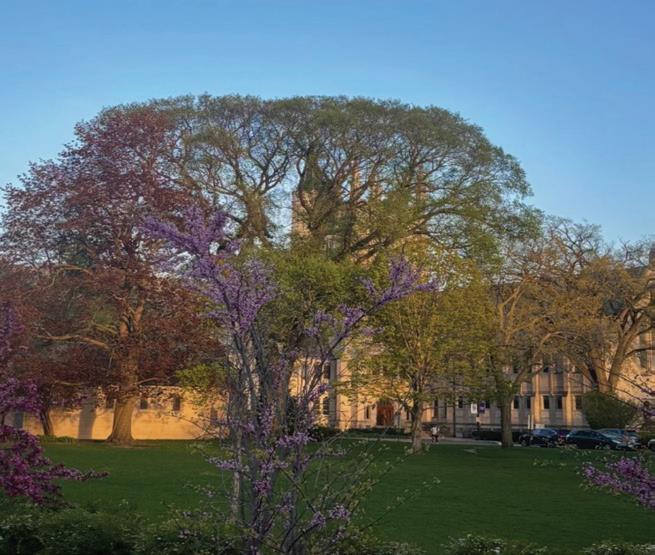



Eastern redbud Cerciscanadensis
1810 Chicago Ave.
Wild daffodil Narcissus pseudonarcissus
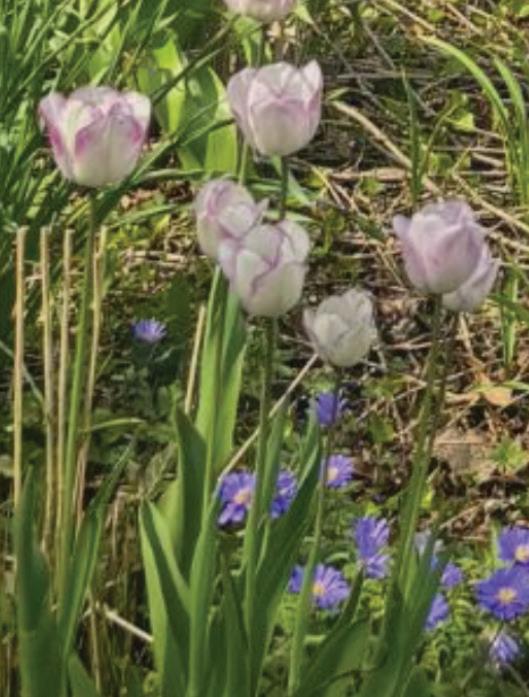
Saucer magnolia Magnoliasoulangeana
Wild daffodil Narcissuspseudonarcissus
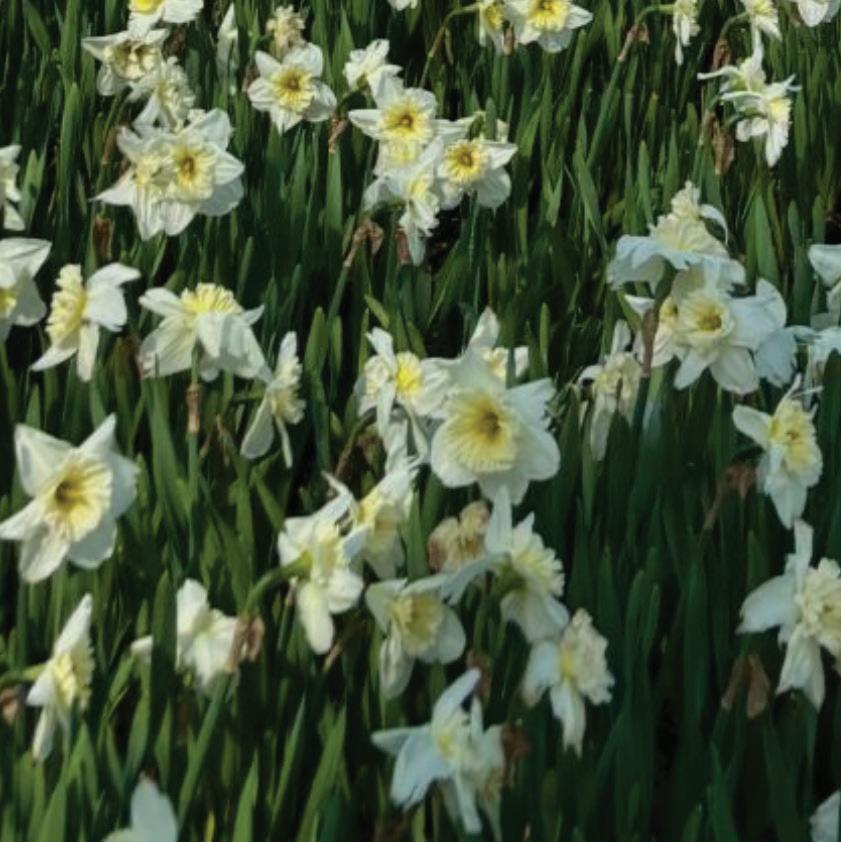
Elgin Road

Garden tulip Tulipagesneriana


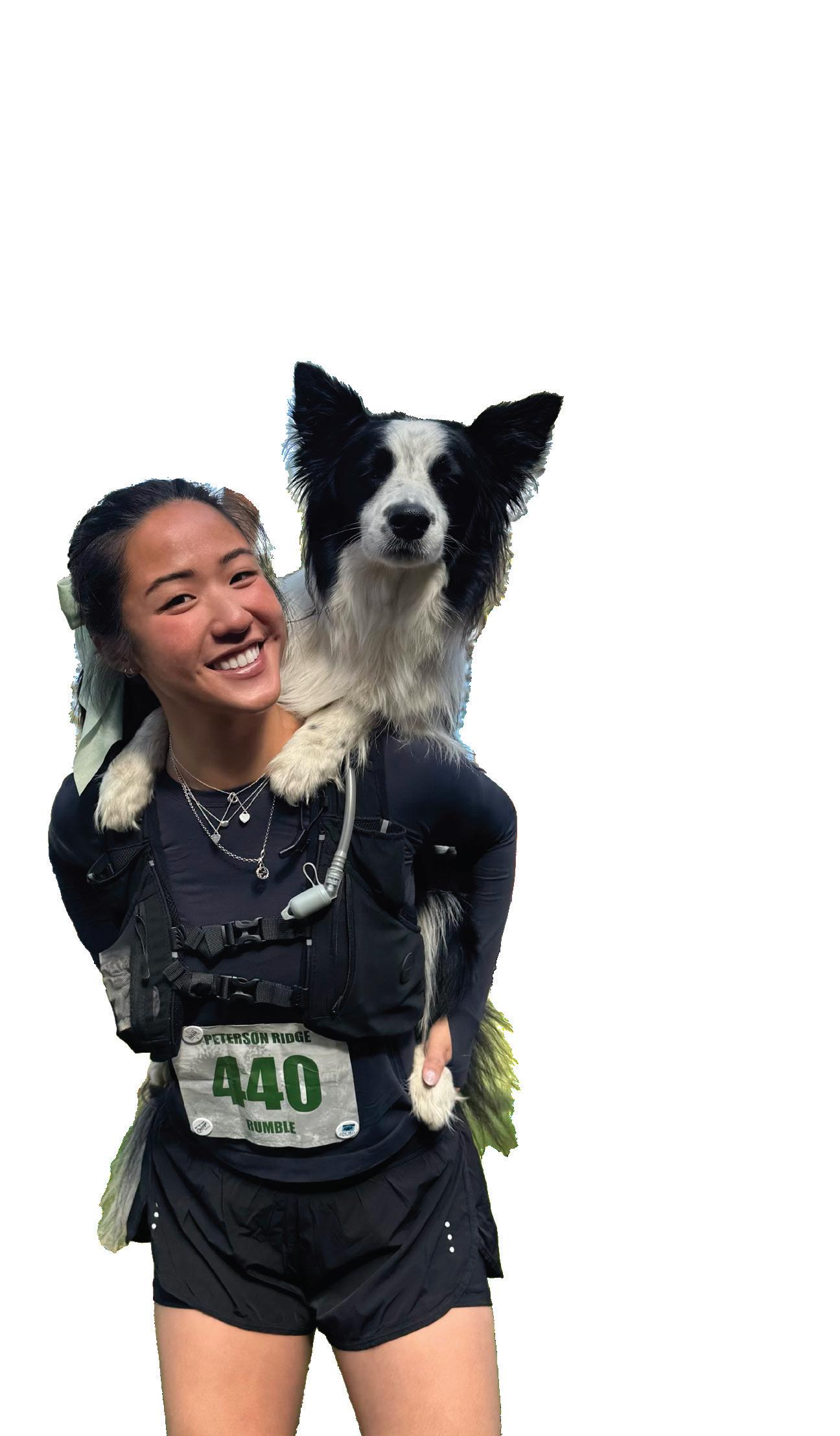
A pet and his owner train for a marathon — and go viral.
WRITTEN & DESIGNED BY OLIVIA TEETER
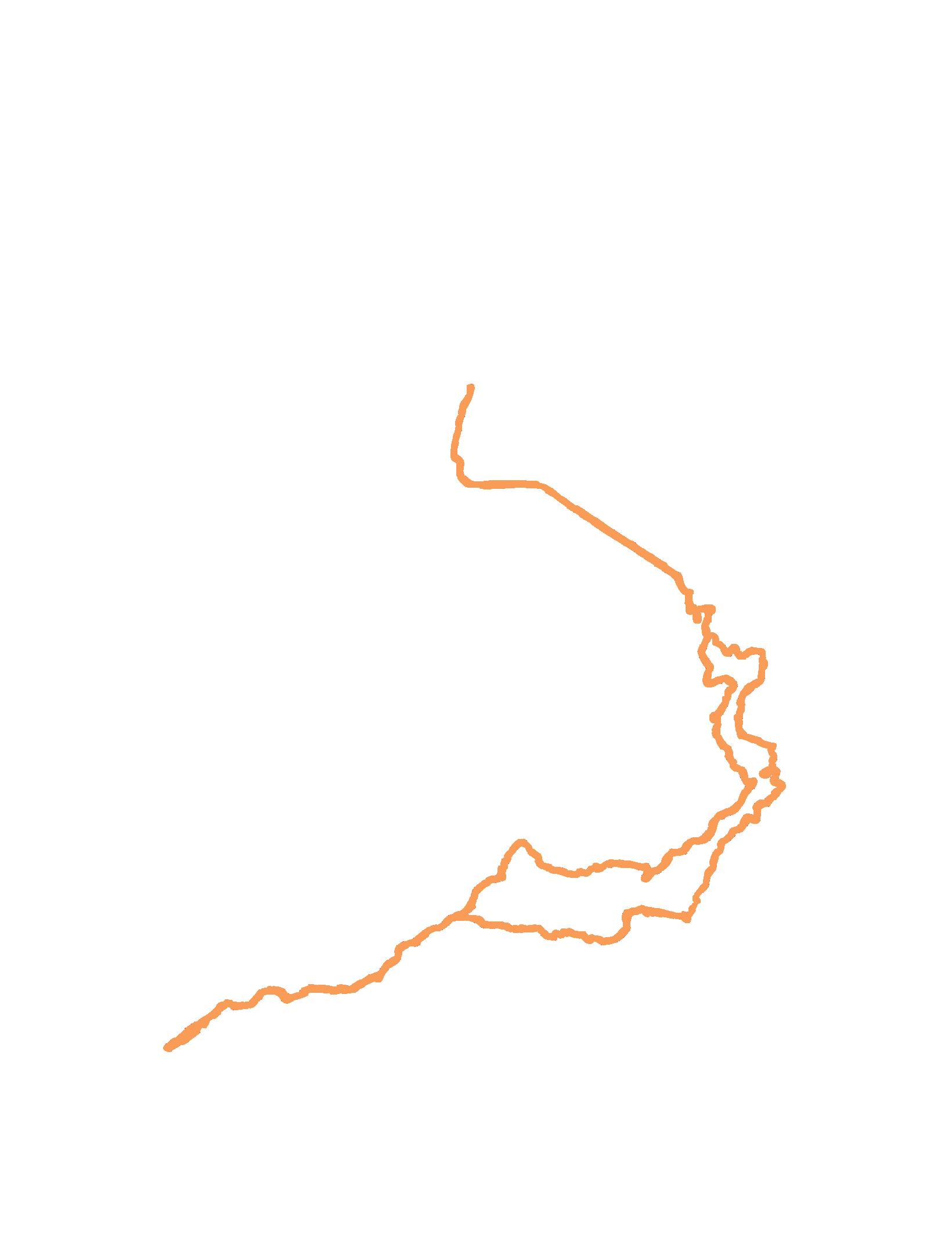
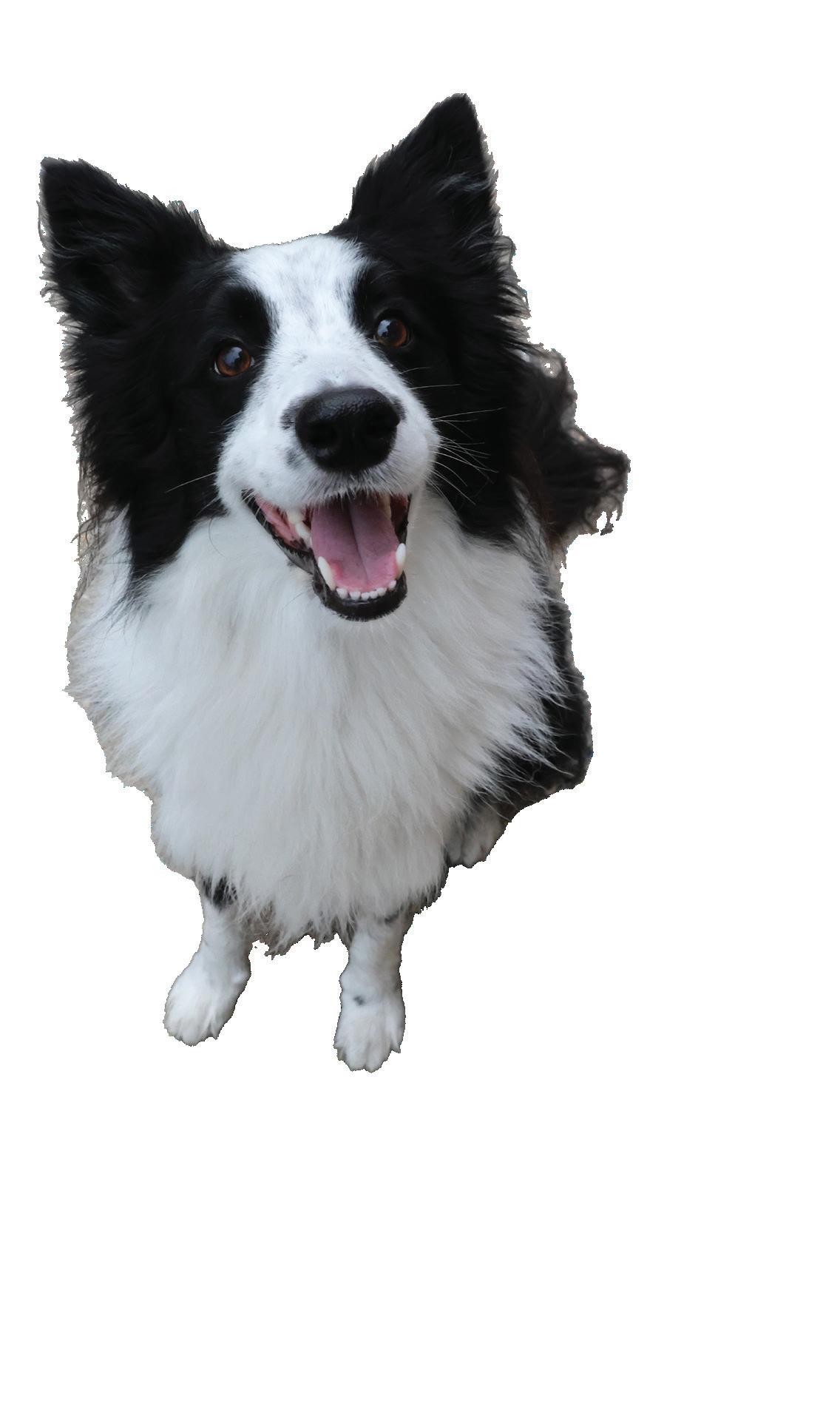
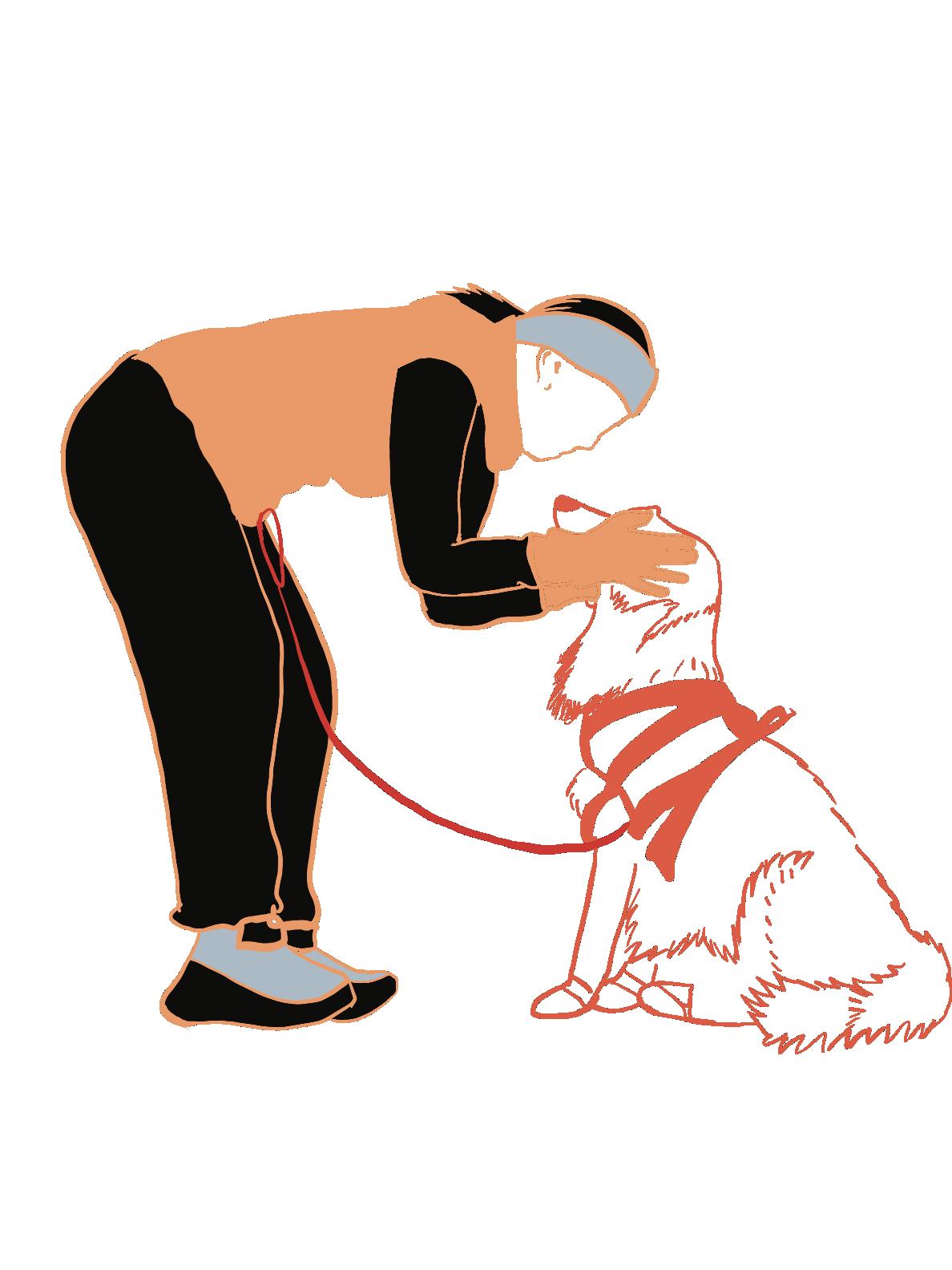
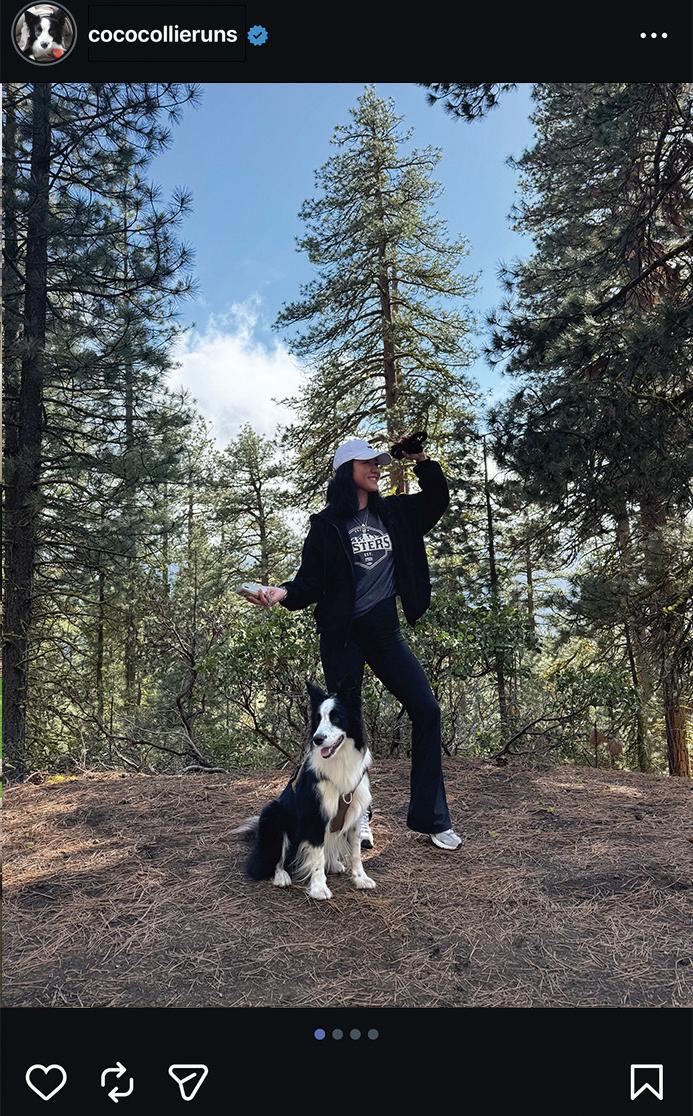
Marketing graduate student Erika Yang and her border collie Coco can be seen hitting the Evanston pavement on their daily runs. In April, Yang and Coco headed to the Peterson Ridge Rumble trail marathon in Oregon, a race only a handful of dogs have completed. Yang documented the pair’s journey from novices to marathon finishers on Instagram under the handle @cococollieruns. By the time race day arrived, the account had garnered over 20,000 followers and millions of views. North by Northwestern sat down to talk to Yang about training for the marathon and about how running changed her relationship with Coco.
Editor’s Note: This interview has been edited and condensed for clarity.
toward that on social media, then even better. But even if no one were watching, I would still do the same. It touches me a lot to think that not only did Coco run his first marathon, but I also ran my first marathon, and we did it together. I don’t know how many people can say that: My dog and I ran our first marathon together. I think that’s a pretty powerful thing. How has training with Coco changed your relationship?
When I started running with him, I immediately saw our bond strengthen. All of a sudden, he became attached to my hip. I feel like he can tell I got into the sport for him. On top of that, it has made us both really healthy and more in

think dogs can tell when someone has their best intentions in mind. I can tell he really trusts me, and I have to thank running for it.
How did the marathon go?
The experience was interesting, to say the least. I don’t think there are a lot of people who would run a trail marathon as their first marathon. There was a lot of terrain, including parts that were just climbing up rocks. We got lost, but luckily, we found our way back. So that was hurdle number one. Hurdle number two was that I twisted my ankle on one of the rocks, and I wasn’t able to run for a mile. Once I warmed my ankle up,


ignored the pain and got my adrenaline running, I was able to run the rest of it. By then, it was mile 22 or 23, and I was like, “I’ll be damned if I don’t cross that finish line. I will crawl to the finish line, because there’s no way I made it this far
What is your biggest takeaway from the experience?
Mentally, this race took so much out of me. There were many moments during the race where I thought, “I don’t know if I can do this.” Picture yourself in the middle of the woods, on a mountain, injured, slipping on rocks, traveling through dirt, getting lost. I literally felt like Bear Grylls. It took a lot of mental power to be like, “You’re OK, let’s get through this. You just need to run through it.” By the end of it, I thought, “If I can do this, I have no doubt I can get through a hell of a lot more.” What was the most fulfilling part of running a marathon with Coco?
Knowing that I had a running partner the entire time. Having a partner with me for all 26.2 miles was amazing. This was also a small enough race where we weren’t constantly surrounded by people. Most runners are probably with themselves in their own head — just running it. But I always had a companion, I had someone with me. Even when I got lost for four miles, Coco was there with me, and that made me a little bit less scared. It made me feel like, “I can do this, and I have to do this, and we’re going to do it together.”
That was a really powerful thing in itself. What is your favorite memory from running with Coco?
It was the peak of Chicago winter. There were at least three inches of snow on the ground, and I was obviously very careful. I was wearing all the proper gear. I had spikes on my shoes. However, the winter can still get to you. I sprained my ankle, and Coco immediately recognized something happened. I was sitting there in the snow, holding my ankle, crying in pain, and he sat down right next to me, his back opposite mine, meaning he was literally watching out for my back. He was watching out for me. He was comforting me. That was the first time I’ve ever seen him be so calm and vigilant. It touched my heart because this guy is actually looking out for me, he actually cares about me. He’s not just a dog, he actually has his own thoughts. He actually perceives me as a partner, as someone to look out for.





90 posts 9.4m views

Now that you’ve accomplished a marathon, what’s next?
I don’t really know, actually. That’s the most honest answer. For sure, I will want to do more races with Coco. They might be shorter distances. There are not a lot of longer distance races that are possible for dogs, unless they’re on a trail, and I don’t see myself doing a race unless Coco could do it with me. Peterson Ridge Rumble technically has a 40-mile run, and that would definitely be crazy. I don’t necessarily see myself doing that. Maybe ask me in a couple of years, if I’m crazy enough or if enough people have convinced me. But I’m open to the idea of doing something even more extraordinary with Coco.
WRITTEN
CIVY FRATER // DESIGNED BY LILLIAN ALI & LAURA HORNE
oming to campus, freshmen quickly adjust from home-cooked meals to mass-produced dining hall food.
All first-year and the majority of second-year students must live on campus and purchase the Open Access dining plan, comprising unlimited swipes, five meal exchanges per week and 125 dining dollars per quarter. For nearly $12,000 per year, this is the priciest of the University’s meal plan options — leaving students questioning its true value.
McCormick first-year Tolu Adeyefa wishes there were more weekly meal exchanges. While she frequents late-night eateries like Fran’s and Lisa’s, she’s less consistent with her dining hall swipes — largely because of the meal quality.
In fact, she only visits the dining hall once or twice daily. Because meal swipes make up the bulk of the Open Access plan’s value, Adeyefa is skeptical whether the steep price is worth it.

that I probably only go to the dining halls about 14 times a week — at the most.”
Still, for many students, the Open Access plan has its merits. McCormick third-year Marti Martin opted back into the standard plan for their junior year because its flexibility and convenience made it worth the added cost. But next year, Martin plans to switch to the Wildcat 14 plan, which comes with nine dining hall swipes and five meal exchanges weekly, along with 225 dining dollars.
“There are a lot of times where there’s just nothing really appealing to me at
McCormick third-year Amelia Hasting was automatically enrolled in the Open Access meal plan when she returned from studying abroad in the fall. Because her dorm doesn’t offer any kitchens, Hasting says it has been useful. Still, she’s hoping to move off campus for her final year and have more control over when and what she eats — and how much she spends on food.
“I think the convenience of [the Open Access plan] is worth a lot,” Hasting says. “I just don’t think I enjoy the food enough to make it worth it necessarily.”

Freshmen and sophomores living on campus are required to purchase the Open Access meal plan. For $2,940 per quarter, students get 125 dining dollars and three guest meals each quarter, along with unlimited swipes in the dining hall and five meal exchanges per week. That totals out to around $284 per week, not including finals week. I spent a week tracking my own dining plan habits to see if I’m getting enough bang for my buck.
Tuesday

WRITTEN BY PREGAME EDITORS // DESIGNED BY ILSE VON HEIMBURG // PHOTOS BY LEILA DHAWAN
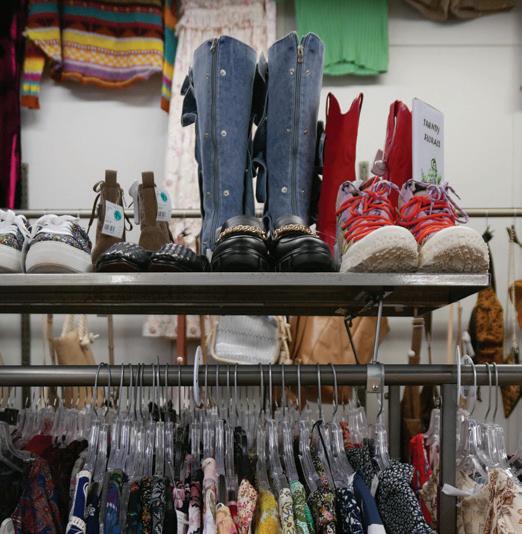
n a world of mass production and microtrends, many in Gen Z are turning to vintage shopping for unique pieces that can’t be found at the mall. Still, even in a city with ample options, a good thrift can be hard to find. Pregame explored Evanston’s vintage stores to see which are worth digging through.
Established:2024
Averageprice range:$25-$100 Bestfor:Eclectic findsAddress:522 DavisSt.
This colorful time capsule carries all kinds of pieces, primarily from less mainstream brands. Heyday Vintage Collective offers plenty of denim, t-shirts and vintage Northwestern merchandise organized by type and color. The store sells more than clothing: shelves stocked with eclectic trinkets ranging from Russian nesting dolls to ceramic bunnies to vintage posters, display tables brimming with studded belts, chunky jewelry and unique bags. Simple tops average around $30; given the pricing and selection, Heyday is more a curated vintage experience than traditional thrift store.
Established:1990s
Averageprice range:$5-$50 Bestfor:Unique antiquesAddress:605 DempsterSt.
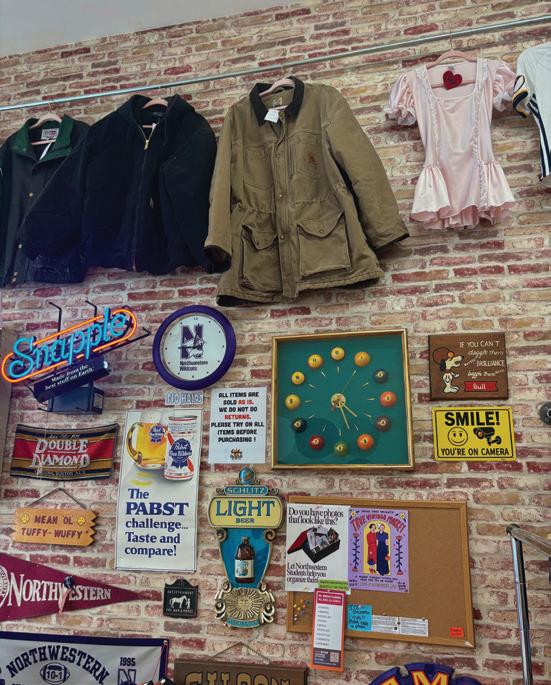
A national used clothing store chain, Crossroads Trading’s Evanston location is a middle ground between thrift store chaos and boutique selection. Shoppers can find trend-forward pieces like gently worn Levi’s, statement jackets and name brand staples, alongside the usual thrift fare. Because of the shop’s buy-sell-trade model, the selection is curated and first-time thrifter friendly. Crossroads is for shoppers who value convenience and trendiness over great deals or rare finds.
AverageEstablished:1991 price Bestrange:$5-$50 thriftingfor:NoviceShermanAddress:1730 Ave.
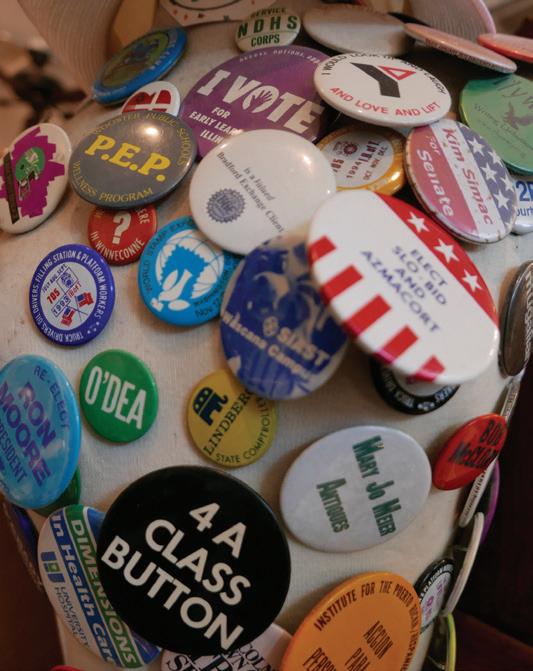
Whether you’re looking for something vintage to spruce up your modern lifestyle or a gift for your antique-loving friend, Secret Treasures Antiques & Collectibles has something for everyone. The nearly 30-year-old vintage store sells unique houseware, vintage jewelry and collectible items, like postcards and political buttons. Secret Treasures has an entire room dedicated to fine china, with endless varieties of carefully stacked plates, teacups, saucers and teapots.

Amaranth Books sits tucked in a corner in downtown Evanston — a locally owned store specializing in rare and used books. On top of the impressive collection of aged, leatherbound tomes, Amaranth offers a wide selection for all kinds of readers, from classics to poetry to cookbooks to young adult novels. The store also has a sizable collection of CDs. Most prices aren’t marked, but staff members are available for price checks; as a rule, the more heavily used the book, the lower the tag.
Established:1991 Averageprice Bestrange:$5-$20 readsfor:Cheap
Address:828 DavisSt.
ILLUSTRATION BY MAANYA KEJRIWAL
13 In their element
16 Goin’ to the chapel
20
Kickin’ it in Evanston
18 Hey, Mr. DJ
23 A district divided
Northwestern students face weather, geography and financial barriers to outdoor recreation, but club leaders say the payoff keeps people coming back.
WRITTEN BY HEIDI SCHMID // DESIGNED BY MAYA HAWKS
In Winter Quarter, McCormick thirdyear Nick Rose, former president of Northwestern’s Rock Climbing Club, tried to rally a group for an ice climbing trip. He pushed the idea out to the club’s over 500 members, but as the big weekend grew near, there were still no sign-ups. In the end, Rose went on the weekend getaway alone.
He understands that in the thick of midterms and a harsh Evanston winter, students may not exactly be jumping at the chance to spend hours ice climbing in freezing air.
“This school has a predisposition to just give in to the seasonal depression,” Rose says. But for him, opportunities like his weekend away are an antidote. “There are still so many cool ways to get outside if that’s what you like to do.”
Across Northwestern, bad weather is not the only obstacle students face when deciding whether to commit to outdoor activities: The school’s urban location and high academic workload,
along with the steep costs that come with participating and competing can be additional barriers. Still, these outdoor clubs are central to many students’ college experiences, providing an opportunity for community, stress relief and exercise.
In high school, Weinberg fourthyear Jenna Krinsky knew she wanted the outdoors to be part of her college experience; she skewed her application list toward schools in the Northeast, where outdoor clubs are plentiful. But when she committed to Northwestern — with its flat terrain and scarce hiking opportunities — Krinsky had to get creative. Ultimately, she joined the Northwestern Sailing Team and even became commodore, the club’s highest ranking official.
But for those like Rose, who are not ready to part with more mountain-based activities — like outdoor climbing, skiing and ice climbing — getting properly outdoors can require hours of travel.
“You almost always need a car,” Rose says. “If you want to do something really fun outside, then realistically, it’s a full weekend.”
That time commitment is a barrier in itself. Between homework, extracurriculars and recruiting cycles, many students are hesitant to give up an entire weekend for a trip. Additionally, Rose says organizing longer trips through the University is difficult with insurance restrictions on van travel, so he often drives his own car instead — an option not all students have.
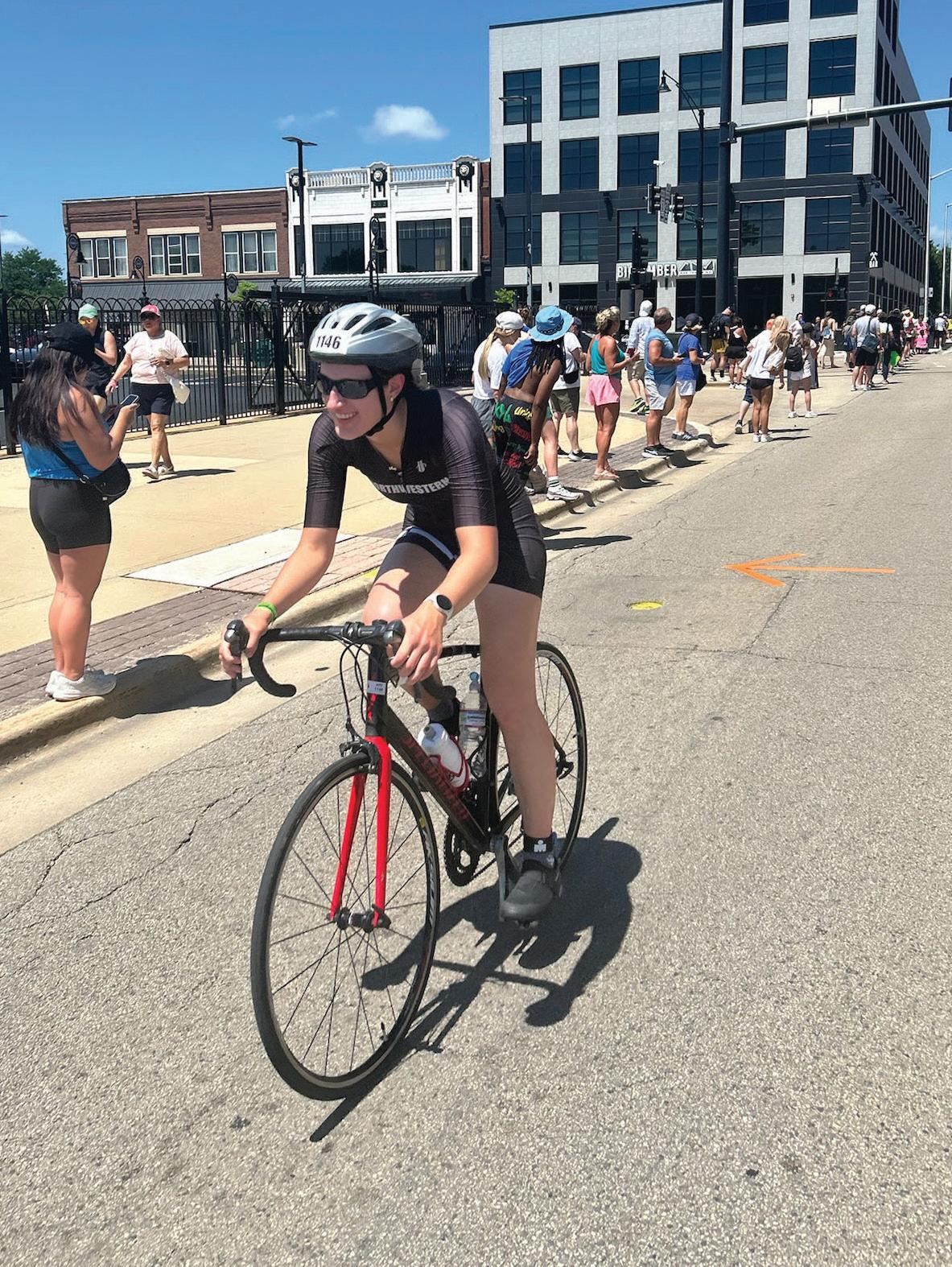
Some clubs try to avoid this problem by offering the majority of their programming on campus. Weinberg fourth-year Sophia Jukovich, former president of Northwestern Triathlon Club, says the group has been able to lean on Northwestern facilities — pool lanes and a spin room at Henry Crown Sports Pavillion — to maintain a consistent weekly practice schedule. But school facilities are not always enough.
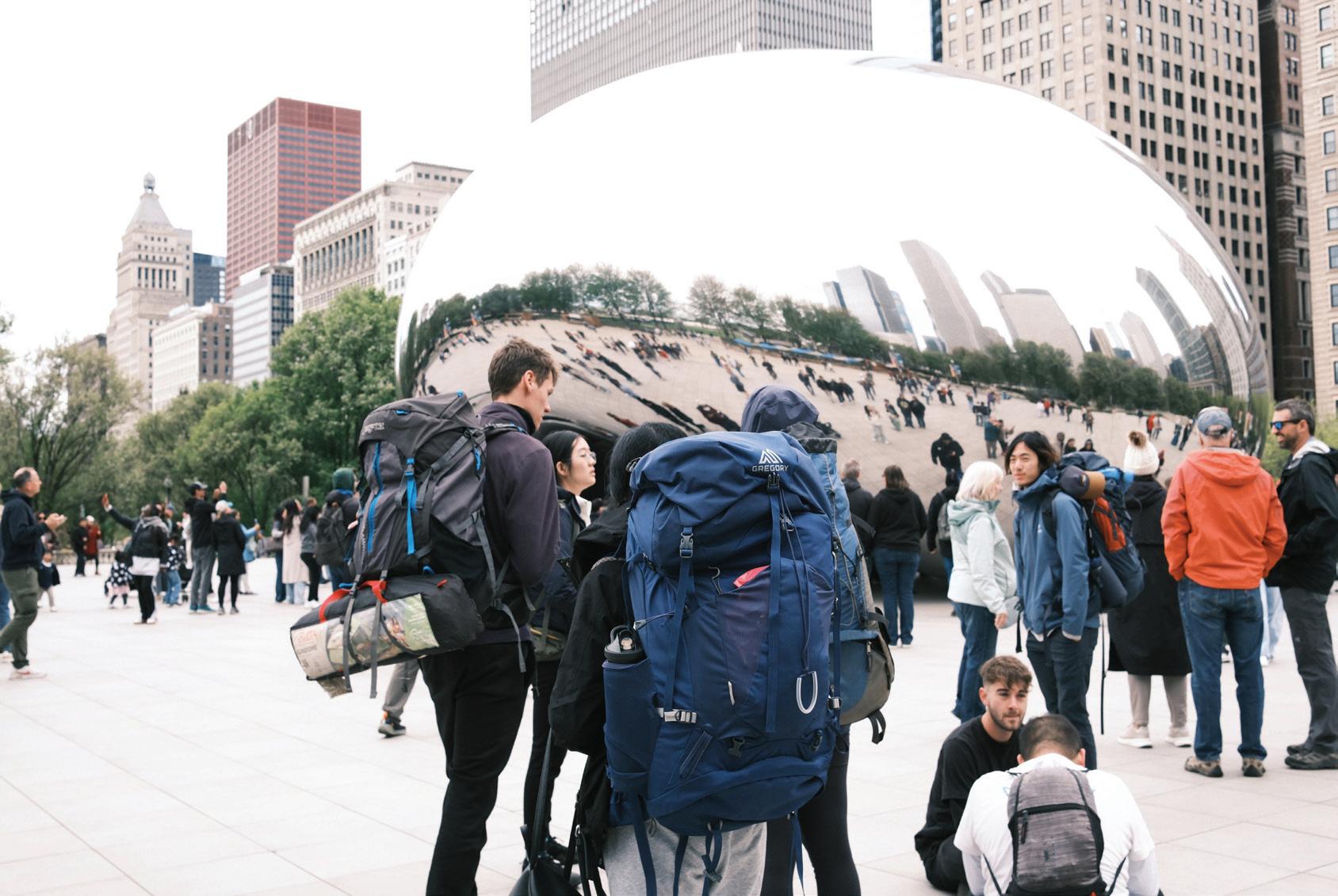
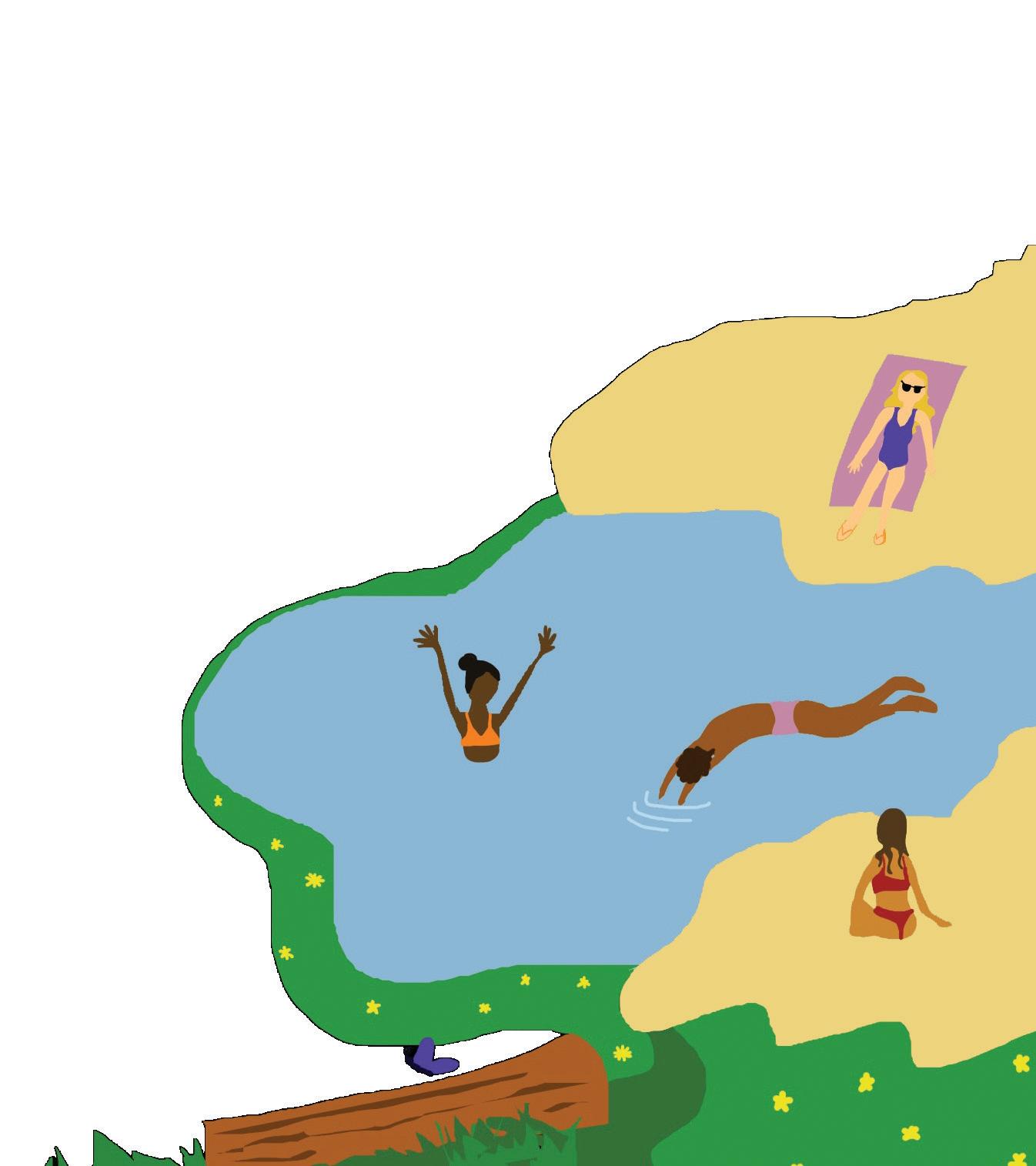
Open water swimming is a key component of triathlons, but Jukovich says the only viable outdoor swimming spot is an hour commute away: Ohio Street Beach in Streeterville, which has a dedicated protected lane in Lake Michigan. Even that is only available during the few months when the lake is warm enough to swim in.
“It gets pretty cold for the majority of the year,” Jukovich says. “It is definitely hard to properly prepare for a triathlon [at Northwestern], whereas a school in the South would have more availability.”
Even for clubs that overcome the logistical challenges of transportation and location, the financial cost of getting outdoors remains another major barrier. Rose says running cool activities outdoors on a budget requires a large group to make it cost efficient.
Indoor climbing is the rock climbing club’s most popular activity; unlike their longer outdoor trips, the indoor gym is only 30 minutes from campus. Still, the costs of these commutes can get expensive, especially on top of equipment costs.
For students like Rose, these obstacles not only eliminate opportunities to get outside but also raise the barrier to entry. Activities like ice climbing or surfing on Lake Michigan are still possible, but they require a significant commitment and tolerance for discomfort — meaning the overall student population seeking out these clubs is somewhat limited.
“There’s a vibrant outdoorsy community here that’s still always doing stuff,” Rose says. “But I think people kind of struggle to get into that. It’s a lot of the same people that do a lot of the same sports.”
Jukovich notes cost often deters students from joining. However, she’s noticed people often overestimate how much individual
members are responsible for covering. For example, Jukovich frequently has to reassure prospective members they do not need their own bike or wetsuit.
“We are like, ‘You absolutely do not need to go out and buy a $2,000 bike. We have that for you,’” she says.
“We really advertise to everyone.”

Jenna Krinsky Weinberg fourth-year
Instead, the club provides bikes and gear through grants, fundraisers and sponsorships. This past year, the club covered race registration fees for two of its three seasonal races, which typically cost between $200 and $500 per person.
The sailing team faces a similar issue, and the team encourages members to fill out a Student Activities Assistance Fund form to cover gear costs. Much of their equipment has been passed down over the years or was sourced secondhand.
Not all outdoors clubs require such equipment and institutional organization, though. RUNU is a non-school-affiliated run club founded by McCormick fourthyear Nick Rosenstadt as an alternative to the more intensive clubs on campus.
“There wasn’t really something for students to be outside and run together,” says Rosenstadt. “There’s a club track [team], but I’ve heard from some students that it’s pretty intense. ... We want to just be a more accessible run club, so we run at a nice 10-minute pace that we think is pretty attainable for most people.”
The group emphasizes inclusivity and fun, and leaders experiment with ways to bring in new members. On Cinco de Mayo, for example, they hosted a special 3-mile run ending with margaritas and burritos.
While sailing may require more technical skills than running, Krinsky still markets the club as beginner friendly.
“We just look for people who we think have a desire to really get out there and learn, and even if it’s tough, go to practice, learn how to sail and be a good addition to the team,” Krinsky says. “We really advertise to everyone.”
Rose says it sometimes takes a little bit of “FOMO,” or fear of missing out, to
improve participation. The club’s social media helps.
“There’s a little bit of a lack of initiative that people take, but then people see the pictures and videos that we come back with, and then everyone wants to go,” Rose says.
This past year, after hosting events and slowly gaining traction, the rock climbing club drew over 600 people to practices, formed a 30-person competition team and sent four people to nationals.
Despite the hurdles, these clubs become tight-knit groups. Jukovich, who came to Northwestern from a figure skating background with no experience in swimming, biking or running, found the same sense of community in the triathlon club that she recalled from playing sports growing up.
“I joined because I was looking for a community of people that I could really work out with while also being social,” she says. “The triathlon club just made that transition into a new sport so easy because of the people.”
As a senior, Rosenstadt says the future of RUNU depends on whether an underclassmen will take over leadership next year. He hopes, however, that the club will continue even if there are only four or five people who come to run, talk and debrief each week.
“It can get pretty stressful here,” Rosenstadt says. “Just being able to go for a jog with some people, even people you’re not that close with, makes every run worth it.”
“I joined because I was looking for a community of people that I could really work out with while also being social.”

Sophia Jukovich Weinberg fourth-year
Students rally together to keep their choir alive following budget cuts.
WRITTEN BY HELEN RYAN // DESIGNED BY TALIA BOREN
When Jorje Lara saw his phone blowing up in August with notifications from Northwestern’s Millar Choir group chat, he wasn’t expecting bad news. The second-year Communication student was looking forward to returning to school the following month, ready for another year of singing in the ensemble. But instead of excited banter about the upcoming quarter, he was met with a crushing message: The choir had lost all funding.
On Aug. 14, 2025, all Millar Choir members received an email stating Northwestern’s Division of Student Affairs had cut the choir as a result of the Trump administration’s $790 million federal funding freeze.
“Hearing it wouldn’t really be an official thing anymore was shocking,” Lara says.
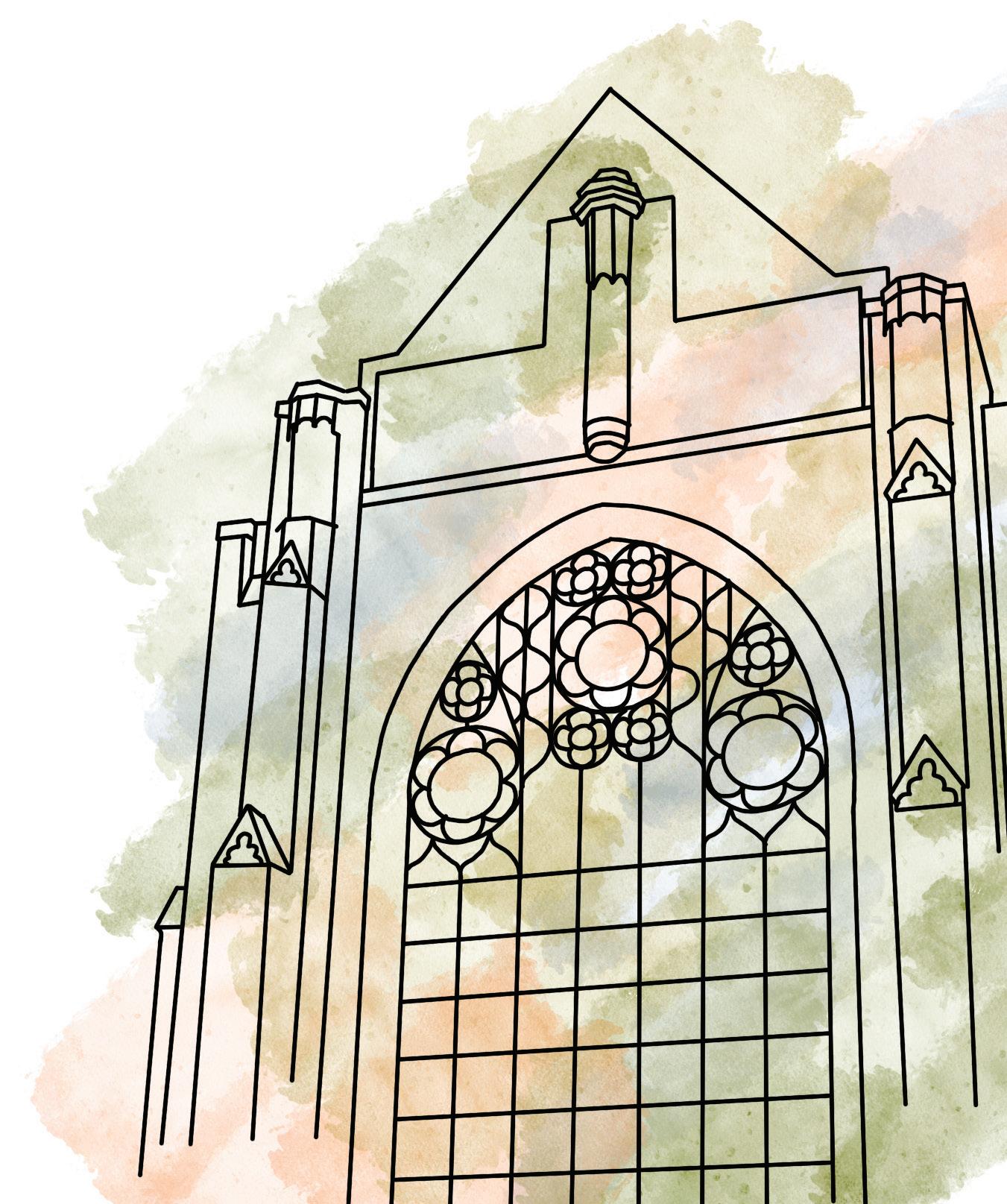
With just one email, members’ Northwestern experience had been fundamentally changed. Overnight, the choir’s 60 years of performing in the Alice Millar Chapel was seemingly over. But as messages of surprise and outrage flooded into the group chat, one thing became clear: The choir would not quit. Left without funding, an
accompanist, official faculty and new members, the students vowed to keep the group alive.
They weren’t alone — Stephen Alltop, who has conducted the Millar Choir for the past 30 years, stayed despite the group’s loss of official status. Knowing he wouldn’t be compensated as a faculty member, he continued to practice with them and put on concerts.
Students, faculty and alumni wrote letters to the administration in response to the decision. They referenced the choir’s history and extensive work in the Evanston community, voicing their love for the group and concern for what its end would mean for Northwestern.
“I was just so moved hearing that everyone else felt how important the chapel choir was, how important that it is to all of us — not only [those who] participate in it, but also the people who come to our concerts and the churches that we interact with,” Chemistry graduate student Makayla Baxter says.
Upon hearing of the discontinuation, Baxter went home and wrote a petition demanding that Northwestern reconsider its decision and reinstate the choir. It received 300 signatures.

Despite losing funding and formal recognition, Millar Choir members continued to rehearse and perform.
While the choir waited for an official answer from the University, students continued to sing together in an unofficial capacity throughout the fall. Each time they rehearsed or performed, they knew it could be their last. Still, they remained committed to the choir.
“It’s a testament to how much people value the ensemble, because they weren’t getting credit, there was no formal recognition of their participation,” says Bonnie Stewart, Music Education graduate student and assistant conductor for the choir. “Everybody just loves the community so much and loves the music that we do, so it was worth it to just continue to devote our time to that.”
The students’ hard work soon paid off: In January, interim President Henry Bienen announced the choir would be reinstated after an anonymous donor gave money specifically funding the Millar Choir. As a result, the choir regained its official status and will now be overseen and supported by the Bienen School of Music. Alltop says this academic division is the “best equipped to appreciate the importance of [the Millar Choir].”
Now, the choir is back to regularly scheduled programming, practicing
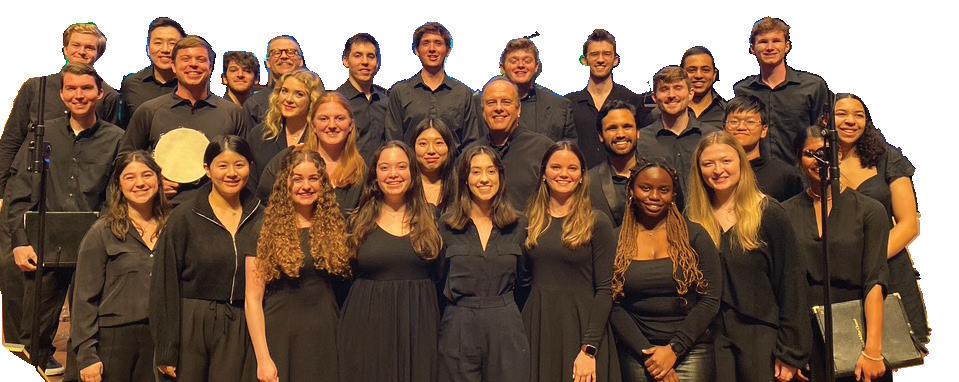

twice a week on Tuesdays and Thursdays. Choir members say having a space to unite outside the classroom and pursue a shared passion of singing is meaningful.
“It’s just a great community of singers who want to sing with other people and who want to work toward being the best musicians they can be,” Lara says. “Everybody comes into rehearsals and brings such a strong energy of wanting to be there and hang out with their friends.”
Lara also appreciates being able to take a few hours off from work and studying to sing with the choir. He says it gives him a needed break and a chance to spend time with other students who share his passion for music.
“Everybody just loves the community ... so it was worth it to just continue to devote our time to that.”
Baxter agrees and says her favorite part of the choir is the friends she’s made. Outside rehearsal, she only sees STEM students. “It’s so nice to see people who have other interests and other passions,” she says.
After Bienen’s announcement in January, members of the choir can now focus on putting on stellar performances, fear of funding far from mind.
“Honestly, it felt very normal,” Stewart says about officially returning to the choir. “I think everybody can relax a bit more now, but [the group] kept up the same energy and love for music and love for the choir throughout this entire ordeal.”
Now that the choir is once again officially recognized by the University, they can finally put on full-fledged concerts. Alltop says a lot of thought and consideration goes into the selection of the pieces that the group performs.
The choir uses music to address impactful topics such as gun violence, which last year’s performance touched on. They often try to include music from composers of color and female composers. The choir travels to performances and choral conferences, and they sometimes get special guests at home: Two years ago, they performed a sold out show in the Alice Millar Chapel with the choir from Notre-Dame de Paris. For Alltop, the choir serves as a representative of Northwestern through its far-reaching performances.
The choir’s Spring Festival Concert, in collaboration with Northwestern’s Baroque Music Ensemble, took place on May 17 and showcased Baroque masterworks, including pieces by Claudio Monteverdi and George Frideric Handel. Stewart says the program took on a triumphant sound, and she emphasized the importance of coming together formally once again.
The choir’s official reinstatement enables them to work with other musicians, audition new members and regain official positions, like the accompanist and choir librarian. Members are excited to strengthen and expand their program as they return to the stage.
The choir has long held a special place at Northwestern, and, thanks to the efforts of students and community members, its legacy lives on.
“At [the choir’s] heart, there’s the pursuit of musical excellence,” Alltop says. “That’s also blended with a great sense of respect that the students have for each other. They’ve formed lifelong unions there in that choir room.”
A band of students is reviving the radio. Is anyone tuning in?
WRITTEN BY LOUISE IMBER // DESIGNED BY LEILA DHAWAN // PHOTOS BY
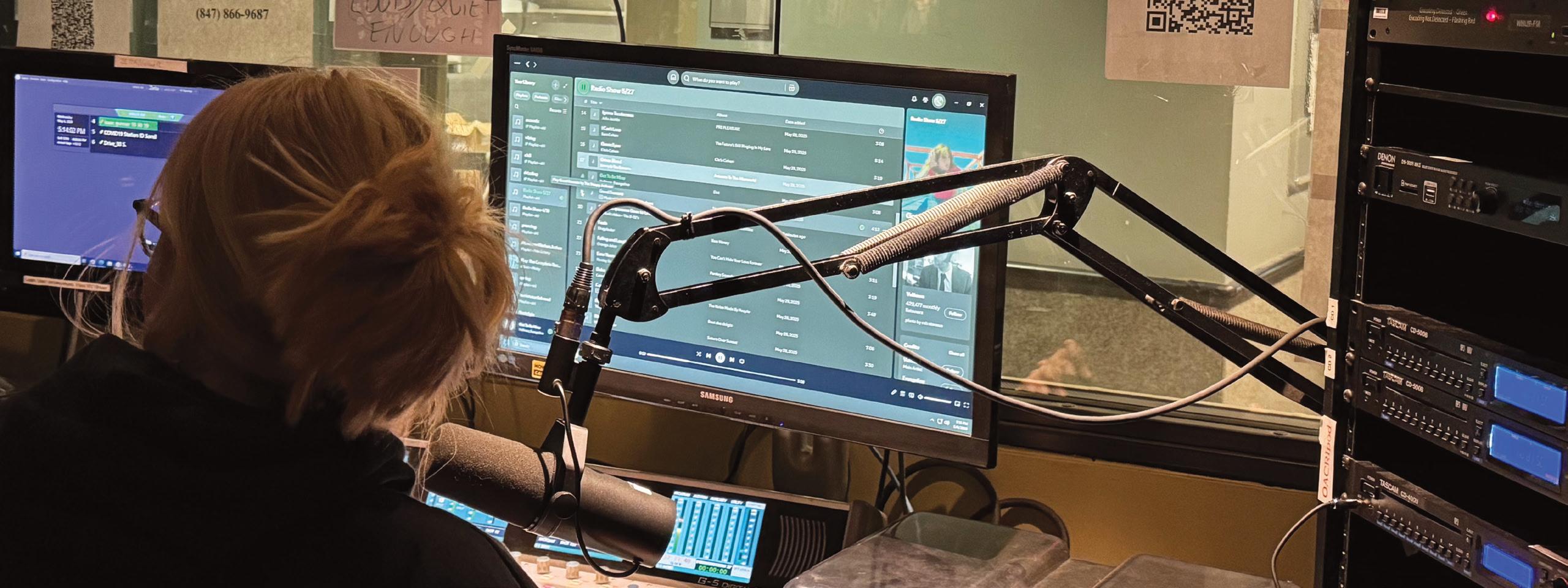
Siri Anderson plugs her WNURstickered laptop into the radio soundboard that looks straight out of the ’90s. It’s 4 p.m. on a Wednesday in Northwestern’s John J. Louis Hall, and the Weinberg third-year adjusts a dial, fades in an alternative rock song and begins her set.
“Welcome back,” Anderson says. “You’re listening to WR, 89.3 FM, Evanston, Chicago. This is your host, DJ Siri’s XM. If you have any song requests or constructive criticism, please call in at 847-866-WNUR.”
Anderson doesn’t expect to hear from anyone. She’s not even sure if anyone is listening. But that’s not important to her — she’s there for the “love of the game.” To her, that is the most necessary skill for any WNUR DJ.
Since 1950, WNUR 89.3 FM has brought news, music and community to Northwestern students and Evanston residents. A group of 62 student DJs like Anderson run the station’s Rock Show, bringing listeners songs from underground musicians every weekday.
Though the station’s signal reaches nearly 3 million potential Chicago area listeners, many of these DJs wonder whether anyone is actually on their wavelength. The data shows they might not be: According to a 2024 survey by
Stat Significant, radio listening time decreases as streaming services like Spotify and Apple Music gain popularity. This trend is especially prevalent in younger generations.
She’s there for the “love of the game.” To her, that is the most necessary skill for any WNUR DJ.
“It’s a very niche thing in today’s day and age to listen to college radio,” Communication first-year and student DJ Zofia Poczatek says. A professor once asked her class to raise their hands if they listened to the radio. Poczatek says not a single hand shot up.
In the on-air control room, DJs cannot see how many listeners are online, and calls to the studio are rare. One of the Rock Show’s programming directors, Weinberg third-year Ella Smith, says the studio hears from more spam and telemarketing callers than actual listeners.
Anderson gets at least one call from a listener every month. Even though calls are sparse, Anderson says hearing listeners’ stories, recommendations and gratitude is her favorite part of working on the Rock Show. Once, she played a Little Wings song, and a listener called in to share how he used to be roommates with the band’s frontman.
“Two hours alone in the studio can be a little much sometimes,” Anderson says. “It’s nice when people actually connect with the DJs. You know someone is there listening, and it isn’t just your mom. It makes you feel less inside.”
For Bienen second-year Gwen Daly, who runs a Rock Show set on Tuesday nights, being a DJ has created off-air connections, too. Over the summer, she worked in a coffee shop in New York City. She controlled the aux, playing artists she discovered from her sets, like Yo La Tengo and Elliott Smith. Daly recalls meeting one customer, a Bienen alumna.
“She came up to get another coffee, and she said it was super nostalgic to hear the music I played because it was the same people she would listen to when she was in college in the ’90s,” Daly says. She invited the customer to listen to her WNUR set in the fall. “I think of her whenever I’m on air.”
Other DJs have experimented with more modern ways of reviving the old medium. Weinberg second-year Mattia Amato and Medill second-year Orion Sledge-Ricks run a Rock Show set every other Friday. After their first few sets saw low engagement, they tried a new approach: advertising their show online.
The pair built a fanbase of nearly 100 followers on their show’s Instagram account, @foursongsandcounting.fm, where they post handmade collages, tracklists and upcoming WNUR events. Both said the project made working at the station more communal and rewarding.
“Music is so deeply personal, but it should not be an isolating thing,” Amato says. “That’s what WNUR is all about.”
While most DJs focus on creating connections with local listeners, the work can also strengthen bonds far beyond the broadcast’s boundary. For Anderson, shifts on air have brought her closer to her family; her parents and three siblings were all college radio DJs. When there is no DJ in the studio, WNUR runs Zetta, a computer program that rebroadcasts old sets. More than once, she has finished a show and faded in Zetta just to hear the voice of her older brother, a Rock Show alumnus.
Even when she doesn’t hear from her Chicagoland audience, Anderson can always expect a call from her most frequent listener: her mom. In a set about her hometown, Minneapolis, Anderson’s mom and grandmother called in. She spent several minutes trying to guess her grandmother’s favorite Prince song before adding “When Doves Cry” to the queue.
Most Rock Show sets spotlight underrepresented artists, like one-hit wonders, non-English speaking bands and musicians of color. Planning a twohour set is no easy feat.
“What I really appreciate about WNUR is that it pushed me to step outside of my boundaries,” Anderson says. “I did a ska set, I did a twee pop set. There’s this movement of ’60s psychedelic music in Brazil called Tropicália, so I did a set about that.”
Medill third-year Grace JordanWeinstein joined Rock Show to expand her music taste and her social circle. She finds most of her music on Spotify, but also gets recommendations from her coDJs, Smith and Communication thirdyear Angelina Randazzo. In one of the trio’s April sets, Smith played a song by French singer Françoise Hardy. JordanWeinstein loved it and then listened to the whole album.
“Connecting with people over real things, having real conversations with people about art? That’s pretty awesome,” Jordan-Weinstein says.
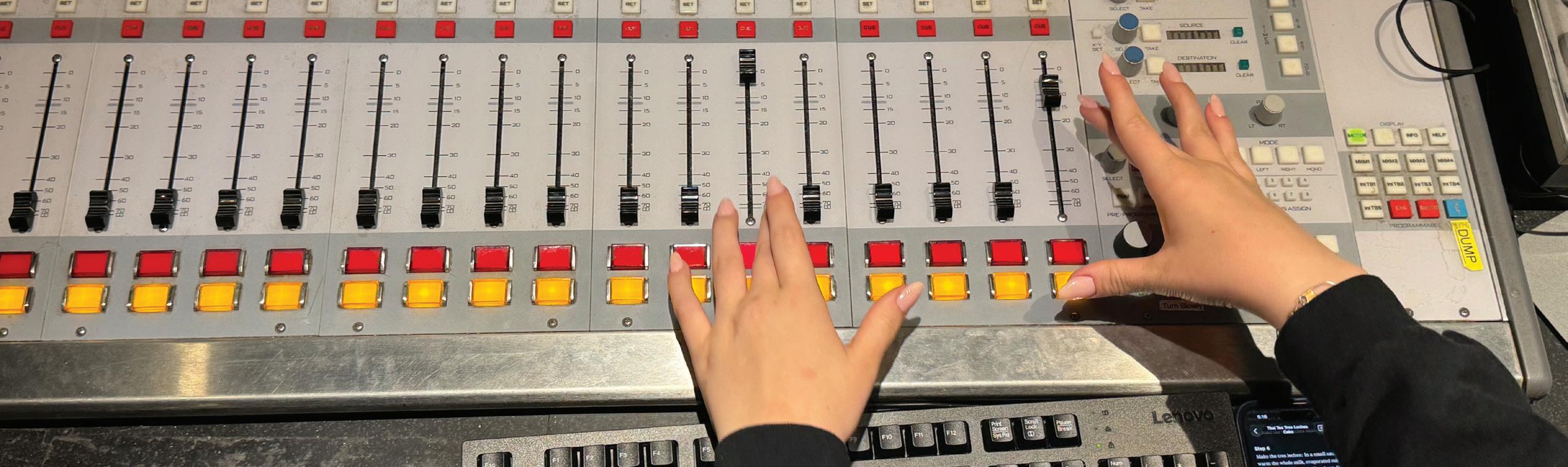
Anderson enjoys having her own set, but it’s even better with company. After four quarters of solo DJing, she took Poczatek on as an apprentice. Anderson guided the first-year through the control room equipment, explained using the “dump button” to erase explicit content and helped her get certified through the Federal Communications Commission — required for all radio DJs.
Radio brought the pair together; Poczatek studies communications and Anderson studies biology and global health, so their academic paths hardly cross. “If it weren’t for the radio, I probably would never have gotten to know her. I not only gained expertise, but I made a friend,” Poczatek says.
Throughout their long sets, the duo chats about music and their lives.
Anderson told Poczatek about studying abroad in Sweden, and Poczatek recommended a Swedish dream pop band, The Radio Dept. Anderson played some of the band’s music during their next set. After finishing her apprenticeship with Anderson in March, Poczatek is excited to start her own set in the fall.
A longtime radio fan, Poczatek is worried for the future of the analog medium and thinks more students should tune in. This small but mighty group of Rock Show DJs gives her hope.
“It’s nice that there’s this little corner of the world that’s dedicated to keeping this dying art of radio alive in 2026,” Poczatek says.


WRITTEN BY MARIANA BERMUDEZ // DESIGNED BY ZOEY JOWERS // PHOTOS BY JAKE XU
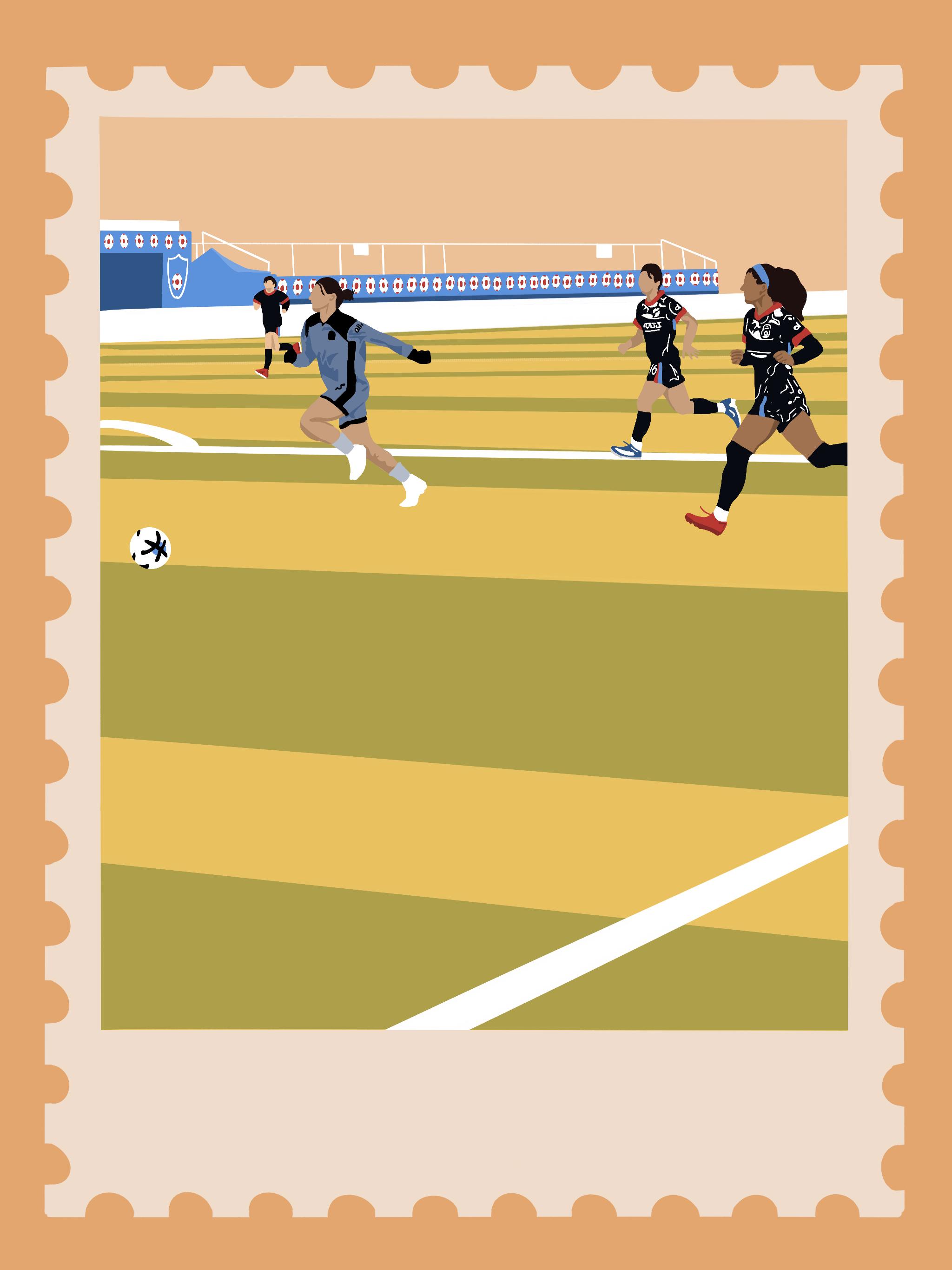
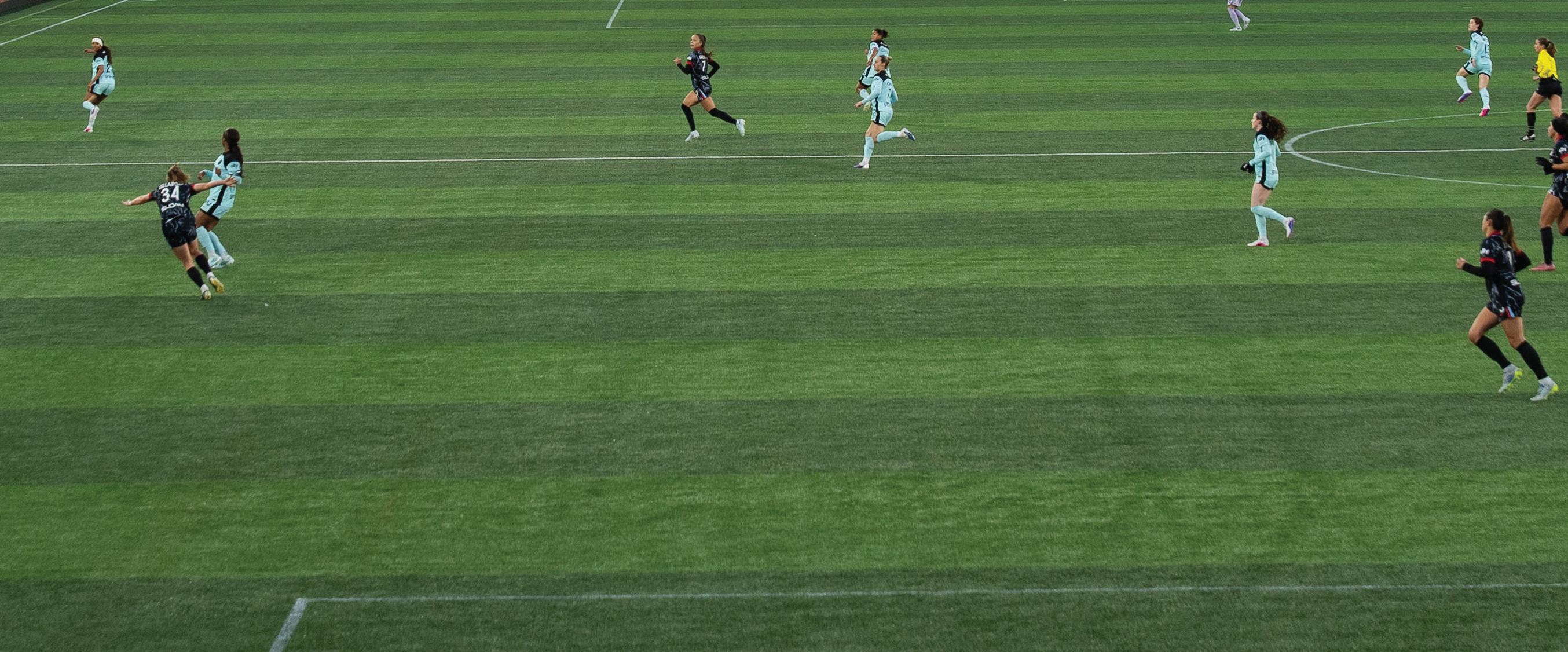
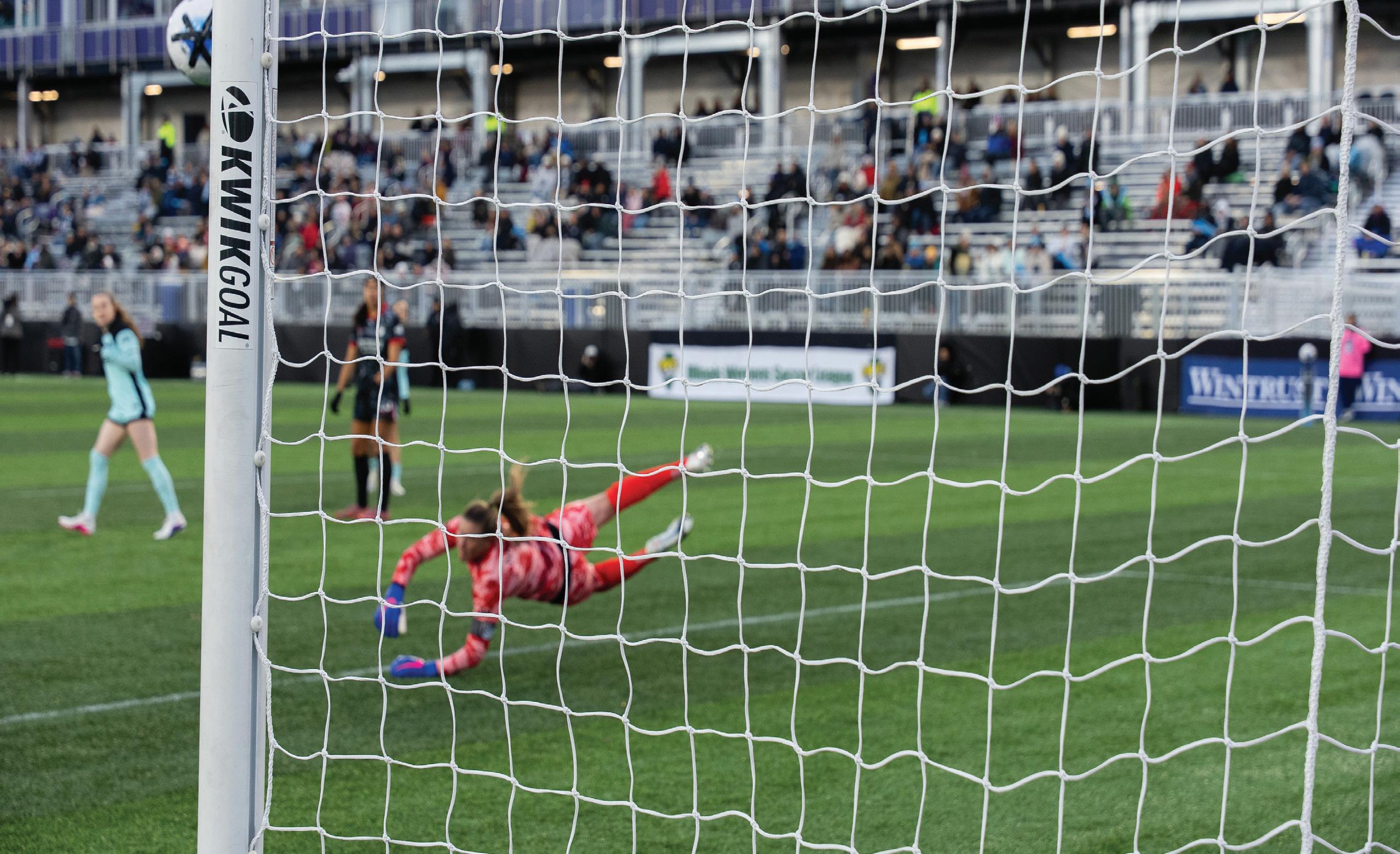
Cold gusts of wind whipped across the turf on April 25 as fans waving Chicago Stars Football Club banners and flags filed into the stands of Northwestern Medicine Field at Martin Stadium. Beneath clouded 5 p.m. skies, Chicago’s National Women’s Soccer League (NWSL) team prepared to face off against Boston Legacy Football Club. Chants of “Let’s go Stars” and “Vamos, Chicago” echoed throughout the lakefront stadium as the Stars fought for a win in the third game at their new home: Northwestern.
Since the Stars officially moved to Martin Stadium for their 2026 season, fans have made the trek to the North Shore to watch professional soccer right on Northwestern’s campus.
Beyond just winning, the Stars have a clear mission: inspire the next generation of young professionals
through all-star soccer game access, community leadership development and direct connections with top athletes, according to their website. Now, Evanston is the next milestone on that path.
Noelle Schmitt, director of community and government relations for the Chicago Stars, says the team knew they wanted to be in Evanston ahead of the 2026 season. The team had been considering the location since last May. “We really saw the potential and the possibility for our athletes and what a community like Evanston could do for us,” she adds.
After the Stars’ 10-year lease expired at SeatGeek Stadium in Bridgeview at the end of 2025, the team looked for a more accessible venue. Martin Stadium, with its recent expansion to accommodate Northwestern’s football team, seemed like a fitting choice. The move out of the suburban stadium, which according to
FOX32 Chicago had insufficient public transportation from the city, brings greater opportunity to attract longtime supporters, alongside new Evanston and Northwestern fans.
“We have such a loyal fanbase and we’re looking forward to growing that fan base too,” Schmitt says.
In early January, the Stars had eyed the new Ryan Field as a location for upcoming seasons but changed course in mid-March. Now, the Stars seek to continue playing at Martin Stadium for their 2027 season, after getting zoning approval from Evanston in April. If they succeed, the Stars hope their community impact will stretch beyond the final score of any game they play.
Weinberg second-year Luis Hernandez, a longtime soccer fan, says it’s a privilege for students to have such easy access to professional soccer, especially given Northwestern’s distance from other Chicago sports venues.
Hernandez first became a fan of the Stars over three years ago, when he began following the NWSL. Now, he can watch players from the U.S. Women’s National Team — like Stars forward Mallory Swanson — minutes away from his dorm.
Even for students newer to the Stars, home games offer an exciting alternative to the typical Evanston entertainment options. Student tickets during the 2026 season went for as low as $15, affordable for those looking to see a professional soccer match or searching for a novel way to spend an evening.
Just as students benefit from this proximity to the Stars, Weinberg thirdyear Adrian Guzman believes the Northwestern student population will aid the growing NWSL. Given Martin Stadium’s on-campus location, students
who otherwise might not have known about the team or the league have a chance to interact with the sport and attend games — which Guzman thinks will boost the Stars’ overall visibility.
Still, that prediction has yet to be realized. Despite a crowd of over 10,000 attendees for the Stars’ “Lakefront
Faceoff” in September against the Orlando Pride, the team has yet to replicate those numbers during its 2026 regular season.
The Stars recorded nearly 4,200 attendees for their home opener against the Kansas City Current on March 22. The April 25 game against Boston Legacy saw slightly higher attendance; still, the Stars filled fewer than 5,000 seats. According to ESPN, the Stars averaged under 4,000 fans per game in 2025, the worst of all teams in the NWSL. Nonetheless, the team is optimistic attendance will grow as the weather improves and Chicago and Evanston children finish school.
Even before the Stars kicked off their 2026 season, they focused on connecting with the Evanston community.
So far, the team has partnered with local businesses like D&D Finer Foods, Stacked and Folded, and Sketchbook Brewing Company. At D&D, the Stars installed a mural in September in collaboration with Chicago-based artists Clue and Ramiro Huizar. D&D manager Kosta Douvikas, son of owner Thomas Douvikas, says he thought the family business was just receiving spam calls when the Stars first reached out. Once the
PHOTO BY ZOEY JOWERS
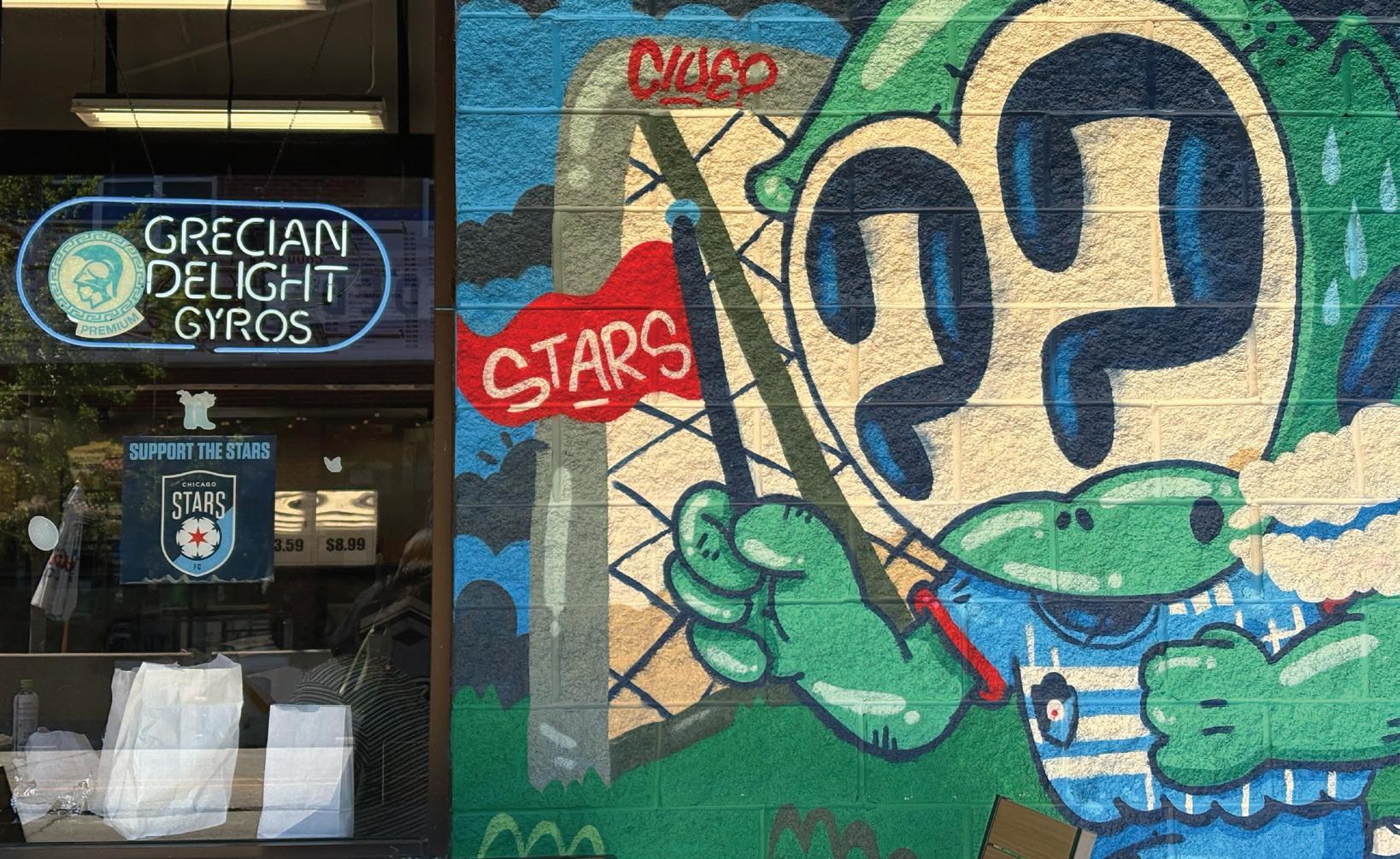
team visited and sat to eat with the family multiple times, he saw their genuine desire to collaborate with them.
“They could have just been like, ‘Me, me, me,’ but they weren’t,” Douvikas says. “They were very open to incorporating us with it as well.”
Douvikas says the artwork gives passersby a reason to look their way and get curious about the mural and the store behind it — and visiting fans can stop by and take a picture with the mural.
While the Stars could have chosen to partner with chain stores like Target, Whole Foods or Trader Joe’s, Douvikas says their choice to go the local route showed commitment to their initiatives.
At the student level, the Stars also hope to connect with Northwestern by offering discounted tickets and elevating women’s teams on campus.
For College Night on April 29, Northwestern Wildside, the University’s student section at sporting events, offered $12 tickets for students interested in attending the game and a $29 bundle with a hat and food voucher included.
Medill third-year and Wildside president Ivy Mills says the organization had been in contact with the Stars’ account executives for months in order to bring students this opportunity. After the game, the executive board took a post-match photo on the field with Supernova, the Stars’ mascot.
Mills says it was exciting to see Northwestern students come out to support the team, and she hopes more will do the same.
“It’s really important to support women’s sports, and I think people are starting to pick up on that,” Mills says.
“It’s really important to support women’s sports, and I think people are starting to pick up on that more.”
While the Stars’ future in Evanston may be up in the air, the team is firmly planted in the present, finding ways to invest in Evanston and leave a lasting impact. The Stars have run several teen coaching clinics through Evanston Township High School and Girls Play Sports, an Evanston nonprofit organization.
Schmitt says Evanston is “a really vibrant soccer community” and believes giving kids access to professional soccer will add to the existing culture.
“It’s pretty cool seeing these little girls get to meet these professional female athletes and be like, ‘Oh my gosh, this is your job,’” Schmitt says.
Their inspiration extends beyond just the young: Erika Garcia, who drove an hour and 20 minutes from the South Side to watch the Stars, says the team is just as much an inspiration for older women trying to get back into soccer.
Hernandez and Guzman say they are excited by the example the Stars are setting as role models for young girls
interested in soccer. Guzman believes this inspirational quality will drive greater engagement with the Stars in Evanston and beyond, building support for future female soccer players.
“People want to look out for future generations,” he says. “They want it to grow for their future daughters.”
Mills says she loved seeing young girls come out to the College Night game. As someone who played soccer for 14 years and watched local women’s pre-professional soccer with her high school team, she found it endearing to see Evanston’s teens do the same.
For Schmitt, the one-of-a-kind access to Stars players shows young girls they also have a place in sports, especially those in underserved parts of Evanston.
“We think women’s sports as a whole is very inspirational,” Schmitt says. “It’s a battle that we continue to fight for equity.”
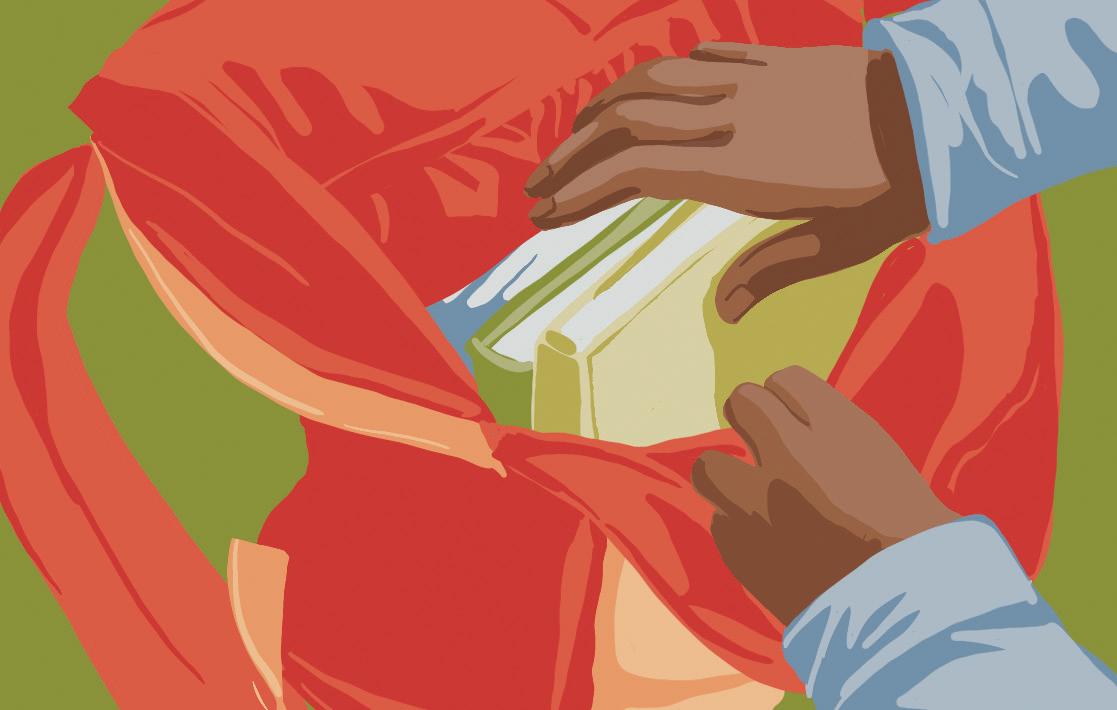
As the doors to two Evanston public schools close for good — and another opens — families navigate a new educational reality.
WRITTEN BY JOSIE BELFER & ISABEL PAPP // DESIGNED BY LEILA DHAWAN
In November, Lucia, a Willard Elementary School student, rallied her friends to create a petition for the District 65 School Board to save the school’s dual language program.
“We are not numbers, we are kids with real relationships,” Lucia says. “When scary things happen, like when ICE was outside our school, it was this community that helped our families stay safe.”
Willard’s Two-Way Immersion (TWI) program aims to bring together students from households that predominantly speak English and Spanish, with classes in both languages, so students can develop bilingualism during their K-5 years. Despite the efforts of students like Lucia, the school’s TWI will close at the end of the 2025-2026 school year. Several other school programs will also close as a result of funding cuts in District 65, which includes Evanston and Skokie.
To combat ongoing budgeting issues, District 65 has resorted to a Structural Deficit Reduction Plan, which involves
closing schools with lower enrollment rates to cut maintenance costs and achieve financial stability.
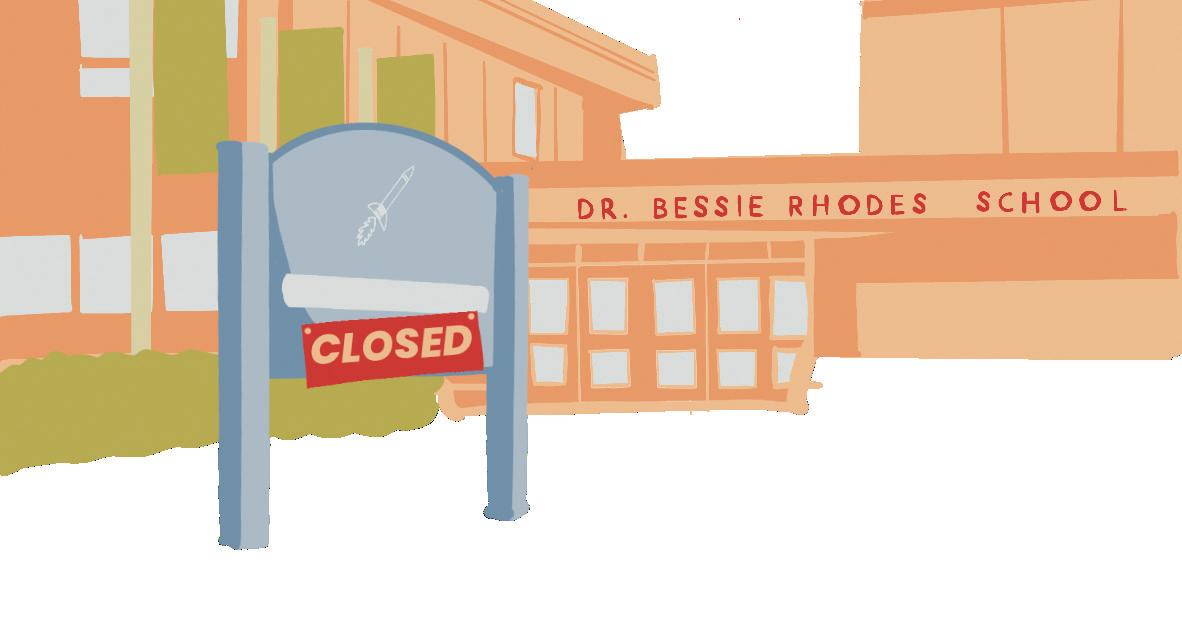
On June 10, 2024, the District 65 School Board voted to shutter Dr. Bessie Rhodes School of Global Studies, which offers the only bilingual K-8 program in the district, following the end of the 20252026 school year. In January, the board also voted to close Kingsley Elementary School. The district has also cut staff, including librarians and counselors. Many teachers at Kingsley and Bessie Rhodes are uncertain if they will have a job in the upcoming school year.
For students like Lucia and her friends, cuts to programming mean more than just losing access to language education. The changes and closures in District 65 are separating friends and fracturing communities that students and their families have relied on for years.
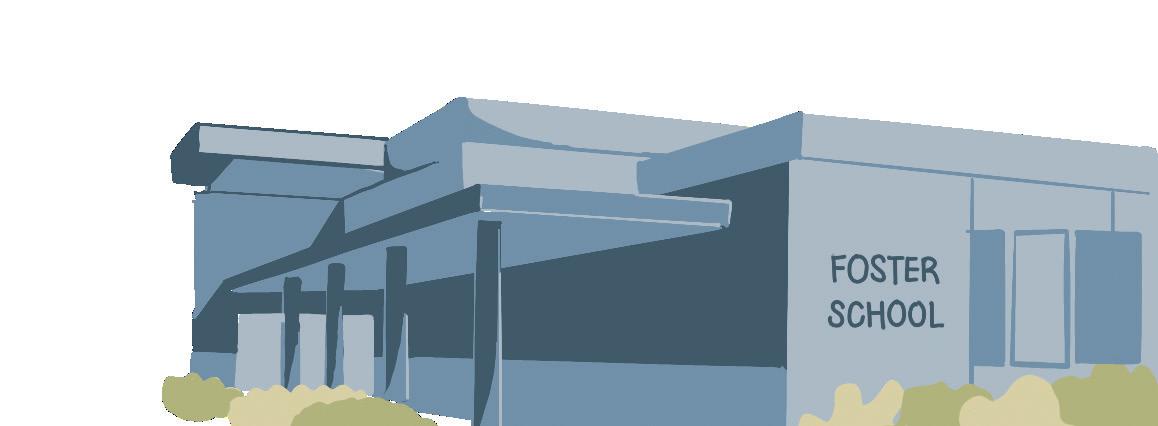
According to the board, one of the central reasons for the closures is the opening of Foster Elementary School for the 2026-2027 school year, announced
in March 2022. The K-5 dual language program currently offered at Bessie Rhodes will be consolidated with Willard’s at Foster School.
While students have the option to continue the language immersion at the new school, there are practical challenges — mainly that Foster School is in a different attendance zone from both Willard and Bessie Rhodes. Now, some families will be forced to choose between enrolling their child in a school in their community or one where they can continue pursuing their dual language education.
District 65 is positioning the opening of Foster School as a win for students of color: The district says the new school will use African-Centered Curriculum (ACC), which emphasizes lessons on African heritage and identity to uplift Black history and Evanston’s Black community. But Bessie Rhodes’ closing is a hit to bilingual education in the district, and families in these specialized programs worry they will be left behind.
In July 2024, after conducting community surveys and two review sessions, the District 65 School Board approved the name “Foster School” for the new school, honoring a previous school in Evanston’s Fifth Ward that closed in 1979.
The original Foster School opened in 1905. In the 1920s, redlining led to high levels of segregation in Evanston’s public schools. As the Black population in Evanston’s Fifth Ward rose, so did the percentage of Black students at Foster School. By 1930, Foster School’s student body was almost completely Black.
In 1967, District 65 School Board members began discussing desegregation and the integration of public schools. Under a plan to desegregate and racially balance the district’s schools, Foster School was turned into a magnet school called Dr. Martin Luther King Jr. Laboratory School (King Lab). This meant the district would bus students, who were primarily white, from other attendance zones into the Fifth Ward.
Consequently, the area around Foster lost its only neighborhood school, an institution that provided after-school activities and childcare, built community and forged close parental relationships.
In 1979, King Lab moved out of the original Foster School building. As school enrollment dropped in Evanston, the city consolidated the school with
another magnet program at Skiles Middle School, which was renamed Dr. Martin Luther King Jr. Literary and Fine Arts School in 2011.
To rectify this history, District 65’s 2026-2027 plan emphasizes returning to the Fifth Ward community its neighborhood school.
The new Foster School sits on 1600 Simpson Street, adjacent to the location of the historic Foster School. The school’s mascot, a phoenix, will symbolize its rebirth, while the ACC curriculum, also implemented at Oakton Elementary School, will honor the school’s Black history.
As the most diverse school in District 65, Bessie Rhodes had a large population of Spanish-speaking students and a student body that was 90% non-white as of 2024. Approximately two-thirds of its student body come from lowerincome households.
Given the underfunded state of bilingual education across much of the district, Bessie Rhodes offered a uniquely immersive dual language program for students through TWI. The classes were balanced between primarily Spanish-speaking students and English-proficient students to build bilingualism in both groups.
In 2011, in the same vote that turned King Lab into a literary- and fine arts-focused school, District 65 designated Bessie Rhodes as a global studies school. This meant the school would focus on preparing students to engage with an increasingly connected, diverse world. In 2017, the school board brought TWI to Bessie Rhodes as a part of that mission.
“Bilingual and English multilingual programs provide so much support,” says Teresa Navas, a bilingual educator in Palatine and an expert on bilingual education, including dual language programs. “Sometimes it’s language support, but it’s also emotional support, and can even be social support for them too, because the teacher is really understanding that sometimes they’re struggling or they’re afraid to speak.”
Through her own experience and research, Navas has found that bilingual education is more effective the earlier it starts and the more consistent it remains.
Several district schools, including Dawes Elementary School, Oakton and Willard, have employed TWI, but Bessie Rhodes became the first District 65 school to expand the dual language program to sixth grade in 2024, and has since extended it through eighth grade.
This expansion is a form of continued support Navas says is critical for bilingual education.
“[Students] need more support,” Navas says. “They need more practice. These types of programs provide that for them.”
After Bessie Rhodes closes, the district says students who are moved to Foster School will have the option to continue with the program.
Navas says one of the biggest challenges bilingual students face is that their parents are not typically as educated on how the American school system works, which makes it difficult to offer their children support from home.
“A lot of multilingual parents are not really informed or sure how to support their children in the school system,” Navas says. “If they come from another country, they may not know the system.”
Navas published the book “Consejos escolares para padres hispanos” (“School Tips for Hispanic Parents”) in 2025 to help bridge the gap between Hispanic parents and the American school system and allow them to better support their children.
Despite the disruption of programs across the district, Daniel Senra says the Latino population of District 65 has a lot of trust in the system and respect for teachers, so they “try not to make too much noise.”
Senra is a teacher at Dawes Elementary School and implements the TWI curriculum in his classroom. In the 20252026 school year, his youngest children were enrolled in Bessie Rhodes.
Given ongoing concerns regarding ICE involvement in Illinois, Senra says Latino parents have withdrawn even more from the conversation.
“They feel afraid to go to any type of meeting, really,” Navas says. “I think there’s a hesitation to show up, whether it’s a library or a social service agency, or definitely walking into a school district and standing up for fear that if they speak out, who knows what might happen?”
Senra says the loss of Bessie Rhodes will close the door on a uniquely diverse environment in Evanston.
“By closing that school, you’re closing that opportunity where you’ve turned a minority into a majority,” Senra says.
According to parents, the January announcement of Kingsley and Bessie Rhodes’ closures hardly came out of the blue. For years, administrative unease and scandal has entrenched the district, leaving parents weary and disillusioned.
“By closing [Bessie Rhodes], you’re closing that opportunity where you’ve turned a minority into a majority.”
Daniel Senra Dawes Elementary School teacher
In the years after the 2020 temporary school closures from the COVID-19 pandemic, Kingsley and Bessie Rhodes have seen a continued decline in attendance as parents decide to leave the public school district and send
their children to private schools. Between 2018 and 2024, the district’s student enrollment declined by 22%, significantly steeper than 21 nearby districts — a significant obstacle for a public school system funded on a perpupil basis.
These financial concerns emerged against the backdrop of a district embroiled in scandal after former superintendent Devon Horton was federally indicted on counts of fraud, embezzlement and domestic violence. The current superintendent, Angel Turner, formerly served as Horton’s assistant; despite her attempts at outreach, parental distrust lingers.
“There was chaos with the country through the pandemic,” says Kingsley Parent Teacher Association member Colleen Wade Egan, whose two younger children attended Kingsley. “I think we could have come back stronger and more connected, but nothing has been done by the administration to show that the community is important.”
Egan had been following the district’s situation for months ahead of the official announcement solidifying Kingsley’s closure. She says she and many other parents were “not surprised” by the board’s decision. In fact, they suspected the district would follow this route after the 2022 announcement of Foster School’s reopening.
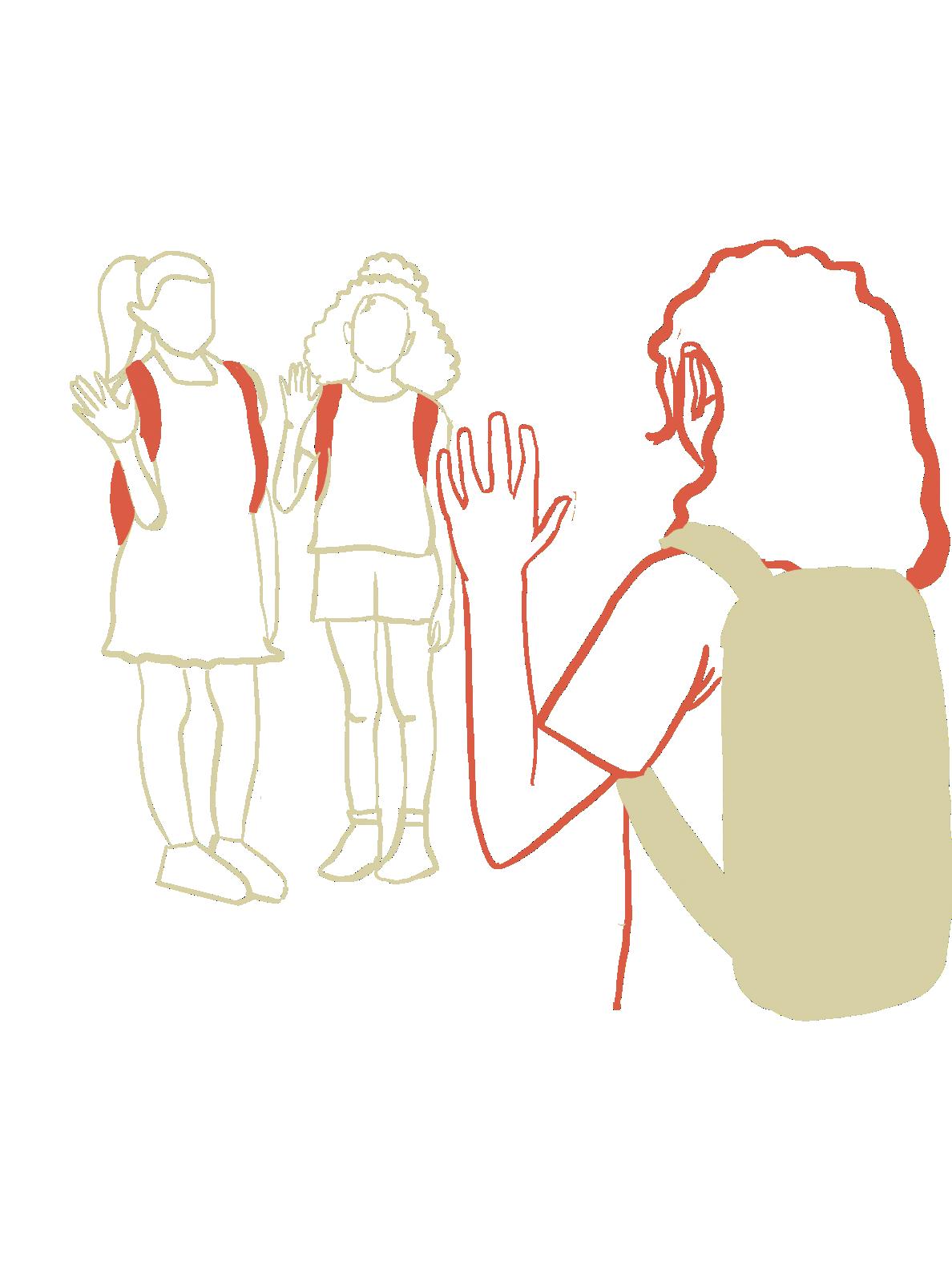
“I kind of knew that another school was going to have to close, even though they didn’t outwardly say that,” Egan says, referring to the period between when the district announced Bessie Rhodes’ upcoming closure in 2024 and Kingsley’s in early 2026. She worries that Lincolnwood Elementary School, where her children will be attending next year, may be next to close.
In recent board meetings, many parents describe feeling as though they are not being listened to by the district and, worse, that their children are not being cared for. As a parent and teacher himself, Senra is concerned for the future of his children as well as his professional peers. He has stayed in contact with several teachers from the schools facing closures.
“There were a lot of teachers — who were great — who ended up leaving because they weren’t guaranteed a position when the school closed, and there wasn’t really a lot done by the district to keep staff,” Senra says.
Tracy Hubbard, the District 65 Library Department chairperson, spoke out about the uncertainty librarians are facing at a May 4 meeting of the District 65 Committee of the Whole, a public working session where all seven elected board members gather to discuss policy, budget and district planning.
Hubbard says she was concerned that the board did not have a long-term vision for what all District 65 schools would look like, feel like and sound like after the closures.
“Having to justify our impact on student learning is stressful,” Hubbard says. “Our work environment is our students’ learning environment.”
According to Egan, the Kingsley community’s trust in the administration — and each other — has heavily eroded since 2020. She says parents are often secretive about where they plan to send their children next year and whether they will keep their children in public schools at all.
“Before this school year, I think it was a really close-knit community, with many of my closest friendships coming from
the connections that we’ve made through our experience at Kingsley,” she says. “At the beginning of the school year, when we knew there were changes coming, people felt disconnected from the goings-on at the school.”
In February, the district sent school assignment letters to students for the 2026-2027 academic year. Families had the option to accept the school assignment, request a Permissive Transfer by March 1 to a different school or, for students who had requested specifically to be in the now-closed schools, request a Return to Home School, where children return to their assigned neighborhood school.
“Having to justify our impact on student learning is stressful. Our work environment is our students’ learning environment.”
Tracy
Rising K-5 students at Kingsley were divided among Willard, Lincolnwood, Foster and Orrington Elementary School, depending on address. Only Bessie Rhodes students who live within the Foster School attendance area are guaranteed placement there; K-4 Bessie Rhodes students will have the choice between their assigned neighborhood school or Foster, where they’ll have priority enrollment status. Bessie Rhodes middle schoolers will all move to Haven Middle School, the launch site for a new sixth- to eighth-grade dual language program.
Egan still has ongoing funding concerns. Like Senra and other parents, she does not see feasible long-term solutions to funding deficits, and wonders which schools, if any, might be next.
“At this point, a lot of people are just resigned to whatever the future is going to be,” Senra says. “And so I think that’s unfortunate, because you want your
kids’ elementary school experience to be something they look back on fondly.”
Other parents are taking action, starting an organization called the Legion of (Data) Nerds. The group, composed of parents with professional experience in data analysis, reviews the district’s financial concerns and devises possible solutions. They specifically focus on alternatives to closing programs outright. In a recent memo, the group proposed a “path to stability and equity” they claim could save the district over $16.7 million.
The group has sent letters to the District 65 School Board and the administration, written guest essays, presented at board meetings and made their data analysis accessible online. Still, it is up to the district to assess the situation and enact real change.
While the 2026-2027 school year will be one of many new beginnings, parents and students alike are determined in their efforts to come together for their community.
28 Where’s the party in the USA?
32 The politics of attention
38
Caution: Social media may be hazardous to your health
42 People of the corn

WRITTEN BY SOPHIA GUTIERREZ // DESIGNED & PHOTOS BY MAANYA KEJRIWAL
It was finally Friday night. We found ourselves at Parlay, a sports bar in Lincoln Park where Northwestern’s Indigo Social Club was hosting a Great Gatsby-themed outing with $5 green tea and Fireball shots. I walked into the venue prepared with the basic party necessities: Marlboro Reds, a Jolly Rancher vape, matches from Bar Belly in New York City, a sativa joint bound in pink Blazy Susan rolling papers, a silk hair scrunchie and a Coach coin purse with my ID.
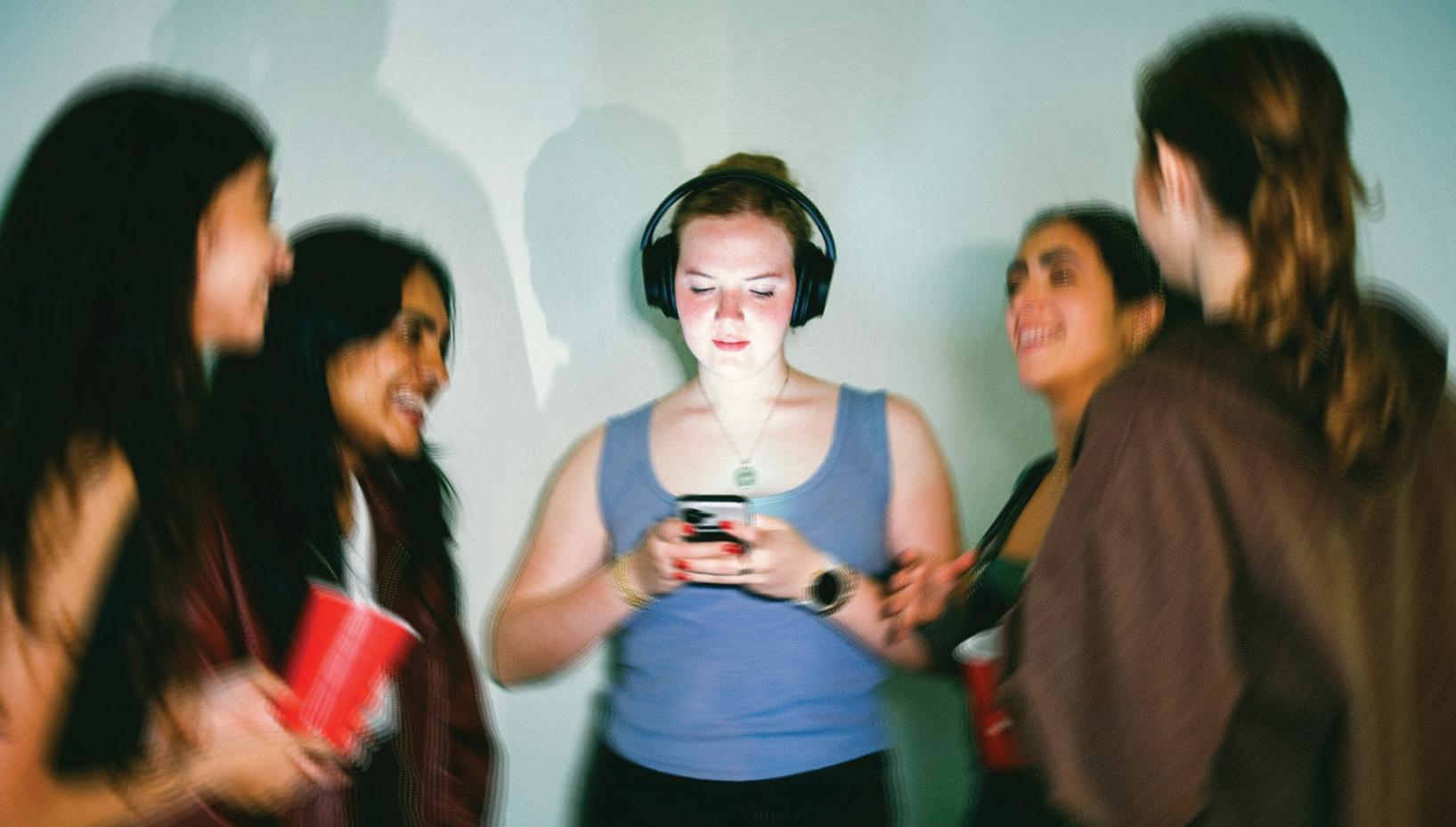
In my hands were all the components for a great night, without any promise that one would occur. As soon as we entered the venue around 11:30 p.m., the illusion collapsed. The room wasn’t thinning out — it had never filled. As the night went on, it never did. “Levels” by Avicii blared under cheap disco lights, intermittently highlighting the desolate dance floor. People swayed without conviction.
It wasn’t even awkward in an interesting way. It was just… dull. No heat, no crush, no sense that the night might tip into excess or mistake. I remember thinking to myself, this is it?
It’s not just Northwestern students: En masse, Americans are partying less. A lot less. Only 4% of Americans attended or hosted a social event on an average weekend or holiday in 2023, a 35% decrease since 2004, according to the Bureau of Labor Statistics. For young people, the numbers are even worse. In 2024, Americans ages 15 to 24 spent 70% less time attending or hosting parties than in 2003. These numbers reflect a growing loneliness crisis, suggesting the disappearance of partying is not just a cultural shift but a potentially damaging social one.
When partying goes, teens and young adults don’t just lose opportunities for drinking and casual sex — they lose one of adolescence’s primary arenas for social experimentation. Developmental psychologists have long understood this period of life as defined by experimentation, spontaneity and interpersonal risk-taking.
“[Parties] were forms of celebration and joy that people have been engaged with across centuries and across the ages. These social gatherings were often powerful motors of joy and
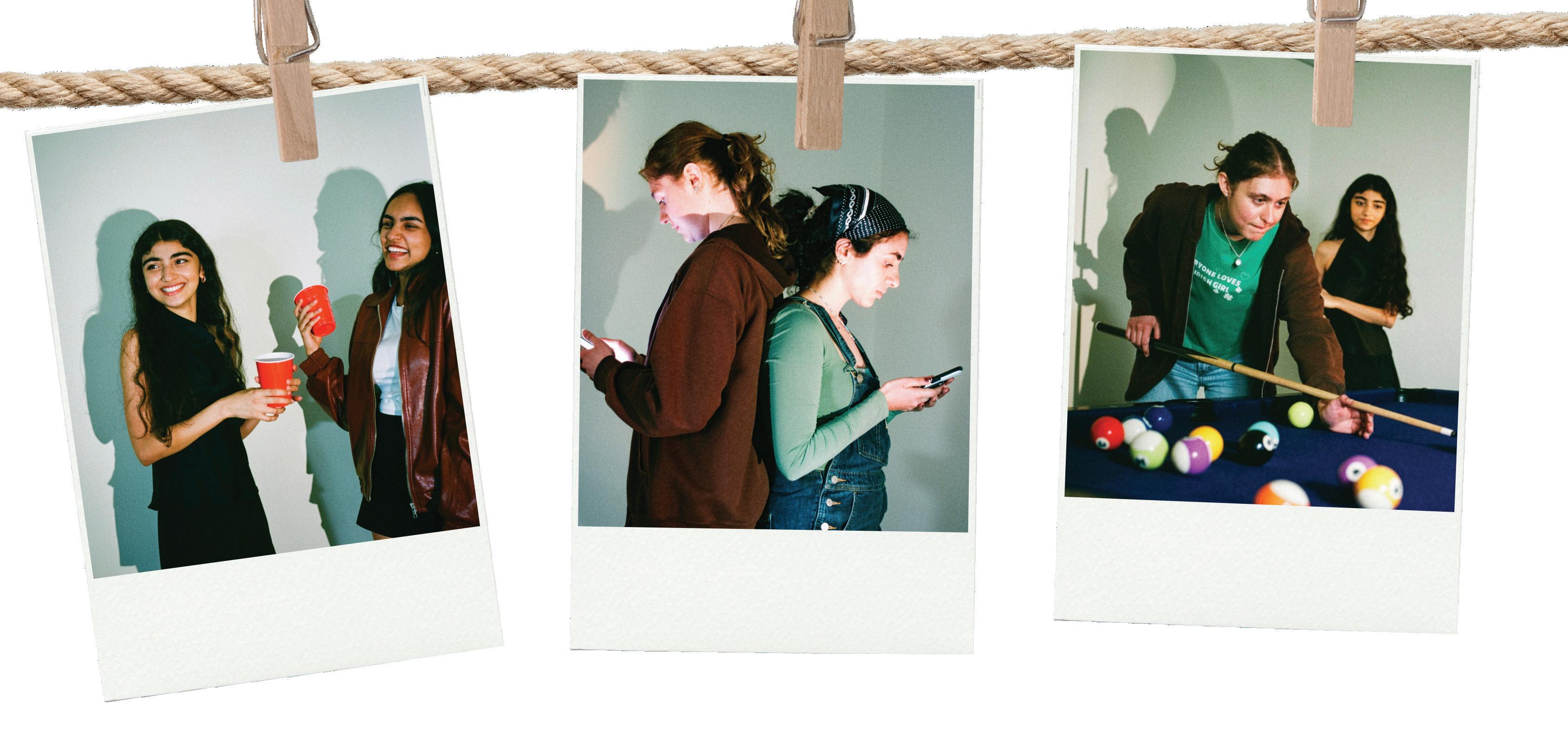
exuberance and silliness,” says Northwestern associate professor of human development and social policy and incoming SESP Associate Dean for Well-Being Claudia Haase. “We know a lot about the role of positive emotions as important in and of themselves, and then also really important in terms of shaping longer-term physical, cognitive and mental health.”
These trends play out in real time on Northwestern’s campus, as levels of sexual activity and alcohol consumption dwindle. When fewer young people date, drink, gather and spend unsupervised time together, opportunities for vulnerability, collective belonging and self-discovery shrink. What may be emerging in place of the chaotic social ecosystems that defined earlier generations is a more controlled, curated and isolated model of youth — one that privileges safety and manageability, but perhaps at the cost of the messy forms of human connection through which identity is often forged.
The decline of partying reflects Gen Z’s broader retreat from traditional adolescent risk-taking and social behavior. Since 1993, the percentage of 10th graders who have tried alcohol declined by 40% and 26% for 12th graders, according to a 2017 report in Child Development. A 2025 study conducted by DatingAdvice.com and the Kinsey Institute suggests around half of Gen Z have never had sex. A Fall 2025 TheDailyNorthwestern poll reflects the same.
None of these trends are inherently negative. Declines in underage drinking and risky behavior may reflect increased safety consciousness and changing cultural norms. But taken together, they also indicate a broader transformation in how young people socialize, experiment and form relationships.
“Developmental psychologists or developmental scientists think about adolescence and young adulthood … as a time for exploration, both in terms of exploring who you are and who you might want to become,” Haase says. “We also often learn a lot about ourselves by exploring with other people.”
But as young people party less, what are they doing instead? For many, the turn toward being “California sober’”
— the use of marijuana in place of alcohol and other drugs — has quietly reshaped the terms of social life. Instead of the loud indulgence, night levels out into something softer and more contained. Gatherings persist, but in miniature: a movie projected onto a laptop screen, a shared joint passed between friends on a couch, a bottle of wine opened and finished without ceremony, a board game unfolding at an unhurried pace.
What may be emerging in place of the chaotic social ecosystems that defined earlier generations is a more controlled, curated and isolated model of youth .
At a school like Northwestern, where the quarter system compresses time into a constant cycle of deadlines and performance, students become acutely aware of moments of relief. These arrive, almost as a rite, on Saturday night. The weekend carries its own mythology, promising loosened expectations, suspended obligations and a temporary escape from the relentless pressure of productivity.
What students do with that opening is less uniform than the ritual itself. Some retreat inward, toward the soft glow of a screen and the familiar consolation of some of the greatest friends one could ask for — Ben and Jerry. Others turn outward to a night on the town.
“I think the cool thing about Northwestern is finding out how many different ways there are to socialize that you wouldn’t necessarily expect,” says Medill third-year and Indigo Social general committee member Isaac Kruger.
Fans (and even foes) of the arts may find themselves at a “fundy,” a Northwestern colloquialism for a fundraising party. Those craving a conventional collegiate partygoing experience might wind up at a frat party or at a Chicago club. Certain platforms have even been created to foster healthy hedonism.
At Northwestern, these are Off Campus Social and Indigo Social. Those looking to channel adolescent angst can check out a basement gig, where the bands are almost as hardcore as the $5 drinks. And, of course, there is the coveted off-campus Evanston house party.
Still, today’s options pale in comparison to Matt Burnham’s (CAS ’93) tales of the school’s glory days.
“If you wanted to go to a fraternity party, there were typically like … four or five on a Saturday night, and there were probably at least three or four apartment parties that someone would know of,” Burnham says. “There was no shortage of stuff to do.”
These days, you’re lucky if a house party makes it to midnight without being shut down by the police following a neighboring noise complaint. Once in a blue moon, the frats throw and you can push your way past the crowds into a sweaty house, “Mr. Brightside” on blast for the one millionth time, of course. And the rarest of all? Making it downtown to an actually packed club — instead of one with less than half your grade sadly grinding on each other to “Like A G6.”
But, while it’s clear that Americans are shifting away from parties, it’s less obvious why.
“Every single thing is hyper-surveilled. It’s documented and we’re consistently being expected to have a certain image … so people are afraid to be free and to be a freak. Be weird, people!”
Kirkwood Medill and Bienen third-year
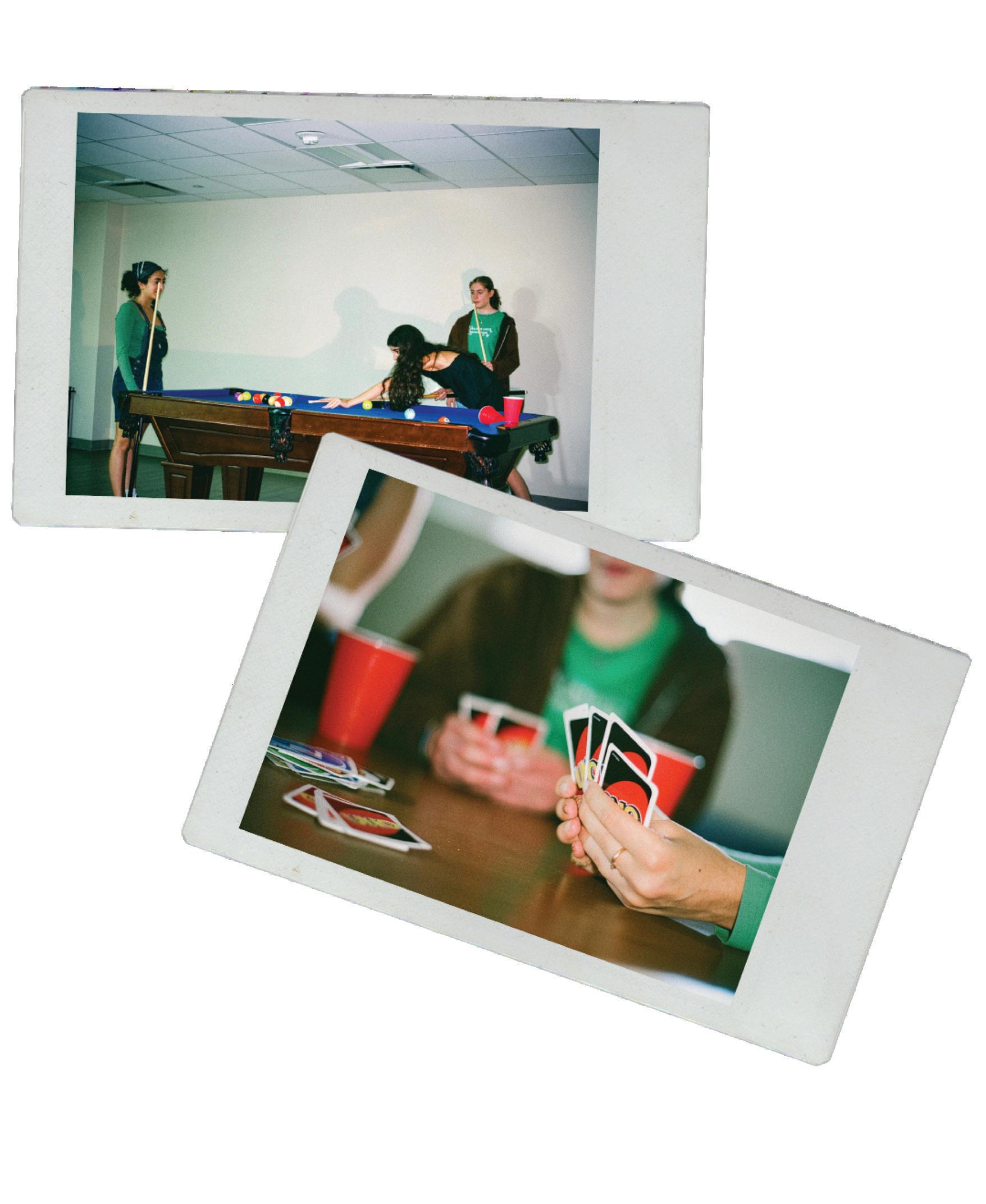
Technology hasn’t eliminated social life so much as reshaped it. Television first made leisure more individual, and smartphones have since completed the turn, giving people access to never-ending entertainment and on-demand connection. Gen Z consumes more digital content than any other generation, according to Talker Research — approximately 6.6 hours per day. But for all the time young adults spend scrolling through content captured on a camera, they continually shy away from an unexpected lens.
Thanks to social media, every mistake can be documented, circulated and preserved indefinitely online. The result is a generation often caught between the desire for connection and the pressure to remain endlessly employable, curated and in control. “I think that we’re in the age of hyper-surveillance,” Medill and Bienen third-year Mackenzie Kirkwood says. “Every single thing is hyper-surveilled. It’s documented and we’re consistently being expected to have a certain image … so people are afraid to be free and to be a freak. Be weird, people!”
Still, many students battle the ever-present fear of a decade wasted inside and alone — a threat that may motivate them to go out more than any $5 drink could.
“I feel like when I don’t go out, I’m missing a lot of that social interaction and meeting people who I wouldn’t have met otherwise,” SESP first-year Alexandra Kania says.
Even when people do make it out, they can’t escape the cloud of social judgment enough to truly let loose and connect.
Back at Parlay, the “party people” seemingly had their heads on a swivel, going back and forth from awkward swaying to checking their phones. Nobody was “getting their freak on,” to loosely quote the great Missy Elliott.
By the time I left, Nelly Furtado echoed through a room that never quite became a party. People filtered out quietly, disappearing into Ubers, dorm rooms and the pull of a screen. Nothing dramatic happened. Nobody made a fool of themselves. Nobody lost control. The night stayed orderly, manageable, forgettable.
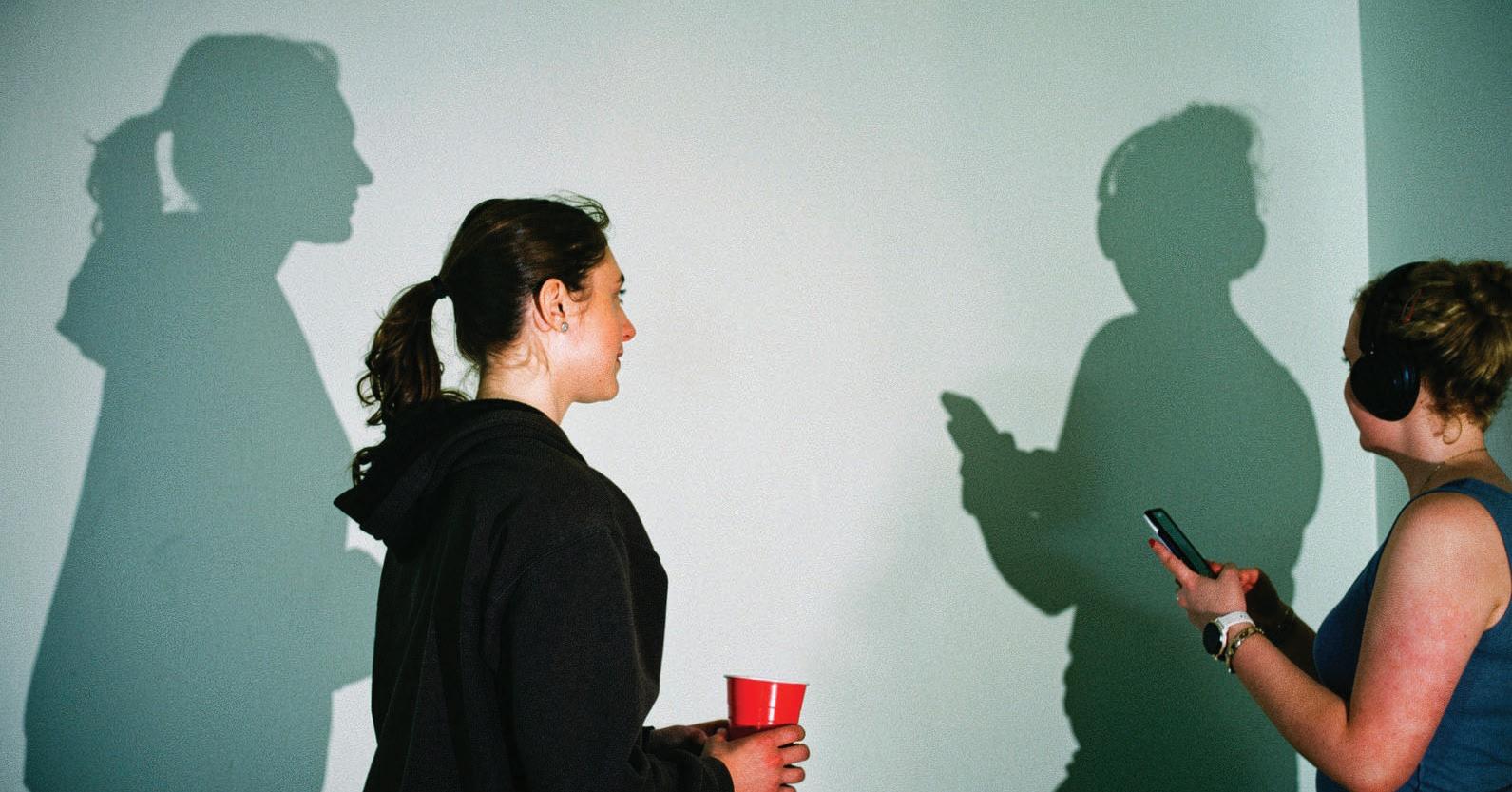
Maybe that is part of what has changed. The decline of partying is not simply about alcohol, hookup culture or even nightlife itself. What may instead be disappearing is one of the last remaining spaces for collective unpredictability — environments where young people can stumble into conversations, dance poorly, embarrass themselves, meet strangers and briefly exist outside the logic of productivity and self-management.
“Partying is the easiest way … to get a large number of people all together and get people out of their comfort zone, their immediate circle,” Kruger says. “If that’s not happening as much on a scale, then you’re losing out on building community.”


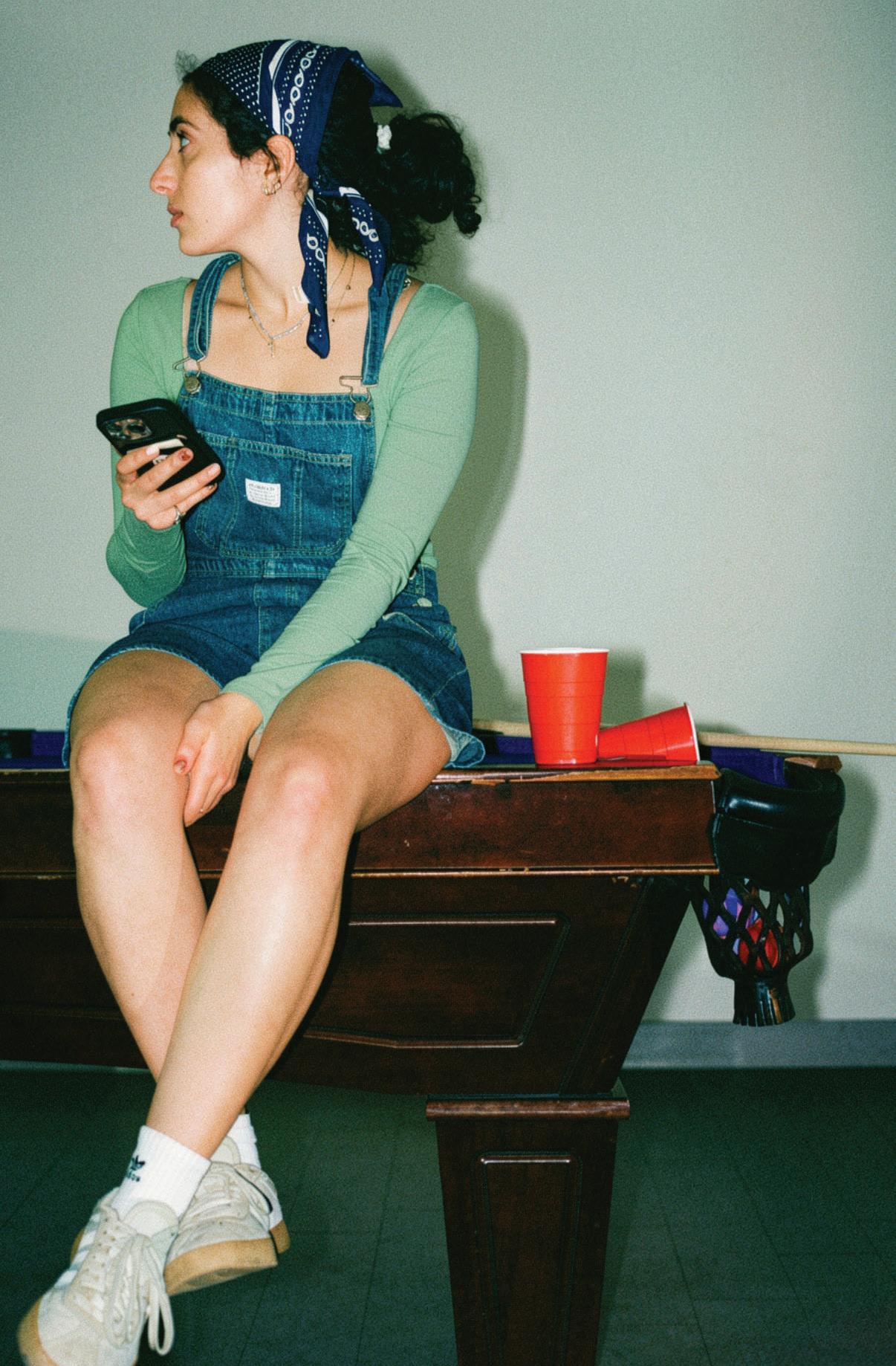

WRITTEN BY ELEANOR BERGSTEIN & MITRA NOURBAKHSH // DESIGNED BY ZOE OLAND
On a freezing day in early February, SESP third-year Noah Cohrs wobbled across the Lake Michigan ice shelf and jumped into the frigid water below. The initial plunge — and the four that followed — weren’t for health purposes or a dare, but were a bald-faced ploy to get attention.
Cohrs and Weinberg second-year Alan Hu were running for copresidents of Associated Student Government. They built their campaign around exhibitionary tactics like posting these polar plunge videos on social media, creating joke policy suggestions — like annexing the University of Chicago and banning Jeffrey Epstein from campus — and making a general mockery of the very system they were vying to lead. The Instagram Reels video depicting Cohrs’ third plunge into the frozen lake received over 16 million views. It also earned Cohrs and Hu a meeting with Northwestern administration officials who were concerned about the pair’s reflection on the University’s reputation.
But the administration didn’t realize Cohrs and Hu’s endeavors were not simply immature antics. The candidates knew exactly what they were doing. Behind calls like putting deer on Deering Meadow, the pair intended to reveal how little attention Northwestern’s student body pays to their own government.
“The point was just to engage with your government,” Cohrs says. “Because, when you don’t engage with your government, you enable things like this to happen.”
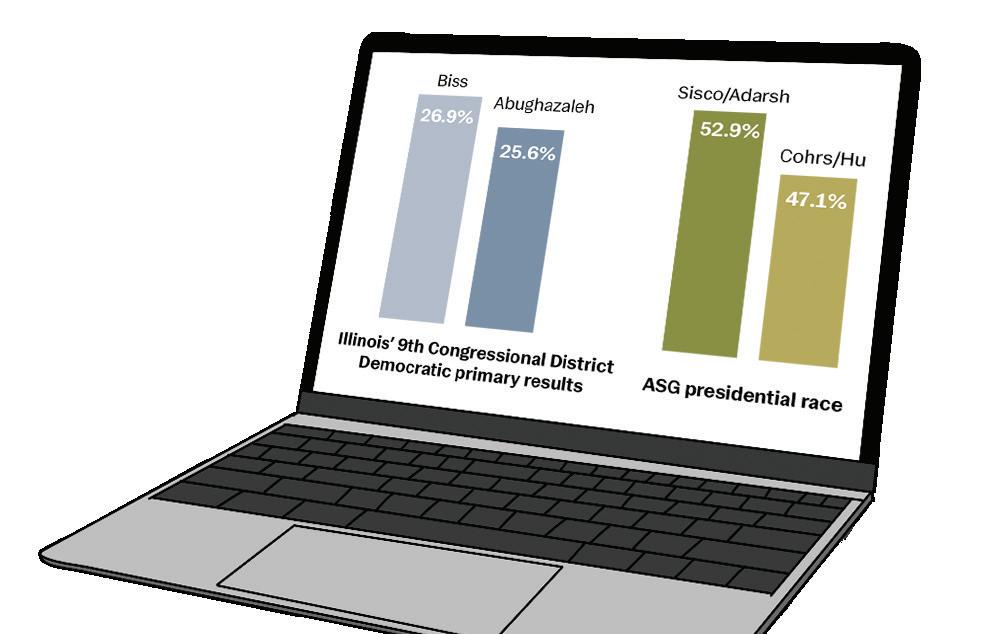
The inflammatory tactics almost proved their point. Cohrs and Hu led the race until the final round of voting, where they lost to current ASG presidents Medill third-year John Sisco and SESP third-year Gauri Adarsh 47.11% to 52.89%.
As the ASG election played out on campus, a neighboring electoral battle was ramping up in Evanston: 15 candidates competed to win the Democratic primary for Illinois’ 9th Congressional District. Kat Abughazaleh, a 26-year-old content creator and journalist with no previous political experience, emerged as an unlikely frontrunner.
Like Cohrs and Hu’s ASG strategy, Abughazaleh’s campaign used unconventional tactics successfully, from mutual aid community organizing to viral social media content. In the end, she finished second to Evanston Mayor Daniel Biss, winning 25.6% of the vote in March’s election compared to the mayor’s 26.9%, a margin of fewer than 5,000 votes.
The two campaigns are representative of a broader trend in American politics. Gen Z progressives are increasingly challenging traditional campaign strategies by using populist, outsider
messaging, viral social media content and unique promises to the community they pledge to represent. Both managed to energize a traditionally apathetic voter base and encourage young Americans to engage in politics.
At the core of both campaigns’ strategies was an ability to demand people’s attention. Thanks to social media, that base of support extended far beyond their immediate voters. As of May 2026, Abughazaleh had 331,000 followers on Instagram. Her campaign received coverage from outlets like CNN and USA Today, which took an interest in what her work reflected about the broader political landscape.
And her online outreach stretched beyond Instagram. A huge part of Abughazaleh’s campaign was based around using Twitch and Discord streaming to form a community of volunteers and raise funds. Abughazaleh’s digital presence kept her competitive despite a comparative lack of political experience and time in the area, having only moved to Chicago in 2024. In the end, Abughazaleh raised $3.3 million, the most out of all the Democratic candidates.

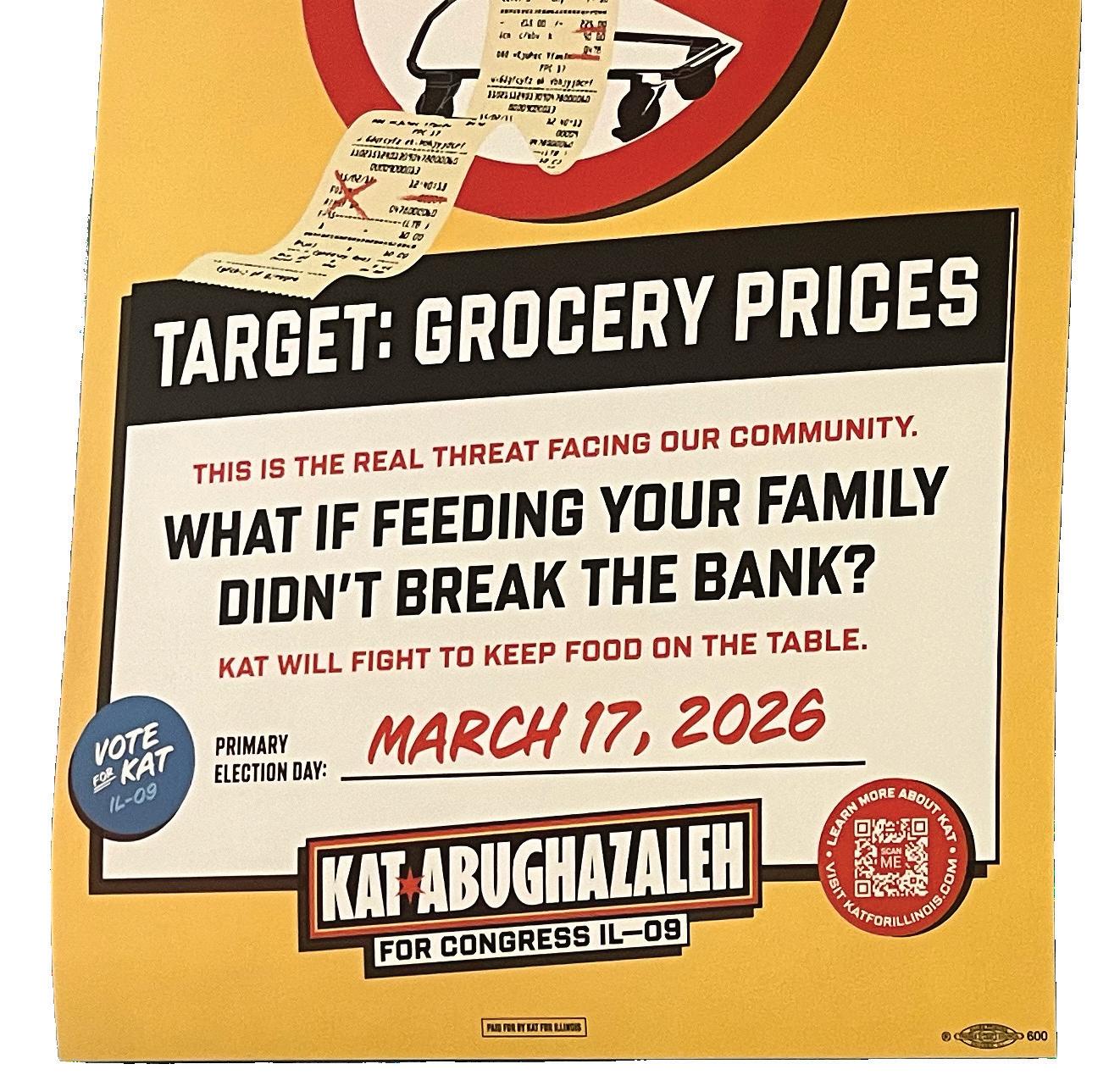
Typically, political campaigns source a large portion of their funds through “call time,” often over 40 hours per week of staff and volunteers phoning potential donors to ask for money. But this can feel tedious and unproductive, says SESP fourth-year Asha Buerk, who joined the Abughazaleh campaign before last summer.
Instead of traditional outreach tactics, Buerk worked with Abughazaleh to set up Twitch and YouTube livestreams to access small-dollar donations as a call time alternative.
Abughazaleh played video games while answering questions or interviewing guests, with a link to her campaign donation page readily available. In her first two weeks of streaming, the campaign raised over $20,000, Buerk says. Abughazaleh

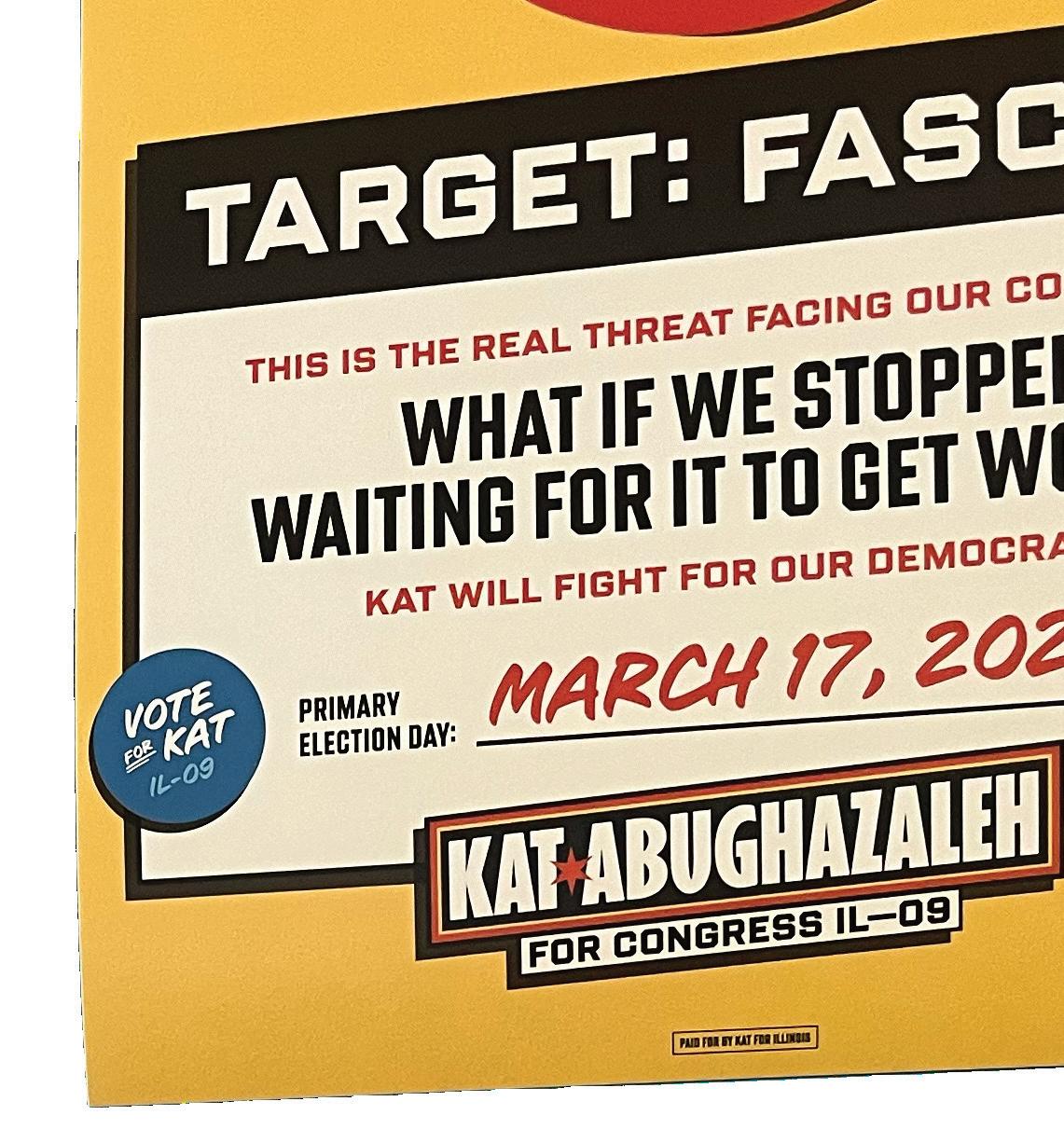
did 50 streams over the course of the race. By the end of the campaign, live streams completely replaced call time.
Abughazaleh’s messaging emphasized that her campaign represented something different from the status quo. She claimed to be more aware of the district’s real needs than her opponents and said she would refuse to compromise with politicians who did not share her values.
SESP fourth-year Shayna Tribush, an Abughazaleh campus fellow, initially volunteered for the Biss campaign, then switched her support to Abughazaleh because she thought she could learn more about campaigning from Abughazaleh’s unconventional approach. She says her choice of whose campaign to work on was less about policy nuances and more so “stylistic” ones.
Medill fourth-year Lara Weissmann, who worked for the Biss campaign, agrees.
“What bothered us the entire time was that they are so similar in terms of what actually matters,” Weissmann says. “How do we make people see that?”
Cohrs says it’s no coincidence that people with entertainment backgrounds are increasingly getting elected over career politicians.
“There are people whose engagement with our campaign was just seeing me jump in the lake or seeing Alan’s performance at the debate, thinking it was funny and voting,” Cohrs says. “Actually, that’s great. Because … they are helping to prove our point.”
To Northwestern political science professor Jaime Dominguez, the expansion of the electorate that candidates like Abughazaleh bring is exciting; engaging young people allows for challenges to the status quo.
“Twenty years ago, you couldn’t run successfully in Chicago without having the blessing of the Democratic National Committee,” Dominguez says. “That’s not the case anymore.”
Cohrs, who majors in theater, knew how effective social media could be. It came as no surprise to him that Abughazaleh’s flashy tactics gained traction in the 9th District race. He sees himself in line with populist politicians like Abughazaleh and President
Donald Trump, who he says exploit a similar ignorance and political apathy in the voting population.
“Your average person … understands the government generally doesn’t serve their interests,” Cohrs says. “Because of that, [they] understand that more of the same old candidates, same old promises, will not work and that fundamental change is necessary. And because of that, they’ll support a long shot; they’ll support an outsider.”
Though engaging a wider range of voters brings many benefits, Cohrs says using attention-grabbing tactics to do so also comes with risk. He thinks the effectiveness of his campaign reveals a broad lack of serious civic engagement, a trend he sees as undermining the health of democracy.
“Because voters don’t take their jobs seriously, [politicians] can run a campaign based entirely off getting attention, which I think is a really dangerous thing for democracy and is a big part of the reason our current system doesn’t work so well,” Cohrs says.
Sisco, who beat Cohrs and Hu to become one of two ASG presidents, says he would like to live in a world where government isn’t exciting. A lot of the work he does in student government is not flashy at all. So Sisco finds Cohrs and Hu’s almost-success a little scary.
“The good news was that [Cohrs] was well intentioned,” Sisco says. “But if it was that easy for people to get that close to the presidency, if someone with more malicious intentions were to do the same thing, we wouldn’t have much of a way to stop it.”
Cohrs’ strategy worked because it got people’s attention, but that was only the first step in a broader mission built around community. The showy tactics were meant to reveal a problem and fix it at the same time.
Engagement is the first step; civic education must follow, Cohrs says. It’s important to show people that, though the system is broken, they can play a part in its repair by participating at
the local, state, party and federal levels. For Cohrs, campus is a testing ground.
Behind the scenes, Cohrs’ campaign consisted of a lot of conversations. He talked to anyone who would listen, many of whom saw his viral social media videos and wanted to ask about them. That initial spark of interest allowed Cohrs to bring up his ultimate mission, spreading the message about the lack of and need for civic engagement on campus and in the world.
“Those conversations always had actual concerns in them,” Cohrs says. “Whether it was about ASG or whether it was local or federal or global. The general idea of all of them was that people are really concerned about the world, and people don’t feel like they can do anything about it.”
Cohrs has a deep commitment to community building without overtly political purposes. He is the kind of person to suggest collecting 8,700 physical student signatures for a birthday card for interim President Henry Bienen’s 87th birthday, simply to prove the existence of a campus community.
“Finding people is just relational organizing,” Cohrs says. “That’s the thing I study in my civic engagement class. It’s the only way anything actually gets done and it’s a scarily powerful thing.”
For Abughazaleh, her social media was as effective as it was showy. Like Cohrs and Hu, the real work happened by building community and tapping into bases of support that are typically politically disengaged.
People weren’t just following Abughazaleh from afar — they wanted to get involved. When moderating livestream chats, Tribush says she got the sense that a real community was forming online.
“They all sort of knew each other by their names, and then these people would show up, would fly across the country, sometimes, to come to events,” Tribush says.
Abughazaleh mobilized over 10,000 volunteers and 65,000 donors nationwide. Her office in Rogers Park served as a mutual aid hub, with donated clothing and sanitary products available inside the front door. In promising to challenge the status quo of a political race, Abughazaleh was committed to not just
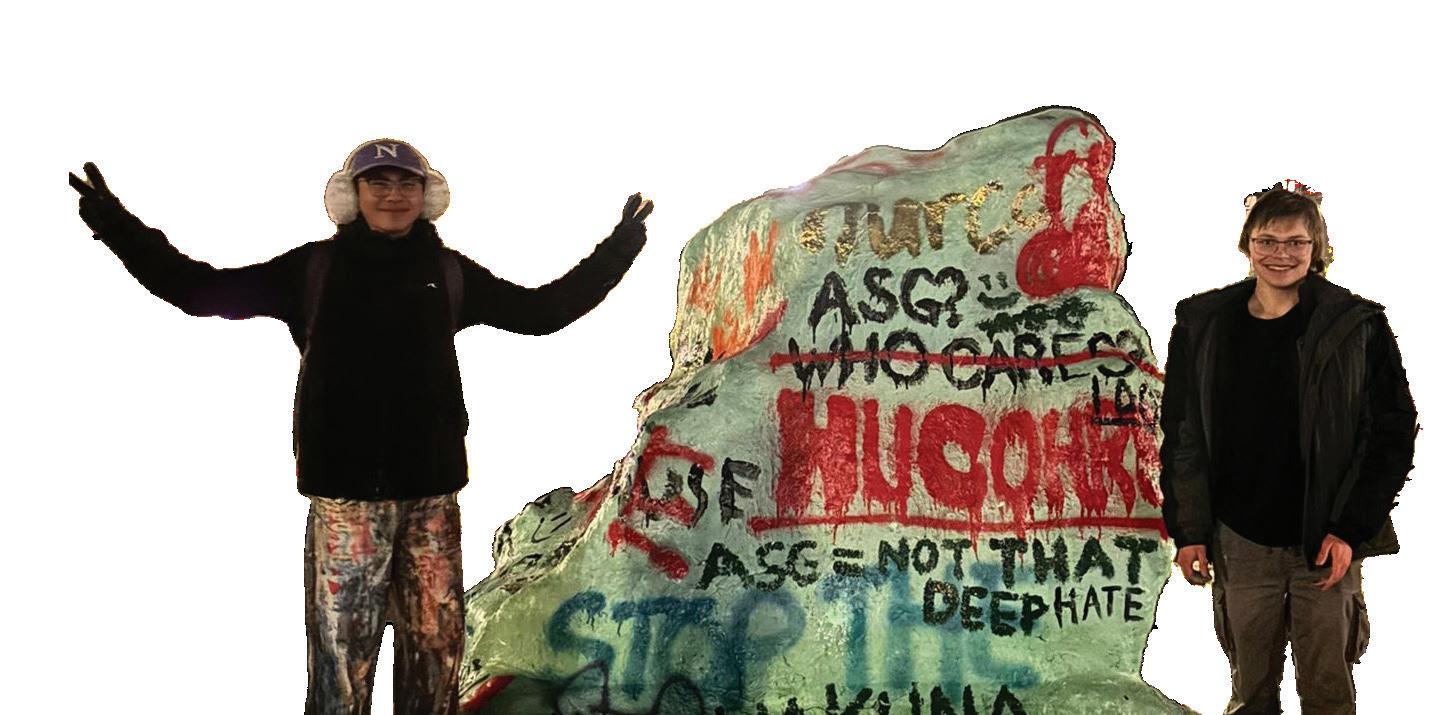
building a community to help a campaign, but building a community to help the community.
In recent years, grassroots organizing has gained steam among progressives questioning traditional politics. New York City Mayor Zohran Mamdani recently spent months building a volunteer base of over 90,000 that spread across the five boroughs, canvassing and making phone calls. But Abughazaleh’s campaign went beyond that, both with the mutual aid angle and a host of community-building events.
Abughazaleh tabled in Evanston, rode a mechanical bull at the McHenry County Fair and stepped in as a guest barista at Will’s Place, a nonprofit cafe in Skokie. The office saw a lot of crafting: protest poster-making parties, braceletmaking parties, 3D-printed ICE whistle-making and many knitting circles.
And then there was the community service. A back-to-school supplies drive in August, where the campaign distributed 500 free backpacks out of Evanston’s Fleetwood-Jourdain Center. A car wash doubled as a winter coat drive, and the organizing came from both Abughazaleh and the network of volunteers the campaign built.
“If everyone running for office did this in their spare time, we’d have a much better country,” said Francis Haydock, one of Abughazaleh’s digital organizers, during an April mutual aid event.
According to Tribush, many of the people who gave their time to campaign volunteering events were some of the most disengaged subset of the population: young men.
“The same demographic of people that, Democrats especially, are like, ‘Oh my God, we’ve lost,’ — and are so disengaged from community, are getting radicalized into all these antisocial beliefs — is a group of people that she really brought together and brought out for a common cause,” Tribush says.
Abughazaleh tried to directly target another population that tends not to be locally civically engaged: students. Through paid campus fellows and a stand-up comedy set at Northwestern’s off campus house-turned-venue, The Prattic, Abughazaleh made a unique appeal to Northwestern students. She encouraged people to switch their voter registration to their campus address so they could vote for her.
After student campus fellows painted The Rock in Abughazaleh’s signature blue and orange, she posted an Instagram Reels video standing underneath the Arch.
“You deserve to have your voice heard,” she said in the video. “Your rent is here. Your tuition is here. You spend nine months out of the year here.” According to Tribush, this tactic worked, to an extent.
Throughout the campaign, Abughazaleh used her Gen Z identity to appeal to Gen Z voters and donors, a subset of the population uniquely civically disengaged. More than half of Gen Z voters identify as “politically independent.” Between the 2020 and 2024 elections, the percentage of Gen Z who voted dropped to about 47%. And for those who do make it to the polls, that bare minimum participation is most often not accompanied by other forms of civic engagement that keep
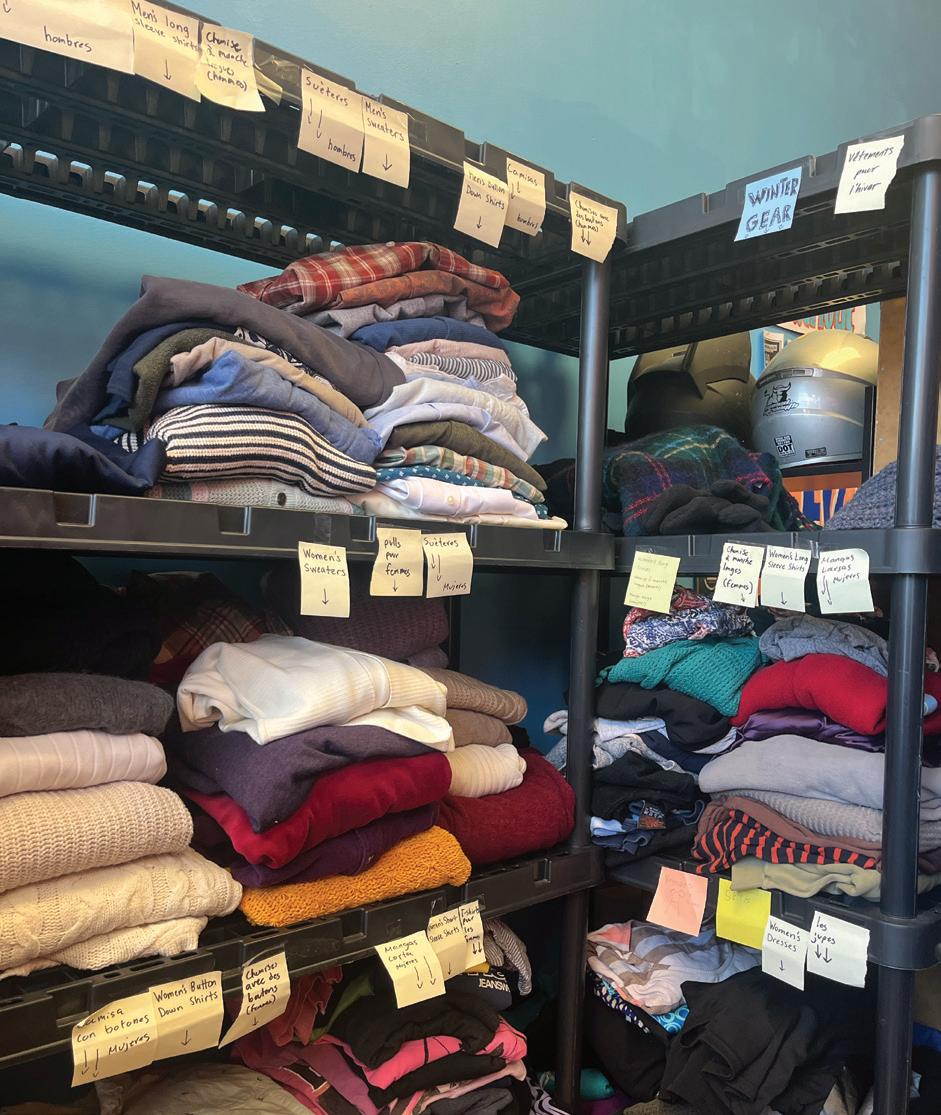
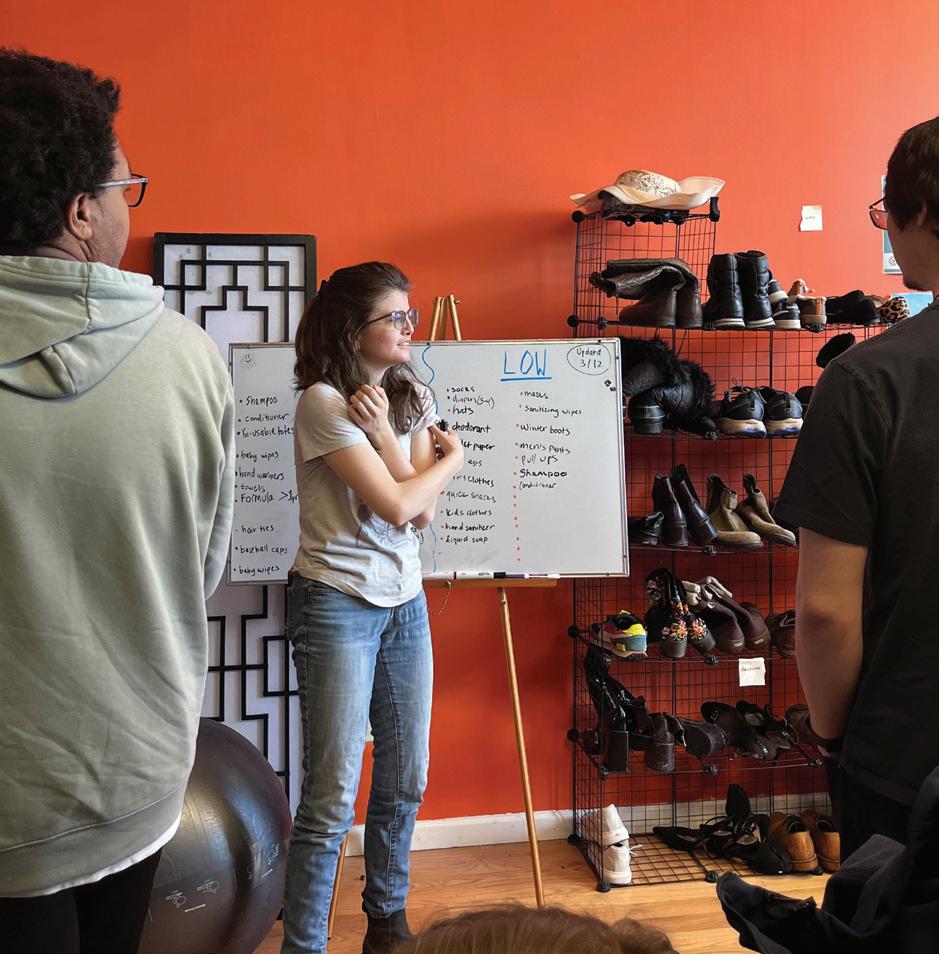
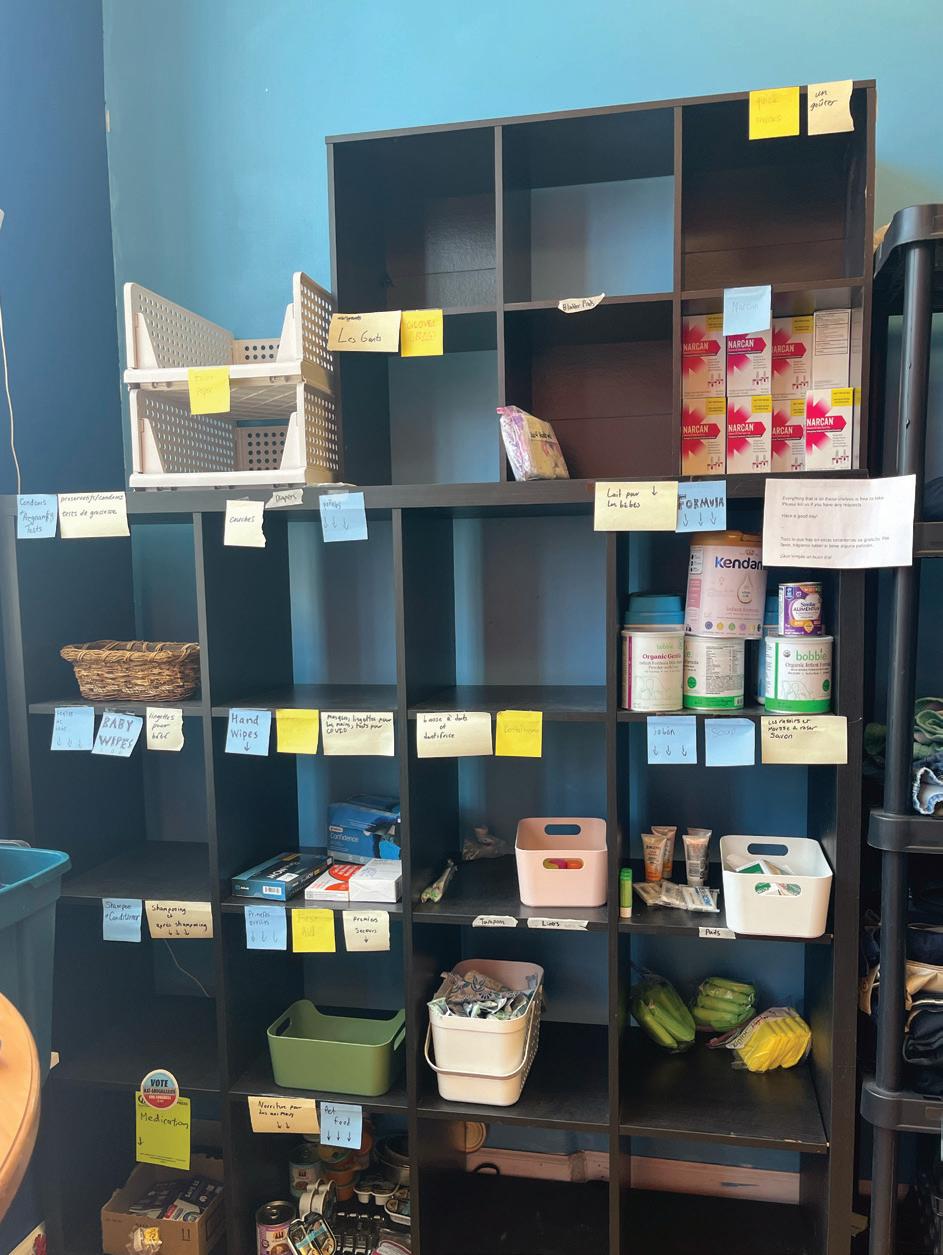
democracy running smoothly like volunteering, engaging with local government or signing petitions.
Cohrs attributes low voter turnout among Gen Z to a lack of civic engagement, which is why he views his community building and civic education work as so important. In his many conversations with students, Cohrs notes how often young people are frustrated by existing systems but have not learned how to make their voice heard. He thinks this is what makes campaigns like his and Abughazaleh’s effective.
“These campaigns do really well with young people, in part because they’re an introduction,” he says. “They’re an education to a system that we were all supposed to learn about, but none of us did.”
Indeed, around 2,000 students voted in this year’s ASG presidential election, an 11% increase from last year. Abughazaleh’s campaign also generated conversations among people who do not typically engage in primary politics, as nearly 150,000 people voted in the Democratic primary, in a district of just under 750,000.
Cohrs believes the civic habits young people build in college will extend to their engagement with higher levels of government.
“ASG for me is an avenue into civic
engagement more broadly,” Cohrs says. “If what we learn here in the university context is to ignore the government and not engage with it at all, that’s the pattern of belief we are going to take into the real world.”
Win or lose, both campaigns had an undeniable impact. Cohrs and Hu forced a reckoning about alternative campaign platforms and the system of ASG itself. The jumping in icecold Lake Michigan turned out to be illegal, but, Cohrs says, the University was also concerned that Cohrs and Hu had a decent shot of winning. They were called into meetings with administration officials.
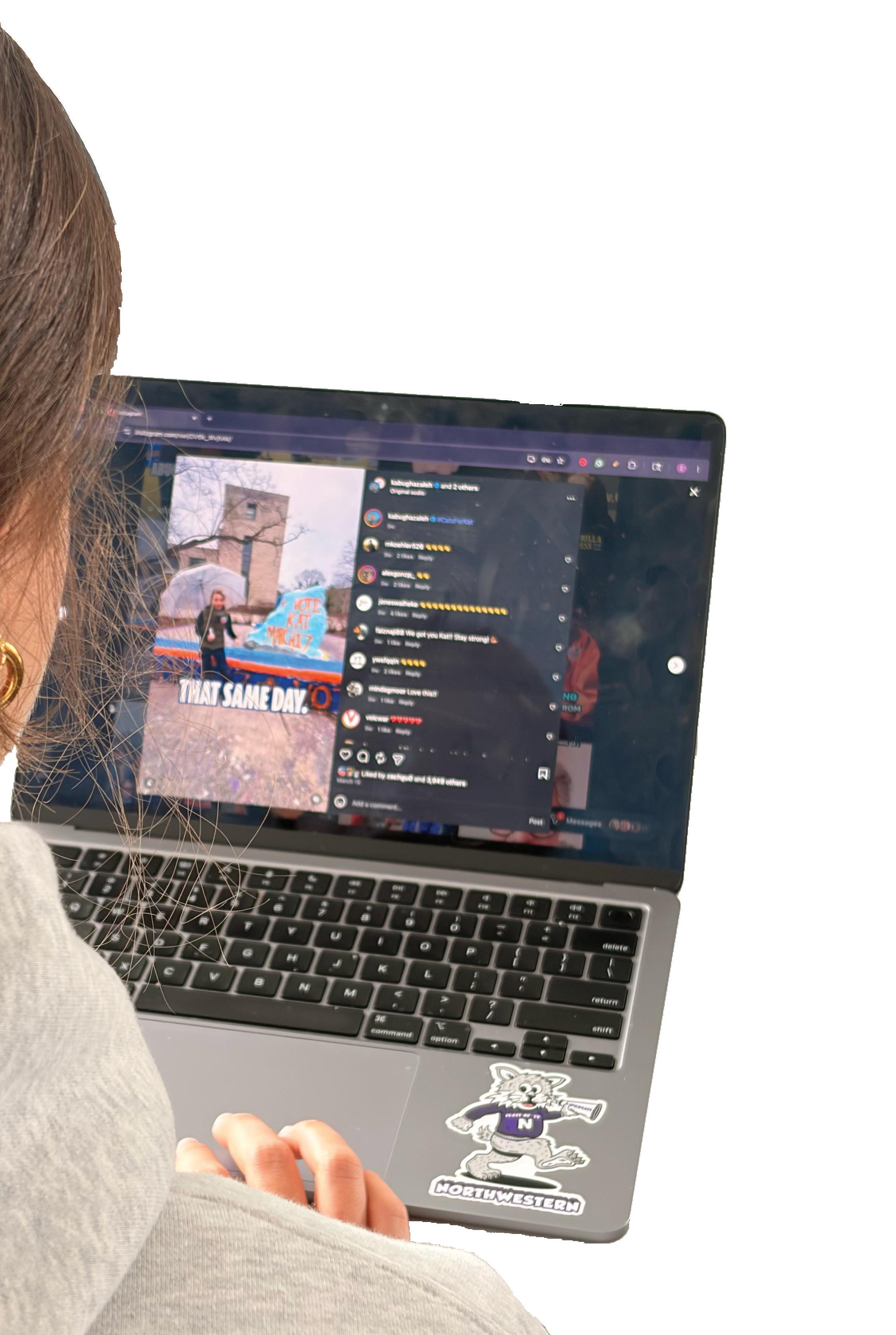
“[They] knew and thought that we didn’t know that ASG is genuinely a pretty powerful political force,” Cohrs says. “They control several million dollars. More importantly, they control the reputation of the University, in a way, because of the bully pulpit that you lend to someone who is the student body president, and the fact that this is the direct interface between students and administration.”
By forcing the University and ASG to take their campaign seriously, Cohrs and Hu were able to highlight the need for a more engaging and accessible student government.
“I think [people within ASG] had been aware that ASG has an engagement problem, but I think the magnitude of it has now been revealed to them,” Cohrs says. “ [Sisco] called this the most effective kick in the ass that organization has gotten in years.”
Sisco says the Cohrs and Hu campaign “massively” changed the way he and his Adarsh have gone about governing.
Their campaign also had impacts on the way ASG functioned as a whole. If they had won, the pair pledged to resign immediately, a declaration that forced ASG to pass emergency legislation to create a plan for what to do if elected presidents step down.

“Here’s the fun thing with a campaign like this — civic engagement wins anyway,” Cohrs says.
“Whether we win or lose, if the other campaigns step it up and do a better job of running a campaign, voter turnout is higher, debate more people are talking about government, more people are talking about the same thing that’s happening on
Tribush says working for Abughazaleh changed what she
“Going forward, I’ll always be advocating for campaign events and strategies that tangibly benefit the community from the getgo,” Tribush says.
Not only did Abughazaleh’s tactics bring in voters and volunteers who had never been so interested in a campaign before, she also forced the 9th District race to be more competitive and challenged the fundamental idea of politics in a Democratic primary race.
“We showed that politics can be more than backroom deals and reliance on the ultrarich,” Abughazaleh said in her concession speech posted on Instagram. “It can be helping others, it can be a community, it can be a team sport. We were able to change the conversation in this district and nationwide. We have done so much that has never been seen before in American politics.”
Though neither Abughazaleh nor Cohrs and Hu’s efforts were enough to win them their elections, their campaigns have continued on in some form. Typically, political campaigns are temporary, but Abughazaleh is trying to keep up momentum by following through on her promises of supporting the local community.
Her campaign offices have been rebranded as the headquarters of a new organization called KAPOW, which will try to replicate the model of her campaign in other races nationwide. Abughazaleh’s social media still posts weekly schedules of volunteer activities, mutual aid hub re-organizing hours, game and trivia nights and, of course, streams. Volunteers brainstorm ways to keep
the promises of the campaign alive. They’re in a transitional phase, trying to figure out exactly what comes next, but the mission remains the same.
“This is the start and not the end,” Abughazaleh said in her concession speech. “That’s one of the worst parts about campaigns in politics, among a lot of worst parts, we let momentum and infrastructure die as soon as an election is over.”
For his part, Cohrs is trying to channel the underlying motivations of his ASG campaign into lasting change. He has assumed the role of director of ASG’s newly created Department of Community Relations, and is working on other communitybuilding initiatives at Northwestern, addressing what he sees as the root causes of ASG’s ineffectiveness and the political apathy on campus.
“I see the campaign as a small part of a much larger project to make Northwestern a model of what a better democracy could look like, and I’m glad that this part of it took off, but there’s still so much more work to do,” he added in a followup email to North by Northwestern. “In short, we’re just getting started.”


In the wake of two major lawsuits, students reckon with online addiction.
WRITTEN BY INA CHOE // DESIGNED BY ILSE VON HEIMBURG
Every day, Gen Z spends countless hours falling down new rabbit holes: A “get ready with me” video turns into a breakup story, then a movie edit, then news about war, then a compilation of funny animal moments. This “doomscrolling” has become a wasteful pastime for some and a mindless ritual for others.
Critics argue this behavior is neither accidental nor a generational defect. A growing wave of lawsuits against tech giants claim companies intentionally design their platforms to keep users addicted and generate more revenue. Essentially, these companies benefit from the detriment of their users.
For college students, social media is a large part of their everyday lives — from maintaining friendships to keeping on top of clubs to staying culturally up-to-date. As essential as these platforms can be, they also contribute to distraction, comparison and burnout, a dichotomy many Northwestern students and faculty highlight.
As social media has become a larger part of young people’s lives, it has also attracted legal scrutiny regarding its effects on their mental health. Companies like YouTube and Meta have faced numerous lawsuits and indictments accusing them of knowingly creating addictive platforms, aware of potential injury to users’ well-being. Recently, this culminated in
litigation in California and New Mexico, where those companies were found liable for harm.
Key in these cases is Section 230 of the Communications Act of 1934, a federal law enacted in 1996 to protect online platforms from lawsuits regarding third-party user content. The law states that mediums like websites and applications are not the “publishers” of content, thereby protecting them from legal liability.
Section 230 has been credited with minimizing censorship and platforms’ legal risks, thereby allowing the proliferation of a diverse array of content. However, recent lawsuits against companies like Meta and YouTube investigate how this law unwittingly protects platforms and enables them to ignore harmful content.
In one case, K.G.M. v. Meta et al., a 20-year-old plaintiff accused four social media companies of intentionally designing social media apps to be addictive while failing to warn users of potential mental health risks. In March, the jury fined Meta and YouTube a combined $6 million in compensatory and punitive damages. That same month in a similar case from New Mexico, a jury ruled that Meta had to pay $375 million in damages for violating New Mexico consumer protection laws — specifically the protection of children from predators.
These cases marked a shift in holding corporations accountable for dangers to users, says Rhetoric, Media and Publics graduate student Genius Amaraizu. As a researcher in
the Humanity and Technoscience (HAT) Lab, Amaraizu studies technocultures, or how digital platforms operate in contexts of borders and migration.
“Six million is small money to Meta, small money to Google,” he says. “But the impact of that judgment, broadly speaking, is very, very impressive to the communities that have been calling for accountability for these massive companies.”
Social media first emerged in the 1990s when personal computers became mainstream. Platforms like Six Degrees and Friendster, which no longer exist or have since been rebranded, were among the first social media services. They included the core features of an individual account, allowing users to add friends and build their personal network. Later platforms like LinkedIn and Facebook, both created in the 2000s, further increased connection, enabling users to comment on and respond to other users’ content.

“These machines learn ‘you’: they recommend for you, they keep you there, and the more time you spend there, the more they profit.”
Genius Amaraizu
Rhetoric, Media and Publics graduate student
Medill professor Craig Duff specializes in multi-platform storytelling and has been an active observer of social media since its inception. As one of the first video journalists at New York Times and head of multimedia for TIME he’s seen changes in the industry firsthand.
Initially, social media primarily facilitated communication and improved information accessibility, Duff says. However, as platforms developed features like the continuous scroll and recommended content, this initial intention took a backseat. He notices many of his students have a hard time keeping off their phones for just 10 minutes at a time, something he attributes to addictions caused by these apps.
Amaraizu also ascribes this attention deficit to social media algorithms, which are designed to trap users in a cycle of doomscrolling.
“Social media is curated in such a way that it doesn’t want you to leave,” Amaraizu says. “You are spending five hours [on this app] because it’s designed to make that happen.”
One particularly harmful aspect of social media is how the algorithm traps users in “echo chambers” — online environments where viewers are constantly fed information and opinions that reinforce their own, Amaraizu says. While social media was initially created to make information and communication accessible, these days, it can polarize viewers and limit their exposure to diverse perspectives.
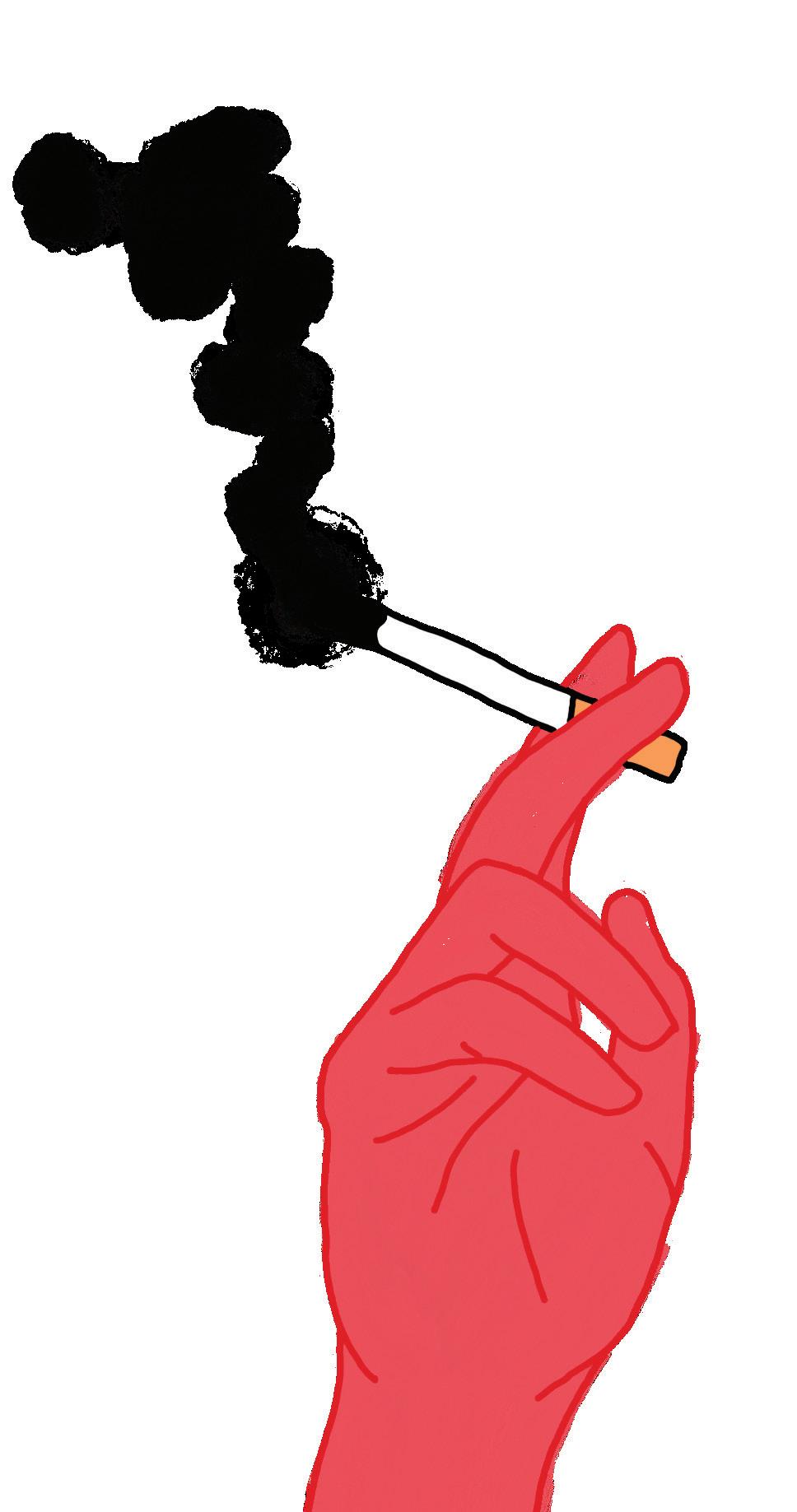
Based on research in the HAT Lab, Amaraizu says people have a natural tendency toward agreement and confirmation bias, which social media platforms exploit through cross-site tracking and cross-platform data sharing.



In practice, this means third-party trackers can collect information about users’ preferences and share them with other platforms. By tracking what a person clicks on, comments on or shares, applications disseminate users’ online engagement. This allows companies to personalize each individual’s experience across platforms, often through artificial intelligence. For users, this looks like targeted ads and “For You” pages.
“These machines learn ‘you’: they recommend for you, they keep you there,
and the more time you spend there, the more they profit,” Amaraizu says. “That’s the model of operation and that is not healthy for our society, especially for young adults and children.”
Critics have dubbed the social media industry’s recent legislation as tech’s “Big Tobacco moment,” referring to a sweep of lawsuits in the 1990s against cigarette manufacturers. The California and New Mexico cases mirror the tobacco lawsuits; in both, the plaintiffs argued that companies were aware of their products’ addictive and harmful qualities and continued to promote it for profit. However, oftentimes consumers are also aware of the risks.
“There’s this weird cognitive dissonance with social media, where everyone knows it’s bad for them, but they keep doing it,” Medill third-year Georgia Kerrigan says. Using apps like Instagram, TikTok and Snapchat made Kerrigan feel overwhelmed, overconnected and distracted. During her freshman year of college, she deleted all of her social media accounts.
Still, social media cases are harder to prove in court due to psychological harm, unlike the physical and clinical data used to support the dangers of smoking.
“Maybe it’s not going to necessarily give me lung cancer like cigarettes will, but it does affect the way that I go about my life,” Duff says. “I find myself scrolling absent-mindedly when I could be doing other things like having a conversation or meeting people.”
As an undergraduate research assistant at the HAT Lab, Communication third-year Chae Ryou studies technological refusal alongside dopamine detox.
“[It’s] the nature of social media — we’re always trying to present the best version of ourselves, and that can lead to comparisons and feeling insecure.”
David Sun Medill third-year
She points to a 2025 Washington Post case study arguing that scrolling has increased because viewers are waiting for a video that will truly entertain them. This predicted the chase for dopamine central to today’s attention economy, where users spend hours mindlessly scrolling, seeking satisfaction that will never come.
Medill third-year Lydia Plahn stays entirely off social media because she believes the harms of addiction, comparison and fear of missing out outweigh any potential benefits.
While she admits there are downsides to being off the grid, like having a harder time building what she calls “casual college friendships” through Instagram follow requests and direct messages, Plahn says she never feels disadvantaged or left out by not having social media.
Since middle school, she remembers thinking social media was bad for her mental health, even writing a persuasive essay about its harms for a class assignment. The essay focused on how social media amplifies feelings of comparison and insecurities regarding beauty standards. While she wrote the essay years ago, Plahn still agrees with the sentiment today.
Weinberg fourth-year Izegbuwa Adun explores this correlation between body image and social media as a research assistant for the Body and Media Lab. Adun says the effects of social media can be ironic: Younger users may feel more connected through seeing their friends in their feed, but in reality, they’re becoming more isolated by spending increasing amounts of time online.
Her research also exposed her to social media’s varying “body trends” and how they impact youth.
“If you’re seeing all these influencers or celebrities, they have these picture-perfect bodies through filters and whatnot,” she says. “That can impact youth’s growing minds, their mental health, since they’re like, ‘Why don’t I look like that?’”
Social media comparison can also present itself in other forms. For Medill third-year David Sun, it was in measuring his productivity and academic achievement up to other Northwestern students online.
“Seeing their lives really made me feel bad about my own,” he says. “[It’s] the nature of social media — we’re always trying to present the best version of ourselves, and that can lead to comparisons and feeling insecure.”
Sun’s experience motivated him to start creating realistic, Northwestern-centric content in the beginning of his junior year to empower himself and others. Now, he posts “day in my life” content on TikTok under the account @daviddsunn, with nearly 12,000 followers and 5 million likes.
In many of his videos, he talks about his “failures and flops” from internship recruiting, speaking to the camera just like he would a friend. As a content creator and consumer, Sun says he’s seen both sides of the coin: Social media can lower self-esteem and damage mental health, but it can also help users feel less alone.
“People can connect across the world, across time zones, about the experiences that you’re feeling and that’s gratifying,” Sun says. “I can make social media empowering for me because I am in control of what I post and what I do.”
By finding tech companies liable for addiction and harm, the cases in California and New Mexico are beginning to hold these giants accountable. However, Amaraizu says users also have a responsibility to be mindful of the harmful effects of social media. He suggests that users set time limits to selfrestrict their usage.
At the same time, he believes a majority of responsibility lies with the platforms and the government, which have financial, corporate and political incentives in the structure of these algorithms.
Amaraizu says there are multiple avenues the government can pursue to mitigate user harm — for example, adopting stricter platform-to-platform data sharing regulations like those in the European Union. Still, he says the first step is for these companies themselves to “engage in transparency in [their] algorithms” by publishing the mechanisms behind their addictive feeds.
Yet as a content creator, Sun views the situation more holistically. “I feel like everything is addictive these days. We’re always trying to hook audiences and we want people to consume our products,” he says. “That’s not a trait exclusive to social media. That’s the type of world that we live in now.”
Even as court rulings legitimize the harmful effects of social media, it’s still primarily up to users whether they will regulate their social media use.
“Every time someone tells me, ‘Oh, I wish I could delete social media,’ I’m always like, ‘You can do it. You should,’” Kerrigan says.
Ryou says the HAT Lab is researching practical methods to tackle social media addiction. For example, the lab is conducting experiments with Brick, a physical device that temporarily locks apps and notifications to limit distractions. She also examined a social media training program for middle school students called D.A.R.E., which uses threat-based content similar to the anti-drug campaigns many older Americans are familiar with, to inform students of the risks of phone addiction. The program purportedly teaches children about the potential harms of social media, like cyberbullying, trafficking and fraud, to guide them toward safe and healthy lives.
While these landmark trials may continue to uncover more ground to hold companies accountable, it is still up to the users to determine their usage of social media.
“[Social media] has expanded our communities, our access to information,” Amaraizu says. “That comes with a responsibility to make sure that this access won’t be the same thing that will jeopardize the existence and growth of our society.”
**Editor’s note: Sun previously contributed to North by Northwestern.





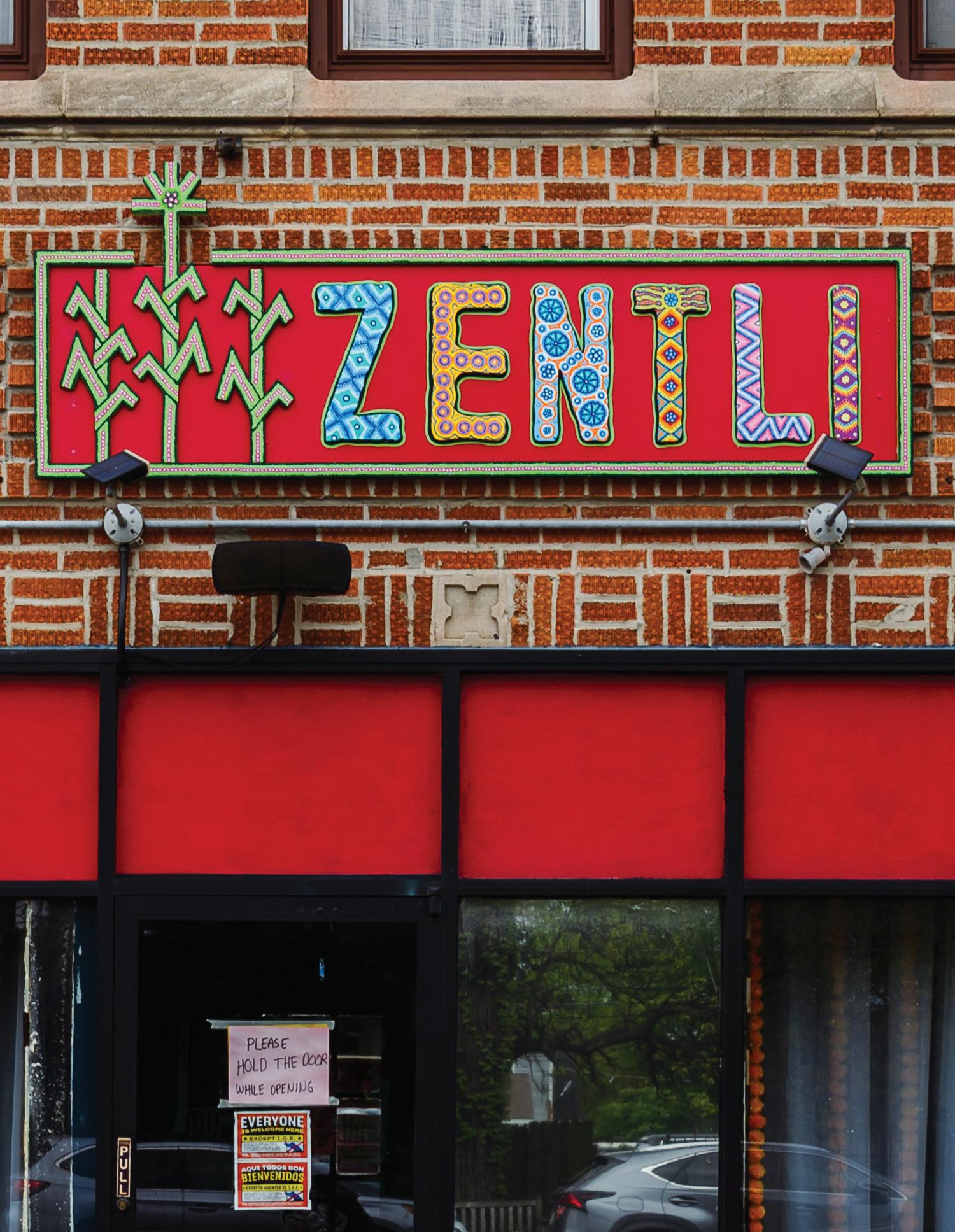
Artist and restaurateur Alfonso “Piloto” Nieves Ruiz blends culture, community and tradition in Zentli, an upscale Indigenous Mexican-inspired restaurant.
WRITTEN BY MYA COPELAND // DESIGNED BY LEILA DHAWAN // PHOTOS BY CARTER NISHI & LEILA DHAWAN
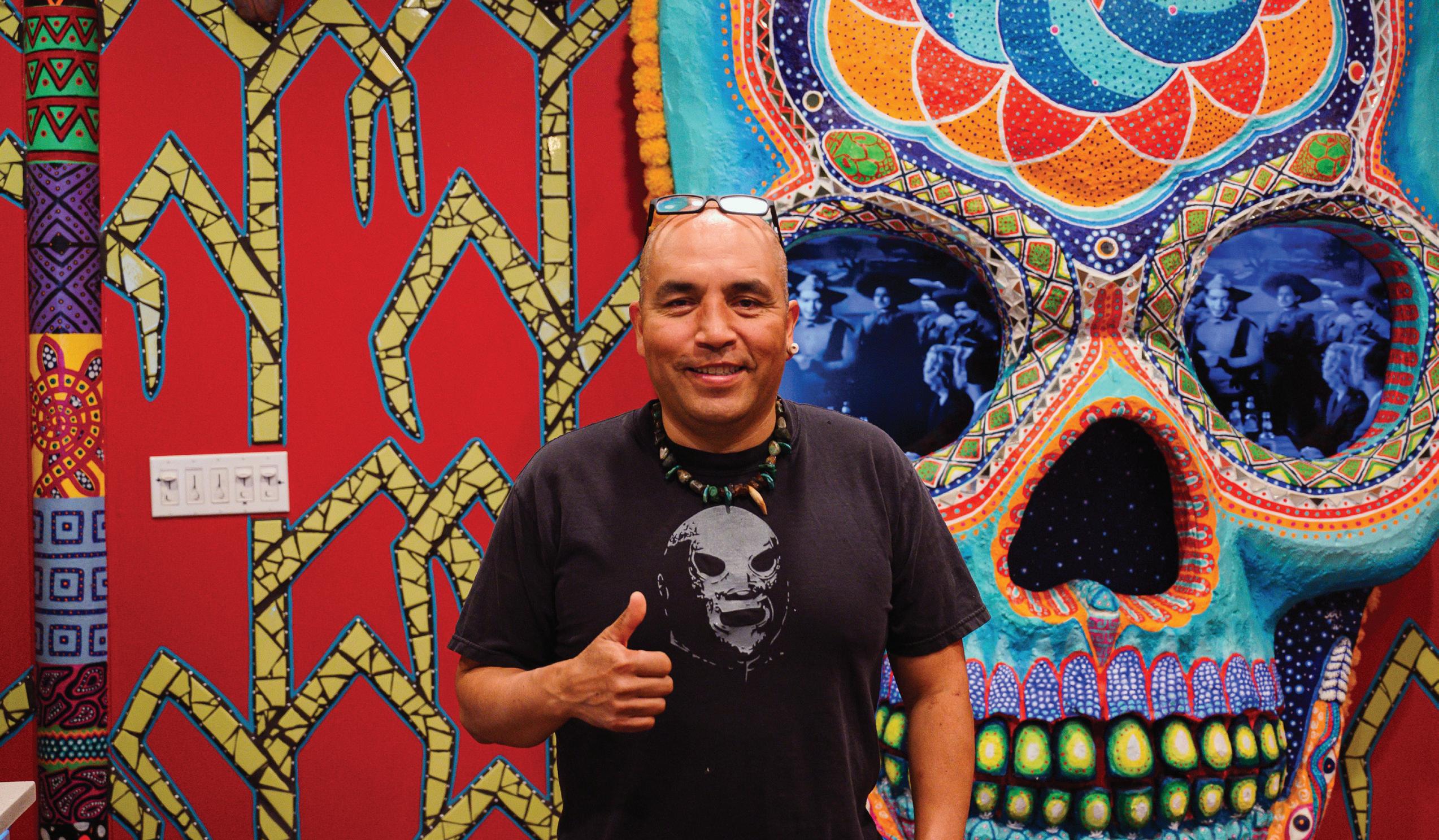
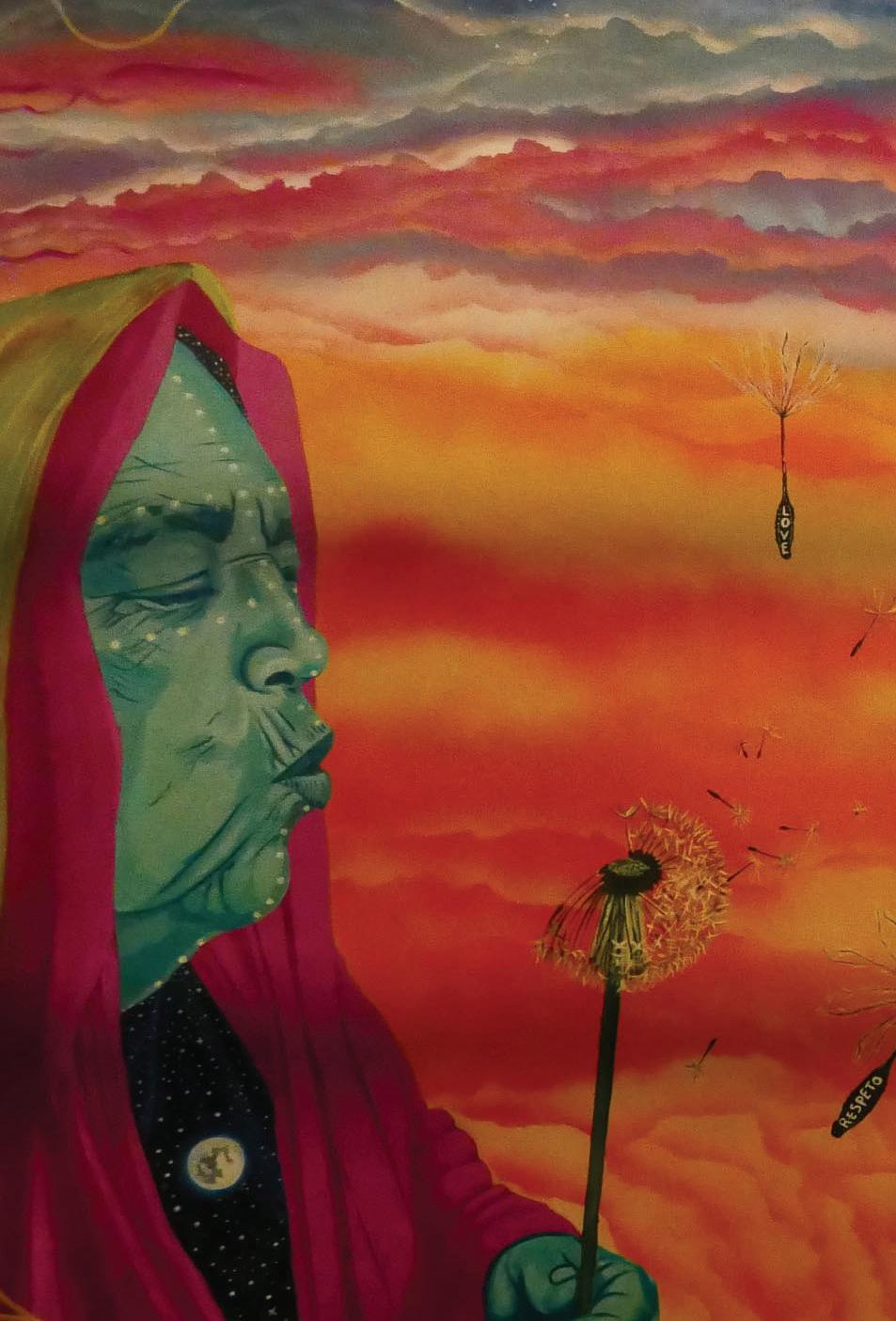
Afew minutes after 11 a.m., the door to Zentli opens, its window refracting the Sunday morning light. A group of women takes up a table by the front, surrounded by the artwork inside the space. Across from them is an installation by local artists: paintings hanging on the wall, interspersed with 3D elements and small sculptures. String lights cross the ceiling, framing a sculpture of a woman suspended above the restaurant, her limbs twining into branches.
Part restaurant and part art gallery, Zentli stands out on Dempster Street, sandwiched between a Burger King and the sprawling residential of Evanston’s West Village. Its bright red sign and colorful curtains contrast the surrounding sea of browns and beiges. That’s thanks to Alfonso “Piloto” Nieves Ruiz, owner and artist, who filled this space with his dreams three and a half years ago.
Piloto is a nickname from his elementary school-age days, playing American football with friends in Mexico. It was around that time Nieves remembers starting religious classes, because “most Mexicans were born Catholic by force,” he says. In the Bible, the man who oversaw Jesus’ crucifixion was named Poncio Pilato (Pontius Pilate, in English). The traditional nickname for Alfonso is Poncho, but Nieves’ nickname slowly morphed: Poncho to Poncio to Pilato to Poncho Piloto and then just Piloto. Given his work, he says it’s perfect. “A pilot of anything is just a trial,” he says. “I love it, because I feel like even if I don’t know how to do anything, I just do it and I just go with it as a pilot.”
Zentli means corn on the cob in Nahuatl, an Indigenous language spoken in Mexico. “In the Mexican culture, we say that we are the people of the corn,” Nieves explains. Much of the food served at Zentli is corn-based, rooted in Mexican tradition and Nieves’ own upbringing. Nieves had a hand in every aspect
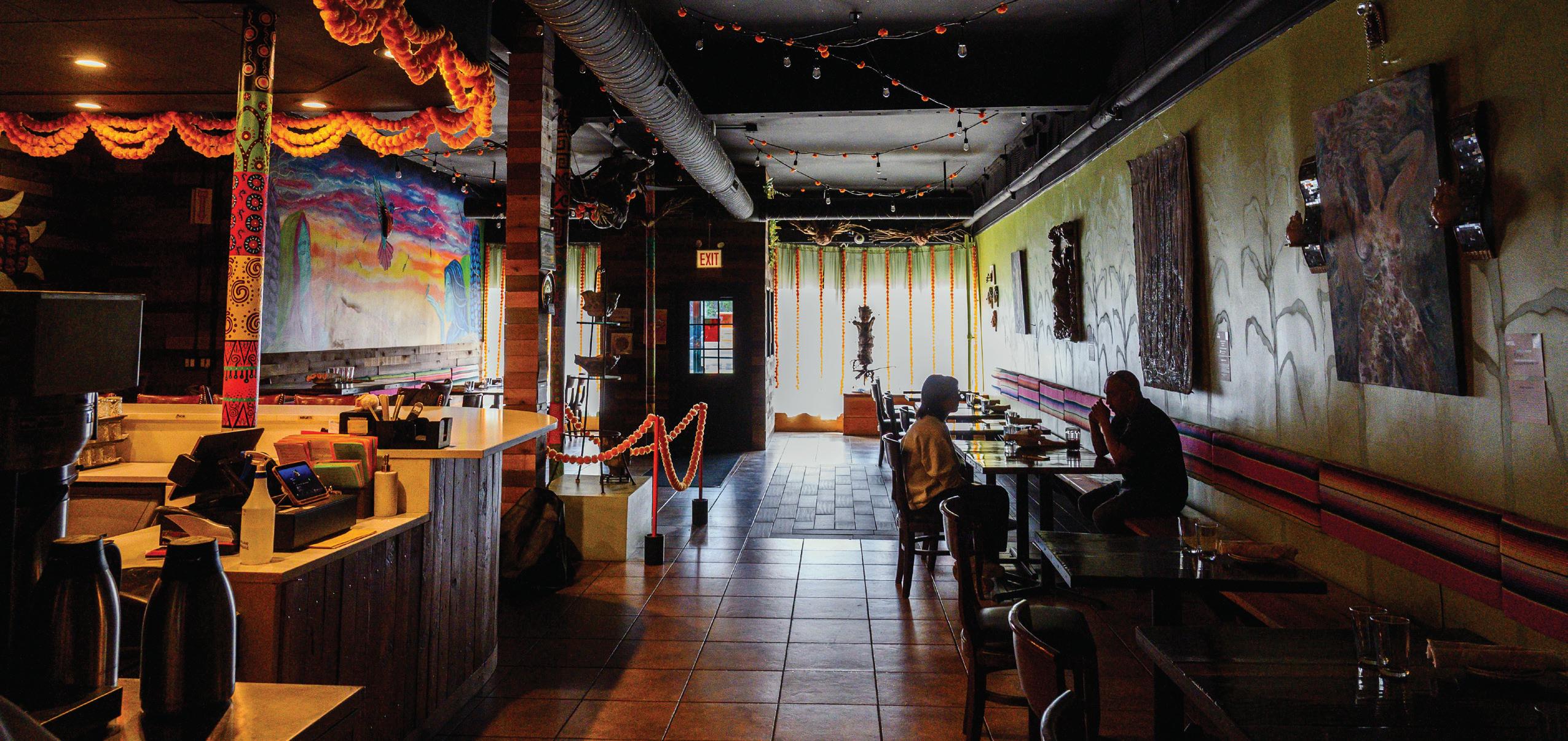
of the space. He created the tables from recycled materials, burning, scraping, painting and sealing each one. The bar is made of wood from a house in Pilsen, the neighborhood Nieves lives in now. Behind it sits a floor-to-ceiling skull he made from recycled foam and TVs. It looks like a tiled mosaic, blues and oranges almost tipping into neon against the red wall behind. The TVs play old black-and-white Mexican films through the skull’s eye sockets.
Zentli’s interior echoes with the voices of the community. Some of his friends helped paint dots onto the pillars bisecting the dining area, completing the geometric designs climbing up to the ceiling. Nieves rotates the artwork on display with each season. The spring equinox was in March, so the current artists are all women in honor of Women’s History Month; for the summer solstice in June, the artwork will be by LGBTQ+ creators.
Lining the streets near Zentli, yard signs share legal resources for immigrants in both Spanish and English. In a similar spirit, a sign on the front door defiantly proclaims “Everyone is welcome here.” In fall of 2025, U.S. Immigration and Customs Enforcement agents were active in Evanston. Neighbors rallied in support, offering to walk students home from school and holding vigils and protests.
When Nieves first moved to the United States, he was an undocumented immigrant. Now, he uses art to make political and social commentary. “There is resistance because there is oppression, and there is oppression because there is no respect,” he says.
Nieves grew up near a “clandestine” garbage dump in Querétaro, a small city in north-central Mexico. He created sculptures from the trash he scavenged, developing his art at a young age. He remembers his parents making food for the community.
His mother sold sopes (not to be confused with sopa, Nieves jokes, which means soup in Spanish) at church. She would
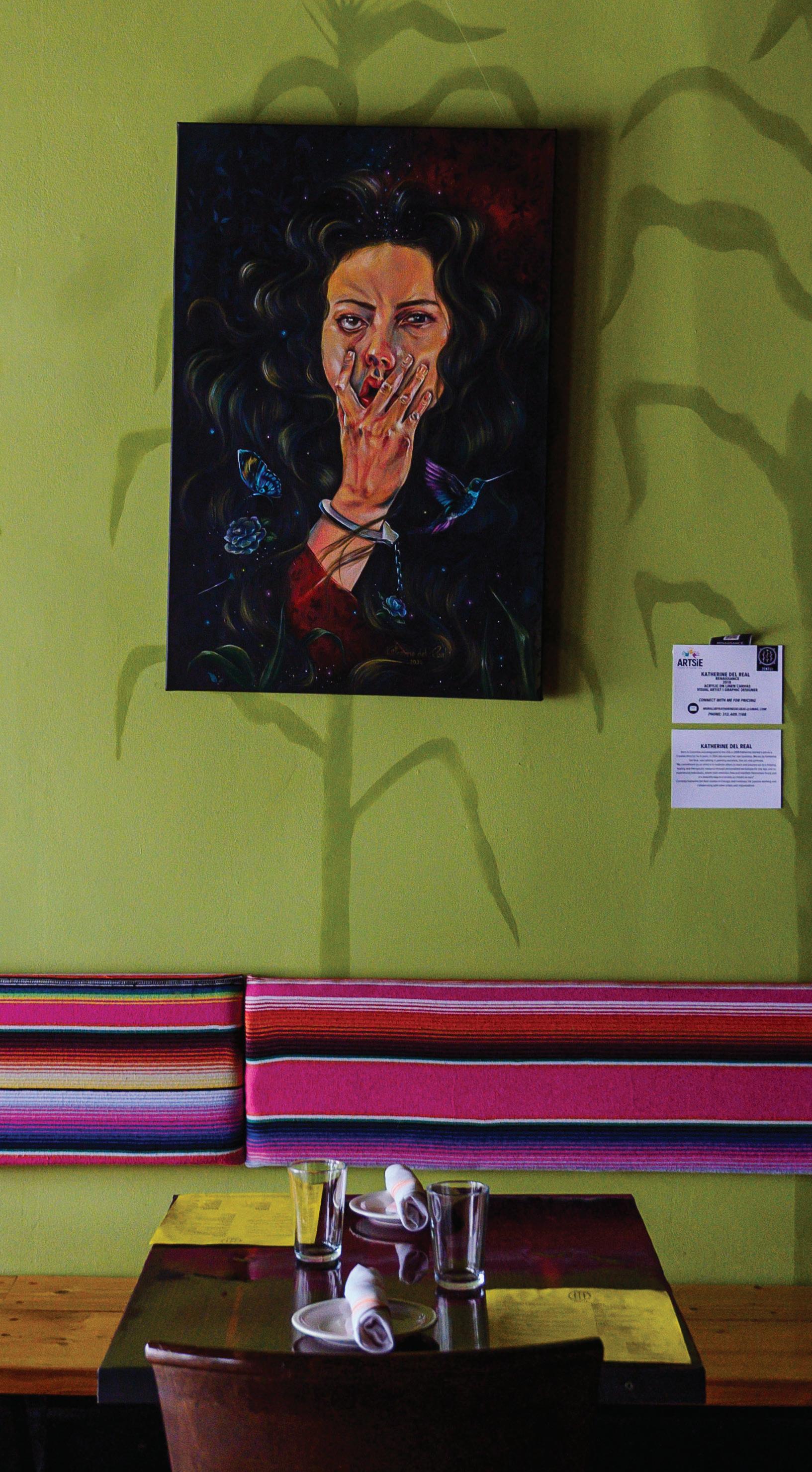
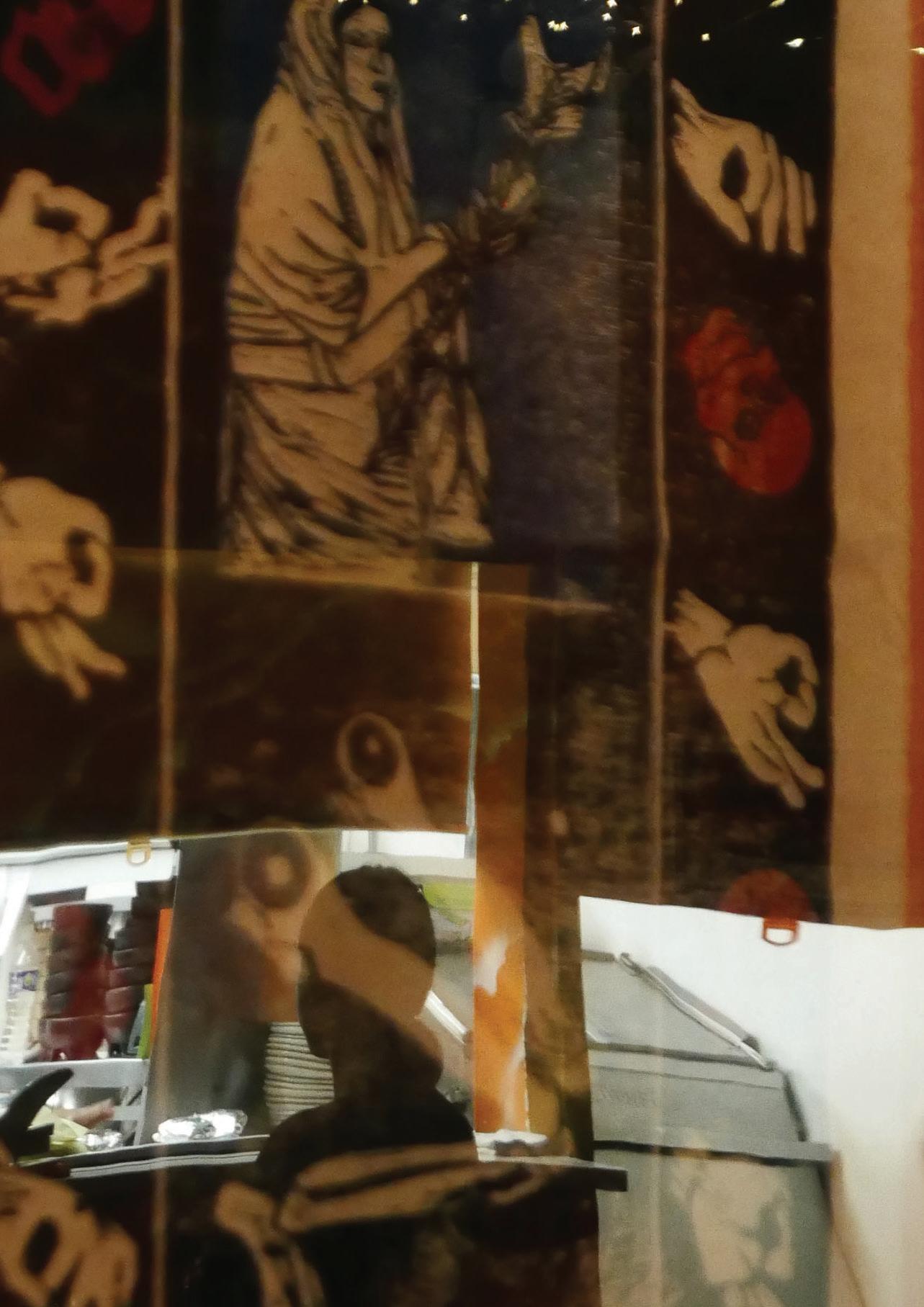
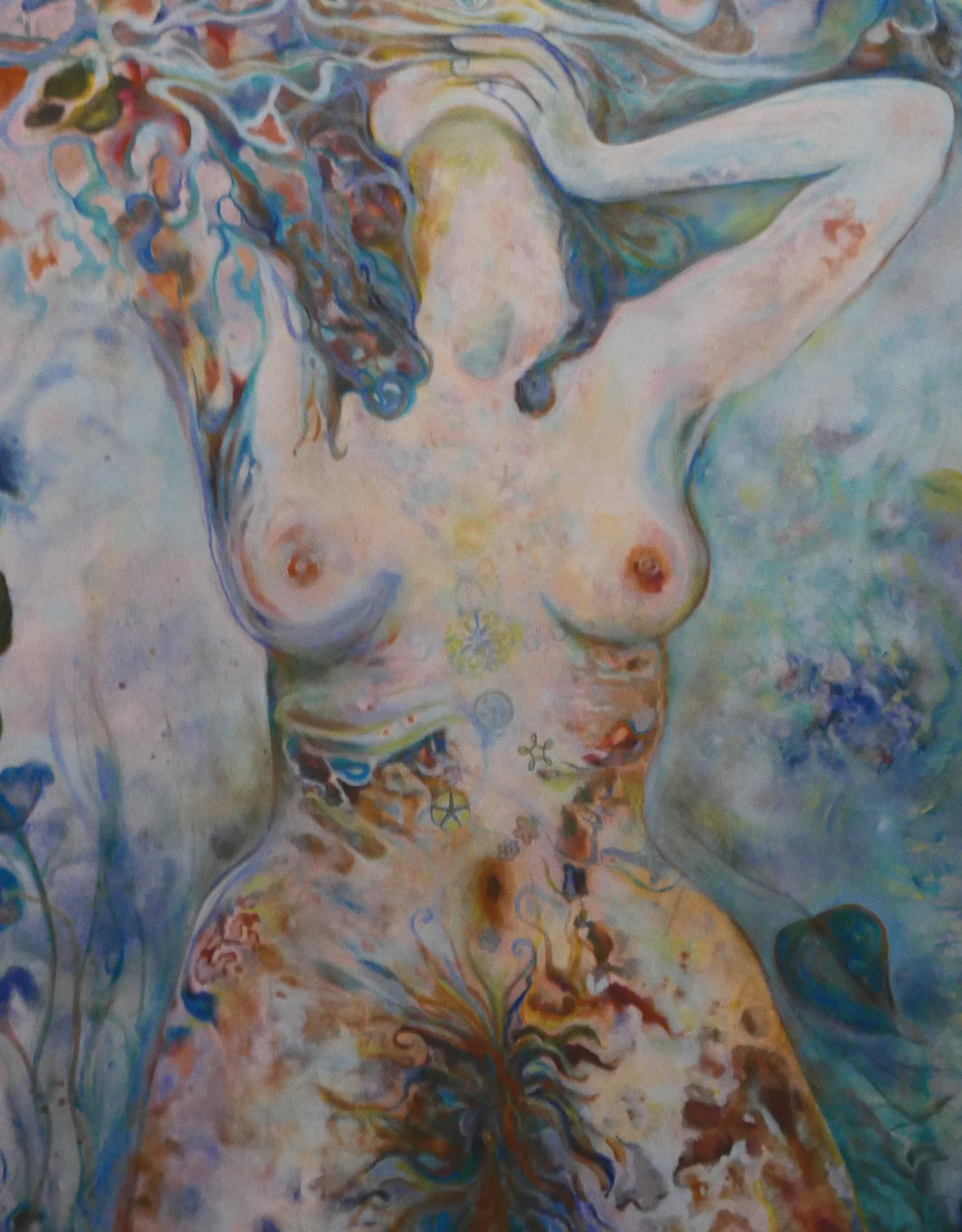
prepare a thick tortilla, pinched around the edges so the beans don’t spread, topped with cheese, onions, sour cream and a raw salsa verde made with tomatillo and serrano pepper. His friends who didn’t have money to buy any would come to his house, knowing his mother would always give them some.
Now, Nieves provides for his Zentli family in the same way. The group of women who arrived at the restaurant as it opened belong to a book club, he explains. A server brings them a plate of food before they’ve even placed an order. Nieves recognizes one — a regular. “I bring them a sope just to make them feel at home,” he says.
After moving to the U.S. as a young adult, Nieves worked in kitchens as a dishwasher. He wasn’t fulfilled and started reconnecting with art, which he realized was his calling. He’s primarily a sculptor, creating pieces from discarded materials he finds in alleys, a practice he started when scavenging trash back in Querétaro: bikes, TVs, couches and other evidence of the American “hunger for consuming things,” he says.
Nieves studied English at Lakeview Learning Center, an offshoot of Truman College. He painted a mural there in his early days, at the request of a teacher. Afterward, art shows began inviting him to display his work.
At one of these shows, he met Mexican artist Carlos Cortéz. By chance, Nieves rode the elevator up to the gallery opening. On
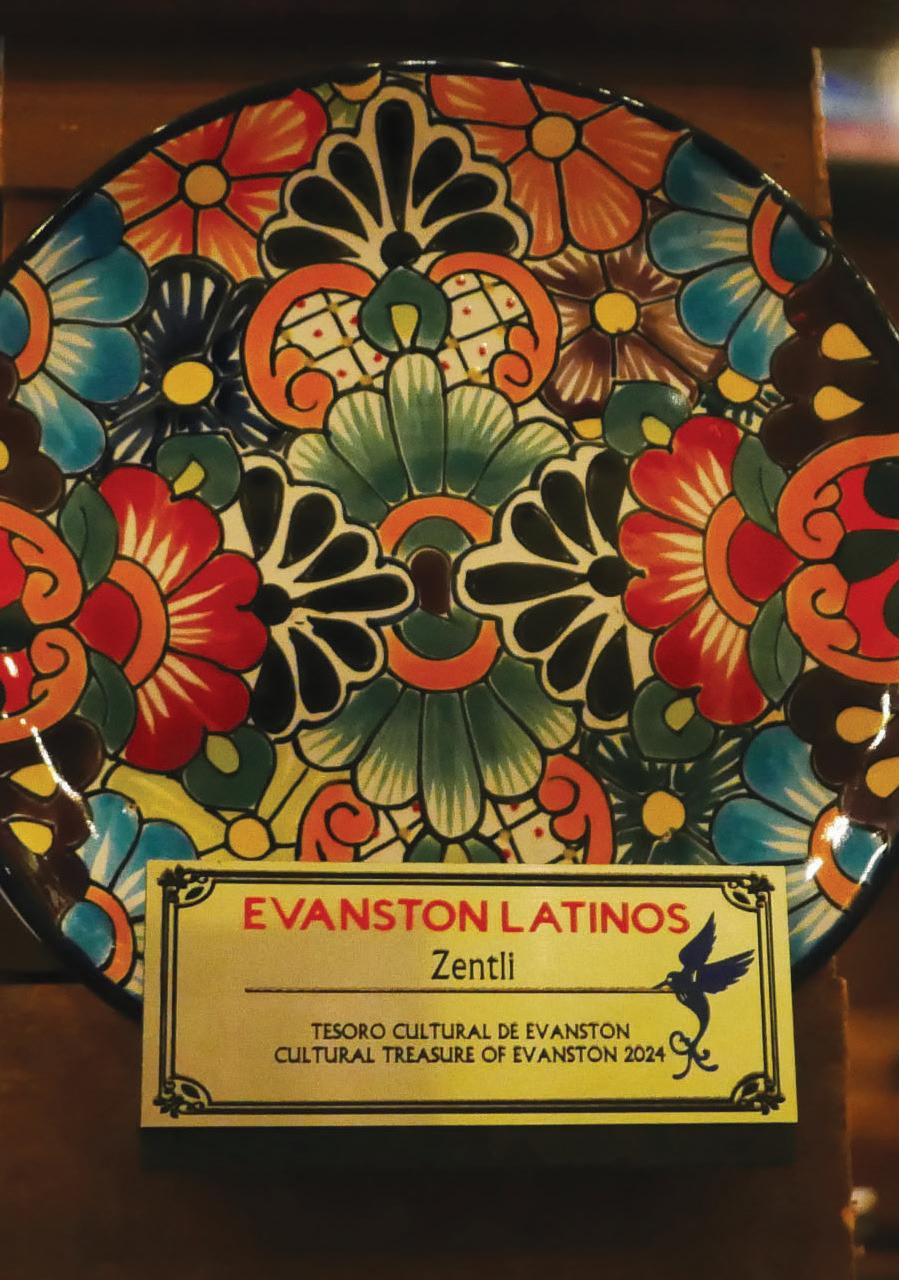
the ride up to the second floor, Cortéz told Nieves to look at his peers and see how many of them were still creating art after 10 years, instead of opting for a more stable career path. “You take a decision what you want to do,” Nieves recalls Cortéz telling him, “if you want to do art or you want to go for the money.”
Nieves received a lot of media attention at that show, and soon, the gallery invitations started rolling in. He won art contests, but because he was undocumented, he had to ask for prize winnings in cash.
He decided he wanted to be more serious about his art and went back to Truman College. There, he took a semester-long ceramics class. In just one week, Nieves had completed the required curriculum and moved to the next level.
That class was the first time he created sculptures with clay, instead of his typical recycled materials. “When I felt clay in my hands, I felt like the movie ‘Ratatouille,’ when the guy tastes the soup,” he says. “It took me to the river where I used to play with the clay, and I just felt connected again.”
The professor recognized Nieves’ skill as an artist and pushed him to pursue the discipline. But Nieves felt like his back was against the wall. “I was just so afraid to quit my job because I was undocumented. I didn’t speak the language well, but I felt like I needed to do something,” he says.
Nieves, along with a group he brought together, created a 16-foot-tall sculpture of the Statue of Liberty made of cardboard and discarded materials for the immigrant rights marches in Chicago of 2006. He loved the feeling of working together with a community to make a statement. It was the push he needed to take his teacher’s advice and focus on his art.
These days, Nieves describes himself as a “community artist,” and the environment in Zentli mirrors this ethos. He’s selftaught, but the people around him continue to inspire his work.
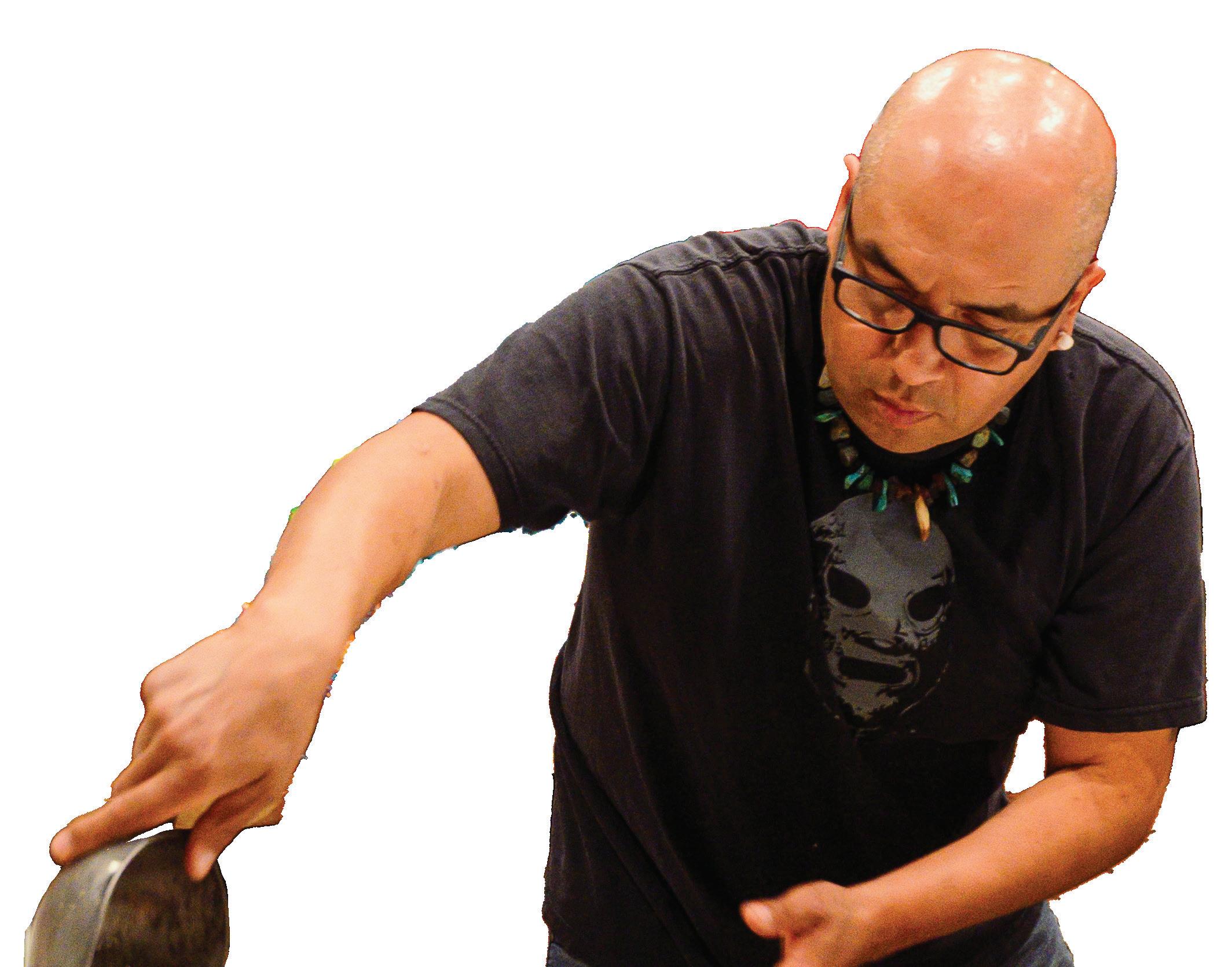
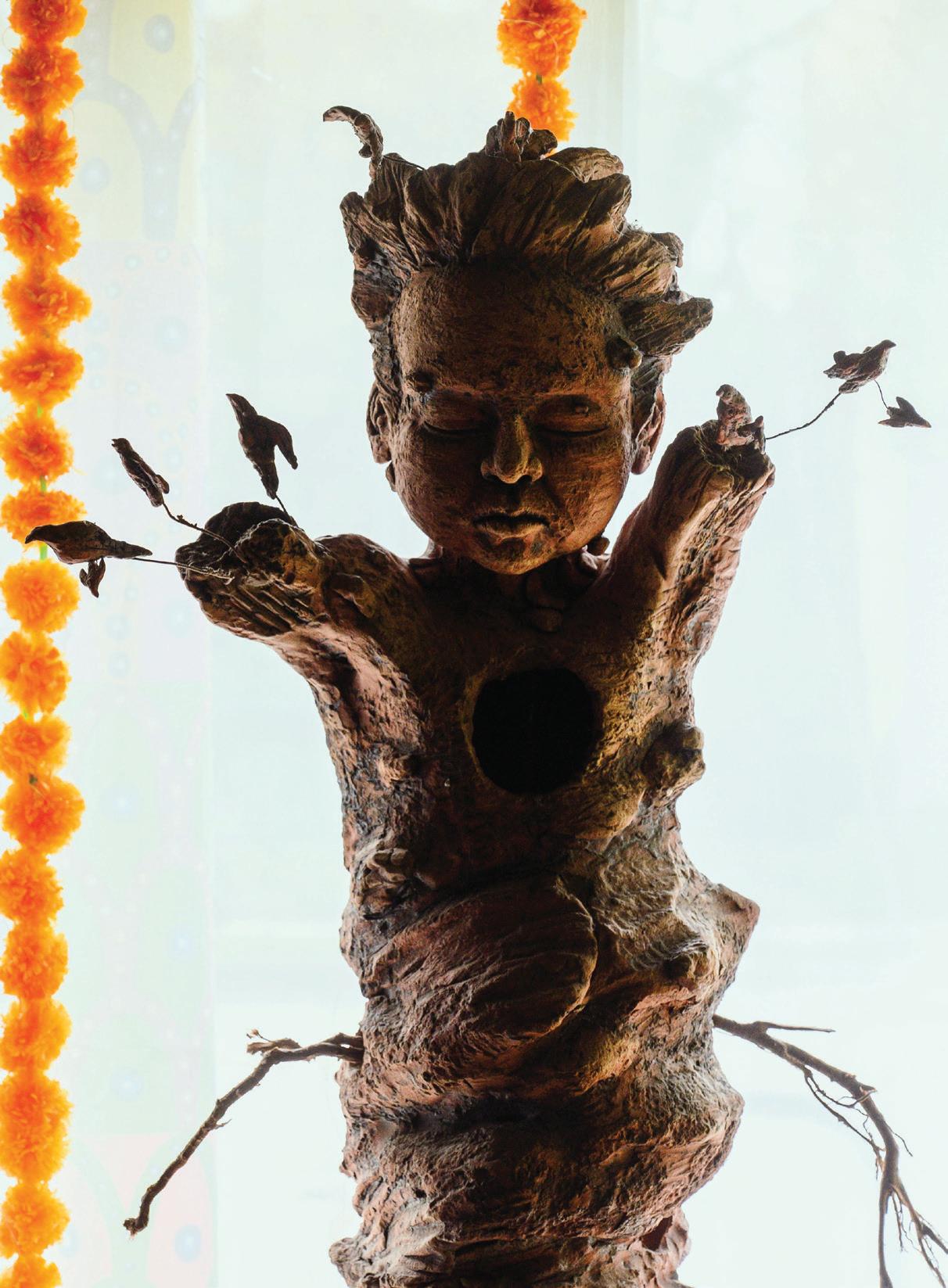
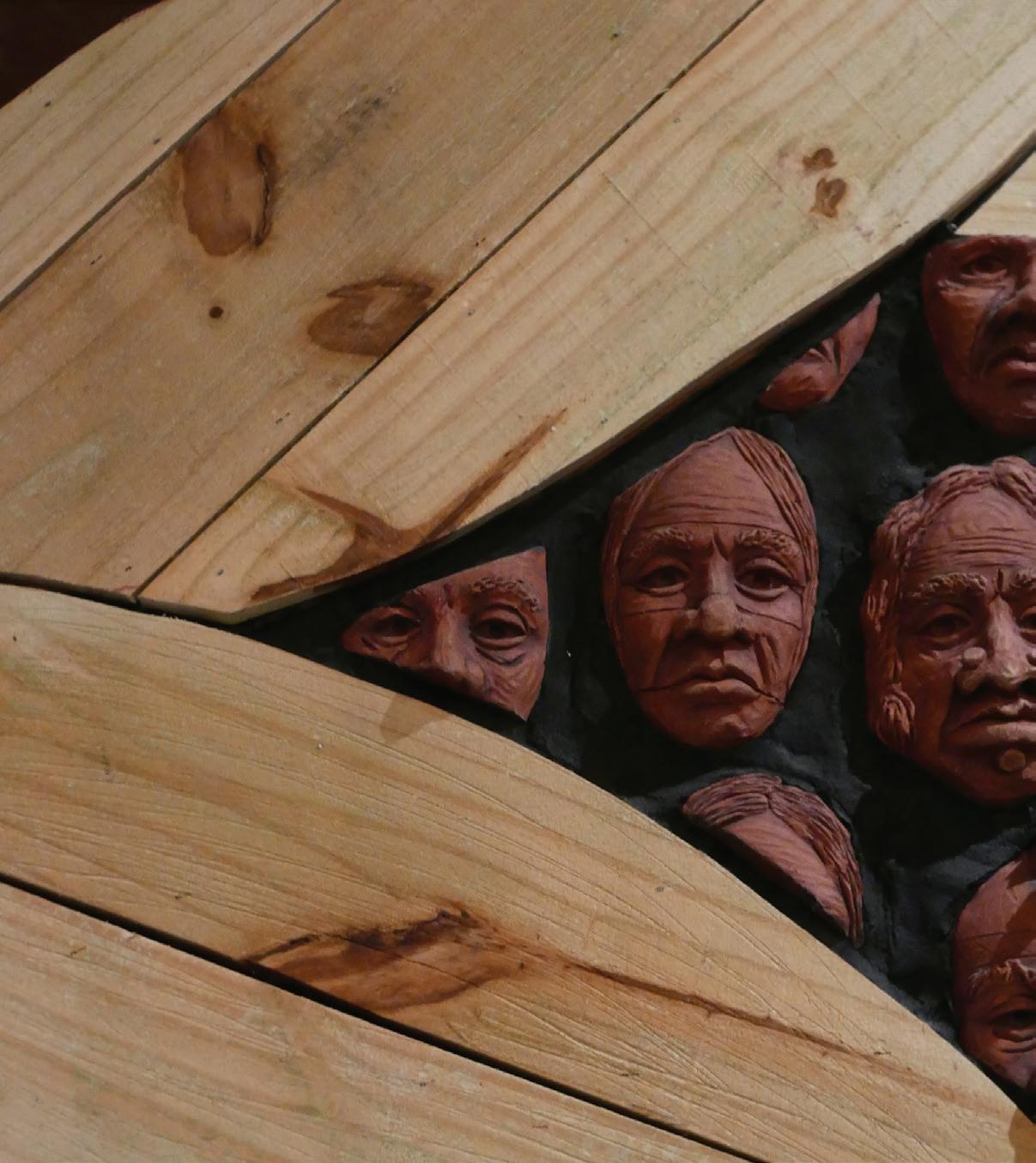
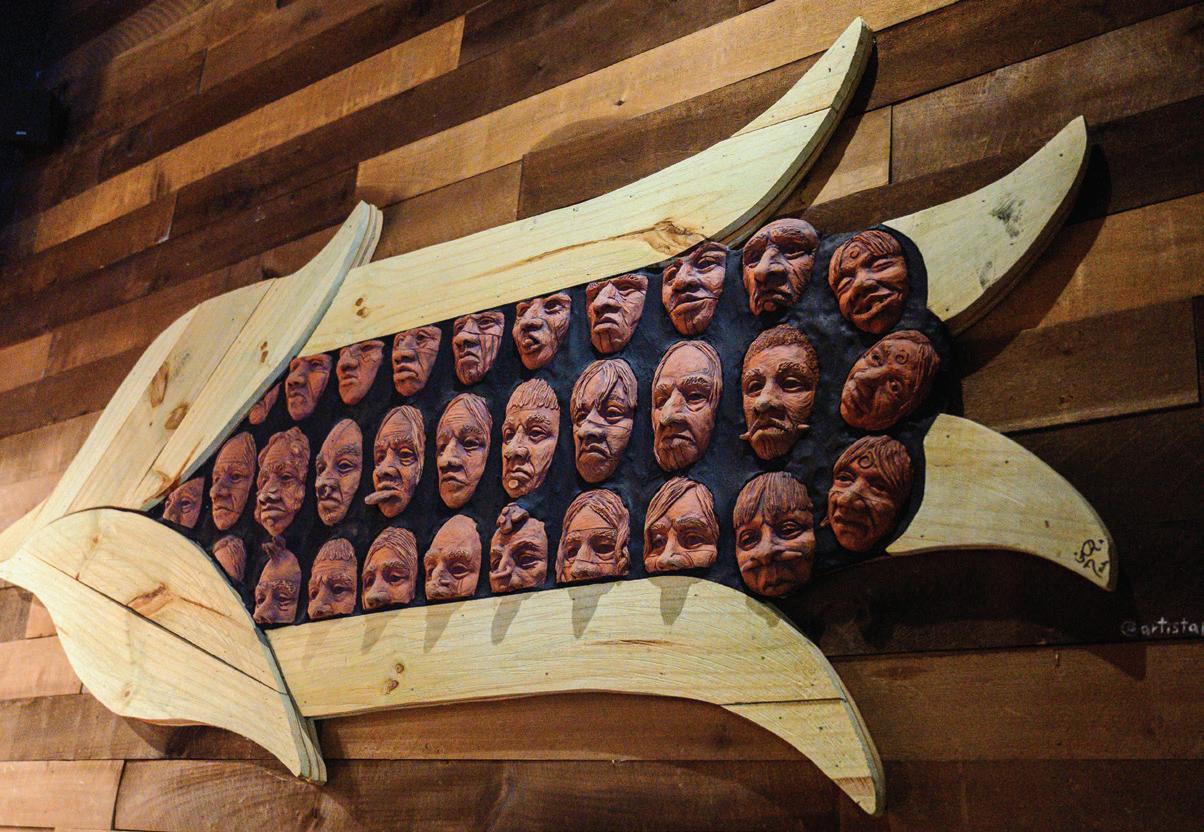
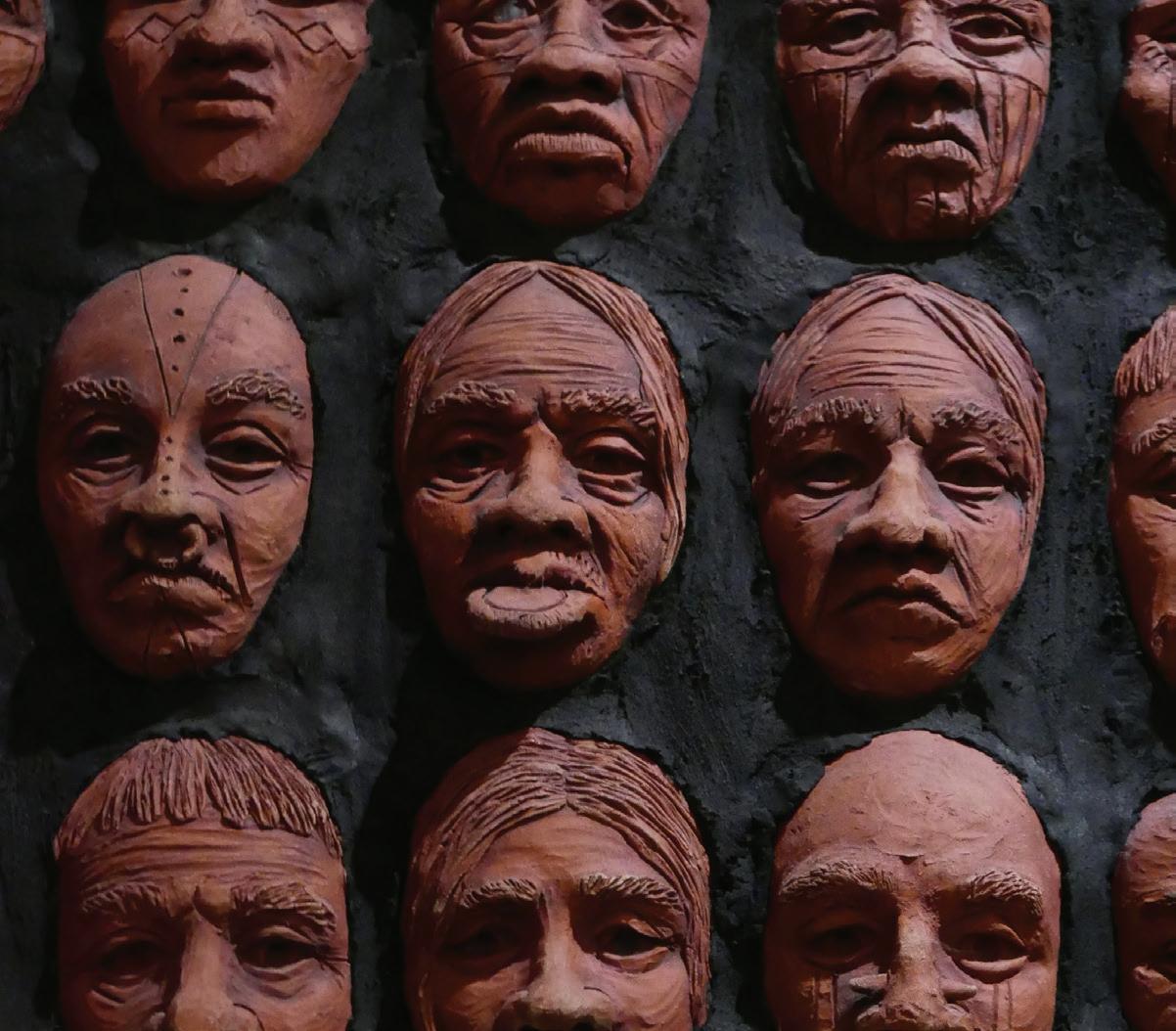
In 2007, Nieves’ studio in Pilsen burned down, along with the cash he had saved up from winning art contests. Instead of giving up, he took it as an opportunity to start over. He moved to Evanston and built community through delivering workshops and painting a mural at Dewey Elementary School.
After a few years, he returned to Pilsen, but soon, he saw an opportunity to both continue his work in Evanston and realize his longtime desire to open a restaurant. “I will just create an immersive space so people can see my vision, taste what I tasted when I was a child, what I grew up with, because of my mom and my grandmother,” he says. “It’s generational. The food is basically also another way of resistance and cultural lineage.”
Nieves remembers people telling him opening a restaurant was a bad idea. But he was no stranger to taking leaps of faith. Before one of his first gallery shows, he told his dishwashing job that he had to attend the show. His bosses gave him an ultimatum: If he left, he couldn’t come back.
“I came to the United States searching for the American Dream, and they only allowed me to be a dishwasher or something with hard labor, but no more,” he says. He went to the show.
Despite his grit, opening Zentli was no easy feat. Nieves originally hoped to open in 2019, but the pandemic halted those plans. Eventually, in December 2022, the restaurant opened. After nearly four years in business, Zentli now feels like the immersive space Nieves dreamed of, where customers can experience the artwork, music and food he ties together.
Nieves prioritizes giving back to the people who support Zentli. He also pays it forward to the community at large by teaching workshops, creating murals and working with programs like ARTSiE in Evanston, an educational organization engaging children through community arts programming.
“Community is the base of human beings,” he says. “This society and this structure that we have been born into, they tell us to focus as individuals, but we are not individuals. In ourselves, there are trillions of cells and 10 times that of microbiomes and all these things. So we are a community in our bodies.”
Nieves loves all his pieces displayed in Zentli, each central to the heart of the restaurant, but there’s one adorning the righthand wall that he especially enjoyed making.
Next to the bar hangs a wooden ear of corn, with faces nestled between the carved husk. Nieves crafted it to celebrate the Mexican ingenuity for creating corn and to honor more than 300 generations of Mexican culture. The faces symbolize different Indigenous groups in the Americas.
“There are all these different faces, but at the very end — or the beginning — [on] the tip of the corn are three children: two boys and one girl in the middle,” Nieves says. The piece argues we should empower and center women because we all come from them. The message continues down the wall where, fittingly, the book club ladies take sanctuary. Over them watches a mural of Nieves’ mother and son, the latter of whom listens as she passes down knowledge.
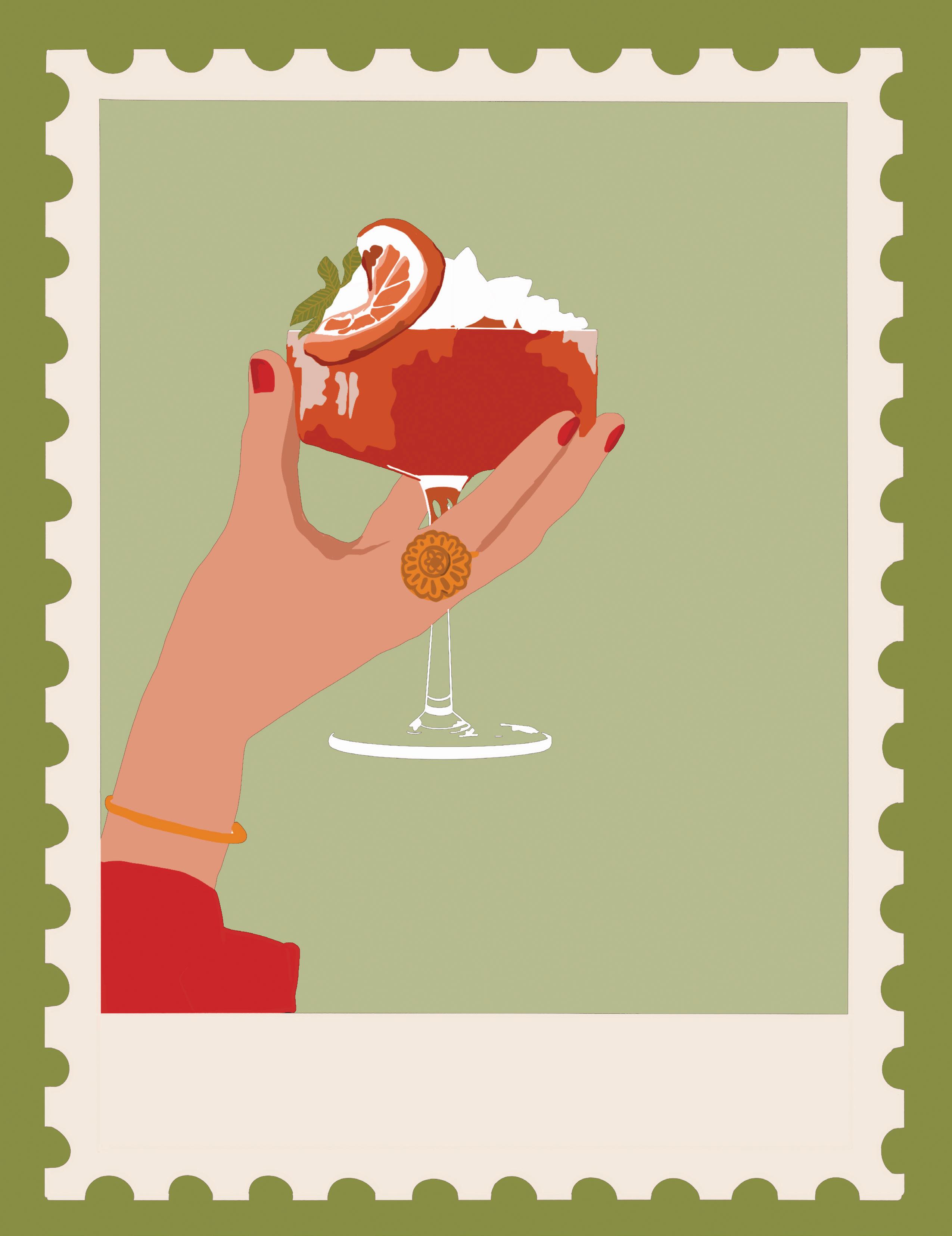
I couldn’t help but wonder... does true love exist at Northwestern?
WRITTEN BY CARRIE BRADSHAW // DESIGNED BY ILSE VON HEIMBURG
I used to think love was like a perfect pair of shoes — the right match would just fit. But after four years at Northwestern, my collection of frat sneakers has ballooned while my love life has veered in a different direction: almost-love, almostorgasms, almost-Mr.-Big.
The worst part was, as far as I could tell, I was the only one still shopping in the “almost” section. As graduation crept closer, my feed filled with hard launches and captions that suggested eternal love was not only real, but easily achievable. Even offline, the “L” word became unavoidable: My favorite lakefront rock — a refuge for my wistful smokes — now read, “Emma, will you mary me?” You’d think a $400,000 education would at least buy you a correctly spelled proposal.
Everywhere I looked, people seemed to be upgrading from shooters and situationships to champagne and sanctimony. And there I was, sitting on a rock some SESP major had spent a night painstakingly painting, contemplating how I ended up in the clearance section of love. Was I evolving or just being left behind?
As I traced my finger along the misspelled “mary,” I couldn’t help but wonder how everyone was crossing this line into commitment and adulthood but me.
Sure, my first romance at Northwestern didn’t get off to the best start. In the middle of my inaugural college kiss, my PA-group paramour paused to check his Fizz ranking. (He never cracked the top 100. We saw each other for another month and a half.) The next guy, at least, insisted on “focusing on me.” But by focusing, he meant playing “Passionfruit” by Drake on loop like it was guided mediation. And by “me,” he meant my neck, where his mouth stayed for the entirety of our Drakeout sesh. The hickey lasted longer than he did.
Maybe true love takes more than gliding from one ill-advised evening to the next. But I settled down for a bit, too! I found someone who checked off all the boxes: above 5’7’’, claimed to read Marx, had lined up a post-grad Goldman Sachs gig to finance my freelance columnist career. I could already see the view from our Park Avenue apartment. Just then, my blue Manolo Blahniks were snatched right out from under me. He dropped out of school to follow his true calling: getting wasted in Miami with a throng of teenage girls.

Still, with two weeks until graduation, I knew my Mr. Big was out there — hopefully somewhere closer than Paris. First up: Bible study. I finally said yes to the guy who stopped me every time I walked out of University Hall. After all this time, surely he’d be interested in locking me down, right? Wrong. It turns out his interest was less romantic and more theological. While I’ve always appreciated a man with a mission, trading Hermès for holy scripture isn’t exactly my calling.
Next, I tried my luck in Tech; behind one of those sterile doors, there had to be a future Bill Gates looking for his predivorce Melinda. I thought I scored the jackpot when a charmingly bespectacled engineer stopped me from entering a hazardous materials lab. Unfortunately, one whiff of his black turtleneck and I wasn’t sure whether he or the room was more toxic. Suddenly, marrying for money felt more like a health risk.
It dawned on me that if Saga reservations and top-shelf cosmos were the goal, then perhaps I was shopping in the wrong department. I did what any woman with a plan — and a good pair of sandals — would do. I marched my Prada slides straight to the center of Northwestern’s most eligible future financiers: the frat quad. Among the sea of quarter-zips and inflated egos, there had to be at least one man ready to offer me a plus-one ticket to his future penthouse life (or at least his end-of-quarter formal). But the only proposal I got was from the poor pledge manning Delt’s five rusting grills: $10 for a charred burger and a warm Bud Light.
And just like that, it hit me: If I couldn’t trust Michigan Avenue to deliver the perfect post-grad shoe, how could I expect Evanston to offer up the perfect post-grad man? Instead, I’ll take on New York City, single and free. After all, I’m sure I’ll have more luck finding true love (or at least better sex) in that city.


WRITTEN BY HANGOVER EDITORS // DESIGNED BY RAWYA HAZIN
After four years of endless coffee chats, late nights at Mudd and pretending The Deuce is a good college bar, your time at Northwestern is coming to an end. It may have been a Herculean feat, but you’ve ascended to the kingdom of the Gods: senior spring. We know you’re down to three classes and you’ve faded all your clubs. What better use of your newfound free time than Hangover’s graduation bucket list? Time’s ticking, so get to it. Score bingo before you walk the stage.

GO ON STAGE DURING DILLO DAY I N G O
SURVIVE 24 HOURS IN MUDD REVIVE YOUR WILDCAT WELCOME GROUPME
SKINNY DIP IN THE LAKE
TRY AN EVANSTON RESTAURANT YOU’VE NEVER BEEN TO GET INTERVIEWED BY A MEDILL STUDENT
HIT THE PRATTIC MIC SOBER GO ON A DATE WITH YOUR FRESHMAN YEAR MARRIAGE PACT HOOK UP WITH YOUR HOT TA INVITE NEIGHBORS TO A PARTY AT YOURS STREAK DOWN SHERIDAN
GET RUN OVER BY AN ATHLETE GET SLOSHED AT LUNA’S PAINT THE ROCK WITH A FAKE ORG MEET A CAMPUS CELEB
RIDE IN A NU POLICE CAR
BEFRIEND A LAKEFILL GOOSE HIT THE FRATS ONE LAST TIME GET BEHIND THE COUNTER AT LISA’S WALK BACK FROM THE DEUCE DITCH CLASS TO HAMMOCK ON THE LAKEFILL STAY AT TAO UNTIL BRUNCH NEXT MORNING CREATE A HOOKUP MAP WITH YOUR FRIENDS UNMASK WILLIE THE WILDCAT
WRITTEN BY SOFIA HARGIS-ACEVEDO // DESIGNED BY ALEX INGVOLDSTAD
Listen up, Wildcats. Summer is just around the corner, which means so are internships. Turn to LinkedIn for a sneak peek into what your peers will be up to, and let Hangover help you decode what those posts are actually saying. Be sure to congratulate them in the comments section!
Medill kid roughing it in the middle of nowhere
17h • Following
Things were looking pretty grim for a while. But finally, a daily in rural Nebraska gave me my big break, so I’m packing up my flannels and the guitar I never play and shipping out West. I will spend my days staring out the window, watching tumbleweeds roll past and spotting shapes in the clouds — and hanging out with my coworkers, of course. There’s Jeff, the 45-year-old father of two covering local sports. Then there’s Earl — he’s 80 and keeps busy by frequenting town council meetings. Do I wish I created a LinkedIn account straight out of high school and struck internship gold? Every day. But hey, The New York Times isn’t covering the town’s annual chili festival like me. So really, who’s laughing now?

9 Comments • 1 Repost
Political Science major who failed their background check for Capitol Hill internship 1 day • Following
Well, I was going to work on Capitol Hill for an Illinois congressman, but it looks like my digital footprint finally caught up. Turns out the federal government is not a fan of academic dishonesty cases. Or shoplifting five packs of Pink Whitney shooters. Or hazing allegations. Or vandalism charges. Or public indecency charges. To be fair, most of these were all from Dillo Day when I decided to try coke, molly and shrooms all in one go. Who can blame me? All that to say: I’m officially #OpenToWork — unless you work for Life Time, in which case, I didn’t want to work at your gym, anyway.

Economics student going into investment banking 3h • Following
I am proud to announce that this summer, I am selling my soul to the highest bidder (Goldman Sachs). Forget free time. For the next three months, I will be spending 100 hours per week making the world a better place for the rich. Sleep? Never heard of it. Why would I do that when I could be wealthy and unhappy? Don’t worry, though. I’m going to take this summer to reinvent myself, get crazy buff and figure out how to cook more than rice and unseasoned ground beef. I keep telling myself that this will be only two years of my life and then I’ll be out, but let’s be real: one bump of Wall Street coke and I’ll never look back.

25 Comments • 1 Repost
First-year who listened to their adviser 2 days • Following
Freshman summer doesn’t matter, right? So I’m going back to my high school job to work as a hostess for the Olive Garden near my house. My manager asked me in January if I was coming back, and I thought, why not? Who needs 15k for a summer? $15 an hour keeps you humble, hardworking and hungry. (Speaking of hungry, they could at least give me a free meal when I work a double.) So what if I’m not living in a Bloomberg-subsidized studio apartment in New York and going out with micro-influencers every night? I’d rather be here in Hagerstown, Maryland, eating unlimited breadsticks, smoking weed next to the dumpsters and relishing the sweet, sweet taste of minimum wage.
WRITTEN BY HANGOVER EDITORS // DESIGNED BY LINDA MONTEJO-BARTOLON
It’s spring in Evanston, and freshmen are racing to sign their very first off-campus lease a year and a half in advance. If we were their parents, we would probably say it’s a bad idea to rush into a legally binding contract with convenience-based friends for a dilapidated house that still carries the ghosts of frat boys’ past. But that’s not what we’re here for! Good news, freshmen: You just booked a one-way ticket to adulthood, freedom and the world of Pinterest-perfect interior design. Those peeling walls are a blank canvas for your hopes and dreams, and we have scoured Facebook Marketplace for (mostly) cheap finds to turn your first house into a home. Let’s go shopping.

Vegetarians, maybe skip this one. Fresh from the forests of Waterford, Wisconsin, this hanging head will transform your living room and pair perfectly with your chic hunting rifle and camo pants. Taxidermy is so back (but don’t tell PETA). So what if your landlord doesn’t allow pets? Having to take a dog for a walk is overrated, anyway. Sure, this bad boy may not be as lively as a puppy, but you can still give him a creative name. This interior decision choice takes guts and vision –– or lack thereof –– and shows all of your future sneaky links you can get your hands dirty. Plus, it’s a multi-use decoration: You can hang your keys on the antlers or use it as a coat rack.
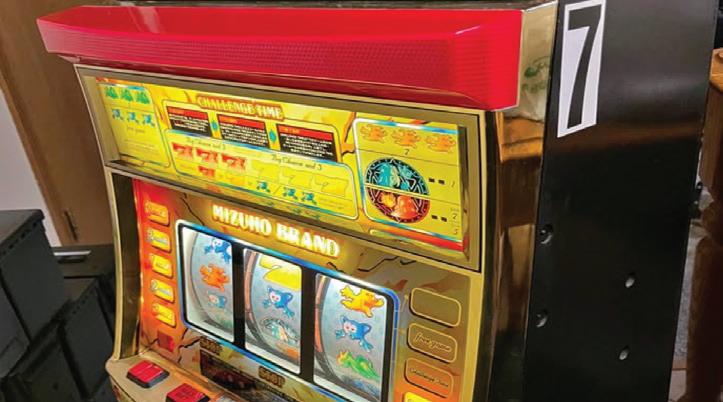
Slot machine SOLD

The repurposing ideas are endless. Use these barrels as drums to enliven your pregames or as extra laundry baskets for when the monthly date rolls around. Enjoy some sober fun by hurling these barrels at your roommates who never clean their dishes or remember to knock before barging into your room. Who knows, you could even make a little extra money renting them to SNU for their annual Kentucky Derby darty!


In the rough and tumble world of Evanston, you always need to be vigilant against intruders. Luckily, these stylish helmets are sure to ward off even the stubbornest of unwanted guests. Scare off the mouse under your cabinets or your roommate’s annoying partner who’s over for the fourth time this week. When your landlord shows up for an inspection and you answer the door wearing one, he’ll immediately turn around. Inspection cancelled. You’ll never hear about that hole in the wall again.
An incredibly functional addition, this is a great way for you and your roommates to allocate chores without getting into arguments. Trying to decide who takes out the trash? Pull the lever. It will settle more disputes than any therapist ever could.
Rumor has it women love firemen. If you have been waiting for your heroic moment to save a cat in a tree, you need this fire truck. If your friends tend to get stuck in weird places after going out, you need this fire truck. If your soon-to-be roommates grew up with a private chef and have never touched an oven before, you need this fire truck. Reach new heights for capturing your Instagram story sunrise pictures. Use it as a smoking platform and save your friends from secondhand inhalation. Lay high above the clouds on a sunny day and get that spring tan in time for Dillo — no tan lines in sight.
There’s no need for a tedious instruction manual or a skillful McCormick student to install this revolutionary addition. This handy slide will offset all those extra steps you get walking from the corner of Foster and Ridge to your North Campus classes. When your parents question this seemingly juvenile investment, remind them this is a safety purchase. You can’t trip on the stairs drunk if they are covered with this (mostly) clean three-part stair slide. For extra speed, add some soap and water or beer. Slide at your own risk; NBN does not claim liability for any harms resulting from purchase.
Take a shot at this quiz to find out what cocktail best matches your personality.
WRITTEN BY HANGOVER EDITORS // DESIGNED BY JULIA VOLMAN
It’s 10:47 p.m. on a Friday night and you’re in a basement. The walls are sticky. The music is loud. The drink options are… White Claws and Svedka in Solo cups? Seriously? College is hard enough. You deserve a drink as vibrant and dynamic as you. We’re not saying alcohol is the solution to all your problems, but if high school chemistry class taught us anything, it’s that a solution is two or more substances mixed together.
1. WHAT DOES YOUR CLASS SCHEDULE LOOK LIKE?
A) 9 a.m. to noon everyday so I can hit the gym at 1 p.m.
B) I don’t go to class — any lecture is optional if it’s big enough
C) Back-to-back classes with a 10-minute lunch break
D) A carefully crafted masterpiece with no classes on Friday and none before 11 a.m.
2. WHAT’S INSIDE YOUR FRIDGE?
A) Stocked and color-coded Tupperwares (I meal prep)
B) Oat milk, chia seed pudding and Trader Joe’s soup dumplings
C) Frozen pizza and half an onion
D) Taco Bell that I DoorDashed last night
(Answered mostly A)
3. WHAT’S YOUR GO-TO ORDER AT NORRIS?
A) Black coffee from Starbucks
B) Veggie pizza from Forno
C) A turkey wrap from the Farmer’s Fridge vending machine
D) Fried pickles and an Angry Orchard at Luna’s
You’re driven, decisive and have an opinion about everything, including the size of the ice cube in your drink. You’ve seen your dad order this a thousand times — you swore you’d never become him, but it’s time to embrace it. This cocktail order exudes as much confidence as you, and it might just land you that Morgan Stanley return offer.
(Answered mostly B)
People might say you’re pretentious, but you prefer the words sophisticated, freespirited and unbothered. You romanticize Tuesday afternoons and constantly start new creative projects. Most importantly, you make sure everyone knows you did NOT find this drink through TikTok. Instead, you found it while having aperitivo in a small town in Italy where you were the only tourist.
4. WHAT’S YOUR TYPICAL THURSDAY NIGHT?
A) Practicing consulting case studies
B) Smoking a joint and taking a sunset walk along the Lakefill
C) Locking myself in a study room in Mudd
D) Checking out a new speakeasy in West Loop
7. WHAT’S YOUR GO-TO STUDY SPOT?
A) A table in the back of Newport Coffee House
B) My house’s makeshift living room with a questionable but comfortable couch
C) An isolated cubicle in Main, which I reserved from 9 a.m. to 5 p.m.
D) Studying? In spring?
5. WHICH DISTRO ARE YOU TAKING?
A) “Earth and Planetary Science”
B) “Sex after Shakespeare”
C) “Emotional Intelligence”
D) “Marriage 101”
6. IF SOMEONE SAYS THEY HAVE NEVER HEARD OF NORTHWESTERN, WHO ARE YOU REMINDING THEM WENT HERE?
A) Hugh Hefner
B) Julia Louis-Dreyfus
C) George R. R. Martin
D) Meghan Markle
8. HOW DID YOU SPEND YOUR DILLO DAY?
A) Tried a lot of new things... the exact memories are hazy
B) Hung out with the artist (I’m on Mayfest)
C) Camped out on stage all day to secure a good spot for Malcolm Todd D) Hopped between darties, stopped at D&D for some fuel, took mid-day nap and started all over again
(Answered mostly C)
9. WHAT CLUB ARE YOU APPLYING TO NEXT FALL?
A) AKPsi
B) A&O
C) NU Formula Racing
D) Sailing
Don’t listen to warnings about mixing caffeine and alcohol. This drink is perfect for high-achievers like you who need that extra boost! You give 110% to everything you do (when you’re not burnt out, hibernating in your dorm). Luckily, the drink’s three-bean garnish represents health, happiness and wealth, so keep sipping: You’re on your way to that 4.0.
(Answered mostly D)
You’re the life of the party, and you know the best nights start with a heavy pregame pour. Haters may say vodka, rum, triple sec, tequila and gin have no business being in the same glass, but that’s okay; not everyone is cut out to be the most fun person in the room. Sure, the drink’s swampy color is a glimpse into your night’s end, but that’s a problem for future you.