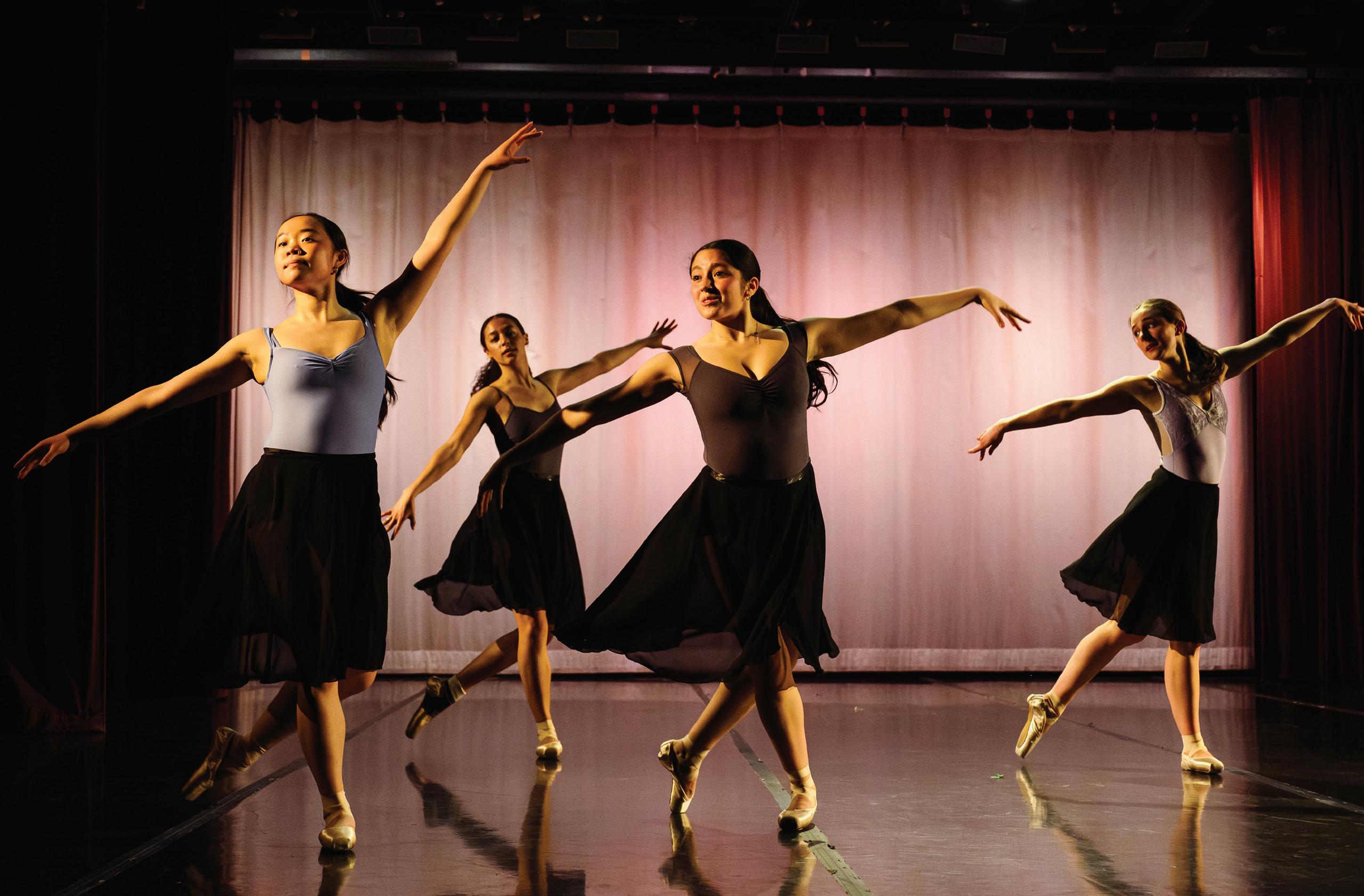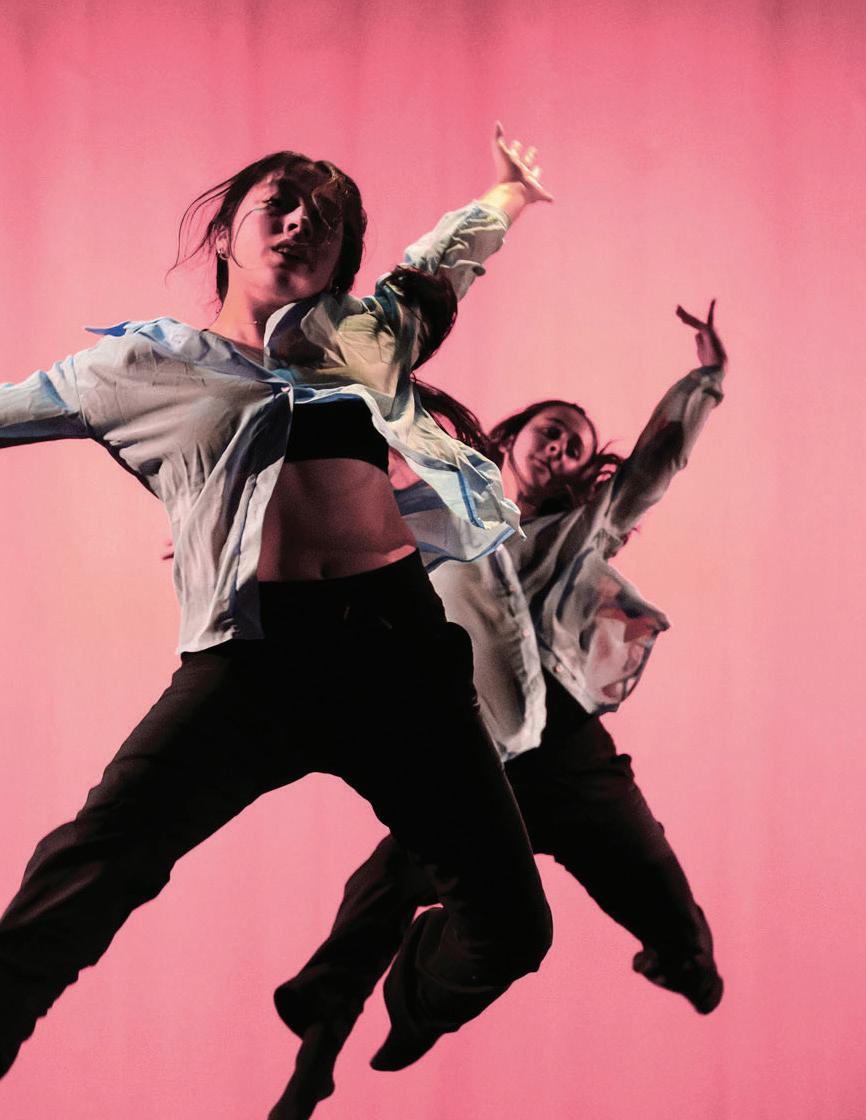
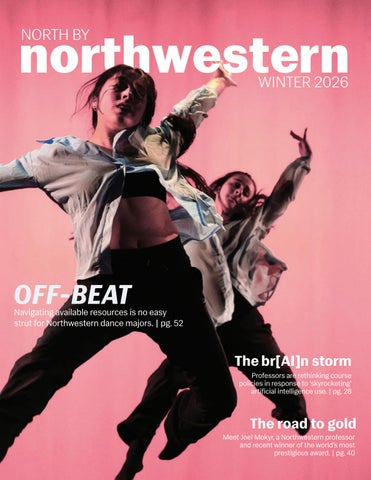
Navigating available resources is no easy strut for Northwestern dance majors. | pg. 52
Professors are rethinking course policies in response to ‘skyrocketing’ artificial intelligence use. | pg. 28
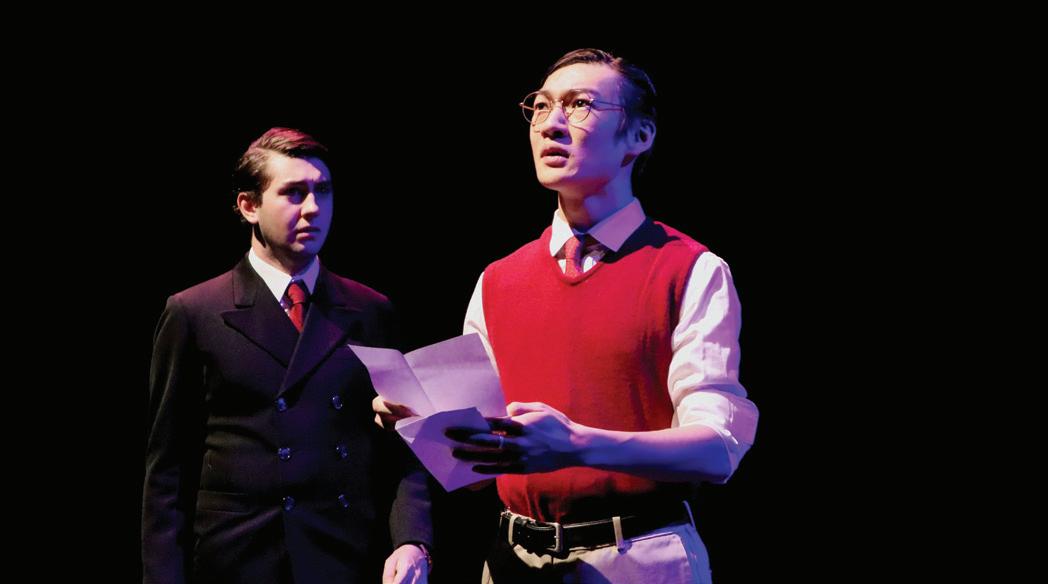
Meet Joel Mokyr, a Northwestern professor and recent winner of the world’s most prestigious award. | pg. 40
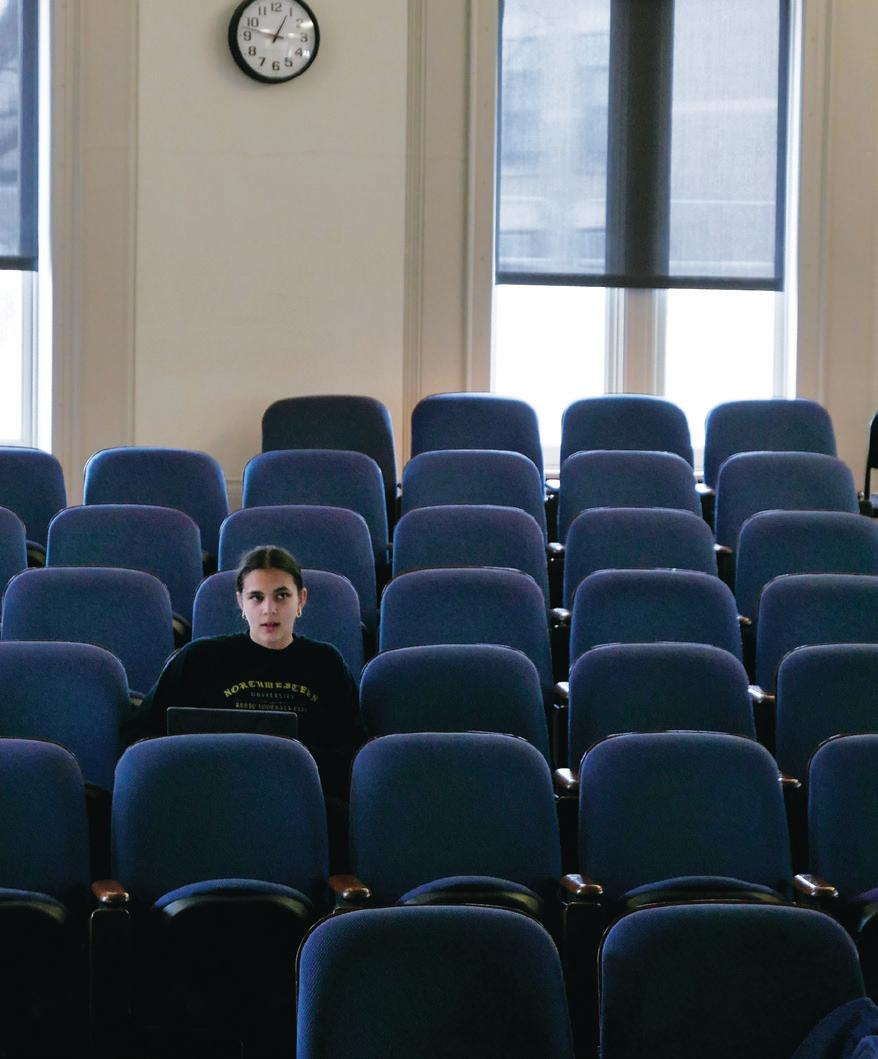
What’s on your screen duringlecture?
PRINT MANAGING EDITOR Olivia Teeter
ASSISTANT MANAGING EDITOR Gabby Shell
EDITORS-AT-LARGE Eleanor Bergstein, Mitra Nourbakhsh
SENIOR PREGAME EDITORS Greta Cunningham Emi Levine, Jamie Neiberg
ASSISTANT PREGAME EDITORS Sophia Gutierrez, Leah Honig, Lucy Van Meir
SENIOR DANCE FLOOR EDITORS Hazel Hayes, Daniel Kent, Emma Richman, Helen Ryan
ASSISTANT DANCE FLOOR EDITORS Ila Dohrmann, Desiree Luo
SENIOR SPOTLIGHT EDITORS Sofia Hargis-Acevedo, Gabe Hawkins, Laura Horne, Seychelle Marks-Bienen Heidi Schmid
ASSISTANT SPOTLIGHT EDITORS Grace Sharma, Alan Tai
SENIOR HANGOVER EDITOR Ava Wineman
ASSISTANT HANGOVER EDITORS Arlette Correa, Anya Weerapana
CREATIVE DIRECTOR Ilse von Heimburg
ASSISTANT CREATIVE DIRECTOR Leila Dhawan
DESIGNERS Yamandú Capalbo, Arlette Correa, Rita Franca, Sofia Jimenez, Zoe Oland, Marley Smith, Brad Sontay-Tzun, Sydney Urbach, Julia Volman
PHOTOGRAPHERSThomas Hurley, Carter Nishi,
Louise Imber, Christina Caro, Mitra Nourbakhsh, Ivy Frater
COVER DESIGN BY ILSE VON HEIMBURG
COVER PHOTO BY CARTER NISHI
EDITOR-IN-CHIEF Jezel Martinez
EXECUTIVE EDITOR Dallas Thurman
MANAGING EDITORS Mariana Bermudez, Mary Amelia Weiss
DIVERSITY, EQUITY AND INCLUSION EDITORS
Stephanie Beresford, Gabe Hawkins, Nola Williams
NEWS & POLITICS EDITOR Aryn Honaker
ENTERTAINMENT EDITORS Ethan Bandaccari, Brad Sontay-Tzun
LIFE & STYLE EDITOR Marley Smith
OPINION EDITOR Stephanie Beresford
FEATURES EDITORS Lindsey Byman, Maya Mukhurjee
FEATURES ASSISTANT EDITOR Ina Chloe
CREATIVE WRITING EDITOR Haley Kleinman
INTERACTIVES EDITOR Grace Sharma
GAMES EDITOR Christina Caro
CONTRIBUTORS Cydney Waterman, Emi Levine
PUBLISHER Jane Yu
AD SALES Hazel Hayes, Carter Nishi, Jorge Martinez
OUTREACH Cydney Waterman
EVENTS CHAIR Cydney Waterman
NEWSLETTER EDITOR Mariana Bermudez
By the end of last year, Northwestern had already endured so much change — and one more was on the way. In late November, the University announced federal funding would be restored in an agreement with the Trump administration.
After a cold and gray Evanston winter, I wanted our spring magazine to embody the changing colors and fresh energy of the new season. Our fantastic staff spent six short weeks reporting on the ground, editing stories in the MFC and designing the beautiful pages you are (hopefully) about to flip through.
The Pregame section kicks off the issue with a look at some Northwestern students’ clever ways of making money on the side. We also highlight a local Evanston cat rescue shelter and undergraduate courses focusing on important current events. In Dance Floor, we reflect on the history of the storied Bobb Hall, set to undergo renovations next year. We also dive into the rules of intramural soccer that keep female players on the field.
This deal obviously came with a lot of questions, but it also reflected broader pressures facing universities today: cultural and political shifts, rapid technological advancement, and financial constraints. I wanted this issue to examine how Northwestern responds to these challenges and to explore the ways institutions like ours persevere to serve students, communities and society.
Pregame highlights the breadth of Northwestern’s course offerings, giving readers a glimpse into classes they may not have known existed. Faculty also recommend books, films and podcasts ideal for learning outside the lecture hall.
This spring, $790 million dollars of federal funding to Northwestern were frozen. In Features, we break down the implications of this freeze and reflect on broader conversations about higher education and academic freedom.
Our cover story is a retrospective on the history of Dillo Day, from the first countercultural festival to this year’s carnival. The photos are amazing and I encourage everyone to spend some time thinking about how today’s traditions came to be.
In Dance Floor, we look at professors grappling with the detrimental effects of AI in the classroom and the playwriting department as it nurtures student creativity, propelling original ideas onto the stage. We also highlight communities beyond academics, like the women’s club ice hockey team and a cappella groups, revealing how extracurricular spaces shape and support student experiences.
I can’t thank my incredible staff enough for all of their hard work. They poured so much into these stories, going to far corners of campus and the surrounding community to bring new perspectives and ideas to the pages of our magazine.
Spotlight investigates the impact of grade inflation and how it perpetuates pressure to maintain a high GPA. We discuss how the dance program, despite limited resources, creates a unique space for students to think and move differently. Finally, we sit down with the Nobel Prize-winning Joel Mokyr, whose decades of teaching exemplify how professors can inspire generations of students.
As we worked on this magazine, the color returned to Evanston.[a] Like spring itself, this magazine is meant to be fun, uplifting and thoughtful. I wanted to focus on stories of joy, resilience and action. I hope each of these pieces will feel encouraging to read, or teach you something new. Enjoy.
Of course, Hangover takes a lighter tack. Are students always taking notes in class? Probably not. But even the brightest minds need a break. We also playfully look at what students really gain from study abroad programs.
For eight weeks, our editors, writers and designers worked tirelessly to put together this magazine, and I would be remiss not to acknowledge and thank them for their effort. They poured their energy, time and talent into these stories, thoughtfully collaborating to produce a magazine they should be proud of.
I hope this issue offers reassurance that, amid all this change, Northwestern is still committed to supporting, educating and inspiring its students. We are fortunate to attend an institution that, despite setbacks, continues to rely on its exceptional faculty and vibrant community to forge a brighter future. These pages reflect that spirit, and I hope you enjoy them.
Sincerely,
Sincerely,
Eleanor Bergstien
Olivia Teeter
ABfter a cold and gray Evanston winter, I wanted our spring magazine to embody the changing colors and fresh energy of the new season. Our fantastic staff spent six short weeks reporting on the ground, editing stories in the MFC and designing the beautiful pages you are (hopefully) about to flip through.
eing a Northwestern student often comes with a dose of doubt: Am I cut out for this? Am I as smart or talented as my peers? Can I do better? These thoughts constantly zipped through my head during my early days as Creative Director. When perfection is the standard, it’s easy to get trapped in a cycle where nothing feels good enough. That’s why I wanted this issue to celebrate our ability not necessarily to overcome adversity but to persist nevertheless — and have a little fun with it, too.
Off-beat, our cover story on the dance program, represents exactly that: Students who are passionate about their craft despite the less-than-perfect facilities. The cover photo encapsulates the contagious joy that only comes from grit. We purposefully opted for a sober design, a departure from the magazine’s cheerful color palette. The artists’ dancing colored the pages in a way we never could.
The Pregame section kicks off the issue with a look at some Northwestern students’ clever ways of making money on the side. We also highlight a local Evanston cat rescue shelter and undergraduate courses focusing on important current events. In Dance Floor, we reflect on the history of the storied Bobb Hall, set to undergo renovations next year. We also dive into the rules of intramural soccer that keep female players on the field.
This spring, $790 million dollars of federal funding to Northwestern were frozen. In Features, we break down the implications of this freeze and reflect on broader conversations about higher education and academic freedom.
Our cover story is a retrospective on the history of Dillo Day, from the first countercultural festival to this year’s carnival. The photos are amazing and I encourage everyone to spend some time thinking about how today’s traditions came to be.
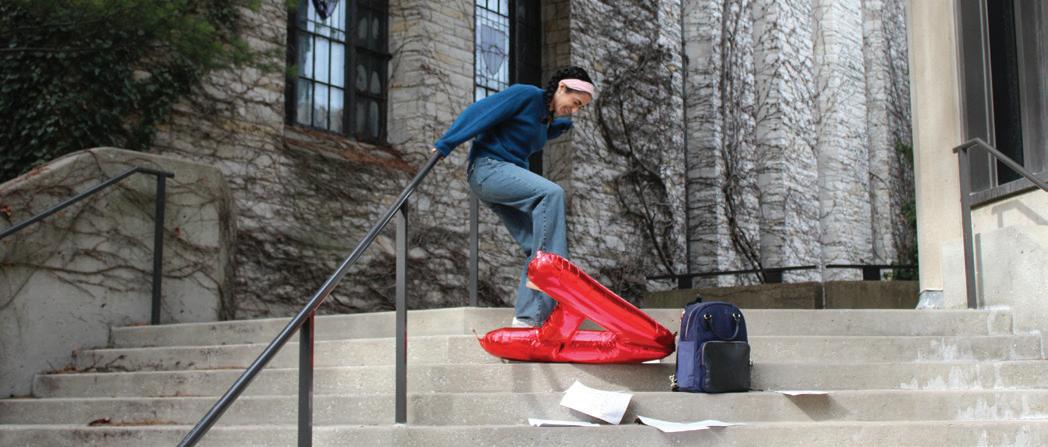
And the fun? Oh, we had fun. We literally inflated an A-shaped balloon to represent Northwestern’s changing grading policies. From a class schedule depicting wacky courses to our very own March Madness-inspired bracket, we spun the familiar into something fantastic. We even brought beloved bar The Keg back to Evanston! (Albeit, only on paper.)
I can’t thank my incredible staff enough for all of their hard work. They poured so much into these stories, going to far corners of campus and the surrounding community to bring new perspectives and ideas to the pages of our magazine.
As we worked on this magazine, the color returned to Evanston.[a] Like spring itself, this magazine is meant to be fun, uplifting and thoughtful. I wanted to focus on stories of joy, resilience and action. I hope each of these pieces will feel encouraging to read, or teach you something new. Enjoy.
This issue drew inspiration from the teen magazines I poured over in my childhood. You’ll find touches of Seventeen’s gossip columns, scrapbook cutouts and pastel hues. They say write what you know, and I’d argue the same goes for design. The result? Colors and illustrations both nostalgic and new. We’re honoring the past, always with one eye on the horizon.
This magazine would not exist without Olivia Teeter, Gabby Shell and our wonderful editors and writers. I am also eternally grateful for our Assistant Creative Director, Leila Dhawan, and North by Northwestern’s talented team of designers and photographers. If writers are the brain and editors are the spine, then the creative team is the heart of NBN. I hope they are as proud of this issue as I am.
Sincerely,
Sincerely,
Eleanor Bergstien
8
Crash course 10 Table for one 11 (Un)required reading 12
Dr. and Dr. 14
Pregame tries: Luna’s Pub and Grill
WRITTEN BY PREGAME EDITORS // DESIGNED BY JULIA VOLMAN
t a school as prestigious as Northwestern, the course catalog is as extensive as its alumni network. Yet, as students rack up minors and certificates, fun courses often slip through the cracks. But are obscure classes actually worth a spot in a packed schedule? We explored Northwestern’s academic underbelly — from studying tectonic plates to staging imaginary scenes — to answer that question.
Students shuffled into the second floor of the Integrated Science Program (ISP) House, snowy boots thudding against the carpet. I followed my friend into the 10-person seminar, instantly feeling out of place. Seven minutes into class, all three chalkboards were covered in equations I could not dream of understanding. I thought I signed up to learn about rocks, not be humbled before my morning coffee kicked in! Soon, we were talking microclimates — how changes in elevation and surface features affect temperature — and the way the Earth’s surface temperature shifts over time. We learned the planet’s heat is constantly changing, from day to night, season to season and even across ice ages. As I frantically scribbled notes, it dawned on me that Earth science is really just physics with much higher stakes. I left with a new appreciation for the wide range of topics taught at Northwestern — all before 10 a.m.
–Jamie Neiberg
The harsh winter walk to 555 Clark — which is so far south that it’s practically downtown — had me jaded. However, over the next 80 minutes, I experienced a truly special display of collaboration, analysis and imagination from English lecturer Laura Hansen and her students. “Rebels and Rule Breakers” analyzes the familiar coming-of-age trope from a unique and refreshing lens. Texts include “My Brilliant Friend” by Elena Ferrante and “Never Let Me Go” by Kazuo Ishiguro, and the film list comprises “Lady Bird,” “The Perks of Being a Wallflower” and “Call Me By Your Name,” among others. The class dissects books and visual media centered on common coming-of-age themes and lessons. The result: a class discussion equally nuanced and relatable. We analyzed characters who are prone to rebellion, angst and mistakes, but above all, who are trying to make sense of their identity and place in the world. This felt particularly relevant in a room full of college students, where each of us, like these characters, were also on the precipice of adulthood. In the end, “Rebels and Rule Breakers” became as much about students understanding themselves as understanding the course content.
–Emi Levine
On Fridays, a small but fierce collective gathers in the Wirtz Center for the Performing Arts to attempt the impossible. Tony Award-winner and Performance
Studies professor Mary Zimmerman asks the class to do what theater is rarely brave enough to try: stage the unstageable. Students learn strategies for embodying images, texts, myths and dreams never meant for live performance. How do you stage a medieval beast, an ancient myth or a memory in all its Proustian nostalgia and nuance? When I sat in on class, the students performed a myth of their choosing using lighting to tell the story. One actor sat engulfed in the darkness of the room; nothing but a dull glow emanated from her computer screen. We watched her, hypnotized, in a seemingly endless scroll, different colors from the internet illuminating her face. Then, she turned the screen to us, revealing a Google Doc with question marks on it. This was a metaphor for Pandora’s box — using the internet to represent irreversible exposure and alluring access. In that moment, “Staging the Unusual” showed me theater is not a container for the world, but a way of remaking it.
–Sophia Gutierrez
As I filed into the back of the Block Museum auditorium, a group of students excitedly discussed the “Disney witches” dialogue they’d be having in class later that week. To prepare, that day’s lecture covered witchcraft’s most persistent pop culture trope: old women. Why were more women accused of witchcraft? How did we come to think of witches as women? History professor Haley Bowen began by examining women’s social position in the early modern era — how legal disenfranchisement and limited access to the court system made them seem likely to enact revenge outside the system. She then turned to religion, walking her students through Biblical models of womanhood. With a series of increasingly ridiculous historical etchings, the professor highlighted male anxieties about female subversion as students chuckled in their rows at these shockingly lude puritanical drawings. Before we were dismissed, I had gotten a taste of theology, art history, demonological treatises, feminist theory and Greek presumptions of the human body. I left wishing I could come back for the “Disney witches” lecture, too.
–Greta Cunningham
As a Medill first-year, I had yet to visit Annenberg Hall. So when I sat down in a window seat gazing out at Lake Michigan for “Emotional Mysteries,” my own emotions — a mix of excitement and wonder — were hardly mysterious. SESP professor Claudia Haase stepped up to the lectern; as if on cue, every student packed away their devices to begin the technology-free class. We started by sharing our “wonderings” on theories about human emotions — how physical responses, mental assessments and subjective experiences interact to create feelings. As the lecture shifted from emotional authenticity to emotional language, the professor joked, “Part of emotional language at Northwestern is ‘I’m so stressed.’” Slowly, students became more vulnerable, sharing personal thoughts and experiences with the class, as we discussed how our outward presentations correspond to internal success. The professor closed by encouraging the class to take breaks as they navigate their emotions. She then asked students to summarize that day’s class in one word; in chorus, they replied “authenticity.”
–Leah Honig
WRITTEN BY CHRISTINA CARO // DESIGNED BY ZOE OLAND


Candlelit dinners, fresh bouquets, holding hands at the movies — these images come to mind when people think about love and romance. They also typically require a partner. So what’s a person without one to do? This guide is here to show you flying solo can be just as romantic as a date for two — after all, self-love is the highest form of love (according to Plato, at least).
9:00 a.m.
Start your day sunny-side-up with brunch at Le Peep. Located in downtown Evanston, Le Peep offers a wide menu with something for everyone — from pancakes and omelets to yogurt bowls — and most of it for under $15. If you’re looking for lighter fare, Paris Baguette offers a variety of pastries and hot beverages amid a cozy ambiance. Its fruit pastries are the perfect portion size for one and taste just as good as they look. They’re somehow even better curled up in a corner booth in the back, reading your favorite book.
7:00 p.m.
1:00 p.m.
Evanston is nice, but why stop there when you can take the CTA south and explore the many wonders downtown Chicago has to offer? If you love museums, check out the Art Institute of Chicago, where Northwestern students get free entry. Open up your sketchbook and absorb Raqib Shaw’s “Paradise Lost,” a sprawling, 100-foot painting featuring the vibrant landscapes of South Asian history and mythology. Or, write in your journal by the Hartwell Memorial Window, where sunlight illuminates the panels so vividly the stained-glass trees practically come to life. If you’d rather hang out with real trees, take a stroll through the Lincoln Park Conservatory, where all timed-entry tickets are free. Make sure to stop by the Orchid House and upgrade from a store-bought bouquet to thousands of flowers.
Walt Whitman famously said people contain multitudes; the same is true of the cuisines at the Chicago French Market in West Loop. The market serves food from all over the world, and no significant other is needed to sample multiple options on the menu. Pair the crisp, rich flavors of a banh mi at Saigon Sisters with a sweet hibiscus tea from Fresco Delicioso and Belgian fries from Suarez Market — the possibilities are endless. Plus, you don’t need to worry about staying clean in front of your date, so order whatever you want and eat like no one’s watching. After dinner, head to AMC Theatres on North State Street, where heartbreak feels good and wallets feel better (from the student discount), or whatever it is Nicole Kidman says. While you eat all the popcorn in the bucket — you don’t need to share today — remember that real romance often pales in comparison to the big screen.



10:00 p.m.
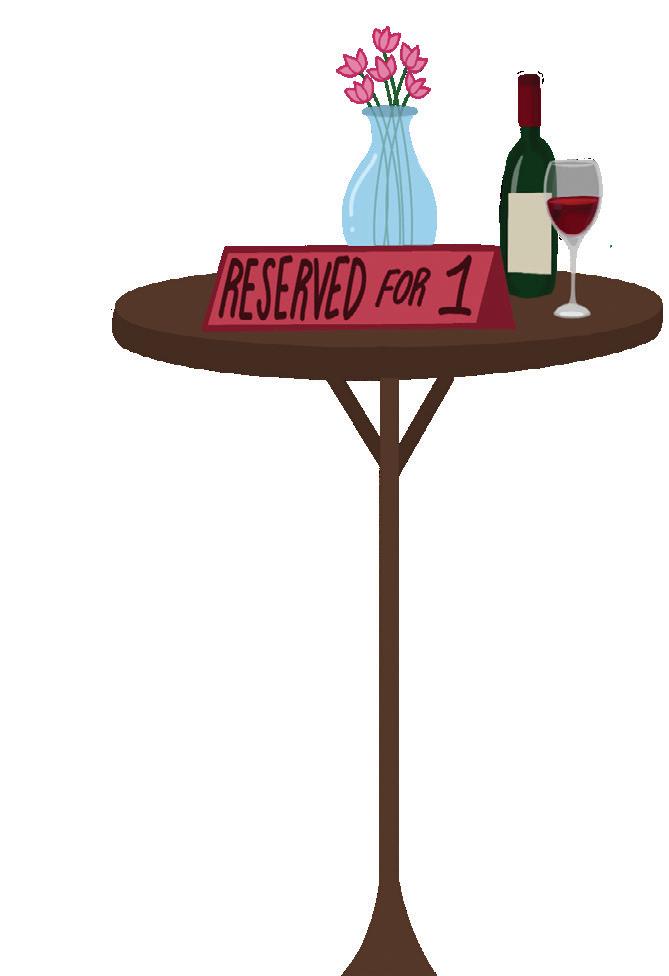
It’s been a long day of delicious food and dazzling sights, but if you’ve got energy left after taking the L back to Evanston, grab dessert at Insomnia Cookies. Or, if you feel like reflecting, opt for a quiet stroll along Lake Michigan to admire the stars and listen to your favorite song. Close your date on a sweet note because, in the end, there’s nothing sweeter than showing appreciation to the love of your life: yourself.
WRITTEN BY MITRA NOURBAKHSH // DESIGNED BY MARLEY SMITH

Even Northwestern’s bravest CTEC warriors sometimes fall short. Whether it’s a bad registration time, a CAESAR malfunction or annoying pre-requisites, it’s all too easy to lose out on top-class choices. Fear not: North by Northwestern is here to save the day. We asked the professors behind some of the most popular courses on campus for book (and movie and podcast) recommendations that give you the best of their content without ever stepping foot in the classroom.


Zebras have a lot to worry about: finding food, following the herd, not getting eaten by a lion, etc. And yet, they still experience less chronic stress than humans do, according to Stanford biology professor Robert Sapolsky. His book, “Why Zebras Don’t Get Ulcers,” asks why that is. Neurobiology professor Catherine Wooley, who teaches a popular course on the science of stress, says it covers much of her class content — why we experience so much anxiety, and what it does to our brains and bodies. Ironically, you might come away from the book newly worried about the health impacts of stress, but you will most certainly learn something interesting in the process.
This notoriously difficult-to-enroll-in course promises to improve students’ success in long-term relationships. But for those stilted by CAESAR, SESP professor Alexandra Solomon has published a wealth of content that covers many of its main themes. From a lively Instagram page with advice videos (“Why you should give short kings a chance,” anyone?) to her weekly podcast “Reimagining Love,” you can get a fair share of Solomon’s teachings on your own time. For the book-oriented, Solomon recommends her recent self-help volume, “Love Every Day.” True to its name, it compiles her years of insights into 365 readings on healthy relationships — so you can trade a quarter’s worth of assignments for daily ones.



If you know one novel by Colombian author Gabriel García Márquez, it’s probably “One Hundred Years of Solitude.” But Márquez himself didn’t think that book was his best work. He preferred his short story collection “El coronel no tiene quien le escriba,” a short but thought-provoking commentary on the environment of censorship in 1950s Colombia. The English version, “No One Writes to the Colonel,” is Spanish & Portuguese professor Alfonso Fierro’s book recommendation for those who don’t speak enough Spanish to enroll in his Latin American literature courses.
“In order to do good, you may have to do evil.” This is lesson number nine of 11 in Academy Award-winning documentary “The Fog of War,” given by controversial former Secretary of Defense Robert McNamara, best known for his role in escalating the Vietnam War. The logic of lesson number nine is full of contradictions, like the rest of the documentary — and the legacy of American foreign policy, as Medill professor Peter Slevin teaches in his course. A film defined by dilemmas, “The Fog of War” is a worthwhile watch if you can find amusement in its forceful attempts at gravitas.


Dating your coworker isn’t always a bad idea.
WRITTEN BY IVY FRATER // DESIGNED BY RITA FRANCA
It was 2003 in Oxford, England, and future Religious Studies professor
Sarah Jacoby had just delivered her first public lecture at a Tibetan Studies conference when an audience member stood up to ask her a question.
“I couldn’t help myself but do that sort of look, where you look at the shoes of someone, and then you scan all the way up to their head, and then you scan back down,” Jacoby says.
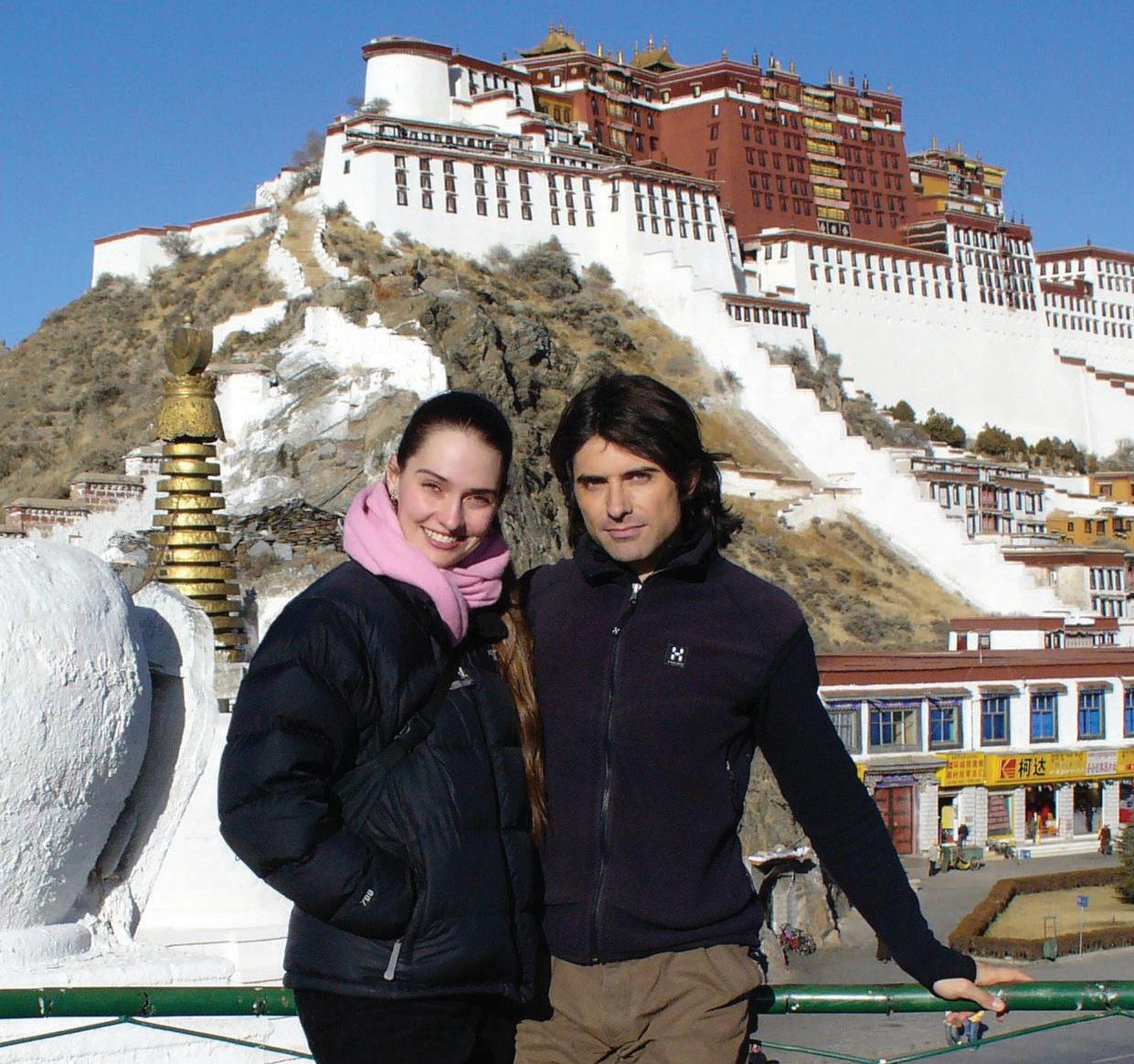
The man was Antonio Terrone, now a Northwestern professor of Asian Languages and Cultures. This wasn’t the last time they’d meet. Jacoby was living in Boudhanath, Nepal, at the time. As she walked home past a large Buddhist shrine one day, she spotted a man standing atop a rock: Terrone. She decided to send him an email, inviting him to a local pizza restaurant in downtown Kathmandu. He never responded.
“He was from Italy, in this world of Oxford tweed, dressed entirely in Dolce & Gabbana.”
Sarah Jacoby Professor of Religious Studies
“I kept looking at the door, thinking, ‘Maybe he’ll come, maybe he’ll come,’” Jacoby says.
Just as Jacoby began to give up hope, Terrone walked through the door with a group of his own friends. Jacoby stood up and invited them to join her at a large table. It turns out, Terrone never got her email; it was pure chance they met again.


After these initial meetings — and a third in Chengdu, China — they finally got the universe’s message and started dating. Four years later, they were married.
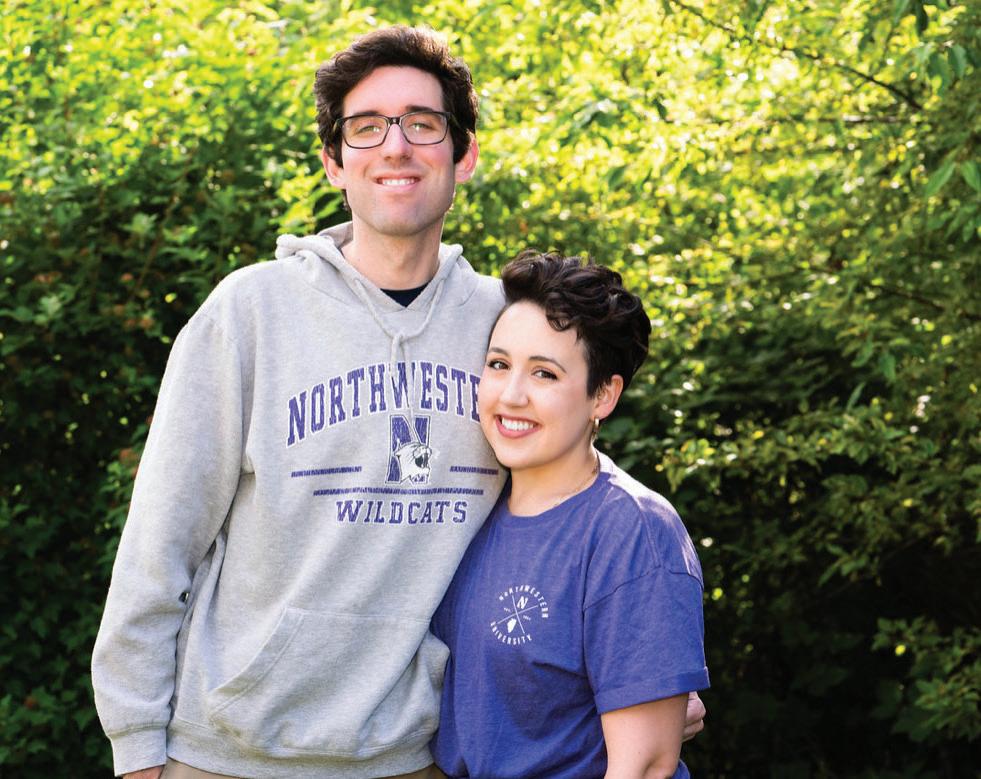
In 2009, the pair moved to Evanston after Jacoby accepted a position as assistant professor in Northwestern’s Religious Studies department and Terrone was offered to be a visiting professor in the Asian Languages and Cultures department. They’ve been working together ever since, sharing a home office, spending morning drives together and working side by side. Jacoby compares this to “parallel play,” a stage of childhood development where toddlers share a space, enjoying each other’s company while working on separate things.
More than one-third of scholars at research universities are married or partnered with another academic, according to a 2008 Stanford study. Given the limited number of teaching positions at these institutions, couples can be forced to navigate long-distance relationships, hours-long commutes or conflicting schedules between two different schools. But for the lucky few who manage to secure a dual hire, they often find the close working quarters foster creativity and discovery — in and out of the classroom.
Math department lecturers Erin Griffin and Martin Bishop are completing the third and final year of their respective postdoctoral positions. Having their Locy

COURTESY OF ERIN GRIFFIN
Hall offices connected via a shared door allows the couple to eat lunch together, pop into one another’s office hours and even bring their dog, Ricci, to work.
The pair first met in college at Cal Poly SLO, and their friendship developed through hours working on homework together. While the academic lifestyle can be isolating, Griffin says sharing this experience with someone in the same shoes helps ease the loneliness.
“This robust social life that you see people having is not really a thing,” Griffin says. “We get to spend a lot of time together, but that’s really fun because I really like spending time with Marty.”
Working together also allows them to blend their expertise and chart academic adventures — Bishop got their Ph.D. in algebraic geometry and Griffin in differential geometry. The pair founded the Northwestern Undergraduate Lean Lab as a joint venture to minimize human error in mathematical proofs.
“We get to spend a lot of time together, but that’s really fun because I really like spending time with Marty.”
Erin Griffin Math lecturer
For Jacoby and Terrone, working together has taught them to adapt to different lifestyles. Jacoby hails from Boston and Terrone from Verona, Italy, so their opposing cultural backgrounds push them to reevaluate how they prioritize work.
do nothing,” Terrone says. “You just drink your coffee and waste time by doing nothing. It’s beautiful. Here, the pressure of production — finish your tasks, do more — has been quite difficult for me to adapt to.”
Meanwhile, Jacoby grew up in a highpressure academic environment. The daughter of two Harvard professors, she says she has a tendency to keep working until she burns out. But living and working with Terrone has brought a healthy balance to her life.
Working at Northwestern together allows couples to form shared experiences, which Jacoby and Terrone appreciate, given the sometimes solo nature of academia. Before meeting, the two spent years living abroad, studying Buddhism and Tibetan culture. Finding each other and creating a joint lifestyle allows them to feel at home, no matter where in the world.
“I’d been living for years in Asia, very alone, ... being in cultural environments in which I was an extreme foreigner,” Jacoby says. “When I met someone who I had so much in common with, it was like, ‘I’m not alone.’”

WRITTEN BY EMI LEVINE & LUCY VAN MEIR // DESIGNED BY SOFIA JIMENEZ
PHOTOS BY THOMAS HURLEY
ow that Norris has unveiled its long-awaited on-campus pub, there’s one question on everyone’s mind: Who is Luna? Forget the days of Bob’s Pizza, Chili’s triple dippers and Reza’s vodka crans. Who needs those restaurants when you can drink in the same building where TheDailyNorthwestern staffers pull all-nighters? Pregame headed to the Pub to see if it really is worth the sky-high prices.
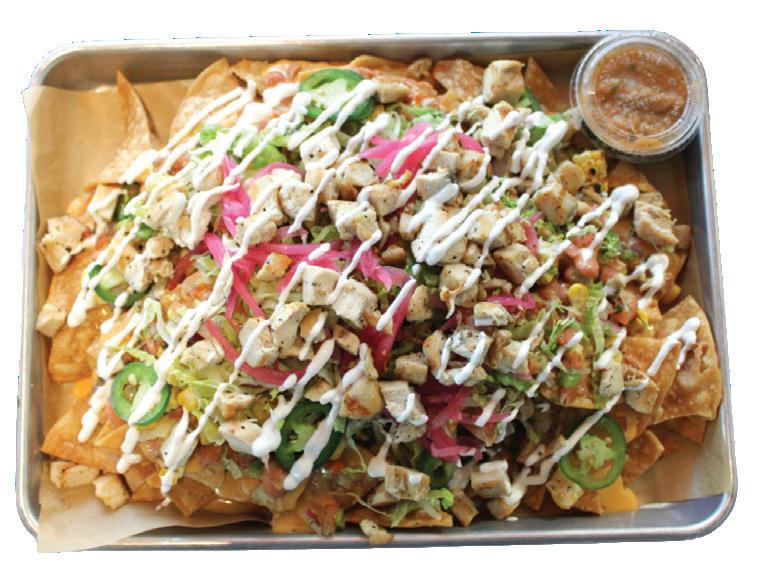

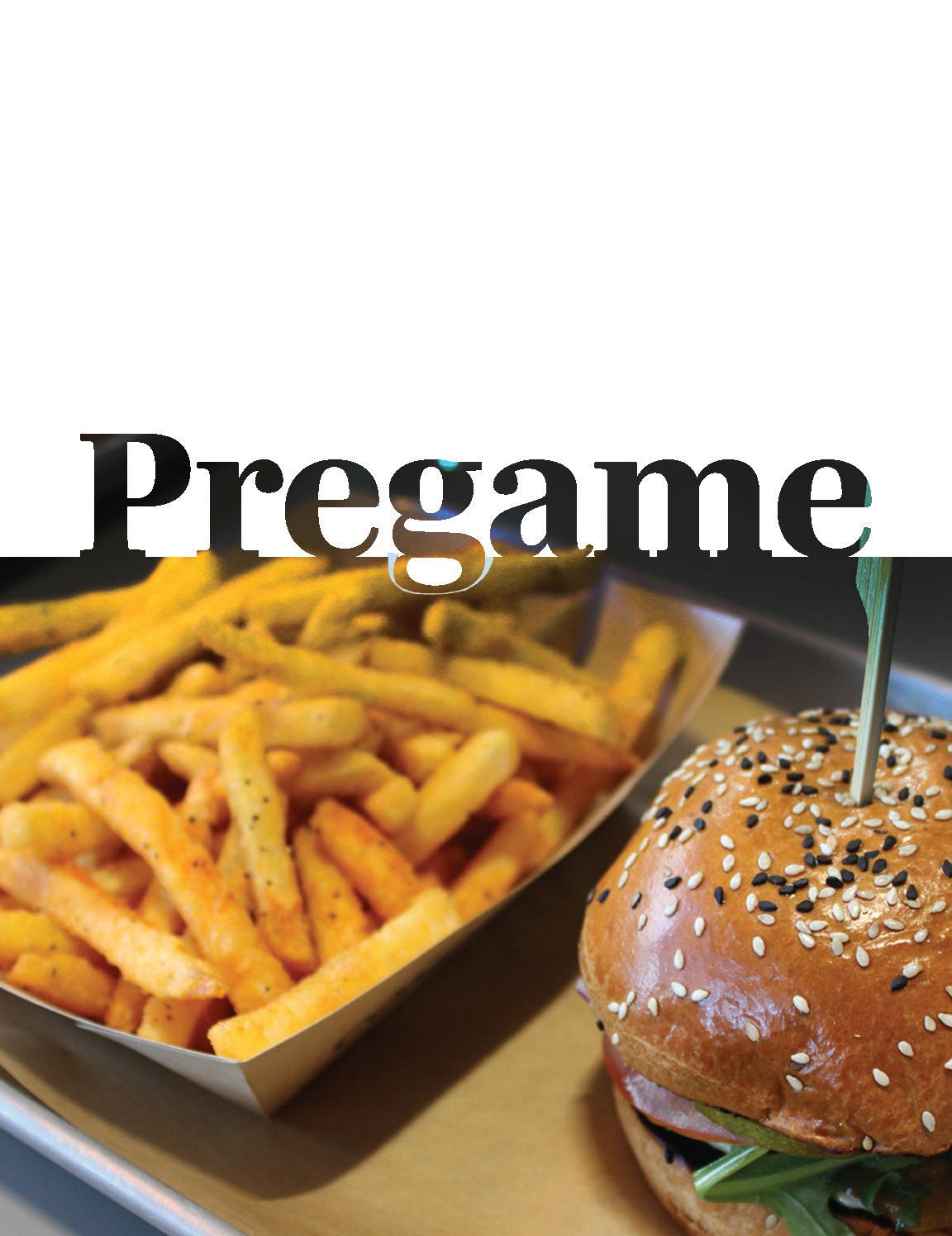
Charging $15 for nachos at a college pub is a bold choice. However, the tray came with enough food for at least four people, garnished with substantial and varied toppings. We can’t remember the last time we had pickled onions on a nacho, but the combination somehow worked. The fixings were mostly concentrated on the top layer of chips, but that’s more of a nachos issue than a Luna’s issue. Unlike the toppings, the sauces and chips were run-of-the-mill. We added chicken, which we’d recommend if you’re willing to pay an extra $7 for some protein. The portion is generous and flavorful, but ultimately, you’re dropping a pretty penny on a standard plate of nachos. (Bonus: It holds up when reheated as leftovers.)
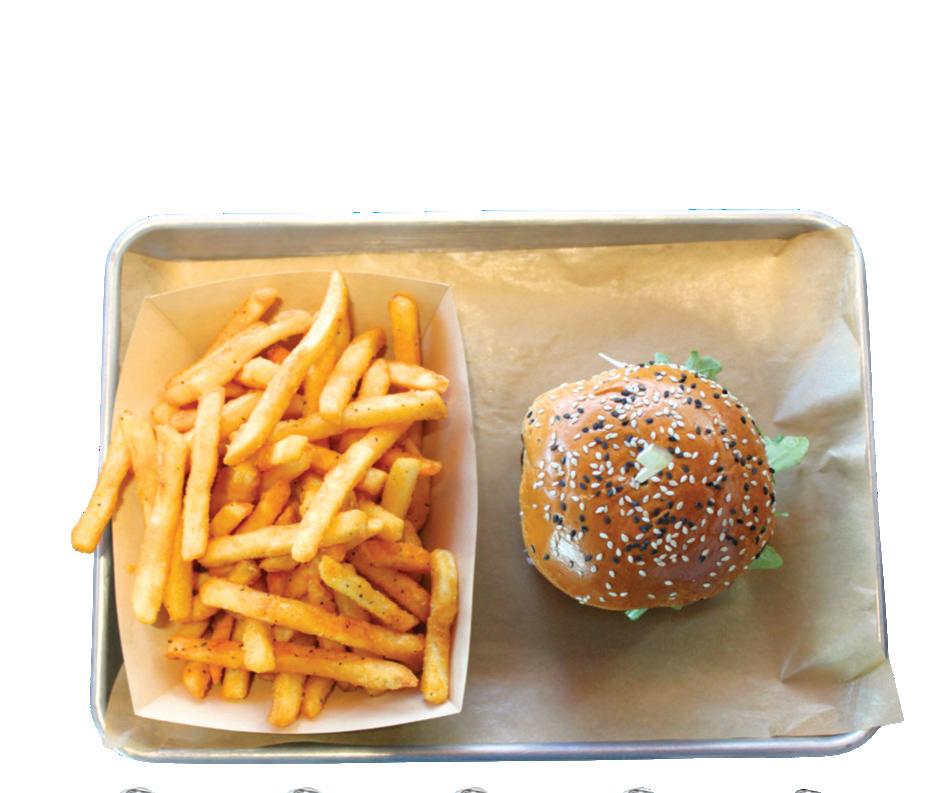
This patty is not life-changing, but it’s definitely better than whatever you’re getting at 847 Burger. The sesame seed bun adds a rich flavor, and the Thousand Island dressing is arguably the highlight — we didn’t even need ketchup. The vegetables are fresh, and the sourness of the pickles lightens the heavy burger. (We ordered a single patty, but the standard $20 menu item comes with two.) The meat itself is nothing special, but it’s topped with real cheddar instead of cheap American cheese. If you like spending a lot of money on a decent burger, this dish is for you! If not, we don’t blame you.
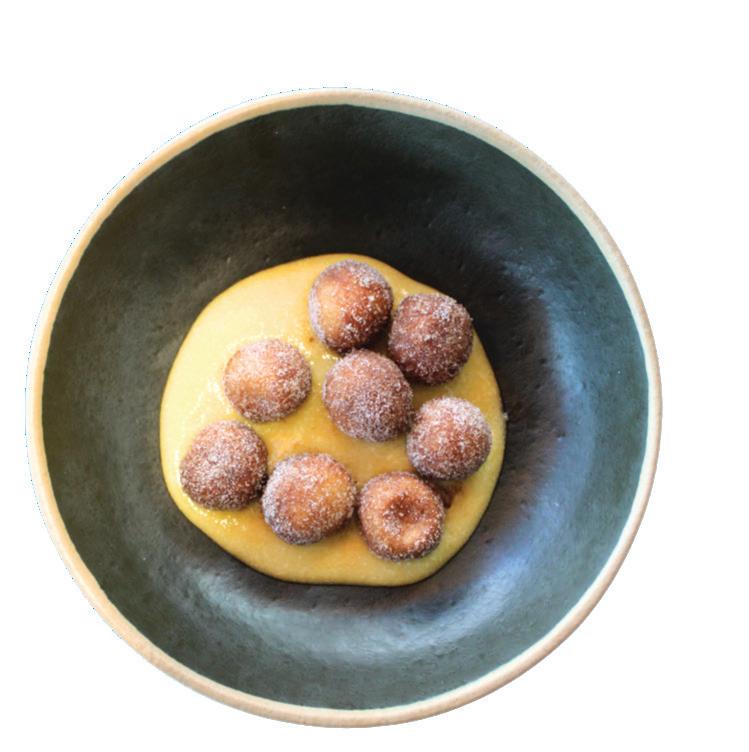



This one was a wild ride. According to the menu, the donuts come with “crème anglaise.” We had no idea what this meant, but it sounded French, so we had high hopes. Needless to say, those hopes were quashed as soon as we tasted the sauce. The crème anglaise, ideally akin to a classic vanilla custard, was more reminiscent of yogurt. It had a sour, almost citrusy aftertaste, with a hint of an ingredient gone bad. The donut holes were a completely different story. Though room temperature, they were coated in an autumnal mix of sugar and spices. The texture was light and fluffy on the inside and pleasantly crunchy on the outside. If we were basing this rating solely on the donuts, we would give it a 3.5/5, but unfortunately, the suspicious sauce brings this dish down a point.
There you have it, folks: a full meal at Luna’s Pub. The total came out to a whopping $50, although Luna’s did generously offer to pay for the nachos. Even with the partial comp, it’s hard to say whether Luna’s is worth the steep prices. If you have unlimited dining dollars to spend and are looking to treat yourself, the Pub offers a fun alternative to the usual rotation of Shake Smart and Wildcat Deli. But for now, we’ll be sticking to our Norris classics.
Power play 19 Love is online 22 ‘No program, no peace’ 25
From script to stage 28 The br[AI]n storm 31 No notes
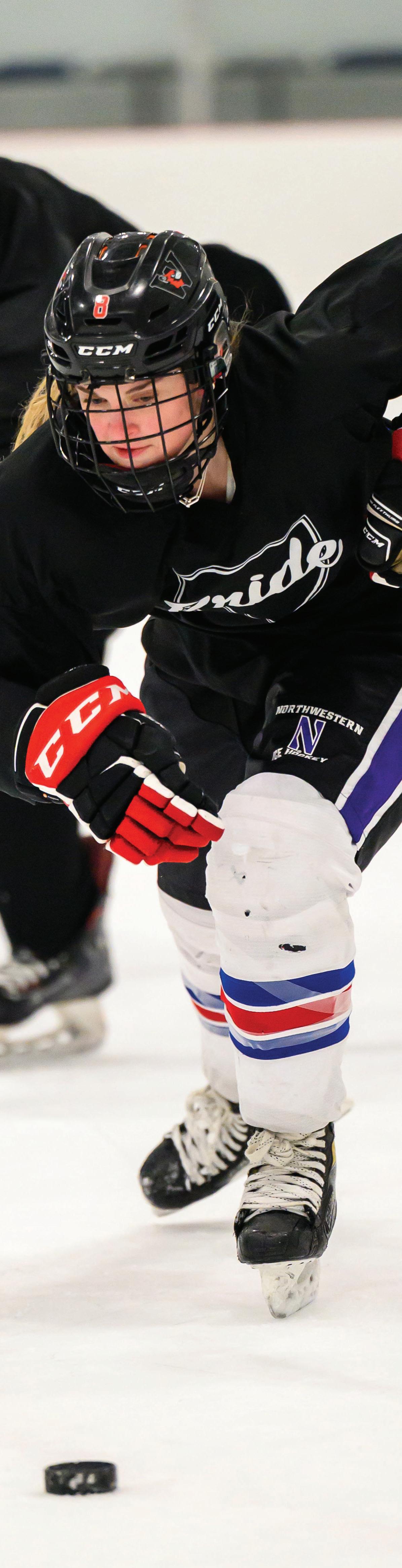
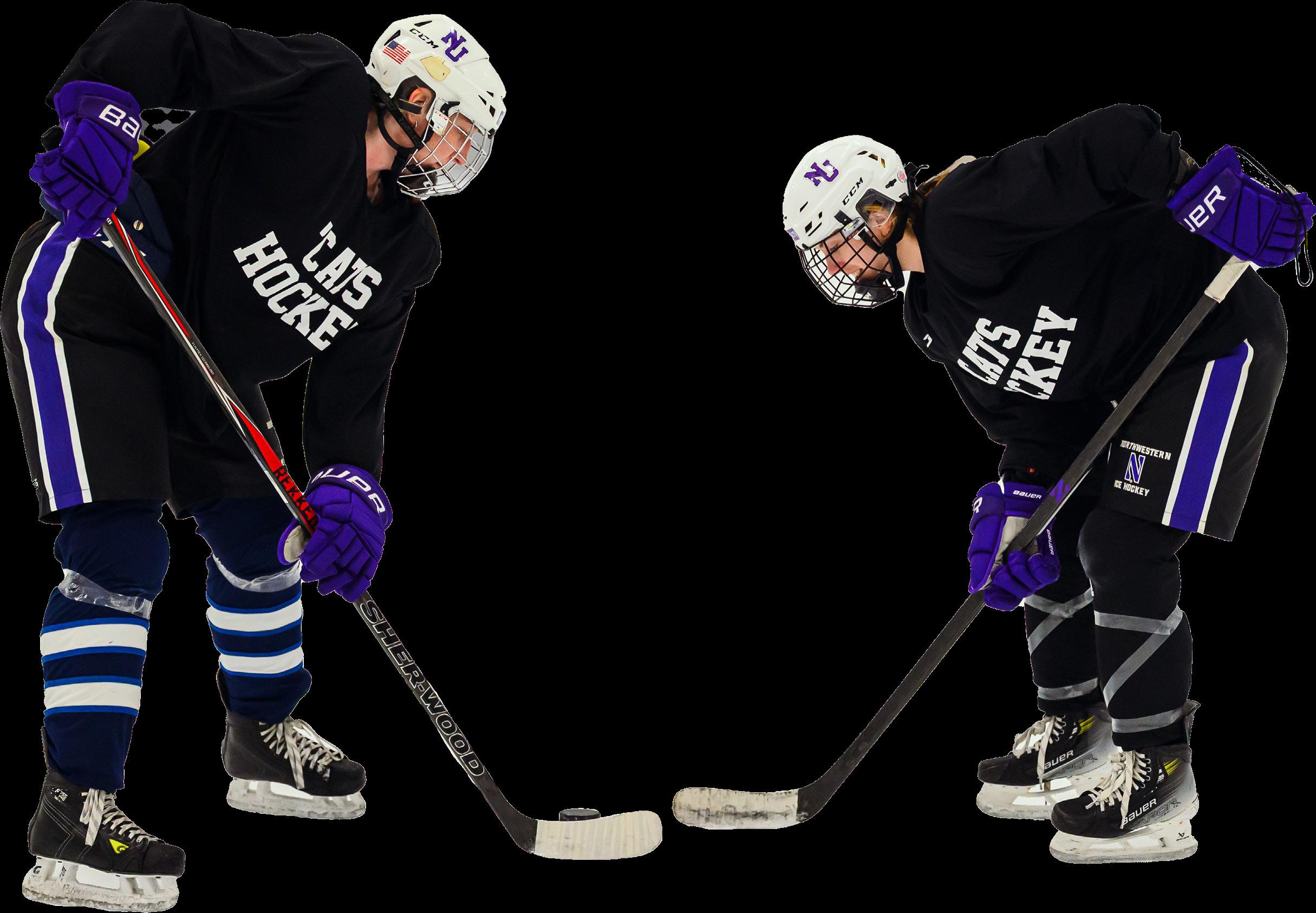
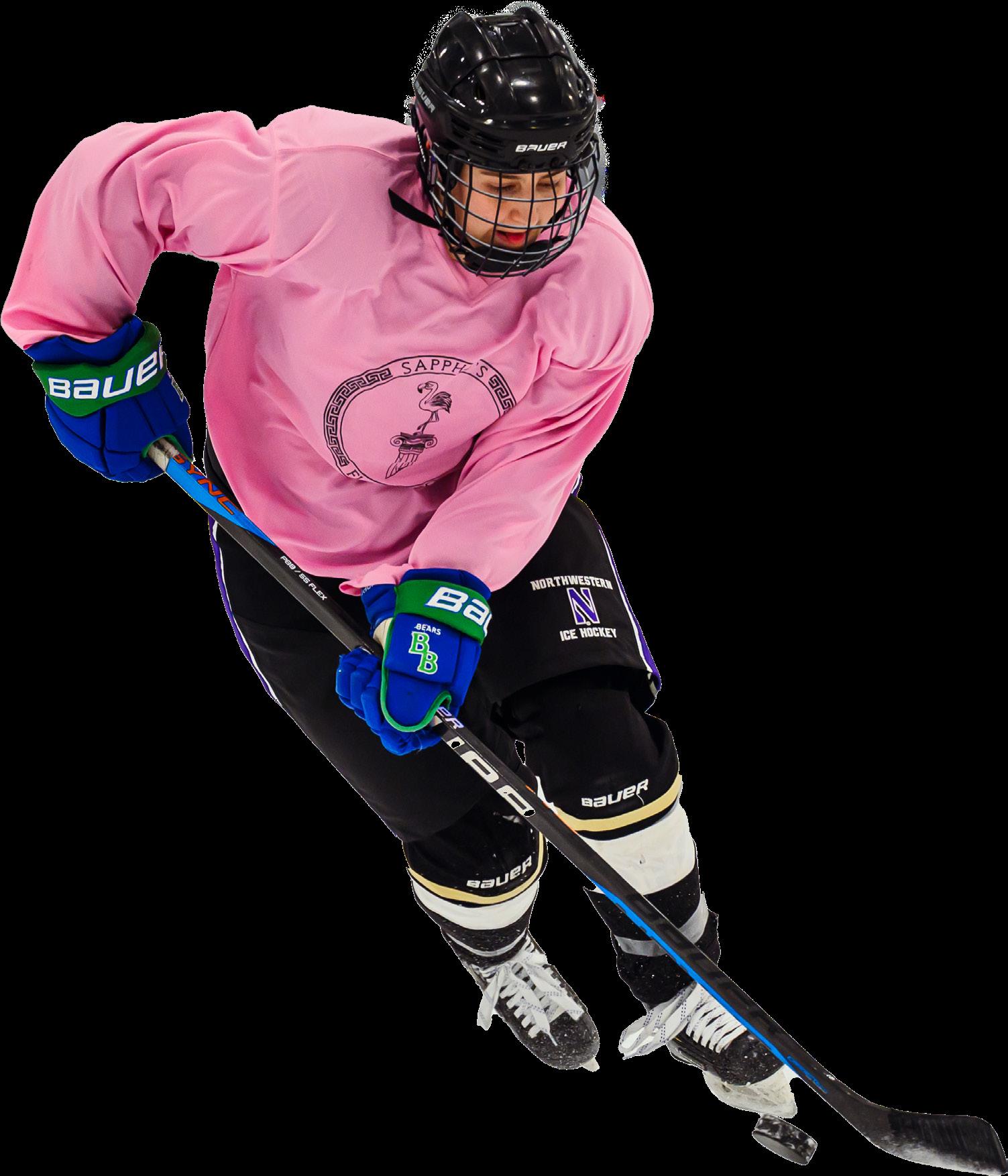
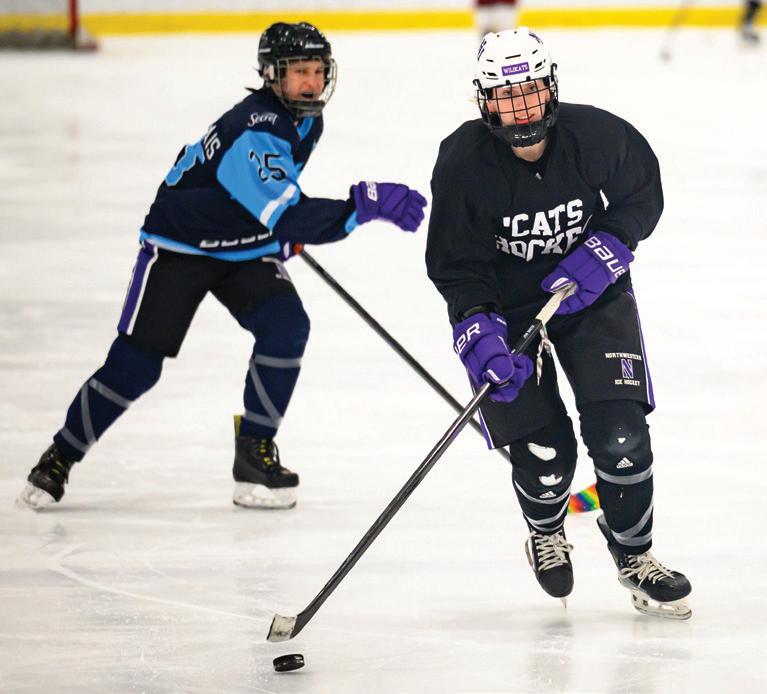
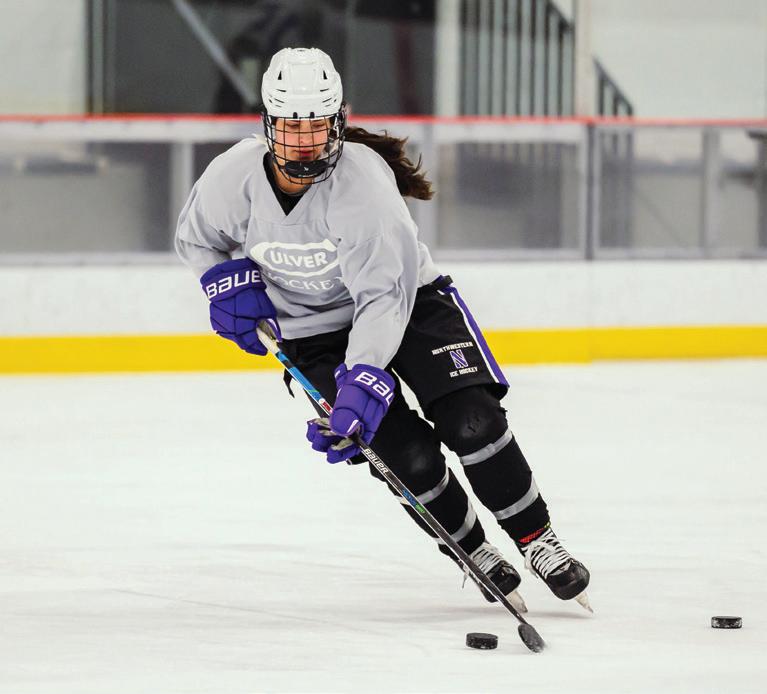
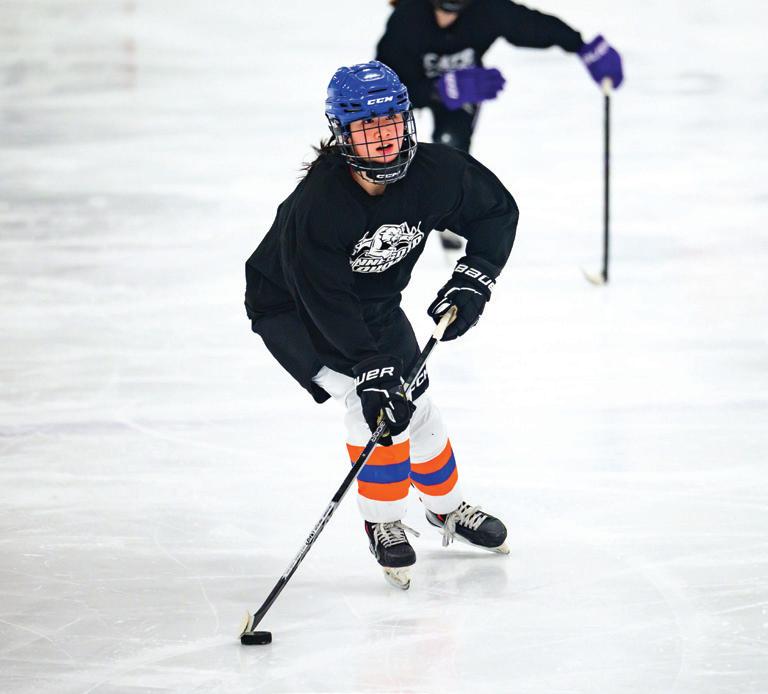
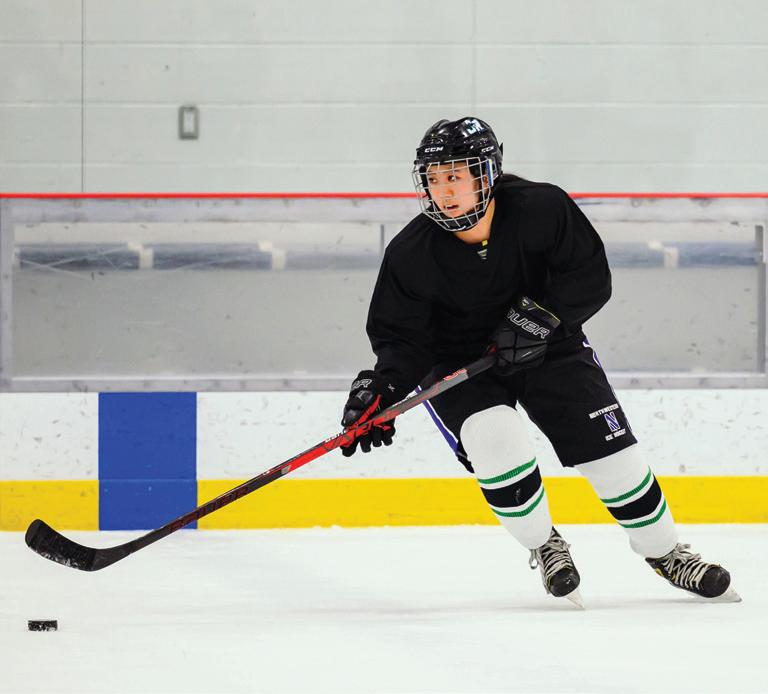
The Northwestern women’s hockey team takes the ice for its inaugural season.
WRITTEN BY HELEN RYAN // DESIGNED BY JULIA VOLMAN // PHOTOS BY CARTER NISHI
When Medill third-year Mia Rooney got into Northwestern, her initial elation was cut with a sinking realization: Her acceptance meant an end to an lifelong hockey career. At the time, Northwestern did not have a women’s hockey program.
Last year, Rooney changed that. She, along with Communication second-year Patricia Liu and second-year Marriage and Family Therapy graduate student Emily Kline, started a women’s club hockey team, enabling her and many others to continue pursuing their passion.
For years, select women have played on Northwestern’s male-dominated co-ed club ice hockey team, sharing both the rink and the locker room with men. Now, with a dedicated women’s team, female players have a space of their own.
Ari Lifschutz, coach of the men’s club hockey team, recalls the first female player, Hannah Goldenberg (McCormick ‘25), who asked him to join the team five years ago.
“I didn’t even think twice about it,” he says. “I was like, ‘I don’t know why you wouldn’t be able to play on the team.’ To me, you’re a hockey player. Your sex doesn’t matter.”
Lifschutz still recalls a major save that Goldenberg made in her first game as the team’s goalie — and the only woman on the ice — sending them into overtime where they would take the win.
Goldenberg went on to become team captain and president. As the only woman on the team, she was an outlier at the time. But as more women expressed interest, Lifschutz realized how many female hockey players wanted to play at Northwestern. Some, like Liu and Kline, joined the co-ed team, but many, like Rooney, avoided the male-dominated program. Lifschutz saw the need for a female team and found the players that could get it up and running.
Liu, Kline and Rooney were eager to help establish a women’s team when approached by Lifschutz with the idea.
Liu says the first major hurdles were marketing and recruiting to the team’s “niche” target audience. The three players went to great lengths — messaging students with hockey pictures on their Instagrams and hanging flyers around campus — to attract attention and bring women into the program.
“To me, you’re a hockey player. Your sex doesn’t matter.”
Ari Lifschutz Northwestern Club Hockey men’s coach
Lifschutz helped set up games and assisted in the administrative work needed to officially form the team: filling out paperwork, getting everyone’s health screened by Northwestern’s athletic trainers, and ensuring everyone met the GPA and credit requirements.
Lifschutz found himself asking questions like, “Are we going to have enough people? Are we going to have enough games? How are we going to secure a budget?”
The team is registered under the same club as the men’s, both considered branches of Northwestern Club Hockey. Former college hockey player Michelle
Greeneway signed on as the women’s team coach. The founders also registered the women’s team with the American College Hockey Association (ACHA). As part of the women’s Division II ACHA league for the Midwest, they play against 18 other teams.
For players like Liu, Rooney and Kline, these logistical tasks, no matter how menial, were worth it to keep playing hockey.
“We’re all just really happy to be here because a lot of us didn’t think we would play hockey in college at all,” Liu says. “We just really appreciate the fact that we even get this opportunity.”
Through wins and losses, the group navigated their first season and discovered what it means to play and grow together.
“The ups have been really high, and the downs have just been a learning opportunity for growth,” Kline says. “This is our first year as a team. As a program, all we can do is go up.”
From October 2025 to February 2026, the team practiced twice a week at the Robert Crown Community Center ice rink and played games most weekends. During practice, they warmed up with shooting drills and worked on strengthening specific areas, including power plays and penalty shots.
The team comprises both graduate and undergraduate students, ranging in age from 19 to 28. Despite the variety in ages, it remains a tight-knit community. Because they only practice twice a week, Rooney says the team values the time they spend together both on and off the ice. From blasting songs in the locker room to catching up with each other as they put on their gear, players say team bonding is a priority.
“We all come from different backgrounds,” Rooney says. “We all have different skill levels, but everyone is there to play hockey and have fun.”
Liu finds it easier to relate to and connect with players on the women’s team than those on the co-ed team. Biomedical Engineering graduate student Samantha Niemi also notes differences in playing styles, with less hitting and more
playing at the same tournaments. In January, the teams traveled to Los Angeles together to compete against Loyola Marymount University, and both teams took the win.
Players appreciate the bonds forged with the men’s team, but they say having a dedicated women’s team is a different kind of experience.
“The fact that the men let me practice and play with them was awesome, and I’m so grateful,” Niemi says. “But now that there’s a women’s team, the culture is just different. It’s definitely more of a culture of supporting each other.”
The team’s creation is in line with a larger trend in women’s club sports as more schools nationwide establish women’s hockey teams. Schools across the Southeastern Conference and Florida, like the University of Miami, the University of Tampa, Auburn University and the University of Georgia, have all started women’s club programs in the last five years, according to Lifschutz.
opportunities to play anymore,” Liu says. “So the fact that we have this program, it’s a really huge step towards having women continue to play hockey. This is really expanding not only our program but women’s hockey in general.”
Even post-Title IX, women still face discrimination and inequality in college hockey: The ACHA governs 64 women’s club hockey programs. In comparison, the men’s club teams have three divisions, with over 300 teams. Although opportunities for women exist, the gap between men and women is stark, and Northwestern is just one example.
“You don’t see a lot of women’s [hockey] teams in any other colleges, and if there is a women’s team, it’s most likely D1,” Liu says.
Even a career in hockey looks different for women than men. The opportunity for women to pursue the sport professionally is relatively new; for many female players in the past, college hockey was their ultimate goal.
Now, chances to play professionally are on the rise. The Professional Women’s Hockey League was created in 2023, following the buyout of the Premier Hockey Federation, another professional league for women’s hockey that started in 2015.
Lifschutz emphasizes the importance of creating opportunities for women to continue pursuing their athletic goals alongside their academics. He even hopes Northwestern will have its own NCAA Division I women’s hockey team down the line.
In the meantime, female hockey players are happy to have a space to pursue their athletic passions. Kline says many players missed hockey when they came to Northwestern.
“Being a part of a team here at Northwestern makes them really excited,” Kline says. “Representing the University for a sport you love and have played most of your life is something cool that all of us bond over.”
Whatever happened to good old-fashioned flirting?
WRITTEN BY LOUISE IMBER // DESIGNED BY MARLEY SMITH
Swipe left, swipe right. See someone you like? Send a short response: something funny but not too weird, something authentic but mysterious enough to keep the intrigue. This is how modern-day flirtation happens — on a phone screen.
According to a North by Northwestern survey, nearly half of Northwestern students have used a dating app. As the number of online dating app users continues to grow, in-person flirtation — the kind that brought older generations together — might be at risk.
About 45% of men ages 18 to 25 say they had never approached a woman in person to flirt, according to a 2023 Date Psychology survey. Alexandra Solomon, a licensed clinical psychologist, author and professor of the popular “Marriage 101” course at Northwestern, says dating apps may be a culprit.
“[Dating apps] have given us the message that we don’t need to flirt,” Solomon says. “Rather than getting up and walking across a bar and making conversation, we just swipe on that person as a way of expressing interest.”
According to NBN’s survey, two-thirds of Northwestern students feel the flirtation they see in movies — like leaving numbers on napkins or asking someone out in the library — is unrealistic.
“Flirtation used to be more wholesome; it had more innocence. There used to be more acts of chivalry, like randomly getting flowers or holding the door,” Medill first-year Eliza Goldwasser says. She thinks flirtation on campus exists, but it is more focused on hookup culture.
At Northwestern, 86% of surveyed students believe in-person flirtation is declining across the board. Solomon says many of her undergraduate students note this absence of flirting from others but often ignore how they may contribute to this more closed-off culture.
“I talked to some women in ‘Marriage 101’ who were like, ‘We went to the bar last night, and we looked so cute. We got all dressed up, and nobody approached us.’ It’s like, ‘Who did you approach?’” Solomon says, emphasizing that flirting is a two-way street.
She says the rise of online dating and the shift of social lives online after COVID-19 removed the crucial in-person context of flirtation. She also points to the wake of the #MeToo movement, which she says made heterosexual men and masculine-presenting lesbians less likely to approach others for fear of being misperceived as harassing their potential matches.
“People our age at Northwestern don’t meet each other naturally,” says Weinberg third-year Sophie Lewis, who tried out Hinge for two weeks before deleting it, feeling it was inauthentic. “We’re more shy. We don’t say, ‘Hi’ on the sidewalk, and we don’t tap each other on the shoulder in class and say, ‘Who are you?’ which I think leads to less opportunities to flirt.”
Communication third-year Shreya Saini says dating apps also play into the competitive nature of Northwestern culture, removing a traditional avenue for spontaneity and fun.
“I feel like, modern day, there’s not much you can do to distinguish a dating app from a job application,” she says. “It’s formulaic, superficial and clinical. There’s no means for genuine real connection.”
But online dating apps may also provide new platforms for unexpected connection. Weinberg third-year Eliza Marcus met her girlfriend on Tinder. She says they wouldn’t have met without the app: They had different majors, different friends and are a year apart in school. Online, their conversations were brief, but they quickly arranged to meet and ended up talking for five hours on their first date.
“The point of dating apps is to get someone in person and continue that flirtation,” she says. “I’d much rather figure out the vibe in person, so I’m very pro-‘Let’s send a few messages. Then, let’s set a date and let’s meet and flirt from there.’”
For some students, on-campus flirting can be so rare that when it happens, it’s a surprise. Weinberg first-year Pilar Walton was flirted with once while swimming at Henry Crown Sports Pavilion and says she was “shocked by his boldness” to simply walk up and approach someone. “I’ve never experienced this face to face,” she says.
The drop in flirting may be more of a reflection of Northwestern’s environment than a generational change. Weinberg third-year Sophie Hartwick studied abroad in Paris last quarter and noticed men were much more likely to approach her in Europe. The large size of the city made the consequences of flirting less severe to her. In contrast, she feels flirtation
is less appealing in Northwestern’s tightknit campus community.
“If you flirt with a guy, and he’s not feeling it, then you have to see him in your 9 a.m. chemistry class — it’s not ideal,” Hartwick says.
Dating apps and social media are not the only online platforms Northwestern students use to meet each other. Since 2020, Northwestern students have participated in Marriage Pact, a program using personalized surveys to make statistically backed matches on campus. In 2025, nearly 4,000 Northwestern students participated. In January, the Stanford student-made program Date Drop — which uses a similar algorithm to set up weekly pairings — launched at Northwestern. While many students enjoy taking part in these programs, few actually find real connection.
“I’ve never heard of a success story with [Marriage Pact]. I feel like people aren’t 100% truthful,” says Weinberg second-year Luca Martinez. He reached out to his freshman year match, but it never went anywhere.
“Having a match with this random person is kind of weird. It feels like a game. I don’t think anything is going to feel very natural from that.”
Martinez sat next to his now girlfriend at a pre-departure meeting for Northwestern’s summer study abroad program in Berlin. Sparks started flying when the pair was in Germany, outside of the Northwestern bubble.
“Being in the city next to all these regular people definitely changed the vibes,” he says. “Here, it just feels so academic, and trying to start anything can feel weird.”
The data backs this up: Only onethird of Northwestern students are comfortable casually flirting with someone they don’t know, according to NBN’s survey.
“It’s sad,” Solomon says. “I think it’s a loss in terms of a missed opportunity to build relationships in real life, but I think [flirting is] also just a skill that’s really healthy to have.”
Solomon says she worries online platforms have created an aversion to flirting’s inherent mystery. She thinks flirting is a healthy risk, especially for
college students, adding that positive flirtatious experiences can boost selfconfidence and communication skills.
Despite its decline, old-fashioned, oncampus flirtation is not entirely dead; some students still meet in the wild. Weinberg third-year Jack Hirschle met his girlfriend in “Witchcraft in the Early Modern Atlantic World” last Winter Quarter. After three weeks of witchcraft jokes, the pair went on their first date.
“It was definitely a flirty introduction,” Hirschle says. “She started sitting right next to me and would doodle funny pictures or messages. Eventually, she asked me for my Instagram, so I took the wheel and DMed her. I like being able to say we met in class, and Northwestern brought us together.”
After nearly a year together, Hirschle still prefers flirting over text. He says messages take away the stress of having to come up with something on the spot. But Solomon says the best flirtation happens offline. To her, information overload on dating apps overcomplicates flirting.
“There’s no right way to flirt,” Solomon says. “It’s just initiating a conversation with somebody on the way to class or in line at a coffee shop. That’s really enough.”
Thinking about the current state of flirtation at Northwestern? Maybe you can’t figure out why it feels impossible to find a match on campus. Well, 51 Northwestern students across all years have shared their experiences with NBN in a recent survey, and their answers are telling:
Students say they’ve been flirted with on and around campus at:
1) Parties, clubs and bars
2) Coffee shops
3) Snapchat
4) Library
5) Taco Bell

1 in 2 students are uncomfortable flirting with someone they’ve never met hey stranger!
“Dating here is doomed;

Real-life flirting may happen occasionally, but many survey respondents are disappointed with the current crush climate.
32% 68% of survey respondents think in-person flirting is declining
40% of students say flirting never happens in person 40% of survey respondents say flirting never happens in person
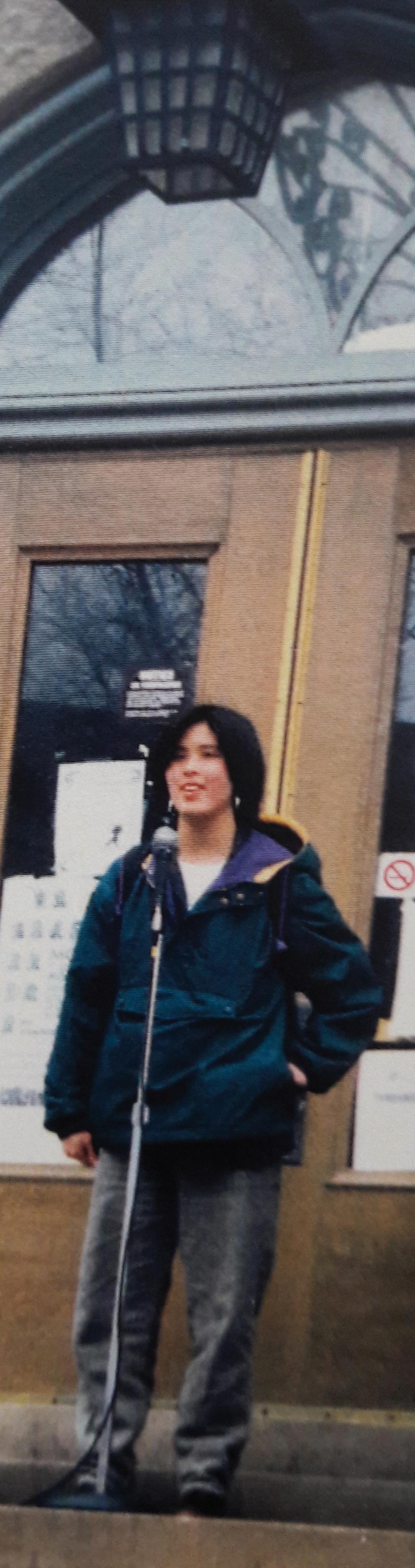
How one group of students brought Asian American studies to Northwestern.
WRITTEN BY ILA DOHRMANN // DESIGNED BY ILSE VON HEIMBURG
COURTESY OF FREDA LIN
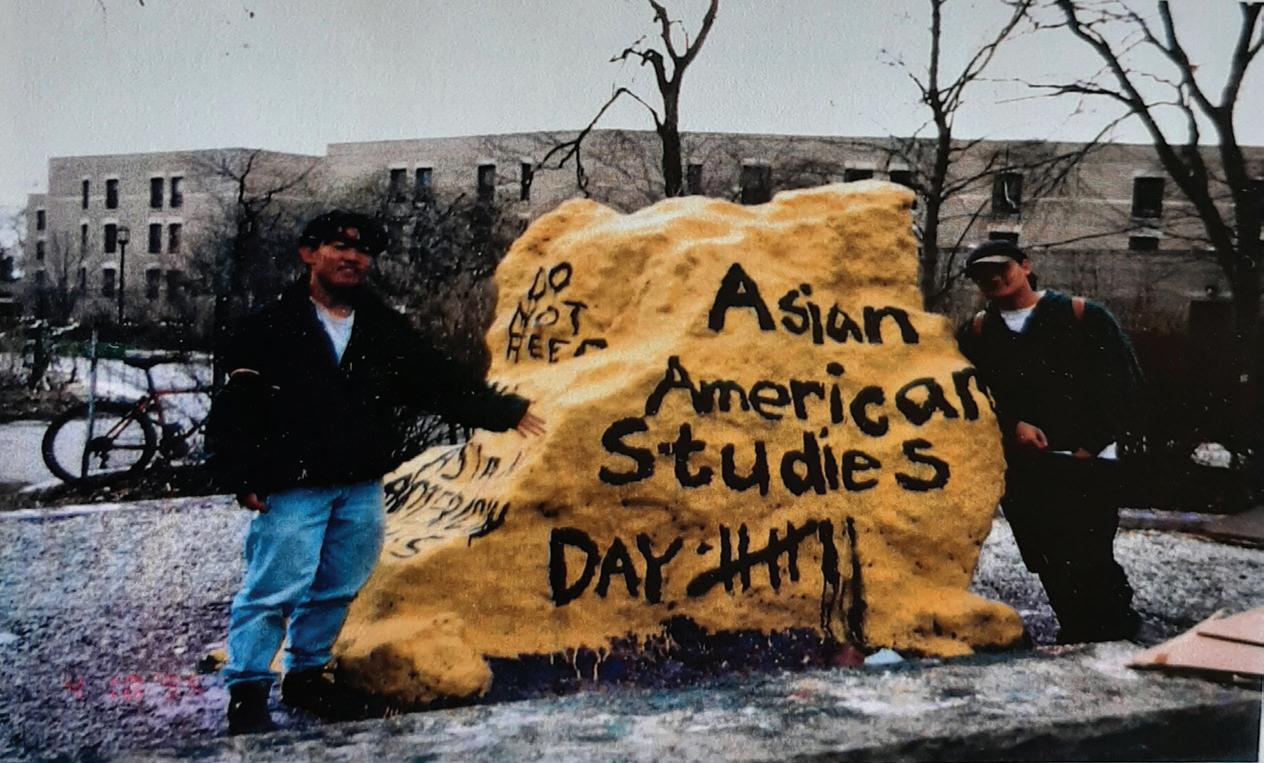
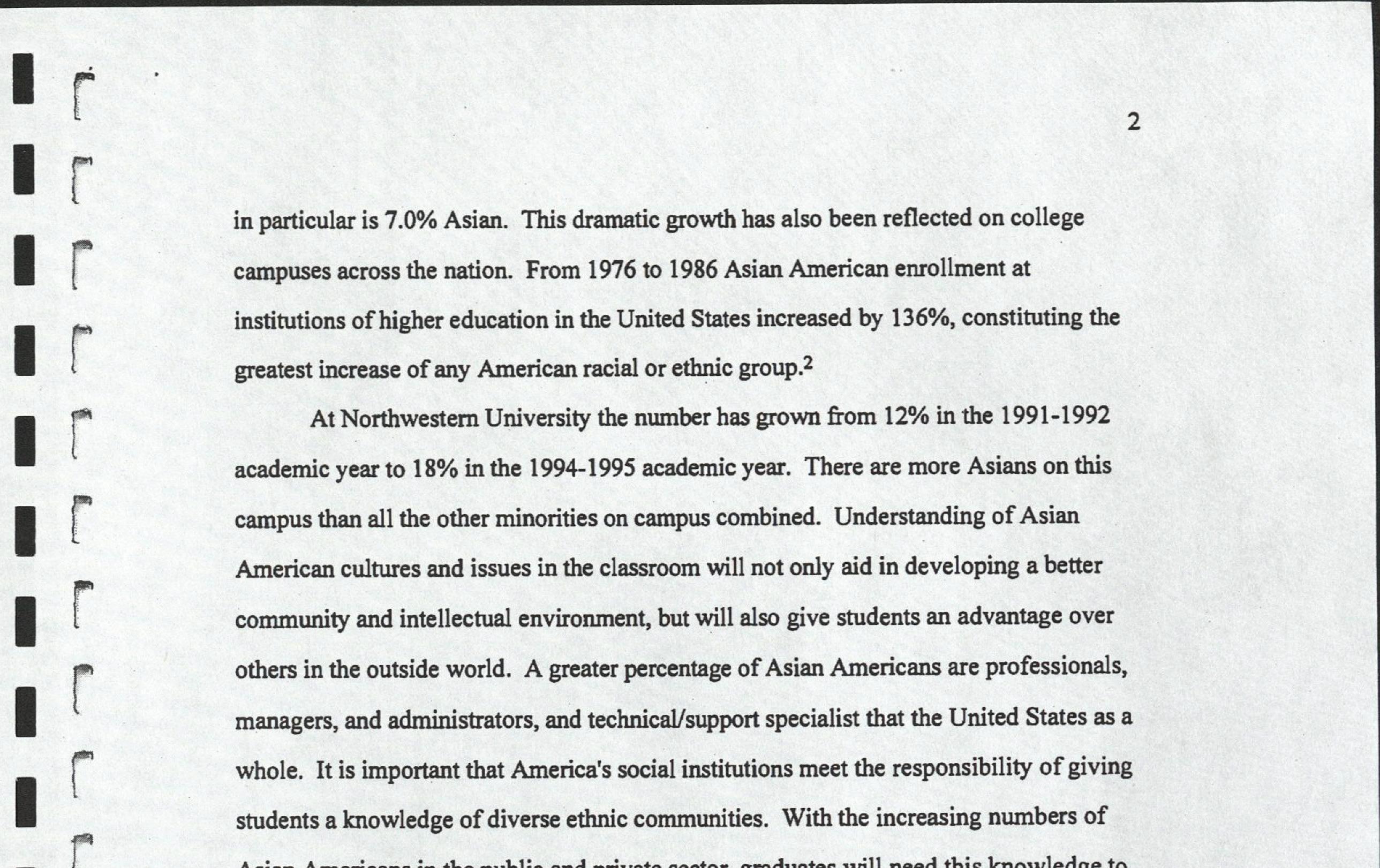
It was April 1995, and 17 Northwestern students had just begun their protest at the Rock. Their demand: an Asian American studies program at Northwestern. Their tactic: a hunger strike.
“The first day, you’re just ravenously hungry,” David Kan (CAS ‘95) says. “By day number two, you are not so hungry. Day number three, you’re just kind of delirious.”
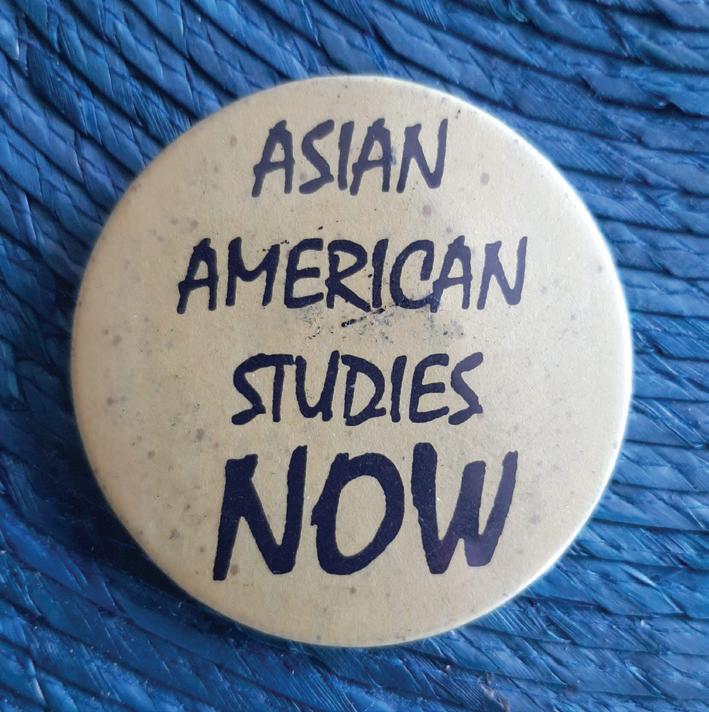
It’s been 27 years since Northwestern established its Asian American Studies Program — including a minor open to all students. In 2016, the University approved a major in the subject. Today, the Program offers a variety of courses each quarter examining Asian American history, literature and culture. But just over 30 years ago, the Program was nothing more than a dream that a group of students fought to make a reality.
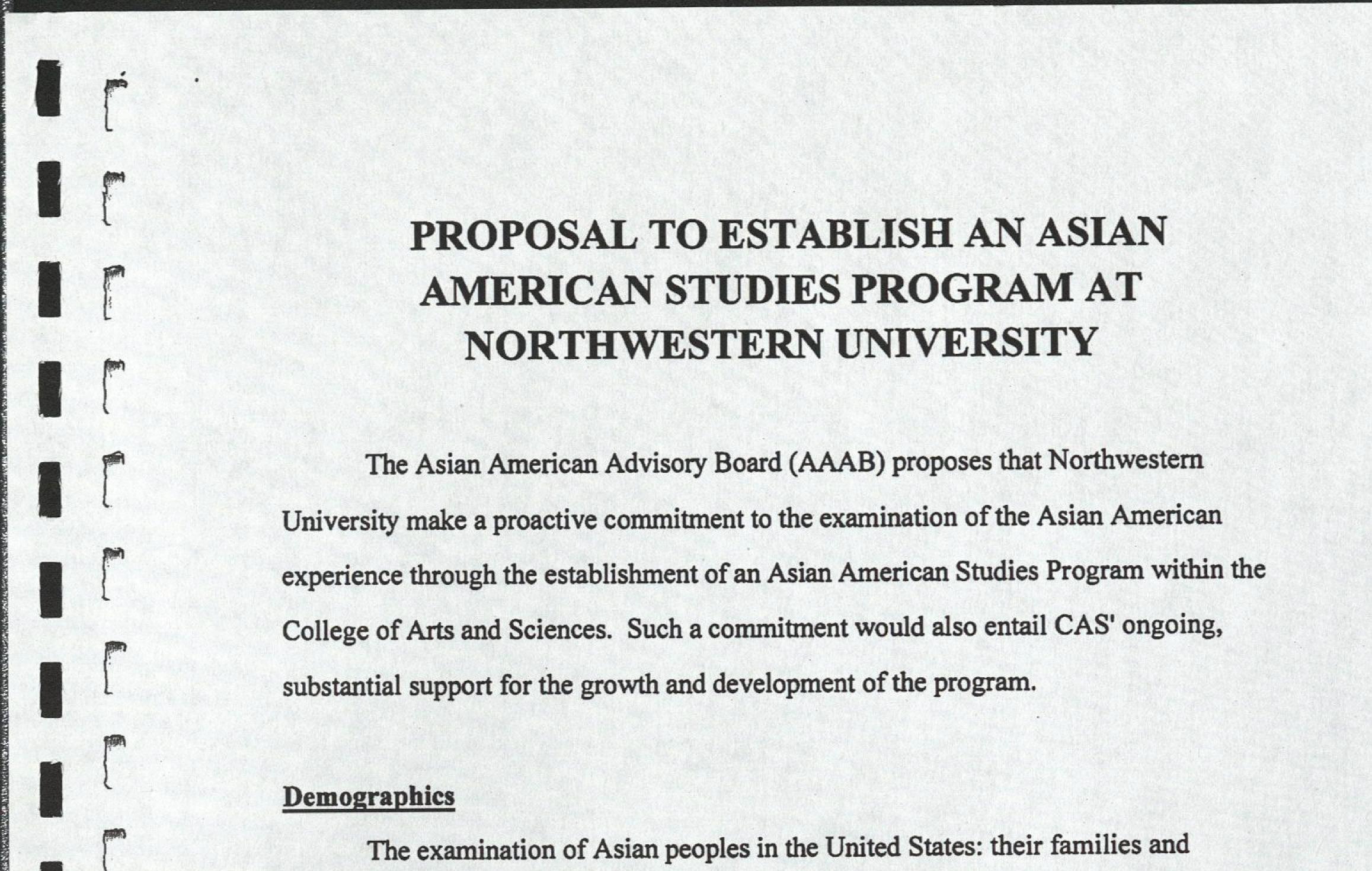
By the eve of the 1995 hunger strike, the Asian American Advisory Board (AAAB) — a student umbrella organization comprising all campus Asian and Asian American groups — had already attempted negotiations with the administration for four years.
After the administration rejected a detailed research proposal outlining the need for an Asian American studies program, AAAB members began discussing how to escalate.
“It didn’t just come out of the blue,” hunger striker Sumun Pendakur (Weinberg ‘98) says. “It wasn’t like
students woke up, didn’t get what they wanted and then immediately moved into something like that. It really was a lengthy buildup.”
Freda Lin (CAS ‘95), then-vice president of AAAB, grew up in West Islip, New York, a predominantly white suburb of New York City.
“I did not even learn the word racism until I got to college,” she says. “That’s how bad it was in the ‘80s.”
At Northwestern, she joined AAAB and majored in History and International Studies with a minor in Asian Studies. She learned about the Asian American studies field in 1994 at a national conference hosted by the Association for Asian American Studies.
“I was really astounded and actually quite angry that we had nothing of the sort at Northwestern,” Lin says. “I just started brainstorming, organizing. I’d never been an activist before. At the time, I was like, ‘How do we do this?’”
Joining AAAB was the start; for Lin and many others, the group provided a safe space to share their experiences.
Grace Lou (SESP ‘96) also grew up in the New York City suburbs, where she was one of few Asian Americans. She remembers enduring racial slurs, bullying at bus stops and being singled out because of her race.
“We were there with a
we felt would improve the learning experience set of beliefs of all students.”
“I found through AAAB a lot of students who experienced very similar things, and we found camaraderie in thinking that maybe activism would help heal some of the trauma we had gone through,” Lou says. She assumed the AAAB presidency in April 1995 before the hunger strike began.
In the spring of 1995, Lin and Lou began organizing a movement to bring an Asian American studies program to Northwestern. They created an education committee, drafted a petition for faculty support and planned a public forum.
“We had other professors speak on campus — from UCLA and other universities — to show the administration there are professors out there that have studied specifically this area, and it’s a viable type of academic program,” Lou says.
For four years, students including Lou had created and taught their own evening seminars on topics related to Asian American studies. “Every single one was filled to max capacity, overflowing,” Pendakur says.
On Feb. 2, 1995, AAAB submitted its proposal to the Office of the President outlining the need for an Asian American studies program. Within two weeks, then-University President Henry Bienen responded, expressing an open mind toward the idea of an Asian
American studies program but stopped short of committing to creating one.
“Repeated negotiations with very little results and no promises of resources” catalyzed the strike, Kan says. “We were getting frustrated. We just weren’t getting any traction with the administration.”
On strike
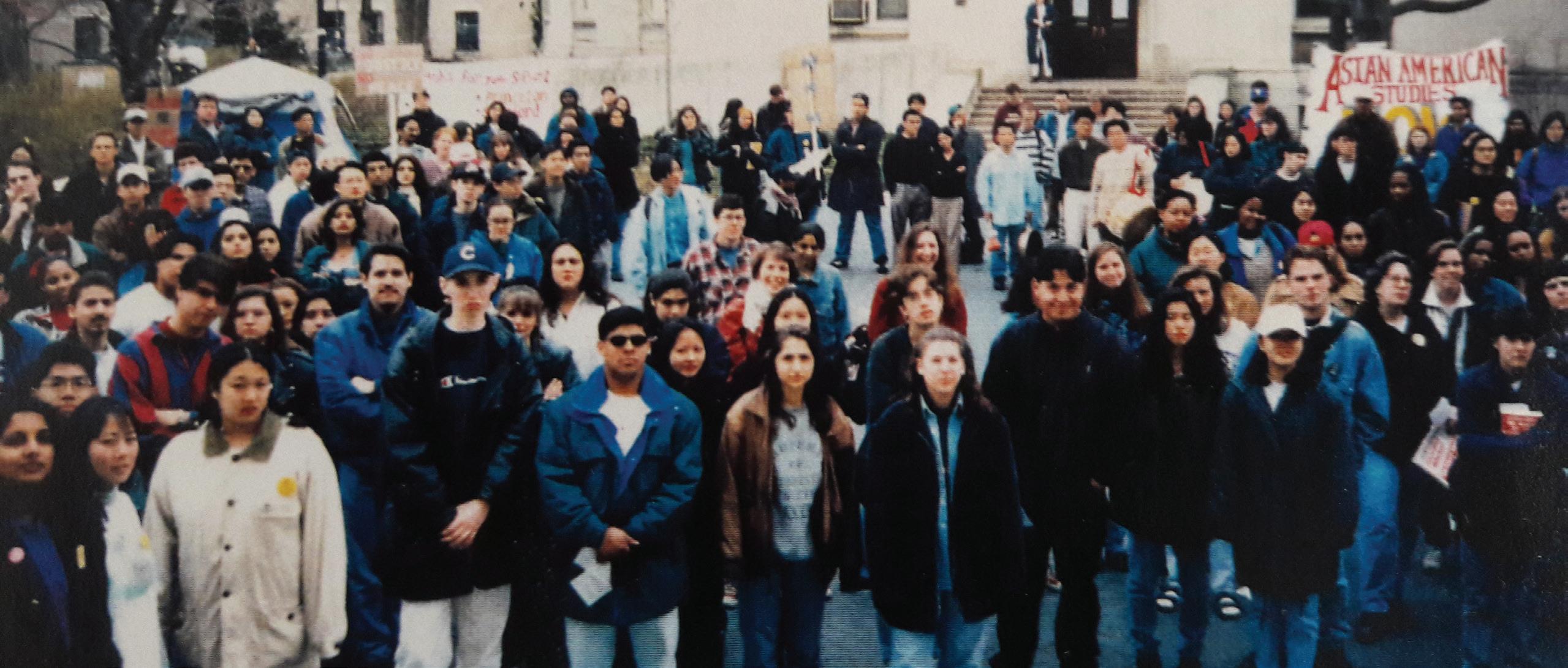
On April 12, 1995, the hunger strike began. Following a rally where students marched from the Rock to Bienen’s office chanting “no program, no peace,” 17 students committed to the strike, and more than 60 others fasted for one day in solidarity.
“One of the things that kind of gets lost in most of the retellings of this history is that although [the hunger strike] was led by Asian Americans, it was really supported by all of these other student organizations,” says JiYeon Yuh, History and Asian American Studies professor. Yuh was the first Asian American Studies Program faculty member hired by the University.
The strikers slept in tents by the Rock, passing out flyers to students. “It was a combination of painful and also really empowering. We were there with a set of beliefs we felt would improve the learning experiences of all students,” Pendakur says. Pendakur went without food for three days during the hunger strike.
On April 19, Lawrence Dumas, thendean of the College of Arts and Sciences, met with AAAB representatives and
committed to making funds available for four new courses starting that fall.
But for the students on strike, this promise wasn’t enough.
“Everyone was just so exhausted and slightly demoralized. We didn’t want courses, because courses can fade in the night,” Pendakur says. “We wanted a real program.”
The hunger strike lasted 23 days total. Students fasted and slept in tents at the Rock for different lengths of time, the longest being 12 days.
The strike gained national media attention. Students at other universities supported the strikers through fasts, candlelight vigils and sit-ins. But fatigue, combined with concessions from the University, ultimately brought the strike to an end.
It took four more years of continued lobbying from AAAB for Northwestern to create an official Asian American Studies Program. Even then, the administration allocated minimal resources and funds.
“When I arrived in the fall of 1999, we had no offices; we had no staff,” Yuh says. “We really had no classes. There was no major. There was nothing.”
At the time, Northwestern’s libraries held almost no material related to Asian American studies, so Yuh gave them a list of books and films to acquire. She also worked to develop a core curriculum, bring in other Asian American scholars for events and
negotiate with the University to hire additional faculty.
Progress was incremental, but the hunger strikers’ vision did not fade. What had once been tents at the Rock gradually became classrooms, more faculty hires and, eventually, a fully fleshed out program.
In 2016, Northwestern established the Asian American Studies major, approving a proposal put forth by three core faculty members of the Program, including Yuh. The major became available to students that fall.
Weinberg first-year Ava Lee applied to several colleges as an Asian American Studies major after taking an English seminar in high school about Asian American culture.
“Learning about my own identity in a college environment is really fun,” she says. Lee, who is half Chinese and half Korean, appreciates that her classes give her space to reflect on her own experiences while also engaging with those of others.
Today, the Asian American Studies Program offers courses on Asian American history, literature, politics, philosophy, music and art. In 1999, Yuh
was the first Asian American Studies Program faculty member. Now, she’s one of nine. Yuh attributes this milestone to the groundwork laid by the student protesters two decades earlier.
“All of this might seem like it’s only for the benefit of Asian American studies and people interested in Asian American studies, but it benefits the whole university,” Yuh says. “It helps to make the University truly a world-class and global institution, and that’s the impact of the 1995 hunger strike.”


WRITTEN BY LAURA HORNE // DESIGNED BY ARLETTE CORREA & LEILA DHAWAN

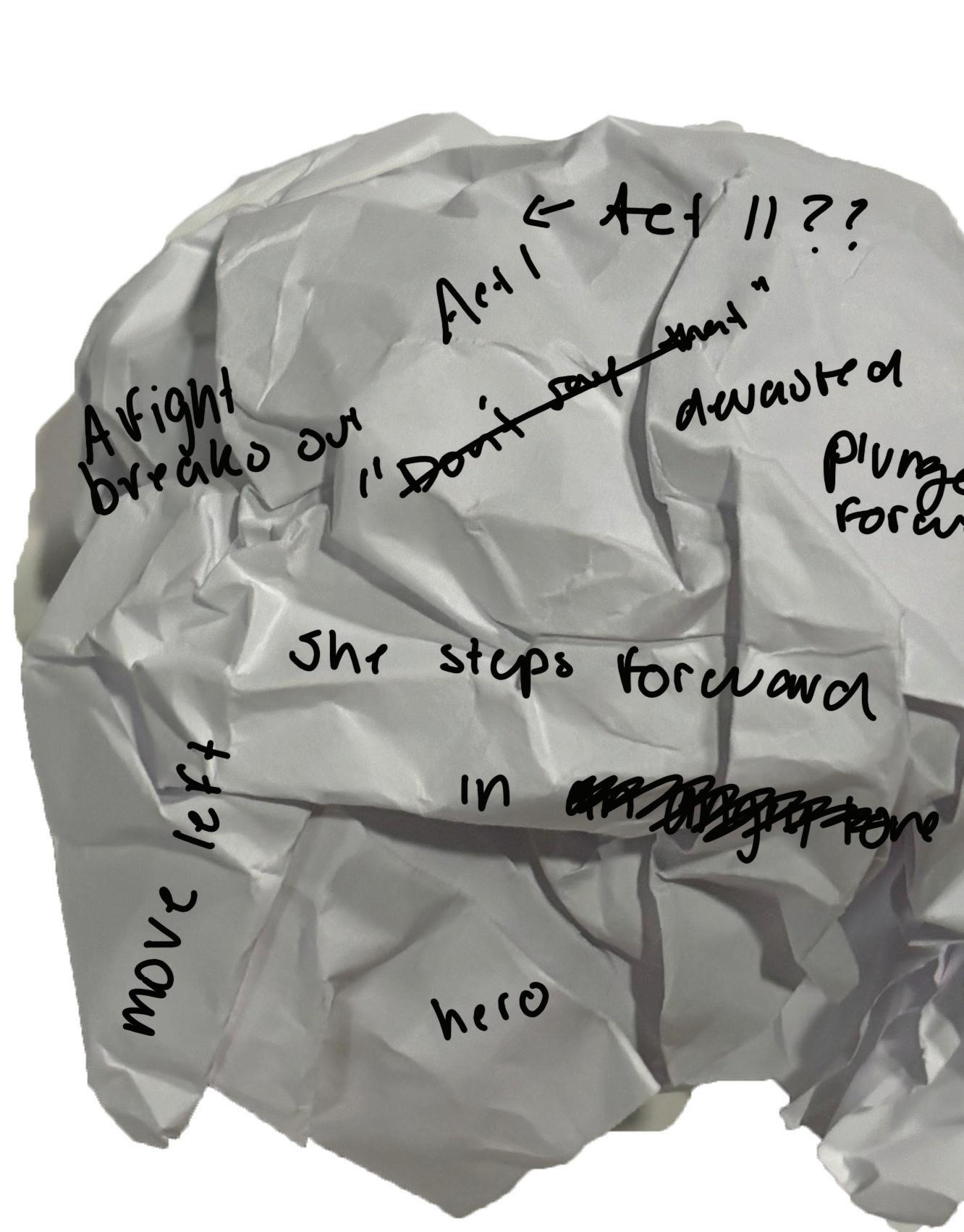
Asix-foot piece of parchment paper hangs in Communication thirdyear Sarah Villamil’s Evanston bedroom. While refining the second draft of her play “Two Restrooms,” Villamil experienced a stretch of writer’s block, stuck on how to progress the plot. Her solution? Visualize it.
She began writing out each scene and act, conceptualizing the structure of her play in organized scribbles across the parchment sheet.
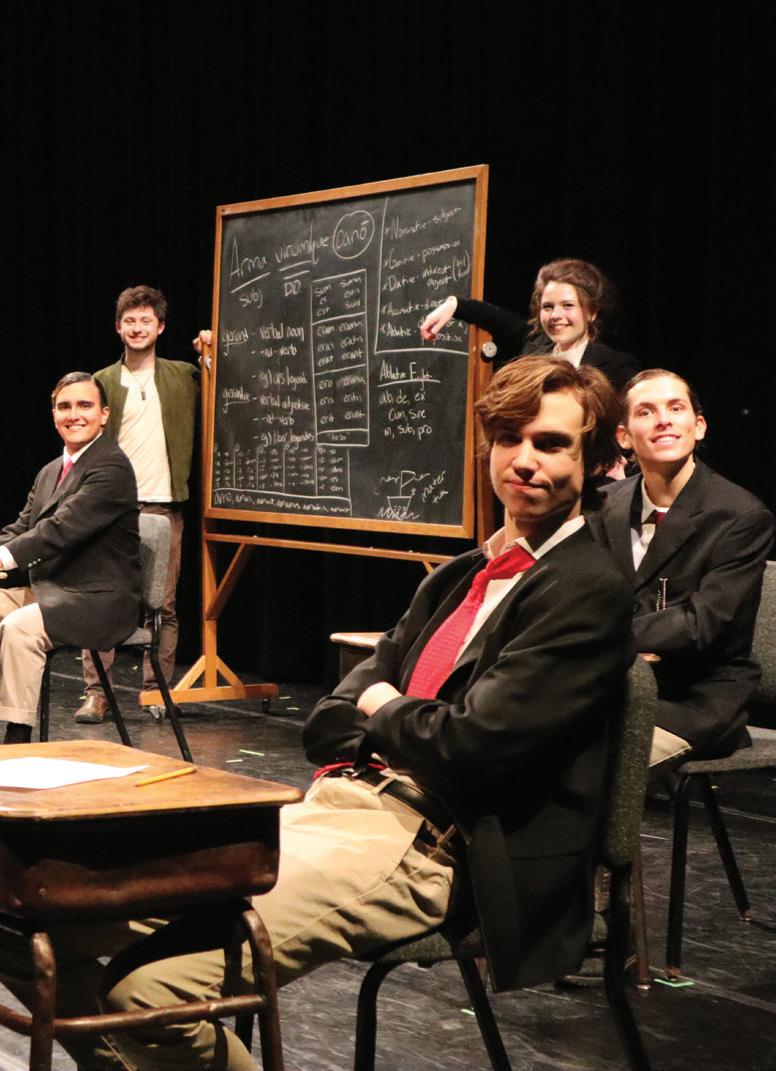
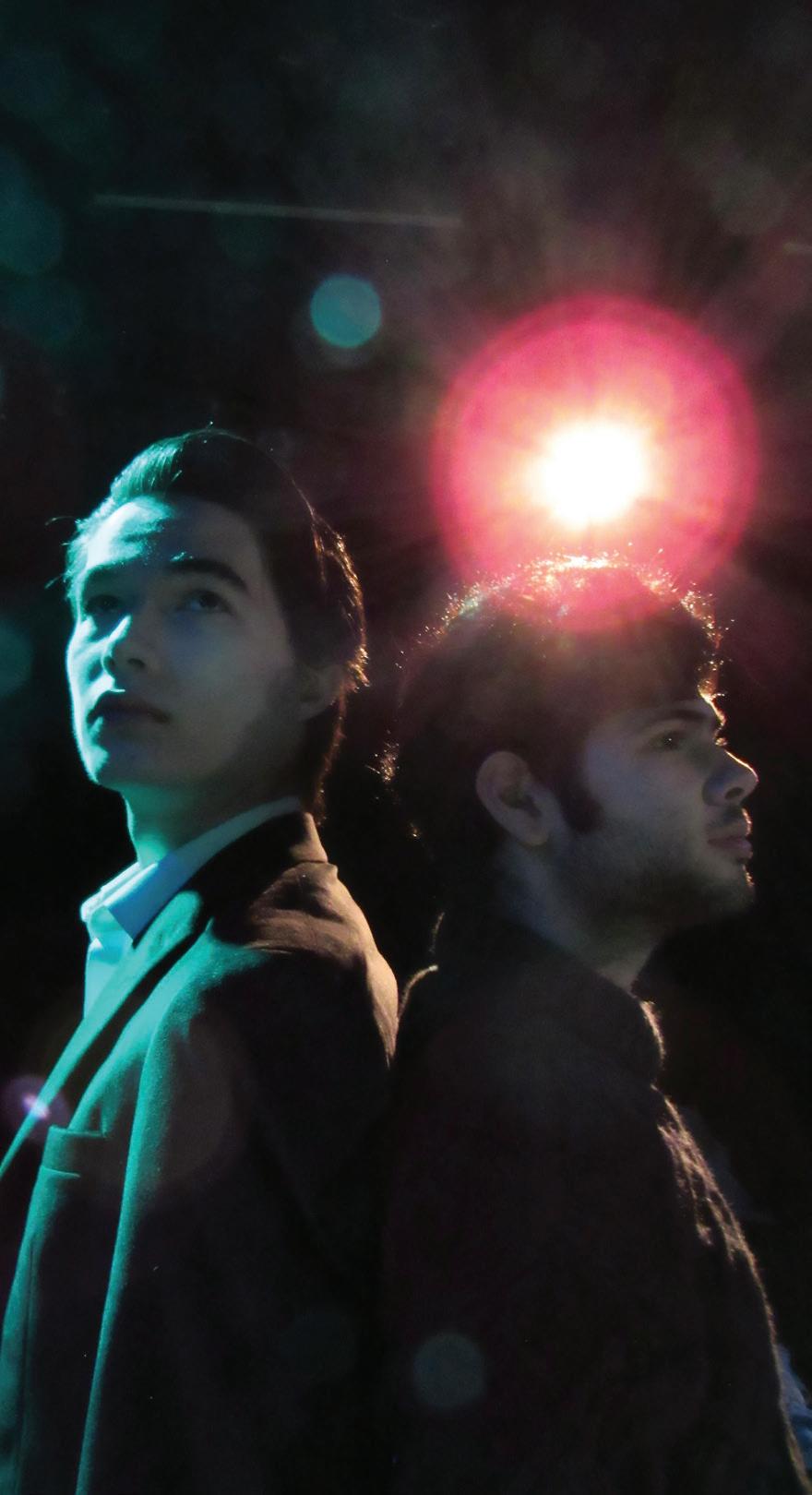
After nearly a year and a half of ideation, writing and revisions, “Two Restrooms” debuted at Shanley Pavilion in February. The project, which began as an assignment in Villamil’s sophomore year playwriting class, was brought to life on stage.
Taking a play from mere thought to full-fledged production is no easy feat, but with help from the Northwestern Student Theatre Coalition (StuCo), the Wirtz Center for the Performing Arts, faculty at the School of Communication and members of the University’s theater community, aspiring student playwrights like Villamil have avenues to pursue their creative talents in a way that is uniquely their own.
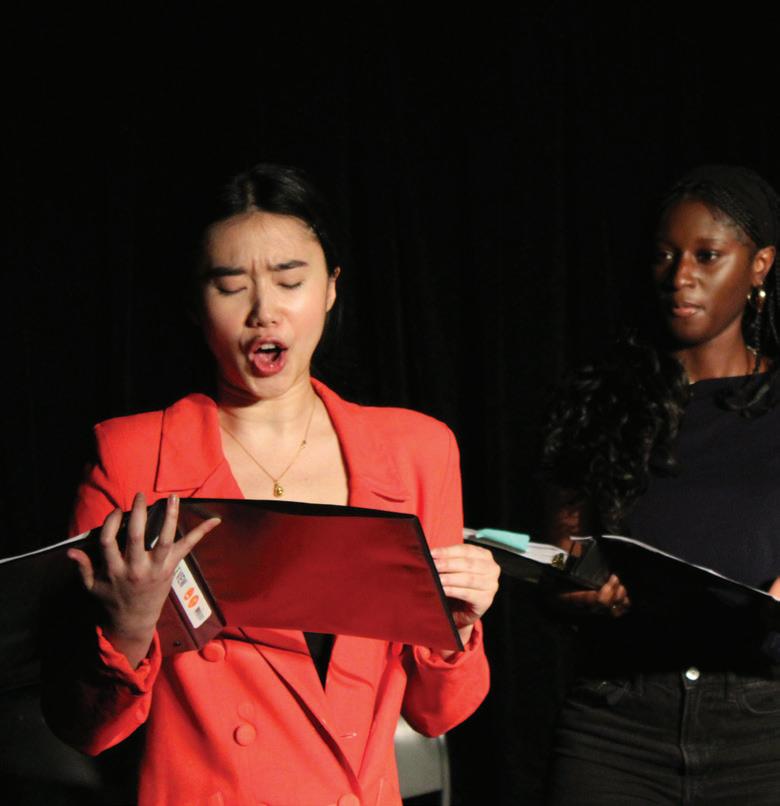
Spring Mainstage Show, but Casa says she has had the idea for the show since freshman year. Taking “Introduction to Playwriting” sophomore year provided her with the time and mentorship to develop 30 original pages, which have since snowballed into a full production.
“It’s always kind of hard to ... satisfy my responsibilities as a student but also feel fulfilled as a playwright.”
Sophia
take advantage of.’” Lee introduced other theatre majors to the project who could help create an experience combining entertainment with audience immersion.
Backed by money and support from TPED, Lee’s immersive theater experience premiered at Shanley Pavilion in October 2025, eight months after he began brainstorming. But this timeline can look different for each new work and playwright. Villamil began “Two Restrooms” a year and a half before it debuted, whereas Outcalt spent two years writing and revising “Amicus.”
Casa wrote the last 30 pages of “The Ballad of Ricky Jo” in just two days. Juggling classes, campus jobs and playwriting, she says her biggest challenge is finding time. “It’s always kind of hard to make sure that I’m able to carve out that time and satisfy my responsibilities as a student but also feel fulfilled as a playwright,” she says.
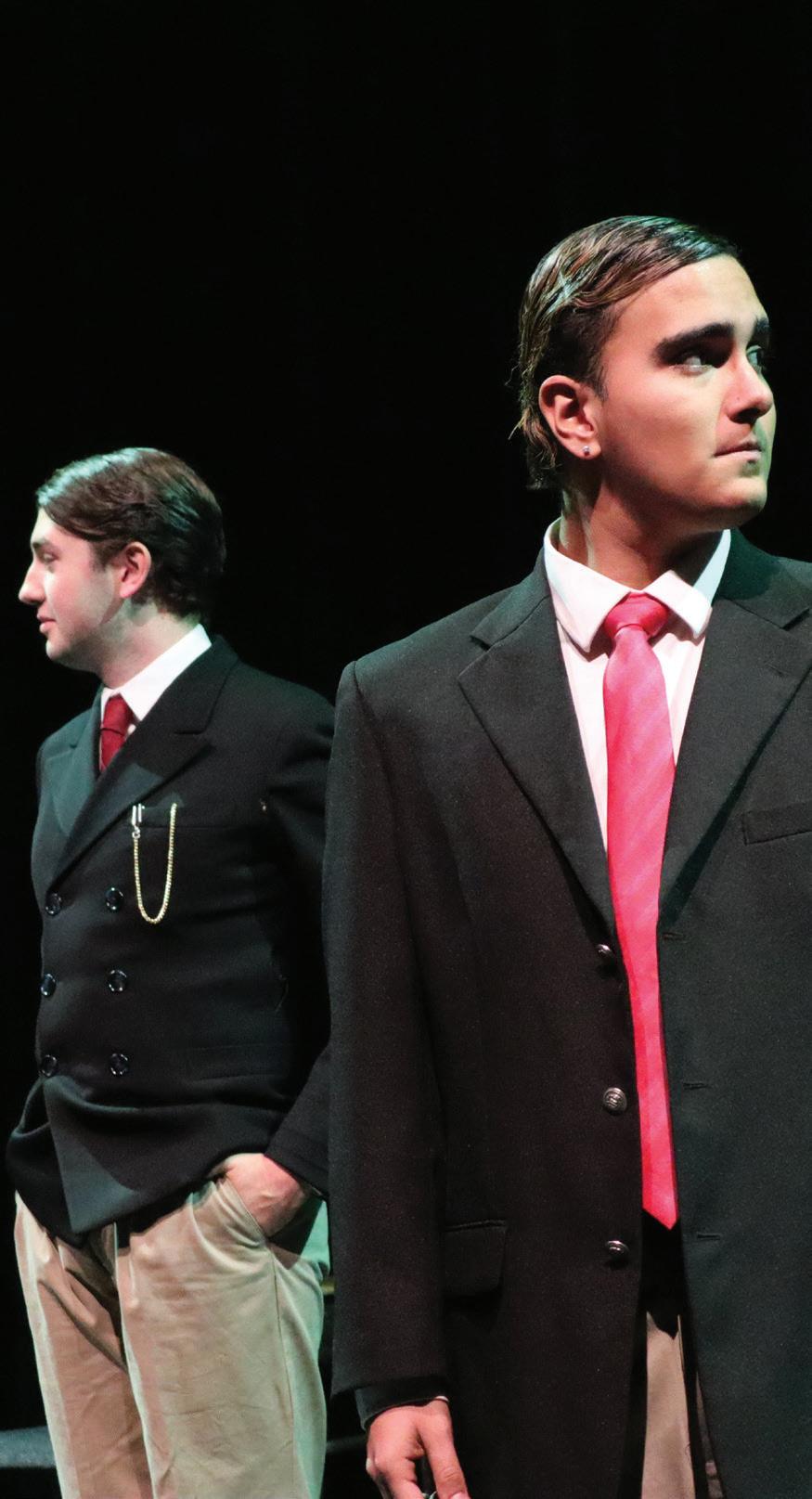
Often, the courses offered through Northwestern’s playwriting program serve as a launch pad for new work. Communication fourth-year Max Outcalt’s plays “Maelstrom” and “Amicus” both originated in the classes he took in the playwriting program. To inform his playwriting, Outcalt tries to consume as much literature as possible.
For other students, playwriting classes offer an opportunity to flesh out new ideas. Medill third-year Sophia Casa’s play, “The Ballad of Ricky Jo,” is set to debut on April 17 as Vertigo Productions’s
third-year
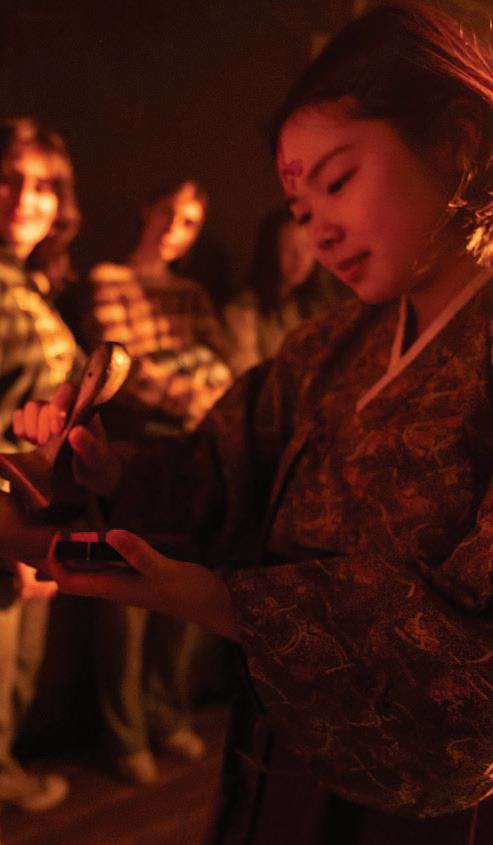
The path from script to production looks different for every student. Communication second-year Ghino Lee worked outside the playwriting program to create his immersive theater experience “Mark of Han.” The work arose from a passion for theme park engineering and blended elements of theater, haunted houses and Korean history.
Lee is part of the Theme Park Engineering and Design (TPED) group, a student organization that collaborates on annual projects in the engineering and entertainment industries.
“[The club was] like, ‘We have this funding, and we have this project we are supposed to do every year, but we don’t really have anyone to take it on,’” Lee says. “And so me, being part of the theater community at Northwestern, I was like, ‘This is an opportunity that I can
Time isn’t the only challenge these creative minds face. Scriptwriting isn’t a continuous process but rather comes in spurts. When Casa needs to get her creative juices flowing, she goes on walks,
talking through dialogue to ensure it sounds natural.
For Villamil, the solution is more visual. “I feel like writer’s blocks are usually centered around the need to address a problem that doesn’t make sense in your script,” she says. “And so, I just either pivot, ... or I try other techniques: I visualize things. I write down plots. I think of music that inspires it, pictures that inspire it.”
Student playwrights face many learning curves in their processes as well. For Lee, that meant learning to balance scripted and unscripted elements. For Outcalt, that meant embracing an expression known as “kill your darlings.” Writers need to learn to let something go if it’s not working in production, he says.
Once student playwrights have an outline, there are several ways to turn the idea into a reality. StuCo is composed of seven student-led boards, which manage auditions, resources and archives for all things student theater. Playwrights can submit their scripts to boards and if selected, their new work becomes a StuCo production.

Each year, StuCo organizes over 30 plays. It holds “Generals” four times a year for actors to audition for multiple StuCo shows at the same time. Boards recruit collaborators including producers, designers and dramaturgs through StuCo’s weekly newsletter.
StuCo is not the only avenue for a student-written work to take flight, but Communication third-year Lux Vargas says its presence is crucial to the professionalism of Northwestern’s student theater scene.
“The way that StuCo, as a governing body of the different student theatre boards, operates and has tried so hard to create an equitable, professional, safe, responsible environment is really what has kept all the theatre boards operating in such a professional manner,” she says.
Vargas is the president of Vertigo Productions, a 30-year-old board dedicated to producing exclusively student-written work for over 30 years. The board puts on five student-written plays each season: the Fall Mainstage production, Winter Reading Series and Spring Mainstage production.
The fall and spring productions are fully staged, while the winter series consists of three script readings. Vertigo also supports the 10-Minute Play Festival each winter, in collaboration with the School of Communication, and two special events in the fall and spring.
Vertigo holds open submissions each spring, giving playwrights the opportunity to submit their work for the following school year. Typically, the board receives over 50 submissions.
“I think that a group like Vertigo, doing what they have done, gives so much opportunity to playwrights on this campus. I think that’s why Northwestern has such a good program not just because [of] the department and the classes offered, but the opportunity to physically see it come to life,” says Villamil. Vertigo handles factors like finances and marketing, so all Villamil needs to do is write the play and work with “amazing people.”
For students who don’t apply through Vertigo, or whose pieces are not selected, there are other opportunities to put on their work for the Northwestern community. Outcalt says both of his plays were originally rejected by Vertigo. As a result, he submitted his pieces to the Wirtz Center as Student Performance Projects (SPP).
SPPs allow students to produce their own work, which can be self-written, with the support of resources from the Wirtz Center. Their goal is to provide learning and performance opportunities for students across the arts, says Gianna Carter, production coordinator for the Wirtz Center.
Application materials include scripts and personal reflections, including how the work will benefit Northwestern, and logistical items including plans for building a team, marketing and tech week.
“I think Northwestern is lucky in that it is such a thriving student playwright culture, but it also means there’s a lot of competition,” he says. “But I think it’s the same thing that’s going to be in the real world. ... It’s hard to get people to put on your work, so I think that’s kind of a persistent struggle.”
The selection committee looks for factors including creative depth, diversity and feasibility when determining what works to support, Carter says. She serves as the production manager on each
selected project and meets with students to support needs and logistics. Each project is awarded $500 to purchase production materials.
SPPs serve less as a site of script development than one of production. They frame playwriting as a collaborative and developmental process. “We’re really trying to just reinforce and push forward mentorship [and] artistic accountability, which really mirrors professional practices,” Carter says.
While students launch plays through StuCo, the Wirtz Center and self-started means, the center of Northwestern’s playwriting scene is the School of Communication’s playwriting program. The school houses one of the most robust theatre departments in the country. Its playwriting program offers about a dozen classes annually as well as playwriting festivals, professional development opportunities and guest artist panels to students both in and outside the theatre major.
“As far as I’m concerned, I have failed at my job for the day if the writer doesn’t leave feeling like there’s something to try next.”
Laura Schellhardt Professor of Theatre

Within the program, the playwriting module offers students the opportunity for more concentrated studies. The module graduates between 12 to 18 students annually according to Theatre professor Laura Schellhardt (Speech ‘97), who oversees the playwriting program. She says the program’s genesis came after seeing students hone in on the discipline in and out of class with nothing to show for it on their transcripts.
“The module came about for students who, within two years at Northwestern, know they want to focus on playwriting and might want to do it when they graduate,” she says.
After graduating from Northwestern, Schellhardt started teaching the Theatre department’s only playwriting class at the time — now known as the advanced playwriting sequence. Following a brief break, she returned to Northwestern in 2008 when Rives Collins, then-chair of the Theatre department, called her about starting a playwriting program for undergraduates.
Since then, in conjunction with Theatre professor Julie Marie Myatt,
Schellhardt has modeled the program to reflect what she would have wanted in college. Schellhardt focuses on providing students with resources to succeed professionally as a playwright and sustain their creativity. This includes assigned excerpts from books and songs, strategies to help students organize their time, and peer workshops to encourage writing.
“As far as I’m concerned, I have failed at my job for the day if the writer doesn’t leave feeling like there’s something to try next and also feeling like their play is worthwhile,” Schellhardt says.
When watching her students’ scripts come to life on stage, Schellhardt says she watches both the play and the student’s perception of the audience. It gives her chills to see her students witness the impact their words have.
“We’ve been told for years that the theater is a dying art form, and yet here we are. We’ve been told forever that our voice doesn’t matter,” she says. “But the right story told to the right audience at the right time can really change the world.”
Professors are rethinking course policies in response to ‘skyrocketing’ artificial intelligence use.
WRITTEN BY DANIEL KENT // DESIGNED BY
Throughout Fall Quarter, English professor Barbara Newman prepared for one of the biggest lectures she teaches every year at Northwestern. Syllabus? Check. Daily schedule? Check. Class roster? Check.
In her 45-year tenure, she has taught “The Bible as Literature” many times, but Fall 2025 was the first quarter she instituted a mandatory “AI Honor Pledge.” The contract, which bans students from using generative artificial intelligence (AI) at risk of failing the course reads, in part, “I will not outsource my mind to a machine — because a world of smarter machines and stupider humans will be a dystopian nightmare.”
Newman’s policy is just one of many ways professors across the University are attempting to combat rising AI
use and its potential to harm students’ cognitive abilities. According to The Daily Northwestern’s Fall 2025 campus poll, students’ daily AI use grew from 9% in Fall 2024 to 25% in 2025. These numbers are driving some professors to hit rewind and switch to in-person assessments — sometimes restricting technology use in the classroom altogether.
Some students welcome the change. “This past year, I feel like [AI use] just skyrocketed,” SESP fourth-year Asha Buerk says. “I walk into Colectivo [Coffee] or Periodicals, and it’s literally laptops with a sea of ChatGPT on them.”
As president of the Responsible AI Student Organization (RAISO), Buerk leads Northwestern’s oldest undergraduate student organization focused on AI. The club hosts weekly meetings, intending

“If you have a mindless, soulless machine doing [work] for you, you’re throwing away your education.”
Barbara
to educate attendees about chatbots. RAISO hopes to teach users about the ethical and social implications of AI, so students can use these tools responsibly, Burek says.
Using AI has both negative and positive impacts, ranging from environmental harm to increased work efficiency, Buerk explains. But the potential consequences, including reduced critical thinking abilities, have many professors worried.
A 2025 Massachusetts Institute of Technology study found excessive reliance on AI can lead to “cognitive atrophy. A 2024 study published in the International Journal of Education Technology in Higher Education found using ChatGPT leads to issues with procrastination and memory loss. Newman says AI threatens students’ mental processes, including critical thinking skills.
“You’re here to learn, to think, and writing is thinking,” Newman says. “If you have a mindless, soulless machine doing it for you, you’re throwing away your education, and you’re also learning to lie.”
For Newman, implementing inperson writing assignments is not a silver bullet. While they may keep





“I’ve just lost trust in any written document as evidence of student work.”
Scott Ogawa Professor of Economics

students from using AI, Newman says core tenets of English instruction, like the revision process, are lost in timeconstrained assessments.
Economics professor Scott Ogawa, whose research focuses on student and teacher decision-making, joins Newman in expressing concern for students’ decreased critical thinking skills.
“In some instances, education is completely collapsing, in the sense they’re outsourcing every cognitive task,” Ogawa says. He explains some students are “tragically confused” about the goal of education: The purpose is not the final paper but rather the process to arrive there.
Students around the University are falling into the mindset Ogawa describes. Weinberg first-year Bridgette Ouyang says almost all her friends use chatbots for their classes. While she does not use AI to directly complete work, she says it is useful on the front end of assignments.
“It definitely fills in some of my thoughts,” she says. “If I’m writing a paper, it can help me make an outline, and I don’t have to put that much thought into it.”
SESP second-year Payton LowenthalWojcik occasionally uses ChatGPT to summarize longer readings, but as an English double major, he refrains from using it for writing assignments.
“Instead of trying to develop those thoughts by yourself, you’re outsourcing to a robot,” Lowenthal-Wojcik says. “I think that’s sad.”
However students choose to use AI, Buerk says they should do their research. “Once you read one [academic] article about cognitive disintegration and constant AI use, it changes the way you interact with the system,” she says.
Professors hold varied opinions about the broader implications of AI in education. Accordingly, they are shifting the organization of their courses to align with their view. For Newman, AI is an “existential threat.” Ogawa sees it as a “big bump in the road, as large of a bump as COVID-19 lockdowns.”
Ogawa shifted his grading scheme to emphasize in-person assessments. Students receive a completion grade for take-home problem sets, but paper tests are weighted heaviest. “I’ve just lost trust in any written document as evidence of student work,” he says.
With this setup, students are free to use AI outside of class, including on problem sets, but it will not directly help them earn a higher overall grade. Ogawa, who sees potential for AI to positively impact the world beyond academia, still believes all professors should be required to implement some form of in-person assessment to combat AI use in the classroom.
Philosophy professor Chad Horne began administering in-person exams this quarter; previously, he assigned take-home tests. After gradually considering adjustments in response to AI, he says a meeting with faculty members at the beginning of the 2025-2026 academic year made him commit to changing his practices.
“I was the only one not doing inclass assessments,” he says. “That was a moment when I was like, ‘It seems that the consensus has shifted pretty quickly.’”
Now, Horne proctors an in-person midterm and remote final, which uses a lockdown browser to prevent students from accessing other tabs on their devices. These exams comprise half of the overall grade — the rest is left to takehome work. Horne says he tells students they should not use AI to write their papers for them but admits his policy is “vague” in practice.
Ouyang does not embrace the analog reversion. “It’s very weird,” she says. “I’d prefer everything to be digital if everything else is already online.” As a Biological Sciences major, Ouyang says she uses AI to summarize long readings, take notes and break down complicated homework problems, in addition to creating outlines.
For her chemistry labs, she says she had to buy a pack of blue books — standardized notebook pages bound in blue paper — something her friends did not have to do last quarter. While she is not sure why the change was made, she believes it is related to AI.
The Chemistry department did not respond to repeated requests for comment.
On the other hand, Lowenthal-Wojcik appreciates the old-school exams. “I’ve been in some classes where it’s all paper, and I don’t mind it,” he says. “I think we’re gonna see a lot more paper essays [and] exams than we do now.”
While some professors are making changes to curb AI use, others actively incorporate chatbots into their courses. Integrated Marketing Communications (IMC) professor Carolyn Keller is one of them.
Keller teaches two core classes for the IMC certificate, but her AI policies
differ between the two. In “Consumer Insight,” she discourages the use of AI and instead focuses on the psychological and sociological theories that underpinned the field. But in “Research Data and Analytics,” Keller says the learning objectives are more suited to AI use.
In particular, she allows the use of chatbots to generate market examples tailored to students’ interests, debug code and write the final report — an option she says is “the least traditional” manner in which she permits AI use.
Keller assigns an AI literacy module to students before “Research Data and Analytics” begins. The Canvas module gives students background information on AI and offers examples of how to use it in academa.
Keller instituted the module after taking it herself, hoping it gives students a stronger grasp of machine learning and AI literacy.
Rather than an existential threat, Keller sees AI as a way to force professors to “rethink education in terms of how we assess learning.” She intends to integrate AI in a helpful way, though not in a way that replaces the skills students learn.
Promoting deeper understanding of chatbots is a central mission of RAISO. “This is a very powerful technology,” Burek says. “It’s one that we believe everyone should have access to learn about and understand what we’re getting into and fully understand the ethical consideration, so we can push for positive change.”
Northwestern leaves AI policies up to professors to decide on a class-byclass basis, as outlined by the Provost’s Committee on Generative AI. The Committee’s website details a variety of considerations professors should take into account when deciding to implement chatbots.
For example, it mentions many learning “tools” use AI, which are “increasingly difficult to opt out of.” It also offers templates for syllabi, which include closed, conditional and open AI use for students. However, there is no University-wide policy on AI use.
The University partners with Microsoft to provide free access to Copilot for all students, faculty and staff. Northwestern
IT urges using this specific chatbot over others, like ChatGPT, in order to protect University data.
“I think the [University] administration is being very hypocritical,” Newman says. “On the one hand, they want to prevent academic dishonesty. On the other hand, they give every student free access. That’s like giving with one hand and taking away with the other.”
Ogawa agrees the University’s nonuniform AI policy isn’t enough, saying he is not convinced AI policies should be for individual professors to decide. However, Weinberg Assistant Dean of Academic Integrity and Undergraduate Research Ricardo Court disagrees.
“The thing we do in Weinberg is academic work,” he says. “That is our profession, so the use of academic tools, large language models included, are governed by the departments.”
Court has been in his position since 2018, where he processes and adjudicates academic integrity violations. Before COVID-19, his office saw about 100 cases per year. Now, it sees around 250 — a third to a half of which are related to AI. He says AI plagiarism began in winter 2023 following the release of major chatbots a few months earlier.
When Court receives a complaint, he consults the reporting professor, assesses the alleged violation and meets with the student before making a final judgment. The consequences vary but
can include failing the assignment and even suspension.
“Generative AI is not that difficult to detect,” Court says. “People say, ‘Oh it’s making plausible text.’ … But plausible text is not good academic writing.”
He says guilty students typically argue they resorted to AI because they were tight on time. But, he points out, a late assignment submission often carries a lighter penalty than an academic integrity violation.
Court shares Ogawa and Newman’s concern about students outsourcing their thinking. He says the primary danger of overusing AI is that it “creates an illusion of understanding.” For him, AI represents a disruptive obstacle that gets in the way of class objectives.
Horne estimates about seven to 10 students violate his AI policies per year. He says the University is in a “tough situation” because the appropriateness of AI use varies across disciplines.
As chatbots continue to develop with new features and capabilities, professors and the University are adapting — often uncertain of their next move.
“We’re living through a revolution that’s happening in some sense more rapidly than the Industrial Revolution.”
I give my word of honor that I will not use ChatGPT or other generative AI tools to write my assignments for this class because:
- I will not waste my parents’ tuition or scholarship money, which is being paid so that I can get a thorough education, not take shortcuts;
-
-

I will not sacrifice the challenges of learning and the joys of accomplishment;
I will not do what is merely convenient instead
of what
is thoughtful and creative;I
O N O T E S
Peek backstage at Northwestern’s a cappella groups as they prepare for competition.
WRITTEN BY HAZEL HAYES // DESIGNED
The Northwestern Undertones had just finished weaving together “Movement” by Hozier, “October Sky” by Yebba and the iconic “…Baby One More Time” by Britney Spears. The frenzied celebration grew when judges announced the results: The Undertones had taken home first place at the regional quarterfinal of the International Championship of Collegiate A Cappella (ICCA). The group also received the Outstanding Soloist, Arrangement and Choreography awards. That was two years ago; this February, the group returned to the stage.

BY
ILSE VON HEIMBURG
Northwestern is home to 12 a cappella groups made up of students across all six schools. Many claim the University’s vibrant a cappella scene inspired the “Pitch Perfect” trilogy — the first movie’s director is a Northwestern alumnus. However, unlike the intense competition portrayed in the films, only three of Northwestern’s groups compete in the ICCA: Purple Haze, the Undertones and the Treblemakers. (No, not Bumper’s gang.)
This year, the Undertones and the Treblemakers took the ICCA stage, and next year, Purple Haze will. The three groups compete every other year, focusing
on concerts, gigs and tours in the off years. The ICCA includes 450 groups across nine regions in the U.S. and the United Kingdom. First rounds begin in January with video submissions. Then, groups advance through progressive knockout rounds, with the final in late April.
Communication third-year Anna Rigo, general manager and co-choreographer for Purple Haze, says the ICCA is akin to the national competition in “Pitch Perfect.” After judges check video submissions to confirm entries are legitimate a cappella groups, those selected begin the competition at regional quarterfinals. The
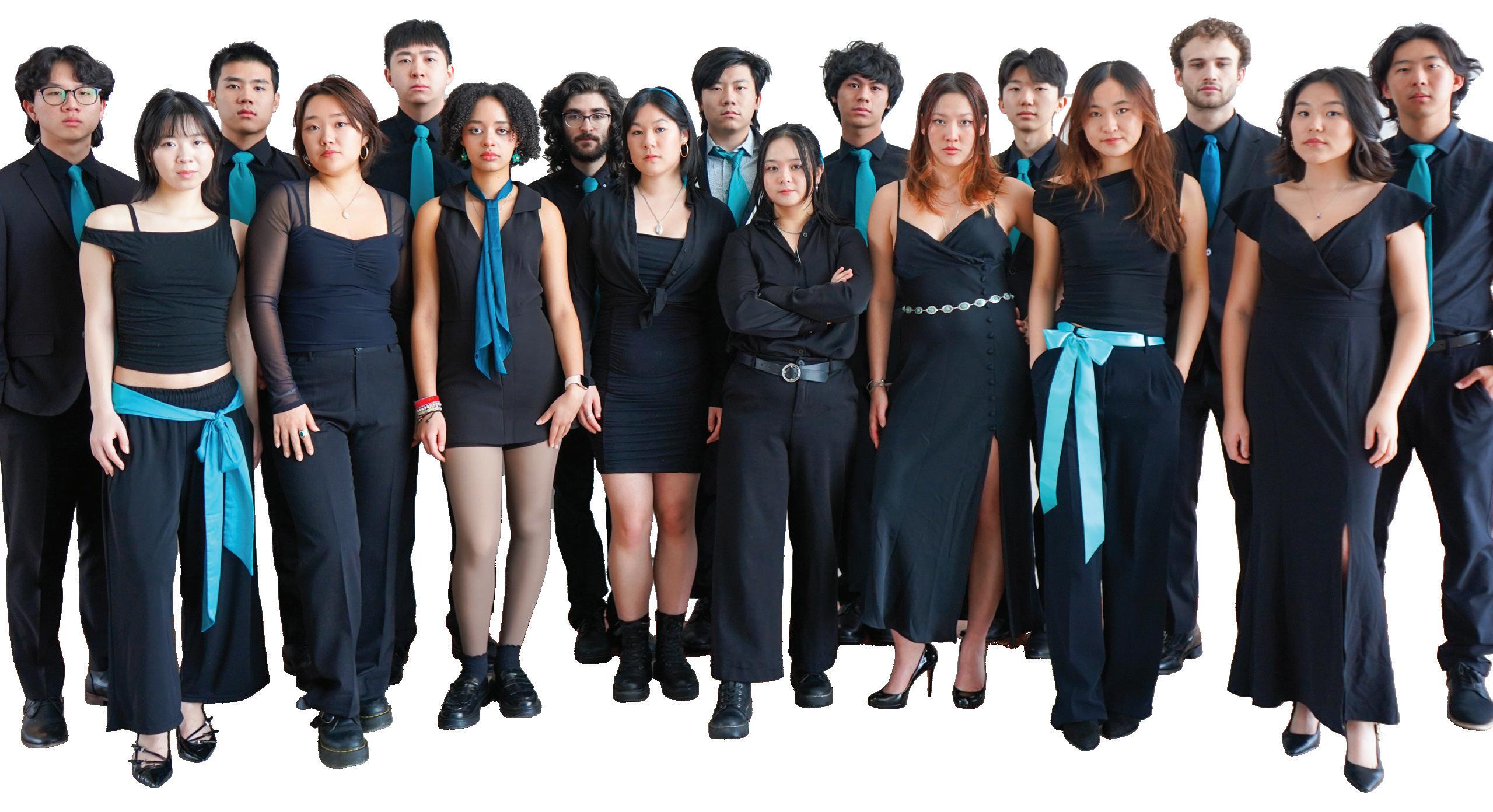
top two groups from each region move on to the semifinals, and winners from those rounds attend the final in New York City. Before groups can step foot on stage, they go through a rigorous rehearsal process. In preparation for the ICCA last year, Rigo says she made the group run around in circles during their vocal warm-up to improve their stamina. At competitions, groups perform for 10 minutes straight, unlike their campus concerts, where singers stand onstage with microphones. So for Rigo, preparation is crucial.
Weinberg fourth-year Pedro Rodriguez, Undertones business manager and choreography team member says learning the dances takes hours of commitment. The Undertones’ choreo team started building the routine after winter break.
Because a cappella centers around singing, groups don’t recruit based on dancing ability. However, once in a competitive group, members must find a way to weave dance skills in with their vocal talent. Often, the group’s more experienced dancers take the lead. Still, Rodriguez says the choreography is
ultimately only as good as the work members put in.
“For the past few weeks, we’ve been learning the choreography,” Rodriguez says. “Now it’s fully on ourselves to make sure we have it memorized, and we can clean it up outside of rehearsal.”
Despite not having any formal dance training, Communication third-year and Undertones music director Jonah Mensch considers himself a “good mover.” He learned over the years from school musicals and productions that a big part of dancing is following instructions and trying your best.
Please don’t stop the music
Along with dancing, singing rehearsals also become more intense pre-competition. Groups vote on songs for the set in Fall Quarter, and the music directors immediately get to work on the arrangement. Groups master the songs throughout the fall, performing them at concerts before the ICCA.
At the beginning of Winter Quarter, the regular two to three rehearsals per week ramp up to practically every day,
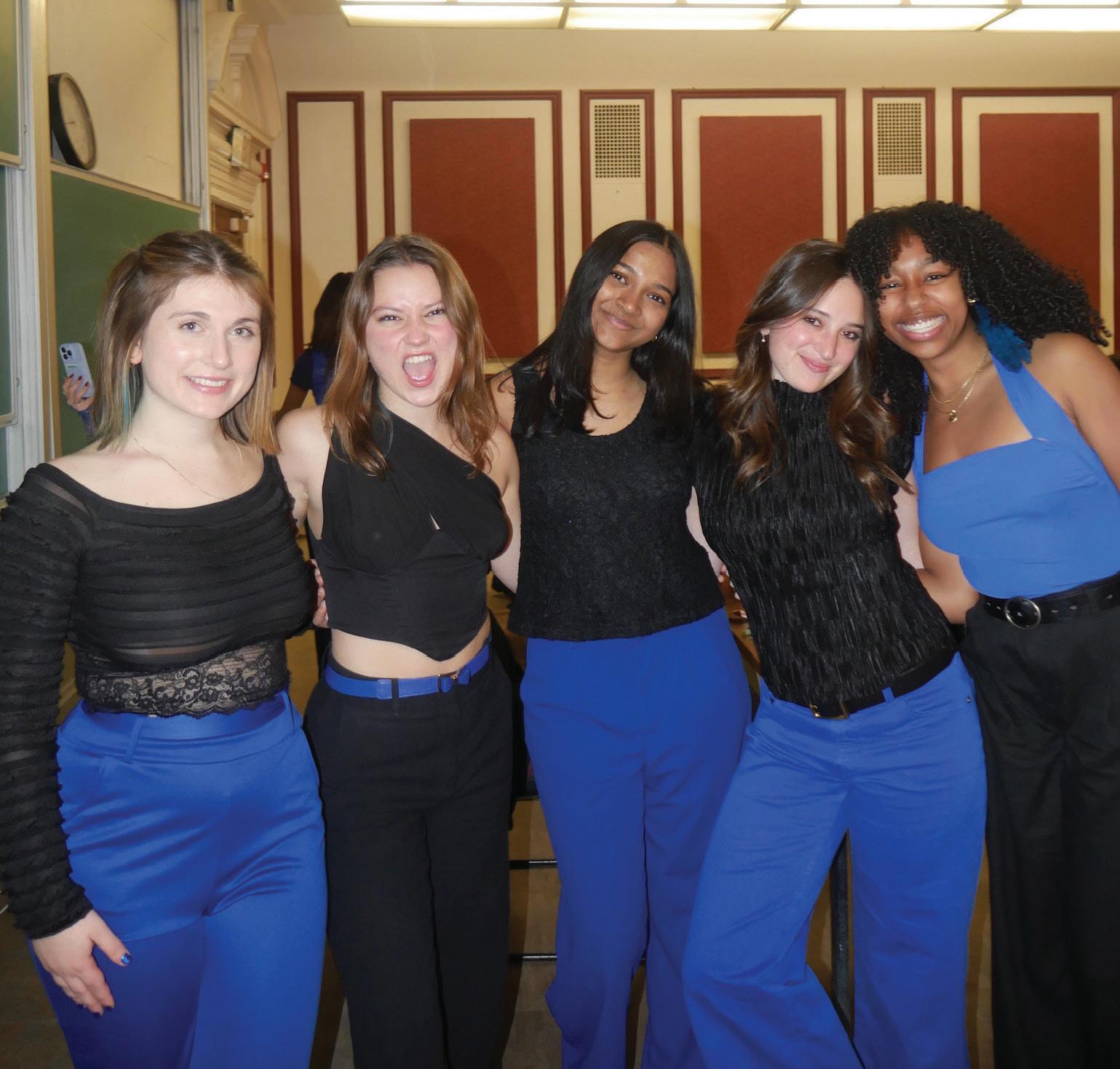
typically from 9 p.m. to midnight. During these sessions, music directors like Mensch make sure each member has perfected their part.
“We’ll spend a lot more time on very specific moments,” Mensch says. “We ran the same four measures five times, just to lock it in.”
The biennial competition schedule gives group members a bit more breathing room.
“[Competing] every year would be really intense and probably an unrealistic time and social commitment,” says Wes Lu, McCormick third-year and events manager for the Treblemakers — an East Asian-interest a cappella group. The schedule also gives groups more opportunities to have fun and bond while improving their skills. Last year, the Treblemakers traveled to Singapore for spring break and toured local universities and high schools.
Lu says he would not give the touring experience up for anything. For him, the opportunity to unite people through identity and music –– even halfway across the world –– is irreplaceable.
The Treblemakers and the Undertones competed this February at separate regional quarterfinals. The Treblemakers
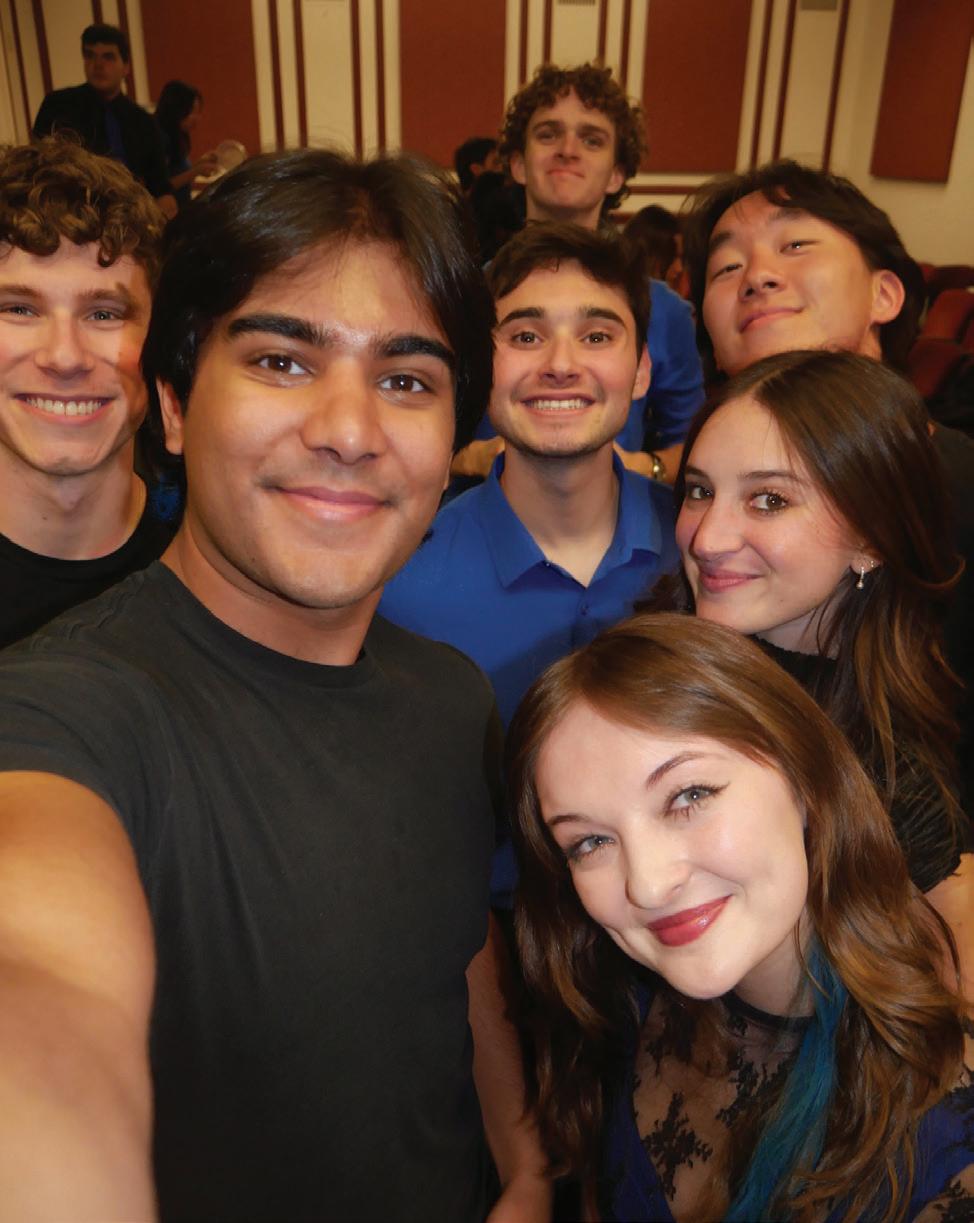
The Undertones returned to the ICCA stage in February, two years after winning the regional quarterfinal.
placed second overall, qualifying for the ICCA Great Lakes Semifinal.
Underneath it all
The a cappella scene at Northwestern can be cutthroat as hundreds audition for limited spots each Fall Quarter. For many, just making it into a group is a victory. However, the three competitive groups say the ICCA experience is incomparable.
“There’s something about going to these competitions and presenting something you’ve worked so hard on that I think is hard to replicate in a noncompetitive [setting],” Rodriguez says.
Through hours upon hours of practicing together, the groups not only develop their final set but also grow closer to each other. Weinberg second-year and Purple Haze music director Naomi Burnett says putting so much effort into preparation and seeing it pay off onstage brings the group closer together.
“Even though we were so dead tired by the end of the competition season, looking back at it, it was just one of the most fun couple-weeks-long stretches of my life,” Burnett says.
Purple Haze competed last year at the regional quarterfinal in Michigan. They placed third overall with a mashup of “Sexy Villian” by Remi Wolf, “Maneater” by Daryl Hall & John Oates, “Doin’ Time” by Sublime and “Can’t Catch Me Now” by Olivia Rodrigo. After the event ended, they crashed at a member’s house overnight. Rigo and Burnett recall the weekend, staying up until 3 a.m. watching “Pitch Perfect” and eating pizza together.
“That’s one of the parts of the competition that sticks out the most,” Rigo says. “We were all so proud of how much work we had put in. Then we got to celebrate by hanging out together.”
Mensch says the Undertones are similarly tight-knit, largely because of the nature of being a competitive group. After placing first at their regional quarterfinal two years ago, he says there is pressure to perform at the same standard. Still, the success helps attract new members and strengthens community in the group.
“We met during the summer and said, ‘If nothing else, we should come out of [ICCA] being proud of ourselves and being even more together,’” he says.
Not only are the a cappella groups close within themselves, but the scene encourages friendships across groups as well. Unlike the rivalries in “Pitch Perfect,” Rodriguez says the groups are, quite literally, harmonious — on and off the stage.
“We love to pretend we kind of have drama between each other, but then as soon as we have overlapping concerts or time to hang out outside of rehearsal, we’re all really good friends with each other,” Rodriguez says. The groups often collaborate for concerts, rehearsals and fundraisers.
Students join a cappella groups not only to express themselves but to be a part of something bigger, finding a space to call a second home.
“We’re constantly hanging out,” Burnett says. “It’s just so much fun. We’re all kind of intertwined, even though we’re separate groups. It’s like one big extended family.”
“We were all so proud of how much work we had put in.”
Anna Rigo Communication third-year
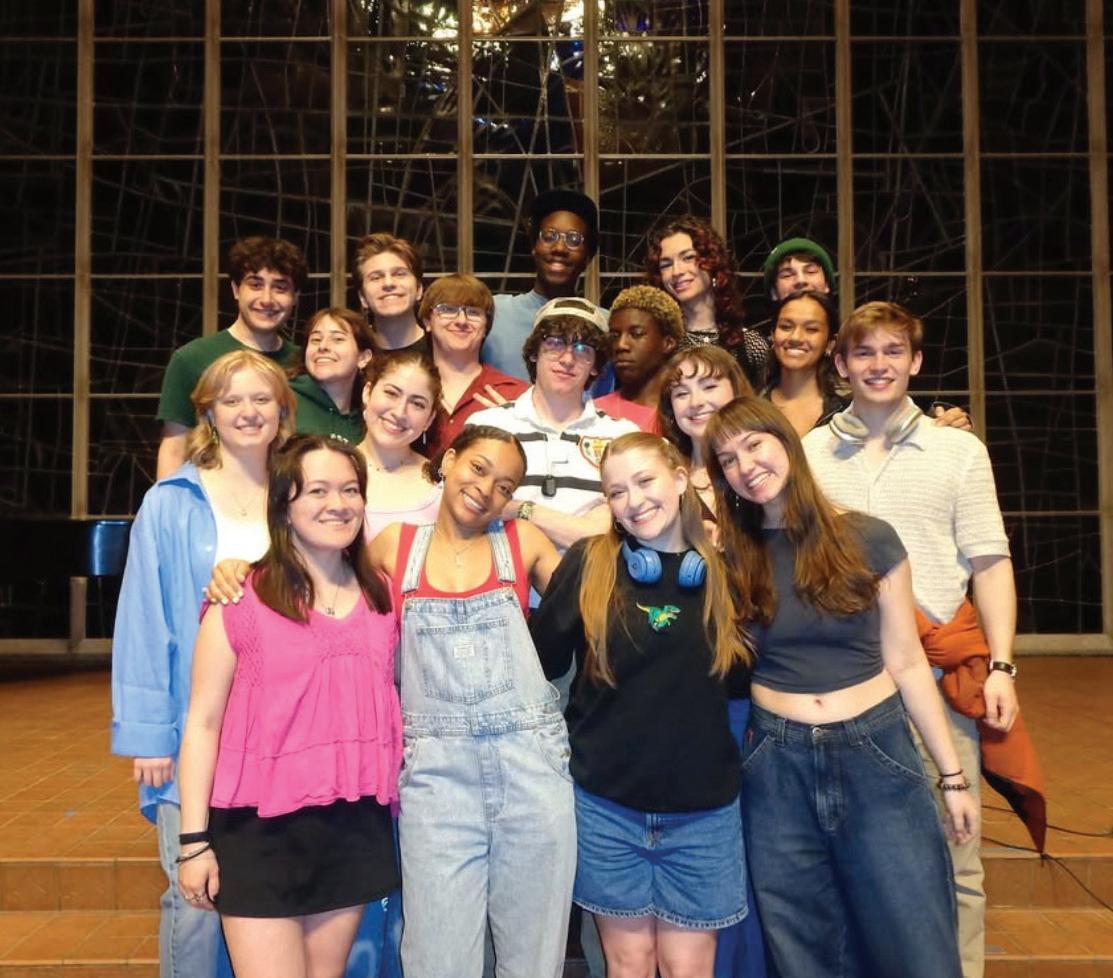
Purple Haze took home third place at the ICCA regional quarterfinal last year and will return to the competition in 2027.
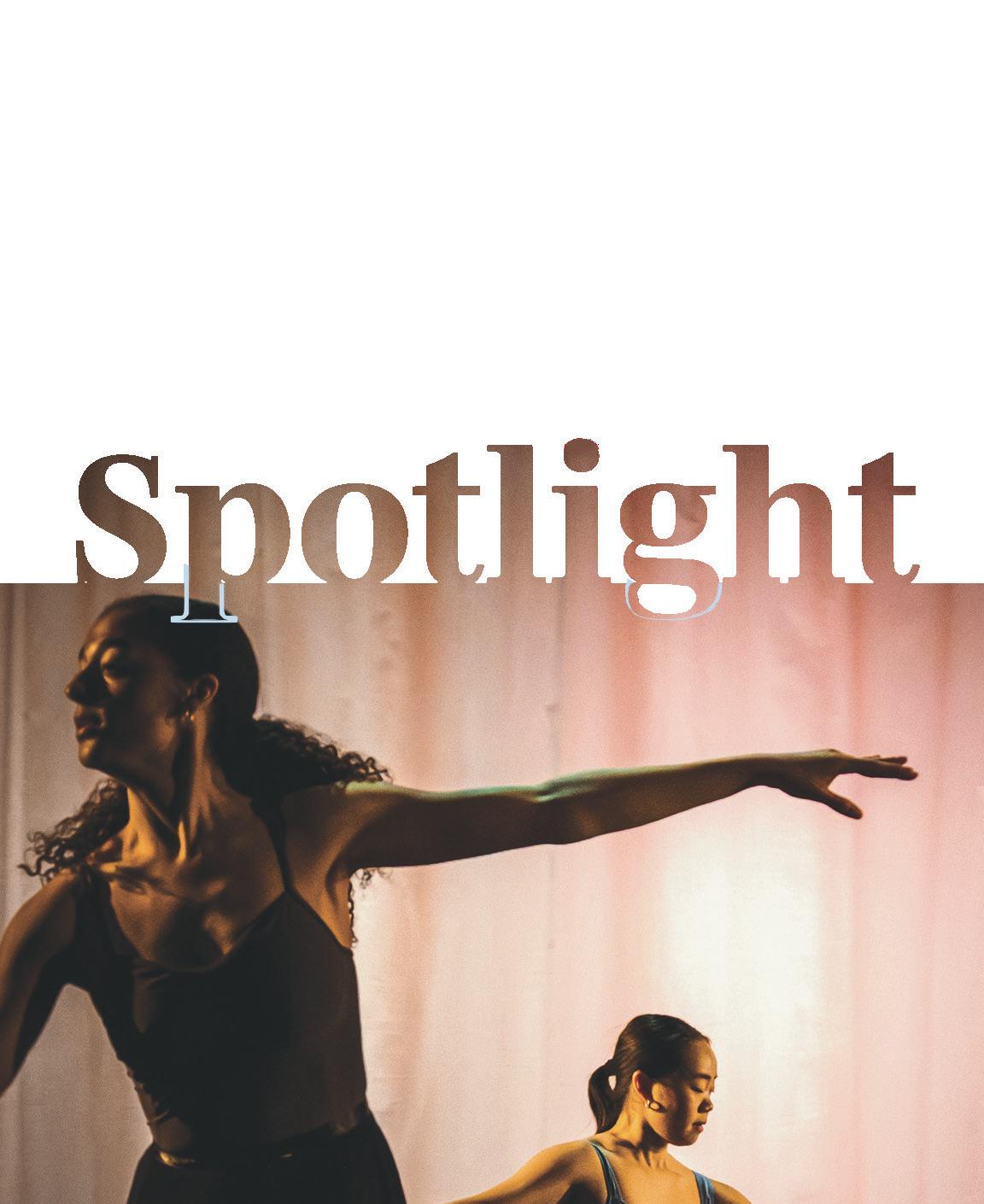
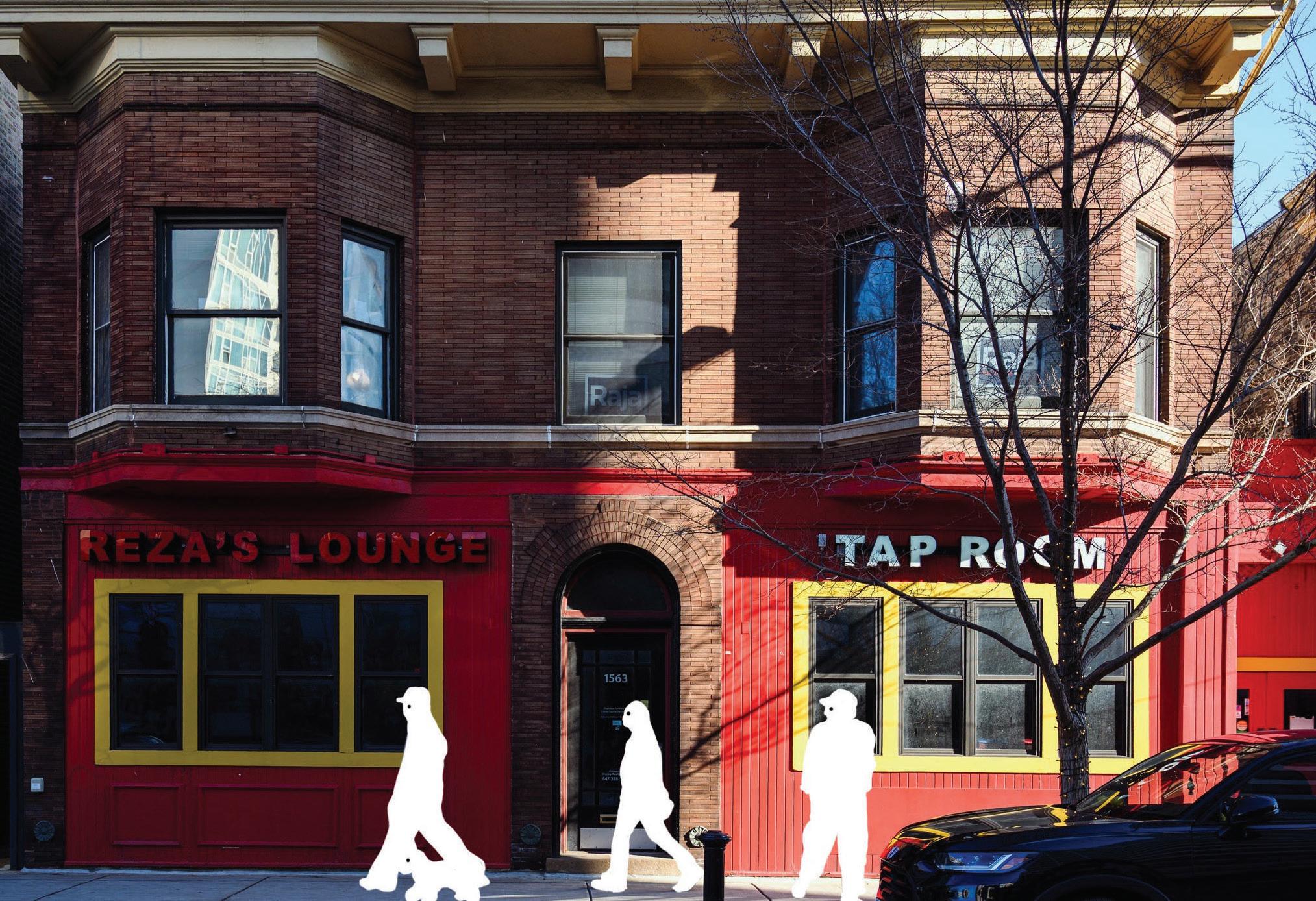
When late-night businesses close their doors, what’s left of Evanston’s identity as a college town?
WRITTEN BY GRACE SHARMA // DESIGNED BY YAMANDÚ CAPALBO // PHOTOS BY CARTER NISHI
On many Tuesday nights last year, members of the team Hilbert’s Hotel — named after the mathematical thought experiment — could be found crowded around a table at Bob’s Pizza, competing for a trivia-night win.
The team, composed of Weinberg fourth-year Simon Kissel and his friends, even gained notoriety at the pizza joint. But when the restaurant shuttered last October, one of their favorite college traditions came to an end.
This closure was part of a series of go-to student spots shutting their doors around downtown Evanston. In 2025, Reza’s Restaurant and Lounge closed, and by the end of that same year, Chili’s did too. Late night spots weren’t the only ones that took the hit. After over two decades in business, the Evanston location of Peet’s Coffee shuttered on Jan. 30, leaving many students to find a new regular coffee spot.
These businesses offered students tables to study and booths to hang out in. As such, they helped make Evanston feel like a college town — creating pockets of youthful culture driven by student engagement. In the wake of these closures, students are left reconsidering how they interact with Evanston and perceive its shifting role in their lives.
Weinberg fourth-year Sadie Barlow was surprised to learn about all four establishments closing. “They all feel like places that were always pretty busy,” Barlow says. “Initially, it was really sad, just to have that regular spot no longer be there.”
McCormick fourth-year Zach Crampton, a Chili’s regular, says the affordability of drinks and food drew him to the restaurant. He has not found a replacement that matches Chili’s’ value.
“It’s an affordable option when everything else in Evanston is insanely expensive,” Crampton says. “You can just sit there for
hours and talk, and there’s no pressure. I don’t think there are any bars in Evanston that serve that purpose.”
Bob’s provided a similar laid-back atmosphere that felt distinctly Northwestern, Kissel says. He remembers how students, who comprised a majority of the trivia participants, would arrive almost two hours before the competition started to claim their spot and do work.
Without Bob’s, Kissel and his friends have shifted to trivia nights at Prairie Moon, though he says it is “not the same.”
Barlow and her friends have taken to Evanston bar Bat 17, drawn to the darts and pool tables available, and begun exploring downtown more.
“We like venturing out to different places in Evanston, getting past all the regular spots and trying to find some new ones,” Barlow says. “There are hidden gems that you don’t always know about. I’ve been here for almost four years, and I still don’t feel like I’ve explored everything.”
Despite being home to Northwestern, Evanston’s identity as a college town is heavily debated — in part because students often have differing definitions of what the term even means.
Generally, college towns are communities that neighbor or contain universities and whose economy, culture and daily life are significantly influenced by the school. The university typically acts as a primary employer and central hub for social activities and entertainment.
Often lined with cafes, bars, bookstores and restaurants, these downtowns cater to students, providing spaces away from campus that still feel like an extension of the university.
As some of these spaces shutter around Northwestern, the question of how Evanston functions as a college town hangs in
Northwestern campus and downtown Evanston spheres feel separate enough that he does not consider Evanston a college town the same way he does Madison.
“It feels very distinct here,” Kissel says. “I can tell when I’m in a Northwestern space, and I can tell when I’m not.”
Kissel says parts of Madison feel like he’s on campus because “there [are] so many students, and all the restaurants seem very targeted at students,” a feeling Evanston does not replicate. Yet Barlow, who grew up around the University of Kentucky, views the town and gown relationship as more dynamic.
“University of Kentucky doesn’t feel like it totally defines Lexington, but it does have a huge influence over it,” Barlow says. “Everyone loved University of Kentucky basketball and football, but at the same time, it’s hard to call it a college town because there’s a lot of Lexington separate from that.”
Barlow says Evanston and Lexington have similar suburban identities in that regard, with aspects that separate both cities from the the college they contain. While Northwestern has an undeniable influence on Evanston, Barlow says there is more to the community than just the University.
“I can tell when I’m in a Northwestern space and I can tell when I’m not.”
Simon
Kissel Weinberg fourth-year
“Northwestern definitely has an established presence in Evanston,” Barlow says. “It feels integrated with the town — it doesn’t feel like its own separate campus. But I do feel like there are definitely more levels to Evanston.”
For Crampton, a college town ideally should have numerous affordable restaurants and bars that give students places to sit down and have a conversation. He says there aren’t many spaces in Evanston that provide this social atmosphere for students.
“Something that I feel like I’ve missed out on as a college student is really having that college town and just walking to the bars instead of having to get on a train for an hour to go somewhere relatively cool,” Crampton says.
Evanston’s population in 2024 was 76,006, according to the U.S. Census Bureau. That fall, Northwestern reported an undergraduate enrollment of 9,060. Compared to Syracuse University, where his sister attends, and the University of California, Berkeley, around which he previously lived, Crampton says Evanston has fewer bars and social spaces marketed specifically to students.
“Berkeley is very similar to Evanston in terms of it being a fancy suburb of a major city, but even Berkeley has more of a social scene in the commercial district,” Crampton says. “Evanston feels very detached from the University.”
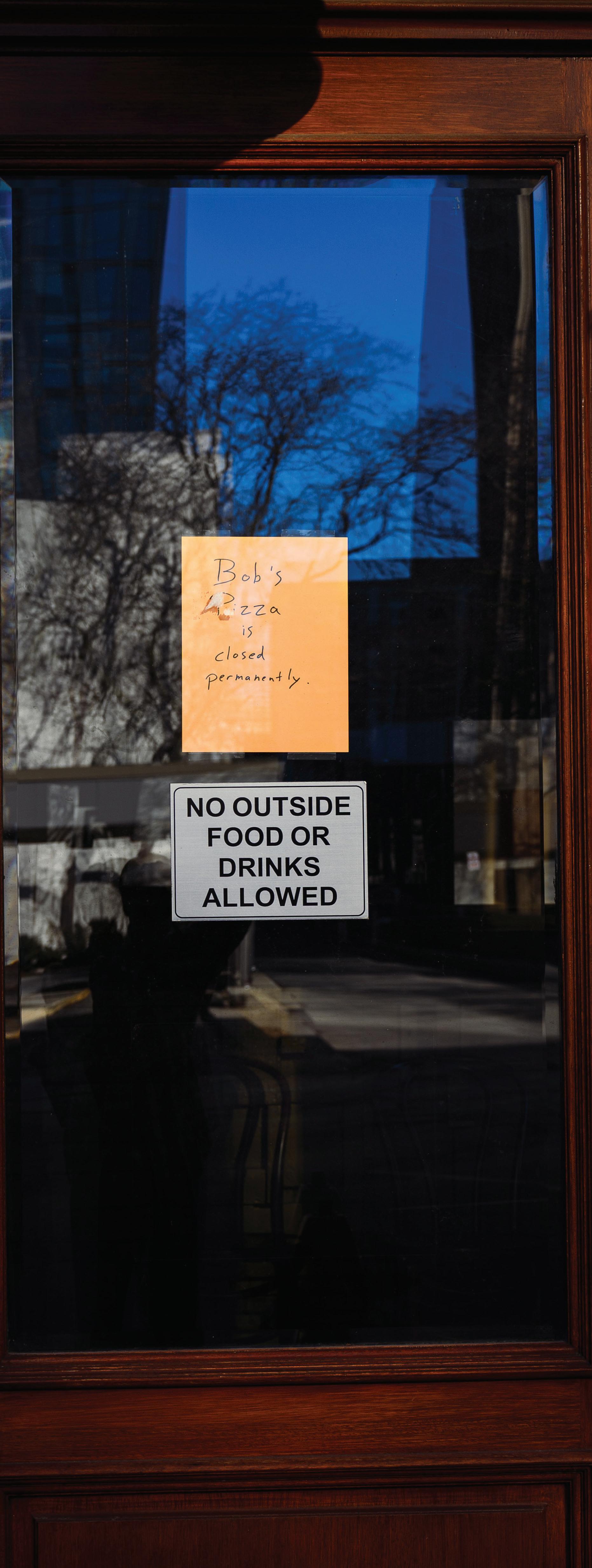
Crampton thinks one possible reason is the smaller Northwestern student population: “[There aren’t] enough students to justify building an economy around late-night pizza places and bars.”
Moira Caserio (Speech ‘94), who lived in Evanston as a kid, says downtown has long been that way. Caserio recalls a few bars that students would frequent during her time but says Evanston has always had a neighborhood feel as well.
“Evanston is a fantastic town,” Caserio says. “[But] if you’re looking for that big bar town, you’re not gonna look at Northwestern.”
AND
While some students note the disconnect between Northwestern and Evanston, the city was actually built around the University. Northwestern was founded in 1851. Twelve years later, Evanston was officially incorporated as a city, named after the University’s founder, John Evans. In the 175 years since, the two communities have evolved in tandem — and in contrast with one another.
“If you’re looking
big bar town, Northwestern.” for that
Moira Caserio Speech ‘94 you’re not gonna look at
Evans, along with eight other founders, hoped to develop a school and community driven by Methodist principles, choosing an area along the North Shore to escape the rapidlyexpanding Chicago.
According to a 2022 Evanstonian article, “Northwestern instituted a set of moral values which created the foundation for Evanston,” with school founders and administrators controlling much of the land surrounding the University.
One of the University leaders’ earliest rules was the prohibition of liquor within four miles of the University, beginning Evanston’s history as a dry town. Frances Willard, the inaugural Dean of the Women’s College at Northwestern, founded the Christian Women’s Temperance Union and headquartered it in Evanston.
For decades, it was difficult to purchase alcohol within city limits, until Evanston signed a law in 1972 permitting the sale of liquor products to boost economic growth. However, with competition from surrounding cities — and an established, nonbar-oriented culture — changes were incremental.
“Evanston has never been a big state school town with a ton of bars, that’s just never been what Evanston is,” Caserio says.
Still, in the decades following, alcohol-serving establishments popped up.
Tommy Nevin’s Pub and The Keg served as staple late-night spots for seniors in the ‘90s, in addition to live music at the bar in Norris, Caserio says. The 1800 Club was another go-to bar in the early 2000s, Caserio says, housed in a Universityowned building on Sherman Avenue. Students would also hang out at a Time Out Sports Bar, right outside of campus.
These bars catered to Northwestern students, Caseiro says, adding that Time Out Sports Bar briefly offered a Wildcatspecific special. “I don’t remember if it was like quarter beers or something crazy. It didn’t last very long,” she says.
Still, remnant consequences of Evanston’s temperance stronghold remain. High taxes and expensive liquor licenses make many establishments too costly for students. Accordingly, bars often either have to market themselves to an older, more professional crowd or risk the possibility of closure.
The 1800 Club shut its doors in 2010 after eight years of business, followed by The Keg in 2013 after 36 years and Tommy Nevin’s Pub in 2017 after 27.
Evanston resident Chuck Teeter attributes some of that to a lack of sports fandom amongst Northwestern students and Evanston residents.
“There [are] no Northwestern bars where you go watch a game, there’s no big hangouts for Northwestern fans,” Teeter says. “I feel like it’s kind of missing an opportunity.”
Teeter recalls going downtown with his family to a nowclosed Buffalo Wild Wings to watch Northwestern football when the team was doing well. He says the sports viewings added “energy to the city.”
The pandemic also added a layer of difficulty for Evanston businesses to maintain profitability.
According to the Evanston RoundTable, 45% of Evanston businesses shut down in response to a 2020 shelter-in-place order, and dozens permanently closed due to financial concerns
in the months and years following. That tide may be shifting though: In March 2023, the RoundTable reported that, “Business openings have outpaced closures over the last year.”
There also has historically been conflict between Evanston and Northwestern, according to Medill first-year and Evanston native Sophia Sherman. “People don’t like how the city panders to Northwestern,” she says.
Sherman often hears complaints from residents that Northwestern streets are the first to get plowed during snow and critiques that the University does not pay property taxes. The University is exempt from most federal, state and local taxes, including property and sales tax as a 501(c)(3) nonprofit educational institution.
In 1878, after the City of Evanston billed the University for over $10,000 in property taxes, the U.S. Supreme Court upheld Northwestern’s exemption, established in an 1855 charter.
In 2015, Northwestern began the Good Neighbor Fund, compelling the University to provide approximately $1 million per year for city projects. That number increased to $3 million in 2023 as a part of the Community Benefits Agreement to rezone Ryan Field.
However, Sherman says many Evanston residents do not consider the Fund “enough,” contrasting it with Payments in Lieu of Taxes (PILOT) payments other tax-exempt universities pay to their local governments. For example, in 2021, Yale University committed to a six-year PILOT of $23 million annually. The University of Pennsylvania committed to $10 million annually for 10 years in 2020, and Princeton University announced $50 million over five years in 2024.
Despite this tension, Sherman says that Northwestern and its students have played a crucial role in many young Evanston residents’ lives, including her own.
“Northwestern was very intertwined with my childhood in Evanston,” Sherman says. “I think about selling Girl Scout cookies
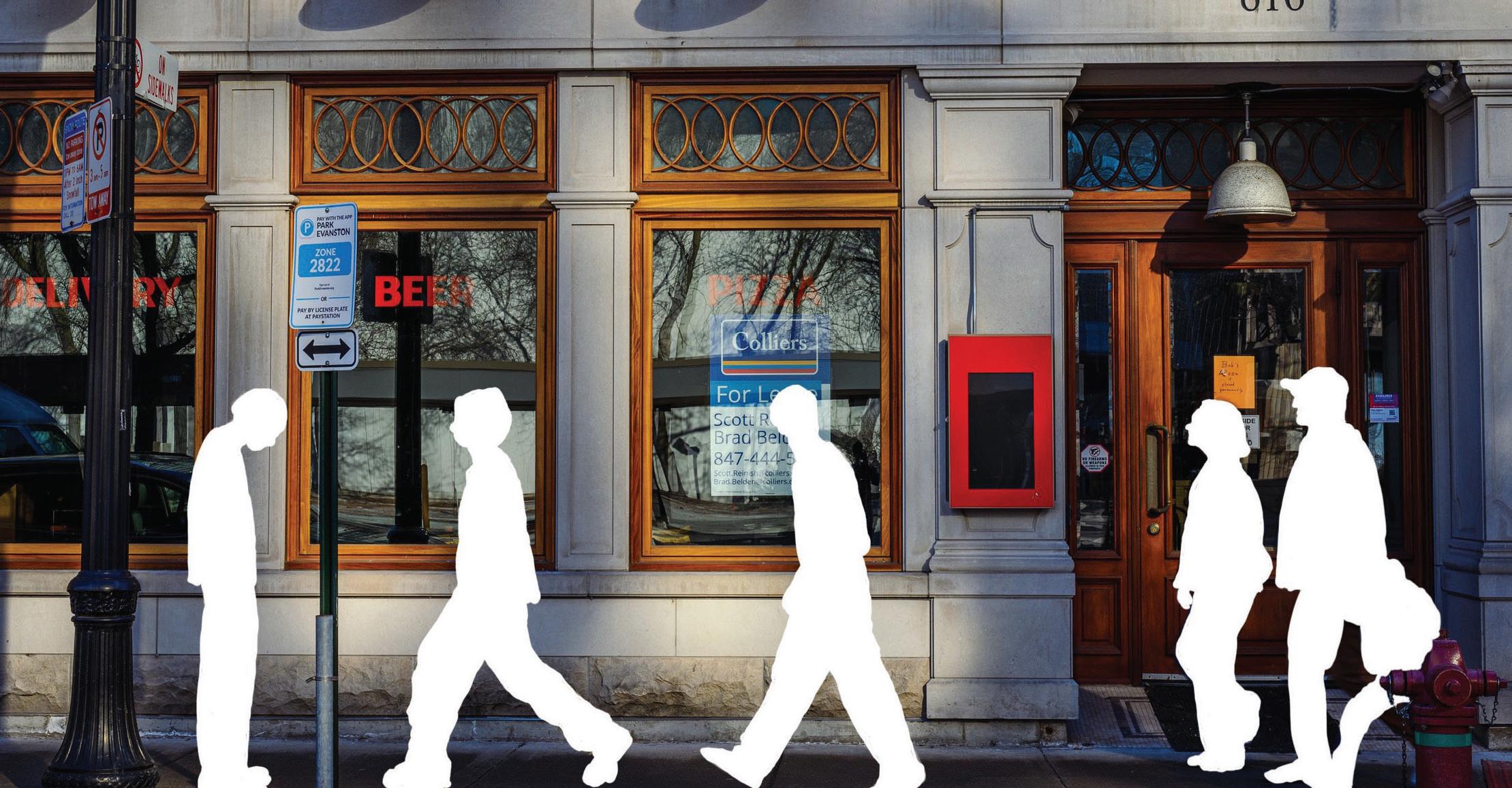

in front of the Arch and going to the music sorority with my Girl Scout troop.”
While Wildcats may not have college experiences defined by late-night bites and $2 drinks as in Madison and Lexington, their interactions with Evanston residents provide a vital connection to the city. For Kissel, interacting with the greater community pulls him out of the packed schedule that comes with being a Northwestern student.
“Northwestern is an enclosed campus, and you live in the dorms, and it’s very academically rigorous,” Kissel says. “I feel like a lot of the time it can be really easy to just get used to talking to everyone who’s 18 to 22.”
However, Kissel tries to purposefully go downtown and interact with people who have little to no impact on his academic career. He says the experience is “really grounding.”
One way Northwestern students try to connect with the broader Evanston community is through Books and Breakfast, a program where students go to local elementary and middle schools to provide a healthy meal before school and help kids with homework. Kissel has participated in Books and Breakfast since his freshman year and appreciates the opportunity to venture beyond campus.
He says it is super rewarding to go somewhere that doesn’t look like the parts of Evanston most frequented by students: “You walk down the Lakefill, and you see everything that’s right around campus. But there [are] different parts of Evanston that I didn’t really get to explore until I went off campus.”
In addition to Books and Breakfast, Kissel tries to trek downtown for Northwestern- and city-sponsored events, including the Umbrella Arts Festival in the spring.
“Even though we’re just here temporarily, we care about the community that’s surrounding us,” Kissel says.
Northwestern also partners with local youth through athletics. Teeter recalls when his son’s baseball team played a handful of postseason games at the University’s baseball facilities. “That’s what I mean about pride. Like, to have my son on the Northwestern baseball field? That was pretty cool,” Teeter says.
Caserio recalls traveling to Rogers Park and downtown Chicago for volunteering and work as a student. “There are more opportunities now to get engaged with Evanston [and Chicago],” Caserio says. “It’s nice that the University seems to be increasing interactions with Evanston.”
While not every student may consider Evanston a college town, the city and the University have a meaningful relationship nonetheless. The school and the city were built within two decades of each other, and 175 years after the University’s founding, students and Evanston residents continue to irrevocably impact each others’ experiences.
“I’ve found that some of the most refreshing parts of my time at Northwestern have been when I get to go off campus and interact with people who have no stake in my chemistry exam,” Kissel says. “Engaging with the city is super important to my college experience.”
“Even though we’re just here about the we
temporarily, surrounding us.” care community that’s
Simon Kissel Weinberg fourth-year
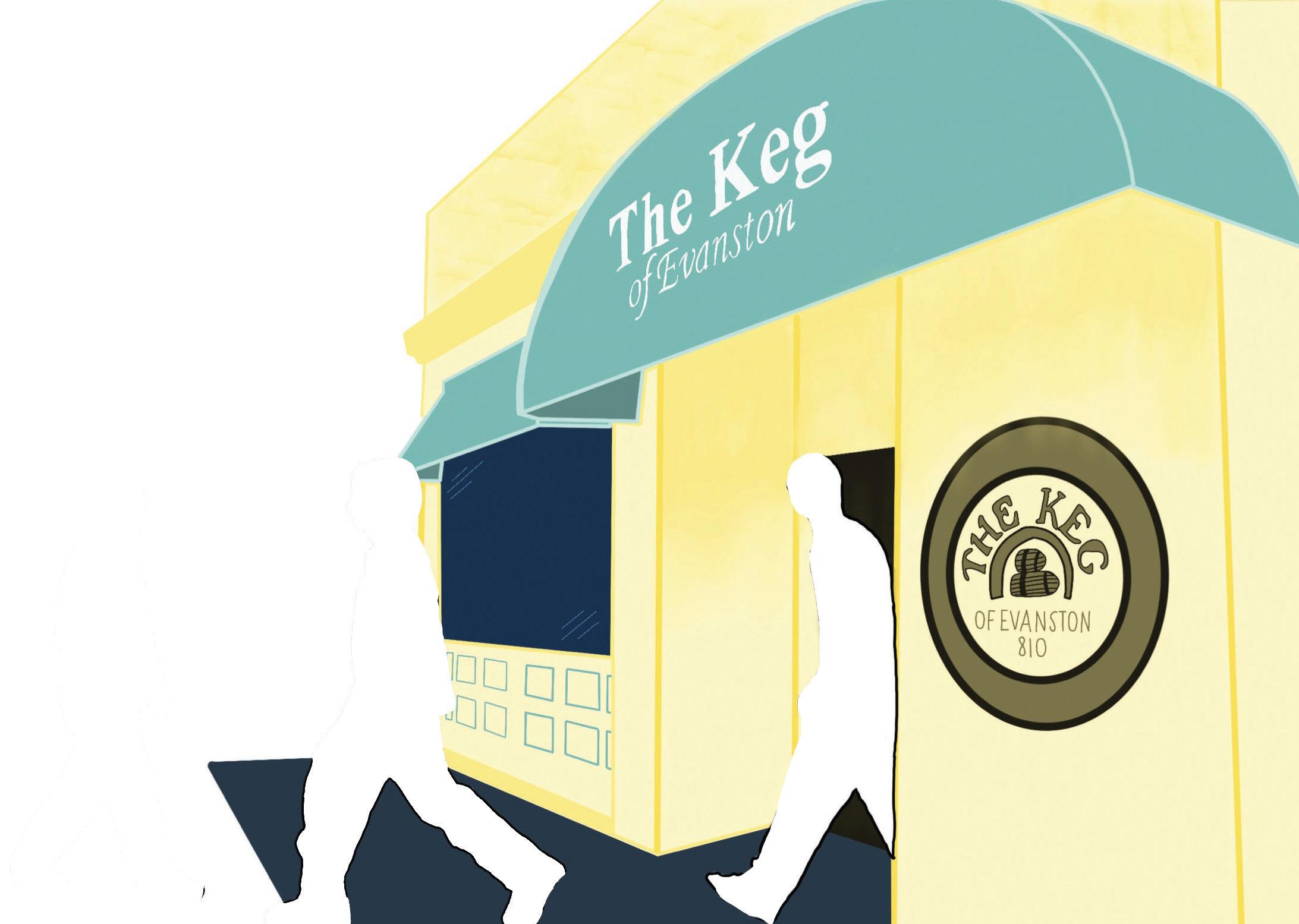

Meet Joel Mokyr, a Northwestern professor and the recent winner of academia’s most prestigious award.
WRITTEN BY SOFIA HARGIS-ACEVEDO // DESIGNED BY LEILA DHAWAN //
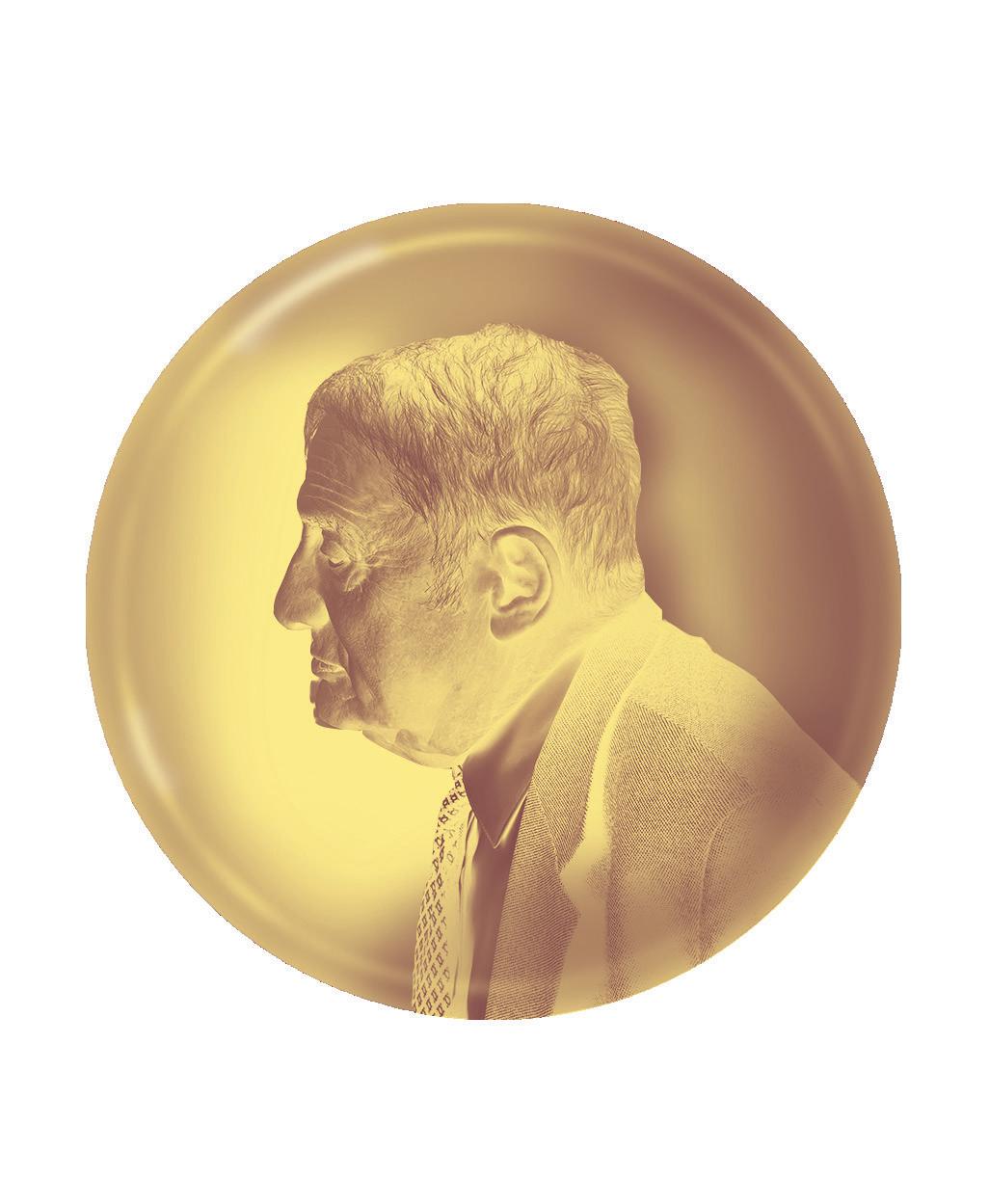
The third floor of the Kellogg Global Hub houses an office with an array of photos, notes and streamers adorning the entrance. Few lights are on, but there’s no need — the 11 a.m. sun pours in from the floor-to-ceiling windows. As the door pushes open, the gentle tune of classical music dances through the room. Every inch of the back wall is covered with hardcovers and more are piled in the corners of the room.
The resident of this office? Economics professor Joel Mokyr, the most recent winner of the Sveriges Riksbank Prize in Economic Sciences in Memory of Alfred Nobel.
Despite months of media requests and visits from wellwishers, Mokyr seemed pleasantly willing to sit down — bag of trail mix in hand — and share his winding road from economics student to winner of the discipline’s most prestigious award.
It was a sunny October day when Mokyr missed the biggest call of his life. He was spending time with his wife and dog at his Michigan home, economics far from mind. It wasn’t until he logged onto his laptop that he was inundated with messages of congratulations from colleagues across the world.
“I look at my inbox and it says ‘Congratulations!’” Mokyr says. “I thought, ‘Congratulations’? What, is it my birthday or something?’”
As a formality, the Nobel Prize Committee contacts the winners ahead of the official announcement to notify them of their award — but Mokyr, who has unknown numbers blocked from his cell phone, never heard the ring.
Upon reading the flood of messages in his inbox, he grabbed his cell phone. Sure enough, there was a missed call from what he recognized to be a Swedish number. He pushed the callback button, and a woman answered the phone, informing him he had just won the Nobel Prize.
“For a second, I thought, ‘Somebody is scamming me; somebody is pulling a practical joke on me,’” Mokyr says. “But then there were 50 emails in my box, and many of them actually had a link to the video in which they announced it.”
Alongside Mokyr, two other economists received the 2025 Nobel Prize in Economic Sciences: Philippe Aghion and Peter Howitt. The three were awarded for their work in innovationdriven economic growth. Mokyr’s research encourages the public to be more open-minded about embracing new ideas to improve national economic success.
Mokyr is no stranger to awards or accomplishments. Throughout his career, he has written more than 10 books about historical economic development, from ancient Greece to the Enlightenment, and received the Heineken Prize in 2006 and the Balzan Prize in 2015. Still, Mokyr was shocked by the Nobel Prize.
“I had no clue or inkling that I was even on the long list, let alone the short list, let alone the winner,” Mokyr says. “I mean, I had a list of people I thought were going to win, and I wasn’t on it. ”
His reception of the Nobel Prize in Economics was a big deal for more reasons than one. The 2024 winners, Daron Acemoglu, Simon Johnson and James A. Robinson, also won their prize for their work on economic history. It is rare for scholars of the same
sub-field to win the Nobel two years in a row, fellow Economics professor Joseph Ferrie says.

Though the win was a surprise for Mokyr, his colleagues were hardly shocked. Ferrie, who has known and worked with Mokyr since 1991, says this award was a long time coming.
“[The prize] was overdue,” Ferrie says. “For the last 10 or 15 years I’ve been setting my alarm and checking the website [the morning they announce the winners] and up until this year, was disappointed. … I’m just glad for the Nobel Committee that they finally got around to it.”
One of Mokyr’s former students, Simone Wegge (CAS Ph.D. ‘97), now an economics professor at City University of New York, looks back fondly at her time as Mokyr’s student. She teared up when she saw the prize had finally gone to him.
“Economics can be very, very theoretical and sometimes very dry. [His study] was more the way I want to think about economics,” Wegge says. “I was happy the Nobel Prize
Committee was open to giving it to an economic historian. Because sometimes they’ll stick to the silo: ‘We’re going to choose someone who’s very much just an economist.’ But he veers out of the silo. ”
The moment Mokyr won the award, journalists throughout the country contacted him about his work — from The New York Times to National Public Radio. Mokyr admits the accolades, publicity and interest have one downside: He has less time to spend on economics.
“I’m worried I’m not going to get nearly as much work done as I thought I would, because all of a sudden there are all kinds of commitments I have to meet that are associated with the prize,” he says. “It kills an evening — an evening when I could do research or write a book.”
Mokyr’s career began as an undergraduate at Hebrew University of Jerusalem, where he majored in economics and history. He says his undergraduate coursework came naturally because of his love for these subjects. When he graduated, one of his old professors asked him to be a research assistant, and he said yes.
“I [was a] 22-year-old nobody,” Mokyr says. “And [when] this big professor asked me to work for him, of course I do.”
After a year in that position, his professor advised Mokyr to
apply to an American Ph.D. program. Mokyr obliged, attending Yale University to pursue his doctorate in economics, and, as he puts it, “the rest is history.”
In 1974, Mokyr completed his Ph.D. and accepted a job at Northwestern as an Economics professor. In his early days at the University, he taught a variety of courses, from “Macroeconomics” and “European Economic History” to “American Economic History.” In recent decades, he has had more choice in classes, opting to teach an advanced economic history graduate course and an undergraduate course in economic history.
When he first began at the University — as a professor in his mid-twenties — Mokyr’s biggest worry was being mistaken for a student. The solution? A tie.
“I was faculty, not a graduate student. I wore a tie,” Mokyr says. He still wears a tie to work every day, “[but] it doesn’t happen very much that people think I’m a graduate student.”
In his early years, Mokyr worked closely alongside fellow Economics professor Jonathan Hughes, whose name and face are showered across Mokyr’s office: in photos on his desk and among the sea of authors lining his bookshelves. Mokyr says Hughes was not only a coworker but a mentor and a friend.
The two professors remained close while working at the University together; Hughes passed away in 1992. Mokyr says Hughes helped him become the professor he wanted to

“I loved it the first day, and I’m going to love it until the last day.”
Joel Mokyr Professor of Economics


be, a professor driven by passion and eagerness to share his knowledge with his students. He carries this guidance with him even today.
“[Hughes] didn’t influence me in my work all that much,” Mokyr says. “He influenced me as to what it really meant to be an academic in his mold, which is not everybody else’s mold. He was a big influence on me, and I loved him dearly.”
When Mokyr received the Jonathan Hughes Prize for Excellence in Teaching Economic History in 2019, the University held a dinner in his honor. He invited his graduate students to attend alongside him.
For Mokyr, winning an award named after his mentor while surrounded by his students was a full-circle experience.
“It was a heartwarming thing because I spent innumerable hours working with these people, guiding them, arguing with them and so on,” Mokyr says. “And all of a sudden they came, and they said, ‘Yeah, you did a great job.’”
From his time as a student at Hebrew University to the present day, Mokyr says his passion for economic history has never wavered, so much so that the idea of considering another career never crossed his mind.
His reasoning was simple: If you truly love what you do, there will never be any doubt.
“I loved it the first day, I’m going to love it until the last day,” Mokyr says. “People like to do things that they’re good at. And I, apparently, am good at it.”
After over five decades at Northwestern, Mokyr has developed relationships with countless students, and he still stays in touch with many of them today.
“It’s a bit like having children,” Mokyr says. “They’re not really my biological children. They’re a continuation of me. They have students themselves, and their students have students. So I have, so to speak, intellectual great-grandchildren.”
Many of Mokyr’s students first encountered him in the classroom. However, for Economics graduate student Davis Kedrosky, the admiration for Mokyr and his work began long before he started graduate school.
Economic history enthralled Kedrosky since his junior year of high school, when he picked up Mokyr’s book, “Lever of Riches,” and everything fell into place.
“I thought [that book was] incredibly revelatory,” Kedrosky says. “It was a fundamental change in the way I understood the world, and I felt this was something I wanted to pursue in my graduate studies.”
Mokyr’s current and past students all describe him as energetic, enthusiastic and engaging. They say it was easy to learn when he was at the front of the classroom, passing on his passion to the next generation of economic historians.
Mauricio Drelichman (Weinberg Ph.D. ‘03), currently an economics professor at the University of Vancouver, first took

a mandatory economic history class taught by Mokyr at 8 a.m. during Winter Quarter. He remembers how, even during a cold snap when many students stayed home, Mokyr made class worth the trek.
“You can imagine how the spirits were,” Drelichman says. “And yet, after a week or so, there was not an empty chair in that room. Joel fills the classrooms. They go because he’s just that magnetic — that engaging — in the classroom. Every lecture is like a complete festival of knowledge that’s being transmitted to you.”
Ferrie, who taught alongside Mokyr in seminars, says his enthusiasm is what truly shines.
“He loves to be challenged,” Ferrie says. “It’s that kind of openness to different ways of thinking about the world that is the rocket fuel that has propelled him over the course of his entire career. That willingness to listen to outside voices and consider alternative approaches to economics and economic history makes him the scholar he’s recognized for being.”
Mokyr values the relationships he has with his students beyond the bonds they form in the classroom. From sporadic check-ins to hosting Thanksgiving at his house for his students and colleagues every year, he maintains a tight-knit community of economic historians.
Those who have studied under him recall a mantra Mokyr has lived by his entire career: “I do not have any former students, just students.” They say this rings true to how he approaches the relationships he has cultivated.
“Once you’re a student of his, you’re a student for life,” Kedrosky says. “He’ll keep track of your career and offer you advice long after you graduate. He’s been such a great cheerleader and motivation to do better.”
In May, a conference hosted by Mokyr’s alumni will be held in his honor to celebrate his upcoming 80th birthday. Over 100 people will be in attendance.
Beyond the 100 hands he’ll need to shake, the celebration represents the inspiration he provides his students. Through his teachings, Mokyr hopes he makes a difference; this conference is yet another prize showing he has — and proof his intellectual legacy will live on after him.
“One of the things we all ask in life is, ‘Did I make a difference to anybody?’” Mokyr says. “Most people feel that way about their kids. And I do, I have two daughters. I feel I certainly made a difference to them. But beyond that, there is this sort of intellectual offspring, so to speak, and descendants. Hopefully somebody will think of me after I’m gone.”

“Once you’re a student of his, you’re a student for life.”
Davis Kedrosky Economics graduate student
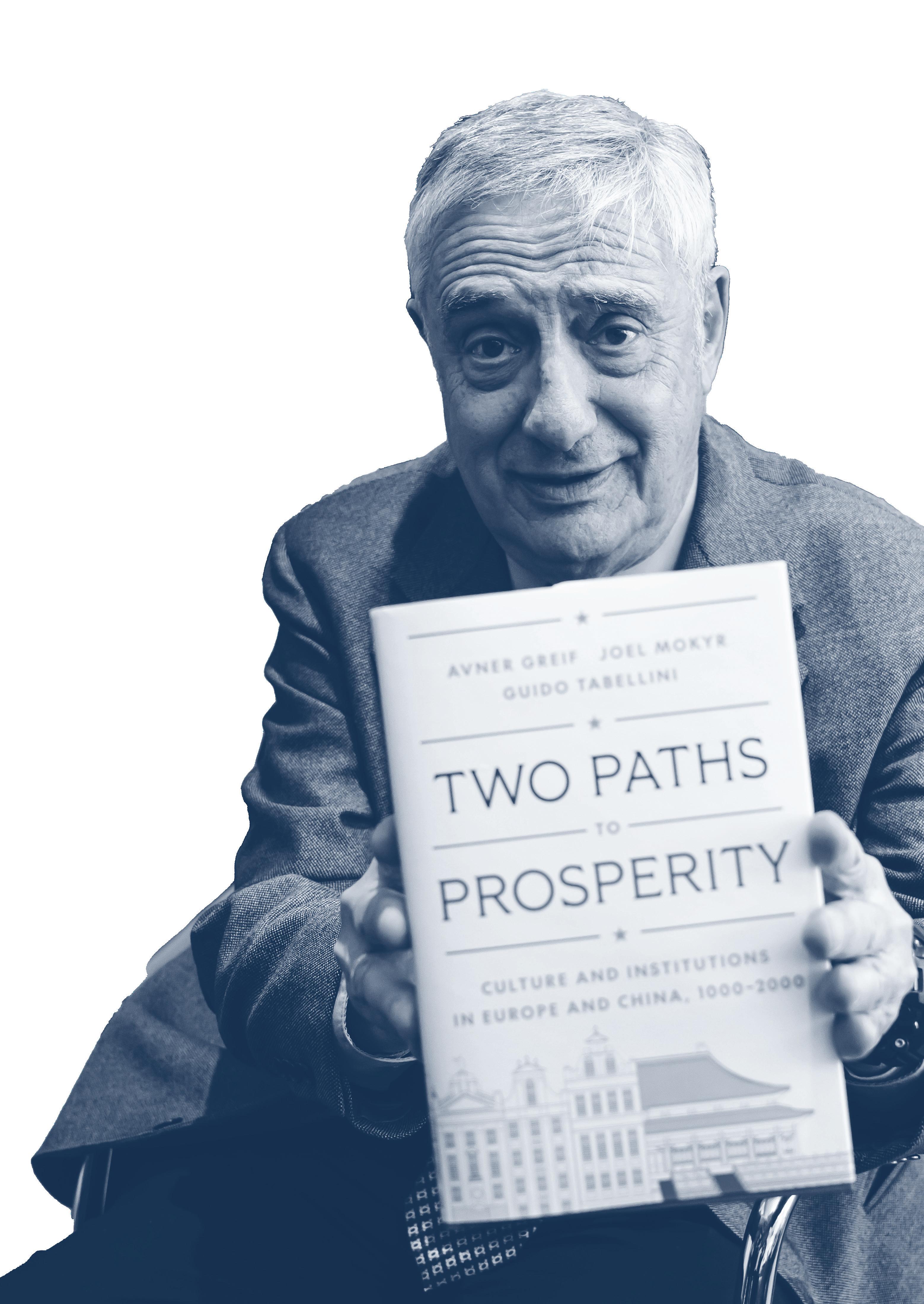
Students and professors alike grapple with grade inflation and the changing notion of what an A means.
DHAWAN

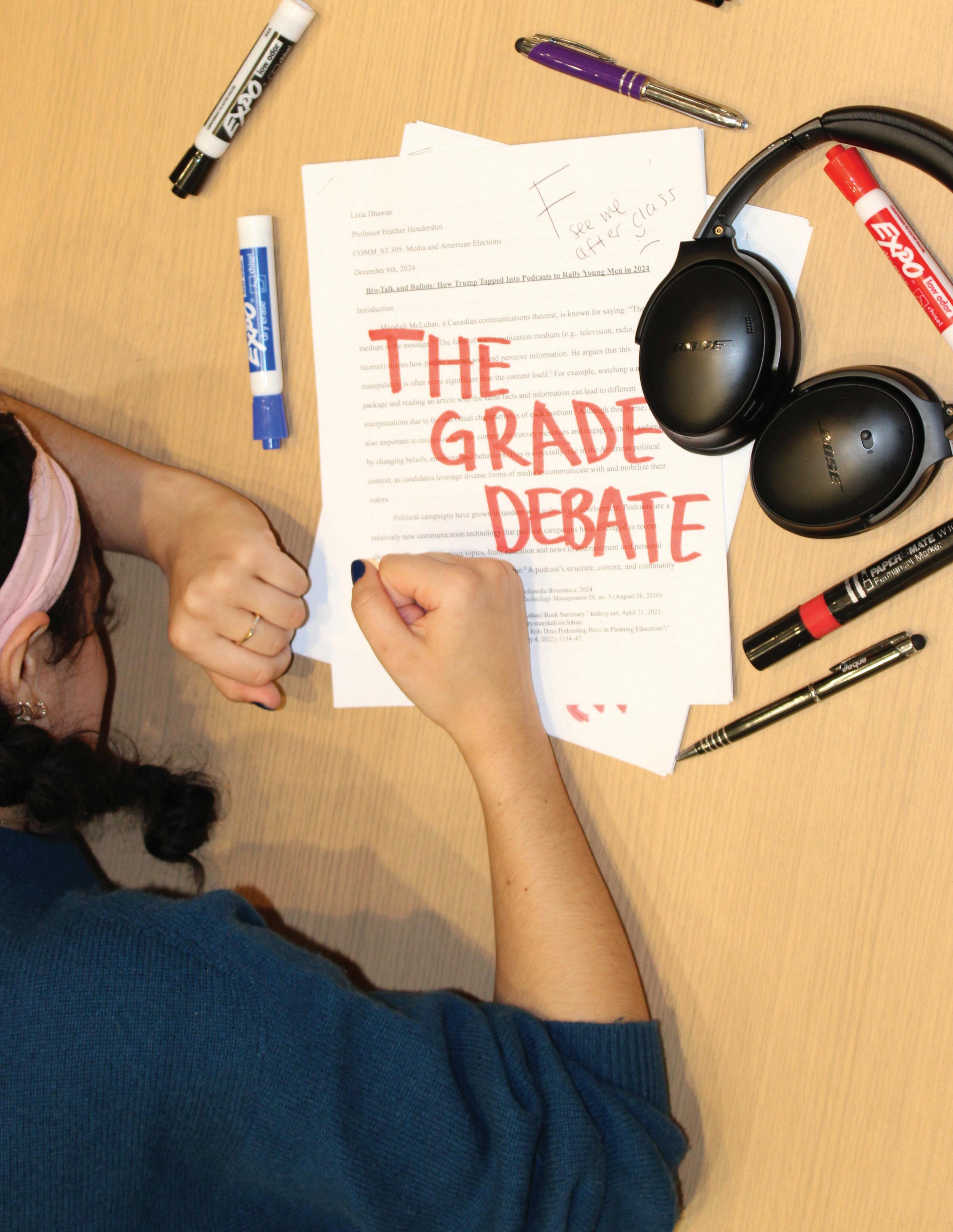

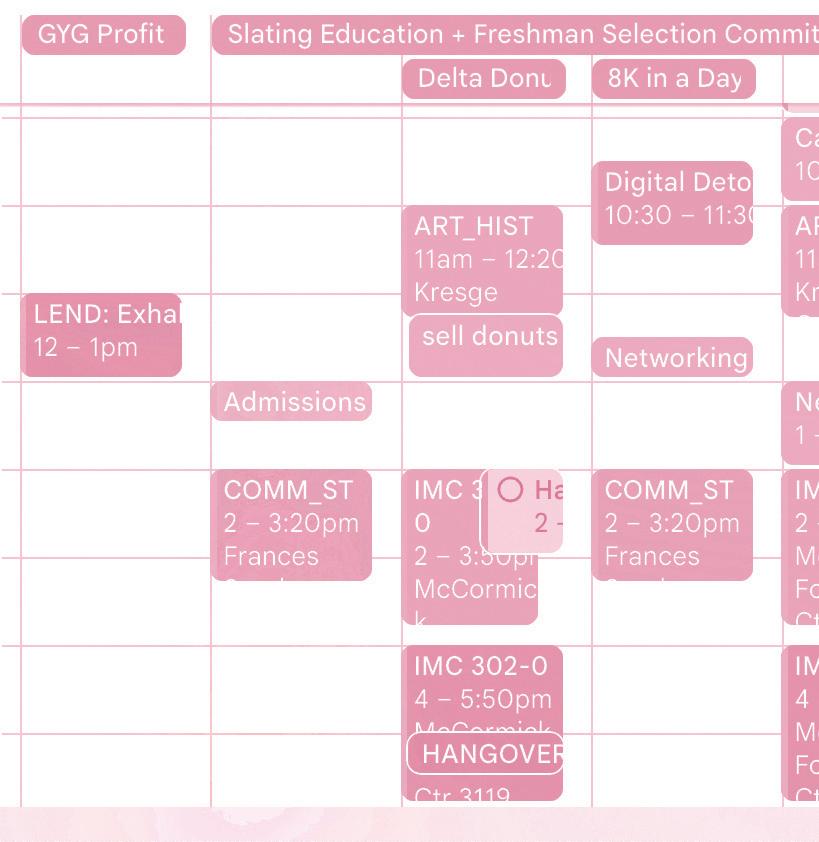
Bienen and Weinberg third-year Ylang Guo was accustomed to earning grades above 90% throughout high school. So, receiving a 74% on her chemistry midterm first chemistry midterm the fall of her freshman year came as a surprise.
This shock is familiar to many Northwestern students both present and past as they transition from being the top of the heap at high schools across the globe to one of many high-performing students in a single class. However, these “bad grades” have become increasingly less common as the meaning of an A shifts from exceptional to simply meeting expectations.
Economics professor Mark Witte, says an “A” grade used to indicate exemplary performance, while average-scoring students earned B’s or C’s.
That’s no longer the case. Nowadays, he says, the majority of Northwestern students across departments earn A’s. Those who perform below average earn B’s.
“Certainly students are very risk-averse toward getting a non-A,” he says. As Director of Undergraduate Studies in Economics, Witte has noticed grade-based fear is most pronounced in underclassmen, who have fewer classes on their transcripts and may be more disadvantaged by a poor grade.
Similarly, Psychology professor Alissa Levy Chung says she’s started to see more students earn 4.0 GPAs in recent years — virtually unheard of in the past — a pattern she calls “GPA creep.”
“I don’t think it’s because students have been getting exponentially brighter,” she says.
This phenomenon is not unique to Northwestern. In an effort to combat grade inflation, a Harvard University faculty committee released a proposal in February to limit A’s to the top 20% of students in each course.
That announcement came after Harvard published a 25-page report in October 2025 that revealed over 60% of undergraduate grades given out were A’s, an increase from 25% from two decades ago. Much of the inflation occurred in the 2010s and spiked during pandemic remote learning, according to the report.
The last recorded time Northwestern released similar data was in fall of 2000, when the Office of the Provost reported the average GPA increased from 2.99 in 1982 to 3.32 in 1998, according to a story in The Daily Northwestern that year.
The report also found Professors gave out more A’s and fewer C’s, the report found. “A’s and A minuses accounted for 50% of grades given in Fall Quarter 1998, whereas those grades made up only 35% during Fall Quarter 1986,” The Daily wrote.
Witte says schools used to report their students’ average GPAs on a yearly basis. He doesn’t know when they stopped doing that, but he has inkling as to why.
“I think the average grades got to be so embarrassing they stopped releasing it,” he says.
At Harvard University, the percentage of A’s in undergraduate grades were
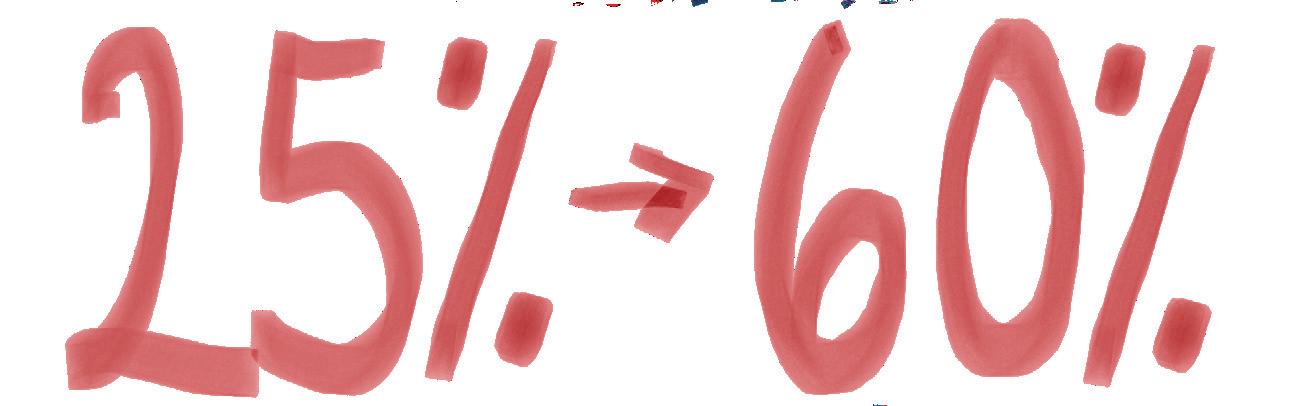
20 years ago
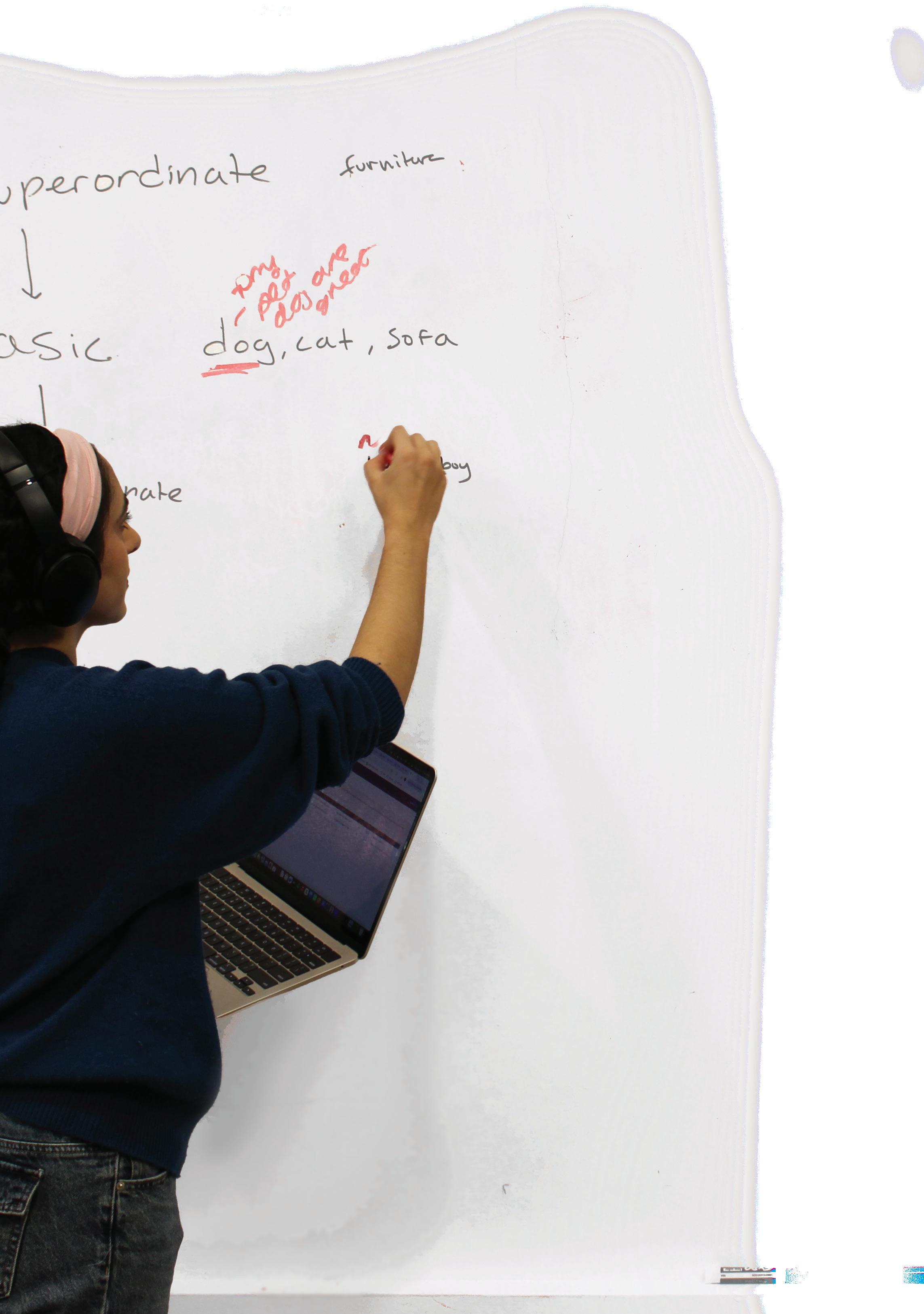
For many students, particularly ones pursuing postgraduate studies, high GPAs are not only beneficial but often essential.
Weinberg fourth-year Sophie Perel is majoring in Psychology and minoring in Global Health on the pre-med track. Although she picked psychology out of interest, the structure of the major also factored into her choice.
As someone who performs better on essays compared to exams, Perel says she has taken fewer science classes than her pre-med peers.
“There was a latent desire to take classes I know I would do better in because they care so much about your grades when you apply to medical school,” she says.
GPAs also come into play during students’ job searches. Tracie Thomas, Director of Career Development at Northwestern Career Advancement, says most employers want at least a 3.0 GPA. Some competitive industries, like technology, finance and consulting, look for GPAs above 3.6.
Weinberg second-year Anjali Chepyala plans to pursue a career in finance or banking. She says during recruitment season for these competitive sectors, usually in sophomore and junior year, students tend to select classes they believe will be less challenging. This allows them to invest more time in recruitment while maintaining high grades.
“Some of these clubs really try to push students to stress out. They say classes aren’t really a priority: ‘You need to
do
this to get a job.’”
Anjali Chepyala
Weinberg second-year
As a member of the business fraternity Delta Sigma Pi, Chepyala says such clubs often encourage students to focus on extracurricular and career opportunities over schoolwork. The Harvard University report identified a similar trend, finding students increasingly prioritized other activities, like extracurriculars, over coursework.
“Some of these clubs really try to push students to stress out,” she says. “They say classes aren’t really a priority: ‘You need to do this to get a job.’ A lot of students stop prioritizing their classes in that context.”
But taking classes more likely to yield A’s may not work as well as students think, for jobs or postgraduate applications, Thomas says. Graduate schools in particular evaluate students’ transcripts “with a fine tooth comb.”
“They’re looking to see how you challenge yourself,” Thomas says. “Taking a lot of easy courses to increase your GPA isn’t going to go over very well.”
As for employers, Thomas says most recruiters value experience. While much of that experience can come from extracurricular activities and internships, it can also come from classroom projects and lessons.
Moreover, Witte says prioritizing extracurriculars may cost students the skills they came to college to acquire. For example, he notices fewer people studying and engaging with class concepts beyond just coursework.
“It’s very unfortunate,” he says. “Our job is to help people become their best selves academically.”
Witte is not the only professor concerned about the declining effort students put into their coursework. Across the board, faculty members note that students are more motivated to score high grades than master content, enabled by lax grading policies.
Chung says she notices when students invest less effort into their assignments.
“The important thing is to not feel like you can have it both ways — to say, ‘I want to put minimal effort into my classes, and I still want to be rewarded as if I am putting maximum effort into my classes,’” she explains.
When classes became pass/fail during COVID-19, Chung asked students if they would prefer feedback or unofficial letter grades. She expected most would opt for the former, intending to give them the opportunity to take a class without worrying about the pressure of theoretical grades.
“They all said the same thing,” Chung says. “They wouldn’t be motivated to do their work if they weren’t getting a grade for it.”
Chung says she was disheartened by this declining interest in course content and subject mastery.
“It’s discouraging, as faculty, when people don’t want to take a class because they’re going to have to do the work, or because it’s going to be a little challenging or whatever, because we want the classes to be challenging,” Chung says. “We want you to learn. We want you to have to do the work.”
History professor Sarah Cushman has had similar student interactions to those Chung describes.
“There’s much more of an emphasis on what people think they should know as opposed to a desire to learn,” she says.
While Cushman says she doesn’t know the exact cause behind this change, she says students, faculty and universities often have different ideas on what grades should achieve. Professors may want grades to reflect how much students learn, while students want grades that help their career prospects.
Discrepancies in grade expectations are not professors’ only concern. Cushman says “traditional” grading systems pit students against each other as they compete to score above the class average.
Cushman teaches “Gender, Race and the Holocaust,” a class open to students across all years. Rather than scoring papers and exams, Cushman uses a method she calls “portfolio grading.” At the start of the quarter, students provide their definitions and
“We want the classes to be challenging. We want you to learn. We want you to have to do the work.”
Alissa Levy Chung Professor of Psychology

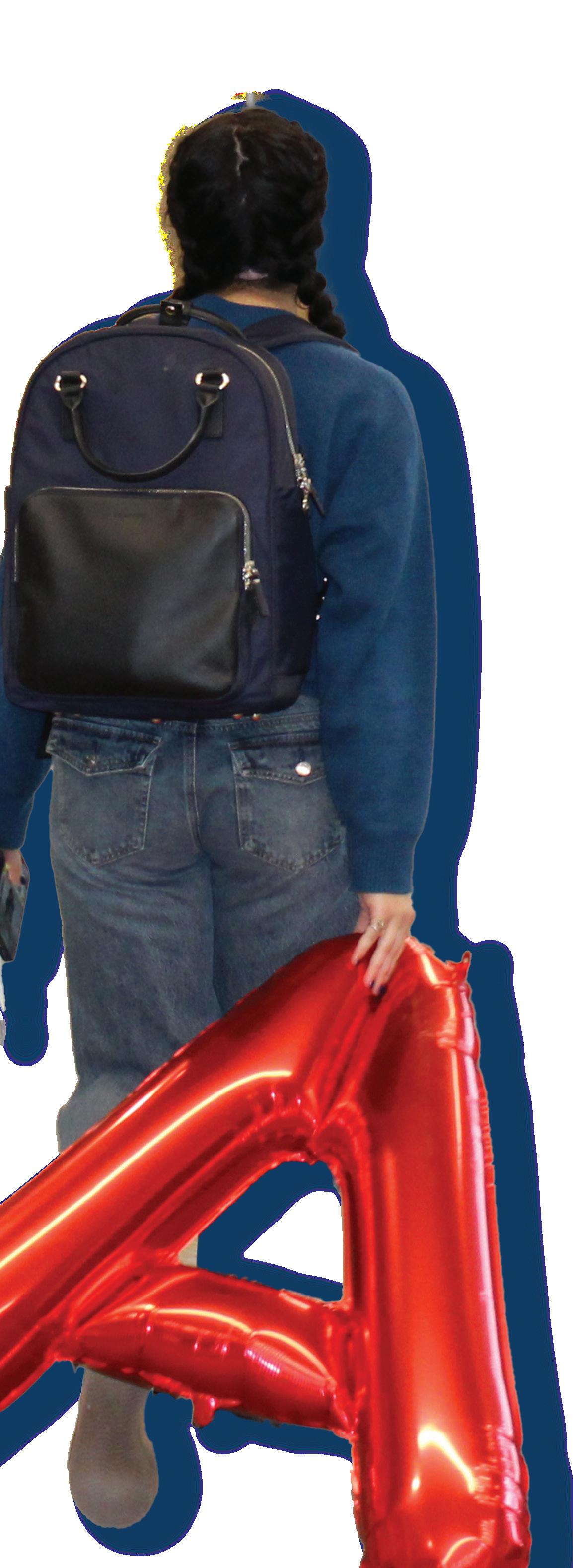
timelines of the Holocaust alongside their learning objectives for the class. They then write two papers that receive feedback rather than a grade.
“It just doesn’t seem quite fair to me to put students in competition with each other,” she says. “I’d rather see them have their own learning objectives and think about how they can achieve those, rather than conforming to [mine].”
In a separate multi-page essay, students reflect on whether they’ve achieved their learning goals and propose the grade they feel they’ve earned. The purpose, Cushman says, is to gauge how much a student has learned throughout the quarter.
“To me, the progression of their own learning is more important than the quality of one particular aspect of that learning,” she says.
Cushman implemented portfolio grading into her classes a few years ago. Prior to that, she experimented with other grading systems, including one based on creative projects.
She found portfolio grading the most effective due to its opportunities for self-reflection, giving students experience critiquing themselves. Cushman herself better understands a student’s progress by evaluating their learning processes rather than reading a research paper.
“The enthusiasm for the class didn’t necessarily increase or decrease as a result of [portfolio grading], but what I did see was more engagement and more enthusiasm expressed in the portfolio itself,” she says.
Professors across departments have similarly experimented with nontraditional grading methods. Medill professor Patti Wolter uses a system she calls “ungrading,” in which assignments intended to train students on new skills simply receive check pluses, checks or check minuses.
She says she adopted ungrading because the skills taught in class often take many years in the industry to truly hone. By removing the pressure of grades, she hopes students will feel confident enough to take risks.
“Students tell me all the time that they’ll try a goofier lead, or they’ll play with the organization of a story in a different way when they know they’re not being punished,” Wolter says.
Chung says while she sees the advantages of ungrading, her experience during pandemic remote learning showed students are not accustomed to systems that deemphasize number grades. Still, she opts for a more forgiving grading philosophy.

“I root for my students when I’m grading them,” Chung says. “I look for places to add points; I want people to do well and feel good about themselves. I really do.”
Guo encountered similar grading systems in two humanities classes — her freshman year linguistics seminar and a political science class. Both courses, she says, used contract grading, in which assignments were graded on completion.
“Most of the time humanities [grading] is objectively easier,” she says. “On the other hand, I don’t really appreciate the disrespect STEM majors give to humanities majors because I think [the humanities are] actually a very important part of your education.”
“I learned it’s not that deep ... I don’t have to be perfect.”
Sophie Perel Weinberg fourth-year

effort as her classes have gotten more difficult on top of an intense extracurricular workload.
Chepyala is often more confident in her ability to earn top grades in history classes, which tend to have long-term projects and essays instead of exams. She says the time and effort she dedicates to these courses is correlated with a better grade, unlike in her MMSS and economics classes. Chepyala appreciates the space these classes give to demonstrate what she’s learned.
“I’m not going to say that all humanities classes are easier than math classes,” she says. “I’m sure there’s a history class that’s going to be harder for me than a [“Calculus 221”] class, for example. But I do think all of these humanities classes give their students a chance to shine.”
Witte acknowledges the grading differences between departments. In some classes, Witte says, not getting an A indicates performing below the class average. But a B in his economics classes is a “pretty good grade.”
learning to prioritize health and proactively seeking out resources, like office hours and peer tutoring.
Perel says students may feel obligated to take difficult classes and maximize extracurricular activities. But after doing that herself, she says it only hindered her growth.
“Northwestern, as an institution, puts a lot of pressure on its students to be perfect and get into these schools and these jobs,” Perel says. “I learned it’s not that deep. That sounds bad, but I learned I don’t have to be perfect.”
Chung says in college, she was also a student who fixated on grades. But she wants students to know the numbers hold less weight in the long run. Now, as an educator, she says growth means more than reaching set criteria.
“Whether it’s a 92.3 or 92.5, I get it,” Chung says. “I remember doing the math on those things. But it’s just so unimportant in the grand scheme of things in your life, and it doesn’t really represent much.”
Navigating available resources is no easy strut for Northwestern Dance majors.
WRITTEN BY SEYCHELLE MARKS-BIENEN
DESIGNED BY ILSE VON HEIMBURG
PHOTOS BY CARTER NISHI
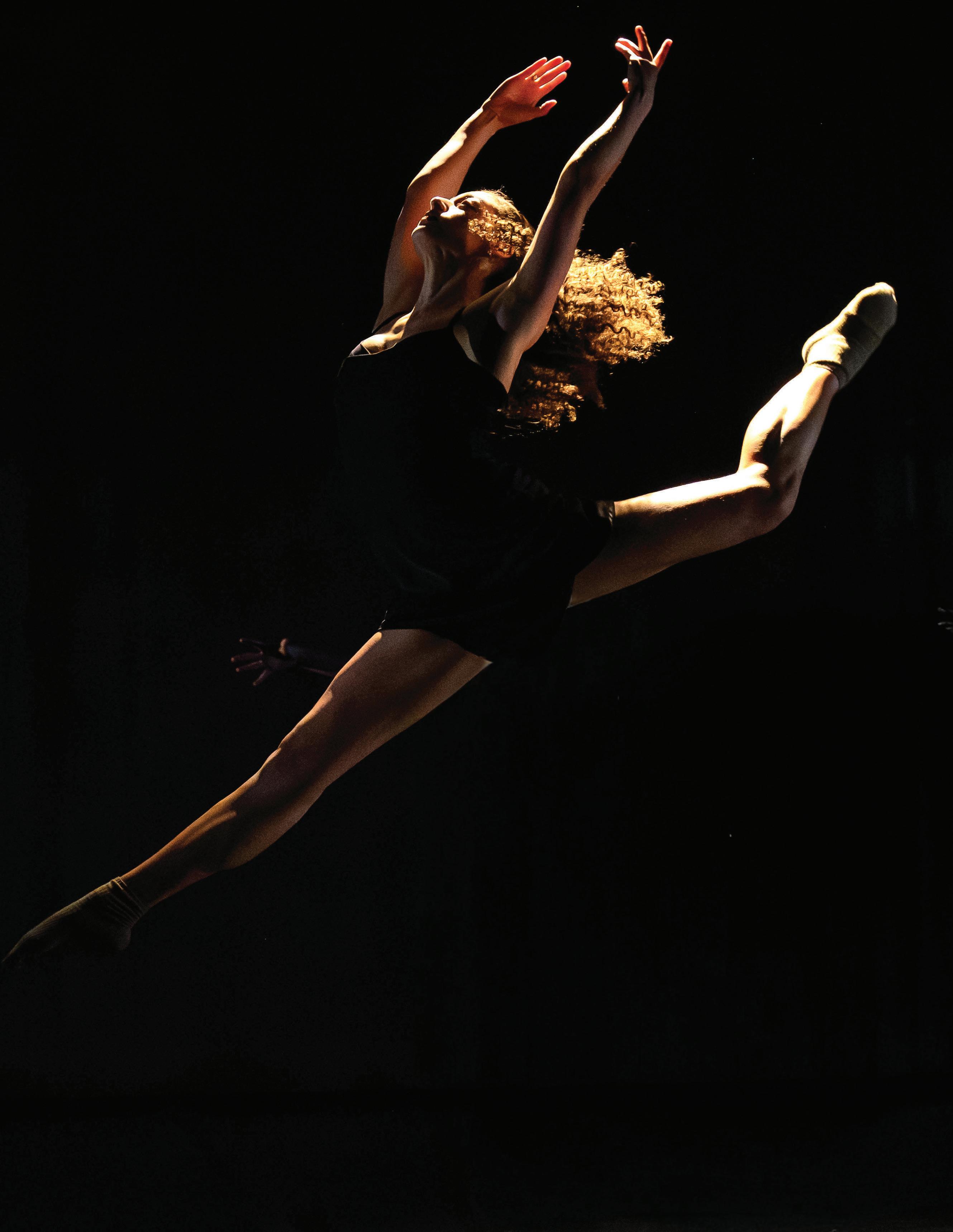
At noon on Tuesdays and Thursdays in the Wirtz Center for the Performing Arts Ballroom, Communication second-year Sabrina Lee stretches as her reflection in the mirror looks back at her, warming up for “Advanced Ballet.” Just 10 minutes earlier, she was studying chemical properties in an organic chemistry lecture. By now, Lee is accustomed to making this twice-weekly transition while her peers typically head toward classes in Kresge Centennial Hall or University Hall.
For Northwestern Dance majors like Lee, this midday pivot from lecture hall to studio is routine. Housed within the School of Communication, the dance program emphasizes the art of movement as an academic discipline, honing in on various genres of dance — such as ballet, modern and jazz. In addition to technique classes, students also explore dance through historical, research and theory-based lenses.
While many students at Northwestern take part in extracurricular dance groups, the program offers select students the chance to go beyond just movement. Dance is woven into their schedules alongside labs and lectures, demanding the same time and focus as other majors on campus. However, unlike these other disciplines, dancers navigate hurdles such as access to studio space and resource deficits, considerations that other students rarely factor into their days.
Slightly misleading in name, the Wirtz Center Ballroom is composed of black marley floor and a mirrored wall. It’s not perfect, but compared to the Wirtz Center Cellar, it’s a substantial upgrade. Both spaces are managed by the Dance department.
“[The Ballroom] is pretty old,” Lee says, “but it’s the best possible space for dancing on campus right now.”
Communication third-year Yitong Zhang, also a Dance major, points out the Ballroom lacks “sprung floors.” Typically, dance studios have a layer of foam underneath the floor to absorb and cushion hard impacts; without it, dancers can experience shin splits and joint strain.
The outdated HVAC system also poses a safety hazard, making the studio slow to warm during the winter months, according to visiting assistant professor Joe Bowie, who currently teaches both intermediate ballet and advanced improvisation classes in the Ballroom. He says this can be detrimental for dancers, who need to warm up properly to prevent injuries.
“Artists are always adaptable,” he says. “But when it is a physical activity, particularly knowing that bodies need to be warm to dance — and this is just straight up science — injury is possible.”
Those who rehearse in the Ballroom are the lucky ones — many dance students frequently find themselves practicing in the Cellar, which dancers say is a cramped, inadequate space to practice their craft. Because it’s so small, dancers often find themselves on top of each other, inhibiting their range of motion. According to Zhang, the room lacks ambience; it is
often filled with dust from the tap dancers’ impact and has been known to spring leaks.
Most troublesome, the Cellar does not have marley flooring, meaning the surface is slippery, posing injury risks and preventing dancers from putting their full energy into routines for fear of falling.
Because of these limitations, the Ballroom is not just the preferred studio but often dancers’ only viable option.
“I can’t imagine teaching a ballet class in the Cellar,” he says. “The Ballroom, for practice, is kind of where you want to be.”
With over 20 student dance groups on campus and roughly nine dance classes per quarter vying for the space, time in the Ballroom is hard to come by. Ballet’s technical demand places it first in line, leaving jazz, contemporary and improvisation classes rotating through the space in the meantime — a system that reflects both the program’s diversity and the constraints under which it operates.
Student dance groups are left with the remains, often rehearsing in Wirtz classrooms and hallways, spaces not as equipped for dance — or in separate buildings altogether.
SESP third-year Morgan Dreher is a Dance minor and a member of the ballet group Reflections Repertory Company. Her current ballet class meets in the Ballroom, but her dance group couldn’t secure the space for rehearsals. Instead, they mostly practice in the upstairs classrooms of the Wirtz building, which Dreher says are not ideal for ballet.
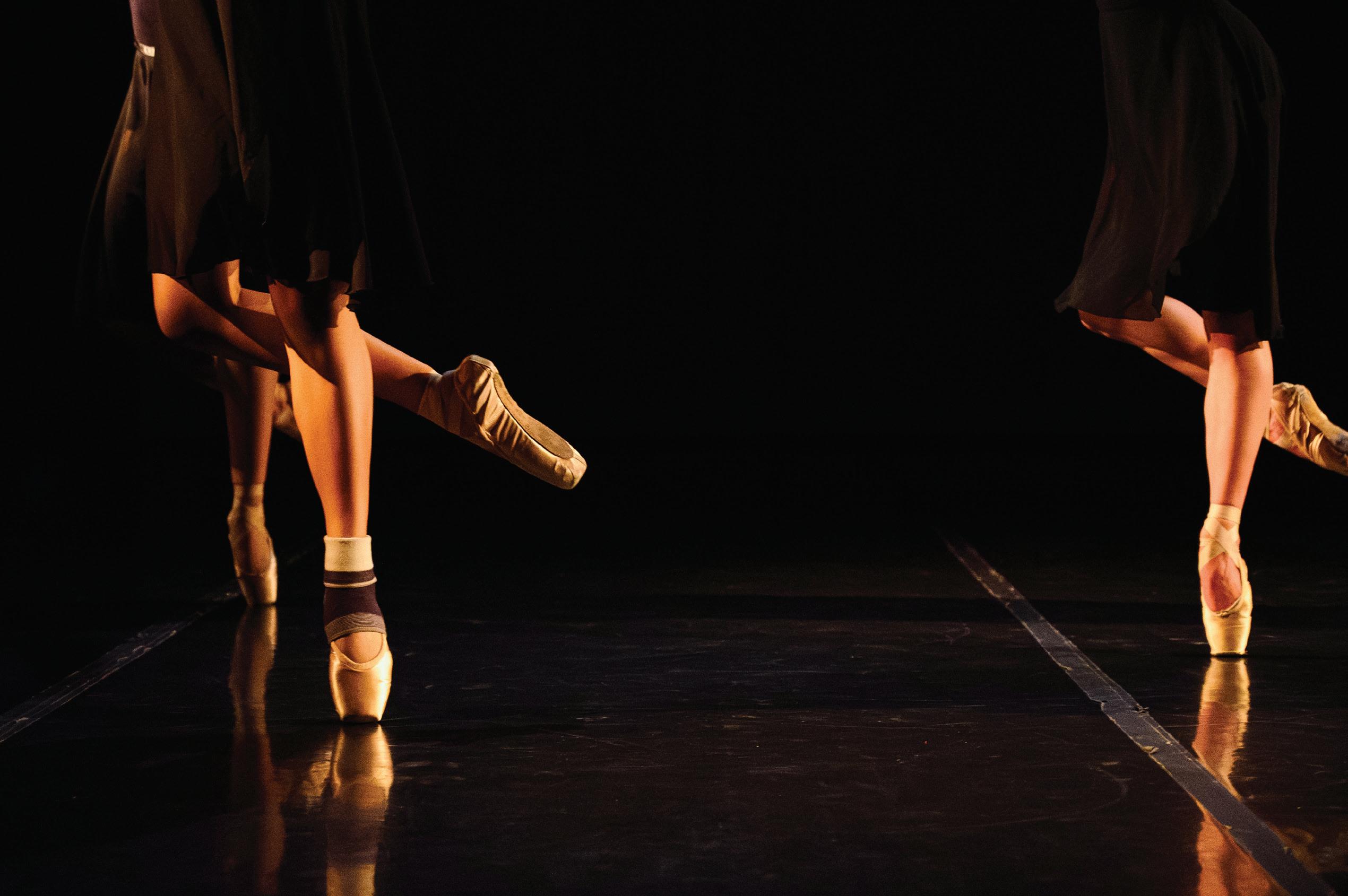
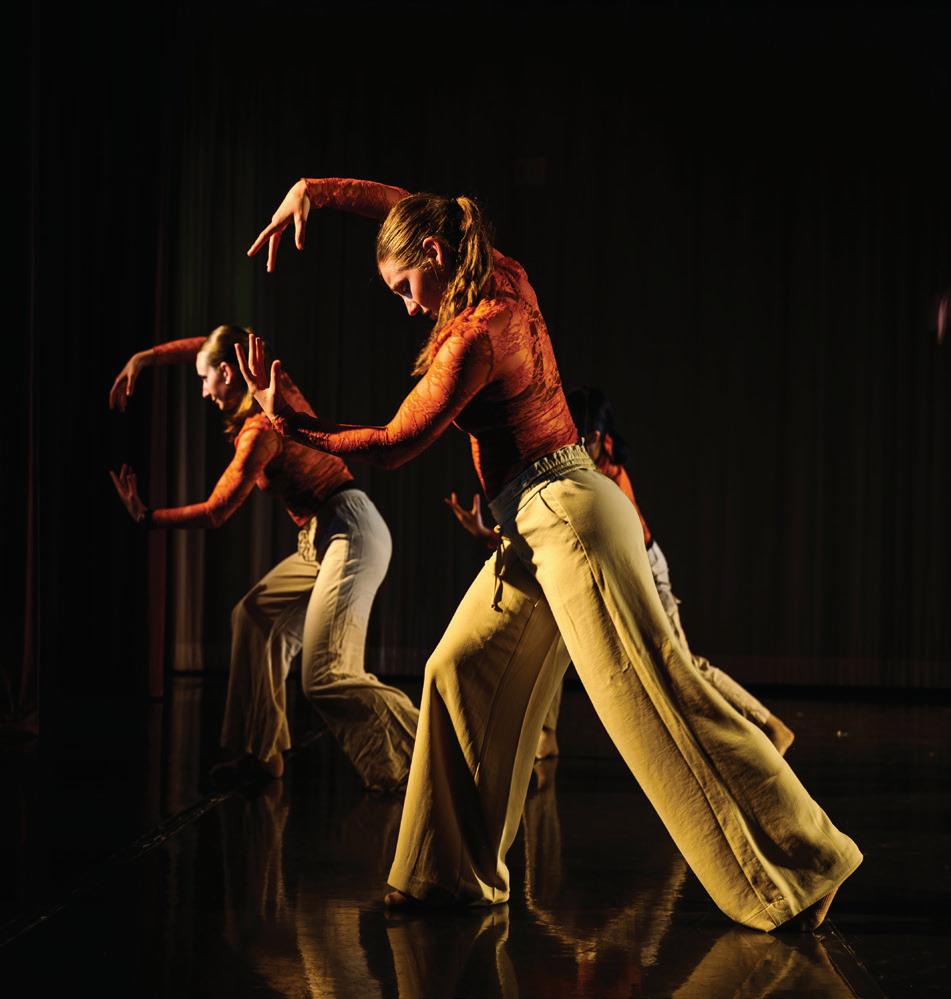
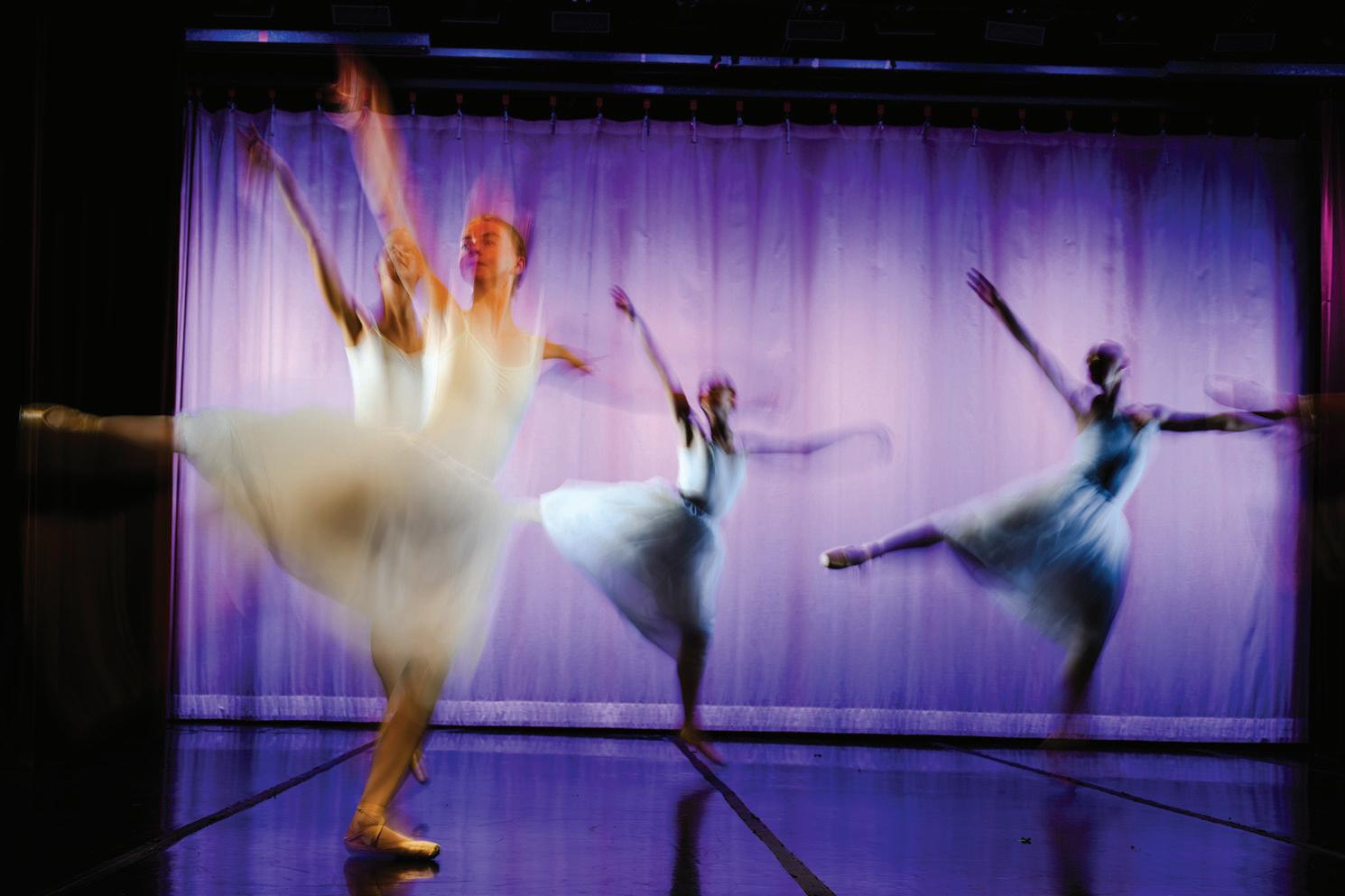
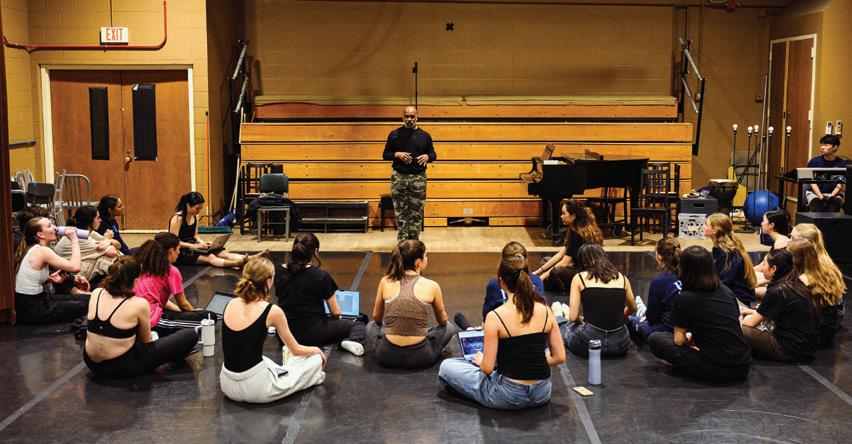
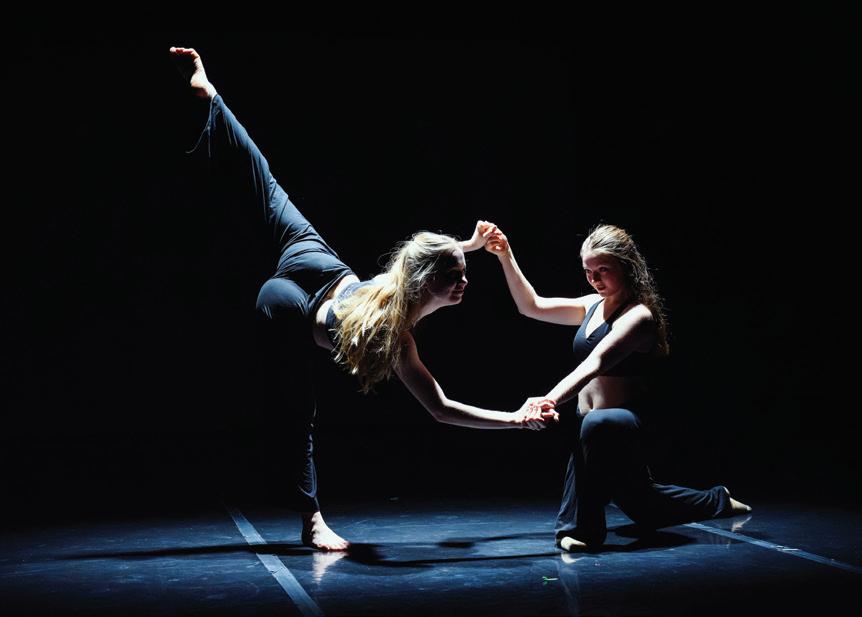
“We can accommodate it so that it works for us, but they have rough flooring, … and the dimensions of the space aren’t suitable for our pieces,” she says.
According to Wirtz Managing Director Jorge Silva, overseeing and scheduling the dance spaces requires ongoing coordination between the Dance department, the Wirtz Center and the Center’s staff.
“Obviously we have a symbiotic relationship,” Silva says. “If we make a change to the building, it has the ability to affect [the Dance department], and if Dance makes decisions on its own, it has the ability to affect the rest of Wirtz.”
As for the spaces the rest of the Wirtz staff is responsible for, Silva says they try to balance demand as much as possible. Still, the majority of Wirtz-administered studios are not adequate for dancers’ technical needs, creating disproportionate demand for the two department-managed studios.
“The facilities are just really limited,” Zhang says. “Only one studio is really big enough. And since there are so many rehearsals and classes going on, everyone is trying to get time squeezed in.”
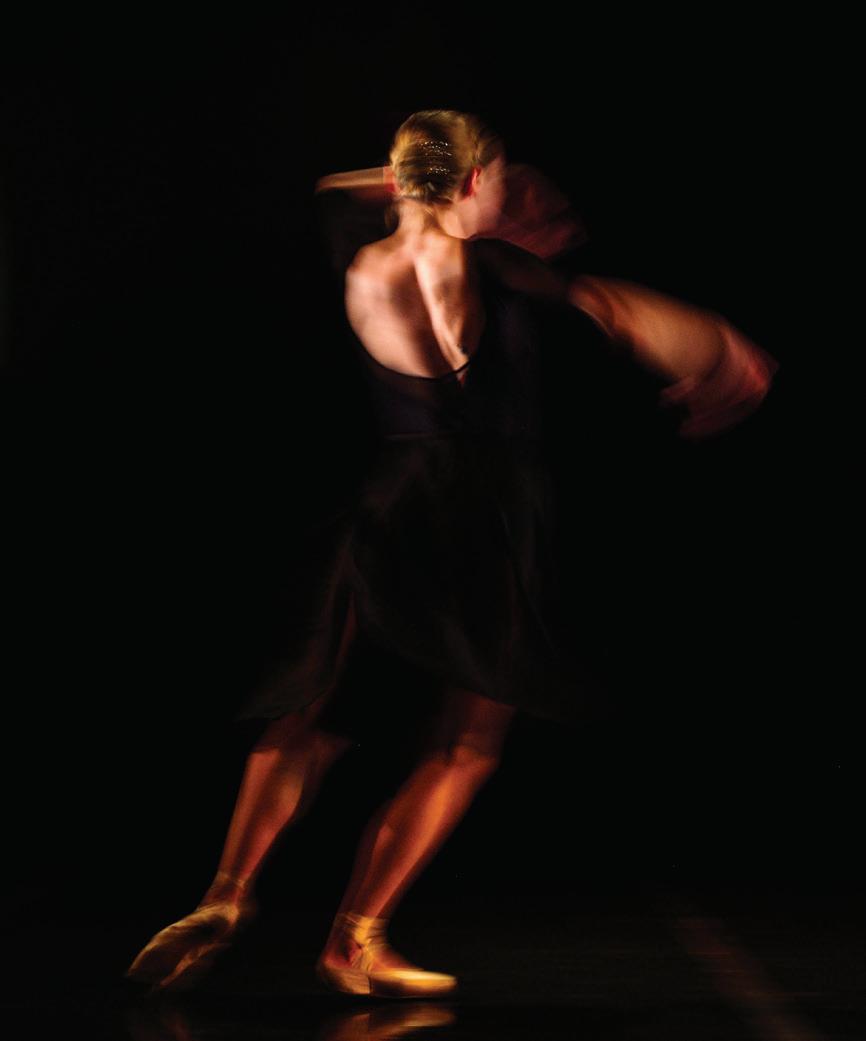
In Silva’s ideal world, the Ballroom and Cellar would undergo all necessary renovations, alongside the addition of extra dance-tailored facilities. But getting there is no easy task. Budgetary and physical constraints pose mounting roadblocks, according to Silva.
Wirtz operates with a $2.3 million budget, the majority of which goes toward personnel. The small remaining capital expenses budget can be partially allocated toward maintenance and cleanliness, but the University contracts a separate vendor, Aramark, to handle the upkeep of the facilities. This means only a sliver of Wirtz’s budget can be allocated independently.
Because of this tight budget, renovations tend to be sparse. In the last year and a half, Wirtz upgraded the Ballroom and Cellar’s HVAC and lighting systems, but issues with the space remain.
As of 2025, plans to put together future renovations were in the works, but there are still many obstacles before they can be put into motion.
“There’s a lot of hopes and dreams currently being put together for potential campaigns from the dean’s office,” he says. “I don’t think anybody is ignorant to why those are important, and why they are wanted. ... It’s just a matter of when is a good time to be able to raise capital, and how do we do it strategically?”
Silva wants to make sure students play a part in these conversations. Last year, the School of Communication established a student advisory council to try and facilitate communication channels between students, the University and the Wirtz Center. Currently, no representatives from the dance program sit on the council.
In the past, dancers have voiced their concerns to no avail, according to Zhang. She recalls hearing from older dancers — who have since graduated — they requested the poor air quality in the ballroom be addressed, but no action was taken.
Bowie, who left Northwestern in 2021 to pursue his master’s degree and returned in 2024, says the stagnation of the facilities worries him.
The contrast between the dedicated dance spaces — like the Cellar and Ballroom, which have specific flooring and
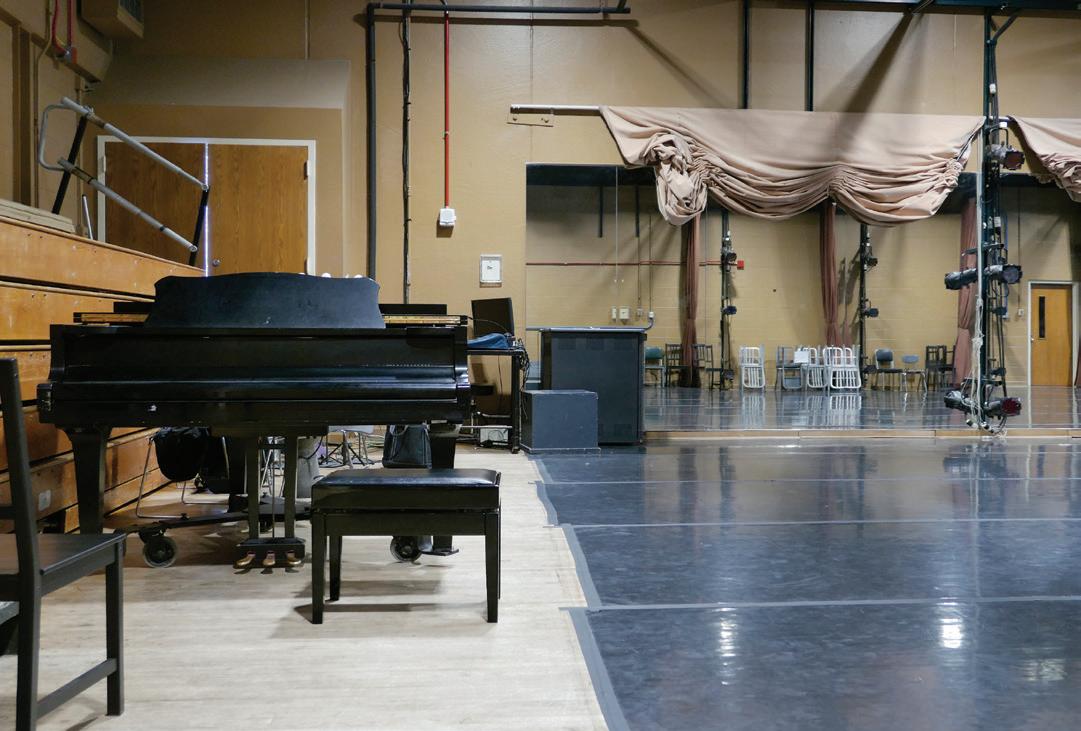
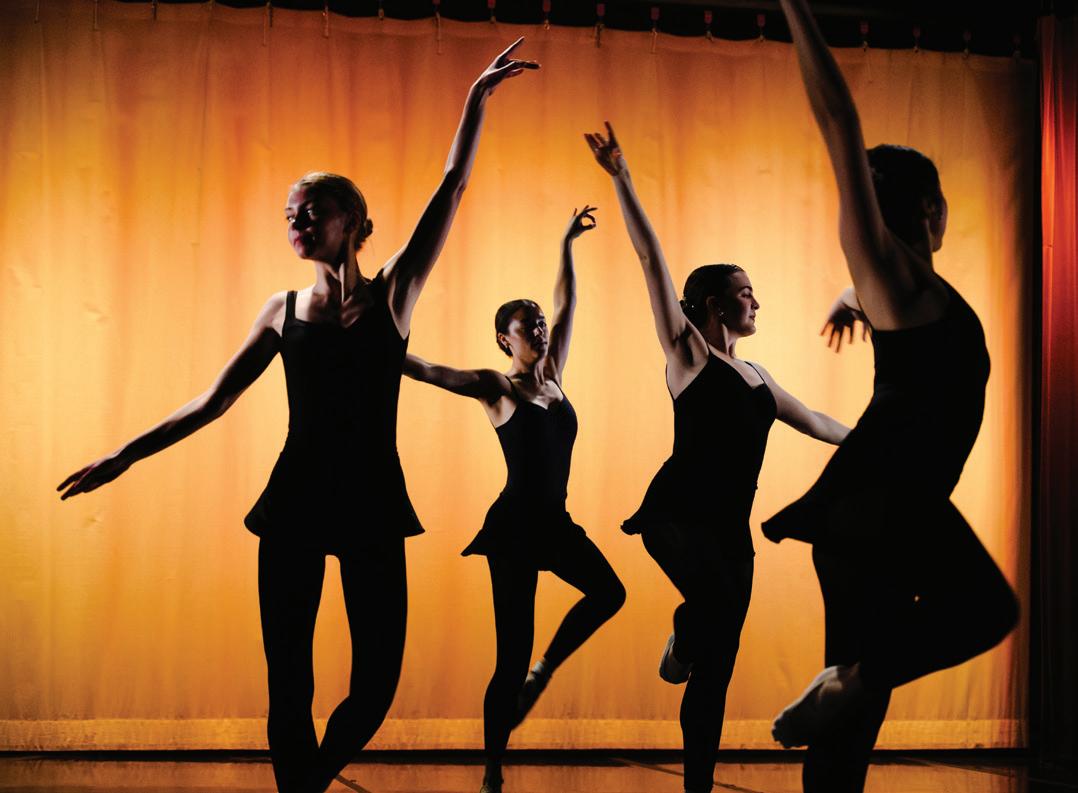
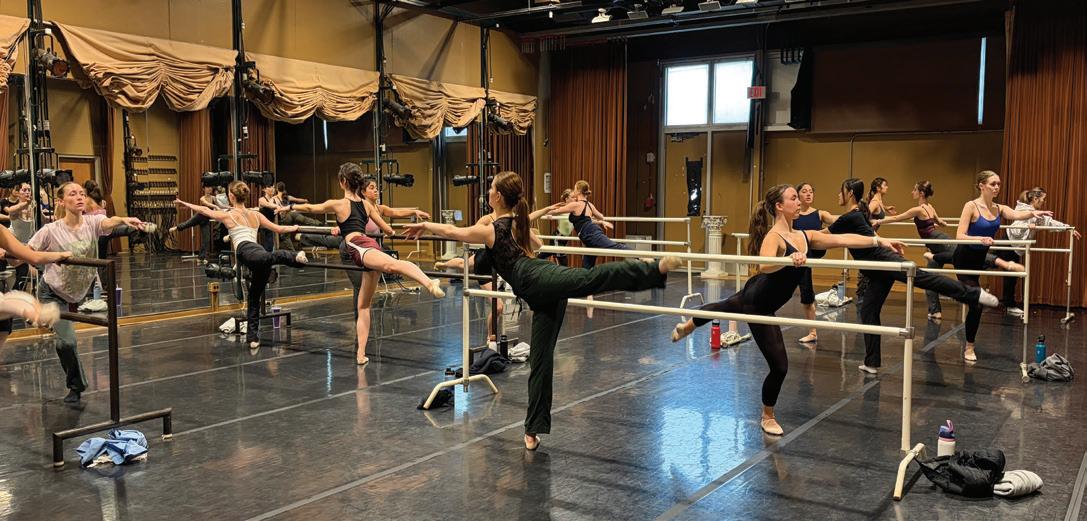
dimension needs — and what Bowie sees as a much newer, nicer main Wirtz Center, is also concerning.
“Couldn’t someone just do something about this?” Bowie says. “It was strange to go away for three years and come back and have it be exactly the same.”
Though the studios may be imperfect, they are rarely empty. In the Wirtz Center and beyond, students continue to show up, rehearse and perform, carrying the program forward.
The past few years have seen sharp increases in enrollment. Dance majors and minors are still sparse compared to other departments in the School of Communication, but from 2015 to 2024 there was a 90% increase in program enrollment, jumping from 41 majors and minors in 2015 to 78 in 2024, according to University data.
Dance majors face no shortage of hurdles, from navigating limited studio space to balancing the demands of coursework
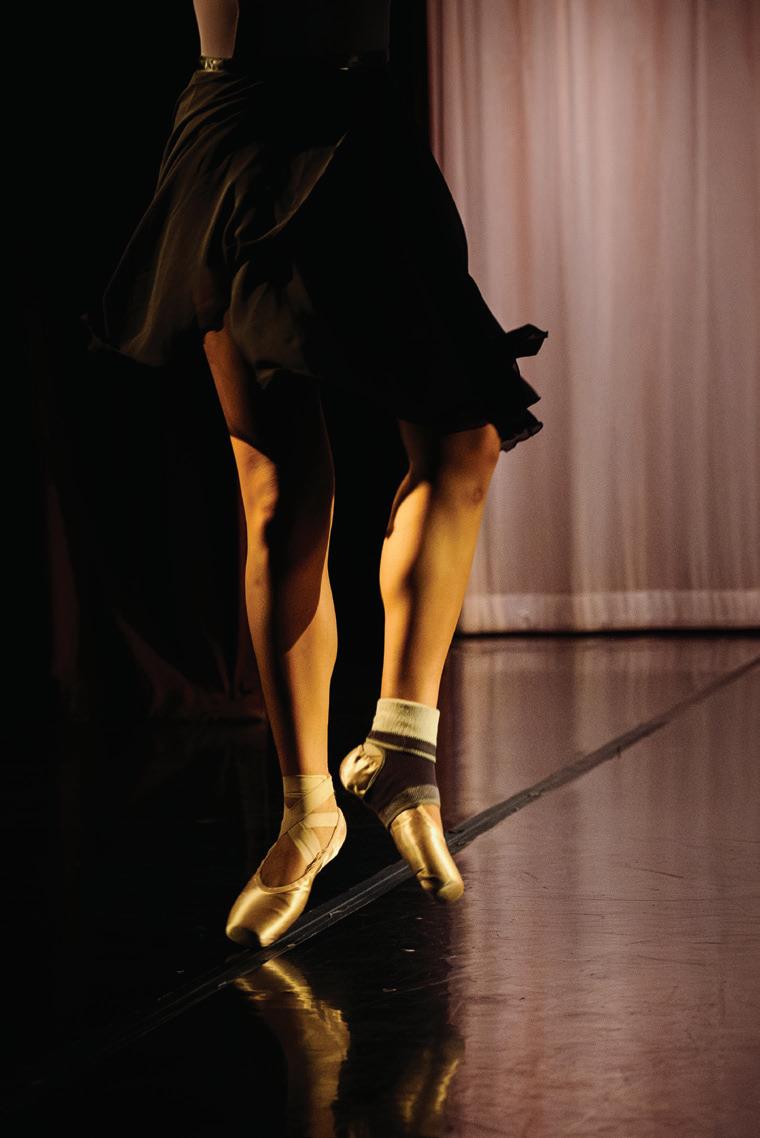
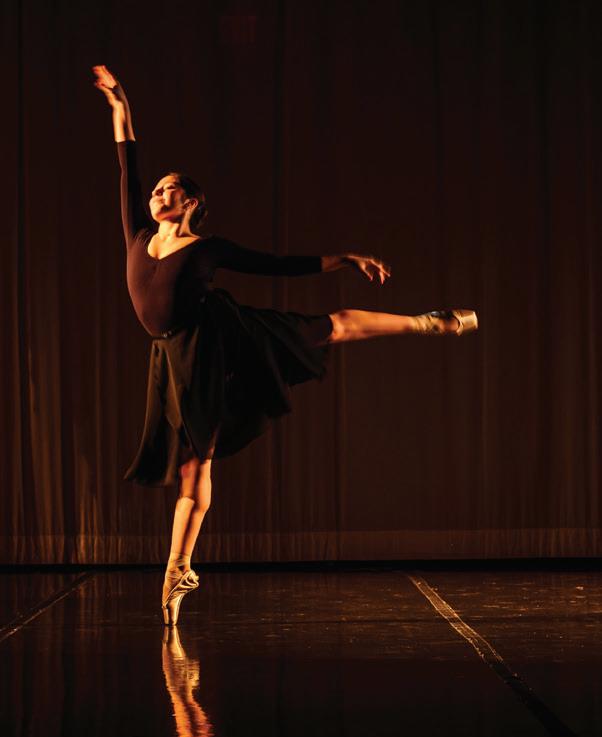
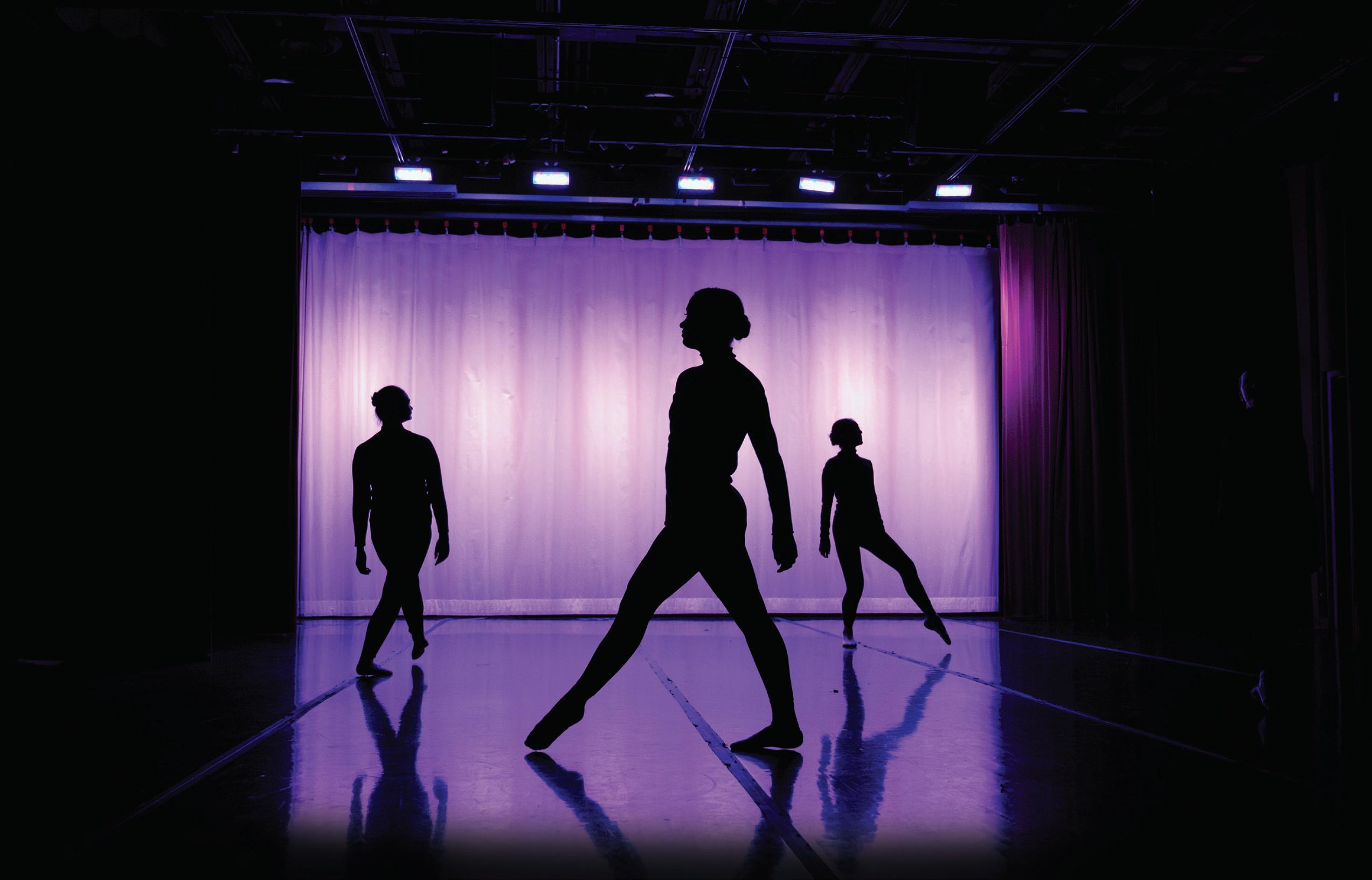
across disciplines. Yet, for most students, dance is not just another obligation; it offers a different kind of rigor, one that teaches discipline, adaptability and collaboration, while also providing mental and physical relief from the pressures of other studies.
“It can be tricky, but it is important to keep pursuing our passions and doing the things we enjoy,” Dreher says. She plans to go to law school but hopes she can keep her skills in her back pocket and one day teach dance.
Bowie says dance often complements other academic disciplines students are pursuing. Northwestern is not a dance conservatory; rather than training dancers within a singular, all-consuming track, the program encourages the exploration of other academic fields, artistic forms and ways of thinking. This is especially true in his ballet classes.
“Coming into the studio and dancing allows them space to be free of some of that outside stuff,” he says. “The systematic and methodical way of ballet sort of speaks to people in the way they think already.”
For Lee, one of Bowie’s ballet students, this rings true. Not only do her dance classes provide a chance to clear her head and get some exercise within her busy schedule as a Neuroscience double major, but they have a surprising amount of overlap with her other studies.
As a pre-dental student, Lee does not plan on pursuing a career as a professional dancer but says the discipline has sharpened skills applicable to dentistry, such as dexterity and hand-eye coordination.
The program, dancers say, has also broadened their understanding of what dance can be beyond traditional environments. Accustomed to purpose-built studios, tightly controlled schedules and a singular focus on technique, they now find themselves dancing in shared spaces and focusing on a wide variety of genres, experimenting with choreography, learning about the anatomy of dancers, and delving into the research and theories surrounding the art form.
Bowie hopes more students will explore the program in the future, which will continue to provide dancers with a wellrounded, flexible definition of the study.
Whether students are hoping to dance professionally or pursue other paths after graduation, he believes the skills they learn throughout the program will have life-long benefits.
“What dancing allows is a really beautiful and methodic way of thinking,” Bowie says. “Those who spend time in the studio, those who choose to dance — at least part of their lives — have the opportunity to contribute something new. Those are the people who can see a little bit beyond what is there.”
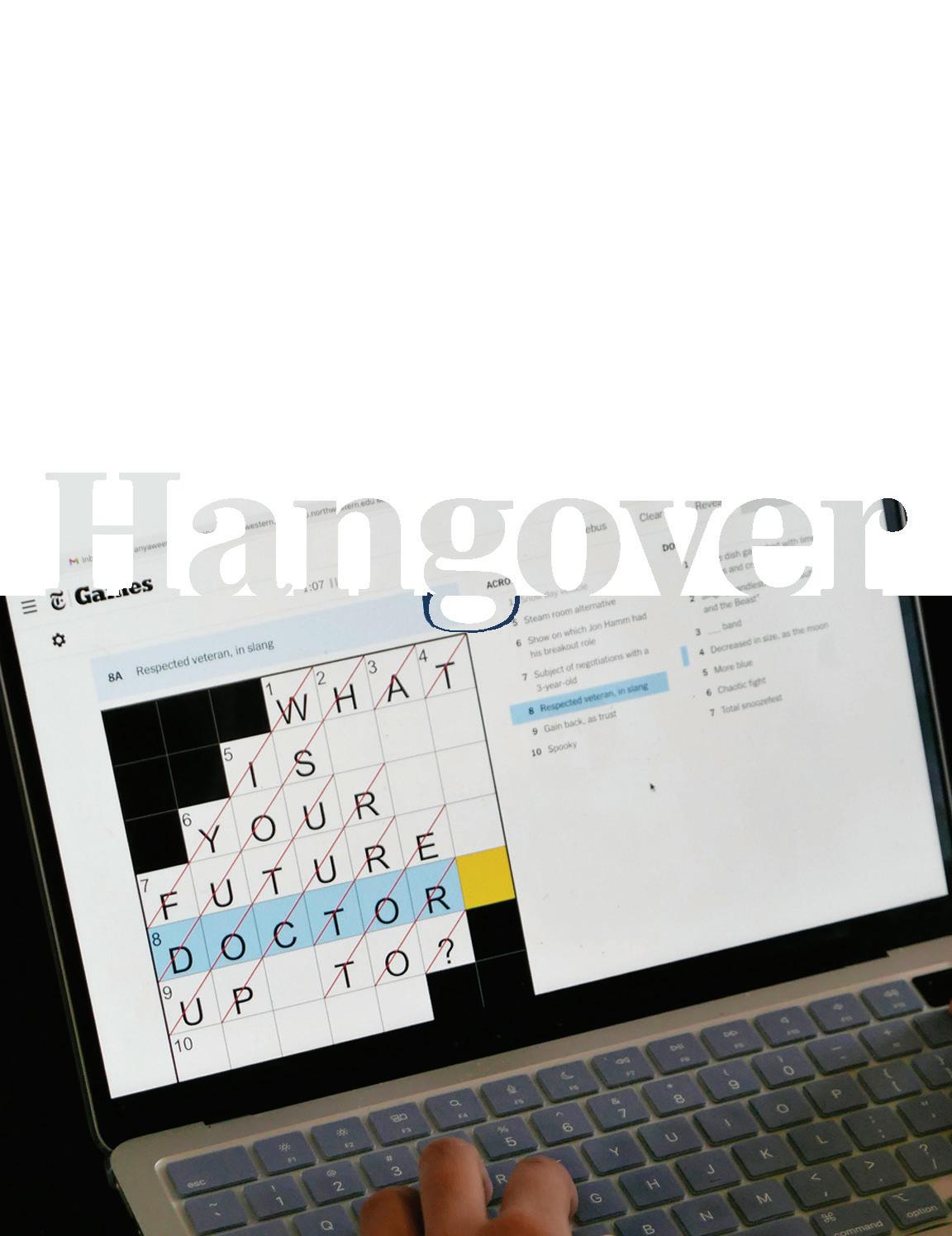


Youmarchtothebeatofyourown drum — literally,asthe marching banddrum major.Rainor shine, you’resingingourfightsong.It’s your jam. When your Slivka doublegetstoosocial,youinventa one-of-a-kindwayto avoidtalkingtoyourroommate.YouputyourSegal Designcertificatetouse andbuildasolid,soundproofroomdivider.Afterall,youneedafull social battery for gameday.
Youjustlovelove!Sure,yourMarriagePact ghosted you, but you believe in second chances: You’ll publish a love column dedicated to them in TheDailyNorthwestern. When your English professor pulls you aside to discuss your “concerning reaction” to last week’s poem, you explain you’resimplyanempath.People whisper “you’re so performative” — but what’s wrong with loving bell hooks hard copies, participating in your “Traditions in FeministThought”class and maintaining adigi-onlyfeed?
Summer is approaching, and you’re a regular at NCA. This may be the unc lifestyle, but hey, you’re close to hitting 500+ LinkedIn connections. You’re working overtime building anetwork— requestingthe D&D owners, middle school camp friends, all your sorority sisters and everyone else you’ve made eye contact with on Sheridan. You will approach a relationship benchmark with your partner, the Investment Banking Club president. One way or another, you’re securing that NYC loft.
You will return from the Northwestern University Outdoors Club camping trip to a complicated situation. Your new fling asks to register for the same classes and meet your Fusion family. God — too much, too quick. With you, it’s casual with a capital C. But it seems they listened to Penn Badgley on “Call Her Daddy” and agree it’s never really casual. So you do what anyone would do and drag this out.






detoMcCormickofoutdroppingAfter - (andtrackpre-medthetoyourselfvotethen pre-law),toswitchingpromptlyYou’reup.givingyou’redecideyougoing successandfamechasetoaccountInstagramburneraviawhere unpostexclusivelyyoudisclosed foradvertisementsgraduatewillYouTurboAI.from successfulacollegeinfluencer, willyouandthirtynextthespendyears prolifeyourofmoting suspicious MLMs to soccer moms on
Face - Welcomebook.to the realScorp.world,
-Founda tional Discipline, you’ve seen theYou’retrip.aongoingYou’relight: not sure where (and neither isthinkbutaccount),bankyour somewhere in the range of Foster Deli and Bali. -Wher ever your journey takes you, you’ll come backlife-changingyourfrom -ex10-daytotwo-hour -righfeelingcursion superiorandteous fortimeinjust— your McKinsey

Buddhism,”to“IntroductiontoThanksa Ethicalyourfulfilltotookyouclassand Evaluative Thinking
You will walk into your “General Chemistry II” final feeling confident. You rewatched all the lectures at 2x speed,onlyusedChatGPTonhalftheproblem sets and even told someone at the Deuce last night that “shit’s gonna be light work.” But one look at the exam, and you’re screwed. By question three, you’re bargaining with God and making a late New Year’s resolution to start attending of- ficehours.


Afterreceivingyour50thinternshipre - erajection,youwillenteryourself-care anddecideemploymentisaso - andcialconstruct.YoudeleteLinkedIn treat Canvas deadlinesasaboutsuggestions.Whenfriendsask yoursummer plans,yousmileserenelyandrambleabout “rest”and“the universe.” You haven’tsubmittedajobappli - onlycationinmonths;the placetheuniverseis guiding youis McDon - theald’s.Justput fries in




By the second week of Spring Quarter, you will apply for (and somehow be accepted into) IBC, ISBE, DSP, Fossil Free NU and an intramural sports team. You immediately make them all personality traits. After a week, you will decide you’re too busy and stop attending everything — quietly. You add them all to your resume, of course, but your attendance is nonexistent. Everyone around you still thinks you’re doing everything, your achievementgreatest
This year, your intuition will fail you spectacularly. You will meet a boy in your economics class who is passionate about three things: Sigma Nu, investment banking and Kalshi sports betting. He invites you to his Elder double at 2 a.m. and you swoon. You text him paragraphs. He replies with three words. Eventually, you ban men for the “foreseeable future” — or until you meet the real love of your life… this time from Lambda Chi!
isresolutionYear’sNewyouryear,Every Thisfreak.controlasuchbeingstopto youthoughEvenserious.you’reyear, bleachwithroomyourdeep-cleaned wipes, wash your hands for 200 seconds and have not used -din ing hall cutlery in two weeks, -contomanagestillwillyou tract norovirus! While you spend your time doubled over in the East Fairchild thinkmaybebathroom, about that resolution (and also about -ask ing your primary care physician Lexaprothatfor
C a n c e:r ehT yrCybab sselepoHehT:oeL citnamoR lortnoCehT:ogriV kaerF
yourCancer,Unlikebeautiful:not,Fear Failedcome.hasdaylong-awaited anddatesHinge fratmysterious yes,—Youbegone.suitors,mixer lovethefindtogoingare—YOU waitbewillTheylife.yourofalleywaytheinyouforing atCookiesInsomniatonext cigarette.asmokinga.m.4 you’llbutnow,usDoubt livingyou’rewhensee inaftereverhappily your Greenwich mansion together years.shortfivein Trust.

We may not be Deloitte, but we consulted the universe.
WRITTEN
WRITTEN & DESIGNED BY ARLETTE CORREA
Sexile: The act of being banished from your dorm so your roommate can get it on.
It used to be indicated by a sock on the doorknob. Nowadays, most opt for a short but effective “Don’t come back yet” text. Perhaps the term hits a little too close to home -– especially for those whose homes seem to have an open door policy!
If you are tired of always being locked out for love, look no further than this guide to making the most of your forced solo time.
Depending on when your sexile occurs — because there is no set time for love — start by heading to the trusty 24/7 Mudd Library that will never close its doors on you (unlike your horny roommate).
But if it’s a Friday night and it’s too lame to sit in the library while your roommate experiments with just how many ways a Sargent twin XL can be put to use, there are plenty of other options.
Track your Sims on Find My and see if there’s a friend nearby to crash with. If you’re feeling inspired to find love of your own, borrow some clothes and rally your friends to hit the town.
For a more chill adventure, try our school’s underrated “artsy” perks. (By that, we mean get sloshed South Campusstyle.) Find a fundy or a frisbee party to crash. Maybe today’s the day you finally see what an a cappella party looks like! Who knows, this could be your meetcute with a Treblemaker or Barden Bella.
Let’s say it’s 2 a.m. and, at this point, you don’t think you could sleep anywhere: Head to Lake Michigan and make the most of our beach school. This is the perfect time to skinny dip — why should your roommate be the only one with their clothes off?
If you just want to rest, Northwestern offers some of Chicagoland’s best sleeping attractions. Sprawl across the bananashaped desks in 555 Clark, doze off to the soothing musk of engineers in an empty Tech classroom or crawl into one of the

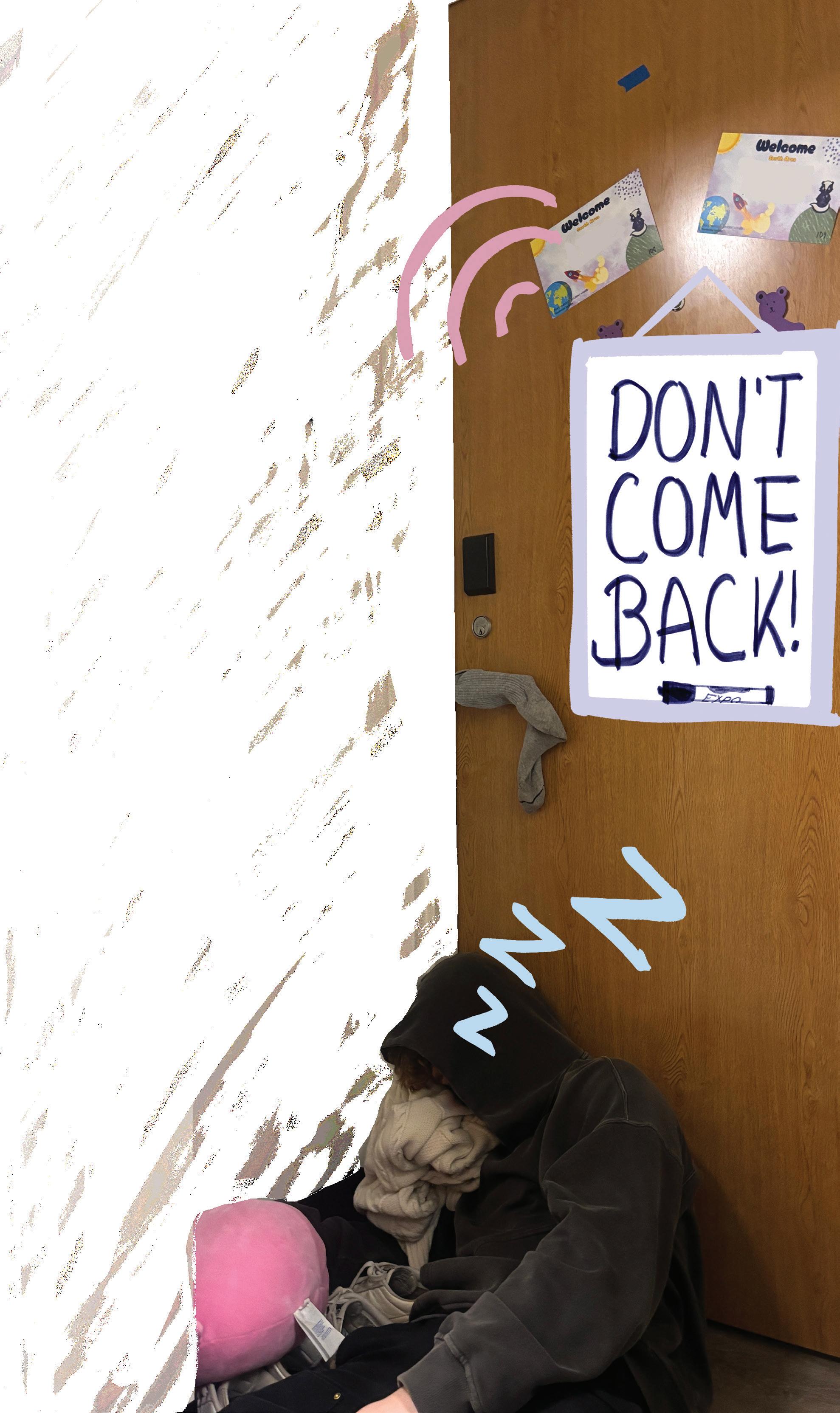
hanging egg-pods in Shepard. You don’t even need to clutch your backpack or purse — bikes and scooters seem to be the only things that go missing at Northwestern.
If you don’t want to leave the building, don’t fret. After all, this is Northwestern — no Wildcat is really wilding out like that. The ride will only last for a generous five minutes.
Feeling ballsy? Put a timer on it. There comes a point when it’s been too long — so you might as well help your roommate. Tell them they have until the buzzer goes off to wrap it up (or, hopefully, unwrap it). Keep it classy and reasonable. Make “Casual” by Chappell Roan, or really any song by The Weeknd, the ringer for what is hopefully a buzzer-beating finish.
Before you return home from your empowering, independent night (by choice, of course), take a moment to practice grace, and let them put their clothes back on. Thank whichever god you pray to that you’re not waking up in the middle of the night to an intramural team captain whimpering like an abandoned kitten three strokes deep into your roommate. This time, at least, your roommate had the decency to kick you out.
Hangover gives Northwestern’s pre-meds a check-up.
WRITTEN BY ANYA WEERAPANA
Ah, the lecture hall: where the brightest minds of tomorrow pop Zyns and try to beat their Block Blast high score. In a 130-person lecture,
with more exciting entertainment content. Let’s see what the future leaders of America are up to (and hope there aren’t as many distractions in the workplace).
Ahead of me sits Box Blonde; she’s furiously fluttering between a massive Revolve order and texts with her mother, where she’s flawlessly proving why she really does need to skip her peer-guided study group tomorrow for a CorePower class. She felt left out in August when all of her ‘Bama friends “ran home” in 95-degree heat. Now it’s her time to shine, shivering in the sorority quad in open-toed kitten heels and a $400 mini skirt (also in her cart in another tab). This fashion diva knows Alpha Phi-sters can smell poor fabric chemistry from 100 feet away. Though medical school is definitely out of the picture, her shopping is preparation for her future as a soccer mom who terrorizes her suburban town in an oversized Range Rover.
The guy next to her is racing to finish The New York Times Mini Crossword in a whopping one minute and 53 seconds. I see blue letters. Is auto check on? Really? He attempts to silence his laptop as he smashes the final letters into the puzzle, but not before the opening piano notes of a crossword poorly done announce themselves to all of Tech. Maybe next year he’ll finally make the Northwestern Crossword Team, though the odds don’t look good.

Next to me, my lab partner — a stranger turned acquaintance thanks to our three-hour trauma bonding session every Tuesday night — clearly hasn’t done her post-lab yet, and she’s turning to the world’s online best friend for help: ChatGPT. In an attempt to save water, she clicks away from the tab as soon as Chat begins to spit out answers. It’s not totally unethical as long as you’re quick, right? Wrong. It’s the start of an addiction. She clicks back. What is she typing now? “Homeopathic cures for flu A?” Yikes. Hopefully they don’t use Chat in the operating room!

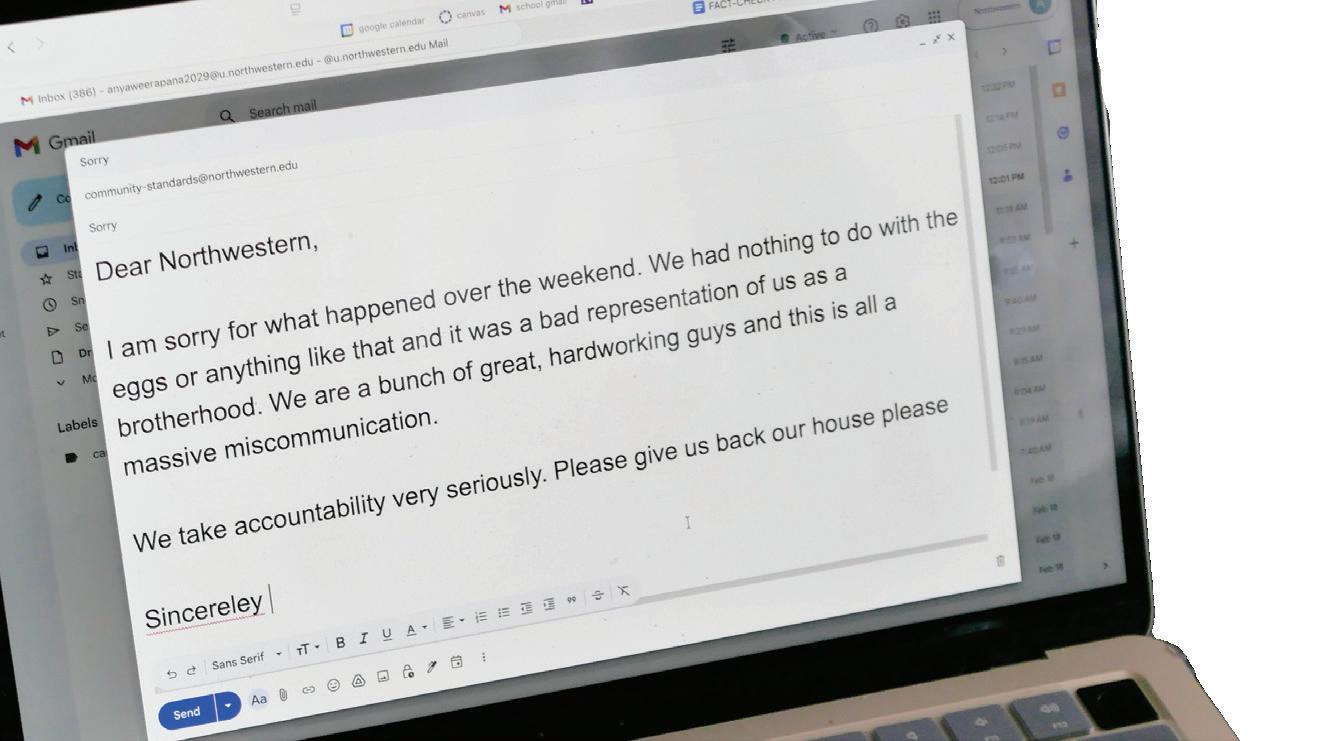
Five seats down, a fraternity president in a baseball cap three sizes too big for his head fights for his life on Gmail. His frat was “temporarily suspended pending investigation,” university code for “you’re cooked.” In an attempt to keep the house, he’s drafting his fourth email to the Office of Community Standards, arguing last Saturday night’s incident involving a broken window, the Evanston Police Department and viral Fizz posts was all part of a “massive miscommunication.” Everyone knows that drinking hot sauce and raw egg concoctions is the best way to instill values of brotherhood and leadership.
WRITTEN BY AVA WINEMAN // DESIGNED BY
You picked Copenhagen because you run your Instagram like the navy. However, you were shocked to discover that, beyond picturesque Nyhavn, the city’s architecture is spectacularly boring. Still, your feed pops with artfully arranged cups of matcha, pastries and impeccably layered outfits. You claim you’re no longer phased by Evanston’s bitter cold and dark days, but let’s be real, it was no colder than 30° in Denmark when you left. Copenhagen is obscenely expensive, so either you learned how to cook overnight or you quietly tapped into a mysterious source of funding. (Does daddy’s Amex ring a bell?) Self-funded or not, you managed to build an entirely new

If you went to Madrid, three things are certain: You’re in Greek life, you love going out and you hate leaving your comfort zone. Making friends abroad? Never heard of it. Instead, you lived in a perfectly sealed Northwestern social bubble where everyone knew each other, hooked up with each other and snorted lines with each other. Week one: Ibiza. Week two: Oktoberfest. Week three: Barcelona. Despite studying in Spain, your most patronized establishments impressively lacked a shred of Spanish culture. You tell everyone you had “such an immersive experience,” even though you basically exported Evanston to Europe with better sangria and worse decision-making.
You insist you picked Florence for the art and culture –- and you even convinced yourself of it for an entire week! In reality, the draw was the ability to drink an aperol spritz between classes without judgment and call it “cultural engagement.” You, along with every other girl in your program, returned to Northwestern with the same leather initial-monogrammed shoulder bag, as if it were issued by the mayor of Florence himself. Italian food in America is ruined for you now that you’ve had the “real thing.” Back in the States, you now say “ciao” and “grazie” to unsuspecting friends and strangers alike.
Prague is, in fact, not off the beaten path –- it’s one of the biggest and most visited cities in Europe! Regardless, you insist you are more “worldly” than friends who studied in Madrid or Paris, even though your social circle consisted of the same 10 friends you made during Wildcat Welcome. Within days, you became weirdly evangelical about beer, and you’re convinced American iterations are an affront to humanity — once, you even made a show of pouring a pint of Bud Light into the Vltava.
You went to Paris in search of an intellectual, artsy experience and came back absolutely insufferable. Within 72 hours of landing at Charles de Gaulle Airport, you started lighting up cigarettes like you were starring in a blackand-white film. You insist you’re doing this ironically. This is a lie: You have a crippling nicotine addiction, and cigarettes look cooler than your Mexican Mango Geek Bar. In no time, you became a wine and cheese connoisseur. Now, at apartment charcuterie nights, you visibly gag at Barefoot Moscato and instead make a show of decanting something you bought on sale at Whole Foods in the France section. You swear you “picked up French,” which really just means you correct people’s pronunciation of “croissant” — it’s “CWASSON.”
Stealing from Lisa’s
The only March Madness bracket Northwestern will be on this year.
Stealing someone elses’ Fran’s Voice & Opera major roommate
Athlete team project partner
Buying alcohol from D&D’s
Getting weed from Foster Deli
Going to Dance Marathon
Doing Vector LMS Modules
Your Duo code not working
Getting locked out of CTECs
St. Patrick’s bar crawl
Jaywalking across Sheridan
Sheridan walk of shame