Nazareth College Year 10 English Course Guide 2027
VISION STATEMENT
Nazareth College is a Catholic Co-educational Regional Secondary College. Est, 1986
“And He returned to Nazareth, and became strong, filled with wisdom; and the favour of God was upon Him.”
Luke 2:40
Nazareth College is a learning community centred on the person of Jesus Christ.
Through learning and teaching in the Catholic tradition we foster a culture of faith, wisdom and knowledge.
ENGLISH CORE SUBJECT – TWO SEMESTERS
LEARNING FOCUS
The study of English is a core study in Year 10. It helps create critical thinking skills and the ability to communicate ideas. It is through the study of English that students learn to analyse, understand, communicate and build relationships with others and with the world around them. The study of English helps students become ethical, thoughtful, informed and active members of society. The subject plays an important part in developing the understanding, attitudes and capabilities of those who will need critical thinking and analytical skills into the future.
English studies at Nazareth College in Year 10 include English; English Advanced;
Semester 1
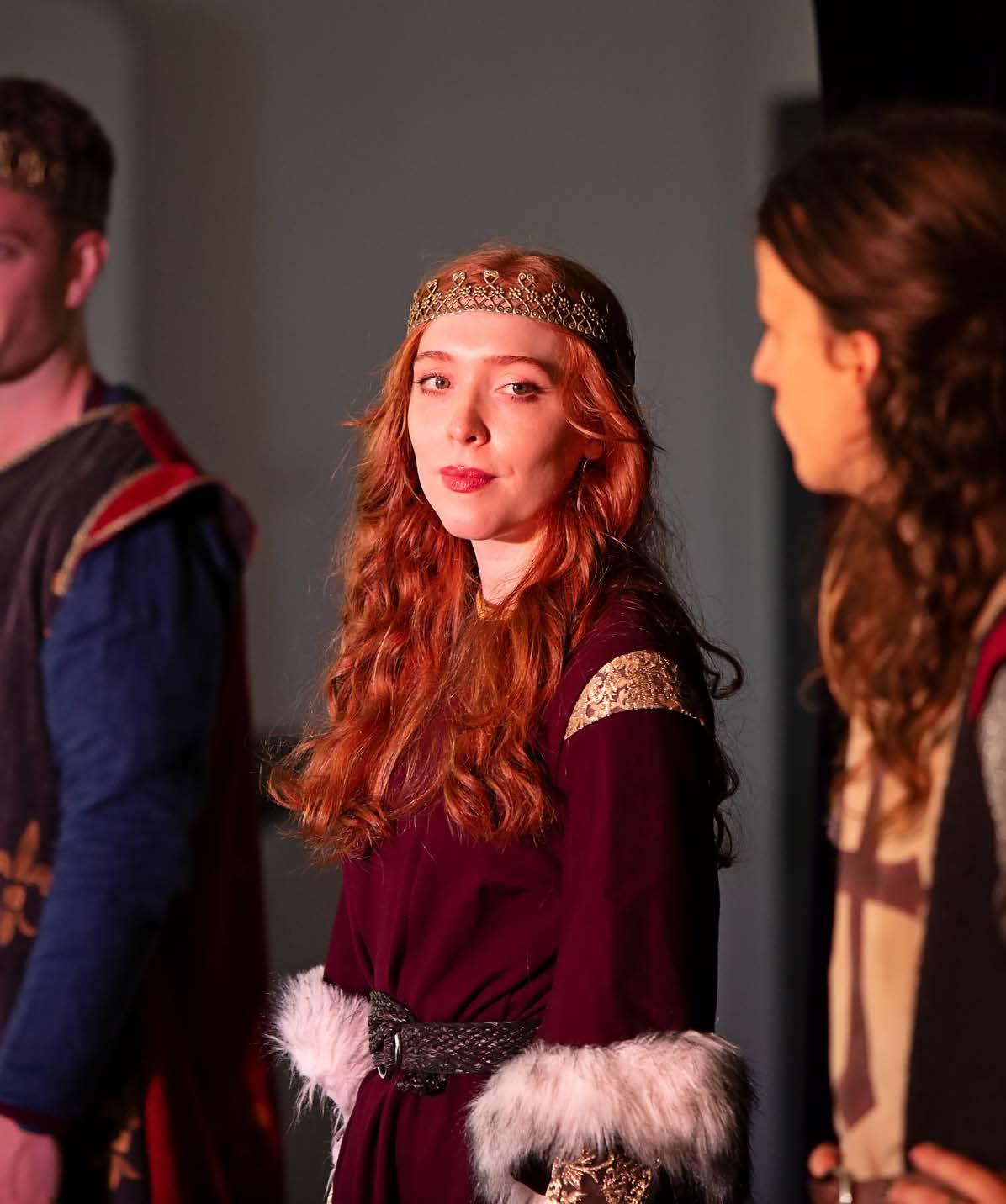
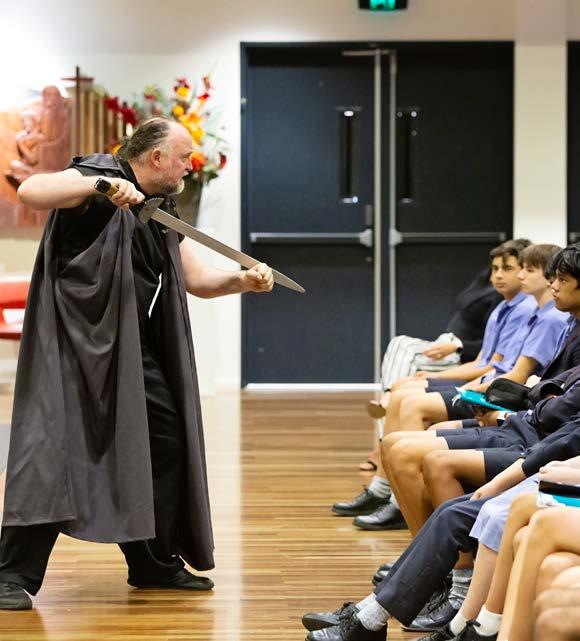
• Students respond to the play Macbeth by William Shakespeare. They complete a short passage response and a personal response to the play.
• Students study a variety of media texts and analyse argument and persuasive devices.
• They produce an oral presentation about an issue of their choice; they complete an analysis of argument
Semester 2
• Students respond to the novel Small Things Like These by Claire Keegan and the film version by Tim Mielants with a text response.
• Students read a variety of extracts from mentor texts in a range of genres – memoir, news, opinion, poetry.
• Students write works in those forms and reflect on their process.
VICTORIAN CURRICULUM STRANDS AT LEVEL 10
The English discipline is organised into three language modes:
• Reading and Viewing
• Writing
• Speaking and Listening
Three strands are interwoven through the language modes:
• Language: knowing about the English language
• Literature: understanding, appreciating, responding to, analysing and creating literature
• Literacy: expanding the repertoire of English usage.
Assessment
• Personal and Text Responses
• Writing pieces
• Oral presentations
• Analysis of Language Use in the Presentation of an Issue
• Examinations
ENGLISH – ADVANCED CORE SUBJECT – TWO SEMESTERS
LEARNING FOCUS
The Year 10 English Advanced course is designed to provide students with a preparatory pathway for the VCE Literature and VCE English Language courses in Year 11, as well as help develop advanced skills in relation to the VCE English course.
The course is designed to help students achieve these goals:
• To provide the opportunity to develop higher order skills in preparation for three courses of VCE English – English, Literature and English Language
• To introduce concepts studied in VCE courses earlier
• Learn about the metalanguage and text analysis skills from VCE English Language
• Learn about creative writing, text analysis as well as the reading of and responding to the type of quality literature found in VCE Literature
• Text and Language analysis skills; Creative writing skills that would build a pathway to success in VCE English
Students wanting to choose VCE English Language and / or VCE Literature in Years 11 and 12 are encouraged to undertake study in this course. Anyone currently in the Knowledge classes in Year 9 are also encouraged to apply. Students currently in mainstream classes can apply, though it would be advised for students currently in those classes to talk to their class teacher for more information about course requirements and their suitability for the course.
The Texts to be studied in the course will include:
• Shakespeare: Much Ado about Nothing
• Jane Austen: Pride and Prejudice
There will also be study of a range of short stories, short films and contemporary texts studied as a part of the English Language component of the course. The course will be assessed with Personal Responses, Analytical Responses, Creative Writing tasks and an oral presentation.
VICTORIAN CURRICULUM STRANDS AT LEVEL 10
The English discipline is organised into three language modes:
• Reading and Viewing
• Writing
• Speaking and Listening
Three strands are interwoven through the language modes:
• Language: knowing about the English language
• Literature: understanding, appreciating, responding to, analysing and creating literature
• Literacy: expanding the repertoire of English usage.
Assessment
• Passage Analyses
• Text Responses
• Writing pieces
• Oral presentations
• Analysis of Language Use in the Presentation of an Issue
• Examinations
ENGLISH IN SOCIETY
CORE SUBJECT – TWO SEMESTERS
LEARNING FOCUS
The English in Society course is designed to equip students with the skills of reading and using English in wider society, whether that be in school, in practical situations outside school, or in the world of work.
The English in Society curriculum is designed to:
• Provide support for students to help them achieve skills required in English, as set out by VCAA in the English 2.0 Curriculum
• Provide a possible pathway to VM Literacy and other VM courses
• Provide English reading and writing skills relevant to post school contexts
• Run parallel with the English course in terms of texts, but provide more scaffolded approaches to the completion of tasks
• Students currently in Faith classes are encouraged to select this course, but is also open to students currently in Wisdom classes
• Students can take a VCE English pathway from this course, but will need to undertake the Yearly English examination
The English in Society course is organised as follows:
Semester 1
• Students respond to Just Macbeth by Andy Griffith. They complete short passage responses and other scaffolded responses.
• Students study a variety of media texts and analyse argument and persuasive devices.
• They produce an oral presentation about an issue of their choice; they complete an analysis of argument
Semester 2
• Students respond to the text A Simple Gift by Steven Herrick with short, scaffolded responses.
• Students wanting a VCE English pathway will complete a text response to the text
• Students read a variety of extracts from mentor texts in a range of genres – memoir, news, opinion, poetry.
• Students write works in those forms
VICTORIAN CURRICULUM STRANDS AT LEVEL 10
The English discipline is organized into three language modes:
• Reading and Viewing
• Writing
• Speaking and Listening
Three strands are interwoven through the language modes:
• Language: knowing about the English language
• Literature: understanding, appreciating, responding to, analysing and creating literature
• Literacy: expanding the repertoire of English usage.
Assessment
• Text Responses
• Writing pieces
• Oral presentations
• Analysis of Language Use in the Presentation of an Issue
• Semester 2 Examination – Only if the student is intending to study VCE English
ENGLISH AS AN ADDITIONAL LANGUAGE (EAL)
CORE SUBJECT – TWO SEMESTERS
LEARNING FOCUS
The study of English is a core study in Year 10. It helps create critical thinking skills and the ability to communicate ideas. It is through the study of English that students learn to analyse, understand, communicate and build relationships with others and with the world around them. The study of English helps students become ethical, thoughtful, informed and active members of society. The subject plays an important part in developing the understanding, attitudes and capabilities of those who will need critical thinking and analytical skills into the future.
English studies at Nazareth College in Year 10 include English or Foundation English or English as an Additional Language (EAL) or Literature..
Semester 1
• Students respond to the text Unpolished Gem by Alice Pung.
• Students read a variety of extracts from texts.
• Students write a number of short responses and journal entries.
• Students study a variety of support texts in conjunction with the set texts.
Semester 2
• Students study a variety of media texts and analyse the use of language in the presentation of an issue.
• Students study a variety of support texts in conjunction with the set texts.
STANDARDS FOR EAL LEARNERS
The EAL standards represent what students would be expected to attain following successful EAL learning. The standards provide a set of practical, observable ways in which students are likely to demonstrate their achievements in English-language learning. The standards for each stage should be read in conjunction with the learning focus, taking into consideration the teaching setting and the degree of teacher support available.
Particular criteria are used to differentiate the standards expected at different levels. These relate to the nature and degree of teacher control and input occurring in certain learning contexts. They also help to explain the relationship of the teaching context to the standards.
There are three interrelated standards in EAL:
• Speaking and listening
• Reading and viewing
• Writing Assessment
• Text responses
• Writing pieces
• Oral presentations
• Analysis of Language Use in the Presentation of an Issue
• Examinations
WRITING MEDIA & LITERATURE
ELECTIVE COURSE – ONE SEMESTER
LEARNING FOCUS
This course is dedicated to writing in two main forms:
• Writing for the Media
• Writing Literature
Term One - Writing for the Media
This part of the course is focused on composing texts for contemporary media organisations and mediums, such as:
• Online news
• Newspapers
• Blogs
• Sport media
• Podcasts
Students will read and explore mentor texts in these forms and genres, then shown the skillset necessary to compose them
There will be podcast creation, where students will use the Spotify podcasting software and record in the Nazareth podcasting studio
There will be professionals in the field of media and content production brought in to conduct workshops
Students will have to create a media portfolio throughout the course, with their best work submitted for assessment
Term Two – Writing Literature
This part of the course is focused on composing texts in creative forms that are not as commercial in their context and purpose, such as:
• Poetry
• Plays
• Narratives
Students will explore mentor texts in these forms and various targeted genres, then shown the skillset necessary to compose them
There will also be reflective writing, where students will be reflecting on their process and highlight how they have used language to create meaning, as well as consider their aesthetic choices
The audience and purpose of these texts created can be adapted to student choice, including publication in literary magazines and media outlets
Students would have to continue to contribute to the writing portfolio, with their best work submitted for assessment
Assessment
• Writing Portfolio with a variety of self-selected finished works
• A set of reflections related to the writing process connected with the finished works
ENGLISH PATHWAYS
The diagram below shows the possible pathways and prerequisites for each subject from Year 10 to Year 11 and then Year 12.