This report was led by the National Retrofit Hub, as part of the RetroNetZero RS&IN (Retrofit Net-Zero Buildings - Regulatory Science and Innovation Network for unlocking adoption of innovation) project, which is funded by Innovate UK: Regulatory Science & Innovation Networks (Project 10139469).
The consortium, led by BRE includes National Retrofit Hub, Construction Products Association, National Energy Foundation, Constructing Excellence and Planet Mark.
This guide explores how procurement teams can use the flexibilities introduced through the Procurement Act 2023 to adopt and evaluate innovative retrofit solutions responsibly and effectively. It is designed as an introductory resource for housing providers, local authorities, procurement teams, asset managers, and retrofit professionals seeking to support healthier, safer, and more effective retrofit outcomes.
This guide:
• Outlines principles for innovation-friendly procurement
• Explores how these principles can be applied across the procurement lifecycle
• Highlights opportunities created through the Procurement Act 2023
• Provides practical considerations for evaluating innovative technologies and solutions
• Includes solution-specific guidance covering insulation, low-carbon heating, ventilation, cooking, finishes, and sensors and monitoring
EXECUTIVE SUMMARY
Housing providers and public bodies face increasing pressure to improve housing quality, reduce carbon emissions, respond to rising energy costs, and tackle persistent health inequalities linked to poor housing conditions. Alongside this, legislation including Awaab’s Law, proposed Minimum Energy Efficiency Standards, and the Procurement Act 2023 are raising expectations around safety, performance, transparency, and resident wellbeing.
At the same time, innovative technologies and solutions are developing rapidly across heating, ventilation, insulation, digital monitoring, cooking, and building materials. These materials and technologies create opportunities to improve both energy performance and health outcomes in homes. However, procurement teams and innovators continue to face barriers that limit the adoption and scaling of emerging solutions.
Workshops carried out to support this guide identified a number of consistent themes across the sector.
KEY FINDINGS:
1. Procurement processes are often not designed to support innovation
Short funding timescales, rigid procurement structures, and limited opportunities for early supplier engagement can make it difficult to test and scale innovative solutions.
2. Better performance data and evaluation are needed
Procurement teams highlighted challenges accessing transparent, comparable data on how products and technologies perform in homes over time. Innovators also identified the need for more opportunities for inuse monitoring and learning.
Procurement choices affect far more than capital cost or compliance. They influence resident health, comfort, safety, affordability, resilience, and long-term building performance.
4. The Procurement Act 2023 creates opportunities for more outcome-focused procurement
The Act introduces greater flexibility through early market engagement, competitive flexible procedures, stronger transparency requirements, and increased focus on social value and outcomes.
5. Innovation requires managed risk rather than risk avoidance
Emerging technologies and solutions need opportunities for structured testing, evaluation, monitoring, and learning if organisations are to improve outcomes and scale innovation responsibly.
WHY INNOVATION-FRIENDLY PROCUREMENT MATTERS
Housing providers and public bodies are operating in an increasingly complex environment. Alongside the transition to net zero, organisations are responding to rising fuel poverty, increasing concerns around damp and mould, tighter building safety requirements, and growing expectations around resident wellbeing and housing quality.
Procurement decisions influence not only carbon outcomes, but also resident health, comfort, safety, affordability, and long-term building performance.
The scale of the challenge remains significant across the UK housing stock:
KEY STATISTICS
Almost 10 million households
live in inefficient, poorly insulated homes in the UK.¹
15% (4 million) homes in England
failed to meet the Decent Homes Standard in 2024.
Private rented: 22%
Social rented: 10%
Owner-occupied: 15%²
5% of dwellings (1.4 million homes)
had a problem with damp in 2024, an increase from 2022.
Private rented: 10%,
Social rented: 7%, Owner-occupied: 4%3
At the same time, the technologies and solutions available to support healthier, lower carbon homes are evolving rapidly. Heating systems, ventilation products, sensors, digital monitoring tools, insulation materials, and integrated home energy solutions continue to develop, creating opportunities to improve both building performance and resident outcomes.
However, procurement teams and innovators highlighted a number of barriers that continue to limit the adoption and scaling of innovative solutions.
1. House of Commons Library, 'Cold and Damp Homes', https://commonslibrary.parliament.uk/research-briefings/cdp-2025-0096, May 2025
2. Ministry of Housing, Communities and Local Government, ' Chapters for English Housing Survey 2024 to 2025: Headline findings on housing quality and energy efficiency - Chapter one: Housing Quality', https://www.gov.uk/government/statistics/chapters-for-englishhousing-survey-2024-to-2025-headline-findings-on-housing-quality-and-energy-efficiency/chapter-1-housing-quality, January 2026
3. Ministry of Housing, Communities and Local Government, ' Chapters for English Housing Survey 2024 to 2025: Headline findings on housing quality and energy efficiency, https://www.gov.uk/government/collections/english-housing-survey-2024-to-2025-headlinefindings-on-housing-quality-and-energy-efficiency, Jan 2026
The policy landscape continues to evolve rapidly, placing greater emphasis on housing quality, safety, energy performance, and resident wellbeing. Together, these policies create growing pressure for housing providers to deliver safe, healthy, low carbon homes while demonstrating value and accountability.
The current health and net zero policy landscape includes:
Procurement Act 2023
Awaab’s Law
Decent Homes Standard
Building Safety Act
Minimum Energy Efficiency Standards (MEES) for Social Housing
Building Safety Levy (Draft Legislation)
Digital Inclusion Standards (MDLS)
Digital Inclusion Action Plan
Overview
Introduces a simplified UK-wide procurement regime emphasising transparency, supplier accountability, social value, and flexible procedures to encourage innovation.
Requires social landlords to investigate and make safe emergency hazards within 24 hours and to address significant damp and mould hazards within strict statutory timeframes
Updates minimum quality standards so homes are free from disrepair, damp and mould, while strengthening expectations for improved energy efficiency across social and private rented homes.
Establishes new duty-holder roles for all involved in construction, including ensuring that low-rise retrofit works comply with building regulations to ensure safer design, construction, and occupation of residential buildings, plus high-risk building registration.
Proposes that all socially rented homes in England must achieve Energy Performance Certificate Band C by 2030 as part of new Minimum Energy Efficiency Standards linked to the updated Decent Homes Standard.
A forthcoming levy will require residential developers to contribute financially to the remediation of unsafe buildings, applying broadly to developments requiring building control approval.
The Minimum Digital Living Standard defines the essential devices, connectivity and digital skills households need for full participation, guiding policy to reduce digital exclusion in housing.
Sets out government measures to tackle device poverty, skills gaps, and connectivity barriers, including funding to support local initiatives and partnerships with housing providers.
WHAT WE HEARD FROM PROCUREMENT TEAMS AND INNOVATORS
To better understand the barriers to innovation-friendly procurement, workshops were held with procurement teams and innovators working across housing, retrofit, and product development.
CHALLENGES WE HEARD FROM PROCUREMENT TEAMS AND INNOVATORS
Procurement teams need to minimise risks and maximise benefits of investments in homes. Here’s the top three challenges they reported:
1. Time pressures - schemes that fund energy upgrade work can have short timeframes and some providers do not have capacity to integrate asset maintenance, damp and mould remediation, net zero and fuel poverty schemes and work.
2. Transparency of monitoring and evaluation datais essential and not always easy to access meaning it can be impossible to see how well products work in practice.
3. Risks are high – if they procure something that doesn’t work well for residents then this can lead to households facing fuel poverty, increased damp and mould, and housing provider remediation costs.
Here are the top three challenges we heard from innovators:
1. Engagement in the tendering and contract processes often happens too late to embed their product or solution.
2. Trials are often small-scale, and innovative products struggle to ‘jump’ to the next level and be part of large scale rollout and evaluation, without further investment.
3. Innovators want to gather more evaluation data for their products, and are keen to work with clients to understand their performance in-situ and in multiple contexts.
The new Procurement Act is already changing the way housing providers work, but we found gaps where opportunities were not being fully utilised to work with SMEs and emerging products and solutions. Providers are keen to see benefits beyond energy efficiency and net zero, including specifying locally produced products and improving resident health, however, specific outcomes on these benefits are rarely specified.
Some innovators we spoke to had good but specific metrics to evidence the additional benefits of their products, but these were not always well understood or specified by procurement teams. They felt that the specification responsibility placed on main contractors, and a lack of requirements in tenders on outcomes beyond energy efficiency, limited uptake of their solutions.
PRINCIPLES FOR INNOVATION-FRIENDLY PROCUREMENT
These challenges and policy drivers point towards a more flexible, outcome-focused approach to procurement.
Insights gathered through the workshops, alongside a review of the Procurement Act 2023, highlighted a number of principles that can support more effective procurement of innovative solutions.
These suggested principles aim to help procurement teams balance innovation, value, risk management, resident outcomes, and long-term performance.
1. Early Market Engagement
2. Flexible Procurement Processes
3. Evidence-based Specification
4. Outcome-Based Tendering
5. Lowering Barriers for SMEs and Innovators
The Act explicitly enables preliminary market engagement (Section 16) to help buyers explore innovative net-zero and healthy-home solutions before designing the procurement process.
The Act introduces a competitive flexible procedure, allowing housing providers to tailor procurement to innovative retrofit and sustainable-materials solutions rather than relying on rigid legacy procedures.
By requiring greater transparency and performance data (including KPIs for major contracts), the Act can support evidence-based specifications for low-carbon, health-focused housing interventions.
Under the shift from MEAT to Most Advantageous Tender (MAT) (excluding the word ‘Economically’), procurement teams can prioritise outcomes such as carbon reduction, indoor-air-quality improvements and wellbeing.
The Act enhances SME participation through measures like 30-day payment terms and reduced administrative barriers, opening opportunities for innovative SMEs.
6. Embedding Co-Benefits in Procurement Incentives to maximise public benefit, environmental and social co-benefits, such as reduced emissions, healthy indoor environments, and wellbeing, can explicitly shape evaluations.
7. Assurance without excluding innovation
The Act’s emphasis on flexibility and equal treatment allows buyers to request assurance or standards while avoiding overly prescriptive requirements that would exclude emerging low-carbon or healthy-home technologies.
8. Post-Installation Evaluation & Learning Loops With mandatory contract performance assessments for higher-value contracts, the Act strengthens post-installation learning to improve future procurements for net-zero and healthy-home outcomes.
Innovation-friendly procurement should be considered across the full procurement lifecycle, from early engagement through to post-installation evaluation.
The Procurement Act 2023 introduces greater flexibility at each stage of this process, creating opportunities for housing providers to work more collaboratively with suppliers, test emerging solutions, and evaluate outcomes more effectively.
1. PRE-PROCUREMENT
The Act supports planned procurement notices and early market engagement to shape innovative sustainable-housing briefs informed by supplier capabilities and emerging technologies.
4. POST-CONTRACT EVALUATION
The Act’s strengthened transparency and performance-monitoring duties allow ongoing evaluation of retrofit quality, carbon performance, and resident wellbeing impacts.
2. PROCUREMENT
Using tools like the competitive flexible procedure, authorities can design processes that test, compare, and encourage innovative low-carbon and healthy-home solutions.
3. CONTRACTING
The MAT framework allows contracts to embed social value outcomes alongside sustainability obligations to ensure suppliers deliver energy performance requirements plus co-benefits such as healthy homes and local jobs.
Each retrofit solution or product type has the potential to deliver wider health, comfort, resilience, and wellbeing benefits alongside carbon reduction outcomes.
The following sections provide introductory information on different technologies and solutions, alongside lots of signposts to further technical guidance and resources. It is intended to give you a broader suite of questions to ask and uncover new strategies to meet health and other outcomes on retrofit projects.
INSULATION
Insulation helps reduce heat transfer through walls, roofs, and floors, improving thermal comfort, reducing energy demand, and helping homes stay warmer in winter and cooler during hotter periods.
Different insulation materials have different thermal, moisture, acoustic, fire safety, and environmental properties, making them more suitable for certain building types and retrofit approaches than others.
Thermal performance is commonly assessed using measures such as1:
• U-values, which measure how much heat passes through a building element. Lower U-values indicate lower heat loss
• Thermal conductivity (λ-value), which describes how easily heat moves through a material. Lower conductivity generally indicates better insulating performance
• Thermal resistance (R-value), which measures a material’s resistance to heat flow. Higher resistance indicates stronger insulating performance
• Specific heat capacity, which reflects how effectively a material absorbs and releases heat over time and can influence overheating risk and thermal stability
Common insulation types include1:
• Mineral wool products such as glass mineral wool and rock mineral wool
• Foam polymers such as expanded polystyrene (EPS), extruded polystyrene (XPS), and polyurethane and phenolic foams
• Natural fibre materials including cellulose, sheep wool, hemp, and wood fibre
Insulation can provide wider co-benefits beyond energy efficiency, including improved comfort, reduced condensation risk, acoustic benefits, and support for climate resilience. Material selection should also consider factors such as moisture management, fire safety, embodied carbon, indoor air quality, and compatibility with the existing building fabric.
HEALTH & WELLBEING
Choosing insulation materials with low VOC and formaldehyde levels limits direct pollutant emissions at the source.2
SUSTAINABILITY
Plant-based insulation materials remove CO2 from the atmosphere during their growth, lowering the embodied carbon of these materials. Recycled insulation materials can also have lower embodied carbon emissions.4
Environmental product declarations (EPDs) are an important tool for comparing the embodied carbon impacts of different building materials, including insulation.4
FIRE SAFETY
Combustibility describes the tendency of a material to ignite in fire. Euroclass ratings from A1-F classify building materials by their contribution to fire.
The fire performance, certification and compliance of insulation is critical. Fire toxicity is increasingly being recognised as a major hazard and is the largest cause of death and injury from unwanted fires. Studies show that stone wool and glass wool have lower fire toxicity than polymer products.5
MOISTURE REGULATION
Retrofit projects can face challenges when insulating older, traditional buildings. Moisture balance must be maintained to prevent mould and wood rot, which can negatively impact occupant health. Vapour permeability (μ-value) describes how well vapour moves through the material.3, 4
SOLUTION SPECIFIC GUIDANCE:
INSULATION
PROCUREMENT AND SPECIFICATION CONSIDERATIONS
Procurement teams should ensure that the following are considered:
• Whether insulation materials are suitable for the building type, moisture profile, and ventilation strategy
• Can the insulation selected provide additional benefits, beyond improved thermal performance, such as helping regulate temperature peaks across a day
• How installation quality and workmanship will be assured
• The potential impact on condensation risk, overheating, indoor air quality, and resident comfort
• Compatibility with wider retrofit measures, particularly airtightness and ventilation approaches
• The availability of transparent performance and embodied carbon data, including EPDs where possible
• Long-term durability, maintenance requirements, and operational performance in-use
ACOUSTICS
Natural fibre and mineral wool insulation materials can act as acoustic insulation due to their relatively high density. The non-uniform size, shape, texture of the fibres themselves helps the insulation absorb sound across a wide range of frequencies.2
Questions to explore during specification and evaluation may include:
• How will insulation perform under real occupancy conditions over time?
• What evidence exists on thermal, moisture, and health performance?
• What ventilation assumptions sit alongside the insulation strategy?
• How will post-installation performance and resident experience be reviewed?
Higher thermal performance does not always guarantee better outcomes if moisture movement, ventilation, overheating risk, installation quality, and resident use are not considered alongside specification decisions. Poorly integrated insulation measures can contribute to condensation, mould, overheating, poor indoor air quality, or increased remediation costs.
REFERENCES
1. GreenSpec. (n.d.). Insulation materials and their thermal properties. Retrieved July 1, 2026, from https://www.greenspec. co.uk/building-design/insulation-materials-thermal-properties/
2. Alliance for Sustainable Building Products (ASBP). (2018, December). The multiple roles of insulation. https://asbp.org.uk/ wp-content/uploads/2018/12/ASBP-Briefing-paper-The-multiple-roles-of-insulation.pdf
3. Sustainable Traditional Buildings Alliance (STBA). (n.d.). Insulation materials selection for traditional buildings: Retrofit, materials permeability and understanding moisture in traditional buildings. Retrieved July 1, 2026, from https://stbauk.org/ retrofit-materials-permeability-understanding-moisture-in-traditional-buildings
4. Sustainable Traditional Buildings Alliance (STBA). (2024, March). The use of natural insulation materials in retrofit. https:// stbauk.org/wp-content/uploads/2024/03/The-use-of-natural-insulation-materials-in-retrofit.pdf
5. Stec, A. A., & Hull, T. R. (2011). Assessment of the fire toxicity of building insulation materials. Energy and Buildings, 43(2–3), 498–506. https://doi.org/10.1016/j.enbuild.2010.10.015
SOLUTION SPECIFIC GUIDANCE:
LOW CARBON HEATING & HOT WATER
Low carbon heating and hot water systems play an important role in reducing carbon emissions, improving energy performance, and supporting healthier homes. Alongside carbon reduction, heating systems can influence fuel poverty, thermal comfort, indoor air quality, operational costs, and resident wellbeing.
A range of low carbon heating and hot water technologies are being used across domestic retrofit, including heat pumps, electric heating systems, smart controls, and integrated heating solutions. The most suitable approach will depend on factors such as building type, location, insulation levels, occupancy patterns, available space, existing heating systems, and wider retrofit measures.
Heat pumps are one example of a low carbon heating and hot water solution and are often considered within retrofit programmes due to their potential to reduce carbon emissions and improve energy efficiency when appropriately specified and installed.
Air, ground and water source heat pumps are all available. These extract heat either from the outdoor air, the ground or an external body of water. For each of these three, heat extracted can either be transferred to water or air internally, so for an air source heat pump two common types are:
• Air-to-water systems, where heat from external air is transferred into water-based heating systems such as radiators or underfloor heating
• Air-to-air systems, where heat is transferred directly into indoor air, these can also be used for cooling
The suitability and performance of low carbon heating and hot water systems is closely linked to factors such as insulation, airtightness, ventilation, controls, installation and commissioning quality, appropriate equipment sizing and resident understanding of how systems operate in practice.
Low carbon heating and hot water solutions should therefore be considered as part of a whole-building retrofit approach, recognising the interaction between building fabric, system design, resident behaviour, operational performance, and long-term outcomes.
OUTDOOR AIR QUALITY
Aside from the environmental benefit of moving away from fossil fuelled heat, air source heat pumps are safer than gas boilers. There is no risk of carbon monoxide leaks.
Community-wide retrofit programmes can lead to direct benefits to the air we breathe. Switching from gas boilers to heat pumps reduces the levels of harmful pollutants such as nitrogen oxides (NOx), carbon dioxide, and particulate matter in outdoor air. These pollutants contribute to smog and health conditions like asthma.
FUEL POVERTY
Installing low carbon heating and hot water systems in retrofit can make a positive impact to occupants by lowering energy bills, though the extent of savings depends on the system being replaced, the energy tariff and the efficiency of the new system.
For more information on heat pump affordability, refer to the NRH’s article: A People Centred Approach to Heat Decarbonisation Strategy. 5
EDUCATIONAL AND OCCUPANT BEHAVIOUR
Switching to a heat pump may require occupant behaviour change. Residents must be supported to understand the use and operation of their heat pump system.1, 2
Heat pumps usually work more efficiently when maintaining a stable internal temperature, whereas gas boilers can be used more intermittently. This means resident heating patterns will likely need to change following installation.5
SOLUTION SPECIFIC GUIDANCE:
LOW CARBON HEATING & HOT WATER
PROCUREMENT AND SPECIFICATION CONSIDERATIONS
Procurement teams should ensure that the following are considered:
• Which low carbon heating and hot water systems are suitable for the building type, insulation levels, occupancy patterns, and available space
• How systems will perform alongside wider retrofit measures, including insulation, ventilation, and controls
• The potential impact on fuel poverty, running costs, and long-term operational performance
• Installation requirements, maintenance needs, and long-term servicing arrangements
• Resident understanding, usability, and support requirements following installation
• The availability of transparent performance data and evidence from in-use projects
Questions to explore during specification and evaluation may include:
• Is the proposed heating solution appropriate for the building fabric and heat demand?
• What assumptions have been made around insulation, airtightness, and ventilation performance?
• How will the system perform under real occupancy and seasonal conditions?
• What support will residents need to understand and operate the system effectively?
• What evidence exists on running costs, resident comfort, and operational performance?
• How will installation quality, commissioning, and ongoing maintenance be assured?
Low carbon heating and hot water systems should be considered as part of a whole-building retrofit approach. Poorly integrated solutions can contribute to increased running costs, resident dissatisfaction, underperformance, or unintended discomfort and overheating issues.
REFERENCES
1. National Energy Action (NEA). (2022, October). Making heat pumps work for fuel-poor households: Common challenges and top tips for overcoming them. https://www.nea.org.uk/wp-content/uploads/2023/02/Installing-heat-pumps-for-fuelpoor-households-landscape.pdf
2. Tewari, S., & Rajagopalan, P. (2025). Integration of heat pumps in social housing - Role of user behaviour and user satisfaction. Buildings, 15(6), 898. https://doi.org/10.3390/buildings15060898
3. Access Foundation and Energy Saving Trust. (2024, April). Procurement framework for suppliers of energy efficiency services and low carbon technologies. https://www.goodfinance.org.uk/sites/default/files/2025-01/Procurementframework-for-Access-May-2024.pdf
4. Nesta. (2025, January 21). Should I choose an air source or an air-to-air heat pump? In What homeowners want to know about heat pumps: Data-driven FAQs. https://www.nesta.org.uk/report/what-homeowners-want-to-know-about-heatpumps-data-driven-faqs/should-i-choose-an-air-source-or-an-air-to-air-heat-pump/
5. National Retrofit Hub. (2025, December 8). A people-centred approach to heat decarbonisation strategy. https:// nationalretrofithub.org.uk/a-people-centred-approach-to-heat-decarbonisation-strategy/
SOLUTION SPECIFIC GUIDANCE:
VENTILATION
Ventilation plays a critical role in maintaining healthy indoor environments by removing pollutants, excess moisture, and stale air generated through everyday activities such as cooking, heating, cleaning, and occupancy. Poor ventilation can contribute to damp, mould, overheating, poor indoor air quality, and wider health and wellbeing impacts.
Ventilation strategies within retrofit may include natural ventilation, mechanical extract systems, demand-controlled ventilation, or balanced mechanical ventilation systems with heat recovery (MVHR). The most suitable approach will depend on the building type, airtightness levels, occupancy patterns, building layout, and wider retrofit measures.
As homes become more airtight through retrofit, ventilation becomes increasingly important in managing moisture, indoor pollutants, and overheating risk. Ventilation systems should therefore be considered alongside insulation, heating, and airtightness as part of a whole-building retrofit approach.
The effectiveness of ventilation systems depends not only on technical specification, but also on installation quality, maintenance, usability, noise, and resident understanding of how systems operate in practice.
VENTILATION SYSTEM TYPES
Mechanical ventilation (continuous or demand controlled): Most effective at maintaining stable IAQ; prevents pollutant build-up and reduces exposure inequalities.2 Mechanical ventilation can include heat recovery (MVHR), reducing the heat losses associated with the ventilation.
Natural ventilation (windows): Highly variable; their effectiveness will be reduced by external pollution, noise and safety concerns.2 Reliability based on occupant behaviour and comfort.
COST FACTORS
Mechanical systems have associated installation and operational costs but can reduce long-term health burdens associated with poor Indoor Air Quality (IAQ), where user-friendly and easy to maintain.
EASE OF USE
Continuous mechanical ventilation requires minimal user action and delivers consistent performance.
Window-based ventilation performs inconsistently, especially in high-noise or high-crime areas, where occupants are likely to keep windows closed.
Behaviour varies across socio-economic groups; some households cook for longer durations or avoid window opening due to environmental or safety constraintsgreatly influencing ventilation need and the operation of manually controlled ventilation.2
AIRTIGHTNESS
Airtight homes with controlled ventilation are less exposed to pollutants from outdoors and neighbouring homes and have more predictable airflow.4
The largest benefits occur when reducing air leakage from “typical” to “moderate” levels, tightening beyond ASHRAE 62.2 thresholds produces diminishing returns.4
VENTILATION EFFECTIVENESS
Extract ventilation is essential in kitchens and bathrooms; however, its performance depends on fan flow rates, usage behaviour and installation quality.1
External noise and crime concerns reduce the feasibility of natural ventilation, particularly at night; mechanical systems help ensure safe, consistent air exchange.2
Outdoor air quality, temperature, wind and local pollution sources influence ventilation performance.
Mechanical ventilation can reduce indoor pollutants, natural ventilation is not always sufficient.4
SOLUTION SPECIFIC GUIDANCE:
VENTILATION
PROCUREMENT AND SPECIFICATION CONSIDERATIONS
Procurement teams should ensure that the following are considered:
• Whether ventilation strategies are appropriate for the building type, occupancy patterns, airtightness levels, and wider retrofit approach
• How indoor air quality, moisture, overheating, and pollutant risks will be managed day-to-day
• Installation quality requirements, maintenance needs, and long-term operational performance
• The usability, accessibility, and noise implications of ventilation systems for residents
• Compatibility with insulation, heating, airtightness, and other retrofit measures
• The availability of transparent performance data and evidence from in-use projects
Questions to explore during specification and evaluation may include:
• Is the proposed ventilation strategy appropriate for the building layout, occupancy patterns, and retrofit scope?
• How will the system perform under real occupancy and seasonal conditions? What if occupancy changes?
• What assumptions have been made around airtightness, window opening, and resident behaviour?
• How will maintenance, filter replacement, and longterm servicing be managed?
• What evidence exists on indoor air quality, moisture control, and resident experience outcomes?
• How will installation quality and commissioning be assured?
Ventilation systems should be considered as part of a whole-building retrofit approach. Improvements to insulation and airtightness can significantly affect airflow, moisture movement, overheating risk, and indoor air quality, it is therefore critical that ventilation is considered in tandem.
REFERENCES
1. Azeem, M., Gupta, R., & Zhao, A. (2024). Indoor environmental quality, ventilation behaviour and heat loss patterns in UK homes: Implications for retrofit and occupant health. Energy and Buildings, 310, 113056. https://doi.org/10.1016/j. enbuild.2024.113056
2. Ferguson, L., Taylor, J., Zhou, K., Shrubsole, C., Symonds, P., Davies, M., & Dimitroulopoulou, S. (2021). Systemic inequalities in indoor air pollution exposure in London, UK. Buildings and Cities, 2(1), 425–448. https://doi.org/10.5334/ bc.100
3. Gupta, R., & Zhao, Y. (2026). Longitudinal assessment of indoor environment in existing UK social housing dwellings requiring energy retrofit. Journal of Building Physics. Advance online publication. https://doi.org/10.1177/1744259125140321
4. Walker, I. S., Sherman, M. H., Less, B., Turner, W. J. N., Chan, W. R., & Delp, W. (2024). Assessing compartmentalisation, infiltration and ventilation performance in multi-unit residential buildings. Energy and Buildings, 316, 113175. https://doi. org/10.1016/j.enbuild.2024.113175
SOLUTION SPECIFIC GUIDANCE:
COOKING
Cooking systems and appliances can significantly influence indoor air quality, occupant health, energy use, thermal comfort, and resident experience within homes. Cooking activities can generate pollutants including nitrogen dioxide (NO₂), particulate matter (PM₂.₅), ultrafine particles (UFPs), volatile organic compounds (VOCs), and excess moisture, particularly where extract ventilation is poor or combustion-based appliances are used.
A range of cooking technologies and extraction approaches are available across domestic retrofit, including gas, electric and induction hobs, air fryers, extract ventilation systems, and recirculating or ducted cooker hoods. The most suitable approach will depend on the building layout, ventilation provision, resident needs, energy infrastructure, and cooking practices.
Cooking systems should be particularly considered alongside heat decarbonisation, when there are opportunities to remove gas standing charges.
Appliance selection, extraction performance, maintenance requirements, and resident behaviour can all influence indoor air quality and operational outcomes in practice.
The suitability and performance of cooking solutions should therefore be assessed not only through energy efficiency or appliance cost, but also through their potential impact on health, usability, maintenance, and long-term resident outcomes.
POLLUTANT EMISSIONS (CRITICAL FOR HEALTH)
NO₂ emissions: zero for induction/electric; high for gas (8–18 ng/J).6
UFP emissions: highest for gas burners; lower for induction/electric except when frying.6
PM₂.₅ spikes: high across all hob types during frying (>50 µg/m³ recorded).4, 2
Methane leakage: gas appliances leak 0.8–1.3% unburned methane.6
EASE OF USE
Induction: fast, safe, easy to clean; highly preferred by residents in retrofit pilots.
Air fryers: simple digital controls; require cleaning to prevent emissions.
ADDITIONAL SOLUTIONS
AIR FRYER
Energy use: ~0.5–0.7 kWh per 20–30 min cycle (approx. £0.12–£0.18 per use).
Emissions: lower PM₂.₅ than pan frying; but 23% more VOCs and 2× UFPs when poorly cleaned.
Ducted hoods: are modelled to 55% capture of pollutants, but this can be less than 30%.
Recirculating hoods are less effective: even modelled NO₂ reduction drops from 67% → 19% as filters age.
Plasma hoods: may produce ozone and are not suitable for use with gas appliances.
COST FACTORS
Induction: higher upfront cost (appliance + possible rewiring) but reduced health risks and has stable running costs. Eliminating gas supply also removes the gas standing charge to the home.
Gas: cheaper to buy but linked to major population health risks.
Air fryers: low purchase cost (£40–£120) and lower running cost per meal than ovens.
INTEGRATION INTO DAILY LIFE
Induction and air fryers produce less heat, reducing overheating risk in small kitchens.
Residents in trials reported breathing more easily after switching from gas.
OTHER IMPORTANT CONSIDERATIONS
Cooking practices can influence indoor air quality, so ventilation guidance should be co-designed with residents to support healthier homes.5
Noise of extractor fans can impact willingness to use.
Procurement teams should ensure that the following are considered:
• Whether cooking technologies and extraction systems are appropriate for the building layout, ventilation strategy, and resident needs
• The potential impact on indoor air quality, overheating, and occupant health
• Running costs, maintenance requirements, and long-term operational performance
• Resident usability, accessibility, cleaning, and maintenance considerations
While procurement teams will be responsible for providing non-fixed cooking appliances, such as air fryers, they could engage tenants in efficient cooking practices for them by providing information and guidance.
Questions to explore during specification and evaluation may include:
• Is there an opportunity to remove the gas standing charge from the home?
• Have residents been engaged and involved in any change to their cooking equipment?
• Has adequate extraction been provided?
• How will the proposed solution impact internal pollutants, moisture, and overheating risks?
Changing cooking appliance, while often considered to be peripheral to retrofit, can provide the largest health impact of any intervention.9
Switching away from gas should always be considered when decarbonising heat sources to improve indoor air quality, safety and reduce resident bills.
REFERENCES
1. Adams, J., & White, M. (2015). Prevalence and socio-demographic correlates of time spent cooking by adults in the 2005 UK Time Use Survey. Appetite, 92, 185–191. https://doi.org/10.1016/j.appet.2015.05.023
2. Bousiotis, D., Ashworth, D. C., Dimitroulopoulou, S., & ApSimon, H. (2023). Indoor particulate matter exposure from cooking: Emissions, behaviours and exposure modelling. Science of the Total Environment, 859, 160174. https://doi.org/10.1016/j. scitotenv.2022.160174
3. Global Action Plan, & CLASP. (2024). Cooking emissions and health: Evidence summary for policy and behaviour change. Global Action Plan.
4. Kumar, P., Omidvarborna, H., Gehin, E., & Sawyer, K. (2022). Ultrafine particle emissions and exposure during cooking in residential kitchens: A review. Atmospheric Environment, 278, 119330. https://doi.org/10.1016/j.atmosenv.2022.119330
5. Satish, B. K., & Lannon, S. (2025, June 19). Cooking, culture, and clean air: A participatory approach to improving indoor air quality in energy-efficient homes [Conference presentation abstract]. UK Indoor Environmental Group (UKIEG) Conference, Leeds, United Kingdom.
6. TNO (Netherlands Organisation for Applied Scientific Research). (2022). Emission of NO₂ and particles from gas hobs and ovens in Dutch kitchens (Report No. 2022 R12345).
7. World Health Organization. (2021). WHO global air quality guidelines: Particulate matter (PM₂.₅ and PM₁₀), ozone, nitrogen dioxide, sulfur dioxide and carbon monoxide. World Health Organization.
8. Which?. (n.d.). Air fryer vs oven: Energy cost and cooking results compared. https://www.which.co.uk/reviews/air-fryers/ article/air-fryer-vs-oven-energy-cost-cooking-results-compared-aPpAt8D1Agy5
9. Department for Energy Security and Net Zero. (2025). Health Impacts of Net Zero Housing in England. https://assets. publishing.service.gov.uk/media/688213a73f770776241205c8/health-impacts-of-net-zero-housing-in-england.pdf
SOLUTION SPECIFIC GUIDANCE: FINISHES
Internal finishes can significantly influence indoor air quality, moisture performance, resident comfort, durability, and overall occupant experience within homes. Finishes used across walls, floors, ceilings, joinery, and furnishings can contribute to pollutant emissions, condensation risk, maintenance requirements, and long-term building performance.
A wide range of finishes are used within retrofit projects, including paints, varnishes, flooring, wall coverings, textiles, ceiling systems, and panelling. The suitability of these materials will depend on factors such as moisture conditions, ventilation strategy, durability requirements, cleaning and maintenance needs, resident sensitivities, and compatibility with the existing building fabric.
Some finishes can emit pollutants such as volatile organic compounds (VOCs) and formaldehyde, which may affect indoor air quality and occupant health1. Others can influence moisture movement, condensation risk, acoustic comfort, and resident wellbeing through factors such as vapour permeability, durability, and biophilic design features.
Finishes should therefore be considered alongside material specification, moisture management, building fabric performance, and resident experience as part of a whole-building retrofit approach.
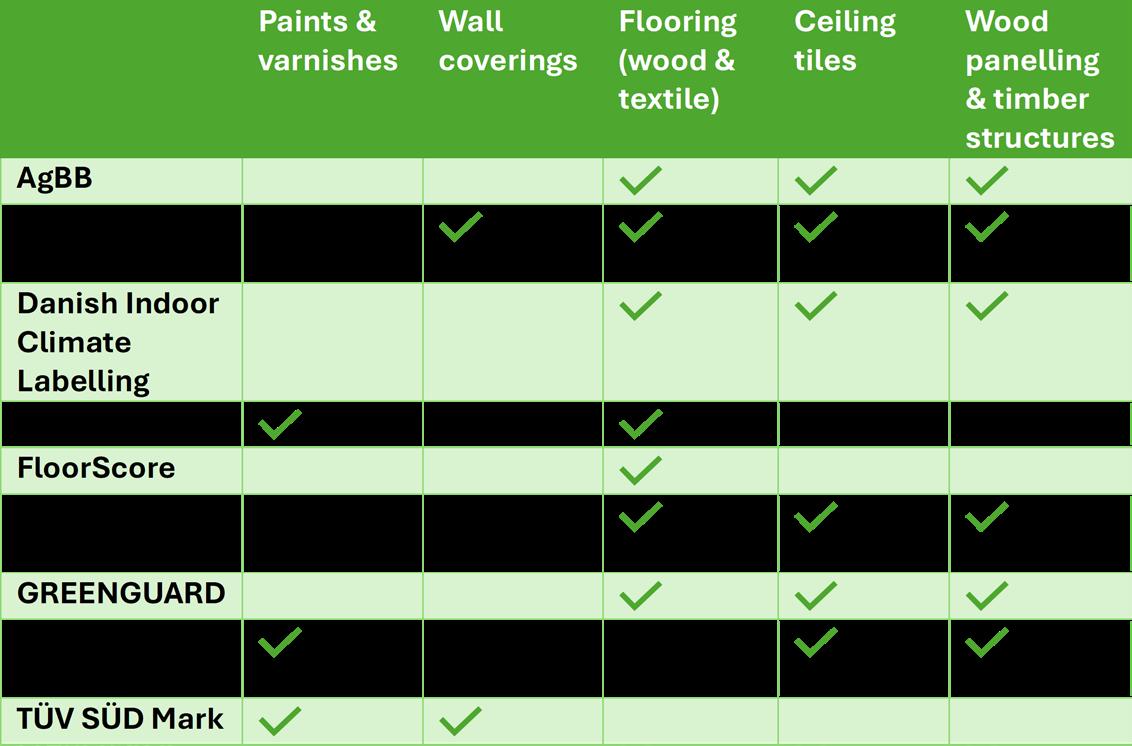
Eco-labels available for different finishes2
VAPOUR OPENNESS
Older building materials such as stone and limebased mortar are typically more ‘vapour-open’. Newer buildings use more impermeable materials. Care must be taken to consider vapour movement to prevent interstitial condensation or structural damage.5
Moisture closed finishes such as vinyl wall finishes, wallpapers, gloss paint and gypsum plasters can lead to risks of moisture accumulation within walls, floors and ceilings. Solutions such as ‘vapour open’ paints and lime floors can minimise damp and mould risk.6
Wall finishes should be compatible with any internal wall insulation and should be considered as part of moisture management and condensation risk calculations.
BIOPHILIC DESIGN
Finishes can also contribute to improved occupant wellbeing through the incorporation of biophilic design elements, such as natural colours, patterns and materials. This can reduce stress in indoor environments and even boost productivity.
SOLUTION SPECIFIC GUIDANCE:
FINISHES
PROCUREMENT AND SPECIFICATION CONSIDERATIONS
Procurement teams should ensure that the following are considered:
• Whether finishes are appropriate for the building type, materiality, moisture conditions, and intended use of the space
• The potential impact on indoor air quality, moisture movement, condensation risk, and occupant wellbeing
• Durability, maintenance requirements, cleaning, and long-term replacement cycles
• Resident sensitivities, accessibility, and usability considerations
• Compatibility with wider retrofit measures, particularly insulation, and moisture management strategies
• The availability of transparent environmental, emissions, and product performance data
Questions to explore during specification and evaluation may include:
• What evidence exists on VOC emissions, formaldehyde levels, and indoor air quality impacts?
• Are finishes compatible with the moisture profile and materials of the building?
• How durable and maintainable are materials under real occupancy conditions?
• What assumptions have been made around cleaning, maintenance, and replacement requirements?
• How will finishes influence resident comfort, wellbeing, and usability?
• What environmental certifications, EPDs, or product testing information are available?
Finishes should be considered as part of a wholebuilding retrofit strategy. Material selection can influence indoor air quality, moisture movement, condensation risk, maintenance requirements, and resident wellbeing over time. Poorly specified finishes can contribute to poor indoor air quality, trapped moisture, condensation risk, resident dissatisfaction, or unintended maintenance and durability issues.
REFERENCES
1. Kukadia, V., & Upton, S. (n.d.). Ensuring good indoor air quality in buildings. BRE Group. https://bregroup.com/documents/d/ bre-group/Ensuring-Good-IAQ-in-Buildings-Trust-report_compressed-2
2. Ecolabel Index. (n.d.). All ecolabels on building products. https://www.ecolabelindex.com/ecolabels/?st=category,building_ products
3. BRE Global Ltd. (2024). GN22: BREEAM and HQM recognised schemes for emissions from construction products (Version 3.0). https://files.bregroup.com/breeam/guidancenotes/GN22-BREEAM-and-HQM-recognised-schemes-for-emissionsfrom-construction-products.pdf
4. Eurofins. (n.d.). Legal requirements on VOC emissions. https://www.eurofins.com/consumer-product-testing/services/ certifications-international-approvals/voc/legal-requirements/
5. Marincioni, V., Xu, B., & Cambray, T. (2024). Air and vapour control layers (AVCLs) in buildings of traditional construction: A literature review on understanding appropriate use (Research Report Series No. 9078). Historic England. https://historicengland.org.uk/research/results/reports/9078/AirandVapourControlLayers(AVCLs) inbuildingsoftraditionalconstruction
6. Price, S., Andreou, E., Wilcockson, T., Megagiannis, K., & Lopez, N. (2021, September). Retrofit internal wall insulation: Guide to best practice. UK Government (Department for Business, Energy & Industrial Strategy). https://assets.publishing. service.gov.uk/media/614b30aad3bf7f718a54c0be/iwi-guidance.pdf
SOLUTION SPECIFIC GUIDANCE:
SENSORS AND MONITORING
Sensors and monitoring technologies can support housing providers in understanding how homes perform in practice, helping identify issues relating to damp, mould, overheating, indoor air quality, ventilation, energy use, and resident comfort. When used appropriately and with resident consent, monitoring technologies can support earlier intervention, improved building management, and better-informed retrofit and procurement decisions.
A range of monitoring technologies are available across domestic retrofit, including sensors measuring temperature, humidity, carbon dioxide (CO₂), particulate matter (PM), occupancy patterns, and energy use. The most suitable approach will depend on factors such as the retrofit objectives, building type, resident needs, data management capabilities, and wider asset management strategies.
Monitoring technologies should be considered alongside resident engagement, maintenance processes, data governance, and operational response procedures. Sensors alone cannot resolve damp, mould, overheating, or ventilation issues, but they can support earlier identification of risks and help housing providers understand how homes and systems are performing over time.
The value of monitoring technologies depends not only on data collection, but also on how effectively information is interpreted, acted upon, communicated, and integrated into wider housing management and retrofit strategies.
SENSOR TYPES
Temperature and Relative Humidity (RH) can be used for damp/mould risk, thermal comfort and heat loss diagnostics.
CO₂ (NDIR) for ventilation effectiveness and occupancy trends.
Particulate Matter (PM) to differentiate indoor vs outdoor peaks and detect sources of pollution.1
PERFORMANCE & CALIBRATION
It is important that sensors are installed and calibrated in line with industry guidance, to ensure they perform reliably.
Consideration should be given to the height of sensors, and the rooms in which they are placed e.g. occupied rooms and those with high moisture levels.
Generally, place sensors near head-height, and avoid direct sunlight or direct sources of heat.
COST FACTORS
Low cost sensors (<£500 per site but much less for just temperature and relative humidity) provide continuous data to help identify risk alongside site inspections.
EASE OF USE
Informed consent is paramount prior to deploying sensors in any home.
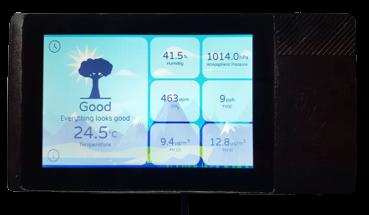
Dashboards and alarms allow non technical users to better understand their homes and act quickly.
Live displays can support behaviour change.
Many households will require support to engage with and understand sensor interfaces.
INTEGRATION INTO DAILY LIFE
Sensors help residents understand their home environment (humidity, cold spots, pollution spikes) in relation to daily activities.
While no comprehensive standard exists on placement, calibration and data management for utilising sensors for domestic buildings the following standard may provide useful adjacent information: BS EN ISO 7726 Ergonomics of the Thermal Environment, BS 40101 Building performance evaluation, BS 40102-1 — Health and well-being and indoor environmental quality in buildings (non-domestic).
SOLUTION SPECIFIC GUIDANCE: SENSORS AND MONITORING
PROCUREMENT AND SPECIFICATION CONSIDERATIONS
Procurement teams should ensure that the following are considered:
• Whether monitoring technologies are appropriate for the retrofit objectives, building type, and resident context
• How monitoring data will be collected, interpreted, managed, and acted upon over time
• Resident consent, privacy, accessibility, and communication requirements
• Installation, maintenance, calibration, and longterm operational requirements
• Compatibility with wider retrofit measures, asset management systems, and resident engagement processes
• The availability of transparent evidence on system reliability, usability, and in-use performance
Questions to explore during specification and evaluation may include:
• What specific outcomes or risks is the monitoring strategy intended to identify or manage?
• How will data be reviewed, interpreted, and escalated operationally?
• What resident consent, privacy, and communication processes are required?
• How reliable and maintainable are the proposed monitoring systems under real occupancy conditions?
• What evidence exists on usability, operational value, and long-term performance?
• How will monitoring insights inform future retrofit, maintenance, or procurement decisions?
Monitoring technologies should support wider housing management and retrofit objectives rather than operate as standalone interventions. The effectiveness of sensors and monitoring systems depends on good installation, operational response processes, resident trust, maintenance arrangements, and how data is used in practice. Poorly integrated monitoring approaches can create unnecessary operational burdens, resident concerns, unreliable data, or missed opportunities to identify and respond to building performance issues.
REFERENCES
1. Bousiotis, D., Alconcel, L.-N. S., Beddows, D. C. S., Harrison, R. M., & Pope, F. D. (2023). Monitoring and apportioning sources of indoor air quality using low cost particulate matter sensors. Environment International, 176, 107934. https://doi. org/10.1016/j.envint.2023.107934
2. Higgins, M., Jones, A., Holmes, D., Gilbert, R., McGill, G., & Davies, M. (2024). Understanding indoor air quality in real world UK homes. Environmental Research Communications, 6, 012001. https://doi.org/10.1088/2515-7620/ad1d9c
3. Wallace, A., Horne, M., Carslaw, N., Snell, C., & Pleace, N. (2022). Smart homes, healthy homes: Exploring the potential for remote IoT sensors of indoor air quality to help manage homes in social housing. University of York & University of Leeds / HomeLINK
FINAL REFLECTIONS
Improving homes is no longer only about meeting minimum standards or reducing carbon emissions. Procurement decisions increasingly influence wider outcomes including resident health, comfort, affordability, resilience, safety, and long-term building performance. With this guide we have aimed to help procurement teams understand different retrofit interventions and how these contribute to resident health and wellbeing. We have also provided solutions to enable better engagement, specification and use of emerging innovative solutions to deliver health outcomes for residents. We hope this increases the number of opportunities to improve health in housing.
The Procurement Act 2023 creates opportunities for housing providers and public bodies to adopt more flexible, collaborative, and outcome-focused procurement approaches. However, innovation-friendly procurement is not simply about adopting new technologies. It requires stronger partnerships between procurement teams, housing providers, suppliers, residents, and regulators, alongside a willingness to learn through testing, monitoring, and evaluation.
The workshops supporting this guide highlighted the importance of balancing innovation with risk management, while creating the conditions for emerging solutions to be evaluated fairly and transparently. Better feedback loops, stronger post-installation evaluation, and earlier supplier engagement all have an important role to play in improving outcomes over time.
Ultimately, healthier, lower carbon homes will depend not only on the technologies selected, but on how procurement processes enable organisations to make informed, evidence-based decisions that prioritise both environmental performance and resident wellbeing.
This guide is intended to support that transition by helping procurement teams, commissioners, and housing providers adopt approaches that deliver long-term value while improving the quality of homes and experiences of the people living in them.
OUR ASK OF PROCUREMENT TEAMS:
• Embed outcome-focused procurement approaches that consider health, wellbeing, affordability, and long-term performance alongside capital cost.
• Create stronger feedback loops through postinstallation monitoring, resident engagement, and in-use evaluation.
• Collaborate and engage earlier with local suppliers, SMEs, innovators and emerging solutions providers.
• Support proportionate innovation through structured testing, evaluation, and learning rather than risk avoidance alone.
• Improve transparency and sharing of performance data to support better evidence-based decision making across the sector.
• Explore and understand what each retrofit measure can achieve, and ensure opportunities to maximise co-benefits are taken.
OUR ASK OF INNOVATORS:
• Provide transparent and easy to understand test data on your products, and make it clear how they can improve resident health and meet procurement team goals
• Engage proactively with procurement teams
• Continue to improve products and solutions so they deliver co-benefits such as health improvements, alongside energy efficiency
• Publish case studies, trials and real-world data, to help build confidence in your solutions