Nunga Screen
Aboriginal Youth Summit 2026
Aboriginal interests in water framework endorsed
Dupang Festival
The award-winning First Nations film showcase from Country Arts SA, Nunga Screen, returns in 2026 for its 15th year of sharing history, humour, culture and Country through powerful storytelling.
Presented annually between Reconciliation Week (May 27 to June 3) and NAIDOC Week (July 5 to 12), a dynamic mix of short films from emerging and established creators are screened regionally at free community events, and available for organisations to purchase and stream internally.
This year’s program includes plenty for family audiences: the cheeky, fast-paced adventures of Red Dirt Riders; the gentle, funny tale of The Fix-It Man and The Fix-It Wooman; and a music video with hip hop group DEM MOB and Fregon Anangu School.
The lineup also includes moving documentaries Anangu Way and Blakprint for Success, alongside dramas including Catchin’ Mumoo and The Secret and False Narrative - films bringing raw emotional depth while exploring the complexities of family, truth, shame and healing.
Nunga Screen programmer and Ngarrindjeri man Joshua Trevorrow says the second half of the program delves into social and cultural issues, creating space to reflect on timely and complex topics.
“Nunga Screen is a chance to listen deeply and to come together in recognition of First Nations voices and stories,” he said.
“We are extremely proud of how far this program has come over 15 years, to the point where we now are able to renumerate featured filmmakers and invest in more First

Nations arts projects with funds raised through the Nunga Screen corporate campaign.
“The Country Arts Foundation invites organisations to purchase a streaming link to Nunga Screen, and this has taken the program not only Australia-wide but internationally, from schools to local government to health care settings.”
Wongutha filmmaker Travis Akbar, whose film ‘False Narrative’ is part of the 2026 program, called Nunga Screen a “fantastic showcase of First Nations filmmaking talent.”
“While Country Arts SA offering screening fees is great, as making short films is generally an unpaid gig, being able to share my work with mob across the state and country is the best part about Nunga Screen,” Mr Akbar said.
“Purchase the package because it helps support emerging filmmakers in a big way, and the only way to ensure it continues is to make sure you watch it.”
Nunga Screen will be presented on May 27 at Noarlunga’s Hopgood Theatre, Renmark’s Chaffey Theatre and Port Pirie’s Norther Festival Centre, and on June 3 at Whyalla’s Middleback Arts Centre and Mount Gambier’s Sir Robert Helpmann Theatre, as well as in additional regional locations.
To see the full program and find a screening near you, visit www.countryarts.org.au/events/nungascreen-2026.
If you are interested in hosting a free community screening at your venue, or purchasing a streaming link for your organisation, visit www.countryarts.org.au/booknunga-screen.
A federal bill has passed in parliament allowing the National Commission for Aboriginal and Torres Strait Islander Children and Young People to operate independently of the Federal Government.
This will give the Commission the powers needed to hold government and systems accountable for processes affecting First Nations children and drive systemic change for their protection across the country.
The Coalition and One Nation voted against the senate bill in March, with Labor, the Greens, independents and Australia’s Voice senator Fatima Payman voting to greenlight the proposed law.
Wurundjeri and Ngurai Illum Wurrung woman Sue-Anne Hunter became the first full-time National Commissioner for Aboriginal and Torres Strait Islander Children and Young People in August last year and said the passing of this legislation is a milestone moment.
“The National Commission exists for the sole purpose of protecting and promoting the rights, interests and wellbeing of First Nations children and young people across the nation, [and] as a fully independent agency, we will advocate for change that puts the interests of children ahead of political agendas,” Ms Hunter said.
“With this legislation passed, we have an opportunity to improve the lives of Australia’s most vulnerable children and address systemic failures that have harmed generations of our people.
“We will drive greater accountability across government by conducting inquiries, undertaking research and making recommendations that must be tabled in Parliament.”
The legislation ensures the National Commission works in harmony with Aboriginal and Torres Strait Islander cultures and with principles set out in the United Nations Declaration on the Rights of Indigenous Peoples, Australia’s obligations under the United Nations Convention on the Rights of the Child, the United Nations Convention of the Rights of Persons with Disabilities and other relevant international agreements.
Minister for Indigenous Australians Malarndirri McCarthy said in Parliament that the bill was shaped from consultation and the advice of more than 70 Aboriginal communitycontrolled organisations, and stems from recommendations raised in the 1997 Bringing Them Home report.
HUMAN RIGHTS ARE NOT AN ABSTRACT IDEAL – THEY ARE THE BACKBONE OF SOLUTIONS THAT WORK… THE JOB AHEAD IS SIGNIFICANT. WE WILL WORK TIRELESSLY TO ACHIEVE SYSTEMIC CHANGE THAT ENSURES OUR CHILDREN ARE SAFE, STRONG AND ABLE TO THRIVE,” - COMMISSIONER HUNTER.
Aboriginal Way Editor: Keith Thomas Journalists: Joy Lothian, Isaac Selby
Communications Officer: Caleb Sweeting
Design and Printing: We Create Print Deliver
Advertising Enquiries: aboriginalway@nativetitlesa.org
Aboriginal Way is a publication of South Australian Native Title Services
Level 6
27 Currie St Adelaide SA 5000 www.nativetitlesa.org
Ph: (08) 8110 2800
Fax: (08) 8110 2811
FREECALL: 1800 010 360
If you have any stories of interest to our readers, please address correspondence to: aboriginalway@nativetitlesa.org
The Editor has the final decision on all stories and advertising that appear in this publication.
WARNING: Aboriginal and Torres Strait Islander readers are warned that the following publication may contain images, names, and stories of deceased persons.
South Australia stands at an important crossroad in the way water is understood, governed and shared.
Over the past 18 months SANTS has been facilitating a series of forums with the Department for Environment and Water to inform a developing water framework with Traditional Owners across the state.
This framework reflects a growing recognition that past approaches have not adequately included Aboriginal peoples, their knowledge systems, or their enduring relationships with water and Country.
For tens of thousands of years, Aboriginal peoples have maintained complex systems of stewardship over lands and waters, grounded in cultural, spiritual and environmental responsibility.
However, much of the state’s formal water management history has proceeded without sufficient acknowledgement of these connections or the rights and obligations that underpin them.
This has contributed to ongoing inequities, both in decision-making processes and in access to water resources.
The new framework represents a shift toward a more inclusive approach. It has been informed by engagement with Aboriginal communities and seeks to better reflect their perspectives, priorities and aspirations.
In doing so, it signals a broader understanding that effective and sustainable water management must incorporate diverse knowledge systems and support meaningful participation.
At the same time, the framework highlights the extent of the work still required. Achieving equitable outcomes will depend on continued efforts to strengthen relationships, improve coordination across government, and ensure that policies are supported by appropriate legislation, funding and institutional capacity.
It also requires addressing practical challenges, including reliable access to safe and secure water in regional and remote communities.
Importantly, the framework points to opportunities as well as challenges. There is increasing recognition of the role that water can play in supporting cultural practices, environmental care and economic development, particularly when Aboriginal people are empowered to lead and participate in decision-making.
The effectiveness of this framework will ultimately rest on sustained commitment and accountability.
A more inclusive model of water governance will not be realised through policy alone, but through ongoing collaboration and a willingness to embed change across systems and practices.
Keith Thomas SANTS CEO
Tauondi Aboriginal College has announced it is expanding to a second location in Christies Beach, fulfilling a long-standing aim of over two decades.
The new Tauondi Aboriginal Pathway Centre will fulfil a strategic commitment for Tauondi to deliver integrated ‘place-based pathways’ – bringing education, training, employment and wellbeing together in a culturally safe location for the community.
Tauondi chair Brenz Saunders issued the following upon announcement of the location for the education institute.
“On behalf of the board of directors of Tauondi Aboriginal College I share with the community historical news for Tauondi,” Mr Saunders said.
“This has been a long-standing aim for Tauondi for over 20 years to open a second location of service to the community.”
The new Christies Beach location will be based at the Tauondi Aboriginal Pathway Centre, which will fulfil a strategic commitment for Tauondi to deliver services differently, moving from single-program delivery to integrated, place-based pathways that bring education, training, employment and wellbeing together in a culturally safe location for the community.
The new Christies Beach location reflects Tauondi’s Strategic Plan, strengthening Aboriginal community control, improving access and equity through local delivery, and focusing on long-term, sustainable outcomes rather than short-term interventions.
Having a southern location will enable Tauondi to expand its reach beyond the western region, help reduce barriers for Aboriginal people living in the south, and create a local gateway to training, driving, employment pathways and support services.
The Tauondi Aboriginal Pathway Centre model responds to consistent community feedback stating that access matters, location matters and that support must wrap around the person and not the program.
This new expansion of Tauondi aligns strongly with the intent of the National Skills Agreement, placing Aboriginal communities at the centre of decision-making and building pathways that lead to real outcomes.
AFTER A PERIOD OF STRATEGIC PLANNING AND BUILDING THE COLLEGE’S CAPABILITY, THE BOARD ANNOUNCES THAT TAUONDI WILL BE OPENING A SECOND LOCATION OF SERVICE TO THE COMMUNITY LOCATED IN THE SOUTHERN REGION OF ADELAIDE IN CHRISTIES BEACH - BRENZ SAUNDERS.
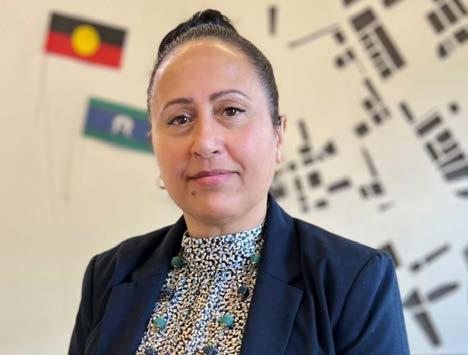
SANTS Director April Lawrie has been appointed as the Interim CEO of South Australia’s Aboriginal Housing Peak Body.
Over the next six months, she will lead the work of building the peak body, setting up the governance, structures and capability needed to ensure it begins with strength, credibility and purpose.
The South Australian Government, via the SA Housing Trust, has committed to $2.5 million over five years to support the South Australian Aboriginal Community Controlled Organisation Network (SAACCON) to establish the peak body.
Ms Lawrie, a Mirning and Kokatha woman from the Far West Coast of South Australia, said: “Safe and stable housing is key to improving outcomes for Aboriginal people. After 30 years working in South Australia’s Aboriginal affairs within health, education, child protection and justice - I am more than ready to take on this vital role.”
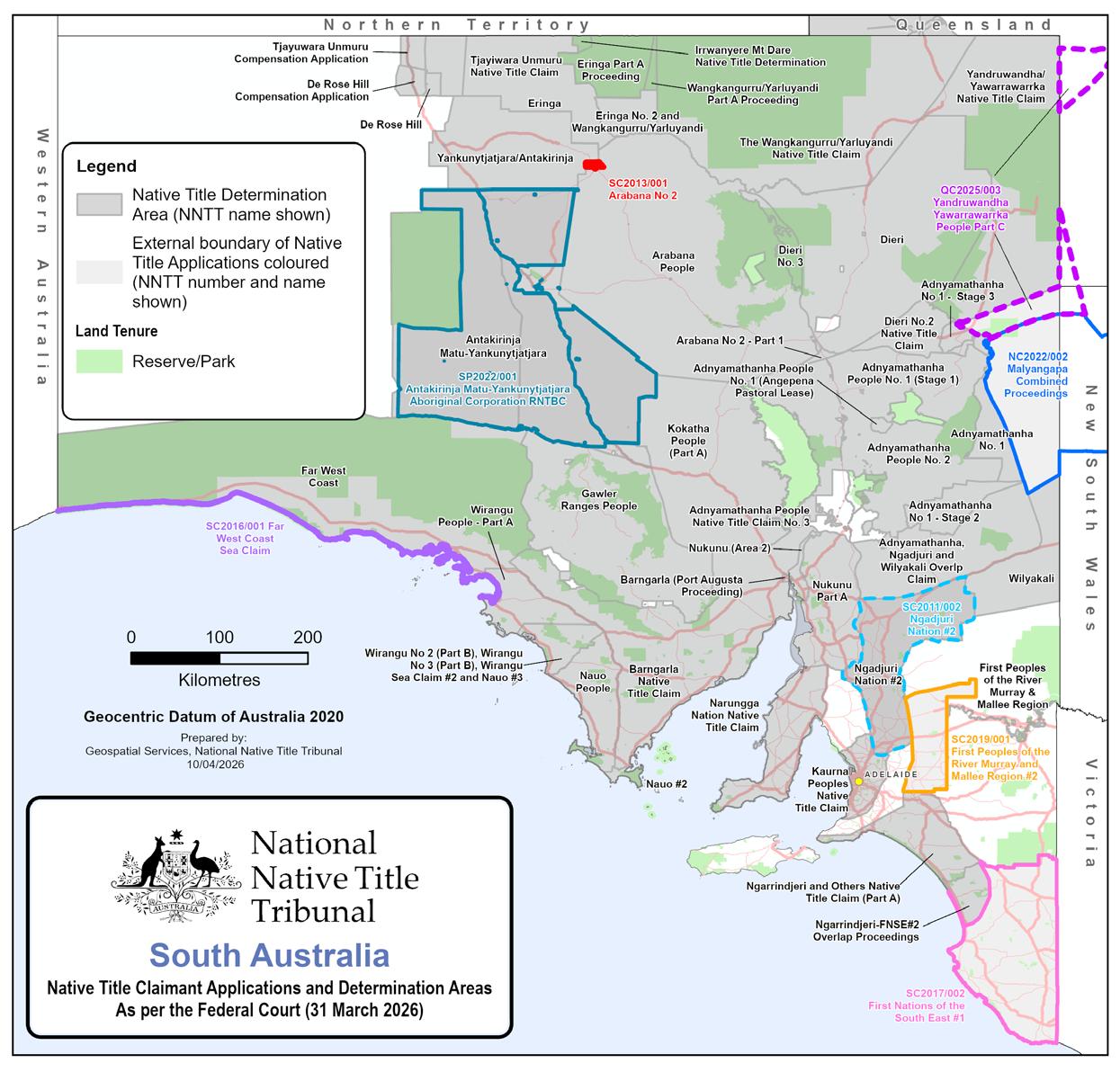
There are currently 8 active matters in South Australia. Noting that Ngadjuri Nation 2 is determined but is contingent on the registration of the Settlement ILUA.
There have now been 44 determinations of native title since 2005 and 130 ILUA’s registered.
SANTS are funding all remaining matters and acting for 5 applicant groups.
Arabana 2 - High Court appeal was successful - remitted to the Full Federal Court
Far West Coast Sea Claim – waiting for judgment from Full Federal Court appeal.
First Nations of the South East 1compensation negotiations are continuing.
First Peoples of the River Murray and Mallee 2 - consent determination negotiations ongoing, including in relation to compensation.
Malyangapa - consent determination negotiations ongoing with a supplementary report recently provided to the State of South Australia and New South Wales.
Antakirinja Matu – Yankunytjatjara (AMYAC) Compensation – negotiations are ongoing with the Commonwealth with an authorisation meeting successfully approving the State’s proposed package.
Yandruwandha Yawarrawarrka Part C – collecting evidence and awaiting first mention.
strong, be proud, be
Empowering the children of tomorrow.
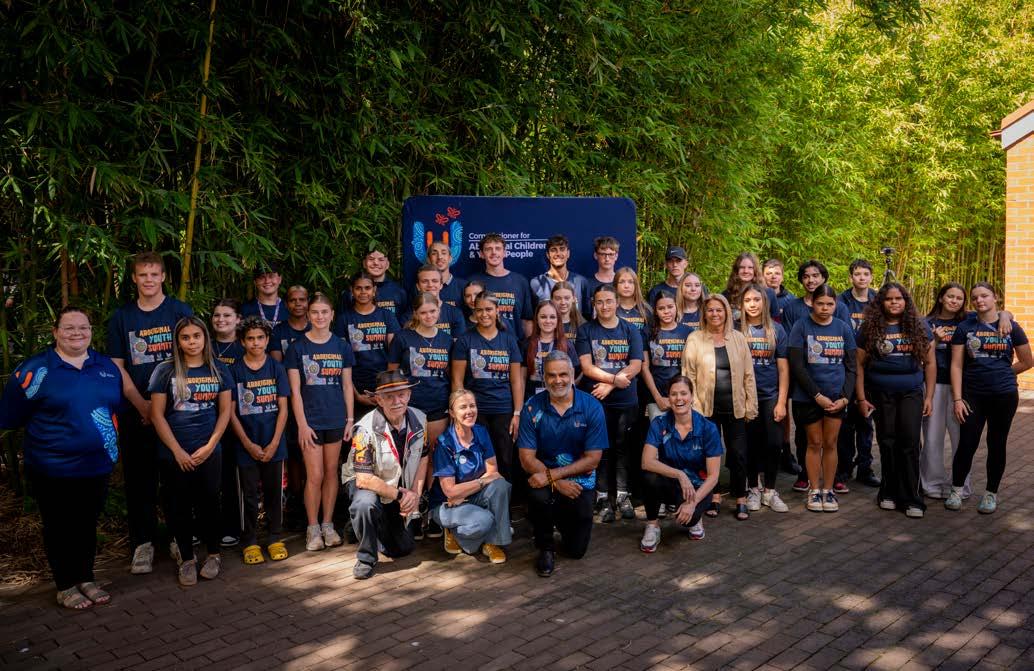
Aboriginal young people from across South Australia came together on March 13 for a day of connection, leadership, culture and youth voice at the Aboriginal Youth Summit, hosted by the Commissioner for Aboriginal Children and Young People Dale Agius.
Community leaders, educators and decision makers hosted workshops designed to amplify youth voices by building leadership skills and co-design solutions to issues affecting young people today.
The four themes chosen by the delegates for the summit were mental health, racism and discrimination, education and employment.
Proud Wirangu Mirning man Del Miller helped guide the Summit, creating a culturally safe environment for the 34 young people aged between 13 and 17 (Year 8 to Year 12) to openly and confidently speak about what matters to them.
Keynote speaker Shane Cook, a Wulli Wulli and Guwa Koa man born on Kaurna Country, engaged participants with powerful stories of culture, identity and belonging, before guiding them through an interactive activity highlighting the role of art as a form of creative expression.
Delegates were then able to participate in workshops guided by their own identified priorities:
Mental Health: Facilitated by Tamara Young, a proud
Gamilaraay and Bigambul woman and Founder of Wonky Lines Counselling, this session offered a culturally grounded exploration of mental health, healing and wellbeing.
Racism and Discrimination: Led by Braedon Talbot, a Larrakia and Wagiman man and key figure at Port Adelaide Football Club, this workshop created space for open and empowering discussions on the impacts of racism, identity and reclaiming personal and collective strength.
Education and Employment: Facilitated by Bec Hunter Harvey, a proud Peramangk and Ngarrindjeri woman, this session focused on future opportunities, aspirations and the “micro moments” that influence each young person’s pathway to success.
The Summit was further enriched by insights from Elders Uncle Ivan Copley (Kaurna and Peramangk) and Aunty Ros Coleman (Kaurna and Narungga), who shared reflections on culture, respect and the importance of using one’s voice with pride and purpose.
“The workshops were fun and exciting, and the discussions around racism, mental health and culture were brilliant and important,” said a Summit participant.
Youth-developed recommendations or an action plan, including the potential establishment of a Youth Advisory Group are amongst expected outcomes from the Summit.
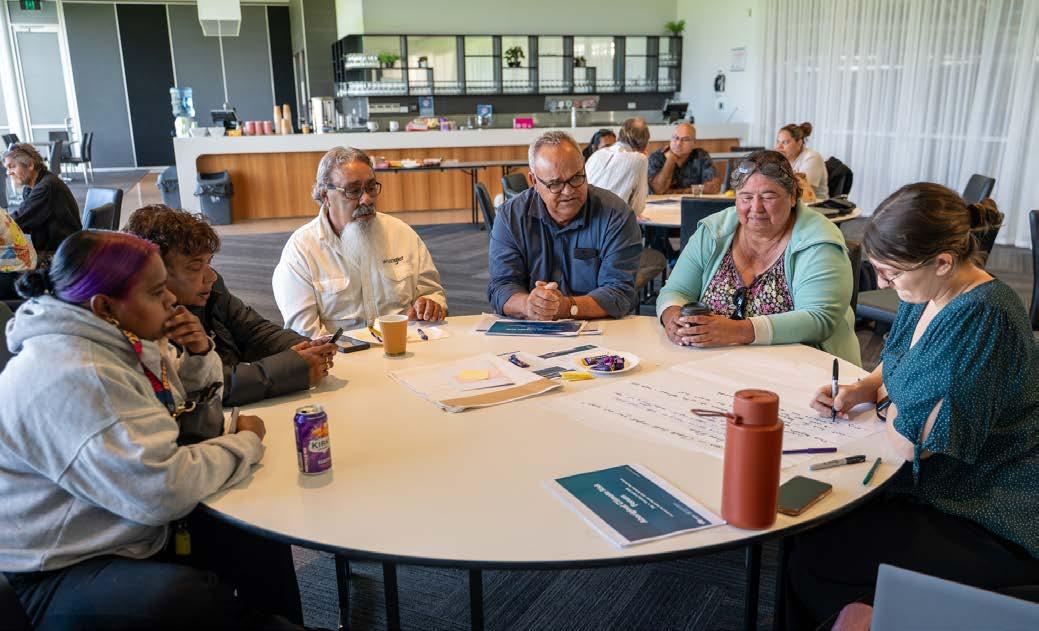
A co-design process for the South Australian Framework to Advance Aboriginal Water interests has been approved by Traditional Owners from around the state, marking the culmination of an extended series of forums over the past 18 months.
Following the workshop held on Barngarla Country at Central Oval in Port Augusta on April 8-9, the feedback on the draft framework will be submitted to the SA Government for consideration, with their input helping to ensure it meets the water needs and aspirations of Traditional Owners.
Throughout 2025, workshops were held across SA to facilitate feedback on how government departments can best service Aboriginal water rights and unlock future funding for crucial projects needing attention.
This process was facilitated by the Department for Environment and Water (DEW), in partnership with SA Native Title Services, Landscape SA, SA Water and the Environment Protection Authority (EPA).
Following the development of this framework, some suggested future resolutions during the forum, made from PBC rep suggestions, include a ten-year commitment to the plan, access to historic archives held by SA Water in efforts to identify historic damage to waterholes and waterways, dedicated positions within DEW for Aboriginal people, and opportunities for water licences to be obtained.
Group discussions were held during the workshops, with some of the key themes including cultural authority, self-determination, healthy country, cultural economies and healthy people.
Conversations from the conference included acknowledgement of the historic exclusion of Aboriginal peoples from water management, an issue that has affected the wellbeing of Aboriginal peoples and their ability to care for Country.
South Australia’s water resources have historically been undertaken without due acknowledgement of Traditional Owners’ ancestral rights and obligations to water, impacting Aboriginal people’s ability to use their traditional and ecological knowledge to care for the environment.
In attendance at the forum was Barngarla Elder Harry Dare, who spoke to AW about the specific needs of his people when navigating their Country’s unique water needs and issues.
“We’re having problems with receiving decent water to drink, but also the quality of the water that we are drinking. It leaves a lot to be desired,” Mr Dare said.
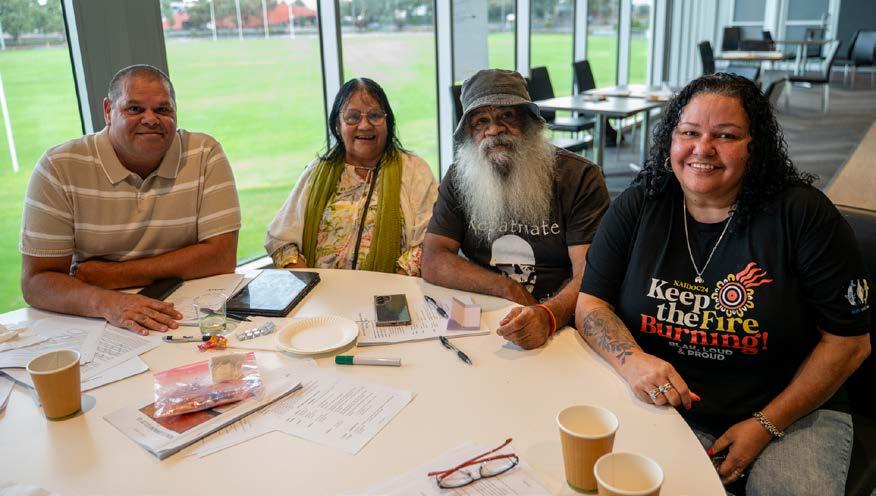
WATER IS A BIG ISSUE HERE IN THE NORTHERN PARTS OF SOUTH AUSTRALIA. AS WE GO FURTHER NORTH UP TO COOPER PEDY, ROXBY DOWNS, HAWKER - THOSE AREAS… IF WE’RE GOING OUT TO THE NORTHEAST, WE ARE ALL HAVING PROBLEMS WITH WATER,” - HARRY DARE.
“I can only speak from the area that I live in. We’ve always, all my lifetime on this earth, have always been drinking pipe water coming in from the river Murray Darling system. And that water quality is decreasing.
“We have microplastics in our water systems. We have them in the fish and the animals that we eat. So we, human beings, have a lot of issues that we need to address before we can start blaming the climate and everything else. We are making this country, Australia, the world, a worse place to live in.
One area of contention for Barngarla people over recent years has been the location of developing desalination plants to meet the increasingly critical water supply needs of people living on the Eyre Peninsula.
“We have a problem with desalination plants being built. The desalination plant that I’m talking about is outside of Mullaquana, which is south of Whyalla, which we believe as Barngala people is going to impact on the cuttlefish population that we have just north of Whyalla.
“We thought that it should go down at Cape Hardy and people were of the opinion that that’s where it was going to be built. But then BHP want to save money. So now it’s a political issue and they’re saying that it’s going to save them $2 billion to move it from Cape Hardy to Mullaquana.”
One of the key objectives of drafting the wider water framework with varied PBC input was to identify the unique aspirations for water that different parts of the state require.
Some of these aspirations may include water

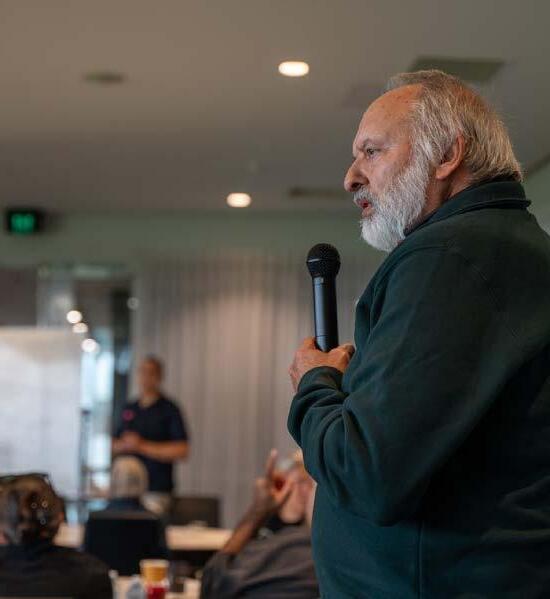
ownership, business growth or on-ground projects and identifying the capacity and capability needed to be involved in water management more widely.
Cultural flow planning was flagged to address the decline of spiritual values for Aboriginal people in water management, with correctly implementing planning opening doors to expressing spiritual values in the landscape.
Directly following the water framework meeting, a First Nations Climate Risk Forum was held, an opportunity for PBCs to voice their concerns on climate-related issues specific to their Country.
The focus was on issues, concerns and potential solutions for First Nations communities regarding the
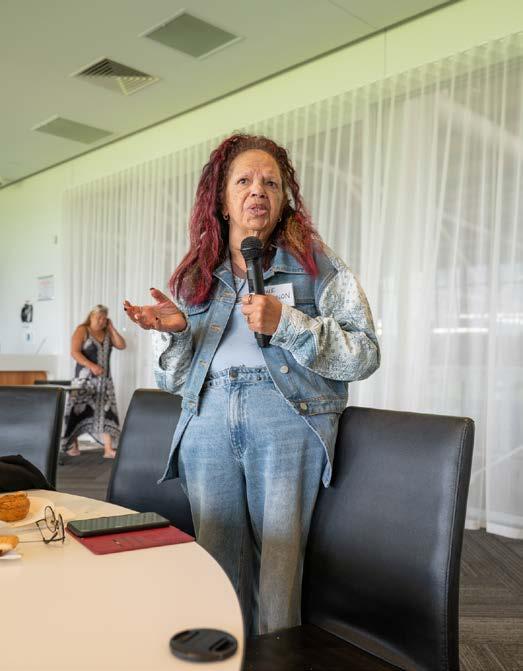
impacts of changing climates specifically.
This feedback will help inform understanding of climate change risk and inform risk management and adaptation planning by the South Australian Government.
The forum began with Department for Environment and Water presenting on key findings from recent work they’d conducted on climate change risks and led into facilitated discussion on how Traditional Owners are seeing their Country impacted by climate change.
A new parliamentary inquiry is underway, examining racism, hate and violence against Aboriginal and Torres Strait Island people in Australia.
The inquiry comes after the alleged terror attack at an Invasion Day rally in Boorloo, Perth in February, and the violent attack on Camp Sovereignty in Naarm, Melbourne last year.
The replacement of native vegetation was flagged as reducing options for resilience in SA’s ecosystems, particularly in regard to buffel grass in the state’s northwest.
Rising temperatures and native wildlife migrating due to a lack of water caused by drought. Birds dying and becoming extinct due to heat exhaustion, particularly around the Flinders area. Delays in plants fruiting and flowering.
Some of the key roads took weeks, a month or more to reconnect some of those roads following flooding.
People in APY struggling with heatwaves due to increased temperatures and lack of availability of power due to high electricity cost.
Minister for Indigenous Australians, Senator Malarndirri McCarthy, who personally wrote to the Joint Standing Committee on Aboriginal and Torres Strait Islander Affairs in early March requesting an inquiry, said that First Nations people are feeling scared and angry in the wake of these events.
“I know this has been a difficult time for families and communities. This inquiry ensures they can have their say and their experiences will be heard by the Parliament,” she said.
“I regularly hear from Aboriginal and Torres Strait Islander people that they are facing increasing hate and racism, especially online. We must stand up against racism in all its forms.”
Aboriginal and Torres Strait Islander people are encouraged to engage with the inquiry and consider making a submission.
Submissions into the inquiry are open until May, with findings to be reported back on in September. For more information go to www.aph.gov.au/jscatsia.
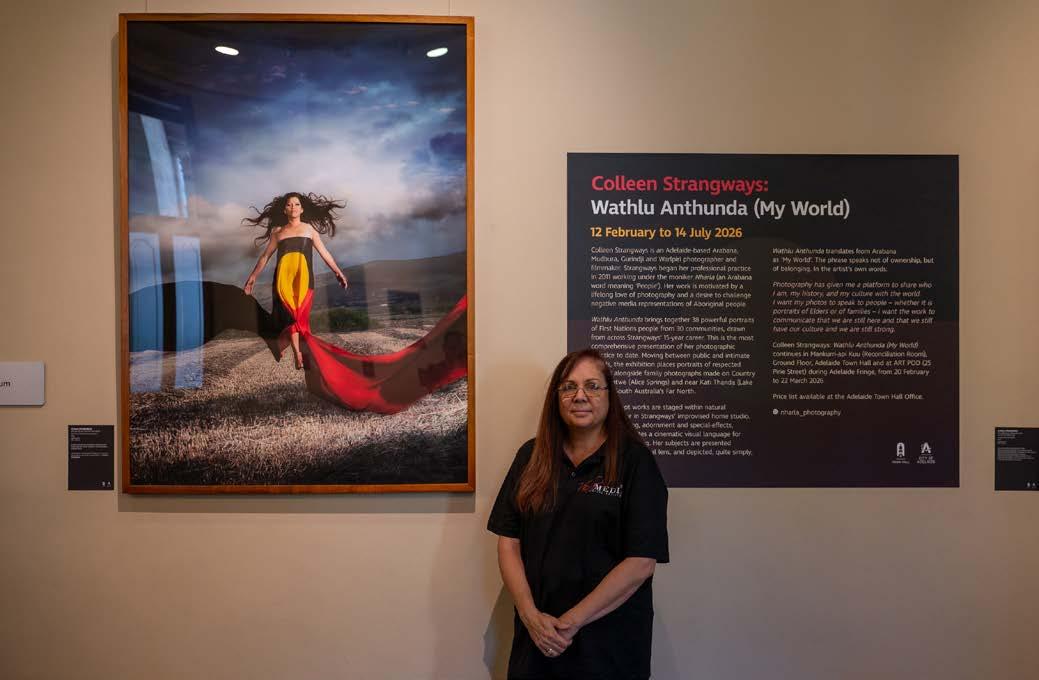
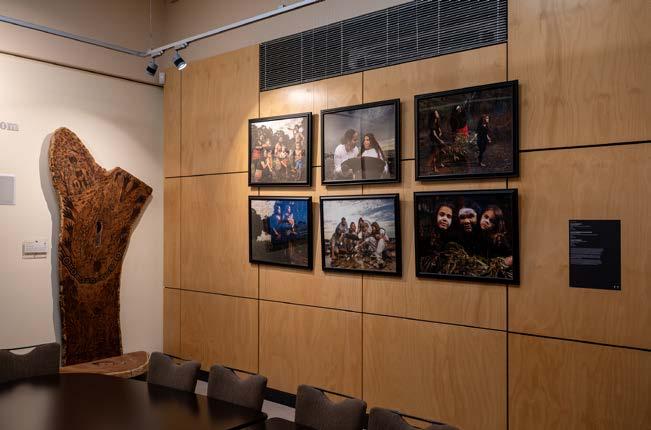
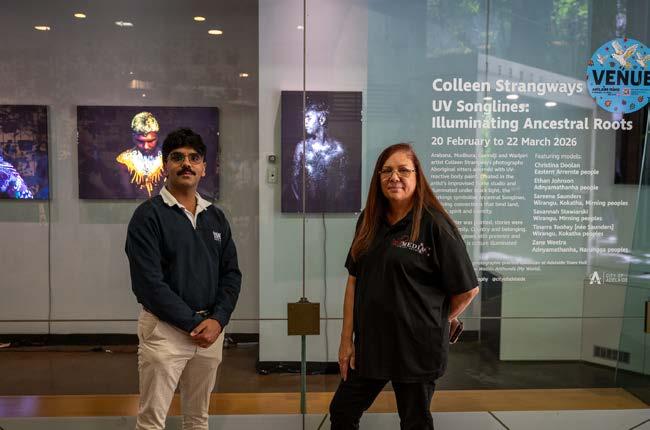
Arabana, Mudburra, Gurindji and Warlpiri photographer Colleen Strangways has collected her life’s work (so far) into a remarkable series of vivid imagery on display at the Adelaide Town Hall – accompanied by a striking UV photography exhibit (UV Songlines: Illuminating Ancestral Roots within the adjacent Paul Kelly Laneway.
AW sat down with Ms Strangways and Adnyamathanha, Narungga man and exhibit contributor, Zane Weetra, to discuss the creative process behind this collection of works.
One of Colleen’s signature flairs in photography is the inclusion of imagery and iconography from the lands her subjects originate from.
Having a trace of Country incorporated into the portrait photographs allows Colleen to quickly engage her audiences with key details relating to their lives and ancestry.
“This is where you sit with your old ones, your Elders, and you listen not only to them buy you listen to the Country and what it’s telling you.
“Especially on Arabana Country, we’re not only custodians of Kati Thanda (Lake Eyre) but also significant sites such as the mound springs – where we have cultural responsibility.
“Ms Strangways mentions that the inclusion of Country in her photographs also allows for keeping of cultural knowledge when people, herself included, look back on her photography. This process is something that inspired her initial passion for photography, reciting memories of looking
back on images of her family, the landscape of her Country and old photos leading to her following the lens for much of her life.
“I’m hoping that seven generations from now, the same can be said with these photos, that they will reflect cultural authority when people access this snapshot back to the 2000’s – that people can see what was happening out on Country with our mob,” she said.
“I was sick and tired of seeing images growing up that was about us being drunk, being on welfare, having no lot in life and being very dependent on Australia and where we knew growing up that wasn’t the case – we knew that we were strong in culture.
“We want to portray it so that others, not only our own mob, but non-Indigenous people can then look at it, reflect, and see the strength in these images.”
Another of Colleen’s guiding ethos’ is ensuring that the
THAT RESPONSIBILITY IS SO IMPORTANT TO NOT ONLY HOLD CLOSE, BUT ALSO TO PASS DOWN TO THOSE YOUNGER ONES – SO THEN THEY TAKE UP THE MANTLE LATER IN LIFE.” - COLLEEN STRANGWAYS.
portrayal of Aboriginal people featured in her works counter negative stereotypes, presenting those featured with proud and strong visual framing.
She wants the younger generations coming up to see her work and feel aspirational about their potential as future leaders, following the adage of “you can’t be what you can’t see.”
The portraits featured in UV Songlines: Illuminating Ancestral Roots were shot from the humble studio location of Colleen’s compact kitchen, with the various models cramming inside to cover themselves in UV paint, listen to Dolly Parton and strike a pose for the exhibition.
Zane Weetra was featured in the works displayed along Paul Kelly Lane, he volunteered to be covered in gold UV paint and reflected fondly on the experience working with Colleen.

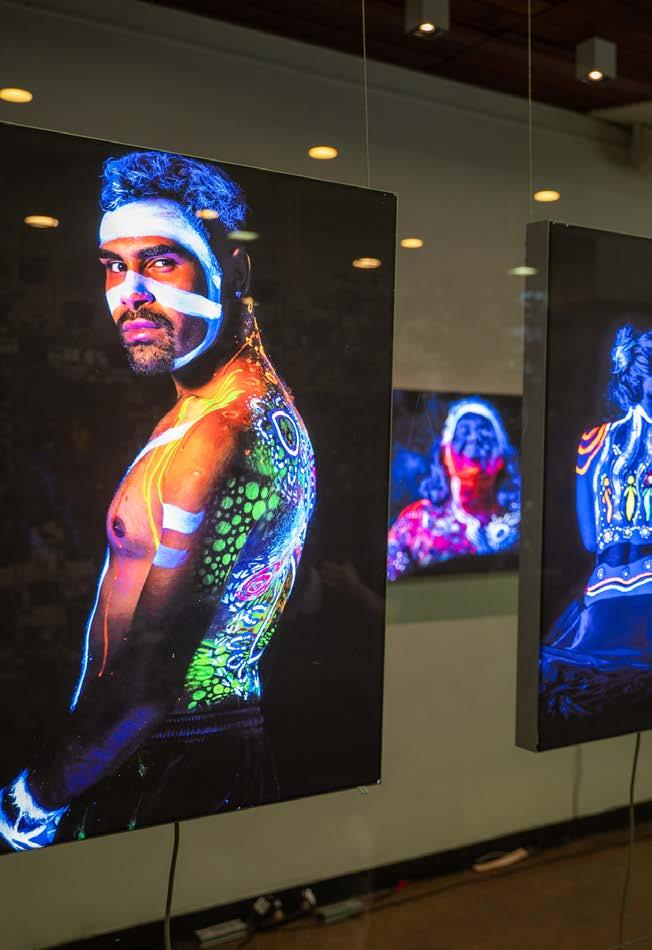
“Seeing my portrait makes me proud of who I am as an Adnyamathanha man. A lot of the knowledge that I have now is from my Elders and I’ve had the opportunities they may not have had growing up,” Mr Weetra said.
“We need to respect them and not only tell our muda, or our stories, but also tell them as our mob or our Elders growing up, their story, their childhood, because without them then who are we?
“The stories I was told as a kid were in the sand or footsteps. That’s how I got taught. So, it’s good to see that represented in other photos. This tells a story though other means, seeing art on people – whether it be on canvas, on the dirt or in a cave it still tells the story one way or another.
“Doing art has persuaded me to keep continuing those stories and my family’s legacy and stories for my future generations.”
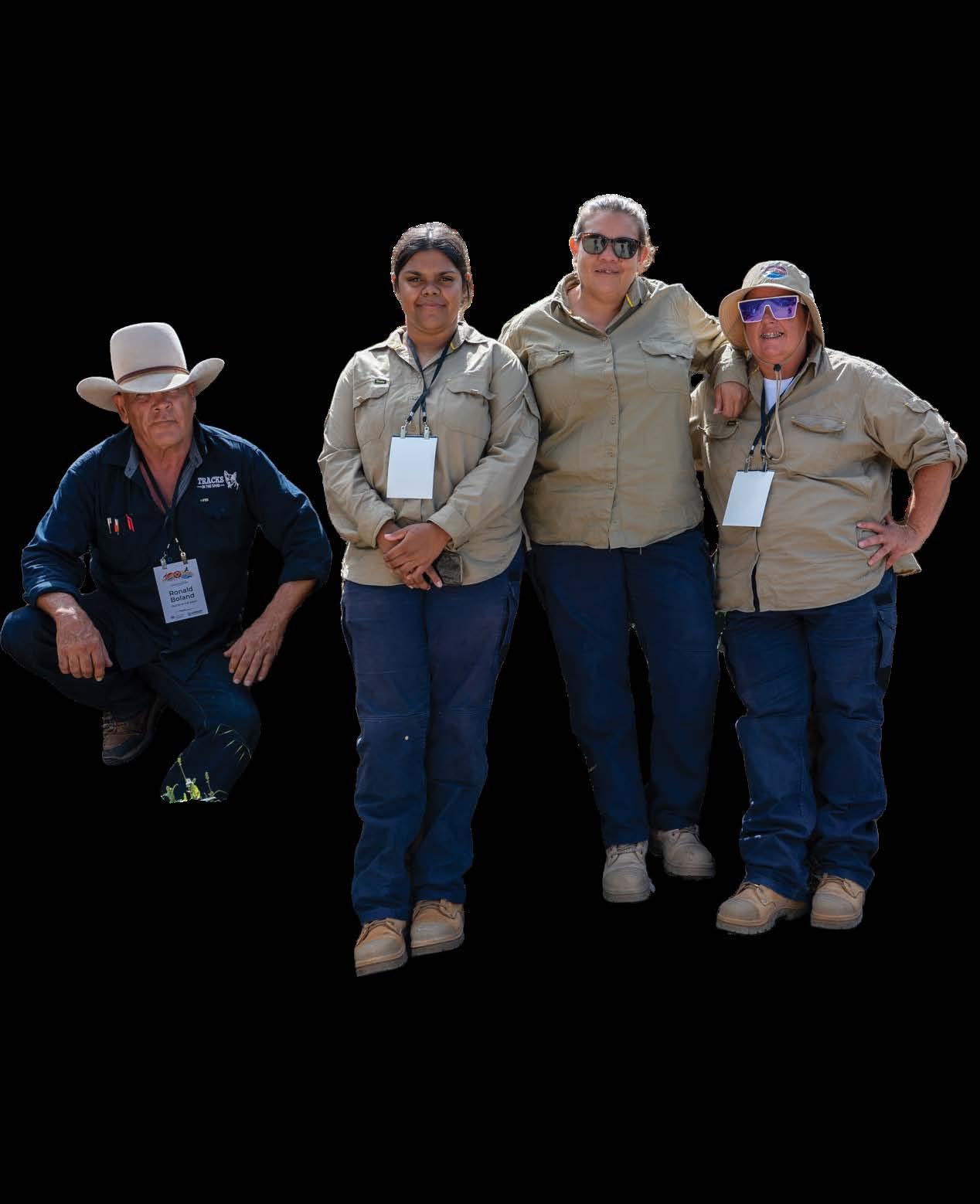
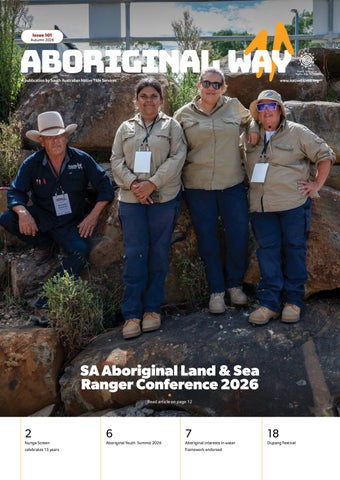
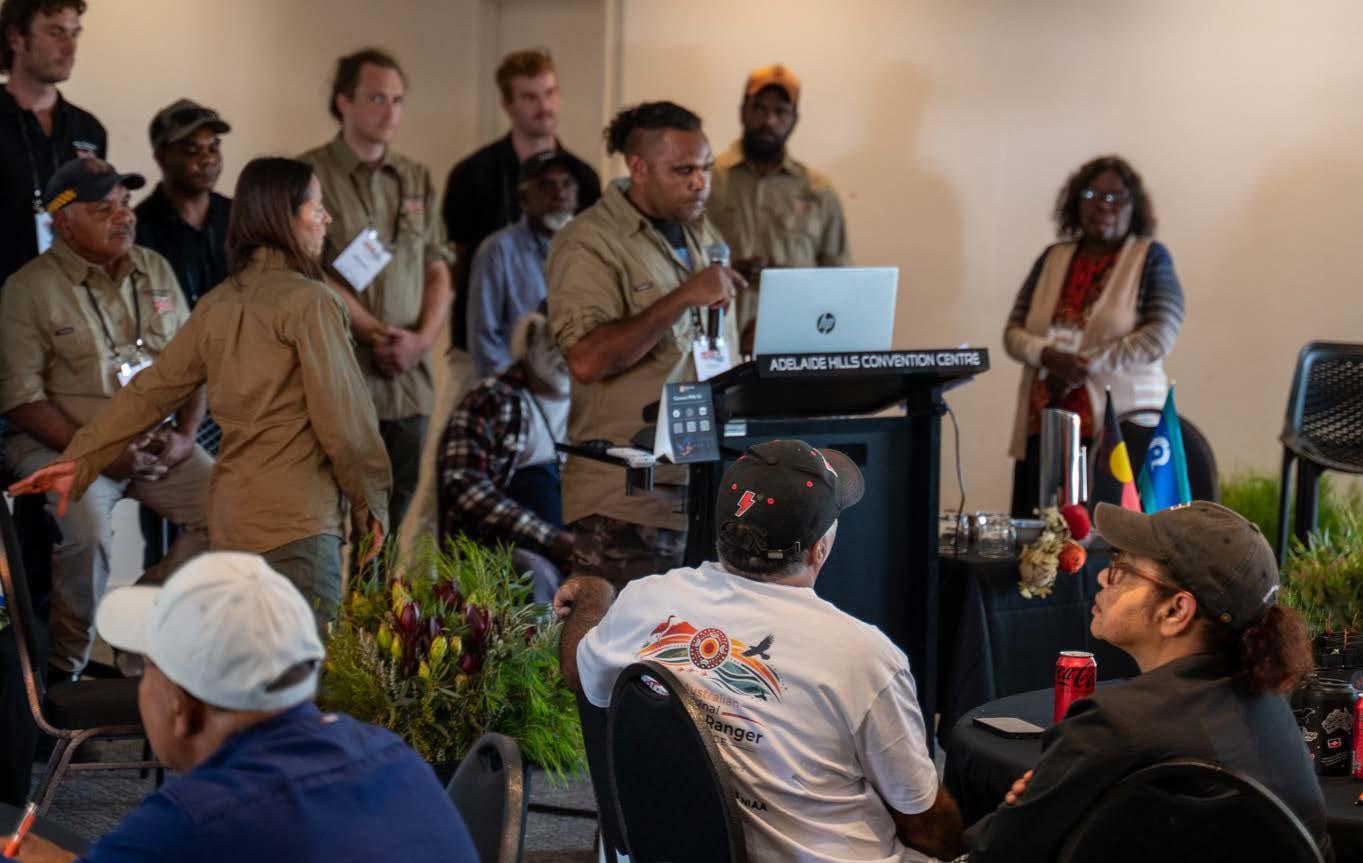
The South Australian Aboriginal Land & Sea Ranger Conference was held at the Adelaide Hills Convention Centre in Hahndorf on March 23-26, bringing ranger groups and relevant bodies from across the country together for a constructive dialogue, workshops and exchange of vital knowledge.
Different days of the conference had specific focus areas including ranger networks and success stories, training and education, and future planning and strategic co-design.
Several ranger groups gave detailed presentations on the work they do on Country, including Burrandies Aboriginal Corporation, Wardang Island IPA (Aboriginal Lands Trust), Ngarrindjeri LPCA, Anangu Pitjantjatjara Yankunytjatjara Rangers, Far West Coast Rangers, and Yarluwar Ruwe.
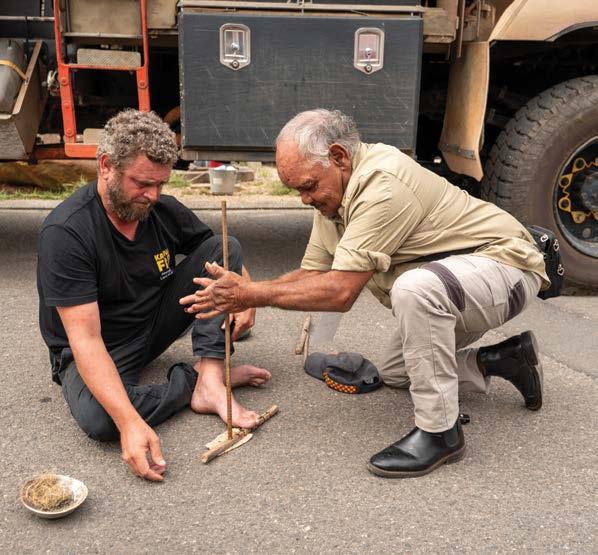
There were also key presentations and video messages from Minister for Indigenous Australians Malarndirri McCarthy, TAFE SA, Zoos SA, Kimberley Ranger Network/ Kimberley Land Council, Firesticks Alliance, Federal Environment Minister Hon. Murray Watt, Lucy Hood MP, and more.
Presentations from the conference were grounded in practical realities, with discussions often circling back to the same core challenge of how relatively small ranger teams can continue to manage vast areas of land while facing increasing pressure from invasive species,
environmental change and limited long-term resources.
Across the four days, presentations were interspersed with informal conversations, and while the regions represented varied widely in landscape and scale, the underlying concerns and priorities showed strong similarities.
What emerged was a clear sense that ranger programs across the state are continuing to grow in both scope and importance - with some teams benefiting from years of consistent funding and operational experience, and others still in early development stages, working through governance structures, partnerships and long-term planning.
Despite those differences, the core purpose remains consistent, centred on caring for Country in a way that brings together environmental management and cultural responsibility.
For Kokatha and Mirning man, Stephan Masierowski, who works with the Far West Coast Ranger team, the scale of the work defines much of the day-to-day reality, with the
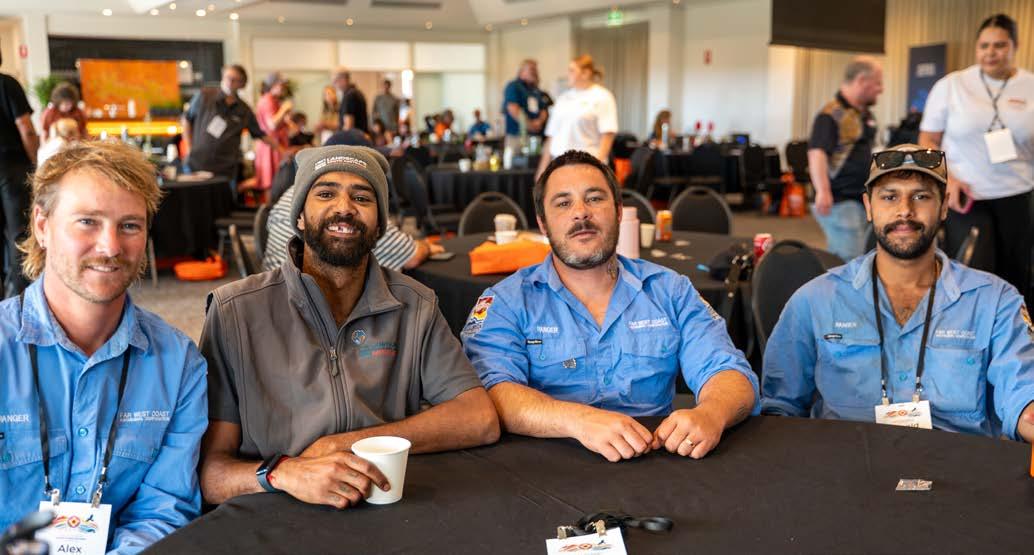
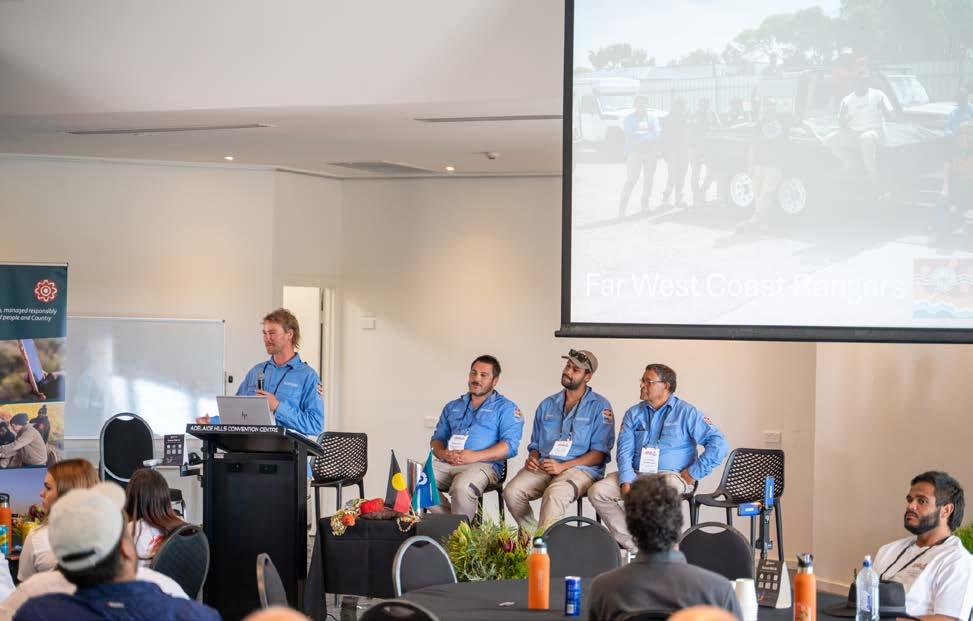
WE COVER FROM CEDUNA ALL THE WAY DOWN TO THE WESTERN AUSTRALIAN BORDER AND ALL THE WAY UP ALONG THE TRAIN TRACK,” - STEPHAN MASIEROWSKI.
team responsible for a region that stretches from Ceduna to the Western Australian border and inland along the rail corridor, covering what he describes as an area roughly the size of Tasmania.
Mr Masierowski noted that despite the size of the region, the team itself remains relatively small, with around 11 rangers supported by a women’s ranger group.
“We split teams a lot and we also do joint operations, especially when it comes to things like buffel grass or bigger jobs.
“Sometimes you are out for a week, it is hot and there are flies everywhere, but we have got a good crew and that makes a difference.”
That sense of team cohesion is important in sustaining the work, particularly as ranger responsibilities continue to expand, with invasive species becoming an increasing focus.
Buffel grass was raised repeatedly throughout the conference as one of the most serious threats to native ecosystems.
The difficulty in managing buffel grass is compounded by its long dormancy period, with seeds capable of remaining inactive for years before conditions allow them to germinate.
Mr Masierowski said its impact is becoming more visible across the Far West Coast region and can quickly wipe out local species and reduce biodiversity.
“It really destroys Country because it grows in between native plants and takes the nutrients out of the ground,” he said.
“A buffel seed can sit there for up to seven years, so you might check a site and see nothing, and then after rain you come back and there are plants everywhere.”
As a result, much of the work involves repeated
survey efforts, often timed to follow rainfall, in order to identify and respond to new growth before it spreads further.
The spread itself is often linked to human activity, particularly along transport corridors such as rail lines and highways, where seeds are carried by vehicles and travellers moving through the region.
Similar concerns were raised by rangers working on the Anangu Pitjantjatjara Yankunytjatjara (APY) Lands, where buffel grass has already altered parts of the landscape over recent decades.
For APY ranger Adrian Dodd, the changes are both visible and personal, reflecting a shift away from the diversity of native plant life that once characterised the area.
“In the 80s I used to see lots of flowers, yellow, purple, red, but now the buffel grass has come in and it is something serious,” he said.
Mr Dodd’s work as a ranger is not limited to environmental management but is also deeply connected to the continuation of cultural knowledge, particularly through teaching younger people how to understand and interpret Country.
This includes identifying animal tracks, understanding seasonal patterns and recognising the relationships between different elements of the environment, using documentation and oral knowledge to maintain cultural continuity.
“Everything has a name, the trees have names and the hills are telling us to come home,” he said
“Emu track, kangaroo track, all those things have names and we need to learn them and write them down.
“We learn from our grandfathers, our nanas, our uncles, and we carry that on.”
APY rangers are also involved in efforts to restore species that have declined or disappeared, with gradual progress being made through monitoring and careful management.
WE LEARN FROM OUR GRANDFATHERS, OUR NANAS, OUR UNCLES, AND WE CARRY THAT ON” - ADRIAN DODD.
One example is the program to bring back warru (black-footed rock wallaby) populations to their Country, which began in 2007, with pouched young wallabies crossfostered through a program with Monarto Zoo.
Cultural sites remain central to the work of the APY rangers, particularly rock holes, which are often associated with Dreaming stories and require careful handling.
“Every rock hole has a story, and when we go there, we talk to the water, like knocking on the door,” Mr Dodd said.
“We do smoking and wait, and we do not just go in.”
In the southeast of South Australia, the challenges facing ranger programs are shaped by a different environmental history, with Burrandies Aboriginal Corporation establishing a ranger program across the Limestone Coast, a region that has undergone significant transformation since colonisation.
Burrandies cultural heritage officer, Thomas Lovett, said one of the most significant changes has been the large-scale drainage of wetlands, pointing to the long-term impact of agricultural development on the region’s ecosystems.
“Over 40 per cent of the landscape used to be covered in fresh water, and now it is down to about one per cent,” Mr Lovett said.
“There is a lot of forestry, a lot of agriculture, sheep, cattle, dairy, all of that. We are looking at those key pieces of land where we can have the biggest impact in the shortest amount of time.”
Today, much of the land is used for forestry and farming, creating a complex environment for restoration efforts.
This includes working within biodiversity offsets in forestry areas, as well as partnering with conservation
organisations and landholders to carry out wetland restoration projects.
Fire management adds another layer of complexity, particularly in areas that were historically wetter and include peat soils, which behave differently under fire conditions.
“When peat dries out, it becomes a real risk if it catches fire,” Mr Lovett said,
“You have got a billion-dollar industry there, so you have to balance that with environmental outcomes.”
For Uncle Terry Hartman, the work is closely tied to personal experience and memory, having grown up in the area he has witnessed significant changes in the landscape over time and recalls a time when water was more abundant.
He also pointed to changes in vegetation, including the spread of tea tree into areas where it was not previously dominant.
“There is a lot of tea tree coming back in now, and there never used to be tea tree in those swamp areas.
“We knocked it down, but it has grown back again.”
Cultural sites across the southeast remain a major focus for Burrandies, with Mr Lovett highlighting work at the Crater Lakes near Mount Gambier, an area connected to a long-standing Dreaming story about an ancestral being who shaped the volcanic landscape.
Other sites, including burial grounds near Kingston, have required recent intervention following storm damage and rising sea levels.
“That story talks about how the volcanoes were formed, and it lines up with what we see in the landscape and the artefacts we find,” he said.
“With the king tides, we had a lot of vegetation die off, so we went in and removed truckloads of debris,” Mr Lovett said.
Mr Hartman also spoke about local sites such as The Granites, which continue to hold importance for the community.
“It has been there for years and years, and we used to go swimming there as kids,” he said. “It is still a beautiful bit of Country.”
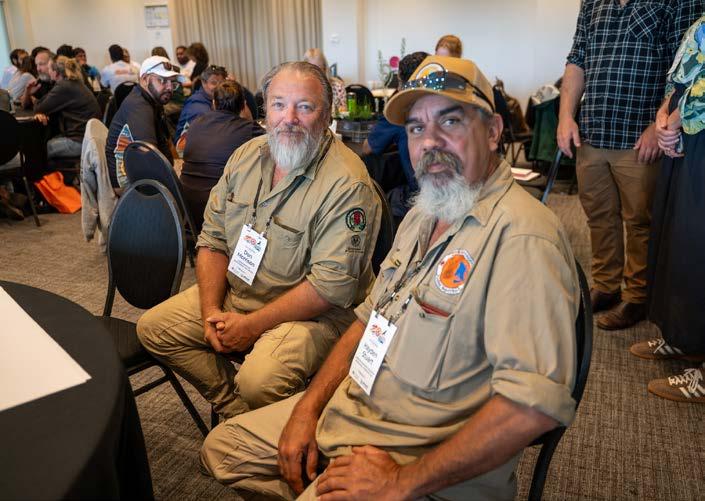
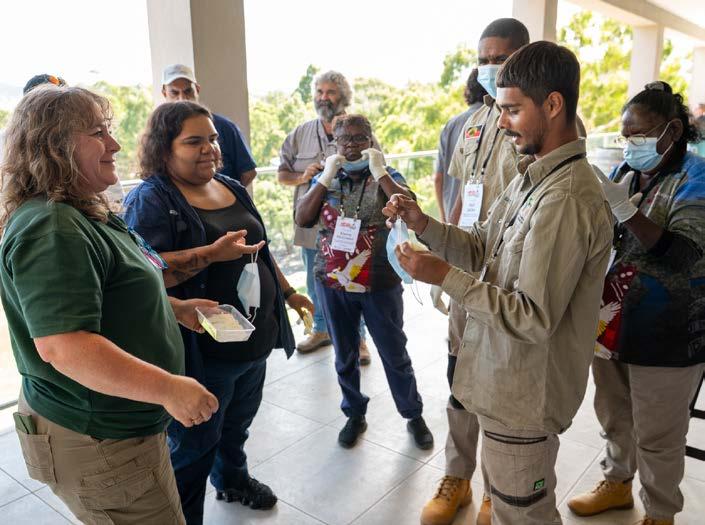
The southeast includes multiple Aboriginal groups, and Mr Lovett said collaboration across regions will be critical as the ranger program develops, particularly given that traditional boundaries do not align with modern state borders.
“There were no borders back then, so we want to work across Country, including into Victoria,” he said.
WHERE I WAS BROUGHT UP, WE USED TO GO DOWN THE BACK AND GO FISHING AND GET YABBIES - NOW THERE IS NOTHING THERE SINCE ALL THE DRAINAGE WENT THROUGH” - TERRY HARTMAN.
For Burrandies, the conference provided an opportunity to connect with other ranger groups and learn from their experiences, particularly those with more established programs.
“Everyone has been open to sharing their knowledge, and if we run into something, we can reach out and ask. It gives us a good idea of where to go and what to do,” Mr Lovett said.
This willingness to share knowledge was a consistent theme throughout the conference and was reinforced by Daniel Oades from the Kimberley Land Council (KLC), who said the mix of established and emerging programs in South Australia reflects a broader national pattern.
“There are some really long-established teams and some that have just started, so there is a lot of capacity to build,” he said.
In the Kimberley, where ranger programs have been operating for an extended period, teams have developed strong capabilities in areas such as fire management and Sea Country work.
“Fire is probably the major management tool you have, and if you get that right, a lot of other things follow,” Mr Oades said.
Sea Country work for KLC includes monitoring for illegal fishing and responding to biosecurity risks, with rangers also dealing with marine debris such as ghost nets.
“They can catch turtles and other wildlife, so they become a real hazard,” he said.
While the specific issues vary by region, the conference highlighted a common set of challenges, including invasive species, funding constraints, workforce
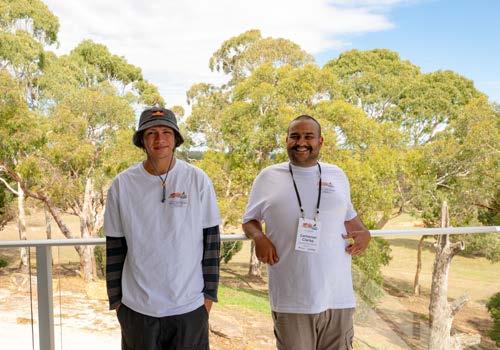
capacity and access to land.
Funding remains a key factor, with some Traditional Owner groups still waiting for opportunities to establish ranger programs.
“There are groups that have been wanting this for years, and you just have to keep that aspiration there,” Mr Oades said.
Despite these challenges, there is clear momentum across South Australia, with ranger programs continuing to expand and play an increasingly important role in environmental management, cultural preservation and community development.
There is also growing interest in strengthening collaboration through a coordinated state network, which would allow groups to share resources and advocate more effectively.
Throughout the conference emphasis remained on steady progress rather than quick solutions, with participants returning to their regions carrying new ideas, contacts and a clearer sense of shared purpose.
For Mr Hartman, the message was straightforward and reflected the tone of the gathering.
“Do not hold back,” he said. “Just come out, ask questions and share your knowledge.”
This approach underpins much of the work being carried out by ranger groups across the state, where collaboration, persistence and a long-term commitment to caring for Country continues to guide the way forward.

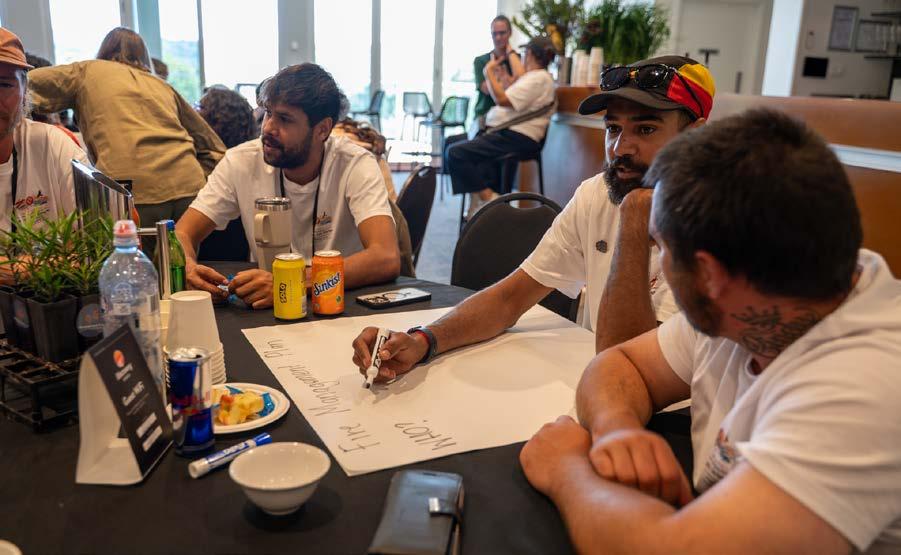

A three-day celebration of Ngarrindjeri culture was held on the banks of the Coorong between March 19-21, in a memorable congregation of ancient cultural tradition and modern artistic performance.
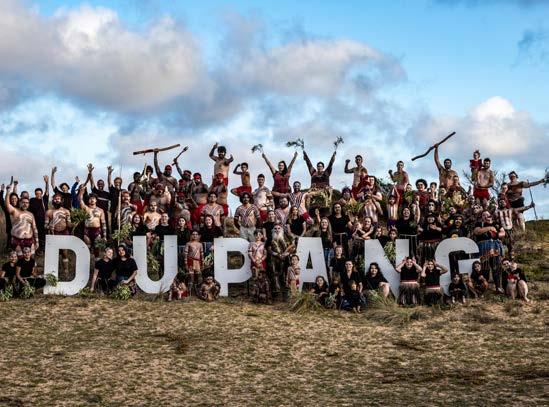
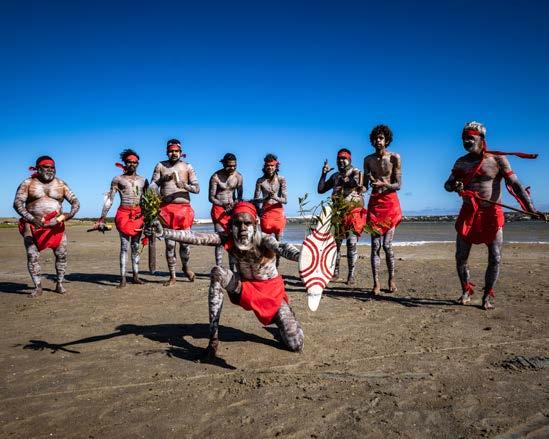
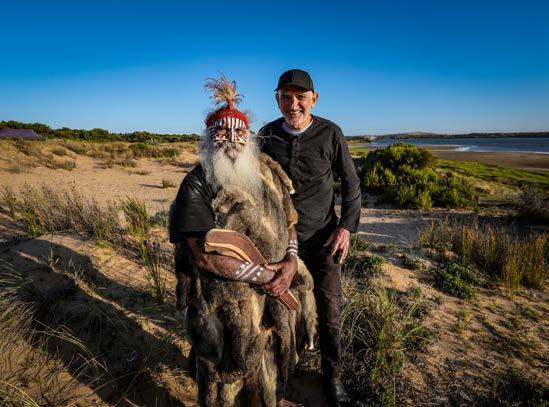
The event was hosted by Uncle Major ‘Moogy’ Sumner, in conjunction with the Tal-Kin-Jeri Dance Group, a collective which has been delivering cultural performances and workshops since being established in 1997.
Dupang Festival saw attendees dedicate their weekends to an event filled with dance, ceremony, storytelling and workshops, featuring a stacked lineup of artists and more.
Uncle ‘Major’ Moogy explained the festival was a demonstration of living culture and not solely one of performance.
Featured events over the weekend included weaving and carving instruction from Ngarrindjeri artisans, ancestral stories told under the stars, a First Nations marketplace and an awe-inspiring sunset corroboree featuring more than 150 dancers.
The music program featured some of Australia’s most acclaimed First Nations musicians, including Senior Mirning Elder and Whale Songman Bunna Lawrie with his son Jason Lee Scott, Barkindji Song Woman Nancy Bates, First Nations Voices founder Glenn Skuthorpe and singer-songwriter Scott Rathman Jnr.
Surprise performances at the festival also included Paul Kelly and Jessica Hitchcock, much to the delight of all attendees.
Around 150 dancers featured from across the continent to gather stories of resilience connection through movement. With each group bringing their own unique cultural practices from groups including: Marruk Waripa (Swan Hill)Gurubang Bunbal (Yuin), Muruwarri/ Budjiti Dancers, Kulgoodah Dancers (Woorabinda), Maarli Nhuungkhus Pikilarna Maarni, Buuja Buuja Butterfly Dancers.
The campground sits on sacred Kurrangk (Coorong) Ruwi (Country), just two hours south of Adelaide CBD.
Ticket sales directly supported Elders, dancers and young people keeping culture strong, while helping Coorong communities recover from environmental challenges.
As scientists warn of the Coorong’s ecological decline, Ngarrindjeri leaders offer another way forward – one grounded in relationship, respect and cultural continuity.
“That connection is what Country needs right now,” Uncle Moogy said.
By Jacob Boehme
24 Jul – 8 Aug, Space Theatre
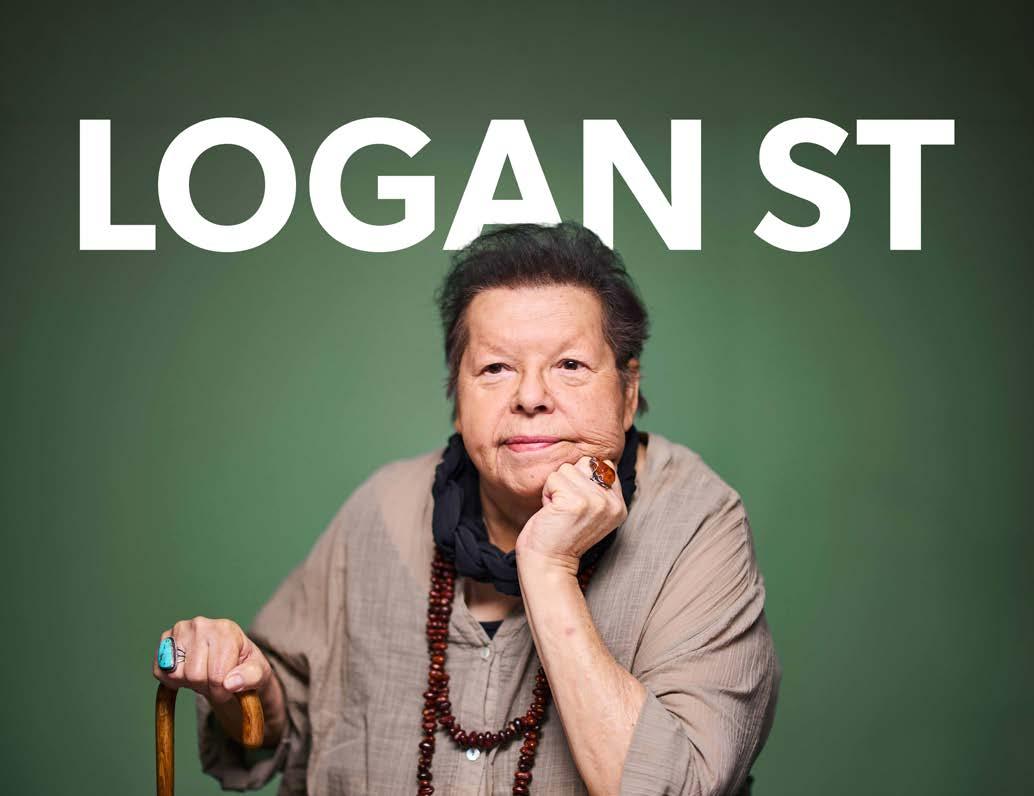
The world premiere of Kaurna and Narungga theatre maker Jacob Boehme’s State Theatre Company SA production ‘Logan St’ is inspired by the Kaurna history behind its namesake and the Adelaide Mosque – the oldest in Australia.
In the backyard of an Adelaide Mosque, an unlikely alliance takes root between Goolie, an Afghan cameleer and mosque caretaker, and Dulcie, a young Aboriginal woman navigating life, loss and love on Kaurna Country. As war, racism and bureaucracy press in from all sides, their bond, anchored in storytelling, cooking and kinship, becomes an act of survival.
It draws on writer and director Jacob Boehme’s family history, and deals with the effects of invasion approximately 100 years after the first British settlers arrived in South Australia.
“As the grandson of Dulcie, I carry the stories of Logan St not just as a writer, but as family,” he said.
“It is an honour to be joining State Theatre Company South Australia’s 2026 season with a story about friendship, survival and resilience, grounded in this country, Kaurna Yerta.”
In 1941, Boehme’s great-grandfather Papa Eddie Sansbury received Exemption for himself, his Kaurna wife Jessie Newchurch and their seven children, moving from
THIS WORK IS AN ACT OF REMEMBRANCE, SAYING THE NAMES OF MY GRANDMOTHER, THE AFGHAN CAMELEERS, AND OUR KAURNA ANCESTORS SO THEY ARE NOT LOST TO SILENCE. LOGAN ST IS WHERE PERSONAL MEMORY MEETS FORGOTTEN HISTORY, ENSURING THESE LEGACIES LIVE ON IN THEIR DESCENDANTS AND IN THE PLACE NOW CALLED ADELAIDE. - JACOB BOEHME. A Kaurna story of friendship, faith and fierce resistance.
the Point Pearce Aboriginal Mission to a house on Logan Street, Adelaide, situated directly behind the Adelaide City Mosque (est. 1886).
The home at Logan Street became a well-known gathering place for those ‘off the station’ seeking respite from the white world around them, and stories of Logan Street, as told by Aunty Lynette Crocker and Uncle Lewis O’Brien, are memories and urban legends of Kaurna life at the time.
“Where the scent of cardamom meets Kaurna songlines, there isn’t another story like it,” said Petra Kalive, Artistic Director of State Theatre Company South Australia.
“Logan St is a feast of memory, resilience and quiet revolution. This work will surprise you, move you, and stay with you long after the final bow.”
The Aboriginal Social and Emotional Wellbeing Centre is now open in Adelaide, providing community-focused and culturally safe care to First Nations people.

The Federal and State Governments have jointly funded the Centre under the National Mental Health and Suicide Prevention Agreement.
Works are currently underway to deliver a permanent home for this new service in the Adelaide CBD, with an interim service operating nearby in the meantime.
Services delivered by the Aboriginal Social and Emotional Wellbeing Centre include the coordination of mental health support and wellbeing care for Aboriginal and Torres Strait Islander adults and children.
The Centre provides holistic, culturally safe and appropriate care including traditional healing methods.
Full operations will commence later this year from the Centre’s permanent location on South Terrace, providing comprehensive social and emotional wellbeing programs, group programs, education, workshops and integrated supports.
The National Indigenous Network Initiative (NINI), a notfor-profit Aboriginal Community Controlled organisation, has been contracted to manage the centre alongside Sonder Care Limited and OARS Community Transitions.
Staff help coordinate care, provide referrals to community health services, social and emotional wellbeing services, primary care services and Aboriginal Community Controlled Health Services.
The Centre’s design and model of care was developed following consultation with Aboriginal communities in SA and the South Australian mental health sector.
People are at the heart of the Centre, with services provided to strengthen their social and emotional wellbeing.
Aboriginal people experience more life risk factors and consistently poorer health and life outcomes when compared to other South Australians.
Where culturally appropriate options are accesible, Aboriginal people have significantly better health outcomes.
Under the National Agreement on Closing the Gap, all governments have committed to ensuring First Nations people have the highest possible standard of social and emotional wellbeing.
The Australian and South Australian Governments have committed a total of $10.8 million to establish the Aboriginal Social and Emotional Wellbeing Centre.
Federal Minister for Indigenous Australians, Senator Malarndirri McCarthy said the centre is an example of government working with community to drive change in line with commitments under the National Agreement on Closing the Gap.
“We know that community-led and communityfocused services are crucial in improving the social and emotional wellbeing of First Nations people.
“By providing culturally safe care and valuing traditional knowledge, the South Australian Aboriginal Social and Emotional Wellbeing Centre is a powerful source of support for First Nations families.”
SA minister for Aboriginal Affairs, Kyam Maher, mirrored this sentiment in regard to the continued development of the centre.
“We know that service delivery is strongest when it honours cultural knowledge and the lived experience of Aboriginal people,” Mr Maher said.
“This new Centre is a significant step toward closing the gap in social and emotional wellbeing outcomes for Aboriginal people in South Australia and demonstrates the SA Governments’ commitment to community-led and culturally safe services built in partnership with Aboriginal communities and families.”
Assistant minister for Indigenous Health Rebecca White flagged culturally safe services as central to the continued implementation of Closing the Gap.
“People are at the heart of this centre, designed to support First Nations people in a way that recognises culture and community and provides care that is respectful safe and responsive to individual needs.
“When First Nations people feel understood and supported, they are more likely to seek help, stay engaged with care and experience better social and emotional wellbeing outcomes.
With around 30,000 Aboriginal and Torres Strait Islander South Australians eligible to vote in the Voice elections, 3308 votes were cast across the state in this second iteration, working out to just over 10 per cent.
Minister for Aboriginal Affairs Kyam Maher said this was a “significant jump” of around 25 per cent in votes this year, with the Voice elections running alongside the South Australian state election on March 21, 2026. However, voting in the SA Voice elections was not compulsory, unlike federal and state elections.
In the first Voice elections held in 2024, less than 10 per cent of eligible voters participated, with 2583 votes cast.
“We know there are some challenges, it’s a voluntary vote, and we know that there are also a lot of Aboriginal and Torres Strait Islander people who don’t vote at the same rate as the broader population,” Mr Maher told The Australian.
“Having the Voice elections on at the same time as the state election might have meant the Voice wasn’t front and centre in the minds of some voters.
“I’ve also had a fair bit of feedback about the problems at polling booths with obstacles and delays also being a factor and now the subject of the independent inquiry.”
According to Mr Maher, the Voice is effectively already paying for itself.
He highlighted a recommendation put forward by the Voice for specialised bail accommodation that has reduced costs by $1.6 million annually by moving Aboriginal people on remand out of custody and into purpose-built housing.
Mr Maher noted that this single initiative exceeds the Voice’s annual operating cost of $1.5 million, which includes administration, elections and delegate payments.
“The idea to build that 30-man bail hostel came from the Voice at a cost to government of $1.37m a year, compared to the cost of having these men in jail on remand at $3.01m a year.
“That one bit of advice is saving taxpayers money and it is exactly the kind of practical solutions that the Voice is designed to provide.”
The Electoral Commission South Australia has put out a statement regarding the poor feedback from the Voice election.
“We were very concerned to hear that this was the experience of some SA First Nations Voice to Parliament voters. It does not meet our expectations, and we will be looking into these matters,” the statement read.
“As with the state election, the South Australian first Nations Voice to Parliament election will be the subject of a comprehensive review.”
The final surviving original Nukunu native title claimant has passed away, leaving a lasting legacy in his wake.
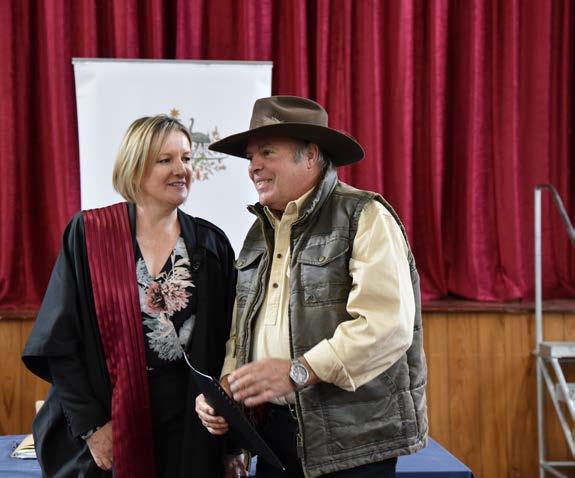
Respected Nukunu Elder, land rights campaigner and environmentalist Uncle Lindsay Thomas has died at the age of 70 after a battle with cancer.
A leading advocate for Nukunu native title, he passed away peacefully on March 26 following a diagnosis of mesothelioma, a rare and aggressive form of cancer with links to asbestos exposure.
As the last surviving member of the original Nukunu native title claimants, Uncle Lindsay devoted decades of his life to securing a positive native title determination and advancing cultural heritage rights for his people.
His nephew, Dr Jared Thomas, described him as being like a father figure to many in his extended family.
“He was steadfast in making sure we got to spend time on Country and have respect for Nukunu Country and culture, and for other people,” he said.
“Uncle Lindsay was a whole lot of fun with a very dry sense of humour and an enthusiasm for life.”
Uncle Lindsay was one of five claimants who filed and registered the Nukunu native title claim with the National Native Title Tribunal on 10 April 1996, lodging the claim with the Federal Court of Australia on 16 December 1998.
The four other original claimants were James Alexander Bramfield, Margaret Elizabeth Smith, Douglas
John Graham and Rosalie Elizabeth Turner. It took until 17 June 2019 for the Nukunu people to be granted their first native title determination (Nukunu Part A) recognised by the Federal Court of Australia. The Part A determination covered roughly 15,000km including Port Pirie, a portion of the Flinders Ranges and extending into the waters of the Spencer Gulf.
The Nukunu Wapma Thura Aboriginal Corporation was created in 2019 to represent the rights and interests of all Nukunu people.
Unresolved areas from the Part A claim were then finalised in the Nukunu Area 2 determination on 3 February 2022 over an area of approximately 983km of land, including half of the eastern side of Port Augusta.
Outside the hall following the hearing for Nukunu Part A, Uncle Lindsay spoke to local media about what the day meant for him.
“It’s just a happy day for me. It’s a relief that the stress is all gone,” said Mr Thomas.
“It’s been such a long, long fight, and yes, we got there in the end. We never thought we was going to because we are such a small group. And yes, I’m as happy as hell to tell you the truth. I’m not quite showing it, but inside you get to think on what we went through to get here. It’s just a long time and a big part of my life. But now it’s worth it. I’m still young enough to enjoy my Country here.”
Uncle Lindsay also reflected on what the determination represents for the next generation of Nukunu people.
“It means a whole new thing for them because they did understand the actual native title fight and what it meant,” he said.
“Along with the Elders, they went through the hard times; their grandparents and great uncles dying and things like that. That means a great deal to them now because they know that they’ve got control of their destination. And we will encourage others as the older Nukunu, we will encourage them all the way.”
In his work as a corrections officer, Uncle Lindsay established rehabilitation programs with and for Aboriginal men, including the Pakani Arangka Unit which means ‘fresh starting place’, focusing on cultural connection and reducing reoffending.
The Port Pirie Regional Council extended their condolences in a statement
“Uncle Lindsay was a valued and much-loved Nukunu Elder and a significant figure within the Port Pirie community. His presence, cultural knowledge and leadership will be deeply missed. His contribution to community life and the respect he held across generations, leaves a lasting legacy,” it read.
“Council acknowledges the significance of Uncle Lindsay’s cultural role and extends its deepest respects to the Nukunu community and friends of Uncle Lindsay. We stand with his family and community during this time of mourning.”
Many are mourning the loss of Aunty Rhoda Roberts AO, a trailblazing Widjabul Wieybal woman from the Bundjalung Nation who passed away on 21 March at the age of 66, following a seven-month fight with a rare form of ovarian cancer.
A widely respected champion of First Nations arts and culture, Ms Roberts dedicated much of her life to elevating Aboriginal and Torres Strait Islander voices and creating meaningful opportunities for their stories to be told. Her influence extended across media, performance and cultural advocacy, leaving a lasting legacy on Australia’s creative landscape. She is also credited with coming up with the term “Welcome to Country”, now a widely recognised and practiced cultural protocol across Australia.
Ms Roberts made history in 1989 when she became the first Indigenous presenter on prime-time television on SBS. Over the years she played a key role in several major developments with the network, including leading coverage of the launch of National Indigenous Television (NITV) as a free-to-air channel under SBS in 2012. In 2021 she was honoured as the inaugural Elder in Residence at SBS, further cementing her role as a cultural leader and mentor.
Ms Roberts also brought her creative vision to some of the country’s most significant stages and festivals, including the Sydney 2000 Olympic Games opening ceremony, Dreaming Festival and Garma Festival. Through these platforms she helped showcase the richness and diversity of Aboriginal and Torres Strait Islander culture to national and international audiences.
Prime Minister Anthony Albanese said that Ms Roberts’ generosity enriched Australians’ lives and that her wisdom enlarged our nation’s understanding.
“Her grace gifted to all of us a deeper sense of who we are and the extraordinary privilege we have to share this continent with the oldest continuous culture in the world,” he said.
“Rhoda made it easier for others to not just follow in her footsteps, but to continue the journey after her final one. That is [the] power of her legacy and through it, Rhoda will always be with us.”
Minister for Indigenous Australians Malarndirri McCarthy said Ms Roberts inspired many Australians, especially Aboriginal and Torres Strait Islander people in the media and creative arts.
“Rhoda was a confidant and mentor to me and many others during our time as journalists in the 1990s,” she said.
“I will treasure our final conversation recently about how First Nations people are now everywhere in the arts and media sectors, in front of and behind cameras and on stage.”
A newly wrapped tram has gone “live” in metropolitan Kaurna Yerta, marking public acknowledgement of the Kaurna Yerta consent determination on 21 March 2018.
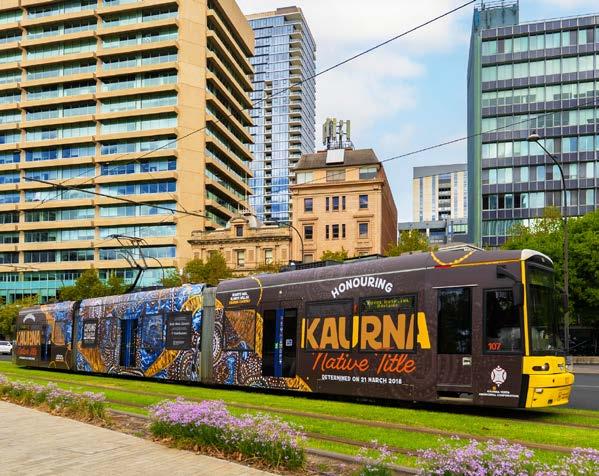
An open call-out was issued to South Australian Aboriginal artists for this project, which has been developed over several years through collaboration between the Department for Infrastructure and Transport (DIT) and successive boards of the Kaurna Yerta Aboriginal Corporation (KYAC). Artists were invited to respond to DIT’s corporate theme: Build. Move. Connect.
The artist chosen to do the piece was Kaurna, Ramindjeri, Boandik, Wotjobaluk, Narungga, Ngadjuri and Wirangu woman, Violet Buckskin, the founder of Winda Creations.
Ms Buckskin uniquely weaves together narratives of culture, strength and connection. Her artwork symbolises foundational elements of Aboriginal communities, the dynamic movement of people and ideas, and the vital connections between regional and urban areas, industries and communities.
“I am proud of contributing to this project and seeing my work celebrated in such a prominent and lasting way,” Ms Buckskin said.
The wrapped tram, which has been in service since tourists descended upon Adelaide during “Mad March”, offers a moving acknowledgement of Kaurna Yerta, embedding recognition of Country into the everyday journeys of the city’s public transport network.