DAIRY MARKET REPORT
VOLUME 29 | ISSUE 5
EXECUTIVE SUMMARY
5/21/2026
Milk production grew 2.3% on a liquid basis in March, marking the fourth consecutive month of positive but slowing milk production. Despite decelerating production, milkfat supplies remain ample, and CME butter prices have eased over the last month as a result. Skim solids tell a different story: Nonfat dry milk (NFDM) prices set records throughout April and into May as new cheese capacity and insatiable demand for highprotein dairy products competed with dryers for milk. Yogurt and cottage cheese production and retail sales continue to gain momentum, and whey protein concentrate use rose almost 20% in March despite steep prices.
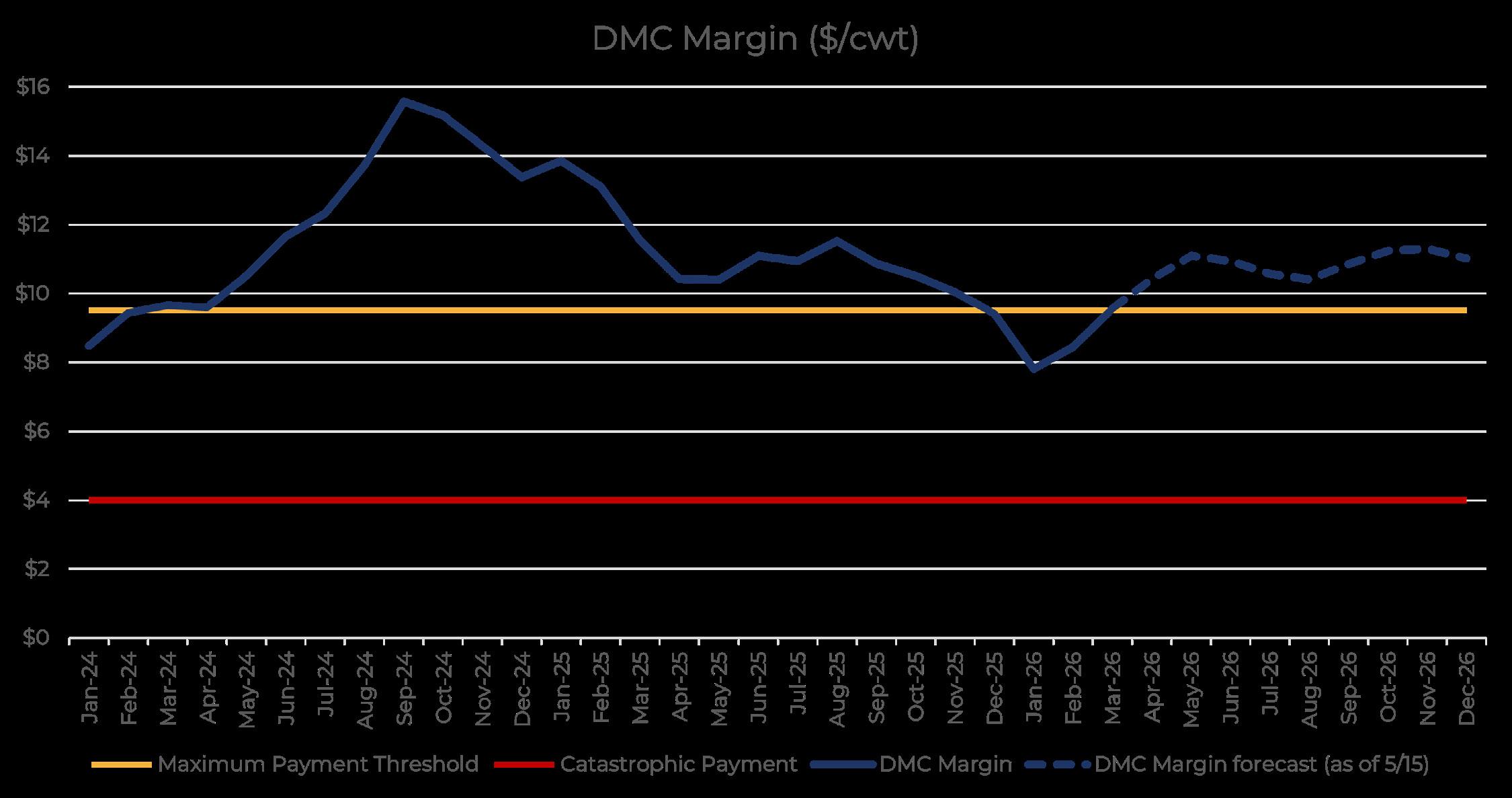
However, even as protein demand remains high, warning signs of economic pressures on consumers are beginning to flash. Inflation in April accelerated to 3.8%, and consumer sentiment dropped to a record low. Economic pressures have translated to softer foodservice volumes, highlighted by cheese and butter domestic use easing. Overall, the Class IV rally driven by NFDM has helped buoy the All Milk Price, resulting in a March DMC Margin of $9.57/cwt, yet that improved margin disguises significant regional variation.
GRAPH OF THE MONTH
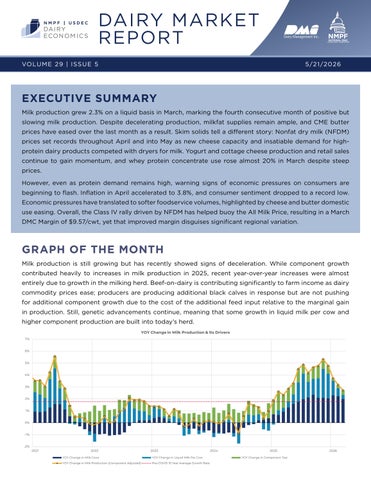
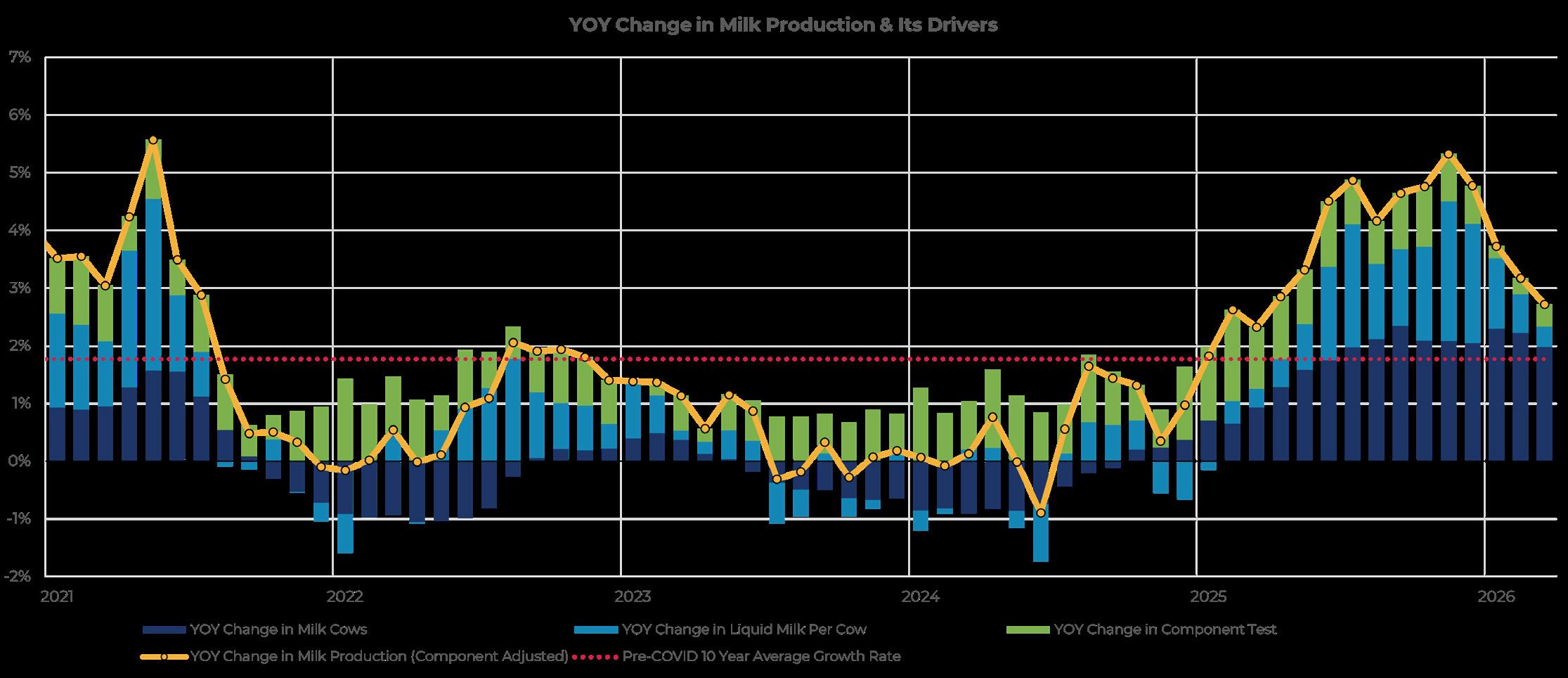
Milk production is still growing but has recently showed signs of deceleration. While component growth contributed heavily to increases in milk production in 2025, recent year-over-year increases were almost entirely due to growth in the milking herd. Beef-on-dairy is contributing significantly to farm income as dairy commodity prices ease; producers are producing additional black calves in response but are not pushing for additional component growth due to the cost of the additional feed input relative to the marginal gain in production. Still, genetic advancements continue, meaning that some growth in liquid milk per cow and higher component production are built into today’s herd.
PRICES
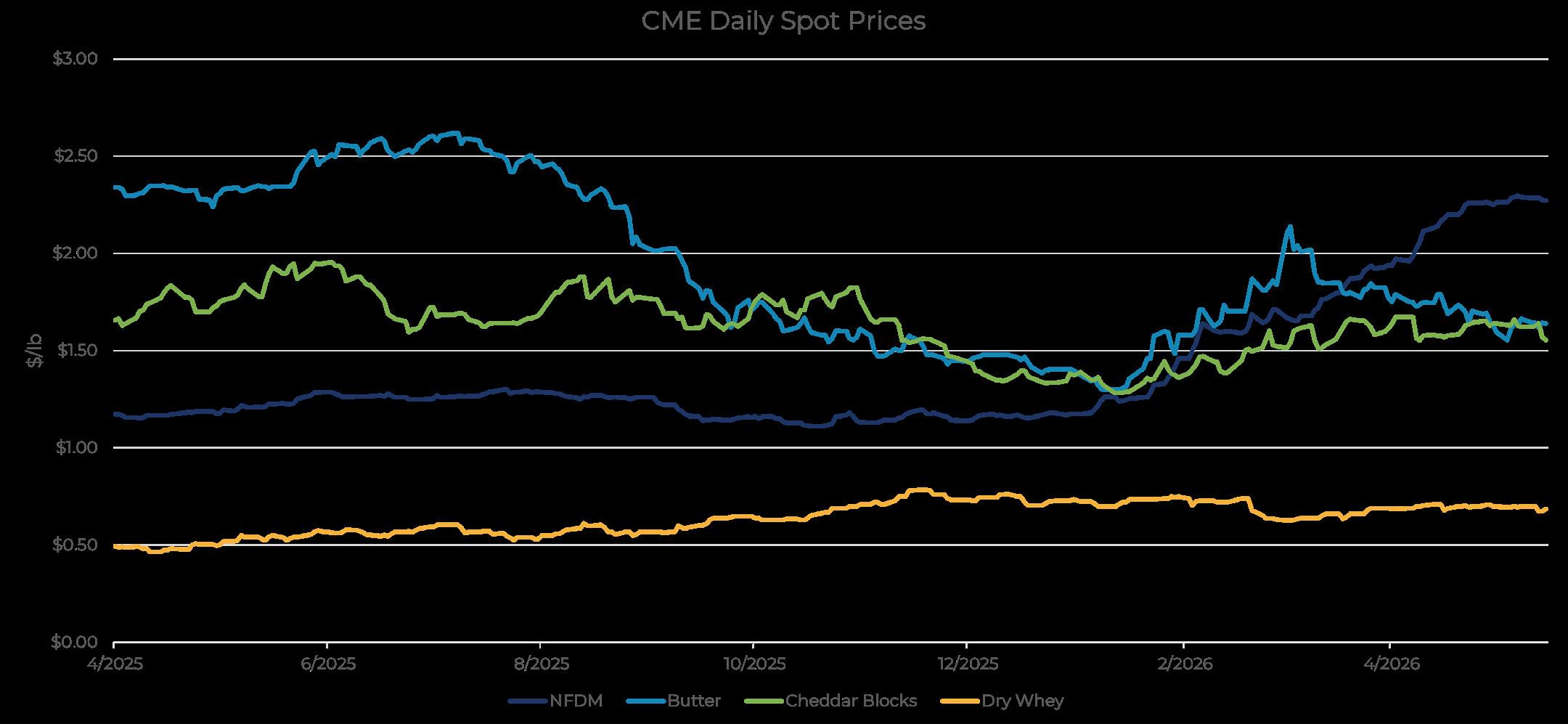
After a meteoric rise, Nonfat Dry Milk prices are holding in the high $2.20s at the time of writing. More production coming online and international producers priced competitively would suggest prices easing, but recent recalls of products containing NFDM may be contributing to limited product availability, supporting prices in the short term. Conversely, butter prices have eased since March, indicating that strong milkfat production and lost Middle East exports due to conflict with Iran is weighing on markets. Cheese prices are largely rangebound on account of ample supplies being met with robust demand abroad and stable purchasing at home.
MARKET COMMENTARY
CHEESE
Cheese exports have been critical to market balance over the past year, and March was no exception. U.S. cheese exports rose 29%, with the top two destinations, Mexico and South Korea, increasing purchases 40% and 79%, respectively. The global demand surge countered a slight easing in domestic use in March. Given that domestic cheese consumption had four straight months of impressive growth, a modest, one month blip is not yet a reason for concern.
On the supply side, cheese production grew slightly year-over-year though a counter-seasonal, 2.4% month-tomonth decline could portend tighter times ahead if milk is pulled into Class IV plants. Cheese remains in a tugof-war between growing supplies and growing demand, particularly internationally.
WHEY
Exports of low-protein whey were up significantly in March, with volumes increasing to Canada and Mexico. However, domestic disappearance fell 40% to its lowest monthly levels since March 2014, underscoring that dry whey has not experienced the same demand increase as the higher-protein members of the whey complex. Whey protein concentrate demand continues to be strong while supply struggles to keep up. Stocks were down 18% at the end of March, production fell 6%, and domestic use increased 19%. This market tightness is translating to ballooning prices – WPC80 cost 114% more in March 2026 than a year prior. High costs and lack of supply are impacting WPC exports, which fell 24% in March.
With the pull towards higher concentrations of whey protein, dry whey is still in short supply, keeping prices supported even with underwhelming demand.
BUTTER
Despite strong milkfat production, butter production barely increased in March, and counter-seasonally fell 6% from February levels, adjusted for 30-day months. In concert with the lack of supply, stocks are at their lowest March level since 2022. This normally would raise prices; however, weaker domestic use muted the market impact of lighter production. With Easter, Passover, and Ramadan occurring earlier in the year, holiday retail volume purchases were completed in February, resulting in the first February to March decline in domestic use since 2014. Furthermore, U.S. data reported that butter imports rose by 88% in March, though Irish export data indicated that most of this quantity had been exported in prior months.
Contrasting with weaker domestic sales, butter logged another strong export month amid Middle East sales disruptions. Volumes increased 85% despite volumes to Saudi Arabia falling 20% and some GCC countries, such as Bahrain, indicating no purchases of U.S. butter.
NONFAT DRY MILK/SKIM MILK POWDER
CME nonfat dry milk prices marched higher throughout April and early May. New cheese plants geared toward high protein whey and high protein Class I and II products, such as ultrafiltered milk, yogurt, and cottage cheese, are competing with NFDM for skim solids. Manufacturers have responded to price signals, with both NFDM and SMP production rising 10% in March, but thus far, the increased production has not cooled prices.
Looking ahead, NFDM/SMP production is ramping up, but export sales declined 8% in March. As such, prices fell week-over-week for the first time since March during the week ending May 15. Though this may not be the end of NFDM’s recent run of strength, the adage that “the cure for high prices remains high prices” may be proving true in this instance.
FLUID MILK
Following years of gradual declines in fluid milk consumption, health claims such as high protein and probiotics are boosting sales in the category. Fluid milk sales rose 2.3% YoY in March, with conventional sales rising 2.1% and organic sales 5.6%. Whole milk sales jumped 5.4% across both conventional and organic categories. Remarkably, other fluid milk product sales rose an astounding 13.7%, encompassing products such as lactose free milk, ultrafiltered milk, and cultured milk products such as kefir. Circana data mirrors these trends, with retail sales of whole milk up 4.3%, ultrafiltered milk sales up 3.7%, and milk products with pre/probiotic claims up 10.1% so far this year.
MARCH 2026
CULTURED AND SOFT PRODUCTS
Class II producers continue to respond to a seemingly ever-increasing demand for high protein products. Yogurt production has grown for 29 straight months; not to be outdone, cottage cheese production has increased for 44 months. Circana data indicates that production growth is almost exactly mirrored by increases in retail sales, with yogurt sales up 6% and cottage cheese sales up 11% YTD. Ice cream production grew in March, but even this category showed evidence of health trend influence – production of low-fat soft ice cream, often marketed as lower calorie, grew 15%, outpacing the category’s 6% growth. Circana indicates ice cream sales have eased at retail, sitting 2.4% below prior year levels, but national brand frozen novelties have seen growth by offering smaller, better-for-you treats.
MILK PRODUCTION
Milk production grew 2.3% in March, the slowest growth rate since March 2025. Year-over-year production growth is expected to decelerate in the coming months as we begin to compete with particularly strong 2025 growth. Almost all of the growth in March was due to additional milk cows (see Graph of the Month) with the USDA reporting the U.S. milking herd possessing 187,000 more cows than a year ago. Yet despite the growth in cows, component growth was relatively modest. FMMO protein tests increased 0.04% in March, outpacing growth in milkfat component growth and reflecting a change in ration mix in reaction to market signals prioritizing protein over butterfat.
ADJACENT MARKETS
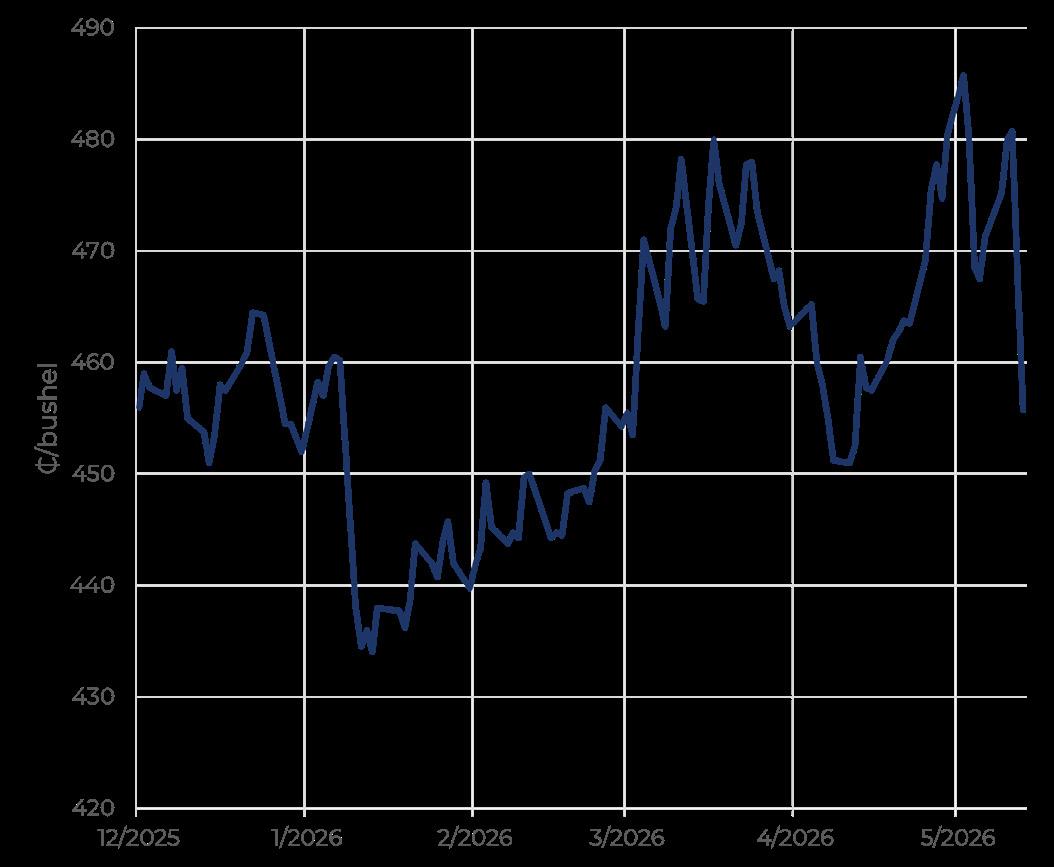
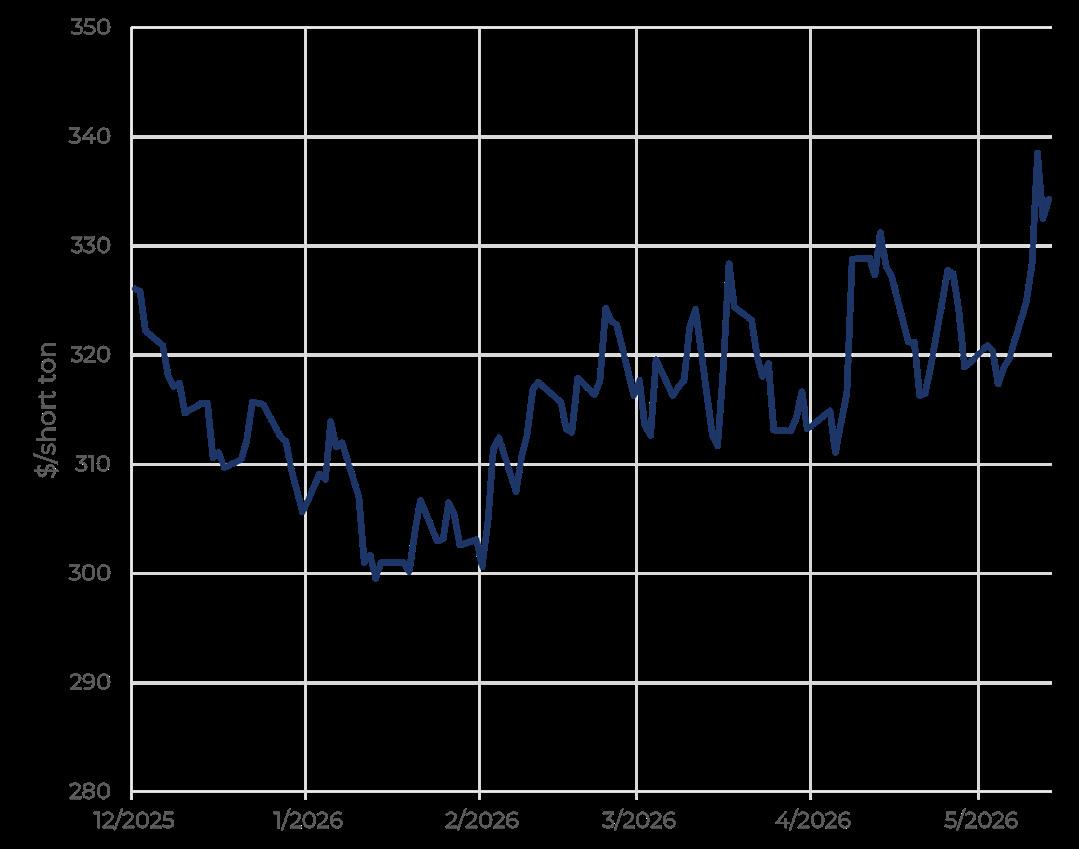
• CBOT Corn and Soybean Meal Futures have gained strength due to tighter-than-expected supplies and spiked in mid-May on hopes of trade talks between the U.S. and China.
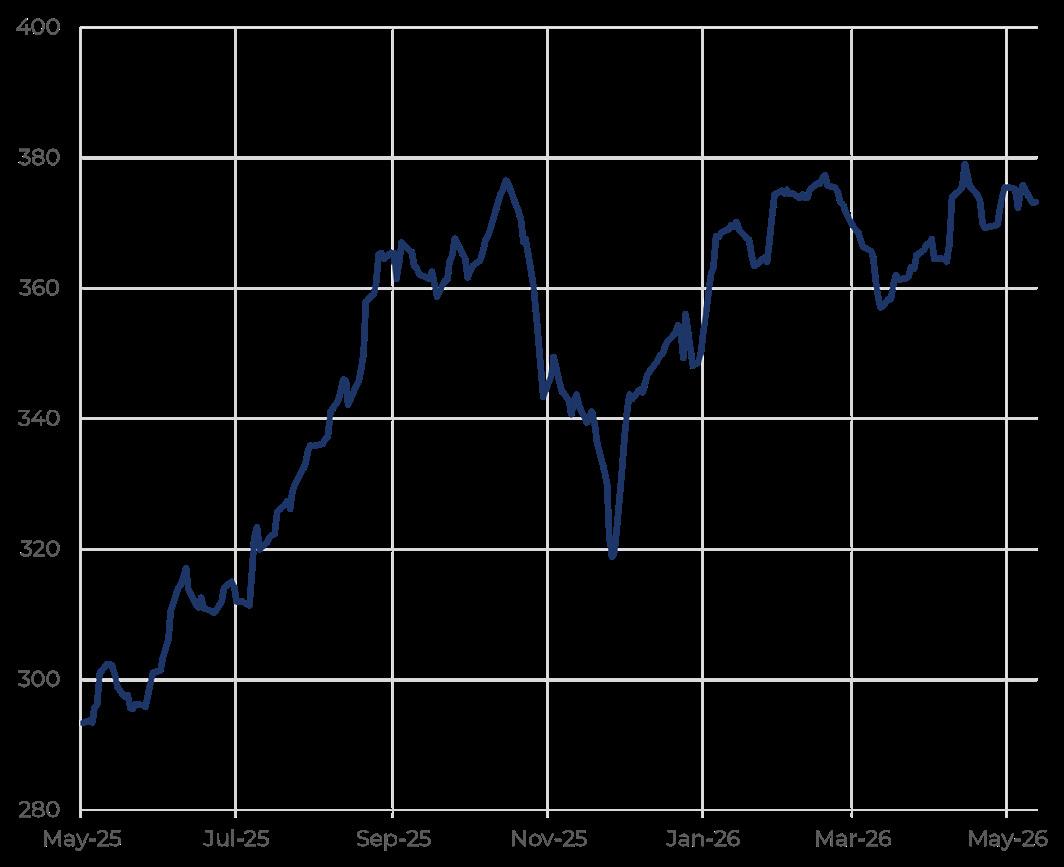
• The CME Feeder Cattle Index have held at elevated levels in recent months, reflecting tight cattle supplies.
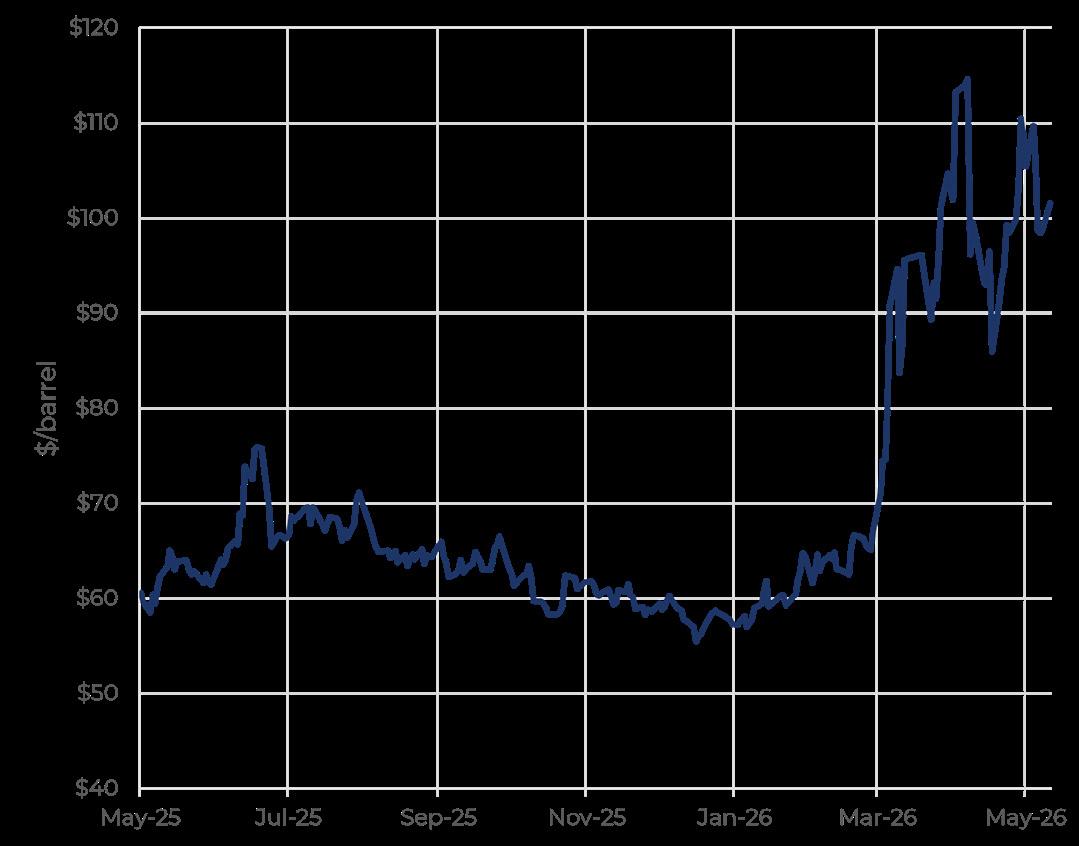
• WTI Crude Oil prices continue to rise even as volatility abounds due to uncertainty surrounding conflict in the Middle East.
JULY 2026 CBOT CORN FUTURES
CME FEEDER CATTLE INDEX
JULY 2026 CBOT SOYBEAN MEAL FUTURES
WEST TEXAS INTERMEDIATE CRUDE OIL SPOT PRICE
Sources: CBOT, CME, EIA
DAIRY MARGIN COVERAGE
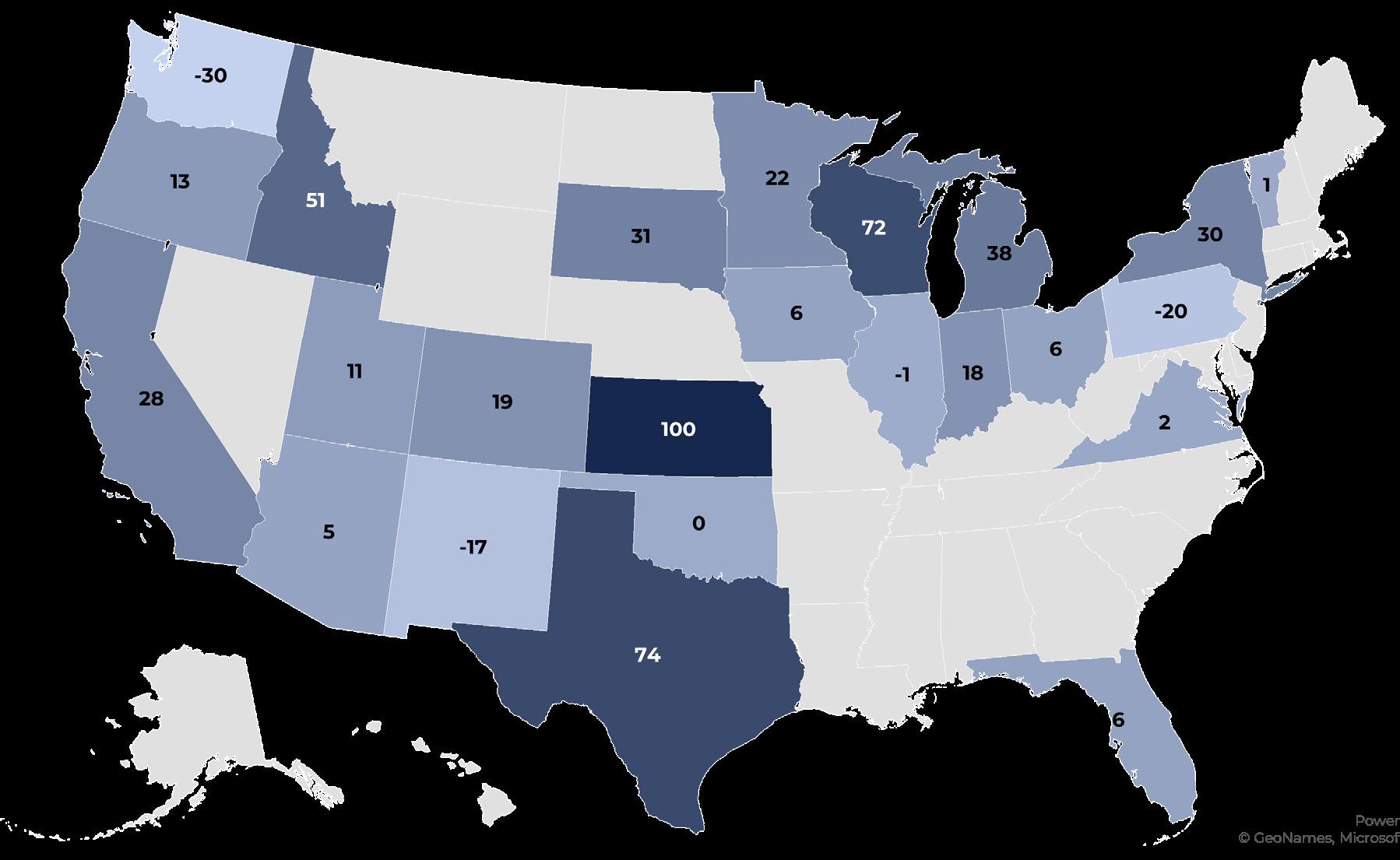
DMC margins rose to $9.57/cwt in March, just above the maximum payment threshold of $9.50/cwt, as increases in Class IV milk prices drove an increase in the All Milk Price of $1.40/cwt since February. Elevated corn and soybean meal futures somewhat reduced margin forecasts for the rest of the year, but futures markets suggest that the All Milk Price will be strong enough to keep margins above the $9.50/cwt threshold through the end of 2026.
CONSUMER DEMAND INDICATORS
Economic impacts from conflict in the Middle East weighed on consumers in April. Inflation spiked to 3.8%, and a Producer Price Index of 6.0% indicates that supply chain hiccups have created more costs which have yet to be passed on to consumers. Consumer sentiment fell 6.6% from March to April primarily due to concerns surrounding high prices. Despite challenging economic conditions, dairy product prices at retail were lower in April than a year ago, suggesting dairy remains an affordable staple for consumers.
LOOKING AHEAD
Milk production is expected to continue to remain ample, but not as onerous as last year as growth slows. While demand for high protein products will likely remain strong as consumers prioritize health, rising inflation and faltering consumer confidence may be a warning sign for products heavily used in food service, such as cheese and butter. April data will provide more insights into how conflict in the Middle East is affecting consumers abroad as well, many of whom, particularly in Asia, are feeling the effects of increased energy prices more acutely than the United States. Although DMC margins are forecast to remain above the maximum payment threshold through the end of the year, increasing feed, energy, and transportation costs will likely pose a challenge for producers, particularly in markets with high Class III usage.
Dairy Management Inc.™ and state, regional, and international organizations work together to drive demand for dairy products on behalf of America’s dairy farmers, through the programs of the American Dairy Association®, the National Dairy Council ® , and the U.S. Dairy Export Council ®
Katriel Marks-Yant, National Milk Producers Federation kmarksyant@nmpf.org www.nmpf.org
The National Milk Producers Federation (NMPF) develops and carries out policies that advance dairy producers and the cooperatives they own. NMPF’s member cooperatives produce more than two-thirds of U.S. milk, making NMPF dairy’s voice on Capitol Hill and with government agencies.
CHEESE — MARCH 2026
WHEY — MARCH 2026
BUTTER — MARCH 2026
NONFAT DRY MILK/SKIM MILK POWDER — MARCH 2026