Campaign win Social media ban for under-16s announced. See page 6.
Teaching under Trump ‘Horrific’ immigration policy harming US schools. See page 20.
NEU trust fund
Helping members in tough times. See page 30.
July/August 2026
Members demand DfE steps in at debt-ridden trust page 7
Your magazine from the National Education Union
Educate July/August 2026
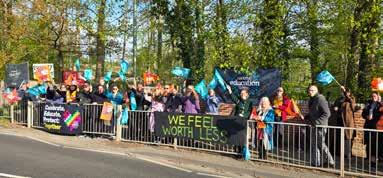
NEU members deliver a letter to the Department for Education protesting job cuts at St Ralph Sherwin Catholic Multi-Academy Trust, which has run up a £9.5m deficit.
Photo by Kois Miah koismiah
NEU president
Ed Harlow
NEU general secretary
Daniel Kebede
Editor Max Watson
Journalists
Frankie Faccion, Sally Gillen & Sarah Thompson
Newsdesk
t: 020 7380 4768
e: educate@neu.org.uk
Production editor/designer Amanda Ellis
Sub-editor/designer Melissa Harteam Moore
neu.org.uk
linktr.ee/shareneu
TO ADVERTISE IN EDUCATE
Display adverts
t: 020 7880 7614
e: educate-magazine@redactive.co.uk
Recruitment adverts
t: 020 7880 8542
e: educate-jobs@redactive.co.uk
Except where the NEU has formally negotiated agreements with companies as part of its services to members, inclusion of an advertisement in Educate does not imply any form of recommendation. While every effort is made to ensure the reliability of advertisers, the NEU cannot accept any liability for the quality of goods or services offered. Educate is printed by Warners Midlands Plc. Inside pages are printed on paper comprised of 100% recycled, post-consumer waste.
DISPUTES are fought and won by members around the country every week (see pages 12-13). Most stay local, with pickets at the school or college gates, and occasionally there’s a demonstration outside the town hall.
Rarely do members take their fight directly to the doors of the Department for Education (DfE).
So it says something that teachers and support staff at St Ralph Sherwin Catholic Multi-Academy Trust in Derbyshire became the second large MAT in four months to do just that (see page 7).
Its debt is colossal. Unsurprisingly, nobody wants to take responsibility, but frustrated members and parents are tired of the buck passing and dismayed by the proposed job losses. They are calling for an independent inquiry into the trust’s use of public money and answers to why such “drastic measures are being pursued”.
Although keen on accountability – for schools anyway – the DfE issued this MAT with two notices to improve, three years apart, and considered its job done. But the MAT continued to spiral, with terrible consequences for staff and students.
As part of the blame game, the MAT’s top managers have reportedly claimed its financial troubles arise from funding the teacher pay award. Breathtaking. False claims around pay and funding are often spouted by employers, as well as the government, with its insulting statement that tackling school budget “inefficiencies” will generate money for pay rises. They must be challenged.
Your chance to set the story straight will arrive in October, when the union launches a formal ballot on pay and funding (see page 6). Any optimism that the government will do what’s needed – what it promised – to repair the education system is fast evaporating and educators can’t wait any longer for a better deal.
In this issue, we also have a feature on members of two education unions in the US, who describe the heartbreak and horror of government-ordered immigration raids in their schools and communities (see pages 20-25).
On pages 26-29, Educate writer Sarah Thompson reports on a morning spent at an east London secondary school where pupils are benefitting from studying Shakespeare a little differently. It’s a great read.
There’s plenty more to enjoy in this edition, now or during your well-earned summer holiday. See in you September.
Max Watson Editor, Educate
PHOTO by Chris Valle
PHOTO by Rehan Jamil
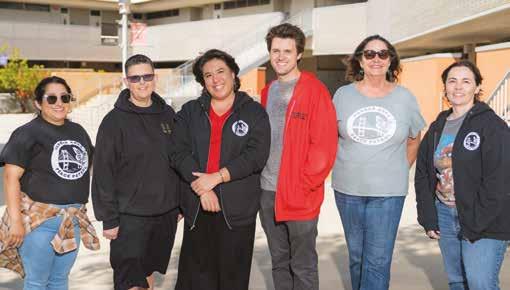
(From left) Mercie Macatrao, JJ Turner-McMullen, Maya Suzuki Daniels, Elijah Chiland, Rachel Bruhnke and Faith NelsonCampuzano of the Los Angeles Harbor Area Peace Patrol
Teacher numbers fall as government fails to recrui t TEACHER and pupil numbers have fallen again, according to government statistics released in June.
Teacher numbers dropped by 1,900 since last year, which NEU general secretary Daniel Kebede said made a “mockery” of the government’s pledge to recruit 6,500 new teachers.
There were 112,200 (or 1.2 per cent) fewer pupils across all types of school from the previous year.
“Falling pupil numbers mean there is an opportunity to drastically improve children’s opportunities by increasing school staffing levels and reducing class sizes, as the previous Labour government did 25 years ago,” he added.
“The number of newly qualified teachers entering the profession is the lowest since records began 30 years ago. Class sizes are little changed from record highs and still the highest in Europe.”
Daniel said the government must urgently implement fully funded, above-inflation pay rises and cut workload to tackle teacher shortages. n See Daniel’s opinion, page 11
Sixth form members win PPA
and rarely cover for first time NEU members at sixth form colleges have won rights to planning, preparation and assessment (PPA) time and rarely cover equivalent after sustained negotiations with employers.
Ballot over pay and funding
BALLOTS for strike action over pay, funding and workload will be launched on 3 October, as part of the union’s three-year Save Education campaign.
The union’s executive has decided to ballot teachers and support staff at statemaintained schools in England following the government’s failure to award fully funded, above-inflation pay rises this year.
As Educate went to press – just weeks before the end of the academic year –education secretary Bridget Phillipson had still not published the report by the School Teachers’ Review Body (STRB), despite having it since February.
The government submitted evidence to the STRB, which makes recommendations on teacher pay, proposing 6.5 per cent for teachers spread over three years, described as “insulting” by NEU general secretary Daniel Kebede. Support staff have been offered just 3.3 per cent.
The lengthy delay in publishing the STRB report leaves head teachers no time to
Join our campaign to stop social media stealing childhoods.
PPA time has existed in schools since 2005 but not in colleges until now. And rarely cover provision (a limit on time teachers should spend covering for absent colleagues) has also existed in schools since 2009.
The union’s general secretary Daniel Kebede said through “collective strength” teachers have gained important workload improvements.
“Our members were unequivocal that they needed genuinely protected time to plan, prepare and assess. Demands on college teachers to cover were constant in many instances.”
Daniel added: “This workload win is down to the resolve of NEU sixth form college teachers who stood firm until their conditions improved.”
Daniel said: “If ministers insist that any pay rise must be carved out of already decimated school budgets, then it is a wilful rejection of reality. It completely fails to understand what
He added: “No member wants to take strike action. To avoid this collision course the government needs to step up and deliver
the properly funded education system our children and young people deserve. It is time to save education.”
The ballot will run until 15 December.
NI teachers: formal ballot over workload TEACHERS in Northern Ireland (NI) are being formally balloted until 1 September on taking industrial action over the government’s failure to reduce workload pressures.
The NEU, which is in dispute with the Department of Education NI because it has not agreed an implementation action plan for the independent review of workload published in November 2025, posted ballot papers on 10 June.
Members are being asked if they are prepared to strike, or take action short of strike action. This could include refusing to supervise extracurricular activities, undertake administrative or clerical tasks not routinely expected of a teacher, attend meetings in noncontact time or submit lesson plans.
If members vote to take action, it is likely to start around 8 September. n Visit neu.org.uk/save-education
NEU welcomes under-16 social media ban
NEU general secretary Daniel Kebede has on social media for under-16s from next year as “the right call”. It was announced by the government on 15 June and affects TikTok, YouTube, Instagram, Facebook and X, but not WhatsApp or Signal.
Daniel said: “This is a turning point in the fight to protect children online. After tireless campaigning and pressure from parents, teachers and health professionals, we’re now seeing meaningful action from the government.”
The decision follows a government consultation, which received more than
116,000 responses, in which around 90 per cent of parents supported a ban.
Daniel said: “Every day, school staff see how social media is disrupting children’s learning, isolating them and exposing them to content they are simply not ready for.”
The NEU launched Big Tech’s Little Victims in September 2025. The campaign’s Three Minutes to Harm report showed that 13-year-olds were served online content featuring guns, self-harm, sexualised material and misogynistic narratives within minutes.
The NEU is also recommending schools teach digital literacy, and campaigning for a windfall tax on social media companies to fund mental health services. n bigtechlittlevictims.org
DfE must act over MAT’s ‘catastrophic failure’
MEMBERS at a trust threatening job cuts after running up a £9.5 million deficit – the largest in England – delivered a letter to the Department for Education (DfE) calling for it to halt the “unnecessary and harmful” restructure.
The letter to education secretary Bridget Phillipson also calls for an independent inquiry into St Ralph Sherwin Catholic Multi-Academy Trust’s use of public funds.
NEU regional officer Nick Raine said there had been a “catastrophic failure of oversight and governance over many years” at the Derbyshire MAT, which runs 25 schools.
45 redundancies planned
It plans to make 45 redundancies at 14 of its schools, and remove teaching and learning responsibility payments from 14 staff at its largest school, St Benedict’s, which has 120 NEU members.
The MAT had also proposed to move support staff at the 14 schools from 52-week to term-time contracts and re-band teaching assistant (TA) roles, but dropped the plans following members’ action. It was the second time the trust had attempted to downband TAs. Last year, they received letters from the MAT saying their annual pay would be
reduced by between £4,000 to £6,000, but the trust backed down following union pressure.
Nick said the trust’s management had only agreed to meet the union twice, and attempts to get the Diocese of Nottingham, which has reserves of £73m, to bail out the MAT had been unsuccessful.
On 10 June, teachers and support staff, joined by parents, travelled by coach to London and gathered on Parliament Square before marching to the DfE. Their letter urges the DfE, which issued the MAT with
Dear Bridget…
n Instruct the trust to halt current restructure proposals.
n Ensure any future organisational changes are subject to genuine consultation and are evidence-based.
n Support a fair approach to workforce change, including consideration to voluntary redundancy, enhanced early retirement options, and a longer implementation period.
n Commission or support an independent inquiry into the trust’s finances and use of public funds.
n Safeguard the interests of pupils by prioritising stability and continuity in staffing.
improvement notices in 2023 and again in February, to intervene in a dispute that has led to 14 days of strike action.
The letter says: “The DfE has a responsibility to ensure academy trusts operate in a way that is fair, transparent and focused on educational outcomes… where disputes escalate to this level, it is appropriate and necessary for central intervention.”
DfE must step in and dismiss MAT board Lead rep David Boulter told Educate: “The trust says the DfE has tied its hands, so we need it to step in. We are saying that if staff need to be reduced, it needs to be gradual, with a wider voluntary redundancy scheme and enhanced pensions to encourage early retirement, which would need to be funded by the DfE.”
He added that the resignation of trust chief executive Kevin Gritton made “little difference” as “the trust board had zero oversight and the DfE also needs to force the rest of the board to go”.
History teacher Brent Poland, who has worked at the trust for 23 years and is facing redundancy in September, said: “The trust can give no legitimate reason operationally or logically for my role going. Schools need to be accountable to communities. MATs are set up as businesses but with the worst business practices.”
Parents, teachers and support staff travelled from Derbyshire to London in June to hand in their letter to the Department for Education
PHOTO by Kois Miah
Endometriosis advice
A CHECKLIST for leaders to help create supportive workplaces for staff who have endometriosis, adenomyosis or uterine fibroids has been produced by the union.
Training for staff, protocols for women who need toilet breaks during lessons or discreet places to change clothes, and time off to attend medical appointments are among the issues covered.
n Visit neu.org.uk/endometriosis
Check for asbestos in toys
TOYS found to contain traces of asbestos have been recalled and the union is urging members to check if they have any of them in their settings.
The material, which can be extremely harmful even with minimal exposure, was found in a range of products, including play sand.
n Visit neu.org.uk/asbestos-schools
Pride leaflet published
A LEAFLET calling on activists to unite against far-right extremism and misinformation and challenge all forms of discrimination has been produced by the union ahead of Pride 2026. It provides details on Together Alliance and Stand Up to Racism membership.
NEU LGBT+ educators will be a strong presence at the more than 270 Pride events taking place across the UK.
n Visit neu.org.uk/lgbt-equality to find out more about how to advocate for inclusion in your workplace
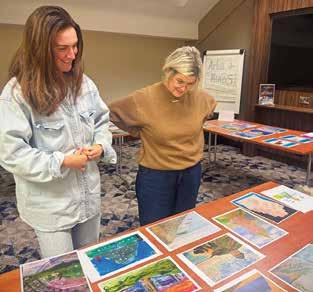
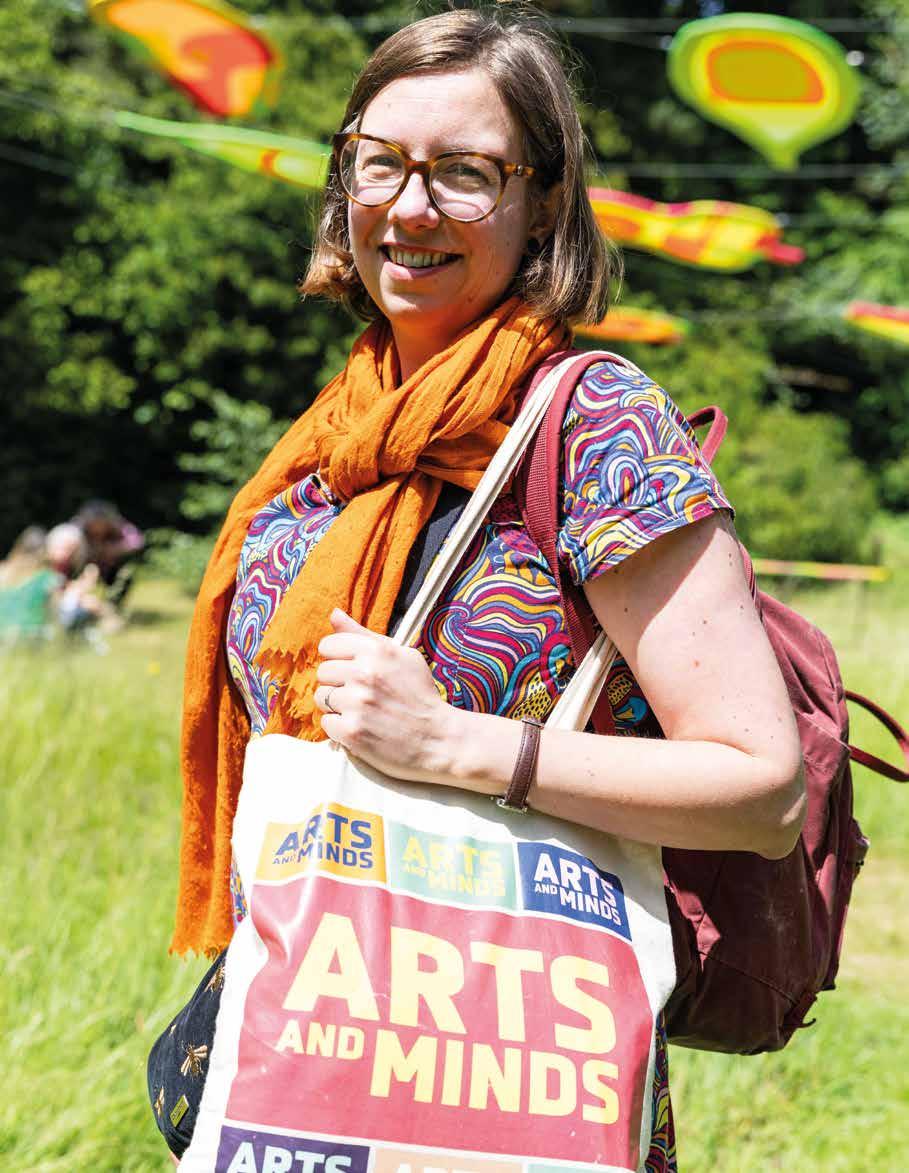
PAINTINGS, ceramics, textiles and drawings were among the artworks more than 200 pupils entered into the first Arts and Minds competition organised by NEU Northern Ireland (NI).
“The response was incredible,” said Tanya Wakeley, president of NEU NI. “The colour, skill and confidence on display were truly moving.”
Pupils were asked to submit pieces that celebrate NI’s landmarks. The contest highlighted the importance of arts education amid an ongoing funding squeeze. “The competition demonstrated just how much creativity exists in our schools,” added Tanya.
‘Students losing core skills due to AI use’
TWO-THIRDS of almost 9,500 secondary teachers surveyed by the union believe pupils’ critical thinking skills are declining as a result of using artificial intelligence (AI).
One respondent said: “A child told me: ‘I use ChatGPT for my homework. I ask it a question. I don’t understand what it says, but I just take the commas and big words out so the teacher thinks I’ve written it.’”
Another said: “Students are losing core skills – thinking, creativity, writing, even how to have a conversation.”
However, 76 per cent said they use AI tools for day-to-day work, up from 53 per cent
in 2025. And the number of teachers who report not using AI at all has dropped by nearly half, from 47 per cent in 2025 to just 24 per cent. Yet 49 per cent of schools have no policy for use of AI by staff or students, while two thirds (66 per cent) have no policy for students.
Only 14 per cent were supportive of the government’s planned AI tutors. One member said that 90 per cent of students had said they would not want AI tutoring because of a lack of connection, motivation and communication. Another said it “undermines the value of teaching skills and teacher relationships”.
n See our special focus on AI on page 14
Disabled members strengthen commitment to fight far right
WINS for members that include new NEU guidance to support those with gynaecological conditions including endometriosis, adenomyosis and fibroids were celebrated at the NEU’s disabled members’ conference.
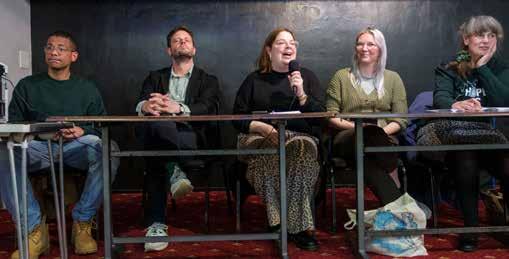
This year’s event, in Bournemouth, also built on the momentum of the Together Alliance march in London (28 March) against racism and the rise of the far right. National executive members Colleen Johnson and Debs Gwynn joined Kudsia Batool, head of equalities, international and strategic governance at the TUC, for a panel discussion on the rise of the far right (pictured above). We were reminded that disabled, immigrant and LGBT+ people are targeted first before rights are ripped away from everyone.
A motion for next year’s annual conference on protecting disabled educators’ rights to reasonable adjustments was voted through.
By Hollyer Somerly, Oldham NEU disabled members’ officer
‘Challenge workplace inequality’
THE theme of TUC disabled workers’ conference 2026 was United: breaking barriers, defending rights. Martyn Gwyther of the TUC’s disabled workers’ committee and TUC president Steve Gillan spoke of the need to stand together, demand disability pay gap reporting and challenge workplace inequality.
Delegates from unions including Equity, the Musicians’ Union, RCPod, CSP, RMT and TSSA raised issues including inaccessible workplaces, inadequate accommodations, limited development opportunities and violence against disabled transport workers.
The NEU motion opposing the far right and welfare cuts was passed.
By Rachel Sanderson, Barnsley NEU
Local artist Aly Harte (left) and former art teacher and 2024 winner of Channel 4’s The Great Pottery Throwdown Donna Bloye judged the competition
Former education minister discussed Finland’s progressive approach – no primary tests or school inspections – during visit to NEU HQ.
‘Arts will suffer under Progress 8 reforms’
ORGANISATIONS
in the Arts and Minds coalition have warned that government reforms to Progress 8 risk perpetuating the low value of arts subjects in schools.
Under the proposed framework, which the Department for Education consulted on until 4 May, students will choose two subjects from humanities, creative subjects and languages.
Arts subjects will therefore be competing with history, geography and languages.
In submissions to the consultation, organisations including union Equity, the
Independent Society of Music and the National Society for Education in Art and Design say the new system may continue to limit opportunities to study creative subjects.
Schools that do not offer arts subjects currently will not be mandated to under the changes, and a lack of funding for staff and resources is likely to reinforce the existing hierarchy of subjects, says the coalition.
It also points out that the exam system and competitive school accountability process are likely to limit access to the arts.
The coalition held an event in London to discuss the future of arts subjects following the government’s decision to scrap the English Baccalaureate. Despite commitments
AHEAD of Refugee Week (15-21 June), on 3 June NEU members came together at the Open Doors: Courageous Classroom Conversations Through Film event for the launch of a teaching resource.
to increase enrichment and a new National Centre for Arts and Music Education and the National Youth Strategy, there are still obstacles, said speakers. Only seven per cent of school leaders feel able to increase the amount of classroom time spent on arts subjects, according to research by the coalition.
Event chair Sally Bacon, co-chair of the Cultural Learning Alliance, said there had been a “real momentum” to revitalise the status of arts subjects in schools after the curriculum and assessment review was published in November. “The time is right to discuss how we can bridge the gap between government ambition and the obstacles faced by schools.”
n See Shakespeare feature on page 26
THIS year’s TUC Black workers’ conference, held in Bournemouth, was “powerfully inspiring”, said first-time delegate Hoda Chentouf. More than 250 delegates debated motions including a ceasefire in Iran, the cost-of-living crisis, and advocating for refugees and asylum seekers among others.
Hoda, NEU international solidarity officer in Brent, north London, said: “The atmosphere at the conference was an excellent reflection of what an inclusive anti-racist society looks like. I am proud to have supported the NEU in that space.”
Dilshana Begum, representing NEU Yorkshire and Humber region’s Black organising forum, also a first-time delegate, took to the podium to speak about the rise of racist language in the workplace and received a standing ovation.
Produced in collaboration with academics, filmmakers, NEU members and the Geographical Association, the series of short films is designed to help learners’ understanding around topics of displacement, seeking refuge and migration. The films are suitable for key stages three to five and each comes with a resource pack. They cover a range of issues in Democratic Republic of the Congo, Ethiopia, Lebanon, Myanmar, Thailand and Pakistan.
n Visit tinyurl.com/how-we-work-films
n Posters (pictured) illustrated by Quentin Blake are available as part of Refugee Week’s theme this year, Courage.
PHOTO by Jess
Hurd
NEU’s Emergency Fund appeal for Save the Children
Tasha*, are living in a refugee camp after they fled the
in
At a Save the Children safe space, they get the chance to play, make friends and learn.
(* names changed)
Photo: Ezibon Saadalla / Save the Children.
Amira*, with her twin cousins Aba* and Nura* and her little sister
war
Sudan.
Labour will not save education – so we must
NEU general secretary
Daniel Kebede urges members to vote for strike action on funding, pay and workload when the formal ballot opens on 3 October.
THE Department for Education’s annual data release of pupil rolls and school workforce numbers was announced in June with a heavy layer of spin.
When the Labour government came to power in 2024, it promised to recruit an additional 6,500 teachers to ease the crisis in education. Yet the latest data shows overall teacher numbers have fallen by 1,900 since the party took office, and the number of newly qualified teachers entering the profession is at its lowest since records began.
The situation is symptomatic of the broader funding crisis in education. The UK now has some of the largest class sizes in Europe, with more than one million pupils taught in classrooms of 31 or more.
Every teacher, support staff member and school leader knows how dire the situation is in our classrooms. They live the reality each and every day.
But the government seems not to know or not to care. The political will to resolve the crisis, and the vision to see that investing in education is the surest route to better life chances, is entirely absent from its frame of reference.
A government out of touch
It wasn’t always this way. Those of us who grew up under the mantra of “education, education, education” will remember that, when faced with a parallel situation of falling pupil rolls, the Labour government of 25 years ago chose to increase school staffing levels to bring class sizes down.
This government’s response is historically unprecedented. Its workforce model plans to cut primary teacher numbers, broadly in line with pupils, with initial teacher training targets for 2026-27 cut by 22.7 per cent (primary by 27.8 per cent, and secondary by 20.7 per cent).
Not even Margaret Thatcher’s Conservative government, when pupil numbers fell by a quarter in the 1980s, chose to cut the number of teachers this hard or this fast.
Falling pupil rolls present the government with a once-in-a-generation opportunity to build back the education system in the face of a demographic shift that’s long been in its sights.
to swap the classroom for the picket line. Nobody goes into education with the aim of going out on strike.
But the government is giving us no other choice. Schools are being starved of resources, staff are under relentless pressure and the education system is teetering on the point of collapse.
Our schools are in crisis, our children deserve better.
It is further evidence – if any was needed – of a government that is out of touch.
Worse, there is the real fear that, by failing to see education spending as an investment rather than a cost, the government will press ahead with an unfunded, belowinflation pay deal that pushes teachers even further behind the cost of living, just as that looks set to rise again.
Fiddling while Rome burns
An unfunded teacher pay will make things worse.
We don’t know this for sure, of course, because (at the time of going to press) the School Teachers’ Review Body report remains unpublished. It has been on education secretary Bridget Phillipson’s desk since February.
Meanwhile, there’s no end to the political turmoil in Westminster. Just as the government-commissioned Milburn review published an interim report warning of a “lost generation” of young people not in education, employment or training (NEET), the education secretary was running around doing silly stunts with reality TV stars to get clicks on social media.
Fiddling while Rome burns, anyone?
Labour’s promise of a “stronger, fairer Britain” won’t happen with a weakened education workforce. It’s why we have to act, and act now.
In 2026, NEU members in this school will save education
Out of options
In the indicative ballot we held earlier in the year, members told us “enough is enough”.
Get ready to vote to save education
That why the NEU executive decided to draw a line in the sand and call a formal ballot for strike action on the issues of funding, pay and workload, opening on 3 October.
Let me be clear: no educator wants
Keeping our fingers crossed and hoping the problems will go away, or fix themselves, isn’t going to work. And sitting back, waiting for disaster to strike, is not something we can permit.
On 3 October, when the ballot opens, I urge you to vote early – and encourage your colleagues to do the same – to protect children’s education and the future of the education system itself.
Because if the government won’t save education, we must.
Brick Lane special school strikes continue
STRIKE action is continuing at Brick Lane School (BLS), in east London, after members overwhelmingly rejected the latest offer by Outcomes First Group (OFG), which runs the school.
Staff at the independent special school have taken 11 days of action since March in a dispute over pay and sick leave.
Behaviour policy and workload dispute in Bradford
NEU members at a school in Bradford took six days of strike action in May and June in a dispute over behaviour management and workload.
Staff at Parkside School have been subjected to daily abuse and physical threats from students, caused by an inadequate behaviour policy and leadership response from the school, which is run by Wellspring Academy Trust.
Workload has also increased, with staff required to carry out unnecessary administrative requests and to fill vacant or absent roles.
‘Fire and rehire’ threats in Brent special school
dispute
PLANS to cut teaching assistant (TA) hours have prompted strike action at a special school in north London.
Members at Woodfield School, part of Compass Learning Partnership, announced 23 days of action in June and July over proposals to reduce TA hours from 36 to 32.5 a week. As Educate went to press, 22 days had been taken.
The trust escalated the dispute by threatening to ‘fire and rehire’ those affected who are already on term-time contracts at the school in Brent.
Talks with arbitration service Acas broke down when the school failed to improve its offer.
Jenny Cooper, Brent NEU joint branch secretary, said there had been huge support from the community, including Brent West MP Barry Gardiner. She added: “There have also been loads of messages of support from around the country, so members feel boosted by that.”
n Send messages of support to jennifer.cooper@neu.org.uk
NEU members in Kent county council’s (KCC) specialist teaching and learning service (STLS) have taken seven days of strike action since February over changes to their roles.
The service supports mainstream schools to give pupils with special educational needs and disabilities (SEND) an inclusive education. KCC brought it in house in September 2025.
Jamie Pout, Kent NEU branch secretary, said roles have “fundamentally changed”, the council has “refused” to provide new job descriptions, and staff who leave aren’t replaced.
He added: “Staff are no longer allowed to support childminders, nurseries or parents, and they cannot intervene with individual children – only small groups – or provide bespoke training. Instead, they rely on standard training sessions that aren’t fit for purpose.”
Requests for talks with arbitration service Acas have been met with silence.
“Reform-led KCC is becoming ever more anti-inclusion,” said Jamie. “STLS is needed now more than ever to support Kent’s most vulnerable children. Our members just want to get on with their jobs, as they have always done, but they are being let down by this local authority. If it really cared, it would come to the table and negotiate an end to this dispute.”
First strike at boarding school paused for talks
NEU members at the Royal Alexandra and Albert School in Surrey have agreed to pause their action after three days on the picket line forced the employer back to the negotiating table.
Members at the state comprehensive boarding school – one of just 32 in the UK – went on strike in April and June over the employer’s decision to make 12 redundancies.
The school had also proposed making cuts to pensionable allowances and introducing market rents for staff living on site, whose contracts include accommodation. It has continually failed to recognise trade union workplace bargaining rights.
The strike action is believed to be the first in the school’s 200-year history. Ninety per cent of staff voted for it on an impressive 89 per cent turnout. Members had planned to take six days of action in June, but voted to postpone this after taking two to allow for further talks.
NEU senior industrial organiser Nick Childs said: “We’re pleased that progress has been made and look forward to continuing talks to address members’ outstanding concerns, with a view to avoiding further strike action in September.”
Celebrating World Afro Day on 15 September
Find out more about Screen Time to Green Time, WAD’s tenth anniversary project, at worldafroday.com
Members take strike action over job cuts ‘sham’
NEU members at five schools in an east London borough have taken strike action against proposed redundancies.
At Connaught School for Girls, in Waltham Forest, members took 14 days of action over a “sham consultation” that has put a union rep, among others, at risk of losing their job.
Pablo Phillips, Waltham Forest NEU joint secretary, said: “The mood on the picket lines has been brilliant and determined.”
Strike action against job cuts was also taken in May at South Grove Primary; Henry Maynard Primary; Chingford Foundation School; and South Chingford Foundation School.
NEU members at South Grove and Henry Maynard schools suspended further action after the union reached agreements with the schools around workload and job losses.
“Taking strike action has been absolutely worth it at these schools,” added Pablo. “We’ve got no compulsory redundancy agreements and improved redundancy pay.”
Maternity policy ‘failure’
ELSEWHERE in the borough, members at 56 schools – 32 of them council-run –voted Yes to strike action over maternity and workload policies in indicative ballots, leading to talks with the local authority.
The overall turnout was 65 per cent, with 89 per cent of members voting for action.
In Waltham Forest, teachers on maternity leave receive the equivalent of just 14.8 weeks’ full pay, compared, for example, to 27.4 weeks in the south London borough of Lambeth.
The gap in entitlement in different areas of the city is “staggering”, said Waltham Forest NEU joint branch secretary Mallainee Martin.
“Having a child should not be a penalty.”
Mallainee Martin
“What we have is completely inadequate. Having a child should not be a penalty.”
She added that Waltham Forest had so many challenges in trying to retain teachers, and female teachers aged between 30-39 were the largest demographic leaving the profession. “We are witnessing a brain drain. The motherhood penalty is not an inevitability. It’s a failure of the Waltham Forest maternity policy and is something we need to change now.”
The “vast majority” of recent disputes in the borough were related to workload, said Pablo. “Part of the problem is there doesn’t seem to be a unified approach to dealing with workload.”
Newly elected local councillors have agreed to a series of meetings to discuss maternity and workload policies. The branch has chosen to give these talks a chance before deciding whether to move to a formal ballot.
Strike action off as Yorkshire sixth form reverses closure decision
STRIKE action at Longcroft School and Sixth Form College in Beverley, East Riding of Yorkshire, was averted after a dispute over the closure of the sixth form was resolved.
The school announced in March it would be suspending student entries to year 12 for 2026 and 2027, with the loss of three full-time equivalent teaching posts in 2026 and three posts the following year.
This was due to a “historic low” number of year 11 students – only 20 of the 85 students wanted to stay on for sixth form – which would result in a budget deficit.
NEU members hit back over the plans, voting 100 per cent for strike action, and creating a campaign, Save Longcroft Sixth Form,
supported by parents and the community. NEU rep Anna Scott said staff were concerned that if the temporary closure went ahead, the sixth form may not reopen. There was also concern that the redundancies may impact the early career teacher staff on fixed-term contracts.
The school agreed to the sixth form remaining open to current year 10 students from 2027-28, with the hope that from September 2027 there will be a full cohort of students again. Staff on fixed-term contracts will have their contracts renewed for another year.
Anna said: “Members have seen how collective action can protect our terms and conditions, but also, ultimately, protect the school we love working at.”
(From left) Daniel Kebede, NEU general secretary; Ed Harlow, NEU president; Mallainee Martin, NEU Waltham Forest joint branch secretary; Rhiannon Eglin, former Waltham Forest independent councillor; and RoseMary Warrington, Waltham Forest Green councillor, at a councillors’ meeting
PHOTO by Jess Hurd
Special focus
AI in education: who is in charge?
By Professor Ken Jones (left), Goldsmiths, University of London
JUDGING by what she told the UK AI for Education Summit earlier this year, education secretary Bridget Phillipson is in no doubt: artificial intelligence (AI) is “the most radical force for progress since the invention of the printing press” and “the biggest boost for education in the last 500 years”.
She admits there are a few things to be resolved. Student safety and the human element of teaching have to be assured. But this can be fixed, she says. The “drive and expertise” of tech companies allied to the power of government will effectively deal with problems. Educators need not worry; they will remain the “beating heart at the centre of the learning process”. And “for the first time in history”, Phillipson says, we will be able to “maximise learning for all children”.
Pedagogy by algorithm
Those who work in schools and colleges understand what’s happening in more complex ways than the secretary of state. Yes, AI supplies effective tools to make resources and plan lessons, often helpful especially when the pressures of time are so urgent. And yes, AI can be used to lift some of the administrative demands that fill the week, even though it sometimes replaces them with different and no less onerous tasks. But in other ways, the various technologies we group under the term AI combine with existing policies and practices to create new and difficult issues, and many educators recognise this.
From this point of view, AI appears not so much a “radical force for progress” as a set of practices through which the work of educational institutions is locked in to the technologies supplied by edtech companies – templates for teaching, data collection, predictive analytics that set expectations and targets for student progress. For educators, the application of such technologies sharpens the sense of lost autonomy and expertise that standardised curricula and pedagogies have already created.
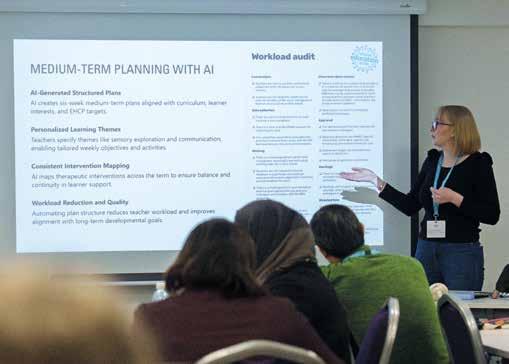
The NEU hosted an interactive AI workshop for members in February
For many of those who research AI, the problems go even deeper. As digital education researcher Ben Williamson has argued, edtech companies are not just providing a technology but staking a claim to authority over pedagogy and curriculum. It is their algorithms that increasingly determine whose version of culture and history will count as educational knowledge and what kind of pedagogy will be adopted for what social purposes.
The wider context matters
These are basic and long-term issues that any serious national programme should want to address. But it is surprising how little attention the Westminster government devotes to them.
The curriculum and assessment review for England, published at the end of 2025, made scarcely any reference to AI. Its main assumption was that the problems arising from AI existed ‘out there’, in the world beyond the school, and it recommended that schools respond to them through programmes of ‘media literacy’ and citizenship. We can agree that this is a necessary move, though one that would be easier to make if governments over the last 20 years had not worked so hard to remove critical perspectives from the curriculum.
But more is needed. We need to turn the lens inward and ask whether our education system is itself part of the problem.
Teacher knowledge and expertise
Ever since its founding, the NEU has documented how underfunding and restrictive regulation have undermined teacher knowledge and expertise, and how a relentless focus on testing has narrowed the scope of the curriculum. This is the context in which AI is being introduced, and unless checked it will have a heavy influence on how AI is used. Responding adequately to AI really does mean rethinking the character and direction of our schools and colleges.
If the secretary of state believes that we are on the brink of millennial change, then she should, at the very least, involve educators in a discussion about some fundamental and open-ended questions: who is deciding the technologies and the algorithms that are reshaping our schools and colleges? How are these decisions justified? What are their consequences likely to be? How can they be questioned and changed?
Technology, we could remind ourselves, is not an unstoppable force. We can apply the brake. We can change direction.
VICTORIA Harrison, a primary school teacher in Derby, was one of 100 attendees at Imagine!, an Arts and Minds conference held on 13 June in Bath. She said the arts are important because “in a world where everything is so screen based and social media based, the arts bring us back to who we are and give us joy”.
She added that over the years they had been squeezed out of the classroom.
Of the event, she said: “It’s wonderful to feel part of something bigger.”
n Visit theartsandminds campaign.org.uk
PHOTO by Kois Miah
Union people
‘Laughter and creativity despite the challenges’
Jenny Williams is a rep at Applegarth Academy in Croydon and assistant secretary of Croydon NEU. She is also part of the SEND organising forum (London region).
What do you love about your job?
The staff, parents and children I work with. No two days are ever the same. At its very heart, education is all about working with people and communities. That’s hugely important.
Despite the challenges, schools are full of laughter and creativity. I’ve made best friends in education – I even met my husband at the first school I worked in.
What do you love about being in the union?
The opportunities available to all NEU members are amazing. For example, in May I went to Poland as part of the Stand Up to Racism study tour. I learned a lot.
Speaking at conferences, organising region-wide events – these are things I never thought I had the ability to do. But being part of the NEU makes it seem like the most natural thing in the world.
In some workplaces, asking questions can be viewed as dissent, but in the NEU
questions and lively debate about all aspects of education are welcomed.
What have you been up to lately?
As part of Croydon district, I’ve been busy helping organise Stop School Cuts campaigns. Talking to the public has made me realise how valued schools are in local communities.
People are always staggered when you show them just how much school funding has decreased since 2010. It’s striking that many of the people who stopped at our Stop School Cuts stalls had direct experience of cuts, whether as parents or as educators. Stories of support staff redundancy, narrowing curriculum opportunities, the devastating lack of support for pupils with special educational needs and disabilities (SEND), and educator burnout were sadly common.
What’s important to you right now?
Professionally, my focus is on the schools white paper and its potential impact on
SEND education. Without radical curriculum and exam pathway reform, plus massively improved funding, I’m not optimistic about its success.
That’s before we even start to think about the loss of legal SEND safeguards and the mass academisation of schools.
On a personal level, like many people in education, I’m trying to achieve a more sensible work-life balance and not get too disillusioned by the constant barrage of unsettling news in the media.
What do you do on your day off?
Read, watch films and nap. I also pretend to improve my French on Duolingo, ignore the housework building up and engage in fairly pathetic attempts at keeping fit by joining yoga classes. I also fantasise about being brave enough to apply for the BBC’s Race Across the World.
Tell us something we don’t know.
I teach pupils with developmental language disorder, which two in every 30 children have. It’s more common than autism but not as widely understood as it should be.
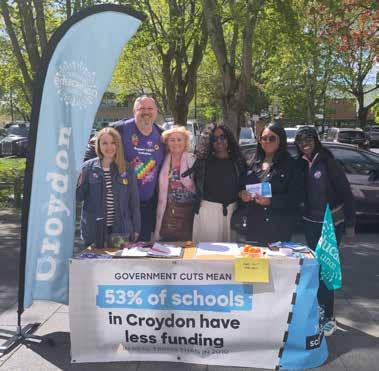
(Left) Jenny with fellow NEU members on a Stop School Cuts stall in Croydon, south London
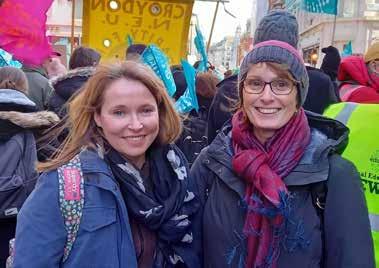
Jenny (left) with Croydon NEU colleague Sue Andrews on a demonstration in London during strike action over pay, March 2023
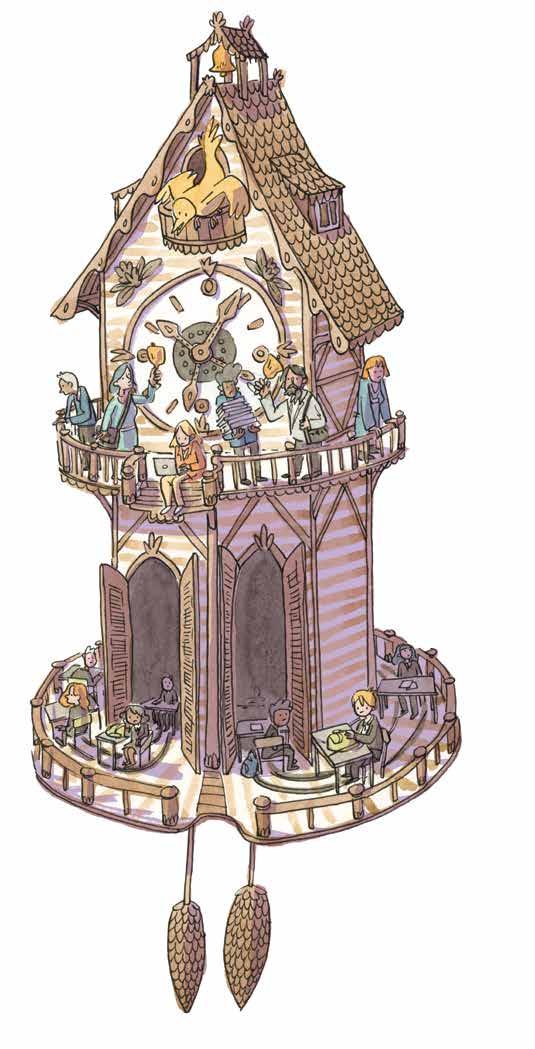
A new theory of time
Words by Michael Rosen
Illustration by Dan Berry
Einstein had an idea that time can be relative. Ever since, there are some we should forgive, who’ve found it hard (even with good intent), to understand exactly what Einstein meant.
Now there are other Einsteins in their prime, beavering away on a new theory of time. This theory, they tell us, will have its application, with classroom teachers in the world of education.
In this theory (yes, this may sound far-fetched), time can be both constant –and yet stretched. The school timetable is fixed –that’s the law, but the work required will be more and more.
The idea here is that teachers should be elastic (the media agree this would be fantastic), but teachers are suspicious and greet it with a sigh, it looks like swapping teachers for yet more AI.
ENGLAND WORLD
SAY NO TO RACISM
WORLD CUP
Home of the brave
In January 2025, US Immigration and Customs Enforcement (ICE) gained the power to enter schools. US teachers and union staff describe the ‘horrific’ consequences of this policy change.
Interviews by Sarah Thompson and Frankie Faccion
UTLA members at schools across Los Angeles welcome students back on the first day of the 2025-26 school year with signs in both English and Spanish
PHOTO courtesy of UTLA
Maya Suzuki Daniels (right) is a teacher at San Pedro High School (Olguin campus) in Los Angeles, and a member of United Teachers Los Angeles (UTLA).
WHEN the invasion happened – because that’s what it felt like – on 6 June 2025, I don’t think anyone knew what to do. Armed state agents had come into the city and were terrorising people.
A guerrilla-style warfare began, which is characteristic of Los Angeles because we have a history of street-level riots and rebellions and a very tight network of movement activists. So people fought back. You saw videos of people throwing rocks and it was kind of an all-out melee for a while.
After the first couple of days, it was clear they weren’t leaving. Instead, it was escalating. They brought in the National Guard; the Immigration and Customs Enforcement (ICE) agents started to raid churches and swap meets and parks.
I got a call from my husband to say they were coming to our daughter’s nursery school and I understood that my union’s immigration justice team had to show up. It was a false alarm – the nursery had gone into lockdown and it was all quiet – but I did see that we had to do something.
In the face of “who’s going to save us from state violence?”, as teachers, we understand that if anyone is going to stand up for our kids and our families, it’s us.
People power
A bunch of us got together [to form the Harbor Area Peace Patrol] and we patrolled the streets every day for almost a year until we pushed ICE out. They were staging in our neighbourhood down at the Port of Los Angeles. And since we got them out of that staging ground, we’ve not seen them in our neighbourhoods.
We had started to wind down the patrols but are on alert to bring them back. There are rumours that it might kick off again during the World Cup or after the midterm elections in November. We are ready. But at this point, we feel we had a major victory in getting ICE out of our neighbourhood.
We were always just observers [on our patrols], but I think we held them accountable. We were using our power as citizens to communicate to them: we do not accept this. The crisis of Trump 2.0 is that what
government officials are allowed to do and what they will do, don’t align. We are at a place where it’s like: who is in charge of enforcing laws in this country? That would be the highest branch of government, so what do you do when it violates the law?
A lot of ICE agents are apparently people who had not met the bar for becoming a police officer or for other areas of employment. And the Associated Press found at least 24 ICE employees had been charged with crimes including physical and sexual abuse.
We have more than 100 folks on our patrol, and a broader community of supporters come in for events. There’s a variety of people but mostly it is those rooted in the community, including a lot of teachers. The International Longshore and Warehouse Union (ILWU) also got involved in the last couple of months.
“As teachers, if anyone is going to stand up for our kids and our families, it’s us.”
Maya Suzuki Daniels
They brought a lot of knowledge of the ports and some were physically imposing.
On our patrols, we deploy cars to go out into secure meet-up spots and scout the neighbourhoods to check for ICE presence. I will be on the lookout for ICE vehicles or agents probably for the rest of my life.
We saw that if you could mobilise the community and get them more angry than afraid, then ICE would leave. No matter how much firepower ICE has, people power is really intense.
Recently, someone texted me and said, “what should a student do if their parent is deported?” They went home and their parent wasn’t there, they’d been deported. This has happened on other occasions. Each of these situations is horrific and unfortunately becoming normalised.
You’re supporting parents and carers to create the paperwork for their child to go to someone close so that they do not end up in the foster system. That student [whose parent was deported] was 14. Some families have chosen to self-deport instead of running the risk of that kind of trauma and separation.
One student’s father this year was concerned that someone was taking pictures of his work truck, so she missed three days of school. Our attendance was down 60 per cent at the end of last spring.
continued on page 22
PHOTO by Chris Valle
continued from page 21
Hilario Benzon (left) is interim
director
of the human and civil rights department in the National Education Association’s (NEA) center for racial and social justice in Washington DC.
IMMIGRATION and customs enforcement, detention camps and the targeting of families is not just an immigration issue. It is a human and civil rights issue.
It is not only affecting students who are profiled as immigrants. It is having a longlasting impact on all students, educators and communities. More people who may previously have stayed out of these conversations are now recognising those impacts.
At the NEA, we believe everyone belongs here. Our vision is a great public school for every student. That means ensuring every student, regardless of identity, immigration status or socio-economic situation, has access to a great public education.
When students or families disappear from a school community, whether through fear, detention or deportation, the impact is profound and long-lasting. Our students belong in classrooms, not detention camps.
Living in fear
One of the first actions taken by the current administration was revoking the longstanding sensitive locations policy, which had previously limited ICE enforcement at places like schools, hospitals and houses of worship. Those protections existed because fear alone discourages people from accessing essential public services.
We are seeing major increases in absenteeism. Families are afraid to send children to school. That has cascading impacts across entire school communities. That is why the NEA, alongside sister unions and faith groups, filed lawsuits challenging the revocation of those protections.
At the same time, we are supporting educators with mental health resources, coping strategies and social-emotional learning support because students cannot learn when they are living in fear.
Teachers already carry responsibility for protecting students in classrooms, hallways,
buses and school grounds. Now they are also confronting the reality that students and families are being targeted because of immigration status or perceived identity. That adds another profound layer of fear and stress for educators.
There have been documented cases of ICE and DHS [the Department of Homeland Security] monitoring parking lots and tracking educators who are supporting immigrant families.
Alongside the climate of fear, there is also a fear of surveillance and being watched.
“While there is fear right now, our organising and collective action also create hope.”
Hilario Benzon
Many educators worry that speaking up could make them more vulnerable, especially those who are already easily profiled.
Despite that fear, our members continue to organise and advocate for students and families. One of the key things we emphasise is that these issues are connected. Immigration enforcement, public education, curriculum attacks, LGBT+ rights, voting rights, and racial justice are not separate struggles. They are interconnected, and we cannot organise in silos. Building coalitions is essential.
We are helping districts adopt a Safe Zone policy, which is a clear procedure and action plan for what happens if ICE attempts to enter a school community. Everyone should know their role and responsibilities. We are encouraging members to work with unions, faith groups, businesses and community organisations to ensure districts have concrete plans in place. Having a plan is not a luxury. It is a necessity.
We recently spoke at the National School Boards Association conference, and the session was standing room only. School board members, superintendents and district
UTLA organised a rally and march, demanding more protection for immigrant families from the Los Angeles Unified School District, in August 2025
PHOTOS courtesy of UTLA
leaders were all seeking guidance on Safe Zone policies.
It is not enough to pass a policy. Schools also need training, implementation and clear communication so everyone understands what to do in practice. That includes who verifies judicial warrants, how families are notified during emergencies, and what happens if key administrators are absent.
We also provide Know Your Rights training and Safe Zone workshops so educators and communities understand both their rights and how to organise collectively for protection and support.
‘They cannot take our joy’
One of the most impactful things has been our monthly Fighting Back meetings through the center for racial and social justice. These meetings connect educators and union members across the country so they can learn from one another, share resources and organise more effectively. In a union with more than three million members across many states and communities, people often ask where they can turn for support and guidance. These meetings create opportunities for collaboration so communities are not waiting until enforcement arrives at their door.
That ability to respond in real time has been critical. I always remind people that while there is fear right now, our organising and collective action also create hope.
Through advocacy, organising and community, we are building spaces where people feel less alone and more empowered to act. One thing they cannot take from us is our joy.
That spirit of compassion, resistance and hope is growing across the country. More people are getting involved because they cannot stand by in the face of inhumanity.
Our advocacy work is actually centred on storytelling, because it is critical for people to understand that these are real lives being affected, not abstract policy debates.
We have educators, families and students whose lives are directly impacted, and we try to ensure those experiences are shared in a way that helps people understand the human impact.
One example that stands out is a member whose husband was going through
an immigration process but was still detained. She was working in a school at the time, and while she was trying to support her students, she was also dealing with her husband being moved repeatedly through the system.
He was transferred, I believe, around 14 different times, which made it extremely difficult for the family and legal advocates to even track or support his case.
During this time, her students and colleagues supported her, writing letters and standing in solidarity with her while she continued working. We also partnered with community organisations, unions at the local, state and national level, and advocates in Congress to push for his release.
Connecting the dots
Another example of the broader spirit of resistance was a vigil and readathon we participated in at a detention facility in Texas. Faith leaders, educators, union members and community advocates came together and read letters and books in solidarity with detained children.
These kinds of actions show that even in the midst of fear and hardship, there is deep compassion and collective care.
People are showing up, even in very difficult conditions, to defend their schools, their communities and their families. That kind of organising gives people hope and helps
continued on page 25
‘Intensely fearful’ The realities of being a teacher in the Trump era
Cecily Myart-Cruz (see page 25) and Maya Suzuki Daniels say teachers are fearful about what and how they teach, leading to self-censorship.
Maya says: “There’s a sense of foreboding and doubt underpinning curriculum and instruction that wasn’t there before Trump’s second administration. It feels like there are things you’d better not do. But they are things that you’re supposed to do as a teacher: provide a rigorous and intellectual curriculum, engage students in real-world issues, talk about controversial topics in a way that is stimulating and gets kids invested in applying concepts to the real world, and bringing in contemporary sources. Now, there’s a very Big Brother-ish sense of: ‘Am I going to get in trouble for doing the functions of my job?’
“Teachers feel scared. We have started to self-censor and water things down, because we recognise that there are not strong mechanisms in place to defend teachers or academic freedom right now. A parent complaint can trigger a whole cascade of disciplinary measures.
“Within the classroom, kids are struggling to talk about topics in ways that are not emotionally inflammatory. And teachers are not provided with support on how to address this. We have a culture that is just intensely fearful.”
Cecily says: “I’m a middle school [the equivalent of years 7-9] English teacher by trade, and one of the things that I made sure to hit upon with our kids was critical thinking skills, which they need. They are severely lacking in America right now. We’re not having discourse and debate. There is a fear to teach because of the possibility somebody’s going to tell on you, and you could get fired. We’ve seen lots of folks getting fired, not in Los Angeles, but in places like Florida. In 2022, the Parental Rights in Education Act was passed in. It’s referred to as the ‘don’t say gay’ law. It prohibited instruction on sexual orientation and gender identity in early grades in Florida. Imagine, as an LGBT+ educator, being told your existence doesn’t matter.”
continued from page 23
others across the country see what is possible.
The NEA believes there must be comprehensive immigration reform, a pathway to citizenship, and policies that keep families together. If we addressed those three things, we would have a system where students are in classrooms instead of detention camps, educators feel safe teaching, and families can live without fear.
This country was not built with all of us in mind. There has always been a struggle over power, wealth and belonging. That is why it is important to connect the dots across all the attacks we are seeing.
These attacks are intentional. They are designed to exhaust people, create fear and silence communities. But silence is no longer an option.
“When you see the empty chair that belonged to that student, it does something to you.”
Cecily Myart-Cruz
Cecily MyartCruz (left) is president of United Teachers Los Angeles (UTLA). She has taught in Los Angeles County for 31 years.
YOU wake up in the morning and think you’re in a movie. That’s the only way to describe it. It is shocking. Every day, we’re like: “What else can happen?” The newest levels of the depths of hell that we’re in are unlike anything I’ve experienced.
Former presidents Clinton and Obama could have made sure that temporary protected status (TPS) and deferred action for childhood arrivals (DACA) were cemented. They did not.
We went to the Los Angeles Unified School District before Trump was elected and asked if they had safety plans in place for if these masked folks came and said, “I want to see a child”. They were umming and aahing, and I said to union colleagues: “OK, what are we going to do as a trade union?”
We have trained our members to ask for a judicial warrant if ICE agents arrive at their school. Last year, on two occasions, ICE agents came onto a campus looking for specific students. And because of the work we’d done,
teachers were on red alert. They took the kids into a different classroom. And the principal told the agents to wait outside and then called our district office. The agents left.
We have community groups – community self-defence, an immigration justice team and [pro-immigrant group] Unión del Barrio. And then we have the community group Harbor Area Peace Patrol down by the ports.
ICE agents were staging on Terminal Island [where the ports are located] and our patrols were going out before work, taping them, noting licence plates, following up leads. It is fantastic to see folks working together.
Unknown trauma
We had two students – about to start their 12th year [equivalent to year 13] – who were taken last summer. It’s heartbreaking.
One of them, now back with his family, was walking his dog outside his house. ICE agents took him to a detention centre. His teacher found him there. He’d been caged with 25 men, unable to shower or brush his teeth. He’d been wearing pyjama pants and flipflops, and that’s how he was. He was there for five days and was transferred to Delano [the location of a prison north of Los Angeles]. He had to sleep on the floor by the toilet. He was there for two months.
A young woman was also taken. She was 17 years old. She and her mum were going to a court date. That’s what happens. People are dutifully going to their court date with their paperwork, and they are snatched. They took them back to Guatemala. The girl had never lived there. They were in hiding. She was a soccer player and had been accepted to college. She’s still in Guatemala and her mother has now died.
I believe enrolment has declined because parents are afraid to send their children to school. They are sheltering in place. We have a lot of school staff bringing food to people’s homes. It’s a huge network doing that work. It’s beautiful to see the kindness, and people taking a stand. But it’s also horrific, awful circumstances. We don’t know the effect of this type of trauma on people; we will not know it for years to come.
We have virtual academies where children can learn online. It doesn’t replace the interaction of a teacher with their student or the camaraderie of students being together, but it’s a way to continue education. When you see the empty chair that belonged to that student, it does something to you.
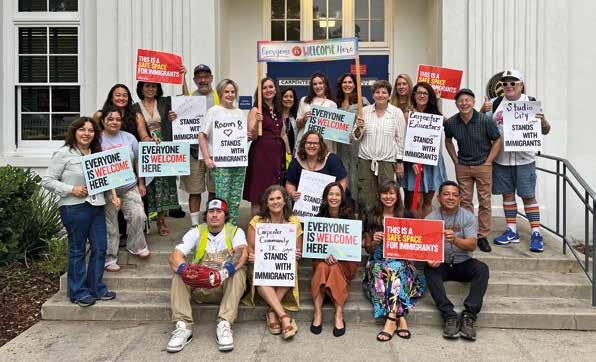
UTLA members and staff from Carpenter Community Charter School in Studio City, Los Angeles, were among those to welcome students back on the first day of the 2025-26 school year PHOTO courtesy of UTLA
The Royal Shakespeare Company is on a mission to revolutionise the way pupils NEU president Ed Harlow went along to an east London school to find out more.
AT Eastbury Community School, in Barking, east London, year 10 GCSE English students are getting to grips with Macbeth in a session led by Royal Shakespeare Company (RSC) practitioner Conrad Cohen.
He’s using an award-winning teaching approach that asks educators to transform their classroom into a rehearsal room, with students taking on the roles of actors and directors.
The method is part of a new RSC Shakespeare curriculum launched at the end of last year on a digital platform. It is free for state schools and special educational needs and disabilities (SEND) schools in the UK and offers thousands of resources, including
“The rehearsal room is exciting. Shakespeare is designed to be experienced.”
Conrad Cohen
lesson plans and detailed instructions for teachers on how to put the rehearsal approach into practice in their own classrooms (see box, page 29).
“I learnt Shakespeare from behind a desk, and was told: this is what it means,” Conrad says. “But the rehearsal room method is experiential, active, on-its-feet learning that asks, what do you think? What’s your opinion? What’s your interpretation?”
The focus today is act 1, scene 7: Lady Macbeth is attempting to persuade an increasingly anxious and nervous Macbeth to kill King Duncan and usurp him.
Become a king, a friend, a witch
In a fast-paced exercise, Conrad tells the students to become a king, then a warrior, a trustworthy friend, a friend who you no longer trust, and, finally, a group of witches. Students change their body language and facial expressions as they rapidly morph from one character into the next.
It is a quick and fun way of introducing some of the main characters, and students work individually, then in pairs and groups, sitting – sometimes standing – at their desks.
“There is no right or wrong choice,” Conrad tells them, as they compare and discuss how they interpreted how each of the characters would look and carry themselves.
Energy fills the room as they experiment with tone of voice, body language and facial expressions with increasing urgency.
Text is introduced, and students become Lady Macbeth and Macbeth. They read through a short extract and consider how to accentuate the words, playing with raised voices and whispering to emphasise the motivations of each character.
Pupils’ fascinating interpretations
“Art thou afeard to be the same in thine own act as thou art in desire?” one student calls out, explaining, “I think she’s making Macbeth feel insecure as a man. Belittling him in a patriarchal society.” Another opts for a softer voice and says: “I think Lady Macbeth is acknowledging his vulnerability.”
After the session ends, Conrad tells Educate: “The rehearsal room is exciting and collaborative. Shakespeare is designed to
Raiian
The play’s
the
pupils engage with Shakespeare. Educate writer Sarah Thompson and more.
the thing play’s
be experienced, to be acted by actors, directed by directors, and watched by audiences. Giving young people the chance to do that unlocks things that otherwise they’re not going to access.”
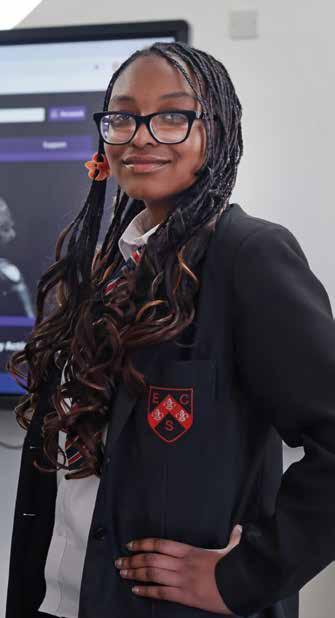
Omotola, 15, agrees: “The session helped a lot with working out the ‘riddles’ of Macbeth. The language is challenging, but this helped me understand the character’s motivations, and the language made more sense.”
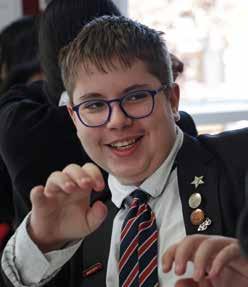
Raiian, also 15, is equally enthusiastic: “I really liked where we had to pinpoint where we might be whispering or shouting. It illuminated where the change of tone might be in the text. It came naturally.”
Ensure everyone is equipped to teach Eastbury has worked with the RSC for more than a decade. But before the launch of the digital platform, only a handful of staff had been trained to deliver the Shakespeare curriculum, says Anita Ark, English curriculum lead and one of those fortunate to be trained in how to deliver it.
“As a department, one of the challenges was how to ensure everyone was confident and equipped to teach Shakespeare in this way,” she explains. “The platform the RSC has developed is so helpful. It takes all the ideas and puts them into a ready-to-go, userfriendly package, so now anyone can do it.”
It’s adaptable, allowing educators to slot an exercise into their existing lesson, or create an entire curriculum plan within the platform.
‘Teachers know their pupils best’ “It’s open and broad so teachers can fold it into their own practice,” says Conrad. “We acknowledge that teachers will adapt the curriculum depending on student need and the classroom atmosphere, because teachers know their students best.”
Around two million young people in the UK study Shakespeare every year as part of the GCSE English curriculum. But many students find his work inaccessible and are daunted by tackling it.
“I’ve heard teachers tell a class that the next unit is Shakespeare and there’s been an audible groan,” says Conrad. “I’m sure that’s very common. There’s the stigma that it’s difficult, it’s not for me, it’s old-fashioned.”
At ease with Shakespeare from KS1 At Eastbury, an all-through school for ages three to 18 years, Shakespeare is introduced in key stage 1. Capturing the children’s interest early helps them get comfortable with the language and the ideas and instils the belief that Shakespeare is for everyone.
“It’s important to introduce Shakespeare at a young age, so they don’t fear it,” says Anita. “By the time students get to year 10, they’re very familiar with this way of working.”
More than 50 per cent of the school’s students have English as an additional language. While it could be assumed this might put them at a disadvantage when it comes to studying Shakespeare, Anita says that because the language is new to everyone, this is not the case.
“Shakespeare is actually a leveller in many ways,” she explains. “You have someone in your class for whom English isn’t their first language and someone for whom English is their first language. But when they look at the same piece of text, they both think, ‘I’m not sure what this is about yet.’”
Plays to strengths of SEND students
And students who struggle with reading and writing find a real passion for Shakespeare taught using the rehearsal room method.
“It really plays to their strengths and helps with their understanding of the language by changing the focus,” says Anita. “They’re able to focus on their oracy skills or performance skills. For a lot of our SEND students, it’s a relief when they have a lesson where they’re not expecting to write down sentences, and they can work on their feet.”
But what about students who are anxious about stepping into the spotlight?
“It’s common to have some who are reluctant to get up on their feet and speak out loud,” Conrad admits. “But a big part of rehearsal room practice is something we call company building. At the RSC, we rarely get a company of actors where everyone knows everyone well, so there are games and exercises to help people feel comfortable and safe.”
You are essentially treating students as a cohort of actors, he explains, building an environment where they are encouraged continued on page 29
Photos by Rehan Jamil
“Shakespeare is a leveller as the language is new to everyone – whether or not English is your first language.”
Anita Ark
continued from page 27
to explore and experiment without fear of judgement or getting something wrong.
Safe, but outside their comfort zone He also believes that encouraging students slightly out of their comfort zone is an important part of the learning process.
“Students have the right to feel safe, but they don’t necessarily have the right to feel comfortable,” he says. “In fact, the learning often happens when they’re outside of their comfort zone and trying something new. These company-building exercises ‘gamify’ the learning in a way that, almost by subterfuge, gets everyone comfortable.”
Anita likes to remind students that the classroom is “a rehearsal room, not a stage”. The focus is on working together, rather than one person being in the spotlight.
“Although some students do relish that,” she laughs.
There can be a preconceived idea that Shakespeare’s works are – given their age and subjects – irrelevant and unrelatable for young people, but Anita finds students are fascinated and drawn in by the plays’ themes.
“These are stories about real problems. Even though the characters might feel quite detached from us – kings and queens and nobility in the case of Macbeth – the problems they face are the ones everybody faces.”
Omotola nods: “I can see how the themes resonate with young people. Like themes of betrayal – if a friend backstabs you or
talks about you behind your back. They have relevance, it’s just a different context.”
As we get ready to leave, the union’s president Ed Harlow, a music teacher and joint leader of the union’s Arts and Minds campaign, reflects on seeing the RSC curriculum “in action”.
“It’s a phenomenal resource and allows teachers to really bring Shakespeare to life,” he smiles. “We’re delighted that the RSC has joined the Arts and Minds coalition and we look forward to working with it more to help to bring Shakespeare, drama and the arts more widely back to the heart of our curriculum in ways that are engaging, exciting and practical.”
Launched at a star-studded event in November 2025, the RSC curriculum has a vast range of resources to support the teaching and learning of Macbeth, which was added first because it is the Shakespeare play most studied in schools.
In September, Romeo and Juliet resources will be put onto the interactive platform. After that, the RSC aims to add a play every six months until 2030: Much Ado About Nothing, The Tempest, Othello, A Midsummer Night’s Dream, Twelfth Night, The Merchant of Venice, Hamlet and King Lear rsc.org.uk/learn/ shakespeare-curriculum
‘If you need help, for whatever reason, ask’
The NEU trust fund assists members with everything from food costs to wheelchairs. Sally Gillen finds out what help is available and the huge difference that member donations can make.
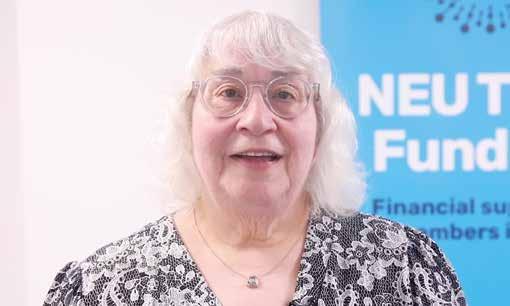
A FIVER doesn’t buy much these days. “But for the price of a cup of coffee, members can make all the difference to someone else,” NEU trust fund trustee Kim Knappett (pictured right) tells Educate.
A charity, the trust fund receives £75,000 from the NEU every year – its only guaranteed income – to help hundreds of members in financial need.
But Kim says individual member donations of £5, which can be given with the annual subscription in October, are vital to boosting the charity’s coffers. Last year, 6,800 members opted in, adding another £34,000 to the pot.
“I contributed right the way through my teaching career, and in my 25 years as a union caseworker I pointed people towards it,” adds Kim, a retired London secondary teacher and former joint president of the NEU (2018-19).
No rainy-day funds
In 2025, 47 NEU districts also gave money to the trust fund, which, in a climate of belowinflation pay rises and a cost-of-living crisis, is now inundated with applications.
“Some are heartrending,” says Kim, who became the trust fund’s chair of trustees in September 2024. “A lot of the members have been limping along for some time before they get to us. The cost of living, which has been high for so many years, is a massive issue. Many members’ incomes have not met outgoings for quite a while, and many don’t have savings. I remember one member who we helped saying to us: ‘Now when the children ask for something, I won’t have to say no.’”
Unsurprisingly, a third of applications are from support staff struggling to pay the bills.
“But we’ve also had cases where a deputy head has moved their family across the country for a new job that doesn’t work out and they then have no income,” Kim says.
Rainy-day funds are, for many, a thing of the past. Even those who had savings five or ten years ago have used them up on everyday expenses.
“The cost of living is a massive issue.”
Kim Knappett
“Suddenly, people who thought they had £10,000 squirrelled away realise they are down to their last £1,000 because they have been taking small amounts of money out to pay monthly bills. Then they have to repair the boiler and find they don’t have the money.”
Retired members (anyone who has been a paying member of the NUT, ATL or NEU for six months is eligible) are also asking for help.
“Until recently, it had never crossed my mind that if you rent when you go on to a pension, of course you still have to pay your rent,” says Kim. “Even on a good teacher’s pension, people are struggling to pay rent because it goes up more than a pension does. We had a recent case where a member’s rent almost doubled.”
John Paul, one of the trust fund’s three administrators, adds that, even for those who
own their home, if their ability needs change, they may need prohibitively costly adaptations such as a stairlift or a motorised wheelchair. The trust fund can help with those.
He says reasons for applying to the fund are many and varied. Job loss, inability to work because of mental or physical ill health and leaving abusive relationships are among them, but there isn’t an exhaustive list. Trustees will consider any application.
“If you need help, for whatever reason, ask,” he urges members. “We had a retired member who needed the path outside their house repaved so they could get to their car, which isn’t something you might think you could get help for, but the trust fund was able to pay for it.”
Inside the application process
Applications typically fall into two categories: some extra money to help with living costs for a short time – the trust isn’t set up to offer long-term financial assistance – or a grant to pay a one-off expense.
“We’ve had members who need help with their rent and money to buy white goods because they have left an abusive relationship and their home and are setting up somewhere new with nothing,” explains John.
Applicants who have children will receive an additional termly grant of £230 per child, he adds, because trustees are acutely aware of the cost of school uniform, outings and sports clubs.
One of the things the trust fund can’t support is deposits for housing, which constitutes a loan and would be a breach of charity rules.
“But there are ways around that,” explains Kim. “If we can see there’s a shortfall, the trustees may give a grant that can be used to contribute to the rent once the person has moved in, or we can pay the first month’s rent.
“Apply if you need to and we will work with you to sort things out. There’s been an application this week from someone who couldn’t pay their flat deposit because they
How the trust fund changes lives
needed to buy beds and a washing machine, so we have asked them to send in receipts and we will give them the money for those.”
She adds that the trust can’t repay debt.
“People come and say they have £37,000 to repay, but we don’t have that sort of money and also that’s not what we do – but if debt is crippling a member so they can’t put food on the table, we can give a grant of £230 a month for food.”
“We’ve had members who have left an abusive relationship and are setting up with nothing.”
John Paul
Asking for help isn’t, of course, easy for many people. Kim stresses that the process is made as confidential as possible and that neither she nor anyone else on the grants committee that assesses applications knows anything about the applicant other than their reason for applying (see box, right).
She also says that members shouldn’t be deterred by the process of applying: “People are often highly stressed and in crisis mode when they seek help from us so if you need any help with the form, please do contact John Paul and the team. They can help.”
Once they are in a better position, those who have benefitted from the fund are often keen to sign up to make a £5 annual or one-off donation. Opting in from this October is, says Kim, an easy way of giving to the trust fund. “You never know when you may need it yourself.”
“The stairlift was installed yesterday and it has already changed my life so much. Thank you.”
NEU trust fund Frequently asked questions
n How do I apply?
You can download the forms from neu.org.uk/trust-fund and return them to trustfund@neu.org.uk. You will be asked to provide details for two referees and bank statements for three months. Applicants are means-tested. Savings of more than £6,000 may mean you are ineligible for help, but John and Kim stress this is not a blanket policy and individual circumstances are considered in detail, so don’t let this deter you from applying. Members can apply for a grant more than once.
n How do I make a donation?
You can opt into the £5 annual donation by emailing membership@neu.org.uk. You can also make a one-off donation of any amount by contacting trustfund@neu.org.uk.
n Interested in becoming a trustee?
Trustees meet five times a year. You don’t need to have been a teacher to be considered. Perhaps you know someone with a financial background who would be ideal? Please get in touch: trustfund@neu.org.uk
“When your message came through, I cried, as I thought I might get a food voucher at best. When I told the children how generous the trustees had been, they also wished to extend their thanks.”
“Thank you for your continued support. I appreciate the trustees’ generosity, as the last 12 months have been unprecedently difficult.”
A class act
‘Reading doesn’t look the same for everyone’
Amy Brookes is learning and cultural resource centre manager at Manchester Enterprise Academy, part of Prospere Learning Trust. Frankie Faccion discovers what makes her a class act.
THE library at Manchester Enterprise Academy (MEA) is more than just a place with books, says Amy Brookes. It’s become a creative writing club, chess tournament venue, calm space and meet-and-greet spot.
It’s also often the children you’d least expect who make use of it, Amy adds. “Sometimes the naughty boys come in, and you think, ‘what’s gonna happen?’” she laughs. “Then they sit down to play chess.”
The school, in Wythenshawe, didn’t have a library when she arrived in 2018. But, postCovid, the need to prioritise literacy skills became – and remains – urgent.
In 2021, Amy – a former English and special educational needs and disabilities (SEND) teacher of 12 years who joined MEA to specialise in literacy interventions – was given the opportunity to set up a library from scratch, using a large, unused meeting room.
Using links with other school libraries in Prospere Learning Trust and the online librarian community, she helped establish the learning and cultural resource centre. Key stage 3 English lessons take place there, and it’s a hub for activities, from book clubs to karaoke sessions.
It has become the heart and soul of the school, says Amy, or “Mrs Books” as she has been dubbed by students. She laughs recalling a year 11 student who had been convinced that was her real name since starting in year 7.
Amy has used the library to promote local and national competitions, with a year 8 pupil’s short story winning a Portico Sadie Massey Award for creative writing in 2023.
“Building a reading culture is not going to be instant; you have to commit to it.”
The centre’s success would be impossible without a full-time librarian. Amy gets frustrated when school librarians are treated like an add-on. She recalls her shock at discovering a friend at another school was expected to run a library alongside teaching and senior leadership responsibilities. “A library needs somebody fully devoted to it,” she stresses.
However, just 37 per cent of local authority-maintained schools in England have designated library staff, according to the Great School Libraries campaign.
Creative ways to engage readers
Amy says building a reading culture takes time, investment and trust from leadership. “It’s not going to be instant; you have to commit to it,” she explains, especially when literacy rates among children remain low, particularly in lower-income communities like the one in Wythenshawe.
According to the National Literacy Trust, around 40 per cent of children from disadvantaged backgrounds leave primary school with “unacceptably low” literacy levels.
Amy highlights the transition from primary to secondary school as a key moment for shaping reading habits. Each year 7 cohort at MEA is given a shared transition read before they arrive in September, supported by online chapter updates over the summer. This helps them engage early and see the library as a familiar space from day one.
Amy also runs year 7 inductions each year. Many students, she says, have never used a library before (since 2010, more than 800 public libraries across the UK have closed or been handed over to volunteers).
Some pupils are unsure how borrowing works, while others ask how much the books cost. So each year, Amy introduces pupils to
the borrowing system, catalogues and the classification system for books.
As well as practical guidance, she has introduced creative ways to connect with reluctant readers. For instance, the library works with the art department to run a manga competition where students create their own characters. Manga and graphic novels are among the most popular books in the space, and the talent displayed in the contests is “incredible”.
Having a librarian matters
Amy has also formed Reading Reds, a football-themed reading group designed to engage pupils who might not normally join a book club. It targets boys in year 8, where reading for pleasure often drops off.
“We really try to show them that football and reading cross over,” she says. “That reading can be cool.”
The first book they chose was Over the Line by Tom Palmer, set during World War I and centred on football. “We got boys involved who you wouldn’t necessarily expect to join a reading club, and they absolutely loved it.”
The group enjoyed the book so much that Palmer later visited the school. “They bombarded him with questions,” Amy says.
“When students meet authors, it’s like having a rock star in school.”
Adequate funding for author visits would make a significant difference, Amy believes. She remembers the excitement when Kimberly Whittam, author of Quiet Storm and Always Angel, visited. “They were asking her to autograph their books,” she says. “I’d never seen anything like it.”
“When students meet authors, it’s like having a rock star in school.”
When a child says they hate reading, Amy doesn’t take it at face value. For her, it is often rooted in a lack of confidence or a negative experience. “Very few students genuinely dislike stories,” she believes.
She recalls a year 7 pupil who arrived insisting she hated reading. Instead of challenging her, Amy spent time getting to know her interests before introducing her to
Awkward by Svetlana Chmakova.
Within weeks, the pupil had read the entire series. She even began spending chunks of her free time in the library. Watching her transform into someone who actively sought out books was moving, Amy says. The impact extended beyond reading, with noticeable improvements in the pupil’s confidence, selfesteem and classroom engagement.
“Reading doesn’t look the same for everyone,” Amy explains. “It’s not about turning every child into a traditional reader but helping them discover that reading can be for them.”
As students enter the library, Amy provides recommended reading lists for each year group and uses informal conversations to guide them. “That’s where having a librarian matters,” she says. “Without someone who can fully devote their attention to understanding students’ interests, it’s much harder to extend their reading.”
But it’s not just about reading. That’s clear from the breadth of provision at the learning and cultural resource centre. It’s a library, yes, but also a safe space for pupils to use whenever they need it, Amy says.
“It’s about getting them through the door and helping them feel like they belong here.” Do you know a class act?
Email educate@neu.org.uk
International
Members in solidarity
COX’S Bazar in southern Bangladesh hosts the world’s largest refugee camp, where more than a million Rohingya have sought refuge after fleeing atrocities in Myanmar (formerly Burma).
With roots in British colonialism, the Rohingya have faced systemic persecution in Myanmar since the 1960s, escalating to genocide in 2017 which resulted in a mass exodus of over 745,000 people within weeks.
In Bangladesh, Rohingya refugees are denied access to employment and to formal education outside the camps. Half a million Rohingya children living in the camps have relied on the United Nations and other international agencies for basic education and other essential services. However, following major aid cuts by the US and UK last year, nearly all education provision abruptly ended in June 2025.
Naturally beautiful, our award-winning timber windows and doors are the logical choice. Constructed from engineered timber slow grown in cold climates, their strength, stability and beauty are guaranteed.
Our collection has been carefully and sensitively tailored to complement the English home. Unlike timber windows of old, our products will not twist, will not rot and require very little maintenance. High levels of insulation and security ensure there is no need to sacrifice beauty for comfort.
With a15% discount off all windows & doors in our Summer Sale, explore the range in 55 showrooms nationwide.
The NEU has had links with the Rohingya community since 2018 and recently affiliated with the Bradford-based Rohingya Centre UK (RCUK). In 2024, RCUK and the NEU began joint work on an educational plan for the Cox’s Bazar refugee camps and the wider Rohingya diaspora, where many are denied any access to formal education.
This partnership focuses on developing and advocating for a sustainable strategy to restore and improve education for Rohingya children and young people, delivered by Rohingya teachers rather than international agencies. The aim is to build capacity among the Rohingya people so they can act on their own behalf.
NEU members buddy up for training
NEU members have supported the initiative through online teaching, mentoring and subject specialist guidance for Rohingya volunteer teachers. A pilot of weekly training sessions began in November 2025, preparing for community-run schools opening in July 2026, with continued support through a buddy system.
This project will enable trainee teachers to deliver education to 720 children in years 1 to 6 across three schools in different areas of the largest camp.
So far, feedback from Rohingya trainee teachers and NEU members has been extremely positive.
NEU Barnsley member Yvette Cooper has taken part in three training sessions, covering the role of the teacher, primary mathematics, and primary science. “It is a real privilege to contribute to this project and share my knowledge and experience as a primary school teacher,” said Yvette, who represents Yorkshire and Humber on the NEU’s international solidarity organising forum.
“Despite working in extremely challenging circumstances, the dedication and resilience shown by the Rohingya teachers towards their pupils has been truly inspiring.”
‘Every child deserves access to quality education’
The work undertaken so far demonstrates the NEU’s commitment to human rights and solidarity with communities globally.
“At the heart of the project is the belief that every child, wherever they are in the world, deserves access to quality education and the opportunity to build a brighter future. We really want to play our part
with Rohingya refugee teachers
in helping to achieve that,” Yvette added. Mohammed Amin, chief executive of RCUK, said: “It has been inspiring to work with NEU members who want to do
“Our partnership focuses on restoring and improving education, delivered by Rohingya teachers.”
More international news on page 36
something practical to support a dispossessed community to help itself.
“The work being done supports the wider vision of RCUK to achieve a world in which
all Rohingya people enjoy fundamental human rights, justice, safety and the opportunity to contribute to resilient, healthy, and empowered communities.”
(Top) A classroom at Cox’s Bazar. (Above left) RCUK and NEU members. (Above right) Yvette Cooper, executive member Louise Regan and Mohammed Amin
Sponsor Helen’s Great North Run
Raising Hope for Children in Crisis, the NEU’s fundraising appeal with Save the Children UK, supports those in the world’s toughest places.
“IN January, I was on a Zoom call with the NEU international team and representatives of charity Save the Children, launching the Raising Hope for Children in Crisis appeal.
“They asked what we, as international solidarity officers, could do to help promote the campaign and raise vital funds. Always a believer in not asking other people to do what I’m not prepared to do, I have signed up for the Great North Run half marathon, which takes place on 13 September, as part of the Save the Children team.
“I run (run! – more like a slow shuffle) because it’s good for my physical and mental health. I’m very lucky that I can run on the fells and in the countryside around town. Being out in the fresh air on top of the fells is good for my soul – it helps me appreciate how fortunate I am.
“Around the globe, one in 11 children needs lifesaving humanitarian assistance. Think how that would translate to your
classrooms – on average, that’s three children needing our help to simply stay alive. Children face conflict, hunger, displacement and climate disasters, but cuts to foreign aid budgets mean vital support is disappearing when it is needed most.
“Some facts and figures to boggle your brain – from Afghanistan to Ukraine, the Save the Children Emergency Fund reached more than 23.8 million people, including almost 12.8 million children, across disasters and conflict in 71 countries in 2024.
“Please urge your districts to support this campaign – the world’s children need us.”
By Helen Tucker (right), international solidarity officer – northern region, and environmental officer – Cumbria district
n Find out more at neu.org.uk/raising-hope including a model motion to take to your district to seek a donation.
n Helen’s fundraising page is at justgiving.com/ page/helen-tucker-6 if you would like to donate.
ECT given no warning of failure
I’M an early career teacher (ECT) and have been told – with no warning – that I’m likely to fail my first year. Can I fight this?
The early career framework (ECF) was designed to recognise that it takes up to two years of induction to become a competent new teacher, but you will need good school support to achieve this.
Had you been given any indication that your performance has not been satisfactory before now? Any reasons must be based on the teacher standards. Have you had all the entitlements and support that comes with being an ECT – for example, regular meetings with a mentor, additional time off timetable (ten per cent on top of normal planning, preparation and assessment time in the first year)?
n Visit neu.org.uk/new-teachers and speak to your school rep or call the AdviceLine for guidance. It is in everyone’s interest to support you to become a competent, confident teacher.
Worried about reporting senior colleague’s racism
I OVERHEARD a senior colleague using racist language during their lesson. I want to address it, but I’m worried about recriminations.
Racist language needs to be challenged, and it is good you are thinking about how to respond. Your colleague’s behaviour is inappropriate and unprofessional and may also amount to unlawful harassment under the Equality Act 2010.
The NEU recognises that many staff lack confidence in reporting racism and may fear repercussions. If you are worried about this, you can use your school’s whistleblowing procedure, which should be
Framework for developing an anti-racist approach
set out in the school’s published policy. It allows issues to be reported confidentially and, where they are in the public interest, gives legal protection against being treated unfairly for speaking up.
The union can provide confidential advice, help you prepare a report, and offer representation if the school fails to act.
You could also speak to your NEU rep. This does not mean you have to take formal action. It can be a confidential first step to talk through what happened and explore your options.
Reps can also support schools to work within an anti-racist framework, set out in
Free CPD webinars for all NEU members
NEU members have exclusive access to our continuing professional development (CPD) webinars. Here are some of the courses coming up.
Empowering girls to take action against sexism and sexual harassment
This session will explore why action is needed to empower girls, and what students should be able to expect from their schools.
8 July 2.30-3.15pm
Scaffolding understanding in the primary classroom: whole class, group and individual strategies
This webinar will introduce you to a range of strategies to help children access what is being taught, respond successfully to questions, and engage with learning at every stage.
9 July 4.15-5.15pm
Teaching dance confidently in primary Join this webinar to learn strategies and
neu.org.uk
the NEU’s charter, which calls for leadership accountability and whole-school action against racism.
n Visit neu.org.uk/anti-racism-charter
n Please email your questions to educate@neu.org.uk
n If your question is urgent, please call the AdviceLine on 0345 811 811
practical advice on teaching dance.
13 July 3.30-4.30pm
Navigating censorship and book challenges in school libraries
Explore the latest insights into rising book challenges and develop practical approaches for the school library.
14 July 3.30-4.30pm
n Webinars are available for 14 days.
n Visit neu.org.uk/national-cpd
Terrible True Tales: Saxons
WRITTEN by bestselling Horrible Histories author
Terry Deary, this fascinating book is part of a Terrible True Tales series, covering the Stone Age to World War II.
The lives of the Saxons are captured in four enthralling stories, ranging from what it was like being a trainee witch to the perils and consequences of being a sheep thief.
A History of Masculinity
Atmospheric black and white illustrations portray life in Saxon times. The author provides an afterword section sharing historical facts that have inspired each tale, as well as fun topic-related activities, such as designing a coin and creating ten laws.
Aimed at readers aged seven and upwards.
Cindy Shanks
Terrible True Tales: Saxons by Terry Deary. Illustrated by Tambe. Bloomsbury Education. £8.99.
Terrible True Tales:
Victorians STEP back in time with four gripping true tales about the Victorians, another book from the Terrible True Tales series.
Events featured include Henri Giffard’s airship flight, the steamship race to America, Charles Dickens’ frightening train journey and the building of the London Underground. There are historical facts about each event and creative ideas to try, such as designing a poster for Henri Giffard. With a sprinkle of humour, these books are a delightful way for children to learn about history.
Ideal for key stage 2 readers.
Cindy Shanks
Terrible True Tales: Victorians by Terry Deary. Illustrated by Helen Flook. Bloomsbury Education. £8.99
THIS is a compelling and incisive examination of how patriarchal structures have shaped societies across millennia.
Drawing on history, sociology and feminist theory, Jablonka’s analysis exposes how gender norms harm all genders while calling for masculinities rooted in equality, respect and justice.
A History of Masculinity is an essential, timely contribution to contemporary debates on gender, power and social transformation.
Jas Jacques-Butterworth
A History of Masculinity: From Patriarchy to Gender Justice by Ivan Jablonka. Translated by Nathan Bracher. Penguin. £12.99.
Nova Scotia House
NOVA Scotia House is set against the backdrop of the 1980s, a time when LGBT+ people were creating their own communities, families and philosophies.
It is a love story exploring the challenges of being queer at the time and at the start of the AIDS crisis. Porter examines what it meant to live through this devastation and what it means to have survived it. He explores the power of the act of remembering, telling stories and the AIDS memorial quilt.
This is a beautiful and poetic story which is imbued with loss and grief.
Graham Ward-Tipping Nova Scotia House by Charlie Porter. Penguin. £10.99.
Queer Thriving in Religious Schools: Encountering Religious Texts, Values, and Rituals
THIS book examines the intricate relationship between religious education, identity, queerness and the potential for transformation.
Seán introduces the concept of queer thriving, advocating for a shift beyond mere survival to full inclusion within religious spaces. Focusing on the Abrahamic religions, the book explores how religious texts, values and rituals can serve as entry points for challenging
exclusive norms and fostering greater inclusivity.
Personal narratives of queer individuals who have moved beyond survival to full integration within their religious communities offer insight into how this shift can be fostered.
Jas Jacques-Butterworth Queer Thriving in Religious Schools: Encountering Religious Texts, Values, and Rituals by Seán Henry. Routledge. £44.99.
Read a book that other educators might find useful? Send us your 100-word review to educate@neu.org.uk with a link to the book, plus your membership number, and your review could be published.
Quiet week? Try a reading audit
Jon Biddle, English lead and NEU rep at Moorlands Primary in Norfolk, is passionate about fostering a love of reading
INEVITABLY, it can sometimes feel as if we’re not doing enough to develop reading in school.
There are always the big events such as World Book Day and National Poetry Day. More important, though, are the quiet weeks, when much of the work takes place behind the scenes. It’s what happens in those weeks that gives us a real sense of how embedded and valued the school reading culture is.
Esther Brown, teacher and English lead at Hawes Primary School, suggests carrying out an occasional audit. This involves looking at the reading opportunities that take place in a normal week. It’s particularly valuable when undertaken alongside a handful of children from each class.
Going beyond English lessons
I’ve done this a couple of times over the academic year and have found the results interesting. Most recently, I discussed reading with pupils from our three year 5/6 classes.
First, they were happy we were reading two books simultaneously, and that there was a link between them. The Final Year, by Matt Goodfellow, is our class novel, and Skellig, by David Almond, is the text we’re studying in English. They talked about connections between the books and speculated about whether the authors had exchanged ideas.
We then looked at some of the wider reading we’d done across the curriculum that week, including the language used by estate agents when writing adverts (in English), and a variety of non-fiction texts about big cats (in science). They specifically mentioned that they preferred to read whole books, rather than just extracts, as it “makes more sense”. This gave a broader picture of how reading threads through our curriculum.
Our daily routines were also discussed, with some children saying they enjoy getting out cushions and beanbags, finding a cosy spot and reading. (I was particularly pleased that this routine remained in place in the run-up to SATs.)
Next, we discussed what else had been going on that week, much of which was pupil-led. Several children had worked on updating the song lyrics folder (pictured), which has rapidly become the most popular reading material in class; another group had updated the pupil recommendations shelf. Some had also been coming in at lunchtime to select books to read in the key stage 1 playground, as well as to refresh the stock in the key stage 2 reading shed.
One of our weekly assemblies is always based around a picturebook. This time, it was My Blood, Your Blood by Laura Henry-Allain, which we shared with families to raise awareness of the importance of donating blood.
Sustainable, manageable routines
Elsewhere, I delivered a short training session to our team of year 5/6 reading buddies, and I organised this term’s rota of staff volunteers to read a story in our after-school library slot – at the start of the year, we were only getting two or three pupils to attend; we’re now getting about 20. I sorted out a generous
donation of magazines from a parent, and I contacted our local library about a visit from our year 1 pupils.
What had initially felt like a quiet week turned out to be anything but. However, most of what was happening was driven by the pupils. It was all based around routines that are sustainable, manageable and already firmly embedded in the life of the school.
Time is always short in schools but, if you can, do try to spend five minutes thinking about your school’s reading culture at least a couple of times over the academic year. It’s important to reflect on and celebrate the progress made, as well as consider the next steps in a strategic way.
Incidentally, I’ve just finished reading a review copy of Matt Goodfellow’s latest verse novel, Six Weeks (pictured). It’s jaw-droppingly good – perhaps one of the most emotionally powerful children’s books of the past few years.
(Left) Jon’s latest recommendation. (Above) The year 6 song lyrics folder has become “the most popular reading material in class”
From reading and dogs to support plans
THE May/June edition of Educate (above) might be the best I’ve read in a long time. I enjoyed Jon Biddle’s Reading for pleasure, a subject close to my heart, the therapy dog Class act – I love Vizslas and my son is a dog walker – the Iran story and, in particular, the feature on the misuse of support plans, Silenced by support. Thank you. Rosalind Homer, retired member, Blackpool
Fionn is the beautiful cat of Megan Smith, a science teacher in Leeds.
Megan says: “Fionn is the best thing to come home to after a difficult day teaching. He is loved by my students, as I use him frequently in my lessons.
“Fionn has been to the moon and become an atom this term. I bet he’s exhausted.”
Clear parental advice on primary screen use
DIANA Gerald (Educate, May/ June, page 50) lays out some important measures to try and combat the decline in children’s reading for pleasure, but fails to mention smartphones and screens.
By age eight, at least 25 per cent of children have a smartphone, part of an extraordinary recent change that is crowding out reading by children and, sadly, their parents. No wonder the decline in reading for pleasure “begins during key stage 1 and continues through key stage 2”.
For a reading drive to succeed, this issue must be tackled. Diana mentions embedding reading support in early years services. This has to include clear parental guidance on screen use, such as that recently provided by the NHS (no screens before age two, no more than one hour a day before age four), but also the
vital importance of delaying the age at which children are given smartphones.
No primary school child should have their own portable mini TV connected to the
internet, social media and a million TV channels. What chance does reading have in such a hostile environment?
Guy Holder, New Malden, Surrey
Supply teachers at conference
REGARDING coverage of the annual conference in your last issue (Educate, May/June, page 16), you missed the most important motion for supply teachers: motion 42. Supply teachers now have their own section
Victoria Sophia Welsh (pictured above), Stoke-on-Trent
pet Fionn
If you have a treasured pet you’d like to show off, email a
special to educate@neu.org.uk
PHOTO by Kois Miah
Please write The editor welcomes your letters but reserves the right to edit them. Write to Letters, Educate, NEU, Hamilton House, Mabledon Place, London WC1H 9BD or email educate@neu.org.uk
Please note we cannot print letters sent in without a name and postal address (or NEU membership number), although we can withhold details from publication if you wish.
Star
letter
Rejected, ashamed: the terrible toll of a support plan
YOUR article Silenced by support (Educate, May/June, page 31) reminded me of my own experience, which ended my teaching career.
I was summoned to a meeting with the head teacher when he knew my very supportive head of department was out of school. I was too embarrassed to ask my union rep to attend as I didn’t know him well.
I had recently applied to cross the threshold to the upper pay range, and also challenged the trapped time – unpaid time between school duties – that I worked in school as a part-time teacher.
When I asked to discuss these issues with the head teacher he arranged for me to meet the school bursar. I was offered a support plan on the grounds that my value-added results at GCSE were untenable.
These included a ‘bottom’ set who I felt were totally let down by a very academically focused school. I taught some of those students for three years and felt I had done my level best to keep
Do not face the devastation alone
THE feature on staff who are wrongly put on support plans (Educate, May/June, page 31) was incredibly important, because people don’t fully understand the emotional and professional impact these processes have on individuals, particularly when allegations remain disputed or unproven.
I was dismissed after an incident involving a pupil, where I was hit in the face, pushed to the ground, and lost consciousness. They subsequently made allegations against me – despite the events being captured on
them engaged and in school. One student didn’t turn up for his exam and I was told that was my fault.
The deputy head who ‘supported’ me was new to the school and had no understanding of my subject. I was almost 50 and menopausal. This was not taken into account. There was no consideration of my personal situation. My husband has mental health issues and we had two teenage children.
It was a very traumatic
CCTV – which I’m now fighting with the help of the union.
The Teaching Regulation Agency has carried out its own investigation using the same evidence provided by the school and concluded that there was insufficient evidence to support any of the allegations against me. The case was closed with no further action.
What has been particularly difficult is that, after more than 20 years working in education and safeguarding, my professional reputation and career were overshadowed by disputed allegations arising from a single incident. The impact of going
experience. I used to sit in my car in the car park and feel like I couldn’t get out.
I was made to feel a failure as a teacher. So, I jumped before I was pushed.
When I resigned the head teacher wished me luck in my future teaching career. Well, I didn’t have one. I was so disillusioned. I didn’t get up to give a leaving speech. I was so bitter and devastated.
It’s been 16 years now, but I still feel so rejected and ashamed,
through prolonged suspension, isolation and ongoing regulatory and legal processes has been devastating professionally and personally. Throughout, I have received support from an NEU senior regional officer, who has been professional, compassionate and understanding.
Having someone who has listened, supported me professionally and continued to believe in me during such a difficult period has made a huge difference. The support I have received has not only helped me continue this process but helped me hold on to who I am as a professional and as a person.
but also angry at the way I was treated. It is so difficult to be put under scrutiny. You start to doubt yourself and your students doubt you too. I would encourage anyone in a similar situation to seek support from a close colleague or a union rep.
A colleague said to me: “In this school you are only as good as your last set of exam results.” I think teaching is more than that. Name and address withheld
For any member facing a difficult situation, I would simply say this: do not face it alone. The right support can make the difference between feeling overwhelmed and finding the strength to keep going. Name and address withheld
Rhydd Barn near Malvern Spacious, three storey, sleeps 2
Wonderful views of the hills, 4 star Gold Award
Visit England ROSE 2025 Award
Walkers and Cyclists Welcome. www.rhyddbarn.co.uk
Email: info@rhyddbarn.co.uk
GLORIOUS NORTH DEVON
Only 9 cosy caravans on peaceful farm. Wonderful walks in woods & meadows. Close sea, moors & lovely days out. £125-395pw. Pets welcome. 01769 540366 www.snapdown.co.uk
North Norfolk Coast, Mundesley
Lovely, fully equipped holiday chalet. Sandy beach, great cycling country. NEU discount
Cottage sleeps 4 in rural village near Ludlow. Adventures or peaceful tranquility
www.stmilburgachapel.co.uk
Host and Teach International Students English, ages 10-100!
Flexible work, good rates and support. Summer camp roles also available Info@livingenglish.com
Orlando, Florida Luxury 4 bed, 3 bath villa. Own secluded pool. 15 mins from DisneyWorld
Go to www.sgbvillas.co.uk or Ring 01992 610003 or 07941 661796
BALTIC STATES, SCANDINAVIA & EASTERN EUROPE
Specialists in tailor-made private tours & small group tours www.balticholidays.com 0161 818 7140
Cartoon by Tim Sanders
Teaching’s future should focus on its humanity
Warwick Mansell is a freelance education journalist and founder/writer of educationuncovered.
PARENTS’ evenings. Perhaps not universally loved by teachers, but I wanted to offer some words of praise for them, with thoughts about how one recent such event showcased, for me, the profession at its best.
My wife and I attended our son’s secondary, which was the usual breathless trooping through a series of five-minute slots, but which nevertheless left us impressed.
What struck us most was the extent to which teachers with many classes to lead seemed to know our son as an individual, and how, in a couple of cases, they adapted their approach to him based on this. Hearing this, in one case, was quite moving.
We’ve also had good reason to be thankful for the commitment and care we’ve witnessed from the pastoral staff at both our
children’s schools in recent years. This human interaction is so valuable. Sadly, this contrasts with some other trends in education.
The first is what can be an unthinking over-emphasis on statistical data. Twenty years ago, I wrote a book about the pressures on schools to raise their exam results and how too few questions were being asked about what the data really meant.
Little has changed. Possibly our worst experience of the schools system so far has been receiving standardised letters when our children’s attendance dropped below certain levels, for good reason. A depressing case of unmoderated “computer says no”.
Successive governments seem to believe that the way to improve attendance is to monitor local authorities and school statistics incessantly, repeatedly telling parents when the figures are low, with potential sanctions looming in the background. With some children facing long-term health conditions, the coldness of the statistics-are-reality approach is telling. A move to give greater emphasis on professionals working with the specific situations of families would be a vast improvement.
The second is standardised teaching models. A semi-viral English and Media Centre blog recently saw an anonymous teacher write of how their multi-academy trust (MAT) had imposed the specifics of how the answer to a question on Macbeth was to be taught to their class, with the pupils copying it down and repeating it in unison. There was to be no deviation.
Another English teacher, responding, said their MAT was also making them operate “100 per cent” by “direct instruction”. “Open and exploratory” work with children was not allowed and teachers could not question any of the PowerPoint slides the MAT had presented them with.
As a parent, I know that professional, human interaction is hugely more impressive than rigid, top-down approaches.
With pressure on some professionals to standardise what they do, and with artificial intelligence lurking in the background, threatening to offer an alternative to lessons from humans, for me the profession’s greatest strength is its humanity. The hope must be that the personal, professional touch remains valued and to the fore, despite these pressures.
Join our free CPD webinars…
Teaching music confidently in primary
This webinar will explore how to connect with children musically through effective classroom strategies, helping you develop an understanding of music and movement. Whether you are a specialist looking for more ideas or a non-specialist looking for guidance, you are uniquely positioned to make a huge difference to the musical lives and development of children.
Monday, 6 July 2.30-3.30pm
Book at neu.org.uk/cpd-primary-music
Creative thinking through the visual expressive arts and design in the early years
This session will examine specifically how to support young children as they move from exploration and investigation of materials/resources to a point of thinking and expressing creatively and critically with them. You will leave feeling confident to construct playful situations of creative and expressive learning.
Wednesday, 15 July 3.30-4.30pm
Book at neu.org.uk/cpd-early-years-arts
Can’t make the webinar time? Don’t worry – register for the webinar to receive a recording for you to view in your own time.
Scan the QR code to find out more and to book webinars neu.org.uk/courses/national-cpd
The Boy Who Harnessed the Wind
A NEW musical production, based on the bestselling book by William Kamkwamba and Bryan Mealer, runs until 18 July at London’s Soho Place theatre.
The Boy Who Harnessed the Wind tells the true story of 13-year-old William, who, determined to save his village in droughtstricken Malawi, uses discarded machinery and library books to build a windmill.
Free curriculum-linked resources
accompany the production. Suitable for key stage 3 and above, they include practical and creative ideas for use in the classroom, designed to support learning across a range of subjects including drama, music and geography, as well as science, technology, engineering and maths.
Schools can book tickets to the performance at a special rate of £25 per student, with one complimentary teacher ticket for every ten tickets booked.
n Visit tinyurl.com/TBWHTW-resources
Explore Chelsea Physic Garden resources
DOWNLOAD free resources from Chelsea Physic Garden, London’s oldest botanical garden, that encourage pupils to learn about and engage with the natural world.
Suitable for ages three to 16, the resources include studying the origins of food, learning to think like a researcher, plant anatomy and recording the weather – including thinking about the difference between weather and climate.
The resources bring Chelsea Physic Garden to life in the classroom, as well as supporting visits to the garden.
n Visit tinyurl.com/CPG-resources
Creating music using puppetry
EXPLORE music-making with this free digital resource created by director Rachel Warr in collaboration with Benjamin Oliver, composer at the University of Southampton.
The activities build on ideas from Pythagoras’ Workshop, a production that features puppet Pythagoras challenging eight musicians and a conductor to carry out her musical experiments.
Each topic is divided into a warmup, activities to build understanding, and creative tasks that allow children to ‘have a go’.
The resource is suitable for key stage 2 pupils, but can be adapted to meet individual learners’ needs.
n Visit tinyurl.com/Pythagoras-Toolkit
Teaching about rail safety
NETWORK Rail has launched a series of films designed to support educators introduce children to rail safety, ahead of it becoming a compulsory personal, social, health and economic education (PSHE) curriculum topic from September.
Developed with the rail industry, and with input from the NHS, the films include realistic scenarios to illustrate the consequences of misjudging risks and trespassing on the railway.
The series, suitable for key stages 2-4, is accompanied by lesson-ready materials and points for discussion.
n Visit switchedonrailsafety.co.uk
DON’T PANIC! GOT THE CALL?
Use the Ofsted risk assessment to protect yourself and your colleagues from the inspectorate’s harmful fallout –before, during and after inspection.
Scan here to find out more!
Photo opportunity
Send us your photo to win a £20 book token
THIS photo was captured by John Bishop, a recently retired English teacher from Trowbridge, near Bath.
John says: “In the relentless pace of the school term, we often forget to breathe. This sunset at Loch Lomond, in Scotland, reminds us of the importance of switching
off the screen and stepping into the wild. Nature doesn’t demand a lesson plan, it only asks for your presence. We all need time to reconnect.”
Why not send a picture to us at educate@neu.org.uk It should be large and high resolution, accompanied by 50 words about its subject. We send a £20 book token to each featured so don’t forget to include your address in the email too.
Update your membership details – visit
IT’S vital that the NEU has up-to-date details for all its members. You may be eligible for reduced subscriptions – for example, if you work part-time, are about to take maternity leave or retire.
It’s important that we have the correct address for you for balloting purposes so, if you have moved, make sure you tell us your new home or workplace address.
The easiest way to update your details is by logging on to myNEU. Go to my.neu.org.uk to manage
your membership, including updating your address, workplace and equality information. Alternatively: n call us on 0345 811 8111 (Monday to Friday, 9am-5pm) n email membership@neu.org.uk
n or write to Membership & Subscriptions, NEU, Hamilton House, Mabledon Place, London WC1H 9BD.
Access myRewards today
myNEU is also a portal to accessing hundreds of exclusive discounts available to members through myRewards. From savings on your weekly shop to holidays and special treats, you could save up to £1,000 a year.
Visit neu.org.uk/neu-rewards
Quick crossword
Across
1 English actress in Angela’s Ashes and Chernobyl (5,6)
9 Musical instrument used for military signals (5)
10 Much ___ About Nothing: Shakespeare play (3)
11 ___ Witherspoon: Legally Blonde actress (5)
12 ___ Hayes: US soul singer (5)
13 ___ Granger: friend of Harry Potter (8)
16 Island off San Francisco Bay known as The Rock (8)
18 Small Eurasian willow (5)
21 Sweetest ___ : song by U2 (5)
22 The Karate ___ : martial arts film (3)
23 ___ Toksvig: DanishBritish presenter (5)
Sudoku
24 British artist born in 1965 (6,5)
Down
2 Fortified Portuguese wine (7)
3 African country whose capital is Monrovia (7)
4 Type of dabbling duck (6)
5 ___ Fountain: famous sight in Rome (5)
6 Barack ___ : 44th US president (5)
7 US country music star (5,6)
8 British former boxer (3,8)
14 Cocktail containing gin and vermouth (7)
15 Russian vehicles pulled by three horses (7)
17 John ___ : a Beatle (6)
19 Mumbai’s country (5)
20 Valentino ___ : multiple MotoGP world champion (5)
Across
1 - English actress in Angela's Ashes and Chernobyl (5,6)
9 - Musical instrument used for military signals (5)
10 - Much ___ About Nothing: Shakespeare play (3)
11 - ___ Witherspoon: actress in Legally Blonde (5)
12 - ___ Hayes: US soul singer (5)
13 - ___ Granger: friend of Harry Potter (8)
16 - Island in the San Francisco Bay called The Rock (8)
18 - Small Eurasian willow (5)
21 - Sweetest ___ : song by U2 (5)
22 - The Karate ___ : martial arts film (3)
23 - ___ Toksvig: Danish-British comedian and presenter (5)
24 - English artist born in 1965 (6,5)
Down
2 - Fortified Portuguese wine (7)
3 - African country whose capital is Monrovia (7)
4 - Type of dabbling duck (6)
5 - ___ Fountain: famous sight in Rome (5)
6 - Barack ___ : 44th US President (5)
7 - US country music star (5,6)
8 - British former boxer (3,8)
Sudoku solutions will feature on this page next issue. Last issue’s (May/June 2026) sudoku solution
14 - Cocktail containing gin and vermouth (7)
15 - Russian vehicles pulled by three horses (7)
17 - John ___ : one of the Beatles (6)
19 - Mumbai's country (5)
20 - Valentino ___ : multiple MotoGP world champion
Prize crossword
Across 4 Unhappy with shandy, oddly (3)
£50 Marks & Spencer voucher
8 Live with June, perhaps, though a young person? (8)
9 From the floor, a Tory speaker (6)
10 George Michael and Andrew Ridgeley accept a D from Oxford college (6)
11 Unable to sing E to F and E, possibly (4-4)
13 Stay with revised seminar, missing start (6)
14 Arrest in disarray, but keep under control (8)
15 Cart reverses 3 feet (4)
16 Lowest form of drying materials? (6)
18 All the revision is deadly! (6)
21 Changing time for small child (4)
22 Wasn’t keen on desk lid I damaged (8)
24 Popular Elgar piece, D minor composition (6)
26 Best place to watch the boxing match, desiring trouble? (8)
29 Dissertation is trashiest muddle, lacking art (6)
30 Girl from California has part in play (6)
31 Cried out for desk hire arrangement (8)
32 No particular article on New York? (3) Down
1 Trace uniform design to clergyman (6)
2 Express differently – might produce sharper echo (8)
3 Dad and Simon altered suit (8)
4 & 5 Dons went mad – rusticated! (4,4)
6 Andrew organised leisurely walk (6)
7 Painting of a salmon I messed up (4,4)
12 Follow instructions and get award before end of university (4)
13 Introduction to Reign of Terror is rubbish! (3)
14 Quick attack seizes piano (5)
winner and solution of this prize crossword will feature on this page next
17 New invigilator
Part of the university year could be
without aid (4,4) 19 Interfered, making Peter mad! (8) 20 Boy turns up in sandals (3) 21 Head of metalwork to finish repair (4) 23 Heartlessly eloping somehow with a group of soldiers (6)
25 In school I’ve restaged Dickensian musical (6)
27 Suggestion taken from Pride and Prejudice (4)
28 Yes, a translation is not difficult (4)
Send your completed crossword, with your contact details, to: July/August crossword, Educate, NEU, Hamilton House, Mabledon Place, London WC1H 9BD, or email a photographed copy to crossword@neu.org.uk
Closing date: 31 July.
This issue’s quick crossword solution (p48)
Emotionally honest and future ready
Fact file
Dr Louise Edgington is a chartered educational psychologist and former physics teacher, specialising in climate psychology and wellbeing.
WHEN climate change content is delivered as a stream of catastrophic facts, pupils sense that danger is imminent, but solutions are inaccessible.
This is a major driver of climate apathy and overwhelm, making the denial narratives offered by the far right seem more seductive.
When adults appear to ignore the crises we face, children feel abandoned and begin to distrust the adults who are supposed to be caring about their futures. If pupils don’t learn about climate reality from their teachers and parents, they will come to learn about it through their lived reality and online.
The first step is to recognise that if children are to be adequately prepared, we need to teach them the truth of the world today and how to respond to the challenges to come.
When learning is framed around collective action, local relevance and practical skills, students report higher motivation, stronger wellbeing and a greater sense of belonging to a future worth shaping. Adults need to ‘talk the talk’ and demonstrate that they are taking action to mitigate greenhouse gas emissions and adapt to climate impacts.
Use your school’s climate action plan as a vehicle for learning real-world skills such as
how to raise funds and budget a project, how to get planning permission and install solar panels, or how the body and brain reacts to heat.
Feelings seen and validated
Agency is important, but we won’t see climate change ‘solved’ in our lifetime. Even though every effort to slow it matters deeply, there will still be losses and challenges ahead. We often avoid this uncertainty, fear and grief, yet learning to hold those emotions, rather than hide from them, is what keeps fear from quietly steering our lives.
Emotional regulation is essential for learning, relationships, confidence and resilience. When we teach children and young people healthy coping skills and balanced perspectives, we give them tools that will support them for the rest of their lives. We can bear a great deal when our feelings are seen and validated.
When difficult feelings do come up, I repeatedly come back to the Gottman ‘emotion coaching approach’. Helpful in any distress situation, this approach invites us to: n notice that an emotional reaction is taking place (both in the child and ourselves) and recognise it as an opportunity for emotional support and learning n listen to and validate what’s being said n label the emotion
n set limits if necessary n work on problem solving together.
This can happen very quickly and might look like this in practice:
Child: “There’s no point in recycling, it doesn’t make a difference, and they don’t’ recycle it anyway.”
Adult: “You’re wondering about the impact of recycling, when climate change seems so big and there are some greenwashing practices at play. I wonder if you feel a bit hopeless? That makes sense. It can feel like that when we don’t see all the progress that is being made. I wonder if our MP might look into this issue with us? We could write a letter. There might be more happening locally and nationally than you think – shall we have a look at this issue as a class?”
For teachers to do this well, they must first be given the time and support to process their own emotions. This is what organisations such as the Climate Courage Schools campaign (which in January launched a film, The Hardest Lesson), the Inner Climate Response Alliance, Climate Minds Coalition and my own practice ClimatEdPsych are all about: inner resilience starts with human connections. The task is not to soften reality, but to scaffold it with care.
n Visit neu.org.uk/climate-change
A still from The Hardest Lesson, a film by the Climate Courage Schools campaign. Find out more at climatemajorityproject.com