KIDNEY WINTER 2026 ISSUE
G
,L
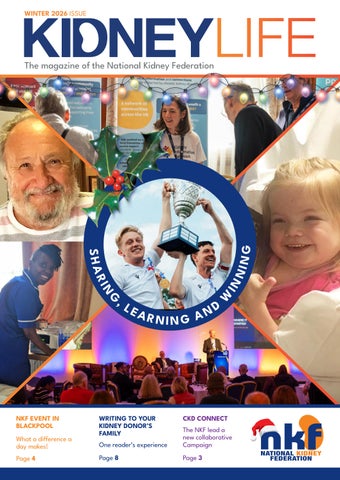
NKF EVENT IN BLACKPOOL What a difference a day makes! Page 4
EA
W
N
IN
RI
NIN
SHA
G
The magazine of the National Kidney Federation
RNIN G
WRITING TO YOUR KIDNEY DONOR’S FAMILY
D N A
CKD CONNECT
One reader’s experience
The NKF lead a new collaborative Campaign
Page 8
Page 3
EDITOR’S WELCOME
Hello,
YOUR STORIES
I’m pleased to welcome you to another packed issue of Kidney Life. We have five articles this month about individuals’ experiences of living with kidney disease. They are all different, engaging and I think they show that kidney disease can affect anyone at any time of life and that for everyone their lived experience is different. With that in mind this issue includes information about the NKF’s work on the new campaign – CKD Connect - and an update on the public affairs and policy work demonstrating how the NKF is working hard to represent all people living with kidney disease and influencing at the highest level. We report on the excellent Annual Event held in October and we have news of research which has resulted in a new blood test for improving diagnosis. And it would be remiss of me not to mention Harry Hockley’s success in bringing a football World Cup home! Congratulations to the whole team – what an amazing achievement. It seems a little early to be sending season’s greetings to all our readers, but we’re into November and the festivities will begin soon. Fortunately we’re in time to order goodies from the NKF shop – so if you haven’t thought about Christmas cards yet there’s a lovely selection as well as other items to choose from and it’s a great way to support the charity. As ever, your ideas for stories, including your own personal journey, are very welcome. Please drop me an email and we can talk. Thank you to everyone who has contributed to this issue of Kidney Life. I wish you all peace and a great time over Christmas and the New Year with your loved ones.
6
Ella’s Story
8
Writing to your Transplant donor’s family
10
The Letter That Never Found Me
14
Football Came Home with Harry and the Team!
18
Dialysis, Drain Pain, Moggie and the Shed
NEWS 3
CKD Connect: Bridging the Information Gap for People Living with Kidney Disease
4
The NKF Annual Event 2026
13
New Blood Test Improves Diagnosis and Monitoring of Chronic Kidney Disease
16
Making Kidney Patients’ Voices Heard
20
NHS Blood and Transplant
FUNDRAISING 21
Your Christmas Starts Here!
22
Leave a Legacy - Give Kidney Patients a Future
NUTRITION AND PUZZLE 23
Recipe and Spot the Difference
Best wishes,
Annie Taylor
NKF TEAM Andrea Brown Chief Executive
Editor kidneylife@kidney.org.uk
Pete Revell - Head of Marketing & Fundraising Lisa Parkin - Office Manager Sharney Warren Communications & Marketing Officer Fiona Broomhead - Senior Office Administrator
Registered Office: The Point, Coach Road, Shireoaks, Worksop, Nottinghamshire S81 8BW T: 01909 544999 E: nkf@kidney.org.uk
2 | Winter 2026 | www.kidney.org.uk | HELPLINE 0800 169 0936
Chloe Ainsworth Social Media & Website Coordinator
Donna Blizard - Senior Accounts Administrator Lucy Vasiliou - Policy & Public Affairs Manager Chris Talbot - Membership Development Lead Stephen Emmerson Helpline Advisor & Peer Support Coordinator Suzanne Rutter - Fundraiser
NKF OFFICERS Geoff Downes - Acting-Chair Mike Sinfield - Treasurer Ros Aird - Secretary
Winter 2026
Bridging the Information Gap for People Living with Kidney Disease –
a new campaign from the NKF Being told you have chronic kidney disease (CKD) can be confusing, worrying and, for many people, completely unexpected. Often, the diagnosis arrives after a routine blood or urine test, sometimes with little explanation about what it means or what happens next. That is exactly the challenge that the National Kidney Federation (NKF) hopes to address through our new campaign, CKD Connect. CKD is surprisingly common, affecting around one in ten people, yet many people know very little about it. One reason is that kidney disease often develops silently, with no obvious symptoms in its early stages. As a result, many people are diagnosed before they have had time to learn about kidney health or understand the risks associated with the condition. The aim of CKD Connect is simple but important: to ensure that nobody has to face a CKD diagnosis alone. Through the campaign we want to improve awareness of chronic kidney disease, encourage earlier recognition and provide people with access to clear, trustworthy information and support from the moment they are diagnosed. For patients, one of the most reassuring aspects of the initiative is its focus on education and self-management. Learning that you have CKD can raise many questions. Will it affect daily life? What changes should you make? How can you protect your kidney function? Access to reliable information can make a huge difference, helping people move from fear and uncertainty to confidence and understanding. The NKF recognises that patients need more than just a diagnosis. They need practical guidance, expert information and opportunities to connect with support. Through CKD Connect, people newly diagnosed with CKD can access educational resources, advice and peer support designed to help them understand their condition and make informed decisions about their health.
The campaign also recognises how important communication is at the point of diagnosis. Many kidney patients report feeling overwhelmed when first told they have CKD. Early conversations that are clear, compassionate and informative can help patients understand their condition, reduce anxiety and encourage positive health behaviours from the outset. CKD Connect promotes exactly this kind of patient-centred approach. Looking ahead, the initiative will also explore some of the barriers that exist in diagnosing and managing CKD. A policy roundtable involving patients, carers, healthcare professionals and other stakeholders will examine how kidney care can be improved. Findings will contribute to a report containing recommendations aimed at strengthening support and improving outcomes for people living with CKD. For kidney patients and their families, the message behind CKD Connect is both reassuring and empowering. A diagnosis of chronic kidney disease may feel daunting but knowledge, support and practical advice can make a real difference. By shining a light on kidney health and providing help from day one, we hope to ensure that more people understand their condition, feel confident managing it and receive the support they need throughout their kidney journey. We’re hosting an educational webinar for patients on Wednesday, 25th November with kidney health experts and people living with CKD about managing the condition and finding the support you need. We’ll explore ways to look after your kidney health, where to find trusted information, and the questions you may have following diagnosis. To sign up to our webinar, or to find more information about the campaign visit the National Kidney Federation’s CKD Connect page www.kidney.org.uk/ckd-connect
A key part of the programme is a series of online educational webinars. The first is aimed at people who have recently been diagnosed with CKD, as well as anyone wanting to learn more about kidney health. Topics include understanding what CKD means, what happens after diagnosis, practical lifestyle advice, self-management strategies and the support that is available. Importantly, the sessions are designed to be accessible and relevant to everyday life, rather than highly technical or clinical. Details of how to join are below. A second webinar will be a clinically led educational event for primary care clinicians with the aim of improving confidence and understanding of early-stage CKD. HELPLINE 0800 169 0936 | www.kidney.org.uk | Winter 2026 | 3
NEWS
The NKF Annual Event 2026 More than just a conference, this year’s National Kidney Federation Annual Event 2026 brought together kidney patients, carers, healthcare professionals and supporters from across the UK for a day of learning, connection and inspiration in Blackpool. Hosted at the Grand Hotel, the event showcased the power of shared experiences and offered practical insights into living well with kidney disease. The programme featured a mix of patient stories, expert presentations and interactive sessions, giving attendees the opportunity to hear about the latest developments in kidney care while connecting with others who understand the realities of life with kidney disease. The day opened with a welcome from NKF Acting Chair Geoff Downes before patient speaker Harsh Sinha shared his powerful presentation, The Day “Kidneys” Became the Most Important Word in My Vocabulary. Having lived with kidney disease for around 25 years, Harsh spoke about managing the condition while continuing to work full time and live independently, offering an honest and uplifting perspective on long-term kidney health. Innovation was also high on the agenda. Dr Sunil Daga introduced attendees to the Digital Twin Project, an ambitious initiative that aims to use data and technology to improve personalised care and outcomes for people living with kidney disease. The project 4 | Winter 2026 | www.kidney.org.uk | HELPLINE 0800 169 0936
explores how factors such as geography, ethnicity and social circumstances can be considered in developing more effective healthcare strategies. Another highlight came from patient speaker Nicholas Papé, who reflected on his journey through kidney failure, dialysis and transplantation. His presentation, Grateful Living: My Kidney Journey, explored how community, learning and advocacy helped him navigate the challenges of kidney disease and embrace a new normal following transplantation. The afternoon sessions focused on practical support and quality of life. Physiotherapist Siobhán Freeman led an interactive session centred on rehabilitation and wellbeing which we all got involved in, while transplant surgeon Dominic Summers made the case for increasing access to pre-emptive transplantation, highlighting the benefits of receiving a transplant before dialysis becomes necessary. A particularly impactful session examined the role of the renal social worker. Renal social worker Andrew Barnett was joined by patients Chris Simpson and Faye Connolly, who shared their personal experiences of kidney disease and the value of social and emotional support throughout their treatment journeys. The final presentation explored how patients can make the most of time spent on dialysis. Karen Nagalingam and Emma Taylor discussed ongoing work aimed at improving the dialysis experience and enhancing quality of life for people receiving treatment. Alongside the presentations, attendees were able to visit exhibition stands, meet fellow
Winter 2026
Coming Together to Learn, Share and Inspire patients and carers, and continue conversations during breaks and the event’s social evening. The combination of education, peer support and community spirit created a welcoming environment that reflected everything the National Kidney Federation stands for. As the event drew to a close, one message stood out above all others: nobody should face kidney disease alone. By bringing together people with lived experience and those working to improve kidney care, the NKF Annual Event once again demonstrated the strength, resilience and determination of the kidney community. Thank you to everyone who attended and for the feedback given at the end of the event. This will be taken into consideration as we plan next year’s event. During the day I asked a few people at the event for their thoughts on the day…
look forward to it yearly and hope to see you all again next year.”
Patricia representing the NKF’s Peer Support Service
Jane Pugh, PKD Charity exhibitor “Attending the NKF
Annual Event is an opportunity for us to raise awareness of PKD, connect with people affected by kidney disease and make sure more people know where to turn for information and support. It’s also valuable to meet Kidney Patient Associations and other organisations working in kidney care, share experiences and build connections. Thank you to the NKF for bringing everyone together, and to everyone who took the time to find out more about PKD and the work of the PKD Charity.”
Patricia Gooden, NKF Peer Supporter “I enjoy going to the
conference every year. It’s not just an opportunity to see and meet people, it’s the entire package. Being in an environment created by patients for patients. It’s the learning and the information that empowers us all for another year. I
Louis Touissant, Royal Free Hospital KPA “As always, the
conference was very educational and informative. Our annual face to face meetings provide the opportunity to connect and exchange ideas with other KPAs. The renal world is constantly changing, so it is important to keep up to date with new developments, share knowledge and learn from one another to better support ourselves. The speakers were excellent, and their presentations were both informative and engaging with valuable insights into renal care. Recordings of all the speakers and their presentations from the day are available on the website at www.kidney.org.uk/Event/nkfannual-event-2026.
Louis presenting a cheque for the NKF on behalf of RFH KPA with Chris and Fiona
Jane with a visitor to her exhibition stand
HELPLINE 0800 169 0936 | www.kidney.org.uk | Winter 2026 | 5
YOUR STORIES Ella was born more than six weeks early. Looking back, there were signs that something wasn’t right, but it wasn’t until her routine newborn check-up at eight weeks old that our world changed completely. A blood test showed that her protein levels were almost non-existent. We were told it was probably a mistake and that the test would need repeating. Unfortunately, it wasn’t. A consultant explained that Ella had Congenital Nephrotic Syndrome (CNS), a rare genetic condition that causes kidney failure. We were told there was no cure and that the treatments available would be invasive and lifelong. We were warned not to search online because of how frightening the information could be. Of course, like most parents, we did anyway. The future suddenly felt overwhelming. Ella needed daily albumin infusions to replace the protein her body was losing. It felt like trying to fill a bath without the plug in. Despite everything being done for her, she was still losing more than could be replaced.
Ella’s Story By Karen Chadwick, Ella’s mum
The first six months of Ella’s life were spent in hospital, undergoing countless tests, scans and procedures. Eventually, we were allowed to take her home, but only after her dad and I were trained to administer her albumin infusions ourselves. Even then, life revolved around treatment. Unfortunately, CNS also weakened Ella’s immune system. She regularly developed infections, and the central lines she relied on often caused complications. Hospital admissions became a normal part of family life. We spent time on wards, in High Dependency and Intensive Care, and became familiar faces to many of the healthcare teams caring for her. Shortly after her first birthday, Ella had surgery to have a peritoneal dialysis catheter fitted. Once again, her dad and I learned how to manage her treatment at home. For the next seven months we carried out albumin infusions and dialysis every day and night.
At just 19 months old, both of Ella’s kidneys had to be removed because they were no longer functioning and were causing further problems. The complications kept coming. Ella developed pneumonia, was diagnosed with epilepsy after suffering seizures, and developed severe high blood pressure which led to several strokes. Through it all, we never stopped hoping for a transplant. To be eligible, Ella needed to reach a particular size and weight, which became another challenge. The hope had been that she could be listed at two years old, but things didn’t go as planned. Two weeks after her third birthday, Ella finally received a kidney donated by her dad. For a short while, everything seemed to be going well. Then her urine output suddenly stopped, and scans showed the kidney had clotted. Surgeons rushed her back to theatre to try to save it, but they couldn’t. Just 16 hours after being transplanted, the kidney had to be removed to save Ella’s life. The heartbreak was immense. In the weeks that followed, Ella developed cellulitis and sepsis. Her transplant wound opened completely, meaning she could no longer continue with peritoneal dialysis and had to switch to haemodialysis. After months in hospital, she finally came home just before Christmas. By New Year’s Day, she was back in hospital. This time she developed Posterior Reversible Encephalopathy Syndrome (PRES), causing multiple bleeds on her brain. She returned to intensive care and required intensive treatment. I remember standing beside her bed and realising how different this admission felt. During previous stays in intensive care, she would still react to my voice or try to move, even when heavily sedated. This time she was completely still.
6 | Winter 2026 | www.kidney.org.uk | HELPLINE 0800 169 0936
Winter 2026 Doctors warned us that recovery could take many months and that she would need to relearn basic skills. Yet somehow, after only two months, she was back to being Ella. Her resilience never ceased to amaze us. Although her first transplant had failed, a transplant remained her only long-term option. A year later, investigations began to see whether another transplant might be possible. The news was devastating. Doctors felt there were no blood vessels left large enough to support another transplant. Peritoneal dialysis was no longer an option because of extensive scarring, and we were rapidly running out of treatments. At one point, we were handed letters discussing palliative care, hospice support and end-of-life planning. One doctor believed Ella might only have months left to live. No parent is ever prepared to hear those words. Thankfully, Ella’s consultant refused to give up. They contacted specialists at Great Ormond Street Hospital, who carried out further investigations and discovered there might still be a transplant option. For the first time in a long while, we had hope. Then another crisis struck. While attending dialysis in Manchester, Ella’s line stopped working. We were told there appeared to be nowhere else to place another one. Once again, conversations turned towards preparing for the worst. Later that same day, everything changed. Following urgent discussions between Manchester and Great Ormond Street, Ella was transferred by blue-light ambulance to London. Specialists there successfully inserted a new line and created another option for future access. Once again, Ella had been given another chance. The months leading up to transplant were challenging. Ella remained at Great Ormond Street and underwent intensive treatment to keep infections at bay. Even when a transplant date was finally arranged, it seemed fate had other ideas. The operation was cancelled three times. Once because Ella suffered a seizure, another time because of concerns about a blood clot, and a third time due to complications from blood-thinning medication. Each cancellation brought fresh disappointment, but we carried on waiting. Finally, on 7 May 2014, aged six, Ella received a kidney donated by her Nanna. The operation carried enormous risks. We were warned that surgeons might begin the procedure and still decide that completing the transplant was unsafe. For hours we waited. Two hours into surgery, we were told it was going ahead. After ten hours in theatre, Ella was transferred to intensive care. Then, just as before, her urine output stopped and she was rushed back to surgery. Thankfully, this time the outcome was different. Her new kidney had simply been slow to wake up after such a lengthy operation. Soon it began functioning normally. At last, things were moving in the right direction. Ella remained in hospital for several months while doctors managed complications including steroid-induced diabetes, viral infections and urinary infections. Compared with everything she had endured before, these challenges felt manageable. The transplant transformed Ella’s life. For the first time she could attend school full time. She joined swimming clubs, enjoyed foods she had never previously been allowed to eat and discovered a freedom she had never known. A year after her transplant, she took her first independent steps. Because of bone disease linked to her kidney condition, she had previously been unable to stand or walk unaided. Now she could move around on her own and enjoy life without many of the restrictions that had defined her childhood. There have been challenges in recent years, and her transplanted kidney is not as strong as it once was. However, we remain grateful for every positive clinic result and every milestone she continues to reach. Today, Ella is 18 years old and has transferred into adult care. That transition has brought its own challenges, but it is also a reminder of how far she has come. There were times when we were told she might not survive and moments when options seemed to have run out completely. Yet here she is. We will always be grateful to the teams at Manchester and Great Ormond Street who never gave up on Ella, and to her two extraordinary donors, her dad and her Nanna. Most of all, we are grateful for the gift of organ donation. Without it, Ella would not be here today. HELPLINE 0800 169 0936 | www.kidney.org.uk | Winter 2026 | 7
YOUR STORIES
Kidney Health Advocate Ali Lawrence shares her personal and heartfelt experience of writing to her kidney donor’s family. For seven days every September we celebrate Organ Donation Week which raises awareness of the need for registered organ donors and says Thank You to all those donors and their families who have saved so many lives. It’s also a week very close to my heart, as my life was saved by someone I will never meet but who registered to donate their organs when they died and whose family supported their wish when the time came. I received my out-of-the-blue kidney disease diagnosis 30 years ago after a routine health check. In 2020 I was activated on the deceased donor waiting list and shortly afterwards started dialysis to keep me alive while I waited for ‘the call’. The years that followed were definitely not plain sailing and when I received my longed-for transplant in 2023 I’d nearly had transplants four times only for them not to go ahead. From the moment I was put on the list I knew that I’d write to my donor’s family when the time came and wondered what that would be like. But I pushed it to the back of my mind and concentrated on my dialysis, and staying physically and mentally healthy for my transplant. I thought about the donors and their families each time my transplants didn’t go ahead and hoped that someone else had their life changed that day, even though I hadn’t. After my transplant, I can’t remember exactly when I thought of my donor and their family, the days just afterwards are still a little fuzzy. It may have been when I first saw my scar or maybe it was a few days after my transplant when my doctor first told me that my kidney was working. I asked about my donor and was told she was a lady in her thirties and that was all they could say. The flood of mixed emotions was unbelievable as it suddenly hit me: the thing I had wanted for so long had happened but somewhere a family was going through something unimaginable to me. Before leaving hospital I was given a leaflet which said that donor recipients are encouraged to write to their donor’s families but that they’re unlikely to write back. I was still determined to write to them though. I kept putting it off, telling myself it wasn’t the right time for me and for them, I didn’t want to write too soon and upset them. Also, I got in my own head and convinced myself that the letter would have to be ‘perfect’. The next thing I knew, Organ Donation Week 2024 arrived and I’d still not written the letter. Then I saw an NHS Blood and Transplant leaflet all about writing to your donor’s family. Inside was a note from a six-year old girl in bright coloured crayon saying, ‘Thank you for saving my mummy’. I realised then that my card didn’t need to be ‘perfect’, whatever that was. There was also a letter from a mother whose child had saved eight people’s lives and she talked about how sad she was that not one of those people had written to her. That was the catalyst for me, I bought a card, but then promptly left it on my bedside table for a month! Then, one beautiful sunny afternoon I had the house to myself and finally plucked up the courage to sit down and start writing. It was one of the hardest things I’ve ever done and I cried the whole time. But once I’d finished, I was filled with relief that I’d finally put in writing how thankful I was and how much their gift had changed my life and my husband Phil’s. I posted the card to my Transplant Co-ordinator for her to pass on to the family. To protect everyone’s privacy, you’re asked not to include any personal details in your letter that could identify you (such as your surname, the hospital you had your transplant and your address) but you can include a photograph if you want to.
8 | Winter 2026 | www.kidney.org.uk | HELPLINE 0800 169 0936
Ali and husband Phil enjoying travel again
Winter 2026
I really hoped that I would hear back but reminded myself that it was unlikely and that I should just feel proud that I had finally written to them. Then to my surprise a couple of months later my Transplant Co-ordinator called me to say that the family had written back and she asked me if I’d like to receive the letter. I immediately said yes, and it arrived a few days later. And then - you guessed it - I put it on my bedside table and waited for the ‘perfect’ moment to read it. Of course, the ‘perfect’ moment never came but then one day a friend was visiting and I asked her, “will you read it first please?”. She did and then passed it to me, telling me that it was not just one letter but letters from my donor’s family and friends. The letters talked about what my donor was like as a person and the things she loved to do, and they said how thankful they were to me for writing to them. Reading the letters was tough but they brought me so much comfort and still do every time I read them. I wrote to my donor’s husband again last year and he wrote back telling me more about her and I realised we had a lot in common and I think we would have got on. So, if you’ve received your kidney transplant and haven’t yet written to your donor’s family, I hope reading about my personal experience is helpful to you. Remember, it’s never too late to write. If you’d like to know more about writing to your donor’s family there’s some great information on the NHS Blood and Transplant website. Or you could call the NKF Helpline on 0800 169 09 36 and ask to speak to one of our volunteer peer supporters.
NKF Webinar – After Your Transplant – Writing to Your Donor’s Family NKF has teamed up with Kay Sybenga, from the Donor Family Care team at NHS Blood and Transplant to bring you this latest webinar. The session will explore people writing to their donor’s family post transplant and will answer lots of questions on this topic just as Ali’s article above does. If you are unable to join the live event a recording will be posted on the website shortly afterwards.
https://www.kid ne
y.org.uk/Event/n
kf-webinar-series
HELPLINE 0800 169 0936 | www.kidney.org.uk | Winter 2026 | 9
YOUR STORIES
The Letter That Never Found Me By Tamsyn Bonner
“15 September 1997. Wets the bed most nights. Never been dry.” I had been moving around for three to four years because my mother was a victim of domestic violence. Referral: enuresis nurse. That is the earliest record in my medical history. I found it at two in the morning, aged 36, sitting in my flat after a recent move, reading my own life backwards. I live with chronic kidney disease, stage 3b. It has been on my records for longer than I ever knew. But my story didn’t really start when I was diagnosed. It started the night I decided to find out what actually happened to me. I had just moved home, which prompted me to submit a subject access request to my old GP so I wouldn’t lose my medical records. Between work, moving and the usual demands of everyday life, things felt a little chaotic. Understanding what was happening inside my own body was something I could take control of. I was preparing for a new renal clinic, and I wanted to advocate for myself. To do that, I needed to know where my diagnosis had come from, something I had never been told. So, one night, unable to sleep, I opened a file and started scrolling. Every appointment. Every blood test. Every doctor’s note. What started as an exercise in gaining control ended with me sitting in the dark feeling something I hadn’t expected: grief. The records showed I grew up in an unstable home. I don’t have many childhood memories, but the ones I do have involve moving. My earliest memory is a women’s refuge. We lived in two, then in several temporary accommodations, and finally a permanent tenancy when I was six. The 1997 note shows the NHS saw a symptom, understood its context, and made a referral. And here is what I only realised when I checked the dates: by September 1997 we were settled. We had moved into our permanent home the year before. I was at one address, registered with one GP. What happened next wasn’t chaos. It was quieter than that. The referral did land partly. I remember being given an alarm for the bedwetting. A little machine to train the symptom away. Nobody, as far as the records show, ever asked why a seven-year-old had never once been dry. The bedwetting was treated as a symptom to manage. What I could not have known then was that it might also have been part of a wider medical picture that emerged years later. Then, two years later. 9 August 1999, from the enuresis service to the GP:
“I have to refer back to you due to lack of contact and would request your help in reminding mum of the alarm if she happens to see you at the surgery.” Discharged, aged nine, for lack of contact. A family not long out of refuge accommodation goes quiet, and the service’s response is to close the case. The entire safety net for a child with an untreated symptom was reduced to one sentence: mention the alarm to her mother, if she happens to see you. Nobody asked why we’d stopped responding. After that, silence. 10 | Winter 2026 | www.kidney.org.uk | HELPLINE 0800 169 0936
Winter 2026 2008: My serum creatinine is measured at 132, well above normal. As far as I can find, nothing happened. 2012: Nearly a year of tests after attending my GP for something unrelated, the official diagnosis: Chronic Kidney Disease Stage 3B. It’s there in the notes. Nobody hid it from me, but nobody made sure I understood it either. 19 February 2012, a consultant’s letter: creatinine was 132 in 2008 and is now 139, stable kidney dysfunction. The cause of my renal failure is not clear. The consultant would like to pursue a biopsy but doesn’t think it can be performed on such small kidneys. And then this line: she does not give a history of recurrent tract infections. The consultant’s working diagnosis is reflux nephropathy, though he is not entirely convinced. Reflux nephropathy can be associated with vesicoureteric reflux (VUR), where urine flows backwards towards the kidneys. In children, reflux may occur alongside urinary infections or other urinary symptoms, though bedwetting alone does not establish the diagnosis. Kidney scarring can develop for different reasons, and my kidneys were already too small for a biopsy by the time specialists investigated. It is impossible to know when the damage occurred. Earlier investigation might have identified an underlying condition and offered opportunities for monitoring or treatment. Whether that would have changed the outcome, I cannot know. The uncertainty is part of what makes this so difficult. I understand how an explanation took hold. A child who had spent years moving between refuges and temporary homes was wetting the bed. Stress can affect children in many ways. It was a reasonable reading. But that’s exactly the trap. My circumstances didn’t just make me easy to lose; they may also have supplied a ready-made explanation that discouraged further questions. Reading that consultant’s letter alongside the 1997 note, something awful becomes clear. In 2012, a specialist was genuinely looking for the cause of my kidney disease. Relevant childhood history was sitting in a GP archive he may not have seen, and I did not know existed. So he asked the only historian available: me. And I, quite honestly, gave him nothing, because nobody had ever told me my own history. The system asked its patient to supply the memory the system had lost. A biopsy might have helped investigate the cause, but my kidneys were already too small. Whether earlier intervention could have changed anything remains uncertain. What I do know is that opportunities for investigation and follow-up were missed. My disease was identified years after those childhood appointments, and its precise cause remains uncertain. That uncertainty isn’t a loose end I can simply tie up. I cannot say that an earlier diagnosis would have prevented my kidney disease. But might further investigation and continued follow-up have made a difference? The referral was an opportunity, and somewhere along the way, that opportunity was lost. 29 September 2015: Came for review. Did not realise she had kidney disease; discussed CKD management and need for renal follow-up and reassured all stable at the moment. Three years after my diagnosis, a GP records that I had no idea I had kidney disease. I keep coming back to this note because it’s the one that makes me saddest. I’m not saying I was never told. The diagnosis is right there in my records. The words must have been said to me at some point. But being told something and understanding it are not the same thing, and nobody checked the difference.
Tamsyn today
HELPLINE 0800 169 0936 | www.kidney.org.uk | Winter 2026 | 11
YOUR STORIES I was a young woman in my early twenties, and somewhere along the way chronic kidney disease was explained to me in a way that never landed. There is something quietly devastating about discovering that such a significant diagnosis had been recorded, yet somehow the reality of what it meant had never fully reached me. One line. No alarm. No reflection on how that could possibly be true three years in. So I carried on living as if nothing had changed.
“What it costs now.” CKD is largely invisible until it isn’t. Mine announces itself through gout. In February 2025, I experienced a flare that lasted ten weeks, leaving me in severe pain and, at times, unable to manage even the most basic everyday activities. And going back through the notes, I found something else. I was prescribed Diclofenac after my diagnosis. Prescribing guidance says it should be avoided in chronic kidney disease because it can accelerate exactly the damage I already have. The same records that documented my diagnosis were sitting behind the screen of whoever prescribed it. My kidney function (eGFR) was around 42 when I was diagnosed. My baseline now is 38. When I went through every result, I found something that steadied me: it has been broadly stable for most of those years. I was plant-based for ten of them, and my bloods were at their best. So there are things I can do, and I’m doing them. But managing a lifelong condition is different from knowing whether something could have been done earlier. That uncertainty stays with me. Whose failure was it? I keep circling the same question. Was it the circumstances I grew up in that shaped my experiences? Perhaps. But I also recognise that families can face incredibly difficult situations, often navigating trauma, instability and challenges without the support they need. Was it the system? The NHS made the referral. The letters presumably went somewhere. Could more have been done? I’ve stopped looking for a single culprit, because the honest answer is more uncomfortable than blame. No individual villain appears anywhere in my records. A nurse made a sensible referral. A service issued an alarm. A consultant genuinely tried to find a cause. A GP explained a diagnosis, eventually. Every person did something reasonable and between them, across eighteen years, no one closed a single loop. The failure lives in the gaps between people: the discharge nobody questioned, the archive nobody connected, the follow-up nobody owned. Recall systems are supposed to be the safety net for families in survival mode. Mine went quiet in exactly the way such families do, and the net read our silence as consent to disappear. I wasn’t rare. Right now, there are children in refuges and temporary accommodation over 175,000 children in temporary accommodation in England alone each of them potentially one address change away from a letter that never finds them, and a health concern that goes without follow-up. I found out who I was at two in the morning, in hundreds of pages of notes written about a little girl nobody managed to follow up on. I can’t get those years back. But I can ask how those opportunities were lost, and I know systems like these from the inside, because I’ve spent fifteen years working in them. So, I’m going to keep writing about them. From the front door view. Somewhere, a letter is being posted to a child who has already moved.
I am based in London and have worked in social housing for the past 13 years. I’m passionate about improving people’s experiences of public services and understanding how systems can better support those who rely on them. I’m also due to start a master’s degree soon, and one of the areas I’m excited to explore is the relationship between housing instability and health. It’s a subject that feels especially meaningful given my own experiences. 12 | Winter 2026 | www.kidney.org.uk | HELPLINE 0800 169 0936
Winter 2026
The study group with Ed Lamb who led the study on the right
New Blood Test Improves Diagnosis and Monitoring of Chronic Kidney Disease
By Maarten Taal: Consultant Nephrologist, University Hospitals of Derby and Burton NHS Foundation Trust and Paul Stevens: Consultant Nephrologist, East Kent Hospitals University NHS Foundation Trust Edmund Lamb: Clinical Scientist, East Kent Hospitals University NHS Foundation Trust
Introduction The most commonly used test of kidney function is the glomerular filtration rate (GFR), which measures how rapidly kidneys are filtering the blood. Unfortunately, it is difficult and time consuming to measure GFR accurately, with the test typically taking several hours. Doctors therefore usually rely on a simple blood test to estimate the GFR. In the past, doctors have used the blood level of a chemical called creatinine to calculate estimated GFR (eGFR). Creatinine is normally produced by the muscles and filtered from the blood by the kidneys. It is not a toxin, but it is a useful marker of kidney function. When kidney filtration is impaired, blood creatinine levels increase. Creatinine testing is inexpensive and available in all hospital laboratories in the UK. However, it has limitations because people with higher muscle mass produce more creatinine than average, while older people and those with severe long-term illnesses often produce less. In both cases, an eGFR calculated from creatinine may be inaccurate, potentially affecting diagnosis of chronic kidney disease and treatment decisions. To address this problem, researchers identified another blood chemical called cystatin C, which is also cleared from the blood by the kidneys. Unlike creatinine, cystatin C levels are not affected by muscle mass and may therefore provide a more reliable estimate of GFR. It is also possible to estimate GFR using both creatinine and cystatin C together.
Previous research suggested this could improve accuracy, but until now it had not been properly tested in a UK population.
Research Study Description In a study called eGFR-C, led by Dr Edmund Lamb from East Kent Hospitals University NHS Foundation Trust and funded by the National Institute for Health and Care Research, researchers assessed the accuracy of estimating equations based on creatinine alone, cystatin C alone, or a combination of the two. To do this, they compared estimated GFR results with an accurately measured GFR. GFR was measured using a substance called iohexol, which was injected into a vein. Researchers then took blood samples over time to determine how quickly it was removed from the bloodstream by the kidneys. Iohexol is also used by doctors to improve images obtained during CT scans and angiograms. The study involved 1,167 adults with stage 3 chronic kidney disease (eGFR 30-59 ml/min/1.73m²) from six kidney centres in England: Birmingham, Canterbury, Derby, King’s College London, Leicester and Salford. GFR was measured at the start of the study and blood samples were taken to measure creatinine and cystatin C. Blood tests were then repeated annually, with a final GFR measurement taken after three years.
Study Results The researchers found that equations using both creatinine and cystatin C were more accurate than those using either creatinine or cystatin C alone. The combined equations performed equally well in different groups defined by age, sex, body mass index and severity of kidney disease. Researchers also examined how accurately the different equations detected changes in kidney function over the three-year study period. Equations incorporating both creatinine and cystatin C tracked changes in measured GFR more closely than equations using either marker alone. However, all equations underestimated the decline in kidney function to some extent.
Recommendations Based on these results, the researchers recommend that doctors in the UK use equations incorporating both creatinine and cystatin C to estimate GFR, particularly in people with low or high muscle mass, for whom creatinine alone may be inaccurate. This also includes transgender people. Wider use of this approach will require more laboratories in the UK to offer cystatin C testing. Researchers are discussing with organisations such as the UK Kidney Association and the National Institute for Health and Care Excellence how best to make cystatin C testing more widely available within the NHS.
HELPLINE 0800 169 0936 | www.kidney.org.uk | Winter 2026 | 13
YOUR STORIES Following our article in the last issue Harry Lockley went to Germany to play in the Transplant Football World Cup. They won! We send our congratulations and here Harry tells us about his amazing experience. “The experience of playing in a World Cup is very special but to do it with a group of transplant patients makes even more special. The whole week was just amazing. The community we’ve got is special and I’m truly at my happiest when I’m around all the players, coaches and their families. It was probably the best week of my life, then to win just topped it all off. I have to say I have never been involved in a group like it. Words can’t really describe how special the bond we have is. I can safely say every member of the team has become a friend for life. Having the opportunity to share the experience with them is something I feel very privileged to do. I’d say the bond we have is what makes the team so effective. We all just understand each other like no one else can really and I think that’s why we have been so successful.
Football Came Home with Harry and the Team!
Our team manager Daley is the definition of a legend really. Since I got involved two years ago we have developed a special bond. He has a bond with every player, something most managers in football can’t say they do, this shows what type of person he is. He understands all our transplant journeys and gives us confidence and belief in ourselves to inspire others. Transplants and organ donation are always at the forefront of his mind making sure we always raise awareness before anything else, he genuinely works so hard for the whole transplant community. There is no one else who could do what he does. He is truly deserving of all the success we have had and a special person within the transplant and football community. Germany was a new experience for me as I’ve never visited the country before. We were there for six nights and I enjoyed everything about the trip. We were made very welcome and when we got a chance to have free time, I enjoyed exploring the history of Frankfurt in the local square. I mean anywhere you win a World Cup will always be a good place. My girlfriend, Chloe, came for the whole week and my dad, Craig, came for three nights. It felt special for them to witness what I was doing. Their support was so important as it helps push you through the tournament wanting to make them proud. As a team we had lots of family and friends supporting us. They are a huge part of what we do and the community. It genuinely feels like you have known everyone for years, I believe it’s a special bond you share with people who have been involved in a transplant journey.
14 | Winter 2026 | www.kidney.org.uk | HELPLINE 0800 169 0936
Winter 2026 We played seven games in total. Four group games (we won three out of the four), then a quarter final, semifinal and of course the final. The best moment of the tournament must be lifting the trophy, when the final whistle went seeing everyone celebrating together was very special and I’ll never forget it because we worked so hard for it. It was also emotional too as it hit me how lucky I am to have the opportunity to do that because I know that without the hero donors none of us would have been there. Lifting the trophy with the captain Rowan Caney was incredibly special and seeing our whole team celebrating at the end of the final made me very proud. Another great moment for me would have to be my goal inside 30 seconds against Wales in the semifinal!”
Recognising what a great job Harry and the team did in Germany we caught up with team manager Daley Cross and asked for his thoughts “I feel very lucky to have a player like Harry on the team. Not only because he has all the attributes of a fantastic footballer but more so for his personality and the inspiration he is and can be for other young people who were in his situation. Harry came into the team as a young man but has developed and shown maturity and now he is a pivotal player in the starting seven. Winning the 2026 Transplant Football World Cup is a feeling very hard to put into words. It’s something you dream of doing, being able to represent your country is the one of the biggest honours you can get and I feel truly privileged to lead this team of inspirational players. To see the awareness and publicity since bringing football home has just been amazing and as a self- funded team, I really hope that this success can bring us new opportunities which can help us continue to grow and develop and inspire many more people living with a chronic condition and needing a transplant.”
What’s next for Harry? The Transplant Football European Championships are being played in May 2027. We’ll be hoping we can go there and retain our trophy which we won in 2025! Go Harry and the Team – we’re right behind you cheering you on!
HELPLINE 0800 169 0936 | www.kidney.org.uk | Winter 2026 | 15
NEWS
g n i k Ma
y e n Kid
Patients’ Voices
Heard
By Lucy Vasiliou, Policy and Public Affairs Manager, National Kidney Federation When decisions are made about kidney care, the people affected by kidney disease should help shape them. That principle is at the heart of my role as Policy and Public Affairs Manager at the National Kidney Federation (NKF). My job is to bring patients’ experiences, alongside evidence, to the attention of the people who can make those changes. That includes Government ministers, MPs, as well as NHS leaders, local decision makers and healthcare professionals. The aim is to influence decisions that improve care, make access to services fairer and improve the lives of those living with kidney disease. “Policy and Public Affairs” can sound quite distant from everyday life. In practice, it is about issues that matter directly to kidney patients: receiving a clear explanation of a diagnosis and how to manage your condition, having a choice of treatment, getting the support needed to dialyse at home, understanding the process of transplantation and organ donation or accessing medicines without unfair financial barriers like prescription charges. Much of this work happens behind the scenes. I review proposals for changes to NHS services, respond to consultations and develop the NKF’s policy positions. These explain what we believe needs to change, the evidence behind our recommendations and the action we want decisionmakers to take. Our priorities include early detection and intervention, home dialysis, organ donation and transplantation, and why a national approach is needed to improving kidney care. Keeping up with changes in Government and the NHS is another important part of the role. Attending the Labour Conference in September gave me the opportunity to take part in discussions with MPs and Ministers about priorities and find out more about the direction of travel. I can now look at what new plans and changes to the organisations responsible for arranging care could mean for kidney patients, and where the NKF can influence them.
Bringing patient experience into Parliament I lead the NKF’s work as Secretariat to the All-Party Parliamentary Kidney Group (APPKG). The group brings parliamentarians together to discuss kidney disease, raising awareness to this and pushing for improvements in care. My role includes working with charities and organisations across the kidney landscape to organise impactful meetings on the key issues, ensuring that people who have experience of kidney disease have opportunities to share these directly with those who make decisions. We warmly welcome Dr Zubir Ahmed MP as Chair of the APPKG and look forward to working with him to keep kidney disease firmly on the parliamentary agenda. Dr Ahmed’s previous experience as a transplant surgeon and former Health Minister gives him valuable insight into the challenges that are faced by the kidney community and what changes are needed to overcome these. Your voices are vital. Hearing someone explain how the disease or treatment affects their working life, family or independence helps parliamentarians understand what a policy decision means in practice. Reaching out to your local MP and sharing your experience is one of the key ways you could help us to raise awareness to why kidney disease should be prioritised. If you’d like to learn more about how you can write to your local MP please email lucy@kidney.org.uk.
16 | Winter 2026 | www.kidney.org.uk | HELPLINE 0800 169 0936
L-R, Lucy Vasiliou (NKF) , Dr Zubir Ahmed MP (Chair APPKG), Lord Watts (Vice-Chair APPKG), Andrea Brown (NKF)
Winter 2026
Campaigning for better care Campaigns are another way we bring people together around the changes kidney patients need. Through the “7 Million Lives at Risk” campaign, we are working with partners across the kidney community to call for a coordinated national approach to kidney disease. This includes campaigning for a Kidney Disease Modern Service Framework: a national framework setting out how services should improve. Our work on home dialysis and prescription charges also seeks to address barriers that affect patients’ choices and daily lives. Another campaign which has been newly launched by the NKF is the “CKD Connect” campaign, which focuses on improving awareness, recognition and management of chronic kidney disease (CKD). We want people to receive clear, reassuring information when they are diagnosed and know where to find trusted support. The campaign also aims to help healthcare professionals, particularly primary care teams, recognise CKD earlier and feel more confident supporting patients. Educational webinars will provide information for newly diagnosed patients and professionals, as well as those learning more about good kidney health more broadly, and further work will explore barriers to better care and develop recommendations for change. For me, this is an important opportunity to connect patients’ experiences of diagnosis with improvements in how services communicate and provide support.
Listening to the kidney community The NKF’s Kidney Patient Association (KPA) Policy Working Group helps ensure that our priorities reflect what patients are experiencing. Through quarterly meetings, KPA representatives raise concerns from their areas and contribute to our policy work. This gives us a way to connect local experiences with national decisions. It also helps us ask better questions: where are services working well, where are patients facing difficulties, and what could others learn from those experiences? Alongside this, patient involvement in our campaigns and contributions to medicines consultations help us explain what matters to people living with kidney disease. Working with other organisations strengthens this work. I build relationships with kidney charities, clinicians and wider health coalitions so we can share evidence and identify common priorities. When we make a joint case for change, we can show decision-makers how an issue affects patients across the kidney community. Progress in policy can take time. My responsibility is to keep making the case, follow up on commitments and make sure patients’ concerns remain part of the conversation. What gives this work its purpose is the opportunity to improve people’s lives. The experiences shared by patients and families help us understand what needs to change. My role is to ensure those experiences reach the people with the power to act.
Lucy at the Labour Party Conference in Liverpool
If you’d like to keep up to date on our policy and campaigning work visit the NKF website where you can also see the opportunities to get involved www.kidney.org.uk or email lucy@kidney.org.uk.
HELPLINE 0800 169 0936 | www.kidney.org.uk | Winter 2026 | 17
YOUR STORIES “I never imagined that retirement would involve a dialysis machine beside my bed, a catheter in my abdomen, regular deliveries of dialysis supplies and a garden shed doubling as a medical storeroom. None of these featured in my plans for old age. When I was told my kidneys were failing and dialysis was becoming inevitable, my reaction was probably much the same as most people’s.
“Surely there must be another way.” There wasn’t. Having lived with Type 2 diabetes since 2005, I knew kidney problems were a possibility, but I always hoped they would never happen to me. Unfortunately, my kidneys had other ideas.
Dialysis, Drain Pain, Moggie and the Shed One Man’s APD Adventure
As if that were not enough, in 2019 I was diagnosed with low-grade nonHodgkin lymphoma and underwent six rounds of chemotherapy. Thankfully, the treatment was successful and I have remained in remission ever since. Having already dealt with one major health challenge, I was not particularly excited about adding kidney failure to the list. I live alone in a small flat in southeast London and, now in my eighties, I am determined to maintain my independence. I still want to see people, enjoy fresh air and make the most of life. I had no intention of allowing kidney disease to dictate every hour of my day. After discussing my options with the renal team, I chose Automated Peritoneal Dialysis (APD). The attraction was straightforward: dialysis would take place overnight at home, leaving my days relatively free. Compared with travelling to hospital several times a week for haemodialysis, it seemed the better fit for my lifestyle. That was when my imagination got involved.
By Bernard Scala
When Fear Takes Over One of my biggest concerns was having the dialysis catheter inserted into my abdomen under local anaesthetic. The words “catheter” and “abdomen” are enough to spark alarming mental images. By the time the procedure arrived, I had convinced myself it would be painful and complicated. In reality, apart from a little pushing and pulling, it was completely painless. I had spent weeks worrying about something that turned out to be far less dramatic than I expected. It was an early lesson that the fear of something is often worse than the reality. The next challenge came during my first connection to the dialysis machine at the clinic. I experienced a sudden sharp pain and was told that some patients develop what is known as “drain pain” during treatment. While the nurse remained calm, I was considerably less relaxed. I have never been a fan of pain. If avoiding it were an Olympic sport, I would probably be competing for a medal. I immediately began questioning whether APD was right for me. I considered alternatives and wondered whether I would be able to cope if the discomfort continued every night. Fortunately, I decided to persevere. Over time, things improved considerably and what initially seemed like a major obstacle became little more than a minor inconvenience. Looking back, I am grateful that I did not allow a difficult first experience to make the decision for me.
The First Night at Home Starting dialysis at home brought a completely different set of concerns. In the clinic there were nurses nearby. At home it was just me, the machine and a collection of tubes.
18 | Winter 2026 | www.kidney.org.uk | HELPLINE 0800 169 0936
Winter 2026 As I settled into bed, every noise seemed significant. A beep raised questions. A click prompted concern. A gurgle sounded positively alarming. I became convinced that any unusual sound signalled impending disaster. The machine, meanwhile, quietly got on with the job it had been designed to do. By morning, I had survived my first night on APD. More importantly, there had been no pain and no catastrophe. The machine proved considerably more reliable than its anxious operator. That first successful night was a turning point. For the first time, I genuinely believed I could manage this.
The Surprise Storage Problem Before starting APD, I imagined the dialysis machine would be the main piece of equipment I needed. I was wrong. The machine itself is only part of the story. There is also a steady supply of dialysis fluid, tubing, dressings and other equipment. Before long, boxes began arriving in such quantities that my flat started to resemble a storage depot. Space quickly became a challenge but the solution was simple: I bought a garden shed. I had not expected dialysis to involve becoming a warehouse manager, but the shed turned out to be one of my best investments. It now stores the supplies that keep my treatment running smoothly. I should add that the delivery teams are excellent. They bring everything in, place it where it needs to go and take away much of the practical burden. At my age, any activity that involves other people doing the heavy lifting is perfectly acceptable.
The Value of a Good Renal Team One thing I cannot praise highly enough is the support of my renal team.
My nurse Biba
When you first start dialysis, everything feels unfamiliar. There are new procedures, new routines and plenty of terminology that can seem overwhelming. Throughout the process, my team have been patient, professional and reassuring. Every question I asked was answered, no matter how many there were. That support makes a tremendous difference. Having knowledgeable people explain things calmly and clearly helps turn something intimidating into something manageable.
Enter Moggie Maintaining independence remains incredibly important to me, and one thing that has helped enormously is my mobility scooter, affectionately known as ‘Moggie’. Moggie allows me to visit friends, attend appointments and continue enjoying time outdoors. Since starting dialysis, that freedom has become even more valuable. Kidney disease can take many things from a person, but independence does not always have to be one of them.
Learning to Accept Help
Monika
Like many people of my generation, I have always preferred to manage things myself. Kidney disease has taught me that accepting help is not a weakness. My family, friends, healthcare professionals and other organisations have all played an important role in helping me adapt to life on dialysis. Sometimes support comes as practical assistance, financial help or simply reassurance when worries begin to grow. All of it matters.
Looking Back When I think about the things that worried me most at the start of this journey, it is striking how many either never happened or turned out to be far less frightening than I expected. The catheter insertion was painless. The drain pain improved. The machine became familiar. The first night alone passed successfully. Today, my life includes a dialysis machine, a catheter, a shed full of supplies and a mobility scooter - Moggie. None of them featured in my retirement plans, yet life remains enjoyable and fulfilling.
My Dialysi
s Machine
If I could offer advice to anyone approaching dialysis, it would be this: Don’t let fear make decisions for you. Ask questions. Seek support. Give yourself time to adjust. The challenges are real, but so is your ability to adapt. My dialysis journey is not one I would have chosen, but it has shown me that we are often far stronger than we think.
Moggie in her house
And if all else fails, buy a bigger shed.” HELPLINE 0800 169 0936 | www.kidney.org.uk | Winter 2026 | 19
NEWS
Organ donation: working together to save lives Organ donation saves lives. For someone waiting for a transplant, it can offer the chance of a different future. For donor families, knowing their loved one helped others can also be a source of comfort and pride. The need for suitable organs remains high. More than 8,700 people are currently waiting for an organ transplant in the UK, while donor numbers have fallen by 9% compared with the same period last year. Declining donor numbers and consent rates have prompted NHS Blood and Transplant (NHSBT) to move to an urgent footing on organ donation.
R aising awareness and creating more opportunities NHSBT’s urgent response focuses on increasing registrations on the NHS Organ Donor Register, encouraging people to make their decisions known, raising awareness and maximising consent for donation. The ambition is to achieve one million additional registrations this year. Personal stories help people understand the realities of waiting for an organ, the impact a transplant can have, and the experiences of donor families. Sharing these experiences can encourage conversations about organ donation and inspire others to consider their own wishes.
R eaching more communities Ensuring people from different backgrounds have access to clear, trusted information is also vital. In 2025-26, 7% of deceased organ donors were from Black, Asian and minority ethnic communities, compared with an estimated 18% of the UK population. Applications for NHSBT’s Community Grants Programme open on 19 October. The programme provides funding for community, faith and belief organisations to engage lesser-heard voices and support informed conversations about organ, blood and stem cell donation. If you work with, or know of, an organisation that could help raise awareness, please encourage them to find out more and consider applying.
M aking your decision known Recording your decision on the NHS Organ Donor Register, whether you choose to donate or not, and discussing your wishes with loved ones can help ensure your decision is understood. Every donation opportunity has the potential to transform lives.
20 | Winter 2026 | www.kidney.org.uk | HELPLINE 0800 169 0936
Winter 2026
Find Your Next Fundraising Challenge!
The NKF Christmas Draw Our popular NKF Christmas Draw is back, with four fantastic cash prizes up for grabs, including a
TOP PRIZE OF £1,500
2nd £750
3rd £500
4th £250
If you’re lucky enough to win, you’ll receive your prize before Christmas. You could have an extra reason to celebrate! Every ticket you buy helps the NKF continue its vital work, providing information, advice and support to people affected by kidney disease.
Whether you fancy running a 5K or marathon, trekking somewhere spectacular, cycling overseas or jumping out of a plane, we’ve got a challenge for you! Our expert event partners offer a fantastic range of fundraising opportunities in the UK and beyond. Now all we need is you! All UK running challenges are now free to enter when you pledge to raise a minimum amount. Every fundraiser will receive an official NKF T-shirt or running vest, tailored fundraising advice and encouragement, plus a spotlight in Kidney Life. We know a physical, bucket-list challenge may not feel possible for you right now. Could you inspire a friend, family member or colleague to take part in your honour? For more information, contact Suzanne at suzanne@kidney.org.uk
Get your tickets online at https://www.kidney.org.uk/nkf-draw or call us on 01909 544999 to find out how to enter offline. Good luck!
Christmas Cards Our Christmas cards are back in stock, ready for you to spread some festive cheer! Whether you prefer something traditional, funny or meaningful, we have lots of designs to make your ‘Merry Christmas’ messages special. We also have money wallets, wrapping paper and 2027 calendars for sale. Prices start at £2.50 for a pack of 10 cards. Browse the collection at www.kidney.org.uk/shop
Christmas Star Appeal
Every year, we invite you to help decorate the NKF Christmas tree with a special Gold Star, and we’d love you to be part of it again.
Whether you want to send festive wishes to someone special, remember a loved one, thank a kidney care professional or share a message of solidarity with the kidney community, your star will help make our tree extra special. Turn to the back page of this issue of Kidney Life to find out how to create your star. You can include a small donation if you wish. Visit www.kidney.org.uk/christmas-star for more information.
YOUR CHRISTMAS STARTS HERE!
HELPLINE 0800 169 0936 | www.kidney.org.uk | Winter 2026 | 21
FUNDRAISING
Leave a Legacy –
Give Kidney Patients a Future Your gift could support someone you may never meet The NKF could not continue its work without the generosity of the people who believe in supporting kidney patients, not only today, but in the future. For many people living with kidney disease, knowing that there is somewhere to turn can make an enormous difference. Whether it is speaking to someone through the NKF Helpline, finding reliable information, connecting with other kidney patients or knowing that someone is campaigning for better kidney care, that support can be a lifeline. By leaving a gift to the NKF in your Will, you can help make sure that support is there for the next generation of kidney patients.
A lasting gift for the future
Why your legacy matters
Making a Will
A gift in your Will costs nothing during your lifetime, but its impact can continue for years to come. Your legacy could help the NKF provide and expand its free support services for patients and families, including our Helpline. It could help fund vital campaigns for better kidney care, increase awareness of kidney disease and support our work to improve access to treatment and home dialysis. Most importantly, your gift can help ensure that people affected by kidney disease in the future have access to the information, advice and support they need.
The NKF is a patient-led charity. Our work is shaped by the experiences of kidney patients and their families, and our aim is simple: to make sure that nobody affected by kidney disease has to face it alone.
If you do not currently have a Will, or if you need to update an existing Will, the NKF has partnered with FreeWills.co.uk to offer supporters the opportunity to create a comprehensive Will online at no cost. The service provides step-bystep guidance and allows you to create, print and formally sign your Will with two witnesses.
A legacy gift is a way of saying: “I want someone else to have the support that made a difference to me.” Perhaps you have used the NKF Helpline. Maybe you have downloaded one of our information leaflets, attended an NKF webinar, benefited from our campaigns or simply found comfort in knowing that the NKF is there for kidney patients. By remembering the NKF in your Will, you can help ensure those services continue for someone else.
The NKF also has a free Legacy Giving Pack, containing information about making or updating your Will, the different types of gifts you can leave and answers to common questions. Find out more about leaving a legacy to the NKF https://www.kidney. org.uk/legacy-giving
A gift that lives on None of us knows what the future holds. But by leaving a gift in your Will, you can help shape a better future for kidney patients and their families. Your legacy could help someone find answers when they are frightened, hear a reassuring voice when they need someone to talk to, or discover that they are not alone. You can leave more than a gift. You can leave hope, support and a network for future kidney patients. For a confidential conversation about legacy giving, contact the NKF on 01909 544 999 or email pete@kidney.org.uk 22 | Winter 2026 | www.kidney.org.uk | HELPLINE 0800 169 0936
Winter 2026
This month it’s breakfast from the Taste! cookery book (page 2). Bit of planning required to have it in the fridge overnight but very nice to get up to in the morning. Very tasty and I’ll definitely make it again.
VEGAN APRICOT AND ALMOND BIRCHER MUESLI Easily made in about 10 minutes, have it straight away or leave overnight in the fridge and serve in the morning. Just make sure you don’t go overboard with the seeds - in large amounts, they are high in potassium, but here you’re only having about ½ tsp each, which is absolutely fine.
Ingredients 1 x 400g tin apricots, drained 150g rolled oats ½ tsp ground ginger 2 tsp vanilla extract 1 dessert apple, grated 350ml almond milk (you can use rice or soy milk) 1 tsp sunflower seeds 1 tsp chia seeds 2 tbsp date syrup Ready in about 10 minutes - Serves 4
Method 1 Slice 4 of the apricot halves, then roughly chop the rest. 2 Tip the oats, ground ginger, vanilla extract, grated apple and chopped apricots into a bowl and mix together. 3 Pour the almond milk and stir really well then cover and place in the fridge for a couple of hours, or overnight. (If you can’t wait, you can eat this straight away!)
4 Stir well then divide between serving bowls and top with the sliced apricots, sunflower and chia seeds and a drizzle of date syrup.
Bring delicious inspiration to your kitchen with the Taste! cookery book. Discover tasty recipes and ideas to make mealtimes enjoyable. Purchase your copy from the NKF shop today: www.kidney.org.uk/shop/nkf-cook-book
SPOT THE 5 DIFFERENCES
HELPLINE 0800 169 0936 | www.kidney.org.uk | Winter 2026 | 23
Honour a Loved One This Christmas Honour a loved one this Christmas by dedicating a star with a personal message. Your star will become part of our Christmas Tree.
Our Shining
Star
at Christmas
CUT ME OUT AND SEND TO THE NKF: National Kidney Federation The Point, Coach Road, Shireoaks, Worksop, S81 8BW
Card payment
Cheque
I would like to donate
Email:
Many thanks and best wishes for Christmas and the New Year from all at the NKF Charity Nos. 1106735 SC049431 Company No. 5272349 Registered in England & Wales