“For a small charity, the NKF punches well above its weight!”
“For a small charity, the NKF punches well above its weight!”
June 2026
Prepared for: National Kidney Federation
By: Diana Allen, statistician
Growing reach
Referrals have grown overall, with 2025 the strongest full year.
Broader offer
Support covers wider kidney care, not just home dialysis.
Fast response
Median set-up time is 1 day; most referrals are processed within 1–2 days.
Professional confidence
Impact reports point to rising nurse referrals and renal partner recognition.
Trained network
29 trained volunteers bring varied lived experiences, ages, languages and support needs.
Flexible access
Support is available by phone, web chat and face-to-face.
Emotional and practical value
Users value reassurance, practical advice and knowledgeable peer supporters.
Awareness momentum
Hospital, renal unit, social media and newsletter promotion is increasing visibility.
Referral dataset: 272 peer support referrals from September 2021– March 2026, covering referral timing, source, reason, support format, location, set-up time, outcomes and data quality.
Comparison period: 2021 and 2026 are partial years, so year-on-year comparisons should focus mainly on 2022–2025.
Data preparation: Free-text outcomes were recorded into standard categories, and dates were standardised to calculate time from referral to support.
Quality checks: Negative or unusually long set-up times were flagged for review before KPI reporting.
Wider evidence base: Analysis is supported by user feedback and NKF Impact Reports from 2022–2025.
Feedback caveat: User feedback is qualitative, not a representative satisfaction measure, but helps explain the value people experience.
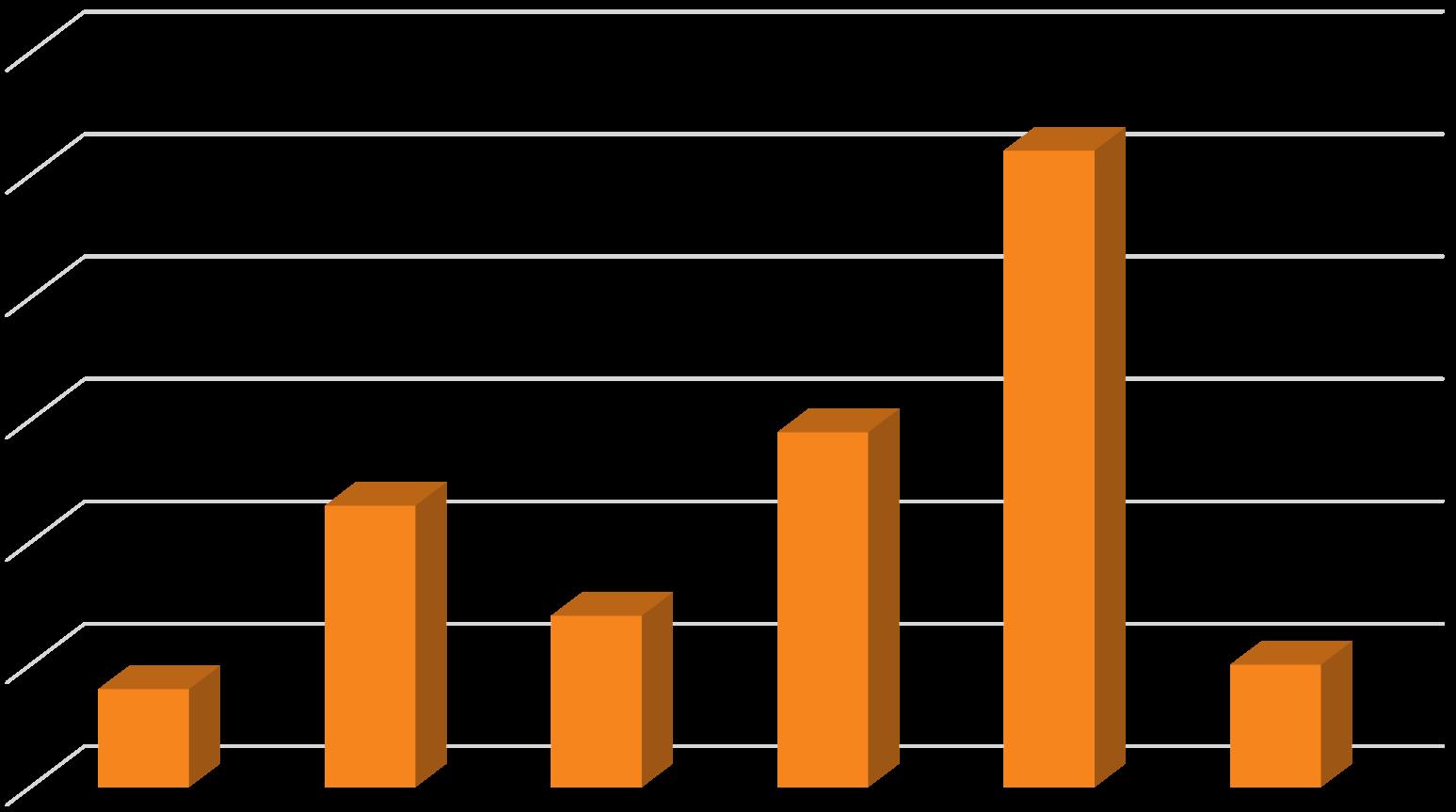
Referral volumes have increased markedly since launch, with 2025 the strongest full year in the dataset.
• Full year referrals rose from 46 in 2022 to 104 in 2025.
• 2025 was the highest-volume full year in the dataset.
• There was a dip in 2023, but referrals more than doubled in 2024 and increased again in 2025.
• 2021 and 2026 are partial years, so direct comparisons should focus mainly on 2022–2025.
• 2026 currently includes 20 referrals to date, so should not be compared with full-year figures.
The vast majority of records appear to come from patients directly. There are also some referrals from Carers, Partners and Living donors / individuals.
PD remains the largest referral need, but the service is increasingly supporting people across the wider kidney-care pathway.
• PD/APD/CAPD accounts for 42% of referrals, making it the core referral need.
• Home-based therapies dominate, with PD and HHD together representing 58% of all records.
• Demand is broadening into transplant support, modality decision-making and carer support.
• This suggests peer support is being used at multiple points in the kidneycare pathway, not only for home dialysis.
• The volunteer network supports this broader role, with experience across home therapies, caring, living donation and wider kidney-care journeys.
• Impact Reports show the service expanded in 2024 from home dialysis support to all aspects of kidney care and management.
• The 2025 Impact Report suggests the broader model is becoming embedded, with more referrals from nurses and patients finding the service through social media and newsletters.
• 29 trained peer support volunteers, aged 20–80.
• Volunteers bring varied backgrounds, languages and lived experience.
• Languages include English, Punjabi, Urdu, Hindi, Mirpuri and Jamaican Patois.
• Experience covers kidney diseases, HHD, PD, caring for someone on home therapies and living donation
• Specialist support includes transplantation, in-centre dialysis, PKD, IgA nephropathy, diabetes, CKD stages 3–5, travel and balancing treatment with daily life.
• Peer supporters are spread across the UK, supporting broad national coverage.
• Matching can consider both location and relevant lived experience.
• Training covers emotional support, boundaries, confidentiality, active listening, empathy, reassurance and signposting.
• All peer supporters complete DBS checks through NKF.
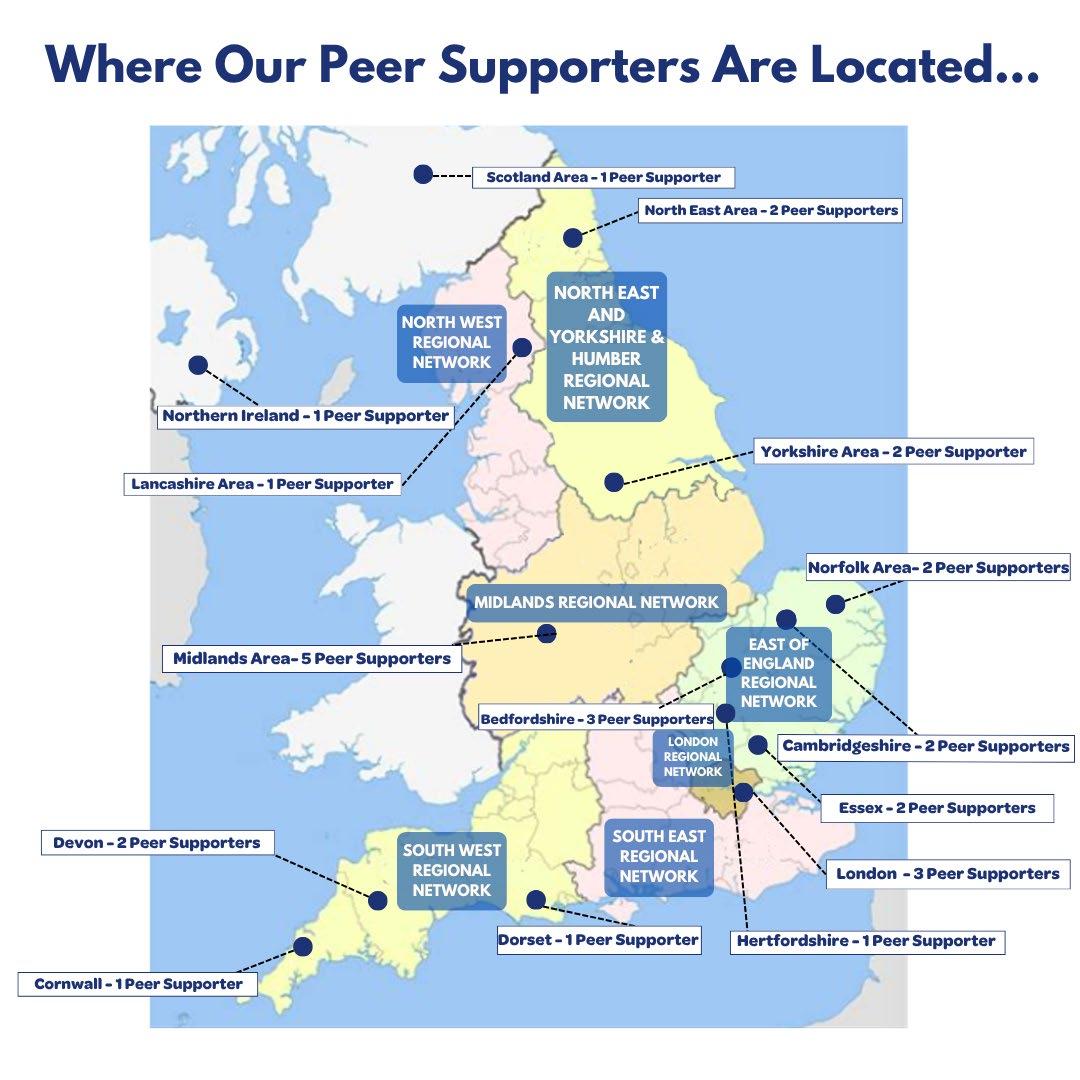
The map illustrates the broad geographic spread of the current network of 29 peer supporters across the UK.
Wales has the Popham charity, which supplies peer support across Wales.
• Support is overwhelmingly delivered by phone, making it the core delivery route.
• This model helps the service scale across a wide geography and supports fast set-up.
• Referrals are geographically broad, but concentrated around Hertfordshire and London.
• The service reaches patients across many hospitals and renal units, with Lister Hospital particularly prominent.
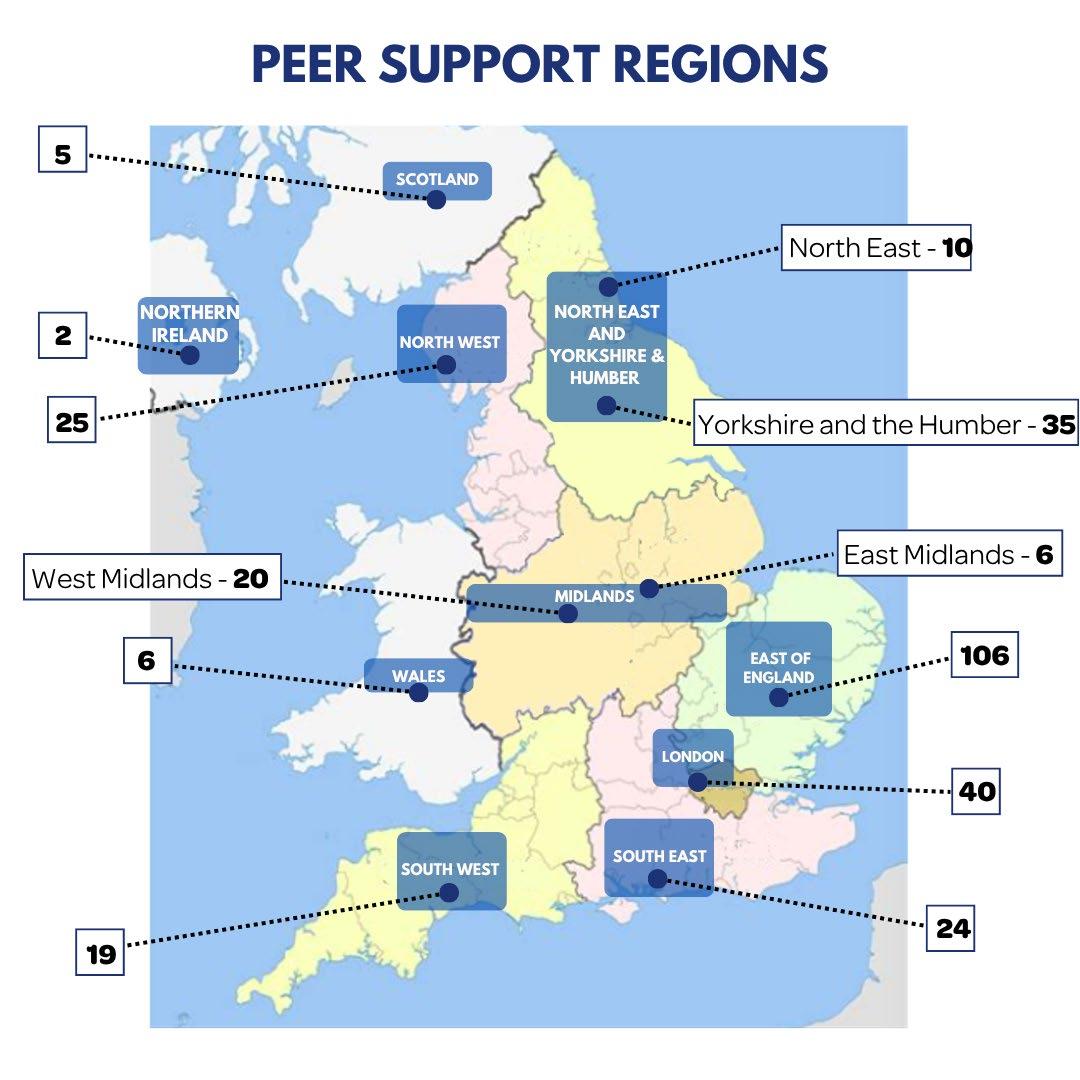
• The regional activity map shows peer support activity spread across the UK, supporting the interpretation of national reach.
• Higher activity is shown in the East of England, London and several other English regions.
• This reinforces the value of phone-led support, allowing people to be matched by relevant lived experience, not only local geography.
The map indicates broad UK reach, with higher activity shown in the East of England, London and several other English regions. Counts cover 1 September 2021 to 15 June 2026, while the referral database covers September 2021 to March 2026, so the map should be treated as contextual rather than directly comparable.
Median set-up time is 1 day overall.
2025 was especially strong, with 73% set up within 2 days and 96% within 7 days.
Nearly two-thirds of referrals are set up within 2 days.
The 2025 Impact Report also describes most referrals as being processed within one to two days.
User feedback reinforces this, describing easy initial contact, quick transfer to the right person and call arrangements confirmed without delay.
Most referrals result in positive completed support, and feedback shows that users value both the practical and emotional benefits of speaking to someone with lived experience.
• Free-text outcomes were grouped into consistent categories for clearer reporting.
• 87% of referrals were coded as positive completed support.
• A further 7% involved continued or ongoing support.
• Feedback shows users value peer supporters’ lived experience, especially for reassurance, practical preparation and confidence.
• Peer supporters are described as knowledgeable, approachable, open and easy to talk to.
• Users report high satisfaction, with the majority saying they would recommend the service or use it again.
• Feedback suggests peer support can reduce anxiety for some users and help them feel more prepared for treatment decisions.
“Completely
alleviated my worries.”
“Professional,
efficient, and very reassuring.”
The Peer Support Service is delivering value in three clear ways:
• It is growing: Referrals have grown, with 2025 the strongest full year in the dataset.
• It is broadening: Demand has moved beyond home dialysis into wider kidney support, matching NKF’s expanded service model.
• It is distinctive: Users value support grounded in lived experience, with volunteers offering reassurance, practical advice, confidence and trusted interpersonal support at key decision points.
The service has grown substantially, especially in 2025.
It mainly supports patients, but also supports carers, partners and donors.
Referral needs are broadening beyond home dialysis into wider kidney support.
The volunteer network is trained, DBS-checked and brings varied lived experience across kidney care.
Phone-based support enables broad reach and fast response, supported by flexible access routes and some language coverage.
Outcomes are highly positive, with most referrals completed successfully.

Nick’s story shows why peer support matters: kidney disease is not just a clinical journey, but an emotional and practical one. His experience of PD, transplant waiting, donor disappointment, isolation, recovery and life after transplant gives him the kind of lived insight that can reassure others, support treatment decisions and help patients feel less alone.
“I’ve been able to give a little bit back by attending several
presentations and meetings, as well as volunteering as a NKF Home
Dialysis Peer Supporter.”

Hilary’s story highlights the importance of supporting carers as well as patients. When her husband’s kidney failure happened suddenly, she needed clear, practical guidance on dialysis, diet, symptoms and day-to-day care. NKF support helped fill that gap, giving her the information and confidence to navigate treatment, living donation and recovery.
“For a small charity, the NKF punches well above its weight!”

Claudia’s story highlights the need for peer support that reflects younger people’s experiences of CKD.
Diagnosis at a young age can feel isolating, especially when the condition is invisible, uncertain and life-limiting. Age-relevant support can help younger patients feel represented, manage uncertainty and stay connected to the parts of life that define them beyond illness.
“… find the things that make you tick, throw yourself into them, and let those thingsnot your CKD - define you.”
Information on Peer Support Volunteers
Peer Support Feedback Impact Reports
Free-text referral reasons were grouped into standard reason codes to support clearer analysis. Similar wording, spelling variants and abbreviations were treated as the same underlying reason where appropriate. For example, “PD”,
“CAPD”, “APD”, “overnight PD” and “PD travel”
were all grouped under PD / APD / CAPD.
Code
PD / APD / CAPD
HHD / Home HD
Carer support
Modality choice
In-centre HD / fistula
Reasons included
PD, CAPD, APD, overnight PD, PD support, PD travel, switching to PD
Home HD, HHD, NxStage, HHD travel, switching to HHD
Caring for husband/son/someone on HHD, HD or home therapies
Undecided between PD, HD, HHD or transplant; close to starting dialysis
In-centre HD, HD support, dialysis access concerns
Transplant support
Other / outside coding frame
Transplant advice, transplant anxiety, living donor support, dialysis/TX
General dialysis support, CKD, PKD, IgA, paediatric, support for kidney disease
Outcome comments were coded to distinguish between completed positive support, ongoing support, further support needs, delayed/on-hold cases, cases where contact could not be made, scheduled/pending support, and missing outcomes. This enabled the analysis to report completed positive outcomes separately from open, delayed or unresolved cases.
Code
Positive completed support
Outcomes included
Continued / ongoing support
Good feedback from patient/carer and supporter; completed support; advice welcomed
Further support needed
Ongoing support, follow-up chat, continued peer support, further contact requested
Further support may be needed
On hold / delayed
Unable to contact
Patient admitted to hospital, poorly, awaiting pre-dialysis team, support paused
No answer, unable to make contact with the patient
Scheduled / pending support Support date arranged, call scheduled
Missing / not coded Blank or #N/A outcome fields