FOCUS FUEL POVERTY
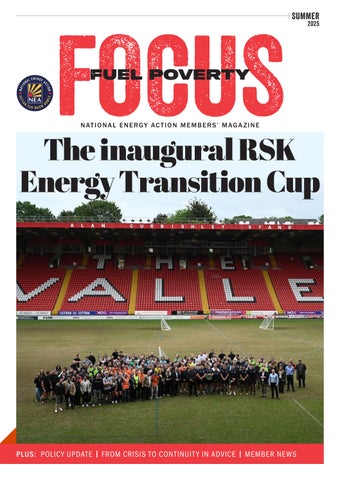
The inaugural RSK Energy Transition Cup

WHAT’S IN THIS ISSUE

Welcome to the Summer 2025 edition of Fuel Poverty Focus. As we enter the warmer months following a surprisingly dry and warm spring, we also begin to prepare for the challenges of the coming winter. Much has changed since spring, with major government policy and spending announcements. Yet, even as thoughts of cold homes fade in the sunshine, urgent issues remain. A growing energy debt crisis, persistently high energy bills— especially for those reliant on electricity for medical equipment— and the need for a just and fair transition to net zero all demand our attention.
At National Energy Action, we are using this summer to focus on practical, community-driven solutions. In this edition, you’ll find the latest update from our research with the University of Salford’s Energy House on how to optimise gas central heating and heat pumps for the most cost-effective ways to stay warm. We also explore the evolving landscape of energy advice, highlighting how our advisers are adapting and thriving amid growing summertime demand.
You’ll read about our new education initiatives, our expanding
work in Northern Ireland, and the incredible fundraising efforts taking place across the country. A brand-new charity football tournament was organised by RSK at Charlton Athletic’s stadium to raise money for our fuel poverty work. The RSK Energy Transition Cup was a brilliant day, and I hope you enjoy the photos from the event. Alongside that, companies went the extra mile with various creative summer fundraisers; the support from our partners has been truly inspiring.
Finally, we’re excited to invite you to our Welsh Conference this October in Cardiff. This is a vital opportunity to spotlight action on fuel poverty in Wales ahead of the upcoming Senedd elections. Summer has traditionally been a time for rest and preparation. While the nature of that preparation may be changing, our commitment and that of our partners remains unwavering. Together, we are hopeful that the actions we take today will bring lasting change for fuel poor households across the UK.
Colin Timmins
Colin Timmins Director of Homes National Energy Action

CONTENTS
03: Policy in Focus
Our three policy priorities to help those in fuel poverty
04: Homes in Focus
Research on heating system optimisation hits milestone
05: Advice in Focus
From crisis to continuity: rethinking resilience in the advice sector
06: Events in Focus
RSK Energy Transition Cup 2025, amazing runners, and House of Lords
10: Northern Ireland in Focus
Fuel Poverty Strategy in Northern Ireland
11: Members in Focus
Steps to a fairer smart energy transition, solar tax relief, and ECO4 Flex Health Route
17: Education in Focus
Our new e-learning for first-time tenants About Fuel Poverty Focus Fuel Poverty Focus is the quarterly magazine, produced by National Energy Action, for its members. If you have content ideas for next issue and beyond please email focus@nea.org.uk
Newcastle Head Office
Wellbar
Level 8
36 Gallowgate
Newcastle upon Tyne NE1 4TD
Our three policy priorities to help those in fuel poverty
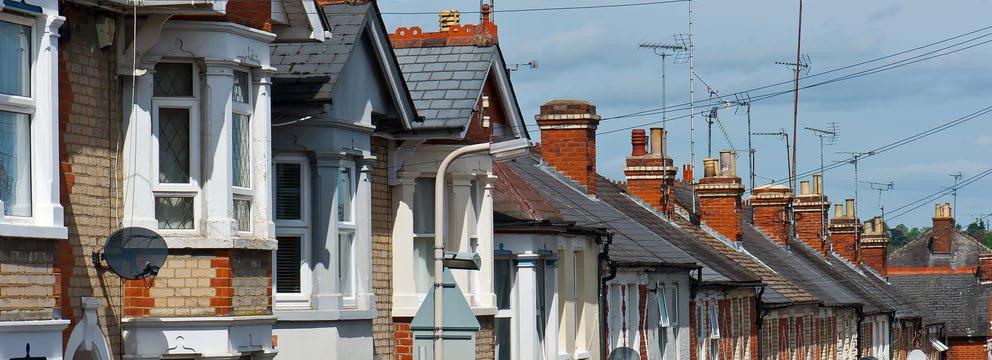
National Energy Action Head of Policy and Public Affairs Matt Copeland on the pivotal next few months for fuel poverty policy and what the government's priorities should be
The coming months are likely to be pivotal for how successful this parliament will be in addressing fuel poverty. We have already received the commitment from HM Treasury that there will be a Warm Homes Plan with £13.2 billion of capital backing from UK Government. But there are a number of decisions still to be made, and announcements expected, including;
• a new Fuel Poverty Strategy and the Warm Homes Plan
• decisions on the future of obligations to support fuel poor households
• decisions on the nature of the energy market, including the rebalancing of levies and locational pricing
• the introduction of new energy efficiency standards for landlords to ensure their properties meet upgraded standards (EPC C or above).
This is all expected with the backdrop of legal targets that the UK Government is pursuing. The looming 2030 fuel poverty target means that all low-income households must reach EPC C by 2030 as far as is reasonably practicable. The Climate Change Committee has set out what needs to be done to meet the upcoming carbon budgets, with a significant focus on increasing the uptake of heat pumps. Efforts to achieve both, while addressing the affordability of energy for low-income households, will be critical to the success of this government in achieving a fair and affordable transition to net zero. This short briefing outlines National Energy Action’s key policy priorities in this context.
Our three priorities
National Energy Action has three key priorities for the next year. Firstly, to ensure that the Fuel Poverty Strategy and Warm Homes Plan address the core issues of households that cannot afford to
pay their bills, ultimately leading to warmer homes. This means a strategy and plan that increases ambition, focuses efforts on those living in the worst fuel poverty and prioritises affordable warmth.
Secondly, we are advocating for a package of policy measures that work towards the fuel poverty target. This includes minimum standards for private landlords to meet, that are enforceable and work in the interest of fuel poor tenants; a boost to existing grant schemes to help fuel poor households upgrade their homes; and help for households that have been adversely affected by poor quality installations in the past. These measures are essential to ensure that the housing stock is improved, and that people are not left in substandard living conditions.
Thirdly, National Energy Action aims to ensure that the next phase of energy bill support works for low-income households. This support must address the stark affordability and debt issues that are faced by millions. But it must also act as a proactive counterbalance to market remedies that will support decarbonisation – levy rebalancing, higher standing charges, locational pricing – so that low-income and vulnerable households are protected from any adverse impacts of necessary market changes. The support must be robust and targeted, ensuring that those who need it most receive adequate assistance.
The upcoming months are a critical juncture for the UK Parliament in tackling fuel poverty. With critical decisions and announcements on the horizon, the success of these initiatives will shape how effectively the government meets its 2030 fuel poverty target and ensures a fair and affordable transition to net zero for all households, including those in fuel poverty. We have a narrow window before these plans are finalised. With so much at stake, we must work together to secure a brighter, warmer future for all.
Research on heating system optimisation hits milestone
National Energy Action’s Homes team concludes research at the Salford Energy House to better understand how to stay warm for less, including how heat pumps can be optimised
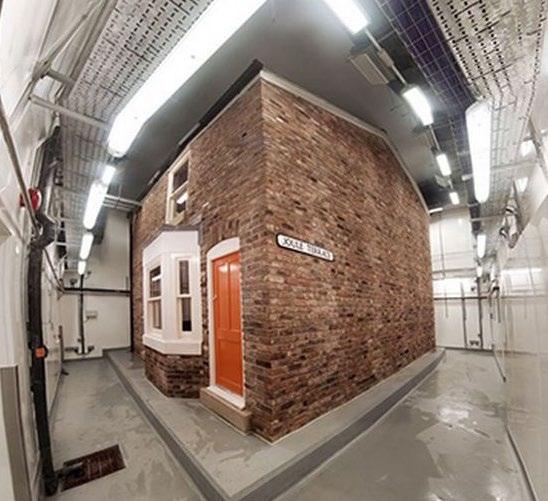
National Energy Action has been working with the University of Salford on a series of tests at their Energy House facility. Energy House 1 is a solid-walled end-terrace house built within an environmental chamber. It therefore provides a great opportunity to compare different heating systems and to better understand the best ways to reduce running costs while maintaining the comfort for the occupants.
The first round of tests was on a typical existing gas central heating system. These looked at rationing behaviours, both to understand the impacts of these and to be able to better advise people on the most cost-effective ways to stay warm. These included looking at the impacts of low thermostat settings and the use of electric heaters in single rooms, as well as evaluating some of the more common behavioural recommendations.
We also looked at the potential for optimisation technologies that could be fitted to gas boiler systems. While there is already evidence on load and weather compensation, and on the impacts of lowering boiler flow temperatures, some gaps in knowledge remain. Our tests analysed system commissioning, dynamic balancing radiator valves, and networked time and temperature radiator control.
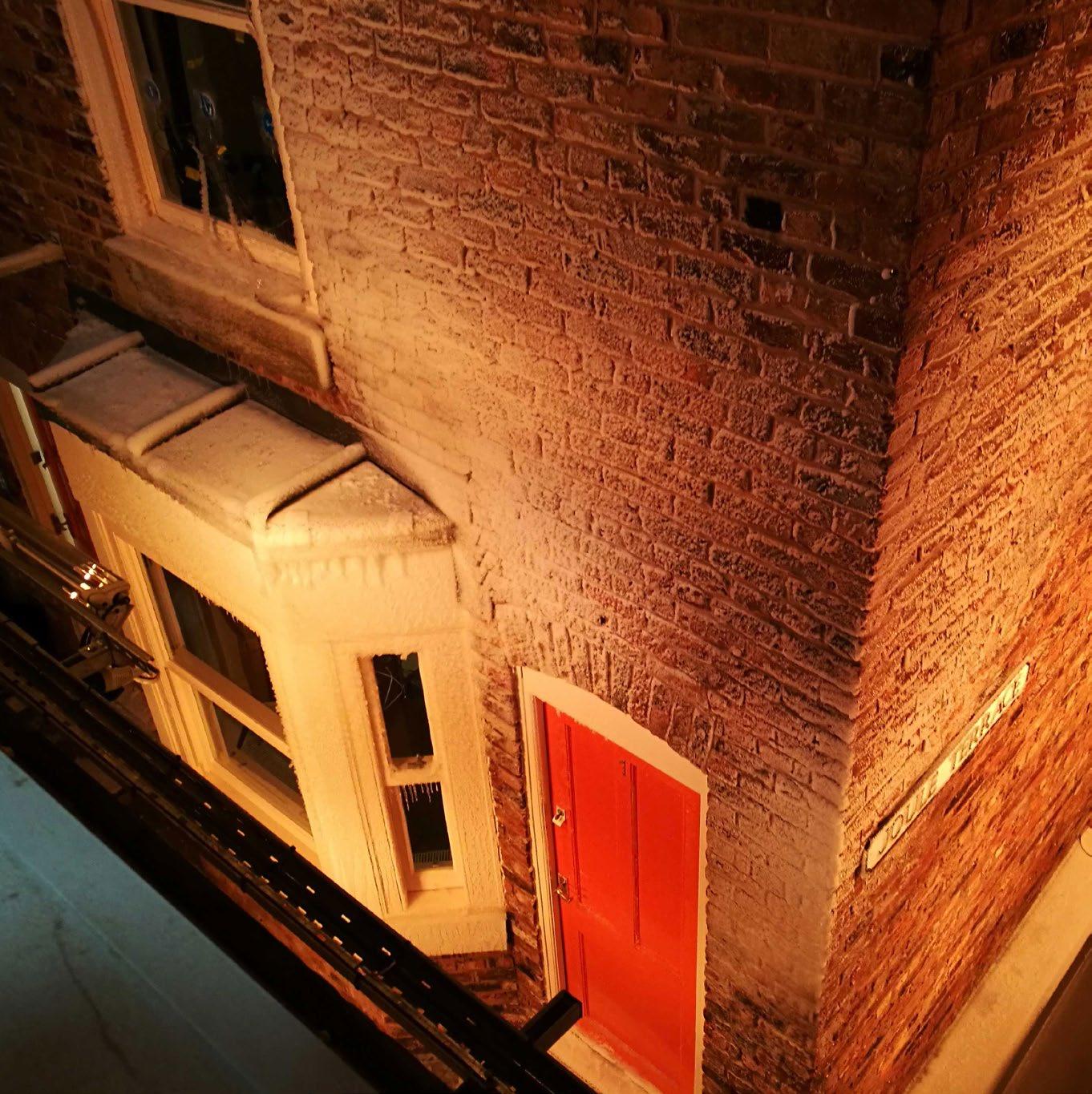
Heat pump test results to be released in summer
The second phase of tests looked at a retrofitted air source heat pump system, based on what would typically be installed under ECO4. Retaining the Energy House as a house with uninsulated solid walls, the challenge we set was to see whether we could optimise and run the heat pump system in such a property so that its running costs would be comparable to the gas boiler system without any additional interventions such as low-cost tariffs or battery storage. Richard Burrows from Mid Wales Heating and Plumbing Supplies worked with us throughout the tests to ensure that good practice was followed and that the approaches taken were grounded in the practical realities of existing homes.
The full test results will be published in summer. National Energy Action is also looking to use the findings to develop a package of measures that could be installed in the homes of fuel poor households to significantly improve the efficiency of their existing heating systems.
For further information, please contact colin.timmins@nea.org.uk
From crisis to continuity: rethinking resilience in the advice sector
National Energy Action Head of Advice Lesley Tudor-Snodin on keeping the line open: advice work in the new normal
There was a time, not so long ago, when May and June gave us a moment to breathe.
As the days grew longer and the weather improved, the demands of winter would ease. There would be fewer urgent calls, more community events, and a chance to focus on the complex cases that had built up over the colder months. It was a seasonal rhythm that allowed space to reflect, recover, and prepare for the year ahead, mentally, physically and professionally. Then everything changed
The pandemic hit. Then the energy crisis. Then the cost-of-living crisis. The idea of a quieter period vanished almost overnight.
National Energy Action’s advice service, once centred around face-to-face support and community engagement, became an essential lifeline over the phone. Demand surged by 400% in a matter of months. Calls came in from people in crisis: in debt, unable to top up their meters, living in cold, damp homes, and battling both physical and emotional distress. So, we adapted. We shifted our model, developed new systems, and expanded our team to meet the need. And while we assumed we’d eventually return to the old way of working, that return never came.
We’re still holding everything together

To keep going, we need to rethink what resilience really means (not just the word, we know it’s overused, but the concept). Because resilience isn’t just about individuals toughing it out. It’s about collective strength. It means carving out time for reflection, creating safe spaces for emotional support, and building a culture where wellbeing matters as much as output.
With the lifting of Covid restrictions, we gratefully returned to vital community outreach, a shift encouraged by funders and partners, and urgently needed by the communities we serve. But the phone lines didn’t slow. The energy crisis was declared over, yet bills remained painfully high.
We’ve continued to grow to meet demand and create capacity, but something critical remains lost, time to recover. What was once seen as seasonal intensity, winter peaks followed by summer recovery, has become unrelenting. There is no off-season anymore
Our team now juggles both high-volume telephone support and face-to-face outreach, offering advice to individuals and vulnerable groups across England and Wales. Every caller needs much more in-depth support. Every adviser is stretched. And now, we face a new challenge, one not unique to us, but urgent all the same: how do we sustain this level of care, quality and compassion without pause, without rest, without collapse?
The issues we tackle, fuel poverty, financial stress, and health impacts, aren’t new. But the pace, pressure and emotional toll have shifted dramatically. What was once a crisis has become the baseline.
We also need to be realistic and transparent about capacity. High standards don’t always mean doing more. Sometimes, they mean doing what we can with care, consistency and integrity, while being honest about our limits and continuing to advocate for systemic change.
At National Energy Action, that means creating conditions where staff can thrive and feel supported through:
• Regular structured spaces for debriefing and support
• Access to coaching, counselling and other support services via our independent Work Life Support helpline
• Encouraging regular breaks and taking annual leave, which needs to be modelled from the top down
• Creating a culture where it's safe to speak about stress and boundaries without fear of judgement
• Wellbeing check-ins, not just performance reviews
• Flexibility wherever possible, to support individual needs
Working in the charitable and advice sector is hard work, but it’s also deeply human work. And naming the weight of it is not defeat, it’s a necessary step toward sustaining ourselves and each other, so we can continue to show up with care and purpose.
The crises may be here to stay, but so are we.
Photo: Shutterstock/ Davor Geber
RSK Energy Transition Cup 2025 vital funds to help us fight fuel EVENTS IN FOCUS
We were delighted to be part of the inaugural RSK Energy Transition Cup at Charlton Athletics’ football stadium, The Valley on 5 June. The event, hosted by RSK, brought together 16 teams across the energy sector to play some friendly six-a-side football with the aim of raising money for National Energy Action to support our work.
The event saw some fantastic football. We especially enjoyed the high drama of Team NEA's last-minute penalty save and the tantalising final between Cadent and Green Generation Cymru. A huge congratulations to our winners, Green Generation Cymru, for taking home the trophy!
It was especially great to have the support of our members Cadent, EDF Renewables, E.On UK, Macbrook Gas and Smart DCC at the event. Team NEA, despite their best efforts, was not able to secure the Energy Transition Cup 2025, but we will no doubt come back
much improved next year.
Following the lively tournament, the teams and spectators much-needed post-event sustenance and a prize-filled prizes donated from Charlton Athletic, RSK, Barbour, as well as vouchers for hotels, experience days and Director at RSK Pete Whipp, RSK CEO Alan Ryder and Executive Adam Scorer, the raffle was a perfect end
Thanks to the incredible support of all the teams, over £11,000 to help fight fuel poverty and support in Charlton. We’re thrilled with how successful this forward to future tournaments!




2025 raises fuel poverty
spectators got together for some prize-filled raffle. The raffle had some fantastic Barbour, Ninja Shark, Caroline Hirons skincare, and workshops. Overseen by Divisional Ops and National Energy Action Chief end to the event. teams, spectators and RSK, the event raised support vulnerable people across the UK and event was, and we’re already looking


Amazing runners raise money at events in London and Manchester
Fair Heat, Alt Han Co, the Association for Decentralised Energy, Smart DCC and Octopus Energy all ran to raise money to help us fight fuel poverty
London Landmarks Half Marathon and Finsbury Park Half
We saw 10 incredible runners take on the London Landmarks Half Marathon for National Energy Action in April! Seven runners from Fair Heat and two from Alt Han Co put their stamina to the test on this iconic route through central London. We were blessed with some fantastic weather and a vibrant atmosphere along the course of the run, making it a brilliant day all round. A huge well done and thank you to everyone who ran for Team NEA and for the life-changing funds raised to help fight fuel poverty.
Another round of applause must also go to the team at the Association for Decentralised Energy (ADE), who also took on the Finsbury Park Half Marathon on 15 June. The four runners did an amazing job completing this challenge. uk/support-us/fundraise-for-nationalenergy-action/running-events/great-north-run.
Smart DCC carry on their amazing fundraising efforts
After fundraising over £2,500 for Winter Warmth Support Packs in 2024, we are delighted that the team at Smart DCC are taking on more incredible fundraising challenges in 2025 to further support our work!
In August, four runners will be taking on the Tatton 10k – a return event for the Smart DCC team! Looking further ahead, three more Smart DCC colleagues will be running the Manchester Half Marathon in October to help raise more vital funds to support people experiencing fuel poverty.
We are incredibly grateful to Smart DCC for their continued commitment and support in helping us tackle fuel poverty. Good luck with your upcoming challenges – you can do it! Octopus take on Richmond RunFest
40 colleagues from the Octopus Energy team will be taking part in Richmond RunFest in September undertaking a variety of distances for Team NEA including the 10k, the half marathon and the full marathon.
This event follows on from over 30 members from Octopus Energy taking on the London Landmarks Half Marathon last year – we know this one is going to be even bigger and better! Good luck to everyone taking part and with all of your training and fundraising. We can’t wait to see what you can achieve together.
The Great North Run
We’re thrilled to share that all our charity places for the Great North Run are now filled! Taking place on Sunday 7 September, we’ll have 35 runners joining Team NEA to take on the world’s biggest half marathon in our hometown, Newcastle.
We’re delighted that 30 of our runners will be joining us from E.ON UK for the ultimate team-building challenge!
We’re looking forward to cheering everyone on and celebrating at the Charity Village at the finish line.
Good luck and thank you to all taking part!
If you’re interested in fundraising for Team NEA in any way, please find out more on our website or contact Michael O’Malley for more information: michael.omalley@nea.org.uk

Photos:
House of Lords event hears from MP and our Chief Executive
National Energy Action’s House of Lords reception brings together MPs, peers and industry stakeholders to consider the issues of fuel poverty in the UK
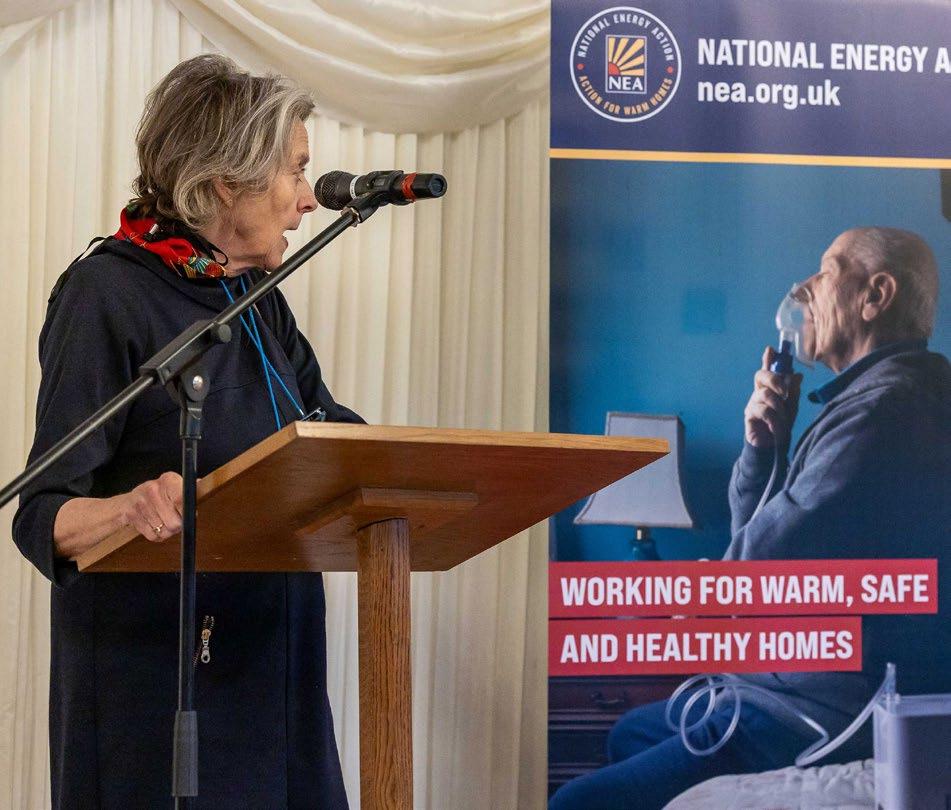
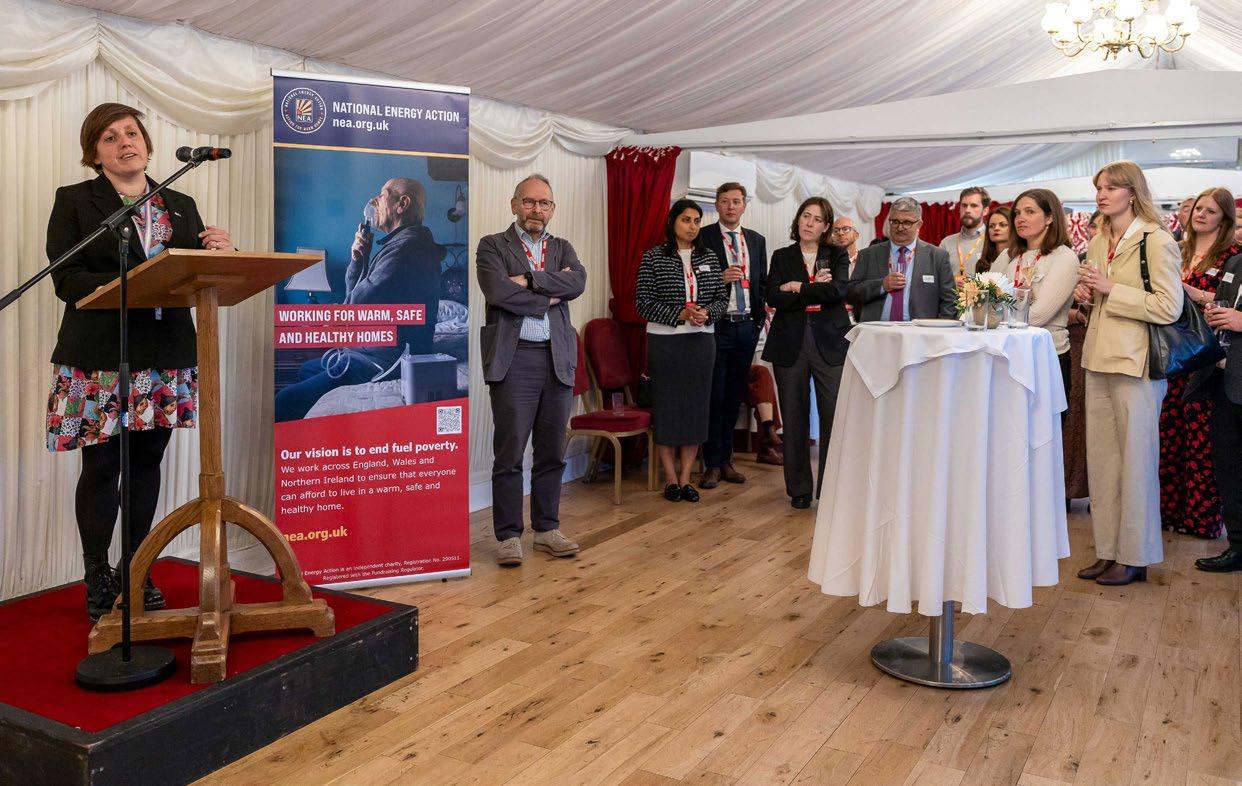
On 7 May, we hosted our annual reception at the House of Lords. The event was hosted by Baroness McIntosh, and we heard from Kirsty Blackman, MP for Aberdeen. Kirsty Blackman spoke of everyday realities that householders face, such as the challenge of being able to afford food or being able to top up an electricity meter.
Our Chief Executive Adam Scorer shared with stakeholders the many ways we continue to help some of the most vulnerable people across the UK and he also thanked our many partners without whose support we wouldn’t be able to deliver such great work. In his speech, Adam emphasised the need for continued action from both the utilities sector and the government to combat fuel poverty, ensuring that more households can spend this winter safe, warm, and free from the worry of their energy bills.
Warm Homes Plan and Fuel Poverty Strategy
Adam also discussed the opportunities that the government’s new Warm Homes Plan presents (see page 3) and highlighted that the need for the government’s updated Fuel Poverty Strategy should be more ambitious than its predecessor, principally by retaining the fuel poverty target. Adam stressed that it should maintain a worst-first approach, focusing on the experience of fuel poverty, not just the adequacy of housing. The Fuel Poverty Strategy and Warm Homes Plan must provide a ‘warmth first’ approach to addressing fuel poverty.
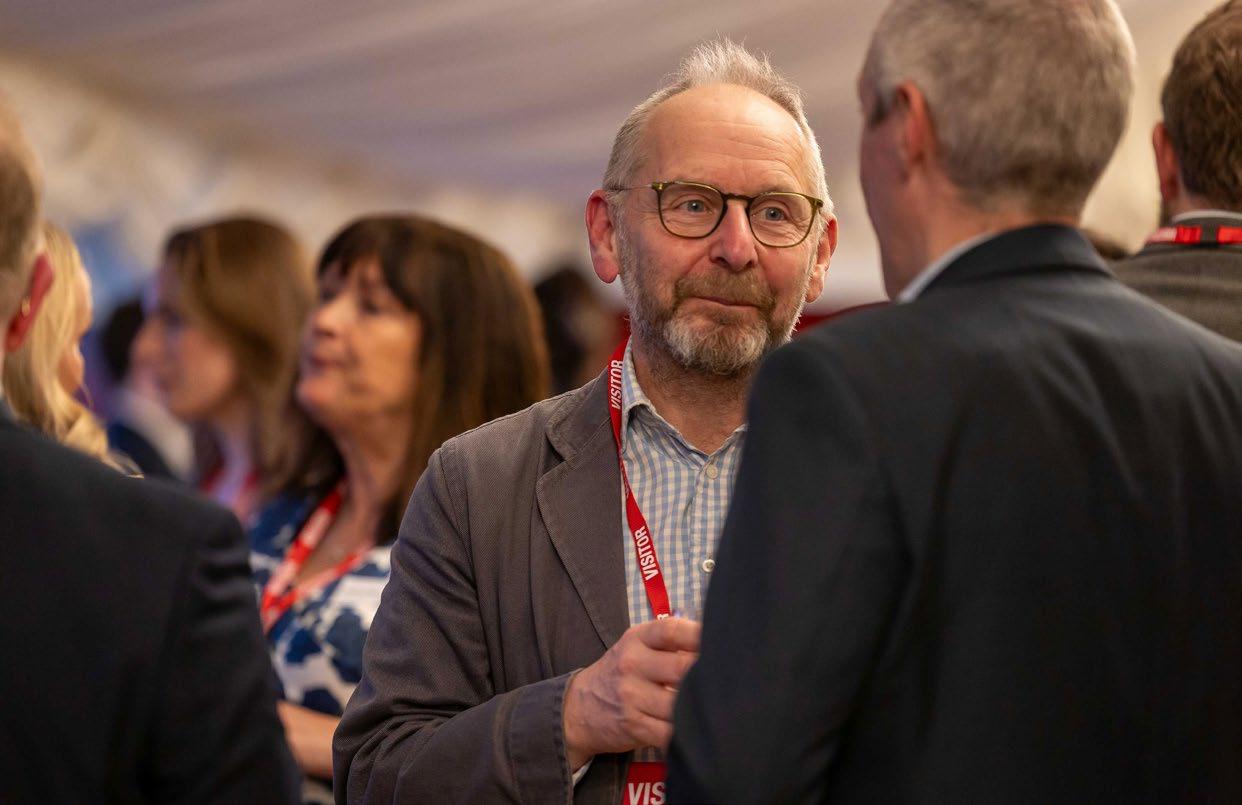
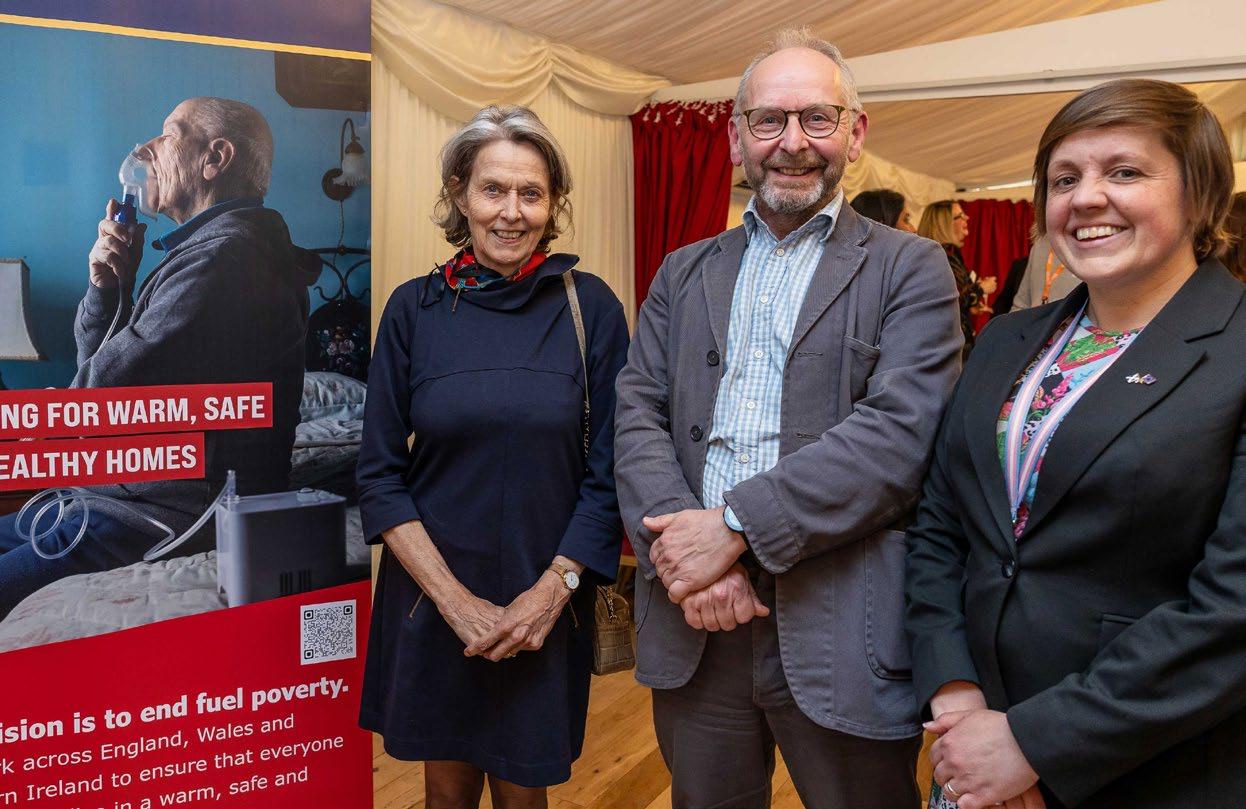
The event provided an opportunity to network with existing partners and consider ways to support people who need it. Thank you to everyone who attended.
Come to our Wales Fuel Poverty Conference
National Energy Action Cymru’s Wales Fuel Poverty Conference is taking place on 9 October – book your place
Virtually all of Wales’ low-income households are estimated to be living in fuel poverty. With some of the oldest, leakiest housing in northern Europe, millions of people continue to grapple with the reality of stubbornly high energy bills. They are rationing their cooking, heating and energy use, falling into record levels of energy debt, and going without essentials to the detriment of their health and wellbeing.
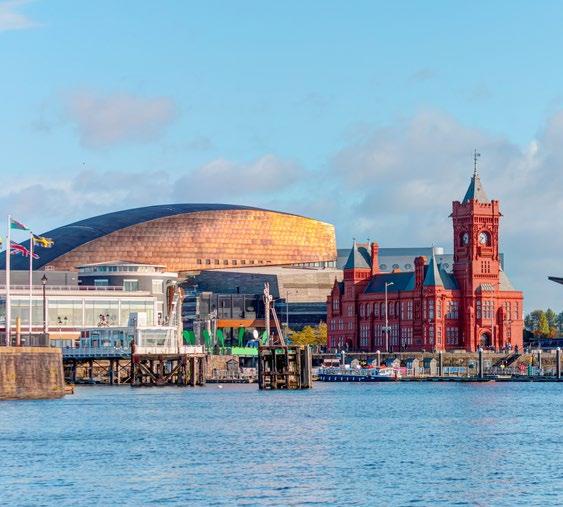
As our attention begins to turn to winter, at a key time in the Welsh political cycle ahead of the upcoming Senedd Election, National Energy Action Cymru’s Wales Fuel Poverty Conference provides an opportunity to come together to discuss this urgent challenge.
Fuel poverty is a cross-cutting issue that affects social justice, housing, and health, and requires long-term, cross-sector solutions. Our day-long conference will provide a platform to explore each of these key themes, to share best practice, and help shape future policy and delivery in Wales.
Taking place on Thursday 9 October at Holland House Hotel, Cardiff, we will be joined by a wide variety of speakers, ranging from energy advisers to government officials, who will share their expertise and insights to help us understand what more needs to be done to help those struggling to keep warm, safe, and healthy at home.
Delegates will include representatives from consumer and advice organisations, local authorities, housing associations, industry stakeholders and regional decision-makers. The day will offer valuable networking opportunities, breakout sessions, and informed debate to support collective action.
To book your place at the Conference, please click here: www. nea.org.uk/wales-conference-2025/
Our energy advice services have new names
We’re excited to announce that our long-standing Warm and Safe Homes service has a new name, well two actually

To better reflect our mission and make it easier for people to understand what we offer, Warm and Safe Homes (WASH) is now split into two services called:
• Energy Advice and Support Service
• Benefits Advice and Claim Support Service
These new names make our services clearer and more accessible, helping more households get the expert help they need. The change also clears up confusion around the WASH acronym, while keeping the same vital support at the heart of what we do.
For years, our WASH service has been a lifeline for households struggling with rising energy costs and poor housing conditions. Delivered by National Energy Action, the service has supported thousands of people to stay warm, safe and healthy in their homes.
What we offer remains the same – and it’s still free, independent and confidential:
• Energy efficiency and home safety advice – practical tips to improve comfort and cut energy waste
• Help with energy bills – guidance on managing costs and accessing support
• Benefits and income maximisation – expert advice on what you’re entitled to and help with those complex claim forms
• Community outreach – working locally to promote energy efficiency and reach those who need help most
This new name is part of a wider National Energy Action strategy to tackle fuel poverty and improve living conditions for millions of UK households. Our ultimate goal remains unchanged: everyone should be able to afford a warm, safe and healthy home.
Find out more at: National Energy Action (www.nea.org.uk/ get-help/).
Progress towards a new Fuel Poverty Strategy for Northern Ireland
National Energy Action Northern Ireland on the depth of fuel poverty in the nation and how policy work is beginning to take shape
Northern Ireland remains firmly in the grip of a fuel poverty crisis. Polling conducted for National Energy Action Northern Ireland in September 2024 revealed that over 40% of households are spending more than 10% of their income on energy, meeting the Department for Communities’ (DfC) definition of fuel poverty.
The ongoing strain on household budgets has led to harmful ‘coping’ mechanisms. Alarmingly, one in 10 adults reported skipping meals or reducing food consumption due to energy costs. For around 80,000 households in Northern Ireland, the choice between heating and eating is a harsh reality.
Research shows the scale of the issue
This crisis extends beyond energy bills – it reflects a broader pattern of deprivation. Research from Queen’s University Belfast revealed that Northern Ireland has the highest share of the UK’s most deprived areas, at 25%. Meanwhile, the Trussell Trust estimates that 200,000 people in Northern Ireland are facing hunger and hardship.
Despite these sobering statistics, there are signs of positive policy development. Early 2025 saw the launch of several key consultations, including the long-awaited draft of a new Fuel Poverty Strategy for Northern Ireland – the first since 2011. This offers a timely opportunity to modernise and strengthen the policy response to fuel poverty.
Our involvement in the strategy consultation
As members of the DfC Fuel Poverty and Just Transition Reference Panel, National Energy Action Northern Ireland has been closely involved in shaping the new strategy. Our engagement has included presenting recommendations to senior officials, participating in stakeholder events, and submitting a comprehensive consultation response in February 2025.
In our role as Chair of the Northern Ireland Fuel Poverty Coalition, we have also led the development of a collective consultation response, endorsed by a wide range of organisations. While we welcomed the strategy’s overarching goals and proposed outcomes, we raised concerns about the lack of specific, measurable targets – especially for reducing fuel poverty rates.
We now await the consultation report and look ahead to a related consultation on a proposed new support scheme‘Warm, Healthy Homes’. National Energy Action Northern Ireland remains committed to ensuring the needs of low-income and vulnerable households are prioritised.
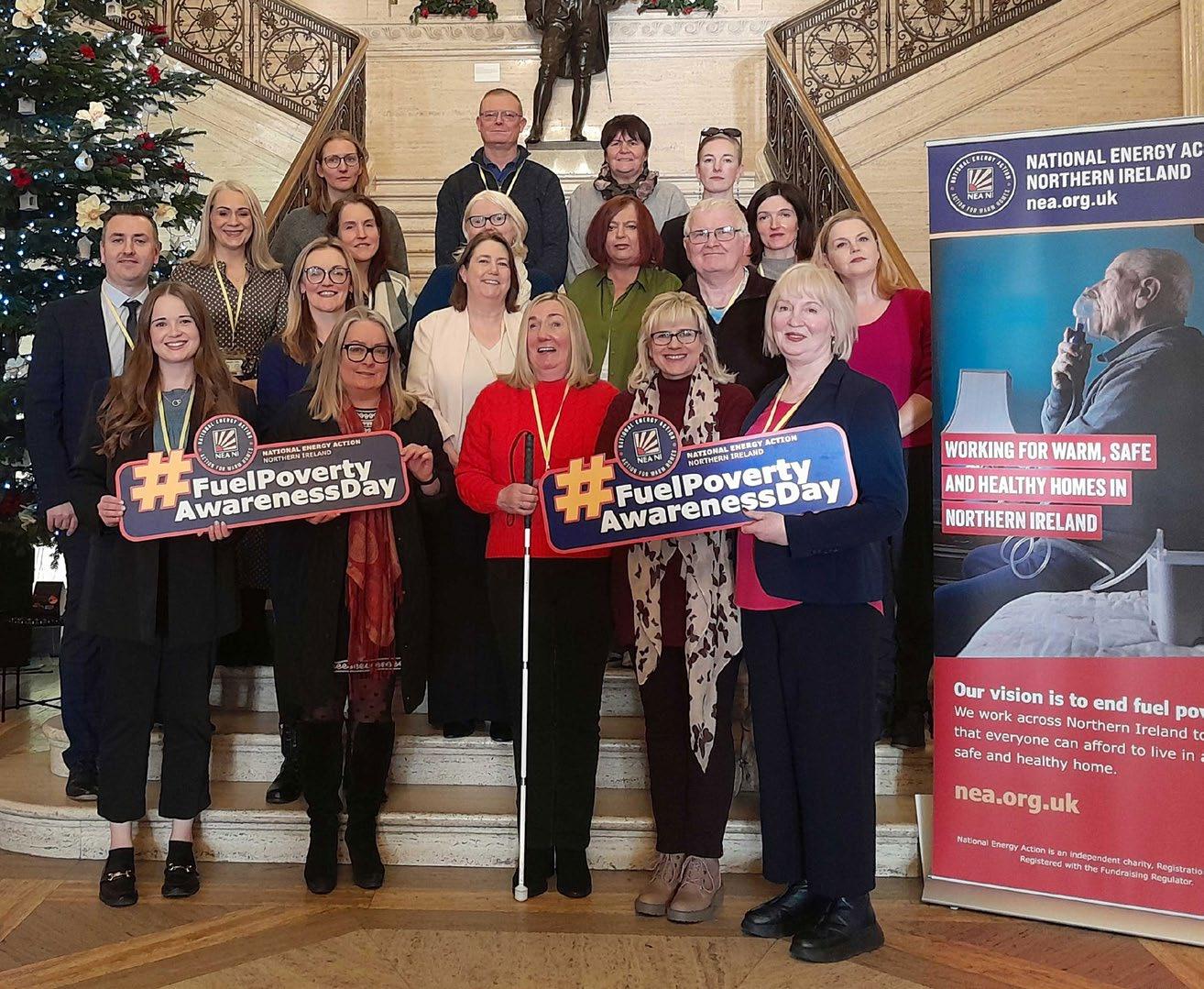
As part of our ongoing advocacy efforts, we marked Fuel Poverty Awareness Day in November 2024 with a photocall at Parliament Buildings, supported by members of the Northern
Ireland Fuel Poverty Coalition. We shared findings from our latest LucidTalk polling and engaged with MLAs from all major parties, including the Minister for Communities.
Progress on policy amid budgetary pressures
Our political engagement continues to be furthered through our role as secretariat to the All-Party Group (APG) on Fuel Poverty. Since September, the APG has heard updates from DfC on strategy development, the Department for the Economy on Energy Strategy implementation (including smart metering and low-carbon heat), and the Utility Regulator on new research into energy hardship.
There is also encouraging progress in the wider policy landscape – albeit set against extreme budgetary pressures. In a landmark development, the Northern Ireland Executive recently published its first agreed Programme for Government since 2011. Key commitments include a new Fuel Poverty Strategy, an Anti-Poverty Strategy, a mid-term review of the Energy Strategy, and pledges on home retrofitting and delivering a Just Transition.
These developments represent critical opportunities for long-term change. National Energy Action Northern Ireland is encouraged by this momentum and will continue working to ensure these commitments translate into real, lasting impact. Our mission remains clear: warm, safe, and healthy homes for everyone in Northern Ireland.
Find out more about our work in Northern Ireland at x.com/ NEANIreland and bsky.app/profile/neanireland.bsky.social
Six steps to a fairer smart energy transition
The Centre for Sustainable Energy guides us through its six ways to ensure that the transition to net zero is fair and inclusive that it has identified as part of its Smart & Fair programme
The Centre for Sustainable Energy (CSE) champions social inclusion and fairness in the UK's energy transition. Through its pioneering Smart & Fair programme, it has identified that while the smart energy transition has the potential to reduce energy bills, carbon emissions, and fuel poverty, it is currently widening inequality as offers are being designed with the wealthy in mind. Here are six steps CSE identified to ensure the transition is fair and inclusive.
1. Improve the smart meter rollout. It can be difficult to get suppliers to fix faulty meters and there is a lack of transparency and what Citizens Advice terms as an ‘Accountability Gap’ between suppliers, the Data Communications Company (DCC) and third parties contracted by suppliers. CSE recommends stronger accountability, compensation mechanisms, and a universally agreed upon definition of a faulty smart meter. Ofgem’s smart meter targets have the potential to play a vital role in addressing the number of non-functioning smart meters. CSE suggests that Smart Energy GB communicate any improvements in smart meter regulations to improve public trust in smart meters.

smart technologies and tariffs, especially for supporting vulnerable groups. Nationally shared resources, peer-support networks, and up-to-date guidance would enable organisations to give high-quality, relevant advice. It would also ensure quality and consistency and avoid duplicated efforts across the sector.
2. Make smart tariffs inclusive and accessible. Currently, smart tariffs are mostly tailored to wealthier households with technologies such as EV chargers, heat pumps, as well as better digital skills. CSE advocates for suppliers to offer tariff ranges that meet different customer needs and increase transparency in rate-setting to help consumers compare smart tariffs more easily.
3. Create long-term funding for local energy advice organisations. Local energy advice organisations are wellpositioned to support individuals to engage in the smart energy transition. Embedded within their communities, they are trusted and impartial sources of guidance on home energy, able to demystify smart meters and find funding for low carbon home improvements. Their well-established referral partnerships mean they reach those most at risk of being left behind by the transition. However, they will need long-term, stable funding and access to smart energy resources, as well as training and support, in order to play a meaningful role in the transition.
4. Develop training, resources and ongoing support for smart energy advisers. Advisers need comprehensive training on
5. Set up a national Smart Energy Advice Network. A national advice network should link individuals to local expert advisers via a central helpline, this could build on the existing Find Ways to Save Energy in Your Home government helpline. Funding for such a service should be progressive, for example, sourced through taxation rather than energy bills.
6. Change energy efficiency grant schemes. Grants should be expanded to cover smart technologies that enable time-of-use energy savings for low-income households. This includes smart controllers, heat batteries, and solar panels with battery back-up. Additionally, installations should include performance monitoring and follow-up support to ensure effectiveness and to build user trust. Post-installation advice must also be clear, accessible, and tailored to help people make the most of their new technology.
These six steps, grounded in CSE's frontline and research experience, provide a clear roadmap to ensure all households can benefit from a greener, smarter and fairer energy transition. The changes are achievable, but they require co-ordinated action from government, industry and the advice sector to put fairness at the heart of our evolving energy system. Read the full recommendations and detailed breakdown at: www.cse.org.uk/ six-steps-to-a-fair-smart-energy-transition/
Photo: CSE
Grants and tax relief make solar power more accessible than ever before
about solar for domestic customers
With the start of summer firmly in our sights, many of us will be looking forward to enjoying the benefits that summer brings. To be able to lower the heating and reduce energy bills. It’s a feeling of relief felt perhaps the strongest of all by our elderly population.
According to recent studies by the charity, Age UK, the rising costs of energy are now the biggest concern among older people in the UK. With many suffering from health conditions made worse by living in poorly heated homes, the summer months can bring a brief respite from making difficult financial choices between ‘heating’, ‘eating’ and ‘meeting’ energy costs. Heating a property well and eating a fully nutritious diet are both essential factors to staying physically healthy. However, maintaining both or at least one of these basic needs successfully can lead to a decline in mental health, brought on by the worry of no longer being able to ‘meet’ the cost of high energy bills!
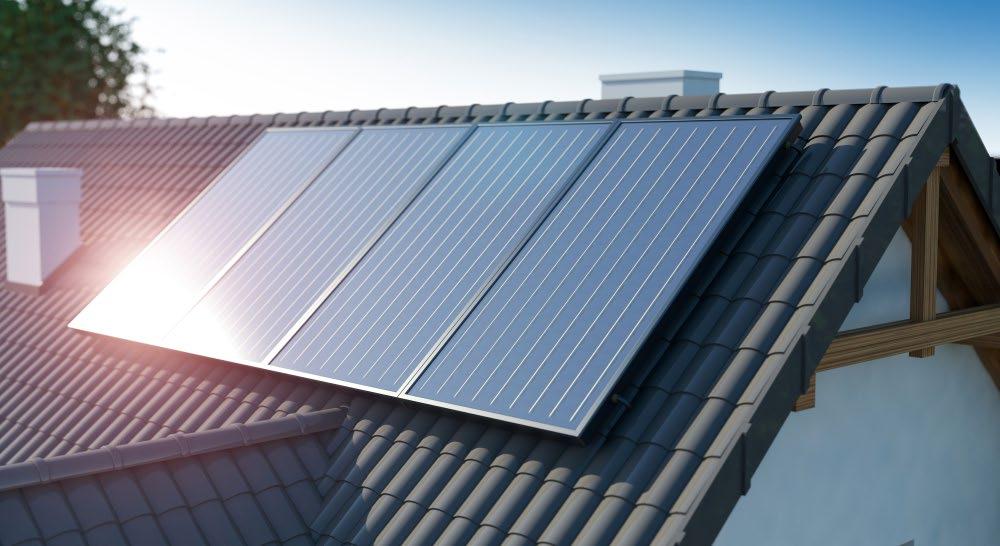
In summer, the sun can be used to generate household electricity for free, even on those days we can’t even see it. And though it is true that solar panels need some sunlight to work, contrary to popular belief - they do work on cloudy days and during winter too. Which is great news for people living in the UK!
Pensioners who qualify for means-tested benefits such as pension credit can have solar panels, heat pumps and insulation installed for free via government-backed schemes such as ECO4 and the Great British Insulation Scheme. The grants are also accessible to people with cardiovascular, respiratory and immunosuppression conditions affected by cold temperatures or
who have limited mobility. Don’t let solar VAT leave you in the dark
There is also good news for those not on pension credit who are considering the solar leap; financial relief is available for all tax-paying UK households hoping to save on energy bills. VAT on all renewable energy equipment has been dropped to 0% and will last until 31 March 2027. Over the next two years, a full solar system will cost households between £5,000 to £15,000 to install.
Current government grants and tax relief are making solar energy more financially accessible than ever before. But with both set to end within the next two years, households are recommended to take action, so they don’t miss out.
The renewable energy sector has benefited from a reduction on the 20% tax rate for several years. This measure also hoped to counteract the constant rise of energy bills and improve domestic energy efficiency. However, to qualify for VAT relief, some requirements must be adhered to. All solar equipment must be installed on residential properties or buildings used for charitable purposes. The equipment must be new, not second hand, and bought from and fitted by the same MCS-registered installer –otherwise a 20% VAT charge could be incurred.
Other energy-saving materials, including central heating controls, insulation, wind turbines, water turbines, and both ground-source and air-source heat pumps, also qualify for a 0% VAT reduction. These technologies are all prospective players in the country’s green goal plan – a plan that VAT won’t get in the way of for another two years at least.
Toni Woodcock and Billy Strickland from Energy Advice Helpline (CIC) share an update
and charities
Heartbreaking case shows how high energy bills lead to fear of using heating
and how energy advice and support helped them live more comfortably in their own home
The client is 78 and lives alone in a modern bungalow. She has been diagnosed with terminal cancer, given months to live and gets minimal help from her family.
To further complicate matters, her husband also now lives permanently in a care home.
Age UK Bolton staff visited in January to find the house bonechillingly cold with sub-zero overnight outside temperatures. Our client was swathed in blankets, a hat and gloves in an attempt to keep warm, explaining she was afraid to put on the heating as it costs too much. She was fearful of leaving debts for her husband after she dies. Repeated chemotherapy treatments had left her particularly susceptible to the cold.
Age UK Bolton rang her energy supplier with meter reads and established that there was almost £1,500 credit on her account.
Age UK Bolton advised that she could afford to keep warm for her remaining months without worrying about the cost.
The client was happy she could afford to keep her home heated and turned the central heating on immediately. They rang her twice over the following two weeks, and she advised that she had the heating on as much as needed to stay warm.
Age UK Bolton offers energy advice daily, mostly in clients’ own homes, and the organisation estimates that 90% of clients its staff see have cut back on heating. There is a widely held perception among its client base that heating is a luxury they cannot afford on a regular basis. The reality is that many clients are living in fuel poverty, while others who actually can afford to heat their homes still live in fear of rising energy bills, due to the prevailing cultural narrative around the domestic energy market.
Energy advice now available in rural Dorset
Citizens Advice energy advisers in Dorset are now using their new Energy Bus to provide services to rural residents who struggle with mobility issues or have limited access to public transport
The Energy Bus visits locations across Dorset where advisers provide free advice to households who are struggling to afford their energy costs, who cannot access existing services due to rural isolation, restricted mobility, or have limited access to public transport. They offer energy efficiency advice, help with resolving billing issues and meter problems, help with supplier questions and prepayment meters, as well as promoting carbon monoxide (CO) awareness. They also provide free CO monitors. All advice is free and confidential.
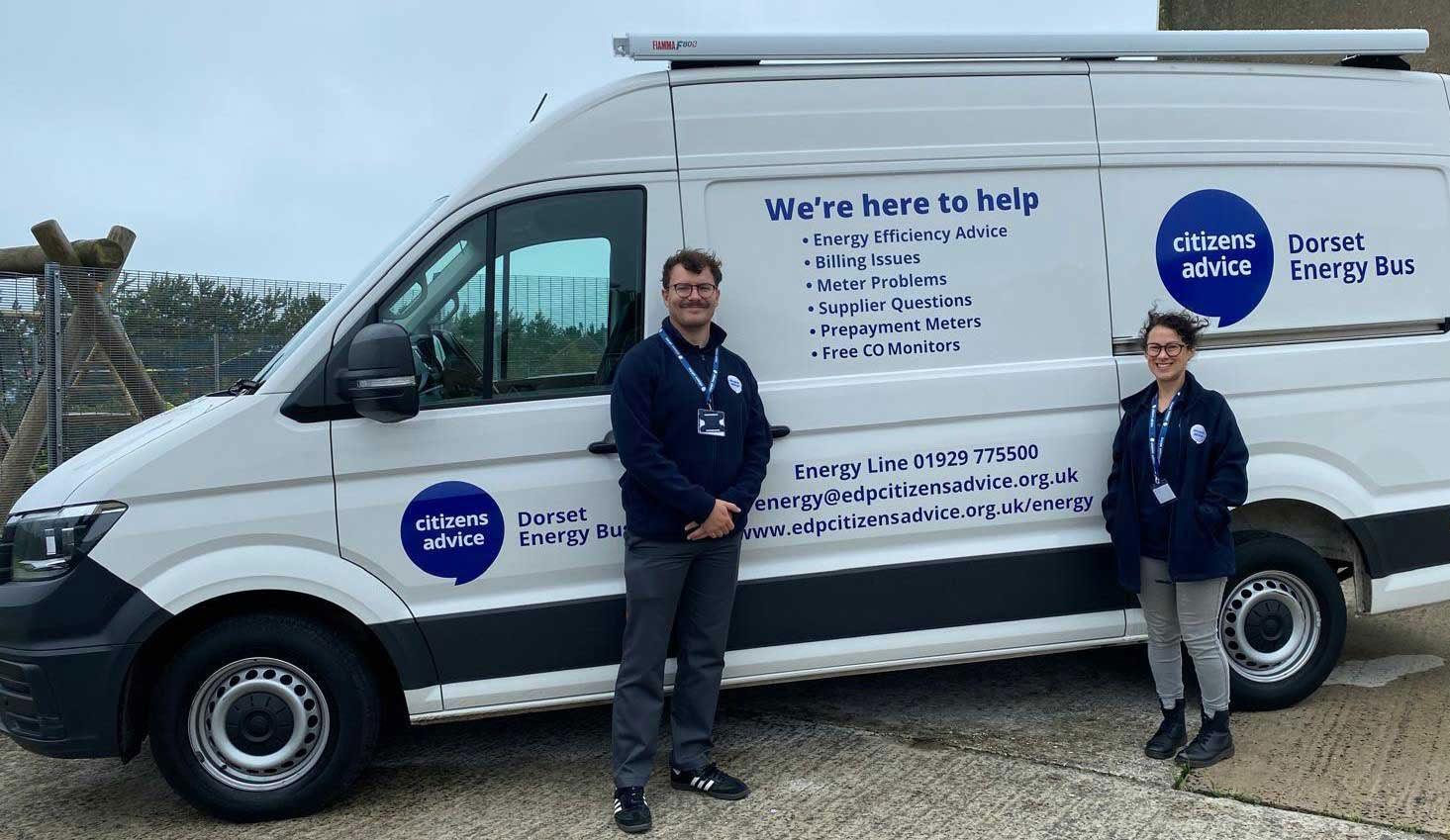
Ros Dignan, Project Manager, Citizens Advice Dorset Energy Unit, said: ‘We are really pleased to be able to provide this free service to Dorset residents. There’s been a lot of uncertainty surrounding energy costs, and people may be worrying about how they are going to afford to pay their energy bills. We encourage residents to come and have a chat with our experienced energy advisers and see what help is available. There is no appointment needed, and
our advice is free and confidential.’
The Dorset Energy Bus visits locations across Dorset, including Blandford, Littlemoor, Dorchester, Sturminster Newton and Portland. The timetable can be viewed on their website www. edpcitizensadvice.org.uk/energy
The Dorset Energy Team can be contacted by calling the Energy Line on 01929 775500, leave a message and someone will return your call. Or email: energy@edpcitizensadvice.org.uk
Age UK Bolton shares a poignant story of a client in their region
Photo: Citizens Advice Dorset
Trusted, tailored, local: lessons from the LEAD project
Green Isle of Wight CIC on how its Local Energy Advice Demonstrator has supported over 1,800 households with energy advice, including many less likely to access traditional advice services
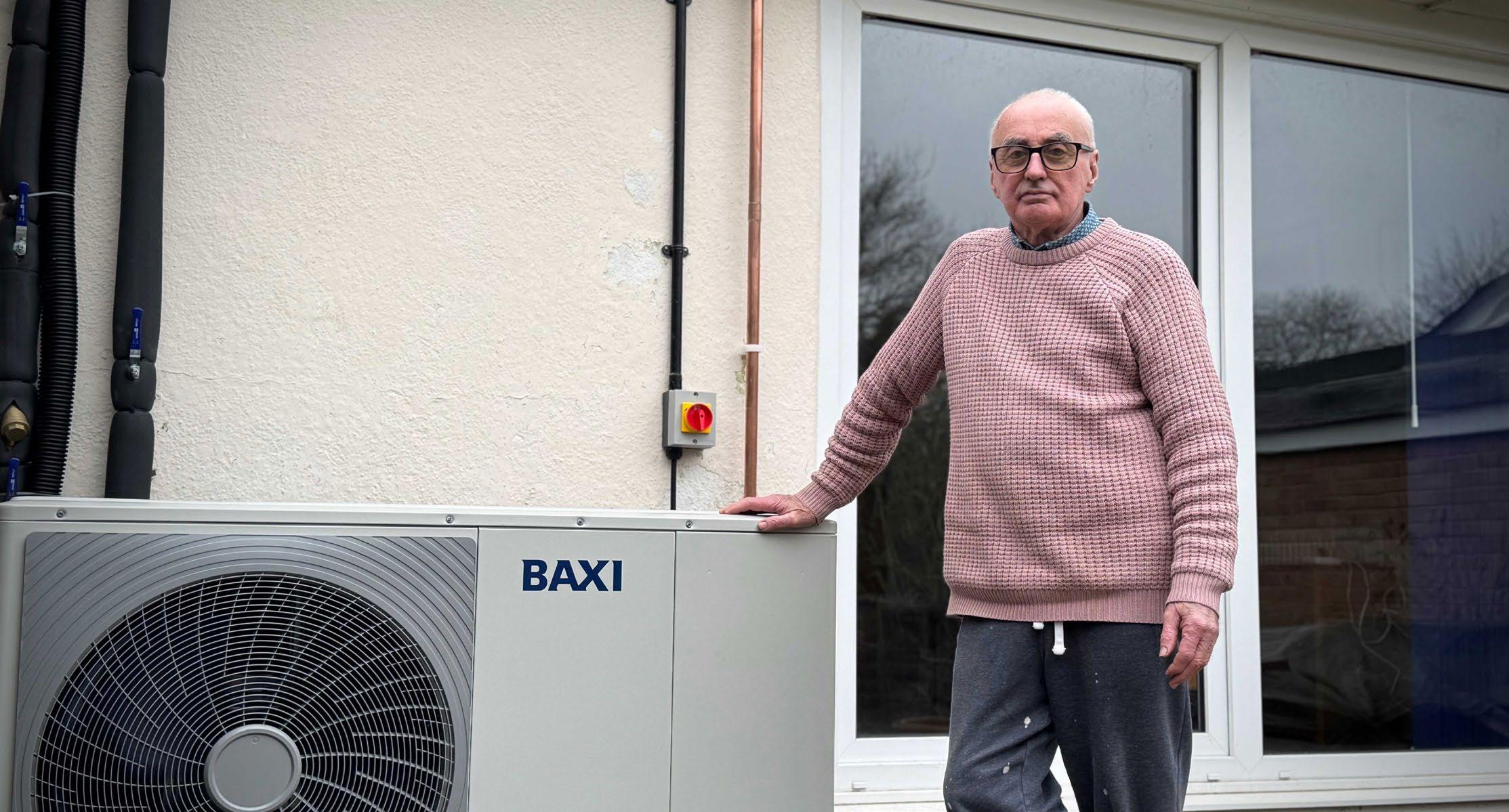
Across Southampton and the Isle of Wight, the Local Energy Advice Demonstrator (LEAD) project has shown what can be achieved when in-person energy advice is embedded in the heart of local communities.
Delivered by Green Isle of Wight CIC, the project supported over 1,800 households and engaged nearly 7,000 people through outreach. Crucially, it reached those least likely to access traditional advice services, households unaware of their eligibility or sceptical about existing schemes. It did this by offering free, face-to-face support in places people already trusted, such as wellbeing hubs, community centres and food banks.
Relationships built over time
This locally embedded model enabled advisers to build relationships over time. A single visit often became the first step on a longer journey, guiding residents through understanding their energy use, exploring funding options, and, where appropriate, supporting them through installation.
The use of technology proved transformative. Thermal imaging with ThermaFY helped householders visualise heat loss in real time, turning invisible problems into clear, actionable insights. LEAD piloted Aerial thermal surveys, using Kestrix software, which identified clusters of high heat loss in older neighbourhoods, allowing targeted follow-up.
The project used the Fairer Warmth platform to support consistent,
high-quality advice, delivering PAS2035-compliant guidance in a format that could be revisited anytime. Printed reports and repeated in-person contact proved particularly effective on the Isle of Wight, where digital access and literacy can be lower.
Timing also mattered. Advice was most impactful during colder months, when the cost and comfort implications were felt most keenly. However, this also stretched capacity, especially on the Island, where a shortage of local PAS2035-qualified installers and winter ferry disruptions delayed some follow-on work.
A lasting legacy
Despite these challenges, the LEAD project exceeded its original targets and left a lasting legacy. New partnerships were formed, awareness grew, and communities became more engaged with the idea of retrofit. Many residents reported feeling more confident about their energy use, with small, practical changes often sparking deeper engagement.
As the work continues on the Isle of Wight, backed by new funding, the message is clear: to tackle fuel poverty and support decarbonisation, energy advice must be personal, place-based and persistent. National campaigns have a role, but it is the trusted local presence that turns information into action.
The LEAD project is a strong example of how community-led delivery can complement wider strategies – meeting people where they are, with the right advice, at the right time.
Empowering change through health and housing collaboration
Zubaida Begum provides an account of their role in the ECO4 Flex Health Route as part of an NHS programme in Greater Manchester that has helped thousands to stay warmer at home
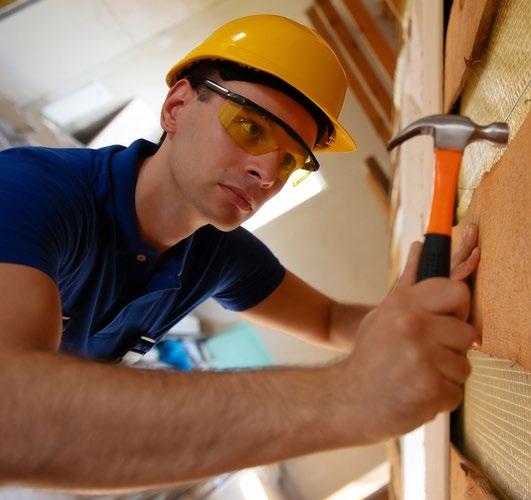
Since March 2025, I’ve been working as a Project Manager for the ECO4 Flex Scheme across Greater Manchester, with a specific focus on Health (Route 3) to support residents whose health is being negatively impacted by living in cold or energy-inefficient homes.
ECO4 Flex is a household referral mechanism within the wider ECO4 Scheme that enables councils to widen the eligibility criteria for ECO, allowing them to tailor energy efficiency schemes to their respective sector. Under ECO4 Flex, a participating local authority can refer households living in the private rented sector that it considers to be living in fuel poverty or on a low income and vulnerable to the effects of living in a cold home.
My role sits within the Sustainability Team at the NHS Greater Manchester Integrated Care Board (ICB). Although I work within the NHS system, my post is funded as part of a concessionary agreement with Greater Manchester Combined Authority and ECO4 installers. The way the installers were procured allows us to use this funding to cover staffing costs that support the delivery of the health route under the ECO4 scheme. I work closely with both the NHS Sustainability Team and the Greater Manchester Combined Authority to ensure our activities align with broader health and environmental priorities. Thousands helped already
extremely positive. Many report feeling more empowered to address the root causes of poor health, while patients are grateful for support that tackles both their home environment and financial stress.
Next phase pilot
The scheme has already had a significant impact. Since its launch, we’ve received 4,145 referrals through Health Route 3, with over 2,770 households already experiencing the benefits of a warmer, healthier home through free energy efficient installs. These improvements include insulation, efficient heating measures, renewable energy installations, and many other vital upgrades. For many, this has meant not only lowered energy bills but also a noticeable improvement in their respiratory health, mobility and general wellbeing.
A key part of my role has been building and maintaining referral pathways for frontline healthcare professionals including GPs, pharmacists and health workers in order to easily direct patients into the scheme. To support this, I’ve developed a range of resources including leaflets, posters, and presentations to raise awareness and simplify the referral process.
Feedback from the health professionals involved has been
As part of our next phase, we’re piloting the scheme at Middleton Health Centre, where we’re providing tailored resource materials, delivering staff training sessions, and planning to send out SMS messages to eligible patients to encourage uptake. A fellow member of the NHS Sustainability Team, who is also the Lead GP at the practice, has played a key role in supporting and championing this pilot - a perfect example of how cross-functional collaboration can drive meaningful outcomes.
This work demonstrates the power of collaboration between health and housing to combat fuel poverty. By integrating sustainable housing solutions into healthcare pathways, we’re making an evident difference in people’s lives and showing that climate-conscious initiatives can deliver real health outcomes too.
To read more about our scheme see www.greatermanchester-ca. gov.uk/what-we-do/environment/homes-workplaces-and-publicbuildings/energy-company-obligation-scheme/
New project brings free energy advice and support to local households
new energy advice and support project covering three counties that aims to help people either living in or at risk of fuel poverty
Marches Energy Agency (MEA) is delighted to announce the launch of Energy Advice Community Connectors, a new two-year project offering free, impartial, friendly energy advice and support to households across Shropshire, Derbyshire and Herefordshire.
The project, funded by the Energy Industry Voluntary Redress Scheme, is now underway and will run until January 2027. MEA is delivering this initiative alongside three partner organisations: Derby Bosnia Herzegovina Community Association, Citizens Advice Mid Mercia, and Shropshire Supports Refugees.
The project aims to support people either living in or at risk of fuel poverty, including those on low incomes, receiving means-tested benefits, or facing challenges linked to health, housing conditions or language barriers. In these largely rural counties, many households rely on expensive solid fuels, which are not subject to the same price caps as gas and electricity. With local fuel poverty rates well above the national average, this support is urgently needed.
Local energy advisers will be providing a range of services, from light-touch advice at community events to in-depth home visits.
These visits will include energy audits, thermal imaging surveys to identify heat loss, and the installation of free energy-saving measures like LED bulbs and draughtproofing.
Working closely with community partners, the project will also provide translated resources and specialist support for refugees and asylum seekers, who are often living in poor-quality housing. By training volunteers within local communities, MEA and its partners aim to build a network of trusted energy champions who can continue to offer advice and support long after the project ends.
The project has set an ambitious goal: to provide personalised energy support to over 10,000 households across the three counties. In addition to advice, crisis funding will be available to help those facing urgent energy needs – covering things like energy debt payments, emergency boiler repairs, heated throws, and low-cost cooking appliances.
MEA and its partners are passionate about helping people live more comfortably, affordably, and healthily.
If you would like to find out more about the project and other work, please contact MEA on 0800 677 1307.
In Kind Charity: ensuring a summer of play!
Charity offers essential products to support summer activities for children and encourage them to play as part of a plan to reverse the decline in outdoor play
Summer is here! It should be a time for fun and freedom but latest research reveals that only three in 10 children are playing out in the street, school break times are shrinking, and time spent playing outdoors has declined by 50% in a generation.
The charity In Kind Direct www.inkinddirect.org/ can help you as an organisation and families you support give more children and young people products they need to stay active this summer. They distribute products donated by quality brands and companies that every person, home and local organisation needs. As well as meeting immediate need in communities, they use research and partnerships to tackle the root causes of too many people going without.
'Last year we ran a summer scheme where we gave out LEGO® products to the kids as one of the activities and they were able to take them home. They were delighted and the parents were so grateful.'
Play isn’t just fun – it’s essential. It helps children and young people build confidence, stay active and feel connected. But with families under pressure and struggling with rising costs of childcare, summer activities and meals, many kids are missing out.
Join In Kind Direct’s network for free to access a range of essential products to support summer activities. From toys, toiletries, games, arts and crafts, books and more. Together we can ensure nobody goes without this summer.

Marches Energy Agency on the launch of its
National Energy Action’s new e-learning for first-time tenants
Our Education team on our new e-learning course for care leavers, students, prison leavers, migrants and refugees moving into their first homes to help them understand the energy market
With the support of Siemens Energy, National Energy Action has developed a new e-learning course designed for individuals embarking on independent living for the first time. First-time tenants can include care leavers, university students, prison leavers, refugees, or migrants— anyone beginning to navigate the complexities of the domestic energy market.
This comprehensive course provides essential knowledge and insights to help participants understand and manage their energy bills effectively. The curriculum covers a range of key topics, including:
• Understanding the roles within the energy sector
• The importance of staying warm
• How to open an energy account
• Choosing energy efficient appliances

• Reading and interpreting meter readings
• Selecting an appropriate energy tariff
• Managing energy payments
• Reducing heat loss in the home
• Guidance on where to find additional support
The self-guided modules aim to equip learners with the tools and information needed to avoid falling into fuel poverty. By enhancing energy literacy, the course empowers users to make informed decisions about their energy usage and seek help when needed.
The e-learning course is set to launch in the coming weeks, with a trial being supported in the North East, also funded by Siemens Energy. Organisations that support vulnerable first-time tenants and are interested in participating in the trial or obtaining a licence are encouraged to get in touch with michala.sullivan@nea.org.uk for further information.


Twitter/X: @NEA_UKCharity

Bluesky: @nea-ukcharity.bsky.social

Instagram: www.instagram.com/nea_ukcharity

Linked In: www.linkedin.com/company/national-energy-action

Facebook: www.facebook.com/nationalenergyaction
NATIONAL ENERGY ACTION
National Energy Action, the fuel poverty charity, campaigns so everyone can afford to live in a warm and safe home. This is something denied to millions because of poor housing, low incomes, and high bills. Working across England, Wales and Northern Ireland, everything we do aims to improve the lives of people in fuel poverty. We directly support people with energy and income maximisation advice and we advocate on issues including improving the energy efficiency of our homes.
We do not work alone. Partnerships and collaboration have been at the heart of National Energy Action for more than 40 years, helping us drive better health and wellbeing outcomes for people struggling to heat their homes.
WHERE TO FIND US
Email: focus@nea.org.uk Web: www.nea.org.uk
NEA is an independent charity, Registration No. 290511. Company limited by guarantee. Registered in England, No. 1853927 Registered office: Level 6, West One, Forth Banks, Newcastle upon Tyne, NE1 3PA Tel: 0191 261 5677
Illustration: Indigo Design/ Shutterstock