
FOCUS FUEL POVERTY
Annual Conference 2025 special
WHAT’S IN THIS ISSUE

Welcome to the Fuel Poverty Focus spring 2025 edition. Following our Annual Conference in January, we take some time to reflect on the challenges and opportunities that lie ahead this year. Our attention turns to government decisions in the summer and, ultimately, how to best prepare for winter 2025-26. We already know that the price cap is rising again in April, and some unknowns remain around the government's Warm Homes Plan. While there is a glimmer of hope with the recently announced expansion of the Warm Home Discount, many households will struggle with debt built up over the last four years of the energy crisis, living in energy-inefficient housing that is too expensive to heat and power. Urgent action is needed. Despite the challenge, our conference in Liverpool revealed insights and lessons that give me hope that we can move forward positively and diligently, reinforce our work together and find new ways to end fuel poverty. In this issue, we will cover our conference award winners and their inspirational work in their communities, and we’ll update you on our flagship Warm Homes, Healthy Futures programme; a
nationally coordinated and locally delivered partnership working between health, energy and housing to address fuel poverty and improve health and wellbeing. You will also find articles updating the progress on the work of National Energy Action’s Research Team and partnerships with Clarion Housing Group, the Millfield House Foundation and energy networks. Enjoy the photos from our brilliant second Walk for Warmth and read about the fundraising opportunities this summer and beyond. Finally, we are delighted to share with you the fantastic work that your fellow members have been up to. Working in partnership is critical to what we do at National Energy Action. Over the last year we have taken steps to review, learn and implement actions from all we do. Taking an evidence-based approach to help us to act with intention and purpose. We hope you enjoy this edition and look forward to continuing our work together.
Helen Stockton
Helen Stockton Head of Research National Energy Action

CONTENTS
03: Policy in Focus Energy bills increasing again, and an expanded Warm Home Discount
04: Conference in Focus Our Annual Conference and Conference awards
08: Events in Focus
Walk for Warmth, Great North Run, Smart DCC fundraise at Tatton run
10: Research in Focus North East Fuel Poverty Alliance and Responsive Retrofit
12: Education in Focus Education Team's new careers programme for teenagers
13: Projects in Focus Retrofit Hubs and Warm Homes, Healthy Futures
16: Members in Focus Updates from Connected Response, Treacle CIC, Northern Powergrid Foundation, Warmworks and more About Fuel Poverty Focus Fuel Poverty Focus is the quarterly magazine, produced by National Energy Action, for its members. If you have content ideas for next issue and beyond please email focus@nea.org.uk
Newcastle Head Office
West One, Forth Banks, Newcastle upon Tyne NE1 3PA
Energy bills increasing again, and an expanded Warm Home Discount

National Energy Action’s Head of Policy and Public Affairs Matt Copeland explains the current policy landscape as the price cap increases from April
Millions of households across the UK continue to struggle with the impacts of fuel poverty. From 1 April, the energy price cap increased for the third successive time, up by another £150 for a typical household. Many expect to ration their energy usage
This increase has an enormous impact on low-income households, many of whom are already struggling to make ends meet. Even before this hike, our polling conducted in January with YouGov found that nearly half of adults in GB reported that they were expecting to ration their energy usage. We also learned that, in the preceding three months, only 42% of adults in GB said that were able to comfortably afford their heating bill.
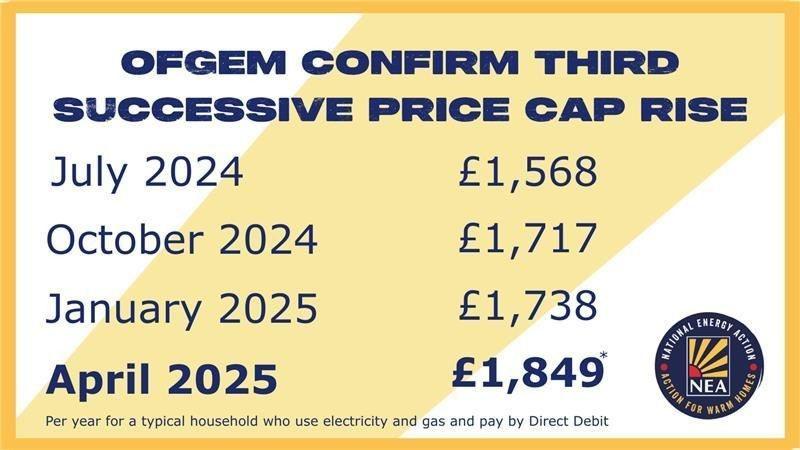
The situation is further compounded by the significant debt many people have accrued in the energy market. The average debt exceeds £1,000, with total energy debt closing in on £4 billion. This debt burden exacerbates the financial strain on households, making it even more challenging to manage rising energy costs. More households to get the Warm Home Discount
However, there is some hope on the horizon. The government has announced that a further 3 million households will receive the Warm Home Discount this winter. Additionally, Ofgem is working on plans to provide financial support to indebted households through a debt write-off scheme.
While these measures are welcome, they are insufficient. For those in crisis, an additional £150 will not be enough to prevent destitution. And while £1 billion of debt could be cleared, £3 billion will remain.
We must continue to strive towards more meaningful changes in the market, such as the introduction of a social tariff and improvements in the energy efficiency of homes.
All eyes are now on the upcoming spending review and the Warm Homes Plan. Policymakers, energy companies, and the public must come together to address fuel poverty. The moral and ethical imperative to ensure that no household sees heat and power as a luxury they cannot afford. By implementing comprehensive and sustainable measures, we can create a future where every home is warm, safe and affordable.
Photo:
Amaral
That ‘moment of upbeat, for change’: our Annual
We look back at our brilliant Annual Conference 2025, our excellent panel sessions and breakouts,
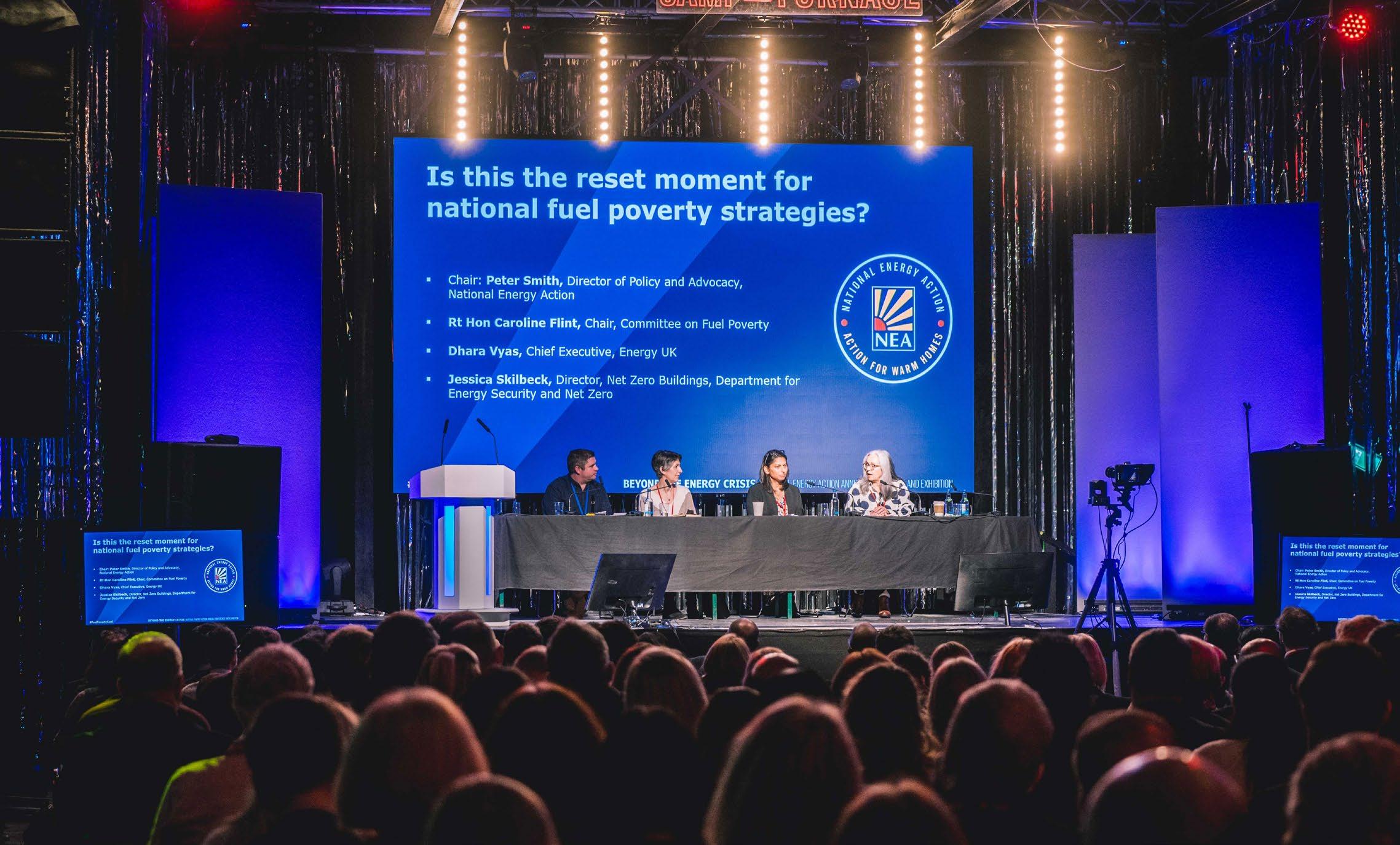
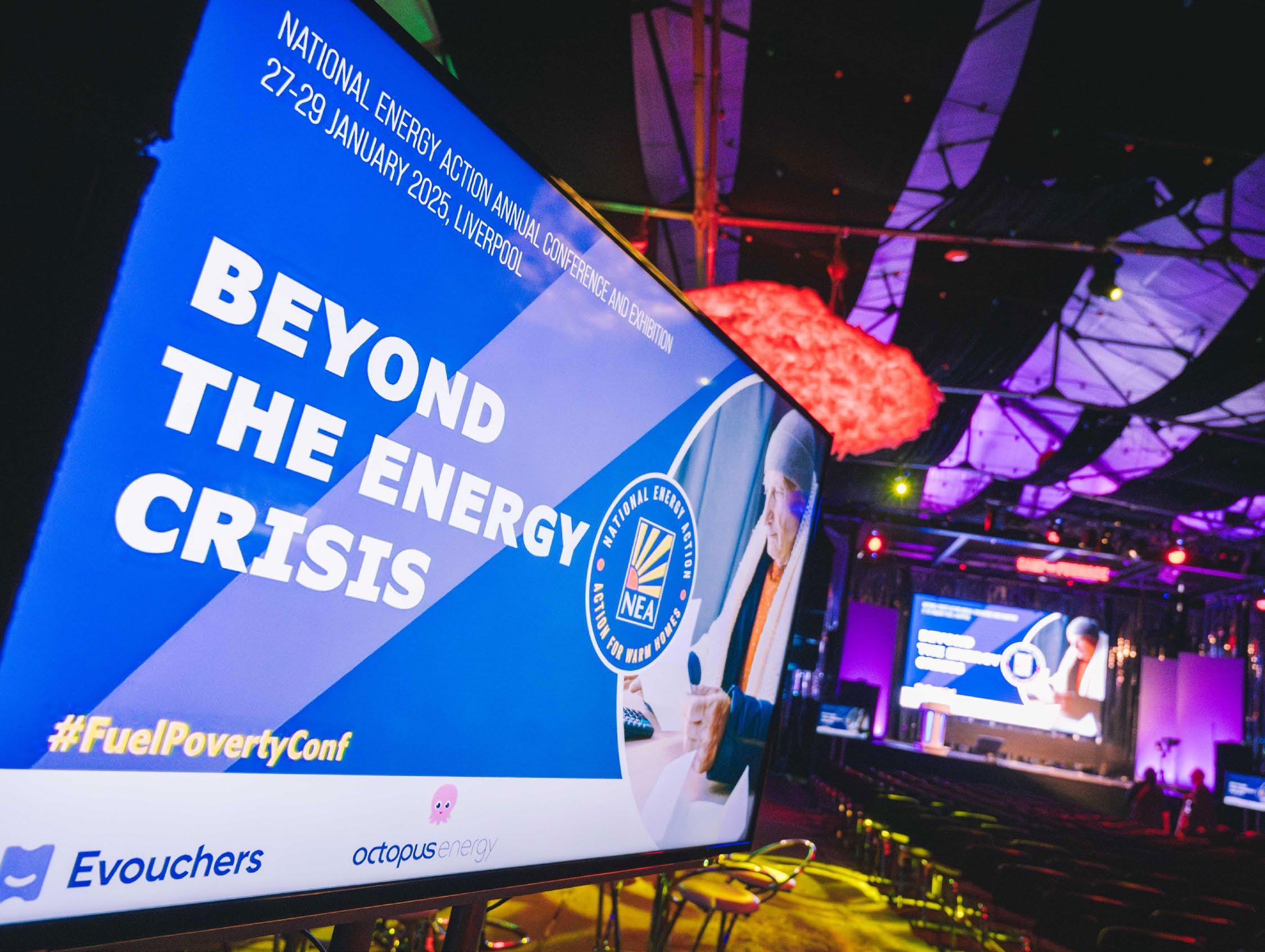
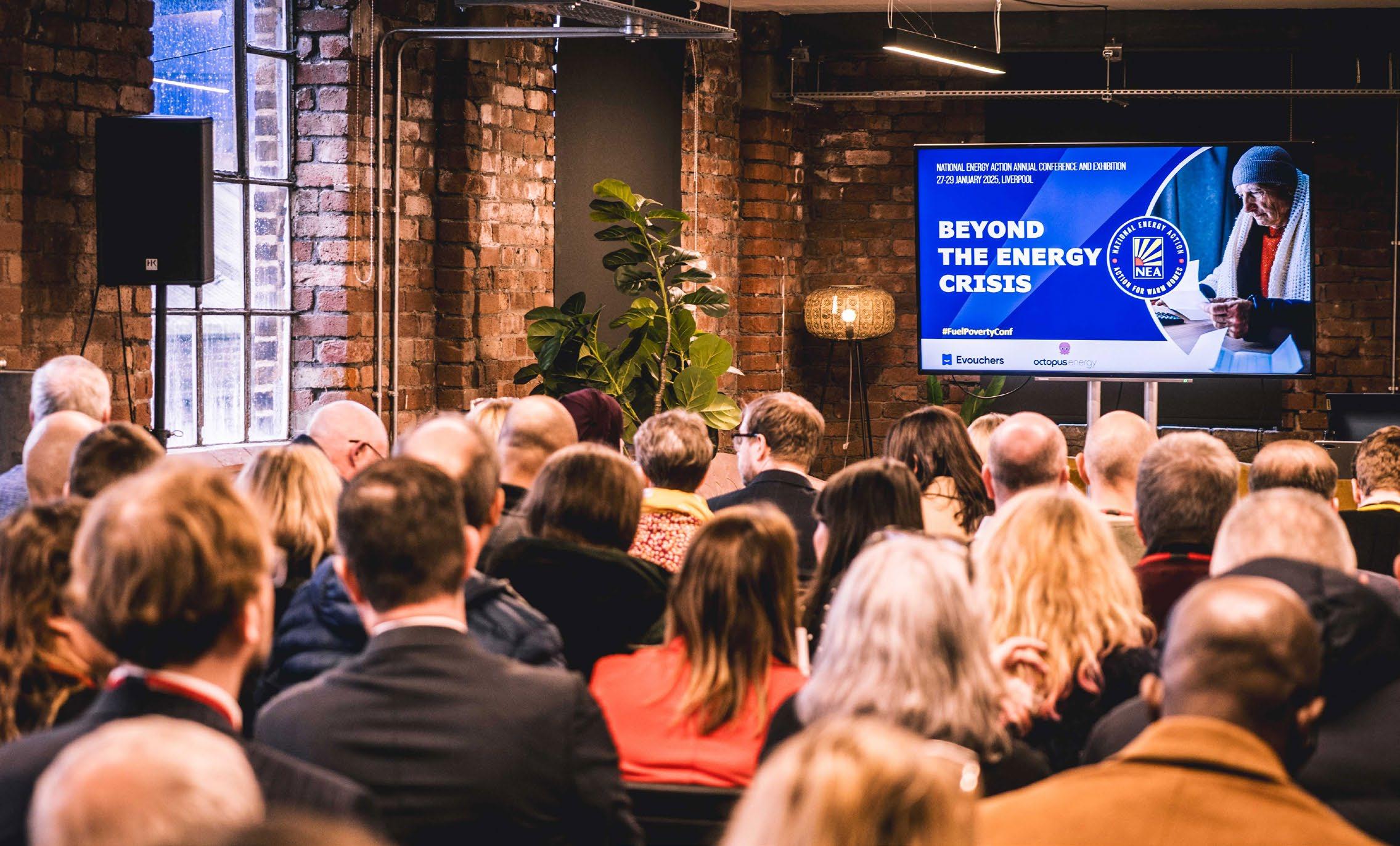
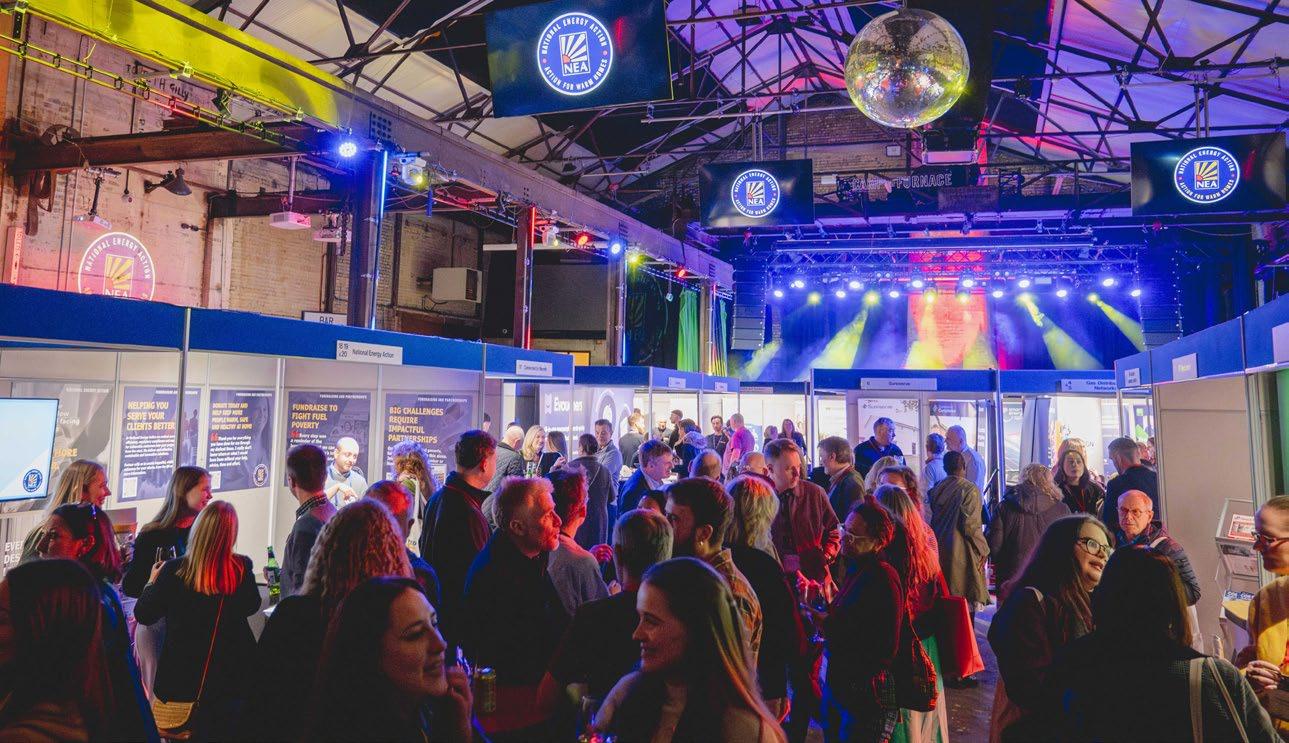
rom Monday 27 to Wednesday 29 January, we brought together over 350 delegates at our Annual Conference to discuss how to support the 6.1 million UK households in fuel poverty. Across keynote speeches, panels and breakout sessions at Camp and Furnace in Liverpool, delegates were able to hear about and discuss the incredible work being undertaken across the fuel poverty space. We also had 20 exhibitors in our hall, with whom delegates were able to network across the three days to develop new partnerships to fight fuel poverty.
Ending health inequalities
On the Monday evening, delegates assembled in the exhibition hall to be warmly welcomed by Lord Mayor of Liverpool, Councillor Richard Kemp CBE. He spoke passionately about the low life expectancy in some parts of Liverpool and his tireless work towards ending health inequalities between wards. In the evening, there was a networking buffet dinner to set the collaborative tone for the rest of the conference.
There is ‘no single solution to fuel poverty’
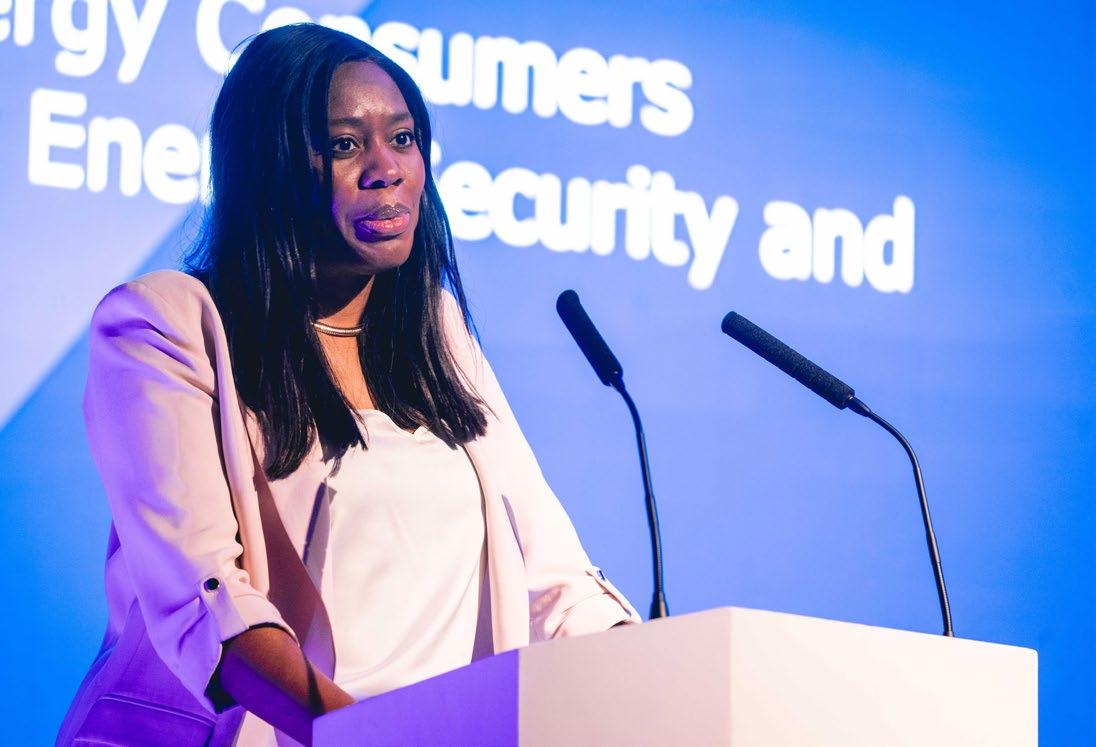
On Tuesday, our Chief Executive Adam Scorer opened the day with a panel address emphasising the importance of collaborative efforts in combatting fuel poverty. We also had a keynote speech by Miatta Fahnbulleh MP, Minister for Energy Consumers. The Minister said there is 'no single solution to fuel poverty' and spoke about the government’s role in addressing fuel poverty, providing detail on the government's plans to enable cheaper energy bills through the upcoming Warm Homes Plan.
Our first panel session on fuel poverty strategies, chaired by our Director of Policy and Advocacy Peter Smith, turned out to be particularly pertinent as the government launched a consultation on the new fuel poverty strategy for England just a couple of weeks later. Committee on Fuel Poverty Chair Caroline Flint, Energy UK Chief Executive Dhara Vyas, and Director, Net Zero Buildings, Department for Energy Security and Net Zero Jessica Skilbeck discussed what is currently working and what isn’t, and what would need to be included in
upbeat, positive, enthusiasm Annual Conference 2025
breakouts, our outstanding speakers and what we learned about the fight against fuel poverty
national fuel poverty strategies. Dhara said, ‘Energy suppliers can add a lot of value to local authority-delivered retrofit.’ She added that suppliers and local authorities can share data to reduce the cost of searching for and identifying homes that need to be retrofitted.
Delegates had the choice of three breakout sessions on the second day. Breakout A, led by Nicky Swetnam, Head of Programmes at National Energy Action, explored how government and business can better identify fuel-poor households. Speakers Ben Pledger from the Department for Energy Security and Net Zero; Matt James, Head of Innovation and Policy, Smart DCC; and Kate Roberts from Switchee highlighted innovative data-driven solutions to target those most in need. ‘Could we reach the position where we target more things on income rather than benefits?’ Ben asked, about work to improve targeting.
Breakout B considered the rented sector and how to make sure landlords can make their properties more energy efficient. Our Policy Analyst Maya Fitchett chaired the discussion on the
specific challenges faced by renters in fuel poverty. We heard from Parissa Zand, Research and Policy Manager, Generation Rent; Dr Matthew Scott, Policy and Practice Officer, Chartered Institute of Housing; and Miles Lewis, Director of Sustainability, Clarion Housing Group. ‘Landlords are making decisions about houses they don't have to live in,' Parissa said, highlighting why the private rented sector needs better protections.
The third breakout session was chaired by our Project Development Manager Molly Chambers and concerned gaps in advice and crisis support and how those in fuel poverty experienced the most recent winter. Our speakers were Dave Farquharson, Director of Partnerships, Lightning Reach; Emma Lewins, Students Organising for Sustainability; and Lee Healey, Founder and CEO, IncomeMAX. They spoke about how to identify and address gaps in support services for those facing fuel poverty. 'I'd rather save my energy for when my grandkids come over,’ were the powerful words of one client that Lee spoke about.
Minister Miatta Fahnbulleh gives the keynote speech at our conference
Our Insights and Impacts Manager Dr Jamie-Leigh Rosenburgh chaired a final session on Tuesday on using insight-driven approaches to create the best outcomes for clients. Delegates heard from Alessio Villanacci, Managing Director, Sirio Strategies; Ranjit Blythe, Managing Director, Cadent Foundation; Will Johnstone, Principal Policy Manager, Retail Energy Markets, Citizens Advice; and Dominic Griffiths, Business Relationship Manager, Energy Projects Plus. JamieLeigh shared powerful stories from our clients, explaining how one client, known as Rahul, had high costs because of medical conditions. By sharing experiences, this was an opportunity to learn from each other, share best practices, and explore how we can continue to build services that improve lives.
Putting Liverpool at the heart of conference Kicking off Wednesday was a keynote speech by Steve Rotheram, Mayor of Liverpool City Region, who spoke about the work taking place in our conference host city of Liverpool to tackle fuel poverty. Steve said we need innovative schemes to tackle fuel poverty, and that it isn't just about homes, it's about people, too. He was accompanied by Housing Retrofit Manager, Liverpool City Region Combined Authority, David Colbourne, who spoke about the work that is taking place to make homes warmer in the Liverpool City Region.
Our next session was a panel chaired by our Director of Homes Colin Timmins, which concerned how to make sure retrofit work delivers the best outcomes for households, including looking at barriers to retrofit and how to engage with households. Our speakers were Alastair Mumford, MCS Foundation; Eleanor Radcliffe, Project Manager, Carbon Co-op; and David Farmer, Energy House Research Fellow/School of Science, Salford University. Alastair said there are a number of homes which do not need much fabric improvement to have a heat pump installed, which could minimise the disruption, compared to a whole house retrofit.
The final panel session of conference, chaired by our Project Development Manager Danielle Butler focused on tackling health inequalities. Panellists engaged in discussion about the challenges, lessons learnt, and collaborative approaches that can drive meaningful change. Our panellists were Fiona Miller, Chief Executive, Beat the Cold; Joe FarringtonDouglas, Senior Fellow, Policy and Public Affairs,
Health Equals; Bill Purvis, Fuel Poverty Consultant, National Energy Action; and Lucy Malcolm, Senior Digital Transformation and Clinical Improvement Manager, NHS Cheshire and Merseyside. Joe spoke about life expectancy in the UK, saying that it varies by 16 years between the healthiest and unhealthiest areas.
The conference concluded with the presentation of awards to recognise outstanding contributions to tackling fuel poverty, followed by a closing lunch that allowed participants to reflect on the event. Read about the award winners over the page. The impact of the event
Alongside the amazing and valuable engagement with delegates at the conference, we posted 154 times across five social media platforms. The content has so far received 1,430 comments, likes and shares across the platforms. It was fantastic to see so many delegates posting about what they were hearing at the conference.
The event was an inspiring chance to get together with other organisations working to end fuel poverty. If you weren’t able to make the conference or you missed a session, then you can find the recordings on our YouTube channel. www.youtube.com/@ neaukcharity/videos.
Summing up the event on the final day, our Chief Executive Adam Scorer said, ‘Our conference remains the single most important event in the fuel poverty calendar to get a balance between the pressing need for action to tackle cold homes and the real opportunity to deliver solutions. In some of the remarks shared by delegates across social media you can see how much people relish (and need) that moment of upbeat, positive, enthusiasm for change. Much of that enthusiasm was delivered by our speakers and panel chairs talking about the wider work that the charity does and supports.
'In some ways conference is a very traditional and familiar event. But what it does, each year, is to refresh and revitalise the fuel poverty movement. Doesn't happen without us. Doesn't happen without the collective National Energy Action presence and effort. Every delegate, every exhibitor and every speaker will have left Liverpool in no doubt that we are the heart of the fuel poverty movement. Generous in spirit. Collaborative in practice. Positive in ambition.'
Thanks so much to everyone who spoke at our Annual Conference, to all our exhibitors and to all attendees. We hope to see you again next year.
Annual Conference awards highlight excellence in the fuel poverty sector
We highlight the incredible work to fight fuel poverty being done by the recipients of our Annual Conference 2025 awards
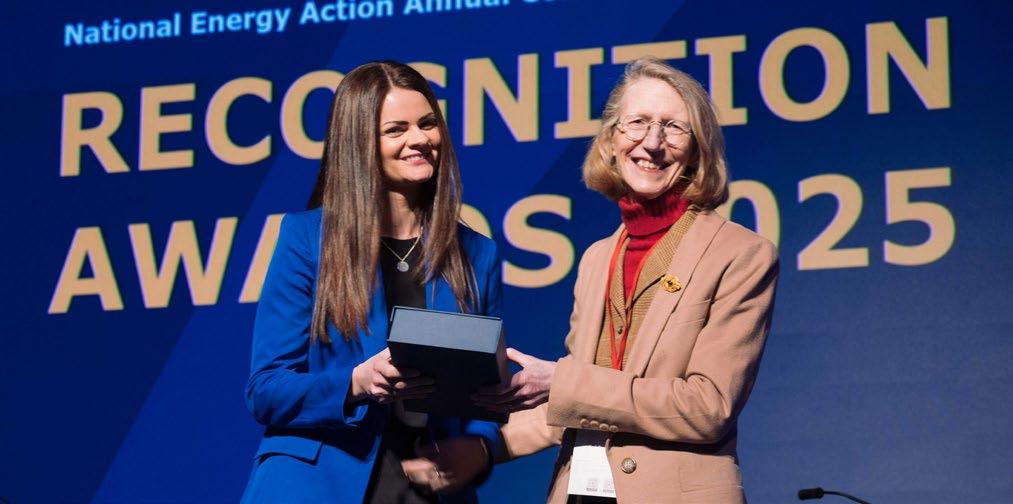
National Energy Action’s Annual Conference is about showcasing the work to tackle fuel poverty across the UK, so our awards are always a special way to end the event. Presented by our Chief Executive Adam Scorer and our Chair Claire Durkin, the awards highlight the very best of the sector.
Unsung hero – Emma Brooks
The winner of this year’s award – ‘Giving recognition to a lesser-known hero within your organisation’ – was Emma Brooks, Senior Partnership Manager at the National Energy Foundation.
Emma sets an unparalleled example of how to effectively collaborate with partners and stakeholders to achieve meaningful impact. However, what truly sets her apart is her unwavering commitment to the residents that the National Energy Foundation serve. Over the past year, Emma has played a pivotal role in driving over 6,000 referrals within the areas she manages.
Reaching out – Olivia Gatford
Our ‘Reaching out: engagement of diverse groups’ award was given to Olivia Gatford, Reach and Additional Support Manager at the Trust Alliance Group.
Olivia has been in the role for two years. During that time, she has taken an inclusive partnership-community engagement approach from a blank sheet of paper to delivery. Olivia has developed mutually beneficial relationships with key organisations in identified communities. She’s helped raise
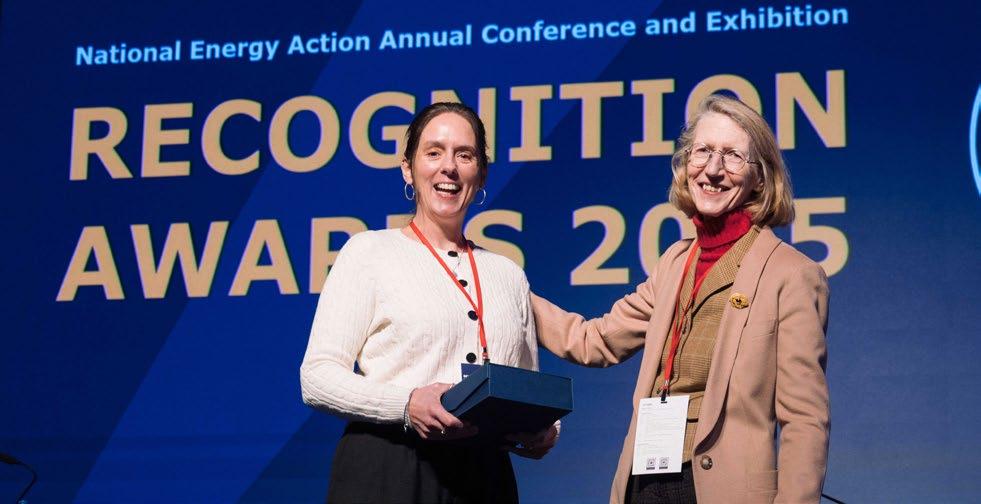
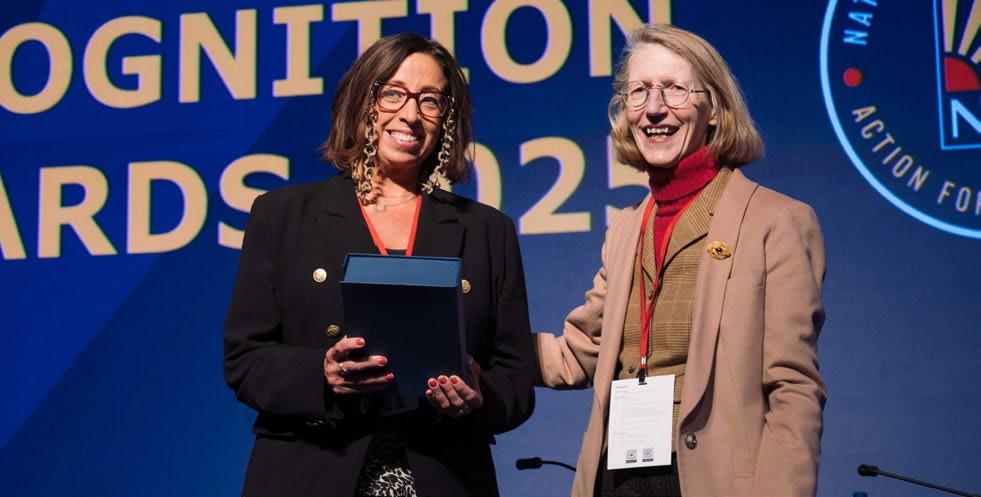
awareness, engage and support better outcomes for consumers.
Going the extra mile – Jen Smedley
Advice workers go the extra mile for their clients every single day. The winner of our ‘Going the extra mile: Showing excellence in customer care’ was Jen Smedley, Project Lead –Energy at Citizens Advice Diss and Thetford.
Jen’s ever cheerful and sunny disposition is one of the first things clients notice. Beyond her positive outlook, Jen is meticulous in her work. Her dedication to finding practical solutions is matched by her willingness to go above and beyond to resolve even the most complex problems.
Saving lives – Fiona Miller
Our final award went to one of our conference panel speakers, Fiona Miller, Chief Executive at Beat the Cold. Fiona’s extensive expertise and experience in fuel poverty and local population health needs were critical in justifying the request for accessing and using Stoke-on-Trent and Staffordshire One Health and Care and its eventual approval. Far beyond this, her guidance, support and tenacity became a key driving force in delivering this project. Despite some barriers from stakeholders, Fiona used her sensitive yet direct approach to move the project forward.
The person who nominated Fiona said, ‘She is truly the most skilled and inspirational person that I have ever worked with.’
We were so pleased to use the occasion of our Annual Conference to recognise the brilliant work being done by people in the fuel poverty space.
Photos:
TyneSight
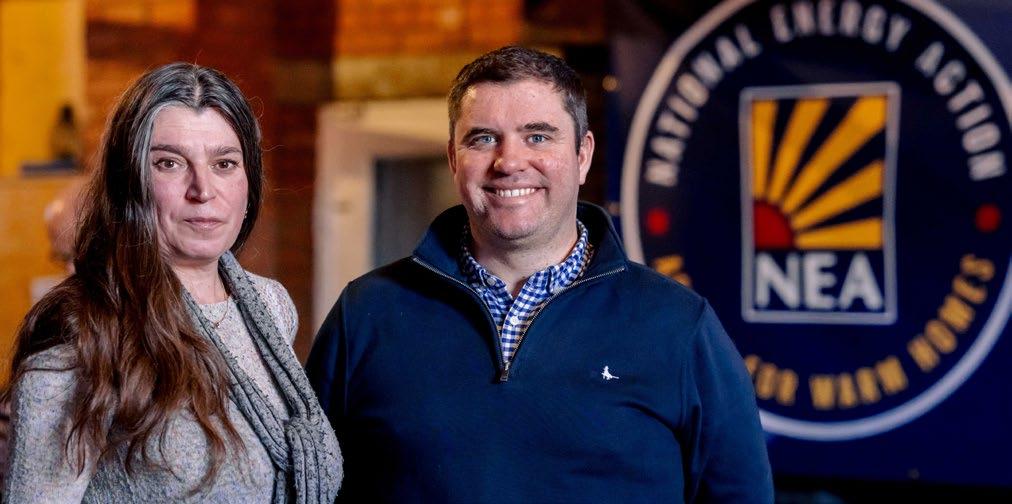
The winners (clockwise from left) Emma Brookes, Jen Smedley, Fiona Miller and Olivia Gatford
EVENTS IN FOCUS
Our second annual Walk for Warmth
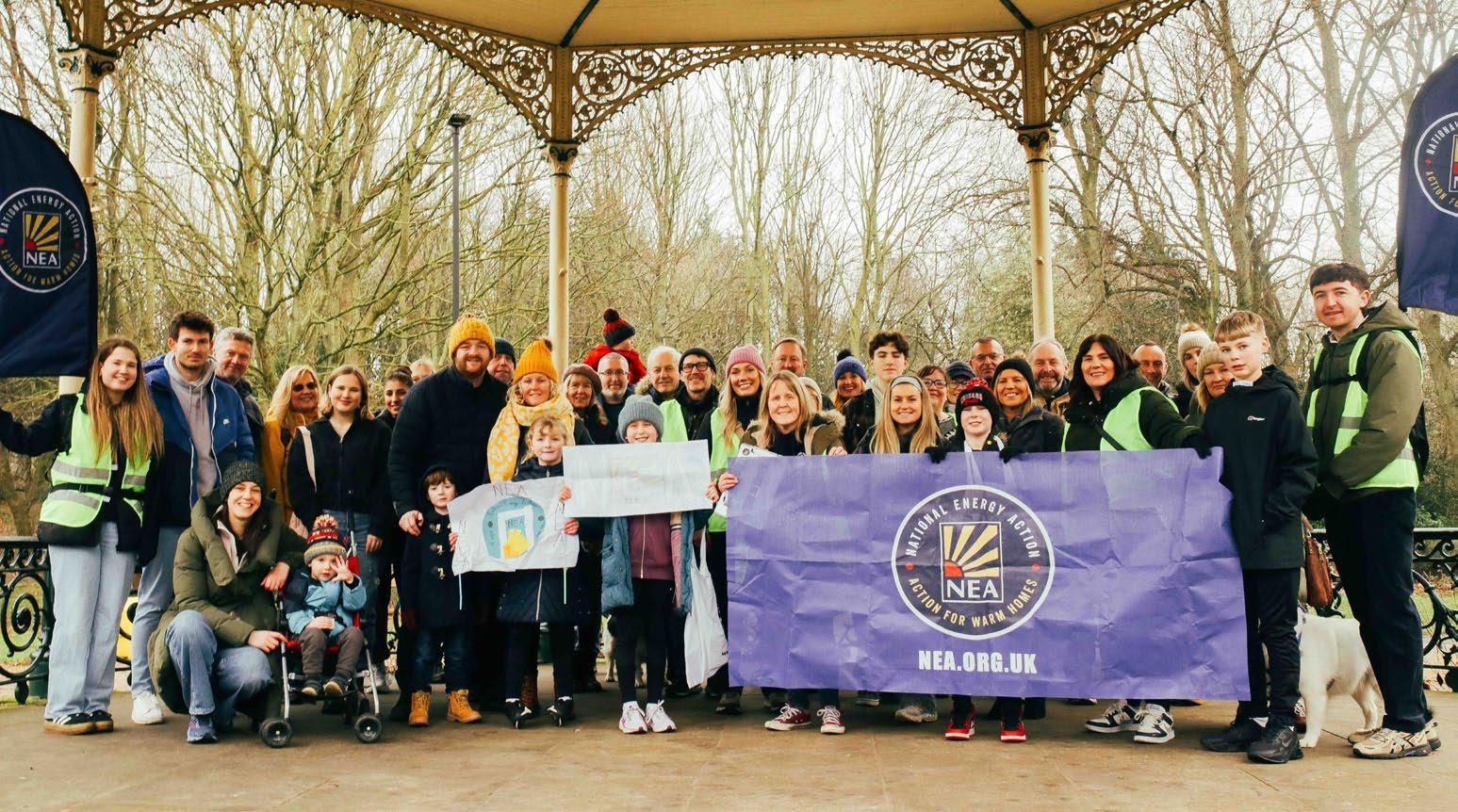
On Saturday 15 February, we held our second annual Walk for Warmth around Newcastle and some of its fabulous green spaces. It was great to see so many people of all ages, as well as lots of furry friends join us for the walk, despite the cold.
We are very grateful for the support of Home Group, who offered up their office space for all our walkers at the end to warm up with some hot drinks and snacks, kindly provided by Greggs, Dicksons and Milligans Bakery, as well as Pet Lamb Patisserie, who provided a gift voucher.
We extend our deepest thanks to all who took part, including teams from Northern Gas Networks and 0800 Repair.
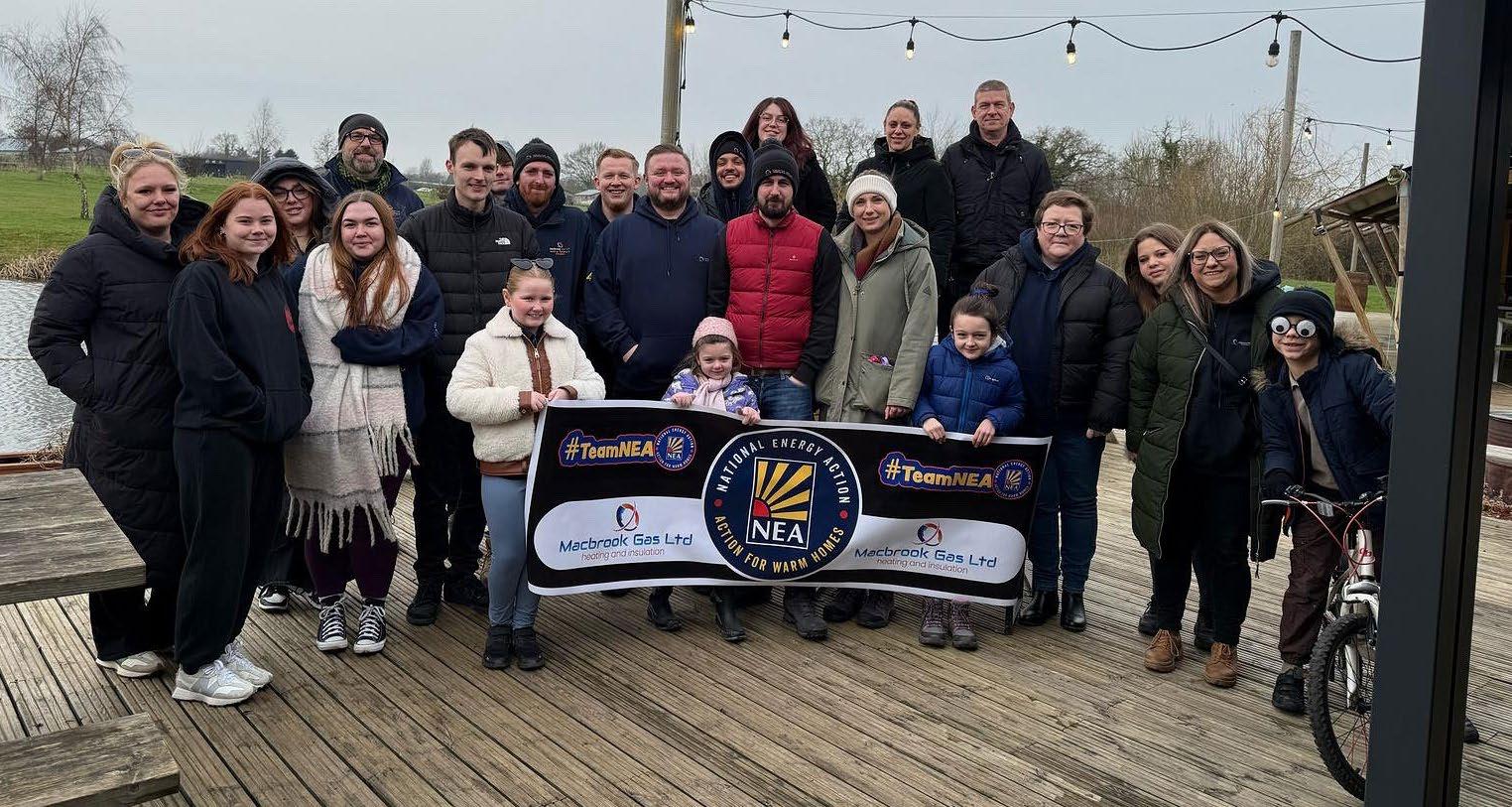
While our walk was taking place in Newcastle, we were also grateful to receive the support of members further afield, who hosted their own walks in their local areas – extending the reach of our campaign. Notably, we would like to thank BSG members Macbrook Gas Ltd who made an incredible contribution with an impactful country walk in Norfolk.
Every step taken helps make a real difference in the fight against fuel poverty, and we’re already looking forward to next year!
Join Team NEA for the Great North Run this year
Take on the a new challenge to support those in fuel poverty by joining the 13.1-mile run from Newcastle to South Shields
We still have the last few places for the iconic Great North Run taking place on Sunday 7 September, in our home city of Newcastle. The Great North Run is the world’s biggest half marathon, taking 60,000 runners on a 13.1 mile route from Newcastle to South Shields for an unforgettable experience.
By taking on the Great North Run for National Energy Action, you’ll be doing something incredible to help raise life-changing funds to fight fuel poverty. We’ll be there to support you every step of the way with dedicated fundraising support and all the resources you need to succeed.
Whether you’re chasing a new PB, looking for a new challenge, or
want the ultimate team-building experience, the Great North Run provides an opportunity like no other, to take on an incredible challenge and make a real difference.
‘Thanks for putting on a great pre and post-race support crew. This helped tons during the day… It was a huge success, I really enjoyed it and was proud to be a part of #TeamNEA for the event.’
– Alex Dingwall, a 2024 runner of the Great North Run.
If you’re interested in joining solo or as a team, find out more on our website or contact Michael O’Malley for more information: Michael.omalley@nea.org.uk.
Great North Run: www.nea.org.uk/support-us/fundraise-fornational-energy-action/running-events/great-north-run
Smart DCC fundraise at Tatton Park
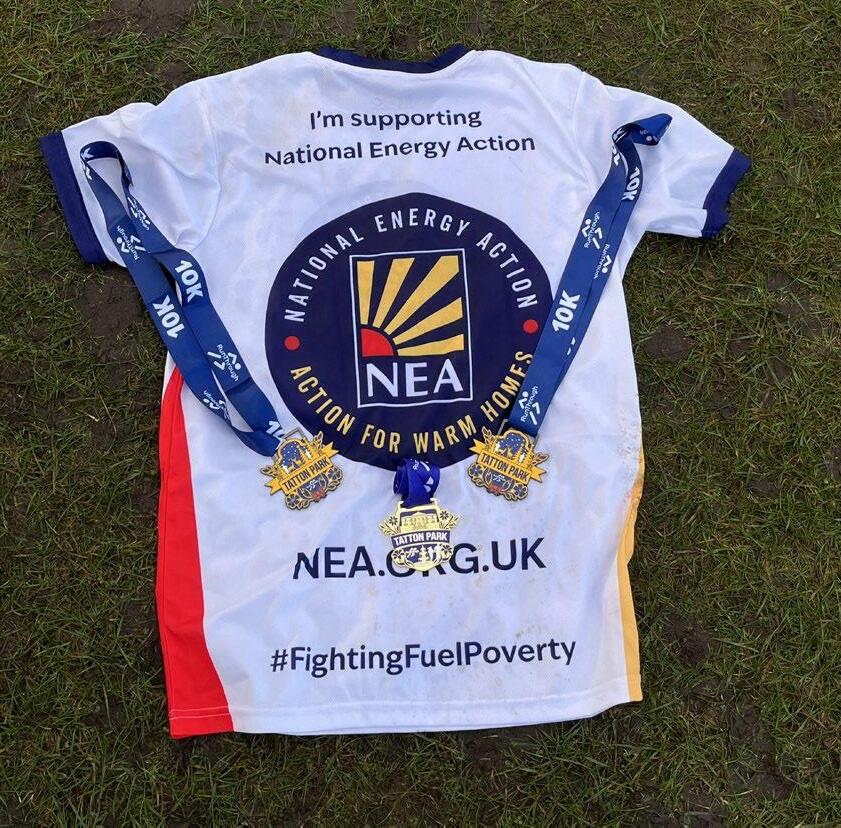
We’re thrilled to celebrate three amazing runners from Smart DCC who participated in the Tatton 5k and 10k on 14 December 2024. Their efforts will make a real difference to vulnerable households across the UK. They were part of a wider three-month campaign by Smart DCC to raise funds for National Energy Action’s Winter Warmth Support Packs. Together, the team raised over £2,500 of vital funds in 2024.
This year, Smart DCC will continue their incredible dedication. This summer, the team will be once more taking part in the Run Tatton 10k, as well as a brave few taking on sponsored bungee jumps. Thank you all for your continued support!
Kensa charity challenge
Our BSG members Kensa took on an incredible fundraising challenge for National Energy Action in February. The team walked, ran, cycled, and swam one metre for every UK household facing fuel poverty –covering 6000 km in just 28 days. It was an amazing effort from the whole team, and we loved following their progress each week on LinkedIn. They shared their weekly distance tracker, raising further awareness for our work against fuel poverty. We extend our deepest thanks to Kensa and all who took part and donated. We are so grateful for your immense effort to support National Energy Action in the continued fight against fuel poverty.

Good luck to our runners at the
London Landmarks Half Marathon
On Sunday 6 April, National Energy Action has 10 incredible fundraisers taking part in the London Landmarks Half Marathon. The run will take them on a route past some of London’s best sights, including St Paul’s Cathedral and Big Ben. We are grateful to have such a dedicated community of corporate partners and individuals willing to take on inspiring fundraising challenges for us. We would like to thank the staff of
Fair Heat and Alt Han Co for signing up.
We’re looking forward to another amazing year of fundraising events and challenges, and are always looking for more incredible fundraisers to join us in our mission to end fuel poverty. If you would like to find out more about our upcoming places in some of the UK’s biggest running events, you can do so on our website: www.nea.org.uk/ support-us/fundraise-for-nationalenergy-action/running-events
Introduction to the National Energy Action Research Team
At National Energy Action, our Research Team plays a crucial role in understanding and addressing fuel poverty. We focus on producing research that is evidence-based to help shape solutions that make a real impact.
Real-world insights, robust evidence
Our work aims to uncover the evolving patterns of fuel poverty, examining its causes and impacts, and understanding who is at risk. We do this through both primary and secondary research programmes, including action research and programme evaluation. Internally we harness these insights to inform our own practice but also to ensure that wider policies and practice are informed by real-world insights, underpinned by robust evidence.
Joint initiative on warm spaces
As with so much of what National Energy Actions does, the Research Team often works in partnerships with our members, supporters and wider stakeholders. A new project we are currently working on is a partnership with networks (Northern Powergrid, Northern Gas Networks, National Grid Electricity Transmission and National Gas), Egnida and the Energy Innovation Centre, to support warm spaces. This joint initiative is exploring how to directly support customers in vulnerable situations by supporting and improving warm space type
services across community settings.
These are locally delivered services run from a community space which provide a wide range of different services to meet social, financial, and health and wellbeing needs of their communities.
In January and February, our Operations and Research teams have been attending ‘warm spaces’ across northern England, whereby visitors were able to receive energy-related advice, including a Winter Warmth Support Pack. The Research Team also engaged with visitors to learn about their experiences of attending warm spaces, looking at what energy support they may have previously received, and what additional energy support they would like to see provided at their warm space.
Developing policy and practice
Our research is rooted in collaboration, and we work closely with colleagues and teams at National Energy Action, as well as with policymakers, industry experts, and community stakeholders to design, assess, and refine initiatives that promote domestic energy efficiency and warmer homes. Our findings not only shape internal strategies but also support wider efforts to develop effective policy and practice. Together, we are committed to reducing fuel poverty and ensuring that no household is left behind in the transition to a fairer, more energy-efficient future.
North East Fuel Poverty Alliance considers fuel poverty strategy and Warm Homes Plan
National Energy Action’s Senior Research and Policy Officer Joanna Curtis feeds back on the North East Fuel Poverty Alliance's latest meeting
As a charity that began in the North East and is based in Newcastle, we are proud of our continued work locally as well as nationally, with support from the Millfield House Foundation, we have formed this new alliance of organisations. It aims to shape and drive our policy aims and solutions on an ongoing basis with a specific focus on the North East of England.
At the end of 2023, National Energy Action (NEA) held a launch event for a new North East Fuel Poverty Alliance (NEFPA), consisting of stakeholders in frontline positions working with individuals and households across the North East of England.
The Warm Homes Plan
NEFPA has met three times so far, with the fourth meeting in March 2025. At the autumn 2024 meeting members from a range of organisations came together to discuss what the local and regional priorities should be in the context of the new Labour government’s prospective Warm Homes Plan. This
included ensuring housing standards of energy efficiency are enforced and regulated, flexibility is built into the scheme, and roles and responsibilities for all involved are established clearly. Furthermore, members discussed some of the key issues householders in the North East are currently facing, which has subsequently resulted in an increased need for both broad and deep support from members’ organisations.
Citizens Panel
New for this year, and complementary to the Alliance, we are planning to launch a Citizens Panel ‘Voices for Warmth’ in spring to engage with individuals with lived experience of fuel poverty in the North East. Initially rolled out as a pilot, and using multiple recruitment methods, including through our own services and professional networks, the panel will support our policy advocacy work in a way that ensures citizens have a ‘louder voice’.
Want to know more? Please email the Research Team at ResearchTeam@nea.org.uk
‘I never knew there was anything out there like that’: Responsive Retrofit pilot evaluation
National Energy Action Research and Policy Officer Ayah Hatim looks at the insights from from our pilot evaluation to minimise fuel poverty
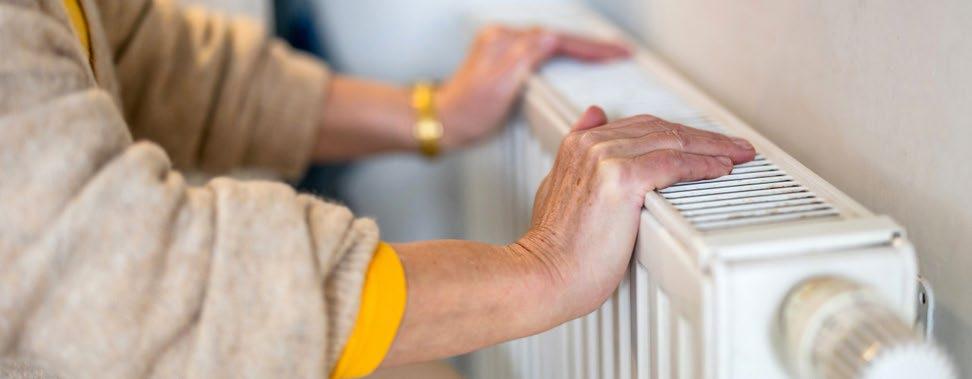
In February, National Energy Action’s Research Team published an Insights Report from our evaluation of the Responsive Retrofit pilot; a programme delivered by Clarion Futures, the charitable foundation of Clarion Housing Group.
More than just a landlord
The Responsive Retrofit programme emerged from efforts at Clarion to bring together the work of its money guidance team and their property team to integrate support and minimise fuel poverty among those living in energy inefficient properties until large-scale retrofit works are carried out.
‘I don’t tend to worry. I’m not worrying as much as I did when I first moved in. If it’s hot, I’ll put a fan on. If it’s cold, I’ll put the heating on. Because my mental health’s not great and due to my depression, I tend to spend a lot of time at home. It’s nice to know I’m not going to get huge bills from sitting at home and I can just feel at home, feel comfortable and it does reduce my anxiety knowing that it’s all ticking over.’
Household interviewee
Insights for practice
The report published provides five key insights for practice for those working to support households in or at risk of fuel poverty through the targeting of integrated housing and energy advice and support services. These range from the key role of partnership working in meeting the often complex and intersecting needs of households to the value of shared and continuous learning and embedding of lessons in ongoing delivery.
Key impacts identified
• The pilot was found to be valuable and impactful, and appeared to lessen the impact of the cost-of-living and
energy crises. While many respondents continue to report difficulty heating their home (79%), this was reduced by 17%. Those who said they could now keep their home warm when it was cold, increased from one in 20 (5%) before support was received, to one in five (21%) after.
• Immediate relief via food vouchers, vital appliances and furniture; greater ease in affording home energy bills; and improving residents’ confidence in managing their household budget.
• Longer-term impacts included improvements in household budgets, damp and mould reduction, and enhanced self-reported health and wellbeing associated with reduced anxiety and financial stress.
• 72% were very or fairly satisfied overall with the service they received. Aspects of service delivery with the highest levels of satisfaction were ‘quality of advice and guidance’ and communication.
Helen Stockton, Head of Research at National Energy Action, said: ‘Our evaluation points to a critical role for social landlords. One that goes beyond just the property. It suggests that services like the Responsive Retrofit pilot can help reshape how tenants see their landlords – as “more than just a landlord” but also as a source of help and support in other areas too; supporting tenants to live in warmer and safer homes. Published today, our report provides practical insights for social landlords and others developing support for households and highlights the range of impacts that can be achieved when housing, energy and financial support are integrated.'
The evaluation was funded by the Fusion21 Foundation. Since its inception in 2015, the Foundation has given over £3 million in grants and has committed £2 million in social investment.
Read our report here: www.nea.org.uk/publications/ responsive-retrofit-pilot-evaluation-pilot-evaluation
Photo: Shutterstock/ pikselstock
Our Education Team's new careers programme
National Energy Action’s Education Team on our new programme for 14–19-year-olds
s part of National Energy Action's education initiatives, we are developing a series of lessons to inspire young people to explore careers in the energy sector. As the government, businesses and the rest of society gears up to reach net zero, we will need skilled young people to join the utilities sector to help create the future energy system. This project looks to give young people in various educational settings a taste of the career opportunities available in the future utility sector.
AThis exciting project is being developed for 2025 and will be aimed specifically at young people aged 14 to 19. Our aim is to empower them at the critical age when they are considering university or the first steps in their career. The project will bring classes together for a programme of activities that will enable them to build understanding, learn about the energy sector and the role of organisations in the industry, as well as engage more with topics around fuel poverty and energy awareness. Our aims:
• To dispel preconceptions around careers in the energy industry
• To explore a wide range of jobs within the energy industry
• To identify progression routes to careers in the energy industry
• To increase career and sector awareness among young people
To achieve this, we will be producing a series of resources for schools and colleges that can be used in lessons, workshops, and assemblies. They will give young people real-life experiences of a wide variety of jobs. This project will be multifaceted, and the resources may be repurposed for different topics, such as:
• NEA Empowering Careers: The energy sector
• NEA Empowering Careers: Green skills and net zero
• NEA Empowering Careers: Women in STEM
• NEA Empowering Careers: Diversity and inclusion in the energy sector
• NEA Empowering Careers: Apprenticeships and progression routes
Volunteers needed for Empowering Careers videos
To support this, our education team is seeking volunteers to feature in short videos about their current roles. We’re looking for insights into what a typical day looks like, the journey you took to your position—including qualifications and previous career paths—and any advice for aspiring professionals. These videos will be shared in schools to highlight the diverse career opportunities in energy and help bridge the green skills gap. If you’re interested in contributing to this project, please contact Michala Sullivan at michala.sullivan@nea.org.uk.
Stay tuned for more updates, and don’t miss the chance to get involved in empowering future generations!
Supporting consumers with their water and energy
National Energy Action collaborates with WaterWise on a new training programme
With utility costs remaining high and millions of households struggling, National Energy Action is delighted to announce a collaborative training programme developed in partnership with Waterwise. The training will focus on how consumers can manage their water and energy use and what support is available. It will have a special focus on supporting people in vulnerable situations. For more information, please contact trainingadmin@nea.org.uk
Independent Living: first-time tenants can come from many backgrounds. They may be university students moving into their first homes, young people leaving the care system, ex-military personnel, or migrants and refugees with limited English skills.
National Energy Action will soon be releasing an e-learning course designed to support first-time tenants in transitioning into their own homes, helping them avoid fuel poverty and debt. The course will cover topics such as:
• Who’s who in the energy sector
• Why it’s important to stay warm
• Opening an energy account
• Selecting energy-efficient appliances
• Understanding your meter readings
• Selecting the right energy tariff
• Mastering energy payments
• Reducing heat loss at home
• Signposting for support
If you would like to find out more and be contacted when the course is released, please email trainingadmin@nea.org.uk
Lived experience: Ivan’s
Ivan lives alone in private rented accommodation and is a full-time carer for his mother. Ivan began to fall into debt with his energy supplier. This grew to over £1,000, and in February 2024, he received a debt collection letter requesting entry into his property for the removal of goods. The collection officer agreed to put this on hold for three weeks while Ivan tried to resolve the situation with his supplier. A repayment plan requiring Ivan to pay £14 a week was agreed. However, Ivan was dissatisfied as he would struggle to pay this weekly. Ivan was also having to contend with high water bills.
Ivan became extremely worried. He then made a payment that hadn’t registered on his supplier’s online account and he became more stressed at the thought of having to use this platform to manage his account and payments. Ivan was referred through his local Citizens Advice to National Energy Action.
The heating system in Ivan’s flat was electric only and he reported to his not work properly. his energy bills, Ivan water putting him Support given As Ivan was struggling working heating, provided him with him warmer and provided with a Winter adviser also recommended rarely used his storage to get back in touch explore fuel debt Ivan also received was advised to apply Payment and was team for help with Despite living in a
Our Lived Experience Library showcases the situations some face in the
Introducing our Retrofit Hub teams in Sheffield and Burnley
National Energy Action is delighted to introduce the dedicated teams leading our new Community Retrofit Hubs project currently operating in Burnley and Sheffield
Our experience from our Fishwick project is that households need deeper support to go through the process of retrofitting their home. The Community Retrofit Hubs project will focus on building trust with the community so that householders will be willing to go on the journey with us.
Our dedicated Energy Action Teams include a Retrofit Consultant, who will work with the householder every step of the retrofit journey, and a Retrofit Catalyst, who will build partnerships to drive more co-ordinated action and adopt good practice from other initiatives. There are two running hubs, one in Sheffield and one in Burnley, with a third hub in Oldham opening in the next few months.
The Sheffield Energy Action team comprises Retrofit Consultant Aisling McGovern and Retrofit Catalyst Gavin Martin; they both bring a wealth of experience and passion for community-driven retrofit projects.
Aisling has previously worked with a homelessness project in Leeds, retrofitting houses with local volunteers. She has witnessed firsthand the impact of well-executed retrofit measures in improving household comfort and reducing heating costs. She is excited to make retrofit more accessible for Sheffield residents, ensuring families can benefit from energy-efficient homes, especially when they are already struggling with increasing heating bills.
Ivan’s story
the rental sector over the winter his adviser that his storage heating did properly. As a result of being unable to afford Ivan was not using his heating or hot him in a more vulnerable position.
struggling on a low income and without a crisis fund at National Energy Action with an oil-filled radiator, helping to keep improve his wellbeing. Ivan was also Winter Warmth Support Pack. His recommended a single-rate tariff, as Ivan storage heaters. Ivan was also advised touch with National Energy Action to relief in six weeks’ time. received a Benefits Entitlement Check and apply for a Discretionary Housing was advised that he could return to the with completing the application if needed. a home with an EPC D rating and being
Gavin comes from a background in community work and business. He is deeply rooted in the same neighbourhood the Sheffield hub serves. He is passionate about delivering projects that not only improve individual homes with meaningful change and long-term improvements, but also foster stronger community ties. He envisions the hub as a replicable model that can be expanded to drive retrofit uptake and contribute to national decarbonisation efforts.
Stay connected with your local Energy Action Team. Residents in Sheffield can connect with Aisling and Gavin at Sheffield.Energy@ nea.org.uk and join the conversation in their Sheffield Energy Action Team Facebook group.
In the Burnley Energy Action Team, we have Retrofit Consultant Ariane Massey and Retrofit Catalyst Tom Hall.
Ariane has extensive experience in fuel poverty charities and understands the profound effects that cold homes and rising energy costs can have on the householders’ health and comfort. She believes in long-term, sustainable solutions and is keen to identify gaps in current funding structures to help more people access the support they need. For Ariane, an important outcome of this project would be to identify the current retrofit funding gaps in the existing grants and who is falling into these gaps. She hopes to be able to provide the push for more local people to receive all the needed support to get an affordable and comfortable home.
eligible, Ivan did not receive the Warm Home Discount fund in 2023-24. Ivan’s adviser forwarded him the phone number for further information for Warm Home Discount 2024-25. Ivan’s adviser applied for a support fund from Ivan’s energy supplier to help with his energy bills.
Ivan’s home has mould, which his landlord was informed about, but no action had been taken. Ivan’s adviser provided Ivan with the details of the Housing Ombudsman and Better Housing Better Health for further support.
Ivan said of the help he received, ‘I am appreciative [of] your work.’
Adviser’s reflection
‘This client urgently needed some information, advice, and some practical items to keep warm, but the storage heaters could not be used due to the cost. The case took many months and was a complex picture to manage and resolve.
'The National Energy Action energy advice team helped me find the right information so I could proceed. I am delighted that progress was made, and I look forward to supporting the client in the future if they return to our Energy Advice and Support Service.'
Tom brings experience from years of working in energy advice roles. Having supported clients dealing with fuel poverty, he knows the frustration of clients repeatedly facing the same issues, such as struggling to top up a prepayment meter or dealing with energy debt. He sees the Retrofit Hub as a way to address these root causes and hopes to improve Burnley’s ageing housing stock by being there every step of the way to ensure that what’s installed truly meets the householder needs. He believes that success will mean households no longer rationing their heating but instead living comfortably in homes that are warm, healthy, and energy efficient.
Residents in Burnley can connect with Ariane and Tom at Burnley.Energy@nea. org.uk and join the conversation in their Burnley Energy Action Team Facebook group
‘It's fabulous’: battery provides peace of mind for those with electrical medical equipment
National Energy Action works with Northern Powergrid to study battery backup capabilities for those with priority health conditions
National Energy Action has been working with Northern Powergrid over the past two years to install and trial an innovative approach to providing electricity backup systems to Northern Powergrid’s Priority Services Members, who rely on electrically powered medical equipment to maintain their health. We found that participants unanimously agreed that the battery had reduced their long-term anxiety over power cuts, and saw a 78% reduction in the level of concern around such events.
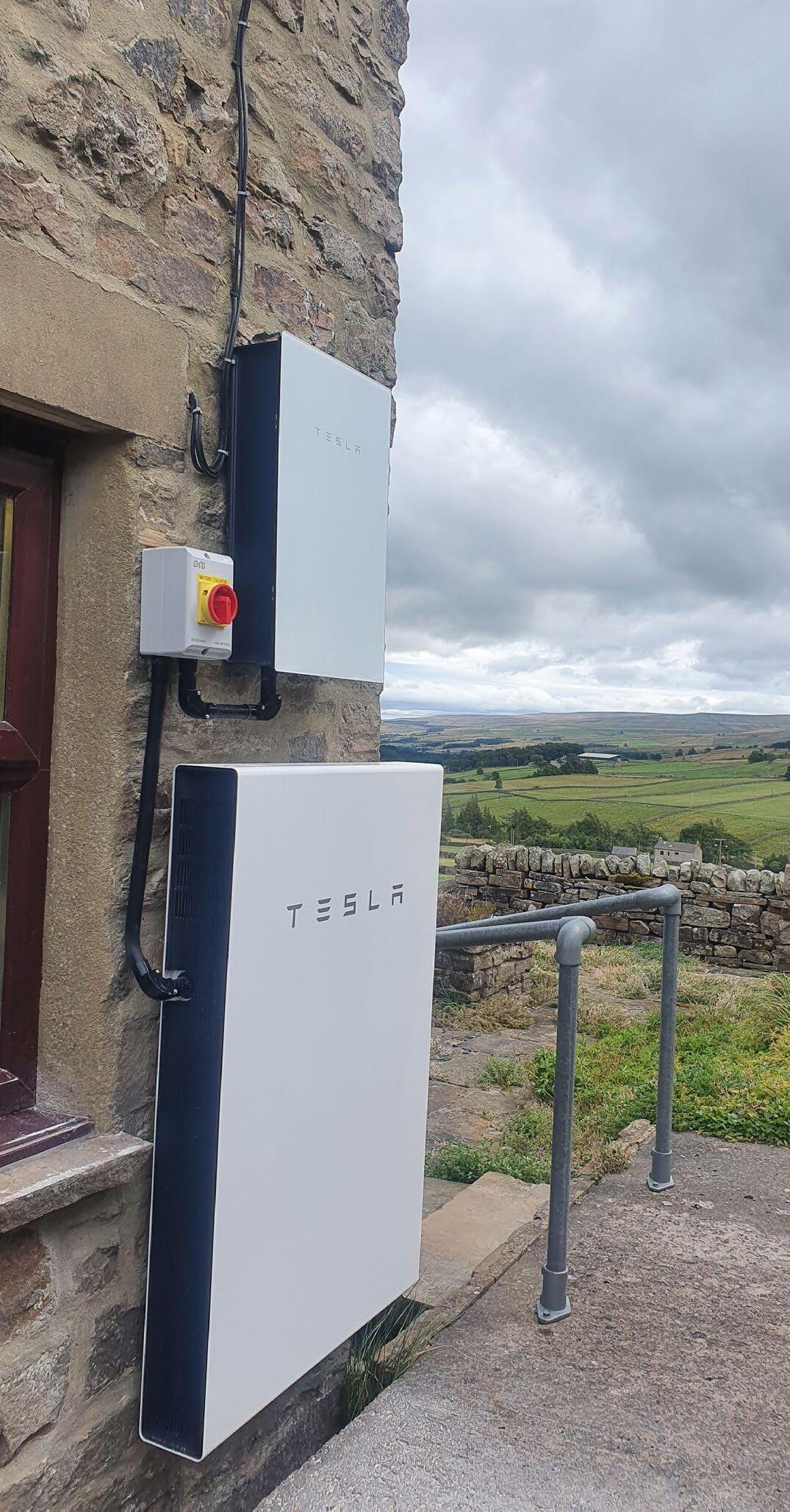
The project follows on from an initial feasibility study that we conducted, which identified the technology to be deployed. Thirty Tesla Powerwall 2 batteries were installed alongside a backup gateway to provide whole-house backup in the event of a power cut. The majority of the recipients lived in rural areas and were at greater risk of power cuts during the winter. On average, we found that participants actually used three separate pieces of critical electrical equipment for medical use.
Life before the backup battery
Before the backup battery was provided, participants had serious concerns about what could happen during a power cut:
‘I contacted social services and tried to have my father-inlaw admitted to hospital as his catheter bag froze during a long power cut. He was receiving chemo for cancer and it was during covid so he couldn’t be admitted.’
‘[it is] not always possible to get last minute dialysis appointments if required due to power cut when a power cut interrupts the cycle.’
The difference made by the battery
During the project, 23 properties experienced a power cut of over one hour and, on average, the battery would have provided 22 hours of power to the property at the power demand observed during these events. Householders were provided with an app to monitor the battery state of change and National Energy Action supported households to fully prepare for an outage, and provided guidance and measures to enable households to manage their electrical consumption during an outage, thereby increasing the likely lifespan of the battery.
Quotes from a few of the participants showed the impact the technology had:
‘The battery backup meant that I could finish a cycle of dialysis when there are power cuts. In the past, before the battery, I'd lose two pints of blood and have to go to hospital to finish the cycle.’
‘[I have no concerns] - so long as battery lasts. It switches over fast - it's fabulous, everything works perfectly. Access to internet means my daughter can use the internet for her communication device, [medical] lifting and aid equipment.’
‘No [concern now]. Before the battery was installed, I
couldn't sleep and stayed awake all night. It was stressful having to listen to check my husband's breathing is ok.’
The project was very successful as a purely backup solution, and revealed some factors worthy of further research. Factors included providing removable storage, which can be easily moved to other properties if household circumstances change.
To find out more about this project and others, contact michael.hamer@nea.org.uk
Warm Homes, Healthy Futures generates nearly £1m in financial gains
National Energy Action’s delivery team gives an update on our programme to integrate health services and fuel poverty advice supported by the four gas distribution networks
Cold homes have a significant impact on health, and National Energy Action's Warm Homes, Healthy Futures programme aims to change that. In the UK, 6.1 million households are living in fuel poverty, unable to keep their homes warm, while 50% are also coping with multiple cold-related health conditions. This is extremely costly for the NHS, with the estimated annual spend on treating the health impacts of cold homes exceeding £1.4 billion. Each year, more than 10,000 deaths are attributable to living in cold, damp, poor quality housing – deaths that the National Institute for Health and Care Excellence says are preventable and avoidable.
A network to find better ways of working Launched last year, Warm Homes, Healthy Futures now has a network of 50 delivery and referral partners across England, Scotland and Wales. Connecting the health and social care sector to energy advice and support, we are working in partnership to tackle these shocking statistics and find better ways of working so that in the future, nobody should be living with the health impacts of a cold home.
Working with our partners, we have achieved some incredible results so far. Since September, we have supported more than a thousand people, unlocked £400,000 in energy vouchers and other sources of crisis funding, and generated more than £1.3 million in financial gains through our benefit and income maximisation support.
Besides one-to-one advice and support, the project has reached hundreds of health and social care professionals and community-based stakeholders, delivering training on the impact of fuel poverty on health outcomes, carbon monoxide awareness, the role of the Priority Services Register and more. Vital help for the most vulnerable
In combination, all this work has allowed us to help some of the most vulnerable households, managing poor health alongside stretched incomes and rising debt.
Of the people we have supported so far, 57% are living on an income of less than £12,000, 47% are experiencing poor mental health and over 95% could not keep their homes warm when they needed to. Sadly, almost half reported that before Warm Homes, Healthy Futures intervened they were struggling to find help elsewhere.
And we’re having a real impact on lives. One of the beneficiaries said, ‘My husband was at the end of life and felt extremely cold all the time. The help we received meant the heating could be turned up to keep him comfortable in his last few weeks.’
‘Thank you for your patience and help and for chatting to me like I was a normal person. What I have found is that a lot of people I used to see are no longer around, it is like they don’t want to talk to me in case I pass the cancer onto them.’

programme
is
than the sum of its parts. We work with our valued energy advice partners and in partnership with health and social care teams across GP surgeries, pharmacies, cancer care teams, COPD clinics and many more. This programme aims to harness critical insight and evidence the social and financial impact that fuel poverty services working with health partners can have.
During the remainder of the programme, we will highlight best practice in delivery, the benefits to the health of clients, as well as the lived experience of receiving targeted and coordinated support. Importantly, this learning is beginning to gain traction politically. At National Energy Action’s annual conference, the Minister for Energy Consumers referenced the programme, and how it has inspired her. We have also shared initial findings with the Prime Minister's special advisers, who were clear on the need to take such an approach seriously. We will continue to work with politicians through the remainder of the programme and beyond to integrate the learning from our collective practice into structural policy changes.
We look forward to sharing these insights through the course of 2025. In the meantime, if you wish to find out more about Warm Homes, Healthy Futures, please visit our website or contact healthyfutures@nea.org.uk
Warm Homes, Healthy Futures is a
that
more
Photo: Shutterstock/ William Perugini
How to help those affected by the Radio Teleswitch Service shutdown
Ahead of the Radio Teleswitch Service, that 1.6 million properties rely on for metering, being switched off on 30 June, Connected Response discusses how to minimise the impact on households
Millions of households could be affected by the Radio Teleswitch Service (RTS) switch-off. The RTS uses the BBC Radio 4 long wave (LW) signal to automatically communicate the daily start and end times for the off-peak charging of electric storage heating and hot water (ESH/ HW). The BBC’s LW transmitters were switched off on 30 January 2025.
What will happen to people's electric storage heating?
The answer, worryingly, is that nobody truly knows. According to the Ofgem website, these impacts could include:
• Your ESH or hot water may be left continually on or off
• Your ESH may charge at the wrong time of day, meaning electricity is charged at a peak rate
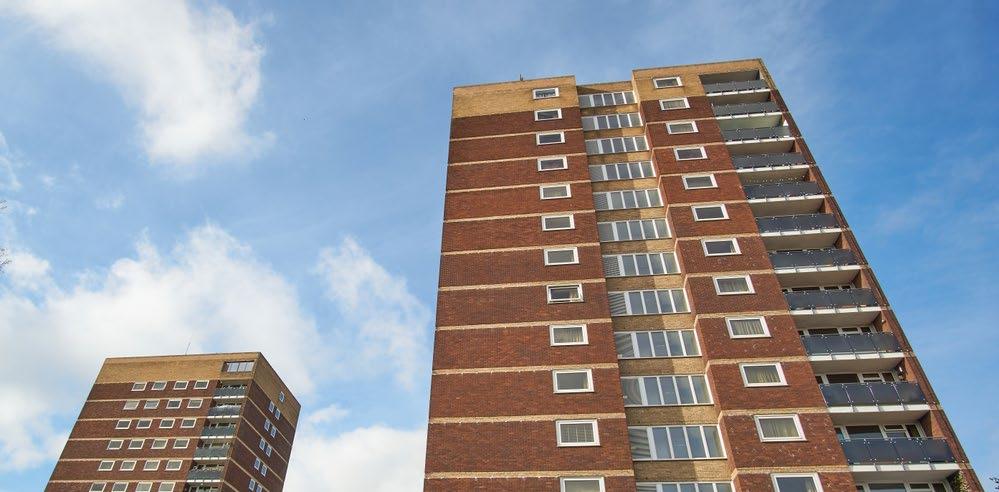
This is important because it is estimated there are around 1.6 million properties reliant on ESH/HW in Great Britain. A significant number of these properties are in low-rise flats and high-rise tower blocks – often collectively referred to as multi-dwelling units (MDUs) – owned by social housing landlords. Social housing tenants are more likely to be fuel poor than the general population. Consequently, the possible higher energy bills resulting from the RTS shutdown could have a potentially devastating impact on many fuel poor households.
Connected Response estimates there are around 450,000 social housing and owner-occupier households still reliant on RTS to control their ESH/HW.
What can be done?
Ofgem’s advice is for electricity suppliers to replace radio teleswitches with a SMETS2 smart meter with a fifth terminal. The fifth terminal enables the ESH/HW to be switched on or off at
standard fixed times of the day by the energy supplier. However, this approach does nothing to improve the heating experience of households reliant on ESH, summarised as too warm in the morning, too cool in the evening.
National Energy Action has raised concerns about the impact on vulnerable households. Danni Barnes, Director of Development and Partnerships, said, ‘The switch-off could exacerbate costs for households already struggling and result in households losing control of their heating and hot water. In the worst cases, some may not be able to use their heating or hot water at all.
‘It is crucial for anyone with a RTS meter to contact their supplier urgently to get their meter changed. Equally important is supporting people within our communities who may lack the confidence to do this on their own.’
Connected Response’s retrofit HeatSage technology hands control of ESH/HW back to social housing landlords and their tenants. When combined with an Economy 10-type tariff, the installation of HeatSage can reduce a household’s energy bill by around 35% as well as providing a much-improved heating and hot water experience.
RTS shutdown support services
Connected Response is offering services to help social housing landlords navigate the challenges of the RTS Shutdown. This includes surveys providing a summary breakdown of RTS metering and teleswitching across a social housing landlord’s portfolio, and full project management for an RTS meter/switch replacement programme, including tenant engagement.
To download the Connected Response RTS Shutdown White Paper, go to: connectedresponse.co.uk/rts-shutdown-support
Treacle CIC service signposts households to support
Treacle CIC showcases how its new service can help people with a range of issues resulting from fuel poverty
Fuel poverty means something slightly different to every household. It means nothing at all to the lucky ones, but it means cold, damp, unhealthy, and even hazardous living conditions for many others. It is increasingly causing wider problems for many families and can be one of myriad financial, health, relationship, or social problems people are facing.
While other organisations are doing amazing and critical work, from lobbying politicians to directly supporting the most vulnerable, at www.treacle.me/, Treacle is looking at things slightly differently. The CIC is tackling the problem of where to actually start looking for help, given the sometimes bewildering array of resources out there. Treacle is designed for those who simply don’t know where to turn.
Introducing Treacle.me
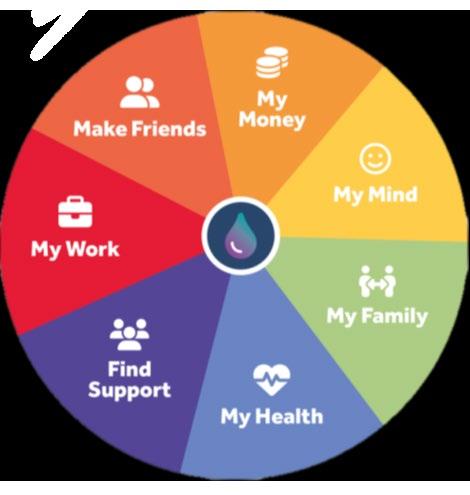
Treacle.me signposts users to free help and support for a whole raft of personal issues including family and mental health issues, disabilities, housing problems, addiction, abuse and, of course, financial hardship.
It is a simple, free-to-use, regularly updated website and mobile app that effectively solves the difficult signposting problems frontline advisers may face when a customer, client, or their family needs more than just support with fuel bills.
• Treacle includes information about (and links to) thousands of support services, charities and other groups in a single digital space
• The site and app are free and simple to navigate, using colourful, easy-to-follow visual signposts – it contains no advertising or sponsorship of any kind
• Treacle can be used by the public or anyone responsible for helping them, with no instructions or training
• It’s already used by health and social care professionals and schools, among others
• Everything on the site can be read in any of 13 languages
The link to www.treacle.me can be added to websites, emails and other communications to increase awareness of the free support Treacle offers:
1. Treacle can provide (at no cost) artwork for items to complement organisations’ written materials, such as postcards and inserts
2. Treacle is happy to talk to organisations about how they can use Treacle to help their end-users and their families.
Treacle is a fully certified not-for-profit organisation.
West End Warmers reflect on our Annual Conference
Energy Adviser Meg Henderson reflects on our Annual Conference and the energy crisis
National Energy Action’s Annual Conference highlighted the widespread issue of energy hardship across the country. Despite ongoing efforts to combat fuel poverty, the challenge remains significant.
Energy hardship is countrywide
Meg says, ‘Having had the privilege of attending the NEA Conference in Liverpool in my capacity as an Energy Adviser, it was a revelation. It was evident that energy hardship is countrywide. Measures are in place to try and stamp out fuel poverty, but it’s an ongoing battle.’
‘In my current role, I am confronted daily by the desperate plight of the citizens of Newcastle, especially in the West End of Newcastle, where deprivation is endemic, sad as it is.’ Conference reflected local issues in West Newcastle
SearchNewcastle finds there are multiple issues which hamper work against fuel poverty raised in our Annual Conference. In West Newcastle energy debt is still on the rise and their clients are in properties with a lack of adequate heating, due to poor installations in homes. It is a sector-wide problem, with private, housing association and council houses all still experiencing problems. Despite attempts in the past to eradicate this, it is still a high priority that has not been addressed due to budget cuts and the rising cost of living.
Meg has raised concerns in the West End of Newcastle regarding the condition of some rental properties, with questions about the standards required before letting. Additionally, homeowners who do not qualify for means-tested benefits and lack sufficient savings face challenges in addressing energy inefficiencies. The consequences extend to public health, impacting the mental and physical well-being of those affected.
Support for larger energy efficiency measures is available through various partners, but the eligibility windows are often short, and accessing this assistance requires awareness and digital proficiency. This poses challenges for individuals not comfortable with digital platforms or who face isolation due to health issues, financial difficulties, or other barriers.
SearchNewcastle is actively working to support households in the NE4, NE5, and NE15 postcodes, providing small energy measures, advice and practical tips. The organisation also delivers energy sessions during activity groups, which are well-received by attendees who appreciate the guidance and ongoing support.
Introducing the Northern Powergrid Foundation
Northern Powergrid launches new community benefit foundation to help communities living in the distribution network's operating area, with a familiar face at the helm
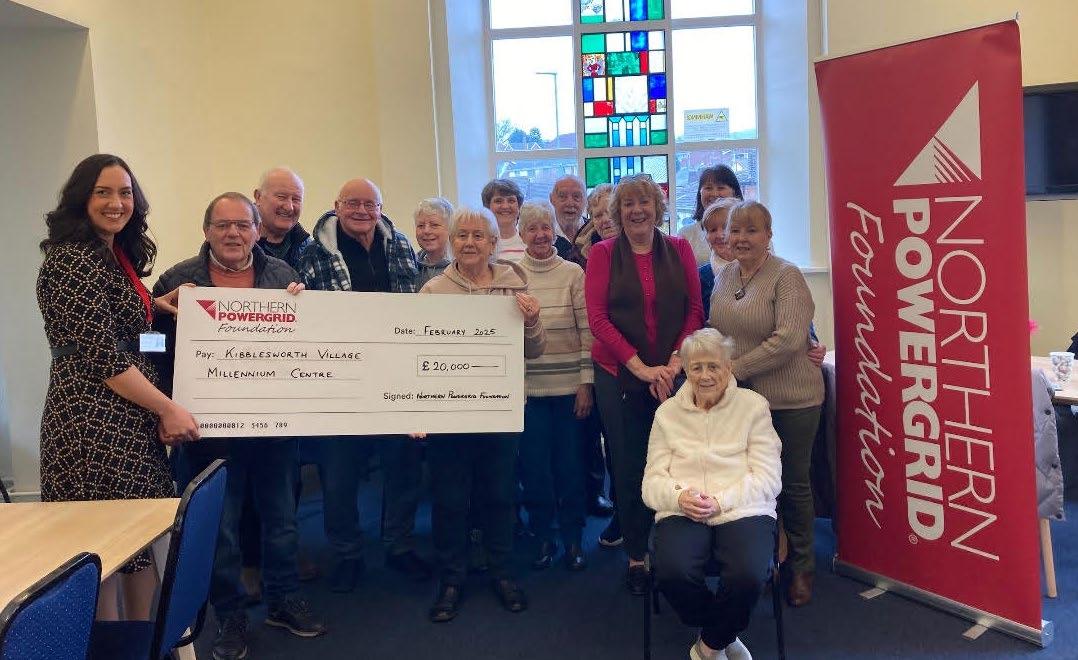
The Northern Powergrid Foundation is a grant-making charity that is passionate about supporting communities that work and live in Northern Powergrid’s operating area.
With a brand new team on board, the Foundation is looking to enhance their offer across their three key focus areas of energy resilience, fuel poverty, and net zero.
The new Head of the Foundation, Jess Cook, will be a friendly face to many National Energy Action supporters, having previously led National Energy Action’s water poverty work programme. Jess joined the Foundation in January this year and is excited to shape the next chapter of its story through partnerships and collaboration.
funding for energy resilience projects, including the installation of solar PV and battery storage on community buildings and hubs.
‘As we move forward, we’ll also be looking to introduce offers for fuel poverty and net zero, and we are very open to ideas and opportunities to work with those already in these sectors.
We want to find the gaps in provision, and work to find solutions to them, to truly add value and make an impact to our communities.
Jess said, ‘It’s exciting to have a real opportunity to make an impact in the communities of the North East, Yorkshire, and northern Lincolnshire. The Foundation has been able to support 93 beneficiaries since its creation, with over £1.3 million in grant
‘We aren’t here to repeat support that’s already available elsewhere. We want to find the gaps in provision, and work to find solutions to them, to truly add value and make an impact to our communities.’
The Foundation’s next energy resilience grant round opened in March, offering grants of up to £20k to small charities and community organisations. Potential applicants can register their interest for future rounds at www.northernpowergridfoundation.com
If you are interested in working with the Foundation as they develop their support offer, you can get in touch by email at: thenorthernpowergridfoundation@northernpowergrid.com
David James encourages fans to donate at Fratton Tesco Extra boot drop
Utilita and Portsmouth FC are combatting poverty and helping the environment in a new, innovative way as part of Utilita Energy's Football Rebooted campaign
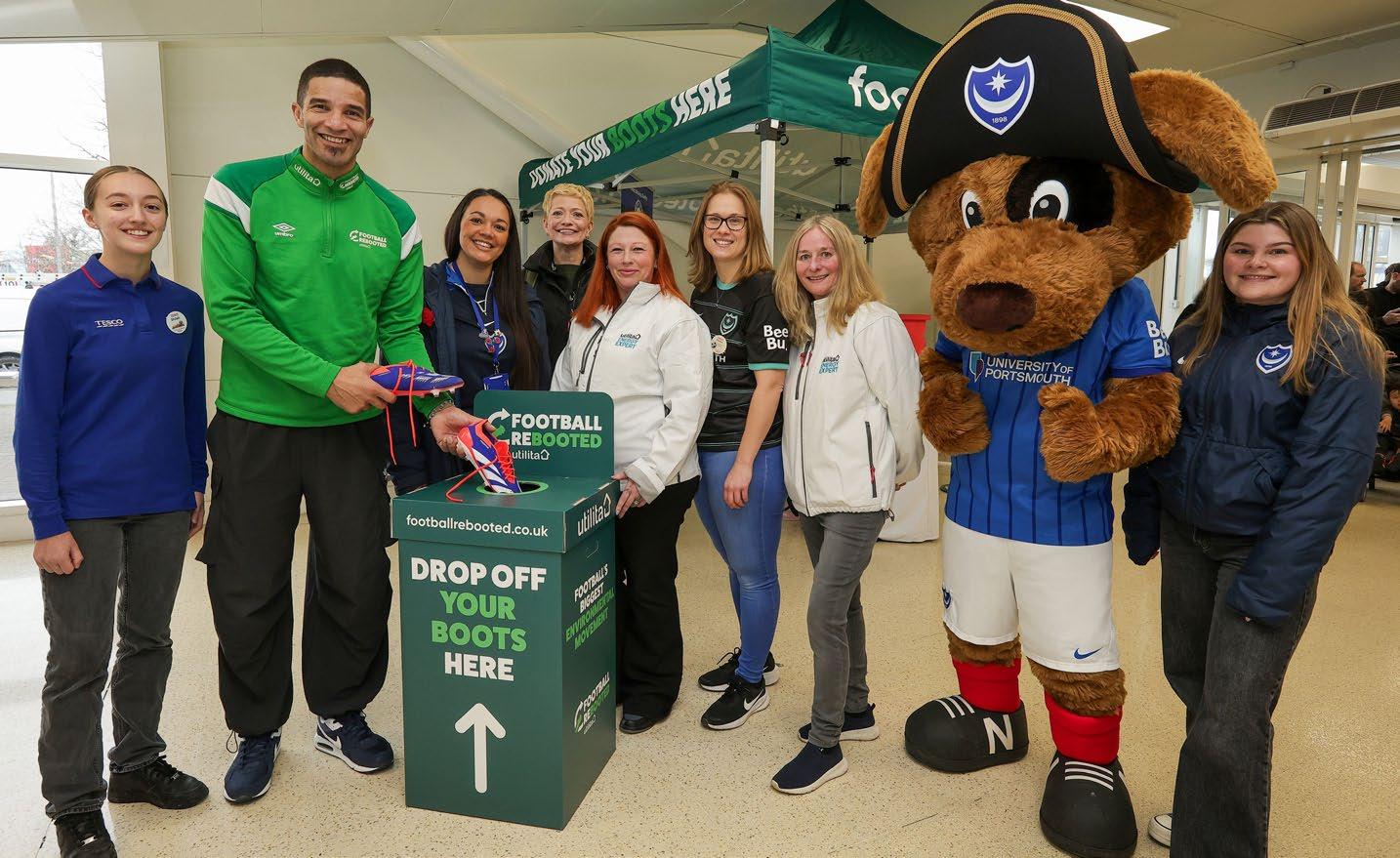
Former England and Premier League goalkeeper, David James MBE, has officially kicked off Pompey in the Community’s efforts to collect and redistribute good quality football boots, as part of Utilita Energy’s Football Rebooted campaign.
David launched Tesco’s first ever football boot collection box at Fratton Extra in Southsea on Saturday 18 January before joining fans at Portsmouth FC's 2-1 home win against Middlesbrough.
Dubbed as ‘football’s biggest ever environmental movement’, Football Rebooted launched in May 2021 after findings from a Utilita-commissioned report into the combined impact of the pandemic and the cost-of-living crisis on grassroots football.
The response from fans was immediate and within the first few weeks, thousands of boot donations had flooded in, not only reducing potential landfill but also making a difference to the lives of children and adults in the UK. How can you get involved?
Anyone with a spare pair of football boots (or astro turf boots) who wants to get involved should simply give them a clean and drop them off at the Pompey in the Community’s dedicated boots collection point, situated at the Tesco Extra on Fratton Way in Southsea.
Pre-loved boots can also be donated at any of the Utilita Energy Hubs (utilita.co.uk/energy-hub) – located in Gosport, Southampton, Isle of Wight, Luton, Derby, West Bromwich, Edinburgh, Sheffield, Leicester, Blackburn, Huddersfield and Hartlepool – keeping them in the local eco-system to ensure they’re re-used.
Anyone requiring football boots, including individuals and families, can simply reach out to their local collection point (www. footballrebooted.co.uk/find-a-collection-point) to check what sizes are available before coming to collect them. Schools and clubs in need of football boots can also submit their kit requirements via
the Football Rebooted website. www. footballrebooted.co.uk/school-or-club Pro-pocket, pro-planet
James Heyes, Utilita’s Head of Group Partnerships, commented on the environmental impact of rehoming boots, ‘Since its launch in 2021, the Football Rebooted campaign has collected and reallocated thousands of quality football boots, saving hard-pressed families a small fortune and helping to reduce landfill and carbon emissions.
‘To put the environmental benefits into context, our aim is to prevent at least a million pairs of boots from ending up in landfill and saving 136,000 tonnes of carbon – the same as taking 7,000 cars off the road for a year.’
Community focus
Clare Martin, CEO of Pompey in the Community, says, ‘The Football Rebooted scheme not only saves old boots from going to landfill but it delivers an extremely fun and unique claim system that avoids any family needing to feel embarrassed at taking second-hand items. If you have any spare or unused football boots, please consider donating and helping us make football accessible to everyone in the local community!’
Campaign Ambassador, David James MBE, added, ‘Getting pre-loved boots replayed through Utilita’s Football Rebooted campaign not only saves families a few quid but also acts as an important reminder about the power of upcycling and reusing items that still have a lot of life left in them.
‘The Football Rebooted campaign not only has a great environmental message but is also working towards helping children to be active, participate and enjoy team sport.’
Back of the net!
Gemma Morrison, the Tesco Community Champion at Fratton Extra, thanked customers for getting behind the campaign. ‘We were thrilled to host the Football Rebooted team at Tesco Fratton Extra, with Portsmouth FC’s mascot, Nelson the Dog, posing for fan selfies. We were also delighted to present Karen Cleave with a football shirt signed by David James after she entered the prize draw by donating her pre-loved footie boots at the collection point – and raising more than £85 in bucket collections for Pompey In the Community was the icing on the cake,’ said Gemma.
‘Given the financial hardship that families are facing, we understand that it may be challenging for them to be able to take part in team sports. We'd like to thank our customers for getting behind the Football Rebooted scheme, which plays a vital role in giving local children the opportunity to take advantage of the physical, mental, and social benefits of playing a sport.’
To find out more about football’s biggest ever environmental movement, visit www.footballrebooted.co.uk
Warmworks showcases its work on Warmer Homes Scotland
Additional funding for Warmer Homes Scotland to help more households who are in fuel poverty has gone to organisations including Warmworks to enable them to provide more support
Scotland’s national fuel poverty scheme, Warmer Homes Scotland, has been allocated an additional £20 million from the Scottish Government. The funding, awarded as part of a package of measures to support older people through the winter months, will take the total level of investment in the scheme this year to over £90 million, helping thousands more homes and families in the process.
As a managing agent of the Warmer Homes Scotland scheme, Warmworks provides an end-to-end service to support every applicant, managing every step of the process – from the initial assessment through to the installation and concluding with an independent inspection. Launched in 2015, the Warmer Homes Scotland scheme has now supported almost 50,000 homes and families in managing their energy costs and living warmer, happier, and healthier lives.
One householder who has recently benefited from the scheme is Hisham Itani of Coupar Angus, Perthshire. When 76-year-old Mr Itani applied to the Warmer Homes Scotland scheme last year, his existing heating system had broken down, and he faced the prospect of a long, cold winter ahead. His home had an EPC (Energy Performance Certificate) rating of 33, less than half the national average of 67, making it extremely difficult to efficiently heat his property and keep it warm at a reasonable cost.
Thanks to the scheme, Mr Itani has installed an air source heat pump, solar panels, and a domestic storage battery. This battery will store any extra energy generated to be used when needed. He has also had loft insulation installed as part of his application and benefited from a full handover of the new system that explained how the technology can be used and optimised.
A post-installation inspection of Mr Itani’s property identified that the EPC level of his home has now increased from 33 to 71, a massive upgrade. This means Mr Itani should be able to heat his home more affordably and save money on his energy bills.
Replacing inefficient and broken heating systems, such as the one Mr Itani had in his home, with renewable heating technology also supports homes and families in the transition to net zero – many of whom would otherwise not have had the means to do so independently. The work was carried out by registered and accredited installers in Warmworks’ local supply chain.
Mr Itani said, ‘Having this work done and completed ahead of the winter will make a big difference to me. The idea of having to do all of this work on my own was almost impossible, so it’s been great to have this help and support to get the work done.
‘I couldn’t fault the process or the installers who did the work, everything was on time and the whole thing was made really easy for me from the start.’
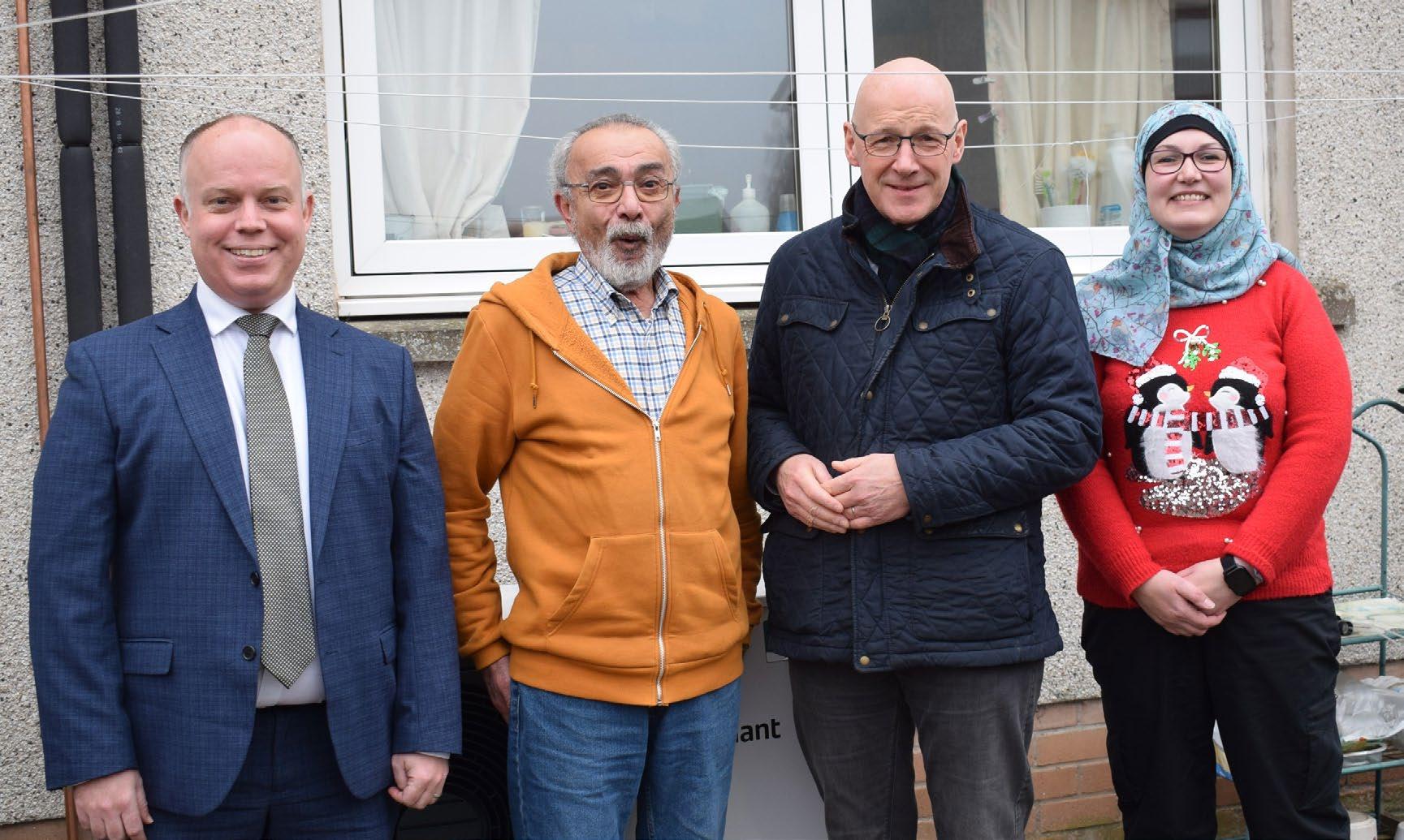
Scotland’s First Minister and MSP for Perthshire North, John Swinney, visited Mr Itani along with representatives from Warmworks to see his newly installed renewable heating system in action during the winter months.
First Minister, John Swinney, MSP, commented, ‘It was a privilege to visit a home that has been transformed by the Warmer Homes Scotland scheme, and it is truly inspiring to see the difference it is making, not just in the lives of people and families in my home constituency of Perthshire North, but across the whole of the country.
‘By improving energy efficiency, we are not just helping bring household bills down; we are helping to tackle fuel poverty and build a more sustainable Scotland at the same time.’
Ross Armstrong, Chief Executive at Warmworks, said: ‘Our mission is to help people be warmer, happier, and healthier at home, so it has been great to see the impact our team has had for Mr Itani.
‘The Scottish Government’s allocation of an additional £20 million in funding for the Warmer Homes Scotland scheme means that we can now help many more people like Mr Itani.
'It represents an important vote of confidence in our customerfocused, values-driven work.’
Severn Wye Energy Agency discusses supporting communities at particular risk
In the South West and South Wales, Severn Wye Energy Agency shares its work to reach vulnerable households such as refugees and those from the Gyspy, Roma and Traveller communities
If you spend every day providing energy advice, it can be easy to imagine that people know where to find it— after all, we have websites, social media, phone lines, drop-ins, and leaflets. But some people can’t access any of these things, either because they don’t use the internet or won’t easily speak to or mix with people outside their own communities.
Last year, Severn Wye Energy Agency launched a new communitybased service aimed specifically at vulnerable people who ‘fall through the net’ of traditional sources of support. In particular, refugees and asylum seekers, houseboat dwellers, Traveller communities, and people in remote rural areas where services can be impossible to access.
Travellers and refugees
The need for this service is potentially huge. Herefordshire is home to 5,000 people from the Gyspy, Roma and Traveller communities , while Gloucestershire alone has welcomed 2,000 Ukrainian refugee families. Our programme aims to support 3,500 of them across Herefordshire, Gloucestershire, South Gloucestershire, and Powys.
‘For the first time, we have started to receive calls to our advice line directly from Traveller families asking for our advice and support. This is a fantastic breakthrough and a great credit to our community-based advisers who work closely with council outreach workers to build trusted relationships with traveller communities.’ Jacqui Harris, Communities Manager.
These communities are especially vulnerable, with ethnic minority households 50% more likely to be in fuel poverty than white households. Word and number illiteracy and lack of English are also common, creating huge barriers to understanding bills or even knowing you need an account.
Removing barriers
Severn Wye Energy Agency knows from experience that these often-ignored communities need different approaches so they can engage with advisers on their own terms and in their own spaces. Severn Wye Energy Agency is working closely with Traveller liaison colleagues in local authorities, and with partners like Age UK and GARAS (Gloucester Action for Refugees and Asylum Seekers) to remove barriers to participation wherever possible. Nevertheless, progress can be painstaking.
presentations to a Ukrainian group told them: ‘We are pensioners, and our English isn’t very strong, so we had many questions. The team helped us understand everything, clarified our concerns, and provided useful information on where to turn for further help. It was interesting, educational, and exactly what we needed.’
It was interesting, educational, and exactly what we needed.
While it can take months to build the trust people need to allow an adviser ‘through the door’, once alongside, there is much the work of the agency can do. Imagine being a new refugee with very little money: how do you begin to understand how to manage your energy use affordably, set up an account or check you're not paying too much? Helping people understand their energy use, save money, and have warmer, more comfortable homes makes a huge difference to their quality of life and ability to thrive.
Having advisers who speak multiple languages is proving crucial, and Severn Wye Energy Agency produced practical energy advice leaflets in multiple languages. These are simple 'top tips' that may seem straightforward to some, but for many vulnerable people, the smallest change can make a big difference. Their project is also raising awareness of the silent killer, carbon monoxide (CO), arranging for CO alarms and helping clients onto the Priority Services Register.
A recent attendee at one of Severn Wye Energy Agency’s
Severn Wye Energy Agency is working with funders Wales and West Utilities and Cadent Gas to refer people to further support they can receive if they are on the gas network. Furthermore, Severn Wye Energy Agency is helping Traveller families who can be paying far too much for energy on local authority sites because their ‘landlord’ is passing on commercial rates. Critically we aim to empower people so they are no longer ‘vulnerable’ energy consumers but customers who are aware of their rights and have the confidence to take action.
If you want to refer clients for help, you can reach Severn Wye Energy Agency at communityadvice@severnwye.org.uk
Photos:
Severn Wye Energy Agency
Warm Wales on its Happy Healthy Homes programme
Warm Wales used UK Government Shared Prosperity Funding between August 2023 and December 2024 to trial innovative ways of reaching new audiences in Denbighshire
The Happy Healthy Homes project was supported by Denbighshire County Council and had three key strands.
Community Champions
The first strand, Warm Wales, worked with community organisation Outside Lives to recruit 156 Community Champions through 24 eco-themed workshops. Volunteers who attended the sessions received training from Warm Wales on key messages about keeping warm affordably and were encouraged to share these messages with their friends, neighbours, and local communities. The workshops helped make an issue that people hear about in the news more of a conversation topic and helped reach a new audience.
Theatre performance
Warm Wales worked with theatre group Haywire for the second strand to reach 784 children in four schools. Haywire initially led workshops with children in Years 5 and 6 in Ysgol Bro Famau and Years 8 and 9 in Prestatyn High School to raise awareness about energy efficiency. They then used the findings of these workshops to develop a performance that was delivered the following school year by three actors to pupils in Years 8 and 9 in Prestatyn High School, Rhyl High School and Denbigh High School, accompanied by further workshops. Teachers were able to cascade the learning across different subject areas, including arts, humanities, science and their pastoral curriculum. Teachers commented on the engagement and enjoyment of their pupils taking part, the challenges to their own thinking and the opportunities to learn new ways to get messages across to students.
Households in Denbighshire
Warm Wales worked with over 500 householders in Denbighshire who accessed help and support through Warm Wales with a range of issues, including fuel bank vouchers, energy efficiency and fuel debt advice, referrals to insulation and boiler schemes, support with water and utility bills, food bank referrals, and the Priority Services Register. Support was offered remotely over the phone
and also through attendance at outreach events.
Successes
Independent evaluation showed the success of this approach:
• 92% of residents surveyed felt that the support of Warm Wales had a positive impact on them personally
• 89% of residents surveyed felt that the support of Warm Wales had a positive impact on their mental health and wellbeing
• 86% of residents surveyed felt that the support of Warm Wales had a positive impact on their ability to keep their homes warmer.
Tackling fuel poverty in housing associations
How Sovereign Network Group is making a difference to fuel poor households living in housing association properties through immediate crisis as well as longer-term interventions
Sovereign Network Group (SNG) takes a proactive, personalised, and holistic approach to preventing and supporting those experiencing or at risk of fuel poverty. SNG understands that fuel poverty is driven by three key factors: household income, energy usage, and fuel costs. Therefore, they design and deliver services that enhance knowledge and promote behaviour changes, ultimately improving financial stability and resilience.
SNG support includes both immediate crisis support to ease financial strain and long-term interventions to empower customers to make sustainable change. SNG always aims to engage customers in meaningful conversations. This helps SNG better understand their circumstances and provide tailored support. These onward services include employment support; helping customers to gain employment and find better work; financial inclusion; benefits advice; money management; and debt support to improve overall financial circumstances and well-being. SNG also provides access to digital equipment, skills and connectivity to help customers get online, stay connected and realise the financial benefit of being digitally engaged.
Data-driven solutions and community partnerships
SNG uses data-driven insights to proactively identify customers
at risk of fuel poverty. They use various indicators, including EPC ratings, energy usage monitoring devices, and rental data, to detect those struggling with arrears. Additionally, their community indicator model integrates internal and localised data – such as health and education metrics – to identify and support those at greater risk of fuel poverty or poorer health outcomes.
SNG works closely with its community partners who have strong relationships with its customers, ensuring that support is accessible, comprehensive and effective. By creating these two-way referral pathways, SNG ensures that every household gets access to the support they need. By taking a comprehensive and community-driven approach, SNG is not only providing immediate relief but also empowering individuals to achieve long-term financial security.
Through collaboration, innovation, and targeted support, SNG is making real progress in the fight against fuel poverty – ensuring that fewer people have to choose between heating their homes and meeting other essential needs.
So far this year, SNG has supported its customers with:
• ✅ 2,771 fuel poverty interventions
•
•
£70,877 saved through changing energy behaviours
£61,481 saved on energy and other household bills.
Free energy advice available to struggling employees via energy expert partnership
Resident Energy Services new energy service for those in employment who are experiencing fuel poverty
1.8 million employees in the UK are currently facing the harsh realities of fuel poverty (National Energy Action). With this staggering statistic highlighting the widespread impact of fuel poverty on the UK workforce, a new initiative is being launched to assist those most affected. Residential Energy Services (RES), in collaboration with Energy For Tomorrow, is rolling out a programme of fully funded Workplace Energy Advice workshops designed to aid employees struggling with energy bills by providing expert guidance on energy-saving measures.
This innovative approach emerges from RES's extensive experience in offering direct energy advice through mobile pop-up clinics. Many individuals, particularly those on low incomes or with unpredictable work schedules, often miss out on vital energy information to help them save money. The new initiative aims to bridge this information gap by bringing tailored energy advice directly to workplaces, ensuring that employees receive support specific to their needs.
‘Our goal is to educate employees on available funding streams and strategies to make their homes warmer and healthier,’ states Sarah Parry from RES. She continues, ‘This crucial support from Energy For Tomorrow allows us to reach those who might otherwise miss out. As countless families struggle with fuel poverty, we are committed to equipping them with the tools and resources needed to lower their bills and improve their living conditions.’
These workshops are now accessible nationwide, targeting various industries with many living-wage and shift-based employees. They will feature a combination of educational sessions and one-on-one consultations, enabling employees to drop in and address their energy concerns conveniently, in-person or online. RES is committed to addressing energy efficiency challenges by offering comprehensive advice and support programmes. Through this partnership and the rollout of these workshops, RES aims to tackle fuel poverty, promote sustainability, and enhance overall community wellbeing.
For further information about the workshops or to express your interest, please visit www.residentialenergyservices.co.uk
Data-driven support distribution for households in fuel poverty
Lightning Reach on how its partnership with YES Energy has helped vulnerable households like Charlotte's by offering up to £500 for eligible households, free home insulation, energy-saving packs, and advice on reducing bills
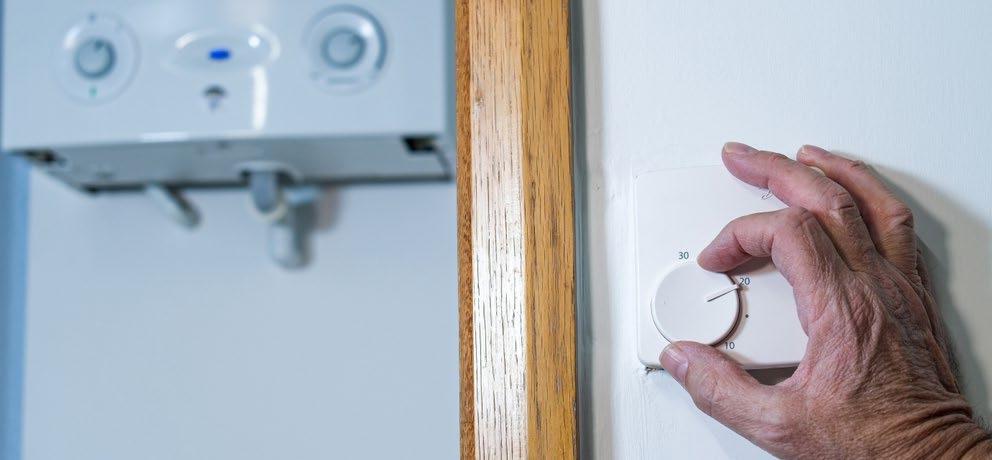
With over 6 million UK households in fuel poverty and energy prices still 50% higher than pre-crisis levels, financial support for energy costs is more essential than ever. Energy debt has risen to £3.7 billion, up from £2.6 billion last year, while government assistance has been scaled back. Many households are struggling, making accessible support crucial.
Data from the 160,000 Lighting Reach users highlights the challenge: nearly 70% struggle with energy bills, particularly families and single parents. Social renters face the most difficulty, and three-quarters of those unable to work report financial strain. Women are disproportionately affected, with many aged 30-60, along with pensioners missing out on winter fuel payments. Partnership with YES Energy
Lightning Reach is bridging this gap by connecting people to financial assistance. The YES Energy Solutions support scheme is already proving vital, offering up to £500 for eligible households, free home insulation, energy-saving packs, and advice on reducing bills. Since launching on Lightning Reach in November, nearly 1,000 applications to YES Energy Solutions have been started or submitted, with £10,000 awarded so far. The impact is clear: 56% of
recipients are social renters, 40% are unable to work, and 80% have no household income. Notably, 95% of applicants apply independently, boosting confidence and reducing reliance on support workers. Feedback has been overwhelmingly positive, with 92% of applicants highly satisfied.
‘A lot of people don’t understand how much help there is. I’ve been blown away by the support I’ve had.’ Read Charlotte’s experience of receiving support here: www.lightningreach.org/ debt-energy-grant
A lot of people don’t understand how much help there is. I’ve been blown away by the support I’ve had.
Dave Farquharson, Lightning Reach Director of Partnerships, highlights the importance of collaboration: ‘Partnerships like ours with YES Energy Solutions are essential in tackling fuel poverty at scale. By combining financial support with Lightning Reach’s platform, we ensure assistance reaches those in need quickly and efficiently. Thousands are accessing help independently, reducing pressure on frontline services while improving financial resilience. This is the kind of collaboration that drives real impact, and we’re eager to work with more organisations looking to enhance accessibility and effectiveness.’
If you're looking to engage more people in your scheme or help clients access financial aid, Lightning Reach would love to explore collaboration opportunities.
www.lightningreach.org/application-portal?referral=neamag
Smart Energy Advice Forum breaks down barriers
A special report from the Centre for Sustainable Energy on the recent Smart Energy Advice Forum, and what they found out about barriers advisers face when supporting vulnerable customers and good practice for approaches
The recent Smart Energy Advice Forum – a collaborative workshop hosted by the Centre for Sustainable Energy (CSE) and National Grid Electricity Distribution – has identified consistent challenges faced by energy advisers working with vulnerable households. With input from 76 attendees representing 56 organisations, the forum confirmed patterns of barriers that prevent equitable participation in the smart energy transition.
Three barriers
Our report highlights three persistent barriers that energy advisers encounter when supporting vulnerable consumers:
Firstly, deep-rooted distrust in smart technology and energy suppliers creates significant resistance. Many vulnerable consumers have developed scepticism based on previous experiences, making them reluctant to engage with new technologies or smart energy offers.
Finally, the complexity of smart tariffs and technologies presents an overwhelming cognitive burden for those already managing financial stress or other vulnerabilities. Many simply lack the capacity to navigate unfamiliar energy solutions.
Key approaches
Encouragingly, advice organisations reported success through three key approaches: delivering personalised, one-to-one support; developing clear, accessible resources; and ensuring advisers receive comprehensive training on emerging technologies.
The forum participants emphasised that individual organisations cannot address these challenges alone.
The forum participants emphasised that individual organisations cannot address these challenges alone. Systemic changes are necessary, including increased funding for local energy advice services, greater financial support for vulnerable households to access low-carbon technologies, and fundamental improvements to the smart meter rollout through stronger regulation.
Secondly, unresolved technical issues with smart meters create both practical obstacles and reinforce existing mistrust. When systems malfunction, and repairs are difficult to obtain, this validates consumers' hesitations about adopting new technology.
Read the full Smart Energy Advice Forum report www.cse.org.uk/ resource/smart-energy-advice-forum-key-findings to explore detailed findings and recommendations for ensuring no household is left behind in the smart energy transition.
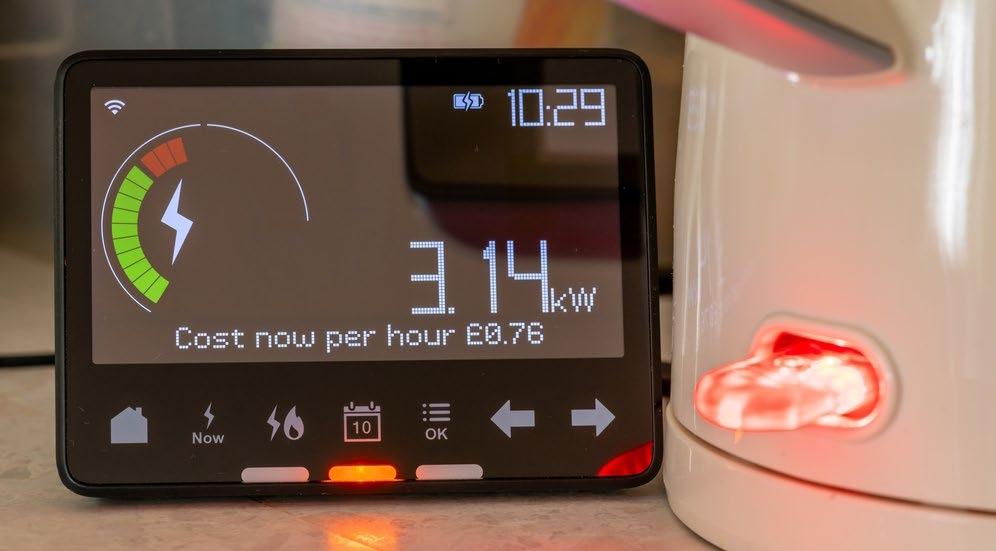
Photo:

Twitter/X: @NEA_UKCharity

Bluesky: @nea-ukcharity.bsky.social

Instagram: www.instagram.com/nea_ukcharity

Linked In: www.linkedin.com/company/national-energy-action

Facebook: www.facebook.com/nationalenergyaction
NATIONAL ENERGY ACTION
National Energy Action, the fuel poverty charity, campaigns so everyone can afford to live in a warm and safe home. This is something denied to millions because of poor housing, low incomes, and high bills. Working across England, Wales and Northern Ireland, everything we do aims to improve the lives of people in fuel poverty. We directly support people with energy and income maximisation advice and we advocate on issues including improving the energy efficiency of our homes.
We do not work alone. Partnerships and collaboration have been at the heart of National Energy Action for more than 40 years, helping us drive better health and wellbeing outcomes for people struggling to heat their homes.
WHERE TO FIND US
Email: focus@nea.org.uk Web: www.nea.org.uk
NEA is an independent charity, Registration No. 290511. Company limited by guarantee. Registered in England, No. 1853927 Registered office: Level 6, West One, Forth Banks, Newcastle upon Tyne, NE1 3PA Tel: 0191 261 5677
Illustration: Indigo Design/ Shutterstock