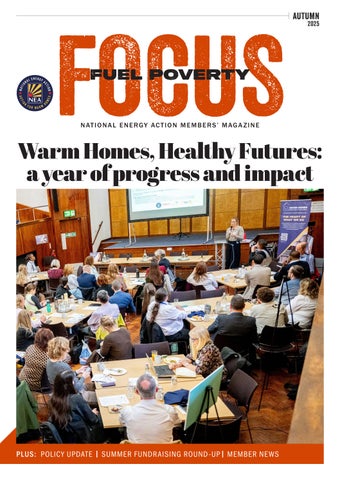
Warm Homes, Healthy Futures:
WHAT’S IN THIS ISSUE

Welcome to the autumn 2025 edition of Fuel Poverty Focus. As the heat of summer starts to fade, our thoughts turn to the coming winter and our focus is, as always, on reaching as many people as possible with our advice and support service, which is critical to so many. Fuel debt is now a year-round issue for so many households, reaching a new record high of £4.43bn, and the coming colder weather threatens to make this even worse. The price cap rise adds further pressure to households as they try to keep their homes warm this winter.
In this edition, you will find an update from our policy team outlining changes in debt, how our frontline advisers handle debt and an example of lived experience from one of our clients on how interest surcharges can quickly build up.
There are pieces on our new projects, such as our Mobile Advice Centre in North London and our work to combat the dangers of carbon monoxide through our work with the GDNs. In the North East,
we share the results of our work on water poverty. These interventions have proven successful in saving both money and water for our clients.
We are also proud to report on our brilliant summer of fundraising with multiple partners, individuals and organisations across England, Wales, and Northern Ireland, as well as the Great North Run in our home city of Newcastle.
Finally, you can hear about our amazing work on our A Warm Welcome project and the future of our educational projects and courses as we open up our flagship level 3 course to more organisations and services.
As winter looms, we will continue to work with our wide range of partners to provide services which help to combat fuel poverty across the country and support people to be warm and safe this coming winter.
Nicky Swetnam
Nicky Swetnam Head of Programmes
National Energy Action

CONTENTS
03: Policy in Focus
Ofgem’s summer of consultations
04: Advice in Focus
Our advice team on how they help those in energy debt and Luke's story
06: Events in Focus
Summer fundraising round-up, Fuel Poverty Awareness Day and Walk for Warmth
10: Programmes in Focus
A Warm Welcome, our Warm Homes, Healthy Futures events and Fairwater
15: Members in Focus
Lightning Reach and National Energy Foundation partner, CSE's free workshop and Cosy Homes in Lancashire
22: Education in Focus
Our Education team lays out their road map for 2025 to 2026
About Fuel Poverty Focus
Fuel Poverty Focus is the quarterly magazine, produced by National Energy Action, for its members. If you have content ideas for next issue and beyond please email focus@nea.org.uk
Newcastle Head Office
Wellbar Level 8
36 Gallowgate
Newcastle upon Tyne NE1 4TD
Ofgem’s summer of consultations
National Energy Action Head of Policy Matt Copeland considers the regulator’s numerous and various workstreams across debt relief, cost recovery, heat networks and more
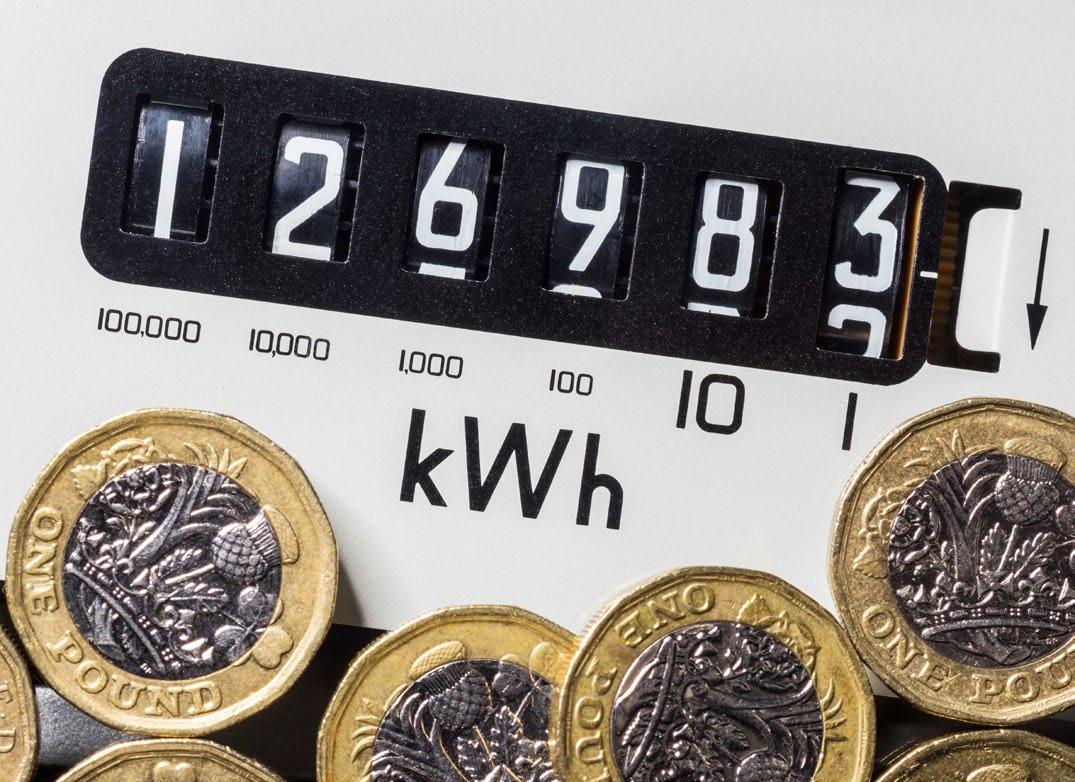
Energy affordability and debt remain the most pressing challenges facing low-income households in today’s energy market, with persistently high prices. This summer, Ofgem launched a series of major workstreams that could reshape how debt is addressed, costs are recovered, and consumer protections are delivered. As the regulatory landscape shifts, the question is whether these reforms will meet the moment and deliver lasting support where it’s most needed.
Debt relief
The regulator’s Debt Relief Scheme continues to move forward, with Ofgem now refining its design and delivery model ahead of the anticipated launch of its phased scheme in early 2026. Ofgem has shifted its thinking towards tackling household debt directly, rather than focusing solely on supplier recovery, which is hugely welcome. The urgency in this area is clear: energy debt is still rising, bills remain high, and vulnerable households need relief now. In co-ordination with colleagues in the debt advice sector, National Energy Action will continue to push to ensure the scheme is delivered in a timely, accessible, and frictionless manner.
Standing charges
Meanwhile, Ofgem’s work on standing charges is progressing, with its current proposals looking to require suppliers to offer lower or zero standing charge tariffs. We are continuing to engage to ensure the approach is fair, proportionate, and accessible to those who stand to benefit most. While this workstream is certainly welcome, particularly given the moral hazard of standing charges among prepayment households, it cannot, in isolation, resolve the deeper structural issues around how costs are recovered.
Warm Home Discount
We welcomed the Continuing the Warm Home Discount Scheme consultation since the scheme is a lifeline for millions. It’s very welcome that the households who rely on it will have the certainty of the scheme existing beyond March 2026. Energy advice organisations will also appreciate the confirmation
that the Industry Initiatives element of the scheme will be continuing beyond this winter since it enables further support for households through trusted third parties.
The government needs to make the final decision as soon as possible to provide certainty for next year and beyond, with the opportunity for reform to deepen and broaden the support available.
Cost allocation and recovery
That is why the parallel cost allocation and recovery review, a longer-term and potentially transformative workstream, is so critical. Ofgem has opened up a broader conversation about how system costs are recovered, including, among other options, the possibility of income-based charging. This is a vital opportunity to move beyond short-term fixes and toward a fairer, more progressive framework for cost allocation and energy pricing. National Energy Action is engaging to ensure this review delivers a fairer, more progressive retail pricing framework that is rooted in the lived reality of fuel poverty.
Smart meter guaranteed standards of performance
Elsewhere, Ofgem is introducing new smart meter guaranteed standards of performance, aimed at improving consumer experience and accountability. National Energy Action is feeding in to ensure vulnerable households are protected throughout the rollout and empowered to access affordable, flexible tariffs that can help reduce bills.
Heat networks
On heat networks, National Energy Action advocates for robust protections from the outset of the new regulatory regime. With these systems set to play a growing role in decarbonising domestic heating, regulation must, at a minimum, deliver the same level of consumer protection as the wider energy market.
Encouraging signs
These workstreams reflect a regulator in motion, active across multiple fronts and with significant decisions on the horizon. Encouragingly, Ofgem is beginning to engage more directly with questions of fairness and affordability. We welcome this shift, while recognising that the most powerful levers to address energy affordability ultimately sit with the government.
That is why National Energy Action continues to advocate for structural reforms that can deliver lasting affordability protection, including the introduction of a social tariff and a reformed Warm Home Discount that better reflects current energy costs and household needs. These measures are essential to complement regulatory change and ensure that support reaches those who need it most.
With the Department for Energy Security and Net Zero’s review of Ofgem’s role and remit ongoing, this is a pivotal moment, and one where the future shape of energy regulation is actively being contested. National Energy Action will continue to press for a regulatory framework that puts low-income and vulnerable households at the centre, and for the government to use the levers at its disposal to deliver lasting, structural change.
Our advice team on how they help those in energy debt
With energy debt one of the key issues facing fuel poor households, National Energy Action’s energy advice team highlights how they can help
Energy debt is a growing challenge and can arise from numerous and often overlapping factors, including rising living costs, fluctuating energy costs, changes in personal circumstances, fabric of homes or inefficient energy usage. Advising clients with energy debt requires a sensitive, informed, and solution-focused approach. As advisers, our role is to support clients in understanding their situation, exploring options, and regaining control over their energy account(s).
No judgement
Advisers understand that the first human interaction is key, it is imperative that advisers create a safe, non-judgemental environment for clients to share their situation. Many clients feel shame or anxiety about debt, so active listening and reassurance are essential. Often this is the only contact the client has with another person where their needs are prioritised. The aim of the advice appointment is to gather a full picture of their financial and personal circumstances, including income, benefits, and other debts, to ensure advice is tailored to the client's situation.

The first step is to establish a clear picture of the client’s energy usage and debt. Reviewing bills, payment history, and any correspondence from energy suppliers helps identify the scale of the debt and any patterns in consumption. It’s important to approach this stage with empathy, ensuring the client feels heard and not judged.
Support mechanisms and energy advice
Once we understand the debt, advisers explore available support mechanisms. Many energy suppliers offer repayment plans tailored to the client’s financial situation. Advisers help clients negotiate affordable payment arrangements, potentially including debt write-offs directly with the supplier or via Energy Funds in cases of severe hardship. Advisers also check eligibility for government schemes, other grants, or charitable support, such as the Warm Home Discount or local hardship funds.
One key component is energy efficiency advice. Helping clients reduce their consumption through simple behavioural changes or home improvements can lower future bills and prevent further debt. Providing or signposting to services that offer free energy-saving measures or home assessments can be particularly valuable.
Budgeting support is often necessary. Advisers can work with
clients to create realistic household budgets, prioritising essential costs and identifying areas for savings. In some cases, referral to specialist money advice services may be appropriate; collaboration with other agencies is key especially if energy debt is part of a wider financial challenge.
Speaking to suppliers
Communication with energy suppliers is crucial. Where needed, advisers can advocate on the client’s behalf, ensuring suppliers adhere to regulatory obligations and treat vulnerable clients fairly. Advisers should also encourage clients to maintain open dialogue with their provider, as ignoring potential issues going forward can often lead to escalation of the problem. Ultimately, the goal is to empower clients to manage their energy debt sustainably. This involves not only resolving the immediate issue but also building resilience against future financial shocks. By combining practical advice with compassionate support, advisers play a vital role in helping clients navigate energy debt and move towards financial stability.
Any frontline service can only be effective if the teams delivering the vital advice have the appropriate support and skills to help them manage supporting clients in crisis, as it can be emotionally demanding. Regular supervision, peer support, and self-care are vital to sustain resilience and avoid burnout.
Lived experience: Luke’s story
We want to share Luke’s story, a powerful reminder of how debt can quickly spiral out of control, even when someone is doing everything they can to manage it

Luke, a single parent on Universal Credit, survives on less than £8,000 a year while also living with anxiety, depression and diabetes. After separating from his partner in 2019, he moved into a new home with his children, determined to give them stability. But by 2022, when he met a National Energy Action adviser at a foodbank, he was already struggling with mounting energy debt and the burden of prepayment meters.
Debt blocked access to heat over winter
Despite topping up as often as he could, Luke’s meter deducted large sums for debt recovery, leaving him and his children without gas or electricity, sometimes in the depths of winter. The repeated self-disconnections took a toll not only on his mental health but also on his ability to care for his children. In 2020 his meters were switched to smart credit due to his vulnerabilities. But technical failures and bills he simply couldn’t afford forced him back onto prepayment meters. Luke thought he had cleared his debt by 2022, only to discover during a meter exchange that the debt had merely been re-added. With no clear breakdown from his supplier, he could only estimate what he owed as being around £300. His new meters then deducted as much as 90% of his top-ups, making it almost impossible to heat his home.
Fuel vouchers helped Luke
During the winter of 2022–23, Luke spent over £220 in a single month just to keep the gas on. Without fuel vouchers from National Energy Action he would have gone without heat. The relentless stress brought on chest pains, anxiety and
eventually high blood pressure. He borrowed from family just to stay afloat. A failed credit top-up from his supplier further worsened his mental health, and in January, he was sent home from work due to stress and high blood pressure.
National Energy Action cleared his debt
Despite repeated requests, Luke never received a full payment history. Eventually, a helpful customer service adviser provided a breakdown showing the original debt was £660 for gas and £600 for electricity. Luke had repaid over £700. His supplier offered £177 in compensation, which Luke accepted without receiving a full statement. National Energy Action cleared his remaining debt through their hardship fund and continued to support him with energy vouchers.
Today, Luke is still with the same supplier on prepayment meters. Although he is afraid to switch for fear of further complications, clearing the debt has given him a fresh start. His adviser noted that this step, though hard-won, has brought Luke a measure of stability and hope for the future.
Adviser testimony
‘It was getting a good adviser at Luke’s energy supplier, who did provide a breakdown of the debt and how it accumulated, that gave me sufficient evidence to believe that the debt was correct, and the error was the delayed application of the debt balance to his new meters.
‘But in the end, our support encouraged Luke to draw a line. With the debt paid off, he could start again by topping up regularly and avoiding emergency credit or emergency payments from his supplier that he would need to pay back.'
EVENTS IN FOCUS
This summer has been bursting with energy, creativity, and generosity as our incredible supporters have played, run, golfed, and sailed their way through the season, all in support of our mission to end fuel poverty.
We kick things off with our highlight of the fundraising calendar the Great North Run, followed by other awe-inspiring running challenges across the country and culminating in an unforgettable
Another amazing Great North Run for Team NEA! A summer of fundraising
sailing regatta. Each event has helped raise vital funds to support our work and make a real difference.
But the momentum doesn’t stop here; winter campaigns are on the horizon, and our 2026 events calendar is already packed with exciting opportunities to get involved.
Thank you to everyone who’s helped make this summer one to remember. Let’s keep the spirit going.
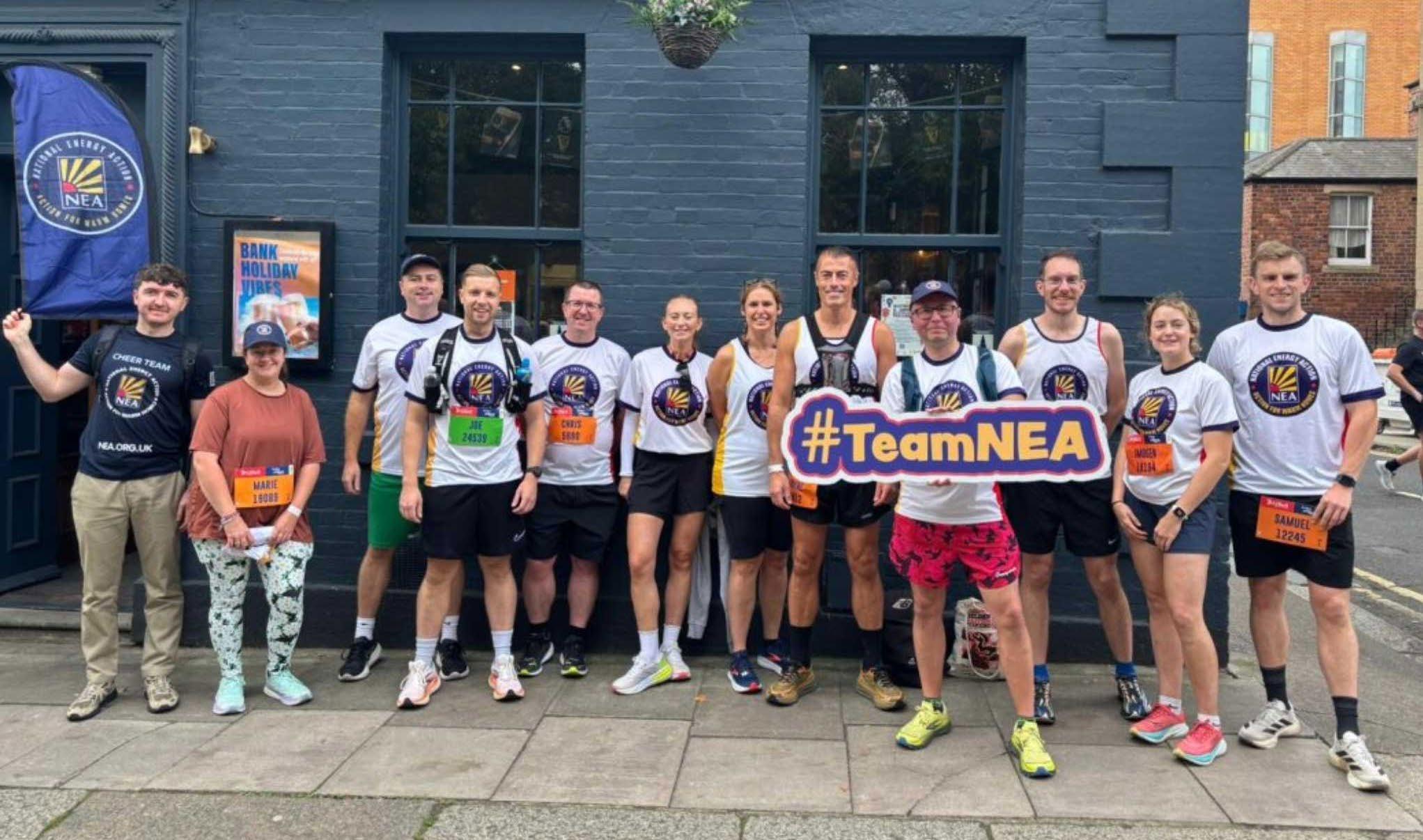
On Sunday 7 September, 29 Team NEA runners joined 60,000 others to take on the iconic 13.1-mile route from Newcastle to South Shields in the 2025 Great North Run.
It was an amazing day to see so many people come together to support National Energy Action, including 25 runners from E.ON who took on the challenge together!
Despite the blustery conditions our runners faced, they all battled through to cross the finish line, breaking National Energy Action's fundraising record for the event.
After crossing the finish line and collecting their medals, our runners headed to the charity village for some well-deserved sweet
treats, fizz and a strong cup of tea.
We’re incredibly proud of every single runner. Completing a half marathon is no small feat, and your dedication through months of training and fundraising will help to create real change for people experiencing fuel poverty.
A special shout-out to the E.ON team for taking part – thank you!
If you or your team are interested in taking on the Great North Run 2026, please get in touch to find out more: fundraising@nea.org.uk
For more information on our other running and challenge events, visit our website: www.nea.org.uk/support-us/fundraise-for-nationalenergy-action/.
Richmond RunFest: Team Octopus shines again!
On 14 September, 37 enthusiastic runners from Octopus Energy took on Richmond RunFest for National Energy Action, tackling distances from 10k to a full marathon.
The racers managed to dodge the rain and achieved some very quick times. It was great to see team Octopus push themselves again, with a couple of runners running their first ever marathons.
This follows last year’s fantastic turnout at the London Landmarks Half Marathon, where over 30 Octopus team members ran for Team NEA.
A huge thank you to Octopus for another incredible year of fundraising, we can’t wait to see what you do next!


National Energy Action chosen as charity partner for RenewableUK regatta 2025

This summer, we were delighted to be chosen as the official charity partner of the RenewableUK Regatta, which took place on 9 September at Port Solent.
This was an amazing event, and it was great to have the opportunity to meet and talk with so many organisations committed to supporting clean and affordable energy.
National Energy Action colleagues Peter Smith, Jen Carruthers
More fantastic fundraising from Smart DCC
Following on from their fantastic fundraising efforts last year, Smart DCC has taken on some more challenges to support our work in 2025!
In August, four runners from Smart DCC took on the Tatton 10k for Team NEA, and three more colleagues will be pulling on their running shoes to join the Manchester Half Marathon on 12 October!
We are incredibly grateful to Smart DCC for their continued commitment and support in helping us tackle fuel poverty.
Jones, Michael O'Malley and Abi Gordon attended the event, with Peter joining a team in the race. Peter also spoke at the end and highlighted the urgent need to tackle fuel poverty and invited others to join us in driving real change.
We are thankful for the team at RenewableUK for their support and look forward to continuing working together throughout the

Thank you to everyone who made this summer unforgettable. Your generosity, and commitment continue to drive our mission forward. We can’t wait to see what we achieve together next!
Save the date: Fuel Poverty Awareness Day is 26 November
Wednesday 26 November 2025 will be National Energy Action’s Fuel Poverty Awareness Day - save the date to help support us on the day
Millions of households are in fuel poverty, with a growing mountain of debt putting pressure on those least able to afford it. Fuel Poverty Awareness Day (Wednesday 26 November 2025) is when we, along with our partners and supporters, highlight the devastating impact fuel poverty is having on millions.
On 1 October, the average annual energy bill rose to £1,755, which is almost £500 higher than it was in October 2021, before the energy crisis. The day before Fuel Poverty Awareness Day (25 November) is also the day that Ofgem will be announcing the level of the price cap from January 2026.
The energy crisis has been going on for over three years, meaning household budgets have been stretched and many are struggling in cold, unsafe and unhealthy homes. The situation is stark, with people either having to accrue debt or live in dangerously cold and damp homes.
As the date gets closer, National Energy Action will publish a supporter pack with key facts, figures and quotes. Sign up to get
Thank you for topping up the meter for families in need
This summer we launched a new fundraising appeal about how fuel poverty isn’t just a winter issue
We were blown away by the generosity of our supporters and corporate partners at Macbrook Gas – together you raised approximately £10,000.
The funds raised as part of this appeal will support families who are struggling in fuel poverty.
People like Helen*, a single mum of three who is struggling to keep up with the costs of keeping her children fed, clean and comfortable over the summer.
For many households, the summer holidays mean more mouths to feed, clothes to wash and fans needed to keep the children cool.
‘I’m having to wash clothes daily because I have three children and work a part-time job, so [I] need a clean uniform too.’
Whether it’s practical items or energy advice which can help reduce her bills, we’re there for people like Helen when they need us.
If you’ve not had a chance to donate to our appeal, it’s not too late. You can donate at www.nea.org.uk/donate/ and keep an eye out for our upcoming winter appeal Operation Warmth.
details about the day as we release them – www.nea.org.uk/ who-we-are/nea-campaigns/fpad/ The Nation’s Biggest Housewarming 2025
We’re thrilled to announce that as part of Fuel Poverty Awareness Day, our annual Nation’s Biggest Housewarming will be returning from 24 to 28 November!
Whether you're part of a community group, school, or company, this event is a fantastic way to show your commitment to ending fuel poverty and raise funds to make a difference.
Taking part is easy, simply choose a day of the week to hold your housewarming event and we’ll send you everything you need to get started and plenty of resources to decorate your space.
Whether you host a bake sale, organise games, or plan your own creative fundraiser, every event helps bring warmth to homes in need.
For more information on how to get involved and register your place, visit our website: www.nea.org.uk/support-us/the-nationsbiggest-housewarming/
Walk for Warmth: save the date
We’re thrilled to announce our Walk for Warmth 2026 will be taking place on Saturday 21 February
Once again, we’ll be getting together to raise vital funds and awareness on our family-friendly Walk for Warmth walk through Newcastle. We’ll head past some of the city’s best sights and green spaces, before warming up with hot drinks and snacks at Home Group, close to St. James’ Park.
By taking part, you will not only help to raise life-changing funds, you’ll also be showing solidarity with the millions of people experiencing fuel poverty across the UK.
If you don’t live in the North East, you can also take part by holding your own Walk for Warmth in your local area! Invite friends, family and colleagues to join you on a route of your choice and let’s see how far we can Walk for Warmth together!
For more information and to register your place, visit our website: www. nea.org.uk/support-us/ fundraise-for-nationalenergy-action/walk-forwarmth/

Photo: Max Cooper and Macbrook Gas Ltd
A Warm Welcome: helping young families
We celebrate A Warm Welcome, our programme aimed at fuel poor households with a pregnant person or with children under the age of five
National Energy Action has delivered A Warm Welcome programmes across various areas of England and Wales. We’ve worked with partners including Energy Saving Trust, SGN, NGN and GPE to reach households where someone is pregnant or has a young child under the age of five, and the network of professionals that surround them. Activities in these programmes have included crisis funds, training of frontline teams, family fun days, online engagement and all manner of in-person events, including bill surgeries, energy quizzes and bespoke sessions.
Too
many children are in poverty
This work could not be more crucial. Over 4.3 million UK children are living in poverty, with those most affected being those from single parent households, households with three or more children, and those in rented accommodation. Growing up in a cold home has reverberating impacts, increasing the risk of severe ill health and disability, impacting development and mental health outcomes. Delays at this stage of life can also have lifelong consequences on academic attainment. It’s a heartbreaking position for parents to be in too. One parent who used our advice service told us, ‘My son didn’t understand why we couldn’t have the heating on’.
More than 3,000 households supported
It's for these reasons and many more that we’re so proud of what we’ve managed to achieve through these projects. Over 3,000 households have been supported directly through this programme with bespoke energy advice and targeted interventions. One client, a recipient of our crisis fund, said, ‘We were able to get help to buy kitchen appliances, which has been a massive help. Not only has it cut down my bills, but bought me more time... I can spend more time with my children as a result.’ Sadly, crisis funds remain an extremely necessary part of our service, with families coming to us in desperate need for items like warm blankets for their children. Deepening our ties to local organisations
We’ve also been able to provide additional support to the services around families – from children’s centres, baby banks, safeguarding services, domestic abuse organisations, single parents’ clubs, nurseries, midwifery teams and more. Working to deepen our ties to these organisations locally has been of huge benefit to National Energy Action, embedding discussion of fuel poverty into these frontline services. These connections have meant referral routes for desperate families, and training delivered to both professionals and volunteers, empowering over 700 to deal with the increasing need in communities for high quality energy advice. One partner we have worked with, Vanessa Reid of Lambeth Early Action Partnership, said:

‘Our families greatly appreciate your help and are very grateful for the support they get from your service and the items they have received which they are so thankful for and have shared with staff how much they have already benefited from having these items.’
There is still so much work to do in this area. Every child deserves to be able to live in a warm, safe home where they can grow and thrive. If you’d like to discuss any further what we do in your area, including the potential for future partnership, please contact molly.chambers@ nea.org.uk or nicola. jeavons@nea.org.uk
National Energy Action and Cadent launch Mobile Advice Centre
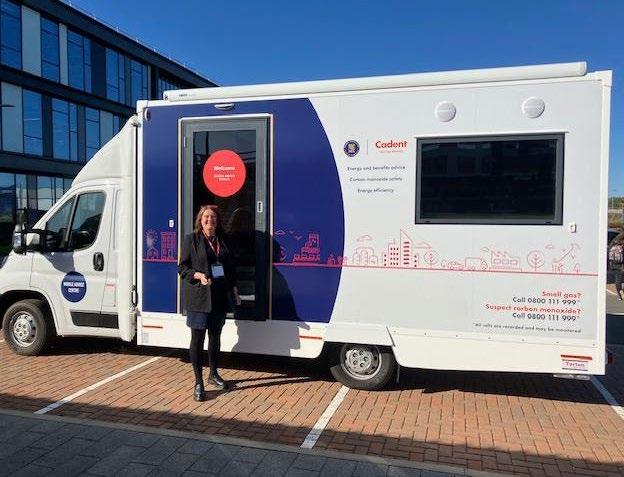
The Mobile Advice Centre in North London is a partnership to bring energy efficiency advice and carbon monoxide awareness to Cadent customers in North London
The energy advice team at National Energy Action is excited to be launching a new Mobile Advice Centre to bring energy efficiency and carbon monoxide advice to householders in North London. Funded by Cadent, the Mobile Advice Centre will be parked at various community locations across Cadent’s North London network area, taking National Energy Action’s experienced advisers to the places where people go.
As they do their weekly shop, return books to the library, or drop their children off at the leisure centre, people will be able to stop and chat to our staff. They will receive advice on energy, learn about carbon monoxide safety, sign up to the Priority Services Register, and be signposted to a range of other projects and services for more detailed support too.
National Energy Action’s Mobile Advice Centre will join other existing Mobile Advice Centres, run by other partners, which already operate across other parts of Cadent’s network area. We look forward to working with those already up and running.
National Energy Action joins with Cadent for CO workshops
Last winter, National Energy Action worked alongside Cadent to deliver a series of carbon monoxide (CO) workshops to Cadent customers in North London
National Energy Action research shows that the factors which cause or expose households to the risk of fuel poverty – low income, poor-quality housing and the age and health of occupants – can impact on the heating and servicing behaviours of households to elevate CO risk in homes.
Households were able to benefit from a series of workshops delivered by National Energy Action and Cadent. The workshops were designed to raise awareness of the signs and dangers of CO and where to seek support. The two-hour session discussed which appliances can release CO, how to identify the signs and symptoms of CO being present, the health impacts of CO poisoning and what to do if you suspect CO being present in your home.
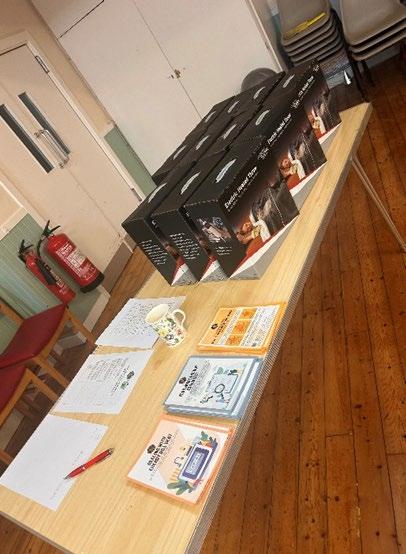
During the sessions our advisers took time to discuss individual client needs and determined whether people
attending had a working and in-date CO alarm or whether they had an alarm at all. From this, they made 31 referrals to Cadent, who sent new CO alarms to customers, immediately increasing the safety of those households.
The sessions also identified those who were in desperate need for an energy top-up and had little or no money on their meters and no means to top them up. 33 people were also referred to the Fuel Bank Foundation and received timely financial support to help keep them warm, safe and healthy through the winter period.
In addition to this, 150 electric blankets were distributed to people who had attended a session and needed additional warmth. In conclusion, the project demonstrated a very successful partnership between National Energy Action and Cadent and successfully engaged and informed over 200 Cadent customers. Feedback received told us that 91% of those customers would speak to friends and family about the dangers of CO and, thus, the project has a much wider reach.
There will be a lasting legacy from the information shared, energy top-ups made and electric blankets received, keeping people keep warm, safe and healthy in their homes.
National Energy Action is excited to continue this work over the coming winter.
Photos: National Energy Action
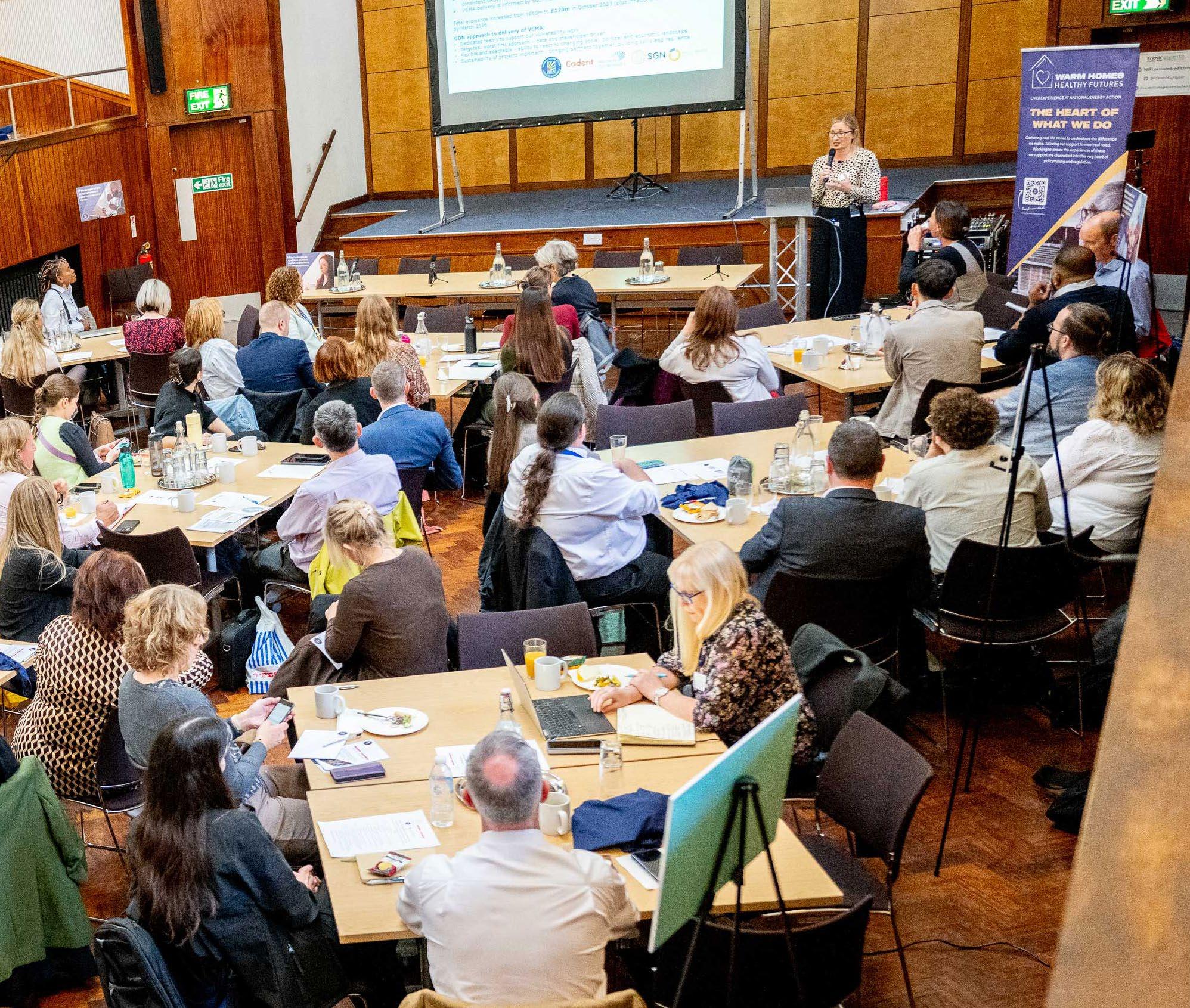
Warm Homes, Healthy Futures: a year of progress and impact
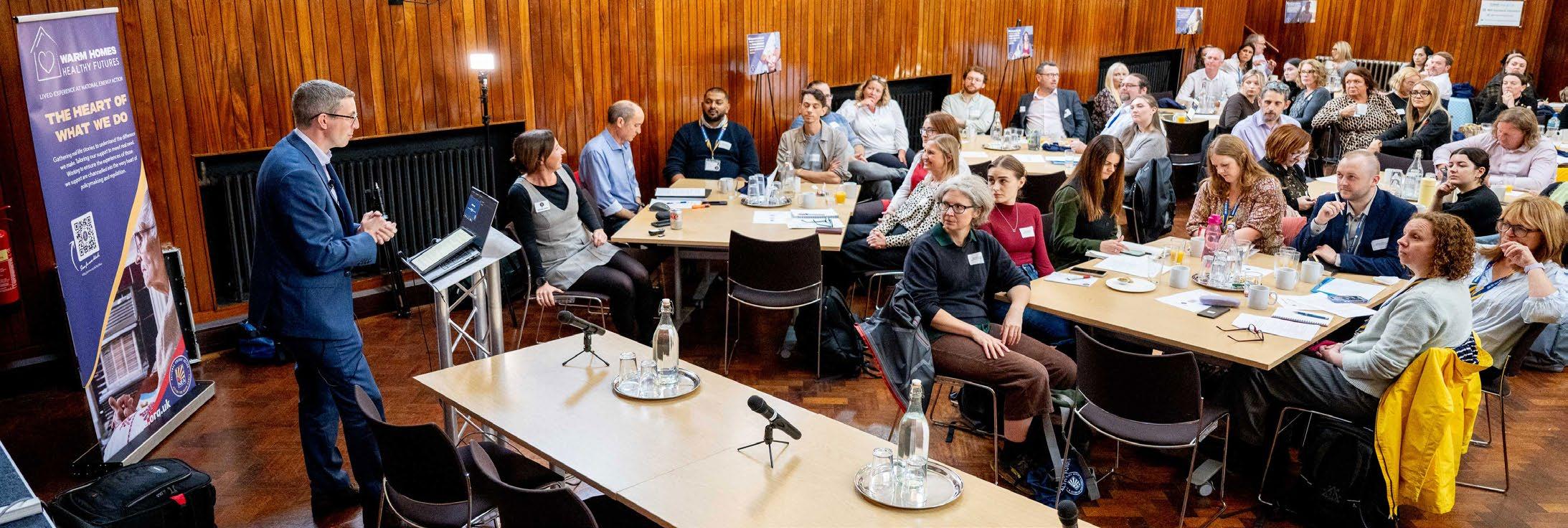
As Warm Homes, Healthy Futures approaches its one-year milestone, we considered the learnings and achievements from the programme at events in Manchester and London
Aimed squarely at the strong correlation between cold, damp homes and ill health, Warm Homes, Healthy Futures links health practitioners to local fuel poverty support services, such as heating system repairs, energy efficiency and energy bill support. It’s nationally co-ordinated and locally delivered, implemented at scale to make lasting differences to people’s health.
What we have delivered
In the first year of Warm Homes, Healthy Futures we have connected with more than 10,000 people living with health conditions and disabilities made worse or difficult to manage by cold, damp homes.
This support has reached people in more than 80 places across Great Britain, working with a network of more than 25 trusted organisations, and over 150 health and social care professionals.
Valuable insights
At the two events, attendees heard from our Futures team and our invaluable programme delivery partners. Eileen Brown, Customer Experience Director at Northern Gas Networts, emphasised the need to work with trusted partners to best protect their customers from fuel poverty.
Attendees also heard our Head of Policy Matt Copeland speak about the national policy context in which health and fuel poverty currently sits, what’s likely to change and what this means for building on successful partnership and innovation at a local level.
Life-changing outcomes
Frontline teams are encouraged to continue using the referral pathways available, which often begin with a simple engineer visit. These visits can lead to deeper engagement and support, revealing powerful stories of individuals who have fallen through the cracks.
One such case in the North of England involved a disabled
pensioner with mobility and sight issues. After returning to her home following the death of her husband, she faced severe challenges including hoarding, a rodent infestation, and a broken boiler.
Thanks to enabling funding, National Energy Action was able to co-ordinate pest control and extensive cleaning, allowing engineers to safely access the property. The boiler was ultimately deemed safe, and hot water was restored.
Recruitment and delivery
Recruitment efforts have been robust. In spring, we sent out 2,000 letters to clients previously engaged through the Futures programme, followed by an additional 600 invitations for servicing in recent months. Clients are offered free safety checks for boilers, gas hobs, cookers, and gas fires. If an appliance is condemned, repair or replacement may be offered, though delivery is not always straightforward.
Referrals can also come directly from National Energy Action’s Energy Advice Team or partner organisations. Looking ahead: the final six months and beyond
With funding secured until March 2026, National Energy Action is entering the final six months of the current phase of Warm Homes, Healthy Futures.
The Impact and Insights Team continues to play a vital role in capturing and communicating the impact of the programme. These case studies are not only essential for advocacy and funding but also help shape future programme design and storytelling at events and conferences.
'We've built something that we're really proud of together.' Dr Danielle Butler, our Head of Development, thanked our 26 partners on the Warm Homes, Healthy Futures programme for such an incredible impact within the first year of delivery.
If you would like to find out more about Warm Homes, Healthy Futures, please visit www.nea.org.uk/projects/warmhomes-healthy-futures/
Changing how we use water: the latest on the FairWater Project
National Energy Action’s Research team updates on the latest from the multi-year long FairWater project, aimed at reducing water wastage and energy usage and saving households money on their water bills
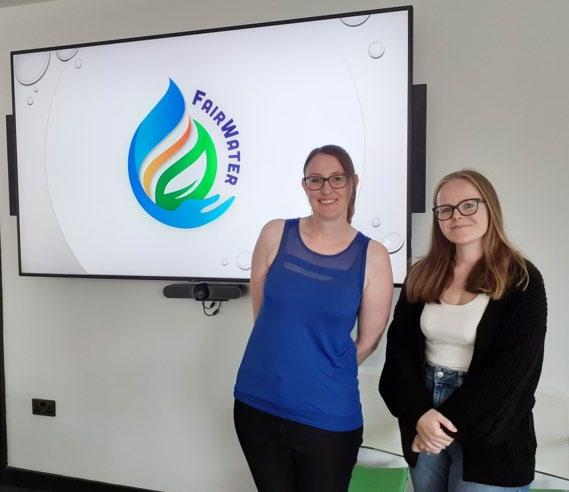
The ‘FairWater’ project, which has been running since Spring 2022, has made significant progress in its research aimed at reducing water use, energy emissions and bills for consumers. The project, part of Ofwat’s £36 million Water Innovation Challenge, is being led by Northumbrian Water in collaboration with partners at Newcastle University, National Energy Action, Procter & Gamble, and Northern Gas Networks (NGN).
Behavioural changes to common water tasks
The project focuses on four main household water tasks: clothes washing, dishwashing, showering, and toilet use. Three types of interventions are currently being investigated: i) a behavioural “nudge” in the form of information leaflets; ii) the provision of washing and cleaning products designed for low temperature and low water use; and iii) the introduction of new technologies and appliances. These interventions are being assessed to determine which ones have the most impact on reducing water and energy use, and whether the effects occur individually or in combination. Households as active participants
To collect the necessary data, Northumbrian Water Group (NWG) invited consumers in North East England to participate in the research project, sending out 10,000 invitations via email and letter. As a result, 162 households expressed interest in
participating in the project.
Of these, 55 households consented to having a range of sensors installed in their homes, which collect detailed quantitative data in four ways. First, overall household water use is measured using newly installed smart water meters. Second, 220 flow sensors measure water use in washing machines, dishwashers, sink and toilets. Third, a device measures the duration of shower usage, and fourth, smart plugs measure the electricity consumption of washing machines and dishwashers. Additionally, the NGN test homes, located at the Net Zero Research Village (NeRV), are being used to trial innovative water-saving showers and test sensors, as a way of showcasing potential options, without the disruption and risks associated with using privately owned dwellings.
Sensors have been collecting data since May 2024, and data analysis by project research teams is yielding valuable insights into households’ water use patterns, as well as identifying which interventions have the greatest potential to change water use. Insights on energy use are being provided by National Energy Action and NGN. Developing systems to collect data and meaningfully display it for both the project team and participating households is a vital aspect of the project, leveraging the expertise within Newcastle University’s School of Computing and guided by contributions from NWG and P&G.
Qualitative research
The remaining 107 households agreed to participate in more qualitative research activities, completing a survey that establishes a baseline for water awareness and reviewing written materials to be used in the experimental part of the programme. Future activities will include interviews and workshops, with an option for site visits to view installed water and energy-saving technologies. These activities involve the full range of project partners, with key contributions from National Energy Action and Newcastle University Business School.
The FairWater project is scheduled to run until summer 2026, with the key outcome of providing newly developed and validated pathways for households to reduce water and energy use. The project will supply robust and verified evidence to support and guide the policy choices that will need to be made as the UK confronts the water and energy challenges of the coming decades.
Our trustee considers Wales’ high level of fuel poverty
Karen Cherrett, who joined National Energy Action as a trustee in 2024, shares her experience as a child in Wales and how more work is needed to end fuel poverty
Igrew up in a terraced house in the Welsh Valleys. Coal was the primary fuel and it brought warmth, jobs and, in equal measure, hardship. I learnt how to lay a real fire at a tender age and can still imagine the rush of warmth on your face on cold winter mornings. I also remember the coal dust and how sparingly the heat it generated was distributed across the household.
Moving from the Valleys to a centrally heated house before I hit my teenage years was beyond the dreams of my cousins. It made us “posh”. I didn’t appreciate it then but have had many opportunities to reflect on the importance of readily available, affordable heat and hot water as a basic component of civilised living.
Old homes and low incomes
Wales has the highest proportion of aged housing stock in the UK (more than a quarter was built more than 100 years ago). It also has some of the most economically disadvantaged communities in Europe. Close to one in five homes are officially classified as posing a hazard to health (Category 1 hazard*) with one in three homes
built before 1919 being Category 1 classified*.
There are 88,000 homes eligible for, but not receiving, pension credit, and twice as many single pensioner homes in Wales are in fuel poverty - more than the 14% national average. More starkly, it is estimated that since the energy crisis, 45% of Welsh Households are in or close to fuel poverty, with 8% in extreme fuel poverty.
Ninety-eight percent of Wales' lower-income households (some 217,000) are in fuel poverty.
Single households and especially single older households are in dire need of support to deal with damp, dry rot and conditions of home decay that arise from poverty contributed to by energy poverty and poor ventilation.
The measures may adapt to new situations, but sadly, the numbers do not. It has been this way all of my lifetime. If, as a trustee, I can make a small difference to the persistently stubborn statistics, I will consider a job well done.
It is an honour to be among amazingly passionate and proactive people at National Energy Action. If you know someone who could add value to the Board, please get in touch.
Registration now open for our annual conference
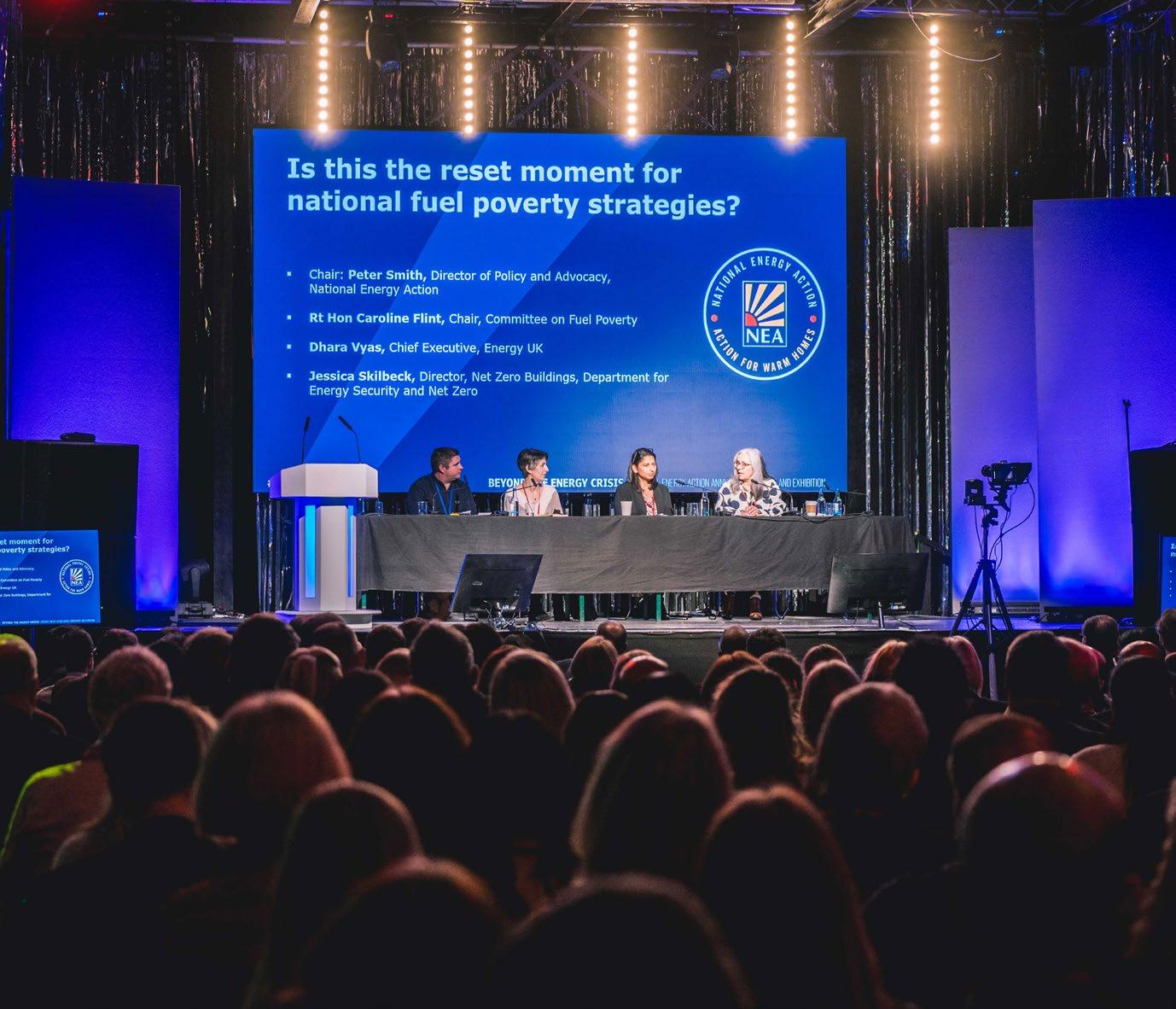
We’re pleased to announce that registration is now open for our annual conference, where figures from across the fuel poverty space can come together to hear and take part in illuminating discussions
This year's conference is a special occasion, as it is for our 45th anniversary. The conference will be held at the iconic Glasshouse, a brilliant venue overlooking the waterfront in Gateshead, close to our founding city, from 9 to 11 February.
This event brings together colleagues, members, partners, government, and businesses for insight, networking, and a forward-thinking discussion of ways to alleviate and ultimately end fuel poverty. Whether you're looking to explore new ideas, strengthen relationships, or simply take a step back from the day-to-day, this is an opportunity not to be missed.
We will be sharing more about the agenda and speakers in the coming weeks, but for now, we encourage you to secure your place early. Join our mailing list to be kept up to date with conference plans and be notified when booking opens. Special rates will be available for National Energy Action Members. The sign-up link is now available at www.nea.org.uk/ annual-conference-2026/
MEMBERS IN FOCUS
Lightning Reach and National Energy Foundation partner to scale energy support
National Energy Foundation’s energy support schemes reach new audiences by utilising Lightning Reach’s digital portal, enabling vulnerable households to access support quickly
A pioneering partnership between Lightning Reach and the National Energy Foundation (NEF) is transforming how vulnerable households access energy support. NEF delivers a range of schemes helping UK households stay warm and efficient. By teaming up with Lightning Reach’s digital portal, NEF has expanded their reach, introducing them to new audiences and ensuring more households benefit from support.
Targeted outreach to Lightning Reach’s 200,000-strong user base gives NEF direct access to pre-qualified applicants, enabling it to focus resources on eligible individuals and exceed its application targets. More than 2,100 applications have been submitted via Lightning Reach in the first six months. This success is down to strong teamwork; Lightning Reach channels high-quality applications, and NEF acts quickly, with applicants hearing back within just five days.
A simpler, faster experience for individuals For households, getting support is quick and easy. On average, it
takes individuals just 13 minutes to create an account and complete an application through Lightning Reach. Families can receive practical help when they need it most.
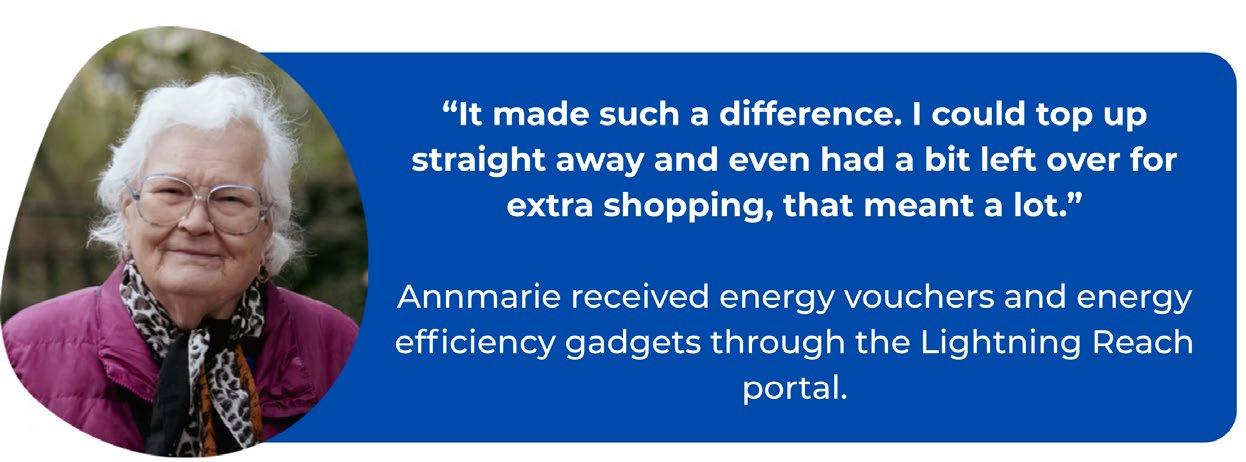
Behind these numbers are real people now living in warmer, safer homes. Annmarie, a pensioner from Durham, received a warm home pack and energy vouchers. She said, ‘It made such a difference. I could top up my energy straight away and even had a bit left over for extra shopping, that meant a lot.’ In Sheffield, Olaide, a single mother of four, was awarded £100 in energy vouchers, stating, ‘Knowing I could top up the electricity and cook for my children meant I did not have to worry as much, and I could use my energy for other things.’
Winter is coming - preparing together
With winter on its way and an ever-growing number of families facing hardship, NEF and Lightning Reach are already preparing for the incoming rise in demand. Together, they demonstrate how collaboration between frontline expertise and technology can supercharge impact.
Customer Success Manager at Lightning Reach, Gino Brancazio, said: ‘It’s such an exciting partnership; we’ve not only reached more households but also set a model that others across the sector can follow. The challenge of fuel poverty is too great for any one organisation, but together we can make support faster, fairer, and more accessible.’
Is your organisation looking to expand its reach and impact this winter? Get in touch at partnerships@lightningreach.org
Power Circle powers up solar energy plans with £10m investment
Social enterprise Power Circle has secured a £10 million investment to scale fully funded low-cost, low-carbon energy solutions for domestic and commercial customers
The investment will enable the implementation of Solar Circle Phase 1, Power Circle’s programme of solar PV provided via energy services (ESCO) agreements with customers. Unlike conventional finance, ESCO agreements provide low-cost behindthe-meter electricity, enabling customers to cut their energy bills from day one with no upfront cost.
Customers pay for electricity generated and used at the home. For most areas, the tariff is 17.3p/kWh including VAT. This represents an immediate saving of around a third against the current Ofgem price cap of 25.73p. The annual electricity bill saving will not be as high as this since the balance of electricity needed will still be bought by the customer from a supplier of their choice through the grid.
Low-carbon energy for low-income households
Power Circle is a social enterprise. Its mission is ‘to enable local energy users to access low-carbon energy at scale in a way that is affordable, fair and breaks down social barriers’. The Solar Circle will build a balanced portfolio of customers, including those in fuel poverty, who are often excluded from the benefits of low carbon. The social enterprise structure enables customers to have trust
that Power Circle has their interests at heart.
The Solar Circle programme will be delivered nationally through Power Circle Energy Services, except in Essex, where it will be delivered through Essex Community Energy CIC (ECE). ECE is also delivering the pioneering SHIELD project (Smart Heat and Intelligent Energy in Low-Income Districts), which includes a new ultra-low cost heating solution, the Thermify Heat Hub, as part of an Ofgem Strategic Innovation Fund project with UKPN. The Heat Hub is not yet generally available and is due to scale up beyond SHIELD in a few years’ time.
Work is underway on Power Circle’s £40m Phase 2 and £ 100 m+ Phase 3 programmes, which will follow on from Phase 1. Power Circle will not promote this solution directly to householders. Instead, it partners with landlords and community groups that can effectively engage with householders.
How to get involved
Social landlords and others interested in getting involved in SHIELD scale up should contact info@powercircle.org.uk. For more information, please visit the Power Circle website, www.powercircle. org.uk
CSE's free workshop: smart energy tips, tools and insights
Centre for Sustainable Energy is running a free online workshop on the smart energy market for energy advisers, with the aim of enabling advisers to deal with smart meter issues with confidence

Smart meters and evolving smart energy offers can unlock real savings, better energy management, and support a fairer transition to net zero.
However, as many energy advisers know, navigating the smart energy market is not always straightforward - particularly when working with clients in vulnerable circumstances. That’s why the Centre for Sustainable Energy (CSE) is inviting frontline energy advisers, community energy workers, and advice organisation staff to its free online workshop on Wednesday 22 October, 10am to 2:30pm.
Over the course of the session, CSE will share:
• Top tips for resolving smart meter issues quickly and confidently
• An introduction to CSE’s new smart energy advice tool
• Insights from two years of delivering smart meter advice, including what works best for different client types and situations
• An update on upcoming CSE smart energy support for advice organisations
Attendees will leave with practical techniques, a deeper understanding of the challenges their clients face, and a toolkit of
resources to help guide them through the smart energy transition. Why the role of adviser is crucial
Local energy advice organisations are embedded in their communities, serving as trusted, impartial voices that help households navigate complex information and tackle misconceptions about smart meters.
Their expertise is essential for ensuring the smart energy transition includes everyone, not just those who can afford expensive technology.
To read more about the key steps CSE has identified to achieving a fair smart energy transition, see this long read: Six steps to a fair smart-energy transition. www.cse.org.uk/news/six-steps-to-a-fairsmart-energy-transition/
Reserve your free place on Eventbrite here: www.eventbrite.co. uk/e/smart-energy-advice-workshop-tickets1602212343249?aff=oddtdtcreator CSE will send you a brief survey to help them tailor the content to your needs.
This workshop is the first step in CSE's expanded smart energy support programme. It will also be launching Retrofit and Smart Energy Essentials training and building peer support networks. You can find out more about these opportunities during the session.
Care & Repair Cymru calls for a grant for older people in unfit housing
A Safety-Net Grant from the Welsh Government would help tackle fuel poverty in households with older people, says Care & Repair Cymru
Hazardous housing disrepair threatens lives and puts avoidable strain on health and social care services in Wales. Every day, Care & Repair sees older people living in unfit housing who cannot afford to get repair work done and where there are no funding solutions available. This leaves them living in poor quality, cold homes with a major detrimental impact on their health, wellbeing, and ability to live safely and independently at home.
Cold and damp homes
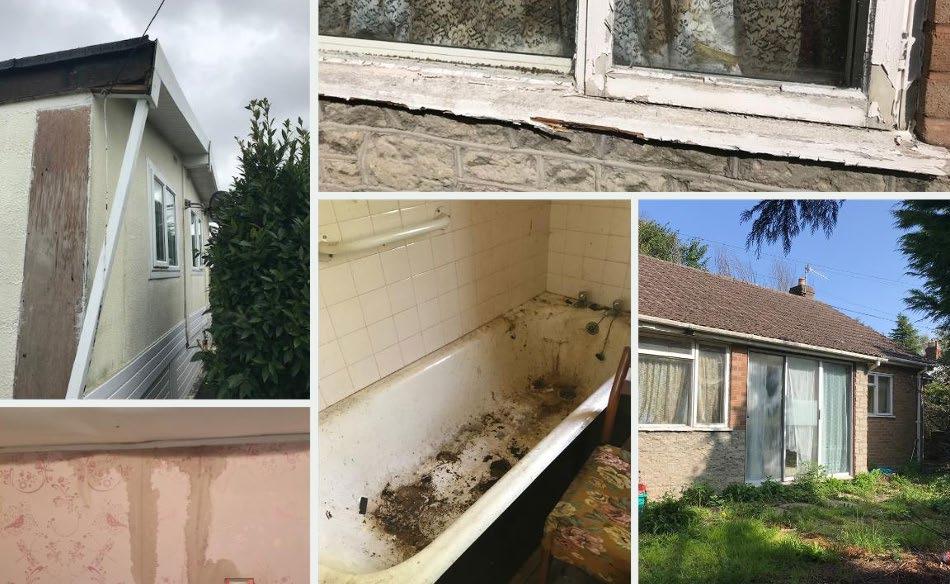
Disrepair issues such as broken windows, doors and roofs often result in draughty and leaky properties. This reduces energy efficiency and causes higher energy bills, stretching household budgets even further, and pushing many people into fuel poverty. In a sample of older people who had accessed Care & Repair’s energy advice service, 96% of households were living in fuel poverty. This also has health implications for Care & Repair’s clients: three-quarters of deaths related to excess cold in Wales are people aged 75 and over. Excess cold can also increase the incidence of injuries such as falls.
Safety-Net Grant: a simple solution to complex issues
Care & Repair is calling for the Welsh Government to create a Safety-Net Grant to tackle instances of hazardous disrepair, available to low-income owner-occupiers where no other recourse is available. A Safety-Net Grant would provide a simple solution to complex interlinked issues, including:
• Significant savings for the Welsh NHS (improving the poorest housing could lead to 39% fewer hospital admissions)
• Reducing falls risks and pressure on ambulance services.
• Increasing the energy efficiency of homes to reduce energy bills
• Ensuring that housing issues can be dealt with quickly and efficiently before they become worse and more expensive to rectify
Mrs Thomas’ story
Issue: Mrs Thomas self-referred to Care & Repair because of problems with her lighting. The Care & Repair caseworker found
that the wiring was very old and in very poor condition. The fuse board had scorch marks around the fuses, and the first-floor lights were not working. The condition of the wiring was a Category 1 hazard and presented a fire risk.
Intervention: Care & Repair sourced an electrician from their Safe Contractor List who recommended a full rewire. The caseworker spent time trying to source grant funding for this work, but none was available. Eventually, the caseworker accessed £2,500 of benevolent funding through SSAFA (the armed forces charity).
Outcome: The total cost quoted for the rewire was £3,360, meaning there was a shortfall of £860 to complete this work. The client was left living in an unsafe property.
Impact of a Safety-Net Grant: The Safety-Net Grant would act as a ‘top-up’ to enable works to go ahead. With proper electrics, Mrs Thomas would also be able to benefit from energy efficiency interventions, such as the Warm Homes Programme. The caseworker’s time and effort would have been used more efficiently.
The call for a Safety-Net Grant is the main feature of Care & Repair Cymru’s 2026 Senedd Election Manifesto, which you can view here – careandrepair.org.uk/wp-content/uploads/2025/03/ CRC-Manifesto-Senedd-Election-2026-FINAL-WEB-2.pdf
You can find more information about Care & Repair’s Safety-Net Grant ask, and pledge your support to the Safety-Net Grant, herecareandrepair.org.uk/safetynet/.
Care & Repair’s Older Not Colder service provides free home energy support to help older people keep their homes warm and energy bills down, find out more here - careandrepair.org.uk/ oldernotcolder/
Photo:: Care & Repair Cymru
Act on Energy on partnership with Birmingham NHS Trust
Over a year on from the launch of its partnership with Birmingham Community Healthcare NHS Foundation Trust, Act on Energy considers the impact on vulnerable households
In mid-2024, Act on Energy launched a new partnership with Birmingham Community Healthcare NHS Foundation Trust under the Direct Access to Wellbeing Services project that’s being funded by Cadent Foundation.
£700,000 was allocated to fund a two-year energy support scheme for residents across Birmingham and the surrounding areas, to help reduce hospital readmissions.
It is widely known that there is a connection between cold homes and poor health, especially for vulnerable people and those with underlying health conditions. Whether it’s the cold itself that is increasing the risks of colds, flus and blood clots, or the damp and mould caused by the lack of adequate heating in the home.
This project works directly with NHS staff to upskill them in recognising the signs of fuel poverty, allowing for educated referrals
to their dedicated energy team and Act on Energy’s complex case workers. In the first year of the project, these complex case workers have visited over 200 people in their homes to deliver in-depth, personalised advice and to provide relevant support.
As part of this scheme, the team is also focusing on income maximisation to help ease the strain of fuel costs on households.
Act on Energy’s Benefits & Financial Welfare Manager has supported their complex case workers to provide a benefit check to residents and take on cases where residents were not receiving what they were entitled to.
Benefit appeals and tribunals can be excessively complicated for people who are already experiencing the turmoil of other stress factors in their lives. Having an expert to help them work through the process has benefited some of the most vulnerable clients by thousands of pounds a year.
Through Cadent, the team is able to provide additional measures to residents to help keep themselves and their homes warm. Although Act on Energy has worked with healthcare professionals such as GPs and social prescribers for years, the large scale of this project helps to identify those most at risk of cold homes and the severe consequences that go along with it.
Training NHS staff has allowed them to have confidence in recognising when residents are in need of referrals, giving every patient they work with easy access to general energy saving advice, and the people who need more support have a direct referral path to getting that help.
Funding renewed for Cambridgeshire
New funding means the Cambridgeshire Home Energy Support Service can continue offering energy support to households in Fenland,
The funding will allow the Cambridgeshire Home Energy Support Service (CHESS) to continue offering free advice across Fenland, East Cambridgeshire, Cambridge City, and Huntingdonshire. CHESS, delivered by Cambridgeshire ACRE and PECT with funding from the Energy Saving Trust, aims to help more than 1,000 households reduce energy use, cut costs, and access emergency heating support.
Fuel poverty isn't just about high bills, it also affects people's health, comfort, and peace of mind.
Over 750 people supported
The service offers phone support, home visits, and community drop-in sessions. Residents are encouraged to use the scheme during summer and autumn to prepare homes for winter, with guidance on energy-saving improvements and managing energy debt. To date, more than 750 people, many in rural parts of the county, have received support. CHESS also trains frontline workers, including teachers, NHS staff, and housing professionals, enabling them to
Henry Buttress, Energy and Communities Manager at PECT, said: ‘Fuel poverty isn't just about high bills, it also affects people's health, comfort, and peace of mind. CHESS is about making sure no one has to struggle alone, and help is available when it's needed most.’
How RES spent the year tackling fuel poverty in the Midlands
Residential Energy Support CIC (RES) has spent the past year taking impartial, face-to-face energy advice to the Midlands, and the results are telling
Through RES’ Warmer Homes Project, delivered with DESNZ and the Midlands Net Zero Hub, advisers reached 13,803 consumers with in-person energy advice. They ran 286 pop-up events, with 253 in Stoke-on-Trent, the UK’s fuel poverty capital. (www.nea.org.uk/ news/regional-fuel-poverty-april-2024/)
Helping the hard to reach
The programme goes where conventional services often don’t: rural villages, housing estates, community centres and local fairs. Many residents live in hard-to-treat homes with EPC ratings of D or below.
By demystifying retrofit, showing real-world examples and mapping funding routes, RES helps households cut bills and make confident energy choices. Partnerships with Potteries Money Wise, University Hospital North Midlands, dementia groups, and the Stoke City FC Community Trust have deepened community reach, supported by regular coverage on BBC Radio Stoke and BBC Midlands Today.
Dennis and Sandra, a retired couple in an off-gas Staffordshire Moorlands property, secured an air-source heat pump, solar panels and loft insulation after RES advice. ‘We saved quite a lot of money… RES have been very good to us,’ says Sandra. Dozens of similar stories point to reduced costs, warmer homes and growing trust in retrofit across the region.
Workplace advice
RES has also pioneered a Workplace Energy Advice model, funded by Centrica’s Energy For Tomorrow, to reach people typically missed by traditional channels; low-paid staff, shift workers and those facing language or digital barriers. Since launching in September 2024, RES has delivered 84 workplace sessions engaging more than 4,300 employees; around half have gone on to
energy support
Fenland, East Cambridgeshire, Cambridge City, and Huntingdonshire.
identify fuel poverty and offer early help. More than 1,200 frontline workers have received this training so far. The renewed funding comes as high energy costs and wider cost-of-living pressures continue to affect Cambridgeshire households.
Residents can contact CHESS for advice and support by calling: 0800 8021773 or emailing: energyadvice@pect.org.uk. Further information is also available at: pect.org.uk/energy-advice. The scheme provides advice on reducing energy usage, managing bills and accessing emergency financial support. It also offers practical help through home visits and community drop-in sessions. CHESS is funded by the Energy Saving Trust and delivered in partnership by Cambridgeshire ACRE and PECT.
receive one-to-one advice and are now progressing towards funded measures such as insulation, solar PV and heating upgrades. Major Staffordshire employers, including Steelite, Churchills, Wincanton/ Screwfix, and Michelin Tyres, have all taken part.
As the Midlands heads into colder months, RES’ community and workplace-led approach is proving that practical advice, trusted locally, can turn awareness into warmer, cheaper-to-run homes. To talk to a RES adviser, contact enquiries@residentialenergyservices.
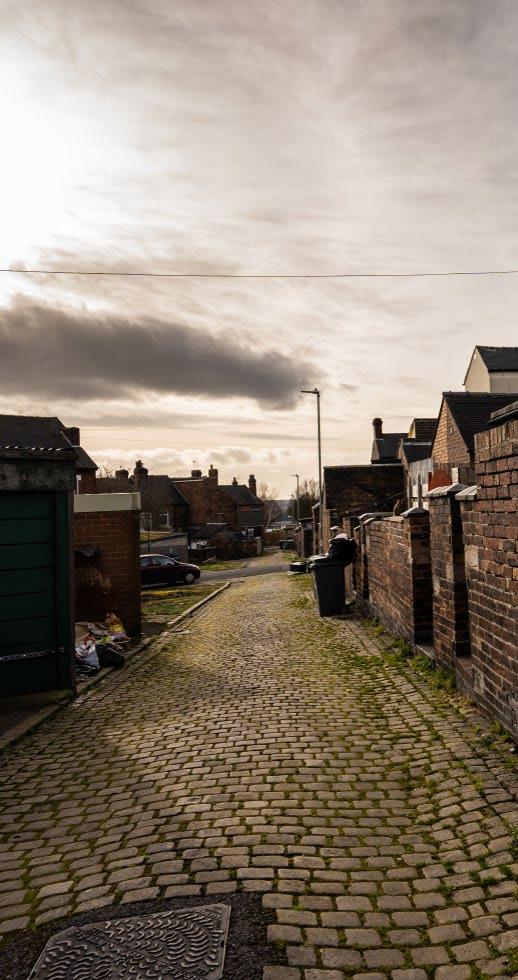
Cosy Homes: Lancashire’s local council affordable warmth scheme
This autumn, Cosy Homes in Lancashire has pledged to help even more residents who may be struggling to keep warm at home or manage energy use and bills

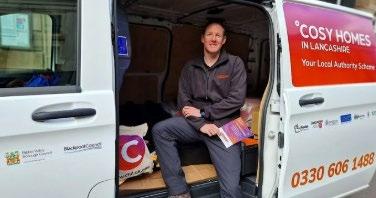
Cosy Homes’ Little Van of Warm handy person service is now available to Lancashire residents across even more participating councils. This mobile support service offers face-to-face practical help, and the installation of simple energy-saving measures, all from the comfort of residents’ homes.
Since March 2024, the van has supported over 200 residents in Blackpool, Pendle, Preston, Rossendale, Ribble Valley and West Lancashire. It can now reach even more residents. Residents can book a free visit from the Little Van of Warm and receive free, small energy saving measures. The service is available to anyone who:
• Is aged 70+ years
• Has a household income of less than £36,000 per year
• Is in receipt of a means-tested benefit What could they receive?
• Draught-proofing
• Radiator reflector panels
• Hot water tank jackets
• LED lightbulbs
• Draught excluders
• Letter box brushes and more!
Cosy Homes Advice Team
team can help residents make simple changes at home to boost energy efficiency and reduce bills, so residents can stay warm, comfortable and well at home throughout the year.
The Cosy Homes Advice Team can help residents to find the best energy tariffs to help lower bills; make simple changes at home to boost energy efficiency and reduce bills; and apply for a grant for energy saving home improvements.
Call 03306 061 488 and select Option 3 (Local Rate) or visit www.chil.uk.com
Speak to someone in person
Cosy Homes has announced the launch of the Cosy Homes Advice Team. Partnered with Green Rose CIC, the Lancaster-based
Residents can drop into the Sustainability Hub for a Warmer Wednesday, between 10am-4pm for a hot drink, and get help to keep warm at home, manage energy bills and find ways to be more energy efficient. Address: 1-7 Marketgate, Lancaster, LA1 1JF.
Career pathways framework and funded training with The IAA
The IAA on its career framework and how it has helped businesses in the insulation sector develop workforce recruitment, providing both employers and employees with a clear roadmap for growth
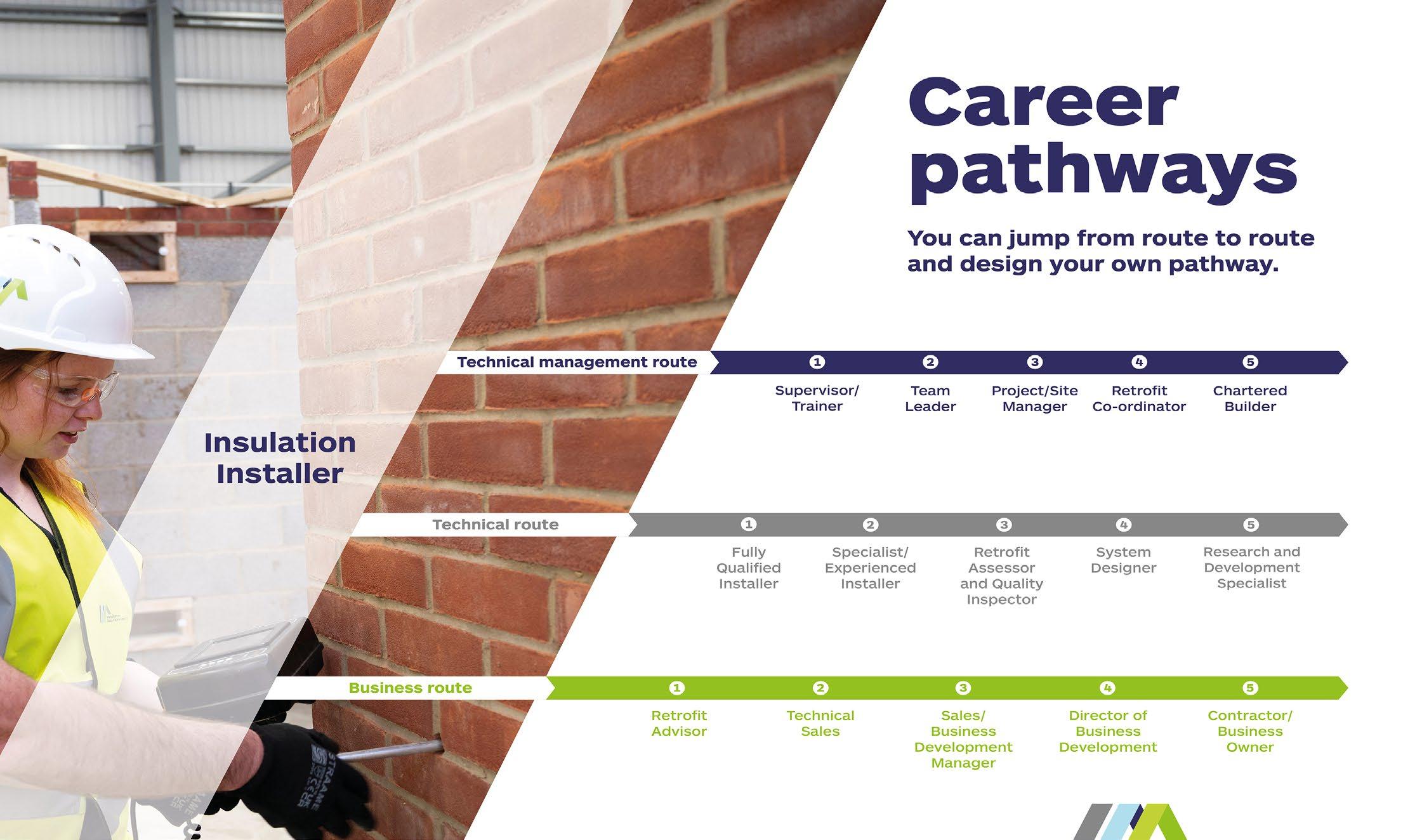
The Installation Assurance Authority (The IAA) has been instrumental in researching and funding the creation of the career pathways “starter” framework to support businesses in developing effective workforce recruitment, development, and retention policies.
The IAA has created a recognised career framework that can be used and adapted by industry and government agencies, offering a structured approach for career development, providing both employers and employees with a clear roadmap for growth.
This framework uses IFATE Occupational Families and Standards (OS), National Occupational Standards (NOS), Standard Occupational Classifications (SOC), and extracts from O*NET (US Dept.Labor) to describe roles within pathways that reflect current and projected future career development pathways in the UK.
The insulation industry is key to achieving net zero
The insulation industry is a fundamental component in the UK’s strategy to meet its net zero emissions targets by 2050. The insulation industry provides benefits that are integral to our country’s long-term sustainability and international competitiveness. These benefits include vital elements of population wellbeing through energy security and affordability, such as the health benefits of comfort heating. It is, therefore, vital for stakeholders across
government, business, and civil society to continue supporting and investing in the insulation industry as a priority.
A defined career progression pathway
To clearly define career pathways into the energy efficiency sector, and, in the case of insulation installers, potential candidates must have a clear understanding of the career prospects within the industry.
The report sets out 15 key occupations that form the basis of career opportunities in the sector and considers how those exploring a career in the industry can navigate between three career paths as part of their journey.
The IAA CS can support learners with their career journey
The IAA CS offers a range of training courses delivered at The National Energy Efficiency Centre and online. Bespoke and certified courses are designed and led by industry professionals with extensive experience in the energy efficiency and retrofit sectors, providing learners with the best possible experience.
Funded courses are available; for further information, please visit www.theiaacs.co.uk/warm-homes-skills-programme/ and www. youtube.com/watch?v=OsdCLjGm7mo
Find out more and read the full report here - www.theiaacs.co.uk/ career-pathways/
Photo: The IAA
National Energy Action’s Education team lays out their road map for 2025-2026
Moving into your own home is an exciting milestone, but it can also feel overwhelming. From setting up your first energy account to managing bills and avoiding debt, there’s a lot to learn. This September, a new e-learning course, ‘Independent Living: A Practical Guide for First-Time Tenants’, will give first-time renters the knowledge and confidence to succeed.
Designed for first-time tenants such as students, young people leaving care, former members of the armed forces, and those new to the UK, the course offers clear, practical support for anyone taking their first steps into independent living. What the course covers
The programme focuses on the essentials of managing energy at home. Learners will:
• Understand how the energy sector works and who’s who
• Learn how to set up and manage an energy account
• Read bills and meters with confidence
• Compare tariffs and payment options
• Identify energy-efficient appliances and reduce waste
• Recognise the health risks of living in a cold home
• Explore steps to prevent heat loss through insulation
• Know where to seek advice and support
Rising energy costs mean more households are at risk of fuel poverty. Without the right knowledge, first-time tenants can quickly fall into debt or struggle to keep their homes warm.
This course is designed to prevent those problems by equipping learners with the skills to make informed decisions, manage their responsibilities, and save money.
Flexible, accessible learning
Delivered entirely online, the course is self-paced and easy to follow, making it suitable for people with different schedules and
learning needs. By the end, participants will feel more confident, capable, and prepared for the realities of independent living.
Alongside individual enrolments, corporate licences are available for organisations that work with and support vulnerable first-time tenants. This makes it an ideal training resource for housing providers, charities, and community groups seeking to empower the people they serve.
National Energy Action’s Training and Education team has been working closely with Students Organising for Sustainability (SOS-UK) as part of their five-year SEAL project.
Through this collaboration, National Energy Action has developed a wide range of resources to support students, student union advisers, and landlords on energy use and efficiency.
So far, the project has produced:
• Training for students on carrying out energy audits
• Specialist training for student union advisers
• A series of practical resources for landlords, focusing on energy efficiency tips and their legal responsibilities
New student e-learning course launching this autumn
An exciting addition to the project is a new student-focused e-learning course, launching this autumn. This digital resource will provide students with:
• Clear insights into a landlord’s legal obligations
• Practical advice on managing household energy effectively
• Guidance on reducing bills and avoiding fuel poverty
The course aims to empower students with the knowledge they need to live more sustainably and confidently while protecting themselves from the risks of rising energy costs.
For more information on how National Energy Action’s Training and Education team can support your projects, please contact: trainingadmin@nea.org.uk
Courses for first-time tenants and aimed at students are part of the suite of new offerings from National Energy Action’s Education team
Changes to our Level 3 Award
National Energy Action is pleased to share an update regarding changes to our Level 3 Award in Energy Awareness following a comprehensive review by the Training team with learners, partners and City & Guilds
Over the past year, the Training and Assessment team has worked closely with learners, external partners, and City & Guilds to review the Level 3 Award in Energy Awareness (6281-01) and improve accessibility and flexibility. These changes also align the assessment with our other qualifications and support a more consistent delivery model.
Moving to this updated assessment method will align the Energy Awareness qualification with our other offerings and help standardise our approach across the board. This change has undergone a robust review and approval process, including a formal proposal to the Awarding Organisation. We’re pleased to confirm that City & Guilds has approved the new format.
Key changes
The revised assessment will be delivered in two parts:
1. Simulation-based assessment
• 30-minute controlled assessment
• Must be observed by an assessor
• New dates will be confirmed shortly
2. Open book written assessment
• Non-controlled format
• Learners may refer to course materials
• No assessor observation required
• Two-week completion window
We are transitioning to a bespoke e-assessment platform that will provide a secure, accessible, and user-friendly experience for learners. This platform has been trialled and is scheduled to go live in September 2025.
Next steps
Learners currently enrolled should continue as normal. Further communications will be sent to learners and partners in due course. Also, internal guidance and training on the new platform will be provided ahead of the launch.
If you have any questions or would like to discuss how this may impact your area of work, please feel free to contact trainingadmin@nea.org.uk
Photo:

Twitter/X: @NEA_UKCharity

Bluesky: @nea.org.uk

Instagram: www.instagram.com/nea_ukcharity

Linked In: www.linkedin.com/company/national-energy-action

Facebook: www.facebook.com/nationalenergyaction
NATIONAL ENERGY ACTION
National Energy Action, the fuel poverty charity, campaigns so everyone can afford to live in a warm and safe home. This is something denied to millions because of poor housing, low incomes, and high bills. Working across England, Wales and Northern Ireland, everything we do aims to improve the lives of people in fuel poverty. We directly support people with energy and income maximisation advice and we advocate on issues including improving the energy efficiency of our homes. We do not work alone. Partnerships and collaboration have been at the heart of National Energy Action for more than 40 years, helping us drive better health and wellbeing outcomes for people struggling to heat their homes.
WHERE TO FIND US
Email: focus@nea.org.uk Web: www.nea.org.uk
NEA is an independent charity, Registration No. 290511. Company limited by guarantee. Registered in England, No. 1853927 Registered office: Wellbar, Level 8, 36 Gallowgate, Newcastle upon Tyne, NE1 4TD
Illustration: Indigo Design/ Shutterstock