News for members of Electric Cooperatives in Mississippi
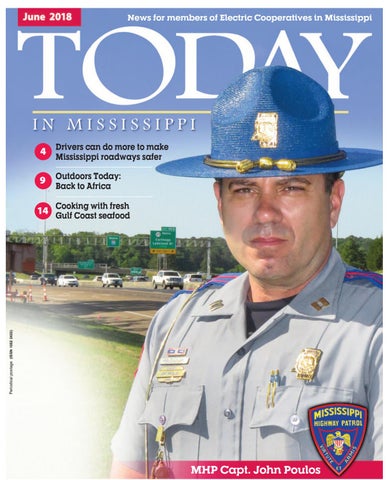
Drivers can do more to make 4 Mississippi roadways safer
9 Outdoors Today: Back to Africa
Periodical postage (ISSN 1052 2433)
Cooking with fresh 14 Gulf Coast seafood
MHP Capt. John Poulos
10
Today in Mississippi
June 2018
ELECTRIC COOPERATIVES OF MISSISSIPPI
PREPARING for disaster in advance Every year, the U.S. is hit by many natural disasters, including snow and ice storms, tornadoes, hurricanes and wildfires. These types of disasters pose a significant threat to our communities and homes. The most important step you can take to keep you and your family safe is to prepare beforehand, but knowing what to do during and after the event is crucial as well. Before disaster strikes, familiarize yourself with the types of disasters that are common in your region, especially if you’re new to the area. Many of the specifics depend on what type of disaster you’re expecting, but there are several general guidelines to keep in mind as you prepare: • Water: You will need one gallon per person per day. If you assume your family of four may be stranded for a week, store a minimum of 28 gallons. • Food: Stock up on non-perishable or long shelflife items, such as canned fruits, peanut butter, jelly
and condensed soups. • First aid kit: Make sure your kit includes adhesive bandages (assorted sizes), antiseptic wipes, aspirin, hydrocortisone ointment, scissors and a thermometer. For a full list of suggested items, visit www.redcross.org. • Flashlights and candles: Be sure to keep extra batteries and matches (in a waterproof container) on hand. For additional guidance on emergency items to keep around the house, visit ready.gov/build-a-kit. Also consider training offered by local emergency management services such as Community Emergency Response Team (CERT) classes. Some disasters occur suddenly, but many bring advance warnings, like hurricanes and winter storms. Pay special attention during the week leading up to the event for local and state government warnings
and evacuation notices. Make sure every family member knows what your emergency plan is: staying or leaving, safe rooms in the house, where supplies are located, what to do if anyone is separated, and how to notify loved ones that you’re safe after the event. It’s also a good idea to know where your home’s main water and gas shutoff valves are located. While the U.S. electric grid is reliable, it is possible to lose power during a storm. The outage could be momentary or last hours or even days. If you live in an area where loss of power after a storm could be
Hurricane season begins June 1 and ends Nov. 30 Start thinking now about the supplies you will need to make it through an extended power outage. No doubt there are numerous other items necessary to meet the specific needs of your family. And don’t forget about pets. • Water – at least one gallon daily per person for 3-7 days • Non-perishable packaged or canned food and juices, enough for each person for 3-7 days • Special food for infants or the elderly • Non-electric can opener • Cooking tools/fuel • Paper plates/plastic utensils
• Blankets/pillows, etc. • Clothing – seasonal, rain gear, sturdy shoes • Toiletries • Full tanks of gas in vehicles • First aid kit complete with prescription drugs • Flashlight/batteries • Radio – Battery operated NOAA weather radio • Cash – Banks and ATMs may
not be open after a storm • Important documents – including insurance, medical records, bank account numbers, Social Security cards, etc. Make sure these items are stored in a waterproof container.
June 2018
dangerous, consider purchasing a backup the home. generator for your home. These can cost • Keep manual tools such as a can anywhere from a few hundred to few opener on hand to replace any electronic thousand dollars, depending on your gadgets you typically use. needs. Be sure to test the generator • Similar to filling a bathtub with water before the disaster to ensure it’s operatbefore a storm, make sure that all cell ing properly. phones are fully charged. If you don’t have a backup • If the disaster involves lightgenerator and lose power, ning, unplug all electronic don’t panic. Most devices to protect power outages in the against a power surge. U.S. are short and will After the storm, be not last more than a cautious when leaving few hours. However, your home. Listen to when you need to without knowing in government warnings use a generator. advance how long the outand use common sense age will last, it’s wise to when approaching any damassume and act as though it will aged buildings or fallen trees. If last for days. Here are a few general you see a power line that is down, always tips for wise energy practices during a assume the wires are live and dangerous. disaster: If possible, call your local electric coop• Consume perishable and refrigerated erative to report the downed power line. foods first before they spoil. With a little bit of forethought, • Pack frozen foods close together and you’re highly likely to make it through a consider freezing water bottles to elimidisaster without too many problems. nate any air pockets. The frozen water Remember, you and your family’s safety will help keep the food cooler longer. should always come first. • Make sure you have alternative lightFor more information on disaster ing sources, like candles and flashlights preparedness, visit ready.gov. (with spare batteries) located throughout
STOP!
THINK SAFETY
Today in Mississippi
Be careful
with controlled burns Controlled burns are effective at clearing brush and weeds. But they can cause widespread power outages by damaging utility poles and electrical equipment.
Before you begin a controlled burn: • Cut grass, brush and weeds around the poles to reduce fire hazards. • Remove dead trees and limbs within 20 feet of the planned burn. • Water the ground near the utility poles, but keep water out of power lines and equipment.
If a utility pole catches fire:
• Call 911 to report the fire and your electric utility to handle any possible electrical dangers. • Water mixed with electricity produces an electrocution hazard. Never spray water on a pole to put out a fire. • Keep everyone away from the power line until a utility crew can make repairs.
Every summer, people in Mississippi brace themselves for the potential threats brought on by hurricane season. The 2018 season begins June 1 and continues through Nov. 30. Electric cooperatives are committed to providing their member-consumers with dependable and safe service in all kinds of weather. If a hurricane enters or forms in the Gulf of Mexico, electric co-ops are prepared to activate a statewide emergency plan in case storms produced by hurricane winds affect their electrical systems. Consumers should also make plans to protect life and property should severe storms threaten Mississippi this hurricane season (see box at the bottom of page 10).
2018 hurricane names Alberto Beryl Chris
Debby Ernesto Florence
Tip of the
Month
Gordon Helene Isaac
Joyce Kirk Leslie
Michael Nadine Oscar
Keep warm summer air outside where it belongs! Add caulk or weatherstripping to seal air leaks around leaky doors and windows. Source: U.S. Department of Energy
Patty Rafael Sara
Tony Valerie William
Electric Cooperatives of Mississippi wishes you a safe and happy Independence Day
Celebrate freedom July 4
11