2
3
In memory of Professor Eduardo Baquero García as a member of the equipment group.
4

Pontificia Universidad Javeriana
Faculty of Architecture and Design Architecture deparment Urban Equipment Project PPU University Planning Project 2022-2

Directors: Carlos Eduardo Aguilar Manuel Felipe Moreno Components:
Urbanism: German Montenego Management: Martha Consuelo Salas Technology: Daniela Carrasco Environmental: Andres Ibañez Esthetic: Oscar Rodrigo Perilla
Director: Carlos Eduardo Aguilar
Students:
Alejandra Pizarro Méndez
Carlos Andres Bueno Viaña
David García Bernal
Diego Esteban Ortiz Amaya
Juan Felipe Forero Parada
Juan Pablo Charry Rodriguez
Manuela Gómez Durán
Maria Paula Díaz Echecerría
Mayra Camila Rubuio Chaparro
Nicolas Vera Peñuela
Valeria Tovar Hernandez
Victoria Florez Triana
Director: Manuel Felipe Moreno Students: Andres Nicolas Jorge Barrera
Angie Tatiana Cardenas Prieto Cristian Camulo Crvajal Mayorga Daniela Rodriguez Landa
Jorge Andres Ramírez Alarcón Juan Sebastian Forero Forero Manuela Delgado Casallas
María Paula Sandoval Rodríguez Natalia Cruz Rodríguez Sofia Cordero Castañeda
Sofia Sandoval Valeria Vrgas
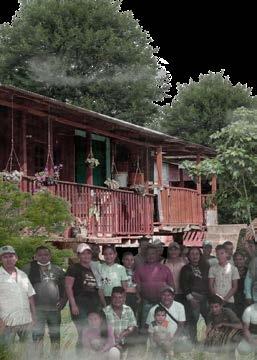
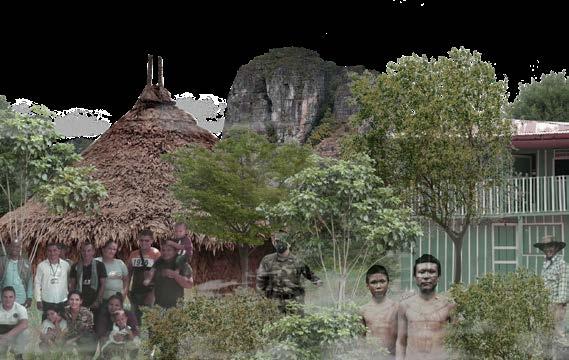
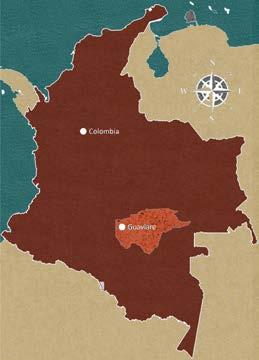
In principle, this publication for academic purposes looks to contextualize the ongoing relocation of groups reinserted into society after the peace process in Colombia. As part of that, the Pontificia Universidad Javeriana have for this process a farm called “La Esperanza” which is in the village of Boquerón, located in the department of Guaviare. This is a new territory for people belonging to a community that returns from war and inserts itself into a territory with a pre-existing population. Reinsertion implies the recognition of this community for the timely development of its sensitive settlement, considering the cohesion of the variables and their representation by becoming part of the conformation of a new habitat. After the union of different actors, a basic guideline is presented for the development of a community, its integration and adaptation to the territory from a deep analysis of the needs of both this community and the pre-existing ones. The guidelines presuppose the rural dynamics that adapt the environment to a rural city, the sensitive and exhaustive development of facilities that meet the immediate and long-term needs and requirements of the Boquerón, the settlement areas, the environmental and productive relations, among others.
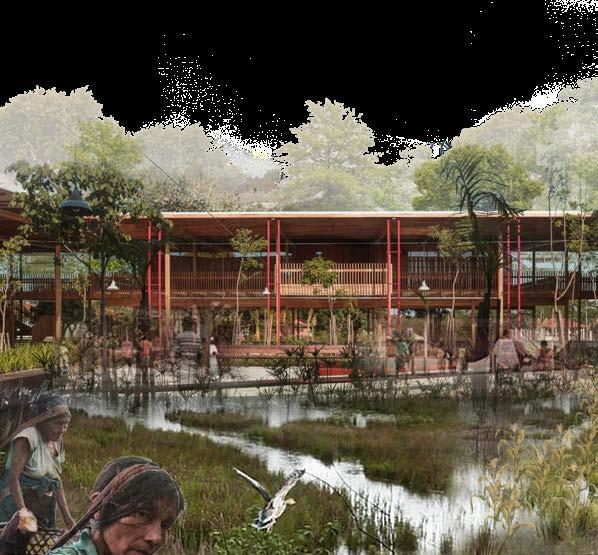
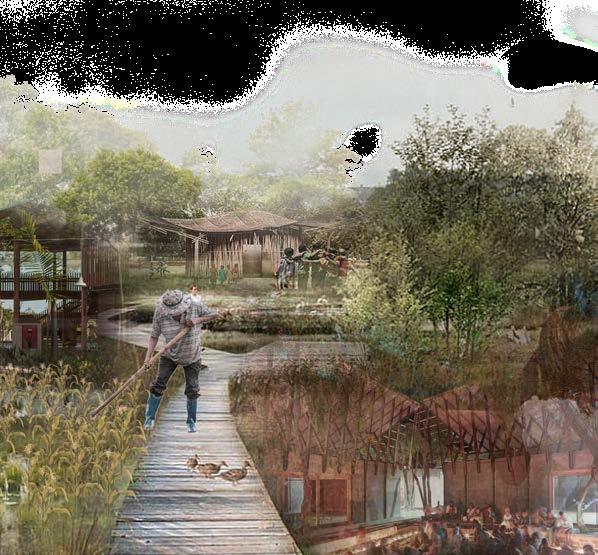
A rural equipment is an articulating, adaptable and multifunctional landmark that, through the use of ecosystem services, responds to the current and future needs of the community, in order to improve the quality of life, promote integration between the different actors, the appropriation of the place and its cultural identity.
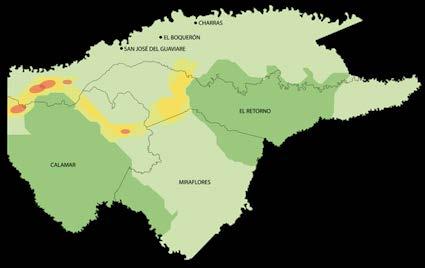
El Guaviare San José del Guaviare Charras Recognition
The armed conflict has left more than eight million victims in Colombia, of which 176,000 are indigenous.
“Official records indicate that 3,000 indigenous people from Guaviare have been affected by the war (data from the National Unit for Victims, cutoff as of August 1, 2016)”. (Habitat for Peace, 2021)
Threats and murders of social leaders and former FARC combatants continue to occur, which tests the response of the State and society to this problem.
Criminal organizations and armed groups oppose the implementation of the peace agree ment, which maintains a constant feeling of insecurity among the inhabitants of the munici pality.
1950 1960 1970 1980 1990
Liberal population from the interior of the country arrived to Guaviare, fleeing the bipartisan conflict. Neoliberal guerrillas begin to emerge in the area.
Government colonization project to reduce land pressure in the interior. Migration of teachers for education in the region.
Rise of illicit cultivation of marijuana and emergently cocaine. Self-organizing processes of the human settlements from Guaviare.
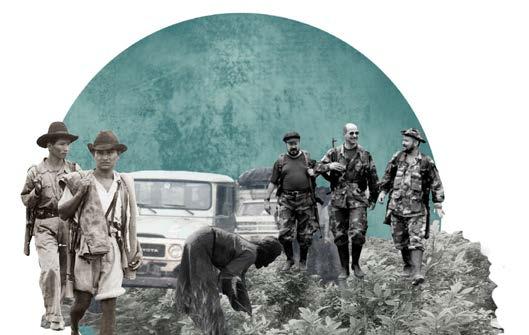
Territorial dynamics due to illicit crops. Increase in combatants in the ranks of the FARC and emergence of paramilitary groups.
Boom in the price of coca at the international level. Population displacement for work in illicit crops in the department. Intensification of drug trafficking.
“FROM
1993 2000 2010 2016 2022
Consolidation of the eastern bloc of the FARC in the territory. Consolidation of the guerrilla and paramilitarism in rural areas of the country.
Rise of violence in the region. Paramilitary groups begin to disappear, and ex-combatants return to civilian life.
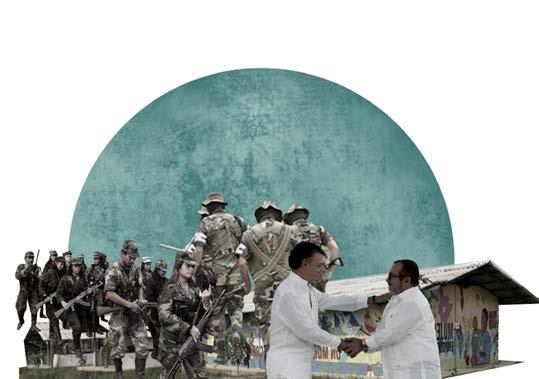
Beginning of negotiations is between the government and the FARC in Havana, Cuba. Decrease in hostilities and partial ceasefire.
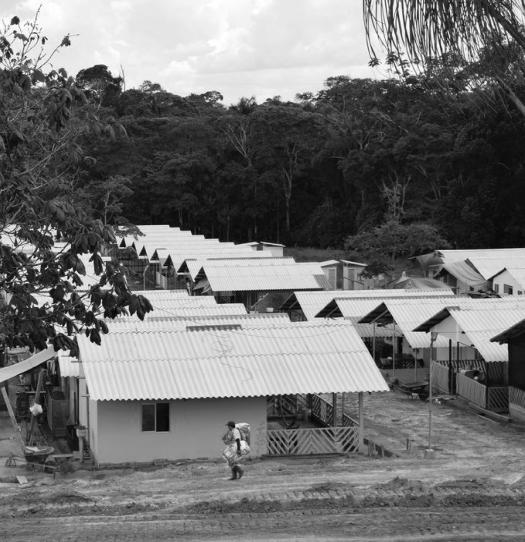
Signing of the peace agreement and return of ex-combatants to civilian life. Temporary settlements were agreed for the emerging communities.
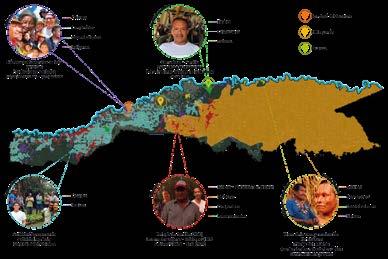
The Marco Aurelio Buendía Noble and Peace community seeks stability and civil reincorporation in a new settlement in El Boquerón, Guaviare.
and contributes to lay the foundations for nonrepetition, through a broad and plural participation process for the construction of a stable and lasting peace” (Commission for the Clarification of Truth, Coexistence and Non-Repetition, 2022). Nearly 15,000 individual and collective interviews were collected, both in the national territory and with Colombians in exile in 23 countries, which made it possible to listen directly to nearly 30,000 people. The in-depth investigation of 730 cases and 1,195 reports of acts of violence during the armed conflict in Colombia.

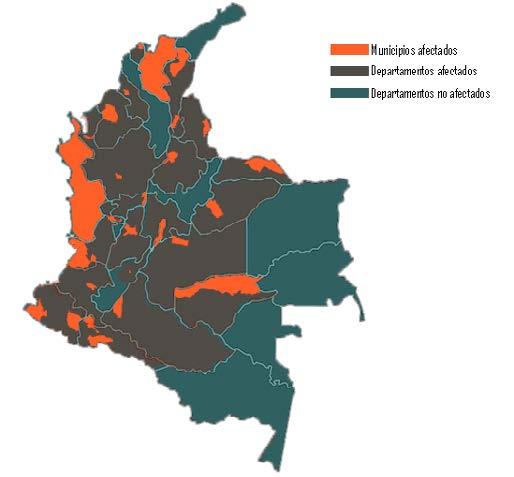
28 Truth Houses in the following prioritized municipalities that have been affected by the armed conflict: Apartadó, Aguachica, Arauca, Barrancabermeja, Barranquilla, Bogotá, Buenaventura, Cali, Cúcuta, Florencia, Ibagué, La Dorada, Medellín, Mocoa, Montería , Neiva, Pasto, Pereira, Popayán, Puerto Asís, Quibdó, San José del Guaviare, Santa Marta, Sincelejo, Tumaco, Valledupar, Villavicencio and Yopal.
“We are a State Entity that seeks to clarify the patterns and explanatory causes of the internal armed conflict that satisfies the right of victims and society to the truth, promotes recognition of what happened, coexistence in the territories
The holding of 14 Dialogues for the non-continuity and non-repetition of the armed conflict, 10 Acknowledgments (of those responsible and dignifying victims), 17 Contributions to the truth (including the five held with former presidents Ernesto Samper, Andrés Pastrana, Álvaro Uribe and Juan Manuel Santos), 16 Encounters for the Truth, 53 Listening Spaces (from all sectors, including the Public Force), 23 coexistence scenarios and 5 recommendation dialogues.
Nükak people:
territorial dispossession and cultural damage
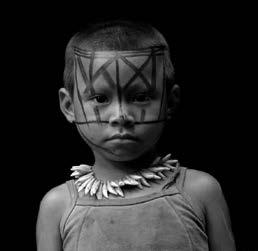
For the Nükak people, the territory is organized on different levels inhabited by living beings that must be cared for. However, this relationship with the world was altered by the irruption of the armed conflict in their collective life and in their territory. Problems after the armed conflict:
•Illicit crops and livestock have damaged the territory, suffering territorial dispossession and cultural damage. The Nükak girls and women have been victims of sexual violence; children, adolescents and young people have suffered from forced recruitment; This entire ethnic group has been the victim of racism and discrimination, and lives in situations of profound social inequality.
•In the last 31 years, half of the community has disappeared due to illnesses and acts committed due to the armed conflict.
•Indigenous women fall into prostitution and are victims of sexual violence due to lack of education, women directly blame the state •Young people recruited by the guerrillas and sexually abused girls and young women, •The guerrillas forbid them to speak in their original language because they may think that they are
threatening them by planning acts against them or also talking about them.
Incorporation of the Nükak community to the peace agreement:
Due to the seriousness of the problems presented by the NUKAK community, this was incorporated into the ethnic chapter of the peace agreement, among the most important acts is to carry out the desination of its territory in order to continue with its activities.
Our rivers are mass graves; Numerous rivers in Colombia have been filled with the bodies of the disappeared. People who walk near a social mobilization in the city connect with the search for the victims of the conflict who are now part of the waters of the Guaviare River. This is an invitation to multiply the truth. Testimonies show that many family members went to work and used the river to get around, unfortunately many never returned.
Caterpillar proyect: Collects testimonies from people who experienced the armed conflict first-hand, recounting the death of their relatives due to paramilitaries and guerrillas present in the area. Stories from the community said that it was not necessary to go into the river because at any moment a body or several appeared floating or in parts. The Nükak people and the peasantry of Guaviare signed the agreement of wills ‘Living together’ for the resolution of conflicts November 2021
Delegates of the Mauro Munu Council of Authorities of the Nükak indigenous people and the Communal
Action of the peasant communities in the districts of Charras and El Capricho of San José del Guaviare, signed the agreement of wills ‘Living together’ as a mechanism to peacefully resolve the conflicts, and being able to live together.
In the agreement of wills ‘Living together’ they propose to resolve various problems that affect the communities of the Nükak people and the peasantry, such as the persistence of the armed conflict, drug trafficking, the increase in crops for illicit use, the differentiated presence of the State, the slow progress in the implementation of the Comprehensive National Program for the Substitution of Illicit Crops (PNIS) and the absence of guarantees for effective participation in the Development Programs with a Territorial Approach (PDET). Likewise, this
agreement tries to solve the overlapping of the Peasant Reserve Zone with the ancestral territory of the Nükak people, in addition to the lack of security, dignity and sustainability conditions for the return of the Nükak people to their ancestral territory that is affected by the deforestation and the presence of antipersonnel mines. Wishing that the agreement of wills ‘Living together’ results in the construction and social dialogue between indigenous people and peasants to ensure coexistence and good living.
Build agreements on the basis of historical recognition as victims of the armed conflict based on the construction of trust, dialogue and collective solidarity.
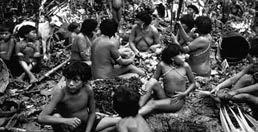
Guarantee dialogue permanently and without prejudice to continue in the construction of this process of coexistence.
Promote the elimination of gender-based violence, Guarantee equal conditions for all •Caring for and defending the territory together, protecting the jungle, the food that is produced, the water, the animals and the forest, jointly seeking territorial guarantees for access, sanitation, cessation of deforestation, return, fulfillment of the rights of communities, and comprehensive implementation of the Peace Agreement and its ethnic Chapter.
•Respect the autonomy of the ancestral authorities of the Nükak people settlements, the Mauro Muno assembly of authorities and the Community Action Board of each village.
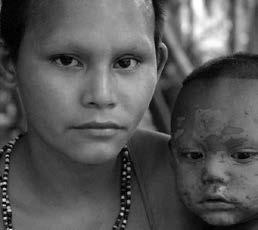
•Create strategies that recognize the role of Nükak and peasant women, recognizing that the war has also had a differential impact on them and has exacerbated all forms of violence against them.
•Guarantee conditions so that the people of the Nükak people receive equitable exchanges, fair payments and decent jobs.
•Create permanent dialogue committees between indigenous and peasant authorities that articulate communities, resolve conflicts and create proposals for self- and community justice that promote respect and NO physical or verbal aggression.
•Promote basic principles of relationships in case of coexistence conflicts:
Starting from respect, Tolerance, Recognition of the other, Understanding (trying to feel what the other feels), Good faith, Truth, Solidarity, Trust, Equality Dialogue. “We came back to stay”: conflict and peasant resistance in the Ranching Trocha: 2
The documentary “We came back to stay” narrates the experiences lived by peasants from the Trocha Ganadera in the framework of the war, gives an account of their arduous struggle to remain in their territories and reveals the new conflicts, of a socioenvironmental nature, that they face today. . The inhabitants of the region still fear that they will be dispossessed or expelled from the lands they have inhabited for decades and where they have put down strong roots. For this reason, his call is clear: the Colombian State must resolve promptly, in a democratic and participatory manner, the question of the use and possession of land and biodiversity. That, for the peasantry of Guaviara, is an essential condition for the non-repetition of the war.
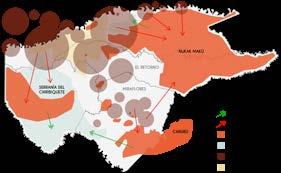
The Livestock Trail is located in the north of Guaviare and is part of the district of Charras-Boquerón in the municipality of San José del Guaviare.
From this trail, which is more than 100 kilometers long, other paths lead to Charras, Charrasquera, Sabanas de la Fuga, Gaunapalo, Caño Blanco and 23 other paths that the Truth Commission has traveled several times with the purpose to listen and know the testimonies of its inhabitants.
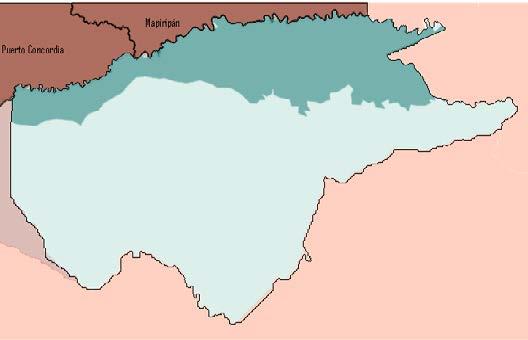
This territory, which is connected to the municipalities of Puerto Concordia and Mapiripán in the south of Meta, has traditionally been inhabited by indigenous people from the Jiw, Nükak and Sikuani peoples and, since the 1960s, by settler peasants who have fought for remain in their territories despite the constant attempts to dispossess them and the forced displacement caused by the former FARC-EP guerrilla, by paramilitary groups, by the public force and by actors with different economic interests in the region.
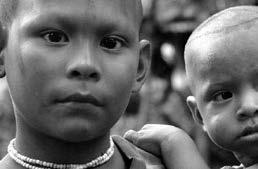
Leaders and residents agree that implementing the Peace Agreement is much more than setting up two spaces for the reintegration of ex-combatants. Executing the agreed reforms has also become the possibility of seeking answers to the absence of a State in the capital of Guaviare and has created expectations in the population, which today remains under the uncertainty of the momentum that the implementation of the Agreement will have during the next presidential period. The Agreement also provides for strengthening the implementation of the current public policy for victims. To this end, the municipality has identified the importance of promoting, above all, the processes of return and relocation of the displaced population, and collective reparation to the communities.
To achieve these and other purposes of public policy for the victims, from the territory they point out that work must still be done to transform the security conditions that today do not allow the return or relocation of the communities to some rural areas of the municipality. They also call for efforts to overcome the institutional weakness of the municipal administration, which prevents the territorial entity from making significant contributions to the process of care, assistance and reparation for the victims of San José del Guaviare. There, the development program with a territorial approach (PDET) of the Macarena - Guaviare region is built, which involves eight municipalities of Meta and all the municipalities of Guaviare. This PDET seeks to transform the region and should serve to provide the territory with infrastructure, tertiary roads, irrigation districts and services such as drinking water, health, education, access to credit, technical assistance and social security for peasants. In a few words, a promise to
bring the Social Rule of Law to an area where it has historically been conspicuous by its absence. The PDETs are coordinated by the Territory Renewal Agency (ART) and should be the roadmap for the region’s progress over the next 10 years, so they should be complemented with other measures of the Agreement. For this reason, the massive plan to formalize property in rural areas, the Land Fund, the protection of areas of special environmental interest, the rural cadaster and the Agrarian Jurisdiction are perceived as tools to help overcome the difficulties faced by the municipality.
This is how the war is lived in Guaviare: In Guaviare, the peasants see no difference between one and the other. Your reality has not changed. And for the ex-combatants in the remote areas, who are now in the middle of the dispute, the situation is life and death.
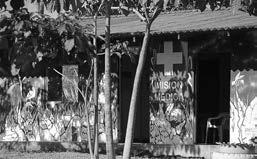
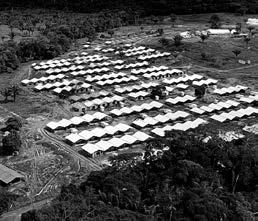
The Territorial Space for Training and Reincorporation (ETCR) of Las Colinas is a town with few inhabitants. They have an empty school and health post, a gym, a melted-down Christmas tree from the year before, and a few stores with new refrigerators. It is not a totally deserted space, it has recovered some life with the arrival of relatives of ex-combatants fleeing poverty from other regions of the country. There are also children who were born after the agreement and play in the central park with their parents or run with their dogs through the dusty streets.
“Three comrades have been murdered here, one of them 300 meters from here. It is not known why, suddenly for revenge, ”explains Noemí, who carries a machete in her right hand and his three-yearold daughter in her left. He comes from pruning some guava trees that he uses to make jellies and marmalades that he sells at fairs that support excombatants and at the central store in Las Colinas.” At the last fair they sold three jars.
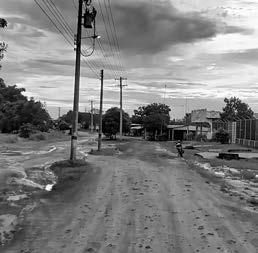
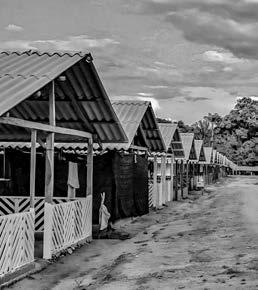
They are alone and they know it. “The government has not given us anything, not even this territory is in the regional development plan,” says Noemí. In addition to the monthly payments to each ex-combatant and an initial support, which the government complied with, the pending long-term issues – the obstacles in the formalization of the land, support in the productive projects and other commitments – are among the complaints of everyone in Las Colinas, which at times of the day looks like a ghost town.
These “armed colonizations”, led by peasant selfdefense organizations, are characterized by their high levels of organization, participation in agrarian struggles and for collecting a legacy of struggle from leaders such as Gaitán, Quintín Lame and the Communist Party10.
Possessing these characteristics stimulated certain organizational and political levels of the peasants, which helped to limit the advance of latifundia and speculation in the sixties and seventies. Their history also influences the relationship they have had with weapons and with those who hold the power of the State, this as always over there, almost absent. Other settlers also arrived in a dispersed manner, attracted by the various cycles of extractive economy products. With the currents of colonization, the indigenous communities that previously inhabited the area moved eastward, causing, among other phenomena, the extinction of different ethnic groups. On the other hand, the settlers who have managed to establish themselves with their family seek to obtain a surplus that allows them to transform part of their farm into pasture and acquire cattle.
The crops, the paddocks and the house are improvements with which the settler can seek, on occasion, “to have the property titled, access to credit for agricultural production and demand communication channels that allow him to market his products and obtain an economic surplus.
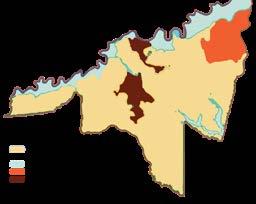
However, against his will, the settler, after clearing the forest and planting crops, has also tended to be displaced and, on occasion, violently pressured “by buyers of improvements who concentrate the property for extensive cattle ranching as the areas are incorporated into the infrastructure network”, while the State is present, but only in spirit. There, the legal peasant economy has little chance of success because they are production areas that do not compete in the national market due to the high
costs of transport and supplies. In addition, the fertility of the soil, in general, is low, which makes it difficult to exploit it, further affecting the peasant economy.
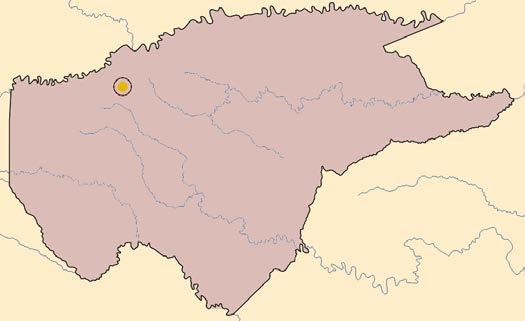
San Jose del Guaviare Surface 53,460 km2 population
112,621 inhabitants and 4.3 percent (2,117 people) belong to indigenous communities (according to 2005 figures from the National Department of Statistics, DANE).
General climatic data
- Warm
- Temperature: during the day from 25°C to 30°C; and at night it can drop to 12°C.
- Rainy season: April-July, October-November.
- Annual rainfall: 2,000mm to 3,500mm.
- Humid in the savannah and super humid in the Amazon jungle.
- Altitude: 200 m.s.n.m. Municipalities
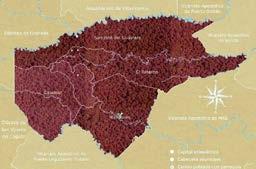
San José del Guaviare, El Retorno, Calamar and Miraflores.
Indigenous population Community in need of humanitarian aid comunitaria Illiteracy rate
40% of the population of San José del Guaviare have been displaced and suffer from homicide and forced disappearance.
The Department of Guaviare presents extreme poverty and unemployment 5 times greater than the country’s average (According to DANE)
The unemployment rate in 2012, when San José del Guaviare was established as the capital of the new departments, obtained the highest unemployment rate (18.6%), in turn, one of the highest unemployment rates in the country... 2,600 jobs were lost in Guaviare in May 2021, however, the sector that generates the most employment continues to be the commerce sector, followed by community, social and personal services. Trade is one of the most important sectors of the regional economy since it contributes 15.7% of GDP and 35.6% of employment.
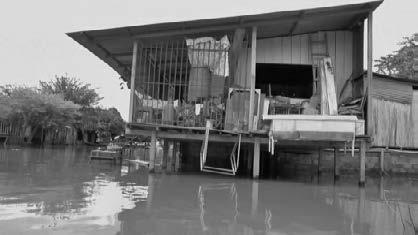
The Municipality of San José del Guaviare is surrounded by the Guaviare and Guayabero rivers, in turn, by La Morichera and the Caño Uribe wetland. In the months of greatest rainfall (winter) that go from May to July, floods occur, affecting the entire resident population of this area, which is made up of approximately 927 families, and 3,151 people, with losses of 1,825 hectares of crops.
According to reports from the Municipal Council for Disaster Risk Management (CMGRD), it has been shown that “cyclically, severe flooding occurs every 10 years, reaching levels above normal records in winter times. It was concluded that the most affected neighborhoods are those that are most accentuated in the riparian and wetland areas: 1º de Octubre, Porvenir, Modelo, 1º de Mayo, Progreso, Los Comuneros, Villa Unión, suburban settlement of Providencia In the rural sector, the lower areas of the villages Buena Vista II, Bocas de Agua Bonita, Playa Guió, Puerto Tolima, Playa Nueva, Playa Alta, Puerto Arturo, Barrancón Bajo, Bocas del Guayabero, Bocas del Raudal, Bocas de la Fuga, El Edén, El Limón, El Recreo, Los Cámbulos, El Recreo, La Carpa, El Progreso, Puerto Nare”. 6
Tourism has grown in recent years in the department due to the great biodiversity that it presents, in turn, the indigenous communities, their traditions, and beliefs, have increased the influx of tourists in the region. The department can be accessed by plane (commercial flights on Easyfly and Satena airlines), by land, and by the river. Between January and March 2022, international tourism has grown by 220% compared to 2021. San José del Guaviare was nominated for the third time for the World Travel Awards, evidence of its geological, biological, and cultural wealth. REF1*
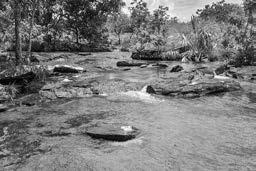
The Guaviare soil has mainly dry areas, microorganisms that attack crops, low fertility, toxic levels of aluminum, and high acidity. However, there is a big problem and it is the cultivation of coca in Guaviare where there are currently 33,203 hectares of coca cultivation. An attempt has been made to overcome this problem by restructuring crops, with production and food security projects. REF2*
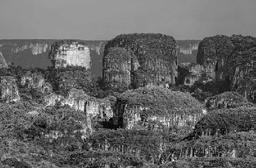
raising: 9 times more land is used on livestock than on crops: 67% of the value of livestock production 30% of the value of agricultural production. This extensive use of land for cattle ranching generates exploitation in wastelands rich in natural and water resources, which greatly damages the ecosystems.
According to Fedegan: “The department of Guaviare, which has an extension of 5.5 million hectares, is a territory that does not have the optimal conditions for growing food. However, most of its soils are suitable for raising cattle in a controlled manner.”
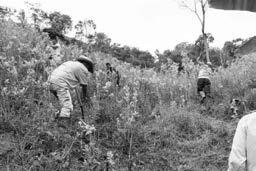
Livestock is one of the main causes of deforestation in this department, doubling the number of cattle, losing more than 130,000 hectares of forest, reducing the capacity to capture carbon, and generating an increase in the loss of vital natural elements. REF3*
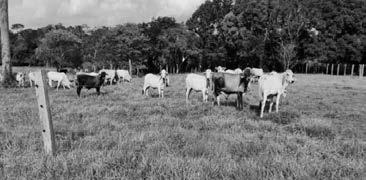
controlled manner.”
Livestock is one of the main causes of deforestation in this department, doubling the number of cattle, losing more than 130,000 hectares of forest, reducing the capacity to capture carbon, and generating an increase in the loss of vital natural elements. REF4*
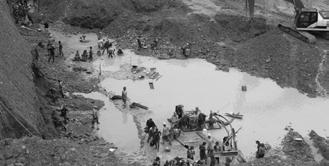
According to the National Mining Agency “80.42% of the determination of direct allocations for royalties in the department of Guaviare corresponds to other metallic minerals (black sands and raising cattle in a
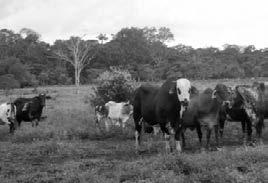
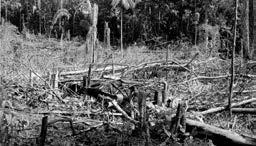
In 2017, approximately 38,221 hectares were felled in the department of Guaviare, and 19,347 were deforested in the municipality of San José del Guaviare. Of all the ecological structures present in the department, 3.5 million hectares, which represent 63.2% of the territory, should be under the category of conservation and environmental protection. This deforestation problem is directly linked to drug trafficking and cattle ranching.
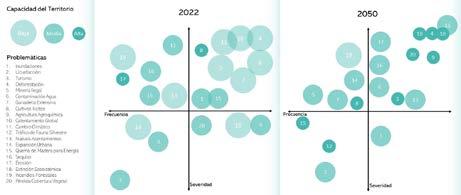
According to what has been able to be investigated and discussed in class in the different components of the Urban Equipment project, in San José del Guaviare the main environmental problems that we can currently highlight are: Floods, liquefaction, tourism, deforestation, illegal mining, water pollution, extensive cattle ranching, illicit crops, agrochemical agriculture, global warming, climate change, wildlife trafficking, new settlements, urban expansion, burning wood for energy, droughts, erosion, ecosystem extinction, forest fires and loss of vegetation cover.
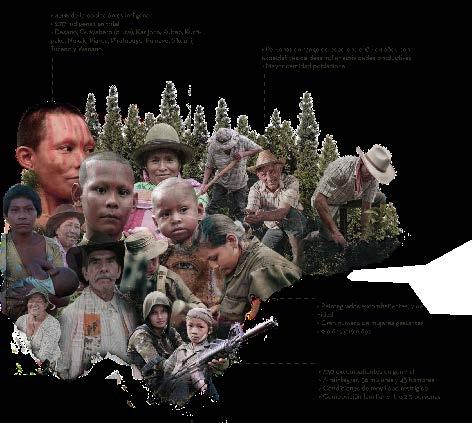
“Of the 1,411 ex-combatants accredited in the department of Meta, 459 live in the territorial spaces. On the other hand, of the 516 in the department of Guaviare, 362 live with their families in the ETCR of the area”. (Habitat for Peace, 2021)
In Charras we find settlers and peasants, while others are of indigenous origin. Within them there are more than 100 people, including relatives and relatives of the signatories, forming around 40 households. This generates the existence of people with restricted mobility conditions due to the effects of the war.
57% of households are headed by women. The family composition tends to be from 2 to 3 people, in which an increase in the population of children has been generated, being 25% of the population. However, the largest number of inhabitants are between the ages of 18 and 64, being a young adult community.
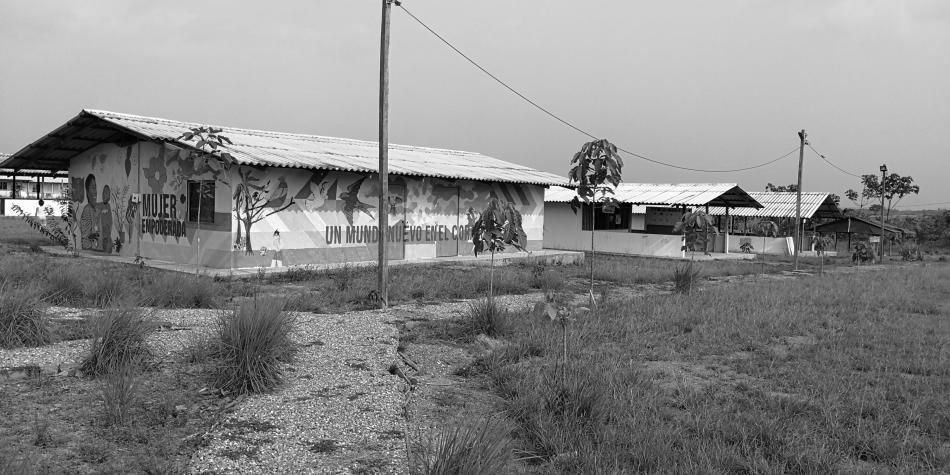
Road infrastructure proximity: The greatest connectivity of charras is generated towards the west, to the extent that there is greater proximity to the capital of Guaviare. There are 2 routes that connect San José del Guaviare with Charras:
•By land: 4 hours by vehicle on an unpaved road (public transport - 2 times a week - 10 peo ple / private and private cars - continuous trips - 6 people)
•Fluvial: 7 hours (the proximity to the river promotes fishing and tourism).
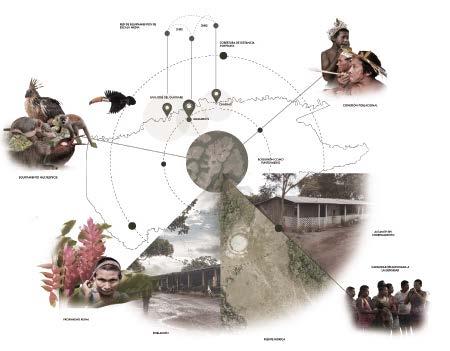
• 2 classrooms: multipurpose meeting spaces (assemblies, meetings, celebrations, training, etc.).
• A health post with a single professional appointed by the state.
• A library.
• A playground and a bio park equipped for physical activities.
• A soccer chance and a volleyball chance.
• A kindergarten.
• A central community store.
• A communal kitchen.
• A place of storage of provisions and the distribution of these.
• A central square.
• Spaces destined for projects.
• Recycling point and waste separation.
• Reception, today used as a store.
• A residence, consisting of 10 housing modules arranged with the equipment
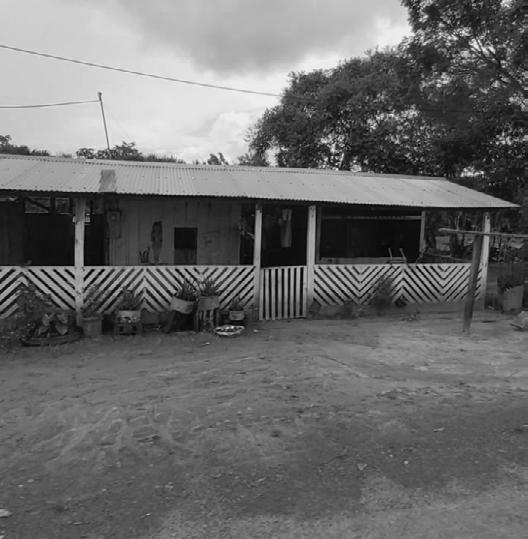
At Finca Nuevo Horizonte there are watershed recovery projects, a sheep project, fruit and timber crops, and it has the Manatú ecotourism center.
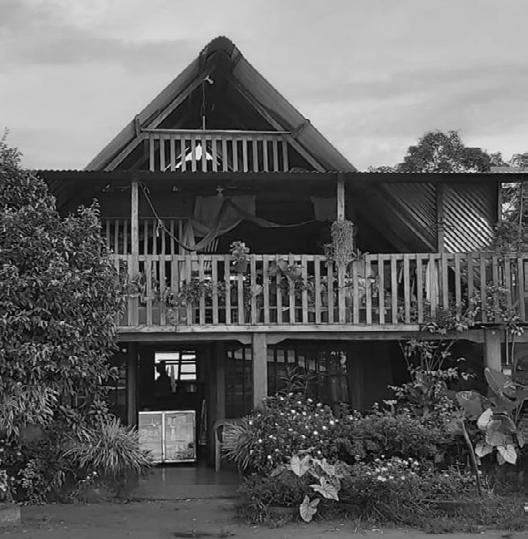
Lack of sanitary batteries for equitable access to a space for personal hygiene. The mate rials present wear and the constant traffic and the climatic conditions mean that they do not become suitable spaces.
•Electricity: it is obtained by means of two power plants and is distributed through under ground pipes (24 hours of light).
•Water: it is managed from a dam, with a treatment plant and reserve tanks (60,000 to 70,000 liters per day - includes maintenance of animals, crops, car washing, among others).
•Gas: by means of pipettes that arrive periodically.
•Internet: Some have private connections and others pay their neighbors to supply their internet service.
•Waste collection: it is carried out every 2 weeks with trucks from the company Ambientar S.A. the place has a collection center for recyclable material.
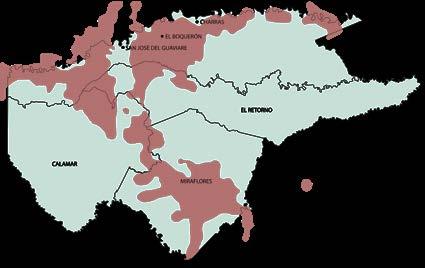
Location, population, existing equipment, infrastructure, proximity, characteristics, total area, humidity, hydrography and wells, protected areas, topography, occupation areas (sec tors)
In the middle towards San José de Guaviare is the Boquerón hamlet, which is the closest communication bridge to San José. This hamlet has an ambulance available that provides service in the event of a medical emergency in its surroundings. However, it is insufficient due to accessibility and long distances.
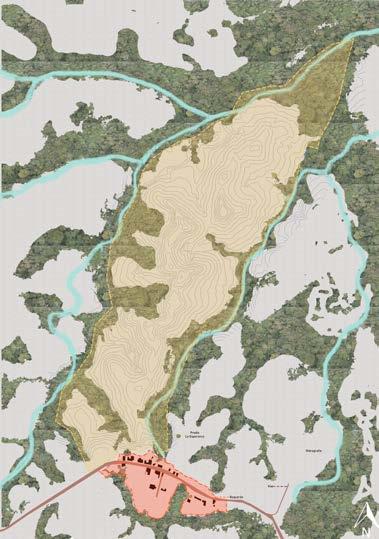
How to get there: San José – Boquerón, 2 hours on an unpaved road…
Indigenous settlements: Near Boquerón there is only one Nukak settlement of families that are not directly related to the relocation project.
Types of production: agricultural and livestock, livestock is the main economic activity in the region. In addition, the signatories have other productive projects: ecotourism, supermarket, egg production, goat meat, fruit trees (chontaduro and citrus)
Activities:
Sports such as soccer and volleyball are recurrent, they generally play in the afternoon when the sun begins to go down. Children play throughout the territorial space. Festive activities related to billiards, shuffleboard, and frog games are recurring.
Religion:
The Noble and Paz community are almost all atheists, in Boquerón there are evangelical churches.
Households:
Most households are made up of signatories. Some households are made up of signers and non-signers. Most households do not have more than two children.
Population:
• NN under 5 years: 50 approx.
• Signatories: 140 approx.
• Neighbors urban area of Boquerón approximately 280
• Neighbors from nearby villages: dispersed rural population.
It is expected that the population of Boquerón will increase not only due to the resettlement of the excombatant community, but also due to the execution of other housing projects that are underway. We estimate that in a few years the population of Boquerón will increase from 280 to more than 1000 people.
Organization of the population: The peace signatories are characterized by being organized according to democratic centralism. In assemblies every 15 days they renew the agreements and elect or maintain the management and the leaders who make decisions. This self-organization mechanism is the most important community instance. REF5*
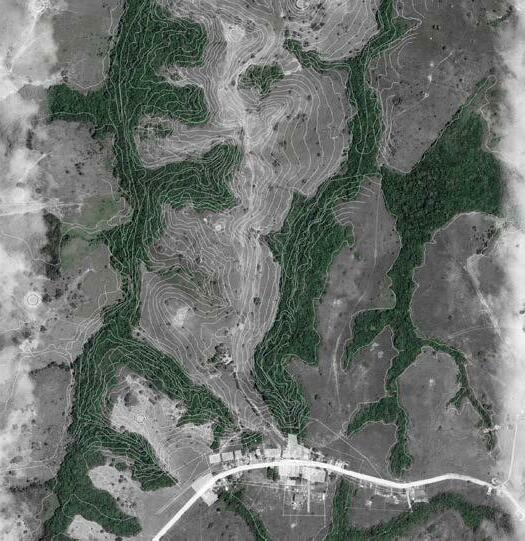
In the urban area of Boquerón there are 70 homes, and approximately 280 people. In the relocation process, pre-feasibility studies were carried out to build 84 new homes. The signatories registered to the ETCR of Charras are around 140, but in the hamlet of the ETCR of Charras, adding NNA and non-signers are around 250 people.
To this is added the Cesar Reyes housing project, with 114 homes, and the other two that are at the exit to Charras. We could estimate that, with the housing projects completed and occupied, there will be more than a thousand people in Boquerón.
At the Boquerón school today there are 37 children enrolled between the first and fifth grades, in the Noble and Peace Community there are around 36 boys and girls under 5 years of age.
The Boquerón school is going to implement an expansion process with the construction of one more classroom. (funded by IOM). Today the school has 1 classroom, one under construction, 1 school restaurant, 1 bathroom, and a room where the teachers live.
The president of the JAC of Boquerón said that they want to expand the courses to sixth and seventh. While the Noble and Peace Community expresses its concern at having to send their children to the boarding school in the village of
Caño Blanco, which is the only one, and in the capital San José del Guaviare, where they can finish high school.
In Boquerón there is no care center for minors, in Charras there is. According to the president of the Boquerón Community Action Board, if the care center for minors were built, the ICBF could operate it. In Charras it was built to facilitate the care of the children of the signatory mothers.
•Community spaces: Boquerón has a coliseum for 500 people (according to the president). They do not have a communal booth for their meetings, they have to do them in the coliseum. The JAC has a lot of more than 3 hectares where the coliseum and the school are located. The park has land that was donated, but it is not suitable. They have a property to be the corregimiento house of 10 * 20.
The town does not have a sewage system, the houses have septic tanks and this is already generating coexistence problems.
When the ETCR is moved, the plan of the Reincorporation and Normalization Agency is that they are going to build a WWTP and a WWTP, the idea is to articulate this process to the urban area of Boquerón, since Boquerón already has a lot to build a WWTP ( 80 X 30), and it has an aqueduct
that is under construction, but which, in theory, could supply the need for water.
The health center, despite having good infrastructure, does not work 100%. According to the president of the JAC, the health center was recently remodeled, it has a waiting room, consultation and surgery room, but they do not work due to lack of equipment and personnel.
INFORMATION OBTAINED: FILES PROVIDED BY NIJIRETH, 2022.
1. Ricardo Semillas, he is the leader of the Marco Aurelio Buendía Noble and Peace Community. 35 year old man. He has two children, a 6-year-old boy and a 3-year-old girl. The two children are the result of two different unions. He currently lives with another couple and his children do not live with him. He has a security scheme (van) and in his daily life he has to meet several meetings both within the community and outside of it.
2. Viviana, she is part of the leadership of the Marco Aurelio Buendía Noble and Peace Community. Leader of the ASOMUSEPAZ Women’s Association. She has no children. She currently lives alone and has a liquor store where she also has pool, frog and shuffleboard tables.
3. Vicente Ortiz, aka Tiger. He is part of the leadership of the Noble Community and Peace Marco Aurelio Buendía. Father of two college-age daughters and two sons. He is the stepfather of two other children, they both live with him and his wife, a total of 8 people live in the house. They have a dog. He dedicates time to agricultural work outside the etcr on a farm that he was able to buy. He earns income by digging wells for access to water on some farms in the region.
4. Noé, member of the Marco Aurelio Buendía Noble and Peace Community. Veteran who lives alone. He is visually impaired as a result of the war after the splinters of a grenade. (In the community there are several people who have injuries from the war)
5. César, a member, is the camper of the Marco Aurelio Buendía Noble and Peace Community, which means that he is in charge of maintaining the common infrastructure of the community. He reincorporated with 4 school-age children (three daughters and a son under 5) sons of Katerine, who also.
Interview Sociologists
Urbanization model I
Urbanization model II
Final joint development model
Conceptual representation of individual equipment proposals Equipment Proposal
final proposals
What kind of security measures are in place in the community?
Places such as the common classroom, are very safe spaces that, being an important part of the community, have not been affected to date in any way by looting or break-ins at times or times not allowed.
Now, no equipment has had any type of security measure as if it could be seen in the city, since neither in the housing area, nor in the common spaces, has there been any insecurity problem, neither in Charras, nor in El Boquerón.
What are the parents’ working hours, what do they do, do they work on weekends or only on Saturdays?
Working hours vary among families, so there are no conventional work schedules. Some parents are engaged in productive activities during the day (usually in the morning), while others are continuously engaged in activities, without a fixed schedule. They are also dedicated to training, studies, etc.
The work generally does not contemplate a schedule from Monday to Friday. On weekends the activities are different; on these days some special activities are carried out, such as community assemblies.
What kind of constructions could be disrespectful to the community?
Police elements such as what could be a CAI, are not well received by the Boquerón community. What traditions that they lived in the countryside.
would they like to preserve? What festivities do they celebrate?
More than traditions, they are bets for the future that they want to generate. Sometimes, from the past, they bring in their speeches the collective forms of management, solidarity, care for the environment. Currently in the space they celebrate the festival of the Cancharina, a food like arepuelas, with which they fed themselves when they were in the guerrilla. In the past there was the Rancha, a community kitchen where food was prepared for everyone. However, in the reincorporation process this act has been lost.
What other places are of interest for the neighboring communities? What other towns or municipalities do they go to?
The places of interest may be for tourism, work or errands they must do. If they are tourist sites, there is Damas del Nare, Manatú - which is a productive project of the community - therefore, they have to go there to work. However, Manatú is located within a farm called Nuevo Horizonte. On this farm they have other projects such as the chontaduro planting, the cheese factory - which is not yet working - and the goats, so they also have to go there to work. They also frequent other people’s farms in the sector to go to work. In addition to the hamlet of Charras, they also frequent the hamlets of Guanapalo, La Fuga and other municipalities. There is constant transit to San José del Guaviare for meetings and errands. To go to San José del Guaviare they have to pass through Boquerón, which has become a constant point of flow.
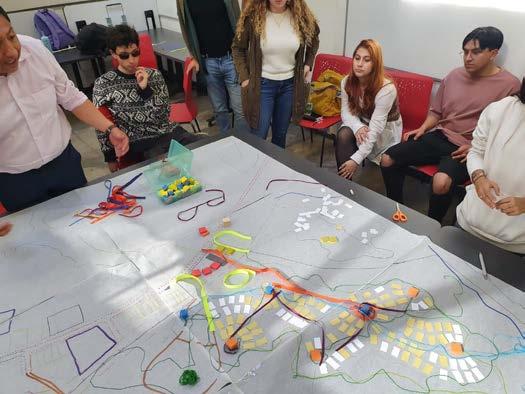
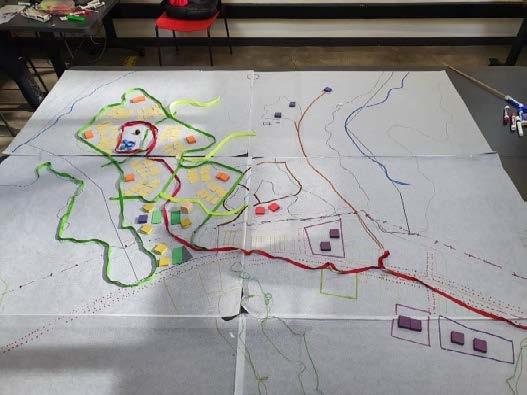
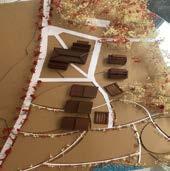
The construction of the urbanistic project of the terrain La Esperanza begins with the key factor of the communication in meeting of all the students with the directors of the course, constructing in a collaborative way a schematic model with figures and vectors of different colors that allowed to generate two models with different intentions to consider at the time of responding to a lot without urbanizing and its rural context.
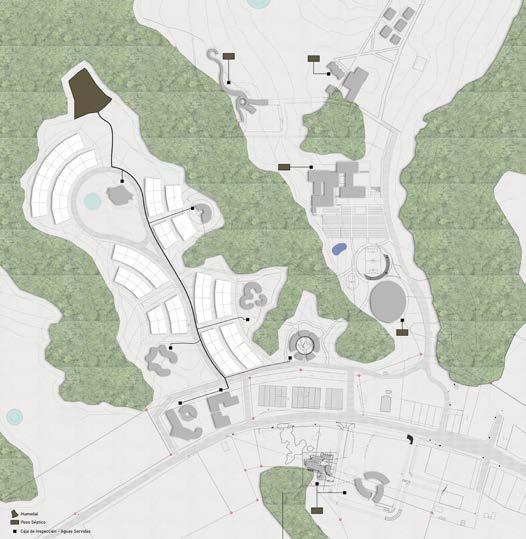
During the week of November 31st to 4th, some general conclusions about the proposed urbanization for Boquerón were finalized, specific planimetries were requested about electrical network treatment (or sustainable energy), drinking water and sewage treatment, road profiles, solid waste, etc, facilitating the understanding and functionality of the project for the people of Boquerón.
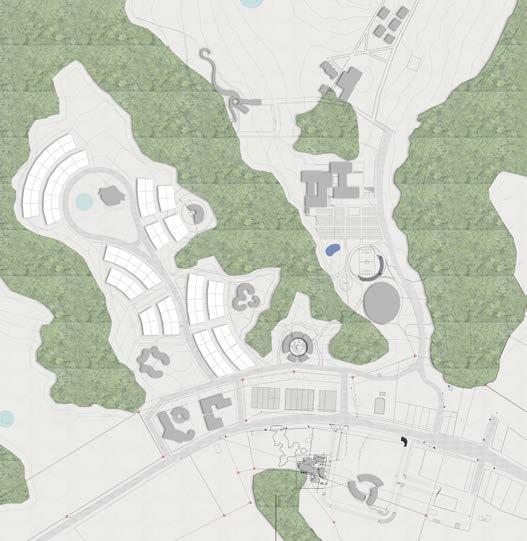
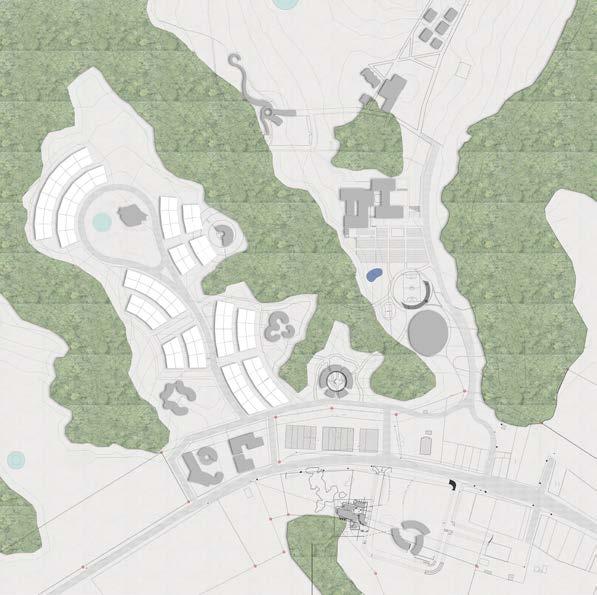
This is how the parameters of a central road axis that fragments into radial housing organizations that end in facilities that articulate the project from the periphery and consolidate it.
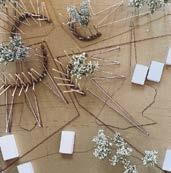
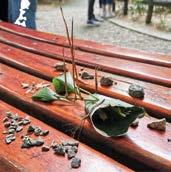
Once the model with basic principles was defined, each group proceeded to carry out the same academic development at the scale of their equipment. After a field trip to Medellin, the study of the functional and formal potential of urban facilities in city projects was developed, with organic and recyclable materials as the tours were made, generating ideas that enhance each project.
With the organizing principles defined, we proceeded to resolve the technical details of the project, road profiles, property organization, equipment allocation and conformation of public space and circulation. All with the help of the component teachers: Martha Salas (management) from her knowledge in building and lot structuring and German Montenegro (urbanism) from the creation of road profiles in relation to public space and its direct relations.
As the delivery is approaching, each group with its equipment is resolving technical construction details at an exhaustive level of detail through the facade cuts, resolving details such as the redirection of rainwater, internal road profiles, how the building reaches the ground, its foundations and relationship with the public space. At the same time, the first renderings begin to emerge that allow us to have a more approximate view of the future imaginary of the projects.
From the management component, unit cost tables of the main axes of the buildings are requested in order to generate a projection of the approximate general cost of each building, considering its feasibility through suppliers in the area and its ease of transportation to the La Esperanza terrain.
During the week of October 24 to 28, we concluded the way in which the facilities are implanted and recognize the base soil in a respectful and friendly way with the natural environment in which they are located.
Professor Andrés Ibáñez shared his views on the costs and environmental implications of hard ground construction in a jungle area and rural environment. These two variables made unfeasible many of the proposals given by the project groups where the costs were exorbitantly high and affected the environment and water collection, hindering the infiltration of rains that guaranteed a higher risk of flooding in the proposed buildings.
By means of data such as the major rainfall index per day, month and year, we recognized that in Boquerón Guaviare there was a greater number of cubic meters of water with respect to other places; this data allowed us to set a new rule for all the groups regarding their projects. Thus, the requirement to collect 20% of rainwater, 50% to allow its infiltration in natural terrain, the other 20% to allow its flow to nearby rivers and water bodies, and 10% for runoff.
An additional requirement was also proposed, which is that all facilities, except for those located in a privileged high topographic area, must use an elevated slab that guarantees natural ground
in the areas where the buildings will be located, guaranteeing the requirement of water infiltration in natural ground and reducing foundation costs. These conclusions make us more aware of the amount of water collected by the roof of a building and how to guarantee its recovery on natural ground without affecting the environment by means of a hard unfilterable and floodable ground.
Professor Daniela from the technology component provided the formula to obtain the amount of cubic meter collected by the roof of each equipment making it easier to be aware of the size of the water collection tanks and how they were going to be used and reused in each project. He also provided us with the different types of foundations possible in our territory considering cost reduction, soil type and elevated slab requirements in each case.


Nueva Esperanza transport terminal is an equipment designed to connection and road improvement of munici palities surrounding the capital of Guaviare Department, ubicated in the Corregimiento del Boqueron, 3 hours from San Jose del Guaviare, this project focuses in transportation of both people and cargo(food, messenger ser vice, among others), as likewise, has other activities such as cafeterias, restaurants, craft sales area, storage and mechanical workshop for busses that made the daily route. This transport terminal is thought to harbor around 50 people in the first of its two stages, which will have the most important uses and to give a continuous transit and fluid of people.
Our equipment is the entrance to the entire project, whose mission is to be the intermediary between the cu rrent population of Boquerón and the peace signatories. It is because of this that our aesthetic recognition seeks to attract the inhabitants of the place to the entrances of the project and make them feel appropriate and iden tified with the same social needs as the community of Charras. This union is achieved from two important factors, the usefulness of the equipment and the strategic location added to the volumetric organization that generates centers or internal squares that enhance dialogue and en counter and create a community that evidence and symbolizes a true community of social peace.
The Memory Center is based on the concept of codification, where it is sought that the place begins to be built from the history and experiences of the established community. Three volumes are built where each experience will be different, starting from the concept of a tree as it defines memory for the community, each one will build a part of the plant giving the name and meaning to each one of them, such as races, stems and branches. From these spaces, the distribution of the spaces is made by means of closed or open links that invite people to get involved in the history and meaning of each one of them.
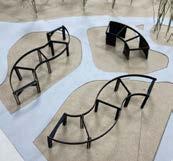
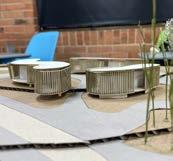
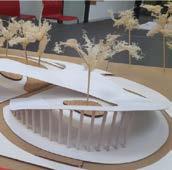
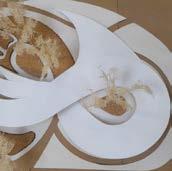
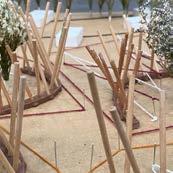
The Civic Center is a public sociocultural facility. It is designed as a functional building with dynamic and open spaces according to the diversity of use that will be given to them, the spaces and services offered are for the community and the council and services it offers are for the community and the council thought to generate its own space in Boquerón that solves both problems and social connections with the exterior as well as the interior of the township.
Likewise, since this is a building with a high value of importance for providing private documents, it must be one of the strongest and most private and strongest buildings in terms of documentation but allowing social integration surrounded by nature that generates a welcoming and protective space in its interior.
The Kindergarten for the “Hijos de La Paz” seeks to meet the educational and training needs of the community with the highest degree of demographic growth: children. The equipment is planned in an enclave educational and recreational within the network of facilities that will work not only for the “Comunidad Noble” and Peace, but also for the entire Boquerón and its surrounding settlements. The building must combine the growth of infants with the daily life of its context, proposing a dynamic and attractive formal language that manage the training sta ges of each user in their early childhood. Involve the whole community from the outside of the building, it is also an objective to be carried out from the proposed spatialities.
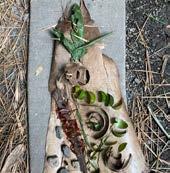
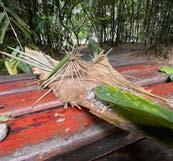
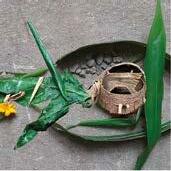
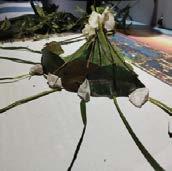
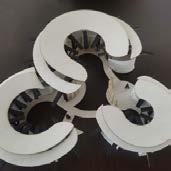
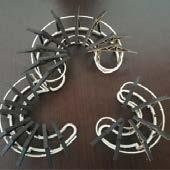
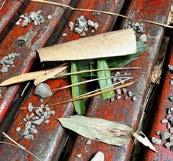
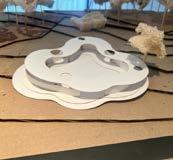
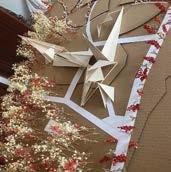
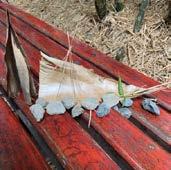
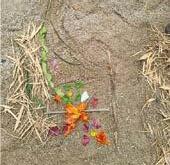
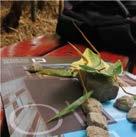
For our conceptual model made in Medellín we used materials such as bamboo leaves, greens and dry, stones, and branches. We make up some typologies referring to the current design process that we are driving, always considering the sloping roofs and the spatial development of our project. This model was part of the design and decision-making process throughout the first and second crop where we were able to evaluate the most optimal and functional forms, from there we drew pros and cons of the first designs that they gave rise to what is now the “final” design of this educational equipment.

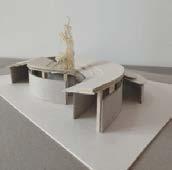
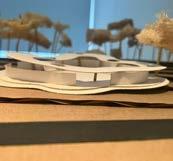
El equipamiento Centro de capacitación pecuario Crei es un equipamiento educativo en el que se reciben y se ofrecen herramientas, conocimientos y fomentando las habilidades que cada individuo posee para así poder explorarlas de la mejor forma, logrando un desarrollo prospero. El funcionamiento correcto de este centro se basa principalmente en el aprendizaje basado en las prácticas, manejando 80-20, es decir, 80% práctica directa y 20% teoría. En este caso nos basamos según la necesidad productiva y educativa que requiere el municipio del Boquerón, especializandose en la formación en temas relacionados con la porcicultura y la avicultura, para generar un aprendizaje directo con el contacto con los animales.
The Forest Agriculture Center of Aquaponics Nueva Esperanza.
The conceptual idea arose from the study of the place of implantation, as well as the actors who would make use of the equipment. It was born as a cyclone building directly related to all that productive heart that would be the origin of the project. Added to that, the permeability in the enclosure was kept in mind since one of our goals was for the project to be directly related to the natural environment that surrounded it, in addition to being a bridge for the vegetation itself, a bond on the property that would unify existing tree masses and at the same time reinforce them. This is because even though it was a productive building, the priority was that the activities related to it were as compact as possible to generate the least deforestation and at the same time serve as a natural reserve. It is then that this cyclone arises, from which productive ties are born that spread throughout the property and are embraced from the entrance of Finca Nueva Esperanza, being the door to all productive projects and showing itself then as a new beginning full of hope, for a new productive way that allows its users to be financially independent.
The bio-park, beekeeping and vermiculture equipment “Casa común desde lo natural”, is an equipment that seeks to connect with the place and generate habitat, giving new possibilities of integration through spaces biophilic that are developed from the park and the interior green areas that allow integration and learning, through new production tools that could be replicated in neighboring farms, these tools are accessible, and also generate financial development from an initial raw material basic, for example in the case of vermiculture, allowing the transformation of waste into compost which will make possible the reproduction of earthworms and the development of hummus, to fertilize the lands of Guaviare, where a low level of nutrients is found in the soil, other possibilities are also being carried out such as the development of products from bees and the generation of tourism through an attractive element bird watching and biopark, since one of its most striking elements unlike the rest of the country and its diversity.
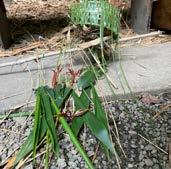
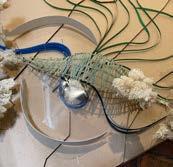
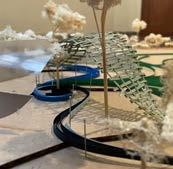
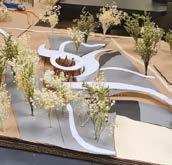
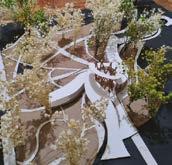
The ethno-technological center combines the practicality of technological elements in their daily use with the symbolism that brings with themselves the use of these same tools for the preservation of cultural traditions through the recording of oral and written media. It serves as an articulating node from the hybrid living spaces that represent the balance between the artificial, the present and striking nature of the region.
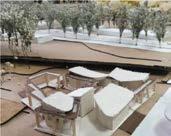





 Diego Esteban Ortíz - Juan Felipe Forero
These new facilities for new rural settlements must consider essential characteristics, such as sustainability, especially focused on caring for the environment, and adaptive capacity, according to the growth and transformation of the community over time. It is essential to highlight the cooperative intention that the project must present, highlighting this quality as the great articulator of the Noble community and Marco Aurelio Buendia Peace that must be extended to all the social groups involved. Architecture must be the catalyst of the community, leading people towards a stage of peace translated into inclusion, through quality of life. They must be hybrid buildings, mixed in uses, that working together, make up a dignified system of a homogeneous city in space.
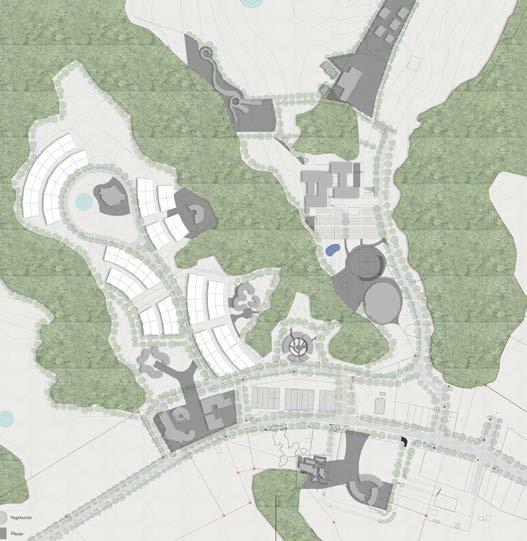
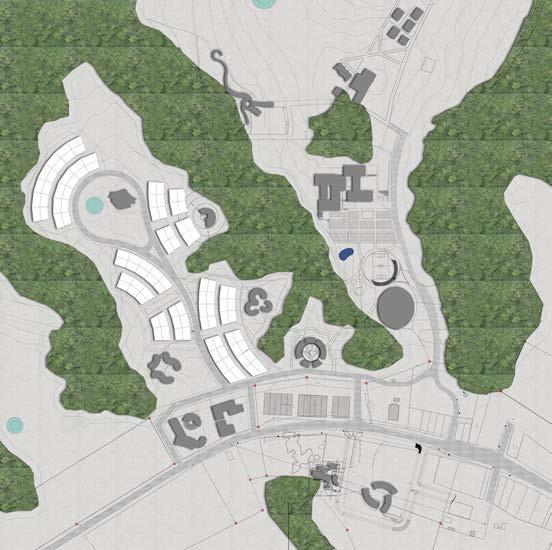
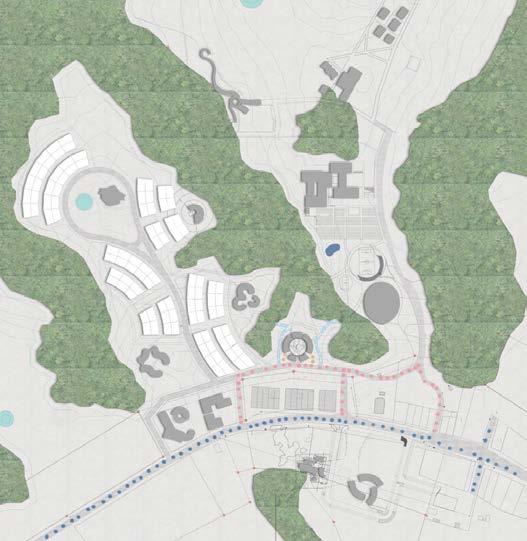
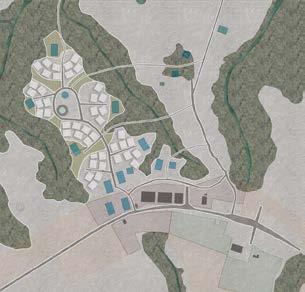
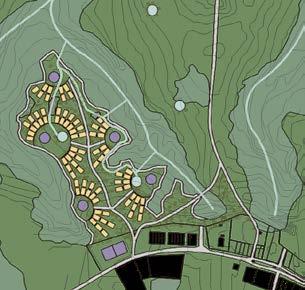
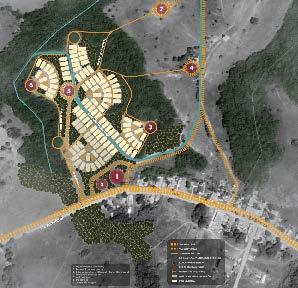
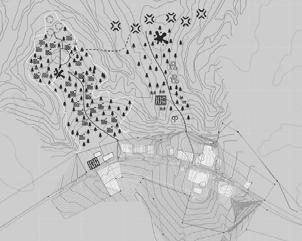
The MasterPlan proposal focuses on connecting the tree masses through green corridors that configure the morphology of the settlement. The neighborhood groups face both the forest and the road structure that interconnects the pro ject. On the other hand, the facilities are distributed homo geneously throughout the territory, attending to different scales within the proposal.
The project focuses on integrating the communities and the environmental struc ture through equipment for, initially, the noble and peace community Marco Aurelio Buendía. Analyzing and understanding what the territorial provisions of each of these agents are like is essential.
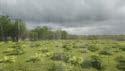
It is a society ramified by different demographic agents; each one through their activities and ways of life, leaves a mark on their relationship with the place. Fires, mining, agriculture and livestock are some of the socio-economic activities that end up harming the environmental conforma tion of Guaviare.
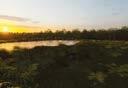
Although there are several factors that put
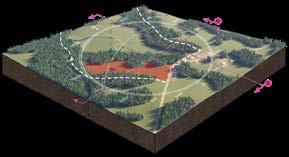
The subsistence of the ecosystem is at risk, the Guaviare and more specifically San José del Guaviare as a municipal environment, are territories rich in natural resources, especially when it comes to water sources. Seen through an aerial photograph, you can see a kind of tissue or circulatory system that nourishes each of the places in the municipality by means of water, being evident in our area of intervention.


A rural facility is an articulating landmark, adaptable and multifunctional landmark that, by means of systemic services, responds to the needs of systemic services, responds to the current and future needs of the community, in order to improve quality of life, promote integration among the different the integration between the different actors, the appropriation of the place, the cultural identity and always considering the principle of Eco productivity. Due to the community’s need for economic sustenance and the motivation for entrepreneurial projects, our equipment is focused on the productive/ educational, working with multipurpose spaces, which house technical specialized education in the productive activities to be developed.
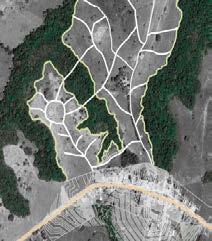
The housing blocks are located radially, taking the facilities as the central distribution cores that allow the users to be located effectively for the development of their activities. Likewise, the main objective of water restructuring, new strategies for water treatment and collection strategies are generated. At the road level, a structured central axis and several ecological and trails that allow users to take advantage of the surrounding users to appropriate the green axes that surround them.
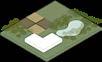
Focuses on the diversification of productivity, mixing different forms of production in compact spaces, to avoid a predatory model of the ecosystem and to show ways of consciously show ways of harvesting in a conscious way.
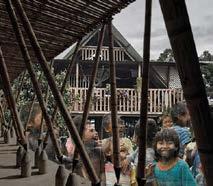
Traditional agriculture:
Cultivation of the land to produce foodstuffs such such as cassava, corn, plantain, among others.
Hydroponic
Does not require soil, the plant takes nutrients directly from the water, where they are dissolved. These crops adapt to any space, climatic conditions, and economy.
Cultivation of hydrobiological species through appropriate techniques in natural or artificial environments and, generally, under control. It is recommended to do it with species found in the area, in this case it could be cachama, yamú, piraiva, guaracú, valentón, catfish sapo, dorado, catfish sapo, dorado, yellow catfish, páyala, payalín.
Beekeeping:
Breeding and care of bees, with the objective of obtaining and consuming the products that are capable of elaborating and harvesting.
 Alejandra Pizarro Méndez - David García Bernal


Rural equipment is an artifact or installation that synthesizes specific information of a territory that is rooted in the community and enhances land use through productivity, thus allowing different spaces for social interaction that allow the structuring of the territory.





The Crei Livestock Training Center equipment specializes in training on issues related to pig and poultry farming, to generate direct learning with the contact that exists with the animals, in order to be able to replicate this training, taking into account the importance it has education for a population that is in the process of reintegration.
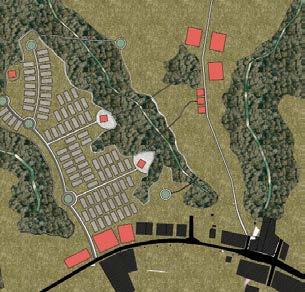
The master plan consists of taking into account the workshops carried out with the population where they infer the importance of maintaining closeness between them, reinforcing the concept of community in the same way of generating different housing areas that end with different equipment that will ensure the Community development.
ÓN
COOPERAC
The importance of the Livestock Training Center Crei comes to work from the peasant tradition of the department of Guaviare, an activity of great importance, because it moves a large part of the national economy. For this reason, it is very important to generate spaces where young people who want to undertake in the peasantry are trained when taking the step to social reintegration, in this way traditional knowledge is shared giving way to the progress of the community to build a future in the reintegration from education, innovating to allow progress to new types of productivity from the activities to be treated such as pig farming and poultry farming.






On the other hand, it seeks to generate a network of entrepreneurship for the youth of Boquerón and its surrounding areas, promoting the productivity of the peasant population from the knowledge acquired at the Crei Livestock Training Center.



A rural equipment is that space that has the capacity to understand collective life through the understanding of living and working within the community, achieving from this analysis the articulation to this process of collective life, to cover the needs and complement the territory, reproducing a space capable of evoking the belonging and progress of the place.
The Dabacury equipment is a space that develops a multipurpose operation based on the integration of well-being and survival, in order to solve and group the needs and development of collective life in the Boquerón, becoming a space for transition and interaction between the ex-combatants and the other residents through the spaces to live and work, managing to evoke an identity within the community.
The equipment is located at the main entrance of the farm of hope, next to the main road that crosses the township, this location is planned with the purpose of being a transition space between the habitat of peace and the township, at it’s At the same time, it fulfills the function of a node for the multi-use plazas that are already within the corregimiento, supporting them through the distribution of products, which leads to generating a network of services that broaden the scope and manage to provide a greater amount of employment. , which is represented by a better quality of life within the corregimiento. bioenvironmental, that they face today.
The equipment is developed as a transition node, which allows interaction between different inhabitants of the region, since it has a range of 15Km, which means that through this capacity it is possible to cover more territorial needs and respond through of the multipurpose character, managing to ensure a development of the symbolic character that manages to evoke the sense of permanence of the community that would allow obtaining the greatest durability of the project.
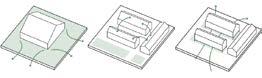

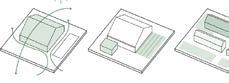
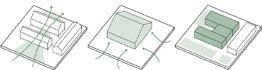
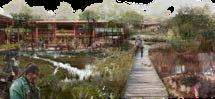





Nicolas Vera Un equipamiento rural es un espacio de carácter público capaz de generar un núcleo integral de desarrollo, por medio de la res puesta a necesidades básicas del territorio, exaltando su identidad a través de la mate rialidad propia del paisaje y la comunidad. Además, vincula la tecnología y la estética para generar un hábitat eco productivo que responda al contex to y construya un tejido social.
A rural facility is a public space capable of generating an integral nucleus of develop ment, through the response to basic needs of the territory, exalting its identity through the materiality of the landscape and the community. In addition, it links technology and aesthetics to generate an eco-producti ve habitat that responds to the context and builds a social fabric.
olas Vera equipamiento rural es un espacio de capúblico capaz de generar un núcleo integral de desarrollo, por medio de la respuesta a necesidades básicas del territorio, exaltando su identidad a través de la materialidad propia del paisaje y la comunidad. demás, vincula la tecnología y la estética generar un hábitat eco productivo esponda al contex to y construya un social.
The equipment would work as a workshop for training and productive exploration, and it would work with the same logic as the ex perimental farms in which different sowing and livestock techniques are created, deve loped, studied and produced.
El equipamiento funcionaria como un ta ller de capacitación y exploración productiva, y funcionara con la misma lógica de las granjas experimentales en las que se crean, desarrollan, estudian y producen di ferentes técnicas de sembrado y ganade ría.
Centro de capacitacion agropecuaria: equipamiento funcionaria como un ta capacitación y exploración produc funcionara con la misma lógica de ranjas experimentales en las que se desarrollan, estudian y producen direntes técnicas de sembrado y ganade -
Descripción del master plan:
Parte impor tante de este equipamient o, son sus conexiones y su funcionamiento espacial y zonal. Este se vera directa mente afec tado por la creación de nuevos ejes naturales de agua, como empozamientos, caños, y reser vor ios (alimen tados por el caño La Fuga y Abejas) que no solo ayudaran a tener mejor distribución de este ser vicio básico, sino que conectara de mejor manera la zona de vivienda y la zona de producción, y todo por medio de un eje orgánico y natural.
An important part of this equipment are its connections and its spatial and zonal functioning. This will be directly affected by the creation of new natural water axes, such as ponds, pi pes, and reservoirs (fed by the La Fuga and Abejas pipe) that will not only help to have a better distribution of this basic service, but will better connect way the housing area and the production area, and all through an organic and natural axis.
Parte impor tante de este equipamient o, son sus conexiones y su funcionamiento espacial y zonal. Este se vera directa mente afec tado por la creación de nuevos ejes naturales de agua, como empozamientos, caños, y reser vor ios (alimen tados por el caño La Fuga y Abejas) que no solo ayudaran a tener mejor distribución de este ser vicio básico, sino que conectara de mejor manera la zona de vivienda y la zona de
Our approach is thought of as equipment, being a means and a solution to the urgent need to create rural productive spaces within the boquerón. This equipment would be
response to promote not only the commer ce sector (by means of the collection and distribution in its commercial strip attached to the axis of the highway) but also the su pplies of the community. The equipment
It would function as a workshop for training and productive exploration, and it would function with the same logic as experimental farms in which different farming techni ques are created, developed, studied and produced.

crops, livestock, fish farming, etc.
Both green and blue axes will function on a large scale as a fabric, but on a smaller scale as a series of fibers that intertwine, relate and connect each different area and use of the corre gimiento with our equipment located in a central area, like a large node. connector.


 Cristian Carvajal - Andrés Jorge


Rural Equipment Definition: Element in the space that allows the interaction and linkage between the different communities that participate in order to articulate a place that offers them a certain variety of services to integrate nature with the present settlements, it is a place with a smaller population and with low density
MARKET-TRANSPORT: It is a facility that supports, promotes and acts as the main point of influx of people in the sector, through a quite influential use for the community, transport in order to promote the arrival of tourists to the place together with easy access to mobility between regions, this would increase the influx of people, agricultural merchandise or supplies in the corregimiento and thus generates a greater movement of the economy.

In accordance with the social, environmental and cultural development of the sector, a proposal suitable for development among the various communities present is proposed. This from the creation of large-scale progressive adaptable equipment; which fulfill the function of being community, recreational and economic development entities that seek the appropriate reinsertion and cultural communication with the population of Boquerón.


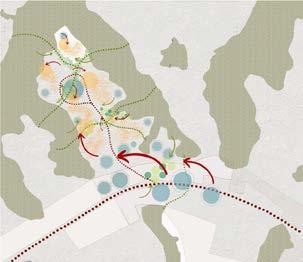
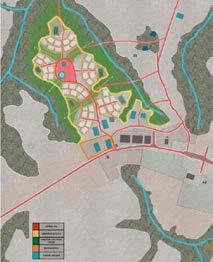
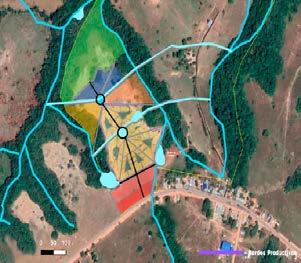
The proposal proposes a system of radial housing cells whose central axis is a facility proposed for the community and on a smaller scale that functions as workshop and training areas, all of this connected by a central main road that branches between the housing areas. forming squares where the water wells are located; At the same time, it has a perimeter in front of the reserve areas that functions as a green route and connection between the equipment and the vegetation of the property, giving access to the production area, and integrating areas of transition to nature within the route.









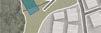
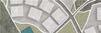



Through this transport station project, we generate relationships between corregimientos and intermunicipalities so that in this way, the transport station allows the corregimiento to connect with each other and store objects of different kinds.
Element that consolidates a place built from a group of interests for the community, generating direct connections with the place, its customs.

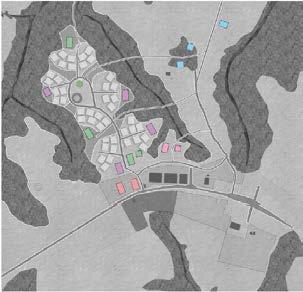
This Master Plan is proposed in order to give an order to the equipment. When analyzing the needs of the users, the facilities are zoned and then they are classified by uses and activities according to priority, which are complementary and expansion.
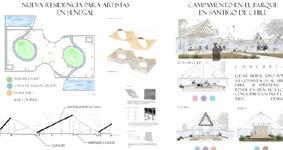
An equipment is formulated that codifies the Educational Zone and the Recreational Zone towards the main road as the central axis for greater connectivity with the housing area and not generate greater distance, taking into account its expansion and how the arborization and natural area interweave the proposal without turning your back.
Taking into account the camp as a concept of a space where the functionality, even being defined, can meet and adapt to the conditions or needs of the community. The roof of the New Residence will be highlighted and how it gives importance to the water of the place.
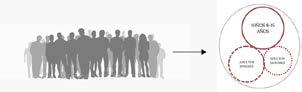 Sofia Cordero Castañeda - Manuela Delgado Casallas
Articulating landmark of the territory that works as an integrating element of the community, strengthening the sociocultu ral ties of the nearby population, thanks to the collective development of a space that solves the missing determinants, appro priating the natural elements of the con text and the community itself as a structu ring entity of the experiences.
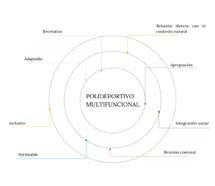
The sports center is recreational equip ment for all types of users. Its purpose is to unite the community through sport. For this reason its main concepts are based on integration and diversity.
Being almost completely surrounded by the forest reserve, the direct relationship with the The ordering must fulfill the function of embracing the forest and taking it as an ordering element of the place, for this reason the group of houses is given a radial shape, which in turn accommodate the equipment that becomes the transi tion between the natural and the artificial .
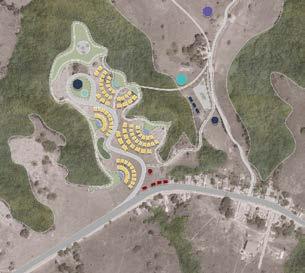
Proposal for the adaptability of the equipment according to the needs of the people.

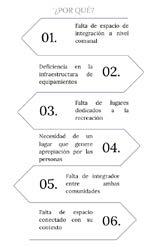
How could we keep the reintegrated connected with their community and natural environment, in addition to creating new relationships with the current society of Boquerón, generating an ideal social context?
The facility has a biophilic pedestrian axis that generates public space centers at intersections with the mobility system. In addition, it has a high pedestrian and vehicular accessibility due to the central road that connects the north of the property with the Boquerón.
The equipment emerges as an element that fulfills various functions according to the community needs, mainly recreational. Therefore, this space can be key to the peace process, since it integrates the community in different ways, providing a comfortable, adaptable space that guides peace.
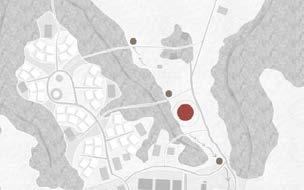
For this reason, it located at the mouth between the Boquerón and the new resettlement.
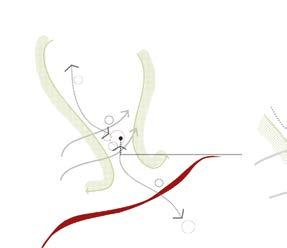
Remoteness to the proposed housing formations for comfort and noise.

 Santiago Rodríguez Izquierdo
Rural facilities, unlike urban ones, when trying to satisfy needs of an educational or health nature, have greater expectations from the community. This implies a greater challenge on the part of the architect’s practice. When dealing with contexts with accessibility problems, mismanagement of resources and/or lack of basic services, there are a greater number of details and elements to take into account to achieve the desired equipment.
It must have the following characteristics:
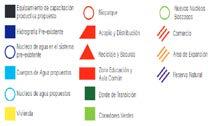
- Adaptive -Sustainable
-Symbolic - Hybrid
-Sensible - Meaningful
Our approach is thought of as equipment, being a means and a solution to the urgent need to create rural productive spaces within the boquerón.
This equipment seeks to promote the commercial sector by collecting and distributing products in the proposed commercial strip, but rather the community’s own supplies. And the social, through training and productive exploration, and it will work with the same logic of the experimental farms in which different techniques of sowing, livestock, fish farming, etc. are created, developed, studied and produced.
Aldea Navarro / Valle del Cauca How can we match environmental factors and the spatial needs of vulnerable populations in search of eco-productivity?
In this referent, we were able to see resettlement techniques through training facilities, and an urban logic of mixfunctional and productive blocks, how to achieve productive housing from various fields and scales.
Trades of the cultural landscape / QuindioHow are the traditions manifested in the territory at a spatial level?
Through this referent we find what would be a way to preserve culture, traditions and methods, through spaces already defined and designed for the execution and subsequent development of these.
It is based on a formally hybrid model, influenced by organic and cluster typologies, such as those found in the surrounding regions. Taking advantage of the formal elasticity coupled with an experimental training approach for the formation of the social fabric.


It is more than an artifact or building, it is a technical and technological system that involves physical artifacts as social components that respond to the inhabitant’s right to the surrounding habitat, generating links for a community network. This solves immediate basic needs to inhabit a constantly evolving territory associated with a development model that contributes to improving the quality of life of rural residents. The equipment supports regional or territorial phenomena of a social, cultural, ecological, environmental order, to respond to an environment and a space, not only in the objects, parts and subjects that make it up, but also the relationships that are intermingled between them.
This equipment has a hybrid purpose where mental health is specialized. It has two main purposes: - Monument of memories and close friends.
- Open dialogue therapy space. These purposes were concluded from the analysis of the community and its needs beyond its wishes, however, it happens that spaces that have already been socialized by the community that request as facilities are linked. These spaces correspond to: Common classroom (a flexible space where different activities can be carried out), Cooperative (store), Bio-park, Parks Bars and Billiards.
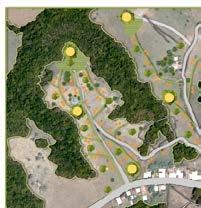
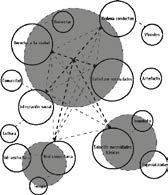
The meaning starts from taking up the wishes of the community while attending to the importance of what we can conclude from the population analysis: mental health. This with the aim of understanding that not only building space is being built but also society, so that the community appropriates the space without being imposed on them. For example, the community requests bars and billiards, beyond being a culturally given activity, it denotes the need for socialization. The foregoing does not mean the annulment of wishes, but the proposal of an alternative that in the long term will improve the quality of life of those reintegrated.
Activate the networks that are generated in the territory so that activities are maintained, generate trails that force you to go through restored forest areas as a symbol of integration with the forest and respect for it, night security for the community and bioclimatic protection in the environment.



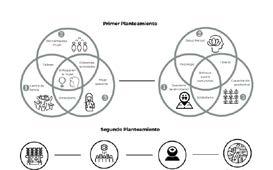
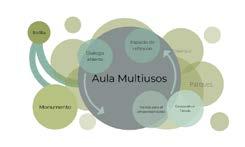
Architectural element that responds to social, economic and cultural dynamics, generating a space that allows activities, preservation and cultural support for the permanence and appropriation of the population.
Civic centers are socio-cultural facilities with a public nature and are designed as functional buildings, with dynamic and open spaces depending on the diversity of use that is going to be given to them.
The proposal proposes a system of radial housing cells whose central axis is a facility proposed for the community and on a smaller scale that functions as workshop and training areas, all of this connected by a central main road that branches between the housing areas. forming squares where the water wells are located; At the same time, it has a perimeter in front of the reserve areas that functions as a green route and connection between the equipment and the vegetation of the property, giving access to the production area and integrating areas of transition to nature within the route.
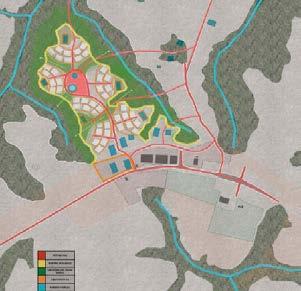
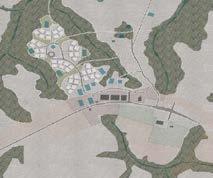
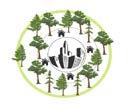
* The Ecological structure is incorporated into the project from natural corridors.
* Natural structure as an articulator and enhancer of public and private spaces.
* The house must have a direct approach to the surrounding vegetation
*Larger-scale equipment as articulators that allow the relationship and interaction between the population of the Corregimiento del Boquerón and that of Charras.
*Centres of social - cultural - commercial relations that allow permanence in permeable spaces.
*Some local facilities are proposed which are located within the residential sector, in order to promote cultural and recreational activities.
*The house is taken as the starting point for project development.
*Make architecture from the community
 Diego Ortíz - Juan Felipe Forero
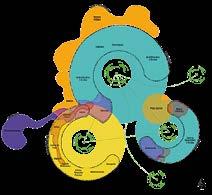
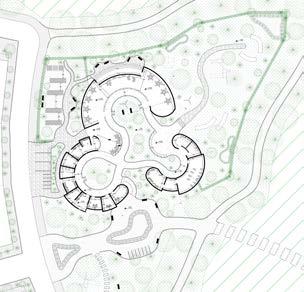
The Kindergarten for the Children of Peace is an educational facility whose objective is to meet the early childhood needs of minors from the Noble and Paz Marco Aurelio Buendía community, from Boquerón and from other neighboring settlements that are interested. It is a building that should catalyze the social relations of the new settlement based on the educational and personal training of the future owners of the place. The spatialities designed have to improve the well-being of the inhabitants, directing efforts towards reconciliation and peace, thinking not only about the local context, but also about the importance of this academic exercise for an entire country marked by conflict and inequality.
The Kindergarten’s main function is to be the educator of the future generation of the La Esperanza settlement. Since the end of the armed conflict, the population has grown exponentially, with babies and children being the largest population class and, therefore, the most urgent to be attended to. In addition to providing a service to this population group, the project also aims to be one more articulator of the entire equipment system that has been proposed, being a node of urban life and activity. It is one more step towards the inclusion of this community in the daily life of the majority of Colombians, without forgetting the history and rural context in which we find ourselves.
The equipment is intended mainly for children from the Noble y de Paz and Boquerón community. Likewise, it includes among its actors pregnant mothers and newborns from the settlement, providing education and other services to the residents. Its exterior and urban articulation also allows the integration of other residents in the public space, also being a transition node between the residential area and the productive area of the settlement.
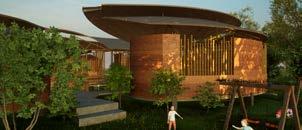
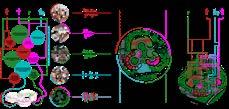
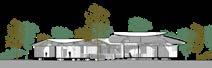
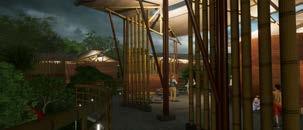
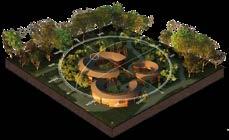
The Geometric and formal language of the equipment is born from the understanding of the user; a circular shape that allows the management and control of children, and since it does not have corners, it is a safe place for each one of them. The internal patios and the closed routes allow users, even if they leave the classroom, to end up walking through the same places, being cyclical circulations. The spaces were proposed as a third educator, Montessoritype educational spaces that integrate users with each other in a joint training process where they learn from experience. Part of the materiality and the organic forms come from the needs and understanding of the jungle place where we find ourselves.


 Sofía Cordero - Manuela Delgado

The function of a sports center is to be a meeting and recreation space dedicated to the health of its inhabitants, in addition to this, this place is understood as a space for cultural appropriation where people and accessibility are prioritized, generating a public space that articulates the entire urban design of the estate and therefore functions as the connection not only between the architectures, but also becomes the place par excellence for community union.
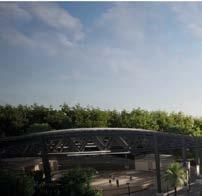
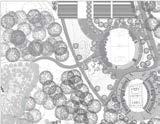
The main purpose of this recreation equipment is the union and integration generated in its formal conceptualization, where it represents that symbiosis between two different cultures (the reinserted and the inhabitants of boquerón) in order to generate a positive evolution in the future.
The interaction between two different cultures can become complicated from the beginning, however, through sport it is sought to generate a connection that allows a better quality of life for the people who live and will live in the place.
The users to whom the equipment is mainly directed are children, young people and adult athletes, where they can carry out their physical activities in comfortable facilities for recreational purposes. However, within this, any type of user can meet regardless of their age, since recreation is an important aspect that must be supplied in the life of the population, taking into account the desires and needs of each one.



In its beginnings, the placement of a multiple court within the equipment was planned along with a long path in a bamboo-based pergola that would allow fluidity to the different spaces for permanence within it. however, two different aspects were taken into account that produced a redesign. In the first place, the large numbers of people that the facilities can cover, with this, it was found that one field was not enough, for this reason another field was added, a 5-a-side soccer field. In the same way, due to climatic aspects, the criterion was taken to cover the multiple field and the path in a pergola, generating it through local vegetation and bamboo, with the purpose of reintegration with the perimeter reserve. And finally, through the excavation of the fields and caves at the level of the territory, the construction of natural, earth-based stands is allowed, in order to generate sustainable use in the place.
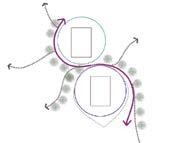
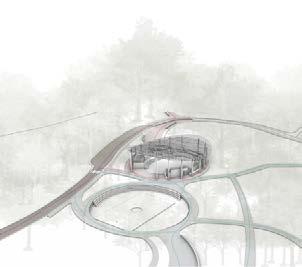
The dabacury market place arises from the opportunity to generate a reconstruction of the social fabric based on forgiveness and reconciliation that motivates us in the peace process.
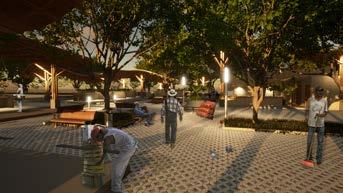
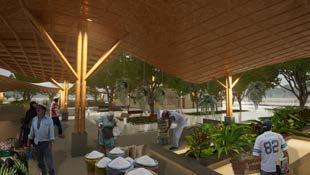
The market place is developed in order to become the main element of production of the social fabric, which motivates the entire community to participate and inhabit the territory from an economic and productive aspect.
This market place is a transition filter equipment between the farm and the anchovy, becoming that key element for
Based on the potentialization of implantation and location determinants for the articulation with the main road and the different existing settlements in the environment, achieving the functionality and flow that is proposed from the beginning.
These determinants not only help us to propose a facility that articulates and generates society in its immediate environment, but also has the capacity to articulate with the national supply network, generating coverage greater than 15km, consolidating a social fabric made up of peasants, producers , transporters, inhabitants of the
anchovies, inhabitants of the surrounding villages, peace signatories, vendors, among others.

The market square, being the façade of the project, seeks to be an efficient building in terms of architectural and bioclimatic design, that is why in our development we implement materials such as guadua, concrete and permeable paving stones, which allow us to reproduce the sustainable composition of a space capable of responding to population flows without being affected by the thermal sensation.
In turn, the roof was designed to articulate with the visual and material environment, potentiating the sinuosity to generate a suitable bioclimatic and a use of rainwater defined by calculating the system of afferent areas, which strengthen the composition of the landscape, seeking to be a attractive landmark for the project and the corregimiento as such.
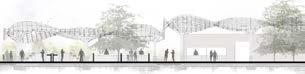
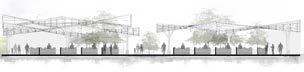
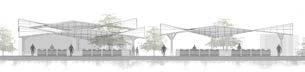
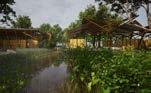
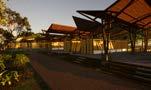 Alejandra Pizarro - David García
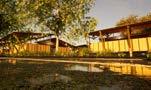


Un centro de capacitación es un equipamiento educativo en el que se reciben y se ofrecen herramientas, conocimientos y fomentando las habilidades que cada individuo posee para así poder explorarlas de la mejor forma, logrando un desarrollo prospero. El funcionamiento correcto de este centro se basa principalmente en el aprendizaje basado en las prácticas, manejando 80-20, es decir, 80% práctica directa y 20% teoría. En este caso nos basamos según la necesidad productiva y educativa que requiere el municipio del Boquerón, ubicado en San José Del Guaviare, especializando la formación en temas relacionados con la porcicultura y la avicultura. De esta forma, se genera una nueva oportunidad en campos económicos, y sociales, generando un paso directo a la reintegración social y al progreso de la región.
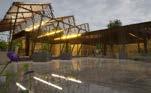

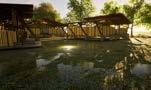


El equipamiento Centro de capacitación pecuario Crei se especializa en la formación en temas relacionados con la porcicultura y la avicultura, para generar un aprendizaje directo con el contacto con los animales, teniendo en cuenta la tradición campesina del departamento del Guaviare, debido a que mueve gran parte de la economía nacional. Es muy importante generar espacios en donde se capaciten a los jóvenes que quieren emprender en el campesinado al dar el paso a la reintegración social, de este modo se comparte el conocimiento tradicional dando paso al progreso de la comunidad para construir un futuro en el reintegro desde la educación innovando para permitir el progreso a nuevos tipos de productividad desde las actividades a tratar.
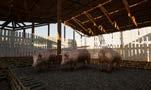
El equipamiento está dirigido a los jóvenes campesinos del Boquerón y sus zonas aledañas, fomentando la productividad de la población campesina desde el conocimiento que se adquiere en el Centro de Capacitación Pecuaria Crei, logrando generar una nueva forma de economía y propagación de conocimientos en la comunidad, entendiendo el modelo como una forma de negocio prospera que puede replicarse en toda la región.
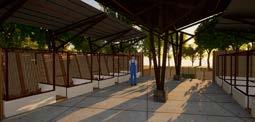
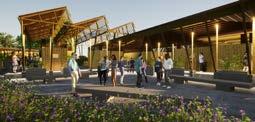


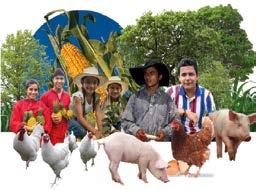
Para la forma del centro de capacitación pecuario en un principio se tenia la idea de dar una evolución a la forma de los corrales en los cuales habitan estas especies, sin embargo debido a las condiciones específicas que se requieren en los galpones de estos animales se tuvo que simplificar la forma, de ese modo se buscó la forma de mantener estas condiciones específicas pero a su vez innovar en la forma de estas así dando una suma de diseño y función a la vez, teniendo en cuenta esta idea cada corral cambia su forma de acuerdo a la especie que reside en ella, y así se le da mayor fluidez y atractivo visual a cada corral, a pesar de que en planta la forma llega a ser común, el valor del artificio reside en su forma y estructura a nivel peatón denotando así la investigación previa sin dar lugar a caprichos arquitectónicos, por otra parte para el centro educativo se buscó dar una combinación estructural de ambos corrales para dar a entender que hace parte de un mismo proyecto manteniendo la idea mencionada anteriormente donde la estructura es la que brinda el valor arquitectónico del lugar.

It is a productive facility, born from the idea of giving economic independence to the people of the township of Charras, it goes hand in hand with their entrepreneurial projects and the desire they have to work to achieve their own livelihood. As the seed of a new beginning, it seeks to be, in addition to the aforementioned, an example for the rest of the country of cyclical production, not only with regard to aquaponics, which has been its central activity, but also complementing itself with the other two productive projects, being an example of an activity that, when compacted, generates the least deforestation, and being cyclical, the least loss of waste.
Regarding its function, it has its theoretical basis in the Human Development Index (IDH), to ensure the quality of life of the people in this new settlement. Two of its three pillars are put into practice, education and economic income, which is why the project seeks to be a fusion of both. Giving people a source of work that is an example for the rest of rural areas, in addition to providing technical preparation.
The project is raised taking into account the wishes of the main actors of the project, because they had the desire to carry out various productive ventures.
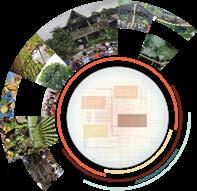
For this reason, the equipment focused on the young-adult population, which is characterized by being the majority, being this a potential work force. It is also considered as a possible connection to the rest of the country, since it can have a large production of fish, vegetables, fruits, among many other products that can become regional and even national trade, making the Boquerón a central location. at the territorial level.
The implantation of the equipment as well as its shape was decided as a result of the use that it would have, creating
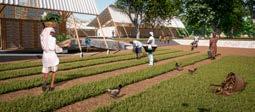
a whole center or productive heart, which allows the routes between the different volumes and productive zones to be optimized, in order to generate a more efficient economic system. On the other hand, the shape responds to the activities that take place there, creating sheds that allow a better distribution of activities in such a way that each space is used. The enclosures and covers, as well as the materials, were chosen taking into account the climate of the place, always seeking to achieve the climatic comfort of the user through shade, enclosures that allow good circulation, green facades, among others. In addition to this, a water collection system is created through the roofs, to make the most of the great rainfall that exists in the place, using the water collected in aquaponics and irrigation of crops.
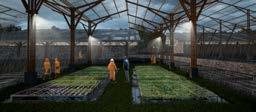
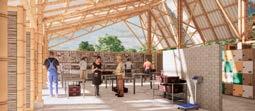
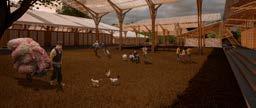





It is an educational center with principles and values focused mainly on peace and the integration of all those who make use of its spaces, giving way to the appropriation of this project by all the people who visit it.
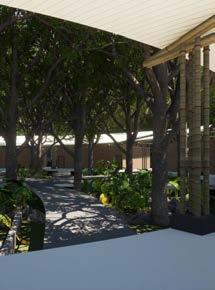
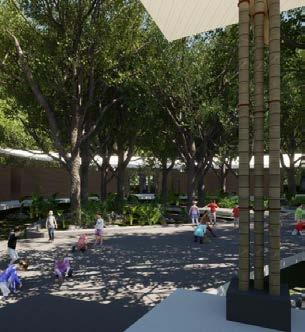
It is planned to be built with local, sustainable and durable materials so that the user experience is complete and leaves a feeling of joy in everyone’s memory.
This equipment proposes the unification of educational spaces through multi-grade classrooms and an important relationship with their natural environment, as well as spaces for shared address, restaurant, library, infirmary, bathrooms, accommodation for teachers, student boarding school and of course multifunctional classrooms, all with in order to provide solutions to the lack of physical and natural spaces for a comprehensive educational experience for the development of children and young people.
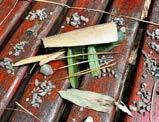
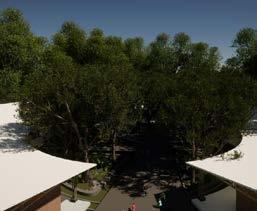
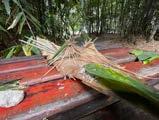
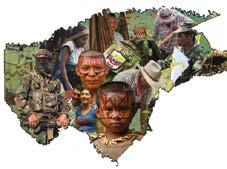

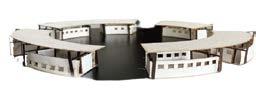
We were always clear about the fact that we wanted to play with existing nature to provide a sensitive and non-artificial experience, we were experimenting with unconventional shapes until we realized that the circle has valuable properties when it comes to forming unity and centrality, as well as connecting spaces and vary in their hierarchies.
We had at least 3 experimental phases before arriving at this fine shape, always keeping the curves and the central square given by its geometric nature.
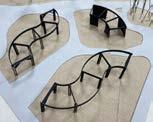





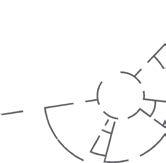
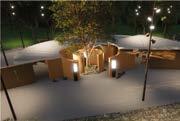
This equipment is an arts school intended mainly to promote the economic and cultural development of Boquerón, all this through crafts and traditional trades of the different cultures found within the community, using all these creations for academic and production purposes. what could be the sale and distribution inside and outside the corregimiento. The 4 main activities found in the school are pottery and weaving in the largest module, followed by a carpentry workshop, and finally in the smallest module, and in the patios, basketry. These spaces are loaded with work areas, tools and equipment to make training and production of handicrafts possible, and locker and storage areas for the care of materials.
This equipment has the function of trying to promote the activities and cultural and artistic traditions of the members of the Boquerón community, all this thinking about the great variety of cultures and provenances existing in it, and to be able to take advantage of these, not only so that part of the origin and identity of each person is recovered, but rather that these types of activities are used as a great impulse and opportunity to give other types of economic activities and help the possible growth of this community, with a market and a workshop of enormous importance throughout the country.
The arts school is intended for the entire community in a very general way, anyone of any age or profile can be part of these activities, but it would mainly be aimed at potential producers and teachers with the ability, experience or prior knowledge of any kind. , to be able to make the best possible use of the spaces and tools, and to be able to direct others.
The shape of the equipment from the beginning was thought so that each space was dedicated to a specific activity, but with the ability to have a good relationship with the other spaces, without segmenting each workshop with the rest.
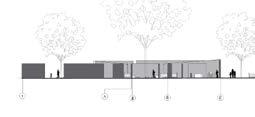
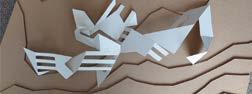
The central circle is the most important space of all, it is the connecting point between the interior and the exterior, and it is the corridor that connects each of the 3 spaces with each other.
The backyard was designed as a place a little further away from the rest, in order to be able to develop school activities, without using tools, it is a place where you can make simpler crafts such as handles or even basketry.
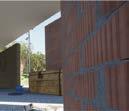
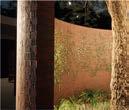
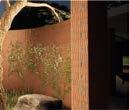
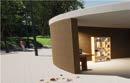
It is an integrating element that is developed from a biopark with vermiculture and beekeeping production, economic activities that are friendly to the environment and with a very low investment, which makes them accessible to anyone, in addition, the place would provide all the facilities for learning through the spaces available
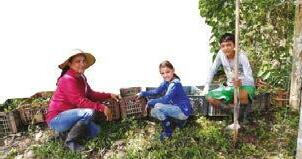
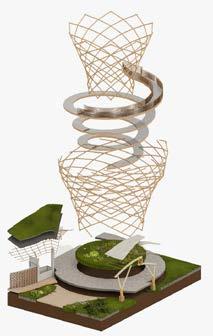
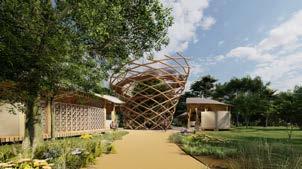
Part of our objective is to generate equipment capable of responding to weather conditions, lighting, ventilation among others with 3 fundamental pillars -Environment -Economic feasibility -Articulation of social dynamics
That seek to integrate ethnic and social diversity through joint work, provide new economic opportunities, but take into account respect for other forms of existing life.
The equipment is aimed at all the inhabitants of the boquerón, especially productive youth, whether they are natives, settlers or ex-combatants.


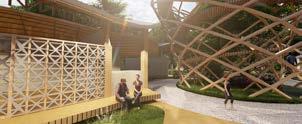

A centrality is developed A centrality structured by the interior garden that welcomes and makes possible a new form of interaction based on the verticality of the viewpoint, which also seeks to generate a tourist attraction that highlights the existing ecosystem richness.
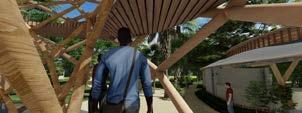
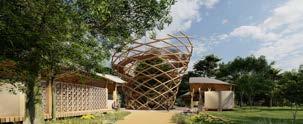
It was developed from an analysis of the necessary conditions for beekeeping, such as food sources, water in a nearby place and in the case of vermiculture, the classroom for the manufacture of compost far away to avoid the affectation due to the odors, as well as drying and storage sites.
It should be noted that this space has a wide development of green areas that seeks to constitute the biopark, the preservation of the flora and satisfy the needs generated from beekeeping.
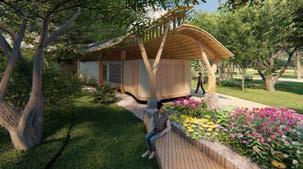
For whom is it intended?
 María Paula Sandoval - Sofía Sandoval
It is a piece of equipment that manages to tell the story from the most sensitive and experiential point of view from the past. to the future that the community plans.
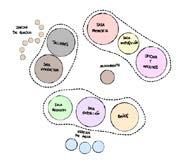
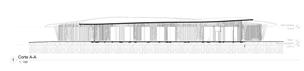
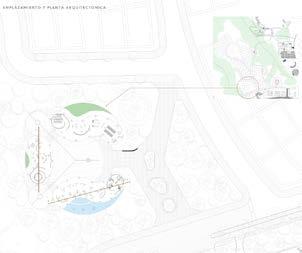
It seeks to change the perception of the peace process that many people outside history, we realized that the best way to set up a memory center is to work together with the community and that they themselves have the opportunity to tell and show everything they ever wanted and could not.
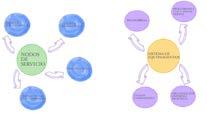
The reality of this project is planned to be a free place both for the community and for external people who want to know and seek a little more information. It is thought that both children and adults can visit it and contribute to its development.
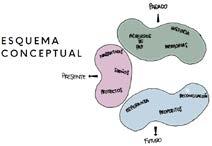
A pavilion-type structure is proposed since it was very important to show that impressive equipment at the entrance of the farm, thus giving that concept of a dynamic and open space. People can enter any of the three volumes without the need for a forced tour since the story that is told is not to be told in any specific order.
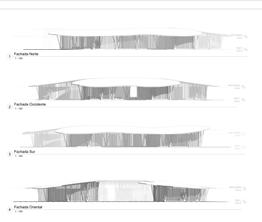
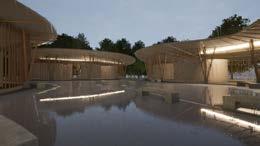
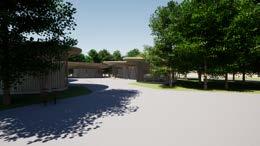
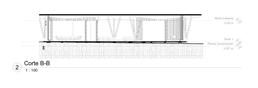
Text of experiences from the development of the work
Conclusion from the sensible
Conclusion
I.I.I PPU 1
Projects organized by the Pontificia Universidad Javeriana in order to contribute to the construction of a better society https://www.javeriana.edu.co/web/institucional/proyectosplaneacion
Demographic and behavioral
Group of young academics who are studying from the sixth to the eighth semester at the Faculty of Architecture, architecture career at the Pontificia Universidad Javeriana, Bogotá, with collaborative purposes in prosperous projects nationally.
Geographic, Demographic and Behavioral
Niyereth Vélez and Luis Fernando Gómez as direct contact of the PPU in the training process
Group of Manuel Moreno: Daniela Rodriguez, Natalia Cruz, Sebastian Forero, Tatiana Cárdenas, Valeria Vargas, Andres Ramirez, Sofia Sandoval, Cristian Carvajal, Andres Jorge, Manuela Delgado, Sofia Cordero, Maria Paula Sandoval.
Group of Carlos Eduardo Águilar : Alejandra Pizarro, David García, Mayra Rubio, Carlos Bueno, Nicolas Vera, Santiago Rodriguez, Valeria Tovar, Maria Paula Díaz, Diego Ortiz, Felipe Forero, Juan Pablo Charry, Manuela Goméz, Victoria Floréz.
Group of architecture teachers who fulfill the role of teaching, guiding and serving as a base and support from different perspectives and fields of study to architecture students in order to be able to meet the objectives and carry out the projects that are going to be presented in the final proposal to the peace signatories on their resettlement at the La Esperanza farm.
Geographic, Demographic and Behavioral
Directors: Carlos Eduardo Aguilar Seligman - Manuel Moreno Barrios Management : Martha Consuelo Salas Naranjo Technology: Daniela Carrasco Beltrán Town Planning: German Montenegro Miranda Environmental: Ricardo Andrés Ibañez Gutiérrez Esthetic: Oscar Rodrigo Perilla Daza
25 students
7
Group of people who direct or govern some activity, business, institutional, corporate, governmental, etc.
https://dle.rae.es/directivo
Demographic, Geographic, Ethnographic, Behavioral
Directives - 6 Members
2 II.II.I Family of Signatories Boquerón 9 of people who accompany former members of armed organiz Demographic All equipments
Demographic, Ethnographic, Geographic Mestizos, whites, Amerindians, Indigenous, Afro-Colombians
Assist in peace contribution and consolidation
Achieve great learning on the part of the managers and sociologists for the procedure of a rural project, and with this, to understand and appropriate the territory for the execution of equipment that is coupled to the context, the budget, and the needs of the users of the Boquerón and reinserted from the La Esperanza property, in order to generate a better quality of life for them.
Ensure and generate a dignified transfer of the community to its new habitat
Having a sustainable community of its own that allows establishing a sedentary and productive territory
Generating a prosperous future through academic learning that the university provides. In addition, family support is a motivation for each of the students, because through them they can generate various lessons.
Help in the first place the training of students during their educational and training process, managing to recognize and apply the work of the profession in a real case, seeking in turn to understand a growing community together, managing to satisfy their current and future needs for through approaches proposed by their students during the school year, giving expected results of a high level.
The teaching and learning that is transmitted to the students is the basis that a teacher seeks and motivates in the academic course that he is in charge of, on this occasion the opportunity to be able to work and teach is taken advantage of, having a real case study in which which teachers seek to transmit their lessons and knowledge to students in the best way.
Obtain a prosperous future, where they achieve the fulfillment of their objectives and goals, taking into account each of the experiences, their values, knowledge and recognitions.
Private Property, Security, Community Education Failing to meet the expectations of the community on behalf of the university.
Recognition of their elders, based on academic and affective responsibilities, in the same way the generation of knowledge within their daily lives.
Failing to obtain certain expected results in certain situations and in most cases in their dreamed futures, thus generating an unexpected and unscheduled future.
It requires the participation and motivation of the students and other members in charge, as well as contact with the community to work for their welfare.
It requires the help and guidance of various teachers who support and reinforce the ideas, and the objectives programmed for this project, where the purpose is to help users in search of a positive change in their lives.
Various workshops and documents are required for the elaboration of the projects according to what is proposed by the community and the university.
Various sessions of each of the components within the subject of the project are required, which allow the reinforcement of various determinants to be taken into account when projecting the objective.
Habitat para la pazhttps://issuu.com/luisadiazduarte/docs/h_bitat_ para_la_paz#:~:text=El%20presente%20libro% 20es%20una,apropiado%20y%20bello.
Andres Ibáñez environmental component, Germán Montenegro urban planning component, etc. Links PUJ: https://www.javeriana.edu.co/inicio
Generate that the students have favorable results when presenting the project to the community, in this way it is ensured and verified how good the lessons and knowledge applied and shared to their students are.
Recognition of personal and group values as teachers, generating recognition parameters, group work, problem solving, job security, among others.
Not reaching a favorable result of the project with the students with the acceptance of the community, since this would indicate that it was not possible to transmit and execute the learning in the best way, solving their basic needs with our interpretations in the best way.
Help and collaboration is required in obtaining the maximum information on San José del Guaviare - Boquerón Charras that allows us to understand the territory and the population in order to propose and respond to the needs and requirements of the territory through its teaching methodologies reflected in student results.
The PPU in this case would be one of the main collaborators and bases for obtaining information on the territory.
Links PPU: PPU - Oficial Pagel: https://www.javeriana.edu.co/web/institucional/ proyectos-planeacion
PPU - Habitat for Peace Base Information: https://arquidiseno.javeriana.edu.co/w/noticiah%C3%A1bitat-para-la-paz?redirect=%2Fnoticias%3FaID%3D11682118% 26tID%3D22767#:~:text=Entre%20el%2029%2 0de%20agosto,Sostenibles%20en%20Am%C3 %A9rica%20Latina%20%E2%80%93%20CLE SAL.
Raise the bases of analysis and development of the "Habitat for Peace" project, which manage to give way to the structuring and dignified reintegration of families interested in this initiative.
Being part of a project as big as Habitat for Peace, which helps the learning and motivation of students for this type of development and increases their interest in research and professional development.
Ensure that the student obtains positive results in terms of the design and structuring of the project, which allows in a few years to meet the objectives of the studied community.
Good communication between the work group and the population for whom the project is being developed, in order to provide solutions to the problems analyzed.
Failure to achieve continuous development in the project carried out, putting in deficit the relationship with the community, for which reason an agreement could not be reached regarding the planning and development of the intervention in the Boquerón corregimiento.
The help of the work staff is required to get ideas and important information to develop the intervention in the Boquerón. Likewise, you must have an excellent social and labor relationship with the project communities.
Documentation delivered by the PPU, meetings with the project communities, bases of the development plan for Boquerón and the Nueva Esperanza Estate, and constant development and verification of the architectural development by the course directors.
PPU - Información Base Habitat Para La Paz: https://arquidiseno.javeriana.edu.co/w/noticiah%C3%A1bitat-para-la-paz?redirect=%2Fnoticias%3FaID%3D11682118% 26tID%3D22767#:~:text=Entre%20el%2029%2 0de%20agosto,Sostenibles%20en%20Am%C3 %A9rica%20Latina%20%E2%80%93%20CLE SAL.
PPU - Pagina Oficial: https://www.javeriana.edu.co/web/institucional/ proyectos-planeacion
PPU - Pagina Oficial: https://www.javeriana.edu.co/web/institucional/ proyectos-planeacion PPU - Información Base Habitat Para La Paz: https://arquidiseno.javeriana.edu.co/w/noticiah%C3%A1bitat-para-la-paz?redirect=%2Fnoticias%3FaID%3D11682118% 26tID%3D22767#:~:text=Entre%20el%2029%2 0de%20agosto,Sostenibles%20en%20Am%C3 %A9rica%20Latina%20%E2%80%93%20CLE SAL.
Accompany the families of the signatories in the process of reintegration and participation in order to generate a cooperative community that teaches and learns to build the La Esperanza territory
Build a future both for them as a community and for the municipality. Basic services, education and housing.
It is one of the four conforming municipalities of Guaviare, located south of San José del Guaviare, municipal capital. It refers to all the inhabitants of the neighboring municipality of Miraflores near the Boquerón htt//ifli/
Group of People that make up an ancestral community near the village of Boquerón, in order to access the programs and services provided by State institutions.
https://sinchi.org.co/sistema-deasentamientos#:~:text=Son%20los%20n%C3%BAcleos% 20donde%20habita,habitacionales%20con%20precaria%2 0infraestructura%20institucional.
Housing groups established by certain communities, generating a close and direct relationship and connection with the village of Boquerón and the La Esperanza farm.
https://dle.rae.es/asentamiento
It is a government entity, which has the function of managing the resources of each
Demographic
Mixed
Develope territorial, commercial and use relations between the settlements
Consecrate new commercial routes towards the Boquerón, arranging means of transport for its realization.
Generate social integration through the institutions provided by the state, such as each one of the facilities designed, and with this, manage to find various life opportunities.
The different communities and neighboring settlements await the potentialization of Boquerón and Finca Nueva Esperanza as a supply point and that, in turn, can satisfy the basic needs that they currently require.
Allow a better administrative and social development in the Boquerón from the incorporation of municipal entities within it.
Have at your disposal a greater number of services at an intermunicipal level
Have a better departmental infrastructure according to the territorial dynamics explored
Their greatest motivations are their families and people closest to those who aspire in the future to be able to have a better quality of life within each of the national territories.
Being able to establish a new urban point that allows them to have an improvement in aspects and basic needs in their communities (Labor, educational, productive, security, among others).
Being able to establish a better administrative, social and economic development in the Boquerón corregimiento, which allows a more direct relationship and communication with the Gi ffi ltd
Being part of the development in the region, to experience improvements in the quality of life
Greater coverage in services the services provided, improvements in the qualities of habitability
Be part of regional development by finding new sources of trade and services
They want to have a great quality of life, just as they manage in different areas of the country, specifically in large urbanizations.
Better infrastructure and services to concretize the cultural exchange and of goods and services
Labor recognition nationally, and attention to each of the important aspects for their experiences, such as commerce for their daily food, better quality of housing within it, better hydraulic network services, etc.
Being forgotten about government intervention with low public and private investment
Not being able to lead a dignified life, due to certain national problems that harm the government and they are the ones truly affected by these situations, thus generating fear among each of these places, and little life expectancy.
It requires strengthening physical relationships with the rest of the department, promoting tourism and other human exchange activities.
Maximum help and collaboration from the national and departmental government is required to meet the needs correctly in the sector.
Strengthen road networks and services in such a way that better connections are established between the municipality and the Boquerón http://www.miraflores-guaviare.gov.co/
Generate talks and meetings with the government to reach an agreement about their best quality and life expectancy.
Promote development and investment in the region since in this way they could improve and enhance many of their basic social needs.
Establish a much more stable and close connection with the different municipalities and corregimientos of the area, so that each one of them can make decisions and guidelines according to the life of the communities.
Improve the infrastructure and the basic guarantees of its inhabitants for the relations that are generated between them and the neighboring settlements.
Support from the Guaviare mayor's office to have better logistics and administrative development in the intervention area.
Not being able to currently establish strong and direct relationships between them in educational and labor aspects, in turn, preventing them from establishing these same relationships with the rest of the nation.
Failing to achieve the proposed relationships and preventing local decision-making that are mostly not decided in the Guaviare mayor's office
It is necessary to establish a direct connection and establish new strategies that allow a better relationship and response to basic needs between municipalities.
Attention to the administrative and social part of Boquerón, that the society contact the Municipal Mayor's Office to make key decisions for the growth and structuring of the Boquerón.
It is expected to strengthen and develop the services and scope through the equipment proposed in the Boquerón (EducationalProductive - Recreational - Commercial, among others).
Strengthen community decision-making in the corregimiento and in the neighboring municipalities, so that in this way the growth of the community of the municipal organization is positive.
Action plan: https://www.oas.org/dil/esp/Plan_de_Accion_Q uebec.pdf
Link - Proposed projects of the equipment group: https://arquidiseno.javeriana.edu.co/w/noticiah%C3%A1bitat-para-la-paz?redirect=%2Fnoticias%3FaID%3D11682118% 26tID%3D22767#:~:text=Entre%20el%2029%2 0de%20agosto,Sostenibles%20en%20Am%C3 %A9rica%20Latina%20%E2%80%93%20CLE SAL
http://www.miraflores-guaviare.gov.co
Generate a space where the necessary constructions for the habituality of the inhabitants of Boquerón can be easily developed.
Investigate
Preserve, protect, improve the environmental conditions of the territory, making use of environmental materials and sustainable techniques, which allow a friendly connection to the environment.
These institutions seek to promote and encourage in the Boquerón the compression and protection of the Amazon jungle and all its primarily environmental components, where they not only seek protection but also innovation in certain aspects such as productive ones in livestock and agriculture fields.
https://minciencias.gov.co/content/in stituto-amazonico-investigacionescientificas-sinchi https://www.agrosavia.co/#:~:text=A GROSAVIA%2C%20es%20una%20 entidad%20de,competitividad%20de %20la%20agricultura%20nacional.
https://en.wikipedia.org/wiki/Sinchi_ Amazonic_Institute_of_Scientific_Re search
Being able to generate structures in which the community connects with the environment with basic needs such as culture, academics, among others.
Generate structures in which the development of students is reflected in terms of the needs of the community.
Not being able to generate the necessary spaces for the community and having problems at the time of development
It
Documentation of the types of soil, and characteristics of the environment to be able to generate the infrastructure properly
PPU - Pagina Oficial: https://www.javeriana.edu.co/web/institucional/ proyectos-planeacion PPU - Información Base Habitat Para La Paz: https://arquidiseno.javeriana.edu.co/w/noticiah%C3%A1bitat-para-la-paz?redirect=%2Fnoticias%3FaID%3D11682118% 26tID%3D22767#:~:text=Entre%20el%2029%2 0de%20agosto,Sostenibles%20en%20Am%C3 %A9rica%20Latina%20%E2%80%93%20CLE SAL. htt//ikidi/iki/Cti%C3%
Support the care of this main ecological structure of the department of Guaviare, in order to improve the environmental conditions in the territory from the various activities that can be implemented in the various facilities proposed.
Mitigate the degradation of the environment, Stop the destruction of the ecological system
Efficient
and https://www.sanjosedelguaviareguaviare.gov.co/Proyectos/Paginas/DetalleProyecto.aspx?IdPry=13
Improve the care and preservation of these natural spaces that seek to give life and ecological and environmental stability.
Sense of belonging to the environment, encourage people's participation
Resources, being heard by large entities, groups of people interested in helping
Have Talks are required between the population, environmental organizations and the government in order to address this issue in the most equitable and efficient way possible.
basic facilities and tools in good condition with qualified personnel to be able to establish their fields and study and research spaces within the farm. Better Generate commitments between these 3 entities in order to better respond to their needs and those of nature.
Preserve and protect mainly environmental aspects that allow them to ensure that their work and study is being carried out, in turn, proposing objectives such as job security or recognition.
Cause losses, carelessness and direct abandonment in the different fields of study and research that these organizations carry out, allowing the degradation of these from macro scales (Department) to micro (Finca La Esperanza - Boquerón).
Community awareness of protecting the main ecological structure, which allows improving the conditions of the forests and wild animals in the space being studied, in order to reduce damage by criminal and commercial activities.
Plans for the protection and care of green spaces and include the community in the maintenance and care of forests, avoiding criminal and commercial activities with nonrenewable natural resources in their greatest percentage.
Increased deterioration of the main ecological structure of Guaviare, affecting the forests, rivers and wetlands near the area of exploitation, without any care or visualization prior to what has already happened.
Plans for the care of natural parks and documents that guarantee the protection of areas in danger of massive deterioration.
Possible
From the use of educational or productive equipment, a much more rigorous and strict care could be achieved in terms of the care of ecosystems close to human populations.
https://www.raisg.org/es/radar/como-salvar-elamazonas/
Cooperatives are people-centred enterprises, owned, controlled and directed by their members in response to common economic, social and cultural needs and ambitions.
https://www.ica.coop/es/cooperativas/que-es-unacooperativa
It is the entity responsible for planning, gathering, processing, analysis and dissemination of official statistics in Colombia. The National Administrative Department of Statistics -DANE- is the entity responsible for planning, gathering, processing, analysis and dissemination of statistics Colombian officials.
https://www.dane.gov.co/files/acerca/PF.pdf
VI.II.I President of the Republic (Gustavo Petro) 9
Afro-Colombian population 3.95%
Indigenous population 8.6%
Total population 88,940 in Guaviare
Demographic, Ethnographic and Psychographic Gustavo Petro - President of Colombia 1
All
https://dle.rae.es/fauna
certain territory Geographical Plant and animal species belonging to and alien to the ecosystem more than 2000 All equipments
Fishes: cachama, yamú, la piraiva, el guaracú, el valentón, el bagre sapo, el dorado, bagre amarillo, páyala, el payalín.
Geographic and Demographic
Mammals: el perro de agua, la nutria, el tigrillo, el león de selva, el venado negro, la lapa, el chaqueto y el cachicamo.
Reptiles: la tortuga, el morrocoy, el guió negro, la boa, la culebra cuatro narices, la culebra cascabel, y la cazadora.
pecies
It
is expected and education, and continuing ecosystems, currently as deforestation, land
generate a response to the of the inhabitants of Boquerón economic, social and cultural sphere.
Promote the development of responses to the needs that arise within the territory of the Boquerón, and with this to be able to generate solutions.
able to obtain information that helps to understand the social, economic and environmental problems of the country.
Contribute efficiently and positively preparation of development in the place, in order to meet expectations of the signed agreement
Analyze information to make the best public and private decisions.
Give active responses when problems arise for a wide range of possibilities for good development in the community.
Depth recongnizing in the economic, social and cultural problems of the anchovy community.
Not being able to respond to the problems of Boquerón users causing the development of a bigger problem.
Communication with the community is required in order to create more focused responses
Informative data of the economic, cultural and social spheres that take place in the community are required.
https://www.ica.coop/es/cooperativas/que-esuna-cooperativa PPU - Pagina Oficial: https://www.javeriana.edu.co/web/institucional/ proyectos-planeacion
PPU - Información Base Habitat Para La Paz: https://arquidiseno.javeriana.edu.co/w/noticiah%C3%A1bitat-para-la-paz?redirect=%2Fnoticias%3FaID%3D11682118% 26tID%3D22767#:~:text=Entre%20el%2029%2 0de%20agosto,Sostenibles%20en%20Am%C3 %A9rica%20Latina%20%E2%80%93%20CLE SAL.
Obtain immediate information for a better analysis of the country
Great potential of productive systems where new technologies suitable for a sustainable future are implemented and generate extensive educational systems so that young people themselves help the municipality to get ahead
A quality educational system to generate learning, employment and high development showing the same community how to build and develop their new home
Specific data from each part of the country, in the case of the anchovy, detailed studies.
Data analysis where the most information of the place is collected taking into account demographic, social and economic data
in the construction sector in Future construction projects contracts for the sale and execution of proj part of the reinsertion of Charras in Boquerón
Conserve and preserve the species inhabit the territory of Guaviare
expected to promote the care protection of fauna through education, seeking to consolidate establish criteria that avoid continuing to destroy their ecosystems, causing problems as currently found due to factors such deforestation, fires, illicit crops, grabbing, tourism, among others.
https://especiales.semana.com/defo ti/ihtl
The quality of life of species needs to be conserved and improved over time to ensure their existence.
Protection of their natural habitats and resources they need for their survival.
They require constant protection, food, home and resting areas, all this without human involvement or intervention.
Hunting, felling of trees, affectation of habitats, among others, should be avoided, since in this way we only generate and cause the extinction of species.
Safety and well-being for tourists ibility in the Colombian tourist pano Contributions to the local population e areas and places to visit as well as comfort Propose the best solution for peace improve the footprint left by the fighting and contribute to the Peace agreement between communities Generate a space of peace to the communities that were affected
Recognize environments and societies that have been affected by violence over time and the possible responses Not being able to remove the violence generated over time, generating futures that are more affected
It is necessary to identify the priorities of the different species since currently some of these are being affected by human intervention within the territory.
Propose specific factors and strategies for the preservation, care and protection of species, avoiding continuing with alterations such as livestock expansion, road construction, tree felling, among others, taking into account that other aspects such as care must be taken care of and prioritized. and preservation of forest reserves, all these aspects can be raised and strengthened directly from some facilities (Educational-Livestock).
An introduction to the problems that have been generated by violence and how the responses to generate peace Violence data proposing how the most vulnerable communities could be protected
Fauna Primer (Contains threats and recommendations for the care of fauna in the Guaviare). https://fcds.org.co/wpcontent/uploads/2021/02/guia-fauna-corr2.pdf
Investigative article (SINCHI) (Contains specific data on the variety of fauna species, endemic characterization, degrees of threat).
https://www.sinchi.org.co/files/PUBLICACIONE S%20DIGITALES/Zonificaci%C3%B3n%20Am bitl%20%20Odit%20d%20l%2
PPU - Pagina Oficial: https://www.javeriana.edu.co/web/institucional/ proyectos-planeacion PPU - Información Base
Methodological process in the design of facilities for the noble community of Peace Marco Aurelio Buendía - Boquerón Guaviare.
The equipment project # 1 and 2 of the Faculty of Architecture and Design of the Pontificia Universidad Javeriana in its participation and contribution to the University Planning Project: Breath, Life, and Habitat through the design of a system of equipment for the new settlement of the signatories of the noble community of peace Marco Aurelio Buendía relocated in the village of El Boquerón in San José del Guaviare, explained from his program of activities and methodology was carried out from 3 academic moments implemented at the head of the two directors responsible for the management of the group of students and teachers of thematic components. First moment. Prior to the start of the academic semester, we were invited to be part of this joint PPU project, and contribute from our experience in the development and architectural design of urban facilities and their implications, but now in the rural context within a particular community such as one of the Guaviare peace signatory groups.
The call from the Department of Architecture brought together in the first instance several of the second cycle projects: urban centers, popular housing, rural housing, city region, and research hotbeds among the main ones.
Equipment management criteria for the rural (agrarian) context.
The facilities, in the framework that concerns us (PPU - Habitat for peace - Boquerón, San José del Guaviare), for their management and projection are understood from three operational dimensions, responding to their different roles and repercussions in the spatial physical place and in the social, cultural and labor dynamics of the community:
Operational dimensions of the rural facilities of Boquerón:
The equipment acquires its preponderance by its service character. Its essential property is that it is a public and open building designed for the population to be served.
The equipment implies a network operation since it is harmonized with the elements and systems of the urban structure (public space, roads, parks, centralities, etc.) and is complemented by the other services of the place (other equipment).
Our equipment team made up of groups # 1 and 2, took on the challenge as a study plan to develop throughout the 2022-3 academic semester.
Thus, and from the work developed from the equipment project, this first moment consisted of the initial introduction by the PPU group, documentation, and approximation to the background contained in the book Habitat for peace, as an information base (product from previous stages of the PPU with the participation of the community), and sensitive knowledge of the socio-environmental context of the place from a project investigation approached from each of the component themes: urban planning, management, environmental, aesthetic-sociocultural and technology.
The inquiries of the students with the orientations of the teachers revolved around being clear about several project aspects, on the one hand, understanding the community, its origin, its social composition, ways of life, and economic activities to have a clear image of the particularities of their ways of life, simultaneously progress was made in the recognition of the place and its spatial physical context, accounting for both the private property for the relocation and the Boquerón hamlet as a preexisting settlement.
On the other hand, it was reflected and an approximation to the meaning, determinants, and implications of what the design and projection of the equipment mean within the following aspects was carried out:
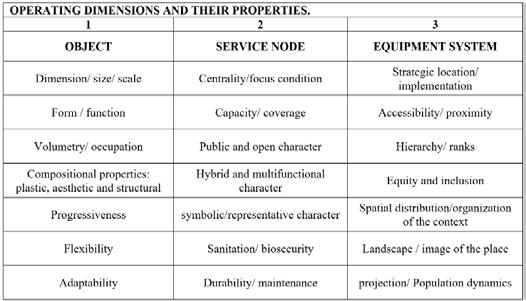
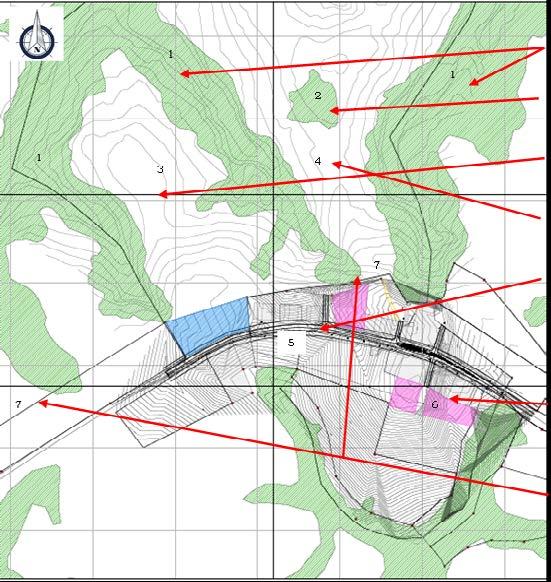
The existing natural structure, forests, and pipes, as well as the road and existing buildings of the Boquerón hamlet, are taken as starting reference. The paths and footprints on the property are highlighted as the first lines of composition.
The western sector is used because it offers a “closed” containment to the housing area and favors a compact layout (not dispersed).
The eastern sector and the extension to the north of the property are designated as a zone of growth and rural and productive housing
It is proposed to use the farmhouse as a support facility for the productive area of the property.
The initial arrangement of the houses is given from the existing water wells, at the same time that they become a node for the equipment.
A radial path is generated from that node. The houses are ordered by groups. Wedge type (“pizza”)
The need to integrate the green edges (forests) with the fabric of the houses is raised, as well as crossing paths between the arms of the forest to connect the two sectors, eastern and western.
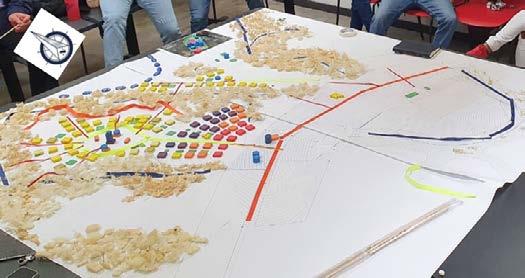
The need for a transition/buffer strip between the forest and the housing area is raised.
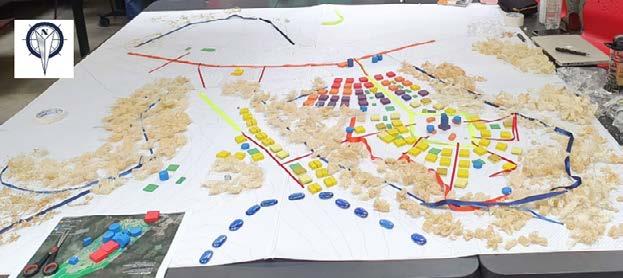
A transition strip is proposed between the zone of greatest impact (towards the highway) and the middle and internal zone of houses.
It is recommended to strengthen the network and distribute the equipment with greater clarity of criteria both in the existing hamlet and in the new housing area.
It is considered to reinforce: the spatial characteristics of the existing context, make the interventions on the existing hamlet more noticeable, and consider the isolation of the electrical line and the electrical substation.
This first stage was also the moment to contrast some ideas with the project of urban centers and rural housing in the first interpretations and positions of the way to approach this project in light of the expectations of the community and within the scope and academic commitments expected. It was always made clear that above all this effort would be framed within the academic development and equipment subject plan.
On the other hand, progress was made in the first ideas of occupation and structuring of the projected settlement for some 84 housing units for the signatories considering a population projection of Boquerón of approximately 1,000 inhabitants.
From the facilities project, we propose two occupation models as a contrasting exercise to arrive at a unified urban proposal for the 2 groups. The general determinants that were reached were the following:
- Use the western side of the La Esperanza farm to locate the housing area (concentration and morphological grouping requested by the community).
- Allocate the eastern side for the location of productive and training projects as a gateway to the agricultural area of the farm.
- Configure the block facing the town center on the road front (Boquerón Charras) as an urban gate to the housing area.
- Generate a buffer strip made up of the medium voltage line (affectation), its green zone (isolation), and a group of facilities with greater community activity, between the housing area and the highimpact, uses located on the highway,
- Dosage and location of the equipment in such a way that they allow the integration and union of the population, both existing and relocated around the sharing of the equipment.
Due to the above, said occupation and structuring schemes were developed under the idea of “village” as a conceptual model, understood as a rural conglomerate (low density) and associative of families with diverse origins that share basic collective services, productive activities, and ways of living. rural life framed from a vision of permaculture.
It is characterized in general terms by its interaction and fusion with nature, tending towards a more autonomous human community that makes intelligent use of resources and energy and is less dependent on what is essential for its functioning and daily life.
The village as an open system implies a responsible and eco-productive way of life with its environment, which generates a transformative social dynamic.
Our village proposal is based on binding designs with the land, its ecosystems, and the biotic-cultural characteristics of the place, reinforcing ties and community fabrics between the inhabitants and visitors.
This gives space for the development of bioefficient productive practices such as agroecology, eco-agriculture, bioclimatic architecture and bio-construction, establishing the following organizational criteria:
- The natural elements as primary computers of the place from an eminently rural setting.
- Organic morphology in its layout of accessibility and mobility, seeking a direct relationship with the edges of the forest.
- Grouping of houses arranged in semicircular layouts balancing the density with a distance that allows porosity in the occupation without losing the group unity of the group of houses.
- Dosed network of equipment from the complementarity of services and spaces with pedestrian interconnection.
- Strong associative and community ties to support the daily activities of the community.
- The community understood and managed on a human scale responding to its rural condition where the facilities play the role of architectural catalysts as scenarios and support elements for the life of the village of La Esperanza.
Second moment.
After the ethnographic contextualization and general urban proposal, the selection of each one of the facilities to be developed within the action strategy with which this stage was faced was continued: to harmonize the new settlement of signatories with the existing hamlet of Boquerón starting from the equipment system as the structuring and ordering base of the place; Solve the urban from the primary collective spaces: facilities, public spaces, and natural structure.
The said strategy was implemented and gave the facilities a preponderant role in the configuration and urban proposal of occupation and order of the place, both in the relocation area and in the urban area.
Among the main design criteria, the equipment was considered as:
-The ordering elements per se and articulators of urban morphology.
-The triggers and generators of dynamics and social fabric.
-The milestones and spaces (building) of representation and materialization of the desires and aspirations of the community.
Community gathering and meeting places that share a basic service.
The mediation spaces between human and environmental dynamics. The facilities provide an essential service for the improvement of the collective living conditions (urban-rural) of a particular community, responding to its diverse needs and expectations (signatories, peasants, settlers, indigenous people).
The foregoing transcends and deepens the meaning and general definition of what a facility is: building and spaces that provide a basic social service: education, recreation, health, culture, supply, etc., and they were projected within a strategy of intervention in the territory starting from the facilities as structuring elements and detonating foci of the urban organization of the village and integration with the existing hamlet of Boquerón.
The definition and specific selection of the equipment to be developed responded on the one hand to meeting the needs and priorities that the community of signatories expressed in the workshops and socialization meetings previously held by the PPU, and on the other hand, to include complementary services and equipment. thinking about the future growth of the hamlet and its projection as a regional sub-center of the territory
Thus, a proposal of 13 strategically located facilities (on both sides of the highway) was materialized, according to their activity, impact, and functional nature with respect to the population, seeking to integrate the communities and serve as bridges and bonds of the new social fabric that will be given:
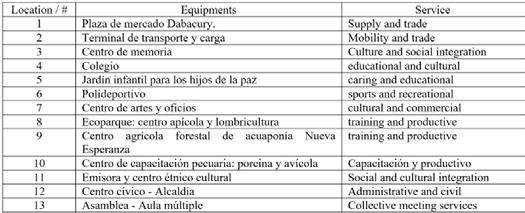
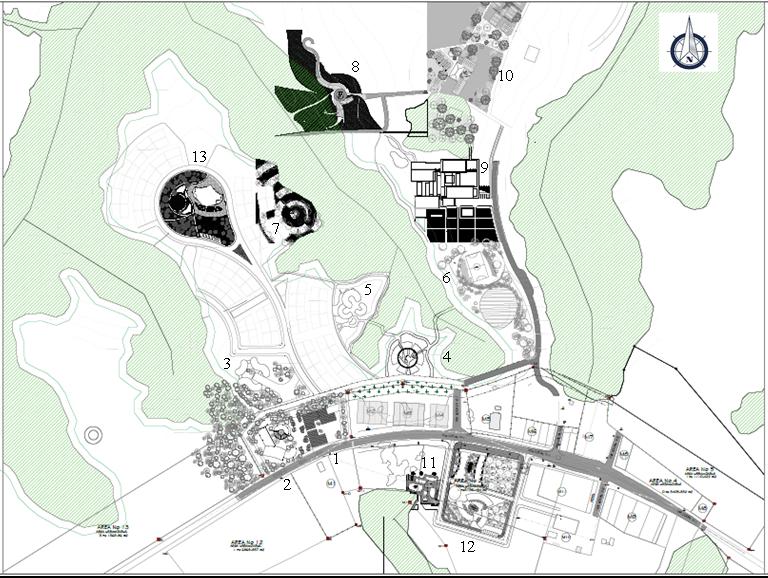
The determinants that were handled for the location and distribution of the equipment were given from four aspects:
1. Their degree of interaction with the community and their daily life, thus ensuring that services and daily activities such as education, child care, recreation and sports, culture, and training, are located closer to the homes.
2. its function and nature of its activity, for which the entrepreneurial projects and productive activities were located on the eastern side of the settlement as a gateway to the agricultural sector of the property.
3. Its impact and degree of intensity, for which reason the market square and the transport and cargo terminal were located facing the highway, is a link between the existing hamlet and the new settlement.
4. Due to its degree of representativeness for the community and its influx of users, consequently, the civic center - the mayor’s office and the radio station - ethnic center, were located around Boquerón park as an urban center.
In addition, each piece of equipment took dimension and was specified in areas (m2) from the elaboration of the architectural program and functional organization chart, for which a deepening and investigation was carried out in each of the uses, themes, and implications of the equipment.
Parallel to this, an exercise of composition and interpretation of the space was carried out as a
previous step to the architectural development of the future use of the equipment. The aesthetic pieces and abstract objects gave the first ideas about the volume and shape of the building. Said exercise was established based on four aspects to be discussed:
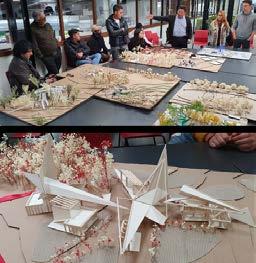
- Relationship warp as support for mooring and interaction with the immediate context of the property (flows, axes, etc.)
- Conceptual development of the spatial idea (porosity, transparency, etc.); Formal principles that give the management guidelines, language, and volumetric and spatial composition; and structural approach, as a first approximation to the supporting system of the equipment
This moment concluded with the advancement of the respective basic architectural schemes and the first ideas regarding the general volumetry and image of the equipment, responding and being very consistent with its contextual condition of being basic services for a rural human settlement.
Third moment. In this stage, the materiality of the equipment is developed. The scope is the architectural project solving the following aspects:
- Generation of architectural planimetry.
volumetric approach to the more precise generation of the load-bearing structure of the equipment as an organizing element of the building in its spaces and volumes.
This structural definition implied the selection of the materials and passive construction techniques that would be used for the structure since it was proposed as an objective to respond to the rural and “light” character of the equipment in general.
Within the reflections that were given around the materials and construction elements, topics such as bio-construction and ecological design were discussed, generating possibilities and design positions between technical and engineering practicality and ecological and ethical sensitivity,
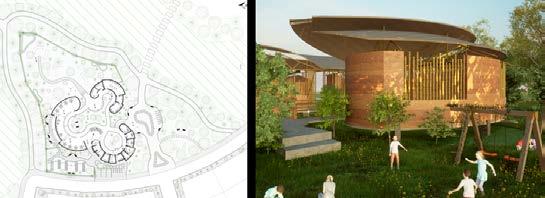
- Treatment of facades and skins and bio-climatic management: sunlight, rainwater management, temperature, lighting, and natural ventilation, etc.
- Management and system of roofs and roofs with its management of rainwater.
Said section by façade demanded a high degree of detail in the constructive and architectural aspects, for which reason it required robust research on the part of the students and an evolution in their elaboration and improvement of their designs. The foregoing is qualified by the environmental and ecological sensitivity of the construction, the budgetary determinants, and the architectural aesthetics and plasticity.
A final thematic exercise was that of the image of the project consisting of the revision of the appearance and character that the equipment was taking, verifying its architectural intention and the resulting spatiality. The above is evidenced in a series of visuals (renderings or digital perspectives), which give the experience and show the space from the user’s perspective.
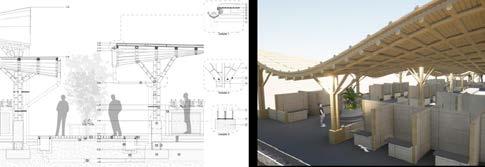
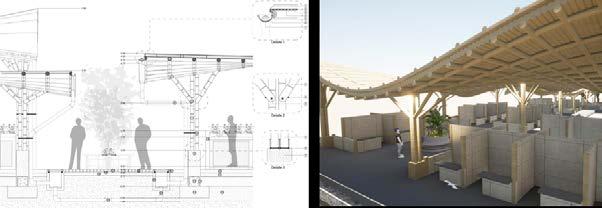
Although the render is the product of using graphic software and digital design tools, the warmth and fidelity of the equipment was always sought without falling into idealized or generic representations of the equipment and its spatiality. Efforts were made to be very loyal and faithful to the contractive reality
These images put the equipment to the test and see its behavior when setting different environmental
and activity configurations: in the rain, at night, with a high influx of people in a particular event, in full sun, etc., and with it verify and demonstrate potential and possible problems not taken into account in the planimetry.




The final stage of this last moment consisted of the final design and integral elaboration of each one of the projects considering all the determinants previously exposed from each one of the thematic components that make up the academic body of the subject of equipment: management, urbanism, environmental, aesthetics, and technology.
To finish this methodological account, and as a conclusion, it would be said that beyond the academic learning that this design process left behind, we acted considering a real current situation in the country, with a community and specific needs, with a face and with names, this within the missionary commitment of the Pontificia Universidad Javeriana and social responsibility of its young architects.
Finally, these images and visuals, both pedestrian and aerial, were developed and complemented with a video where a pedestrian tour of the project is recreated from its exterior to its interior spatiality, also allowing to see the relationship and link with the surrounding facilities.
Hence the importance that the architectural proposals contained in this publication are a sample of a humanist action with a high social sense, environmental sensitivity, and commitment to the reality of the country, being interventions that go beyond urban contexts, designed for a community with hopes, who expect the improvement of their living conditions, and this is how the facilities oversee materializing the habitat for peace.
PREVIEW OF IMAGES OF THE AGRICULTURAL FORESTRY CENTER OF AQUAPONY PROJECT, NUEVA ESPERANZA.
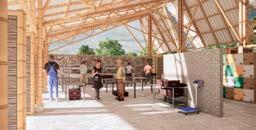
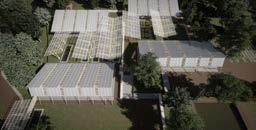
WORK OF THE STUDENTS: NATALIA CRUZ RODRÍGUEZ AND DANIELA RODRÍGUEZ LANDA.
ARQ. URB. Carlos Aguilar Seligman.
The facilities are the infrastructures and collective spaces necessary for the development, support, complement, and construction of citizenship and consolidation of territory to improve their lifestyle, social well-being, and the common good, specific to the needs of a population and territory.
This semester the project seeks to propose through the facilities how an urban proposal can be addressed to establish a community between peace signatories and a population already established in a territory, defining the necessary facilities for the consolidation of a single community, studying the different social variables and techniques for the development of the different facilities and how they complement each other to generate a network for the well-being of the community close to them.
The commission for this semester was based on the book Habitat para la Paz and, in parallel, studying the historical, social, environmental, and population context of the territory, for the construction of a proposal identifying basic equipment according to the needs of the peace signatories as well as the existing population in the village of Boquerón.
The weekly consensus on the project was fundamental for the discussion and definition of the general concepts of the proposal, between students, professors, and the PPU.
Identifying as a premise how to approach a rural territory? to develop the architectural proposal for this project. Building together the concept of Urban Village to make citizenship without losing the character of the rural and proposing for the students the basic rural facilities complement, consolidate, relate, and weave a territory one with the existing population, for the common good, social justice and bring the state to the territories.
Historical social and population context Methodology and Order
Warp and Weft (Relationships)
Aesthetic Piece (Concepts / Formal License / Essence)
User and Program Project
Arq. MANUEL MORENO
Facilities are buildings that are part of the infrastructure that any settlement requires to organize the life of a community. They work in concert with the network of mobility, public space, and home services to guarantee, with the support of the State, citizens’ rights to well-being and proper individual development in different gender expressions. In this sense, thinking about facilities from the urban point of view, or from the space shared by a community, means understanding an architectural object as a container for basic services -health, education, recreation, culture, justice, mobility, supply, and productivity, among others. - that must necessarily be thought of within a system of relationships between the population, the infrastructure, and the architecture of the equipment.
In the version of the equipment project for this semester, the urban approach had to be adapted to the case of San José del Guaviare and to the problem of resettlement of the demobilized members of the FARC guerrilla, from the settlement of Charras to the town of Boquerón about 50 km from the capital of the Department. A very particular situation, characterized by its distance from the interconnected system of Colombian cities and by the location of the Colombian Amazon border, where serious social and environmental conflicts converge.
Conflicts historically marked the area with displacement and violence due to the dispute over the jungle space from the powerful economies of drug trafficking, cattle ranching, and extensive agriculture, among others.
Based on the above, the population-infrastructureequipment scheme in the urban component should focus on the recognition of the natural and cultural forms of the area, as an essential argument for the proposal of a settlement infrastructure that responds to the cultural and age characteristics of the population. In this sense, the premises that guided the work of the students were the following:
1_ Regarding the question, what equipment for which population? the students had to identify the population taxonomy of the region and of the community of ex-combatants. On the region, it was obtained from various documentary sources -now strengthened by the effects of the 2015 Peace Agreement-, also, on the census and official data of the municipality and department, the age, the ethnic and socioeconomic structure of the population was analyzed. Regarding the ex-combatants, a characterization was obtained from the constant dialogue with the PPU and its investigations. That shed light for students to raise infographics with the taxonomy of populations, their problems, and needs.
2_ The question about what the infrastructure of the settlement should be raised a series of dilemmas: on the one hand, if it was a rural or urban order; whether it should be compact or diffuse; if their activities should respond to a monofunctional or mixed order; if he should move away or the natural jungle mass; or how it could be self-sufficient considering its remote condition and difficult access. nationals must determine the spatial order.
Second, define the elements to order from a systemic
conception of four structures: ecological, functional (roads, public space, public services), a network of community and productive facilities; third, composition of the space from the definition of a property structure for the location of the housing and equipment buildings.
3. Finally, the question for the implementation of the equipment takes a consideration of the urban design to define the exterior space that borders the building, be it public or private. The parameters in this section are oriented to define five factors: floor and subsoil design (for service networks), vegetal landscaping, furniture, lighting, and built edges. The arrangement of these elements is fully thought out, trying to characterize the outdoor spaces based on their location and level of concentration; on the other hand, this provision must consider the perceptive, climatic, and functional quality. In the end, the students must coordinate the integration of all the designs in a series of general plans for the location of the equipment and its connection with the general infrastructure of the settlement, which is summarized in the following points:
First, public space, roads, and landscaping are categorized into types of streets and trails; second; supply networks for drinking water and electricity with the condition of alternative self-sufficiency; and third, solid waste collection and sewage treatment networks.
closer to a hidden reality, tinged with gloomy imaginaries. Their works will serve to shed light on that beautiful part of the world, so forgotten and badly treated.
Arq. GERMÁN MONTENEGROEach piece of equipment resolves the respective terminals with these networks.
I recognize the students for their audacity in the remote investigation that they had to do, to get
The Aesthetics Component emphasizes the human component of the buildings proposed and this was addressed with two macro strategies. On the one hand, three different ways of understanding the project were distinguished to privilege –in addition to the design aspects that are traditionally considered– aspects related to the way in which the project is visually perceived at the pedestrian level and with the way in which the project is understood by the different interest groups. On the other hand, the multiplicity of actors who are affected and/or benefited by each project was identified, since when talking about the impact of a building on the human being, it cannot refer only to a specific human being, nor to a single homogeneous group of individuals with the same interests, but instead refers to a multiplicity of groups of people whose multiple and varied interests we must understand.
eye views, showing how different geometric operations result in the final shapes of the buildings
The perceptual perspective refers to the study of the way in which the building is perceived visually by the moving pedestrian, having English picturesqueness as a theoretical framework –and with this also the concept of Le Corbusier’s promenade–. This aspect was addressed with the creation of virtual models that show the routes from the pedestrian level, allowing us to understand both the public space and its relationship with the building, as well as the interior spatial experience.
The cognitive perspective refers to the way in which the building is understood by the different interest groups that are going to interact with it on a daily basis. To address this aspect, the grouping of said sets of people is proposed using segmentation criteria, in such a way that –as will be explained later–it would allow understanding of their interests.
From the component, the project is understood from three different perspectives: a project perspective, a perceptual perspective, and a cognitive perspective. The project perspective refers to the building understood as an object seen from a bird’s eye view. This aspect is developed by the project management and the component relied on the awareness of the formal strategies carried out to obtain the final form, in such a way that these are communicated to the different interest groups. This was addressed by creating form transformation animations from bird’s-
strategies of good practices in project management, the different groups that are affected by the project both positively and negatively were identified. We complement this with good practices in the study of human beings taken from applied anthropology to classify the set of affected and/ or benefited individuals according to four different types of segmentation: psychographic, demographic, behavioral, and motivational. This is in order to establish the different requirements of each of these groups to tend towards favorable responses to each
of them according to their hierarchy in relation to the focus of each building.
Arq. Óscar RODRIGO PERILLA
Inhabit the landscape:
Architectures for a megadiverse country
Colombia is the most biodiverse country per surface unit, and the landscape of San José del Guaviare is considered a flora and fauna sanctuary rich in remnants of forest and waterways. How to understand architecture in this landscape? The design team raised this question from the design phase of the grouping of houses and facilities on the La Esperanza farm, understanding that the reticular layouts applied in the cities, and the sealing of the soils should be replaced by a model that recognizes the natural pre-existences configured by water courses and forest patches that persist until today, despite the understood practices of cattle ranching and extensive agriculture. The team mapped the geometric patterns of the remaining forests in the region, finding a particular characteristic: The natural landscape altered by human practices configures spaces of clearings of grasslands adapted for cattle ranching scattered throughout the territory and surrounded by a continuum of forests with shapes rhizomatic that maintain the ecological and spatial continuity, and support life in the hydric fringes.
La Esperanza farm follows this same pattern: In the center of the property, there are clearings with creeping vegetation that are confined by strips of dense forest, tall trees, and watercourses. How to implement a layout and propose an architecture that, instead of turning its back on the perimeter of the forest, establishes a direct relationship between
the future inhabitants and the experience of inhabiting the jungle? How the forms of life in the mount that for decades the ex-combatants learned and maintained, determine a different way of understanding the habitat? While city dwellers perceive natural conservation areas and forests as inhospitable and uninhabitable places, for these social groups they were home for a long time. This is how the design team proposes a layout that turns human activities towards the perimeter of the forest, activating the periphery, and locates the equipment in these places that otherwise become backyards, giving architecture the role of an articulator. between human life and the natural landscape. Transversal green belts are created that make up public spaces, parks, and avenues through which new forms of ecological connection are established. Biophilic trails are proposed that cross the mountain and connect different areas of the farm.
The facilities are planned as constructions that are separated from the ground to allow the infiltration of water and minimize disturbances to the microbiota of the place.
This strategy also allows for natural ventilation under raised subfloor plates and eliminates high construction costs associated with earth moving and soil compaction.
The buildings are conceived as porous volumes, with latticework and enclosures that allow crossairflow and dissolve the limits between inside and outside. The roof finials take up the local typology of cantilevers or “caidizos” suspended to avoid
radiation direct solar in interior spaces and reach the bioclimatic comfort in a hot climate based on passive environmental conditioning strategies: forced draft ventilation, solar incidence control devices, and evaporative cooling through gardens, and outdoor ponds. For the integral management of water, the flows and volumes of water in rainy seasons were calculated and a decentralized strategy consisting of 4 solutions was proposed: Storage for reuse in walls made up of plastic containers, infiltration ditches, reservoirs, and finally a small percentage (10%) of discharge to nearby water courses. These strategies result in architectures that transform the relationship with the climate and the territory, reinterpreting forms of the landscape and local constructive typologies to produce contemporary ways of living, but at the same time strongly integrated into the dynamics of the natural landscape.
Arq. Andrés Ibañez
After an armed conflict of more than 60 years, Colombia writes a new history in a context of peace and reconciliation. The post-conflict period opens up a great opportunity for architecture, to the extent that a new vision of the country can be materialized, leaving behind gaps between the urban and the rural, overcoming the lag in the development of the countryside and the communities that inhabit it. For this reason, from the Technology component, 2 fundamental goals are outlined:
characteristics of the intervention lot, its topography, vegetation, and existing nearby constructions, materials available in the region, typical construction typologies, among others.
-Propose an architectural system for the construction of versatile, sustainable, flexible, self-constructible equipment that evolves with the being that inhabits it and does not impose itself on it.
-Promote the use of traditional construction techniques and regional materials, always under the principles of sustainability and integration between architecture, landscape, and context.
Based on the above, initial approaches to the shape of the building were made from different perspectives: 1. Transmission of the message or intention of each piece of equipment, 2. Optimization of heat gains by solar radiation and wind flow in architecture, 3. The structural sense in references, its functionality, and applicability in the project, 4. Preselection of viable materials to represent the previous ideas.
Taking into account the integral management of the spaces and their relationship with the structure, the networks, and systems that feed and clean the equipment were analyzed, defining elements of drainage networks to collect, retain, infiltrate, and evacuate rainwater in a manner sustainable, transforming principles of Sustainable Urban Drainage Systems - SUDS to the rural context with the limitations that this implies.
To provide the relocated population of Boquerón (Guaviare) at Finca La Esperanza, with structures that make it possible to create a community and empower ex-combatants and their families, a study was first carried out on those technological variables and infrastructure systems that allow against the risks and vulnerability of the place, through logical and simple concepts. For example, identify the seismic threat of the Boquerón, understand how the wind behaves and how the patterns of its path through the buildings can be used, understand the
Regarding structural development, it is important to distinguish two stages of work, the superstructure, and substructure, since, in general, a building is made up of a set of elements that, connected to each other, become a system of resistance to loads and wear. However, from the ground level upwards are the structural elements (pedestals, beams, columns, braces, plates, etc.) that receive and support loads such as the building’s own weight, the furniture, and loads of people, while below this level we speak of
of the foundation, which is the system that will allow loads of the superstructure to be transmitted to the load-bearing soil.
As a result, then, from this component structural proposals are obtained with spatial, environmental, functional, and habitable conditions for a community that is reborn in a very important peace process for Colombia.
ing. daniela carrasco
Its main objective is to understand the problem raised from its reality, to be addressed in pursuit of the execution and feasibility of the project to be developed, within a political, physical, social, regulatory, and economic context of the community.
In this case, given the challenge posed by the rurality of the Amazon region and its various communities and particularly from the signatories of the Peace Agreement, we initially sought to prepare a thematic inventory of the information provided that would allow us to order it and also initiate the lines of investigation. that will lead us to understand the composition of the community, its desires, its economic capacity, the territory where the new settlement is planned, the regulations of the Department of Guaviare, its capital San José del Guaviare, and the corregimiento of Boquerón, and the political framework or genesis of the Peace Agreement among others.
We find ourselves with contradictions such as the rural vocation and regulations of the territory versus the desire to develop an urban settlement, the lack of a budget that would mark the limit of our intervention, and the lack of resources of the community and the national government.
Faced with these dilemmas, the concept of an ecoproductive village is proposed, which allows the community to be productive as a tool for growth and economic sustainability of the settlement, maintain rurality and conceive an urban settlement that is respectful of its environment.
Based on this idea, the facilities are proposed in these two areas, looking for the economy and the participation of the community in its construction, the definition of its activities, and its sizing.
In this process and understanding that the community requires information about its possible resource requirements, we try to prepare construction budgets with too many time and reliability limitations, which only allow us to get closer to some figures that require much more work, not only in detail, of the designs but also in the elaboration of the budgets.
ARQ, MARTHA CONSUELO SALASWithout a doubt, this equipment project represented a great challenge. Facing such an unexpected social context, remarkable for our country and full of possibilities like this one, required a greater commitment compared to any other project I have designed. This time we put aside how utopian other semesters was to ground the work of architecture to a reality that not only frames a community, but also an entire country. From the understanding of the place to the technical approach of the project, it has been a whole set of constant learning. Although I am speaking for myself in this text, I also know that for all the project participants, both students and teachers, it has been a challenge to design a place and for a community that is so distant and unknown in relation to our daily city life. The understanding of that very sensitive fiber that every architect must have become the favorite approach and design tool in each of the project stages. Each user who will use the equipment that I design must feel involved, must feel that what is done is for and for him, for a better country, and to strengthen the peace that was agreed upon; it is designed for their well-being and certainly for a better future.
It is extremely enriching to live an experience like this at such an early age in the professional life of an architect. I even believe that many architects do not get to have the opportunity to think and design a similar project in their entire lives. It has been a job that we have built as a team, where we strengthened the individualities of each one based on joint goals and purposes. A work faithful to the life of a professional architect lived during his undergraduate
training stage. Although there is a lot of responsibility and the expectations regarding the results are high, it is an experience worth living, not only to grow professionally and academically but also from a personal level, realizing that our reality is much broader and more complex than we normally perceive it.
JUAN FELIPE FOREROMany were the academic discussions presented in this journey of numerous consensuses, without a doubt an infinity of learning emerged for both students and teachers.
As future architects, we affirm that the main evidence of academic enrichment arises around having faced as close as possible to the execution of a project with real probabilities of execution, with all its edges and complexities that arise from the rigor of the process.
Difficulties in management, in economic spheres, and above all in understanding and interpreting the will, desires, and expectations of a different and remote population, which this semester became our client. “Architects are only interpreters of the wishes of the inhabitants of the communities” were the words of Professor Maffei from the Turin Polytechnic when learning about our projects and resonated with each evolution and opportunity to share dialogues with the future inhabitants of the Boquerón.
We can ensure that our intentions are solid with the best projections for the population, taking into account what was requested of us and what we interpret will be useful from our analysis and academic learning, and we expect that the results will allow us to promote a future community of peace around a sensitive architecture born from the efforts of various academics together with their apprentices.
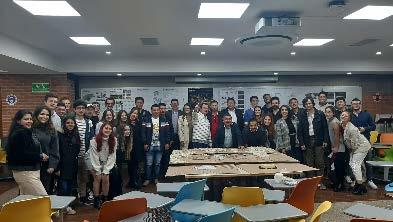
The meeting with people from the community was enriching in that it guaranteed academic rigor and turned the project into an opportunity to understand the realities surrounding project management.
Many opinions were around the following phrase said by one of those present: “I would like to live there”. This happens due to the explanatory way and approximation of the projects, using understandable language, a closeness of knowledge, and an environment willing to listen and exchange opinions.
The most enriching thing is that the contribution was not only technical, because in case it was not executed, but the peace signatories also obtained ideas about how to build architecture in the place. They understood the importance of raising plates as risk and flooding and guarantee of water infiltration, how important the slope of the roof and its openings with overlaps for airflow and guarantee of comfort, how spaces can be delimited and closed with permeable walls that allow feeling the reality of the outside in, highlighting the beauty of the jungle in the environment in which they live, and the importance of designing around replicable modules.
The opinions of the participants of the integrated council highlighted a very important comment: “The signatories from other countries affirmed that the process of economic reincorporation of productive projects was projected to fail, no project had been sustainable, it is due to this that in the proposals the productive project sets the standard for the design, and not the design as the main articulator and its functionality as an additional section”.
It was an enriching meeting to understand once again that the architect’s work focuses on listening, and the interpretation of the users in the space that will be appropriated and accepted by them.
FIGURE 1
https://colombia.unmissions.org/“siempre-buscando-el-bienestar-de-todos”-las-mujeresde-colinas-construyen-la-reincorporación-en-el
FIGURE 13
https://www.elespectador.com/turismo/7-lugares-imperdibles-en-guaviare-destino-denaturaleza-y-paz-article/
http://historiasenkilometros.com/wp-content/uploads/2021/02/Comisio%CC%81n_ ALFA.png
FIGURE 3
https://www.eltiempo.com/justicia/investigacion/mineria-ilegal-en-colombia-casi-la-mitadesta-en-reservas-forestales-441464
FIGURE 15
https://etniasdelmundo.com/c-colombia/nukak-maku/ https://www.eltiempo.com/vida/medio-ambiente/la-selva-del-guaviare-y-su-lucha-contrala-deforestacion-119808
http://www.saberpopular.org/index.php?option=com_content&view=article&id=231:losnukak-maku-de-la-amazonia-colombiana&catid=44&Itemid=241
FIGURE 5
FIGURE 2 FIGURE 14 FIGURE 6
https://www.eltiempo.com/justicia/investigacion/como-viven-los-exguerrilleros-de-lasfarc-en-etcr-de-charras-en-guaviare-348518
https://www.survival.es/indigenas/nukak
https://www.survival.es/indigenas/nukak
https://www.survival.es/indigenas/nukak
https://www.noticiasrcn.com/nacional-pais/alerta-san-jose-del-guaviare-y-42-veredasinundaciones
FIGURE 9
https://colombia.travel/es/san-jose-del-guaviare
FIGURE 10
https://www.rcnradio.com/colombia/llanos/ejercito-denuncia-asonada-cerca-al-rioguayabero-entre-meta-y-guaviare
FIGURE 7 FIGURE 11
https://pdf.usaid.gov/pdf_docs/PA00Z7QV.pdf
FIGURE 4 FIGURE 16 FIGURE 8 FIGURE 12
https://www.contextoganadero.com/regiones/guaviare-pretende-ser-potencia-enmateria-agropecuaria
Comisión para el Esclarecimiento de la Verdad, la Convivencia y la No Repetición. (s. f.-b). Recuperado 4 de octubre de 2022, de https://web.comisiondelaverdad.co/404.html
“Volvimos para quedarnos”: Conflicto y resistencia campesina en la trocha ganadera. (2021, 10 septiembre). [Vídeo]. YouTube. Recuperado 4 de octubre de 2022, de https://www. youtube.com/watch?v=PSDg9oKIueA
Coca, guerrilla y sociedad civil en el Guaviare: regulación de conflictos y otros controles. (1995, enero). Colombia Internacional, 29, 18-29. https://doi.org/10.7440/ colombiaint29.1995.02
González, D. (2022, 23 enero). Así se vive bajo la sombre de la guerra en el Guaviare. Mutante. Recuperado 4 de octubre de 2022, de https://www.mutante.org/contenidos/ guerra-guaviare-colombia
Jesurun, S. Y. (2021, 9 agosto). Guaviare, un espectáculo asombroso - Bienestar Colsanitas. Recuperado de: https://www.bienestarcolsanitas.com/articulo/guaviare-un-espectaculoasombroso.html
ALCALDIA DE SAN JOSE DEL GUAVIARE, ARENAS GARCIA, A. P. J., ORDOÑEZ BONILLA, J. E. S. D. P. & VILLADA VALENCIA, B. A. T. O. (2009). PLAN LOCAL DE EMERGENCIAS Y CONTINGENCIAS DEL MUNICIPIO DE SAN JOSE DEL GUAVIARE. ALCALDIA DE SAN JOSE DEL GUAVIARE. Recuperado 4 de octubre de 2022, de https:// sanjosedelguaviareguaviare.micolombiadigital.gov.co/sites/sanjosedelguaviareguaviare/ content/files/000048/2384_plan-local-de-emergencias-y-contingencias-del-municipio-desan-jose-del-guaviare.pdf
Guaviare La Selva a Mordiscos. (s. f.). El Verde Palidece: Guaviare. Recuperado 4 de octubre de 2022, de http://especiales.semana.com/deforestacion/guaviare.html
En San José Del Guaviare se realizó la primera Carrera contra la deforestación –Visión Amazonía. (s. f.). Recuperado 4 de octubre de 2022, de https://visionamazonia. minambiente.gov.co/news/en-san-jose-del-guaviare-se-realizo-la-primera-carrera-contrala-deforestacion/
Guaviare, un territorio apto para la ganadería | Fedegán. (s. f.). Recuperado 4 de octubre de 2022, de https://www.fedegan.org.co/noticias/guaviare-un-territorio-apto-para-laganaderia#:%7E:text=El%20departamento%20del%20Guaviare%2C%20que,ganado%20 de%20una%20manera%20controlada.+https://pdf.usaid.gov/pdf_docs/PA00Z7QV.pdf+
Tello - Dane - ID:5fffd2305897e. (s. f.). Recuperado de: https://xdoc.mx/documents/tellodane-5fffd2305897e
Tello - Dane - ID:5fffd2305897e. (s. f.). Recuperado 4 de octubre de 2022, de https://xdoc. mx/documents/tello-dane-5fffd2305897e
Alejandra Pizarro Arq. Andrés Ibáñez
Juan Felipe Forero Sofia Sandoval David García Arq. German Montenegro
Carlos Bueno Tatiana Cárdenas Valeria Tovar Andrés Ramírez Diego Ortiz Felipe Forero María Paula Diaz Santiago Rodríguez Alejandra Pizarro David García |
Juan Pablo Charry Arq. Carlos Aguilar Arq. Manuel Moreno
Manuela Gómez Natalia Cruz
Jorge Andrés Ramírez Diego Ortiz Nicolas Vera Manuela Delgado Valeria Vargas Arq. Oscar Perilla
María Paula Diaz
Santiago Rodríguez Cristian Carvajal Diego Ortiz Natalia Cruz Rodríguez Arq. German Montenegro
Victoria Flórez Daniela Rodríguez Arq. Oscar Perilla
David García Manuela Delgado Camila Rubio Sofia Cordero Tatiana Cárdenas Valeria Tovar
Victoria Flórez Sebastián Forero
Alejandra Pizarro Felipe Forero Andrés Jorge Manuela Gómez





This publication is the result of a joint effort by a large number of people without whose trust, commitment, and valuable contributions this would not have been possible.
First of all, we thank the community of Comunidad Noble de Paz Marco Aurelio Buendía for having allowed us the possibility of making this small contribution from the academy to the construction of peace in our country, and for their trust, valuable contributions, and for enriching feedback in the development of this work.
To the interdisciplinary group of the PPU, Food, Life and Habitat University Planning Project of the Pontificia Universidad Javeriana and especially to its members, the architect Niyereth Vélez Medrano, the sociologist Luis Fernando Gómez Alba and the anthropologist Tomas Vergara Gutiérrez, who were our invaluable partners on this path and those who generously trusted us to delegate this beautiful challenge.
We are also especially grateful to the students Victoria Flórez Triana and Daniela Rodríguez Landa, whose leadership was essential for the development of this publication, and to the students, Natalia Cruz Rodríguez, Manuela Gómez Durán, and Valeria Tovar Hernández, whose commitment and hard work made it possible for this publication to be possible.
In the same way, we thank all the students who contributed their valuable work to the content of this book.
Team of Professors of the Urban Equipment Project Pontificia Universidad Javeriana