Natural Awakenings is printed on partially recycled and fully recyclable newsprint with black soy ink.
Publisher’s Letter
Friends,
There’s something about May in the Northeast. After a long, gray winter, we step outside, feel the sun on our face—and everything shifts. The heaviness lifts. The pace softens. And somewhere in that first stretch of sunshine, we all have the same quiet thought—it’s time to feel good again.
Not perfect. Not “back on track.” Just… good.
This issue, with a theme of Women’s Wellness, feels especially personal because women’s health isn’t just workouts and green juice—it’s hormones, stress, sleep, identity and for many of us… raising teenagers that are trying to figure out who they are while scrolling through a world that constantly tells them who they should be.
And if we’re being honest, sometimes we’re figuring that out right alongside them.
Inside this issue, the stories feel less like articles and more like conversations you didn’t know you needed.
Our feature brings together women who remind us that thriving doesn’t come from doing more—it comes from finally listening to yourself. One shares what it looks like to drop the masks and live authentically. Another redefines success by choosing a grounded, meaningful life over the constant chase. There’s a physician reshaping care by slowing it down and truly listening and a teacher helping women reconnect with their power.
There’s nourishment in a way that feels real and doable. And one of my favorite threads? Joy. The reminder that fun isn’t something we earn—it’s something we need.
There’s also this deeper layer—“enoughness”. I see it in teenagers navigating comparison and pressure. I see it in women holding everything together while quietly questioning themselves.
This issue gently pushes back on that.
And you’ll find a look at wellness travel—not as an escape, but as a way to get back to yourself. Sometimes stepping outside your everyday life is exactly what allows you to reconnect and reset.
Confidence isn’t something the world hands us, it’s something we build—in small moments, in boundaries and in how we speak to ourselves when no one else is listening.
Sometimes vitality looks like a routine.
Sometimes it looks like rest.
Sometimes it looks like choosing yourself.
And sometimes, it’s as simple as standing in the sun after a long winter and realizing you didn’t need to start over—you just needed to return.
With so much gratitude,
Shae Marcus, Publisher
Relax · Nurture · Restore
Organic menu options include vegan foods, specialty teas/coffee & alternative beverages.
Come and find your ideal destination for thoughtful holiday gifts & community support.
Wellness Begins Locally.
Celebrating 25 Years of the Sandy Rollman Ovarian Cancer Foundation
Founded in 2000 after the loss of Sandy Rollman, the Sandy Rollman Ovarian Cancer Foundation (SROCF) marks 25 years of advocacy, education and impact. What began as a response to missed warning signs and lack of early detection has grown into a nationally recognized organization, raising more than $6.4 million to fund research, support patients and increase awareness.
A cornerstone of its work is the annual Sandy Sprint 5K Run/Walk, which began in Philadelphia and now extends to Los Angeles and New Jersey. The event funds research grants focused on early detection and improved treatments, while its survivor ceremony offers a powerful reminder that long-term survival is possible.
In 2026, an estimated 20,890 women will be diagnosed and 12,730 will die from ovarian cancer, the most deadly gynecologic cancer and the fifth-leading cause of cancer death among women in the U.S. SROCF continues to encourage women to learn the symptoms and prioritize their health year-round.
Executive Director and Co-Founder Robin Cohen shares, “Every woman deserves a fighting chance.”
For more information, visit www.SandyOvarian.org
Step Into Your Soul’s Wisdom This Summer
A spiritual growth retreat led by Janet StraightArrow will take place from May 29 through 31 at the Himalayan Institute, in Honesdale, Pennsylvania, with a second program scheduled for August 28 through 30 at Art Farm in the Catskill Mountains, in Accord, New York. Open to teens through older adults, the retreats are designed for those seeking expanded awareness, spiritual growth and a deeper connection to inner wisdom through an advanced spiritual practice focused on developing a direct relationship with the soul.
Through guided experiences, participants explore heightened states of awareness described as a sixth-dimensional space, where they can connect with their purpose, gifts and life lessons while integrating their human and spiritual nature. The practice is also designed to support spiritual and emotional healing by helping individuals release fear, resistance, past trauma and ongoing challenges.
“As we develop a direct relationship with our soul, we are never alone and can begin to blend our humanity with our divinity, becoming more whole in our lives,” says StraightArrow, who has taught this spiritual practice for more than 20 years and also offers private sessions.
For more information or to register, visit www.BeTheMedicine.com
Promise and Pitfalls of Biological-Age Tests
A December 2025 study in eBioMedicine reports that better cardiovascular health— characterized by a low body mass index, no smoking and healthy blood pressure—slows biological aging in mid-to-late life. This suggests that biological aging is not solely determined by genetics and can be altered by addressing cardiovascular risk factors like smoking, diet, exercise and blood pressure in middle-aged and older adults.
Although promising, this research has been met with caution due to disagreement about the reliability and usefulness of commercial biological-age tests. These tests analyze patterns of DNA methylation, a natural process that regulates gene activity. Scientists use algorithms to compare a person’s methylation profile with large datasets, estimating if their body appears biologically older or younger than expected.
A February 2026 editorial in
eBioMedicine (“Epigenetic clocks: advancing biological age measures towards meaningful clinical use”) highlights the limitations of biological-age testing. Most tests use blood or saliva samples, which may not accurately reflect aging in other organs and tissues. Different tests often produce varying results because they use different populations and algorithms. Biological-aging patterns can also differ by sex, lifestyle, environment and disease stage. The eBioMedicine editorial emphasizes that despite their potential to improve disease prevention and deepen our understanding of aging, biological-age tests need further development to address scientific and methodological gaps.
Cognitive Benefits of Caffeine
A study published in JAMA reports that caffeine protects against dementia and other forms of cognitive decline. The research followed nearly 132,000 American adults for up to 43 years, analyzing the effect of coffee and tea consumption on dementia risk and cognitive performance. Participants were free of cancer, Parkinson’s disease and dementia at the start of the study. After adjusting for demographic, lifestyle and health-related factors, a higher intake of caffeinated coffee significantly reduced dementia risk.
Those consuming the most caffeinated coffee had an 18 percent lower dementia risk than those consuming the least. Higher caffeinated coffee intake also correlated with a lower likelihood of self-reported cognitive decline and modestly better performance on objective cognitive tests. Tea consumption showed similar patterns, while decaffeinated coffee did not reduce dementia risk or improve cognitive outcomes. The strongest effects were seen with moderate intake, about two to three cups of caffeinated coffee or one to two cups of tea daily.
Participants were drawn from the Nurses’ Health Study (started in 1976) and the Health Professionals Follow-up Study (started in 1986), two of the largest, long-running U.S. studies investigating risk factors for chronic disease.
Dark Chocolate Linked to Slower Aging
Research conducted in 2025 by King’s College London and published in Aging reveals a connection between dark chocolate and slower aging. Theobromine, a natural cocoa compound and alkaloid, regulates gene activity and was found in higher levels in the blood of individuals that appeared biologically younger than their chronological age.
Analyzing data from more than 1,600 European adults, researchers estimated the participants’ biological age using two methods: assessing DNA changes that indicate the pace of aging; and measuring telomeres, the protective structures at the end of chromosomes that shorten as we age. The researchers caution that increased consumption of dark chocolate is not a shortcut to a longer life. Further research is needed to understand theobromine’s interaction with the body and its impact on aging.
Deeper Awareness Through Dance
5Rhythms is a movement meditation practice developed by Gabrielle Roth in the late 1970s. It combines elements of shamanic, ecstatic, mystical and Eastern philosophy, along with influences from Gestalt therapy, a humanistic form of psychotherapy. The practice is founded on the belief that everything is energy, moving in waves, patterns and rhythms. Roth described 5Rhythms as the connection of body, heart, mind and spirit. By moving the body, practitioners aim to quiet the mind and access deeper states of awareness and creativity.
The five rhythms of the practice correspond to different movements and emotional states, danced in a specific sequence: flowing represents grounding and being; staccato signifies clarity and direction; chaos encourages release and transformation; lyrical conveys lightness and joy; stillness brings integration and peace.
5Rhythms participants move through the five rhythms in 60 or 90 minutes. There is no set choreography; individuals are encouraged to move intuitively while barefoot in response to music that reflects the energy of each rhythm.
Kamonwan_Wankaew/shutterstock
Rediscovering Fun
by Marlaina Donato
From crocodiles to kangaroos, animals in the wild and in captivity exhibit playful sides. Ravens have been known to slide down snowy rooftops, and elephants at a waterhole enjoy splashing their siblings just for the heck of it. Scientists deduce that all intelligent, social species
invent games that take the edge off the struggles of survival.
Humans are no different, but we tend to quell this predisposition after adolescence. Playing tag, riding bikes or running outdoors are childhood pastimes that boosted
our developing brains through the release of feel-good endorphins. As adults, we too often chase the dopamine response with shopping, social media, high-risk activities, or food and alcohol consumption.
In the daily blur of work, obligations and challenges, we tend to forget to set aside the seriousness of life and just play. Feeling self-conscious and fearing judgment from others can be our greatest obstacle to feeling free, but fun might be the medicine we need. Chronic stress or trauma reduces our capacity to feel joy. The less we play, the more our nervous-system response remains compromised, keeping us stuck in fight-or-flight mode.
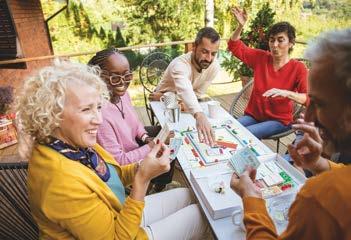
Rolling around the grass with a beloved pet, camping with the grandkids in the living room on a rainy day, bouncing a ball and playing a fun board game are all wonderful ways to call back the joyful spirit we might have lost. Being goofy and maintaining fun in a romantic partnership can strengthen bonds and help anchor a couple during hard times.
Lightening up in a world that feels angry 24/7 doesn’t mean we aren’t passionate about what matters. Cranking up music while making dinner, racing a lover back to the house, making up a silly scenario or daydreaming for a few minutes on a lunch break can’t change the world, but it can jumpstart our joy.
Marlaina Donato is an author, painter and composer. Connect at WildflowersAndWoodSmoke.com
Strong, Centered and Whole
Women That Inspire Us To Thrive
by Marlaina Donato
Something in the air seems to change when a woman with strong vitality enters a room. Her undefinable life force draws us in, whether it is evident in her step or her smile. Former First Lady Eleanor Roosevelt, poet Maya Angelou and anthropologist Jane Goodall are all iconic examples, but the capacity to thrive is
inherent in each of us through small, consistent investments.
Globally, women are leading the way in consumer choices, eco-forward initiatives and sociopolitical awareness for a more sustainable and compassionate world. Whether on the frontlines fighting for worthy causes,
Courtesy Behati Hart
supporting local farmers markets or putting healthy meals on the table, prioritizing selfcare and learning from each other is vital. Here, four inspiring women from different walks of life divulge how they thrive in chaotic times.
Finding Her Authentic Self
Behati Hart served her country for a decade, switching between logistics, computer analysis and paralegal positions in the United States Air Force. As a woman of color in a male-dominated environment, she says she survived by crafting a persona to hide her then-undiagnosed attention-deficit/hyperactivity disorder and anxiety.
Today, Hart embodies what feels like a more authentic role as a multidisciplinary creator and coach. The author of Just BE:
A Memoir About Unmasking and Becoming Human Again designed The BETi Method (Becoming Empowered Through Intelligence) to guide people out of trauma and identity-focused ways of living that compromise the soul’s true calling.
“We allow the world to judge us, accept those judgments as fact and begin wearing masks, titles and labels that reflect others’ expectations of how they want to experience us,” she explains. “We become afraid to experience ourselves—the good, the bad and the ugly. Unmasking is embodying ourselves so that we feel safe with who we really are.”
Noting that trauma and passion are the same energy moving in opposite directions, she says, “Trauma turns fierce aliveness inward into hypervigilance, protection or freeze responses. Passion turns that same energy outward into creation, connection and joy.”
Numerous activities feed Hart’s soul. “My forever medicines—laughter and dancing—require no prescription and provide cathartic emotional release through physical expression,” she points out. “As an earth-oriented person, being outdoors nourishes my spirit the most. My sacred garden and porch are my grounding spaces where I practice earthing—direct skin contact with the Earth’s surface—because I believe that electrons from the earth may help reduce inflammation.”
Hart believes that we can learn from each other by sharing our experiences. “We don’t always celebrate our stories, especially the stories of other women—ancient and contemporary—who survived and taught us how to become who we are,” she says. “We need survivor stories, revolutionary stories and creator stories. To thrive, we must center the well-being of women and children, while embracing heart-led living—not feminine or masculine, but feminine and masculine, in sacred balance. That’s the future I work toward.”
Enjoying a Wild and Interesting Life
Maria Rodale seamlessly moves from the boardroom to the garden and from
science to spirituality, carving out a distinctly unique life while preserving an impactful family legacy. She served as chief executive officer of Rodale, Inc., the publishing company behind Prevention magazine and bestselling book titles, including An Inconvenient Truth, by Al Gore. As a passionate, third-generation advocate for health and Earth literacy, she has penned several books of her own, including Organic Manifesto: How Organic Food Can Heal Our Planet, Feed the World, and Keep Us Safe and Love, Nature, Magic: Shamanic Journeys into the Heart of My Garden.
“I have met enough rich and famous people to know that financial success or fame is no guarantee of happiness or thriving,” she says. “I define success as a safe and warm home, a comfortable bed, good homemade food, happy and healthy kids, family and friends who love me, loving myself, the freedom to create and, of course, good health.”
Rodale prioritizes eating in-season, organic, local food, in moderation. “I also think we create the future by what we ingest—culturally and physically. Just like I avoid fast food and highly processed foods, I avoid horror movies and true crime stories,” she explains.
Her self-care habits include saying a prayer and 30 minutes of meditation in the morning, before doing anything else, lifting weights twice a week, going for walks and adding to her gratitude list before bed. “The direct relationship we each have with our true, ‘higher’ selves and with God is unique for every person and part of our life journey to figure it out,” she says. “I listen to my own inner voice, trust my gut, not getting distracted by rage bait, not dwelling too much on the horrors that I can’t fix or control, and focusing on the things I can do.”
These are mantras she lives by and offers to others: “Stop worrying about what other people think. Treasure your weirdness. Get over your fears and get out there. Do what you, and only you, were born to do.”
Be
Courtesy Maria Rodale
Modeling a Wholesome Lifestyle
Dr. Rebecca Hunton has always wanted to make a difference, and after dedicating two decades to functional medicine, her tireless efforts shine at Radiantly Healthy, her direct-care practice in central Florida, where patients benefit from unhurried
appointments, advanced diagnostics and a collaborative partnership with their healthcare team. By listening closely to her patients—mostly women—she has been able to create a responsive, personalized standard of care that conventional institutions are slow to follow.
“Our culture—especially our workplace culture—is not designed for health or wholeness,” she remarks. “We’re beating ourselves up for failing to achieve something that’s genuinely impossible. Many of my female patients are burned out and demoralized— not because they’re failing, but because the target was never reachable. Step one is that awareness. Step two is adding one small, achievable action, and then another. That’s where momentum starts.”
In her integrative practice, one concept emerges with great regularity: there is no health without good mental health. “You
can't separate emotional health from physical vitality. I make it a non-negotiable priority, which is part of my ‘just-10-minutes’ philosophy. When time is tight, I commit to planking, the indoor bike or functional fitness, even if it’s just for 10 minutes. I maintain an affirmation and gratitude practice, and get outside on most days for some form of physical activity, often cycling.”
Because she believes that food is medicine, and one of the chief contributors to well-being, Hunton practices what she preaches to her patients. “I love to cook,” she explains. “I’m plant-forward, but not vegetarian, and legumes and beans find their way into nearly every dish I make.”
The healing power of community is also top of mind. “I’m thriving when I’m living in close alignment with the personal vision for my life, and that includes physical activity with friends, playing duplicate bridge to
Au pairs make summer a breeze
Flexibility
Up to 45 hours per week of childcare
Trust
Live-in care helps trust develop quickly
Culture
Open your family to new languages and cultures
Learn more at culturalcare.com/lp/natural-awakenings
Courtesy
Dr. Rebecca Hunton
keep my mind sharp, as well as teaching and leading others for growth and fulfillment,” she says. “I try to be that person now for the younger women in my life—reaching back rather than just reaching forward.”
Teaching and Learning
Sarita-Linda Rocco’s journey into wholeness was forged from a crucible of deep grief, motherhood and a life-altering near-death experience during her mid-20s. These rollercoaster life events left her with debilitating panic attacks, and her search for stability led her to Ayurveda and yoga. Today, Rocco is a renowned teacher and founder of The Nest Collaborative, a holistic haven in West Reading, Pennsylvania.
She is also an innovator and entrepreneur, continually searching for ways to help her students thrive in their body-mind fitness journey. One invention, The Original Superblock, is a specialized prop used to support students during yoga practice.
Rocco’s way of life is straightforward but powerful. She prioritizes foods that keep her blood sugar balanced, minimizing simple carbohydrates and focusing on clean proteins, healthy fats and seasonal vegetables. “I love cooking and find great joy in building meals around our weekly CSA [community supported agriculture] from a local organic farm,” she says. “Ayurveda spices and herbs are central in my kitchen, and hydration is foundational.”
According to Rocco, “Self-healing begins with setting boundaries with people and situations that deplete energy. I hope women remember their divine feminine power, shakti, from which their creative intelligence and life-generating energy flows. It does not compete. It creates. When women fragment that power through comparison and social pressure, something sacred is lost.”
Even now, hers is a journey of self-discovery and transformation. “Thriving is not perfection. It is honoring my energy moment
to moment, knowing when to work with strength and when to rest without guilt,” she explains. “Conscious breathing stabilizes my nervous system more reliably than anything else. I practice regulating my nervous system and building resilience, not using yoga as a workout. I incorporate strength training
with bands and weights to support bone health. I walk my dog twice daily most days. One of my most important rituals is fasting after dinner and going to bed by 9 p.m.”
Marlaina Donato is an author, painter and composer. Connect at WildflowersAndWoodSmoke.com
Courtesy Sarita-Linda Rocco
More Than Soup
Lentils as a Modern Wellness Staple
by Maya Whitman
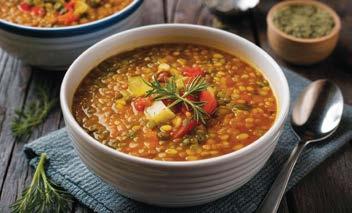
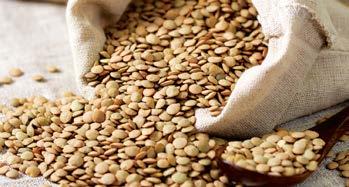
Humans have consumed lentils since the Bronze Age, and cultures worldwide, from the Middle East to the Mediterranean, have long valued them. These nutritious legumes gained popularity as a meat substitute in the United States during World War II and remain a cost-effective ingredient in modern kitchens, with the added benefit of being an eco-friendly, sustainable crop.
“Lentils require less water than many other protein sources, and they enrich the soil in which they’re grown,” says Cynthia Sass, a registered dietitian nutritionist and plantbased recipe developer in Los Angeles.
These small seeds from a legume plant are mild, easy to cook and offer endless possibilities for hearty soups, salads, plant-based “meatloaf”, veggie burgers, dips, stuffings and even sweet desserts. Lentils absorb any flavors added to them, effortlessly
highlighting exotic spices and fresh herbs, and can serve as a surprising flour replacement in delicious baked goods.
“When people discover lentils beyond soup, they often realize just how versatile and satisfying this tiny powerhouse can be. They are one of the most versatile foods in the plant-based kitchen,” says Tracy Gunter, a health strategist and owner of Original Origins Health & Wellness, in Columbia, South Carolina.
Vital Properties
According to the Cleveland Clinic, regular lentil consumption leads to healthier blood pressure levels than eating garbanzos (chickpeas), beans or peas. Their fiber content enhances good gut bacteria and sustains energy throughout the day. Lentils do not cause extreme glucose spikes, making them an excellent addition to a diabetes-management diet and helpful for reducing excessive
systemic inflammation. Rich in selenium and zinc, they boost immune response and contain cardiovascular-supportive minerals like potassium. Lentils also provide iron and offer 25 grams of protein per three-and-ahalf ounces. Their high polyphenols content also lowers the risk of cancer, cognitive decline and obesity.
Sass notes, “Lentils make a terrific post-exercise recovery food and can help athletes and active people replenish nutrients they’ve depleted during exercise and heal from the stress a workout puts on muscles and joints.”
Gunter loves lentils for their high nutrition and plant-forward flexibility. “They can easily replace meat in many dishes because of their hearty texture and protein content,” she explains. “They can be seasoned and used as a filling for stuffed peppers, layered into vegetable shepherd’s pie or incorporated into tacos and wraps.”
Varieties and Inspirations
Lentils vary in color and texture, each type cooking differently. Brown lentils are perfect for plant-based “meatloaf”, “meatballs”, vegetarian chili and sloppy joes. Red lentils cook quickly for creamy Italian, Moroccan or Indian-inspired soups, hearty hummus-like dips and curries. Tiny black lentils (Beluga) and French lentils (Puy) add a firm, nutty texture to food bowls and salads and pair well with roasted Yukon gold or sweet potatoes.
Lentils work well in combination with soft-to-medium-grade tofu for comfort food classics like stuffed shells or manicotti.
Additionally, lentil-based desserts such as brownies are decadently moist, and lentil puddings are delightful when made with the addition of dried fruits like Medjool dates.
“Lentils can be incorporated into nearly every type of cuisine and can be included
can be tossed with pre-made balsamic vinaigrette, olive tapenade, herbed tahini or vegan pesto and served over a bed of greens along with other raw or cooked veggies.” Although they cook within 10 to 40 minutes, depending on the variety, she suggests buying pre-cooked, steamed lentils in the produce section of many markets as a practical
option. Canned organic lentils are another solid alternative.
“One of my favorite ways to prepare lentils is simply simmered with garlic, onion, fresh herbs and a splash of lemon,” says Gunter. “Sometimes the simplest preparations allow their natural flavor and earthy richness to shine.” She also praises the combination of lentils with spices like cumin, turmeric, coriander, smoked paprika and curry, as well as herbs like parsley, cilantro, thyme and rosemary, which aid digestion.
Helpful Tips
Soak lentils for a few hours to enhance digestibility. For perfectly tender lentils, add salt only after cooking. Cook a pot of lentils and store it in the fridge for use throughout the workweek. Freeze any unused, cooled portions for three to six months in airtight containers.
Maya Whitman is a frequent writer for Natural Awakenings.
NATURAL HEALTH
100's of organic herbs, local honey, spices, nuts, seeds, grains, flours, granolas in bulk or packaged.
Now Stocking a Full Variety of Sea Moss Products; Including 15 varieties of Gel, Smoothies. Vegan, Vegetarian, Keto and specialty products. Largest selection of essential oils and aromatherapy in South Jersey. Hard to find items including vitamins, supplements, herbs and sea moss products. Organic produce delivered daily.
Liudmila Zavialova/shutterstock
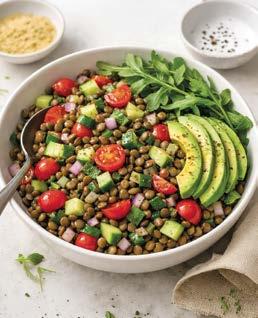
MEDITERRANEAN LENTIL POWER SALAD
YIELD: 4 SERVINGS
1 cup green or black lentils
3 cups water
1 cup cucumber, diced
1 cup cherry tomatoes, halved
¼ cup red onion, finely diced
¼ cup fresh parsley, chopped
2 Tbsp fresh lemon juice
2 Tbsp extra-virgin olive oil
½ tsp sea salt
¼ tsp black pepper
Rinse lentils and place in a pot with water. Bring to a boil, then reduce heat and simmer about 20 to 25 minutes until tender but still holding their shape.
Drain and allow lentils to cool slightly.
In a bowl, combine the cooled lentils with the cucumber, tomatoes, onion and parsley. Drizzle with lemon juice and olive oil and season with salt and pepper, then toss gently.
This salad is best served at room temperature or chilled. It keeps well for several days and becomes even more flavorful as it marinates.
Recipe and photo courtesy of Tracy Gunter.
CREAMY RED LENTIL GARLIC DIP
YIELD: 4 TO 6 SERVINGS
1 cup red lentils
2 cups water
2 garlic cloves
2 Tbsp tahini
2 Tbsp lemon juice
1 Tbsp olive oil
½ tsp cumin
½ tsp sea salt
Pinch of smoked paprika or turmeric, optional
Rinse lentils and add to a saucepan with water and garlic.
Bring to a boil, then simmer about 12 to 15 minutes, until lentils are soft.
Allow to cool slightly, then transfer the lentils and garlic to a blender or food processor. Add the tahini, lemon juice, olive oil, cumin and salt. Blend until smooth and creamy.
Drizzle with olive oil and sprinkle paprika or turmeric on top, if desired. Serve with sliced vegetables, cucumber rounds or warm pita bread.
Recipe and photo courtesy of Tracy Gunter.
Tracy_Gunter
Tracy_Gunter
Hip Health in Just Minutes a Day
A Simple, Empowering Practice
by Maya Whitman
Hip health is not just a concern for athletes or physical therapy patients. It is essential for the way we move, sit, stand, rest and age. Taking care of our hips does not require long workouts or expensive equipment. For everyone from desk workers to busy moms to women navigating midlife transitions, just 10 minutes of stretching and strengthening exercises on alternate days can improve mobility, strength and flexibility. Consistency is key to achieving long-term ease, confidence and vitality.
Common Causes of Hip Discomfort
Several factors can cause hip discomfort. Tightness or weakness in the pelvic muscles can be problematic because they support the pelvis, hips and spine, helping us walk, turn, bend and squat. In fact, if any muscles that support the hips, like the gluteal muscles (buttocks) are weak, other muscles have to work harder, which can lead to hip and lower-back pain.
Other culprits include hormonal changes, especially a drop in estrogen during menopause, which can increase hip pain and the need for hip replacement surgery in women. Prolonged
sitting or lack of physical activity tends to decrease blood circulation in the area and lower the production of synovial fluid, a crucial lubricant and shock absorber that reduces friction and keeps the joint pain-free.
“We’re often told that hip pain in middle-aged women between 40 and 65 is due to aging or arthritis, but most hip pain I see is chronic. Pain may show up suddenly, but the underlying issue has usually been developing under the surface for months or even years,” says physical therapist Maarit Korpilahde, who created the Hip Revive Method, in Lane, Kansas.
She asserts that prolonged sitting can tighten the deep hip rotators, weaken the gluteal muscles and put more pressure on the front part of the hip socket. She recommends engaging in some movement for 10 to 20 minutes at least three or four times a day. Simple actions like standing up, walking, doing a few mini-squats every hour, taking the stairs or parking a bit farther away can make a difference.
Jordan Ashley, the founder and executive director of Souljourn Yoga Foundation, in Santa Monica, California, often sees women with chronic hip tightness and a “locking” of the sacroiliac joint, which she believes might be linked to emotional issues. “Yoga traditions often say our hips hold onto our emotions, almost like the body’s junk drawer. All kinds of stress, old hurts and daily worries can get tucked away there,” she explains,
noting that the psoas—a deep, long muscle connecting the lumbar spine to the femur—plays a big role in keeping our trunk stable and moving our hips.
Recommended Moves
Amanda Neri, a physical therapist and owner of The Pelvic Institute, in Chicago, Illinois, believes in keeping hips active with daily exercises, alternating between strength training and stretching. Her favorite mantras are, “Use it or lose it,” and “It’s never too late.” Strength days can include a glute bridge, standing leg lifts, lunges or resistance-band exercises. On stretch day, yoga poses like the butterfly, frog, happy baby or child’s pose can be great. As with any workout, Neri emphasizes the importance of listening to our bodies and not pushing beyond what feels comfortable.
Standing, Hip-Controlled Articular Rotations: Lift one knee to hip height—this is called hip flexion—and gently make a big, controlled circle without moving the spine or pelvis. Hold onto a wall or something sturdy for balance. “It might feel stiff or crunchy at first, but after six to eight repetitions, it should get a bit easier,” Neri counsels.
Glute Bridge: Lying on the back with knees bent and feet on the floor, lift the hips up toward the ceiling. Squeeze the glutes and hold for a couple of seconds, then slowly lower back down. Aim for three sets of 10 to 20 repetitions.
Standing Leg Lifts: Stand on one leg and lift the other, straightened, out to the side, front or back to target the hips, glutes or outer thighs. Aim for three sets of 10 to 15 repetitions per leg.
Kneeling Hip Flexor Stretch: Using a yoga mat for comfort, kneel on one knee bent at 90 degrees with the other foot flat on the mat in front. With hands on the thigh of the front leg, gently lean forward and feel a comfortable stretch in the upper thigh and hip. Squeeze the glutes on the supporting side for a deeper stretch. Do two to four repetitions before switching leg positions. Try to hold each stretch for 30 seconds.
Seated Hip Shifts: Sit up straight with feet flat on the floor, hip-width apart. Place a small ball or foam roller between the knees and squeeze gently. Push one knee slightly forward while pulling the other knee back, keeping the torso steady. Repeat this gentle seesaw motion 10 times per side.
Walking Toe Touch: Walk forward while alternately kicking straight legs up to touch the opposite hand. Only raise each leg to the point of comfort, keeping the supporting leg soft at the knee, not locked straight. Walk like this for up to two minutes.
You can be gorgeous at thirty, charming at forty, and irresistible for the rest of your life.
—Coco Chanel
Darrin Henry/shutterstock
Maya Whitman is a frequent writer for Natural Awakenings.
Glute Bridge
Kneeling Hip Flexor Stretch
Why More Women Are Choosing Experiences That Restore
by Shae Marcus
For many women, “vacation” doesn’t always feel like rest—it feels like responsibility in a different location.
They’re often the ones planning the trip, booking the flights, packing the bags, organizing the schedules and making sure everyone else is enjoying themselves. The intention is to relax, but the
reality is a continued mental load—just with a better view. It’s no surprise that so many women return home feeling just as tired, if not more so, than when they left.
And beneath that, there’s often another layer: guilt.
There’s the quiet questioning of whether one should really be taking this time for oneself—the pull to include everyone, to make it about the family or to put it off altogether. Many women don’t just feel guilty—they delay, justify or talk themselves out of the very thing they need.
This isn’t just a shared experience—it’s backed by research. A 2023 report from American Psychological Association shows women consistently report higher stress levels and are more likely to carry the mental load of planning and caregiving—even during time off. Data highlighted by Skift also points to women overwhelmingly taking on the role of trip planner, often prioritizing everyone else’s experience before their own.
It’s exactly why a different kind of travel is beginning to resonate.
More women are choosing experiences that are intentionally designed for restoration—not traditional vacations, but journeys that allow them to fully step out of their roles. The distinction is simple, but powerful: a vacation often relocates responsibility, while a mindful journey releases it.
In these settings, the logistics are handled. The pace slows. There’s space to wake up without urgency, to move the body in a way that feels supportive, and to exist without a constant checklist. There is no one to manage, no expectations to meet—just room to reconnect.
And something else begins to shift.
The guilt that once felt automatic starts to soften as what becomes clear is that taking time away isn’t selfish—it’s supportive. Women return not just feeling rested, but thinking differently. Boundaries become clearer. Energy is restored. There’s more presence, more patience, and often, a stronger sense of self.
There’s also a unique kind of connection that happens when women share these experiences together. Without the usual roles and responsibilities, conversations deepen and a different level of understanding emerges—one that often carries far beyond the trip itself.
What’s unfolding is a more honest version of self-care—not something squeezed into the margins of a busy life and not something reserved for burnout, but something chosen, proactively, as a way to stay well, think clearly and move through life with intention.
When a woman is truly restored, she doesn’t just feel better—she shows up to her life differently.
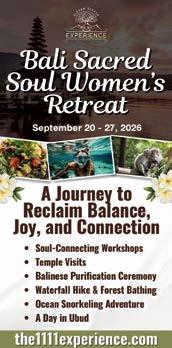
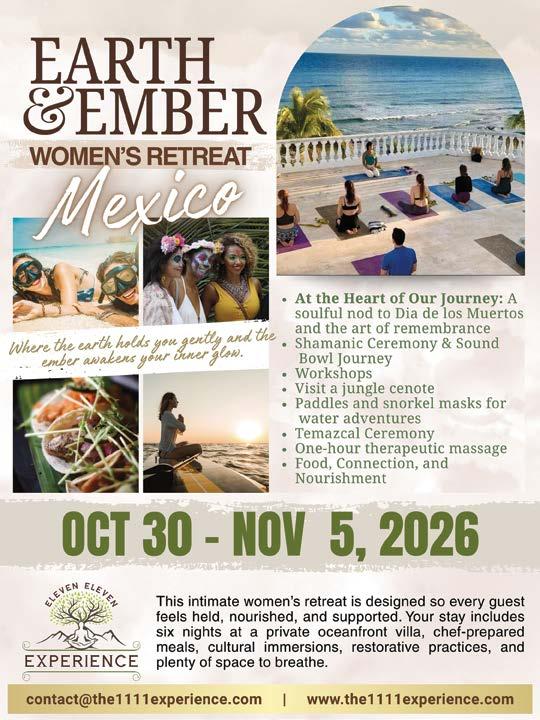
Shae Marcus is a mother of two teenagers, often navigating life with four dogs and a healthy dose of chaos. She is the founder of The 11:11 Experience, curating intentional travel designed for restoration and connection. Learn more at www.The1111Experience.com
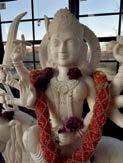
An ashram is a spiritual school, situated in a quiet and peaceful space, denoting a locus of activity centering on Yoga study and instruction. The Kula Kamala Foundation Ashram offers:
Homa & Puja
information & to
Am I Good Enough:
The Quiet Question Kids Are Carrying
by Shae Marcus
It’s never the meltdown that gets you. It’s the quiet texts.
“Mom, can I ask you something?” It comes through in the middle of your day, and something in you knows this one matters.a
“Am I good enough?”
Your heart drops. This is your child. The one who walks out the door looking completely put together. The one you know is kind, smart and beautiful in all the ways that matter.
So, you answer quickly. Of course you are. You’ve always been good enough.
But that’s not really what they are asking.
Somewhere between leaving the house that morning and sending that text, something else happened.
Maybe it was a comment. Offhand. Casual. The kind that gets tossed out like it means nothing.
“She’s kind of chopped.” A slang term kids are using now, meaning not pretty enough. In a world of filtered photos and curated feeds, kids are often measuring themselves against versions of beauty that are not even real.
Said with a laugh. Maybe in a group chat. Maybe just loud enough for others to hear.
Your daughter might not react in the moment. She may shrug it off. Pretend she did not hear it.
But later, it loops.
Are they talking about me? Is that what people see? Have they always thought that?
That is what sticks. Not the compliments. Not the moments she felt confident.
One word.
It’s rarely just about how they look. It becomes about who they believe they are.
Today, those moments do not stay in the room. They echo. A message left on read. A quick laugh that lingers. A glance across the room. It becomes a silent scoreboard of who is pretty, who is not, who belongs.
Just as powerful as the comment is the silence around it.
The kids who hear it, who feel it is off, who pause for a second knowing it is not right. They say nothing. Not wanting the spotlight to shift onto them.
So, the moment passes.
Except it does not.
It travels home. It shows up later in a text: “Am I good enough?”
More kids are asking this than we realize.
According to the Centers for Disease Control and Prevention, nearly one in three high school girls report seriously considering attempting suicide. These numbers are sobering, and they also remind us how important it is to stay connected and present in our kids’ lives.
When kids feel they are being constantly evaluated, especially on their appearance, their nervous system rarely gets a chance to fully relax. They are always on, always measuring.
These are not just statistics. They are moments like this. A word. A comment. A silence. Layered together until a confident, capable child starts to question something that was never supposed to be up for debate: their worth.
What they need in that moment is not a perfect answer.
Sometimes the most powerful thing we can do is pause. Listen a little longer. Ask one more question: “What happened before you started feeling this way?” Then resist the urge to immediately fix it. Feeling understood often matters more than hearing the perfect answer.
This is not one conversation. It is many. We do not have to have perfect words. What matters is that they know we are a safe place to land.
The truth is, we cannot control every comment they will hear. The world is not always kind, and it is not always fair.
What we can do is help build something stronger than those moments. Over time, these small conversations can help them build a sense of self that does not rise and fall with someone else’s opinion—a sense of selfworth that’s not decided in a group chat, not shaken by a single word and not dependent on who approves and who does not.
And maybe just as important, we begin to talk about the ones who are watching. Kindness is not just about not saying the wrong thing. It is choosing, in small ways, to say the right one. “That is not cool.” Or simply checking in after.
Behind more of these quiet texts than we would like to admit is a child trying to make sense of a world that feels like it is constantly measuring them.
And wondering, quietly and constantly, “Am I good enough?”
The answer has not changed. And when they feel it from us, consistently and quietly, it begins to matter more than the noise around them.
Shae Marcus is the publisher of Natural Awakenings South Jersey and Philadelphia. A mom of two teens, she is currently navigating teenage hormones and her own perimenopause at the same time—sometimes wondering if it’s the universe’s sense of humor or simply her turn to learn a little more patience.
Photo by
Wings and Wonder
The Healing Effects of Birdwatching
by Sheryl DeVore
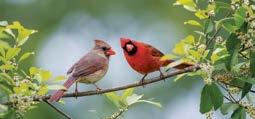
Amale northern cardinal sings “cheer, cheer, cheer” from a maple tree in a suburban neighborhood. Those that have heard or seen the common red bird know how such experiences can uplift the spirit. Birdwatching can help heal the mind and body, as well as enhance cognitive function, according to researchers. The activity, which the U.S. Fish and Wildlife Service states has 96 million participants in the United States alone, also fosters connections with community, science and the natural world.
The Song of Healing
Holly Merker is a team leader for Cornell Lab of Ornithology’s eBird.org, an online database for reporting avian observations. When she was diagnosed with breast cancer at age 32, she had already been an avid birder, traveling extensively to add new species to her list. Her birding style changed after the diagnosis.
“I sought solace in the birds,” she explains. “When I was bald from chemotherapy, I knew that the birds weren’t going to judge me. I could show up and be myself and not be the cancer patient. Birds became my wellness companions.”
On one Mother’s Day during her cancer journey, when she could barely lift her arms to hold her binoculars, Merker found strength at a nearby birding spot. Hearing a familiar birdsong, she spotted the crooner in its nest. “In that moment, I identified what feats of survival that cerulean warbler had gone through,” she recalls. “They spend their winters in South America and fly thousands of miles north through wind and rain to nest. These birds are survivalists to the utmost degree. We were no different from each other.”
Merker co-wrote Ornitherapy: For Your Mind, Body and Soul with acclaimed birder Richard Crossley and his daughter Sophie Crossley. The book champions mindful birdwatching as a form of nature therapy that enhances sensory awareness, relieves stress and improves mental and physical well-being. Now 56 and in good health, Merker offers mindful birding workshops through Ornitherapy.com
“One thing that really helped me in the first year after I finished my cancer treatment was tending to bluebird nest trails,” she remarks. “It got me walking and moving again. It gave me purpose. It was incredibly therapeutic. All the work I do with conservation, serving on boards and leading walks is because birds helped save my life, and now hopefully I am helping save them. I believe that when we start tuning into birds, we become better stewards of the environment.”
Finding Calm and Cognition
Birdwatching can be a balm for the anxious mind. “Instead of worrying about those problems that keep repeating themselves on a loop inside your head, watching birds can focus you outside yourself, as you search intently for a small movement in the trees, or a hint of color,” says Douglas T. Kenrick, Ph.D., a psychology professor at Arizona State University who began birding in earnest when he was 50
For John Elliott, the beauty of birds, whether seen from the window or in the wild, exudes a calming effect. “Studies have shown that adding birdwatching to a walk in nature increases positive feelings and decreases distress,” says the Chicago Bird Alliance board
member and retired naturalist and education manager for the Forest Preserves of Cook County, in Illinois.
A 2022 study published in Scientific Reports found that everyday encounters with birdlife were associated with lasting improvements in mental well-being in both healthy people and those diagnosed with depression. Another study, published in 2023 in the Journal of Environmental Psychology, reported that birdwatching among nursing home residents led to positive effects in mobility, cognitive function and mental health.
“When we are birding, we are actively engaging our minds and adding to our brain’s neuroplasticity,” Merker remarks. “I tell folks, instead of downloading brain games, watch birds.” A new study published in The Journal of Neuroscience suggests that expert birdwatchers possess superior brain cognition and structural brain differences compared to beginners, which may help protect against age-related cognitive decline.
Tips for Beginners
“Birding on your own is just fine if that suits you, but you can also visit a nature center, which may offer opportunities for birdwatching, including guided walks and feeder observations,” Elliott suggests. “You can also attend free bird walks led by local bird club members or buy a feeder and watch from your window.”
Fancy equipment isn’t necessary. “It’s just about noticing the birds around you and paying attention,” Merker says. “If people want to take it to the next level, a pair of binoculars will enhance their experiences. You’ll get a closer view from a distance. You can get a pair of binoculars on eBay for a good price, and lots of groups let you borrow some.”
Merker suggests finding a place to sit outside—in the backyard, a local park or near a pond. “Then let the birds come to you,” she says. “Whatever bird shows up is enough for you to find joy.”
An outdoors columnist and photographer for the Chicago Tribune, Sheryl DeVore has authored several books on nature. Reach her at SherylDeVoreWriter@gmail.com.
Be sure
Resources and Links for Birders
by Sheryl DeVore
Top bird field guides include The Sibley Guide to Birds and National Geographic Field Guide to the Birds of North America. For quick identification, regional guides can be obtained at libraries or bookstores.
The American Birding Association provides comprehensive resources for aspiring birders at aba.org/welcome-new-birders. It also delves into the ethical considerations of birdwatching, emphasizing the importance of maintaining silence and stillness, at aba.org/aba-code-of-birding-ethics
Free birding apps such as Merlin (Merlin.allaboutbirds.org) and the Audubon Bird Guide app (Audubon.org/app) may be useful in the field.
let our advertisers know you found them in
Bonnie_Taylor_Barry/shutterstock
Holistic Weight Management for Cats
Tips to Improve Nutrition and Encourage Physical Activity
by Ruth Roberts, DVM, CVA, CVH, CVFT, NAN
Feline obesity has become one of the most common health threats facing domestic cats. Nearly 60 percent of U.S. cats are overweight, according to research from the University of Illinois. Yet many guardians do not recognize the problem until illness develops. Because cats hide discomfort, early warning signs are often missed. What seems like a harmless extra pound may signal a serious health issue. Addressing this silent epidemic is critical to protecting feline longevity and quality of life.
Why Cats Gain Weight
Feline weight gain rarely has a single cause. It develops from a combination of diet, lifestyle and environment. Indoor cats live longer, but move far less than outdoor cats. In the wild, they spend hours hunting and exploring. Indoor living eliminates such activities. Research in the Journal of Feline Medicine and Surgery confirms that obesity rises when calorie intake regularly exceeds energy use, a common pattern in inactive indoor cats.
Feeding habits drive the problem. Freechoice feeding and energy-dense commercial diets lead to excess weight. Cat wellness advocates Jae Kennedy and Adrienne Lefebvre, CEOs of The Two Crazy Cat Ladies, link modern feeding patterns to rising obesity. “Based on industry sales reports and consumer surveys over the past decade, the vast majority of cat food sold globally is ultra-processed commercial food,”
Kennedy says. Dry kibble, in particular, is produced with a high-heat, multi-step manufacturing process.
According to Lefebvre, “Many kibble formulas contain high levels of carbohydrates and starches, which act like sugar in the body and contribute to weight gain.” Research backs this up. A study published in Preventive Veterinary Medicine found that cats fed primarily dry food were twice as likely to become obese by age 2 compared with cats on wet or mixed diets. High-carbohydrate, calorie-dense food and low activity create
the perfect storm for a growing feline obesity epidemic.
The Ripple Effect
Excess weight raises the risk of insulin resistance, which disrupts blood sugar regulation. A study published in the Journal of Feline Medicine and Surgery reports that obesity reduces insulin sensitivity in cats, increasing the likelihood of developing diabetes.
Extra body fat also strains joints and triggers inflammation. A study published in BMC Veterinary Research linked higher body fat to worsening whole-body osteoarthritis scores, particularly in the hips, elbows and leg joints. Over time, joint degeneration can limit mobility and causes chronic pain. Because cats rely on jumping and climbing to navigate their environment, even mild discomfort may significantly alter daily behavior.
Obesity can also trigger deeper physiological changes. A review published in the Journal of the American Veterinary Medical Association notes that excess body fat can create a constant low-level inflammatory state, increasing the risk of metabolic and hormone-related disorders, joint disease, heart and respiratory problems, urinary issues and even certain cancers.
Recognizing these conditions is challenging because cats instinctively hide pain. Subtle behavioral changes are often the earliest signs. Cats with joint discomfort may
hesitate before jumping, stop climbing onto high surfaces or show less interest in play. Because these changes develop gradually, they are frequently mistaken for normal aging, when they may actually reflect underlying health issues linked to excess weight.
Building Healthy Habits
Successful weight management often requires more than cutting portions. A holistic plan integrates nutrition, lifestyle and environment. Species-appropriate diets rich in animal protein and moisture mimic natural prey, while scheduled meals and portion control prevent unhealthy grazing.
“Because we confine our cats to four walls when we bring them inside, it becomes our responsibility to help them move and exercise their bodies,” Kennedy advises. Cats are instinctive hunters, yet indoor environments often provide little opportunity for stalking, climbing or chasing. Environmental
enrichment such as puzzle feeders, vertical climbing spaces and interactive play can help restore these natural patterns of activity.
To help a 26-pound, kibble-loving cat they adopted, Kennedy and Lefebvre hid small portions of food around the house to encourage hunting. The added movement alone jump-started weight loss. Gradually,
they introduced fresh food and daily play sessions, and the cat reached a healthy weight in months. The lesson is clear: sustainable weight management relies on consistent habits, balanced nutrition, measured portions and regular activity.
Cats are natural carnivores and fat burners, not carbohydrate processors. Diets rich in animal protein and fat with minimal carbohydrates support healthy metabolism and natural satiety. Transitioning from dry kibble to moisture-rich, high-protein foods, such as quality canned diets or balanced home-prepared meals, improves hydration and kidney health, while helping cats feel satisfied rather than constantly hungry.
Ruth Roberts, an integrative veterinarian and holistic health coach for pets, is the creator of The Original CrockPet Diet. Learn more at DrRuthRoberts.com
charliepix/CanvaPro
Artacke_Pictures/shutterstock
Calendar of Events
Email Publisher@NAPhiladelphia.com for guidelines. We advise confirming in advance directly with the business or organization.
Saturday, May 2
Puppy Yoga and Brunch at Harvest –9:45am-12pm. Join us for this feel-good Saturday and meet some adorable and adoptable pups. Cost: $25. Harvest Seasonal Grill, 505 Glen Eagle Sq., Glen Mills. www.BVSPCA.org
Bloom into Love Adoption Event – 12-4pm. Start your summer with the perfect sunny-day buddy. Providence Animal Center, Lower Level Macy’s Court. King of Prussia Mall, King of Prussia. www.ProvidenceAC.org
Sunday, May 3
Follow-the-Sound Nature Walk with Bowerbird – 10am-12pm. Join in this immersive sound experience in this collaboration with Bowerbird. John Heinz National Wildlife Refuge, 8601 Lindbergh Blvd., Philadelphia. www.FWS.gov/refuge/John_Heinz.
Monday, May 4
Richmond Library Yoga – 5:30-6:30pm. Transition into your evening with an all-levels yoga flow. Cost: $10/$20. Richmond Library, 2987 Almond St., Philadelphia. www.MishanaYoga.com
Thursday, May 7
Outdoor Yoga Class at Michener Art Museum – 4-5pm. Dragonfly Yoga Studio will present beautiful outdoor yoga classes. Michener Art Museum, 138 S. Pine St., Doylestown. www.DragonflyYogaStudio.tulasoftware.com
Friday, May 8
8-Week Philly Nature Walks: Spring 2026 Group Ecotherapy Sessions with Cole –5-6pm. Cost: $30 per session/$200 package. Paper Trail Bike Café, 5425 Orange Tri., Philadelphia. www.MiddlePathWellness.org
Sunday, May 10
Held: A Heart-Opening Cacao & Sound Ceremony – 2-4pm. Mother’s Day can hold many emotions—joyful, tender, complicated or quiet. Find yourself on that spectrum during this powerful ceremony. Cost: $65. Just for Today Reiki with Rebecca, 152 Harmony Rd., Levittown. www.JustForTodayReikiWithRebecca.com
Saturday, May 16
Take The Monkey Out Of Your Mind – In this gathering, you will discover how to quiet your mind and release stuck emotions immediately. Guided by Shaman, Healer, Sage, Janet StraightArrow. Morning, Mind, Body, Therapy Collective, 70 Park St., Suite 206, Montclair or Zoom evening gathering on Tuesday, May 19. 973-647-2500 or www.BeTheMedicine.com
Sunday, May 17
Philly Vegan Pop-up Market – 124pm. Come out and experience the best of Philly’s vegan scene. Cost: $5. 2727 E. Westmoreland St., Philadelphia. www.PhillyVeganMarket.com
Sourdough Baking with DELCO Dough –2pm. Curious about sourdough? Join in this hands-on introduction to this art. Cost: $40. Plant 4 Good, 100 Cricket Ave., Ardmore. www.Plant4Good.net
Friday, May 22
Astronomy Night – Explore the Night Skies with Telescopes – 8-10pm. Come see the moon and stars with telescopes. Cost: free. John Heinz National Wildlife Refuge, 8601 Lindbergh Blvd., Philadelphia. www. FWS.gov/refuge/John_Heinz
Wednesday, May 27
Rooted in Wellness: Monthly Meet and Mingle – 7:30-9am. Join us for a monthly networking event created specifically for holistic business owners, wellness practitioners and heart-centered entrepreneurs. Willow Wellness and Chiropractic Care of Doyestown, 601 New Britain Road, Doylestown. www.WillowFamilyWellness.com
Friday, May 29 through
Sunday, May 31
Soul Shamanism-Be Whole Body and Soul – Experience a Sixth Dimensional Practice to assist us in these times of ascension. Immediate healing, wisdom, and connection. A sacred weekend to learn a spiritual growth practice where you know and live your authentic self. Guided by Shaman, Janet StraightArrow. Cost: $695. Retreat Himalayan Institute Yoga Center, Honesdale. Also offered August 2628, Art Farm, Accord, NY. 973-647-2500 or www.BeTheMedicine.com
Saturday, May 30
Strange Little Curiosities Market – 11am4pm. Unlike any other craft event in the area, this is a 100% curated event with only the best and most uniquely odd, creative and artistic creations. Parastudy Chester Heights, 354 Valleybrook Rd., Chester Heights. www.ParastudyInc.com
Tuesday, May 31
Occupational Therapy-Informed Inclusive Hiking Mini-Program – 10-11:30am. Happy Noises and Hikeabilities are partnering to offer this program designed for adults ages 18 and older. McKaig Nature Education Center, 889 Croton Rd., Wayne. www.HappyNoises.org
SAVE-THE-DATES
Thursday, July 9 —
Sunday, July 12
Vision Quest Retreat with Mitote –Profound Spiritual Experience in Nature
July 9, 3pm - July 12, 1pm
A time for you. Pause and get off the track of your life to go inside and discover your authentic voice, needs, choices and inner wisdom as a gift you give yourself. You find that this experience offers deep healing on all levels. Cost: $1,000. Venmo @janet-straightarrow or www.PayPal.me/janetstraightarrowZelle Art Farm, 31 Fawn Ln., Accord, NY.
Ongoing Events
Monday
Richmond Library Yoga – 5:30-6:30pm. Transition into your evening with an all-levels yoga flow presented by Mishana Yoga & Wellness. Cost: $10. Richmond Library, 2987 Almond St., Philadelphia. www.MishanaYoga.com
Thursday
PR Manayunk Group Run – 6:30-7:30pm. Whether you are training for a race, working on getting back into shape or just looking for a few people to help knock a few miles out, join our group. Philadelphia Runner, 4358 Main St., Philadelphia. www.PhiladelphiaRunner.com
Saturday
Northern Liberties Farmers Market –10am-2pm. This weekly, yearlong farmers market features over a dozen vendors including fruit and vegetable farmers, dairy purveyors, chocolate makers, hyper-locally brewed beer and more. The courtyard at The Piazza on the corner of 2nd Street and Germantown Ave., Philadelphia. 215-575-0444.
Connecting you to the leaders in natural health care and green living in our community. To find out how you can be included in the Community Resource Guide, email Publisher@NAPhiladelphia.com to request our media kit.
Asthma Treatment
DORIS TODD
717-406-9598
Supports asthmatics—especially those impacted by toxic environments—in identifying and reducing triggers naturally, strengthening the body, improving vitality, and moving toward less dependence on medications through holistic, practical lifestyle guidance.
Bodywork
NANCY WALTON
Awaken & Restore Massage and Wellness Center
716 N. Bethlehem Pike, Suite 204A Ambler, PA 19002
267-221-7160
At Awaken and Restore reiki master Nancy Walton offers natural healing methods for body and mind. Reiki, individual Sound Baths, Chakra clearing and alignment with (optional Soul Star for personal direction) Tuning Fork sessions. As a Certified Reflexologist (since 1989), Foot Acupressure is also available. By appointment only. Call 267-221-7160.
Clients learn to observe and respond to deep-seated emotions of conflict, emptiness, and loneliness that often arise from family dysfunction. Guided in mourning the unchangeable aspects of their past, helped to own their truths and grieve their losses, clients are encouraged to show themselves the love, patience, and respect they truly deserve. A transformative process which creates a life that is truly worth living.
Energy Healing Arts
SAGE & SAND MYSTIC
Kristina@SageAndSandMystic.com
Sage & Sand Mystic offers one-to-one intuitive energy healing rooted in grounded mysticism. Sessions support clarity, alignment, and deeper self-connection through personalized, responsive energetic work.
Integrative Wellness
INTERCONNECTIVE HEALTH
5055 Swamp Rd., Suite 203 Fountainville, PA
267-935-4929
www.InterConnectiveHealth.com
InterConnective Health is an integrative wellness center offering personalized care blending modern medicine with holistic therapies, supporting physical, emotional and energetic balance through root-cause healing and whole-person care.
Registered Naturopathic Doctor
JULIE LACHMAN, ND
PA registration #10
1432 Easton Rd., Suite 3G Warrington, PA 18976
Phone: 267-406-0782
Website: www.DrLachman.com
Naturopathic doctors are experts in chronic, complex cases and use advanced testing and safe and effective methods to help adults and children. Dr Lachman has consistently been voted Best in Family Medicine.
Transcendental Meditation Programs
DOYLESTOWN TM CENTER
Joe & Carole Smith
Teachers of the Transcendental Meditation Program
Tammany Farm 5792 Carversville Road Doylestown, PA 18902 215-783-4629
CSmith@tm.org www.TM.org/Doylestown
Certified teachers Joe and Carole Smith offer Transcendental Meditation instruction, a research-backed practice supporting stress relief, improved sleep, emotional resilience and mental clarity through personalized instruction requiring no belief system or changes.