BEETHOVEN’S FIFTH: ELGAR’S CELLO CONCERTO OCT. 2 & 3 | JAMEY JOHNSON: SYMPHONY IN THE SOUTH OCT. 17 & 18 | THE COMPOSER IS DEAD OCT. 19 | REFLECTIONS AND HOPE OCT. 24 & 25

Zlatomir Fung
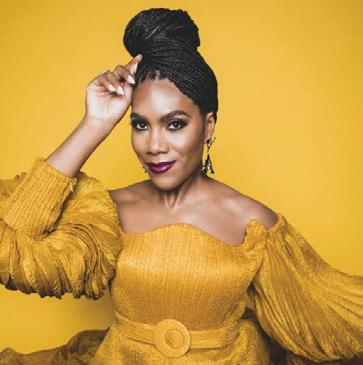
J’Nai Bridges

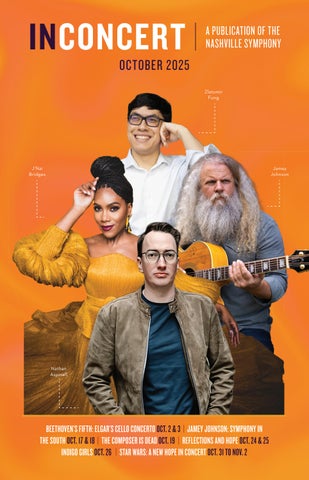
BEETHOVEN’S FIFTH: ELGAR’S CELLO CONCERTO OCT. 2 & 3 | JAMEY JOHNSON: SYMPHONY IN THE SOUTH OCT. 17 & 18 | THE COMPOSER IS DEAD OCT. 19 | REFLECTIONS AND HOPE OCT. 24 & 25
As we continue this final season of my tenure as President & CEO, I’ve found great joy in revisiting some of the pivotal moments that have shaped the Nashville Symphony’s journey. One such chapter began in 2006, just before we welcomed conductor Leonard Slatkin as our Music Advisor for the first time.
Leonard’s leadership in that moment, of course, helped contribute to the artistic foundation of today’s Nashville Symphony. While we were busy in the summer of 2006 putting the finishing touches on Schermerhorn Symphony Center, we were asked to record Joan Tower’s Made in America , a powerful project commissioned by more than 50 small-budget U.S. orchestras with the help of the League of American Orchestras and funding from the Ford Foundation. We agreed and secured Leonard to conduct both a concert featuring the music for the recording and the recording itself— both in our still unfinished concert hall! That album went on to sweep the classical categories at the GRAMMY® Awards later that year, garnering three GRAMMY ®s: Best Classical Album, Best Orchestral Performance, and Best Contemporary Classical Composition—securing our first-ever GRAMMY ® wins.
But what stands out most from that time isn’t the accolades, it’s the memory of the “hard hat” concert which preceded the recording sessions in the summer of 2006, before we officially opened our magnificent new Laura Turner Concert Hall. The standing-room-only crowd for that concert included all the construction workers, consultants, designers, and craftsmen, as well as their families, who became the very first audience to ever hear music in the new, acoustically superb space they had built. And, Joan’s Made in America couldn’t have been a more fitting centerpiece for the program that evening. At the end of the concert, Maestro Slatkin, Joan Tower, and our musicians donned hard hats and tipped them to the crowd in a show of heartfelt gratitude for the outstanding results achieved by everyone involved in bringing Schermerhorn Symphony Center to life. It was an unforgettable moment, filled with great meaning and joy as we all witnessed the incredible sound that they made possible in our fabulous new hall.
Now, nearly 20 years later, Leonard is back with us as Music Advisor, once again helping guide the Symphony through a time of transition and artistic growth.
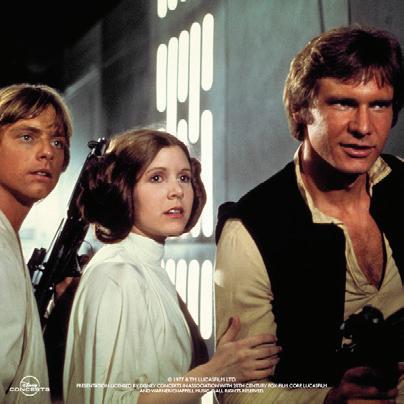
This month, we continue to bring powerful stories and unforgettable sounds to the stage. Beethoven’s Fifth Symphony anchors a program conducted by Jonathan Taylor Rush in his Classical Series debut, featuring Elgar ’s meditative and masterful Cello Concerto. Jamey Johnson kicks off our Pops Series with a spellbinding country collaboration in Symphony in the South . Families will enjoy The Composer is Dead , a playful musical mystery conducted by our own Nathan Aspinall . October also brings Reflections and Hope, a deeply moving program led by Christian Reif, featuring the world premiere of Brian Field ’s Everything Hurts , a poignant setting of a poem by Amanda Gorman . We close the month with the cinematic thrills of Star Wars: A New Hope in Concert
Wherever you are on your musical journey, I hope you feel a sense of belonging here at Schermerhorn Symphony Center. This season isn’t just a look back, it’s a celebration of where we’ve been and where we’re going next.
Thank you for joining us.
Warmest regards,
Alan D. Valentine | President & CEO
The Nashville Symphony inspires and engages a diverse and growing community with extraordinary live orchestral music experiences.
615.687.6400
info@NashvilleSymphony.org NashvilleSymphony.org
& VIDEO POLICY
Video cameras, recording devices, and flash photography are strictly prohibited in the concert hall or in any other space where a performance or rehearsal is taking place. Cameras with a detachable lens may only be used pending approval from the artist and the venue and will be subject to rules and restrictions. For more information, please contact the Nashville Symphony's Communications office


Music Advisor
NATHAN ASPINALL Resident Conductor
FIRST VIOLIN*
Peter Otto, Concertmaster
Walter Buchanan Sharp Chair
Erin Hall, Acting Associate Concertmaster
Gerald C. Greer, Acting Assistant Concertmaster
Tianpei Ai
Isabel Bartles
Francesca Bass
Beverly Drukker
Dawn Gingrich
Anna Lisa Hoepfinger
John Maple
Kirsten Mitchell
Ashley Odom
SECOND VIOLIN*
Jung-Min Shin, Principal
Lucia Nowik, Acting Assistant Principal
Likai He
Daniel Kim
Charissa Leung
Louise Morrison
Laura Ross
Johna Smith
Jeremy Williams
VIOLA*
Daniel Reinker, Principal
Shu-Zheng Yang, Assistant Principal
Michelle Lackey Collins
The Drs. Mark & Nancy Peacock Chair
Christopher Farrell
Anthony Parce
Melinda Whitley
Clare Yang
Music Director Laureate
Chorus Director
Kevin Bate, Principal James Victor Miller Chair
Una Gong, Assistant Principal
Anthony LaMarchina, Principal Cello Emeritus
Stephen Drake
Bradley Mansell
Keith Nicholas
Lynn Marie Peithman
Xiao-Fan Zhang
BASS*
Joel Reist, Principal
Glen Wanner, Assistant Principal
Matthew Abramo
Evan Bish
Kevin Jablonski
Katherine Munagian
FLUTE
Érik Gratton, Principal Anne Potter Wilson Chair
Leslie Fagan, Assistant Principal
Gloria Yun, Norma Grobman Rogers Chair
PICCOLO
Gloria Yun, Norma Grobman Rogers Chair
OBOE
Titus Underwood, Principal ◊
Christopher Gaudi, Acting Principal +
Ellen Menking, Assistant Principal
Kate Bruns +
ENGLISH HORN
Kate Bruns +
CLARINET
Danny Goldman, Acting Principal +
Katherine Kohler, Assistant Principal
Daniel Lochrie
E-FLAT CLARINET
Katherine Kohler
BASS CLARINET
Daniel Lochrie
BASSOON
Julia Harguindey, Principal ◊
Asha Kline, Acting Principal +
Gil Perel, Acting Assistant Principal
Nicole Haywood
Vera Tenorio +
CONTRABASSOON
Nicole Haywood
Vera Tenorio +
HORN
Leslie Norton, Principal The Dr. Anne T. & Peter L. Neff Chair
Beth Beeson
Patrick Walle, Associate Principal/3rd Horn ◊
Radu V. Rusu, Acting Associate Principal/ 3rd Horn
Hunter Sholar
Anna Spina, Acting Assistant Principal/ Utility Horn +
William Leathers, Principal
Patrick Kunkee, Co-Principal Alexander Blazek
TROMBONE
Paul Jenkins, Principal
Anthony Cosio-Marron, Assistant Principal
BASS TROMBONE
Chance Gompert
TUBA
Chandler Currier, Principal
TIMPANI
Joshua Hickman, Principal
PERCUSSION
Sam Bacco, Principal
Richard Graber, Assistant Principal
HARP
Licia Jaskunas, Principal
KEYBOARD
Robert Marler, Principal
LIBRARY
Renee Ann Pflughaupt, Principal Librarian
Amelia Van Howe, Librarian
ORCHESTRA PERSONNEL
Carrie Marcantonio, Interim Director of Orchestra Personnel
Sarah Figueroa, Assistant Orchestra Personnel Manager
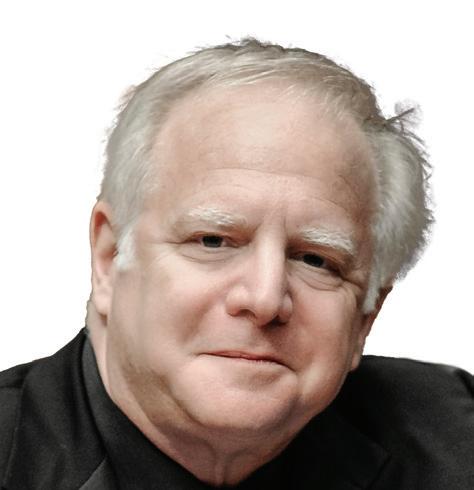

Internationally acclaimed conductor Leonard Slatkin is Music Director Laureate of the Detroit Symphony Orchestra (DSO), Directeur Musical Honoraire of the Orchestre National de Lyon (ONL), Conductor Laureate of the St. Louis Symphony Orchestra (SLSO), Principal Guest Conductor of the Orquesta Filarmónica de Gran Canaria (OFGC), and Artistic Consultant to the Las Vegas Philharmonic (LVP). He maintains a rigorous schedule of guest conducting and is active as a composer, author, and educator.
The 2025/26 season includes engagements with the National Symphony Orchestra (Ireland), Manhattan School of Music Symphony Orchestra, SLSO, USC Thornton Symphony, LVP, Taiwan Philharmonic, KBS Symphony Orchestra (Seoul), Gunma Symphony Orchestra, NHK Symphony Orchestra (Tokyo), Nashville Symphony, Atlanta Symphony Orchestra, Orchestre Symphonique de Montréal, Warsaw Philharmonic, Franz Schubert Filharmonia (Barcelona), ONL, Prague Symphony Orchestra, Filarmonica George Enescu (Bucharest), OFGC, and Rundfunk-Sinfonieorchester Berlin.
Slatkin has received six GRAMMY® Awards and 35 nominations. Naxos recently reissued Vox audiophile editions of his SLSO recordings featuring the works of Gershwin, Rachmaninov, and Prokofi ev. Other Naxos recordings include Slatkin Conducts Slatkin a compilation of pieces written by generations of his family—as well as works by Saint-Saëns, Ravel, Berlioz, Copland, Borzova, McTee, and Williams. A recipient of the National Medal of Arts, Slatkin also holds the rank of Chevalier in the French Legion of Honor. He has been awarded the Prix Charbonnier from the Federation of Alliances Françaises, Austria’s Decoration of Honor in Silver, and the League of American Orchestras’ Gold Baton. His debut book, Conducting Business (2012), for which he received the ASCAP Deems Taylor Special Recognition Award, was followed by Leading Tones (2017) and
Classical Crossroads: The Path Forward for Music in the 21st Century (2021). His latest books are Eight Symphonic Masterworks of the Twentieth Century (spring 2024) and Eight Symphonic Masterworks of the Nineteenth Century (fall 2024) , part of an ongoing series of essays that supplement the scorestudy process, published by Bloomsbury.
Slatkin has held posts as Music Director of the New Orleans Philharmonic-Symphony Orchestra, SLSO, National Symphony Orchestra, DSO, and ONL, and he was Chief Conductor of the BBC Symphony Orchestra. He has served as Principal Guest Conductor of London’s Philharmonia and Royal Philharmonic, the Pittsburgh Symphony Orchestra, the Los Angeles Philharmonic at the Hollywood Bowl, and the Minnesota Orchestra.
He has conducted virtually all the leading orchestras in the world, including the New York Philharmonic, Chicago Symphony Orchestra, Philadelphia Orchestra, Boston Symphony Orchestra, San Francisco Symphony, Los Angeles Philharmonic, Berlin Philharmonic, Bayerischer Rundfunk (Munich), Royal Stockholm Philharmonic Orchestra, Royal Concertgebouw Orchestra (Amsterdam), Orchestre de Paris, Oslo Philharmonic Orchestra, and Israel Philharmonic Orchestra, as well as all five London orchestras.
Slatkin’s opera conducting has taken him to the Metropolitan Opera, Lyric Opera of Chicago, Washington National Opera, Opera Theatre of St. Louis, Santa Fe Opera, Vienna State Opera, Stuttgart Opera, and Opéra Bastille in Paris.
Born in Los Angeles to a distinguished musical family, he began his musical training on the violin and first studied conducting with his father, followed by Walter Susskind at Aspen and Jean Morel at Juilliard. He makes his home in St. Louis with his wife, composer Cindy McTee. For more information, visit leonardslatkin.com.
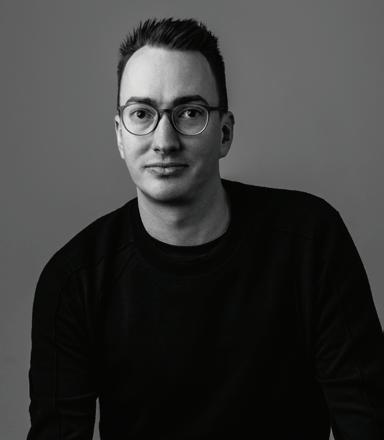
Australian Conductor
Nathan Aspinall has led orchestras across the globe and is widely admired for his thoughtful, nuanced interpretations and powerful performances. His collaborative approach to performing with fellow musicians has resulted in ongoing partnerships and deep relationships with the orchestras with whom he performs.
Nathan currently serves as Resident Conductor with the Nashville Symphony and this season will lead the orchestra in multiple programs including his fourth appearance on the classical subscription series with a program of Berlioz, Ligeti and the Britten Violin Concerto with Benjamin Beilman. In previous seasons Nathan has conducted acclaimed performances with the Nashville Symphony in dynamic repertoire including symphonies of Prokofiev, Tchaikovsky, Dvorak and Sibelius and last season led a special all Ravel program to mark the 150th anniversary of the composers birth.
Aspinall has performed around the world, leading the orchestras of Minnesota, Detroit, St Louis, Atlanta, Sydney and the MendelssohnOrchesterakademie of the Gewandhausorchester in Leipzig. He has assisted many of today’s leading
conductors including Stéphane Denève, Jakub Hrůša, Nathalie Stutzmann, Thomas Søndergård, and Simone Young.
Nathan was a conducting fellow at the Tanglewood Music Center with the Boston Symphony Orchestra where he was mentored by Andris Nelsons, Thomas Adès and Giancarlo Guerrero. He is also a recipient of the Robert J. Harth Conducting Prize at the Aspen Music Festival.
A strong believer that music is for everyone, Nathan is passionate about orchestras reaching an ever-widening audience. At the Nashville Symphony, he spearheads education and community initiatives, the commissioning of new projects and curates community programing. Supporting future generations of musicians, Nathan is an advocate for music education and outreach and has led performances and masterclasses for conservatories, universities and youth orchestras around the country. Festival appearances include the Cabrillo Festival of Contemporary Music, Oregon Bach Festival and the Tanglewood Music Center Conducting Seminar. He studied orchestral conducting with Hugh Wolff at New England Conservatory in Boston and music performance at the University of Queensland.
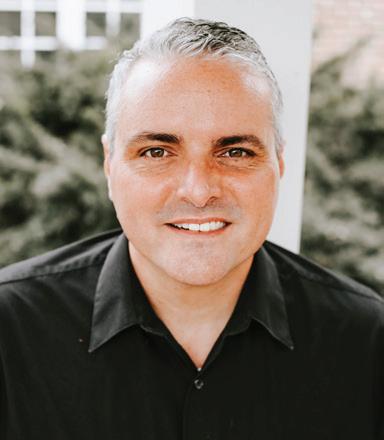
Appointed as Chorus Director of the Nashville Symphony in 2016 , Dr. Biddlecombe has raised the bar of excellence for Nashville’s premier choral ensemble through intense musical preparation, diverse programming, and communitybuilding. He also serves as Professor of Choral Studies and Associate Dean for Undergraduate Education at Vanderbilt University’s Blair School of Music, where he directs the Vanderbilt Sixteen and teaches courses in choral conducting and music education.
His work with the Nashville Symphony has included chorus preparation for many of the repertoire’s most revered masterworks. Notable performances have included two Mahler symphonies, Bernstein’s Symphony No. 3 “Kaddish”, and Requiems by Mozart and Verdi. He has prepared the chorus for two major
world-premiere recordings, John Harbison’s Requiem (rel. 2018, Naxos) as well as the upcoming release of Gabriela Lena-Frank’s Conquest Requiem and Antonio Estevez’s Cantata Criolla. He has conducted the chorus and orchestra in performances of Haydn’s Creation, Handel’s Messiah , Vivaldi’s Gloria , and the annual Voices of Spring concert.
Tucker is a veteran teacher and advocate for music education. He frequently conducts scholastic honor choirs throughout the United States, with international engagements in England, Scotland, China, and the Czech Republic. Dr. Biddlecombe is a graduate of SUNY Potsdam and Florida State University, where he completed studies in choral conducting and music education with Daniel Gordon and André Thomas, respectively. He resides in Nashville with his wife Mary Biddlecombe, director of the Blair Academy at Vanderbilt, and Artistic Director of Vanderbilt Youth Choirs.

THURSDAY & FRIDAY, OCTOBER 2 & 3 AT 7:30 PM
JONATHAN TAYLOR RUSH, conductor
ZLATOMIR FUNG, cello
CARLOS SIMON
Four Black American Dances Ring Shout Waltz Tap! Holy Dance
EDWARD ELGAR
Cello Concerto in E minor, Op. 85
Adagio; Moderato
Lento; Allegro molto
Adagio
Allegro; Moderato; Allegro, ma non troppo
INTERMISSION
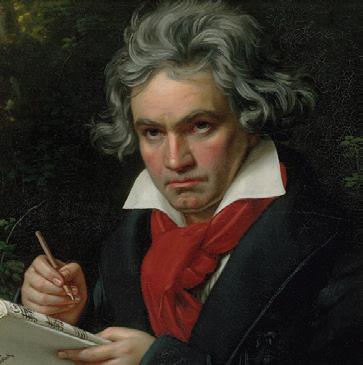
LUDWIG VAN BEETHOVEN
Symphony No. 5 in C minor, Op. 67
Allegro con brio
Andante con moto
Allegro
Allegro
THANK YOU TO OUR CLASSICAL SERIES SPONSOR

This concert will last approximately one hour, 40 minutes, including a 2 0-minute intermission.
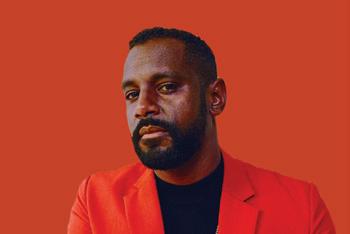

CCarlos Simon Four Black American Dances
Composed: 2022
arlos Simon seems to be everywhere in American classical music right now. As part of a new generation bringing forward voices once pushed to the margins, he has rapidly emerged as one of today’s most sought-after composers. Last season he began a new role as the inaugural Composer Chair with the Boston Symphony Orchestra, while also extending his residency at the Kennedy Center in Washington, D.C.
In one of his breakthrough works, Fate Now Conquers —inspired by a line Beethoven copied into his sketchbook—Simon declared his aim “to pay homage to Beethoven but yet remain true to my artistic voice.” Commissioned by the Boston Symphony, Four Black American Dances continues Simon’s larger goal of reshaping orchestral tradition by drawing on cultural histories too often left outside the concert hall.
“Dance has always been a part of any culture,” Simon explains. “Particularly in Black American communities, dance is and has been the fabric of social gatherings. There have been hundreds, perhaps thousands of dances created over the span of American history that have originated from the social climate of American slavery, Reconstruction, and Jim Crow.” In this work, he explores four distinct dance forms, each tied to a particular history and cultural setting. They trace “an historical record of how diverse Black Americans are through dance and through music,” as Simon remarks.
Ring Shout: Simon describes this dance as “an ecstatic, transcendent religious ritual, first practiced by enslaved Africans … in which worshipers move in a circle while shuffling and stomping their feet and clapping their hands.” To capture its energy, he has the percussionist strike a wooden floorboard with a stick while strings and winds whirl in rapid motion.
Waltz: Having begun with a ritual that originated with enslaved Africans, Simon turns to a tradition rooted in the lives of more affluent Black Americans. He recalls how cotillion and debutante balls, which developed amid conditions of strict segregation, became a proud social custom in Black communities during the 1930s. Simon frames this movement as
a nod to that history, shaped with elegant poise yet tinged with a sense of memory.
Tap!: Noting that tap transforms the dancer’s feet into percussion, Simon evokes the effect through orchestral metaphor: the snare drum’s side rim mimics tapping shoes, while the strings flicker with energetic figures and the brass add jazz-inflected harmonies.
Holy Dance: Simon points to the exuberant worship of Pentecostal and Holiness churches—marked by “joyous dancing, spontaneous shouting, and soulful singing”—as the model for this dance. His orchestral version calls for semi-improvised playing to suggest a congregation “speaking in tongues.” The trombones lead the charge toward a “praise break,” much as church musicians push the energy ever higher, building to a climax ending with the Amen cadence that closes countless hymns.
Scored for piccolo, 2 flutes, 2 oboes, 2 clarinets, 2 bassoons, 4 horns, 2 trumpets, 3 trombones, tuba, timpani, percussion, harp, and strings.
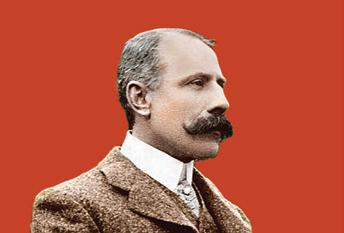

EEdward Elgar
Cello Concerto in E minor, Op. 85
Composed: 1919
dward Elgar’s Cello Concerto is steeped in the spirit of farewell and reflection. Written in the aftermath of the First World War, it conveys both personal loss and the sense of a world forever changed. Its sound is pared down and autumnal—not grand or flashy, but inward-looking, elegiac, and deeply moving. Elgar gifted us with music that feels like looking back even as it searches for meaning in what remains.
Cast in four movements, this was the last major orchestral work Elgar completed. As the war drew to a close, he withdrew from London for the quiet of the Sussex countryside, where the natural landscape restored some of his peace of mind. There, in the summer of 1919, he produced a late fl owering of chamber works along with the Cello Concerto, all marked by a new simplicity and restraint.
Th e concerto’s premiere in London, with Elgar himself conducting, was marred by inadequate rehearsal and fell flat, though the soloist, Felix Salmond, received praise from Elgar. Yet critics already recognized the work as possessing “a wisdom and beauty underlying its simplicity,” to quote the influential Ernest Newman. Later generations would take the piece to heart, especially thanks to the
impassioned performances of Jacqueline du Pré, whose 1965 recording became a classical bestseller and remains one of the most celebrated interpretations of any concerto.
Right from the start, the cello takes the spotlight with bold, speech-like gestures before the orchestra responds. Soon a wistful theme appears—first in the violas, then expanded and explored in depth by the solo cello. The second movement opens with the cello plucking chords that set up a sense of anticipation before the music flips into a fast, scherzo-like exchange crackling with nervous energy.
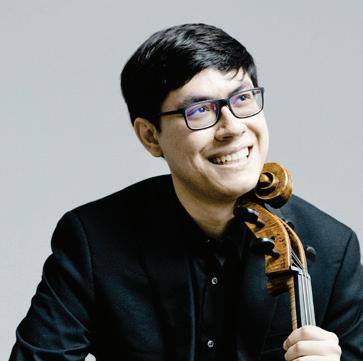
ZLATOMIR FUNG cello
Cellist Zlatomir Fung burst onto the scene as the first American in four decades (and youngest musician ever) to win First Prize at the International Tchaikovsky Competition Cello Division. Subsequent accolades, critical acclaim and standing ovations at performances around the world have established him as one of the preeminent cellists of our time. Astounding audiences with his boundless virtuosity and exquisite sensitivity, the 25-year-old has already proven himself a star among the next generation of world-class musicians. In the 2024/25 season, Fung gave recitals in New York City, Boston, and St. Louis, and performed the complete Bach Cello Suites at Mechanics Hall in Worcester, Massachusetts and Arcata, California, following summer appearances at the Aspen and
The Adagio is the emotional heart of the piece: a long, singing line for the cello that seems to hold both consolation and sorrow at once, comforting even as it aches. After this slow movement, the orchestra provides an excited introduction to an extended, speech-like bridge from the cello that leads without pause into the finale. A lively main theme then takes off, setting in motion the concerto’s longest and most varied movement. Bursts of confidence alternate with moments of introspection. Toward the end, the pace slows until Elgar reprises music from the opening, summoning one last surge of passion.
In addition to solo cello, scored for 2 flutes, 2 oboes (2nd doubling English horn), 2 clarinets, 2 bassoons, 2 horns, 2 trumpets, timpani, percussion, and strings.
Ravinia Festivals. He joined the orchestras in Rochester, San Antonio, and Billings, among others. Internationally, he performs in Europe and Asia with the London Philharmonic, Barcelona Symphony and others, and offers a recital tour of Italy. In January 2025, Signum Records released Fung’s debut album, a collection of opera fantasies and transcriptions for cello and piano.
Fung served as Artist-in-Residence with the Royal Philharmonic Orchestra for the 2023/24 season; recent debut appearances include the New York Philharmonic, Cleveland Orchestra, Orchestre National de Lille, and BBC Philharmonic, as well as Baltimore, Dallas, Detroit, Seattle, and Kansas City Symphonies.
Fung made his recital debut at Carnegie Hall in 2021 and was described by Bachtrack as "one of those rare musicians with a Midas touch: he quickly envelopes every score he plays in an almost palpable golden aura.” Fung was a Borletti-Buitoni Trust Fellowship Winner in 2022.

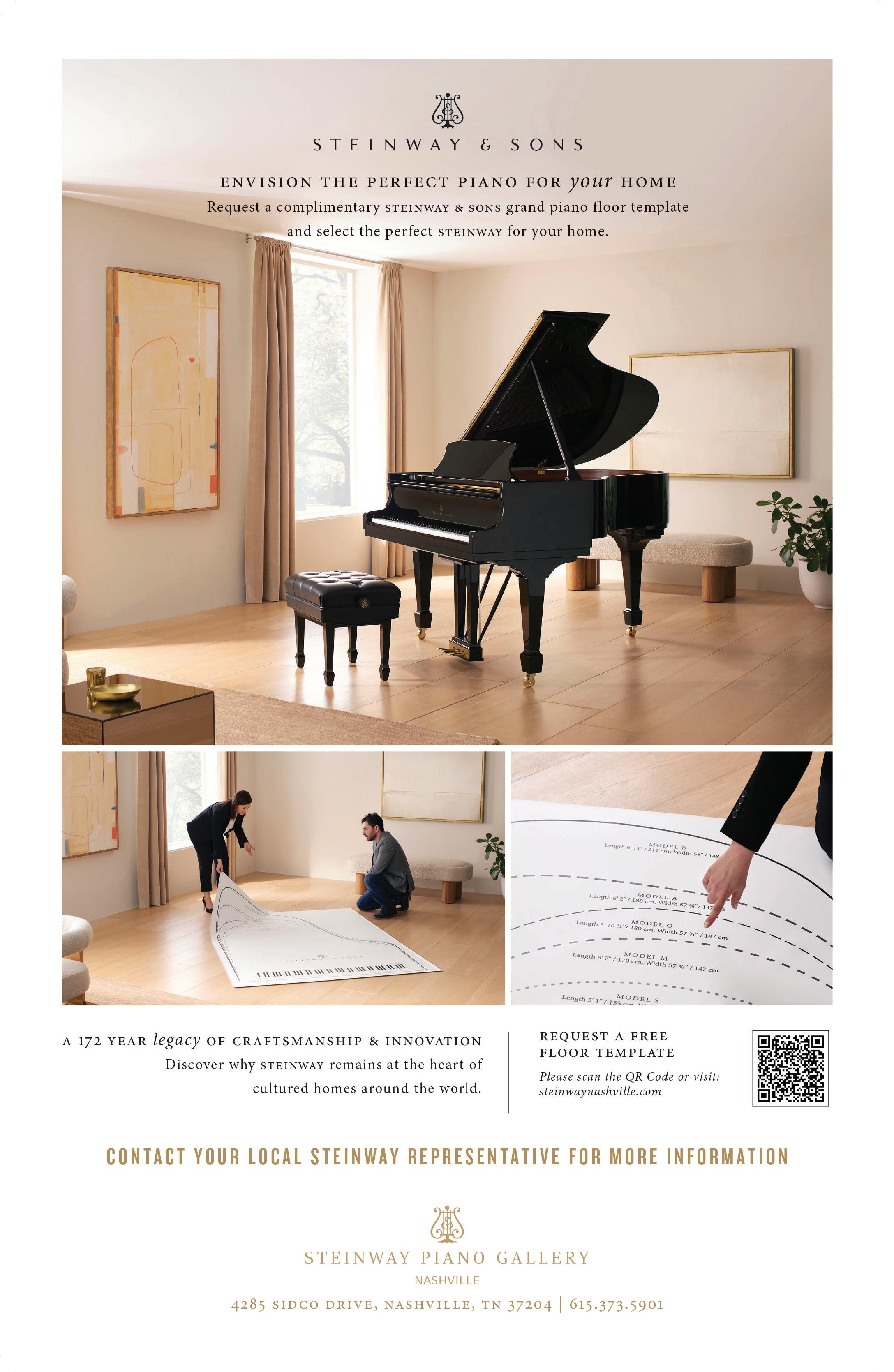






ILudwig van Beethoven
Symphony No. 5
Composed: 1804-08
n his late twenties, Beethoven noticed troubling changes in his hearing, and by his early thirties he could no longer deny the devastating truth: he was going deaf. He tried every possible cure, but nothing slowed the decline. Eventually he had to accept that he would never again experience the full physical sensation of music.
Yet he refused to give in to despair. Beethoven clung fiercely to his artistic mission, determined to keep composing even as silence closed in. For later generations, especially in the Romantic era, his deafness became a symbol—proof that art could rise above the cruelties of fate. The Fifth Symphony, in particular, has been heard as an act of defiance, a refusal to surrender. It reforged the Classical style into something tougher, more personal, more dramatic: a rallying cry for the 19th century and beyond.
The Fifth Symphony premiered in late December 1808 in an unheated Viennese concert hall, part of a marathon program Beethoven organized himself. Its reputation as a testament to struggle and resilience would come later, as listeners began to grasp the power of this music. The opening gesture—four terse notes that slice through silence, immediately repeated—has become one of the most recognizable sounds in Western art.
That fragment has inspired endless speculation: some say it echoes a birdcall, others that it matches Homer’s poetic rhythm. Beethoven’s secretary Anton Schindler claimed the composer described it as “Fate knocking at the door” (though Schindler was notorious for inventing anecdotes). Whatever its origins, those four notes have come to embody conflict, defiance, and the possibility of victory.
The four-note motto erupts at the very start—an explosion that sets off a chain reaction of ideas. From this fragment, Beethoven builds a confrontation that feels like a microcosm of the entire work. Yet it gives no assurance that triumph lies ahead—you need to hear the entire symphony to appreciate how ingeniously Beethoven shapes the journey.
The first movement develops the motto with fierce logic, ratcheting up tension at every turn. At one
point, the storm halts for a plaintive oboe solo—a breath of vulnerability before the relentless drive resumes. In the coda, Beethoven stretches the form to an unprecedented scale, introducing new material only to hammer home the motto at the end.
The second movement offers contrast through variations: one broad and lyrical, the other compact and martial. Beethoven’s sharp contrasts of texture and mood here are as vital as the themes themselves.
The scherzo returns to C minor with a shadowy, whispered theme. Suddenly the strings burst into a manic dance in C major, brimming with excited anticipation. But the scherzo slips back in hushed tones, leading to one of the most suspenseful passages in orchestral music—a long, quiet build that finally breaks into the finale.
Here, at last, the symphony blazes into C major. What could possibly follow? Like sunlight breaking through clouds, C major has now arrived in full force … or has it? The ghostly scherzo reappears, as if to remind us that struggle is never fully vanquished. The return of the fanfare-like main theme is no less thrilling the second time around. It is as if Beethoven insists on reminding us that triumph is never a single moment, but something that must be earned again and again. Perhaps that is why, in the Fift h’s fi nal minutes, he drives home this hard-won affirmation with such unrelenting force.
Scored for 2 fl utes and piccolo, 2 oboes, 2 clarinets, 2 bassoons and contrabassoon, 2 horns, 2 trumpets, 3 trombones, timpani, and strings.
− Thomas May is the Nashville Symphony's program annotator.
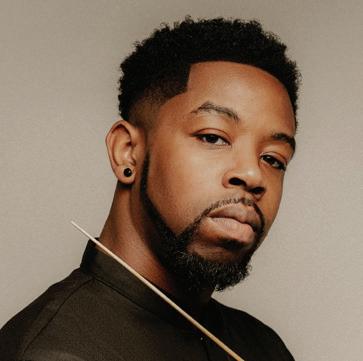
JONATHAN
TAYLOR RUSH
Jonathan Taylor Rush, hailed as "a continually rising talent in the conducting world" by the Baltimore Sun, brings passion, unique interpretation, and a refreshing energy to the orchestral experience. Rooted in his musical upbringing within the church, Rush's approach to conducting is imbued with elements of gospel and soul music.
Previous conducting highlights include debut performances with the likes of Chicago Symphony Orchestra, Philadelphia Orchestra, Minnesota Orchestra, Detroit Symphony Orchestra, Baltimore Symphony Orchestra, Chicago Sinfonietta, Nairobi Philharmonic, and many more, including his opera debut with the Washington National Opera at the Kennedy Center.
The 2024/25 season included performances with Nashville Symphony, Minnesota Orchestra, Baltimore Symphony, Atlanta Symphony, Louisiana Philharmonic, North Carolina Symphony, Savannah Philharmonic, and Hartford Symphony. He is committed to the performances of living composers and has premiered works by James Lee III, Fernando Arroyo Lascurian, and Carlos Simon. Rush is also a
champion of the music of William Grant Sill, Florence Price, and Samuel Coleridge Taylor.
As well as the traditional classical canon, Rush often welcomes creative powerhouses from other genres to the orchestral stage and has worked with the likes of Cypress Hill, Leslie Odom Jr., hip hop writer/performer Wordsmith, singer songwriter Ledisi, rapper Big Freedia, Darin Atwater, and Karen Clark Sheard.
Rush was named Assistant Conductor, and was later promoted to Associate Conductor, of Baltimore Symphony Orchestra from 2020 to 2023. At Baltimore Symphony, he curated the orchestra's inaugural Gospel Fest. While with the Baltimore Symphony, Rush also served asArtistic Director of the Baltimore Symphony Youth Orchestras. As Artistic Director, Rush led the ensemble on its first-ever international tour through Europe, showcasing their talents at renowned venues such as Dvořák Hall in Prague.
His most recent release, on Decca Classics, is the world premiere recording of Carlos Simon’s brea(d)th. His academic accomplishments include a Bachelor of Music Education degree from The Ohio State University and a Master of Music degree in Orchestral Conducting from the Peabody Institute of Johns Hopkins University. Jonathan’s mentors and teachers of conducting are Joseph Young, Mei-Ann
FRIDAY & SATURDAY, OCTOBER 17 & 18 AT 7:30 PM
JAMEY JOHNSON & NASHVILLE SYMPHONY
NATHAN ASPINALL , conductor
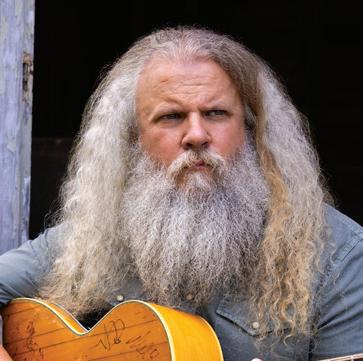
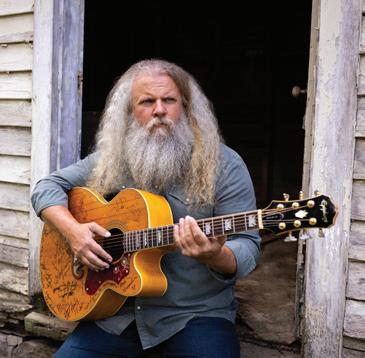
Ten-time GRAMMY ® nominee Jamey Johnson has been called “one of the greatest country singers of our time,” by The Washington Post. His music has garnered international acclaim and is embraced by fans of classic and contemporary country, as well as Americana and mainstream rock. He released his latest album, Midnight Gasoline, a collaboration between his label, Big Gassed Records, and Warner Music Nashville, in November.
The Grand Ole Opry member is also widely regarded as one of the greatest country songwriters of his generation. He is one of only two people in the history of country music (along with Kris Kristofferson) to win two Song of the Year awards in the same year—for “Give It Away” and “In Color”—from the Academy of Country Music and the Country Music Association. A consummate storyteller, his songs have been
recorded by George Strait, Trace Adkins, Willie Nelson, James Otto, Joe Nichols, and others. He is “a first-rate preservationist of classic country songwriting,” says The New York Times
His recent prime-time television performances have been widely recognized as the best of the shows, from singing “Georgia on My Mind” in the CBS special Willie Nelson’s 90th Birthday Celebration and “Angels Among Us” for the CMT Giants: Alabama to performing “Beer for My Horses” with Lainey Wilson for the top-rated NBC special Toby Keith: American Icon. He debuted his powerful song, “21 Guns,” during PBS’s National Memorial Day Concert last year.
The Recording Industry Association of America recently honored him for sales/streams of nine million, including the 5x platinum-certified single “In Color,” the 2x platinum-certified album That Lonesome Song, the platinum-certified single “High Cost of Living,” the gold-certified song “Between Jennings and Jones,” and the gold-certified single “That Lonesome Song.”
Every gift helps the Nashville Symphony open doors to music, creativity, and inspiration for young people across our community:
$10 $15 0 $200 $40 0 $700 $1,000
Gives 10 students the joy of attending a Young People’s Concert – often their first orchestral experience.
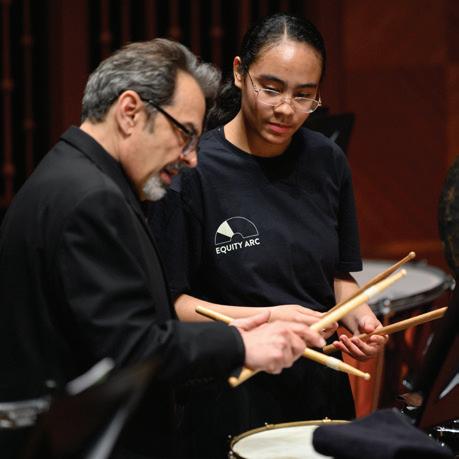
Sends our musicians into local schools for a sectional performance that sparks a lifelong love of music.
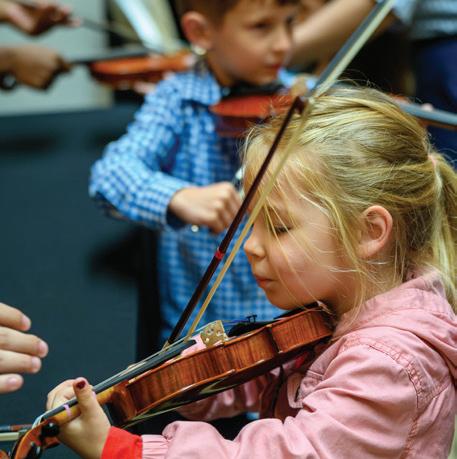
Introduces 100 students to the magic of the violin (or is it a fiddle?) through our partnership with the Country Music Hall of Fame.
Brings the Storytime Ensemble to a classroom or community center, blending music and imagination.
Sends a quartet to a school for one performance, bringing music to the students directly.
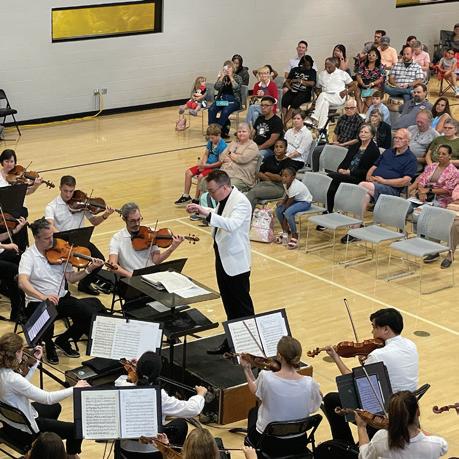
Presents a Chamber Music performance, giving audiences an unforgettable experience of live artistry.
When you give, you’re not just making a donation—you’re putting instruments in children’s hands, music in their ears, and possibility in their hearts. Together, we can inspire tomorrow’s music lovers, creators, and performers.
Your gift will make a difference right now.
SUNDAY, OCTOBER 19 AT 3 PM
NATHAN ASPINALL, conductor
THANK YOU TO OUR FAMILY SERIES SPONSOR
This concert will last approximately 50 minutes.
All Family Series concerts have the following sensory friendly supports available. Ask an usher or visit the information kiosk in the Main Lobby for more information!
• Flexible seating areas
• Booster seats
• No shushing in the concert hall—it’s OK to make noise!
• Closed captioning
• American Sign Language interpreting
• Fidget toys
• Noise-cancelling headphones
• Quiet spaces
• Social stories, maps, and more!
Learn more at NashvilleSymphony.org/SensoryFriendly

The concertmaster will arrive to help the orchestra tune their instruments.
Then, the conductor will arrive!
The Young Person's Guide to the Orchestra, Opus 34
Theme: Allegro maestoso e largamente
Variation A (flutes and piccolo): Presto
Variation B (oboes): Lento
Variation C (clarinets): Moderato
Variation D (bassoons): Allegro alla marcia
Variation E (violins): Brillante - Alla polacca
Variation F (violas): Meno mosso
Variation G (cellos): [L'istesso tempo]
Variation H (basses): Comminciando lento ma poco a poco accelerando
Variation I (harp): Maestoso
Variation J (horns): L'istesso tempo
Variation K (trumpets): Vivace
Variation L (trombones): Allegro pomposo
Variation M (percussion): Moderato
Fugue: Allegro molt
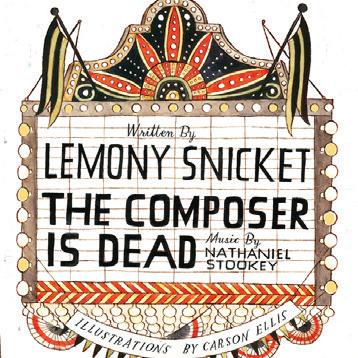
The Composer is Dead
The conductor will turn around and the orchestra will stand up. You can clap for the orchestra if you liked the music!
FRIDAY & SATURDAY, OCTOBER 24 & 25 AT 7:30 PM
CHRISTIAN REIF, conductor
J’NAI BRIDGES, mezzo-soprano
CHARLES IVES
The Unanswered Question
BRIAN FIELD
Everything Hurts | Live Recording
J’Nai Bridges, mezzo-soprano
World premiere of New York Times bestselling author Amanda Gorman’s poem, Hymn for the Hurting, set to symphonic music.
JULIA PERRY
Stabat Mater
Grave Andantino
Allegro
Allegro
Moderato non troppo
Andante
Allegro molto
Misterioso
[Presto]
Calmo
J’Nai Bridges, mezzo-soprano
INTERMISSION
KURT WEILL
Symphony No. 2
Sostenuto - Allegro molto
Largo
Allegro vivace - Presto
THANK YOU TO OUR CLASSICAL SERIES SPONSOR
This concert will last approximately one hour, 20 minutes, including a 2 0-minute intermission.
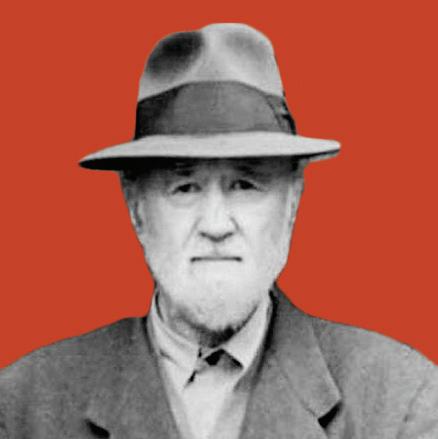
CCharles Ives
The Unanswered Question
Composed: 1906-08; revised in 1930-35
harles Ives is often described as the guiding spirit of America’s “maverick” tradition—a lineage of composers who resisted convention and pioneered radical new ideas. A native New Englander, Ives was steeped in the ideas of Transcendentalist thinkers, such as Ralph Waldo Emerson, who championed the power of nature and the human spirit and became a lifelong fascination for the composer. According to the musicologist Wayne Shirley, Ives took the title for this short, enigmatic piece from Emerson’s poem The Sphynx (1841): “Thou art the unanswered question.”
What is being contemplated here is nothing less than a cosmic mystery. Ives imagined a scenario addressing what he called “the perennial question of existence.” Rather than unfold in the conventional narrative style of his era, the piece is built from three simultaneous strands of music. Heard together, they form a kind of musical collage that makes us newly aware of how music can inhabit space as well as time.
Each layer has its own character. The first is a slow-moving background of sustained string chords. Spaciously voiced and serene, they evoke a timeless hymn—Ives likened their sound to “the silence of the Druids—who know, see, and hear nothing.” This calm backdrop continues almost imperceptibly throughout, never reacting to the other voices.
The second layer introduces “the question” itself: a brief five-note phrase, usually played by solo trumpet positioned offstage, sounding seven times across the piece. Each entrance unsettles the stillness of the strings, beginning on a note that does not belong to their harmonic world and remaining unresolved. The third layer is carried by woodwinds, which represent “the hunt for the invisible answer.” At first, their replies are tentative and restrained, but they grow sharper and more frantic each time the question returns, until they break into chaos. Ives builds tension by letting these answers accelerate in tempo and rise in volume, until at last they unravel. On the second-to-last appearance, the trumpet subtly alters its phrase. The seventh and final question is met with silence. Ives wrote that the “fighting answers”
eventually recognize the futility of their efforts and mock the question itself: “The strife is over for the moment.” Only the strings remain, pulsing in what he called “undisturbed solitude.”
Scored for 4 flutes (or 2 flutes, oboe and clarinet), strings , and a “solo instrument” (preferably trumpet)

Everything Hurts
Composed: 2023
onnecticut–based composer Brian Field has distinguished himself as an artist deeply engaged with social and political issues. “I feel it is important for artists to be able to respond to what is happening around us: current events, political happenings, social changes, as opposed to simply writing tunes,” he says.
That conviction has shaped much of his recent work. From issues of climate change, with his piano suite Three Passions for our Tortured Planet, to immigration in Let’s Build a Wall!, a chamber work poking fun at political rhetoric on both sides of the debate.
That same spirit of advocacy shapes Field’s new work Everything Hurts, receiving its world premiere in these concerts. The piece sets Hymn for the Hurting by Amanda Gorman, the American poet and activist who in 2017 became the first-ever National Youth Poet Laureate. Gorman gained international recognition as the youngest Inaugural poet in U.S. history when she performed “The Hill We Climb” at President Biden’s Inauguration in 2021.
Written in the aftermath of the 2022 school shooting in Uvalde, Texas, Gorman’s poem resonated deeply with Field, who lives near Newtown, Connecticut—the site of the Sandy Hook tragedy in 2012. With Gorman's rare permission—this composition marks the first time she has allowed her poetry to be set to original music—Field has created a work for mezzo-soprano and orchestra that channels grief into resilience.
All royalties will be donated to Everytown for Gun Safety, the largest U.S. nonprofit devoted to preventing gun violence through advocacy, research, and community action. In this way, Field’s new piece aligns with the same cause Gorman supported when she first published her poem.
The premiere features two-time GRAMMY® winning mezzo-soprano J’Nai Bridges, a Metropolitan Opera



star celebrated not only for the richness of her voice but also for her role as a prominent voice for equity and representation in classical music.
The music is built around a recurring three-note motif, shaped like a sobbing breath. Initially, it embodies sorrow, echoing the raw pain of Gorman’s words, which mourn the pain and trauma caused by gun violence.
As the piece unfolds, the motif shifts in harmony and color, gradually brightening until it suggests a resilience that comes through recognizing the possibility of change. The musical transformation mirrors the poem’s own journey: beginning in grief, but finding in that grief the seed of change and closing on a note of hope and optimism.
Scored for pairs of flutes, oboes, clarinets, bassoons, horns, trumpets, and trombones; tuba; glockenspiel and bass drum, suspended cymbal, and triangle; harp; strings; and mezzo-soprano
The Nashville Symphony is a leader in championing new music. Your donations allow us to dedicate resources to record new orchestral music including the Brian Field piece in this program. Together, we are leaving a profound impact on the American repertoire.
Via phone: 615.687.6494
Via mail: One Symphony Place Nashville, TN 37201
Online: NashvilleSymphony.org/DonateNow
Amanda Gorman
Everything hurts, Our hearts shadowed and strange, Minds made muddied and mute. We carry tragedy, terrifying and true. And yet none of it is new; We knew it as home, As horror, As heritage. Even our children Cannot be children, Cannot be.
Everything hurts. It’s a hard time to be alive, And even harder to stay that way. We’re burdened to live out these days, While at the same time, blessed to outlive them.
This alarm is how we know We must be altered — That we must differ or die, That we must triumph or try. Thus while hate cannot be terminated, It can be transformed Into a love that lets us live.
May we not just grieve, but give: May we not just ache, but act; May our signed right to bear arms Never blind our sight from shared harm; May we choose our children over chaos. May another innocent never be lost.
Maybe everything hurts, Our hearts shadowed & strange. But only when everything hurts May everything change
JJulia Perry
Stabat Mater
Composed: 1951
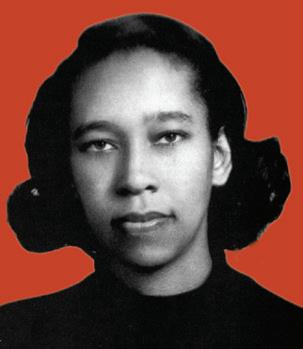
ulia Perry was a trailblazing American composer whose career combined extraordinary promise with heartbreaking obstacles. Born in Kentucky in 1924 and raised in Akron, Ohio, she grew up in a family where her obvious musical talent was supported: her father was a physician who also sang, and her mother encouraged Julia’s training from an early age. Perry studied violin, piano, and voice as a child and always kept a deep connection to the human voice, which became central to her identity as a composer.
That connection is movingly apparent in her Stabat Mater, an early work composed in her twenties. After earning her degree at Westminster Choir College in 1947, she spent the summer at Tanglewood, the Boston Symphony’s summer music academy in the Berkshires. There she studied with Luigi Dallapiccola, a leading Italian composer whose blend of modernism and lyricism was later championed in America by Leonard Bernstein, who was also teaching at Tanglewood that summer.
Perry went on to continue her training at Juilliard and the Curtis Institute in Philadelphia. In 1951 she composed the Stabat Mater, the work that first brought her international attention. Soon afterward, backto-back Guggenheim Fellowships enabled Perry to spend her first extended period in Europe, deepening her connection with Dallapiccola in Florence. She went on to Paris, where she was mentored by Nadia Boulanger, whose influence touched generations of American composers from Aaron Copland to Philip Glass.
By the time she returned to the U.S. in 1959, Perry had established herself as one of the most promising American composers of her generation. She won commissions and prizes on both sides of the Atlantic and eventually composed around 100 works, including a remarkable cycle of twelve symphonies as well as concertos and operas. In 1965, she broke barriers when her Study for Orchestra became the first work by a woman of color—and only the third by any woman—to be performed by the New York Philharmonic.
Yet only a fraction of Perry’s music was published during her lifetime. Her early death in 1979, together with the challenges of being a Black woman in a predominantly white, male field, meant that much
of her work fell into neglect. Today, however, Perry’s legacy is being rediscovered and celebrated.
Stabat Mater sets a 13th-century Latin hymn that meditates on Mary’s sorrow at the Crucifixion. She dedicated the work to her mother, America Perry—a gesture that adds an intimate layer to music centered on a mother’s grief. The subject also reflected Perry’s lifelong interest in sacred and spiritual themes.
Perry scored the piece for contralto and string orchestra, using her own English translation of the medieval Latin text as a companion to the score. According to scholar A. Kori Hill, she envisioned Marian Anderson—the celebrated contralto and civil rights icon—as the soloist, though Anderson never performed the piece.
Perry wrote that Stabat Mater, which unfolds in ten sections, “consists of three characters—Jesus, Mary, and the spectator.” As the drama unfolds, the spectator, who at first observes from a distance, longs to share in Mary’s burden (the Latin words fac me cruce custodire, meaning “grant that I may stand guard at the Cross”). The contralto embodies these roles in long, chant-like lines, while the strings provide an accompaniment that is spare yet piercing.
Scored for solo contralto and string orchestra.
WKurt Weill
Symphony No. 2
Composed: 1933-34
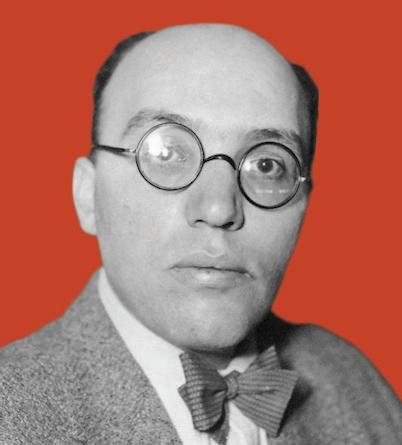
hen Kurt Weill’s name comes up, most people immediately think of his collaborations with playwright Bertolt Brecht: The Threepenny Opera and its immortal hit tune “Mack the Knife.” But like Leonard Bernstein a generation later, Weill was an artist divided between worlds—the “serious” composer of symphonies and concertos versus the innovator of popular song and musical theater, the modernist admirer of Arnold Schoenberg and student of Ferruccio Busoni versus the Broadway craftsman who helped define the sound of mid-20th-century America.
Born in Dessau in 1900, the son of a synagogue cantor, Weill discovered music early and trained in Berlin, where Busoni became his mentor. His early career fl ourished in the experimental atmosphere of the Weimar Republic, but as a Jewish liberal he

was targeted by the Nazis. In 1933 he fled Germany, moving first to Paris and then in 1935 to the United States, which he made his permanent home. Weill became an American citizen and poured his talents into the Broadway stage with works such as Lady in the Dark, One Touch of Venus, Street Scene, and Lost in the Stars
But Weill’s stage successes have tended to eclipse his works for the concert hall. He wrote two symphonies, a violin concerto, chamber pieces, and vocal-orchestral scores that show a different side of his artistry. Among these, Symphony No. 2 stands out as both a farewell to his European years and a testament to his gift for dramatic orchestral writing.
In 1930, even before Hitler came to power, Nazi thugs stormed the world premiere of Weill and Brecht’s opera Rise and Fall of the City of Mahagonny in Leipzig, breaking up the show with shouts of “degenerate art.” It was a chilling act of reactionary nationalist violence, and for Weill—a Jewish composer married to the singer Lotte Lenya and associated with leftist theater—it made clear he was in grave danger. He fled Germany shortly after Hitler came to power in 1933, settling briefly in Paris, where he began work on Symphony No. 2, completing it the following year. The premiere took place in Amsterdam in 1934 under the baton of Bruno Walter, himself another émigré who had been forced to leave Germany.
The work carries the imprint of this turbulent moment in Weill’s life. Written in exile, it would prove to be his last major orchestral score before he turned almost entirely to the stage, already offering a glimpse of the directness and dramatic flair that would later define his American theater works.
Cast in three movements, Symphony No. 2 brims with contrasts that feel theatrical. Brass—and, in the version heard at the premiere, with reinforcements by percussion—erupt in sardonic outbursts, only to give way to lyrical interludes for winds and strings. (For these performances, Christian Reif has opted to use the version of the score without percussion.)
Weill shifts abruptly from biting rhythms to haunting melodies, as if the orchestra were a company of actors stepping into sharply drawn roles.
The opening Allegro bristles with irony and tension. Weill even slips in an unmistakable allusion to the famous short-short-short-long “Fate” motto of Beethoven’s Fift h Symphony—a wry nod to the symphonic tradition that he bends to his own dramatic purposes.
The slow central movement takes the form of a funeral march, its heavy tread and somber lyricism foreshadowing the direct emotional power of the songs Weill would later compose for the theater. In contrast, the finale pushes forward with jagged energy and satirical bite, ending with an attitude of defiance rather than simple-minded resolution.
Scored for pairs of fl utes, oboes, clarinets, bassoons, horns, trumpets, and trombones; timpani; and strings.
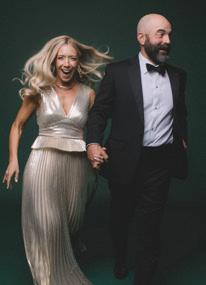
− Thomas May is the Nashville Symphony's program annotator. DREW AND ELLIE HOLCOMB'S NEIGHBORLY CHRISTMAS DEC 12 | 7:30 PM Presented without the Nashville Symphony
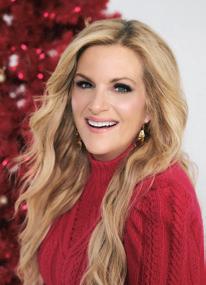
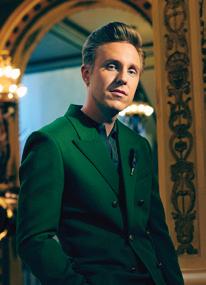
WITH TRISHA YEARWOOD and the Nashville Symphony DEC 2 & 3 | 7:30 PM CODY FRY CHRISTMAS with the Nashville Symphony DEC 16 | 7:30 PM
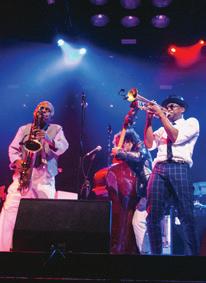
HALL JAZZ BAND: CREOLE CHRISTMAS DEC 15 | 7:30 PM
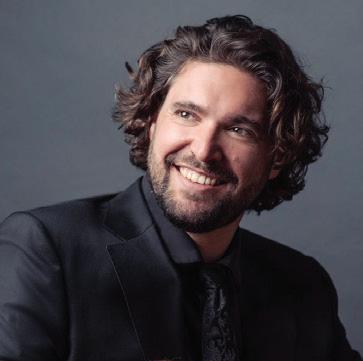
CHRISTIAN REIF
Chief Conductor of the Gävle Symphony Orchestra since 2023/24, GRAMMY®Award winning artist
Christian Reif has established a reputation for his natural musicality, innovative programming and technical command.
Since 2022, Reif has served as Music Director of the Lakes Area Music Festival, a month-long summer festival in Minnesota featuring the nation’s top classical performers in programming that ranges from opera and chamber music to symphonic performances along with commissioned new works. LAMF believes that high quality arts experiences should be accessible to all and operates on a name-your-price ticket model.
Highlights of Reif’s 2024/25 season included debut
performances with the Los Angeles Philharmonic at the Hollywood Bowl, Phoenix Symphony, Detroit Symphony, Canada’s National Arts Centre Orchestra, SWR Symphony Orchestra, and Royal Northern Sinfonia. He leads the Cincinnati Symphony in the world premiere of Fantastica, a newly commissioned work by composer Jimmy López Bellido dedicated to Reif based on The Neverending Story, originally a fantasy novel by the German writer Michael Ende and later a major motion picture. He conducts his own arrangement of John Adams’s El Niño with the Münchner Rundfunkorchester, Gävle Symphony, and the American Modern Opera Company in December 2024. Reif and his wife, soprano Julia Bullock, also bring Bullock's original program History's Persistent Voice to performances at Lincoln Center and Yale University’s Schwarzman Center in February 2025.
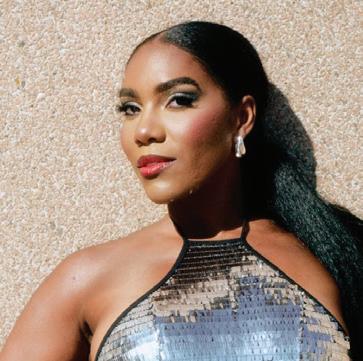
J’NAI BRIDGES mezzo-soprano
Two-time GRAMMY ®
Award-winning American mezzo-soprano J’Nai Bridges, known for her “plush-voiced mezzo-soprano” (The New York Times), and “calmly commanding stage presence” (The New Yorker) has been “marked out at and early stage as a singer headed for top flight” (Financial Times), gracing the world’s top opera and concert stages.
During Bridges' 2024/25 season, she made her role debut as Maddalena in Verdi's Rigoletto at The Metropolitan Opera. Her concert engagements included performing alongside the National Symphony
Orchestra, Symphony Tacoma, the Minnesota Orchestra, the Boston Symphony Chamber Players, and the Detroit Symphony Orchestra. She performed a solo recital as an artist in residence at the Kaufman Music Center, and featured as the mezzo-soprano soloist alongside the Dessoff Choirs in Verdi's Requiem for a concert at Trinity Church. Returning to Seattle Opera, she debuted the role of Didon in performances of Les Troyens, and in Spring 2025, played the title role in Carmen at the Wiener Staatsoper. Bridges made her Lincoln Center debut performing Peter Lieberson's Neruda Songs, and “with a voice both voluptuous and statuesque, sang with depth and serenity” (The New York Times) had a huge success performing the role of Mary in John Adams' El Niño at the Metropolitan Opera.

with the Members of the Nashville Symphony
SUNDAY, OCTOBER 26 AT 7:30 PM
NATHAN ASPINALL , conductor
Feed and Water the Horses
Able to Sing
Galileo Come on Home
Mystery
Love of Our Lives
Woodsong
Ghost
Damo
Mariner Moonlighting
War Rugs
Sugar Tongue
Become You
Fugitive
Chicken Man
World Falls
Kid Fears
Shed Your Skin
Scooter Boys
Closer to Fine
Power of Two

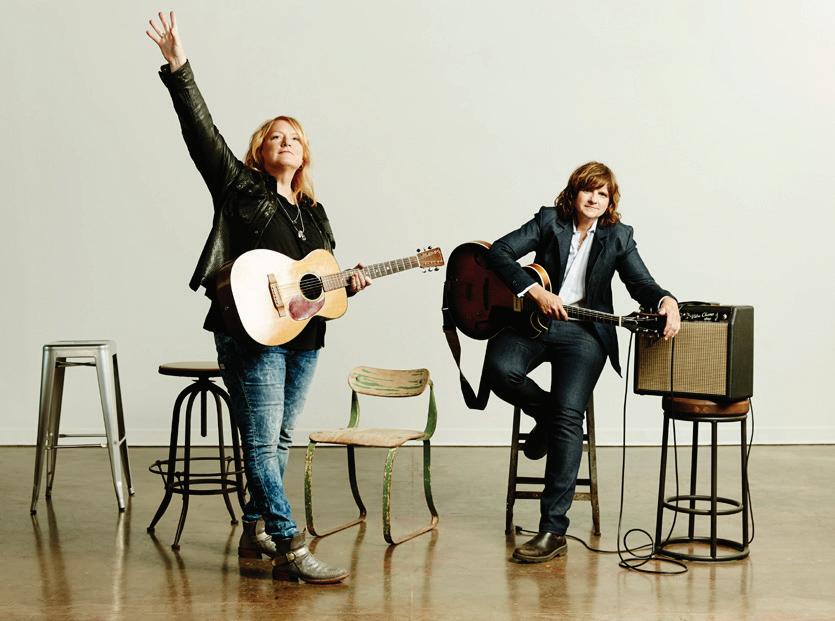
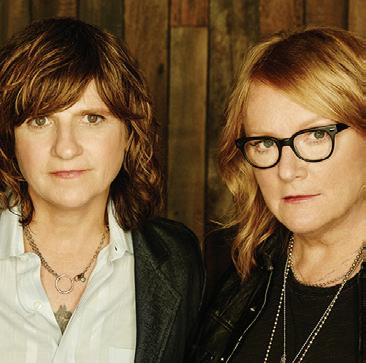
Twenty years after they began releasing records as the Indigo Girls, Amy Ray and Emily Saliers have politely declined the opportunity to slow down with age. With a legacy of releases and countless U.S. and international tours behind them, the Indigo Girls have forged their own way in the music business. Selling more than 14 million records, they are still going strong. Amy and Emily are the only duo with Top 40 titles on the Billboard 200 in the '80s, '90s, '00s, and '10s.
In 2012, Saliers and her Indigo Girls partner Amy Ray embarked on a bold new chapter, collaborating with a pair of orchestrators to prepare larger-thanlife arrangements of their songs to perform with symphonies around the country. The duo found an elusive sonic sweet spot with the project, creating a
seamless blend of folk, rock, pop, and classical that elevated their songs to new heights without scarifying any of the emotional intimacy and honesty that have defined their music for decades. Now, after more than 50 performances with symphonies across the United States, the experience has finally been captured in all its grandeur on the band’s stunning new album, Indigo Girls Live With The University of Colorado Symphony Orchestra
The power of unity, both in music and in life, has been an Indigo Girls calling card ever since they burst into the spotlight with their 1989 self-titled breakout album. Since then, the band has racked up a slew of Gold and Platinum records, taken home a coveted GRAMMY® Award, and earned the respect of highprofile peers and collaborated from Michael Stipe to Joan Baez. NPR’s Mountain Stage called the group “one of the finest folk duos of all time” while Rolling Stone said “they personify what happens when two distinct sensibilities, voices, and worldviews come together to create something transcendentally its own.”
The duo has balanced their long, successful musical career by supporting numerous social causes. The Indigo Girls don’t just talk the talk; they walk the walk. Both on and off the stage, Emily Saliers and Amy Ray have secured their spot as one of the most legendary musical acts of this generation.
5 & 6 | 7:30 PM
ELF™ IN CONCERT
the Nashville Symphony DEC 10 & 11 | 7:30 PM
with Members of the Nashville Symphony DEC 14 | 7:30 PM
7 | 2:00 PM HANDEL'S MESSIAH
the Nashville Symphony & Chorus
DEC 19 & 20 | 7:30 PM DEC 21 | 2:00 PM
with the Nashville Symphony
FRIDAY & SATURDAY, OCTOBER 31 & NOVEMBER 1 AT 7:30 PM
SUNDAY, NOVEMBER 2 AT 2:00 PM
NATHAN ASPINALL , conductor
John Williams
Star Wars Film Concert Series
Star Wars: A New Hope
Twentieth Century Fox Presents A Lucasfilm Ltd. production
Starring
Mark Hamill
Harrison Ford
Carrie Fisher
Peter Cushing and Alec Guinness
Written and Directed by George Lucas
Produced by Gary Kurtz
Music by John Williams




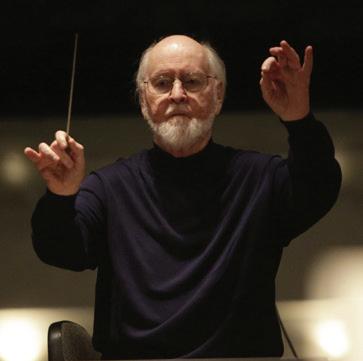
JOHN WILLIAMS
In a career spanning more than six decades, John Williams has become one of America’s most accomplished and successful composers for film and the concert stage. He remains one of our nation’s most distinguished and contributive musical voices. He has composed the music for more than one hundred films, including all nine Star Wars films, the first three Harry Potter films, Schindler’s List, E.T. the Extra-Terrestrial, Jaws, Jurassic Park, Saving Private Ryan, Lincoln, Close Encounters of the Third Kind, Superman, and the Indiana Jones films. He served as music director of the Boston Pops
Orchestra for fourteen seasons and remains their Laureate Conductor. He has composed numerous works for the concert stage including two symphonies and more than a dozen concertos commissioned by some of America’s most prominent orchestras. He has received five Academy Awards and fiftythree Oscar nominations, seven British Academy Awards, twenty-five GRAMMY ® s, four Golden Globes, and five Emmys. His other honors include the Kennedy Center Honors, the National Medal of Arts, an honorary KBE from Queen Elizabeth II, the Life Achievement Award from the American Film Institute, Spain’s Princess of Asturias Award for the Arts, and the Gold Medal from the UK’s prestigious Royal Philharmonic Society.
SVP/GM, Disney Concerts
Chip McLean
Supervising Technical Director
Alex Levy – Epilogue Media
Film Preparation
Ramiro Belgardt
Business Affairs, Lucasfilm
Rhonda Hjort
Chris Holm
For Booking Inquires: Emily.Yoon@TeamWass.com
President, Disney Music Group
Ken Bunt
Music Preparation
Mark Graham
Matthew Voogt
JoAnn Kane Music Service
Disney Music Library
Operations, Disney Concerts
Brannon Fells
Royd Haston
Marketing & Publicity
Lisa Linares
Lillian Matulic
VP, Disney Concerts
Gina Lorscheider
Business Affairs, Disney Concerts
Darryl Franklin
Leigh Zeichick
Neiloofar Sajedi
Elena Contreras
Addison Granillo
Narine Minasian
Christy Swintek
Svetlana Tzaneva
Business Affairs, Warner-Chappell
Scott McDowell





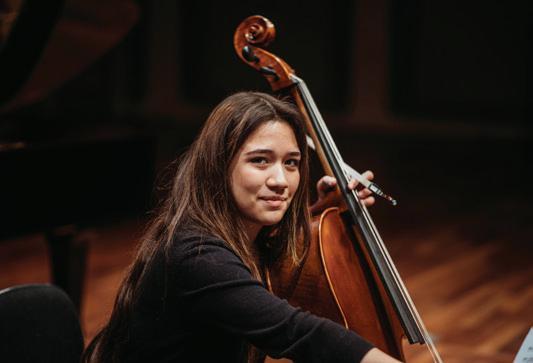
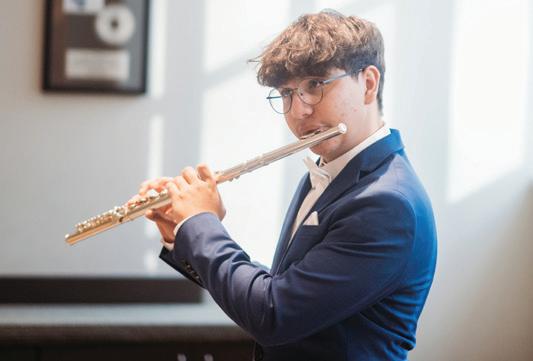
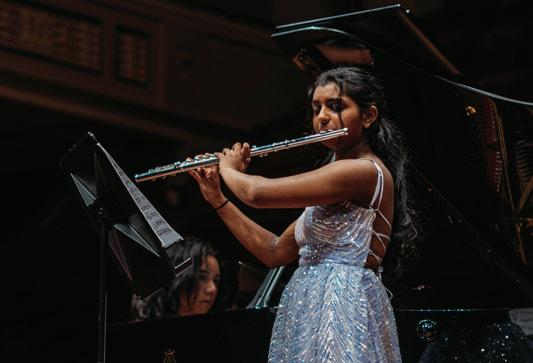
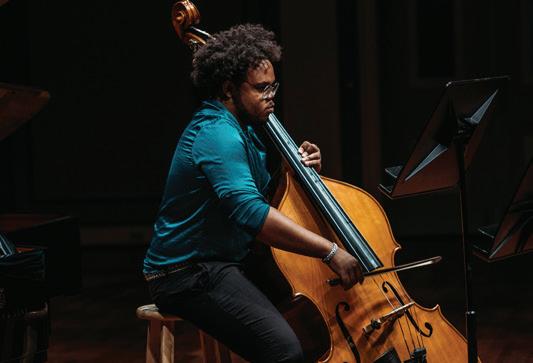
Accelerando offers exceptional musical training at no cost to qualifying Middle Tennessee students who exhibit the talent, potential, and ambition to pursue serious music study at the collegiate level.
• Students grades 5–12 may apply
• Students must play a standard orchestral instrument ELIGIBILITY
• Weekly private lessons from a Nashville Symphony musician
• Complimentary tickets for Nashville Symphony Classical Series performances
• Summer music camp and festival funding for students
• Financial and logistical assistance for college admissions



Gifts of $50,000+
Mr. Russell W. Bates & Mr. Benjamin Scott
Mr. & Mrs. Jack O. Bovender Jr.
Mr. Michael Carter, Sr. & Mrs. Pamela Carter
Mr. & Mrs. Kevin W. Crumbo
Mrs. Martha Rivers Ingram
Donna & Ralph Korpman
Mr. & Mrs. Jonathan A. McNabb
Mrs. Ben R. Rechter
Mr. & Mrs. James C. Seabury III
Gifts of $25,000 - $49,999
Anonymous
Mr. & Mrs. Dennis Bottorff
Mrs. J. C. Bradford Jr.
Ann & Frank* Bumstead
Ms. Lucie W. Cammack
Mary & Joseph Cavarra
Mr. & Mrs. Robert W. Chasanoff
Mr. Jason P. Somerville & Mr. Eric Cook
Connie & Nick Deidiker
Andrew Horowitz
Mr. and Mrs. R. Milton Johnson
Dr. & Mrs. Howard S. Kirshner
Mr. Mark E. Lopez & Mr. Patrick J. Boggs
Mr. & Mrs. David K. Morgan
James L. & Victoria L. Rooney
Mr. & Mrs. Rick Scarola
Mr. and Mrs. Christopher J. Simovich
Mr. Ronald P. Soltman, in memory of Judith Cram
Mr. and Mrs. James H. Todd
Mr. & Mrs. William H. Wade
Gifts of $15,000 - $24,999
Anonymous
Dr. & Mrs. Frank H. Boehm
Dr. & Mrs. André L. Churchwell
David & Starling Clark
Estate of Elizabeth F. Cormier
Hilton & Sallie Dean
Robert J. Dennis
The Ann M. Duffer Family Foundation
Ms. Gail Danner Greil
Brenda & David Griffin
Vicki & Rick Horne
Mx. Morgan Karr & Gabriel Starner
Larry & Leiyan Keele
Mr. Neil Krugman & Ms. Leona Pratt
Mr. & Mrs. Lawrence Lipman
Ellen Harrison Martin & Gerald Martin Nadeau
Richard & Sharalena Miller
Anne & Peter Neff
Victoria & William Pao
Drs. Mark & Nancy Peacock
Drs. Warren & Elisabeth Sandberg
Michael & Grace Sposato
The Harris Widener Family Fund
Gifts of $10,000 - $14,999
Anonymous
Mr. & Mrs. Stephen M. Abelman
Grace & Carl Awh
Sallie & John Bailey
Blevins, Inc.
Mr. & Mrs. Pat Campbell
Anita & Larry Cash
Jay & Ellen Clayton
Mrs. William Sherrard Cochran Sr.
Dorit & Donald* Cochron
Greg & Collie Daily
Dr. Daniel Diermeier
Mr. & Mrs. Gerald M. Farina
Tom & Judy Foster
Tommy & Julie Frist
Cathey & Wilford Fuqua
Allis Dale & John Gillmor
Mr. & Mrs. Frederick Sutton Grace
Mr. Eric Greer
Mr. & Mrs. F. David Haas
Emily Humphreys
The Nashville Symphony is deeply grateful to the following individuals who contributed to the 2024/25 concert season and services to the community through their generous gifts to the Annual Fund and support for Special Events. Donors through July 28, 2025
Lou & Elizabeth Jennings
Mr. Robert J. Turner & Mr. Jay Jones
Robin & Bill King
Sarah & Walter Knestrick
Dr. & Mrs. George R. Lee
Mr. & Mrs. Denis Lovell
Mr. and Mrs. Robert A. McCabe Jr.
Jamison & Heather Monroe
Anne Mosley
Mr. & Mrs. Lee F. Noel
Peggy & Hal Pennington
Keith & Deborah Pitts
Jeanie Rittenberry
Anne & Joe* Russell
Mrs. J. Ronald Scott
Teresa Sebastian & Steven Tunis
Leon & Leslie Shivamber
Dr. Neil & Ruth Smith
Mr. & Mrs. Mark Tillinger
Christi & Jay Turner
Alan D. & Jan L. Valentine
Ms. Amanda Warner
Betty R. Waters
Jerry & Ernie Williams
Gifts of $5,000 - $9,999
Anonymous
Oran & Sara Aaronson
Keith Arendsee
Reed & Dianne Arvin
Steven Attorri
Brian & Beth Bachmann
Ms. Jane B. Bachmann
David A. & Stephanie Bailey
Mrs. Melinda S. & Dr. Jeffrey R. Balser
Thomas Barrett & Belinda A. Berry
Frank & Dina Basile
Craig & Angela Becker
Dr. and Mrs. Randy Bellows
Mr. & Mrs. Douglas Bennett Jr.
Ms. Pamela Bollinger
Mr. & Mrs. Richard M. Bracken
Mr. & Mrs. Martin S. Brown Jr.
Branden Leslie Burkey
Ms. Heather C. Burroughs
Richard Burroughs
Mr. Benjamin Byrd IV
Mike & Jane Ann Cain
Chuck & Sandra Cagle
Mr. and Mrs. Anthony Calderon
Mr. & Mrs. Fred J. Cassetty
William and Sharon Cheek
Mr. & Mrs. Cooper Chilton
Mr. & Mrs. Charles W. Cook Jr.
Brian & Haden Cook
Kathy & Scott Corlew
David Coulam & Lucy A. Visceglia
Mr. & Mrs. Roy J. Covert
Mr. & Mrs. Justin Dell Crosslin
Drs. Michael S. and Rowena D. Cuffe
Mr. & Mrs. J. Bradford Currie
Mr. & Mrs. Robert S. Doochin
Travis & Robin Dunn
Mr. and Mrs. Burton Dye
Mr. Stephen R. Eaves
Mr. & Mrs. Jere Mann Ervin
Dr. & Mrs. Jeffrey B. Eskind
Laurie & Steven Eskind
Ms. Marilyn Falcone
Alice Fitzgibbon
Bill & Tracy Frist
Ms. Marilyn L. Garcia
Dot & Luther Gause
Frank & Louise Grant
Jim & Paula Grout
Stephen & Marilynn Halas
Carolyn N. and Terry W. Hamby
Dr. & Mrs. Daniel Hatef
Mr. & Mrs. J. Michael Hayes
Gregory T. Hersh
Mr. & Mrs. John Huie
Mr. & Mrs. David B. Ingram
Yi and Henry Ingram
Kate and Hank Ingram
Ms. Virginia Ingram and Mr. Chris Garchitorena
Dr. & Mrs. Abdallah M. Isa
Donald L. Jackson
G. Brian Jackson & Roger E. Moore
Trent Janos & Carine D'Angelo
Keith Johnson
Angela Bostelman-Kaczmarek & Tom Kaczmarek
Mr. & Mrs. T. K. Kimbrell
Ms. Diane Klaiber
Kevin & May Lavender
Bradley & Megan Lawrence
Dr. Michelle Law
Mr. Joseph Y. Lee & Ms. Erica Fetterman
Mr. and Mrs. Terry Logan
Jim & Debbie Lundy
Erin L. Luper
Red & Shari Martin
Mr. and Mrs. Dewitt Kerry McCluggage
Priscilla McKeehan
Garry & Sheila McNabb
John & Crispin Menefee
Edward D. & Linda F. Miles
Mr. David K. Mitchell
Joseph & Julia Moore
Bill & Cindy Morelli
Mr. Devin R. Mueller
Matt & Rhonda Mulroy
James & Patricia Munro
Dr. & Mrs. Turner Nashe Jr.
Mr. & Mrs. Larry D. Odom
Courtney N. Orr
Doria Panvini
Mr. & Mrs. Laurence M. Papel
Ms. Donna Pavlick
Alexandria Payton
Mr. Timothy Pearcy and Ms. Glory Crampton
Paul & Gerda Resch
Ms. Kathy R. Robbins
Ms. Melanie Robinson
Carol & John T. Rochford
Mr. & Mrs. David L. Rollins
Rebecca Rouland
Ms. Mary Frances Rudy
Kenneth & Joan Sands
Dr. Norm Scarborough & Ms. Kimberly Hewell
Dr. & Mrs. Stephen Seale
The Shields Family Foundation
Mrs. Jay E. Shuman
Mr. & Mrs. Irvin Small
Mr. & Mrs. Brian S. Smallwood
Esther Smith
Ms. Maggie Smith
K.C. & Mary Smythe
Stephen Franklin Sparks
Clark Spoden & Norah Buikstra
W. Lee & Jane St. Clair
Dr. Steve A. Hyman & Mr. Mark Lee Taylor
Ms. Meril Temlock
Mr. & Mrs. David B. Thomas Sr.
Ms. Janice E. Ticich
Rick & Barbara. Turner
Tyler Walker
Mrs. Lisa W. Wheeler
Mrs. Barbara Bransford White
Ms. Memorie K. White
Mr. Milton White
Dean & Donna Whittle
Mrs. Gail Williams
Ira and Elaine Work
Shirley Zeitlin
Mr. Craig Zimberg & Ms. Tara Sawdon
Gifts of $3,000 - $4,999
Anonymous
Bill & Shelley Alexander
Dr. & Mrs. Gregg P. Allen
Jeremy & Rebecca Atack
Mrs. Sallie Ballantine Bailey
David Baldwin & Melissa K. Moss
J.E. & Doris Barlow
Ned Bates & Brigette Anschuetz
David & Holly Baulch
Mr. Lee A. Beaman
Lewis & Denise Bellardo
Mike & Kathy Benson
Dr. Eric & Elaine Berg
While we strive to recognize all our donors at the appropriate levels, mistakes can happen. If you believe an error has been made, please contact giving@nashvillesymphony.org.
Mrs. Jean Bills
Celia Applegate & David Blackbourn
Randolph & Elaine Blake
Dennis & Tammy Boehms
Mr.* & Mrs. Roger Borchers
Jamey Bowen & Norman Wells
Robert & Barbara Braswell
Dr. Robert J. Brewer
Jacqueline Brody
Mr. & Mrs. Scott Bryant
Branden Leslie Burkey
Sykes & Ann Cargile
David L. Carlton
Tom & Kathi Carr
Robin & Robert Carroll
Zane Cavender
David & Pam Chamberlin
Mr. Alex Chan & Ms. Jennie E. Stumpf
Erica & Doug Chappell
Ms. Carol J. Childress
Catherine Chitwood
Cynthia R. Cohen
Ed & Pat Cole
Teresa Corlew & Wes Allen
Roger & Barbara Cottrell
Paula Anne Covington
Kelly Crockett
Mr. M. Bradshaw Darnall III
Mr. & Mrs. William B. Davis
Beatrice deVegvar
Myrtianne P. Downs
Herbert & Kathleen Duer
Mr. and Mrs. Steve Dugas
Mr. & Mrs. Thomas Eck
Megan & Steven Epstein
Sherie Edwards
Mrs. Ethel T. Fennell
Mr. Brian T. Fitzpatrick
Mr. & Mrs. Steven B. Franklin
Mrs. Karyn M. Frist
Dr. Ronald E. Galbraith &
Mrs. Faith H. Galbraith
Carlene Hunt & Marshall Gaskins
Bruce Gill & James Turner
Mr. Norman B. Gillis
Mr. Amos R. Glass
Mr. Leonard C. Glass Sr.
Andrew & Alene Gnyp
Lisa & Douglas Gregg
Karen & Daniel Grossman
Cuong Ly & Gina Guo
Mrs. Robbie J. Hampton
Mr. & Mrs. John Burton Hayes
Judith & Richard Hays
Steve Hesson
Ms. Sylvia Hix
Ms. Elizabeth Hogan
Aurelia L. Holden
Mr. & Mrs. Donald J. Israel
Mr. & Mrs. Clay T. Jackson
Mr. & Mrs. John F. Jacques
Christopher Kamer
Patrick B. Kennedy & Jamie S. Amos
The Kirkland Foundation/Chris & Beth Kirkland
Ms. Diane Klaiber
Mr. & Mrs. David J. Klintworth
Mr. & Mrs. Michael A. Koban Jr.
Kimberly S. Kraft-McLemore
Dr. & Mrs. Mike LaDouceur
Bobbie Jean Lamar
Mr. Edward Lanquist
Martha & Larry Larkin
Mr. and Mrs. Shawn Lehman-Grimes
John & Mary Leinard
Mr. & Mrs. Jeremy R. Lemmon
Ted & Anne Lenz
Douglas & Mizuho Leonard
Alice & John Lindahl
Mr. George Luscombe II
David & Sarah Mansouri
Joelle Maynard
Mrs. Sharon L. McMahan
Dr. Mark & Mrs. Theresa Messenger
Ingrid Meszoely MD
Mr. & Mrs. S. Moharreri
Bill & Cindy Morelli
Mr. Wayne E. Morris
Dr. & Mrs. Kelvin A. Moses
Johnny Mutina & Earl Lamons
Michael & Patricia Nelson
Mr. & Mrs. Carl A. Neuhoff Jr.
Mrs. Gwen Noe
Dr. Agatha L. Nolen
Mr. & Mrs. Robert J. Notestine
Ashley & Aaron Odom
Mr. & Mrs. Bond E. Oman
David & Pamela Palmer
Susan Holt & Mark Patterson
Lisa Peebles
Mr. and Mrs. Joseph Ross Pepper
Dr. and Mrs. Philip Perdue
Melinda C. Phillips
Robert & Laura Pittman
Carol Armes & Bob Pitz
Mr. Jason E. Poole
Mr. & Mrs. W. Edward Ramage
Neil & Ella Redkevitch
Mr. Allen Reynolds
Dr. William D. Richie
Mr. & Mrs. Don Ricketts
Jan Riven
Amy Robertson & Carl Marshall
Ms. Judith A. Robison
Anne Roos
Ms. Sara L. Rosson & Ms. Nancy Menke
Brady Rowe
Mr. and Mrs. Alexander Ruth Sr.
Daniel Schafer & Melissa Rose
Mr. & Mrs. Todd Seifferth
Jennifer Shinall
Mrs. Martin E. Simmons
K.C. & Mary Smythe
Nan E. Speller & Dan Eisenstein
Mr. & Mrs. Thomas H. Stearns
Dr. Maura A. Stevenson
Barbara Newton & Kent Stewart
Robert & Virginia Stewart
Suzanne W. Storar
Dr. Eric & Mrs. Julie Sumner
Owen Thorne
Mr. & Mrs. Jerry Thursby
Martha J. Trammell
Mila & Bill Truan
Mr. Steve Turner*
John Vayda
Larry & Brenda Vickers
Veronica Votypka Mclean
Mr. & Mrs. John E. Waggener Jr.
Kris & G. G. Waggoner
Mike & Elaine Walker
Dr. & Mrs. Mark Wathen
Sam R. McColl & Christy A. Watkins
Talmage M. Watts & Debra Greenspan Watts
Dr. Carroll Van West &
Dr. Mary Hoffschwelle
Mr. James L. White
Mr. Lanny Willis
Wiens & McFadden Household
Dr. Artmas L. Worthy
Mr. & Mrs. D. Randall Wright
Ms. Pamela J. Wright
Dr. & Mrs. Victor L. Zirilli
And deepest thanks to all our donors who made gifts of any size. We’re so appreciative of you and your support!
Support for the 2025/26 Season will be reflected in future editions of InConcert. It’s never too early to add your name to the list with a generous contribution to the Nashville Symphony Annual Fund. Your support makes this performance and many more possible. Visit nashvillesymphony.org/donate to give and see your name in lights soon.
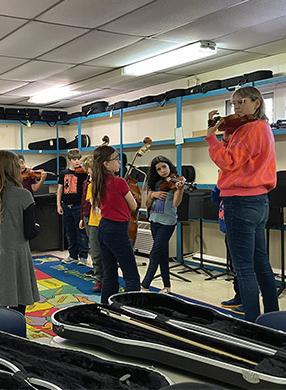
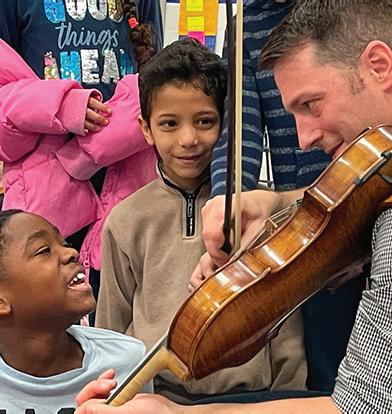
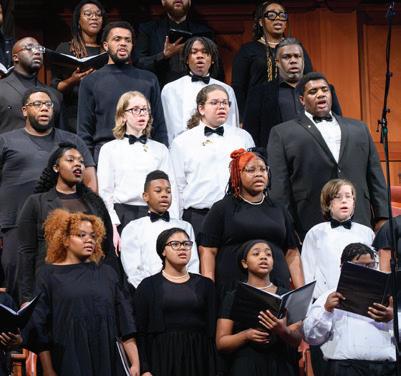
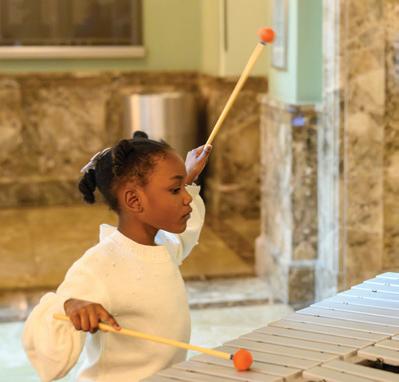
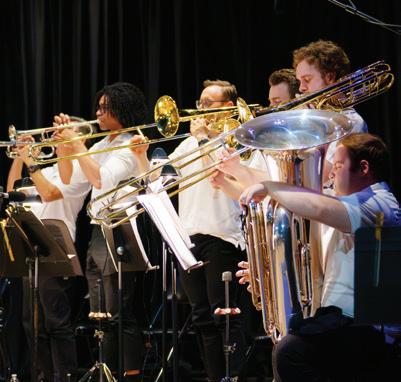
The Nashville Symphony is dedicated to sharing live orchestral music experiences with communities across Middle Tennessee — at Schermerhorn Symphony Center and beyond. Your support helps send our musicians into schools, community centers, and parks throughout the region.
EASY WAYS TO GIVE SCAN THE QR CODE TO DONATE NOW!
via phone: 615.687.6494
via mail: One Symphony Place Nashville, TN 37201
Online: NashvilleSymphony.org/Donate
* denotes donors who are deceased
In honor of Emzara & Emeil Al-Hashimi
In honor of Carole Batson
In honor of Phillip Cathey
In honor of Maestro Giancarlo Guerrero
In honor of Tod C. Koehler
In honor of Dr. Elizabeth Krogman
In honor of John Maple
In memory of Nathan & Marilyn Braustein
In memory of Marion Pickering Couch
In memory of Jeremy Dawkins
In memory of Betty Smith Dobson
In memory of Harold Donaldson
In memory of Henry Rodes Hart Sr.
In honor of Musicians
In honor of the Nashville Symphony Chorus
In honor of Victoria Pao
In honor of Suzanne Potter
In honor of Joel Reist
In honor of Scott Romine
In memory of James V. (Jim) Hunt, Sr.
In memory of Rodney Irvin
In memory off Michael Kilbane
In memory of Leah Koesten
In memory of Lt. Cmdr Alan A. Patterson
In memory of Steve Turner
OFFICERS
Mary Cavarra Board Chair
Pamela Carter Immediate Past Board Chair
Teresa Sebastian Board Chair-Elec
Hank Ingram Vice Chair
Jonathan McNabb Treasurer Emily Humphreys Secretary
Alan D. Valentine President & CEO
Steve Abelman
Grace Awh
Alec Blazek*
Teresa Broyles-Aplin
Alexis Caddell* Dr. Andre Churchwell
Starling Davis Clark
Eric Cook
John Crosslin
Yuri Cunza
Nick Deidiker
Robert Dennis
Dunn
+ Indicates Young Leaders Intern * Denotes Non-Voting Member
Gueikian
Tonya Hallett
Michael Hayes
Likai He*
Vicki Horne
John Huie
Henry Ingram
Martha R. Ingram*
Neil Krugman
OFFICERS
Courtney Orr Chair
Keeley Locke Immediate Past Chair
Steven Attorri Chair-Elect
Hank Ingram Chair Emeritus
Branden Burkey Secretary
Trent Janos Development Chair
Virginia Adamson Governance Chair
Katherine Richardson Membership – Engagement Chair
Alex Wilhelm Membership – Recruitment Chair
Lindsay Stevenson Performance & Special Events Chair
Jasmine Greer
Spirits of Summer Co-Chair
Alexandria Payton Spirits of Summer Co-Chair
In honor of Judi Sachs
In honor of Elizabeth Sandberg
In honor of Wilson & Delores Sharpe
In honor of Joseph Strausbaugh
In honor of Everly & Greg Suhayda
In honor of Sheri Switzer
In honor of Thomas L. Turk
In memory of Mary Gatwood Wallace
In memory of Shirley Marie Watts
In memory H. Martin Weingartner
In memory of Jennie Brown Wyatt
Breske Magee
Orr
Peacock
Brett Ponton Marielena Ramos Jeanie Rittenberry Will Robinson Jim Rooney
Denotes Honorary Lifetime Member • Owen Board Fellow
Laura Ross Dr. Kenneth Sands
Benjamin Scott
Michael Sposato
David Thomas Sr.
Jim Todd
Bryce VanDiver
Bill Wade
Gail Williams
Peter Witte*
DIRECTORS
Clay Brewer
Alexander Chan
Jason Eskind
Valentina Guidi
Gina Guo
Amy Harper Deems
Lizzie Hogan
Andrew Horowitz
Moragn Karr
Devin Mueller
Katarina O'Rourke
Owen Thorne
Trey Watson







Accurate Healthcare
Thank you to our corporate and foundation partners for their generous support of the 2024/25 season and our education and community engagement activities. Partners through July 28, 2025 .





Ann Hardeman and Combs L. Fort Foundation
Beam Smile Design
Brown Brothers Harriman
Burroughs Family Foundation
Carolyn Smith Foundation
Christenberry Anderson Loomis
Family Foundation
Coca-Cola Bottling Company Consolidated
The Cockayne Fund Inc.
Corrections Corporation of America
Daniel A. Hatef M.D.
The Danner Foundation
DeLozier Plastic Surgery
Dillard's Corporation
Earl Swensson Associates, Inc. (ESa)
Ernest & Selma Rosenblum Fund
Ernst & Young





Fifth Third Bank
Gilpin Facial Plastics
Goodin Lawncare
The Hendrix Foundation
The Heritage at Brentwood
Hewlett Packard
Jewish Federation of Nashville and Middle Tennessee
KraftCPAs PLLC
Laroche Family Foundation
Los Angeles Philharmonic Association
M. Stratton Foster Charitable Foundation
The Mall at Green Hills
Melkus Family Foundation
The Memorial Foundation
Metropolitan Government of Nashville & Davidson County
Morgan Stanley Gift Fund
Modern Woodmen
Nashville Plastic Surgery Institute
Northern Trust
Oakwood Cleaners
Publix Super Markets Charities
R. H. Boyd Publishing Corporation
Ryman Hospitality Properties Foundation
Samuel M. Fleming Foundation
Sebastian-Tunis Foundation
StillWater
The Swanson Family Foundation
THNKS
Thrivent Financial
UBS
Vanderbilt University Medical Center
EXECUTIVE
Alan D. Valentine, President & CEO
Jeff vom Saal, COO
Amy Killett, CFO
Melinda C. Phillips, CDO
Heather Romero, Senior Executive Assistant & Board Liaison
ARTISTIC ADMINISTRATION
Angelica Franzino -Brown , Vice President of Artistic Planning
Evann Brantley, Director of Artistic Operations
Abby Sams, Manager of Artistic Planning
Andrew Risinger, Organ Curator
COMMUNICATIONS
Sherry D. Gibbs, Vice President of Communications
Alina Van Oostrom, Director of Digital Graphics
DEVELOPMENT
Jillian Neal, Senior Director of Development
Kimberly DePue, Development Officer
Byron Harvey II, Development Officer
Ashton Jennings, Senior Director of Corporate Partnerships
Serena Collins, Corporate Partnerships Assistant
Meredithe Hyjek, Director of Development Events
Ross Bader, Director of Donor Relations & Volunteer Services

Robert Esposito, Assistant Director of Development Operations
Emma Rojo, Development Operations Specialist
Jennie Humann, Grants Manager

Kimberly Kraft McLemore, Vice President of Education & Community Engagement & General Manager
Kelley Bell, Director of Education & Community Engagement
Phillip Ducreay, Education & Community Engagement Manager
Karen Warren, Controller
Sheri Switzer, Senior Accountant
Bobby Saintsing, Payroll & Accounts Payable Manager
Junico Cardwell, Director of Human Resources
Trenton Leach, Senior Director of IT
Luke Henry, Director of Customer Service
Julia Towner, Ticketing & Customer Service Specialist
Nathan Stone, Director of CRM & Ticketing Operations
Elise Boling, Ticketing Operations Specialist
Garrett Seeds, Ticketing & Sales Supervisor
Richard Byington, Sales Specialist

Orchestra Personnel
Carrie Marcantonio, Interim Director of Orchestra Personnel
Sarah Figueroa , Manager of Orchestra Operations
Production
Josh Walliser, Senior Director of Production
Trey Franklin, Senior Lighting Director
Cameron Martin, Lighting Director
Cameron Lambert, Audio Director
Trevor Wilkinson, Director of Recording
Brent Mitschke, Audio Engineer & Production Manager
Kyle Pickard, Orchestra Stage Manager
Eric Swartz, Vice President of Venue Management
John Sanders, Chief Technical Engineer
Kenneth Dillehay, Chief Engineer
Wade Johnson, Facility Director
Johnathon McGee, Director of Events
Amber Arthur, Senior Event Manager
Abigail Imthurn, Event Supervisor
Kamiljon Bouranov, Beverage Manager
Robert Gibbs , Director of Security
Tonesha Greer, Stage Door Receptionist

Misha Robledo, Group Sales Specialist