Reflections on Appeals: Life’s a Brief! by David Raybin
Just, Speedy, and Inexpensive: Why the Supreme Court Should Reform Its Rules Regarding Waiver in Rule 11 Applications by Jacob A. Vanzin
DEPARTMENTS
From the President
Joseph Hubbard
Hear Ye, Hear Ye
2026 YLD Mock Trial
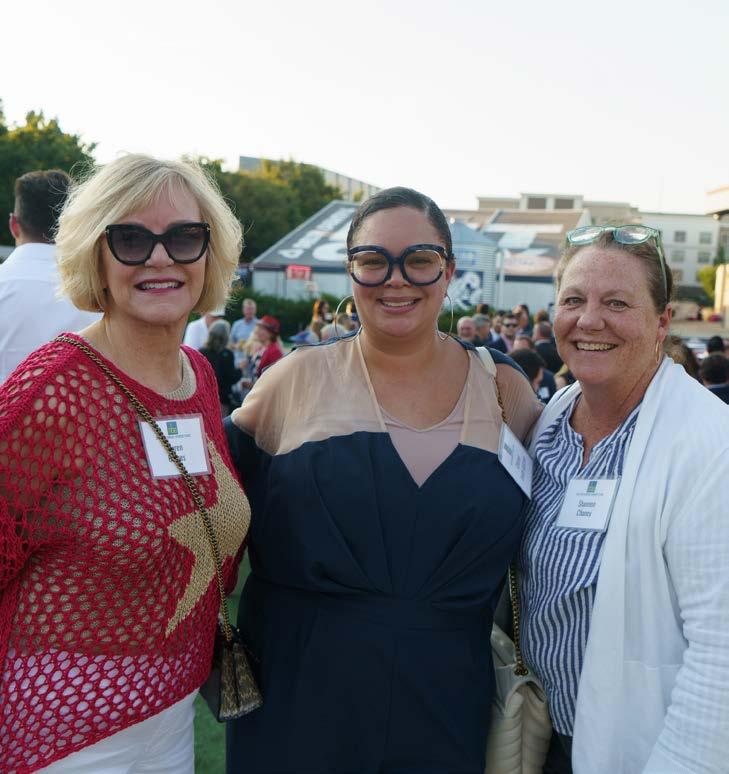
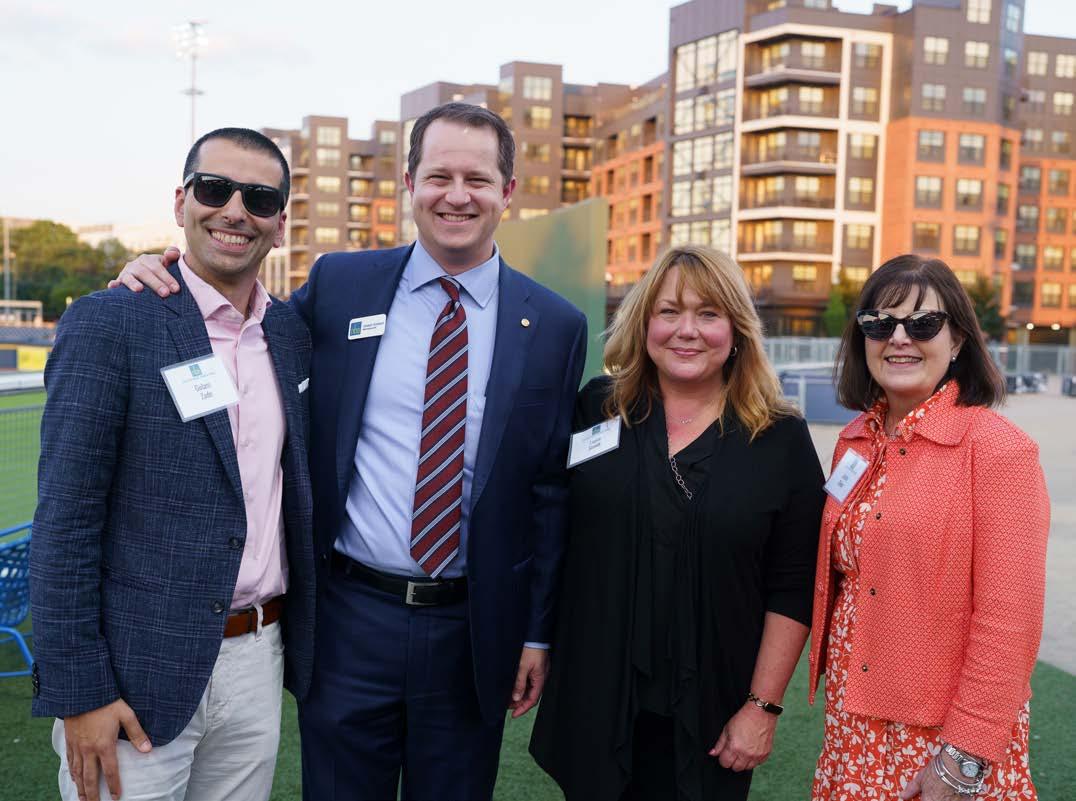
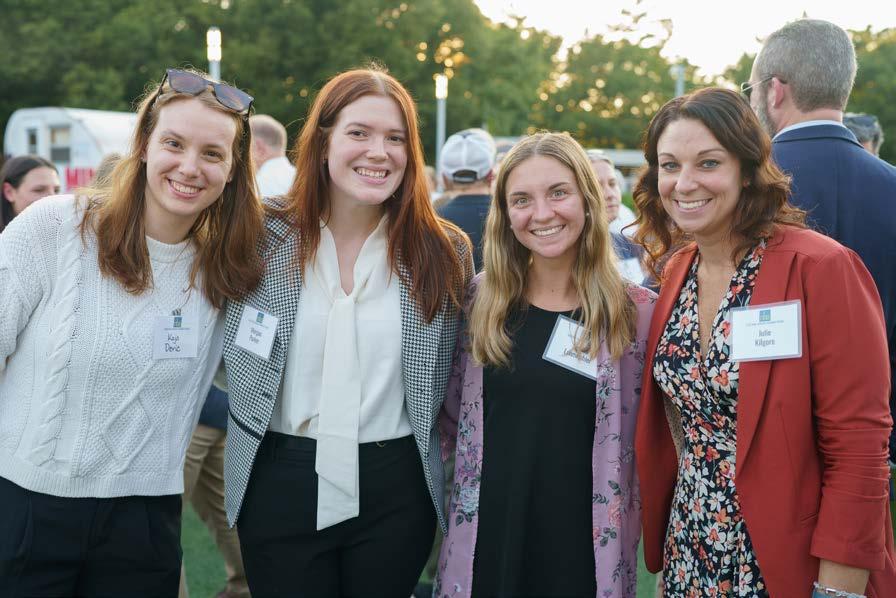
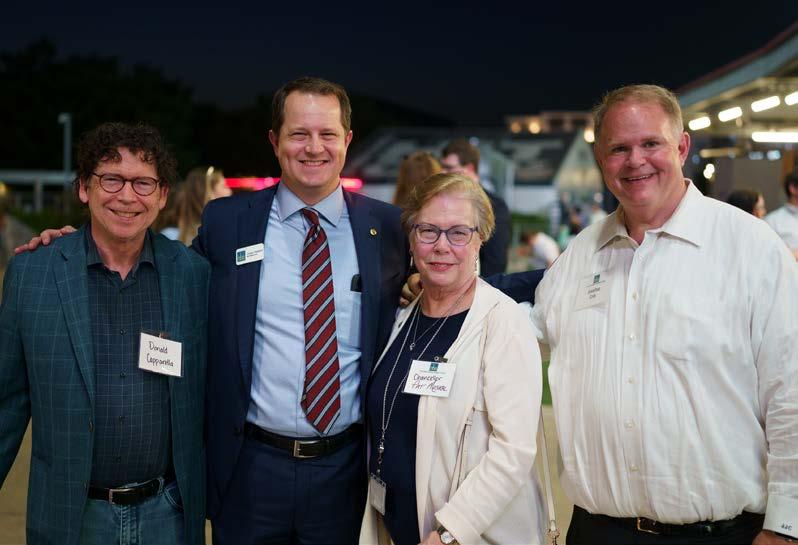
2026 NBF Fellows Gala
2026 Law Day
Have an Idea for a CLE?
Calendar of Events
barBites
COLUMNS
Background Check
Bart Pickett
Gadget of the Month
Bill Ramsey & Phillip Hampton
Capitol Notes
Peggy Sue, the Beagle Hound
From The President
Joseph Hubbard
When was the last time you read the Preamble to Tennessee’s Rules of Professional Conduct? If it was within the past year, you get the gold star. As for the remaining 99% of you… well… keep reading!
I joke, but it’s true that the RPCs are not a daily source of reference for most practicing lawyers. By and large, we studied those rules closely in law school, and we pull them out when we need guidance on ethical issues that sometimes arise in practice.
If it’s been a few years since you last read the Preamble, or if you’ve never read it, you should. You’ll be surprised and impressed to learn the awesome responsibilities you have as a lawyer in Tennessee. Here’s how “A Lawyer’s Responsibilities” begin in Section [1]:
A lawyer is an expert in law pursuing a learned art in service to clients and in the spirit of public service and engaging in these pursuits as part of a common calling to promote justice and public good.
(emphasis mine). The next sentence lists the “essential characteristics” of a lawyer, which include “dedication to justice and the public good.” It doesn’t stop there. Section [2] goes further:
A lawyer, as a member of the legal profession, is . . . a public citizen having special responsibility for the quality of justice.
Here’s my favorite part in Section [7]—and why I write this column:
As a public citizen, a lawyer should seek improvement of the law, access to the legal system, the administration of justice, and the quality of service rendered by the legal profession. . . . a lawyer should cultivate knowledge of the law beyond its use for clients, employ that knowledge in reform of the law, and work to strengthen legal education.
These are impressive and inspiring passages, and the description of a lawyer as a “public citizen” has been knocking around my head all year. But what do those words mean, and what obligations (if any) do they impose? I’m not alone in wondering. Scholars have spent decades debating those questions. See Etienne C. Toussaint, The Miseducation of Public Citizens, 24 Georgetown J. on Poverty L. & Pol'y 287, 302307 (2022) (summarizing four interpretational paradigms to “resolve the tension between the lawyer’s personal and professional life”).
Here are the questions I ask myself: Should lawyers and bar associations play a role in solving constitutional, legal, political, or educational problems? Can lawyers help build cultural kinship that transcends partisan conflict? Can we help prevent political violence? Are we obligated not only to uphold but also to defend the Rule of Law?
These are big questions. I recognize there are practical, intellectual, moral, and academic anxieties about the lawyer as “public citizen.” I can’t resolve all those issues here, so I offer you my view, which is informed by my work as a litigator. YES, of course we have a role to play in solving all these problems. After all, we spend our entire professional lives resolving conflicts civilly. We aspire to give clients educated advice and clear information so they will not run afoul of the law. We communicate and spend time with our opponents, sometimes shoulder to shoulder
(continued on page 5)
Joseph Hubbard, Publisher
William T. Ramsey, Editor-in-Chief
Summer Geyer, Managing Editor
Lauren Poole, Managing Editor
Adrienne Bennett Cluff, Layout/Design/ Production
EDITORIAL COMMITTEE
Deji Adeniyi
Ellison Berryhill
Ramona DeSalvo
Brittany Ford
Seth Granda
Candi Henry
Timothy Ishii
J. Bart Pickett
Bryan Pieper
Worrick Robinson
Katlin Ryan
Kristin Thomas
Elizabeth Tipping
Jonathan Wardle
NASHVILLE BAR JOURNAL (ISSN1548-7113) (USPS 021-962) is published quarterly by the Nashville Bar Association, 150 4th Ave N, Ste 1350, Nashville, TN 37219. Periodicals Postage Paid at Nashville TN.
POSTMASTER: Send address changes to Nashville Bar Journal, 150 4th Ave N, Ste 1350, Nashville, TN 37219-2419.
No part of this publication may be reprinted without written permission of the Nashville Bar Journal Editorial Committee. All articles, letters, and editorials contained in this publication represent the views of the authors and do not necessarily reflect the opinions of the Nashville Bar Association. For more information, visit NashvilleBar.org/ NashvilleBarJournal
The Nashville Bar Journal welcomes discourse. You may submit counterpoint editorials to Adrienne.BennettCluff@ nashvillebar.org to be considered by the editorial committee for publication in a future print or online content.
NASHVILLE BAR ASSOCIATION 150 4th Ave N, Ste 1350 Nashville, TN 37219 615-242-9272 | NashvilleBar.org
The Nashville Bar Association, established in 1831, is a professional organization serving the legal community of Nashville, Tennessee. Our mission is to improve the practice of law through education, service, and fellowship.
The NBA — with around 2,400 members — is the largest metropolitan bar association in Tennessee.
Traci Hollandsworth, Director of Programs & Events
Annie Holmes, LRIS, Member Database, & Operations Coordinator
Corinna Saporito, Development Coordinator
HAVE AN IDEA FOR AN ARTICLE?
We want to hear about the topics and issues you think should be covered in the journal. Send your ideas to Adrienne.BennettCluff@ nashvillebar.org.
From The President (cont.)
(especially as members of the NBA). We are problem solvers, information gatherers, scrutinizers, analyzers, debaters, facilitators, peacemakers, mediators, and myriad other roles.
If you’ve read my columns, or heard me speak, or spent time with me, you won’t be surprised to read here that I’m deeply invested in the role lawyers play as educators and public advocates, especially for the Rule of Law. That’s not an opinion I came to by musing on my own. Our rules extend that obligation to us. Keep in mind the words of the Preamble: “Lawyers play a vital role in the preservation of society.”
As my term concludes at the end of 2025, I will be relinquishing the title of President, but I plan to carry on as a “public citizen” all the same. No matter what titles or positions you attain in your career, I hope you will reach out and embrace that essential role, too. However far your circle of influence may extend—to your family, to the school where your kids go, to the legislature in Nashville, or to Washington, D.C.—I encourage you to advocate for justice, the integrity of our legal system, civil resolution of conflicts, and, above all, the Rule of Law. n
Hear Ye, Hear Ye
2026 YLD MOCK TRIAL
Join the YLD on Friday, February 20, and Saturday, February 21 at the Metro Courthouse for the 2026 YLD Mock Trial. Save the Date and watch for more details on how to volunteer! n
2026 NBF FELLOWS GALA
The 2026 Fellows Gala will be held on Saturday, February 28, at the Four Seasons Hotel Nashville. Enjoy a delectable dinner, bid on enticing silent auction items, welcome the 2026 Class of Fellows, and recognize the 2026 Nashville Bar Foundation grant recipients. If you would like to donate an auction item, please contact Traci Hollandsworth at Traci.Hollandsworth@nashvillebar.org n
2026 LAW DAY
In celebration of the American Bar Association's Law Day, the Nashville Bar Association invites you to join us on Thursday, April 23, at the Renaissance Nashville Hotel for our 2026 Law Day Lunch. For the latest information, visit NashvilleBar.org/LawDay2026. n
HAVE AN IDEA FOR A CLE?
We are always looking for creative and relevant CLE seminar ideas! If you have an idea or would like to see a specific topic in the coming months, please visit NashvilleBar.org/CLE to submit the idea. We appreciate you! n
Calendar of Events
Welcome to the NBA
Congratulations on your membership – thank you for joining the NBA! We look forward to serving you this year and appreciate your support. Visit NashvilleBar.org or contact NBAFrontDesk@NashvilleBar.org with questions or to learn more.
New Members ( August 1 - October 31 )
Jackson Abbey
Sandra Adams
Erica Agnew
Cody Anthony
Grace Armstrong
Megan Arthur
Amber Baldwin
Matt Balmuth
Emily Bank
Makaylee Barbara
Carter Bassham
Toni Batts
Deborah Baucom
Lily Beasley
Jodie Bell
Eddie Beusch
Oliver Bisagno
Lillian Blakely
Anne Boatner
Annie Brunet
Ronal Bueso
Morgan Burns
Marilou Carr
Blayne Chance
Kaden Cobb
Mark Cole
Kristen Collins
Saylor Collum
Laura Conwell
Nathan Cook
Brooke Cooper
Caroline Creson
Bob Cummings
Nick DeHoust
Elaina Della Rossa
Kaja Deric
Sapna Desai
Cameron Dobbs
Smith Duncan
George Duzane
Rick Ellsley
Susan Eschenburg
Zeb Evans
Debbie Farringer
Ally Forbes
Brooke Forester
Patrick France
Kyra Frank
Anna Fredericks
Jerice Glanton
Shelby Gleaves
Eboni Godwin
Odalys Gonzalez-Sanchez
Elizabeth Greer
Ivy Grizzle
Sheryl Guinn
Katie Hagan
Aly Hamby
Amina Hamdan
Marilyn Harrison-Bates
Maja Hartzell
Elizabeth Anne Henderson
Laina Henry
Tucker Herndon
Jonathan Hesser
Masie Honeycutt
Josh Hunter
Michael Hurst
Gina Ibrahim
Naomi Israel
Tali Izhaky
Chris Johnson
Morgan Jones
Ian Joseph
Aiden Kennedy
Caroline Kerr
Brad Kilborn
Kris Knapp
Nicole Krass
Damon Kreth
Kylie Krupilski
Jessica Lehmkuhler
Saiid Lewis
Olivia Linsman
Malik Luckett
Nathan Lybarger
Matt Lybeck
Madeline Macrae
Corletra Mance
Maria Markus
Isabelle McCool
Jake McDougal
Whitney McElroy
Braxton McGill
Connor McGinnis
Jeff McGoff
Heather Meshell
Katelyn Meyer
Franklin Milam
Justin Miller
Matthew C Minner
Patrick Mooney
Stephanie Morales
Scott Morell
Lena Morgan
Samuel Morris
Punit Motiwala
Joe Mueller
Rachel Nordhoff
Tiffany Oliver
Rhoberta Orsland
Morgan Parker
Sara Parker
Bob Parsley
Cali Perry
Ally Phillips
Shante Piche
Evan Potter
Ashton Prosser
Brinkley Rackstraw
Adley Ragan
Adoria Randolph
Kennedy Reese
Christina Rice
Savannah Richerson
Sam Rickert
Sarah Roach
Drew Roberson
Alix Rogers
John Rogers
Josh Rojas
Carly Rooks Moses
Chris Rucker
Meri Rushing
Mason Scioneaux
Brittain Sexton
Olivia Shoener
Kaylin Siena
Cheryl Slay Carr
Reinier Smit
Alanah Smithson
Lauren Stanfill
Patrick Stone
Geoffrey Strickland
Vanessa Swartz
Kristen Taylor
Brianna Thirkell
John Thomas
Sophia Thompson
Morgan Toone
Lauren Topping
Alie Tunks
Howard Wall
Shauna Walsh
Cameron Waltman
Zachary West
Gabrielle White
Chase Wildermuth
Zack Williams
Brock Willis
Tim Wills
Lizzy Wilson
Carrie Wintle Granger
Hannah Zeitlin
Finding Confidence in Oral Argument
W. Michael Kilgore is an attorney at Matt Hardin Law, an injury firm in Nashville, TN. Kilgore is from North Carolina and graduated from Liberty University School of Law in 2009. He went on to earn an LL.M. in Employment Law with honors from Atlanta’s John Marshall Law School in 2014. He Is licensed in Tennessee, North Carolina, Georgia, and Kentucky. Kilgore enjoys legal research and writing and working with the good people of Middle Tennessee.
Kilgore is also a realtor with Crye-Leike and an Assistant Professor at Liberty University. He is a member of NAC’s Masters Swim Team. He enjoys spending time with his beautiful wife, Kristin, and their son, Rhett. They are active members of Tulip Grove Baptist Church in Old Hickory, TN. He can be reached at michael@matthardinlaw.com.
In the century since the Tennessee Court of Appeals was created, attorneys have stood before it to deliver arguments that have ranged from brilliant to less than memorable. It’s no surprise that the idea of oral advocacy still makes many attorneys uneasy. Most of us can recall our first time at a podium in law school— shaky voices, unsteady knees, and all. That memory sticks, and for some, it creates a lingering fear of appellate argument. But here’s the good news: oral argument doesn’t have to be something to dread! With the right preparation and mindset, it can actually become one of the most enjoyable and rewarding parts of appellate practice. Here are a few tips when gearing up for your next argument:
Preparation: The Great Equalizer
The first and most important point is simple: nothing replaces preparation. An attorney who knows the record and the law inside and out can beat a naturally gifted speaker who has not put in the same work. Confidence at the podium isn’t about theatrics—it’s about knowing your case so well that nothing rattles you.
Know the Record
Start with the record. Know it like the back of your hand. Read the transcripts and exhibits more than once. Flag them, highlight them, and annotate them. Don’t just mark the good facts; be honest with yourself and note the weak ones too. When a judge brings up something unfavorable, you’ll be ready to handle it. Don’t overlook the procedural history either. Many appellate cases are decided on narrow procedural grounds, and an attorney who anticipates these issues is in a much stronger position than one who tries to gloss over them.
"My Civil Procedure professor drilled this into us: 'There is no substitute for preparation,' and 'preparation is the great equalizer.' He was right."
Master the Law
Next, dig into the law. Strong advocates don’t just do enough research to get by—they exhaust every possible path. Most of the research is likely done when drafting the brief. But you will want to make sure your main
(continued on page 12)
goal is to be so comfortable with the law that you can weave it together with the facts and procedural history without hesitation, even when fielding tough questions.
Frame the Issues
Once you’ve got the record and law under control, narrow the case down to its real core issues. A winning argument starts with a well-framed question for the Court. The way you phrase the issue matters more than some lawyers realize. It must be accurate, but also tight and persuasive. The best issue statements naturally lead the Court toward the answer you want, even before you’ve said a word about precedent.
Polish the Argument
Now comes the polish. Outlines are essential, but don’t let them become a crutch. One helpful exercise is to reduce your argument to just two pages. That forces you to focus on what really matters. Then practice it out
loud. Do it in front of another lawyer who knows the case and won’t go easy on you. After that, practice with a non-lawyer—a spouse, a friend, or even your teenager. If they understand your points, you’re explaining them clearly enough. If they don’t, you know where you need to tighten things up. That combination of “lawyer test” and
Answering judges’ questions deserves special mention. It’s the hardest part to master. The best habit is to start with a clear “yes” or “no” whenever possible, then back it up with authority from the record or the law. Judges appreciate straight answers. After you’ve satisfied their concern, pivot back to your roadmap. Don’t let one question pull you off track for long.
Watch and Learn
Finally, don’t forget to polish yourself as much as your argument. Go sit in on oral arguments before the same court. Watch how the judges engage with lawyers. Notice what works and what doesn’t. You’ll pick up tips on etiquette, pacing, and style that no outline can teach. And you’ll be more comfortable when your turn comes. The Payoff
At the end of the day, preparing for oral argument isn’t as daunting as it first seems. The bulk of the work is already done when you finish the brief. What remains is refining, rehearsing, and building the confidence that comes with preparation. With time and repetition, those once-intimidating words—“May it please the Court”— won’t make your voice shake. Instead, they’ll signal the start of a persuasive, confident, and even enjoyable opportunity to advocate for your client. n
Premier Members
The NBA Premier Membership is a special category that recognizes our members who desire to demonstrate the utmost commitment and support to our programs and services. Contact NBAFrontDesk@nashvillebar.org for more information on how to become a Premier Member.
David Anthony
Gail Ashworth
Bahar Azhdari
Laura Baker
Daniel Berexa
Michael Berman
Joe Binkley
Charles Bone
Dewey Branstetter
Joshua Burgener
Kenneth Byrd
Christopher Cardwell
Loy Carney
Mark Chalos
William Cheek
Daniel Clayton
Todd Cole
Christopher Coleman
Erin Coleman
Beau Creson
John Day
Joy Day
Jacqueline Dixon
Sherie Edwards
Elizabeth Foy
Barry Gammons
David Garrison
Andy Goldstein
John Griffin
Thomas Hager
Hon. James Haltom
Amy Hampton
Shellie Handelsman
William Harbison
Jay Harbison
Aubrey Harwell
Trey Harwell
William Haynes
Lisa Helton
Ellen Hendrickson
Zachary Henson
Lela Hollabaugh
Cherrelle Hooper
Paul Housch
Joseph Hubbard
R. Jan Jennings
Jenny Kiesewetter
Lauren Kilgore
John Kitch
William Koch
Irwin Kuhn
Edward Lanquist
Thomas Lawless
William (Billy) Leslie
Wendy Longmire
Joy Longnecker
Kim Looney
John Manson
Randal Mashburn
Sam McAllester
Marcia McShane
Bob Mendes
Casey Miller
Margaret Moore
Patricia Moskal
Joshua Mullen
Phillip Newman
Paul Ney
David Parsons
Gregory Pease
Andrea Perry
Bart Pickett
Tracy Powell
David Raybin
Ben Raybin
Nathan Ridley
Tabitha Robinson
Worrick Robinson
Christopher Sabis
Marie Scott
Bruce Shanks
Joseph Shelton
Rebekah Shulman
Kimberly Silvus
Laura Smith
Saul Solomon
Michael Stewart
Gerard Stranch
James Stranch
Chris Tardio
John Tarpley
Jim Todd
Aleta Trauger
Howard Vogel
Michael Wall
Leigh Walton
Jim Weatherly
Carolyn Wenzel
Memorie White
Thomas White
Thomas Wiseman
Thomas Wiseman
Talley Wood
Tyler Yarbro
Edward Yarbrough
Bill Young
Stephen Young
Remon Youssef
Gulam Zade
Stephen Zralek
Background Check | Liz Sitgreaves
Having known Liz Sitgreaves for 20 years, I would describe her as a great friend and an even better person. From heading up a campaign to retain sitting Supreme Court justices to dog-sitting your ill-behaved puppy, Liz can be depended on to help those people and causes she cares for. Sitgreaves’s genial demeanor can be attributed in part to her family and upbringing in East Tennessee. Liz grew up in Bristol with a serial entrepreneur father and a stay-at-home mother with an older brother and sister. She attended Bristol Tennessee High School where she served as the editor of the Maroon & White, the school’s newspaper. That love of journalism led Sitgreaves to buck family tradition and choose the University of Georgia for college due to their premier journalism school. The Sitgreaves family are diehard University of Tennessee fans, even attending the 1998 National Championship game.
After getting to UGA, Sitgreaves decided to pivot to become a political science major. Her plan then being to become a journalist covering politics. It did not take long, however, for Sitgreaves to decide that law school seemed to be the more appropriate path which her parents said they knew all along. Sitgreaves was active in the Prelaw Society and volunteered for Dance Marathon which raised money for local children’s hospitals which was a personal cause to her due to her niece’s health issues.
Sitgreaves returned to Tennessee in 2005 to start law school at UT. She longed to be back in the state and by this point her whole family had moved to Knoxville. Going into the experience, Sitgreaves thought she wanted to do some kind of public interest work, but her path shifted a couple of times. Once in school, she thought she wanted to do criminal law but after a summer internship at the Knox County DA’s office, Sitgreaves decided that she was not made for that work as she did not see the justice system in black and white. After a summer at the AG’s office working on appeals, Sitgreaves pivoted again. Appellate work would allow
her to continue her love for writing. Luckily for her, she found the perfect opportunity in a two-year clerkship for Judge Frank Clement of the Court of Appeals. At the time, Clement had two rotating clerks, but he asked Sitgreaves to stay on longer as his senior judicial law clerk. She clerked for a total of five years.
During that time, she met a fellow appellate clerk, Tracy Kane. Kane later called Sitgreaves, in 2013, about an opening at her firm, Dodson Parker. The position was for appellate work with Donald Capparella which lined up perfectly with Sitgreaves’s skills and interests. She
(continued on page 18)
Bart Pickett serves as the State Trial Court Administrator for the Twentieth Judicial District where he oversees the operations of the 18 State Trial Courts. Prior to that, he practiced as a trial attorney for Liberty Mutual Insurance Company.
Background Check (cont.)
stayed there for four years primarily handling appellate and litigation work.
Sitgreaves next made a move to join one of her best friends, Laura Baker, at the Law Offices of John Day in 2017. Sitgreaves wanted to get more involved with cases at the trial level and saw this as a great way to get that experience and work with friends. After almost seven years of doing primarily plaintiff’s personal injury, Sitgreaves found an opportunity on the other side of the v.
changed up her career when she joined another friend and mentor, Joycelyn Stevenson, at Littler Mendelson’s Nashville office. Sitgreaves had done some employment work at Dodson Parker and was looking to get back into it. She also liked the idea of representing employers since growing up her father had multiple businesses. She only represents employers in litigation, counseling and investigations. Littler also provided Sitgreaves her first experience in a
Sitgreaves lives in Bellevue with her rescue cat, Esquire. She has been very active in both the NBA and LAW. She has served on the NBA board and as chair of both the Appellate and Chancery/Circuit Committees. She currently serves on the boards of Big Brothers/Big Sisters of Middle Tennessee and the Tennessee Freedom Circle Education Fund. In her spare time, she can be found traveling, particularly on girls’ running trips, trying new restaurants, and cheering on the Dawgs and Vols. n
Thank You to Our 2025 Diversity Committee Sponsors
Gadget of the Month | Bill’s Stocking Stuffers 2025
It’s that time of year again. Time to head out to get the latest gadgets for Christmas. Sorry I am a bit late in sending these out — too much preparatory egg nogg, I guess. The tell-tale signs of the holidays are all around us: twinkling lights, eggnog, reindeer, and Bill and Phil’s annual stocking stuffer tech guide. Here is my list — check it twice.
Nelko PM220 (Amazon, $27)
This is the perfect gift for someone who likes to keep stuff organized and labeled. You connect this thermal printer via Bluetooth to your phone, computer or tablet. You can choose among a wide variety of templates and pick and alter the ones you need. The labels are very durable and water resistant. It is simple to use and very efficient. It is cheap and small, but it
is not a toy. Highly recommended.
Anker Power Banks (Anker or Amazon, 165-watt laptop power, $87.99 PowerCore 313, $25.99)
Anker is the Number 1 brand for portable power banks. I have chosen two different ones, depending on your needs. The 165-watt power bank is a beast. It will power your laptop and 3 other devices at the same time. It is a bit bulky and heavy, but if you want brute portable power, the 165 watt is the one for you. It has a display that shows the charging rate and the amount of battery power remaining. It also has two built-in cables, so you are never without an ability to charge your devices. The Power Core 313 is smaller, lighter and cheaper. It weighs less than a pound and quickly charges phones, tablets bluetooth speakers and other accessories.
Plaud Note AI ($135 Plaud.ai)
This is a note-taking voice recorder that is as small and thin as a credit card. It can record all your conversations for an entire day on one charge. I can attach to your phone and record phone calls. Each recording can be fully transcribed, and then it will provide summary and analysis using AI. You can quickly take notes and convert them to texts or to do lists. It provides templates for recordings, depending on the purpose of the recording.
Dewalt 20 Volt Portable Air Compressor ($136 DeWalt or Amazon)
There are many ads on social media for this type of device, claiming that they are the best things since sliced bread. This is the good one. This is the real deal. It can run on AC power, on power from a car’s cigarette light, or on a 20v DeWalt battery. It works great for automobile tires, bike tires and other inflatable devices, and comes with the connections for most uses. What I like best is that you can set it for the desire pressure, and it will cut off as soon as it reaches that pressure. Super handy.
Smart Glasses (Meta or Amazon)
Meta is the leader in this market, but a pair of the latest versions costs about $379 (and more if you want prescription lenses). These are pretty cool, though. They have a built-in camera that is capable of shooting 1090p video, or for taking still pictures. The speakers are in the temples and use boneconduction for a very clear sound for calls, music or whatever. They have a built in AI assistant; they can provide real-time translation. The built-in microphones are great for phone calls. If you want to test drive a pair of Smart Glasses, Amazon is selling a pretty cool pair for about $30. These provide language translation, and speakers and microphones for phone calls, listening to music, etc.
Blackstone Griddles ($159 up to $599, Blackstoneproducts.com)
I know, these are not “tech” devices, but they are all the latest rage. You can put these on your
(continued on page 20)
Gadget of the Month (cont.)
patio or in your back yard, or even a screened-in porch. These appliances are fun! You can cook breakfast on the griddle. (Eggs and bacon are great on one). You can cook vegetables while your smash burger, seafood or other meats cook. And clean-up is a breeze. Get one for your favorite chef for Christmas.
Aurzen ZIP Tri-Fold Mini Projector ($279 Amazon)
WOW! This projector can fit into your pocket (and about the size of a stack of post-it notes). It has a builtin battery that can last through a whole movie. All video connections are wireless, and it gets its power from USB-C. The image and brightness from a device this small are astounding.
Garmin Venu ($549 for the latest model from Garmin.com)
I know many of you are stuck
in the Apple ecosystem, but the Venu should make you or your giftee reconsider. The battery life is impressive (up to 12 days). It can pair with Apple Watches or Android watches. It is especially use for fitness enthusiasts because the watch can track progress for almost any fitness undertaking. It can monitor your sleep and your heart ECG. Also, it looks good as an everyday watch.
Still GTA 26 Garden Pruner and Mini Chainsaw (Stihlusa.com $199 from Acme tools)
Who doesn’t love a chainsaw, but the big ones are sometimes hard to handle. Not this one. It has a 4-inch guide bar and is very light weight for what it does. You can cut small limbs, shrubs, and other small items. You can handle it with one hand, really. It does not require a lot of maintenance, and it is so much fun to use.
Flipper Zero ($200 Stockx.com)
This one is for all your hacker elves. You can use this device to hack most anything. It looks like a toy, but it can interact with all kinds of wireless devices, including RFID, NFC (what your credit card uses), infrared, Bluetooth, etc. If you have a remote it can emulate the remote. It can emulate your garage door opener. There is a huge community for support and updating this device. (But it does not come with a “get out of jail free” card.) n
Capitol Notes
Peggy Sue, the Beagle Hound is fond of the classic 1957 Buddy Holly song. When hunting legislative news or biscuits, she is hard to contact.
“If you aren’t the lead dog, the scenery never changes.”
2026 Legislative Session Preview. At noon on Tuesday, January 13, the two Speakers will gavel their respective houses into order and commence the business of the 2026 legislative session, the final year of the 114th General Assembly. Around 1,500 new bills are expected to be filed for the 2026 session by the bill filing deadline in late January. Governor Bill Lee is expected to make his final State of the State address around February 2 and file his last package of legislative initiatives. The only bill that must be enacted into law is the appropriations bill which authorizes the expenditure of state funds for the fiscal year that begins on July 1, 2026. The budget is expected to be very tight as low state revenue growth projections surface and the federal funds from previous years for pandemic recovery and inflation reduction recede into memory. With 2026 being an election year, the session is expected to be relatively brief, and the General Assembly is expected to adjourn by the last week of April. On the legal community front, we need lead dogs seeking new scenery as we engage our legislative officials in dealing with the new bills to be filed in January.
Special Election Results. With his newly adopted home of Montgomery County, Matt Van Epps is Tennessee’s new Congressman for the 7th district. This district is west of downtown Nashville and runs from the Kentucky line south to the Alabama line and covers all of Stewart, Montgomery, Roberston, Houston, Humphreys, Dickson, Cheatham, Decatur, Perry, Hickman, and Wayne counties, and covers the eastern part of Benton County, and the western parts of Davidson and Williamson counties. Republican nominee Van Epps received 97,034 votes as opposed to 81,109 for Democratic nominee Aftyn Behn. Van Epps carried 13 of the 14 counties with a margin sufficient to overcome Behn’s significant margin in Davidson County. The turnout was surprisingly high for a special election as both parties worked hard and expended funds to drive turnout.
Congressman Van Epps will complete the remainder
of the unexpired term formerly held by Mark Green and is expected to seek election to a full term in the 2026 election cycle.
Passages. We celebrate a live well lived and mourn the passing of State Representative Jeff Burkhart of Clarksville. Representative Burkhart was a lifelong resident of Montgomery County and a true public servant with service in the Clarksville Fire Department and on the City Council as well as his time in the State House.
We also celebrate and mourn the passing of our friend and former State Representative Gerald McCormick of Hamilton County. Representative McCormick served for 14 years in the State House from 2004 to 2018. He served as House Majority Leader from 2011 to 2014. Gerald led with principle and humility for those on both sides of the partisan divide.
Both of these gentlemen will be missed, and their good works and examples of honorable public service will live on.
Calendar Notes
January 13January 19 -
January 19 -
Late JanuaryFebruary 8 -
February 16March 10 -
Early AprilApril 3 -
First Day of the Legislative Session; Martin Luther King holiday, no legislative sessions;
College Football Championship Game; Filing Deadline for General Bills; NFL Super Bowl;
Presidents’ Day holiday, no legislative sessions; Qualifying deadline for the August & November elections; Appropriations bill passes in both houses; Good Friday holiday, no legislative sessions. n
Nashville Bar Foundation: In Focus
Candi Henry serves as Chief Legal Counsel for the Greater Nashville regional Council, which means she spends an inordinate amount of time misspelling both counsel and council. GNRC is a governmental entity comprising 13 counties and more than 50 cities in upper Middle Tennessee.
The Nashville Bar Foundation advances justice through targeted non-profit financial support, civicminded education, and the development and celebration of a respected legal community. Each year, the Nashville Bar Foundation awards grants to deserving non-profit organizations that further the goals and chartered purposes of the Foundation. This series profiles current grant recipients.
Just the Beginning
Established in 1992, Just The Beginning - A Pipeline Organization encourages students from underrepresented groups to pursue career and leadership opportunities in the law by teaching students the necessary legal, professional, and leadership skills they will need to employ in law school and legal environments. JTB’s vision is a legal profession in which lawyers and judges reflect the backgrounds and perspectives of the populations they serve. The programs expose students to various legal careers and leaders through a network of lawyers, judges, corporations, law firms, law school partners, and alumni who volunteer and mentor.
The JTB Nashville iLead Law & Leadership Program provides high school students in the Nashville area with the opportunity to explore careers in the legal profession, develop critical leadership skills, and connect with legal professionals through interactive workshops, mentorship, and hands-on activities hosted in collaboration with local law schools and legal organizations.
Members of the Nashville Steering Committee who are also Nashville Bar Association Members include Hon. Waverly D. Crenshaw, Jr., Christopher M. Bellamy, Antonio Carroll, Shundra Cumpton Manning, Sharon Roberson, and Joycelyn Stevenson.
Tennessee Justice Center
Tennessee Justice Center is a nonprofit law firm founded in 1996 that helps families in Tennessee exercise
legal rights to access basic necessities like healthcare and food. TJC represents individuals in a wide range of situations in addition to its work harnessing litigation as a tool to make widespread impact and improve the lives of Tennesseans across the state. TJC also sponsors community resource fairs providing clothing drives, food banks, vaccine administration, and other services for indigent individuals, and these fairs have recently expanded to include an onsite legal clinic for general legal advice.
Board members for the 2024-2025 year who are also Nashville Bar Association Members include Kay Caudle, Sherie Edwards, Deborah Farringer, Jeff Gibson, Joseph Hubbard, and John Tishler.
CASA Nashville
For more than 40 years, CASA Nashville has helped children who are moving through the court and foster care system find safe, permanent homes. Children are referred by Juvenile Court and matched with a CASA Nashville volunteer advocate. The advocates get to know each child personally, meeting on a monthly basis. As a case progresses, the volunteer advocate and CASA staff support are actively involved in child and family team meetings that work with parties such Department of Children’s Services personnel, attorneys, Guardians ad Litem, therapists, social workers, and other professionals. A case outcome is considered to be successful when a child is placed in a safe, permanent home – either reunited with their parents, placed under the guardianship of relatives, or adopted.
Board members for the 2024-25 year who are also Nashville Bar Association Members include Seth Granda, Kim Looney, and Jeremy Oliver.
Thank you to these organizations for your work advancing justice and to the NBA members who donate their time and money to support these worthy causes. n
Thursday, February 12
Trivia Night Happy Hour
Brugada Kitchen and Bar
Mark Your Calendars
Friday, February 20 & Saturday, February 21
Davidson County High School Mock Trial Competition
Historic Metro Courthouse
Saturday, February 28
NBF Fellows Gala
Four Seasons Hotel Nashville
Thursday, April 23
2026 Law Day
Renaissance Nashville Hotel
Visit NashvilleBar.org/Calendar
Can You Name These People?
Golden Oldies
Wednesday, April 29 - Tuesday, May 5
Journey to Ireland
Tuesday, May 12
Annual Free Historical CLE
Wednesday, May 13
NBA+NBF Golf Tournament
Old Natchez Country Club in Franklin
Thursday, May 21
Spring Memorial Service
Downtown Presbyterian Church
Be the first person to email the correct answer to Adrienne. BennettCluff@Nashvillebar.org, and your name – along with the correct answer – will appear in the next issue.
Fall Golden Oldies
We stumped you! Individuals are listed from left to right: Laura Williams, Matt Potempa, and Ryan Levy.
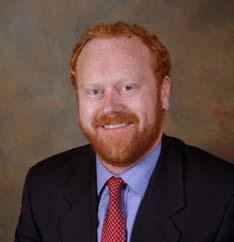
Reflections on Appeals: Life’s a Brief!
David Raybin, with more than 40 years of experience, heads the criminal defense section of our firm, which includes criminal trials, criminal appeals, parole hearings, and civil rights litigation. Raybin has been named the Best Criminal Lawyer in Nashville in criminal general practice and white collar defense by Best Lawyers in America, and listed among the Best Criminal Lawyers in TN by Tennessee Business magazine. A regular commentator on local legal subjects, Raybin often deals with prominent cases you may have read about in the news. In addition to cases in the trial courts, David has successfully handled significant criminal appeals throughout Tennessee.
In April 1974, I was admitted to the Bar by our Supreme Court sitting for a session in Nashville. Within an hour, as a newly minted Assistant Attorney General, I argued my first appeal, having drafted the brief for another lawyer in the office. Five decades later, here are reflections on what might help the lawyer as she approaches the Wizards of Oz.
To know appellate issues, you must read the appellate opinions.
Jury trials have little value as precedent – except perhaps in the mind of the public – appeals do. Read the appellate opinions for more than the holding: the opinion is the story of a trial lost and the attempt of the winner to hold on to victory.
Appellate opinions are the “stuff of the law.” We studied the opinions when we were in law school. Nobody can call themselves a lawyer unless they religiously read the appellate court opinions every day to see what is “new.” We demand doctors keep up with the latest medical techniques. We should demand that of ourselves: our clients insist on that and the public deserves no less.
At trial, keep an APPEAL FILE on counsel table in plain view.
Write the word “APPEAL FILE” in big letters on the front of a file folder. Every time the judge does something you do not like, write it down and make a big production about opening the folder and placing the note in the APPEAL FILE. After a time, the judge will get
the message. In any event, keep things in a handy place that may have something to do with a possible appeal.
Your contract with your client for trial work should specifically exclude the appeal.
Lawyers get in trouble by failing to limit the engagement to the level of desired representation. Clients will tell the lawyer, particularly in criminal cases: “I thought you were going to represent me for the whole thing.” “The whole thing” – being in the mind of the client – both the trial and the appeal.
Make sure your retainer contract specifically excludes an appeal and mentions affirmatively that an appeal will be a separate item addressed later. Lawyers are “stuck” with doing an appeal where they neglect to limit the scope of representation in the contract.
When you are hired for the appeal, limit your representation to the level of court you will appear in. Consider court costs and transcript fees and include a limitation of retrying the case when you win a new trial.
Begin the trial thinking about jury instructions.
One study suggested 38% of reversals were based on erroneous jury instructions. See Adcock v. State, 236 S.W.2d 88 (Tenn. 1949): “This Court has been compelled so often to reverse for failure of the trial court to charge the law correctly and accurately, that citation of authority is unnecessary.” In my own practice I first go to the jury instructions when I am hired to appeal a case for another attorney.
Trial and appellate procedures are only vehicles for resolving substantive disputes; the art of appellate advocacy is as to the merits.
Follow the procedural rules of the trial and appellate courts so matters of form do not detract from the merits of the appeal. The best appellate brief and argument will not resurrect a sloppy record or avoid forfeiture of a waived issue. Always practice “projective” law and live in both “the here and now” of the trial and the “hereafter” of the appeal.
If an appellate question is worthy of presentation, the argument should frame the exact issue, so the complaint is clear. For example, an issue might inquire: “Whether Mr. Brown’s Constitutional Rights against Self-incrimination were violated by the District Attorney arguing to the jury that Mr. Brown had not testified at the trial.”
The argument should first specify the pages of the record where the error took place and, in this example, quote the statement at issue. Point out the trial objection, the judge’s ruling, and where you renewed the issue in the motion for a new trial. Show the Court you have avoided the horror of waiver!
The argument should next cite authorities as to why the issue is error. Citation of authorities should conform to requirements of the appellate rules. Whatever authority is cited, the facts of the case should be addressed to establish why the issue violates some rule, statute, or court opinion. The argument should be succinctly developed point by point.
Having shown that some occurrence violated a certain legal
procedure, many lawyers will halt their argument and conclude that “error is present.” This is not enough because the appellate court will respond: “so what?” You must expect a finding of harmless error and show why the error is harmful to your client.
Your brief should be a selfcontained product that permits the judges to understand the procedural posture of the case, the facts, the law and the issues which determine the appeal. When you set about drafting your brief the goal is not mere communication, nor even persuasive enlightenment of the judges and their clerks, but that the judges cast aside the clerks and lift wholesale your language to achieve the result you desire!
Justice is a relative term that means different things to different people. But we all agree that if the settled rules are followed then justice will probably be attained. If the rules were not followed there is a good chance the result below was not just. The rules were not followed by the learned judge, so the learned judge gets to try the
case again.
To prevail on appeal, persuade the appellate court that the rules were not followed, your client was prejudiced, and so Justice is in Doubt. No appeal ever prevailed unless the Court is convinced that the cost of a new trial is less than the cost of an injustice either for that litigant or, more frequently, for those whose cases will be tried tomorrow. n
CHAPTER
(615) 651-6714
LeVAN (615) 843-0308
(615) 259-1366
(615) 815-0472
(615) 256-1280
Volunteer for Dial-A-Lawyer
Thank you to our Dial-A-Lawyer Volunteers
Cody Allison
Pooja Bery
Gina Crawley
Jaske Goff III
Paige Goodwin
Ellen Hendrickson
Shannon Kerr
Alex Koval
Aileen Rose
Chloe Sink
Travis Vest
Dial-A-Lawyer is held on the first Tuesday of each month from 6:00-8:00pm, and the public is invited to call in with basic legal questions. If you would like to volunteer and help the NBA support this program, please contact NBAFrontDesk@nashvillebar.org
Complimentary dinner is provided.
History of Tennessee’s Appellate Criminal Defense
Ellison Beryhill is an Appellate Attorney with the Nashville Public Defender's Office. His writing has been published in the Louisville Law Review, Virginia Journal of Criminal Law, and Michigan Journal of Law Reform. All work done for the Nashville Bar Association is in his personal capacity and does not represent the views of his employer.
I want to make clear from the start that this article was not my idea. I’m an appellate attorney at the Nashville Public Defender’s Office (mandatory disclaimer: I’m writing this article as me and not as a representative of my office, opinions are my own, etc etc.) and an article that generally lionizes appellate public defenders and make the case that they (we) are important, may seem arrogant. But that’s not my intent.
Picture the scene: we were sitting in the Nashville Bar Journal Editorial Committee meeting pitching ideas for this issue. I proposed that an appellate issue might be interesting. People liked the concept, and we started putting article ideas on the board. Someone who shall not be named then volunteered me to write about the history of appellate criminal defense in Tennessee. Never one to turn down the opportunity to write things, I agreed, and here we are.
My intention with this article is not to make myself look good. It is to provide a history of appellate criminal defense in Tennessee with a focus on indigent cases. It is to give some background to people who may not have any access to the appellate criminal defense world and to make an argument as to where we should go next.
That’s enough stage setting, let’s get to the history. For a long time, appellate criminal defense in Tennessee was ad hoc. Frequently when people wanted to appeal, the trial attorney stayed on the case and took it to appeal. Despite the notoriously high caseloads that public defenders manage, they would also handle appeals. It’s honestly impressive that people received good appellate outcomes under those circumstances.
Then the bar began to make progress towards attorneys who exclusively handle appeals. As far as I have been able to find out, Hugh Stanton, Jr. was the first appellate public defender when he worked at the Public Defender’s Office in Shelby County from 1966-1974. More immediate to our readership, in 1989, Jeff Devasher became the head of the newly-created Appellate Division in the Davidson County Public Defender’s Office.
The situation at that point was that Shelby and Davidson Counties had appellate public defenders, while the rest of the districts still had to handle their own appeals. The appellate defenders in the cities could specialize in appellate arguments and would not have to reinvent the wheel by researching every new issue in every brief from scratch.
But the benefits to the cities went beyond appeals because appellate attorneys are not just focused on appeals. Many of us regularly interact with trial attorneys as they prepare for contested hearings. We help them talk through potential issues and how they can be preserved on appeal. We edit motions that they write. We sometimes know the hot-button appellate issues and can reach out to trial attorneys to let us know if they have those issues in their cases. All of this both helps our appeals be stronger and helps trial attorneys with their cases. But since only the cities had appellate divisions, the other districts did not have access to this help.
Everything changed when the Public Defender’s Conference got the Appellate Division. Under the leadership of Brennan Wingerter, this division has been
handling cases in nearly every county in Tennessee since 2019. They provide assistance to trial attorneys and handle the appeals afterwards.
The Appellate Division has been a huge step forward in appellate criminal defense. I was giving the case law update to the Public Defender’s Conference in October, and it felt like every other case was from the Appellate Division. Appellate work requires large blocks of time to focus. Researching the issues, drafting the brief, editing the brief, and preparing for oral argument are all time-consuming tasks if you want to do them well. Trial attorneys who go to court nearly every day and manage a heavy docket are unlikely to be able to spend this time without taxing themselves even further. Having an appellate division lets those attorneys focus on getting good outcomes for their clients in court while the appellate attorneys focus on writing briefs. It is indisputable that the appellate division has made criminal appeals better.
So this is nice for the public defenders. We have appellate attorneys who improve client outcomes and improve the law. But not all cases are handled by public defenders. If the public defender’s office has a conflict of interest in a case due to prior representation, a private attorney will likely handle the person’s case. Remember how I said that historically appellate criminal defense was ad hoc? That’s still the case with private representation.
Private attorneys do not have access to appellate divisions. When someone hires a private attorney to handle their case, they likely have to hire them again to handle the appeal. When someone gets an appointed attorney, that attorney must handle the appeal even if they have no experience with appeals or the time to fully research the issues and write the brief. This likely leads to worse outcomes for people who do not have access to dedicated appellate attorneys.
One example is that recently appellate courts have not been shy about dismissing appeals for procedural reasons such as an inadequate motion for new trial
or brief. Thus, people are having their issues waived because someone who is not an expert in appeals makes a minor mistake. These problems are less likely to happen when the person is represented by an appellate attorney.
Much has been said about the state of indigent defense in Tennessee. In 2017, the Indigent Representation Task Force issued a report where it noted the problems with indigent representation in the state. It noted that attorneys across the state were working hard to provide representation for people, but that their “ability to continue doing so is not sustainable without additional resources.” It recommended “the creation of an independent central commission to oversee all programs providing legal representation to eligible adults and children and transferring current programs to the commission.”
In response to this need, the Administrative Office of the Courts proposed a new Plan for Indigent Representation in Tennessee. The Tennessee Legislature funded this plan in the 2025-26 budget, which increased the pay for appointed attorneys and created the Office of the Appointed Counsel Commission. The Commission will coordinate statewide indigent representation in cases where the public defenders have conflicts.
The question now is how much this commission can and will help make dedicated appellate representation available to people statewide. Nothing about appeals appears in the Administrative Office of the Court’s plan. In my biased opinion, people who do not have the representation of the public defender’s office should still have dedicated appellate attorneys, and there should be people who private attorneys can turn to for appellate advice and expertise. Private trial attorneys should not have to find time to squeeze an appeal into their busy schedule. It would be better for clients, and create better case law, if the private criminal bar included dedicated appellate attorneys. Potentially, the commission can try to make that happen.
Many of the developments in this space are recent: Jonathan Harwell was hired to start the appellate division in Knoxville in 2014, the Public Defender’s Conference’s Appellate Division began in 2019, and the Office of the Appointed Counsel Commission began mere months ago. I hope that, since there has been so much recent movement and so much success with appellate criminal defense specialists, it can become a more common practice and more clients can benefit from this work. n
barBites | Easy Breakfast Casserole
Ingredients
12 eggs
Annie Holmes joined the Nashville Bar Association as a staff member in December 2024 coordinating the Lawyer Referral & Information Service (LRIS), the monthly Dial-A-Lawyer program, and managing the Membership Database. She is a Tennessee-licensed attorney with a background in public-interest law, public legal education, and program administration. Annie moved to Nashville in 2021 with her husband and daughter, and in her free time, she enjoys hiking, hosting friends for dinner, reading, learning to bake new dessert recipes, and gardening.
1 cup of light sour cream
¼ cup of milk
2 cups of shredded cheddar cheese (reduced fat sharp cheddar cheese works well)
1 tsp kosher salt
1/2-1 tsp Black pepper
1lb of breakfast turkey sausage
1 (12 oz) package of frozen bell peppers and onion mix
Note: You can swap the turkey breakfast sausage for pork breakfast sausage, and full fat sour cream or any variety of cheddar cheese can be used in place of the options listed above. I usually make it with the lighter options of each, and it turns out well.
Directions
Preheat oven to 350 degrees.
In a large bowl, mix the eggs, light sour cream, milk, cheese, salt, and pepper with a whisk until fully combined.
In a large skillet, brown the turkey breakfast sausage and break it into small pieces. Once fully cooked, drain off any remaining grease, and add the sausage directly into the egg mixture.
Using the same skillet, sauté the bell pepper and onion mixture for 3-5 minutes until slightly softened. Add the peppers and onions directly to the egg mixture. Stir again to combine.
Grease a 9x13 pan with cooking spray or a light amount of olive oil. Pour the combined egg mixture into the greased pan.
Bake for 32-50 minutes until the eggs are set in the middle and until the edges are slightly golden. (You can insert a small knife into the center to check if the eggs are cooked thoroughly as well.)
Enjoy! Leftovers can be refrigerated and reheat well in the microwave. n
Meet Us at the Bar The Vanilla Clause
Ingredients
1/3 Your Favorite Ginger Beer
1/3 Cranberry Juice
1/3 Pineapple Juice
Lime Juice
Vanilla Extract
Directions
Fill a glass of your choice with ice. Add the cranberry and pineapple juices, then fill glass with ginger beer. The ratio of ginger beer may change depending on the brand or your personal preference.
To finish, add a dash of lime juice and splash of vanilla extract. The lime juice helps brighten the drink while the vanilla extract brings a sweetness and warmth
As with most simple mocktails, the recipe is very customizable. Add a spirit of your choosing or swap pineapple juice for orange or another favorite. n
Bennett
Adrienne
Cluff is the Marketing & Communications Coordinator at the Nashville Bar Association.
Just, Speedy, and Inexpensive: Why the Supreme Court Should Reform Its Rules Regarding Waiver in Rule 11 Applications
Jacob A. Vanzin is an appellate attorney with Dodson, Parker, Behm & Capparella, P.C., in Nashville and is the the 2025-2026 Chair of the Tennessee Bar Association Appellate Practice Section. He has written dozens of appellate briefs – and one too many Rule 11 applications with issues designed to avoid waiver.
Rule 11 of the Tennessee Appellate Rules of Procedure permits a party to file an application with the Tennessee Supreme Court requesting that the Court hear its appeal from the Court of Appeals or the Court of Criminal Appeals. The Rule makes clear that four factors, “while neither controlling nor fully measuring the court’s discretion,” help determine the appropriateness of an appeal. These involve consideration of the need to secure uniformity of decision, the settlement of important questions of law or public interest, and the need for the exercise of the Supreme Court’s supervisory authority. The Rule further elucidates that a fundamental part any application is an explanation of why the Supreme Court should accept the case for review.
Given Tenn. R. App. P. 11 (and human nature), it makes sense that, in the cases of discretionary appeals, appellants should focus their efforts on identifying areas that the Supreme Court has said merit discretionary review. But what of the other issues? What if a case has appealable issues that involve clear legal errors by the intermediate appellate court that should be addressed if an appeal is granted but which, standing alone, aren’t strong traditional grounds for a Rule 11 appeal? Should the party include them in its application?
In TWB Architects, Inc. v. Braxton, LLC, the Supreme Court made clear that its answer is “yes.” The Court held that it would not consider certain issues raised in the appellant’s briefing because those issues had not been raised in the appellant’s Rule 11 application: “A party who fails to adequately raise an issue in a Rule 11 application waives the issue.”
Confusingly, the rule in TWB Architects seems
to run counter to other Supreme Court precedent. In Lemon v. Williamson County, the Supreme Court declined to deem an issue to have been waived, stating: “Once we accept a Rule 11 application for permission to appeal, the entire case is before the Court, and any party may raise an issue that was previously considered by the lower courts.”
Given current jurisprudence, if an appealing party contends that the intermediate court made five errors, only one of which seems appropriate for the exercise of the Tennessee Supreme Court’s review, the appellant should nevertheless include the other issues in its Rule 11 application or risk being unable to raise them if the application is granted. For appellate practitioners, this means all potential appellate issues must be raised and made to fit in the confines of the Rule 11 application, even if some of them are relatively minor and do not touch upon the four criteria favored by the Court. A change to the rule as enforced in TWB Architects would better support application of the tenets of Tenn. R. App. P. 1— which provides that the Rules should be construed “to secure the just, speedy, and inexpensive determination of every proceeding on its merits.”
Reducing Unnecessary Expense
The Supreme Court receives hundreds of Rule 11 applications each year but accepts only a few for full briefing and argument. Requiring that applications for permission to appeal include all potential issues rather than the ones that are of particular appropriateness for Supreme Court review comes at a cost to the justice system. Time that the Justices and their staff could
otherwise dedicate to hearing and deciding cases is instead spent reading through issues that are included by litigants solely to avoid an allegation of waiver. This is especially expensive for litigants, who must pay lawyers to brief all the potential issues that they might want to raise before the Court, rather than focusing on the issues that are most likely to convince the Court to take up the case.
Justice would be less expensive if lawyers could tailor their Rule 11 applications to address only those issues most likely to pique the Court’s interest, secure in the knowledge that, if the Court does take up the case, their clients’ interests are still fully protected because all appealable issues can be presented for review. Such a rule would not add any additional burden to the Court once a case had been accepted for appeal, as appellants would still be limited in the number of words that they could include in their briefs under Tennessee Rule of Appellate Procedure 30(e) and Supreme Court Rule 46. Moreover, the Court could continue to enforce all its other traditional waiver doctrines to ferret out wasteful issues inappropriate for review.
Being Just and Fair
A reformed waiver rule would
also make the process of appealing to the Tennessee Supreme Court more just. Current authority holds that a Supreme Court appellee need not file a Rule 11 application nor a response to a Rule 11 application in order to preserve an issue for review by the Supreme Court. While the appellant is forced to cull issues at the application stage, the appellee faces no such limitation and can raise any issue that it wants when the case comes before the Court.
Increasing Speed
The unfair advantage given to the appellee is especially problematic if the intermediate appellate court issues a “split decision” – i.e., one from which both the appellant and appellee might want to appeal. In such cases, if one party desires to appeal from the intermediate court’s judgment but suspects that its opponent also desires to appeal, the party is incentivized to wait until the last possible day to file its Rule 11 application, so as to gain an advantage if the other side files first. This system does not operate to increase the “speedy” resolution of cases on the merits.
Decisions on the Merits
Tennessee courts favor deciding cases on their merits. To make the administration of justice
more efficient and inexpensive, the Court should modify its Rule 11 waiver doctrine to hold that Rule 11 applications need include only issues that are relevant to the question of whether the Supreme Court should accept the case for review. Then, if the Supreme Court accepts the case for review, the appellant may raise any issue that is properly appealable to the Supreme Court, even if it was not addressed in the Rule 11 application. A change to Rule 11 or its interpretation could clarify existing case law and better support the administration of justice. n
Footnotes
1 See Tenn. R. App. P. 11.
2 Id.
3 See Tenn. R. App. P. 11(b)
4 TWB Architects, Inc. v. Braxton, LLC, 578 S.W.3d 879, 887 (Tenn. 2019)
5 Lemon v. Williamson Cnty. Sch., 618 S.W.3d 1, 11 (Tenn. 2021) (citing Tenn. R. App. P. 13(a) advisory comm’n cmt).
6 Tenn. R. App. P. 30(e) limits Rule 11 applications to 15,000 words.
7 Tenn. R. App. P. 1.
8 See Tenn. Admin. Off. of the Cts, Annual Statistical Report of the Tennessee Judiciary Fiscal Year 2023-2024, available at https:// www.tncourts.gov/sites/ default/files/docs/ Annual%20Statistical%20Report%20FY24. pdf, last accessed Oct. 31, 2025.
9 Tenn. R. App. P. 30(e) and Tenn. Sup. Ct. R. 46, § 3.02(a)(1) limit each party’s principal brief before the Supreme Court to 15,000 words.
10 See Hodge v. Craig, 382 S.W.3d 325, 334 n.3 (Tenn. 2012) (“Issues not raised in the trial court or in the intermediate appellate courts may be deemed waived when presented to this Court.”).
11 See Tenn. R. App. P. 13, adv. comm’n cmt., subdiv. (a); Lemon v. Williamson Cnty. Schs., 618 S.W.3d 1, 11 (Tenn. 2021). The author wishes to extend special thanks to attorney Robert F. Parsley, who alerted him to this anomaly and supplied the legal authority illuminating it.
Continued Legal Education (CLE)
The NBA is your source for cutting edge, quality continuing education. We provide more than 600 hours of live and distance learning programming while offering our members discounted rates. For a complete calendar, full seminar agendas, and registration, visit NashvilleBar.org/CLE
February 17 | Hybrid Seminar
NBA Mediation Summit: Mastering the Strategies, Challenges and Ethics for Successful Resolutions
OVERVIEW
A comprehensive, practice-focused program designed to enhance attorneys’ mediation skills at every stage of the process, this summit brings together experienced practitioners and leaders in dispute resolution to explore mediation best practices, effective preparation and advocacy techniques, strategies for navigating difficult and emotionally charged conversations, and critical ethical considerations that arise in mediation. Attendees will gain practical tools, professional insights, and ethical guidance to strengthen their effectiveness in achieving fair and successful resolutions, followed by a networking reception sponsored by JAMS.
Attendees will receive CLE credit and CME credit, for participation in this program.
PRESENTER
John Tarpley, Lewis Thomason
Gail Ashworth, Wiseman Ashworth Law Group
Judge Patsy Cottrell (Ret.), JAMS
February 18 | Hybrid Seminar
SCI: 2026 Wildlife Law CLE Course
OVERVIEW
Join Safari Club International for the 18th Annual Current Issues in Wildlife and Hunting Law Continuing Legal Education course. This seminar offers a unique program that focuses on laws, regulations, policies, and judicial opinions related to wildlife management, hunting, and conservation. The course features four credit hours and will address hot topics from experts in the field of wildlife law.
Register on or before February 13, 2026, the fee will cover the cost of the course and a half-day attendance at the SCI Annual Hunters’ Convention on February 18, 2026. You can attend the convention in the morning and the CLE in the afternoon! Registrations after February 13 will not include the complimentary day pass to Convention
..1:00pm - 5:15pm
City Center
- 4:15pm
Continued Legal Education (CLE)
March 5 | Live Seminar
Suffs & Suffrage: The Law, Advocacy, and the Fight for Women’s Rights
Co-Sponsored by the NBA and LAW Marion Griffin Chapter
OVERVIEW
Explore the legal, historical, and advocacy foundations of the women’s suffrage movement as highlighted in the Broadway musical Suffs. This program will examine the role of the law in advancing women’s rights, the legal barriers faced by suffragists, and how strategic advocacy helped shape constitutional and societal change.
Following the CLE, attendees will have the opportunity to attend Suffs at TPAC, offering a powerful theatrical perspective on the fight for equality and civic participation. This event uniquely combines professional education with cultural engagement, providing meaningful context for both the legal profession and the broader movement for women’s rights. Tickets are limited!
Tuesday, May 12
Thursday, June 18
Hamilton & the Constitution: Law, Leadership, and the Founding of a Nation
Nashville Bar Association Office
Thursday. September 10 2026 Diversity Summit
Nashville Bar Association Office
27th Annual Carbolic Smoke Ball | August 22, 2025
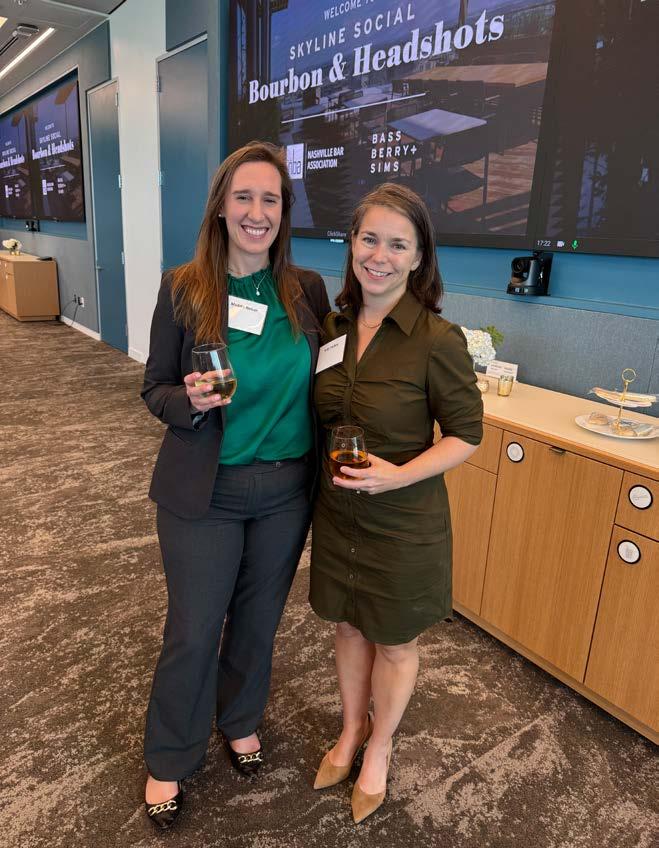
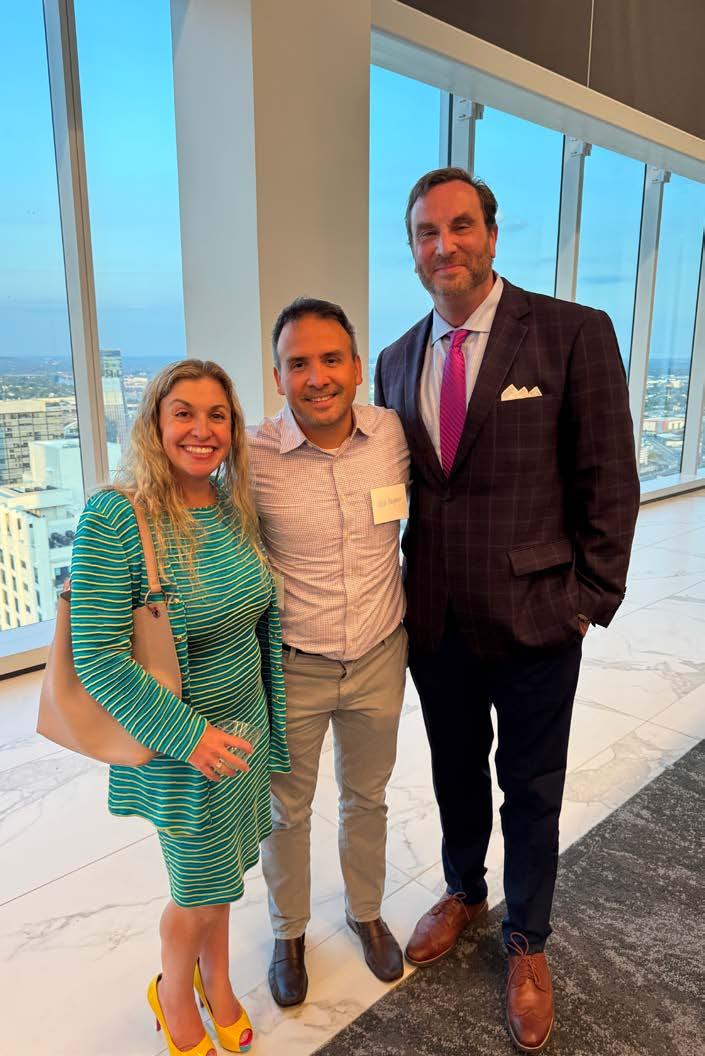
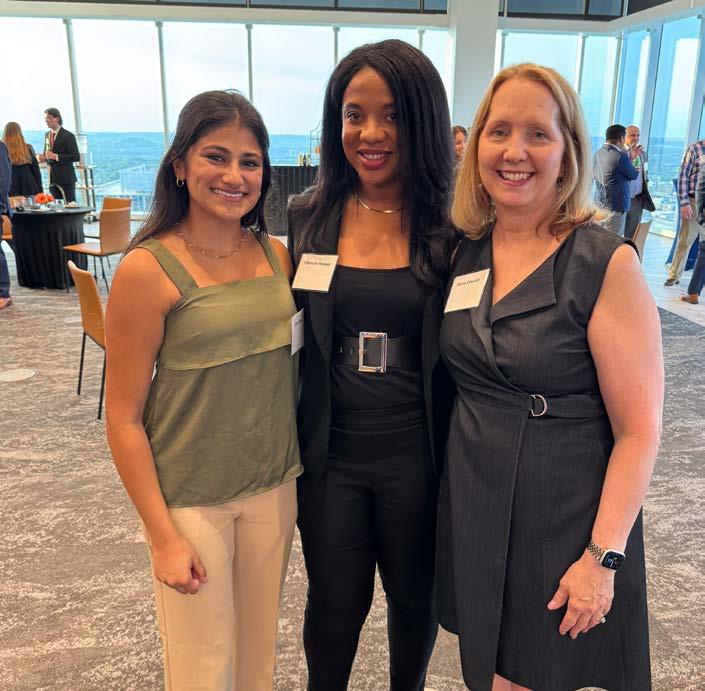
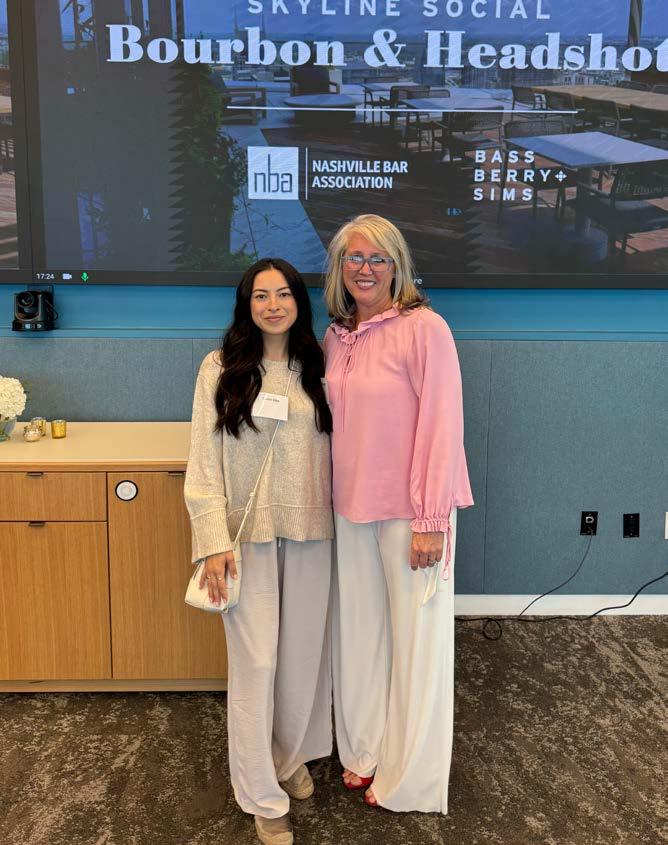
Skyline Social at Bass Berry & Sims | September 10, 2025
Annual Member Picnic | September 17, 2025
Various Happy Hours
Hearsay | Honors & Awards, On the Move, Firm News
Honors & Awards
The American College of Trial Lawyers (ACTL), one of the premier legal associations in North America, has installed John A. Day of the Law Offices of John Day, P.C. as its 76th President. Day, who has been a Fellow since 2002, assumed the position of President before an audience of nearly 900 of the United States and Canada’s most accomplished trial lawyers during the recent Annual Meeting of the College in Washington, D.C., where 96 new Fellows were also inducted.
Tonya Mitchem Grindon of the national law firm Baker Donelson has been selected to The 2026 Lawdragon 500 Leading Dealmakers in America, an annual guide recognizing the lawyers behind the most significant and transformative corporate transactions in the nation. Honorees are selected through a combination of independent journalistic research, submissions, and input from established dealmakers and clients. Grindon focuses her practice on securities and corporate finance, corporate governance, and complex international and domestic business transactions, regularly advising public and private companies, boards of directors, and private equity funds on high-value matters involving capital finance, mergers and acquisitions, and fiduciary duties. She also counsels corporate boards and special committees on governance and compliance in connection with critical strategic decisions.
The Tennessee Supreme Court has named eleven attorneys from Bradley’s Nashville office as “Attorneys
for Justice.” Attorneys recognized provided at least 50 hours of pro bono service in the previous calendar year. In 2024, the Tennessee Supreme Court expanded the program to honor attorneys who provided 100 or more hours of pro bono service. The following six Bradley attorneys reported more than 100 pro bono service hours in 2024: Charles E. Elder , Benjamin A. Johnson , Erin MaloneSmolla, William L. Norton III , Robert F. Parsley , and Luke R. Yordy . The following five Bradley attorneys reported 50 or more hours of pro bono service in 2024: Brandon Bundren, Marc Bussone, Elizabeth T. Petras , Rachel L Sodée, and Thor Y. Urness.
On the Move
Stites & Harbison, PLLC announces the addition of attorneys Mason Scioneaux and Mary Kate Tumelty to the Nashville, Tennessee, office. Scioneaux is a member of the Business Litigation Service Group. He earned his J.D. from the University of Mississippi School of Law, summa cum laude, in 2024.
In law school, he was president of the Federalist Society, vice president of St. Thomas More Legal Society and elections commissioner of the Student Bar Association. He also served on the Executive Board of the Mississippi Law Journal, Volume 93. Tumelty is a member of the Business & Finance Service Group. She earned her J.D. from Belmont University College of Law, in 2025. In law school, she competed on the Transactional Team of the Board of Advocates, spring of 2024 and 2025. Prior to joining Stites & Harbison, she participated in the firm’s summer associate program during 2024, served as a legal intern for the Metropolitan Government of Nashville’s Department of Law, summer of 2023, and was a judicial intern for Judge Ana Escobar, Davidson County General Sessions Court, Division III, summer of 2023. She is admitted to practice in Tennessee.
Tune, Entrekin & White, P.C. is pleased to announce that Morgan Arrington Jones has joined the firm, where he will focus his practice on general civil litigation. He joins the firm after spending two years as a judicial clerk for the Honorable Thomas W. Brothers in the Sixth Circuit Court of Davidson County. Jones attended the University of Mississippi Law School, where he graduated summa cum laude in May 2023.
Firm News
Herzfeld, Suetholz, Gastel, Leniski and Wall, PLLC (HSGLaW), a national plaintiffside law firm dedicated to representing working people, consumers, and victims of civil rights abuses, is proud to announce the opening of its new home office at 1920 Adelicia Street in the heart
of Midtown Nashville. The firm’s new space marks a significant milestone in its ongoing commitment to serving the people of Tennessee and beyond. From its new Midtown location, the firm will continue its mission of fighting for justice on behalf of workers, consumers, and everyday Americans harmed by corporate misconduct and institutional abuse. The address for HSGLaW in Nashville is 1920 Adelicia Street, Suite 300, Nashville, Tennessee 37212.
The law firm of Gullett
Sanford Robinson & Martin PLLC (GSRM Law) is pleased to announce that Billy Blackstone has been named as its new managing member effective September 1, 2025. The managing member chairs GSRM Law’s four member Firm Committee that provides leadership and strategic direction for the firm. Blackstone has been with GSRM Law since 2023 when he joined the firm with two other attorneys from Goodman Callahan Blackstone PLLC. He focuses his practice in the areas of tax, estate, and business succession planning.
Bradley announces that Emily Hatch Bowman has been named the new Nashville office managing partner. Bowman assumes the role previously held by Lauren Jacques, who served as office managing partner for the last four years and oversaw the firm’s move to the ONE 22 ONE building in the Gulch in January 2024. Bowman joined Bradley in 2000 and has more than 25 years of experience in real estate finance. Her practice spans the country, serving as lead counsel on a wide range of real estate finance transactions, and she is familiar with related state laws and customs from coast to coast.
Bass, Berry & Sims recently welcomed several lateral attorneys to the Nashville firm, including Cody Anthony. Anthony represents clients in complex commercial litigation and government investigations. Prior to joining Bass, Berry & Sims, Anthony was a managing associate at Dentons US LLP in its New York office where he focused on complex commercial litigation, class action defense, and litigation involving the False Claims Act. He earned a law degree from Fordham University School of Law.
Litson PLLC announced the launch of RxLaw Group , a new division representing pharmacies, pharmacists, and those who deliver pharmaceutical healthcare in credentialing, obtaining provider status with payors, and regulatory enforcement. The practice will be led by Matt Gibbs, a veteran healthcare attorney and former Deputy General Counsel for the Tennessee Department of Health, who will also handle healthcare-related matters across Litson’s broader practice. n
STATEMENT OF
1. Publication Title: Nashville Bar Journal
2. Publication Number/ISSN: 21962/15487113
3. Filing Date: 1/16/2026
4. Issue Frequency: Bi-monthly
5. Number of Issues Published Annually: 4
6. Annual Subscription Price: $25.00
7. Mailing Address of Office of Publication:
Nashville Bar Association, 150 4th Ave N, Ste 1350, Nashville, TN 37219-2419
8. Mailing Address of Headquarters of Publisher: Same
9. Publisher: Adrienne Bennett Cluff, Editor: Bill Ramsey, Managing Editor: Lauren Poole, 150 4th Ave N, Ste 1350, Nashville, TN 37219-2419
10. Owner: Nashville Bar Association
11. Known Bondholders, Mortgagees and Other Security Holders Owning or Holding 1% or More of Total Amount of Bonds, Mortgages or Other Securities: None
12. The purpose, function, and nonprofit status of this organization and the exempt status for federal income tax purposes has not changed during preceding 12 months.
13. Publication Title: Nashville Bar Journal
14. Issue Date for Circulation Data: 09/06/24
15. Extent & Nature of Circulation:
17. This statement of ownership will be printed in the January 2026 issue.
18. I certify that all information furnished on this form is true and complete. I understand that anyone who furnishes false or misleading information on this form or who omits material or information requested on the form may be subject to criminal sanctions (including fines and imprisonment) and/or civil sanctions (including multiple damages and civil penalties).
— Adrienne Bennett Cluff, Marketing & Communications Coordinator, Nashville Bar Association, January 16, 2026
Nashville Bar Association’s Announcing the M&A Negotiation Competition Spring 2026
Inaugural Inaugural
Presented by the Business Law & In-House Counsel Sections
Put your skills to the test against lawyers around town in negotiating a hypothetical — but highly realistic — acquisition transaction. Designed for junior lawyers, this competition promises to provide an educational, practical and fun experience to enhance your M&A proficiency
Gather a team: Two Lawyers A Coach A Judge
This single elimination competition is limited to 16 teams
Enter by Monday, February 16
Winners will be celebrated at the championship round followed by a reception
To learn more & enter, please visit NashvilleBar.org/M&ACompetition
Thank you for supporting your local bar association!
The Nashville Bar Association
100% Club is a special category of membership that demonstrates a commitment to the legal profession and our community from legal organizations with more than three attorneys that have 100% of their Nashville attorneys as members of the NBA. To become a part of the NBA's 100% Club, contact NBAFrontDesk@NashvilleBar.org and support your local bar association today!