As we approach the 250th anniversary of the public reading of the Declaration of Independence on July 4, 1776, it is worth reflecting on the role lawyers played in the founding of this country, the sacrifices they were willing to make, and the responsibility we continue to carry today in safeguarding the Rule of Law and our democratic institutions.
It may surprise you to learn that 25 of the 56 signers of the Declaration of Independence were attorneys. Men like John Adams, Thomas Jefferson, William Ellery, and George Wythe understood the political frustrations with King George and the British government and the legal principles involved. They believed in representative government, due process, individual liberty, and limits on governmental power. Their legal training, and training in the Classics, shaped their arguments for independence.
It is easy for us to look back now and assume the path forward was obvious. It was not. The decision to support independence carried enormous personal risk. Under British law, signing the Declaration of Independence was an act of treason punishable by death. The men who signed that document knew exactly what they were risking: their property, their reputations, their freedom and, potentially, their lives. They had the courage of their convictions and a guiding belief in liberty and freedom.
This isn’t to say that the idea of independence from the Crown was universally accepted, even amongst the Founders themselves. There were significant disagreements, sometimes passionate, about whether the colonies should seek reconciliation with Great Britain or pursue complete independence. Some believed the relationship with the Crown could still be repaired through negotiation and compromise. Others believed that the repeated abuses of the rights of the Colonists made separation inevitable. What matters is that they engaged in difficult conversations about the future of the country while remaining committed to the larger principles of liberty, self-governance, and the Rule of Law.
That lesson feels particularly relevant today, especially when our society seems to have lost the ability to engage in constructive debate without resorting to name calling, or worse. We live in a time when public trust in institutions is strained, and civil discourse often seems in short supply. As lawyers, we are uniquely positioned to help model civil discourse due to our grounding in advocacy, analysis, debate, and respect for process. Even when we disagree, we are trained to believe that disputes should be resolved through institutions and legal principles rather than personal attacks or violence.
To that end, the NBA has launched the Public Citizen Committee. The mission of this committee, which Immediate Past President Jospeh Hubbard has championed, is to “promote(s) civics, civility, and collaboration. The Committee connects lawyers with the community to engage actively with our democratic institutions, the judicial system, and the Rule of Law.”
I believe this mission statement captures something important about what lawyers are called to do. Our responsibility extends beyond representing clients. We also have a responsibility to support the integrity of the judicial system, encourage civic engagement, and help the public better understand the importance of the Rule of Law. This responsibility transcends political views and is embedded in the Preamble to the Tennessee Rules of Professional Conduct.
Lawyers have always played an important role during moments of national challenge. As stated earlier, lawyers helped shape the founding of this country,
(continued on page 5)
Sherie Edwards, Publisher
William T. Ramsey, Editor-in-Chief
Summer Geyer, Managing Editor
Lauren Poole, Managing Editor
Adrienne Bennett Cluff, Layout/Design/ Production
EDITORIAL COMMITTEE
Deji Adeniyi
Ellison Berryhill
Ramona DeSalvo
Brittany Ford
Seth Granda
Candi Henry
Timothy Ishii
J. Bart Pickett
Bryan Pieper
Worrick Robinson
Katlin Ryan
Kristin Thomas
Elizabeth Tipping
Jonathan Wardle
NASHVILLE BAR JOURNAL (ISSN1548-7113) (USPS 021-962) is published quarterly by the Nashville Bar Association, 150 4th Ave N, Ste 1350, Nashville, TN 37219. Periodicals Postage Paid at Nashville TN.
POSTMASTER: Send address changes to Nashville Bar Journal, 150 4th Ave N, Ste 1350, Nashville, TN 37219-2419.
No part of this publication may be reprinted without written permission of the Nashville Bar Journal Editorial Committee. All articles, letters, and editorials contained in this publication represent the views of the authors and do not necessarily reflect the opinions of the Nashville Bar Association. For more information, visit NashvilleBar.org/ NashvilleBarJournal
The Nashville Bar Journal welcomes discourse. You may submit counterpoint editorials to Adrienne.BennettCluff@ nashvillebar.org to be considered by the editorial committee for publication in a future print or online content.
NASHVILLE BAR ASSOCIATION 150 4th Ave N, Ste 1350 Nashville, TN 37219 615-242-9272 | NashvilleBar.org
The Nashville Bar Association, established in 1831, is a professional organization serving the legal community of Nashville, Tennessee. Our mission is to improve the practice of law through education, service, and fellowship.
The NBA — with around 2,400 members — is the largest metropolitan bar association in Tennessee.
Traci Hollandsworth, Director of Programs & Events
Annie Holmes, Director of Public Legal Access Programs
Peyton Hosale, CLE Coordinator
Corinna Saporito, Development Coordinator
HAVE AN IDEA FOR AN ARTICLE?
We want to hear about the topics and issues you think should be covered in the journal. Send your ideas to Adrienne.BennettCluff@ nashvillebar.org.
Hear Ye, Hear Ye
drafted its governing documents, and built the institutions that continue to guide us today. That does not mean lawyers have always gotten things right, but it does mean that the profession carries a special responsibility to remain engaged in protecting democratic principles.
We often speak about the Rule of Law in abstract terms, but it ultimately comes down to whether people trust that institutions will function fairly and consistently, on whether citizens believe disagreements can be resolved peacefully, and whether constitutional principles apply equally to everyone. These are not ideals we can take for granted.
The signers of the Declaration of Independence understood that liberty requires courage, sacrifice, and civic participation. Nearly 250 years later, those principles still matter. As attorneys, let us resolve to continue looking for ways to stand up for the Rule of Law, engage with our communities, and encourage respectful dialogue, even during challenging times. n
TUNE AWARD NOMINATIONS
We are now seeking nominations for the John C. Tune Public Service Award to be presented at the Annual Meeting & Banquet on Thursday, December 11, 2025. The purpose of the award is to recognize members who make outstanding contributions to the greater Nashville area community while distinguishing themselves as practicing attorneys. To submit your nomination, email Traci.Hollandsworth@NashvilleBar.org no later than Friday, October 10, expressing why you believe your nominee is deserving of this prestigious award. Visit NashvilleBar.org/Awards for more information. n
2026 NBF LEADERSHIP FORUM GRADUATION
In 2014, the Nashville Bar Foundation (NBF) established the NBF Leadership Forum — a local leadership program for lawyers with three to eight years of experience — designed to bring together emerging leaders who participate in monthly workshops for nine months to help them realize their potential and to benefit the legal profession and our local community.
On May 1, the 2026 Nashville Bar Foundation Leadership Forum Class graduated. If you know any class members listed below, please take a moment and share your regards. Congratulations to all participants on your hard work – we know it will pay off!
Colton Adams
Emily Bank
Anne Boatner
Savannah Darnall
Chase Fann
Satchel Fowler
Summer Geyer
Claire Fox Hodge
Juliana Lamar
Bobbie Jean Lamar
Malik Luckett
Patrick Mobley
Nathan North
Toni Ojoyeyi
AJ Parker
Tyler Ricker
Alix Rogers
Bridget Stewart
Richard Swor
Kristen Taylor
Hayley Vos
Taylor Ward
Emily Warwick
Jin Yoshikawa
For more information on the program, visit NashvilleBar.org/NBFLeadershipForum n
Calendar of Events
Hear Ye, Hear Ye (cont.)
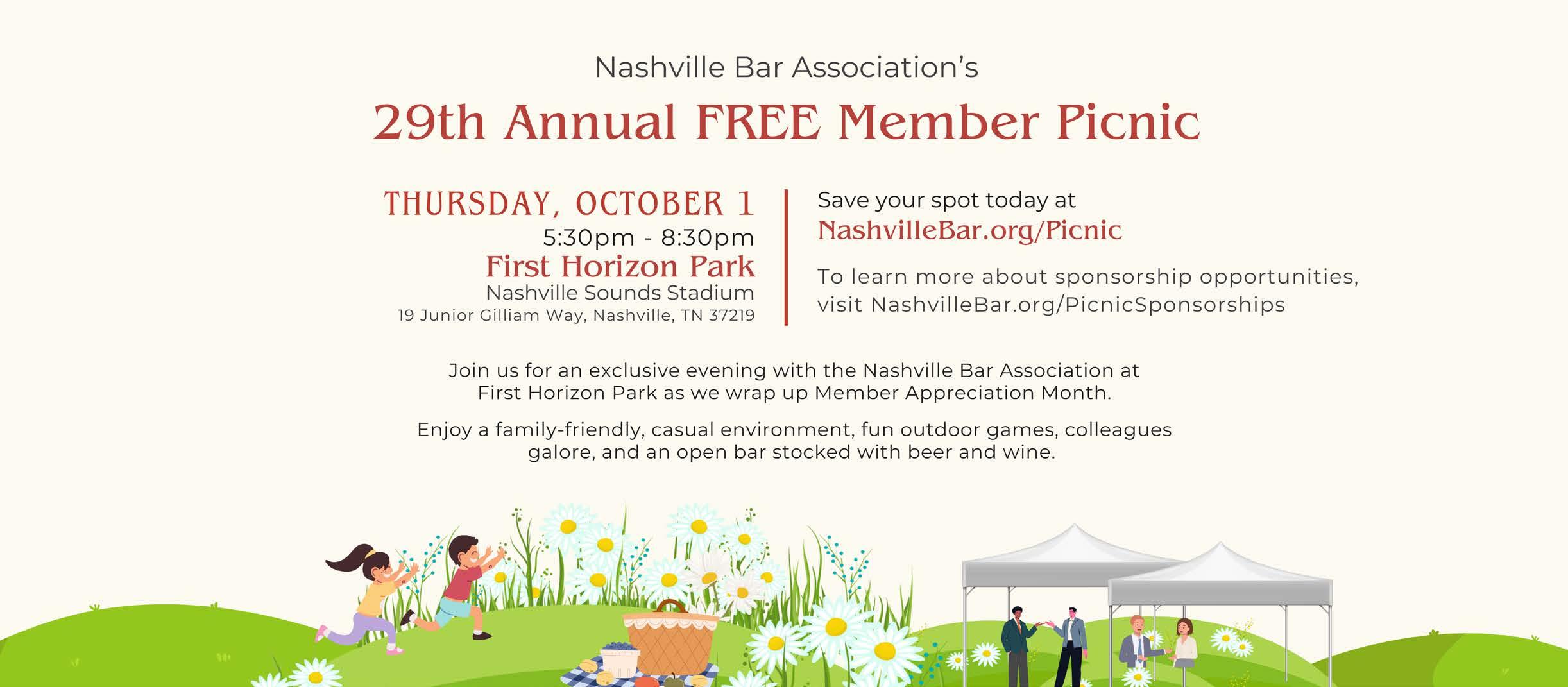
ANNUAL MEMBER PICNIC (IT’S FREE)
Mark your calendars for the 2026 Annual FREE Member Picnic on Thursday, October 1, from 5:308:30pm at the Sounds Stadium. We look forward to seeing you there! n
2026 PRIDE PARADE
Celebrate Pride in Nashville with the NBA Diversity Committee & the Stonewall Bar Association of Tennessee as we walk in the Pride Parade on Saturday, June 27. RSVP to reserve your spot in line at NashvilleBar.org/PrideParade. The group will meet and walk to the line-up position together. Our lineup number will be published as soon as we receive it. n
28TH CARBOLIC SMOKE BALL
Carbolic Smoke Ball is the annual cocktail and dance party hosted by the NBA Young Lawyer's Division. Named after the infamous case, Carlill v. Carbolic Smoke Ball Co., the evening features music and dancing, heavy hors d'oeuvres, an open bar, and a festive atmosphere. Lawyers, spouses, friends, and families are invited to join and support the NBA, the YLD and selected beneficiaries. This year, the festivities will commence on Wednesday, August 12, at Nashville City Club. To learn more, visit NashvilleBar.org/ CarbolicSmokeBall n
2026 BOARD OF DIRECTORS ELECTION
Members of the NBA will be electing six new directors to serve on the Board for a four-year term commencing January 1, 2027. If you are an active member of the NBA and are interested in being considered for Board service, please submit your name for consideration at NashvilleBar.org/ BoardNominations no later than Saturday, August 1. The election will take place in November, and all members whose 2027 membership dues are postmarked no later than October 31 will be eligible to vote. n
HAVE AN IDEA FOR A CLE?
We are always looking for creative and relevant CLE seminar ideas! If you have an idea or would like to see a specific topic in the coming months, please visit NashvilleBar.org/CLE to submit the idea. We appreciate you! n
The Constitution, the American Dream, and the Cathedral We Must Protect
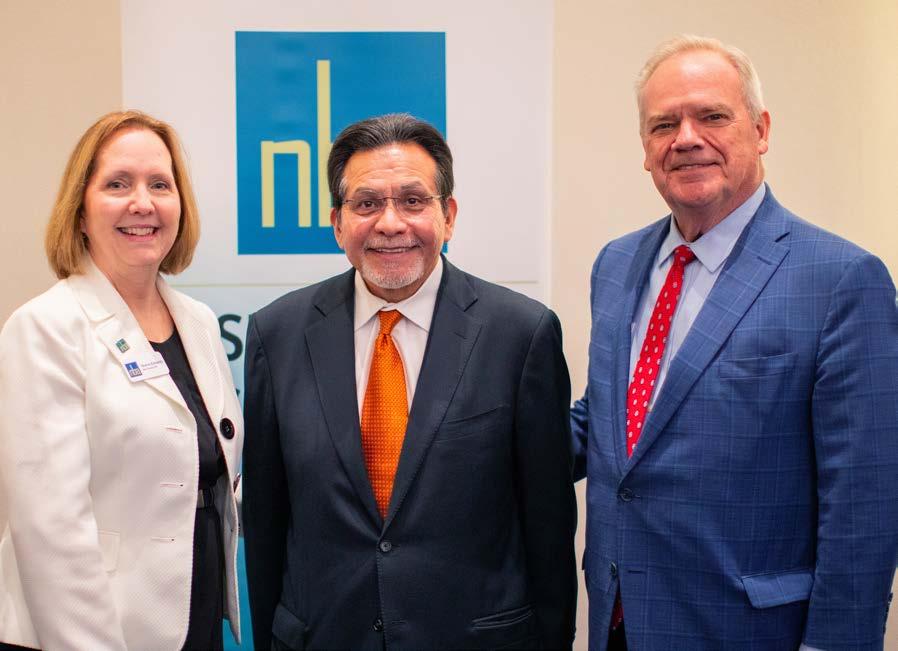
Hon. Alberto R. Gonzales is the Dean of Belmont University College of Law, where he teaches Constitutional Law, First Amendment Law, National Security Law, and Separation of Powers. He previously served as the 80th Attorney General of the United States from 2005 to 2007. His distinguished career also includes roles as a Justice on the Texas Supreme Court, Texas Secretary of State, General Counsel to the Governor of Texas, and Counsel to the President of the United States.
This speech was given by Hon. Alberto R. Gonzales during the NBA 2026 Law Day on Thursday, April 23, 2026.
The Constitution, the American Dream, and the Cathedral We Must Protect
As a boy, I dreamed of playing professional baseball, but during high school I learned I wasn’t good enough. Later, I dreamed of becoming a fighter pilot. But after two years at the Air Force Academy, failing eyesight forced me to accept that I would never fly in defense of our country. It wasn’t until I was in my final years in college that I began to consider a legal career. That dream was realized, and during my service as a lawyer I am reminded time and time again that we have special responsibilities, responsibilities that bring us together today.
We gather not merely as citizens, professionals, or public servants—but as inheritors. We are inheritors of a constitutional experiment unlike any the world has seen before. An experiment rooted in a radical belief: that law, not power, should govern; that freedom should be secured not by the will of rulers, but by enduring principles; and that ordinary people, protected by rights and institutions, could pursue extraordinary dreams.
That vision—of the Constitution and the American Dream bound together—did not arrive fully formed or fully secure. It was built. Carefully. Deliberately. Stone by stone.
As some of you know, I have spoken and written about how decades ago, Attorney General Robert Jackson captured this idea of building up through a story that
has endured because it holds a profound truth. General Jackson spoke of three stonecutters, and when asked what they were doing, one said he was earning a living. Another replied he was cutting stone. The third announced: “I am building a cathedral.” General Jackson reminded those in the audience that day that those who serve the law were not merely handling cases or performing tasks; they were helping to build the legal structure that protects human liberty and affirms our faith in mankind’s capacity to be free. Each generation, he warned, must leave that cathedral stronger than it found it.1
That cathedral is our Constitution in practice. It is the rule of law made real. And it is the foundation upon which the American Dream stands.
“Each of us, whether in public office or private life, holds a chisel. Our choices matter. Our standards matter. Our words matter. Our willingness to defend institutions—even when inconvenient— matters.”
The American Dream has never been just about prosperity. It is about possibility—about the belief that your station in life is not fixed at birth, that your voice matters, and that your rights are not granted by the whims of those in power.
That dream depends on something deeper than
(continued on page 10)
Feature Article (cont.)
markets or opportunities. It depends on law that is fair, predictable, and applied equally. It depends on courts that are independent, prosecutors who exercise judgment without fear or favor, and institutions that serve the Constitution rather than any individual. It depends on the people in this room. Without those safeguards, the American Dream becomes fragile. Without them, talent and effort no longer guarantee opportunity. Without those safeguards, freedom becomes conditional.
Folks, institutions do not collapse all at once. Cathedrals rarely fall in a single moment. They crumble when stones are loosened—one by one—until the structure no longer supports what it was built to protect.
In recent years, some who have served, or once served, within the agency I once led—the Department of Justice—have expressed concern that prosecutorial independence has eroded, that political considerations now intrude where professional judgment once prevailed, and that attacks on judges and law firms have weakened the broader legal ecosystem.2
These developments matter not because they affect any one administration, but because they alter the relationship between citizens and power. When prosecutions appear selective or motivated by retribution, faith in fairness diminishes. When judges are threatened or publicly undermined, the promise of neutral arbitration erodes. When legal institutions become instruments rather than safeguards, the American Dream loses its most important ally: the rule of law.
The damage is not abstract. It reaches courtrooms, classrooms, and communities. It affects morale among public servants and confidence among citizens. It discourages talented lawyers from public service and weakens respect for legal outcomes—even when those outcomes are correct.
A nation can survive many disagreements. What it cannot survive indefinitely is the loss of belief that its rules mean what they say.
The Constitution is not self-executing. It is a promise made by one generation to the next—that liberty will not depend on who holds office, that rights will not shift with public sentiment, and that law will stand always between the individual and the abuse of power.
Every generation must choose whether to honor that promise.
Those who drafted the Constitution understood human imperfection. That is why they divided power, built checks and balances, and insisted on independent courts. They knew that ambition must be made to counteract ambition, and that freedom would depend not on virtue alone but on structure.3
When those structures are respected, the American Dream flourishes. Immigrants become citizens, children outpace their parents, dissent coexists with loyalty, and disagreement strengthens rather than weakens the republic.
But when those structures are undermined—when loyalty outweighs competence, when outcomes matter more than process, when institutions bend to sovereign will rather than constitutional obligation—then freedom narrows, and the Dream becomes selective instead of universal.
Some ask why traditions and norms matter if they are not written in stone—in a statute or law. The answer is simple: laws set floors, but norms set ceilings. Laws tell us what we must not do. Norms guide us toward what we should do.
When norms erode, legality becomes the only measure. And history teaches us that what is legal is not always just—and what is just is not always preserved by legality alone.4
The American Dream does not endure because people and institutions do the minimum required. It endures because people within institutions strive to do what is right, even when expediency offers easier paths.
The American Dream is not inherited automatically— it is maintained deliberately.
It survives when people believe that courts are fair, that laws apply equally, and that institutions exist to protect rights rather than advancing vendettas. It survives when young lawyers aspire to public service because it matters—not because it pays, but because it means something.
When that belief fades, cynicism replaces hope. When hope fades, participation wanes. And when participation wanes, democracy weakens.
The Constitution was designed to prevent that outcome—but only if those entrusted with its care act as
builders rather than destroyers.
Attorney General Jackson warned us that building is hard and destroying is easy. Cathedrals take generations to construct—and moments to damage.
Each of us, whether in public office or private life, holds a chisel. Our choices matter. Our standards matter. Our words matter. Our willingness to defend institutions— even when inconvenient—matters.
The American Dream is strongest when it rests on a cathedral of justice that is sturdy, respected, and fair. That cathedral does not belong to any administration, ideology, or era. It belongs to the Constitution—and to the people it protects—you and me.
If we recommit to law over power, principle over politics, and Constitution over convenience, we will leave behind not merely stronger institutions, but a stronger Dream.
And that is a legacy worthy of inheritance.
I often urge our students at Belmont Law to maintain pride in being an American. There once was a time when people around the globe looked to America in times of crises and turmoil. Several years ago, French President Nicolas Sarkozy spoke of American heroism before a Joint Session of Congress. President Sarkozy said this:
“The men and women of my generation heard their grandparents tell about how in 1917, America saved France at a time when it had reached the final limits of its strengths, which it had exhausted in the most absurd and bloodiest of wars.
The men and women of my generation, he said, heard their parents talk about how in 1944, America returned to free Europe from the horrifying tyranny that
Fathers took their sons to the beaches where, under thousands of white crosses so far from home, thousands of young American soldiers lay who had fallen not to defend their own freedom but the freedom of others, not to defend their own families, their own homeland, but to defend humanity as a whole.”
President Sarkozy concluded:
“I want to express the deep, sincere gratitude of the French people. I want to tell you that whenever an American soldier falls somewhere in the world, I think of what the American Army did in France, I think of them and I am sad, as one is sad to lose a member of one’s family.”5
President Sarkozy spoke with obvious gratitude and pride about American sacrifice. He had not forgotten we are America, and today neither should we.
America is the defender of liberty. We stand for freedom. Name a country that has done more to deliver freedom around the world, name a people who have given more sons and daughters for the safety and freedom of others.
country, and yes, the stalemates, the politics, the anger in Washington today are frustrating. But, when I look at my sons and the opportunities they have, opportunities that my father dared not imagine, I am reminded that America remains the greatest country on the face of the earth.
I am the son of a Mexican carpenter and cotton picker and yet I served as the Attorney General of the United States. We live in a country where dreams still do come true. For this and many other reasons, America is worth fighting for; she is worth dying for. She is worth the sacrifice still today.
President Abraham Lincoln said, “My dream is of a place and a time where America will once again be seen as the last best hope of earth.”6 Ladies and gentlemen, that is my dream, that is my hope. I know that today the goal may appear far, the work too hard. But as our 16th President said, “The probability that we may fail in the struggle ought not to deter us from the support of a cause we believe to be just.”7
I close with a story about my mother, Maria. Physicist Albert Einstein once said, “There are only two ways to live your life. One is as though (continued on page 12)
Feature Article (cont.)
nothing is a miracle. The other is as though everything is a miracle.”8 I choose to live my life believing the latter.
My mom and dad were born in this country and met as young migrant workers picking crops across the South and Midwest.
I grew up poor. As a young boy, my mom would wake me before dawn to eat a breakfast of scrambled eggs and tortillas with my dad as she prepared a simple lunch of beans and tortillas and placed them in a brown paper lunch sack for my dad. I would stand at the door and wave to him as he walked down the street and catch a ride with a neighbor to work at a construction site. This was our daily ritual.
I lost my dad in a work-related accident my last semester of law school. Several years later, when I was working in the White House, my mom visited me in Washington. We toured the monuments and visited the museums like other tourists, but I also took her into the Oval Office to see the President. You see, it was important to me to do this for her—this shy, little woman, standing five feet nothing, who picked crops as a young girl. I wanted to show her what I had accomplished because of her sacrifices and those of my dad.
At dawn on the last day of her visit, she was up to make breakfast for me, just as she had done every morning for my dad before he left for work. Only I was not wearing a hard hat and work boots, and I wasn’t going to a construction site.
I had my suit and tie on, and I was reporting to work at the White House to advise the President of the United States. Think of the wonder that must have filled her heart. She never dreamed of this miracle, that I would take her from the cotton fields to the Oval Office. That is the American story, that is God’s grace.
Many Americans are hurting today. They are worried about our country. But we have been through tough times before. Given all the challenges and dark periods that our country has endured, I believe still we can dream and all have hope for a better, more just America.
On this Law Day let’s commit to that. Thank you. n
Footnotes
1 See generally, Michael R. Dreeben, Robert Jackson’s The Federal Prosecutor Revisited, 139 Harv. L. Rev. F. 173 (2026), https:// harvardlawreview.org/forum/vol-139/robert-jacksons-the-federal-
prosecutor-revisited (discussing Jackson’s 1940 speech and its enduring influence on the ethical ideals of public legal service). Rules 1.5, 16.4, 18.2.1.
2 Russell Bell, Abstract, From Watergate to 2025: The Arc of Prosecutorial Independence, SSRN (Dec. 29, 2025), https://papers. ssrn.com/sol3/papers.cfm?abstract_id=5791842. Rules 16.4, 16.7.1(a), 18.2.2.
3 Separation of Powers in Action - U.S. v. Alvarez, U.S. Cts. https:// www.uscourts.gov/about-federal-courts/educational-resources/ educational-activities/first-amendment-activities/us-v-alvarez/ separation-powers-action-us-v-alvarez (last visited June 2, 2026). Rule 18.2.2.
4 See generally Cass Sunstein, Unleashed: The Role of Norms and Law, Harv. L. Rev.: Blog Essay (Oct. 17, 2017), https://harvardlawreview. org/blog/2017/10/unleashed-the-role-of-norms-and-law/. Rules 1.2(d), 18.2.2.
5 Nicolas Sarkozy, Speech by Mr. Nicolas Sarkozy, President of the French Republic before the Congress of the United States of America, at 3 (Nov. 7, 2007), http://news.bbc.co.uk/2/shared/bsp/hi/ pdfs/07_11_07_sarkozy_speech.pdf. Rules 17.2.6, 18.2.
6 Abraham Lincoln, 1862 State of the Union Address (Dec. 1, 1862), http://www.presidentialrhetoric.com/historicspeeches/lincoln/ stateoftheunion1862.html. Rules 17.2.6, 18.2.
7 Gordon Leidner, Great American History, https://greatamericanhistory. net/lincoln-said/. Rule 18.2.2.
8 See, e.g., Quote by Albert Einstein, Goodreads, https://www. goodreads.com/quotes/987-there-are-only-two-ways-to-live-yourlife-one. Rules 1.2(d), 18.2.2.
Send news and press releases to Adrienne Bennett Cluff at to share accomplishments and updates with fellow NBA members through the print & online Hearsay section!
Adrienne.BennettCluff@nashvillebar.org
Background Check | Bill Ramsey
Bart Pickett serves as the State Trial Court Administrator for the Twentieth Judicial District where he oversees the operations of the 18 State Trial Courts. Prior to that, he practiced as a trial attorney for Liberty Mutual Insurance Company.
As we celebrate our nation’s 250th anniversary, no one seems more appropriate for this feature than a man who has been such a huge part of our own bar’s history, Bill Ramsey. Ramsey, the youngest of three, was born and raised in Viola, a town of about 90 people, in Warren County where he grew up on a farm, ran by his father, that has been in his family since shortly after the Revolutionary War. Ramsey attended McMinnville City High School for two years before finishing high school as a boarding student at Battleground Academy.
When it came time for college, Ramsey headed to Atlanta to attend Georgia Tech where both his brother and father had majored in Civil Engineering. Ramsey, on the other hand, studied Mechanical Engineering and graduated in 1973. He then headed back to Viola and started a rock-and-roll cover band where he played guitar. The band played all over the area from dive bars to frat houses. Ramsey’s father decided his rock-androll son was not going to be a farmer, so he leased the farm out. Ramsey instead took a job at a local wholesale lumber company where he utilized his engineering degree to help design for the company. Ramsey’s brother, skeptical of his future, suggested Ramsey find something else like law school. Ramsey remembers playing a gig in Bowling Green that did not end until 1:00am and driving to Nashville so he could take the LSAT the next day. With a full ride offer, he chose UT College of Law where he started in 1978.
Ramsey planned to just come back to Warren County to practice and run the family farm. He ended doing well in law school, however, which led to the Dean asking him to apply for federal clerkships. The Dean circulated Ramsey’s resume which resulted in an interview with Sixth Circuit Judge Harry Phillips. Judge Phillips, a native of Watertown, told Ramsey he had the job after the interview. Ramsey decided he owed it to UT to take the opportunity. He started his clerkship in 1980 following graduation. Towards the end of the clerkship, Judge Phillips found out that Ramsey planned to go back home to farm and practice. Phillips said, “let me
make a call,” and right then he picked up the phone and on the other end was the legendary Jim Neal who was told he needed to hire Ramsey. Ramsey recalls going to an interview with the larger-than-life Neal. At that meeting, Neal told Ramsey, “You’re like me: from a small town and first in your class in law school. You’re hired.” That one meeting became the career-defining point for Ramsey. Ramsey started at Neal & Harwell in 1982 and stayed through its closure in August 2025 when he joined the local office of Womble Dickinson. Ramsey began a career focused on taking cases to trial. He never cared if it was criminal or civil or General Sessions or a federal court. He earned a reputation as the lawyer you could go to if you needed a case tried. Ramsey has tried cases all around the country and even in Denmark. As Neal got older, he happily passed off cases to Ramsey and the other younger attorneys in
(continued on page 14)
Background Check (cont.)
the firm. Ramsey treasures the various criminal trials he got to do with Neal including seeing Neal win every single one of them.
Ramsey has also developed a specialty in the entertainment world. He recalls a referral to Neal that led to Ramsey representing Tim McGraw in a trial to get him out of his recording label contract. Following that win, requests for Ramsey to represent entertainers came flooding in such that now his practice is one-third entertainment.
Ramsey might be best known for his expertise in technology and particularly its application in the legal world. He went to college during the early computer days and got pretty good at computer programming. Neal quickly anointed Ramsey the firm’s computer person. A chance request for a programmer from Vanderbilt led to Philip Hampton coming to work with Ramsey. That relationship led to a lifelong friendship, the “Bill and Phil Show”, and the recurring gadget article in this publication.
Ramsey married his wife Lisa in 2002. The two live in the BelmontHillsboro neighborhood in the same house Ramsey bought in 1983. Ramsey still operates the family farm in Viola where he raises cattle, corn, wheat, and soybeans. n
Mark Your Calendars
Wednesday, June 24
NBA Diversity Committee & Stonewall Bar Association Pride Happy Hour
Friday, June 26
Collegiality Coffee
Historic Metro Courthouse
Saturday, June 27
Pride Parade
Downtown Nashville
Monday, June 29
Estate Planning & Probate Section Happy Hour
Slice of Italy
Tuesday, July 21
Nashville Bar Association Book Club Fait la Force Brewing
Friday, August 14
28th Carbolic Smokeball
Nashville City Club
Wednesday, September 16
Headshots & Happy Hour
Bass Berry & Sims
Thursday, October 1
Member Picnic
Sounds Stadium
Saturday, October 3
YLD 23rd Race Judicata
Edwin Warner Park
Thursday, December 10
Annual Meeting & Banquet
The Conrad
Visit NashvilleBar.org/Calendar to see more & register for upcoming events!
Welcome to the NBA
Congratulations on your membership – thank you for joining the NBA! We look forward to serving you this year and appreciate your support. Visit NashvilleBar.org or contact NBAFrontDesk@NashvilleBar.org with questions or to learn more.
New Members (March 1 - April 30)
Lucas Adcock
David Anderson
Chris Andrews
Kathy Austin
Jack Barrow
Blake Bars
Matthew Beckett
Mason Jernigan
Kate Jewell
Michael Johnson
Sarah Kadel
Jordan Keller
ADVERTISE IN THE
Emmy Blane
Dana Branstetter
Miranda Byrd
Hannah Cassidy
Tracy Childress
John Cook
David Crow
Tom Davis
Tyler Dorr
Blair Durham
Liesl Eschbach
Nick Flores
Page Kelley
Angie Lawless
Ben Lemly
Mark Lennon
Alex Little
Latoyia Mackey
George Maifair
Liz Malloy
Sarah Martin
Richard McGee
Meredith McGinnis
Susan Mee
Mark Miller
James Miller
Lody Powers
Michelle Primo
Joe Prochaska
Sara Anne Quinn
Patrick Ragozzine
Jesse Ramoya
Bari Ray
Tim Rencken
Jonah Riojas
Aubrey Robinson
Christi Royer
Bill Rutchow
William Schiller
Molly Shehan
Katarina Shenefield
Matt Sitton
Justice Slone
Sarah Smith
Nashville Bar Association’s official award-winning, quarterly magazine—published exclusively up-to-date information to over 2,500 attorneys and legal professionals across the Nashville platforms, be sure to take advantage of this opportunity to target Nashville’s legal market and
Keith Frazier
Jennifer Ghanem
Lillian Gilmer
Mary Beth Hagan
Evan Harrelson
John Harrison
Heath Henley
Howard Herndon
Houston Howell
Chris Mixon
Blake Morain
Jacob Moses
Mike O'Neill
Ellie Olson
Tim Palmer
Richard Parker
Laurie Parker
Ben Perry
ADVERTISE IN THE
Micalah Soileau
Craig Turner
Jason Turner
Liz Washko
Tara Waters
David Watkins
Aaron Webb
Julia Wilson
Andrew Womack
Luther Wright
& Arbitrators
Highly Skilled Neutrals with Deep Subject Matter Proficiency
Barbara Bennett, Esq.
Hon. Patricia J. Cottrell (Ret.)
Hon. Bernice Bouie Donald (Ret.)
Shelby Grubbs, J.D., FCIArb
William H. Farmer, Esq.
Hon. Ellen Hobbs Lyle (Ret.)
Gadget of the Month | Spellbook – AI Associate for Contract Drafting?
I know, you are growing tired of AI articles. However, Spellbook is a tool that continues to impress me. I am not a transaction specialist, but I like the way this product works. It is simply an add-on to Microsoft Word, and it suggests changes that you can accept or reject. It does not use the user’s data for training. Instead, its Large Language Model is trained on a large set of legal texts and contracts—many of them are taken from public SEC filings drafted by large, sophisticated law firms. In addition, as set forth below, Spellbook is now expanding into assisting with the drafting of litigation-related documents.
How Does It Work?
Spellbook will review your draft contract documents and then offer revisions and suggestions. These suggestions appear in a
side pane within the Microsoft Word application. It uses Word’s “track changes” feature to propose revisions and offer comments. Just as you would review the work of another lawyer or paralegal, you can then Click through the changes and accept, modify, or reject the changes, suggestions and comments as you wish.
A cool feature is Spellbook’s ability to learn your “style” by learning from your changes, corrections and accepted suggestions. Over time, it learns to identify your “pet” issues and comport with your practice style over time.
In order to use Spellbook to its maximum potential, you must learn to write “prompts” to get what you want (as I am sure many of you know by now, “prompt writing” expertise is an essential skill to have if you want to use AI tools to their full potential). Spellbook is much more useful if you drive its analysis by your prompt. With an existing contract open in Word, you can prompt Spellbook to rework the contract as one that is aggressively negotiated on your client’s behalf, with special attention paid to data security. You can take an existing contract, and prompt Spellbook to modify it for California state law, and replace named parties, like lessor or lessee, with the appropriate client names for the California deal. Or, you can prompt it to make any other global changes or replacements that you may need.
You can also establish standard clauses and rules that should be use in a certain type of contract.
Spellbook will make sure nothing is overlooked. You can prompt Spellbook to look for certain types of clauses, renewal terms, indemnification, choice of law, etc. It will highlight them for your review and suggest changes as you have instructed in your prompts. And, even without prompting, Spellbook with inform you of possible consequences if certain clause or sentences are not changed.
Spellbook Helps with Drafting in Specific Ways
Spellbook can draft standard clauses for types of contracts, create entire new contracts from scratch, or generate templates to use in your contracts. You can also provide Spellbook with standard clauses to create Clause Library containing standard commonly used boilerplate language. Those clauses will be retained in Spellbook’s Clause Library. Another useful feature is Spellbook’s comparison feature. You can upload several contracts into Spellbook and ask it to compare clauses in the contract. The tool will then compare and contrast the clauses.
Most importantly, it is SOC 2 Type II Compliant. All data is encrypted in transit and at rest with zero data retention.
Can Spellbook Be Used for Drafting Documents Besides Contracts?
Spellbook originally was marketed as a contract drafting
(continued on page 18)
Gadget of the Month (cont.)
tool. Now, however, ever since Thompson became an investor, Spellbook also markets its AI legal tool for any type of document review and drafting. I have tried it for drafting memoranda and court filings, but it is not quite as useful for such “one off” documents. Perhaps if you provide Spellbook with a library of memoranda you have filed, or better yet, complaints of discovery requests you have drafted, it would be quite useful. For example, if you often filed memoranda or other legal documents in a single, specific area, I am sure it would be quite useful and effective.
Is
It
Secure?
Can You Waive the Attorney-Client Privilege by Using Spellbook?
According to Spellbook, it is SOC 2 Type II Compliant. All data is encrypted in transit and at rest with zero data retention. Your data is not used to train other LLMs, and your privacy is fully protected.
As most of you know, you must be careful when using AI products. Some do not provide Spellbook’s level of security. Your data (and your client’s data) might be used by some tools to train the big “ChatGPT in the sky.”
How About Training?
I urge you to try Spellbook and see if it can help you. Spellbook offers a free demo for learning the tool, and you should take advantage of it. On its website, Spellbook provides great information on the tool’s features, with step-by-step guides on how to review and draft contracts and other documents.
Spellbook also offers customized training courses and videos upon request from lawyers and law firms. Those courses can be geared toward specific practices and specialties.
What Does It Cost?
Spellbook is a bit secretive about its pricing. Spellbook does not publish fixed pricing on its website. To get a proposed price, you must schedule a demo with the sales team. It is my understanding that entry-level plans (Pro tier) start at approximately $20 per month, team plans at $40 per user per month, and enterprise plans can reach up to $350 per user per month with a 6-month minimum commitment.
The Bottom Line
Spellbook cannot replace a lawyer or a paralegal. It is an effective tool for them, however, if used properly. It can quickly scan documents and provide suggestions that otherwise might take hours to find manually. Rather than spending valuable attorney time manually reviewing routine agreements line by line, lawyers and their teams can use Spellbook. It can process dozens of contracts and documents in the time it takes to thoroughly manually review just one. Consequently, this technology can enhance an individual’s value to a client or improve a legal team’s document turnaround time, thereby adding substantial value to the organization. Again, these cannot replace you, but they can help you be a better, more efficient lawyer, if you use them properly
See you later, Bill n
Reserve Our Facilities
The NBA offers its conference rooms to be used for arbitrations, mediations, meetings, depositions, and other events for attorneys who need a convenient place to meet in downtown Nashville. We have a spacious Conference Center and a smaller Board Room – both of which have WiFi access, a computer, and phone – available for your use.
Thank You to Our 2026 Diversity Committee Sponsors
Golden Oldies
Adrienne. , and your name – along with the correct answer – will appear in the next issue.
Spring Golden Oldies
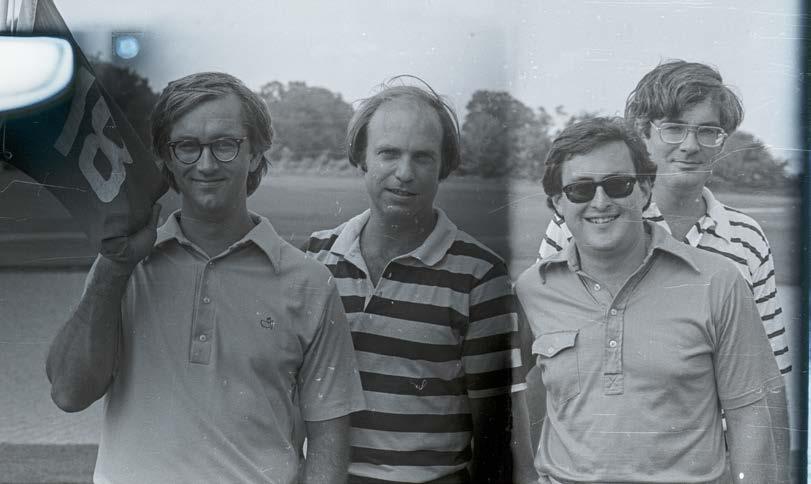
We stumped you! Individuals are listed from left to right: Bill Van Derveer, Claude O. Ramer II, Hugh Howser, Jr. and Jack King n
Where great work and great people come together.
We are a different kind of firm. One that loves a challenge. One that loves to collaborate. One that is strategically designed to be your teammate.
Nationally Recognized on the 2026 “Best Law Firms®" list by Best Lawyers®
Ranked #59
Am Law's annual firm rankings
The American Lawyer
April 2025
Capitol Notes
Peggy Sue, the Beagle Hound is fond of the classic 1957 Buddy Holly song. When hunting legislative news or biscuits, she is hard to contact.
“That’s a hard dog to keep under the porch.”
Louisiana v. Callais. On April 29, 2026, the United States Supreme Court in a 6 to 3 decision issued its opinion concerning the congressional district maps in Louisiana. Louisiana has six congressional districts and a black population of around 33%. In response to a federal court order, the Louisiana Legislature had enacted a congressional map with two majority minority districts in alignment with Section 2 of the federal Voting Rights Act. That map was challenged by Mr. Callais, a Louisiana voter, who argued that the new maps were race driven. The Supreme Court agreed that the new map was an unconstitutional racial gerrymander and struck it down.
Armed with the Louisiana v. Callais decision, Tennessee’s Republican leadership responded quickly. Governor Bill Lee called an extraordinary session to convene on Tuesday, May 5. On May 7, the General Assembly enacted a new congressional map which divided the former 9th district represented by long time Congressman Steve Cohen into three new districts ranging from Shelby County into Middle Tennessee. Those changes also ripple into the Davidson County districts. The inevitable lawsuits have been filed, but to date, no court has intervened to slow the implementation of the new congressional district maps.
Regular Session. With the adoption of Senate Joint Resolution 1280, the 114th General Assembly adjourned for the year. The 115th General Assembly will convene on Tuesday, January 12, 2027. The Senate will have to elect a new Speaker with 48 year legislative veteran Randy McNally not seeking reelection to his Senate seat. Present candidates are Paul Bailey of White County, Ferrell Haile of Sumner County, and Jack Johnson of Williamson County. The 115th General Assembly will also inaugurate a new Governor. Republican candidates are Marsha Blackburn of Williamson County, Monty Fritts of Roane County, and John Rose of Putnam
Notable Bills from the Regular Session.
Balanced budget authorizing the expenditure of $58.3 billion, Public Chap. 1142, effective 7/1/2026;
Bond bill authorizing the issuance of state bonds, primarily to the tune of $311 million for the UT College of Medicine Interdisciplinary Building in Memphis, Public Chap. 989, effective 5/19/2026;
Expansion of the state voucher program to 35,000 students up from 20,000 last year, Public Chap. 963, effective 5/7/2026;
A package of immigration bills, notably, a requirement that all sheriffs participate in 287g immigration enforcement programs with the federal government, Public Chap. 1015, effective 5/19/2026; and
A tweak to the four year statute of repose in construction cases to permit the filing of a counterclaim or a third party complaint if the initial claim was timely filed, Public Chap. 684, effective 7/1/2026.
Honorable mention.
Prohibition of the possession and sale of Kratom, Public Chap. 950;
Pharmacy Benefit Manager Divestiture, Public Chap. 1111, effective 5/22/2026; and
The posting of the Ten Commandments in K-12 schools on a locally permissive basis, Public Chap. 924,
(continued on page 22)
County. While five Democrats have qualified to run for Governor, Jerri Green of Shelby County appears to be the most recognizable candidate.
Capitol Notes (cont.)
effective 7/1/2026.
2026 is an Election Year. In August and November, Tennesseans will join voters across the country in casting their ballots for their congressional representation. Here in Davidson County, a dog will have to have a good map to determine his or her congressional representative. Almost makes one wish for the return of floterial districts. Suffice it to bark, that parts of Davidson County are now in the 4th, 6th & 7th congressional districts. At the state level, Tennesseans will elect a new governor, all 99 state representatives, and the senators who have odd numbered districts.
Humans often characterize Tennessee as a bright red state with Nashville being a blue dot. Reality, however, is that Tennessee is a nonvoting state. Turnout in the May primary in Davidson County was around 10%. Eight years ago with an open governor’s race like this year, turnout for the August primary election was around 30%. NBA humans though, while good to keep their voting muscles strong, need to up their games. It matters who governs. Congratulations are in order for the successful judicial candidates from the Davidson County May Primary Election. They are Jodie Bell, Dawn Deaner, and Corletra Mance, and they will all serve the remainder of the unexpired terms that run until 2030. Also, congratulations are in order for all the other candidates who showed the gumption and courage to put their names on the ballot and seek election for the 745,000 folks who call Nashville home.
Honors and Passages.
Representative G. A. Hardaway, Sr. We celebrate a live well lived and mourn the passing of State Representative G.A. Hardaway, Sr. (71) of Memphis. Representative Hardaway was a native of Meridian, Mississippi and long time resident and force of Memphis. G. A. passed away on April 24 after a brief illness. He served for the 20 years in the State House and was a mentor to many in the Memphis area, particularly in Orange Mound community. G.A. will be missed.
Representative T. J. Hardaway. The Shelby County Commission has moved quickly and appointed T. J. Hardaway, G.A.’s son, to fill the remainder of the unexpired term. He was sworn in on the morning of Thursday, May 7, the last day of the Extraordinary Session on Redistricting.
Calendar Notes
June 21 –
July 1 –
July 3 –
July 7 –
July 17-August 1 –
August 6 –
August 7-8 –
First day of Summer
First day of the state fiscal year
Independence Day holiday for state & federal offices
Voter Registration Deadline for the 2026
August Election
Early Voting Period for the August Election
Local General & State & Federal Primary Election Day
Nashville Tomato Art Festival
Volunteer for Dial-A-Lawyer
Thank you to our recent Dial-A-Lawyer Volunteers
Pooja Bery
Gina Crawley
Ellen Hendrickson
Chris Hugan
Paige Goodwin
Shannon Kerr
Aileen Rose
Katy Valesky
Travis Vest
Dial-A-Lawyer is held on the first Tuesday of each month from 6:00-8:00pm, and the public is invited to call in with basic legal questions. If you would like to volunteer and help the NBA support this program, please contact NBAFrontDesk@nashvillebar.org
Complimentary dinner and parking are provided.
Thank you to sponsors, Polsinelli and Scipio Technologies
(615) 843-0308
TENNESSEE CHAPTER
(615) 651-6714
(615) 651-6775
(615) 259-1366
(615) 815-0472
I Promise You Know Enough A Daily Affirmation (and a Case for Dial-A-Lawyer)
Pooja Bery is the founder of Bery Law PLLC, where she focuses her civil litigation practice on real estate, family law, and business disputes. Pooja serves on the boards of the Nashville Bar Association’s Young Lawyers Division and the Lawyers Association for Women, and on the Legal Aid Society of Middle Tennessee’s Equal Justice Campaign Committee for 2026. When she isn’t working or volunteering, Pooja can be found at the movie theater or spending time with her beloved dogs, Choti and Baloo.
Most Nashville attorneys have likely heard some variation of the advice: “You should have one pro bono case open at all times.” It’s a worthy goal and, in theory, a simple one. In practice, though, it can feel a little more complicated and, for some, a lot more daunting. Not every attorney is a litigator, and many pro bono matters are litigation-heavy. Some attorneys would rather review a 50-page contract at 9:00am on a Friday than voluntarily step into a courtroom. Others may be restricted by their employers from taking on private matters at all. Even litigators who love a juicy motion may hesitate to take on another case when their billable work is already a sentient beast haunting their every waking moment.
To be clear: I am an attorney who keeps at least one pro bono case open at all times, even with my billable work screaming at me from the cage where I sometimes lock it to preserve my sanity. But that’s not the only way to use your law license for good. One of my favorite ways to give back is through the Nashville Bar Association’s Dial-A-Lawyer program.
I have been volunteering with this monthly program for almost three years now, and every time I go—which is most months—it’s a highlight of my week. Dial-A-Lawyer is a two-hour commitment on the first Tuesday of each month. They feed you dinner, pay for your parking, and give you a chance to make great connections with local attorneys. There’s also a xylophone in the NBA office, which is not a benefit so much as a great way for me to irritate my new friends. Also, basically unlimited Snickers. All in all, a great return on a two-hour investment.
For those unfamiliar, Dial-A-Lawyer is exactly what it sounds like: members of the public call in with legal questions, and volunteer attorneys answer those calls and provide general guidance. The calls are anonymous; you don’t know them, they don’t know you, and
everyone gets the rare gift of avoiding small talk. Each conversation is meant to be brief—some people will try to keep you on the phone for the entire two hours, but I try to cap my calls at 10 to 15 minutes—and focused on helping the caller understand their situation, options, and potential next steps.
Before my first time volunteering with the program, I had a quiet but persistent fear: what if I completely ruined someone’s life through a five-minute phone call?
Despite the fact that attorneys are not known for our humility, I had to admit that (tragically) I don’t know everything about everything. What if someone called about a criminal law issue? Or, my personal nightmare, bankruptcy? Or—my goodness—what is ERISA, anyway?
Dear reader, as it turns out, no one is calling to quiz you. You are not expected to solve someone’s entire legal issue in one call. You aren’t expected to even partially solve it. In many cases, helping someone understand what kind of lawyer they need (or that they do not actually need a lawyer) is half the battle. I was relieved to learn that not ruining someone’s life is a fairly low bar and, luckily, an easy one to clear.
In practice, people call in, and, after a brief greeting, you dive right in. Every attorney handles this differently, but I tend to give the caller one to two minutes to explain their issue before asking clarifying questions. My goal is not to solve the entire problem, but to help them understand the root of their legal issue and what next steps they can take. Many times, the answer is as simple as, “Well, yes, it is crappy that your apartment has no running water; yes, your landlord should fix that;
and yes, you can call an attorney if they don’t.” Other calls tend to follow a similar pattern: a tenant unsure if they can break their lease, a recently separated parent trying to figure out if they can take their kid and move to Nantucket, or a small business owner wanting to know what to do when a client stops paying.
I use those examples because those are areas I practice. Sometimes, though, I get asked about topics I know nothing about, such as bankruptcy law, which I previously established as my nightmare but will now also describe as my personal Everest. By that, I mean a mountain I will never be able to climb and, frankly, have no particular desire to climb. I have been asked which chapter of bankruptcy someone should file, whether someone who has already filed can “take it back,” and, “I don’t know which type of bankruptcy I filed, but how will this affect my credit?” To the lattermost, I would internally say, “Umm… badly?” Jokes aside, when I don’t know something, I can simply say that. No one will judge me—except, of course, myself—for not knowing everything.
Recently, I took a call from someone who wanted to sue the federal government about a licensure dispute. Needless to say, I had no idea what they should do next. Luckily, the Nashville Bar Association has thought of
everything. Each time you volunteer, you receive a short packet with a list of resources and contact information you can provide depending on the caller’s situation. One of these resources is NBA’s Lawyer Referral Information Service, which helps connect people with attorneys who practice in the specific area of law they need.
So, when someone calls me asking for help with their bankruptcy issue, I say, “That area of law is quite nuanced, and I would love for you to connect with an attorney who specializes in bankruptcy law. Let me get you the information for the Lawyer Referral Information Service so that you can speak with someone who can help you.” That call may take no more than thirty seconds, but I still know I helped by directly connecting that person with a resource designed to match them with the right attorney.
And, of course, some calls are simply memorable. Over the years, I have had calls that were funny, surprising, oddly specific, and occasionally so esoteric that I find myself thinking about them even months later. That’s part of what makes the program so enjoyable: in two hours, you get a small peek into the legal problems people are carrying around every day, and you get to help them leave with a little more clarity than they had when they called. And for anyone still worried about ruining a stranger’s life in the span of ten minutes, I’m pleased to report that this has not happened to me… yet.
You may be a litigator, a transactional attorney, inhouse counsel, a law clerk—whatever your field, as long as you have a license to practice law, you can volunteer for Dial-A-Lawyer. It’s low stakes, it’s fun, it’s fulfilling, and it’s the easiest volunteer work I’ve done thus far in my career. Worst case, you spend two hours helping people while eating candy. Best case, you come back next month. n
Serve Your Community. Strengthen Your Practice.
Make a Difference Through Dial A Lawyer
Volunteer your time and expertise to help members of our community access trusted legal guidance. Nashville Bar Association’s Dial A Lawyer program offers a simple, meaningful way to give back, one call at a time.
Provide anonymous, general legal advice to those in need
Strengthen access to justice in Middle Tennessee
Limited-time commitment. Volunteers answer calls from 6:00-8:00pm on the first Tuesday of each month.
Training, resources, and free dinner and parking are provided.
Coming Soon: Volunteer for the New Federal Court Pro Se Litigants Clinics
The Nashville Bar Association is launching a new volunteer opportunity this fall supporting pro se litigants in federal court.
Assist individuals navigating the federal legal system
Make a direct impact at a critical stage of litigation
Limited-time commitment
Grow Your Practice with LRIS
Turn your service into opportunity by joining the Lawyer Referral & Information Service (LRIS). LRIS is a proven way to connect with individuals actively seeking paid legal representation.
Receive qualified client referrals
Expand your visibility in the community
Build a stronger, more sustainable practice
$150 annual fee for unlimited practice selections & 15% referral fee for any client fees over the first $1,000
Get Involved Today
Be part of a profession that serves and a network that supports your growth.
Volunteer for Dial A Lawyer www.nashvillebar.org/dialalawyer
Learn more about the Federal Court Pro Se Litigants Clinic Join LRIS www.nashvillebar.org/joinLRIS
List in the Public Attorney Directory www.nashvillebar.org/directorysale
Contact Annie Holmes, Director of Public Legal Access Programs, at annie.holmes@nashvillebar.org for more information.
barBites | Watermelon Summer Salad
Lauren M. Poole joined Moore Ingram Johnson & Steele, LLP in January 2024 as an Associate in Workers’ Compensation and Insurance Defense. In addition, Poole has extensive experience successfully representing clients in the areas of transactional and litigation matters involving insurance defense, bankruptcy, mergers and acquisitions, and creditors’ rights including collections. She also has experience in appellate advocacy, successfully arguing before the Tennessee Court of Appeals. Poole’s philosophy is to provide legal services for her clients that she would expect as a client herself. Poole is a member of the Nashville Bar Association and currently serves as Editor of the Nashville Bar Journal. She has written several legal articles and is a faculty member of the Tennessee Bar Association. Outside of the office, Poole enjoys spending her time traveling, listening to live music, and enjoying art.
Kitchen Notes
Hope you all are enjoying the summer sunshine. One of my favorite parts of the season is sharing plates with local produce that are easy to put together. This watermelon summer salad is a great way to cool off and rehydrate on a long summer day. I used EVOO, an aged balsamic, salt, and pepper to season with some fresh sprigs of mint and a crumble of feta. This recipe was developed under the careful eye of my sous chef, Bishop, who is pictured below as a seal of approval. Enjoy!
Ingredients
One Serving:
1 Cup Watermelon
1 Cup Cucumber
1 Tbsp. Feta
1 Tsp. Extra Virgin Olive Oil
1 Tsp. Aged Balsamic Vinegar
2 Sprigs Fresh Mint
Sprinkle of Salt (I like a coarse salt)
Pepper to Taste
Meet Us at the Bar
Watermelon Refresher
Ingredients
Watermelon
Lime Juice
Fresh Mint
Sparkling Water
Directions
Using leftover ingredients from Lauren's delicious salad recipe, add watermelon, mint, and lime juice to the bottom of a glass and muddle until ingredients are combined to satisfaction.
Add ice and fill with remainder of the glass with your favorite sparkling water (my personal favorite is Topo Chico, but I won't judge other choices). n
Tips: If adding a spirit, add before sparkling water. If you want to make this a blended treat, add ingredients to a blender with a little bit of sweetened condensed milk.
Adrienne Bennett Cluff is the Marketing & Communications Coordinator at the Nashville Bar Association.
The Waiting Game of Immigration Law
Victoria Gentry is the Managing Attorney of The Immigration Group, P.C. She counsels clients of all sizes, from startups to Fortune 100 companies, on business-related immigration matters in the IT, Engineering, Finance, Pharmacy, and Insurance industries.
The Waiting Game of Immigration Law
Visa Retrogression and the Fragility of the American Dream
In business immigration practice, there is a familiar and often difficult conversation: a highly skilled employee, frequently recruited by an American company after an extensive and costly search, has done everything “the right way.” She holds a PhD in nuclear physics or aerospace engineering and is ready to work for a prominent U.S. employer, which has complied with every regulatory requirement. Petitions have been approved. Years have passed. And yet, the final step toward permanent residence remains out of reach, not because of any legal deficiency, but because she was born in India, China, or the Philippines.
This phenomenon, known as visa retrogression, exposes a tension between the promise of a rule-based system and the lived reality of uncertainty for employers and foreign nationals alike.
The Legal Framework: Priority Dates and the Visa Bulletin
Employment-based immigration to the U.S. is governed by a numerically limited system.1 Each year, a fixed number of immigrant visas are allocated across “preference categories,” which are further divided by country of birth. When demand exceeds supply, as it has for years in several categories, the system creates a queue.
For persons born in India in the EB-2 and EB-3
categories, the waiting lines are 15+ years long. Hundreds of thousands of Indian nationals have been living and working in the U.S. for decades while waiting for their green card petitions to be approved. By contrast, individuals born in Japan, Brazil, Italy, and many other countries often face little to no backlog, with green cards frequently issued in less than three years from the start of the process.
A foreign national’s place in that queue is determined by a “priority date,” typically established near the start of the permanent residence process. A priority date represents the person’s place in line. The Department of State publishes monthly updates indicating which priority dates are eligible to move forward.2 When demand surges or visa usage outpaces projections, those cutoff dates can stall or move backward.
Retrogression occurs when a previously current category becomes unavailable, or when the cutoff date regresses, rendering applicants who were eligible to finalize their cases suddenly ineligible again. This is not an anomaly, but an everyday occurrence.
Predictability and the Rule of Law
The Rule of Law depends on more than the existence of statutes and regulations. It requires that laws be applied consistently and predictably so that individuals and businesses can order their affairs accordingly. In the employment-based immigration context, predictability is essential. Employers make long-term investments in talent. Employees make life-altering decisions, including
relocating families, purchasing homes, and committing to careers in the U.S., based on an expectation that compliance with the legal process will ultimately yield stability.
Visa retrogression complicates that expectation. While the statutory framework is clear, the practical operation of the system introduces a level of unpredictability that can undermine reliance interests. A priority date that appears current one month may become unavailable the next. Processing timelines, already measured in years, can extend indefinitely.
From a strictly legal perspective, retrogression is consistent with the statutory scheme. The government is operating within the bounds of congressionally imposed limits. But from a Rule of Law perspective, the question is more nuanced: when lawful compliance does not lead to reasonably predictable outcomes, does the system still function as intended?
Real-World Consequences for Employers
In a growing market like Nashville, the effects of retrogression are
not abstract. Healthcare systems, technology companies, universities, and advanced manufacturing firms increasingly rely on global talent to fill critical roles. These employers often sponsor foreign nationals for permanent residence as part of long-term workforce planning, especially after positions remain vacant for years because the company cannot identify qualified U.S. workers.
When retrogression occurs, it can disrupt that planning in several ways.
First, it creates retention challenges. Employees stuck in temporary visa status for extended periods may face limitations on job mobility, promotions, or geographic flexibility. Green card petitions are position-specific, so upward mobility into a new role is often discouraged because changing roles may require restarting the entire green card process.
Second, it increases administrative and financial burdens. Employers must extend temporary work visas, navigate evolving compliance requirements, and manage uncertainty in
workforce projections. These are not one-time costs; they recur year after year as cases remain pending. They include attorney’s fees and government filing fees each time a visa must be extended.
The cumulative effect is a system that, while legally sound, can feel operationally unstable.
A Question of Balance
Frequently, I am contacted by U.S. citizens who want to help a deserving foreign national who has “done everything legally” but still faces an exceptionally long waiting line. It is often shocking to the American public that a prompt and judicious resolution of a foreign national’s case does not occur once all lawful steps have been completed. A sense of unfairness and injustice arises, particularly when the reason is that waiting lines differ significantly based on country of birth.
None of this is to suggest that numerical limits or priority systems are inherently inconsistent with the Rule of Law. On the contrary, they reflect legislative judgments about how to allocate scarce resources. The challenge lies in balancing those constraints with the need for stability and predictability, as well as the broader need for meaningful updates to America’s immigration laws and procedures.
From a policy perspective, various reforms have been proposed: recapturing unused visas, adjusting per-country limits, or creating more flexible allocation mechanisms.3 Each carries its own legal and political considerations. But regardless of the specific solution, the underlying issue remains the same: how to ensure that a system (continued on page 30)
The Waiting Game of Immigration Law (cont.)
designed to reward compliance does not inadvertently penalize those who follow its rules.
The American Dream, Revisited
The American Dream has never been solely about entry; it is about the opportunity to build a stable and prosperous life through effort and adherence to the law. Stability and hard work are central to that ideal. As some of the world’s “best and brightest,” employment-based immigrants often embody it. They arrive through lawful channels, contribute highly-specialized skills, and invest in their communities.
Visa retrogression does not negate that dream, but it can place it on hold in ways that are difficult to reconcile with the principles of predictability and fairness that
and an opportunity. Advising clients in this environment requires not only technical expertise but also a candid acknowledgment of the system’s limitations. We, as practitioners, frequently deliver difficult or unwelcome news to surprised ears. At the same time, it invites broader engagement with policy discussions about how the system might evolve to better align with its stated goals. n
Footnotes
1 Immigration and Nationality Act, 8 U.S.C. § 1153(b) (2024). Immigration and Nationality Act, 8 U.S.C. § 1151(d) (2024).
2 U.S. Dep’t of State, Visa Bulletin, https://travel.state.gov/content/ travel/en/legal/visa-law0/visa-bulletin.html (last visited Apr. 29, 2026).
3 See U.S. Cong. Rsch. Serv., Immigration: Employment-Based Visa
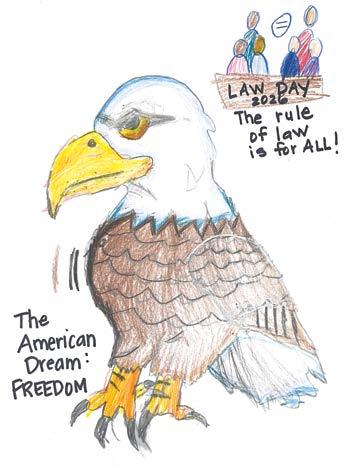
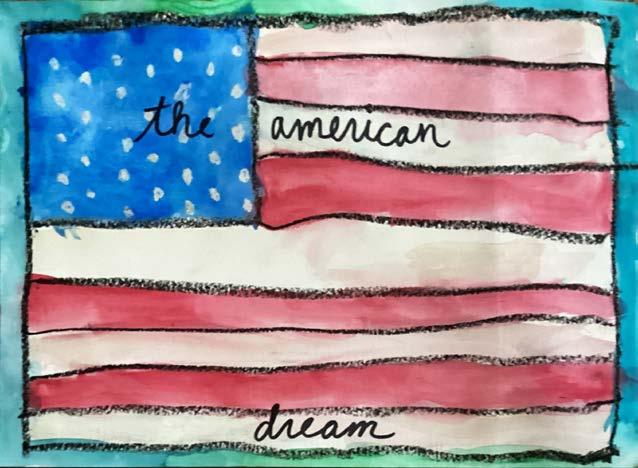
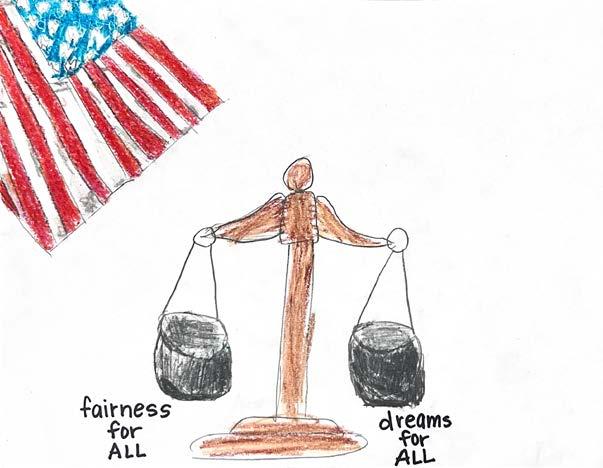
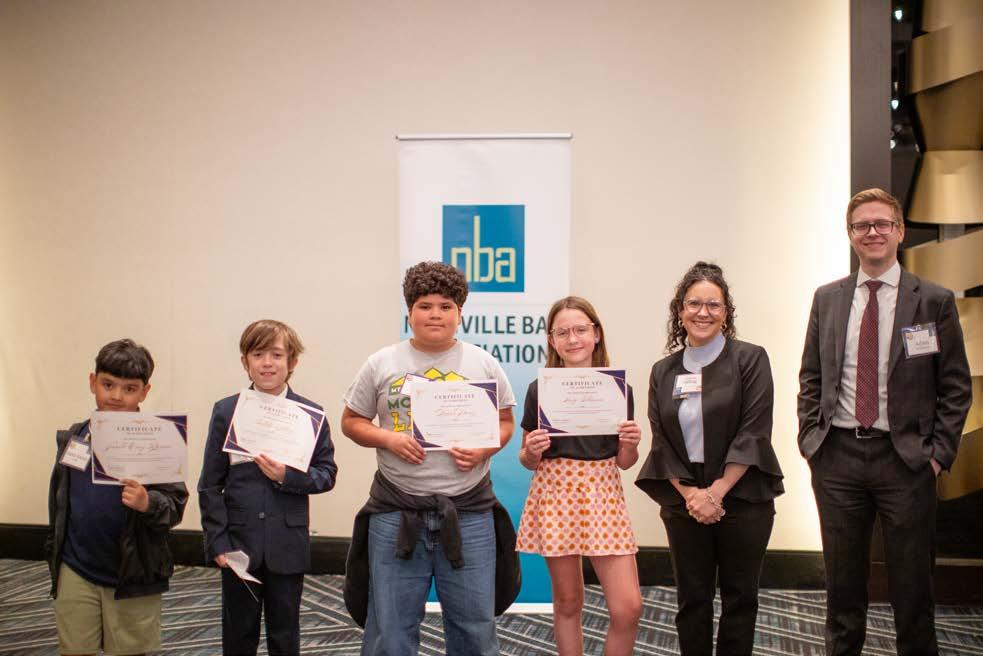
YLD Law Day Art & Essay Contest Winners
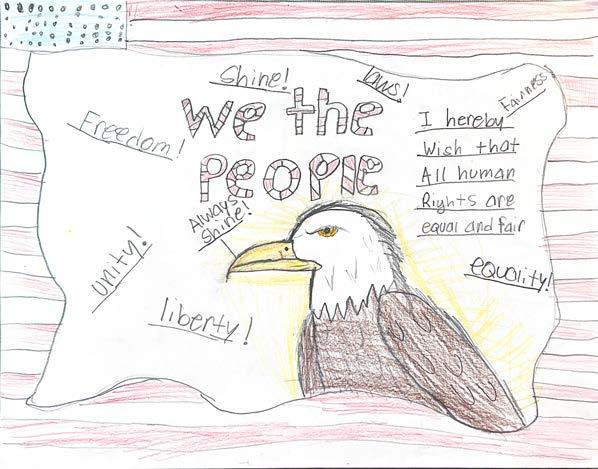
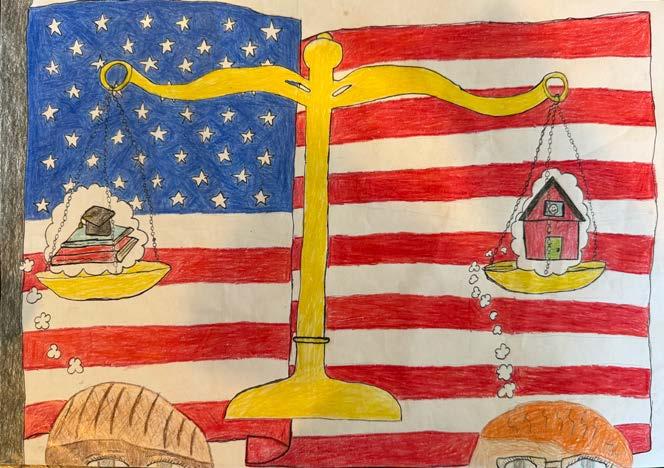
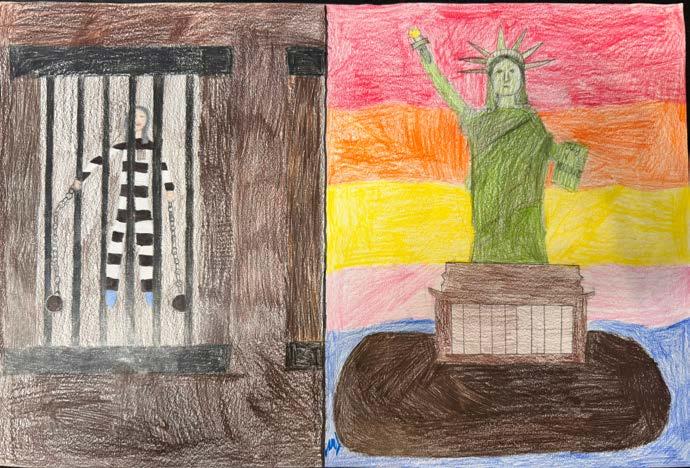
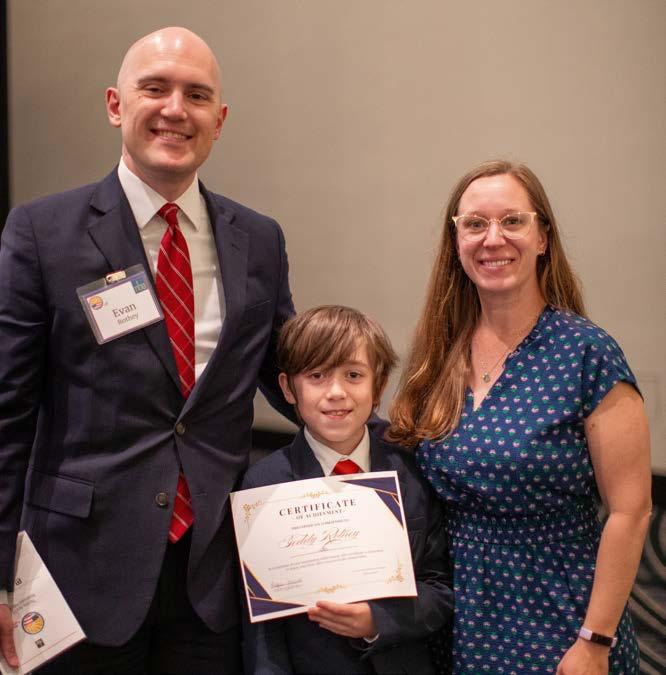
Every year, in celebration of Law Day, the NBA’s Young Lawyers Division hosts an Art & Essay Contest. Students in Davidson County are invited to reflect on the year’s Law Day theme and creatively explore and submit their perspectives on what the Law Day theme means to them through art and/or an essay. This year’s theme, “The Rule of Law and the American Dream,” prompted participants to reflect on how the rule of law ensures that no one person is above the law and that the rights of people to pursue their dreams and live as freely as possible.
K-3rd Grade Division
1st Place
2nd Place
4th-8th Grade Division
9th-12th Grade Division
Samir Ramos Cruz, Mt. View Elementary School
Elliott Terry, University School of Nashville
3rd Place
Brigitte Nicaragua, Mt. View Elementary School
1st Place
Teddy Rothey, Stanford Montessori Elementary School
3rd Place
Lucy Tillman, University School of Nashville
2nd Place
Dylan Perez, Mt. View Elementary School
1st Place
Shawn Walsh, Martin Luther King Jr High School
Continued Legal Education (CLE)
The NBA is your source for cutting edge, quality continuing education. We provide more than 600 hours of live and distance learning programming while offering our members discounted rates. For a complete calendar, full seminar agendas, and registration, visit NashvilleBar.org/CLE
June 24 | Live Seminar
Dueling Codes: Conflict Resolution Then and Now
OVERVIEW
Don't throw away your shot to join us for a CLE inspired by Hamilton. Myers Brown and Sherie Edwards will dive into the History & Legality of Dueling in Tennessee, then, we will hear from Gail Ashworth on Conflict Resolution Today. Following the CLE, attendees will have the opportunity to attend the performance of Hamilton at Tennessee Performing Arts Center (TPAC) for a compelling theatrical portrayal of the individuals and ideas that shaped the nation.
/ Reception / TPAC Hamilton Ticket.............$190.00 TPAC Hamilton Ticket Only................................$165.00
August 24 | Virtual Seminar
Dun-Dun: Investigating Elder and Disabled Adult Abuse and Prosecuting Offenders
Presented by the Estate Planning & Probate Practice Section
OVERVIEW
Join Assistant District Attorney Mary Griffin as she walks us through the process of an abuse allegation from reporting, investigating, and prosecuting these cases. This seminar will also address tools and resources probate attorneys may find helpful in assisting clients with these issues.
PRESENTER
Mary Griffin, 20th Judicial District Assistant District Attorney General
..12:00pm - 1:00pm
Continued Legal Education (CLE)
September 10 | Live Seminar
Diversity Summit 2026
The Next Chapter: Diversity, Equity, and Inclusion in a Changing Legal Landscape
Presented by the Diversity Committee
OVERVIEW
The biannual Diversity Summit is a full-day conference focusing on the importance of moving beyond conceptual ideas in diversity, equity, and inclusion and into creating actionable plans to address the disparities facing the legal profession and our society.
This will be a one-day conference with CLE and Lunch included. A keynote speaker and interactive small group workshops will give attendees the tools to become champions and advocates of diversity, equity, and inclusion.
For a full agenda and list of speakers, visit NashvilleBar.org/DiversitySummit.
- 5:00pm
Premier Members
The NBA Premier Membership is a special category that recognizes our members who desire to demonstrate the utmost commitment and support to our programs and services. Contact NBAFrontDesk@nashvillebar.org for more information on how to become a Premier Member.
David Anthony
Gail Ashworth
Bahar Azhdari
Andre Bahou
Laura Baker
Daniel Berexa
Michael Berman
Joe Binkley
Charles Bone
Dewey Branstetter
Joshua Burgener
Kenneth Byrd
Christopher Cardwell
Loy Carney
Mark Chalos
William Cheek
Daniel Clayton
Todd Cole
Christopher Coleman
Erin Coleman
Beau Creson
John Day
Joy Day
Jacqueline Dixon
Sherie Edwards
Elizabeth Foy
Keith Frazier
Barry Gammons
David Garrison
Andy Goldstein
John Griffin
Thomas Hager
Hon. James Haltom
Amy Hampton
Michelle Handelsman
William Harbison
Jay Harbison
Aubrey Harwell
Trey Harwell
William Haynes
Lisa Helton
Ellen Hendrickson
Zachary Henson
Lela Hollabaugh
Cherrelle Hooper
Paul Housch
Joseph Hubbard
R. Jan Jennings
Jordan Keller
Jenny Kiesewetter
Lauren Kilgore
John Kitch
William Koch
Irwin Kuhn
Edward Lanquist
Thomas Lawless
William (Billy) Leslie
Wendy Longmire
Joy Longnecker
Kim Looney
John Manson
Randal Mashburn
Sam McAllester
Marcia McShane
Bob Mendes
Casey Miller
Margaret Moore
Patricia Moskal
Joshua Mullen
Phillip Newman
Paul Ney
David Parsons
Gregory Pease
Andrea Perry
Benjamin Perry
Bart Pickett
Tracy Powell
David Raybin
Ben Raybin
Nathan Ridley
Tabitha Robinson
Worrick Robinson
Christopher Sabis
Marie Scott
Bruce Shanks
Joseph Shelton
Rebekah Shulman
Kimberly Silvus
Eric Smith
Laura Smith
Saul Solomon
Michael Stewart
Gerard Stranch
James Stranch
Chris Tardio
John Tarpley
Jim Todd
Aleta Trauger
Howard Vogel
Michael Wall
Leigh Walton
Elizabeth Washko
Tara Waters
Jim Weatherly
Aaron Webb
Carolyn Wenzel
Memorie White
Thomas White
Thomas Wiseman
Thomas Wiseman
Talley Wood
Tyler Yarbro
Edward Yarbrough
Bill Young
Stephen Young
Remon Youssef
Gulam Zade
Stephen Zralek
Continued Legal Education (CLE)
The NBA is your source for cutting edge, quality continuing education. We provide more than 600 hours of live and distance learning programming while offering our members discounted rates. For a complete calendar, full seminar agendas, and registration, visit NashvilleBar.org/CLE
November 18 | Live Seminar
Cybersecurity & Generative AI Ethics: An Interactive Survey to Test Your Risk Awareness
Presented by Attorneys Insurance Mutual of the South (AIM) and the NBA Young Lawyers Division
OVERVIEW
Cyber risk has emerged as the top global business concern for 2026, followed by AI risks in second place. Lawyers are especially vulnerable because so much PII and confidential data are kept. Chances are good that a lawyer you know has been scammed or maybe you’ve heard about a firm being sanctioned for citing AI-generated fake cases. Daily legal practice now includes the operational risk of cybercrime. Small firms are hit hard because one incident can stop work for the entire firm. Join us for this interactive survey to test your risk awareness.
PRESENTER
Sharon D. Stuart, Attorneys Insurance Mutual of the South, Inc.
Get the NBA All-Access CLE Pass
The NBA is offering exciting member benefits, including the new All-Access CLE Pass.
For $199, members may register for an unlimited number of any NBAproduced* seminars, both online and in-person throughout the membership year (November 1, 2025 through October 31, 2026**).
The All-Access CLE Pass is exclusive to NBA members only and available to purchase when renewing. For details and more information regarding the All-Access CLE Pass, contact our CLE Department at NBA_CLE@NashvilleBar.org.
*Some exclusions for All-Access CLE Pass usage apply for special programming including but not limited to CLE Institutes, Master Series speakers, travel-related CLEs, some YLD seminars, and other seminars in which we partner with outside entities.
**The All-Access CLE Pass expires annually on October 31 and may not be used to register for seminars beyond that date.
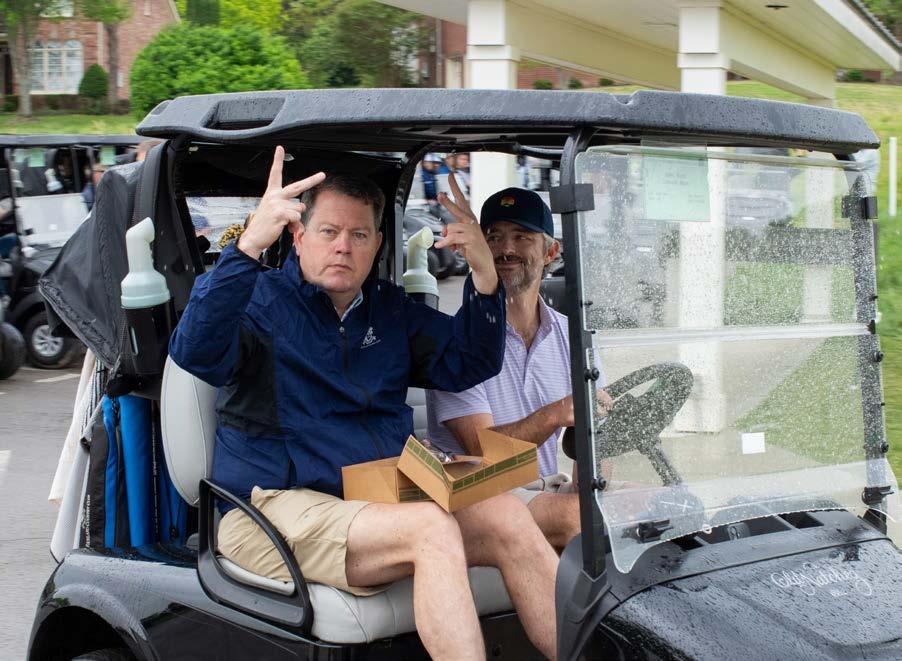
NBA Golf Tournament | April 13, 2026
2026 Law Day | April 23, 2026
Hearsay | Honors & Awards, On the Move, Firm News
Honors & Awards
Bradley associate Taylor C. Davis has been selected as a recipient of the University of Mississippi School of Law’s inaugural Leading Edge Alumni Award, which recognizes high-achieving alumni who have graduated within the last five years. Davis is one of five honorees who were recognized on March 28 at the law school’s annual Alumni Hall of Fame Dinner and Induction Ceremony, held in conjunction with Law Alumni Weekend. A member of Bradley’s Bankruptcy & Creditors’ Rights and Litigation practice groups, Davis provides legal counsel in complex and high-stakes matters.
On the Move
WelbornMalone PLC announced that Terrence McKelvey and Savannah Darnall have joined the firm. Terrence McKelvey, a native of Long Island, New York, earned his undergraduate degree from Washington & Lee University and his J.D. from Vanderbilt University Law School. He has practiced in Nashville since 2018, including with Butler Snow (2018-2021) and K&L Gates (2021-2026). Before moving to Nashville, McKelvey practiced with McGuireWoods in Charlotte, North Carolina (2014-2017). Savannah Darnall, originally from Springfield, Tennessee, earned her undergraduate degree from Belmont University and her J.D. from the
University of Tennessee College of Law. She has practiced in Nashville for six years, including with Butler Snow (2020-2021) and K&L Gates (2021-2026).
Spencer Fane LLP is pleased to welcome Grace Benitone Burnett to the firm’s Nashville, Tennessee, office as an associate in the Litigation and Dispute Resolution Practice Group. Benitone Burnett represents businesses and insurance companies in a wide variety of litigation matters with a focus on insurance defense and torts. Well versed in high-exposure and complex casework, she helps develop comprehensive strategies that preserve clients’ core financial and operational objectives and public images. She serves as the 2026 Tennessee Bar Association (TBA) and American Bar Association liaison for the Nashville Bar Association (NBA) Young Lawyers Division (YLD) Board, is the District 8 Representative for the TBA’s YLD Board, and will serve as the 2026 Summer Meeting Chair and Bench / Bar Committee member for the Tennessee Defense Lawyers Association (TDLA), in addition to other notable involvements. After completing her bachelor’s degree at the University of Tennessee at Chattanooga, Benitone Burnett earned her Juris Doctor from Belmont University College of Law. Prior to graduating law school, she completed the TBA’s Diversity Leadership Institute and was recently recognized as the “Star of the Quarter” within its YLD. This is in addition to being honored with the NBA YLD
President’s Award and the TDLA’s Rising Star Award in 2025.
Spencer Fane LLP is pleased to welcome Alicia Daniels-Hill to the firm’s Nashville, Tennessee, office as an associate in the Litigation and Dispute Resolution Practice Group. Supported by a background in the public sector, Daniels-Hill ensures her clients’ compliance with all state and federal laws and regulations while meticulously analyzing potential points of leverage. A former prosecutor, she employs her diverse skill set to navigate a wide variety of litigation matters, working from intake through trial or alternative dispute resolution to resolve complex and contentious disputes. Daniels-Hill most recently worked in the Tennessee Attorney General’s Office as a senior assistant attorney general, where she primarily conducted investigations into non-compliance with consumer protection laws in marketing, sales, finance, and insurance.
A little over five years after taking the job, Wallace "Wally" Dietz has announced that he will retire as Metro Legal director on July 16, 2026. Mayor Freddie O’Connell has tapped Tyler Yarbro as Dietz’s successor. Yarbro is currently the managing partner of Dodson Parker Behm & Capparella and the board chair of the Tennessee Freedom Circle, a reproductive rights advocacy organization.
Bradley continues to expand its offerings with the launch of the Medical Office Buildings (MOB) team, designed to meet the specific needs of clients in the dynamic and growing medical office real estate market. The team is led by Nashville real estate partners Robert E. Leonard and Elizabeth C. Sauer. Bradley’s MOB team is composed of real estate and healthcare attorneys who understand the unique complexities of the healthcare real estate sector and take a strategic approach to help clients navigate regulatory requirements, zoning laws, and healthcare-specific compliance considerations. The team has experience with both oncampus and off-campus facilities and represents for-profit health systems, private funds, and real estate investment funds in connection with their medical office portfolios, as well as tenants, including physician practices, surgery centers, and urgent care providers.
Baker Donelson has elected sixteen new shareholders across the Firm, including Charles W. "Chuck" Goldberg Jr. and Ryan P. Loofbourrow of the Nashville, Tennessee office. Goldberg represents individual and business clients in the areas of federal and state taxation, estate planning, business succession planning, business transactions, tax controversy, and business law,
including corporations, partnerships, and limited liability companies. Loofbourrow represents clients in state and federal courts across the country, including Alabama, Illinois, New York, Pennsylvania, and Tennessee, in matters such as class actions and multidistrict litigation. He has conducted trials, prevailed on dispositive motions, and negotiated favorable settlements at all levels. To better serve his clients, Ryan actively explores the responsible use of artificial intelligence (AI) to enhance legal strategies.
Bass, Berry & Sims is pleased to announce the addition of new attorneys as part of the firm’s strategic growth plan. One of the new attorney joining the firm is Stefan R. Kostas , who counsels clients on corporate issues, including mergers and acquisitions and other strategic transactions. In addition, he represents private equity firms and portfolio companies in various transactions. Before joining Bass, Berry & Sims, Kostas was an associate at Baker, Donelson, Bearman, Caldwell & Berkowitz P.C. He earned a law degree from the University of Tennessee College of Law (2022) and dual undergraduate degrees from the University of Florida (2019).
Rimon Law, a full-service global law firm, added 10 attorneys in the first quarter of 2026, expanding into new geographies and strengthening key practice areas as the firm continues a period of sustained growth. The quarter included the opening of Rimon’s new Nashville office, the firm’s first in Tennessee, in March 2026. n
Boost Your Practice Visibility!
Expand your practice’s visibility and help potential clients find the legal services they need by featuring your practice on the NBA’s Public Directory –– our most-visited webpage, drawing more than 335,000 public views in 2025.
List your practice area(s) and contact information for just per practice area
Enroll online now through August 1, 2026 at this special rate with your listing(s) appearing through December 31, 2026! (Regular rate: $35 per practice area)
Visit NashvilleBar.org/DirectorySale today!
Thank You to All of Our Law Day Sponsors!
Diamond Sponsor
Platinum Sponsor
Gold Sponsor
Silver Sponsors
Bronze Sponsors
Thank you for supporting your local bar association!
The Nashville Bar Association 100% Club is a special category of membership that demonstrates a commitment to the legal profession and our community from legal organizations with more than three attorneys that have 100% of their Nashville attorneys as members of the NBA. To become a part of the NBA's 100% Club, contact NBAFrontDesk@NashvilleBar.org and support your local bar association today!