Keeping Internal Investigations Internal FEATURE ALSO
DEPARTMENTS
From the President
Sherie Edwards
Hear Ye, Hear Ye
2026 Law Day
Spring Memorial Service
2026 Pride Parde
Have an Idea for a CLE?
of Events
Jin Yoshikawa
COLUMNS
Background Check
Bart Pickett
Gadget
Bill Ramsey & Phillip Hampton
Capitol Notes
Peggy Sue, the Beagle Hound
From The President
I am humbled and honored to have the opportunity to serve as your 2026 NBA President. This year promises to be an exciting year with new programs, committees and networking opportunities.
Last year, the Strategic Planning Committee developed a new strategic plan, approved by the Board, to guide us through the next five years. Our new Mission, Vision and Value statements were developed during this process. Our Mission is advancing the legal profession and promoting justice by connecting, serving and educating our members and the public. Our Vision is to be a respected and inclusive bar at the center of a thriving legal community—promoting professionalism, service and justice in Nashville and beyond. Our Values, which define our guiding principles, are Justice, Professionalism, Service, Excellence and Inclusion. The plan has five priorities: Strengthen Member Connection, Belonging, and Opportunity; Modernize CLE and Member Education; Advance Justice and Enhance Public Impact; Foster a Culture of Civility, Inclusion, and Professional Excellence; and Ensure Organizational Sustainability and Strategic Focus. The Plan is posted to our website (NashvilleBar.org/StrategicPlanSummary) and I hope you will take the time to review it. This Plan doesn’t just belong to the Board, it belongs to all of us. If you read a priority that sparks an idea, please let me know. We value your feedback as we move forward.
One of the recurrent themes in the member survey was that our CLE offerings were not meeting needs and, honestly, may have become a bit stale. That feedback led to the priority of modernizing CLE and member education. To that end, we have some exciting new programs in store for 2026. The ADR committee presented a Mediation CLE program on March 24. As those of you who are Rule 31 mediators know, it is difficult to find CME programs, and this was developed to meet that need. This lively, interactive program provided 3 hours of CME credit and enabled attendees to complete their CME requirement before the deadline. The CLE team has also planned two theatre-based CLE’s for the first half of the year: Suffs was held on March 5 which included a CLE on the history of the suffragettes and the 19th Amendment in Nashville. We are also planning to see Hamilton in June (which will fit in with our programs focused on our country’s 250th birthday).
If you are a more seasoned member there is a new committee designed with you in mind! The Grand Older Lawyers Division, known as GOLD, is geared towards our members who are 50 years and older, and will provide social and professional opportunities, a mentorship component, and a service project. Other new committees include the Public Citizen committee which will kick off with a CLE on May 1, and the Pro Bono committee.
My focus this year will be on attorney wellness, encouraging engagement in pro bono work and community involvement. CLE and networking events will provide opportunities for professional growth and building community. Just as with our Strategic Plan, everything we plan and do will be guided by our Mission, inspired by our Vision, and grounded in our Values.
Your Board is committed to making sure you believe that your membership in the NBA is a worthwhile return on your investment of time and money. I hope to connect with you this year at our CLEs and networking events. Until next time, take care.
Sherie Edwards, Publisher
William T. Ramsey, Editor-in-Chief
Summer Geyer, Managing Editor
Lauren Poole, Managing Editor
Adrienne Bennett Cluff, Layout/Design/ Production
EDITORIAL COMMITTEE
Deji Adeniyi
Ellison Berryhill
Ramona DeSalvo
Brittany Ford
Seth Granda
Candi Henry
Timothy Ishii
J. Bart Pickett
Bryan Pieper
Worrick Robinson
Katlin Ryan
Kristin Thomas
Elizabeth Tipping
Jonathan Wardle
NASHVILLE BAR JOURNAL (ISSN1548-7113) (USPS 021-962) is published quarterly by the Nashville Bar Association, 150 4th Ave N, Ste 1350, Nashville, TN 37219. Periodicals Postage Paid at Nashville TN.
POSTMASTER: Send address changes to Nashville Bar Journal, 150 4th Ave N, Ste 1350, Nashville, TN 37219-2419.
No part of this publication may be reprinted without written permission of the Nashville Bar Journal Editorial Committee. All articles, letters, and editorials contained in this publication represent the views of the authors and do not necessarily reflect the opinions of the Nashville Bar Association. For more information, visit NashvilleBar.org/ NashvilleBarJournal
The Nashville Bar Journal welcomes discourse. You may submit counterpoint editorials to Adrienne.BennettCluff@ nashvillebar.org to be considered by the editorial committee for publication in a future print or online content.
NASHVILLE BAR ASSOCIATION 150 4th Ave N, Ste 1350 Nashville, TN 37219 615-242-9272 | NashvilleBar.org
The Nashville Bar Association, established in 1831, is a professional organization serving the legal community of Nashville, Tennessee. Our mission is to improve the practice of law through education, service, and fellowship.
The NBA — with around 2,400 members — is the largest metropolitan bar association in Tennessee.
Traci Hollandsworth, Director of Programs & Events
Annie Holmes, LRIS, Member Database, & Operations Coordinator
Peyton Hosale, CLE Coordinator
Corinna Saporito, Development Coordinator
HAVE AN IDEA FOR AN ARTICLE?
We want to hear about the topics and issues you think should be covered in the journal. Send your ideas to Adrienne.BennettCluff@ nashvillebar.org.
Hear Ye, Hear Ye
ANNUAL MEMBER PICNIC (IT’S FREE)
Mark your calendars for the 2026 Annual FREE Member Picnic on Thursday, October 1, from 5:30-8:30pm at the Sounds Stadium. We look forward to seeing you there! n
SPRING MEMORIAL SERVICE
Our Spring Memorial Service will be on Thursday, May 21, 2026, at the Downtown Presbyterian Church. The service will begin at 11:00am. We hope you can join us in remembering those who have gone before us. Memorial resolutions are presented in honor of those in the Nashville legal community who have recently passed away. The memorial resolutions are prepared and read on the minutes of the Chancery Court at the service by friends and colleagues of the bench and bar and are added to the NBA's collection of more than 100 years of resolutions. Family members and friends of the deceased are invited to attend. Visit NashvilleBar.org/Memorial for more information. n
2026 PRIDE PARADE
Celebrate Pride in Nashville with the NBA Diversity Committee & the Stonewall Bar Association of Tennessee as we walk in the Pride Parade on Saturday, June 27. RSVP to reserve your spot in line at NashvilleBar.org/PrideParade. The group will meet and walk to the line-up position together. Our lineup number will be published as soon as we receive it. n
HAVE AN IDEA FOR A CLE?
We are always looking for creative and relevant CLE seminar ideas! If you have an idea or would like to see a specific topic in the coming months, please visit NashvilleBar.org/CLE to submit the idea. We appreciate you! n
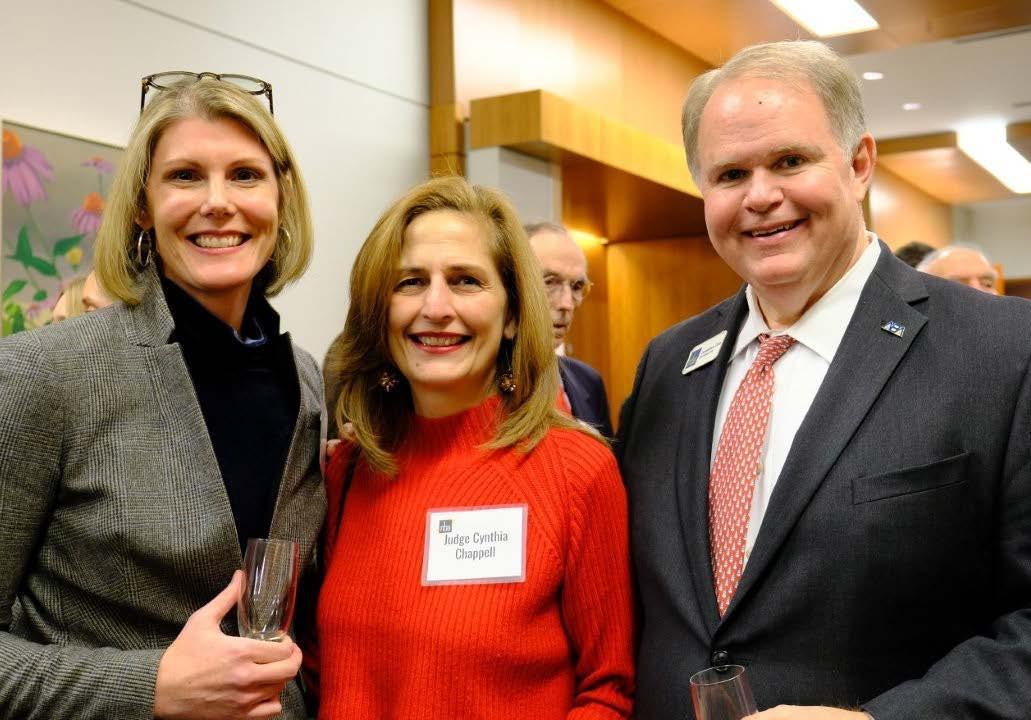
Congratulations to Judge Cynthia Chappell as our Member Appreciation Month's Nashville Bar Journal Photo Caption Contest winner! "Now I know I'm on a deadline and I'm low as I can be in my coat of colored stickies that my clients made for me. Credit to Dolly Parton"
2025 MEMBER APPRECIATION PHOTO CAPTION CONTEST WINNER
Calendar of Events
Welcome to the NBA
Congratulations on your membership – thank you for joining the NBA! We look forward to serving you this year and appreciate your support. Visit NashvilleBar.org or contact NBAFrontDesk@NashvilleBar.org with questions or to learn more.
New Members (November 1 - February 28)
Sean Aiello
Whitley Alexander
Jake Arning
Danielle Aucoin
Olivia Augustini
Dean Balaes
Carly Barnes
Preston Bell
Madison Blair
Madison Brown
Jennifer Burch
Kennedy Caldwell
Logan Caldwell
Laura Cantwell
Brandon Carmichael
Mia Cate
Scott Crain
Alex Daichman
Bryce Daniels
Taylor Davis
Kate DeWitt
Dennis Disney
Win Duncan
Derek Edwards
Tracy Ekwuazi
Kendall Elkins
Jeff Engle
Dave Engstrom
Manuela Espinosa
Louise Eubank
Charlie Evans
Anna Kate Ferrell
Matthew Fisher
Ellie Frye
Jaime Garcia
Bethany Glandorf
Naudia Gray
Jillian Greenberg
Michelle Hacker
Zoey Hamm
Will Hargraves
Jackson Hasty
John Haubenreich
Russ Heldman
Ashley Hernandez
Travenia Holden
Nick Holton
Joe Imburgia
Sarah Jabbari
Caia Lael Karshner
Nate Kelly
Kathryn Kiameh
Brandyn Kirby
Kristine Knowles
Mary LaGrone
Bob Lenard
Grant McClernon
Aleece McKnight
Catherine Moore
Annie Morris
Hannah Murray
Leighann Ness
Ed Norfleet
Nic Norton
Ninivet Ossa
Alex Painter
Caitlyn Pallas
Shelby Patrick
Samuel Patterson
Kathy Pennington
Maggie Pettit
Michael Ponce
Dalton Rawls
John Reynolds
Ryan Rich
Colin Rushing
Ben Schrader
Ashley Singleton
Mariel Soehner
Joanne Sowell
Peter Suglia
Earl Tally
Kelly Telfeyan
Reagan Thornley
Stephen Thurman
Mariah Umland
Delisha Valacheril
Nic Vandeventer
Luke Vaughn
Mary Vervaeke
Charlie Visconti
Camille Vulcano
Paul Walwyn
Stacey Weiss
Chris Yates
Kevin M. York
Haodong Zhong
AI’s Coming Flood: Guarding Professional Judgment in the Post-AI Age
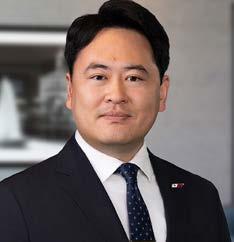
Jin Yoshikawa is practices product liability, healthcare liability, and technology law with Butler Snow. He serves as a member of his firm’s AI committee and the Defense Research Institute’s Center for Law and Policy AI Task Force Vice Chair. He frequently speaks and writes on the topic of AI. He has a Bachelor of Science in computer science with a specialization in artificial intelligence from Columbia University School of Engineering and Applied Sciences. He is also co-chair of the NBA Diversity Committee and Southeast Region Leader for the USJapan Council.
The Early AI Age is already behind us. In those first years—2022 through 2025—generative AI still felt like a toy for early adopters. But now, what began as a novelty has become an arsenal of powerful tools for drafting legal papers and analyses grounded in real law and facts.
I call the current stage the AI Upheaval: a chaotic transition period when legal practitioners are frantically trying to figure out the “rules of engagement” in the Post-AI Age, when AI will have become ubiquitous. Some will learn to live with AI, and others will not. When the dust settles, what will the legal landscape look like? What do we want it to look like?
Till now, most of the conversation has focused on one highly visible problem: hallucinated citations. That is still a real risk, but hallucinated citations are, in some ways, the easy problem. They are obvious and largely addressable by better tools and basic diligence. Local and national bar associations have also been reminding practitioners that existing rules, such as federal and state Rules of Professional Conduct and Rule 11 of the Rules of Civil Procedure, require lawyers to investigate the factual
and legal bases of filings and to certify that papers are not frivolous or filed for improper purposes.1, 2 AI does not change that, and so far our state has wisely chosen to let existing rules do most of the work rather than rushing to rewrite them.
“Used wisely, AI could be an extraordinary force for good…. Used uncritically, it can overwhelm counsel on both sides, strain judges and clerks, and leave humans behind. The bar needs to start talking now about how our profession will respond to the coming flood.”
The harder problem—and the one likely to define 2026 and beyond—is what happens when lawyers have adopted sophisticated generative AI tools and good processes for verifying outputs. While the stories of AI
(continued on page 10)
Feature Article (cont.)
misuses grab the headlines, there are significantly more examples of proficient uses of AI occurring under the radar. The long-term systemic risk of this kind of AI use is lawyers submitting superficially “meritorious” papers, too much and too fast.
Used wisely, AI could be an extraordinary force for good. It can elevate the quality of legal services, empower solo and small firm practitioners, reduce cost and latency, and potentially improve access to justice. Used uncritically, it can overwhelm counsel on both sides, strain judges and clerks, and leave humans behind. The bar needs to start talking now about how our profession will respond to the coming flood.
Where We Are Now: AI as a Drafting Partner
Tennessee practitioners are already taking advantage of AI-powered tools. Many lawyers treat AI like a junior associate or partner: the human explores some theories and brainstorms with the AI; the machine finds information from legal sources and document productions; it creates a draft of a document or parts of a document; then the human edits, verifies facts and law, and exercises final judgment.
As lawyers’ confidence in generative AI grows, the temptation and economic pressure3 will be obvious: if you can generate ten demand letters for the time and price of one, why not send all ten? If you can ask for everything in discovery with no additional drafting time, why not ask? If a polished motion costs less to generate, why not pitch it to the client?
Hypothetical One: The AI-Accelerated Litigator
Consider a tech-savvy plaintiff’s lawyer using AI to draft a demand letter. With a few prompts, AI will happily generate a dozen legal theories, factual angles, and rhetorical flourishes that are at least facially colorable. In half an hour, she has a forty-page, highly detailed document, bristling with accusations, issues, and requests. She verifies that all citations are real and that the basic law is correct. She has apparently complied with the applicable ethical and procedural rules.
When defense counsel responds, she quickly uses AI to draft a barrage of more papers: another letter, a complaint, discovery demands, and subpoenas—all
technically grounded in real law, all “non-frivolous” in the narrow sense, but collectively oppressive.
The defense lawyer—who may be at a smaller firm with limited staff—is saddled with the burden of reading, analyzing, and responding to each point. One lawyer’s choice to spray AI-assisted paper across the battlefield imposes overwhelming cost on the other side.
Every citation can be correct, every argument technically non-frivolous, and yet the overall practice can be harassing and contrary to the spirit of our procedural rules. This problem is more challenging to identify and proscribe.
Hypothetical Two: When Both Sides Have Jets
Now imagine the defense lawyer is also AI-fluent. She feeds the forty-page demand letter into an AI system and instructs it to draft a detailed response, counter-demand, and motion for a protective order—all researched and citechecked. With another prompt, the system generates a motion to dismiss, a motion for sanctions, and proposed orders. Plaintiff’s counsel hits back with AI-crafted replies. Within weeks, the case has produced hundreds of pages of filings.
From the court’s perspective, the docket looks like a fully briefed, high-stakes dispute. In reality, much of the paper was drafted in a handful of hours by competing AI tools, with human lawyers acting primarily as prompters, reviewers, and signers. Judges and clerks must still read it all. The marginal cost of filing one more motion approaches zero for the parties, but the cost to the system quickly balloons.
We are already seeing this dynamic elsewhere: synthetic content is flooding social media feeds. Algorithmic trading systems place orders in volumes no human trader could match, occasionally leading to flash
crashes.4 There is reason to worry that the law will follow similar dynamics. Some firms are openly talking about employing generative AI as a weapon against opponents.5, 6 Our system of justice cannot afford its own “flash crash.”
We’ve Been Here Before
The legal profession has weathered many technology waves. Computers, word processors, and email made it possible for lawyers to draft documents and communicate more frequently and for longer hours.7
Then came online legal research. Tools like Lexis and Westlaw transformed the way lawyers find and use authority. Instead of thumbing through paper digests and reporters, lawyers could run full-text searches across vast databases and copy a long string cite with a few clicks. The hard part of research evolved from locating cases to selecting and synthesizing them.
eDiscovery is another close analogy to the AI moment. The explosion of electronically stored information meant that parties could, in theory, demand millions of pages of emails and documents. Without new rules, discovery would have become intolerably expensive and weaponized. The response was to elevate proportionality in the rules of civil procedure and to insist that discovery be tailored to the needs and stakes of the case.
Prior waves of legal technology forced us to confront the same basic question AI poses today: how do we ensure a powerful new tool is used to improve the justice system, not abuse it?
Circuit Breakers for the Courts?
The financial industry eventually realized that algorithmic trading
could trigger cascading failures. The solution was not to ban technology, but to implement circuit breakers— mechanisms that pause trading when volatility hits certain thresholds, allowing humans to reassess before the system runs off a cliff.
We may need to start thinking about the judicial system in similar terms. The judicial system, like the financial system, is “too important to fail.” If AI makes it trivial to file one more brief, serve one more set of interrogatories, or add one more theory, we may need procedural “circuit breakers” that slow things down when excessive volume and complexity threaten to swamp the system.
Some possibilities, offered here as conversation starters, might include:
• Stronger, more explicit emphasis on proportionality in discovery and motion practice.
• Enhanced judicial authority and willingness to limit repetitive or marginally useful filings, even when they are technically nonfrivolous.
• Ethical guidance that heightens attorneys’ roles as officers of the court, exercising human judgment and discipline to uphold public confidence in the fair administration of justice.
• Limitations on the use of AI based on years of experience or specialized training and CLEs.
Some of these suggestions may sound radical. But at least one company, Nippon Life, went even further, suing OpenAI for unauthorized practice of law because of a pro se plaintiff’s use of ChatGPT.8 The point is that we need to start asking the right questions and discussing possible solutions before we encounter the AI equivalent of a legal flash crash.
Beyond Checking Citations: What Is the Lawyer’s Job?
So far, much of our ethics discourse around AI has sounded like: “You can use it, but make sure the cases are real and the facts are accurate.” That is a necessary starting point, but it is nowhere near sufficient.
Even when every citation is real and every fact is supported, a lawyer remains responsible for deciding:
• Whether this document should be filed at all, or whether good lawyering means holding it back.
• Whether sending this motion or letter at this moment moves the case towards resolution or simply escalates conflict and cost.
• Whether we have done a real gut-check: “If I had to draft this by hand, would I still think it’s worth doing?”
These decisions cannot be delegated to a language model, no matter how sophisticated. Linguistically correct, electronic analyses are not enough. Our cases are, at their foundation, human versus human disputes, not mere language games. Law practice needs human input, rooted in human intuition and lived experience. The feeling in our gut, honed by real successes and failures, is what tells us to stop filing motions and start talking settlement or to pursue a narrow, credible theory instead of twelve scattershot ones.
Conclusion: Welcoming the Tool, Guarding the System
The story of technology in the legal profession is, on balance, a positive one. Computers, email, online research, and eDiscovery have all helped us serve clients and society more effectively. Generative AI has the potential to do the same, perhaps (continued on page 12)
Feature Article (cont.)
on an even larger scale. Used well, it can elevate the quality of our work and expand access to legal services in ways we should welcome.
But lawyers will be tempted to use the low marginal cost of AI-generated filings as leverage rather than as a tool for clarity. Further, if AI-generated work is superficially better than many humans’ work, how can we ensure adequate human input or oversight? If we are not careful, the system could become a runaway train.
The short-term problem of fake cases will likely fade as tools improve and lawyers acquire the muscle memory to verify outputs or avoid risky prompts. The deeper, longerterm challenge will be managing AI’s speed and volume in a way that preserves the stability, reliability, and legitimacy of our courts. During the AI Upheaval, we attorneys must develop rules that elevate human judgment, restraint, and a sense of responsibility and ownership. Those qualities will matter more than ever. n
Footnotes
1 Ethical Considerations for Lawyers Using AI, NBA , https://www.nashvillebar.org/?pg=events& evAction=showDetail&eid=301769
3 Richard Susskind, Tomorrow’s Lawyers 3d Ed. at 12 (2023).
4 Kevin Frazier, Selling Spirals: Avoiding an AI Flash Crash, Lawfare (Nov. 8, 2024), https://www.lawfaremedia.org/ article/selling-spirals--avoiding-an-ai-flash-crash
5 Christine Schiffner, National Law Journal (July 6, 2023), https://www.law.com/nationallawjournal/2023/07/06/ plaintiffs-firms-cant-ignore-efficiency-prospects-ofgenerative-ai/
6 Dana Leigh, Joshua Browder of DoNotPay Announces Plans to Expand Company in the UK (TechRound), https:// techround.co.uk/interviews/joshua-browder-of-do-notpay-announces-plans-to-expand-company-in-the-uk/
7 Richard Marcus, The Impact of Computers on the Legal Profession: Evolution or Revolution?, 102 Nw. U.L. Rev. 1827, 1834 (2008).
8 Nippon Life Ins. Co. of Am. v. OpenAI Foundation, 1:26-vb2448 (N.D. Ind.).
NBA On-Demand Seminars
Personalized Learning on Your Schedule
Did you know?
On-demand CLEs are just a click away through NashvilleBar.org/DistanceLearning!
Choose from the following relevant and focused topics.
Campaign Finance | Criminal Law
Diversity | Domestic Relations
Election Law | Employment Law
Estate Planning | Family Law Government
Guardian Ad Litem | Immigration Law
Probate | Real Estate | Trial Practice
Background Check | Shellie Handelsman
Bart Pickett serves as the State Trial Court Administrator for the Twentieth Judicial District where he oversees the operations of the 18 State Trial Courts. Prior to that, he practiced as a trial attorney for Liberty Mutual Insurance Company.
Shellie Handelsman’s voice, be it through singing or advocating in the courtroom, has led her to the successes in her life. She has mastered pivoting and finding her own path to success. Her grit and success can be partly attributed to her upbringing in Pittsburgh. Her parents instilled in their only child a hard work ethic. Handelsman exemplifies the strength and reliability of the steel she grew up around. Her father, a solo practitioner, and her mother, a licensed attorney who works as a CPA, met at Duquesne Law School. Handelsman attended an all-girls college prep school where she excelled musically. She loved singing in choir, glee club, and performing in musical theater. Her goal growing up was to be a singer.
After a high school summer at Berklee College of Music, Handelsman chose it for college where she majored in vocal performance. An internship in LA led to her falling in love with the city and thinking that was where she wanted to be, but a school trip to Nashville quickly changed that. She remembers spending that whole trip in songwriting sessions and not sleeping due to the excitement and musical collaborations. She called her parents and told them she was going to live in Nashville. Due to AP credits, Handelsman graduated from college in 2006 after just three years.
After moving to Nashville, Handelsman tried to break into the music business while supporting herself as a bartender around the city. She watched friends in the music business trying to scrape by financially, however, and knew she did not want to live that way. She had taken some courses at Belmont including auditing a business law class which she surprisingly enjoyed. Prior to that, she was dead set against being a lawyer. She took the LSAT and applied to law schools, getting into Belmont and two schools in Pittsburgh. Being the first year of Belmont’s law school, Handelsman was trepidatious due to the unknown but ultimately chose it after being offered a full ride. At Belmont, she focused on entertainment and music business law. She served on Law Review and the Board of Advocates.
Coming out of law school in 2014, Handelsman struggled to find the right fit for her. Most big firms were not willing to give a chance to the graduates of the new
school and the entertainment industry opportunities were not there. After a short stint as an unemployment appeals hearing officer, she went to work for a solo practitioner where she handled litigation related to title work and some probate and estates for a year. When that work slowed, Handelsman needed to find a new job. She learned of and accepted an opportunity at Shuttleworth PLLC in their Nashville office. There she gained experience in litigation through insurance defense, but the firm also allowed her to build out her own practice in entertainment and probate law.
After four years, Handelsman had developed her own book of business enough that she opened up her practice, Handelsman Law, in September of 2019. She had
(continued on page 14)
Background Check (cont.)
determined that she would be able to sustain herself for one year while trying to see if it would succeed. Luckily for her, she found more than enough work to keep her busy. Suddenly she began getting referrals from
other attorneys which coupled with her conservatorship appointments provided her with a steady income. Striking out on her own has been Handelsman’s best professional decision. Her practice is 80-90% estate, probate, and conservatorships with the remainder mostly being trademark and business work.
Throughout her career, Handelsman has found her involvement in bar associations to be instrumental in helping her grow personally and professionally. A past president of LAW, she currently serves on the NBA board and is the president of the LAW
Mark Your Calendars
Foundation board.
Handelsman lives in West Nashville with her golden retriever, Decker. In her free time, she enjoys travelling, trying new bars and restaurants, and staying physically active. She can also be found cheering on her Pittsburgh sports teams and the Preds. While she does not pursue singing anymore, if you’re lucky you can see her talent at an NBA karaoke night. n
Thursday, May 21
YLD Arts Immersion
The Bedford
Wednesday, May 27
API Heritage Month Mixer
Bass Berry & Sims
Saturday, June 13
Family Baseball Night
Sounds Stadium
Wednesday, June 24
NBA Diversity Committee & Stonewall Bar Association Pride Happy Hour
Saturday, June 27
Pride Parade
Downtown Nashville
Friday, August 14
28th Carbolic Smokeball
Nashville City Club
Wednesday, September 16
Headshots & Happy Hour
Bass Berry & Sims
Thursday, October 1
Member Picnic
Sounds Stadium
Saturday, October 3
YLD 23rd Race Judicata
Edwin Warner Park
Thursday, December 10
Annual Meeting & Banquet
The Conrad
Premier Members
The NBA Premier Membership is a special category that recognizes our members who desire to demonstrate the utmost commitment and support to our programs and services. Contact NBAFrontDesk@nashvillebar.org for more information on how to become a Premier Member.
David Anthony
Gail Ashworth
Bahar Azhdari
Laura Baker
Daniel Berexa
Michael Berman
Joe Binkley
Charles Bone
Dewey Branstetter
Joshua Burgener
Kenneth Byrd
Christopher Cardwell
Loy Carney
Mark Chalos
William Cheek
Daniel Clayton
Todd Cole
Christopher Coleman
Erin Coleman
Beau Creson
John Day
Joy Day
Jacqueline Dixon
Sherie Edwards
Elizabeth Foy
Keith Frazier
Barry Gammons
David Garrison
Andy Goldstein
John Griffin
Thomas Hager
Hon. James Haltom
Amy Hampton
Shellie Handelsman
William Harbison
Jay Harbison
Aubrey Harwell
Trey Harwell
William Haynes
Lisa Helton
Ellen Hendrickson
Zachary Henson
Lela Hollabaugh
Cherrelle Hooper
Paul Housch
Joseph Hubbard
R. Jan Jennings
Jordan Keller
Jenny Kiesewetter
Lauren Kilgore
John Kitch
William Koch
Irwin Kuhn
Edward Lanquist
Thomas Lawless
Billy Leslie
Wendy Longmire
Joy Longnecker
Kim Looney
John Manson
Randal Mashburn
Sam McAllester
Marcia McShane
Bob Mendes
Casey Miller
Margaret Moore
Patricia Moskal
Joshua Mullen
Phillip Newman
Paul Ney
David Parsons
Gregory Pease
Andrea Perry
Bart Pickett
Tracy Powell
David Raybin
Ben Raybin
Nathan Ridley
Tabitha Robinson
Worrick Robinson
Christopher Sabis
Marie Scott
Bruce Shanks
Joseph Shelton
Rebekah Shulman
Kimberly Silvus
Eric Smith
Laura Smith
Saul Solomon
Michael Stewart
Gerard Stranch
James Stranch
Chris Tardio
John Tarpley
Jim Todd
Aleta Trauger
Howard Vogel
Michael Wall
Leigh Walton
Elizabeth Washko
Tara Waters
Jim Weatherly
Carolyn Wenzel
Memorie White
Thomas White
Thomas Wiseman
Thomas Wiseman
Talley Wood
Tyler Yarbro
Edward Yarbrough
Bill Young
Stephen Young
Remon Youssef
Gulam Zade
Stephen Zralek
Volunteer for Dial-A-Lawyer
Thank you to our recent Dial-A-Lawyer Volunteers
Pooja Bery
Gina Crawley
Erin Coleman
Jaske Goff III
Paige Goodwin
Ellen Hendrickson
Chris Hugan
Shannon Kerr
Alex Koval
Aileen Rose
Emily Schiller
Chloe Sink
Travis Vest
Dial-A-Lawyer is held on the first Tuesday of each month from 6:00-8:00pm, and the public is invited to call in with basic legal questions. If you would like to volunteer and help the NBA support this program, please contact NBAFrontDesk@nashvillebar.org
Complimentary dinner and parking are provided.
Thank you to sponsors, Polsinelli and Scipio Technologies
Reserve Our Facilities
The NBA offers its conference rooms to be used for arbitrations, mediations, meetings, depositions, and other events for attorneys who need a convenient place to meet in downtown Nashville. We have a spacious Conference Center and a smaller Board Room –both of which have WiFi access, a computer, and phone – available for your use.
For more information, contact NBAFrontDesk@NashvilleBar.org or visit NashvilleBar.org/ReserveOurFacilities
Gadget of the Month | Mini PCs for the Desktop: Small but Mighty
I don’t know about you, but my office desk (at home and at work) has a habit of becoming messy and crowded with files, printed documents, coffee cups, water glasses and monitors. I try to stop it, but my desk just wants to be messy. There is a formal medical term for this condition –Crowded Desk Syndrome.
There is help for the Crowded Desk Syndrome – the Mini PC or a Small Form Factor (SFF Computer). No more bulky towers under my desk or on top of it. Enter the new era of small, powerful desktop computers. Most computers in this class are about 4 inches by 5 inches by 1.5 inches high. They take up very little space under your desk or on top of it. You can even mount them on the back of a monitor and turn your display into and “all in one” computer. And, they can
be very powerful with 1 TB hard drives (or more) and 32 GB of RAM (or more). Most have several ports, including two or more multi-use USB-C connections.
If you decide to buy one of these computers, make sure your minicomputer is not underpowered. A lawyer’s machine should meet these minimum "Professional Grade" specs:
Processor (CPU): Intel Core Ultra 5/7 or AMD Ryzen 7 (2025/2026 models). Look for chips with an integrated NPU (Neural Processing Unit) for AI-assisted document summarization and other AI applications.
• Memory (RAM): 16GB is the bare minimum; 32GB is recommended for most, especially those who keep 50+ Chrome tabs, Westlaw/ LexisNexis, and massive PDF bundles open simultaneously.
• Storage: 512GB to 1TB SSD. Speed is critical for searching through thousands of scanned discovery documents, so you need a solid state drive. SSDs are small, so most mini-computers use SSDs.
Connectivity: At least two HDMI or DisplayPorts (for dual monitors) and Thunderbolt 4, USB-C or USB4 for high-speed docking.
The Best Mini PCs
1. Apple Mac Mini (M4) - $599
This was the first Mini PC I ever saw. I know most firms are not using the Apple “ecosystem,” but I wanted to give credit where credit is due. This is a great machine and
it only costs $599. It fits in well with those who use iPhones and iPads. And, nowadays, most law firms are using Microsoft or Google office software and cloud-based tools for everything else, so, for most, this is a viable solution.
The M4 chip is remarkably efficient and powerful. The M4 chip’s performance is probably the best in the industry. It is almost completely silent when in use, and has an excellent resale value. On the downside, it is very expensive to upgrade if and when you need to do so.
Still, when looking for a minicomputer, do not count out the M4.
2. Geekom A9 Max $1399
Geekom was one of the first windows-based PC-makers, and it is one of the biggest sellers of Widows-based mini-pcs. From my perspective Geekom wanted to follow in the “success footsteps” of the Apple Mac Mini. Geekom is a very popular brand and had a large presence at the Consumer Electronic Show this year. The Geekom A9 Max is the “flagship” for this brand. It is very powerful and exceeds the Mac Mini in port selection.
This model has a very powerful AMD Ryzen AI 9 HX 370, which is specifically designed to handle AI tasks locally. If you use AI for various functions or analyses, the A9 Max processes those requests faster without relying solely on the cloud. It has 32GB RAM and 2 TB of storage. Its dual Ethernet ports are
(continued on page 18)
Gadget of the Month (cont.)
great for secure office networking. Most of its ports are on the front of the unit, so they are very accessible. It is expandable, if you need that, but opening the unit to do so can be a bit tricky.
3. ASUS NUC 15 Pro+ $1400 (some configurations cost more)
ASUS took over the NUC (Next Unit of Computing) brand from Intel. Asus has refined the format into an excellent business machine. I chose the NUC for my computer to use at my home office. Mine has 10 ports –four USB-A connections; one regular USB-C; two USB-C Thunderbolt connections, two HDMI outputs; and an Ethernet connection. It has Wi-Fi 7 and Bluetooth 5.4.
The NUC is very reliable. It is designed for 24/7 operation (I leave mine running most of the time). It has a three-year warranty, instead of the standard oneyear. The chassis is "tool-less," so you can swap a drive or upgrade RAM very easily.
I must also say that is very fast, but not as fast as the Apple M4 (none of these minis are). Still the NUC is probably the fastest of all the Windows mini-computers.
4. Lenovo IdeaCentre mini x (Snapdragon) $1100
If you are in a large firm that is looking to deploy several computers, you may want to consider the Mini x. It uses the Snapdragon X Plus (ARM-based) processor. It offers "Always-On" connectivity and instant-wake capabilities (sort of like a smartphone). It is 7.5 inches by 7.5 inches by 1.5, so it has a very low profile on your desk or under it.
It consumes very little power and is affordable enough for bulk deployment. The Mini x has and integrated NPU
so it can also run AI locally.
There is one issue you might consider, however, since it uses the ARM-based processor, some legacy legal software (older billing or case management systems) may require "emulation" to run on the ARM processor. That will affect its performance when using those legacy programs.
See the table below for the comparison of the various units.
Final Verdict
For the modern lawyer, the ASUS NUC 15 Pro+ is the safest and most professional bet for a Windows environment, offering the best balance of speed and enterprise support. However, if your practice is leaning heavily into AI-driven document review, the Geekom A9 Max provides the raw horsepower needed for the next decade of legal tech.
Whatever you choose, the transition to a Mini PC will likely leave you wondering why you ever tolerated a giant tower in your office to begin with. And it will help you avoid the dreaded “Crowded Desk Syndrome.”
See you later,
Bill n
Apple Mac Mini (M4)
Creative/Apple Firms
24GB (Integrated) Up to 3 Displays
Secure Enclave
Lenovo Mini x
11 (ARM) Large Scale / Budget
32GB Up to 3 Displays
Fingerprint / TPM
Thank You to Our 2026
Diversity Committee Sponsors
Golden Oldies
Adrienne. , and your name – along with the correct answer – will appear in the next issue.
Winter Golden Oldies
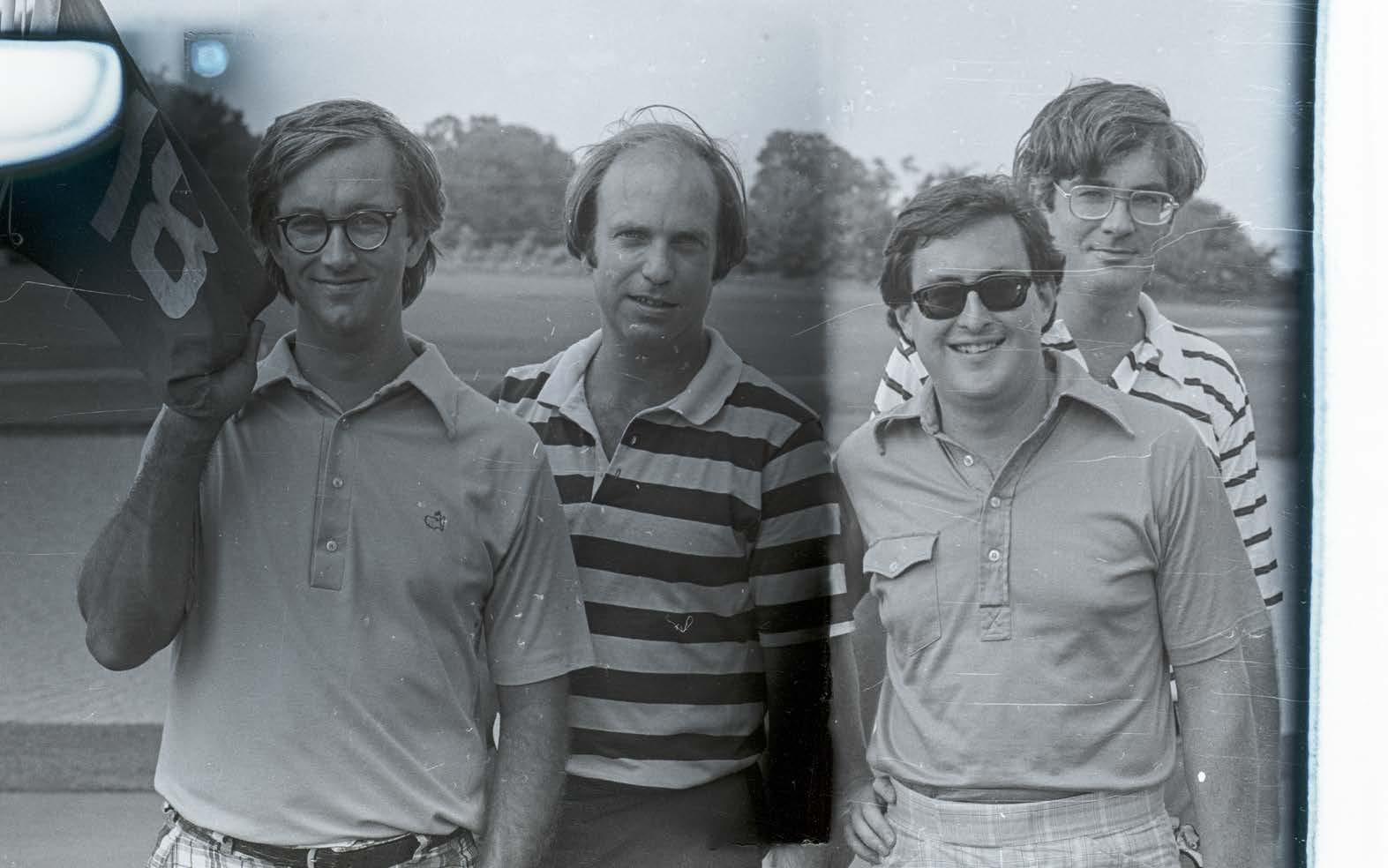
Congratulations to Judge Frank Clement, Court of Appeals of Tennessee for correctly identifying the individuals in last issue's photo! Individuals are listed from left to right: Will Cheek, (Sen. Douglas Henry,) Kathryn Barnett, and Jack Waddey. n
Capitol Notes
“Working hound dogs have the best sense of smell.”
The Ten Commandments are Trending. After making the Bible one of ten official state books in 2024, it was probably inevitable that the General Assembly would go on to choose their favorite verses. In 2026 with SB 303 by Mark Pody of Wilson County / HB 47 by Michael Hale of Smith County the first verses of Exodus, Chapter 20, otherwise known as the Ten Commandments, are top of mind. The bill authorizes each school board to allow each school to display the Ten Commandments, the Declaration of Independence, the United States Constitution, the Bill of Rights or other historically significant documents in a prominent location in each school building. To avoid any posting underneath the football stadium bleachers, “prominent location” means a school entry way, cafeteria, or common area. The two bodies are still pondering whether the bill should be permissive (House version) or mandatory (Senate version).
Along those lines, another bill is percolating through the legislative process is SB 1714 by Hensley / HB 1491 by Bulso entitled, “Protecting Religious Liberty and Expression in Public Schools Act." Beginning with the next adoption of academic standards in Social Studies and English Language Arts, a public school shall teach all students: The Bible as literature; and age appropriate instruction on the history of Israel, the stories and the moral and ethical teachings of the Old and New Testaments, the life of Jesus, the history of the early Christian Church, and the Bible’s influence on Western civilization. Tucked away in the bill is Section 49-6-8206 which makes any person, entity, attorney or law firm who sues to enforce the separation of church and state doctrine jointly and severally liable to pay the costs and attorney fees of the prevailing party.
2026 is an Election Year. In November, Tennesseans will join voters across the country in casting their ballots for their congressional representation. At the
state level, Tennesseans will elect a new governor, all 99 state representatives, and the senators who have odd numbered districts. Local elections though, often get overshadowed by the state and federal contests. In 2026, Tennesseans will elect many county officials, such as county mayors, commissioners, judicial clerks, and sheriffs. The election cycle for those local offices starts with the May 5 primary election and ends with the August 6 general election. Voters in 86 of our 95 counties will have a primary election. (Working dogs, of course, know that our Davidson County mayor and council will be up for election in 2027.) Elsewhere, the officials to be elected will shape county leadership for the next four years. County mayors are the county chief executives; county commissioners are the county legislative body that sets the budget and the property tax rate to pay for it; sheriffs who enforce the law (again with Davidson County being an exception where our Sheriff manages the jail); and school board members who govern the county school systems. In Davidson County, we also have three judicial positions to be determined for unexpired terms. Those are: Circuit Court, Division III with candidates Audrey Anderson, Bethany Glandorf, and Corletra Mance; Criminal Court
(continued on page 22)
Peggy Sue, the Beagle Hound is fond of the classic 1957 Buddy Holly song. When hunting legislative news or biscuits, she is hard to contact.
Division III with candidates, Dawn Deaner, Ronald Dowdy, and Jim Todd; and General Sessions Court Division VI with candidates Jodie Bell and Michael Robinson.
Turnout in these local primary elections is notoriously low. NBA humans though, are good to keep their voting muscles strong and are good to vote in these elections. We also encourage our family members and our professional colleagues and friends to vote as well. This expands our political network, and oftentimes these local officials become state officials who affect state policy that supports the rule of law.
Calendar Notes
Late April -
April 15-30 -
May 5 -
May 25 -
June 1 -
June 19 -
June 21 -
July 1 -
July 3 -
Expected Adjournment of the 2026 legislative session
Early Voting period for the May 5 election
Local Primary Election Day
Memorial Day holiday
230th anniversary of Tennessee Statehood
Juneteenth holiday
First day of Summer
First day of the state fiscal year
Independence Day holiday observed n
Boost Your Practice Visibility!
Expand your practice’s visibility and help potential clients find the legal services they need by featuring your practice on the NBA’s Public Directory –– our most-visited webpage, drawing more than 335,000 public views in 2025.
with your listing(s) appearing through December 31, 2026! (Regular rate: $35 per practice area)
(615) 843-0308
Building Futures & Restoring Hope: Judge Dinkins Education Center
Judge Jim Todd currently serves on the Davidson County Criminal Court, Division III, having been appointed in 2025, following his position as judge in General Sessions Court, Division VI. A Nashville native, he brings more than two decades of experience as a criminal defense attorney and former District Attorney’s Office prosecutor, along with prior public service as a special assistant to U.S. Senator Al Gore and Tennessee Governor Ned Ray McWherter.
I am the sum of my experiences, and some have influenced me more than others. One of the most informative came decades ago, while serving as special prosecutor for violent and gang-related offenders in the Davidson County District Attorney's Office. I prosecuted a suspect named Andrew, who, at age thirteen, was arrested for homicide. While the case was dropped, a short time later, Andrew was arrested again but this time it was for aggravated robbery. He was tried in juvenile court and was sentenced to serve his sentence in the Tennessee Department of Children's Services.
About a year or so later, I received a call from a detective who told me that Andrew had been arrested for another homicide. This particular homicide, like many, involved a drug transaction where the victim was robbed.
Angry and frustrated to hear that Andrew had been arrested again, I joined the detective to interview him. I was a young prosecutor who had only worked on one side of the courtroom at that point in my career, as the voice of the victims. Arrogantly, I asked Andrew why he was robbing someone, arrogantly assuming it was just another short-sighted and selfish robbery gone wrong. Andrew, then age sixteen, looked me straight in the eye and said, "Mr. Todd, I was robbing that guy to try to get money to get my mother and my brother out of the projects."
Andrew's statement, rightfully so, hit me right between the eyes. It was then that I understood the
why behind the actions. Andrew just wanted to help his family live a better life. He was trying the only way he knew how.
In my thirteen years as a prosecutor, nineteen years as a defense attorney, and now for almost four years as a judge, I've seen the same stories play out, over and over. Juveniles and young adults from economically challenged communities, often with little or no parental guidance, begin selling drugs at the request of older drug traffickers. And honestly, they can make a lot of money doing it. With large amounts of cash comes the need to protect it; inevitably that means guns and violence. Once arrested, these kids are told to get a job as a condition of their probation or parole. But with a felony conviction, the only jobs available are low pay with little future. Between earning a few hundred dollars a week at a dead-end job or scoring $500 a day on the streets, the choice is sadly all too easy.
Even sadder, is that if arrested again, these young adults will be sentenced to serve prison time. Once released, they are again faced with few meaningful ways to make a living and the cycle continues until ultimately, they're facing lengthy sentences in state or even federal prison. Any criminal defense attorney will substantiate these tragic stories. They turn to selling drugs and see no way back.
In the 1990s, while serving on the board of the Nashville Urban League, I discussed my frustrations watching this vicious cycle repeat with then President
of the League, Frank Abernathy. As a member of the Governor's Juvenile Justice Reform Commission, I had learned that Florida had begun vocational training in their youth correctional facilities. Why couldn't we do that, but get involved before incarceration, I wondered. This was the first of many such conversations I would have about the idea to create a vocational center that would teach at-risk youth meaningful trades in carpentry, welding, electrical, and plumbing. These would be real jobs skills that offered them an avenue out of the drug trade.
Many years later, I ran into Frank Abernathy again. I had been representing defendants in criminal cases for sixteen years in private practice by then. Frank and I revisited our idea of starting a juvenile vocational center.
In a conversation with Katie Hagan, my law partner, who had been on the board of the St. Matthew School, she mentioned knowing the headmaster, Tim Forbes, and thought he would be an excellent choice to run just such a program. We met with Tim, and he expressed a real desire to lead the charge on the project. We hired him as our executive director, and his drive and commitment helped us get off the ground.
When it came time to name the project, we thought about the people who had inspired our work and who had made a difference for young people in Nashville through the courts. I credit Frank Abernathy for the idea to name the center after Judge Richard Dinkins. Judge Dinkins had been a longtime friend of mine. He was a fantastic attorney and respected judge. Most relevant, Judge Dinkins represented the students of Nashville in the desegregation lawsuit against Nashville Public Schools. We were honored that his family agreed to let us name the center after the Judge.
I am proud to say with the guidance of a strong board, including former Mayor Karl Dean, Katie Hagan, Frank Abernathy and others, the Judge Dinkins
Educational Center opened its doors in 2023.
The Judge Dinkins Educational Center's (JDEC) curriculum is threefold.
During the first phase, students are required to take a language and math assessment, not to determine eligibility, but to allow JDEC to write a personalized education plan for each student. Students are also provided the opportunity to obtain their high school education through JDEC, with our partnership with Monroe Harding.
For the second phase, JDEC students are introduced to a pre-construction curriculum, including basic construction skills, personal finance training, counseling in substance abuse, mental and emotional health, and other individual counseling as needed.
Phase three involves a pre-apprenticeship training period. During this phase, and through our partnerships with construction management and subcontractors, students receive on-site training as well as 144 hours of classroom instruction. During this time, students receive pay from either a sponsoring partner or the Department of Labor. In the summer, students receive a stipend from JDEC.
Finally, upon completion of the program, students have their high school education as well as their preapprenticeship license in either electrical, plumbing, carpentry, or welding. We further offer job placement.
The Judge Dinkins Educational Center is still in its infancy. Our classes are small due to financial constraints. We have graduated three cohorts and currently have thirteen students enrolled with a lengthy waiting list. These students are referred to us through the Metro Board of Education's Truancy Department or the Davidson County Juvenile Court.
One of our biggest benefactors is someone I know as Jason DeFord, but many call him Jelly Roll. Back in the 90s, I was the prosecutor that handled Jelly Roll's case. He served time for aggravated robbery, as well as a drug conviction. Years later he called me one day, saying, "Remember me, you locked me up. You locked me up, mother….” but then he went on to tell me he heard what I was doing and offered to help. He has contributed generously to the program, holding five concerts at the Grand Ole Opry, with proceeds going to the Judge Dinkins Educational Center.
We have had some success, and we have had some setbacks. One of our students, who was homeless when he came to us, now has his high school education, his
(continued on page 26)
Building Futures & Restoring Hope (cont.)
apprentice license, and is working in a cabinet factory. He has an apartment for himself and his mother. Another student walked to the U.S. from El Salvador where she was a MS13 gang member. We were able to connect her with an immigration attorney, stabilize her status, and now she has graduated, has her high school degree, and is working. These are the stories of our students whose lives are forever changed.
Unfortunately, one student was removed from our program and charged with murder. Highlighting one of the greatest challenges our students face — that they must go back home every night to deal with the pressures and turmoil of their neighborhoods. It is our goal to one day expand to have a residential center where students will be able to live and focus on learning while attending the Judge Dinkins Educational Center.
Thirty years ago, a 16-year-old named Andrew helped me to see beyond the crime, a valuable experience that remains with me every day on the bench. I will always regret that we were not available early enough to help Andrew and his family, but I'm fighting for all the other Andrews that we can help.
Learn more about the Judge Dinkins Educational Center at jdecnash.org and support our work. n
ADVERTISE IN THE ADVERTISE IN THE
ADVERTISE IN THE Nashville Bar Association’s official award-winning, quarterly magazine—published exclusively up-to-date information to over 2,500 attorneys and legal professionals across the Nashville platforms, be sure to take advantage of this opportunity to target Nashville’s legal market and
The Nashville Bar Journal is the Nashville Bar Association’s official award-winning, quarterly magazine—published exclusively for NBA members—that delivers relevant and up-to-date information to over 2,500 attorneys and legal professionals across the Nashville area. Published in both print and digital platforms, be sure to take advantage of this opportunity to target Nashville’s legal market and increase your company’s visibility! ADVERTISE IN THE increase your visibility among fellow attorneys grow your referral opportunities advertise in the Nashville Bar Journal Contact Corinna Saporito at the NBA at Corinna.Saporito@NashvilleBar.org to
Nashville Bar Association’s official award-winning, quarterly magazine—published exclusively up-to-date information to over 2,500 attorneys and legal professionals across the Nashville platforms, be sure to take advantage of this opportunity to target Nashville’s legal market and
barBites | Strawberry Whip Iced Matcha
Ingredients
Jeanne Heaton joined the NBA as Executive Director in May 2024. Previously she served the Illinois State Bar Association as the Director of CLE after working as an environmental law attorney in private practice and Illinois state government.
Strawberry Whip
2-4 Strawberries
Optional: ½ oz Freeze-Dried Strawberries
¼ cup Heavy Cream
Your Favorite Sweetener to taste (maple syrup, honey, sugar, etc)
Matcha
1 teaspoon Matcha Powder
3 oz Hot Water
3 oz Cold Water
Splash of Vanilla Extract
Preferred sweetener as needed Ice, to fill your glass
Directions
Add strawberries (and optional freeze-dried strawberries for more intense flavor and color), heavy cream, and sweetener to a blender. Blend until fluffy and smooth.
To prepare the matcha, whisk the matcha powder with 3 oz hot water until smooth and fully dissolved. Stir in the 3 oz of cold water.
Fill a glass with ice, pour in the matcha, and then pour the strawberry whip over the top of the drink.
Enjoy! n
Keeping Internal Investigations Internal: A Cautionary Tale
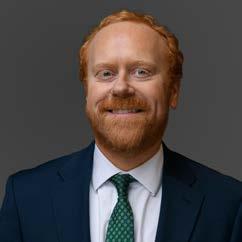
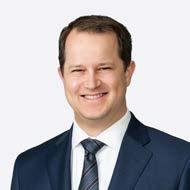
Jeffrey A. Zager, a partner with Womble Bond Dickinson, focuses his practice on complex civil litigation and appellate matters. He represents individual and corporate clients across a wide range of industries in high stakes disputes often involving significant financial and reputational risks. Before entering private practice, Jeffrey served as a law clerk to the Honorable William J. Haynes, Jr., of the U.S. District Court for the Middle District of Tennessee and the Honorable Thomas W. Brothers of the Davidson County Circuit Court in Nashville.
Satchel R. Fowler, an associate with Womble Bond Dickinson, focuses his practice on complex litigation, drawing on experience at both the federal and state trial court levels. He served as a judicial law clerk for Judge Greg Stivers of the U.S. District Court for the Western District of Kentucky and Judge Thomas Brothers of the Davidson County Circuit Court in Nashville, Tennessee. His work during these clerkships gave him valuable insight into trial strategy, judicial decision-making, and case management across a wide range of civil matters.
The Department of Justice tells your corporate client that it’s implicated in a serious federal crime. That client asks you to perform an internal investigation. You investigate and give the client a report. Later that year, a group of the corporation’s shareholders sue the corporation for getting implicated in a serious federal crime. Are the fruits of your internal investigation protected by the attorney-client privilege and workproduct doctrine?
If you answered, “Yes, obviously,” you’re right— but the answer isn’t as obvious as you’d think. Recently, a federal district court judge in the Southern District of Ohio faced with this exact situation compelled production over the defendants’ objections in In re FirstEnergy Corp. Securities Litigation, No. 2:20-cv-3785 (S.D. Ohio). Two years of litigation followed that ended with the Sixth Circuit Court of Appeals granting a writ of mandamus, an extraordinary remedy, to prohibit the discovery.1
So, where did it all go wrong?
Like most lawyers’ nightmares, it started with technical noncompliance with a formalistic and largely redundant procedural rule. But it resulted in the Sixth Circuit weighing in on an important question: Should a court inquire into a corporation’s motive for retaining a firm to perform an internal investigation when deciding whether the attorney-client privilege applies?
In 2020, like the fictitious corporate client in our introduction, FirstEnergy Corporation received DOJ subpoenas in connection with a criminal complaint
against an Ohio legislator to whom FirstEnergy had allegedly paid bribes. Shortly after receiving the subpoenas, FirstEnergy retained two law firms to conduct internal investigations into the allegations. Numerous class actions against FirstEnergy followed, which were consolidated into a single action in the Southern District of Ohio. Discovery began, and the plaintiffs sought all documents related to the internal investigations, eventually moving to compel production over FirstEnergy’s objections.
The court referred the motion to a special master. And a “nuanced technicality”—a minor formal defect in a declaration FirstEnergy submitted to oppose the motion—was dispositive.2 That is, FirstEnergy’s failure to include that the items stated in the declaration of one of its Board members were “true and correct” (as required by 28 U.S.C. § 1746(2)) prompted the special master, sua sponte, to strike the declaration. Without the declaration, which explained that the purpose of the investigations was to receive legal advice, the special master concluded that the evidence showed that “business purposes” and “human resources purposes” prompted the investigations, not the possibility of litigation.
FirstEnergy unsuccessfully sought reconsideration by the special master before raising its objections with the district judge, who affirmed the special master’s decision to strike the declaration and then analyzed the attorneyclient privilege and work product issues.3 Like the special master, the district judge concluded that the attorneyclient privilege and work-product doctrine would not
protect the fruits of the investigation because business and human resource purposes predominated over any legal purpose. FirstEnergy sought reconsideration, permission to appeal, and a stay – all of which the district court denied. So, FirstEnergy petitioned the Sixth Circuit for mandamus.
In August 2025, the Sixth Circuit granted a preliminary stay4 and then, in October, issued its opinion granting the “drastic and extraordinary remedy” of mandamus. After noting that the district court erred by rejecting FirstEnergy’s declaration for a “twoword omission,” the Sixth Circuit addressed the more fundamental question of whether motivation is an appropriate inquiry when deciding whether the attorneyclient privilege applies.
As the Sixth Circuit explained, the fact that FirstEnergy later used the fruits of the investigations for business decisions does not render the privilege inapplicable. Simply put, “[w]hat matters under the attorney-client privilege is whether a company seeks legal advice, not what it later does with that advice.” The court
underscored that legal advice is not transformed into something else by “adjacent business purposes.”
The court’s analysis echoed its preliminary comments in its ruling on FirstEnergy’s motion for a stay, where it noted that “a corporation could hardly justify expending resources on legal advice that wasn’t business-related.” The court ruled that the work product doctrine also applied because FirstEnergy’s alleged implication in a bribery scheme prompted the investigations, and to rule otherwise would require the court to “overlook the realities of litigation.”
What steps, then, should companies take to ensure that internal investigations are being conducted in such a manner so as to strengthen the argument that the investigation is subject to both the attorney-client privilege and the work product doctrine? First, involve counsel at the outset and allow counsel to lead the investigation. Second, document, in writing, that the purpose of the investigation is to receive legal advice from counsel. If the investigation is in response to anticipated litigation, that should be documented in writing as well. Other important steps include maintaining confidentiality of the investigation and its results. Even if information would otherwise be privileged, if it is voluntarily disclosed, the privilege can be waived. n
Footnotes
1 A copy of the Court of Appeals’ decision granting mandamus is available at 154 F.4th 431.
2 A copy of the special master’s decision is available at 2023 WL 8290917.
3 A copy of the district judge’s opinion is available at 2024 WL 1984802.
4 A copy of the Court of Appeals’ ruling granting the stay is available at 2025 WL
Are you looking for another avenue for revenue and referrals, specifically those tailored to your practice area? If so, the NBA Lawyer Referral & Information Service needs you. We are currently in need of attorneys who handles issues such as:
For information on joining LRIS, please contact LRIS@NashvilleBar.org We look forward to hearing from you!
Continued Legal Education (CLE)
The NBA is your source for cutting edge, quality continuing education. We provide more than 600 hours of live and distance learning programming while offering our members discounted rates. For a complete calendar, full seminar agendas, and registration, visit NashvilleBar.org/CLE
Save the Date: Upcoming CLE
Wednedsay, June 24
A Hamilton-Inspired CLE Experience
Join us for a CLE seminar inspired by the award-winning show, Hamilton!
Following the seminar, attendees will enjoy a reception to connect with colleagues, and then will have the opportunity to attend Hamilton at TPAC.
April 20 | Virtual Seminar
Ethics in Action: Inside Tennessee’s Board of Professional Responsibility
Presented by the Estate Planning & Probate Practice Section
OVERVIEW
Presented by Disciplinary Counsel Eric A. Fuller, a litigator with the Board of Professional Responsibility of the Supreme Court of Tennessee (BPR), this program will provide a comprehensive overview of the BPR—its role, responsibilities, and processes for investigating and prosecuting claims of attorney ethical misconduct. In addition to offering a behindthe-scenes look at how disciplinary matters are handled, this session will highlight common ethical issues that arise in probate and estate planning practice and provide guidance on how to avoid them.
DETAILS
..12:00pm - 1:00pm
Continued Legal Education (CLE)
May 1 | Virtual Seminar
Beyond Zealous Advocacy: The Lawyer as Public Citizen
Presented by the New Public Citizen Committee
OVERVIEW
This seminar will examine the Preamble to the Tennessee Rules of Professional Conduct and the ABA Model Rules, which describe lawyers as “public citizens.” The program will focus on the historical background of the "public citizen" descriptor. The program will also explore some competing interpretive paradigms for what that term means—from neutral partisanship and zealous advocacy to more justiceoriented conceptions of professional identity.
The new Public Citizens Committee Mission: The NBA’s Public Citizen committee promotes civics, civility, and collaboration. The Committee connects lawyers with the community to engage actively with our democratic institutions, the judicial system, and the Rule of Law.
PRESENTER
Joseph Hubbard, Polsinelli PC
DETAILS
..12:00pm - 1:00pm
May 12 | Live Seminar
The Nashville Sit-Ins: Legal Challenges, Civil Rights, and Lasting Impact
Presented by the Historical Committee & the Napier-Looby Bar Association
OVERVIEW
Don't miss this year's annual FREE Historical CLE will focus on the Nashville Sit-Ins, as well as the legal challenges, Civil Rights, and lasting impact of the movement.
Attendees are cordially invited to a reception following the seminar. This gathering will provide an opportunity for further discussion, collegial exchange, and reflection on the historical sit-in movement and how it shaped Nashville today.
Thank you to JAMS for Sponsoring!
For a full agenda and list of speakers, visit NashvilleBar.org/HistoricalCLE
PRODUCERS
Jonathan Cole, Baker Donelson
Charles K. Grant, Baker Donelson
Gary Shockley, Baker Donelson
Cynthia Lee, Holland & Knight
- 1:00pm
Continued Legal Education (CLE)
The NBA is your source for cutting edge, quality continuing education. We provide more than 600 hours of live and distance learning programming while offering our members discounted rates. For a complete calendar, full seminar agendas, and registration, visit NashvilleBar.org/CLE.
September 10 | Live Seminar
Diversity Summit 2026
The Next Chapter: Diversity, Equity, and Inclusion in a Changing Legal Landscape
Presented by the Diversity Committee
OVERVIEW
The biannual Diversity Summit is a full-day conference focusing on the importance of moving beyond conceptual ideas in diversity, equity, and inclusion and into creating actionable plans to address the disparities facing the legal profession and our society.
This will be a one-day conference with CLE and Lunch included. A keynote speaker and interactive small group workshops will give attendees the tools to become champions and advocates of diversity, equity, and inclusion.
Stay tuned for keynote speaker and other exciting details!
DETAILS
- 5:00pm
Get the NBA All-Access CLE Pass
The NBA is offering exciting member benefits, including the new All-Access CLE Pass.
For $199, members may register for an unlimited number of any NBAproduced* seminars, both online and in-person throughout the membership year (November 1, 2025 through October 31, 2026**).
The All-Access CLE Pass is exclusive to NBA members only and available to purchase when renewing. For details and more information regarding the All-Access CLE Pass, contact our CLE Department at NBA_CLE@NashvilleBar.org
*Some exclusions for All-Access CLE Pass usage apply for special programming including but not limited to CLE Institutes, Master Series speakers, travel-related CLEs, some YLD seminars, and other seminars in which we partner with outside entities.
**The All-Access CLE Pass expires annually on October 31 and may not be used to register for seminars beyond that date.
NBA Annual Meeting & Banquet |
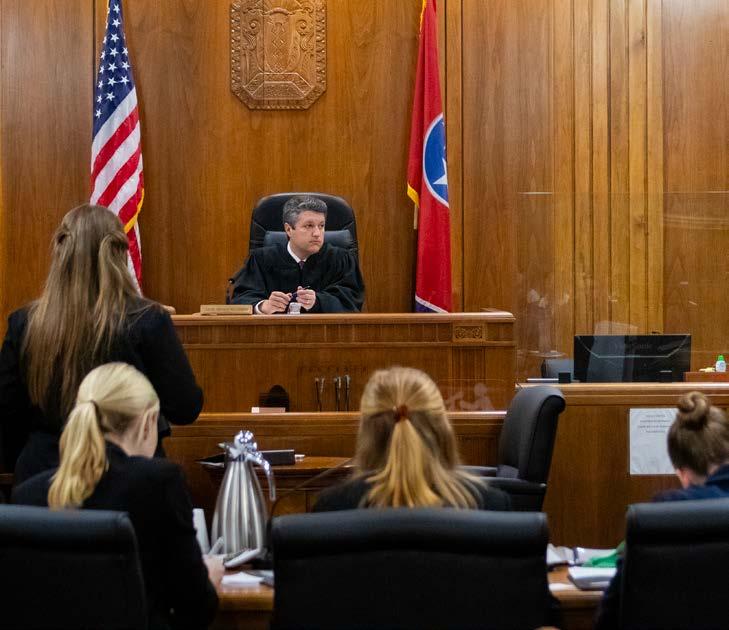
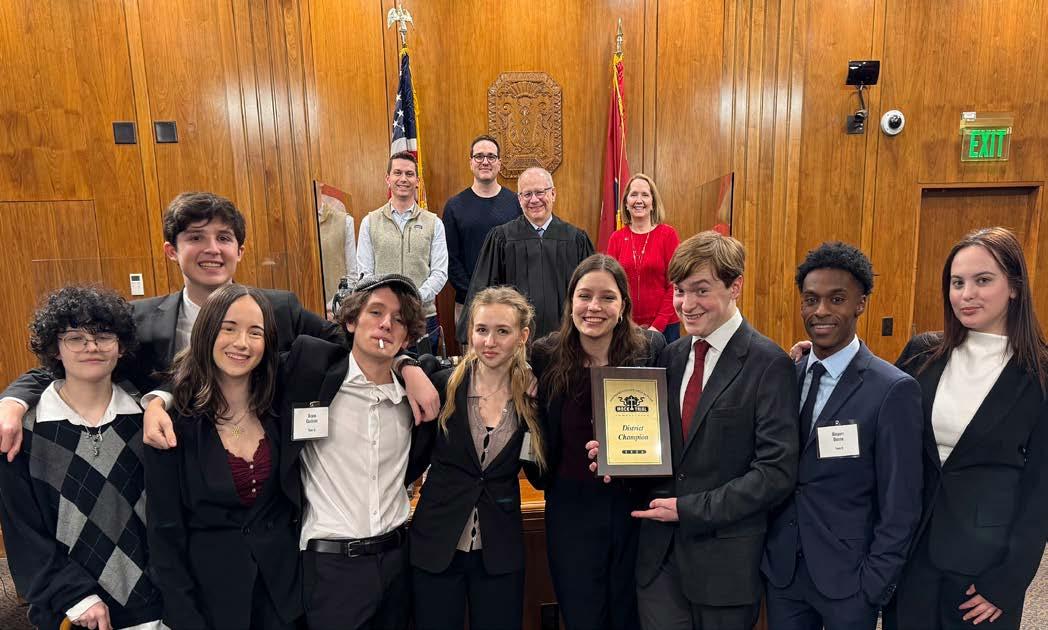
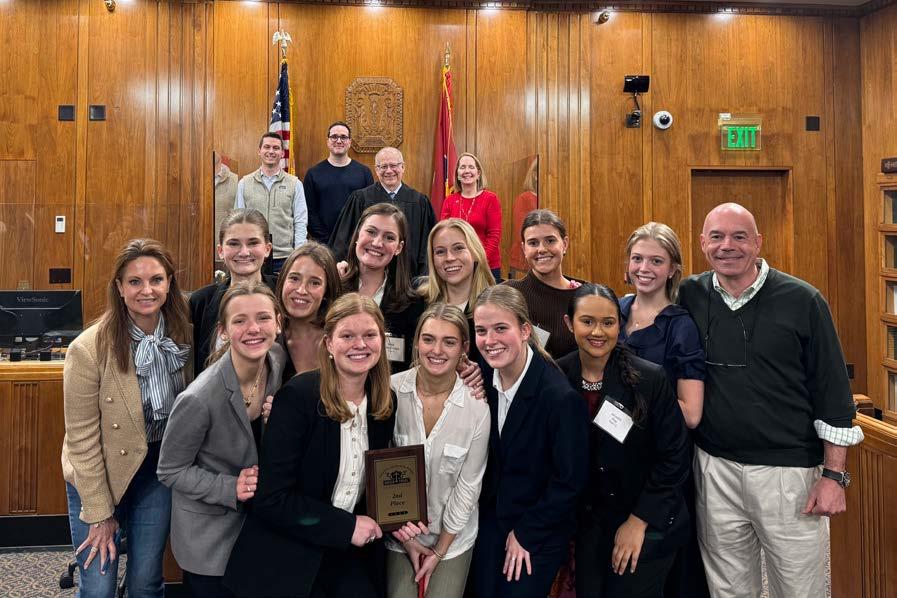
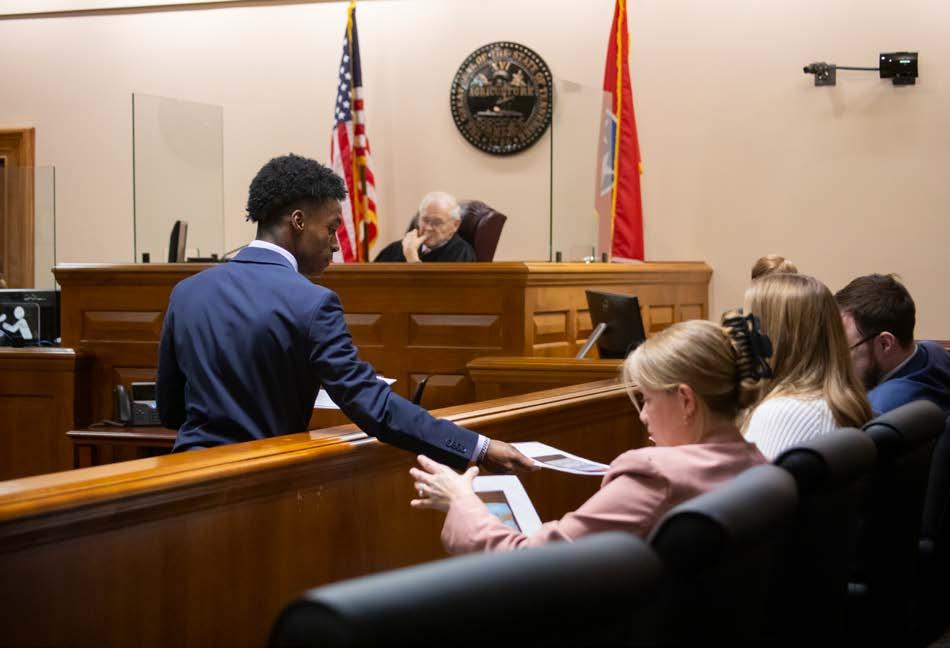
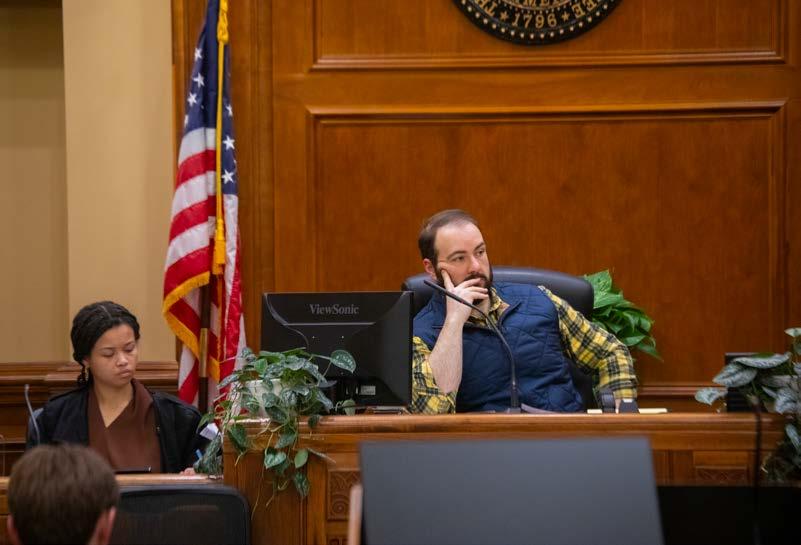
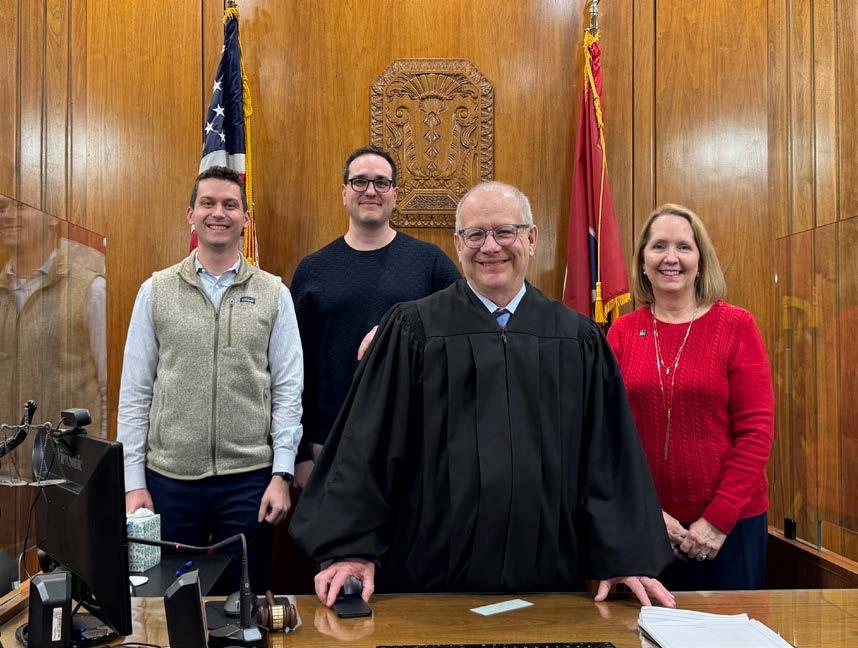
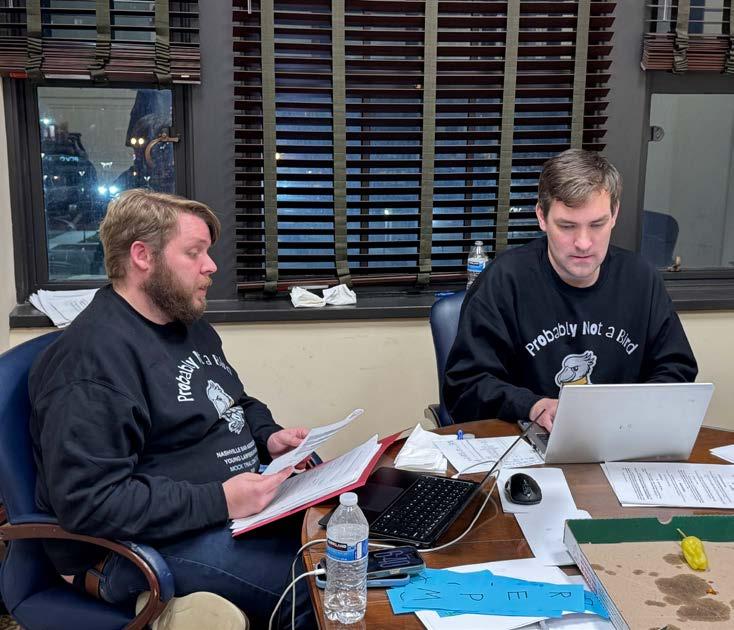
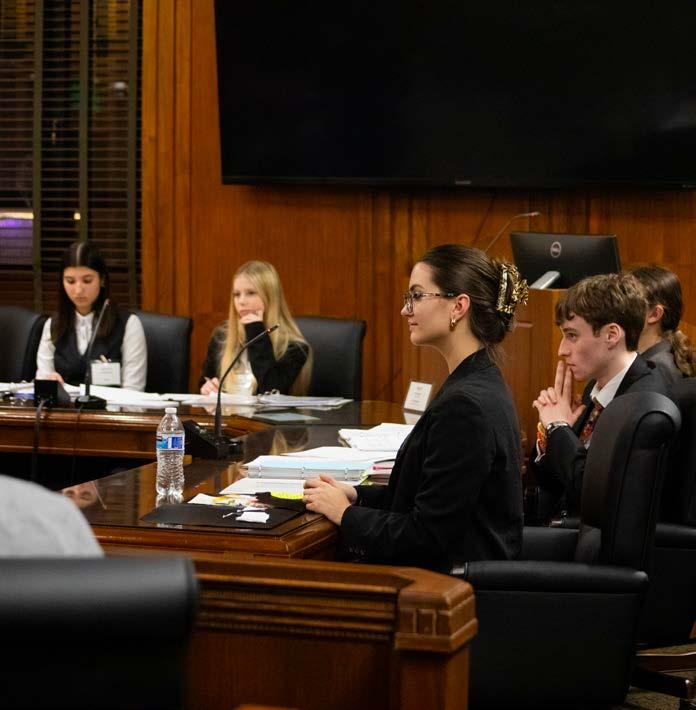
Davidson County High School Mock Trial Competition |
February 20-21, 2026
Hearsay | Honors & Awards, On the Move, Firm News
On the Move
Spencer Fane LLP is pleased to welcome Crystal Armstrong to the firm’s Nashville office as an associate in the Health Care Practice Group. Armstrong helps health care organizations navigate complex state and federal regulations and challenges, developing robust, growth-oriented strategies for streamlined operations and riskaverse structures for long-term compliance. With a unique skill set obtained from a multidisciplinary professional background, Armstrong has previous experience conducting health care regulatory due diligence in mergers, acquisitions, and other transactional arrangements, as well as drafting and reviewing necessary transactional documents.
Bradley is pleased to announce that Paul Ney has joined its Government Enforcement & Investigations and Defense & National Security teams as a partner in the firm’s Nashville and Washington, D.C., offices. Before joining Bradley, Ney notably served as the legal advisor to the National Security Council (NSC), the general counsel for the U.S. Department of Defense and as acting general counsel for the U.S. Department of the Navy. Ney’s substantial government experience also includes serving as chief deputy attorney general for the State of Tennessee and as director of the Nashville Mayor’s Office of Economic and Community Development. In the private sector, He served as chief legal officer and corporate secretary for Momentus Space, a publicly traded
satellite and space infrastructure company serving government and commercial customers. He practiced law for more than 25 years in commercial litigation, administrative and regulatory law and as a registered patent attorney.
Bass, Berry & Sims is pleased to announce that Ben Schrader , a former U.S. Department of Justice (DOJ) prosecutor with experience in both Middle Tennessee and the District of Columbia, has joined the firm as a member in its Nashville office. Schrader most recently served as Chief of the Criminal Division at the U.S. Attorney’s Office for the Middle District of Tennessee, where he oversaw criminal prosecutions involving financial and healthcare fraud, public corruption, racketeering and other criminal conspiracies, money laundering, and asset forfeiture.
Sherrard Roe Voigt & Harbison is pleased to announce that David H. Suggs has joined the firm as a member of its litigation team, where he will focus his practice on antitrust matters. His addition strengthens the firm’s already robust antitrust group known for handling complex, high-stakes competition matters for clients across a range of industries in courts around the country. Suggs has spent more than 20 years litigating complex antitrust disputes, including class-action cartel claims, monopolization suits, and criminal and civil government investigations. His practice also encompasses white collar, bankruptcy, and other high-stakes commercial litigation.
In addition to his litigation work, David advises clients on antitrust risk and compliance, including issues arising from contracts, joint ventures, and strategic transactions. He has represented some of the world’s largest companies in significant, cross-border matters and has experience across a broad range of industries, with particular depth in the energy and pharmaceutical sectors.
Burr & Forman is pleased to announce that Hannah Leifel has joined the firm as an associate in its Construction & Project Development practice group in Nashville. Leifel brings a strong litigation background to her construction and project development practice, representing clients in complex disputes and riskrelated matters. Prior to joining the firm, she focused her practice on insurance coverage and commercial litigation, advising clients through all stages of civil litigation, including coverage disputes, declaratory judgment actions, and related appellate matters.
Burr & Forman is pleased to announce that Ian Joseph has joined the firm’s Nashville office as an associate in the Financial Services Litigation practice group. Joseph represents financial institutions in a variety of litigated matters, with a focus on mortgage lenders, loan servicers, and related service providers. He counsels clients on disputes arising under consumer protection statutes and on business litigation matters involving allegations of fraud and breach of contract.
His practice includes representing clients in federal and state courts and supporting matters from inception through resolution. Ian’s work is informed by a strong foundation in legal research and writing, as well as a collaborative approach to client service.
Litson PLLC today announced that Brent Hannafan has joined the firm as Partner. With Hannafan’s arrival, Litson becomes the only law firm in Tennessee with four former federal prosecutors — and a team that has collectively tried more than 90 jury trials. Hannafan served as an Assistant U.S. Attorney in the Middle District of Tennessee, where he tried more than 20 federal criminal jury trials and received the Department of Justice Director’s Award in 2017. That same year, he was appointed Chief of the Criminal Division, overseeing all federal criminal investigations and prosecutions in the district until 2023. He also spent 13 years as a faculty member at the DOJ’s National Advocacy Center, training federal prosecutors nationwide in trial advocacy. Hannafan joins former federal prosecutors Alex Little, Ted Canter, and John Ross Glover at the firm.
Stites & Harbison, PLLC welcomes attorney Jacob E. Moses to the firm’s Nashville office. He joins the firm’s Creditors’ Rights & Bankruptcy Service Group. Moses represents clients in commercial and civil litigation, including complex litigation involving business disputes, contract disputes, commercial finance matters and insurance coverage matters. His practice will also
focus on business reorganizations, workouts, adversary proceedings, and matters arising out of Chapter 11 of the Bankruptcy Code
Firm News
Three attorneys with Bradley’s Nashville office have been promoted to partner. The new partners are Petar Angelov , Robert E. Leonard, and Mike Stephens. Angelov is a member of Bradley’s Construction Practice Group and is focused on both litigation and transactional matters within the construction industry, representing general contractors, subcontractors, material suppliers, residential and commercial owners, developers and engineers. He works with clients both before and after problems arise by drafting agreements to position clients to avoid disputes and finding resolution through litigation or arbitration when needed. A business and commercial real estate attorney, Leonard focuses his practice in the areas of commercial real estate transactions, commercial leasing, land development, commercial lending, and general corporate work. He assists with drafting, editing and negotiating lease agreements, purchase and sale agreements, financing documents and ancillary closing documents. Leonard also manages and runs closing and conducts due diligence for a variety of real estate transactions. Stephens is a member of Bradley’s Litigation Practice Group where he focuses primarily on commercial litigation matters. He has extensive experience assisting clients with a wide range of legal issues in both state and federal
court, including contract disputes, intellectual property matters, and other business torts.
Bradley’s Government Contracts Practice Group has been selected as a 2025 winner of Law360’s “Practice Groups of the Year,” marking the third consecutive year and the fourth time overall that the firm has earned this recognition, including in 2024, 2023, and 2021. The annual Law360 Practice Groups of the Year awards recognize the groups that worked on the largest deals or achieved the biggest wins in the most important cases over the past year from more than 30 key practice areas.
Constangy is pleased to announce that Mary Dohner Smith, Managing Partner of the firm’s Nashville office, has been approved by the Tennessee Supreme Court Administrative Office of the Courts as a Rule 31 Listed Mediator. Dohner Smith represents employers in a wide range of labor and employment matters and brings extensive litigation and counseling experience to her mediation practice.
The law firm of Gullett Sanford Robinson & Martin PLLC (GSRM Law) is pleased to announce the following two attorneys have been promoted to Member: Andrew J. Bellm and Hilary C. Dennen. Bellm is a member of the firm’s Estate Planning and Probate Section. He has more than a decade of experience counseling professionals, individuals, and first and multi-generational high-networth families in estate planning and probate administration matters.
Hearsay | Honors & Awards, On the Move, Firm News
His practice encompasses the development and implementation of comprehensive estate plans, including wills, trusts, powers of attorney, healthcare directives, and guardianship arrangements. Andrew also regularly represents clients in complex probate and trust administration proceedings. Dennen is a member of the firm’s Litigation, Labor and Employment, and Estate Planning and Probate Sections. She represents both individuals and companies in complex civil litigation matters at the trial court and appellate level, including breach of contract claims, employmentrelated disputes, property disputes, regulatory matters, and trust and estate litigation. In addition, Hilary assists clients with navigating conservatorships, guardianships, and estate administrations.
Nashville trial lawyers
Joe Welborn , Charlie Malone, and Jason Callen announce today the launch of WelbornMalone PLC, a boutique litigation firm that includes three of Tennessee’s most experienced and highly regarded trial attorneys. WelbornMalone focuses on complex, high-stakes disputes for corporations, small businesses, highnet-worth families, and individuals across a range of industries. The firm represents clients in jury trials, bench trials, arbitrations, administrative proceedings, investigations, and critical negotiations where significant financial and reputational consequences are at stake. WelbornMalone’s office is located in Green Hills.
Stites & Harbison, PLLC welcomes attorney Anna Kate Ferrell to the firm’s Nashville office. She joins the Business Litigation and Torts & Insurance Practice Service Groups. Ferrell’s practice focuses on insurance coverage and defense. She represents clients in all types of personal injury, property damage, business torts and insurance related disputes. Prior to joining Stites & Harbison, Ferrell was an associate in the tort and insurance defense sections of a small Nashville law firm. She gained diverse experience as a litigator, including personal injury, construction defect and insurance coverage cases.
Litson PLLC today announced the promotion of John Ross Glover to Partner. The promotion further strengthens a leadership team that now includes four former federal prosecutors who have collectively tried more than 90 jury trials. Before joining Litson when the firm launched in 2024, Glover served as a Special Assistant U.S. Attorney for the Middle District of Tennessee, prosecuting financial fraud, firearms, and drug trafficking cases. Then, as an Assistant Attorney General in Tennessee’s Special Prosecutions Division, he managed complex constitutional litigation in federal court and specialized prosecutions. His practice focuses on healthcare fraud defense, government investigations, and high-profile matters involving elected officials.
Bradley is pleased to announce the return of Mark W. Miller as a partner in the Tax and
Trusts & Estates practice groups. With more than 25 years of tax law experience, Miller’s practice focuses on sophisticated transactional tax matters, including the structuring of corporate, partnership and limited liability company transactions such as formation, joint ventures, acquisitions, dispositions, and reorganizations. He regularly provides counsel on tax-efficient structuring and implementation of M&A transactions, as well as qualified small business stock (QSBS) issues. Miller also advises taxexempt organizations and provides tailored counsel to nonprofit hospitals and other healthcare entities. n
Send news and press releases to Adrienne Bennett Cluff at to share accomplishments and updates with NBA members through the print & online Hearsay section!
Adrienne.BennettCluff@nashvillebar.org
100% Club
Thank you for supporting your local bar association!
The Nashville Bar Association 100% Club is a special category of membership that demonstrates a commitment to the legal profession and our community from legal organizations with more than three attorneys that have 100% of their Nashville attorneys as members of the NBA. To become a part of the NBA's 100% Club, contact NBAFrontDesk@NashvilleBar.org and support your local bar association today!